Christianity, Catholicism and the Holy Land: History, Identity and Religious Coexistence in the Middle East
Explore the history of Christianity and Catholicism in the Holy Land, from Palestine and Jerusalem to Sinai, Jordan, Syria and Lebanon. Discover the challenges facing Christian communities and the importance of religious freedom, empathy and coexistence.
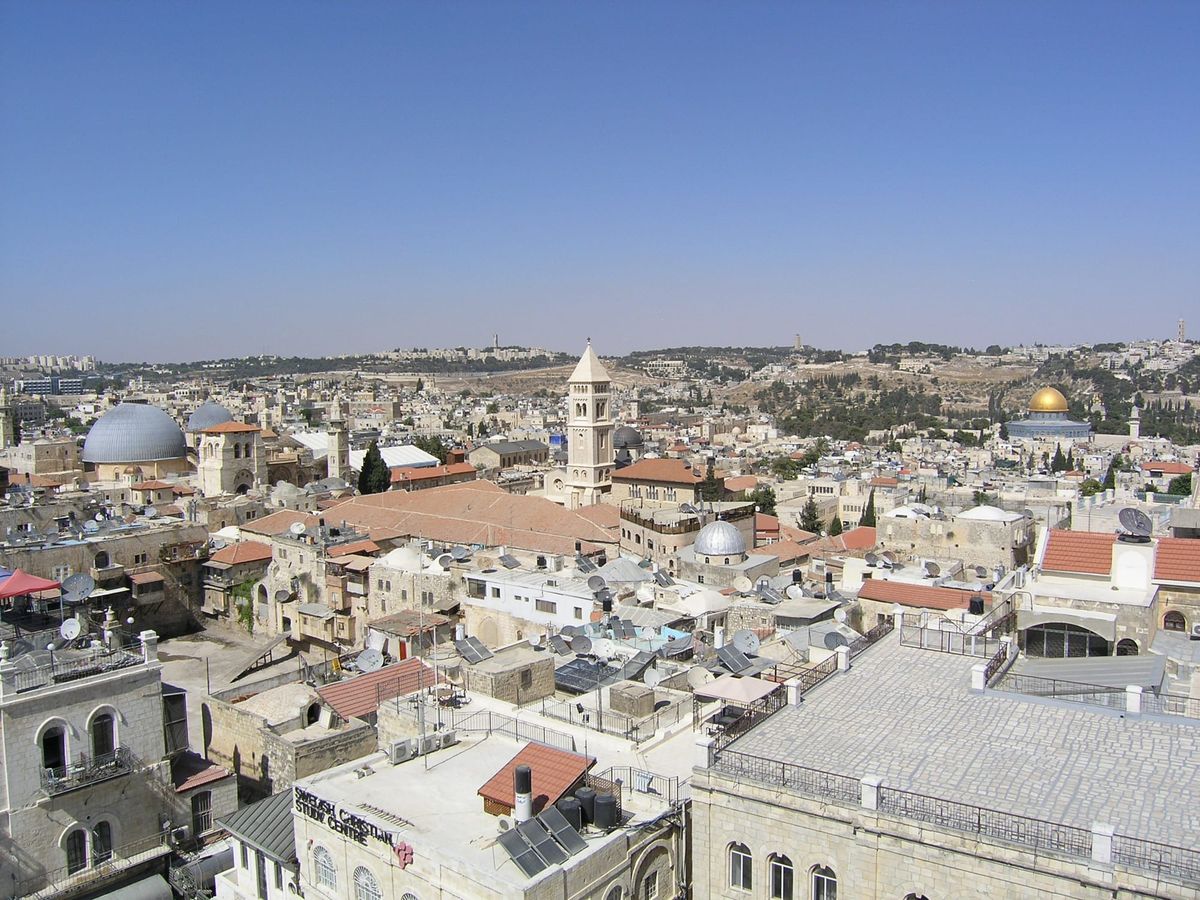
An independent journalistic report on the historical roots of Christianity, the meaning of Palestine, the position of Catholic communities, and the challenges of interreligious coexistence in Israel, Palestine, Jordan, Syria, Lebanon and the Sinai Peninsula.
Chapter 1. Introduction: A Region Sacred to Three Religions
The Middle East occupies a unique place in the history of religion. It is the birthplace of Christianity and a region of profound significance for Judaism and Islam. For centuries, its cities, villages, monasteries and places of worship have served as centres of pilgrimage, scholarship, political power and cultural exchange.
Jerusalem is sacred to all three religions. Bethlehem is associated with the birth of Jesus Christ. Nazareth is central to the Christian account of his early life. The Sinai Peninsula is associated with the biblical account of Moses and the reception of the Ten Commandments. Jordan contains sites traditionally linked to biblical events, including the baptism of Jesus in the Jordan River. Syria and Lebanon preserve some of the oldest Christian communities in the world.
However, the religious importance of these places has also made them part of political and territorial disputes. Wars, occupation, migration, restrictions on movement, economic crises and competing national narratives have affected the people who live there.
To understand the position of Catholicism in the region, it is necessary to distinguish between religious identity, national identity, historical claims and present-day political realities. Christians are not a single political community, just as Jews and Muslims do not share one uniform political position.
This report examines these issues from a historical and journalistic perspective. Its purpose is not to favour one religion or nationality over another, but to explain the region's complexity and the importance of protecting the dignity and rights of all its inhabitants.
Chapter 2. The Origins of Christianity
Christianity emerged during the first century CE in the Roman province of Judea and the surrounding territories, within a Jewish religious and cultural environment.
Jesus of Nazareth was Jewish. His earliest followers were also Jewish, and the first Christian communities developed in a world shaped by Jewish scripture, religious traditions and expectations concerning the Messiah.
After Jesus' death, his followers proclaimed that he had risen from the dead. The movement gradually spread beyond its original Jewish setting, reaching cities throughout the eastern Mediterranean. Antioch, in present-day Turkey near the Syrian border, became one of the most important early centres of Christianity.
The apostle Paul played a significant role in spreading the Christian message among non-Jewish populations. Over time, disagreements concerning religious law, the identity of Jesus and the inclusion of non-Jews contributed to the gradual differentiation of Christianity from Judaism.
Christianity was initially a minority movement within the Roman Empire and, at various times, faced persecution. Its position changed significantly in the fourth century. Emperor Constantine supported Christianity, and Emperor Theodosius I later established Nicene Christianity as the official religion of the Roman Empire.
As Christianity expanded, different theological traditions and ecclesiastical structures developed. The churches of the Middle East became central to Christian scholarship, liturgy and monastic life.
The region's Christian history is therefore much older and more diverse than the history of the Roman Catholic Church alone.
Chapter 3. What Is the Difference Between Catholicism and Eastern Christianity?
The term Christian includes numerous churches and traditions. Although they share central beliefs concerning Jesus Christ, they differ in theology, liturgy, ecclesiastical authority and historical development.
The Roman Catholic Church recognises the Pope as its supreme pastor and visible centre of ecclesial unity. Its presence in the Middle East includes the Latin Church and several Eastern Catholic churches.
Eastern Catholic churches maintain their own liturgical rites and traditions while remaining in communion with Rome. One prominent example is the Maronite Church in Lebanon.
Eastern Orthodox churches, by contrast, are not under the authority of the Pope. They maintain their own bishops, patriarchs and synodal structures. The Greek Orthodox Patriarchate of Jerusalem is one of the principal Christian institutions in the Holy Land.
Other important Christian traditions include the Armenian Apostolic Church, the Syriac Orthodox Church, the Assyrian Church of the East and various Protestant communities.
These distinctions matter when discussing the treatment of Christians. A report about Catholic institutions cannot automatically be applied to every Christian community, and the experiences of Orthodox Christians may differ from those of Latin Catholics or Eastern Catholics.
The Christian presence in the Middle East is a network of ancient and modern communities, not a single uniform institution.
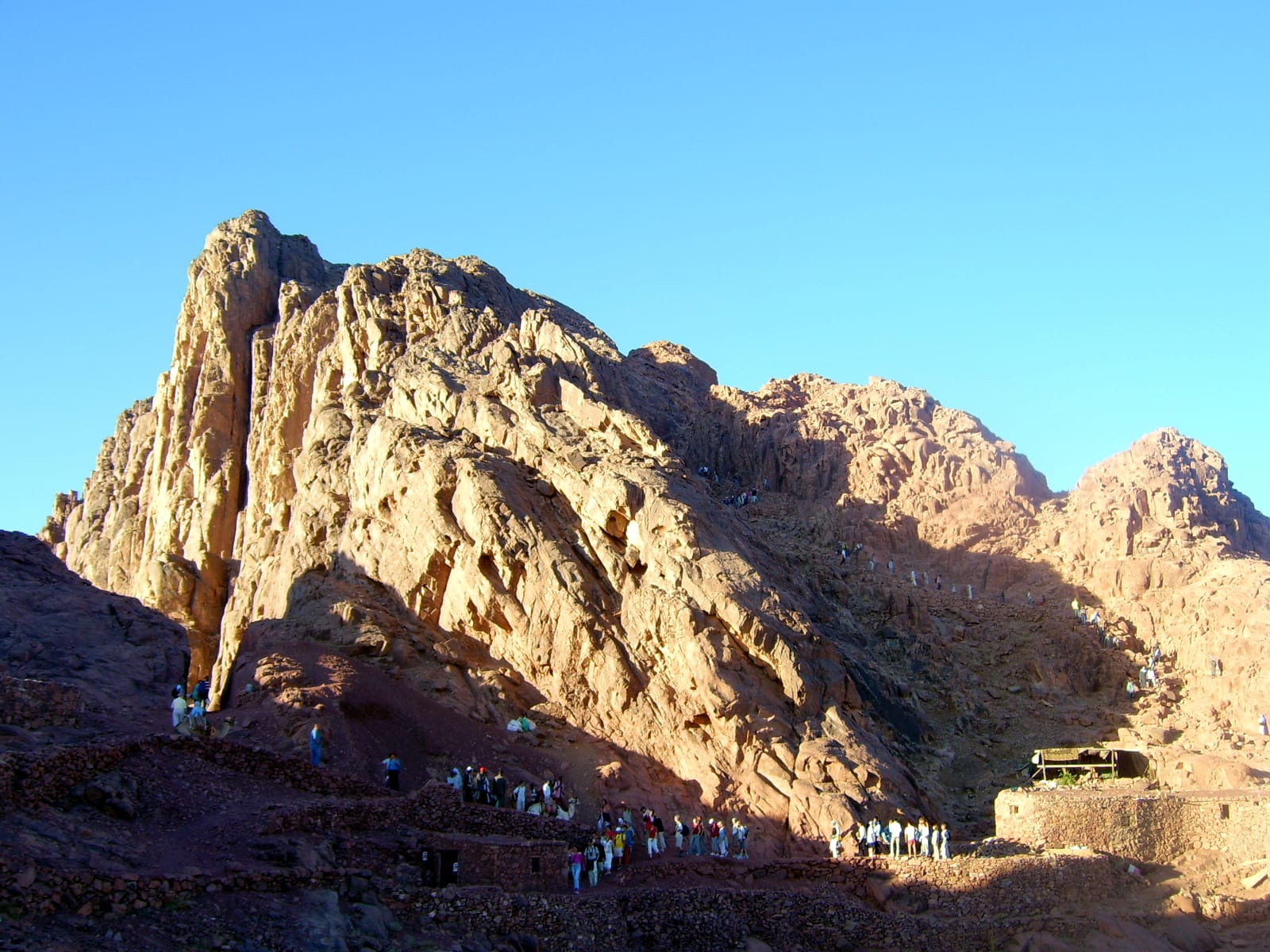
Chapter 4. The Sinai Peninsula: Moses, Monasticism and Religious Memory
The Sinai Peninsula, part of Egypt, occupies a prominent place in the religious imagination of Jews, Christians and Muslims.
In the biblical tradition, Mount Sinai is associated with Moses and the covenant between God and the people of Israel. The precise identification of the mountain described in the biblical account remains a matter of historical and religious debate.
One of the region's most important Christian sites is Saint Catherine's Monastery, located at the foot of the mountain traditionally identified as Mount Sinai.
Founded in late antiquity, the monastery is among the world's most significant historic Christian monastic institutions. It has preserved manuscripts, icons, liturgical objects and architectural features that illuminate the development of Eastern Christian culture.
Saint Catherine's is associated with the Eastern Orthodox tradition, particularly the Church of Sinai, which is closely connected to the Greek Orthodox Patriarchate of Jerusalem. It should not be described as a Roman Catholic monastery.
Its significance extends beyond one denomination. The site represents centuries of Christian monastic life in a landscape that also holds meaning for Judaism and Islam.
Sinai illustrates an important principle: a place may be sacred to several religious traditions without those traditions holding identical beliefs about its history or meaning.
Preserving such sites requires the protection of cultural heritage, respect for religious practice and responsible management of tourism and pilgrimage.
Chapter 5. Why Is the Region Called Palestine?
The name Palestine has a long and complex history. Understanding its origins requires distinguishing ancient geographical terminology from modern national identity.
The name is generally connected to the Philistines, an ancient people associated with parts of the southern coastal Levant. Egyptian sources refer to a group known as the Peleset, often associated with the Philistines. The Greek historian Herodotus used a form of the name Palaistinē in the fifth century BCE to describe part of the region.
The geographical meaning of the name changed over time. It was not always used to describe precisely the same territory.
Following the Bar Kokhba revolt against Roman rule in 132–135 CE, the Roman administration reorganised the province of Judea and subsequently used the provincial name Syria Palaestina. Historians debate the precise motivations behind this change and the extent to which it was intended as a deliberate political measure against Jewish identity.
The name continued in different forms through later Roman, Byzantine and Islamic periods. Under early Islamic administration, the region included a district known as Jund Filastin.
During the Ottoman period, Palestine was not a single province with precisely the same boundaries as those used today. The term continued to function as a geographical and historical designation, although administrative borders changed.
After the First World War, Britain administered the territory under the League of Nations Mandate for Palestine. The Mandate, which came into effect in 1923, provided the framework for British administration until 1948.
In 1947, the United Nations General Assembly recommended partitioning the Mandate territory into separate Jewish and Arab states, with a special international regime proposed for Jerusalem. The plan was accepted by the Jewish Agency but rejected by Arab Palestinian leaders and Arab states, which opposed its terms.
Israel declared independence in May 1948. The ensuing war resulted in the displacement and flight of hundreds of thousands of Palestinians, an event Palestinians call the Nakba, meaning catastrophe. The war also caused Jewish displacement from some Arab countries, in a broader regional history of conflict and population movement.
The State of Palestine was granted non-member observer State status at the United Nations in 2012.
The historical name and modern Palestinian identity
The historical origins of the name Palestine do not invalidate Jewish history or Jewish connections to the land. Jewish religious, cultural and historical ties to Jerusalem and the surrounding region extend back thousands of years.
Equally, those ancient Jewish connections do not invalidate the existence or national identity of the Palestinian people.
Modern Palestinian identity developed through a complex history of local communities, Ottoman-era society, the British Mandate, changing political movements, displacement and the struggle for self-determination.
It is therefore inaccurate to claim either that Palestine is merely a recent invention with no historical geographical background, or that the existence of the historical name alone settles modern questions of sovereignty and borders.
Historical names, religious attachments and present-day political rights are related, but they are not interchangeable.
Chapter 6. Jerusalem: A Sacred City and a Political Flashpoint
Jerusalem is one of the most religiously significant cities in the world.
For Jews, it is the site of the ancient Jewish Temples and the spiritual centre of Jewish historical and religious life. For Christians, it is associated with the final days of Jesus, his crucifixion and his resurrection. For Muslims, it is home to the Al-Aqsa Mosque compound and is associated with the Prophet Muhammad's Night Journey.
The city's religious importance is inseparable from its political sensitivity.
The Old City contains major Jewish, Christian and Muslim sacred sites, alongside Armenian Christian institutions. Its Christian Quarter includes the Church of the Holy Sepulchre, one of Christianity's most important pilgrimage destinations.
The Church of the Holy Sepulchre is associated with the traditional locations of Jesus' crucifixion, burial and resurrection. Several Christian communities share responsibility for different parts of the complex under arrangements shaped by centuries of history.
The Catholic presence in the Holy Land is organised through several institutions, including the Latin Patriarchate of Jerusalem and the Franciscan Custody of the Holy Land. These institutions serve local communities, maintain churches and schools, and assist pilgrims.
For Christians living in Jerusalem and elsewhere in the region, religious freedom is not simply a question of being allowed to attend church. It can also depend on access to employment, education, healthcare, family members and sacred sites.
Movement restrictions, residency arrangements, security measures and political tensions can affect daily life. Their effects vary significantly according to location and legal status.
A responsible account must recognise the security concerns that governments cite while also examining whether restrictions are proportionate and whether they interfere with fundamental rights.
Chapter 7. Catholicism in Israel and Palestine
Catholic communities in Israel and the Palestinian territories include Arab Christians, Hebrew-speaking Catholics, migrant workers and members of religious orders. Their circumstances differ according to citizenship, residency, location and employment.
Palestinian Christians are an integral part of Palestinian society. They have contributed to education, healthcare, culture, commerce and political life. Many families have lived in the region for generations, and their Christian identity is closely connected to local languages, traditions and communities.
Bethlehem, traditionally identified as the birthplace of Jesus, has a particularly important Christian heritage. Yet the city's population, economy and social life have been affected by the broader Israeli-Palestinian conflict, restrictions on movement, changing employment opportunities and emigration.
For some Palestinian Christians, difficulties include travel restrictions, economic insecurity, barriers to family reunification and uncertainty about the future. Access to Jerusalem and other places may depend on permits or other legal arrangements.
However, the situation should not be reduced to a single explanation. Christians in Israel who hold Israeli citizenship may experience different legal and social conditions from Palestinians living in the West Bank, East Jerusalem or Gaza.
The legal framework, security environment and practical opportunities available to these groups are not identical.
Are Christians persecuted?
The term persecution should be used carefully. It can refer to direct religious discrimination, violence against believers, restrictions on worship or broader systems of repression. In some circumstances, Christians experience targeted hostility because of their faith. In others, their difficulties arise from wider conflict, occupation, displacement or economic collapse.
In Israel and the Palestinian territories, Christian communities have raised concerns about access to holy sites, attacks or harassment in some locations, restrictions on movement, and the long-term survival of local Christian institutions.
The scale and character of these problems vary, and specific allegations should be examined using reliable evidence.
It would be inaccurate to portray every Israeli, Palestinian, Muslim or Jewish person as hostile to Christians. It would also be inaccurate to dismiss documented incidents or the concerns of vulnerable communities simply because the region's political situation is complicated.
Protecting Christian communities requires safeguarding religious freedom and equal rights while addressing the wider conditions that threaten the lives and livelihoods of people of different faiths.
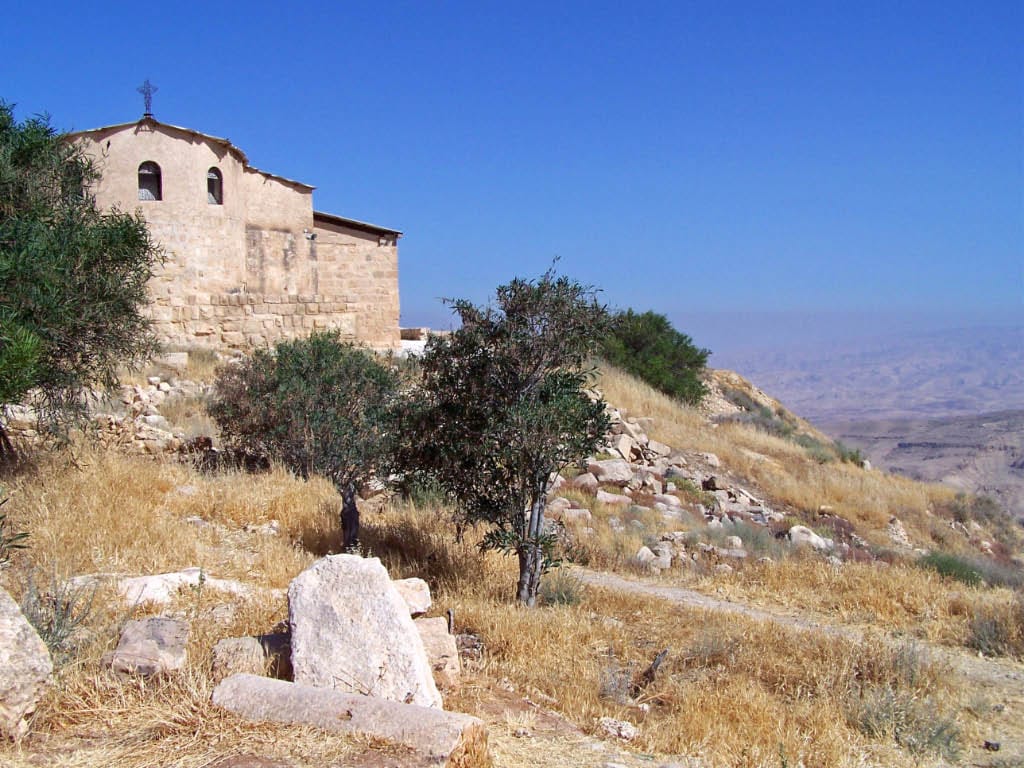
Chapter 8. Jordan: A Christian Community with Deep Historical Roots
Jordan has a long Christian history, dating to the early centuries of Christianity. The region contains archaeological remains, churches and pilgrimage sites associated with biblical traditions.
Mount Nebo, near Madaba, is traditionally associated with Moses viewing the Promised Land before his death. The site is an important destination for Christian pilgrims and is maintained as a place of religious and historical significance.
Jordan is predominantly Muslim, but it has established Christian communities, including Greek Orthodox, Roman Catholic, Melkite Greek Catholic, Armenian and Protestant congregations.
Christian institutions operate churches, schools, charities and other social services. Christian representatives also participate in public life, and Jordan's political system reserves a number of parliamentary seats for Christian candidates.
Nevertheless, the legal and social position of religious minorities is shaped by the country's broader legal framework and social environment. Some issues concerning conversion, family law, religious recognition and the public expression of belief can be sensitive.
The experiences of Christians also differ according to denomination, family background, location and socioeconomic circumstances.
Jordan is frequently seen as a comparatively stable environment for Christian institutions in a region affected by conflict. However, stability should not be confused with the complete absence of legal, social or economic challenges.
Chapter 9. Syria: Ancient Christian Communities under Pressure
Syria was one of the most important centres of early Christianity. Antioch, historically associated with the broader Syrian region and located today in southern Turkey, was a major centre of early Christian life. Damascus also occupies an important place in Christian tradition.
For centuries, Syria has been home to Greek Orthodox, Syriac Orthodox, Armenian Apostolic, Melkite Greek Catholic, Syriac Catholic, Maronite, Latin Catholic and Protestant communities.
These communities have maintained distinctive liturgies, languages, schools, monasteries and cultural traditions. Some have preserved forms of Aramaic, the language family associated with the historical environment in which Jesus lived.
The Syrian civil war, which began in 2011, severely damaged this religious and social landscape. Fighting, displacement, economic collapse, insecurity and emigration affected Christians and Muslims alike.
Some Christian communities faced direct attacks, threats, kidnappings, property destruction and pressure from extremist armed groups. Others suffered primarily from the wider devastation of the war.
The result has been a substantial decline in many Christian populations, although precise figures are difficult to establish. Syria's pre-war population statistics were already imperfect for determining religious affiliation, and displacement has made reliable contemporary counts even more difficult.
The fall of Bashar al-Assad's government in December 2024 marked a major political turning point. The country's subsequent transition created new uncertainties concerning governance, security, minority rights and the protection of religious institutions.
For Christians in Syria, the central question is not simply whether they will be permitted to worship. It is whether they can live safely, retain their property, educate their children, participate in public life and see a future for their communities.
Their long-term survival depends on security, political inclusion, economic recovery and the protection of the rights of all Syrians, regardless of religion or ethnicity.
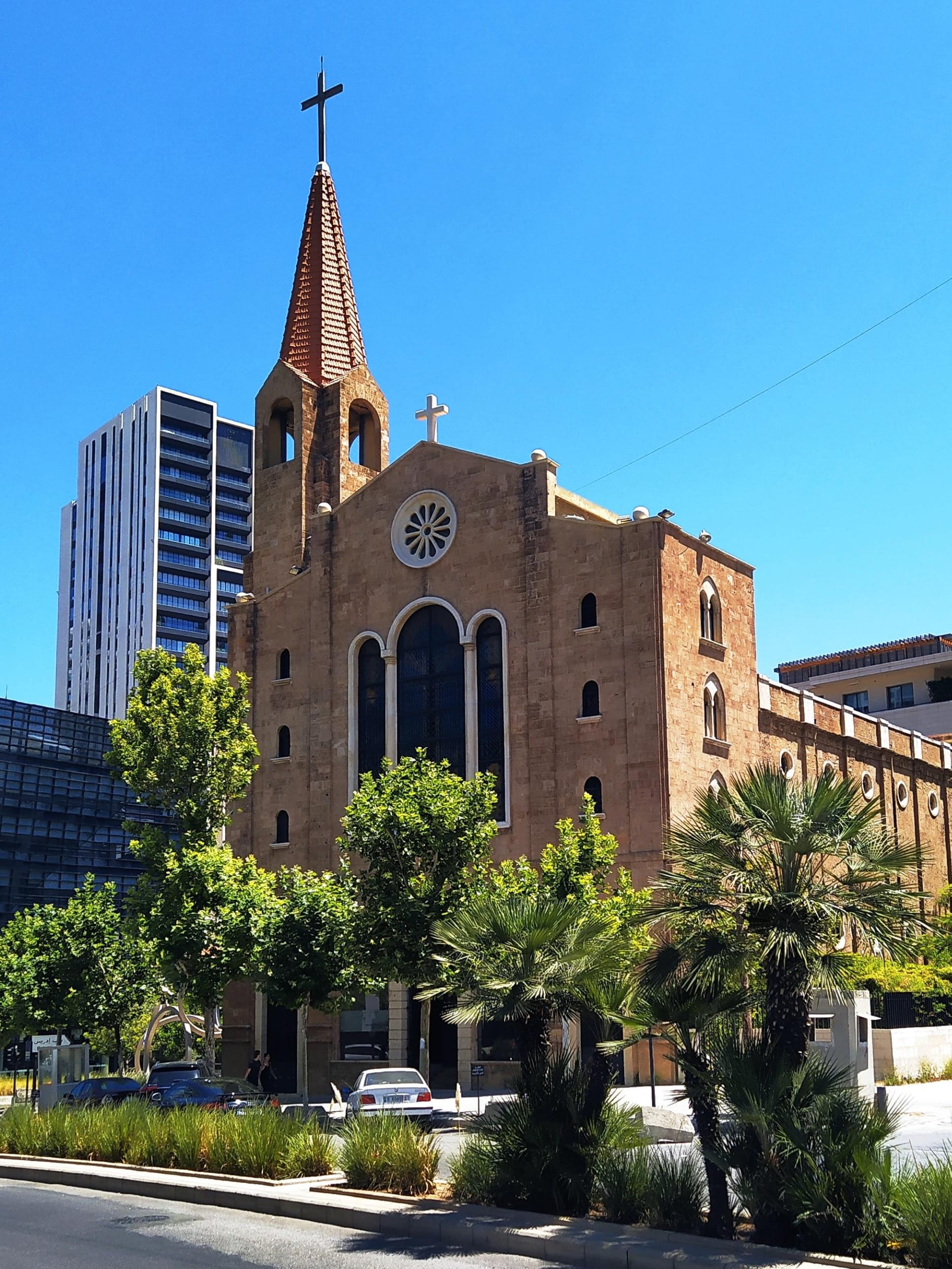
Chapter 10. Lebanon: The Maronite Church and a Multireligious Political System
Lebanon occupies a distinctive position in the Middle East because of its historic Christian communities and its political system, which formally distributes certain offices and parliamentary representation among religious groups.
The Maronite Church is the country's largest Catholic tradition. It is an Eastern Catholic church in full communion with Rome and maintains its own liturgical heritage and ecclesiastical hierarchy.
Lebanon is also home to Melkite Greek Catholics, Armenian Catholics, Syriac Catholics, Latin Catholics, Greek Orthodox, Armenian Apostolic Christians, Muslims and Druze.
The country's confessional political system assigns key offices according to religious affiliation. By convention, the president is a Maronite Christian, the prime minister a Sunni Muslim and the speaker of Parliament a Shia Muslim.
Supporters of this arrangement argue that it protects representation in a deeply plural society. Critics argue that it entrenches sectarian divisions, weakens accountability and makes political reform difficult.
Lebanon's Christian communities have experienced major demographic changes due to emigration, economic crisis, conflict and changing population patterns. The scale of religious communities is difficult to establish precisely because Lebanon has not conducted an official census since 1932.
The country's severe financial and economic crisis, which intensified in 2019, has placed pressure on families, schools, hospitals and charitable institutions. These difficulties affect people across religious lines, although their consequences may differ according to resources and access to support.
Lebanon demonstrates both the potential and the limitations of institutional power-sharing. Formal representation can provide protection, but it cannot by itself guarantee economic security, social cohesion or equal opportunities.
Chapter 11. The Holy Land and the Meaning of Religious Empathy
Religious empathy does not require people to abandon their beliefs or pretend that all religions teach the same things. It requires the willingness to understand how another community experiences the world, to listen seriously to its history and concerns, and to recognise its members as people entitled to dignity and protection.
For Catholics, this principle has a particular foundation in the Second Vatican Council's declaration Nostra aetate, promulgated in 1965. The declaration encouraged respect and dialogue with other religions and addressed the Catholic Church's relationship with Judaism, Islam and other faith traditions.
Nostra aetate rejects the idea that Jews as a people can be held collectively responsible for the death of Jesus. It also encourages Christians and Muslims to overcome past hostilities and work together for justice, peace and moral welfare.
These teachings do not eliminate theological differences or political disagreements. Instead, they provide a framework for engaging with those differences without dehumanising others.
In the Holy Land, religious empathy requires several forms of recognition:
- Jewish communities have deep historical, religious and cultural connections to the land and legitimate concerns about security and antisemitism.
- Palestinians have a national identity, historical experience and legitimate claims to dignity, freedom, security and self-determination.
- Christians have longstanding roots in the region and a right to maintain their communities, institutions and religious practices.
- Muslims have their own deep historical and religious connections to the region and a right to worship freely.
- No religious or national community should be held collectively responsible for the actions of every government, political movement or armed organisation associated with it.
Empathy also requires resisting the use of religion to justify collective punishment, attacks on civilians, discrimination or the denial of another community's existence.
Dialogue cannot substitute for justice, and goodwill alone cannot resolve territorial disputes. Nevertheless, without mutual recognition and respect for human rights, political agreements are unlikely to produce durable peace.
Chapter 12. How Are Catholics Treated Across the Region?
There is no single answer to this question because the legal systems, political conditions and social realities of the countries concerned differ considerably.
In Israel, Catholic institutions operate churches, schools, charitable organisations and pilgrimage services. The circumstances of individual Catholics vary, especially between citizens of Israel, Palestinian residents of East Jerusalem, West Bank Palestinians and people living in Gaza.
In Jordan, established Christian churches and institutions generally operate within a recognised framework, although some religious and family-law questions remain sensitive.
In Syria, Christian communities have endured the effects of war, displacement, economic collapse and attacks by extremist groups. Their future depends heavily on security and the treatment of minorities during the country's political transition.
In Lebanon, Catholics and other Christians maintain substantial institutional and public roles, but economic hardship, emigration and political instability threaten community continuity.
In Egypt, including the Sinai Peninsula, Christians have ancient roots and maintain important religious institutions. However, Christian communities in parts of the country have faced discrimination and episodes of sectarian violence. The security situation in Sinai has also been affected by armed conflict and counterterrorism operations.
Across the region, it is important to distinguish between freedom of worship, equality before the law, protection against violence and the practical ability to remain in one's home.
A church may be legally permitted to operate while its congregation faces economic pressures or emigration. A community may have political representation but still experience discrimination. Conversely, an individual incident of hostility does not establish that an entire country or religious population is hostile to Christians.
A serious assessment therefore needs to examine laws, enforcement, documented incidents, demographic change and the testimony of local communities.
Chapter 13. Why Christian Communities Are Declining in Some Areas
The decline of Christian populations in parts of the Middle East is frequently discussed as though it has one cause. In reality, it results from several overlapping processes.
Conflict and insecurity
War, extremist violence, kidnapping, threats and the destruction of homes or businesses can make continued residence impossible.
Economic pressure
Unemployment, inflation, declining public services and the loss of professional opportunities encourage migration. These forces affect Muslims and Christians alike, but small communities may be particularly vulnerable when their networks and institutions are weakened.
Restrictions on movement
In areas affected by territorial fragmentation, checkpoints, permits and border restrictions can interfere with employment, education, healthcare, family life and religious practice.
Demographic change
Migration, differences in age structure, fertility patterns and family reunification policies can change the size and composition of religious communities over time.
Loss of confidence in the future
Perhaps the most difficult factor to measure is the belief that one's children will have better opportunities elsewhere. When large numbers of young adults leave, churches lose future congregants, professionals, teachers and community leaders.
It is important not to attribute every departure to religious persecution. People migrate for many reasons, often simultaneously. Yet it would be equally misleading to ignore religious discrimination or targeted violence where reliable evidence documents them.
Protecting the Christian presence in the Middle East requires more than preserving historic churches. It requires creating conditions in which local people can live with security, economic opportunity, political participation and equal rights.
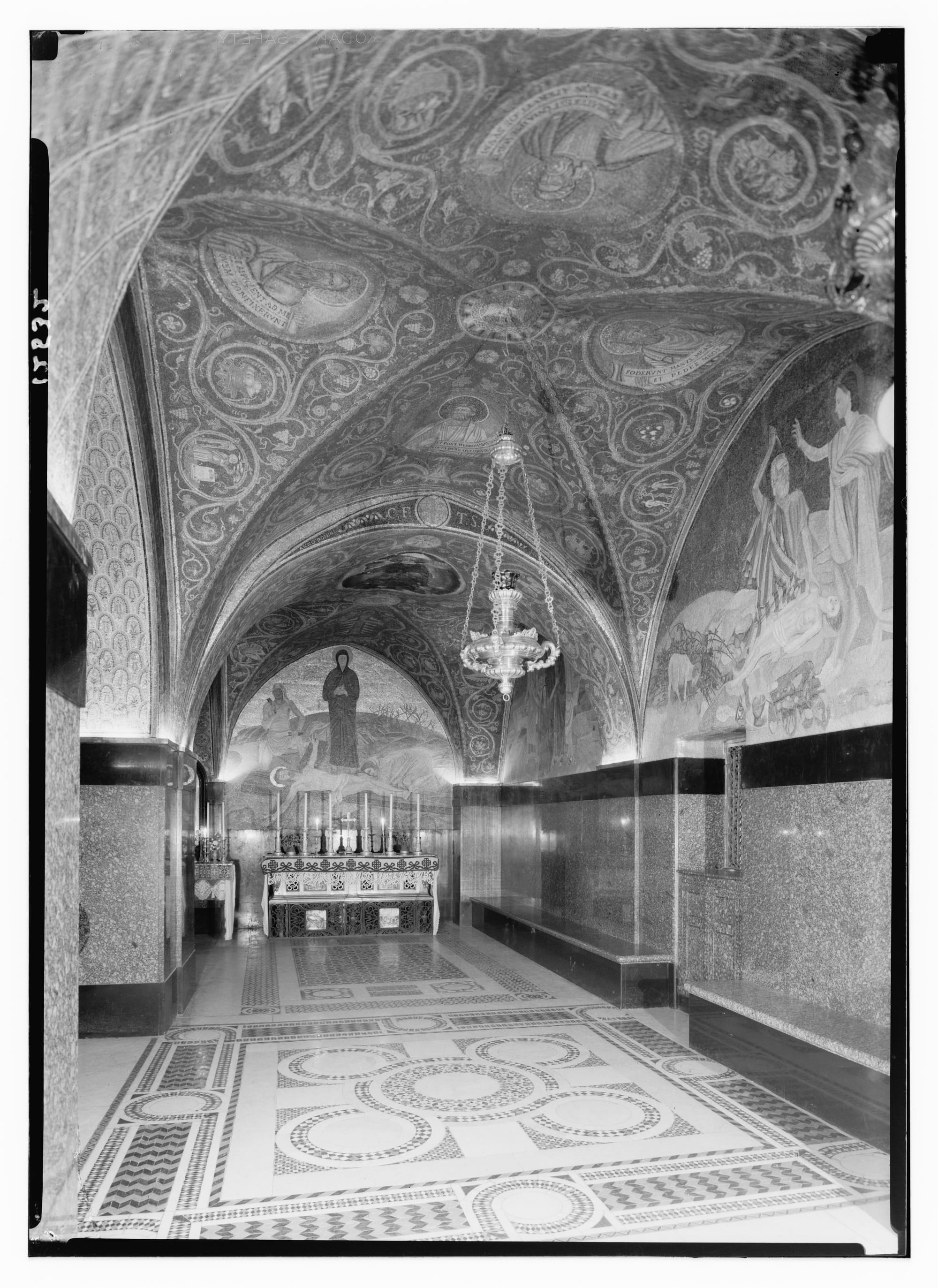
Chapter 14. The Role of the Catholic Church
The Catholic Church has an important role in preserving Christian heritage and supporting vulnerable communities throughout the Middle East.
Its activities include maintaining churches and pilgrimage sites, operating schools and healthcare facilities, supporting humanitarian work and promoting dialogue among religious communities.
The Latin Patriarchate of Jerusalem and the Franciscan Custody of the Holy Land are among the key Catholic institutions in the region. Their responsibilities include pastoral care, education, the maintenance of sacred sites and support for local Christian communities.
Catholic religious orders and charitable organisations also assist people affected by war, displacement and poverty, often providing services to beneficiaries regardless of religious affiliation.
The Holy See has consistently supported dialogue and the protection of religious freedom. Its diplomatic approach has included calls for peace, protection of civilians and negotiated solutions to the Israeli-Palestinian conflict.
However, the Church's influence has limits. Religious institutions cannot independently resolve territorial disputes, guarantee the security of communities or replace the responsibilities of governments and international organisations.
Their contribution is most effective when combined with legal protection, humanitarian assistance, economic development and meaningful political efforts to resolve conflicts.
The Catholic Church must also be attentive to the diversity of local Christian communities. Supporting Catholic institutions should not mean overlooking Orthodox, Protestant or other Christian traditions, nor should the defence of Christians be used as a justification for hostility towards Muslims or Jews.
Chapter 15. What Should Be Protected?
The future of Christianity in the Middle East depends on protecting both tangible heritage and the rights of living communities.
Historic churches, monasteries, manuscripts and pilgrimage routes are important parts of humanity's cultural heritage. Their preservation allows future generations to understand the religious, artistic and intellectual history of the region.
Yet buildings alone cannot sustain a religious tradition. A church without a living congregation may survive as a monument while the community that created and maintained it disappears.
Protecting Christian life therefore requires:
- Freedom of religion: People must be able to practise their faith, attend services and maintain religious institutions without intimidation or unjustified restrictions.
- Equal legal protection: Laws should protect people regardless of religious affiliation, including protection against discrimination and violence.
- Security for civilians: Governments and armed groups must respect civilian life and protect homes, places of worship, schools and hospitals.
- Economic opportunity: Families need access to employment, education, healthcare and housing so that emigration is not the only realistic option.
- Protection of cultural heritage: Historic sites and religious objects should be preserved and protected from destruction, looting and politicised misuse.
- Interreligious dialogue: Religious leaders and civil society should challenge dehumanising rhetoric and encourage cooperation across communal boundaries.
- Accountability: Allegations of attacks, discrimination or violations of religious freedom should be investigated through credible and impartial processes.
These principles apply to Christians, Jews, Muslims and people of other or no religious affiliation. They are not privileges for one community but foundations of a just society.
Chapter 16. Conclusion: A Shared Responsibility
The history of Christianity in the Middle East cannot be separated from the history of Judaism, Islam, the Roman and Byzantine empires, the rise of Arab and Ottoman political structures, European imperial involvement and modern national movements.
The name Palestine reflects a long and changing geographical history, while modern Palestinian identity has developed through its own historical experiences. Neither Palestinian identity nor Jewish historical connection to the land needs to be denied in order to recognise the other.
Catholicism is one part of a much broader Christian presence in the region. From Jerusalem and Bethlehem to Jordan, Syria, Lebanon and Sinai, Christian communities have contributed to religious life, education, culture and social welfare for centuries.
Their future is uncertain in some areas because of conflict, displacement, economic crisis and emigration. In other places, churches and communities continue to operate, although their circumstances vary.
A balanced perspective must acknowledge the legitimate security concerns of Israelis, the rights and aspirations of Palestinians, the vulnerability of local Christian communities and the religious significance of the region for Jews and Muslims.
It must also reject the idea that one community's suffering cancels out another's. Civilian deaths, forced displacement, discrimination and attacks on religious sites deserve serious attention regardless of the identity of the victims or perpetrators.
The Holy Land should not be understood only as a collection of sacred sites or competing territorial claims. It is also a home to millions of people whose lives, families and futures are inseparable from the land.
Preserving its religious heritage means protecting the people who sustain it. Building peace requires historical honesty, equal rights, security, accountability and the recognition that no lasting solution can be achieved by denying the humanity or existence of another community.
Sources and Further Reading
The following institutions and publications provide useful starting points for verifying the historical, religious and political information discussed in this report. For publication, individual claims should be checked against the latest available material, especially when they concern current security conditions, demographic estimates or legal developments.
1. United Nations
United Nations General Assembly — Question of Palestine and relevant resolutions
Information on the 1947 partition recommendation, the status of Palestine at the United Nations and the broader diplomatic context.
Website: https://www.un.org/unispal/
United Nations — The Question of Palestine
Background on the history and political status of Palestine.
Website: https://www.un.org/unispal/history/
2. UNESCO
UNESCO World Heritage Centre — Saint Catherine Area
Information about the historic monastery and the cultural heritage of the Sinai region.
Website: https://whc.unesco.org/
UNESCO World Heritage Centre — Old City of Jerusalem and its Walls
Historical and cultural information about Jerusalem's Old City.
Website: https://whc.unesco.org/
3. The Holy See
Second Vatican Council — Nostra aetate
The declaration on the relationship of the Catholic Church with non-Christian religions, including Judaism and Islam.
Website: https://www.vatican.va/
The Holy See — Relations with the Middle East
Statements, diplomatic initiatives and material concerning peace, religious freedom and the protection of Christian communities.
Website: https://www.vatican.va/
4. Latin Patriarchate of Jerusalem
Information about Catholic pastoral life, local Christian communities, schools and institutions in Jerusalem, Palestine, Israel and Jordan.
Website: https://www.lpj.org/
5. Franciscan Custody of the Holy Land
Historical and contemporary information about Catholic sites, pilgrimage, preservation and Franciscan activity in the Holy Land.
Website: https://www.custodia.org/
6. European Union Agency for Asylum (EUAA)
Country-of-origin information reports concerning Syria and other countries, including security conditions, displacement and the circumstances of religious minorities.
Website: https://euaa.europa.eu/
7. U.S. Department of State
International Religious Freedom Reports
Country reports documenting laws, policies and reported incidents concerning religious freedom. These reports are useful reference material but should be compared with independent sources and local testimony.
Website: https://www.state.gov/international-religious-freedom-reports/
8. Encyclopaedia Britannica
Historical background on Christianity, the Philistines, Palestine and the development of the region's religious traditions.
Website: https://www.britannica.com/
9. Encyclopaedia of Islam and academic historical research
For more detailed research into the Arabic term Filastin, early Islamic administrative districts and the changing geographical meaning of Palestine, consult academic reference works and peer-reviewed historical publications.
10. Additional research recommendations
For a balanced account, consult sources representing different perspectives, including Palestinian, Israeli, Christian, Jewish, Muslim and international scholarly institutions. Give priority to primary documents, peer-reviewed research, official legal texts and independently corroborated reporting.
Publication Note
This article is intended as an independent historical and journalistic overview, not as a substitute for specialist legal, theological or country-specific research. Historical interpretations and political claims should be distinguished from established facts, and current developments should be checked immediately before publication.
For the image credits, retain the original file-page links and licence information with the article. Creative Commons attribution normally requires identifying the creator, providing the source and licence, and indicating whether changes were made. CC BY-SA licences additionally require qualifying adaptations to be shared under the same or a compatible licence.