
Israel Votes After October 7
Israel's 2026 election delivers record turnout but no clear majority, leaving Netanyahu and his opponents facing difficult coalition negotiations.
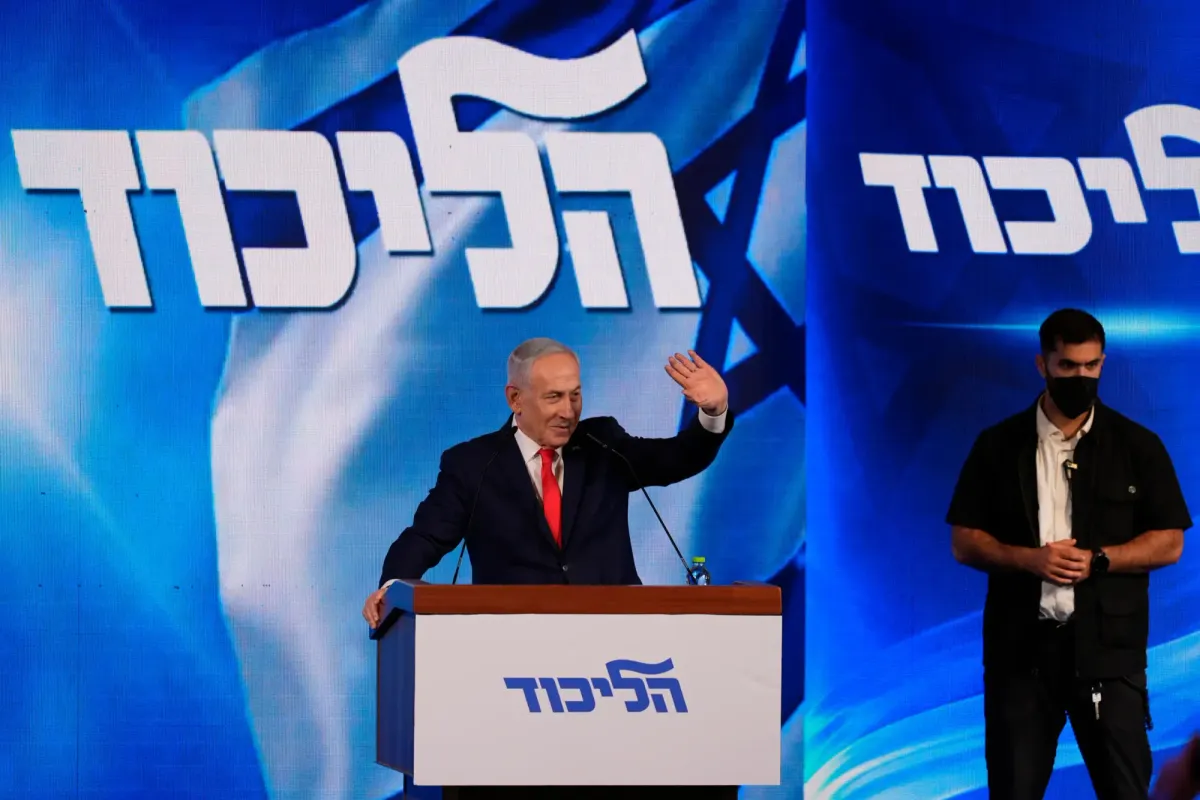
Netanyahu Leads, but the Battle for Power Remains Unresolved
Israel's first general election since the Hamas-led attacks of October 2023 has produced a record turnout and a deeply divided parliament. As votes continue to be counted, the country faces difficult questions about political leadership, national security and its future direction.
Beyond the Lines | 28 October 2026
Category: Israel | Politics | In-Depth
Estimated reading time: 11–13 minutes
The Story in Brief
Israel went to the polls on 27 October 2026 in one of the country's most consequential elections in recent history.
With voter turnout reaching approximately 77.7%, the highest since 1999, Israelis demonstrated an extraordinary level of political engagement.
Prime Minister Benjamin Netanyahu's Likud emerged as the largest party in preliminary results, but neither his governing alliance nor the opposition secured an outright parliamentary majority.
The election also produced a strong showing for Arab-led parties, potentially giving them considerable influence over the formation of the next government.
For many Israelis, the vote represented more than a choice between political parties. It was an opportunity to assess the government's handling of the October 7 attacks, subsequent wars, economic pressures and the future of Israeli democracy.
With the final results still pending, the central question remains unanswered: who can assemble a stable government capable of leading Israel through its next chapter?
Introduction: An Election Unlike Any Other
On Tuesday, 27 October 2026, millions of Israelis entered polling stations to choose the country's next parliament.
The election took place against a backdrop of extraordinary national upheaval.
Since the Hamas-led attacks of 7 October 2023, Israel has experienced prolonged military conflict, domestic political tensions, disputes over military service and growing international scrutiny.
The consequences have extended far beyond the battlefield.
Families have confronted loss and displacement. Military reservists have faced repeated periods of service. Businesses and communities have struggled with uncertainty, while political disagreements have intensified.
Against this background, the election became a referendum not only on Prime Minister Benjamin Netanyahu's leadership but also on competing visions of Israel's future.
Supporters of Netanyahu have emphasised his experience, his government's military response to regional threats and his determination to protect Israel's security.
His opponents have questioned his responsibility for the failures preceding October 7, criticised the influence of far-right coalition partners and argued that Israel requires a different political direction.
Yet the preliminary results suggest that neither side has persuaded enough voters to deliver a decisive parliamentary majority.
1. The Election Results: What We Know So Far
Israel's parliamentary system consists of 120 seats in the Knesset.
A governing coalition normally requires the support of at least 61 members.
According to preliminary results reported on the morning of 28 October, with approximately 66.2% of ballot boxes counted, the parliamentary balance stood at:
| Political grouping | Preliminary seats |
|---|---|
| Netanyahu-aligned bloc | 56 |
| Eisenkot-aligned opposition bloc | 48 |
| Arab-led parties | 16 |
| Total | 120 |
Important: These are provisional seat projections based on partial counting, not certified election results.
The figures illustrate the challenge facing both major political camps.
Netanyahu's bloc remains short of the 61 seats required for a majority.
The opposition, led by former military chief Gadi Eisenkot, also lacks sufficient seats to govern independently.
The Arab-led parties could therefore become particularly important during coalition negotiations.
However, political differences between the parties make any potential governing arrangement complicated.
Additional ballots, including those cast by soldiers and other eligible voters using special voting procedures, remain to be counted.
The final distribution of parliamentary seats could change.
2. Benjamin Netanyahu: Political Survival and a Divided Electorate
Benjamin Netanyahu has dominated Israeli politics for much of the past three decades.
As Israel's longest-serving prime minister, he has built his political reputation around national security, diplomatic relationships and opposition to threats from Iran and armed organisations hostile to Israel.
His supporters regard him as an experienced leader capable of navigating an exceptionally dangerous regional environment.
They point to his longstanding warnings about Iran's nuclear ambitions, his international diplomatic experience and his government's willingness to use military force against security threats.
However, his leadership has also generated intense controversy.
Critics accuse his governments of deepening divisions within Israeli society, weakening democratic safeguards and failing to address the security vulnerabilities exposed on 7 October 2023.
Netanyahu's ongoing corruption trial has also remained a significant issue in Israeli political life. He denies wrongdoing.
The election demonstrates that Netanyahu continues to command substantial electoral support.
But electoral strength does not automatically translate into the ability to govern.
Even if Likud finishes as the largest party, Netanyahu must still secure enough parliamentary backing to form a coalition.
That may prove considerably more difficult than winning the largest individual share of the vote.
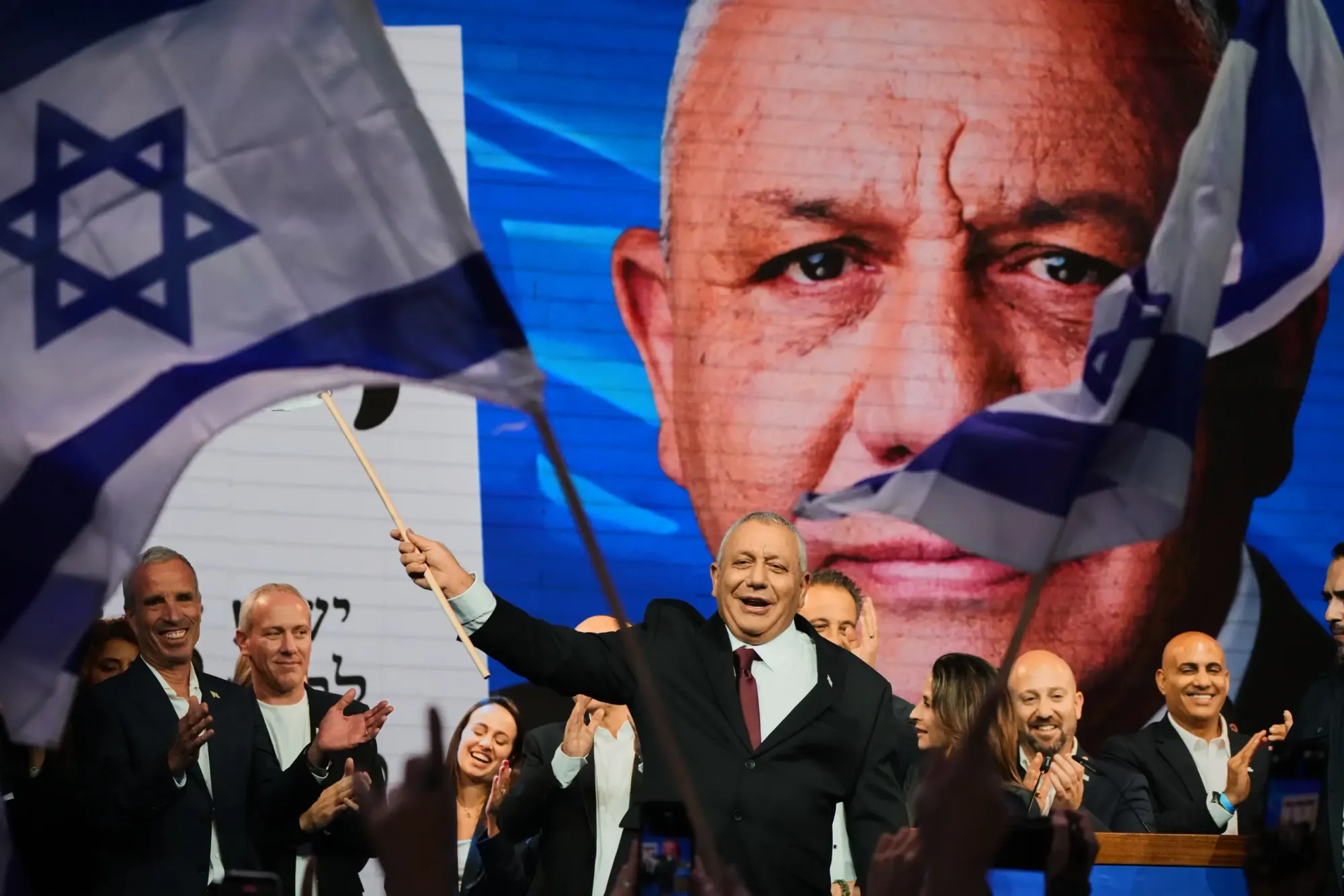
3. Gadi Eisenkot and the Search for Political Change
One of the central figures in the election is Gadi Eisenkot, a former chief of staff of the Israel Defense Forces.
Eisenkot's political appeal rests partly on his military background and his argument that Israel requires a different approach to national leadership.
His Yashar party emerged as Likud's principal challenger.
Unlike politicians whose careers developed primarily within party organisations, Eisenkot entered national politics after decades of military service.
His supporters regard his security experience as an important qualification for leadership during a period of regional instability.
Eisenkot has advocated a formal investigation into the failures surrounding October 7, changes to military service arrangements and stronger action against extremist violence in the West Bank.
Nevertheless, building an alternative government presents major challenges.
Israel's opposition contains parties with substantially different positions on religion, national identity, security policy and the Israeli-Palestinian conflict.
Their shared opposition to Netanyahu does not necessarily mean they agree on how Israel should be governed.
The central challenge for Eisenkot is therefore political rather than simply electoral: transforming opposition support into a workable governing majority.
4. October 7 and the Question of Government Responsibility
The attacks of 7 October 2023 fundamentally changed Israeli politics.
Hamas-led militants attacked communities and military positions in southern Israel, killing approximately 1,200 people and taking around 250 hostages, according to widely reported Israeli figures.
The attacks exposed serious failures in intelligence, military preparedness and border defence.
They also triggered a devastating war in Gaza and contributed to a wider period of regional conflict.
For many Israelis, the election raised a difficult question:
Who should bear political responsibility for the failures that allowed the attacks to happen?
Netanyahu's critics argue that a government responsible for national security must be held accountable for failures of such magnitude.
His supporters contend that responsibility extends across Israel's political, intelligence and military institutions and should not be attributed to one individual alone.
These positions are not necessarily mutually exclusive.
Institutional failures can involve several organisations while still raising questions about the responsibility of elected leaders.
The debate over an independent investigation has therefore become a central issue in Israeli political life.
For families directly affected by the attacks, questions of accountability remain particularly important.
The election has not resolved those questions.
It has instead demonstrated how profoundly they continue to divide the country.
5. The Arab Vote: A Potential Turning Point
One of the most significant developments in the election has been the strong performance of Arab-led political parties.
Arab citizens constitute approximately one-fifth of Israel's population and participate in national parliamentary elections.
They represent diverse religious, political and social communities, including Muslims, Christians and Druze.
Their political priorities are equally varied.
These include economic opportunity, education, public safety, infrastructure, equality and the Israeli-Palestinian conflict.
Preliminary results indicate that Arab-led parties could secure approximately 16 seats, while election-night projections had suggested an even higher figure.
Their parliamentary representation could prove decisive.
If neither of the principal political blocs reaches 61 seats, support from Arab-led parties could influence who is able to form a government.
However, cooperation remains politically sensitive.
Some Jewish-led parties have historically resisted relying on Arab parties for parliamentary support, particularly when their positions on Palestinian national rights and Israeli security policy differ substantially.
There is nevertheless a precedent for such cooperation.
In 2021, the Arab Islamist Ra'am party joined the governing coalition led by Naftali Bennett and Yair Lapid.
That experience demonstrated that political cooperation across longstanding divisions is possible, although difficult to sustain.
The 2026 election may once again test whether Israel's political system can accommodate such arrangements.
6. Military Service and the Ultra-Orthodox Debate
Another major election issue concerns military service.
Israel's defence system relies heavily on compulsory military service and reserve mobilisation.
However, longstanding exemptions and deferments affecting many ultra-Orthodox Jewish men have become increasingly controversial.
The issue gained particular urgency following the military demands created by the conflicts after October 7.
Many reservists and their families have questioned whether the burden of national defence is being distributed fairly.
Ultra-Orthodox political parties, meanwhile, have defended the importance of religious study and the preservation of their communities' way of life.
The disagreement is not simply a dispute over military manpower.
It concerns the relationship between religion and state, equality before the law and the obligations of citizenship.
Any future coalition will have to confront these questions.
For Netanyahu, the issue is especially sensitive because ultra-Orthodox parties have historically been important coalition partners.
For opposition leaders, reforming military service arrangements has become a prominent political commitment.
A durable compromise will be difficult to achieve.
7. Security, Gaza and Israel's Regional Position
National security remained central throughout the election campaign.
Israel continues to face difficult strategic questions involving Gaza, Lebanon, Iran and armed organisations operating across the region.
Different political parties disagree over the balance between military operations, diplomatic negotiations and longer-term political arrangements.
For Netanyahu's supporters, maintaining military strength and deterrence is essential to preventing further attacks.
Critics argue that military power alone cannot provide a sustainable solution to Israel's regional challenges.
The war in Gaza has also generated severe humanitarian consequences for Palestinian civilians and intense international debate over Israel's military conduct.
Questions concerning humanitarian access, civilian protection, accountability and the future governance of Gaza remain unresolved.
These issues cannot be separated from Israel's domestic political future.
Any incoming government will need to address not only immediate security threats but also the longer-term political consequences of the conflict.
The election therefore matters beyond Israel's borders.
Its outcome will influence relationships with the United States, European governments, neighbouring Arab states and international institutions.
8. Why the High Voter Turnout Matters
Approximately 77.7% of eligible voters participated in the election.
This represents Israel's highest national election turnout since 1999.
The figure is significant.
High participation does not necessarily indicate political unity or confidence in existing institutions.
In deeply divided societies, it can also reflect intense concern about the country's direction.
For some voters, the election offered an opportunity to support continuity in national leadership.
For others, it represented a chance to demand political change.
The unusually strong turnout among Arab voters was also important.
It suggests substantial political mobilisation within communities whose participation has varied considerably between previous elections.
Taken together, the figures indicate that Israelis across different political and social groups regarded this election as exceptionally consequential.
The democratic process has attracted widespread participation.
Whether the resulting parliament can produce stable government is another matter.
9. What Happens Next?
Once the final results are confirmed, attention will turn to coalition formation.
Israel's president, Isaac Herzog, will consult representatives of the elected parliamentary parties.
He will then assign the task of forming a government to the Knesset member considered most likely to succeed.
That individual does not automatically have to lead the largest party.
The decisive question is whether a prospective prime minister can assemble sufficient parliamentary support.
Three broad outcomes remain possible.
A Netanyahu-led government
Netanyahu could remain prime minister if his political allies secure a majority or if additional parties agree to support him.
An alternative government
Eisenkot or another opposition figure could attempt to construct a coalition capable of replacing Netanyahu.
Such an arrangement could require cooperation between parties with substantial ideological differences.
Continued political deadlock
If neither side can form a government, Israel could enter another period of political uncertainty, potentially leading to further elections.
This would not be unprecedented.
Between 2019 and 2022, Israel held five national elections amid repeated difficulties forming stable governments.
The coming coalition negotiations may therefore prove as important as the election itself.
10. What This Means for Israel
The election has revealed several important political realities.
First, Netanyahu remains a formidable political figure despite years of controversy and criticism.
Second, a substantial part of the electorate wants an alternative direction.
Third, Arab-led parties may hold greater influence over the formation of the next government than in many previous elections.
Finally, Israel's political divisions extend beyond individual leaders.
They involve competing ideas about national security, democratic institutions, religious identity, equality and the country's relationship with the wider world.
These disagreements cannot be resolved through a single election.
A government that emerges from the current negotiations will face immediate pressure to demonstrate competence, legitimacy and stability.
It will also inherit difficult questions about October 7, the consequences of war and Israel's long-term security.
The ability to address those questions may ultimately matter more than which political leader claims victory on election night.
Conclusion: A Country at a Political Crossroads
Israel's election of 27 October 2026 has demonstrated both the strength of political participation and the depth of national division.
Millions of citizens voted in an election shaped by war, insecurity and fundamental disagreements over leadership.
Benjamin Netanyahu's Likud remains the largest party in preliminary results.
But the broader parliamentary picture remains uncertain.
The opposition has demonstrated substantial support, while Arab-led parties could play an important role in determining the country's political future.
The election has therefore produced neither an unequivocal endorsement of the existing government nor a decisive mandate for its replacement.
Instead, it has left Israel facing a familiar challenge under unusually difficult circumstances: turning a fragmented parliamentary result into a functioning government.
The final outcome will determine who leads Israel.
The more important question is whether that leadership can rebuild public confidence, address institutional failures and provide a credible direction for a country still confronting the consequences of October 7.
Sources & References
- Associated Press, 28 October 2026. Israelis await final election results as Netanyahu remains far from defeated. Reporting on preliminary results, voter turnout and coalition possibilities.
- The Times of Israel, 28 October 2026. With over 66% of ballots counted, Netanyahu-led bloc at 56 seats. Preliminary parliamentary projections based on Central Elections Committee figures.
- The Times of Israel, 27–28 October 2026. Israel Election Live Updates. Election-night developments, exit polls, turnout and statements by political leaders.
- Agence France-Presse (AFP), 27 October 2026. Israel opposition holds narrow edge over Netanyahu in first projections. Initial election projections and political reactions.
- The Washington Post, 28 October 2026. No clear winner in Israeli vote, exit polls indicate. Election analysis and the political challenges facing both major blocs.
- Israel Central Elections Committee. Official election administration and counting process for the 26th Knesset.
- The Knesset. Official parliamentary information concerning Israel's electoral system, government formation and parliamentary representation.
Editorial Note
This article was prepared on 28 October 2026 while votes were still being counted.
All parliamentary seat figures are preliminary and may change as additional ballots are counted and verified.
The article distinguishes between reported election results, statements by political leaders and analysis of potential coalition outcomes.
Beyond the Lines will update the article when the official results become available.


