Voices from Captivity: The Stories of Israel's Released Hostages
An in-depth investigation into the experiences of Israeli hostages, the families who fought for their return, and the lasting consequences of captivity.
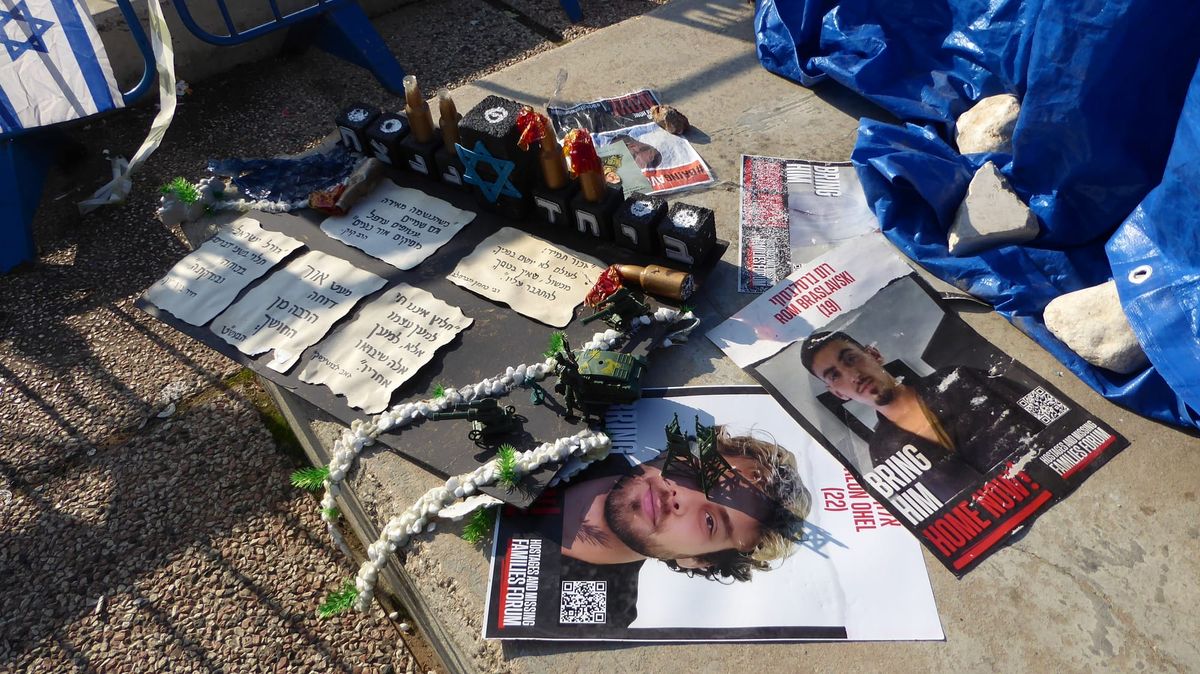
Survival, Sexual Violence, Psychological Terror and the Long Road Home
Introduction — Beyond the Headlines, Behind the Hostage Stories
On October 7, 2023, the lives of hundreds of people changed in ways that few could ever have imagined.
What began as an ordinary Saturday morning in southern Israel became one of the darkest days in the country's history. Families were torn apart, communities were attacked, homes were destroyed, and men, women, children and elderly people were taken from their homes, from the streets and from a music festival into captivity in the Gaza Strip.
For those who were abducted, October 7 was not the end of the attack. It was the beginning of another ordeal, one that would unfold far from public view, behind locked doors, inside residential buildings and in underground tunnels.
For weeks, months and, in some cases, more than two years, hostages were held without freedom, without reliable communication with their families and without knowing whether they would survive to see another day.
Some were physically assaulted. Some endured prolonged hunger, isolation, humiliation and psychological intimidation. Survivors have described threats of death, fear of sexual violence, and the constant uncertainty of not knowing what their captors might do next.
Several former hostages have publicly testified about sexual assault and other forms of sexual abuse during captivity. Their accounts have brought attention to an especially painful dimension of the hostage crisis, one that many survivors have found extraordinarily difficult to discuss.
Others have described the emotional consequences of being separated from their children, partners, parents and friends, sometimes without knowing whether their loved ones were alive.
And for many, the suffering did not end with their release.
Freedom brought relief, but it also brought new challenges: returning to a society that had continued moving while their own lives had been suspended, learning what had happened to their families, confronting physical injuries, and beginning the long and uncertain process of psychological recovery.
The world watched the hostage crisis through news reports, diplomatic negotiations, demonstrations and images of emotional reunions.
But behind those images were individual human beings.
A mother who wondered whether she would ever hold her children again.
A young woman who feared that every night might bring another assault.
A father who tried to remain strong while being separated from his family.
A child who struggled to understand why strangers had taken away their freedom.
A young man who entered captivity believing he might never return home.
Their experiences cannot be reduced to political statements, military developments or the language of international negotiations.
They are stories of human survival.
The Voices That Emerged From Captivity
As hostages were released through negotiations, exchanges and other circumstances, some began speaking publicly about what had happened to them.
Their testimonies revealed experiences that had largely remained hidden during their captivity.
Former hostage Amit Soussana described being subjected to sexual violence while held in Gaza. Her decision to speak publicly became an important moment in the wider discussion about the treatment of hostages and the recognition of sexual violence committed during the conflict.
Moran Stela Yanai, who was abducted from the Nova music festival and held for 54 days, has spoken about the terrifying mental calculations she made to prepare herself for the possibility of rape or murder.
Other survivors have described being held in darkness, deprived of adequate food, threatened, moved between locations and subjected to prolonged psychological pressure.
Their experiences were not identical. Captivity conditions varied, and individual testimonies must be understood within their specific circumstances.
Yet recurring themes emerge: fear, helplessness, isolation, uncertainty and the determination to survive.
Some survivors have spoken extensively. Others have shared only parts of their experiences. Some have chosen not to speak publicly at all.
That silence must also be respected.
Surviving captivity does not create an obligation to relive traumatic experiences for the public.
Why These Stories Must Be Documented
The hostage crisis became a central part of the war that followed October 7.
Governments debated negotiations. International organizations called for releases. Families campaigned tirelessly. Military operations continued, and the humanitarian catastrophe in Gaza grew.
But the human experiences of those held captive must not disappear behind the political arguments surrounding the conflict.
Documenting these stories is not about denying the suffering of Palestinian civilians or suggesting that one community's pain cancels out another's.
It is about recognizing that deliberately taking civilians hostage, abusing people in captivity and using human beings as instruments of political or military pressure are grave violations of fundamental human rights.
It is also about understanding what survivors themselves say happened to them.
Not every allegation can be independently verified. Some experiences remain known only through individual testimony, while others are supported by medical findings, multiple witness accounts or investigations.
Responsible journalism must preserve those distinctions.
But the difficulties of verification do not make survivor testimony unimportant.
On the contrary, they make careful documentation, corroboration and historical preservation essential.
The Long Road Home
The moment a hostage is released is often portrayed as the conclusion of a story.
In reality, it may mark the beginning of another difficult chapter.
Former hostages may return with injuries, nutritional deficiencies, sleep disturbances, anxiety and symptoms of post-traumatic stress.
Some must grieve relatives or friends who were killed while they were held captive.
Others face the complicated process of rebuilding relationships and reclaiming control over ordinary decisions that captivity had taken away.
The ability to choose when to eat, when to sleep, where to go or whom to speak with can carry a significance that outsiders may struggle to comprehend.
Recovery is rarely straightforward.
For some survivors, telling their stories becomes part of their effort to reclaim their voices.
For others, healing requires privacy and distance from public attention.
There is no single correct way to survive trauma, and no universal timetable for recovery.
The Purpose of This Investigation
This Beyond the Lines investigation examines the experiences of Israelis and other people taken hostage during the October 7 attacks and subsequently held in Gaza.
It follows their stories from the moment of abduction through captivity, release and the challenges of returning home.
Through publicly available survivor interviews, documented testimonies, investigative reporting and findings from international organizations, it explores the conditions of captivity, allegations and evidence of abuse, the psychological consequences of prolonged detention, and the difficult questions of accountability.
The investigation also examines the experiences of families who waited for news, sometimes for months or years, without knowing whether their loved ones were alive.
Some of the accounts that follow are deeply disturbing.
They are included not for shock value, but because understanding the hostage crisis requires confronting what survivors have described, even when those experiences are painful to read.
The stories deserve accuracy rather than exaggeration, compassion rather than sensationalism, and attention that extends beyond the immediate news cycle.
Because behind every photograph of a released hostage is a life that cannot simply return to the way it was before.
And behind every testimony is a person who survived an experience that should never have happened.
Their voices deserve to be heard.
Their experiences deserve to be documented.
And their stories deserve to remain part of the historical record.
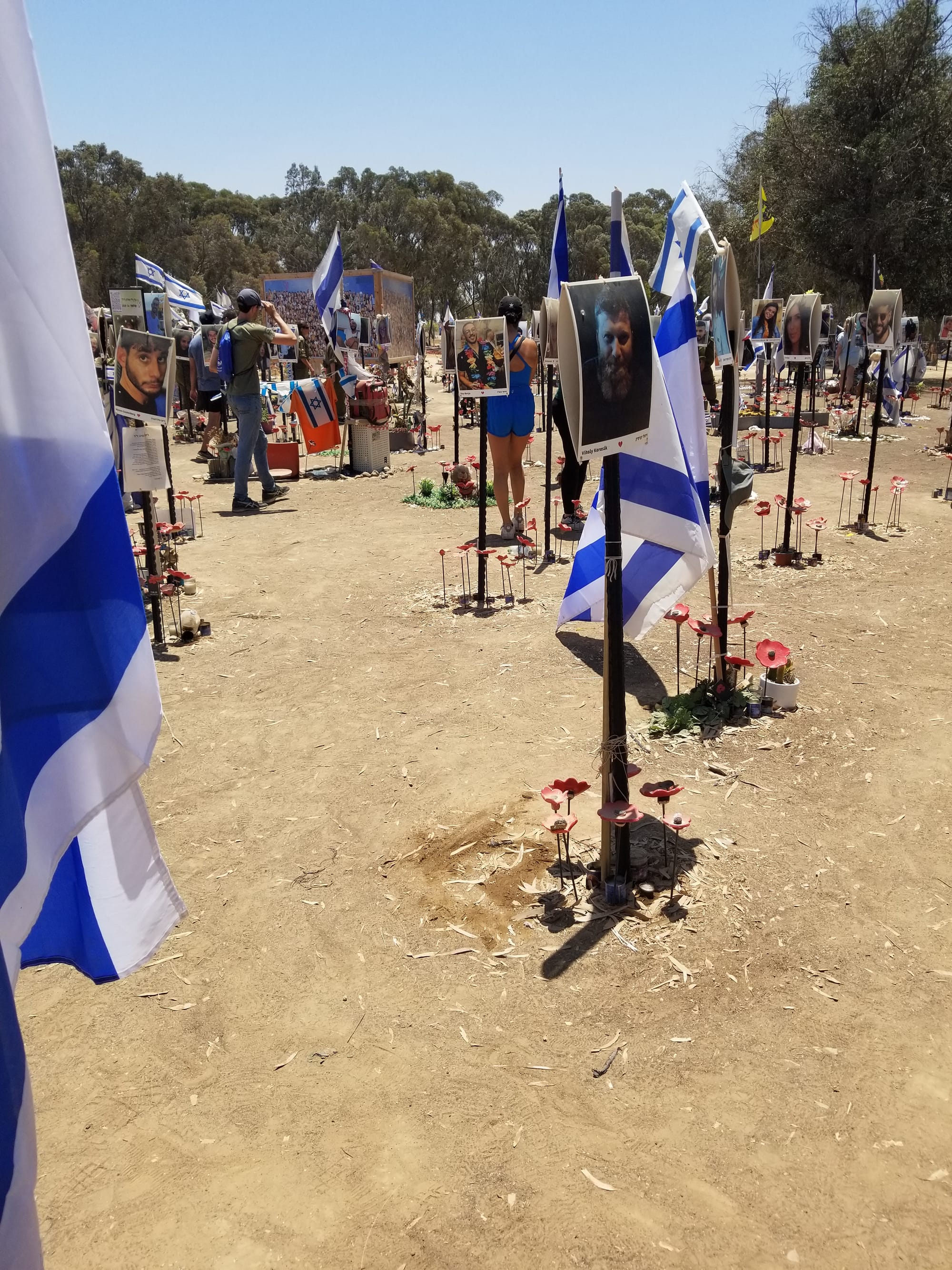
Chapter 2 — Moran Stela Yanai: Preparing for the Unthinkable
A Life Interrupted at the Nova Music Festival
Before October 7, 2023, Moran Stela Yanai was an Israeli jewelry designer and entrepreneur with dreams, ambitions and a life that had nothing to do with the war that would soon consume her country.
She had traveled to the Nova music festival near Re'im in southern Israel to sell her handmade jewelry. The event brought together thousands of people for a celebration of music, creativity and community.
For Moran, the festival was an opportunity to share her work and connect with people.
She could not have known that this ordinary professional opportunity would become the beginning of 54 days of captivity.
When Hamas-led attackers launched their assault on southern Israel on the morning of October 7, the festival became one of the principal sites of the massacre.
As rockets appeared overhead and gunfire spread across the surrounding area, festivalgoers began fleeing.
Some attempted to escape in vehicles. Others ran into nearby fields, desperately searching for places to hide.
Moran was among those trying to survive.
During her escape, she injured her legs, severely limiting her ability to continue running. Her injuries left her particularly vulnerable as armed attackers moved through the area.
She attempted to hide, but was eventually discovered.
Video footage recorded by her captors documented part of the terrifying encounter.
For Moran, the realization that she could no longer escape marked a decisive moment.
The choices available to her had narrowed dramatically.
She could not outrun the attackers. She could not defend herself against a group of armed men. She could not know whether resistance would result in her immediate death.
Instead, she began concentrating on something that would become central to her survival: controlling her own reactions.
Her physical freedom was about to be taken away.
But she was determined to preserve as much control over her mind as possible.
The Moment of Capture
In interviews after her release, Moran described the circumstances of her capture and the calculations she made when she realized she was surrounded.
She understood that fighting back against armed attackers would likely be futile.
Rather than attempting to resist physically, she tried to remain calm and avoid provoking further violence.
This was not acceptance of what was happening.
It was a survival decision made under extreme duress.
Moran has described being beaten during her transfer into Gaza.
Already injured from her attempted escape, she entered captivity in physical pain and with little understanding of what would happen next.
The journey into Gaza exposed her to another dimension of the attack.
She was no longer simply trying to escape the violence at the festival.
She was being forcibly transported into territory controlled by the armed group holding her captive.
She did not know where she would be taken, how long she would be detained or whether she would survive.
The uncertainty was overwhelming.
But even in those first hours, Moran began developing a mental strategy.
She would try to observe her surroundings.
She would assess the behavior of her captors.
She would conserve her strength.
And she would prepare herself psychologically for possibilities that no person should ever have to contemplate.
Fifty-Four Days Without Freedom
Moran remained in Gaza from October 7 until November 29, 2023.
During those 54 days, she was held under the control of Hamas captors and deprived of the ability to communicate freely with the outside world.
Her experience was characterized by physical injuries, fear, psychological pressure and uncertainty.
In later interviews, she described periods of deprivation and intimidation.
She had no reliable way of knowing what was happening in Israel, whether her loved ones were safe or whether negotiations might secure her release.
The absence of trustworthy information became a powerful source of psychological pressure.
For a hostage, time does not necessarily pass in the same way it does for someone living freely.
There are no ordinary plans to make.
No certainty about tomorrow.
No guarantee that the next meal will arrive, that an injury will be treated or that the people controlling the room will behave predictably.
Even the most basic decisions are taken away.
When to sleep.
When to move.
When to speak.
Whether to ask for something.
Whether to remain silent.
For Moran, survival required continuous attention to the behavior of those around her.
She has described trying to understand the moods and intentions of her captors, knowing that a change in their behavior could have serious consequences.
This constant state of vigilance can become psychologically exhausting.
A person living under such conditions may have little opportunity to relax, even temporarily.
Every interaction can carry the possibility of danger.
Every unexpected movement or instruction can create uncertainty.
For Moran, captivity was not merely the absence of freedom.
It was a prolonged struggle to remain physically and psychologically intact.
Preparing for Rape, Violence and Death
One of the most disturbing aspects of Moran's testimony concerns the mental preparation she undertook for the possibility of sexual violence or murder.
In an interview with journalist Amelie Botbol, published by JNS on October 18, 2026, Moran spoke openly about how she attempted to prepare herself for whatever her captors might do.
She explained that she had mentally confronted the possibility of being raped or killed.
Her words reveal an important distinction between experiencing an act of violence and living under the continuous fear that it may happen.
Moran's statement describes her preparation for possible sexual assault. It should not, by itself, be interpreted as confirmation that rape occurred.
Nevertheless, the psychological significance of her testimony is profound.
She was a woman held captive by armed men who controlled her movements, her surroundings and many of her basic needs.
She could not leave.
She could not summon independent protection.
She did not know what boundaries her captors might cross.
Under those circumstances, the fear of sexual violence became part of her daily struggle for survival.
Rather than allowing that fear to overwhelm her, Moran attempted to anticipate it.
She tried to prepare herself emotionally for outcomes that were terrifying to contemplate.
This form of mental preparation reflects the extraordinary pressure that captivity can place on a person's sense of bodily autonomy.
Sexual violence is not limited in its consequences to the physical act itself.
Threats, coercion, humiliation and the fear of assault can produce severe psychological distress.
When a person is detained by armed captors, the inability to escape or refuse creates an extreme imbalance of power.
For women and men held hostage, the possibility of sexual abuse can become a persistent source of terror.
Moran's account illustrates how that fear can shape a survivor's thoughts even when the precise actions of captors are not publicly documented.
It also raises broader questions about how the international community understands psychological violence against hostages.
Physical injuries can sometimes be photographed, medically examined or otherwise documented.
Fear is less visible.
Yet the psychological experience of believing that rape or death may be imminent can leave consequences that continue long after a person is released.
When Crying Became Dangerous
Another particularly revealing aspect of Moran's testimony concerns her emotional reactions to physical punishment.
In her October 2026 interview, she explained that when captors beat or punished her, she sometimes cried in an attempt to make them stop.
Her account suggests that crying was not simply an involuntary expression of distress.
At times, it became a calculated response intended to influence the behavior of those hurting her.
This distinction is important.
People held in captivity may develop survival behaviors that would be difficult to understand outside the circumstances in which they occur.
A hostage may appear compliant because resistance is dangerous.
They may remain silent because speaking could provoke violence.
They may display emotions strategically because those emotions seem to influence their captors.
Such behavior does not indicate consent or acceptance.
It reflects adaptation to coercion.
Moran described attempting to regain emotional control after episodes of punishment.
Her determination to avoid being psychologically overwhelmed became part of her survival strategy.
But the fact that she developed these strategies does not diminish the violence she experienced.
On the contrary, it demonstrates the degree of danger she believed she was facing.
No person should have to calculate whether showing pain might prevent further abuse.
No person should have to decide which emotional response is most likely to keep them alive.
Yet this was part of the reality Moran described.
Her testimony reveals how captivity can transform even the most instinctive human reactions into questions of survival.
The Psychological Violence of Uncertainty
Physical violence was only one part of Moran's experience.
She has repeatedly spoken about the psychological pressure of captivity.
One of the most disturbing examples involved being led to believe that she was about to be released.
In an interview with ITV News in 2024, Moran described three occasions when her captors created the impression that freedom was imminent.
She was taken outside alongside other hostages, only to discover that the anticipated release was not taking place.
For someone living in captivity, the promise of freedom carries enormous emotional significance.
It means the possibility of seeing family again.
Receiving medical treatment.
Sleeping without the immediate presence of captors.
Returning to a world in which ordinary decisions belong to the individual.
When that expectation is deliberately raised and then withdrawn, the emotional consequences can be devastating.
Hope becomes another source of vulnerability.
The hostage is placed in a position where even positive information cannot be trusted.
Moran's experience illustrates how psychological intimidation can operate without requiring continuous physical violence.
A captor can exercise power through uncertainty, misinformation and the manipulation of expectations.
The person being held cannot independently verify what they are told.
They may not know whether an announcement of release is genuine.
They may not know whether threats are intended to frighten them or signal an immediate danger.
Over time, this uncertainty can undermine the ability to distinguish between genuine opportunities for safety and further psychological manipulation.
For Moran, the experience contributed to a profound difficulty trusting what her captors told her.
That distrust would remain even when her actual release finally arrived.
Living With Injuries
Moran entered captivity with serious injuries sustained while attempting to escape the Nova massacre.
Her physical condition added another layer of vulnerability.
In subsequent interviews, she described the consequences of those injuries and the challenges of receiving treatment while being held hostage.
She has recounted receiving medical attention in Gaza, including treatment for an injured leg.
But medical treatment during captivity did not change the fundamental reality that she was being detained against her will.
She remained dependent on her captors for movement, access to care and basic necessities.
Physical injury can make captivity particularly difficult.
A person who cannot walk normally may be unable to respond quickly to danger.
Pain can interfere with sleep.
Limited mobility can increase dependence on others.
And uncertainty about medical recovery can create additional anxiety.
Moran's injuries also affected her life after release.
She later described having to relearn basic physical abilities, including walking properly.
For many people, walking is such an ordinary part of life that its importance is rarely considered.
For someone returning from captivity with injuries and physical weakness, regaining that ability can become a major milestone.
Her recovery therefore involved more than psychological healing.
It also required rebuilding physical independence.
The Outside War and the Fear of Dying
During Moran's captivity, the war between Israel and Hamas intensified.
Israeli military operations in Gaza created additional dangers for people held inside the territory.
Moran later described explosions and the effects of nearby bombardment.
In one account, she recalled a window shattering close to where she was sleeping.
For hostages, military operations presented a terrifying contradiction.
They might hope that Israeli forces would eventually bring them home.
At the same time, they could fear being killed in the fighting before any rescue or negotiated release became possible.
Without reliable information about military developments, the danger was difficult to assess.
A hostage might hear explosions without knowing their source or proximity.
They might be moved to another location without understanding why.
They might be told frightening things by their captors without any ability to determine whether those statements were true.
Moran's experience demonstrates how captivity during an active war can expose individuals to multiple overlapping threats.
They are vulnerable to the people holding them.
They are vulnerable to the physical conditions of detention.
And they may also be endangered by military operations taking place around them.
This complexity is essential to understanding the hostage crisis.
The people held in Gaza were not free participants in the conflict.
They were captives whose ability to protect themselves had been severely restricted.
Holding On to Her Humanity
One of the most striking themes in Moran's public statements is her determination not to allow captivity to define her entire identity.
She has spoken about trying to preserve her humanity even while being subjected to violence and intimidation.
This determination did not mean denying her suffering.
Nor did it mean that she was unaffected by what happened.
Rather, it reflected an effort to retain a sense of self in circumstances designed to strip away personal autonomy.
Captivity can reduce a person's world to a very small number of immediate concerns.
Food.
Water.
Pain.
Sleep.
Danger.
Survival.
Long-term ambitions may become impossible to consider.
The future can feel distant or uncertain.
Under such circumstances, preserving a personal identity can become an act of psychological resistance.
Moran was not only a hostage.
She was a woman with a profession, relationships, beliefs, memories and dreams.
Those aspects of her life existed before October 7.
And she wanted them to continue existing afterward.
Her later interviews reveal a person who has tried to interpret her survival without allowing hatred to become the central force in her life.
This is a deeply personal response.
Other survivors may experience anger, grief or a desire for justice in different ways.
There is no universal emotional reaction to captivity.
What matters is that survivors retain the right to define their own experiences.
Moran's refusal to organize her future around revenge is part of her individual story.
It should not be treated as an expectation imposed on other victims.
November 29, 2023: The Day She Was Released
After 54 days in captivity, Moran was released on November 29, 2023, during the temporary ceasefire and hostage-exchange arrangements between Israel and Hamas.
But even on the day she was freed, she did not immediately believe that her ordeal was ending.
Previous false expectations of release had taught her to distrust announcements made by her captors.
In her ITV interview, she described being blindfolded during the final transfer.
Because this had not happened to her in the same way before, she feared that she might be taken somewhere to be killed.
The possibility of freedom remained difficult to accept.
Only when the transfer progressed and she recognized that she was crossing back toward safety did she begin to understand that her captivity was truly ending.
The moment was extraordinary.
For 54 days, she had lived without the ability to determine her own future.
Now, suddenly, that future was opening again.
Images of her release showed a woman whose expression carried the complicated emotions of survival.
Relief.
Disbelief.
Exhaustion.
And the recognition that she had endured.
In later interviews, Moran explained that her smile during the transfer was not an expression of gratitude toward her captors.
It was a private acknowledgment of what she had survived.
She had reached the other side of an experience she had repeatedly feared would end in death.
For her, that realization represented a personal victory.
The First Moments With Her Family
The reunion with her family marked another turning point.
During captivity, Moran had attempted to regulate her emotional reactions because she feared that visible distress could provoke punishment.
After release, those restrictions were no longer necessary.
She could cry without having to consider how a captor might respond.
She could embrace her family.
She could begin to understand that she was no longer under the control of the people who had held her.
Yet even these moments of relief were complicated.
Returning from captivity does not automatically restore a person's sense of safety.
The body and mind may remain conditioned to expect danger.
Sudden noises, unfamiliar movements or unexpected situations can trigger fear.
Survivors may struggle to believe that they are truly free.
For Moran, the transition required both physical and psychological adjustment.
She received medical attention following her return and began the process of recovering from her injuries.
But the deeper consequences of captivity could not be resolved in a hospital examination.
They would require time, support and the gradual rebuilding of trust in everyday life.
Learning to Walk, Sleep and Live Again
In interviews after her release, Moran described how ordinary activities had become unexpectedly difficult.
Her injuries and the physical consequences of captivity affected her ability to walk normally.
She also spoke about the psychological challenges of being alone.
After weeks of confinement and fear, solitude could become frightening rather than comforting.
The return to freedom therefore involved a paradox.
During captivity, she had longed for independence.
After release, aspects of independence could trigger anxiety.
This is not unusual among survivors of prolonged traumatic detention.
The nervous system may remain highly alert even after the immediate threat has ended.
The person may intellectually understand that they are safe while still experiencing intense physical or emotional reactions.
For Moran, recovery involved confronting those contradictions.
She had to regain confidence in her body.
She had to adjust to ordinary surroundings.
She had to learn that everyday choices no longer required permission.
Even access to running water carried emotional significance.
In an interview with ITV, she described how the experience of prolonged thirst affected her behavior after returning home.
She initially found it difficult to allow water to run freely from a tap.
An action that most people perform without thinking had acquired an entirely different meaning.
Such details are important because they reveal the lasting effects of deprivation.
Captivity changes the relationship between a person and ordinary life.
Food is no longer simply food.
Water is no longer simply water.
A closed door may no longer feel neutral.
Silence may no longer mean peace.
And freedom may require a period of adjustment before it begins to feel real.
The Survivors Who Remained Behind
Although Moran returned home in November 2023, she remained deeply affected by the knowledge that other hostages were still in Gaza.
Among those she encountered during captivity was Noa Argamani, who had also been abducted from the Nova festival.
The two women had connections to the same Israeli city and discovered familiar details about each other's lives.
Yet their ability to communicate was restricted by their captors.
For Moran, leaving captivity while others remained behind created a painful emotional burden.
She had survived.
She had returned to her family.
But people whose experiences she understood personally were still being held.
This knowledge became a major part of her public life after release.
She participated in campaigns calling for the return of the remaining hostages and spoke internationally about what she had experienced.
Her advocacy reflected both solidarity and personal responsibility.
She knew what captivity could mean.
She knew the fear of not knowing whether freedom would ever arrive.
And she knew that every additional day could expose captives to further suffering.
For many former hostages, the fate of those left behind became inseparable from their own recovery.
Freedom brought relief, but not necessarily emotional closure.
Their experiences connected them to people whose lives remained in danger.
Moran's public advocacy became one way of responding to that connection.
Speaking to the World
After her release, Moran increasingly shared her story through interviews, public appearances and international events.
Her testimony reached audiences beyond Israel.
She spoke about her abduction, physical injuries, psychological survival and the challenges of rebuilding her life.
In doing so, she helped bring attention to aspects of the hostage crisis that could not be understood through political negotiations alone.
Her account provided a personal perspective on the experience of being held by Hamas.
It also highlighted the importance of listening carefully to survivors rather than assuming that their experiences were identical.
Moran's public statements have developed over time.
Some interviews focused primarily on the events of October 7.
Others examined her experiences during captivity.
Later conversations explored recovery, spirituality, personal identity and her hopes for the future.
This progression is significant.
Survivor testimony is not necessarily a single, fixed narrative delivered immediately after release.
People may disclose different aspects of their experiences at different stages.
Some memories may be difficult to discuss.
Some subjects may require time before a survivor feels ready to address them publicly.
Other experiences may acquire new meaning as the person reflects on what happened.
Journalists therefore have a responsibility to consider the timing and context of survivor interviews.
A statement made shortly after release may reflect a different stage of recovery from one made several years later.
Both can be valuable.
Neither should be stripped of context.
October 2026: A Testimony About Survival and Victory
Nearly three years after her abduction, Moran gave another significant interview, published by JNS on October 18, 2026.
Speaking with journalist Amelie Botbol, she reflected on the extraordinary mental preparations she had made during captivity.
She discussed the possibility of sexual assault and death, the physical punishments she endured and the strategies she used to preserve control over her emotional reactions.
But the interview also revealed how she had chosen to understand her survival.
Rather than defining herself exclusively through the violence inflicted upon her, Moran emphasized her determination to move forward.
She described her survival in terms of personal victory.
This perspective is important because it challenges a narrow public understanding of victims.
A person can have experienced profound suffering while also expressing strength.
A survivor can describe violence without allowing the perpetrators to become the central figures in every future chapter of their life.
A person can demand recognition of what happened without making revenge the foundation of their identity.
For Moran, these distinctions appear central to the way she speaks about her experiences.
Her words should not be interpreted as suggesting that captivity caused no lasting harm.
Her previous interviews document substantial physical and psychological consequences.
Instead, her later reflections demonstrate how she has attempted to reclaim the meaning of her own story.
She was abducted.
She was injured.
She was beaten.
She lived under the threat of further violence.
She was deprived of her freedom for 54 days.
But she survived.
And she has continued to speak in her own voice.
Why Moran's Story Matters
Moran Stela Yanai's testimony is important for several reasons.
First, it provides direct evidence of the human experience of hostage-taking.
Her accounts describe physical violence, psychological intimidation, deprivation and the loss of personal autonomy.
Second, her statements illustrate the fear of sexual violence as a significant component of captivity.
Her preparation for possible rape or murder reveals the psychological pressure experienced by someone who believed her captors could subject her to extreme abuse.
It is essential to represent this aspect of her testimony accurately, without claiming that she experienced specific acts she has not publicly confirmed.
Third, her experience demonstrates the importance of psychological survival strategies.
Moran's efforts to control her reactions, observe her captors and preserve her sense of identity show how people may adapt to extraordinary danger.
These strategies are not evidence that captivity was manageable.
They are evidence of the extreme circumstances in which survival decisions were made.
Fourth, her recovery highlights the long-term consequences of detention.
The difficulties she described after release show that freedom is not necessarily the end of suffering.
Physical injuries, disrupted sleep, fear and changes in everyday behavior can continue long after captivity has ended.
Finally, Moran's public advocacy illustrates how some survivors transform personal testimony into a wider effort to document abuses and support others.
Her story has become part of the historical record of October 7 and its aftermath.
It is also a reminder that behind every statistic is a human being whose life existed before the violence and continues afterward.
Beyond Victimhood: Reclaiming the Future
There is a danger in telling stories of captivity exclusively through suffering.
Violence must be documented.
Abuse must be investigated.
Responsibility must be examined.
But survivors are more than the things that happened to them.
Moran was a jewelry designer before October 7.
She had ambitions, relationships, beliefs and plans.
Those aspects of her identity did not disappear simply because armed men took away her freedom.
Her life after captivity includes the difficult work of recovery, but also the possibility of creating new experiences and pursuing new goals.
This does not mean forgetting.
Nor does it require forgiveness.
It means recognizing that the perpetrators of violence should not have the power to define the entire future of the people they harmed.
Moran's reflections on survival repeatedly return to this idea.
Her determination to preserve her humanity has become one of the defining themes of her testimony.
The significance of her story lies not only in the extraordinary circumstances she endured, but also in her insistence that her life belongs to her.
That insistence is itself a form of reclaiming autonomy.
Conclusion — Fifty-Four Days That Changed a Life
Moran Stela Yanai entered the Nova music festival as a woman pursuing her work and enjoying an ordinary part of life.
She left the festival as a hostage.
For 54 days, she lived under the control of armed captors, carrying physical injuries and confronting the possibility of violence, sexual assault and death.
Her testimony describes a world in which ordinary human freedoms had disappeared.
She could not decide where to go.
She could not communicate freely with her family.
She could not trust promises of release.
She could not know whether she would survive.
Yet throughout her captivity, she attempted to preserve something that her captors could not entirely control: her internal determination to remain herself.
Her release on November 29, 2023, ended her physical detention.
It did not erase the trauma.
The months and years that followed brought medical recovery, psychological challenges, public advocacy and the difficult task of rebuilding a life interrupted by violence.
Her story demonstrates why the experiences of released hostages must be documented with care.
They reveal not only what happened during captivity, but also what remains afterward.
The fear.
The injuries.
The memories.
The complicated meaning of freedom.
And the determination to continue living.
Moran's testimony is one voice among many.
Other survivors have described different forms of abuse, including direct experiences of sexual violence that require separate and careful examination.
Their accounts add further dimensions to the understanding of what happened to hostages held in Gaza.
The next chapter turns to one of those survivors.
Amit Soussana was abducted from her home on October 7 and later became one of the first released Israeli hostages to speak publicly and in detail about sexual assault during captivity.
Her testimony would force the world to confront another deeply disturbing dimension of the hostage crisis: sexual violence against people who had been deprived of their freedom and placed entirely under the control of their captors.
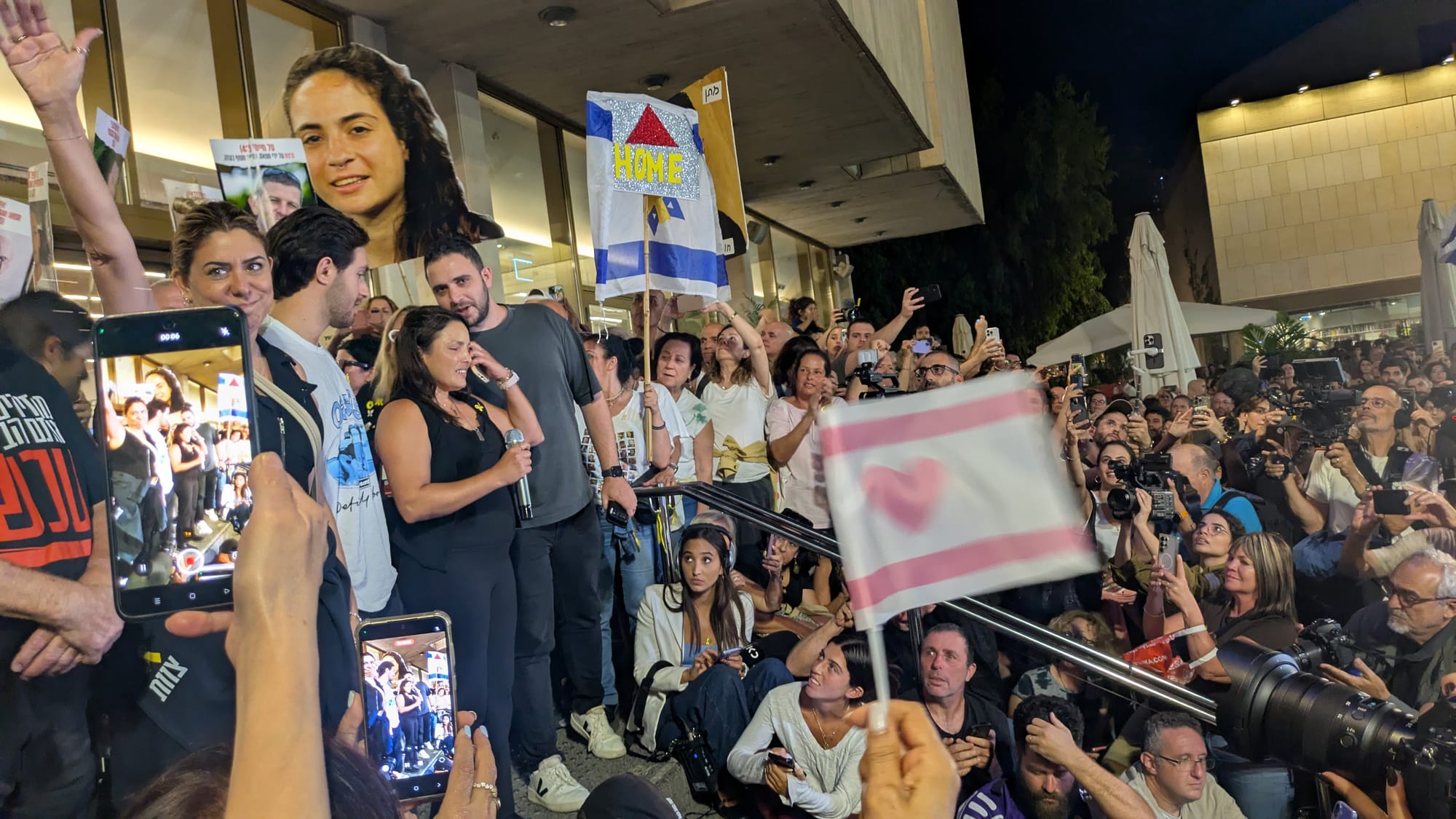
Chapter 3 — Amit Soussana: Breaking the Silence
The Woman Who Refused to Let Her Captors Control Her Story
For 55 days, Amit Soussana was held hostage in the Gaza Strip.
She was abducted from her home in Kibbutz Kfar Aza during the Hamas-led attacks of October 7, 2023. During her captivity, she was chained, beaten, threatened, sexually assaulted and subjected to severe physical and psychological abuse.
When she was released on November 30, 2023, the world saw another Israeli hostage returning home.
But behind the images of freedom was a story that had not yet been publicly told.
Amit, an Israeli lawyer who was 40 years old at the time of her abduction, had survived experiences that would leave lasting physical and emotional consequences.
For months after her release, much of what happened to her remained outside public knowledge.
Then, in March 2024, she made a decision that would bring international attention to the sexual abuse of hostages held in Gaza.
She spoke publicly.
In an extensive interview with The New York Times, Amit described how one of her captors had sexually assaulted her at gunpoint.
Her testimony was significant not only because of the violence she described, but also because she became the first released Israeli hostage to publicly provide such a detailed personal account of sexual assault during captivity.
Her decision required her to revisit experiences she had endured while completely deprived of her freedom.
It also exposed her to international scrutiny, political controversy and the emotional burden of having deeply personal trauma discussed publicly.
Yet Amit chose to speak.
Her story would become an important part of the documented record of sexual violence associated with the October 7 attacks and the subsequent hostage crisis.
October 7: The Attack on Her Home
On the morning of October 7, Amit was inside her home in Kibbutz Kfar Aza, one of the Israeli communities near the Gaza border.
The community was among those attacked when Hamas-led armed groups entered southern Israel.
Residents initially sought shelter as rockets were launched toward Israel.
But the danger soon moved beyond rocket fire.
Armed attackers entered the kibbutz, moving between houses and attacking residents.
For Amit, the situation became terrifying when armed men reached her home.
She had taken shelter in her reinforced room, hoping that its walls and door would protect her.
Then an explosion tore through her living space.
In later testimony, Amit described how a grenade exploded inside her home before armed men entered.
She was wearing pajamas and had no shoes.
She took a blanket from her bed to cover herself.
What followed was a violent struggle.
The attackers seized her and began forcing her away from the house.
Amit resisted.
She fought against the men attempting to abduct her, even as they struck her and dragged her toward Gaza.
Video footage from October 7 later showed her struggling against a group of abductors in an open field.
The images were disturbing.
A woman, visibly fighting to escape, was being overpowered by several men.
Her resistance was not symbolic.
It was a desperate attempt to prevent herself from being taken into captivity.
She later explained that she feared what might happen to her body and her dignity if she were captured.
The possibility of sexual violence was already present in her mind.
As she was dragged away, she suffered injuries to her face, eye socket and knee.
Her captors continued forcing her toward Gaza.
Within a short period, she had lost her home, her physical safety and her freedom.
The ordeal that followed would last nearly eight weeks.
The Journey Into Captivity
Amit's transfer into Gaza was violent.
She later described being beaten during the abduction and touched sexually while attempting to resist.
The injuries she sustained would continue affecting her after her release.
Her experience during those first hours established a terrifying reality.
She was surrounded by armed men.
She could not escape.
She had no way to contact her family or obtain independent protection.
And she did not know whether she would be killed.
The transition from her home in Kfar Aza to captivity in Gaza represented more than a physical journey.
It marked the loss of nearly every ordinary form of personal autonomy.
She could not choose where she would be taken.
She could not decide who would remain near her.
She could not determine when she would eat, sleep or use the bathroom.
Her safety depended on people who had already demonstrated their willingness to use violence against her.
During the 55 days that followed, Amit was moved between several detention locations.
These included residential buildings, other facilities and an underground tunnel.
Her captors changed, as did the conditions in which she was held.
But one reality remained constant.
She was not free.
Chained Inside a Child's Bedroom
During an early period of captivity, Amit was held alone inside a child's bedroom.
The room contained decorations associated with ordinary childhood, including images of the cartoon character SpongeBob SquarePants.
The contrast was deeply disturbing.
A space normally associated with safety, family life and childhood had become a place of imprisonment.
Amit was chained by her left ankle.
Her movement was restricted, and she had to depend on her guard for basic necessities.
She could not simply stand up and leave.
She could not use the bathroom whenever she wished.
She had no meaningful privacy.
The guard, who identified himself to her as Muhammad, controlled much of her daily existence.
According to Amit's testimony, he began asking increasingly intrusive questions about her personal and sexual life.
He asked about her menstrual cycle.
He questioned her about when her period would end.
He entered the room while she was detained and touched her without consent.
These actions created an atmosphere of escalating sexual intimidation.
Amit understood that her captor was interested in more than controlling her movements.
She feared he was preparing to sexually assault her.
Unable to escape, she attempted to delay what she believed might happen.
When her period ended, she pretended that she was still menstruating.
She hoped the deception would buy her time.
It was an extraordinary calculation.
A woman held in chains was attempting to protect herself by manipulating the limited information available to the man controlling her.
The strategy illustrates how little power she possessed.
Her ability to resist depended on small decisions made within circumstances entirely imposed upon her.
Even her own body had become a subject of interrogation and control.
The Fear Before the Assault
Sexual violence during captivity does not begin only at the moment of physical assault.
It can be preceded by threats, invasive questioning, unwanted touching and a growing awareness that the person holding power intends to violate the captive's bodily autonomy.
Amit's account describes precisely this progression.
Her guard's repeated questions about menstruation created a sense of anticipation and dread.
She believed he was waiting for a particular moment.
Every interaction became potentially threatening.
When he entered the room, she could not know whether he intended to bring food, ask another question or assault her.
The chain around her ankle reinforced her helplessness.
She had no independent means of escape.
She could not call the police.
She could not contact a lawyer.
She could not seek protection from someone outside the group holding her captive.
For a woman who had previously worked as a lawyer, accustomed to a professional world built around rules, rights and legal protections, captivity placed her in a situation where those protections were inaccessible.
Her guard controlled the immediate conditions of her existence.
That control was central to the violence she later described.
The fear was not an abstract concern.
It was based on the behavior of a man who had already touched her without consent, questioned her sexually and exercised physical power over her.
Around October 24, 2023, the danger she had feared became reality.
Sexual Assault at Gunpoint
In her public testimony, Amit described being sexually assaulted by the man guarding her.
On the morning of the assault, he insisted that she wash herself.
After she initially resisted because the water was cold, he provided heated water.
She was brought to a bathroom and began washing.
Then he returned.
He was carrying a pistol.
According to Amit, he approached her, threatened her with the weapon and struck her.
He forced her to remove the towel she had used to cover herself.
He touched her sexually against her will and continued using physical violence when she resisted.
He then took her back to the bedroom.
There, while threatening her with the gun, he forced her to perform a sexual act.
The assault occurred while Amit was completely under his control.
She was a hostage.
She had been deprived of her freedom.
She was physically vulnerable.
And the man assaulting her was armed.
Her testimony leaves no ambiguity about the absence of consent.
The violence was coercive, and the threat of further harm was immediate.
The details are profoundly disturbing, but they are important to document accurately.
Sexual violence against a person held hostage is not a private encounter between individuals with equal power.
It is an abuse committed within a situation of extreme coercion.
The captive cannot freely leave.
The captive cannot safely refuse.
And the perpetrator may control access to food, water, movement and physical safety.
Amit's account demonstrates how these conditions can be exploited to commit sexual violence.
The assault was not merely an additional act of abuse.
It was a violation of bodily autonomy inflicted upon someone already deprived of nearly every other freedom.
After the Assault: Forced Dependence on Her Abuser
One of the most psychologically disturbing aspects of Amit's testimony concerns what happened immediately after the assault.
Her captor left her alone before returning.
According to her account, he expressed apparent remorse and asked her not to tell Israel what he had done.
He subsequently attempted to offer her food.
Amit initially refused.
She was devastated by what had happened.
But the man who had assaulted her remained the person controlling her immediate environment.
She still depended on him for access to food, water and other basic necessities.
This created an agonizing contradiction.
The person she feared was also the person she had to interact with in order to survive.
She could not simply remove him from her life.
She could not report the assault to an independent authority.
She could not leave the room.
Her survival required continuing to communicate with someone who had just violated her.
This form of forced dependence is a particularly destructive aspect of captivity.
The survivor may have to suppress visible anger, fear or disgust because expressing those emotions could provoke further violence.
Behavior that might appear cooperative to an outside observer can therefore be a strategy for staying alive.
Amit later explained that she feared the assault could happen again.
Her captor's apparent remorse did not restore her sense of safety.
She remained under his control.
Every subsequent encounter carried the possibility of renewed abuse.
The psychological consequences of such conditions can be profound.
The survivor is forced to navigate a relationship in which danger and dependence exist simultaneously.
There is no genuine choice.
There is only the continuous calculation of how to survive.
The Second Phase of Captivity: Torture and Interrogation
Amit's ordeal did not end with the sexual assault.
After being moved to another location, she was held with several other hostages and subjected to further violence.
In her testimony, she described being interrogated by armed captors who believed she was withholding information.
Her head was covered.
She was beaten.
Her hands were restrained, and she was suspended in a painful position between pieces of furniture.
The captors struck her, including on the soles of her feet.
She described being humiliated while other hostages were made aware of her suffering.
The interrogation was terrifying because she did not possess the information her captors demanded.
She could not provide answers that would satisfy them.
Yet the violence continued.
According to her account, one captor threatened her with a sharp object near her eye.
She feared that she might be permanently injured or killed.
At one point, another hostage became so concerned for Amit's survival that she asked whether Amit had a message she wanted delivered to her family.
Such a question reveals the atmosphere of fear surrounding the interrogation.
The people witnessing the abuse believed that death was a genuine possibility.
For Amit, the experience added another layer of trauma.
She had already been violently abducted.
She had been chained and sexually assaulted.
Now she was subjected to physical torture and threats during interrogation.
These were not isolated moments of discomfort.
They were serious acts of violence against a person who had no freedom to leave or defend herself.
The Other Hostages
During parts of her captivity, Amit was held near other abducted Israelis.
Their presence could provide moments of human contact in an otherwise hostile environment.
But it also exposed them to the suffering of fellow captives.
Witnessing another hostage being beaten or threatened can produce intense psychological distress.
The individual watching may fear that they will be next.
They may feel helpless because intervention could provoke additional violence.
They may also experience guilt for being unable to protect the person suffering.
In Amit's case, the presence of other hostages during the period of torture demonstrated that captivity could involve both personal victimization and exposure to violence against others.
The relationships between hostages were shaped by circumstances no one had chosen.
They were not ordinary friendships formed through shared interests.
They were connections created under coercion, uncertainty and the possibility of death.
Some survivors have described how fellow captives helped them maintain hope.
Others have spoken about the pain of being separated from people with whom they had endured captivity.
The emotional bonds created under such circumstances can continue after release.
They may also become a source of grief when someone who shared the experience does not return.
Amit's testimony reminds us that hostage-taking affects not only the individual directly assaulted or tortured.
It also affects those forced to witness the abuse.
November 30, 2023: The Return to Israel
Amit was released on November 30, 2023, during the temporary ceasefire and hostage-exchange arrangements between Israel and Hamas.
After 55 days, she was finally able to return to Israel.
The release ended her physical captivity.
But it did not immediately end the consequences of what she had experienced.
She returned with injuries and memories of severe abuse.
She had survived violent abduction, sexual assault, physical torture and prolonged psychological intimidation.
She also faced the difficult process of adjusting to a world in which she was no longer under the control of armed captors.
The transition from captivity to freedom can be emotionally overwhelming.
For weeks, Amit had been forced to ask permission for basic actions.
Now she was expected to begin making ordinary decisions again.
She could move freely.
She could contact people she loved.
She could receive medical care.
But the memories of captivity remained.
Freedom restored her legal and physical autonomy.
It could not erase the violence that had taken place.
The First Disclosure: Speaking to Medical Professionals
One of the most important aspects of Amit's case is the documentation of her account immediately after release.
Within 24 hours of returning to Israel, she disclosed the sexual assault to medical professionals and a social worker.
Her statements were documented.
When The New York Times later investigated her experiences, its reporters interviewed professionals who had spoken with her shortly after her release and reviewed relevant records.
The account she gave publicly was consistent with what she had reported to those professionals.
This matters for several reasons.
First, it establishes that her disclosure did not originate months later as part of a public campaign.
She had reported the assault shortly after reaching safety.
Second, the contemporaneous documentation provided independent evidence that her account had remained consistent over time.
Third, the medical and social-work records gave journalists a basis for examining her testimony beyond a single interview.
This does not mean that every detail of captivity can be independently reconstructed.
The assault took place in a setting controlled by her captor, without independent observers.
But the documentation substantially strengthens the evidentiary record surrounding her account.
It also illustrates the importance of trauma-informed medical care after release.
Survivors of sexual violence may need immediate treatment, psychological support and opportunities to disclose what happened without pressure.
Some disclose quickly.
Others take months or years.
Some never disclose publicly.
The timing of disclosure should not be used as a simplistic measure of credibility.
Amit's case is notable because she chose to report the assault soon after her return and later agreed to have aspects of that account examined by journalists.
March 2024: Breaking the Silence
On March 26, 2024, The New York Times published an extensive investigation into Amit's experience.
Reporters Patrick Kingsley and Ronen Bergman had interviewed her for approximately eight hours.
They also examined supporting material, including medical documentation and interviews with professionals who had received her account after release.
The publication marked a major moment in the international reporting of sexual violence against hostages held in Gaza.
Amit became the first released Israeli hostage to publicly describe her own sexual assault during captivity in such detail.
Her account received widespread international attention.
It was reported by major news organizations and discussed by political leaders, human rights advocates and members of the public.
The story was deeply personal.
Yet its implications extended beyond one survivor.
It demonstrated that sexual violence during captivity was not merely a theoretical concern.
Here was a named survivor who had publicly described a specific assault, identified the circumstances in which it occurred and allowed journalists to examine contemporaneous records supporting her disclosure.
Her decision also challenged the tendency for sexual violence in conflict to become a subject of political argument rather than survivor-centered investigation.
Amit was not speaking as an abstract symbol.
She was describing what she said had happened to her body while she was held hostage.
The central question was not whether her testimony could be used to support a political position.
It was whether the violence she described would be taken seriously, documented and investigated.
The United Nations and Evidence of Sexual Violence
Amit's testimony emerged during a broader international examination of sexual violence connected to October 7 and the captivity of hostages in Gaza.
In early 2024, a United Nations mission led by Pramila Patten, the Secretary-General's Special Representative on Sexual Violence in Conflict, examined allegations of conflict-related sexual violence.
The mission found reasonable grounds to believe that sexual violence, including rape and gang rape, had occurred during the October 7 attacks at multiple locations.
It also reported clear and convincing information that sexual violence had been committed against some hostages held in Gaza.
These findings were significant.
They indicated that concerns about sexual violence were supported by evidence extending beyond public speculation.
At the same time, the mission's findings must be understood accurately.
The UN team was not conducting a full criminal investigation, and its conclusions did not establish every allegation or identify every individual perpetrator.
Further investigation remained necessary.
Hamas has denied allegations that its members committed sexual violence.
Those denials must be distinguished from the findings of investigators and the testimony of survivors.
In Amit's case, her personal account, her prompt disclosure to medical professionals and subsequent journalistic examination formed a particularly important body of evidence.
Later human rights reporting also documented her testimony within broader examinations of abuses committed against hostages.
The international significance of her case lies partly in this combination of survivor testimony, contemporaneous records and independent reporting.
Her experience became part of a larger effort to establish what happened to people abducted on October 7.
October 2024: Speaking at the United Nations
On October 23, 2024, Amit addressed an event at the United Nations in New York focused on conflict-related sexual violence.
Her appearance represented another major step in her decision to speak publicly.
She was no longer sharing her experience only through a newspaper interview.
She was addressing an international audience in a setting associated with human rights, international security and accountability.
Amit described her abduction, captivity and sexual assault.
She spoke about being chained by her ankle and forced to ask permission for basic needs.
She explained how her guard had questioned her sexually and subjected her to unwanted touching before the assault.
She described the terror of being threatened with a firearm.
And she spoke about the humiliation and suffering that followed.
Her testimony was an appeal for recognition and accountability.
She urged international representatives to confront the abuse of hostages and to take seriously the responsibility to protect people subjected to such violence.
Her appearance also carried a broader message.
Sexual violence against captives should not become less important because it occurs within a politically controversial conflict.
Human rights protections are not conditional upon nationality, religion or political identity.
They apply to every person.
Amit's testimony therefore raised questions extending beyond Israel and Gaza.
How should international institutions respond when a survivor describes sexual assault by an armed captor?
What responsibility do governments have to investigate such crimes?
How can survivors be protected from further harm when their experiences become public?
And how can accountability be pursued without turning personal trauma into political spectacle?
These questions remain central to the treatment of conflict-related sexual violence around the world.
Sexual Violence as an Abuse of Power
Amit's experience demonstrates why sexual violence in captivity must be understood within the wider structure of coercion.
She was not assaulted in circumstances where she possessed freedom of movement or meaningful protection.
She was detained by armed men.
She had been injured during her abduction.
She was chained.
She depended on her captors for food, water and basic necessities.
Her guard controlled access to the bathroom and could enter the room in which she was held.
This imbalance of power was fundamental to the assault.
The perpetrator used both his weapon and his control over her environment.
Under international humanitarian law, rape and other forms of sexual violence are prohibited.
Sexual violence against detainees and hostages may constitute war crimes and, depending on the circumstances and legal elements established, other international crimes.
The prohibition is not dependent on the identity of the victim or perpetrator.
It applies in every armed conflict.
For Amit, however, these legal principles were not abstract concepts.
They concerned the violation of her own body.
The law may provide a framework for accountability, but it cannot reverse the assault.
It cannot restore the days she spent in fear.
And it cannot eliminate the emotional consequences of being forced to depend on the person who abused her.
That is why legal accountability and survivor recovery must be understood as related but distinct processes.
Justice concerns responsibility for crimes.
Recovery concerns the life of the person who survived them.
Both matter.
The Psychological Consequences of Sexual Violence in Captivity
Sexual assault can produce long-lasting psychological effects under any circumstances.
When it occurs during hostage captivity, those effects may be compounded by isolation, physical restraint, threats of death and the inability to escape the perpetrator.
The survivor may experience intense fear, shame, anger, sleep disturbances or intrusive memories.
They may struggle with trust or physical intimacy.
They may feel unsafe even after returning to familiar surroundings.
These are possible consequences of trauma, not a checklist that can automatically be applied to every survivor.
Amit has spoken publicly about the continuing impact of her captivity.
In her United Nations testimony, she described how memories of the assault remained present in her daily life.
The fact that she had returned home did not mean that the experience had disappeared.
This distinction is essential.
Public attention often concentrates on the moment of release.
A hostage crosses a border.
A family embraces.
Photographs capture tears and relief.
But psychological recovery cannot be measured through those images.
The survivor may still carry memories that are difficult to discuss.
They may have to rebuild a sense of safety within their own body.
They may face the challenge of living with the knowledge that another person deliberately violated them.
Recovery is not necessarily linear.
Periods of progress may be followed by difficult days.
A person may speak confidently in public while still experiencing private distress.
Strength and suffering can exist at the same time.
Amit's willingness to speak should therefore not be mistaken for an absence of trauma.
It is one aspect of how she has chosen to respond to what happened.
The Burden of Public Testimony
When a survivor of sexual violence speaks publicly, the decision can carry significant personal consequences.
The survivor may be asked to repeat painful details.
Their credibility may be questioned.
Their words may be quoted selectively.
Their experience may be drawn into arguments they did not choose.
In the context of the Israel-Hamas war, these risks were particularly acute.
The conflict generated intense international disagreement, and allegations of sexual violence became part of broader disputes about the conduct of the armed groups involved.
Amit's testimony entered this highly polarized environment.
But the fundamental purpose of documenting her experience should remain clear.
Her story concerns a specific person who described a specific act of sexual violence committed during captivity.
It deserves careful examination on its own evidentiary merits.
It should not be dismissed because of political disagreement.
Nor should it be exaggerated or generalized beyond what the evidence supports.
Responsible reporting must protect both accuracy and human dignity.
This includes avoiding unnecessary graphic detail, distinguishing testimony from independently established facts and respecting the survivor's right to control how much of their experience they share.
Amit's decision to speak publicly does not mean that every aspect of her private life becomes public property.
She remains entitled to boundaries.
She remains entitled to privacy.
And she remains more than the violence she experienced.
The Silence of Other Survivors
Amit's public testimony also draws attention to those who have not spoken.
Not every survivor of sexual violence is willing or able to describe their experiences publicly.
Some may fear judgment.
Others may want to protect their families.
Some may be concerned about reliving trauma.
Others may simply believe that their experiences belong to them alone.
Silence does not establish that abuse occurred.
But it does not establish that abuse did not occur either.
Investigators must rely on available evidence rather than assumptions about how victims should behave.
Sexual violence can be particularly difficult to document in conflict settings.
Medical examinations may take place long after an assault.
Physical evidence may no longer be available.
Witnesses may have been killed, displaced or separated.
The location of the assault may be inaccessible to independent investigators.
And survivors may not be emotionally ready to participate in formal investigations.
These challenges make careful documentation especially important.
Amit's case demonstrates the value of early medical reporting, preserved records and detailed journalistic examination.
But it should not create an expectation that other survivors must follow the same path.
Every survivor has the right to decide whether, when and how to speak.
Their dignity must not depend on public disclosure.
A Global Question of Accountability
The crimes described by Amit raise fundamental questions about international accountability.
Hostage-taking is prohibited under international humanitarian law.
So are torture, cruel treatment and sexual violence.
These prohibitions apply regardless of the political or military objectives of the perpetrators.
The use of sexual violence against a hostage cannot be justified as retaliation, resistance or an act of war.
It is an abuse of a person who has been deprived of freedom.
Investigating such crimes requires more than public condemnation.
It requires preserving evidence, identifying those responsible, protecting witnesses and pursuing appropriate legal processes.
Accountability may involve domestic criminal proceedings or international mechanisms, depending on jurisdiction and available evidence.
But legal processes can be lengthy.
They may face practical obstacles when suspects remain outside the reach of investigators.
And survivors may not wish to participate in every stage.
These limitations should not prevent serious efforts to establish responsibility.
Nor should the absence of an immediate prosecution be confused with proof that a reported crime did not occur.
Amit's testimony is an important part of the evidentiary record.
It deserves to be treated with the seriousness that allegations of torture and sexual assault require.
Beyond Politics: The Responsibility to Listen
The October 7 attacks and the war that followed have generated profound political, legal and moral disagreements.
Those disagreements concern military operations, civilian casualties, humanitarian conditions, regional security and the responsibilities of governments and armed groups.
They are legitimate subjects for journalism and public debate.
But the treatment of a survivor's testimony should not depend on whether the listener agrees with the policies of the survivor's government.
Amit was not responsible for decisions made by Israeli political or military leaders.
She was a civilian abducted from her home.
Her captors had no right to take her hostage.
They had no right to torture her.
And they had no right to sexually assault her.
Recognizing these facts does not require denying the suffering of Palestinian civilians.
Human rights are not a competition.
The protection of one victim does not diminish the rights of another.
The same standards must apply to everyone.
This principle is particularly important in conflicts where public discussion becomes polarized.
Survivors can disappear behind national identities and political narratives.
Their experiences may be accepted or rejected according to the position they are perceived to represent.
Responsible journalism must resist that tendency.
Amit's testimony should be examined because of what she reported and the evidence supporting it.
Her experience matters because she is a human being who was subjected to grave abuse.
That should be sufficient reason to listen.
Reclaiming Her Voice
Captivity stripped Amit of control over her movements, her surroundings and her body.
Her captors decided where she would be held.
They controlled her access to basic necessities.
They subjected her to violence.
And one of them used that power to commit sexual assault.
After her release, Amit began reclaiming the ability to make decisions about her own life.
One of those decisions was whether to speak publicly.
By giving interviews and addressing an international audience, she took control of a part of her story that her captors had attempted to dominate.
This did not undo the abuse.
It did not erase the fear or physical injuries.
But it allowed her to describe what happened in her own words.
There is a profound difference between being forced into silence and choosing when to speak.
For Amit, public testimony became a way of demanding that the violence she experienced be acknowledged.
Her words also helped create space for broader discussion of sexual abuse against hostages.
But the significance of her decision should not be measured solely by its public impact.
It was also a personal act.
She chose to reveal something deeply painful.
She chose to allow others to hear her account.
And she chose to insist that the experience be recognized rather than hidden.
Conclusion — The Courage to Be Heard
Amit Soussana was taken from her home on October 7, 2023.
She resisted her abductors.
She was beaten and injured.
She was held in chains.
She was sexually assaulted at gunpoint.
She was subjected to torture and threats.
For 55 days, she lived without the freedom to protect herself or determine her own future.
When she returned to Israel on November 30, 2023, her captivity ended.
But the consequences remained.
Her decision to speak publicly in March 2024 transformed a private disclosure into an internationally documented testimony.
The medical and social-work records created shortly after her release, together with subsequent investigative reporting, provided important corroboration of her account.
Her later appearance at the United Nations ensured that her words reached an international audience.
But her story is not important merely because it attracted attention.
It matters because it documents what can happen when a person is placed completely under the control of an armed captor.
It reveals the use of physical violence, sexual coercion and psychological intimidation against someone unable to escape.
It demonstrates the lasting consequences of captivity.
And it reminds us that the experiences of survivors must be treated with dignity, accuracy and care.
Amit's testimony does not tell the story of every hostage.
Each survivor experienced captivity differently.
Some were held alone.
Others were detained in groups.
Some experienced sexual violence.
Others endured different forms of physical and psychological abuse.
Many have spoken only about selected parts of their experiences.
Their stories should not be merged into a single narrative that erases those differences.
But taken together, they reveal the human consequences of hostage-taking on a scale that cannot be understood through statistics alone.
Amit Soussana's decision to break her silence ensured that one of those experiences would be heard.
Her testimony became part of the historical record.
And her voice remains an important reminder that the end of captivity is not the end of a survivor's story.
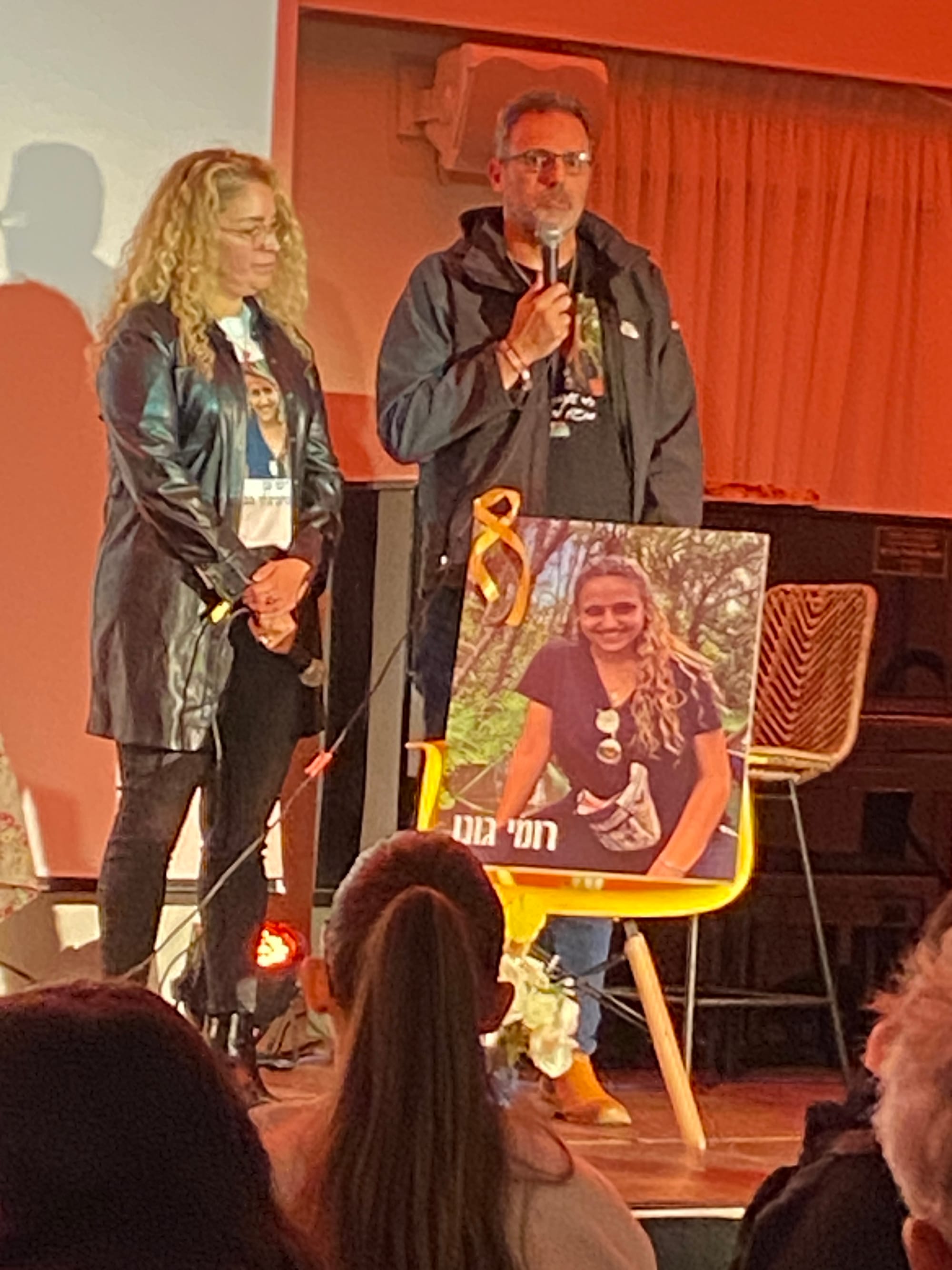
Chapter 4 — Romi Gonen: The Trauma Behind Freedom
471 Days in Captivity and the Courage to Tell the Truth
For 471 days, Romi Gonen lived without freedom.
She was 23 years old when Hamas-led attackers abducted her from the Nova music festival on October 7, 2023. By the time she returned to Israel on January 19, 2025, she had spent more than fifteen months in captivity, enduring physical injuries, repeated sexual abuse, threats and prolonged psychological intimidation.
Her life had been interrupted at an age when many young people are building careers, developing relationships and imagining their futures.
Instead, Romi found herself fighting to survive.
She had been shot during the attack on the festival. She was taken into Gaza with a serious injury to her hand and arm, and she remained dependent on her captors for medical treatment, food, shelter and basic necessities.
But the physical injury was only one part of her suffering.
In December 2025, nearly a year after her release, Romi publicly described experiences she had previously kept largely private.
In an extensive interview with the Israeli investigative television program Uvda, broadcast on Channel 12, she revealed that four different men had subjected her to sexual harassment or assault during captivity.
Her testimony included descriptions of abuse by people who were supposed to provide medical care, invasive control over her most private activities, repeated unwanted touching, threats of death and a particularly severe sexual assault that left her terrified.
She also described the fear of becoming pregnant as a result of abuse.
Her words revealed the extraordinary vulnerability of a young woman held by armed men who controlled virtually every aspect of her life.
But her story is not only about what happened during captivity.
It is also about the difficult decisions she made afterward.
For months, Romi remained silent about the sexual violence she had experienced.
She later explained that her silence was connected to concern for other hostages who remained in Gaza and the possibility that they might face retaliation.
When she eventually spoke, her testimony became one of the most significant public accounts of sexual violence against an Israeli hostage.
Her experience illustrates how captivity can continue to influence a survivor long after physical freedom has been restored.
October 7: A Festival That Became a Killing Ground
Romi had traveled to the Nova music festival near Re'im in southern Israel to enjoy a weekend of music and dancing.
The festival attracted thousands of young people who gathered outdoors in an atmosphere of celebration.
Like many attendees, Romi had no reason to believe that the morning would end in a struggle for survival.
At approximately 6:30 a.m., rockets were launched from Gaza toward Israel.
The music stopped.
Festivalgoers began looking for shelter and attempting to leave.
But the situation quickly became far more dangerous than a rocket attack.
Hamas-led armed groups had breached the border and were moving through southern Israel.
Attackers approached the festival area and began firing at civilians.
People ran toward vehicles, fields and roadside shelters.
Some tried to escape on foot.
Others hid among bushes and in the surrounding landscape.
Romi was among those desperately searching for a way out.
In her later television interview, she recalled the beautiful sunrise that had preceded the attack.
The contrast between the peaceful beginning of the day and the violence that followed remained deeply embedded in her memory.
What had begun as a celebration of life was becoming a massacre.
The Final Attempt to Escape
During the attack, Romi tried to escape with friends.
They initially hid in the surrounding area as armed attackers moved nearby.
Eventually, a man named Ben Shimoni arrived in a vehicle.
Ben had already helped other festivalgoers escape and repeatedly returned to the danger zone to rescue more people.
His actions would later become part of the documented stories of extraordinary courage during the Nova massacre.
Romi joined him in the vehicle, along with her friend Gaya Khalifa.
For a brief moment, escape seemed possible.
They were moving away from the festival.
They were heading toward what they hoped would be safety.
But armed attackers were waiting along the road.
The vehicle came under heavy gunfire.
Windows shattered.
Bullets struck the occupants.
Ben Shimoni was killed.
Gaya Khalifa was also fatally wounded.
Romi was shot in the hand and arm.
The injuries were severe, and she was losing blood.
She had just witnessed the violent deaths of people who had been trying to escape alongside her.
Now she was wounded, surrounded by attackers and unable to reach safety.
During the attack, Romi managed to speak by telephone with her mother, Meirav Leshem Gonen.
The call became one of the most heartbreaking elements of her family's experience.
Her mother could hear the danger unfolding but could not physically reach her daughter.
The helplessness of that moment would remain with the family throughout Romi's captivity.
For Romi, the possibility of returning home was disappearing.
She was taken into Gaza.
A Wounded Hostage Taken to Hospital
Romi entered captivity with a serious gunshot injury.
According to her later testimony, she was taken to Al-Shifa Hospital in Gaza, where she received medical attention.
But her account of the hospital experience was deeply disturbing.
She described being surrounded by numerous people while injured and vulnerable.
During the treatment process, she said, people removed her clothing and personal belongings.
She recalled feeling as though she were observing the situation from outside her own body.
The sensation reflected the overwhelming nature of what she was experiencing.
She was seriously wounded.
She had been violently abducted.
She had witnessed deaths.
And she was now surrounded by strangers in a place where she had no independent protection.
Romi feared that she might lose her injured arm.
She did not know whether she would receive adequate medical care or what would happen after leaving the hospital.
The fact that treatment occurred in a medical facility did not remove the coercive circumstances surrounding her detention.
She remained a hostage.
She could not decide to leave.
She could not choose her medical providers.
And she could not contact her family to explain what had happened.
Her experience also raises an important distinction.
An allegation of abuse by individuals encountered in a hospital does not, by itself, establish the involvement or responsibility of every medical professional working there.
The specific actions described by Romi require examination on their own merits.
What her testimony makes clear is that she experienced profound vulnerability during the earliest stage of captivity, including while receiving treatment for her injuries.
The Fourth Day: The First Sexual Assault
Romi later stated that she experienced her first sexual assault on the fourth day of captivity.
By then, she had been transferred from the hospital to a residential building.
She was still injured and dependent on others for assistance.
According to her testimony, a man involved in providing medical care accompanied her while she attempted to shower.
What should have been an opportunity to wash and recover became another experience of violation.
Romi described unwanted sexual contact while she was physically vulnerable and unable to protect herself.
The man had access to her because of her injury and the circumstances of her detention.
She could not freely refuse his presence.
She could not leave the building.
And she had no independent authority to whom she could report the abuse.
In her later interview, she explained that the assault occurred when she had little physical strength.
Her injury had reduced her ability to resist.
The assault also changed how she understood her captivity.
She now knew that the danger was not limited to physical violence associated with the original abduction.
She was vulnerable to sexual abuse by people who controlled her immediate surroundings.
The first assault was not the last.
Four Men and Repeated Violations
In her December 2025 interview, Romi described sexual harassment and assault involving four different men during captivity.
The incidents varied in severity.
Some involved invasive behavior and unwanted touching.
Others involved more serious sexual violence.
One of the men she identified in her account had been involved in filming material intended for propaganda purposes.
Another was a captor with whom she was forced to share living space.
She also described abuse by a man involved in her medical care.
The different circumstances are important because they demonstrate how her vulnerability extended across multiple aspects of captivity.
She could be endangered while receiving treatment.
She could be endangered while being filmed.
She could be endangered while sleeping.
She could be endangered while attempting to use the bathroom.
The ordinary boundaries that protect personal privacy had largely disappeared.
For Romi, the danger was not confined to one individual or one location.
It could reappear whenever she was transferred, whenever her captors changed or whenever she was left alone with someone who possessed power over her.
This created a prolonged state of insecurity.
She could not know whether a new captor would behave differently from the previous one.
She could not predict whether an apparently ordinary interaction would become abusive.
And she could not escape the people responsible.
Sixteen Days of Fear
One of the most disturbing periods described by Romi involved approximately sixteen days during which two men repeatedly violated her personal boundaries.
She identified them in her account as Muhammad and Ibrahim.
Romi described being forced to live under conditions in which privacy had effectively disappeared.
She said one man insisted on remaining near her while she slept and accompanied her to the bathroom.
She described unwanted touching and repeated harassment.
Even the most basic personal activities became sources of humiliation and fear.
Using the bathroom, washing and attempting to rest were no longer private experiences.
They took place under the supervision or interference of men who controlled her movements.
Romi described crying during some of these incidents.
She also recalled being warned to control her emotional reactions.
The message was unmistakable.
Even her distress could provoke anger from the people holding her.
For a person in captivity, this creates an especially cruel form of psychological pressure.
The survivor must not only endure the abuse but also consider how their response might affect the perpetrator.
Crying may be dangerous.
Anger may be dangerous.
Resistance may be dangerous.
Silence may feel like the only available form of protection.
But remaining silent does not mean consenting.
It means attempting to survive within circumstances where meaningful freedom of choice has been removed.
Romi's testimony illustrates how sexual abuse can become intertwined with the daily routines of captivity.
The threat does not disappear when a particular incident ends.
It remains present in the knowledge that the same people may return.
The Fear of Pregnancy
During captivity, Romi experienced another terrifying uncertainty.
Her menstrual period did not arrive when expected.
She feared that she might be pregnant.
This fear was particularly distressing because she had experienced periods of injury and impaired consciousness during the early days of captivity.
She could not be certain what had happened to her during every moment.
According to her testimony, she had invented a story about having a husband.
Her captors interpreted the missed period through that account and became concerned that she might be pregnant.
Eventually, they brought her a pregnancy test.
The result was negative.
But the experience revealed another dimension of her vulnerability.
Romi was not only afraid of further assault.
She was also afraid of consequences from abuse that she might not have been fully conscious to remember.
The uncertainty affected her relationship with her own body.
A delayed menstrual period, which can occur for many reasons including extreme physical and psychological stress, became a source of terror.
The negative test resolved the immediate question of pregnancy at that time.
It did not erase the underlying fear.
Nor did it restore the sense of bodily autonomy that captivity had taken away.
Her account illustrates how sexual violence and the fear of sexual violence can affect survivors beyond the moments of direct abuse.
The possibility of pregnancy, infection or lasting injury can create additional psychological burdens.
These concerns require sensitive medical care and respect for the survivor's privacy.
The Assault She Could Never Forget
Romi described one particularly severe sexual assault that occurred during the period when she was being held in a residential building.
According to her account, one of her captors told her that Hamas had ordered her death but that he had obtained permission to keep her alive.
He then instructed her to wash herself.
While she was in the bathroom, he followed her.
Romi described being sexually assaulted for approximately thirty minutes.
She recalled crying and feeling physically paralyzed by fear.
The contrast between the violence inside the room and the ordinary world visible through a small window remained deeply embedded in her memory.
Outside, she could see the sky.
Life appeared to continue.
But inside, she was being subjected to an assault from which she could not escape.
This contrast became one of the defining images of her testimony.
The world beyond the building appeared normal.
Yet her own reality was dominated by fear, humiliation and the complete loss of control over her body.
Romi explained that she felt unable to move or resist.
Such reactions can occur during overwhelming danger.
Extreme fear may produce involuntary immobility, sometimes described as a freeze response or tonic immobility.
This is not a choice to cooperate.
It is a possible physiological response to threat.
A person's inability to resist physically does not indicate consent.
In Romi's case, her testimony describes an assault committed against a captive who was frightened, vulnerable and unable to escape.
The experience left a lasting psychological impact.
The Threat of Death
After the assault, Romi said the perpetrator threatened to kill her if she told anyone what had happened.
The threat added another layer of coercion.
She was already being held hostage.
She was dependent on armed captors for survival.
Now she had been explicitly warned that disclosure could cost her life.
Such threats can have consequences long after the immediate incident.
They may discourage survivors from speaking to other captives.
They may prevent disclosure after release.
And they may create continuing fear that the perpetrator or associated individuals could retaliate.
For Romi, silence became connected to survival.
She had to consider not only what had happened to her but also what might happen if others learned about it.
This dynamic is particularly important in understanding sexual violence during captivity.
The perpetrator's power may extend beyond the assault itself.
Threats can be used to control the victim's behavior, memories and future decisions.
Romi's eventual public testimony therefore represented more than the disclosure of an experience.
It was also a rejection of the silence that had been imposed through intimidation.
Underground Captivity
During her 471 days in Gaza, Romi was moved between different detention locations.
Some were residential buildings.
Others were underground.
She described periods spent in tunnels and the difficulties of living without ordinary freedom, privacy or reliable knowledge of the outside world.
Underground detention created additional psychological pressure.
The absence of daylight could make time difficult to measure.
Movement was restricted.
The possibility of escape was remote.
And the surrounding war created uncertainty about whether the location might be attacked or destroyed.
For someone already suffering from physical injuries and sexual trauma, these conditions could compound the effects of captivity.
Romi also had to live with the knowledge that her family did not know precisely where she was.
She could not tell them whether she was alive.
She could not explain her injuries.
She could not reassure her mother.
The isolation affected both sides of the captivity.
Inside Gaza, Romi struggled to survive.
In Israel, her family continued waiting for news.
Her Mother Refused to Give Up
Throughout Romi's captivity, her mother, Meirav Leshem Gonen, became one of the prominent voices advocating for the return of the hostages.
She participated in public campaigns, interviews and appeals to political leaders.
Her determination reflected the anguish of a parent whose daughter had disappeared into captivity after a violent attack.
Meirav knew that Romi had been injured.
She knew that her daughter had been abducted.
But she did not know the full circumstances of her detention or whether she was receiving adequate medical care.
As the months passed, the uncertainty became increasingly difficult.
Every report about negotiations carried the possibility of hope.
Every failed agreement brought renewed disappointment.
The family faced the extraordinary challenge of continuing ordinary life while knowing that Romi remained in danger.
Their campaign was not simply a political demand.
It was an effort to bring a daughter home.
The public visibility of Romi's family also demonstrates the important role played by relatives throughout the hostage crisis.
They worked to prevent the captives from being forgotten.
They maintained pressure on decision-makers.
And they continued speaking for people who could not speak freely for themselves.
A Promise of Release in Exchange for Silence
In the second part of her Uvda interview, broadcast in January 2026, Romi described another troubling episode.
She said that a senior Hamas commander, Izz al-Din al-Haddad, had offered to prioritize her release on the condition that she remain silent about the sexual abuse she had experienced.
According to Romi, this conversation occurred around the end of the November 2023 temporary ceasefire.
She later said that the commander reminded her of the understanding when she was finally released in January 2025.
Her account suggests that the pressure to remain silent was not limited to the individual men who assaulted her.
She described an attempt to influence what she would say after returning to Israel.
This allegation is significant because it concerns the possible suppression of testimony about abuse committed during captivity.
The details of the reported exchange rest on Romi's public account and should be understood as such.
Nevertheless, her explanation provides important context for why she did not immediately disclose everything publicly after release.
She feared consequences for people who remained captive.
The decision to speak was therefore not only about her own readiness.
It was also connected to the safety of others.
The Hostages Who Became Human Shields
In the same January 2026 interview, Romi described being held with fellow hostage Emily Damari under circumstances she characterized as their use as human shields.
According to her account, they were kept in a location associated with senior Hamas personnel for approximately 35 days.
The allegation raises serious questions about the treatment of hostages during military operations.
Using protected persons to shield military objectives or combatants from attack is prohibited under international humanitarian law.
The precise circumstances of Romi's detention would require independent examination to establish the legal elements of such a violation.
But her testimony highlights another source of fear for hostages held during active fighting.
They could be endangered by their captors.
They could be endangered by nearby military operations.
And they had no meaningful control over where they were placed.
The experience illustrates how hostage-taking can expose individuals to overlapping forms of danger.
Even when captors are not directly assaulting a hostage, decisions about detention locations can place the captive's life at risk.
January 19, 2025: Freedom After 471 Days
On January 19, 2025, Romi was released as part of a ceasefire and hostage-exchange agreement between Israel and Hamas.
She was released alongside Emily Damari and Doron Steinbrecher.
The three women were transferred through the International Committee of the Red Cross and returned to Israel.
Their release became one of the most widely watched moments of the agreement.
After more than fifteen months, Romi was finally free.
For her family, the moment represented the end of an agonizing wait.
For Romi, it marked the end of physical captivity.
But freedom arrived after 471 days of fear, injury, uncertainty and abuse.
She had entered Gaza as a 23-year-old woman.
She returned at the age of 24.
More than a year of her life had been spent under the control of armed captors.
She had missed birthdays, holidays and ordinary family experiences.
She had lost time that could never be returned.
And she was carrying injuries that would require further treatment.
The Reunion With Her Mother
The images of Romi reuniting with her mother became powerful symbols of the hostage releases.
After months of uncertainty, Meirav could finally embrace her daughter.
For the public, the reunion represented relief and hope.
For the family, it was the moment they had spent 471 days waiting for.
But the photographs could not reveal everything.
They did not show the full extent of Romi's injuries.
They did not show the memories she carried.
They did not reveal the sexual abuse she would later describe.
And they could not capture the complicated process of returning to ordinary life after prolonged captivity.
The embrace was real.
The relief was real.
But so was the trauma.
These realities can exist simultaneously.
A survivor can be overwhelmed with happiness at returning home while still carrying profound fear and suffering.
The moment of release is therefore not necessarily the conclusion of the story.
It may be the beginning of another difficult chapter.
The Physical Consequences of Captivity
After her return, Romi underwent medical treatment for injuries associated with the October 7 attack and her prolonged detention.
Her damaged hand and arm required significant attention.
She underwent rehabilitation and surgical procedures as part of her recovery.
The physical consequences were particularly important because the original gunshot wound had affected her ability to use her hand normally.
For a young woman who had enjoyed dancing and an active life, the loss of ordinary physical abilities represented another painful consequence of the attack.
Recovery required patience.
Medical treatment could address injuries, but it could not instantly restore everything that had been lost.
Romi had to adjust to physical limitations while also confronting the emotional consequences of captivity.
Her recovery therefore involved several overlapping challenges.
She was not simply recovering from a gunshot wound.
She was recovering from prolonged detention, repeated abuse, fear and the disruption of her entire life.
Why She Waited to Speak
One of the most important questions surrounding Romi's testimony concerns the timing of her public disclosure.
She was released in January 2025.
Her detailed television testimony about sexual violence was broadcast in December 2025 and January 2026.
The delay was not evidence that her account lacked credibility.
Romi explained that she had been concerned about the safety of hostages who remained in Gaza.
She feared that public disclosure could expose them to retaliation.
She also described pressure to remain silent about the assaults.
Her decision demonstrates the complicated circumstances surrounding survivor testimony.
A former hostage may be physically free while still feeling responsible for people who remain captive.
They may fear that their words could affect negotiations.
They may worry about the safety of friends or fellow survivors.
And they may need time before feeling emotionally prepared to describe traumatic experiences.
The expectation that survivors should disclose sexual violence immediately is both unrealistic and potentially harmful.
There is no universal timetable for disclosure.
Some survivors speak within days.
Others wait years.
Some never speak publicly.
The decision belongs to the person who experienced the abuse.
Romi's testimony became public when she chose to tell it.
That choice deserves respect.
December 2025: The Interview That Changed Public Understanding
On December 25, 2025, Channel 12 broadcast the first part of Romi's extensive interview with journalist Ben Shani for the investigative program Uvda.
The interview revealed experiences that had not previously been publicly described in such detail.
Romi spoke about the Nova massacre, the deaths of people who had tried to escape with her, her gunshot injury and the first stages of captivity.
She then described repeated sexual abuse.
Her account was direct, painful and deeply personal.
She explained how fear had affected her ability to respond during the assaults.
She described the humiliation of being watched during private activities.
She recalled the threats made by her captors.
And she explained the lasting emotional significance of moments that might otherwise appear ordinary, such as looking through a window and seeing the sky.
The interview received widespread coverage in Israeli and international media.
It also challenged the assumption that the experiences of released hostages were already fully known.
Even nearly a year after her return, important parts of Romi's story had remained private.
Her testimony demonstrated that the historical record of captivity continued to develop as survivors chose to share their experiences.
January 2026: A Second Part of the Story
The second part of Romi's Uvda interview was broadcast on January 1, 2026.
It expanded the public understanding of her captivity.
She described alleged pressure from a senior Hamas commander to remain silent about sexual abuse.
She discussed being held with Emily Damari in circumstances she characterized as the use of hostages as human shields.
And she provided additional details about the final period before release.
Together, the two broadcasts presented a much more extensive picture of her 471 days in Gaza.
They also demonstrated the importance of allowing survivors to tell their stories over time.
No single interview can necessarily capture the full experience of prolonged captivity.
Memories may be painful.
Some events may be difficult to explain.
And survivors may need to decide which details they are willing to share publicly.
The fact that Romi spoke in two extensive broadcasts allowed her testimony to address different dimensions of her experience.
The first focused heavily on the violence and abuse she endured.
The second provided further insight into the pressures, decisions and circumstances surrounding her detention and eventual release.
The Meaning of Sexual Violence in Captivity
Romi's testimony illustrates the extreme imbalance of power that exists when sexual violence is committed against a hostage.
She was injured.
She was detained.
She depended on her captors for basic necessities.
She could not leave.
And the men she accused of abusing her controlled her immediate environment.
Under such circumstances, the absence of freedom is central to understanding the violence.
Sexual assault is not made less serious because the victim was already a prisoner.
On the contrary, captivity can increase vulnerability by removing the person's ability to seek protection.
Sexual violence may also be accompanied by threats intended to prevent disclosure.
Romi described precisely such threats.
The consequences extended beyond the physical acts themselves.
She lived with uncertainty about whether abuse would happen again.
She feared pregnancy.
She feared being killed.
And she feared what might happen to other hostages if she spoke.
Her experience therefore involved both sexual violence and the broader psychological coercion associated with captivity.
International humanitarian law prohibits rape, sexual violence, torture and cruel treatment.
These protections apply to hostages regardless of their nationality or the political circumstances of the conflict.
Romi's testimony is an important account of alleged violations of those protections.
The Long Road to Psychological Recovery
Returning home after 471 days did not mean returning to the person Romi had been before October 7.
Her experiences had changed her life.
She had witnessed killings.
She had suffered a serious gunshot injury.
She had endured repeated sexual abuse.
She had lived under the threat of death.
And she had spent more than fifteen months without control over her own future.
The psychological consequences of such experiences can be complex.
Survivors may experience anxiety, sleep disturbances, intrusive memories, emotional exhaustion and difficulty trusting others.
Some may struggle with physical intimacy or situations that remind them of captivity.
Others may find that ordinary activities trigger unexpected emotional reactions.
These are possible effects of severe trauma, not diagnoses that should automatically be assigned to Romi.
Her individual recovery must be understood through what she has chosen to disclose.
What is clear is that physical freedom does not instantly erase the effects of prolonged abuse.
Recovery may involve medical treatment, psychological support, family relationships and the gradual restoration of independence.
It can also involve difficult decisions about public visibility.
A survivor may want to speak about what happened while simultaneously needing protection from excessive attention.
These needs are not contradictory.
They reflect the complexity of rebuilding a life after extreme violence.
More Than a Symbol
Public attention often transforms survivors into symbols.
Their photographs appear on posters.
Their names become familiar.
Their stories are discussed by politicians, journalists and activists.
Romi became one of the most recognized faces of the Israeli hostage crisis.
But she is more than a photograph, a political symbol or a testimony.
She is a young woman whose life existed before October 7 and continues after captivity.
Her identity cannot be reduced to the violence inflicted upon her.
The same principle applies to every survivor.
Documenting abuse is essential.
But responsible journalism must also recognize the person's life beyond the abuse.
Romi's future belongs to her.
She has the right to recover privately.
She has the right to speak publicly.
She has the right to change her mind about how much she wishes to share.
And she has the right to pursue a life that is not defined exclusively by the people who harmed her.
Her testimony should therefore be understood as one part of a larger human story.
The Responsibility to Document Her Testimony
Romi's account is historically significant because it provides a detailed public description of sexual violence during hostage captivity.
Her statements were made in an extensive recorded interview, allowing her words and their context to be examined.
Her testimony also connects several dimensions of the hostage crisis.
The violence of October 7.
The treatment of wounded captives.
Sexual abuse during detention.
Psychological coercion.
The alleged suppression of testimony.
The fear of retaliation against other hostages.
And the long-term consequences of captivity.
These subjects require careful reporting.
Romi's account should not be exaggerated.
Her experiences should not automatically be attributed to every hostage.
And allegations concerning particular individuals or locations should be distinguished from independently established findings.
At the same time, her testimony should not be minimized simply because it concerns events that took place outside the view of independent observers.
Survivor testimony is an important form of evidence.
It must be examined carefully, compared with other available information and preserved accurately.
The purpose of documentation is not to turn suffering into spectacle.
It is to establish a reliable record of what survivors say happened and what further investigation can confirm.
Conclusion — Freedom Was Only the Beginning
Romi Gonen entered the Nova music festival as a young woman looking forward to music, friendship and an ordinary weekend.
On October 7, 2023, her life changed.
She witnessed deadly violence.
She was shot.
She was abducted into Gaza.
For 471 days, she lived without freedom.
During that time, according to her testimony, she experienced repeated sexual harassment and assault by four different men.
She endured threats, humiliation, physical vulnerability and the fear that she might never return home.
Her release on January 19, 2025, brought an end to her captivity.
But it did not erase what had happened.
She returned with injuries requiring medical treatment and experiences that would take time to process.
For months, she chose not to speak publicly about the sexual violence.
Her silence was shaped, in part, by concern for the people who remained hostage.
When she eventually shared her testimony in December 2025 and January 2026, she revealed a deeply disturbing account of abuse and coercion.
Her story became an important contribution to the documentation of the hostage crisis.
But its significance extends beyond the historical record.
Romi's experience demonstrates that captivity can continue to shape a person's life after release.
The body may return home before the mind feels safe.
The family may celebrate freedom while the survivor continues confronting memories of violence.
And the decision to speak may itself require extraordinary emotional strength.
Romi's testimony deserves to be heard without sensationalism, without political manipulation and without expectations about how a survivor should behave.
She was deprived of freedom for 471 days.
Her captors controlled her movements, her surroundings and many of her most basic needs.
But after returning home, she began reclaiming the right to decide how her story would be told.
That right belongs to her.
And it is one of the freedoms that captivity could not permanently take away.
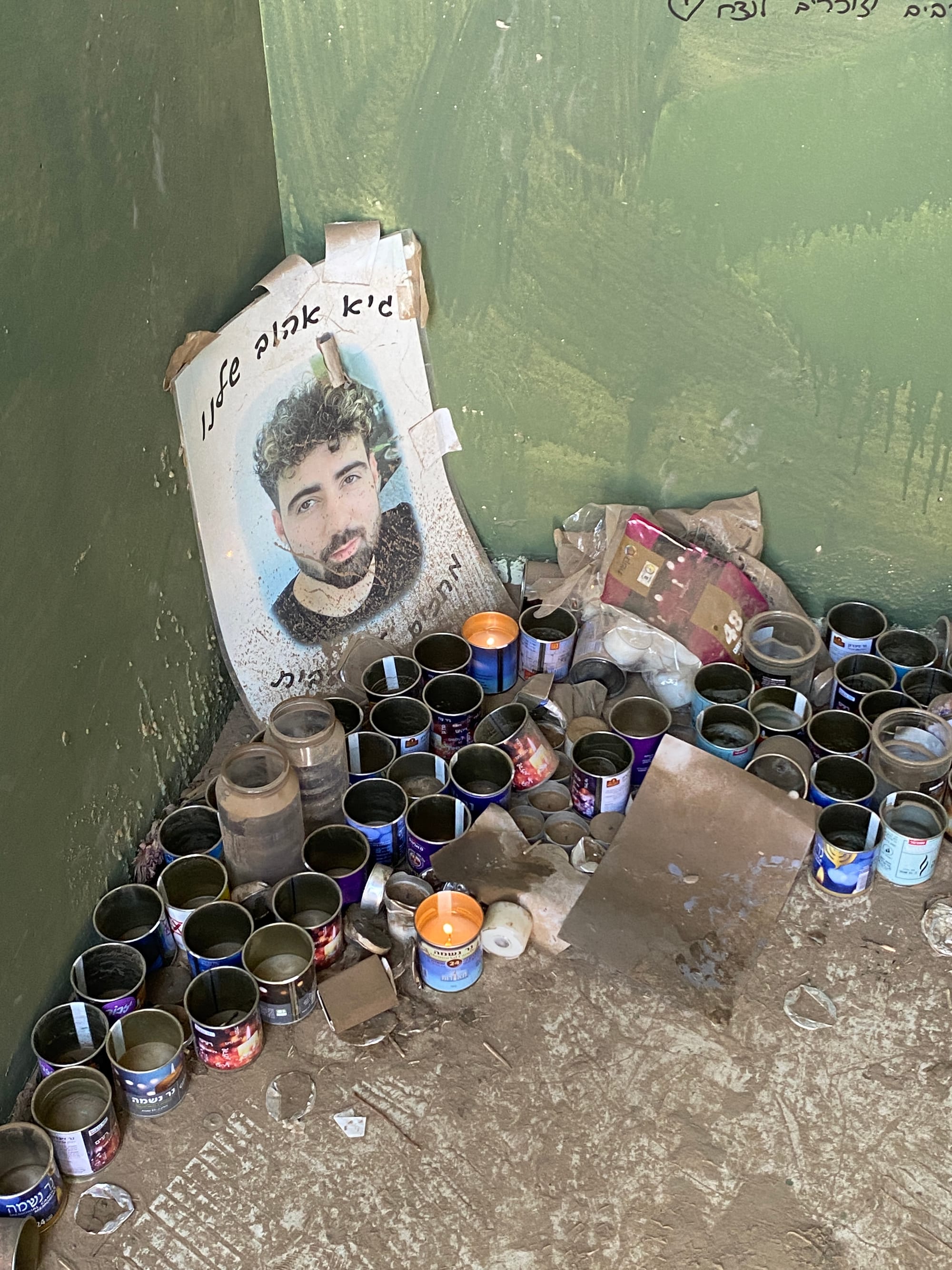
Chapter 5 — Rom Braslavski and Guy Gilboa-Dalal: The Male Survivors Who Spoke Out
The Hidden Suffering of Men in Captivity
Sexual violence during war is often discussed through the experiences of women and girls. Their suffering demands recognition, investigation and accountability.
But sexual violence does not affect women alone.
Men and boys can also become victims of sexual assault, forced nudity, sexual humiliation and other forms of abuse designed to destroy their dignity and sense of personal autonomy.
For male survivors, speaking about these experiences can carry an additional burden.
Social expectations surrounding masculinity, strength and vulnerability may make disclosure particularly difficult. Some men fear that they will not be believed. Others worry about humiliation, public judgment or being perceived as weak.
These barriers can become even more complicated when sexual violence occurs during captivity.
The victim may have been physically restrained, threatened with death, deprived of food or subjected to prolonged psychological intimidation. The perpetrator may have controlled every aspect of the captive's daily life.
Under such circumstances, resistance may be impossible.
The absence of physical resistance does not imply consent.
For two Israeli men abducted during the Hamas-led attacks of October 7, 2023, these realities became part of their personal experiences.
Rom Braslavski and Guy Gilboa-Dalal were both taken from the Nova music festival area and held in Gaza for more than two years.
Their captivity was marked by isolation, deprivation, physical abuse and severe psychological pressure.
Both later spoke publicly about sexual violence.
Their testimonies challenged a misconception that had received relatively little attention during the hostage crisis: that male hostages were exposed to physical torture but not necessarily to sexual abuse.
The experiences they described demonstrated that sexual violence against men was also part of the documented allegations emerging from captivity.
Although their circumstances differed, their accounts shared disturbing elements.
Both described being subjected to sexual humiliation or assault while unable to escape.
Both spoke about the psychological consequences of abuse.
And both had to confront the difficult decision of whether to reveal intensely personal experiences to the public.
Their stories are important not because male suffering should be considered more significant than female suffering, but because every survivor deserves recognition.
Sexual violence is a violation of human dignity regardless of the victim's sex.
Rom Braslavski: A Young Man Working at the Nova Festival
Rom Braslavski was 19 years old when the October 7 attacks began.
He was working as a security guard at the Nova music festival near Re'im in southern Israel.
Rom was serving in the Israeli military but was on leave and working at the civilian event when the attack occurred.
His responsibilities that morning were connected to the safety of festivalgoers.
When rockets were launched and armed attackers approached, the festival rapidly descended into chaos.
Thousands of people attempted to flee.
Vehicles became trapped on roads.
Gunfire spread through the surrounding fields.
Festivalgoers searched desperately for shelter.
Rom remained in the area as people tried to escape.
Accounts of his actions describe his efforts to assist others during the attack.
He was eventually captured by Palestinian Islamic Jihad militants and taken into Gaza.
His age is important to understanding the human dimension of his story.
He was still a teenager.
At an age when many young adults are beginning to establish independence, develop careers and make plans for their futures, Rom was forced into prolonged captivity.
He would spend more than two years under the control of armed captors.
During that time, he would be deprived of ordinary human freedoms and subjected to treatment that he later described as deeply humiliating.
Two Years Under Palestinian Islamic Jihad
Rom's captivity must be distinguished from the experiences of hostages held by Hamas.
Although the October 7 assault was led by Hamas, other Palestinian armed organizations participated in the attacks and held captives.
Rom was held by Palestinian Islamic Jihad, an armed organization separate from Hamas.
This distinction matters when documenting responsibility for specific acts of abuse.
His treatment should not automatically be attributed to individual Hamas captors when his own testimony identifies a different organization.
Rom spent much of his captivity in isolation.
According to information his family shared after his release, he was frequently held alone and had limited opportunities for sustained contact with other hostages.
Isolation can be particularly destructive during prolonged detention.
Human beings depend on social contact to maintain emotional stability, a sense of identity and an understanding of their surroundings.
When that contact is removed, the captive may become increasingly dependent on the people holding them.
For Rom, the isolation also meant that he had few opportunities to share his fears with someone who understood his circumstances.
He could not speak freely with his family.
He could not contact friends.
He could not determine when he would be released.
His world was controlled by his captors.
As months passed, the uncertainty became an additional form of psychological suffering.
Starvation, Humiliation and the Loss of Control
Following his release, Rom described periods of severe food deprivation.
He reported being denied adequate food and subjected to treatment that left him physically weakened.
Food became more than a basic necessity.
It became something controlled by the people holding him.
The ability to provide or withhold food gave his captors enormous power over his physical condition and emotional state.
According to information shared by his family, he was also offered improved treatment if he agreed to convert to Islam.
Such an account must be understood as an allegation concerning the conduct of his captors, not as a reflection of Islam or Muslim communities generally.
The issue is coercion.
A person deprived of liberty cannot make a genuinely free decision when basic necessities are used as leverage.
Rom's reported experience illustrates how captivity can be used to pressure a person's identity, beliefs and sense of self.
His family also described periods during which he was held near the bodies of deceased hostages.
The psychological consequences of such conditions are difficult to comprehend.
A captive who encounters the bodies of others who did not survive may experience intensified fear about their own fate.
Death is no longer an abstract possibility.
It becomes part of the immediate environment.
For Rom, the combination of isolation, deprivation and humiliation created conditions in which survival required extraordinary endurance.
The Sexual Violence Rom Later Described
On November 6, 2025, several weeks after his release, Rom spoke publicly about sexual abuse during an interview with Israel's Channel 13 television program Hazinor.
His testimony became internationally significant because he was the first released male Israeli hostage to publicly describe having been sexually assaulted during captivity.
Rom said that members of Palestinian Islamic Jihad had stripped him naked and tied him up.
He characterized the treatment as sexual violence intended to humiliate him and destroy his dignity.
The significance of his account lies in the deliberate use of sexualized degradation against someone who had no ability to leave.
Forced nudity can be a serious violation of personal dignity.
When combined with physical restraint, threats and other abusive conduct, it can form part of sexual violence, torture or cruel and degrading treatment.
For Rom, the experience was not simply the removal of clothing.
It was an act of domination.
His captors controlled his body, his movements and the conditions under which he was exposed.
He described the humiliation as central to what had happened.
That distinction matters.
Sexual violence is not always motivated primarily by sexual gratification.
It can also be used to intimidate, punish, degrade or demonstrate power over another person.
In Rom's account, humiliation was a defining feature of the abuse.
His testimony revealed how captivity can be used to attack not only physical safety but also personal dignity.
Why Male Sexual Abuse Is Often Overlooked
Rom's public disclosure raised broader questions about the recognition of male survivors.
Sexual violence against men has been documented in numerous armed conflicts and detention settings.
Yet it often receives less public attention than sexual violence against women.
Several factors contribute to this problem.
Male survivors may face social expectations that men should always be able to defend themselves.
They may fear being blamed for failing to resist.
They may experience shame associated with forced nudity or unwanted sexual contact.
Some may worry that disclosure will affect how others perceive their masculinity or sexuality.
These fears can discourage reporting.
But sexual assault does not determine a person's masculinity, sexual orientation or personal worth.
Nor does physical strength guarantee protection against armed captors.
A hostage may be restrained, injured, starving or threatened with death.
Under such circumstances, the power imbalance is overwhelming.
The responsibility for sexual violence belongs to the perpetrator.
Rom's decision to speak publicly challenged the silence surrounding male victimization.
His account made it harder to ignore the possibility that other men held in Gaza had experienced similar forms of abuse.
It also highlighted the need for investigators and medical professionals to approach male survivors without assumptions about what they may or may not have endured.
October 13, 2025: Rom Returns Home
Rom was released on October 13, 2025, as part of the agreement that brought the remaining living Israeli hostages held in Gaza back to Israel.
He had spent approximately 738 days in captivity.
He was 21 years old when he returned.
His release ended more than two years of detention.
But the physical and psychological consequences remained.
He received medical care after returning to Israel.
His family began learning about experiences that had been hidden from them throughout his captivity.
The reunion was an extraordinary moment of relief.
Yet it also marked the beginning of a difficult recovery.
Rom had lost more than two years of ordinary life.
He had endured prolonged uncertainty, deprivation and humiliation.
He now faced the challenge of rebuilding independence in a world that had changed while he was held captive.
His decision to speak publicly about sexual abuse came only weeks after his release.
That timing was significant.
He was still at an early stage of recovery.
Yet he chose to describe an experience that many survivors might struggle to disclose even years later.
His testimony became part of the growing record of abuses committed against hostages.
Guy Gilboa-Dalal: Abducted With His Best Friend
Guy Gilboa-Dalal was 22 years old when he attended the Nova music festival on October 7, 2023.
He had gone to the event with his childhood friend, Evyatar David.
Their friendship would become one of the defining elements of their captivity.
When the attack began, both young men were abducted into Gaza.
Like many festivalgoers, they had arrived expecting music and celebration.
Instead, they became hostages.
Guy was held by Hamas for approximately 738 days.
During that time, he experienced prolonged confinement, food deprivation, physical abuse and sexual assault.
His testimony would later reveal how the presence of another hostage could provide essential emotional support in circumstances where almost every other source of security had disappeared.
For Guy and Evyatar, friendship became a means of survival.
But it could not protect them from every form of abuse.
Life Underground
Guy spent substantial periods of captivity in underground detention.
He described being held in cramped conditions with other hostages, including Evyatar David, Tal Shoham and Omer Wenkert.
The underground environment severely restricted movement and access to ordinary daily activities.
Food was limited.
Washing was difficult.
The hostages had little control over their surroundings.
Guy later described how the men sometimes saved portions of food because they could not be certain when they would receive more.
As a result, they sometimes ate food that had already begun to spoil.
This was not a matter of preference.
It was an attempt to manage uncertainty.
A person who does not know when the next meal will arrive may feel compelled to preserve whatever food is available.
Over time, inadequate nutrition can cause serious physical deterioration.
Guy described becoming so weak that ordinary movements were difficult.
His muscle mass declined substantially.
At times, he struggled to raise his arms.
The physical weakness made him increasingly dependent on the people around him.
It also reduced his ability to respond to threats.
For a captive already deprived of freedom, severe malnutrition creates another layer of vulnerability.
The First Sexual Assault
In November 2025, Guy gave an extensive interview to Israel's Channel 12 News in which he described two incidents of sexual assault by the same captor.
His account was deeply disturbing.
During the first incident, he said a guard took him into another room and blindfolded him.
The man began touching his body without consent.
Guy described feeling intense fear as the touching continued.
He could not see clearly what the man was doing.
He did not know how far the assault would go.
When the captor realized how frightened he was, the situation escalated.
According to Guy, the man pressed a firearm against his head and held a knife to his throat.
He threatened to kill Guy if he told the other hostages or guards what had happened.
The threat transformed the assault into a continuing form of psychological control.
Guy had been sexually violated.
He had been threatened with death.
And he was now being ordered to keep the experience secret.
He could not safely seek help.
He could not escape.
And he could not know whether the perpetrator would return.
The assault left him carrying fear that extended beyond the immediate incident.
The Second Assault
Guy described a second sexual assault involving the same captor.
On that occasion, the man allowed him to shower.
Afterward, according to Guy's testimony, the captor prevented him from getting dressed and forcibly moved him into another room.
The man removed his own clothing and subjected Guy to unwanted sexual contact.
Guy described freezing during the assault.
He was physically weak and terrified.
He attempted to appeal to the captor's religious beliefs, hoping that this might stop the abuse.
But he had no meaningful power over the situation.
The captor controlled the room.
Guy could not leave.
His physical condition made resistance particularly difficult.
He later explained that he feared the abuse might become a recurring part of captivity.
That fear was itself a source of continuing trauma.
Even after the incident ended, Guy remained vulnerable to the same man.
Every encounter could trigger concern that the assault would happen again.
He described feeling safer when other guards or hostages were present because their presence reduced the opportunity for the perpetrator to isolate him.
This was a fragile form of protection.
His safety depended not on freedom or legal safeguards, but on the unpredictable presence of other people.
The Silence Imposed by Threats
Guy's testimony demonstrates how perpetrators can use threats to prevent disclosure.
The guard had threatened to kill him if he told anyone.
For a hostage, such a warning cannot be dismissed as an empty threat.
Guy had already witnessed the willingness of his captors to use violence.
He knew that they controlled his immediate environment.
He had no access to independent protection.
The possibility of retaliation was real.
As a result, he carried the experience largely in silence during captivity.
This silence was not evidence that the assault had been insignificant.
It was part of the coercive circumstances surrounding it.
The inability to speak can intensify the psychological burden of sexual violence.
A survivor may feel isolated even while physically surrounded by other people.
They may fear that disclosure will endanger themselves or others.
They may also struggle with shame or uncertainty about how their experience will be received.
For Guy, these concerns existed alongside the daily struggle to survive.
He had to manage hunger, physical weakness, confinement and the unpredictable behavior of his captors.
The sexual assaults added another source of fear to an already dangerous existence.
Beatings and Psychological Humiliation
Guy also described incidents of physical violence unrelated to the sexual assaults.
In one episode, he said a guard forced him and fellow hostage Omer Wenkert into humiliating positions before beating them.
The guard ordered Omer to position himself on all fours.
Guy was then pushed onto him.
The captor struck and kicked them.
The incident combined physical violence with deliberate humiliation.
The men were not simply being punished.
They were being forced into positions intended to demonstrate their captor's power.
Guy described how the guards' behavior could change suddenly.
At times, they appeared relatively calm.
Then they could become extremely cruel.
This unpredictability made it difficult for the hostages to assess danger.
They could not rely on consistent rules.
They could not know whether a seemingly ordinary interaction would turn violent.
For someone held over a prolonged period, this uncertainty can create continuous psychological vigilance.
The captive learns to monitor voices, expressions and movements.
Small changes in behavior may appear threatening.
Even moments of relative calm may provide little genuine relief.
Guy's testimony illustrates how physical violence and psychological intimidation can reinforce each other.
Friendship as a Means of Survival
One of the most moving elements of Guy's story concerns his relationship with Evyatar David.
The two had been friends before October 7.
Their friendship continued through captivity.
Guy later described how they helped one another endure the extreme conditions.
As food deprivation weakened their bodies, ordinary tasks became difficult.
At times, Guy needed assistance with dressing and washing.
Evyatar helped him.
They supported one another through fear, exhaustion and uncertainty.
Their relationship became a source of emotional stability.
In circumstances where the captors controlled nearly everything, the friendship represented something that belonged to the hostages themselves.
They could still care about one another.
They could still offer reassurance.
They could still try to preserve each other's dignity.
These acts may appear small from the outside.
Inside captivity, they could carry enormous significance.
Helping someone wash when they are too weak to raise their arms is not simply a practical gesture.
It is an act of human solidarity.
Sharing food when both people are hungry is not simply generosity.
It is an expression of concern for another person's survival.
Guy's account demonstrates that even in conditions of extreme deprivation, human relationships can remain powerful sources of resilience.
The Propaganda Videos
During captivity, Guy and Evyatar appeared in videos released by Hamas.
Such footage became part of the wider psychological pressure surrounding the hostage crisis.
The hostages were not free participants in these recordings.
They were being held under coercive conditions.
Their appearances and statements must therefore be understood within that context.
In February 2025, footage showed Guy and Evyatar being brought to a location associated with the release of other hostages.
They watched as other captives were freed.
But they themselves were returned to detention.
For a hostage, witnessing another person's release while remaining captive can create intense emotional distress.
Freedom is visible.
It appears close enough to imagine.
Yet it remains inaccessible.
Later, in August 2025, Hamas released disturbing footage of Evyatar in an extremely emaciated condition.
The video showed him being forced to dig what was presented as his own grave.
Guy later explained that he had been nearby during the filming and was also severely malnourished.
The footage drew international attention to the condition of the hostages.
But the full extent of their suffering remained largely hidden until after their release.
The use of hostage videos raises serious ethical questions for journalists.
Such recordings may contain important evidence about the condition of captives.
At the same time, they are produced under coercion and may serve the propaganda objectives of the armed group responsible.
Responsible reporting should therefore avoid treating forced statements as freely expressed opinions.
The dignity and safety of the hostages must remain central.
October 13, 2025: The End of Captivity
Guy Gilboa-Dalal was released on October 13, 2025, as part of the agreement that returned the remaining living hostages held in Gaza.
He had spent approximately 738 days in captivity.
His childhood friend Evyatar David was also released.
Their return marked the end of more than two years of detention.
For Guy, the moment carried overwhelming emotional significance.
He later described how difficult it had been to believe that freedom was truly approaching.
After years of uncertainty, announcements and changing circumstances, the promise of release could not automatically be trusted.
Only when the transfer became real could he begin to accept that he was going home.
His return brought reunion with his family, medical attention and the possibility of rebuilding ordinary life.
But the consequences of captivity remained.
He had experienced severe deprivation.
He had been physically assaulted.
He had endured sexual abuse.
And he had spent more than two years without the freedom to determine his own future.
Recovery would require more than rest and adequate nutrition.
It would also involve confronting the psychological consequences of what he had survived.
November 2025: Guy Speaks Publicly
On November 22, 2025, Channel 12 broadcast Guy's extensive interview about captivity.
He described the sexual assaults, threats, physical violence and deprivation he had experienced.
His testimony followed Rom Braslavski's earlier public disclosure.
Together, the interviews brought greater attention to sexual violence against male hostages.
Guy's account was particularly detailed.
He explained how the assaults occurred.
He described his fear of the perpetrator.
He discussed the difficulty of remaining silent.
And he reflected on the emotional strategies that helped him survive.
The interview challenged assumptions about how male victims respond to sexual assault.
Guy described freezing during abuse.
He described fear.
He described being unable to resist.
These reactions were consistent with the extreme vulnerability of his situation.
He was a hostage.
He was physically weakened.
And he was threatened by an armed captor.
His testimony demonstrated that sexual violence against men must be examined with the same seriousness and sensitivity as sexual violence against women.
June 2026: A Voice for Other Survivors
In June 2026, Guy spoke again about his experiences in connection with the International Day for the Elimination of Sexual Violence in Conflict.
In a conversation with Israel's First Lady, Michal Herzog, he discussed the abuse he endured and his desire to support other survivors.
His statements reflected an evolving relationship with his own testimony.
During captivity, he had been threatened into silence.
After release, he initially faced the difficult process of describing what had happened.
By June 2026, he was publicly expressing a desire to use his voice to help others.
This did not mean that his trauma had disappeared.
Rather, it demonstrated one way in which a survivor may seek to reclaim control over their experience.
Guy also spoke about the challenges of having his testimony questioned or insufficiently recognized.
For survivors of sexual violence, public doubt can create additional distress.
Their experiences may become the subject of political arguments rather than careful examination.
This is especially difficult when the abuse occurred during an armed conflict.
The survivor may feel that their credibility is being judged according to national or political identity.
Guy's decision to continue speaking emphasized the importance of recognizing sexual violence as a human rights issue.
His message extended beyond his own experience.
He wanted other survivors to understand that they were not alone.
The Psychological Consequences of Male Sexual Violence
The experiences of Rom and Guy illustrate the importance of understanding sexual violence against men without stereotypes.
Male survivors may experience many of the same psychological consequences as female survivors.
These can include fear, shame, intrusive memories, anxiety, sleep disturbances and difficulty trusting others.
Some may struggle with the belief that they should have resisted more effectively.
Others may feel uncomfortable discussing the experience because of social expectations surrounding masculinity.
But the ability to resist is determined by circumstances, not simply by physical strength.
A person who is restrained, starving, injured or threatened with a weapon may have no realistic means of escape.
Involuntary freezing during an assault is a recognized response to overwhelming danger.
It does not indicate willingness.
Nor does it diminish the seriousness of the violence.
The experiences of Rom and Guy also demonstrate how sexual abuse can be used to humiliate and dominate.
Forced nudity, unwanted touching and sexual assault can be intended to communicate that the captive has no control over their own body.
The psychological consequences may persist after release.
A survivor may regain physical freedom while continuing to experience fear associated with the assault.
Recovery can involve rebuilding trust, personal boundaries and a sense of bodily autonomy.
The process is individual.
There is no universal timetable.
Sexual Violence Against Men in International Law
International humanitarian law prohibits rape and other forms of sexual violence against people protected by its rules.
These protections apply equally to men and women.
Sexual violence against detainees and hostages may constitute war crimes.
Depending on the circumstances, acts involving severe physical or psychological suffering may also amount to torture or cruel and inhuman treatment.
The legal assessment depends on the specific conduct, context and evidence.
Forced nudity does not automatically establish every element of a particular international crime, but it can constitute degrading treatment and may form part of sexual violence or torture.
The testimonies of Rom and Guy therefore raise serious questions of legal responsibility.
They describe acts committed against people who had been deprived of their freedom and placed under the control of armed captors.
The victims could not leave.
They could not obtain independent protection.
They were subjected to threats and physical coercion.
These circumstances are central to evaluating the reported abuses.
Accountability requires careful investigation, preservation of evidence and identification of those responsible.
It also requires respect for the survivors.
A person should not have to surrender their privacy or repeatedly relive traumatic experiences simply to have allegations taken seriously.
Why Their Stories Must Not Be Generalized
Although Rom and Guy both described sexual violence during captivity, their experiences were not identical.
Rom was held by Palestinian Islamic Jihad.
Guy was held by Hamas.
Their detention conditions, captors and reported incidents differed.
These distinctions are essential.
Responsible journalism must avoid presenting every hostage as having experienced the same abuse.
It must also avoid attributing specific actions to an organization or individual without adequate evidence.
A survivor's testimony establishes what that person reports having experienced.
Independent investigations may provide additional corroboration, identify patterns or establish responsibility.
But the existence of similar allegations does not eliminate the need to examine each case separately.
The experiences of Rom and Guy should therefore be understood as individual testimonies that contribute to a broader body of evidence.
Their stories are important precisely because they reveal different ways in which sexual violence and humiliation can occur during captivity.
The Responsibility of the International Community
The testimonies of male survivors raise questions about how international institutions respond to sexual violence in armed conflict.
Sexual abuse should not receive less attention because the victim is male.
Nor should the seriousness of an allegation depend on the nationality or political identity of the person reporting it.
International human rights and humanitarian standards require consistent application.
This principle extends to every conflict.
Israeli hostages, Palestinian detainees and all other people deprived of liberty are entitled to protection from torture, sexual violence and degrading treatment.
Recognizing the abuse described by one group of survivors does not diminish the suffering of another.
The purpose of documentation is to establish what happened and identify responsibility.
The purpose of accountability is to address violations of law.
And the purpose of survivor-centered reporting is to preserve human dignity.
Rom and Guy's testimonies should be examined according to these principles.
Their experiences deserve attention because of the conduct they described, not because their stories can be used to support a particular political argument.
Beyond Survival: Rebuilding Their Lives
After more than two years in captivity, both men faced the challenge of returning to ordinary life.
The transition was not simply a return to familiar surroundings.
They had changed.
Their families had changed.
The country they returned to had experienced years of war, grief and political upheaval.
Both men had lost an important period of young adulthood.
They had been deprived of opportunities to work, study, travel and build relationships.
Their physical health had been affected.
Their psychological well-being had been tested under extraordinary circumstances.
Recovery involved reclaiming ordinary freedoms.
Choosing what to eat.
Deciding when to sleep.
Walking outside without permission.
Spending time with family.
Meeting friends.
Making plans for the future.
For someone who has spent years in captivity, these ordinary activities can acquire profound meaning.
Guy has spoken about the renewed significance of time with his family.
He has also discussed creative projects and the possibility of using his experiences to help others.
Rom's public testimony similarly demonstrated his determination to describe what happened rather than allowing the abuse to remain hidden.
Their futures will be shaped by their own decisions.
They are not defined exclusively by captivity.
They are young men with identities, relationships and ambitions that extend beyond October 7.
Recognizing this is essential to telling their stories respectfully.
The Importance of Listening
The stories of Rom Braslavski and Guy Gilboa-Dalal reveal an aspect of the hostage crisis that can easily be overlooked.
Sexual violence is not limited to female victims.
Men can also be sexually assaulted, humiliated and threatened.
They can experience fear, shame and psychological trauma.
And they can face enormous barriers to speaking publicly.
Rom described sexualized humiliation during captivity by Palestinian Islamic Jihad.
Guy described two incidents of sexual assault by a Hamas captor, accompanied by threats of death.
Both men survived more than two years of detention.
Both eventually returned home.
And both chose to speak about experiences that many survivors might find extraordinarily difficult to disclose.
Their testimonies are not interchangeable.
Each must be examined according to its own circumstances.
But together, they challenge the silence surrounding sexual violence against male captives.
They demonstrate why investigations into conflict-related sexual violence must include men and boys.
They also show why survivors should never be judged according to assumptions about how victims are supposed to behave.
A person who freezes during an assault has not consented.
A person who remains silent under threat has not accepted the abuse.
And a person who speaks publicly after release should not be required to repeatedly prove their suffering to an audience.
Conclusion — The Voices That Broke Another Silence
On October 7, 2023, Rom Braslavski and Guy Gilboa-Dalal were taken from the Nova music festival area into Gaza.
Both were young men whose lives had been interrupted by violence.
Both spent approximately 738 days in captivity.
Both experienced deprivation, fear and the loss of personal freedom.
And both later described sexual abuse.
Rom spoke about being stripped naked, restrained and deliberately humiliated by his captors.
Guy described two sexual assaults, threats with weapons and the fear that the abuse would happen again.
Their testimonies expanded public understanding of what some male hostages experienced.
They also challenged the idea that sexual violence during captivity could be understood solely through the experiences of women.
For both men, release ended their physical detention.
It did not erase the memories.
It did not return the years they had lost.
And it did not automatically restore the sense of safety that captivity had damaged.
Yet their decisions to speak publicly created an important record.
They described experiences that had occurred beyond the reach of independent observers.
They gave journalists and investigators accounts that could be examined and preserved.
And they helped make visible a form of suffering that male survivors are often reluctant to disclose.
Their stories deserve to be remembered without sensationalism or exaggeration.
They deserve to be investigated with care.
And they deserve to be understood as the experiences of individual human beings, not merely as evidence in a political debate.
The significance of their testimony extends beyond the Israel-Hamas war.
It concerns the fundamental right of every person to bodily autonomy, dignity and protection from abuse.
Sexual violence against men is sexual violence.
Captivity does not diminish that reality.
And silence, whether imposed through threats or reinforced by social expectations, should never be mistaken for the absence of suffering.
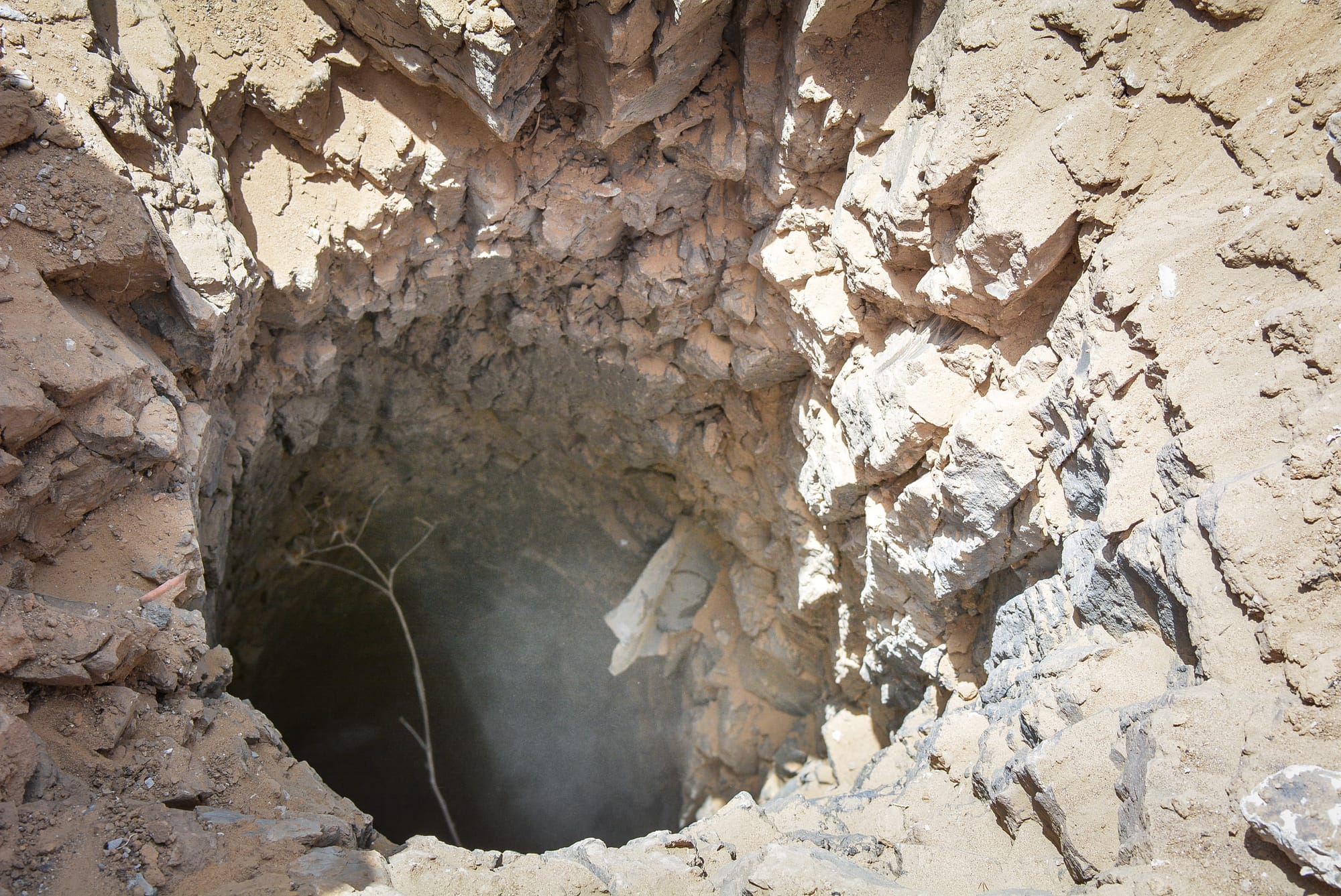
Chapter 6 — Life in Captivity: Hunger, Isolation and Psychological Terror
Behind Closed Doors and Beneath the Ground
For the hostages abducted during the Hamas-led attacks of October 7, 2023, captivity was not a single experience.
Some were held for weeks. Others remained imprisoned for months or more than two years. Some were confined in residential buildings, while others spent prolonged periods in underground tunnels. Some were held alone. Others shared small spaces with fellow captives.
Their treatment varied considerably.
Yet as more survivors returned home and began speaking publicly, disturbing patterns emerged.
Former hostages described severe food deprivation, physical violence, isolation, threats of execution, sexual abuse, inadequate medical care and psychological intimidation.
Some reported being chained or restrained for extended periods.
Others described being forced to participate in propaganda recordings, witnessing the suffering of fellow hostages or being deliberately misled about the possibility of release.
For many, the most devastating aspect of captivity was not knowing what would happen next.
They could not predict whether they would receive food.
They could not determine when they would be moved.
They could not know whether their families were alive.
And they could not be certain that they themselves would survive.
These experiences were not limited to a small number of widely publicized cases.
Investigations by international human rights organizations and United Nations bodies documented serious mistreatment of hostages held by Hamas and other Palestinian armed groups.
Their findings included physical abuse, sexual violence, deprivation, humiliation and acts amounting to torture.
The testimonies reveal a reality far removed from the brief images of hostages occasionally shown in news reports.
Behind those images were people attempting to survive under circumstances in which nearly every ordinary freedom had disappeared.
To understand the human consequences of the hostage crisis, it is necessary to examine not only the individual acts of violence but also the daily conditions that made captivity a continuous experience of fear.
Hunger: When Food Becomes a Means of Control
Food is one of the most basic human necessities.
Under ordinary circumstances, people decide when and what they will eat. They may skip a meal, choose a different dish or purchase food when they are hungry.
For hostages, those choices were often removed.
Many former captives described receiving inadequate food, sometimes for prolonged periods.
Some reported losing substantial amounts of weight.
Others described physical weakness, dizziness and difficulty performing ordinary movements.
For people held in underground tunnels, access to food could depend entirely on the decisions and circumstances of their captors.
The uncertainty was psychologically exhausting.
A hostage might not know whether the next meal would arrive in several hours or several days.
Even when food was provided, it might be insufficient to maintain health.
Some survivors described receiving small portions of bread, rice or other basic foods.
Others reported periods of severe deprivation.
The consequences extended beyond hunger itself.
Without adequate nutrition, the body gradually loses strength.
Muscle tissue deteriorates.
Concentration becomes difficult.
The ability to regulate body temperature may decline.
Wounds may heal more slowly.
And the person becomes increasingly vulnerable to illness.
For hostages already injured during their abduction, inadequate nutrition could complicate recovery.
The psychological consequences were equally significant.
Food became a source of anxiety.
Every meal carried uncertainty about the next.
Some captives attempted to save portions, even when doing so created the risk that the food would spoil.
Others became preoccupied with memories of meals they had once taken for granted.
The deprivation affected not only physical survival but also the ability to imagine a future beyond captivity.
Evyatar David: The Images That Shocked the World
One of the most disturbing public examples of severe deprivation involved Evyatar David, who was abducted from the Nova music festival on October 7, 2023.
Evyatar was held by Hamas for more than two years.
During his captivity, he appeared in footage released by the armed group.
In August 2025, a video showed him in an extremely emaciated condition inside an underground tunnel.
His body appeared severely weakened.
In the recording, he described prolonged periods without adequate food and referred to a calendar documenting days of deprivation.
He was also shown digging a hole that he was led to believe would become his grave.
The footage generated international outrage.
It exposed the physical deterioration of a young man who had entered captivity in a very different condition.
The psychological significance of the video was equally disturbing.
Evyatar was not simply being shown in poor health.
He was being forced to confront the possibility of his own death.
The act of making a captive dig what is presented as their grave combines physical intimidation with the deliberate creation of terror.
It communicates that the captor possesses the power to determine whether the prisoner lives or dies.
For the person subjected to such treatment, the experience can produce overwhelming fear.
For the family watching the footage, the suffering may be almost unbearable.
They can see their loved one.
They can recognize the physical deterioration.
But they cannot intervene.
The images also demonstrate why propaganda videos involving hostages require careful journalistic treatment.
The footage may contain evidence of abuse.
But the recording itself is produced under coercion.
The hostage cannot freely refuse to participate.
Statements made in such circumstances cannot automatically be treated as voluntary.
In Evyatar's case, the footage became part of the documented evidence of severe deprivation and psychological abuse.
It also revealed how a hostage's suffering could be displayed publicly to influence people far beyond the place of captivity.
Bar Kupershtein: Surviving in a Space Barely Large Enough to Move
Bar Kupershtein was another young man abducted during the Nova massacre.
He had been helping injured festivalgoers when he was taken captive.
Bar spent approximately two years in Gaza before his release in October 2025.
After returning home, he described being held in an underground tunnel with five other hostages.
According to his account, the space available to them was extraordinarily small.
He compared their living area to the size of a mattress.
Six men were forced to endure prolonged confinement in conditions that allowed very little movement.
They had limited food.
They had no ordinary access to daylight.
And they were subjected to physical violence.
Bar described how his religious faith became an important source of psychological strength.
He and fellow captives attempted to preserve Jewish traditions, including observing the Sabbath.
These practices helped them maintain a sense of time and identity.
In an environment where ordinary routines had disappeared, religious observance provided structure.
It reminded them that life existed beyond the tunnel.
Bar also described a terrifying incident in which guards forced the hostages to confront a supposed decision about which of them would be killed.
The threatened execution did not take place.
But the experience left the men believing that one of them might die.
Such threats can produce severe psychological suffering even when they are not carried out.
The fear is real.
The captive has no reliable way to determine whether the threat is genuine.
And the experience may continue to affect the person long afterward.
Bar's testimony illustrates how prolonged confinement, deprivation and psychological intimidation can operate together.
The tunnel restricted his body.
The guards controlled his daily life.
And the threat of death dominated his understanding of the future.
The Underground Tunnels: A World Without Daylight
Several released hostages described being held in underground tunnels beneath Gaza.
The tunnel system used by Hamas served various military purposes, including movement, concealment and storage.
Some parts were also used to hold hostages.
The conditions described by survivors varied, but certain features appeared repeatedly.
Limited space.
Poor ventilation.
Restricted movement.
Insufficient sanitation.
Little or no natural light.
And dependence on armed guards for access to basic necessities.
For people accustomed to living freely, underground confinement can be profoundly disorienting.
Natural daylight helps regulate the body's internal clock.
It provides information about the passage of time.
Without it, days can begin to merge.
A captive may struggle to distinguish morning from evening.
Sleep patterns can become disrupted.
The absence of ordinary environmental cues can intensify feelings of isolation.
Some hostages attempted to create their own routines.
They counted days.
They marked time through prayers.
They remembered birthdays or holidays.
They spoke about family members.
These activities helped preserve a connection to life outside captivity.
But routines could be interrupted at any moment.
A guard might order the hostages to move.
A tunnel might become unsafe because of nearby fighting.
Food deliveries might change.
Or captives might be separated without explanation.
The resulting uncertainty made it difficult to establish any lasting sense of stability.
Isolation: The Psychological Cost of Being Alone
Not every hostage was held with others.
Some experienced prolonged periods of isolation.
Human contact is essential to psychological well-being.
Conversation, shared experiences and ordinary social interactions help people maintain a sense of identity and connection.
When these are removed, the consequences can be severe.
A person held alone may have no one with whom to discuss fear.
They may have no independent source of information.
Their only regular interactions may be with the people controlling their captivity.
This creates a dangerous imbalance.
The captor becomes the source of food, information, movement and human contact.
The hostage may begin monitoring every expression and reaction in an attempt to avoid punishment.
Small changes in a guard's behavior can become emotionally significant.
A friendly tone may create temporary relief.
An angry expression may produce immediate fear.
Over time, this constant vigilance can become exhausting.
Former hostage Rom Braslavski described spending substantial periods of captivity alone.
His account illustrated how isolation could intensify the effects of physical deprivation and intimidation.
He had limited opportunities to share his experiences with fellow captives.
He could not speak freely with family members.
And he had no reliable way of knowing when his imprisonment would end.
Isolation does not necessarily leave visible injuries.
But the absence of visible wounds does not mean that the experience was harmless.
Prolonged isolation, particularly when combined with threats and deprivation, can cause serious psychological suffering.
When Other Hostages Became a Lifeline
For some captives, the presence of fellow hostages became essential to survival.
They shared food.
They helped one another move.
They offered reassurance during frightening moments.
And they attempted to preserve a sense of ordinary human connection.
Guy Gilboa-Dalal described how his childhood friend Evyatar David helped him during periods of severe physical weakness.
Their relationship existed before October 7.
Captivity transformed it into a source of daily support.
When Guy struggled with ordinary movements because of malnutrition, Evyatar helped him.
Such acts may appear simple.
But in captivity, they could become extraordinary expressions of dignity.
Helping someone dress or wash is a way of recognizing their humanity.
Sharing limited food is an act of solidarity.
Listening to another person's fears can provide emotional relief when almost every other source of reassurance has disappeared.
These relationships also created additional vulnerabilities.
A hostage could become deeply attached to fellow captives.
Separation might therefore produce intense distress.
If one person was released while another remained behind, relief could be accompanied by guilt and fear.
If a fellow hostage died, the survivor might carry grief alongside the trauma of captivity.
The emotional bonds formed under such circumstances could continue long after release.
They became part of the survivors' personal histories.
The Loss of Privacy and Human Dignity
Captivity affected more than movement and access to food.
It also stripped many hostages of basic privacy.
Former captives described being watched while using the bathroom, being forced to ask permission for ordinary bodily needs and having little control over washing or changing clothes.
For some, these restrictions were accompanied by sexual harassment or assault.
For others, the loss of privacy was itself a form of humiliation.
Under ordinary circumstances, personal hygiene and bodily functions are private matters.
People expect a basic level of control over when and how they attend to these needs.
In captivity, that control could disappear.
A hostage might have to request permission to use a toilet.
They might be unable to wash for prolonged periods.
They might be forced to share cramped spaces with several other people.
And they might have no ability to protect themselves from unwanted observation.
These conditions can undermine a person's sense of dignity.
The consequences are particularly severe when the captor deliberately uses privacy restrictions to intimidate or humiliate.
The experiences of Amit Soussana and Romi Gonen, examined in earlier chapters, demonstrate how the absence of privacy could also create opportunities for sexual abuse.
But the broader issue extends beyond individual assaults.
It concerns the right of every detained person to humane treatment.
Even in armed conflict, captivity does not eliminate fundamental protections against degrading treatment.
Physical Violence: Beatings, Restraints and Threats
Several released hostages described being physically assaulted during detention.
Their accounts included beatings, painful restraints, threats with weapons and punishment during interrogation.
Some were chained for extended periods.
Others were forced into uncomfortable positions or subjected to violence intended to intimidate them.
Amit Soussana described being beaten during an interrogation after she had already experienced sexual assault.
Rom Braslavski reported physical abuse and humiliation.
Guy Gilboa-Dalal described beatings and threats involving weapons.
These experiences differed in their specific circumstances.
They should not be treated as proof that every hostage was subjected to identical abuse.
Nevertheless, international investigations documented multiple cases of physical mistreatment.
The United Nations Commission of Inquiry found that hostages had been subjected to violence, humiliation, isolation and other forms of abuse.
Amnesty International also documented treatment that amounted, in some cases, to torture or other cruel treatment.
Physical violence during captivity carries consequences beyond immediate injury.
A hostage may begin expecting punishment even when no violence is occurring.
The possibility of being beaten can influence every interaction.
The person may become afraid to ask questions.
They may avoid requesting food or medical care.
They may remain silent when they are in pain.
Over time, the threat of violence can become a powerful instrument of control.
The Psychological Terror of Unpredictability
One of the most consistent themes in survivor testimony is uncertainty.
Captives frequently did not know what would happen next.
They could not reliably predict their captors' behavior.
They could not verify information about the war.
They could not know whether release was approaching.
This uncertainty was sometimes deliberately intensified.
Moran Stela Yanai described being led to believe that she would be released, only to discover that the anticipated transfer was not taking place.
Bar Kupershtein described being forced to confront the possibility that one of his fellow hostages would be executed.
Other survivors reported threats that their families had been killed or that they themselves would never return home.
Such experiences demonstrate how psychological violence can be inflicted without continuous physical assault.
A captor can manipulate hope.
They can create fear through threats.
They can provide false information.
They can make the hostage believe that death is imminent.
And they can repeatedly change the conditions of detention.
For someone deprived of independent sources of information, it may be impossible to distinguish truth from intimidation.
The psychological burden is substantial.
Hope becomes difficult to trust.
Even apparently positive developments may provoke anxiety.
A promise of release can be experienced not as reassurance but as another possible form of manipulation.
This can continue affecting survivors after they return home.
They may struggle to trust information or feel safe in situations where they no longer face immediate danger.
Propaganda Videos: Captivity Before a Camera
Throughout the hostage crisis, Hamas and other armed groups released videos featuring captives.
Some showed hostages speaking directly to the camera.
Others depicted their physical condition or participation in staged events.
The recordings were widely circulated through media and social platforms.
For families, the videos created a painful contradiction.
They sometimes provided the first visible indication that a loved one was alive.
But they also exposed the captive's suffering.
The family could see the person they loved without being able to help.
In some cases, the footage showed hostages in visibly deteriorated physical condition.
In others, captives delivered statements about political negotiations or the war.
These recordings must be understood within the coercive circumstances in which they were produced.
A hostage cannot freely refuse participation when armed captors control their environment.
The content may therefore reflect pressure, instructions or threats.
The recordings cannot automatically be interpreted as freely expressed views.
International human rights investigators concluded that the use of such videos contributed to the psychological suffering of hostages and their families.
The impact extended beyond the person being filmed.
Parents, partners, children and siblings were forced to confront images of their loved ones under the control of armed groups.
The videos became part of the wider psychological pressure surrounding the hostage crisis.
The Fear of Execution
For many hostages, the possibility of being killed was a constant concern.
Some had witnessed people being murdered during their abduction.
Others were threatened during captivity.
Several knew that fellow captives had died.
The fear of execution could be intensified through direct threats, weapons or staged situations.
Amit Soussana described being threatened with a firearm.
Romi Gonen described being told that her life was in danger.
Bar Kupershtein reported an incident in which captives were made to believe that one of them would be killed.
Evyatar David was shown digging what he was led to believe was his grave.
These incidents differed in their circumstances, but they shared a central feature.
The captor communicated the possibility of death while the hostage had no realistic ability to escape.
The psychological consequences can be severe.
The person may experience intense fear, helplessness and anticipation of imminent harm.
Even when the threatened killing does not occur, the experience can constitute serious psychological abuse.
A hostage does not know whether the threat is intended merely to frighten them.
They must confront the possibility that it will be carried out.
For people held over months or years, repeated threats can profoundly affect their sense of safety.
Medical Care: Injuries Without Independent Protection
Some hostages entered Gaza with injuries sustained during the October 7 attacks.
Others developed medical problems during captivity.
Access to treatment varied.
Some received medical attention.
Others described inadequate care, untreated injuries or difficulty obtaining medication.
The central problem was dependence.
Hostages could not freely choose their doctors.
They could not independently seek medical advice.
They could not decide to visit a hospital.
And they could not reliably communicate their medical needs to family members.
For people with chronic illnesses, this dependence could be especially dangerous.
Regular medication may be necessary to prevent serious complications.
Older hostages could be particularly vulnerable to interrupted treatment.
Injured captives might require surgery, rehabilitation or ongoing medical monitoring.
Even when treatment was provided, it took place within the broader circumstances of unlawful detention.
Medical attention did not make the captivity lawful.
Nor did it eliminate the obligation to release the hostages.
Romi Gonen's account of receiving treatment after being shot illustrates the complexity of medical vulnerability during captivity.
She needed care.
But she also described abuse during the early stages of detention.
Her experience demonstrates why medical treatment must be accompanied by genuine protection from violence and coercion.
The Absence of Independent Monitoring
A major concern throughout the hostage crisis was the lack of regular independent access to the captives.
The International Committee of the Red Cross repeatedly sought access to hostages held in Gaza.
Such visits could have helped establish their condition, facilitate communication with families and assess urgent medical needs.
But the armed groups holding the hostages did not provide the independent access requested.
As a result, families often had little reliable information.
They could not know whether their loved ones were receiving adequate food.
They could not verify their medical condition.
They could not determine whether they were being subjected to abuse.
The lack of access also complicated independent investigation.
Much of what happened during captivity became known only after survivors were released.
Some accounts could be compared with medical findings, other testimonies or available footage.
Other details remained difficult to verify.
This limitation must be acknowledged.
The absence of independent observers does not invalidate survivor testimony.
But it means that responsible journalism must distinguish between documented findings, individual accounts and matters that remain unresolved.
Independent monitoring is one of the safeguards intended to reduce the risk of abuse in detention.
When such access is denied, captives become even more vulnerable.
Children in Captivity: Fear Without Understanding
Children taken hostage faced particular risks.
Their physical and psychological needs differ from those of adults.
They depend on caregivers for reassurance, safety and emotional stability.
Violent abduction can disrupt those foundations.
Some children were held with family members.
Others experienced separation, uncertainty or the loss of loved ones.
The conditions of captivity could be especially confusing.
A child may not understand why armed strangers are controlling their movements.
They may struggle to comprehend threats or changes in location.
They may be unable to distinguish temporary danger from permanent loss.
For younger children, ordinary routines are essential to emotional security.
Meals, sleep, play and contact with trusted adults help establish predictability.
Captivity can remove these sources of stability.
Some released children were reported to have experienced emotional and behavioral difficulties after returning home.
These included fear, disrupted sleep and challenges adjusting to ordinary life.
The experiences of children must be approached with particular care.
Their stories should not be sensationalized.
Their privacy deserves protection.
And their recovery should not be turned into a public spectacle.
The next chapter examines their experiences and those of the families who were abducted or separated in greater detail.
The Families Who Waited Without Answers
The psychological consequences of captivity extended far beyond Gaza.
Families in Israel and other countries spent months or years waiting for information.
Some knew that their loved ones had been abducted.
Others initially did not know whether a missing relative was alive.
As the hostage crisis continued, families organized campaigns, met political leaders and appealed to international organizations.
They watched negotiations unfold.
They examined photographs and videos.
They searched for any indication that their loved ones were still alive.
The uncertainty was exhausting.
A family might receive encouraging news about a possible agreement, only to learn that negotiations had failed.
They might see a hostage video that confirmed life but revealed severe suffering.
They might be told that a loved one had died without immediately receiving remains or complete information about the circumstances.
This prolonged uncertainty can create a distinctive form of psychological distress.
Families are unable to fully grieve because they do not know whether the person is dead.
But they cannot experience ordinary reassurance because the person is absent and potentially in danger.
Their lives become suspended between hope and fear.
The psychological suffering inflicted on families was recognized in international investigations as an important dimension of the hostage crisis.
The War Outside and the Danger Inside
Captivity occurred during an active and devastating war in Gaza.
Israeli military operations, Hamas military activity and the destruction of infrastructure created serious dangers throughout the territory.
Hostages held in residential buildings or tunnels could be exposed to nearby fighting.
Some described hearing explosions.
Others reported being moved repeatedly as military operations intensified.
The captives had no meaningful control over their locations.
They could not choose safer accommodation.
They could not independently evacuate.
They could not inform military forces where they were being held.
This created an additional layer of vulnerability.
The armed groups detaining hostages bore responsibility for their treatment and safety.
At the same time, military operations in areas where hostages were held could create grave risks to their lives.
The wider humanitarian crisis also affected Gaza's civilian population, which experienced extensive displacement, destruction, food insecurity and loss of access to medical care.
These realities must be examined without confusing different responsibilities.
The humanitarian suffering of Palestinian civilians does not justify hostage-taking or abuse.
Likewise, the crimes committed against Israeli hostages do not justify violations against Palestinian civilians.
International humanitarian law imposes obligations on all parties.
The protection of civilians and people deprived of liberty remains essential regardless of the circumstances of the conflict.
The Long-Term Effects of Deprivation
The consequences of prolonged captivity do not necessarily disappear when a person returns home.
Severe food deprivation may require careful medical treatment.
Physical weakness can persist.
Injuries may need rehabilitation.
Sleep disturbances may continue.
The psychological consequences can be equally complex.
Some survivors may experience intrusive memories.
Others may struggle with anxiety, hypervigilance or difficulty trusting people.
Ordinary situations can become reminders of captivity.
A locked door.
A dark room.
An unexpected noise.
The smell of certain foods.
Or the sensation of being alone.
These associations may arise because the nervous system has adapted to prolonged danger.
During captivity, remaining alert may have helped the person survive.
After release, the same heightened vigilance can make ordinary life difficult.
Recovery requires time.
It may involve medical care, psychological treatment, family support and gradual exposure to everyday activities.
Not every survivor will experience the same symptoms.
And no diagnosis should be assumed simply because someone endured captivity.
The individual experience must remain central.
Some people may wish to speak publicly.
Others may need privacy.
Some may return quickly to work or education.
Others may require extended rehabilitation.
There is no single correct path to recovery.
What International Investigations Established
The accounts of released hostages have been examined by journalists, medical professionals and international investigators.
The United Nations Independent International Commission of Inquiry documented mistreatment of hostages held by Palestinian armed groups.
Its findings included physical violence, sexual violence, forced isolation, humiliation, deprivation and psychological abuse.
The Commission concluded that serious violations of international humanitarian law had occurred, including war crimes.
Amnesty International subsequently examined the October 7 attacks and the treatment of hostages in Gaza.
Its December 2025 report documented evidence of physical and sexual violence, inadequate food and water, painful restraints and other forms of mistreatment.
The organization concluded that some of the abuses amounted to torture or other cruel treatment.
These investigations are important because they provide a framework beyond individual interviews.
They examine multiple sources of information.
They distinguish between allegations and findings.
And they consider the legal implications of the documented conduct.
However, the investigations also recognized limitations.
Not every survivor was interviewed.
Not every detention location could be examined.
And some allegations remained difficult to verify independently.
The historical record is therefore substantial but not necessarily complete.
Further testimony, medical documentation and future investigations may reveal additional information.
Why the Conditions Matter Legally
Hostage-taking is prohibited under international humanitarian law.
The prohibition applies regardless of whether the captives are civilians or members of armed forces.
The people holding hostages must also comply with fundamental rules protecting persons in their power.
Torture is prohibited.
So are cruel treatment, sexual violence and outrages upon personal dignity.
Threatening a captive with execution, deliberately inflicting severe suffering or denying essential care may constitute serious violations of international law.
The legal classification of individual acts depends on the available evidence and the elements of the relevant offenses.
Not every instance of poor detention conditions automatically establishes torture.
But prolonged deprivation, physical abuse and deliberate psychological intimidation can meet that threshold when the necessary elements are present.
The responsibility for unlawful acts must be examined at the level of the individuals and organizations involved.
Specific allegations should not be attributed indiscriminately to every member of a group.
Nor should crimes committed by armed organizations be attributed to an entire civilian population.
The purpose of legal investigation is to establish responsibility based on evidence.
That distinction is essential to credible journalism.
The Difference Between Surviving and Being Unharmed
One of the most damaging misconceptions about hostage releases is the assumption that survival means the person escaped serious harm.
A hostage may return walking.
They may smile.
They may embrace relatives.
They may speak confidently to journalists.
But these outward signs do not reveal the full consequences of captivity.
A person can survive while carrying severe physical injuries.
They can appear calm while experiencing intense psychological distress.
They can express gratitude for freedom while grieving the time and people they lost.
They can speak publicly about some experiences while keeping others private.
The images of reunions are important.
They represent extraordinary moments of relief.
But they should not become the only images through which the public understands the hostage crisis.
The suffering that preceded release deserves careful documentation.
So does the recovery that follows.
Survivors are not required to demonstrate visible distress in order for their experiences to be taken seriously.
Nor should they be expected to recover according to a public timetable.
Their lives belong to them.
Preserving the Human Record
The testimonies emerging from Gaza captivity form an important historical record.
They document the experiences of people who were abducted during one of the deadliest attacks in Israeli history and held under the control of armed organizations.
Some accounts describe physical torture.
Others reveal sexual violence.
Many describe hunger, isolation, fear and psychological manipulation.
The experiences are not identical.
Their circumstances differ.
Their durations differ.
And the available evidence varies.
Responsible journalism must preserve those distinctions.
But the recurring patterns identified in independent investigations cannot be ignored.
Hostages were unlawfully detained.
Some were subjected to severe physical and psychological abuse.
Some were sexually assaulted.
Some were denied adequate food, water or medical care.
Some were killed or died during captivity.
And families experienced prolonged suffering while waiting for information about their loved ones.
These facts are central to understanding the hostage crisis.
They demonstrate that captivity was not simply a period of waiting for negotiations.
For many survivors, it was a daily struggle to remain alive.
Conclusion — The Invisible Weight of Captivity
The public often measures captivity in days.
Fifty-four days.
Fifty-five days.
Four hundred and seventy-one days.
Seven hundred and thirty-eight days.
These numbers help establish how long individuals were deprived of freedom.
But they cannot fully communicate what those days contained.
They do not reveal the fear of waking up beside an armed captor.
They do not describe the uncertainty of not knowing when food will arrive.
They cannot capture the psychological impact of being threatened with execution.
They do not show what it means to live underground without daylight or to be forced into silence after abuse.
And they cannot measure the emotional burden of wondering whether one's family is still alive.
For some hostages, survival depended on physical endurance.
For others, it involved maintaining hope through faith, friendship or memories of home.
Many relied on several forms of resilience simultaneously.
Their survival should be recognized.
But resilience must never become an excuse to minimize the violence they experienced.
No person should have to endure starvation, humiliation, sexual assault or psychological torture in order to demonstrate strength.
The testimonies of released hostages reveal what happens when armed captors exercise nearly unlimited control over human beings.
They also demonstrate the importance of documenting abuses that occur beyond the reach of independent observers.
The historical record must include both the visible moments of release and the hidden experiences that preceded them.
Because captivity is not defined only by the day a person is taken or the day they return.
It is defined by everything that happens in between.
And for many survivors, the consequences continue long after the doors of captivity have opened.
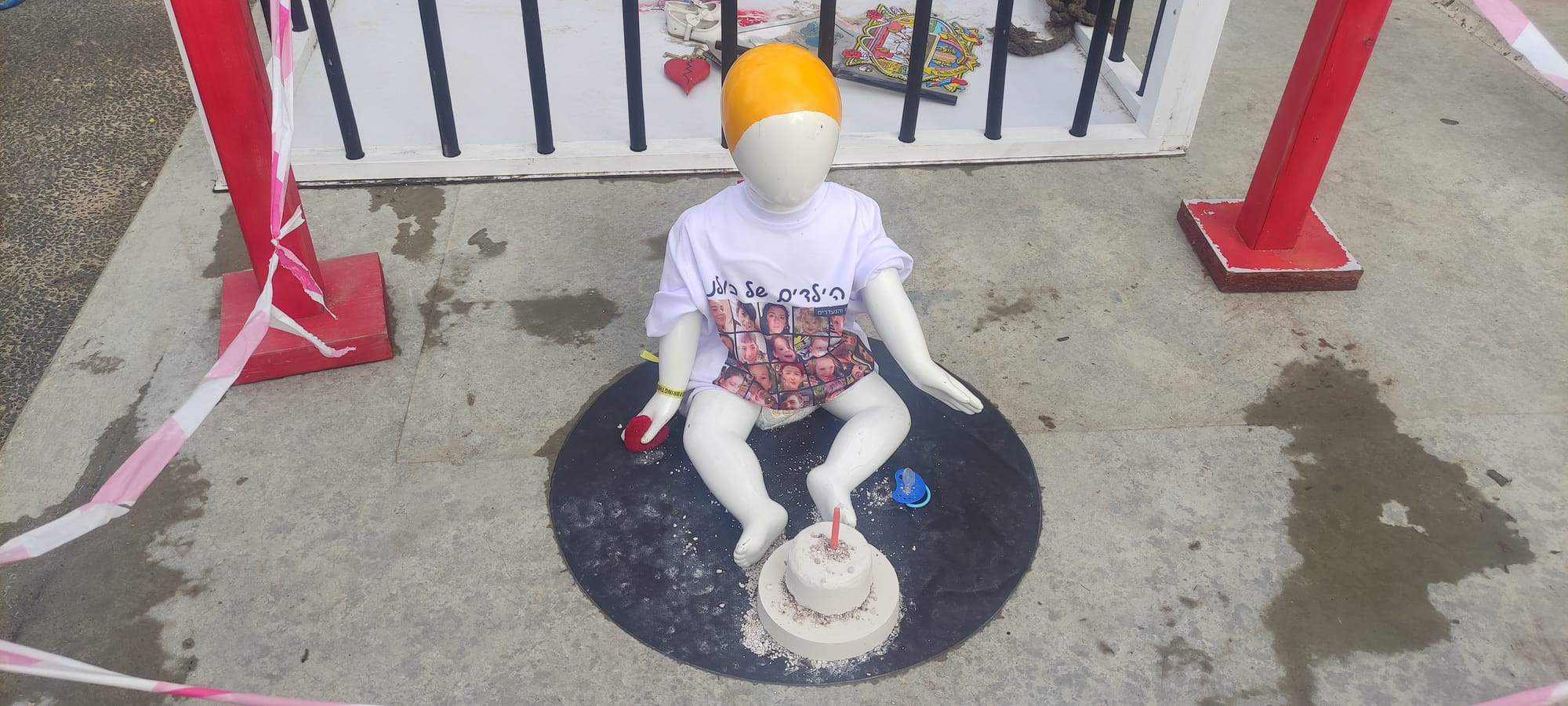
Chapter 7 — The Children and Families Who Were Taken
When Childhood Became Captivity
Among the 251 people abducted during the Hamas-led attacks on Israel on October 7, 2023, were children, parents, grandparents and entire families.
Some were taken together. Others were violently separated.
Children who had gone to sleep in their own bedrooms woke to gunfire, explosions and armed strangers entering their communities.
Parents who had spent their lives protecting their children suddenly found themselves unable to guarantee their safety.
For some families, the ordeal ended with reunification after weeks of captivity.
For others, freedom brought the devastating discovery that relatives had been murdered.
And for some, there would never be a reunion.
The abduction of children represented one of the most disturbing dimensions of the October 7 attacks.
These were not soldiers captured during combat.
They were infants, young children and teenagers taken from homes and communities.
They had no responsibility for the political decisions, military operations or historical disputes surrounding the Israeli-Palestinian conflict.
Yet they became captives.
Their lives were placed under the control of armed organizations, and their families were left to confront an uncertainty that no parent should ever experience.
As children began returning during the November 2023 hostage agreement, the world saw emotional reunions.
Parents embraced children they had feared they might never see again.
Grandparents held grandchildren.
Families gathered in hospitals and private rooms, trying to understand what the children had endured.
But the photographs revealed only a fraction of the story.
Behind the reunions were experiences of violent abduction, fear, separation, disrupted development and the loss of familiar routines.
Some children had witnessed killings.
Some had been held without their parents.
Others returned to discover that their homes had been destroyed or that people they loved were dead.
Their experiences raise questions that extend far beyond the immediate hostage crisis.
What happens when a child is violently removed from everything familiar?
How does prolonged fear affect a developing mind?
What does freedom mean to a child who has learned that adults cannot always protect them?
And how can families rebuild a sense of safety after experiencing such profound loss?
The stories of these children deserve to be remembered not simply because of their ages, but because of the individual lives interrupted by captivity.
The Bibas Family: A Mother and Her Two Young Sons
Few images from October 7 became as widely recognized as those of Shiri Bibas holding her two young children while being abducted from Kibbutz Nir Oz.
Shiri was 32 years old.
Her older son, Ariel, was four.
Her youngest son, Kfir, was only nine months old.
Kfir was the youngest person abducted into Gaza during the October 7 attacks.
Before that morning, the Bibas family had lived an ordinary family life in Nir Oz.
Shiri and her husband, Yarden, were raising their two boys in a community where children played, neighbors knew one another and families shared daily routines.
Their lives were centered on the ordinary responsibilities of parenthood.
Feeding a baby.
Caring for a young child.
Preparing meals.
Working.
Spending time together.
On October 7, those routines disappeared.
Armed attackers entered Nir Oz, killing residents and abducting others.
The Bibas family was among those taken.
Yarden was separated from Shiri and the children.
Images recorded during the attack showed Shiri carrying her sons while surrounded by armed men.
Her expression conveyed visible terror.
She held the children close to her body.
For viewers around the world, the footage became a symbol of the vulnerability of children caught in deliberate violence.
But for the Bibas family, it was not a symbol.
It was the beginning of a tragedy.
A Father Separated From His Family
Yarden Bibas was abducted separately from his wife and sons.
During his captivity, he had no reliable way to protect them or determine their fate.
For a parent, separation from children during an emergency can produce overwhelming fear.
The parent may imagine injuries, hunger, illness or death.
They may wonder whether the children are crying.
Whether they are being comforted.
Whether someone is feeding them.
Whether they understand what has happened.
For Yarden, these concerns were not hypothetical.
His infant son was still at an age when children depend almost entirely on caregivers.
His older son was only four years old.
Both had been taken into Gaza with their mother.
During Yarden's captivity, Hamas released material intended to communicate that Shiri and the boys had died.
The claims were disputed, and the family continued hoping that they might still be alive.
Yarden remained a hostage for nearly sixteen months.
On February 1, 2025, he was released during a ceasefire and hostage-exchange agreement.
His return was an extraordinary moment for his relatives.
But his wife and children were not there.
The family had regained a son and brother.
Yet the future of his wife and boys remained unresolved.
Freedom had brought Yarden home.
It had not restored his family.
The Deaths of Shiri, Ariel and Kfir
In February 2025, the worst fears surrounding the Bibas family were confirmed.
The remains of Ariel and Kfir were returned to Israel and identified through forensic examination.
Israeli authorities concluded that the children had been killed in captivity in November 2023.
According to the Israeli military's assessment, based on forensic findings and intelligence, the boys were murdered by their captors.
Hamas and associated Palestinian armed groups had previously claimed that the children died as a result of Israeli airstrikes.
Those competing accounts must be distinguished.
The Israeli assessment attributes their deaths to deliberate killing by captors. The armed groups' earlier explanation attributed the deaths to bombardment. The complete underlying forensic and intelligence evidence has not been made publicly available for independent examination.
What is established is that Ariel and Kfir were abducted alive and did not survive captivity.
The return of Shiri's remains involved a further disturbing development.
On February 20, 2025, Hamas handed over a body that was initially presented as hers.
Israeli forensic examination determined that it did not belong to Shiri.
Her actual remains were subsequently returned and identified.
On February 22, the family confirmed that Shiri had been brought home.
She, too, had died in captivity.
The confirmation ended months of uncertainty.
But it brought no happy ending.
A mother and her two young sons had been taken from their home.
None of them returned alive.
For Yarden, the release from captivity was followed by the devastation of losing his wife and children.
The Bibas family's tragedy became one of the most painful chapters of the hostage crisis.
Their story is also a reminder of the limits of public imagery.
The world knew their faces.
Millions had seen their photographs.
Their names had appeared on posters and banners.
Yet international attention had not been enough to save them.
The Family Asher: A Mother and Her Two Daughters
Not every family story ended in death.
Some children were released and reunited with loved ones after weeks of captivity.
Among them were the Asher family.
On October 7, Doron Asher Katz was visiting relatives in Kibbutz Nir Oz with her two young daughters, Raz and Aviv.
Raz was four years old.
Aviv was two.
The family had been spending time with Doron's mother, Efrat Katz, and other relatives when armed attackers entered the community.
Efrat was killed during the attack.
Doron and her daughters were abducted into Gaza.
The children's father, Yoni Asher, was not with them at the time.
He learned that his wife and daughters had been taken and began an agonizing effort to secure their return.
For weeks, Yoni lived with uncertainty about their condition.
He did not know whether the girls were receiving enough food.
He did not know whether they were frightened or injured.
He could not comfort them.
He could not explain why their family had been separated.
The youngest daughter was only two years old.
At that age, a child may not understand captivity as a political or military event.
They understand the absence of familiar people, changes in routine and the emotional atmosphere around them.
Doron faced the challenge of protecting and reassuring her daughters while she herself was a hostage.
The responsibility of caring for young children does not disappear during captivity.
But the ability to meet their needs can become severely restricted.
November 24, 2023: The Asher Family Returns
After 49 days in Gaza, Doron, Raz and Aviv were released on November 24, 2023, during the first phase of the temporary ceasefire and hostage-exchange agreement.
Their return brought enormous relief.
Yoni was finally able to embrace his wife and daughters.
Images of their reunion captured a moment of happiness after weeks of fear.
But the family had not returned to the life they had known before October 7.
Doron had lost her mother.
The children had lost their grandmother.
Their experience of safety had been shattered.
The return home therefore involved both celebration and grief.
They were alive.
They were together.
But someone they loved was missing forever.
This complicated reality appeared repeatedly among released hostage families.
Survival and loss were not separate experiences.
They often existed within the same household.
A family might celebrate the return of one person while mourning another.
Children might be reunited with a parent while discovering that a grandparent had been killed.
The Asher family's experience demonstrates why hostage releases cannot be understood only as successful endings.
Freedom was essential.
But recovery required confronting everything that had happened before it.
The Brodutch Family: A Mother and Three Children
Another family abducted from Kibbutz Kfar Aza was the Brodutch family.
Hagar Brodutch and her three children, Ofri, Yuval and Oriya, were taken into Gaza on October 7.
Hagar's husband, Avihai Brodutch, survived the attack and became one of the parents publicly campaigning for the return of his family.
The abduction left him facing a situation that is almost impossible to comprehend.
His wife and three children had disappeared into captivity.
He did not know where they were being held.
He could not determine whether they were receiving adequate care.
And he could not protect them.
For Hagar, captivity meant attempting to care for three children under circumstances she could not control.
Parents in such situations face extraordinary psychological pressure.
They must manage their own fear while trying to provide reassurance.
They may feel responsible for protecting children even when they have no power over the conditions of detention.
They may attempt to create routines, explain frightening events or conceal their own distress.
But captivity can undermine every ordinary tool of parenting.
A parent cannot promise that everything will be safe when they do not know what will happen next.
They cannot guarantee food, sleep or medical care.
They cannot simply remove their children from danger.
The Brodutch family's ordeal lasted more than seven weeks.
On November 26, 2023, Hagar and her children were released.
Their reunion with Avihai became another emotional moment of the November hostage agreement.
For the family, it marked the beginning of recovery after a period in which ordinary family life had been suspended.
Children Returning to a Changed World
The release of children created immediate challenges for families and medical professionals.
Many had been separated from their homes, schools, friends and ordinary routines.
Some returned to discover that relatives had been killed.
Others learned that their communities had suffered extensive destruction.
For a child, returning home does not necessarily mean returning to a familiar environment.
The physical house may no longer exist.
The school may be closed.
Friends may have been displaced.
Parents may be grieving.
And the wider community may be struggling to recover.
These changes can complicate the child's adjustment.
The experience of captivity may also alter how children understand safety.
A child who once believed that home was the safest place in the world may struggle with the knowledge that armed attackers entered that home.
A child who witnessed violence may become frightened by loud noises or unfamiliar people.
A child separated from parents may become anxious when a caregiver leaves the room.
Such reactions can occur after severe trauma.
They do not necessarily mean that every child will develop a lasting psychiatric disorder.
Children respond differently according to their age, experiences, relationships and available support.
Some recover gradually with stable caregiving and appropriate assistance.
Others may require prolonged psychological treatment.
The important principle is that recovery must be adapted to the individual child.
Public expectations should never determine how quickly a child is supposed to feel safe again.
Eitan Yahalomi: A Boy Taken From Nir Oz
Eitan Yahalomi was 12 years old when he was abducted from Kibbutz Nir Oz.
His father, Ohad Yahalomi, was also taken hostage.
Eitan's mother and sisters managed to escape captivity during the initial attack.
Eitan was taken into Gaza without the protection of his immediate family.
He was released on November 27, 2023, after 52 days.
His father remained captive.
Following Eitan's release, relatives described disturbing experiences he had reportedly endured.
According to family accounts, he was physically assaulted during the early stages of captivity and exposed to frightening material.
His relatives also reported that he had been threatened into silence.
These descriptions came through family members rather than a comprehensive public testimony delivered by Eitan himself.
That distinction is important.
Children should not be expected to provide detailed public accounts of trauma.
Their experiences can be documented through caregivers and professionals while protecting their privacy.
For Eitan, release brought physical freedom but not the return of his father.
The family continued campaigning for Ohad's return.
In 2025, Israeli authorities confirmed that Ohad had been killed in captivity.
His remains were returned to Israel in June of that year.
Eitan's story therefore combines survival with profound loss.
He returned home as a child who had endured captivity.
But the family reunion remained incomplete.
Emily Hand: A Ninth Birthday in Captivity
Emily Hand was eight years old when she was abducted from Kibbutz Be'eri.
She had been staying with a friend when the October 7 attack began.
During the confusion that followed, her father, Thomas Hand, initially received information indicating that she had been killed.
He later learned that Emily was believed to be alive and held hostage in Gaza.
The change from mourning to uncertainty was emotionally overwhelming.
Thomas had begun confronting the apparent death of his daughter.
Then he faced the possibility that she was alive but in captivity.
For weeks, he did not know where she was being held or what conditions she was experiencing.
Emily turned nine while still a hostage.
A birthday that should have involved family, friends and celebration passed during detention.
On November 25, 2023, after 50 days in Gaza, Emily was released.
Her reunion with her father became internationally recognized.
But the transition back to ordinary life was difficult.
Thomas later described how Emily had initially spoken in an unusually quiet voice after her return.
He also spoke about the need to provide reassurance and allow her time to adjust.
Her experience illustrates how captivity can affect children's ordinary behavior.
A child may adapt to detention by becoming quiet, cautious or highly attentive to instructions.
After release, those behaviors may persist temporarily.
Recovery requires patience.
Children cannot simply be instructed to forget what happened.
They need opportunities to regain trust, predictability and a sense of control over their surroundings.
Hila Rotem-Shoshani: Released Without Her Mother
Hila Rotem-Shoshani was 12 years old when she was abducted from Kibbutz Be'eri alongside her mother, Raaya Rotem.
Hila was released on November 25, 2023.
But her mother did not return with her.
The separation raised immediate concern because the terms of the hostage agreement had prioritized the release of women and children.
Hila's account, conveyed through relatives, indicated that she had been separated from her mother shortly before release.
Raaya was released several days later, on November 29.
For Hila, the initial return to Israel was therefore complicated by the continued absence of her mother.
She was physically free.
But the person who had shared her captivity remained behind.
This illustrates a particularly painful dimension of hostage releases.
Freedom for one family member did not necessarily mean freedom for the entire family.
Children could return while parents remained detained.
Parents could be released while adult children remained captive.
And some families faced prolonged uncertainty even after one relative returned.
The emotional consequences of these separations could be substantial.
A child who had survived captivity with a parent might experience renewed fear when that parent was taken away.
The release process itself could therefore become another source of distress.
The Engel Family: A Father Left Behind
The Engel family experienced another form of separation.
Karina Engel and her two daughters, Mika and Yuval, were abducted from Kibbutz Nir Oz on October 7.
Their husband and father, Ronen Engel, was also taken hostage.
Karina and the girls were released on November 27, 2023.
Ronen did not return with them.
The family later learned that he had been killed.
His remains were eventually returned to Israel.
For Karina and her daughters, freedom brought the devastating challenge of rebuilding their lives without him.
They had survived captivity.
But their family had been permanently changed.
The girls faced the loss of their father while also processing their own experiences of abduction and detention.
Karina faced the responsibility of supporting her children through grief while confronting her own trauma.
This combination of survival, bereavement and parental responsibility can create extraordinary emotional demands.
The family must address practical questions about housing, education and daily routines.
At the same time, they must find ways to mourn.
Children may ask questions that adults struggle to answer.
Why did this happen?
Why did some people return and others not?
Will something similar happen again?
There are no simple answers.
What families need is time, stability and support that respects both the children's developmental needs and the adults' experiences of trauma.
The Children Who Lost Parents
For some children, the most difficult consequences of October 7 became clear only after they returned to Israel.
During captivity, they may not have known what had happened to their parents, siblings or grandparents.
Some were protected from devastating information until they reached a safer environment.
Others returned to families already grieving.
The experience of discovering that a parent has died can be particularly difficult for a child who has recently survived captivity.
The child must confront two major disruptions simultaneously.
First, the loss of personal freedom and safety.
Second, the permanent loss of someone central to their emotional world.
These experiences can affect the child's understanding of relationships, security and the future.
Grief may emerge in different ways.
Some children ask repeated questions.
Others become withdrawn.
Some express anger.
Others appear calm for long periods before showing distress.
There is no single correct response.
The challenge for surviving relatives is to provide stability without forcing children to process events before they are ready.
They must create space for grief while also allowing childhood to continue.
Children still need opportunities to play, learn, laugh and develop friendships.
Their experiences should be acknowledged without allowing trauma to become their entire identity.
The Psychological Consequences of Childhood Captivity
The psychological effects of hostage-taking can be especially complex for children because their emotional and cognitive development is still underway.
Young children may struggle to understand why they were taken.
Older children may understand the danger but lack the emotional resources to process prolonged captivity.
Teenagers may experience additional challenges involving independence, identity and trust.
Severe trauma can affect sleep, concentration, emotional regulation and relationships.
Some children may become unusually attached to caregivers.
Others may resist physical contact.
Some may experience nightmares or become frightened by loud noises.
These reactions do not necessarily indicate permanent psychological damage.
Children can demonstrate considerable resilience, particularly when they receive consistent support from trusted adults.
But resilience should not be confused with the absence of suffering.
A child may return to school, smile and play while still struggling with memories of captivity.
Recovery may require specialized psychological care, family support and educational accommodations.
The child's privacy is particularly important.
Public curiosity should never override the need for protection.
A child who has survived hostage-taking should not be expected to recount frightening experiences repeatedly for journalists or audiences.
Their stories can be documented without turning their recovery into a public performance.
The Parents Who Could Not Protect Their Children
One of the most painful dimensions of family captivity concerns the experience of parents.
Parents ordinarily understand their role as protecting their children from danger.
During captivity, that ability may be severely restricted.
A mother may be unable to obtain food when her child is hungry.
A father may be unable to stop armed men from entering a room.
Parents may be forced to watch their children experience fear without having the power to remove them from danger.
Such circumstances can produce profound feelings of helplessness.
After release, some parents may struggle with guilt about events they could not control.
They may question decisions made during the attack.
They may wonder whether different actions could have protected their children.
These reactions can occur even when the parent had no realistic alternative.
The responsibility for violent abduction belongs to those who carried it out, not to parents who were overpowered by armed attackers.
For families who survived together, recovery may involve rebuilding trust in ordinary routines.
Parents must gradually regain confidence that they can provide safety.
Children must learn that separation does not necessarily mean abandonment.
Both processes require time.
A Generation Marked by October 7
The children abducted on October 7 belong to a generation whose early lives were shaped by an extraordinary event.
Some were infants.
Others were beginning school.
Some were teenagers approaching adulthood.
Their experiences differed, but they shared the loss of freedom during a period of life when stability and protection are particularly important.
For those who survived, the future remains open.
They may continue their education.
They may develop new friendships.
They may pursue careers, relationships and families of their own.
Their experiences will remain part of their histories, but they need not determine every aspect of their futures.
The responsibility of the adults around them is to support recovery without defining them permanently through victimhood.
This includes protecting their privacy, providing appropriate care and allowing them to participate in decisions as they grow older.
It also includes preserving an accurate historical record.
Children should not have to carry the burden of proving what happened to them.
Journalists, investigators and institutions have a responsibility to document the crimes while respecting the dignity of those affected.
International Law and the Protection of Children
International humanitarian law provides special protections for children during armed conflict.
Hostage-taking is prohibited.
Children must not be subjected to violence, torture, sexual abuse or cruel treatment.
Their particular vulnerabilities must be taken into account.
The Convention on the Rights of the Child also recognizes fundamental rights relating to protection, family relationships, health and development.
These principles apply regardless of nationality, religion or political identity.
Israeli children abducted into Gaza were entitled to protection.
Palestinian children exposed to military operations, displacement and deprivation were also entitled to protection.
Recognizing one does not diminish the other.
The deliberate abduction of children cannot be justified by political grievances or military objectives.
Nor can violence against children elsewhere be justified as retaliation for hostage-taking.
The protection of children is a fundamental humanitarian obligation.
UNICEF condemned the abduction of children following October 7 and called for their immediate and safe release.
The experiences of the children held hostage demonstrate why these protections matter.
Children are not bargaining instruments.
They are not responsible for decisions made by governments or armed organizations.
And they should never be deprived of freedom to exert pressure on others.
The Meaning of Family After Captivity
For families reunited after captivity, ordinary moments acquired new significance.
Eating together.
Preparing children for school.
Celebrating birthdays.
Sitting at the same table.
Walking outside.
These activities may appear unremarkable.
But for families who spent weeks or months separated by violence, they can represent the restoration of something essential.
The ability to be together without fear.
The ability to make plans.
The ability to care for one another.
Yet the return to family life can also be complicated.
Parents and children may have changed during captivity.
Some may need more reassurance.
Others may struggle with independence.
Grief may remain present.
Physical injuries may require treatment.
The family may no longer live in its original home.
Recovery therefore involves both emotional and practical challenges.
There is no single moment when everything becomes normal again.
For some families, normality may mean creating an entirely new way of living.
Remembering Those Who Never Returned
The stories of children who survived captivity must be told alongside those of children who did not.
Ariel and Kfir Bibas never returned alive.
Their mother, Shiri, also died in captivity.
Other children returned without parents, siblings or grandparents who had been killed.
These losses are part of the historical record of October 7 and its aftermath.
But remembrance should extend beyond the circumstances of death.
Ariel and Kfir were not only hostages.
They were children with personalities, relationships and a place within their family.
Shiri was not only a woman captured in a widely circulated video.
She was a mother, wife, daughter and sister.
The same is true of every person killed or abducted.
Their identities existed before the violence.
Remembering them requires recognizing the lives that were interrupted, not only the events that ended them.
Conclusion — Childhood Should Never Be a Bargaining Instrument
The abduction of children and families on October 7, 2023, exposed some of the most vulnerable people to extraordinary violence.
Infants were taken from their homes.
Children were separated from parents.
Families were forced into captivity together.
Some returned after weeks of fear.
Others returned to discover that loved ones had been killed.
And some never came home alive.
The stories of the Bibas, Asher, Brodutch, Yahalomi, Hand, Rotem-Shoshani and Engel families reveal different dimensions of the same tragedy.
They demonstrate how hostage-taking affects not only the individual captive but also the relationships that give human life meaning.
For children, captivity can interrupt development, damage trust and create memories that require years of careful support.
For parents, it can produce profound helplessness.
For families who lose loved ones, it can leave an absence that no agreement or reunion can repair.
Yet the experiences of survivors also reveal the importance of human connection.
Parents continued trying to comfort their children.
Families campaigned tirelessly for their return.
Relatives welcomed survivors home.
Communities organized support.
And medical professionals began the difficult work of helping children recover.
These acts of care cannot erase what happened.
But they can help restore the conditions in which children are able to grow, learn and imagine a future.
The history of the hostage crisis must include these families.
Not merely as photographs, statistics or symbols.
But as individual human beings whose lives were changed by violence.
Because childhood should be a time of protection, discovery and possibility — never a period of captivity under the control of armed men.
Chapter 8 — The Hostage Deals: Freedom After Months or Years
The Negotiations That Determined Who Would Come Home
For the families of Israeli hostages held in Gaza, the word deal carried an extraordinary emotional weight.
It represented the possibility of freedom.
It also represented uncertainty, political compromise, painful decisions and the knowledge that not everyone would necessarily return at the same time.
From October 7, 2023, until the release of the final 20 living hostages on October 13, 2025, negotiations over the captives became one of the central issues of the Israel-Hamas war.
The negotiations involved governments, intelligence officials, international mediators, humanitarian organizations and political leaders.
But behind every diplomatic meeting were families waiting for news.
Parents waited for children.
Children waited for fathers.
Partners waited for spouses.
And entire communities waited for people who had disappeared during the attacks.
Some hostages returned after approximately seven weeks.
Others remained in captivity for more than two years.
Some were rescued through military operations.
Others were released through negotiated agreements.
And many never returned alive.
The hostage agreements were not ordinary diplomatic arrangements.
They required Israel to negotiate indirectly with Hamas, the organization responsible for leading the October 7 attacks, while simultaneously conducting a military campaign intended to dismantle Hamas's military capabilities and prevent further attacks.
They also required decisions about releasing Palestinians from Israeli detention, including people convicted of serious violent offenses, alongside others who had been held without criminal convictions.
For Hamas, the hostages provided leverage in negotiations over prisoners, military operations, ceasefires and the future of Gaza.
For Israel, the negotiations raised difficult questions about national security, military objectives and the responsibility to bring citizens home.
For Palestinian families, the agreements offered the possibility of seeing imprisoned relatives return.
For civilians in Gaza, ceasefires created opportunities for humanitarian assistance and relief from fighting.
These interests were connected, but they were not identical.
The negotiations revealed how human lives can become central to political and military calculations during armed conflict.
They also demonstrated that a signed agreement does not automatically end suffering.
Each release brought relief to some families while leaving others waiting.
October 7: The Beginning of the Hostage Crisis
The hostage crisis began during the Hamas-led attacks on southern Israel on October 7, 2023.
Approximately 1,200 people were killed, according to Israeli authorities, and 251 people were taken hostage into Gaza.
The abducted included Israeli civilians, soldiers and foreign nationals.
Among them were children, elderly people, women, men and people who had been working in agricultural communities or attending the Nova music festival.
The attacks involved Hamas and other Palestinian armed groups.
Some captives were held by Hamas.
Others were held by Palestinian Islamic Jihad or additional armed factions.
This complicated efforts to establish their whereabouts and negotiate their release.
In the immediate aftermath, Israeli authorities faced enormous uncertainty.
Some families did not know whether missing relatives had been killed or abducted.
Others learned of captivity through videos circulated online.
The first priority was identifying the missing and determining who might still be alive.
Meanwhile, Israel launched a military campaign against Hamas in Gaza.
The Israeli government stated that its objectives included destroying Hamas's military and governing capabilities and securing the release of the hostages.
These goals would become increasingly difficult to reconcile.
Military pressure could weaken Hamas and potentially create leverage for negotiations.
But continued fighting could also endanger captives held in areas where military operations were taking place.
The dilemma remained central throughout the war.
How could Israel pursue military objectives while protecting the lives of people held by the organization it was fighting?
The First Diplomatic Channels
Negotiations began through intermediaries because Israel and Hamas did not conduct ordinary direct diplomatic relations.
Qatar and Egypt emerged as particularly important mediators.
Both maintained channels of communication that could be used to exchange proposals, transmit messages and negotiate arrangements.
The United States also played a major role.
American officials worked with Israeli counterparts and regional governments to pursue hostage releases and temporary pauses in fighting.
The involvement of several mediators reflected the complexity of the situation.
The parties did not trust one another.
They disagreed about the duration of ceasefires.
They disagreed about which prisoners should be released.
They disagreed about the sequence of exchanges.
And they disagreed about what would happen after an initial agreement ended.
Negotiators therefore had to address not only the number of people being released but also the procedures through which releases would occur.
Questions included where hostages would be transferred, who would receive them, how Palestinian prisoners would be released and what guarantees would apply during the process.
The International Committee of the Red Cross became an important humanitarian intermediary in the physical transfer of captives and detainees.
Its role was distinct from that of political negotiators.
The organization facilitated transfers and sought to ensure that they occurred safely and with dignity.
It did not determine the political terms of the agreements.
These distinctions are important.
Diplomatic mediation, humanitarian transfer and political decision-making involved different responsibilities.
The First Releases Before a Formal Agreement
Before the first major hostage agreement, a small number of captives were released.
On October 20, 2023, American-Israeli mother and daughter Judith and Natalie Raanan were freed.
Several days later, on October 23, two elderly Israeli women, Yocheved Lifshitz and Nurit Cooper, were released.
Their return provided important early information about captivity.
It also demonstrated that negotiated releases were possible even while the wider war continued.
But these early releases did not establish a comprehensive arrangement for the remaining hostages.
Hundreds of people were still missing or held in Gaza.
Families continued demanding urgent action.
The small number of releases created hope, but also frustration.
If four people could be freed, families asked, why could the others not return?
The answer lay in the complexity of the negotiations and the political and military interests involved.
For the families, however, those explanations offered little comfort.
Every additional day carried the risk of further injury, illness or death.
November 2023: The First Major Hostage Agreement
The first major breakthrough came in November 2023.
After weeks of negotiations involving Qatar, Egypt, the United States, Israel and Hamas, the parties agreed to a temporary pause in fighting and a phased exchange.
The arrangement began on November 24.
The initial agreement provided for the release of 50 women and children held hostage in exchange for 150 Palestinian prisoners.
The pause was initially expected to last four days.
It also allowed an increase in humanitarian assistance entering Gaza.
The agreement was later extended.
Over seven days, a total of 105 hostages were released, including Israelis and foreign nationals freed through related arrangements.
Israel released 240 Palestinian prisoners.
For families whose loved ones were included, the agreement represented the end of weeks of extraordinary uncertainty.
Children returned to parents.
Mothers returned with daughters and sons.
Elderly captives were reunited with relatives.
The images of these reunions were deeply emotional.
But the releases occurred in stages.
Not every family knew when its loved one would return.
Some were informed only shortly before the exchange.
Others waited through several days of releases without receiving the news they hoped for.
The agreement therefore created two very different emotional experiences.
For some families, captivity was ending.
For others, the waiting continued.
The Children Who Returned in November
The November 2023 agreement was particularly significant because it prioritized women and children.
Among those released were young children who had spent weeks in captivity.
Emily Hand returned shortly after her ninth birthday.
Doron Asher Katz returned with her daughters Raz and Aviv.
Hagar Brodutch returned with her three children.
Other children were reunited with surviving parents and relatives.
These moments attracted international attention.
The images of children embracing family members became symbols of relief during an otherwise devastating war.
But their return also exposed the limits of the agreement.
Some children were released without a parent who remained captive.
Others returned to discover that relatives had been killed during the October 7 attacks.
For these families, freedom was accompanied by grief.
The release process could also be emotionally difficult.
Children were transferred through arrangements involving armed groups, humanitarian personnel and Israeli authorities.
They were then reunited with relatives and assessed by medical professionals.
The transition required care.
A child who has spent weeks in captivity cannot necessarily return immediately to ordinary routines.
Medical professionals and families needed to consider physical health, emotional security and the importance of avoiding unnecessary public exposure.
The hostage agreement created the opportunity for recovery.
It did not complete that recovery.
The Palestinian Prisoners Released in Exchange
The November agreement also resulted in the release of 240 Palestinian prisoners from Israeli detention.
The group included women and minors.
The legal circumstances of those released varied.
Some had been convicted of offenses.
Others were being held without final criminal convictions.
This distinction matters because the terms prisoner and detainee can refer to people with different legal statuses.
The exchanges generated sharply contrasting reactions.
In Israel, some families of victims of Palestinian attacks opposed the release of prisoners who had been involved in violence.
They feared that released individuals might return to militant activity.
They also questioned whether prisoner exchanges could encourage future hostage-taking.
For Palestinian families, the releases represented reunions after imprisonment.
Some relatives had waited years to see family members return.
Others had campaigned against detention practices they considered unjust.
These different perspectives reflected the wider political conflict.
But the legal distinction between hostages and prisoners must remain clear.
Civilians abducted and held to compel action by a government are hostages.
People held by a state may be convicted prisoners, pretrial detainees or administrative detainees, depending on their circumstances.
Their legal protections and the lawfulness of their detention must be assessed individually.
An exchange agreement does not make all forms of detention legally equivalent.
Nor does it eliminate the rights of those being released.
December 1, 2023: The Agreement Collapses
The temporary truce ended on December 1, 2023.
Fighting resumed.
Israel and Hamas accused one another of failing to comply with the agreement.
The collapse ended the daily sequence of negotiated releases.
For families still waiting, the disappointment was devastating.
The first agreement had demonstrated that hostages could return through negotiation.
But it had also demonstrated how fragile such arrangements could be.
A temporary ceasefire depended on continued cooperation between parties engaged in active warfare.
Disagreements over lists of hostages, military activity and the conditions of extension could cause the process to fail.
The return to fighting also renewed concerns about the safety of captives.
Hostages remained in locations that could be affected by military operations.
Some were already injured.
Others had medical conditions requiring treatment.
Their families feared that every additional week reduced the chances of survival.
The collapse of the November agreement became a turning point.
It established that hostage negotiations could produce meaningful results.
But it also showed that a partial agreement might leave many people behind.
The Families Who Remained Behind
After the November releases, the families of those still captive faced an increasingly painful situation.
They had watched other families celebrate reunions.
They had seen children return.
They had witnessed parents embrace sons and daughters.
Yet their own loved ones remained in Gaza.
The emotional complexity was profound.
Families could feel genuine happiness for those who had returned while simultaneously experiencing grief and frustration.
They could support the release of other hostages while wondering why their relative had not been included.
The phased structure of the agreements made these feelings almost unavoidable.
Lists of names became sources of intense anticipation.
Every announcement carried the possibility of hope.
Every omission was another disappointment.
For families whose loved ones were not included, the passage of time became increasingly frightening.
They worried about injuries.
They worried about hunger.
They worried about sexual violence.
They worried about psychological abuse.
And they worried that the person they loved might die before another agreement was reached.
These fears were not unfounded.
As later investigations and survivor testimonies demonstrated, some hostages experienced severe mistreatment during captivity.
Others were killed or died before they could be released.
The Debate Over Military Pressure
Throughout 2024, Israeli political leaders and military officials argued over how best to secure the hostages' return.
One position emphasized continued military pressure on Hamas.
Supporters argued that military operations could weaken the organization's ability to continue fighting and increase its willingness to negotiate.
They also argued that Israel needed to prevent another attack comparable to October 7.
A different position emphasized the urgency of reaching a negotiated agreement.
Families of hostages and many Israeli protesters warned that prolonged fighting could endanger captives.
They argued that military pressure alone could not guarantee their safe return.
The debate was not simply between people who cared about security and people who cared about hostages.
Both concerns were present across Israeli society.
The disagreement centered on how to prioritize competing risks.
Could a ceasefire secure the release of more captives?
Would concessions allow Hamas to retain military capabilities?
Could continued operations rescue hostages or place them in greater danger?
What obligations did the government have to the families?
These questions were debated in government meetings, public demonstrations and international diplomatic discussions.
The tension between military objectives and hostage recovery remained unresolved for much of the war.
Military Rescues and Their Limitations
Negotiated agreements were not the only means through which hostages returned.
Israeli forces also conducted military rescue operations.
In February 2024, Israeli forces rescued Fernando Marman and Louis Har from Rafah.
In June 2024, four hostages were rescued from Nuseirat: Noa Argamani, Almog Meir Jan, Andrey Kozlov and Shlomi Ziv.
In August 2024, Israeli forces rescued Qaid Farhan al-Qadi from an underground location in Gaza.
These operations demonstrated that military rescues were possible.
They also involved considerable risks.
The June operation in Nuseirat was accompanied by extensive Palestinian casualties, with reported death tolls differing between sources and disputes over the circumstances of those deaths.
The operation highlighted the complex humanitarian consequences of conducting military action in densely populated areas.
Military rescues could save individual hostages.
But they could not guarantee the return of everyone.
The number of captives, uncertainty about their locations and the presence of armed guards made such operations exceptionally difficult.
Some rescue attempts failed.
In December 2023, Israeli soldiers mistakenly killed three hostages who had escaped or been separated from their captors and were attempting to signal that they posed no threat.
The deaths of Yotam Haim, Samer Talalka and Alon Shamriz demonstrated the tragic dangers surrounding military operations in areas where hostages were present.
For families, these events reinforced the urgency of finding a solution.
Military action could bring people home.
But it could also end in catastrophe.
The Role of the United States
The United States remained deeply involved in efforts to secure hostage releases.
During President Joe Biden's administration, American officials worked with Qatar, Egypt and Israel on proposals combining hostage releases, temporary ceasefires, humanitarian assistance and negotiations over longer-term arrangements.
The United States had several interests.
American citizens were among those abducted.
Washington remained Israel's most important strategic ally.
And American officials sought to prevent the war from expanding into a wider regional conflict.
In May 2024, President Biden publicly outlined a proposed framework involving a phased ceasefire and hostage-release arrangement.
The proposal included an initial period of reduced fighting, releases of hostages and Palestinian prisoners, increased humanitarian assistance and further negotiations toward a more lasting cessation of hostilities.
The framework became an important reference point in subsequent diplomatic discussions.
But agreement remained elusive.
The parties continued disagreeing about military withdrawal, guarantees for a permanent ceasefire and the sequencing of releases.
Diplomatic announcements frequently created optimism.
Then negotiations stalled.
For families, the repeated cycle of hope and disappointment became another form of emotional exhaustion.
Qatar and Egypt: The Mediators Between Enemies
Qatar and Egypt played central roles throughout the negotiations.
Qatar maintained communication channels with Hamas's political leadership.
Egypt possessed geographical, security and political relationships that made it essential to negotiations involving Gaza.
Both countries worked with American and Israeli officials to develop proposals and resolve disputes.
Their role was not limited to arranging meetings.
Mediators helped transmit lists of hostages and prisoners.
They discussed implementation procedures.
They sought clarification about demands.
And they attempted to prevent disagreements from destroying negotiations.
The process was particularly difficult because the parties often disagreed about the meaning of proposed terms.
A temporary pause could mean one thing to Israel and another to Hamas.
A phased withdrawal could create disputes about timing and location.
A commitment to continue negotiations might not guarantee agreement on the next phase.
These details mattered because each side feared making concessions without receiving the promised benefits.
The mediators therefore had to bridge not only political disagreements but also deep mistrust.
The successful releases of November 2023, early 2025 and October 2025 demonstrated the importance of their involvement.
January 2025: A New Agreement After Fifteen Months
A major breakthrough came in January 2025.
On January 15, negotiators announced a new ceasefire and hostage-release agreement.
The arrangement took effect on January 19.
It followed more than fifteen months of war and repeated unsuccessful negotiations.
The first phase was designed to last six weeks.
It provided for the release of 33 Israeli hostages, including women, children, older men and people with particular medical needs.
In exchange, Israel would release large numbers of Palestinian prisoners and detainees.
The agreement also included provisions concerning Israeli military redeployments, humanitarian assistance and the movement of displaced Palestinians.
For hostage families, the announcement produced cautious optimism.
Previous negotiations had failed.
Temporary arrangements had collapsed.
And some hostages had died during the intervening months.
The families therefore knew that an announcement was not the same as a completed release.
Nevertheless, the agreement offered the first major negotiated opportunity for freedom since November 2023.
January 19, 2025: The First Three Women Return
The first release under the January agreement took place on January 19, 2025.
Three Israeli women were freed:
Romi Gonen.
Emily Damari.
Doron Steinbrecher.
All three had been abducted during the October 7 attacks.
Their release attracted enormous attention.
Romi had been taken from the Nova music festival.
Emily and Doron had been abducted from their homes in Kibbutz Kfar Aza.
After 471 days, they were finally returning to Israel.
The transfer was facilitated by the International Committee of the Red Cross.
Israeli authorities received the women and arranged their return to their families and medical care.
The images of their release captured relief, disbelief and emotion.
For the families, the moment ended a period of uncertainty that had lasted more than a year.
But the women had endured experiences that were not visible in the photographs.
Romi would later describe repeated sexual violence.
Emily had suffered serious injuries during the original attack.
Doron also faced the challenge of recovery after prolonged captivity.
Their return marked the end of detention.
It did not erase the consequences.
The Releases Continue
During the following weeks, additional hostages were freed.
Among them were female soldiers who had been abducted from the Nahal Oz military base.
Others included civilians and foreign nationals.
The releases took place in several stages, with different groups transferred on designated days.
The process attracted intense public attention.
Families gathered to watch announcements.
Television channels broadcast the transfers.
Medical teams prepared to receive survivors.
At the same time, Israel released Palestinian prisoners and detainees according to the agreement.
The phased structure required continued cooperation between the parties.
Disputes emerged over the order of releases, implementation procedures and the conditions surrounding public handovers.
Some transfer events involved large crowds and armed militants.
Israeli officials protested that such scenes endangered the hostages and violated expectations for safe release.
Mediators intervened to address disagreements.
Despite these tensions, the first phase continued.
By its conclusion, 25 living Israeli hostages and eight deceased hostages had been returned under the agreement. Five Thai nationals were also released during this period through a related arrangement.
The distinction between living and deceased hostages was devastating.
Families had waited for names to appear on release lists.
Some ultimately received loved ones alive.
Others received remains.
Yarden Bibas: Freedom Without His Family
Among those released during the January–February 2025 agreement was Yarden Bibas.
He returned to Israel on February 1, 2025.
His release came after approximately sixteen months in captivity.
But his wife, Shiri, and their sons, Ariel and Kfir, did not return with him.
Their fate remained unresolved at the time of his release.
The Bibas family had become internationally recognized because of the images of Shiri holding her children during the October 7 abduction.
Yarden's return therefore attracted enormous attention.
Yet the reunion was incomplete.
He was free.
But he could not embrace his wife.
He could not hold his children.
In February 2025, the deaths of Shiri, Ariel and Kfir were confirmed following the return and identification of their remains.
The tragedy revealed the profound limitations of describing a hostage agreement as successful solely through the number of people released.
For Yarden, the agreement restored his freedom.
It could not restore his family.
His story became one of the clearest examples of how a hostage deal can simultaneously represent relief and irreversible loss.
The Return of Deceased Hostages
Hostage agreements also involved the return of human remains.
For families whose relatives had died, the recovery of remains was an essential but painful step.
It allowed identification.
It allowed burial.
And it provided a degree of certainty after prolonged uncertainty.
But it was not the reunion families had hoped for.
The return of deceased hostages required careful forensic examination.
In some cases, identification was complicated.
The return of Shiri Bibas's remains involved an initial transfer of a body that Israeli authorities determined did not belong to her.
Her actual remains were returned afterward.
Such events intensified the distress of families already confronting devastating news.
They also demonstrated the importance of accurate identification procedures.
A family should not be told that a loved one has returned without reliable confirmation.
The recovery of remains is a humanitarian obligation, not merely a diplomatic gesture.
Families have a fundamental interest in knowing the fate of missing relatives and being able to mourn them with dignity.
The Price of Prisoner Exchanges
The release of Palestinian prisoners remained one of the most controversial aspects of the agreements.
Some prisoners had been convicted of serious attacks involving civilian deaths.
Others were serving sentences for different security-related offenses.
Still others had been detained without criminal convictions.
These distinctions are essential.
It would be inaccurate to describe everyone released as a convicted terrorist.
It would also be inaccurate to suggest that none had been convicted of serious violence.
The agreements involved people with different legal histories.
For some Israeli families whose relatives had been killed in attacks, the release of convicted perpetrators was deeply painful.
They feared that justice was being undermined.
They also worried that released prisoners might return to violent activity.
For Palestinian families, the exchanges brought reunions after periods of imprisonment.
Human rights organizations have also raised concerns about aspects of Israel's detention practices, including administrative detention, conditions of confinement and allegations of mistreatment.
The political disagreement surrounding the exchanges therefore involved multiple questions.
How should a state weigh the lives of hostages against the risks associated with releasing prisoners?
What obligations exist toward victims of previous attacks?
What rights belong to Palestinians held in detention?
And can prisoner exchanges create incentives for future abductions?
There are no simple answers.
But the existence of difficult political choices does not alter the prohibition on hostage-taking.
Abducting civilians to compel concessions is unlawful.
That principle remains fundamental.
March 2025: Another Ceasefire Breaks Down
The first phase of the January agreement ended in early March 2025.
The parties did not reach agreement on the next phase.
Disputes continued over the terms of further releases, the duration of the ceasefire, military withdrawal and the future of Hamas's role in Gaza.
On March 18, Israel resumed major airstrikes in Gaza.
The renewed fighting ended the relative calm that had accompanied the first phase.
For families of remaining hostages, the breakdown was devastating.
They had watched dozens of people return.
They had hoped that the agreement would continue.
Instead, their relatives remained captive while military operations intensified.
The collapse revived arguments over the government's priorities.
Some families accused Israeli leaders of failing to do enough to secure a comprehensive agreement.
Others supported continued military pressure on Hamas.
The public debate became increasingly emotional.
The remaining hostages had already spent approximately seventeen months in captivity.
Every additional day carried serious risks.
The Hostages Who Were Not Included
The phased agreements created an unavoidable hierarchy of release.
Women and children were prioritized in the first major arrangement.
The January 2025 agreement also emphasized certain humanitarian categories.
But many younger men remained captive.
Some were civilians abducted from the Nova festival.
Others were soldiers.
Their families feared that these distinctions might delay release indefinitely.
Rom Braslavski.
Guy Gilboa-Dalal.
Evyatar David.
Alon Ohel.
Avinatan Or.
And many others remained in Gaza after the early 2025 releases.
Their captivity continued while negotiations stalled.
Some appeared in propaganda videos.
Others remained almost completely unseen.
Their families had to continue campaigning for their return.
The difference between being included in an agreement and being left behind could mean many additional months of suffering.
For those eventually released in October 2025, the delay amounted to more than two years in captivity.
October 2025: The Final Major Breakthrough
A major diplomatic breakthrough came in October 2025.
The United States, under President Donald Trump, played a central role in advancing a new ceasefire framework.
Regional mediators, including Egypt and Qatar, were also involved.
The agreement provided for the release of the remaining living Israeli hostages in exchange for the release of large numbers of Palestinian prisoners and detainees.
It also formed part of a broader effort to halt major fighting and establish arrangements concerning Gaza's future.
The ceasefire took effect shortly before the hostage exchange.
For the families of the remaining captives, the announcement produced intense anticipation.
Many had been waiting since October 7, 2023.
They had experienced failed negotiations.
They had watched other hostages return.
They had endured propaganda videos, conflicting reports and prolonged uncertainty.
Now, for the first time in many months, there was a concrete prospect that all remaining living hostages would be released together.
The significance was extraordinary.
But until the transfer was completed, families remained cautious.
After two years of waiting, hope was difficult to trust.
October 13, 2025: Twenty Living Hostages Return
On October 13, 2025, Hamas released the final 20 living Israeli hostages held in Gaza.
The International Committee of the Red Cross facilitated their transfer to Israeli authorities.
The release ended more than two years of captivity for many of those returning.
Among them were Rom Braslavski, Guy Gilboa-Dalal, Evyatar David, Alon Ohel, Avinatan Or and other men who had been abducted during the October 7 attacks.
The moment was historic.
Families who had waited approximately 738 days could finally embrace their loved ones.
Thousands of people gathered in Tel Aviv's Hostages Square to watch the news.
The crowd erupted in celebration as confirmation arrived that the men were returning.
Some families cried.
Others embraced.
Many appeared overwhelmed by the realization that the long wait was ending.
The release was accompanied by Israel's release of approximately 2,000 Palestinian prisoners and detainees.
The exchange represented one of the largest coordinated transfers of the entire conflict.
For the surviving hostages, the immediate priority became medical assessment, family reunification and recovery.
But the agreement did not end every unresolved issue.
The remains of deceased hostages still had to be returned and identified.
Questions concerning Gaza's governance, reconstruction, security and the implementation of the wider ceasefire remained contentious.
The return of the living hostages was a major humanitarian achievement.
It was not, by itself, a complete political settlement.
The Red Cross and the Final Transfers
The International Committee of the Red Cross played an important role in the October 2025 exchange.
Its personnel facilitated the return of the 20 living hostages and the transfer of Palestinian detainees and prisoners.
The organization also participated in the transfer of remains of deceased hostages.
The Red Cross's role was humanitarian.
It coordinated safe transfers at the request of the parties.
Its personnel were present to assist with immediate medical needs.
But the organization did not negotiate the political substance of the agreement.
This distinction is important because humanitarian organizations operate under principles of neutrality and impartiality.
Their purpose is to protect people affected by armed conflict, not to endorse the objectives of any party.
Throughout the hostage crisis, the Red Cross also sought access to captives.
The absence of regular independent access during captivity had been a major concern.
The final transfer therefore represented both the end of detention for the surviving hostages and an important humanitarian operation.
The Families at Hostages Square
Hostages Square in Tel Aviv became one of the most recognizable locations associated with the crisis.
Families, supporters and activists gathered there throughout the war.
Photographs of captives were displayed.
Candles were lit.
Speeches were delivered.
Public demonstrations demanded action.
The square became a place where private grief entered public life.
Families who might otherwise have remained unknown became familiar faces.
They spoke to journalists.
They met diplomats.
They addressed international organizations.
And they appealed to political leaders.
For many, the campaigning was emotionally exhausting.
They had to repeat their stories while living with uncertainty.
They had to remain visible to prevent their loved ones from being forgotten.
The release of the final living hostages transformed the atmosphere.
The square that had witnessed years of anguish became a place of celebration.
But the emotions remained complicated.
Not every hostage had survived.
Some families were still mourning.
Others continued seeking answers about the circumstances of deaths.
The public celebration therefore existed alongside private grief.
Did the Agreements Come Too Late?
One of the most difficult questions surrounding the hostage crisis is whether more lives could have been saved through earlier agreements.
Families of some hostages argued that opportunities for negotiation had been missed.
They accused political leaders of allowing military objectives or domestic political considerations to delay releases.
Other officials maintained that Hamas's demands, security risks and the need for military pressure complicated the negotiations.
The historical record contains evidence of repeated diplomatic efforts, disagreements and failed proposals.
But determining whether a particular agreement could definitely have been reached earlier requires careful examination of negotiations that were often conducted privately.
It is possible to identify missed opportunities, delays and disputed decisions.
It is more difficult to establish with certainty what an alternative course of action would have produced.
For families whose loved ones died, the question is deeply personal.
Could they have returned alive?
Could another agreement have been reached?
Would an earlier ceasefire have changed the outcome?
These questions may remain unresolved.
Responsible journalism should examine the decisions and available evidence without presenting speculation as certainty.
The suffering of families does not require a simplified explanation.
It requires serious investigation.
Freedom After Two Years
For hostages released in October 2025, freedom meant returning to a world that had continued without them for more than two years.
Their families had aged.
Friends had married, moved or changed careers.
Children had grown.
The political and social environment had changed.
Some hostages had lost relatives.
Others had suffered severe physical injuries or prolonged malnutrition.
Many faced the psychological consequences of captivity.
The return to ordinary life could therefore be overwhelming.
Simple decisions became meaningful again.
Choosing food.
Opening a door.
Walking outside.
Calling a friend.
Sleeping without an armed guard nearby.
These freedoms may appear ordinary to people who have never experienced captivity.
For survivors, they represented the restoration of personal autonomy.
But freedom did not automatically restore physical or psychological health.
Some needed surgery.
Others required nutritional rehabilitation.
Many needed time to process memories of violence, deprivation and fear.
The hostage agreements ended detention.
Recovery remained a separate journey.
What the Agreements Revealed About the War
The hostage negotiations exposed several fundamental realities of the Israel-Hamas conflict.
First, they demonstrated the extraordinary leverage that armed groups can obtain by holding civilians and other captives.
The hostages became central to negotiations over prisoners, military operations and ceasefires.
Second, the agreements revealed the difficult choices facing governments when citizens are held captive.
Political leaders had to consider immediate humanitarian needs alongside longer-term security concerns.
Third, the negotiations demonstrated the importance of international mediation.
Qatar, Egypt and the United States played essential roles in bridging communication between parties that could not easily negotiate directly.
Fourth, the agreements showed how humanitarian relief and hostage releases became linked.
Temporary ceasefires created opportunities for increased aid deliveries and reductions in fighting.
Finally, the phased releases demonstrated the human cost of delay.
Every additional day mattered to people held in dangerous conditions.
Every failed agreement prolonged uncertainty for families.
And every death in captivity raised painful questions about what might have been possible.
The Difference Between an Agreement and Justice
The release of hostages is a humanitarian necessity.
But it does not eliminate responsibility for crimes committed during abduction or captivity.
A negotiated exchange may secure freedom.
It does not determine whether perpetrators of murder, torture, sexual violence or hostage-taking should face legal accountability.
Those questions require independent investigation and appropriate judicial processes.
The same principle applies to allegations of unlawful treatment of Palestinian prisoners and detainees.
Their release through an agreement does not resolve every question about the legality of their detention or treatment.
Humanitarian agreements and legal accountability serve different purposes.
One seeks to end immediate suffering.
The other seeks to establish responsibility for violations of law.
Both are important.
The danger arises when the success of an exchange is treated as a reason to forget what happened before it.
The hostages' return should not erase the experiences they endured.
Nor should the release of Palestinian detainees prevent examination of their treatment.
The historical record must remain open to investigation.
Conclusion — The Price of Waiting
The hostage agreements of November 2023, January–February 2025 and October 2025 brought freedom to people who had been violently deprived of it.
They reunited families.
They allowed children to return home.
They brought parents back to their loved ones.
And, eventually, they secured the release of the final 20 living Israeli hostages held in Gaza.
But the agreements also revealed the devastating consequences of prolonged captivity.
Some people returned after weeks.
Others waited more than two years.
Some came home with serious injuries.
Others returned carrying memories of sexual violence, torture, hunger and psychological terror.
And many did not survive.
For the families, every negotiation was personal.
Every proposed agreement represented the possibility of hearing a familiar voice again.
Every failed round of talks prolonged fear.
Every release list created hope for some and disappointment for others.
The diplomatic history of the hostage crisis can be described through dates, agreements, prisoner numbers and political decisions.
But those details alone cannot explain its human significance.
Behind every negotiation was a person waiting to come home.
Behind every delay was a family wondering whether time was running out.
And behind every successful release was a survivor beginning a new struggle: learning how to live after captivity.
The agreements brought an end to the imprisonment of the surviving hostages.
They did not restore the years that had been taken.
They did not erase the violence.
And they did not bring back those who had died.
Freedom was the achievement. Recovery, remembrance and accountability remained the unfinished work.
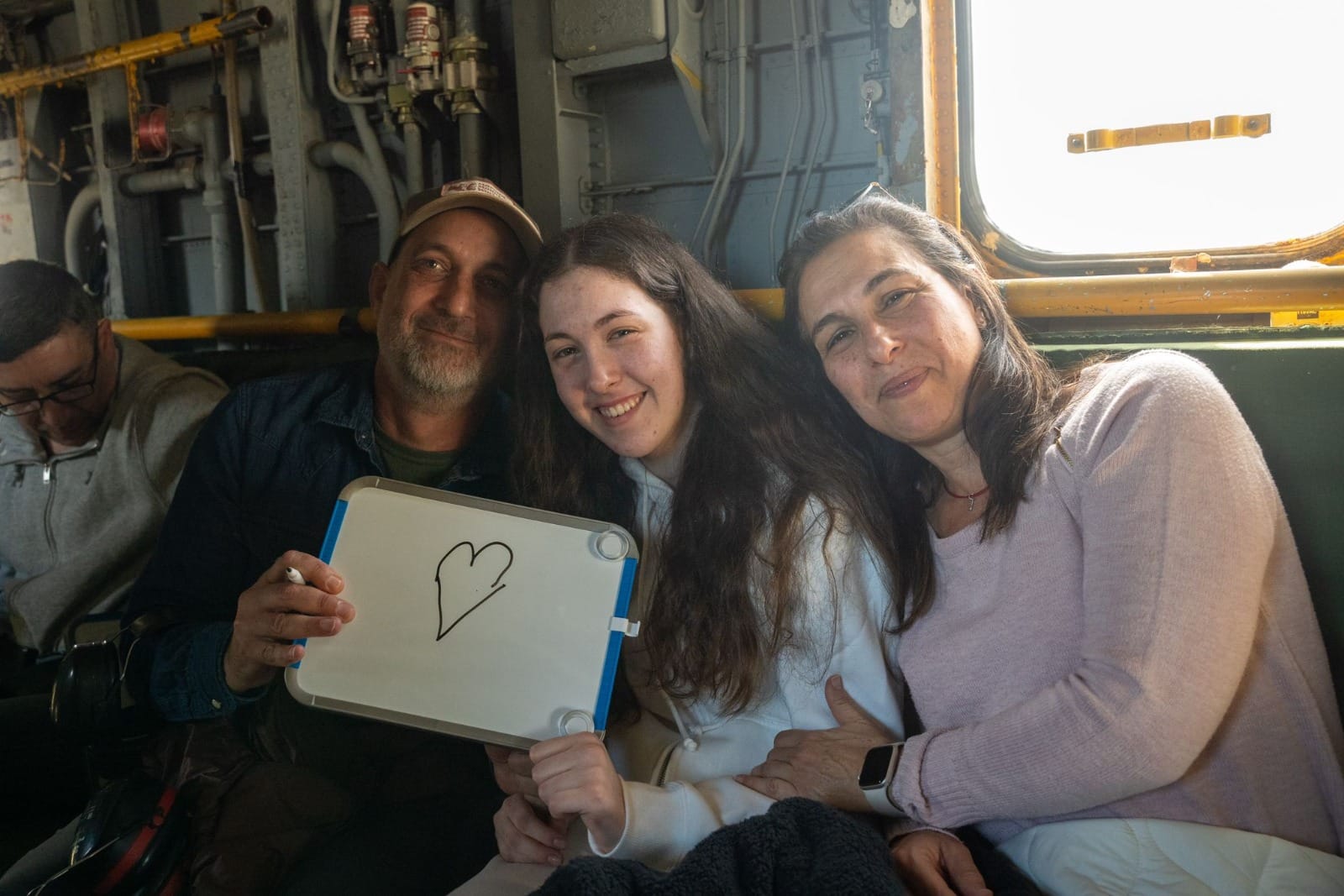
Chapter 9 — When Freedom Does Not Mean Recovery
The Invisible Wounds That Remain After Captivity
The moment a hostage returns home is often presented as the end of a story.
Television cameras capture emotional reunions. Families embrace loved ones they feared they might never see again. Crowds celebrate. Flags are raised. Photographs travel across the world.
For a brief moment, the suffering appears to have ended.
But for many former hostages, the journey is only beginning.
Freedom ends captivity. It does not automatically end the consequences of captivity.
A person who has spent weeks, months or years under the control of armed captors may return with serious physical injuries, nutritional deficiencies, psychological trauma and profound uncertainty about how to rebuild ordinary life.
Some survivors have experienced sexual violence.
Others have endured prolonged isolation, threats of execution, beatings, deprivation or the deaths of fellow captives.
Many have been separated from their families for so long that returning home requires learning how to live together again.
The world outside has continued changing.
Children have grown older.
Relationships have evolved.
Communities have been displaced.
Homes have been damaged or destroyed.
And in some cases, family members have died.
The former hostage must confront not only what happened during captivity but also everything that happened in their absence.
This creates a complicated reality.
A survivor may be grateful to be alive while struggling with depression, fear or exhaustion.
They may feel joy during a reunion and grief only hours later.
They may want to speak publicly about their experiences while simultaneously needing privacy.
They may appear physically healthy while experiencing severe emotional distress.
These reactions are not contradictions.
They reflect the complexity of surviving extreme circumstances.
The experiences of Israeli hostages released from Gaza demonstrate why recovery cannot be measured simply by the date of release.
For some, the consequences of captivity may last years.
For others, particular difficulties may emerge only after the immediate excitement of returning home has faded.
The responsibility of families, medical professionals, journalists and society is to recognize that survival is not the same as recovery.
The First Hours of Freedom
For hostages released through negotiated agreements, the transition from captivity to freedom could occur within a matter of hours.
A person who had spent months surrounded by armed captors might suddenly find themselves in the care of humanitarian personnel.
They would be transferred to Israeli authorities.
Medical teams would assess their condition.
And eventually, they would reunite with relatives.
The speed of this transition was extraordinary.
For some survivors, the first moments of freedom brought overwhelming relief.
For others, the experience could be confusing or difficult to process.
A person who has lived under constant threat may struggle to believe that the danger has ended.
They may remain alert to unfamiliar movements or sounds.
They may hesitate before accepting food.
They may instinctively wait for permission to perform ordinary activities.
These behaviors can reflect adaptations developed during captivity.
When survival depends on following instructions, monitoring captors and avoiding conflict, the body and mind may become accustomed to those conditions.
Returning to safety does not necessarily remove those responses immediately.
Medical teams receiving released hostages therefore faced responsibilities extending beyond treating visible injuries.
They needed to provide reassurance, privacy and a sense of control.
The survivor had to be allowed to make choices again.
Even small decisions could be meaningful.
Whether to sit or stand.
Whether to eat immediately.
Whether to speak.
Whether to rest.
Whether to meet additional relatives.
After prolonged captivity, the restoration of choice is itself an important part of recovery.
The Body That Returns Is Not Always the Body That Left
Physical recovery can be one of the most demanding consequences of prolonged captivity.
Several released hostages returned with significant weight loss, muscle deterioration, untreated injuries or other medical problems.
Some had experienced prolonged periods of inadequate nutrition.
Others had suffered gunshot wounds during their abduction.
Some had been restrained for extended periods.
Still others described beatings, physical assaults or limited access to medical care.
These experiences can affect multiple systems within the body.
Severe malnutrition may weaken muscles, reduce immunity and disrupt normal metabolic processes.
Prolonged confinement can reduce mobility and physical endurance.
Untreated injuries may lead to chronic pain or lasting impairment.
Sleep deprivation and prolonged stress can contribute to exhaustion and difficulty concentrating.
Recovery may therefore require coordinated medical care.
A former hostage might need nutritional rehabilitation, physiotherapy, surgery, occupational therapy and psychological support.
The process cannot always be rushed.
After severe nutritional deprivation, medical teams must carefully assess how food and fluids are reintroduced, because rapid changes can create dangerous complications in vulnerable patients.
Rebuilding muscle strength also takes time.
A person who was previously physically active may discover that ordinary tasks have become exhausting.
Walking long distances.
Climbing stairs.
Carrying objects.
Or returning to exercise.
These activities may require gradual rehabilitation.
The physical consequences of captivity can therefore affect independence long after release.
Romi Gonen: Rebuilding a Life With Physical and Emotional Injuries
Romi Gonen returned to Israel on January 19, 2025, after 471 days in captivity.
She had been shot during the October 7 attack on the Nova music festival.
Her hand and arm injuries required further medical attention after her release.
But her physical condition represented only one part of the recovery process.
As described in Chapter 4, Romi later publicly reported repeated sexual violence during captivity.
Her experiences included unwanted sexual contact, threats, humiliation and prolonged fear.
The consequences of such abuse cannot be understood solely through physical injuries.
Sexual violence can affect a survivor's relationship with their body, sense of safety and ability to trust other people.
Medical treatment may address specific injuries.
Psychological recovery can be far less predictable.
Romi also faced the decision of whether to disclose what had happened.
She later explained that concern for hostages who remained in Gaza influenced her decision not to speak publicly about the sexual violence immediately.
This illustrates another burden carried by some survivors.
They may return home while feeling that their words could affect people who remain captive.
They may feel responsible for the safety of others.
And they may delay their own disclosure because of circumstances beyond their control.
Romi's eventual public testimony demonstrated her willingness to describe deeply personal experiences.
But the decision to speak should not be confused with the completion of recovery.
A survivor may be able to describe an assault while still experiencing its psychological consequences.
The act of testimony can be meaningful.
It can also be emotionally demanding.
Both realities deserve recognition.
Amit Soussana: The Courage to Speak and the Burden of Memory
Amit Soussana was released in November 2023 after 55 days in captivity.
She later became one of the first Israeli hostages to publicly describe sexual assault during detention.
Her testimony included an account of being chained, threatened with a firearm and sexually assaulted by a captor.
She also described physical violence during subsequent interrogation.
Amit's decision to speak publicly attracted international attention.
Her account contributed to the growing documentation of sexual violence against hostages.
But public testimony can create complicated consequences for survivors.
Describing traumatic events may require revisiting memories that remain painful.
A survivor may have to answer questions about intimate experiences.
They may encounter disbelief, political arguments or hostile reactions.
They may also feel pressure to repeat their story for different audiences.
This raises an important ethical question.
How much should a survivor be expected to disclose?
The answer should always begin with the survivor's autonomy.
Amit's testimony belongs to her.
She has the right to decide which details to share.
She has the right to decline further interviews.
And she has the right to live beyond the identity of a sexual violence survivor.
Her experience illustrates the distinction between documenting a crime and expecting the victim to become a permanent public representative of that crime.
The historical record matters.
But so does the survivor's right to privacy.
The Psychological Consequences of Prolonged Captivity
People who experience prolonged captivity may face a range of psychological difficulties after release.
These can include intrusive memories, nightmares, anxiety, emotional numbness, irritability, difficulty concentrating and a persistent sense of danger.
Some may develop post-traumatic stress disorder.
Others may experience depression, complicated grief or difficulties associated with prolonged and repeated trauma.
Not every survivor will develop a psychiatric disorder.
And the presence of trauma does not automatically mean that a person will experience the same symptoms as someone else.
Responses vary according to many factors.
The duration of captivity.
The conditions of detention.
The presence or absence of social support.
Previous life experiences.
Physical injuries.
The circumstances of release.
And the environment to which the survivor returns.
A person held for several weeks may experience severe trauma.
Someone held for years may demonstrate substantial resilience.
There is no simple relationship between the number of days in captivity and the intensity of psychological suffering.
The individual experience remains central.
For some survivors, symptoms may become noticeable soon after release.
For others, they may emerge later.
During the first days home, a person may be focused on family reunions, medical treatment and immediate practical needs.
Only after life becomes quieter may painful memories begin to demand greater attention.
This delayed emergence of distress can be confusing for survivors and their families.
They may wonder why recovery seems to become more difficult after the immediate danger has ended.
But trauma recovery is rarely linear.
When Ordinary Sounds Become Threatening
During captivity, survival may depend on remaining constantly alert.
A change in a guard's voice can signal danger.
Footsteps outside a room may indicate that someone is approaching.
The sound of a door opening may precede interrogation or punishment.
Explosions may indicate nearby military operations.
Over time, the nervous system may become highly sensitive to these signals.
After release, ordinary sounds can sometimes trigger intense reactions.
A door slamming.
A sudden shout.
Fireworks.
A helicopter overhead.
Or an unexpected knock.
These sounds may remind a survivor of captivity even when the present environment is safe.
The body can react before the person has consciously evaluated the situation.
Heart rate may increase.
Muscles may tense.
Breathing may change.
The person may feel an urge to hide or escape.
These are possible trauma responses, not symptoms that should automatically be attributed to every released hostage.
Understanding them is important because outsiders may misinterpret such reactions.
A family member might see fear in a situation that appears harmless.
A friend might wonder why a survivor avoids crowded places.
An employer might misunderstand difficulty concentrating.
Education and sensitive support can help reduce these misunderstandings.
Recovery often involves gradually rebuilding the ability to distinguish past danger from present safety.
Sleep: When the Night Is No Longer Peaceful
Sleep can become particularly difficult after captivity.
Some hostages spent long periods in darkness or underground spaces.
Others slept near armed guards.
Some experienced threats or violence during the night.
Many had little control over when they could rest.
After release, the absence of immediate danger does not necessarily restore normal sleep.
A survivor may experience nightmares.
They may wake frequently.
They may feel unsafe sleeping alone.
Or they may struggle to relax enough to fall asleep.
Sleep disturbances can intensify other difficulties.
Poor sleep affects concentration, mood and physical recovery.
It can increase irritability and make ordinary responsibilities feel overwhelming.
For people recovering from injuries or malnutrition, adequate rest is also important for physical healing.
Treatment may involve trauma-informed psychological care, medical evaluation and the gradual establishment of predictable routines.
But recovery cannot be reduced to a simple instruction to sleep more.
For someone whose nervous system has adapted to prolonged danger, relaxation may itself feel unfamiliar.
Relearning safety can take time.
Survivor's Guilt: Why Did I Come Home?
One of the most painful psychological experiences following captivity can be survivor's guilt.
A person who returns alive may struggle with the knowledge that others did not.
They may ask why they survived.
Why another hostage was killed.
Why they were released while someone else remained behind.
Or whether they could have done something differently.
These questions can arise even when the survivor had no control over the outcome.
For hostages held together, emotional bonds may become particularly strong.
They share fear, hunger and uncertainty.
They help one another survive.
They may become deeply dependent on each other for emotional support.
If one person is released while another remains captive, the separation can be devastating.
The released hostage may experience relief alongside intense worry.
They may feel unable to celebrate freedom fully.
They may become involved in campaigns for those still held.
Such advocacy can provide a sense of purpose.
But it can also place emotional demands on someone who is still recovering.
Survivor's guilt is not evidence that the person has done something wrong.
It is a possible response to surviving circumstances in which others suffered or died.
The challenge is helping survivors recognize that responsibility for the violence belongs to those who committed it.
The Friends Who Did Not Return
For some released hostages, captivity was inseparable from the deaths of people they knew.
Romi Gonen had witnessed the deadly attack on the vehicle in which she attempted to escape the Nova festival.
Other survivors had seen friends or relatives killed during the October 7 attacks.
Some learned after release that people they had believed might still be alive were dead.
These losses could complicate recovery.
The survivor may return to a community where photographs of the dead are displayed.
They may attend funerals or memorial ceremonies.
They may encounter families who are grieving.
The contrast between survival and bereavement can be emotionally overwhelming.
A person may feel gratitude for being alive while struggling to enjoy that life.
They may avoid activities associated with the day of the attack.
Or they may feel compelled to preserve the memories of those who died.
Grief and trauma can become intertwined.
The person is not only mourning someone.
They may also be processing the circumstances in which the death occurred.
Recovery therefore requires space for both experiences.
The Challenge of Returning to Family Life
Families often imagine that the return of a hostage will restore life to what it was before the abduction.
But prolonged separation changes relationships.
Parents have lived through months or years of fear.
Partners have managed households alone.
Children have grown older.
Siblings have developed new responsibilities.
The returning hostage has experienced an entirely different reality.
Reunification brings joy.
It can also require adjustment.
A survivor may need more privacy than relatives expect.
They may become overwhelmed by constant attention.
They may struggle with ordinary conversations.
They may find it difficult to explain what happened.
Family members, meanwhile, may be eager to provide care.
They may want to know every detail.
They may become anxious whenever the survivor leaves the house.
They may feel responsible for preventing further distress.
These reactions are understandable.
But excessive protection can sometimes interfere with the survivor's efforts to regain independence.
The challenge is finding a balance.
The family must provide support while respecting autonomy.
The survivor must have opportunities to make decisions.
And everyone may need time to understand how captivity has changed their relationships.
Family counseling can be helpful in some circumstances.
But no single approach is appropriate for every household.
The Children Who Came Home Different
Children released from captivity require particular attention.
Their emotional development is still underway.
They may struggle to understand why they were taken, why they were separated from family members or why familiar adults could not protect them.
Younger children may express distress through behavior rather than words.
They may become unusually quiet.
They may resist separation from caregivers.
They may experience nightmares or changes in appetite.
Older children may ask difficult questions about violence, death and responsibility.
Teenagers may struggle with independence, trust and identity.
Some children return to families affected by bereavement.
Others return to displaced communities.
The recovery environment therefore matters enormously.
Stable caregiving, predictable routines and opportunities for play can help restore a sense of safety.
Professional support may be needed, particularly when children have experienced severe violence or prolonged fear.
But children should not be defined permanently by what happened to them.
They remain individuals with interests, personalities and futures.
Their experiences deserve documentation.
Their privacy deserves protection.
And their recovery should take place without unnecessary public pressure.
Sexual Violence and the Recovery of Bodily Autonomy
For survivors who experienced sexual assault, recovery may involve additional challenges.
Sexual violence can profoundly affect a person's sense of bodily autonomy.
During an assault, the perpetrator violates the victim's right to control what happens to their body.
During captivity, this violation may be intensified by physical restraint, threats and dependence on the perpetrator.
After release, the survivor may need time to rebuild a sense of personal safety.
Medical examinations can be emotionally difficult.
Physical contact may trigger memories.
Intimate relationships may require renewed communication and trust.
Some survivors may experience shame, anger or fear.
Others may feel emotionally detached from their experiences.
These reactions vary.
There is no universal response to sexual violence.
The testimonies of Amit Soussana, Romi Gonen, Rom Braslavski and Guy Gilboa-Dalal demonstrate different forms of sexual abuse reported during captivity.
Their experiences should not be treated as interchangeable.
But they share an important principle.
The right to bodily autonomy belongs to every person.
Recovery must respect that right.
Survivors should have control over medical decisions, public disclosure and personal relationships wherever possible.
No one should be pressured to describe intimate details before they are ready.
And no one should be judged according to how they respond to trauma.
Male Survivors and the Pressure to Appear Strong
Male survivors of sexual violence may face particular barriers during recovery.
Social expectations can make it difficult for men to acknowledge vulnerability.
They may fear ridicule or disbelief.
They may worry that others will question their masculinity.
Some may struggle with the belief that they should have been able to resist.
These concerns can discourage disclosure and delay access to support.
Rom Braslavski and Guy Gilboa-Dalal publicly described sexual abuse during captivity.
Their decisions helped challenge assumptions that men are not vulnerable to sexual violence.
But speaking publicly is not a requirement for recovery.
Some male survivors may choose to remain private.
Others may disclose their experiences only to medical professionals or trusted relatives.
Both choices deserve respect.
The responsibility of healthcare providers is to create an environment where survivors can discuss abuse without shame.
The responsibility of journalists is to avoid sensationalism.
And the responsibility of society is to recognize that victimization does not diminish a person's dignity or worth.
The Loss of Time
Captivity takes more than physical freedom.
It takes time.
For people held for 471 or 738 days, the loss is substantial.
Birthdays pass.
Anniversaries pass.
Children grow.
Relationships change.
Professional opportunities disappear.
Education is interrupted.
Plans are postponed.
For young adults, these lost months or years may coincide with important stages of personal development.
They may have expected to travel, study, begin careers or build relationships.
Instead, they spent that period attempting to survive.
After release, some may feel pressure to make up for lost time.
They may want to return immediately to work.
They may attempt to resume education.
They may feel that they must achieve something meaningful because they survived.
But recovery cannot be accelerated simply because time has already been lost.
A person may need months or years before feeling ready to return to previous responsibilities.
Others may decide to pursue entirely different goals.
The important principle is choice.
Captivity removed the ability to determine the direction of life.
Recovery involves gradually restoring that ability.
Public Attention: Support and Pressure
Released hostages often become public figures overnight.
Their names have appeared on posters.
Their photographs have circulated internationally.
Their families have participated in campaigns.
Their return may be broadcast live.
Public attention can provide meaningful support.
Communities may organize assistance.
Medical expenses may be covered.
People may send messages of encouragement.
Survivors may feel that their suffering has been recognized.
But attention can also create pressure.
Journalists may request interviews.
Political leaders may invite survivors to public events.
Audiences may expect detailed accounts of captivity.
Social media users may comment on their appearance, behavior or statements.
A survivor may be praised for speaking publicly and criticized for remaining silent.
They may become involved in political debates they never intended to enter.
These pressures can complicate recovery.
The survivor must navigate public expectations while attempting to rebuild private life.
Responsible journalism should therefore prioritize informed consent.
Interviews should be voluntary.
Questions should avoid unnecessary intrusion.
And survivors should be allowed to set boundaries.
The public's interest in understanding captivity does not eliminate an individual's right to privacy.
When Testimony Becomes Part of Healing
Some survivors choose to speak publicly because they believe their experiences should be documented.
They may want the world to understand what happened.
They may hope to support other victims.
They may seek accountability.
Or they may feel that speaking allows them to reclaim control over their story.
For some, testimony can become part of the recovery process.
But public disclosure is not inherently therapeutic for everyone.
Speaking may bring relief.
It may also trigger painful memories.
The consequences depend on the individual, the circumstances and the support available.
Survivors should therefore be free to decide whether, when and how to speak.
Their testimony should not be treated as a performance.
It is an account of lived experience.
The role of journalists is to document accurately and respectfully.
That includes distinguishing between what the survivor reports, what has been independently corroborated and what remains uncertain.
Careful reporting protects both historical accuracy and survivor dignity.
The Families Who Never Received a Reunion
Not every hostage returned alive.
Some families received confirmation that their loved ones had been killed.
Others waited months or years for remains to be returned.
For these families, the language of recovery takes on a different meaning.
There is no survivor returning home.
There is grief.
There is the need for answers.
And there may be unresolved questions about the circumstances of death.
The families of Shiri, Ariel and Kfir Bibas experienced this devastating reality.
Yarden Bibas returned alive, but his wife and children did not.
Other families also faced the return of remains rather than the reunion they had hoped for.
Their suffering should not be overlooked in narratives focused on successful releases.
The return of remains can provide an opportunity for burial and mourning.
But it cannot restore the person who died.
Families may continue seeking accountability and a fuller understanding of what happened.
Their experience is part of the broader human consequences of the hostage crisis.
The Responsibility of Healthcare Professionals
The treatment of released hostages requires specialized knowledge and sensitivity.
Medical teams must assess physical injuries, nutritional status and potential complications associated with prolonged detention.
Mental health professionals must consider the psychological consequences of captivity without assuming that every survivor has the same needs.
Survivors of sexual violence may require additional medical and psychological support.
Children need age-appropriate care.
Families may need assistance adjusting to reunification.
A trauma-informed approach emphasizes safety, trust, collaboration and personal autonomy.
It recognizes that the survivor may have spent months or years without meaningful control over basic decisions.
Healthcare should therefore avoid recreating that loss of control.
Where medically possible, survivors should be informed about examinations and treatments.
Their preferences should be respected.
They should be allowed to ask questions.
And their privacy should be protected.
Recovery is not simply the repair of injuries.
It is also the restoration of dignity and independence.
The Responsibility of Society
The return of hostages creates responsibilities extending beyond hospitals and families.
Communities may need to provide practical support.
Employers may need to accommodate gradual returns to work.
Schools may need to assist children whose education was interrupted.
Public institutions may need to ensure access to long-term rehabilitation.
Journalists must avoid turning survivors into permanent symbols of suffering.
Political leaders should recognize that public ceremonies do not replace sustained care.
And society must allow survivors to rebuild their lives without unrealistic expectations.
Some may become advocates.
Others may return to private professions.
Some may write books or participate in documentaries.
Others may choose never to discuss captivity publicly.
These decisions should be respected.
A person does not owe the public a particular form of recovery simply because their suffering became internationally known.
Recovery Is Not a Straight Line
One of the most important principles in understanding trauma is that recovery is rarely linear.
A survivor may experience weeks of improvement followed by a period of renewed distress.
They may feel comfortable in one environment and anxious in another.
They may return to work successfully but continue struggling with sleep.
They may speak confidently in public while finding private relationships difficult.
These variations do not necessarily mean that treatment has failed.
They reflect the complexity of adapting after severe and prolonged danger.
Recovery may involve learning new coping strategies.
It may require medical treatment.
It may involve rebuilding physical strength.
It may include reconnecting with family, friends and community.
For some, faith or spiritual practice may provide comfort.
For others, creative work, education or advocacy may become meaningful.
No single method is appropriate for everyone.
The goal is not necessarily to return to exactly the person someone was before captivity.
Such a return may be impossible.
The goal is to support the survivor in building a life that is safe, meaningful and self-directed.
The Question of Justice
Recovery also exists alongside the question of accountability.
Survivors may want those responsible for their abduction and abuse to face justice.
Others may prefer not to participate in legal proceedings.
Some may feel that public recognition of what happened is essential.
International humanitarian law prohibits hostage-taking, torture, sexual violence and cruel treatment.
Allegations of these violations require investigation.
But legal processes can be demanding for survivors.
They may involve interviews, medical examinations and repeated descriptions of traumatic experiences.
The pursuit of accountability should therefore include safeguards for victims.
Their privacy must be respected.
Their safety must be considered.
And participation should not expose them to unnecessary psychological harm.
Justice and recovery are connected, but they are not identical.
A survivor may begin rebuilding life before legal proceedings conclude.
They may also continue experiencing trauma even if perpetrators are held accountable.
Neither process can substitute entirely for the other.
The Historical Record and the Human Being Behind It
As more former hostages speak publicly, the historical record of captivity continues to develop.
Their testimonies reveal experiences that were hidden during detention.
They provide information about physical conditions, sexual violence, psychological abuse and the relationships formed among captives.
These accounts are important for journalists, investigators and future historians.
But the people providing them are not merely sources of evidence.
They are human beings rebuilding their lives.
Their experiences should be documented without reducing their identities to trauma.
Amit Soussana is more than the sexual assault she described.
Romi Gonen is more than the injuries and abuse she endured.
Rom Braslavski and Guy Gilboa-Dalal are more than their experiences of humiliation and violence.
The children who returned from captivity are more than the circumstances of their abduction.
They had lives before October 7.
They have lives after release.
And they have the right to determine what those lives become.
Responsible journalism must hold both realities together.
The crimes must be documented.
The survivors must remain human.
Conclusion — Freedom Is the Beginning of Another Journey
The return of a hostage is an extraordinary moment.
It restores physical freedom.
It allows families to reunite.
It creates the possibility of medical treatment, psychological support and renewed independence.
But it does not erase captivity.
The body may carry injuries.
The mind may remain alert to danger.
Relationships may require rebuilding.
And the survivor may struggle with memories that cannot simply be forgotten.
Some former hostages return to homes that no longer exist.
Some discover that friends or relatives have died.
Some face years of physical rehabilitation.
Others confront the consequences of sexual violence, prolonged isolation or psychological terror.
Their recovery cannot be measured by public appearances, photographs or interviews.
A smile does not prove that trauma has disappeared.
Silence does not mean that a person has nothing to say.
And speaking publicly does not mean that healing is complete.
The experiences of released Israeli hostages demonstrate that freedom and recovery are separate processes.
One may occur on a specific date.
The other unfolds over time.
For survivors, the challenge is not simply to remember what happened.
It is to discover how to live afterward.
To rebuild trust.
To reclaim independence.
To reconnect with loved ones.
To pursue ambitions that captivity interrupted.
And to create a future that belongs to them rather than to the people who held them captive.
Their survival deserves recognition.
Their suffering deserves documentation.
Their recovery deserves sustained support.
But above all, their autonomy deserves respect.
Because the end of captivity is not the end of the story. It is the beginning of the long and deeply personal journey toward reclaiming a life.
Chapter 10 — The Responsibility to Remember: Testimony, Truth and Historical Accountability
When Survival Becomes Part of History
Every war leaves behind two histories.
The first is written through military operations, political decisions, ceasefire agreements, territorial changes and official statements.
The second is carried by the people who lived through the violence.
It exists in the memories of survivors, the testimony of witnesses, the grief of families and the experiences of those who were deprived of their freedom.
The hostage crisis that began on October 7, 2023, belongs to both histories.
The attacks, the war in Gaza, the negotiations and the eventual releases will be studied for decades.
Governments will examine the decisions that were made.
Military historians will analyze the operations.
Political scientists will debate the consequences for Israel, the Palestinians and the wider Middle East.
But another responsibility remains.
The experiences of the hostages must not disappear beneath the political arguments surrounding the conflict.
Their stories are not simply illustrations of a war.
They are evidence of what happened to individual human beings.
They describe abduction, imprisonment, hunger, fear, sexual violence, psychological intimidation, family separation and the long journey toward recovery.
Some survivors have spoken publicly.
Others have chosen to remain private.
Some have described their experiences in extensive interviews.
Others have shared only limited information.
And some will never be able to tell their stories because they did not survive.
The responsibility to remember therefore extends beyond recording the words of those who return.
It also involves preserving the identities of those who died, documenting the circumstances of captivity and investigating allegations of serious violations of international law.
But remembrance requires more than emotion.
It requires accuracy.
It requires evidence.
It requires a willingness to distinguish established facts from allegations, interpretations and unanswered questions.
And it requires respect for the people whose suffering is being documented.
The purpose of responsible journalism is not to transform survivors into political symbols.
It is to preserve their experiences as faithfully as possible.
October 7 and the Beginning of a Historical Record
The Hamas-led attacks of October 7, 2023, marked one of the most devastating days in Israel's history.
Approximately 1,200 people were killed, according to Israeli authorities, and 251 people were abducted into Gaza.
The victims included civilians in their homes, festivalgoers, foreign nationals and members of the Israeli security forces.
Entire communities were attacked.
Families were separated.
Children were taken.
Some people were killed while attempting to escape.
Others disappeared into captivity.
From the first hours, the attacks generated an enormous quantity of visual and documentary material.
Surveillance cameras recorded armed attackers entering communities.
Mobile phones captured desperate attempts to escape.
Emergency calls preserved the voices of people seeking help.
Attackers themselves recorded and circulated footage.
Journalists documented the destruction and interviewed survivors.
These materials became part of the historical record.
But the record was incomplete.
The people taken into Gaza were largely beyond the reach of independent observers.
Their families often had no reliable information about where they were being held.
International humanitarian organizations were unable to obtain regular independent access.
As a result, much of what happened during captivity remained hidden.
The public could see photographs of the hostages.
It could hear demands for their release.
It could watch occasional videos distributed by armed groups.
But it could not independently observe their daily lives.
The gap between public knowledge and private suffering was enormous.
Only after releases began did survivors provide more detailed accounts of what had happened behind closed doors and underground.
Their testimonies transformed the understanding of captivity.
The Difference Between Knowing Someone Was Held and Knowing What Happened
During the hostage crisis, the world knew that people were being held in Gaza.
But knowledge of captivity did not mean knowledge of the conditions.
For months, many families could not determine whether their relatives were receiving adequate food, medical treatment or basic protection.
Some hostages were held alone.
Others were confined with fellow captives.
Some were kept in residential buildings.
Others were moved into underground tunnels.
Their experiences differed substantially.
The release of hostages therefore produced more than emotional reunions.
It also provided information.
Former captives described their treatment.
Medical professionals assessed injuries and physical deterioration.
Investigators began comparing testimony with other available evidence.
Journalists conducted interviews.
And international organizations examined allegations of abuse.
This process revealed the importance of survivor testimony.
A photograph can show that someone is alive.
A video may reveal physical weakness.
But neither necessarily explains the daily experience of captivity.
Testimony can provide information about events that cameras did not record.
It can describe threats, conversations, assaults, movements between locations and the emotional consequences of prolonged detention.
Yet testimony must be handled carefully.
A survivor's account is an important source of evidence, but different parts of an account may have different levels of independent corroboration.
Responsible reporting must preserve those distinctions without automatically dismissing experiences that occurred outside public view.
Testimony Is Not a Political Instrument
The experiences of released hostages quickly became part of wider political debates.
Supporters of different positions cited survivor accounts to defend military operations, criticize government decisions or argue about the legitimacy of international responses.
The danger is that individual experiences can become detached from the people who lived through them.
A survivor may describe a sexual assault.
The public debate may immediately turn toward whether the testimony supports a particular political position.
A former hostage may speak about hunger.
Commentators may focus on how the account affects arguments about humanitarian conditions in Gaza.
A family may describe the death of a loved one.
The discussion may shift toward responsibility for military strategy.
These questions can be legitimate subjects of investigation.
But they should not displace the survivor's humanity.
The first responsibility is to establish what the person reports having experienced.
The second is to examine the available evidence.
The third is to identify what remains uncertain.
Political conclusions should not be imposed on testimony before those basic responsibilities have been fulfilled.
Survivors do not exist to confirm the assumptions of journalists, governments or audiences.
Their experiences deserve attention even when the details are politically inconvenient.
This principle must apply consistently.
The testimony of Israeli hostages should not be dismissed because of opposition to Israeli government policies.
The testimony of Palestinian civilians or detainees should not be dismissed because of hostility toward Hamas or other armed organizations.
Human rights reporting loses credibility when the nationality of the victim determines whether their suffering is considered worthy of investigation.
Sexual Violence and the Burden of Being Believed
Among the most disturbing revelations following the hostage releases were accounts of sexual violence.
Amit Soussana described being sexually assaulted during captivity.
Romi Gonen later spoke about repeated sexual abuse by several men.
Rom Braslavski described sexualized humiliation.
Guy Gilboa-Dalal reported sexual assaults accompanied by threats with weapons.
These accounts differ in their circumstances, perpetrators and available corroboration.
They should not be presented as identical.
But together, they demonstrate the importance of examining sexual violence against hostages of different sexes.
Sexual violence is particularly difficult to document during armed conflict.
Assaults may occur without independent witnesses.
Victims may be threatened into silence.
Medical examinations may take place weeks or months after the event.
Physical evidence may no longer be available.
And survivors may be reluctant to describe intimate experiences publicly.
These difficulties do not justify abandoning evidentiary standards.
But neither do they justify assuming that an allegation is false simply because immediate physical evidence is unavailable.
Investigators must examine testimony carefully, seek corroboration where possible and recognize the limitations created by captivity.
Journalists must avoid presenting allegations as judicial findings when no court has made such a determination.
They must also avoid language that unfairly suggests that delayed disclosure is inherently suspicious.
The goal is accuracy without prejudice.
Why Survivors May Remain Silent
Public discussion of sexual violence often includes questions about why a survivor did not speak earlier.
Such questions can reflect a misunderstanding of trauma and coercion.
A person who has experienced sexual assault may need time before feeling able to discuss it.
They may fear judgment.
They may experience shame.
They may be concerned about family members.
They may wish to protect their privacy.
During captivity, threats can create additional barriers.
A captor may warn that disclosure will lead to violence.
A hostage may believe that speaking could endanger others.
After release, survivors may remain concerned about people who are still detained.
Romi Gonen publicly explained that concern for other hostages influenced her decision to delay disclosure.
Guy Gilboa-Dalal described threats intended to prevent him from revealing abuse.
Their experiences illustrate why silence cannot automatically be interpreted as evidence that nothing happened.
But the opposite assumption must also be avoided.
Not every survivor who remains silent has necessarily experienced sexual violence.
A person's decision not to speak does not authorize journalists to speculate about private trauma.
The ethical position is straightforward.
Survivors should be believed enough to be heard seriously and investigated fairly.
They should not be pressured to disclose experiences they have chosen to keep private.
And their dignity should remain central throughout the process.
The United Nations and the Investigation of Sexual Violence
International investigations played an important role in examining allegations of sexual violence connected to October 7 and the hostage crisis.
In March 2024, the office of the United Nations Special Representative of the Secretary-General on Sexual Violence in Conflict published findings from a mission to Israel and the occupied West Bank.
The mission reported reasonable grounds to believe that conflict-related sexual violence had occurred at several locations during the October 7 attacks.
It also reported clear and convincing information that some hostages taken into Gaza had been subjected to sexual violence, including rape and sexualized torture.
The mission emphasized that further investigation was necessary.
Its findings were not criminal convictions.
They represented an assessment based on the information available at the time.
The distinction matters.
A United Nations fact-finding mission can identify credible information and patterns of abuse.
A criminal court must apply specific legal standards to determine individual responsibility.
These are different processes.
Subsequent investigations by United Nations bodies and human rights organizations documented further allegations and findings concerning the treatment of hostages.
The evolving record demonstrates why investigations should continue even after captives are released.
Survivors may disclose additional information over time.
New documents may become available.
Medical evidence may be examined.
And testimony from different individuals may provide corroboration.
Historical understanding develops through this accumulation of evidence.
The Responsibility to Investigate Without Selective Standards
One of the central challenges of human rights reporting during the Israel-Hamas war has been the perception of inconsistent attention to different victims.
Israeli survivors and families have criticized international institutions and media organizations for responses they considered inadequate or delayed.
Palestinian civilians and human rights organizations have also criticized failures to investigate alleged abuses committed against Palestinians.
These concerns should be examined on their merits.
The appropriate response is not to establish a competition between victims.
It is to apply consistent standards.
Hostage-taking is prohibited.
Sexual violence is prohibited.
Torture is prohibited.
The deliberate targeting of civilians is prohibited.
These rules do not change according to the nationality, religion or political identity of the victim.
Nor do they change according to the identity of the perpetrator.
A credible human rights framework requires the same seriousness when investigating alleged crimes by Hamas, Palestinian Islamic Jihad, Israeli personnel or any other armed actor.
Consistency does not mean assuming that every allegation is equally supported.
Evidence must still be examined individually.
But the willingness to investigate should not depend on political sympathy.
This principle is essential to maintaining public confidence in international institutions.
The Role of Journalists in Preserving the Record
Journalists occupy a difficult position when reporting on survivors of extreme violence.
They must establish facts.
They must ask questions.
They must identify inconsistencies.
They must seek independent confirmation.
But they must also avoid causing unnecessary harm.
The responsibility becomes particularly important when interviewing survivors of sexual assault, torture or prolonged captivity.
A journalist should not assume that a survivor is ready to describe every experience.
The interviewee should understand the purpose of the interview and how the information may be used.
They should have opportunities to decline questions.
Sensitive details should not be published merely because they are shocking.
The question is whether the information contributes meaningfully to public understanding.
Graphic descriptions may sometimes be necessary to establish the nature of an alleged crime.
But unnecessary detail can turn suffering into spectacle.
The distinction between investigation and sensationalism lies partly in purpose.
Responsible journalism seeks to explain what happened.
Sensationalism seeks attention through the intensity of suffering.
For Beyond the Lines, this distinction is fundamental.
The purpose of documenting hostage testimony should be to preserve an accurate historical record while respecting the people whose experiences make that record possible.
The Danger of Selective Editing
Modern audiences often encounter news through short videos, social media posts and headlines.
A lengthy interview may be reduced to a brief quotation.
A complicated investigation may be summarized in a few sentences.
A survivor's testimony may be shared without the context in which it was given.
This creates opportunities for misunderstanding.
A statement about one incident may be presented as a claim about every hostage.
A survivor's description of a particular captor may be used to characterize an entire population.
A finding that investigators consider credible may be presented as though it has already been established in court.
Or a preliminary allegation may be repeated without explaining its limitations.
Selective editing can also work in the opposite direction.
Important details may be omitted because they complicate a preferred narrative.
A report may emphasize uncertainty while failing to acknowledge substantial corroborating evidence.
Another may highlight the most dramatic elements while ignoring qualifications.
Both approaches can mislead audiences.
The solution is not to avoid difficult stories.
It is to provide sufficient context.
Journalists should distinguish individual testimony from broader patterns.
They should identify what investigators concluded.
They should explain what remains unresolved.
And they should correct errors when new information becomes available.
Accuracy is not achieved by removing complexity.
It is achieved by explaining complexity clearly.
Social Media, Denial and the Spread of False Information
The hostage crisis unfolded during an era in which information could circulate globally within minutes.
Photographs, videos, interviews and political statements spread across social platforms.
Some material was authentic.
Some was misleadingly edited.
Some was presented without context.
And some was false.
The speed of circulation created serious challenges.
An unverified claim could reach millions of people before journalists had time to examine it.
Old photographs could be presented as recent.
Videos could be attributed to the wrong location.
Statements could be altered or selectively quoted.
The experiences of hostages were particularly vulnerable to manipulation because independent information from captivity was limited.
In some cases, people dismissed survivor testimony without examining the evidence.
In others, unverified allegations were repeated as established facts.
Both practices damage public understanding.
Denial can inflict additional distress on survivors.
False or exaggerated claims can undermine the credibility of genuine evidence.
The responsibility of journalism is to resist both.
A serious investigation should not begin with the assumption that every allegation is true.
Nor should it begin with the assumption that survivors are lying.
It should begin with a commitment to establish what the available evidence supports.
The Ethics of Publishing Hostage Videos
Videos released by armed groups holding hostages created particular ethical difficulties.
Such recordings sometimes provided the only recent indication that a captive was alive.
For families, they could be extraordinarily important.
But the footage was produced under coercive circumstances.
The hostages were not free to refuse participation.
They could be instructed to deliver particular messages.
They might be threatened.
And the recordings could serve the political or military objectives of their captors.
Journalists therefore had to decide whether and how to publish the material.
Broadcasting a video might inform the public about a hostage's condition.
But it could also amplify the captor's propaganda.
Repeatedly showing a visibly distressed or humiliated person could violate their dignity.
Graphic footage could traumatize relatives.
Responsible reporting requires balancing these concerns.
Where possible, journalists should explain that the footage was produced under coercion.
They should avoid treating forced statements as freely expressed opinions.
They should consider whether still images or descriptions can communicate the relevant information without reproducing the entire recording.
And they should recognize that the hostage may later object to the circulation of images created without consent.
The public's right to information is important.
But it is not unlimited.
The Families as Witnesses
Families played an essential role in preserving the identities of the hostages.
Throughout the crisis, relatives shared photographs, childhood memories and personal stories.
They spoke about birthdays, professions, hobbies and relationships.
They reminded audiences that the people held in Gaza had lives beyond the circumstances of their abduction.
This was particularly important because public discussion often reduced the hostages to numbers.
A negotiation might concern 33 people.
A release might involve three women.
A final exchange might return 20 living captives.
These numbers were necessary for reporting.
But they could not convey individual identity.
Families provided that human context.
They described the person who loved music.
The parent who enjoyed cooking.
The child who had recently started school.
The young adult planning a career.
The grandparent who cared for grandchildren.
These details mattered because they resisted the transformation of human beings into political bargaining units.
Families also preserved information about the days of the attacks.
Some retained telephone recordings.
Others collected messages or photographs.
Their accounts became part of the wider evidentiary record.
But families, too, deserve protection from unnecessary intrusion.
Their grief should not be treated as public property.
Remembering Those Who Died in Captivity
The historical record must include hostages who did not survive.
Some were killed during the October 7 attacks and their bodies taken into Gaza.
Others were abducted alive and later died or were killed during captivity.
In some cases, the circumstances of death remain disputed or incompletely established.
This requires careful documentation.
Journalists must distinguish between the date a person was abducted, the date of death where known, the date authorities confirmed the death and the date remains were recovered.
These are not necessarily the same.
The Bibas family's tragedy demonstrates the importance of these distinctions.
Shiri, Ariel and Kfir were abducted on October 7.
Their deaths were confirmed publicly much later.
Their remains were returned in February 2025.
The family experienced months of uncertainty before receiving confirmation.
For other families, the process was similarly prolonged.
Some waited for forensic identification.
Others continued seeking information about how their loved ones died.
The return of remains can allow burial and mourning.
But it does not answer every question.
The responsibility to remember includes investigating the circumstances of death and preserving the identities of those who cannot speak for themselves.
Historical Documentation and the Passage of Time
The significance of survivor testimony often becomes clearer as time passes.
Immediately after a major attack, public attention focuses on urgent developments.
Who was killed?
Who was taken?
Where are the missing?
Will negotiations succeed?
As months pass, attention shifts toward military operations, political disputes and international diplomacy.
The individual experiences of survivors can gradually disappear from headlines.
This creates a risk.
Important testimony may be forgotten.
Documents may become difficult to locate.
Videos may be removed from online platforms.
Witnesses may become unwilling or unable to speak.
Memories may change over time.
The preservation of historical evidence therefore requires organized and sustained effort.
Recorded interviews should be archived responsibly.
Original documents should be preserved where lawful and appropriate.
Photographs should retain accurate dates and descriptions.
Medical and forensic information should be protected according to privacy and evidentiary requirements.
Journalists should maintain clear records of their sources.
Future researchers must be able to distinguish original evidence from later commentary.
The historical record becomes stronger when its foundations remain accessible and verifiable.
Memory Is Not the Same as Evidence
Remembering an event and proving a legal allegation are related but distinct activities.
Memory is personal.
It reflects what an individual experienced, perceived and retained.
Evidence is information used to establish facts through a process of examination.
A survivor's testimony can be evidence.
But responsible investigators may also seek medical records, photographs, digital material, forensic findings and testimony from other witnesses.
Traumatic memory can be complex.
Some survivors recall particular details vividly.
Others experience gaps.
A person may remember a smell, sound or emotional sensation more clearly than the sequence of events.
Inconsistencies do not automatically establish deception.
But they may require careful clarification.
Investigators must avoid both extremes.
They should not dismiss testimony simply because a survivor cannot remember every detail.
They should not treat every recollection as independently verified without examination.
The appropriate approach is careful, trauma-informed investigation.
This allows survivors to be heard while preserving the integrity of the evidentiary process.
The Importance of Independent Investigations
Independent investigations are essential when serious allegations arise during armed conflict.
Governments and armed organizations may possess relevant information.
But they may also have political or military interests affecting what they disclose.
Independent investigators can help establish facts through multiple sources.
They may interview survivors.
Examine medical documentation.
Review digital evidence.
Analyze detention conditions.
And compare accounts from different witnesses.
Their conclusions should explain the evidence and methodology used.
They should also acknowledge limitations.
In the Gaza hostage crisis, direct access to detention locations was severely restricted.
Some sites may have been destroyed or altered during the war.
Some perpetrators may be dead or unavailable for questioning.
Some survivors may choose not to participate in investigations.
These obstacles complicate accountability.
But they do not remove the responsibility to investigate.
A credible historical record is built through the accumulation of reliable information, not through the repetition of political claims.
International Humanitarian Law and the Prohibition of Hostage-Taking
International humanitarian law prohibits hostage-taking.
The prohibition applies in both international and non-international armed conflicts.
It protects people who are not taking an active part in hostilities and those who are otherwise protected under the applicable rules.
The legal definition of hostage-taking involves the seizure or detention of a person accompanied by threats or conditions intended to compel a third party to act or refrain from acting.
The taking of civilians to obtain political or military concessions is therefore not an ordinary act of detention.
It is prohibited conduct.
International law also prohibits torture, cruel treatment, sexual violence and outrages upon personal dignity.
These protections apply regardless of the victim's nationality.
They also apply regardless of the political objectives claimed by the perpetrator.
The experiences described by released Israeli hostages raise serious questions concerning violations of these rules.
Determining individual criminal responsibility requires evidence linking particular perpetrators to specific conduct.
That responsibility may extend beyond the person who directly committed an act where the applicable legal requirements for other forms of liability are established.
But guilt must be determined through lawful procedures.
Historical documentation and legal accountability are connected.
They are not interchangeable.
The International Criminal Court and the Wider Conflict
The International Criminal Court became involved in examining alleged crimes connected to the Israel-Hamas war.
Its jurisdiction and investigations concerned conduct by different parties.
The Court's work raised questions about individual responsibility for war crimes and crimes against humanity.
Such proceedings are often politically contested.
Governments may dispute jurisdiction.
Officials may reject allegations.
Supporters and critics may interpret legal developments through broader political positions.
But the central legal principle remains individual criminal responsibility.
Criminal proceedings should determine whether particular individuals committed crimes within the Court's jurisdiction.
They should not be treated as judgments against entire populations.
The same principle applies to alleged crimes committed against Israeli hostages.
Responsibility must be established through evidence.
It cannot be assigned collectively to all Palestinians.
Likewise, allegations concerning Israeli military or political officials cannot establish guilt on the part of Israeli civilians as a whole.
This distinction is essential.
Collective blame undermines the purpose of international justice.
Accountability requires identifying conduct, evidence and responsibility with precision.
The Danger of Collective Blame
The hostage crisis unfolded amid profound political polarization.
The October 7 attacks generated anger, fear and grief in Israel and Jewish communities around the world.
The war in Gaza produced immense suffering among Palestinian civilians.
International public opinion became sharply divided.
In such an environment, individual crimes can become the basis for sweeping judgments about entire communities.
This is dangerous.
The actions of Hamas and Palestinian Islamic Jihad cannot be attributed automatically to every Palestinian.
The decisions of the Israeli government cannot be attributed automatically to every Israeli or every Jewish person.
Religious and national identity do not establish individual responsibility for crimes.
Collective blame can fuel hatred and make serious journalism more difficult.
It encourages audiences to evaluate evidence according to group identity rather than facts.
It can also obscure the experiences of victims who do not fit simplified narratives.
A credible account of the hostage crisis must therefore distinguish armed organizations, political authorities, civilians and individual perpetrators.
This is not an exercise in avoiding difficult conclusions.
It is a requirement of accuracy.
Antisemitism, Hostage Denial and Public Discourse
The aftermath of October 7 was accompanied by increased concern about antisemitism in many countries.
Jewish communities reported harassment, threats and hostility.
Some public discussions minimized or justified the October 7 attacks.
Others dismissed or mocked the suffering of Israeli hostages.
Criticism of Israeli government policy is not inherently antisemitic.
People may legitimately debate military operations, settlement policy, humanitarian obligations and political leadership.
But hostility toward Jews as Jews is antisemitism.
So is holding Jewish individuals collectively responsible for actions they did not commit.
Public discourse becomes especially harmful when victims of violence are mocked or denied recognition because of their identity.
The experiences of hostages should be examined according to evidence and human rights principles.
Their nationality or religion should not determine whether their suffering is taken seriously.
The same standard must apply to Palestinian victims.
Recognizing the humanity of one group does not require denying the humanity of another.
Responsible journalism must resist the pressure to choose which victims deserve compassion.
The Responsibility of European Media
European audiences have followed the Israel-Hamas war through television, newspapers, online platforms and social media.
For many readers, journalism is the primary source of information about events they cannot witness directly.
This creates a significant responsibility.
Media organizations must explain complex events without reducing them to slogans.
They must distinguish between verified facts and claims made by parties to the conflict.
They must provide historical and legal context.
And they must avoid presenting isolated images as complete explanations.
The hostage crisis provides an important example.
A photograph of a released captive may suggest that the person is physically well.
But later testimony may reveal severe abuse.
A short clip may show a hostage speaking calmly.
But the recording may have been produced under threat.
A headline may announce a successful agreement.
But some families may still be waiting for the return of remains.
Journalism that focuses only on the visible moment can miss the larger reality.
European media should therefore continue examining the experiences of released hostages even after the immediate political story has moved on.
The same commitment should apply to the continuing humanitarian and human rights consequences of the war for Palestinian civilians.
The responsibility is not to create artificial equivalence between different events.
It is to investigate each event according to its evidence and significance.
The Role of Independent Journalism
Independent journalism has an important role in preserving stories that may receive less attention as public interest shifts.
Large media organizations often operate according to immediate news cycles.
Breaking developments dominate headlines.
New conflicts replace older stories.
Political announcements attract attention.
Long-term recovery and accountability may receive less coverage.
Independent publications can provide continuity.
They can return to earlier events.
They can examine survivor testimony in depth.
They can explain legal developments.
They can interview families.
And they can preserve context that is often missing from shorter reports.
But independence also creates responsibilities.
An independent journalist must not confuse editorial freedom with freedom from verification.
Claims still require evidence.
Sources must be evaluated.
Corrections must be made when necessary.
And personal convictions must not be presented as established facts.
For Beyond the Lines, the purpose of this investigation is to understand the experiences of released hostages beyond the immediate headlines.
That requires listening carefully.
It requires distinguishing between what survivors report and what independent investigations establish.
And it requires recognizing that the historical record may continue to develop.
Preserving Testimony Without Exploiting Trauma
The publication of survivor testimony creates an ethical tension.
The public has a legitimate interest in understanding serious violations of human rights and humanitarian law.
Survivors also possess fundamental rights to privacy, dignity and personal autonomy.
These interests must be balanced carefully.
A survivor may consent to an interview without wishing every intimate detail to be repeated indefinitely.
A family may share photographs for a campaign without intending them to become permanent symbols.
A child may be recognized internationally while having no meaningful ability to consent to long-term public exposure.
Journalists should therefore consider the lasting consequences of publication.
Will a graphic detail contribute to understanding?
Is it necessary to identify the survivor?
Has the person chosen to speak publicly?
Could publication create additional risks?
Can the same information be communicated with greater sensitivity?
These questions do not prevent difficult reporting.
They improve it.
The purpose of documenting trauma is not to maximize emotional impact.
It is to establish truth while minimizing unnecessary harm.
The Survivors' Right to Define Their Own Futures
The former hostages whose experiences have been examined throughout this investigation are more than survivors of captivity.
They are individuals with relationships, ambitions, personalities and futures.
Moran Stela Yanai had a life before the Nova festival.
Amit Soussana had a life before her abduction from Kfar Aza.
Romi Gonen was a young woman whose future was violently interrupted.
Rom Braslavski and Guy Gilboa-Dalal were young men whose lives were placed on hold for more than two years.
The children abducted on October 7 had childhoods that should have been protected.
Their experiences deserve documentation.
But their identities should not be permanently reduced to the violence inflicted upon them.
Some may choose public advocacy.
Others may pursue private careers.
Some may participate in legal proceedings.
Others may prefer not to discuss captivity again.
Their decisions deserve respect.
The responsibility to remember does not give the public ownership over their lives.
It creates an obligation to preserve what happened without taking away the autonomy they have regained.
What Future Generations Must Understand
Years from now, the hostage crisis may be remembered primarily through major dates.
October 7, 2023.
The November 2023 temporary ceasefire.
The January 2025 hostage agreement.
The October 2025 release of the final living hostages.
These dates are historically important.
But they cannot communicate the full human experience.
Future generations must also understand what happened between those dates.
The uncertainty.
The isolation.
The hunger.
The fear.
The sexual violence described by survivors.
The families waiting for information.
The children separated from parents.
The people who did not survive.
And the difficult process of rebuilding life after release.
They must also understand that not every question has been answered.
Some allegations require further investigation.
Some deaths remain incompletely explained.
Some survivors have chosen not to disclose their experiences.
A responsible historical account must preserve these uncertainties rather than filling them with assumptions.
History becomes more credible when it acknowledges the limits of available evidence.
The Responsibility to Correct the Record
Historical documentation is not complete when an article is published.
New evidence may emerge.
A survivor may provide additional testimony.
An investigation may revise an earlier conclusion.
A court may establish facts that were previously disputed.
Or an error in reporting may be discovered.
Responsible journalism must remain open to correction.
This is particularly important in a conflict where information has often been incomplete, politically contested or difficult to verify independently.
Correcting a mistake does not weaken journalism.
It strengthens credibility.
A publication should distinguish between an update that adds new information and a correction that acknowledges an earlier error.
Both should be transparent.
The obligation to remember accurately includes the willingness to revise the record when evidence requires it.
Truth is not protected by refusing correction.
It is protected by remaining accountable to facts.
Conclusion — Remembering Is a Responsibility, Not a Political Choice
The stories of Israel's released hostages reveal the human consequences of captivity in ways that political statements and military reports cannot.
They describe people taken from homes, communities and a music festival.
They describe injuries, hunger, isolation, sexual violence, humiliation and threats.
They describe families who waited for weeks, months and years.
They describe reunions that brought extraordinary relief.
And they describe losses that no agreement could reverse.
These experiences belong to the historical record.
They should not disappear because public attention has shifted.
They should not be dismissed because the survivors are Israeli.
They should not be exaggerated to serve political objectives.
And they should not be reduced to shocking details intended to attract attention.
The responsibility to remember is inseparable from the responsibility to report accurately.
It requires careful documentation.
It requires independent investigation.
It requires respect for survivors.
It requires distinguishing testimony from legal findings.
And it requires recognizing that human dignity does not depend on nationality, religion or political identity.
The crimes committed against hostages must be investigated.
Those responsible should be held accountable through lawful processes.
The experiences of survivors must be preserved.
And the families of those who died deserve answers wherever those answers can be established.
But remembrance must also leave room for life.
Survivors should be allowed to recover.
Children should be allowed to grow.
Families should be allowed to grieve privately.
And people whose suffering became internationally known should retain the right to determine their own futures.
The purpose of this investigation is not to claim that every question has been answered.
It is to ensure that the experiences already documented are not forgotten, distorted or dismissed.
Because the historical record of October 7 and its aftermath cannot be understood through military operations and diplomatic agreements alone.
It must also include the voices of those who were taken.
Those who survived.
Those who never returned.
And those who continue living with the consequences.
Their stories are not simply part of the history of a war.
They are part of the history of what human beings endured — and what the world has a responsibility to remember.
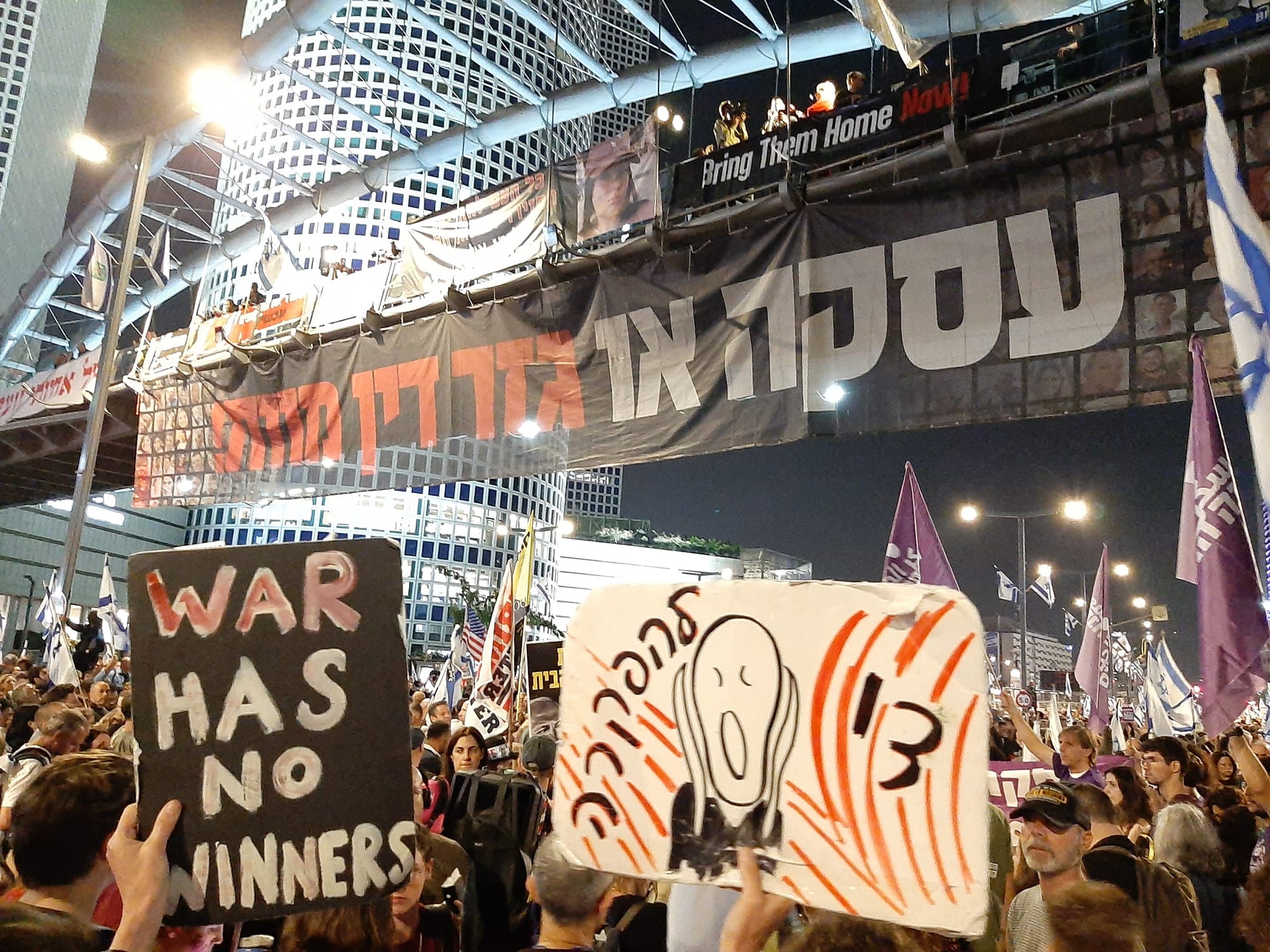
Chapter 11 — The International Response: Silence, Condemnation and the Struggle for Recognition
When the World Was Asked to Listen
The international response to the hostage crisis that began on October 7, 2023, was marked by condemnation, diplomatic intervention, humanitarian appeals and increasingly difficult questions about the recognition of victims.
Governments demanded the release of hostages.
International organizations called for respect for humanitarian law.
Human rights investigators began examining evidence of killings, sexual violence, torture and unlawful detention.
Yet for many survivors and their families, the response felt painfully inadequate.
They questioned why certain allegations appeared to receive limited attention during the early months.
They asked why reports of sexual violence were not more prominently addressed by institutions dedicated to protecting women.
They wondered why the suffering of Israeli hostages sometimes seemed to disappear beneath the political arguments surrounding the war in Gaza.
These concerns became especially prominent as survivors began speaking publicly about sexual assault, humiliation and psychological abuse.
But the international response cannot accurately be described as complete silence.
Several governments and United Nations officials condemned the October 7 attacks and called for the hostages' release.
International humanitarian organizations sought access to captives.
Investigators examined allegations of sexual violence.
And major human rights organizations eventually published detailed findings concerning crimes committed by Hamas and other Palestinian armed groups.
The central question is therefore more complex than whether the world responded.
It is whether the response was sufficiently timely, consistent, visible and effective — and whether survivors felt that their experiences were taken seriously.
Understanding that question requires examining both what international institutions did and what critics believe they failed to do.
October 7: International Condemnation and Immediate Political Reactions
The Hamas-led attacks on southern Israel on October 7, 2023, produced immediate international condemnation.
The United States, the United Kingdom, France, Germany and numerous other governments denounced the killings and hostage-taking.
Political leaders expressed solidarity with the victims and emphasized Israel's right to protect its population, subject to international law.
The abduction of civilians, including children and elderly people, became a major focus of diplomatic statements.
The United Nations Secretary-General, António Guterres, condemned the attacks and demanded the release of hostages.
International humanitarian organizations reiterated that hostage-taking is prohibited under international humanitarian law.
These statements established an important principle.
The deliberate seizure of civilians for use as bargaining instruments is unlawful, regardless of the political objectives claimed by those responsible.
But the situation rapidly became more complicated.
Israel launched extensive military operations in Gaza.
Palestinian civilian casualties increased.
Large numbers of people were displaced.
Hospitals, infrastructure and residential areas were affected by the fighting.
International attention increasingly focused on the humanitarian consequences of the war.
The suffering of Israeli hostages and the suffering of Palestinian civilians became central, and sometimes competing, subjects of political debate.
For families waiting for news from Gaza, this shift created frustration.
They feared that their relatives would become secondary to wider diplomatic disagreements.
The challenge for international institutions was to address both crises without treating the rights of one population as dependent on the suffering of another.
The United Nations: Condemnation Without a Unified Political Response
The United Nations is not a single institution speaking through one authority.
It consists of political bodies, humanitarian agencies, human rights mechanisms and independent experts with different responsibilities.
The Secretary-General may condemn an attack.
The Security Council may debate a resolution.
UN Women may address gender-based violence.
The Human Rights Council may establish investigative mechanisms.
And humanitarian agencies may focus on the immediate needs of civilians.
These different mandates help explain why the international response sometimes appeared fragmented.
The Security Council struggled to reach agreement on several early proposals concerning the war.
Permanent members disagreed over language addressing ceasefires, Israel's military operations, Hamas and humanitarian obligations.
The result was a series of diplomatic confrontations.
For hostage families, the debates could seem disconnected from the urgency of their situation.
They wanted access to their relatives.
They wanted confirmation that captives were alive.
They wanted medical care to reach those in need.
And they wanted the hostages released.
The United Nations repeatedly called for hostage releases, but it had no direct power to compel Hamas and other armed groups to comply.
This distinction between condemnation and enforcement is central to understanding the organization's limitations.
An international institution may recognize a violation of law without possessing the practical means to stop it.
For the people experiencing the violation, that limitation can feel indistinguishable from failure.
UN Women and the Controversy Over Its Initial Response
One of the most contentious aspects of the international response involved UN Women.
The organization is dedicated to gender equality and the rights and protection of women and girls.
Following October 7, Israeli advocates, women's organizations and survivors' supporters criticized what they perceived as an insufficiently direct and timely response to reports of sexual violence committed during the attacks.
The criticism focused on the organization's public messaging.
Advocates argued that allegations of rape and sexual abuse should have received immediate, explicit attention.
They questioned whether the same urgency would have been shown if the victims had belonged to another national or religious community.
The controversy intensified as reports emerged concerning women found dead in circumstances suggesting possible sexual violence.
On December 1, 2023, UN Women issued a statement unequivocally condemning the October 7 Hamas attacks and expressing alarm over accounts of gender-based atrocities and sexual violence.
It called for the allegations to be investigated and prosecuted with victims' rights at the center.
The statement was significant.
It demonstrated that UN Women had publicly addressed the allegations.
But for critics, it came too late and did not resolve concerns about the organization's earlier communications.
The dispute revealed a broader issue.
When institutions dedicated to protecting victims of sexual violence respond cautiously to allegations emerging from an active conflict, that caution may be understood in very different ways.
Some see it as necessary to avoid repeating unverified claims.
Others experience it as hesitation to recognize victims.
The challenge is to distinguish legitimate evidentiary caution from a failure to acknowledge credible reports and the need for urgent investigation.
The Meaning of Institutional Silence
The word silence became central to public criticism of international responses.
But silence can describe several different situations.
An institution may fail to issue a statement.
It may condemn violence in general terms without addressing a specific allegation.
It may acknowledge allegations but avoid reaching conclusions before an investigation.
Or it may publish findings that receive little public attention.
These situations are not equivalent.
An absence of immediate confirmation does not necessarily mean an organization has rejected a victim's experience.
Investigators must often avoid definitive conclusions until sufficient evidence is available.
At the same time, institutions can acknowledge allegations, express concern and demand protection without prematurely declaring that every reported incident has been proven.
The distinction matters particularly in cases of sexual violence.
Survivors may not be able to disclose abuse immediately.
Physical evidence may be unavailable.
Witnesses may have been killed.
And independent access to detention locations may be impossible.
These difficulties make investigation more challenging.
They do not justify indifference.
A responsible international response should recognize the seriousness of allegations while being transparent about the limits of available evidence.
The debate surrounding October 7 demonstrated how easily these principles can become entangled in political conflict.
Pramila Patten: A Turning Point in International Recognition
A major development came in March 2024.
Pramila Patten, the United Nations Special Representative of the Secretary-General on Sexual Violence in Conflict, published findings following an official visit to Israel and the occupied West Bank.
Her mission took place between January 29 and February 14, 2024.
The team examined extensive photographic and video material, visited locations affected by the October 7 attacks and conducted confidential interviews with survivors, witnesses, released hostages and professionals involved in responding to the violence.
The mission was not a full criminal investigation.
Its purpose was to gather, analyze and verify information within its mandate.
Nevertheless, its conclusions were significant.
The team found reasonable grounds to believe that conflict-related sexual violence, including rape and gang rape, occurred at several locations during the October 7 attacks.
These included the Nova music festival area, Road 232 and Kibbutz Re'im.
The mission also reported clear and convincing information that sexual violence, including rape and sexualized torture, had been committed against hostages taken into Gaza.
It expressed concern that such violence might still be occurring against people who remained captive.
These findings represented an important moment of international recognition.
They established that the allegations could not responsibly be dismissed as merely political accusations.
A senior United Nations official had examined substantial evidence and reached serious conclusions.
For survivors and their advocates, the findings provided a significant form of institutional acknowledgment.
What the UN Investigation Did — and Did Not — Establish
The significance of the Patten mission should not lead journalists to overstate its findings.
The mission did not establish that every allegation circulated after October 7 was accurate.
It did not identify every perpetrator.
It did not determine criminal guilt.
And it did not conclude that every hostage had experienced sexual violence.
The team also found that certain widely reported allegations could not be verified.
At Kibbutz Be'eri, it determined that at least two specific allegations of sexual violence were unfounded.
At other locations, investigators identified circumstantial indications of possible sexual violence but could not verify particular rape allegations.
These distinctions are essential.
They demonstrate that the investigation did not simply endorse every accusation.
It evaluated evidence and reached different conclusions depending on what could be established.
That strengthens the importance of its broader findings.
A credible investigation must be willing both to substantiate allegations and to reject claims that the evidence does not support.
The report's conclusions concerning sexual violence against hostages were especially important because independent access to the captives had been severely restricted.
The team could assess testimony from people who had already returned.
But it could not conduct direct examinations of those still held in Gaza.
The full extent of abuse therefore remained uncertain.
The Difference Between Evidence and Political Recognition
The March 2024 findings raised another question.
What happens when an international institution recognizes credible evidence, but public debate remains polarized?
A report can establish important facts without changing every political opinion.
Some audiences may accept its conclusions.
Others may focus on limitations.
Some may emphasize the findings concerning sexual violence.
Others may emphasize the mission's simultaneous concerns about abuses against Palestinians.
The result can be selective interpretation.
A document intended to clarify the evidence becomes another object of political argument.
For survivors, this can be deeply frustrating.
They may believe that the investigation should have ended public doubt.
Instead, they encounter continued disagreement.
But institutional findings and public recognition are different processes.
Evidence can be evaluated according to investigative standards.
Public opinion is influenced by political identity, media exposure, personal beliefs and social relationships.
Journalism has a responsibility to explain the findings accurately, including their limitations.
It should not exaggerate conclusions to strengthen a political argument.
Nor should it minimize conclusions simply because they are uncomfortable.
The Testimony of Amit Soussana and the International Debate
Amit Soussana's public testimony in March 2024 became a defining moment in the discussion of sexual violence against hostages.
She described being sexually assaulted by a captor while held in Gaza.
Her account included threats, physical restraint and subsequent abuse.
The interview received extensive international attention.
It also provided a named survivor's account at a time when many discussions had focused on forensic evidence, anonymous witnesses and the circumstances of victims who had been killed.
Amit's decision to speak carried personal consequences.
She was revealing intimate details of violence committed against her.
She also risked becoming a public symbol in a deeply polarized conflict.
Her testimony illustrates the difference between acknowledging a survivor and using a survivor.
Acknowledgment means listening, documenting and investigating.
Exploitation occurs when the person's experience is treated primarily as ammunition for political debate.
The seriousness of Amit's account does not depend on whether it supports a particular government's policies.
The alleged sexual assault must be evaluated as an act of violence against an individual.
The identity of the victim does not alter the prohibition against sexual abuse.
When Male Survivors Began Speaking
The international discussion initially focused heavily on sexual violence against women.
This was understandable in light of the early allegations and the work of institutions specializing in violence against women and girls.
But later testimonies demonstrated the importance of including male survivors.
Rom Braslavski described sexualized humiliation during captivity.
Guy Gilboa-Dalal publicly described sexual assaults by a captor.
Their accounts challenged assumptions about who may experience sexual violence during armed conflict.
Men and boys can be subjected to rape, unwanted sexual contact, forced nudity and other forms of sexual humiliation.
Such experiences may be underreported because of stigma, shame and social expectations surrounding masculinity.
International organizations therefore have a responsibility to ensure that investigative and support mechanisms are accessible to survivors of every sex.
The purpose is not to diminish the suffering of women.
It is to recognize that sexual violence is a violation of bodily autonomy and human dignity regardless of the victim's identity.
The later disclosures by male former hostages also illustrate why the historical record of captivity continued to develop long after the first releases.
Survivors may speak only when they feel ready.
Some may never choose to speak publicly.
Investigators must account for that reality.
Amnesty International: A Major Investigation in December 2025
In December 2025, Amnesty International published an extensive investigation into the October 7 attacks and the treatment of hostages in Gaza.
The report examined the conduct of Hamas and other Palestinian armed groups.
It drew on interviews with survivors, relatives, medical professionals, forensic specialists and other witnesses.
Researchers also reviewed photographs, videos and additional evidence.
The report concluded that Hamas and other Palestinian armed groups had committed war crimes and crimes against humanity during the attacks and in their treatment of captives.
It documented deliberate killings of civilians, hostage-taking, torture, sexual violence and other serious abuses.
Amnesty also concluded that the vast majority of civilians killed during the October 7 attacks were killed by Palestinian fighters, while acknowledging that some civilians had been killed by Israeli fire during the response to the attacks.
This distinction was important because the circumstances of particular deaths had become the subject of intense public controversy.
The report did not treat every allegation as equally established.
It examined the available evidence and identified patterns of unlawful conduct.
For the historical record, its significance was substantial.
More than two years after October 7, a major international human rights organization had published a detailed assessment of crimes committed against Israeli civilians and hostages.
The findings reinforced the need for accountability.
Why Did a Major Report Take More Than Two Years?
The publication date of Amnesty International's report raised an understandable question.
Why did such a comprehensive investigation appear more than two years after the attacks?
There are several factors that can affect the timing of human rights investigations.
Researchers must identify witnesses.
They must obtain consent for interviews.
They must assess the reliability of testimony.
They must review visual material.
They may need to consult forensic specialists.
And they must distinguish between individual incidents and broader patterns of criminal conduct.
Investigations into sexual violence require additional sensitivity.
Survivors may not be ready to participate immediately.
Some may be concerned about privacy or security.
Others may still be recovering from physical injuries.
Access to evidence may also be restricted by ongoing fighting.
These challenges can explain why a comprehensive report takes considerable time.
They do not eliminate legitimate questions about institutional priorities, public communication or whether earlier preliminary findings could have been presented more prominently.
The distinction is important.
A delayed report is not necessarily evidence of deliberate indifference.
But the people affected may still reasonably ask whether the response met the urgency of their circumstances.
Human Rights Watch and the Documentation of October 7
Human Rights Watch also investigated the October 7 attacks.
Its July 2024 report examined killings, hostage-taking and other violations committed by Hamas and additional Palestinian armed groups.
The organization concluded that the attacks involved war crimes and crimes against humanity.
Its investigation documented the deliberate targeting of civilians and the taking of hostages.
Human Rights Watch emphasized that the crimes could not be justified by Israel's policies toward Palestinians or by the broader history of the conflict.
That principle is central to international humanitarian law.
Political grievances do not provide a legal justification for deliberately attacking civilians or taking hostages.
Human Rights Watch has also investigated alleged violations by Israeli forces against Palestinians.
These separate bodies of work reflect an important principle.
A human rights organization can investigate crimes committed by different parties without treating those crimes as interchangeable.
Each allegation must be examined according to the available evidence and applicable law.
For the hostage crisis, the July 2024 investigation contributed to the international documentation of the October 7 attacks.
It also demonstrated that the responsibility to investigate was not confined to Israeli institutions.
The International Committee of the Red Cross: Humanitarian Access and Its Limits
The International Committee of the Red Cross occupied a different position from human rights investigators.
Its role was primarily humanitarian.
The organization sought access to hostages, worked to facilitate communication and participated in negotiated transfers.
Throughout the crisis, the Red Cross repeatedly called for the immediate release of hostages and access to those still detained.
But its personnel were not granted the regular independent access they requested.
This severely limited their ability to assess the captives' conditions.
The organization could not independently verify whether all hostages were receiving adequate food, medical care or humane treatment.
For families, the absence of access was deeply distressing.
Some criticized the Red Cross for failing to do more.
But the distinction between humanitarian responsibility and operational authority matters.
The Red Cross cannot simply enter a detention location controlled by an armed group without access being granted and the necessary security arrangements.
Its inability to visit hostages should not be confused with approval of their detention.
At the same time, the absence of independent monitoring exposed a serious protection failure.
People were held for months or years without the safeguards that humanitarian access could have provided.
The crisis demonstrated the limits of humanitarian institutions when armed actors refuse cooperation.
European Governments: Solidarity, Diplomacy and Political Divisions
European governments responded to the hostage crisis in different ways.
Germany, France, the United Kingdom and other states condemned the October 7 attacks and called for the hostages' release.
Several governments had citizens or dual nationals among those abducted.
This created direct consular and diplomatic responsibilities.
European leaders met hostage families, supported negotiations and participated in international discussions concerning ceasefires and humanitarian access.
But as the war continued, European governments increasingly disagreed over Israel's military conduct and the appropriate political response.
Some emphasized Israel's security concerns and the need to prevent further attacks.
Others placed greater emphasis on the humanitarian catastrophe in Gaza and the need for an immediate ceasefire.
These positions were not always mutually exclusive.
Many governments supported both hostage releases and increased protection for Palestinian civilians.
Nevertheless, political disagreements sometimes dominated public discussion.
For families of hostages, this could create the impression that their loved ones had become secondary to diplomatic disputes.
The challenge for European governments was to maintain a consistent commitment to the protection of civilians and captives while addressing the wider conflict.
The European Union and the Question of Consistency
The European Union condemned the October 7 attacks and called for the release of hostages.
European institutions also expressed concern about the humanitarian situation in Gaza and the conduct of the war.
The EU's response reflected the complexity of reaching common positions among member states with different historical experiences, domestic political pressures and foreign policy priorities.
The hostage crisis raised broader questions about European human rights commitments.
Are the rights of hostages defended with the same urgency as the rights of other victims of unlawful detention?
Are allegations of sexual violence evaluated according to consistent standards?
Do political disagreements affect the visibility given to particular victims?
These questions deserve examination.
But answering them requires more than comparing individual statements.
A serious assessment must consider diplomatic actions, financial assistance, humanitarian initiatives, investigations and public communications.
The absence of a particular phrase from a statement does not automatically establish institutional indifference.
Conversely, a formal condemnation does not prove that every available measure was taken.
The appropriate standard is whether institutions acted consistently with their responsibilities and the information available to them.
The United States and the Hostage Negotiations
The United States played a major diplomatic role throughout the hostage crisis.
American citizens were among those abducted.
Washington also maintained close security and political relations with Israel.
During the Biden administration, American officials worked with Qatar, Egypt and Israel to negotiate releases and temporary ceasefires.
The United States supported the November 2023 agreement and helped develop proposals that later informed the January 2025 arrangement.
During the Trump administration, American diplomacy played a central role in the October 2025 agreement that secured the release of the final 20 living hostages.
These efforts demonstrate that the international response involved more than public condemnation.
Diplomatic negotiations produced concrete results.
But they also revealed the limitations of international influence.
Agreements repeatedly stalled.
The parties disagreed over ceasefire conditions, military withdrawal and prisoner exchanges.
Families experienced long periods without progress.
The eventual release of the surviving hostages was a major achievement.
It did not eliminate questions about whether earlier agreements might have been possible.
Those questions require careful examination of the negotiating record rather than assumptions about what any government could have guaranteed.
The International Media: Visibility and Omission
The international media played a major role in shaping public understanding of the hostage crisis.
Photographs of abducted children appeared across newspapers and television screens.
Families gave interviews.
Hostage videos attracted global attention.
Negotiations became major news events.
Yet the depth of coverage varied.
Some outlets published extensive investigations into sexual violence and captivity.
Others focused more heavily on military operations, political developments and the humanitarian situation in Gaza.
This variation was influenced by editorial priorities, access to evidence, audience interests and the rapidly changing news cycle.
But it also raised questions about which experiences received sustained attention.
A survivor might speak publicly about abuse and receive significant coverage for several days.
Then another major development would dominate the headlines.
The long-term consequences of captivity could disappear from public discussion.
For survivors, this creates a difficult reality.
Their experiences may be recognized briefly without becoming part of sustained public understanding.
Responsible journalism must therefore do more than report the moment of disclosure.
It should examine the evidence, provide context and return to the subject when new information emerges.
The Problem of Political Framing
The Israel-Hamas war became one of the most politically polarized conflicts in international public discourse.
Audiences often approached reporting with strongly held assumptions.
Some viewed events primarily through Israel's security concerns.
Others focused on Palestinian self-determination, occupation and the humanitarian consequences of the war.
These perspectives influenced how news was interpreted.
A report about hostage abuse could be seen as evidence supporting Israel's military position.
A report about Palestinian civilian suffering could be interpreted as criticism of Israeli policy.
The danger is that human rights violations become instruments in political arguments rather than subjects of independent examination.
Sexual assault against a hostage is not made less serious by opposition to Israel's government.
The unlawful killing of Palestinian civilians is not made less serious by condemnation of Hamas.
These are separate questions of conduct and responsibility.
Journalism should not require readers to adopt a particular political position before recognizing a victim's suffering.
The evidence must come first.
The Question of Double Standards
One of the most persistent criticisms raised by Israeli survivors and advocates concerned perceived double standards.
They argued that allegations of sexual violence against Israeli women were sometimes met with skepticism or delayed acknowledgment that would have been unacceptable in other contexts.
The criticism became particularly visible in discussions surrounding UN Women and the initial international response.
The concern deserves serious examination.
Human rights principles are universal.
They do not depend on nationality, religion or political identity.
If an institution demands that allegations of sexual violence be investigated in one conflict, it should apply the same principle in another.
But consistency does not require abandoning evidentiary standards.
Investigators must still distinguish credible allegations from unverified claims.
The appropriate response is not automatic acceptance of every report.
It is a willingness to investigate seriously, communicate transparently and avoid prejudicial assumptions.
Double standards can also emerge when allegations against other parties are dismissed without examination.
A consistent approach therefore protects Israeli and Palestinian victims alike.
The goal is not to establish which population deserves greater sympathy.
It is to ensure that serious violations are investigated according to the same principles.
Antisemitism and the Denial of Israeli Suffering
The hostage crisis unfolded amid growing concerns about antisemitism in many countries.
Jewish communities reported harassment, threats and hostility.
Some public demonstrations and online discussions included rhetoric that minimized or justified violence against Israeli civilians.
In certain cases, the experiences of hostages were mocked or dismissed.
This raises an important distinction.
Criticism of Israeli government policy, military operations or political leaders is not inherently antisemitic.
Such criticism is part of legitimate public debate.
But hostility toward Jewish people because they are Jewish is antisemitism.
So is holding Jews collectively responsible for the actions of the Israeli government.
The denial or celebration of violence against Jewish civilians can contribute to an environment in which victims feel that their lives are being valued according to identity rather than humanity.
At the same time, criticism of the treatment of Palestinians must not be automatically dismissed as antisemitism.
The distinction requires careful attention to language, context and intent.
Responsible journalism should identify genuine prejudice without using accusations of prejudice to silence legitimate scrutiny.
The Survivors Who Felt Abandoned
For some former hostages, the international response became part of the emotional burden they carried after release.
They had endured captivity.
They had experienced violence.
They had returned to a world where their suffering was discussed through political arguments.
Some felt that institutions had failed to recognize what happened to them.
Others were frustrated by public skepticism surrounding sexual violence.
These reactions deserve attention.
Recognition can matter deeply to survivors.
It can affirm that their experiences are being taken seriously.
It can help establish a historical record.
And it can support demands for accountability.
But recognition does not necessarily require universal public agreement.
The responsibility of institutions is to investigate credible allegations and communicate findings accurately.
The responsibility of journalists is to distinguish between documented facts and political interpretations.
And the responsibility of society is to allow survivors to speak without subjecting them to unnecessary humiliation or hostility.
No survivor should be required to repeatedly relive traumatic experiences simply to demonstrate that their suffering deserves attention.
International Justice and the Limits of Condemnation
Public condemnation is important.
It establishes that particular conduct is unacceptable.
But condemnation alone does not provide accountability.
Accountability requires investigation, evidence preservation and lawful procedures.
It may involve national courts, international mechanisms or other judicial processes.
The alleged crimes committed against hostages include conduct prohibited under international humanitarian law.
Hostage-taking, torture, sexual violence and deliberate attacks on civilians may constitute war crimes.
Certain conduct may also amount to crimes against humanity when the relevant legal elements are established.
Determining individual responsibility requires identifying perpetrators and examining the available evidence.
The process can be difficult.
Some alleged perpetrators may have died.
Others may remain beyond the reach of investigators.
Evidence may have been destroyed.
Witnesses may be unwilling or unable to testify.
These obstacles do not eliminate the obligation to pursue justice.
They demonstrate why early evidence preservation and independent investigation are essential.
The same legal principles apply to alleged crimes committed against Palestinians.
International justice cannot retain credibility if accountability is pursued selectively.
What the International Response Achieved
Despite the criticism, the international response produced important developments.
Governments supported hostage negotiations.
Qatar and Egypt facilitated communication between the parties.
The United States helped advance major release agreements.
The International Committee of the Red Cross participated in humanitarian transfers.
United Nations investigators documented credible evidence of sexual violence.
Human Rights Watch and Amnesty International published findings concerning serious crimes committed by Hamas and other Palestinian armed groups.
These actions contributed to the eventual release of surviving hostages and the development of a substantial evidentiary record.
They should not be ignored.
But neither should they be presented as proof that the international response was sufficient in every respect.
Some hostages died before agreements were reached.
Others endured prolonged abuse.
Families spent months or years without reliable information.
Independent humanitarian access remained severely restricted.
And survivors continued raising concerns about public recognition and accountability.
The achievements and failures must be examined together.
What Remains Unresolved
The release of the surviving hostages did not answer every question.
The full circumstances of some deaths remain disputed or incompletely documented.
Some survivors have chosen not to speak publicly.
The identities of individual perpetrators are not always established.
Certain allegations require further investigation.
And questions remain about the decisions made during negotiations and military operations.
The international response also raises longer-term institutional questions.
How should the United Nations communicate when serious allegations emerge but evidence remains incomplete?
How can organizations dedicated to protecting victims of sexual violence respond promptly without prejudging investigations?
What safeguards are necessary when hostages are held beyond independent humanitarian access?
How should media organizations report allegations that become politically contested?
And how can survivors receive recognition without being forced into public roles they never chose?
These questions extend beyond the Israel-Hamas war.
They concern the credibility of international human rights institutions in every armed conflict.
The Responsibility to Apply One Standard
The central lesson of the international response is the importance of consistency.
Human rights are not conditional.
The prohibition against hostage-taking does not depend on the political objectives of the captor.
The prohibition against sexual violence does not depend on the nationality of the victim.
The prohibition against torture does not depend on whether the detainee is popular or politically sympathetic.
And the obligation to protect civilians does not disappear because a government or armed organization claims to be pursuing a legitimate objective.
These principles are essential because armed conflicts generate powerful pressures to excuse or minimize violence committed by one's preferred side.
A credible international system must resist those pressures.
It must investigate allegations according to evidence.
It must distinguish responsibility at the individual and organizational levels.
It must recognize victims without assigning collective guilt.
And it must acknowledge uncertainty without using uncertainty as an excuse for inaction.
For the survivors of Gaza captivity, these principles are not abstract.
They concern whether the world recognizes what happened to them.
Whether their testimony is preserved.
And whether those responsible may eventually be held accountable.
Conclusion — Recognition Must Be More Than a Statement
The international response to the October 7 attacks and the hostage crisis was neither complete silence nor an unqualified success.
Governments condemned the attacks.
International organizations called for the release of hostages.
Diplomats negotiated agreements.
Investigators documented sexual violence and other serious abuses.
Human rights organizations published extensive findings.
Yet many survivors and families felt that recognition came too slowly, that some allegations were treated with excessive skepticism and that political disagreements overshadowed their suffering.
Those concerns deserve serious examination.
The March 2024 findings of Pramila Patten's United Nations mission marked an important moment in the international recognition of sexual violence committed during the attacks and against hostages.
The subsequent investigations by Human Rights Watch and Amnesty International strengthened the documentary record concerning crimes committed by Hamas and other Palestinian armed groups.
But reports alone cannot restore what was lost.
They cannot return the years spent in captivity.
They cannot erase sexual assault.
They cannot reverse the deaths of children, parents or other hostages.
And they cannot guarantee that survivors will feel heard.
Recognition must therefore be understood as an ongoing responsibility.
It requires accurate reporting.
It requires independent investigation.
It requires access to justice.
It requires medical and psychological support.
And it requires a commitment to applying human rights principles consistently.
The experiences of Israeli hostages should never be dismissed because of the political conflict surrounding them.
Nor should their suffering be used to deny the rights of Palestinian civilians.
Both principles can be upheld without contradiction.
The responsibility of the international community is not to decide which victims are politically convenient.
It is to ensure that violations of fundamental human rights are investigated and addressed wherever they occur.
Because the credibility of international justice is measured not only by the crimes it condemns, but also by the victims it is willing to hear.
Chapter 12 — The Pursuit of Justice: War Crimes, Sexual Violence and Accountability
When Freedom Is Not the Same as Justice
The release of a hostage can end an unlawful detention.
It cannot erase the crime.
For the Israeli men, women and children abducted during the Hamas-led attacks of October 7, 2023, returning home represented the restoration of a fundamental freedom.
But freedom did not resolve every question about what happened.
Who ordered the abductions?
Who participated in the attacks?
Who held the captives?
Who was responsible for beatings, threats, starvation, sexual violence and other forms of abuse?
Did commanders know what was happening?
Were particular crimes committed as isolated acts, or were they part of broader patterns of conduct?
And what legal mechanisms exist to establish responsibility?
These questions extend beyond individual suffering.
They concern the international legal system created to protect people during armed conflict.
The prohibition against hostage-taking is not a political preference.
It is a rule of international humanitarian law.
The same is true of the prohibitions against torture, cruel treatment and sexual violence.
These protections exist because war does not remove all limits on human behavior.
Armed organizations and state forces remain bound by applicable legal obligations.
Their political objectives do not provide permission to commit crimes against protected persons.
For survivors of Gaza captivity, accountability may have several meanings.
Some want those responsible to face criminal prosecution.
Others want the truth about what happened to be established publicly.
Some seek recognition of sexual violence.
Families of deceased hostages may want to know when, where and how their loved ones died.
Others may prioritize recovery and choose not to participate in legal proceedings.
There is no single definition of justice that captures every survivor's needs.
But there is a common principle.
The end of captivity must not become the end of accountability.
October 7 and the Legal Questions That Followed
On October 7, 2023, Hamas and other Palestinian armed groups launched coordinated attacks against communities, military positions and civilian locations in southern Israel.
Approximately 1,200 people were killed, according to Israeli authorities.
A further 251 people were taken hostage into Gaza.
The abducted included civilians, soldiers and foreign nationals.
Among them were children, elderly people and individuals wounded during the attacks.
The legal assessment of these events involves several distinct questions.
The first concerns the deliberate killing of civilians.
The second concerns attacks against people who were not participating in hostilities.
The third concerns the seizure and detention of people for use in negotiations or to compel action by another party.
The fourth concerns the treatment of those people during captivity.
The fifth concerns responsibility at different levels of command.
These questions should not be combined into a single undifferentiated accusation.
Different crimes have different legal elements.
A person responsible for an unlawful killing may not necessarily have participated in hostage-taking.
A guard who commits sexual assault may bear responsibility for that crime even if they were not involved in the original abduction.
A commander may face responsibility for ordering crimes or, under applicable legal conditions, failing to prevent or punish crimes committed by subordinates.
The purpose of criminal investigation is to establish these distinctions.
Accountability requires more than identifying the organization associated with a crime.
It requires examining the conduct and responsibility of individuals.
What International Law Says About Hostage-Taking
Hostage-taking is prohibited under international humanitarian law.
Common Article 3 of the four Geneva Conventions prohibits the taking of hostages in armed conflicts covered by its provisions.
The prohibition is also reflected in the Rome Statute of the International Criminal Court.
In general terms, hostage-taking involves seizing or detaining a person and threatening death, injury or continued detention in order to compel another party to act or refrain from acting.
That third party may be a government, an international organization or another person or group.
The legal significance lies in the coercive purpose.
A person is deprived of freedom and used to obtain concessions.
The October 7 abductions raised precisely this concern.
Hostages were taken into Gaza and subsequently became central to negotiations concerning Palestinian prisoners, ceasefires and Israeli military operations.
The fact that negotiations eventually produced releases does not make the original hostage-taking lawful.
Nor does the existence of a political dispute justify using civilians as bargaining instruments.
A person cannot be lawfully abducted from a home or music festival simply because an armed group seeks political concessions.
The prohibition is fundamental.
It applies regardless of whether the captor claims to be resisting occupation, defending national security or pursuing another political objective.
The Legal Status of Soldiers Taken Captive
Not everyone abducted on October 7 was a civilian.
Some were members of the Israeli armed forces.
This creates an important legal distinction.
During armed conflict, the capture of enemy combatants may be lawful under certain circumstances, depending on the classification of the conflict and the applicable rules.
In an international armed conflict, qualifying prisoners of war receive protections under the Third Geneva Convention.
In other circumstances, different rules concerning detention and humane treatment apply.
But the capture of a soldier does not provide unlimited authority over that person.
Once detained, the individual must be treated humanely.
Torture is prohibited.
Sexual violence is prohibited.
Cruel and degrading treatment is prohibited.
And using threats of death, injury or continued detention to compel concessions can constitute hostage-taking when the applicable legal elements are met.
The legal analysis therefore cannot stop at whether the person was a civilian or a soldier.
Investigators must examine the circumstances of capture, the purpose of detention and the treatment of the captive.
A wounded soldier in detention does not lose fundamental protections.
Nor does a civilian become a legitimate bargaining instrument because an armed organization claims military objectives.
Torture and Cruel Treatment During Captivity
Several released hostages described physical violence, threats, prolonged restraint and other forms of mistreatment.
These accounts raise questions about torture and cruel treatment.
Under international law, torture generally involves the intentional infliction of severe physical or mental pain or suffering under the conditions specified by the applicable legal framework.
The precise elements differ across legal instruments.
The definition used in international criminal law is not identical in every respect to the definition contained in the United Nations Convention Against Torture.
This distinction matters when assessing the conduct of members of non-state armed groups.
The absence of a conventional state detention facility does not place captives outside the protection of international humanitarian law.
Serious physical or psychological abuse committed during armed conflict may constitute a war crime.
Investigators must examine what happened, the severity of the suffering, the perpetrator's intent and the relationship between the conduct and the armed conflict.
The experiences described by former hostages may involve multiple forms of prohibited conduct.
A beating may constitute cruel treatment or torture, depending on the circumstances.
Threats of execution may amount to severe psychological abuse.
Prolonged restraint can become unlawful treatment when accompanied by particular conditions or suffering.
Sexual assault may constitute a separate crime and may also meet the legal elements of torture.
Each allegation requires individual examination.
The purpose of legal classification is not to minimize suffering that falls below a particular threshold.
It is to identify the precise crime that the evidence can establish.
Sexual Violence as a War Crime
Sexual violence is prohibited under international humanitarian law.
Rape and other forms of sexual violence can constitute war crimes when the relevant legal elements are established.
They may also constitute crimes against humanity if committed as part of a widespread or systematic attack directed against a civilian population, with the additional required elements.
Sexual violence may take different forms.
It can involve rape.
It can involve other forced sexual acts.
It can involve sexualized torture.
And certain acts of forced nudity, sexual humiliation or coercion may constitute other international crimes, depending on the circumstances.
The testimonies of former hostages are important because they describe alleged abuse that occurred away from independent observers.
Amit Soussana publicly described being sexually assaulted during captivity.
Romi Gonen later described repeated sexual violence.
Other released hostages, including male survivors, have reported sexual abuse or sexualized humiliation.
Their accounts require careful documentation.
But legal precision is essential.
A survivor's testimony is not automatically equivalent to a criminal conviction.
A public allegation may be credible without every detail having been independently established.
An international investigative finding may support the existence of a pattern without identifying every perpetrator.
A court must determine individual responsibility through the applicable legal process.
These distinctions protect the integrity of the investigation.
They also protect survivors from having their experiences exaggerated, distorted or dismissed.
Why Sexual Violence Is Difficult to Prove
Sexual violence committed during captivity can be particularly difficult to investigate.
Assaults may occur without witnesses.
Victims may be isolated.
Perpetrators may threaten them into silence.
Medical treatment may be unavailable.
And the survivor may not be examined until weeks or months after the alleged assault.
Physical evidence may therefore be limited or absent.
This creates serious challenges for investigators.
But the absence of immediate medical evidence does not automatically disprove sexual violence.
International criminal investigations may rely on several forms of evidence.
These include survivor testimony, witness accounts, contemporaneous disclosures, medical records, psychological assessments, digital material and evidence concerning the circumstances of detention.
Corroboration may strengthen a case.
But there is no universal rule that a survivor's account must be supported by a particular type of physical evidence before it can be considered.
The appropriate legal requirements depend on the proceedings and the evidentiary rules involved.
Investigators must assess reliability carefully.
They must consider inconsistencies, opportunities for corroboration and alternative explanations.
They must also understand that trauma, fear and prolonged coercion can affect the timing and manner of disclosure.
A responsible investigation neither assumes guilt nor dismisses an allegation because the victim did not speak immediately.
The United Nations Findings on Sexual Violence
In March 2024, the United Nations Special Representative of the Secretary-General on Sexual Violence in Conflict, Pramila Patten, published findings following a mission to Israel and the occupied West Bank.
The mission examined allegations concerning the October 7 attacks and the treatment of hostages.
It found reasonable grounds to believe that conflict-related sexual violence occurred at several locations during the attacks.
It also found clear and convincing information that sexual violence, including rape and sexualized torture, had been committed against hostages taken into Gaza.
These findings were significant.
They provided an assessment by an international investigative team that had reviewed available evidence and interviewed relevant individuals.
But the mission was not a criminal trial.
It did not determine the guilt of specific defendants.
It did not verify every allegation.
And it identified limitations in the available evidence.
This is how serious investigations should be understood.
Their conclusions matter.
Their qualifications also matter.
A report can establish credible evidence of crimes while leaving questions about individual responsibility unresolved.
The pursuit of justice requires moving from findings about incidents and patterns toward evidence capable of supporting particular charges against particular individuals.
The Independent Commission of Inquiry
The United Nations Independent International Commission of Inquiry on the Occupied Palestinian Territory, including East Jerusalem, and Israel also examined the October 7 attacks and subsequent events.
In its 2024 reporting, the Commission concluded that members of Hamas and other Palestinian armed groups committed serious violations of international humanitarian law, including hostage-taking.
It also documented sexual and gender-based violence associated with the attacks and abductions.
The Commission found that civilians had been deliberately targeted.
It identified conduct that it considered to constitute war crimes.
At the same time, the Commission examined alleged violations committed by Israeli forces against Palestinians.
Its work illustrates the importance of investigating all parties to a conflict.
But it also demonstrates the need to distinguish findings.
An investigation may establish responsibility for certain conduct without establishing every allegation made against a party.
For example, the Commission did not find credible evidence that militants had received orders to commit sexual violence, even while documenting incidents and patterns of sexual violence.
That distinction does not erase the underlying crimes.
It limits what can be concluded about the existence of particular orders or policies.
Responsible journalism must preserve such distinctions.
Otherwise, the historical record risks becoming less accurate precisely when the need for accuracy is greatest.
From Survivor Testimony to a Criminal Case
Turning testimony into a criminal case involves several stages.
Investigators first seek to establish what happened.
They identify the location, approximate time and circumstances of the alleged conduct.
They examine whether the account can be corroborated.
They may seek medical records, digital evidence, witness statements or information about the detention site.
The next challenge is identifying the perpetrator.
A survivor may know the person's face but not their name.
A captor may have used an alias.
The person may have worn a mask.
The survivor may have been moved between locations without knowing where they were held.
Even when the direct perpetrator is identified, further questions remain.
Was the person acting independently?
Were orders given?
Did others assist?
Did a commander know of the conduct?
Could the crime have been prevented?
These questions matter because international criminal law recognizes different forms of individual responsibility.
A person may be responsible for directly committing a crime.
They may be responsible for ordering or facilitating it.
And commanders or superiors may face responsibility for crimes committed by subordinates under defined legal conditions.
But none of these conclusions can be assumed.
They require evidence.
Command Responsibility: Who Knew, and Who Could Have Stopped It?
One of the most difficult questions concerns the responsibility of commanders.
Armed organizations operate through structures of leadership, communication and control.
A guard may commit abuse.
A local commander may supervise a detention site.
Senior officials may establish broader policies.
But legal responsibility does not automatically extend upward simply because a person holds a senior position.
Under the relevant international criminal law, command or superior responsibility requires specific elements.
These may include effective authority or control over the perpetrators, the required level of knowledge and a failure to take necessary and reasonable measures to prevent or repress crimes or submit the matter to competent authorities.
The precise standard depends on whether the superior is a military commander or falls under another category of authority.
Investigators therefore need evidence concerning the chain of command.
They may examine communications.
Orders.
Witness testimony.
Organizational structures.
Patterns of conduct.
And the practical ability of particular individuals to control subordinates.
For hostage cases, this can be especially challenging.
Different armed groups may have controlled different captives.
Hostages may have been moved between locations.
Some guards may have acted under local authority.
Others may have received instructions from higher levels.
The legal question is not simply who was the most prominent leader.
It is who can be shown to bear responsibility for particular crimes under the applicable legal standards.
The International Criminal Court
The International Criminal Court was established under the Rome Statute to prosecute individuals for genocide, crimes against humanity, war crimes and the crime of aggression within its jurisdiction.
It is a court of individual criminal responsibility.
It does not put entire countries or populations on trial.
The ICC's investigation concerning the Situation in the State of Palestine predates October 7, 2023.
The Court's territorial jurisdiction, as determined in its earlier proceedings, extends to Gaza and the West Bank, including East Jerusalem.
The investigation also encompasses relevant conduct connected to the escalation of violence beginning on October 7.
This is legally significant.
Israel is not a party to the Rome Statute.
However, the Court has determined that its territorial jurisdiction in the Palestine situation can encompass alleged crimes within that jurisdiction, including crimes committed by nationals of states that have not joined the treaty.
Jurisdictional and admissibility disputes have continued.
Israel contests the Court's jurisdiction and has challenged aspects of the proceedings.
These disputes are part of the legal process.
They should not be confused with a final determination of guilt or innocence.
The Arrest Warrant Against Mohammed Deif
On November 21, 2024, the ICC issued an arrest warrant for Mohammed Diab Ibrahim Al-Masri, commonly known as Mohammed Deif.
He was the senior commander of Hamas's military wing at the time of the alleged conduct.
The warrant concerned alleged war crimes and crimes against humanity associated with the October 7 attacks and subsequent events.
The allegations included murder, extermination, torture, hostage-taking, rape and other forms of sexual violence.
The Court found the legal threshold necessary for issuing an arrest warrant had been met.
That threshold is not the same as proof beyond reasonable doubt at trial.
An arrest warrant does not constitute a conviction.
In February 2025, the ICC terminated the proceedings against Deif after receiving notification of his death.
This development illustrates a major limitation of international criminal justice.
A criminal case cannot proceed to an ordinary trial against a deceased defendant.
The termination of proceedings does not erase the underlying allegations.
Nor does it determine the responsibility of other individuals who may have participated in the same crimes.
But it means that the specific proceedings against Deif ended without a trial and final judgment on guilt.
For survivors seeking accountability, that distinction matters.
An arrest warrant can represent recognition of serious allegations.
It is not the same as a completed prosecution.
The ICC Warrants Against Benjamin Netanyahu and Yoav Gallant
The ICC's proceedings also concerned alleged crimes committed against Palestinians during the war in Gaza.
On November 21, 2024, the Court issued arrest warrants for Israeli Prime Minister Benjamin Netanyahu and former Defence Minister Yoav Gallant.
The allegations included the war crime of starvation as a method of warfare and crimes against humanity involving murder, persecution and other inhumane acts.
The Court also identified alleged responsibility relating to intentionally directing attacks against civilians.
The warrants were based on the Court's finding that there were reasonable grounds to believe the individuals bore criminal responsibility for the specified conduct.
They were not convictions.
Both the allegations and the Court's jurisdiction have been contested by Israel.
The inclusion of these proceedings in an article about Israeli hostages is important for legal accuracy.
International criminal justice cannot be described credibly by mentioning only investigations against one side.
The ICC examines alleged individual criminal responsibility under its jurisdiction.
That includes alleged crimes by Hamas leaders and alleged crimes by Israeli officials.
The existence of allegations against Israeli officials does not excuse hostage-taking by Hamas.
Likewise, the crimes committed on October 7 do not remove the obligation to investigate alleged violations against Palestinians.
These are separate legal questions.
Each must be evaluated according to its own evidence.
Why an Arrest Warrant Is Not a Conviction
Public discussion often treats arrest warrants as though they establish guilt.
They do not.
An arrest warrant is a judicial decision based on the threshold applicable at that stage of proceedings.
It indicates that the Court has found sufficient grounds to seek the person's arrest.
A criminal conviction requires a trial and proof under a substantially higher standard.
At the ICC, the prosecution must establish guilt beyond reasonable doubt.
The accused has the right to challenge evidence.
The defence may present its own case.
Judges must evaluate the evidence according to the applicable law.
This distinction protects the integrity of international justice.
It applies regardless of the defendant's political identity.
A Hamas commander accused of hostage-taking is entitled to the applicable procedural protections.
An Israeli official accused of war crimes is entitled to those same fundamental protections.
The seriousness of an allegation does not eliminate the presumption of innocence.
Nor does the presumption of innocence mean that credible allegations should be ignored.
The legal process exists to resolve those questions through evidence.
The Difference Between War Crimes and Crimes Against Humanity
The terms war crimes and crimes against humanity are sometimes used interchangeably in public debate.
Legally, they refer to different categories.
War crimes involve serious violations of international humanitarian law committed in connection with an armed conflict.
The relevant rules concern the protection of civilians, detainees, wounded persons and others, as well as the conduct of hostilities.
Hostage-taking, torture and certain forms of sexual violence may constitute war crimes when the legal elements are satisfied.
Crimes against humanity do not require the existence of an armed conflict.
Under the Rome Statute, they involve specified acts committed as part of a widespread or systematic attack directed against a civilian population, with knowledge of the attack and the other applicable requirements.
Murder, torture, rape and other forms of sexual violence can fall within this category.
A single act may potentially qualify as both a war crime and a crime against humanity when the elements of each offense are established.
But the classification cannot be assumed merely because the conduct is particularly shocking.
Investigators must demonstrate the required contextual elements.
The distinction is important because accurate legal language strengthens public understanding.
It prevents the seriousness of crimes from being measured through rhetoric rather than evidence.
Why Genocide Is a Separate Legal Question
The word genocide carries particular legal significance.
It refers to specified acts committed with the intent to destroy, in whole or in part, a protected national, ethnical, racial or religious group as such.
This special intent distinguishes genocide from other international crimes.
Mass killing alone does not automatically establish genocide.
Nor does the existence of war crimes or crimes against humanity necessarily prove genocidal intent.
The October 7 attacks involved deliberate killings and other grave crimes.
Whether particular conduct satisfies the legal definition of genocide requires separate examination of the acts and the required intent.
Similarly, allegations of genocide arising from Israel's conduct in Gaza involve distinct legal questions and proceedings.
A responsible article should not use the term as a substitute for investigating specific conduct.
It should explain the legal standard and distinguish allegations from judicial findings.
The suffering of victims does not become less serious when a crime is classified under a different legal category.
Hostage-taking, murder, torture and rape are grave crimes in their own right.
They do not need to be described as genocide to warrant investigation and accountability.
The International Court of Justice Is Not a Criminal Court
Another frequent source of confusion concerns the International Court of Justice.
The ICJ and the ICC are different institutions.
The International Court of Justice resolves legal disputes between states and provides advisory opinions within its jurisdiction.
It does not conduct criminal trials of individual perpetrators.
The International Criminal Court prosecutes individuals accused of international crimes.
This distinction matters when discussing proceedings related to the Israel-Hamas war.
The case brought by South Africa against Israel under the Genocide Convention concerns state responsibility before the ICJ.
It is separate from the ICC's proceedings involving alleged individual criminal responsibility.
Orders concerning provisional measures are not equivalent to a final judgment that genocide has occurred.
Similarly, an ICC arrest warrant is not a final conviction for war crimes or crimes against humanity.
These legal processes have different purposes, standards and consequences.
Journalists should identify which court is involved and what it has actually decided.
Without that distinction, public debate becomes vulnerable to serious misunderstanding.
National Courts and the Possibility of Prosecution
International courts are not the only institutions capable of pursuing accountability.
National courts may also investigate and prosecute serious crimes.
Israel has jurisdiction under its domestic law over numerous offenses connected to the October 7 attacks.
Other countries may have jurisdiction where their nationals were victims or where other recognized bases of jurisdiction apply.
Some states also provide for universal jurisdiction over certain grave international crimes, subject to domestic legal requirements.
This means that particular offenses may potentially be investigated even when they occurred outside the prosecuting state's territory.
But jurisdiction does not guarantee prosecution.
Investigators need evidence.
Suspects must be identified.
Legal requirements must be satisfied.
And authorities must consider practical obstacles such as access to witnesses and the ability to secure custody of defendants.
The existence of multiple possible jurisdictions can create opportunities for accountability.
It can also produce complicated questions about cooperation, evidence sharing and the relationship between national and international proceedings.
For survivors, the important question is whether a credible legal mechanism can move beyond documenting allegations toward determining responsibility.
The Challenge of Identifying Individual Captors
One of the most difficult aspects of prosecuting crimes committed during captivity is identifying those responsible.
A hostage may have been held in darkness.
Captors may have concealed their faces.
Names may have been replaced by nicknames.
The hostage may not have known the location of detention.
Guards may have changed frequently.
And different armed organizations may have controlled the captive at different times.
These circumstances create major investigative obstacles.
A survivor may remember a voice, physical appearance or particular behavior.
But investigators must connect that information to an identifiable person.
Digital evidence may help.
So may photographs, communications, records recovered from detention sites or testimony from other individuals.
In some cases, several former hostages may describe the same location or captor.
Their accounts may provide corroboration.
But investigators must avoid influencing testimony through leading questions or unnecessary exposure to other accounts.
The process requires careful methodology.
The objective is not merely to identify someone who appears plausible.
It is to establish responsibility through reliable evidence.
Evidence Preservation After Two Years of War
The passage of time creates additional difficulties.
Detention sites may have been destroyed.
Buildings may have been damaged during military operations.
Underground tunnels may have collapsed or been altered.
Potential witnesses may have died.
Digital material may have been deleted.
Physical evidence may have deteriorated.
These problems make early documentation essential.
Survivor interviews should be conducted using appropriate investigative methods.
Medical findings should be recorded securely.
Photographs and videos should retain reliable information about their origin.
Original digital files should be preserved where possible.
Investigators should document how evidence was collected, stored and transferred.
This process is often described as maintaining a chain of custody.
It helps establish that evidence has not been improperly altered or substituted.
For cases involving sexual violence, privacy protections are particularly important.
Medical records and intimate testimony should not be circulated publicly simply because they may be relevant to an investigation.
Evidence preservation and survivor dignity must be treated as complementary responsibilities.
The Role of Journalists in Legal Accountability
Journalists can contribute to the historical record and may uncover information relevant to criminal investigations.
They can interview survivors.
Review public documents.
Verify photographs and videos.
Examine official statements.
And identify contradictions requiring further investigation.
But journalism is not a substitute for a criminal court.
A reporter may establish that a survivor has made a credible allegation.
That does not authorize the reporter to declare an identified suspect legally guilty.
Likewise, a court's inability to prosecute someone does not automatically establish that the underlying event never occurred.
Journalists must therefore distinguish between different levels of certainty.
A survivor reported an event.
Independent investigators found evidence supporting an allegation.
A court issued an arrest warrant.
A defendant was charged.
A court convicted or acquitted the defendant.
These are different statements.
Using precise language protects the credibility of the publication.
It also protects survivors from having their testimony misrepresented.
For Beyond the Lines, this distinction is particularly important.
The purpose is to investigate and explain, not to replace judicial proceedings with editorial verdicts.
Justice Without Repeatedly Traumatizing Survivors
Criminal investigations can place substantial demands on survivors.
A former hostage may be asked to describe events in detail.
They may need to identify perpetrators.
They may undergo medical assessments.
They may be questioned about inconsistencies.
And they may face the possibility of testifying in court.
For survivors of sexual violence, these processes can be especially difficult.
Questions about intimate experiences may produce distress.
Public proceedings may create fears about privacy.
The prospect of cross-examination can be intimidating.
Trauma-informed procedures are therefore essential.
Investigators should explain the purpose of interviews.
They should avoid unnecessary repetition.
They should consider the survivor's physical and psychological condition.
They should provide appropriate safeguards for confidential information.
And they should respect the person's choices within the requirements of the legal process.
The pursuit of justice should not require victims to surrender all control over their lives.
A survivor may wish to participate actively.
Another may prefer limited involvement.
These preferences should be considered seriously.
Justice that ignores the dignity of victims risks reproducing some of the harms it seeks to address.
The Families of Those Who Never Returned
The pursuit of accountability is especially difficult for families whose relatives died.
They may never receive direct testimony from the victim.
They may rely on forensic findings, witness accounts and recovered evidence.
Some may not know whether their loved one was killed during the original attack or later in captivity.
Others may know that a relative died but remain uncertain about the circumstances.
These distinctions can have legal consequences.
A death during the initial attack may involve different evidence and perpetrators from a killing committed months later at a detention site.
Investigators must establish timelines wherever possible.
The recovery and identification of remains can provide important information.
But not every question can be answered through forensic examination.
Families may continue seeking clarification long after burial.
Their right to know the fate of missing relatives is an important humanitarian concern.
It should not be treated as secondary simply because the hostage crisis has ended.
Can Justice Exist Without a Trial?
Not every alleged perpetrator will necessarily be prosecuted.
Some may have died.
Others may remain unidentified.
Some may be beyond the reach of courts.
Evidence may be insufficient to meet the required criminal standard.
These limitations raise a difficult question.
Can justice exist when a criminal trial is impossible?
For some survivors, a conviction may be central to their understanding of accountability.
For others, acknowledgment of the crime may be meaningful.
Independent documentation can establish important historical facts.
Public reports can identify patterns of abuse.
Memorials can preserve the identities of victims.
Educational work can help prevent denial.
But these measures are not equivalent to criminal punishment.
They cannot replace every function of a court.
The appropriate approach is to recognize different forms of accountability without pretending that they are interchangeable.
A criminal conviction establishes legal responsibility.
A historical investigation can establish a record.
A public acknowledgment can recognize suffering.
Medical and psychological support can assist recovery.
Each serves a different purpose.
A comprehensive response may require all of them.
Accountability and the Risk of Collective Punishment
The pursuit of justice must distinguish individual responsibility from collective identity.
The crimes committed by Hamas and other Palestinian armed groups cannot be attributed automatically to every Palestinian.
The fact that a person lives in Gaza does not establish participation in hostage-taking.
Nor does political sympathy alone prove involvement in a particular crime.
International criminal law is concerned with conduct and responsibility.
This principle also applies to allegations involving Israeli officials and military personnel.
The actions of a government or individual soldier cannot automatically be attributed to every Israeli citizen.
And Jewish communities outside Israel do not bear collective responsibility for decisions made by Israeli authorities.
Collective blame undermines justice.
It replaces evidence with identity.
It can also encourage further violence.
The pursuit of accountability after October 7 should therefore reject the idea that entire populations can be held criminally responsible for the actions of particular individuals or organizations.
This does not weaken condemnation of serious crimes.
It makes that condemnation more precise.
The Responsibility of International Institutions
International institutions have several responsibilities in responding to allegations of grave crimes.
They must document credible evidence.
They must investigate within their mandates.
They must communicate findings accurately.
They must protect witnesses.
And they must pursue accountability through lawful mechanisms where jurisdiction and evidence permit.
But institutions also face limitations.
The ICC has no independent police force capable of arresting suspects anywhere in the world.
Its effectiveness depends heavily on state cooperation.
United Nations investigators may lack access to locations or witnesses.
Humanitarian organizations may be denied entry to detention sites.
National prosecutors may face political or practical obstacles.
These limitations help explain why accountability can take years.
But they should not become excuses for abandoning investigations.
The credibility of international justice depends partly on its willingness to continue pursuing evidence even when the process is difficult.
The passage of time should not automatically erase the responsibility to investigate.
The Survivors' Right to Move Forward
The pursuit of justice must also recognize that survivors have lives beyond legal proceedings.
Amit Soussana may choose to continue speaking about sexual violence.
Romi Gonen may choose to participate in advocacy or focus on personal recovery.
Rom Braslavski, Guy Gilboa-Dalal and other former hostages may make different decisions about public testimony.
Their choices should be respected.
The historical importance of their experiences does not mean that they owe the public unlimited access to their memories.
They have the right to rebuild relationships.
To return to education or work.
To pursue personal ambitions.
To protect their privacy.
And to define their own futures.
A survivor's willingness to participate in an investigation may change over time.
Some may become ready to speak after months or years.
Others may decide that further public disclosure is too difficult.
Their dignity must remain central.
The responsibility to seek accountability belongs to institutions and legal systems.
It should not rest entirely on the shoulders of people who have already endured extraordinary violence.
What Accountability Would Mean for the Historical Record
The legal consequences of the October 7 attacks and the hostage crisis may continue developing for years.
New testimony may emerge.
Additional evidence may be discovered.
Investigators may identify perpetrators.
Courts may issue further decisions.
Some allegations may be substantiated.
Others may remain unresolved.
And certain claims may be rejected when the evidence does not support them.
This evolving process is not a weakness of serious investigation.
It is part of how a reliable historical record is established.
Journalists must be prepared to update earlier reporting.
They must correct mistakes.
They must distinguish new findings from previous assumptions.
And they must avoid presenting preliminary conclusions as permanent legal judgments.
For future generations, the integrity of the record will matter.
The events of October 7 and the subsequent captivity of hostages should be documented through verifiable evidence, survivor testimony and careful legal analysis.
Not through political slogans.
Not through collective accusations.
And not through the selective recognition of victims.
Conclusion — Justice Must Follow the Evidence
The release of Israel's surviving hostages marked the end of their captivity.
It did not resolve the crimes committed during their abduction and detention.
The testimonies of survivors have raised serious allegations involving torture, sexual violence, cruel treatment and other abuses.
International investigations have documented violations committed during the October 7 attacks and against hostages held in Gaza.
The International Criminal Court has pursued proceedings concerning alleged crimes by Hamas leadership and Israeli officials.
National authorities and independent investigators have also worked to establish what happened.
But accountability remains an unfinished process.
An arrest warrant is not a conviction.
A survivor's testimony is not a judicial verdict.
An investigative report may establish credible evidence without identifying every perpetrator.
And the death of a suspect can prevent a criminal trial without resolving every historical question.
These distinctions are essential.
They do not diminish the seriousness of the crimes.
They protect the integrity of the effort to establish responsibility.
For survivors, justice may involve criminal prosecution, public acknowledgment, accurate documentation and the opportunity to rebuild life with dignity.
For families of deceased hostages, it may involve answers about the circumstances of death.
For the wider international community, it requires a commitment to applying the same legal standards regardless of nationality or political affiliation.
The prohibition against hostage-taking must be defended consistently.
The prohibition against sexual violence must apply to every victim.
The prohibition against torture must remain absolute.
And criminal responsibility must be established through evidence rather than collective blame.
The events of October 7, 2023, and the prolonged captivity that followed will remain part of the historical record.
But history should not end with the return of the surviving hostages.
It must also examine who was responsible for the crimes committed against them.
Which institutions acted.
Which investigations succeeded.
Which questions remain unanswered.
And whether the legal system can provide meaningful accountability.
Because bringing hostages home restores their freedom. Establishing responsibility is a separate obligation — one that does not disappear when captivity ends.
Chapter 13 — The Families Who Refused to Give Up: Advocacy, Grief and the Fight to Bring Them Home
When Families Became the Voices of the Missing
On October 7, 2023, hundreds of Israeli families experienced a nightmare that would transform their lives.
Parents lost contact with children.
Partners waited for messages that never arrived.
Siblings searched hospitals, emergency centers and lists of the missing.
Grandparents waited for news of grandchildren.
Some families received confirmation that their loved ones had been killed.
Others discovered that they had been abducted into Gaza.
For those whose relatives were taken hostage, the following days became the beginning of an extraordinary struggle.
They had no direct communication with the captives.
They did not know where they were being held.
They could not determine whether they were injured, hungry or receiving medical treatment.
They did not know whether they would ever see them again.
In the absence of reliable information, families began organizing.
They contacted journalists.
They approached political leaders.
They met diplomats.
They attended demonstrations.
And they shared photographs and personal stories in an effort to keep their loved ones visible.
Many had never participated in political activism.
They were teachers, business owners, parents, students and professionals.
Their public roles developed because their private lives had been violently disrupted.
The hostage crisis transformed ordinary families into advocates, negotiators, campaigners and international representatives of people who could not speak for themselves.
Their efforts became one of the defining civilian movements of the war.
But behind the public appearances was an emotional burden that rarely appeared in headlines.
Every speech required them to discuss someone they feared might be dead.
Every interview required them to revisit the circumstances of the abduction.
Every failed negotiation brought renewed disappointment.
And every release of other hostages produced a complicated mixture of happiness and grief.
Their campaign was not simply a political movement.
It was an attempt to keep their families together.
The First Days: Searching for the Missing
In the immediate aftermath of October 7, information was fragmented.
The scale of the attacks was still becoming clear.
Israeli authorities were identifying victims, investigating abductions and responding to the destruction across southern communities.
Families searched for information through every available channel.
They called hospitals.
They contacted friends.
They examined photographs.
They searched social media.
Some discovered that their loved ones had been abducted after recognizing them in videos circulated online.
Others received information from survivors who had witnessed the attacks.
For many families, confirmation of captivity came only after an agonizing period of uncertainty.
The distinction between missing, dead and abducted was not immediately clear.
A person might have disappeared during an attack without witnesses knowing what had happened.
A mobile phone might have stopped transmitting.
A vehicle might have been found abandoned.
A family might receive conflicting reports.
This uncertainty created extraordinary psychological pressure.
Relatives were forced to imagine multiple possible outcomes while lacking the information needed to prepare for any of them.
Some families began mourning, only to discover later that their loved one might be alive.
Others continued hoping for survival before receiving confirmation of death.
The first days established a pattern that would continue throughout the hostage crisis.
Families became dependent on information they could not independently verify.
Their lives were shaped by announcements, intelligence assessments, negotiations and occasional signs of life.
The Creation of the Hostages and Missing Families Forum
Within days of the attacks, relatives and supporters began establishing a coordinated campaign.
The Hostages and Missing Families Forum emerged as a central organization representing many of the families.
Its purpose was to advocate for the return of hostages and provide practical, legal, diplomatic and communications support.
The Forum brought together families with different backgrounds and political opinions.
Some supported the Israeli government.
Others were deeply critical of its decisions.
Some believed military pressure was necessary.
Others prioritized an immediate negotiated agreement.
But they shared a central objective.
They wanted their loved ones home.
The organization helped coordinate public demonstrations, meetings with political leaders and international advocacy.
It also provided a platform through which families could share information and communicate their demands.
The Forum became one of the most recognizable civilian organizations associated with the crisis.
Its yellow ribbon symbol appeared on clothing, posters, buildings and public displays.
Photographs of the hostages became familiar across Israel and internationally.
The campaign transformed individual disappearances into a collective public demand.
Yet the organization also faced difficult choices.
How should it respond when families disagreed about government policy?
Should it support particular ceasefire proposals?
How strongly should it criticize political leaders?
And how could it represent families whose priorities were not always identical?
These questions reflected the complexity of the movement.
The families were united by loss and uncertainty.
They were not necessarily united by politics.
Hostages Square: A Place of Grief and Resistance
In Tel Aviv, the plaza outside the Tel Aviv Museum of Art became known as Hostages Square.
It developed into the symbolic center of the campaign.
Photographs of captives were displayed.
Yellow ribbons appeared throughout the area.
Families gathered to speak publicly.
Supporters organized vigils and demonstrations.
Installations were created to represent the absence of those held in Gaza.
One of the most recognizable displays was a long table with empty chairs, symbolizing people who could not return to their families.
The imagery was simple.
A chair.
A photograph.
An empty place at a table.
But its meaning was profound.
It reminded visitors that the hostage crisis was not an abstract diplomatic issue.
It concerned people who were missing from ordinary family life.
Children were absent from birthdays.
Parents were absent from dinner tables.
Partners were absent from anniversaries.
The square became a place where these private absences were made visible.
It also became a center of political pressure.
Families called on the government to prioritize the return of hostages.
Demonstrators demanded progress in negotiations.
Speakers addressed the public and international audiences.
As the months passed, the square became a record of collective endurance.
People returned week after week.
The names and photographs remained.
And the families continued waiting.
Meirav Leshem Gonen: A Mother's Fight for Romi
Among the most recognizable advocates was Meirav Leshem Gonen, the mother of Romi Gonen.
Romi was abducted from the Nova music festival on October 7.
During the attack, she had been wounded while attempting to escape.
Her mother heard part of the unfolding emergency through a telephone call.
The uncertainty that followed became the beginning of a prolonged campaign.
Meirav spoke publicly about her daughter.
She participated in demonstrations.
She addressed international audiences.
And she repeatedly emphasized the urgency of securing the hostages' return.
For a mother, the responsibility of protecting a child does not disappear when that child becomes an adult.
But captivity placed Romi beyond her mother's reach.
Meirav could not provide medical care.
She could not comfort her daughter.
She could not know whether Romi was safe.
The only action available was advocacy.
That advocacy became relentless.
Meirav's public appearances demonstrated the emotional complexity of the families' campaign.
She had to remain composed enough to communicate effectively while living with fear.
She had to speak to politicians whose decisions she could not control.
And she had to continue believing that her daughter might return.
Romi was released on January 19, 2025, after 471 days in captivity.
The reunion was an extraordinary moment for the family.
But it did not erase the months of uncertainty.
Nor did it eliminate the physical and psychological consequences of Romi's experiences.
Meirav's campaign illustrates how a parent can become a public advocate through circumstances they never chose.
The Bibas Family: A Campaign That Became a National Symbol
The abduction of Shiri Bibas and her sons, Ariel and Kfir, became one of the most internationally recognized stories of October 7.
Images of Shiri holding her children circulated around the world.
Ariel was four years old.
Kfir was only nine months old.
Their father, Yarden Bibas, was also abducted but held separately.
For relatives, the campaign to bring them home became an effort to preserve hope amid extraordinary uncertainty.
The family repeatedly called for information.
Photographs of the children appeared at demonstrations.
Their faces became symbols of the vulnerability of civilians taken hostage.
But the international attention created an additional emotional burden.
The family had to experience private fear in public.
Millions of people recognized the children.
Yet their relatives still did not know whether they were alive.
Yarden was released on February 1, 2025.
His wife and sons did not return.
Later that month, the deaths of Shiri, Ariel and Kfir were confirmed following the return and identification of their remains.
The tragedy transformed the meaning of the family's campaign.
What had begun as a demand for their safe return became an effort to preserve their memory.
For the relatives, the photographs no longer represented only hope.
They also represented lives that had been lost.
The Bibas family demonstrates one of the most painful realities of hostage advocacy.
Public recognition does not guarantee survival.
A campaign can reach millions of people and still end in tragedy.
Rachel Goldberg-Polin and Jon Polin: Parents Who Reached the World
Rachel Goldberg-Polin and Jon Polin became internationally recognized advocates for their son, Hersh Goldberg-Polin.
Hersh was 23 years old when he attended the Nova music festival.
During the October 7 attack, he sought shelter in a roadside bomb shelter near Re'im.
Armed attackers threw grenades into the shelter.
Hersh lost part of his left arm during the violence.
He was subsequently abducted into Gaza.
For his parents, the following months became a relentless campaign.
Rachel and Jon spoke to journalists.
They met political leaders.
They addressed international audiences.
They appealed for negotiations that could bring their son home.
Rachel became particularly recognized for her public speeches.
She often spoke about the passage of time and the uncertainty surrounding her son's condition.
Her words conveyed the experience of parents who were unable to protect their child.
The couple's advocacy reached audiences far beyond Israel.
They met world leaders and religious figures.
They participated in international campaigns.
And they continued calling for the release of all hostages.
Their efforts were marked by a determination to preserve Hersh's identity as a person rather than a political symbol.
He was a young man with interests, friendships and ambitions.
He had a life before October 7.
His parents wanted that life to continue.
Hersh Goldberg-Polin: The Tragedy of a Failed Reunion
In April 2024, Hamas released a video showing Hersh alive.
For his family, it provided evidence that he had survived for months after his abduction.
But it also reinforced the urgency of securing his release.
The recording was produced under coercive circumstances.
It could not be treated as a freely given statement.
Still, it confirmed that Hersh had been alive when the footage was recorded.
His parents continued campaigning.
They participated in demonstrations and international meetings.
They urged political leaders to reach an agreement.
Then, in late August 2024, the worst news arrived.
Israeli forces recovered the bodies of six hostages from a tunnel in Rafah.
Hersh was among them.
The others were Carmel Gat, Eden Yerushalmi, Almog Sarusi, Alexander Lobanov and Ori Danino.
Israeli forensic findings indicated that the six had been killed shortly before their bodies were recovered.
Their deaths generated widespread grief and anger.
Large demonstrations followed in Israel.
Many participants demanded an immediate hostage agreement.
For Rachel and Jon, the campaign to bring their son home had ended in devastation.
They had spent nearly eleven months speaking publicly, meeting leaders and pleading for action.
Their son did not return alive.
Their story became one of the most painful examples of the emotional cost of hostage advocacy.
It also raised difficult questions about negotiations, military operations and whether earlier agreements might have changed the outcome.
Those questions remain matters requiring careful historical examination.
The Six Hostages Found in Rafah
The deaths of the six hostages recovered in Rafah became a major turning point in public debate.
The victims had different backgrounds.
Some had been abducted from the Nova music festival.
Others had been taken from nearby communities.
Their families had spent months campaigning for their return.
The recovery of their bodies demonstrated the danger facing people who remained in captivity.
It also intensified public pressure on the Israeli government.
Large numbers of Israelis participated in demonstrations.
Some protesters accused political leaders of failing to prioritize a negotiated agreement.
Others argued that military pressure remained necessary to secure the release of the remaining hostages and prevent future attacks.
The political debate was intense.
But for the families, the central reality was irreversible.
Their loved ones were dead.
The demonstrations could not bring them back.
The event revealed the emotional limits of advocacy.
Families could organize.
They could speak.
They could persuade.
They could attract international attention.
But they could not control the decisions of armed captors or political leaders.
The deaths in Rafah became a symbol of the consequences of prolonged captivity.
The Families Who Disagreed With One Another
The hostage families were frequently presented as a unified movement.
In many respects, they were.
They shared the demand that captives return.
But they did not always agree about how that should happen.
Some supported immediate agreements involving prisoner exchanges and ceasefires.
Others believed that major concessions could endanger Israel's future security.
Some emphasized continued military pressure on Hamas.
Others feared that further military operations would place hostages at greater risk.
These disagreements were understandable.
The families faced impossible choices.
A parent might support a ceasefire because they believed it offered the best chance of saving a child.
Another might oppose a particular agreement because they feared it would strengthen the organization responsible for the abduction.
Both could be motivated by concern for loved ones.
The differences sometimes became visible in public demonstrations and political statements.
It would therefore be inaccurate to suggest that every hostage family supported the same negotiating strategy.
The movement's shared objective did not eliminate legitimate differences over policy.
Responsible reporting must preserve that complexity.
Advocacy Beyond Israel
The families' campaign extended far beyond Israel.
Relatives traveled to the United States and Europe.
They met parliamentarians, diplomats and government officials.
They participated in public events.
They addressed Jewish communities and broader audiences.
They called for international pressure to secure the hostages' release.
For families with dual-national relatives, foreign governments sometimes became directly involved.
American, British, French, German and other officials engaged with families whose citizens were among the captives.
The international campaign helped keep the hostage crisis visible.
It also created opportunities for families to communicate directly with policymakers.
But international travel and public advocacy required enormous emotional energy.
Families often repeated the same story in different countries.
They described the circumstances of abduction.
They explained what was known about captivity.
They appealed for action.
Then they returned home without knowing whether their efforts had changed anything.
The campaign demanded persistence without providing certainty.
The Role of Jewish Communities Abroad
Jewish communities around the world played a significant role in supporting hostage families.
Vigils were organized.
Photographs were displayed.
Yellow ribbons appeared in public spaces.
Community organizations hosted relatives of hostages.
Fundraising initiatives supported advocacy and humanitarian needs.
Public events kept the names of captives visible.
For many participants, the campaign reflected a sense of shared responsibility.
The hostages were not only Israeli citizens.
Some were foreign nationals.
Others had relatives living abroad.
The attacks also affected Jewish communities internationally through fear, grief and concern about antisemitism.
But the campaign was not limited to Jewish participants.
People from different backgrounds supported calls for hostage releases.
Some participated because of personal connections.
Others because of humanitarian concerns.
The central demand was that people unlawfully held captive should be returned.
The international campaign demonstrated how families could mobilize support across national borders.
The Emotional Cost of Constant Public Exposure
Public advocacy created opportunities for families to influence political decisions.
It also came at a personal cost.
Relatives were repeatedly interviewed about traumatic events.
They had to describe the disappearance of someone they loved.
They were asked about negotiations they could not control.
They were confronted with speculation about whether their relative was alive.
They sometimes encountered hostile political reactions.
The public became familiar with their faces.
But familiarity did not necessarily produce understanding.
A parent might appear calm during a television interview and collapse emotionally afterward.
A sibling might deliver a speech while privately fearing that the hostage had already died.
A partner might smile for a photograph while experiencing severe anxiety.
These possibilities illustrate the emotional demands of prolonged advocacy.
They should not be treated as specific diagnoses of individuals without evidence.
The families' public roles required them to function under extraordinary pressure.
Some may have found purpose in campaigning.
Others may have experienced exhaustion.
Many likely faced changing emotional needs over time.
The important principle is that public visibility does not eliminate private suffering.
The Children Waiting for Parents
Some of the people campaigning for hostage releases were children.
Others were adults attempting to protect children whose parents had been taken.
The absence of a parent can profoundly disrupt a child's sense of security.
Children may not understand why a mother or father has disappeared.
They may ask when the parent is coming home.
They may become frightened when other caregivers leave.
They may struggle with uncertainty about whether the missing parent is alive.
For families, explaining captivity to children presents difficult choices.
How much information should be shared?
How can adults provide reassurance without making promises they cannot guarantee?
How should children be told about the death of a parent?
These questions require sensitivity and age-appropriate support.
The hostage crisis affected children who were themselves abducted.
It also affected children who remained in Israel waiting for relatives.
Their experiences form an important part of the wider human consequences of October 7.
The Families of Foreign Hostages
The people abducted on October 7 included foreign nationals and individuals with multiple citizenships.
Thai agricultural workers were among those taken captive.
Other foreign nationals were also affected.
Their families often faced additional difficulties.
They lived far from Israel.
They did not necessarily speak Hebrew.
They depended on diplomatic communication across several governments.
And they sometimes received less international media attention than prominent Israeli hostage families.
The experiences of foreign hostages demonstrate that the crisis extended beyond Israeli society.
Workers who had traveled to Israel for employment became victims of violence unrelated to their personal decisions.
Their relatives faced the same fundamental uncertainty as Israeli families.
They did not know whether their loved ones were alive.
They could not communicate with them.
And they had limited ability to influence negotiations.
Their experiences deserve inclusion in the historical record.
The Families Who Received Signs of Life
For some families, a hostage video or testimony from a released captive provided the first indication that their loved one was alive.
These moments were emotionally complicated.
A sign of life could produce enormous relief.
But the circumstances in which the information emerged were often disturbing.
Videos released by armed groups were produced under coercive conditions.
Hostages could be instructed to deliver particular messages.
They might be threatened.
They might appear visibly weak or injured.
Families therefore faced a painful dilemma.
They desperately wanted proof of life.
But the evidence sometimes came through material designed to exert psychological pressure.
The release of such videos could also intensify public demands for negotiations.
The captors controlled the timing and presentation.
This gave them influence over the emotional and political environment.
Families had little choice but to respond.
A few seconds of footage could become the most important information they had received in months.
When Other Hostages Came Home
Each hostage agreement produced emotional reunions.
But for families whose loved ones remained captive, the releases were difficult to watch.
They were genuinely relieved that people were returning.
They supported the freedom of children, women, elderly people and other captives.
Yet they also faced the knowledge that their own relatives were not included.
The November 2023 agreement released more than one hundred hostages.
The January–February 2025 agreement brought additional people home.
But many young men remained in Gaza.
Their families continued campaigning.
Some had already spent more than a year waiting.
Others would eventually wait more than two years.
The phased agreements created a painful emotional division.
One family celebrated.
Another continued grieving.
One parent embraced a child.
Another waited for a name to appear on a future list.
These experiences reveal why the success of an agreement cannot be measured only through the number of people released.
The people left behind mattered equally.
The Final Twenty: October 13, 2025
On October 13, 2025, the final 20 living Israeli hostages held in Gaza were released.
For many families, the moment ended approximately 738 days of uncertainty.
Parents embraced sons.
Partners reunited.
Siblings held one another.
The public celebrations were extraordinary.
Hostages Square became a place of relief after two years of demonstrations and appeals.
The families who had continued campaigning finally saw the result they had demanded.
But the return of the surviving hostages did not resolve every loss.
Some families had already buried loved ones.
Others were still waiting for the return of remains.
Many survivors required extensive medical and psychological care.
The advocacy movement therefore entered a new phase.
The immediate demand for the return of living captives had been fulfilled.
But families and survivors continued confronting questions of recovery, remembrance and accountability.
The end of captivity did not end the consequences of October 7.
What Two Years of Advocacy Changed
The families' campaign had several important effects.
It kept the hostages visible in Israeli public life.
It placed sustained pressure on political leaders.
It created international networks of support.
It contributed to public understanding of the people behind the hostage numbers.
And it helped ensure that hostage negotiations remained a central political issue.
But the precise influence of public advocacy on particular diplomatic decisions is difficult to establish.
Negotiations involved governments, intelligence officials, armed groups and regional mediators.
Military developments also affected the process.
It would therefore be inaccurate to claim that demonstrations alone secured the releases.
It would be equally inaccurate to ignore the families' role in maintaining public attention.
Their campaign became part of the political environment in which decisions were made.
It also created a historical record of civilian resistance to the prolonged detention of loved ones.
The Difference Between Political Activism and Personal Survival
Some families became deeply involved in political advocacy.
Others avoided public campaigns.
Some spoke frequently to journalists.
Others preferred privacy.
These differences should not be interpreted as evidence of greater or lesser love.
Public advocacy is only one possible response to a crisis.
A family may choose silence because of emotional exhaustion.
They may fear public attention.
They may disagree with the strategy of a particular organization.
Or they may believe that private diplomatic efforts are more effective.
The absence of public campaigning does not mean that a family suffered less.
Nor does a highly visible campaign guarantee that relatives will return.
The experiences of hostage families should therefore not be measured according to the number of interviews they gave or demonstrations they attended.
Their suffering existed independently of public recognition.
When Advocacy Becomes Grief
For families whose loved ones died, the meaning of advocacy changed.
The campaign to bring someone home could become a campaign to recover remains.
It could become a demand for answers.
It could become an effort to preserve the person's memory.
Or it could become a call for legal accountability.
Rachel Goldberg-Polin and Jon Polin's campaign for Hersh ended with the confirmation of his death.
The Bibas family's campaign ended with the return of Shiri, Ariel and Kfir's remains.
Other families experienced similar transitions.
They had spent months speaking about hope.
Then they had to confront grief.
The public might remember the moment of confirmation.
But the families faced the consequences every day.
The empty bedroom.
The missing voice.
The birthday that would never be celebrated together.
The future that had disappeared.
For these families, remembrance became another form of responsibility.
They wanted the people they loved to be remembered for their lives, not only their deaths.
The Responsibility to Support Families After the Cameras Leave
The international attention surrounding hostage releases eventually diminished.
New political developments emerged.
Other conflicts dominated headlines.
The families who had become familiar public figures began returning to more private lives.
But the consequences of the crisis remained.
Some survivors needed prolonged rehabilitation.
Some families were coping with bereavement.
Others faced financial disruption after months or years of advocacy.
Children required support.
Relationships needed time to recover.
The responsibility to assist families therefore extended beyond the moment of release.
Practical support could include access to healthcare, psychological services, educational assistance and financial or legal guidance where needed.
Communities also had a role.
Families should not be expected to return immediately to ordinary life after prolonged uncertainty.
The public recognition of their suffering must be matched by sustained support.
A society's responsibility to victims does not end when the news cycle moves on.
The Legacy of the Families' Campaign
The hostage families created one of the most visible civilian advocacy movements in Israel's recent history.
Their campaign combined grief, determination, public communication and political pressure.
They transformed personal photographs into international symbols.
They brought individual stories into diplomatic discussions.
They demanded that political leaders remember the human consequences of every decision.
They also demonstrated the limits of advocacy.
Families could raise awareness.
They could demand action.
They could mobilize supporters.
But they could not guarantee the survival of their loved ones.
Their experiences therefore contain both achievement and tragedy.
Some families were reunited.
Others suffered irreversible loss.
And many returned to lives permanently changed by captivity.
The legacy of the campaign cannot be measured only by the number of hostages released.
It must also be understood through the human relationships that sustained the movement.
Parents continued fighting for children.
Partners refused to abandon hope.
Siblings spoke for brothers and sisters.
Communities supported families they had never met.
These acts of persistence became part of the historical record.
Conclusion — They Were Never Just Names on a List
The hostage crisis began with the violent disappearance of 251 people.
But for the families, it was never primarily about a number.
It was about a daughter who did not come home.
A son whose birthday passed in captivity.
A husband whose voice had disappeared.
A child waiting for a parent.
A mother who could no longer protect her family.
The campaign for the hostages transformed private suffering into an international movement.
Families organized demonstrations.
They met political leaders.
They spoke before international audiences.
They challenged government decisions.
They demanded negotiations.
And they continued returning to Hostages Square even when progress seemed impossible.
Some eventually embraced loved ones who had survived.
Others received devastating news.
The stories of Meirav Leshem Gonen, Rachel Goldberg-Polin, Jon Polin, the Bibas family and countless other relatives reveal the emotional cost of advocacy under extraordinary circumstances.
Their public courage did not mean they were free from fear.
Their determination did not guarantee success.
And their visibility did not protect them from grief.
But their efforts ensured that the hostages remained individuals in the public imagination.
They were not simply bargaining instruments.
They were sons and daughters.
Parents and grandparents.
Partners and friends.
People whose lives mattered beyond the political conflict.
The families' campaign also demonstrated a fundamental truth about prolonged captivity.
The hostage is not the only person deprived of ordinary life.
Families live in uncertainty.
Children grow up without parents.
Relationships are suspended.
Communities organize around absence.
And the emotional consequences can continue long after release.
The surviving hostages eventually returned.
But the years of waiting could not be restored.
For those whose loved ones died, the hoped-for reunion never came.
The responsibility now is to preserve these experiences accurately, support those still living with the consequences and ensure that the people who were taken are remembered as human beings rather than symbols.
Because behind every hostage photograph was a family refusing to let the world forget the person they loved.
And behind every family was a simple demand that should never have required years of campaigning: bring them home.
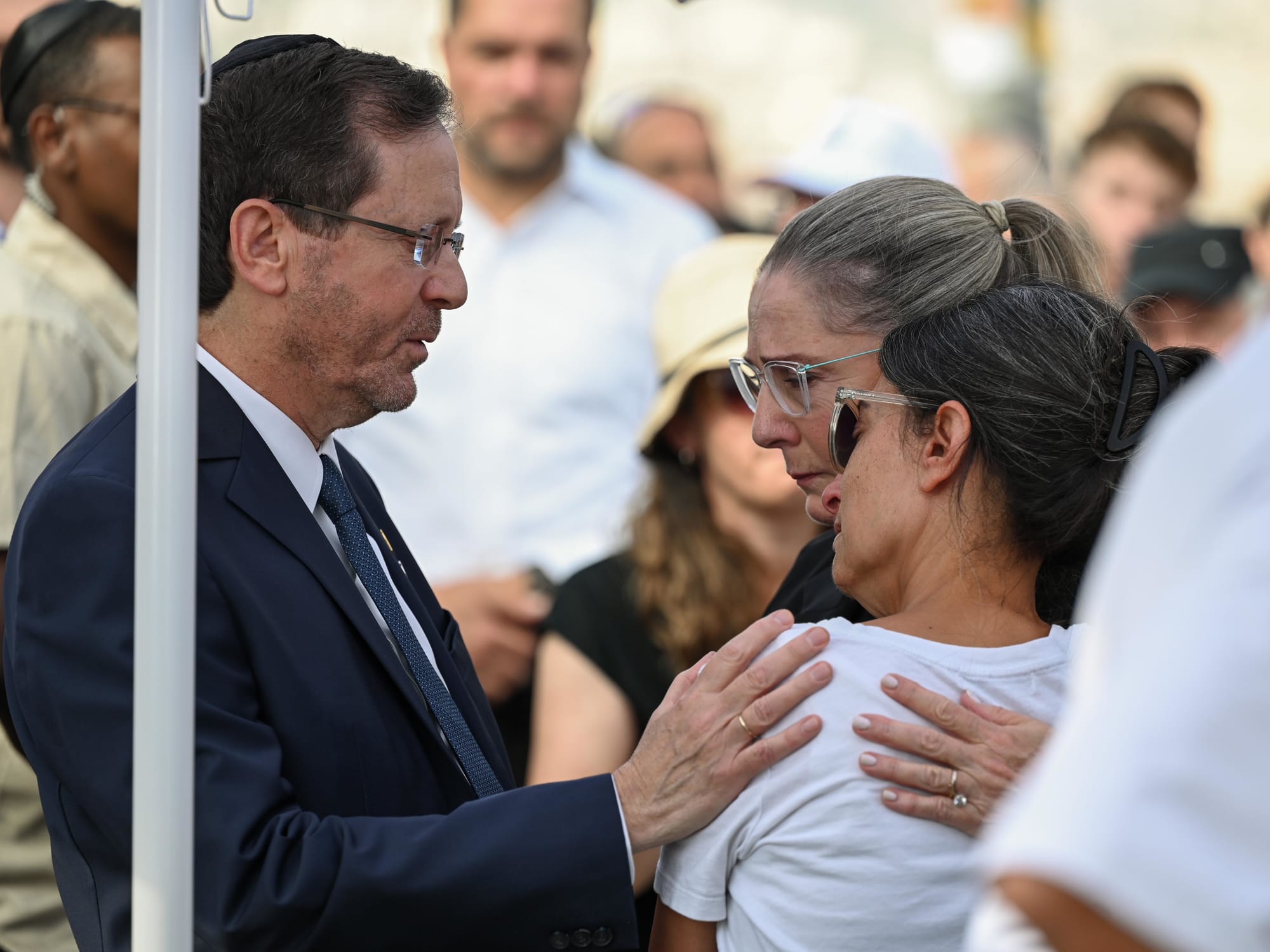
Chapter 14 — Those Who Never Came Home Alive: Death, Recovery and the Search for Answers
The Hostages Who Never Returned to Their Families
For more than two years, photographs of Israeli hostages appeared across public squares, government buildings, newspapers and social media.
Their faces became symbols of an international crisis.
Their names were spoken at demonstrations.
Their families appeared before political leaders.
Their birthdays were marked in their absence.
And throughout the war, one demand remained constant.
Bring them home.
For some families, that demand eventually ended in reunion.
Parents embraced children who had survived captivity.
Partners held one another after months of separation.
Communities celebrated the return of people they had feared they might never see again.
But other families received a different kind of news.
Their loved ones were dead.
Some had been killed during the Hamas-led attacks of October 7, 2023, and their bodies taken into Gaza.
Others had been abducted alive and subsequently died or were killed while in captivity.
In several cases, the precise circumstances of death became the subject of competing claims, forensic examinations and continuing investigations.
For the families, these distinctions were painfully important.
A person killed on October 7 had a different history from someone who survived the initial attack and spent months in captivity before dying.
A hostage deliberately killed by captors had a different experience from someone whose death resulted from military operations, untreated injuries or other circumstances.
These differences matter for historical accuracy and legal accountability.
They also matter to families trying to understand the final moments of someone they loved.
The recovery of a body may answer one question while leaving many others unresolved.
It can confirm a death.
It can allow a funeral.
It can provide a place of mourning.
But it does not necessarily establish how the person died, who was responsible or whether the death could have been prevented.
For the families of deceased hostages, the end of captivity was not the end of their search.
It was often the beginning of another struggle.
A struggle for answers.
For identification.
For accountability.
And for the right to remember their loved ones as more than victims of war.
The Difference Between Being Killed and Dying in Captivity
One of the most important distinctions in documenting the hostage crisis concerns the circumstances in which individuals died.
The word hostage was used broadly throughout the crisis to describe people held in Gaza, including individuals whose bodies had been taken there after death.
But not everyone included in the hostage count had been abducted alive.
Some victims were killed during the October 7 attacks.
Their remains were subsequently taken into Gaza and withheld from their families.
Others were captured alive and remained in captivity for varying periods before their deaths.
These differences are essential to understanding the historical record.
They also affect the legal analysis.
Deliberately killing a civilian during an attack may constitute a war crime.
Taking a living civilian hostage to compel concessions may constitute a separate war crime.
The deliberate killing of a person in detention may constitute murder or another serious international crime.
Abuse, denial of necessary medical care or other unlawful treatment may also raise questions of criminal responsibility, depending on the facts.
The recovery and withholding of human remains raise additional humanitarian and legal concerns.
But investigators cannot assume that every deceased hostage died in the same way.
The circumstances must be established individually.
For journalists, this requires careful language.
A person whose body was taken into Gaza should not automatically be described as having been killed during captivity.
A person who survived October 7 should not be described as having died during the initial attack.
And a disputed cause of death should not be presented as established simply because one party has made a public statement.
These distinctions are not technical details.
They are part of the truth families deserve.
The Bibas Family: The Children the World Waited For
Among the most recognizable faces of the hostage crisis were Ariel and Kfir Bibas.
Ariel was four years old.
His younger brother, Kfir, was only nine months old.
They lived with their parents, Shiri and Yarden Bibas, in Kibbutz Nir Oz.
On October 7, armed attackers entered the community during the Hamas-led assault on southern Israel.
Shiri was abducted with the two children.
Yarden was also taken captive but was held separately.
Footage of Shiri carrying her sons circulated internationally.
The images became among the most widely recognized representations of the hostage crisis.
They showed a mother attempting to protect her children in circumstances of extreme danger.
For relatives and supporters, the children became symbols of the vulnerability of civilians during the attacks.
Their ages made the abduction especially shocking.
Kfir was too young to understand the political conflict surrounding him.
Ariel was a small child whose ordinary life had been violently interrupted.
Neither had any responsibility for the events unfolding around them.
As months passed, the family continued waiting for reliable information.
Photographs of Ariel and Kfir appeared at demonstrations.
Their birthdays were marked publicly.
Their names were repeated by advocates demanding the release of all hostages.
The world knew their faces.
But their family did not know their fate.
Yarden Bibas: Freedom Without His Family
Yarden Bibas was released on February 1, 2025.
His return marked the end of his own prolonged captivity.
But it was not the reunion his family had hoped for.
Shiri, Ariel and Kfir were not released with him.
For months, Hamas had claimed that Shiri and the children were dead.
Israeli authorities had not independently confirmed those claims during much of the captivity period.
The uncertainty remained devastating.
Yarden returned to a world where the fate of his wife and sons was still unresolved publicly.
The circumstances of his release illustrated a particularly painful reality.
A hostage could regain freedom while remaining separated from the people whose survival mattered most.
The return of one family member did not guarantee the return of the others.
For Yarden, the end of detention was followed by the confirmation of catastrophic loss.
His story demonstrates why release cannot always be described as a complete restoration of family life.
Freedom can be accompanied by grief.
And a homecoming can take place without the family that once made home meaningful.
February 2025: The Return of the Bibas Family's Remains
In February 2025, the remains of Ariel and Kfir Bibas were returned to Israel and identified.
The initial handover that was supposed to include Shiri's remains became the subject of serious controversy when Israeli forensic authorities determined that the body provided was not hers.
Her remains were subsequently returned and identified.
The events intensified the grief and anger surrounding the family's tragedy.
Israeli authorities stated that forensic findings indicated the children had been killed by their captors.
Hamas had previously claimed that Shiri and the children died as a result of an Israeli airstrike.
These conflicting accounts must be distinguished.
Israeli forensic findings and official statements provide important evidence.
Hamas's statements represent claims by an organization directly involved in the hostage crisis.
The underlying evidence supporting the competing explanations has not been fully available for independent public examination.
A responsible historical account should therefore identify the source of each claim rather than present all details as independently established.
What is established is that Shiri, Ariel and Kfir were abducted on October 7 and did not return alive.
Their remains were returned in February 2025.
Their deaths devastated their family and became a defining tragedy of the hostage crisis.
For the relatives, the photographs that had once represented hope became reminders of lives permanently lost.
Hersh Goldberg-Polin: A Young Man Who Survived the Initial Attack
Hersh Goldberg-Polin was 23 years old when he attended the Nova music festival.
He was an Israeli-American young man with friends, interests and plans for the future.
On October 7, the festival became one of the locations attacked by Hamas-led armed groups.
Hersh attempted to escape.
He eventually sought shelter in a roadside bomb shelter near Re'im with other people fleeing the violence.
Armed attackers threw grenades into the shelter.
Hersh lost part of his left arm during the attack.
He survived the immediate violence but was abducted into Gaza.
His parents, Rachel Goldberg-Polin and Jon Polin, became prominent international advocates for his release.
They traveled, spoke publicly and met political leaders.
They described their son as a person with a future, not merely as a hostage.
For months, the family lived with uncertainty.
Then, in April 2024, Hamas released a video showing Hersh alive.
The recording was produced under coercive circumstances.
It did not provide a reliable account of his treatment or condition beyond what could be observed.
But it established that he had survived for months after his abduction.
For his parents, the footage was both a source of relief and a reminder of the danger he faced.
Their campaign continued.
They wanted him returned before it was too late.
The Death of Hersh Goldberg-Polin
In late August 2024, Israeli forces recovered the bodies of six hostages from an underground tunnel in the Rafah area of southern Gaza.
Hersh Goldberg-Polin was among them.
The others were Carmel Gat, Eden Yerushalmi, Almog Sarusi, Alexander Lobanov and Ori Danino.
Israeli forensic authorities concluded that the six had been shot and killed shortly before their bodies were recovered.
Their deaths triggered widespread grief.
For Hersh's parents, the news ended nearly eleven months of campaigning with the outcome they had feared most.
They had addressed world leaders.
They had appeared before international audiences.
They had appealed for negotiations.
And they had continued speaking about the importance of bringing their son home alive.
The recovery of his body meant that those efforts could no longer achieve their original purpose.
The family's grief was shared by many people who had followed their campaign.
But public recognition could not reverse the loss.
Hersh's death also intensified questions about the negotiations and military decisions made during the months of his captivity.
Could an earlier agreement have secured his release?
Had opportunities been missed?
What information did decision-makers possess?
These questions are historically significant.
But they cannot be answered responsibly through hindsight alone.
They require examination of the negotiating record, the actions of the captors and the decisions of the governments involved.
What remains clear is that Hersh was alive months after October 7 and did not survive captivity.
Carmel Gat: A Life Interrupted at Kibbutz Be'eri
Carmel Gat was 40 years old when she was abducted from Kibbutz Be'eri on October 7.
She had been visiting her family during the holiday period.
The attack on Be'eri was among the most devastating assaults on an Israeli community that day.
Carmel's mother, Kinneret Gat, was killed.
Carmel was taken into Gaza.
During her captivity, released hostages later described aspects of their time with her.
Their accounts portrayed a woman who attempted to support others under extraordinarily difficult conditions.
Some described how she helped fellow captives cope with fear and confinement.
These accounts provide an important perspective on captivity.
Hostages were not simply passive figures waiting for rescue.
Some found ways to help one another.
They shared emotional support.
They attempted to preserve routines.
They offered reassurance when circumstances allowed.
Carmel's presence became meaningful to people who endured detention alongside her.
But she did not survive.
Her body was recovered with the other five hostages in Rafah in August 2024.
Her death left her family grieving both her loss and the death of her mother during the original attack.
The story of Carmel Gat illustrates how a single family could suffer multiple losses across different stages of the crisis.
Eden Yerushalmi: The Voice That Disappeared
Eden Yerushalmi was 24 years old when she attended the Nova music festival.
During the attack, she attempted to escape the violence.
She remained in contact with relatives while seeking safety.
Her family later learned that she had been abducted.
Eden became one of the hostages whose photographs appeared throughout the public campaign.
Her relatives continued hoping for her release.
As months passed, the uncertainty became increasingly difficult.
The absence of reliable information meant that her family could not know how she was being treated or whether she remained alive.
In August 2024, Eden's body was recovered from the tunnel in Rafah.
She was among the six hostages Israeli authorities said had been killed shortly before recovery.
Her death devastated her family.
The public learned her name through the circumstances of her abduction and death.
But those who knew her remembered a person whose life had existed long before October 7.
Her story is a reminder that a hostage photograph can never fully represent the person behind it.
The image captures a face.
It cannot capture every relationship, ambition or ordinary moment that made up a life.
Almog Sarusi: A Partner Who Tried to Help
Almog Sarusi was 27 years old when he attended the Nova music festival with his girlfriend, Shahar Gindi.
During the attack, Shahar was killed.
Almog was abducted into Gaza.
His family spent the following months campaigning for his return.
For relatives, the circumstances of his disappearance were particularly painful.
He had survived the initial attack but was taken away from the place where his partner had been killed.
His captivity prolonged the tragedy.
The family could not know whether he was receiving medical care or adequate food.
They could not communicate with him.
They could not know when or whether he might return.
Almog's body was recovered with the other five hostages in August 2024.
His death meant that the hope of reunion had ended.
The loss also connected two families through the deaths of a young couple whose lives had been interrupted during the same attack.
Their story illustrates the wider consequences of October 7 for relationships and future plans.
A life together was lost.
And the people who loved them were left with memories of a future that never happened.
Alexander Lobanov: A Father Who Never Returned
Alexander Lobanov, also known as Alex, was 32 years old.
He worked at the Nova music festival and was abducted during the October 7 attack.
He was married and the father of a young child.
During his captivity, his wife gave birth to their second child.
Alexander never had the opportunity to meet that child.
For his family, the passage of time carried a particular cruelty.
While he remained in Gaza, life continued outside.
A baby was born.
His older child grew.
Family milestones passed without him.
His wife faced the responsibilities of parenthood while waiting for news of her husband.
The hope of his return remained central.
Then, in August 2024, his body was recovered from Rafah.
Alexander's death meant that his children would grow up without their father.
One of them would never have the experience of meeting him.
The tragedy demonstrates how captivity can affect people who were not themselves abducted.
Children may lose parents.
Partners may become widowed.
Families may be permanently changed.
The consequences extend far beyond the person held captive.
Ori Danino: The Attempt to Save Others
Ori Danino was 25 years old when he attended the Nova music festival.
During the attack, he initially escaped the immediate danger.
According to accounts of his actions that day, he returned in an attempt to help other people flee.
He was subsequently abducted.
His story became associated with the efforts of individuals who attempted to protect others during the chaos of October 7.
The decision to help someone in danger can carry enormous consequences.
For Ori, the events ended in captivity.
His family continued hoping for his return.
They participated in the wider campaign to secure the release of hostages.
But Ori did not survive.
His body was recovered with the other five hostages in August 2024.
For his family, the news confirmed a loss that no public recognition could repair.
His story illustrates the importance of remembering the actions and identities of victims rather than reducing them to the circumstances of their deaths.
Ori was not only one of six hostages recovered from a tunnel.
He was a young man whose life and decisions mattered to the people around him.
The Six Deaths and the National Response
The recovery of the six hostages in Rafah produced one of the most intense periods of public protest during the hostage crisis.
Large demonstrations took place in Israel.
Many participants demanded an immediate agreement to secure the release of those still alive.
Families and supporters expressed anger and grief.
Some accused the government of failing to prioritize negotiations sufficiently.
Others argued that responsibility rested primarily with the captors who had held and killed the hostages.
These positions reflected broader disagreements about military strategy and diplomacy.
But the underlying tragedy was not disputed.
Six people who had survived the initial October 7 attacks were dead.
Their families had waited for months.
Their deaths intensified fears about the remaining captives.
The event also raised questions about the danger of prolonged detention.
Every additional month created further opportunities for illness, violence, military escalation and death.
The six hostages became symbols of the urgency of securing the release of those still held.
But their individual identities should not be lost within that symbolism.
Each had a family.
Each had a history.
And each left behind people whose lives were permanently changed.
Noa Marciano: A Young Soldier Who Died in Captivity
Noa Marciano was 19 years old when she was abducted from the Nahal Oz military observation post on October 7.
She was serving in the Israel Defense Forces.
Her abduction became part of the wider story of female soldiers taken during the attacks.
In November 2023, Israeli forces recovered her body in Gaza.
Israeli authorities stated that she had been injured during an Israeli airstrike and was subsequently killed by a Hamas captor.
Hamas had presented a different account, attributing her death to Israeli military action.
The competing explanations require careful attribution.
The Israeli military's account is an official investigative conclusion.
Hamas's account is a claim by the organization holding her.
The complete underlying evidence has not been available for unrestricted independent assessment.
What is established is that Noa was abducted alive and did not return.
Her death occurred during captivity.
Her family lost a daughter whose adult life had barely begun.
Noa's story illustrates why determining the cause of death can be complicated in an active war zone.
A hostage may face danger from captors and from military operations taking place nearby.
Investigators must examine each contributing event rather than assume a single explanation without evidence.
The Deaths of Three Hostages Killed by Israeli Forces
Not every hostage death during the war resulted from a deliberate killing by captors.
On December 15, 2023, Israeli soldiers mistakenly killed three Israeli hostages in Gaza.
The men were Yotam Haim, Samer Talalka and Alon Shamriz.
According to the Israeli military's investigation, the three had emerged in an area where Israeli forces were operating.
They were shirtless, and one carried a white cloth.
The soldiers nevertheless opened fire, mistakenly identifying them as threats.
The deaths generated shock and grief.
The circumstances raised serious questions about identification, rules of engagement and military decision-making.
For the families, the tragedy was particularly devastating.
Their loved ones had survived captivity long enough to emerge into an area controlled by Israeli forces.
Yet they were killed before they could return home.
The incident demonstrates why the circumstances of hostage deaths cannot be reduced to a single explanation.
The hostage crisis involved unlawful detention by armed groups.
It also unfolded during intensive military operations.
Both realities could create grave risks for captives.
The responsibility of investigators is to establish the facts of each death and examine the conduct of those involved.
Acknowledging an Israeli military error does not excuse the original abduction.
Likewise, the unlawful detention of hostages does not remove the obligation to investigate deaths caused by Israeli forces.
The Risk of Military Operations Around Hostages
Throughout the war, Israeli authorities faced a difficult operational challenge.
Hostages were being held inside Gaza, sometimes in residential buildings and underground tunnels.
Israeli forces were conducting military operations against Hamas and other armed groups.
The presence of captives created additional risks.
Military strikes could affect locations where hostages were held.
Ground operations could bring soldiers into contact with captives whose identities were unknown.
Explosions could damage detention sites.
Captors might move hostages in response to military pressure.
And armed groups might threaten or kill captives during operations.
These risks created intense debate in Israel.
Some families feared that continued military action endangered their loved ones.
Others believed that military pressure was necessary to secure negotiations or rescue opportunities.
The appropriate assessment of particular operations requires evidence about the information available to commanders and the precautions taken.
It is not enough to conclude that every hostage death during military activity was caused by a particular strike.
Nor is it accurate to assume that military operations posed no danger to hostages.
The risks were real.
The challenge was determining how those risks could be reduced while pursuing military and diplomatic objectives.
The Killing of Six Hostages in Khan Younis
In August 2024, Israeli forces recovered the bodies of six hostages from the Khan Younis area of Gaza.
They included Avraham Munder, Yagev Buchshtab, Alexander Dancyg, Nadav Popplewell, Yoram Metzger and Haim Perry.
The circumstances of their deaths became the subject of further investigation.
Some had previously been known to be alive in captivity.
Others had appeared in material released by their captors.
Israeli authorities subsequently examined whether military activity had contributed to the conditions surrounding their deaths.
This case illustrates the complexity of establishing responsibility in a combat environment.
A body may be recovered from a tunnel.
But the recovery itself does not establish the cause of death.
Investigators must examine forensic findings, intelligence, the location, the timing of military operations and any available testimony.
In some cases, evidence may support a conclusion.
In others, uncertainty may remain.
The families deserve accurate answers.
They do not benefit from explanations presented with greater certainty than the evidence permits.
Avraham Munder: A Grandfather Who Did Not Return
Avraham Munder was 79 years old when he was abducted from Kibbutz Nir Oz.
His wife, Ruth, daughter Keren and grandson Ohad were also taken hostage.
They were released during the November 2023 agreement.
Avraham remained in Gaza.
His family continued hoping for his return.
The contrast was especially painful.
Some members of the family had survived and regained freedom.
But Avraham was still missing.
For his grandson, the experience of captivity was followed by the continuing absence of his grandfather.
For other relatives, the release of family members did not bring complete relief.
Avraham's body was recovered in August 2024.
His death ended the family's hope of reunion.
His story demonstrates the lasting consequences of partial family releases.
An agreement may reunite several relatives while leaving another person behind.
The family then lives with gratitude for those who survived and grief for the person who did not.
The Elderly Hostages and Their Vulnerability
Several elderly people were abducted on October 7.
Their captivity raised particular humanitarian concerns.
Older captives may have chronic medical conditions.
They may depend on regular medication.
They may have mobility limitations.
They may be more vulnerable to dehydration, infection and malnutrition.
Prolonged detention without independent medical monitoring can therefore create serious risks.
Among the older hostages were people who had spent decades building lives in the communities attacked.
They were grandparents, retired professionals and longtime residents of kibbutzim.
Their abductions disrupted entire families.
Some were released alive.
Others died or were killed during captivity.
The experiences of elderly hostages illustrate the importance of medical access and humane treatment.
Captivity does not remove a person's right to necessary care.
Armed groups holding detainees remain responsible for complying with applicable humanitarian obligations.
The vulnerability of elderly captives makes those responsibilities particularly urgent.
The Bodies Taken Into Gaza on October 7
Some families waited not for the release of a living hostage but for the return of a loved one's remains.
During the October 7 attacks, bodies of people killed in Israel were taken into Gaza.
Their relatives faced a different form of uncertainty.
They might know that the person had died.
But they could not hold a funeral while the remains were missing.
They could not complete burial arrangements.
And they might not know where the body was being held.
The withholding of human remains created profound emotional distress.
For many families, burial is an essential part of mourning.
Religious and cultural traditions may place particular importance on returning the deceased to their family.
In Jewish tradition, timely and respectful burial carries deep significance.
The inability to recover a body can therefore intensify grief.
But the issue is not limited to religious observance.
Families across cultures may need a confirmed place of burial.
They may want to say goodbye.
They may want certainty that the person has been identified.
The return of remains is an important humanitarian responsibility.
It should not be treated merely as another component of political negotiation.
The Forensic Identification Process
When remains are recovered after prolonged captivity or conflict, identification can be complex.
Bodies may have been exposed to environmental conditions.
They may have been moved.
They may be damaged.
The passage of time can complicate forensic examination.
Authorities may use DNA comparisons, dental records, medical information and other identification methods.
The process must be conducted carefully.
An incorrect identification can cause additional trauma.
Families may be informed that remains have been recovered only to discover that further examination is necessary.
The Bibas family's experience in February 2025 demonstrated the seriousness of identification errors and disputed handovers.
Forensic examination is therefore not simply a technical procedure.
It is part of the responsibility owed to the deceased and their relatives.
Accuracy matters.
Documentation matters.
And public announcements should not exceed the certainty of the findings.
Families deserve reliable information rather than premature conclusions.
Why the Cause of Death Matters
For some observers, the confirmation of death may appear to be the final answer.
For families, it often is not.
They may want to know whether the person suffered.
Whether medical care was available.
Whether the death was deliberate.
Whether an earlier release could have prevented it.
Whether the person was alone.
And whether anyone attempted to help.
These questions are deeply personal.
They are also legally important.
The cause and circumstances of death may determine which crimes investigators consider.
A deliberate execution raises different legal questions from death caused by an untreated illness.
A death during a military strike requires examination of the relevant operation.
A death resulting from torture requires evidence concerning the abuse and its consequences.
A death caused by deprivation may involve questions about detention conditions and medical neglect.
But investigators must distinguish what can be established from what remains unknown.
Families deserve the truth.
They do not deserve speculation presented as certainty.
The Problem of Competing Narratives
The deaths of hostages frequently became subjects of conflicting public statements.
Hamas and other armed groups sometimes attributed deaths to Israeli airstrikes.
Israeli authorities sometimes attributed deaths to executions or other acts by captors.
In certain cases, forensic examinations provided important information.
In others, investigators faced significant limitations.
These competing narratives created difficulties for journalists.
An official statement is relevant evidence of what an authority claims or concludes.
It is not automatically equivalent to independently verified fact.
A statement from an armed group responsible for holding captives must also be assessed critically.
Such organizations may have political or military reasons to shape public understanding.
The appropriate journalistic approach is to identify the source of each claim.
Explain the available supporting evidence.
Describe any independent findings.
And acknowledge unresolved questions.
This approach may produce less dramatic headlines.
But it creates a more reliable historical record.
The families of deceased hostages deserve that level of care.
The Human Consequences of Waiting for Remains
For families whose loved ones were confirmed dead but whose remains had not been returned, uncertainty continued.
They knew the person would not come home alive.
But they still could not complete the process of burial.
Their grief remained tied to negotiations and recovery operations.
Every announcement about the return of remains could produce renewed hope and anxiety.
Was their relative among those being returned?
Would identification be possible?
Would the circumstances of death finally become clearer?
The emotional burden was substantial.
The family might have already experienced months of uncertainty about survival.
Then came confirmation of death.
Then another period of waiting.
The process could extend the crisis long after the person's life had ended.
The return of remains therefore carried profound importance.
It represented the restoration of a measure of dignity.
It allowed families to conduct funerals and establish places of remembrance.
But it could not restore the lost person.
The Families Who Had to Bury Their Children
Among the most devastating consequences of the hostage crisis were the deaths of young people.
Parents who had spent months campaigning for release were eventually forced to arrange funerals.
The emotional reversal was almost impossible to comprehend.
They had prepared for reunions.
They had imagined embracing their children.
They had preserved bedrooms and personal belongings.
They had celebrated birthdays in absence.
Then they received confirmation that the person they were waiting for would never return alive.
The stories of Hersh Goldberg-Polin, Eden Yerushalmi, Ori Danino and other young hostages illustrate this tragedy.
Their families had been deprived of the ordinary experience of watching their children grow older.
The years ahead were lost.
Careers would not develop.
Relationships would not continue.
Plans would remain unfinished.
The public may remember the date of a funeral.
The family continues living with the absence afterward.
Remembering the Dead as People
One of the greatest risks in reporting on prolonged conflicts is that victims become known only through the circumstances of their deaths.
A name becomes associated with a tunnel.
A photograph becomes associated with a hostage poster.
A family becomes associated with a campaign.
The person who existed before the violence can disappear from public memory.
This is particularly important when documenting the deceased hostages.
Hersh Goldberg-Polin was more than a victim of captivity.
Carmel Gat was more than one of six people recovered in Rafah.
Ariel and Kfir Bibas were children with families and childhoods that should have continued.
Avraham Munder was a grandfather whose life extended across decades.
Each person had an identity independent of the conflict.
Responsible remembrance should preserve that identity.
It should include the person's life, relationships and interests where reliable information is available.
It should avoid turning victims into symbols stripped of individuality.
The purpose of historical documentation is not merely to record how people died.
It is also to remember that they lived.
Accountability for Deaths in Captivity
The deaths of hostages raise serious legal questions.
Deliberately killing a person held in detention may constitute a war crime.
Torture and cruel treatment are prohibited.
Hostage-taking itself is prohibited.
The denial of necessary medical care may also constitute unlawful treatment under applicable legal rules, depending on the circumstances.
But individual criminal responsibility must be established through evidence.
Investigators must identify the relevant conduct.
Determine who participated.
Examine the chain of command where appropriate.
And assess whether the legal elements of particular crimes are satisfied.
Not every death can be explained immediately.
Some investigations may take years.
Others may remain incomplete because evidence has been destroyed or perpetrators cannot be identified.
The absence of a completed prosecution does not erase the historical importance of the death.
But journalism must not substitute speculation for legal findings.
The responsibility to seek accountability belongs to institutions capable of conducting lawful investigations.
Families should not be required to establish criminal responsibility on their own.
The Responsibility to Investigate Every Death
A credible historical record must apply consistent standards.
Deaths caused by captors require investigation.
Deaths resulting from military operations require investigation.
Allegations of execution require forensic and testimonial examination.
Claims concerning medical neglect require evidence about detention conditions and available care.
These obligations do not disappear because the victims were Israeli.
Nor do they disappear when victims are Palestinian.
The legal and humanitarian principles protecting people during armed conflict are not dependent on nationality.
Recognizing the unlawful detention and killing of Israeli hostages does not require dismissing the suffering of Palestinian civilians.
Investigating alleged violations by Israeli forces does not excuse hostage-taking by Hamas or other armed groups.
Each incident requires its own evidence.
Each victim deserves recognition.
And responsibility must be established according to conduct rather than collective identity.
This consistency is essential to credible journalism.
The Historical Responsibility to Preserve Their Names
The names of deceased hostages will remain part of the history of October 7 and the war that followed.
But remembrance should not depend entirely on annual ceremonies or public monuments.
Historical preservation requires accurate records.
Researchers must distinguish dates of abduction from dates of death.
They must distinguish recovery from identification.
They must preserve the findings of forensic investigations.
They must document the sources of contested claims.
And they must update the record when new evidence becomes available.
Journalists have a role in this process.
They can examine individual cases.
Interview families.
Review official investigations.
And explain why particular questions remain unresolved.
But they must also respect the privacy of grieving relatives.
Not every family wishes to participate in public remembrance.
Some may prefer quiet mourning.
Others may choose advocacy.
Their decisions should be respected.
The responsibility to remember does not give the public unlimited access to private grief.
What Closure Can — and Cannot — Mean
The word closure is often used when remains are returned or a funeral takes place.
But it can be misleading.
For some families, burial provides an important measure of certainty.
They know where their loved one rests.
They can perform religious or cultural rituals.
They can gather with relatives.
They can establish a place of remembrance.
These experiences may be deeply meaningful.
But grief does not necessarily end.
Questions may remain.
Anger may continue.
The absence of the person remains permanent.
A parent does not stop missing a child because a funeral has taken place.
A partner does not stop grieving because remains have been identified.
A sibling does not regain the years that should have been shared.
Closure is therefore not a single event.
It may be a gradual and deeply individual process.
Some families may never use the word at all.
The appropriate responsibility of society is not to tell grieving families when their suffering should end.
It is to provide accurate information, practical support and respect for their choices.
The End of the Hostage Crisis and the Beginning of Memory
The release of the surviving hostages and the recovery of the deceased marked major milestones in the history of the crisis.
But the meaning of those events differed dramatically among families.
For some, the end brought reunion.
For others, it brought burial.
For still others, it brought additional questions.
The political and military conflict continued to shape public debate.
But the families faced a more personal reality.
They had lost people they loved.
The passage of time could not reverse that loss.
The end of negotiations could not restore their lives.
And the conclusion of a recovery operation could not erase the suffering of the preceding months or years.
The historical record must therefore continue beyond the dates of major agreements.
It must include the people who died.
The circumstances that can be established.
The questions that remain unanswered.
And the families who continue living with the consequences.
Conclusion — Bringing Them Home Was Not Always Bringing Them Back
For more than two years, the demand to bring the hostages home united families, communities and supporters across the world.
It was a demand rooted in the belief that people taken from their homes, workplaces and communities should be returned.
For those who survived, the demand eventually became reality.
They returned to families who had waited for months or years.
But others never came home alive.
Shiri, Ariel and Kfir Bibas.
Hersh Goldberg-Polin.
Carmel Gat.
Eden Yerushalmi.
Almog Sarusi.
Alexander Lobanov.
Ori Danino.
Noa Marciano.
Avraham Munder.
And many others whose names belong to the history of October 7 and its aftermath.
Their stories are not identical.
Some were killed during the original attacks.
Others survived the initial violence but died or were killed in captivity.
Some deaths were attributed to captors.
Others involved military operations.
And in certain cases, the full circumstances remain disputed or incompletely established.
These distinctions must be preserved.
They matter for historical accuracy.
They matter for accountability.
And they matter to the families who continue seeking answers.
The return of remains can restore a measure of dignity.
It can make burial possible.
It can end one form of uncertainty.
But it cannot restore a life.
The responsibility now is to remember the deceased as individuals, investigate their deaths and support the families who remain.
Their photographs should not be remembered only as images from a hostage campaign.
Their names should not be reduced to statistics.
And their lives should not disappear beneath the political arguments surrounding the war.
They were children, parents, grandparents, partners, friends and colleagues.
They had histories before October 7.
They had relationships that mattered.
They had futures that should have continued.
For their families, bringing them home was a promise that could never be fulfilled in the way they had hoped.
For the historical record, remembering them accurately is a responsibility that remains.
Chapter 15 — After Captivity: Trauma, Recovery and Rebuilding a Life
The Long Road Back to a Life That No Longer Exists
When a hostage returns home, the world often sees a moment of extraordinary happiness.
Families embrace.
Photographs capture tears of relief.
Crowds celebrate.
For a brief period, the person who has returned becomes the center of national and international attention.
But after the cameras disappear, another reality begins.
The former hostage must learn how to live outside captivity.
For some, this means recovering from physical injuries and severe nutritional deprivation.
For others, it involves confronting memories of sexual violence, torture, threats or prolonged isolation.
Some return to families who have spent months or years waiting.
Others discover that people they loved were killed during the attacks or died while they were held captive.
Many return to communities that have changed profoundly.
Homes have been damaged.
Friends have moved away.
Relationships have evolved.
And the country itself has experienced years of war, political confrontation and collective grief.
The person who returns is not necessarily the same person who was abducted.
Nor is the world to which they return the same world they left.
This is one of the central challenges of recovery after prolonged captivity.
Survival requires adapting to circumstances in which freedom, safety and personal control have been taken away.
Recovery requires learning how to live without those restrictions.
That transition can be difficult.
A person who spent months following the orders of armed captors may struggle to make ordinary decisions.
Someone who lived with constant threats may find safety unfamiliar.
A survivor who relied on another hostage for emotional support may feel isolated after separation.
And a person whose experiences became internationally known may struggle to reclaim a private identity.
The process is not simply about returning to normal.
For many survivors, the previous version of normal no longer exists.
The challenge is to build something new.
The First Year Is Not the End of Recovery
Public attention often focuses on the first weeks after a hostage is released.
Medical examinations take place.
Families reunite.
Journalists report on physical condition.
Survivors may begin sharing aspects of their experiences.
But the long-term consequences of captivity can extend far beyond this initial period.
Psychological difficulties may emerge gradually.
A survivor may initially feel relief and excitement.
The presence of family members can provide comfort.
The ability to eat, sleep and move freely may feel extraordinary.
But as the immediate intensity of the homecoming fades, difficult memories may become more prominent.
Some people experience intrusive recollections.
Others struggle with anxiety or depression.
Some have difficulty sleeping.
Others become emotionally withdrawn.
These reactions vary substantially.
Not every former hostage develops a mental health disorder.
Not every survivor experiences the same symptoms.
And the length of captivity does not determine recovery in a simple or predictable way.
A person held for several weeks may experience profound trauma.
Someone held for years may demonstrate considerable psychological resilience.
The appropriate approach is therefore individualized care.
Medical professionals must assess each survivor's circumstances rather than assume that every person will follow the same recovery path.
Long-term monitoring can be important because needs may change over time.
The absence of severe symptoms immediately after release does not guarantee that difficulties will never emerge.
Likewise, early psychological distress does not mean that a person cannot recover.
Rebuilding Physical Strength After Prolonged Deprivation
For hostages held for extended periods, physical rehabilitation can be a major challenge.
Several released captives described inadequate food, restricted movement and difficult detention conditions.
Some returned visibly underweight.
Others had untreated injuries.
Certain survivors had experienced prolonged restraint or confinement in small spaces.
These conditions can affect physical functioning in several ways.
Malnutrition may contribute to muscle loss, weakness and reduced endurance.
Limited movement can affect mobility and balance.
Chronic stress can disrupt sleep and contribute to exhaustion.
Untreated wounds may require specialized medical intervention.
Some survivors may need nutritional rehabilitation.
Others may require physiotherapy or occupational therapy.
Individuals with significant injuries may need surgery or long-term pain management.
The process can be frustrating.
Someone who was physically active before October 7 may discover that walking, exercising or performing ordinary household tasks requires considerable effort.
The body may need time to rebuild strength.
Medical treatment must also account for the risks associated with severe nutritional deprivation.
In vulnerable patients, reintroducing nutrition requires careful assessment and monitoring.
Recovery is not achieved simply by providing unlimited food.
It requires an appropriate medical plan.
Physical rehabilitation may also have psychological significance.
Regaining the ability to walk comfortably, exercise or perform everyday activities can help restore independence.
After captivity, even ordinary physical freedom may carry profound meaning.
The Psychological Meaning of Control
One of the defining features of captivity is the loss of control.
Hostages may be unable to decide when they eat.
When they sleep.
Where they move.
Whether they can speak.
Whether they can contact family.
Or whether they receive medical treatment.
Their daily lives are governed by the decisions of their captors.
This loss of autonomy can become deeply ingrained.
A person may learn that survival depends on anticipating the expectations of others.
They may avoid disagreement.
They may suppress emotions.
They may become highly attentive to changes in mood or behavior.
These adaptations can be protective during captivity.
After release, however, they may become difficult to abandon.
A survivor may hesitate before making decisions.
They may feel uncomfortable when offered too many choices.
They may struggle to express preferences.
Or they may react strongly when someone attempts to control an ordinary aspect of their life.
Recovery therefore involves more than reducing fear.
It involves restoring personal agency.
The ability to decide what to eat.
Where to go.
Whom to meet.
What to discuss.
And how to spend time.
These decisions may appear ordinary to outsiders.
For someone who has spent months or years without meaningful control, they can represent the restoration of fundamental freedoms.
The Difficulty of Feeling Safe
Safety is not simply the absence of immediate danger.
It is also the ability to believe that danger is no longer present.
During captivity, hostages may experience prolonged uncertainty.
They may be threatened.
They may hear explosions.
They may witness violence.
They may be moved between locations without explanation.
They may fear that any day could be their last.
The nervous system can adapt to this environment through heightened vigilance.
After release, a survivor may continue scanning surroundings for danger.
They may become startled by sudden noises.
They may avoid enclosed spaces.
They may feel uncomfortable in crowds.
They may struggle when separated from trusted people.
These are possible trauma-related responses, not conditions that should automatically be attributed to every former hostage.
The distinction matters.
Survivors should not be defined through assumptions about their psychological state.
But where such difficulties occur, treatment may focus on helping the person recognize present safety while processing past danger.
This can involve psychological therapy, gradual exposure to ordinary activities where appropriate, supportive relationships and the restoration of predictable routines.
The goal is not to erase memories.
It is to reduce the degree to which those memories control daily life.
Returning to a Home That Has Changed
Many hostages abducted on October 7 came from communities in southern Israel.
Some of these communities suffered extensive destruction during the attacks.
Residents were killed.
Homes were damaged.
Families were displaced.
Community institutions were disrupted.
A released hostage may therefore discover that the place they remember no longer exists in the same form.
The physical environment may have changed.
Neighbors may have moved away.
Familiar buildings may be destroyed.
Friends may be dead.
For survivors, returning to a hometown can produce conflicting emotions.
It may offer comfort through familiar surroundings.
But it may also trigger painful memories.
A street may remind someone of the attack.
A home may contain evidence of violence.
A community gathering may highlight the absence of people who were killed.
Recovery therefore takes place within a wider social environment.
The survivor is not simply adapting to freedom.
They may also be adapting to displacement, bereavement and the reconstruction of their community.
This makes long-term support especially important.
Housing, community rebuilding and social stability can all affect recovery.
Relationships After Captivity
Captivity can change the way people experience relationships.
During detention, trust may become dangerous.
A captor may alternate between threats and apparently sympathetic behavior.
A hostage may become dependent on people who control their basic needs.
Privacy may disappear.
Personal boundaries may be repeatedly violated.
After release, rebuilding trust can require time.
Some survivors may become highly dependent on relatives.
Others may seek distance and independence.
Some may want to discuss their experiences frequently.
Others may avoid the subject.
These differences can create misunderstandings.
Family members may expect the survivor to be grateful and happy.
The survivor may feel exhausted, angry or emotionally detached.
A partner may want physical closeness.
The survivor may need time before feeling comfortable with touch.
Parents may become excessively protective.
Adult survivors may experience that protection as another restriction on their freedom.
Communication becomes essential.
The family must recognize that recovery is individual.
The survivor must be allowed to establish boundaries.
And relationships may need to develop in new ways.
The objective is not to force everyone back into their previous roles.
It is to rebuild relationships that respect the changed circumstances.
Intimacy and the Consequences of Sexual Violence
For survivors who experienced sexual violence, intimate relationships may present additional challenges.
Sexual assault can profoundly affect a person's sense of bodily autonomy.
It can alter perceptions of safety.
It can create fear associated with physical contact.
It may affect self-image, trust and emotional closeness.
Some survivors may experience distress during intimate situations.
Others may avoid relationships.
Some may seek closeness but struggle with memories of abuse.
There is no universal response.
The experiences of Amit Soussana, Romi Gonen, Rom Braslavski and Guy Gilboa-Dalal demonstrate why sexual violence against hostages must be addressed with sensitivity.
Their public accounts describe different forms of abuse.
They should not be treated as interchangeable.
Nor should journalists speculate about their private relationships or medical treatment.
The general medical and psychological consequences of sexual violence are well recognized.
But those consequences cannot automatically be assigned to a named survivor.
Recovery may involve specialized trauma-focused therapy, medical support and careful communication with trusted partners.
The central principle is autonomy.
The survivor must have control over their body and personal decisions.
After an experience in which that control was violently removed, restoring it is fundamental.
Male Survivors and the Challenge of Disclosure
Male survivors of sexual violence may face particular social pressures.
Traditional expectations of masculinity can make it difficult for men to discuss vulnerability.
Some may fear ridicule.
Others may worry that their experiences will not be believed.
They may feel pressure to appear strong.
These concerns can delay disclosure and discourage people from seeking support.
The public testimonies of Rom Braslavski and Guy Gilboa-Dalal challenged assumptions about sexual violence during captivity.
Their accounts demonstrated that male hostages could also be subjected to sexual abuse and humiliation.
But public disclosure is not the only legitimate response.
Some survivors may prefer to speak privately with healthcare professionals.
Others may disclose experiences to trusted relatives.
Some may choose not to discuss them.
Their decisions deserve respect.
A trauma-informed system must ensure that services are accessible to men and women.
It must avoid language that associates victimization with weakness.
And it must recognize that sexual violence is an abuse of power, not a reflection of the victim's identity or character.
The Emotional Consequences of Losing Fellow Hostages
Some captives developed close relationships with people held alongside them.
They shared food when possible.
They comforted one another.
They discussed families.
They tried to maintain hope.
These relationships could become essential to survival.
A fellow hostage might be the only person who understood the immediate conditions of detention.
After release, separation from that person could create additional emotional difficulties.
A survivor might worry about someone still held captive.
They might feel guilty about being released first.
They might struggle to enjoy freedom while others remained in danger.
If a fellow hostage died, grief could become intertwined with memories of captivity.
This type of loss can be especially difficult because the relationship developed under extreme circumstances.
The bond may have been intense even if the individuals had known each other for only a limited time.
For some survivors, reconnecting with former fellow captives may provide meaningful support.
They may share experiences that are difficult to explain to others.
But such contact should remain voluntary.
Some people may find it comforting.
Others may need distance from reminders of captivity.
Recovery should respect those differences.
Survivor's Guilt and the Question of Why
One of the most painful experiences following mass violence can be survivor's guilt.
A person who returns alive may ask why they survived when others did not.
They may remember someone who was killed during the initial attack.
They may think about fellow captives who died.
They may wonder whether different decisions could have changed an outcome.
These questions can persist even when the survivor had no realistic control over events.
Survivor's guilt does not mean that the person was responsible for another's death.
It can reflect the emotional difficulty of accepting survival amid extraordinary loss.
The deaths of hostages such as Hersh Goldberg-Polin, Carmel Gat and others intensified the grief surrounding the crisis.
Released captives who knew people who died may carry complicated memories.
But it would be inappropriate to assume that any particular survivor experiences guilt without their own account or reliable clinical information.
The broader principle is that survival can involve conflicting emotions.
Relief and grief may exist together.
Gratitude and anger may coexist.
A person may celebrate freedom while mourning people who never returned.
Psychological support can help survivors process these experiences without treating their emotions as evidence of personal failure.
The Families Must Recover Too
The psychological consequences of captivity extend beyond the people who were abducted.
Families spent months or years living with uncertainty.
Parents feared that children might be injured or killed.
Partners managed households alone.
Children grew up without mothers or fathers.
Siblings participated in campaigns.
Grandparents waited for news.
Some families became internationally recognized advocates.
Others endured the crisis privately.
Their experiences may involve prolonged stress, disrupted sleep, anxiety, grief and changes in family relationships.
When a hostage returns, relatives may expect their distress to disappear.
But the end of uncertainty does not automatically erase its consequences.
A parent who spent two years fearing for a child may remain unusually anxious.
A partner may struggle to abandon responsibilities assumed during the separation.
Children may fear that the returned parent will disappear again.
These reactions require understanding.
Family support may be an important component of rehabilitation.
The goal is not only to help the former hostage recover.
It is also to support the relationships and household into which that person returns.
Yarden Bibas: Rebuilding Life After Unimaginable Loss
The experience of Yarden Bibas illustrates the complexity of returning from captivity to a family tragedy.
Yarden was released on February 1, 2025.
He had been held separately from his wife, Shiri, and their children, Ariel and Kfir.
Later that month, their deaths were confirmed following the return of their remains.
Yarden's situation was therefore fundamentally different from that of a survivor reunited with their immediate family.
He had regained freedom.
But his wife and children were gone.
His recovery could not be understood solely through the effects of captivity.
It also involved profound bereavement.
The public knew the faces of his family.
Photographs of Shiri and the children had circulated internationally.
Their deaths had become part of the national memory of October 7.
But Yarden's grief remained personal.
The loss of a spouse and children cannot be adequately understood through political symbolism.
It concerns relationships, shared memories and a future that no longer exists.
His experience demonstrates why rehabilitation must be individualized.
A person returning to family reunion may need one kind of support.
Someone returning to bereavement may need another.
The public must also respect the right of grieving survivors to privacy.
Rebuilding Identity After Becoming a Public Symbol
Before October 7, most hostages were not public figures.
They were students, professionals, parents, soldiers, festivalgoers and community members.
Their names were known primarily to family and friends.
After the attacks, their photographs appeared internationally.
Their personal histories became public.
Their birthdays were marked at demonstrations.
Their families gave interviews.
And their eventual releases became major news events.
For some survivors, this attention may create opportunities for advocacy.
They may choose to speak about captivity.
They may participate in international discussions.
They may support other survivors.
But public recognition can also become restrictive.
A person may feel that their identity has been permanently defined by the hostage crisis.
They may be expected to discuss traumatic experiences repeatedly.
They may encounter strangers who feel entitled to ask intimate questions.
They may struggle to pursue ordinary activities without attracting attention.
Rebuilding identity therefore involves reclaiming the right to be more than a survivor.
A person may want to study.
To work.
To travel.
To build relationships.
To enjoy ordinary experiences.
These ambitions are not signs that the past has been forgotten.
They are part of reclaiming life.
Returning to Education
Many of the people abducted on October 7 were young adults.
Some were at stages of life associated with education, travel and career development.
Captivity interrupted those plans.
A person held for more than two years may return to find that former classmates have graduated.
Friends may have moved abroad.
Professional opportunities may have passed.
The survivor may feel pressure to catch up.
But educational recovery may require flexibility.
Concentration can be affected by stress and sleep difficulties.
Physical rehabilitation may consume time.
Medical appointments may interfere with schedules.
Some survivors may need a gradual return to academic responsibilities.
Institutions can assist through individualized accommodations.
These may include flexible attendance, adjusted deadlines or access to appropriate support services.
But survivors should not be treated as permanently incapable.
Many may wish to resume challenging studies or professional training.
The responsibility of institutions is to provide support without removing independence.
Returning to Work and Financial Independence
Employment can provide structure, purpose and financial security.
For some former hostages, returning to work may be an important step toward rebuilding life.
But the transition may be complicated.
A person may experience fatigue.
They may require ongoing medical treatment.
They may have difficulty concentrating.
They may feel uncomfortable in crowded or stressful environments.
Others may discover that their previous profession no longer reflects their priorities.
Captivity can change how people think about time, relationships and personal ambitions.
Some survivors may wish to return to their former jobs.
Others may choose entirely different careers.
The appropriate response is flexibility.
Employers can provide gradual reintegration where needed.
They can respect medical recommendations.
They can avoid unnecessary public attention.
And they can recognize that recovery does not follow a uniform schedule.
Financial independence can also contribute to restored autonomy.
A person who spent months dependent on captors for basic necessities may place particular value on controlling their own livelihood.
But economic pressure should not force someone to return to work before they are ready.
Long-term rehabilitation requires balancing independence with realistic support.
The Role of Israeli Rehabilitation Services
Israel faced the challenge of providing care to people returning from extraordinary circumstances.
Released hostages required medical assessment, psychological support and assistance with reintegration.
Hospitals established procedures for receiving captives.
Medical teams assessed nutritional status, injuries and other health concerns.
Mental health professionals evaluated needs and offered support.
Government institutions and relevant social services also had responsibilities concerning rehabilitation and assistance.
But the needs of survivors were not uniform.
A child held for several weeks required a different approach from an adult held for more than two years.
A person who experienced sexual violence might need specialized care.
Someone who lost family members might require bereavement support.
A survivor with severe physical injuries might need prolonged medical rehabilitation.
The effectiveness of such services should be evaluated over time.
Initial hospital treatment is only one component.
Long-term access, continuity of care and the ability to adapt services to changing needs are equally important.
The responsibility of the state does not end when a hostage leaves the hospital.
Why Long-Term Care Must Remain Available
Some consequences of captivity may emerge months or years after release.
A survivor may initially appear to be coping well.
Later, they may experience difficulties associated with traumatic memories, relationships or major life transitions.
Others may need treatment for chronic pain or lasting physical impairment.
Children may encounter new challenges as they grow older and develop a deeper understanding of what happened.
A young child who returns from captivity may not fully comprehend the experience immediately.
Years later, questions about violence, family separation and personal identity may become more significant.
This creates a need for flexible, long-term support.
Care should not depend exclusively on whether a survivor seeks treatment during the first weeks after release.
Services should remain accessible when needs change.
Continuity is especially important for people who have experienced prolonged or repeated trauma.
But long-term support must not become permanent medicalization.
Survivors should not be treated as patients for the rest of their lives simply because they experienced captivity.
The purpose of care is to support health, independence and personal choice.
The Role of Community
Recovery does not occur only in hospitals or therapy rooms.
It also takes place through ordinary social relationships.
Friends can provide companionship.
Neighbors can offer practical assistance.
Schools can support children.
Employers can provide flexibility.
Community organizations can help families reconnect.
For survivors from kibbutzim and other affected communities, collective recovery may be particularly important.
Many residents experienced the same attacks.
Some lost relatives.
Others were displaced.
Community institutions may have been damaged.
Rebuilding social networks can help restore a sense of belonging.
But community support must respect boundaries.
A survivor may not want constant attention.
They may prefer ordinary conversation rather than repeated questions about captivity.
They may want to participate in social activities without being treated differently.
Support is most meaningful when it responds to the person's actual needs rather than assumptions about what a survivor should want.
Faith, Meaning and Personal Resilience
People respond to extreme adversity in different ways.
For some, religious faith provides comfort.
Prayer, ritual and spiritual community may offer a sense of continuity.
For others, family relationships become the primary source of meaning.
Some find purpose through advocacy.
Others through education, work, creativity or service to others.
Former hostages have described different strategies that helped them endure captivity.
Some relied on memories of loved ones.
Others developed routines.
Some maintained hope through relationships with fellow captives.
These strategies may continue to influence life after release.
But resilience should not be romanticized.
A person does not need to become inspirational to deserve recognition.
Survival does not create an obligation to demonstrate extraordinary strength.
Some survivors may feel hopeful.
Others may feel exhausted.
Some may wish to transform their experiences into public work.
Others may want to live quietly.
All these responses deserve respect.
Resilience can include asking for help.
It can include setting boundaries.
And it can include deciding that a traumatic experience will not define every aspect of the future.
The Danger of Expecting Survivors to Be Heroes
Public narratives often describe released hostages as heroes.
The language is intended to honor their endurance.
But it can create unrealistic expectations.
A person who survives captivity may be praised for strength and courage.
The public may expect them to remain optimistic.
They may be invited to give speeches.
They may be asked to inspire others.
But the survivor may also experience fear, anger, grief or emotional exhaustion.
These reactions do not diminish their endurance.
The expectation of heroism can become another burden.
It may discourage people from acknowledging difficulties.
They may feel pressure to appear recovered.
They may worry about disappointing supporters.
A more respectful approach recognizes survival without prescribing how the survivor should behave afterward.
A person can be courageous and vulnerable.
Grateful and angry.
Hopeful and grieving.
Human recovery is complex.
It should not be reduced to a public narrative of triumph.
The Responsibility of the Media After Release
Journalists played an important role in documenting the hostage crisis.
They reported abductions.
They interviewed families.
They investigated captivity conditions.
They covered negotiations and releases.
But the responsibility of journalism continues after the homecoming.
The long-term consequences of captivity deserve attention.
So do the needs of survivors and families.
Yet reporting must respect privacy.
A survivor should not be pressured to describe sexual violence.
A child should not be exposed unnecessarily to public scrutiny.
A grieving family should not be treated as permanently available for interviews.
The public interest in understanding captivity does not remove individual rights.
Journalists should seek informed consent.
They should avoid sensationalism.
They should distinguish verified facts from allegations.
And they should allow survivors to determine the extent of their participation.
Responsible reporting can contribute to historical understanding without turning recovery into a spectacle.
The Meaning of Justice During Recovery
For some survivors, the pursuit of accountability may be closely connected to recovery.
They may want perpetrators prosecuted.
They may seek public acknowledgment of abuse.
They may wish to participate in investigations.
Others may prefer to focus on rebuilding private life.
Neither response is inherently more legitimate.
Justice is an important public responsibility.
But survivors should not be required to become legal advocates.
They should be able to access support regardless of whether they participate in criminal proceedings.
The burden of investigating crimes belongs to competent authorities.
The burden of prosecution belongs to legal institutions.
The burden of preserving the historical record belongs to researchers, journalists and other responsible bodies.
Survivors may contribute when they choose.
But they should not be expected to carry these responsibilities alone.
Their primary right is to live freely and with dignity.
A Future That Belongs to Them
The deepest consequence of captivity may be the interruption of a person's ability to shape their own future.
For months or years, hostages could not make ordinary decisions.
They could not choose where to live.
They could not pursue education.
They could not develop careers.
They could not maintain relationships freely.
Their lives were controlled by others.
Recovery involves restoring the possibility of choice.
Some former hostages may return to familiar communities.
Others may move elsewhere.
Some may become public advocates.
Others may seek privacy.
Some may return to previous careers.
Others may change direction entirely.
Their futures should not be determined by public expectations.
Nor should their identities be permanently confined to the events of October 7.
They have the right to make mistakes.
To change their minds.
To pursue ambitions.
To experience happiness.
And to live without constantly explaining what happened to them.
These ordinary freedoms are part of what captivity attempted to remove.
Reclaiming them is central to rebuilding life.
The Responsibility of Society Does Not End With Freedom
The return of the surviving hostages was an extraordinary achievement for the families who had waited.
But it did not resolve the long-term consequences of captivity.
Survivors may continue needing medical care.
Some may require psychological support.
Families may need assistance rebuilding relationships.
Children may need specialized services as they grow.
People with lasting injuries may face prolonged rehabilitation.
The responsibility of society is to ensure that support remains available.
But that responsibility also includes respecting independence.
Survivors should not be defined permanently by trauma.
They should not be expected to provide endless testimony.
They should not be forced into public roles.
And they should not be judged according to how quickly they appear to recover.
A meaningful response combines practical assistance with respect for autonomy.
It recognizes suffering without reducing a person to suffering.
It acknowledges resilience without demanding heroism.
And it allows survivors to build futures that may differ from the lives they imagined before captivity.
Conclusion — Life After Captivity Must Be More Than Survival
The release of a hostage is a moment of freedom.
But freedom alone cannot restore everything captivity has taken.
Time cannot be returned.
Lost relationships cannot always be rebuilt.
Physical injuries may require prolonged treatment.
Traumatic memories may remain.
And the deaths of loved ones can permanently change the course of a life.
For the Israeli hostages released from Gaza, recovery has involved far more than leaving the place where they were held.
It has meant returning to families who endured months or years of fear.
It has meant confronting the consequences of violence.
It has meant rebuilding physical strength.
Restoring trust.
Reclaiming privacy.
And learning how to make ordinary decisions again.
Some survivors have spoken publicly about their experiences.
Others have chosen to remain private.
Some have become advocates.
Others have focused on education, work and personal relationships.
Their different choices reflect a fundamental principle.
There is no single correct way to recover from captivity.
The responsibility of families, healthcare professionals, institutions and society is not to determine what recovery should look like.
It is to provide the conditions in which recovery becomes possible.
That includes medical care.
Psychological support.
Protection of privacy.
Access to education and employment.
Support for families.
And respect for individual autonomy.
The historical record must preserve what happened.
The legal system must investigate serious crimes.
But the survivors themselves must be allowed to live beyond the events that made them known.
Their identities belong to them.
Their futures belong to them.
And their lives should not remain permanently defined by the people who held them captive.
Survival brought them home. Recovery is the process of reclaiming what captivity tried to take away: the freedom to live, to choose, to trust and to imagine a future again.
Chapter 16 — The Legacy of October 7: Human Rights, Hostage-Taking and the Responsibility to Prevent Future Crimes
Beyond the Hostage Crisis: What the World Must Learn
On October 7, 2023, Hamas and other Palestinian armed groups carried out coordinated attacks against communities, military positions and civilian locations in southern Israel.
Approximately 1,200 people were killed.
Another 251 people were abducted into Gaza.
Among those taken were children, elderly people, civilians, soldiers and foreign nationals.
The attacks marked the beginning of a prolonged hostage crisis that would become one of the defining human tragedies of the war.
For families, the crisis was measured in days without contact.
For the hostages, it was measured in deprivation of liberty, uncertainty and, in numerous documented cases, physical or psychological abuse.
For governments, it became a complicated diplomatic and military challenge.
For international humanitarian organizations, it exposed the difficulty of protecting people held by armed groups in inaccessible locations.
And for the international legal system, it raised fundamental questions about enforcement.
The prohibition against hostage-taking was already well established.
The prohibition against torture was already recognized.
The protection of children during armed conflict was already part of international law.
Sexual violence was already prohibited.
Yet these legal protections did not prevent the abductions or the suffering that followed.
This is perhaps the most important lesson of the hostage crisis.
The existence of international law does not guarantee its enforcement.
A legal rule may be clear while the mechanisms available to protect victims remain limited.
The question for the international community is therefore not simply whether hostage-taking is unlawful.
That question has already been answered.
The more difficult questions concern prevention, enforcement, humanitarian access and accountability.
What should governments do when civilians are abducted by armed groups?
How can international organizations reach people held in secret detention?
What responsibilities do states have when negotiations involve hostages?
And how can future crimes be prevented when those responsible may believe they will never face prosecution?
The answers require more than expressions of condemnation.
They require institutions capable of acting.
The Prohibition Against Hostage-Taking Is Not Negotiable
International humanitarian law prohibits hostage-taking.
Common Article 3 of the Geneva Conventions explicitly prohibits the taking of hostages in armed conflicts covered by its provisions.
The prohibition is also recognized in customary international humanitarian law and reflected in the Rome Statute of the International Criminal Court.
It exists for a fundamental reason.
Human beings must not be seized and used as instruments of coercion.
A civilian cannot lawfully be abducted to compel a government to release prisoners.
A child cannot be held to pressure political leaders.
An elderly person cannot be detained as leverage in negotiations.
The prohibition does not depend on the captor's political objectives.
An armed organization may claim that its actions are intended to secure national liberation, prisoner releases or military concessions.
Such objectives do not create a legal exception permitting hostage-taking.
This distinction is particularly important in conflicts where competing historical and political claims dominate public debate.
The Israeli-Palestinian conflict involves deeply contested questions concerning territory, security, statehood, displacement and self-determination.
These issues deserve serious examination.
But none of them removes the prohibition against taking hostages.
International law does not require observers to resolve every political dispute before recognizing that abducting civilians for coercive purposes is unlawful.
The protection applies independently of political sympathy.
It is a minimum standard of human dignity.
The Protection of Civilians Must Remain Universal
The October 7 attacks demonstrated the vulnerability of civilians during organized violence.
People were attacked in their homes.
Festivalgoers were killed while attempting to escape.
Families were separated.
Children were abducted.
Elderly residents were taken from their communities.
These events require clear recognition.
But the protection of civilians must also apply beyond the immediate victims of October 7.
Palestinian civilians in Gaza are entitled to protection under international humanitarian law.
Israeli civilians are entitled to protection.
Foreign workers are entitled to protection.
Children are entitled to protection regardless of nationality.
The rules governing the conduct of hostilities require parties to distinguish between civilians and combatants and between civilian objects and military objectives.
They also prohibit indiscriminate attacks and attacks expected to cause excessive incidental civilian harm in relation to the concrete and direct military advantage anticipated.
The relevant legal assessments depend on the circumstances of particular operations.
But the underlying principle is clear.
Civilians must not be deliberately targeted.
Their suffering must not be dismissed because of the identity of the government or armed organization associated with their community.
And violations against one population do not justify violations against another.
The crimes of October 7 cannot justify unlawful attacks against Palestinian civilians.
Likewise, allegations of unlawful Israeli military conduct do not excuse the abduction or abuse of Israeli hostages.
These are separate obligations.
The consistent application of humanitarian law is essential to its credibility.
Armed Groups Cannot Place Themselves Outside International Law
One of the recurring challenges in modern conflict is the role of non-state armed groups.
Such organizations may control territory.
They may operate military structures.
They may detain people.
They may engage in negotiations with governments.
Yet they do not necessarily possess the institutions or international obligations associated with recognized states.
This does not place them outside international humanitarian law.
Armed groups that are parties to an armed conflict are bound by applicable humanitarian rules.
They cannot claim that the absence of statehood removes their obligation to treat detainees humanely.
They cannot lawfully torture captives.
They cannot commit rape.
They cannot deliberately attack civilians.
And they cannot engage in prohibited hostage-taking.
The conduct of Hamas and other armed groups during the October 7 attacks and subsequent captivity must be examined within this framework.
Political identity does not eliminate legal responsibility.
Nor does the fact that an armed organization operates within a densely populated civilian area.
The challenge lies in enforcement.
States possess identifiable institutions and legal systems through which obligations can sometimes be addressed.
Non-state armed groups may operate through secret networks, decentralized structures or underground facilities.
Their leaders may be difficult to apprehend.
Their detention sites may be inaccessible.
And their members may reject the authority of international institutions.
These obstacles complicate accountability.
They do not change the applicable prohibitions.
The Failure of Access to Hostages
One of the most troubling features of the hostage crisis was the absence of regular independent access to captives.
Throughout much of their detention, hostages were held in locations that international humanitarian organizations could not inspect.
Families received little or no direct communication.
Independent medical examinations were generally unavailable.
The conditions of detention could not be consistently monitored.
This created serious humanitarian concerns.
Without access, it becomes difficult to assess whether captives are receiving adequate food.
Whether injuries are being treated.
Whether medication is available.
Whether detainees are being subjected to abuse.
Or whether they are still alive.
The International Committee of the Red Cross repeatedly sought access to the hostages.
Its representatives participated in the transfer of captives during release operations.
But facilitating a handover is not the same as being permitted to visit people throughout captivity.
This distinction matters.
The ICRC cannot simply enter a secret detention facility without the cooperation of the party controlling it.
Its humanitarian mandate does not provide an independent military enforcement capability.
The denial of access therefore reveals a structural problem.
International humanitarian organizations may possess expertise and recognized mandates while lacking the practical means to reach people whose captors refuse cooperation.
For future hostage crises, this limitation demands serious attention.
The Role and Limitations of the International Committee of the Red Cross
The International Committee of the Red Cross occupies a distinctive position in armed conflict.
Its humanitarian work includes protecting and assisting people affected by war.
It may visit detainees where access is granted.
It may facilitate communication between separated family members.
It may participate in humanitarian transfers.
And it works to promote compliance with international humanitarian law.
During the Gaza hostage crisis, the ICRC assisted with releases under negotiated arrangements.
Its role was important.
But it also became the subject of criticism from families who wanted more information and access.
These frustrations were understandable.
Families were desperate to know whether their loved ones were alive.
They wanted independent medical examinations.
They wanted proof that captives were being treated humanely.
But an accurate assessment must distinguish between an organization's responsibilities and its operational powers.
The ICRC cannot guarantee access when an armed group refuses it.
It cannot independently enforce the release of captives.
Nor can it compel a government or armed organization to accept its services.
Its effectiveness depends partly on cooperation from parties to the conflict.
The broader lesson is not that humanitarian organizations are unnecessary.
It is that humanitarian protection remains vulnerable when those controlling detainees reject independent oversight.
International institutions need political support and cooperation to perform their functions.
Children in Captivity: A Failure of Protection
The abduction of children on October 7 exposed one of the most disturbing aspects of the crisis.
Children were taken from homes and communities.
Some were separated from relatives.
Others were held alongside family members.
Their ordinary development was interrupted by violence and confinement.
Children are entitled to special protection during armed conflict.
Their age and dependency create additional humanitarian responsibilities.
They require appropriate nutrition.
Medical care.
Emotional support.
Protection from violence.
And opportunities for healthy development.
Captivity can disrupt all these needs.
Young children may not understand why they have been taken.
They may struggle to comprehend the absence of parents.
They may experience fear without possessing the language needed to explain it.
The cases of Ariel and Kfir Bibas became internationally recognized because of their ages and the circumstances of their abduction.
Other children who survived captivity faced different challenges.
Their experiences demonstrate why child protection must remain central to humanitarian policy.
A child's legal rights do not depend on the political identity of their parents.
Nor can a child be treated as responsible for the actions of a government or armed organization.
The abduction of children for coercive purposes represents a profound violation of that principle.
Sexual Violence and the Responsibility to Investigate
The hostage crisis also exposed the importance of investigating sexual violence during armed conflict.
Several former hostages publicly described sexual assault, sexualized humiliation or other forms of abuse.
Their testimonies challenged the assumption that captivity involves only physical confinement.
Sexual violence can be used to dominate, intimidate and degrade.
It can affect women and men.
It may occur in private settings without witnesses.
And survivors may be unable or unwilling to disclose their experiences immediately.
International investigations have documented credible evidence of conflict-related sexual violence associated with the October 7 attacks and hostage captivity.
These findings must be treated seriously.
But responsible investigation requires precision.
Allegations must be examined individually.
Patterns must be supported by evidence.
Perpetrators must be identified where possible.
And legal responsibility must be established through appropriate procedures.
The protection of survivors is equally important.
They should not be pressured to provide public testimony.
They should not be subjected to unnecessary questioning.
Their privacy must be respected.
And their experiences should not be transformed into political material without regard for their dignity.
The wider lesson is that sexual violence must never be treated as a secondary issue in hostage investigations.
It requires specialized expertise, survivor-centered procedures and sustained accountability efforts.
Male Victims Must Not Be Overlooked
Public discussions of conflict-related sexual violence have historically focused primarily on women and girls.
Their vulnerability remains an essential concern.
But men and boys can also be victims.
The testimonies of male former hostages brought this issue into greater public attention.
Sexualized humiliation, coercion and assault may be used to exercise power over captives.
Male survivors may face additional barriers to disclosure.
They may fear disbelief.
They may experience shame.
They may worry that public discussion will undermine their social identity.
These pressures can contribute to underreporting.
A credible humanitarian response must therefore recognize all survivors.
Medical services should be accessible regardless of gender.
Investigators should be trained to recognize different forms of sexual violence.
Public communication should avoid stereotypes.
And victims should not be judged according to whether their experiences fit familiar narratives.
The principle is straightforward.
Sexual violence is prohibited because it violates human dignity and bodily autonomy.
That protection applies to everyone.
The Psychological Use of Hostages
Hostage-taking is not only a form of physical detention.
It can also be a method of psychological coercion.
The person held captive may be threatened with death.
They may be isolated.
They may be deprived of reliable information.
They may be forced to appear in propaganda recordings.
Their family may be shown images intended to produce fear.
Governments may face pressure to make concessions.
The captor can attempt to influence several audiences simultaneously.
The hostage.
The family.
The public.
And political decision-makers.
During the Gaza crisis, armed groups released videos showing captives under coercive circumstances.
Some recordings included messages directed at Israeli leaders.
Others displayed visibly weakened hostages.
These materials became part of the wider psychological environment of the conflict.
Families often faced a painful dilemma.
A video might provide the first sign that a loved one was alive.
But it could also expose them to material designed to manipulate their emotions.
The international community must recognize this dimension of hostage-taking.
It is not simply the unlawful confinement of individuals.
It can involve deliberate exploitation of human relationships to exert pressure.
Hostage Videos and the Ethics of Media Coverage
The use of hostage videos raises difficult questions for journalists.
Such recordings may contain information of genuine public interest.
They may confirm that a captive was alive when the footage was produced.
They may reveal aspects of detention conditions.
They may provide evidence relevant to later investigations.
But they are not ordinary interviews.
The person appearing in the recording is not speaking freely.
They may be under threat.
They may have been instructed what to say.
They may have no ability to refuse participation.
Journalists must therefore avoid presenting coerced statements as independent expressions of opinion.
The source and circumstances should be explained.
Graphic or humiliating material should not be reproduced unnecessarily.
The privacy and dignity of captives should be considered.
And families should not be exposed to avoidable harm merely to attract public attention.
The ethical challenge is to report the existence and significance of such material without becoming an uncritical channel for the captors' messaging.
This principle extends beyond the Israeli-Palestinian conflict.
It applies wherever hostages are used in propaganda.
The Responsibility of Governments to Protect Their Citizens
The hostage crisis raised difficult questions about the responsibilities of governments when citizens are abducted abroad or during armed conflict.
Governments may attempt to secure releases through diplomacy.
They may coordinate intelligence.
They may negotiate prisoner exchanges.
They may apply sanctions.
They may seek cooperation from regional mediators.
And, in some circumstances, they may consider military rescue operations.
Each option carries risks.
Negotiations may require politically difficult concessions.
Military operations may endanger captives.
Public pressure may affect bargaining positions.
Intelligence may be incomplete.
The existence of these difficulties does not remove the responsibility to make decisions carefully.
Governments must consider the protection of human life, applicable legal obligations and the foreseeable consequences of their actions.
But there is no simple formula that guarantees success.
A negotiated agreement may release some hostages while leaving others behind.
A rescue operation may succeed or fail.
Military pressure may influence negotiations while also creating danger.
The historical assessment of government decisions therefore requires evidence about the options available at the time.
It should not rely exclusively on the outcome.
The Importance of Diplomacy
The release of hostages during the Gaza crisis depended heavily on diplomatic negotiations.
Qatar, Egypt and the United States played major mediation roles.
Israeli representatives participated in negotiations.
Hamas representatives were involved through the relevant channels.
Agreements required coordination over timing, security arrangements, prisoner releases and the transfer of captives.
The process was complicated.
Negotiations repeatedly stalled.
Proposals changed.
Military developments affected the diplomatic environment.
And families experienced long periods of uncertainty.
Yet the eventual release agreements demonstrated that diplomacy remained a central mechanism for securing freedom.
This does not mean that every negotiation was successful.
Nor does it establish that every proposed agreement would have been implemented.
But it demonstrates the importance of maintaining channels through which hostage releases can be discussed.
Even when parties are engaged in armed conflict, humanitarian negotiations may remain possible.
The broader lesson is that diplomatic capacity matters.
States and mediators need established relationships, technical expertise and mechanisms for implementing agreements.
Without these, the return of hostages can become even more difficult.
The Difficult Ethics of Prisoner Exchanges
Hostage negotiations often involve demands for prisoner releases.
This creates serious ethical and political dilemmas.
Governments may face pressure to release individuals convicted of serious offenses.
Families may argue that saving living hostages must take priority.
Security officials may warn about the future risks associated with releasing particular prisoners.
Political leaders must weigh competing considerations.
But the legal distinction remains essential.
A lawful prisoner exchange or negotiated release arrangement does not retroactively legalize the taking of hostages.
The original abduction remains subject to investigation.
Likewise, a government that participates in negotiations does not necessarily endorse the captors' methods.
The purpose of negotiations may be to end an unlawful situation.
Public debate should therefore distinguish between the legality of hostage-taking and the difficult policy choices involved in securing release.
These are related but separate questions.
The prohibition against hostage-taking must remain absolute even when negotiations become necessary.
The Danger of Treating Hostage-Taking as a Successful Strategy
One of the most difficult long-term questions concerns the incentives created by hostage negotiations.
Armed groups may view hostages as valuable leverage.
They may believe that the capture of civilians can secure prisoner releases, political concessions or international attention.
This creates a serious challenge for governments.
Refusing negotiations may prolong captivity and endanger lives.
Negotiating may produce releases but can also raise concerns about future incentives.
There is no universally successful response.
Different hostage crises involve different actors, demands and circumstances.
But the international community should seek to reduce the perceived benefits of hostage-taking.
This may involve stronger accountability mechanisms.
Cooperation against kidnapping networks.
Improved protection of vulnerable communities.
More effective international coordination.
And clear condemnation of hostage-taking regardless of the perpetrator's political identity.
The objective is not to abandon people who have been abducted.
It is to create conditions in which future perpetrators have fewer reasons to believe that taking hostages will advance their objectives.
Accountability as a Form of Prevention
International criminal justice is often discussed in relation to punishment.
But accountability may also contribute to prevention.
When perpetrators believe they can commit serious crimes without consequences, the perceived risks of future violations may be reduced.
Investigations and prosecutions can demonstrate that international crimes are not simply political disagreements.
They are acts for which individuals may face legal responsibility.
But deterrence should not be overstated.
The existence of the International Criminal Court did not prevent October 7.
Nor has international criminal law prevented every atrocity elsewhere.
Armed groups may be willing to accept substantial risks.
Leaders may believe they will never be arrested.
Political conditions may limit enforcement.
Accountability is therefore necessary but insufficient.
It must be accompanied by prevention, protection and diplomatic efforts.
The goal is to strengthen a system in which violations are documented, perpetrators can be identified and victims have access to meaningful legal processes.
The Responsibility to Preserve Evidence
The passage of time creates serious challenges for investigating hostage-related crimes.
Detention sites may be destroyed.
Witnesses may die.
Digital material may disappear.
Medical evidence may deteriorate.
Memories may become more difficult to reconstruct.
This makes evidence preservation essential.
Survivor testimony should be documented through appropriate methods.
Medical records should be protected.
Digital files should be preserved with reliable information about their origin.
Investigators should maintain records of how evidence was collected and stored.
These procedures support future prosecutions.
They also help establish an accurate historical record.
But evidence collection must respect survivors.
People who experienced torture or sexual violence should not be subjected to repeated intrusive interviews without necessity.
Confidential information should be safeguarded.
The objective is to preserve truth while minimizing additional harm.
The responsibility belongs to trained professionals and competent institutions.
It should not be left entirely to families or journalists.
The Role of International Organizations
The hostage crisis involved several international institutions with different mandates.
The United Nations documented alleged violations and supported humanitarian discussions.
The International Committee of the Red Cross participated in transfers and sought access to captives.
The International Criminal Court pursued investigations concerning alleged international crimes.
Governments and regional mediators negotiated releases.
These institutions were not interchangeable.
Each possessed different responsibilities and limitations.
The United Nations could investigate and report through its relevant mechanisms.
The ICRC could offer humanitarian services and seek access.
The ICC could investigate and prosecute individuals within its jurisdiction.
Mediating governments could facilitate negotiations.
But none possessed unlimited power to secure the immediate release of hostages.
The crisis demonstrated the importance of coordination.
It also exposed gaps between international expectations and institutional capabilities.
Future responses should be informed by a realistic understanding of what each organization can do.
Public confidence is weakened when institutions are judged according to powers they do not possess.
It is also weakened when failures within their actual mandates are ignored.
The Responsibility of Political Leaders
Political leaders play a central role in shaping responses to hostage crises.
Their statements influence public opinion.
Their decisions affect negotiations.
Their policies may influence military operations.
And their conduct can shape the international environment in which humanitarian action takes place.
Leaders therefore have a responsibility to communicate accurately.
They should avoid treating hostages as abstract political instruments.
They should consider the consequences of public statements for families and captives.
They should support lawful investigations.
And they should distinguish between legitimate criticism of governments and hostility toward entire populations.
The October 7 attacks and the subsequent war produced intense political polarization.
In that environment, careful leadership was particularly important.
Statements that minimize crimes against civilians can deepen division.
So can rhetoric that assigns collective responsibility to people who did not participate in those crimes.
The responsibility of political leadership is not merely to defend national interests.
It also includes respecting the legal and humanitarian principles that protect human life.
Antisemitism, Anti-Muslim Hatred and Collective Blame
The events of October 7 and the war in Gaza contributed to intense public debate across the world.
Jewish communities reported heightened concerns about antisemitism.
Muslim and Palestinian communities also faced hostility and discrimination.
Public demonstrations sometimes became confrontational.
Political arguments frequently extended beyond criticism of governments and armed groups.
These developments raise an important question.
How can societies discuss a deeply contested conflict without assigning collective guilt?
The answer begins with clear distinctions.
Hamas is an armed political organization.
It is not synonymous with all Palestinians.
The Israeli government is a political institution.
It is not synonymous with all Jewish people.
Palestinian civilians are not collectively responsible for hostage-taking.
Jewish communities outside Israel are not collectively responsible for Israeli military decisions.
Criticism of a government is not automatically hatred toward an entire people.
But criticism can cross into prejudice when it relies on collective accusations, dehumanization or threats.
The same principle applies to all communities.
The hostage crisis should not become a justification for hatred against people who had no responsibility for the crimes.
Human rights lose their meaning when they are applied selectively.
The Responsibility of Journalism
The hostage crisis demonstrated the power of journalism to shape public understanding.
Photographs of abducted children reached international audiences.
Interviews with families generated political attention.
Survivor testimonies revealed aspects of captivity that had previously been unknown.
Investigations documented allegations of torture and sexual violence.
But the crisis also exposed the risks of inaccurate reporting.
Unverified claims circulated rapidly.
Photographs were sometimes presented without sufficient context.
Official statements were repeated as established facts.
Political interpretations were sometimes confused with legal findings.
Responsible journalism must resist these pressures.
It must distinguish testimony from independently corroborated evidence.
It must identify the source of disputed claims.
It must correct errors.
And it must avoid sensationalism.
For Beyond the Lines, the purpose of reporting should be to explain events in their full complexity.
The suffering of Israeli hostages deserves serious investigation.
So do the humanitarian consequences of the wider war.
Accurate reporting does not require every article to devote equal space to every aspect of the conflict.
But it does require consistency in standards of evidence and human dignity.
The responsibility of journalism is not to produce convenient narratives.
It is to establish what can be known.
The Historical Record Must Include Individual Lives
Large-scale crises are often remembered through numbers.
The number of people killed.
The number abducted.
The number released.
The number who died.
These figures are important.
They help establish the scale of events.
But they cannot fully communicate the human consequences.
A hostage count does not reveal the experience of a child separated from a parent.
A release statistic does not explain the trauma of someone who endured sexual violence.
A death toll does not capture the grief of a family waiting for remains.
The historical record must therefore preserve individual stories.
Moran Stela Yanai.
Amit Soussana.
Romi Gonen.
Rom Braslavski.
Guy Gilboa-Dalal.
Hersh Goldberg-Polin.
Shiri, Ariel and Kfir Bibas.
And the many other people whose lives were transformed by October 7.
Their experiences were different.
Some survived.
Others did not.
Some spoke publicly.
Others remained private.
But each story contributes to understanding the broader crisis.
The purpose of documentation is not to turn individuals into political symbols.
It is to preserve the reality of what happened to them.
The Responsibility to Remember Without Distorting
Collective memory can become politically contested.
Different communities may emphasize different events.
Governments may promote particular narratives.
Activists may use historical suffering to support contemporary arguments.
Social media can intensify these divisions.
The danger is that memory becomes selective.
Some victims are recognized.
Others are ignored.
Certain crimes are emphasized.
Others are minimized.
A responsible historical approach must resist this process.
The October 7 attacks should be documented accurately.
The hostage-taking should be condemned and investigated.
The experiences of survivors should be preserved.
The deaths of captives should be examined.
And allegations of violations committed during the wider war should be assessed according to the same evidentiary standards.
This does not mean that all events are legally identical.
They are not.
Different acts involve different perpetrators, circumstances and legal classifications.
But every claim should be examined seriously.
Memory should be grounded in evidence.
Not political convenience.
Preventing Future Hostage Crises
The lessons of October 7 cannot be reduced to a single policy recommendation.
Prevention requires action across several areas.
Security institutions must assess threats and vulnerabilities.
Governments must strengthen coordination where appropriate.
International organizations must continue promoting compliance with humanitarian law.
Investigators must document crimes.
Courts must pursue accountability where jurisdiction and evidence permit.
Diplomatic channels must remain capable of addressing humanitarian emergencies.
And communities must resist the normalization of violence against civilians.
None of these measures can guarantee that hostage-taking will never occur again.
But prevention is not an all-or-nothing objective.
Improved preparedness may reduce vulnerability.
Stronger cooperation may assist responses.
Credible accountability may affect the calculations of some perpetrators.
And clear international norms may help prevent attempts to justify the abduction of civilians.
The most important principle is consistency.
Hostage-taking must not become acceptable when the victims belong to an unpopular government.
Torture must not become acceptable when the captor claims a political cause.
Sexual violence must not be ignored because acknowledging it complicates a preferred narrative.
And children must never be treated as legitimate instruments of coercion.
What the World Owes the Survivors
The former hostages are not merely sources of evidence.
They are individuals entitled to live freely.
Their experiences may inform investigations and public understanding.
But their primary rights concern safety, dignity, healthcare, privacy and personal autonomy.
The international community should not expect survivors to carry the entire burden of remembrance.
Nor should it expect them to become permanent advocates.
Some may choose public roles.
Others may seek ordinary private lives.
Both choices deserve respect.
The responsibility to document crimes belongs to institutions.
The responsibility to provide care belongs to relevant healthcare and social systems.
The responsibility to investigate belongs to competent authorities.
And the responsibility to preserve an accurate historical record belongs to society more broadly.
Survivors may contribute when they wish.
But their future should not remain controlled by the circumstances of their captivity.
What the World Owes the Families of the Dead
For families whose loved ones did not return alive, the responsibilities are different but equally important.
They deserve accurate information.
They deserve respectful treatment of remains.
They deserve access to relevant investigative findings, subject to legitimate legal and privacy considerations.
They deserve opportunities for mourning.
And they deserve recognition of the people they lost.
The deaths of hostages should not become mere footnotes in political histories.
The circumstances should be examined carefully.
Where crimes can be established, accountability should be pursued.
Where uncertainty remains, it should be acknowledged rather than concealed.
Families should not be forced to accept speculation as fact.
Nor should they be expected to continue public advocacy indefinitely.
Their right to grieve privately must be respected.
The responsibility to remember should be shared by institutions, communities and future generations.
A Crisis That Exposed the Limits of International Protection
The hostage crisis revealed a troubling gap between international legal principles and practical protection.
The rules were clear.
Hostage-taking was prohibited.
Torture was prohibited.
Sexual violence was prohibited.
Cruel treatment was prohibited.
Yet people remained captive for months or years.
Independent access was restricted.
Families lacked information.
Some hostages died.
Others returned with accounts of severe abuse.
The crisis therefore exposed the limits of a system that depends heavily on cooperation from parties to armed conflict.
International law can define obligations.
Investigators can document violations.
Courts can pursue criminal responsibility.
Diplomats can negotiate.
Humanitarian organizations can offer assistance.
But none of these mechanisms can guarantee immediate protection when an armed group refuses to comply.
This is not an argument against international law.
It is an argument for strengthening the means through which humanitarian obligations are implemented.
Legal principles remain essential.
Without them, there would be no common standard against which to judge the conduct of armed actors.
But legal principles must be supported by practical action.
The Legacy of October 7
The events of October 7, 2023, will remain part of the history of Israel and the wider Middle East.
They exposed severe vulnerabilities in civilian security.
They resulted in mass killing and abduction.
They initiated a hostage crisis that affected families for more than two years.
They contributed to a devastating war whose consequences extended far beyond the people initially attacked.
And they generated legal, political and humanitarian questions that will continue to be examined.
The legacy of the hostage crisis cannot be measured solely through the final release agreement.
It must also include the people who were killed.
The captives who survived.
The families who campaigned.
The medical professionals who treated returning hostages.
The investigators who documented alleged crimes.
And the institutions whose actions or failures shaped the response.
It must also include the broader question of whether the international community can strengthen the protection of civilians during future conflicts.
The answers will not emerge from one investigation or one court decision.
They will require sustained political, legal and humanitarian work.
Conclusion — The Responsibility That Remains
The hostage crisis that began on October 7, 2023, revealed the human consequences of using people as instruments of coercion.
Children were taken from their families.
Adults were deprived of freedom.
Elderly people were held in conditions they could not control.
Survivors described hunger, isolation, threats, physical violence and sexual abuse.
Families spent months or years waiting for information.
Some were eventually reunited.
Others buried loved ones.
The release of the surviving hostages ended their detention.
But it did not resolve every consequence of the crisis.
The legal investigations continue to shape the historical record.
Survivors continue rebuilding their lives.
Families continue living with loss.
And the international community continues confronting the limitations of its ability to protect people held by armed groups.
The most important lesson is not that international law has failed simply because violations occurred.
It is that the existence of legal rules must be matched by a sustained commitment to enforcement, humanitarian access and accountability.
Hostage-taking must remain prohibited regardless of the political cause invoked.
Torture must remain unacceptable regardless of the identity of the victim.
Sexual violence must be investigated regardless of gender or nationality.
And the protection of children must never become conditional on the conflict surrounding them.
The stories documented in this investigation are not only accounts of suffering.
They are evidence of what happens when fundamental protections are disregarded.
They also demonstrate the importance of families, communities, humanitarian professionals and investigators who refuse to abandon those protections.
The survivors deserve futures that belong to them.
The deceased deserve accurate remembrance.
The families deserve dignity and answers.
And future generations deserve an international system that does more than condemn hostage-taking after it occurs.
The responsibility is to prevent it wherever possible, confront it when it happens and pursue accountability afterward.
Because the true legacy of October 7 should not be measured only by what the world remembers, but also by what the world is willing to do to prevent such crimes from happening again.
Chapter 17 — Final Reflections: The Voices That Must Never Be Forgotten
Beyond the Headlines, Beyond the Numbers
Every major tragedy eventually becomes part of history.
Dates are recorded.
Reports are published.
Political decisions are examined.
Investigations produce findings.
And the names of victims are preserved in archives, memorials and official documents.
But history can never fully capture what it means for a human being to lose their freedom.
It cannot recreate the uncertainty of waking each morning without knowing whether another day will be survived.
It cannot reproduce the fear of hearing footsteps approaching a locked room.
It cannot adequately explain what it means to be separated from children, parents or partners without knowing whether they are alive.
And it cannot measure the emotional consequences of returning home after months or years of captivity.
The hostage crisis that began on October 7, 2023, will be remembered through its numbers.
Approximately 1,200 people were killed during the Hamas-led attacks in southern Israel.
A further 251 people were taken into Gaza.
Some were released after weeks.
Others remained captive for months or years.
Some never returned alive.
These figures are essential to understanding the scale of the events.
But numbers alone cannot explain the human experience.
Behind every statistic was an individual.
A person with relationships, ambitions, memories and an identity that existed long before October 7.
The purpose of this investigation has been to look beyond the figures.
To examine the experiences of people who survived.
To recognize those who died.
To document the struggle of families.
And to consider what these events reveal about the protection of human life during armed conflict.
The stories are different.
The suffering cannot be compared through a simple hierarchy.
And no single testimony can represent the experiences of every hostage.
But together, they reveal the profound consequences of captivity.
The Voices That Broke the Silence
For months after October 7, much of the world knew the hostages primarily through photographs.
Faces appeared on posters.
Names were read aloud at demonstrations.
Families spoke about their loved ones.
But the people held in Gaza could not freely describe what was happening to them.
Their voices were absent from the public record.
Occasional videos released by armed groups offered glimpses of captives.
Yet those recordings were produced under coercive circumstances.
They could not be treated as independent testimony.
The situation changed as hostages began returning.
Some survivors chose to speak publicly.
Their accounts revealed aspects of captivity that had previously remained hidden.
They described hunger.
Isolation.
Threats.
Physical abuse.
Psychological pressure.
And, in some cases, sexual violence.
These disclosures changed the public understanding of the hostage crisis.
Captivity was no longer an abstract condition described through diplomatic negotiations.
It became a collection of individual experiences.
The stories of Moran Stela Yanai, Amit Soussana, Romi Gonen, Rom Braslavski and Guy Gilboa-Dalal contributed to that record.
Each described different circumstances.
Each made personal decisions about what to disclose.
And each account must be understood on its own terms.
Their willingness to speak publicly should not create an expectation that every survivor must do the same.
Silence can be a personal choice.
Privacy is a right.
The historical importance of testimony does not eliminate the survivor's control over their own story.
Moran Stela Yanai: The Fear of What Might Happen
Moran Stela Yanai was abducted from the Nova music festival and held captive for 54 days.
Her account revealed the psychological consequences of living under constant threat.
She described preparing herself mentally for the possibility of sexual violence.
That fear became part of the experience of captivity.
It is important to preserve the distinction between fearing sexual assault and reporting that an assault occurred.
Moran's testimony illustrates the psychological harm that can arise even when a particular feared act is not reported as having taken place.
A hostage may live with uncertainty about what a captor intends.
Threats and unpredictable behavior can become instruments of control.
The captive may attempt to anticipate danger.
They may alter their behavior to avoid provoking violence.
They may prepare for situations that never occur but remain terrifying possibilities.
These experiences matter.
They demonstrate that the consequences of captivity cannot be measured solely through visible injuries.
Fear itself can become part of the abuse.
Moran's account contributes to understanding that dimension of detention.
It reminds us that psychological terror is not always accompanied by an event that leaves physical evidence.
Amit Soussana: The Decision to Speak About Sexual Violence
Amit Soussana's public testimony became one of the most significant accounts of sexual violence during the hostage crisis.
She described being sexually assaulted by a captor while held in Gaza.
Her decision to speak publicly brought international attention to an experience that is often difficult for survivors to disclose.
Sexual violence carries profound personal consequences.
Survivors may fear disbelief.
They may worry about public judgment.
They may wish to protect their privacy.
And they may struggle with the prospect of describing intimate abuse to strangers.
Amit's testimony demonstrated the importance of allowing survivors to speak in their own words.
Her experience should not be reduced to a political argument.
Nor should it be treated as a symbolic substitute for the experiences of every other hostage.
It is the account of an individual who described a serious violation committed against her.
That account deserves careful documentation and appropriate investigation.
It also illustrates a wider principle.
The credibility of human rights protections depends on whether allegations of sexual violence are treated seriously regardless of the victim's nationality or political context.
No survivor should have to demonstrate political neutrality before receiving recognition.
And no allegation should be accepted or dismissed solely because it supports or challenges a preferred narrative.
The responsibility is to examine the evidence with care.
Romi Gonen: Returning Home With an Unseen History
Romi Gonen was abducted from the Nova music festival after being wounded during the attack.
She remained in captivity for 471 days.
Her release on January 19, 2025, was a moment of extraordinary relief for her family and supporters.
But the public celebration represented only one part of her story.
Romi later described experiences of sexual violence and coercion during captivity.
Her disclosures revealed the distance between the image of a homecoming and the private reality of what a survivor may have endured.
The world may see a person walking into the arms of family members.
It cannot see every memory carried into that embrace.
The return to freedom does not erase the circumstances of detention.
Nor does it require the survivor to immediately explain what happened.
Romi's story also demonstrates the importance of family advocacy.
Her mother, Meirav Leshem Gonen, spent months publicly campaigning for her release.
The reunion ended a prolonged separation.
But it did not restore the time that had been lost.
Romi's future belongs to her.
Her experiences may contribute to the historical record.
But her identity must not remain permanently confined to captivity.
She is entitled to a life beyond the events that made her internationally known.
Rom Braslavski and Guy Gilboa-Dalal: Expanding the Understanding of Sexual Violence
The testimonies of Rom Braslavski and Guy Gilboa-Dalal challenged assumptions about sexual violence during armed conflict.
Their accounts described abuse and sexualized humiliation experienced during captivity.
The disclosures drew attention to a category of survivors who may be overlooked in public discussions.
Men can experience sexual violence.
They can be subjected to coercion, humiliation and assault.
They may face serious barriers to disclosure.
And they may struggle with social expectations that discourage expressions of vulnerability.
Recognizing male survivors does not diminish the suffering of women.
It strengthens the principle that protection from sexual violence belongs to everyone.
The experiences of Rom and Guy also demonstrate why the historical record continued to develop after the final living hostages were released.
Survivors may need time before speaking.
Some may disclose information gradually.
Others may never discuss particular experiences publicly.
Investigators and journalists must respect these differences.
The responsibility to document serious crimes should not become pressure on survivors to reveal more than they wish.
Their dignity must remain central.
The Children Who Should Never Have Been Taken
The abduction of children was among the most disturbing aspects of October 7.
Children were taken from homes and communities.
Some were held with family members.
Others were separated from relatives.
Their ordinary lives were interrupted by violence and uncertainty.
The cases of Ariel and Kfir Bibas became internationally recognized.
Ariel was four years old.
Kfir was only nine months old.
Their mother, Shiri, was abducted with them.
Their father, Yarden, was also taken but held separately.
Yarden eventually returned alive.
Shiri and the children did not.
Their deaths became one of the defining tragedies of the hostage crisis.
But their significance extends beyond the public attention their photographs received.
They were children.
They had no responsibility for the political conflict surrounding them.
They had a right to safety.
To family life.
To development.
And to a future.
The same principles apply to every child affected by armed conflict.
Children must never be treated as legitimate instruments of political coercion.
Their protection cannot depend on nationality, religion or the conduct of adults.
The story of the Bibas family should remain a reminder of that fundamental responsibility.
The People Who Never Returned Alive
The deaths of hostages created losses that no agreement could reverse.
Hersh Goldberg-Polin.
Carmel Gat.
Eden Yerushalmi.
Almog Sarusi.
Alexander Lobanov.
Ori Danino.
Noa Marciano.
Avraham Munder.
And many others.
Their names belong to the history of the crisis.
But they should not be remembered only through the circumstances of their deaths.
Hersh was a young man whose parents spent months campaigning for his return.
Carmel was remembered by fellow captives for supporting others.
Alexander was a father whose family continued growing while he was held in Gaza.
Avraham was a grandfather whose relatives survived captivity but never saw him return.
Each person had a life before October 7.
Each had relationships that mattered.
Each had experiences, interests and plans that cannot be fully represented by a hostage photograph.
The responsibility of remembrance is to preserve these individual identities.
It is also to investigate the circumstances of death accurately.
Some hostages were killed during the initial attacks and their remains taken into Gaza.
Others survived the initial violence but died or were killed during captivity.
Some deaths were attributed to deliberate acts by captors.
Others involved military operations.
Certain circumstances remain disputed or incompletely documented.
These distinctions must not be erased.
The dead deserve an accurate historical record.
Their families deserve answers wherever those answers can be established.
The Families Who Carried the Burden
The hostage crisis was experienced not only by those held in Gaza.
It also transformed the lives of their families.
Parents spent months or years waiting for information.
Partners lived without knowing whether a loved one would return.
Children grew up during the absence of mothers or fathers.
Siblings became advocates.
Relatives traveled internationally to seek political support.
Many families had never expected to become public figures.
They did not choose to become campaigners.
Their advocacy emerged from the need to protect people they loved.
The Hostages and Missing Families Forum became a central organization in this struggle.
Hostages Square in Tel Aviv became a place of collective remembrance, public pressure and hope.
Photographs, yellow ribbons and empty chairs represented the people who were missing.
But behind these symbols were families living with uncertainty.
The campaigns of Meirav Leshem Gonen, Rachel Goldberg-Polin, Jon Polin and many others brought individual stories into international public life.
Their efforts helped maintain attention on the hostages.
Yet advocacy could not guarantee survival.
Some families experienced reunions.
Others received confirmation of death.
The distinction between those outcomes should never be used to measure the value of a family's efforts.
The families who lost loved ones did not fail.
They faced circumstances beyond their control.
Their persistence remains part of the historical record.
The Limits of International Protection
The hostage crisis exposed serious limitations in the international system designed to protect people during armed conflict.
Hostage-taking was already prohibited.
Torture was already prohibited.
Sexual violence was already prohibited.
Cruel treatment was already prohibited.
Yet hostages remained in detention for prolonged periods without regular independent humanitarian access.
The International Committee of the Red Cross sought access and participated in negotiated transfers.
United Nations mechanisms examined allegations of serious violations.
Governments pursued diplomatic agreements.
Human rights organizations documented crimes.
But none of these institutions could guarantee the immediate protection or release of every hostage.
This gap between legal obligations and practical enforcement is one of the most important lessons of the crisis.
International law establishes standards.
It does not automatically ensure compliance.
Humanitarian organizations require access.
Investigators require evidence.
Courts require jurisdiction, cooperation and lawful procedures.
Diplomats require agreements that the parties are willing to implement.
These limitations do not make international institutions irrelevant.
They demonstrate the need to strengthen their effectiveness.
The prohibition against hostage-taking must be supported by practical mechanisms for prevention, protection and accountability.
The Importance of Evidence
Throughout the hostage crisis, competing claims circulated about the attacks, captivity conditions and causes of death.
Some allegations were supported by survivor testimony.
Others were examined through forensic evidence.
International investigations reached conclusions concerning particular crimes.
Certain claims could not be verified.
Others were disputed.
The historical record must preserve these differences.
An allegation is not the same as an established judicial finding.
A survivor's testimony is not the same as an official government statement.
An investigative report is not the same as a criminal conviction.
And the absence of a conviction does not automatically mean that an alleged event did not occur.
Responsible journalism must explain these distinctions.
It must identify the source of claims.
It must examine available evidence.
It must correct errors.
And it must acknowledge uncertainty where uncertainty remains.
This approach is especially important in politically polarized conflicts.
The temptation to present every allegation as established fact can be strong.
So can the temptation to dismiss evidence that challenges a preferred position.
Both approaches undermine credibility.
The responsibility of journalism is not to produce the most emotionally satisfying account.
It is to produce the most accurate account the available evidence supports.
Recognition Must Never Depend on Political Sympathy
The hostage crisis became part of a broader political debate surrounding Israel, Gaza and the Israeli-Palestinian conflict.
That debate involves serious questions about security, occupation, statehood, military operations, international law and civilian suffering.
These questions deserve careful examination.
But the recognition of human rights violations cannot depend on which political position a person supports.
The abduction of civilians is unlawful regardless of the captor's stated objectives.
Sexual violence is prohibited regardless of the victim's nationality.
Torture is prohibited regardless of the detainee's identity.
And the deliberate targeting of civilians cannot be justified by reference to historical grievances.
The suffering of Israeli hostages does not remove the rights of Palestinian civilians.
The suffering of Palestinians does not excuse the crimes committed against Israeli civilians on October 7.
Both principles can be defended consistently.
This is not a demand to treat every allegation or event as legally identical.
Different conduct must be assessed according to its circumstances.
It is a demand to apply the same fundamental standards.
Human dignity should not become conditional on political agreement.
The Danger of Turning Survivors Into Symbols
Public attention can help survivors receive recognition.
It can generate support.
It can encourage investigations.
It can preserve historical memory.
But it can also transform individuals into symbols.
A former hostage may become known primarily through a photograph or a particular testimony.
The public may expect repeated interviews.
Political groups may use the person's experience to support arguments.
Strangers may feel entitled to ask intimate questions.
This can create a new form of pressure.
Survivors have already experienced circumstances in which personal control was severely restricted.
After release, they should be able to decide how much of their lives they share.
Some may choose advocacy.
Others may prefer privacy.
Some may speak about sexual violence.
Others may never disclose particular experiences publicly.
These decisions belong to the survivors.
Their value does not depend on the amount of testimony they provide.
The responsibility to remember must not become a demand that survivors continue reliving their trauma for public consumption.
Life Must Continue Beyond Captivity
For the surviving hostages, the future remains deeply personal.
Some may return to education.
Others may rebuild careers.
Some may establish new relationships.
Others may focus on family life.
Some may continue speaking publicly.
Others may seek ordinary routines away from attention.
Their experiences will remain part of their histories.
But those experiences should not determine every aspect of their identities.
Recovery is not a single event.
It may involve physical rehabilitation.
Psychological support.
The rebuilding of trust.
The restoration of personal independence.
And the gradual development of new plans.
There is no universal timeline.
Nor is there one correct way to recover.
The responsibility of society is to provide meaningful support while respecting autonomy.
A survivor should not be required to demonstrate extraordinary resilience.
They should not be judged for experiencing difficulties.
And they should not be expected to remain permanently defined by what happened to them.
Their futures belong to them.
What the World Must Remember
The hostage crisis revealed several truths that extend beyond the specific events of October 7.
The first is that civilians remain profoundly vulnerable during armed conflict.
The second is that hostage-taking can inflict suffering far beyond the person physically detained.
Families, communities and future generations may experience lasting consequences.
The third is that sexual violence and psychological abuse require serious investigation, including when evidence is difficult to obtain.
The fourth is that international humanitarian law must be applied consistently.
And the fifth is that legal prohibitions require practical mechanisms capable of supporting protection and accountability.
But there is another lesson.
Historical memory must preserve individual lives.
The people abducted on October 7 should not become merely a statistic in the history of the Israeli-Palestinian conflict.
Their experiences deserve documentation.
Their families deserve recognition.
And the crimes committed against them deserve investigation.
The same commitment to accuracy and human dignity must guide the examination of other victims of the wider conflict.
The purpose of remembrance should not be to deepen collective hatred.
It should be to establish truth, recognize suffering and strengthen the principles intended to protect human life.
The Responsibility of Independent Journalism
Independent journalism carries a particular responsibility when reporting on politically contested events.
It must be willing to examine uncomfortable evidence.
It must resist pressure to simplify complex histories.
It must distinguish between legitimate criticism and prejudice.
It must avoid collective blame.
And it must be prepared to correct its own mistakes.
For Beyond the Lines, the purpose of this investigation is not to ask readers to adopt a particular political identity.
It is to bring documented experiences into public understanding.
The testimonies of former hostages deserve attention because they concern serious violations of human rights.
The experiences of families deserve attention because prolonged captivity affects entire communities.
The deaths of hostages deserve investigation because the circumstances of those deaths matter.
And the actions of governments and international institutions deserve scrutiny because their decisions have consequences for human lives.
Journalism cannot reverse what happened.
It cannot restore the years spent in captivity.
It cannot bring back the dead.
And it cannot guarantee that justice will be achieved.
But it can preserve evidence.
It can provide context.
It can challenge misinformation.
And it can help ensure that individual stories are not lost beneath political arguments.
That responsibility continues long after the headlines disappear.
A Final Reflection: What Does It Mean to Be Heard?
For many survivors, speaking publicly is not simply an act of disclosure.
It may be an attempt to reclaim control over a story that began with the loss of freedom.
During captivity, others controlled where they could go.
What they could do.
Whom they could see.
And, in some cases, what they were forced to say.
After release, telling their own stories can represent a different kind of choice.
But being heard requires more than allowing someone to speak.
It requires listening carefully.
It requires distinguishing their words from interpretations imposed by others.
It requires taking allegations seriously without abandoning investigative standards.
And it requires recognizing that survivors are entitled to privacy, uncertainty and personal change.
A person should not have to provide the same testimony repeatedly to establish that their suffering matters.
Nor should their experience be dismissed because it complicates a political argument.
The responsibility to listen is not a commitment to accept every claim without examination.
It is a commitment to investigate fairly and treat the person with dignity.
That is the foundation of credible recognition.
Final Conclusion — The Voices That Must Never Be Forgotten
The hostage crisis that began on October 7, 2023, changed hundreds of lives directly and affected countless others.
People were killed.
Families were separated.
Children were abducted.
Adults were held for months or years.
Some survivors returned with accounts of physical violence, sexual abuse, hunger, isolation and psychological terror.
Others returned to discover that loved ones had died.
And many families never experienced the reunion they had spent months imagining.
The international response included condemnation, diplomatic negotiations, humanitarian efforts and investigations.
Some initiatives secured the release of hostages.
Others documented serious crimes.
But the crisis also exposed the limits of international protection when armed groups refuse access and cooperation.
The legal questions remain significant.
The historical questions remain important.
And the long-term consequences for survivors and families continue.
Yet the most important part of this story is not found in diplomatic agreements or legal documents alone.
It is found in the people.
In Moran Stela Yanai, who described the psychological terror of captivity.
In Amit Soussana, who publicly recounted sexual assault.
In Romi Gonen, who returned after 471 days and later spoke about abuse.
In Rom Braslavski and Guy Gilboa-Dalal, whose accounts expanded public understanding of sexual violence against male captives.
In Yarden Bibas, who returned without his wife and children.
In Rachel Goldberg-Polin and Jon Polin, who campaigned for Hersh until his death was confirmed.
In the families who waited.
In the people who survived.
And in those who never returned alive.
These stories are not identical.
They cannot be reduced to one experience or one conclusion.
But they share a fundamental truth.
Every hostage was a human being whose life was interrupted by violence and the loss of freedom.
Every family had a right to hope for reunion.
Every survivor has a right to dignity.
And every death deserves accurate remembrance.
The responsibility of future generations is not merely to remember that a hostage crisis occurred.
It is to understand what happened, examine the evidence and recognize the human consequences.
The responsibility of international institutions is to strengthen protection and pursue accountability.
The responsibility of journalists is to report accurately, including when the truth is difficult or politically inconvenient.
And the responsibility of society is to resist the idea that the suffering of civilians becomes acceptable when it occurs on the other side of a conflict.
The people who survived captivity must be allowed to build lives beyond it.
The people who died must be remembered for more than the circumstances of their deaths.
And the families who spent months or years fighting for their return deserve recognition for the burden they carried.
The history of October 7 will continue to be debated.
Political interpretations will differ.
Legal investigations may produce new findings.
And questions that remain unresolved today may eventually receive answers.
But one principle should not depend on those debates.
No civilian should be taken hostage. No person should be subjected to torture or sexual violence. And no victim's humanity should depend on the political position of the person observing their suffering.
The voices from captivity deserve to be heard.
The stories of those who never returned deserve to be preserved.
And the lessons of this crisis deserve to shape the protection of civilians in future conflicts.
Because remembering is not only about looking back.
It is also about deciding what the world must never learn to accept.
Beyond the Lines — Independent Journalism
Voices from Captivity: The Stories of Israel's Released Hostages
Survival, Sexual Violence, Psychological Terror and the Long Road Home
Editorial Review and Fact-Checking — Chapter 7
Before the final publication of Chapter 7, The Children and Families Who Were Taken, three factual details require correction to ensure that the article accurately reflects the documented events.
Ohad Yahalomi
Ohad Yahalomi's remains were returned to Israel on February 26, 2025, rather than in June 2025. The timeline in Chapter 7 should be amended accordingly.
Ronen Engel
Ronen Engel was killed during the Hamas-led attacks on October 7, 2023, and his body was taken into Gaza. His remains were returned to Israel on October 18, 2025.
It is therefore important that the article does not describe him as having died during captivity. The distinction between individuals killed during the initial attacks and those who died or were killed after being abducted alive is essential to the historical accuracy of the investigation.
Hila Rotem-Shoshani
Hila Rotem-Shoshani was 13 years old when she was released from captivity in November 2023. Any reference to her being 12 at the time of release should be corrected.
These amendments form part of the final editorial fact-check and should be incorporated directly into the relevant passages before publication.
The supporting references will be retained in the article's consolidated bibliography rather than inserted into the narrative.
Beyond the Lines — Editorial Review and Verification
Sources and References
Voices from Captivity: The Stories of Israel's Released Hostages
International Investigations and Human Rights Reports
1. United Nations — Office of the Special Representative on Sexual Violence in Conflict (2024)
Mission to Israel and the Occupied West Bank, March 2024. Findings concerning conflict-related sexual violence during the October 7 attacks and against hostages held in Gaza.
https://www.un.org/sexualviolenceinconflict/press-release/israel-west-bank-mission/
2. United Nations Security Council (2024)
Briefing by Pramila Patten on conflict-related sexual violence, March 11, 2024.
3. Human Rights Watch (2024)
"I Can't Erase All the Blood from My Mind": Palestinian Armed Groups' October 7 Assault on Israel. Investigation into killings, hostage-taking and other serious violations.
https://www.hrw.org/news/2024/07/17/october-7-crimes-against-humanity-war-crimes-hamas-led-groups
4. Amnesty International (2025)
Targeting Civilians: Murder, Hostage-Taking and Other Violations by Palestinian Armed Groups in Israel and Gaza.
5. Human Rights Watch (2024)
Questions and Answers: The Hamas-Led Armed Groups' October 7, 2023 Assault on Israel.
6. United Nations Security Council (2024)
Official meeting coverage concerning conflict-related sexual violence, March 11, 2024.
https://press.un.org/en/2024/sc15621.doc.htm
Survivor Testimonies and Investigative Journalism
7. The New York Times (2024)
Israeli Hostage Says She Was Sexually Assaulted and Tortured in Gaza. Testimony of former hostage Amit Soussana, March 26, 2024.
https://www.nytimes.com/2024/03/26/world/middleeast/hamas-hostage-sexual-assault.html
8. Reuters (2024)
Israeli Hostage Recounts Sexual Assault in Gaza Captivity. Reporting on Amit Soussana's testimony, March 26, 2024.
9. Channel 12 — Uvda (2025)
Romi Gonen — With Courage. Original television interview concerning her captivity and experiences of sexual violence.
https://www.mako.co.il/mako-vod-keshet/uvda_en-s1/VOD-1ea3e010ae86b91026.htm
10. The Times of Israel (2025)
"If You Tell Anyone, I'll Kill You": Ex-Hostage Romi Gonen Recounts Captors' Repeated Sexual Assaults. December 26, 2025.
11. The Jerusalem Post (2025)
Reporting on Romi Gonen's testimony concerning sexual violence during captivity.
https://www.jpost.com/israel-news/article-881435
Documentary and Video Sources
12. United Nations (2024)
Security Council Briefing by Pramila Patten on Conflict-Related Sexual Violence, March 11, 2024. Official video.
https://www.youtube.com/watch?v=edW_59kDZAA
Editorial Note
This reference list brings together international investigations, human rights reports, survivor testimonies and independent journalism relevant to the October 7 attacks and the subsequent hostage crisis.
The accounts presented in this investigation are based on publicly available reporting, survivor statements and institutional findings. Where the circumstances of individual deaths or allegations remain disputed, these should be distinguished from independently established facts.
Beyond the Lines — Independent Journalism