Two Years After Yahya Sinwar: The Man Is Gone, But Has Anything Really Changed?
Two years after Yahya Sinwar's death, what has changed for Hamas, Israel, Gaza and the wider Middle East?
October 2024 – October 2026
Introduction — The Death of a Leader, the Survival of a Conflict
On October 16, 2024, Israeli soldiers operating in Rafah, southern Gaza, encountered a group of armed men during what initially appeared to be another military engagement in a war that had already devastated the region. What they did not immediately realize was that among those men was one of Israel's most wanted individuals: Yahya Sinwar, the Hamas leader widely regarded by Israeli authorities as a principal architect of the October 7, 2023, attacks.
Sinwar was killed during the confrontation. His identity was confirmed afterward.
For Israel, his death represented one of the most significant military and intelligence achievements of the war. After more than a year of searching, the man associated with the deadliest single-day attack against Jews since the Holocaust was gone.
Yet the circumstances of his death were remarkable. Sinwar was not killed in a carefully executed operation specifically targeting his confirmed location. Instead, Israeli soldiers encountered him during a military engagement, apparently unaware of his identity until after the fighting had ended.
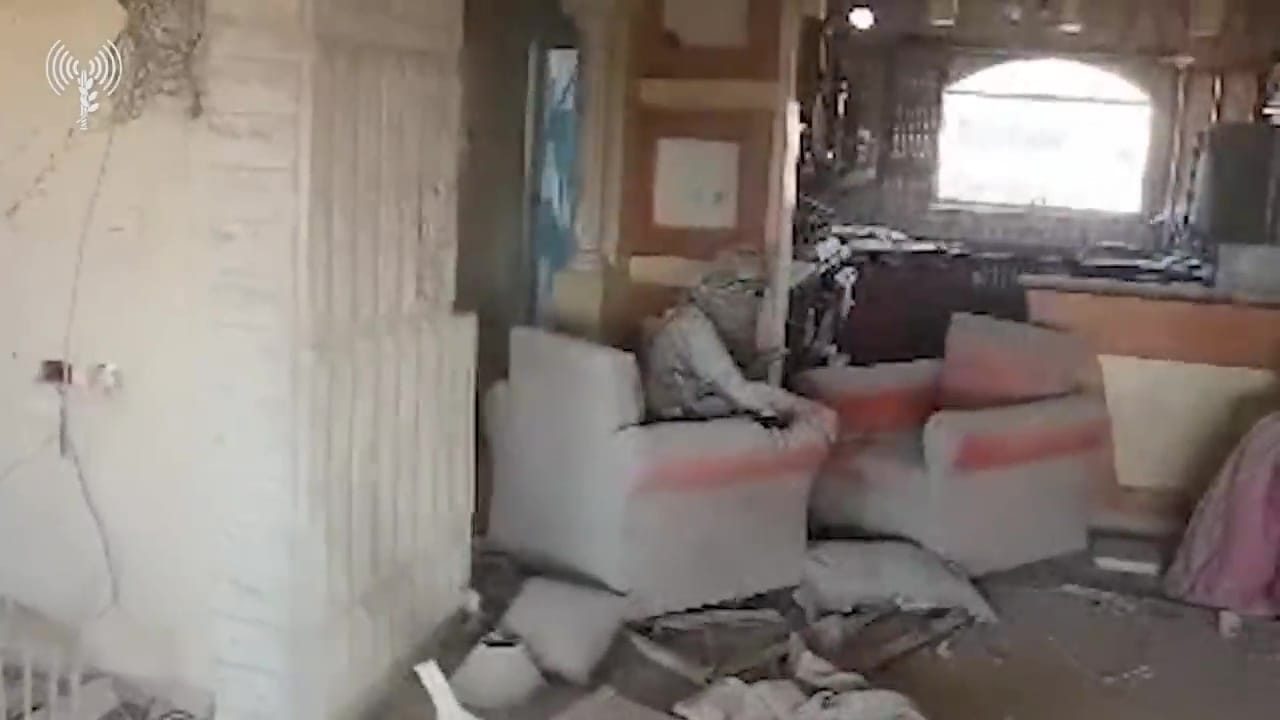
The images subsequently released by the Israel Defense Forces showed a wounded Sinwar sitting inside a heavily damaged building, shortly before his death. The footage rapidly circulated around the world, becoming one of the most recognizable images of the conflict.
For many Israelis, his death represented justice for the victims of October 7 and an important achievement in the campaign against Hamas. For Hamas and some of its supporters, the same images became material for portraying Sinwar as a symbol of resistance.
One event. Two profoundly different interpretations.
But beyond the immediate reactions, a much more consequential question remained unanswered.
Would killing Yahya Sinwar fundamentally change the war, or would the conflict continue without him?
Almost two years later, that question has become increasingly important.
The October 7 attacks fundamentally transformed Israel's security calculations. Approximately 1,200 people were killed in the Hamas-led assault, according to Israeli figures, and 251 people were taken hostage into Gaza. Entire communities near the Gaza border were attacked, families were murdered, and the sense of security that many Israelis had taken for granted was shattered.
Israel responded with an extensive military campaign aimed at dismantling Hamas's military and governing capabilities, securing the release of the hostages, and preventing another attack of comparable scale.
The consequences extended far beyond Hamas's leadership.
Gaza suffered enormous destruction. Large numbers of Palestinian civilians were killed, entire neighborhoods were devastated, and much of the population experienced repeated displacement. Hospitals, schools, infrastructure, and residential areas were severely damaged or destroyed. The humanitarian consequences became one of the defining international controversies surrounding Israel's military campaign.
Meanwhile, Israel faced difficult questions about intelligence failures, border security, military preparedness, political accountability, and the long-term feasibility of preventing attacks from Gaza.
The elimination of Sinwar removed an influential leader from Hamas. It did not, however, automatically eliminate the organization's remaining fighters, weapons, political networks, or ideological foundations.
Nor did it resolve the broader questions surrounding Gaza's future.
Who would govern the territory after the war? Could Hamas be permanently prevented from rebuilding its military capabilities? What security arrangements would Israel consider acceptable? Could Palestinian civilians rebuild their lives without another cycle of violence? And what role would regional governments and international institutions play in shaping a lasting settlement?
These questions became even more urgent as the conflict continued to evolve.
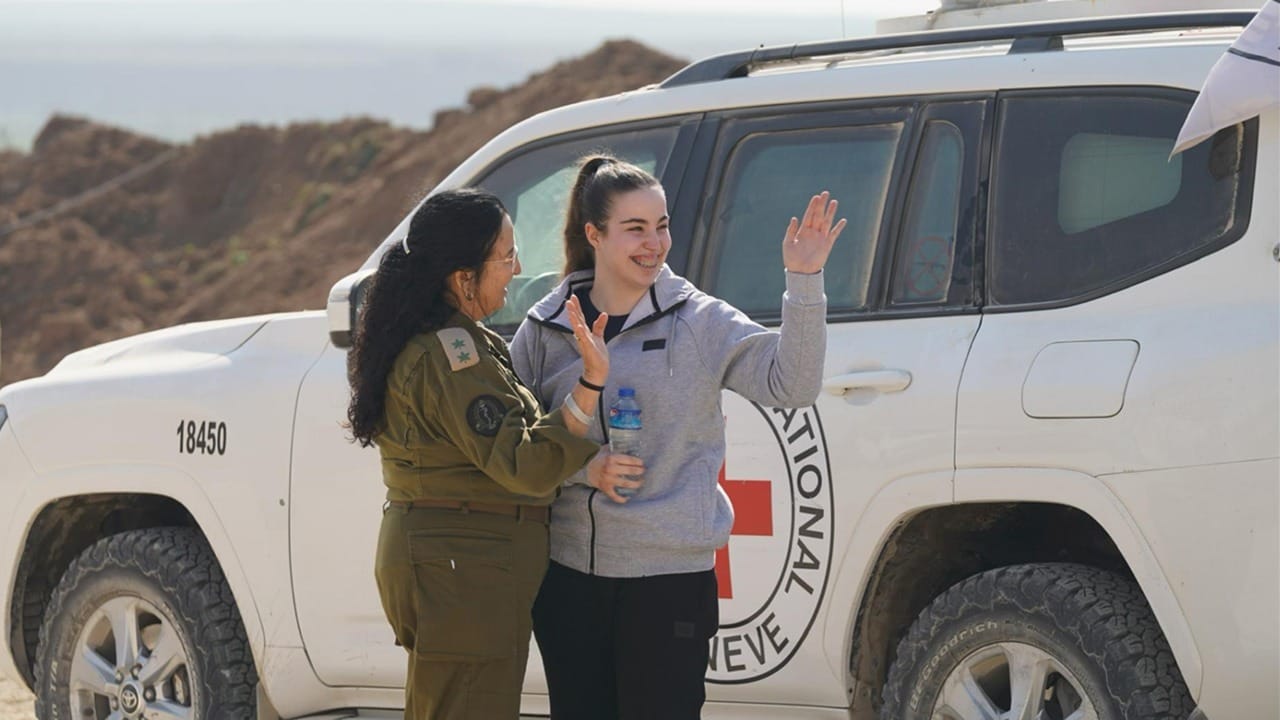
By October 2026, the situation was substantially different from the circumstances that existed when Sinwar was killed. The surviving hostages had been returned to Israel, Hamas had undergone leadership changes, and ceasefire arrangements had altered the immediate military situation. Yet fundamental disagreements over disarmament, security, governance, reconstruction, and political authority remained unresolved.
The absence of Sinwar had not produced a simple or definitive conclusion to the conflict.
That reality raises an uncomfortable but necessary question about modern warfare:
How much can the death of a single leader actually accomplish?
History offers numerous examples of militant organizations surviving the deaths of their founders and commanders. Leadership can be replaced. Armed networks can reorganize. Political movements can adapt to changing circumstances. In some cases, the elimination of a prominent leader weakens an organization considerably. In others, it changes the organization's structure without removing the underlying causes of its continued existence.
Hamas presents a particularly complicated case because it is not simply an armed organization. It has also operated political institutions, administrative networks, and social structures within Palestinian society, while maintaining an ideology that has included armed attacks against Israel and opposition to its legitimacy.
Understanding whether Sinwar's death changed Hamas therefore requires more than examining the circumstances of his final hours. It requires assessing the organization's military capabilities, political leadership, financial networks, public support, regional relationships, and ability to recruit or reorganize.
It also requires distinguishing between Hamas and the wider Palestinian civilian population, whose experiences, political views, and aspirations cannot be reduced to the actions of an armed movement.
For Israel, the central issue remains security.
The events of October 7 exposed devastating weaknesses in the country's defensive assumptions. The attack demonstrated that border barriers, advanced surveillance technology, intelligence gathering, and military superiority could not guarantee protection against a determined and organized assault.
Two years after Sinwar's death, Israeli policymakers still face the challenge of translating military achievements into durable security arrangements.
For Palestinians in Gaza, the central questions are equally profound, although experienced from a different perspective: whether the territory can recover from the devastation, whether normal civilian life can be restored, and whether a political future can emerge without continued armed conflict and instability.
For the international community, the challenge is determining whether diplomatic agreements and reconstruction initiatives can address the conditions that have repeatedly contributed to violence.
These are not questions that can be answered by the death of one man.
And that is precisely why the second anniversary of Yahya Sinwar's death deserves closer examination.
This investigation looks beyond the dramatic images of October 2024 to examine what happened afterward. It explores Sinwar's rise within Hamas, his role in the events leading to October 7, the Israeli operation that ended his life, the changes within Hamas following his death, and the consequences for Israeli security and Palestinian civilians.
It also examines whether the removal of Hamas's most prominent wartime leader brought the region closer to stability or simply marked another chapter in a much longer struggle.
The purpose is not to minimize the significance of his death, nor to overlook the suffering caused by the October 7 attacks or the subsequent war in Gaza. It is to separate military achievements from political outcomes, public declarations from measurable results, and expectations from the realities that followed.
Because nearly two years later, the most important story is no longer how Yahya Sinwar died.
It is what happened after he was gone.
Israel eliminated the man it held responsible for planning one of the darkest days in its modern history. But eliminating a leader and eliminating the threat he represented are not necessarily the same achievement.
Two years later, the man is gone.
The consequences remain.
And the question is still open:
Has anything fundamentally changed?
Chapter 1 — October 16, 2024: The Day Israel Found Yahya Sinwar
An Unexpected Encounter in Rafah
On October 16, 2024, more than a year after the Hamas-led attacks of October 7, Israeli soldiers operating in the southern Gaza Strip encountered several suspected militants in the Tel al-Sultan neighborhood of Rafah.
What initially appeared to be a routine military engagement would soon become one of the most consequential moments of the war.
Among the men encountered by Israeli forces was Yahya Sinwar, the Hamas leader who had become Israel's most wanted man.
For more than twelve months, Israeli intelligence agencies and military units had attempted to locate him. Sinwar was believed to have spent much of the war moving through Hamas's extensive underground tunnel network, using the organization's knowledge of Gaza's terrain and infrastructure to evade Israeli surveillance.
His whereabouts had remained uncertain despite extensive intelligence gathering, military operations, and the destruction of numerous Hamas facilities.
Yet when Israeli soldiers finally encountered him, they reportedly did not know who he was.
There was no publicly confirmed intelligence breakthrough that directed the soldiers to Sinwar's precise location that day. No specialized operation had been launched specifically against him at that building.
Instead, the encounter developed during an ongoing Israeli military operation in Rafah.
The soldiers involved belonged to an Israeli military formation operating in the area, with troops from the IDF's 828th Bislamach Brigade playing a central role in the confrontation.
During the engagement, Israeli forces identified suspicious movements and exchanged fire with armed individuals. As the confrontation developed, Sinwar moved into a damaged building, where he was eventually located by an Israeli military drone.
Only after the fighting had ended did the significance of the encounter become clear.
Israel had killed the man it regarded as a principal architect of the October 7 massacre.
The Final Moments Captured by a Drone
One of the most widely discussed elements of Sinwar's death was the footage released by the Israel Defense Forces shortly afterward.
The video, recorded by an Israeli military drone, showed a wounded man sitting in an armchair inside a heavily damaged building.
Dust and debris covered the room. Parts of the structure had been destroyed, and the surrounding walls bore evidence of the fighting.
The man, subsequently identified as Yahya Sinwar, appeared to have sustained injuries. His face was partly concealed by a cloth.
As the drone approached, he turned toward it.
In the final moments shown in the footage, Sinwar appeared to throw an object, identified by the Israeli military as a stick, toward the drone.
The footage did not show his death itself.
According to the Israeli military's account, a tank subsequently fired at the building. Sinwar's body was discovered during a later examination of the site.
The images quickly spread across international news organizations and social media platforms.
For Israeli officials, they provided powerful visual confirmation that the Hamas leader had been found and killed.
For Hamas supporters, however, the same images were used to portray Sinwar as a fighter who remained defiant until the end.
This difference in interpretation demonstrated how rapidly images from modern warfare can become part of competing political narratives.
The footage established important details about Sinwar's final encounter with Israeli forces, but it did not independently answer every question about the preceding movements, the precise sequence of injuries, or the decisions made during the confrontation.
Those details depend largely on the accounts subsequently provided by the Israeli military.
How Was His Identity Confirmed?
Immediately after the confrontation, Israeli soldiers reportedly suspected that one of the bodies might belong to a senior Hamas figure.
Photographs circulated among Israeli security personnel, and preliminary visual comparisons suggested that the deceased man resembled Yahya Sinwar.
However, visual identification alone was insufficient to establish his identity conclusively.
Israeli authorities subsequently used biometric and forensic evidence, including dental records and DNA comparisons, to confirm that the body belonged to Sinwar.
Israel possessed earlier identification records because Sinwar had spent more than two decades in Israeli prisons.
He was arrested in 1988 and sentenced to multiple life terms for crimes that included the killing of Palestinians accused of collaborating with Israel.
During his imprisonment, he became an influential figure among Hamas prisoners and developed an extensive understanding of Israeli society, language, and security institutions.
In 2011, Sinwar was released as part of the prisoner exchange agreement that secured the freedom of Israeli soldier Gilad Shalit.
More than a thousand Palestinian prisoners were released in that exchange.
Sinwar subsequently returned to Gaza, where his influence within Hamas continued to grow.
The existence of earlier Israeli records helped investigators establish his identity after the Rafah encounter.
On October 17, 2024, Israeli authorities publicly confirmed his death.
The announcement was immediately recognized as a major development in the war.
Why Sinwar Had Become Israel's Most Wanted Man
To understand the importance of October 16, it is necessary to understand Sinwar's position within Hamas.
Born in 1962 in the Khan Younis refugee camp in Gaza, Sinwar grew up in a Palestinian society shaped by displacement, conflict, and Israeli military occupation.
He became involved in Islamist political activism and eventually joined Hamas, which was established in 1987 during the First Intifada.
Sinwar played an important role in the organization's internal security apparatus, particularly in identifying and punishing Palestinians suspected of cooperating with Israeli authorities.
His reputation for ruthlessness became a defining feature of his leadership.
Following his release from prison in 2011, he steadily consolidated influence within Hamas.
In 2017, he became the organization's leader in Gaza, placing him at the center of its political and military decision-making.
His authority was closely connected to Hamas's armed wing, the Izz ad-Din al-Qassam Brigades, and to senior military figures involved in planning operations against Israel.
After the killing of Hamas political leader Ismail Haniyeh in Tehran in July 2024, Sinwar was named head of Hamas's political bureau.
By that point, he had become both the organization's most prominent wartime leader and a symbol of its confrontation with Israel.
Israeli authorities identified him as one of the principal planners of the October 7 attacks.
On that day, Hamas-led armed groups crossed from Gaza into southern Israel, attacking civilian communities, military installations, roads, and the Nova music festival.
Approximately 1,200 people were killed, most of them civilians, and 251 people were taken hostage into Gaza.
The attacks included deliberate killings of civilians, hostage-taking, and other acts documented by international investigators as war crimes.
For Israel, Sinwar's responsibility was therefore not simply a matter of his position within Hamas.
He represented the leadership behind an attack that had profoundly shaken Israeli society and exposed major failures in the country's security system.
His elimination became one of Israel's declared military priorities.
A Military Achievement With Political Consequences
The confirmation of Sinwar's death was welcomed by Israeli leaders as a significant achievement.
Prime Minister Benjamin Netanyahu described the killing as an important moment in Israel's campaign against Hamas, while emphasizing that the war was not necessarily over.
Israeli officials argued that removing Sinwar would weaken Hamas's command structure and potentially create new opportunities for securing the release of the remaining hostages.
The United States also welcomed the development.
President Joe Biden described Sinwar's death as an opportunity to pursue a political settlement and an end to the fighting.
Yet the implications were far from straightforward.
Sinwar had been a central figure in Hamas's military and political leadership, but Hamas was not an organization dependent on a single individual.
Its leadership included commanders, political representatives, regional networks, and officials operating both inside and outside Gaza.
Removing its most prominent leader did not automatically dismantle those structures.
It also created uncertainty about who would assume authority over decisions involving hostages, military operations, negotiations, and the organization's future.
Some observers believed Sinwar's death might make a ceasefire agreement easier because one of Hamas's most uncompromising leaders had been removed.
Others warned that fragmented leadership could complicate negotiations, particularly if different commanders controlled separate groups of hostages or maintained conflicting priorities.
The killing therefore created both opportunities and risks.
For Israel, it demonstrated that even a highly protected and elusive Hamas leader could eventually be found.
For Hamas, it represented a major leadership loss during an already devastating military campaign.
For civilians in Gaza, however, the immediate reality remained one of destruction, displacement, and uncertainty.
And for Israeli families whose relatives were still being held hostage, the central concern remained whether the development would help bring their loved ones home.
The Symbolism of Sinwar's Death
The manner in which Sinwar died became almost as politically significant as the death itself.
Unlike some other prominent militant leaders who were killed in precisely targeted airstrikes or intelligence-led operations, Sinwar was killed following an encounter with Israeli soldiers who had not initially identified him.
That circumstance challenged some of the assumptions surrounding the extensive search for him.
For months, speculation had focused on whether Sinwar was hiding deep underground, surrounded by hostages, or protected by elaborate security arrangements.
His discovery in a damaged building above ground showed that the final encounter was different from many of those expectations.
The drone footage also became a powerful example of how military imagery can shape public understanding of a conflict.
The same video was interpreted as evidence of Israeli military success and, by Hamas supporters, as a final act of defiance.
Neither interpretation alone provides a complete account of the man, his leadership, or the consequences of his actions.
Sinwar's political and military record cannot be separated from Hamas's October 7 attacks, the killing and abduction of civilians, and the war that followed.
At the same time, understanding the symbolic importance attributed to his death is necessary to examine how Hamas sought to preserve its political identity after losing one of its most influential leaders.
The distinction between military reality and political symbolism would become increasingly important in the months that followed.
The Questions That Remained Unanswered
In the immediate aftermath of October 16, 2024, much of the international attention focused on the dramatic circumstances of Sinwar's death.
Yet the more important questions concerned what would happen next.
Would Hamas's military capabilities deteriorate without his leadership?
Would the organization become more willing to negotiate?
Could the remaining hostages be released?
Would Israel reconsider the duration or objectives of its military campaign?
And could the removal of Hamas's most prominent wartime leader create an opening for a different political future in Gaza?
These questions could not be answered by the footage from Rafah.
They required an examination of Hamas's organizational resilience, Israel's strategic decisions, regional diplomacy, and the realities facing civilians on both sides of the conflict.
In the months and years that followed, the answers would prove far more complicated than the immediate celebrations or predictions surrounding Sinwar's death.
The elimination of a senior commander can change the course of a military campaign.
But it does not necessarily end an organization, resolve a political conflict, or establish lasting security.
October 16, 2024, marked the end of Yahya Sinwar's life.
It did not mark the end of the conflict that had made him one of the most consequential and controversial figures in the Middle East.
The question was no longer whether Israel could reach Sinwar. It had.
The question was whether his death would achieve what more than a year of war had not: a decisive and lasting change in the security and political realities of Gaza and Israel.
That question would define the next two years.
Chapter 2 — From Israeli Prisoner to Hamas Leader: The Rise of Yahya Sinwar
A Childhood Shaped by Conflict and Displacement
Long before Yahya Sinwar became one of Israel's most wanted men, he was a child growing up in the Khan Younis refugee camp in the southern Gaza Strip.
Born on October 29, 1962, Sinwar belonged to a Palestinian family whose history had been shaped by the Arab-Israeli war of 1948. His parents had fled or been displaced from the area of al-Majdal, now part of the Israeli city of Ashkelon, during the conflict surrounding Israel's establishment.
Like hundreds of thousands of other Palestinians, his family became part of a refugee population whose displacement would remain central to Palestinian national identity.
Sinwar grew up in an environment marked by poverty, political uncertainty, and the unresolved consequences of successive wars.
When Israel captured the Gaza Strip from Egypt during the Six-Day War in June 1967, Sinwar was four years old. His childhood and adolescence subsequently unfolded under Israeli military occupation.
The political environment in Gaza during the 1970s and 1980s was increasingly influenced by Palestinian nationalism, Islamist movements, and opposition to Israeli rule.
These circumstances shaped Sinwar's political outlook, although they do not by themselves explain or justify the violent decisions he would later make.
Many Palestinians experienced similar conditions without becoming involved in armed organizations or attacks against civilians.
Sinwar's trajectory was the result of both his environment and his own ideological commitments and choices.
He attended schools in Khan Younis before studying Arabic at the Islamic University of Gaza, an institution that became an important center of intellectual, religious, and political activity.
During his university years, he became increasingly involved in Islamist activism associated with the Palestinian Muslim Brotherhood.
It was within this environment that he developed relationships with individuals who would later become influential figures in Hamas.
The Emergence of Hamas
To understand Sinwar's rise, it is necessary to examine the movement he joined.
Hamas emerged in December 1987, during the early months of the First Intifada, the Palestinian uprising against Israeli occupation.
The organization developed from networks associated with the Muslim Brotherhood and combined Palestinian nationalism with an Islamist political ideology.
Its founding charter, issued in 1988, explicitly called for Israel's destruction and contained antisemitic conspiracy claims. A later political document published in 2017 introduced different language, including acceptance of a Palestinian state along the 1967 lines as a formula for national consensus, without recognizing Israel.
Hamas developed political, religious, social, and armed structures.
Over time, its military wing, the Izz ad-Din al-Qassam Brigades, carried out shootings, bombings, rocket attacks, and other operations against Israeli targets, including deliberate attacks on civilians.
Hamas is designated as a terrorist organization by Israel, the United States, the European Union, the United Kingdom, and several other governments.
Sinwar became involved in the movement during its formative period.
However, his early responsibilities differed from those of the organization's public political representatives.
He became associated with internal security and the identification of Palestinians suspected of collaborating with Israeli authorities.
This role would help establish the reputation for ruthlessness that followed him throughout his career.
The Creation of Hamas's Internal Security Apparatus
During the late 1980s, Sinwar helped establish an internal security organization commonly known as Majd.
Its purpose was to identify suspected collaborators, investigate individuals considered threats to the Islamist movement, and enforce internal discipline.
The organization operated in an atmosphere of intense suspicion.
Israeli intelligence agencies maintained networks of informants in Palestinian territories, while Palestinian armed groups feared infiltration and betrayal.
Within this environment, accusations of collaboration could carry severe consequences.
Sinwar became known for his uncompromising approach toward suspected informants and political opponents.
Israeli authorities later convicted him of involvement in the killing of four Palestinians accused of collaborating with Israel.
His actions demonstrated a defining characteristic of his emerging leadership: a willingness to use extreme violence not only against Israel but also against Palestinians whom he regarded as enemies of the movement.
This aspect of his history is important because it challenges any simplified portrayal of Sinwar solely as a Palestinian nationalist confronting Israeli occupation.
His political career also involved coercion, internal repression, and violence within Palestinian society.
The methods associated with his early activities would later become relevant to understanding the authoritarian structures that developed under Hamas rule in Gaza.
Arrest and Conviction in Israel
In 1988, Israeli security forces arrested Sinwar.
He was subsequently tried and sentenced to four life terms for crimes that included the murders of Palestinians suspected of collaborating with Israel.
His imprisonment would last approximately twenty-two years.
For many prisoners, such a sentence would have meant the effective end of political influence.
For Sinwar, prison became another environment in which he developed authority.
Israeli prisons held numerous members of Palestinian armed organizations, including Hamas, Fatah, Palestinian Islamic Jihad, and other factions.
Although imprisoned, these individuals maintained internal political structures, ideological discussions, and organizational hierarchies.
Sinwar became an influential figure among Hamas prisoners.
He was regarded as disciplined, ideologically committed, and highly attentive to internal loyalty.
He also developed a reputation for closely monitoring fellow prisoners and opposing those he suspected of cooperating with Israeli authorities.
His prison years reinforced his belief in organizational discipline and the importance of maintaining internal control.
Rather than moderating his political outlook, his long imprisonment appears to have strengthened his commitment to Hamas's confrontation with Israel.
Learning the Language and Understanding the Enemy
One of the most striking aspects of Sinwar's imprisonment was his effort to study Israeli society.
During his years in prison, he learned Hebrew and read extensively about Israeli politics, security institutions, and military history.
He sought to understand the society and state against which Hamas was fighting.
This knowledge later became an important element of his reputation.
Sinwar was not simply a commander who viewed Israel from a distance. He had spent decades inside Israeli institutions, observed Israeli prison administration, and studied the country's political debates.
He became familiar with the importance of Israeli public opinion, political divisions, and the emotional significance of captured soldiers and civilians.
This understanding did not necessarily make his assessments correct, but it gave him a perspective that differed from leaders whose knowledge of Israel came primarily from external political or military confrontation.
His Hebrew-language abilities also enabled him to follow Israeli news and political discussions.
Over time, Sinwar came to believe that Israeli society's strong commitment to recovering captives could be exploited as a strategic vulnerability.
That belief would become particularly significant in the years leading up to October 7, 2023.
Medical Treatment in an Israeli Prison
An often-discussed episode from Sinwar's imprisonment concerns the medical treatment he received while in Israeli custody.
During his prison years, Sinwar developed a serious medical condition involving a brain abnormality that required surgery.
Israeli medical professionals treated him, and the intervention was reportedly life-saving.
The episode later attracted considerable attention because of the contrast between the medical care he received in Israeli custody and the violence he subsequently helped direct against Israel.
The medical treatment itself, however, reflected the responsibility of prison authorities to provide necessary healthcare to people in their custody, regardless of the crimes for which they had been convicted.
The incident is relevant to Sinwar's biography, but it should not be treated as evidence that medical personnel could have predicted his later actions.
What is clear is that he survived the condition, remained politically active within the prison environment, and eventually returned to Gaza.
The Gilad Shalit Prisoner Exchange
The decisive turning point in Sinwar's career came in October 2011.
Five years earlier, in June 2006, Israeli soldier Gilad Shalit had been captured during an attack near the Gaza border involving Hamas and other Palestinian armed groups.
Shalit was subsequently held captive in Gaza for more than five years.
His captivity became one of the most prominent political and humanitarian issues in Israel.
Public campaigns called for his release, while successive Israeli governments faced difficult decisions over the terms of a possible prisoner exchange.
In 2011, Israel and Hamas reached an agreement mediated with Egyptian involvement.
Under the deal, Israel agreed to release 1,027 Palestinian prisoners in exchange for Shalit's freedom.
Yahya Sinwar was among those released.
The exchange was celebrated by many Palestinians as a major achievement for Hamas.
In Israel, it produced both relief and controversy.
Shalit's return was an emotional moment for his family and the wider public, but critics warned that releasing prisoners convicted of serious violent crimes could create future security threats.
Sinwar's subsequent rise within Hamas would make his release one of the most frequently discussed aspects of the agreement.
It also became part of a wider Israeli debate over prisoner exchanges, deterrence, and the risks associated with negotiations involving hostages.
The agreement had secured the return of an Israeli soldier.
It had also enabled Sinwar to resume political and organizational activity in Gaza.
Returning to Gaza: A Leader With Growing Influence
When Sinwar returned to Gaza in 2011, the political landscape had changed considerably since his arrest.
Hamas had taken control of the Gaza Strip in 2007 following a violent struggle with Fatah, the dominant faction within the Palestinian Authority.
The territory was governed by Hamas, while the Palestinian Authority maintained limited self-government in parts of the Israeli-occupied West Bank.
Gaza was also subject to severe restrictions on movement and trade imposed by Israel, with Egypt controlling access through its own border crossing.
Hamas maintained armed forces, internal security institutions, political offices, and administrative structures.
Sinwar entered this environment with significant advantages.
His long imprisonment gave him prestige within Hamas. His early involvement in the organization connected him to its founding generation, while his relationships with members of the armed wing strengthened his position.
He was particularly close to figures associated with Hamas's military establishment, including Mohammed Deif, the commander of the Izz ad-Din al-Qassam Brigades.
Sinwar gradually became one of the movement's most influential figures.
His leadership style was widely described as secretive, disciplined, and uncompromising.
He supported the continued development of Hamas's military capabilities, including tunnels, weapons production, and preparations for confrontation with Israel.
At the same time, he participated in the political decision-making required to govern Gaza and manage relations with regional actors.
This combination of political authority and military influence distinguished him from some of Hamas's externally based leaders.
Becoming Hamas's Leader in Gaza
In February 2017, Sinwar was elected head of Hamas in the Gaza Strip, succeeding Ismail Haniyeh in that position.
The appointment marked a major shift in his political career.
He was no longer primarily a former prisoner or internal security figure.
He had become the senior Hamas political leader within Gaza.
His position placed him at the center of decisions concerning the organization's military strategy, relations with Israel, governance of the territory, and interactions with regional governments.
Sinwar's leadership was characterized by a complicated combination of confrontation and tactical calculation.
Hamas continued to develop military capabilities while also participating in indirect negotiations over ceasefires, border restrictions, humanitarian arrangements, and financial assistance to Gaza.
At various moments, Sinwar appeared willing to accept temporary understandings intended to reduce immediate pressure on the territory.
These arrangements did not amount to recognition of Israel or abandonment of Hamas's armed struggle.
Instead, they formed part of a broader strategy in which periods of relative calm could coexist with preparations for future confrontation.
This distinction would become central to Israeli assessments of Hamas before October 7.
The Years Before October 7: Deterrence and Miscalculation
In the years leading up to October 2023, Israeli security policy toward Gaza relied partly on the assumption that Hamas could be deterred from launching a major war.
Israeli officials understood that Hamas remained hostile and possessed substantial military capabilities.
However, some assessments suggested that the organization was increasingly concerned with governing Gaza, maintaining economic arrangements, and preserving its control over the territory.
Israel permitted limited numbers of Gaza residents to work inside Israel, while international and regional mediation helped facilitate arrangements involving financial assistance and humanitarian support.
These measures were intended, in part, to reduce the likelihood of escalation.
Sinwar and other Hamas leaders publicly discussed economic pressures and the conditions facing Gaza's population.
Yet Hamas was also developing the operational capabilities that would eventually be used in the October 7 attacks.
The organization trained armed units, gathered intelligence, studied Israeli border defenses, and prepared plans for coordinated assaults.
The extent to which Israeli authorities misunderstood Hamas's intentions became one of the most consequential intelligence and security questions following October 7.
Sinwar's role in this period was particularly significant.
As Hamas's leader in Gaza, he occupied a position of political authority over an organization whose military wing was preparing a large-scale attack.
The precise internal decision-making process remains a subject of investigation, but Sinwar is widely identified as a central figure in the planning and authorization of the operation.
His long experience studying Israeli society may have contributed to his strategic calculations.
Yet the attack also demonstrated the enormous human and political consequences of those calculations.
From Gaza Leader to Hamas's Overall Political Chief
On October 7, 2023, Hamas-led armed groups launched their coordinated assault on southern Israel.
The attack involved the killing of civilians, assaults on military positions, and the abduction of hostages.
It triggered an Israeli military campaign that would transform Gaza and reshape regional politics.
Throughout the following months, Sinwar remained a central figure in Hamas's leadership while avoiding capture by Israeli forces.
His location was frequently the subject of speculation, and Israeli intelligence devoted substantial resources to finding him.
In July 2024, Ismail Haniyeh, the head of Hamas's political bureau, was killed in Tehran in an operation widely attributed to Israel.
In August, Hamas selected Sinwar to succeed him.
The decision placed Sinwar at the head of the organization's political leadership while he remained inside war-torn Gaza.
It also reflected the continuing influence of Hamas's Gaza-based leadership during the conflict.
Sinwar now occupied the most prominent political position within the movement, even as Israel intensified its efforts to eliminate him.
His appointment was significant because it suggested that Hamas was not responding to the war by distancing itself from the leadership associated with October 7.
Instead, the organization elevated one of the individuals most closely linked to the attack.
The Contradictions of Sinwar's Leadership
Yahya Sinwar's political career contained several striking contradictions.
He spent more than two decades in Israeli prisons, yet emerged with a detailed understanding of Israeli society.
He benefited from a prisoner exchange intended to bring an Israeli captive home, yet later became a central figure in an organization responsible for taking hundreds of additional hostages.
He governed a territory whose civilian population faced severe economic and humanitarian difficulties, while supporting the development of extensive military infrastructure.
He participated in periods of indirect negotiation and temporary calm, yet remained committed to an armed struggle that included deliberate attacks on civilians.
These contradictions help explain why Sinwar became such a consequential figure.
He combined ideological rigidity with tactical flexibility, political leadership with close military relationships, and an understanding of Israeli society with a willingness to inflict mass violence upon it.
For supporters of Hamas, his imprisonment and confrontation with Israel became central elements of his political image.
For Israel, he represented a dangerous adversary whose knowledge, authority, and strategic calculations had contributed to the catastrophe of October 7.
For many Palestinians, the consequences of Hamas's decisions under his leadership were experienced through war, displacement, destruction, and uncertainty about Gaza's future.
His rise was therefore not merely the story of one individual's ascent through an armed political movement.
It was also a story about the evolution of Hamas, the failures of deterrence, the risks of hostage diplomacy, and the interaction between ideological commitment and military strategy.
A Rise That Ended in Rafah
By October 2024, Sinwar had reached the highest level of Hamas's political leadership.
He had survived decades of imprisonment, returned to Gaza through a major prisoner exchange, consolidated authority within the organization, and become one of the central figures in the most destructive Israeli-Palestinian war in decades.
Yet his position had also made him a priority target for Israeli forces.
On October 16, his career ended in a damaged building in Rafah.
The circumstances were dramatically different from the years he had spent building influence within Hamas.
The former prisoner who had studied Israeli society from behind prison walls had become the leader of an organization engaged in a devastating confrontation with Israel.
And the state that had once held him in custody ultimately killed him during a military operation in Gaza.
But his death did not erase the organization he had helped shape.
Nor did it eliminate the political, military, and ideological structures that had allowed Hamas to survive previous leadership losses.
Understanding Sinwar's rise is therefore essential to understanding what happened after his death.
He was not simply a leader who could be replaced overnight without consequences. But neither was Hamas an organization whose existence depended entirely on him.
The next question was whether his elimination would fundamentally weaken the movement or whether Hamas would once again demonstrate its ability to survive the loss of a senior leader.
That question would become central to assessing the consequences of October 16, 2024.
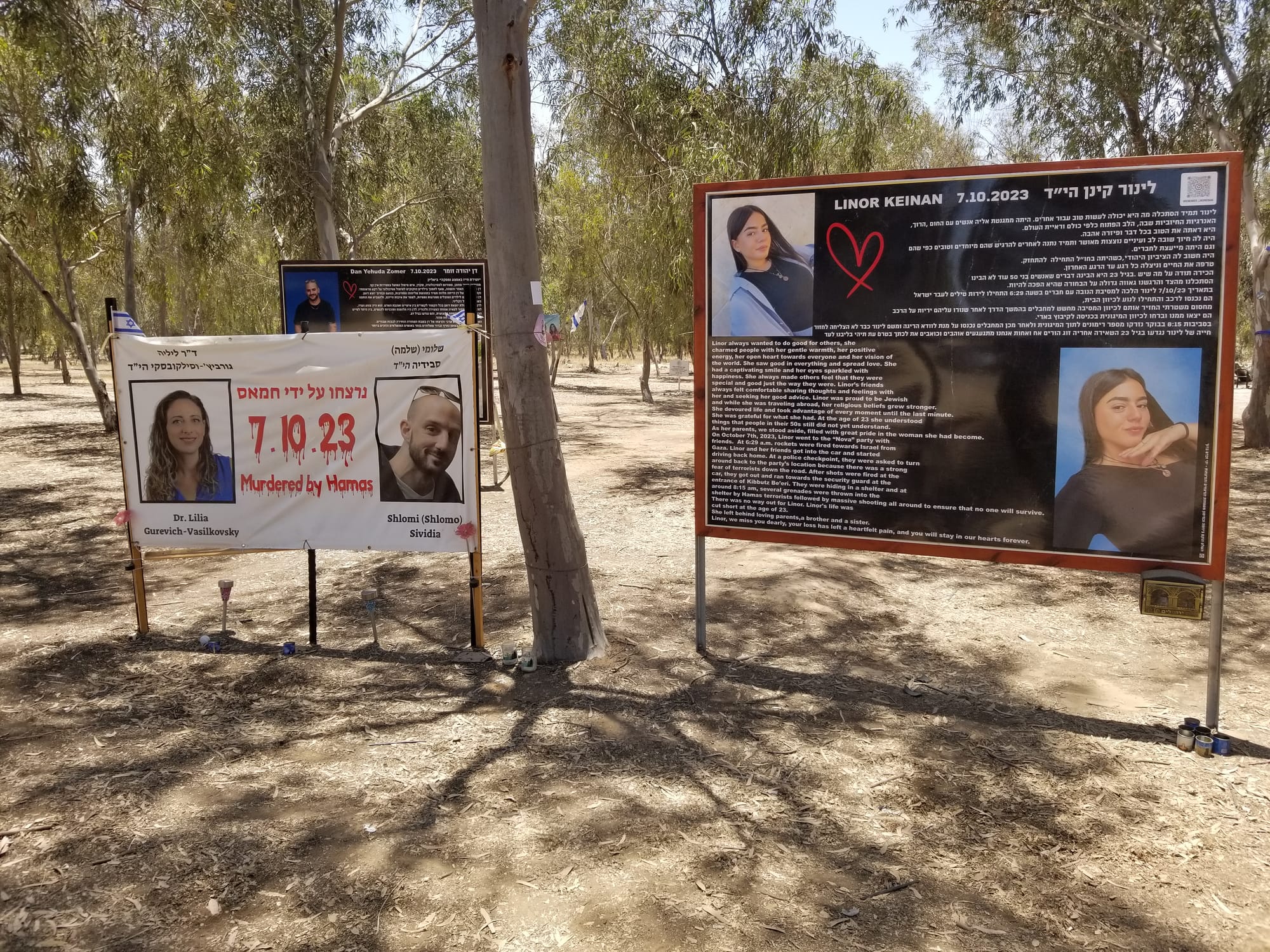
Chapter 3 — October 7, 2023: The Attack That Changed Everything
The Morning That Shattered Israel's Sense of Security
At approximately 6:30 a.m. on Saturday, October 7, 2023, thousands of rockets began launching from the Gaza Strip toward Israeli towns and cities.
It was the Jewish holiday of Simchat Torah, a day traditionally associated with celebration, prayer, and family gatherings.
Within minutes, what initially appeared to be another major rocket attack developed into something far more devastating.
Hamas-led armed groups breached the security barrier separating Gaza from southern Israel at numerous locations. Fighters crossed the border using motorcycles, pickup trucks, and other vehicles, while some entered Israeli territory using motorized paragliders.
Israeli military positions, border surveillance systems, and civilian communities came under coordinated attack.
For residents of southern Israel, the morning rapidly descended into chaos.
Families rushed into reinforced rooms and bomb shelters. Parents attempted to protect their children. Emergency services received desperate calls from people trapped inside their homes.
In several communities, armed attackers moved through residential streets, entering houses, killing residents, and abducting civilians.
The attack would become the deadliest single day in Israel's history.
Approximately 1,200 people were killed, according to Israeli authorities, most of them civilians. Among the victims were children, elderly residents, families, festivalgoers, foreign nationals, and members of Israel's security forces.
Another 251 people were taken hostage into Gaza.
The attacks shattered assumptions about Israel's ability to protect its borders and exposed failures in intelligence assessment, military preparedness, and emergency response.
For Yahya Sinwar and Hamas's leadership, October 7 represented the execution of an operation that had been prepared over an extended period.
For Israel, it marked the beginning of a national trauma and a war whose consequences would extend far beyond the Gaza border.
A Plan Developed Over Years
The October 7 attack was not a spontaneous uprising or an improvised military operation.
Evidence that emerged afterward indicated that Hamas had spent considerable time preparing a coordinated assault against Israeli military installations and civilian communities.
The organization studied the Gaza border's surveillance systems, security barriers, military positions, and response procedures.
Its fighters conducted training exercises involving attacks on fortified positions, the capture of individuals, and movement through simulated Israeli communities.
Some of these preparations took place in facilities inside Gaza.
The operation required coordination between different armed units, including those responsible for breaching the border, attacking military installations, firing rockets, and taking hostages.
The military wing of Hamas, the Izz ad-Din al-Qassam Brigades, played a central operational role.
Mohammed Deif, the wing's senior commander, was widely identified as one of the principal military planners.
Yahya Sinwar, as Hamas's leader in Gaza, occupied a central position in the organization's political and strategic leadership.
Israeli authorities identified both men as leading figures behind the attack.
However, the exact internal discussions, authorization process, and division of responsibility among Hamas leaders have not been fully established in the public record.
This distinction matters.
Sinwar's senior position and close relationships with Hamas's military commanders strongly support the assessment that he played a major role in the operation. They do not mean that every operational decision or tactical detail can automatically be attributed to him personally.
What is clear is that Hamas developed a plan intended to overwhelm Israeli defenses through simultaneous attacks and rapid movement across the border.
The scale of the assault demonstrated a level of preparation that Israeli security assessments had failed to anticipate adequately.
The Israeli Intelligence Failure
One of the most consequential questions raised by October 7 concerns how an attack of such magnitude could occur despite Israel's extensive intelligence and surveillance capabilities.
Israel possesses sophisticated intelligence agencies, advanced military technology, aerial surveillance systems, and considerable experience monitoring armed organizations in Gaza.
The Gaza border was protected by fencing, electronic sensors, observation equipment, remotely operated weapons systems, and military positions.
Yet these defenses were not sufficient to prevent the attack.
Subsequent investigations and reporting revealed that Israeli authorities had possessed information about Hamas attack plans and had observed activities that, in retrospect, were consistent with preparations for a major assault.
One particularly significant document, known publicly as the "Jericho Wall" plan, described a potential Hamas operation involving border breaches, attacks on military positions, and the capture of hostages.
The plan bore important similarities to what eventually occurred on October 7.
Nevertheless, Israeli assessments did not adequately translate the available warning information into preparations for an attack of that scale.
A central problem was the belief that Hamas was deterred from initiating a major war.
For years, Israeli policy had partly relied on the assumption that Hamas was interested in maintaining its control over Gaza and avoiding a conflict that could threaten its governing position.
Periods of relative calm, indirect negotiations, and economic arrangements contributed to this assessment.
Some Israeli officials believed that permitting limited numbers of Gaza residents to work in Israel and facilitating financial arrangements could help reduce incentives for escalation.
Hamas's military preparations challenged those assumptions.
The failure was therefore not simply technological.
It involved the interpretation of intelligence, institutional decision-making, military readiness, and the danger of allowing established assumptions to outweigh contradictory evidence.
Later Israeli military investigations acknowledged serious failures in the assessment of Hamas's intentions and in preparations to defend communities near Gaza.
October 7 demonstrated that possessing intelligence information is not the same as understanding its significance.
The Collapse of the Border Defenses
Hamas's assault combined rocket fire with coordinated attacks against Israeli defensive infrastructure.
The initial rocket barrage created confusion and placed pressure on Israeli emergency systems.
At the same time, attackers targeted surveillance equipment, communication infrastructure, and military positions along the border.
Explosives and heavy machinery were used to create openings in the security barrier.
Once the barrier had been breached, armed groups moved rapidly into Israeli territory.
Several military installations were attacked, including positions responsible for monitoring the Gaza border.
The attacks disrupted Israel's ability to assess events and coordinate an immediate response.
In some locations, soldiers were killed before they could organize effective resistance.
Elsewhere, Israeli military personnel and local security teams fought to prevent attackers from entering civilian communities.
The speed and scale of the assault created an operational crisis.
Israeli forces struggled to establish how many attackers had crossed the border, where they were operating, and which communities required immediate assistance.
The situation was further complicated by attacks occurring simultaneously across a wide geographical area.
Some communities were left fighting for hours before substantial military reinforcements arrived.
The failure to respond quickly became one of the most painful aspects of the events for survivors and families of victims.
For residents who had trusted the country's military and security institutions to protect them, the delay was experienced as a profound abandonment.
The Attacks on Israeli Communities
Among the communities attacked were Be'eri, Kfar Aza, Nir Oz, Nahal Oz, and several other towns and kibbutzim near the Gaza border.
These communities were home to families, agricultural workers, children, elderly residents, and people who had lived close to Gaza for decades.
Some residents had maintained personal relationships with Palestinians or participated in initiatives supporting dialogue and coexistence.
On October 7, their homes became scenes of extreme violence.
Armed attackers entered residential areas, shot civilians, set buildings on fire, and took hostages.
In some locations, residents hid for hours inside reinforced rooms while attackers attempted to enter their homes.
Families communicated through text messages and telephone calls, sometimes sending final messages to relatives before contact was lost.
At Kibbutz Be'eri, more than one hundred residents and other people were killed during the attack and subsequent fighting.
At Nir Oz, a substantial proportion of the community's residents were killed or abducted.
Kfar Aza also suffered devastating losses.
The attacks destroyed families and left entire communities struggling with the deaths or captivity of neighbors, friends, and relatives.
The violence was not limited to clashes with Israeli soldiers.
Civilians were deliberately targeted.
That distinction is fundamental to understanding the nature of the October 7 attacks.
International humanitarian law prohibits the intentional killing of civilians and the taking of hostages, regardless of the political or military objectives claimed by an armed organization.
The attacks against civilian communities were not simply an extension of battlefield fighting.
They included acts that constitute war crimes.
The Nova Music Festival Massacre
One of the most widely documented atrocities occurred at the Nova music festival near Re'im, close to the Gaza border.
Thousands of young people had gathered for an outdoor electronic music event.
When rockets began flying overhead, festivalgoers initially attempted to shelter or leave the area.
Many did not yet understand that armed attackers had crossed into Israel.
As people tried to escape, gunmen opened fire on vehicles and individuals fleeing the festival.
Some victims were killed along roads, while others were pursued into surrounding fields and wooded areas.
Festivalgoers hid beneath vehicles, behind trees, and in nearby shelters.
Emergency calls and messages recorded the fear and confusion of those attempting to survive.
According to Israeli authorities, 364 people were killed at the festival and in the surrounding area, while others were abducted into Gaza.
The massacre became one of the defining images of October 7.
Photographs of abandoned cars, destroyed personal belongings, and the festival grounds after the attack circulated internationally.
For many Israelis, the Nova massacre symbolized the deliberate targeting of ordinary people who had gathered to celebrate music and life.
The victims were not soldiers engaged in combat.
They were civilians attending a festival.
Their deaths became central to Israel's national mourning and to the international understanding of the atrocities committed that day.
Hostage-Taking as a Strategic Weapon
The abduction of 251 people into Gaza was one of the most consequential elements of the October 7 operation.
The hostages included Israeli civilians, soldiers, children, elderly people, and foreign nationals.
Some were taken from their homes.
Others were abducted from military positions, roads, or the Nova festival.
Video footage showed captives being transported into Gaza, sometimes surrounded by armed men or crowds.
For the families of those taken, the following days and months were defined by uncertainty.
Many did not know whether their relatives were alive, injured, receiving medical care, or being held in underground facilities.
Hamas and other armed groups used the hostages as leverage in negotiations involving prisoner exchanges, ceasefires, and Israeli military operations.
The taking and holding of civilian hostages is prohibited under international humanitarian law.
The hostages also became a central issue in Israeli domestic politics.
Families organized demonstrations and campaigns demanding that the government prioritize their return.
Some argued that military pressure was necessary to secure their release.
Others feared that continued fighting could endanger their loved ones and called for negotiated agreements.
These disagreements reflected the difficult choices facing a society attempting to respond to a major terrorist attack while seeking the return of people held captive.
For Sinwar, who had himself been released in the 2011 Gilad Shalit prisoner exchange, hostage-taking represented a strategy with which he was already familiar.
His experience of that exchange likely informed his understanding of the political pressure that captives could generate within Israel.
However, the exact extent of his personal involvement in selecting individual hostages or determining their treatment remains difficult to establish independently.
Sexual Violence and the Documentation of Atrocities
The October 7 attacks also produced evidence and allegations of sexual violence.
Israeli investigators, survivors, witnesses, medical personnel, and international organizations examined reports of sexual assault and other forms of sexual abuse associated with the attacks.
A United Nations mission led by the Special Representative on Sexual Violence in Conflict concluded in March 2024 that there were reasonable grounds to believe conflict-related sexual violence, including rape and gang rape, had occurred at multiple locations during the attacks.
The mission also identified clear and convincing information that some hostages held in Gaza had experienced sexual violence.
The investigation faced substantial difficulties.
Many victims had been killed, crime scenes had not initially been preserved for specialized forensic examination, and the conditions of the attacks complicated evidence collection.
These limitations mean that not every allegation circulating publicly has been independently verified.
Nevertheless, the documented evidence of sexual violence forms an important part of the historical record.
It also illustrates the need for careful journalism.
Atrocities should neither be exaggerated through unsupported claims nor dismissed because individual reports cannot be conclusively established.
The victims deserve accurate documentation, and the public deserves reporting that distinguishes confirmed findings from allegations and unresolved questions.
The Human Cost and Israel's National Trauma
The consequences of October 7 extended far beyond the immediate death toll.
Entire communities were evacuated.
Survivors faced serious physical injuries, psychological trauma, and the loss of family members.
Children who had witnessed violence or spent hours hiding from attackers required long-term support.
Families whose relatives had been abducted began months of campaigning, uncertainty, and grief.
The attacks also deeply affected Israel's national identity.
For decades, Israel had presented its military capabilities and intelligence institutions as essential guarantees of security in a hostile regional environment.
October 7 challenged that confidence.
The attack raised painful questions about the state's responsibility to protect its citizens.
It also intensified political divisions over the government's handling of security policy, the conduct of the war, and negotiations for the release of hostages.
For many Jewish communities around the world, the attacks generated fear and grief, particularly as antisemitic incidents increased in several countries after October 7.
The psychological consequences were therefore not confined to southern Israel.
They were felt across Israeli society and among Jewish communities internationally.
Israel's Military Response
Following the attacks, Israel declared war and launched a large-scale military campaign against Hamas in Gaza.
The Israeli government stated that its principal objectives included dismantling Hamas's military and governing capabilities, securing the return of the hostages, and preventing Gaza from being used to launch another attack against Israel.
Israeli forces carried out extensive airstrikes before expanding ground operations.
Hamas's military infrastructure, command facilities, tunnel networks, weapons storage sites, and armed units became central targets.
However, the military campaign unfolded in one of the world's most densely populated territories, where armed infrastructure and civilian areas frequently overlapped.
The consequences for Gaza's population were catastrophic.
Large numbers of Palestinian civilians were killed or injured, residential neighborhoods were destroyed, and repeated displacement affected much of the population.
Hospitals and essential infrastructure came under severe pressure.
Access to food, clean water, electricity, shelter, and medical care became increasingly difficult.
International humanitarian organizations repeatedly warned about the scale of civilian suffering.
The conduct of the war also generated serious legal and political disputes concerning proportionality, distinction between military targets and civilians, humanitarian access, forced displacement, and the protection of medical facilities.
Israel maintained that Hamas's use of tunnels and military infrastructure in civilian areas created significant operational challenges.
Human rights organizations and international investigators nevertheless emphasized that the presence of armed groups does not remove the obligation to protect civilians under international humanitarian law.
The war therefore produced two realities that must be examined together.
Israel had experienced a devastating attack involving mass killings and hostage-taking.
Palestinian civilians in Gaza subsequently experienced a military campaign that caused enormous loss of life and destruction.
Recognizing one does not require minimizing the other.
What Did Sinwar Expect to Achieve?
One of the most difficult questions surrounding October 7 concerns the strategic calculations of Yahya Sinwar and Hamas's senior leadership.
The attack inflicted enormous casualties, captured hostages, and exposed serious weaknesses in Israeli security.
But it also triggered a military response that devastated Gaza and caused severe losses to Hamas's leadership and infrastructure.
What did Sinwar believe would happen?
Several possible objectives have been identified by analysts and investigators.
Hamas may have sought to secure the release of Palestinian prisoners through hostage exchanges, undermine Israel's sense of security, strengthen its standing among supporters, and disrupt regional diplomatic developments.
The possibility of closer relations between Israel and Saudi Arabia was particularly significant in the regional political environment before October 7.
An attack of such magnitude also had the potential to draw other armed groups into a wider confrontation with Israel.
However, distinguishing Hamas's publicly stated objectives from the private expectations of its leaders remains essential.
The available evidence does not establish that every subsequent regional development was anticipated or intended by Sinwar.
Nor does it establish that Hamas's leadership fully understood the scale of the Israeli response that would follow.
What can be assessed is the outcome.
The attacks inflicted a profound national trauma on Israel, brought the Palestinian question back to the center of international diplomacy, and triggered a devastating war in Gaza.
They also resulted in major military losses for Hamas and the eventual killing of Sinwar himself.
Whether those consequences represented a strategic success, a catastrophic miscalculation, or a combination of intended and unintended outcomes remains a subject of serious debate.
The Road to Sinwar's Death
After October 7, Sinwar became a central target of Israel's military campaign.
Israeli officials repeatedly stated that eliminating Hamas's senior leadership was necessary to weaken the organization and prevent future attacks.
The search for Sinwar involved intelligence gathering, military operations, and efforts to locate Hamas command networks.
His precise whereabouts remained uncertain for much of the war.
Israeli authorities believed that he had spent significant periods underground, protected by Hamas's tunnel infrastructure and security arrangements.
At the same time, Hamas continued to participate in indirect negotiations concerning hostages and ceasefires.
Sinwar's influence over these discussions was widely considered important, although communication with Gaza-based leaders was difficult and often delayed.
The killing of other senior Hamas figures increased the importance of his position.
In August 2024, following the death of Ismail Haniyeh, Sinwar became head of Hamas's political bureau.
Two months later, he was killed in Rafah.
His death represented a significant military achievement for Israel.
Yet the conflict continued, and the underlying questions raised by October 7 remained unresolved.
October 7 and the Limits of Military Victory
The events of October 7 fundamentally changed the relationship between Israel, Hamas, and Gaza.
For Israel, the attacks demonstrated that policies based on containment and deterrence had failed to prevent a major assault.
For Hamas, the operation demonstrated its ability to carry out a devastating attack, but also exposed the organization and Gaza's population to consequences of extraordinary magnitude.
For Palestinian civilians, the war that followed brought destruction, displacement, and profound uncertainty about the future.
For the wider Middle East, the conflict intensified regional tensions and complicated diplomatic efforts.
Sinwar's death in October 2024 removed one of the principal figures associated with the attack.
But the questions raised by October 7 were larger than any individual leader.
Could Israel establish security arrangements capable of preventing another mass-casualty assault?
Could Hamas's military capabilities be dismantled without creating conditions for renewed violence?
Could Gaza develop a political and administrative future that did not depend on armed confrontation?
And could the suffering experienced by Israelis and Palestinians become the basis for a different political approach rather than another cycle of conflict?
These questions would remain central throughout the following two years.
October 7 was not simply the beginning of another round of fighting. It was a turning point that transformed Israeli security policy, devastated Gaza, reshaped regional diplomacy, and exposed the limitations of assumptions held by both sides.
Yahya Sinwar helped set those events in motion.
His death ended his personal role in the conflict.
But the consequences of October 7 continued long after he was gone.
Chapter 4 — After Sinwar: Did Hamas Really Become Weaker?
The Death of a Leader, but Not the End of an Organization
When Israeli authorities confirmed the death of Yahya Sinwar on October 17, 2024, the announcement was widely regarded as one of the most significant military achievements of Israel's campaign against Hamas.
For more than a year, Israeli forces had pursued the man identified as a principal architect of the October 7 attacks. His elimination removed a leader who had combined political authority, close relationships with military commanders, and considerable influence over Hamas's strategic decisions.
Yet the death of a leader does not necessarily mean the destruction of the organization he commanded.
That distinction became increasingly important during the two years that followed.
By October 2026, Hamas had lost numerous senior figures, suffered substantial damage to its military infrastructure, and faced unprecedented pressure over its continued possession of weapons and its political role in Gaza.
Nevertheless, the organization had survived.
It continued to maintain political representatives, armed networks, and influence within parts of Palestinian society. Its leadership had reorganized, and its representatives remained involved in negotiations concerning Gaza's future.
The situation raised a fundamental question about Israel's military strategy.
Had the elimination of Sinwar and other senior Hamas leaders permanently weakened the organization, or had it simply forced Hamas to adapt?
The answer requires distinguishing between three different forms of power: military capability, organizational survival, and political influence.
Hamas could be severely weakened militarily while retaining the ability to recruit new members, influence local institutions, and obstruct political arrangements it opposed.
Equally, the organization's continued existence did not mean that it possessed the same military capabilities it had before October 7.
Understanding what changed after Sinwar's death requires examining both realities.
The Leadership Vacuum After October 2024
Sinwar's death came during a period of extraordinary losses for Hamas's senior leadership.
In July 2024, Ismail Haniyeh, the head of Hamas's political bureau, was killed in Tehran in an operation widely attributed to Israel.
Mohammed Deif, the longtime commander of Hamas's military wing, was also killed in an Israeli strike in Gaza in July 2024. Israel announced its assessment of his death the following month, while Hamas publicly confirmed it in January 2025.
Other senior political and military figures had been killed during the conflict.
These losses affected an organization that had traditionally relied on experienced leaders, personal relationships, internal discipline, and connections between political and military institutions.
Sinwar had been particularly influential because of his ability to bridge the organization's political and armed structures.
His death therefore created more than a symbolic vacancy.
It removed a figure who possessed extensive knowledge of Hamas's internal networks, relationships with commanders, and influence over major strategic decisions.
Yet Hamas did not immediately appoint another single leader with the same authority.
Instead, the organization operated through a collective leadership arrangement involving senior officials, including Mohammed Darwish, Khalil al-Hayya, Khaled Meshaal, Zaher Jabarin, and other figures associated with its political institutions.
The arrangement reflected the difficulties of maintaining centralized leadership during a war in which senior officials were repeatedly targeted.
It also demonstrated Hamas's capacity to reorganize.
Rather than disappearing following Sinwar's death, the movement distributed responsibilities among surviving leaders.
Political representation, external diplomacy, financial relationships, and internal organizational decisions continued, although the effectiveness and coordination of these functions were difficult to assess from outside the organization.
This was an important distinction.
Israel had removed a powerful leader, but Hamas retained structures capable of producing a replacement leadership.
Khalil al-Hayya: The New Face of Hamas
On July 20, 2026, Hamas announced that Khalil al-Hayya had been elected as its new overall political leader.
The appointment ended the extended period of collective leadership that followed Sinwar's death.
Al-Hayya was not an outsider brought into the organization after its wartime losses.
He was a veteran Hamas official who had spent decades within its political structures and had developed extensive relationships with regional governments and mediators.
Born in Gaza in 1960, he became one of the movement's senior political representatives and later played a central role in indirect negotiations involving Israel, Egypt, Qatar, and the United States.
During the Gaza war, al-Hayya emerged as one of Hamas's most prominent negotiators.
He was involved in discussions concerning ceasefires, hostage releases, prisoner exchanges, and proposals for Gaza's postwar administration.
Unlike Sinwar, who spent much of the war inside Gaza, al-Hayya operated primarily from outside the territory, particularly in Qatar.
This difference was significant.
Sinwar's authority had been closely connected to his presence in Gaza and his relationships with the armed wing.
Al-Hayya's influence rested more visibly on political networks, external diplomacy, and his long-standing position within Hamas's leadership.
However, his election did not necessarily signal a fundamental ideological transformation.
Al-Hayya was widely regarded as a representative of the movement's hardline faction, and his leadership maintained important connections with Iran and other regional actors.
His selection over Khaled Meshaal, another prominent Hamas figure, also highlighted the organization's internal political divisions.
The election demonstrated that Hamas still possessed an internal process for selecting leaders despite the destruction and disruption caused by the war.
But it did not resolve the central issue facing the organization.
Could Hamas continue to exist as an armed movement while Gaza's future was being negotiated around demands for its disarmament?
The Destruction of Hamas's Military Infrastructure
One of Israel's principal objectives after October 7 was to dismantle Hamas's military capabilities.
Before the war, Hamas had developed an extensive military structure that included organized combat units, rocket production facilities, weapons storage sites, underground tunnels, communications systems, and command networks.
The tunnel system was particularly important.
Over many years, Hamas invested substantial resources in constructing underground infrastructure that could be used to move fighters, store weapons, conceal commanders, and complicate Israeli military operations.
Some tunnels also served as locations where hostages were held.
Israeli forces made the discovery and destruction of this infrastructure a major priority.
During operations across Gaza, the IDF reported finding and destroying tunnel shafts, underground passages, weapons facilities, and military command sites.
Israeli forces also killed numerous Hamas commanders and fighters.
These operations inflicted serious damage on the organization's ability to conduct conventional, coordinated military operations.
However, the exact scale of Hamas's remaining military infrastructure has been difficult to establish independently.
Israeli military assessments, Hamas statements, and outside intelligence estimates have not always agreed.
The destruction of a tunnel entrance, for example, does not necessarily establish that an entire underground network has been rendered unusable.
Similarly, the elimination of a military unit's commander does not automatically mean that every surviving member of that unit has ceased operating.
The military campaign unquestionably reduced Hamas's organized capabilities.
But the extent to which those losses permanently prevented the organization from rebuilding remained uncertain.
Recruitment: Can Hamas Replace Its Fighters?
One of the most important developments after Sinwar's death concerned Hamas's ability to recruit new members.
In January 2025, reporting based on United States intelligence assessments indicated that Hamas had recruited approximately 10,000 to 15,000 members since the beginning of the war.
The same assessments suggested that a broadly comparable number of Hamas fighters had been killed during that period.
These figures were estimates rather than independently verified totals, and they did not establish the organization's strength in October 2026.
Nevertheless, they highlighted a significant challenge.
Military operations could kill experienced fighters and destroy weapons, but the organization might still attract replacements.
The quality of those replacements was another matter.
Many newly recruited members were reportedly young and lacked extensive training.
They could not automatically replace experienced commanders, specialized weapons operators, engineers, or personnel with detailed knowledge of military planning.
A movement with thousands of inexperienced recruits is not necessarily equivalent to a structured military organization with trained units and functioning command systems.
Still, recruitment demonstrated that Hamas's ability to attract personnel had not disappeared.
The reasons individuals join armed organizations are complex.
They can include ideological commitment, political identity, family relationships, social pressure, economic desperation, anger over violence, or a desire for revenge.
In Gaza, the devastation of the war created conditions in which grief, displacement, unemployment, and insecurity could influence individual choices.
This does not mean that Palestinian civilians generally support Hamas or that suffering inevitably produces militancy.
Many Palestinians oppose Hamas, reject its methods, or simply want an end to violence.
But it does illustrate why military losses alone may not be sufficient to eliminate an armed movement's ability to regenerate.
Without effective governance, security, economic opportunities, and a credible political alternative, the conditions that enable recruitment can persist.
From Organized Military Forces to Smaller Armed Networks
A major question after Sinwar's death was whether Hamas could still operate as a coordinated military organization.
Before October 7, the group had developed a military structure designed to conduct rocket attacks, cross-border operations, and organized fighting against Israeli forces.
The war damaged that structure considerably.
As Israeli operations continued, Hamas fighters increasingly relied on smaller units, concealed positions, improvised explosive devices, and attacks that required fewer personnel.
This reflected a broader pattern seen in asymmetric warfare.
When an armed organization loses the ability to operate openly or maintain large formations, surviving members may shift toward decentralized tactics.
Such tactics can allow a weakened organization to remain dangerous without possessing the capabilities required for a major coordinated offensive.
However, the distinction is essential.
The ability to carry out isolated attacks does not demonstrate that Hamas could reproduce the scale and coordination of October 7.
Nor does the absence of large-scale attacks establish that all of its military networks have been eliminated.
By October 2026, assessing Hamas's capabilities required examining whether it retained trained personnel, functional command relationships, access to weapons, and the ability to organize operations.
Publicly available information did not provide a complete picture of those capabilities.
What could be established was that Hamas had suffered substantial military losses while continuing to exist as an armed organization.
Did Hamas Lose Control of Gaza?
Hamas's power in Gaza had never depended exclusively on its military wing.
Since taking control of the territory in 2007, the organization had developed political institutions, police structures, administrative networks, and relationships with local officials.
Its influence extended into areas of civilian governance and public administration.
The war severely disrupted those structures.
Government buildings, police facilities, communications networks, and administrative institutions were damaged or destroyed.
The deaths and displacement of personnel further weakened the capacity to provide public services.
At the same time, the collapse of normal civilian administration created opportunities for armed groups, local power brokers, and criminal networks to exercise influence.
Hamas retained varying degrees of authority in parts of Gaza, particularly where Israeli forces were not maintaining a continuous presence.
However, its ability to govern was substantially different from the situation before October 7.
The organization could no longer assume uncontested administrative control over the entire territory.
By October 2026, Israeli forces still controlled extensive areas of Gaza, while the future political administration of the territory remained unresolved.
Plans for a Palestinian technocratic administration had not yet produced a fully functioning replacement capable of exercising effective authority throughout Gaza.
This created a dangerous political vacuum.
A weakened Hamas could remain influential not necessarily because it enjoyed broad public support, but because no alternative authority had successfully replaced its remaining networks.
That distinction is central to understanding the postwar situation.
The survival of Hamas's influence did not automatically demonstrate popular legitimacy.
It also reflected the absence of stable institutions capable of governing Gaza without dependence on armed factions.
The Question of Palestinian Public Support
One of the most difficult issues to assess is how Palestinian attitudes toward Hamas changed during the war.
Public opinion in Gaza is complicated by displacement, insecurity, fear of retaliation, restrictions on independent reporting, and the difficulty of conducting representative surveys during conflict.
Different polls have produced different results depending on their timing, wording, methodology, and geographical coverage.
It would therefore be misleading to suggest that all Palestinians support Hamas.
It would be equally misleading to assume that the destruction caused by the war necessarily eliminated sympathy for the organization.
Palestinian society includes people with widely differing political beliefs.
Some support Hamas's armed struggle.
Others favor Fatah, independent political movements, or alternative leadership.
Many are primarily concerned with safety, housing, employment, education, and the ability to live without recurring violence.
There have also been public expressions of opposition to Hamas within Gaza, including criticism of its leadership and demands that the organization relinquish power.
Such dissent is particularly significant in an environment where armed groups can exercise coercive authority.
The absence of free and competitive national Palestinian elections for many years has further complicated assessments of political legitimacy.
Hamas's electoral victory in 2006 cannot be treated as a current democratic mandate from Gaza's population in 2026.
A new generation of Palestinians has reached adulthood without participating in a national electoral process capable of determining who should govern them.
The question of Hamas's political survival therefore cannot be separated from the wider issue of Palestinian representation.
Iran and the Regional Networks Behind Hamas
Hamas's ability to survive leadership losses has also depended on relationships beyond Gaza.
Iran has long provided support to Hamas, including financial assistance, military expertise, training, and weapons-related cooperation.
These relationships formed part of a broader regional network of armed organizations opposed to Israel.
Hezbollah in Lebanon and other Iran-aligned groups also played important roles in regional tensions surrounding the Gaza war.
The loss of Sinwar did not automatically terminate these relationships.
Hamas continued to maintain representatives outside Gaza, where political communication and regional diplomacy remained possible.
Khalil al-Hayya's rise demonstrated the continuing importance of these external networks.
However, regional relationships also faced considerable pressure.
Israeli military operations, leadership losses among allied organizations, and wider regional confrontations changed the environment in which Hamas operated.
External support could help sustain political relationships and organizational continuity, but it could not automatically restore the infrastructure destroyed inside Gaza.
The ability to transfer money, weapons, or equipment into the territory was constrained by border controls, surveillance, military operations, and changing regional circumstances.
This meant that Hamas's external relationships remained strategically important even as its practical ability to rebuild was uncertain.
The Hostage Agreement and the Limits of Hamas's Leverage
For much of the war, the hostages taken on October 7 remained one of Hamas's most important sources of negotiating leverage.
The organization used the possibility of hostage releases to seek prisoner exchanges, ceasefires, and changes to Israeli military operations.
This created an extraordinarily difficult situation for Israel.
The government sought to weaken Hamas militarily while also negotiating for the return of people held captive by Hamas and other armed groups.
The families of the hostages became a powerful voice in Israeli public life, demanding that their loved ones not be forgotten.
In October 2025, a ceasefire agreement led to the release of the remaining twenty living Israeli hostages held in Gaza, alongside the release of Palestinian prisoners and detainees held by Israel.
The development represented a major change in the conflict.
For the families, it ended an agonizing period of captivity and uncertainty, although the psychological and physical consequences would continue.
For Hamas, the return of the living hostages changed its negotiating position.
One of the organization's most powerful sources of leverage had been removed.
Yet the agreement did not resolve the central political and security disputes.
Questions concerning Hamas's weapons, Israeli military withdrawal, Gaza's administration, and reconstruction remained.
The hostage agreement therefore demonstrated both the possibilities and the limitations of negotiation.
It achieved an essential humanitarian outcome without producing a comprehensive political settlement.
The Disarmament Question: The Greatest Unresolved Challenge
By October 2026, the question of Hamas's disarmament had become one of the principal obstacles to a lasting settlement.
Israel maintained that Hamas could not be permitted to rebuild the military capabilities that had enabled the October 7 attacks.
From the Israeli perspective, allowing Hamas to retain an independent armed force would risk repeating the conditions that existed before the war.
Hamas, however, resisted demands for complete disarmament without corresponding guarantees concerning Israeli withdrawal and the future of Gaza.
Negotiations became entangled in disagreements over sequencing.
Israel demanded credible disarmament before further withdrawal.
Hamas insisted that Israel first fulfill commitments involving military operations, withdrawal, and humanitarian access.
International proposals attempted to bridge these differences through phased arrangements and Palestinian administrative institutions.
But agreement on principles did not automatically translate into implementation.
A disarmament process would require clear answers to difficult questions.
Who would collect and secure weapons?
How would compliance be verified?
What would happen to Hamas fighters?
Which authority would provide security inside Gaza?
Could a new Palestinian administration function without being threatened by armed factions?
And what guarantees would Israel receive that weapons production and military infrastructure would not reappear?
Without answers, the conflict risked remaining suspended between a ceasefire and renewed confrontation.
The removal of Sinwar had not resolved these problems.
Indeed, the fact that disarmament remained unresolved two years after his death demonstrated the limits of leadership-targeting operations as a substitute for political and security arrangements.
Did Israel Achieve Its Objectives?
Israel entered the war with several declared objectives.
Among the most important were the destruction of Hamas's military and governing capabilities, the return of the hostages, and the prevention of another October 7.
By October 2026, the results were mixed.
Israel had eliminated Sinwar and numerous other senior Hamas figures.
It had destroyed substantial military infrastructure and inflicted serious losses on the organization's armed forces.
The remaining living hostages had been returned.
These were significant developments.
Yet Hamas had not disappeared.
The organization had selected a new leader, retained political structures, and continued to resist demands for disarmament.
Gaza's future governance remained uncertain, while Israeli forces continued to control large areas of the territory.
The broader security environment had changed, but a permanent settlement had not been achieved.
This makes a simple declaration of either total victory or total failure difficult to sustain.
Israel achieved important tactical and operational successes.
Whether those successes would produce lasting strategic security remained a separate question.
A military campaign can destroy infrastructure and eliminate commanders.
But durable security also depends on preventing rearmament, establishing enforceable arrangements, and addressing the political conditions in which armed groups operate.
The absence of a stable postwar framework remained a major weakness in the overall outcome.
The Difference Between Weakening Hamas and Defeating Hamas
The debate over Hamas's future often suffers from a failure to distinguish between weakening an organization and defeating it.
Weakening Hamas can be measured through the destruction of weapons, the deaths of commanders, disruption of communications, reduced operational capacity, and loss of territorial control.
Defeating Hamas is a more demanding objective.
It requires defining what defeat actually means.
Does it mean that Hamas can no longer carry out large-scale attacks?
Does it mean the complete elimination of its military wing?
Does it require the organization to surrender its weapons?
Does it mean that Hamas must disappear from Palestinian political life?
Or does it mean establishing a security and political environment in which Hamas can no longer use violence to determine Gaza's future?
These are different objectives, and they require different methods.
An organization may lose most of its military capabilities while retaining political influence.
It may also lose control of government institutions while continuing to operate underground.
The death of Sinwar contributed to weakening Hamas's leadership.
It did not, by itself, determine which of these possible outcomes would follow.
That depended on subsequent military operations, diplomatic negotiations, regional developments, and the emergence—or failure—of alternative Palestinian governance.
Two Years Later: A Weaker Hamas, but an Unfinished Conflict
By the second anniversary of Yahya Sinwar's death, Hamas was not the same organization that had launched the October 7 attacks.
Its senior leadership had suffered major losses.
Its military infrastructure had been severely damaged.
Its control over Gaza had been challenged.
Its ability to conduct large-scale coordinated attacks had been substantially constrained.
And its political future was being debated in negotiations involving Israel, Palestinian representatives, regional governments, and international mediators.
Yet the organization continued to exist.
It had elected Khalil al-Hayya as its new leader.
It maintained political and armed networks.
It continued to play a role in negotiations.
And the question of its disarmament remained unresolved.
The evidence therefore supports a distinction between military degradation and organizational elimination.
Hamas had been seriously weakened.
But it had not been conclusively dismantled.
For Israel, this meant that the challenge of preventing future attacks remained.
For Palestinians in Gaza, it meant that uncertainty over governance, security, and reconstruction continued.
For international mediators, it meant that the most difficult stage of the conflict was not necessarily ending the most intense fighting, but establishing arrangements capable of preventing its return.
Sinwar's death had changed Hamas.
It had removed an influential leader, disrupted the organization's command structure, and contributed to a broader campaign that substantially reduced its military capabilities.
But it had not resolved the political and security questions that allowed Hamas to remain relevant.
Two years after Yahya Sinwar was killed, the central conclusion is difficult to ignore: Hamas was weaker, but it was not gone.
And that distinction matters.
Because for Israel, lasting security requires more than the death of one leader.
For Gaza, a stable future requires more than the temporary absence of large-scale fighting.
And for the wider region, peace requires political and security arrangements capable of surviving the next leadership change, the next crisis, and the next attempt to return to violence.
Yahya Sinwar was killed in October 2024. Two years later, the struggle over the future of Hamas—and the future of Gaza—remained unfinished.
Chapter 5 — Israel Two Years Later: Is the Country Really Safer?
The Question That Matters Most to Israelis
On October 16, 2024, Israel achieved one of its most important military objectives when Yahya Sinwar was killed in Rafah.
For a country still struggling with the trauma of October 7, his death carried enormous significance.
Sinwar had been identified by Israeli authorities as a principal architect of the Hamas-led attacks that killed approximately 1,200 people and resulted in 251 hostages being taken into Gaza.
His elimination removed an influential leader who had played a central role in Hamas's military and political strategy.
But nearly two years later, an uncomfortable question remained.
Was Israel actually safer?
The answer cannot be measured solely by the number of Hamas commanders killed, tunnels destroyed, or military operations completed.
National security is ultimately measured by a state's ability to protect its population, prevent attacks, maintain functioning institutions, and create conditions in which civilians can live without constant fear.
For Israelis, October 7 had exposed a devastating gap between the country's military capabilities and the protection experienced by its citizens.
Israel possessed one of the region's most technologically advanced armed forces, sophisticated intelligence agencies, extensive border surveillance systems, and decades of experience confronting armed organizations.
Yet those advantages had failed to prevent a coordinated attack that overwhelmed military positions and devastated civilian communities.
Two years after Sinwar's death, Israel had significantly weakened Hamas's military capabilities.
But whether that translated into lasting security remained a more complicated question.
October 7 Destroyed More Than Border Defenses
Before October 7, Israeli security policy toward Gaza relied on several interconnected assumptions.
One was that Hamas could be deterred from initiating a major confrontation.
Another was that advanced surveillance technology, physical barriers, intelligence gathering, and rapid military response would provide sufficient warning and protection against an attempted infiltration.
Israel had invested heavily in the Gaza border.
The security infrastructure included underground barriers, fencing, cameras, sensors, observation systems, and military installations designed to detect and prevent unauthorized crossings.
These systems were intended to make a large-scale attack increasingly difficult.
But October 7 demonstrated that technology alone could not guarantee security.
Hamas fighters attacked surveillance equipment, breached border defenses, and overwhelmed military positions.
In several locations, Israeli soldiers were unable to respond effectively before attackers entered nearby communities.
The collapse was not simply a failure of equipment.
It reflected problems involving intelligence interpretation, military readiness, command decisions, and the assumptions guiding Israel's assessment of Hamas.
Subsequent investigations revealed that warning signs had existed before the attack.
Information concerning Hamas's preparations had been available within Israeli intelligence and military institutions, but its significance had not been adequately understood or acted upon.
The consequences were catastrophic.
For many Israelis, the deepest shock was not only that Hamas had attacked.
It was that the state had failed to protect them.
Restoring confidence in Israel's security institutions would require more than military retaliation.
It would require demonstrating that the failures of October 7 had been understood and that meaningful changes had followed.
The Intelligence Failures Israel Could No Longer Ignore
One of the most important developments after October 7 was the examination of Israel's intelligence failures.
Israel's intelligence community includes organizations with different responsibilities.
The Israel Security Agency, commonly known as Shin Bet, focuses primarily on internal security and counterterrorism.
Military Intelligence, known as Aman, is responsible for assessing military threats and supporting operational planning.
Mossad is principally responsible for intelligence and covert operations abroad.
Although these institutions operate within different areas of responsibility, their assessments contribute to Israel's broader national security strategy.
Before October 7, Israeli intelligence had gathered information concerning Hamas's capabilities and possible attack plans.
However, the prevailing assessment underestimated the organization's willingness and ability to launch a major coordinated assault.
The problem was not necessarily a complete absence of intelligence.
It was the failure to translate available information into appropriate defensive preparations.
This distinction is critical.
A country can possess extensive intelligence capabilities and still make disastrous strategic judgments.
In February 2025, the IDF published findings from its internal investigations into October 7.
The military acknowledged severe failures in its assessment of Hamas, its readiness to defend the Gaza border, and its response during the attack.
Shin Bet also conducted an internal investigation, acknowledging failures while identifying broader policy and coordination problems.
The findings contributed to debates over accountability within Israel's military, intelligence, and political leadership.
Senior security officials resigned or announced their departures in the aftermath of the attack.
Yet institutional change requires more than replacing individuals.
The deeper challenge is ensuring that intelligence organizations remain willing to question established assumptions, investigate contradictory evidence, and communicate warnings effectively.
October 7 demonstrated the danger of believing that an adversary would behave according to expectations rather than demonstrated capabilities.
The long-term test is whether Israel's intelligence institutions have fundamentally changed the way they evaluate threats.
A Different Military Approach to Gaza
Israel's military strategy toward Gaza changed dramatically after October 7.
For years, Israeli policy had often focused on containing Hamas, responding to rocket attacks, and attempting to restore deterrence through limited military operations.
The war that followed October 7 involved a much broader objective.
Israel sought to dismantle Hamas's military infrastructure, eliminate senior commanders, destroy tunnel networks, and prevent the organization from carrying out another large-scale attack.
The IDF conducted extensive ground operations across Gaza, targeting Hamas positions and infrastructure.
These operations significantly damaged the organization's military capabilities.
Hamas lost senior leaders, experienced fighters, weapons facilities, and parts of its command structure.
The killing of Yahya Sinwar in October 2024 became one of the most prominent examples of this campaign.
But military success created another challenge.
Destroying an armed organization's existing capabilities does not automatically prevent it from rebuilding.
Weapons can be manufactured or smuggled.
New fighters can be recruited.
Command structures can be reorganized.
And surviving armed networks can adapt their tactics.
This is particularly relevant in Gaza, where Hamas had spent years developing underground infrastructure and decentralized operational capabilities.
Israel therefore faced a difficult strategic choice.
It could maintain a substantial military presence to prevent Hamas from rebuilding, but prolonged operations carried costs for Israeli forces and Palestinian civilians and complicated the establishment of alternative governance.
Alternatively, Israel could reduce its presence under a negotiated security arrangement, but such an agreement would require credible mechanisms to prevent renewed militarization.
By October 2026, this dilemma remained central to discussions about Gaza's future.
The Gaza Border: Can Communities Feel Safe Again?
For the Israeli communities located near Gaza, security is not an abstract political concept.
It is a question of whether families can safely return to their homes, children can attend school, and residents can live without fearing another attack.
Before October 7, many communities near the border had developed close social networks, agricultural businesses, and strong local identities.
Kibbutzim such as Be'eri, Kfar Aza, and Nir Oz became internationally known after suffering devastating attacks.
Homes were destroyed.
Families were killed or abducted.
Survivors were displaced, sometimes for extended periods.
The process of returning and rebuilding has involved physical reconstruction, psychological recovery, and difficult decisions about the future.
Some residents have returned to their communities.
Others have remained displaced or chosen not to return.
The pace of recovery has differed considerably between locations.
For survivors, the presence of new military defenses cannot automatically erase the memory of October 7.
Trust must be rebuilt.
Residents need confidence that warnings will be taken seriously, that military forces can respond quickly, and that the state will not again leave communities exposed for hours.
Physical reconstruction is only one part of that process.
Schools, medical services, local businesses, agricultural operations, and community institutions also need to function.
The return of residents can be an important sign of recovery.
But it should not be mistaken for proof that every security concern has been resolved.
For many families, the question remains deeply personal.
Can they once again feel safe in the places they call home?
The Changing Threat of Rockets and Cross-Border Attacks
For years, rocket attacks from Gaza represented one of the most visible security threats to southern and central Israel.
Hamas and other armed organizations developed the ability to launch rockets toward Israeli population centers.
Israel responded by investing in air defense systems, including Iron Dome, which became an essential component of civilian protection.
However, October 7 demonstrated that the threat from Gaza extended beyond rockets.
The attack involved coordinated ground infiltration, assaults on military positions, hostage-taking, and the deliberate targeting of civilian communities.
The security challenge therefore required a broader response.
Israel needed not only to intercept projectiles but also to detect preparations for ground attacks, protect military installations, secure border communities, and ensure that rapid-response forces could operate effectively.
The war substantially damaged Hamas's ability to conduct organized rocket attacks and large-scale military operations.
The October 2025 ceasefire also changed the immediate pattern of hostilities.
Yet reduced rocket fire cannot, by itself, establish that Hamas no longer possesses weapons or the ability to conduct future attacks.
A lasting security assessment must examine whether armed groups retain the capacity to manufacture weapons, rebuild launch systems, organize fighters, or exploit weaknesses in border defenses.
It must also consider whether the absence of attacks reflects genuine military incapacity, a temporary ceasefire, or a strategic decision by armed groups to avoid confrontation.
These explanations have different implications.
A ceasefire can provide immediate security benefits.
But preventing another October 7 requires arrangements that remain effective even if an armed organization decides to resume hostilities.
The IDF After October 7: Reform, Responsibility and Public Trust
The Israel Defense Forces occupy a central position in Israeli society.
Military service, national defense, and the relationship between civilians and the armed forces have long shaped the country's political and social identity.
October 7 therefore produced a crisis of confidence that extended beyond operational failures.
Many Israelis questioned how an army with extensive resources and advanced technology had been unable to protect communities located only a short distance from its military positions.
The investigations that followed identified failures in readiness, command, intelligence assessment, and the response to the unfolding attack.
They also highlighted acts of courage by soldiers, police officers, local security teams, and civilians who fought to protect others.
Both realities belong in the historical record.
Recognizing individual bravery does not remove institutional responsibility.
And acknowledging institutional failure does not diminish the actions of those who risked or lost their lives defending civilians.
In the aftermath, the IDF faced pressure to improve its operational readiness, border defense arrangements, intelligence coordination, and capacity to respond to simultaneous attacks.
Leadership changes were part of this process.
Lieutenant General Herzi Halevi, who had served as IDF chief of staff during October 7, resigned in March 2025 after accepting responsibility for the military's failures.
He was succeeded by Lieutenant General Eyal Zamir.
The leadership transition represented an opportunity to reassess military priorities and institutional culture.
But the effectiveness of reform cannot be judged by appointments alone.
It depends on whether training, command procedures, intelligence practices, and operational planning produce measurable improvements.
The true test would come not during a public announcement, but during the next serious security crisis.
The Political Accountability Question
The debate over October 7 did not end with the military and intelligence services.
It also raised questions about political responsibility.
Israel's government determines national security policy, oversees the armed forces through established institutions, and makes decisions concerning military operations and diplomatic strategy.
The failures that preceded October 7 therefore became part of a broader political debate.
Critics argued that successive governments had underestimated Hamas and relied too heavily on policies intended to contain rather than resolve the threat from Gaza.
Others emphasized that the immediate operational failures belonged primarily to military and intelligence institutions.
These arguments are not mutually exclusive.
Strategic policy decisions and operational preparedness can both contribute to a national security failure.
Prime Minister Benjamin Netanyahu faced sustained criticism over his government's responsibility for the conditions preceding the attack and its management of the subsequent war.
Public demonstrations, demands for investigations, and disagreements over hostage negotiations intensified political divisions.
The question of an independent state commission of inquiry became particularly contentious.
Supporters argued that only an independent investigation with sufficient authority could examine the roles of military, intelligence, and political decision-makers comprehensively.
Opponents raised concerns about the timing, structure, or perceived impartiality of such an inquiry.
The controversy reflected a larger question.
Can a country fully restore public trust without establishing accountability at every relevant level of government?
For Israel, that issue remained inseparable from the effort to rebuild national security.
Iran, Hezbollah and the Wider Regional Threat
Israel's security challenges extend far beyond Gaza.
The country faces threats involving Iran, Hezbollah in Lebanon, and other armed organizations operating across the Middle East.
Iran has supported Hamas and Hezbollah through financial assistance, military expertise, training, and weapons-related cooperation.
Israel regards Iran's regional military networks and nuclear program as major national security concerns.
The war following October 7 intensified confrontations across several fronts.
Hezbollah and Israel exchanged fire along the Lebanese border, forcing civilians on both sides to leave their homes.
Direct military confrontations between Israel and Iran further demonstrated the danger of regional escalation.
Israeli security planners therefore had to consider Gaza as one component of a much wider strategic environment.
The weakening of Hamas could reduce one threat while leaving other dangers unresolved.
A major military achievement in Gaza did not automatically eliminate Hezbollah's capabilities, Iran's regional influence, or the possibility of attacks from other directions.
Nor did military pressure necessarily resolve the diplomatic disputes underlying regional tensions.
By October 2026, evaluating Israel's security required looking beyond the Gaza border.
It required examining the country's relationships with neighboring states, the military capabilities of hostile organizations, regional alliances, and the risk that separate confrontations could become interconnected.
The death of Sinwar was significant within this wider picture.
But it was never sufficient, by itself, to determine Israel's overall security.
The Return of the Hostages and Its Impact on Israeli Society
One of the most important developments after Sinwar's death was the return of the remaining living Israeli hostages in October 2025.
For more than two years, the hostages had occupied a central place in Israel's national consciousness.
Their families organized demonstrations, addressed political leaders, traveled internationally, and demanded agreements that would bring their loved ones home.
The uncertainty surrounding their fate affected Israeli society far beyond the families directly involved.
The return of the remaining twenty living hostages under the October 2025 ceasefire agreement represented an extraordinary moment of relief.
It also demonstrated that negotiations, alongside military and diplomatic pressure, could produce outcomes that military operations alone had not secured.
Yet the return of the hostages did not end the debate over how Israel had handled their captivity.
Questions remained concerning the timing of negotiations, the risks associated with military operations, and whether earlier agreements might have saved additional lives.
Those questions require careful examination of the available evidence rather than assumptions about decisions made behind closed doors.
For the former hostages and their families, recovery would extend far beyond the moment of release.
Physical injuries, psychological trauma, grief, and the challenge of rebuilding ordinary life would continue.
Their return was a major development in Israel's recovery from October 7.
But it did not resolve the broader question of preventing future hostage-taking.
Security Cannot Be Measured Only by Military Strength
Israel's experience after October 7 illustrates a broader principle of national security.
Military superiority does not automatically guarantee civilian safety.
A country may possess advanced aircraft, intelligence systems, armored vehicles, and air defenses while remaining vulnerable to failures of judgment, coordination, and preparedness.
The October 7 attacks exposed precisely such vulnerabilities.
The war that followed demonstrated Israel's ability to inflict substantial damage on Hamas's military infrastructure and leadership.
But the two outcomes must be assessed separately.
The ability to defeat armed units in battle is not identical to the ability to prevent attacks against civilians.
Long-term security requires accurate intelligence, effective institutions, functioning emergency systems, political accountability, and credible arrangements for managing threats.
It also requires considering how military operations affect the broader environment in which future threats may develop.
In Gaza, the destruction of infrastructure, prolonged displacement, and the absence of stable governance created serious humanitarian and political challenges.
Those conditions do not justify attacks against Israeli civilians.
But ignoring their potential effect on future instability would be strategically shortsighted.
A sustainable security policy must protect Israeli civilians while recognizing that Gaza's political and humanitarian future will influence the region's long-term stability.
Has Israel Become Safer Since Sinwar's Death?
Two years after Yahya Sinwar was killed, Israel's security situation had changed substantially.
Hamas had suffered severe military losses.
Many of its senior leaders had been eliminated.
Its infrastructure had been damaged, and its ability to conduct large-scale operations had been constrained.
The remaining living hostages had returned.
Israeli security institutions had examined failures that contributed to October 7, and changes had taken place within the military leadership.
These developments mattered.
They represented genuine changes from the situation that existed when Sinwar was killed.
However, several fundamental challenges remained.
Hamas had not been fully dismantled.
The future of Gaza's security and governance was unresolved.
The organization's disarmament remained disputed.
Israel continued to face regional threats extending beyond Gaza.
And the rebuilding of trust among communities devastated by October 7 was an ongoing process.
The evidence therefore supports a cautious conclusion.
Israel had reduced important immediate threats, particularly Hamas's ability to conduct organized military operations on the scale previously demonstrated.
But whether those improvements amounted to durable security could not yet be established.
That would depend on what happened next.
The Difference Between Deterrence and Lasting Security
For decades, deterrence has been a central principle of Israeli defense policy.
The idea is that an adversary can be discouraged from attacking if it believes the consequences will be too costly.
Deterrence can be effective.
But October 7 demonstrated that it can also fail when leaders misunderstand an adversary's intentions, motivations, or willingness to accept losses.
After the war, Israel faced the challenge of rebuilding deterrence without repeating the assumptions that had contributed to the earlier failure.
This required more than demonstrating military strength.
It required understanding whether Hamas and other armed organizations retained the ability and intention to attack.
It also required ensuring that defensive systems could function even when deterrence failed.
The distinction is essential.
Deterrence attempts to prevent an adversary from choosing to attack.
Defense must protect civilians if that adversary attacks anyway.
A reliable national security strategy needs both.
The lesson of October 7 was not that technology or military strength were unimportant.
It was that neither could substitute for accurate threat assessment, preparedness, and effective decision-making.
The Human Meaning of Security
For political leaders, security is often discussed in terms of borders, military capabilities, intelligence assessments, and strategic objectives.
For civilians, it has a different meaning.
Security means being able to sleep without fearing that armed attackers will enter the home.
It means allowing children to travel to school without constant anxiety.
It means attending a music festival without wondering whether an ordinary celebration could become a massacre.
It means knowing that emergency services and military forces will respond when people are in danger.
For survivors of October 7, these expectations were profoundly damaged.
Rebuilding homes and reinforcing borders cannot immediately restore the trust that was lost.
Some survivors may never return to the communities where their families were killed.
Others may choose to rebuild precisely because they refuse to allow the attacks to destroy their way of life.
Both responses reflect the lasting human consequences of October 7.
And both demonstrate why security cannot be assessed solely through military statistics.
The most meaningful measure is whether people can resume ordinary lives with reasonable confidence that they will be protected.
Two Years Later: Safer, but Not Yet Secure
The death of Yahya Sinwar was an important military achievement for Israel.
It removed a leader associated with the planning of October 7 and contributed to a broader campaign that significantly weakened Hamas.
But two years later, Israel's security could not be reduced to that single event.
The country had made important military gains and undergone changes in its defense institutions.
Yet the challenges of intelligence reform, border protection, political accountability, regional confrontation, and Gaza's future remained.
The distinction between immediate security improvements and lasting security is therefore essential.
A reduction in attacks is meaningful.
The destruction of military infrastructure is meaningful.
The elimination of commanders responsible for violence is meaningful.
But none of these achievements automatically guarantees that another attack will never occur.
Israel may be better positioned to prevent another October 7 than it was before the attacks. But lasting security depends on whether the lessons of that day have been translated into institutions, defenses, and political arrangements capable of preventing future catastrophes.
The death of Sinwar changed the military landscape.
It did not remove the need for vigilance, accountability, and long-term strategic planning.
And for the families who lost loved ones, the survivors rebuilding their communities, and the citizens who continue to live with the memory of October 7, the question remains deeply personal.
Not simply whether Israel has become stronger.
But whether it has become safer.
Two years after Sinwar's death, Israel had achieved significant military successes. Whether those successes would deliver lasting security remained the question that mattered most.
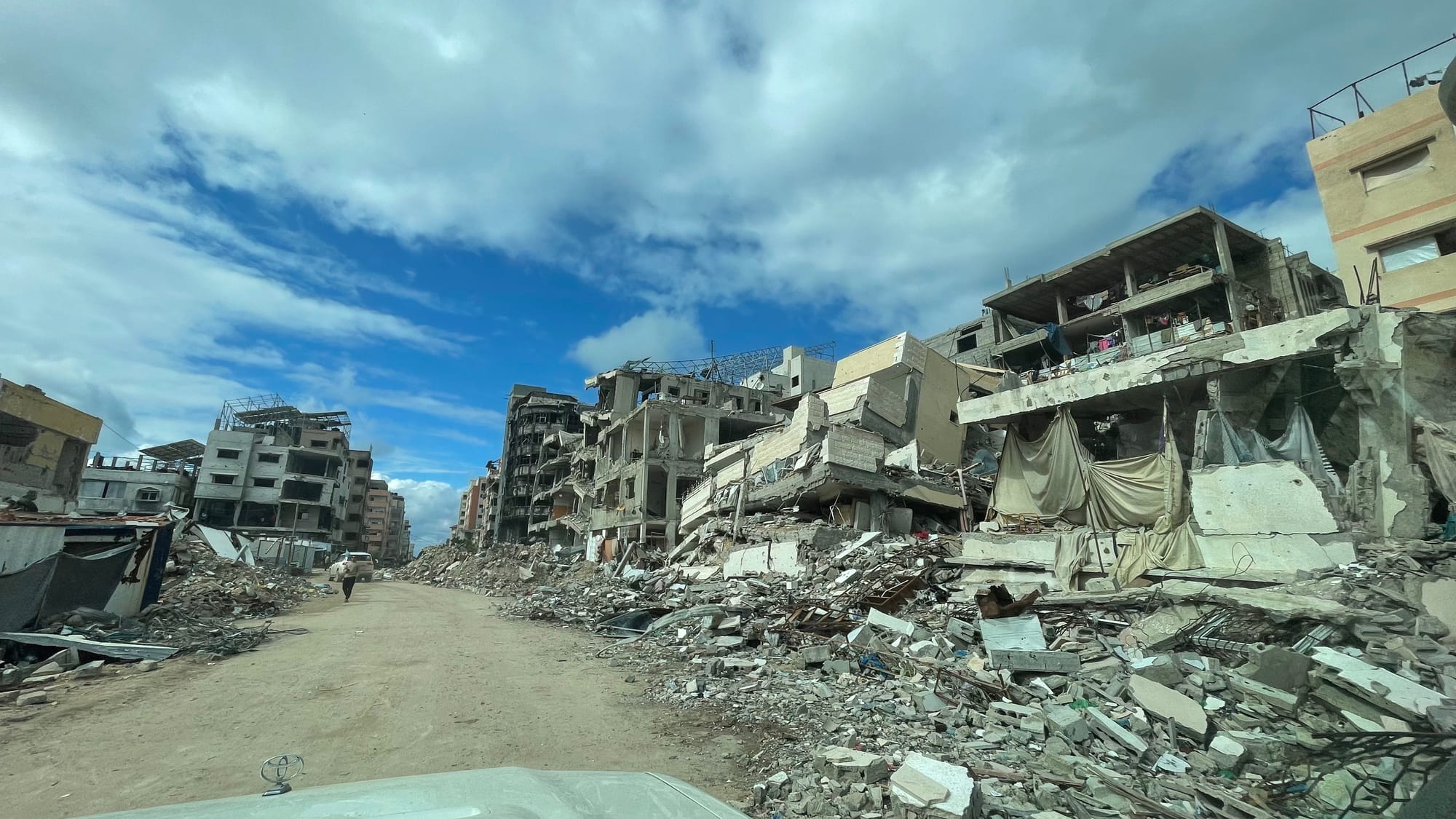
Chapter 6 — Gaza Two Years Later: Destruction, Reconstruction and the Struggle for a Future
A Territory Transformed by War
When Yahya Sinwar was killed in Rafah on October 16, 2024, the Gaza Strip had already endured more than a year of devastating warfare.
Entire residential neighborhoods had been destroyed or severely damaged. Hospitals were struggling to function, schools had become emergency shelters, and hundreds of thousands of civilians had been displaced repeatedly.
The consequences of the Hamas-led attacks on October 7, 2023, had extended far beyond the Israeli communities where the violence began.
Israel launched a major military campaign with the stated objectives of dismantling Hamas's military and governing capabilities, securing the release of hostages, and preventing another attack of comparable scale.
But the campaign unfolded in a densely populated territory where civilian neighborhoods, public infrastructure, and military activity frequently existed in close proximity.
The human consequences were enormous.
By October 2026, Gaza's physical and social landscape had been fundamentally transformed.
Families had lost relatives, homes, livelihoods, and access to essential services. Large parts of the territory's infrastructure required reconstruction, while uncertainty over security and political authority continued to obstruct recovery.
Yet the devastation raised questions that could not be answered by examining the military campaign alone.
What responsibilities did Hamas bear for the war and the conditions in which civilians were exposed to danger?
What obligations did Israel have when conducting military operations and controlling access to essential supplies?
Why had neighboring countries, particularly Egypt, maintained restrictions on the movement of people across their borders?
And why had international diplomatic efforts struggled to establish a functioning postwar administration?
Two years after Sinwar's death, Gaza's future remained one of the most difficult unresolved questions in the Middle East.
The Scale of Destruction
The destruction across Gaza was extensive.
Residential buildings, roads, electricity networks, water systems, hospitals, schools, agricultural land, and commercial facilities were damaged or destroyed during the war.
Satellite imagery and assessments by international organizations documented widespread damage to the built environment.
In some neighborhoods, entire streets were reduced to rubble.
For civilians, this meant more than losing physical structures.
Homes contained family histories, personal belongings, documents, photographs, and the accumulated possessions of generations.
When those homes were destroyed, families often lost the foundations of their ordinary lives.
The damage to infrastructure created additional difficulties.
Electricity shortages affected water pumping, refrigeration, communications, and medical equipment.
Damaged water and sanitation systems increased the risk of disease.
Destroyed roads complicated the delivery of humanitarian assistance and the movement of emergency vehicles.
The education system also suffered severe disruption.
Many school buildings were damaged, destroyed, or used to shelter displaced families.
Children experienced prolonged interruptions to education, often while coping with bereavement, injury, and displacement.
Reconstruction therefore involved far more than rebuilding apartments.
It required restoring the systems that make civilian life possible.
The Human Cost Behind the Statistics
The number of people killed during the Gaza war became one of its most politically contested subjects.
Gaza's Health Ministry reported large numbers of fatalities throughout the conflict. Its figures were widely used by international organizations, although the ministry operates within Gaza's Hamas-governed administrative system.
The ministry's reported totals did not consistently distinguish between civilians and combatants.
Israel disputed aspects of the casualty reporting and published its own assessments concerning the number of Hamas fighters killed.
Independent researchers and international organizations examined available records, including hospital data, identified deaths, demographic information, and other evidence.
Different methodologies produced different estimates, particularly when attempting to distinguish direct violent deaths from deaths associated with the collapse of healthcare and essential services.
These limitations should not be ignored.
But uncertainty over precise figures does not negate the extensive civilian suffering documented throughout the war.
Large numbers of children, women, elderly people, and other civilians were among the dead and injured.
Families were separated, medical facilities became overwhelmed, and many people were left with permanent disabilities.
For survivors, the consequences extended beyond physical injuries.
Children who experienced bombardment, displacement, or the deaths of family members faced serious psychological challenges.
Parents struggled to provide food, shelter, and safety under conditions of extreme uncertainty.
Healthcare workers continued treating patients despite shortages of medicine, equipment, electricity, and functioning facilities.
The scale of suffering became one of the central humanitarian consequences of the war.
Understanding these realities does not require overlooking the atrocities committed by Hamas on October 7.
Both events form part of the historical record.
The deliberate killing and abduction of Israeli civilians were grave violations of international humanitarian law.
The subsequent suffering of Palestinian civilians also requires independent scrutiny, legal accountability where violations occurred, and an examination of the decisions that contributed to the destruction.
Hamas's Military Infrastructure and Civilian Areas
One of the most difficult aspects of the Gaza war involved Hamas's use of military infrastructure within a densely populated territory.
Over many years, Hamas constructed an extensive network of underground tunnels.
These tunnels served different purposes, including the movement of fighters, storage of weapons, communication between military positions, and concealment of commanders.
Some were also used to hold Israeli hostages.
Israeli forces documented tunnel entrances and military facilities in or near civilian areas, including residential neighborhoods and other built-up locations.
The use of civilian surroundings for military purposes created serious risks for the population.
When armed groups operate from populated areas, civilians can become exposed to military attacks.
International humanitarian law prohibits using civilians to shield military objectives from attack.
However, the presence of a military target in a civilian area does not automatically establish that civilians are being deliberately used as human shields.
That allegation requires evidence of intentional conduct.
It also does not remove the attacking force's obligations to distinguish civilians from combatants, assess proportionality, and take feasible precautions to minimize civilian harm.
These principles apply regardless of the conduct of the opposing party.
Israel argued that Hamas's tunnel networks and military operations within populated areas made the campaign unusually difficult.
Humanitarian organizations warned that Israeli attacks nevertheless caused extensive civilian casualties and damage to essential infrastructure.
Both issues require examination.
Hamas's military practices and Israel's conduct of hostilities are separate questions of responsibility.
Violations by one party do not excuse violations by another.
Did Hamas Protect the Population It Governed?
Hamas exercised de facto governing authority in Gaza from 2007 until the war profoundly disrupted its administrative structures.
That authority carried responsibilities toward the population living under its control.
A governing organization is expected to consider civilian safety, maintain essential services where possible, and avoid exposing residents to unnecessary danger.
Yet Hamas invested substantial resources in military infrastructure while Gaza's civilian population remained vulnerable to repeated conflict.
Its decision to launch the October 7 attacks created foreseeable risks of a major Israeli military response.
The precise scale and nature of that response may not have been anticipated by every Hamas leader.
Nevertheless, the possibility of a devastating war was an obvious strategic risk.
This raises serious questions about the organization's priorities.
To what extent did Hamas's leadership consider the consequences for Gaza's civilian population?
What arrangements existed to protect civilians during prolonged fighting?
Were resources allocated adequately between military preparations and civilian needs?
And did Hamas's leaders accept civilian suffering as a foreseeable consequence of their strategy?
These questions deserve investigation rather than assumptions about motives that cannot be independently established.
The available evidence demonstrates that Hamas prepared extensively for military confrontation.
It does not demonstrate that the civilian population possessed comparable protection against the consequences of a major war.
That disparity is central to evaluating the organization's responsibilities.
Humanitarian Aid and the Struggle for Access
Humanitarian assistance became essential to the survival of large parts of Gaza's population.
Food, water, medicine, fuel, shelter materials, and medical equipment were urgently needed throughout the conflict.
Yet delivering assistance was repeatedly complicated by border restrictions, military operations, damaged infrastructure, insecurity, and disputes over distribution.
Israel controlled most of Gaza's external access and imposed restrictions that it described as necessary to prevent weapons and materials with military applications from reaching Hamas.
Humanitarian organizations warned that restrictions and delays obstructed the delivery of essential supplies.
Israeli authorities also pointed to difficulties involving distribution capacity, security conditions, and the risk of supplies being diverted by armed groups.
These competing claims require careful examination.
The fact that aid enters a territory does not establish that it reaches the people who need it.
Likewise, the existence of theft, diversion, or security threats does not remove the obligation to facilitate humanitarian relief in accordance with applicable international law.
Effective assistance depends on functioning border crossings, safe transportation routes, reliable distribution networks, and access to communities in need.
During the war, each of these elements was repeatedly disrupted.
The result was a humanitarian system operating under extreme pressure.
Egypt's Border: Why Was Rafah Not Fully Open?
Egypt's role in the Gaza crisis deserves particular attention.
The Rafah crossing, located between southern Gaza and Egypt, has long been one of the territory's most important connections to the outside world.
Unlike crossings between Gaza and Israel, Rafah provides access to Egyptian territory.
However, it has never functioned as an unrestricted international border.
Egypt has maintained controls on movement through Rafah for security, political, and administrative reasons.
Following October 7, the crossing became a central focus of international efforts to evacuate foreign nationals, transfer wounded patients, and deliver humanitarian assistance.
In the early stages of the war, the movement of aid and people through Rafah was severely restricted.
Humanitarian convoys faced delays, while negotiations involving Egypt, Israel, the United States, and international organizations sought arrangements for access.
Egypt expressed concerns about security, border management, and the possibility of large-scale displacement of Palestinians into the Sinai Peninsula.
Cairo repeatedly rejected proposals that could result in the permanent displacement of Gaza's population into Egyptian territory.
Egyptian authorities argued that such displacement could undermine Palestinian national aspirations and create serious security risks.
These concerns formed part of Egypt's longstanding policy toward Gaza.
Nevertheless, the restrictions also raised difficult humanitarian questions.
When civilians were facing bombardment, displacement, and shortages of essential supplies, why were opportunities for evacuation and cross-border access so limited?
Could more flexible arrangements have been established for vulnerable civilians, particularly children, injured people, and those requiring urgent medical treatment?
And could international governments have provided stronger guarantees that temporary evacuation would not become permanent displacement?
The answer cannot be reduced to the claim that Egypt alone controlled Gaza's humanitarian access.
Israel's control of other crossings, the security situation, and the coordination required between authorities also affected movement.
In May 2024, Israeli forces took control of the Gaza side of the Rafah crossing, creating additional disputes over its operation.
Egypt's policies therefore formed one part of a wider system of restrictions and political disagreements.
But its decisions remain relevant to any comprehensive examination of the humanitarian crisis.
Why Did Neighboring Countries Not Accept Large Numbers of Refugees?
The reluctance of neighboring countries to accept large-scale displacement from Gaza became another controversial issue.
Egypt and Jordan repeatedly warned against policies that could result in Palestinians being permanently removed from their homes.
Their concerns were shaped by history.
The displacement of Palestinians during the wars of 1948 and 1967 remains central to the Israeli-Palestinian conflict.
Many Palestinian families have lived as refugees for generations.
Regional governments feared that another mass movement could become permanent, leaving displaced Palestinians unable to return.
Security concerns also influenced these decisions.
Egypt was concerned about instability in Sinai and the possibility that armed militants could enter its territory among displaced civilians.
Jordan, which already has a large population of Palestinian origin, opposed arrangements that could undermine the prospect of a Palestinian state.
These positions reflected political, historical, and security considerations.
But they also exposed a humanitarian dilemma.
Civilians trapped in an active conflict require protection.
At the same time, mass displacement should not become a mechanism through which people permanently lose their homes and rights.
International law prohibits forcible transfer or deportation of protected civilians except under narrowly defined circumstances.
Any temporary evacuation arrangement must therefore include appropriate safeguards, including protection against involuntary permanent displacement.
The challenge was to provide safety without creating another long-term refugee crisis.
By October 2026, that dilemma remained relevant to discussions concerning reconstruction, border access, and the return of displaced people.
Reconstruction: Who Will Pay for Gaza's Recovery?
Rebuilding Gaza represents one of the largest reconstruction challenges in the region.
The destruction of housing, public infrastructure, businesses, hospitals, schools, and utilities created financial requirements far beyond the capacity of local institutions.
International assessments indicated that recovery would require tens of billions of dollars.
The actual cost would depend on the extent of damage, access to construction materials, security conditions, and the political arrangements governing reconstruction.
Removing rubble alone presents an enormous challenge.
Damaged buildings may contain unexploded ordnance, hazardous materials, and human remains.
Before new construction can begin, roads must be cleared, essential services restored, and damaged infrastructure assessed.
Housing reconstruction requires access to cement, steel, machinery, skilled workers, and reliable financing.
Hospitals need equipment and personnel.
Schools require safe buildings and functioning education systems.
Businesses need electricity, transportation, access to markets, and financial stability.
But reconstruction also raises political questions.
Who will control the funds?
Which institutions will oversee projects?
How can corruption and diversion be prevented?
What safeguards will ensure that construction materials are used for civilian purposes rather than renewed military infrastructure?
And who will guarantee that rebuilt neighborhoods will not be destroyed in another round of fighting?
Donor governments are unlikely to commit unlimited resources without credible governance and security arrangements.
Reconstruction therefore depends not only on money, but also on political trust and institutional accountability.
Can Gaza Be Rebuilt While Hamas Remains Armed?
One of the most difficult questions facing reconstruction is the continued existence of Hamas's armed networks.
Israel has repeatedly argued that Gaza cannot be allowed to return to the security situation that existed before October 7.
From Israel's perspective, rebuilding civilian infrastructure without preventing Hamas from restoring its military capabilities could create conditions for another conflict.
Hamas, meanwhile, has resisted demands to surrender its weapons without broader political and security guarantees.
This disagreement has complicated negotiations over Gaza's future.
International proposals have explored different arrangements involving Palestinian technocratic authorities, international oversight, regional participation, and phased Israeli withdrawal.
But each proposal faces practical challenges.
A civilian administration cannot function effectively if armed groups retain the ability to intimidate officials, control resources, or undermine political decisions.
At the same time, reconstruction cannot succeed if the population remains exposed to recurring military operations, severe restrictions, and uncertainty over territorial control.
A durable framework would need to address both concerns.
It would require effective civilian governance, protection of the population, transparent management of aid, and enforceable security arrangements.
The central challenge is not simply removing Hamas from formal government positions.
It is establishing institutions capable of functioning independently of armed coercion.
The Question of Palestinian Governance
The future administration of Gaza remains inseparable from the broader Palestinian political crisis.
The Palestinian Authority exercises limited self-government in parts of the West Bank, while Hamas established separate control over Gaza after its violent confrontation with Fatah in 2007.
The division has weakened Palestinian political representation for nearly two decades.
National elections have not provided a renewed democratic mandate for either leadership.
The last Palestinian legislative elections took place in 2006.
Hamas won a parliamentary majority, but the subsequent political struggle and division between Gaza and the West Bank prevented the development of a unified political system.
By October 2026, an entire generation of young Palestinians had reached adulthood without participating in a national legislative election.
This raises a fundamental question of legitimacy.
Who has the authority to determine Gaza's political future?
Hamas's continued possession of weapons does not automatically grant it democratic legitimacy.
Nor can a new administration be considered representative merely because it is supported by foreign governments.
A credible political transition would require institutions capable of providing public services, maintaining security, protecting civil rights, and eventually allowing meaningful political participation.
The population of Gaza needs more than a replacement for one governing faction.
It needs an administration that is accountable to the people it governs.
The Children Who Will Inherit the Consequences
Among those most affected by the war are Gaza's children.
Many have experienced repeated displacement, the destruction of their homes, the deaths of relatives, and prolonged interruptions to education.
Some have suffered serious injuries or permanent disabilities.
Others have spent formative years living in temporary shelters, damaged buildings, or overcrowded conditions.
The consequences may continue long after the physical reconstruction of Gaza begins.
Children require stable homes, education, healthcare, psychological support, and opportunities to develop without constant exposure to violence.
The absence of these conditions can affect an entire generation.
This is not only a humanitarian concern.
It is also relevant to the region's long-term stability.
A generation growing up without reliable education, economic opportunities, or functioning institutions faces serious obstacles to building a peaceful future.
The same principle applies to Israeli children who survived October 7 or grew up under the threat of rocket attacks and cross-border violence.
The experiences are different, but both demonstrate how conflict can shape childhood, identity, and perceptions of security.
Preventing future violence requires attention to the conditions in which the next generation will live.
What Responsibility Does the International Community Carry?
The Gaza crisis involved numerous international actors.
The United States provided extensive diplomatic and military support to Israel while participating in ceasefire and hostage negotiations.
Egypt and Qatar played important mediation roles.
European governments provided humanitarian assistance and supported diplomatic initiatives.
United Nations agencies and international humanitarian organizations worked to deliver essential services under extremely difficult conditions.
Yet the international response was frequently criticized as fragmented, politicized, or insufficient.
Governments disagreed over the conduct of the war, the appropriate pressure on Israel and Hamas, and the conditions required for reconstruction.
International organizations also faced operational challenges, funding disputes, and security risks.
The difficulty of coordinating these efforts revealed a broader problem.
Humanitarian assistance can alleviate immediate suffering, but it cannot replace a functioning political settlement.
Food deliveries cannot substitute for a stable economy.
Temporary shelters cannot replace permanent housing.
Emergency medical assistance cannot restore an entire healthcare system.
And international funding cannot guarantee lasting recovery if renewed fighting remains likely.
A sustainable approach requires coordination between humanitarian assistance, reconstruction, governance, and security.
Without that coordination, Gaza risks remaining dependent on emergency aid rather than developing the institutions necessary for long-term recovery.
The Difference Between Ending a War and Building a Future
The October 2025 ceasefire changed the immediate military situation and created opportunities for humanitarian relief and further negotiations.
But a ceasefire is not the same as a political settlement.
It can reduce violence and create space for diplomacy.
It does not automatically resolve disputes over territory, security, weapons, political authority, or reconstruction.
By October 2026, these issues remained central to Gaza's future.
The continued disagreement over Hamas's disarmament and Israeli withdrawal illustrated the fragility of the process.
For civilians, this uncertainty carried immediate consequences.
Families needed to know whether they could rebuild their homes.
Businesses needed confidence that commercial activity could resume.
Schools and hospitals required stable funding and access to essential materials.
International donors needed credible institutions through which assistance could be delivered.
Without a durable agreement, every reconstruction decision carried the risk of being undermined by renewed violence.
The central challenge was therefore not simply stopping the fighting.
It was creating conditions in which ordinary life could become possible again.
Two Years After Sinwar: What Has Really Changed for Gaza?
The death of Yahya Sinwar removed one of the most influential figures in Hamas's leadership.
It contributed to a wider military campaign that significantly weakened the organization.
But for Gaza's civilian population, the consequences of the war extended far beyond the fate of one commander.
Two years later, the territory faced enormous reconstruction needs, damaged institutions, unresolved political divisions, and uncertainty over future security arrangements.
Hamas had suffered serious losses but had not disappeared.
Israel had achieved important military objectives but had not secured a comprehensive political settlement.
Egypt and other regional governments continued to face difficult questions concerning borders, security, and displacement.
International institutions remained involved in humanitarian relief and discussions over reconstruction.
And Palestinian civilians continued to live with the consequences of decisions made by political and military leaders.
The situation demonstrated the limitations of viewing the conflict exclusively through military achievements.
The death of a leader can weaken an armed organization.
The destruction of weapons facilities can reduce immediate threats.
A ceasefire can save lives.
But none of these developments automatically creates functioning schools, hospitals, housing, employment, accountable government, or lasting security.
Those outcomes require political decisions, sustained resources, and institutions capable of protecting civilians.
A Future That Cannot Be Built on Rubble Alone
The central question facing Gaza in October 2026 was no longer simply whether Hamas had survived the death of Yahya Sinwar.
It was whether the territory could develop a future in which civilians were no longer trapped between armed organizations, military operations, political divisions, and humanitarian dependence.
That future would require difficult decisions from all parties.
Hamas would need to confront the consequences of its armed strategy and the question of its continued military role.
Israel would need to establish security arrangements consistent with its obligations toward civilians and the requirements of a sustainable political settlement.
Egypt and other regional governments would need to contribute to workable border, humanitarian, and diplomatic arrangements.
International donors would need to support transparent reconstruction and effective institutions.
And Palestinians themselves would need a meaningful role in determining how they are governed.
None of these objectives can be achieved through military action alone.
The destruction of Gaza cannot be reversed simply by removing Hamas leaders.
Nor can long-term security be established while the political and humanitarian conditions that contribute to instability remain unresolved.
Two years after Yahya Sinwar's death, Gaza remained a territory struggling not only to recover from war, but also to determine who would govern it, how it would be rebuilt, and whether its people could finally live without the expectation of another conflict.
The man who had helped lead Hamas into the October 7 confrontation was gone.
The consequences of that confrontation remained visible across the territory.
And the most difficult task had yet to be completed.
Not simply rebuilding Gaza's buildings, but creating a future in which those buildings—and the people living inside them—would no longer be destroyed by another war.
Chapter 7 — The Hostages, the Families and the Price of Negotiation
The People Who Disappeared on October 7
On the morning of October 7, 2023, as Hamas-led armed groups attacked communities across southern Israel, hundreds of people were taken from their homes, military positions, roads, and the Nova music festival.
Some were dragged from bedrooms and reinforced shelters. Others were captured while attempting to escape the violence. Families were separated, sometimes without knowing whether their loved ones had been killed or abducted.
By the end of the day, 251 people had been taken hostage into Gaza.
They included babies and children, parents, grandparents, soldiers, and foreign nationals.
For Israel, the hostage crisis became one of the defining consequences of October 7.
The attacks had already killed approximately 1,200 people. But for the families of those taken captive, the violence did not end when the attackers returned to Gaza.
It continued through uncertainty, fear, and the possibility that their relatives were being held in underground tunnels, private buildings, or other concealed locations.
Some families received signs of life through released hostages or videos published by armed groups.
Others waited months without reliable information.
The uncertainty became a form of suffering in itself.
For the Israeli government, the hostages created an extraordinary dilemma.
How could the country pursue its objective of dismantling Hamas while protecting people held captive by the same organization?
And how much should Israel be prepared to concede to secure their release?
Those questions would shape Israeli politics, military strategy, and international diplomacy for the following two years.
Captivity as a Weapon of War
Hostage-taking was not an incidental consequence of the October 7 attack.
It was a central element of the operation.
Hamas and other armed groups took captives into Gaza and subsequently used their detention as leverage in negotiations with Israel.
The hostages were held under different conditions and by different captors.
Some were reportedly kept in underground tunnels. Others were held in residential buildings or moved between locations.
Accounts from released captives described prolonged isolation, fear, inadequate food, limited medical care, and psychological pressure.
Conditions varied, and not every hostage experienced the same treatment.
Nevertheless, evidence collected from survivors, medical professionals, investigators, and international organizations established serious concerns about abuse and violations of international humanitarian law.
The taking of hostages is prohibited under the laws of armed conflict.
Civilians cannot lawfully be seized and detained to compel a government or another party to meet political or military demands.
The prohibition applies regardless of the grievances or objectives claimed by those holding them.
Hamas presented the captives as a means of obtaining the release of Palestinian prisoners held by Israel.
But the existence of prisoners in Israeli custody did not provide legal justification for abducting civilians.
The hostages became bargaining instruments in a conflict over which they had no control.
Their lives were tied to decisions made by armed commanders, political leaders, mediators, and governments.
For their families, every failed negotiation carried the possibility that time was running out.
Yahya Sinwar and the Strategy of Hostage-Taking
Yahya Sinwar understood the political importance of Israeli captives long before October 7.
In 2011, he had been among the 1,027 Palestinian prisoners released by Israel in exchange for captured Israeli soldier Gilad Shalit.
The agreement demonstrated that a single Israeli captive could become the subject of prolonged negotiations and a major prisoner exchange.
Sinwar's release allowed him to return to Gaza, rebuild his political influence, and eventually become one of Hamas's most powerful leaders.
The experience was therefore deeply connected to his personal history.
By October 2023, Sinwar occupied a central position within Hamas's political and strategic leadership.
The mass abduction of hostages during the October 7 attacks gave Hamas substantial negotiating leverage.
Unlike the Shalit case, however, the new hostage crisis involved hundreds of people and unfolded during a major war.
Israel was simultaneously attempting to recover its citizens and destroy the military capabilities of the organization holding them.
Sinwar was widely regarded as a central decision-maker in Hamas's approach to the negotiations.
His influence was particularly important because he remained inside Gaza, where hostages were being held and where Hamas's military leadership operated.
Communication with him was reportedly difficult and often slow.
Messages passed through intermediaries, and negotiations could be delayed while Hamas's leadership considered proposals.
However, the precise extent of Sinwar's direct control over every hostage and every negotiating decision remains uncertain.
Different armed groups and local commanders held captives, and the internal distribution of authority was not fully visible to outside observers.
What is clear is that the hostage crisis became a central element of Hamas's strategy throughout the war.
The Families Who Refused to Remain Silent
Within days of October 7, relatives of the hostages began organizing public campaigns demanding their return.
Photographs of missing people appeared across Israeli cities and around the world.
Posters carried names, ages, and faces.
Families held press conferences, met political leaders, addressed international institutions, and traveled abroad to seek support.
The Hostages and Missing Families Forum became one of the most prominent organizations representing families and advocating for the captives' release.
Its activities helped keep the hostage crisis at the center of Israeli public life.
The families did not always agree on strategy.
Some supported continued military pressure against Hamas, believing it could force the organization to release captives.
Others argued that the government should prioritize negotiations, even if doing so required difficult concessions.
For many, the central demand was simple.
Their relatives had to come home alive.
The demonstrations grew into a major political force.
Thousands of Israelis gathered in public squares, carried photographs of hostages, and demanded progress toward an agreement.
The campaign was also deeply personal.
Parents spoke about children they had not seen for months.
Spouses described the absence of partners from ordinary family life.
Children waited for mothers and fathers whose fate remained unknown.
The public debate often focused on military strategy and political negotiations.
For the families, every passing day was another day of captivity.
The First Major Hostage Agreement
In November 2023, Israel and Hamas reached a temporary truce agreement mediated principally by Qatar, Egypt, and the United States.
The arrangement allowed for the release of hostages held in Gaza in exchange for Palestinian prisoners held by Israel.
During the temporary pause, 105 hostages were released from Gaza, including 81 Israelis and 24 foreign nationals.
Israel released 240 Palestinian women and minors from its prisons.
The agreement also allowed an increase in humanitarian assistance entering Gaza.
For the families reunited with loved ones, the releases were moments of extraordinary relief.
Children returned to parents.
Parents embraced children they had feared they would never see again.
But the celebrations were accompanied by grief for those who remained captive.
The temporary truce ended in early December 2023, and fighting resumed.
The breakdown demonstrated the fragility of agreements reached during an active war.
It also revealed how closely the fate of the hostages was connected to wider disputes over military operations, prisoner releases, and the duration of ceasefires.
For Israel, the agreement showed that negotiation could secure the release of captives.
For Hamas, it demonstrated the value of hostages as leverage.
For families still waiting, it created hope that another agreement might be possible.
The Debate Over Military Pressure
Throughout the war, Israeli leaders argued that military pressure on Hamas could improve the prospects of securing hostage releases.
The government maintained that weakening Hamas would reduce its ability to resist negotiations and increase the pressure on its leadership.
Critics questioned whether continued military operations might instead endanger the captives.
The debate became particularly intense when hostages were killed during the conflict.
In December 2023, Israeli soldiers mistakenly shot and killed three Israeli hostages in Gaza after misidentifying them as threats.
The incident prompted widespread grief and raised questions about operational procedures and the risks facing captives in combat zones.
In August 2024, Israeli forces recovered the bodies of six hostages from a tunnel in Rafah.
Israeli authorities reported that the captives had been killed shortly before troops reached the area.
Their deaths triggered major demonstrations and intensified demands for a negotiated agreement.
The incidents exposed the limitations of relying exclusively on military operations.
Military pressure could weaken Hamas and create opportunities for rescue.
But fighting in areas where hostages were held also carried serious risks.
At the same time, negotiations were complicated by Hamas's demands, Israel's military objectives, and disagreements over the terms of a lasting ceasefire.
Neither military action nor diplomacy offered a guaranteed solution.
The government faced difficult decisions under conditions of uncertainty.
But for the families, those decisions involved the lives of people they loved.
Rescue Operations and Their Human Cost
Israeli forces conducted several operations to rescue hostages during the war.
In February 2024, two Israeli hostages, Fernando Marman and Louis Har, were rescued during an operation in Rafah.
In June 2024, Israeli forces rescued four hostages from the Nuseirat area of central Gaza.
Among them was Noa Argamani, whose abduction from the Nova festival had been captured on video and widely circulated.
Her reunion with her family became one of the most recognizable moments of the hostage crisis.
The operation also resulted in substantial Palestinian casualties, according to Gaza health authorities, and generated international controversy over the conduct of the rescue and the protection of civilians.
Israeli authorities defended the operation as a necessary effort to recover hostages held by armed groups.
The rescue demonstrated Israel's ability to conduct complex operations based on intelligence and military coordination.
But it also highlighted the dangers of attempting rescues in densely populated areas.
The legal and humanitarian obligations governing military operations remained applicable even when the objective was to free unlawfully held captives.
The successful return of hostages and the civilian consequences of an operation are both relevant to assessing its outcome.
The Death of Sinwar: A Turning Point for Negotiations?
When Yahya Sinwar was killed in October 2024, his death immediately raised questions about the future of hostage negotiations.
Israeli leaders hoped that removing Hamas's most prominent wartime leader might weaken the organization's negotiating position.
Some observers believed his death could create an opportunity for more flexible leadership to emerge.
Others warned that Hamas's fragmented command structure could make negotiations more difficult.
Sinwar had possessed considerable authority within the organization.
His removal meant that decisions previously associated with his leadership would need to be made by surviving officials.
But Hamas continued to possess hostages and maintain political representatives capable of participating in indirect talks.
The death of Sinwar therefore did not automatically produce a comprehensive agreement.
Negotiations continued through regional mediators.
Disagreements remained over the duration of ceasefires, Israeli military withdrawal, the release of Palestinian prisoners, and Hamas's future role in Gaza.
The hostage crisis outlived the man widely regarded as one of its principal architects.
That reality demonstrated that the captives' fate depended on a wider set of political and military circumstances.
The January 2025 Ceasefire and Hostage Releases
In January 2025, Israel and Hamas reached another ceasefire and hostage-release agreement.
The arrangement followed prolonged negotiations involving the United States, Qatar, and Egypt.
It established a phased process intended to secure the release of hostages, the exchange of Palestinian prisoners and detainees, and a reduction in fighting.
During the first phase, 33 Israeli hostages were released, including eight whose remains were returned.
Hundreds of Palestinian prisoners and detainees were released by Israel under the agreed exchanges.
The releases produced scenes of relief and celebration, but also renewed attention to the physical and psychological condition of those returning from captivity.
Some former hostages appeared visibly weakened.
Their accounts described isolation, fear, shortages of food, and difficult conditions during detention.
The agreement demonstrated that negotiated arrangements could achieve significant humanitarian outcomes.
However, the broader ceasefire process did not produce a lasting settlement.
Disputes over the subsequent phases contributed to the breakdown of the arrangement.
In March 2025, large-scale Israeli military operations resumed.
The remaining hostages continued to be held in Gaza.
For their families, the renewed fighting brought another period of uncertainty.
October 2025: The Return of the Remaining Living Hostages
A major breakthrough occurred in October 2025.
Under a new ceasefire agreement, Hamas released the remaining twenty living Israeli hostages held in Gaza.
The releases took place on October 13, 2025, following negotiations involving Israel, Hamas, the United States, and regional mediators.
Israel released Palestinian prisoners and detainees as part of the agreement.
For the families, the return of the captives represented the end of an extraordinary period of waiting.
After more than two years, the remaining living hostages were reunited with their loved ones.
The images of these reunions became some of the most emotionally significant moments of the conflict.
But the releases did not erase the suffering experienced during captivity.
Former hostages faced the challenge of physical recovery, psychological treatment, and rebuilding relationships disrupted by prolonged separation.
Some returned to families who had lost other relatives on October 7.
Others faced the knowledge that friends or fellow captives had not survived.
The agreement also did not immediately resolve every issue concerning the remains of deceased hostages.
The return and identification of the dead remained an important obligation and a source of grief for families awaiting answers.
The October 2025 agreement represented a major humanitarian achievement.
Yet it did not settle the wider conflict over Gaza's future.
The Palestinian Prisoners: Another Human and Political Dimension
Hostage negotiations also involved the release of Palestinian prisoners and detainees held by Israel.
These individuals had been imprisoned or detained under different legal circumstances.
Some had been convicted of serious violent crimes, including attacks that killed civilians.
Others had been held for security offenses, and some had been detained without criminal conviction under administrative detention procedures.
These distinctions are important.
A person convicted of murder is not legally equivalent to someone held without charge or trial.
Nor should the release of prisoners be discussed without considering the experiences of victims and their families.
For Israelis whose relatives had been killed in attacks, the release of convicted perpetrators could reopen profound trauma.
For Palestinian families, the return of imprisoned relatives could represent the end of years of separation.
The exchanges therefore carried different emotional and political meanings.
They also raised difficult questions about the incentives created by hostage diplomacy.
Critics argued that releasing large numbers of prisoners in exchange for captives could encourage future abductions.
Supporters maintained that governments have a moral responsibility to bring their citizens home and that negotiations may be necessary when military rescue is not possible.
There is no simple formula capable of eliminating these competing concerns.
The experience of Sinwar himself illustrates the dilemma.
He was released in the 2011 Gilad Shalit exchange and subsequently became one of Hamas's most influential leaders.
His later role in the October 7 attacks made the consequences of prisoner exchanges a particularly painful issue in Israeli public debate.
Did the Israeli Government Wait Too Long?
One of the most contentious questions surrounding the hostage crisis concerns whether an agreement could have been reached earlier.
Families of hostages, opposition politicians, security officials, and international observers repeatedly questioned the government's negotiating decisions.
Some argued that opportunities for agreements had been missed because of disputes over military objectives, political considerations, or the terms of Israeli withdrawal.
Others maintained that Hamas's demands and refusal to accept particular proposals were major obstacles.
Negotiations involved numerous proposals, counterproposals, and changing battlefield conditions.
Public statements by the parties did not always provide a complete account of private discussions.
It would therefore be inaccurate to conclude that a particular agreement was definitely available at an earlier date without examining the detailed negotiating record.
Nevertheless, the question deserves scrutiny.
When hostages remain in captivity for months or years, the timing of political decisions can have life-or-death consequences.
The public has a legitimate interest in understanding why agreements succeeded or failed, what alternatives were considered, and whether the protection of hostages received appropriate priority.
This is particularly important in a democratic society where government decisions must remain subject to public accountability.
The Role of Qatar, Egypt and the United States
The hostage negotiations depended heavily on international mediation.
Qatar maintained communication channels with Hamas's political leadership and played a central role in transmitting proposals.
Egypt contributed through its longstanding involvement in Gaza-related security and diplomatic arrangements.
The United States exerted diplomatic pressure, coordinated with Israel, and worked with regional governments to facilitate agreements.
These roles were not identical.
Each government possessed different relationships, interests, and forms of influence.
Qatar's communication with Hamas made it an important intermediary.
Egypt's geographical position and security relationship with Gaza gave it a significant role in border and ceasefire discussions.
The United States possessed substantial diplomatic influence over Israel and relationships with regional governments.
The agreements that eventually produced hostage releases demonstrated the importance of these channels.
Military pressure influenced the negotiating environment.
But the actual exchanges required communication, detailed arrangements, and coordination between parties that did not negotiate directly with one another.
The process also demonstrated how difficult it can be to achieve humanitarian objectives during an unresolved war.
The Families After the Reunions
The return of a hostage is not necessarily the end of the family's ordeal.
Prolonged captivity can have lasting physical and psychological consequences.
Former hostages may experience anxiety, sleep disturbances, difficulty adjusting to ordinary life, and trauma associated with isolation or abuse.
Family members may also struggle with the effects of prolonged uncertainty.
Children may need to rebuild relationships with parents who were absent during important stages of their development.
Parents may find that their children have changed profoundly.
Spouses and partners may face the challenge of reconnecting after years of fear and separation.
Recovery is not a single event.
It is a process that can continue for years.
For families whose loved ones died in captivity, the experience is different.
The return of remains can provide an opportunity for burial and mourning, but it cannot undo the loss.
These human realities are sometimes overshadowed by political debates about the success or failure of negotiations.
Yet they are central to understanding the true consequences of the hostage crisis.
What Did the Hostage Crisis Change in Israel?
The hostage crisis transformed Israeli public life.
It placed families of captives at the center of national political debates.
It intensified disagreements over military strategy, government accountability, and the priorities of the war.
It also exposed the tension between two essential responsibilities of the state: protecting its citizens from future attacks and securing the return of those already taken captive.
The experience challenged assumptions about how Israel should respond to hostage-taking.
The 2011 Shalit exchange had already demonstrated the difficult choices involved in prisoner negotiations.
October 7 expanded those dilemmas to an unprecedented scale.
The return of the remaining living hostages in October 2025 represented a major achievement.
But the debate over the decisions made during their captivity did not disappear.
Israel still faced questions about whether its military and political institutions had acted effectively, whether negotiations could have progressed differently, and how future hostage-taking could be prevented.
The answers would influence the country's security policies long after the war.
Two Years After Sinwar: The Human Price of the Conflict
Yahya Sinwar was killed in October 2024.
The hostage crisis continued for another year before the remaining living captives were released.
That timeline is significant.
It demonstrates that the death of Hamas's most prominent wartime leader did not automatically resolve the humanitarian and political consequences of October 7.
The hostages remained central to negotiations.
Their families continued campaigning.
Governments and mediators continued searching for agreements.
And the eventual releases required diplomatic arrangements that extended beyond the elimination of individual commanders.
The experience also revealed the limits of measuring success solely through military achievements.
A leader can be killed.
An armed organization can be weakened.
Territory can be captured.
But for families waiting for loved ones, those developments do not necessarily represent victory.
Victory, for them, means the return of a son, daughter, spouse, parent, or friend.
The hostage crisis therefore became one of the clearest examples of the human consequences of political and military decisions.
It also demonstrated why the laws prohibiting hostage-taking are fundamental to the protection of civilians.
No political objective can justify deliberately taking innocent people captive and using their lives as bargaining instruments.
The Price of Negotiation and the Meaning of Justice
The hostage crisis forced Israel to confront difficult questions about justice, security, and responsibility.
Should a government release prisoners convicted of serious crimes to recover its citizens?
How should it balance the immediate danger to hostages against the possibility of future attacks?
What role should military pressure play in negotiations?
And how can a state protect its population without allowing hostage-taking to become an effective strategy for armed organizations?
These questions do not have simple answers.
But the events between October 2023 and October 2025 demonstrated that decisions about hostages cannot be reduced to military calculations alone.
They involve human lives, legal obligations, public trust, and the moral responsibilities of government.
For Hamas, the captives became a source of leverage.
For Israel, they became a test of national responsibility.
For the families, they were never bargaining instruments.
They were loved ones whose absence transformed everyday life into a prolonged struggle against uncertainty.
Two years after Yahya Sinwar's death, the return of the remaining living hostages stood as one of the most important changes since October 2024.
But their freedom came after immense suffering, the deaths of other captives, and years of difficult negotiations.
The death of Sinwar had removed a central figure from Hamas's leadership.
It had not, by itself, brought the hostages home.
That required further negotiations, political decisions, and international mediation.
And it left a lesson that extended beyond this conflict.
The true cost of hostage-taking cannot be measured only by the concessions made during negotiations. It must also be measured in the lives disrupted, the families broken, the years lost, and the suffering that continues long after captivity ends.
For the people who survived, freedom marked the beginning of recovery.
For those who did not return alive, their families were left with grief and questions that no agreement could fully resolve.
And for Israel, the challenge remained to ensure that another generation would never experience a hostage crisis on the scale of October 7.
Chapter 8 — The International Response: Diplomacy, Pressure and the Battle Over Israel's Legitimacy
From International Solidarity to Global Division
In the immediate aftermath of October 7, 2023, Israel received expressions of solidarity from governments across Europe, North America, and other parts of the world.
The images emerging from southern Israel were horrifying.
Families had been murdered inside their homes. Young people attending a music festival had been killed. Children, elderly people, civilians, and soldiers had been taken hostage into Gaza.
World leaders condemned the Hamas-led attacks, while several governments reaffirmed Israel's right to defend its population.
Yet as the war in Gaza continued, the international conversation changed.
The focus increasingly shifted toward the destruction of Palestinian neighborhoods, civilian casualties, humanitarian access, Israeli military operations, and allegations of violations of international law.
Demonstrations spread across European capitals, university campuses, and major cities around the world.
Governments that had initially expressed strong solidarity with Israel began calling more forcefully for ceasefires, humanitarian protections, and political solutions.
Some introduced restrictions on arms exports or reconsidered aspects of their diplomatic relationships with Israel.
Others continued to emphasize Israel's security concerns and the responsibility of Hamas for the October 7 attacks.
By the second anniversary of Yahya Sinwar's death, the international response had become deeply divided.
For Israel, the debate raised questions about its international standing, diplomatic relationships, and the legitimacy of its military campaign.
For Palestinians, it raised questions about civilian protection, accountability, political recognition, and the international community's willingness to intervene.
For journalists, it presented another challenge.
How could the conflict be reported accurately when almost every aspect of it had become politically contested?
October 7 and the International Recognition of Terrorism
The Hamas-led attacks of October 7 involved deliberate killings of civilians, hostage-taking, and other serious violations of international humanitarian law.
The European Union, the United States, the United Kingdom, and several other governments designate Hamas as a terrorist organization.
The designation reflects the organization's history of attacks against civilians and its use of violence to pursue political objectives.
Following October 7, numerous governments condemned the attacks and demanded the release of the hostages.
International investigations subsequently documented evidence of war crimes committed by Hamas and other Palestinian armed groups.
These included intentional attacks against civilians and hostage-taking.
The United Nations Independent International Commission of Inquiry also examined crimes committed during the attacks and the subsequent war.
The legal significance of October 7 should not be diminished by later events.
The deliberate killing of civilians remains unlawful regardless of the political cause invoked by those responsible.
The taking of hostages remains prohibited regardless of the demands made for their release.
At the same time, these violations do not remove Israel's separate obligations under international humanitarian law during its military response.
This distinction is essential.
International law does not operate according to a principle in which one party's crimes cancel out the legal responsibilities of another.
The events of October 7 and the conduct of the war in Gaza must therefore be examined independently, even though they are historically connected.
The United Nations: Diplomacy, Humanitarian Action and Political Disagreement
The United Nations became one of the principal arenas for international disagreement over the war.
The Security Council debated ceasefires, hostage releases, humanitarian access, and the protection of civilians.
Its members frequently disagreed over the wording and political implications of proposed resolutions.
The United States used its veto on several occasions, while other members criticized what they regarded as insufficient action to protect civilians in Gaza.
Different resolutions called for humanitarian measures, ceasefires, or the release of hostages.
But the adoption of a resolution did not necessarily mean that its provisions were implemented.
The United Nations General Assembly also adopted resolutions concerning Gaza and Palestinian rights.
Unlike Security Council decisions adopted under relevant Charter powers, General Assembly resolutions generally function as expressions of international political positions rather than directly enforceable orders.
This distinction is frequently overlooked in public discussion.
The United Nations is not a single political actor with one unified position.
Its Security Council, General Assembly, humanitarian agencies, investigative bodies, and judicial institutions perform different functions.
Their findings and decisions must be understood within those separate mandates.
Israel repeatedly criticized aspects of the United Nations' response, arguing that international institutions disproportionately scrutinized Israeli actions while failing to give sufficient attention to Hamas and other armed groups.
Palestinian representatives and humanitarian organizations argued that international institutions had failed to take sufficiently effective action to prevent civilian suffering.
Both criticisms reflected the wider political divisions surrounding the conflict.
The central question was whether international institutions could move beyond declarations and establish effective mechanisms for protecting civilians and supporting a lasting settlement.
The International Criminal Court and the Arrest Warrants
One of the most consequential legal developments occurred on November 21, 2024.
The International Criminal Court issued arrest warrants for Israeli Prime Minister Benjamin Netanyahu and former Defence Minister Yoav Gallant.
The warrants concerned alleged war crimes and crimes against humanity associated with the conduct of the war in Gaza.
The court's pre-trial judges found reasonable grounds to believe that the two men bore criminal responsibility for specified alleged crimes.
These included the war crime of starvation as a method of warfare and crimes against humanity involving murder, persecution, and other inhumane acts.
The warrants did not constitute convictions.
They represented a judicial determination that the legal threshold for issuing arrest warrants had been met.
Netanyahu and Gallant rejected the accusations, while Israel challenged the court's jurisdiction and strongly criticized the proceedings.
The ICC also issued an arrest warrant for Mohammed Deif, the Hamas military commander, concerning alleged war crimes and crimes against humanity associated with October 7.
The court subsequently terminated the proceedings against Deif following confirmation of his death.
These developments demonstrated that the court's investigation extended to alleged crimes by leaders on both sides of the conflict.
However, the political reaction was sharply divided.
Some governments defended the court's independence and emphasized the importance of accountability.
Others challenged its jurisdiction or criticized the decision to issue warrants against Israeli leaders.
The United States, which is not a party to the Rome Statute, strongly opposed the warrants against Netanyahu and Gallant.
The controversy also exposed differences between the ICC and national governments concerning international criminal jurisdiction.
The ICC prosecutes individuals for alleged crimes.
It does not determine whether an entire country is criminally guilty.
And an arrest warrant does not establish that the accused has been convicted.
Those distinctions are essential to responsible reporting.
The Genocide Allegations: What Has Actually Been Decided?
Few accusations have generated more controversy than the allegation that Israel committed genocide in Gaza.
In December 2023, South Africa initiated proceedings against Israel before the International Court of Justice under the Genocide Convention.
South Africa alleged that Israel had violated its obligations under the convention through its conduct in Gaza.
Israel rejected the allegations and argued that its military operations were directed against Hamas following the October 7 attacks.
The case attracted enormous international attention.
In January 2024, the ICJ ordered provisional measures intended to protect the rights of Palestinians in Gaza under the Genocide Convention.
Further orders followed in March and May 2024, addressing humanitarian conditions and military operations.
These measures were legally significant.
However, provisional measures are not the same as a final judgment that genocide has occurred.
The court had not reached a final merits judgment in the case by October 2026.
The proceedings continued, including further procedural developments during 2026.
This distinction matters because genocide is a specific crime under international law.
It requires proof of prohibited acts committed with the intent to destroy, in whole or in part, a national, ethnic, racial, or religious group as such.
The scale of civilian deaths and destruction is relevant evidence, but it does not, by itself, establish every legal element of genocide.
Equally, the absence of a final ICJ judgment does not mean that allegations are necessarily unfounded.
A number of human rights organizations and United Nations investigators have advanced conclusions or allegations concerning genocidal conduct, while Israel and other legal analysts have disputed those assessments.
The responsible journalistic approach is to distinguish allegations, investigative findings, provisional judicial orders, and final legal determinations.
These are not interchangeable.
The gravity of the accusation demands precise language rather than political slogans.
Israel's Right to Security and the Limits of Military Action
Israel's government argued that its military campaign was necessary to prevent another October 7.
The country had suffered an unprecedented attack in which civilians were deliberately killed and hundreds of people were abducted.
The obligation of a state to protect its population is fundamental.
However, the right to respond to an armed attack does not create unlimited authority to use military force.
International humanitarian law requires parties to distinguish between civilians and combatants, avoid indiscriminate attacks, assess proportionality, and take feasible precautions to reduce civilian harm.
These obligations remain applicable when an adversary operates from populated areas or violates the laws of war.
Hamas's use of tunnels and military infrastructure in civilian surroundings created significant operational challenges.
But those challenges did not remove Israel's legal responsibilities.
Likewise, the civilian harm caused by Israeli operations did not erase Hamas's responsibility for the October 7 atrocities or its conduct during the war.
This is an important distinction in a debate often presented as a choice between defending Israel and defending Palestinian civilians.
The protection of civilians is not a principle that applies to only one population.
It is a legal and moral obligation that applies across the conflict.
The United States: Israel's Most Important International Partner
The United States remained Israel's most important strategic ally throughout the war.
American support included military assistance, diplomatic coordination, intelligence cooperation, and participation in negotiations concerning hostages and ceasefires.
The Biden administration condemned the October 7 attacks and supported Israel's right to defend itself.
At the same time, it increasingly expressed concern about civilian casualties, humanitarian conditions, and aspects of Israel's military operations.
These tensions became particularly visible during disagreements over operations in Rafah and the delivery of humanitarian assistance.
The return of Donald Trump to the presidency in January 2025 introduced a different diplomatic approach.
The Trump administration emphasized strong support for Israel while pursuing its own regional strategy and ceasefire initiatives.
American involvement remained central to the October 2025 agreement that secured the return of the remaining living hostages.
But American influence did not eliminate the underlying disputes over Hamas's disarmament, Israeli withdrawal, and Gaza's future administration.
The relationship demonstrated the difference between supporting an ally and agreeing with every decision made by its government.
For Washington, Israel's security was part of a broader regional strategy involving Iran, Arab governments, military cooperation, and diplomatic normalization.
For Israel, American support remained strategically important even when disagreements emerged.
Europe: Between Solidarity, Humanitarian Concern and Political Pressure
European governments did not respond to the war with a single unified position.
Germany placed particular emphasis on Israel's security, shaped in part by its historical responsibility for the Holocaust.
Other European countries adopted more critical positions concerning Israeli military operations, humanitarian access, and Palestinian statehood.
Across Europe, debates intensified over arms exports, diplomatic recognition, sanctions, and the future of relations with Israel.
The European Union faced the challenge of coordinating member states with differing historical experiences, political priorities, and approaches to the conflict.
Some governments argued that stronger pressure on Israel was necessary to protect civilians and encourage a political settlement.
Others warned that measures directed against Israel could undermine security cooperation or fail to account adequately for the continuing threat posed by Hamas.
Recognition of Palestinian statehood became another major issue.
Several European governments recognized Palestine during 2024 and 2025, presenting the decision as support for Palestinian self-determination and a negotiated two-state solution.
Israel criticized some recognition initiatives, arguing that unilateral diplomatic steps could weaken negotiations or be interpreted as rewarding violence following October 7.
Supporters of recognition rejected that characterization and argued that Palestinian political rights should not depend indefinitely on the actions of Hamas.
These competing perspectives revealed a central disagreement.
Should international diplomacy prioritize immediate pressure over the conduct of the war, or should it focus first on enforceable security arrangements and negotiations?
In practice, a durable settlement would likely require both civilian protection and credible security guarantees.
The International Protest Movement
The war generated demonstrations across Europe, North America, and other regions.
Many participants called for a ceasefire, humanitarian assistance, Palestinian self-determination, or changes to their governments' policies toward Israel.
Peaceful protest is a legitimate form of political expression.
Criticism of Israeli government policy, military operations, settlements, or political leaders is not inherently antisemitic.
However, some demonstrations and associated incidents raised serious concerns.
Jewish individuals and institutions reported threats, harassment, intimidation, and antisemitic abuse.
Certain slogans and symbols were interpreted by Jewish communities as endorsing violence against Israelis or denying Jewish self-determination.
In some locations, protests involved confrontations with police or violence.
These incidents require examination without treating all demonstrators as responsible for them.
A peaceful participant demanding protection for Palestinian children is not equivalent to someone threatening Jewish civilians.
Similarly, legitimate criticism of Israel must not become a justification for targeting Jewish people because of their religion or identity.
The distinction is essential.
A democratic society must protect the right to protest while responding firmly to violence, intimidation, and unlawful discrimination.
The same standards should apply to threats against Palestinian, Arab, or Muslim communities.
When Criticism of Israel Becomes Antisemitism
One of the most difficult debates in Europe concerns the boundary between political criticism and antisemitism.
Israel is a state whose government, military, and public institutions can legitimately be scrutinized.
Its policies are not beyond criticism.
But Jewish people living in Europe are not collectively responsible for decisions made by the Israeli government.
Holding them responsible, threatening Jewish schools or synagogues, invoking antisemitic conspiracy theories, or celebrating the killing of Jewish civilians crosses a fundamental boundary.
The debate is further complicated by disagreements over definitions of antisemitism and the relationship between anti-Zionism and anti-Jewish prejudice.
The International Holocaust Remembrance Alliance's working definition is widely used, although its application in political contexts is contested.
Other frameworks, including the Jerusalem Declaration on Antisemitism, attempt to distinguish more explicitly between antisemitic conduct and criticism of Israel.
These disagreements should not obscure clear cases of antisemitic abuse.
The harassment of Jewish students, vandalism of Jewish institutions, and threats against people because they are Jewish cannot be defended as political activism.
Nor should accusations of antisemitism be used automatically to dismiss legitimate concerns about Palestinian rights or civilian suffering.
Both errors damage public debate.
The challenge is to protect Jewish communities from hatred while preserving the freedom to examine Israeli policies critically.
The Media: What the World Saw and What It Missed
The war in Gaza became one of the most intensely documented and disputed conflicts of the digital age.
Images circulated continuously through television, news websites, messaging applications, and social media.
Footage from October 7 showed attacks against Israeli civilians and the abduction of hostages.
Images from Gaza documented destroyed neighborhoods, injured children, overwhelmed hospitals, and displaced families.
Both sets of images conveyed genuine suffering.
But the way they were presented influenced public understanding.
News coverage often focused on the most immediate and visually compelling developments.
Over time, reporting increasingly concentrated on the humanitarian consequences of Israeli military operations.
This shift reflected the duration and scale of the war in Gaza.
However, it also created concerns among some Israeli audiences that the original October 7 atrocities and the continuing hostage crisis were receiving less attention.
Palestinian audiences, meanwhile, frequently argued that coverage did not adequately convey the scale of their suffering or the restrictions faced by journalists working in Gaza.
These criticisms cannot be resolved by assuming that all media organizations followed the same editorial approach.
Coverage varied considerably between outlets, countries, and periods.
A responsible assessment would require systematic comparison of headlines, airtime, sourcing, imagery, and the treatment of verified facts.
Nevertheless, the conflict illustrated how easily public understanding can become fragmented.
Audiences may encounter extensive coverage of one population's suffering while seeing comparatively little about another.
Journalism has a responsibility to resist that fragmentation.
Social Media, Propaganda and the Collapse of Context
Social media accelerated the circulation of information about the conflict.
It also accelerated the spread of misleading material.
Videos appeared without reliable dates or locations.
Photographs from unrelated conflicts were sometimes presented as evidence of current events.
Unverified casualty claims, fabricated quotations, and manipulated images circulated widely.
Material published by governments, military organizations, armed groups, activists, and individual users often reached audiences before independent verification was possible.
Hamas and other armed organizations used media releases and propaganda to advance their narratives.
Israeli government and military communications presented their own operational accounts and interpretations.
Activists on different sides selected images and information that supported their political positions.
This environment made verification particularly important.
Journalists needed to distinguish original footage from recycled material, official statements from independently confirmed evidence, and genuine documentation from unsupported claims.
The existence of propaganda did not mean that all images of suffering were false.
Nor did a genuine image necessarily prove the political explanation attached to it.
Context mattered.
The conflict demonstrated how quickly public opinion can be influenced when emotionally powerful material circulates without sufficient verification.
Why the Hostages Sometimes Disappeared From the Headlines
During the first months after October 7, the hostage crisis received extensive international attention.
Photographs of abducted children, families, and elderly people appeared in newspapers and public campaigns.
As the war continued, coverage increasingly reflected the destruction and humanitarian crisis in Gaza.
The hostages remained the subject of reporting, but the level of attention varied.
This raised concerns among families who feared their loved ones were becoming less visible internationally.
The problem was not necessarily that journalists had stopped caring about the hostages.
It reflected the difficulty of covering multiple major developments simultaneously during a prolonged conflict.
However, the consequences of reduced visibility could be serious.
The continued captivity of civilians was an ongoing violation of international humanitarian law, not merely a historical event from October 7.
The same principle applied to Palestinian civilians experiencing prolonged displacement, shortages, and insecurity.
Their suffering did not become less significant because it continued for months or years.
Journalistic responsibility requires sustained attention to unresolved humanitarian issues, even when they are no longer the newest developments.
The return of the remaining living hostages in October 2025 represented a major change.
But the experience demonstrated the importance of reporting beyond the immediate news cycle.
Israel's International Legitimacy: What Is Actually at Stake?
The phrase "Israel's legitimacy" is often used without sufficient explanation.
It can refer to several different questions.
One concerns Israel's existence as a sovereign state.
Another concerns the legitimacy of particular government policies.
A third concerns whether specific military actions comply with international law.
These questions should not be confused.
Israel is an internationally recognized state and a member of the United Nations.
Criticism of its government does not, by itself, negate its existence or sovereignty.
Equally, recognition as a state does not place its leaders or military operations beyond legal scrutiny.
International legitimacy also involves political trust, diplomatic relationships, and adherence to international obligations.
The war placed considerable pressure on Israel's international reputation.
Allegations concerning humanitarian restrictions and civilian harm became central to diplomatic discussions.
The ICC arrest warrants and ICJ proceedings intensified scrutiny.
At the same time, the October 7 attacks reinforced the importance of Israel's security concerns and the threats posed by armed organizations targeting its population.
A serious examination must hold these realities together.
Israel's right to exist and protect its citizens is not dependent on universal approval of its government.
Palestinian rights and civilian protections are not dependent on approval of Hamas.
The legitimacy of political institutions should be assessed through law, accountability, and the protection of people rather than collective judgments about entire populations.
Why the Death of Sinwar Did Not End International Pressure
When Sinwar was killed in October 2024, Israeli leaders presented his death as a major achievement in the campaign against Hamas.
International reactions acknowledged the significance of removing a leader associated with the October 7 attacks.
Some governments expressed hope that his death might create an opportunity for hostage negotiations and an end to the fighting.
But the diplomatic pressure on Israel did not disappear.
The humanitarian situation in Gaza remained severe.
International legal proceedings continued.
Disagreements over ceasefires, military operations, and Palestinian statehood persisted.
The following month, the ICC issued its arrest warrants against Netanyahu and Gallant.
The contrast was striking.
Israel had eliminated one of the men it held principally responsible for October 7.
Yet its international legal and diplomatic challenges were intensifying.
This demonstrated that the international response had moved beyond the question of Sinwar's personal responsibility.
The debate now concerned the conduct of the war, civilian protection, the future of Gaza, and the wider Israeli-Palestinian conflict.
The elimination of a Hamas leader could not resolve those issues by itself.
Diplomacy After the October 2025 Ceasefire
The October 2025 ceasefire and the release of the remaining living hostages changed the diplomatic environment.
The agreement demonstrated that sustained mediation could achieve results even after prolonged military confrontation.
It also created an opportunity to discuss reconstruction, security arrangements, and Gaza's future administration.
However, the central disputes remained.
Israel demanded arrangements that would prevent Hamas from rebuilding its military capabilities.
Hamas resisted demands for complete disarmament without broader guarantees.
Palestinian representatives sought a meaningful role in determining Gaza's future.
Regional governments and international mediators considered proposals involving transitional administration, security oversight, and reconstruction.
The difficulty was no longer simply achieving a temporary pause in fighting.
It was translating that pause into an enforceable political framework.
International pressure could encourage negotiations.
But external governments could not guarantee success without cooperation from the parties directly involved.
The experience reinforced the limitations of diplomacy based solely on declarations.
Lasting agreements require practical mechanisms, clear responsibilities, and consequences for noncompliance.
Two Years After Sinwar: A More Isolated Israel or a Changed International Debate?
By October 2026, Israel's international position was more complicated than it had been immediately after October 7.
The country continued to maintain important strategic relationships, particularly with the United States.
It also faced substantial criticism over its conduct in Gaza and continued scrutiny from international legal institutions.
European governments differed in their approaches, while recognition of Palestinian statehood had gained momentum among several countries.
The international debate had expanded from the immediate response to the October 7 attacks into broader questions of accountability, sovereignty, security, humanitarian protection, and political self-determination.
Sinwar's death did not reverse that transformation.
Instead, it demonstrated that eliminating a prominent leader does not necessarily resolve the political consequences of a war.
The international community continued to confront difficult questions.
How should states respond when an armed organization deliberately attacks civilians?
How can military operations against such organizations be conducted while protecting civilian populations?
What forms of international accountability are appropriate?
And how can diplomatic pressure contribute to security and political stability rather than merely intensifying polarization?
These questions remained unresolved.
The Responsibility to Remember the Whole Story
One of the greatest dangers in reporting on prolonged conflicts is allowing the narrative to become selective.
October 7 must remain part of the historical record.
The deliberate killing of Israeli civilians, the destruction of communities, sexual violence documented by international investigators, and the taking of hostages cannot be erased from the story.
The suffering of Palestinian civilians in Gaza must also remain part of that record.
The deaths, injuries, displacement, destruction, and humanitarian consequences of the war cannot be dismissed because Hamas initiated the October 7 attacks.
Nor should the crimes of armed organizations be attributed collectively to the populations among whom they operate.
Responsible journalism requires distinguishing between governments, military forces, armed groups, and civilians.
It requires separating verified evidence from political claims.
It requires explaining legal proceedings accurately rather than presenting allegations as convictions or dismissing serious allegations without examination.
And it requires resisting the temptation to portray an entire conflict through a single image, slogan, or political position.
The purpose of journalism should not be to protect a preferred narrative.
It should be to establish what can be known, identify what remains uncertain, and hold those exercising power accountable.
The International Legacy of Yahya Sinwar
Yahya Sinwar's death removed one of Hamas's most influential leaders.
But the international consequences of October 7 continued long afterward.
The attacks transformed Israeli security policy and triggered a war that devastated Gaza.
The conflict reshaped diplomatic relationships, intensified legal disputes, generated mass demonstrations, and deepened divisions within international public opinion.
It also raised difficult questions about the effectiveness of international institutions.
Could the United Nations protect civilians during a prolonged war?
Could international courts investigate alleged crimes without becoming instruments of political confrontation?
Could European governments address antisemitism while protecting legitimate political expression?
Could the United States maintain its strategic relationship with Israel while encouraging adherence to international humanitarian law?
And could international diplomacy establish conditions in which both Israelis and Palestinians might live with greater security?
These questions were larger than Sinwar.
His death did not resolve them.
Two years after Yahya Sinwar was killed, the international battle over the meaning and consequences of the war was still unfolding.
Israel had achieved significant military successes, but those successes had not ended international scrutiny.
Hamas had suffered severe losses, but its actions on October 7 remained central to understanding the origins of the war.
Palestinian civilians had endured enormous suffering, while the future of Gaza remained uncertain.
The international community faced the challenge of responding to all these realities without reducing the conflict to competing slogans.
Ultimately, the test of international diplomacy was not whether governments could issue stronger statements or win political arguments.
It was whether they could contribute to accountability, civilian protection, lasting security, and a political future that reduced the likelihood of another catastrophe.
Sinwar was gone. But the international consequences of the conflict he helped unleash had become part of a much larger struggle—one that could not be settled by military force alone.
Chapter 9 — The Middle East After Sinwar: Iran, Hezbollah and the Changing Regional Balance
A Death That Came During a Regional Transformation
When Yahya Sinwar was killed in Rafah on October 16, 2024, the consequences of the October 7 attacks had already spread far beyond Israel and Gaza.
The conflict had become part of a wider confrontation involving Iran, Hezbollah in Lebanon, the Houthi movement in Yemen, armed groups in Iraq, and major international powers.
For decades, Iran had invested in relationships with armed organizations across the Middle East, creating a network capable of challenging Israel, the United States, and other regional adversaries.
Hamas was one part of that network.
But the regional system that existed before October 7 was undergoing extraordinary change.
Hezbollah had suffered major leadership and military losses. Israel and Iran had exchanged direct attacks. International shipping routes had been disrupted by Houthi operations. And political tensions were placing renewed pressure on diplomatic efforts between Israel and Arab governments.
Within weeks of Sinwar's death, another major development would transform the region: the collapse of Bashar al-Assad's government in Syria.
By October 2026, the Middle East looked significantly different from the one in which Hamas had prepared the October 7 attack.
Iran's regional network had been weakened but not eliminated.
Israel had demonstrated substantial military capabilities while becoming involved in increasingly direct confrontations with regional adversaries.
Arab governments faced difficult choices between security cooperation, economic development, public opposition to the war in Gaza, and the pursuit of diplomatic stability.
The central question was no longer simply whether Hamas could survive without Sinwar.
It was whether the wider regional system that had supported and enabled armed confrontation with Israel could survive the changes unleashed after October 7.
Iran's Strategy: Influence Beyond Its Borders
Iran's regional strategy developed over decades.
Following the Islamic Revolution of 1979, the Islamic Republic sought to extend its political and strategic influence beyond its borders.
One important element of that strategy was the development of relationships with armed movements and political organizations in neighboring countries.
Iran's Islamic Revolutionary Guard Corps, particularly its Quds Force, played a central role in supporting external partners.
These relationships provided Iran with ways to influence regional conflicts without relying exclusively on direct conventional warfare.
Hezbollah in Lebanon became one of the most important examples.
Iran also developed relationships with armed factions in Iraq, the Houthi movement in Yemen, and Palestinian organizations including Hamas and Palestinian Islamic Jihad.
These groups were frequently described collectively as the "Axis of Resistance."
The term reflects their shared opposition to Israel, American military influence, or both.
However, the organizations were not identical.
They differed in religious ideology, domestic political interests, military capabilities, and levels of dependence on Tehran.
Hamas, for example, emerged from a Sunni Islamist Palestinian movement, while Iran's governing ideology is rooted in Shia Islam.
Their cooperation was based substantially on shared strategic interests rather than complete ideological agreement.
This distinction matters when assessing Iran's responsibility and influence.
Iran provided important forms of assistance to Hamas, including military expertise, training, and weapons-related support.
But that relationship does not establish that Tehran personally directed every Hamas operation.
The extent of Iranian advance knowledge of the October 7 attack remains a separate evidentiary question.
Iran's regional network was therefore better understood as a collection of allied and cooperating actors than as a single military organization controlled in every detail from Tehran.
Did Iran Benefit From October 7?
The October 7 attacks disrupted a regional environment in which Israel had been developing diplomatic and economic relationships with several Arab states.
Before the attacks, discussions concerning possible normalization between Israel and Saudi Arabia had attracted considerable attention.
Such an agreement could have strengthened regional cooperation involving the United States, Israel, and a major Gulf power.
For Iran, which regards Israel and American regional influence as strategic adversaries, this development was potentially significant.
The war that followed October 7 complicated those diplomatic efforts.
Public anger over Palestinian civilian suffering made normalization politically more difficult for Arab governments.
From that perspective, the conflict disrupted a diplomatic process that Tehran opposed.
But assessing whether Iran benefited requires looking beyond the immediate diplomatic consequences.
The subsequent wars and military operations severely damaged several organizations associated with Iran's regional strategy.
Hezbollah lost senior leaders and significant military capabilities.
Hamas suffered extensive losses in Gaza.
The collapse of Assad's government removed a strategically important Iranian ally.
And Iran itself became involved in direct military confrontations with Israel and the United States.
These developments imposed substantial costs on Tehran.
The outcome therefore cannot be described simply as an Iranian strategic success.
October 7 may have disrupted normalization efforts, but the regional conflict that followed also exposed major weaknesses in Iran's network.
Hezbollah: The Loss of Hassan Nasrallah
Hezbollah had long been considered one of the most powerful armed organizations in the Middle East.
Established in Lebanon during the 1980s with Iranian support, it developed into a major military and political force.
Its arsenal included rockets, missiles, drones, and other weapons capable of threatening Israeli territory.
For Israel, Hezbollah represented a particularly serious security challenge because of its position along the northern border.
Following October 7, Hezbollah began attacks against Israeli military positions and border areas, describing its actions as support for Gaza.
Israel responded with military strikes.
The exchanges escalated over time, forcing large numbers of civilians in northern Israel and southern Lebanon to leave their homes.
In September 2024, the confrontation intensified dramatically.
Israel carried out major strikes against Hezbollah's leadership and military infrastructure.
On September 27, 2024, Hassan Nasrallah, Hezbollah's longtime secretary-general, was killed in an Israeli airstrike in Beirut.
His death occurred less than three weeks before Sinwar was killed.
The loss was significant.
Nasrallah had led Hezbollah for more than three decades and was central to its political identity, military development, and relationship with Iran.
His elimination disrupted the organization's leadership and removed a figure with extensive regional influence.
Israel subsequently expanded military operations against Hezbollah positions and infrastructure.
A ceasefire between Israel and Lebanon was reached in November 2024, although disputes and subsequent hostilities demonstrated the fragility of the arrangement.
Hezbollah survived, but its position had changed.
Its leadership had been weakened, its military capabilities had suffered serious damage, and its domestic political role faced growing pressure.
Hezbollah's Future: Armed Movement or Lebanese Political Actor?
Hezbollah's position in Lebanon has always been more complicated than that of an armed organization operating entirely outside state institutions.
The movement developed a political party, participated in elections, and established social-service networks.
It also maintained an independent military structure outside the full control of the Lebanese state.
That combination gave Hezbollah substantial influence.
But it also created long-standing disputes about Lebanese sovereignty.
Critics argued that an armed organization capable of making decisions about war and peace without full state authorization undermined Lebanon's institutions.
Supporters presented Hezbollah's weapons as necessary for resistance against Israel.
The military losses suffered during 2024–2026 intensified this debate.
The question of disarmament became increasingly prominent.
Lebanese authorities faced pressure to strengthen the state's monopoly over the use of force.
Yet disarming Hezbollah presented major political and security challenges.
The organization retained supporters, weapons, and influence within Lebanese society.
Attempts to remove its military capabilities could generate internal confrontation if not managed through credible political and security arrangements.
For Israel, the weakening of Hezbollah reduced important military threats.
But a weakened organization was not necessarily a disarmed organization.
The same distinction applied to Hamas.
Removing leaders and destroying weapons could change the balance of power without resolving the underlying political structure.
Syria: The Collapse of a Strategic Iranian Ally
One of the most consequential regional developments occurred on December 8, 2024.
After decades of rule by the Assad family, Bashar al-Assad's government collapsed following a rapid offensive led by opposition forces.
The fall of Damascus ended a political system that had governed Syria through authoritarian rule, repression, and a devastating civil war.
It also transformed the regional balance of power.
For years, Syria had been an essential component of Iran's regional network.
The Assad government maintained close relationships with Tehran and Hezbollah.
Syrian territory served as an important logistical route connecting Iran's regional interests with Hezbollah in Lebanon.
The collapse of the government disrupted these arrangements.
Iran lost a major state ally.
Hezbollah lost a government that had facilitated important aspects of its regional operations.
Russia, which had supported Assad militarily, also faced a changed strategic environment.
Turkey, meanwhile, emerged with increased opportunities to influence developments in Syria.
The new Syrian leadership under Ahmed al-Sharaa sought to reposition the country internationally while confronting enormous domestic challenges.
These included rebuilding institutions, managing armed factions, addressing sectarian tensions, and restoring an economy devastated by years of war.
The transition remained unstable.
For Israel, the collapse of Assad created both opportunities and risks.
The weakening of Iran's influence in Syria was strategically significant.
But uncertainty over the intentions and capabilities of the new Syrian authorities generated new security concerns.
Israeli military activity in and around southern Syria also became a source of tension.
The fall of Assad demonstrated that regional power shifts could occur rapidly when long-standing governments lost their military and political foundations.
It also illustrated how the consequences of the post-October 7 conflict extended far beyond Gaza.
Israel and Iran: From Shadow War to Direct Confrontation
For many years, Israel and Iran confronted one another primarily through intelligence operations, cyberattacks, covert activity, and military actions involving regional partners.
That pattern changed dramatically after October 7.
In April 2024, Iran launched a large-scale drone and missile attack against Israel following a strike on an Iranian diplomatic compound in Damascus that killed senior Iranian officers.
Israel and its partners intercepted most of the incoming weapons.
Further direct exchanges followed later that year.
These events demonstrated that the confrontation was no longer confined to indirect warfare.
In June 2025, Israel launched major strikes against Iranian military and nuclear-related targets.
Iran retaliated with missile attacks against Israel.
The United States subsequently struck Iranian nuclear facilities.
The confrontation, commonly described as the Twelve-Day War, marked a major escalation.
Rather than restoring a stable balance, the events contributed to an increasingly dangerous regional environment.
In 2026, Israel and the United States again engaged in major military operations against Iran, followed by further confrontation and diplomatic efforts to prevent renewed escalation.
By October 2026, the conflict had not produced a durable settlement of the underlying disputes.
Iran had suffered military damage, but it remained capable of threatening regional adversaries.
Israel had demonstrated its ability to conduct major operations at considerable distance.
The United States had become directly involved in military action against Iranian targets.
Yet the danger of renewed confrontation persisted.
The shift from indirect to direct conflict was among the most significant regional consequences of the years following October 7.
Iran's Nuclear Program and the Question of Deterrence
The Iranian nuclear program remained one of Israel's most serious strategic concerns.
Israel has long argued that a nuclear-armed Iran would pose an unacceptable threat to its national security.
Iran has maintained that its nuclear activities serve peaceful purposes, while international concerns have focused on uranium enrichment, verification, and compliance with nuclear safeguards.
The collapse of the original 2015 nuclear agreement's restrictions and subsequent diplomatic failures complicated efforts to contain the dispute.
Military strikes against nuclear facilities introduced additional questions.
Could military action permanently prevent Iran from developing nuclear weapons?
Or could attacks delay technical capabilities while strengthening the Iranian leadership's determination to preserve or rebuild its nuclear program?
The answer depends on factors that are difficult to assess publicly.
These include the condition of nuclear facilities, access to enriched material, technical expertise, inspection arrangements, and decisions made by Iran's leadership.
Military operations can damage infrastructure.
But knowledge and technical expertise cannot necessarily be eliminated through bombing.
The longer-term question is whether security can be established through military deterrence alone or whether verifiable diplomatic arrangements remain necessary.
For Israel, the concern is existential in strategic terms.
For regional governments, the danger includes the possibility of a wider war involving energy infrastructure, shipping routes, and civilian populations.
The dispute therefore extends beyond bilateral hostility between Israel and Iran.
It affects the security architecture of the entire Middle East.
The Houthis and the Expansion of the Conflict Into the Red Sea
The Houthi movement in Yemen became another important actor in the regional confrontation.
Following October 7, the Houthis launched missiles and drones toward Israel and attacked commercial shipping in and around the Red Sea.
The movement described its operations as solidarity with Palestinians in Gaza.
But attacks against commercial vessels also affected countries and companies with no direct role in the fighting.
The Red Sea and Bab el-Mandeb Strait form an important international shipping route connecting the Indian Ocean with the Suez Canal and Mediterranean Sea.
Disruption to this route forced some shipping companies to divert vessels around Africa.
The consequences included longer journeys, increased transportation costs, and pressure on international trade.
The United States and other countries conducted military operations intended to protect shipping and reduce the Houthi threat.
Israel also carried out strikes against Houthi-controlled targets.
Yet the movement demonstrated an ability to survive military pressure and continue influencing regional security.
By 2026, the Houthis remained an important factor in the wider confrontation.
Their position also complicated Saudi Arabia's security calculations.
Saudi leaders had spent years attempting to reduce the costs of involvement in Yemen's civil war.
Renewed Houthi military activity threatened those efforts and increased concerns about the security of Saudi territory and infrastructure.
The Red Sea crisis illustrated how a conflict beginning with attacks in southern Israel could generate consequences for global trade and regional economic stability.
Iraq and the Future of Iran-Aligned Armed Groups
Iran's regional relationships also included armed factions in Iraq.
Some operated within or alongside structures associated with the Popular Mobilization Forces.
These groups emerged from different political and military backgrounds and did not share identical relationships with the Iraqi government or Tehran.
Certain factions attacked American military positions or expressed support for operations against Israel.
Others focused primarily on domestic Iraqi politics and security.
The presence of armed groups with external relationships created difficult challenges for Iraqi sovereignty.
Iraq's government sought to maintain relationships with Iran, the United States, and neighboring Arab states while preventing its territory from becoming a battleground for regional confrontation.
This balancing act became increasingly difficult as tensions escalated.
The broader question concerned whether armed factions could be integrated into accountable national security institutions.
For Iran, these networks provided influence.
For Iraq, they created competing centers of power.
For the United States and Israel, certain factions represented potential security threats.
The future of these organizations would influence whether Iran could rebuild regional influence after the losses suffered by Hamas, Hezbollah, and the Assad government.
The Abraham Accords: A Diplomatic Achievement Under Pressure
In 2020, Israel established formal diplomatic relations with the United Arab Emirates and Bahrain under the Abraham Accords.
Morocco subsequently normalized relations with Israel, while Sudan agreed to normalization steps whose implementation remained incomplete.
The agreements represented a significant change in Middle Eastern diplomacy.
For decades, the unresolved Israeli-Palestinian conflict had been a major obstacle to formal relations between Israel and Arab governments.
The Abraham Accords demonstrated that some states were prepared to pursue cooperation with Israel based on shared economic, technological, and security interests.
The United Arab Emirates became an important example.
Trade, tourism, investment, and cooperation expanded following normalization.
The agreements also reflected shared concerns about Iran's regional influence.
However, the war in Gaza placed these relationships under pressure.
Arab governments faced strong public opposition to the destruction and civilian suffering in Gaza.
Maintaining diplomatic relations with Israel became politically sensitive.
Yet existing normalization agreements were not simply abandoned.
This demonstrated that relations were supported by interests extending beyond the immediate political climate.
The challenge was whether those relationships could remain stable while the Palestinian question remained unresolved.
Saudi Arabia: The Missing Piece of Regional Normalization
Before October 7, the possibility of normalization between Israel and Saudi Arabia had attracted considerable diplomatic attention.
Saudi Arabia is one of the region's most influential states.
Its political importance, economic power, and religious significance make its relationship with Israel particularly consequential.
An agreement could have transformed regional diplomacy.
It might have expanded security cooperation, trade, technology partnerships, and American-backed regional arrangements.
However, Saudi Arabia had its own priorities.
These included American security guarantees, civilian nuclear cooperation, and progress concerning Palestinian political rights.
The Gaza war made normalization significantly more difficult.
Saudi leaders faced domestic and regional pressure to maintain a firm position on Palestinian statehood and the humanitarian situation.
By October 2026, Saudi-Israeli normalization had not been completed.
The wider confrontation involving Iran and the Houthis also complicated Saudi calculations.
Riyadh had to balance concerns about Iran with the risks of being drawn into a broader regional war.
Saudi Arabia's position demonstrated that opposition to Iranian influence did not automatically translate into willingness to normalize relations with Israel under any circumstances.
Security interests, public opinion, Palestinian rights, and domestic development priorities all influenced its decisions.
The Gulf States: Security Without Another Regional War
The Gulf states occupy a strategically important position between Iran, international energy markets, and American military partnerships.
Countries such as the United Arab Emirates, Bahrain, Qatar, Kuwait, and Oman have different diplomatic relationships with Israel and Iran.
They also share an interest in preventing a regional war that could threaten infrastructure, trade, investment, and economic development.
For these governments, stability is not simply a diplomatic preference.
It is essential to long-term economic planning.
Saudi Arabia and the United Arab Emirates have invested heavily in strategies intended to diversify their economies beyond oil.
A prolonged confrontation involving Iran, Israel, and the United States could undermine those ambitions.
Energy facilities, ports, airports, and financial centers are vulnerable to disruption.
This creates a complex regional calculation.
Some Gulf governments view Iranian military capabilities and armed networks as serious threats.
At the same time, they may oppose military strategies that risk triggering wider instability.
Their positions therefore cannot be reduced to a simple division between pro-Israel and pro-Iran states.
Regional governments increasingly seek arrangements that protect their own interests while avoiding unnecessary confrontation.
Turkey's Growing Regional Influence
Turkey emerged as another important actor in the changing Middle Eastern balance.
As a NATO member with significant military capabilities and regional ambitions, Turkey maintains interests in Syria, Iraq, the eastern Mediterranean, and the wider Middle East.
The collapse of Assad's government created new opportunities for Ankara.
Turkey had supported elements of the Syrian opposition and maintained a military presence in parts of northern Syria.
The political transition in Damascus increased its potential influence over Syria's future.
At the same time, relations between Turkey and Israel remained strained.
President Recep Tayyip Erdoğan strongly criticized Israeli military operations in Gaza and expressed support for Palestinian political causes.
Turkey's relationship with Hamas also became a source of disagreement with Israel.
Yet Turkey's regional position cannot be explained exclusively through the Israeli-Palestinian conflict.
Ankara is concerned about Kurdish armed movements, border security, refugees, economic relationships, and its position relative to Iran and Russia.
As Iranian influence in Syria declined, Turkey gained opportunities to strengthen its own regional position.
The result was not necessarily a more stable balance.
It was a different distribution of influence among regional powers.
Russia, China and the Wider International Competition
The Middle East's changing balance also affected Russia and China.
Russia had invested heavily in supporting Bashar al-Assad during Syria's civil war.
The collapse of his government in December 2024 weakened Moscow's regional position and raised questions about the future of its military presence in Syria.
Russia nevertheless maintained relationships with Iran and other regional governments.
China approached the region primarily through economic, energy, and diplomatic interests.
Beijing has developed extensive commercial relationships with Gulf states and Iran while also maintaining economic ties with Israel.
China has presented itself as a supporter of regional dialogue and diplomatic settlements.
However, its capacity and willingness to enforce security arrangements differ substantially from those of the United States.
For Washington, the Middle East remained an important strategic region despite broader competition with China and the continuing importance of European security.
The conflict after October 7 demonstrated that regional crises could rapidly demand American military and diplomatic attention.
The involvement of these major powers made the regional balance more complicated.
Middle Eastern states increasingly sought to diversify their international relationships rather than depend entirely on one external partner.
Did Sinwar's Death Weaken Iran's Regional Strategy?
The death of Yahya Sinwar removed an important Hamas leader and contributed to the weakening of an organization supported by Iran.
But it would be misleading to attribute the broader transformation of Iran's regional position solely to his death.
Hezbollah's losses resulted from its own confrontation with Israel.
The fall of Assad reflected developments within Syria as well as changing external support.
Iran's direct confrontations with Israel and the United States followed their own strategic calculations.
The Houthis continued to pursue interests connected to Yemen and regional maritime security.
These developments were interconnected, but they were not all caused by one event.
Sinwar's death was part of a larger sequence of military and political changes.
The weakening of Hamas reduced one component of Iran's regional network.
The weakening of Hezbollah reduced another.
The loss of Assad disrupted important logistical relationships.
Direct attacks on Iran damaged additional military capabilities.
Together, these developments significantly changed the environment in which Tehran operated.
Yet Iran's influence had not disappeared.
Its relationships with surviving armed groups, its military capabilities, and its political connections continued to matter.
The network had become weaker and less coherent in some respects, but it retained the ability to adapt.
A Weaker Axis Does Not Necessarily Mean a Safer Region
One of the central assumptions behind military campaigns against armed organizations is that weakening them will improve security.
In important respects, that can be true.
The destruction of missile systems, command structures, and weapons facilities can reduce the immediate threat to civilians.
The elimination of commanders can disrupt planning and coordination.
But regional stability depends on more than the balance of military capabilities.
A weakened armed group may turn toward less predictable tactics.
A government that loses regional allies may rely more heavily on direct military deterrence.
Political vacuums can create opportunities for new armed movements.
And states that perceive themselves as increasingly vulnerable may take greater risks to restore deterrence.
These possibilities do not mean that military operations necessarily make a region less safe.
They mean that the long-term effects depend on what follows.
The collapse of a hostile military network may create opportunities for diplomacy and stronger state institutions.
But those opportunities can be lost if political settlements fail to emerge.
The period after Sinwar's death demonstrated both possibilities.
Iran's network suffered serious losses.
At the same time, direct regional confrontations intensified and the future of several countries remained uncertain.
The Palestinian Question Remains Central
Despite the transformation of regional politics, the Israeli-Palestinian conflict remained unresolved.
The Abraham Accords demonstrated that some Arab governments were willing to establish relations with Israel without waiting for a comprehensive Israeli-Palestinian agreement.
But the Gaza war also demonstrated that the Palestinian question could not simply be removed from regional diplomacy.
The scale of civilian suffering generated political pressure across Arab societies.
Saudi Arabia's normalization calculations were affected.
European governments increased their focus on Palestinian statehood.
International organizations continued to debate the future of Gaza and the West Bank.
For Israel, long-term regional integration offered important economic and security opportunities.
But those opportunities remained connected to questions about Palestinian political rights, security, and governance.
For Palestinians, the regional diplomatic debate raised concerns that their future could be negotiated primarily by outside governments.
A sustainable settlement would require meaningful Palestinian participation alongside credible guarantees for Israeli security.
The death of Sinwar did not remove these questions.
It created an opportunity to reconsider the political structures that had contributed to repeated confrontation.
Whether that opportunity would be used remained uncertain.
The Middle East in October 2026: A New Balance, but No Stable Order
By October 2026, the regional balance had changed substantially.
Hamas had suffered severe military and leadership losses.
Hezbollah had been weakened by Israeli operations and faced renewed pressure over its weapons.
The Assad government had collapsed, disrupting Iran's regional network.
Iran had experienced direct military confrontations with Israel and the United States.
The Houthis remained capable of threatening regional security and maritime trade.
Turkey had gained influence in Syria.
Arab governments continued balancing security concerns, economic interests, and political pressure over Gaza.
And the Abraham Accords remained an important diplomatic framework, even as further normalization faced obstacles.
These developments did not amount to a simple victory for one regional camp.
Israel had achieved significant military successes, but it continued to face security threats.
Iran had suffered important setbacks, but it retained military capabilities and regional relationships.
Arab states sought stability but remained exposed to the consequences of confrontation.
The Middle East had entered a period of strategic transition.
The previous balance had been disrupted.
A durable replacement had not yet emerged.
The Regional Legacy of Yahya Sinwar
Yahya Sinwar was not the architect of every regional confrontation that followed October 7.
Iran's rivalry with Israel existed long before he became Hamas's leader.
Hezbollah's military development preceded his rise to power.
The Syrian civil war, the Iranian nuclear dispute, and tensions in the Gulf had their own histories.
Nevertheless, the October 7 attacks became a major turning point.
They triggered a war in Gaza that expanded into wider regional confrontations and accelerated changes in existing alliances and military relationships.
Sinwar's death came at a moment when that transformation was already underway.
Two years later, the consequences remained visible.
The Iranian-backed network of armed organizations had been weakened.
Israel's military strategy had become increasingly focused on preventing threats before they reached its borders.
Arab governments were reassessing how to balance security cooperation with political stability.
And the possibility of a wider regional war remained a serious concern.
The death of Yahya Sinwar changed Hamas. The conflict that followed October 7 changed the Middle East.
But those changes did not automatically create peace.
They produced a new strategic environment in which established powers were weaker in some areas, stronger in others, and increasingly uncertain about the intentions of their adversaries.
The central challenge was whether regional governments could translate the weakening of armed networks into more stable political and security arrangements.
Without such arrangements, military victories risked becoming temporary stages in a longer confrontation.
Two Years Later: Has the Regional Threat Really Diminished?
The answer depends on which threat is being examined.
Hamas's ability to conduct a coordinated attack comparable to October 7 had been substantially damaged.
Hezbollah's military and leadership losses changed the security environment along Israel's northern border.
Iran's regional network had suffered major setbacks.
These developments reduced important capabilities that had previously threatened Israel.
But the wider regional threat had not disappeared.
Iran remained a significant military actor.
The Houthis continued to influence regional security.
Lebanon and Syria faced unresolved political and military challenges.
And direct confrontation between Israel and Iran had become a recurring danger.
The regional balance was therefore different, but not necessarily stable.
Two years after Yahya Sinwar's death, the Middle East had become a region in which several of Israel's adversaries were weaker, yet the possibility of a wider confrontation remained dangerously real.
That contradiction may be one of the most important legacies of the years following October 7.
Military power had reshaped the region.
But it had not resolved the political disputes, security fears, and competing national ambitions that continued to drive instability.
Sinwar was gone.
The regional network to which Hamas belonged had been damaged.
But the struggle over the future balance of power in the Middle East was far from over.
Chapter 10 — Two Years After Sinwar: What Has Really Changed, and What Comes Next?
The Death of a Leader and the Limits of Victory
On October 16, 2024, Yahya Sinwar was killed during an encounter with Israeli forces in Rafah.
For Israel, his death represented one of the most significant military achievements of the war that followed the Hamas-led attacks of October 7, 2023.
Sinwar had been among the principal figures responsible for the attack that killed approximately 1,200 people and resulted in 251 hostages being taken into Gaza.
He had spent years helping to shape Hamas's military and political strategy.
His leadership had influenced the organization’s preparations, its confrontation with Israel, and its approach to negotiations during the war.
His death therefore carried military, political, and symbolic importance.
Yet two years later, the central question was no longer whether Sinwar had been successfully eliminated.
That was an established fact.
The more difficult question was what his elimination had actually achieved.
Had Hamas been defeated?
Had Israel become safer?
Had Gaza moved toward recovery?
Had the threat from Iran and its regional partners diminished?
And had the international community moved any closer to a political framework capable of preventing another catastrophic confrontation?
The answers were neither entirely positive nor entirely negative.
The Middle East had changed dramatically.
But many of the underlying conditions that contributed to the conflict remained unresolved.
Understanding that contradiction is essential to evaluating Sinwar's legacy.
What Israel Achieved Militarily
Israel's military campaign inflicted severe damage on Hamas.
The organization lost senior commanders, experienced fighters, weapons facilities, tunnel infrastructure, and important elements of its operational command structure.
The deaths of Yahya Sinwar, Mohammed Deif, and other senior figures disrupted Hamas's leadership.
Israeli operations also damaged the organization's ability to conduct coordinated military attacks on the scale of October 7.
These developments should not be underestimated.
The removal of experienced commanders can weaken planning, communication, and operational effectiveness.
The destruction of military infrastructure can reduce the immediate threat posed by an armed organization.
And sustained pressure can limit its ability to reorganize.
From Israel's perspective, these were important achievements.
However, military success must be assessed against the objectives originally established.
Israel sought not only to eliminate Hamas leaders but also to dismantle the organization's military and governing capabilities and secure the return of the hostages.
The return of the remaining living hostages in October 2025 represented a major achievement of the subsequent negotiated process.
But Hamas's continued organizational existence demonstrated the difficulty of completely eliminating an armed movement with political networks, local supporters, and the ability to recruit new members.
The distinction matters.
Israel substantially weakened Hamas.
That does not mean it eliminated every structure, fighter, weapon, or source of political influence associated with the organization.
Military victory and the permanent disappearance of an armed movement are not necessarily the same outcome.
Hamas After Sinwar: Weakened but Not Erased
Hamas survived the death of its most prominent wartime leader.
Its military capabilities were severely damaged, but surviving networks continued to operate.
Its political representatives remained involved in negotiations.
Its influence over parts of Gaza did not disappear simply because its senior commanders had been killed.
This survival does not demonstrate that Hamas emerged from the war stronger.
The organization suffered substantial losses.
Its infrastructure was damaged, its leadership disrupted, and its military freedom of action constrained.
But it also demonstrated an ability to adapt.
This distinction is important when evaluating organizations that combine military, political, and social structures.
Destroying conventional military formations does not automatically eliminate decentralized armed networks.
Removing senior leaders does not necessarily end the ideology or political grievances that contribute to recruitment.
And weakening an organization's formal governing structures does not guarantee that an effective alternative will emerge.
Hamas's future therefore depended on more than the survival of individual commanders.
It depended on Gaza's political arrangements, the organization's access to weapons and resources, its relationship with external supporters, and the willingness of Palestinians to accept or reject its continued role.
The central challenge remained preventing Hamas from rebuilding the capabilities that made October 7 possible.
That challenge could not be resolved by Sinwar's death alone.
Did the Strategy of October 7 Ultimately Fail?
One of the most important questions concerns what Sinwar and Hamas expected to achieve through the October 7 attacks.
The precise internal calculations of Hamas's leadership are not fully known.
However, several possible objectives have been identified by analysts.
These included undermining Israel's sense of security, securing the release of Palestinian prisoners, increasing international attention to the Palestinian cause, disrupting regional normalization efforts, and provoking a confrontation that would alter the political balance.
Some of these effects occurred.
October 7 shattered Israeli assumptions about the security of the Gaza border.
The hostage crisis resulted in negotiations and prisoner exchanges.
The war returned the Israeli-Palestinian conflict to the center of international diplomacy.
And normalization discussions involving Israel and Saudi Arabia became substantially more difficult.
But these developments came at an extraordinary cost.
Hamas suffered major military and leadership losses.
Gaza experienced widespread destruction and severe civilian suffering.
The territory's infrastructure, economy, and institutions were profoundly damaged.
The war also contributed to regional confrontations that weakened several organizations associated with Iran's network.
If Hamas's objective was to strengthen its long-term position, the results were deeply contradictory.
The organization demonstrated its ability to inflict catastrophic harm on Israel.
But it also triggered a military response that severely reduced its capabilities and devastated the territory it governed.
Political attention is not the same as political achievement.
And the ability to initiate a war is not the same as the ability to determine its outcome.
The long-term strategic consequences of October 7 therefore remain difficult to describe as a clear success for Hamas.
Israel's Security: Stronger Defenses, Unresolved Threats
For Israel, the most important question remains whether another October 7 can be prevented.
The attacks exposed serious failures in intelligence assessment, military preparedness, border defense, and the ability to respond rapidly to coordinated assaults.
The subsequent investigations and leadership changes demonstrated recognition of these failures.
But institutional reform is not measured solely by public acknowledgments or personnel changes.
It must be demonstrated through effective intelligence analysis, operational readiness, coordination between security institutions, and the protection of civilians.
Israel's military operations reduced important threats from Hamas.
Yet the country continued to face challenges involving Iran, Hezbollah, and other armed organizations.
The security environment had changed.
Some adversaries were weaker.
But the possibility of renewed attacks and regional confrontation had not disappeared.
For Israeli civilians, the meaning of security is ultimately practical.
Can families return to communities near Gaza?
Can children attend school without fear?
Can people trust that military forces will respond effectively during an emergency?
Can intelligence agencies recognize a developing threat before it becomes another catastrophe?
These questions cannot be answered through military statistics alone.
A country may become militarily stronger while its citizens continue to experience profound insecurity.
The long-term success of Israel's response to October 7 will therefore depend on whether military achievements translate into reliable civilian protection.
Gaza: The Cost of a War That Outlived Its Leaders
For Gaza, the consequences of the conflict extended far beyond the death of Yahya Sinwar.
The territory suffered extensive destruction of homes, hospitals, schools, roads, water systems, and other essential infrastructure.
Large numbers of civilians were killed, injured, or displaced.
Families lost relatives, livelihoods, and access to basic services.
Children experienced prolonged interruptions to education and exposure to traumatic events.
The destruction created reconstruction needs that could take many years to address.
These realities form an essential part of the historical assessment.
Hamas's decision to launch the October 7 attacks and its conduct during the war require scrutiny.
So do Israeli military operations, restrictions affecting humanitarian assistance, and decisions that contributed to civilian harm.
The responsibilities are not interchangeable.
Each actor must be assessed according to its own actions and applicable legal obligations.
The humanitarian consequences also raise a broader strategic question.
Can lasting security be achieved when a neighboring population remains trapped in prolonged instability, damaged institutions, and economic dependence?
The answer depends partly on the political arrangements that follow the war.
Reconstruction without credible security could allow armed groups to rebuild.
Security measures without functioning civilian institutions could leave Gaza in a continuing cycle of dependency and unrest.
A durable future requires addressing both concerns.
The Hostages: A Victory That Came Through Negotiation
The hostage crisis became one of the most painful consequences of October 7.
For more than two years, families waited for news of relatives held in Gaza.
Some hostages were released through negotiated exchanges.
Others were rescued during military operations.
Some were killed in captivity or died during the conflict.
The return of the remaining twenty living hostages in October 2025 marked a major turning point.
It demonstrated that diplomacy, international mediation, and negotiated agreements could achieve outcomes that military operations alone had not secured.
This does not mean military pressure played no role in the negotiating environment.
Nor does it mean that negotiations were simple or free from difficult concessions.
But the final release of the remaining living hostages illustrated the importance of political decision-making alongside military operations.
It also exposed the moral dilemmas associated with prisoner exchanges.
Israel faced the challenge of recovering its citizens while considering the potential future security consequences of releasing prisoners, including individuals convicted of serious violent crimes.
The experience of Sinwar himself, released in the 2011 Gilad Shalit exchange, made that debate particularly difficult.
Yet for the families, the central issue was never an abstract calculation.
It was the survival and return of people they loved.
Their experience demonstrated that the human consequences of war cannot be measured solely through strategic achievements.
Iran and the Changing Regional Balance
The Middle East underwent profound changes during the two years following Sinwar's death.
Hamas was weakened.
Hezbollah suffered major leadership and military losses.
The Assad government collapsed in Syria.
Iran's regional network experienced serious setbacks.
At the same time, direct confrontations between Israel and Iran demonstrated the danger of wider regional escalation.
These developments changed the strategic environment.
Israel had reduced some of the military capabilities that previously threatened it.
Iran had lost important regional advantages.
But the region had not become uniformly more stable.
A weakened adversary may remain dangerous.
A disrupted political system may create opportunities for new armed groups.
And direct military confrontation can produce risks that did not exist when rival states relied primarily on indirect conflict.
The challenge for regional governments was therefore to translate changes in military power into more stable political relationships.
Without that process, the weakening of one network could simply create space for another form of confrontation.
Sinwar's death contributed to the changing regional balance.
But the transformation involved far more than the fate of one Hamas leader.
The International Community and the Battle Over Accountability
The war also transformed Israel's international position.
Following the October 7 attacks, many governments expressed strong solidarity with Israel.
As the war continued and civilian suffering in Gaza increased, international criticism intensified.
Legal proceedings before the International Court of Justice and the International Criminal Court became central to the debate.
The ICC issued arrest warrants for Israeli leaders concerning alleged crimes associated with the war.
Proceedings concerning allegations under the Genocide Convention continued before the ICJ.
These developments require careful legal distinctions.
An arrest warrant is not a conviction.
Provisional measures are not a final judgment on whether genocide occurred.
At the same time, the absence of a final judicial determination does not remove the need to investigate serious allegations.
International accountability must be based on evidence, legal standards, and due process.
The same principles apply to crimes committed by Hamas and other armed organizations.
The deliberate killing of civilians, hostage-taking, and other violations documented in connection with October 7 remain part of the historical and legal record.
A credible international response cannot apply standards selectively.
It must recognize the rights and protections owed to civilians regardless of nationality or political identity.
The Danger of Selective Memory
One of the most troubling consequences of prolonged conflict is the tendency for public debate to become divided into competing narratives.
In one account, October 7 becomes the central event through which every subsequent development is interpreted.
In another, the destruction of Gaza becomes the dominant image, while the attacks that initiated the war receive less attention.
Neither approach provides a complete historical understanding.
October 7 must be remembered accurately.
The deliberate killing of Israeli civilians, the attacks on communities, the massacre at the Nova festival, and the abduction of hostages were grave crimes.
The suffering of Palestinian civilians during the war must also be documented accurately.
The destruction of homes, deaths of civilians, displacement, and humanitarian crisis cannot be dismissed or reduced to political abstractions.
The challenge for journalism is not to balance every claim artificially.
It is to establish what happened, distinguish verified evidence from allegations, and explain responsibility without assigning collective guilt.
Israeli civilians are not collectively responsible for every decision made by their government.
Palestinian civilians are not collectively responsible for Hamas's actions.
Jewish communities outside Israel are not responsible for Israeli military policy.
And Palestinian communities outside Gaza should not be treated as representatives of armed organizations.
These distinctions are fundamental to responsible reporting.
Without them, journalism risks becoming another instrument of polarization.
Could Another October 7 Happen?
The possibility of another major attack remains central to Israel's security planning.
Hamas's military capabilities were severely weakened during the war.
But the organization's survival and the continued existence of other armed groups demonstrate that the threat of political violence has not disappeared.
Preventing another October 7 requires more than targeting commanders.
It requires intelligence institutions capable of challenging their own assumptions.
It requires defensive systems that function under pressure.
It requires military forces prepared for unexpected scenarios.
And it requires political leaders willing to respond to credible warnings even when those warnings contradict established policy.
The lesson of October 7 was not simply that Hamas had been underestimated.
It was that an advanced security system can fail when its institutions become too confident in their understanding of an adversary.
Future threats may not resemble the previous attack.
Armed organizations adapt.
They change tactics, exploit weaknesses, and respond to new military conditions.
The most effective defense is therefore not preparation for only one known scenario.
It is the ability to recognize and respond to threats that do not fit existing expectations.
Can Gaza Have a Future Without Hamas Rule?
The future governance of Gaza remains one of the most important unresolved questions.
Hamas's military and political structures were severely damaged, but the organization did not simply disappear.
The Palestinian Authority faced questions concerning its legitimacy, institutional capacity, and public support.
International proposals considered transitional administrations, technocratic governance, regional involvement, and security oversight.
But no administrative model can succeed without addressing fundamental requirements.
Civilians need reliable public services.
Security institutions must be accountable.
Reconstruction funds must be managed transparently.
Armed groups must not be able to intimidate political officials or control public resources through coercion.
And Palestinians need a meaningful role in determining their political future.
The absence of national Palestinian legislative elections since 2006 has created a profound democratic deficit.
A generation has grown up without the opportunity to participate in renewed national elections.
Any long-term political settlement must address this problem.
Replacing Hamas with an administration that lacks public legitimacy would risk creating another unstable arrangement.
But allowing armed organizations to retain unrestricted military power would also undermine civilian governance.
The challenge is to establish institutions that are both legitimate and capable of maintaining security.
The Role of Arab Governments in the Next Chapter
Arab governments will play an important role in determining whether the postwar period produces greater stability.
Egypt remains essential to border arrangements and diplomatic mediation.
Qatar has played a significant role in negotiations.
Saudi Arabia and the Gulf states possess financial resources and diplomatic influence that could support reconstruction and regional cooperation.
Jordan has longstanding interests in Palestinian political developments and regional security.
But these governments also face competing pressures.
They must consider domestic public opinion, relations with the United States, concerns about Iran, economic development, and the possibility of renewed regional conflict.
They are unlikely to assume unlimited responsibility for Gaza without credible political and security arrangements.
This creates a difficult diplomatic problem.
Reconstruction requires regional participation.
Regional participation requires confidence that reconstruction will not be undermined by another war.
And lasting security requires political agreements that the parties have struggled to achieve.
The future of Gaza therefore cannot be separated from the wider diplomatic environment.
Three Possible Paths for the Years Ahead
The developments of 2024–2026 suggest several possible directions for the future.
These are scenarios, not predictions.
The first possibility is a gradual transition toward greater stability.
Under this scenario, security arrangements prevent Hamas from rebuilding major military capabilities.
A functioning Palestinian civilian administration develops.
Reconstruction proceeds under transparent international oversight.
Israel reduces its military involvement as enforceable security conditions are established.
Regional governments support diplomatic and economic cooperation.
This outcome would require sustained political commitment and effective implementation.
The second possibility is a prolonged period of fragile containment.
Under this scenario, Hamas remains weakened but survives as an armed network.
Gaza experiences partial reconstruction without a comprehensive political settlement.
Israel maintains significant security restrictions or conducts intermittent operations.
Regional confrontations continue at varying levels of intensity.
The immediate danger of another October 7 may be reduced, but the underlying instability remains.
The third possibility is renewed large-scale confrontation.
This could emerge if ceasefire arrangements collapse, armed groups rebuild their capabilities, political negotiations fail, or regional escalation draws Israel into another major conflict.
Such an outcome would threaten both Israeli and Palestinian civilians and could further destabilize neighboring countries.
Which path emerges will depend on decisions that have not yet been made.
The death of Sinwar did not determine the outcome.
It changed the circumstances in which those decisions would be taken.
The Difference Between Revenge, Justice and Security
The killing of Yahya Sinwar carried enormous symbolic significance for Israel.
For survivors of October 7 and families of those murdered, his death may have represented a form of accountability.
For Israeli military and political leaders, it was a major operational achievement.
But revenge, justice, and security are not identical concepts.
Revenge seeks to respond to a wrong through punishment or retaliation.
Justice requires accountability according to legal and moral standards.
Security seeks to prevent future harm.
These objectives can overlap, but they do not necessarily produce the same outcomes.
The elimination of a commander responsible for planning attacks may reduce an immediate threat.
But it does not automatically establish legal accountability for every crime committed.
Nor does it guarantee that another commander will not emerge.
For Israel, the challenge after Sinwar's death was to move beyond the symbolic importance of eliminating a prominent enemy.
The deeper objective was to ensure that the conditions enabling another October 7 would not be recreated.
That requires long-term institutional, military, diplomatic, and political work.
What Sinwar's Death Changed — and What It Did Not
Two years after Sinwar's death, several conclusions can be drawn.
His removal weakened Hamas's leadership and deprived the organization of a figure who had played a central role in its strategy.
Israel's broader military campaign significantly damaged Hamas's operational capabilities.
The hostage crisis eventually reached a major turning point through the October 2025 agreement.
The regional network associated with Iran suffered important setbacks.
And the political landscape of the Middle East changed substantially.
These developments were real.
But other realities remained.
Hamas had not disappeared.
Gaza's reconstruction and governance challenges remained unresolved.
Israel continued to face security threats.
The Iranian confrontation had not produced a durable regional settlement.
International legal and diplomatic disputes continued.
And the Israeli-Palestinian conflict remained without a comprehensive political solution.
The distinction is therefore not between complete success and complete failure.
It is between changes in military capabilities and the establishment of lasting political stability.
The first had occurred on a significant scale.
The second remained uncertain.
The Question of Leadership and Responsibility
The story of Yahya Sinwar illustrates the influence that individual leaders can have on historical events.
His decisions helped shape Hamas's strategy.
His role in the October 7 attacks contributed to a chain of events that transformed Israel, Gaza, and the wider Middle East.
But history is rarely determined by one individual alone.
Hamas operated through political and military institutions.
Israeli leaders made decisions concerning security policy and the conduct of the war.
Iran and other regional actors pursued their own interests.
International governments influenced negotiations and diplomatic pressure.
And civilians on both sides experienced consequences over which they had little control.
The focus on Sinwar should therefore not obscure the wider structures of responsibility.
Understanding the conflict requires examining decisions made before October 7, the failures that allowed the attack to succeed, the military and political responses that followed, and the choices that shaped the postwar environment.
A leader's death can end his personal role in history.
It does not end the responsibility of institutions or governments to account for what happened.
Beyond the Headlines: The Story That Remains
Two years after Yahya Sinwar was killed, the most important developments were not confined to the battlefield.
They could be seen in Israeli communities attempting to rebuild.
They could be seen in families recovering from years of hostage captivity.
They could be seen in Gaza's destroyed neighborhoods and the enormous task of restoring civilian life.
They could be seen in Lebanon, Syria, Iran, and other countries adjusting to a changing regional balance.
And they could be seen in the international debate over security, accountability, humanitarian law, and political legitimacy.
These developments were connected, but they were not identical.
Each had its own history, consequences, and unresolved questions.
The temptation is to search for a simple conclusion.
That Sinwar's death represented victory.
Or that it changed nothing.
Neither statement adequately explains the evidence.
His death mattered.
It removed a powerful Hamas leader and contributed to a broader transformation of the conflict.
But it did not eliminate the political, security, and humanitarian challenges that had developed over decades.
The deeper lesson is that military success, however significant, does not automatically produce a stable political future.
That future must be built through decisions made after the fighting.
Final Conclusion — The Man Is Gone, but Has Anything Really Changed?
On October 16, 2024, Yahya Sinwar's life ended in Rafah.
For Israel, the death of the man associated with one of the darkest days in its history was a major moment.
For Hamas, it represented the loss of a leader who had shaped the organization's strategy and its confrontation with Israel.
For the wider Middle East, it occurred during a period of extraordinary military and political transformation.
Two years later, the answer to the article's central question is clear in one respect.
Yes, much has changed.
Hamas is militarily weaker.
Its leadership has been profoundly altered.
Israel has reassessed serious failures in its security institutions.
The remaining living hostages were returned.
Iran's regional network has suffered important setbacks.
And the Middle East's strategic balance is substantially different from the one that existed before October 7.
But another conclusion is equally important.
The changes have not yet produced a durable peace or resolved the underlying conflict.
Gaza remains in need of extensive reconstruction and credible civilian governance.
Israel continues to confront serious security challenges.
The future of Hamas's weapons and political influence remains contested.
The relationship between Israel and Iran remains dangerous.
And the question of Palestinian political rights and self-determination remains unresolved.
The elimination of Sinwar was a military achievement.
It was not a political settlement.
It could weaken an organization.
It could not, by itself, rebuild destroyed communities, restore public trust, or establish a functioning regional security order.
For the victims of October 7, the memory of what happened will remain.
For the families of the hostages, the consequences of captivity will continue long after the reunions.
For Palestinian civilians, the losses and destruction of the war will shape lives for years to come.
And for future generations, the most important question is whether the lessons of these events will lead to different decisions.
History will not judge the consequences of Sinwar's death solely by the circumstances in which he was killed.
It will also judge what followed.
Whether Israel succeeded in preventing another catastrophic attack.
Whether Gaza developed a functioning and accountable political system.
Whether regional governments found ways to reduce confrontation.
And whether civilians on both sides gained a future less defined by violence and fear.
Yahya Sinwar is gone. The Middle East has changed. But the struggle to transform military achievements into lasting security, accountable governance, and a sustainable peace remains unfinished.
That is the central conclusion two years after his death.
The man is gone. The consequences remain. And the future is still being decided.
Sources and References
Two Years After Yahya Sinwar: The Man Is Gone, But Has Anything Really Changed?
Research period: October 2023 – October 2026
The following sources provide the documentary, historical, legal and analytical background for this article. They include official investigations, international humanitarian assessments, judicial documents and reporting from established news organizations.
1. Yahya Sinwar: Background, Leadership and Death
Reuters — Israeli Military Confirms Hamas Leader Yahya Sinwar Is Dead (17 October 2024)
Reporting on Sinwar's death in Rafah, identification procedures and the military circumstances surrounding the operation.
https://www.reuters.com/world/middle-east/israeli-military-says-checking-possibility-that-hamas-leader-sinwar-has-been-2024-10-17/
Israel Defense Forces — Official Website and Military Statements
Primary-source statements concerning operations in Gaza, Hamas leadership, Sinwar's death and Israeli military objectives.
https://www.idf.il/en/
Council on Foreign Relations — Hamas: Background and Organization
Background research concerning Hamas's origins, political leadership, armed activities and relationships with regional actors.
https://www.cfr.org/backgrounder/what-hamas
2. October 7, 2023: Attacks, Investigations and Civilian Victims
United Nations Independent International Commission of Inquiry — Detailed Findings on Attacks Carried Out on and After 7 October 2023 in Israel (10 June 2024)
Document A/HRC/56/CRP.3. Detailed investigation of attacks on civilian communities, military installations and other locations in southern Israel.
https://www.un.org/unispal/document/coi-attacks-7october2023-report-10jun24/
United Nations Office of the Special Representative on Sexual Violence in Conflict — Mission Report (4 March 2024)
Findings concerning conflict-related sexual violence during the October 7 attacks and against hostages.
https://www.un.org/sexualviolenceinconflict/wp-content/uploads/2024/03/report/mission-report-official-visit-of-the-office-of-the-srsg-svc-to-israel-and-the-occupied-west-bank-29-january-14-february-2024/20240304-Israel-oWB-CRSV-report.pdf
United Nations — Security Council Briefing on Conflict-Related Sexual Violence (11 March 2024)
Presentation of the mission's findings, evidentiary limitations and recommendations for further investigation.
https://press.un.org/en/2024/sc15621.doc.htm
3. Israeli Security, Intelligence Failures and Military Reform
Israel Defense Forces — October 7 Investigations and Operational Reviews (2025)
Official institutional findings concerning intelligence assessments, defensive readiness, command decisions and military responses.
https://www.idf.il/en/
Israel Security Agency (Shin Bet) — Official Publications
Primary-source institutional material concerning Israeli internal security and counterterrorism.
https://www.shabak.gov.il/en/
Reuters — Middle East Coverage
Reporting on Israeli military leadership changes, investigations, security reforms and developments following October 7.
https://www.reuters.com/world/middle-east/
4. Hostages, Captivity and Prisoner Exchanges
International Committee of the Red Cross — Hostages and International Humanitarian Law
Legal explanation of the prohibition on hostage-taking and the protections applicable to persons held captive.
https://casebook.icrc.org/a_to_z/glossary/hostages
International Committee of the Red Cross — Customary International Humanitarian Law
Reference framework for the rules governing armed conflict, civilian protection and hostage-taking.
https://www.icrc.org/sites/default/files/external/doc/en/assets/files/other/customary-international-humanitarian-law-i-icrc-eng.pdf
Reuters — Palestinians Cheer as Freed Prisoners Begin to Arrive Home Under Ceasefire Deal (13 October 2025)
Reporting on the October 2025 hostage and prisoner exchanges, including the release of the remaining twenty living hostages.
https://www.reuters.com/world/middle-east/palestinians-cheer-freed-prisoners-begin-arrive-home-under-ceasefire-deal-2025-10-13/
5. Gaza: Humanitarian Conditions, Destruction and Reconstruction
World Bank, United Nations and European Union — Final Gaza Rapid Damage and Needs Assessment (20 April 2026)
Comprehensive assessment of physical destruction, economic losses and reconstruction requirements following twenty-four months of conflict.
https://palestine.un.org/en/314090-final-gaza-rapid-damage-and-needs-assessment
World Bank — Rapid Damage and Needs Assessment, Gaza Strip, April 2026
Technical assessment of housing, healthcare, education, infrastructure and economic damage.
https://thedocs.worldbank.org/en/doc/e539cbf23b348c3d4fc69b8a7e9c9d7d-0280062026/
United Nations Office for the Coordination of Humanitarian Affairs — Occupied Palestinian Territory
Humanitarian situation reports, displacement information, aid access and operational updates.
https://www.ochaopt.org/
World Health Organization — Occupied Palestinian Territory Emergency Situation
Information concerning healthcare facilities, medical needs and public health conditions.
https://www.who.int/emergencies/situations/conflict-in-Israel-and-oPt
UNICEF — State of Palestine
Reporting on children, education, displacement and humanitarian needs.
https://www.unicef.org/sop/
6. International Law, War Crimes and Genocide Proceedings
International Criminal Court — Arrest Warrants for Benjamin Netanyahu and Yoav Gallant (21 November 2024)
Official announcement and legal explanation of the warrants concerning alleged war crimes and crimes against humanity.
https://www.icc-cpi.int/news/situation-state-palestine-icc-pre-trial-chamber-i-rejects-state-israels-challenges
International Court of Justice — South Africa v. Israel, Order of 26 January 2024
Provisional measures in proceedings under the Convention on the Prevention and Punishment of the Crime of Genocide.
https://www.icj-cij.org/node/203447
International Court of Justice — South Africa v. Israel, Order of 24 May 2024
Additional provisional measures addressing conditions in Gaza and the situation in Rafah.
https://www.icj-cij.org/node/204091
International Court of Justice — South Africa v. Israel, Case Documentation
Official case records, procedural developments and judicial orders.
https://www.icj-cij.org/case/192
International Committee of the Red Cross — International Humanitarian Law
Legal framework concerning distinction, proportionality, precautions, civilian protection and the conduct of hostilities.
https://www.icrc.org/en/law-and-policy
7. Iran, Hezbollah and the Regional Security Environment
International Atomic Energy Agency — Iran Nuclear Verification and Monitoring
Official reports and statements concerning Iran's nuclear activities, safeguards and verification.
https://www.iaea.org/topics/iran
Council on Foreign Relations — Middle East and North Africa
Background analysis concerning Iran, Hezbollah, Hamas and regional security relationships.
https://www.cfr.org/middle-east-and-north-africa
International Crisis Group — Middle East and North Africa
Analysis of regional conflicts, political transitions, armed organizations and diplomatic developments.
https://www.crisisgroup.org/middle-east-north-africa
Reuters — Middle East Reporting
Reporting on Hezbollah's leadership losses, the fall of the Assad government, Iran-Israel confrontations and regional diplomacy.
https://www.reuters.com/world/middle-east/
8. The Abraham Accords and Arab-Israeli Diplomacy
United States Department of State — The Abraham Accords
Official documents concerning normalization agreements involving Israel and participating Arab governments.
https://2021-2025.state.gov/the-abraham-accords/
United Nations — Middle East Peace Process
Diplomatic documentation concerning the Israeli-Palestinian conflict and international political initiatives.
https://www.un.org/unispal/
International Crisis Group — Regional Diplomacy and Political Analysis
Research concerning Gulf security, Saudi-Israeli normalization, regional mediation and the Palestinian question.
https://www.crisisgroup.org/
9. International Diplomacy and the United Nations
United Nations Security Council — Official Meetings and Resolutions
Records of debates and resolutions concerning ceasefires, hostages, humanitarian assistance and regional security.
https://www.un.org/securitycouncil/
United Nations Human Rights Office — Occupied Palestinian Territory
Reports and investigations concerning alleged human rights and international humanitarian law violations.
https://www.ohchr.org/en/countries/occupied-palestinian-territory
European External Action Service — Middle East Peace Process
European Union statements and policy documentation concerning Israel, the Palestinian territories and regional diplomacy.
https://www.eeas.europa.eu/
10. Additional Reporting and Independent Analysis
Reuters
International reporting on military operations, diplomatic negotiations, hostage releases, political developments and regional security.
https://www.reuters.com/
Associated Press
Independent reporting on October 7, the Gaza war, civilian casualties, hostage negotiations and international responses.
https://apnews.com/
BBC News — Middle East
Reporting and explanatory coverage of the conflict and wider regional developments.
https://www.bbc.com/news/world/middle_east
The Times of Israel
Israeli reporting on security institutions, political debates, hostage families and developments in Israeli society.
https://www.timesofisrael.com/
Haaretz
Israeli reporting and investigations concerning October 7, military accountability, domestic politics and the war in Gaza.
https://www.haaretz.com/
Editorial Note
This article draws on official documents, international investigations, humanitarian assessments and reporting from multiple perspectives.
Statements by governments, military organizations, armed groups and political representatives are treated as attributed claims unless independently substantiated.
Casualty figures, military assessments and political developments may be revised as new evidence becomes available.
References to international legal proceedings distinguish allegations, judicial orders, arrest warrants and final judgments.
The article's central conclusions represent an editorial assessment of the available evidence and should not be interpreted as findings issued by any single institution.
Research and editorial compilation: Beyond the Lines
Coverage period: October 2023 – October 2026