The Yazidis: Genocide, Enslavement and the Struggle for Justice
The 2014 Yazidi genocide left thousands dead, abducted or displaced. Twelve years later, survivors are still fighting for justice, answers and a secure future.
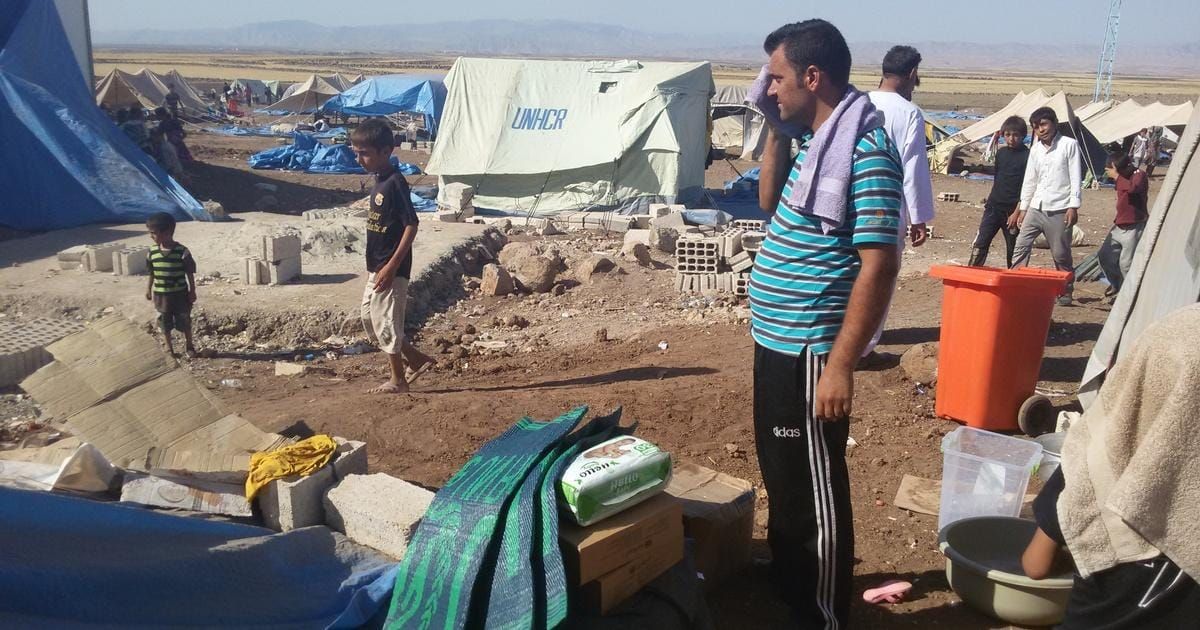
How an ancient religious minority became the target of a systematic campaign of destruction — and why the search for missing people, accountability and a secure future continues.
Special Report 06
BEYOND THE LINES · HISTORY · HUMAN RIGHTS · MIDDLE EAST
The Story in Brief
On 3 August 2014, fighters from Islamic State launched a devastating assault on the Yazidi community in Sinjar, northern Iraq. Thousands were killed, abducted or forced to flee. Women and girls were subjected to sexual slavery, while boys were separated from their families and, in some cases, forcibly recruited.
United Nations investigators subsequently concluded that Islamic State had committed genocide against the Yazidis, alongside war crimes and crimes against humanity.
More than twelve years later, the consequences remain profound. Families continue searching for missing relatives, survivors face lasting trauma, and many displaced Yazidis have been unable to return safely to their homes.
This Special Report examines the history of the Yazidi people, the crimes committed against them, the failures surrounding their protection and the continuing struggle for justice, recovery and a secure future.
Introduction —. A Genocide the World Must Not Forget
On the morning of 3 August 2014, the lives of thousands of Yazidi families in northern Iraq changed forever.
Fighters belonging to Islamic State, also known as ISIS or Daesh, advanced into the Sinjar region, home to one of the world's oldest surviving religious communities. Villages were attacked, families were separated, and civilians were confronted with a campaign of violence directed at their religious identity.
Men and older boys were killed in mass executions. Women and girls were abducted, transported across territories controlled by Islamic State and subjected to enslavement and sexual violence. Children were taken from their families, and many were exposed to forced religious indoctrination and military training.
Those who managed to escape often fled towards Mount Sinjar, where thousands became trapped without adequate access to food, water or medical care.
The attacks were not simply another episode of violence in Iraq's long history of conflict.
Investigations by the United Nations established that Islamic State had deliberately targeted the Yazidis as a religious group. The crimes were subsequently recognised by UN investigators as genocide, as well as crimes against humanity and war crimes.
Yet the destruction of the Yazidi community did not end with the loss of Islamic State's territorial control.
For survivors, the consequences have continued through years of displacement, separation from loved ones, destroyed homes and an uncertain future. Families still search for relatives who disappeared during the attacks. Others struggle to rebuild their lives in communities where security, infrastructure and political stability remain fragile.
The Yazidi genocide also raises difficult questions about responsibility.
How was a religious minority left so vulnerable? What happened to the security forces responsible for protecting Sinjar? Why did the international community fail to prevent the atrocities? And what does justice mean when so many victims remain missing and entire communities have been displaced?
To understand the genocide, it is necessary to understand the people who were targeted.
The Yazidis are not simply victims of Islamic State. They are a distinct religious community with their own history, sacred traditions, cultural identity and deep connections to the landscapes of northern Mesopotamia.
Their story began long before 2014, and it cannot be reduced to the violence they endured.
This Special Report examines both that history and the consequences of the genocide, drawing on United Nations investigations, human rights documentation, historical research and the testimony of survivors.
It also considers an essential question that remains unresolved more than a decade after the attacks:
How can a community begin to rebuild when so many of its members are still missing, its homeland remains insecure and the struggle for accountability is far from over?
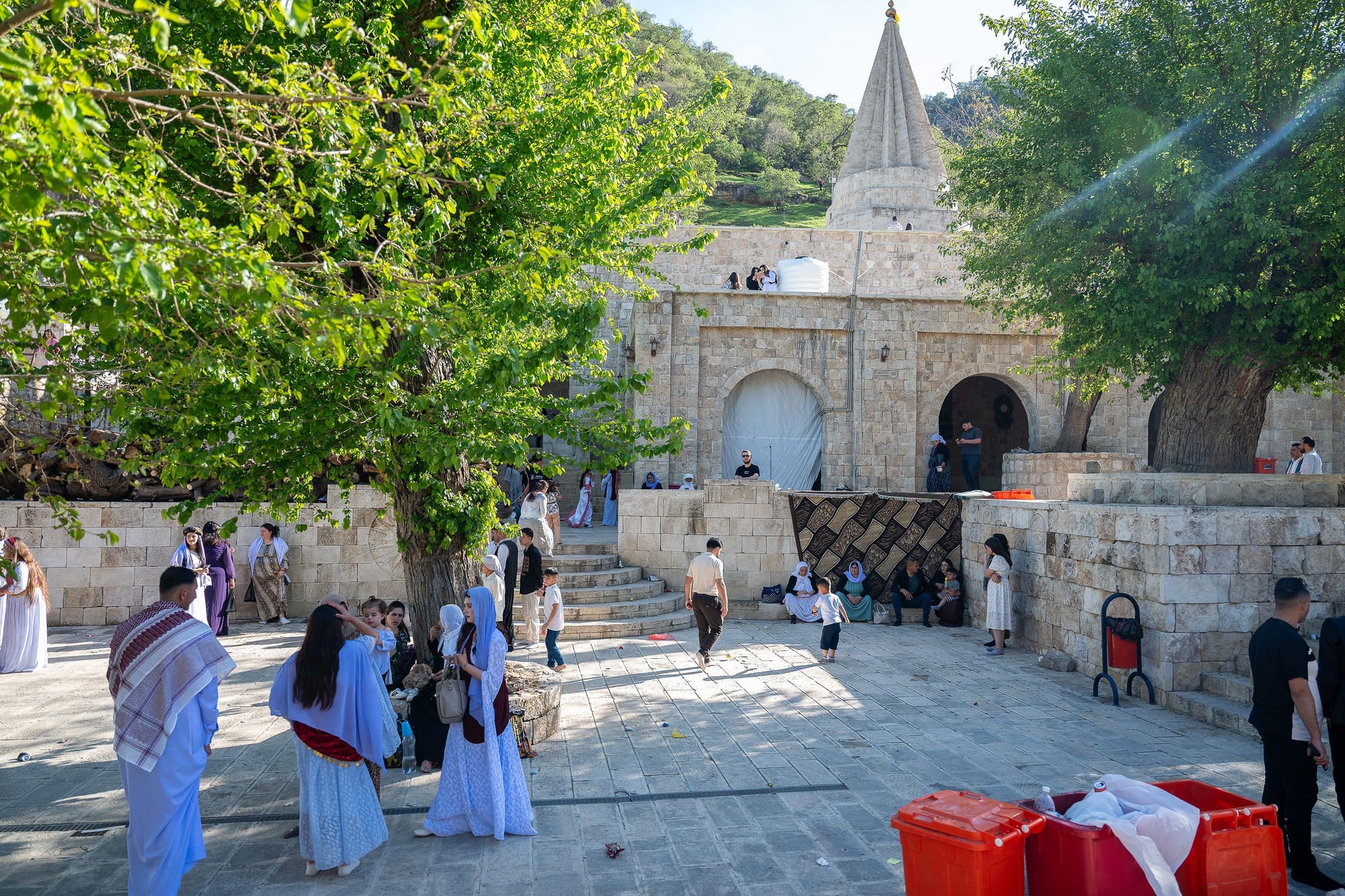
Chapter 1 — Who Are the Yazidis?
An Ancient Community at the Crossroads of Civilisations
Long before the rise of Islamic State, long before the modern borders of Iraq and Syria were drawn, the Yazidis had developed a distinctive religious and cultural identity in the mountainous landscapes of northern Mesopotamia.
Their history is deeply connected to a region that has witnessed the rise and fall of empires, the spread of major religions and centuries of political upheaval.
Yet despite living in the Middle East for generations, the Yazidis remain one of the region's least understood religious communities.
They are neither Muslims nor Christians, although their religious traditions developed in a region shaped by both faiths. Yazidism is a distinct religion, with its own sacred narratives, ceremonies, religious authorities and understanding of the relationship between humanity and God.
For the Yazidis, religion is closely connected to community, ancestry and belonging.
Understanding this identity is essential to understanding why Islamic State targeted them in 2014 — and why the destruction of their communities represented far more than the loss of homes and territory.
Where Do the Yazidis Come From?
The Yazidis are historically concentrated in northern Iraq, particularly in the Sinjar region, known in Kurdish as Şingal, and the Sheikhan district, north-east of Mosul.
Smaller communities have historically lived in parts of Syria, Türkiye, Armenia and Georgia. Over recent decades, migration and displacement have also created significant Yazidi communities in Europe, especially Germany.
Many Yazidis speak Kurmanji, a northern variety of Kurdish, and their religious traditions are closely connected to the region's Kurdish-speaking cultural world.
However, questions of ethnic identity are not entirely straightforward.
Some Yazidis identify as ethnically Kurdish, while others regard the Yazidis as a distinct people with their own ethnic and religious identity. These differences have historical, cultural and political dimensions, particularly in Iraq, where competing national movements have sometimes sought to define the community's place within the wider region.
It would therefore be inaccurate to assume that all Yazidis describe their identity in the same way.
What unites them is their shared religious tradition, historical memory and connection to ancestral places of worship.
Among those places, none holds greater spiritual importance than Lalish.
Lalish — The Spiritual Heart of Yazidism
Located in a valley in northern Iraq, Lalish is the most sacred pilgrimage site in the Yazidi religion.
It is associated with Sheikh Adi ibn Musafir, a twelfth-century religious figure whose teachings and legacy became central to the development of Yazidism in its historically recognisable form.
The sanctuary contains his tomb and serves as an important centre of religious life.
For Yazidis, Lalish is more than a historical monument. It is a place of pilgrimage, prayer, purification and collective belonging.
Pilgrims traditionally remove their shoes before entering the sacred valley. Religious ceremonies involve the use of water, oil lamps and other ritual practices that reflect the community's spiritual traditions.
The site also connects Yazidis living across different countries to a shared religious heritage.
This connection became particularly significant after the displacement caused by the 2014 genocide, when many families found themselves separated not only from their homes but also from the religious landscapes that had shaped their lives for generations.
What Do Yazidis Believe?
Yazidism is a monotheistic religion.
Yazidis believe in one supreme God, who created the world and entrusted its care to seven holy beings, often described as angels.
The most prominent of these is Tawûsê Melek, commonly known as the Peacock Angel.
Within Yazidi belief, Tawûsê Melek occupies a central spiritual position and is associated with divine authority and responsibility for the world.
This belief has frequently been misunderstood by outsiders.
Historically, some Muslim and Christian observers incorrectly associated the Peacock Angel with Satan. Such interpretations contributed to accusations that Yazidis were devil worshippers.
That description is false and does not reflect Yazidi religious belief.
For Yazidis, Tawûsê Melek is a sacred figure, not an embodiment of evil.
The misunderstanding has had serious historical consequences. Religious hostility towards the Yazidis has repeatedly drawn upon distorted descriptions of their faith, sometimes portraying them as heretics or legitimate targets of persecution.
Islamic State later exploited these prejudices as part of its ideological justification for violence against the community.
The distinction is fundamental: Yazidis were not persecuted because of what their religion actually teaches, but because of the way extremist perpetrators chose to define and demonise them.
A Religion Preserved Through Oral Tradition
Unlike religions organised primarily around a single universally accepted written scripture, Yazidism has historically relied heavily on oral transmission.
Religious knowledge has been preserved through sacred hymns, known as qewls, prayers, narratives, ceremonies and the teachings of religious specialists.
This oral tradition has played a central role in maintaining the faith across generations.
Yazidi religious life also includes a hereditary system of religious roles and community structures. These traditions have historically helped preserve the community's continuity, although they have also shaped rules concerning marriage and membership.
Traditional Yazidi religious identity is generally inherited through birth rather than acquired through conversion.
Marriage outside the community has historically been prohibited under religious and social norms, although attitudes and individual experiences vary.
These practices developed within a community that often lived as a vulnerable minority surrounded by larger religious and political populations.
For generations, maintaining clear communal boundaries was one means of preserving a distinctive identity.
Today, however, displacement, migration and changing social attitudes have created new discussions within Yazidi communities about tradition, belonging and the future of their religion.
Culture, Family and Everyday Life
Yazidi identity cannot be understood through religious doctrine alone.
For many families, community life has traditionally revolved around extended family relationships, agriculture, seasonal celebrations, religious ceremonies and close connections to ancestral villages.
Before the Islamic State attacks, many Yazidis in Sinjar lived in rural communities where farming and livestock formed important parts of the local economy.
Religious festivals brought families and communities together.
One of the most significant celebrations is Çarşema Sor, often translated as Red Wednesday, the Yazidi New Year, traditionally observed in April.
The festival is associated with renewal, creation and the natural world. Families may gather, decorate eggs and take part in ceremonies reflecting the spiritual importance of the occasion.
Music, storytelling and oral poetry have also contributed to the preservation of Yazidi history and cultural memory.
These traditions are especially important because much of the community's past has been transmitted through generations rather than preserved in extensive written historical archives.
When Yazidi villages were destroyed in 2014, the losses therefore extended beyond buildings and possessions.
Places of worship, family records, local traditions and the social structures through which religious knowledge was passed on were also placed at risk.
A History Marked by Persecution
The persecution of the Yazidis did not begin with Islamic State.
Throughout their history, Yazidi communities have experienced episodes of violence, forced displacement and pressure from surrounding political and religious authorities.
Under different regional rulers, including during periods of Ottoman rule, some Yazidi communities faced military campaigns, coercive attempts at religious conversion and efforts to bring autonomous areas under stronger central control.
Yazidi collective memory often refers to repeated campaigns of destruction through the concept of ferman, a term associated with decrees or campaigns of persecution.
The precise number and historical classification of these episodes are matters of scholarly discussion, and not every conflict remembered within the community can be treated as an independently documented genocide.
Nevertheless, the historical record establishes that the Yazidis have repeatedly experienced serious persecution because of their religious identity and their position within contested territories.
This history shaped a collective awareness of vulnerability.
It also helps explain why the events of August 2014 were experienced not simply as an unprecedented attack, but as another devastating episode in a much longer history of persecution.
The Yazidis and the Modern Iraqi State
The establishment of modern Iraq brought new political structures, but it did not eliminate the difficulties faced by the Yazidi community.
Sinjar became part of a region marked by competing political interests, questions of ethnic identity and disputes over administrative control.
During the rule of Saddam Hussein, state policies affected Kurdish-speaking and other minority communities in northern Iraq, including Yazidis. Arabisation measures, forced relocation and the restructuring of rural settlements altered traditional patterns of life in parts of the region.
Following the 2003 US-led invasion of Iraq, the political situation changed again.
Sinjar became entangled in disputes between the federal Iraqi authorities and the Kurdistan Regional Government, while local communities remained exposed to insecurity and armed violence.
The Yazidis were particularly vulnerable because of their minority status, geographical position and limited ability to control the security forces operating around them.
These conditions would become critically important in August 2014.
When Islamic State advanced towards Sinjar, the community found itself confronting an armed organisation that regarded its religious existence as unacceptable.
More Than a Community Defined by Tragedy
The genocide of 2014 has become the event most closely associated with the Yazidis in international reporting.
Yet defining the community exclusively through its suffering risks overlooking the history, culture and religious traditions that Islamic State attempted to destroy.
The Yazidis are an ancient and living religious community.
They have maintained distinctive beliefs, ceremonies, family traditions and sacred places through centuries of political change.
Their identity is neither a historical curiosity nor simply a chapter in the story of Iraq's conflicts.
It remains a living expression of the Middle East's religious diversity.
Understanding who the Yazidis are is therefore the starting point for understanding the scale of what happened to them.
The violence of 2014 was directed not only against individuals, but against a community's ability to continue existing as a distinct religious group.
To understand the genocide, we must first recognise what its perpetrators sought to erase: a people, a faith and a cultural heritage that had survived for generations.
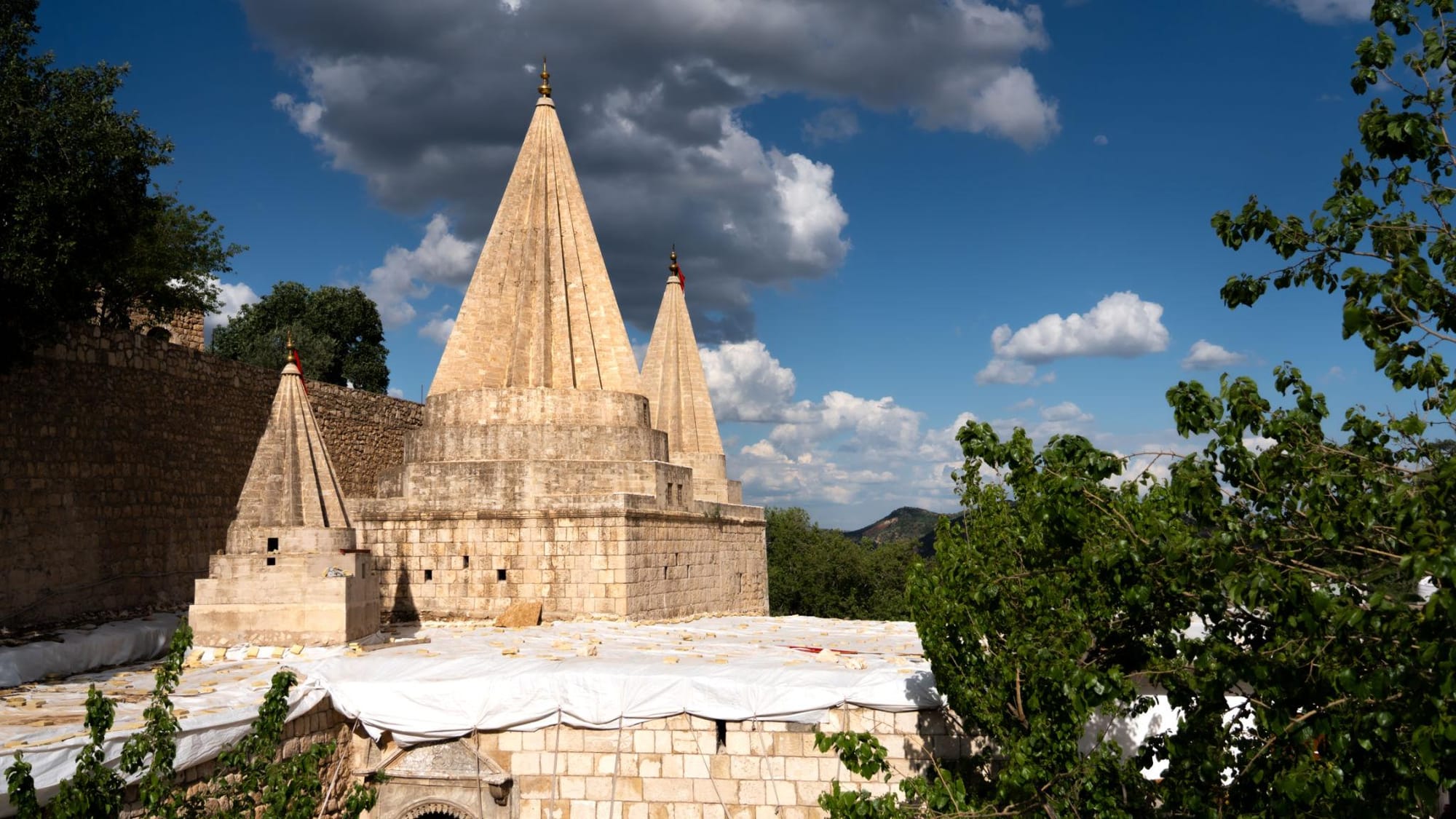
Chapter 2 — An Ancient Religion in a Changing Middle East
A Faith Shaped by Centuries of History
The Yazidi religion is often described as one of the Middle East's ancient faiths. Its traditions contain elements associated with the religious and cultural history of Mesopotamia, Iran and the wider region, while its present-day religious institutions developed through a long and complex historical process.
Yet the precise origins of Yazidism remain a subject of academic debate.
Some popular accounts portray the religion as a direct and largely unchanged survival of pre-Islamic belief systems. Others emphasise the importance of medieval religious movements, particularly those associated with the twelfth-century figure Sheikh Adi ibn Musafir.
The historical evidence supports a more complicated picture.
Yazidism developed through interactions between different religious traditions, local communities and changing political authorities. Its theology, sacred narratives and religious institutions cannot be explained through a single historical event or attributed to one founder.
Understanding this development is important because the religion has frequently been described by outsiders rather than understood through the beliefs and experiences of Yazidis themselves.
For centuries, those external interpretations influenced how rulers, religious scholars and neighbouring communities treated them.
At times, misunderstanding became a justification for discrimination and violence.
The Religious Landscape of Ancient Mesopotamia
The region historically associated with the Yazidis lies within northern Mesopotamia, a territory shaped by some of the world's earliest urban civilisations.
Ancient Mesopotamian societies developed complex religious traditions involving sacred places, seasonal ceremonies and relationships between human communities and the natural world.
Over successive centuries, the region came under the influence of different empires and religious movements, including those associated with Persian traditions, Christianity, Islam and various local religious communities.
Scholars have identified possible connections between aspects of Yazidi tradition and older Iranian and Mesopotamian religious ideas.
These include themes involving sacred light, ritual purity, cosmology and the symbolic importance of natural elements.
However, similarities between religious practices do not necessarily establish direct historical continuity.
Religions frequently develop through cultural exchange, reinterpretation and adaptation.
The historical origins of Yazidism therefore require careful distinction between religious tradition, scholarly interpretation and evidence that can be independently documented.
What is clear is that the Yazidi faith emerged within a region where religious identities had been interacting and evolving for many centuries.
Sheikh Adi and the Formation of Yazidi Religious Tradition
One of the most important figures in Yazidi religious history is Sheikh Adi ibn Musafir, who lived during the twelfth century.
He was a Muslim mystic associated with Sufi traditions and settled in the Lalish valley, in what is now northern Iraq.
His religious community became an important centre of spiritual teaching and authority.
Following his death, his tomb at Lalish developed into a major pilgrimage site.
Over time, the community associated with Sheikh Adi underwent a distinctive religious transformation. Elements of Islamic mysticism interacted with existing regional beliefs and traditions, contributing to the formation of the Yazidi religious system known today.
The precise stages of this development remain debated among historians.
Nevertheless, Sheikh Adi's influence is central to understanding how Yazidi religious institutions acquired their later structure.
Within Yazidi tradition, he occupies a sacred position, and Lalish remains inseparable from his spiritual legacy.
This historical connection should not be confused with the claim that Yazidism is simply a branch of Islam.
Although its development was influenced by Islamic and Sufi environments, Yazidism is a separate religious tradition with its own theology, rituals and communal identity.
The Seven Holy Beings and the Meaning of the Peacock Angel
At the centre of Yazidi religious cosmology is the belief that God created the world and entrusted aspects of its care to seven holy beings.
The most prominent is Tawûsê Melek, the Peacock Angel.
Yazidi religious narratives describe the Peacock Angel as a figure of divine authority and spiritual importance.
The symbolic meaning of this figure has sometimes been misunderstood by outsiders who attempted to interpret Yazidi beliefs through the theological categories of Islam or Christianity.
In particular, accounts of the Peacock Angel's relationship with God have sometimes been compared with narratives concerning Iblis or Satan.
Such comparisons contributed to the false accusation that Yazidis worship the devil.
For Yazidis, however, the Peacock Angel is not a representation of evil.
The accusation reflects an external interpretation that misrepresents the community's own understanding of its faith.
Historically, this misunderstanding was not merely a theological disagreement.
It helped create an environment in which Yazidis could be portrayed as religious outsiders whose beliefs did not deserve protection.
In societies where religious classification influenced legal status and political authority, such accusations could have serious consequences.
The Islamic State organisation later adopted an extremist interpretation that denied the legitimacy of Yazidi religious identity and used it to justify persecution.
Religious Knowledge and the Role of Oral Tradition
The preservation of Yazidi religious knowledge has historically depended heavily on oral transmission.
Sacred hymns, prayers, stories and religious teachings were passed between generations through specialised religious figures and family traditions.
Among the most important forms of religious expression are the qewls, sacred hymns that communicate theological ideas, historical memory and moral teachings.
The oral character of Yazidi religious culture has sometimes created misunderstandings among outside observers accustomed to religions organised around a single written scripture.
It has also contributed to debates over texts sometimes presented as sacred Yazidi books.
Two works frequently mentioned in older literature are the Kitêba Cilwe and the Mishefa Reş, commonly translated as the Book of Revelation and the Black Book.
Their origins, textual histories and authority within Yazidi religious practice are disputed.
Scholars have cautioned against treating these texts as universally accepted scriptures comparable to the Quran or Bible.
For many Yazidis, religious knowledge is transmitted through living tradition rather than through one standardised written canon.
This distinction is essential when examining the religion's historical development.
It also helps explain why the destruction of communities, displacement of religious specialists and separation of families can threaten forms of cultural knowledge that are difficult to replace.
Religious Leadership and Community Organisation
Yazidi religious life has historically been organised through hereditary religious and social structures.
Religious leadership includes figures such as the Baba Sheikh, an important spiritual authority, alongside other religious specialists responsible for ceremonies, teaching and communal traditions.
The community has also traditionally maintained hereditary social groupings, including sheikhs, pirs and murids.
These relationships have shaped religious responsibilities, marriage traditions and the transmission of spiritual knowledge.
Such structures contributed to the preservation of Yazidi identity during periods when the community lacked political autonomy or faced pressure from surrounding authorities.
At the same time, they have become subjects of internal discussion, particularly among younger generations and members of the diaspora.
Questions concerning marriage, gender, communal belonging and the relationship between inherited traditions and individual choice are increasingly relevant to Yazidis living in different social and political environments.
These debates should not be interpreted as evidence that the community is abandoning its faith.
Rather, they illustrate the challenges faced by a religious tradition seeking continuity while responding to changing circumstances.
Yazidis, Muslims and Christians: Centuries of Coexistence and Conflict
Yazidi communities have historically lived alongside Muslim, Christian and other religious populations across northern Iraq and neighbouring regions.
Their relationships with surrounding communities have varied considerably over time.
There have been periods of peaceful coexistence, trade, shared local customs and cooperation.
There have also been episodes of discrimination, coercion and armed conflict.
Under certain political authorities, Yazidis were treated as religious outsiders who did not fit easily within established legal categories.
In Islamic societies, the legal and social treatment of religious minorities varied according to time, place, political circumstances and prevailing interpretations of religious law.
Some non-Muslim communities received recognised forms of protection under particular legal arrangements, although these arrangements did not establish equality by modern human rights standards.
The position of the Yazidis was often more precarious.
Their religious beliefs were sometimes classified as heretical, and accusations of devil worship contributed to hostility.
Nevertheless, it would be inaccurate to portray the entire history of Muslim–Yazidi relations as one continuous conflict.
Local relationships were often more complex than the policies of rulers or the writings of religious authorities.
Recognising this complexity is essential to understanding both historical persecution and the conditions that allowed Yazidi communities to survive.
Ottoman Rule and Campaigns Against Yazidi Communities
During the Ottoman period, Yazidi communities experienced repeated tensions with imperial authorities and regional power holders.
The Ottoman Empire governed a religiously and ethnically diverse population, and its policies towards peripheral communities often combined taxation, military recruitment, administrative centralisation and efforts to enforce political control.
Yazidi communities, particularly those living in mountainous areas, sometimes resisted attempts to impose greater state authority.
Religious difference could intensify these conflicts.
Some campaigns involved coercive religious pressure, military attacks and the displacement of local populations.
In the nineteenth century, as Ottoman authorities sought to strengthen central control, tensions with Yazidi communities became particularly severe in certain areas.
These events contributed to the community's collective memory of persecution.
However, the causes of individual campaigns were not always exclusively religious.
Political autonomy, tribal relationships, local rivalries, taxation and military obligations could also play important roles.
A careful historical account must therefore avoid reducing every episode of Ottoman–Yazidi conflict to a single explanation.
For the Yazidis, however, the cumulative effect of these campaigns was profound.
They reinforced the importance of communal solidarity and the preservation of religious identity.
The Meaning of Ferman in Yazidi Historical Memory
Within Yazidi collective memory, the term ferman has acquired particular significance.
Originally associated with an official decree or order, the term is used in Yazidi narratives to describe campaigns of persecution and destruction.
Some Yazidi accounts refer to a long series of historical fermans, reflecting the community's understanding of repeated existential threats.
The number and classification of these events vary between oral traditions and historical accounts.
They should not automatically be treated as a verified count of legally established genocides.
Nevertheless, the concept expresses something important about the Yazidi experience.
Persecution is remembered not simply as a collection of isolated incidents, but as part of a longer history in which religious identity repeatedly became a source of vulnerability.
When Islamic State attacked Sinjar in August 2014, many Yazidis understood the violence through this historical framework.
For some survivors, the genocide became known as another ferman — a new catastrophe added to a collective memory of earlier destruction.
A Faith Confronting the Modern World
During the twentieth and twenty-first centuries, Yazidi communities encountered new political borders, national identities, migration patterns and changing social expectations.
The creation of modern states transformed the legal and political environment in which the community lived.
In Iraq, Yazidis became part of a state marked by tensions over religion, ethnicity, language and territorial control.
In Syria and Türkiye, communities faced different political pressures, including policies affecting minority languages and identities.
Migration to Europe created new opportunities for religious freedom and cultural preservation, while also raising questions about how traditional practices could be maintained across generations.
These developments were already reshaping Yazidi life before 2014.
The genocide accelerated them dramatically.
Mass displacement separated families from ancestral villages, religious centres and established community networks.
For survivors who eventually settled abroad, preserving Yazidi identity became connected to questions of language, education, cultural transmission and the future of younger generations.
The survival of the religion increasingly depended not only on the security of its traditional homeland but also on the ability of dispersed communities to maintain meaningful connections with one another.
Understanding the Past Before Examining the Genocide
The history of Yazidism demonstrates why the community cannot be understood solely through the violence committed against it.
Its religious traditions developed through centuries of cultural interaction and spiritual change.
Its institutions helped preserve a distinctive identity despite political instability and periods of persecution.
Its sacred places, oral traditions and communal structures connected generations across changing empires and national borders.
Yet this history also reveals a recurring vulnerability.
When political power and religious intolerance combined, Yazidis could be treated as outsiders whose rights, beliefs and security were considered less worthy of protection.
Islamic State did not invent the prejudices that had historically surrounded Yazidi religious identity.
It adopted and radicalised certain hostile interpretations, transforming religious discrimination into a systematic campaign of destruction.
The events of August 2014 therefore cannot be understood without recognising both the community's long history and the political conditions that left it exposed.
The next chapter turns to Sinjar before the genocide — a region of villages, families, religious traditions and ordinary daily life that would soon become the centre of one of the most devastating atrocities committed by Islamic State.
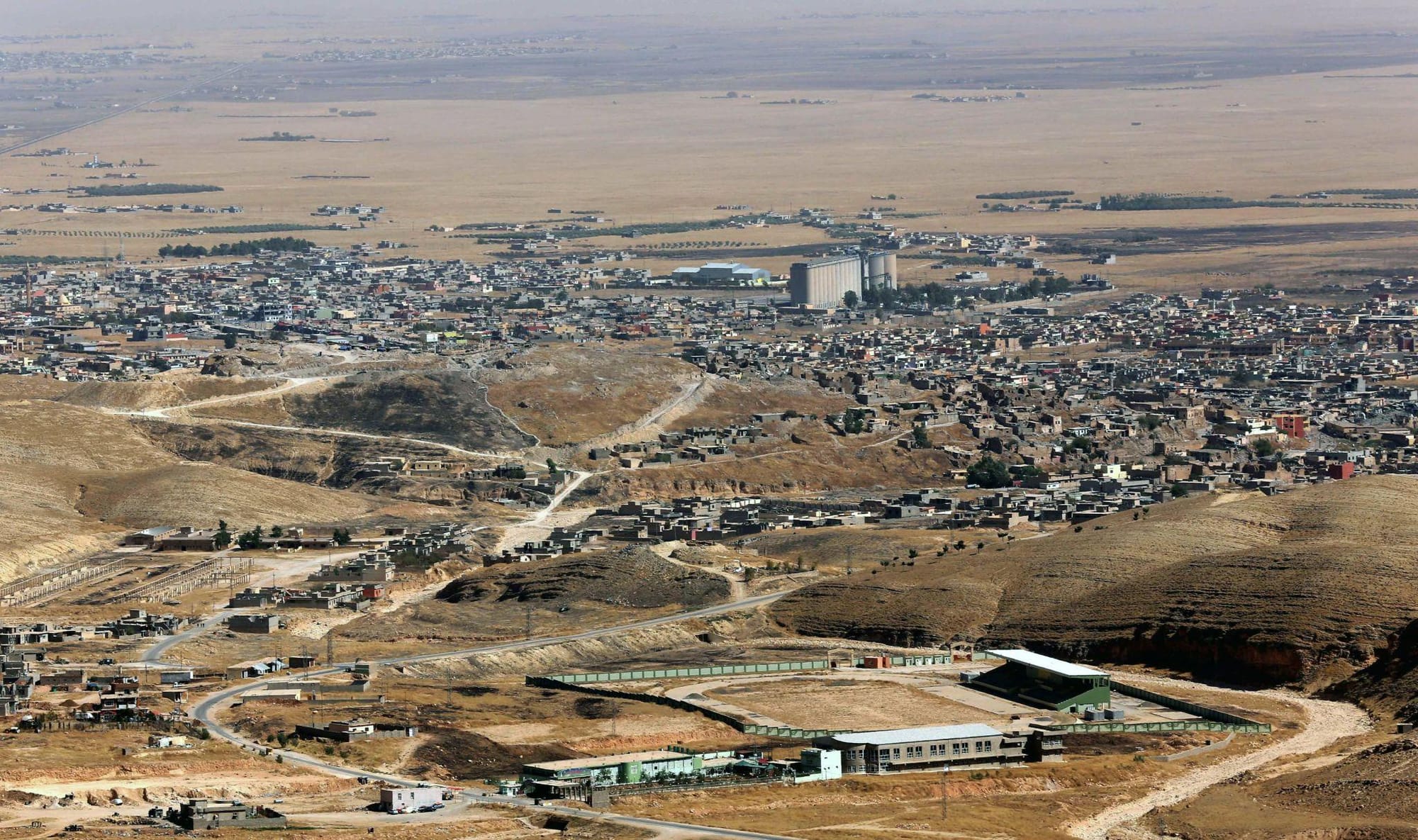
Chapter 3 — Sinjar Before the Genocide
A Homeland Between the Mountains and the Plains
Before Sinjar became internationally associated with genocide, displacement and mass graves, it was home to generations of Yazidi families.
Located in north-western Iraq, close to the Syrian border, the Sinjar region consists of a mountain range surrounded by plains, agricultural settlements and villages. Its geography has shaped the lives of the communities living there for centuries.
The mountain, known as Mount Sinjar or Shingal, holds particular historical and cultural significance for the Yazidis. It has served as a place of refuge during earlier periods of persecution and remains closely connected to the community's collective identity.
For many Yazidis, Sinjar was more than a geographical location.
It was where families had lived for generations, where religious traditions were preserved, and where communities maintained close relationships through marriage, agriculture, trade and shared cultural practices.
The region included Yazidi villages and towns alongside Arab and other communities, reflecting the wider ethnic and religious diversity of northern Iraq.
Daily life was shaped by local traditions, economic conditions and the political realities of a country that had experienced decades of conflict.
Although Sinjar was not free from hardship or insecurity, its inhabitants continued to build families, maintain businesses, educate their children and preserve their religious identity.
These ordinary aspects of life are essential to understanding what was destroyed in August 2014.
Villages, Families and Community Life
Much of the Yazidi population in Sinjar traditionally lived in rural settlements.
Agriculture and livestock provided livelihoods for many families, while others worked in local markets, construction, public services and small businesses.
Family relationships played an important role in social organisation.
Extended families often lived close to one another, and community networks provided practical support during periods of economic difficulty or political instability.
Religious celebrations, weddings and family gatherings helped maintain connections between villages and generations.
Traditional Yazidi customs remained important, particularly in communities where religious identity was closely linked to family ancestry and communal belonging.
Children attended local schools where facilities were available, while young people increasingly sought educational and employment opportunities beyond their villages.
As in other parts of rural Iraq, access to services and economic opportunities varied considerably.
Some settlements faced shortages of reliable infrastructure, employment and public investment.
Nevertheless, Sinjar remained a living community rather than simply a remote territory on Iraq's political map.
Its villages contained homes, schools, shops, agricultural land and places of religious significance.
When Islamic State later attacked, the destruction affected not only physical buildings but also the social networks that had supported everyday life.
The Legacy of Saddam Hussein's Rule
The political and demographic landscape of Sinjar had been shaped by earlier Iraqi governments, particularly under Saddam Hussein.
During the Ba'athist period, policies of Arabisation and population control affected several communities in northern Iraq.
In the Sinjar region, government-directed resettlement programmes altered traditional settlement patterns.
Many Yazidi families were moved from smaller villages into larger planned settlements, often referred to as collective towns or mujamma'at.
These policies were associated with broader efforts to strengthen state control over rural populations and politically sensitive territories.
The consequences were significant.
Families lost access to traditional village environments, agricultural land and established community structures.
The reorganisation of settlements also changed the relationship between local populations and the surrounding landscape.
For Yazidis, whose cultural and religious identity was closely connected to ancestral places, these disruptions carried consequences beyond housing and infrastructure.
They contributed to a longer history of state interference in the community's ability to determine its own future.
The legacy of these policies remained visible in Sinjar long after Saddam Hussein's government fell in 2003.
After 2003: A Region Caught Between Competing Authorities
The US-led invasion of Iraq in 2003 removed Saddam Hussein from power but was followed by prolonged instability, insurgency and political conflict.
Northern Iraq developed a complicated system of competing authorities.
The Kurdistan Regional Government exercised substantial political and security influence in parts of the north, while the federal government in Baghdad maintained its own constitutional claims and responsibilities.
Sinjar became one of the territories affected by these competing interests.
Although the district formally belonged to Nineveh Governorate, Kurdish political parties and security forces developed significant influence in the area.
The wider question of disputed territories remained unresolved.
Article 140 of Iraq's 2005 Constitution established a process intended to address the status of disputed areas, including normalisation, a census and a referendum.
The constitutional deadline for completing that process passed without a final settlement.
For residents of Sinjar, the unresolved dispute created uncertainty about political representation, administration and security.
Some Yazidis supported Kurdish political movements, while others favoured stronger links with Baghdad or advocated distinct forms of local representation and autonomy.
There was no single political position shared by the entire Yazidi community.
These divisions became particularly important when security arrangements were tested.
Security Without a Clear Chain of Responsibility
In the years before 2014, security in and around Sinjar involved several actors, including Kurdish Peshmerga forces, Iraqi authorities and local security personnel.
The presence of armed forces did not necessarily mean that responsibility for protecting civilians was clearly defined or effectively coordinated.
Political competition between Baghdad and Erbil complicated the wider security environment.
Local communities depended on decisions made by authorities whose priorities and command structures did not always align.
This was especially concerning in a region situated close to Syria, where armed conflict had intensified after 2011.
The borderlands between Iraq and Syria increasingly became important routes for insurgent groups, weapons movements and cross-border militant activity.
As Islamic State expanded its operations, the threat to communities in northern Iraq became more serious.
Yet the scale and speed of the organisation's territorial advances in 2014 exposed weaknesses across Iraq's security institutions.
For the Yazidis, the central question was whether the forces stationed around Sinjar would remain capable of defending the population if a major assault occurred.
That question would receive a devastating answer in August.
The Warning Signs: Violence Before 2014
The danger facing the Yazidis did not emerge without warning.
On 14 August 2007, coordinated suicide bombings struck Yazidi communities in the Sinjar district, particularly the settlements of Qahtaniya and Jazeera, also known as Til Ezer and Siba Sheikh Khidir.
The attacks killed hundreds of people and destroyed large numbers of homes.
They were among the deadliest attacks against civilians during the Iraq conflict.
The bombings demonstrated the vulnerability of Yazidi communities to organised extremist violence.
They also revealed how religious identity could become a basis for deliberate targeting.
Although the precise operational responsibility for every aspect of the attacks has been discussed in reporting and investigations, the violence was widely attributed to militants associated with al-Qaeda in Iraq, the predecessor network from which Islamic State later emerged.
For Yazidi families, the bombings left lasting memories of insecurity and loss.
The attacks also illustrated the limitations of existing protection arrangements.
Seven years later, the threat would return on a far larger scale.
The Rise of Islamic State
Islamic State emerged from the violent insurgent networks that developed in Iraq following the 2003 invasion.
Its organisational roots included al-Qaeda in Iraq, led for a period by Abu Musab al-Zarqawi.
Over time, the movement underwent changes in leadership, structure and strategy.
The conflict in Syria created new opportunities for expansion, allowing the organisation to operate across an increasingly unstable border region.
By 2013 and 2014, Islamic State had strengthened its military capabilities and territorial ambitions.
In June 2014, its fighters captured Mosul, Iraq's second-largest city, following the collapse of Iraqi security positions.
The fall of Mosul represented a major turning point.
Islamic State acquired territory, military equipment, financial resources and a base from which it could expand further across northern Iraq.
The organisation subsequently declared a so-called caliphate under Abu Bakr al-Baghdadi.
Its ideology combined an extreme interpretation of religion with systematic violence, territorial control and the persecution of communities it regarded as enemies.
Religious minorities, including Yazidis and Christians, faced growing danger.
For the Yazidis of Sinjar, the threat was especially severe because Islamic State's ideology denied the legitimacy of their religious identity.
Why the Yazidis Were Particularly Vulnerable
Several factors contributed to the vulnerability of Yazidi communities before the August 2014 attacks.
Their geographical position placed them close to territories where Islamic State was expanding.
Their minority religious identity made them a specific ideological target.
Their political representation was fragmented, and security arrangements were influenced by the unresolved dispute between Baghdad and Erbil.
Many communities also lacked independent military capabilities sufficient to resist a large, organised assault.
The historical concentration of Yazidi populations in identifiable villages and settlements made civilian communities vulnerable once armed forces entered the region.
These factors did not make the genocide inevitable.
Responsibility for the crimes belongs to the perpetrators who planned, ordered and carried them out.
However, the surrounding political and security conditions help explain how Islamic State was able to attack so many communities within a short period.
They also raise questions about whether more effective protection, intelligence sharing and emergency planning could have reduced the scale of the catastrophe.
Those questions remain important to the wider examination of responsibility.
The Days Before the Attack
By late July 2014, Islamic State had already demonstrated its ability to seize territory and overwhelm Iraqi security positions.
Its fighters were operating in areas close to Sinjar.
The atmosphere in northern Iraq was increasingly uncertain.
Some residents were aware of the danger posed by the organisation, while others relied on the continued presence of security forces and assurances that their communities would be defended.
Subsequent survivor accounts and investigations described confusion and fear as the threat approached.
The withdrawal of Peshmerga forces from parts of Sinjar during the Islamic State offensive became one of the most disputed aspects of the events.
Yazidi survivors and community representatives have accused Kurdish security authorities of abandoning civilians, while Kurdish officials have offered differing explanations involving military conditions, the speed of the assault and the collapse of defensive positions.
Establishing the precise decisions, communications and responsibilities involved requires careful examination of available testimony and documentary evidence.
The consequences, however, were undeniable.
As Islamic State advanced in the early hours of 3 August 2014, large numbers of Yazidi civilians were left without effective protection.
Families faced immediate decisions about whether to flee, hide or remain in their homes.
For many, there was little time to escape.
A Community on the Edge of Catastrophe
On the eve of the genocide, Sinjar was a region already marked by historical displacement, political uncertainty and recurring security threats.
Yet it was also a homeland where Yazidi families continued to preserve their faith, maintain their traditions and build their futures.
The events that followed would transform that landscape.
Villages would be emptied.
Families would be separated.
Thousands of civilians would be killed, abducted or driven from their homes.
Women and girls would be subjected to organised enslavement, while children would face separation, indoctrination and violence.
For those who escaped towards Mount Sinjar, survival would depend on finding shelter, water and a route to safety.
The attack was not simply the result of a regional security collapse.
It was a deliberate campaign against a religious community, carried out by an organisation whose ideology treated the Yazidis' continued existence as unacceptable.
The next chapter examines the events of 3 August 2014: how Islamic State entered Sinjar, what happened as security positions collapsed, and how an entire community was exposed to a campaign of genocidal violence.
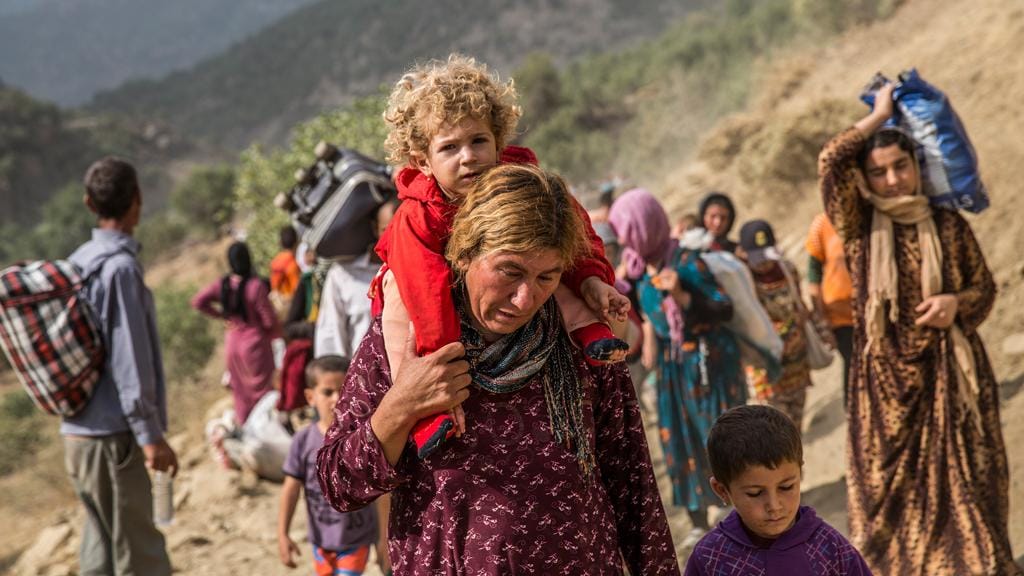
Chapter 4 — 3 August 2014: The Day Islamic State Attacked
The Morning That Changed Sinjar Forever
In the early hours of Sunday, 3 August 2014, fighters belonging to Islamic State launched a coordinated assault on the Sinjar region of northern Iraq.
For the Yazidi families living in its towns and villages, the attack marked the beginning of a catastrophe that would permanently change their community.
Only a day earlier, ordinary life had continued across the region. Families had been preparing meals, working in their homes and fields, visiting relatives and making plans for the days ahead.
By the following morning, entire villages were fleeing, armed fighters were entering settlements, and thousands of civilians were confronted with the possibility of death, captivity or forced religious conversion.
The assault was not an isolated military operation.
It formed part of Islamic State's wider campaign to establish territorial control across Iraq and Syria. But the treatment of the Yazidis revealed an additional objective: the destruction of a religious community whose beliefs the organisation considered unacceptable.
United Nations investigators would later establish that the crimes committed against the Yazidis constituted genocide, alongside crimes against humanity and war crimes.
The events of 3 August were the beginning of that campaign.
A Coordinated Attack from Several Directions
By August 2014, Islamic State had already captured Mosul and other important territories in northern Iraq.
Its forces controlled strategic routes connecting areas of Iraq and Syria, allowing fighters, vehicles and weapons to move across the region.
In the early hours of 3 August, Islamic State fighters advanced towards Sinjar from several directions.
According to the United Nations Commission of Inquiry, the attackers came from areas around Mosul and Tal Afar in Iraq, as well as territories in north-eastern Syria.
The offensive was organised and involved hundreds of fighters operating in coordination.
Towns and villages around Mount Sinjar were attacked, placing civilian communities under immediate threat.
The operation targeted an area where Yazidis had lived for generations.
As fighters approached, residents heard gunfire and received warnings from neighbouring communities. Some attempted to leave immediately, while others waited for instructions or believed the security forces stationed nearby would prevent the attackers from entering their villages.
The speed of the offensive left many families with little time to prepare.
For those living in settlements along the attackers' routes, the distance between apparent safety and direct danger could be measured in hours.
The Withdrawal of the Peshmerga
One of the most consequential events surrounding the attack was the withdrawal of Kurdish Peshmerga forces from parts of Sinjar.
Before the offensive, Peshmerga units had maintained a significant presence in the region.
Many Yazidi civilians understood these forces to be responsible for their protection.
However, as Islamic State advanced, numerous Peshmerga positions were abandoned or withdrawn.
The United Nations Commission of Inquiry documented that many Peshmerga reportedly withdrew in the face of the offensive and that the decision was not effectively communicated to the civilian population.
Survivors later described discovering that the armed forces they had expected to defend their villages were no longer present.
Some local Yazidi fighters attempted to resist the attackers, but they lacked the equipment and military support required to confront a large, organised force.
The withdrawal became a source of profound anger among survivors.
Yazidi community representatives accused Kurdish political and military authorities of abandoning the population, while Kurdish officials have offered explanations involving military circumstances, the rapid advance of Islamic State and the inability of their forces to maintain defensive positions.
The precise decisions made by individual commanders, and the extent to which civilian evacuation could have been organised, remain important questions of accountability.
What is established is that large numbers of Yazidi civilians were left exposed to the advancing fighters.
For many families, the disappearance of effective protection removed their last opportunity to escape safely.
Villages Overrun and Families Forced to Flee
As Islamic State entered Yazidi settlements, the consequences were immediate.
Families abandoned their homes, often taking only the belongings they could carry.
Some fled in vehicles towards Mount Sinjar, while others escaped on foot.
Parents attempted to gather their children. Elderly relatives struggled to keep pace. Families travelling together became separated in the confusion.
The roads leading away from threatened villages became routes of desperate flight.
Not everyone could leave.
Some residents lacked transport. Others were physically unable to travel or were caught before they reached a safe route.
In several settlements, Islamic State fighters established control over roads and gathering points, restricting civilian movement.
Those who remained were exposed to detention, forced conversion, separation from family members and killing.
Human Rights Watch subsequently documented cases in which entire extended families were captured, including young children and elderly relatives.
The attack rapidly transformed Sinjar from a region of inhabited villages into a landscape of displacement and captivity.
The Separation of Men, Women and Children
One of the defining features of Islamic State's campaign was the systematic separation of captured Yazidis.
Survivor testimony and subsequent investigations established that fighters frequently divided captives according to age and gender.
Men and older boys were separated from women and younger children.
Many were confronted with demands to convert to Islamic State's interpretation of Islam.
Those who refused faced execution.
Women and girls were subjected to a different but equally deliberate system of persecution.
Thousands were abducted and transferred to detention sites in Iraq and Syria.
Many were subsequently subjected to sexual slavery, forced marriage, rape and repeated transfers between captors.
Children were also targeted.
Some boys were separated from their mothers, subjected to religious indoctrination and later trained for military purposes.
These practices were not simply the uncontrolled actions of individual fighters.
United Nations investigators established that Islamic State developed and administered systems of enslavement and abuse, supported by its extremist ideology and organisational structures.
The separation of families served both immediate military purposes and the broader objective of destroying the Yazidis as a distinct religious community.
For many survivors, the moment of separation was the last time they saw their relatives.
The First Mass Killings
As the offensive continued, reports emerged of Yazidi men and older boys being executed.
Islamic State fighters killed captives in multiple locations across the Sinjar region.
Some victims were shot after refusing forced conversion.
Others were killed during the capture of villages or following detention.
Subsequent investigations identified mass graves and collected evidence relating to killings in settlements including Kocho, Hardan and other parts of Sinjar.
The killings did not all occur on 3 August itself.
Some massacres took place during the days and weeks that followed, as Islamic State consolidated control over captured communities.
This distinction is important when reconstructing the chronology of the genocide.
The attack on 3 August initiated a sustained campaign of violence. It was not a single-day atrocity.
The scale of the killings would become clearer only through survivor testimony, forensic investigations, the identification of burial sites and later research.
For families whose relatives disappeared, the uncertainty frequently lasted for years.
Mount Sinjar: The Desperate Search for Safety
For many Yazidis, Mount Sinjar became the only available route of escape.
The mountain had historical significance as a place of refuge during earlier periods of persecution.
In August 2014, it once again became a sanctuary — but one where survival was far from guaranteed.
Thousands of people fled towards the mountain as Islamic State fighters advanced across the surrounding plains.
Some reached higher ground, believing the terrain would offer protection.
Yet the mountain provided little shelter from the intense summer heat.
Many displaced families had escaped without sufficient food, drinking water or medical supplies.
Children, older people and those with existing health problems were especially vulnerable.
Islamic State's control of surrounding territory restricted access to the mountain and complicated efforts to deliver assistance.
As the humanitarian situation deteriorated, reports emerged of people dying from dehydration, exposure and other consequences of the siege.
For those trapped above the villages they had abandoned, the immediate threat was no longer only the armed fighters below.
It was also the absence of the basic necessities required to survive.
The Outside World Begins to Respond
News of the attacks and the humanitarian emergency began reaching international audiences during the first days of August.
Reports described Yazidi civilians trapped on Mount Sinjar, families separated by the fighting and growing fears of mass atrocities.
The situation placed increasing pressure on Iraqi authorities and the international community to respond.
On 7 August 2014, US President Barack Obama authorised targeted military action against Islamic State and humanitarian assistance for civilians threatened by the organisation.
American aircraft subsequently delivered emergency supplies to displaced people on Mount Sinjar.
Air strikes were also conducted against Islamic State positions.
Kurdish forces, including fighters associated with Syrian Kurdish organisations and the Kurdistan Workers' Party, played roles in opening or securing escape routes that enabled some Yazidis to leave the mountain.
The involvement of different armed groups reflected the complicated military and political environment of northern Iraq and neighbouring Syria.
These operations helped save lives, but they could not reverse the crimes already committed.
By the time international assistance expanded, many Yazidi families had been killed, captured or displaced.
A Campaign Directed Against Religious Identity
The treatment of Yazidi civilians differed from what might be expected in an ordinary territorial offensive.
Islamic State's own publications and statements demonstrated that its members regarded Yazidis as a religious group whose continued existence was incompatible with the organisation's extremist ideology.
Its fighters sought to impose forced conversion, kill those who resisted, enslave women and girls, and remove children from their communities.
The United Nations later concluded that these acts demonstrated an intention to destroy the Yazidis, in whole or in part, as a religious group.
This intention is central to the legal definition of genocide.
Under the 1948 Genocide Convention, genocide involves specified prohibited acts committed with the intent to destroy, in whole or in part, a national, ethnical, racial or religious group.
The crimes against the Yazidis included killing members of the group, causing serious bodily and mental harm, imposing destructive conditions of life and forcibly transferring children.
The evidence collected by investigators established that Islamic State's campaign extended beyond persecution or military conquest.
It was directed at the survival of the community itself.
The Human Consequences of a Single Morning
The events of 3 August 2014 cannot be understood through military movements alone.
Behind every abandoned village was a community of families, neighbours and relatives whose lives had been built over generations.
Behind every report of mass detention were individuals whose futures had been abruptly taken from them.
Children lost parents.
Parents lost children.
Women and girls were taken into captivity.
Men and boys disappeared after being separated from their families.
Those who escaped faced displacement, uncertainty and the knowledge that loved ones might still be held by Islamic State.
The full scale of the atrocities would become apparent gradually, through the accounts of survivors and the work of investigators.
A population-based study published in PLOS Medicine in 2017 estimated that approximately 3,100 Yazidis were killed and 6,800 abducted during the 2014 assault and its immediate consequences.
These were statistical estimates, not a complete enumeration of individually verified victims, and they carried substantial uncertainty.
The figures nevertheless illustrate the enormous human cost of the attack.
For the Yazidi community, the consequences extended far beyond those who were killed or captured.
The destruction of homes, the separation of families and the loss of security fundamentally changed the future of Sinjar.
The Beginning of a Genocide
The morning of 3 August 2014 marked the beginning of a systematic campaign against the Yazidi people.
The attack was coordinated.
The targeting of the community was deliberate.
The separation, killing and enslavement of civilians formed part of an organised pattern of persecution.
International investigations subsequently documented evidence of genocide, crimes against humanity and war crimes.
Yet legal recognition does not fully convey the human consequences.
For survivors, the genocide was experienced through the loss of parents, children, homes, freedom and the familiar world in which they had lived.
The events also exposed the consequences of failed civilian protection in a region divided by political disputes and competing security authorities.
More than a decade later, questions about accountability, missing persons and the future of Sinjar remain central to the Yazidi community's struggle for justice.
The next chapter examines the mass executions and destruction of Yazidi communities, including the evidence uncovered in mass graves and the efforts to establish what happened to those who never returned.
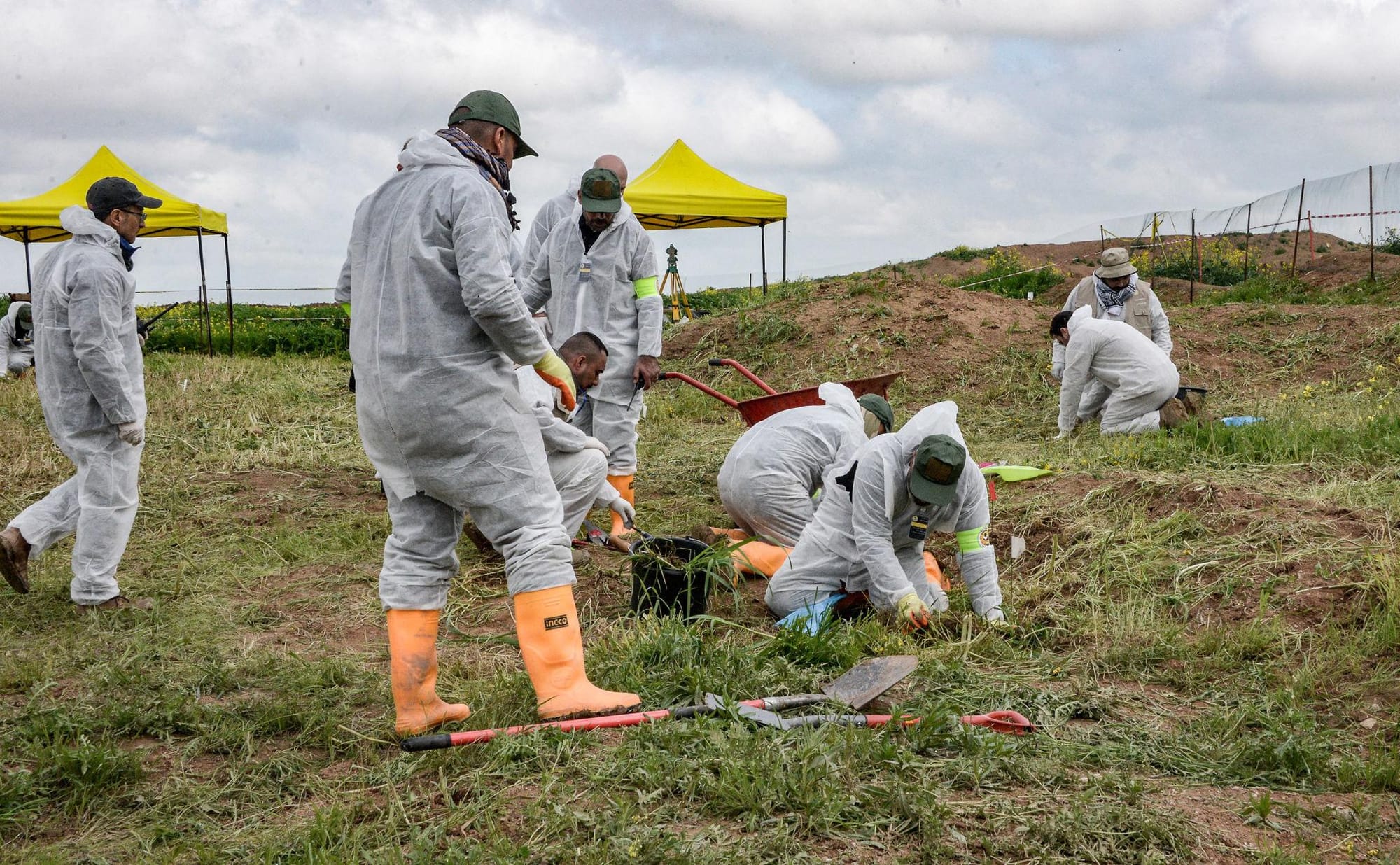
Chapter 5 — Mass Executions and the Destruction of Communities
When an Entire Community Became a Target
The Islamic State assault on Sinjar in August 2014 was followed by a campaign of killings that devastated Yazidi communities across northern Iraq.
Men and older boys were separated from their families and executed. Women and children were abducted. Villages were emptied, religious sites were attacked, and families were left without any knowledge of what had happened to their relatives.
The violence was neither confined to a single location nor limited to the first day of the offensive.
Over the following days and weeks, Islamic State fighters carried out killings in different settlements across the Sinjar district. The methods varied, but investigators identified a consistent pattern: civilians were targeted because they belonged to the Yazidi religious community.
Some victims were killed during attempts to escape. Others were detained, separated from their families and transported to execution sites.
In several cases, survivors reported that captives were ordered to convert to Islam. Refusal could mean death. Investigators also documented cases in which conversion did not protect victims from being killed.
The campaign sought to destroy more than individual lives.
By killing members of the community, abducting families and dismantling the social structures through which Yazidi identity was preserved, Islamic State attacked the foundations of the community's continued existence.
The full extent of the killings remains difficult to establish, even more than twelve years later.
The Systematic Killing of Men and Older Boys
One of the most extensively documented aspects of the genocide was the separation and execution of Yazidi men and older boys.
According to investigations conducted by the United Nations, Islamic State fighters frequently divided captured civilians according to age and gender.
Men and older boys were taken away from women and younger children. Many were then killed at nearby execution sites, including agricultural areas, roadsides and locations outside villages.
The distinction between different groups of captives reflected Islamic State's wider system of persecution.
Adult men and older boys were often treated as people to be eliminated, while women and girls were subjected to organised captivity and sexual enslavement. Younger boys were also at risk of forced religious indoctrination and recruitment.
The exact treatment of captives varied between locations and over time. Nevertheless, the overall pattern was sufficiently consistent for investigators to identify an organised campaign directed against the Yazidi population.
Some victims survived shootings by hiding among bodies or escaping before the executions were completed.
Their testimony later became essential to establishing what had happened.
The accounts were supported by physical evidence, including human remains, burial sites and material collected from locations associated with the killings.
For families whose relatives had disappeared, these investigations offered the possibility of answers — but often only after years of uncertainty.
Kocho: A Village Under Siege
Among the communities devastated by Islamic State, Kocho became one of the most widely documented.
The Yazidi village, located south of Mount Sinjar, was home to approximately 1,700 people before the attack, according to the International Organization for Migration.
When Islamic State advanced into the region on 3 August 2014, some residents attempted to flee.
Others were prevented from escaping or forced to return.
The village was subsequently surrounded, leaving its inhabitants under the control of Islamic State fighters.
For nearly two weeks, residents faced threats, restrictions and uncertainty about their fate.
Community representatives attempted to negotiate a way for civilians to leave safely.
According to survivor testimony and subsequent investigations, the fighters demanded religious conversion and threatened severe consequences for those who refused.
The villagers had limited access to information about what was happening elsewhere in Sinjar.
Many did not know the full extent of the killings and abductions already taking place in surrounding communities.
On 15 August 2014, the situation reached its most devastating point.
Islamic State fighters gathered residents and separated men and older boys from women and children.
Men and boys were taken away and executed at different locations.
Older women were also among those killed.
Many younger women and girls were abducted and transferred into Islamic State's system of captivity and sexual enslavement.
Kocho became one of the clearest examples of how the organisation combined mass murder, family separation and enslavement in its campaign against the Yazidis.
The Massacre That Took Families Apart
The killings in Kocho left entire families destroyed.
For many survivors, the events of 15 August represented the moment when their family members disappeared permanently.
Fathers, husbands, brothers and sons were separated from relatives who had little or no opportunity to say goodbye.
Women and children were taken away without knowing whether the men had been killed or were still being held somewhere else.
Some captives were later moved through detention sites in Iraq and Syria.
Others were sold or transferred between Islamic State members.
The consequences extended across generations.
Children grew up without parents. Surviving relatives were left searching for information. Families who escaped captivity often returned to discover that their homes had been destroyed or that their communities no longer existed in their previous form.
The experiences of Kocho survivors would later become central to international efforts to document the genocide.
Among them was Nadia Murad, whose testimony about captivity and the destruction of her community helped bring worldwide attention to Islamic State's crimes.
Her story will be examined in greater detail in Chapter 9.
The significance of Kocho, however, extends beyond any single survivor.
It represents a community whose members were deliberately targeted because of their religious identity.
The Killings Across Sinjar
Kocho was not the only location where Yazidi civilians were massacred.
Investigations documented executions in and around several settlements, including Qeni, Hardan, Solagh, Siba Sheikh Khidir and other areas of Sinjar.
In some places, fighters intercepted families attempting to escape towards Mount Sinjar.
Men and older boys were separated and killed, while surviving relatives were taken into captivity.
At other locations, residents were detained after Islamic State entered their villages.
Some killings occurred in agricultural fields or near roads. Others took place at sites subsequently identified as mass graves.
The United Nations Investigative Team to Promote Accountability for Crimes Committed by Da'esh/ISIL, known as UNITAD, identified 83 execution sites in Sinjar in its September 2024 report.
The report documented evidence of killings across multiple locations, while acknowledging that the full extent of the violence had not yet been established.
The geographical spread of these sites is important.
It demonstrates that the massacres were not confined to a single village or the actions of one isolated group of fighters.
They formed part of a broader pattern of violence against Yazidi civilians during Islamic State's campaign to control the region.
Mass Graves: Evidence Beneath the Ground
As territory was gradually recovered from Islamic State, investigators began identifying burial sites containing the remains of victims.
Mass graves were discovered in different parts of Sinjar.
Some were located near villages. Others were found in isolated areas where victims had been taken before being killed.
The discovery of these sites provided physical evidence supporting the accounts of survivors.
However, locating a mass grave is only the beginning of a lengthy investigative process.
Before remains can be recovered, specialists must assess the site, document its condition and identify potential dangers, including unexploded ordnance.
Forensic teams then examine the location carefully, recording the position of remains and associated evidence.
This process can help establish how victims died, whether they were killed at the site or moved there afterwards, and whether physical findings correspond with witness testimony.
The work also supports efforts to identify victims and return their remains to their families.
The investigation of mass graves is therefore both a criminal justice process and a humanitarian responsibility.
Each site may contain evidence of serious international crimes.
For families, it may also contain the only remaining trace of someone they have spent years searching for.
The Difficult Work of Identifying the Dead
Recovering human remains does not automatically establish the identity of a victim.
In many cases, identification requires DNA analysis and comparison with samples provided by relatives.
Personal belongings, medical information and other evidence may also contribute to the process.
The difficulties are substantial.
Some remains have been buried for years, exposed to environmental conditions that complicate forensic examination.
Others were recovered from sites where bodies had been disturbed or where the original burial conditions were unclear.
Families may be scattered across Iraq, neighbouring countries and Europe, making the collection of reference DNA samples more difficult.
The process also requires specialised laboratories, trained personnel and cooperation between different authorities.
According to UNITAD, by July 2024 the remains of 242 identified Yazidi victims had been returned through a series of burial ceremonies.
Further identifications continued after UNITAD concluded its mandate in September 2024.
In August 2025, the Yazidi organisation Yazda reported that 297 victims had been identified and laid to rest from 734 sets of remains recovered up to that point.
These figures represent different stages of an ongoing process rather than a final count of the dead.
Many victims remain unidentified, and some burial sites have yet to be fully investigated.
For their relatives, the passage of time does not remove the need for answers.
The Return of the Victims
The return of identified remains has become one of the most emotionally significant parts of the Yazidi community's recovery.
After forensic examination, remains may be transferred to relatives for burial in accordance with Yazidi religious traditions.
These ceremonies often bring together surviving family members, religious leaders, community representatives and officials.
They provide an opportunity to mourn people whose deaths may have remained unconfirmed for years.
In January 2024, Iraqi authorities organised the return of the remains of 41 identified Yazidi victims recovered from mass grave sites in Sinjar.
The ceremony was attended by representatives of the Iraqi federal government, the Kurdistan Regional Government, the Yazidi community and UNITAD.
For families, the return of remains can provide a measure of certainty.
It may allow relatives to conduct religious burial rituals and formally acknowledge the death of someone whose fate had remained unknown.
But identification does not erase the circumstances of the killing.
Nor does it replace the need for criminal accountability.
The graves are both places of mourning and evidence of crimes that require investigation.
The Destruction of Religious and Cultural Heritage
Islamic State's campaign against the Yazidis was not limited to killings and abductions.
Religious buildings, shrines and other sites associated with Yazidi identity were also attacked.
Such destruction carried particular significance for a community whose faith is closely connected to sacred places, pilgrimage traditions and the transmission of religious knowledge.
UNITAD reported in 2024 that it had identified and assessed more than 60 Yazidi cultural heritage sites damaged or destroyed by Islamic State.
The loss of these places affected the community's ability to maintain religious and cultural life.
In some villages, the destruction of homes and infrastructure compounded the damage to places of worship.
Residents who survived the genocide often faced the prospect of returning to settlements where the physical foundations of community life had been severely damaged.
The destruction of religious heritage also forms part of the wider evidence considered when examining Islamic State's intentions.
Attacks against sacred places do not, by themselves, establish genocide.
However, when considered alongside systematic killings, forced transfers, enslavement and statements expressing an intention to destroy a religious group, they help investigators understand the broader pattern of persecution.
How Many Yazidis Were Killed?
Establishing the number of people killed during the genocide has been difficult.
Many families fled without official records, while others were killed or abducted in areas that remained under Islamic State control for years.
Some victims were buried in mass graves that have not yet been fully examined.
Others disappeared without witnesses able to establish their fate.
A population-based study published in PLOS Medicine in 2017 estimated that approximately 3,100 Yazidis were killed during the 2014 assault and its immediate consequences.
The study also estimated that approximately 6,800 people were abducted.
These figures were based on statistical research and should not be presented as a complete count of individually confirmed victims.
UNITAD's 2024 report referred to an estimated range of approximately 1,434 to 3,100 Yazidi civilians killed during the Sinjar offensive.
The different figures reflect variations in methodology, evidence and the periods being examined.
The number of identified remains is considerably lower than the estimated total number of people killed.
This does not mean the wider estimates are necessarily incorrect.
It reflects the difference between population-level estimates, documented deaths and forensic identification.
For journalism, maintaining these distinctions is essential.
The scale of the genocide must be reported accurately without creating a false impression of certainty.
Why the Killings Constituted Genocide
Under international law, genocide is defined by both prohibited acts and a particular intention.
The 1948 Convention on the Prevention and Punishment of the Crime of Genocide identifies acts including killing members of a protected group, causing serious bodily or mental harm, deliberately imposing conditions of life intended to bring about physical destruction, and forcibly transferring children.
To establish genocide, investigators must also demonstrate an intention to destroy the group, in whole or in part, because of its protected identity.
In the Yazidi case, the evidence extended beyond the fact that large numbers of civilians were killed.
Islamic State specifically targeted Yazidis as a religious community.
Its members carried out systematic killings, organised abductions and sexual enslavement, forcibly transferred children and attacked religious sites.
The organisation's statements and internal practices provided further evidence of its intentions.
In September 2024, UNITAD published detailed findings concluding that there were reasonable grounds to believe Islamic State had committed genocide, crimes against humanity and war crimes against the Yazidis.
These investigative findings are highly significant, although they must be distinguished from convictions entered by courts against individual perpetrators.
Criminal proceedings require evidence linking specific accused persons to particular crimes and applicable forms of responsibility.
The broader recognition of genocide therefore does not eliminate the need to establish individual criminal liability.
The Unfinished Search for Justice
The mass graves of Sinjar remain central to the struggle for accountability.
They contain evidence that may help identify victims, reconstruct events and support future prosecutions.
Yet the investigative work has been slow, expensive and emotionally difficult.
The closure of UNITAD in September 2024 marked a transition in international support for the documentation of Islamic State's crimes.
Iraqi authorities and other partners continue to hold responsibilities for recovering remains, preserving evidence and supporting affected families.
Questions remain about resources, forensic capacity, access to sites and the use of collected evidence in criminal proceedings.
Survivors and relatives have repeatedly called for a process that places their rights and dignity at its centre.
They need more than recognition that atrocities occurred.
They need information about missing relatives, access to remains where identification is possible, meaningful reparations and credible legal accountability.
The recovery of a body can answer one question while leaving many others unresolved.
Who ordered the killing?
Who carried it out?
Who helped organise the detention and transfer of civilians?
And will those responsible ever face justice?
These questions are not only historical.
They remain part of the lives of families who continue to wait for answers.
A Community That Cannot Be Rebuilt Through Graves Alone
The destruction of Yazidi communities in August 2014 was deliberate and extensive.
Men and older boys were executed. Women and children were abducted. Villages were emptied, and sacred places were damaged or destroyed.
The mass graves uncovered in Sinjar have helped establish the scale and nature of the crimes.
They have also made visible the continuing consequences of the genocide.
For survivors, rebuilding requires more than the reconstruction of houses and roads.
It requires security, the restoration of community life, the preservation of religious traditions and the possibility of living without fear of renewed persecution.
It also requires answers about those who never returned.
The mass graves are reminders of what was lost, but they are also evidence through which the truth can be established.
The next chapter examines another central component of Islamic State's campaign: the organised enslavement of Yazidi women and girls, the system through which captives were transferred and sold, and the lasting consequences for those who survived.
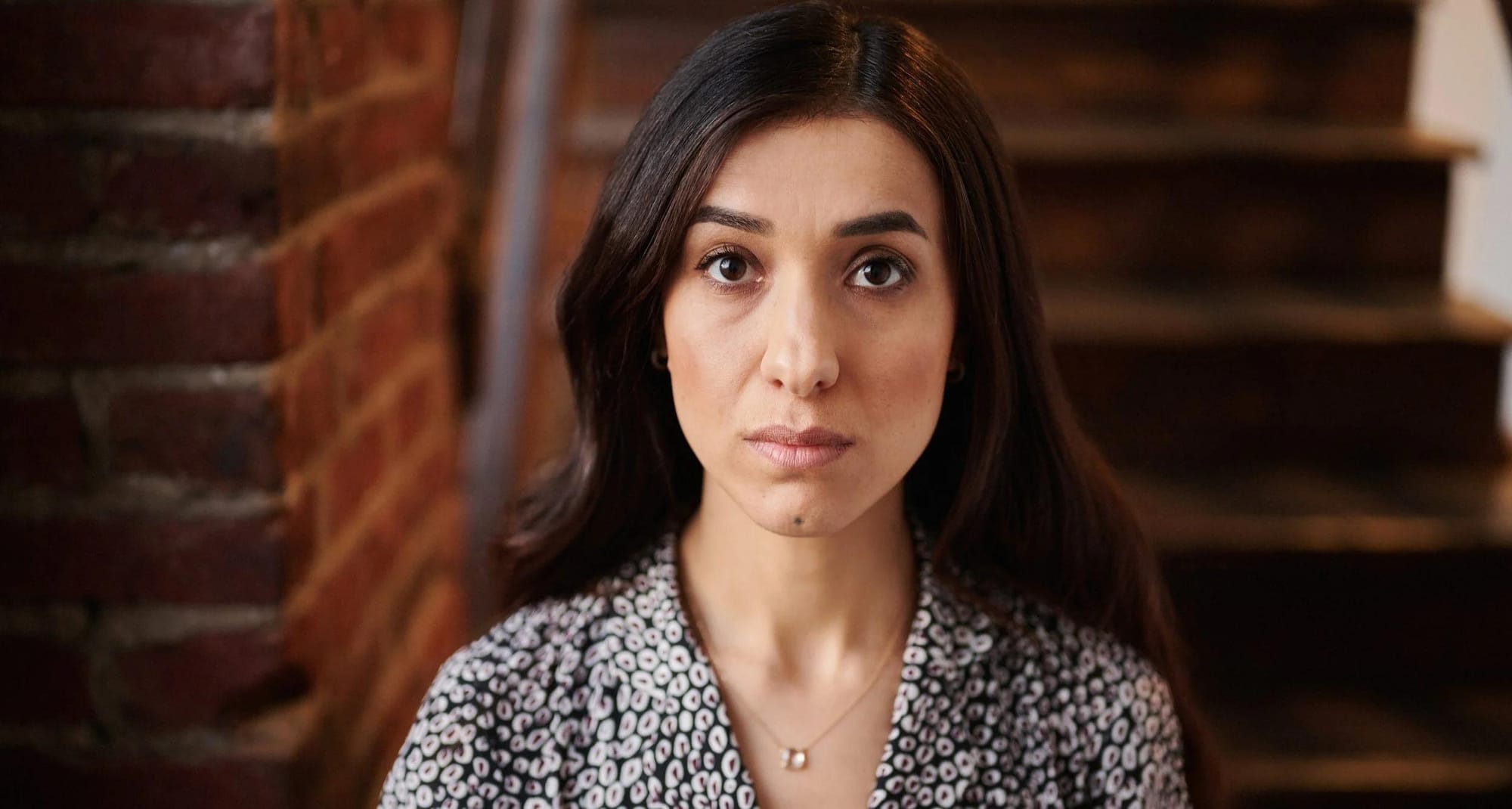
Chapter 6 — Women and Girls Sold into Slavery
A System of Captivity Built Around Religious Persecution
When Islamic State attacked the Yazidi communities of Sinjar in August 2014, thousands of women and girls were taken from their homes, separated from their families and forced into captivity.
For many, the violence began with the killing or disappearance of fathers, husbands and brothers. Others were captured while attempting to escape towards Mount Sinjar.
What followed was one of the most extensively documented systems of sexual slavery established by an armed organisation in recent history.
Women and girls were transported between detention facilities, distributed among Islamic State members, sold, subjected to forced marriages and repeatedly exposed to sexual violence.
Some were held for months. Others remained captive for years.
The abuses were not simply the actions of individual fighters acting without authority.
Investigations by the United Nations established that Islamic State developed an organised system through which Yazidi women and girls were enslaved, transferred and exploited.
The organisation's leadership, religious justifications and administrative practices contributed to a system in which human beings were treated as possessions.
The victims were targeted because they belonged to a religious community that Islamic State sought to destroy.
Understanding this system is essential to understanding the genocide itself.
From Their Homes to Captivity
The abductions began during the first days of the offensive against Sinjar.
As Islamic State fighters entered Yazidi villages, they gathered civilians and frequently separated them according to gender and age.
Men and older boys were taken away, often to be executed.
Women, girls and younger children were detained and transported to locations under Islamic State control.
Some were initially held in schools, public buildings or other temporary detention sites.
Others were transferred through towns and cities, including Mosul and Tal Afar, before being moved to different locations in Iraq or Syria.
The journeys themselves were traumatic.
Captives were frequently denied information about their relatives. Many had witnessed killings or had been separated from family members whose fate remained unknown.
Mothers attempted to protect their daughters, while younger children struggled to understand why they had been taken from their homes.
For the captives, the uncertainty was compounded by the knowledge that they had little control over where they would be taken or what would happen next.
In its December 2014 report Escape from Hell, Amnesty International documented testimony from women and girls who had escaped Islamic State captivity.
The organisation interviewed 42 survivors and contacted four women who remained captive.
Their accounts described forced transfers, rape, physical abuse, threats and repeated attempts to impose religious conversion.
The evidence established that sexual violence was a central feature of the persecution, not an incidental consequence of the conflict.
How Islamic State Organised the Slave Trade
Islamic State created a system in which Yazidi women and girls were treated as transferable property.
Captives were distributed among fighters and other members of the organisation.
Some were sold for money. Others were exchanged, given as gifts or transferred between individuals.
United Nations investigators documented transactions and practices that demonstrated the organised character of the system.
The treatment of captives varied according to age, marital status and the decisions of individual perpetrators.
Young girls were particularly vulnerable.
Investigations found that some girls as young as nine were subjected to sexual slavery.
Many were repeatedly transferred between captors, increasing their exposure to rape, physical violence and psychological abuse.
The system also involved domestic servitude.
Captive women could be forced to cook, clean, care for children or perform other unpaid labour in households controlled by Islamic State members.
Some were held in homes where the captors' wives and children were present.
This environment made escape exceptionally difficult.
Women and girls were often isolated, threatened with punishment and deprived of reliable communication with the outside world.
The organisation's system of captivity allowed abuse to continue across different locations and over extended periods.
The Ideology Used to Justify Enslavement
Islamic State did not conceal its intention to enslave Yazidi women and girls.
The organisation publicly defended the practice through its own extremist interpretation of religious texts and historical concepts of slavery.
Its propaganda portrayed Yazidis as religious outsiders and attempted to justify their enslavement through references to premodern legal categories.
In its October 2014 issue of Dabiq, Islamic State explicitly discussed the enslavement of Yazidi women and children.
The publication formed part of the organisation's effort to provide an ideological explanation for crimes it was already committing.
These claims must be understood as the arguments of Islamic State, not as a description of the beliefs or practices of Muslims generally.
Islamic scholarship encompasses diverse historical interpretations, and contemporary Muslim scholars, institutions and communities have condemned Islamic State's violence and enslavement.
The organisation's interpretation was used to legitimise a system of persecution that violated fundamental human rights and international law.
The significance of the propaganda lies in what it reveals about the perpetrators' intentions.
Islamic State sought to make the destruction of Yazidi religious identity part of its political and military project.
Sexual slavery was therefore connected to the broader campaign of genocide.
Rape as an Instrument of Terror and Control
Sexual violence was a central component of Islamic State's treatment of captive Yazidi women and girls.
Survivors described repeated rape, threats, beatings and other forms of abuse.
Some were assaulted by multiple captors over the course of their captivity.
Others were subjected to violence when they resisted, attempted to escape or refused to comply with demands.
The abuses caused severe physical injuries and lasting psychological harm.
For many victims, the trauma was intensified by uncertainty about the fate of their relatives.
Some women had witnessed the killing of family members before being taken into captivity.
Others were separated from their children or forced to watch relatives being taken away.
Sexual violence served several purposes within Islamic State's system.
It was a means of domination over individual victims.
It was also a method of humiliating and terrorising the wider Yazidi community.
By attacking women and girls, the perpetrators sought to damage family relationships, communal continuity and the ability of survivors to rebuild their lives.
The United Nations Commission of Inquiry concluded in 2016 that sexual slavery and other abuses formed part of Islamic State's genocidal campaign against the Yazidis.
The crimes caused serious bodily and mental harm and contributed to the destruction of the community's social and familial structures.
Girls Who Lost Their Childhood
The enslavement of Yazidi children represents one of the most disturbing aspects of the genocide.
Girls who should have been attending school and growing up within their families were instead subjected to captivity, forced labour and sexual violence.
Some were separated from their mothers and transferred to Islamic State members.
Others remained with their families for a period before being taken away as they grew older.
UNITAD's detailed investigative findings, published in September 2024, documented the sexual enslavement of girls, including children whom perpetrators considered old enough for exploitation.
The organisation's practices demonstrated that childhood offered no reliable protection.
For survivors who were abducted as children, the consequences have extended into adulthood.
Education was interrupted.
Family relationships were destroyed or severely disrupted.
Some returned from captivity with little knowledge of the relatives they had lost.
Others faced difficulties rebuilding trust, establishing independence or receiving appropriate psychological support.
The loss was not limited to the years spent in captivity.
It affected opportunities, relationships and the development of a sense of safety.
These experiences underline why the recovery of child survivors requires specialised and long-term support.
Forced Conversion and the Destruction of Identity
Many Yazidi captives were subjected to pressure or coercion to convert to Islamic State's interpretation of Islam.
Religious conversion under threat of violence cannot be regarded as a freely chosen expression of belief.
For Yazidis, whose religious identity is closely connected to ancestry and community membership, such coercion was particularly significant.
Captors attempted to impose religious practices, names and identities on people who had been taken from their families.
Women and girls were sometimes forced to participate in religious instruction or observe rules imposed by their captors.
These practices were part of the wider effort to eliminate the Yazidis as a distinct religious community.
The consequences were especially serious for children who remained in captivity for extended periods.
Some grew up under the control of Islamic State members, separated from the language, traditions and religious practices of their families.
For survivors who eventually escaped, returning to their communities could involve the difficult process of reconnecting with an identity that perpetrators had attempted to suppress.
The forced conversion of captives was not an act of religious persuasion.
It was an element of persecution carried out under conditions of coercion and captivity.
Women Who Resisted and Escaped
Despite the extreme conditions of captivity, some Yazidi women and girls found ways to resist.
Survivor accounts describe attempts to protect younger children, maintain contact with relatives, conceal information from captors and preserve religious identity.
Some escaped when opportunities arose.
Others were rescued through networks involving relatives, local intermediaries and individuals operating across conflict lines.
The circumstances of escape varied considerably.
For some, it involved fleeing from a household or detention site.
For others, it required assistance from people who could arrange transport or negotiate their release.
Escape did not necessarily mean immediate safety.
Survivors often had to cross dangerous territory, avoid armed groups and reach areas where they could receive protection.
Many arrived in displacement camps with few possessions and little information about their missing relatives.
The courage of survivors should be recognised without creating an expectation that victims must demonstrate exceptional resistance to deserve sympathy or support.
Responsibility for the crimes lies with the perpetrators.
Those who survived did so under circumstances in which their choices had been violently restricted.
The Difficult Return to Yazidi Society
For women and girls who escaped captivity, returning to their communities was often a complicated process.
Many had lost relatives, homes and livelihoods.
Some feared rejection because of the sexual violence they had experienced.
In communities where family honour and traditional expectations carry social importance, survivors could face anxiety about how they would be received.
Yazidi religious authorities took important steps to affirm the acceptance of survivors back into the community.
Statements and religious guidance helped establish that women and girls who had been subjected to captivity and sexual violence should not be blamed for crimes committed against them.
These interventions were significant in challenging stigma and supporting reintegration.
Nevertheless, acceptance at the level of religious leadership did not automatically remove every social difficulty.
Survivors continued to face practical and psychological challenges, including poverty, displacement, interrupted education and the loss of family support.
Some required specialised medical treatment.
Others needed long-term psychological care, legal assistance and help securing housing or employment.
Recovery could not be achieved through a single ceremony or declaration.
It required sustained support and the restoration of personal autonomy.
Children Born During Captivity
One of the most difficult consequences of Islamic State's sexual violence concerned children born as a result of rape.
Some Yazidi women became pregnant while held captive.
After escaping, they faced painful questions involving motherhood, religious identity, family acceptance and the legal status of their children.
Traditional Yazidi rules concerning religious membership generally require both parents to belong to the Yazidi community.
This created serious difficulties for children whose fathers were Islamic State members.
Iraqi civil registration practices added further complications, particularly where children lacked documentation or were legally classified in ways that conflicted with their mothers' religious identity.
Some survivors faced pressure to separate from their children in order to return to their communities.
Others sought to remain with their children despite the resulting social and legal obstacles.
These circumstances reveal a particularly difficult dimension of post-genocide recovery.
The children were not responsible for the crimes of their fathers.
Their mothers were victims of sexual violence and coercion.
Yet both could face consequences arising from religious membership rules, social expectations and state registration systems.
The European Union Agency for Asylum has documented the vulnerability of children born from rape under Islamic State rule, including discrimination, difficulties obtaining identity documents and risks associated with community rejection.
Their protection remains an important human rights concern.
Trauma That Does Not End with Freedom
The psychological consequences of captivity can persist long after a survivor has escaped.
Women and girls may experience post-traumatic stress, depression, anxiety, sleep disturbances and difficulties establishing a sense of safety.
Some survivors also live with chronic physical injuries or reproductive health complications.
These experiences vary between individuals.
Not every survivor responds to trauma in the same way, and recovery should not be measured against a single expectation.
For many, uncertainty about missing relatives remains an additional source of distress.
A woman who escaped captivity may still be searching for her husband, children, parents or siblings.
The knowledge that others remain missing can make it difficult to regard her own escape as the end of the ordeal.
Access to appropriate care is therefore essential.
Support should include trauma-informed mental health services, medical treatment, education, livelihood opportunities and assistance with legal documentation.
Survivors must also be able to decide whether they wish to speak publicly about their experiences.
Their testimony has been crucial to documenting Islamic State's crimes, but no survivor should be expected to repeatedly recount traumatic events for public attention.
Respect for privacy, informed consent and personal dignity must remain central to reporting and justice processes.
International Recognition and the Yazidi Survivors Law
The systematic enslavement of Yazidi women and girls attracted international condemnation.
United Nations investigators, human rights organisations and survivors themselves documented the crimes and called for accountability.
In 2021, Iraq adopted the Yazidi Female Survivors Law, an important measure intended to provide reparations and support to survivors of Islamic State captivity.
The law also covers certain survivors from other affected minority communities.
Its provisions include financial assistance, rehabilitation, educational and employment opportunities, and measures connected to the search for missing persons and accountability.
The legislation represented formal recognition of the harm suffered by survivors.
However, implementation has faced administrative and practical difficulties.
Access to reparations depends on functioning procedures, adequate funding and the ability of survivors to navigate application requirements.
Some survivors have reported difficulties obtaining documentation or accessing services.
The existence of a legal framework is therefore only one part of the recovery process.
Its effectiveness must be measured by whether survivors can obtain meaningful assistance in practice.
Sexual Slavery as an International Crime
The crimes committed against Yazidi women and girls fall within several categories of international criminal law.
Rape, sexual slavery, enslavement, torture and other forms of sexual violence can constitute war crimes or crimes against humanity when the relevant legal requirements are met.
In the Yazidi case, investigators also identified the role of these acts in the wider genocide.
The 1948 Genocide Convention includes causing serious bodily or mental harm to members of a protected group among the acts that may constitute genocide when committed with the required intent.
Sexual violence can also contribute to genocidal destruction through its effects on individuals, families and the continuity of a community.
The United Nations Commission of Inquiry and UNITAD concluded that Islamic State's treatment of the Yazidis provided evidence of genocide, crimes against humanity and war crimes.
These findings establish an important basis for accountability.
Nevertheless, holding individual perpetrators responsible requires criminal investigations, admissible evidence and proceedings that meet applicable standards of justice.
The documentation of the crimes is therefore essential not only for historical understanding but also for future prosecutions.
Survivors Are More Than Their Suffering
The international discussion of the Yazidi genocide has often focused on the extreme violence experienced by women and girls.
Such reporting is necessary, but it can also create a narrow image of survivors as people defined entirely by what was done to them.
Many Yazidi women have become advocates, educators, community organisers and campaigners for justice.
Others have chosen to rebuild their lives privately, away from public attention.
Both choices deserve respect.
Survivors have played an essential role in preserving evidence, identifying perpetrators and demanding international recognition of the genocide.
Their efforts have helped transform individual experiences into a broader movement for accountability.
Yet justice cannot depend solely on their willingness to speak.
Governments, investigators and international institutions have responsibilities to preserve evidence, protect witnesses and pursue credible legal proceedings.
The burden of securing accountability should not fall on those who have already endured the crimes.
The Lasting Consequences of Organised Enslavement
Islamic State's enslavement of Yazidi women and girls was one of the defining elements of its genocidal campaign.
The system was organised, ideologically justified by the perpetrators and sustained through captivity, transfers, forced labour and sexual violence.
Its purpose extended beyond the exploitation of individual victims.
It formed part of an assault on the Yazidi community's religious identity, family structures and continued existence.
For survivors, the consequences remain deeply personal.
Some continue searching for missing relatives.
Others are rebuilding lives interrupted by years of captivity.
Many still face the effects of displacement, trauma and economic insecurity.
The recognition of these crimes as genocide and other international offences was an important step.
But recognition alone does not provide medical care, reunite families or ensure that perpetrators are brought before courts.
The next chapter examines the children taken by Islamic State — including boys subjected to indoctrination and military recruitment, girls who endured captivity, and the challenges faced by children attempting to recover their identities after the organisation's defeat.
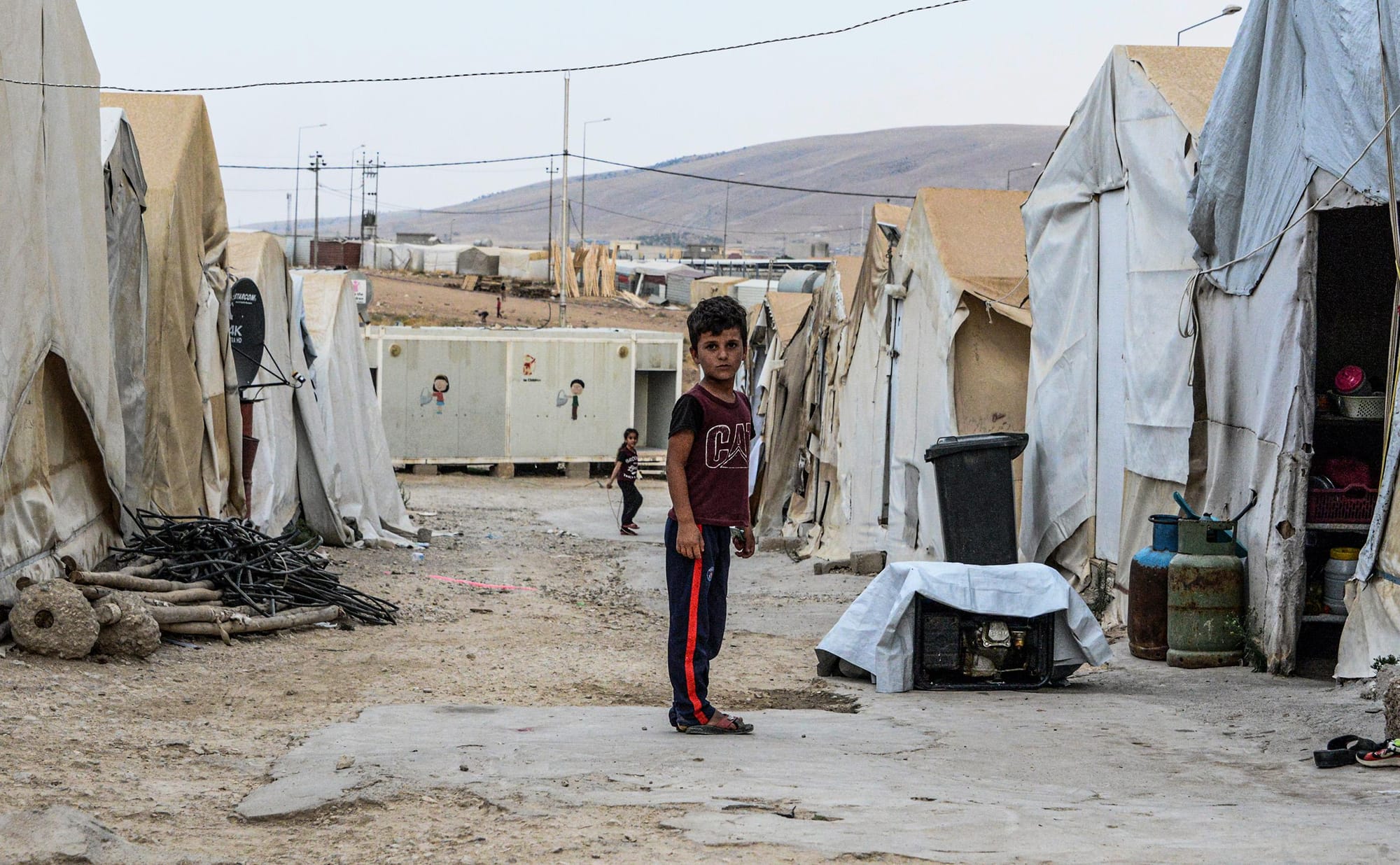
Chapter 7 — The Children Taken by Islamic State
A Childhood Stolen by Genocide
When Islamic State attacked Sinjar on 3 August 2014, Yazidi children were among the most vulnerable victims.
Some were killed alongside their families. Others fled towards Mount Sinjar, where they faced extreme heat, dehydration and a desperate shortage of food and medical assistance. Thousands more were abducted as Islamic State fighters overran Yazidi villages.
For those taken captive, childhood was replaced by a system of violence, coercion and separation.
Boys were removed from their families, subjected to religious indoctrination and trained to serve the organisation. Girls were exposed to forced labour, captivity and, in many cases, sexual violence. Younger children were frequently held alongside their mothers, witnessing abuse and living under constant threat.
The consequences did not end when Islamic State lost control of its territory.
Children who eventually returned to their families often faced serious physical and psychological injuries. Some had forgotten their native language. Others struggled to recognise relatives or adjust to life outside captivity.
The United Nations concluded that the forcible transfer and indoctrination of Yazidi children formed part of Islamic State's genocidal campaign.
The organisation was not merely seeking to control the children it captured.
It was attempting to sever their connections with the religious community into which they had been born.
Children Separated from Their Families
The separation of Yazidi children began during the initial attacks on Sinjar.
As fighters captured villages, families were divided according to age and gender.
Men and older boys were frequently separated from women and younger children. Many of the men were subsequently executed.
Women and children were transported to detention sites in Iraq and Syria, where they faced further separation.
According to the United Nations Commission of Inquiry's 2016 investigation, Islamic State systematically removed Yazidi boys aged approximately seven and above from their mothers and transferred them to training facilities.
Some younger boys initially remained with their mothers but were taken away when they reached the age at which the organisation considered them suitable for indoctrination and military training.
For families, these separations were devastating.
Mothers were often given little information about where their sons had been taken. Some never saw them again.
Children were removed from familiar surroundings and placed under the authority of armed men who controlled nearly every aspect of their lives.
The separation also served a broader purpose.
By removing children from their families, Islamic State disrupted the relationships through which Yazidi religious traditions, language and cultural identity were passed from one generation to the next.
The Training Camps: Turning Children into Recruits
Islamic State established training facilities in territories under its control in Iraq and Syria.
The United Nations documented the transfer of Yazidi boys to centres in locations including Mosul, Tal Afar and Baaj in Iraq, and Raqqa, Tabqa, Tel Abyad and Suluk in Syria.
Some facilities operated in buildings that had previously been schools.
Instead of receiving an ordinary education, children were subjected to ideological instruction and military training.
Investigators documented programmes involving physical exercises, weapons training, religious instruction and exposure to violent propaganda.
Boys were taught to obey commanders and accept the organisation's extremist worldview.
Failure to follow instructions or perform adequately could result in beatings and other punishment.
The purpose was to produce recruits who would serve Islamic State's military and ideological objectives.
Some children were subsequently assigned to guard positions, military duties or direct participation in hostilities.
Others remained under the control of commanders or households associated with the organisation.
Not every abducted boy was deployed in combat, and the experiences of individual children differed.
Nevertheless, the evidence established a systematic effort to transform captured children into instruments of the organisation that had attacked their communities.
The Erasure of Names, Language and Religion
One of the most disturbing aspects of Islamic State's treatment of Yazidi boys was its deliberate attempt to replace their identities.
According to the United Nations Commission of Inquiry, boys transferred to training facilities were registered and assigned new Islamic names.
Their original religious identity was suppressed.
They were instructed in Islamic State's interpretation of religion and discouraged or prevented from maintaining connections with Yazidi beliefs and practices.
Contact with relatives was frequently severed.
The organisation sought to make children identify with their captors rather than with the community from which they had been abducted.
This was not simply a programme of military recruitment.
It was also an attempt at forced religious and cultural transformation.
For Yazidis, whose religious traditions are closely connected to family ancestry and the transmission of sacred knowledge, the removal of children posed a direct threat to communal continuity.
The United Nations identified this practice as part of the evidence supporting its conclusion that Islamic State intended to destroy the Yazidis as a religious group.
The consequences became particularly visible when children eventually escaped or were released.
Some returned speaking Arabic rather than the Kurmanji Kurdish dialect used by their families.
Others had difficulty remembering their previous names, recognising relatives or understanding the religious traditions of their communities.
Their return was therefore not simply a journey from captivity to freedom.
It could also involve the difficult process of recovering a sense of identity.
Forced Recruitment and the Use of Child Soldiers
The recruitment and use of children in armed conflict is prohibited under important provisions of international humanitarian and human rights law.
Islamic State nevertheless incorporated children into its military structures.
The organisation used propaganda portraying children as future fighters and encouraged obedience to its leadership from an early age.
For abducted Yazidi boys, participation was imposed through coercion, threats and violence.
Some were forced to undergo military training and later assigned to armed duties.
The experiences of these children must be understood within the circumstances of their captivity.
They were not free recruits making informed decisions about participation in an armed organisation.
They were children who had been abducted, separated from their families and placed under the control of perpetrators.
Amnesty International's 2020 report, Legacy of Terror, documented the experiences of former child soldiers who returned to Yazidi communities.
The organisation found that some suffered serious physical injuries, disabilities and lasting psychological consequences.
Survivors also described difficulties obtaining appropriate medical care, psychological support and assistance with reintegration.
These children require protection and rehabilitation.
Their experiences should not be used to portray them as collectively responsible for crimes committed by the organisation that exploited them.
Girls in Captivity
Yazidi girls faced another form of systematic persecution.
As described in the previous chapter, Islamic State subjected women and girls to organised sexual slavery.
Girls were particularly vulnerable because of their age, dependence on adults and inability to escape captivity.
Some remained with their mothers for a period before being separated and transferred to individual captors.
Others were held in households where they were forced to perform domestic labour and subjected to violence.
United Nations investigations documented cases involving girls as young as nine who were sexually enslaved.
The effects of such abuse extended beyond immediate physical injuries.
Captivity interrupted education, family relationships and the development of personal independence.
Some girls spent years under the control of perpetrators before escaping or being rescued.
Others returned to communities where relatives had been killed or remained missing.
Their needs included specialised medical care, trauma-informed psychological support, education and protection from further exploitation.
The experiences of girls who survived captivity also demonstrate why the genocide cannot be understood solely through the number of people killed.
The destruction of a community can involve attacks on the physical safety, development and future of its children.
Younger Children Who Witnessed Violence
Not all Yazidi children were separated from their mothers immediately.
Some younger children remained in captivity alongside women who were subjected to forced labour, sexual violence and other forms of abuse.
These children often witnessed events they were too young to understand.
They experienced confinement, fear, deprivation and uncertainty about their families' fate.
Some were beaten or otherwise mistreated by captors.
Others were repeatedly moved between locations as Islamic State transferred the women holding them.
Even where children were not directly subjected to the same abuses as adults, prolonged exposure to violence and coercion could cause serious harm.
The psychological consequences of witnessing abuse can persist long after a child reaches safety.
For some survivors, memories of captivity became connected to everyday experiences of fear, separation and insecurity.
Their needs were therefore different from those of children who had experienced ordinary displacement during conflict.
They required care that recognised the particular effects of abduction, coercive control and prolonged exposure to violence.
Returning Home After Years of Captivity
For children who survived and eventually returned, freedom brought new challenges.
Some were reunited with parents or siblings.
Others discovered that close relatives had been killed or remained missing.
Many returned to displacement camps rather than the villages from which they had been abducted.
Their homes had been destroyed, and their communities were scattered.
In July 2020, Amnesty International reported that an estimated 1,992 Yazidi children had returned to their families after Islamic State captivity.
The figure described the population examined at that time; it should not be interpreted as the number of child survivors in 2026.
Amnesty documented serious health problems, psychological distress and barriers to education.
Some children experienced nightmares, anxiety, withdrawal and difficulties managing emotions.
Others had physical injuries or disabilities associated with captivity and forced military service.
Families often struggled to obtain the specialist assistance their children required.
The report also identified the financial pressures faced by households already affected by displacement and the loss of relatives.
For some families, caring for a traumatised child required resources that were simply unavailable.
The return from captivity was therefore only the beginning of a much longer recovery process.
Children Who Could No Longer Speak Their Family's Language
Language became an unexpected barrier to family reunification.
Some children had spent years in Arabic-speaking environments controlled by Islamic State.
During captivity, they had been prevented from maintaining their original language and cultural traditions.
When they returned, they sometimes struggled to communicate in the Kurmanji Kurdish dialect spoken by their relatives.
This could make ordinary family interactions difficult.
Parents and children who had spent years searching for one another were sometimes unable to communicate easily after being reunited.
The problem extended beyond vocabulary.
Language carries memories, cultural knowledge and relationships.
For a child whose original identity had been deliberately suppressed, relearning a family language could form part of a wider process of reconnecting with their community.
Such recovery requires patience, educational support and an understanding that children cannot simply return to the lives they had before captivity.
Their development had been interrupted during formative years.
Reintegration therefore involved learning, rebuilding relationships and adjusting to an environment that might feel unfamiliar despite being their ancestral home.
Education Interrupted
For many Yazidi child survivors, formal education was interrupted for years.
Some had been abducted before beginning school.
Others were removed from classrooms and forced into Islamic State's indoctrination programmes.
When they returned, they were often older than other children at the same educational level.
Some had difficulties reading and writing.
Others struggled with concentration, memory or the emotional demands of classroom environments.
Displacement created additional barriers.
Families living in camps or damaged communities did not always have reliable access to suitable schools, transport or educational materials.
Amnesty International documented cases in which children were unable to re-enrol after returning from captivity.
These problems threatened to extend the consequences of the genocide into adulthood.
Without appropriate educational opportunities, survivors could face long-term disadvantages in employment, financial independence and social participation.
Recovery therefore requires more than returning children to ordinary classrooms.
It may involve accelerated learning programmes, language assistance, psychological support and flexible arrangements for children whose education was severely disrupted.
The Children Born During Captivity
Another group of children faced a particularly complex situation: those born to Yazidi women as a result of rape by Islamic State members.
These children were innocent of the circumstances of their conception.
Nevertheless, they sometimes faced legal and social barriers arising from their fathers' identities and the religious membership rules of the Yazidi community.
Traditional Yazidi religious identity is generally inherited through both parents.
As a result, some women who escaped captivity faced pressure to separate from children born during their enslavement.
Amnesty International documented cases in which mothers reported being coerced, pressured or misled into leaving their children behind.
For these women, liberation from Islamic State did not necessarily mean an end to family separation.
Some faced the painful prospect of choosing between returning to their community and remaining with their children.
The issue also involved Iraqi civil registration practices and difficulties obtaining identity documents.
The rights of the children and their mothers must be considered separately from the crimes committed by their fathers.
Under international human rights principles, children should not be discriminated against because of their parentage or the circumstances of their birth.
The best interests of the child must remain a primary consideration in decisions affecting care, family relationships and legal status.
These cases illustrate how the consequences of sexual violence can continue long after captivity ends.
The Psychological Consequences of Forced Indoctrination
Children who were subjected to ideological indoctrination faced particular difficulties after returning to their communities.
Some had been taught to reject their families' religion.
Others had been conditioned to fear punishment for disobeying Islamic State's rules.
The organisation's propaganda and coercive training could influence how children understood authority, violence and personal identity.
These experiences did not mean that children had freely adopted the beliefs of their captors.
Their behaviour developed under conditions of extreme coercion.
For caregivers, the process of rebuilding trust could be difficult.
Some children displayed aggression or withdrawal. Others struggled to express emotions or felt uncomfortable in ordinary social situations.
Specialist support was often necessary to help them process their experiences and establish a sense of safety.
Amnesty International reported in 2020 that more than half of the 14 former child soldiers it interviewed had received no psychosocial, health, financial or other support after returning.
This finding concerned a small group of interviewees and should not be presented as a statistically representative measure of all former child soldiers.
Nevertheless, it illustrated significant gaps in assistance.
The need for long-term care remains central to any meaningful recovery strategy.
What International Law Says About the Crimes
The treatment of Yazidi children violated multiple principles of international humanitarian and human rights law.
The Convention on the Rights of the Child recognises children's rights to protection, family relationships, education, identity and recovery from exploitation and abuse.
Its Optional Protocol on the involvement of children in armed conflict establishes additional protections concerning recruitment and participation in hostilities.
International criminal law also addresses the conscription, enlistment and use of children under fifteen to participate actively in hostilities as war crimes in relevant circumstances.
The forcible transfer of children from one protected group to another is expressly included among the prohibited acts listed in the 1948 Genocide Convention when carried out with the required intent to destroy the group.
This provision is particularly relevant to the Yazidi genocide.
United Nations investigators concluded that Islamic State forcibly transferred Yazidi boys, subjected them to indoctrination and attempted to replace their religious identity.
These acts formed part of the evidence supporting the finding of genocide.
The legal framework recognises that the destruction of a community can occur not only through killings but also through attacks on its ability to transmit identity and continuity to future generations.
Children Need More Than Rescue
The defeat of Islamic State's territorial rule did not automatically resolve the consequences of its crimes against children.
Rescue and reunification are essential, but they do not constitute complete recovery.
Survivors may require years of medical care, psychological assistance, educational support and protection from discrimination.
Families also need assistance.
Parents and caregivers who have themselves experienced displacement, bereavement and trauma may struggle to provide the support their children require without outside help.
In 2023, Save the Children and the MHPSS Collaborative published research examining the wellbeing of Yazidi children in the aftermath of the genocide.
The study drew on the experiences of children and caregivers, including children living with disabilities.
It highlighted the importance of understanding recovery through children's everyday lives, relationships, aspirations and access to support.
Such research helps shift attention away from the immediate violence and towards the conditions necessary for a meaningful future.
The question is not only whether children survived.
It is whether they have been given a genuine opportunity to rebuild their lives.
A Generation Still Living with the Consequences
The children abducted in 2014 are now adolescents and adults, while younger children born during or after captivity continue to grow up with the consequences of the genocide.
Some have rebuilt family relationships and resumed education.
Others continue to face physical injuries, psychological difficulties, economic insecurity or uncertainty about missing relatives.
Their experiences are not identical.
Some survivors have chosen to speak publicly. Others have sought privacy and a life beyond the events that shaped their childhood.
Both choices deserve respect.
The responsibility of governments and international institutions is to ensure that survivors have access to protection, healthcare, education, legal identity and meaningful opportunities for the future.
The children taken by Islamic State were targeted because of the community to which they belonged.
Their recovery therefore carries significance beyond individual rehabilitation.
It is also part of the Yazidi community's struggle to preserve its identity after an attempt to destroy it.
The next chapter examines Mount Sinjar, where thousands of civilians sought refuge during the August 2014 offensive, and the humanitarian emergency that unfolded as families became trapped between Islamic State fighters and the harsh conditions of the mountain.
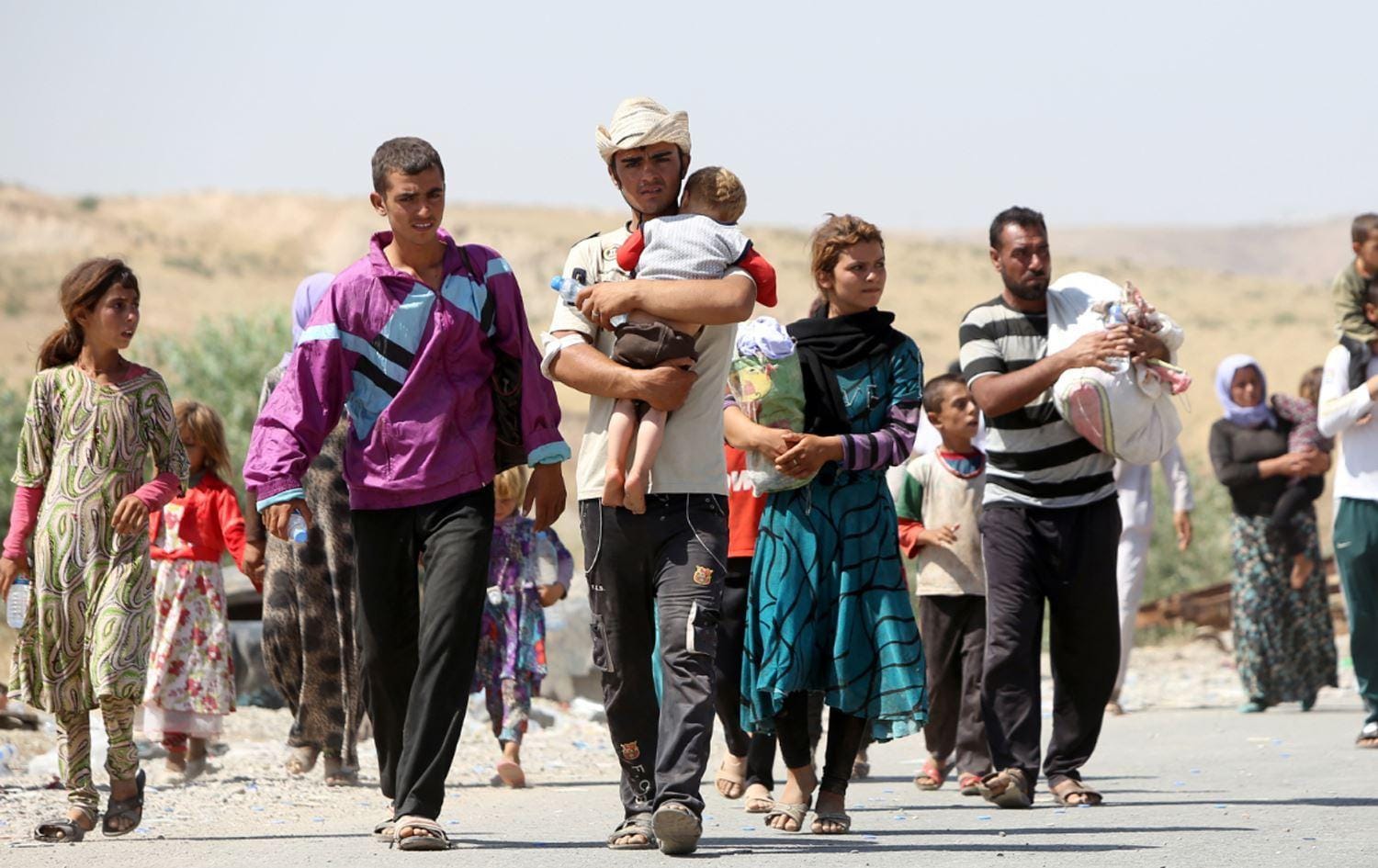
Chapter 8 — Mount Sinjar: Trapped Between Death and Survival
The Mountain That Became a Refuge
On 3 August 2014, as Islamic State fighters swept through the Sinjar region of northern Iraq, thousands of Yazidi civilians fled towards the mountain that had sheltered their ancestors during earlier periods of persecution.
Mount Sinjar, known to many Yazidis as Shingal, rises above the surrounding plains near the Syrian border. For generations, it had occupied an important place in the community's history and collective memory.
In August 2014, its rugged terrain offered an immediate possibility of escape from the armed fighters advancing through Yazidi villages.
But the mountain was not prepared to receive a displaced population on such an enormous scale.
Families arrived with little food, insufficient drinking water and almost no shelter from the intense summer heat. Some had travelled on foot for hours. Others had abandoned vehicles when roads became blocked or unsafe.
Many were accompanied by young children or elderly relatives who could not endure long journeys.
Below them, Islamic State fighters controlled much of the surrounding territory.
Above them, the exposed mountain offered few resources necessary for survival.
What began as an attempt to escape mass violence rapidly developed into an international humanitarian emergency.
The Flight from Sinjar
The movement towards Mount Sinjar began as Islamic State attacked communities across the district.
Some families had received warnings that armed fighters were approaching.
Others became aware of the danger only when gunfire could be heard or when residents from neighbouring villages arrived seeking refuge.
The speed of the offensive left little time for organised evacuation.
In several communities, civilians discovered that security positions previously held by Kurdish Peshmerga forces had been abandoned.
Many attempted to escape in private vehicles, while others fled on foot.
The roads became congested, and some routes were blocked by Islamic State fighters.
Families were separated during the confusion.
Parents searched for children. Relatives travelling in different vehicles lost contact. People who could not walk quickly enough risked being left behind.
For many Yazidis, the decision to head towards Mount Sinjar was not based on a prepared evacuation plan.
It was an immediate response to the threat of capture or death.
The mountain's historical role as a refuge made it a natural destination.
Yet reaching higher ground did not guarantee safety.
Tens of Thousands Stranded
The number of people who sought refuge on Mount Sinjar was difficult to establish during the emergency.
Different humanitarian assessments produced different estimates, reflecting rapidly changing conditions and the difficulty of counting people scattered across a large mountainous area.
A REACH assessment covering the period from 3 to 18 August 2014 estimated that approximately 130,000 internally displaced people had been stranded on the mountain during the initial crisis.
Other contemporary reports referred more generally to tens of thousands.
These figures should not be interpreted as a precise count of people present at any one moment.
Some civilians reached the mountain and subsequently escaped, while others remained trapped for longer periods.
The population was constantly changing as people moved between exposed areas, temporary shelters and possible escape routes.
What was clear was that the mountain had become a place of refuge for an exceptionally large civilian population.
Many had arrived without sufficient supplies.
There were no established facilities capable of providing immediate accommodation, sanitation, medical care and food to everyone seeking protection.
The conditions quickly became dangerous.
The Heat, the Thirst and the Struggle to Survive
August is one of the hottest months in northern Iraq.
During the Sinjar emergency, temperatures exceeded 40 degrees Celsius.
For displaced families sheltering on exposed slopes, the heat created an immediate threat.
Drinking water was scarce.
Many people had fled with only small quantities of water, which were rapidly exhausted.
Children and elderly people were particularly vulnerable to dehydration.
Families attempted to find shade beneath rocks or in whatever sheltered spaces were available.
The terrain made movement difficult, especially for people who were injured, ill or exhausted.
Food supplies were also limited.
Some families shared whatever provisions they had managed to bring from their villages.
Others went for extended periods without adequate meals.
The shortage of medical assistance compounded the danger.
People suffering from dehydration, heat exhaustion, injuries or existing illnesses could not easily obtain treatment.
The United Nations Assistance Mission for Iraq later reported that information available during the crisis indicated that as many as 40 children may have died on the mountain because of exposure and the absence of medical treatment.
That figure was a contemporary reported estimate, not a subsequently verified final death toll.
Nevertheless, it reflected the severity of the humanitarian emergency.
For those trapped on the mountain, survival depended on finding water, avoiding further attacks and securing a route to safety.
Families Separated Between the Mountain and the Villages
The humanitarian crisis unfolded alongside the genocide taking place in the surrounding settlements.
Some Yazidis who reached Mount Sinjar had escaped before Islamic State entered their villages.
Others had fled after witnessing killings or the capture of relatives.
Many did not know what had happened to family members left behind.
The absence of reliable communication made the uncertainty worse.
Mobile telephone networks were disrupted or unreliable in some areas, and people who had escaped with little more than their clothing often lacked functioning telephones.
Rumours circulated about massacres, abductions and the fate of particular villages.
Some reports were accurate. Others could not be verified immediately.
For families searching for missing relatives, the uncertainty was overwhelming.
A mother might have reached the mountain with some of her children while others remained unaccounted for.
An elderly person might have escaped without knowing whether younger relatives had survived.
The humanitarian emergency therefore involved more than physical deprivation.
It was accompanied by fear, bereavement and the psychological consequences of sudden family separation.
A Mountain Surrounded by Danger
Mount Sinjar offered natural protection, but Islamic State's control of surrounding territory restricted movement.
Civilians attempting to descend could encounter armed fighters, checkpoints or roads under Islamic State control.
The United Nations documented attacks against Yazidis attempting to escape.
For those who remained on the mountain, this created a dangerous dilemma.
Staying meant exposure to heat, thirst and inadequate shelter.
Leaving without a secure route risked capture or death.
The crisis illustrated how the deliberate targeting of civilians could create life-threatening conditions even for people who had initially escaped direct violence.
The danger was not simply a natural consequence of the mountain's environment.
It arose because an armed organisation had attacked the surrounding communities and obstructed safe movement.
The humanitarian emergency was inseparable from the campaign of persecution taking place below.
The Kurdish Forces That Opened an Escape Route
One of the most important developments during the crisis was the establishment of an escape corridor through territory connecting Mount Sinjar with north-eastern Syria.
Kurdish armed groups played a central role in this operation.
UNITAD's investigation documented that fighters associated with the People's Protection Units, known as the YPG, and the Kurdistan Workers' Party, or PKK, helped open a safe passage around 8 August 2014.
The route enabled many displaced Yazidis to leave the mountain, travel through Syria and eventually reach the Kurdistan Region of Iraq.
Other Kurdish forces and local Yazidi fighters also contributed to defensive and evacuation efforts.
The roles of these organisations must be distinguished.
The YPG was a Syrian Kurdish armed organisation. The PKK was a separate Kurdish militant movement originating in Turkey and designated as a terrorist organisation by Turkey, the United States and the European Union.
Their participation in the evacuation is a documented historical fact, independent of the wider political and legal controversies surrounding these groups.
The Iraqi Kurdish Peshmerga also participated in subsequent military and humanitarian efforts, although their earlier withdrawal from parts of Sinjar remains a major source of grievance among Yazidi survivors.
For the civilians attempting to escape, the immediate importance of the corridor was practical.
It provided a route away from the mountain and the territory controlled by Islamic State.
The Journey Through Syria
The escape route through Syria was not an easy passage.
Many displaced Yazidis had already spent days on Mount Sinjar in extreme conditions.
They then faced long journeys through difficult terrain before reaching areas where transport and humanitarian assistance were available.
Some walked for hours or days.
Others were transported by trucks organised by Kurdish groups, local residents and members of the Yazidi community.
The route passed through north-eastern Syria before many refugees crossed back into Iraq.
On 14 August 2014, the United Nations refugee agency, UNHCR, reported that tens of thousands of mainly Yazidi people had travelled through Syria and crossed into Iraq's Dohuk Governorate.
The agency also estimated that approximately 15,000 Yazidis were seeking refuge within Syria at that time.
These figures reflected the situation on that date rather than the final scale of displacement.
UNHCR described refugees arriving exhausted and traumatised after days without adequate food, water or shelter.
Many had injuries to their feet from prolonged walking.
Families had also been separated during the journey.
Some people reached camps or host communities in northern Iraq, while others remained in temporary accommodation in Syria.
The corridor saved lives, but it did not restore the homes or communities that had been lost.
The United States Decides to Intervene
As reports of the humanitarian emergency reached international audiences, pressure increased for outside intervention.
On 7 August 2014, US President Barack Obama announced that he had authorised targeted military action in Iraq and humanitarian assistance for civilians threatened by Islamic State.
The decision was influenced by several developments, including the threat to Yazidis on Mount Sinjar and Islamic State's advance towards Erbil, where American personnel were present.
The US administration described its objectives as protecting American personnel and helping prevent mass atrocities against vulnerable civilians.
That distinction matters.
The intervention was not exclusively a rescue operation for the Yazidis. It was also part of a broader response to Islamic State's military expansion and threats to US interests in Iraq.
Nevertheless, the humanitarian emergency on Mount Sinjar became one of the most visible reasons for immediate action.
The announcement marked a significant development in the international response to Islamic State.
The organisation had already committed serious crimes across Iraq and Syria, but the Sinjar emergency brought the danger facing civilians into particularly sharp international focus.
Food and Water from the Air
On the night of 7 August, American military aircraft began delivering humanitarian supplies to civilians near Mount Sinjar.
The first mission involved C-17 and C-130 transport aircraft carrying food and drinking water.
The operation was coordinated with Iraqi authorities and supported by US military aircraft.
Further deliveries followed over the next several days.
According to US Central Command, by 10 August American aircraft had delivered more than 74,000 meals and 15,000 US gallons of drinking water.
By 13 August, the reported cumulative totals had risen to more than 114,000 meals and 35,000 US gallons of water.
These figures describe supplies delivered by US aircraft, not the total humanitarian assistance provided by all organisations and governments.
The deliveries were essential, but aerial assistance had limitations.
Supplies had to reach locations accessible to displaced civilians.
People scattered across difficult terrain could not necessarily collect them.
Some families were too weak, injured or isolated to travel towards distribution points.
Airdrops therefore reduced immediate suffering but could not replace safe evacuation or sustained humanitarian access.
Air Strikes and the Protection of Civilians
The United States also conducted air strikes against Islamic State positions.
These operations sought to disrupt attacks against civilians and limit the organisation's ability to threaten areas where displaced people were seeking safety.
US Central Command reported strikes against Islamic State vehicles attacking Yazidis near Sinjar.
American aircraft also struck positions threatening Kurdish forces involved in protecting civilians and facilitating evacuations.
The military operations contributed to changing conditions around the mountain.
However, the impact of air strikes should not be confused with the work of ground forces that established and maintained escape routes.
The evacuation depended on several overlapping developments: Kurdish military action, local assistance, humanitarian deliveries and international military pressure.
No single actor can accurately be credited with the entire rescue effort.
The crisis also demonstrated the importance of coordination between military operations and humanitarian organisations.
Protecting civilians required not only reducing the threat from Islamic State but also enabling people to reach food, water, medical care and safe accommodation.
Why Was There No Earlier International Rescue?
The timing of the international response raises difficult questions.
Islamic State's advance across northern Iraq had been visible for weeks before the attack on Sinjar.
Mosul had fallen in June 2014.
The organisation's extremist ideology and violence against civilians were already well documented.
Yet the mass displacement and atrocities against the Yazidis unfolded before an effective international protection operation was established.
There is no simple explanation for this failure.
The region was politically divided, and responsibility for security was contested between Iraqi federal authorities and the Kurdistan Regional Government.
The speed of Islamic State's advance exposed serious weaknesses in existing military arrangements.
International governments also faced decisions about sovereignty, intelligence, military intervention and the risks associated with direct involvement.
These circumstances help explain the difficulties involved.
They do not remove the need to examine whether earlier warnings could have prompted more effective civilian protection.
A full assessment must distinguish the decisions made by Iraqi and Kurdish authorities from those made by foreign governments.
It must also avoid assuming that every possible intervention would necessarily have prevented the atrocities.
The central issue is whether credible warning signs were recognised, communicated and acted upon with sufficient urgency.
That question will be examined further in Chapter 12.
The Humanitarian Assessment of 13 August
By the middle of August, conditions on Mount Sinjar had changed significantly.
Thousands of civilians had escaped through the corridor towards Syria, while humanitarian deliveries and military operations had reduced some immediate threats.
On 13 August, a small US military and USAID assessment team visited Mount Sinjar to evaluate the remaining emergency.
The team concluded that fewer Yazidis remained on the mountain than had previously been feared.
It also assessed that those still present were in better condition than earlier reports had suggested and continued to have access to delivered supplies.
As a result, US officials announced that a large-scale American evacuation mission was less likely to be necessary.
This conclusion did not mean the original emergency had been exaggerated or that the danger had never existed.
The situation had changed because substantial numbers of people had already escaped and humanitarian assistance had reached some of those who remained.
It is therefore important to distinguish the conditions at the height of the crisis from those observed during the later assessment.
The improvement was real, but it followed days in which civilians had faced severe deprivation and the threat of attack.
From Mountain Refugees to Displaced Families
For many Yazidis, leaving Mount Sinjar marked the end of one immediate danger and the beginning of another period of uncertainty.
Those who reached the Kurdistan Region of Iraq often found shelter in displacement camps, unfinished buildings, schools or the homes of relatives and host families.
They had survived the initial attack but had lost access to their homes, land and livelihoods.
Many were unable to return because Islamic State still controlled their villages.
Others feared that family members had been killed or abducted.
Displacement created new difficulties involving healthcare, education, employment and legal documentation.
Families who had previously supported themselves through agriculture or small businesses became dependent on humanitarian assistance.
Children who had escaped the mountain were unable to resume ordinary schooling immediately.
Older people faced the loss of familiar communities and the challenge of living in temporary accommodation.
The consequences of the Sinjar emergency therefore extended far beyond August 2014.
For many survivors, displacement became a condition lasting years rather than weeks.
The Mountain in Yazidi Collective Memory
Mount Sinjar has long occupied a place in Yazidi history as a landscape associated with survival.
The events of August 2014 gave that history another tragic chapter.
For those who escaped Islamic State by reaching the mountain, it became a place of both refuge and suffering.
It was where families endured thirst and hunger.
It was where parents struggled to protect children under extreme conditions.
It was also where people waited for assistance while fearing that fighters might reach them.
Yet the mountain became a place from which thousands ultimately escaped.
The opening of the corridor, the assistance of local communities and the international response prevented further loss of life.
For many Yazidis, the experience reinforced the importance of collective solidarity and the need for reliable protection.
It also deepened distrust towards political and military authorities whose actions before and during the attack remain contested.
The mountain consequently represents more than a geographical landmark.
It has become part of the community's modern memory of genocide, displacement and survival.
What Mount Sinjar Revealed
The humanitarian catastrophe on Mount Sinjar exposed the consequences of a rapid military collapse in an area inhabited by a vulnerable religious minority.
It demonstrated how civilians can become trapped when armed groups control surrounding territory and safe evacuation routes are unavailable.
It also showed that survival depends on more than the delivery of emergency supplies.
Protection requires functioning security arrangements, access to reliable information, coordinated evacuation planning and the ability of humanitarian organisations to reach people in danger.
The rescue efforts involved local Yazidi communities, Kurdish armed groups, Iraqi authorities, international humanitarian agencies and foreign military forces.
Their contributions differed, but together they helped thousands escape.
The wider failure, however, remains impossible to ignore.
The Yazidis were forced to flee their ancestral homeland because Islamic State had launched a campaign directed at their destruction.
By the time the international response expanded, many had already been killed, abducted or enslaved.
Survival Was Only the Beginning
The escape from Mount Sinjar saved thousands of lives.
But survival did not mean that the genocide had ended for the families who reached safety.
Many continued searching for missing relatives.
Others faced the knowledge that their villages had been destroyed or remained under Islamic State control.
The displaced population required housing, education, healthcare and long-term support.
The mountain had protected many people from immediate capture, but it could not restore the lives they had left behind.
For the Yazidi community, the events of August 2014 became a defining moment: a reminder of the consequences of failed protection and of the extraordinary efforts required to survive.
The humanitarian emergency eventually subsided, but its consequences continued across families and generations.
The next chapter examines Nadia Murad and the voices of other survivors, whose testimony helped expose the genocide, challenge international indifference and demand accountability for the crimes committed against the Yazidi people.
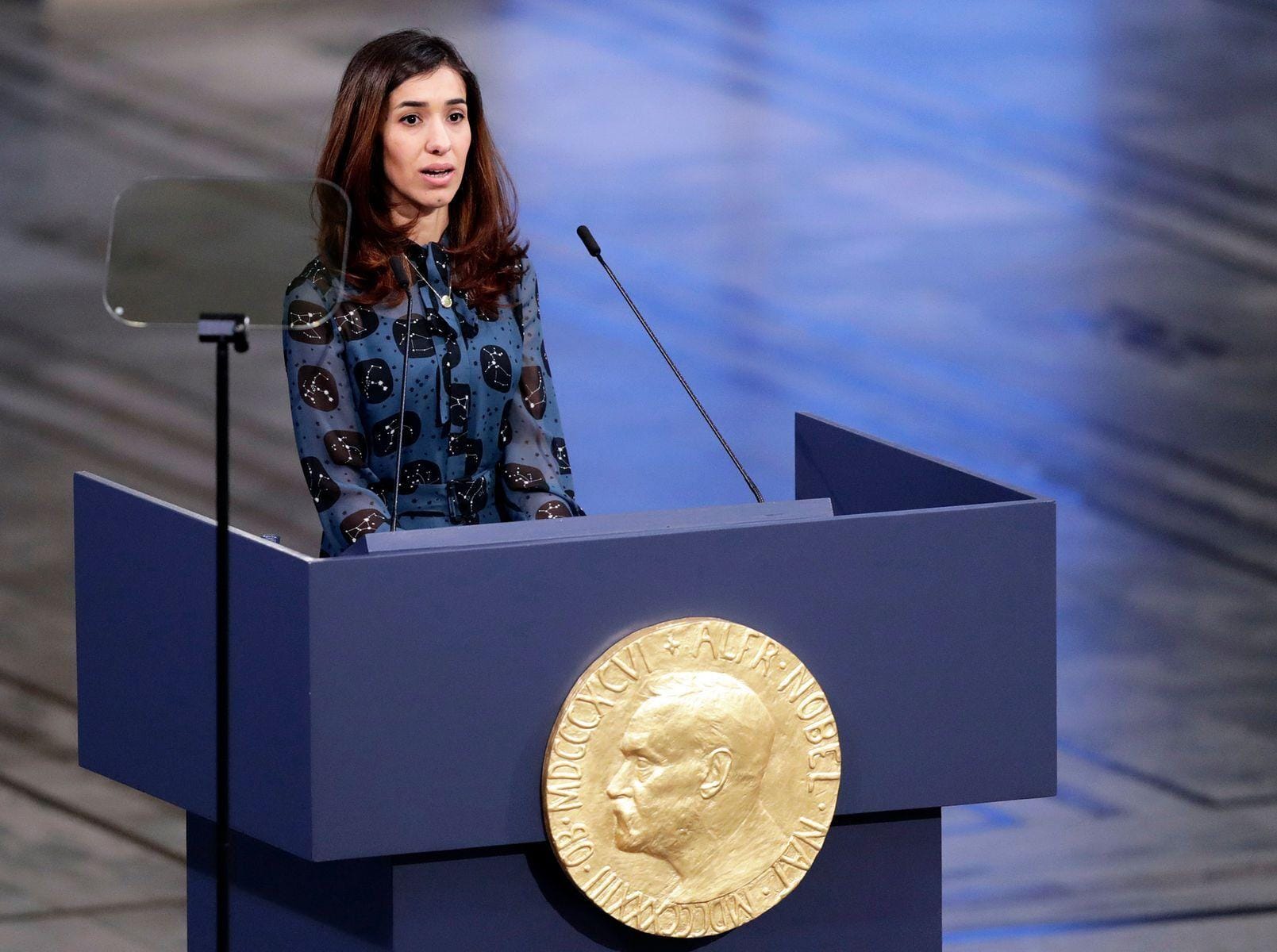
Chapter 9 — Nadia Murad and the Voices of Survivors
When Survivors Refused to Remain Silent
The genocide against the Yazidis in August 2014 was carried out in villages, detention centres and territories largely inaccessible to independent journalists and international investigators.
For many families, the outside world initially knew little about what had happened to their relatives.
As survivors escaped Islamic State captivity, their testimony began to reveal the scale and systematic nature of the atrocities.
They described mass executions, the separation of families, forced religious conversion, sexual slavery and the abduction of children.
Their accounts challenged the idea that the violence in Sinjar was simply another episode in Iraq's prolonged conflict.
They demonstrated that Islamic State had deliberately targeted an identifiable religious community and attempted to destroy it.
Among those who spoke publicly was Nadia Murad, a young Yazidi woman from Kocho whose testimony would become internationally recognised.
Her advocacy helped bring the crimes against the Yazidis before governments, the United Nations and international audiences.
Yet Nadia Murad was never the only voice.
Other survivors, relatives of missing people, religious leaders, community organisations and human rights defenders contributed to documenting the genocide and demanding justice.
Together, their efforts transformed a largely overlooked humanitarian catastrophe into an internationally recognised case of genocide.
Their work also raised an important question: what responsibilities does the international community assume once survivors have made their suffering known?
Nadia Murad: A Life Before the Genocide
Nadia Murad Basee Taha was born on 10 March 1993 in Kocho, a Yazidi village in the Sinjar region of northern Iraq.
She grew up within a close-knit agricultural community where family relationships, religious traditions and village life were central to everyday existence.
Before August 2014, her ambitions were not those of an international campaigner.
Like other young people in Kocho, she expected to build a future within a community that had existed for generations.
That future was destroyed when Islamic State fighters entered Sinjar.
Kocho was surrounded during the offensive, and its residents were placed under the control of the organisation.
On 15 August 2014, Islamic State separated men and older boys from women and children.
Hundreds of residents were killed.
Nadia lost her mother and several brothers during the massacre.
She and other young women were abducted.
The events in Kocho became one of the most extensively documented episodes of the Yazidi genocide.
For Nadia, they also marked the beginning of captivity.
Captivity and Escape
Following her abduction, Nadia Murad was taken to Mosul, where she was held by Islamic State members.
During approximately three months in captivity, she experienced repeated sexual violence, physical abuse and threats.
Her treatment formed part of the organised system of enslavement described in Chapter 6.
Islamic State regarded captured Yazidi women and girls as property that could be transferred, sold or exploited.
Nadia eventually escaped from her captors.
With assistance from a local family, she was able to leave Islamic State-controlled territory and reach safety in northern Iraq.
She subsequently travelled to Germany through a programme supporting vulnerable women and children affected by the conflict.
Her escape did not mean that the consequences of captivity had ended.
She had lost family members, her home and the community in which she had grown up.
Other relatives and neighbours remained missing or had been killed.
Nevertheless, she made a decision that would shape the international response to the genocide.
She chose to speak publicly.
Bringing the Yazidi Genocide Before the United Nations
In December 2015, Nadia Murad addressed the United Nations Security Council.
Her testimony described Islamic State's campaign of killing, abduction and sexual slavery against the Yazidis.
She called for the perpetrators to be held accountable and for greater international action to protect victims of trafficking and conflict-related sexual violence.
The appearance was significant because it placed a survivor's account directly before one of the world's most important international security institutions.
Her testimony also challenged the tendency to discuss atrocities primarily through military developments and political statements.
The consequences of Islamic State's actions were no longer presented only as numbers of people killed or displaced.
They were described by someone who had experienced the crimes personally.
Nadia's advocacy drew attention to the need for investigations, prosecutions and support for survivors.
In September 2016, she was appointed the United Nations Office on Drugs and Crime's first Goodwill Ambassador for the Dignity of Survivors of Human Trafficking.
The appointment recognised her work in raising awareness of trafficking and the rights of people subjected to exploitation.
It also gave her an international platform from which to continue demanding justice for the Yazidis.
The Sakharov Prize: Two Survivors Recognised
In 2016, Nadia Murad and fellow Yazidi survivor Lamiya Aji Bashar received the European Parliament's Sakharov Prize for Freedom of Thought.
The award recognised their advocacy for the Yazidi community and for women and girls subjected to Islamic State's sexual violence.
Lamiya, also from Kocho, had been abducted during the genocide and subjected to captivity.
She attempted to escape several times.
In April 2016, she finally escaped, but was seriously injured by a landmine during the journey. Two other girls travelling with her were killed.
She subsequently received medical treatment in Germany.
Despite her injuries and the trauma of captivity, Lamiya spoke publicly about the crimes committed against Yazidi women and children.
Her testimony provided further evidence of the systematic exploitation carried out by Islamic State.
The European Parliament's decision to honour both women demonstrated that international recognition of the genocide was increasingly connected to the advocacy of survivors themselves.
Their experiences were different, but their demands shared important objectives: recognition, accountability and protection for those still missing or held captive.
The award also illustrated the contribution of survivors to international human rights advocacy.
They were not simply witnesses to historical events.
They had become participants in the effort to shape the international response.
The Nobel Peace Prize of 2018
In October 2018, the Norwegian Nobel Committee announced that Nadia Murad and Congolese physician Denis Mukwege would jointly receive the Nobel Peace Prize.
The award recognised their efforts to end the use of sexual violence as a weapon of war and armed conflict.
Denis Mukwege had spent years treating survivors of sexual violence in the Democratic Republic of the Congo.
Nadia Murad had become an international advocate for victims of Islamic State's campaign against the Yazidis.
Their recognition connected the experiences of survivors in different conflicts through a common issue: the deliberate use of sexual violence to terrorise and control civilian populations.
The Nobel Peace Prize brought further international attention to the Yazidi genocide.
It also created an opportunity to examine why sexual violence in conflict had so often been treated as an unavoidable consequence of war rather than a serious crime requiring investigation and punishment.
For Nadia, the award was not an indication that the struggle for justice had been completed.
Many Yazidis remained missing.
Families were still displaced.
The destruction of Sinjar continued to affect survivors.
The prize increased visibility, but visibility alone could not resolve these problems.
From Testimony to Reconstruction: Nadia's Initiative
Nadia Murad's advocacy extended beyond public speeches and international recognition.
She established Nadia's Initiative, an organisation focused on supporting communities affected by genocide, mass atrocities and human trafficking.
Its work has included efforts to rebuild communities in Sinjar and support survivors' access to essential services.
The organisation has advocated for education, healthcare, livelihoods and the restoration of infrastructure.
This approach reflects an important distinction between documenting atrocities and addressing their long-term consequences.
Survivors may receive international attention during commemorations or major legal developments.
However, rebuilding their lives requires practical support that continues after media coverage declines.
For families returning to Sinjar, the challenges include damaged homes, limited employment opportunities and inadequate public services.
Women who survived captivity may require specialised healthcare and financial independence.
Children need access to education and opportunities that were denied to them during years of displacement.
Reconstruction must therefore be understood as part of recovery from genocide.
It cannot replace criminal accountability, but neither can prosecutions alone restore destroyed communities.
Amal Clooney and the Legal Campaign for Accountability
Nadia Murad's efforts also brought attention to the role of international legal advocacy.
Human rights lawyer Amal Clooney became involved in efforts to secure accountability for Islamic State's crimes against the Yazidis.
Working with survivors and other legal specialists, she advocated for the investigation and prosecution of genocide, crimes against humanity and war crimes.
The legal campaign faced significant obstacles.
Iraq was not a party to the Rome Statute of the International Criminal Court, limiting the Court's ability to exercise jurisdiction over crimes committed on Iraqi territory without another jurisdictional basis or a referral by the United Nations Security Council.
The political conditions required for such a referral were not established.
As a result, advocates pursued other avenues, including national prosecutions and the collection of evidence for future proceedings.
In September 2017, the UN Security Council adopted Resolution 2379, establishing an investigative team to collect and preserve evidence of crimes committed by Islamic State in Iraq.
That team became known as UNITAD.
Survivor advocacy was an important part of the wider international pressure for accountability, although the creation of UNITAD resulted from decisions taken by UN member states and the Iraqi government.
The development demonstrated how testimony, legal advocacy and international diplomacy could contribute to a formal investigative process.
The Voices Beyond International Recognition
The international attention given to Nadia Murad and Lamiya Aji Bashar was important, but the Yazidi genocide cannot be understood through the experiences of two individuals alone.
Thousands of survivors and relatives contributed information to investigators, humanitarian organisations and journalists.
Some provided testimony about killings in their villages.
Others described detention sites, routes used to transport captives or the identities of perpetrators.
Families searching for missing relatives supplied names, photographs and personal information.
Community organisations helped document cases and connect survivors with legal and humanitarian assistance.
These contributions were essential to establishing the wider pattern of crimes.
They also demonstrated that the genocide affected people in different ways.
Some survivors escaped during the first days of the offensive.
Others remained in captivity for years.
Some lost nearly all their relatives.
Others survived with family members but were unable to return to their homes.
Not every survivor wished to speak publicly.
Some feared stigma, retaliation or the emotional consequences of recounting traumatic experiences.
Their decision to remain private is as legitimate as the decision of others to become public advocates.
Community Organisations and the Search for Truth
Yazidi civil society organisations have played an important role in documenting the genocide and supporting survivors.
Among them is Yazda, which was established in response to the atrocities committed in 2014.
Its work has included survivor support, documentation, advocacy and assistance connected to missing persons and mass graves.
Other organisations and community networks have contributed to psychological support, education, legal assistance and humanitarian programmes.
Their work is especially important because international attention does not always translate into services accessible to displaced families.
A survivor may live far from a major city, lack identity documents or face difficulties travelling to obtain assistance.
Community organisations can help bridge the gap between international commitments and the practical needs of affected people.
However, such organisations also face limitations involving funding, security, political conditions and access to government institutions.
The long-term recovery of the Yazidi community cannot depend entirely on charitable organisations.
Iraqi authorities and international partners retain responsibilities for protection, reconstruction, justice and reparations.
The Risk of Reducing Survivors to Their Trauma
The experiences of Yazidi survivors have been widely reported by international media.
Their testimony has helped establish the facts of the genocide and challenge public indifference.
But the reporting of sexual violence and other atrocities carries serious ethical responsibilities.
Survivors should not be expected to repeatedly describe the most traumatic events of their lives simply because those details attract public attention.
Journalists must distinguish between information that is necessary to understand a crime and details that serve no clear public interest.
Informed consent is essential.
Survivors should understand how their accounts may be used, where they may be published and whether their identities will be disclosed.
The risks can be particularly serious for women and children who have experienced sexual violence.
Even where a survivor has previously spoken publicly, that does not automatically establish consent for every future use of their testimony or image.
The decision to speak should remain with the survivor.
A responsible interview must also recognise that memory of traumatic events can be fragmented without making an account inherently unreliable.
Journalists should verify factual claims wherever possible while avoiding questioning practices that unnecessarily reproduce harm.
A Survivor Is Not a Symbol for Every Victim
International audiences often become familiar with major human rights crises through a small number of recognisable individuals.
This can make complex events more understandable.
But it can also create the impression that one person's experience represents an entire community.
The Yazidi genocide affected men, women and children across different villages and social backgrounds.
Some were executed.
Others were abducted or enslaved.
Many escaped but experienced displacement, bereavement and the loss of their livelihoods.
The experiences of male survivors, elderly people, children and relatives of missing persons also deserve attention.
A complete account must therefore include different perspectives.
The voices of women who survived sexual slavery are essential, but they should not become the only way in which the Yazidi community is represented.
The community's identity also includes its religious traditions, history, cultural achievements and aspirations for the future.
Recognising survivors as individuals means allowing them to be more than representatives of suffering.
The Difference Between Recognition and Justice
The international recognition of the Yazidi genocide has been significant.
United Nations investigators concluded that Islamic State committed genocide, crimes against humanity and war crimes against the community.
Several governments and parliaments have formally recognised the genocide.
Courts in Germany have also prosecuted individuals for crimes committed against Yazidis, including genocide.
These developments represent important advances.
However, they do not mean that all perpetrators have been identified or brought to justice.
Many families still lack information about missing relatives.
Others have not received adequate reparations.
The destruction of homes and infrastructure continues to affect the possibility of safe return.
Survivors have repeatedly called for accountability that goes beyond declarations and commemorations.
Justice requires credible investigations, fair criminal proceedings, witness protection and meaningful participation by affected communities.
It also requires attention to the practical consequences of the crimes.
Recognition is a beginning, not a conclusion.
The Burden of Speaking for the Missing
One of the most difficult responsibilities carried by survivor advocates is speaking about people who cannot speak for themselves.
Many Yazidis were killed during the genocide.
Others disappeared into Islamic State captivity and have never been located.
Their relatives continue to seek information about what happened.
Public advocates have helped maintain attention on these unresolved cases.
Yet the search for missing people is not simply a political demand.
For families, it is an intensely personal need.
A parent may not know whether a child is alive.
A surviving child may have no confirmation of a parent's death.
A family may be unable to conduct burial rituals because the remains of a relative have never been identified.
The uncertainty can continue for years.
It also complicates legal, financial and family decisions.
Survivor advocacy has therefore connected the demand for justice with the humanitarian obligation to establish the fate of missing persons.
The next chapter will examine that struggle in greater detail.
What Survivor Testimony Changed
The testimony of Nadia Murad, Lamiya Aji Bashar and other Yazidi survivors helped transform international understanding of the atrocities committed by Islamic State.
Their accounts contributed to public recognition that the organisation's campaign involved systematic persecution, sexual slavery and genocidal violence.
They helped generate political pressure for investigations and accountability.
They also brought attention to the long-term needs of survivors, including medical care, rehabilitation, reconstruction and the search for missing relatives.
Yet testimony alone cannot prevent future atrocities.
The responsibility to act belongs to governments, international institutions, courts and organisations with the authority and resources to provide protection.
Survivors can expose crimes and demand change.
They should not have to carry the entire burden of achieving it.
More Than a Story of Survival
Nadia Murad's journey from Kocho to the international stage has become one of the most recognised personal stories associated with the Yazidi genocide.
Her advocacy has helped ensure that the crimes committed against her community cannot easily be dismissed or forgotten.
But the importance of her work lies not only in the recognition she has received.
It lies in the wider struggle to turn evidence into accountability and international sympathy into meaningful assistance.
The same is true of the many survivors whose names are less familiar.
Their testimony has helped establish historical truth.
Their advocacy has supported investigations.
Their determination has challenged the assumption that communities subjected to mass atrocities must remain powerless.
The Yazidi genocide is a story of destruction, but it is also a story of people insisting on their right to be heard, protected and treated with dignity.
The next chapter examines the thousands of Yazidis who disappeared during Islamic State's campaign and the families who continue searching for answers — a struggle that remains one of the most painful and unresolved consequences of the genocide.
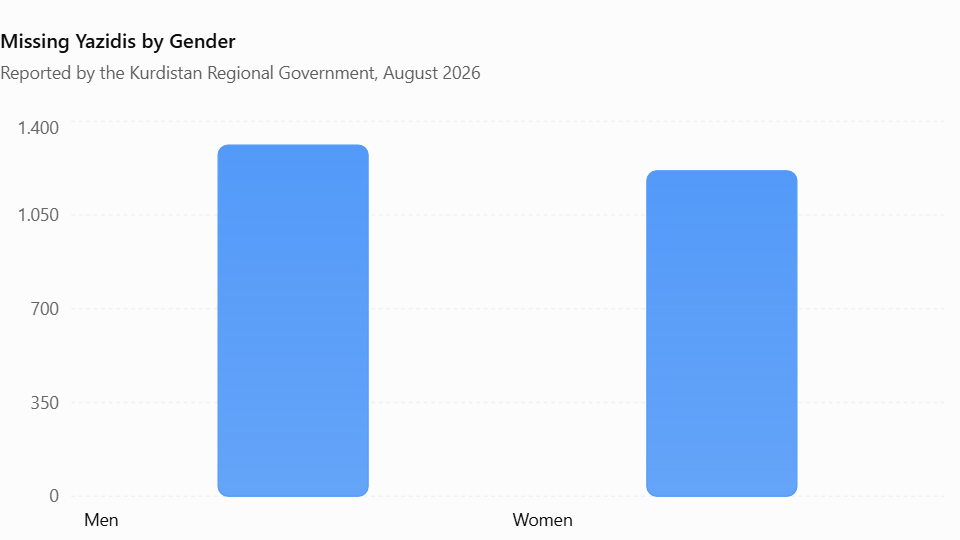
Chapter 10 — The Missing: Families Still Searching
Twelve Years Without Answers
More than twelve years after Islamic State attacked the Yazidi homeland of Sinjar, thousands of families are still waiting to learn what happened to their loved ones.
Some have spent more than a decade searching for children abducted in August 2014. Others are trying to establish whether parents, brothers, sisters or spouses were killed during the massacres or survived captivity.
The passage of time has not brought certainty.
In August 2026, the Kurdistan Regional Government reported that 2,526 Yazidis remained missing following the genocide. Its figures included 1,311 men and 1,215 women.
The United Nations had reported almost 2,600 missing Yazidis in August 2025.
These figures demonstrate the continuing scale of the crisis, although differences between official records, reporting dates and verification procedures mean they should not be treated as a perfectly reconciled register.
Behind the statistics are families who continue to live with unanswered questions.
Some have received information suggesting that a relative survived captivity. Others have heard nothing since the first days of the attacks.
For many, the uncertainty has become part of everyday life.
The genocide destroyed communities in August 2014. The disappearance of thousands of people has continued to affect those communities ever since.
What Does It Mean to Be Missing?
The term missing person can describe several different circumstances.
A person may have been abducted and remain in captivity.
They may have escaped but never re-established contact with their family.
They may have died without their remains being recovered or identified.
A child may have survived under a different name and may no longer remember their original family or religious identity.
These possibilities must be distinguished.
It would be inaccurate to assume that everyone recorded as missing is still alive. It would be equally inaccurate to assume that everyone has died.
For investigators, establishing the fate of a missing person requires evidence.
That evidence may include witness testimony, detention records, information about transfers between captors, DNA identification or verified contact with the person concerned.
For relatives, however, the distinction is often deeply painful.
Without reliable information, families may be unable to mourn a death or prepare for a reunion.
The International Committee of the Red Cross recognises that the uncertainty surrounding a disappearance can have profound psychological, legal and economic consequences.
Families need answers, but they also need support while those answers remain unavailable.
The Abductions That Created a Generation of Missing People
The disappearance of Yazidi civilians began during the Islamic State offensive of August 2014.
As documented in earlier chapters, fighters separated captured civilians according to age and gender.
Men and older boys were frequently taken to execution sites.
Women and girls were transported to detention facilities and subjected to an organised system of enslavement.
Younger boys were at risk of being removed from their mothers, forcibly indoctrinated and trained for military purposes.
Captives were transferred between locations in Iraq and Syria.
These movements made subsequent tracing exceptionally difficult.
A woman might be held by several different captors over a period of years.
A child might be moved to a training centre, assigned a new name and later transferred elsewhere.
Some people were separated from relatives who had been their only source of information about their identity.
As Islamic State lost territory, captives could be moved again, abandoned, killed or absorbed into other households.
The resulting uncertainty did not disappear when the organisation's territorial rule collapsed.
In many cases, the chain of information needed to establish a person's whereabouts had already been broken.
The Children Who May No Longer Know Who They Are
Among the most troubling unresolved cases are those involving children.
Save the Children reported in August 2024 that approximately 1,300 Yazidi children were still missing ten years after the genocide.
This was an estimate for that reporting period, not a verified count of missing children in November 2026.
Some children were abducted when they were too young to remember their families clearly.
Others spent years under Islamic State control, where they were assigned new names and subjected to forced religious indoctrination.
As documented by United Nations investigators, the organisation attempted to suppress the religious and cultural identities of abducted Yazidi boys.
For children who survived under these circumstances, the consequences could be profound.
A child taken at the age of four in 2014 would be approximately sixteen in 2026.
A boy abducted at eight would now be around twenty.
Some may have spent much of their lives separated from their original communities.
The possibility that a missing person may not recognise their original name or remember their family creates particular challenges for identification.
Physical appearance changes considerably between childhood and adulthood.
Names and identity documents may have been altered.
Language may also have changed.
These circumstances require patient, specialised investigations rather than assumptions based on appearance, language or religious practice.
Syria and the Search Beyond Iraq
The search for missing Yazidis extends beyond Iraq's borders.
Islamic State operated across substantial areas of Iraq and Syria, moving captives between locations under its control.
After the organisation lost its major territorial strongholds, large numbers of people associated with or displaced by the conflict remained in camps, detention facilities and communities in north-eastern Syria.
This created difficult questions about whether some Yazidi survivors might still be present among populations whose identities had not been fully established.
In May 2025, the head of the Kurdistan Region's Office for Rescuing Abducted Yazidis stated that many of the missing were believed to be in Syria, particularly the north-east.
That statement reflected the office's assessment, not independently verified evidence that most missing Yazidis were alive in a particular location.
The United Nations has also expressed concern that survivors may be reluctant or unable to reveal their identities because of threats, fear of retaliation or the possibility of being separated from children born during captivity.
The search therefore requires cooperation between authorities and humanitarian organisations operating across different jurisdictions.
It also requires careful safeguarding.
A person suspected of being a Yazidi survivor should not be publicly identified or removed from a household without an appropriate assessment of their safety, identity, wishes and legal rights.
The Difficulties of Identifying Survivors
Locating someone who may have survived Islamic State captivity is only the beginning of the identification process.
Investigators must establish whether the individual is the person being sought.
This can be complicated by missing documents, altered names, years of separation and the effects of trauma.
DNA testing may help establish biological relationships, but it does not answer every question.
Some people may lack living relatives who can provide reference samples.
Others may have incomplete family records or uncertain dates of birth.
For children born during captivity, the legal and social issues can be particularly complex.
An investigation must also protect the individual concerned.
A survivor who has lived for years under coercion may need time and specialist assistance before discussing their identity or experiences.
Children require age-appropriate procedures and protection from unnecessary publicity.
The purpose of tracing must be to establish the truth and protect the person's rights.
It must not become another process in which survivors lose control over decisions affecting their lives.
Families Who Never Stop Searching
For relatives, the search often becomes a long-term responsibility.
Families preserve photographs, identity documents and memories of the last time they saw someone.
Some contact humanitarian organisations, government offices and community networks.
Others follow reports about possible survivors or newly discovered mass graves.
The International Committee of the Red Cross has documented the experiences of Iraqi families searching for relatives who disappeared during successive conflicts.
In a 2023 publication, the organisation described the experience of a Yazidi boy from Sinjar who was still searching for several family members.
Such accounts illustrate the lasting effects of disappearance on children who grow up without knowing the fate of their parents or siblings.
The uncertainty affects family relationships and everyday decisions.
A household may be unable to establish whether a missing relative is legally deceased.
Property, inheritance, guardianship and social assistance can become difficult to arrange.
The emotional consequences are equally significant.
A family may continue hoping for a reunion while fearing that the missing person has been killed.
Neither possibility can be accepted as fact without reliable evidence.
The Search Through Mass Graves
For some families, the answer may lie in the mass graves discovered across Sinjar.
Investigators have identified numerous burial sites associated with Islamic State's killings.
The recovery and examination of remains can help establish the identities of victims.
However, the process is complex.
A grave must be examined by qualified specialists, evidence must be preserved and remains must be handled with dignity.
DNA samples from relatives can then be compared with recovered remains.
This work may provide families with confirmation of a death and allow religious burial ceremonies to take place.
In August 2026, the Kurdistan Regional Government reported that 296 bodies had been exhumed, identified through DNA testing and returned to their families.
It also reported that dozens of graves remained unopened or uninvestigated.
These figures describe the government's reported progress at that date and should not be confused with the total number of people believed to have been killed.
The identification process is essential for both humanitarian and judicial reasons.
It can provide answers to relatives while preserving evidence that may be used in criminal investigations.
Why Identification Takes So Long
The recovery of missing persons is not simply a matter of opening burial sites.
Forensic identification requires specialist personnel, laboratories, documentation and sustained funding.
The work can be affected by environmental conditions, damaged remains and the passage of time.
Security concerns and unexploded ordnance may restrict access to some locations.
Investigators must also preserve evidence in a manner suitable for potential criminal proceedings.
Families may live in different countries, making the collection of reference DNA samples more complicated.
In some cases, relatives have died before the missing person could be identified.
Political and administrative divisions create further obstacles.
Different institutions may hold relevant records, while information-sharing arrangements are not always straightforward.
These difficulties help explain why the process can take years.
They do not diminish the obligation to continue.
For families, every unidentified set of remains represents the possibility of an answer.
The International Commission on Missing Persons
The International Commission on Missing Persons, known as ICMP, has supported efforts to strengthen missing-persons investigations in Iraq.
Its work involves cooperation with government institutions, forensic specialists and civil society organisations.
In September 2024, ICMP organised a meeting in The Hague bringing together Iraqi government representatives and Yazidi organisations based in Europe.
Participants discussed measures needed to advance the search for missing people.
The meeting included representatives of Iraqi institutions responsible for forensic work, mass graves and survivor affairs.
Yazidi organisations contributed the perspectives of affected communities.
The discussions reflected the importance of cooperation between families, technical specialists and state authorities.
A missing-persons process cannot function effectively if families are excluded from decisions or denied access to information about progress.
Nor can it rely solely on the efforts of survivors and community organisations.
State institutions must provide the legal authority, resources and coordination necessary to conduct investigations.
The Role of the International Committee of the Red Cross
The International Committee of the Red Cross works with families affected by disappearances across Iraq.
Its activities include helping relatives seek information, supporting family contact and assisting with the humanitarian consequences of missing-persons cases.
The organisation's work extends beyond the Yazidi genocide because Iraq has experienced decades of conflict and displacement.
Nevertheless, Sinjar is among the areas where families have benefited from its support.
In its 2024 Iraq activity report, the ICRC stated that more than 1,500 new missing-persons cases had been reported to it across the country during that year.
The fate or whereabouts of 343 people were clarified.
These are Iraq-wide figures, not statistics specifically relating to missing Yazidis.
The report also described legal, psychological and economic assistance provided to affected families, including in Sinjar and surrounding areas.
Such support matters because a missing-persons investigation may continue for years without a definitive result.
Families need assistance during that period, not only when a person is found.
The Economic Cost of Disappearance
The disappearance of a family member can create serious financial problems.
A household may lose its main source of income.
Children may be forced to leave school or begin working.
A surviving spouse may face difficulties obtaining documentation needed to claim benefits, manage property or make decisions on behalf of children.
For Yazidi families displaced from Sinjar, these problems are often compounded by the loss of homes and livelihoods.
Some families remain dependent on temporary accommodation or humanitarian support.
Others have returned to communities where infrastructure and employment opportunities are limited.
The ICRC has highlighted the importance of legal and economic assistance for families of missing people.
Such assistance can help relatives obtain documents, access services and establish a measure of financial stability.
However, support should not depend on a family declaring a missing person dead before the facts have been established.
The right to assistance must be compatible with the continuing search for truth.
The Psychological Burden of Uncertainty
The emotional consequences of disappearance differ from those associated with a confirmed death.
When a person is known to have died, relatives may begin mourning with some degree of certainty.
When someone remains missing, hope and grief can exist simultaneously.
Families may repeatedly revisit the circumstances of the disappearance, searching for details that could explain what happened.
Reports of newly discovered survivors can renew hope.
News of mass graves may create fear.
Each development can bring the possibility of an answer while also reopening painful memories.
The uncertainty may affect sleep, concentration, relationships and the ability to plan for the future.
Children growing up with missing parents may experience particular difficulties.
Some have only limited memories of the person they are searching for.
Others have spent much of their lives hearing family members discuss possible explanations without reaching a conclusion.
Psychological support must therefore recognise the specific experience of unresolved loss.
Families should not be pressured to abandon hope, nor should they be encouraged to accept unverified claims about a missing relative's fate.
The Right to Know
International humanitarian law recognises important obligations concerning missing persons and the treatment of the dead.
Parties to armed conflict must comply with applicable rules intended to prevent disappearances, account for people in their custody and facilitate efforts to establish the fate of missing persons.
Human rights law also provides protections relevant to unlawful detention, enforced disappearance, family life and access to effective remedies.
The precise legal obligations depend on the circumstances and the treaties and rules applicable to the states and actors concerned.
The ICRC emphasises that families have a right to know the fate and whereabouts of missing relatives.
This principle is particularly important in the aftermath of mass atrocities.
Families should not have to rely indefinitely on rumours, informal contacts or occasional public announcements.
They need accessible procedures through which cases can be registered, information can be submitted and progress can be communicated.
They also need confidence that personal information will be handled securely.
The search for missing people is a humanitarian obligation, not merely a political issue.
Why International Cooperation Remains Essential
The missing Yazidis cannot all be traced through investigations conducted within Iraq alone.
Islamic State transferred captives across international borders.
Some survivors may have been taken to locations outside the areas where their families originally lived.
Others may have moved again during the collapse of Islamic State's territorial control.
This requires cooperation between Iraqi authorities, institutions in the Kurdistan Region, relevant authorities in Syria and international organisations.
Governments holding information about Islamic State members, detention sites or trafficking networks may possess evidence relevant to individual cases.
Such information must be handled lawfully and with appropriate safeguards.
The involvement of different jurisdictions creates challenges involving security, privacy, criminal investigations and access to detainees.
Nevertheless, these obstacles cannot justify abandoning the search.
International cooperation is especially important where missing persons may be children or survivors of trafficking and sexual violence.
Any tracing process must prioritise their protection and dignity.
The Need for a Reliable and Coordinated Register
One recurring difficulty in missing-persons investigations is the existence of different records maintained by different institutions.
Government offices, humanitarian organisations and community groups may collect information using different methods.
Some records may contain duplicate entries.
Others may lack sufficient documentation to establish whether a person has been found, identified among the dead or remains unaccounted for.
The figures reported by authorities can therefore change as information is verified and records are updated.
A coordinated system could help reduce these problems.
Such a system would need clear procedures for registering cases, verifying identities, protecting personal data and sharing relevant information between authorised institutions.
Families should have a reliable way to update information and receive responses.
However, centralisation alone is not sufficient.
A register must be accompanied by effective investigations, forensic capacity and meaningful cooperation across borders.
Its purpose should be to help establish the fate of individuals, not simply to produce a more precise statistic.
The Families Must Remain at the Centre
Missing-persons investigations are often discussed through institutional responsibilities and technical procedures.
For the families affected, the priorities are more immediate.
They want to know whether their loved ones are alive.
They want to know where they are.
If a relative has died, they want the remains identified and returned where possible.
They want truthful information, respectful treatment and the opportunity to participate in decisions that affect them.
These expectations should guide the work of authorities and humanitarian organisations.
Families must not be treated merely as sources of DNA samples or background information.
They are people with rights, knowledge and legitimate interests in the outcome of investigations.
Their participation can also improve the quality of the search.
Relatives may possess photographs, family records, descriptions of identifying features or information about the circumstances of an abduction.
Such details can help investigators reconstruct individual cases.
But participation must remain voluntary and informed.
Families should understand how information will be used and what protections apply to sensitive data.
The Missing Are Not a Forgotten Chapter
The continuing disappearance of Yazidis is sometimes overshadowed by other developments in Iraq and Syria.
Islamic State lost its territorial control.
International attention shifted to new conflicts and political crises.
Yet the consequences of the genocide remain unresolved for thousands of families.
The search for missing people is not simply an effort to complete the historical record.
It is a continuing humanitarian responsibility.
Each identified victim may allow a family to mourn.
Each safely located survivor may create the possibility of reunion.
Each properly investigated case may contribute to accountability for the crimes committed.
Progress can be slow, and some questions may never be answered.
But uncertainty about the outcome cannot justify ending the effort.
Twelve Years Later, the Search Continues
The Yazidi genocide is often remembered through the events of August 2014: the attack on Sinjar, the mass executions, the enslavement of women and girls, and the desperate flight towards Mount Sinjar.
For families of the missing, however, the genocide is not confined to those events.
Its consequences remain present in the absence of relatives whose fate has never been established.
The reported figure of 2,526 missing Yazidis in August 2026 represents thousands of unresolved individual cases.
It is a reminder that military defeat of the perpetrators did not automatically bring closure to the victims.
The responsibilities are clear in principle: continue searching, preserve evidence, support families, protect survivors and establish the truth wherever possible.
For the Yazidis, justice must include both accountability for the crimes and answers about those who disappeared.
The next chapter examines the situation in Sinjar after Islamic State's territorial defeat — why liberation did not lead to immediate recovery, why so many families remain displaced, and what continues to prevent a safe and sustainable return to their homeland.
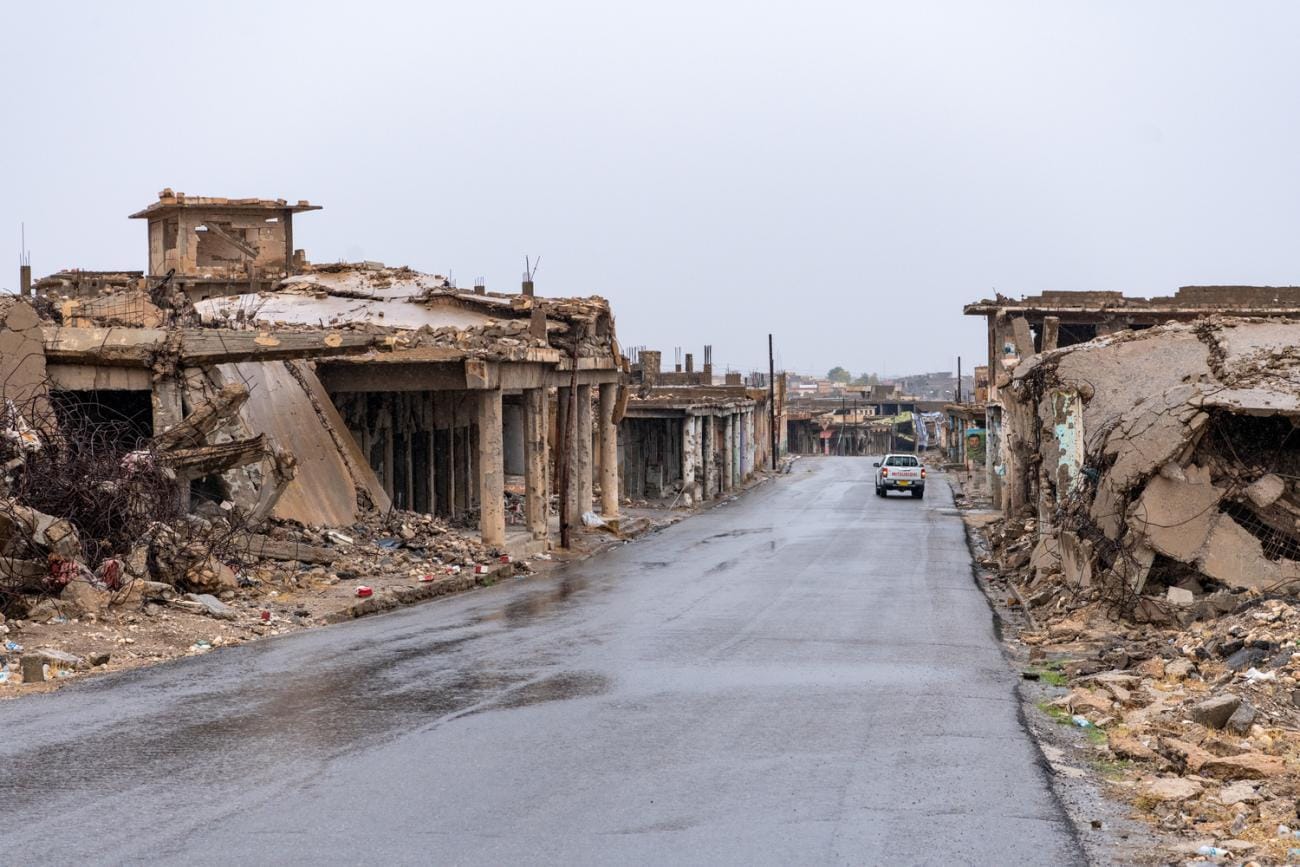
Chapter 11 — Liberation Without Recovery
When the Fighting Ended, the Crisis Did Not
In November 2015, Kurdish Peshmerga forces, supported by coalition air power and other forces operating in the Sinjar area, recaptured Sinjar town from Islamic State.
The operation was a major military development.
More than fifteen months earlier, Islamic State had attacked the Yazidi homeland, killing civilians, abducting thousands and forcing entire communities to flee.
The recapture of Sinjar raised hopes that displaced families might finally return to the places they had called home.
Yet military liberation did not mean that Sinjar had become a safe or functioning place to live.
Homes had been destroyed. Schools and hospitals were damaged. Agricultural land had been abandoned, and many families had lost relatives whose fate remained unknown.
Political and military divisions created further obstacles.
The district became an arena of competition involving the Iraqi federal government, the Kurdistan Regional Government, local armed groups and organisations linked to wider regional conflicts.
For the Yazidis, the end of Islamic State's territorial control did not bring an immediate end to displacement.
More than a decade later, the consequences of the genocide continue to shape the future of Sinjar.
The central question is no longer simply who defeated Islamic State.
It is why so many survivors have remained unable to rebuild their lives in the place from which they were driven.
The Liberation of Sinjar in November 2015
The operation to recapture Sinjar town began in November 2015.
Kurdish Peshmerga forces advanced against Islamic State positions with support from the United States-led coalition, including air strikes against the organisation's military infrastructure.
The operation also involved Yazidi fighters and took place within a wider military environment in which other Kurdish armed groups had established positions in the Sinjar region.
On 13 November, Kurdish authorities announced that Sinjar town had been retaken.
The operation disrupted Islamic State's control of an important route between Mosul in Iraq and Raqqa in Syria.
For Yazidis who had fled the attacks of August 2014, the news was significant.
It meant that Islamic State no longer controlled the district's principal town.
However, liberation was not complete across every village and surrounding area.
Some territory remained affected by fighting and insecurity, while the wider campaign against Islamic State in Iraq continued until 2017.
The distinction matters because the recapture of a town is not the same as restoring security throughout a district.
It also does not automatically restore the civilian institutions needed for everyday life.
A Homeland Reduced to Ruins
The destruction left behind in Sinjar was extensive.
Homes had been damaged by Islamic State, military operations and fighting involving different armed forces.
Public buildings were destroyed or rendered unusable.
Roads, electricity networks and water infrastructure required major repairs.
Religious sites had been attacked, and communities that had existed for generations were dispersed.
According to figures cited by the International Organization for Migration and Human Rights Watch, approximately 80 per cent of public infrastructure and 70 per cent of homes in Sinjar town were destroyed during the conflict between 2014 and 2017.
These estimates refer specifically to Sinjar town, not every settlement across the district.
The distinction is important because destruction varied considerably between locations.
Some villages suffered catastrophic damage.
Others retained more buildings but lacked essential services or faced continuing security problems.
For displaced families considering a return, the physical condition of their homes was often the first obstacle.
A house without a roof, reliable electricity or safe drinking water could not provide the stability needed for a family to begin again.
The destruction also affected communal life.
Schools, places of worship, markets and health facilities are not simply buildings.
They are part of the infrastructure through which a community functions.
Without them, returning home can mean exchanging one form of hardship for another.
The Roads Home Were Not Always Safe
The defeat of Islamic State's territorial forces did not eliminate every security threat.
Explosive remnants of war, unexploded ordnance and mines continued to endanger civilians in conflict-affected areas.
Damaged roads and abandoned buildings created additional hazards.
Families returning to agricultural land could encounter dangerous objects left behind during fighting.
Children were particularly vulnerable because they might not recognise the risks.
The security situation was also complicated by the presence of multiple armed organisations.
Different forces maintained positions across parts of Sinjar, sometimes with competing political loyalties and command structures.
This created uncertainty about who was responsible for civilian protection.
For displaced families, the question of security was deeply personal.
Many had experienced the collapse of protection arrangements in August 2014.
They had seen how quickly an armed organisation could overrun their communities.
As a result, assurances that an area was liberated were not necessarily sufficient to restore confidence.
People needed evidence that reliable security institutions could protect them over the long term.
The Armed Groups Competing for Influence
Sinjar's location near the Syrian border gives it strategic importance beyond the needs of its local population.
The district connects areas of northern Iraq with routes leading towards north-eastern Syria.
Following the defeat of Islamic State, several armed and political actors maintained influence in the region.
These included Iraqi federal security forces, Popular Mobilisation Forces formations, local Yazidi armed groups and organisations linked to the Kurdistan Workers' Party, or PKK.
The Kurdistan Regional Government also retained political and security interests in Sinjar.
These organisations should not be treated as interchangeable.
The Popular Mobilisation Forces, or PMF, comprise a range of Iraqi armed formations with different political affiliations and varying relationships with state institutions.
Some are formally incorporated into Iraq's security architecture, although questions about command, autonomy and accountability have persisted.
The PKK is a Kurdish militant organisation designated as a terrorist organisation by Turkey, the United States and the European Union.
Local Yazidi armed groups developed partly in response to the community's experience of abandonment and insecurity in 2014.
Some Yazidis have viewed these groups as necessary for their protection.
Others have expressed concern that competing armed structures expose Sinjar to further instability and prevent the restoration of ordinary civilian governance.
The presence of multiple armed actors has complicated efforts to establish a single, trusted security arrangement.
Why Some Yazidis Distrust the Authorities
The events of August 2014 profoundly damaged trust in the institutions responsible for protecting Sinjar.
Before the Islamic State offensive, Kurdish Peshmerga forces had maintained a significant security presence in parts of the district.
Their withdrawal during the attack remains one of the most painful and contested issues in the community's recent history.
Many survivors have accused the forces responsible for security of abandoning civilians.
Kurdish officials have offered explanations involving the scale and speed of Islamic State's offensive, military vulnerabilities and the collapse of defensive positions.
The precise responsibilities of individual commanders and institutions require careful examination.
Nevertheless, the consequences for civilians were undeniable.
Families who believed they were protected found themselves exposed to a genocidal attack.
This history continues to influence attitudes towards proposals for new security arrangements.
For some Yazidis, returning to a system dominated by the same political authorities raises questions about whether past failures have been adequately investigated.
Others prioritise the establishment of professional state security forces and the removal of competing armed groups.
There is no single Yazidi position on how Sinjar should be governed or protected.
The community contains different political views, local affiliations and experiences of the conflict.
Any sustainable solution must take those differences seriously.
Baghdad and Erbil: A Disputed Political Landscape
Sinjar lies within Iraq's Nineveh Governorate, but its political status has long been affected by disputes between the Iraqi federal government in Baghdad and the Kurdistan Regional Government in Erbil.
The district is part of the wider issue of disputed territories in northern Iraq.
These disagreements predate the Islamic State genocide.
They concern administration, security, political representation and the relationship between federal and regional institutions.
The events of 2014 intensified these tensions.
The subsequent military campaign against Islamic State altered control over territory and created new relationships between armed groups and local communities.
In October 2017, following the Kurdistan Region's independence referendum, Iraqi federal forces reasserted control over several disputed areas.
The political environment in Sinjar changed again.
For displaced Yazidis, these shifts created uncertainty about which authorities were responsible for reconstruction, security and public services.
A family seeking assistance to rebuild a house might face different institutions from those responsible for compensation, identity documents or local administration.
The resulting fragmentation made recovery more difficult.
The Sinjar Agreement of 2020
On 9 October 2020, the Iraqi federal government and the Kurdistan Regional Government reached an agreement intended to address Sinjar's administration, security and reconstruction.
Known as the Sinjar Agreement, it was presented as an important step towards stabilising the district and enabling displaced people to return.
The agreement envisaged arrangements for local administration, the restoration of official security authority and the removal or integration of armed formations under agreed structures.
It also included commitments related to reconstruction and the provision of public services.
International actors, including the United Nations, welcomed the agreement as an opportunity to improve conditions in Sinjar.
However, its implementation soon encountered obstacles.
The presence of competing armed groups remained a major issue.
Political disagreements complicated administrative appointments and security arrangements.
Yazidi representatives and community organisations also raised concerns about insufficient consultation during negotiations.
The agreement was intended to provide a framework for stability.
But a political agreement cannot achieve its objectives without practical implementation and local legitimacy.
An Agreement Without Full Implementation
By October 2025, five years after the Sinjar Agreement was signed, the Kurdistan Regional Government publicly stated that its administrative, security and reconstruction provisions had not been fully implemented.
The KRG blamed groups operating outside official state institutions for obstructing progress.
That is the regional government's stated position and should not be treated as an independent determination of responsibility.
Other observers have highlighted wider problems involving political rivalry, competing security interests and insufficient participation by Yazidi communities.
The European Union Agency for Asylum identified the stalled implementation of the agreement as one of the factors hindering the return of displaced Yazidis.
The continuing difficulties illustrate the limits of an agreement negotiated primarily between major political authorities.
The people expected to live under the resulting arrangements must also regard them as legitimate.
For Yazidi communities, this means meaningful participation in decisions about local administration, policing, reconstruction and the future of their homeland.
Without that participation, even technically workable arrangements may struggle to gain public trust.
Why Families Have Not Returned
The obstacles to returning to Sinjar are not limited to security.
Research by the International Organization for Migration has documented a combination of housing destruction, damaged infrastructure, limited employment opportunities and uncertainty about the future.
In a 2024 assessment, IOM found that 63 per cent of displaced households surveyed in Sinjar preferred to return to their place of origin.
The same assessment identified the main reported barriers to return.
Home destruction was cited by 93 per cent of displaced households.
Problems with essential infrastructure, including water, electricity, healthcare and schools, were cited by 87 per cent.
A lack of livelihood opportunities was reported by 63 per cent, while 32 per cent identified security concerns.
These percentages reflect responses from the households included in that assessment. They should not be presented as measurements of every displaced Yazidi family.
The findings nevertheless reveal an important pattern.
Many displaced people want to return.
Their continued absence does not necessarily mean they have chosen to abandon Sinjar.
For numerous families, the conditions required for a safe and sustainable return have not been established.
The Long Years in Displacement Camps
Following the genocide, large numbers of Yazidis sought refuge in the Kurdistan Region of Iraq.
Many settled in camps around Dohuk.
Initially, these facilities were intended to provide emergency shelter.
Over time, however, displacement became prolonged.
Children grew up in camps.
Families established temporary routines while remaining uncertain about when they could return home.
Some people found employment or educational opportunities in the surrounding region.
Others continued to depend heavily on humanitarian assistance.
Living conditions varied between camps, but prolonged displacement created recurring difficulties involving privacy, income, healthcare and access to services.
For survivors of captivity, the situation could be especially challenging.
They required specialised support while living in environments that were not designed for long-term recovery.
The camps provided essential protection after the genocide.
But they were never a substitute for a secure home and functioning community.
The Controversy Over Camp Closures
In January 2024, Iraq's Ministry of Migration and Displacement announced plans to close camps for internally displaced people by the end of July.
The policy raised serious concerns among human rights organisations.
Human Rights Watch warned that thousands of people from Sinjar could be placed at risk if camps closed before safe and sustainable alternatives were available.
At the time, approximately 157,000 people were living in 23 camps across the Kurdistan Region, according to figures cited by the organisation.
Many were from Sinjar.
The central concern was not that displaced families should remain in camps indefinitely.
It was that return must be voluntary, informed and safe.
A family should not have to choose between losing assistance in a camp and returning to a destroyed home without essential services.
The principle of voluntary return is particularly important for genocide survivors.
People who have already experienced forced displacement should not face new pressure to move before conditions are suitable.
Authorities have legitimate reasons to pursue durable solutions to displacement.
However, closing a camp is not, by itself, evidence that the underlying displacement crisis has been resolved.
Compensation: A Legal Right Delayed
Financial compensation is another essential element of recovery.
Iraqi Law No. 20 of 2009 provides a framework for compensating civilians affected by military operations, military mistakes and terrorist acts.
The law covers categories of harm including deaths, disappearances, injuries and property damage.
For displaced families from Sinjar, compensation can provide resources needed to rebuild homes and livelihoods.
Yet implementation was severely delayed.
In May 2024, Human Rights Watch reported that thousands of approved compensation claims remained unpaid.
By February of that year, approximately 8,300 claims had been completed, but no payments had yet been made to Sinjar residents under the process examined by the organisation.
This created a situation in which families had legal entitlements but lacked the financial means to act on them.
There was, however, a significant development later in 2024.
In November, Human Rights Watch reported that compensation payments had finally begun reaching Sinjar residents.
The change represented progress after years of delay.
Nevertheless, individual payments could not resolve the broader problems of destroyed infrastructure, limited services and insecurity.
Compensation is necessary, but reconstruction requires coordinated public investment as well.
Hospitals, Schools and the Foundations of Recovery
Rebuilding a community requires more than repairing private homes.
Families need functioning hospitals, schools, water networks, electricity and transport connections.
In April 2024, the director of Sinjar General Hospital told Human Rights Watch that the hospital remained damaged and abandoned.
Medical personnel were operating from a temporary facility.
The shortage of adequate healthcare was particularly serious for a population affected by genocide, displacement and long-term trauma.
Education faced similar difficulties.
At the time of Human Rights Watch's reporting, only four of 24 schools damaged or destroyed during military operations had been rebuilt and were approaching reopening.
These figures describe conditions in 2024, not a complete inventory of facilities operating in November 2026.
They nevertheless demonstrate the scale of the reconstruction challenge.
Children cannot be expected to recover from prolonged displacement without access to education.
Survivors cannot obtain appropriate care if medical services remain inadequate.
The return of a population must be accompanied by the restoration of the institutions that make ordinary life possible.
Agriculture, Employment and the Loss of Livelihoods
Before the genocide, many Yazidi families depended on agriculture, livestock and small businesses.
The conflict disrupted these livelihoods.
Fields were abandoned.
Equipment was destroyed or lost.
Markets and transport connections were damaged.
Families who returned often lacked the resources needed to restart agricultural production or establish businesses.
Water scarcity created additional difficulties.
The wider effects of climate change and environmental stress have increased pressure on farming communities across Iraq.
For Sinjar, these challenges intersect with the consequences of war.
A family may recover access to its land but still lack irrigation, equipment or reliable markets.
Young people may return to their ancestral villages without finding employment.
Without economic opportunities, the decision to remain becomes difficult.
This is one reason why reconstruction must include livelihoods rather than focusing exclusively on buildings.
A functioning community needs people who can support themselves and their families.
Returns Have Happened — but Unevenly
Despite the obstacles, some displaced Yazidi families have returned to Sinjar.
In March 2024, the International Organization for Migration reported that 80 families had returned through a facilitated voluntary movement programme.
The organisation stated that it had assisted more than 450 families to return to Sinjar since 2023.
These movements were significant for the families involved.
They demonstrated that return was possible where assistance, transport and appropriate arrangements were available.
However, progress was uneven.
IOM research identified communities where return rates remained extremely low.
Its 2024 assessment found that 65 per cent of locations examined in Sinjar district and neighbouring Qahtaniya had recovered no more than half of their original populations.
Thirteen locations had recorded no returns since 2014.
These figures reveal why isolated examples of successful return should not be mistaken for comprehensive recovery.
The conditions in one village may differ considerably from those in another.
Some communities have benefited from reconstruction projects.
Others remain largely empty.
The Yazidis Who Have Chosen to Leave Iraq
Not every displaced Yazidi intends to return to Sinjar.
Some families have established new lives elsewhere in Iraq.
Others have sought safety in Europe or other countries.
Their decisions may reflect concerns about security, employment, education, family reunification or the long-term future of the community.
IOM research has documented migration from Yazidi displacement sites and areas of origin towards Türkiye and, in some cases, onward destinations.
The desire to emigrate should not automatically be interpreted as a rejection of Yazidi identity or ancestral heritage.
For many families, the decision involves balancing attachment to Sinjar against the need to provide safety and opportunities for their children.
The diaspora has also become important in preserving Yazidi traditions and advocating for justice.
Nevertheless, continued emigration raises concerns about the future demographic and cultural continuity of Yazidi communities in their homeland.
A sustainable recovery strategy must respect individual freedom of movement while creating conditions that allow people who wish to remain or return to do so.
Rebuilding Trust Between Communities
Sinjar has historically been home to Yazidis, Sunni Arabs and other communities.
The violence of 2014 damaged relationships between some of these groups.
Islamic State's crimes involved perpetrators from different backgrounds, including local collaborators.
However, responsibility for those crimes must remain individual and evidence-based.
It would be inaccurate and unjust to attribute collective guilt to an entire religious or ethnic community.
Reconciliation requires acknowledging the crimes committed, investigating allegations of collaboration and providing credible legal processes.
It also requires addressing fears and grievances among civilians who did not participate in the atrocities.
IOM research has identified concerns about intercommunal tensions as an obstacle to return in parts of Sinjar and Qahtaniya.
Some displaced families fear returning to areas where they believe former perpetrators or collaborators may still be present.
Others worry about retaliation or renewed conflict.
Rebuilding trust cannot be achieved through symbolic declarations alone.
It requires security, justice, dialogue and institutions capable of protecting the rights of all residents.
Local Voices and the Right to Decide Sinjar's Future
One of the most important questions concerns who should shape Sinjar's reconstruction.
For years, major decisions have been influenced by political authorities and armed organisations whose interests extend beyond the district.
Yazidi survivors and community representatives have repeatedly called for greater participation in decisions affecting their homeland.
This includes questions about policing, local administration, housing, memorialisation and economic development.
Women and young people must also have opportunities to participate.
Their experiences of genocide and displacement have created needs that may not be adequately represented by traditional political structures.
A recovery process designed without meaningful consultation risks overlooking the priorities of those most affected.
Local participation does not mean that every disagreement can be resolved immediately.
The Yazidi community itself contains diverse political opinions.
But legitimate governance requires institutions that residents can influence and hold accountable.
The future of Sinjar should not be determined solely by negotiations between competing powers.
The Situation Approaching 2026
The most recent substantial assessments continue to describe serious obstacles to return.
The European Union Agency for Asylum's October 2025 country report identified damaged housing, limited services, insecurity and the stalled Sinjar Agreement as continuing barriers.
It cited approximately 100,000 Yazidis from Sinjar who remained displaced, many in the Kurdistan Region of Iraq.
This figure is a source-specific estimate for the reporting period, not a verified count for November 2026.
In October 2026, the United Nations reported further peacebuilding and recovery activities in Sinjar, including training for local community members, initiatives involving women, livelihood support and psychosocial assistance for returnees.
These programmes demonstrate that recovery efforts are continuing.
They also illustrate the difference between progress in individual projects and the much larger challenge of rebuilding an entire district.
Sinjar has not remained completely abandoned.
People have returned, organisations have provided assistance and some public services have been restored.
Yet the available evidence does not support describing the district as fully recovered.
The process remains incomplete.
What Would Meaningful Recovery Require?
A sustainable future for Sinjar depends on several connected priorities.
The first is reliable civilian security under accountable institutions.
Residents need confidence that armed groups will not expose them to renewed violence or political coercion.
The second is reconstruction.
Housing, healthcare, schools, water systems, roads and electricity must be restored to a level that supports ordinary life.
The third is economic recovery.
Families need access to employment, agriculture, markets and the financial resources required to rebuild livelihoods.
The fourth is justice.
Survivors need credible investigations, compensation, reparations and continued efforts to locate missing relatives.
Finally, recovery requires meaningful local participation.
Yazidis and other residents of Sinjar must be able to influence decisions about their communities.
These priorities cannot be separated.
A rebuilt house offers little security if armed conflict threatens the neighbourhood.
A functioning school cannot retain pupils if families lack income or safe accommodation.
Compensation cannot replace the need for reliable public institutions.
Recovery requires a coordinated approach that addresses the consequences of genocide as a whole.
What This Means: Liberation Is Not the Same as Justice
The recapture of Sinjar in November 2015 was an important military victory against Islamic State.
It ended the organisation's control of the district's principal town and created the possibility of return.
But the years that followed revealed the limits of military success.
The Yazidis had lost far more than territory.
They had lost family members, homes, livelihoods, religious sites and confidence in the institutions that were supposed to protect them.
Rebuilding those foundations requires sustained political commitment.
It also requires recognising that displaced families are not obstacles to be moved out of camps or numbers to be reduced in official statistics.
They are people whose rights and choices must remain central to recovery.
The true measure of success is not simply how many families have returned.
It is whether they can remain safely, access essential services, earn a living and rebuild their communities without fear.
A Homeland Still Waiting to Heal
More than a decade after the genocide, Sinjar remains a place of extraordinary significance to the Yazidi people.
It is their ancestral homeland, a centre of religious and cultural identity, and the location of some of the most devastating crimes committed by Islamic State.
For those who have returned, rebuilding often involves living alongside reminders of the violence.
For those still displaced, Sinjar remains a place they may hope to see again but cannot yet safely or realistically return to.
The military liberation of 2015 created an opportunity.
The years since have shown how difficult it is to transform that opportunity into lasting recovery.
The challenge is no longer only to prevent Islamic State from regaining control.
It is to establish conditions in which Yazidi families can live without fear, rebuild their homes and determine their own future.
The next chapter examines the political and military failures that left the Yazidis exposed in August 2014, the disputed responsibilities of the authorities involved and the lessons that must be learned from the collapse of civilian protection.
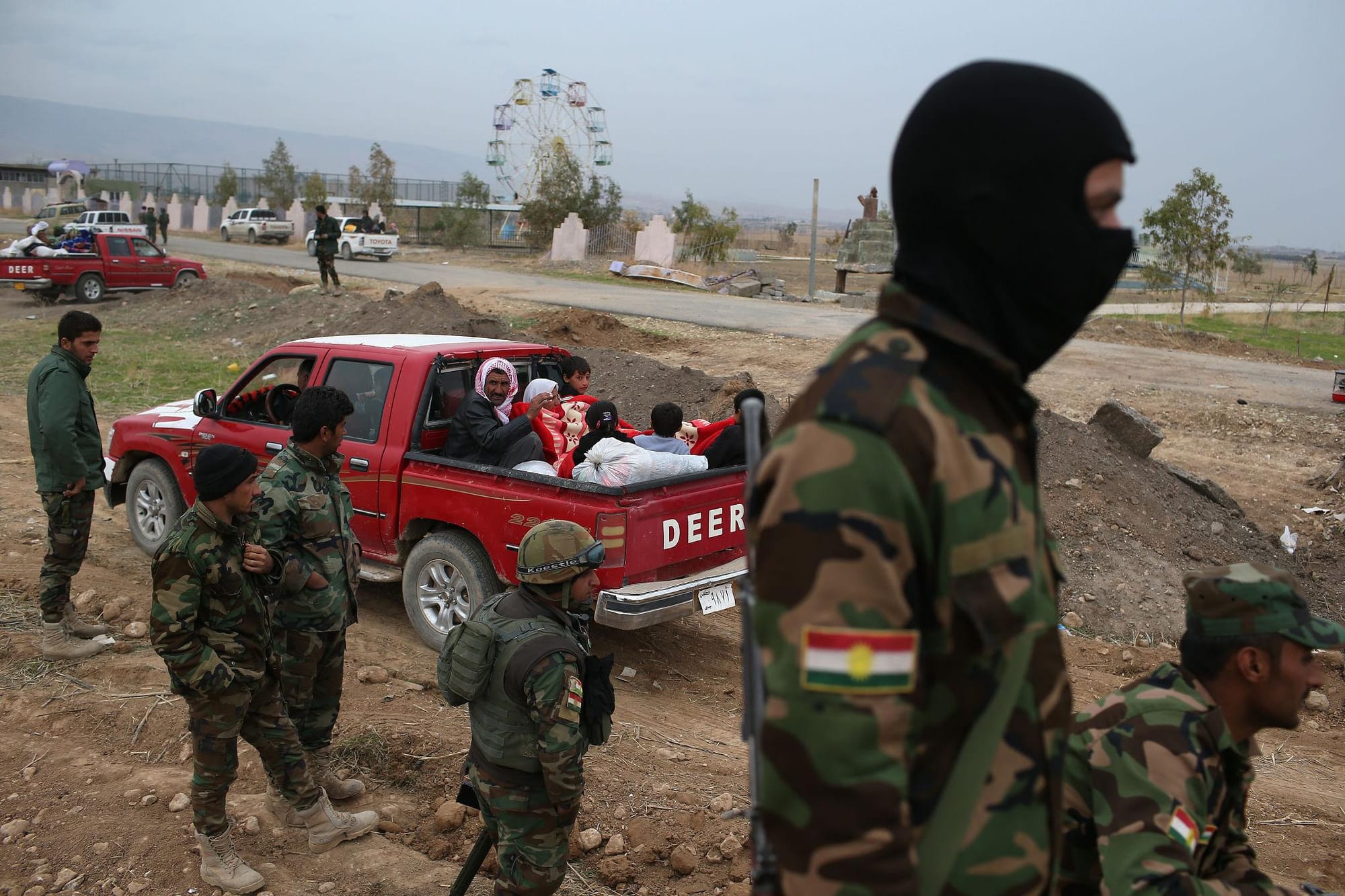
Chapter 12 — Who Failed to Protect the Yazidis?
The Question That Remains Unanswered
On 3 August 2014, Islamic State launched a coordinated attack against the Yazidi communities of Sinjar in northern Iraq.
Within hours, the region's security arrangements collapsed.
Thousands of civilians fled towards Mount Sinjar. Others were trapped in their villages, captured on the roads or taken prisoner by Islamic State fighters.
Mass executions, abductions and sexual slavery followed.
The perpetrators of these crimes were members of Islamic State, an organisation whose campaign against the Yazidis has been recognised by United Nations investigators as genocide.
But the events of August 2014 also exposed a profound failure of civilian protection.
Security forces that had been stationed in the region withdrew. Many residents received no effective warning or evacuation instructions. Civilians who believed that armed forces would protect them were left facing a heavily armed organisation.
The question of responsibility has remained politically sensitive ever since.
Why were the Yazidis so vulnerable?
What warnings existed before the attack?
Who ordered the withdrawal of security forces, and why were civilians not informed?
Could the Iraqi government, the Kurdistan Regional Government or international actors have acted earlier?
These questions do not diminish Islamic State's responsibility for the genocide.
They concern a separate but essential issue: the obligations of political and military authorities to protect civilians from foreseeable threats.
The Warning Signs Before August 2014
The attack on Sinjar did not occur without warning that Islamic State posed a serious threat to Iraq's religious minorities.
By June 2014, the organisation had captured Mosul, Iraq's second-largest city.
Its rapid military expansion exposed weaknesses in the Iraqi security forces and created immediate danger for communities across Nineveh Governorate.
Islamic State had already demonstrated its willingness to target people because of their religion.
In July 2014, Human Rights Watch documented abductions, killings and expulsions of minorities in areas controlled by the organisation.
The report included the abduction of Yazidi border guards near Ba'aj in June.
These incidents showed that Yazidis were already being targeted before the full-scale assault on Sinjar.
The advance towards Tal Afar and other locations close to Yazidi communities increased the danger.
Families in Sinjar became concerned that the violence spreading across northern Iraq would eventually reach their villages.
Some local residents attempted to prepare defensive positions.
Others sought information from the authorities responsible for security.
The threat was therefore not entirely unexpected.
What remains contested is whether the available intelligence and warnings were adequately assessed and translated into protective action.
The Security Vacuum After the Fall of Mosul
The fall of Mosul on 10 June 2014 fundamentally changed the security situation in northern Iraq.
Large parts of the Iraqi army's defensive structure collapsed.
Islamic State acquired territory, equipment and greater freedom of movement.
The organisation could now threaten communities across Nineveh from several directions.
Sinjar occupied a particularly vulnerable position.
The district lay close to the Syrian border and within the wider disputed territories claimed or administered by competing Iraqi and Kurdish authorities.
Before the genocide, the Kurdistan Regional Government exercised considerable security influence in the district through its Peshmerga forces.
The Iraqi federal government nevertheless retained constitutional responsibilities for national defence and the protection of Iraqi citizens.
This overlapping system created uncertainty about political authority and military responsibility.
For the people living in Sinjar, however, these constitutional and territorial disputes were less important than one practical question.
Who would protect them if Islamic State attacked?
The events of 3 August demonstrated that the existing arrangements were unable to provide an effective answer.
The Peshmerga Withdrawal
The withdrawal of Kurdish Peshmerga forces during the Islamic State offensive remains one of the most controversial aspects of the Yazidi genocide.
The United Nations Commission of Inquiry documented that Peshmerga forces withdrew from Sinjar as Islamic State advanced.
Its 2016 report, They Came to Destroy, concluded that the decision was not effectively communicated to the local population.
No general evacuation orders were issued, and many villages were initially unaware that their security arrangements had collapsed.
Human Rights Watch reached similar findings through interviews conducted immediately after the attack.
In a report published on 9 August 2014, the organisation described Yazidi survivors who said that the Peshmerga had withdrawn without explanation.
Some residents reported that they had believed the forces would defend their villages.
Others said they discovered the withdrawal only after hearing gunfire or seeing security positions abandoned.
These accounts are central to understanding the community's sense of betrayal.
The Peshmerga had represented an important part of the security structure on which many Yazidis depended.
Their sudden departure left civilians with little time to escape.
Why Did the Peshmerga Withdraw?
The reasons for the withdrawal have been disputed.
Kurdish officials have pointed to the speed of Islamic State's offensive, the organisation's military capabilities and the difficult circumstances facing Peshmerga forces across northern Iraq.
The collapse of Iraqi army positions earlier in the summer had placed additional pressure on Kurdish defensive lines.
Islamic State was advancing across a wide area, and Kurdish forces were attempting to protect several strategically important locations.
These circumstances help explain the military environment.
They do not, by themselves, establish why particular units withdrew from Sinjar or whether commanders had adequate alternatives.
A military withdrawal can sometimes be necessary when forces are overwhelmed.
But even where a withdrawal is militarily justified, authorities must consider the consequences for civilians who depend on their protection.
The most serious documented failure was not simply that security forces retreated.
It was that the withdrawal was not effectively communicated and was not accompanied by an organised civilian evacuation.
The distinction is essential.
An investigation into military responsibility must examine both the tactical decision and the failure to protect the population affected by it.
Were Yazidis Prevented from Leaving?
Some survivors have made an additional allegation: that they were discouraged or prevented from leaving Sinjar before the attack.
The Netherlands Institute for War, Holocaust and Genocide Studies, known as NIOD, has described survivor accounts alleging that Peshmerga personnel prevented Yazidis from escaping in the days preceding 3 August 2014.
The institute also records that residents sought weapons and assurances of protection as the danger increased.
These allegations are serious because they suggest that some civilians may have been denied opportunities to leave before Islamic State arrived.
However, the evidence must be treated carefully.
Survivor testimony can establish important information about what individuals experienced.
It does not automatically demonstrate that every checkpoint operated under the same instructions or that a centrally directed policy prevented all Yazidis from leaving.
Determining responsibility would require examination of military orders, communications, individual incidents and the decisions of commanders.
The allegations therefore warrant investigation rather than being presented as a universally established policy.
What is already clear from United Nations findings is that the population did not receive an effective general warning or organised evacuation.
Local Yazidis Who Tried to Defend Their Villages
As the Peshmerga withdrew, some Yazidi men attempted to resist Islamic State with limited weapons.
The United Nations documented efforts by small groups in villages including Girzerik and Siba Sheikh Khedir.
These defenders sought to delay the advancing fighters and give families time to escape.
They were not equipped to confront Islamic State's military forces on equal terms.
Their resistance was local, improvised and constrained by limited ammunition.
Nevertheless, it demonstrated that some civilians attempted to protect their communities when the established security system failed.
The importance of these actions lies not in portraying untrained villagers as a substitute for professional armed forces.
It lies in recognising the circumstances that forced civilians to take responsibility for their own immediate defence.
A functioning protection system should not depend on villagers with small arms delaying a heavily armed organisation long enough for their families to flee.
The Iraqi Government's Responsibility
The Iraqi federal government also bears responsibility for examining why the population of Sinjar was left vulnerable.
Under Iraq's constitutional framework, the federal authorities are responsible for national defence and security.
The collapse of Iraqi army units in Mosul and other areas during June 2014 weakened the state's ability to respond to Islamic State's expansion.
The federal government faced an exceptionally serious military and political crisis.
But the vulnerability of Sinjar cannot be understood solely through the actions of Kurdish forces.
The Iraqi state had failed to establish an effective and coordinated system capable of protecting vulnerable communities in disputed territories.
The division of authority between Baghdad and Erbil contributed to that weakness.
Responsibility must nevertheless be assessed with precision.
The federal government's constitutional obligations do not establish that a particular official possessed the intelligence, operational control or practical ability to prevent a specific massacre.
Those questions require evidence concerning decisions, communications and available military resources.
The broader institutional failure is clear.
The Iraqi state was unable to provide effective protection to thousands of citizens facing an armed organisation that had already demonstrated its hostility towards religious minorities.
The Political Dispute Between Baghdad and Erbil
Sinjar's vulnerability was intensified by the longstanding dispute over territories in northern Iraq.
The Iraqi federal government and the Kurdistan Regional Government disagreed over political administration, security and the future status of several areas, including Sinjar.
These disputes created overlapping claims of authority.
They also complicated the development of clear and accountable security arrangements.
When responsibilities are divided, institutions may disagree over who should provide resources, deploy forces or make emergency decisions.
Such arrangements become particularly dangerous during a rapidly developing military crisis.
For civilians, political competition can result in a protection gap.
The Yazidis were not responsible for the territorial dispute.
Yet they suffered its consequences when Islamic State attacked.
The failure to establish reliable security coordination before August 2014 remains an important subject for political accountability.
It also helps explain why the future administration and security of Sinjar continue to be contested.
The International Community Before the Attack
The responsibility of international actors must be examined separately from that of the authorities exercising direct control over Sinjar.
The United States and other governments had monitored Islamic State's expansion during the first half of 2014.
The fall of Mosul attracted international attention and raised concerns about the stability of Iraq.
Nevertheless, the major international military response associated with the Sinjar emergency began only after the genocide was under way.
On 7 August 2014, US President Barack Obama authorised targeted military operations and humanitarian assistance.
The decision followed the displacement of thousands of Yazidis and the growing emergency on Mount Sinjar.
The intervention contributed to efforts to relieve the humanitarian crisis and support operations against Islamic State.
But the timing raises an important question.
Could international governments have acted earlier to reduce the risk of mass atrocities?
The answer requires caution.
International governments faced legal, military and political constraints.
Military intervention on another state's territory involves questions of sovereignty, consent, operational feasibility and the potential consequences of using force.
It cannot simply be assumed that an earlier intervention would have prevented the genocide.
However, the existence of these constraints does not eliminate the need to assess whether governments adequately recognised the warning signs and considered available preventive measures.
The Responsibility to Protect
The international debate surrounding Sinjar is connected to the principle known as the Responsibility to Protect, or R2P.
At the 2005 United Nations World Summit, member states affirmed that each state has the responsibility to protect its population from genocide, war crimes, ethnic cleansing and crimes against humanity.
They also recognised a role for the international community in assisting states and responding through the United Nations when national authorities manifestly fail to protect their populations.
R2P does not create an automatic legal entitlement for individual states to use military force wherever atrocities occur.
The UN Charter and applicable international law continue to govern the use of force.
Nevertheless, the principle provides an important framework for examining failures of prevention.
In the case of Sinjar, the relevant questions include whether the threat of mass atrocities was sufficiently visible and whether available diplomatic, humanitarian or security measures could have been taken earlier.
The failure to protect the Yazidis illustrates the gap that can exist between international commitments and effective action during a rapidly developing crisis.
Was the Genocide Foreseeable?
Foreseeability is central to assessing whether authorities should have taken preventive measures.
Islamic State's ideology was openly hostile to religious communities it regarded as illegitimate.
Its violence against minorities had already been documented.
The organisation had captured Mosul, advanced towards Tal Afar and carried out abductions affecting Yazidis before August 2014.
These developments provided credible warning signs.
They did not necessarily establish that officials knew the precise date, location or operational details of the impending attack.
Nor did they prove that every authority understood the full genocidal intentions that later became evident.
But preventive action does not always require complete knowledge of a future crime.
Authorities responsible for civilian protection must assess serious and credible risks, particularly when a vulnerable population faces an armed group known for systematic violence.
The Sinjar case therefore raises a question that extends beyond the events of 2014.
How much warning should governments require before acting to protect a population from foreseeable mass atrocities?
The Difference Between Military Failure and Criminal Responsibility
A critical examination of Sinjar must distinguish several forms of responsibility.
Islamic State fighters and leaders committed the underlying acts of genocide, including killings, enslavement, forced transfer and other abuses.
Their criminal responsibility is distinct from the responsibility of officials or military commanders who may have failed to protect civilians.
A military commander's poor decision does not automatically constitute a war crime.
Nor does the withdrawal of a military unit, by itself, prove complicity in genocide.
Individual criminal liability requires evidence that the relevant legal elements have been satisfied.
These may involve intent, knowledge, participation, assistance or particular duties under applicable law.
Political responsibility is broader.
Governments and military institutions may be accountable for inadequate planning, failures of communication or the absence of effective civilian protection even where individual criminal offences have not been established.
This distinction allows the events to be examined critically without making unsupported accusations.
It also prevents the failures of other actors from being used to obscure Islamic State's direct responsibility.
The Role of Kurdish Forces in the Rescue
The conduct of Kurdish armed groups during the crisis cannot be described through a single narrative.
The withdrawal of Peshmerga forces from Sinjar has been widely criticised.
At the same time, Kurdish fighters from other organisations played an important role in rescuing civilians trapped on Mount Sinjar.
The United Nations documented the establishment of an escape corridor by Syrian Kurdish YPG forces, assisted by Yazidi volunteers.
The PKK and other Kurdish armed groups were also involved in fighting Islamic State in the region.
Their operations helped civilians reach safety through Syria.
These actions saved lives.
They also contributed to the emergence of new local armed structures and political alliances after the initial attack.
The result was a complicated security environment.
Some Yazidis developed strong loyalties towards groups they believed had protected them when other forces withdrew.
Others remained concerned about the influence of armed organisations whose wider political objectives did not necessarily correspond to the needs of Sinjar's civilian population.
A balanced account must recognise both the documented failures and the documented rescue efforts.
Did the International Response Come Too Late?
By the time international military and humanitarian operations began, Islamic State had already captured thousands of Yazidis.
Mass killings and abductions had occurred.
Families had been separated, and large numbers of civilians were trapped on Mount Sinjar.
The subsequent intervention helped reduce immediate threats and contributed to the escape of displaced people.
However, it could not reverse the crimes already committed.
This creates an important distinction between preventing atrocities and responding after they have begun.
Humanitarian assistance can save lives.
Military action can disrupt an armed organisation's operations.
But neither necessarily restores the people who have been killed or reunites families already separated by captivity.
The international response to Sinjar therefore demonstrates both the importance of emergency intervention and the limitations of action taken after a protection system has collapsed.
The strongest lesson concerns the need to identify risks and establish protective measures before civilians are exposed to mass violence.
The Absence of a Comprehensive Public Accountability Process
More than a decade after the genocide, important questions about the collapse of security in Sinjar remain unresolved in the public record.
The United Nations Commission of Inquiry documented the withdrawal of Peshmerga forces and the failure to warn civilians.
Human rights organisations collected survivor testimony describing the consequences.
Academic researchers have examined the wider political and military context.
Yet these findings do not amount to a comprehensive public judicial determination of the responsibility of every relevant commander or political official.
The available evidence does not justify claiming that all disputed decisions have been fully investigated or that individual legal responsibility has been established.
A credible accountability process would need to examine operational orders, intelligence assessments, military communications and the decisions made by officials before and during the attack.
It would also need to provide appropriate opportunities for survivors to participate and for those accused of wrongdoing to respond.
The purpose should not be to assign collective blame to Kurdish or Iraqi communities.
It should be to establish what happened, identify institutional failures and determine whether any individual legal responsibility can be proved.
Why the Failure Still Matters Today
The collapse of protection in August 2014 continues to influence the political future of Sinjar.
Many Yazidis remain deeply concerned about who should provide security in their homeland.
Some distrust institutions associated with the withdrawal of 2014.
Others fear the presence of competing armed groups and the possibility of renewed conflict.
These concerns have complicated the implementation of the 2020 Sinjar Agreement, which was intended to establish new security and administrative arrangements.
The absence of a widely accepted account of the failures of 2014 has made rebuilding trust more difficult.
Security arrangements cannot be judged only by the number of armed personnel deployed.
They must also be assessed by whether civilians believe those forces will remain accountable and provide protection when danger arises.
For the Yazidis, that confidence was severely damaged during the genocide.
Restoring it requires more than political assurances.
It requires transparent institutions, credible investigations and meaningful community participation.
What Effective Civilian Protection Should Look Like
The lessons of Sinjar extend beyond Iraq.
Communities at risk of mass atrocities require early-warning systems capable of identifying credible threats.
Authorities must establish clear responsibilities for civilian protection.
Military forces should have procedures for communicating urgent threats and facilitating evacuation when defensive positions cannot be maintained.
Governments must coordinate across political and administrative boundaries.
Humanitarian organisations need access to vulnerable populations before conditions become catastrophic.
International actors should assess preventive options when evidence indicates that a population faces a serious risk of genocide or other mass atrocities.
These measures cannot guarantee that every attack will be prevented.
But the absence of effective planning can turn a military crisis into a humanitarian catastrophe.
Sinjar demonstrated the consequences of allowing political disputes, weak coordination and failures of communication to undermine civilian protection.
What This Means: Accountability Beyond the Perpetrators
The genocide against the Yazidis was committed by Islamic State.
That responsibility must remain central to the historical and legal record.
But an independent examination cannot stop at identifying the perpetrators.
It must also ask why civilians were left exposed, why warnings did not produce adequate protection and why the institutions responsible for security failed to prevent a catastrophic loss of life.
The evidence establishes that the withdrawal of Peshmerga forces was not effectively communicated to the population.
It also demonstrates that the wider Iraqi security system was severely weakened and that the international response expanded only after the attack had begun.
Other allegations, including claims that civilians were prevented from leaving, require further investigation before responsibility can be assigned with confidence.
These distinctions are necessary for credible journalism.
Accountability must be based on evidence rather than political loyalty, collective accusations or retrospective assumptions.
The Protection That Never Came
For many Yazidi survivors, the most painful question is also the simplest.
Why were they left without protection?
The answer involves military collapse, disputed political authority, failures of communication and the speed of Islamic State's offensive.
But these explanations do not erase the consequences.
Families who believed they were safe were forced to flee.
Others were captured before they could escape.
Entire communities were destroyed.
The experience transformed how many Yazidis understood the institutions that had governed and protected their homeland.
More than twelve years later, the consequences continue to shape debates about security, political representation and the future of Sinjar.
A full accounting of the genocide requires more than documenting Islamic State's crimes.
It also requires examining the failures that allowed a vulnerable population to become exposed to those crimes.
The next chapter examines the struggle to bring Islamic State perpetrators before courts, the work of United Nations investigators and the legal challenges involved in securing justice for genocide.
Chapter 13 — Justice for Genocide
The Long Road from Atrocity to Accountability
On 30 November 2021, a court in Frankfurt, Germany, delivered a historic judgment.
For the first time, an individual was convicted of genocide for crimes committed against the Yazidi people by Islamic State.
The defendant, Taha Al-Jumailly, was sentenced to life imprisonment.
The case concerned the enslavement of a Yazidi woman and her five-year-old daughter, who died after being subjected to extreme abuse.
The judgment represented a landmark in international criminal justice.
It demonstrated that the genocide committed against the Yazidis could be prosecuted not merely as terrorism, murder or unlawful detention, but as one of the gravest crimes recognised under international law.
Yet the conviction also highlighted the distance between legal recognition and comprehensive justice.
Islamic State's campaign involved thousands of victims, multiple locations, organised systems of enslavement and numerous perpetrators.
Only a limited number of individuals have faced trials specifically addressing genocide and other international crimes committed against the Yazidis.
Many survivors have never seen the people responsible for their suffering brought before a court.
Others continue searching for missing relatives or waiting for compensation and official recognition.
More than twelve years after the attack on Sinjar, the pursuit of justice remains unfinished.
What Makes Genocide Different from Other Crimes?
The legal definition of genocide comes from the 1948 Convention on the Prevention and Punishment of the Crime of Genocide.
The convention identifies five categories of prohibited acts when committed with the intent to destroy, in whole or in part, a national, ethnic, racial or religious group as such.
These acts include killing members of the group, causing serious bodily or mental harm, deliberately imposing destructive living conditions, imposing measures intended to prevent births, and forcibly transferring children to another group.
The defining element is not simply the scale of violence.
It is the specific intention to destroy a protected group, in whole or in part.
This distinguishes genocide from other serious international crimes.
Crimes against humanity involve certain prohibited acts committed as part of a widespread or systematic attack directed against a civilian population, with the required knowledge.
War crimes involve serious violations of international humanitarian law committed in connection with an armed conflict.
A single course of conduct may constitute more than one category of international crime.
For example, the enslavement of Yazidi women and girls may constitute a crime against humanity.
Where the necessary elements are established, the same conduct may also contribute to genocide.
The distinction matters because criminal courts must establish the legal elements of each charge.
A finding that Islamic State committed genocide does not automatically prove that every person associated with the organisation possessed genocidal intent.
Individual responsibility must be determined through evidence.
How Investigators Established Genocidal Intent
Islamic State did not merely attack Yazidi villages as part of a conventional military campaign.
The organisation targeted the Yazidis because of their religious identity.
Its fighters separated men, women and children.
Many men and older boys were executed.
Women and girls were subjected to enslavement, sexual violence and forced religious conversion.
Boys were removed from their families and subjected to indoctrination and military training.
Religious sites were destroyed, and entire communities were displaced.
These actions were accompanied by Islamic State's own ideological statements concerning the Yazidis.
Investigators examined the relationship between those statements and the organisation's conduct.
The United Nations Commission of Inquiry on Syria concluded in 2016 that Islamic State had committed genocide against the Yazidis.
Its report, They Came to Destroy, documented killings, sexual slavery, forced transfer, serious physical and psychological harm, and measures aimed at destroying the group's religious identity.
The commission's findings were based on interviews, documentary material and other evidence.
Subsequent investigations strengthened the evidentiary record.
The United Nations Investigative Team to Promote Accountability for Crimes Committed by Da'esh/ISIL, known as UNITAD, concluded that there were reasonable grounds to believe Islamic State had committed genocide, crimes against humanity and war crimes against the Yazidis.
These findings were highly significant.
However, a United Nations investigative conclusion is not the same as a final criminal judgment against a particular defendant.
Both contribute to accountability, but they perform different legal functions.
The Creation of UNITAD
In September 2017, the United Nations Security Council adopted Resolution 2379, establishing UNITAD.
The investigative team was created to support efforts to hold Islamic State members accountable for crimes committed in Iraq.
Its mandate included collecting, preserving and storing evidence of acts that might amount to war crimes, crimes against humanity and genocide.
The initiative represented an important development.
The crimes committed by Islamic State had occurred across numerous locations, often amid active conflict.
Evidence was vulnerable to destruction, deterioration and loss.
Witnesses were displaced.
Mass graves required forensic examination.
Digital records needed to be authenticated and preserved.
UNITAD brought together investigators, legal specialists, analysts and forensic experts to address these challenges.
The team worked with Iraqi authorities and other partners to document atrocities affecting multiple communities.
Its investigations included crimes against Yazidis, Christians, Shia Muslims, Sunni Muslims, Shabak, Kaka'i and Turkmen communities.
The organisation's purpose was not to replace national courts.
It was to strengthen the evidentiary foundations for future criminal proceedings.
Building the Evidence of Genocide
The evidence gathered concerning the Yazidis extended far beyond individual survivor accounts.
Investigators examined witness testimony, Islamic State documents, digital material, photographs, videos and forensic findings.
They also investigated mass graves and the destruction of religious and cultural heritage.
By August 2024, UNITAD reported that it had supported Iraqi authorities in the excavation of 37 mass graves connected with crimes against the Yazidis.
At that stage, the remains of 186 identified Yazidi victims had been returned for dignified burial.
The team had also identified and assessed more than 60 Yazidi cultural heritage sites damaged or destroyed by Islamic State.
These findings were part of a wider effort to reconstruct the organisation's campaign.
A criminal investigation must establish not only that a crime occurred, but also how it was committed and who was responsible.
Evidence concerning command structures, transfers of captives, ideological instructions and the organisation of killings can help establish the relationship between individual acts and broader criminal policies.
For genocide prosecutions, such evidence is especially important.
It may help demonstrate the specific intent required under international law.
The First Genocide Conviction: Taha Al-Jumailly
The Frankfurt judgment of November 2021 marked a turning point.
Taha Al-Jumailly, an Iraqi national associated with Islamic State, was convicted of genocide, crimes against humanity and war crimes.
The proceedings concerned his treatment of a Yazidi woman and her young daughter, whom he and his wife had held in slavery in Iraq.
The court found that the child had suffered severe abuse and died after being chained outdoors in extreme heat.
Her mother survived and later participated in the legal proceedings.
The court concluded that Al-Jumailly's conduct formed part of the genocidal campaign against the Yazidis.
He received a life sentence.
The significance of the judgment extended beyond the individual defendant.
It established that a national court outside Iraq could apply international criminal law to crimes committed during Islamic State's campaign.
It also demonstrated that genocide prosecutions could address acts of enslavement and serious physical or psychological harm, rather than relying exclusively on evidence of mass killings.
For survivors, the case provided a judicial acknowledgment of crimes that had long been documented but rarely prosecuted under their full international legal classification.
The Role of Survivors in the German Proceedings
The Frankfurt trial also demonstrated the importance of survivor participation.
The mother of the murdered child gave evidence about her captivity and the treatment of her daughter.
Her testimony was central to reconstructing events.
Survivors can provide information that documents alone cannot establish.
They may identify perpetrators, describe transfers between detention locations and explain the circumstances of enslavement.
Their evidence can also reveal how crimes affected families and communities.
However, testimony in such cases can involve serious risks.
Survivors may be required to discuss experiences of sexual violence, torture and the deaths of relatives.
They may face psychological distress, security concerns or public exposure.
A credible justice process must therefore include appropriate safeguards.
These may involve legal representation, interpretation, psychological support and measures to protect personal information.
Survivor participation should not be reduced to the expectation that victims repeatedly recount traumatic experiences.
Their dignity and autonomy must remain central to the proceedings.
Germany's Wider Role in Prosecuting Islamic State Crimes
Germany has become an important jurisdiction for prosecutions involving international crimes committed in Iraq and Syria.
Its Code of Crimes against International Law allows German courts to prosecute genocide, crimes against humanity and war crimes under principles of universal jurisdiction.
Universal jurisdiction enables certain national courts to investigate and prosecute particularly serious crimes even when the offences were committed abroad and the victims and perpetrators are foreign nationals.
The precise exercise of jurisdiction depends on domestic law and prosecutorial requirements.
Germany's investigations have involved former Islamic State members accused of enslavement, persecution, torture and other crimes.
The cases have demonstrated the value of cooperation between national prosecutors, international investigators and survivor organisations.
They have also shown the practical difficulties involved.
Evidence must be collected across borders.
Witnesses may be living in different countries.
Documents and digital material must be authenticated.
The accused must receive a fair trial, including the right to challenge the evidence presented against them.
These requirements can make proceedings lengthy.
But they are essential to the credibility of the judgments.
The Case of Jennifer Wenisch
The prosecution of Jennifer Wenisch, a German woman who joined Islamic State, illustrates another aspect of accountability.
Wenisch was prosecuted in connection with the enslavement of a Yazidi woman and her daughter.
The young girl died after being chained outdoors in Iraq.
Wenisch was convicted of crimes against humanity and other offences.
Following further sentencing proceedings, she received a fourteen-year prison sentence in 2023.
Germany's Federal Court of Justice subsequently upheld that sentence.
Her case is sometimes discussed alongside the genocide conviction of her former husband, Taha Al-Jumailly.
However, their convictions should not be described as legally identical.
Al-Jumailly was convicted of genocide.
Wenisch's final convictions concerned other offences, including crimes against humanity.
This distinction is important because different defendants may be found responsible for different crimes arising from related events.
The judicial record must be represented accurately.
The 2025 Genocide Conviction in Sweden
Germany is not the only European country where courts have prosecuted crimes against Yazidis under international criminal law.
On 11 February 2025, the Stockholm District Court convicted Lina Ishaq of genocide, crimes against humanity and serious war crimes.
The case concerned her treatment of Yazidi women and children in Syria while she was associated with Islamic State.
The court found that she had participated in the systematic mistreatment of Yazidis as part of the organisation's campaign against the group.
She was sentenced to twelve years' imprisonment and ordered to pay compensation to nine Yazidi victims.
The case demonstrated the growing importance of national prosecutions outside Iraq and Syria.
It also showed that women who participated in Islamic State's system of enslavement could face criminal responsibility for international crimes.
Responsibility does not depend on whether a perpetrator held a formal military position.
It depends on the conduct proved in court and the legal elements of the offences.
The Stockholm judgment represented another important step towards recognising the crimes against the Yazidis within national judicial systems.
A Further Landmark in Munich in 2026
On 13 July 2026, the Higher Regional Court of Munich delivered another significant judgment involving crimes against Yazidi children.
According to the survivor organisation Yazda, the court convicted Asia R.A. and Twana H.S. of genocide, crimes against humanity and war crimes in connection with the abuse of two Yazidi girls.
The offences took place between 2015 and 2017 in Iraq and Syria.
Yazda reported that the case included a conviction concerning the forcible transfer of children, a prohibited act specifically recognised in the Genocide Convention.
The organisation also described the proceedings as producing Germany's first conviction for forced religious conversion in this context.
The significance of the case lies partly in the recognition that the destruction of a protected group can involve the removal of children and the attempted erasure of their identity.
Genocide is not limited to mass execution.
The forced transfer of children can constitute genocide when the relevant legal requirements, including specific intent, are established.
The Munich judgment therefore addressed an aspect of the Yazidi experience that has sometimes received less attention than the mass killings and sexual enslavement.
It also reinforced the importance of pursuing accountability for crimes against children.
Why Iraq's Prosecutions Remain a Central Concern
The majority of Islamic State's crimes against the Yazidis occurred in Iraq.
It is therefore reasonable to expect the Iraqi justice system to play a central role in accountability.
Iraq has prosecuted numerous individuals for involvement with Islamic State.
However, its legal framework has created important limitations.
The country's ordinary criminal legislation does not contain a comprehensive framework for prosecuting genocide, crimes against humanity and war crimes as distinct offences applicable to Islamic State's crimes.
The Iraqi High Criminal Tribunal legislation contains provisions concerning international crimes, but its jurisdiction was restricted to an earlier historical period.
Consequently, it does not provide a general mechanism for prosecuting the atrocities committed by Islamic State after 2014.
Iraqi prosecutions have relied primarily on counterterrorism legislation and provisions of the criminal code.
These laws can provide a basis for punishing serious offences.
But a terrorism conviction does not necessarily establish the full nature of crimes committed against civilian populations.
For survivors, this distinction matters.
A person convicted of membership in a terrorist organisation has not necessarily been held legally accountable for genocide, enslavement or crimes against humanity.
The Difference Between Prosecuting Terrorism and Prosecuting Genocide
Terrorism and genocide are distinct legal concepts.
A terrorism prosecution may focus on membership in an armed organisation, participation in attacks or activities prohibited under national security legislation.
A genocide prosecution examines whether the defendant committed one or more prohibited acts with the intent to destroy a protected group, in whole or in part.
Both types of proceedings may concern the same organisation.
But they address different elements of criminal responsibility.
A person may be convicted of terrorism without the court examining whether they participated in the enslavement or destruction of the Yazidi community.
Conversely, a prosecution for genocide requires evidence addressing the specific crime and the defendant's responsibility.
Human rights organisations and legal specialists have argued that Iraq should strengthen its domestic framework for prosecuting international crimes.
Such reforms could allow courts to address the full character of Islamic State's atrocities.
They would also need to comply with the principle of legality, including restrictions on retroactive criminal punishment, and other fair-trial guarantees.
The objective should be accurate legal accountability, not simply more severe punishment.
The Yazidi Survivors Law of 2021
In March 2021, Iraq adopted the Yazidi Female Survivors Law, also known as Law No. 8 of 2021.
The legislation represented an important step towards recognising survivors of Islamic State's atrocities.
It provides a framework for reparations and assistance to eligible survivors.
The law recognises that crimes committed against Yazidis and certain other minority communities constituted genocide and crimes against humanity.
Its provisions include financial support and measures relating to rehabilitation, education, employment and other forms of assistance.
The law is significant because it establishes a national framework acknowledging the experiences and rights of survivors.
However, its purpose must be distinguished from criminal prosecution.
The legislation does not itself establish a comprehensive system for trying Islamic State members for genocide.
Nor does it resolve the fate of missing persons or guarantee that every survivor will receive assistance.
Implementation, accessibility and administrative procedures remain important considerations.
Recognition through legislation is valuable.
But survivors also require practical access to the rights that legislation promises.
Reparations Are Not the Same as Criminal Justice
Reparations and criminal accountability serve different purposes.
A criminal trial seeks to determine whether an individual is legally responsible for an offence.
Reparations seek to address harm suffered by victims.
They may include financial compensation, medical and psychological rehabilitation, restitution, recognition and guarantees of non-repetition.
For Yazidi survivors, these forms of assistance can be essential.
Many lost homes, livelihoods and family members.
Some continue to experience the long-term consequences of captivity and sexual violence.
Others require support for education, healthcare or rebuilding family life.
Financial assistance cannot undo these experiences.
But it can help survivors regain a degree of independence and stability.
The obligation to provide meaningful reparations should not depend entirely on whether a particular perpetrator has been convicted.
Victims may be entitled to support even when the person responsible cannot be identified, located or prosecuted.
A comprehensive justice strategy must therefore include both accountability and recovery.
The International Criminal Court and Its Limitations
The International Criminal Court, or ICC, was established to prosecute individuals responsible for genocide, crimes against humanity, war crimes and the crime of aggression within its jurisdiction.
However, the ICC has not served as the principal court for prosecuting Islamic State's genocide against the Yazidis.
One major obstacle is jurisdiction.
Iraq and Syria are not parties to the Rome Statute, the treaty establishing the court.
The ICC may nevertheless have jurisdiction in certain circumstances, including where crimes involve nationals of states that are parties to the statute or where the United Nations Security Council refers a situation.
In 2015, the ICC Prosecutor explained that the available jurisdictional basis for investigating Islamic State's crimes in Iraq and Syria was limited.
The existence of foreign fighters from ICC member states did not automatically provide a sufficient basis for a broad investigation of the organisation's leadership and crimes.
A Security Council referral could potentially create jurisdiction, but no such referral covering the situation was made.
The result has been a fragmented system of accountability.
National courts have pursued individual cases, while no single international criminal tribunal has exercised comprehensive jurisdiction over Islamic State's crimes against the Yazidis.
The Closure of UNITAD in September 2024
UNITAD's mandate ended on 17 September 2024.
The closure followed a request by the Iraqi government and a decision by the United Nations Security Council concerning the team's mandate.
By the end of its operations, UNITAD had produced nineteen case assessments and analytical reports covering atrocities against several Iraqi communities.
It had also supported forensic investigations, evidence preservation and cooperation with national judicial authorities.
On 10 September 2024, UNITAD delivered eight reports and packages of underlying evidence to Iraq's Supreme Judicial Council.
The following day, it published detailed findings concerning Islamic State's crimes against the Yazidis.
The closure marked the end of a major international investigative presence in Iraq.
It did not mean that the evidence collected had lost its value.
Nor did it mean that all relevant prosecutions had been completed.
Instead, it raised questions about how the material would be preserved, accessed and used in future criminal proceedings.
What Happens to the Evidence?
The evidence gathered by UNITAD includes material of potentially considerable importance.
Witness statements, forensic findings, digital records and analytical reports may support future investigations.
However, criminal evidence cannot simply be transferred or published without safeguards.
Witnesses may have provided information under conditions of confidentiality.
Survivors may face risks if their identities become known.
Evidence may also be subject to restrictions concerning consent, data protection and the requirements of criminal proceedings.
UNITAD's work involved arrangements intended to preserve information and facilitate its use by competent authorities.
Germany's Foreign Office stated in September 2024 that UNITAD's cooperation had been crucial in several German investigations.
The challenge after the team's closure is to ensure that its work remains available for lawful accountability efforts.
That requires cooperation between Iraqi institutions, the United Nations and relevant national prosecutors.
It also requires respect for the rights and safety of those who contributed evidence.
Preserving information is not enough if future courts cannot use it.
But access must not come at the expense of survivor protection or fair-trial standards.
The Problem of Suspects Outside Iraq
Islamic State recruited members from numerous countries.
Some travelled to Iraq and Syria to join the organisation.
Others were recruited locally.
Following the loss of Islamic State's territorial control, suspects were detained, displaced, killed or dispersed across different jurisdictions.
This has complicated accountability.
National governments must determine whether they have jurisdiction to investigate offences committed abroad.
They must also assess whether sufficient admissible evidence exists.
Some suspects remain in detention facilities in north-eastern Syria.
Others have returned to their countries of nationality or travelled elsewhere.
International cooperation is therefore essential.
Authorities may need to exchange information, obtain witness testimony, verify identities and coordinate investigations.
However, criminal responsibility cannot be inferred solely from a person's presence in territory once controlled by Islamic State.
The prosecution must establish the defendant's individual conduct and the elements of the relevant offences.
This is particularly important in cases involving family members, children and people whose association with the organisation may have involved coercion.
Fair Trials Are Part of Justice
The seriousness of Islamic State's crimes does not remove the obligation to respect fair-trial rights.
Defendants are entitled to the presumption of innocence, legal representation and an opportunity to challenge the evidence against them.
Trials must be conducted before competent, independent and impartial courts.
The use of torture or other unlawful methods to obtain confessions undermines the reliability and legitimacy of proceedings.
Human rights organisations have criticised aspects of counterterrorism trials in Iraq, including concerns about due process and the use of the death penalty.
These concerns do not diminish the suffering of Yazidi victims.
They reflect a fundamental principle: justice for atrocities must be administered through lawful procedures.
A conviction obtained without a fair trial risks weakening the very accountability that survivors have sought.
Credible proceedings must establish guilt through evidence rather than assumptions about membership, nationality or association.
Justice for Women and Children
The crimes committed against Yazidi women and children require particular attention.
Sexual slavery, forced marriage, trafficking, torture and the removal of children were central elements of Islamic State's campaign.
Yet these crimes can be difficult to prosecute.
Survivors may be reluctant to testify because of trauma, stigma or security concerns.
Evidence may have been lost during years of displacement.
Some victims were children at the time of the offences and may have incomplete memories.
Investigators must therefore use methods appropriate to the nature of the crimes.
These may include specialist interviewing, corroborating evidence and safeguards against repeated or unnecessary questioning.
The German and Swedish proceedings have demonstrated that such crimes can be prosecuted as international offences.
They have also shown that perpetrators need not have personally carried out mass executions to face responsibility for genocide.
The organised destruction of a community may involve many forms of participation.
Justice must reflect that complexity.
Why So Many Survivors Are Still Waiting
The number of successful prosecutions remains small in comparison with the scale of Islamic State's atrocities.
There are several reasons.
Some perpetrators have died.
Others remain unidentified or cannot be located.
Evidence may be incomplete.
National legal systems differ in their ability to prosecute international crimes.
Jurisdictional restrictions can prevent courts from hearing particular cases.
Political disagreements and limited resources may further delay investigations.
These obstacles are substantial.
But they should not be confused with an absence of evidence that genocide occurred.
United Nations investigators have documented the campaign in considerable detail.
National courts have issued convictions recognising genocidal acts.
The central challenge is translating that evidence into broader, legally sustainable accountability.
For survivors, each prosecution may be meaningful.
Yet individual convictions cannot substitute for a comprehensive response to the crimes committed against the community.
The Importance of Historical Recognition
Criminal proceedings also contribute to the historical record.
Judgments establish findings concerning specific events and defendants.
They can document how an organisation operated, how victims were targeted and how crimes were committed.
This is particularly important where perpetrators attempted to erase the identity of a religious community.
The destruction of Yazidi cultural and religious sites was part of Islamic State's wider campaign.
So was the forced conversion and indoctrination of abducted children.
Legal recognition helps establish that these acts were not isolated abuses.
They formed part of a systematic attack on the community.
However, historical recognition should not depend exclusively on criminal courts.
Research institutions, survivor organisations, archives and educational programmes also have important roles.
Their work can preserve evidence and testimony for future generations.
The purpose is not only to remember suffering.
It is to ensure that the nature of the crimes remains documented and cannot easily be denied or distorted.
What This Means: Recognition Must Lead to Accountability
The prosecution of Islamic State's genocide against the Yazidis has produced important legal achievements.
The Frankfurt judgment of 2021 established a historic precedent.
Further proceedings in Germany and Sweden have expanded judicial recognition of the crimes.
UNITAD assembled a substantial body of evidence before its closure in 2024.
Iraq's Yazidi Survivors Law created a framework for recognition and reparations.
These developments demonstrate that justice is possible.
But they also reveal the limitations of the current system.
The majority of perpetrators have not been convicted specifically of genocide.
Iraq's ordinary criminal framework remains poorly equipped to prosecute international crimes under their distinct legal classifications.
The closure of UNITAD has increased the importance of preserving evidence and maintaining cooperation between national authorities.
Survivors continue to require protection, reparations and answers about missing relatives.
Justice must therefore be understood as a continuing process rather than a completed achievement.
A Judgment Cannot Restore What Was Lost
No court can reverse the events of August 2014.
A conviction cannot bring murdered relatives back to life.
It cannot erase the years of captivity experienced by women and children.
It cannot rebuild destroyed villages or restore the childhoods taken from survivors.
But criminal accountability remains essential.
It establishes responsibility through evidence.
It recognises victims as people whose rights were violated.
It rejects the idea that perpetrators of mass atrocities can act without consequences.
For the Yazidis, the pursuit of justice is inseparable from the struggle to preserve their community and secure its future.
The challenge now is to build upon the legal achievements already made.
That means continuing investigations, strengthening national laws, protecting witnesses, supporting survivors and ensuring that evidence remains available for future prosecutions.
The genocide has been documented.
Its legal character has been recognised by investigators and courts.
The task that remains is to ensure that recognition produces lasting accountability.
The next chapter examines the lives of Yazidis today — the continuing effects of displacement, the struggle to recover from trauma and the uncertain future of a community still living with the consequences of genocide.
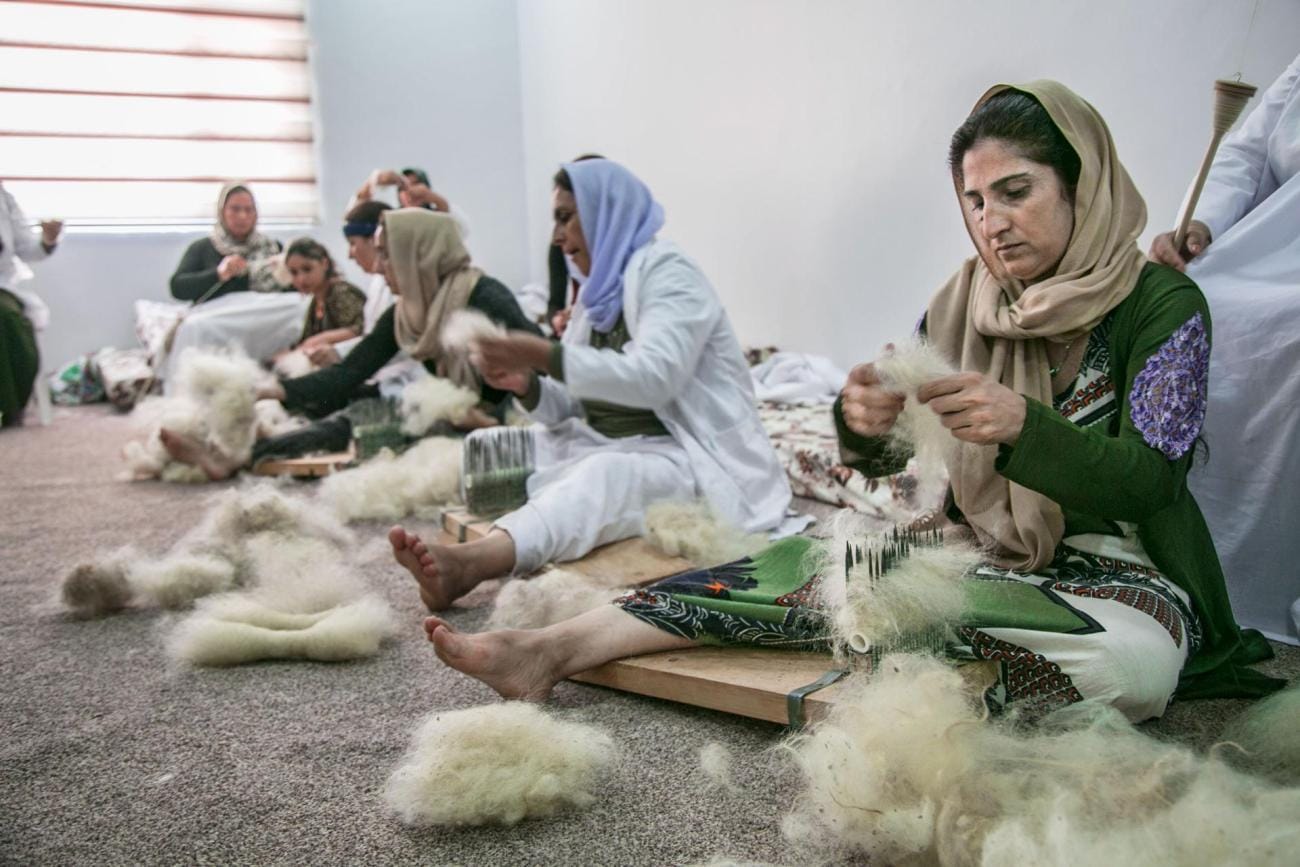
Chapter 14 — The Yazidis Today: Displacement, Trauma and an Uncertain Future
A Genocide That Continues to Shape Everyday Life
Twelve years after Islamic State attacked Sinjar, the Yazidi community is still living with the consequences of genocide.
The organisation no longer controls the territory from which it launched its campaign of mass killings, abductions and enslavement in August 2014.
Yet the end of its territorial rule did not restore the lives that were destroyed.
Families remain separated. Thousands of people are still unaccounted for. Homes and public infrastructure have not been fully rebuilt, and many survivors continue to live far from their ancestral communities.
For those who escaped captivity, the passage of time has brought new challenges alongside the possibility of recovery.
Children who survived the genocide are becoming adults.
Women who lost relatives or endured years of enslavement are rebuilding their lives while navigating the long-term effects of violence.
Young people must decide whether their future lies in Sinjar, elsewhere in Iraq or abroad.
The Yazidis are therefore confronting two challenges simultaneously.
The first is recovering from the atrocities committed against them.
The second is ensuring that their community can survive and develop in a region still affected by insecurity, political disputes and economic hardship.
Understanding the Yazidis in 2026 requires looking beyond the genocide itself.
It requires examining how people are living today, what opportunities they have and whether the conditions exist for a secure future.
Hundreds of Thousands Still Displaced
Displacement remains one of the most visible consequences of the genocide.
According to figures released by the Kurdistan Regional Government in August 2026, approximately 135,860 Yazidis were living in displacement camps across the Kurdistan Region of Iraq.
The same statement reported a further 189,337 Yazidis living in cities across the region.
These figures were presented by the KRG as part of its assessment of the continuing displacement crisis.
They should not be interpreted as a comprehensive independent census of every displaced Yazidi in Iraq.
The International Organization for Migration has also documented prolonged displacement from Sinjar.
Its 2024 research recorded more than 200,000 displaced Yazidis in Iraq, with substantial numbers concentrated in Dohuk and Nineveh governorates.
The differences between these figures reflect variations in reporting dates, geographical coverage and registration methods.
They also demonstrate the need for caution when comparing official statistics.
Nevertheless, the central conclusion is clear.
A substantial proportion of the Yazidi population remains unable or unwilling to return permanently to its original communities.
For many families, displacement has lasted longer than the childhoods of those born shortly before the genocide.
Life in the Camps
The camps established after the 2014 attacks were intended to provide emergency protection.
For thousands of Yazidis, they became places of prolonged residence.
Families who initially expected to remain for weeks or months found themselves living in temporary accommodation for years.
Children began school in displacement.
Parents sought work in unfamiliar surroundings.
Older people grew increasingly dependent on relatives and humanitarian assistance.
Conditions vary between camps.
Some provide access to basic services, schools and healthcare.
Others face challenges involving overcrowding, limited employment opportunities and deteriorating infrastructure.
The effects of prolonged displacement are not always immediately visible.
A family may have a roof over its head but lack the financial stability needed to plan for the future.
A young person may attend school but have limited prospects of higher education or employment.
A survivor may receive emergency assistance without obtaining the specialised long-term care required for recovery.
The camps have provided essential shelter.
But shelter alone does not amount to a durable solution.
The Families Living Outside Camps
Not all displaced Yazidis live in formal camps.
Many reside in rented accommodation, unfinished buildings or other temporary arrangements in the Kurdistan Region.
Some have established relatively stable lives.
Others face significant financial pressure.
Rent, transport, healthcare and education can place heavy demands on households with limited income.
Families who have lost agricultural land, businesses or relatives who previously supported them may find it particularly difficult to achieve financial independence.
Living outside a camp can provide greater privacy and freedom.
It can also mean reduced access to organised humanitarian assistance.
The circumstances of displaced families therefore differ considerably.
A household in a rented apartment in Dohuk may face different challenges from a family living in a camp or a village near Sinjar.
Policies designed to support the Yazidis must recognise these differences.
Displacement is not a single living condition.
It is a range of experiences shaped by income, family circumstances, security and access to services.
Why Returning Home Remains Difficult
Many Yazidis continue to express a desire to return to Sinjar.
However, the obstacles described in Chapter 11 remain substantial.
Homes have been destroyed or damaged.
Essential services have not been fully restored.
Employment opportunities are limited.
The presence of multiple armed organisations creates continuing uncertainty about security and governance.
The European Union Agency for Asylum reported in its October 2025 assessment that the delayed return of Yazidis was linked to insecurity, political and legal challenges, and the stalled implementation of the 2020 Sinjar Agreement.
The agency estimated that approximately 100,000 Yazidis from Sinjar remained displaced in precarious conditions.
That figure refers to the population and reporting scope used in the assessment and should not be directly compared with broader KRG figures covering Yazidis across the Kurdistan Region.
For families considering return, the decision involves more than emotional attachment to their homeland.
They must assess whether their children can attend school, whether healthcare is available and whether they can earn a living.
Security is equally important.
After the failures of August 2014, many survivors are understandably cautious about relying on promises of protection.
The Difficult Choice Between Return and Resettlement
The decision to return to Sinjar is deeply personal.
For some Yazidis, the homeland represents an essential connection to their religion, identity and family history.
Returning may be an important part of rebuilding their lives.
For others, the memories associated with Sinjar are inseparable from loss and violence.
They may prefer to remain elsewhere in Iraq or seek opportunities abroad.
Neither decision should be treated as evidence of greater or lesser commitment to the Yazidi community.
International standards on internal displacement emphasise that return should be voluntary, safe and dignified.
People should also have access to alternatives, including local integration or settlement elsewhere.
A sustainable solution cannot be measured only by the number of people who leave displacement camps.
It must be assessed through their safety, living conditions, access to rights and ability to make informed choices.
The future of the Yazidis will almost certainly involve communities living both inside and outside Sinjar.
The challenge is to ensure that these communities remain connected and that individuals retain meaningful choices about where to build their lives.
The Long-Term Psychological Consequences
The genocide exposed Yazidi survivors to extraordinary violence.
Many witnessed killings, lost family members or experienced forced displacement.
Women and girls were subjected to sexual slavery and other forms of abuse.
Children were separated from parents, forcibly indoctrinated or exposed to military violence.
The psychological consequences can continue long after physical captivity has ended.
Research involving Yazidi survivors has documented symptoms associated with post-traumatic stress, depression, anxiety and prolonged grief.
However, survivors should not be treated as though they all experience trauma in the same way.
Some require intensive clinical treatment.
Others benefit from family support, education, employment, religious community life or opportunities to rebuild ordinary routines.
Recovery is not a uniform process.
Nor should the identity of a survivor be reduced to a medical diagnosis.
People who experienced genocide remain individuals with different personalities, ambitions, relationships and capacities.
Effective support must recognise both their suffering and their autonomy.
The Boys Who Returned from Islamic State
One of the most complex challenges concerns boys who were abducted by Islamic State and subjected to forced indoctrination or military training.
Some returned after years of separation from their families.
Others remain missing.
Children who survived under Islamic State control may have experienced violence, coercion and profound disruption to their development.
They may also have been exposed to ideological instruction designed to replace their original religious and cultural identity.
A 2026 study published in the International Review of the Red Cross examined mental health and psychosocial support for male Yazidi former child soldiers in northern Iraq.
The research highlighted the need for approaches that recognise the particular experiences of boys who survived forced recruitment and captivity.
These children should be understood first as victims of serious violations.
Their recovery may require specialised psychological support, educational assistance and help rebuilding family relationships.
Stigma and suspicion can create additional difficulties.
A boy forced to participate in activities under threat or coercion should not automatically be treated as responsible for the crimes of the organisation that abducted him.
The distinction between victimisation and individual responsibility is essential.
Girls and Women Rebuilding Their Lives
For Yazidi women and girls who survived Islamic State captivity, recovery involves more than physical freedom.
Some returned to families who had lost other relatives.
Others discovered that their homes had been destroyed or that their communities remained displaced.
Many faced continuing medical, psychological and financial needs.
The experience of sexual violence can also create concerns about privacy, stigma and personal security.
Community responses have not been uniform.
Yazidi religious leaders took important steps to welcome women and girls who survived captivity back into the community.
This helped challenge the possibility that survivors would be excluded because of crimes committed against them.
Nevertheless, the practical consequences of captivity can remain severe.
Survivors may require medical treatment, education, employment support and legal assistance.
Some are raising children while managing the loss of partners or relatives.
Others are pursuing university studies, professional careers or advocacy work.
Their experiences demonstrate why survivor-centred assistance must extend beyond emergency humanitarian programmes.
Women should have opportunities to determine their own futures rather than being defined exclusively by what happened to them.
The Children Born During Captivity
The situation of children born as a result of sexual violence during Islamic State captivity remains particularly sensitive.
These children did not choose the circumstances of their birth.
They bear no responsibility for the crimes committed against their mothers.
Yet legal, religious and social questions can complicate their recognition and integration.
Iraq's personal-status and identity-documentation systems have created difficulties for some families where parentage is unknown or disputed.
Religious and community rules have also affected decisions concerning children born to Yazidi mothers and Islamic State fathers.
These issues can place mothers in exceptionally difficult circumstances.
Some have faced choices involving family reunification, religious belonging and the future of their children.
The rights and welfare of the child must remain central.
International children's rights standards prohibit discrimination based on birth or the status of a child's parents.
Children require legal identity, access to education, healthcare and protection from stigma.
Solutions must also respect the rights and circumstances of mothers who survived sexual violence.
No child should be punished for the actions of a parent.
Education After a Lost Childhood
Education is central to the Yazidis' long-term recovery.
The genocide disrupted schooling for thousands of children.
Some spent years in captivity.
Others experienced repeated displacement or lived in communities where schools had been destroyed.
For young people who missed substantial periods of education, returning to a conventional classroom can be difficult.
They may be older than their classmates or require additional language and learning support.
Families facing poverty may also struggle to afford transport, materials or other educational expenses.
The consequences extend beyond individual qualifications.
A community needs teachers, healthcare professionals, engineers, administrators and other skilled workers to rebuild its institutions.
Education therefore contributes directly to reconstruction.
The Kurdistan Regional Government reported in August 2026 that it had introduced measures to support survivor admission to universities and institutes, including tuition-related assistance.
Such initiatives may create opportunities for young people whose education was disrupted.
However, access must be assessed through implementation, affordability and the number of people actually able to benefit.
Employment and Economic Independence
Long-term recovery depends heavily on economic opportunities.
Before 2014, many Yazidi families relied on farming, livestock, trade and small businesses.
The genocide disrupted these livelihoods.
Displacement separated families from land, equipment and customers.
Some survivors lost relatives who had provided household income.
Others experienced health problems that affected their ability to work.
In camps and urban displacement settings, employment opportunities may be limited.
Young adults can find themselves unable to establish financial independence.
This creates a risk that displacement will continue across generations.
Economic assistance should therefore involve more than temporary payments.
Vocational training, access to credit, business development and agricultural reconstruction can help families rebuild sustainable livelihoods.
Programmes must be adapted to local conditions.
A farming household returning to Sinjar may need irrigation and equipment.
A young woman living in Dohuk may benefit more from professional training or support to establish a small business.
Recovery is most effective when people can choose opportunities that match their circumstances.
The Yazidi Survivors Law in Practice
Iraq's Yazidi Survivors Law of 2021 established an important framework for recognition and reparations.
It provides for financial support and other forms of assistance to eligible survivors of Islamic State's atrocities.
The law represents a formal acknowledgment of the harm experienced by Yazidis and certain other affected minority communities.
But legislation alone does not guarantee that every survivor receives assistance.
Implementation requires administrative capacity, accessible application procedures, funding and effective communication with eligible individuals.
Survivors may face difficulties obtaining documents or proving aspects of their experiences.
Some live outside Iraq or have limited access to the relevant institutions.
Others may be reluctant to participate in procedures that require discussing traumatic events.
The International Organization for Migration's Iraq Crisis Response Plan for 2026 identifies continued support for implementation of the law as a priority.
Its planned activities include legal assistance, improved access to reparations and stronger survivor-centred institutional processes.
The central question is whether recognition can be translated into practical rights.
For survivors, a legal promise matters most when it produces meaningful support.
The Missing Continue to Shape Family Life
The disappearance of thousands of Yazidis remains a continuing source of uncertainty.
Families still seek information about relatives abducted in 2014.
Some have received confirmation that loved ones were killed.
Others remain without reliable answers.
In August 2026, the Kurdistan Regional Government reported that 2,526 Yazidis were still missing.
The figure reflects its official records at that date.
It does not establish the fate of every individual.
For families, the absence of information affects far more than the possibility of reunion.
It can complicate inheritance, marriage, guardianship and financial decisions.
Children may grow up without knowing whether a parent is alive.
Relatives may continue searching while trying to rebuild their own lives.
The missing-persons crisis therefore remains part of the community's present, not merely its history.
Efforts to identify remains, trace survivors and preserve evidence are essential components of recovery.
The Importance of Religious and Cultural Continuity
The Yazidis are a small religious community with traditions that have developed over centuries.
Their religious identity is closely connected to sacred places, oral traditions, festivals and community practices.
The genocide threatened not only individual lives but also the continuity of these traditions.
Islamic State destroyed religious sites and attempted to suppress Yazidi beliefs.
Displacement scattered families across Iraq and beyond.
The long-term consequences include concerns about whether younger generations will retain knowledge of their language, religious practices and cultural history.
For many Yazidis, the sanctuary of Lalish remains an important spiritual centre.
Religious gatherings and community celebrations can help maintain connections across displaced populations.
Cultural preservation also depends on education, documentation and the transmission of knowledge between generations.
The challenge is particularly significant for children growing up outside traditional Yazidi communities.
Preserving identity does not require everyone to live in the same place.
But it does require opportunities for young people to learn about their heritage and participate in community life.
The Growing Yazidi Diaspora
The genocide accelerated the movement of Yazidis beyond Iraq.
Communities have developed in Germany and other European countries, as well as in North America and elsewhere.
Germany has become an important centre of Yazidi community life and advocacy.
For families who have resettled abroad, safety can provide opportunities that were unavailable during displacement.
Children may attend stable schools.
Adults may pursue employment or professional training.
Survivors may obtain specialised healthcare.
Yet resettlement can also involve difficulties.
Language barriers, cultural adjustment and separation from relatives can create new pressures.
Some families continue searching for missing loved ones while living thousands of kilometres from Sinjar.
Others face uncertainty about the future of their religious and cultural identity.
The diaspora therefore plays a dual role.
It provides opportunities for safety and recovery while also contributing to efforts to preserve Yazidi history and maintain international attention on the genocide.
The Next Generation of Yazidi Leadership
A new generation of Yazidis is emerging from the experience of genocide and displacement.
Some were children when Islamic State attacked Sinjar.
Others were born after 2014 and know the genocide primarily through family memories and community history.
Their priorities may differ from those of older generations.
They may place particular emphasis on education, employment, political representation and opportunities to participate in decisions about their future.
Young Yazidis are also involved in cultural preservation, human rights advocacy and community organisations.
Digital communication allows members of the diaspora to remain connected with relatives and institutions in Iraq.
These developments create possibilities for new forms of leadership.
However, opportunities remain uneven.
Poverty, displacement and interrupted education can prevent young people from participating fully in public life.
A sustainable future requires investment in their capabilities.
The Yazidi community should not be expected to survive solely through remembrance of its suffering.
It must also have the resources to develop institutions, careers and opportunities for future generations.
Women as Advocates and Community Leaders
Women have played a prominent role in bringing international attention to the genocide.
Nadia Murad's advocacy helped establish the experiences of Yazidi survivors as an issue of global concern.
Other women have contributed through community organisations, education, legal advocacy and support networks.
Their work demonstrates that survivors are not merely recipients of humanitarian assistance.
They are also participants in shaping responses to the crimes committed against them.
This is particularly important in discussions about reparations and reconstruction.
Women may have priorities that are overlooked when decisions are made primarily through established political or religious structures.
These can include healthcare, childcare, education, financial independence and protection from violence.
Meaningful participation requires more than symbolic representation.
Women must have opportunities to influence decisions, manage resources and hold institutions accountable.
Their involvement is essential to rebuilding a community whose social structures were severely disrupted by genocide.
The Continuing Role of Humanitarian Organisations
International and local organisations remain important to the recovery of Yazidi communities.
Their work includes healthcare, psychosocial assistance, education, livelihood programmes and support for displaced families.
The International Organization for Migration has supported voluntary returns, legal assistance and the implementation of reparations mechanisms.
Other organisations have worked on survivor advocacy, missing-persons investigations, cultural preservation and community development.
However, humanitarian assistance cannot permanently replace effective public institutions.
Governments remain responsible for ensuring access to essential services and protecting the rights of residents.
Long-term recovery requires coordination between national authorities, local communities and international partners.
It also requires sustainable funding.
Short-term projects may provide valuable assistance but can leave gaps when programmes end.
For survivors dealing with long-term psychological or medical needs, interruptions in support can be particularly damaging.
The objective should be to strengthen systems capable of continuing beyond individual humanitarian projects.
The Risk of Becoming a Forgotten Crisis
International attention to the Yazidis was particularly intense during the attacks of 2014.
Images of civilians trapped on Mount Sinjar and reports of mass enslavement generated widespread concern.
Subsequent investigations and the advocacy of survivors helped maintain awareness.
Nevertheless, the international news agenda has increasingly shifted towards other conflicts.
The danger is that the continuing consequences of the genocide may receive less attention because the most dramatic phase of violence has ended.
Displacement, poverty and inadequate public services rarely attract the same coverage as military offensives.
Yet these conditions determine whether survivors can rebuild their lives.
The Yazidi crisis has not ended simply because Islamic State no longer governs Sinjar.
The remaining challenges are less visible but no less important to the future of the community.
Sustained attention is needed to evaluate reconstruction, monitor reparations and ensure that the search for missing people continues.
What the Yazidis Need from Iraq
The Iraqi federal government has a central responsibility for the future of Sinjar and its residents.
This includes providing security, public services and a functioning legal framework.
It also involves supporting reconstruction and ensuring that survivors can access reparations.
Political disputes must not prevent civilians from receiving essential assistance.
The implementation of the Sinjar Agreement remains relevant, but any security or administrative arrangement must have meaningful local participation.
Authorities should also continue efforts to investigate missing-persons cases and identify remains recovered from mass graves.
Education, healthcare and economic development require sustained public investment.
For displaced families, the objective should be to make voluntary return a realistic option rather than a political target.
A successful policy would allow Yazidis to choose where to live without being forced by insecurity, poverty or the withdrawal of assistance.
What the International Community Can Still Do
International governments and organisations also have a continuing role.
Support for forensic investigations and missing-persons tracing remains essential.
National courts can pursue prosecutions where jurisdiction and sufficient evidence exist.
Donors can assist reconstruction, education and specialised healthcare.
International institutions can monitor whether displaced people have access to safe and voluntary solutions.
However, assistance should be guided by the priorities of affected communities.
Projects designed without local consultation may fail to address the most urgent needs.
International involvement should strengthen accountable Iraqi institutions rather than create permanent dependence on external organisations.
It should also avoid treating Yazidis only as victims of a historical atrocity.
Their future depends on political rights, economic opportunities and the ability to participate in decisions affecting their communities.
What This Means: Survival Is Not Yet Recovery
The Yazidis survived an attempt to destroy their community.
That survival is significant.
Religious traditions continue.
Families have reunited.
Survivors have become advocates, students, professionals and community leaders.
Some displaced people have returned to Sinjar.
Others have built new lives elsewhere.
These developments demonstrate resilience.
But resilience should not be used as an excuse for inadequate political or humanitarian action.
A community's ability to endure hardship does not remove the responsibility of governments to address the causes of that hardship.
In 2026, substantial numbers of Yazidis remain displaced.
Thousands of missing-persons cases remain unresolved.
Reconstruction is incomplete.
Survivors continue to need legal, psychological and economic assistance.
The difference between survival and recovery is therefore central.
Survival means that the community endured the violence.
Recovery means that its members can live securely, exercise their rights and build a future without being permanently constrained by the consequences of genocide.
A Future That Must Be Chosen, Not Imposed
The future of the Yazidi community cannot be determined solely through political agreements, humanitarian programmes or international declarations.
It must also be shaped by Yazidis themselves.
Some wish to return to Sinjar.
Others want to remain in the Kurdistan Region or establish permanent homes abroad.
Some prioritise justice for missing relatives.
Others are focused on education, employment or raising their children in safety.
These choices are not contradictory.
They reflect the different needs of a community whose members have experienced genocide in profoundly different ways.
A sustainable future requires protecting the right to make those choices.
It also requires recognising that the Yazidis are more than the atrocities committed against them.
They are a community with a long history, a living religious tradition and generations whose lives extend beyond the events of August 2014.
The genocide remains central to their recent history.
It must not become the only story told about their future.
The next chapter examines what the international community, national governments and civil society can learn from the Yazidi genocide — and what must change if the promise of preventing future genocides is to have practical meaning.
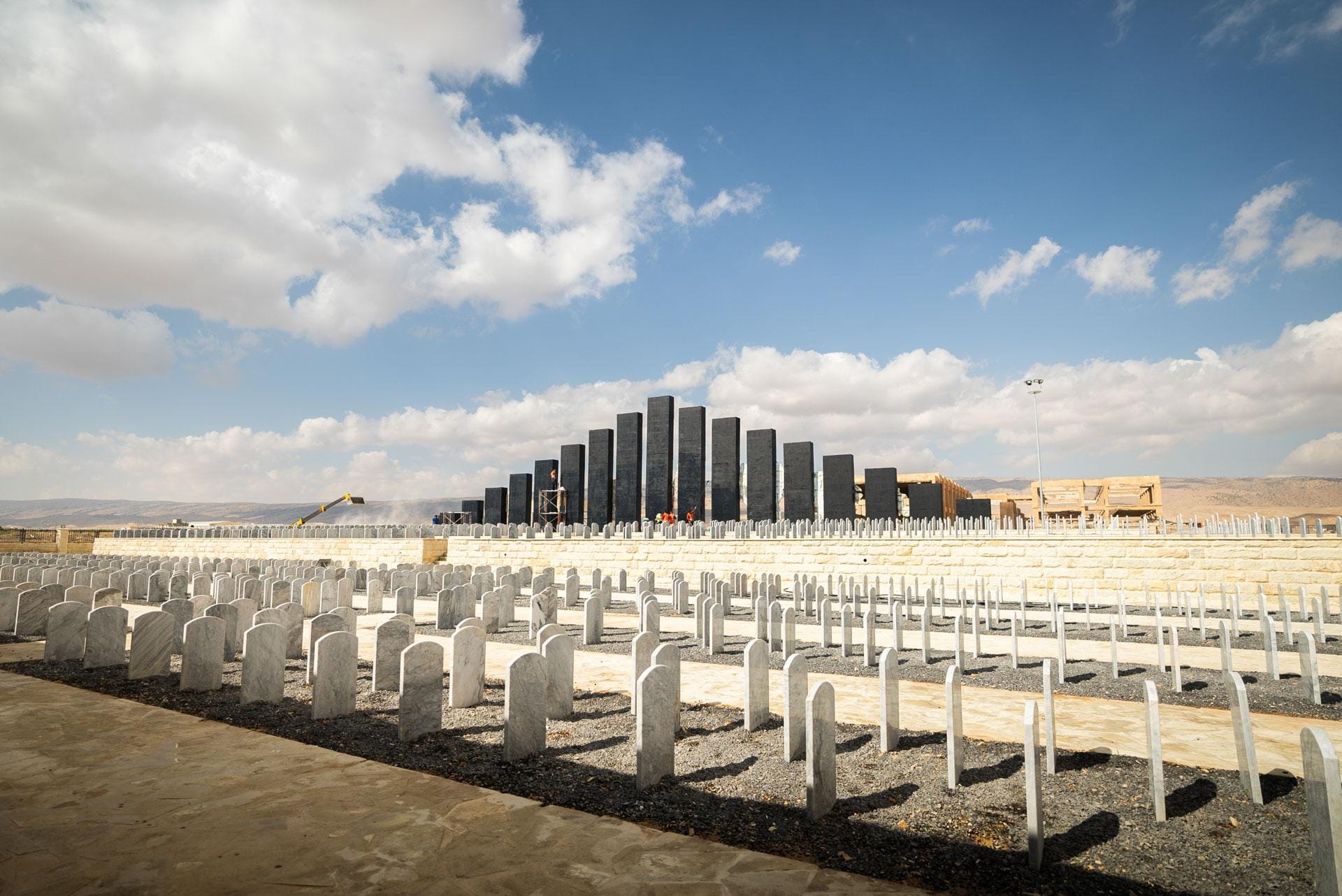
Chapter 15 — What This Means: Preventing Another Genocide
The Promise That Must Be Tested
The genocide against the Yazidis was not an unpredictable natural disaster.
It was the result of deliberate decisions by an armed organisation whose ideology, military expansion and persecution of religious minorities had already generated serious warning signs.
On 3 August 2014, Islamic State attacked the Yazidi homeland of Sinjar in northern Iraq.
Its fighters killed civilians, abducted women and children, enslaved survivors and attempted to destroy the Yazidi community as a religious group.
The atrocities were subsequently documented by United Nations investigators and recognised as genocide.
But the genocide also exposed failures beyond those of its direct perpetrators.
Security arrangements collapsed. Civilians received inadequate warning. Political disputes complicated responsibility for protection, and international intervention expanded only after the attacks had begun.
These failures raise questions that extend far beyond Iraq.
What makes a community vulnerable to genocide?
How can governments recognise the warning signs before mass killings begin?
Who is responsible when national institutions cannot or will not protect civilians?
And how can the international community ensure that its commitments to prevent genocide lead to practical action?
The answers matter because genocide prevention is not simply a moral aspiration.
It is connected to obligations under international law, institutional preparedness, political decisions and the willingness to act before a crisis becomes catastrophic.
The Yazidi experience provides a case study of what happens when those elements fail to operate effectively.
The Warning Signs Were Already Visible
By the summer of 2014, Islamic State had demonstrated its capacity for territorial expansion and organised violence.
The capture of Mosul in June exposed major weaknesses in Iraq's security institutions.
The organisation subsequently threatened communities across Nineveh Governorate.
Its persecution of religious minorities was already documented.
Human Rights Watch reported abductions, killings and expulsions involving minorities in areas under Islamic State control before the attack on Sinjar.
Yazidis were among those targeted.
The danger was therefore not entirely hidden.
What remained uncertain was the precise timing, scale and operational plan of the offensive.
This distinction is important.
Governments rarely possess complete knowledge of an impending atrocity.
They may not know exactly when an attack will begin or which villages will be targeted.
But prevention cannot depend on perfect intelligence.
When an armed organisation openly promotes religious persecution, captures territory and attacks vulnerable communities, authorities have reason to assess the risk of further atrocities.
The failure to convert warning signs into effective protection is one of the central lessons of Sinjar.
Understanding the Stages of Genocide Risk
Genocide does not always begin with mass killing.
The conditions that make it possible may develop over months or years.
These can include discriminatory laws, political exclusion, systematic dehumanisation, organised persecution and the weakening of institutions capable of protecting minorities.
Armed conflict can intensify these risks.
It may create opportunities for extremist organisations to gain territory, acquire weapons and isolate vulnerable populations.
The United Nations Framework of Analysis for Atrocity Crimes identifies risk factors that can help governments and international organisations assess such situations.
These include armed conflict or instability, records of serious human rights violations, weaknesses in state institutions, the capacity of potential perpetrators and circumstances that facilitate the commission of atrocities.
The framework also considers warning indicators specific to genocide, including intergroup tensions and evidence of intent to destroy a protected group.
These indicators do not function as a mechanical prediction system.
Their presence does not establish that genocide will inevitably occur.
But they provide a structured method for assessing danger.
The value of early-warning analysis lies in identifying situations where preventive action may be necessary before crimes reach their most destructive stage.
When Religious Identity Becomes a Target
The Yazidis were targeted because Islamic State regarded their religious beliefs as illegitimate.
The organisation's ideology provided a justification for persecution, enslavement and the destruction of the community.
Its treatment of Yazidis was not simply an incidental consequence of territorial warfare.
Religious identity was central to the campaign.
This demonstrates the danger of ideologies that portray entire communities as enemies whose existence or beliefs are unacceptable.
Such ideologies can create the conditions for systematic violence when combined with armed power and political opportunity.
However, extremist ideology must not be confused with the beliefs of an entire religious population.
Islamic State's actions cannot be attributed collectively to Muslims.
Many Muslims opposed the organisation, suffered under its rule or fought against it.
The organisation also committed grave crimes against Muslim communities.
A responsible analysis must distinguish between extremist organisations, the individuals who support them and the much wider populations whose identities they claim to represent.
Preventing genocide requires confronting incitement and organised persecution without encouraging collective suspicion or discrimination.
Dehumanisation and the Normalisation of Violence
One of the most dangerous developments in societies experiencing escalating persecution is the portrayal of a population as less deserving of protection.
Dehumanising language can make discrimination appear acceptable.
Repeated accusations against an entire religious or ethnic group may encourage hostility and exclusion.
When such narratives are promoted by influential political figures, armed organisations or propaganda networks, they can contribute to an environment in which violence becomes easier to justify.
Islamic State's treatment of Yazidis demonstrates the consequences of combining extremist ideology with military control.
The organisation did not merely describe Yazidis as religious outsiders.
It incorporated their persecution into a system of violence and enslavement.
Nevertheless, not every instance of hateful language constitutes incitement to genocide.
Legal assessments must consider the content, context, intent, speaker, audience and likelihood of harm.
The distinction matters because freedom of expression and protection from violence are both fundamental rights.
Effective prevention requires identifying dangerous incitement while avoiding unjustified restrictions on legitimate political or religious discussion.
The objective is not to eliminate disagreement.
It is to prevent organised hostility from developing into persecution and mass violence.
Why Minority Communities Are Particularly Vulnerable
Small religious and ethnic communities can face particular dangers during periods of state collapse or armed conflict.
They may lack sufficient political influence to secure protection.
Their settlements may be geographically isolated.
They may depend on security institutions controlled by larger political groups.
They may also have limited access to national decision-making.
The Yazidis experienced several of these vulnerabilities.
Their principal homeland was located in a politically disputed region.
Security responsibilities were divided between Iraqi federal and Kurdish regional authorities.
The community's religious identity made it a specific target of Islamic State's ideology.
When the security arrangements collapsed, many civilians had few alternatives.
These circumstances demonstrate why minority protection cannot be limited to formal declarations of equality.
Governments must assess whether vulnerable communities have practical access to security, political representation, justice and emergency assistance.
A right that exists in law but cannot be exercised during a crisis provides limited protection.
The Failure of Civilian Protection in Sinjar
The withdrawal of Peshmerga forces during the Islamic State offensive remains one of the most consequential events of August 2014.
The United Nations Commission of Inquiry documented that the withdrawal was not effectively communicated to the local population.
No general evacuation orders were issued.
Many villages were initially unaware that their security arrangements had collapsed.
These findings do not establish the individual criminal responsibility of every commander involved.
Military withdrawals may occur under extreme pressure, and operational decisions require examination within their specific circumstances.
But the failure to communicate the withdrawal had devastating consequences for civilians.
Families who believed that security forces remained in place lost valuable opportunities to escape.
Some Yazidi men attempted to defend their villages with limited weapons.
Others fled towards Mount Sinjar.
Many were captured before reaching safety.
The lesson is fundamental.
Civilian protection cannot depend solely on the ability of military forces to hold territory.
It also requires contingency planning, effective communication and organised evacuation when defensive positions become untenable.
Protection Must Be Planned Before an Attack
A credible protection strategy requires preparation.
Authorities responsible for vulnerable communities should identify potential evacuation routes, emergency shelters and communication systems.
Local residents need to know how warnings will be issued and which institutions are responsible for responding.
Security forces require clear procedures for coordinating with civilian authorities.
Humanitarian organisations may need access to communities before fighting begins.
Such arrangements are particularly important in areas where roads are limited or where populations could become trapped.
The Yazidis who fled to Mount Sinjar faced extreme conditions, including shortages of food, water and medical assistance.
An effective emergency plan might not have prevented every attack.
But earlier evacuation and better communication could potentially have reduced civilian exposure.
That possibility is an analytical conclusion, not proof that a specific alternative operation would have prevented the genocide.
The broader lesson remains valid.
Protection planning must anticipate the possibility of military failure rather than assume that defensive positions will always hold.
Political Rivalries Cannot Excuse Protection Gaps
Sinjar was affected by longstanding disagreements between the Iraqi federal government and the Kurdistan Regional Government.
The district formed part of the disputed territories of northern Iraq.
Competing claims over administration and security complicated the development of clear institutional responsibilities.
When Islamic State advanced, these divisions contributed to an already fragile environment.
The Yazidis did not create those political disputes.
Yet they suffered the consequences of a system in which effective civilian protection was not secured.
Similar risks can arise elsewhere when governments, regional authorities or armed groups compete for control of territory.
Political disagreement does not eliminate the responsibility to protect civilians.
Where authority is disputed, the need for coordination becomes more urgent.
Governments should establish arrangements that clarify who is responsible for emergency warnings, evacuation, humanitarian access and civilian security.
These responsibilities must remain operational even when political negotiations are unresolved.
A population should not become unprotected because institutions disagree over jurisdiction.
The Responsibility to Protect
In 2005, United Nations member states endorsed the principle known as the Responsibility to Protect.
The commitment concerns four categories of mass atrocities: genocide, war crimes, ethnic cleansing and crimes against humanity.
Its first principle is that each state has the responsibility to protect its population from these crimes.
The international community also has a role in assisting states to fulfil that responsibility.
Where national authorities manifestly fail to protect their populations, the 2005 World Summit Outcome envisages collective action through the United Nations, in accordance with the UN Charter and on a case-by-case basis.
The principle is often misunderstood.
It does not authorise individual governments to launch military interventions whenever they declare that atrocities are occurring.
Nor does it remove the legal restrictions governing the use of force.
Instead, it establishes a political framework linking state responsibility, international assistance and collective responses to mass atrocities.
The Yazidi genocide illustrates the difficulty of translating this commitment into effective action.
The international community eventually responded to the crisis.
But the most devastating phase of the attack had already begun.
Prevention Does Not Always Require Military Intervention
Discussions about genocide prevention often focus on military force.
Military action may become relevant in extreme circumstances, subject to international law.
But prevention includes a much wider range of measures.
Governments can use diplomatic engagement, targeted sanctions, humanitarian assistance, intelligence cooperation and support for vulnerable institutions.
International organisations can monitor human rights violations and issue warnings.
National authorities can strengthen policing, protect threatened communities and investigate incitement or organised violence.
Civil society organisations can document abuses and provide information about risks that may not be visible through official channels.
These measures differ in effectiveness and feasibility.
No single approach can guarantee that genocide will be prevented.
Nevertheless, waiting until armed intervention becomes the only remaining option represents a serious limitation in prevention policy.
The most effective opportunity to protect civilians may arise before violence reaches the stage of mass killing.
The Limits of International Intervention
The international response to the Sinjar crisis demonstrated both the value and limitations of military intervention.
In August 2014, the United States began military and humanitarian operations intended to address the emergency.
Kurdish fighters, Yazidi volunteers and other forces also contributed to efforts to help civilians escape.
These operations saved lives and helped reduce immediate threats.
But they could not reverse the crimes already committed.
Thousands had been abducted.
Families had been separated.
Communities had been destroyed.
The timing of intervention therefore matters.
However, it would be inaccurate to assume that international governments possessed a simple, risk-free military option before the attack.
Decisions concerning intervention involve operational intelligence, legal authority, available forces and the potential consequences of military action.
An independent assessment must consider those constraints.
The appropriate question is not whether intervention could have guaranteed a different outcome.
It is whether governments and international institutions adequately evaluated the risks and considered realistic preventive measures while opportunities remained.
Early Warnings Must Lead to Decisions
One of the recurring problems in atrocity prevention is the gap between information and action.
Governments and international organisations may receive reports of persecution, armed mobilisation or threats against civilians.
Analysts may identify warning signs.
Human rights organisations may document abuses.
Yet those findings do not automatically produce political decisions.
Officials may disagree about the severity of the threat.
Other crises may receive greater attention.
Governments may fear the costs of intervention or the consequences of confronting an armed actor.
Warnings can therefore remain within reports and diplomatic discussions while conditions deteriorate.
The United Nations has recognised the importance of translating early-warning analysis into preventive action.
That requires more than collecting information.
It requires procedures for escalating concerns, assigning responsibility and reviewing whether protective measures have been implemented.
A warning system should not be judged solely by the accuracy of its assessments.
It should also be judged by whether those assessments lead to timely and proportionate decisions.
The Importance of Independent Reporting
Journalism has an important role in identifying and documenting risks to vulnerable populations.
Independent reporters can investigate patterns of persecution, examine official claims and bring local testimony to wider attention.
They can also scrutinise the conduct of governments and security institutions.
However, reporting on potential mass atrocities requires particular care.
Unverified allegations can intensify fear or hostility.
Images and videos may be misidentified or circulated without context.
Statements by armed groups may be designed to manipulate public opinion.
Journalists must therefore distinguish between verified events, witness accounts, official statements and analysis.
The Yazidi genocide demonstrates the value of survivor testimony and documentary evidence.
It also illustrates why journalists should investigate the wider political and security environment rather than focusing exclusively on the immediate violence.
Reporting can help societies recognise warning signs.
But journalism cannot substitute for the responsibilities of governments, courts and international institutions.
Its contribution lies in making information accessible, verifiable and difficult to ignore.
Social Media, Propaganda and the Risk of Incitement
Digital platforms can accelerate the circulation of hostile narratives.
Extremist organisations may use online networks to recruit supporters, distribute propaganda and threaten targeted communities.
Islamic State made extensive use of digital media to promote its ideology and publicise violence.
In contemporary conflicts, manipulated images, fabricated claims and inflammatory material can spread rapidly.
This creates challenges for journalists, governments and technology companies.
Preventing dangerous incitement requires careful monitoring and proportionate responses consistent with human rights law.
It also requires media literacy.
Audiences should be encouraged to examine sources, verify claims and distinguish criticism of political or religious ideas from attacks on entire populations.
The danger is not confined to one religion, region or political movement.
Dehumanising narratives can emerge in many societies.
The appropriate response is to apply consistent standards, regardless of the identity of the group being targeted.
Justice as a Form of Prevention
Accountability is not only a response to past crimes.
It can also contribute to preventing future atrocities.
When perpetrators believe that serious crimes will go unpunished, the absence of consequences may encourage further abuses.
Credible investigations and prosecutions can challenge that expectation.
They can also establish an authoritative record of events and strengthen confidence in legal institutions.
The prosecution of Islamic State members for crimes against the Yazidis has produced important precedents.
German and Swedish courts have recognised genocidal conduct in individual criminal cases.
UNITAD assembled substantial evidence before its mandate ended in September 2024.
However, justice remains incomplete.
Many perpetrators have not faced prosecution specifically for genocide or other international crimes.
The deterrent effect of international criminal justice is difficult to measure, and prosecutions alone cannot eliminate the conditions that lead to mass violence.
Nevertheless, accountability remains an essential part of a broader prevention strategy.
Why Preserving Evidence Matters
The preservation of evidence is essential for both justice and historical understanding.
Mass graves, witness statements, digital records and documentary material can help establish what occurred and who was responsible.
Such evidence may also support the identification of missing persons.
In September 2024, UNITAD published detailed findings concerning Islamic State's crimes against the Yazidis.
The team concluded that there were reasonable grounds to believe genocide, crimes against humanity and war crimes had been committed.
Its mandate ended later that month.
The closure made the future management and lawful use of evidence particularly important.
Investigative material must be preserved securely.
Witness confidentiality must be protected.
Courts require access to admissible evidence through appropriate legal procedures.
The destruction or loss of records can make accountability more difficult for decades.
Preservation therefore serves not only present investigations but also future generations.
Survivors Must Help Shape Prevention Policies
Policies intended to prevent future atrocities should include the perspectives of those who survived previous ones.
Yazidi survivors possess direct knowledge of how warning signs were experienced locally.
They can describe failures in communication, security and evacuation.
They can also identify obstacles encountered after displacement, including difficulties obtaining assistance or legal recognition.
Their experiences provide information that may be absent from official military or political accounts.
However, participation must be voluntary and meaningful.
Survivors should not be expected to repeatedly describe traumatic experiences simply to demonstrate that their concerns deserve attention.
Their involvement should include opportunities to influence policy, evaluate programmes and participate in decisions affecting their communities.
Women, young people, displaced families and survivors living abroad may have different priorities.
A credible approach must recognise those differences.
Consultation should not become a symbolic exercise in which decisions have already been made.
Protecting Children During Mass Atrocities
The Yazidi genocide demonstrated that children can be targeted in ways extending beyond immediate physical violence.
Islamic State abducted children, separated them from families and subjected some boys to indoctrination and military training.
Girls were also exposed to captivity and sexual violence.
The forced transfer of children from a protected group to another group is explicitly recognised as a possible act of genocide under the 1948 convention when accompanied by the required intent.
Preventive policies must therefore address the particular vulnerability of children.
This includes family tracing, protection from recruitment, access to education and safeguards against trafficking.
Children who survive captivity may require long-term rehabilitation and support for reintegration.
Their rights should not depend on whether they were forced to participate in activities controlled by an armed organisation.
Children must not be collectively blamed for the actions of adults who exploited them.
The protection of children is central to preventing the destruction of a community across generations.
Reconstruction Is Also a Preventive Measure
The end of mass violence does not automatically eliminate the risk of future instability.
Communities may remain vulnerable when homes, schools and healthcare facilities have been destroyed.
Unemployment, displacement and political exclusion can weaken social cohesion.
The situation in Sinjar illustrates these problems.
Although Islamic State lost territorial control, many Yazidis have remained displaced because of damaged infrastructure, limited livelihoods and security concerns.
Reconstruction can therefore contribute to prevention.
Restoring schools and healthcare services strengthens community resilience.
Economic opportunities reduce dependence on emergency assistance.
Accountable local institutions can help rebuild trust.
But reconstruction must be accompanied by protection of rights and meaningful political participation.
Buildings alone cannot create security.
A community needs confidence that its members will not again be abandoned during a crisis.
The Role of Religious and Community Leaders
Religious leaders and community organisations can contribute to reducing hostility and strengthening cooperation.
They may be able to challenge narratives that portray other communities as enemies.
They can support dialogue, encourage the protection of vulnerable groups and assist families affected by violence.
In the Yazidi case, religious leadership also played a role in supporting the reintegration of survivors of Islamic State captivity.
However, dialogue should not be presented as a substitute for justice.
Victims of atrocities should not be pressured to reconcile with perpetrators or abandon legal claims.
Nor should reconciliation require communities to ignore legitimate security concerns.
Meaningful dialogue depends on safety, voluntary participation and respect for individual rights.
Its value lies in reducing the risk that collective suspicion will produce further hostility.
Responsibility for crimes must remain individual.
No religious or ethnic community should be treated as collectively guilty because of the actions of particular perpetrators.
The Danger of Selective International Attention
International responses to atrocities are often influenced by political relationships, strategic interests and media attention.
Some crises receive extensive diplomatic engagement.
Others attract limited attention despite serious allegations of mass violence.
This inconsistency can undermine confidence in international institutions.
The prevention of genocide should not depend on whether the threatened population belongs to a politically influential state or attracts sustained international coverage.
The same legal standards must apply regardless of religion, ethnicity or nationality.
At the same time, different situations require careful assessment of the available evidence.
Not every conflict or mass-casualty event constitutes genocide.
The legal definition requires specific elements, including intent to destroy a protected group, in whole or in part.
Consistent standards therefore require both a willingness to confront atrocities and discipline in the use of legal terminology.
Avoiding selective concern does not mean treating every situation as legally identical.
It means applying the same principles of evidence, civilian protection and accountability.
What Governments Should Learn from Sinjar
The Yazidi genocide offers several practical lessons for governments responsible for populations at risk.
Early-warning information must reach officials capable of making decisions.
Military and civilian authorities need clear responsibilities.
Evacuation planning must account for the possibility that defensive forces will retreat.
Minority communities require meaningful participation in security arrangements affecting their lives.
National institutions must coordinate even where political disputes remain unresolved.
Authorities should also ensure that serious human rights violations are investigated before patterns of abuse escalate.
International cooperation can strengthen these efforts.
But the primary responsibility for protecting populations rests with states.
The failure of a security institution should trigger independent review and reform rather than political denial.
The purpose of examining past failures is to reduce the likelihood that they will be repeated.
What International Institutions Must Improve
International institutions need mechanisms that connect early-warning analysis to practical responses.
Risk assessments should be communicated clearly to decision-makers.
Preventive diplomacy should begin before violence reaches catastrophic levels.
Humanitarian organisations should receive support for access to threatened populations.
Where appropriate, international bodies can assist states in strengthening institutions and protecting minorities.
The United Nations Security Council has particular responsibilities concerning international peace and security.
However, political disagreement among its members can restrict collective action.
This is a structural limitation that cannot be ignored.
It reinforces the importance of using preventive measures before a crisis reaches the point at which urgent military decisions become central.
International institutions must also evaluate their own performance.
After a major atrocity, reviewing what information was available and why particular decisions were taken is essential for institutional learning.
What This Means: Never Again Must Become a Practical Commitment
The phrase "Never Again" has become closely associated with the international response to genocide.
It expresses a determination that the systematic destruction of human communities must not be repeated.
Yet history has demonstrated that declarations alone cannot prevent atrocities.
The Genocide Convention was adopted in 1948.
The Responsibility to Protect was endorsed in 2005.
Nevertheless, Islamic State carried out a genocidal campaign against the Yazidis in 2014.
The existence of international commitments did not guarantee their implementation.
This does not mean that those commitments are meaningless.
It means that their effectiveness depends on political decisions, institutional capacity and accountability.
Prevention requires more than recognising genocide after it has occurred.
It requires identifying credible risks, protecting vulnerable populations and responding before violence becomes irreversible.
The Yazidi experience demonstrates the human cost when that process fails.
The Responsibility That Remains
More than twelve years after the attack on Sinjar, the Yazidis continue to live with the consequences of genocide.
Families remain separated.
Some survivors are still searching for missing relatives.
Reconstruction is incomplete, and displacement continues.
The pursuit of justice has produced important achievements but remains unfinished.
These realities make genocide prevention more than an abstract international debate.
They show what happens when the destruction of a community is not prevented and when recovery requires decades of effort.
The responsibility to learn from Sinjar belongs to governments, international institutions, legal systems and societies.
It also requires listening to survivors whose experiences reveal the consequences of failed protection.
The central lesson is not that every future atrocity can be predicted or prevented with certainty.
It is that credible warnings must be taken seriously, civilian protection must be planned and political responsibility must not disappear when security arrangements collapse.
The world cannot undo what happened to the Yazidis in August 2014.
But it can determine whether the failures exposed by that genocide lead to meaningful changes in how vulnerable communities are protected.
Preventing another genocide begins long before the first mass grave is discovered.
It begins when warning signs are recognised, when threatened people are heard and when those responsible for their protection act before it is too late.
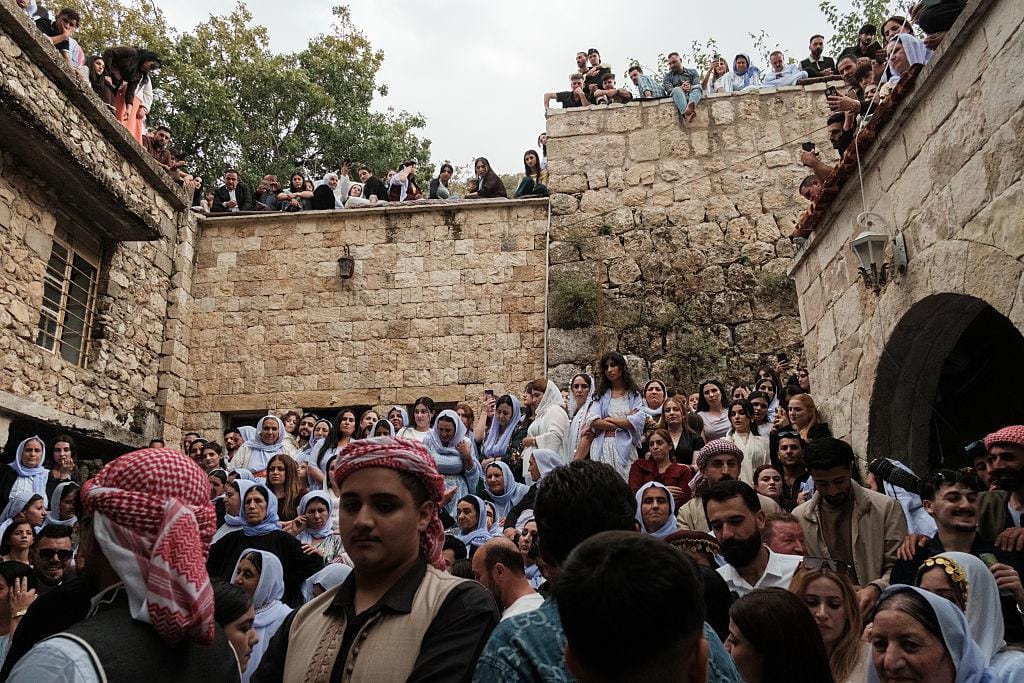
Chapter 16 — Conclusion: A People Who Refuse to Disappear
A History That Did Not Begin in 2014
The story of the Yazidis did not begin with the genocide of August 2014.
For centuries, this religious community maintained its traditions, beliefs and cultural identity in the mountains and villages of northern Mesopotamia.
Its history was shaped by periods of coexistence, persecution, displacement and survival.
Religious practices were passed from one generation to another. Sacred places remained central to community life, and families preserved traditions that connected them to their ancestors.
When Islamic State attacked Sinjar on 3 August 2014, it attempted to destroy far more than individual lives.
Its campaign targeted the existence of the Yazidis as a religious community.
Men and boys were killed. Women and girls were abducted and enslaved. Children were separated from their families, and religious sites were destroyed.
Entire villages were emptied.
The United Nations subsequently documented the atrocities as genocide.
Yet more than twelve years later, the Yazidis continue to practise their religion, preserve their traditions and advocate for their future.
Their survival does not erase what happened.
But it demonstrates that the attempt to eliminate their community did not succeed.
The People Behind the Numbers
Throughout this report, statistics have helped explain the scale of the crimes committed against the Yazidis.
They have documented killings, abductions, displacement and the continuing search for missing people.
But numbers alone cannot describe the full consequences of genocide.
Behind every missing-person case is a family waiting for information.
Behind every destroyed house is a home where people once lived, celebrated religious festivals and raised children.
Behind every account of captivity is an individual whose life was violently interrupted.
The effects extend across generations.
Children who were abducted in 2014 are now young adults.
Some have returned to their families.
Others remain missing.
Survivors who escaped captivity have spent years rebuilding their lives while confronting the consequences of violence, displacement and loss.
Many have pursued education, employment and advocacy.
Others continue to depend on assistance or live in circumstances that make recovery difficult.
Their experiences are not identical.
The Yazidis should not be understood as a community defined exclusively by suffering.
They are individuals with different ambitions, beliefs, political opinions and hopes for the future.
Recognising their humanity requires telling the story of what was done to them without allowing those crimes to become the entirety of their identity.
The Failure That Must Be Remembered
The genocide was carried out by Islamic State.
The organisation's responsibility for the atrocities is established through extensive investigations and judicial proceedings.
But the events of August 2014 also exposed serious failures of civilian protection.
The withdrawal of Kurdish Peshmerga forces was not effectively communicated to many residents.
The wider Iraqi security system had been weakened by Islamic State's rapid advance.
Political disputes complicated the security arrangements in Sinjar.
International intervention expanded after the attacks had already begun.
These circumstances do not establish that every individual official committed a criminal offence.
They do demonstrate that the institutions responsible for protecting civilians failed to prevent a catastrophic outcome.
The distinction matters.
Accountability requires evidence, careful examination of decisions and a willingness to investigate failures even when they involve politically sensitive institutions.
Remembering the genocide must therefore include asking why the Yazidis were left so vulnerable.
Without those questions, the international community risks remembering the victims while overlooking the failures that contributed to their exposure.
Liberation Was Only the Beginning
The recapture of Sinjar in November 2015 ended Islamic State's control of the district's principal town.
It was an important military development.
But liberation did not mean that the community had recovered.
Homes remained destroyed.
Schools and hospitals required reconstruction.
Agricultural livelihoods had been disrupted.
Political rivalries and the presence of competing armed organisations complicated security and administration.
Many families remained displaced.
The 2020 Sinjar Agreement was intended to address some of these problems, but its implementation encountered significant obstacles.
The years that followed demonstrated a difficult reality.
A military victory can remove an immediate threat without restoring the institutions, security and economic conditions necessary for ordinary life.
For the Yazidis, meaningful recovery requires more than the absence of Islamic State.
It requires the ability to return voluntarily, live safely, rebuild homes, access essential services and participate in decisions about their communities.
Until those conditions are established, liberation remains an incomplete achievement.
The Missing Must Not Be Forgotten
One of the most painful consequences of the genocide is the continuing uncertainty surrounding those who disappeared.
In August 2026, the Kurdistan Regional Government reported that 2,526 Yazidis remained missing.
That figure represents people whose fate had not been resolved in its records.
It does not establish whether every individual is alive or deceased.
For families, the uncertainty can be devastating.
Some continue to hope that relatives may be found.
Others seek confirmation of death so that they can bury loved ones and obtain answers.
The search involves forensic investigations, DNA identification, witness testimony and cooperation between institutions.
It also requires sensitivity towards survivors who may have experienced captivity or who do not wish their identities to become public.
The passage of time must not be treated as a reason to abandon these efforts.
Families have a legitimate interest in knowing what happened to their relatives.
The missing are not simply an unresolved statistic.
They remain part of the lives of those who continue searching for them.
Justice Has Begun, but It Is Not Complete
The legal recognition of the Yazidi genocide has been an important development.
United Nations investigators documented the campaign and identified evidence of genocide, crimes against humanity and war crimes.
National courts, particularly in Germany, have convicted individuals for crimes committed against Yazidis.
The first genocide conviction in Frankfurt in November 2021 marked a historic moment.
Further proceedings have demonstrated that the legal system can address acts of enslavement, persecution and the forced transfer of children as international crimes when the relevant elements are established.
These judgments matter.
They recognise the seriousness of the offences and establish individual responsibility through evidence.
But they do not mean that justice has been completed.
Many perpetrators have not been prosecuted for the full range of crimes they may have committed.
Jurisdictional limitations, difficulties obtaining evidence and differences between national legal systems continue to create obstacles.
Iraq's Yazidi Survivors Law has provided a framework for recognition and reparations, but implementation remains essential.
For survivors, justice may involve several needs simultaneously: criminal accountability, financial assistance, rehabilitation, the identification of missing relatives and recognition of the crimes committed against their community.
No single judgment can fulfil all of them.
A Community Rebuilding Across Borders
The future of the Yazidis will not be confined to one geographical location.
Sinjar remains an ancestral homeland of profound religious and cultural importance.
For many families, returning there is a central aspiration.
Others have established lives elsewhere in Iraq or abroad.
The Yazidi diaspora has become an important part of the community's future.
Families living in Europe and other regions continue to maintain cultural and religious connections while seeking safety, education and economic opportunities.
Their circumstances vary.
Some have achieved stability.
Others remain affected by separation from relatives, unresolved trauma or uncertainty about missing family members.
The growth of the diaspora creates both opportunities and challenges.
It can provide greater security and access to education.
It can also make the transmission of language, religious traditions and cultural knowledge more difficult across generations.
Preserving Yazidi identity will require efforts within Sinjar and among communities living abroad.
The future of the community should not depend on every Yazidi making the same decision about where to live.
It should depend on protecting their freedom to choose.
The Importance of the Next Generation
For younger Yazidis, the genocide is both a historical event and a continuing influence on everyday life.
Some remember the attacks directly.
Others were too young to understand what was happening.
Children born after 2014 may know the events primarily through family accounts, memorials and community education.
Their future will be shaped by the opportunities available to them.
Access to schools, universities and employment will influence whether they can build independent lives.
The restoration of public institutions in Sinjar will affect whether families can return.
Cultural and religious education will contribute to the preservation of Yazidi identity.
Young people must also have opportunities to participate in decisions about their communities.
They should not inherit only the responsibility to remember the genocide.
They should inherit the possibility of shaping a future beyond it.
That requires investment in education, economic development and accountable institutions.
It also requires recognising young Yazidis as participants in their community's future rather than solely as descendants of victims.
The Women Who Changed the International Conversation
Yazidi women have played a central role in bringing the genocide to international attention.
Survivors have testified about captivity, sexual violence and the destruction of their families.
Some have become advocates for accountability and the protection of vulnerable communities.
Nadia Murad's international work helped transform personal testimony into a broader campaign for justice.
Her Nobel Peace Prize in 2018 brought further attention to the use of sexual violence during conflict.
But the contribution of Yazidi women extends beyond prominent international figures.
Women have supported families, participated in community organisations, pursued education and helped preserve cultural traditions.
Some have advocated for survivors' rights and improvements to legal assistance.
Others have worked to rebuild ordinary lives away from public attention.
Their experiences demonstrate that recovery is not simply something delivered by governments or humanitarian organisations.
Survivors themselves are active participants in shaping their futures.
Their involvement must remain central to reconstruction, reparations and decisions about community security.
The Responsibility of Iraq
Iraq has a continuing responsibility towards the Yazidi population.
That responsibility includes ensuring security, access to justice and the protection of fundamental rights.
It also involves restoring essential services and supporting sustainable solutions for displaced families.
The implementation of reparations legislation is important.
So is the development of an effective legal framework for prosecuting international crimes.
Authorities must continue efforts to identify missing people and provide information to their families.
Reconstruction should address housing, healthcare, education, water infrastructure and economic opportunities.
Political disagreements over Sinjar's administration must not prevent residents from accessing the services and protection to which they are entitled.
The success of recovery should be measured by the conditions experienced by civilians.
It should not be judged solely by official announcements, the number of completed projects or the closure of displacement camps.
The central measure is whether people can live securely and exercise their rights.
The Responsibility of the International Community
The international community also has a role in supporting the Yazidis.
International investigators have helped establish the evidence of genocide.
National courts have pursued prosecutions.
Humanitarian organisations have assisted displaced families and survivors.
Governments and donors have supported reconstruction, education and healthcare.
These efforts have produced meaningful results.
But the consequences of genocide do not disappear when international attention shifts elsewhere.
Long-term recovery requires sustained commitment.
Evidence must remain available for future legal proceedings.
Survivors need access to appropriate assistance.
Missing-persons investigations must continue.
Reconstruction programmes should be evaluated according to their practical impact on communities.
International support must also respect local participation.
The Yazidis should not be treated merely as recipients of decisions made elsewhere.
They must have opportunities to influence policies affecting their security, homes and future.
What the World Must Learn
The genocide against the Yazidis demonstrates how rapidly an armed organisation can exploit political instability and the collapse of security institutions.
It also shows how vulnerable communities can become when warning signs are not translated into effective protection.
The lessons are not limited to Iraq.
Governments must recognise credible threats against religious and ethnic minorities.
Security institutions need clear responsibilities and contingency plans.
Civilian evacuation and emergency communication must be prepared before defensive systems fail.
International organisations must connect early-warning analysis with realistic preventive measures.
The law must provide credible mechanisms for investigating and prosecuting mass atrocities.
These measures cannot guarantee that genocide will never occur again.
But they can reduce risks and strengthen the protection of threatened populations.
The phrase "Never Again" has meaning only when it is accompanied by institutions and decisions capable of protecting people before mass violence begins.
The Yazidi genocide illustrates the consequences when those protections are insufficient.
Remembering Without Reducing People to Victims
Memorials, commemorations and historical research are essential to preserving the record of the genocide.
They honour those who were killed and help ensure that the crimes are not denied or forgotten.
But remembrance must also recognise the lives that continue.
The Yazidis have religious traditions, family relationships, cultural practices and aspirations extending far beyond August 2014.
They are not simply a community that survived Islamic State.
They are a people with a history that predates the organisation by centuries and a future that must not be defined by its crimes.
Journalism has a responsibility to reflect that wider reality.
Reporting should document atrocities accurately and scrutinise the authorities responsible for protection.
It should also examine recovery, cultural continuity and the choices facing younger generations.
A complete account of the Yazidis must include both what was taken from them and what they continue to build.
What This Means: Survival Must Become Security
The survival of the Yazidi community is not the same as the completion of its recovery.
The genocide failed to eliminate the Yazidis.
But it caused losses that continue to affect families and communities.
Thousands remain missing.
Displacement persists.
Reconstruction is incomplete.
Legal accountability has advanced but remains limited compared with the scale of the atrocities.
The central challenge is to transform survival into lasting security.
That means creating conditions in which families can live without fear, children can obtain education and survivors can exercise their rights.
It means ensuring that people who wish to return to Sinjar can do so voluntarily and safely.
It also means respecting those who choose to build their lives elsewhere.
Recovery must be measured through the opportunities and freedoms available to individuals, not merely through the passage of time since the genocide.
Conclusion: A People Who Refuse to Disappear
On 3 August 2014, Islamic State began a campaign intended to destroy the Yazidis as a religious community.
The consequences were catastrophic.
Thousands were killed or abducted.
Women and girls were enslaved.
Children were separated from their families.
Villages were destroyed, and an ancient community was scattered across Iraq and beyond.
The world eventually recognised the crimes as genocide.
Investigators documented the atrocities.
Courts began holding individual perpetrators accountable.
Survivors brought their experiences before governments, international institutions and the public.
Yet recognition has not brought every family an answer.
It has not restored every home or secured the return of every displaced person.
The story therefore remains unfinished.
For the Yazidis, the future involves more than recovering from the crimes of Islamic State.
It involves protecting their religious and cultural identity, rebuilding their communities and ensuring that future generations have opportunities that were denied to so many in 2014.
The responsibility of governments and international institutions is equally clear.
The protection of vulnerable populations must not begin only after mass graves are discovered.
Warnings must be examined.
Civilian security must be taken seriously.
Failures must be investigated.
And survivors must be supported long after international attention has moved elsewhere.
The Yazidis have endured centuries of hardship and persecution.
The genocide of 2014 became one of the darkest chapters in their history.
But it did not bring that history to an end.
Their communities continue to exist.
Their traditions continue to be practised.
Their families continue to search for the missing, seek justice and build new lives.
The Yazidis are not merely survivors of an attempted destruction. They are a living community whose future deserves the same attention as the crimes committed against its past.
And that is where the responsibility of the world must continue: not only in remembering what happened, but in helping ensure that the Yazidis can determine what comes next.
Independent Journalism. Beyond the Headlines.
— Beyond the Lines
Sources & References
The Yazidis: Genocide, Enslavement and the Struggle for Justice
United Nations Investigations and International Law
- United Nations Human Rights Council — Independent International Commission of Inquiry on the Syrian Arab Republic (2016). They Came to Destroy: ISIS Crimes Against the Yazidis. A/HRC/32/CRP.2. A major investigation documenting the genocidal campaign against the Yazidis, including mass killings, sexual slavery, forced transfers and the destruction of religious identity.https://www.ohchr.org/Documents/HRBodies/HRCouncil/CoISyria/A_HRC_32_CRP.2_en.pdf
- United Nations Investigative Team to Promote Accountability for Crimes Committed by Da'esh/ISIL (UNITAD) (2024). Detailed Findings on International Crimes, Including Genocide, Committed by ISIL/Da'esh Against the Yazidis. Findings concerning genocide, crimes against humanity and war crimes.https://iraq.un.org/en/278383-unitad-publishes-detailed-findings-international-crimes-including-genocide-committed-isil-da
- United Nations Security Council (2017). Resolution 2379 (2017). Establishing UNITAD to collect, preserve and store evidence of crimes committed by Islamic State in Iraq.https://digitallibrary.un.org/record/1305962
- United Nations in Iraq (2024). Statement on the Conclusion of UNITAD's Mandate. Documentation of the investigative team's work and the conclusion of its operations in September 2024.https://iraq.un.org/en/278785-statement-acting-special-adviser-and-head-unitad-conclusion-unitad-mandate
- United Nations General Assembly (1948). Convention on the Prevention and Punishment of the Crime of Genocide. The international legal definition of genocide and the obligations of states to prevent and punish the crime.https://www.ohchr.org/en/instruments-mechanisms/instruments/convention-prevention-and-punishment-crime-genocide
- United Nations General Assembly (2005). 2005 World Summit Outcome. A/RES/60/1. Including paragraphs 138–139 concerning the Responsibility to Protect populations from genocide, war crimes, ethnic cleansing and crimes against humanity.https://digitallibrary.un.org/record/556636
- United Nations Office on Genocide Prevention and the Responsibility to Protect. Framework of Analysis for Atrocity Crimes. Guidance on identifying risk factors and warning indicators associated with genocide and other mass atrocities.https://www.un.org/en/genocide-prevention
Human Rights Documentation and Historical Evidence
- Human Rights Watch (2014). Iraq: ISIS Abducting, Killing, Expelling Minorities. Documentation of persecution and violence against religious and ethnic minorities during Islamic State's expansion.https://www.hrw.org/news/2014/07/19/iraq-isis-abducting-killing-expelling-minorities
- Human Rights Watch (2014). The Nightmare in Iraq. Reporting on the humanitarian catastrophe following Islamic State's advance and the displacement of minority communities.https://www.hrw.org/news/2014/08/09/nightmare-iraq
- Amnesty International (2014). Escape from Hell: Torture and Sexual Slavery in Islamic State Captivity in Iraq. Research documenting the experiences of women and girls abducted and enslaved by Islamic State.
https://www.amnesty.org/en/documents/mde14/021/2014/en/
- Amnesty International (2014). Ethnic Cleansing on a Historic Scale: Islamic State's Systematic Targeting of Minorities in Northern Iraq. Documentation of killings, abductions and forced displacement.
https://www.amnesty.org/en/documents/mde14/011/2014/en/
- Amnesty International (2015). Iraq: Yezidis Captured by IS Must Be Rescued. Documentation concerning abducted Yazidis and the continuing need for protection and rescue.
https://www.amnesty.org/en/wp-content/uploads/2021/05/MDE1418012015ENGLISH.pdf
- Human Rights Watch (2024). Iraq: Looming Camp Closures in Kurdistan. Examination of the risks associated with displacement camp closures and the challenges facing families unable to return safely.
https://www.hrw.org/news/2024/05/13/iraq-looming-camp-closures-kurdistan
History, Religion and Yazidi Identity
- Encyclopaedia Britannica. Yazidi. Historical and religious background on the Yazidi community, including its beliefs, traditions and geographical origins.
https://www.britannica.com/topic/Yazidi
- Minority Rights Group International. Yezidis in Iraq. Background on the Yazidi minority, its historical experiences, social conditions and continuing challenges.
https://minorityrights.org/communities/yezidis/
- NIOD Institute for War, Holocaust and Genocide Studies (2024). Ten Years of Ongoing Genocide Against the Yazidis. Historical and contemporary analysis of the genocide and its continuing consequences.
https://www.niod.nl/en/longreads/ten-years-of-ongoing-genocide-against-the-yazidis/
- United States Holocaust Memorial Museum — Simon-Skjodt Center for the Prevention of Genocide. Our Generation Is Gone: The Islamic State's Targeting of Iraqi Minorities in Ninewa. Research into Islamic State's persecution of minority communities and the consequences for civilian protection.
https://www.ushmm.org/genocide-prevention/countries/iraq
Displacement, Reconstruction and the Future of Sinjar
- International Crisis Group (2018). A Way Forward for Sinjar. Analysis of political disputes, security arrangements and the challenges of stabilising Sinjar after Islamic State's defeat.
- International Organization for Migration (2024). Yazidi Displacement and Migration from Iraq: Trends, Drivers and Vulnerabilities. Research on displacement, migration, return intentions and the challenges facing Yazidi families.
- International Organization for Migration (2026). Iraq Crisis Response Plan 2026. Humanitarian and recovery priorities, including support for displaced communities and implementation of survivor reparations.
https://crisisresponse.iom.int/
- European Union Agency for Asylum (2025). Iraq: Situation of Returnees. Country-of-origin information examining security, displacement and barriers to return, including conditions in Sinjar.
- United Nations in Iraq (2024). Sinjar Welcomes Back Displaced Families. Reporting on voluntary returns and efforts to support displaced families.
Justice, Accountability and Survivors' Rights
- International Criminal Court — Office of the Prosecutor (2015). Statement of the Prosecutor of the International Criminal Court, Fatou Bensouda, on the Alleged Crimes Committed by ISIS. Explanation of jurisdictional limitations affecting potential ICC investigations.
- United Nations Office on Drugs and Crime. Case Documentation: The Conviction of Taha Al-Jumailly in Germany. Legal background concerning the first genocide conviction for crimes against Yazidis in November 2021.
- Coalition for Just Reparations. Iraq's Yazidi Survivors Law. Documentation and analysis of the 2021 legislation recognising survivors and providing a framework for reparations.
- Yazda. Justice and Accountability for Yazidi Survivors. Information about survivor advocacy, criminal proceedings and international legal developments.
- International Commission on Missing Persons. Iraq. Information on missing-persons investigations, identification processes and assistance to families affected by conflict.
Survivors, Testimony and International Recognition
- Nobel Prize (2018). Nadia Murad — Facts. Official information about the Nobel Peace Prize awarded to Nadia Murad for her efforts to end the use of sexual violence as a weapon of war and armed conflict.
https://www.nobelprize.org/prizes/peace/2018/murad/facts/
- Nadia's Initiative. Survivor-Centred Recovery and Reconstruction. Information on initiatives supporting survivors and rebuilding communities affected by the genocide.
https://www.nadiasinitiative.org/
- Free Yezidi Foundation. Support for Yazidi Survivors. Programmes relating to survivor assistance, empowerment, advocacy and recovery.
Editorial Note
This special report draws on United Nations investigations, international legal instruments, human rights documentation, academic research, humanitarian assessments and publicly available judicial information.
The report distinguishes between findings established by courts, conclusions reached by investigative bodies, statements issued by governments and independent analysis.
Statistics concerning missing persons, displacement and recovery reflect the reporting periods and methodologies of their respective sources. Figures from different organisations are not necessarily directly comparable.
The report does not contain original interviews with survivors or independently conducted forensic investigations. Its findings are based on the documentary record and the sources identified above.
Beyond the Lines — Independent Journalism. Beyond the Headlines.