A Nation Without a State: Arif Bawecani on the Kurdish Struggle for Freedom, Iran, Israel and the Future of the Middle East
In an exclusive Beyond the Lines interview, Kurdish political leader Arif Bawecani discusses his people's struggle for freedom, the future of Iran, relations with Israel and the United States, and his vision for lasting peace in the Middle East.
EXCLUSIVE INTERVIEW | BEYOND THE LINES
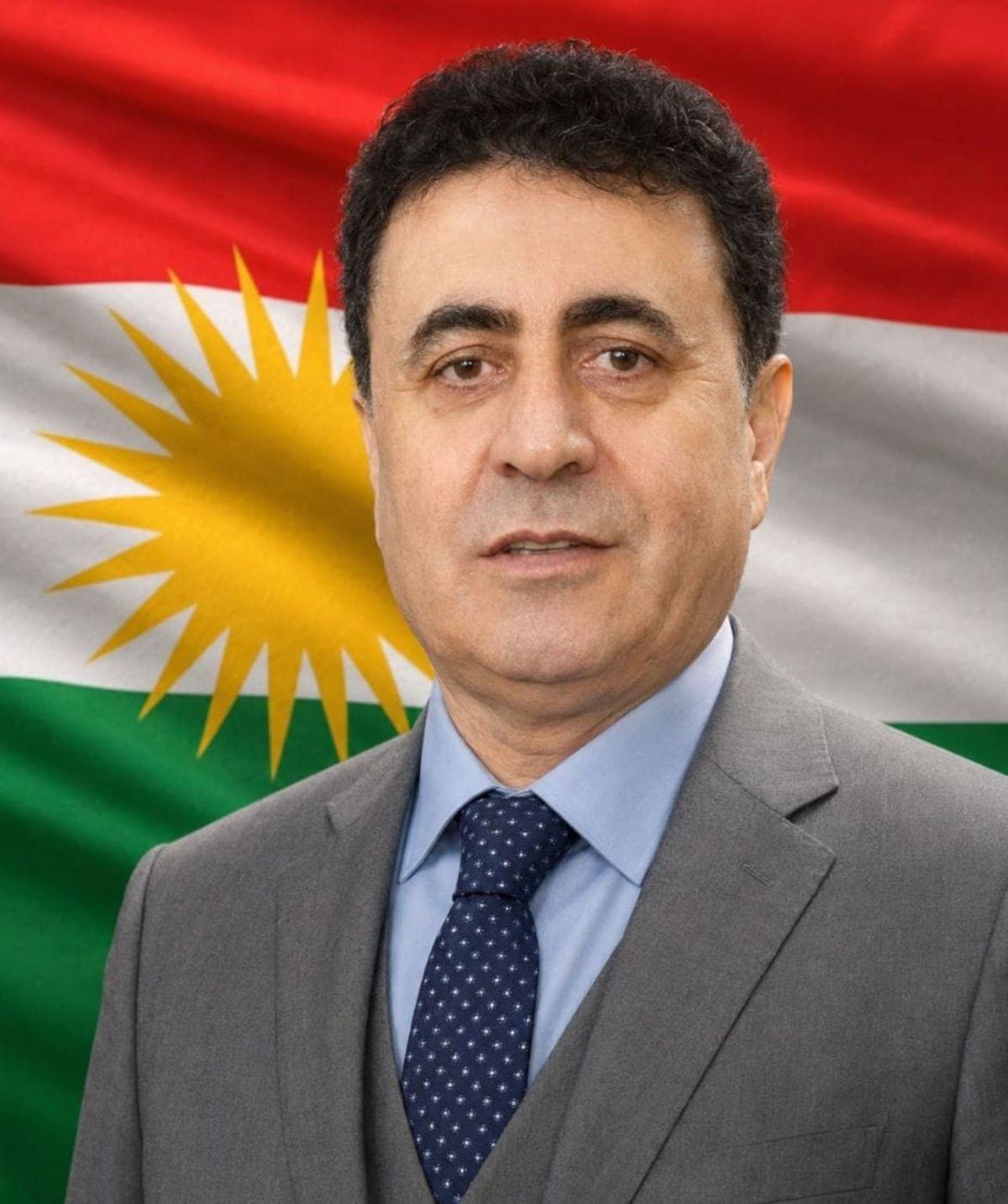
The Kurdish people have preserved their identity across generations, borders and political upheavals. Yet their struggle for recognition and self-determination remains one of the Middle East's most enduring unresolved questions. In an exclusive written interview with Beyond the Lines, Kurdish political leader and human rights advocate Arif Bawecani discusses his nation's history, the future of Iran, relations with Israel and the United States, and his belief that lasting peace must be built upon freedom, mutual recognition and respect.
By Leonie Raffaelli | Founder & Editor, Beyond the Lines
Introduction — A Nation Divided, but Not Forgotten
Across the mountainous regions of the Middle East, stretching through parts of Iran, Iraq, Türkiye and Syria, lives a people whose history extends far beyond the political borders that surround them.
The Kurds are among the world's largest ethnic populations without an independent sovereign state.
Their traditional homeland, commonly known as Kurdistan, has been shaped by centuries of imperial rule, regional conflict, international agreements and political struggles.
Despite these divisions, Kurdish communities have maintained distinctive languages, traditions, cultural practices and historical memories.
Yet the political future of the Kurdish people remains deeply contested.
Some Kurdish movements advocate full independence. Others seek federalism, regional autonomy, democratic reforms or greater cultural and linguistic rights within existing states.
For many Europeans, the Kurdish question becomes visible primarily during periods of war, when Kurdish forces confront extremist organizations, when political tensions rise along national borders, or when international powers seek Kurdish cooperation.
But behind these headlines lies a much longer and more complicated story.
To explore that story, Beyond the Lines conducted an exclusive written interview with Arif Bawecani, also known as Dana Ahmadi, a Kurdish political activist, writer and human rights advocate originally from Eastern Kurdistan, the Kurdish-inhabited regions of Iran.
Bawecani is identified in his interview materials as President of the Kurdistan Freedom Party, known as Parti Serbesti Kurdistan (PSK), and President of the Abrahamic Movement in Norway.
His background includes decades of political activism, refugee assistance, human rights advocacy and international engagement.
His political vision is clear: Kurdish communities should have the right to determine their own future.
However, his message extends beyond the question of independence.
He also speaks about religious coexistence, international responsibility, relations between Kurdish and Jewish communities, and the role of Europe in shaping a more peaceful Middle East.
His answers offer a perspective shaped by Kurdish nationalism, political experience and a belief that lasting peace cannot be separated from fundamental rights.
Chapter 1 — Who Are the Kurds? Understanding a Nation Without a State
Before discussing international politics, Bawecani believes it is essential to understand Kurdish identity.
The Kurdish people are an ethnolinguistic population whose traditional homeland lies across parts of the Zagros and Taurus mountain ranges and surrounding territories.
Kurdish belongs to the Iranian branch of the Indo-European language family. It includes major linguistic varieties such as Kurmanji and Sorani.
Kurdish society is also religiously diverse. Although many Kurds are Sunni Muslims, Kurdish communities include Shia Muslims, Yezidis, Yarsanis, Christians and secular populations.
For Bawecani, these differences do not diminish the importance of shared national identity.
Arif Bawecani explains:
"To understand the identity of any nation, one must look beyond its territory and geographical boundaries. Language, culture, art, history, and collective memory are all fundamental elements of national identity."
He emphasizes that Kurdish identity has survived despite centuries of political change.
Traditional music, literature, dance, clothing and cultural ceremonies remain important expressions of Kurdish heritage.
He continues:
"This identity was not created by the decree of any political authority, nor can it be eliminated through force."
His words reflect a central argument within Kurdish nationalism: national identity exists independently of the political borders established by governments.
How many Kurds are there?
The precise Kurdish population remains difficult to determine.
Different estimates are influenced by census methods, migration, language use and the absence of consistent ethnic data in several countries.
Widely cited estimates often place the population at approximately 25–35 million, while higher estimates circulate among Kurdish organizations and political representatives.
Regardless of the exact figure, the Kurds represent one of the largest populations in the world without an independent sovereign state.
Bawecani believes that understanding this reality is essential for understanding the political demands of Kurdish communities.
For him, the question is not simply about geography.
It is about recognition, cultural survival and the right of a people to determine their political future.
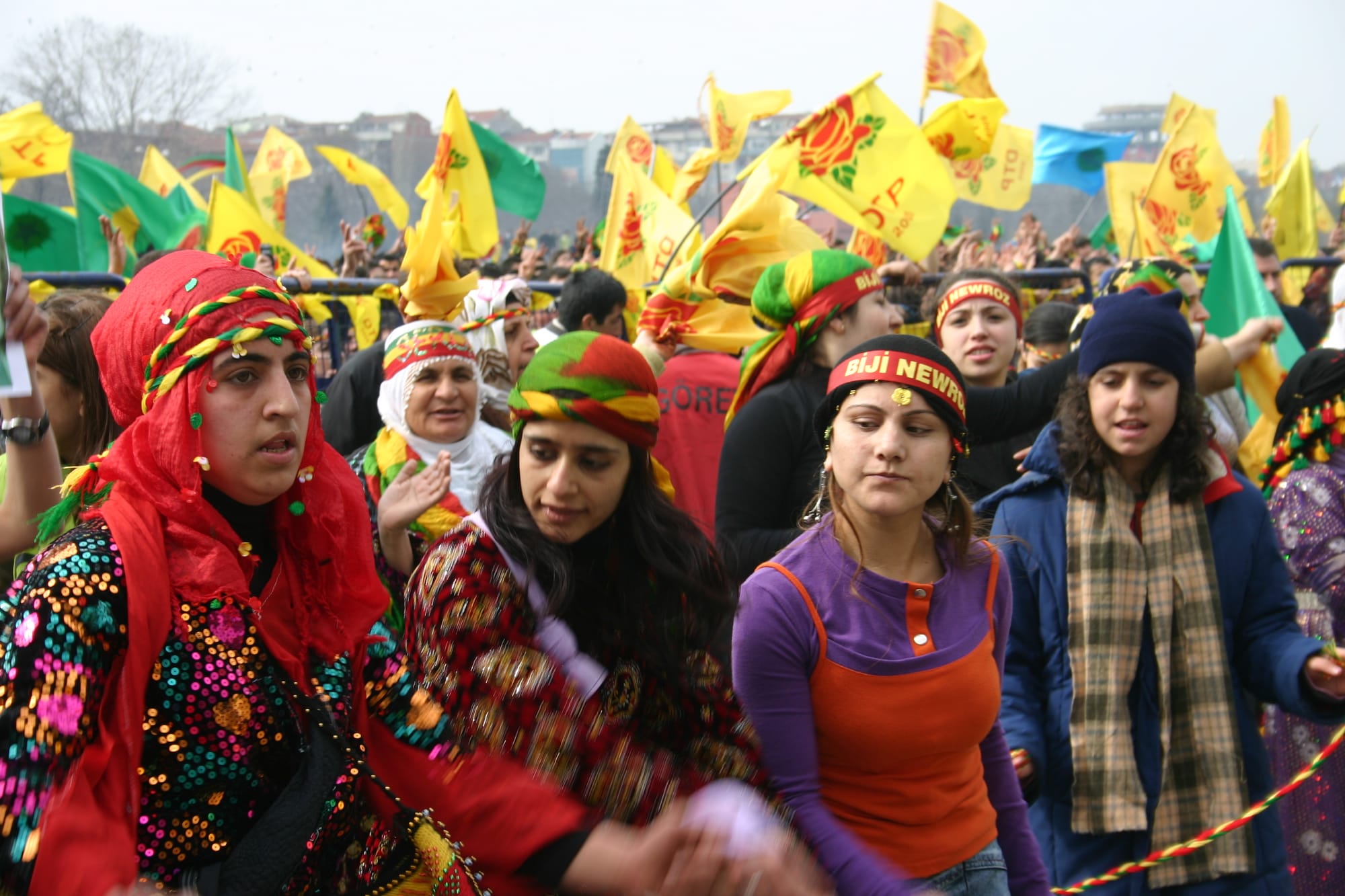
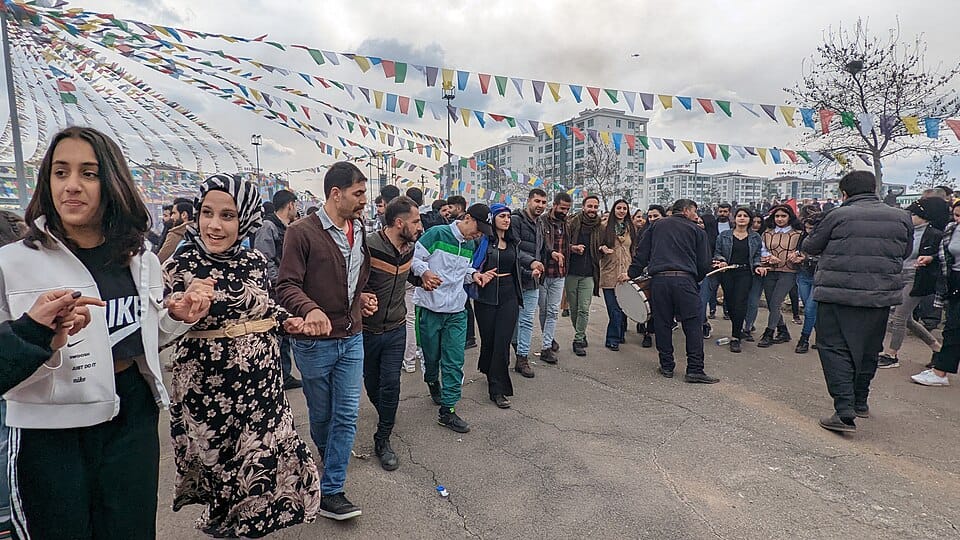
Newroz, the traditional spring festival, is an important expression of Kurdish cultural identity. Celebrations bring together communities through music, dance and traditions passed down across generations.
Chapter 2 — The Historical Division of Kurdistan
The Kurdish question did not begin with the modern conflicts in Iraq, Syria or Iran.
Its roots reach into the history of the Ottoman and Persian empires and the political transformation of the Middle East.
For centuries, Kurdish-inhabited regions existed within larger imperial systems.
Various Kurdish principalities exercised different degrees of regional authority, sometimes negotiating autonomy with imperial governments and sometimes confronting them.
Bawecani argues that political decisions affecting Kurdish territories were repeatedly made without meaningful participation by Kurdish representatives.
"The division of Kurdistan is the result of a long historical and political process."
He points particularly to the agreements following the First World War.
The Treaty of Sèvres — 1920
Following the collapse of the Ottoman Empire, the Allied powers negotiated a new political settlement.
The Treaty of Sèvres, signed in August 1920, included provisions for Kurdish autonomy and a possible route toward independence under specified conditions.
For Kurdish nationalists, this treaty became an important historical reference.
However, it was never implemented as originally envisaged.
The Treaty of Lausanne — 1923
The Turkish nationalist movement rejected the earlier settlement.
The Treaty of Lausanne, signed in July 1923, established a different international framework for the new Turkish state.
Unlike Sèvres, it did not include comparable provisions for Kurdish autonomy or independence.
The wider division of Kurdish-inhabited territories also reflected older Ottoman-Persian boundaries, British and French mandate arrangements and later political developments.
The result was a population living under several different governments.
Bawecani describes the consequences in deeply human terms.
"In many places, these borders separated families and communities."
In his written response, he describes how relatives living on opposite sides of a political border could become citizens of different countries while maintaining the same cultural and national identity.
For him, this illustrates a fundamental difference between citizenship and belonging.
Political borders determine state jurisdiction, but they do not necessarily erase historical connections between communities.
The Republic of Mahabad — 1946
One of the most important moments in modern Kurdish political history occurred in northwestern Iran.
In January 1946, Kurdish leaders proclaimed the Republic of Kurdistan in Mahabad.
Qazi Muhammad became its president.
The republic emerged during a period of political instability and Soviet influence following the Second World War.
It established Kurdish political and cultural institutions but survived for less than a year.
Iranian government forces reasserted control in December 1946, and Qazi Muhammad was executed in March 1947.
Despite its short existence, Mahabad became a powerful symbol within Kurdish national memory.
Bawecani explains its significance:
"In my view, the Republic of Kurdistan was not merely a historical event; it became a symbol of freedom, self-government, and the political aspirations of the Kurdish nation."
For him, the republic demonstrated that Kurdish political institutions could be established despite difficult regional circumstances.
For historians, it also illustrates how Kurdish political aspirations have repeatedly been influenced by international power struggles.
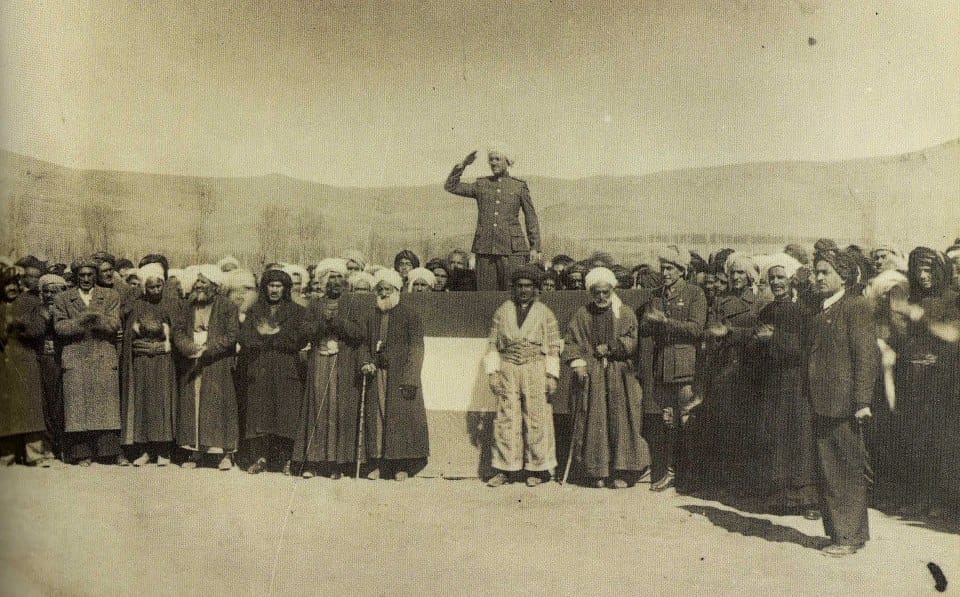
The proclamation of the Republic of Mahabad in January 1946. The short-lived republic became an enduring symbol of Kurdish political self-determination.
Chapter 3 — Four Countries, Four Different Kurdish Realities
Although Kurdish communities share cultural and historical connections, their political experiences differ significantly.
Türkiye — Cultural recognition and political conflict
Türkiye has the largest Kurdish population.
Throughout much of the twentieth century, restrictions on Kurdish language and cultural expression contributed to longstanding grievances.
The armed conflict involving the Kurdistan Workers' Party (PKK) and the Turkish state became one of the region's most significant security and political challenges.
The PKK is designated a terrorist organization by Türkiye, the United States and the European Union.
The conflict has caused civilian suffering, displacement and serious human rights concerns.
Different Kurdish political movements in Türkiye have advocated different solutions, including expanded cultural rights, democratic representation and forms of decentralization.
Iraq — Kurdish regional self-government
Iraqi Kurdistan has developed the most established form of Kurdish regional self-government.
During Saddam Hussein's rule, Kurdish communities experienced severe repression.
The Anfal campaign of the late 1980s involved mass killings, forced displacement and the destruction of Kurdish villages.
The chemical attack on Halabja in March 1988 became one of the most widely recognized atrocities committed against Kurdish civilians.
Following the 1991 Gulf War, Kurdish authorities established regional institutions.
The Iraqi Constitution of 2005 recognized the Kurdistan Region as a federal region within Iraq.
Although disputes with Baghdad over territory, budgets and natural resources continue to shape its politics, Iraqi Kurdistan demonstrates that Kurdish self-government can exist within a federal state.
Syria — War and uncertain political arrangements
The Syrian civil war transformed the political circumstances of Kurdish communities.
From 2012, Kurdish-led organizations established forms of self-administration in parts of northern and northeastern Syria.
Kurdish-led forces subsequently played a significant role in the international campaign against the Islamic State.
However, questions concerning autonomy, relations with Damascus, Turkish security concerns and the rights of different communities remain central to the region's political future.
Iran — The focus of Bawecani's political struggle
For Bawecani, the Kurdish question is especially personal in Iran.
The Kurdish-inhabited regions of western and northwestern Iran are often called Eastern Kurdistan, or Rojhelat, by Kurdish nationalists.
These territories have a long history of political mobilization and demands for cultural and national recognition.
Bawecani believes the existing Iranian political system has failed to respect the national rights of its diverse populations.
His criticism extends beyond Kurdish communities.
He also refers to Baloch, Arab, Azerbaijani and other groups whose political and cultural rights have been contested.
This leads to one of the central questions of the interview: what kind of political future could provide equality, freedom and recognition for all communities in Iran?
Chapter 4 — Iran's Future: Reform, Democracy or Fundamental Political Change?
Bawecani is strongly critical of the Islamic Republic of Iran.
He argues that centralized political authority has repeatedly restricted the rights of different national and cultural communities.
In his view, political reform must involve more than replacing one government with another.
Arif Bawecani states:
"A free and democratic Iran does not simply mean replacing one authoritarian system with another."
He believes meaningful change would require a fundamental transformation in the relationship between political authorities and the populations they govern.
Iran is home to a diverse population, including Persians, Azerbaijanis, Kurds, Arabs, Baloch and numerous other ethnic and linguistic communities.
Bawecani argues that a democratic political system must recognize this diversity.
He also makes demographic claims about the proportion of non-Persian populations in Iran. These figures remain difficult to independently establish because reliable, comprehensive ethnic census data are limited.
His wider argument, however, concerns political rights rather than population percentages alone.
"I believe that the future of any political system in Iran must be built upon democracy, human rights, equality among citizens, and recognition of national rights."
He refers to the former Yugoslavia as an example of how unresolved national tensions can contribute to political instability.
The comparison requires historical caution: Yugoslavia's dissolution involved multiple political, economic and military factors and cannot be treated as a direct prediction of Iran's future.
Nevertheless, Bawecani believes that ignoring national identities creates long-term political risks.
He also connects Iran's future to regional tensions involving Israel and the United States.
In his assessment, political and military developments during 2025 and 2026 have demonstrated how domestic political questions can become intertwined with international security.
His argument raises an important distinction.
Political change in Iran could take many forms, including democratic reform, constitutional decentralization, federalism or more fundamental territorial restructuring.
These possibilities are not interchangeable, and none is guaranteed to follow from military confrontation or regime change.
For Bawecani, the essential principle is that different communities must have a meaningful voice in determining their future.
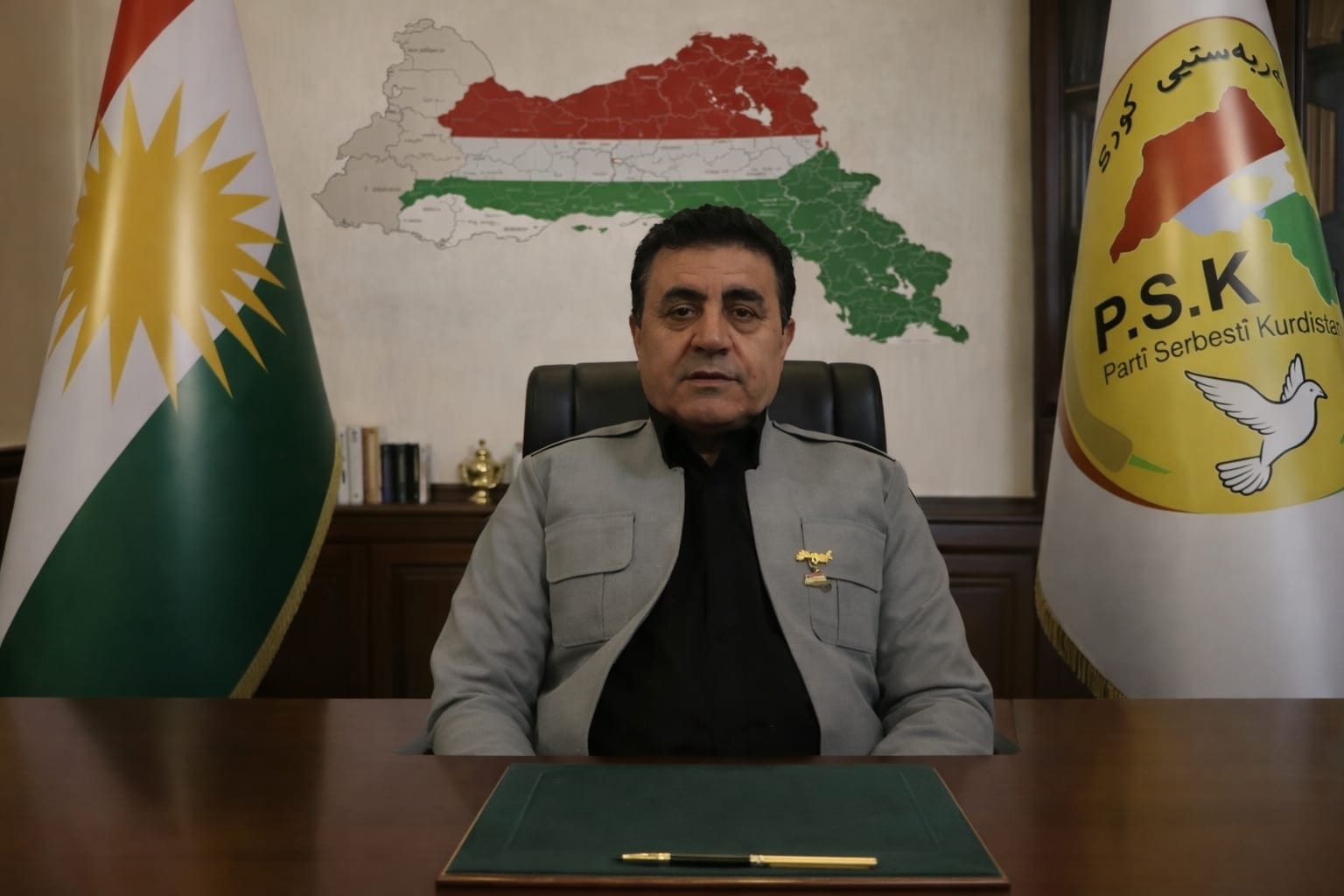
Chapter 5 — Eastern Kurdistan: The Question of Independence
When discussing Eastern Kurdistan, Bawecani moves from historical analysis to a more specific political vision.
He believes the Kurdish-inhabited regions of Iran possess the historical identity, population and economic potential necessary to pursue political self-determination.
He points to agriculture, livestock farming, tourism, mining, water resources and energy production as important regional assets.
In his written responses, Bawecani estimates that the Kurdish population in Iran could exceed 16 million when communities outside the western Kurdish provinces are included.
He also presents estimates concerning territory and energy resources.
These figures are his own cited estimates and have not been independently verified for this article.
Reliable demographic and resource assessments would require clearly defined geographic boundaries, official statistical data and independent economic research.
Nevertheless, Bawecani's central political position is clear.
He believes Kurdish communities should have the right to determine their own political future, including the possibility of independence.
His position reflects one strand of Kurdish political thought.
Other Kurdish movements advocate autonomy, federalism or democratic reform within existing states.
These differences are important.
The principle of self-determination is recognized in international law, but it does not automatically establish a general right to unilateral secession.
Any proposed change in political sovereignty would also raise questions concerning territorial integrity, citizenship, international recognition and the rights of other communities living within the affected territory.
For Bawecani, however, the starting point remains the same: political arrangements should not be imposed without the consent of the people concerned.
Chapter 6 — The United States, Israel and the Kurdish Question
Throughout modern history, Kurdish political movements have experienced periods of cooperation with international powers.
Yet these relationships have frequently been shaped by changing strategic interests.
Bawecani is particularly critical of what he sees as the repeated use of Kurdish aspirations for geopolitical purposes.
He explains:
"At many stages of history, major powers have used the Kurdish question as a bargaining chip and political instrument in their relations with regional states."
He argues that Kurdish movements have sometimes received international support during periods of conflict, only to find that support withdrawn when strategic priorities changed.
One historical example occurred during the 1970s, when the United States and Iran supported Kurdish insurgents in Iraq as part of a wider regional strategy.
Following the 1975 Algiers Agreement between Iran and Iraq, that support was withdrawn, contributing to the collapse of the Kurdish rebellion.
For Kurdish political movements, this episode became an enduring warning about dependence on foreign powers.
Later developments produced new forms of cooperation.
Following the 1991 Gulf War, international intervention helped create conditions for Kurdish self-government in northern Iraq.
During the campaign against the Islamic State beginning in 2014, Kurdish forces in Iraq and Syria became important partners in military operations against the extremist organization.
However, military cooperation did not resolve the wider question of Kurdish sovereignty.
Bawecani wants international relationships to extend beyond temporary security interests.
He asks:
"Will these relationships continue only during times of war and crisis, or can they become the foundation of long-term strategic partnerships?"
For him, meaningful partnerships should include political recognition, economic development, cultural cooperation and respect for national rights.
He believes both the United States and Israel could play constructive roles.
However, the foreign policies of these countries also reflect relationships with existing states, security commitments and regional interests.
Those priorities do not necessarily align with Kurdish demands for independence.
Bawecani's position therefore presents both an opportunity and a challenge: how can Kurdish movements develop international partnerships without allowing their political objectives to become dependent on changing geopolitical calculations?
Chapter 7 — The Kurds and Israel: History, Relations and Future Cooperation
One of the most distinctive aspects of Bawecani's interview is his perspective on Israel.
He rejects the idea that Kurdish and Jewish communities should automatically be viewed as political or historical adversaries.
Bawecani states:
"Throughout history, the Kurdish nation has never considered itself an enemy of the Jewish people or the State of Israel."
This is his broad characterization of Kurdish attitudes, rather than a position shared by every Kurdish individual or political organization.
The relationship between Kurdish and Jewish communities has a long history.
Jewish communities lived for centuries in Kurdish-inhabited regions, particularly in parts of present-day Iraq and Iran.
Many Kurdish Jews migrated to Israel during the twentieth century, bringing with them distinctive cultural, linguistic and religious traditions.
These communities contributed to Israel's social and cultural diversity while preserving memories of their historical roots.
Political relationships between Israel and Kurdish movements have been more complicated.
Israel has maintained contacts with certain Kurdish political organizations at different points in history, particularly when regional strategic interests aligned.
However, Kurdish movements have never held a single unified position toward Israel.
Bawecani emphasizes the possibility of future cooperation.
He hopes that historical connections and mutual interests can support stronger diplomatic, economic and cultural relationships.
In his words:
"I hope this foundation will lead in the future to the establishment of strategic, institutional, and long-term relations in the fields of diplomacy, culture, trade, and economics."
He also expresses hope that Israel will support Kurdish national rights, particularly those of Kurdish communities in Iran.
His position is significant because relations between Israel and Iran remain deeply adversarial.
Closer cooperation between Israel and Kurdish political movements could therefore carry important regional implications.
Supporters might view such relationships as opportunities for cultural exchange, political dialogue and cooperation.
Critics could regard them as geopolitical interventions that risk increasing tensions with existing states.
Bawecani believes that long-term cooperation should be based on mutual respect and peaceful coexistence.
His photographs from Israeli institutional settings, including the Knesset and the Ministry of Foreign Affairs, illustrate his engagement with Israel.
However, the photographs do not independently establish formal agreements, diplomatic commitments or official government endorsement of his political proposals.
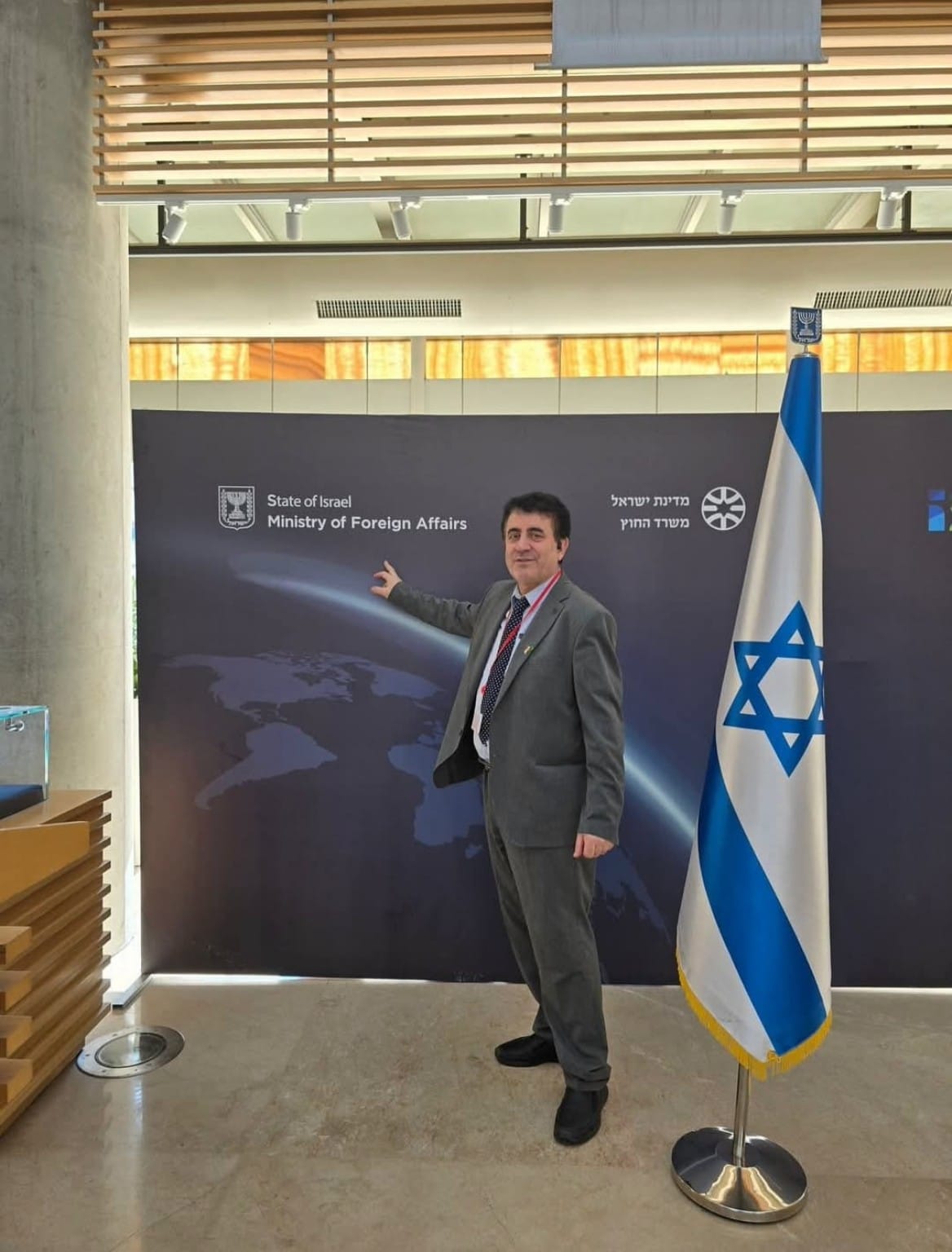
Arif Bawecani pictured at the Israeli Ministry of Foreign Affairs. The image forms part of the photographic material supplied for this interview.
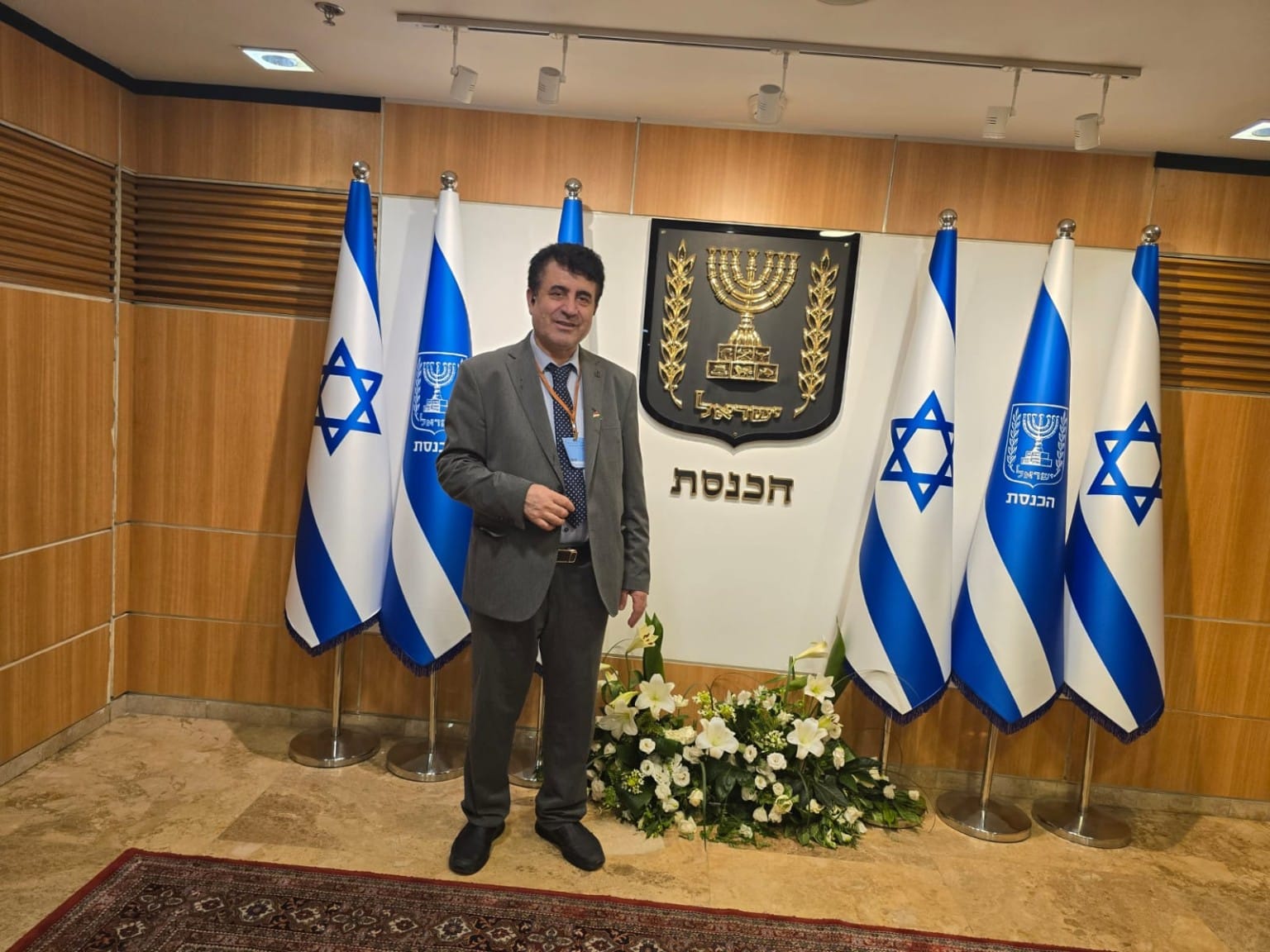
Arif Bawecani at the Knesset, Israel's parliament.
Chapter 8 — Human Rights: When International Statements Are Not Enough
Political discussions about Kurdistan often focus on borders, military alliances and international diplomacy.
Yet the consequences of conflict are experienced most directly by ordinary people.
Women, children, political activists, journalists and displaced families have faced serious hardship during different periods of Kurdish history.
Bawecani's professional background includes work with refugees and asylum seekers in Norway.
This experience informs his criticism of international responses to human rights violations.
He argues that European governments frequently condemn abuses but do not always take sufficient practical measures to prevent them.
Bawecani asks:
"Why do these violations continue when many European governments and international institutions describe themselves as defenders of human rights?"
He believes political and economic interests often influence the international response.
His criticism is particularly directed toward the treatment of Kurdish political activists in Iran.
International human rights organizations have documented serious concerns involving arbitrary detention, executions, restrictions on political expression and discrimination affecting ethnic minorities.
Bawecani calls for stronger diplomatic engagement, protection for threatened journalists and activists, investigations into abuses, and assistance for refugees.
He also wants European governments to recognize the importance of accountability.
His message is clear:
"Human rights must become a fundamental principle of international policy, rather than merely a slogan used when politically convenient."
This statement reflects a wider challenge facing international institutions.
Human rights protections depend not only on declarations, but also on independent investigations, functioning legal systems, diplomatic action and sustained scrutiny.
For the people affected, these are questions of safety, justice and fundamental freedom.
Chapter 9 — Religion, Peace and the Abrahamic Movement
Although Bawecani advocates Kurdish political sovereignty, he also places considerable emphasis on peaceful coexistence.
As President of the Abrahamic Movement in Norway, according to his supplied interview materials, he supports dialogue between Muslims, Jews, Christians and other communities.
He believes religious identity should not become a justification for hostility or political violence.
Bawecani explains:
"Religion should serve as a source of morality, mutual respect, and peaceful coexistence rather than an instrument for creating conflict and war."
He is particularly critical of governments and political movements that use religion to legitimize coercion or confrontation.
His position reflects his belief that the protection of national identity and religious freedom should reinforce rather than undermine one another.
He also expresses strong support for the Abraham Accords.
The agreements, initiated in 2020, established or advanced normalization between Israel and several Arab countries, beginning with the United Arab Emirates and Bahrain.
The Abraham Accords are diplomatic agreements between states.
The Abrahamic Movement is a separate civil-society initiative focused on dialogue and coexistence.
Although Bawecani sees both as potential contributions to peace, they should not be confused.
He believes cooperation between religious and cultural communities can help reduce hostility and create opportunities for mutual understanding.
In his words:
"We believe that no national or religious conflict can be resolved through war and violence."
He argues that dialogue, mutual recognition and respect for differences provide a more sustainable foundation for peace.
However, diplomatic normalization does not automatically resolve regional disputes, including the Israeli-Palestinian conflict or the Kurdish question.
The effectiveness of peace initiatives depends on their implementation and on whether they address the concerns and rights of affected communities.
For Bawecani, religious dialogue is nevertheless an essential part of the wider process.
His involvement in Norway also brings this discussion into a European context.
The challenge of coexistence is not limited to the Middle East.
It also concerns European societies in which communities with different religious, national and political backgrounds increasingly live alongside one another.
Chapter 10 — Kurdish Unity: Different Political Paths, Shared National Aspirations
The Kurdish political landscape is far from uniform.
Different parties and organizations have developed competing visions of the future.
Some advocate independence, others federalism or autonomy, while still others prioritize democratic reforms within existing states.
Historical rivalries, ideological differences and international alliances have sometimes made cooperation difficult.
Bawecani believes external interference has also contributed to divisions among Kurdish political organizations.
However, he acknowledges that political disagreement is not necessarily a weakness.
He explains:
"What matters is that these differences are managed within a framework of dialogue, mutual respect, and democracy."
His argument is that Kurdish political movements should identify shared principles while allowing room for different political perspectives.
He proposes greater consultation, cooperation and collective decision-making.
For him, national rights, freedom, democracy and self-determination should form the basis of that cooperation.
His position is not without challenges.
Kurdish parties have sometimes competed for political authority, territorial influence and international support.
In Iraqi Kurdistan, rivalry between major Kurdish parties escalated into armed conflict during the 1990s.
Elsewhere, Kurdish organizations have disagreed over political alliances, relations with central governments and the use of armed struggle.
These differences demonstrate that a shared cultural identity does not automatically produce a unified political strategy.
Bawecani nevertheless believes cooperation remains essential.
He argues that party interests should not overshadow broader national objectives.
His message is one of political coordination rather than complete ideological uniformity.
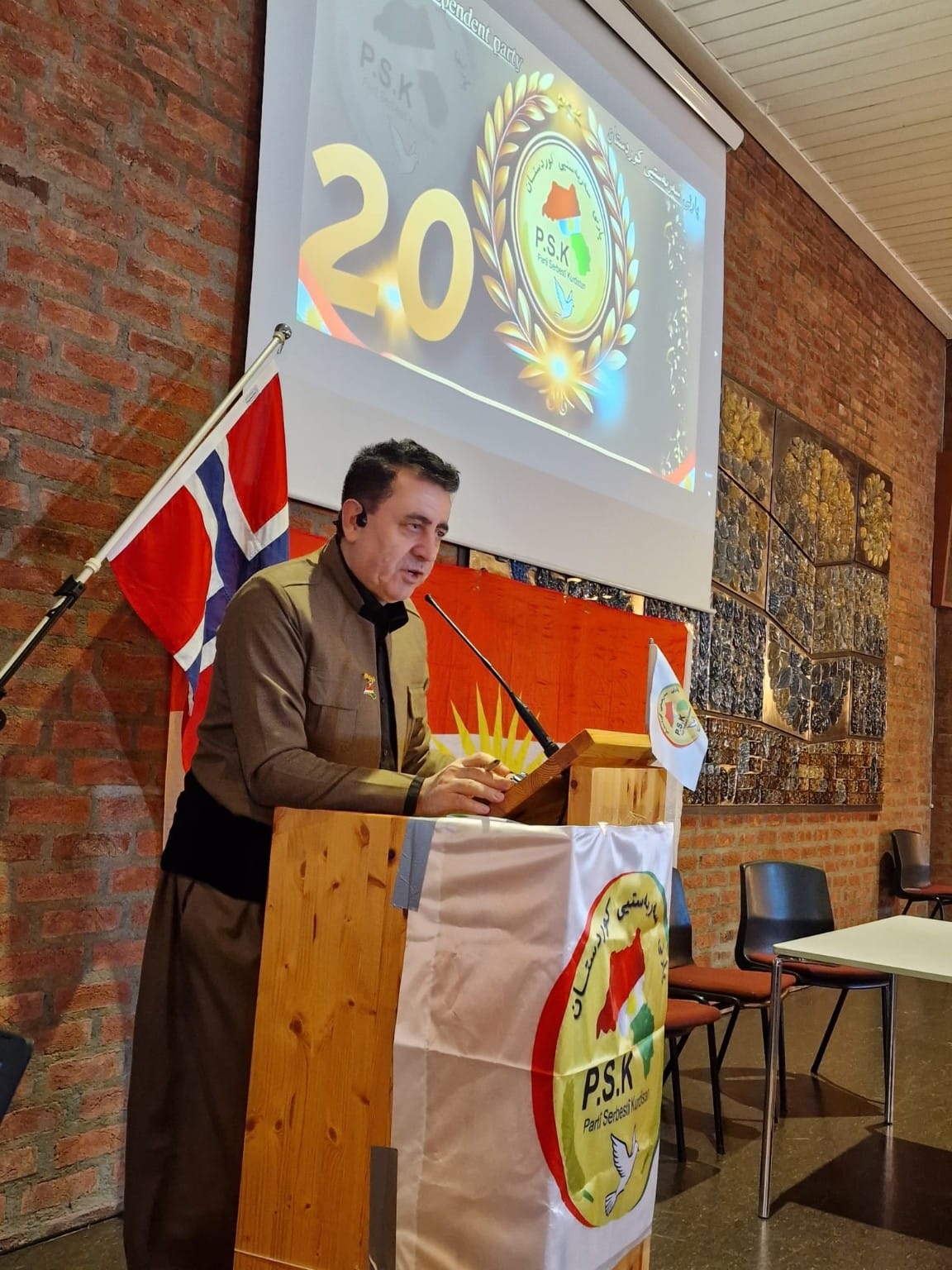
Arif Bawecani speaking during a Kurdish political gathering in Norway.
Chapter 11 — Europe, the Kurdish Diaspora and Historical Responsibility
The Kurdish question extends far beyond the Middle East.
Large Kurdish diaspora communities have developed across Europe, particularly in Germany, Sweden, Norway, the Netherlands and other countries.
These communities have established cultural associations, political organizations, media platforms and networks supporting Kurdish rights.
Bawecani believes the diaspora has an important role in preserving Kurdish identity and increasing international awareness.
He encourages younger generations to organize politically and develop stronger international relationships.
In his written interview, he draws a comparison with the historical experiences of Jewish diaspora communities before the establishment of Israel in 1948.
He argues that Kurdish organizations can learn from sustained political engagement, international communication and organized advocacy.
The Kurdish and Jewish national experiences differ significantly in their historical and political circumstances, and the comparison should not be understood as suggesting that the two histories are identical.
Nevertheless, Bawecani believes the example offers lessons about political organization.
He also challenges European governments to reflect on their historical involvement in the political transformation of the Middle East.
European powers played important roles in the post-Ottoman settlement and the international arrangements that shaped the region.
Bawecani believes this history creates a responsibility to engage seriously with Kurdish aspirations.
His message to Europe is direct:
"Europe should stand alongside and support the Kurdish people in the pursuit of justice, democracy, and lasting peace."
His appeal raises difficult political questions.
European governments must consider minority rights, international law, existing state borders, regional security and the consequences of potential political restructuring.
Yet Bawecani believes these complexities should not prevent meaningful engagement.
For him, the Kurdish question should be treated as a serious political and human rights issue rather than discussed only during regional crises.
Chapter 12 — The Next Generation: What Future Does Bawecani Envision?
After decades of political activism, Bawecani remains focused on the future.
His message to younger Kurds emphasizes cultural preservation, political organization and cooperation across national borders.
He believes the Kurdish diaspora should avoid allowing political, religious and linguistic differences to overshadow shared national interests.
He also argues that Kurdish communities should consider different political paths depending on their circumstances.
In his written response, he advocates political sovereignty and the establishment of Kurdish states in different parts of Kurdistan.
This represents his political aspiration rather than a consensus among Kurdish movements.
Such a vision would face significant legal, diplomatic and political challenges.
Nevertheless, it illustrates the persistence of Kurdish demands for self-determination.
Bawecani concludes his interview with three principles.
Arif Bawecani:
"No nation should have the right to rule over another nation by force."
"No nation should be forced to abandon its own identity in favor of the identity of another nation."
"No nation should be compelled to become part of a political system without its own consent."
These principles reflect his broader political philosophy.
He believes national identity should be protected, political authority should rest on consent, and communities should have meaningful control over their future.
He applies these ideas particularly to Iran.
For him, a democratic future must belong to all the communities living within the country's borders.
His final message is not limited to the Kurdish people.
It is a statement about political equality, recognition and freedom.
Conclusion — A History That Continues to Shape the Future
More than a century after the post-Ottoman settlement, the Kurdish question remains unresolved.
Across Iran, Iraq, Türkiye and Syria, Kurdish communities continue to navigate different political systems, national aspirations and security challenges.
In Iraq, regional self-government has become part of the constitutional structure.
In Türkiye, questions of cultural recognition, political representation and security remain significant.
In Syria, years of conflict have complicated the future of Kurdish-led political institutions.
In Iran, Kurdish political movements continue to debate independence, autonomy and democratic reform.
Arif Bawecani approaches these questions from a clearly defined political position.
He advocates Kurdish sovereignty, criticizes the treatment of ethnic minorities in Iran, supports stronger international relationships and believes religious dialogue can contribute to peaceful coexistence.
His views do not represent every Kurdish community or political organization.
But they offer insight into a political movement shaped by historical grievances, national aspirations and the belief that the Kurdish people should determine their own future.
The broader Kurdish story is not simply about the absence of an independent state.
It is also about identity, citizenship, cultural survival, minority rights and the consequences of political borders.
For European readers, understanding this history requires looking beyond military conflicts and international alliances.
It requires listening to Kurdish voices, examining the historical record and recognizing the different political perspectives that exist within Kurdish society.
For Bawecani, the question of Kurdistan is not merely a matter of the past.
It is a question of what kind of future the next generation will inherit.
And he leaves readers with one final statement:
"Freedom, justice, and the right to self-determination belong to all nations and must be protected equally, without discrimination."
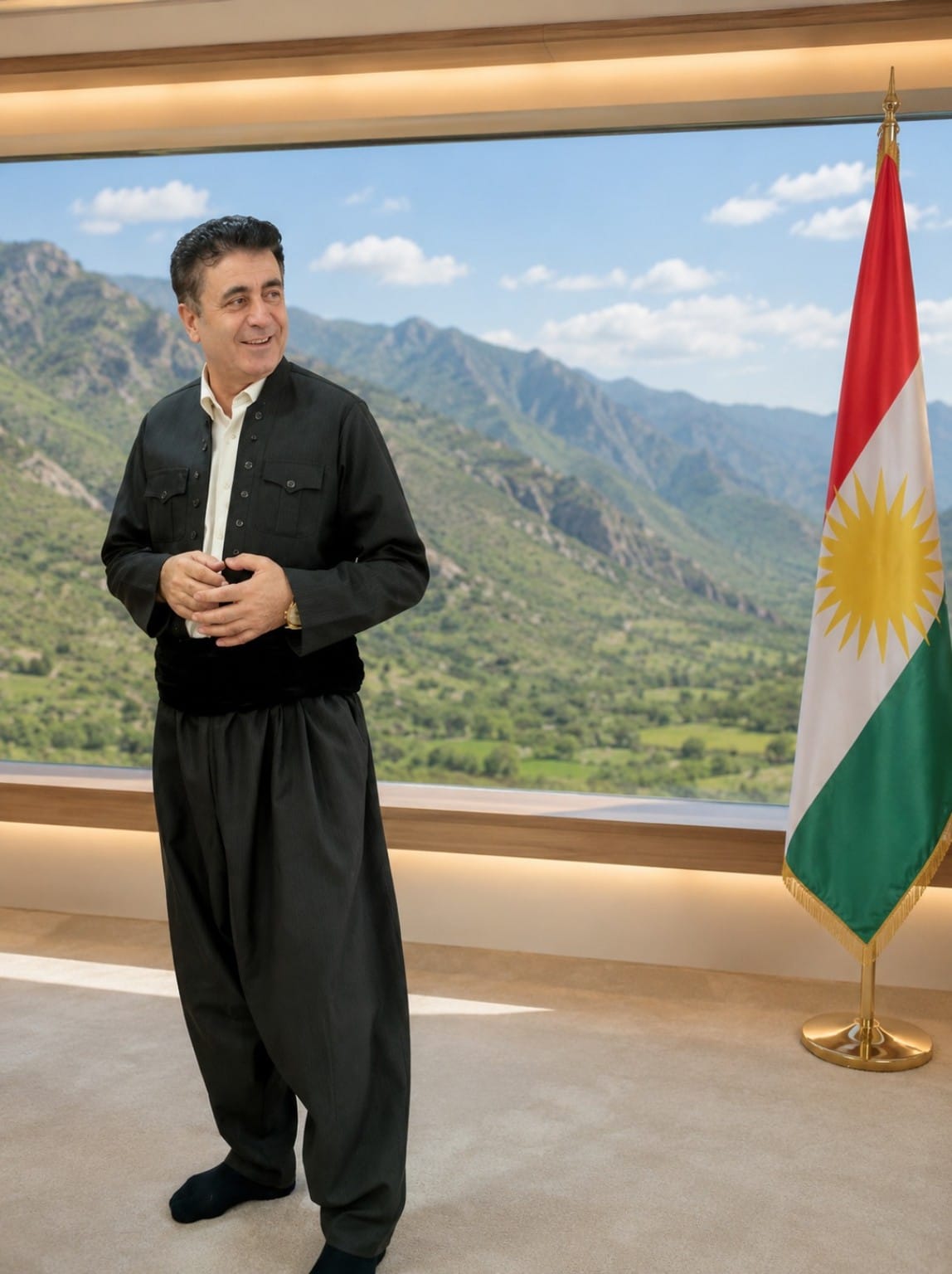
About the Interviewee
Arif Bawecani (Dana Ahmadi) is a Kurdish political activist, writer and human rights advocate originally from Eastern Kurdistan, Iran, and based in Norway.
According to his supplied biographical materials, he has been involved in Kurdish political organizations, refugee assistance, journalism, human rights advocacy and international engagement.
His interview materials identify him as President of Parti Serbesti Kurdistan (PSK) and President of the Abrahamic Movement in Norway.
His political work focuses on Kurdish national rights, self-determination, international cooperation and peaceful coexistence.
Editorial Note
This article is based on an exclusive written interview supplied by Arif Bawecani to Beyond the Lines in November 2026.
Direct quotations have been selected from his submitted English-language responses. The supplied document identifies itself as a translation; the quotations reproduce that submitted wording.
Historical and political background has been added to provide context for international readers.
Bawecani's political assessments, demographic estimates and proposals for Kurdish sovereignty are presented as his own positions. They should not be interpreted as independently verified conclusions or as representing all Kurdish communities.
Sources and Further Reading
- Arif Bawecani — Exclusive Written Interview with Beyond the Lines, November 2026. Primary interview source.
- Arif Bawecani (Dana Ahmadi) — Curriculum Vitae and biographical information supplied to Beyond the Lines.
- Council on Foreign Relations — Research and background analysis on Kurdish history, statelessness and regional politics.
https://www.cfr.org/ - Encyclopaedia Britannica — Kurd: History, Culture and People.
https://www.britannica.com/topic/Kurd - Encyclopaedia Britannica — Treaty of Sèvres and Treaty of Lausanne.
https://www.britannica.com/ - Human Rights Watch — Country reports on Iran, Iraq, Syria and Türkiye.
https://www.hrw.org/ - Amnesty International — Human rights reporting on Iran and the wider Middle East.
https://www.amnesty.org/ - United Nations Human Rights Office — Reports and documentation concerning minority rights and human rights in Iran.
https://www.ohchr.org/ - Kurdistan Regional Government — Institutional background on the Kurdistan Region of Iraq.
https://gov.krd/ - United States Department of State — Historical diplomatic records and information concerning the Abraham Accords.
https://history.state.gov/ - Wikimedia Commons — Historical and cultural photographs of Kurdish communities and the Republic of Mahabad.
https://commons.wikimedia.org/
Beyond the Lines is an independent journalism platform committed to historical understanding, factual reporting and dialogue across cultures and communities.