From the Desert to the Red Sea: Life and Traditions in Southern Israel
Explore life in southern Israel, from Bedouin traditions and Negev communities to desert agriculture, Eilat and the Red Sea.
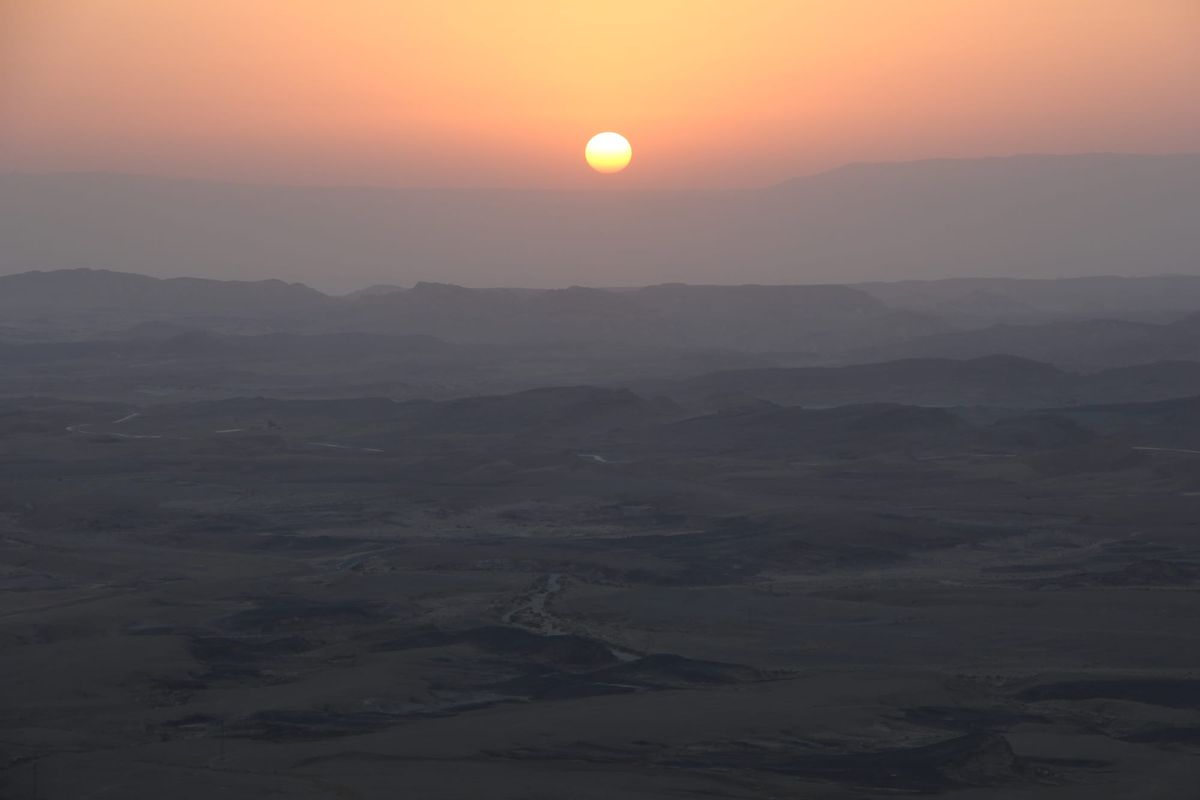
From the Negev Desert and its Bedouin communities to the historic city of Beersheba, the agricultural settlements of the Arava and the Red Sea coast of Eilat, this special report explores the people, cultures and traditions that shape everyday life in southern Israel.
BEYOND THE LINES | CULTURE & SOCIETY | SPECIAL REPORT
The Story in Brief
Southern Israel is often associated with vast desert landscapes, remote settlements and the shores of the Red Sea. Yet beyond its dramatic geography lies a region shaped by diverse communities, longstanding traditions and significant social change.
The Negev is home to Jewish and Arab Bedouin communities, historic towns, agricultural settlements, university students and families whose experiences differ considerably.
From Beersheba's expanding urban centre to Bedouin towns and villages, from the agricultural communities of the Arava to the coastal city of Eilat, everyday life reflects the relationship between geography, identity and opportunity.
This special report examines the region's history, cultural traditions, family life and economic development, while considering the inequalities, environmental pressures and security challenges that influence its future.
Understanding southern Israel requires looking beyond the desert landscape to the people who call it home.
Introduction — From the Desert to the Red Sea
For many people outside Israel, the country's southern region is represented by a familiar collection of images: endless stretches of desert, isolated roads winding between mountains, agricultural communities surrounded by arid landscapes and the blue waters of the Red Sea.
These images capture some of the region's most recognisable features. They reveal considerably less about the lives of the people who inhabit it.
Southern Israel is not a single cultural or geographical landscape. It is a region of contrasts, where modern cities coexist with rural settlements, ancient traditions remain part of contemporary life, and different communities experience the opportunities and challenges of the modern state in markedly different ways.
Beersheba, widely regarded as the capital of the Negev, has developed into an important centre for education, healthcare, commerce and technology. Its universities and medical institutions serve communities across the south, while its older neighbourhoods and markets reflect the city's complex history.
Elsewhere, the region is home to Arab Bedouin communities whose histories are closely connected to the Negev. Some live in established towns, others in recognised villages, and others in settlements that remain unrecognised by the Israeli authorities. Their circumstances vary, as do their relationships with traditional customs, urbanisation, education and employment.
Across the desert, kibbutzim, moshavim and development towns reflect different chapters in Israel's modern history. Some communities were established around agriculture and collective living, while others developed through state-led settlement policies and successive waves of immigration.
Further south, the Arava Valley stretches towards the Gulf of Aqaba, known in Israel as the Gulf of Eilat. Agricultural communities have adapted to extreme temperatures and limited rainfall through irrigation, technological innovation and intensive water management.
At the southern tip of the country, Eilat presents another dimension of regional life. Known internationally as a holiday destination, it is also a working city with permanent residents, schools, neighbourhoods, transport connections and an economy influenced by tourism, trade and its location near Jordan and Egypt.
The geographical distances between these communities can be substantial. So, too, are the differences in infrastructure, employment opportunities, education and access to public services.
These differences are central to understanding the region.
The Negev's history did not begin with the establishment of Israel in 1948. For centuries, the desert formed part of commercial, political and cultural networks linking the Mediterranean coast, the Arabian Peninsula, Egypt and the Levant.
Ancient trade routes crossed its landscapes. Bedouin communities developed social and economic systems adapted to desert conditions. Under Ottoman rule, and later during the British Mandate, administrative policies and changing economic circumstances influenced settlement patterns and relationships with the land.
The establishment of Israel brought further transformations, including population displacement, immigration, new settlements, urban development and changing systems of land ownership and administration.
Those historical developments continue to influence contemporary debates about identity, citizenship, equality and regional development.
In more recent years, southern Israel has also become closely associated with security concerns, particularly in communities near the Gaza Strip. The Hamas-led attacks of 7 October 2023 caused devastating losses and profound disruption across parts of the western Negev.
Yet the experiences of southern Israel's residents cannot be understood solely through conflict.
Families continue to raise children, preserve cultural traditions, pursue education, establish businesses and participate in community life. Religious celebrations, local markets, shared meals and everyday social relationships remain important features of the region.
To understand southern Israel is therefore to examine both its historical complexities and its ordinary human experiences.
This report travels from the Negev's northern landscapes to the shores of the Red Sea, exploring the people and places that give the region its distinctive identity.
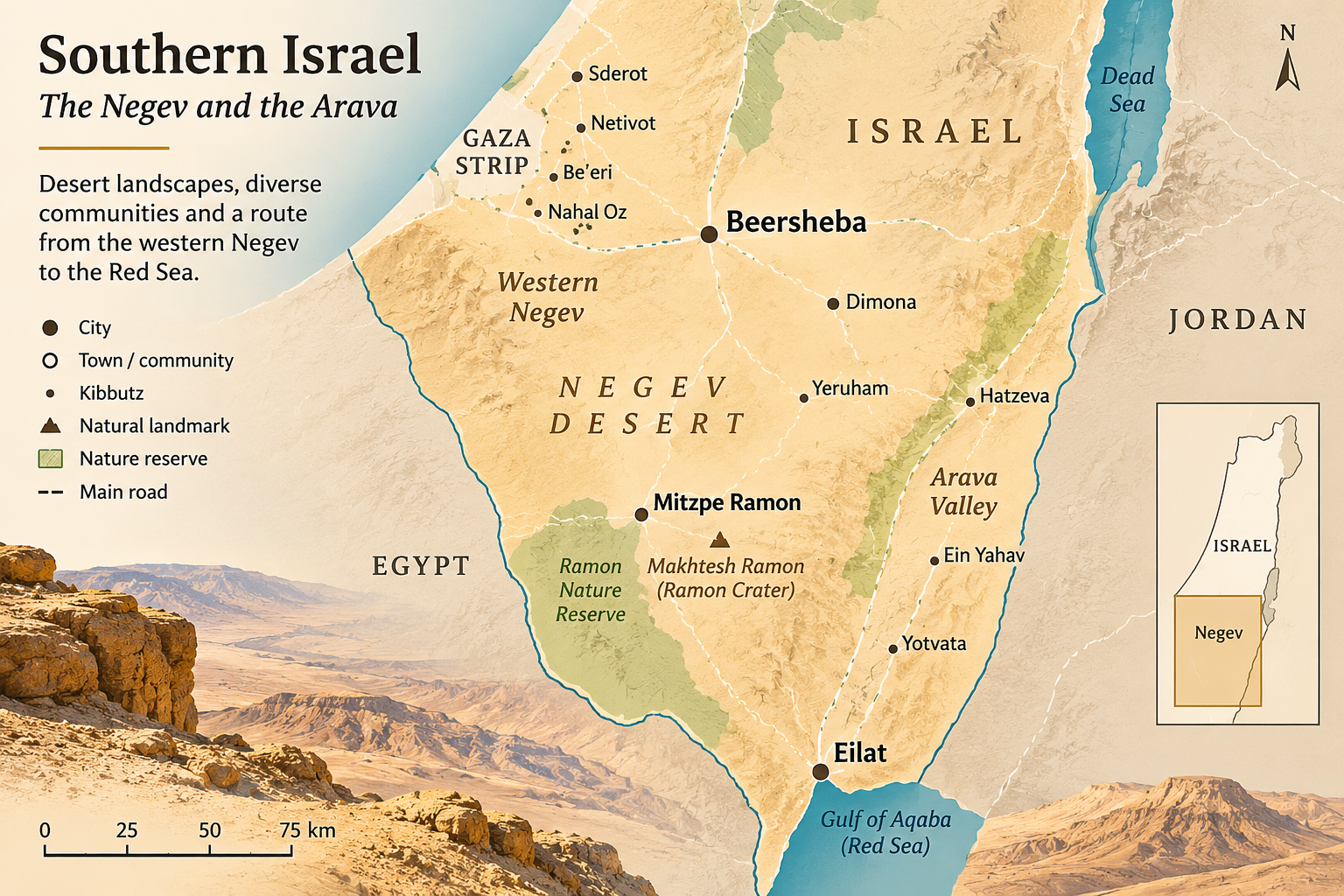
PART I — THE NEGEV: LAND, HISTORY AND IDENTITY
Chapter 1 — The Negev: More Than a Desert
A Landscape That Shapes Everyday Life
The Negev occupies much of southern Israel and is frequently described as one of the country's defining geographical regions.
Its landscapes vary considerably.
In the north, the desert gradually meets the agricultural plains and urban settlements surrounding Beersheba. Further south, the terrain becomes increasingly arid, with rocky hills, broad valleys, exposed geological formations and extensive areas receiving very little rainfall.
Towards the eastern edge of the region, the Arava Valley forms part of the wider geological system associated with the Dead Sea Transform. To the south, desert mountains descend towards the Gulf of Aqaba.
Although often presented as an empty landscape, the Negev contains towns, villages, agricultural communities, industrial facilities, transport networks, nature reserves and military installations.
Its population is culturally and socially diverse.
Jewish residents include families whose histories in Israel extend across generations, immigrants and descendants of immigrants from Europe, North Africa, the Middle East and other regions, as well as people who moved south for education, employment or housing.
Arab Bedouin residents have their own distinct histories, social structures and cultural traditions, with communities living in urban centres, recognised rural settlements and unrecognised villages.
These populations are not uniform groups. Differences in income, education, religious observance, family traditions and political outlook exist within each community.
The geography of the Negev influences many aspects of everyday life, but it does not determine them equally.
For residents of larger cities, access to schools, medical facilities, shops and public transport may be relatively straightforward.
For families living in remote communities, travelling to a hospital, university or government office can require considerably more time and planning.
In some settlements, limited public transport and infrastructure remain significant challenges.
The desert's physical environment is therefore inseparable from questions about public investment, regional development and equality of opportunity.
The Negev Before the Modern State of Israel
Human activity in the Negev stretches back thousands of years.
Archaeological discoveries reveal evidence of settlement, agriculture, trade and religious life across different historical periods.
Among the region's best-known archaeological remains are the ancient Nabataean towns associated with the incense trade.
The Nabataeans developed commercial networks connecting southern Arabia with markets around the Mediterranean. Their routes carried valuable goods, including frankincense and myrrh, across difficult desert terrain.
The remains of Avdat, Haluza, Mamshit and Shivta provide evidence of the region's importance within these networks.
Today, the Incense Route and its associated desert cities are recognised as a UNESCO World Heritage Site.
These settlements demonstrate that desert life was not necessarily isolated from wider economic and cultural developments.
Trade, agricultural adaptation and the movement of people connected the Negev with neighbouring regions.
During the Roman and Byzantine periods, parts of the region supported agricultural settlements and commercial activity. Archaeological remains reveal the use of water collection systems, terraced agriculture and other methods designed to make cultivation possible in an environment with limited rainfall.
The Negev subsequently passed through different periods of Islamic, Ottoman and British administration.
Across these centuries, patterns of settlement and land use changed.
Bedouin communities played an important role in the region's social and economic history. Their livelihoods often involved pastoralism, agriculture and trade, although practices differed between communities and changed over time.
The popular image of Bedouin society as entirely nomadic is therefore incomplete.
Some families moved seasonally with livestock, while others maintained more permanent settlements or combined agricultural activity with trade and other forms of work.
The Negev was never culturally or economically disconnected from the surrounding region.
Bedouin Communities and Their Historical Relationship with the Land
The Arab Bedouin communities of the Negev are an essential part of the region's history and contemporary society.
Their cultural heritage includes family and tribal networks, oral traditions, forms of hospitality and knowledge developed through generations of living in an arid environment.
Historically, the relationship between Bedouin communities and the land was shaped by customary practices, seasonal movement, agricultural activity and social agreements.
Land ownership and usage arrangements were not always recorded through the formal systems later adopted by governing authorities.
This distinction became increasingly important as administrative systems changed.
During the Ottoman period, land registration and governance policies influenced how property rights were recognised. British Mandate authorities subsequently inherited and modified elements of those systems.
Following the establishment of Israel in 1948, the circumstances of Negev Bedouin communities changed substantially.
Many Bedouin residents were displaced or fled during the war, while those who remained came under Israeli military administration.
A significant proportion of the remaining population was concentrated in an area northeast of Beersheba commonly known as the Siyag, or enclosed area.
In subsequent decades, Israeli governments pursued policies intended to concentrate Bedouin settlement in planned towns.
These policies were presented partly as a means of providing modern infrastructure and public services.
However, they also generated longstanding disputes concerning land rights, traditional settlement patterns, planning decisions and the recognition of existing villages.
Today, some Bedouin communities live in established towns such as Rahat, while others reside in recognised villages or settlements that do not have formal state recognition.
The distinction has practical consequences.
In unrecognised villages, residents may face difficulties obtaining building permits, connecting homes to electricity and water networks, or accessing roads and public services.
The Israeli authorities have argued that formal planning is necessary to regulate construction, deliver infrastructure and manage competing land claims.
Bedouin residents, community representatives and human rights organisations have challenged aspects of these policies, arguing that they can undermine longstanding connections to the land and produce unequal living conditions.
These disagreements remain among the most consequential social and political questions in the Negev.
They also illustrate why the region's cultural history cannot be separated from contemporary issues of citizenship, planning and public policy.
Water: The Foundation of Desert Life
Water has always played a central role in human settlement in the Negev.
Rainfall is limited and varies significantly between the northern and southern parts of the region.
The northern Negev receives more precipitation than the central and southern desert, making certain forms of agriculture more feasible.
Further south, the combination of low rainfall, high temperatures and evaporation creates demanding conditions for farming and everyday life.
Historically, communities developed techniques to collect, store and conserve water.
Ancient agricultural systems used terraces, channels and reservoirs to capture seasonal runoff.
These methods made cultivation possible in locations that might otherwise have appeared unsuitable for agriculture.
Modern Israeli agriculture in the Negev and Arava relies on a different combination of technologies and infrastructure.
Drip irrigation, treated wastewater, desalinated water and carefully managed water distribution systems have expanded agricultural possibilities.
However, these developments should not be understood as eliminating the region's environmental limitations.
Agriculture remains dependent on significant infrastructure, energy, investment and careful management of scarce resources.
Water access is also a question of social policy.
Not every community benefits equally from modern infrastructure, and disparities in service provision remain an important issue in parts of the Negev.
The relationship between water, technology and inequality is therefore a recurring theme in the region's development.
A Region of Different Communities
The Negev's modern identity has been shaped by several overlapping historical developments.
After 1948, Israel established new towns and expanded existing settlements in the south.
Immigrants arriving from different parts of the world were housed in development towns and other communities, often as part of wider government policies intended to accommodate population growth and strengthen settlement in peripheral regions.
Among those who settled in the south were Jews from North Africa and the Middle East, as well as later immigrants from the former Soviet Union and Ethiopia.
These communities brought different languages, religious customs, culinary traditions and cultural practices.
Over time, their histories became part of the region's broader social identity.
Kibbutzim and moshavim also played a prominent role in the development of the Negev.
Kibbutzim were historically associated with collective ownership and communal economic arrangements, although many have subsequently adopted different organisational models.
Moshavim generally developed around family-operated agricultural holdings supported by varying degrees of cooperative organisation.
Both forms of settlement contributed to agricultural development and the creation of rural communities.
At the same time, the experiences of Jewish and Bedouin residents often differed sharply in their access to land, planning arrangements and state resources.
Understanding the Negev requires recognising both the diversity of its communities and the inequalities that have shaped their development.
The Negev in Contemporary Israel
Today, the Negev occupies an important place in debates about Israel's economic and demographic future.
Successive governments have promoted plans to expand housing, improve transport connections, strengthen regional industries and encourage population growth in the south.
Beersheba has become an important centre for higher education, healthcare and technology.
Industrial facilities, renewable-energy projects, military infrastructure and agricultural enterprises contribute to the regional economy.
Tourism has also developed around desert landscapes, archaeological sites, hiking routes and the distinctive geological formations of Makhtesh Ramon.
Yet economic development has not benefited every community equally.
Some towns continue to face challenges involving employment opportunities, educational attainment and access to services.
For remote settlements, geographical distance can reinforce existing disadvantages.
Environmental pressures add another layer of complexity.
Rising temperatures, extreme weather, water demand and the ecological consequences of development require long-term planning.
These challenges are particularly significant in a region where agriculture, tourism, nature conservation and population growth must coexist.
The Negev is therefore not simply a landscape being transformed by technology and modern infrastructure.
It is also a region in which longstanding questions about identity, historical rights, economic opportunity and social inclusion remain unresolved.
Beyond the Image of an Empty Desert
The image of the Negev as a vast, largely empty wilderness has long influenced how the region is represented.
Its dramatic landscapes certainly deserve attention.
But describing the Negev primarily as empty risks overlooking the communities that have lived there for generations, as well as those established during Israel's modern development.
The desert contains places of worship, schools, family homes, universities, farms, businesses and neighbourhoods.
It is a region where people celebrate religious holidays, maintain family traditions, debate political decisions, pursue careers and raise children.
For some, life in the Negev offers space, community and a strong connection to the natural environment.
For others, it involves difficult questions about infrastructure, employment, land rights and access to opportunity.
These experiences exist alongside one another.
The Negev's significance lies not only in its geography, but in the histories and aspirations of the people who inhabit it.
Understanding those experiences provides the foundation for exploring the cities, villages and communities of southern Israel.
The next chapter turns to Beersheba, a city whose development reflects many of the wider transformations taking place across the region.
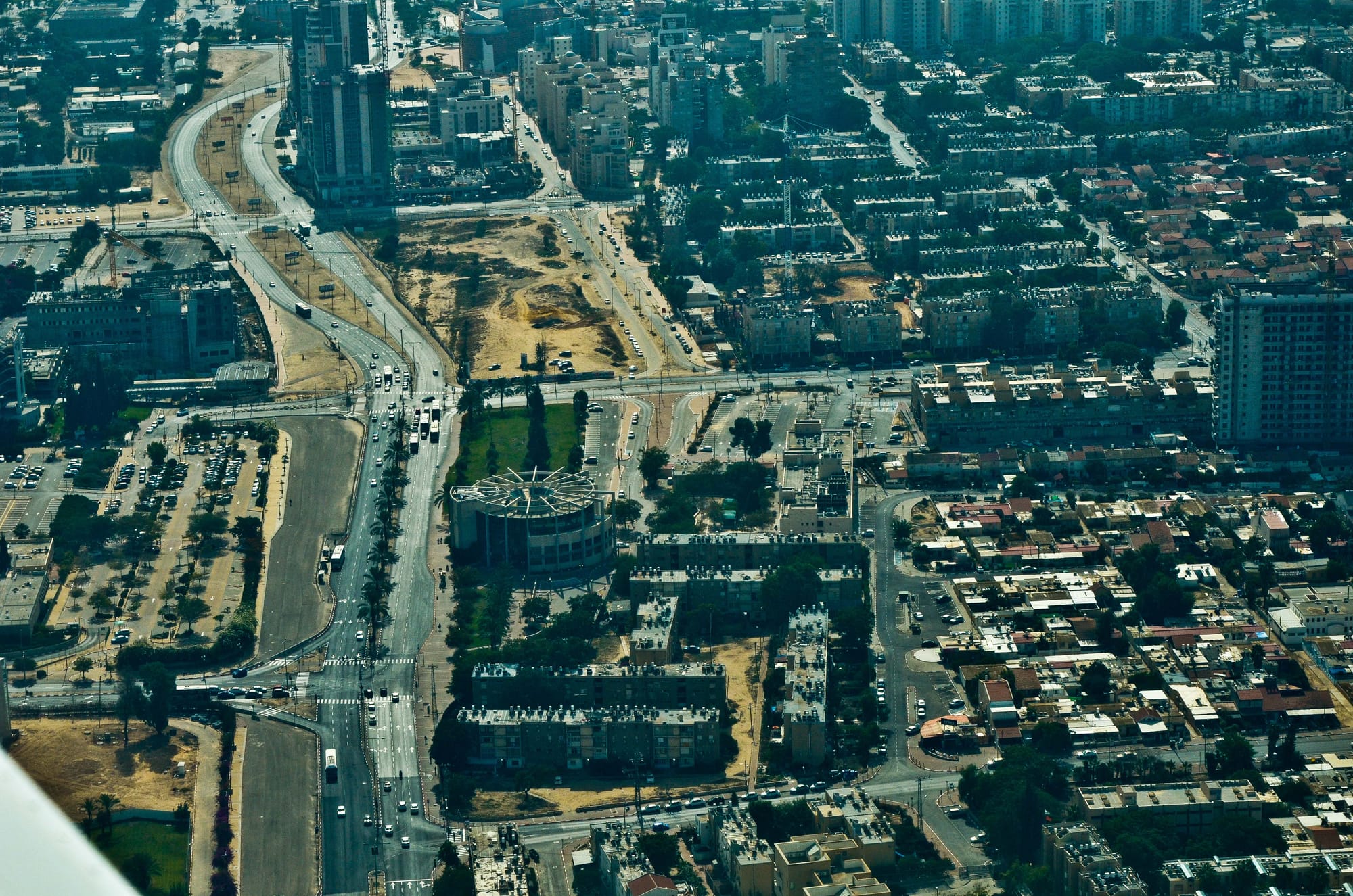
Chapter 2 — Beersheba: The Capital of the Negev
A City at the Crossroads of History
At the northern edge of the Negev Desert lies Beersheba, a city whose history reflects centuries of cultural exchange, political change and human adaptation to an often demanding environment.
Known in Hebrew as Be'er Sheva and in Arabic as Bi'r as-Sab', the city occupies an important position in southern Israel. It serves as a regional centre for education, healthcare, commerce, public administration and transport, connecting smaller towns and rural communities with the country's larger urban centres.
For many visitors, Beersheba is a gateway to the desert. For its residents, however, it is a city of neighbourhoods, schools, markets, workplaces and family traditions.
Its contemporary identity has been shaped by successive periods of settlement, Ottoman administration, British rule, the establishment of Israel and waves of immigration from different parts of the world.
These historical influences remain visible in the city's architecture, cultural institutions and social composition.
Understanding Beersheba therefore requires looking beyond its role as the administrative centre of the Negev and examining how its inhabitants have experienced the transformation from a relatively small regional town into a modern Israeli city.
From Ancient Settlement to Ottoman Town
The area surrounding Beersheba has been inhabited during different periods of antiquity.
Its name is closely associated with biblical traditions, particularly the narratives concerning Abraham, Isaac and the wells of the region.
These accounts have contributed to the city's religious and cultural significance, although biblical narratives and archaeological evidence must be distinguished when reconstructing its early history.
The archaeological site of Tel Be'er Sheva, located east of the modern city, contains remains of an ancient settlement associated with the Iron Age.
Its planned streets, residential buildings, water installations and fortifications provide evidence of organised urban life in the region.
The site forms part of the UNESCO World Heritage listing known as the Biblical Tels — Megiddo, Hazor and Beer Sheba.
The modern city, however, developed much later.
In 1900, Ottoman authorities established a planned administrative town at Beersheba. The project formed part of broader efforts to strengthen government administration and influence in the Negev.
The town was designed with a relatively regular street layout, government buildings and commercial areas.
Its establishment reflected the strategic importance of the region and the Ottoman administration's relationship with local Bedouin communities.
Beersheba became a centre where government officials, traders and residents from surrounding areas interacted.
Markets provided opportunities to exchange livestock, agricultural products and other goods, while administrative institutions connected the town to the wider Ottoman provincial system.
Some of the buildings from this period remain part of Beersheba's historic urban landscape.
Their architecture offers a visible reminder that the city's modern development began before the establishment of Israel.
British Rule and the Transformation of Beersheba
During the First World War, Beersheba became the scene of a significant military engagement.
On 31 October 1917, British Empire forces captured the town from Ottoman forces during the Sinai and Palestine campaign.
The battle is particularly remembered in Australia because of the mounted charge carried out by the 4th and 12th Australian Light Horse Regiments.
The event remains part of Australian military history and is commemorated through memorials and ceremonies.
Following the war, Beersheba became part of British-administered Palestine.
During the Mandate period, the town served as an administrative and commercial centre for the surrounding district.
Its population was predominantly Arab, and its economy was closely connected to Bedouin communities, trade and agricultural activity in the wider region.
The town also functioned as a meeting point between more settled urban life and the rural communities of the Negev.
The events surrounding the establishment of Israel in 1948 fundamentally altered Beersheba's population and political status.
Israeli forces captured the town in October 1948 during Operation Yoav.
The war resulted in the displacement of Beersheba's Arab population, and the town subsequently underwent extensive demographic and administrative transformation under Israeli control.
This history remains important to Palestinian accounts of displacement and loss, as well as to the broader history of the 1948 Arab–Israeli war.
In the following decades, Beersheba developed into a major centre for Jewish settlement and immigration.
Its population grew as the Israeli state invested in housing, transport, public institutions and regional development.
The city's transformation was not simply an architectural or economic process. It involved profound changes in population, identity and the relationship between the city and surrounding communities.
Immigration and the Making of Modern Beersheba
One of the most significant influences on modern Beersheba has been immigration.
During the decades following Israel's establishment, the city received Jewish immigrants from different countries, including communities originating in North Africa and the Middle East.
Later waves of immigration brought additional residents from the former Soviet Union, Ethiopia and elsewhere.
These different backgrounds contributed to Beersheba's cultural character.
Families brought languages, religious customs, recipes, music and social traditions that gradually became part of the city's everyday life.
The experiences of these communities were not identical.
For some immigrants, Beersheba represented an opportunity to establish a new home and build a future in Israel.
For others, settlement involved considerable challenges, including limited employment opportunities, unfamiliar social conditions and difficulties associated with housing and economic integration.
The city's development must also be understood within the broader history of Israel's development towns.
State policies encouraged population growth outside the country's main metropolitan centres, particularly in regions considered strategically or economically important.
Although these policies contributed to urban expansion, they also produced inequalities between central and peripheral areas.
Beersheba has gradually developed institutions and industries that distinguish it from smaller development towns, but questions about regional economic disparities remain relevant.
Today, the city's cultural identity reflects generations of settlement, adaptation and interaction.
Different religious traditions, family histories and migration experiences coexist within its neighbourhoods.
This diversity is visible in local food, community celebrations, places of worship and cultural organisations.
It is also reflected in the differences between generations, as younger residents navigate identities shaped by both family heritage and contemporary Israeli society.
The Old City: Markets, Architecture and Cultural Memory
One of Beersheba's most distinctive areas is its Old City.
Unlike the ancient quarters of Jerusalem or Jaffa, much of Beersheba's historic centre reflects the planned Ottoman town established at the beginning of the twentieth century.
Its streets and surviving buildings provide a different perspective on the urban history of southern Israel.
The area contains examples of Ottoman-era architecture, commercial buildings, cultural venues and public spaces.
Some historic structures have been restored or adapted for contemporary use.
The Negev Museum of Art, housed in a former Ottoman government building, is among the institutions associated with the city's cultural redevelopment.
Other spaces host exhibitions, performances and community activities.
The Old City has also become a focus of urban regeneration efforts intended to attract visitors, support businesses and strengthen the city's cultural identity.
Yet redevelopment raises familiar questions about how historic urban areas should evolve.
Preserving architectural heritage while encouraging commercial activity requires balancing the interests of residents, businesses, cultural institutions and local authorities.
The atmosphere of the Old City differs from that of Beersheba's newer residential districts.
Its streets recall the city's earlier administrative and commercial functions, while contemporary cafés, galleries and businesses reflect changing patterns of urban life.
For residents, these spaces can serve as places of cultural memory as well as everyday social interaction.
They illustrate how Beersheba's identity continues to develop through the relationship between its past and present.
Everyday Life in a Growing Desert City
Beersheba is often described through its regional institutions, but the experience of living there is shaped by more ordinary routines.
Families travel between home, work and school. Students gather in cafés and public spaces. Residents shop at local markets, visit relatives and participate in religious or community celebrations.
Neighbourhood life varies considerably across the city.
Older residential districts contain housing developed during earlier periods of urban expansion, while newer neighbourhoods reflect more recent investment and population growth.
Housing types, public spaces and access to services differ between these areas.
For many families, proximity to schools, medical facilities, shops and public transport influences everyday decisions.
The city's climate also affects daily routines.
Summers are hot and dry, encouraging residents to organise outdoor activities around the cooler parts of the day.
Public parks, shaded spaces and indoor facilities provide opportunities for recreation and social gatherings.
Food is another important part of Beersheba's cultural life.
Restaurants and family kitchens reflect influences from Jewish communities with roots in North Africa, the Middle East, Eastern Europe and other regions.
Traditional dishes coexist with contemporary Israeli cuisine, international restaurants and changing urban food trends.
Family meals, religious holidays and celebrations provide opportunities for cultural traditions to be maintained and adapted.
However, it would be misleading to describe Beersheba as a city where all residents experience the same standard of living.
Income differences, housing costs, employment opportunities and access to services affect households in different ways.
The experiences of university students, established professionals, pensioners and lower-income families can vary significantly.
The city's social diversity is therefore inseparable from questions about economic opportunity and public investment.
Ben-Gurion University and the Role of Education
One of the most important institutions in modern Beersheba is Ben-Gurion University of the Negev.
Established in 1969 as the University of the Negev and subsequently renamed in honour of Israel's first prime minister, David Ben-Gurion, the university has become a major centre for higher education and research.
Its presence has contributed significantly to the city's development.
Students, academics and researchers from different backgrounds study and work in fields including medicine, engineering, computer science, environmental studies, social sciences and the humanities.
The university has also helped attract businesses, research initiatives and technological investment.
Its influence extends beyond the campus.
Student housing, cafés, transport services, cultural venues and local businesses form part of the wider university environment.
For younger residents, the university offers educational and professional opportunities that can influence decisions about remaining in the south or moving elsewhere.
The institution also plays a role in regional research, including work relating to desert environments, water management and sustainable development.
These subjects are particularly relevant to the Negev.
The university's relationship with surrounding communities is another important dimension of its role.
Educational access and participation remain affected by wider social inequalities, including differences in school resources, household income and geographical accessibility.
For some students from remote communities, attending university requires substantial financial and logistical support.
Efforts to widen access to higher education therefore form part of the broader debate about opportunity in southern Israel.
The university illustrates both the region's capacity for innovation and the continuing importance of ensuring that educational development benefits a wide range of communities.
Healthcare and Regional Responsibility
Beersheba is also an important centre for healthcare in southern Israel.
Soroka University Medical Center serves patients from across the Negev and surrounding areas.
Its role is particularly significant because the region includes communities located considerable distances from major medical facilities.
The hospital provides specialist treatment, emergency services and medical education, while also functioning as a teaching and research institution.
Its patients come from diverse backgrounds, including Jewish and Arab Bedouin communities.
Healthcare therefore represents one of the areas in which the region's different populations regularly interact through shared public institutions.
Nevertheless, access to healthcare is not determined solely by the availability of a major hospital.
Travel distances, public transport, household income, language barriers and the availability of local medical services can influence whether people receive timely care.
These challenges are particularly relevant for residents of remote settlements.
For some Bedouin communities, gaps in infrastructure and access to services have contributed to longstanding concerns about health inequalities.
The presence of advanced medical institutions in Beersheba consequently highlights an important regional contrast: the concentration of specialist services in the city alongside uneven access across the wider Negev.
Technology, Employment and Economic Change
In recent decades, Beersheba has increasingly been promoted as a centre for technological development.
Government agencies, academic institutions and private companies have supported initiatives intended to strengthen the city's technology sector.
Cybersecurity and information technology have become particularly prominent areas of development.
The city's Advanced Technologies Park, situated near Ben-Gurion University, forms part of efforts to connect research, business and technological innovation.
These initiatives reflect a broader strategy to encourage economic activity outside the Tel Aviv metropolitan area.
The development of technology-related employment has created opportunities for skilled workers and helped strengthen Beersheba's national profile.
However, technological growth does not automatically resolve regional economic inequality.
High-skilled employment requires education and training, while some residents face barriers to entering these sectors.
Other important sources of employment include healthcare, education, retail, construction, public administration and services.
Small businesses also contribute to the local economy.
For many households, economic security depends less on the expansion of the technology sector than on the availability of stable employment, affordable housing and accessible transport.
The future of Beersheba's economy will therefore depend partly on whether new investment creates opportunities across different levels of education and income.
Beersheba and Its Bedouin Neighbours
Beersheba cannot be understood in isolation from the Arab Bedouin communities living in the surrounding Negev.
The city functions as a commercial, administrative, educational and medical centre for many residents of nearby towns and villages.
People travel to Beersheba for employment, shopping, healthcare, higher education and government services.
These connections create regular interaction between Jewish and Arab residents.
Yet the relationship between Beersheba and surrounding Bedouin communities is also shaped by differences in infrastructure, economic resources and political representation.
Some Bedouin towns face substantial challenges involving employment, housing and municipal services.
Residents of unrecognised villages may experience additional difficulties relating to planning, transport and access to infrastructure.
These disparities influence the opportunities available to families and younger generations.
At the same time, Bedouin professionals, students, business owners and community organisations contribute to the wider regional economy and society.
Their experiences demonstrate that Bedouin communities are not separate from modern urban development, even when important social and political inequalities persist.
Understanding these relationships is essential to understanding Beersheba's position within the Negev.
Culture, Community and the Future of Beersheba
Beersheba's contemporary identity is built from multiple layers of history.
Its ancient archaeological heritage, Ottoman town centre, British Mandate history, post-1948 development and modern educational institutions all contribute to the city's character.
For some residents, Beersheba represents a strong connection to family history and local traditions.
For others, it is a place of opportunity, offering education, employment and a more affordable alternative to parts of central Israel.
The city also faces challenges familiar to many regional centres: retaining younger residents, improving public transport, supporting older neighbourhoods and ensuring that economic development benefits different communities.
Urban growth must be balanced with the preservation of historic spaces and the provision of accessible public services.
The future of Beersheba will depend not only on investment in technology and infrastructure, but also on the strength of its schools, neighbourhoods, cultural institutions and community relationships.
As the principal urban centre of the Negev, the city plays an important role in shaping the future of southern Israel.
Yet its story is only one part of the region's wider cultural landscape.
Beyond the city's boundaries are Bedouin towns, villages and rural communities whose histories and traditions extend across generations.
Their experiences reveal another dimension of life in the Negev — one shaped by cultural continuity, social change and longstanding debates over land, identity and belonging.
The following chapter examines these communities in greater depth, exploring the heritage, everyday life and contemporary challenges of the Bedouin population of southern Israel.
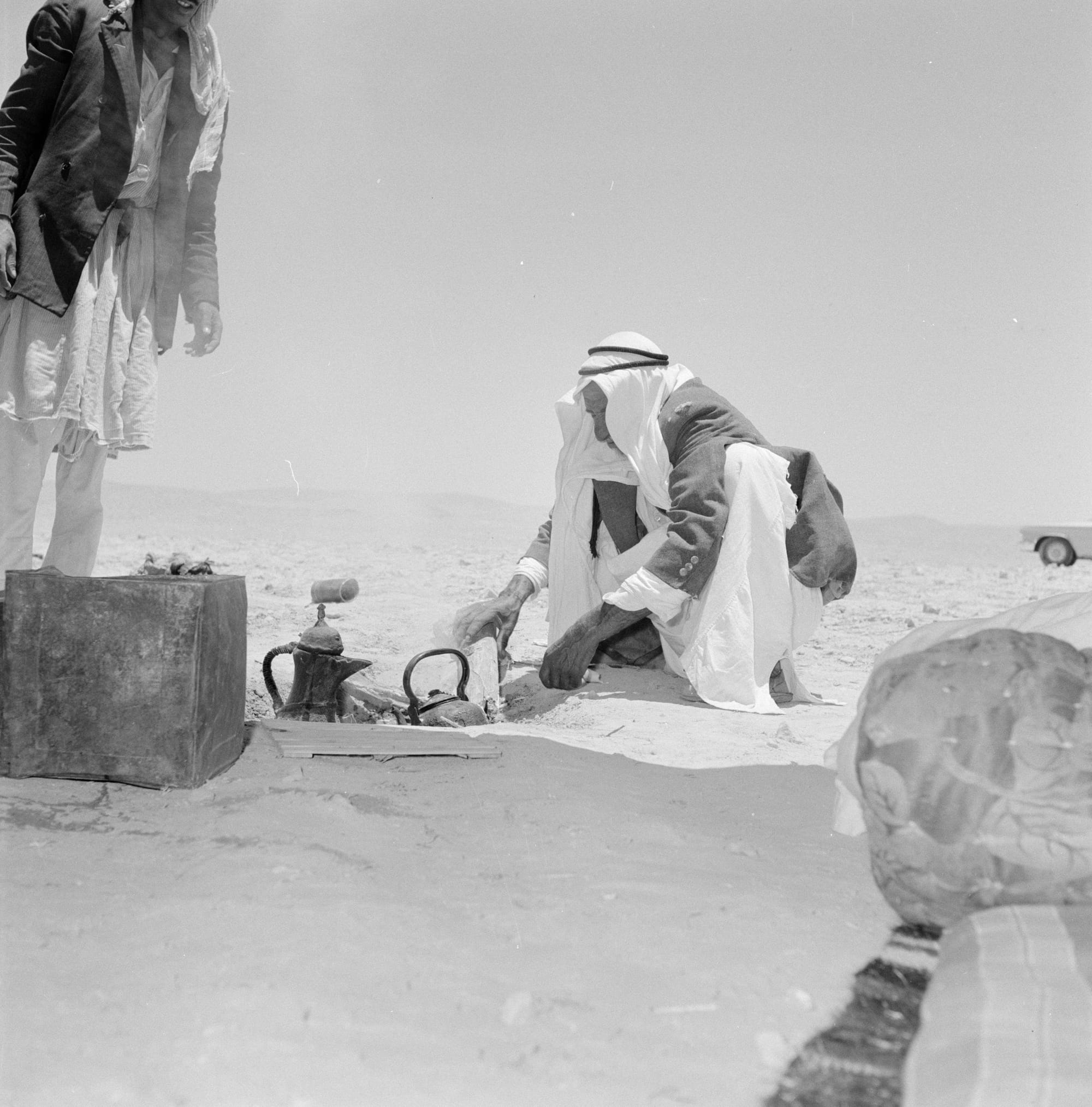
Chapter 3 — The Bedouin Communities: Heritage, Identity and Change
A People Whose History Is Connected to the Desert
Across the Negev, Arab Bedouin communities represent an important part of the region's historical and cultural identity.
Their presence predates the establishment of the modern State of Israel, and their traditions reflect generations of adaptation to the desert's environment, changing political authorities and wider social developments across the Middle East.
The term Bedouin is commonly associated with Arabic-speaking communities whose historical livelihoods included pastoralism, agriculture and trade. Although the word is linked to desert life, it does not describe a single, uniform way of living.
Bedouin communities differ in their histories, family structures, religious practices, economic circumstances and relationships with the land.
In the Negev, most Bedouin residents are Muslim Arabs. Many identify simultaneously with their families or tribes, their Bedouin heritage, the wider Palestinian Arab community and their Israeli citizenship, although individual understandings of identity vary.
For some, Bedouin identity is closely associated with ancestral traditions, extended family networks and a historical connection to particular areas of the Negev.
For others, it is expressed through contemporary urban life, professional careers, education and participation in wider Israeli society.
These identities are not necessarily contradictory.
A university student living in Beersheba, a teacher working in Rahat and a family living in a rural Bedouin village may share elements of cultural heritage while experiencing very different everyday realities.
Understanding the Bedouin population therefore requires moving beyond familiar images of tents, camels and desert hospitality.
Those images may reflect aspects of historical life, but they do not adequately represent the diversity of contemporary Bedouin society.
From Pastoral Life to Permanent Settlements
Historically, many Bedouin communities in the Negev organised their livelihoods around livestock, seasonal agriculture and trade.
Sheep, goats and camels were important sources of food, transport and economic security.
Movement between grazing areas was influenced by rainfall, access to water and customary arrangements governing the use of land.
However, the idea that all Bedouin families lived in constant movement is inaccurate.
Some communities maintained relatively permanent settlements, cultivated land and participated in regional markets.
Others combined seasonal movement with agriculture and trade.
Family and tribal networks played an important role in organising social relationships, resolving disputes and regulating access to resources.
Knowledge of the environment was particularly valuable.
Understanding seasonal weather patterns, locating water sources and identifying suitable grazing areas were essential skills in an arid landscape.
These practices formed part of a wider cultural heritage passed between generations.
During the Ottoman period, administrative reforms and changing economic conditions influenced settlement patterns.
The British Mandate introduced additional systems of administration and regulation, while maintaining relationships with local Bedouin leaders.
The establishment of Israel in 1948 brought far more extensive changes.
The war caused displacement and major demographic disruption among the Negev's Bedouin population.
Many residents fled or were expelled, while those who remained were subjected to military administration.
During the following decades, government policies encouraged or required changes in settlement patterns, including the concentration of many Bedouin residents in designated areas.
These developments fundamentally altered traditional relationships between communities, land and livelihoods.
By the late twentieth century, increasing numbers of Bedouin families were living in permanent towns and villages.
Today, the majority of Negev Bedouin residents live in settled communities, although their living conditions and legal circumstances vary considerably.
The transition from pastoral livelihoods to permanent settlement has affected almost every aspect of community life, including employment, education, family organisation and cultural identity.
Family, Community and Social Responsibility
Family remains an important institution in many Bedouin communities.
Extended family relationships often influence social life, mutual assistance and the organisation of celebrations and important family events.
Historically, kinship networks provided practical support in environments where survival could depend on cooperation.
Families shared responsibilities relating to livestock, agriculture, childcare and the protection of community resources.
Although contemporary economic and social circumstances have changed, extended family networks continue to play a significant role for many households.
Weddings, religious holidays, funerals and other gatherings provide opportunities for relatives to maintain relationships across generations.
Hospitality is another widely recognised feature of Bedouin cultural heritage.
Welcoming visitors, offering refreshments and providing assistance to guests have traditionally carried social significance.
These practices are often associated with ideas of generosity, dignity and responsibility towards others.
However, cultural expectations differ between families and communities.
It would be misleading to suggest that all Bedouin households follow identical customs or maintain the same degree of traditional social organisation.
Urbanisation, education, employment and changing attitudes have influenced family relationships.
Younger generations may place greater emphasis on individual educational and professional ambitions, while older relatives may continue to value established social expectations.
These differences can create tensions, but they can also produce new ways of combining cultural continuity with contemporary life.
In many households, maintaining family relationships remains important even as lifestyles change.
Hospitality, Coffee and the Traditions of Gathering
One of the most recognisable elements of Bedouin cultural heritage is the tradition of hospitality.
Historically, receiving travellers and visitors was especially important in desert environments, where access to food, water and shelter could be limited.
Offering hospitality was both a practical necessity and a social value.
Coffee became an important part of this tradition.
In many Bedouin communities, the preparation and serving of Arabic coffee is associated with welcoming guests and marking social occasions.
The process may involve roasting coffee beans, grinding them and preparing coffee with spices such as cardamom.
Traditional coffee utensils and serving practices can carry cultural significance, although customs vary across communities.
Tea is also widely served during family visits and social gatherings.
These moments provide opportunities for conversation, exchanging news and maintaining relationships.
Hospitality is not limited to food and drink.
It can also involve listening to guests, offering assistance and demonstrating respect through established social conventions.
In contemporary Bedouin society, these traditions may be maintained in family homes, community gatherings and cultural events.
Some tourism initiatives introduce visitors to Bedouin hospitality, food and storytelling.
Such experiences can provide income and opportunities to share cultural knowledge.
Nevertheless, tourism represents only a selective presentation of community life.
The everyday experiences of Bedouin families are considerably broader than the traditions most frequently presented to visitors.
Food as Cultural Heritage
Food offers another perspective on the relationship between Bedouin heritage and contemporary life.
Traditional meals often reflect ingredients historically available through pastoralism, agriculture and regional trade.
Bread, grains, dairy products, vegetables and meat have all played important roles in different periods and communities.
Cooking methods developed in response to local conditions.
Bread could be prepared over open fires or on heated metal surfaces, while larger meals were sometimes cooked in communal settings.
Dishes associated with Bedouin and wider Levantine culinary traditions include rice and meat preparations, flatbreads and meals served during family celebrations.
However, no single dish can be described as representing every Bedouin community.
Food traditions overlap with those of neighbouring Palestinian, Jordanian and other Arab societies.
Today, household cooking reflects both inherited customs and contemporary influences.
Families may prepare traditional meals for weddings, Ramadan or other occasions while eating modern convenience foods during ordinary working days.
Younger generations also encounter a wider range of cuisines through urban life, education and social media.
Food therefore serves as a form of cultural memory rather than evidence of an unchanged lifestyle.
Recipes, preparation methods and family meals help preserve connections between generations, even as everyday habits evolve.
Religion and Everyday Life
Islam plays an important role in the lives of many Negev Bedouin residents.
Religious observance influences daily routines, family celebrations and community relationships, although levels and forms of observance differ.
Mosques serve as places of worship and community gathering.
Ramadan is an important period for many families, marked by fasting, prayer, charitable giving and evening meals.
The celebration of Eid al-Fitr brings relatives and neighbours together following the end of Ramadan.
Eid al-Adha is another significant religious occasion, associated with prayer, family gatherings and charitable practices.
Religious traditions often intersect with family customs and local cultural expectations.
However, Bedouin society should not be understood as religiously uniform.
Individual attitudes towards religious practice, education, gender roles and social change vary considerably.
Some families maintain conservative interpretations of religious and social traditions.
Others adopt different approaches to contemporary life while continuing to identify strongly with their faith and cultural heritage.
As in other communities, religion may provide a source of identity and social belonging while also being interpreted differently across generations.
Women, Education and Changing Expectations
The position of women in Negev Bedouin society has become an important subject of public discussion, academic research and community-led initiatives.
Historically, women's responsibilities often included childcare, household management, food preparation and work connected to family livelihoods.
Their contributions were essential to household and community life, even when formal political and economic authority was concentrated among men.
Over recent decades, educational opportunities and changing economic circumstances have created new possibilities for many Bedouin women.
Increasing numbers have pursued secondary and higher education, professional training and employment.
Women work in fields including education, healthcare, social services, business and community development.
Some have established organisations or initiatives focused on education, employment, women's rights and social participation.
These developments reflect the efforts of women themselves, alongside broader changes in public policy and access to educational institutions.
However, progress has been uneven.
Employment opportunities remain affected by several factors, including transport availability, childcare, local labour markets, household income and social expectations.
Women living in remote or underserved communities may face additional difficulties reaching educational institutions or workplaces.
Cultural expectations concerning marriage, family responsibilities and employment can also influence individual choices.
It is important not to portray Bedouin women simply as passive recipients of social change.
Many are actively involved in shaping the future of their communities.
Their experiences demonstrate that cultural continuity and social transformation are not necessarily opposing forces.
Women may pursue professional careers, higher education and greater independence while maintaining strong connections to family, religion and cultural heritage.
Young People Between Heritage and Modernity
Younger generations of Negev Bedouin residents are growing up in circumstances substantially different from those experienced by their grandparents.
Access to smartphones, social media, universities and modern workplaces has expanded opportunities for communication and participation in wider society.
Many young people move regularly between Arabic-speaking family environments and Hebrew-speaking educational or professional settings.
Some also use English in higher education, technology and international communication.
This multilingual environment can create opportunities, but it may also present educational challenges.
School resources, language proficiency and access to academic support influence students' opportunities.
For young people in remote settlements, travelling to secondary schools, colleges or universities can require significant time and expense.
Questions of identity are also important.
Young Bedouin residents may identify with their families, local communities, Arab or Palestinian heritage and Israeli citizenship in different ways.
Some seek to preserve traditional cultural practices.
Others place greater emphasis on professional independence, urban lifestyles or social change.
Many combine these priorities.
The experiences of younger generations illustrate the complexity of cultural identity in a society undergoing rapid transformation.
Their future opportunities will depend not only on individual ambition, but also on access to quality education, employment, housing and public services.
Recognised Towns and Unrecognised Villages
One of the most consequential issues affecting Negev Bedouin communities concerns the legal recognition of settlements.
Over several decades, Israeli governments have developed planned towns intended to accommodate Bedouin residents.
Rahat, established in the 1970s and later granted city status, is the largest Bedouin municipality in Israel.
Other recognised towns include Hura, Lakiya, Kuseife, Ar'ara BaNegev, Segev Shalom and Tel Sheva.
These communities have municipal institutions and access to public infrastructure, although service quality and economic opportunities vary.
Some residents live in smaller recognised villages administered through regional councils.
Others continue to live in villages that are not formally recognised by the state.
The legal distinction between recognised and unrecognised settlements has significant practical consequences.
Residents of unrecognised villages can face difficulties obtaining building permits, connecting to electricity and water infrastructure, accessing paved roads and securing public services.
Demolition orders and disputes over construction have contributed to longstanding tensions.
Israeli authorities have argued that formal planning and regulated development are necessary to ensure public safety, provide infrastructure and address competing land claims.
Government policies have also sought to concentrate settlement in planned communities.
However, Bedouin residents, civil society organisations and human rights groups have challenged aspects of these policies.
They argue that some communities have longstanding historical connections to their land and that the planning system has not adequately recognised their needs or claims.
Critics also contend that relocation policies can disrupt family networks, livelihoods and cultural relationships with particular places.
These disputes involve complex questions of historical land use, property law, planning authority and equality before the law.
They cannot be reduced to a simple disagreement between tradition and modernisation.
For affected families, the issues concern the security of their homes, access to essential services and the ability to maintain community life.
Land Rights and Historical Memory
Land holds practical, economic and cultural significance for many Bedouin families.
Historically, relationships with particular areas of the Negev were shaped by customary arrangements, agricultural activity, grazing patterns and family histories.
These relationships did not always correspond to formal land registration systems.
Under Ottoman and British administration, changing legal frameworks influenced how land claims were documented and recognised.
Following 1948, Israeli land laws and administrative policies introduced further changes.
Disputes over ownership, registration and state land classifications have continued for decades.
The Israeli state maintains that land claims must be assessed under applicable legal frameworks and that unregulated construction presents planning challenges.
Bedouin claimants and their representatives argue that historical land use and customary ownership arrangements have not always received adequate recognition.
Courts, government agencies, community organisations and advocacy groups have been involved in these disputes.
The disagreements are not merely technical.
For many families, land is connected to ancestral memory, identity and the continuity of community life.
For government planners, land allocation is also linked to infrastructure, environmental management and future development.
Finding arrangements that address these competing considerations remains a major challenge.
Any lasting solution would require attention to legal rights, historical evidence, meaningful community participation and the practical needs of residents.
Employment and Economic Opportunity
The economic circumstances of Negev Bedouin communities vary considerably.
Some residents work in professional occupations, operate businesses or participate in regional industries.
Others face persistent difficulties accessing stable employment.
Historically, changes in land use and settlement patterns reduced the viability of some traditional livelihoods.
Urbanisation created new opportunities but also increased dependence on wage employment.
Today, education and professional training play an important role in determining access to the labour market.
However, employment opportunities are influenced by more than individual qualifications.
Public transport, childcare, discrimination, local business development and the availability of jobs all affect economic participation.
Residents of remote communities may face additional costs associated with travelling to work.
Women can encounter particular barriers where employment opportunities are distant or family responsibilities limit mobility.
The development of Beersheba as a centre for healthcare, education and technology offers potential opportunities for surrounding communities.
Yet regional economic growth does not automatically guarantee equal access to those opportunities.
Long-term improvements depend on education, infrastructure, employment policy and cooperation between public institutions, businesses and local communities.
Community Organisations and Local Initiatives
Despite the challenges facing parts of Bedouin society, community organisations and local initiatives play an important role in addressing social needs.
Educational programmes, women's organisations, youth initiatives and cultural projects seek to strengthen opportunities and community participation.
Some initiatives focus on improving access to higher education.
Others support employment, entrepreneurship, healthcare awareness or the preservation of cultural heritage.
Local activists and community representatives also participate in public debates about planning, land rights and municipal services.
These activities demonstrate that Bedouin residents are not simply subjects of government policy.
They are active participants in discussions about the future of their communities.
The diversity of local organisations also reflects differences in priorities.
Some emphasise economic development and integration into wider Israeli institutions.
Others focus more strongly on land recognition, political representation or the preservation of community autonomy.
These approaches may overlap, but they are not identical.
Recognising this diversity is essential to avoiding simplistic descriptions of Bedouin society.
Cultural Preservation in a Changing Society
Modernisation has altered many aspects of Bedouin life in the Negev.
Permanent housing, formal education, wage employment and digital communication have transformed everyday routines.
Traditional pastoral livelihoods have become less central for many families, while urban and professional occupations have expanded.
Nevertheless, cultural heritage remains important.
Family gatherings, oral traditions, hospitality, religious celebrations and connections to ancestral places continue to shape identity.
Some communities preserve traditional crafts, music and storytelling.
Others organise cultural activities intended to introduce younger generations to their history.
These efforts are not necessarily attempts to recreate the past.
They can also represent ways of adapting cultural traditions to contemporary circumstances.
A family may live in a modern home, participate in the digital economy and pursue higher education while maintaining inherited customs and a strong sense of Bedouin identity.
Cultural change is therefore better understood as an ongoing process of negotiation than as a simple movement away from tradition.
Beyond Stereotypes: Understanding Contemporary Bedouin Life
Public representations of Bedouin communities often focus on two contrasting images.
One presents an idealised picture of traditional desert life, characterised by hospitality, tents and ancient customs.
The other concentrates almost entirely on poverty, land disputes and political conflict.
Both perspectives capture aspects of reality, but neither provides a complete understanding.
Contemporary Negev Bedouin society includes students, teachers, healthcare professionals, business owners, agricultural workers, parents, religious leaders, artists and community activists.
Families differ in their economic circumstances, cultural practices and political views.
Some residents live in modern urban neighbourhoods.
Others remain in rural communities with limited infrastructure.
Some emphasise cultural preservation, while others advocate social reform or different approaches to economic development.
These experiences cannot be reduced to a single narrative.
The Bedouin communities of the Negev are part of the wider social fabric of southern Israel, while also maintaining distinct historical and cultural identities.
Their future is closely connected to questions of education, economic opportunity, public services, political participation and land rights.
Understanding these communities requires recognising their historical relationship with the region, their internal diversity and their active role in shaping contemporary society.
It also requires listening to Bedouin voices rather than defining their experiences exclusively through government policy, tourism or external political debates.
The Negev's cultural identity would be incomplete without their history and contributions.
As southern Israel continues to develop, the relationship between cultural heritage, social equality and modernisation will remain central to the future of its Bedouin communities.
The following chapter examines another important part of the region's history: the development of Jewish communities, kibbutzim, moshavim and towns across the Negev.
Chapter 4 — Jewish Communities and the Development of the Negev
Building Communities in a Changing Landscape
The development of Jewish communities across the Negev is closely connected to the history of Zionism, the establishment of the State of Israel and successive efforts to transform the country's southern region into an area of permanent settlement, agriculture and economic activity.
Today, Jewish communities in the Negev range from established cities and development towns to agricultural villages, kibbutzim, moshavim and smaller rural settlements.
Their residents represent a wide variety of cultural, religious and family backgrounds.
Some communities trace their origins to the early decades of the twentieth century, while others were established following Israel's independence in 1948.
Over time, immigration, changing economic conditions and technological development have reshaped their identities.
For many residents, life in the Negev is associated with close community relationships, a connection to the surrounding landscape and a sense of participation in the region's development.
Yet the history of Jewish settlement in southern Israel is also connected to wider political questions, including the displacement of Palestinian Arabs and Bedouin communities, competing claims to land and the role of government policy in shaping regional development.
Understanding the Negev therefore requires examining both the experiences of those who established new communities and the historical consequences of the processes through which settlement expanded.
Early Zionist Settlement and the Vision of the Negev
Jewish agricultural settlement in Palestine developed during the late nineteenth and early twentieth centuries, influenced by the emergence of political Zionism and different forms of Jewish national and cultural revival.
Early Zionist thinkers and organisations regarded agricultural work as an important element of building a modern Jewish society.
Settlement initiatives initially concentrated largely in other parts of the country, where agricultural conditions and access to water were more favourable.
The Negev presented particular difficulties.
Its arid climate, limited water resources and distance from established urban centres made large-scale settlement challenging.
Nevertheless, Zionist institutions increasingly viewed the region as important to their long-term territorial and economic ambitions.
During the British Mandate, Jewish settlement organisations acquired or arranged access to land in parts of the northern Negev and established agricultural communities.
One of the most significant developments occurred in October 1946, when eleven Jewish settlements were established across the Negev in a coordinated operation commonly known as the Eleven Points in the Negev.
The initiative was organised by Zionist settlement institutions and was intended to strengthen Jewish settlement in the region at a time when the future political boundaries of Palestine remained uncertain.
The settlements were established rapidly, and their residents faced difficult living conditions.
Water supply, housing, transport and security required extensive organisation.
The operation became an important event in Israeli national memory, representing determination, agricultural pioneering and the development of communities in challenging circumstances.
However, its political significance must also be understood within the wider conflict over Palestine.
Jewish settlement expansion was part of competing national projects in a territory inhabited by both Jewish and Arab populations.
For Zionist institutions, settlement was closely connected to aspirations for Jewish self-determination and statehood.
For Palestinian Arabs, the expansion of Zionist settlement raised concerns about land, political representation and the future of their communities.
These contrasting historical experiences remain central to interpretations of the period.
The Establishment of Israel and the Transformation of the South
The 1948 Arab–Israeli war marked a decisive turning point in the history of the Negev.
During the war, Israeli forces gained control over much of the region.
The fighting and its aftermath caused major demographic changes, including the displacement of large numbers of Palestinian Arabs and Bedouin residents.
Many Palestinian refugees were unable to return to their former homes and lands.
The remaining Bedouin population experienced restrictions on movement and changes in settlement arrangements under Israeli military administration.
For the newly established Israeli state, the Negev became a major focus of territorial consolidation, settlement and economic development.
Government institutions supported the creation and expansion of Jewish towns and agricultural communities.
New roads, water infrastructure and public facilities were developed to connect settlements with other parts of the country.
The state also encouraged immigration and population growth in the south.
These policies contributed to the development of permanent communities and regional institutions.
At the same time, they altered existing patterns of land ownership and land use.
Some new settlements were established in areas affected by the displacement of earlier Arab residents or subsequent state land policies.
The historical development of Jewish communities in the Negev therefore cannot be separated from the experiences of Palestinian and Bedouin populations.
Both histories form part of the region's contemporary identity.
David Ben-Gurion and the Development of the Negev
Few individuals are as closely associated with the modern development of the Negev as David Ben-Gurion, Israel's first prime minister.
Ben-Gurion regarded the southern region as essential to Israel's future.
He believed that developing the Negev could contribute to economic independence, population distribution and the country's long-term security.
His interest was not limited to government policy.
In 1953, Ben-Gurion moved to Kibbutz Sde Boker in the central Negev, where he lived for much of his later life.
His decision became a powerful symbol of the importance he attached to settlement and development in the desert.
Sde Boker remains associated with his legacy, and his burial site overlooking the desert landscape attracts visitors.
Ben-Gurion's vision emphasised scientific research, agriculture, water management and the establishment of communities capable of sustaining life in an arid environment.
These priorities influenced Israeli planning and development policies for decades.
However, the legacy of Negev development is interpreted differently by different communities.
For many Jewish Israelis, it represents an important chapter in national development and the creation of new opportunities.
For Palestinian Bedouin communities, aspects of the same historical process are associated with displacement, land disputes and unequal access to planning and public resources.
A comprehensive understanding of the region requires recognising both perspectives and examining the historical evidence underlying them.
The Kibbutz: Collective Living and Shared Responsibility
The kibbutz became one of the most recognisable forms of Jewish agricultural settlement in Israel.
Historically, kibbutzim were organised around principles of collective ownership, shared labour and communal responsibility.
Residents often worked in agriculture, while income and resources were managed collectively.
Early kibbutz communities developed systems of shared dining, childcare, education and social services.
These arrangements reflected socialist and cooperative ideals that influenced parts of the Zionist movement.
In the Negev, kibbutzim contributed to the establishment of agricultural settlements in areas where farming required significant investment in irrigation and infrastructure.
The development of collective communities also created distinctive social environments.
Residents frequently participated in community meetings and collective decision-making.
Cultural activities, holiday celebrations and communal meals played important roles in maintaining social relationships.
For children growing up in these communities, everyday life could differ considerably from that of families living in conventional urban neighbourhoods.
Some kibbutzim historically used communal children's houses, although practices varied and changed over time.
The kibbutz model was never entirely uniform.
Different communities adopted different approaches to religion, political ideology, economic organisation and family life.
Nevertheless, collective responsibility and cooperation were central features of the movement's early identity.
How Kibbutz Life Has Changed
Over recent decades, many kibbutzim have undergone substantial economic and social transformation.
Changes in agricultural markets, financial pressures and shifting expectations among younger generations contributed to reforms.
Some kibbutzim moved away from fully collective income arrangements and introduced differential wages or more individualised financial systems.
Others retained stronger elements of communal ownership and shared economic organisation.
Today, the term kibbutz encompasses communities with different structures.
Many have diversified beyond agriculture into manufacturing, technology, tourism and other industries.
Some have expanded their residential populations by admitting new families under arrangements that differ from traditional kibbutz membership.
These changes have influenced everyday life.
Families may now have greater financial independence, while community institutions continue to provide social activities, cultural events and local services.
Shared dining halls, once central to many kibbutzim, no longer operate in the same way everywhere.
However, communal celebrations and mutual assistance remain important features of many communities.
For residents, the kibbutz can offer a combination of private family life and close social relationships.
The degree of collective responsibility varies, but the historical legacy of cooperation continues to influence community identity.
Moshavim: Family Farming and Cooperative Traditions
Alongside kibbutzim, moshavim have played an important role in the agricultural development of southern Israel.
A moshav is generally a cooperative agricultural community in which individual families operate their own farms or businesses while participating in shared organisational arrangements.
Unlike the traditional kibbutz model, family households retain greater independence in managing their economic activities.
Cooperation may involve purchasing supplies, marketing agricultural products, maintaining infrastructure or organising community services.
Moshavim were established in different parts of the Negev, including areas where irrigation and agricultural planning made farming possible.
For many families, life in a moshav combined agricultural work with close neighbourhood relationships.
Children attended local schools or regional educational institutions, while community organisations arranged cultural events and religious celebrations.
Over time, many moshavim have also changed.
Some residents continue to depend on agriculture, while others work in nearby towns, technology companies, tourism or professional services.
The growth of non-agricultural employment has altered the economic identity of some communities.
Nevertheless, family farming remains an important part of the history and cultural heritage of the moshav movement.
Development Towns and the Arrival of New Immigrants
The establishment of Israel in 1948 was followed by large-scale Jewish immigration.
New arrivals came from Europe, North Africa, the Middle East and other regions.
Many were refugees or migrants whose lives had been shaped by war, persecution, political upheaval or changing conditions in their countries of origin.
The Israeli government faced major challenges in providing housing, employment and public services for a rapidly growing population.
One response was the establishment and expansion of development towns, particularly in peripheral regions such as the Negev.
Cities including Dimona, Yeruham, Ofakim and Netivot developed through policies intended to accommodate immigrants and strengthen settlement outside Israel's main urban centres.
These towns became home to families with diverse cultural backgrounds.
Many residents originated in Morocco, Tunisia, Iraq and other countries across North Africa and the Middle East.
Their arrival contributed to the development of distinctive local cultures.
Languages, religious customs, music, family traditions and culinary practices became part of the social fabric of southern Israel.
However, the experience of settlement was often difficult.
Some new immigrants arrived in communities with limited infrastructure, few employment opportunities and inadequate housing.
The distance from major economic centres could make social and economic advancement more challenging.
These conditions contributed to inequalities that persisted across generations.
The development towns therefore represent both the successful establishment of new communities and a history of uneven economic development.
Mizrahi and Sephardi Heritage in Southern Israel
The cultural identity of many Jewish communities in the Negev has been strongly influenced by families originating in North Africa and the Middle East.
The terms Mizrahi and Sephardi are sometimes used together, although they refer to overlapping rather than identical histories and traditions.
Mizrahi generally describes Jewish communities with roots in the Middle East and parts of North Africa.
Sephardi historically refers to Jews associated with the Iberian Jewish diaspora and its religious and cultural traditions, although the term is also used more broadly in some contemporary contexts.
Families arriving from Morocco, Tunisia, Iraq and other countries brought distinctive forms of religious observance, music, cuisine and family celebration.
In some communities, synagogue traditions reflect liturgical practices associated with North African or Middle Eastern Jewish heritage.
Music may incorporate melodies and instruments influenced by Arabic, North African and Mediterranean traditions.
Food is another important expression of cultural identity.
Dishes such as couscous, slow-cooked stews, spiced vegetables and traditional pastries are associated with different family and regional histories.
Recipes are often passed between generations, particularly during religious holidays and family celebrations.
The cultural contributions of Mizrahi and Sephardi communities have become an important part of contemporary Israeli society.
Yet their experiences also include histories of discrimination and socioeconomic inequality.
In the early decades of the state, some immigrants from North Africa and the Middle East faced unequal treatment and limited opportunities.
Public debates about these historical inequalities continue to influence discussions of Israeli identity and social justice.
In the Negev, these experiences are particularly relevant because many development towns became home to large Mizrahi populations.
The cultural richness of these communities should therefore be understood alongside the economic and political circumstances that shaped their settlement.
Immigration from Ethiopia and the Former Soviet Union
Later waves of immigration further diversified Jewish communities in southern Israel.
From the late twentieth century, Israel received significant numbers of immigrants from Ethiopia and the former Soviet Union.
Some settled in Beersheba and other southern towns.
Ethiopian Jewish communities brought religious traditions, languages and cultural practices shaped by their historical experiences in Ethiopia.
Their integration into Israeli society involved opportunities as well as considerable challenges.
Differences in language, education and employment experience influenced the transition to life in Israel.
Ethiopian Israelis have also raised concerns about discrimination, policing and unequal access to opportunities.
At the same time, members of the community have contributed to education, culture, public service and professional life.
Immigrants from the former Soviet Union arrived with diverse educational, linguistic and cultural backgrounds.
Many brought professional qualifications and experience in science, engineering, medicine and other fields.
Russian-speaking cultural institutions, businesses and community networks became part of the urban landscape in several Israeli cities, including Beersheba.
These immigration histories demonstrate that Jewish society in the Negev is not culturally homogeneous.
Different communities have maintained elements of their heritage while participating in wider Israeli institutions and social life.
For younger generations, identity may involve several overlapping influences: family history, religious tradition, Hebrew-speaking education and contemporary Israeli culture.
Religious Traditions and Community Life
Religious observance varies considerably among Jewish communities in the Negev.
Some residents identify as secular, while others follow traditional, religious or ultra-Orthodox lifestyles.
These differences influence family routines, education, food practices and the observance of religious holidays.
Shabbat, the Jewish day of rest, is an important part of weekly life for many families.
In religious households, Friday evenings may involve candle-lighting, prayers and family meals.
Other families observe Shabbat primarily as an opportunity for rest and social gatherings.
Jewish festivals also shape community life.
Passover is associated with family meals and the retelling of the Exodus narrative.
Rosh Hashanah and Yom Kippur mark important periods in the Jewish religious calendar.
Sukkot, Hanukkah and other celebrations bring families and communities together through religious and cultural practices.
The ways these holidays are observed vary between households.
In some communities, religious celebrations reflect customs brought from Morocco, Iraq, Ethiopia or other countries.
Traditional foods, synagogue melodies and family practices help preserve connections to earlier generations.
These traditions contribute to the cultural diversity of southern Israel.
Everyday Life in Kibbutzim, Moshavim and Towns
Although kibbutzim, moshavim and development towns share elements of regional history, everyday life differs significantly between them.
In a kibbutz, residents may participate in communal activities, local committees and shared celebrations.
Children often grow up in relatively small communities where neighbours know one another.
In a moshav, family farming traditions and cooperative institutions may influence social relationships.
In development towns, daily routines more closely resemble those of other urban communities, with schools, shops, workplaces, sports facilities and local cultural organisations.
Economic circumstances also vary.
Some communities have benefited from successful industries, tourism or proximity to employment centres.
Others continue to face challenges involving job availability, transport and access to higher education.
For many families, maintaining connections with relatives is an important part of social life.
Weekend visits, holiday meals and family celebrations provide opportunities to preserve cultural traditions.
Local markets, religious institutions and community centres also contribute to neighbourhood identity.
The differences between communities illustrate why the Negev cannot be described through a single model of Jewish settlement or social life.
Agriculture, Technology and Environmental Adaptation
Agriculture has played a central role in the development of Jewish communities in the Negev.
Farming in an arid environment requires careful management of water, soil and energy.
Over time, Israeli agricultural institutions and private enterprises developed irrigation systems and cultivation techniques intended to improve productivity under difficult climatic conditions.
Drip irrigation, greenhouse cultivation and the use of treated wastewater have become important elements of agricultural development.
These technologies have enabled the cultivation of crops in areas with limited rainfall.
However, agricultural innovation does not remove the environmental costs or constraints associated with desert farming.
Water infrastructure requires investment, energy and ongoing maintenance.
Climate change, rising temperatures and pressure on natural resources create additional challenges.
Agricultural development must also be considered in relation to land use and environmental protection.
Different communities have experienced unequal access to land, water and agricultural support.
The achievements of modern desert agriculture are therefore part of a wider story involving technological progress, public investment and competing social priorities.
The Western Negev and the Importance of Community
The western Negev contains agricultural communities, kibbutzim, moshavim and towns located near the Gaza Strip.
For decades, many of these communities developed strong local identities through agriculture, education and communal institutions.
Residents established farms, schools, cultural activities and social networks.
Some kibbutzim became known for their agricultural production, manufacturing enterprises or distinctive community traditions.
The proximity to Gaza, however, also exposed residents to recurring security threats during periods of conflict.
Rocket attacks, border tensions and military operations affected everyday life in parts of the region.
The Hamas-led attacks of 7 October 2023 caused catastrophic losses in several communities.
Residents were killed, injured or taken hostage, and many families were displaced.
The attacks also profoundly affected the social fabric of the western Negev.
For communities built around close personal relationships, the loss of neighbours, relatives and friends had consequences extending far beyond physical damage.
Reconstruction has involved not only repairing homes and infrastructure but also addressing trauma, rebuilding institutions and making difficult decisions about returning.
The experiences of these communities are essential to understanding contemporary life in southern Israel.
However, their histories extend well beyond the events of October 2023.
They include decades of agricultural development, family life, cultural traditions and relationships between generations.
Recognising this longer history is important when examining both the consequences of violence and the challenges of recovery.
A Region Shaped by Different Histories
The development of Jewish communities in the Negev has involved agricultural innovation, immigration, economic planning and the creation of new social institutions.
Kibbutzim and moshavim contributed to rural settlement and farming.
Development towns became home to immigrant communities whose cultural traditions helped shape modern southern Israel.
Universities, hospitals, industries and transport networks expanded the region's economic and social connections.
Yet this history also includes displacement, unequal development and longstanding disputes concerning land and public resources.
The experiences of Jewish residents and Palestinian Bedouin communities have often differed substantially, even while their lives have become increasingly connected through regional institutions and economic activity.
The Negev's contemporary identity reflects these overlapping histories.
For many Jewish families, the region represents home, cultural continuity and opportunities created through generations of settlement.
For many Bedouin families, the same landscape carries ancestral connections and unresolved questions concerning recognition and equality.
Understanding southern Israel requires acknowledging these experiences without reducing either population to a single narrative.
Looking Towards the Future
The future of Jewish communities in the Negev will depend on several interconnected developments.
Economic diversification may create new employment opportunities, while improved transport and educational infrastructure could strengthen connections between peripheral towns and major urban centres.
Agricultural communities will continue to face environmental pressures, particularly those associated with water management and climate change.
Development towns will need investment in housing, schools, healthcare and employment.
Kibbutzim and moshavim will continue to adapt their economic and social arrangements to changing circumstances.
The recovery of western Negev communities affected by the October 2023 attacks will remain a major challenge.
Beyond these individual issues lies a broader question: how can regional development provide meaningful opportunities for the different populations who share the Negev?
The answer will depend not only on technology and investment, but also on planning decisions, access to public services and the inclusion of local communities in shaping their future.
The Negev is more than a place of settlement or agricultural development.
It is home to families whose histories, traditions and aspirations have contributed to the complex identity of southern Israel.
Their experiences provide an important foundation for understanding the cultural and social life of the region.
In the next part of this report, attention turns from historical development to everyday experience, examining family relationships, community traditions, religious celebrations, food and the changing roles of women and younger generations.
PART II — EVERYDAY LIFE IN THE SOUTH
Chapter 5 — Families, Communities and Social Traditions
The People Behind the Desert Landscape
Beyond the dramatic landscapes of the Negev, everyday life in southern Israel revolves around many of the same concerns that shape communities elsewhere: raising children, maintaining family relationships, earning a living, pursuing education and creating a sense of belonging.
Yet the social environment in which these activities take place differs considerably across the region.
In Beersheba, families navigate the routines of modern urban life, balancing employment, school schedules and household responsibilities. In development towns such as Dimona, Yeruham, Ofakim and Netivot, neighbourhood relationships and family networks contribute to local identity.
In kibbutzim and moshavim, community institutions and agricultural traditions continue to influence social relationships, even as lifestyles become increasingly individualised.
Among Arab Bedouin communities, extended family networks, local customs and cultural heritage remain important, although urbanisation, education and changing economic circumstances have transformed many aspects of daily life.
These differences make it difficult to speak of a single southern Israeli lifestyle.
The region is home to people whose family histories, religious practices, economic circumstances and social expectations vary substantially.
Nevertheless, across these different communities, family and social relationships remain important elements of everyday experience.
Understanding these relationships offers a perspective on southern Israel that is often absent from international coverage focused primarily on politics and security.
Family Life in the Cities and Development Towns
Urban family life in southern Israel reflects the wider diversity of Israeli society.
In Beersheba, households include university students, young professionals, established families, pensioners and immigrants whose cultural backgrounds span several continents.
Daily routines are influenced by employment, education, transport and access to public services.
Parents organise school journeys, childcare and extracurricular activities, while working adults travel between residential neighbourhoods and employment centres.
For some households, the availability of nearby relatives provides practical support with childcare and family responsibilities.
Grandparents may play an important role in family life, particularly where parents work long hours or have limited access to affordable childcare.
Extended family gatherings are common in many communities, although their frequency and significance differ between households.
In development towns, family networks can be particularly important sources of social support.
Some families have lived in the same towns for several generations, creating longstanding relationships between neighbours and relatives.
Local schools, religious institutions, community centres and sports organisations contribute to these connections.
However, close community relationships should not be confused with an absence of social or economic challenges.
Households in parts of southern Israel face difficulties associated with employment opportunities, housing costs and access to services.
For families with limited financial resources, travelling to work, paying for childcare or supporting children's educational activities can place pressure on household budgets.
These circumstances influence everyday decisions and opportunities.
Family life in the south therefore reflects both cultural traditions and the practical realities of contemporary society.
The Importance of Extended Family Networks
Extended family relationships remain significant across many communities in southern Israel.
In some Jewish families, particularly those with roots in North Africa and the Middle East, large family gatherings are an important feature of religious holidays, weddings and other celebrations.
Traditional meals may bring several generations together, providing opportunities to maintain relationships and pass on family customs.
Among Bedouin communities, extended family and kinship networks have historically played an important role in social organisation.
Family relationships can influence mutual assistance, community celebrations and the responsibilities individuals feel towards relatives.
However, these practices are not uniform.
The importance of extended family varies according to household circumstances, cultural background, personal preferences and generational change.
For some younger adults, education and employment create opportunities to live independently or move away from their family communities.
Others remain closely connected to relatives while pursuing professional careers and modern urban lifestyles.
Digital communication has also changed the ways families maintain contact.
Messaging applications and social media allow relatives living in different towns or countries to remain involved in one another's lives.
These developments illustrate how traditional family relationships can adapt to contemporary circumstances.
The importance of family does not necessarily require the preservation of every historical custom.
Instead, many households combine inherited traditions with new expectations concerning independence, education and employment.
Community Life in Kibbutzim
Kibbutzim occupy a distinctive place in the social history of southern Israel.
Although many have moved away from their original collective economic arrangements, community participation remains an important part of life in numerous kibbutzim.
Residents may share public spaces, cultural facilities, educational institutions and local services.
Community committees often participate in decisions concerning infrastructure, social activities and the management of shared resources.
For families with children, the relatively small size of some kibbutzim can create close relationships between neighbours.
Children may attend local nurseries or regional schools, while organised activities provide opportunities for social interaction.
Holiday celebrations, cultural performances and community meals continue to form part of life in many settlements.
However, the extent of communal participation differs.
Some kibbutzim retain strong collective traditions, while others have adopted arrangements that place greater emphasis on private households and individual economic independence.
New residential developments have also changed the composition of some communities.
Families who did not grow up within the kibbutz movement may move to these settlements because of their environment, housing opportunities or community atmosphere.
Their arrival can introduce new expectations and perspectives.
As a result, contemporary kibbutz life often involves balancing established traditions with the needs of a changing population.
The kibbutz is no longer defined by one uniform social model, but its history of cooperation continues to influence community identity.
Moshavim and Rural Family Traditions
Life in a moshav differs from the traditional kibbutz model.
Moshavim were generally organised around family-operated agricultural holdings supported by cooperative institutions.
This structure placed the household at the centre of economic activity.
Historically, family members often participated in farming, livestock care and other agricultural work.
Children growing up in agricultural households could become familiar with the rhythms of planting, harvesting and seasonal labour.
These experiences helped create strong connections between family life and the surrounding environment.
Over time, however, many moshavim have diversified.
Some families continue to operate farms, while others work in nearby cities or participate in industries unrelated to agriculture.
The introduction of modern agricultural technology has also transformed the organisation of farm labour.
Despite these changes, rural community life often retains distinctive characteristics.
Neighbours may cooperate on local projects, participate in community committees or organise celebrations.
Regional schools and cultural organisations bring together residents from different settlements.
For some families, rural life offers a sense of space, continuity and connection to the landscape.
For others, geographical distance creates practical challenges.
Access to employment, specialist healthcare and higher education may require regular travel.
The experience of living in a moshav therefore combines the attractions of rural community life with the demands of maintaining services and economic opportunities in relatively small settlements.
Social Relationships in Bedouin Communities
Among Arab Bedouin communities in the Negev, family and social relationships are shaped by a combination of cultural heritage, religious traditions and contemporary circumstances.
Historically, extended family and tribal networks played important roles in organising social responsibilities and relationships.
These networks could provide assistance during economic hardship, support family celebrations and contribute to the resolution of disputes.
Hospitality remains a widely recognised element of Bedouin cultural identity.
Offering coffee, tea or food to visitors can be an expression of respect and generosity.
Family gatherings and community celebrations provide opportunities to maintain relationships across generations.
However, contemporary Bedouin society is diverse.
Residents of larger towns such as Rahat may experience social routines similar to those of other urban communities.
Parents work, children attend school, and younger adults pursue education or professional opportunities.
In rural settlements, everyday life may be more directly influenced by geographical distance, local infrastructure and traditional community networks.
Differences also exist within families.
Younger generations may have different expectations concerning education, employment, marriage and personal independence.
Women increasingly participate in higher education, professional work and community initiatives, although opportunities remain uneven and barriers persist.
These changes can generate discussions about the relationship between cultural heritage and contemporary social expectations.
It is important not to portray Bedouin communities as either entirely traditional or uniformly modernising.
Their experiences reflect different ways of negotiating social change while maintaining cultural identity.
Neighbours, Friendship and Local Belonging
Neighbourhood relationships contribute to the social character of many southern Israeli communities.
In smaller towns and rural settlements, residents may encounter familiar faces regularly through schools, shops, religious institutions and community activities.
Local celebrations and public events can strengthen these relationships.
For families who have lived in the same area for generations, neighbourhoods may carry strong emotional significance.
They can represent continuity, shared memories and a sense of belonging.
However, the quality of community relationships varies.
Not all residents experience the same degree of social inclusion.
Differences in income, ethnicity, religion, language and political outlook can influence social interaction.
In larger cities, relationships may be more individualised, with social networks formed through workplaces, universities and shared interests.
In smaller settlements, community expectations can be more visible in everyday life.
Some residents value the familiarity and mutual assistance associated with close communities.
Others may prefer greater privacy or independence.
These contrasting preferences are part of the diversity of contemporary life in southern Israel.
Markets, Cafés and Public Spaces
Public spaces play an important role in everyday social interaction.
Markets, cafés, parks and shopping areas provide opportunities for residents to meet, exchange news and participate in local life.
In Beersheba, the municipal market reflects the city's commercial and cultural diversity.
Food stalls, produce sellers and small businesses serve customers from different backgrounds.
Markets are not simply places of economic exchange.
They can also function as informal social environments where residents encounter neighbours and maintain relationships with familiar traders.
Cafés and restaurants offer another form of gathering place.
Students, colleagues and families use these spaces for conversation, study and recreation.
In smaller towns, public parks, community centres and local shopping areas may serve similar functions.
The availability and quality of these spaces differ between communities.
Some neighbourhoods benefit from well-maintained parks, cultural facilities and accessible transport.
Others have fewer recreational opportunities or face challenges relating to public infrastructure.
These differences influence how residents experience their communities.
Public space is therefore not only an architectural or planning issue.
It also affects social participation, leisure and the everyday relationships that contribute to a sense of belonging.
Weddings and Family Celebrations
Weddings are important social occasions across many communities in southern Israel.
They often bring together extended families, friends and neighbours.
However, wedding traditions vary according to religion, cultural background, family preferences and economic circumstances.
Jewish wedding ceremonies may include a chuppah, the canopy under which the couple is married, along with blessings and other religious customs.
The ceremony may be followed by music, dancing and a celebratory meal.
Families with different cultural backgrounds may incorporate distinctive musical styles, foods or traditions.
Among Muslim Bedouin families, weddings may involve religious ceremonies, extended family gatherings, traditional music and communal celebrations.
Specific customs differ between communities and have changed over time.
Some families maintain elaborate celebrations involving large numbers of guests.
Others prefer smaller or more contemporary events.
Weddings also reflect wider social and economic circumstances.
The cost of celebrations, expectations concerning family participation and changing attitudes towards marriage can influence decisions.
For younger couples, balancing personal preferences with family traditions may require negotiation.
These experiences demonstrate how cultural practices continue to evolve.
Weddings preserve important elements of heritage while also reflecting contemporary lifestyles and expectations.
Religious Holidays and Family Gatherings
Religious holidays are another important feature of social life in southern Israel.
For many Jewish families, Shabbat provides a regular opportunity to gather.
Friday evening meals may include traditional foods, blessings and time spent with relatives.
The degree of religious observance varies, but family gatherings remain important even in many households that identify as secular or traditional rather than strictly religious.
Jewish festivals such as Passover, Rosh Hashanah, Sukkot and Hanukkah also create opportunities for family celebrations.
Customs may differ according to the family's cultural heritage.
Among Muslim communities, Ramadan influences daily routines and social activities.
Fasting during daylight hours is followed by evening meals known as iftar, which often bring families and friends together.
Eid al-Fitr and Eid al-Adha are important occasions for prayer, visits and celebrations.
Religious observance is not identical across all households.
Some families follow established customs closely, while others interpret traditions more flexibly.
The diversity of practices reflects the broader social and cultural composition of southern Israel.
Religious holidays also influence public life, including school schedules, business activity and community events.
These occasions demonstrate how religious identity and family relationships remain closely connected for many residents.
Children, Education and Community Identity
Children's experiences are shaped by the communities in which they grow up.
In larger cities, families may have access to a range of schools, sports facilities, cultural activities and educational programmes.
In smaller settlements, children may attend regional schools serving several communities.
School transport can therefore become an important part of daily life.
Education also plays a role in transmitting cultural identity.
Families may teach children religious customs, traditional foods, languages and stories about earlier generations.
Schools and community organisations contribute to this process through cultural events and educational activities.
However, educational opportunities are not distributed equally across the region.
Differences in school funding, infrastructure, transport and household resources can affect children's experiences.
These disparities are particularly relevant in some Bedouin communities and economically disadvantaged towns.
For young people, educational opportunities can influence whether they remain in the south or seek employment and higher education elsewhere.
The relationship between education and regional development is therefore central to the future of southern Israel.
Generational Change and New Expectations
Across southern Israel, younger generations are reshaping aspects of family and community life.
Access to higher education, digital communication and changing employment opportunities has expanded the range of experiences available to many young adults.
Some pursue careers in technology, healthcare, education or business.
Others remain involved in agriculture, family enterprises or local community organisations.
These choices can influence relationships with traditional expectations.
Young adults may seek greater independence in decisions concerning education, employment, marriage and where to live.
At the same time, many continue to value family relationships and cultural heritage.
The balance between independence and tradition differs between individuals and communities.
For some families, social change occurs gradually through discussions between generations.
For others, differences in expectations can create tensions.
These experiences are not unique to southern Israel.
They reflect wider transformations occurring across societies where education, urbanisation and technology influence established social structures.
Nevertheless, the region's particular history and cultural diversity give these changes distinctive local characteristics.
Community Support in Times of Difficulty
Close social relationships can become particularly important during periods of economic hardship, illness or crisis.
Families and neighbours may provide practical assistance, including childcare, transport, meals or financial support.
Religious institutions, community organisations and volunteer groups can also contribute to local support networks.
In some communities, longstanding traditions of mutual assistance influence responses to difficult circumstances.
However, informal support cannot replace the need for effective public services.
Healthcare, social welfare, education and emergency assistance remain essential responsibilities of public institutions.
The importance of community support became especially visible following the Hamas-led attacks of 7 October 2023.
Communities in the western Negev experienced devastating violence, displacement and the loss of residents.
Families, volunteers and civil society organisations participated in relief efforts and provided assistance to affected communities.
The longer-term consequences have included grief, trauma, disrupted education and difficult decisions about returning to damaged or threatened homes.
The attacks also affected Bedouin citizens and other residents of the region, although their experiences and access to assistance have differed.
These events demonstrate both the strength of local support networks and the limits of community resilience when confronted with large-scale violence.
Recovery requires more than individual determination or neighbourly assistance.
It also depends on sustained public investment, healthcare, housing, education and social support.
Social Inequality and Different Everyday Realities
Although family and community relationships are important across southern Israel, the circumstances in which people live are far from equal.
Residents of larger urban centres generally have access to a wider range of employment opportunities and public services than those living in remote settlements.
Differences also exist between individual towns and neighbourhoods.
Some communities benefit from modern infrastructure, educational institutions and growing industries.
Others face challenges involving transport, housing, employment and access to healthcare.
For Bedouin residents of unrecognised villages, difficulties obtaining basic infrastructure and public services can be particularly severe.
These inequalities influence everyday life.
They affect how long people travel to work, which schools children can attend, whether families have reliable transport and how easily residents can access medical care.
Cultural traditions alone cannot explain these differences.
Public policy, historical development, economic investment and planning decisions also shape the opportunities available to communities.
Recognising these structural factors is essential to understanding the relationship between culture and society in the Negev.
A Shared Region, Different Experiences
Southern Israel contains communities with distinct histories, cultural traditions and social circumstances.
Jewish families in Beersheba, residents of development towns, agricultural communities and Arab Bedouin households do not necessarily share the same experiences.
Their relationships with the land, public institutions and wider society have developed through different historical processes.
Nevertheless, their lives are connected through regional economies, transport networks, healthcare institutions, educational systems and public spaces.
These connections create opportunities for interaction, cooperation and shared interests.
They do not eliminate political disagreements, historical grievances or socioeconomic inequalities.
Understanding the region therefore requires recognising both common experiences and important differences.
Family life, religious celebrations, education and community relationships provide a window into the everyday realities of southern Israel.
They reveal how people maintain cultural traditions while adapting to changing social and economic circumstances.
Above all, they demonstrate that the Negev is not defined solely by its geography or its political significance.
It is a region of homes, neighbourhoods, family histories and communities whose lives continue to develop beyond the headlines.
The following chapter explores how religion, festivals and cultural identity shape these experiences in greater depth.
Chapter 6 — Religion, Festivals and Cultural Identity
A Region of Faith, Heritage and Changing Traditions
Religion and cultural heritage are important elements of everyday life across southern Israel, influencing family traditions, public institutions, education and community celebrations.
Yet the religious landscape of the Negev is considerably more diverse than the region's geographical image might suggest.
Jewish communities include secular, traditional, religious and ultra-Orthodox residents whose families originate from different parts of the world. Arab Bedouin communities are predominantly Muslim, with religious customs that reflect both Islamic traditions and local cultural histories.
Other residents bring additional religious and cultural backgrounds, including Christian migrants, foreign workers and families whose identities do not fit neatly into established religious categories.
These communities do not practise their beliefs in identical ways.
For some residents, religion shapes daily routines, dietary practices, clothing and education. For others, cultural identity is expressed primarily through family celebrations, historical memory or a connection to inherited traditions.
In contemporary southern Israel, religious observance and secular lifestyles often exist alongside one another.
A neighbourhood may contain families who observe religious practices closely, others who identify as culturally Jewish or Muslim without following every religious requirement, and individuals whose beliefs have changed over time.
These differences illustrate an important distinction between religious identity and religious observance.
Belonging to a religious or cultural community does not necessarily mean following the same practices as every other member.
Understanding the region's festivals and traditions therefore requires recognising both their historical significance and the different ways people experience them today.
Shabbat: The Weekly Rhythm of Jewish Life
For many Jewish residents of southern Israel, Shabbat remains one of the most important recurring features of the week.
Beginning at sunset on Friday and ending after nightfall on Saturday, Shabbat is traditionally observed as a period of rest, prayer and separation from ordinary working routines.
In religious households, preparations may begin earlier on Friday.
Families purchase food, prepare meals and complete household tasks before the beginning of Shabbat.
Candles are traditionally lit shortly before sunset, while blessings over wine and bread form part of the Friday evening meal.
The meal itself often brings relatives and friends together.
However, Shabbat observance varies considerably.
In Orthodox Jewish households, religious law influences activities such as travelling, cooking, using electronic devices and attending synagogue.
Traditional families may observe selected religious customs while continuing other activities.
Secular residents may experience Shabbat primarily as a weekend opportunity for rest, recreation and social gatherings.
These differences are visible in public life.
Some businesses close for Shabbat, particularly in more religious communities, while others remain open depending on local circumstances and regulations.
Public transport services are also affected, with most regular intercity public transport suspended during much of Shabbat.
In smaller towns and rural settlements, the weekly rhythm can be particularly noticeable.
For some residents, the relative quiet offers a welcome contrast to the working week.
For others, limited transport or business services create practical difficulties.
Shabbat therefore illustrates how a religious tradition can influence public life even among people who observe it differently.
Jewish Festivals and the Agricultural Calendar
Several Jewish festivals have historical connections to agriculture, seasonal change and the land.
These associations are particularly relevant in southern Israel, where farming has played an important role in the development of kibbutzim and moshavim.
Passover, or Pesach, commemorates the biblical Exodus from Egypt.
The festival is traditionally marked by a ceremonial meal known as the Seder, during which the story of the Exodus is retold through readings, symbolic foods and established rituals.
In families with different cultural backgrounds, Passover meals may include distinctive recipes and customs.
Some traditions reflect the histories of Jewish communities in North Africa, the Middle East, Europe or Ethiopia.
Shavuot, which has both religious and agricultural significance, is associated with the giving of the Torah and the historical wheat harvest.
In some agricultural communities, celebrations emphasise the connection between farming, food production and the land.
Children may participate in community events, while local agricultural achievements are celebrated.
Sukkot, traditionally associated with the autumn harvest and the biblical period of wandering in the wilderness, involves the construction of temporary shelters known as sukkot.
Families may eat meals or spend time in these structures during the festival.
In the Negev, where desert landscapes form part of everyday life, the symbolism of temporary shelter and dependence on natural resources can carry particular resonance.
However, religious interpretations and cultural practices differ.
For some residents, these festivals are primarily occasions of religious observance.
For others, they are opportunities to maintain family traditions and participate in community celebrations.
Rosh Hashanah, Yom Kippur and the Meaning of Renewal
Rosh Hashanah and Yom Kippur occupy a central place in the Jewish religious calendar.
Rosh Hashanah marks the Jewish New Year and begins a period associated with reflection, repentance and spiritual renewal.
Families may gather for festive meals featuring symbolic foods.
Apples dipped in honey are widely associated with wishes for a sweet new year, while other dishes reflect particular family and regional traditions.
Yom Kippur, the Day of Atonement, is considered the holiest day of the Jewish calendar.
For observant Jews, it is marked by fasting, prayer and reflection.
Even among many less religious Jewish Israelis, the day carries cultural significance.
Across much of Israel, ordinary commercial activity and road traffic are greatly reduced.
In southern towns and cities, the atmosphere can differ noticeably from an ordinary weekday.
Religious residents may spend much of the day in synagogue, while others observe the occasion through fasting, family traditions or personal reflection.
These festivals illustrate how religious practices can remain culturally significant even within a society containing a wide range of beliefs and lifestyles.
Hanukkah and Community Celebrations
Hanukkah is another widely recognised Jewish festival.
The eight-day celebration commemorates events associated with the rededication of the Second Temple in Jerusalem during the second century BCE.
Its best-known custom is the lighting of candles on a nine-branched hanukkiah.
Families light an additional candle on successive evenings, accompanied in many households by blessings and songs.
Children may receive gifts or participate in games, while foods cooked in oil are traditionally associated with the festival.
In southern Israel, Hanukkah celebrations take place in homes, schools, community centres and public spaces.
Municipalities may organise candle-lighting ceremonies and cultural events.
The festival also demonstrates how shared religious traditions can be expressed through different cultural customs.
Families with roots in Morocco, Iraq, Europe or other regions may prepare different foods or maintain distinctive musical traditions.
Such variations contribute to the diversity of Jewish cultural life.
Mizrahi and Sephardi Religious Heritage
The religious traditions of Jewish communities originating in North Africa and the Middle East have contributed significantly to the cultural identity of southern Israel.
Many families living in Beersheba, Netivot, Ofakim, Dimona and other towns maintain customs associated with earlier generations.
These traditions may be expressed through synagogue liturgy, religious music, food and the observance of festivals.
Jewish communities from Morocco, Tunisia, Iraq and other countries developed distinctive religious and cultural practices over centuries.
Although they share important elements of Jewish religious law and tradition, their historical experiences and local customs are not identical.
In some communities, religious poetry and liturgical singing, known as piyyutim, remain important.
These compositions may be performed during religious services, family gatherings or cultural events.
Musical traditions sometimes reflect influences from the wider societies in which Jewish communities historically lived.
North African and Middle Eastern melodies have consequently become part of Israel's broader religious and musical landscape.
Another important feature of some communities is the continuing influence of respected rabbis and religious institutions.
In Netivot, the legacy of Rabbi Israel Abuhatzeira, widely known as the Baba Sali, remains particularly significant.
Born in Morocco, he became an influential religious figure whose reputation extended beyond his immediate community.
His tomb in Netivot attracts pilgrims and visitors, particularly during the annual commemoration of his death.
For some participants, such visits express religious devotion and a connection to family heritage.
For others, they represent participation in a wider cultural tradition.
These practices demonstrate how the religious histories of Jewish communities from North Africa continue to shape contemporary life in the Negev.
Ethiopian Jewish Traditions and the Celebration of Sigd
The Ethiopian Jewish community has brought another distinctive dimension to the religious and cultural life of southern Israel.
Ethiopian Jews, many of whom belong to the Beta Israel community, maintained religious traditions shaped by centuries of Jewish life in Ethiopia.
Their historical practices developed under circumstances different from those of many Jewish communities elsewhere.
Following major waves of immigration to Israel during the late twentieth century, Ethiopian Jewish families established homes in different parts of the country, including southern towns and cities.
Their integration into Israeli society involved the preservation of cultural traditions alongside adaptation to new educational, religious and social institutions.
One of the most distinctive Ethiopian Jewish celebrations is Sigd.
Traditionally observed 50 days after Yom Kippur, Sigd is associated with spiritual renewal, communal reflection and the reaffirmation of religious commitment.
Historically, the celebration involved fasting, prayers and gatherings led by Ethiopian Jewish religious leaders known as qessotch, the plural of qes.
In Israel, Sigd has become an important expression of Ethiopian Jewish identity.
The holiday was formally recognised by the Israeli state in 2008.
Public ceremonies, educational activities and community events provide opportunities to introduce wider audiences to Ethiopian Jewish heritage.
For younger Ethiopian Israelis, Sigd can serve as a connection to the experiences of parents and grandparents.
It also illustrates how a community can preserve distinctive religious traditions while participating in the broader cultural life of Israel.
However, cultural recognition does not eliminate the social challenges faced by Ethiopian Israelis.
Questions concerning discrimination, educational opportunity and economic equality remain important.
Understanding Ethiopian Jewish cultural identity therefore requires recognising both the value of its traditions and the contemporary experiences of community members.
Islam in the Negev: Faith and Community Life
Islam is the predominant religion among Arab Bedouin communities in southern Israel.
Religious observance influences daily routines, family relationships and community celebrations, although individual practices vary.
The five daily prayers are an important element of Islamic religious life for observant Muslims.
Mosques provide spaces for worship and community gathering.
Friday congregational prayers hold particular significance.
Religious education and the transmission of Islamic traditions may take place through families, mosques and educational institutions.
As in other Muslim societies, interpretations of religious practice differ between individuals and communities.
Some families maintain conservative religious customs, while others adopt different approaches to clothing, education and social participation.
Religious identity may also intersect with Bedouin cultural traditions.
Certain customs associated with hospitality, family gatherings or community celebrations reflect both Islamic values and local social history.
However, it is important to distinguish religious requirements from cultural practices.
Not every custom associated with Bedouin society is prescribed by Islam, and not all Muslim Bedouin families observe the same traditions.
Ramadan: A Month of Worship and Community
Ramadan is one of the most important periods in the Islamic calendar.
During the month, adult Muslims who are able to fast generally abstain from food and drink between dawn and sunset.
Exemptions apply in circumstances including illness, travel and other recognised conditions.
Fasting is accompanied by prayer, reflection, charitable giving and efforts towards spiritual discipline.
In Bedouin towns and villages across the Negev, Ramadan can influence the rhythm of daily life.
Families may rise before dawn for suhoor, the meal eaten before the day's fast begins.
At sunset, the fast is broken with iftar.
These evening meals often bring relatives and friends together.
Dates and water are commonly used to break the fast, followed by dishes reflecting family preferences and regional traditions.
Mosques may host additional evening prayers, while community organisations and charitable initiatives provide assistance to families in need.
Ramadan is also a period when social responsibility and generosity receive particular emphasis.
For younger generations, the month can provide opportunities to strengthen religious identity and family connections.
However, the experience of Ramadan differs between households.
Work schedules, health, personal circumstances and levels of religious observance all influence participation.
For Muslim residents working or studying in predominantly Jewish institutions, Ramadan may also require adjustments to daily routines.
These experiences demonstrate how religious traditions interact with the practical demands of contemporary life.
Eid al-Fitr and Eid al-Adha
Two of the most important celebrations in the Islamic calendar are Eid al-Fitr and Eid al-Adha.
Eid al-Fitr marks the end of Ramadan.
The occasion is associated with communal prayer, family visits, festive meals and charitable giving.
Children may receive gifts or new clothing, while relatives gather to celebrate.
Eid al-Adha takes place during the period of the annual pilgrimage to Mecca.
It commemorates Abraham's willingness to sacrifice his son in obedience to God, as understood within Islamic tradition.
The festival is associated with prayer, family gatherings and the sharing of food.
In many communities, charitable practices are an important part of the celebration.
Among Negev Bedouin families, these occasions may involve extended family gatherings and the preparation of traditional meals.
However, celebrations vary according to household circumstances, local customs and personal preferences.
For some families, religious festivals provide an opportunity to maintain connections with relatives living in different towns or villages.
They also create moments of cultural continuity between generations.
Religion in Kibbutzim and Secular Communities
Not all Jewish communities in southern Israel developed around religious observance.
The kibbutz movement historically included strong secular and socialist traditions.
In some kibbutzim, religious festivals were adapted into community celebrations emphasising agriculture, collective identity and cultural heritage.
Shavuot, for example, became associated in many agricultural communities with celebrations of farming and local produce.
Passover ceremonies could include traditional elements alongside readings reflecting the community's contemporary values.
These practices illustrate how religiously rooted festivals can acquire additional cultural meanings.
Over time, the religious character of kibbutzim has become more varied.
Some communities remain predominantly secular, while others maintain religious traditions or contain residents with different levels of observance.
Religious kibbutzim also exist and have developed their own approaches to combining communal living with Jewish religious law.
For secular residents, Jewish identity may be expressed through language, family history, cultural celebrations and participation in national life rather than regular religious observance.
This distinction is important when examining the relationship between religion and culture.
A festival may carry religious meaning for one family and primarily cultural or historical significance for another.
Both experiences form part of contemporary Israeli society.
Religious Diversity and Public Life
Religion influences public life in southern Israel in several ways.
School calendars, public holidays, business hours and community events are affected by the Jewish and Islamic religious calendars.
However, the extent of religious influence differs between municipalities and communities.
In predominantly Jewish towns, public institutions generally follow the national calendar, which incorporates major Jewish holidays.
In Bedouin communities, Islamic festivals are important occasions for families, schools and local institutions.
Residents who work or study outside their immediate communities may need to coordinate different religious calendars.
Religious diversity also raises questions about equal access to services and the accommodation of different practices.
For example, school schedules, workplace arrangements and public transport can affect residents differently depending on their religious observance.
The relationship between religion and the state is a broader subject of debate within Israeli society.
Questions concerning marriage, religious institutions, public transport and the authority of religious bodies have generated longstanding political and legal disagreements.
These debates affect southern Israel as they do other parts of the country, although local circumstances vary.
Religious Identity and the Next Generation
Younger generations are developing their religious and cultural identities in a society shaped by education, digital communication and changing social expectations.
Some young adults maintain close connections to inherited religious practices.
Others adopt more secular lifestyles or interpret traditions differently from their parents.
These developments occur within both Jewish and Muslim communities.
For some families, religious education remains central to the upbringing of children.
For others, cultural identity is transmitted through family celebrations, language, food and historical memory.
Young people may also encounter different perspectives through universities, workplaces and social media.
Such experiences can encourage reflection on established customs.
However, changes in religious observance do not necessarily mean that cultural identity becomes less important.
A young person may participate in contemporary urban life while maintaining a strong connection to family traditions.
Another may identify as secular while continuing to celebrate religious festivals with relatives.
These examples illustrate the flexibility and complexity of identity in modern southern Israel.
Cultural Heritage Beyond Religious Observance
Religion is only one element of cultural identity.
Language, music, food, family history and community memory also contribute to how people understand their place in society.
In southern Israel, Jewish families may preserve traditions associated with Morocco, Iraq, Ethiopia, Russia or other countries.
Bedouin communities maintain cultural practices connected to their Arab heritage and historical relationship with the Negev.
These traditions are not static.
They evolve through migration, education, economic change and interaction with wider society.
Cultural heritage can also be a source of pride and belonging for communities that have experienced displacement, discrimination or social marginalisation.
Preserving language, religious practices and family histories may help maintain continuity across generations.
At the same time, individuals may choose to reinterpret or adapt inherited customs.
The relationship between tradition and modernity is therefore not necessarily one of conflict.
For many residents, the two coexist in everyday life.
Shared Traditions and Distinct Histories
The religious traditions of southern Israel's communities contain both shared historical influences and important differences.
Judaism and Islam are monotheistic religions with historical connections to the wider Abrahamic tradition.
Both place importance on prayer, charity, family responsibility and religious observance, although their beliefs, laws and practices differ substantially.
The figure of Abraham holds significance in both traditions, but religious interpretations are not identical.
The region's cultural histories also reflect centuries of interaction between Jewish and Arab societies across the Middle East and North Africa.
Music, food and language have sometimes developed through shared regional influences.
However, cultural similarities should not obscure differences in identity, historical experience or political circumstances.
Jewish and Bedouin communities in the Negev have experienced the development of modern Israel in markedly different ways.
Their relationships with land, public institutions and national identity are shaped by distinct historical processes.
Understanding cultural diversity therefore requires recognising both connections and differences.
Beyond the Festivals: Religion as Part of Everyday Identity
Religious festivals offer a visible expression of cultural identity, but their significance extends beyond individual celebrations.
They connect people to family histories, community relationships and wider traditions.
For Jewish residents, Shabbat and annual festivals may provide a sense of continuity with earlier generations.
For Muslim Bedouin residents, Ramadan and the two Eids can strengthen religious identity and social relationships.
For Ethiopian Jewish families, Sigd represents a distinctive historical and spiritual heritage.
For secular communities, festivals may provide opportunities to celebrate cultural identity without adopting every element of religious observance.
These different experiences demonstrate that southern Israel cannot be understood through a single religious or cultural narrative.
Its communities preserve traditions shaped by different histories, while also adapting to contemporary social conditions.
Religion remains an important part of life for many residents, but its influence is neither uniform nor unchanging.
Understanding this diversity provides a foundation for exploring another important dimension of the region's cultural heritage: food.
From Bedouin hospitality and traditional bread-making to North African Jewish cuisine and the contemporary food culture of Beersheba and Eilat, the next chapter examines how culinary traditions connect families, communities and generations.
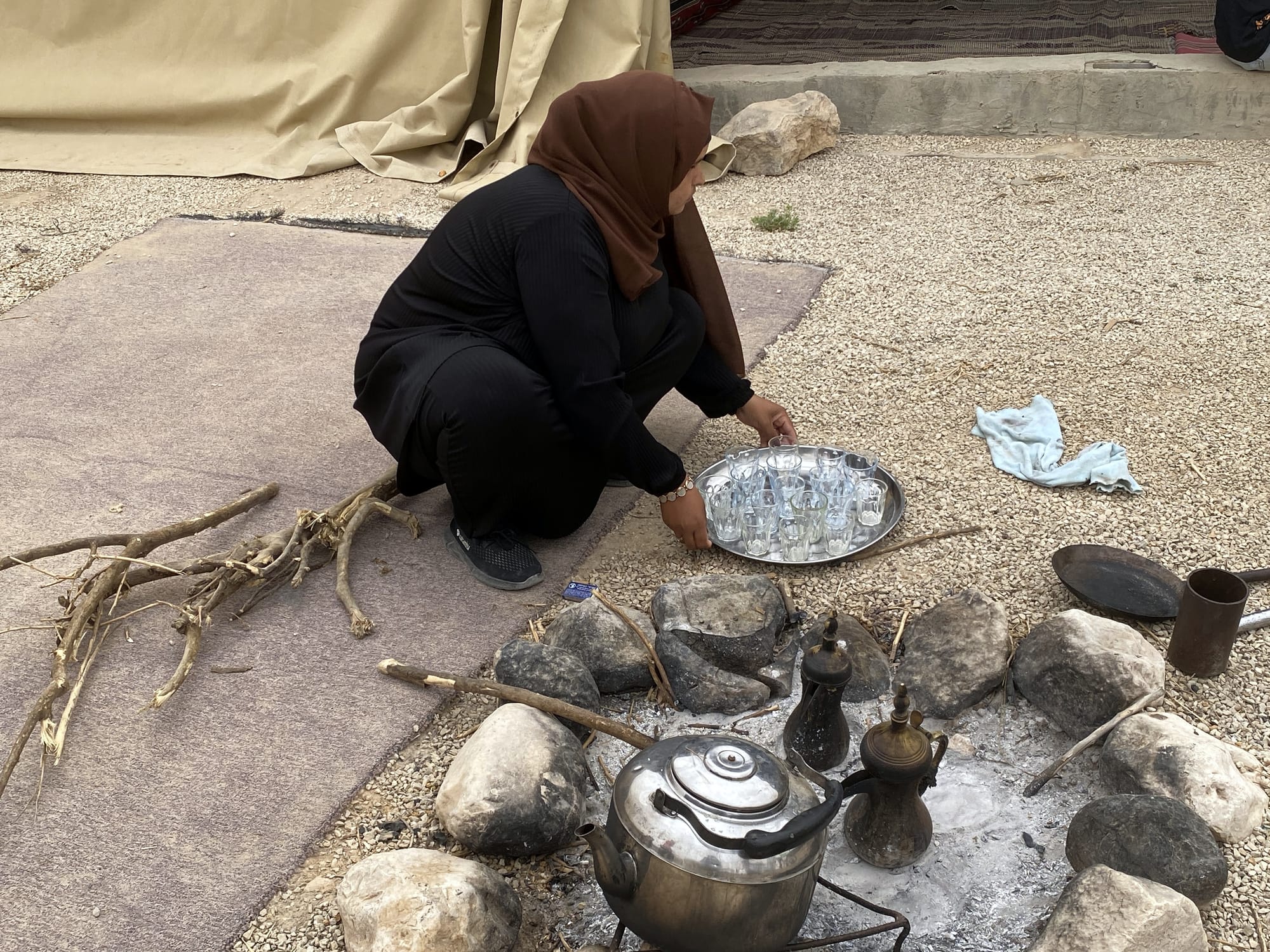
Chapter 7 — Food, Hospitality and Desert Traditions
A Culinary Landscape Shaped by History
Food in southern Israel tells a story that extends far beyond the kitchen.
Across the Negev, culinary traditions reflect centuries of migration, trade, agriculture, religious observance and adaptation to a demanding environment. Recipes carried from North Africa, the Middle East, Europe and Ethiopia coexist with Bedouin food traditions and contemporary Israeli cuisine.
In Beersheba, markets and restaurants reflect this diversity. In development towns, family recipes preserve connections to the countries from which earlier generations migrated. In Bedouin communities, food and hospitality remain closely associated with social relationships and cultural identity.
Agricultural settlements have contributed another dimension, developing food production in areas where limited rainfall once made cultivation especially difficult.
Yet the culinary heritage of southern Israel cannot be described as a single national tradition.
Many dishes enjoyed in the region have histories extending across modern borders. Jewish and Arab communities have influenced one another's food cultures over centuries, while preserving distinctive religious and family customs.
Understanding these overlapping traditions requires recognising the wider history of the Middle East and North Africa.
The result is a culinary landscape in which food serves not only as nourishment, but also as a connection to family, memory and belonging.
The Desert and the Origins of Local Food Traditions
The Negev's environment has historically influenced the ingredients and cooking methods available to its inhabitants.
Limited rainfall, seasonal vegetation and the importance of livestock shaped the diets of communities living in the region.
For pastoral households, sheep and goats provided milk and dairy products, while meat was generally a more valuable resource associated with particular occasions.
Grains, legumes, dates and other foods could be obtained through cultivation or regional trade.
Bread became an essential part of daily meals.
Traditional cooking methods often relied on simple equipment and locally available fuel.
Open fires, heated stones and metal cooking surfaces were used to prepare bread and other dishes.
These methods reflected practical adaptations to the environment rather than a single uniform culinary tradition.
The Negev was also connected to wider trading networks.
Historical routes linked communities across the Arabian Peninsula, the Levant, Egypt and the Mediterranean.
Trade helped introduce ingredients, spices and cooking practices that became part of regional food cultures.
The movement of people and goods contributed to culinary exchange long before the establishment of modern national borders.
Today, the historical influence of desert life remains visible in some traditional foods and methods of preparation.
However, contemporary households have access to modern kitchens, supermarkets and international ingredients.
Traditional cooking therefore exists alongside changing food habits rather than defining the everyday diet of every resident.
Bedouin Hospitality: More Than Offering a Meal
Hospitality occupies an important place in Bedouin cultural heritage.
Historically, welcoming travellers and providing food, water and shelter carried particular significance in desert environments.
The ability to offer assistance could be essential for people travelling through areas where resources were limited.
Over time, hospitality became associated with social values including generosity, dignity and respect for guests.
In many Bedouin households, visitors may be welcomed with coffee, tea or food.
The act of receiving a guest can be as important as the refreshments themselves.
Conversation, attention and the willingness to share available resources form part of the wider tradition.
Hospitality also contributes to relationships between families and communities.
Weddings, religious celebrations and other gatherings provide occasions for preparing and sharing meals.
However, practices differ between households, and contemporary Bedouin families do not all maintain identical customs.
Urbanisation, employment and changing lifestyles have influenced how hospitality is expressed.
For some families, traditional gatherings remain central to social life.
Others combine inherited customs with the routines of modern urban living.
Hospitality should therefore be understood as a cultural value that can take different forms rather than a fixed set of practices.
Arabic Coffee and the Ritual of Welcome
Coffee has a distinctive place in the hospitality traditions of many Arab societies, including Bedouin communities.
Traditional Arabic coffee may be prepared from roasted beans and flavoured with cardamom, although recipes and serving customs vary by region.
The preparation and serving of coffee can carry social meaning.
In some traditions, particular utensils, serving arrangements and gestures reflect respect for guests.
Coffee may be offered during family visits, community meetings and ceremonial occasions.
The significance of these practices extends beyond the drink itself.
They can communicate welcome, generosity and the importance of maintaining relationships.
UNESCO has recognised Arabic coffee as an element of intangible cultural heritage through nominations associated with several Arab countries.
This recognition concerns a broader regional tradition and should not be interpreted as belonging exclusively to any one community or modern state.
In the Negev, coffee traditions form part of the cultural heritage maintained by some Bedouin families.
Today, they may be practised in homes, community gatherings and cultural tourism settings.
However, the ceremonial presentation of coffee to visitors represents only one aspect of contemporary Bedouin life.
Many families also participate in the same modern café culture found elsewhere in Israel.
Bread, Fire and Traditional Cooking
Bread has long been a fundamental component of diets across the Middle East.
Among Bedouin communities, different forms of flatbread developed in response to local ingredients, available equipment and cooking conditions.
One traditional preparation is shrak, a thin flatbread cooked on a convex metal surface known in Arabic as a saj.
Similar bread-making traditions are found across the Levant and neighbouring regions.
Another method associated with desert cooking involves preparing bread directly in or beneath hot ashes.
These techniques require skill and familiarity with the heat of the cooking surface.
Historically, they offered practical ways to prepare food without elaborate kitchen equipment.
Bread could accompany dairy products, vegetables, legumes or meat.
In contemporary homes, traditional flatbreads may still be prepared for family gatherings or cultural occasions.
However, commercially produced bread and modern baking methods are also common.
Traditional cooking demonstrations sometimes form part of Bedouin tourism experiences.
When organised with meaningful participation from local communities, these activities can provide opportunities to share culinary knowledge and generate income.
Yet cultural presentation should avoid suggesting that all Bedouin families continue to cook as their ancestors did.
Food traditions evolve, and the preservation of a particular method does not mean that everyday life has remained unchanged.
Meat, Rice and Communal Meals
Large shared meals are important features of celebrations in many Middle Eastern societies.
In Bedouin and neighbouring Arab culinary traditions, dishes combining rice, meat, bread and spices are often associated with hospitality and special occasions.
Mansaf, widely recognised as a traditional Jordanian dish, is also known in communities across the wider region.
It is typically prepared with lamb and a sauce made using jameed, a fermented and dried yoghurt product, and is served with rice or bread.
Its preparation and significance vary between communities.
Other rice and meat dishes reflect local preferences and family traditions.
The communal presentation of food can encourage sharing and social interaction.
At weddings and other gatherings, preparing meals for large numbers of guests may require cooperation among relatives and community members.
These occasions provide opportunities for culinary knowledge to pass between generations.
However, the scale and style of celebrations differ according to family circumstances, religious practices and personal preferences.
Traditional dishes may be prepared alongside contemporary foods.
The importance of these meals lies not only in their ingredients, but also in the social relationships they help maintain.
North African Jewish Cuisine in the Negev
The arrival of Jewish immigrants from North Africa had a lasting influence on the culinary culture of southern Israel.
Families originating in Morocco, Tunisia, Algeria and other countries brought recipes shaped by generations of Jewish life within North African societies.
These culinary traditions reflect regional ingredients, religious dietary practices and family customs.
Couscous is among the most recognisable dishes associated with North African cuisine.
Its preparation varies considerably, with different vegetables, sauces, spices and accompaniments used according to family and regional traditions.
In some households, couscous is associated with Friday meals or family celebrations.
Moroccan Jewish cooking also includes slow-cooked stews, preserved lemons, olives, vegetables and carefully balanced spice mixtures.
Fish dishes are another important part of some family traditions.
Chraime, a spicy fish preparation particularly associated with Libyan and Tunisian Jewish culinary traditions, has become familiar in Israeli households beyond those communities.
Other dishes have similarly crossed cultural and regional boundaries.
In towns such as Netivot, Ofakim, Dimona and Beersheba, these food traditions contribute to the culinary identity of families whose roots extend across North Africa.
Recipes may be passed from grandparents to parents and children.
The preparation of particular dishes can become a way of maintaining connections to family history.
However, culinary traditions are rarely preserved without change.
Ingredients, cooking methods and personal tastes evolve as younger generations adapt recipes to contemporary lifestyles.
Iraqi, Persian and Other Middle Eastern Influences
Jewish communities originating in Iraq, Iran and other parts of the Middle East have also contributed to the food culture of Israel.
Their culinary traditions developed through centuries of interaction with neighbouring societies.
Iraqi Jewish cuisine includes dishes such as kubbeh, which can take different forms involving bulgur, semolina or other ingredients surrounding a filling.
Varieties of kubbeh are found across the Middle East and are not exclusive to one religious or national community.
Another dish associated with Iraqi Jewish cooking is sabich, a combination commonly served in pita bread with fried aubergine, eggs and other accompaniments.
Its contemporary popularity in Israel reflects the movement and adaptation of culinary traditions.
Persian Jewish cooking includes rice dishes, herbs, vegetables and stews influenced by the wider cuisine of Iran.
These foods may be prepared for family meals, religious holidays or celebrations.
The presence of such traditions in southern Israel reflects the diverse origins of Jewish immigrant communities.
Their culinary contributions have become part of a broader Israeli food culture while retaining connections to particular family histories.
It is important to recognise that these dishes often have shared regional origins.
Food cultures developed through centuries of exchange and cannot always be assigned exclusively to a single modern nationality.
Ethiopian Jewish Food Traditions
Ethiopian Jewish families have introduced distinctive culinary traditions to southern Israel.
One of the best-known elements of Ethiopian cuisine is injera, a fermented flatbread traditionally prepared using teff flour.
Injera is commonly served with a variety of stews, vegetables and legumes.
Meals may be arranged on a shared platter, with pieces of injera used to gather the food.
This style of eating reflects broader Ethiopian culinary traditions.
Ethiopian Jewish households may also maintain food customs connected to religious observance and family celebrations.
Spice mixtures, slow-cooked dishes and traditional preparation methods form part of the culinary heritage passed between generations.
For families who migrated to Israel, food can provide a connection to memories of Ethiopia.
Preparing familiar dishes may help preserve cultural identity while adapting to a different social and economic environment.
Younger Ethiopian Israelis often participate in a wider range of culinary influences.
Traditional foods may coexist with contemporary Israeli dishes and international cuisine.
This combination reflects the broader experience of cultural continuity and change within immigrant communities.
The Markets of Beersheba
Beersheba's markets offer a practical illustration of the region's culinary diversity.
The city's municipal market brings together traders selling fruit, vegetables, herbs, spices and other food products.
For residents, shopping at the market can be part of an ordinary household routine.
For visitors, it offers an opportunity to observe the ingredients and food traditions that contribute to local cuisine.
Markets also function as social spaces.
Regular customers may develop relationships with traders, while conversations and informal exchanges form part of daily commercial activity.
The market environment reflects Beersheba's position as a regional centre serving residents from different backgrounds.
Food shops, bakeries and restaurants elsewhere in the city provide additional examples of culinary diversity.
North African, Middle Eastern and contemporary Israeli dishes can be found alongside international cuisines.
The city's university population and changing urban economy have also influenced dining habits.
Cafés, casual restaurants and modern food businesses serve students, workers and families.
These developments illustrate how traditional food cultures continue to interact with changing urban lifestyles.
Food and the Jewish Sabbath
For many Jewish families, food is closely connected to the weekly observance of Shabbat.
Friday meals may involve dishes prepared according to family traditions.
In some households, recipes reflect the family's origins in North Africa, the Middle East or Europe.
Slow-cooked dishes have particular historical significance because they can be prepared before the beginning of Shabbat.
Cholent and hamin are broad terms associated with different forms of slow-cooked Sabbath dishes, although ingredients and preparation methods vary between communities.
Some versions include beans, potatoes, grains, eggs or meat.
These dishes illustrate how religious requirements influenced culinary practices.
However, Shabbat meals are not identical across Jewish households.
Some families follow religious dietary laws closely, while others observe Shabbat primarily through family gatherings.
For many residents, the meal provides an opportunity to reconnect with relatives after the working week.
Food therefore serves as both a cultural tradition and a form of social continuity.
Ramadan and the Culture of Iftar
Among Muslim Bedouin communities, Ramadan is an important period in which food takes on particular religious and social significance.
During the fasting month, observant adults who are able to fast abstain from food and drink between dawn and sunset.
The evening meal, known as iftar, marks the breaking of the fast.
Dates and water are commonly used to begin the meal, followed by dishes reflecting household preferences and regional traditions.
Family gatherings can be an important part of the occasion.
In some communities, relatives and neighbours share meals or participate in charitable initiatives.
The preparation of food for others may be understood as an expression of generosity and social responsibility.
However, Ramadan practices vary between households.
Work schedules, health, financial circumstances and personal religious observance influence how families organise their meals.
The experience of Ramadan also demonstrates how food can connect religious practice with community relationships.
Agriculture and the Changing Food Economy
The development of modern agriculture has transformed food production in parts of southern Israel.
Kibbutzim, moshavim and private agricultural enterprises cultivate crops under conditions that require careful management of water and soil.
Greenhouses, irrigation systems and agricultural research have contributed to the production of vegetables, fruit and other crops in arid environments.
The Arava Valley is particularly associated with intensive agriculture adapted to desert conditions.
Its farms produce crops for domestic markets and, depending on the product and period, international markets.
Agricultural development has also influenced the economic life of rural communities.
Farming provides employment and contributes to local businesses, transport services and food distribution.
However, the agricultural economy faces significant challenges.
Water availability, energy costs, labour conditions and climate change all affect production.
Rising temperatures and environmental pressures may require further adaptation.
Food production in the desert therefore represents both technological achievement and an ongoing process of managing limited natural resources.
Dates, Desert Crops and Regional Identity
Date palms are among the crops associated with agriculture in hot, arid regions.
Their cultivation has a long history across the Middle East and North Africa.
In Israel, commercial date production takes place in several regions, including the Jordan Valley and parts of the Arava.
Dates are valued both as food and as an agricultural product suited to particular climatic conditions.
Different varieties have distinct textures, flavours and growing requirements.
Modern cultivation depends on irrigation, agricultural management and access to markets.
The presence of date palms in desert landscapes can create a visual connection with older agricultural traditions.
However, modern commercial plantations operate under conditions very different from historical oasis farming.
Other crops grown in southern Israel reflect the use of irrigation and protected cultivation.
Vegetables and fruit produced in desert agricultural communities demonstrate the region's capacity for adaptation.
At the same time, these activities depend on infrastructure and resources that are not equally available to every community.
Eilat: Food at the Meeting Point of Desert and Sea
At the southern end of Israel, Eilat presents a different culinary environment.
The city's position on the Red Sea and its importance as a tourist destination have contributed to a restaurant culture shaped by domestic and international visitors.
Restaurants offer a range of cuisines, including Middle Eastern dishes, seafood and international food.
The city's hospitality industry serves tourists as well as local residents.
For many visitors, dining is part of the experience of travelling to the Red Sea coast.
However, Eilat's culinary identity is not limited to tourism.
Residents maintain family food traditions reflecting the diversity of the city's population.
As elsewhere in southern Israel, the contrast between commercial dining and household cooking is important.
Restaurant menus may respond to tourism trends, while family kitchens preserve recipes connected to migration and cultural heritage.
The city's food culture therefore reflects both its geographical location and its social history.
Food Tourism and the Presentation of Culture
Culinary tourism has become one way of introducing visitors to the Negev's cultural diversity.
Food tours, cooking workshops, agricultural visits and hospitality experiences can provide opportunities to learn about local traditions.
Bedouin hosts may introduce visitors to coffee preparation, bread-making and regional dishes.
Agricultural communities may offer tours explaining irrigation, crop cultivation and food production.
Urban food tours can highlight the influence of different immigrant communities.
These activities can create economic opportunities and encourage cultural exchange.
However, the presentation of food traditions to tourists requires care.
A cooking demonstration or traditional meal cannot represent the full complexity of a community's contemporary life.
Tourism may emphasise visually distinctive customs while overlooking ordinary routines, economic challenges or social change.
Respectful cultural tourism should recognise the role of local communities in deciding how their traditions are presented.
It should also avoid treating cultural heritage as an unchanging spectacle.
Food, Identity and the Next Generation
For younger generations, food can provide a connection to family history even as everyday eating habits change.
Recipes passed down through generations may carry memories of migration, childhood and religious celebrations.
A dish prepared by a grandparent can represent a connection to a country or community that younger family members have never personally experienced.
At the same time, contemporary lifestyles influence food choices.
University students, working families and young professionals may rely on restaurants, takeaway meals or convenience foods.
Social media introduces new recipes and culinary trends.
Traditional dishes may be adapted to changing dietary preferences or modern cooking methods.
These developments do not necessarily mean that culinary heritage is disappearing.
Instead, food traditions are often reinterpreted.
Families may preserve particular recipes for holidays while adopting different habits during the working week.
Restaurants may introduce contemporary versions of traditional dishes.
Community events may provide opportunities for younger people to learn about the food cultures of earlier generations.
The result is a continuing relationship between memory and change.
A Shared Table, Different Histories
The food cultures of southern Israel reflect centuries of movement and interaction across the Middle East, North Africa and beyond.
Jewish immigrant communities brought recipes shaped by their experiences in Morocco, Iraq, Ethiopia, Europe and other regions.
Bedouin communities preserved culinary traditions associated with pastoral life, hospitality and the wider Arab world.
Agricultural settlements introduced new methods of producing food in desert environments.
Modern cities and tourist destinations added further influences.
These traditions sometimes share ingredients, cooking techniques and historical origins.
However, similarities in food should not be interpreted as evidence that communities have experienced the region's history in the same way.
Culinary exchange can occur alongside political conflict, social inequality and competing historical narratives.
Food provides opportunities for cultural understanding, but it does not erase these differences.
Its significance lies partly in its ability to reveal the human experiences behind broader historical developments.
A family recipe may preserve memories of migration.
A communal meal may strengthen relationships.
A traditional method of preparing bread may connect younger generations to the knowledge of their ancestors.
Across the Negev, food remains one of the most accessible expressions of cultural identity.
It demonstrates how traditions can survive through adaptation and how everyday practices carry histories that extend far beyond the present.
The next chapter examines another important dimension of social change in southern Israel: the experiences of women, the development of education and the changing expectations of younger generations.
Chapter 8 — Women, Education and Generational Change
A Region in Transition
Across southern Israel, changes in education, employment and family life are influencing how women and younger generations understand their opportunities and responsibilities.
The Negev is often described through its physical landscape, agricultural achievements and strategic importance. Yet some of its most consequential transformations are taking place in classrooms, universities, workplaces and households.
Women are pursuing professional careers, establishing businesses, participating in community organisations and challenging expectations about their roles in society. Young people are increasingly connected to national and international developments through education, technology and digital communication.
These changes are not occurring uniformly.
A university student in Beersheba, a young woman in a Bedouin village, a mother working in a development town and a teenager growing up in a kibbutz may face very different circumstances.
Access to education, household income, transport, cultural expectations and the availability of employment all influence individual opportunities.
For some families, social change has brought greater independence and economic security. For others, longstanding inequalities continue to limit choices.
Understanding these differences is essential to understanding the future of the Negev.
Women's Roles in the Historical Development of the South
Women have played important roles in the development of southern Israel, although their contributions have not always received the same public recognition as those of men.
In early Jewish agricultural settlements, women participated in farming, education, childcare and community organisation.
The kibbutz movement promoted ideals of collective labour and social equality, including greater participation by women in economic activities.
However, formal commitments to equality did not always produce equal responsibilities or opportunities.
Women frequently continued to perform much of the childcare, domestic work and other forms of labour traditionally associated with female roles.
Leadership positions and particular occupations also remained influenced by gender expectations.
In development towns established after 1948, immigrant women contributed to the creation of households, community networks and local institutions.
Many maintained cultural traditions while adapting to unfamiliar economic and social circumstances.
Some entered paid employment, while others concentrated on family responsibilities or worked in informal economic activities.
Among Bedouin communities, women historically contributed to pastoral livelihoods, household production, agriculture and family organisation.
Their work was often essential to economic survival, even when public authority was concentrated within male-dominated social structures.
These different histories demonstrate that women's contributions cannot be measured solely through formal employment statistics.
Unpaid care, family labour, cultural transmission and community organisation have also shaped the development of the region.
Education as a Pathway to Opportunity
Education has become one of the most important factors influencing social mobility in southern Israel.
Schools, colleges and universities provide opportunities for young people to acquire qualifications and enter professions that were less accessible to earlier generations.
Ben-Gurion University of the Negev plays a particularly important role.
Its programmes in medicine, engineering, science, education, social sciences and other disciplines attract students from different parts of Israel.
The university also contributes to research, professional training and regional economic development.
For students living in Beersheba, access to higher education may be relatively straightforward.
For those living in smaller towns or remote settlements, the situation can be more complicated.
Transport costs, commuting times, household finances and access to preparatory education can affect whether students pursue further study.
Language can present another challenge.
Hebrew is the principal language of instruction in most Israeli higher education institutions.
Arabic-speaking students may therefore need to navigate an academic environment that differs from the language used in their homes and earlier education.
Students from immigrant families can face additional difficulties depending on their educational background and family circumstances.
These barriers do not mean that students from disadvantaged communities lack ambition or ability.
They demonstrate how structural conditions influence access to opportunity.
Improving educational participation requires attention to school quality, financial assistance, language support and transport, as well as the availability of university places.
Bedouin Women and the Expansion of Educational Opportunities
The experiences of Bedouin women provide an important example of the relationship between education and social change.
Over recent decades, increasing educational participation has created new opportunities for women in parts of Bedouin society.
Women have entered higher education and pursued careers in teaching, healthcare, social work and other professions.
Some have become community organisers, researchers, entrepreneurs and advocates for improved public services.
These developments reflect the efforts of women themselves, as well as changes in educational provision and wider social expectations.
However, opportunities remain uneven.
Girls and young women living in remote communities may face difficulties reaching educational institutions.
Transport infrastructure, household income and access to suitable schools can influence attendance and academic progression.
In some families, expectations concerning marriage, childcare or women's employment also affect educational decisions.
Such expectations vary substantially between households and should not be treated as universal characteristics of Bedouin society.
Educational achievement does not always translate directly into employment.
A qualified woman may still encounter limited local job opportunities, inadequate transport or difficulties balancing paid work with family responsibilities.
For this reason, the expansion of education represents an important development, but not a complete solution to economic inequality.
Employment and Economic Independence
Paid employment can influence women's financial independence, family circumstances and participation in public life.
Across southern Israel, women work in education, healthcare, commerce, public administration, technology and other sectors.
Some operate small businesses or participate in family enterprises.
Others work in agriculture, tourism or local services.
However, employment opportunities differ considerably between communities.
Beersheba offers a wider range of professional and institutional employment than many smaller towns.
Its university, hospital and technology-related businesses provide opportunities for qualified workers.
In peripheral communities, employment may be more limited.
Residents can face long journeys to workplaces or depend on a relatively small number of local employers.
For women with childcare responsibilities, commuting can be particularly difficult.
The availability of nurseries, affordable transport and flexible working arrangements can influence whether employment is practical.
Bedouin women may face additional barriers associated with infrastructure, language, discrimination or local labour-market conditions.
Jewish women in economically disadvantaged towns can also experience limited opportunities, particularly where employment is concentrated in lower-paid sectors.
These challenges demonstrate that women's economic participation cannot be explained solely by individual choices or cultural expectations.
Public investment, labour-market conditions and access to services also play important roles.
Women in Technology, Science and Healthcare
The growth of higher education and technology-related industries in Beersheba has created opportunities for women in specialised professions.
Research institutions, healthcare facilities and technology companies contribute to the regional employment landscape.
Women participate in scientific research, medicine, engineering, education and business development.
Their presence reflects broader changes in Israeli society, where educational attainment and professional participation have expanded over time.
Nevertheless, gender inequalities remain in several sectors.
Women can face barriers to advancement, differences in earnings and underrepresentation in senior leadership or particular technical occupations.
These challenges are not unique to the Negev, but regional economic conditions can influence their effects.
For example, limited local employment opportunities may make it harder for qualified women to find work corresponding to their education.
The development of technology industries therefore raises an important question: who benefits from economic growth?
If new opportunities remain concentrated among residents with particular qualifications, language skills or professional networks, existing inequalities may persist.
Expanding participation requires educational pathways, professional training and employment practices that reach beyond established networks.
Women as Community Leaders
Women's contributions to southern Israeli society extend beyond formal employment.
Community organisations, schools, healthcare initiatives and local associations provide opportunities for women to influence public life.
In Jewish communities, women participate in municipal politics, educational institutions, cultural organisations and voluntary activities.
In Bedouin communities, women have established and joined initiatives focused on education, employment, social welfare and women's rights.
Some organisations work to improve access to professional training or support women entering the labour market.
Others address issues such as domestic violence, health awareness or educational opportunity.
These activities reflect a range of priorities and perspectives.
Not all women advocate the same forms of social change.
Some emphasise professional independence and legal equality.
Others focus on strengthening family and community institutions while preserving cultural traditions.
Many combine these approaches.
It is important to recognise women as active participants in shaping their communities rather than portraying them only through the obstacles they encounter.
Their work demonstrates how social change can emerge through local leadership and practical initiatives.
Family Expectations and Personal Independence
Changing educational and professional opportunities can influence expectations concerning family life.
In some households, younger women increasingly pursue higher education and careers before marriage or parenthood.
Others combine education, employment and family responsibilities in different ways.
These choices are shaped by individual preferences, economic circumstances and cultural expectations.
Across Jewish and Bedouin communities, family relationships remain important.
However, the relationship between personal independence and family responsibility is changing.
Some younger adults seek greater autonomy in decisions about education, employment and where to live.
Parents and grandparents may hold different expectations based on their own experiences.
Such differences can produce discussion or disagreement within families.
They can also lead to new arrangements in which traditional relationships are maintained while individual opportunities expand.
The experiences of women should not be reduced to a simple contrast between tradition and modernity.
Religious observance, family commitment, professional ambition and personal independence can coexist.
The ways individuals combine these elements vary.
The Educational Divide Between Communities
Educational opportunities across the Negev are affected by significant geographical and socioeconomic differences.
Some communities benefit from established schools, specialist programmes and proximity to higher education.
Others face difficulties associated with infrastructure, transport and the availability of educational resources.
These disparities can begin in early childhood.
Access to preschool education, suitable classrooms and educational support influences later opportunities.
Children living in remote settlements may depend on school transport or travel considerable distances.
In some unrecognised Bedouin villages, inadequate infrastructure has contributed to longstanding concerns about educational access.
Economic circumstances also matter.
Families with greater financial resources may be better able to provide tutoring, digital equipment or extracurricular activities.
Lower-income households can face additional pressures.
These differences can influence academic achievement and access to higher education.
However, educational outcomes should not be interpreted as simple reflections of cultural background.
They are shaped by public investment, school conditions, household resources and broader social circumstances.
Reducing educational inequality is therefore central to improving long-term opportunities in southern Israel.
Young People in Development Towns
For young people growing up in development towns, decisions about education and employment are often connected to the question of whether to remain in their hometowns.
Cities such as Dimona, Yeruham, Ofakim and Netivot have developed distinctive local identities over generations.
Families maintain strong connections to neighbourhoods, schools and community institutions.
However, some young adults seek educational or professional opportunities in larger cities.
Moving to Beersheba, Tel Aviv or elsewhere may provide access to a wider range of universities, employers and cultural activities.
Others prefer to remain close to family or return after completing their studies.
These choices are influenced by housing costs, employment prospects, transport and personal relationships.
For regional planners, retaining younger residents is an important challenge.
A community's long-term future depends partly on whether young adults can establish careers and families locally.
Investment in education, employment and public services can influence these decisions.
Cultural identity and emotional attachment to a hometown may encourage residents to stay, but they cannot always compensate for limited economic opportunities.
The Role of Digital Technology
Digital communication has changed how younger generations experience community life.
Social media, online education and digital services connect residents of southern Israel with wider national and international networks.
For students, digital resources can support learning and provide access to information beyond local institutions.
For entrepreneurs, online platforms may create opportunities to reach customers outside their immediate communities.
For families, messaging applications help maintain relationships across geographical distances.
Digital technology also influences cultural identity.
Young people encounter different lifestyles, opinions and cultural expressions through online platforms.
They may use these spaces to share family traditions, discuss social issues or participate in wider public debates.
However, access to digital technology is not equal.
Reliable internet connections, suitable devices and digital skills depend partly on infrastructure and household resources.
Residents of underserved communities may face additional barriers.
Digital technology can expand opportunities, but it cannot independently overcome inequalities in education, employment or public services.
Generational Change in Kibbutzim and Moshavim
Kibbutzim and moshavim have experienced significant changes in social expectations.
Earlier generations often built their lives around agriculture, collective responsibility and the development of new settlements.
Younger residents may pursue a wider range of careers and lifestyles.
Some remain involved in farming or community enterprises.
Others work in technology, healthcare, education or businesses outside their settlements.
Changes in housing arrangements and economic organisation have also influenced family life.
In some kibbutzim, younger families experience greater financial independence than earlier generations.
At the same time, community celebrations and local institutions continue to provide connections to the settlement's history.
For moshav families, agricultural inheritance and the future of family farms can raise difficult questions.
Not every younger family member wishes to continue farming.
Economic conditions and land-use regulations may also influence decisions.
These changes demonstrate how rural communities adapt to broader social and economic developments.
Preserving cultural heritage does not necessarily require maintaining the same occupations or social structures indefinitely.
Bedouin Youth and Questions of Identity
For young Bedouin residents, generational change can involve navigating several overlapping identities.
Family and community heritage remain important, while education and employment create opportunities to participate in wider Israeli society.
Arabic is central to the cultural and social lives of many Bedouin families.
Hebrew proficiency can be important for higher education and employment.
English may provide additional opportunities in academic and professional environments.
Young people may therefore move between different linguistic and cultural settings.
Questions of national identity can also be complex.
Some identify strongly as Palestinian Arabs, others emphasise Bedouin heritage or Israeli citizenship, and many understand these identities in overlapping ways.
Political views and personal experiences vary.
Young people may seek greater economic opportunity while remaining critical of government policies affecting their communities.
Others may emphasise participation in public institutions or cooperation with neighbouring communities.
No single perspective represents all Bedouin youth.
Understanding their experiences requires recognising the diversity of their aspirations and the structural conditions influencing their choices.
Inequality, Discrimination and Social Mobility
Social mobility in southern Israel is influenced by the relationship between individual opportunity and structural inequality.
Education and professional training can improve employment prospects, but they do not guarantee equal outcomes.
Discrimination, geographical isolation and unequal access to public services can limit opportunities.
These challenges affect communities differently.
Some Bedouin residents face difficulties associated with planning status, infrastructure and employment access.
Some Jewish residents of development towns experience persistent socioeconomic disadvantages compared with residents of wealthier central regions.
Women may encounter gender-related barriers within workplaces or family circumstances.
Individuals can also experience overlapping forms of disadvantage.
For example, a woman living in a remote community may face difficulties connected to transport, household income and limited local employment.
Addressing these inequalities requires more than encouraging individual ambition.
Public policy, educational investment, transport infrastructure and employment opportunities all influence the conditions under which people make choices.
A fair assessment of social change must therefore consider both personal achievements and the wider systems that enable or restrict opportunity.
The Impact of Conflict on Education and Young People
Security conditions have also influenced the lives of women and younger generations in southern Israel.
Communities near the Gaza border have experienced repeated periods of violence and disruption.
Rocket attacks, emergency restrictions and military operations have affected schooling, employment and family routines.
The Hamas-led attacks of 7 October 2023 caused extensive loss of life, hostage-taking and displacement in southern Israel.
Children and young people were among those directly affected.
For families in attacked communities, the consequences included bereavement, trauma, disrupted education and uncertainty about returning home.
The effects also extended to Bedouin communities, whose residents were among the victims of the attacks and subsequent violence.
Recovery has required educational support, mental healthcare and assistance for displaced families.
The experiences of young people affected by conflict cannot be understood solely through academic performance or employment prospects.
A sense of safety, stable housing and access to psychological support are also important.
The longer-term consequences will depend partly on the availability of sustained assistance and the restoration of community institutions.
The Next Generation and the Future of the Negev
The future of southern Israel will be shaped significantly by the opportunities available to women and younger generations.
Education can expand professional choices and encourage social participation.
Employment can provide financial independence and contribute to regional economic development.
Community organisations can strengthen local leadership and support residents facing social challenges.
However, progress is unlikely to be uniform without efforts to address existing inequalities.
Access to quality schools, reliable transport, healthcare, childcare and employment remains uneven across the region.
For some communities, legal and planning disputes create additional obstacles.
For others, the central challenge is retaining younger residents and attracting sustainable economic investment.
The future of the Negev therefore depends not only on technological innovation or population growth, but also on whether development reaches communities with different histories and needs.
Women and young people are already contributing to this process through education, employment, entrepreneurship and community initiatives.
Their experiences reveal a region in which cultural traditions continue to matter, but where expectations and opportunities are changing.
Beyond Tradition and Modernity
The experiences of women and younger generations demonstrate that southern Israel cannot be divided neatly into traditional and modern communities.
A Bedouin woman may pursue a university degree while maintaining strong connections to her family and religious heritage.
A young Jewish professional may work in a technology company while participating in traditional holiday celebrations.
A family living in a kibbutz may value its cooperative history while adopting more individualised economic arrangements.
These experiences illustrate how cultural continuity and social change can coexist.
They also demonstrate that personal ambition is shaped by the opportunities available within wider society.
For some residents, education and employment have opened paths that were less accessible to earlier generations.
For others, economic inequality, inadequate infrastructure or social barriers continue to restrict choices.
Understanding the future of the Negev requires recognising both realities.
The region's development will be measured not only by new industries, infrastructure projects or population growth, but also by the opportunities available to the people who call it home.
As southern Israel continues to change, women and younger generations will remain central to its social, cultural and economic future.
Their stories provide an important perspective on a region often discussed primarily through geography, politics and security.
Beyond those subjects lies the everyday work of building families, pursuing education, preserving cultural heritage and creating opportunities for the next generation.
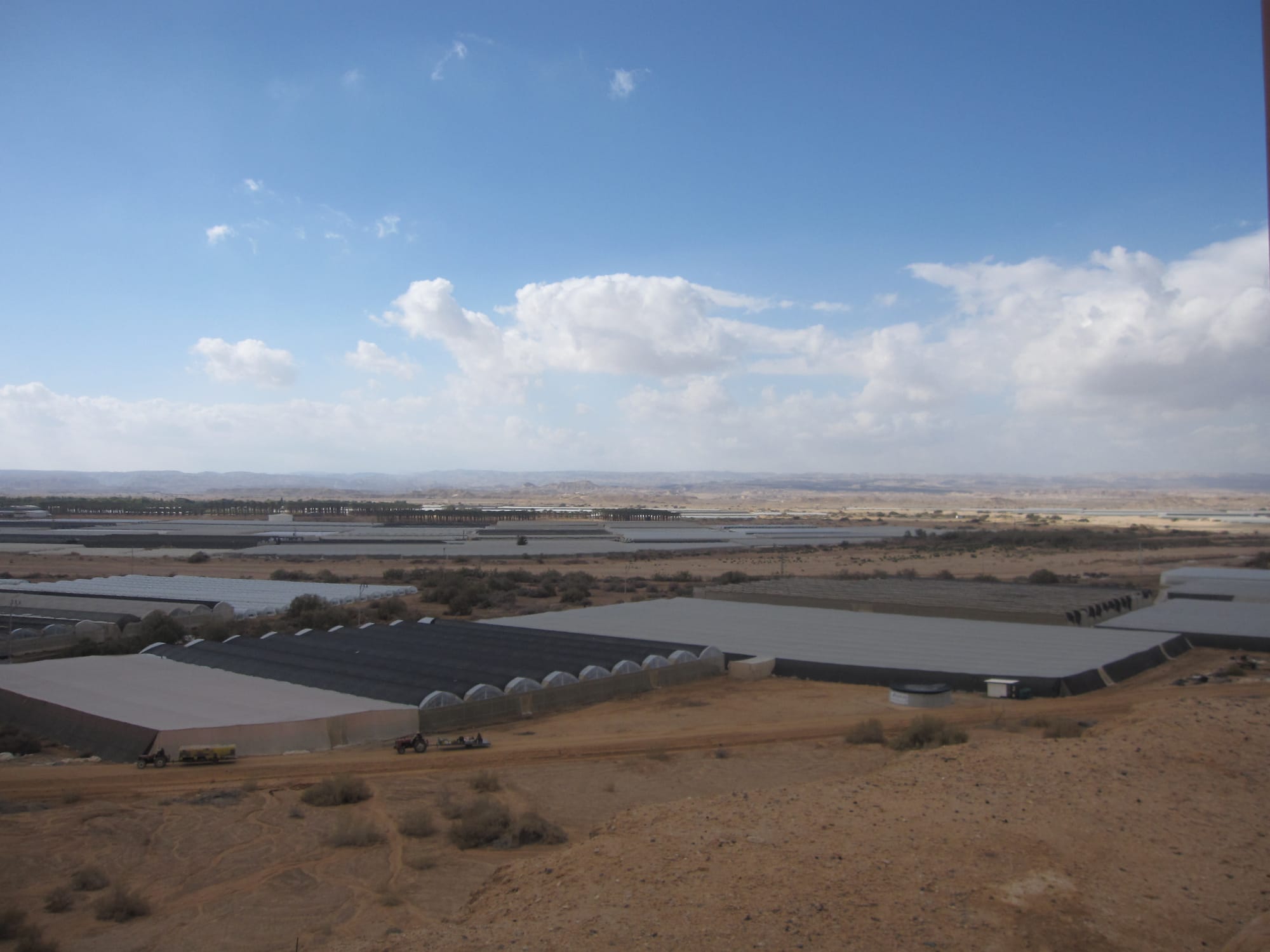
PART III — FROM THE DESERT TO THE RED SEA
Chapter 9 — The Arava Valley: Agriculture in an Extreme Climate
Life Along the Desert Valley
Stretching southwards towards the Gulf of Aqaba, the Arava Valley forms one of the most distinctive landscapes of southern Israel.
Situated along the border between Israel and Jordan, the valley is characterised by arid plains, rugged mountains, extreme summer temperatures and limited natural rainfall.
To travellers passing through the region, the landscape can appear almost empty. Long stretches of desert road connect small agricultural communities, nature reserves and isolated settlements.
Yet behind this seemingly inhospitable environment lies a complex story of human settlement, agricultural innovation and adaptation.
For decades, communities in the Arava have developed methods of cultivating crops under conditions that would appear unsuitable for conventional agriculture.
Greenhouses, irrigation systems and carefully managed water supplies have made it possible to produce vegetables, dates and other crops in an environment where natural rainfall alone cannot sustain commercial farming.
These achievements have attracted attention from researchers, agricultural organisations and visitors interested in desert development.
However, life in the Arava involves more than technological innovation.
Families raise children, attend schools, operate businesses and maintain community relationships across considerable geographical distances.
Residents must balance the opportunities of rural life with the practical difficulties of living far from major urban centres.
The Arava is therefore both an agricultural region and a place where everyday life is shaped by the relationship between people, technology and the natural environment.
A Landscape of Extreme Conditions
The Arava forms part of the wider geological depression extending between the Dead Sea and the Gulf of Aqaba.
Its landscape is characterised by mountains, desert plains, dry riverbeds and areas of sparse vegetation.
Rainfall is extremely limited and varies across the valley.
Temperatures can rise sharply during summer, while the dry climate contributes to substantial evaporation.
These conditions create significant challenges for agriculture.
Plants require reliable irrigation, and farmers must carefully manage water quality, soil conditions and exposure to heat.
Strong sunlight can support crop growth, but excessive temperatures may damage plants or reduce productivity.
The availability of water is therefore a central factor in determining what can be cultivated.
The valley's climate also influences everyday life.
Residents often organise outdoor activities around the cooler parts of the day.
Homes, schools and workplaces depend on infrastructure designed to cope with prolonged periods of heat.
Transport is another important consideration.
Communities are separated by substantial distances, and access to specialised services may require travel to larger towns or cities.
Despite these challenges, the Arava has developed a distinctive network of settlements whose residents have adapted to the conditions of desert life.
The Development of Agricultural Communities
Modern Israeli agricultural settlement in the Arava expanded during the decades following the establishment of Israel.
Government institutions and settlement organisations supported the development of communities intended to strengthen agriculture, population distribution and regional infrastructure.
Kibbutzim and moshavim were established in different parts of the valley.
Their residents faced difficult conditions, including limited water supplies, extreme temperatures and the need to construct essential infrastructure.
Early agricultural experiments involved considerable uncertainty.
Farmers had to determine which crops could survive, how irrigation should be organised and how to manage the particular characteristics of local soils and water.
Over time, agricultural knowledge and technological development made more intensive cultivation possible.
The settlement process was also connected to wider Israeli policies concerning land, regional development and border security.
The Arava lies along Israel's boundary with Jordan, making its geographical position politically significant.
However, the everyday experiences of agricultural communities cannot be understood solely through strategic considerations.
For residents, establishing settlements involved building homes, raising families, creating schools and developing social institutions.
The history of the Arava is therefore also a history of ordinary people adapting to an unusual environment.
Kibbutzim and Moshavim in the Arava
The agricultural communities of the Arava developed through different organisational models.
Kibbutzim traditionally emphasised collective ownership, shared labour and communal responsibility.
Moshavim generally organised agriculture around individual family farms supported by cooperative arrangements.
Both models contributed to the development of farming in the valley.
In the Central Arava, communities such as Ein Yahav, Hatzeva, Paran, Tzofar and Idan became associated with agricultural production.
Further south, kibbutzim including Yotvata, Ketura, Lotan and Samar developed different economic and social activities.
These communities are not identical.
Some depend heavily on agriculture, while others have diversified into tourism, renewable energy, education, food production or other industries.
Their social structures also vary.
In some settlements, communal institutions continue to play an important role in daily life.
In others, individual households and private businesses have become more prominent.
For residents, the distinction between kibbutz and moshav can influence economic organisation, housing arrangements and community decision-making.
Nevertheless, both forms of settlement reflect the importance of cooperation in a region where infrastructure and resources require careful management.
Growing Food Where Rain Rarely Falls
One of the Arava's most notable characteristics is its agricultural productivity despite the scarcity of rainfall.
Farmers cultivate crops using irrigation systems, greenhouses, protective coverings and other technologies designed to manage difficult growing conditions.
Vegetables have been an important part of the region's agricultural economy.
Peppers, tomatoes and other crops have been grown for domestic consumption and export markets, although the relative importance of individual crops changes with market conditions.
Date cultivation is also significant in parts of the valley.
Agricultural production depends on precise planning.
Farmers must consider water availability, soil characteristics, temperature, pest management and the timing of planting and harvesting.
Growing conditions can vary substantially between seasons.
Extreme heat may affect flowering, fruit development and crop quality.
Agricultural success therefore depends on continuous monitoring and adaptation.
The region's achievements demonstrate the possibilities of modern farming technology.
However, they also illustrate the considerable resources required to sustain agriculture in an arid environment.
Drip Irrigation and Water Efficiency
Water management is fundamental to agriculture in the Arava.
Because rainfall is insufficient for most commercial cultivation, farmers depend on irrigation.
Drip irrigation has become one of the technologies associated with modern Israeli agriculture.
The system delivers water directly to the area around plant roots through pipes and emitters.
Compared with some traditional surface irrigation methods, drip systems can reduce certain forms of water loss and allow more precise application.
Fertilisers may also be delivered through irrigation systems, a technique commonly known as fertigation.
However, irrigation efficiency depends on proper design, maintenance and management.
Drip irrigation does not eliminate water consumption.
Nor does it guarantee environmental sustainability in every situation.
Farmers must monitor the quality and quantity of water used, while accounting for soil salinity and the requirements of different crops.
The Arava's agricultural systems therefore represent a combination of technological innovation and ongoing resource management.
The challenge is not simply to produce more food, but to do so while limiting pressure on scarce water resources.
Groundwater, Salinity and the Limits of Desert Agriculture
Water availability in the Arava presents challenges that extend beyond the quantity of rainfall.
Agricultural communities rely on managed water supplies, including groundwater sources whose quality can vary.
Some groundwater contains relatively high concentrations of dissolved salts.
Salinity can affect crop growth, soil conditions and the long-term viability of agricultural production.
Farmers may need to select suitable crops, use appropriate irrigation methods or manage water quality through treatment and blending.
The accumulation of salts in soil is a particular concern in arid environments.
Because rainfall is limited, natural processes that might otherwise help wash salts through the soil are less effective.
Careful irrigation and drainage management are therefore essential.
Water extraction also raises broader environmental questions.
Groundwater resources may replenish slowly, and their use must be considered in relation to long-term availability.
Technological improvements can increase efficiency, but they cannot remove the physical limits of the region's water resources.
The future of Arava agriculture will depend partly on maintaining a sustainable balance between production, water supply and environmental protection.
Agricultural Research and Innovation
Scientific research has played an important role in the development of agriculture in the Arava.
Regional research and development centres work with farmers to examine crop varieties, irrigation methods, pest management and agricultural technology.
The Central and Northern Arava Research and Development Centre is among the institutions associated with this work.
Research programmes aim to identify techniques suited to local environmental conditions.
These may include testing crops under high temperatures, improving water-use efficiency and developing methods of managing pests and diseases.
The relationship between researchers and farmers is particularly important.
Practical experience can help identify problems requiring scientific investigation, while research findings may inform changes in cultivation methods.
Agricultural innovation is therefore not limited to laboratories.
It also takes place through experimentation on farms and the exchange of knowledge between producers.
However, not every experimental technique becomes commercially viable.
Farmers must consider production costs, market demand and the reliability of new methods.
The value of research lies partly in helping communities adapt to changing environmental and economic conditions.
Yotvata: Agriculture, Industry and Community Identity
Kibbutz Yotvata, located north of Eilat, is among the better-known agricultural communities in the southern Arava.
Established in the 1950s, it became associated with dairy farming and food production.
The Yotvata dairy brand developed into a recognised name within Israel's food industry.
Its history illustrates how an agricultural settlement can expand beyond traditional farming into industrial food production and commercial distribution.
The kibbutz also represents the relationship between community organisation and economic activity.
As in other kibbutzim, its social and economic arrangements have evolved over time.
For residents, life involves more than the operation of a successful business.
Schools, family relationships, cultural activities and community institutions contribute to everyday life.
The surrounding desert environment remains an important part of local identity.
Yotvata demonstrates how agricultural communities can develop economically while maintaining connections to their historical origins.
However, its experience should not be treated as representative of every settlement in the Arava.
Other communities have followed different economic paths and face different challenges.
Ketura and the Development of Renewable Energy
Kibbutz Ketura offers another example of economic diversification in the Arava.
The community has been associated with initiatives involving renewable energy, environmental research and education.
The region's high levels of solar radiation create opportunities for electricity generation.
Solar energy projects have consequently become an important area of development in parts of the Arava.
Ketura has also been associated with environmental initiatives and educational programmes focused on sustainability.
These activities reflect a wider interest in using desert conditions as a setting for technological and environmental research.
However, renewable energy development presents its own challenges.
Large solar installations require land, infrastructure and connections to electricity networks.
Their environmental effects must be assessed, particularly in areas containing sensitive desert habitats.
The development of renewable energy therefore involves balancing economic opportunities with ecological considerations.
For communities such as Ketura, diversification can reduce dependence on traditional agriculture and create additional employment opportunities.
It also demonstrates how the economic identity of a kibbutz can change while retaining a connection to its surrounding environment.
Lotan and Environmental Approaches to Community Life
Kibbutz Lotan has developed a reputation for environmental education and ecological initiatives.
Its activities have included approaches to sustainable construction, waste management and environmental awareness.
These initiatives reflect an interest in examining how communities can reduce their environmental impact while living in a resource-constrained region.
Educational programmes have introduced participants to practical aspects of ecological living.
However, the concept of sustainability requires careful evaluation.
A community may adopt environmentally conscious practices while still depending on transport, electricity, water infrastructure and goods produced elsewhere.
The environmental impact of settlement cannot be assessed through individual initiatives alone.
Nevertheless, projects such as those associated with Lotan provide examples of how residents can experiment with different approaches to community development.
They also illustrate the diversity of social and economic priorities among Arava settlements.
Families and Everyday Life in Remote Communities
Life in the Arava can offer a distinctive sense of community.
Small settlements often provide environments where residents know one another and participate in local activities.
Children may grow up surrounded by open landscapes, agricultural fields and desert scenery.
Community celebrations, sports activities and educational programmes contribute to social life.
However, geographical isolation creates practical difficulties.
Access to specialist healthcare, higher education and certain employment opportunities may require considerable travel.
Families must plan around transport availability and the distances separating settlements from larger towns.
Schooling is another important consideration.
Some children attend local educational facilities, while others travel to regional schools.
The organisation of education therefore depends on cooperation between communities and regional authorities.
For young adults, the decision to remain in the Arava can be influenced by employment opportunities, housing and personal relationships.
Some choose to continue family farming traditions.
Others pursue careers elsewhere before deciding whether to return.
These decisions affect the long-term demographic and social development of the region.
The Role of Migrant Agricultural Workers
Modern agricultural production in the Arava depends not only on local farmers and technology, but also on agricultural labour.
Foreign workers, including workers recruited from countries in Asia, have played an important role in Israeli agriculture.
Their work can involve planting, harvesting, greenhouse maintenance and other physically demanding tasks.
The presence of migrant workers introduces an additional dimension to the social and economic life of agricultural communities.
Their experiences are shaped by employment contracts, housing arrangements, wages, working conditions and access to legal protections.
Israeli labour law provides protections for foreign workers, but rights organisations and official oversight bodies have documented concerns in the wider agricultural sector about issues such as recruitment costs, employment conditions and enforcement.
It would be inaccurate to assume that every employer or workplace operates under the same conditions.
Nevertheless, the role of migrant labour is essential to a complete understanding of agricultural production.
The success of desert farming should not be attributed solely to technological innovation.
It also depends on the people who perform the daily work required to maintain farms and bring crops to market.
Climate Change and the Future of Desert Farming
Climate change presents important challenges for agriculture in arid regions.
Rising temperatures, changing weather patterns and increasing pressure on water resources can affect agricultural productivity.
The Arava already experiences extreme heat.
Further warming may influence crop selection, irrigation requirements and the viability of certain cultivation methods.
Farmers may need to adjust planting schedules, introduce heat-tolerant varieties or invest in additional protective technologies.
Energy costs are another consideration.
Greenhouses, water treatment systems and agricultural infrastructure may require significant energy inputs.
Research into renewable energy and more efficient production methods could help address some of these challenges.
However, adaptation has financial limits.
Not every farmer can afford major technological investment, and some environmental pressures cannot be fully overcome.
Long-term planning must therefore consider the economic and ecological sustainability of agricultural development.
Desert Ecology and the Protection of Natural Habitats
The Arava is not an empty environment.
Despite its arid conditions, the valley supports specialised plants and animals adapted to desert life.
Dry riverbeds, rocky slopes and areas of seasonal vegetation provide habitats for different species.
The region is also important for bird migration.
Its geographical position along routes connecting Africa, Asia and Europe makes parts of southern Israel significant for migratory birds.
Agricultural development, roads, tourism and energy infrastructure can affect these environments.
Land conversion may fragment habitats, while water use and human activity can influence ecological conditions.
Conservation organisations and environmental authorities therefore face the challenge of balancing development with the protection of natural systems.
Nature reserves and environmental research contribute to these efforts.
For local communities, the desert landscape is both a place of residence and an ecological environment requiring careful management.
The long-term future of the Arava will depend partly on whether development can proceed without undermining the natural systems that make the region distinctive.
The Arava and Its Relationship with Jordan
The Arava Valley extends across the border between Israel and Jordan.
The two countries share geographical and environmental challenges, including water scarcity, desert ecosystems and the management of natural resources.
The 1994 Israel–Jordan peace treaty established a framework for diplomatic relations and cooperation in several areas, including water.
However, political relations have experienced periods of tension, and cooperation has not eliminated disagreements over regional issues.
The shared environment nevertheless creates practical reasons for dialogue.
Water management, ecological conservation and climate adaptation are challenges that do not stop at national borders.
Cross-border environmental cooperation can offer opportunities for research and resource management, although its scope depends on political circumstances.
For communities living along the valley, geography provides a reminder that the Arava forms part of a wider regional landscape.
Its environmental future is connected to developments on both sides of the border.
Tourism and the Experience of Desert Life
In addition to agriculture, tourism contributes to the economy of parts of the Arava.
Visitors travel through the valley on their way to Eilat, the Dead Sea or other destinations.
Nature reserves, desert trails, accommodation facilities and agricultural tourism projects offer opportunities to experience the region.
Some communities organise visits introducing tourists to farming, environmental initiatives or local history.
Others provide accommodation and outdoor activities.
Tourism can create additional income and employment opportunities.
However, its development must account for environmental conditions.
Desert ecosystems can be sensitive to disturbance, while tourism increases demand for water, transport and infrastructure.
Responsible tourism therefore requires attention to waste management, habitat protection and the needs of local residents.
The challenge is to make the region accessible without treating its natural environment as an unlimited resource.
A Different Understanding of Desert Development
The agricultural communities of the Arava are frequently presented as examples of human determination and technological achievement.
There is substance to this reputation.
Farming under extreme climatic conditions requires specialised knowledge, infrastructure and continuous adaptation.
Yet the region's story is more complex than the transformation of barren land into productive fields.
The Arava is a living environment with ecological value, limited resources and communities whose futures depend on economic and environmental decisions.
Its development has required public investment, agricultural labour, scientific research and cooperation between residents.
It has also created questions about water sustainability, land use and the long-term effects of intensive production.
For families living in the valley, these issues are not abstract.
They influence employment, housing, education and the future of their communities.
The Future of Life in the Arava
The future of the Arava will depend on the ability of its communities to adapt to changing environmental and economic conditions.
Agricultural research may improve water efficiency and help farmers respond to higher temperatures.
Renewable energy projects may create additional economic opportunities.
Tourism and other industries could reduce dependence on agriculture.
However, maintaining viable communities also requires investment in schools, healthcare, transport and housing.
Younger residents need opportunities to establish careers and families without necessarily leaving the region.
Environmental protection must remain part of development planning.
The Arava's natural landscapes are not simply obstacles to be overcome through technology.
They are part of the region's ecological and cultural identity.
The experiences of its residents demonstrate both the possibilities and the limits of human adaptation.
Life in the valley depends on an ongoing relationship between people, water, technology and the desert environment.
From the agricultural settlements of the Arava, the journey through southern Israel continues westwards towards the dramatic geological landscape surrounding Mitzpe Ramon.
There, life takes on a different character, shaped by the vast Ramon Crater, desert tourism, scientific research and the challenges of maintaining a small community on the edge of an extraordinary natural formation.
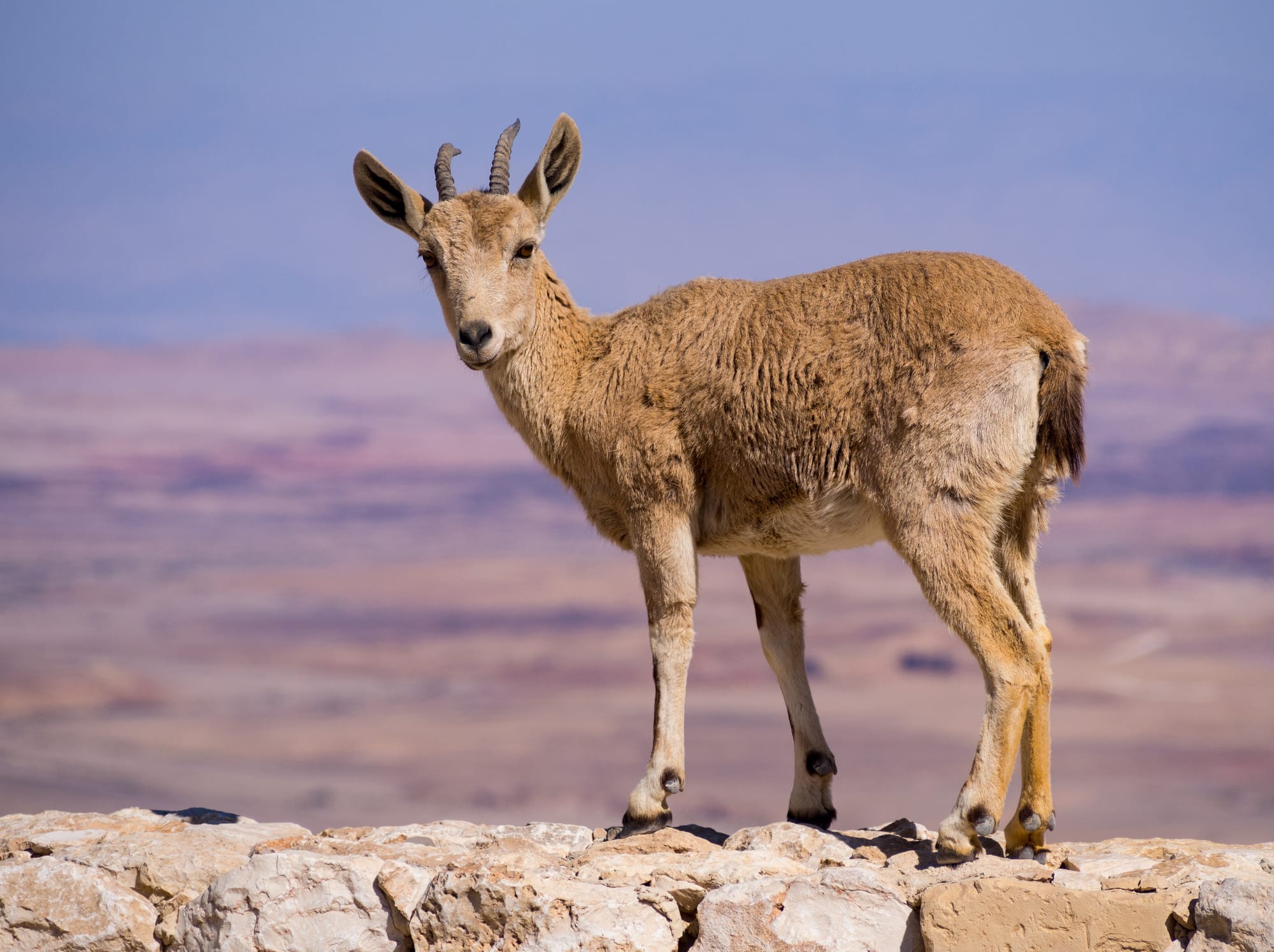
Chapter 10 — Mitzpe Ramon: Life on the Edge of the Crater
A Town Between the Desert and the Sky
On the northern edge of Makhtesh Ramon, one of the most remarkable geological formations in the Middle East, lies the small desert town of Mitzpe Ramon.
Situated along Route 40, between Beersheba and Eilat, the town occupies a dramatic position overlooking an immense natural basin carved into the Negev Highlands.
From the edge of the cliffs, visitors can see layers of rock, ancient geological formations and vast stretches of desert extending towards the horizon.
The landscape is extraordinary, but Mitzpe Ramon is more than a scenic destination.
It is a residential community with schools, shops, cultural institutions, religious congregations and local businesses. Its inhabitants include families with roots in different waves of immigration, artists, tourism workers, educators and residents who have chosen to make their lives in an isolated desert environment.
The town's development has been shaped by government settlement policies, immigration, industry and changing economic opportunities.
More recently, tourism, environmental education and creative industries have become important elements of its identity.
Yet the growth of tourism has also raised questions about affordability, employment, community participation and the preservation of the surrounding environment.
For residents, living beside one of Israel's most recognisable natural landmarks involves a continuing negotiation between the advantages of desert life and the challenges of geographical isolation.
Makhtesh Ramon: Understanding the Geological Landscape
Makhtesh Ramon is frequently described as the Ramon Crater.
However, the term crater can be misleading.
Unlike a crater created by a meteorite impact or volcanic explosion, Makhtesh Ramon developed through geological processes involving uplift and erosion over immense periods of time.
The Hebrew word makhtesh, meaning mortar or grinding bowl, describes a distinctive type of erosion landform.
The formation developed as geological forces shaped the surrounding rock layers, while erosion gradually removed softer material from the interior.
The result is a vast, steep-sided basin exposing rocks of different ages and compositions.
Makhtesh Ramon extends for approximately 40 kilometres and is regarded by the Israel Nature and Parks Authority as the largest of the Negev's makhteshim.
Its geological features include sedimentary layers, colourful sandstone, volcanic rocks and fossils that reveal aspects of the region's distant environmental history.
The landscape provides scientists with opportunities to examine geological processes that would otherwise remain hidden beneath the Earth's surface.
For visitors, the different colours and formations create an extraordinary visual experience.
For researchers, the same landscape offers evidence of geological changes spanning millions of years.
Understanding the makhtesh is essential to understanding Mitzpe Ramon itself.
The town's location, tourism economy and cultural identity are closely connected to the formation immediately beyond its streets.
The Desert Before the Modern Town
Long before the establishment of modern Mitzpe Ramon, the central Negev formed part of a wider landscape used by different communities and travellers.
The region was connected to ancient trade routes that linked the Arabian Peninsula with Mediterranean markets.
During antiquity, Nabataean traders and settlements played an important role in the movement of goods across the Negev.
Archaeological remains throughout the wider region provide evidence of trade, agriculture and settlement in challenging desert conditions.
In later periods, Bedouin communities maintained relationships with the landscape through pastoralism, seasonal movement, local knowledge and trade.
Their use of the region cannot be understood solely through the modern boundaries of towns, nature reserves or state institutions.
Routes, grazing areas, water sources and family territories contributed to patterns of life that existed before the development of contemporary infrastructure.
The establishment of modern settlements and changes in land administration altered these relationships.
Today, the history of Mitzpe Ramon is often presented through the development of the Israeli town.
A fuller understanding must also recognise the longer human history of the surrounding desert, including the experiences and cultural heritage of Bedouin communities.
The landscape was never simply an empty space awaiting modern development.
The Establishment of Mitzpe Ramon
The origins of modern Mitzpe Ramon are closely connected to the construction of a road through the central Negev towards Eilat.
In 1953, a workers' camp was established near the edge of Makhtesh Ramon to support road construction and related activities.
Early settlement initiatives sought to develop a permanent community around the site.
The town's remote location created immediate difficulties.
Transport was limited, infrastructure was incomplete and economic opportunities were uncertain.
Plans for agricultural cooperation and industrial development encountered financial and practical obstacles.
In 1957, Israeli government planners prepared proposals for expanding the settlement and developing employment through mineral extraction, industry and tourism.
However, growth remained slow.
The settlement experienced periods of population decline and economic uncertainty.
The construction of a more direct road to Eilat through the Arava further reduced the importance of Mitzpe Ramon as a stopping point for travellers.
This development demonstrated how infrastructure decisions could influence the prospects of isolated communities.
Mitzpe Ramon continued to develop, but its history was marked by repeated efforts to establish a sustainable economic foundation.
Immigration and the Formation of a Diverse Community
Immigration contributed significantly to Mitzpe Ramon's development.
During the 1960s, families arriving from North Africa and Romania became part of the growing settlement.
Later decades brought additional residents, including immigrants from the former Soviet Union and Ethiopia.
These movements contributed to the town's cultural and social diversity.
Families brought languages, religious practices, food traditions and memories of earlier communities.
As in other Israeli development towns, adapting to life in a remote settlement could involve significant difficulties.
Employment opportunities were limited, and residents had to establish social networks and community institutions.
Housing, education and public services developed gradually.
The town's population also changed through the arrival and departure of people seeking different economic or personal opportunities.
These experiences shaped a local identity influenced by both cultural diversity and geographical isolation.
Mitzpe Ramon is therefore not simply a town of artists or tourists.
Its established residential communities remain an essential part of its history and contemporary character.
Everyday Life in a Remote Desert Town
For residents, everyday life in Mitzpe Ramon involves many of the same responsibilities found elsewhere in Israel.
Parents organise childcare and education, workers travel to their jobs, and families participate in religious and community activities.
However, the town's geographical position creates distinctive circumstances.
Beersheba, the principal urban centre of the Negev, lies roughly 85 kilometres to the north.
Access to specialist medical services, certain educational opportunities and a wider range of employment may require travel.
Residents depend on road connections and public transport services whose availability may be more limited than in larger cities.
The desert climate also affects daily routines.
Summer temperatures, strong sunlight and seasonal weather conditions influence outdoor activities.
The town's elevation means that its climate differs from the hotter low-lying Arava Valley, with cooler nights and winters that can be relatively cold.
These environmental conditions are part of the practical experience of living in the Negev Highlands.
At the same time, some residents value the quiet surroundings, open spaces and sense of community associated with a small town.
The desert landscape provides opportunities for walking, outdoor recreation and environmental education.
For others, limited services or employment prospects may outweigh these advantages.
The experience of living in Mitzpe Ramon therefore depends on personal circumstances rather than a single shared lifestyle.
Families, Schools and Community Relationships
Education is an important consideration for families living in Mitzpe Ramon.
Local schools and educational institutions provide opportunities for children and young people, while some specialised programmes attract students from outside the town.
The surrounding environment also creates possibilities for outdoor learning.
Geology, ecology and desert conservation can become part of educational activities.
The proximity of Makhtesh Ramon offers opportunities to connect classroom subjects with the natural landscape.
However, educational provision in a small town faces practical limitations.
The range of subjects, extracurricular activities and specialist services may be narrower than in a large urban centre.
Families sometimes need to travel for particular programmes or services.
Community relationships can help address some of these difficulties.
Local organisations, parents and educators may cooperate to organise activities and support children.
Nevertheless, community initiatives cannot fully replace public investment.
Maintaining good educational opportunities is important not only for current residents but also for attracting and retaining younger families.
The Artists' Quarter: Creativity in the Desert
One of Mitzpe Ramon's most distinctive contemporary features is its association with artists and creative businesses.
Former industrial spaces have been adapted for workshops, studios, galleries and cultural activities.
The area commonly known as the Artists' Quarter reflects a wider transformation in the town's economic and cultural identity.
Artists have been attracted by the surrounding landscape, the availability of working spaces and the possibility of developing creative communities away from Israel's larger cities.
Activities have included visual arts, crafts, music, performance and design.
Some artists draw inspiration from the colours, geological formations and atmosphere of the desert.
Others explore subjects unrelated to the landscape.
The development of creative industries has contributed to the town's visibility as a cultural destination.
Visitors may combine a trip to the makhtesh with visits to studios, workshops or local businesses.
However, the artistic character of Mitzpe Ramon should not obscure the experiences of residents who are not involved in these activities.
The town contains different social and economic groups whose relationships with tourism and cultural development are not identical.
The growth of an artistic community can generate opportunities while also raising questions about who benefits from the changing local economy.
Tourism and the Transformation of the Local Economy
Tourism has become an important part of Mitzpe Ramon's economic development.
Visitors are attracted by Makhtesh Ramon, desert landscapes, hiking opportunities, geological sites and the town's cultural activities.
Accommodation ranges from smaller guesthouses and desert lodgings to more expensive hospitality establishments.
Restaurants, cafés, tour operators and other businesses serve both visitors and residents.
Tourism can provide employment and encourage investment in local infrastructure.
It can also support businesses that might struggle to survive on the spending of the town's permanent population alone.
However, tourism creates economic vulnerabilities.
Visitor numbers can fluctuate because of seasonal conditions, security developments and wider economic circumstances.
Businesses dependent on tourism may experience periods of uncertainty.
The distribution of economic benefits is another important issue.
Not every resident owns a business or possesses the resources needed to participate directly in tourism.
Employment in hospitality can also differ considerably in wages, stability and opportunities for advancement.
Academic research on tourism development in Mitzpe Ramon has highlighted the importance of examining which groups participate in and benefit from the industry.
Tourism should therefore be assessed not only by visitor numbers or investment, but also by its effects on the wider community.
The Ramon Visitors Centre and the Legacy of Ilan Ramon
The Makhtesh Ramon Visitors Centre occupies a prominent position overlooking the geological formation.
Operated by the Israel Nature and Parks Authority, the centre introduces visitors to the natural history of the makhtesh.
It also commemorates Ilan Ramon, Israel's first astronaut.
Ramon participated in the STS-107 mission aboard the American space shuttle Columbia.
On 1 February 2003, the shuttle disintegrated during re-entry into Earth's atmosphere, killing all seven crew members.
The visitors centre connects his life story with educational presentations about science and the surrounding desert landscape.
This combination reflects two different dimensions of the town's identity.
The makhtesh offers a record of Earth's geological history, while the story of Ilan Ramon connects the site to scientific exploration and modern Israeli history.
For visitors, the centre provides an introduction to both subjects.
Its role also demonstrates how natural landmarks can become places of education and national remembrance.
The Night Sky and Desert Astronomy
The remote landscape surrounding Mitzpe Ramon offers opportunities for observing the night sky.
Away from the brightest urban centres, parts of the Negev Highlands experience relatively low levels of artificial light.
This makes the region attractive for astronomy-related tourism and educational activities.
Visitors may participate in guided stargazing experiences or learn about planets, constellations and astronomical observation.
The relationship between the desert and the night sky has also influenced the cultural image of Mitzpe Ramon.
For some residents and visitors, the darkness and relative quiet create a sense of distance from urban life.
However, dark skies are not guaranteed.
Artificial lighting from settlements, roads and tourism facilities can affect night-time visibility.
The protection of dark-sky conditions therefore requires attention to lighting design and environmental management.
Astronomy tourism can create educational and economic opportunities, but its development must be balanced with the protection of the natural environment.
Wildlife and the Ecology of Makhtesh Ramon
The desert surrounding Mitzpe Ramon supports wildlife adapted to arid conditions.
The wider Negev Highlands provide habitats for species including Nubian ibex, desert reptiles, birds and small mammals.
These animals depend on ecological systems shaped by limited water, sparse vegetation and seasonal environmental changes.
The area around Makhtesh Ramon is particularly associated with sightings of Nubian ibex.
The animals are well adapted to rocky terrain and can sometimes be observed near the town.
However, close encounters between wildlife and people create management challenges.
Feeding wild animals can alter their behaviour and expose them to risks.
Tourism, road traffic and expanding infrastructure can also disturb habitats.
Nature conservation therefore involves more than protecting scenic views.
It requires maintaining ecological relationships and limiting harmful human activity.
The Israel Nature and Parks Authority manages protected areas and provides educational information about the region's natural heritage.
For visitors, observing wildlife responsibly offers an opportunity to appreciate the desert as a living ecosystem rather than an empty landscape.
From Mineral Extraction to Geological Conservation
The geological resources of Makhtesh Ramon contributed to earlier industrial activity.
Mineral extraction and quarrying were among the economic activities associated with the development of the town.
These operations altered parts of the landscape.
Over time, changing environmental priorities and conservation initiatives encouraged different approaches to the area's geological heritage.
The Ramon Colours National Park provides an example of this transformation.
Former mining areas have been incorporated into a geological visitor route, with interpretative information explaining the exposed rock formations and industrial history.
The site demonstrates how landscapes affected by extraction can be rehabilitated for educational and recreational purposes.
However, rehabilitation does not necessarily restore every ecological or geological feature to its original condition.
Former industrial sites may continue to require management and monitoring.
The transformation of these areas reflects a wider change in how the value of the desert is understood.
Geological formations once regarded primarily as sources of raw materials are increasingly recognised for their scientific, educational and environmental importance.
Bedouin Heritage and the Wider Desert Landscape
The cultural history of the Negev Highlands includes Bedouin communities whose relationships with the region predate the establishment of modern Mitzpe Ramon.
Pastoral livelihoods, local knowledge and movement through the desert contributed to patterns of land use over generations.
Bedouin heritage includes knowledge of water sources, seasonal conditions, animal husbandry and routes through the landscape.
However, contemporary Bedouin communities are diverse, and their lives cannot be reduced to historical pastoral traditions.
Changes in land administration, settlement patterns, employment and education have transformed many aspects of Bedouin society.
Tourism sometimes presents Bedouin culture through hospitality experiences, traditional meals or demonstrations of older practices.
Such activities can create opportunities for cultural exchange and income.
Yet they should not be mistaken for a complete representation of contemporary Bedouin life.
The relationship between modern towns, protected areas and Bedouin land use also raises questions concerning historical access, planning and cultural recognition.
A balanced account of Mitzpe Ramon must therefore consider the wider human landscape, not only the history of the municipality itself.
The Challenge of Housing and Affordability
The growing appeal of Mitzpe Ramon as a tourism and cultural destination has implications for housing and local development.
In small towns, changes in demand can influence the availability and price of residential property.
Accommodation intended for tourists may compete with other uses of housing, although the scale of this effect requires local evidence.
New residents may bring investment, professional skills and business opportunities.
At the same time, existing residents may have different priorities concerning housing, public services and the direction of development.
For younger families, the availability of suitable and affordable homes can influence decisions about remaining in the town.
Housing policy therefore forms part of the broader question of sustainable regional development.
The challenge is to accommodate economic growth without excluding residents whose incomes or circumstances differ from those of investors and visitors.
Different Communities, Different Visions
Mitzpe Ramon contains residents with different cultural backgrounds, religious practices and economic circumstances.
Some families have lived in the town for generations.
Others arrived more recently, attracted by the desert environment, educational opportunities or creative industries.
These groups may hold different views about the town's future.
Some favour greater tourism development and commercial investment.
Others place greater emphasis on affordable housing, employment opportunities and public services.
Environmental concerns may influence another set of priorities.
These differences are not necessarily irreconcilable.
However, they demonstrate why local participation matters.
Development policies that appear successful from an economic perspective may not benefit all residents equally.
Research on community-based tourism in Mitzpe Ramon has identified differing experiences of empowerment and exclusion among local groups.
This finding challenges the assumption that tourism automatically improves the circumstances of an entire community.
Meaningful local development requires attention to the perspectives of residents whose interests and resources differ.
Environmental Pressures and Responsible Tourism
The increasing popularity of desert tourism creates environmental challenges.
Visitors may travel through sensitive habitats, use off-road vehicles or participate in activities that disturb wildlife.
Waste management and water consumption are additional concerns.
The desert's sparse vegetation and slow ecological recovery can make certain forms of damage particularly persistent.
Responsible tourism requires clear guidance, appropriate infrastructure and enforcement of conservation rules.
Visitors should remain on permitted routes, avoid feeding wildlife and respect restrictions designed to protect natural areas.
Tour operators and accommodation providers also have responsibilities.
Reducing unnecessary water use, managing waste and limiting environmental disturbance can help reduce tourism's impact.
However, sustainability cannot depend solely on individual behaviour.
Planning decisions concerning roads, accommodation, energy infrastructure and visitor access influence the long-term condition of the landscape.
Protecting Makhtesh Ramon therefore requires cooperation between public authorities, local businesses, residents and conservation organisations.
A Town at the Crossroads of Development and Conservation
Mitzpe Ramon's future depends on balancing several priorities.
Tourism and creative industries offer opportunities for employment and economic diversification.
Environmental education and scientific research contribute to the town's distinctive identity.
At the same time, residents require affordable housing, accessible healthcare, quality education and reliable transport.
The surrounding landscape creates economic opportunities but also imposes environmental limits.
Expanding tourism without considering these limits could damage the natural qualities that attract visitors in the first place.
Similarly, focusing exclusively on visitor experiences could overlook the needs of permanent residents.
A sustainable approach must recognise that Mitzpe Ramon is both a destination and a community.
Its long-term success cannot be measured only through hotels, visitor numbers or international recognition.
It must also be evaluated through the everyday opportunities available to those who live there.
Beyond the View from the Crater
For many visitors, Mitzpe Ramon is remembered through a single image: the vast landscape of Makhtesh Ramon stretching beneath the desert sky.
Yet the town's significance extends beyond this remarkable view.
Its history reflects the challenges of establishing communities in remote regions, the experiences of immigrants, the transformation of local industries and the development of new cultural and economic identities.
Its residents live within a landscape that attracts scientists, artists and travellers from around the world.
They also face practical questions about employment, housing, education and access to services.
The story of Mitzpe Ramon demonstrates that natural beauty and community development are closely connected but not always easily reconciled.
Protecting the desert is essential to the region's ecological future.
Supporting the people who live beside it is equally important.
Together, these responsibilities define the challenge facing Mitzpe Ramon in the decades ahead.
From the cliffs of Makhtesh Ramon, the journey through southern Israel continues towards Eilat, where the desert meets the Red Sea and a different set of cultural, economic and environmental realities emerges.
Chapter 11 — Eilat: A City Between Desert and Sea
Where Three Countries Meet
At the southernmost point of Israel, where the mountains of the Negev descend towards the Red Sea, lies Eilat.
The city occupies a narrow stretch of coastline at the northern end of the Gulf of Aqaba, known in Israel as the Gulf of Eilat. Across the water stands the Jordanian city of Aqaba, while Egypt's Sinai Peninsula begins just to the southwest.
Few Israeli cities have such a distinctive geographical position.
Eilat is simultaneously a holiday destination, a residential city, a commercial port and a strategically important connection to the Red Sea.
For visitors, it is often associated with beaches, hotels, diving and year-round sunshine. For residents, however, everyday life involves employment, education, housing, transport and the practical difficulties of living hundreds of kilometres from Israel's principal population centres.
The city is also shaped by its proximity to international borders.
Political developments in Egypt, Jordan, Yemen and the wider Middle East can influence its economy, transport connections and security.
Eilat's identity therefore extends far beyond tourism.
It is a city where geographical isolation, international connections and local community life exist side by side.
Before Eilat: The History of the Northern Red Sea
The northern end of the Gulf of Aqaba has been connected to regional trade and settlement for thousands of years.
Ancient routes linked the Red Sea with the Arabian Peninsula, the Levant and Mediterranean markets.
The area surrounding modern Eilat and Aqaba was associated with trade, maritime activity and settlements whose importance changed over time.
The biblical names Elath and Ezion-Geber are connected with the region, although the precise identification of some ancient sites remains debated among historians and archaeologists.
During later historical periods, the wider area came under different political authorities, including Roman, Byzantine, Islamic and Ottoman rule.
Its strategic value was linked to access to the sea and the movement of people and goods between inland trade routes and maritime networks.
Bedouin communities also maintained longstanding relationships with the surrounding desert through pastoralism, trade and knowledge of local routes and resources.
The modern international boundaries separating Israel, Jordan and Egypt did not exist in their present form during much of this history.
Understanding Eilat therefore requires recognising that the city developed within a region whose commercial and cultural connections long predate the modern state system.
From Umm Rashrash to Modern Eilat
The establishment of modern Israeli Eilat is closely connected to the final stages of the 1948–49 Arab–Israeli War.
In March 1949, Israeli forces advanced towards the northern Red Sea during Operation Uvda.
On 10 March, they reached the former police post at Umm Rashrash.
The raising of an improvised Israeli flag at the site became a well-known image in Israeli national history.
The event marked the establishment of Israeli control over the location that would develop into Eilat.
In Israeli commemorative language, it is frequently described as the liberation of Eilat. A more neutral historical account recognises it as the culmination of an Israeli military operation during the 1948–49 war.
The modern settlement developed during the following years.
Early residents included workers, military personnel and people employed in the construction of infrastructure.
Living conditions were difficult.
The location was remote, transport connections were limited and the surrounding environment offered few natural resources for urban development.
Nevertheless, the Israeli government regarded access to the Red Sea as strategically and economically important.
Eilat was formally declared a city in 1959.
Its subsequent development was shaped by investment in transport, maritime facilities, housing and tourism.
A Strategic Gateway to the Red Sea
Eilat's geographical position has long influenced Israeli economic and security planning.
Unlike Israel's Mediterranean ports, Eilat provides access to the Red Sea and maritime routes towards the Indian Ocean.
Commercial vessels travelling through the Gulf of Aqaba pass through the Straits of Tiran before reaching the wider Red Sea.
The strategic significance of these waters became particularly apparent during the decades following Israel's establishment.
Restrictions on Israeli shipping through the Straits of Tiran contributed to regional tensions.
Egypt's closure of the straits to Israeli shipping in May 1967 was among the developments preceding the Six-Day War.
Following the 1979 Egypt–Israel peace treaty and Israel's withdrawal from Sinai, maritime access became part of a different regional security environment.
The 1994 peace treaty between Israel and Jordan further changed the political context of the northern Gulf of Aqaba.
However, Eilat's strategic position continues to create vulnerabilities.
Its access to international shipping depends on maritime routes extending far beyond Israel's immediate coastline.
Events in the Red Sea, including attacks on commercial vessels, can therefore have direct economic consequences for the city.
The Port of Eilat and International Trade
The Port of Eilat has historically served as Israel's principal commercial maritime connection to the Red Sea.
Its activities have included vehicle imports and the handling of bulk commodities.
Although the port is considerably smaller than Israel's major Mediterranean ports, it has provided an alternative route for certain types of trade.
Its economic significance is closely connected to the accessibility of shipping routes through the Red Sea.
When maritime traffic is disrupted, the port's commercial activity can decline sharply.
This vulnerability became especially visible after late 2023, when Yemen's Houthi movement began attacking commercial shipping in the Red Sea and surrounding waters.
The Houthis described their campaign as an expression of support for Palestinians during the war in Gaza.
Their attacks, which threatened international maritime traffic, led shipping companies to reroute vessels away from affected waters.
Eilat was among the ports significantly affected.
In December 2023, Reuters reported that the port's chief executive had described an approximately 85 per cent decline in activity.
By July 2025, port officials were warning that the continuing disruption threatened the facility's financial viability.
These developments illustrate how a relatively small city can be affected by conflicts occurring hundreds or thousands of kilometres away.
The economic consequences extend beyond the port itself.
Transport companies, service providers and workers connected to maritime activity may also be affected.
Eilat's experience demonstrates the importance of maritime security to regional trade and local employment.
The Rise of Eilat as a Tourist Destination
Tourism became one of the principal foundations of Eilat's modern economy.
The city's warm climate, beaches and access to the Red Sea attracted domestic and international visitors.
During the second half of the twentieth century, investment in hotels, roads and recreational facilities contributed to the expansion of the tourism industry.
The development of diving and marine tourism created additional attractions.
The city's proximity to desert landscapes also encouraged excursions into the surrounding mountains and the Arava Valley.
Over time, Eilat became associated with family holidays, beach tourism, water sports and large hospitality establishments.
The expansion of tourism created employment opportunities in hotels, restaurants, transport and entertainment.
However, the industry also introduced economic dependence on visitor demand.
Tourism is sensitive to security conditions, economic downturns, travel restrictions and changes in consumer preferences.
For businesses and workers, fluctuations in visitor numbers can create uncertainty.
The city's economic history therefore illustrates both the opportunities and vulnerabilities associated with tourism-led development.
The City Beyond the Hotels
For tourists, Eilat may appear primarily as a collection of beaches, restaurants and holiday resorts.
For residents, it is a permanent home.
Families organise school schedules, visit healthcare facilities, shop for groceries and participate in community activities.
Children grow up in neighbourhoods that may be geographically close to tourist areas but socially distinct from them.
Local residents work in education, healthcare, municipal services, retail, transport and other professions.
The city's population includes families with different cultural backgrounds and histories of migration.
Religious and secular lifestyles coexist, as they do elsewhere in Israel.
Synagogues, schools, community centres and public spaces contribute to local identity.
The presence of tourists influences the urban environment, but it does not define every aspect of residents' lives.
For many households, the central concerns are familiar: stable employment, suitable housing, accessible services and opportunities for children.
These realities are essential to understanding Eilat as a functioning city rather than simply a holiday destination.
Families and Community Life
Eilat's relative isolation can influence the relationships between residents.
Families who live far from relatives elsewhere in Israel may rely on local friendships and community networks for practical support.
Schools, sports organisations, religious institutions and neighbourhood activities provide opportunities for social interaction.
The city's climate and coastal location also shape leisure activities.
Residents may spend time at beaches, parks and outdoor recreational facilities, although summer heat can make certain activities less comfortable during the hottest hours.
Community life is not uniform.
Some residents have longstanding family connections to the city.
Others arrive for employment or education and remain for shorter periods.
Workers in tourism may experience schedules that differ from those of families employed in schools or public institutions.
These differences influence social routines and the opportunities available for community participation.
Education and Opportunities for Young People
Education is central to Eilat's long-term development.
Local schools serve children from different backgrounds, while educational and vocational programmes seek to prepare young people for employment and further study.
The city's geographical distance from major universities presents a particular challenge.
Students wishing to pursue specialised degrees may need to relocate.
For some families, this creates additional financial costs.
Others may choose to remain in Eilat and pursue educational opportunities available locally or through distance-learning arrangements.
The development of higher education and professional training in the city has therefore been an important policy objective.
Education also influences the city's ability to retain younger residents.
A community that depends heavily on tourism may struggle to offer the range of careers sought by graduates.
Expanding opportunities in healthcare, technology, environmental science and other fields could help diversify the local economy.
However, creating these opportunities requires sustained investment and cooperation between educational institutions, employers and public authorities.
Working in a Tourism Economy
Tourism creates employment for thousands of people across Eilat's hospitality and service industries, although the number of jobs varies over time.
Hotels require reception staff, housekeepers, chefs, maintenance workers, managers and other employees.
Restaurants, entertainment businesses and transport providers depend on additional labour.
These industries offer opportunities for residents with different levels of education and professional experience.
However, hospitality work can involve irregular hours, weekend shifts and seasonal fluctuations.
Some positions provide opportunities for career development, while others offer limited job security or relatively modest wages.
The cost of housing and everyday expenses can influence whether workers are able to establish long-term lives in the city.
Eilat's dependence on tourism therefore raises questions about the relationship between economic growth and employment quality.
A successful visitor economy does not automatically guarantee financial security for every resident.
The challenge is to ensure that tourism supports sustainable livelihoods alongside commercial development.
Housing and the Cost of Living
Housing is an important concern in Eilat.
The city's geographical setting limits the directions in which urban development can expand.
Mountains, desert landscapes, infrastructure and environmental considerations influence planning decisions.
Demand for accommodation comes from permanent residents, workers and visitors.
These groups do not necessarily have the same housing needs.
Tourist accommodation can generate substantial economic activity, while local families require stable and affordable homes.
For younger residents, access to housing may influence decisions about remaining in the city.
Workers employed in lower-paid service occupations can face particular difficulties if accommodation costs rise faster than earnings.
New residential development may help address some pressures, but it also requires investment in schools, transport, utilities and other services.
Housing policy must therefore be considered alongside broader questions of employment and community development.
A City Dependent on Transport Connections
Eilat's distance from Israel's principal population centres makes transport especially important.
Road connections link the city with the Arava Valley, the Negev Highlands and central Israel.
Long-distance buses and private vehicles provide essential connections for residents and visitors.
Air travel has also played an important role.
Ramon Airport, which opened in 2019 north of Eilat, replaced the city's former airport and serves domestic and international aviation.
The airport's development reflected efforts to improve transport infrastructure and support tourism.
However, the availability of flights depends on airline decisions, demand and security conditions.
Residents requiring specialist healthcare, education or professional services elsewhere in Israel may need to travel considerable distances.
These circumstances influence everyday life in ways that tourists may not immediately recognise.
Reliable transport is therefore not merely a convenience.
It is an essential component of economic opportunity and access to public services.
Eilat and Aqaba: Neighbours Across the Water
One of Eilat's most distinctive geographical features is its proximity to Aqaba, Jordan's principal Red Sea port city.
The two cities face one another across the northern end of the gulf.
Their shared geography creates opportunities for cooperation in tourism, trade and environmental management.
The 1994 Israel–Jordan peace treaty established diplomatic relations and created a framework for cooperation between the countries.
The Yitzhak Rabin–Wadi Araba border crossing, situated north of Eilat, became an important connection between the two states.
However, the relationship between Eilat and Aqaba is influenced by wider political developments.
Regional conflicts, diplomatic tensions and changing travel regulations can affect cross-border movement.
The existence of a peace treaty does not eliminate disagreements or guarantee uninterrupted cooperation.
Nevertheless, the cities share environmental concerns.
Marine pollution, coastal development and the protection of coral reefs affect the wider Gulf of Aqaba.
These challenges provide practical reasons for cooperation, even when political relations are strained.
Egypt, Sinai and the Southern Border
Eilat also lies close to Egypt's Sinai Peninsula.
The Taba border crossing connects the area with Egypt.
The relationship between Israel and Egypt changed fundamentally following the 1979 peace treaty.
Israel's withdrawal from Sinai, completed in 1982, restored Egyptian sovereignty over the peninsula.
Taba itself was returned to Egypt in 1989 following international arbitration.
For travellers, the border has provided access between Eilat and destinations in southern Sinai.
However, travel patterns depend on security conditions, border regulations and political circumstances.
The proximity of Egypt is also important to the region's wider geography.
The Gulf of Aqaba is bordered by Israel, Jordan, Egypt and Saudi Arabia.
Its environmental and maritime significance therefore extends beyond any single country.
Eilat's position within this shared maritime region creates opportunities for economic activity, but also requires attention to international relations.
Security and the Effects of Regional Conflict
Although Eilat is geographically distant from Israel's borders with Gaza and Lebanon, it has not been isolated from regional security developments.
The city has experienced security threats connected to conflicts in the wider Middle East.
Following the Hamas-led attacks of 7 October 2023 and the subsequent war in Gaza, regional tensions expanded.
Yemen's Houthi movement launched missiles and drones towards Israel and attacked commercial shipping in the Red Sea.
Eilat became one of the locations affected by these threats.
In September 2025, a drone attack on the city injured at least 20 people, according to Israeli emergency services cited by Reuters.
Israel subsequently carried out strikes in Yemen, which it said targeted Houthi military infrastructure. Houthi authorities reported civilian casualties.
These developments illustrate how the conflict extended beyond Gaza and affected communities elsewhere in the region.
For residents of Eilat, security concerns can influence tourism, employment and perceptions of safety.
The effects are not limited to direct attacks.
Disruptions to shipping, changes in airline operations and uncertainty among travellers can also affect the local economy.
Eilat as a Place of Temporary Refuge
Following the attacks of 7 October 2023, Eilat became one of the Israeli cities accommodating people displaced from communities affected by the violence and subsequent conflict.
Hotels and other accommodation facilities were used to house evacuees.
The arrival of displaced families created additional demands on education, healthcare and municipal services.
Children required schooling, while adults faced uncertainty about employment and returning home.
Local authorities, civil society organisations and volunteers participated in efforts to provide assistance.
For some residents, the arrival of evacuees created opportunities for solidarity and community support.
However, prolonged displacement also presented practical and emotional difficulties.
Living in temporary accommodation cannot fully replace the stability of a permanent home.
The experience demonstrated both the capacity of Eilat's hospitality infrastructure to provide emergency accommodation and the limitations of relying on tourism facilities for long-term displacement.
The Red Sea as a Source of Identity
The Red Sea is central to Eilat's identity.
Its waters support tourism, recreation, scientific research and marine ecosystems.
For many residents, the coastline is an important part of everyday life.
Swimming, diving and other water-based activities contribute to the city's recreational culture.
However, the sea is more than an attraction.
It is a living environment whose ecological health influences the city's future.
The Gulf of Aqaba contains coral reefs, fish and other marine organisms adapted to its environmental conditions.
Its relatively clear waters and distinctive marine habitats have attracted researchers from Israel and abroad.
The protection of these ecosystems is therefore both an environmental responsibility and an economic concern.
Coral Reefs and the Pressure of Coastal Development
The coral reefs of the Gulf of Aqaba are among the region's most important natural assets.
They support diverse marine life and provide opportunities for scientific research and responsible tourism.
However, coral ecosystems are vulnerable to environmental pressures.
Coastal construction, pollution, physical damage and changes in water temperature can affect reef health.
The Israel Nature and Parks Authority operates protected areas and monitoring programmes in the Gulf of Eilat.
Its research has identified differences in ecological conditions between sites with varying levels of visitor pressure and protection.
Monitoring following an unusually severe storm in March 2020 also documented damage to shallow reefs.
These findings demonstrate the importance of long-term scientific observation.
Although some coral populations in the northern Red Sea have shown unusual tolerance to elevated temperatures in research settings, this does not make them immune to climate change or local environmental damage.
Protecting the reefs requires careful management of tourism, coastal infrastructure and marine activities.
The environmental future of Eilat is therefore closely connected to the decisions made about development along its limited coastline.
Environmental Research and Marine Science
Eilat's marine environment has made it an important location for scientific research.
The Interuniversity Institute for Marine Sciences in Eilat supports research and education concerning the Red Sea and marine ecosystems.
Scientists study coral reefs, marine biodiversity, oceanographic conditions and environmental change.
Their work contributes to broader understanding of how marine ecosystems respond to human activity and climate pressures.
Research also provides information relevant to conservation policy.
Monitoring programmes can identify changes in coral cover, fish populations and water conditions.
However, scientific findings must be translated into practical management decisions.
Research alone cannot protect ecosystems if damaging activities continue unchecked.
The relationship between scientific institutions, environmental authorities and local development therefore plays an important role in the city's future.
Tourism, Nature and the Limits of Growth
Eilat's tourism industry depends heavily on the qualities that make the city attractive: sunshine, beaches, marine life and desert scenery.
Yet expanding tourism can place pressure on those same resources.
Hotels and recreational facilities require water, energy and land.
Visitors generate waste and increase demand for transport.
Marine tourism can create risks if boats, divers or swimmers damage sensitive habitats.
Coastal development can also affect the physical environment.
The challenge is not necessarily to prevent tourism, but to manage its environmental effects.
Sustainable development requires attention to water efficiency, waste management, energy use and the protection of natural areas.
It also requires consideration of the people who live in Eilat throughout the year.
A city designed primarily around visitors may not always meet the needs of permanent residents.
Balancing these interests is central to the future of the city.
Economic Diversification Beyond Tourism
Eilat's dependence on tourism has encouraged discussion about economic diversification.
Potential areas of development include marine research, renewable energy, technology, logistics and professional services.
The city's geographical location and climate create opportunities for certain industries.
However, diversification is not straightforward.
Businesses must consider transport costs, access to skilled workers, infrastructure and distance from major markets.
Educational opportunities also influence the availability of qualified employees.
For new industries to contribute meaningfully to the local economy, they must provide sustainable employment and opportunities for residents.
Economic diversification should therefore be understood as a long-term process rather than a simple solution to tourism-related vulnerabilities.
The Next Generation of Eilat
For younger residents, the future of Eilat is closely connected to education, employment and housing.
Some may wish to remain in the city because of family connections, its coastal environment or the opportunities available in tourism and local services.
Others may leave to pursue higher education or careers elsewhere.
The challenge for policymakers is to create conditions that make remaining or returning a realistic choice.
This includes developing professional employment opportunities, improving access to education and maintaining affordable housing.
Public services must also adapt to changing population needs.
The city's future cannot be secured through tourism investment alone.
It depends on whether younger generations can establish stable lives and participate in shaping the community.
A City Looking Towards the Wider Region
Eilat's location gives it a perspective that differs from that of many other Israeli cities.
Its immediate geographical neighbours include Jordan and Egypt, while the Red Sea connects it to maritime routes extending towards Africa and Asia.
These connections create opportunities for cooperation, trade and cultural exchange.
They also expose the city to regional instability.
The experience of Eilat demonstrates that geographical distance from Israel's principal political and economic centres does not mean isolation from international developments.
On the contrary, the city's location makes it particularly sensitive to events beyond its borders.
Its future will be influenced by regional security, international shipping, environmental cooperation and the strength of its local economy.
Beyond the Holiday Destination
Eilat is often presented through images of beaches, hotels and the Red Sea.
These images capture an important part of the city's character, but they tell only part of its story.
Behind the tourism industry lies a permanent community whose residents face questions about employment, housing, education and public services.
The city has developed from a remote settlement into an important regional centre.
Its port, airport, hotels and scientific institutions reflect different stages of economic development.
Its geographical position has created opportunities while exposing it to political and environmental vulnerabilities.
Eilat's future depends on balancing these competing realities.
Tourism must coexist with the needs of residents.
Economic development must be considered alongside environmental protection.
Regional cooperation offers possibilities, but political instability remains a significant constraint.
Ultimately, Eilat is more than a destination at the end of the road through the Negev.
It is a city whose identity has been shaped by the meeting of desert, sea, communities and international borders.
Its story illustrates how geography can influence nearly every aspect of urban life, from employment and transport to environmental policy and regional security.
The following chapter turns from the city itself to the waters that have shaped its history and economy, examining the extraordinary marine environment of the Red Sea and the challenges involved in protecting it.

Chapter 12 — The Red Sea: Nature, Tourism and Environmental Challenges
An Extraordinary Sea Between Continents
At the southern edge of Israel, the desert meets one of the world's most remarkable marine environments.
The Red Sea stretches between northeastern Africa and the Arabian Peninsula, connecting the Mediterranean region to the Indian Ocean through a system of strategically important waterways.
Its northern branches, the Gulf of Aqaba and the Gulf of Suez, extend into landscapes dominated by desert mountains and arid coastlines.
For the communities living along its shores, the Red Sea has historically provided opportunities for trade, fishing, transport and cultural exchange.
Today, it supports international shipping, tourism, scientific research and coastal economies.
Beneath its surface lies another world.
Coral reefs, colourful fish, marine invertebrates and other organisms form complex ecosystems adapted to the sea's distinctive environmental conditions.
These habitats are particularly important because coral reefs around the world face increasing pressure from climate change, pollution and coastal development.
Research has identified unusual heat tolerance among certain coral populations in the northern Red Sea, raising the possibility that parts of the region could provide important refuges as ocean temperatures rise.
However, scientific findings also demonstrate that this resilience has limits.
The future of the Red Sea will depend on whether economic development, maritime activity and environmental protection can be managed together.
The Geography of the Red Sea
The Red Sea is a long, narrow body of water extending from the Bab el-Mandeb Strait in the south towards the Sinai Peninsula in the north.
Its western coastline includes Egypt, Sudan, Eritrea and Djibouti.
To the east lie Saudi Arabia and Yemen.
At its northern end, the Gulf of Aqaba is bordered by Egypt, Israel, Jordan and Saudi Arabia.
The Gulf of Suez extends northwest towards the Suez Canal.
These waterways have considerable international importance.
The Suez Canal connects the Red Sea with the Mediterranean, providing a major shipping route between Europe and Asia.
The Bab el-Mandeb Strait connects the Red Sea with the Gulf of Aden and the wider Indian Ocean.
As a result, the Red Sea forms part of one of the world's most significant maritime corridors.
Its geography also influences environmental conditions.
The sea experiences high evaporation, relatively limited freshwater input and distinctive patterns of circulation.
Water temperature, salinity and nutrient availability vary between different parts of the basin.
These variations influence the distribution of marine species and the development of coral reefs.
The northern Gulf of Aqaba is therefore not environmentally identical to the central or southern Red Sea.
This distinction is particularly important when examining coral resilience and climate change.
A Marine Ecosystem of Exceptional Diversity
The Red Sea supports a wide variety of marine habitats.
Coral reefs are among its most recognisable features, but they form only part of the wider ecosystem.
Seagrass beds, mangroves, sandy seabeds and deeper marine environments also provide habitats for different species.
Coral reefs create complex underwater structures.
Their branches, crevices and surfaces provide shelter and feeding opportunities for fish and marine invertebrates.
Reef fish contribute to ecological processes including grazing, predation and the movement of nutrients.
Other organisms, such as sea urchins, molluscs and crustaceans, play different roles within the marine environment.
The ecological importance of a reef cannot be measured solely by the number of colourful fish visible to divers.
Healthy marine ecosystems depend on relationships between species and their surrounding environment.
Changes affecting one part of the system can influence others.
For example, the decline of herbivorous fish or other grazing organisms may contribute to changes in algal growth, depending on local conditions.
Similarly, the loss of living coral can reduce habitat complexity and affect species that depend on reef structures.
Protecting marine biodiversity therefore requires attention to the functioning of entire ecosystems.
How Coral Reefs Are Formed
Coral reefs are built primarily by colonies of small animals known as coral polyps.
Many reef-building corals live in a close relationship with microscopic algae that provide much of their energy through photosynthesis.
In return, the algae receive protection and access to nutrients within coral tissues.
Over time, reef-building corals deposit calcium carbonate skeletons.
The accumulation of these structures creates the physical framework of a coral reef.
Reef development depends on several environmental conditions, including light, temperature, water chemistry and the availability of suitable surfaces.
Because many reef-building corals depend on photosynthetic algae, they are commonly found in relatively shallow, well-lit waters.
However, different coral species have different environmental requirements.
The Red Sea's coral communities reflect these variations.
Their structures and growth patterns have developed in response to local conditions over long periods.
Coral reefs are living systems rather than permanent geological monuments.
They grow, experience disturbance, recover and change.
Their survival depends on whether environmental conditions remain suitable for the organisms that build and maintain them.
Why the Gulf of Aqaba Is Scientifically Important
The Gulf of Aqaba has attracted considerable scientific attention because some of its coral populations display unusually high tolerance to elevated water temperatures.
This characteristic is especially significant at a time when coral reefs elsewhere are experiencing widespread bleaching.
Researchers have investigated how corals in the northern Red Sea respond to thermal stress.
One explanation concerns the environmental history of coral populations that colonised the northern Red Sea.
Scientists have proposed that historical migration through warmer southern waters may have favoured heat-tolerant coral populations.
Those surviving in the cooler northern Gulf of Aqaba could consequently retain a capacity to withstand temperatures above those they normally experience.
This hypothesis has helped guide research into the region's potential role as a climate refuge.
However, the concept of a refuge requires careful interpretation.
It does not mean that every coral species is equally resistant to warming.
Nor does it mean that the reefs are protected from pollution, physical damage or other environmental pressures.
Their future depends on multiple factors operating simultaneously.
What Recent Research Reveals About Coral Resilience
Scientific research published in October 2025 provided important evidence concerning coral responses to marine heatwaves in the Gulf of Aqaba.
Researchers Na'ama-Rose Kochman and Maoz Fine examined coral colonies across four summers characterised by varying levels of heat stress.
The study included the severe marine heatwave of 2024.
According to the researchers, that event lasted 113 days, with sea-surface temperatures reaching 32.6°C.
The study reported that monitored colonies from five coral groups survived the extreme thermal conditions without observed bleaching.
However, the responses were not identical.
Some corals maintained relatively stable physiological conditions, while others experienced changes in their symbiotic algae before recovering.
The findings strengthened the evidence that certain coral populations in the Gulf of Aqaba possess exceptional heat tolerance.
At the same time, the researchers warned that emerging bleaching in shallow areas could indicate that the region's thermal refuge is approaching its limits.
These findings are important because they distinguish resilience from immunity.
Corals may withstand environmental conditions that would severely damage other populations while remaining vulnerable to further warming or additional pressures.
The Gulf of Aqaba offers an important opportunity for scientific research, but its reefs cannot be assumed to survive indefinitely without effective protection.
Coral Bleaching: What Happens Beneath the Surface?
Coral bleaching occurs when corals lose their symbiotic algae or when the concentration of pigments associated with those algae declines substantially.
This process is often triggered by environmental stress, particularly unusually high water temperatures.
Because the algae contribute to coral nutrition and colour, their loss can leave coral tissues appearing pale or white.
Bleaching does not necessarily mean that a coral has died.
Some corals can recover if stressful conditions improve.
However, prolonged or severe bleaching can reduce energy availability, increase vulnerability to disease and lead to mortality.
The severity of bleaching depends on factors including coral species, water temperature, duration of exposure, light conditions and local environmental pressures.
The consequences can extend beyond individual coral colonies.
If large areas of reef-building coral die, the structure and ecological functions of the reef may deteriorate.
This can affect fish populations, biodiversity and the services reefs provide to coastal communities.
The Red Sea has experienced bleaching events, but their intensity has varied geographically.
It is therefore inaccurate to describe the entire sea as either uniformly resilient or uniformly devastated.
A Warning from the Central Red Sea
Research published in 2026 documented severe coral bleaching and mortality in parts of the central Red Sea during the 2024 global bleaching event.
The researchers reported exceptionally high bleaching prevalence at surveyed shallow reef sites.
At those sites, living coral cover declined sharply between August 2024 and early 2025.
The study also identified differences in the effects of heat exposure at different depths.
These findings provide an important contrast with observations from the northern Gulf of Aqaba.
They demonstrate that coral resilience varies considerably across the Red Sea.
Environmental conditions, species composition and local ecological factors all influence outcomes.
The results also underline the danger of treating the Red Sea's coral reefs as a single, uniformly heat-resistant ecosystem.
Some areas have experienced severe damage even while particular northern populations have demonstrated remarkable tolerance.
For conservation policy, this distinction matters.
Protecting reefs requires locally appropriate measures supported by scientific monitoring.
The Importance of Marine Research
Scientific institutions in countries bordering the Red Sea contribute to research on coral reefs and marine ecosystems.
In Eilat, the Interuniversity Institute for Marine Sciences supports research into marine biology, oceanography and environmental change.
Israeli researchers also participate in programmes examining coral physiology, biodiversity and long-term ecological conditions.
In Jordan, marine scientists study the reefs and coastal environments around Aqaba.
Egyptian research institutions and conservation organisations monitor marine ecosystems along the Sinai Peninsula and the wider Red Sea coast.
Saudi Arabian institutions have expanded research into coral ecology and marine environmental conditions.
These activities contribute to a growing body of scientific knowledge.
However, research programmes differ in methods, geographical coverage and objectives.
Comparing results requires attention to these differences.
Long-term monitoring is particularly valuable because it allows scientists to distinguish temporary changes from sustained ecological trends.
A single survey may identify damage, but repeated observations are needed to assess recovery, continued decline or the effects of management interventions.
Eilat's Coral Reefs and Protected Marine Areas
Along Israel's short Red Sea coastline, coral reefs are among the most important natural attractions.
The Eilat Coral Beach Nature Reserve provides access to a protected marine environment.
Visitors can observe reef habitats through designated areas and regulated activities.
The Israel Nature and Parks Authority is responsible for managing protected sites and implementing conservation measures.
These measures aim to reduce damage from human activity while allowing educational and recreational access.
However, the coastline is limited, and different uses compete for space.
Tourism facilities, port infrastructure, beaches and marine conservation areas exist within a relatively small geographical area.
This concentration increases the importance of careful planning.
Protected areas can help reduce certain pressures, but their effectiveness depends on enforcement, ecological monitoring and management beyond reserve boundaries.
Marine organisms do not remain confined to administrative lines.
Water quality, pollution and ecological changes outside a protected area can still affect the reefs within it.
Tourism: Opportunity and Environmental Pressure
The Red Sea's coral reefs attract divers, snorkellers and other visitors from around the world.
Tourism supports hotels, restaurants, transport companies, diving centres and local businesses.
For coastal communities, this activity can provide important employment and economic opportunities.
However, marine tourism also creates environmental pressures.
Divers and snorkellers may accidentally damage coral through physical contact.
Boats can affect marine habitats through anchoring, pollution or poorly managed operations.
Coastal facilities increase demand for water, energy and waste management.
High visitor numbers can also concentrate activity in relatively small reef areas.
Responsible tourism therefore requires appropriate infrastructure and clear rules.
Mooring systems can reduce the need for anchors near sensitive habitats.
Educational programmes can help visitors understand why touching or collecting marine organisms is harmful.
Tour operators can contribute by following environmental standards and supporting conservation initiatives.
Nevertheless, visitor education alone is insufficient.
Effective protection requires management decisions concerning the number, location and nature of activities permitted in sensitive environments.
Coastal Development and Habitat Loss
Coastal development is another important challenge facing the Red Sea.
Ports, hotels, roads, industrial facilities and residential projects can alter shorelines and surrounding marine environments.
Construction may increase sediment entering coastal waters.
Sediment can reduce light availability and affect coral growth, particularly when it settles on living colonies.
Land reclamation and dredging can also alter marine habitats.
The environmental consequences depend on the scale of development, local conditions and the effectiveness of mitigation measures.
In the Gulf of Aqaba, the concentration of economic activity along narrow coastal areas creates particular planning challenges.
Eilat and Aqaba both require infrastructure to support residents, tourism and trade.
Other coastal regions are also experiencing development.
These projects may generate employment and economic opportunities, but they require careful environmental assessment.
The long-term value of coral reefs should be considered alongside the immediate benefits of construction.
Shipping, Ports and Marine Pollution
The Red Sea is a major international shipping corridor.
Commercial vessels transport goods, fuel and other commodities through its waters.
Ports along the coast support regional economies and international trade.
However, maritime activity creates environmental risks.
Oil spills, fuel leakage, wastewater discharge and other forms of pollution can damage marine ecosystems.
Shipping accidents may have consequences extending beyond the immediate location of an incident.
Marine pollution can affect coral reefs, fish, seabirds and coastal habitats.
The narrow geography of parts of the Red Sea can make pollution incidents particularly difficult to manage.
Effective prevention requires regulation, vessel safety measures, emergency preparedness and cooperation between maritime authorities.
The International Maritime Organization provides international frameworks for shipping safety and pollution prevention.
However, enforcement depends on states, port authorities and maritime operators.
The ecological importance of the Red Sea makes the prevention of major pollution incidents a regional priority.
Maritime Conflict and Environmental Risk
Since late 2023, attacks on commercial shipping in the Red Sea have added another dimension to maritime risk.
The Houthi movement in Yemen launched attacks on vessels and shipping routes during the wider regional conflict that followed the Hamas-led attacks of 7 October 2023 and Israel's military campaign in Gaza.
The Houthis presented their actions as support for Palestinians.
The attacks threatened civilian shipping and disrupted international trade.
Some vessels were damaged or sunk, creating additional concerns about marine pollution.
The environmental consequences of a maritime attack depend on the type of vessel, its cargo, the location of the incident and the effectiveness of the response.
Oil, fuel and hazardous cargo can pose serious risks if released into marine ecosystems.
These developments demonstrate how armed conflict can threaten environmental resources far beyond the immediate battlefield.
Protecting the Red Sea therefore involves both conservation policy and maritime security.
However, the environmental effects of individual incidents should be assessed through verified evidence rather than assumptions about the scale of damage.
Plastic Waste and Everyday Pollution
Not all threats to the Red Sea originate from major industrial projects or shipping incidents.
Everyday pollution can also affect marine habitats.
Plastic packaging, discarded fishing equipment and other waste may enter coastal waters through inadequate disposal or accidental release.
Marine animals can become entangled in debris or ingest plastic materials.
Waste can also accumulate along shorelines and in marine habitats.
Tourism and coastal population growth can increase the amount of waste requiring management.
Reducing these pressures depends on effective collection systems, public education and enforcement of waste regulations.
Local clean-up initiatives can help remove debris and increase environmental awareness.
However, clean-up activities address only part of the problem.
Preventing waste from entering the sea is generally more effective than attempting to recover it after dispersal.
Climate Change and Ocean Warming
Climate change presents one of the most significant long-term threats to coral reefs.
As greenhouse gas concentrations increase, the world's oceans absorb much of the additional heat trapped within the climate system.
Marine heatwaves are becoming a growing concern for coral ecosystems.
High temperatures can trigger bleaching and mortality.
Repeated heat stress may reduce the time available for reefs to recover.
The effects of warming interact with local pressures.
Pollution, sedimentation and physical damage can reduce the capacity of marine ecosystems to withstand environmental change.
Ocean acidification, driven by the absorption of atmospheric carbon dioxide, presents another challenge.
Changes in seawater chemistry can make it more difficult for some marine organisms to build and maintain calcium carbonate structures.
For coral reefs, the combined effects of warming, acidification and local environmental pressures create considerable uncertainty.
The exceptional heat tolerance observed among some northern Red Sea corals is scientifically important.
Nevertheless, it does not remove the need to reduce greenhouse gas emissions or protect local marine habitats.
The Limits of Coral Restoration
Coral restoration has attracted increasing attention as reefs face environmental decline.
Restoration techniques may involve growing coral fragments in nurseries, transplanting corals or supporting the recovery of damaged habitats.
Such projects can contribute to research and local conservation.
However, restoration is not a substitute for protecting existing reefs.
Large-scale reef systems are complex, and replacing their ecological functions through artificial interventions is difficult.
Restoration projects also require financial resources, technical expertise and long-term monitoring.
If the underlying causes of damage remain unresolved, restored corals may face the same pressures as those previously lost.
For the Red Sea, conservation strategies should therefore prioritise preventing avoidable damage.
Restoration may be useful in selected locations, but its effectiveness must be evaluated scientifically.
International Cooperation Across the Gulf of Aqaba
The Gulf of Aqaba is shared by four countries: Israel, Jordan, Egypt and Saudi Arabia.
Their coastlines form part of a connected marine environment.
Water movement, marine organisms and pollution do not respect political borders.
This creates a strong environmental argument for cooperation.
Scientific collaboration can improve monitoring and the exchange of information.
Coordinated conservation measures may help address threats that cannot be managed effectively by one country alone.
However, regional politics complicate cooperation.
Israel maintains peace treaties with Egypt and Jordan, but diplomatic relationships remain sensitive to wider political developments.
Israel and Saudi Arabia did not have formal diplomatic relations as of the research period considered here.
Political disagreements can restrict institutional cooperation even where environmental interests overlap.
Nevertheless, scientists and conservation organisations have argued that the ecological significance of the Gulf of Aqaba provides compelling reasons to develop mechanisms for shared protection.
A 2025–26 academic discussion of transboundary coral conservation emphasised the importance of cooperation among the four countries bordering the gulf.
Its recommendations included joint monitoring, conservation frameworks and greater international recognition of the region's ecological value.
Such proposals should be understood as recommendations rather than evidence that comprehensive regional cooperation has already been established.
The Possibility of International Conservation Recognition
The exceptional characteristics of the Gulf of Aqaba have encouraged proposals for stronger international conservation arrangements.
Researchers have suggested that recognition through international frameworks, potentially including UNESCO, could help support conservation.
Such recognition might increase scientific cooperation, public awareness and access to funding.
However, international designation is not automatic.
It requires appropriate nominations, scientific justification and the participation of relevant authorities.
Designation alone would also be insufficient.
Effective conservation depends on management plans, enforcement and long-term institutional commitment.
The value of international recognition would therefore lie in the practical protections it could help support.
The Economic Value of a Healthy Marine Environment
The ecological health of the Red Sea has economic consequences.
Coral reefs attract visitors and support tourism-related employment.
Marine ecosystems contribute to fisheries and other coastal activities.
Reef structures can also reduce wave energy and provide some protection to shorelines, although the degree of protection varies according to local conditions.
Environmental damage can therefore create costs beyond the loss of biodiversity.
Declining reef health may affect tourism, coastal resilience and the livelihoods of people who depend on marine resources.
However, placing an economic value on ecosystems should not imply that their importance is limited to commercial benefits.
Marine habitats also possess scientific, cultural and ecological significance.
Their preservation contributes to the protection of biodiversity and natural heritage.
For cities such as Eilat and Aqaba, environmental protection is closely connected to long-term economic planning.
The Responsibility of Coastal Communities
Residents, businesses and local institutions all have roles in protecting the Red Sea.
Schools can introduce children to marine ecology and environmental responsibility.
Tourism operators can promote responsible visitor behaviour.
Local authorities can improve waste management and infrastructure.
Scientists can provide evidence to guide conservation decisions.
However, responsibility should not be placed exclusively on individuals.
Large-scale environmental pressures often result from industrial activity, infrastructure decisions and international economic systems.
Public authorities and commercial operators therefore carry significant responsibilities.
Community participation is most effective when supported by appropriate regulation, resources and access to reliable information.
What the Red Sea Reveals About the Future
The Red Sea illustrates the close relationship between environmental protection and international affairs.
Its waters connect countries with different political systems, economic priorities and diplomatic relationships.
They also contain ecosystems of exceptional scientific importance.
The northern Gulf of Aqaba offers evidence that some coral populations possess unusual resilience to heat stress.
At the same time, severe bleaching elsewhere in the Red Sea demonstrates that the wider ecosystem remains vulnerable.
Tourism, shipping and coastal development create economic opportunities, but also generate environmental pressures.
Regional conflict introduces further risks.
These challenges cannot be addressed through a single policy or technological solution.
They require scientific monitoring, environmental regulation, responsible economic development and international cooperation.
Beyond the Surface: Protecting a Shared Natural Heritage
For visitors arriving in Eilat, the Red Sea may appear as a beautiful expanse of blue water framed by desert mountains.
Beneath the surface, however, lies an ecological system whose significance extends far beyond the coastline.
Its coral reefs support marine biodiversity and provide scientists with important insights into the effects of climate change.
Its waters sustain tourism and international trade.
Its geography connects countries whose political relationships are often complicated.
The future of the Red Sea will depend on decisions made both locally and internationally.
Protecting coral reefs requires reducing avoidable environmental damage.
Maintaining maritime safety requires effective regulation and cooperation.
Responding to climate change requires action extending far beyond the region itself.
The Red Sea is not simply a natural attraction or a strategic shipping route.
It is a shared environmental resource whose future will influence communities across the Middle East and northeastern Africa.
The story of southern Israel would be incomplete without recognising this wider ecological and regional context.
From the desert farms of the Arava to the cliffs of Makhtesh Ramon and the marine ecosystems of the Red Sea, the landscapes of southern Israel reveal a common theme: human development depends on the careful management of natural resources.
The final part of this report returns to the people living across the region, examining how security, economic opportunity and social change are shaping their future.
PART IV — THE PEOPLE AND FUTURE OF SOUTHERN ISRAEL
Chapter 13 — Living Near the Border: Communities and Security
When the Border Is Part of Everyday Life
For thousands of families in southern Israel, living near an international border has long been part of ordinary life.
The landscape is marked by agricultural fields, residential communities, desert roads and small towns. Yet it is also shaped by military installations, border crossings, security fences and the possibility of regional conflict.
The experience of living near a border varies considerably across the region.
Communities close to the Gaza Strip have faced repeated rocket attacks and periods of armed conflict. Residents near Egypt's Sinai Peninsula live beside a frontier influenced by security cooperation, migration policies and developments in neighbouring territory. Along the Jordanian border, decades of diplomatic relations have created a different environment, although security and political tensions remain relevant.
These differences are important.
Southern Israel cannot be understood as a single security zone, nor should the experiences of its residents be reduced to military considerations.
Families have built homes, established businesses, developed agricultural communities and created local traditions in areas where questions of security have remained part of public life.
For many residents, the decision to live in the south reflects family history, community identity, employment or a personal attachment to the landscape.
Security is one part of that experience, but it is not the whole story.
The Communities Along the Gaza Border
The western Negev contains a network of kibbutzim, moshavim, towns and other residential communities situated near the Gaza Strip.
Among the best-known are Be'eri, Kfar Aza, Nir Oz, Nahal Oz, Kissufim and Sderot.
These places differ in size, history and economic organisation.
Some were established as agricultural settlements during the early decades of Israel's existence. Others developed as urban communities serving the surrounding region.
Agriculture has historically played an important role in the western Negev.
Fields, greenhouses, dairy farms and other agricultural enterprises have contributed to local livelihoods.
Community institutions have also shaped everyday life.
Schools, sports facilities, cultural centres and religious congregations provide places where residents meet and maintain relationships.
In kibbutzim, communal celebrations and cooperative traditions remain important, even where economic structures have changed.
Many families have lived in the region for generations.
For them, the western Negev is not simply a geographical location near Gaza.
It is the place where children have grown up, friendships have developed and family histories have been established.
This attachment helps explain why questions of evacuation, reconstruction and return carry such profound emotional significance.
A History of Repeated Security Threats
The security situation around Gaza has changed repeatedly since Israel's establishment.
The history of the border includes the 1948 Arab–Israeli War, subsequent cross-border violence, the 1967 war, the development of Palestinian armed organisations and changes in Israeli military policy.
Israel withdrew its permanent ground forces and dismantled its settlements in the Gaza Strip in 2005.
Hamas took control of Gaza in 2007 following violent conflict with Fatah.
Israel subsequently imposed extensive restrictions on movement and goods, while Egypt also maintained restrictions at its border with Gaza. Israel described its measures as necessary to prevent weapons reaching armed groups; international organisations have criticised the resulting restrictions and their consequences for Palestinian civilians.
During the following years, repeated rounds of conflict affected both Gaza and southern Israel.
Palestinian armed groups fired rockets and mortars towards Israeli communities.
Israel conducted military operations and air strikes in Gaza.
Civilians on both sides experienced deaths, injuries, destruction and disruption to everyday life.
The humanitarian consequences in Gaza were particularly severe because of its dense population, restrictions on movement and repeated damage to civilian infrastructure.
For Israeli communities near the border, rocket warnings and emergency procedures became recurring features of daily life.
These circumstances created a security environment in which families had to make practical decisions about schooling, employment and the safety of their homes.
Growing Up with Emergency Procedures
For children living near Gaza, emergency preparedness could become part of childhood.
Schools and residential buildings incorporated protected spaces, while local authorities organised safety procedures.
Families learned how to respond to warning sirens.
The time available to reach shelter depended on the location of a community and the nature of the threat.
In some places close to Gaza, warning times could be extremely short.
These conditions influenced daily routines.
Parents had to consider how children would reach protected spaces while attending school, playing outdoors or travelling.
Teachers were responsible for maintaining educational activities while preparing for possible emergencies.
Public events and recreational activities could be interrupted by security alerts.
The psychological effects of repeated exposure to threats are not identical for every child.
Some children may develop persistent anxiety or difficulties associated with uncertainty.
Others may demonstrate resilience supported by family relationships, schools and community institutions.
However, resilience should not be interpreted as an absence of harm.
Long-term exposure to insecurity can affect wellbeing even when no direct physical injury occurs.
7 October 2023: A Catastrophic Attack
On the morning of 7 October 2023, Hamas-led armed groups launched a coordinated assault on southern Israel.
The attack began with a large barrage of rockets and mortars.
Armed attackers crossed the border from Gaza and entered Israeli communities, military positions and locations where civilians had gathered.
The attacks included deliberate killings of civilians, hostage-taking, sexual violence and the destruction of homes and other property.
According to the Israeli State Comptroller's February 2026 report, 905 Israeli and foreign civilians and 415 soldiers and members of the security forces were killed in the fighting and attacks.
The report's figures reflect its particular accounting methodology and should not automatically be treated as interchangeable with earlier casualty totals.
The United Nations Independent International Commission of Inquiry concluded that Hamas and other Palestinian armed groups committed war crimes, including intentionally attacking civilians, murder, torture and taking hostages.
The commission also documented patterns of sexual and gender-based violence.
The attacks devastated communities that had previously been associated with family life, agriculture and close social relationships.
Homes became sites of violence.
Families were separated.
Children lost parents, parents lost children, and entire communities faced the destruction of familiar places.
The consequences extended far beyond the day itself.
Be'eri, Kfar Aza and Nir Oz
Some of the most severely affected communities were kibbutzim situated close to Gaza.
Be'eri, Kfar Aza and Nir Oz became internationally recognised names following the attacks.
Residents were killed, abducted or injured, and homes and community facilities were damaged or destroyed.
The scale of the violence varied between locations.
In some communities, local security teams and residents attempted to resist the attackers while waiting for military assistance.
The United Nations Commission of Inquiry documented serious shortcomings in the initial Israeli security response, including delays and failures of coordination.
Subsequent Israeli investigations also examined operational failures.
The destruction of homes created practical questions about rebuilding.
However, reconstruction involved more than replacing buildings.
Community members had to consider whether to return to places associated with traumatic experiences.
For some, rebuilding represented continuity and determination.
For others, the prospect of returning raised painful memories and concerns about future safety.
There is no single response that adequately represents all survivors.
Hostages and the Experience of Families
Hostage-taking was one of the defining features of the 7 October attacks.
The United Nations Commission of Inquiry documented the abduction of 251 people into Gaza, including civilians, children and members of the Israeli security forces.
The hostages included Israeli citizens and foreign nationals.
Families experienced prolonged uncertainty concerning the whereabouts, treatment and survival of their relatives.
The absence of reliable information created intense psychological pressure.
Public campaigns calling for the release of hostages became an important part of Israeli civic life.
Families, community organisations and supporters organised demonstrations, memorial events and other activities.
The hostage crisis also became central to debates about Israeli government policy and negotiations with Hamas.
Different families expressed different views about the appropriate course of action.
Some prioritised negotiated agreements, while others supported different approaches.
The humanitarian principle, however, is clear: hostage-taking is prohibited under international humanitarian law.
The suffering of hostages and their families cannot be justified by political or military objectives.
The Failure of Protection
The events of 7 October raised fundamental questions about Israel's security preparedness.
Communities that had been encouraged to rely on military protection and emergency infrastructure discovered that those systems could fail catastrophically.
Residents and local security teams faced armed attackers under circumstances for which they were not adequately supported.
The United Nations Commission of Inquiry found that Israeli forces were slow to reach several locations and that their response lacked sufficient coordination.
Israeli authorities subsequently conducted investigations into operational failures.
Questions emerged concerning intelligence assessments, military deployment, communication and the relationship between local communities and national security institutions.
The responsibility for deliberately attacking civilians rests with those who carried out the attacks.
That responsibility is distinct from the duty of state authorities to investigate failures in civilian protection.
For residents considering whether to return, accountability and credible security arrangements became important elements of rebuilding trust.
Physical reconstruction alone could not answer questions about why communities had been left so vulnerable.
The Wider War and Its Human Consequences
Israel launched a large-scale military campaign in Gaza following the attacks.
The Israeli government stated that its objectives included dismantling Hamas's military capabilities and securing the return of hostages.
The war caused extensive Palestinian civilian casualties, widespread destruction and mass displacement.
United Nations investigators documented serious violations of international humanitarian and human rights law by Israeli authorities during the early months of the campaign.
Israel has disputed important aspects of international investigations and has maintained that its military operations were directed against Hamas and other armed groups.
The humanitarian consequences for Palestinian civilians remain essential to any comprehensive understanding of the conflict.
Acknowledging the suffering of Israeli communities does not require overlooking the suffering of Palestinian families.
Similarly, documenting civilian harm in Gaza does not diminish the responsibility of Hamas and other armed groups for the attacks of 7 October.
A factual account must distinguish the actions of armed organisations and state authorities from the experiences of civilian populations.
The protection of civilians remains a legal obligation for all parties.
Evacuation and the Loss of Home
Following 7 October, large numbers of residents left communities in southern Israel.
Some were evacuated under government arrangements, while others departed independently.
Hotels, temporary housing and accommodation in other communities were used to provide shelter.
The disruption extended beyond physical displacement.
Families lost access to familiar schools, workplaces, neighbours and community institutions.
Children had to adapt to new educational environments.
Adults faced uncertainty about employment and property.
For elderly residents, displacement could mean separation from familiar support networks and routines.
The United Nations Commission of Inquiry estimated that approximately 150,000 people were evacuated from southern Israel on and immediately after 7 October.
The figure covered a broader population than the residents of the most severely damaged communities.
Temporary accommodation provided immediate safety, but prolonged displacement created additional challenges.
A hotel room could offer shelter without providing the privacy, stability or independence of a permanent home.
The experience demonstrated how displacement affects social relationships as well as housing.
Children, Schools and the Need for Stability
For children displaced after 7 October, continuity in education became an important concern.
Schools provide more than academic instruction.
They offer routines, friendships, trusted adults and a sense of belonging.
Displacement interrupted these structures.
Some children entered unfamiliar schools, while others continued learning in temporary educational arrangements.
Teachers and parents faced the challenge of supporting children who had experienced violence, bereavement or sudden separation from their communities.
Israel's State Comptroller examined these problems in a February 2025 report.
The audit identified delays in temporary housing arrangements that affected educational continuity.
In one example, parents had to transport children more than 100 kilometres between temporary accommodation near the Dead Sea and educational institutions in Kibbutz Revivim.
The report also described families living in accommodation that was poorly suited to their needs.
These findings illustrate how administrative delays can affect recovery.
Providing stable schooling requires coordination between housing, transport, education and social services.
For children who have experienced severe trauma, uncertainty about where they will live or attend school can compound existing difficulties.
Trauma and Mental Health
The psychological consequences of 7 October and the subsequent conflict extend across different groups.
Survivors of attacks may experience grief, anxiety, sleep disturbances and other responses to traumatic events.
Families of hostages faced prolonged uncertainty.
Displaced residents experienced the loss of familiar environments and social support.
Children may require specialised assistance depending on their experiences and circumstances.
Mental healthcare services, resilience centres and community organisations have contributed to support efforts.
However, psychological recovery cannot be reduced to a single treatment or timetable.
People respond differently to traumatic experiences.
Some may benefit from professional therapy, while others also rely on family, friends, religious communities or local support networks.
Access to appropriate services remains important.
In February 2025, Israel's State Comptroller published reports examining mental healthcare and the operation of resilience centres following the attacks and war.
The reports formed part of broader scrutiny of the government's civilian response.
Long-term recovery requires sustained attention rather than assistance limited to the immediate aftermath.
The Bedouin Communities and 7 October
The effects of the attacks were not limited to Jewish communities.
Bedouin citizens of Israel were among those killed, injured or abducted.
Some Bedouin residents assisted people fleeing the violence.
Others faced the consequences of rocket attacks and the wider security situation.
The experiences of Bedouin communities also highlighted existing inequalities in civilian protection.
Some residents of unrecognised villages have faced longstanding difficulties accessing protective infrastructure and other public services.
The availability of shelters and emergency facilities can differ considerably between communities.
These inequalities are important because the right to physical safety should not depend on ethnicity, income or planning status.
The experiences of Bedouin residents demonstrate that security in southern Israel is not solely a question of military capability.
It also concerns equal access to infrastructure, emergency services and public protection.
The Egyptian Border: A Different Security Environment
Southern Israel's border with Egypt presents a different set of circumstances.
The 1979 peace treaty established a framework for relations between the two countries.
Security cooperation has become an important component of the relationship, particularly concerning developments in the Sinai Peninsula.
The border has been influenced by concerns about armed groups, smuggling and irregular migration.
Israel constructed extensive border fencing during the early twenty-first century.
The security environment differs significantly from that surrounding Gaza.
Communities near the Egyptian border are not exposed to the same pattern of recurrent cross-border rocket fire that historically affected parts of the western Negev.
However, border security remains relevant to local planning and national policy.
The surrounding desert is also home to communities whose everyday lives depend on agriculture, tourism and regional infrastructure.
For residents, the border is one feature of a wider landscape rather than the defining characteristic of every aspect of life.
The Jordanian Border and the Arava Valley
The Arava Valley forms part of Israel's border with Jordan.
The 1994 peace treaty created a formal framework for diplomatic relations and cooperation.
For agricultural communities in the Arava, the border has generally presented a different security environment from that experienced near Gaza.
Residents have focused on farming, water management, tourism and community development.
Nevertheless, political developments can influence cross-border relations.
The shared environment also creates practical questions concerning water resources and ecological conservation.
The experience of the Arava demonstrates that living near a border does not necessarily mean living under the same security conditions.
Borders can represent areas of cooperation, economic opportunity or tension, depending on political circumstances.
Security Infrastructure and Civilian Life
Security infrastructure is visible across parts of southern Israel.
Border fences, military facilities, surveillance systems and protected spaces reflect national efforts to manage security threats.
Such infrastructure can provide protection and influence residents' sense of safety.
However, security arrangements also shape the physical and social environment.
Military installations may affect land use and transport routes.
Emergency regulations can interrupt economic activity.
Residents may have to adapt their routines during periods of heightened tension.
For agricultural communities, access to fields and workplaces can become a practical concern.
For tourism businesses, security developments may affect visitor demand.
The relationship between security and civilian life is therefore complex.
Measures intended to protect communities can also influence how those communities function.
Effective policy requires attention to both considerations.
The Meaning of Resilience
The word resilience is frequently used when discussing communities affected by violence.
It can describe the ability to maintain social relationships, adapt to disruption and rebuild after traumatic events.
In southern Israel, community organisations, volunteers and local institutions have contributed to recovery efforts.
Neighbours have supported one another, and families have worked to preserve connections during displacement.
However, resilience should not be romanticised.
Surviving violence does not mean that individuals or communities have escaped lasting harm.
Nor should expectations of resilience reduce the responsibility of public authorities to provide assistance.
A community may demonstrate extraordinary solidarity while still requiring substantial financial, psychological and practical support.
Recovery depends on both local initiative and effective institutions.
Rebuilding Homes and Restoring Communities
Reconstruction in the western Negev involves physical, economic and social dimensions.
Damaged homes and public buildings require repair or replacement.
Agricultural enterprises may need new equipment, restored infrastructure and assistance with restarting production.
Schools and healthcare facilities must be able to serve returning residents.
Community institutions also require attention.
Meeting places, cultural activities and shared traditions contribute to the sense of belonging that makes a settlement more than a collection of buildings.
The Israeli government established the Tkuma Rehabilitation Administration in October 2023 to coordinate recovery and development.
In April 2024, a budget framework of NIS 19 billion was approved, divided between rehabilitation and development.
However, the State Comptroller's February 2025 interim report identified delays, weaknesses in preparedness and administrative problems affecting implementation.
A further audit published in February 2026 examined rehabilitation and development in greater detail.
According to that report, more than 59,000 of approximately 64,000 residents in the designated Tkuma region had returned by May 2025.
That figure represented a substantial return of residents, but it did not mean that all damaged communities had completed reconstruction or that every displaced family had returned.
The pace and experience of recovery varied between locations.
The Difficult Decision to Return
For families whose homes were attacked, the decision to return can be deeply personal.
Some residents may feel a strong obligation to rebuild communities established by earlier generations.
Others may wish to return because their employment, friendships and family relationships remain connected to the region.
For survivors who lost relatives or experienced severe violence, returning may be emotionally difficult.
The physical appearance of a reconstructed home does not necessarily remove memories associated with the location.
Parents may also consider whether they believe adequate security arrangements have been established.
Children's needs can influence decisions.
Some families may prefer to remain in temporary accommodation until schools and community facilities are fully operational.
Others may choose to establish permanent lives elsewhere.
These different responses deserve recognition.
Returning should not be treated as the only legitimate expression of resilience or attachment to a community.
Agriculture, Employment and Economic Recovery
The western Negev has historically contributed to Israel's agricultural production.
Farms, agricultural cooperatives and food-related businesses support local employment.
Violence and displacement disrupted these activities.
Workers were unable to reach some workplaces, agricultural facilities suffered damage and businesses faced uncertainty.
The recovery of agriculture requires more than reopening fields.
Farmers may need access to labour, equipment, irrigation infrastructure and reliable transport.
Local businesses also depend on residents returning and economic activity resuming.
Tourism and other service industries face similar challenges.
A community's economic recovery is closely connected to its social recovery.
If employment opportunities remain limited, residents may find it difficult to return permanently.
Sustained economic development therefore forms part of rebuilding civilian life.
Trust, Accountability and the Future of Security
The attacks of 7 October profoundly affected public confidence in Israel's security institutions.
Residents who had relied on military protection experienced a catastrophic failure.
Restoring trust requires more than assurances that similar events will not happen again.
It involves transparent investigations, credible reforms and arrangements that residents believe can protect them.
Accountability also extends to the civilian response.
Government agencies must address delays, improve coordination and ensure that support reaches affected communities.
The State Comptroller's reports provide an important basis for examining these responsibilities.
However, questions concerning national security and government accountability remain politically contested.
Different institutions and political actors have expressed differing views about the scope and structure of investigations.
For residents, the central concern is practical: whether they can live safely and maintain stable communities.
Security and the Possibility of a Different Future
The long-term security of southern Israel is connected to wider regional developments.
Military measures may reduce particular threats, but durable stability also depends on political conditions and the prevention of renewed violence.
The relationship between Israel and Gaza remains especially significant.
The experiences of Israeli and Palestinian civilians demonstrate the profound human consequences of repeated conflict.
The protection of civilians, the prohibition of hostage-taking and compliance with international humanitarian law are fundamental obligations.
The future of border communities will depend partly on whether political and security arrangements can reduce the likelihood of further attacks and large-scale warfare.
No simple solution can be assumed.
However, the absence of a durable settlement creates continuing uncertainty for people living on both sides of the border.
Beyond the Border Fence
Southern Israel's border communities are often discussed through the language of security, military operations and political conflict.
Yet their histories are also stories of families, agriculture, education and community life.
The attacks of 7 October 2023 transformed many of these communities.
Residents experienced killings, hostage-taking, destruction and displacement on a devastating scale.
The subsequent war brought further suffering across the region, particularly among Palestinian civilians in Gaza.
For the western Negev, reconstruction has become a long-term process involving physical infrastructure, economic recovery and the restoration of trust.
For residents near Egypt and Jordan, different border arrangements continue to influence local circumstances.
These experiences demonstrate that security is not simply a matter of fences, military technology or government policy.
It is also the ability of people to raise children, attend school, work and participate in community life without constant fear.
The future of southern Israel will be shaped by whether its residents can rebuild and maintain those ordinary conditions.
The next chapter examines the western Negev more closely, exploring the histories and identities of its communities and the difficult process of rebuilding everyday life after October 2023.
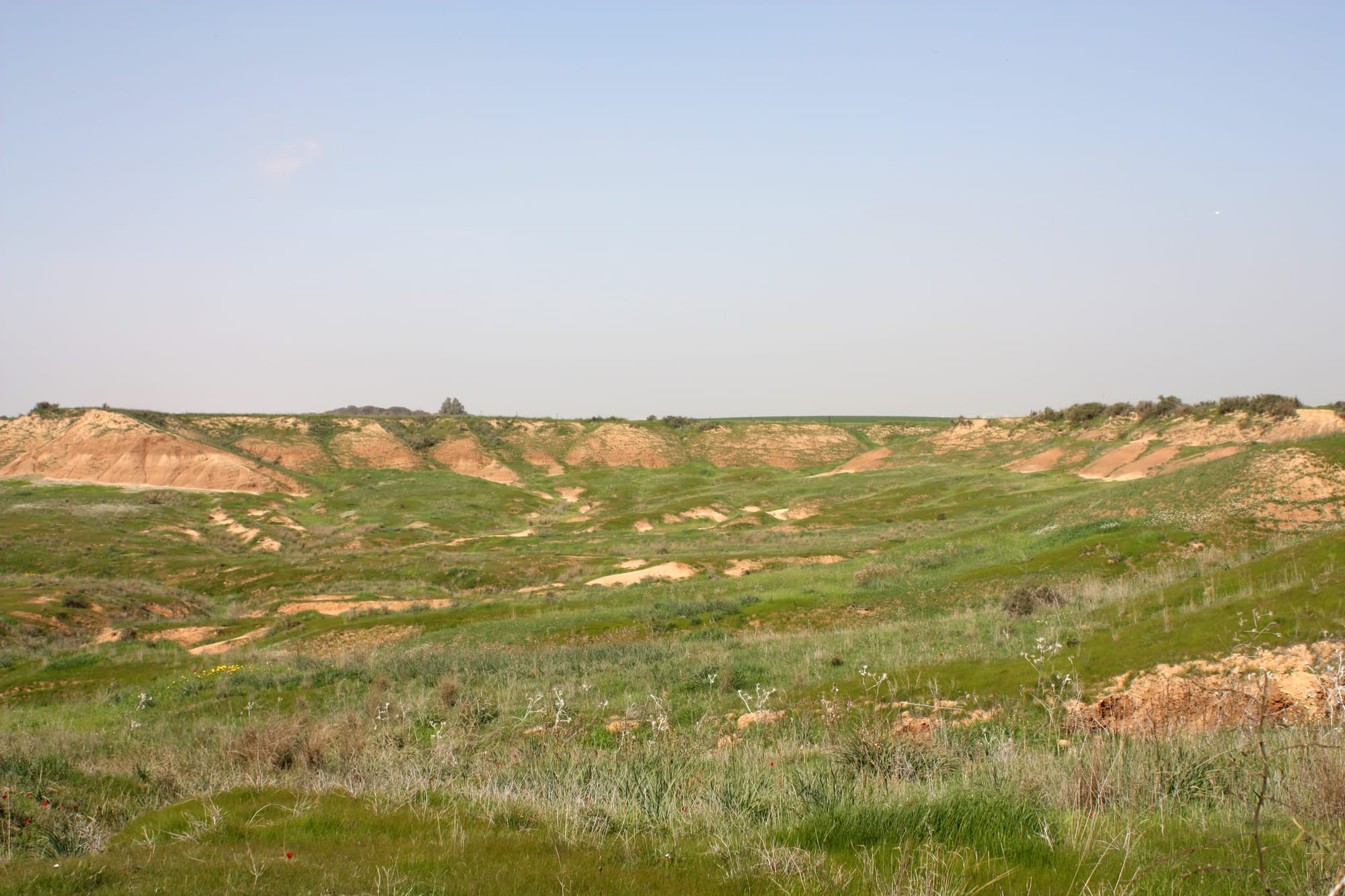
Chapter 14 — The Communities of the Western Negev
More Than Names on a Map
Before 7 October 2023, the communities of the western Negev were known primarily to their residents, neighbouring towns and those familiar with the region's agricultural and social history.
Places such as Be'eri, Nir Oz, Kfar Aza, Nahal Oz and Re'im were home to families, schools, workplaces and community traditions. Their identities had developed over decades, shaped by migration, agriculture, collective living and the changing economic circumstances of southern Israel.
The Hamas-led attacks of 7 October transformed many of these names into internationally recognised symbols of violence and loss.
Yet describing these communities only through what happened to them on that day risks overlooking the lives their residents had built.
The western Negev is not a single settlement or a uniform social environment. It contains kibbutzim, moshavim, development towns, urban neighbourhoods and smaller rural communities, each with its own history and identity.
Some have retained strong cooperative traditions. Others have developed more individualised economic arrangements. Their residents include agricultural workers, teachers, business owners, artists, healthcare professionals and families whose roots in the region extend across several generations.
Understanding their recovery requires understanding what existed before the attacks.
For many residents, rebuilding is not simply about restoring houses. It is about preserving relationships, traditions and the sense of belonging that made these places home.
The Historical Development of the Western Negev
The western Negev occupies a region whose history extends far beyond the establishment of modern Israeli communities.
Before 1948, the area formed part of southern Mandatory Palestine. Arab villages, Bedouin communities, agricultural land and trading routes were part of its human landscape.
The 1948 Arab–Israeli War transformed the region's population and political geography.
Many Palestinian Arab residents fled or were expelled from areas that became part of Israel. Villages were depopulated, and their former inhabitants and descendants became part of the wider Palestinian refugee population.
Jewish agricultural settlement expanded before and after the war, supported by Zionist institutions and subsequently by the Israeli state.
The establishment of kibbutzim and moshavim was closely connected to efforts to develop agriculture, accommodate immigrants and consolidate settlement in peripheral regions.
These processes are remembered differently.
For many Jewish residents, the establishment of agricultural communities represents family histories of pioneering settlement, difficult working conditions and the creation of new homes.
For Palestinians, the transformation of the same landscape is also connected to displacement, lost villages and the consequences of the Nakba.
Both histories are necessary to understand the region.
The modern western Negev developed within this wider historical context, but its communities subsequently established distinctive social and cultural identities of their own.
Kibbutzim: Communities Built Around Cooperation
The kibbutz movement played a central role in the development of the western Negev.
Traditionally, kibbutzim were organised around collective ownership, shared labour and communal decision-making.
Agriculture formed the economic foundation of many settlements.
Members worked in fields, dairy farms, workshops and other enterprises, while communal institutions organised aspects of family and social life.
In earlier decades, some kibbutzim operated collective children's houses and communal dining facilities.
Over time, these arrangements changed considerably.
Many kibbutzim introduced more individualised economic systems, including personal salaries and changes in housing and household finances.
However, cooperative traditions continued to influence local identity.
Community meetings, cultural celebrations, shared facilities and mutual assistance remained important in many places.
These practices helped establish close relationships between residents.
For families who had lived in a kibbutz for several generations, the community was often closely connected to personal and family identity.
This social structure would later become particularly important during displacement and reconstruction.
Be'eri: A Community with Deep Historical Roots
Kibbutz Be'eri was established in 1946 as part of the Eleven Points settlement initiative in the Negev.
The initiative sought to establish Jewish agricultural communities in the region before the end of the British Mandate.
Over subsequent decades, Be'eri developed into a community combining agriculture, industry and cultural activities.
Its printing business became an important source of employment and economic stability.
Community institutions supported education, recreation and social life.
Residents maintained traditions associated with the kibbutz movement, while adapting to changes in economic organisation and family life.
The community's history also included periods of contact with residents of Gaza.
According to Be'eri's own reconstruction organisation, some residents travelled to Gaza for shopping and leisure before the relationship changed amid escalating violence and political developments.
These historical connections illustrate the complexity of relations between neighbouring populations.
On 7 October 2023, Be'eri suffered devastating attacks.
Residents were killed or abducted, and many homes were destroyed or severely damaged.
The attacks fractured a community whose identity had developed over more than seven decades.
The reconstruction process has therefore involved difficult decisions about housing, public buildings and the preservation of memory.
For residents, the question is not simply whether Be'eri can be rebuilt physically.
It is whether the community can recover the social relationships and sense of security that once defined everyday life.
Nir Oz: Gardens, Agriculture and Community Identity
Kibbutz Nir Oz was established in 1955 by members associated with the Hashomer Hatzair movement.
Its development reflected the cooperative ideals of the kibbutz movement and the challenges of agricultural settlement in the Negev.
Over time, the community became associated with agriculture, environmental initiatives and distinctive landscaped spaces.
Its botanical garden and extensive greenery became important features of local identity.
The presence of gardens in an arid environment reflected both agricultural knowledge and the desire to create a pleasant residential setting.
Nir Oz also developed a multigenerational community.
Families maintained connections through schools, cultural activities and shared traditions.
The attacks of 7 October caused extraordinary devastation.
Residents were killed or taken hostage, and a large proportion of the community's homes were entered, damaged or destroyed.
The consequences affected virtually every aspect of communal life.
Following the attacks, many surviving residents relocated to temporary accommodation in the Carmi Gat neighbourhood of Kiryat Gat.
The community's own website describes a complex process of recovery involving people who wish to return, residents who have already taken steps towards returning and others who cannot or do not wish to return because of their experiences.
This distinction is important.
Community membership does not necessarily depend on physical residence.
For some former residents, maintaining relationships and participating in shared traditions remains meaningful even if they choose to establish homes elsewhere.
Kfar Aza: Preserving a Community Across Generations
Kfar Aza was established in the early years of Israeli statehood and developed into a kibbutz with agricultural and other economic activities.
Its residents created a community organised around family life, education and shared institutions.
Over time, the kibbutz experienced changes in economic organisation similar to those of other settlements.
Nevertheless, community relationships remained central to local identity.
The attacks of 7 October caused extensive loss of life and destruction.
The community's recovery has involved temporary relocation, reconstruction planning and efforts to preserve social connections.
For residents, decisions concerning damaged homes have been particularly difficult.
Some structures carry profound personal memories.
Preserving them may serve an educational or commemorative purpose.
However, leaving destroyed buildings standing can also prolong distress for those who must encounter them regularly.
There is no universally accepted approach to these questions.
The choices involve balancing remembrance, psychological wellbeing and the practical needs of rebuilding a residential community.
Kfar Aza illustrates how reconstruction can become a process of collective decision-making about both the past and the future.
Nahal Oz: A Community Looking Towards Renewal
Kibbutz Nahal Oz is located close to the Gaza border.
Its history is connected to agricultural settlement and the development of the western Negev.
For generations, residents maintained community institutions and economic activities despite the challenges associated with the region's security environment.
The kibbutz was among the communities affected by the attacks of 7 October.
Its recovery has involved the restoration of housing, public facilities and local services.
In September 2026, Keren Kayemeth LeIsrael–Jewish National Fund announced the inauguration of a new residential neighbourhood in Nahal Oz.
The project included six semi-detached residential buildings constructed using environmentally conscious building methods.
Another neighbourhood was under construction.
According to the organisation, the developments were intended to accommodate families joining the kibbutz and contribute to its renewal.
Such projects demonstrate that reconstruction is not limited to restoring what previously existed.
Some communities are also planning for demographic growth.
However, new housing alone cannot guarantee social recovery.
The long-term success of such developments will depend on employment, education, public services and the willingness of families to establish permanent lives in the area.
Re'im, Nirim and Other Agricultural Communities
The western Negev contains numerous smaller communities whose histories are closely connected to agriculture and cooperative living.
Kibbutzim such as Re'im, Nirim, Nir Yitzhak and Ein HaShlosha developed distinct local identities.
Some communities became associated with particular agricultural activities or industries.
Others developed cultural institutions, educational programmes and local traditions.
The attacks of 7 October affected these places in different ways.
Some experienced killings, hostage-taking and extensive destruction.
Others suffered damage and prolonged displacement but were able to begin returning earlier.
Government rehabilitation programmes have consequently followed different schedules according to the circumstances of each community.
By late 2025, the Tkuma Directorate reported that residents had returned to eight of the communities classified among those severely affected.
These included Re'im, Nirim, Nir Yitzhak, Kerem Shalom, Sufa, Netiv HaAsara, Ein HaShlosha and Nahal Oz.
The return of residents marked important progress.
However, it did not mean that all infrastructure, employment and community services had been fully restored.
Recovery remained a continuing process.
Moshavim and Family-Based Agricultural Life
Not every rural community in the western Negev is a kibbutz.
Moshavim represent another important form of agricultural settlement.
Unlike the traditional collective kibbutz model, moshavim generally organise agricultural production around individual family farms.
Cooperative institutions may support purchasing, marketing and shared infrastructure.
This structure has influenced family life and local identity.
Agricultural knowledge can pass between generations, while family businesses connect households to the land and surrounding community.
However, economic conditions have changed.
Some families continue farming, while others pursue employment outside agriculture.
Younger generations may face difficult decisions about whether to maintain family farms or establish careers elsewhere.
For communities affected by the attacks, reconstruction may involve repairing agricultural facilities alongside residential buildings.
The restoration of livelihoods is therefore closely connected to the preservation of family and community traditions.
Sderot: Urban Life in the Western Negev
The western Negev is not defined exclusively by rural settlements.
Sderot is one of the region's principal urban communities.
Established in the 1950s, it developed as a town accommodating immigrants from different countries.
Families from North Africa and other regions contributed to its cultural and social development.
Later immigration, including arrivals from the former Soviet Union and Ethiopia, further influenced the city's population.
Sderot developed schools, businesses, religious institutions and cultural organisations.
Its identity reflects the experiences of successive generations of residents.
The city has also faced repeated rocket attacks from Gaza.
Security concerns have influenced infrastructure, education and everyday routines.
Following 7 October, many residents were evacuated.
Their return involved the restoration of services and efforts to support families affected by the violence.
Sderot's recovery differs from that of a small kibbutz.
Its larger population, urban infrastructure and economic diversity create different challenges.
Nevertheless, the central questions remain similar: how to restore security, support families and maintain opportunities for younger generations.
Ofakim and the Wider Regional Community
Ofakim is another important town in the western Negev.
Like several development towns established during the early decades of Israeli statehood, its history is closely connected to immigration and regional economic policy.
Families arriving from different countries contributed to its social and cultural identity.
The town developed neighbourhoods, schools, religious institutions and local businesses.
Ofakim was also attacked on 7 October 2023.
Residents were killed, and the violence affected families and neighbourhoods.
The experience of Ofakim demonstrates that the attacks extended beyond kibbutzim immediately adjacent to Gaza.
Urban communities also experienced severe violence and disruption.
The town's recovery involves supporting residents, maintaining public services and addressing longer-term economic challenges.
It is important to recognise these communities within the wider history of the western Negev rather than focusing exclusively on the best-known kibbutzim.
Education as the Foundation of Community Recovery
Schools and childcare facilities are essential to the recovery of the western Negev.
For families, the availability of reliable education influences decisions about returning.
Children require stable learning environments, opportunities to develop friendships and access to appropriate support.
Teachers and educational staff also play important roles in rebuilding community relationships.
In small settlements, schools can function as centres of social life.
Parents meet through educational activities, while children develop connections that continue outside the classroom.
Displacement disrupted many of these relationships.
Temporary educational arrangements helped maintain continuity, but they could not always reproduce the familiar environment of a community school.
The reconstruction of educational institutions therefore involves more than physical buildings.
It requires qualified staff, suitable facilities and support for children who have experienced trauma.
Educational stability is also important for attracting new families.
A community seeking long-term demographic growth must provide opportunities for children and young people.
Cultural Traditions and the Preservation of Identity
Community traditions have become especially significant during the recovery process.
In kibbutzim, holidays, communal meals, cultural performances and local commemorations have historically brought residents together.
Some celebrations reflect Jewish religious traditions.
Others developed through the secular and agricultural culture of the kibbutz movement.
Harvest festivals, community gatherings and activities for children can reinforce connections between generations.
Following displacement, maintaining these traditions became more complicated.
Residents were often living in temporary accommodation away from their original homes.
Nevertheless, community organisations continued arranging activities intended to preserve relationships.
Nir Oz's own community website describes the continuation of cultural events, rituals and kibbutz holidays as part of its recovery.
These activities serve an important purpose.
They help preserve a shared identity when the physical location of a community has been disrupted.
A community can continue to exist socially even when its members are temporarily dispersed.
Memory, Memorials and the Difficult Question of Preservation
The physical destruction caused by the attacks has created difficult questions about remembrance.
Some residents believe that damaged buildings should be preserved as evidence of what occurred.
Others prefer reconstruction that allows families to live without constantly confronting the physical remains of violence.
Both perspectives reflect legitimate concerns.
Preservation can support historical documentation, education and public remembrance.
Reconstruction can support psychological recovery and the restoration of ordinary life.
The challenge is to balance these objectives.
Decisions about memorials and damaged homes are particularly sensitive because they affect people who experienced the attacks directly.
Local participation is therefore essential.
The wishes of survivors and families should be considered alongside broader educational and historical objectives.
Memorialisation must also be distinguished from tourism.
Visitors may wish to understand what happened, but communities remain residential environments.
Respect for residents' privacy and consent is important.
Be'eri's reconstruction organisation, for example, states that visits to the kibbutz require specific permission.
The Role of Volunteers and Civil Society
Volunteers and civil society organisations have contributed to recovery efforts across the western Negev.
Their activities have included assistance with temporary accommodation, educational programmes, agricultural work and community support.
Some organisations have focused on psychological wellbeing.
Others have helped residents navigate administrative procedures or maintain community relationships.
Voluntary activity can strengthen social connections and provide practical assistance.
However, it should not replace the responsibilities of public authorities.
Large-scale reconstruction requires coordinated planning, funding and professional services.
Community organisations may be particularly effective when they operate alongside reliable public institutions.
The experience of the western Negev demonstrates the importance of both local initiative and governmental responsibility.
Rebuilding the Region: The Tkuma Programme
The Israeli government established the Tkuma Rehabilitation Administration following the attacks to coordinate recovery in the western Negev.
Its responsibilities include supporting communities, restoring infrastructure and promoting longer-term regional development.
The programme has involved cooperation with local authorities, government ministries and community representatives.
In December 2025, the administration reported that approximately 65,000 residents were living in the designated Tkuma region, compared with approximately 62,000 before 7 October 2023.
These figures indicate regional population growth, but they require careful interpretation.
Population growth across the region does not mean that every affected community has recovered.
Some severely damaged settlements remained in temporary accommodation.
In February 2026, the administration told a Knesset committee that residents had returned to 42 of the region's 47 localities.
By September 2026, reporting indicated that Be'eri, Nir Oz, Kfar Aza and Holit were still progressing towards full community return.
The timelines for individual communities continued to change as reconstruction advanced.
These differences demonstrate why regional statistics should not be treated as complete measures of recovery.
The Uneven Pace of Reconstruction
The reconstruction process has varied considerably between communities.
Some were able to restore housing and services relatively quickly.
Others experienced extensive destruction requiring major rebuilding.
Temporary accommodation arrangements also differed.
Residents of Be'eri, for example, were accommodated in a temporary community at Kibbutz Hatzerim.
Nir Oz residents established a temporary community in Carmi Gat.
These arrangements helped preserve social relationships while reconstruction proceeded.
However, temporary communities also created difficulties.
Families had to adapt to unfamiliar surroundings and uncertain schedules.
Older residents, children and people requiring specialised services could face additional challenges.
The Israeli State Comptroller documented administrative delays and deficiencies in temporary housing arrangements.
These findings underline the importance of evaluating recovery through residents' experiences rather than construction schedules alone.
Agriculture and the Return of Economic Life
Agriculture remains important to the identity and economy of the western Negev.
Farms, irrigation systems, agricultural cooperatives and food-related industries contribute to local livelihoods.
The attacks disrupted production in several areas.
Workers were displaced, infrastructure was damaged and businesses faced uncertainty.
Restoring agricultural activity requires investment, labour and access to functioning transport and supply networks.
However, the economic recovery of the region extends beyond agriculture.
Small businesses, local shops, educational institutions and service providers also depend on stable communities.
The return of residents can support economic activity, but employment opportunities are also necessary to encourage permanent return.
A successful recovery programme must therefore address both housing and livelihoods.
New Families and the Question of Demographic Growth
The Tkuma Directorate has promoted demographic growth as part of its long-term development strategy.
Its stated ambition includes substantially increasing the region's population over the coming years.
New housing projects and community development initiatives are intended to attract residents.
Some families may be drawn by employment opportunities, housing availability or a desire to participate in rebuilding.
Others may have personal connections to the region.
However, population growth raises important questions.
Can schools, healthcare services and transport infrastructure accommodate additional residents?
Will employment opportunities expand alongside housing?
How will established communities preserve their identity while welcoming new families?
These questions are particularly important in smaller settlements.
Demographic growth may strengthen a community, but it also changes social relationships and local institutions.
Successful development requires planning that considers both existing residents and newcomers.
Different Experiences of Return
The decision to return is deeply personal.
Some residents feel strongly connected to the places where they grew up or raised their families.
Others may find returning emotionally difficult.
Families who lost relatives may have different needs from those whose homes were damaged but whose immediate family members survived.
Children's experiences can also influence decisions.
Some may wish to return to familiar schools and friends.
Others may associate the community with fear or loss.
There is no single correct response.
A resident who chooses not to return does not necessarily lose their connection to the community.
Similarly, those who return should not be expected to demonstrate uninterrupted optimism.
Recovery involves grief, uncertainty and practical decisions that may continue for years.
The Relationship with Gaza: Geography and Human Reality
The western Negev's identity has always been influenced by its proximity to Gaza.
The physical distance between communities can be small, but the political and social separation has become profound.
Before the escalation of conflict and restrictions on movement, some Israeli and Palestinian residents maintained economic or personal contacts.
Over time, violence, border restrictions and political developments reduced many of these connections.
The attacks of 7 October created further trauma and distrust.
The subsequent war in Gaza caused immense suffering among Palestinian civilians.
For communities on both sides of the border, the consequences have been devastating.
The histories and experiences of Israeli and Palestinian civilians are not identical.
Nevertheless, both populations have legitimate interests in physical safety, stable homes and the protection of family life.
Acknowledging these shared human needs does not erase responsibility for specific acts of violence.
It provides a basis for understanding why a sustainable future requires more than physical reconstruction.
What Does Recovery Really Mean?
Recovery is often measured through statistics.
Governments report the number of homes rebuilt, residents returned and projects completed.
These indicators are important.
However, they cannot fully describe the experience of rebuilding a community.
A reconstructed house may remain empty if its former residents cannot imagine living there again.
A school may reopen while children continue to struggle with the effects of trauma.
A business may resume operations while its employees face uncertainty about the future.
Social recovery depends on relationships, trust and the restoration of everyday routines.
It also depends on whether residents believe that their communities have a sustainable future.
For the western Negev, recovery therefore involves several overlapping processes: physical reconstruction, economic development, psychological support and the preservation of community identity.
None can be considered entirely separate from the others.
Beyond Destruction: Communities with a Future
The communities of the western Negev have become internationally associated with the attacks of 7 October 2023.
The scale of the violence makes remembrance essential.
However, their identities should not be defined exclusively by the destruction they experienced.
Be'eri has a history of agriculture, industry and cooperative life.
Nir Oz developed a distinctive landscape of gardens, farms and multigenerational relationships.
Kfar Aza, Nahal Oz, Re'im and other kibbutzim created community institutions and traditions over decades.
Sderot and Ofakim developed urban identities shaped by immigration, family life and local culture.
These histories remain important.
The future of the western Negev will depend on whether residents can preserve the relationships and traditions that gave their communities meaning while adapting to new circumstances.
Reconstruction offers opportunities for improved infrastructure, economic development and renewed community life.
It also presents difficult questions about memory, security and the right of individuals to choose where and how they live.
The western Negev is not simply a region recovering from violence.
It is a collection of communities whose residents continue to shape their own futures.
Their experiences demonstrate that rebuilding is ultimately about people.
Homes, roads and public buildings provide the physical foundation of community life.
But belonging is created through relationships, shared experiences and the everyday activities that turn a place into a home.
Chapter 15 — Economic Opportunities and Social Inequality
Two Realities in One Region
Southern Israel is a region of striking economic contrasts.
In Beersheba, university researchers, technology companies and medical institutions are contributing to the development of an increasingly knowledge-based economy. In the Arava Valley, farmers use advanced irrigation systems to cultivate crops under extreme climatic conditions. Along the Red Sea, Eilat's hotels, port and tourism businesses connect the southernmost city to international markets.
Yet these examples of innovation and economic activity exist alongside persistent social and economic inequalities.
In some development towns, residents face limited professional opportunities, lower incomes and difficulties accessing specialised services. Bedouin communities in the Negev continue to experience significant disparities in infrastructure, education, housing and employment.
Even within relatively prosperous communities, economic growth does not benefit every household equally.
The contrast raises an important question: can southern Israel's economic development create opportunities across its diverse population, or will new investment reinforce existing differences?
The answer depends on more than the number of businesses established or the amount of capital invested.
It depends on access to education, transport, housing, employment and the institutions that enable people to participate in economic life.
The Negev and Israel's Economic Geography
Israel's economy is geographically concentrated.
The Tel Aviv metropolitan area and surrounding central districts contain major concentrations of technology companies, financial services, corporate headquarters and professional employment.
Other regions have developed important economic centres, but access to high-paying industries remains uneven.
The Negev has historically faced disadvantages associated with distance from major markets, lower population density and the cost of developing infrastructure across a large geographical area.
These conditions have influenced investment, employment and public services.
Government policies have repeatedly sought to encourage population growth and economic activity outside central Israel.
Development towns, agricultural settlements, industrial zones and transport projects formed part of these efforts.
However, the results have varied.
Some communities developed successful industries or institutions.
Others remained dependent on a relatively limited range of employers.
The OECD's 2025 Economic Survey of Israel identified infrastructure gaps, educational inequalities and differences in labour-market participation as major obstacles to long-term economic growth.
These challenges are especially relevant when examining the economic future of peripheral regions.
Regional development cannot be measured solely through national economic performance.
A country may experience economic growth while particular communities continue to face limited opportunities.
Beersheba: Building a Technology and Innovation Centre
Beersheba has become one of the principal centres of economic development in southern Israel.
Its transformation is closely connected to Ben-Gurion University of the Negev, Soroka University Medical Center and the growth of technology-related industries.
The university contributes through scientific research, professional education and cooperation with businesses.
Its graduates enter fields including engineering, medicine, computer science, education and public administration.
The Gav-Yam Negev Advanced Technologies Park, situated near the university and railway station, forms part of the city's efforts to attract technology companies and research-based employment.
Cybersecurity has become particularly associated with Beersheba's development strategy.
Israel's wider cybersecurity industry has attracted significant investment, supported by research institutions, private companies and the country's security and technology sectors.
Beersheba has sought to position itself within this national ecosystem.
The concentration of educational institutions, businesses and public-sector organisations can create opportunities for collaboration.
However, the presence of a technology park does not automatically transform the employment prospects of every resident.
Highly specialised jobs often require advanced qualifications, professional networks and particular technical skills.
Residents without access to these resources may remain outside the most lucrative sectors.
The challenge is therefore to connect technological development with broader educational and employment opportunities.
The Limits of a High-Tech Economy
Israel's technology sector is internationally recognised for innovation, entrepreneurship and investment.
However, high-tech employment is not distributed equally across the population.
The Israel Innovation Authority's 2025 report identified cybersecurity and organisational software as major destinations for technology investment.
Such investment can support company growth and highly skilled employment.
Yet the benefits may be concentrated among people with relevant qualifications and experience.
Workers in retail, hospitality, agriculture and public services do not necessarily experience similar income growth.
The development of a regional technology industry therefore creates two related policy questions.
The first concerns how to attract businesses and investment.
The second concerns how to ensure that local residents can access the resulting opportunities.
Education, professional training and employment programmes can help bridge this gap.
However, training alone is insufficient if employers do not create accessible pathways into employment.
Internships, apprenticeships, cooperation with educational institutions and support for career transitions can all contribute.
Economic development becomes more inclusive when local residents participate not only as consumers of new services but also as employees, entrepreneurs and decision-makers.
Development Towns and Unequal Opportunities
The Negev's development towns were established or expanded during the decades following Israel's independence.
Cities such as Dimona, Yeruham, Ofakim and Netivot accommodated immigrant families and contributed to the settlement and economic development of southern Israel.
Their populations brought cultural traditions from North Africa, the Middle East, Europe and other regions.
Over time, these communities developed schools, religious institutions, businesses and distinctive local identities.
However, many development towns experienced economic difficulties.
Employment was sometimes concentrated in particular industries or large employers.
Changes in industrial production and national economic policy could therefore have significant local consequences.
Some towns have attracted new investment and experienced demographic growth.
Others continue to face challenges associated with income levels, employment opportunities and access to services.
It would be inaccurate to portray every development town as economically disadvantaged.
Their circumstances differ, and some have undergone substantial change.
Nevertheless, historical patterns of investment and employment continue to influence regional inequality.
Dimona: Industry and Economic Diversification
Dimona developed as an important industrial town in the eastern Negev.
Its history is associated with immigration, industrial employment and the expansion of infrastructure in southern Israel.
Industrial facilities and public institutions contributed to the local economy.
However, dependence on a limited range of employers can create vulnerability.
When major industries restructure or reduce employment, the consequences may extend across the community.
Economic diversification can help reduce this risk.
Small businesses, professional services, education and new industries can create additional opportunities.
However, attracting investment requires suitable infrastructure and a workforce with relevant skills.
For residents, economic development is not simply a question of whether new companies arrive.
It also concerns the quality of employment, wages, job security and opportunities for professional advancement.
Yeruham: Local Initiative and Regional Development
Yeruham offers another example of the challenges and possibilities facing development towns.
The town has experienced periods of economic difficulty but has also attracted attention for community initiatives, education and efforts to diversify local employment.
Its location near desert landscapes creates opportunities for tourism and environmental activities.
Local businesses and community organisations contribute to economic life.
However, the scale of the local labour market remains an important consideration.
Residents seeking specialised employment may need to commute or relocate.
For younger generations, decisions about education and careers can therefore influence whether they remain in the town.
Economic development initiatives must address both employment opportunities and the wider conditions that make long-term residence attractive.
Housing, schools, healthcare and transport all contribute to these decisions.
Bedouin Communities and Structural Economic Inequality
Some of the most significant economic disparities in southern Israel affect Bedouin Arab communities.
The Negev's Bedouin population includes residents of recognised towns and villages, as well as people living in communities whose planning status remains disputed.
Their circumstances vary considerably.
Some families have access to established infrastructure, schools and employment.
Others face substantial difficulties related to transport, housing, public services and land-use arrangements.
The distinction between recognised and unrecognised communities is particularly important.
In unrecognised villages, restrictions and deficiencies in infrastructure can affect access to electricity, water networks, roads and public facilities.
These conditions can create obstacles to economic participation.
A person may possess professional qualifications but still face difficulty reaching a workplace.
A family may wish to establish a business but lack suitable premises or reliable infrastructure.
Educational opportunities may also be affected by distance and transport.
These challenges demonstrate how economic inequality can arise from institutional and geographical conditions rather than individual motivation.
Land, Planning and Economic Opportunity
Land policy is a central issue in the Negev.
Disputes concerning Bedouin land claims, settlement recognition and planning have continued for decades.
Israeli authorities have pursued policies intended to regulate settlement, provide infrastructure and address land-use issues.
Government officials have argued that formal planning is necessary for infrastructure provision, legal certainty and regional development.
Bedouin organisations and human rights groups have criticised aspects of these policies, arguing that they can restrict traditional land claims, undermine community structures or lead to displacement.
The legal and historical issues are complex.
Different communities and families have different claims and circumstances.
However, the economic implications are clear.
Uncertainty concerning land tenure and planning can affect housing, investment and business development.
Where residents cannot obtain building permits or secure reliable infrastructure, economic opportunities may be restricted.
A sustainable development strategy must therefore address planning and land questions alongside employment and education.
Ignoring these issues risks treating the consequences of inequality without addressing some of its underlying causes.
Education and the Cycle of Economic Disadvantage
Education plays a central role in determining economic opportunities.
Access to quality schooling influences later participation in higher education and professional employment.
The OECD has identified significant differences in educational outcomes and resources between population groups in Israel.
Its 2025 Economic Survey highlighted under-resourcing in parts of the Arabic-language education system and the need to improve educational quality.
These findings are relevant to the Negev, although national statistics should not automatically be treated as precise measures of Bedouin communities in the south.
Some children in remote communities face additional challenges associated with school transport, infrastructure and access to educational support.
Household income can also influence educational opportunities.
Families with greater financial resources may be better able to provide tutoring, digital equipment and extracurricular activities.
Children from lower-income households may have fewer opportunities to access these resources.
These differences can influence academic progression.
Improving educational equality therefore requires sustained investment beginning in early childhood.
Schools, teachers, transport, digital access and support services all contribute to long-term outcomes.
Higher Education and the Challenge of Inclusion
Ben-Gurion University and other educational institutions provide important opportunities for residents of southern Israel.
However, access to higher education is influenced by academic preparation, language skills, household finances and geographical location.
For students from remote communities, commuting or relocation may create substantial costs.
Arabic-speaking students may face additional challenges when entering predominantly Hebrew-language academic environments.
Some students also balance education with employment or family responsibilities.
These circumstances can affect participation and completion.
Scholarships, preparatory programmes, language support and accessible transport can help reduce barriers.
However, inclusion must extend beyond admission.
Students also need opportunities to complete their studies and enter suitable employment.
The economic value of higher education depends partly on whether graduates can find jobs corresponding to their qualifications.
If suitable employment is unavailable locally, graduates may move elsewhere.
This can contribute to the loss of skilled workers from peripheral communities.
Women and Economic Participation
Women's employment is an important factor in regional economic development.
Across southern Israel, women participate in education, healthcare, commerce, technology, public administration and other sectors.
However, employment opportunities and working conditions vary.
Some women face difficulties associated with childcare, transport or limited local employment.
Others encounter barriers to advancement in particular professions.
Among Bedouin women, educational participation has expanded over time, but employment remains constrained by a combination of structural and social factors.
The Bank of Israel's 2025 Annual Report identified increasing labour-force participation among Arab women as an important national economic priority.
The International Monetary Fund's 2026 assessment estimated the employment rate of Arab-Israeli women at approximately 45 per cent, below the government's 2030 target of 53 per cent.
These are national figures, not specific statistics for Bedouin women in the Negev.
Their relevance lies in illustrating the broader labour-market disparities that regional policies must address.
Improving women's economic participation requires attention to education, childcare, workplace access and transport.
It also requires recognising the diversity of women's personal circumstances and aspirations.
The Importance of Childcare and Family Support
Access to childcare can influence whether parents participate in paid employment.
For households with young children, the availability and cost of childcare affect daily decisions.
In communities with limited public transport or employment opportunities, childcare arrangements may be particularly important.
A parent may be unable to accept a job if commuting times are incompatible with childcare provision.
The availability of early childhood education also affects children's development.
Investment in childcare can therefore serve two purposes.
It can support parental employment while improving educational opportunities for children.
However, the benefits depend on affordability, accessibility and quality.
Programmes must be designed around the needs of the communities they serve.
Transport: A Hidden Barrier to Employment
Transport infrastructure is one of the most important but sometimes overlooked factors influencing economic inequality.
A person may have the qualifications required for employment but be unable to reach a workplace reliably.
In a large region such as the Negev, distances between communities can be substantial.
Residents of Beersheba may have access to rail services, buses and a wider range of local employment.
People living in remote settlements may depend heavily on private vehicles or limited public transport.
Transport costs can reduce the financial benefit of employment.
For lower-income households, owning and maintaining a vehicle may represent a significant expense.
Women, young people and people without driving licences may face additional restrictions.
Improving transport connections can therefore expand access to employment, education and healthcare.
However, transport policy must consider local conditions.
A service suitable for a densely populated city may not meet the needs of scattered rural communities.
Healthcare and Economic Development
Healthcare is both a public service and an important source of employment.
Soroka University Medical Center in Beersheba serves a large part of southern Israel.
Its role includes medical treatment, professional training and research.
The hospital contributes to the regional economy through employment and cooperation with academic institutions.
However, access to healthcare varies across the Negev.
Residents of remote communities may need to travel considerable distances for specialist treatment.
These journeys can create financial and practical difficulties.
Healthcare access also affects employment.
People experiencing untreated or poorly managed health conditions may face difficulties maintaining regular work.
Families caring for relatives may need to reduce working hours.
Investment in healthcare therefore has wider economic consequences.
A healthy population is better able to participate in education, employment and community life.
Agriculture: Innovation and Economic Pressure
Agriculture remains an important economic activity in parts of southern Israel.
The Arava Valley is associated with intensive cultivation under extreme climatic conditions.
The western Negev supports agricultural enterprises, including crop production and other farming activities.
Technological innovation has improved the ability of farmers to manage water, soil and production.
However, agriculture faces economic pressures.
Water costs, energy prices, labour availability and market conditions influence profitability.
Climate change introduces additional uncertainty.
Extreme heat and changing environmental conditions may affect production.
Farmers must also compete within domestic and international markets.
Technological innovation can improve efficiency, but it does not eliminate financial risk.
For smaller agricultural businesses, the cost of adopting new technologies can be substantial.
The future of farming in the Negev will depend on balancing productivity, environmental sustainability and economic viability.
Migrant Workers and the Agricultural Labour Market
Foreign workers play an important role in parts of Israeli agriculture.
Their work includes planting, harvesting, greenhouse maintenance and other agricultural activities.
Labour shortages can disrupt production and increase costs.
The war that began in October 2023 affected the availability of workers across several sectors.
The Bank of Israel's 2025 Annual Report documented the decline in non-Israeli labour following the suspension of Palestinian workers' entry and subsequent changes in the number of foreign workers.
These developments affected the national labour market, including sectors dependent on manual labour.
However, the contribution of migrant workers raises questions about employment conditions and legal protections.
Economic development should not be assessed solely through production levels.
The wages, safety and rights of workers are also important.
This applies to both Israeli and foreign employees.
Tourism and the Challenge of Economic Dependence
Tourism contributes to employment in Eilat, Mitzpe Ramon and other parts of southern Israel.
Hotels, restaurants, tour operators and transport services create economic opportunities.
However, tourism is sensitive to external developments.
Security incidents, economic downturns and changes in travel demand can affect businesses.
Eilat's experience illustrates this vulnerability.
Regional instability and disruptions to maritime activity have influenced the city's economic environment.
Tourism can provide valuable employment, but a region dependent on visitor spending may face difficulties during prolonged downturns.
Diversification can reduce this risk.
However, developing alternative industries requires investment, education and infrastructure.
The Economic Consequences of the War
The war that began after 7 October 2023 affected Israel's economy in multiple ways.
Military mobilisation reduced the availability of civilian workers.
Displacement disrupted employment and local businesses.
Security conditions affected tourism, agriculture and transport.
Government spending increased substantially.
According to the Bank of Israel's Annual Report for 2025, national gross domestic product grew by 2.9 per cent in 2025, following growth of 1.0 per cent in 2024.
The report estimated that cumulative lost output from the beginning of the war through the end of 2025 amounted to approximately NIS 177 billion, equivalent to 8.6 per cent of annual GDP.
These figures describe the national economy.
They should not be interpreted as a direct estimate of losses in southern Israel.
Nevertheless, the regional consequences were significant.
Communities in the western Negev experienced displacement, destruction and disruptions to agriculture and employment.
Businesses faced uncertainty about the return of residents and customers.
Recovery therefore requires both immediate assistance and long-term economic planning.
Reconstruction as an Economic Opportunity
The rebuilding of the western Negev creates opportunities for infrastructure investment and economic development.
Housing, schools, roads and public facilities require reconstruction or improvement.
These projects can support employment and local businesses.
However, reconstruction should not be confused with sustainable economic growth.
Building activity may increase temporarily without creating permanent employment.
Long-term development requires industries, services and institutions capable of supporting communities after reconstruction is complete.
The Tkuma Directorate has therefore pursued initiatives intended to strengthen the region's economic foundations.
In September 2026, the Israel Innovation Authority and the Tkuma Directorate announced a NIS 22 million initiative to develop technology-related employment in the region.
The programme includes measures intended to connect students with technology companies, recruit skilled workers and improve professional skills.
The initiative illustrates an effort to move beyond physical reconstruction towards longer-term economic development.
However, its eventual success will depend on implementation and measurable outcomes.
An announced programme is not the same as a demonstrated improvement in employment or income.
The Risk of Unequal Reconstruction
Large-scale public investment can create opportunities, but its benefits may be uneven.
Communities with strong administrative capacity, established institutions and access to professional networks may be better positioned to secure funding.
Smaller or disadvantaged communities may face greater difficulties navigating application procedures and planning requirements.
These differences can influence the distribution of resources.
The reconstruction of the western Negev also raises questions about the relationship between emergency recovery and broader regional inequality.
Communities directly affected by the attacks require substantial assistance.
At the same time, longstanding needs in other parts of the Negev remain important.
A sustainable regional strategy must consider both responsibilities.
Addressing the consequences of a specific disaster should not mean ignoring structural disadvantages that existed before it.
Housing and the Cost of Establishing a Family
Housing influences whether young adults can remain in southern Israel.
In some communities, housing costs may be lower than in central Israel.
However, affordability depends on income, employment and the availability of suitable homes.
Lower property prices do not necessarily translate into greater financial security if wages are also lower.
Transport costs can further affect household budgets.
In rural settlements, planning restrictions and limited housing supply may create additional challenges.
For Bedouin communities, land and planning disputes can complicate access to secure housing.
For development towns, the availability of quality housing can influence efforts to attract residents.
Housing policy is therefore closely connected to economic development.
Families need not only somewhere to live, but also access to employment, schools and services.
Small Businesses and Local Entrepreneurship
Small businesses contribute to economic diversity across southern Israel.
Restaurants, shops, workshops, professional services and tourism enterprises provide employment and support local communities.
Entrepreneurship can create opportunities for residents who wish to develop businesses outside large institutions.
However, small businesses face particular challenges in peripheral regions.
Local markets may be limited.
Transport costs can affect access to suppliers and customers.
Financing may be difficult to obtain.
Digital technology can help businesses reach wider markets, but reliable infrastructure and professional skills remain important.
Support programmes can assist entrepreneurs through training, advice and access to finance.
However, successful entrepreneurship depends on more than individual determination.
A supportive economic environment is essential.
The Digital Divide
Digital infrastructure increasingly influences economic participation.
Reliable internet access is important for education, remote work, business development and public services.
In communities with strong digital infrastructure, residents may be able to participate in employment and educational activities beyond their immediate geographical area.
Remote work can potentially reduce some disadvantages associated with distance.
However, these opportunities are not equally available.
Households may differ in access to devices, reliable connections and digital skills.
Some occupations also cannot be performed remotely.
Agriculture, healthcare, hospitality and many service jobs require physical presence.
Digital development can therefore expand opportunities without eliminating the need for transport and local employment.
Measuring Inequality Beyond Income
Income is an important measure of economic wellbeing, but it does not provide a complete picture.
Two households with similar incomes may experience different living conditions depending on housing costs, transport, healthcare and family responsibilities.
Access to public services also matters.
A family living near schools and healthcare facilities may face fewer practical difficulties than one living in a remote community.
Educational opportunities influence long-term prospects.
Housing security affects stability.
Environmental conditions and access to infrastructure influence quality of life.
A comprehensive assessment of regional inequality must therefore consider several dimensions.
The OECD, Bank of Israel and Israeli research institutions have repeatedly identified the importance of education, infrastructure and labour-market participation.
These findings support a broader understanding of economic development.
Who Benefits from Growth?
The expansion of technology, tourism and other industries creates opportunities for southern Israel.
However, the distribution of benefits depends on how development is organised.
A technology company may create highly paid jobs while employing relatively few local residents.
A tourism project may generate substantial revenue but offer mainly seasonal employment.
An agricultural enterprise may increase production through technology while reducing demand for certain forms of labour.
These outcomes are not necessarily arguments against investment.
They demonstrate the need to evaluate its wider effects.
Public policy can influence whether growth becomes more inclusive.
Education, vocational training, transport, childcare and support for small businesses can help expand participation.
Employment standards and fair access to opportunities are also important.
The central question is not simply whether the regional economy grows.
It is whether growth improves living conditions across different communities.
The Future of Economic Development in the Negev
Southern Israel possesses important economic assets.
Beersheba has academic institutions, medical facilities and technology-related industries.
The Arava has agricultural expertise and opportunities for renewable energy.
Eilat provides access to the Red Sea and supports tourism and maritime activity.
Development towns contain established communities, businesses and local institutions.
Bedouin communities contribute to the region's social, cultural and economic life.
These assets create opportunities for a more diversified regional economy.
However, development will remain uneven unless structural barriers are addressed.
Education and employment opportunities must become more accessible.
Transport and public services require investment.
Housing and planning policies must account for different community needs.
Women and younger generations need realistic opportunities to participate in economic life.
The success of regional development should therefore be measured through improvements in employment quality, educational outcomes, household wellbeing and access to services.
Beyond Economic Growth: The Question of Equality
The Negev is often presented as a region of future potential.
Its universities, technology companies, agricultural innovations and renewable energy projects support that image.
Yet economic potential is not the same as economic equality.
The region contains communities whose opportunities are shaped by very different circumstances.
Some residents benefit from advanced education and access to specialised employment.
Others face barriers associated with infrastructure, income, geography or discrimination.
These differences are not inevitable features of desert life.
They are influenced by historical decisions, public investment and institutional arrangements.
The future of southern Israel will depend partly on whether development policies address these inequalities.
A prosperous region cannot be measured solely by the success of its most advanced industries.
It must also be judged by the opportunities available to families in development towns, Bedouin communities, rural settlements and other areas that have historically received fewer resources.
Economic development becomes meaningful when it expands people's ability to build stable lives.
For the Negev, that means creating conditions in which education, employment and public services are accessible across communities.
The final chapter of this report examines the generation that will inherit these challenges and opportunities, asking what kind of future young people across southern Israel are preparing to build.
Chapter 16 — The Next Generation: Building a Future in the South
The Generation That Will Shape Tomorrow
Across southern Israel, a new generation is growing up in a region defined by extraordinary contrasts.
In Beersheba, students attend university lectures, explore careers in technology and participate in the cultural life of a growing regional city. In Bedouin communities, young people navigate the relationship between family traditions, educational opportunities and a rapidly changing society. In the agricultural settlements of the Arava, children grow up surrounded by desert landscapes and farming communities. In Eilat, young residents experience the opportunities and limitations of living beside the Red Sea.
Their circumstances are different, but many face similar questions.
Where will they study? What employment opportunities will be available? Will they be able to afford a home? Can they remain close to their families while pursuing their ambitions?
For some, the Negev represents opportunity, community and belonging.
For others, limited employment, transport difficulties or unequal access to education may make relocation necessary.
The events of 7 October 2023 and the subsequent war have added another dimension to these decisions, particularly for families in the western Negev.
The future of southern Israel will ultimately depend on the choices available to the young people who live there.
Their experiences will determine whether the region becomes a place of lasting opportunity or remains one from which many must leave to build their futures.
Growing Up in a Region of Contrasts
Childhood in southern Israel cannot be described through a single experience.
A child growing up in central Beersheba may have access to schools, cultural activities, public transport and specialised services within a relatively short distance.
A child in a remote agricultural community may experience a smaller school environment, close relationships with neighbours and a daily routine influenced by the surrounding landscape.
In a Bedouin village, family networks, cultural traditions and local institutions may play important roles in social life.
However, access to infrastructure and services varies substantially between communities.
These differences can influence educational opportunities from an early age.
Children who have reliable transport, digital equipment and access to extracurricular activities may find it easier to develop particular interests and skills.
Others may face practical barriers unrelated to their abilities or ambitions.
The OECD's 2025 Economic Survey of Israel identified inequalities in educational resources and outcomes as significant obstacles to long-term economic participation.
These national findings have particular relevance to the Negev, where geographical distance can compound existing social and economic differences.
The challenge is not to make every community identical.
It is to ensure that a child's opportunities are not unnecessarily restricted by where they are born.
Education as a Pathway to Independence
Education is one of the most important influences on the future of young people in southern Israel.
Schools provide academic knowledge, but they also help children develop confidence, social relationships and aspirations.
For teenagers, educational choices can determine access to university, vocational training and professional employment.
The quality of education therefore has consequences extending far beyond the classroom.
In communities with limited resources, schools may face difficulties providing specialised subjects, extracurricular programmes or individual support.
Transport can also affect participation.
A student living far from an educational institution may spend considerable time travelling or may be unable to attend activities outside normal school hours.
Digital learning offers additional possibilities, but it depends on reliable internet access and suitable equipment.
The OECD has recommended reforms to address inequalities in educational resources, particularly in parts of Israel's Arabic-language education system.
Its analysis emphasises that differences in educational preparation can influence later employment and earnings.
For southern Israel, improving education is therefore both a social responsibility and an economic investment.
Beersheba and the Opportunities of Higher Education
Beersheba occupies an important position in the educational landscape of the Negev.
Ben-Gurion University of the Negev attracts students from across Israel and abroad.
Its academic programmes and research activities connect the city to national and international professional networks.
The university also provides opportunities for students from southern communities who might otherwise need to relocate to central Israel.
For some young people, attending university in Beersheba makes it possible to remain relatively close to their families.
However, proximity alone does not guarantee access.
Academic preparation, financial resources, language skills and family circumstances can influence whether students enter and complete higher education.
The university has developed programmes intended to support students from underrepresented communities.
According to its 2025 President's Report, the university enrolled 585 Bedouin students during the 2024–25 academic year.
The figure illustrates an established presence of Bedouin students within the institution, although it does not measure the proportion of eligible young people across the Negev who can access higher education.
The university's community initiatives also seek to improve educational access and strengthen relationships with surrounding communities.
These programmes demonstrate how academic institutions can contribute to regional development beyond their immediate teaching and research responsibilities.
Bedouin Youth: Education, Identity and Change
Young Bedouin men and women in the Negev are navigating significant social and economic changes.
Their experiences vary according to family circumstances, place of residence, educational background and personal aspirations.
Some grow up in established towns with access to schools and public services.
Others live in smaller or unrecognised communities where infrastructure and transport can present substantial difficulties.
For many families, education is increasingly important as a pathway towards professional employment.
Young people pursue studies in fields including education, healthcare, social work, engineering and business.
However, participation in higher education may involve financial and practical obstacles.
Ben-Gurion University has identified language barriers, limited access to technological resources, financial pressures and unfamiliarity with academic environments among the challenges affecting some Bedouin students.
The university also reports that a substantial proportion of Bedouin students enrolled in its programmes are the first members of their families to enter higher education.
Such transitions can be significant for entire households.
A first-generation university student may become a source of information and encouragement for younger relatives.
At the same time, educational advancement does not necessarily require abandoning cultural identity.
Young people may seek to combine professional ambitions with family relationships, religious practices and Bedouin traditions.
The challenge is to ensure that these choices are genuinely available rather than constrained by unequal access to opportunity.
Young Women and New Professional Possibilities
The expanding educational participation of Bedouin women is an important aspect of social change in the Negev.
Women are increasingly pursuing qualifications and professional careers.
Ben-Gurion University's materials on Bedouin student support indicate that women account for a substantial majority of its Bedouin student population.
This reflects an important development within higher education, although university enrolment should not be confused with employment outcomes across the wider population.
For young women, educational advancement can create opportunities for financial independence and professional participation.
However, barriers remain.
Limited transport, childcare responsibilities, employment availability and social expectations may influence individual decisions.
These circumstances differ between families and communities.
It would be inaccurate to assume that all Bedouin women face identical restrictions or share the same ambitions.
Some prioritise professional careers, while others combine employment with family responsibilities or pursue different forms of community participation.
The broader question concerns freedom of opportunity.
A more inclusive regional economy should allow women to pursue education and employment without unnecessary structural barriers.
Young Men and Changing Expectations
Young men across southern Israel also face changing expectations.
In agricultural communities, some may consider whether to continue family farming traditions.
Others may pursue careers in technology, business, education or public services.
For young Bedouin men, economic opportunities can be influenced by educational access, transport and local labour-market conditions.
The transition from school to employment may be difficult where suitable jobs are scarce.
Unemployment or insecure employment can affect financial independence and the ability to establish a household.
These challenges should not be interpreted as characteristics of any particular cultural group.
They are connected to broader economic and institutional conditions.
Investment in vocational education, apprenticeships and professional training can help create pathways into employment.
However, training must correspond to realistic labour-market opportunities.
Young people need access to employers, not simply additional qualifications.
Military Service, Civilian Service and Different Life Paths
The transition from adolescence to adulthood in Israel is influenced by military and civilian service arrangements.
Many Jewish Israelis are subject to compulsory military service, although exemptions and alternative arrangements apply to different groups.
Druze and Circassian men are generally subject to conscription under specific arrangements.
Most Arab citizens of Israel, including most Bedouin citizens, are not subject to compulsory military service, although some volunteer.
National-civilian service provides another route for eligible participants.
These differences influence the transition into higher education and employment.
Military service may provide certain forms of training, professional experience and social networks.
However, it can also delay entry into university or civilian employment.
Young people who do not serve may follow different educational and professional pathways.
The system has wider implications for social equality because service-related benefits, employment networks and public expectations are not distributed uniformly.
A balanced assessment must recognise both the opportunities associated with service and the inequalities that can arise from differing obligations and access to benefits.
For young people in the Negev, these institutional arrangements form part of a wider set of decisions about adulthood.
The Children of the Western Negev After 7 October
For children and teenagers in the western Negev, the attacks of 7 October 2023 created profound disruption.
Some witnessed violence or lost family members.
Others were displaced from their homes and separated from familiar schools and communities.
The subsequent war and prolonged uncertainty affected educational routines and family life.
Children respond differently to traumatic experiences.
Some may experience anxiety, grief or difficulties concentrating.
Others may appear outwardly settled while continuing to require support.
The consequences depend on individual experiences, family circumstances and access to appropriate care.
Schools and community organisations have played important roles in helping displaced families maintain routines.
However, educational continuity is only one part of recovery.
Children also need stable housing, social relationships and opportunities to participate in ordinary activities.
For teenagers approaching adulthood, displacement may affect decisions about education, employment and where they wish to live.
The future of the western Negev therefore depends partly on whether younger residents can imagine building their lives in the region.
The Meaning of Home for a Displaced Generation
For families displaced after 7 October, the concept of home became complicated.
A home is more than a building.
It is connected to neighbours, familiar streets, schools, family memories and community traditions.
When a community is destroyed or temporarily abandoned, these relationships are disrupted.
Some families may wish to return as soon as possible.
Others may feel unable to return because of trauma or concerns about security.
Children's preferences may differ from those of their parents.
A teenager who has developed friendships in a temporary community may experience another move as a further disruption.
These differences deserve recognition.
Recovery policies should not assume that all families will make identical choices.
Supporting the next generation means providing stable educational and social opportunities whether families return, remain temporarily displaced or establish permanent homes elsewhere.
Rebuilding Communities for Young Families
The reconstruction of western Negev communities offers an opportunity to reconsider how towns and settlements support family life.
Housing is essential, but families also require schools, childcare, healthcare and recreational facilities.
Public spaces can contribute to social relationships.
Libraries, sports facilities and cultural centres provide opportunities for children and teenagers to meet outside formal education.
Reliable transport allows families to access services and employment.
For younger households, the availability of suitable housing can influence whether they choose to settle in the region.
However, reconstruction must also respect the identities of established communities.
New development can create opportunities for growth while changing local social structures.
Residents should therefore have meaningful opportunities to participate in planning decisions.
The objective should be to create communities that are both economically sustainable and socially inclusive.
The Agricultural Generation: Tradition and Innovation
Agriculture remains part of the cultural identity of many southern communities.
In the Arava Valley and western Negev, children may grow up in families connected to farming.
Agricultural work can provide knowledge of the land, seasonal conditions and community cooperation.
However, farming has changed considerably.
Modern agriculture increasingly depends on technology, specialised equipment, research and efficient resource management.
Young people entering the sector may need skills in engineering, data analysis, environmental science and business management.
This creates opportunities to combine family traditions with new professional knowledge.
Yet the future of agricultural employment is uncertain.
Water costs, climate change, labour shortages and market conditions influence profitability.
Some younger residents may prefer careers outside farming.
Others may seek to modernise existing family enterprises.
The challenge is to make agricultural careers economically viable without assuming that every child must follow the occupation of their parents.
The Desert as a Place of Scientific Opportunity
The Negev's environmental conditions create opportunities for scientific research and innovation.
Water management, desert agriculture, renewable energy and climate adaptation are particularly relevant fields.
Research institutions and businesses are investigating technologies that may help communities adapt to arid environments.
For young people, these sectors could provide professional opportunities connected to the region's distinctive geography.
However, scientific development should not be presented as a guaranteed source of employment.
Research projects and pilot initiatives do not automatically create large numbers of permanent jobs.
Their economic value depends on implementation, investment and the development of viable industries.
Education and training are therefore essential.
Young residents need opportunities to acquire the skills required to participate in emerging sectors.
The Negev's environmental challenges could become sources of innovation, but only if local communities are included in the benefits.
Technology and the Possibility of Staying in the South
The development of technology-related industries in Beersheba and the wider Negev offers another possible pathway for younger generations.
Professional opportunities in software, cybersecurity, engineering and research may reduce the need for some graduates to relocate to central Israel.
Remote work also creates possibilities for certain occupations.
However, these opportunities remain uneven.
Technology employment often requires specialised qualifications.
Some communities lack reliable digital infrastructure or access to relevant educational programmes.
Young people from lower-income households may face additional barriers.
The presence of technology companies in the region is therefore only one part of the solution.
Inclusive development requires pathways connecting schools, vocational institutions, universities and employers.
It also requires attention to housing, transport and the wider quality of life.
A graduate may find suitable employment but still choose to leave if affordable housing or essential services are unavailable.
Culture and Identity in a Changing Society
Southern Israel's younger generations are growing up among diverse cultural traditions.
Jewish communities maintain religious and family customs associated with different histories of migration.
Bedouin families preserve aspects of Arab and Islamic cultural heritage.
Secular communities develop traditions connected to local history, agriculture and shared social activities.
Young people may participate in these traditions while also engaging with global culture through digital media, music, education and travel.
This can create new forms of identity.
A young person may value family customs while adopting different professional ambitions or social attitudes.
Such changes do not necessarily represent a rejection of tradition.
Cultures evolve as generations reinterpret inherited practices.
However, generational change can create disagreements within families and communities.
Questions concerning education, marriage, employment, religion and personal independence may be understood differently by parents and children.
These tensions are not unique to southern Israel.
They are part of broader social transformations occurring across the Middle East and beyond.
Social Media and the Wider World
Digital communication has changed how young people experience geographical distance.
A teenager in Eilat or Mitzpe Ramon can follow international cultural developments, communicate with friends elsewhere and access educational information online.
Social media can provide opportunities for creativity and entrepreneurship.
It can also expose young people to political polarisation, misinformation and social pressure.
For communities affected by conflict, online environments may amplify distressing images or hostile rhetoric.
Digital literacy is therefore increasingly important.
Young people need the ability to evaluate information, distinguish verified reporting from speculation and engage responsibly with different perspectives.
Schools and community organisations can contribute through media education and critical-thinking programmes.
The objective should not be to restrict young people's engagement with the wider world.
It should be to equip them with the skills needed to navigate it.
Jewish and Arab Youth: Opportunities for Encounter
The Negev is home to Jewish and Arab communities whose histories, identities and circumstances differ.
Although they share a geographical region, opportunities for sustained interaction are not always equal.
Residential patterns, language differences, educational systems and political tensions can limit everyday contact.
Universities, workplaces and professional institutions may create opportunities for cooperation.
Ben-Gurion University has developed initiatives intended to strengthen connections between communities and improve educational access.
Its 2026 President's Report describes a planned youth empowerment initiative associated with Wadi Attir in the Bedouin town of Hura.
The programme is intended to bring Jewish and Arab university students together as mentors for Bedouin teenagers.
Such initiatives illustrate one approach to encouraging educational opportunity and social contact.
However, a programme announcement does not establish its long-term effectiveness.
Meaningful cooperation requires sustained participation, mutual respect and attention to inequalities between communities.
Dialogue is most constructive when it allows participants to discuss difficult issues rather than requiring them to ignore their differences.
The Challenge of Trust After Years of Conflict
The events of 7 October and the subsequent war have affected relationships between communities across Israel and the wider region.
Fear, grief and political disagreement can make dialogue difficult.
Young people may encounter sharply different interpretations of the conflict through family discussions, education and social media.
These differences cannot be resolved simply by encouraging people to meet.
Trust requires conditions in which participants feel safe and respected.
It also requires an acknowledgement of historical experiences and contemporary inequalities.
For Jewish and Arab young people in the Negev, cooperation may develop through shared educational, professional or environmental activities.
However, participation should be voluntary and meaningful.
Programmes that focus on common interests while avoiding questions of equality and rights may have limited long-term impact.
A more constructive approach recognises that people can share practical goals without agreeing on every political question.
The Importance of Equal Opportunity
The future of southern Israel depends partly on whether young people from different backgrounds can access comparable opportunities.
Educational inequalities can influence professional outcomes.
Transport difficulties may restrict employment.
Housing and planning policies can affect family stability.
Limited public services may place additional burdens on households.
These disadvantages can accumulate over time.
A child who experiences difficulties accessing quality education may later face barriers to university admission.
Limited qualifications can restrict employment opportunities.
Lower income can then influence housing and the opportunities available to the next generation.
Breaking this cycle requires sustained public investment.
Policies should be evaluated according to their measurable effects on educational achievement, employment and living conditions.
Economic growth alone is insufficient if its benefits remain concentrated among particular communities.
The Role of Local Leadership
Young people can contribute to the development of their communities through civic participation.
Student organisations, volunteering, local initiatives and community projects provide opportunities to develop leadership skills.
Participation can also help younger residents influence decisions affecting their lives.
However, meaningful involvement requires more than symbolic representation.
Young people need access to information and opportunities to contribute to planning.
Local authorities can encourage participation through youth councils, consultation processes and community programmes.
Educational institutions can support civic engagement.
Community organisations can provide opportunities for practical experience.
Such activities may strengthen relationships between generations.
They can also help ensure that development plans reflect the needs of people who will live with their consequences.
Housing and the Decision to Remain
For young adults, housing is one of the most practical considerations influencing future plans.
A person may wish to remain close to family but find that suitable employment or affordable accommodation is unavailable.
In rural communities, housing availability may be influenced by planning rules and limited development.
In towns, costs must be considered alongside income and transport expenses.
For some Bedouin communities, unresolved land and planning issues create additional difficulties.
Housing policy therefore influences demographic development.
A region seeking to retain young families must provide realistic opportunities to establish independent households.
However, building new homes without expanding employment and public services may not be sufficient.
Successful planning requires coordination between housing, infrastructure and economic development.
Health, Wellbeing and the Future of Families
Access to healthcare is another important consideration for younger generations.
Families need maternity services, paediatric care, mental healthcare and specialist treatment.
The geographical size of the Negev can make access difficult for residents of remote communities.
Travel requirements may create financial and practical burdens.
Mental health services are particularly relevant in communities affected by violence and displacement.
However, the need for psychological support extends beyond conflict-related experiences.
Young people may face pressures associated with education, employment, family responsibilities and social change.
Accessible healthcare contributes to wellbeing and economic participation.
It also influences whether families consider a region suitable for long-term residence.
Climate Change and the Next Generation
The environmental future of the Negev will be shaped by climate change.
Rising temperatures, water scarcity and extreme weather present challenges for agriculture, infrastructure and public health.
The effects will not be identical across the region.
The Arava Valley, Negev Highlands and Red Sea coast have different environmental conditions.
Nevertheless, adaptation will be important for all communities.
Young people may inherit decisions concerning water management, energy production, urban planning and nature conservation.
These decisions will influence the region's economic and ecological sustainability.
Education in environmental science and responsible resource management can help prepare future professionals and community leaders.
However, adaptation requires institutional investment.
Individuals cannot independently resolve challenges involving regional water systems, energy infrastructure or national climate policy.
Protecting the Natural Environment for Future Generations
The Negev contains landscapes of considerable ecological and cultural importance.
Desert ecosystems, geological formations and the marine environment of the Red Sea support biodiversity and scientific research.
Tourism and economic development create opportunities, but they can also place pressure on natural resources.
Younger generations will face decisions about how these landscapes should be used and protected.
Conservation policies must balance ecological protection with the needs and rights of local communities.
This includes recognising the historical relationships of Bedouin communities with the desert.
It also requires considering the economic needs of towns and agricultural settlements.
Environmental protection is most sustainable when communities participate in decisions affecting their surroundings.
The challenge is to preserve natural heritage without treating the landscape as separate from the people who live within it.
Can the Negev Become a Region of Opportunity?
Southern Israel possesses several important foundations for future development.
Beersheba has academic, medical and technology-related institutions.
Agricultural communities have developed expertise in farming under difficult environmental conditions.
Eilat offers maritime, tourism and scientific opportunities.
Development towns contain established social networks and local businesses.
Bedouin communities contribute cultural knowledge, entrepreneurship and a growing generation seeking educational and professional opportunities.
However, these assets do not guarantee inclusive development.
Economic opportunities must be connected to education, infrastructure and employment.
Public investment must address longstanding inequalities.
Young families require housing and accessible services.
Communities affected by violence need sustained support.
The region's future will depend on whether these priorities can be pursued together.
The Choice Between Leaving and Staying
For many young people, the decision to remain in southern Israel is not simply a matter of personal preference.
It may depend on whether suitable employment exists.
It may depend on the availability of housing or access to higher education.
For some, family responsibilities or cultural connections strongly influence the decision.
Others may wish to experience life in a larger city or another country.
Leaving the Negev should not automatically be interpreted as a failure of regional development.
Mobility can provide valuable educational and professional opportunities.
The more important question is whether young people have a genuine choice.
A region becomes more sustainable when residents can leave to pursue opportunities and return if they wish.
It becomes vulnerable when departure is the only realistic path towards economic independence.
The Future Beyond the Headlines
Much international reporting about southern Israel focuses on security, military operations and political conflict.
These subjects are important, particularly after the events of October 2023.
However, they do not fully explain the lives of young people growing up in the region.
Their futures are also shaped by schools, universities, family relationships, employment, housing and cultural identity.
A teenager in Beersheba may be preparing for a career in medicine or technology.
A young person in a Bedouin community may be considering higher education while remaining closely connected to family traditions.
A child in the Arava may grow up with an understanding of agriculture and environmental responsibility.
A student in Eilat may be deciding whether to remain near the Red Sea or pursue opportunities elsewhere.
These are illustrative possibilities, not accounts of particular interviewed individuals.
They demonstrate the range of decisions facing the next generation.
Building a Future Worth Staying For
The future of southern Israel will not be determined by a single industry, government programme or reconstruction project.
It will emerge from the combined effects of education, economic opportunity, security, environmental policy and community life.
For young people, the most important question may be whether they can imagine a stable and meaningful future in the region.
That future requires more than physical infrastructure.
It requires opportunities to learn, work, establish families and participate in society.
It also requires recognition of the region's cultural diversity.
Jewish and Bedouin communities, development towns, agricultural settlements and coastal cities have different histories and priorities.
A sustainable future must accommodate those differences while addressing unequal access to resources and opportunities.
The events of 7 October and the subsequent war have made the challenges facing parts of southern Israel more urgent.
Yet the region's future cannot be defined solely through the consequences of violence.
Its younger generations will also shape developments in education, science, agriculture, culture and environmental protection.
Whether they choose to remain, leave or return, their opportunities will influence the region for decades.
Ultimately, the success of southern Israel will be measured not only by the industries it develops or the infrastructure it builds, but by the lives its residents are able to create.
The Negev's next chapter belongs to the generation that will inherit both its extraordinary possibilities and its unresolved challenges.
What This Means — Understanding Southern Israel Beyond the Headlines
Southern Israel is often presented through a limited number of familiar images: the vast landscapes of the Negev, the beaches of Eilat, the agricultural communities near Gaza and the security challenges facing the region.
Each represents an important part of the story. None, however, provides a complete understanding of the people who live there.
From Beersheba and the Bedouin communities of the Negev to the agricultural settlements of the Arava and the coastal city of Eilat, southern Israel contains a remarkable variety of histories, traditions and ways of life.
Its development reflects immigration, agricultural innovation, economic planning, religious and cultural change, and the continuing influence of regional conflict.
Understanding these connections reveals several important lessons.
Geography Shapes Opportunity, but Does Not Determine Destiny
The Negev's geography has influenced almost every aspect of regional development.
Distance from Israel's principal economic centres, limited water resources and extreme climatic conditions have created substantial challenges.
At the same time, these conditions have encouraged innovation in agriculture, water management, renewable energy and environmental research.
Communities have adapted to their surroundings in different ways.
However, geography alone does not explain the region's economic and social inequalities.
Public investment, infrastructure, education and planning policies also influence which communities have access to opportunities.
The future of the south will therefore depend not only on technological innovation but also on the decisions made about how resources and opportunities are distributed.
Cultural Diversity Is Central to the Region's Identity
Southern Israel cannot be understood through a single cultural or religious identity.
Jewish communities reflect different histories of immigration and traditions associated with Europe, North Africa, the Middle East and Ethiopia.
Bedouin Arab communities maintain distinctive cultural identities while experiencing significant social and economic change.
Religious and secular residents participate in different forms of community life.
Across the region, families preserve traditions through food, celebrations, religious practices and relationships between generations.
These identities are not fixed.
Young people reinterpret inherited customs as they pursue education, employment and new opportunities.
Recognising this diversity is essential to understanding the Negev as a living society rather than merely a geographical or political region.
Economic Development Must Be Inclusive
Beersheba's growing research and technology sectors, the agricultural innovations of the Arava and Eilat's tourism economy demonstrate the region's economic potential.
However, development remains uneven.
Some communities benefit from advanced infrastructure and access to specialised employment.
Others continue to experience disadvantages involving education, transport, housing and public services.
These inequalities are particularly significant in parts of the Bedouin population and in economically disadvantaged communities.
Economic growth should therefore be assessed through more than investment figures or the establishment of new businesses.
Its success also depends on whether residents can obtain stable employment, suitable housing and opportunities for their children.
A region cannot achieve sustainable prosperity if significant parts of its population remain excluded from its economic progress.
Security Is Also a Question of Community Life
The attacks of 7 October 2023 profoundly changed the lives of communities in the western Negev.
The violence caused devastating loss of life, hostage-taking, destruction and displacement.
The subsequent war in Gaza also caused immense suffering among Palestinian civilians.
These events demonstrate the human consequences of prolonged conflict.
For residents of southern Israel, security is not solely a matter of military infrastructure or national policy.
It concerns the ability to live in a home, send children to school, maintain employment and participate in ordinary community activities without constant fear.
Reconstruction requires more than repairing damaged buildings.
It involves restoring trust, supporting mental health and preserving the social relationships that give communities their identity.
Long-term stability will depend on effective civilian protection, accountability and political conditions that reduce the risk of renewed violence.
Environmental Protection Is a Regional Responsibility
The Negev and the Red Sea contain natural environments of considerable ecological and scientific importance.
Desert ecosystems, geological formations and coral reefs support biodiversity and provide opportunities for research and education.
Yet these environments face growing pressures from climate change, tourism, infrastructure development and human activity.
Protecting them requires decisions that balance economic development with ecological sustainability.
The Red Sea also demonstrates the importance of international cooperation.
Marine ecosystems extend across political borders, making environmental protection a shared responsibility among neighbouring countries.
The future of the region's natural heritage will depend on whether governments, scientists, businesses and communities can manage these challenges effectively.
The Next Generation Will Determine the Region's Future
Perhaps the most important question concerns the opportunities available to younger generations.
Children growing up in Beersheba, Eilat, the Arava, development towns and Bedouin communities face different circumstances.
However, their futures depend on many of the same foundations: education, employment, housing, healthcare and personal security.
The ability to remain in the region should be a genuine choice rather than a consequence of limited alternatives.
Young people should have opportunities to pursue professional ambitions while maintaining connections to their families and cultural heritage.
For communities affected by the events of October 2023, rebuilding these opportunities is particularly urgent.
The future of southern Israel will ultimately be shaped by whether its next generation can establish stable, meaningful lives across the region.
Beyond the Political Narrative
International discussions about southern Israel frequently focus on conflict, security and geopolitics.
These subjects are important, but they can overshadow the everyday experiences of the people who live there.
The Negev is also a region of teachers, farmers, students, artists, entrepreneurs, healthcare workers and families.
Its communities are shaped by historical experiences that do not always fit neatly into political narratives.
Understanding southern Israel therefore requires looking beyond headlines and recognising the relationship between geography, culture, economic opportunity and human experience.
The region's future will not be determined by one issue alone.
It will depend on how these different realities are understood and addressed together.
Sources & References
From the Desert to the Red Sea: Life and Traditions in Southern Israel
History, Geography and the Development of the Negev
- Israel Antiquities Authority. Archaeological research and historical documentation concerning Beersheba, the Negev and ancient settlement patterns.
https://www.iaa.org.il/en/ - Encyclopaedia Britannica. Negev and Beersheba. Geographical and historical background on southern Israel.
https://www.britannica.com/place/Negev
https://www.britannica.com/place/Beersheba - Israel Central Bureau of Statistics. Population, demographic and municipal statistics for Beersheba, Eilat and the Southern District.
https://www.cbs.gov.il/en - Ben-Gurion University of the Negev. Institutional history, academic development and the university's relationship with the Negev.
https://www.bgu.ac.il/en/ - United Nations Relief and Works Agency for Palestine Refugees in the Near East (UNRWA). Historical background and documentation concerning Palestinian displacement and refugees following the 1948 Arab–Israeli War.
https://www.unrwa.org/
Bedouin Communities, Cultural Heritage and Social Change
- Ben-Gurion University of the Negev. President's Report 2025. Information on Bedouin student participation, educational initiatives and programmes addressing social inequalities.
https://digitaler.cld.bz/BenGurion-presidents-report2025/1 - Ben-Gurion University of the Negev. Fostering the Bedouin Leaders of Tomorrow. Educational participation, access to higher education and barriers affecting Bedouin students.
https://in.bgu.ac.il/en/Publications/Site%20Assets/Bedouin-leaflet_web.pdf - Adalah — The Legal Center for Arab Minority Rights in Israel. Research and legal documentation concerning Bedouin land rights, planning and recognition of villages in the Negev.
https://www.adalah.org/en - Negev Coexistence Forum for Civil Equality. Research and documentation concerning Bedouin communities, infrastructure, education and planning policies.
https://www.dukium.org/ - Israel Ministry of Culture and Sport. Background resources concerning cultural heritage, community activities and traditions in Israel.
https://www.gov.il/en/departments/ministry_of_culture_and_sport
Agriculture, Desert Communities and Environmental Development
- Ministry of Agriculture and Food Security, Israel. Agricultural development, farming policy, research and innovation.
https://www.gov.il/en/departments/ministry_of_agriculture_and_food_security - Arava Institute for Environmental Studies. Environmental research, regional cooperation, water management and sustainability.
https://arava.org/ - Jewish National Fund–USA. Background information on desert agriculture, community development and environmental projects in the Negev and Arava.
https://www.jnf.org/ - Israel Nature and Parks Authority. Protected landscapes, conservation management and visitor information concerning Makhtesh Ramon and southern Israel.
https://en.parks.org.il/ - Geological Survey of Israel. Geological research and background concerning the Negev's geological formations.
https://www.gov.il/en/departments/geological_survey_of_israel
Eilat, the Red Sea and Marine Conservation
- Israel Nature and Parks Authority. Eilat Coral Beach Nature Reserve. Conservation measures, coral reefs and marine tourism.
https://en.parks.org.il/reserve-park/eilat-coral-beach-nature-reserve/ - Interuniversity Institute for Marine Sciences in Eilat. Research into Red Sea marine ecosystems, oceanography and coral reef ecology.
https://iui-eilat.ac.il/ - Israel Oceanographic and Limnological Research. Scientific research concerning marine environments and ecological monitoring.
https://www.ocean.org.il/ - Kochman, N.-R., and Fine, M. (2025). Gulf of Aqaba as a Thermal Refuge: Insights from Four Years of Intensifying Marine Heatwaves. Science of the Total Environment, 1000, 180463.
https://doi.org/10.1016/j.scitotenv.2025.180463 - npj Ocean Sustainability (2025). Coral Reefs Span Borders, So Must Solutions: Transboundary Conservation in Complex Political Environments. Research on international cooperation and coral reef conservation in the Gulf of Aqaba.
https://www.nature.com/articles/s44183-025-00166-x - Hurghada Environmental Protection and Conservation Association (HEPCA). Bleach Watch Egypt — 2024 Report. Monitoring of coral bleaching in the Egyptian Red Sea.
https://www.hepca.org/projects/scientific-intervention/bleach-watch-report-2024-update - International Maritime Organization. International frameworks concerning maritime safety, shipping pollution and marine environmental protection.
https://www.imo.org/
The Western Negev, 7 October 2023 and Reconstruction
- United Nations Independent International Commission of Inquiry (2024). Detailed Findings on Attacks Carried Out on and After 7 October 2023 in Israel. Investigation into attacks against civilians, hostage-taking and violations of international law.
https://www.un.org/unispal/document/coi-attacks-7october2023-report-10jun24/ - United Nations Human Rights Council (2024). Report of the Independent International Commission of Inquiry, A/HRC/56/26. Findings concerning violations of international humanitarian and human rights law in Israel and Gaza.
https://www.un.org/unispal/document/coi-report-a-hrc-56-26-27may24/ - Office of the State Comptroller of Israel (2025). The Rehabilitation Processes of the Western Negev Settlements, Their Communities and Their Residents Following the Terrorist Attack of October 7. Special interim audit.
https://library.mevaker.gov.il/sites/DigitalLibrary/Pages/Reports/8352-2.aspx - Office of the State Comptroller of Israel (2026). Rehabilitation and Development Processes for Western Negev Localities, Their Communities and Residents Affected by the October 7 Attack. Official audit published 10 February 2026.
https://library.mevaker.gov.il/sites/DigitalLibrary/Pages/Reports/10312-2.aspx - Tkuma Rehabilitation Administration, Government of Israel. Official information concerning reconstruction, population return, regional development and rehabilitation programmes.
https://www.govextra.gov.il/tkuma/tkuma-eng/home/ - Nir Oz Community. Community history, cultural traditions, displacement and reconstruction.
https://nir-oz.org.il/en/nir-oz-community/ - Rebuilding Be'eri. Community history, reconstruction plans and the preservation of local identity following the attacks.
https://www.rebuildbeeri.org/faq - Keren Kayemeth LeIsrael–Jewish National Fund (2026). Information concerning new housing and community development in Kibbutz Nahal Oz.
https://www.kkl-jnf.org/
Economic Development, Education and Social Inequality
- Organisation for Economic Co-operation and Development (OECD, 2025). OECD Economic Surveys: Israel 2025. Analysis of economic development, educational inequalities, infrastructure and labour-market participation.
https://doi.org/10.1787/d6dd02bc-en - Bank of Israel (2026). Annual Report 2025. Economic growth, labour-market developments, the economic consequences of the war and structural challenges.
https://boi.org.il/en/communication-and-publications/regular-publications/bank-of-israel-annual-report/bank-of-israel-annual-report-2025-1/ - International Monetary Fund (2026). Israel: 2026 Article IV Consultation. Economic outlook, labour-market participation and structural reforms.
https://www.elibrary.imf.org/view/journals/002/2026/161/article-A001-en.xml - Israel Innovation Authority (2025). State of High-Tech Report 2025. Development of Israel's technology sector, investment and innovation.
https://innovationisrael.org.il/en/wp-content/uploads/sites/3/2025/09/Annual-Report-The-State-of-High-Tech.pdf - Israel Innovation Authority and Tkuma Directorate (2026). Regional technology and employment development initiatives in the western Negev.
https://innovationisrael.org.il/en/press_release/tkuma-programs/ - Taub Center for Social Policy Studies in Israel (2026). A Picture of the Nation 2026. Research on education, economic participation and social inequality.
https://www.taubcenter.org.il/en/pr/pon-2026/ - Ben-Gurion University of the Negev (2026). President's Report 2026. Regional development, community programmes and educational opportunities.
https://digitaler.cld.bz/BenGurion-PR-2026/1 - Sapir Academic College. Institutional information concerning higher education and regional development in the western Negev.
https://www.sapir.ac.il/en/
International Law and Regional Context
- International Committee of the Red Cross. International humanitarian law, the protection of civilians and the prohibition of hostage-taking.
https://www.icrc.org/en/law-and-policy - United Nations Office for the Coordination of Humanitarian Affairs — Occupied Palestinian Territory. Humanitarian reporting concerning Gaza and the wider consequences of the conflict.
https://www.ochaopt.org/ - United Nations Environment Programme. Research and policy resources concerning climate change, biodiversity and marine environmental protection.
https://www.unep.org/
Editorial Note
This special report examines the history, cultural traditions, social conditions, environmental challenges and future prospects of southern Israel.
The research draws on official statistics, academic publications, government documents, community organisations, scientific institutions and international bodies.
Historical events, contemporary political developments and contested issues have been presented with attention to their wider context. Where appropriate, the report distinguishes between established facts, official positions, institutional accounts and analytical interpretation.
Information concerning the events of 7 October 2023, the subsequent war, reconstruction and economic developments is based on sources available during the research period. Figures and conditions may change, and publication-specific updates may be necessary.
Community descriptions and examples are based on documented information and are not presented as original interviews or firsthand observations.
The report does not claim to represent every community or individual experience in southern Israel. Its purpose is to provide readers with a broader understanding of a region whose history and everyday life extend far beyond the subjects that most frequently dominate international headlines.
Beyond the Lines — Independent Journalism. Beyond the Headlines.