Ron Arad: 40 Years of Captivity, Silence and an Unanswered Question
Forty years after Ron Arad was captured in Lebanon, his fate remains uncertain. An investigation into his disappearance, the intelligence trail and unanswered questions.
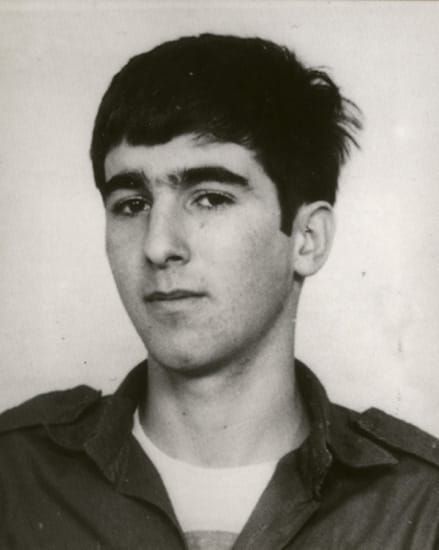
Introduction — A Disappearance That Israel Has Never Forgotten
On October 16, 1986, an Israeli Air Force aircraft took off on a military mission over Lebanon. On board was a young Israeli navigator named Ron Arad, a husband, a father, and an officer serving his country. What began as a routine military operation would become one of the longest-running and most painful unresolved mysteries in Israeli military history.
During the mission, a technical malfunction forced the crew to abandon their aircraft. While the pilot was successfully rescued by Israeli forces, Ron Arad landed in hostile territory and was captured by members of a Lebanese Shiite armed organization.
He was 28 years old.
At the time, few could have imagined that his capture would become a national story spanning generations, involving intelligence agencies, international negotiations, armed organizations, political leaders, and a family desperately searching for answers.
In the months following his capture, evidence emerged that Arad was alive. Photographs and handwritten letters offered his family hope. Negotiations and intelligence efforts continued, but his whereabouts eventually became increasingly uncertain.
By the late 1980s, the trail had largely disappeared.
What happened afterward remains the subject of conflicting accounts, intelligence assessments, and unanswered questions. Over the decades, various reports have suggested that Arad died in captivity, but the precise circumstances and location of his death have never been conclusively established in public.
For Israel, Ron Arad became more than the story of a missing airman.
His disappearance raised difficult questions about the responsibilities of a state toward its captured soldiers, the limits of intelligence operations, and the human cost of prolonged regional conflict.
For his family, however, the story was never primarily about military strategy or international politics. It was about a husband who did not return home, a father whose daughter grew up without him, and decades of uncertainty that no diplomatic statement or intelligence assessment could fully resolve.
The case also became deeply connected to the complicated history of Lebanon, the emergence of powerful armed organizations, and the regional influence of Iran. Attempts to establish what happened to Arad repeatedly brought Israeli officials into contact with a network of intermediaries, intelligence sources, and political actors across the Middle East.
Forty years later, in October 2026, the disappearance of Ron Arad remains an important chapter in Israel's national memory.
His story also invites a broader examination of how nations remember their missing, how governments pursue answers when evidence is incomplete, and how families live with questions that remain unresolved for decades.
Beyond the political arguments and military history stands a deeply human story: a man who vanished, a family that waited, and a country that has never entirely stopped searching for the truth.
This is the story of Ron Arad — the mission that changed his life, the years of uncertainty that followed, and the questions that remain unanswered four decades later.
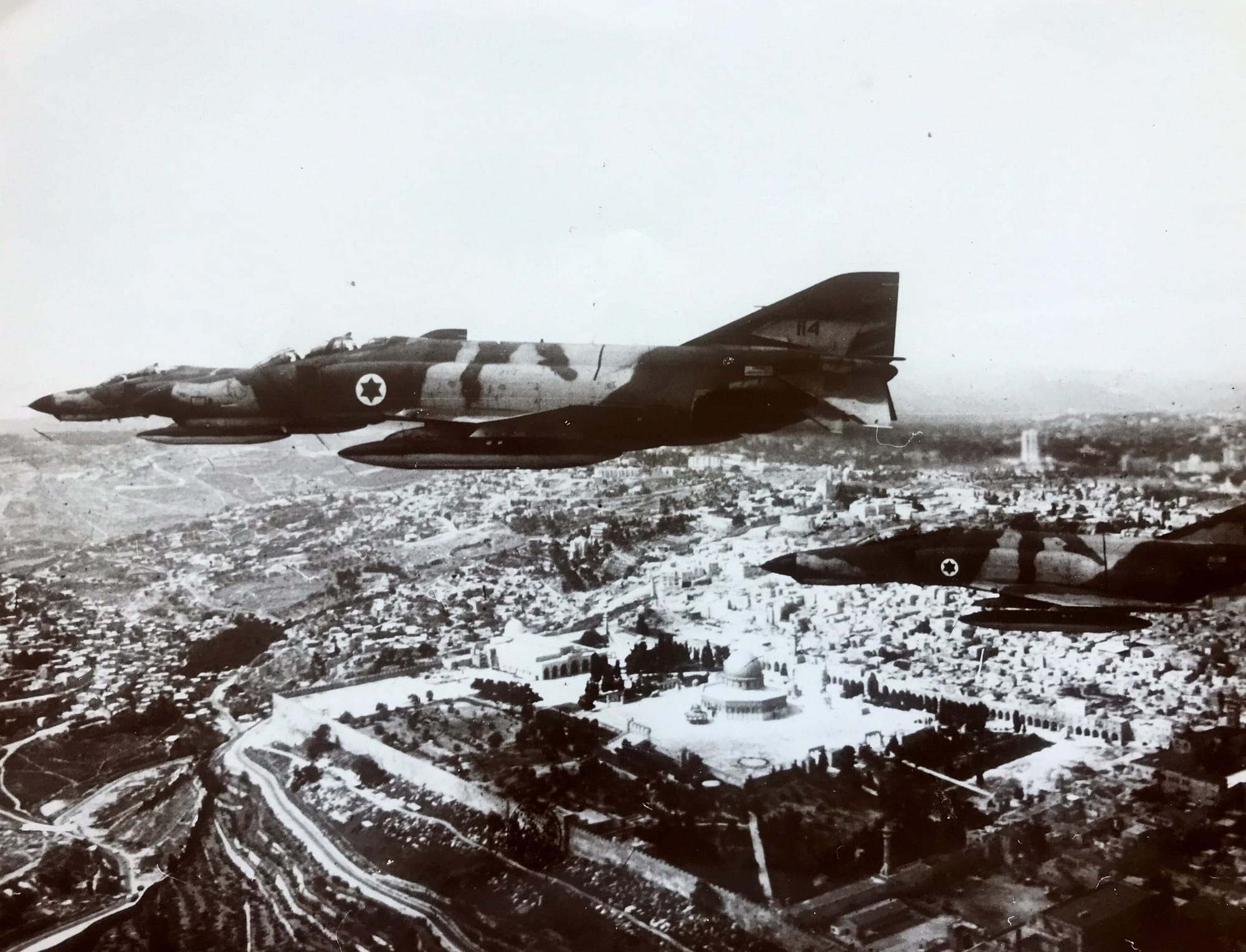
Chapter 1 — October 16, 1986: The Mission That Changed Everything
On the morning of October 16, 1986, Israeli Air Force navigator Ron Arad could not have known that the mission ahead of him would become the defining event of his life — and the beginning of one of Israel's most enduring military mysteries.
At 28 years old, Arad was serving as a navigator and weapons systems officer in the Israeli Air Force. He was married to his wife, Tami, and the father of a young daughter, Yuval. His life, like that of many military personnel, was divided between the responsibilities of service and the ordinary hopes of family life.
That day, he was assigned to a combat mission over southern Lebanon, a region that had become one of the most volatile areas in the Middle East.
Lebanon in 1986 — A Country Divided by War
To understand what happened to Ron Arad, it is necessary to understand the environment into which his aircraft was flying.
By October 1986, Lebanon had been devastated by more than a decade of civil war. What began in 1975 as a conflict involving Lebanese political and sectarian factions had developed into a complicated struggle involving foreign armies, Palestinian armed organizations, local militias, and competing regional interests.
Israel had invaded Lebanon in 1982, initially declaring its intention to remove the threat posed by Palestinian armed groups operating near its northern border. The invasion developed into a much broader military campaign, with significant consequences for Lebanon's civilian population and political landscape.
By 1985, Israeli forces had withdrawn from much of Lebanon but maintained a security zone in the south, alongside the Israeli-backed South Lebanon Army.
The area remained dangerous.
Armed organizations continued to attack Israeli positions, while Israeli forces conducted military operations against groups they considered security threats.
Among the organizations gaining influence during this period was Hezbollah, a Lebanese Shiite movement that emerged during the early 1980s with Iranian support. Other Shiite armed organizations, including Amal, were also important actors in Lebanon's fragmented political and military environment.
It was against this background that Ron Arad entered Lebanese airspace.
The Mission Over Southern Lebanon
Arad was flying in an Israeli F-4 Phantom II fighter-bomber, a two-seat aircraft used for combat missions requiring close coordination between the pilot and navigator.
The aircraft was piloted by Yishai Aviram, with Arad serving as navigator.
Their mission involved an attack against a target near Sidon, a coastal city in southern Lebanon.
During the operation, a munition released by the aircraft malfunctioned, causing an explosion that severely damaged the plane.
The aircraft became uncontrollable.
With little opportunity to recover, both crew members were forced to eject over Lebanese territory.
For a military aircrew, ejecting from a damaged aircraft is an emergency procedure intended to save lives. But in hostile territory, surviving the ejection is only the first challenge.
Once on the ground, personnel may face immediate danger from armed groups, enemy forces, and the difficulty of reaching a safe extraction point.
For Arad and Aviram, the same emergency would lead to dramatically different outcomes.
One Airman Rescued, Another Captured
Following the ejection, Israeli forces launched a rescue operation.
Pilot Yishai Aviram was successfully recovered in a dangerous helicopter rescue involving Israeli military personnel operating under difficult conditions.
Ron Arad was not.
Separated from his pilot, Arad landed in an area where Israeli rescue forces were unable to reach him before local armed men did.
He was captured by members of the Lebanese Shiite Amal movement.
The distinction is historically important. Although Hezbollah would later become closely associated with questions surrounding Arad's fate, his initial capture was attributed to Amal-linked forces rather than directly to Hezbollah.
Arad was subsequently held by a group associated with Mustafa Dirani, a Lebanese Shiite militia figure whose role would become central to later investigations into the missing navigator.
For Israel, the immediate military emergency had now become a hostage crisis.
One crew member had returned home.
The other had disappeared into the complex network of armed organizations operating inside Lebanon.
The First Hours of Uncertainty
In the aftermath of the incident, Israeli authorities faced a difficult intelligence challenge.
Arad had survived the aircraft emergency, but determining precisely who controlled him, where he was being held, and whether a rescue operation remained possible required information that was not readily available.
Lebanon's fragmented security environment made the situation particularly complicated.
Territory could be controlled by different militias, political factions, or foreign-backed organizations. Individuals captured by one group could potentially be transferred to another, sometimes without reliable documentation.
This uncertainty would become one of the defining characteristics of the Ron Arad case.
The first priority was to establish proof of life.
Over time, photographs, correspondence, and information transmitted through intermediaries confirmed that Arad had survived his initial capture.
These developments provided hope that negotiations might eventually secure his release.
However, the existence of proof of life did not guarantee that the people negotiating on his behalf knew his precise location or had the authority to arrange his freedom.
A Captive in a Wider Regional Conflict
Arad's capture occurred during a period when hostage-taking had become an important feature of Lebanon's civil war.
Throughout the 1980s, foreign nationals, journalists, diplomats, and military personnel were abducted by various armed organizations.
Some kidnappings were intended to obtain prisoner exchanges. Others were connected to political demands, financial motives, or efforts to influence foreign governments.
Arad's status as an Israeli military officer made his case especially sensitive.
He was not a civilian caught accidentally in the fighting, but a member of an armed force participating in a military operation. Nevertheless, his capture placed him under the protections applicable to persons detained during armed conflict, including the prohibition of torture and cruel treatment.
The precise legal classification of his detention depended on the nature of the conflict and the status of the captors, but fundamental humanitarian protections remained relevant.
His detention also carried significant political value for those holding him.
Israel had prisoners and detainees whose release was sought by Lebanese armed groups. The possibility of exchanging captives became an important element of the negotiations that followed.
Yet negotiations in Lebanon were rarely straightforward.
Different organizations possessed different interests, and the individuals who claimed influence over a captive were not always able to deliver the promises they made.
As months passed, Arad's situation became increasingly entangled in regional politics.
The Human Reality Behind the Military Incident
While military officials examined intelligence reports and political representatives explored possible negotiations, Arad's family confronted a very different reality.
A husband and father had failed to return home.
His wife, Tami, was left without certainty about his condition or the possibility of his release. Their daughter, Yuval, was still a small child.
For families of missing military personnel, uncertainty can become a form of prolonged suffering.
Unlike a confirmed death, a disappearance provides no clear conclusion. Every new report may bring hope, while every period of silence creates new fears.
In Arad's case, the early evidence that he remained alive made the possibility of his return particularly powerful.
Photographs and letters would later become important symbols of that hope.
They also demonstrated the painful contrast between the public and private dimensions of the case.
To military and political authorities, Arad represented a captive officer whose release required intelligence, negotiation, and potentially difficult decisions.
To his family, he remained Ron — a husband, a father, and a person whose absence could not be reduced to a security problem.
The Beginning of a Forty-Year Mystery
The events of October 16, 1986, lasted only a matter of hours.
An Israeli aircraft entered Lebanese airspace. A malfunctioning munition caused a catastrophic emergency. Two crew members ejected. One was rescued, while the other was captured.
Yet the consequences would extend far beyond that single day.
The search for Ron Arad would involve successive Israeli governments, intelligence services, Lebanese armed organizations, intermediaries, and international actors.
Over the following decades, investigators would pursue conflicting accounts of his movements and possible fate.
Some information would be confirmed.
Other claims would remain disputed.
And the central question — what ultimately happened to Ron Arad — would remain unresolved in the public record.
His disappearance also became part of a wider Israeli debate about the obligations of the state toward soldiers who are captured or go missing during military service.
How far should a government go to recover one of its personnel?
What concessions should it consider?
And what happens when years of intelligence work and negotiations still fail to provide definitive answers?
For Ron Arad's family, these were never merely theoretical questions.
They were part of everyday life.
October 16, 1986, marked the beginning of a disappearance that would remain embedded in Israel's national consciousness for four decades — a story shaped by war, captivity, uncertainty, and the enduring search for answers.

Chapter 2 — Who Was Ron Arad? The Man Behind the Missing Airman
Before his name became associated with one of Israel's longest-running military mysteries, Ron Arad was a young man with a family, a professional future, and a life that extended far beyond the uniform he wore.
For many Israelis, his name would eventually become a symbol of missing soldiers and the country's responsibility toward those who never returned from military service.
But behind the photographs, intelligence reports, and political negotiations was an individual whose life had already taken shape long before October 16, 1986.
Understanding who Ron Arad was is essential to understanding why his disappearance affected not only his family, but also generations of Israelis.
Growing Up in Israel
Ron Arad was born on May 5, 1958, in Israel, during the country's first decade of independence.
He grew up in a society shaped by the experience of war, immigration, nation-building, and continuing security concerns.
For Israeli children of his generation, military service was not an unusual career choice. Compulsory military service formed an important part of national life, and the armed forces played a prominent role in Israeli society.
Arad came of age during a period marked by major regional events, including the Six-Day War of 1967 and the Yom Kippur War of 1973.
These conflicts influenced the environment in which young Israelis grew up, although they do not, by themselves, explain Arad's personal motivations or decisions.
Like many young people of his generation, he eventually entered military service.
His path would lead him to the Israeli Air Force.
A Career in the Israeli Air Force
Ron Arad served as an air navigator and weapons systems officer, a demanding position requiring technical knowledge, concentration, and close cooperation with the aircraft's pilot.
During the 1980s, the Israeli Air Force operated several types of combat aircraft, including the American-designed F-4 Phantom II.
The Phantom was a two-seat fighter-bomber that had played a significant role in Israeli military operations since the late 1960s.
Its crew typically consisted of a pilot and a second officer responsible for navigation and weapons-related tasks.
Although the pilot controlled the aircraft, the navigator's contribution was essential to the mission.
Navigators helped manage complex flight information, identify targets, support weapons employment, and maintain situational awareness during operations.
In a combat environment, communication between the two crew members could be critical.
Arad's position therefore involved considerably more than simply accompanying a pilot.
He was a trained military professional whose responsibilities formed an integral part of the aircraft's operational capability.
By October 1986, he was serving as a reserve officer.
His military responsibilities existed alongside his civilian and family life, making the events of that month particularly devastating for those waiting for him at home.
An Engineer With a Future Beyond Military Service
Arad's life was not limited to aviation and military operations.
He was also pursuing engineering studies at the Technion — Israel Institute of Technology in Haifa, one of the country's leading institutions for science and engineering.
His studies reflected an important part of his civilian identity.
While military service was a significant responsibility, education offered another direction for his future.
Engineering requires analytical thinking, problem-solving, and technical understanding — abilities also relevant to aviation, although the specific connection between his studies and his military career should not be overstated.
His academic ambitions are a reminder that the people involved in military conflicts often have professional plans and personal goals entirely separate from the circumstances in which they become known to the public.
At the time of his capture, Arad was still a young man with much of his adult life ahead of him.
The opportunity to complete his studies, continue his career, and participate in the ordinary milestones of family life was suddenly interrupted.
Tami and Yuval — The Family Waiting at Home
Perhaps the most important part of Ron Arad's personal story is his family.
He was married to Tami Arad, and together they had a daughter, Yuval.
When he disappeared in October 1986, Yuval was still very young.
The circumstances of his capture meant that Tami was not simply waiting for her husband to return from a dangerous military assignment.
She was confronted with the possibility that he was being held by an armed organization in Lebanon, without any certainty about when, or whether, he would come home.
The distinction between a soldier killed in action and a soldier missing in captivity is profound for the families involved.
In the first situation, grief may begin with confirmation of death.
In the second, families can remain suspended between hope and fear.
For Tami and Yuval, the years that followed would be shaped by that uncertainty.
Public attention brought recognition to their situation, but it could not provide the answers they needed.
Photographs, reports, and occasional developments in negotiations became important because they suggested that Ron might still be alive.
Yet none of these developments resulted in his return.
As time passed, his daughter grew older while her father's fate remained unresolved.
The passage of time became one of the most painful aspects of the story.
A child could grow into adulthood while the central question surrounding her father's disappearance remained unanswered.
From Private Individual to National Symbol
In the years after his capture, Ron Arad's photograph became widely recognized in Israel.
His name appeared in public campaigns, media reports, commemorations, and discussions about missing military personnel.
For many Israelis, his case came to represent the broader obligation to account for soldiers who had disappeared during military operations.
The emotional importance of the case was reinforced by the fact that Arad had initially survived his capture.
Photographs and letters provided evidence of life during the early period of his detention.
These materials made his disappearance different from cases in which there was no reliable information about whether a missing person had survived.
They created a powerful sense that a return might still be possible.
Over time, however, the lack of definitive information transformed the case into a prolonged national mystery.
The public image of Arad as a missing navigator became familiar, while the private individual behind that image remained much less visible.
This is an important distinction.
A person can become a national symbol without ceasing to be a husband, father, son, friend, or colleague.
For those who knew him personally, the significance of his disappearance could never be measured solely by its political or military consequences.
The Burden of Uncertainty
The disappearance of Ron Arad also illustrates the particular psychological burden faced by families of missing persons.
Researchers sometimes describe this experience as ambiguous loss — a form of loss in which a person is physically absent but their fate remains uncertain.
Unlike conventional bereavement, ambiguous loss may offer no definitive moment at which a family can begin to accept what has happened.
Hope and grief can exist simultaneously.
A new intelligence report may raise expectations, while the absence of further information can produce renewed disappointment.
For families whose loved ones are missing in conflict, the uncertainty can continue for years or even decades.
The Arad case became one of Israel's most recognizable examples of this experience.
It also raised difficult questions about the relationship between families and governments.
How much information should authorities share when intelligence is incomplete?
How should governments communicate uncertain findings?
And how can a family evaluate conflicting reports about someone whose fate has never been conclusively established?
These questions extend far beyond Israel.
Families of missing soldiers, hostages, and civilians in conflicts around the world face similar challenges.
Remembering the Person, Not Only the Case
Forty years after his capture, Ron Arad's name remains closely connected to Israel's history of missing military personnel.
Yet remembering him solely through the circumstances of his disappearance risks overlooking the life that preceded it.
He was born in 1958.
He became an Israeli Air Force navigator.
He pursued engineering studies.
He married Tami and became the father of Yuval.
He had a civilian future as well as military responsibilities.
On October 16, 1986, those ordinary elements of his life were interrupted by an extraordinary event.
His capture would eventually involve governments, intelligence agencies, armed organizations, and international intermediaries.
But none of those developments changed the central human reality of the story.
A young father did not return home.
His family was left waiting for information that might explain what had happened to him.
And decades later, the uncertainty surrounding his fate remained part of their lives.
Before Ron Arad became a national symbol, he was a man with a family and a future. Understanding that life is essential to understanding the lasting human consequences of his disappearance.
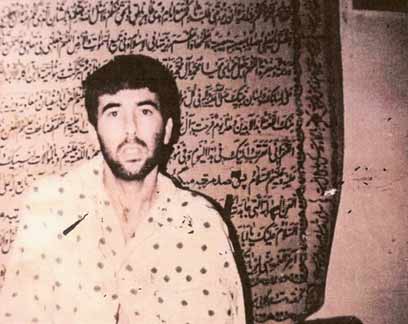
Chapter 3 — Captured in Lebanon: The First Years
When Ron Arad was captured in southern Lebanon on October 16, 1986, his disappearance immediately became more than a military incident. It marked the beginning of a complex hostage case involving Lebanese armed organizations, Israeli intelligence agencies, political intermediaries, and eventually questions about the involvement of Iran.
In the first years after his capture, there was still reason to believe that Arad might return home.
Unlike many missing soldiers whose fate remains unknown from the moment they disappear, Arad was confirmed to have survived the initial incident. Photographs, handwritten letters, and information communicated through intermediaries provided evidence that he was alive during the early period of his detention.
But knowing that a captive is alive is not the same as knowing how to bring him home.
As negotiations became increasingly complicated, Arad's situation began to move beyond the control of those originally responsible for his capture.
What followed was a period of hope, political bargaining, conflicting interests, and growing uncertainty.
The First Captors — Amal and the Armed Groups of Southern Lebanon
Following his ejection from the damaged Israeli F-4 Phantom aircraft, Ron Arad was captured by members of the Lebanese Shiite Amal movement.
Amal had emerged as an important political and military force during Lebanon's civil war, representing sections of the country's Shiite population and competing for influence with other armed organizations.
During the 1980s, southern Lebanon was divided among multiple armed factions, and control over territory, prisoners, and military resources was frequently contested.
Arad's capture therefore took place in an environment where formal government authority was limited and armed groups exercised considerable independent power.
He was subsequently held by a faction associated with Mustafa Dirani, a Lebanese militia figure who had connections to Amal before becoming involved in a separate armed organization.
Dirani would later become one of the central figures in Israeli efforts to establish what had happened to Arad.
His involvement also demonstrated the difficulty of dealing with hostage cases in a fragmented conflict.
The organization responsible for an initial capture did not necessarily retain control of the prisoner indefinitely.
Internal rivalries, shifting political alliances, and the possibility of transferring captives between groups created additional obstacles for anyone attempting to negotiate a release.
The First Evidence That Ron Arad Was Alive
During the period following his capture, evidence emerged confirming that Ron Arad had survived.
Photographs showed him in captivity, while handwritten correspondence provided further indications that he was alive.
For Israeli authorities, these materials were significant intelligence evidence.
For his family, they represented something much more personal.
They suggested that Ron had survived the aircraft emergency and that his return might still be possible.
One of the most widely remembered elements of the case was the correspondence attributed to Arad during his captivity.
The letters became an important part of the public understanding of his disappearance because they connected the missing military officer to the family waiting for him.
They also demonstrated the limited and carefully controlled nature of communication between captives and the outside world.
A photograph could establish that a person had been alive when it was taken, but it could not guarantee their condition at a later date.
A letter could provide reassurance, but it could also be produced under pressure or transmitted long after it was written.
These limitations became increasingly important as the case developed.
The last generally accepted direct evidence that Arad was alive dates to 1987. Later reports about his condition and whereabouts would depend on intelligence assessments, witness accounts, and information that was often difficult to verify independently.
Negotiations — A Possible Exchange
In the early stages of Arad's captivity, negotiations focused on the possibility of securing his release through an exchange.
Lebanese armed organizations were interested in obtaining the release of prisoners held by Israel.
An Israeli military officer in captivity represented a potentially valuable bargaining asset.
Israel, meanwhile, had a strong interest in recovering Arad and preventing his disappearance from becoming a prolonged hostage crisis.
However, negotiations were complicated by disagreements over the terms of a possible exchange and by uncertainty about who possessed the authority to release him.
Mustafa Dirani and other intermediaries became associated with efforts to negotiate an arrangement.
According to historical accounts of the case, the demands made by those holding Arad included the release of prisoners and other concessions.
The precise details of the negotiations were not always made public, and accounts of why particular opportunities failed differ.
What is clear is that no agreement resulted in Arad's release during this early period.
The failure of negotiations had consequences that extended far beyond the immediate diplomatic setback.
As time passed, the ability of Israeli authorities to establish his location and communicate with those controlling him became increasingly uncertain.
Mustafa Dirani — A Central Figure in the Mystery
Mustafa Dirani became one of the most important names associated with Ron Arad's captivity.
A former member of Amal, Dirani later led a smaller armed faction and was identified by Israeli authorities as a key figure in the missing navigator's case.
His significance was not limited to the original period of captivity.
Years later, Israeli intelligence would continue to investigate his knowledge of Arad's fate.
In 1994, Israeli commandos captured Dirani in Lebanon and brought him to Israel for interrogation.
The operation reflected the importance Israeli authorities attached to obtaining information about Arad.
Dirani remained in Israeli custody for approximately a decade before being released in a 2004 prisoner exchange involving Hezbollah.
His detention also generated serious legal and human rights controversy. Dirani alleged that he had been subjected to severe abuse during interrogation, allegations that became the subject of legal proceedings and public debate.
These developments illustrate how the search for one missing military officer became entangled in broader disputes about detention, interrogation, prisoner exchanges, and the limits of state power.
Despite Dirani's capture and interrogation, the operation did not lead to Arad's recovery or publicly establish his ultimate fate.
The Iranian Question
One of the most controversial aspects of the Ron Arad case concerns allegations that he was eventually transferred from Lebanese captors into the custody of Iranian-linked actors.
During the 1980s, Iran was expanding its influence among Lebanese Shiite armed organizations, particularly through its support for Hezbollah.
This created a complicated regional environment in which Lebanese militia leaders, Iranian officials, and other intermediaries maintained overlapping relationships.
Some Israeli intelligence assessments and subsequent accounts suggested that Arad may have been transferred to Iran or placed under the control of individuals connected to Iranian intelligence.
Other accounts challenged these claims or presented different explanations for his disappearance.
The available public evidence has not conclusively established that Arad was transported to Iran.
It is therefore important to distinguish between documented developments and allegations that remain disputed.
Iranian involvement became a recurring subject of Israeli investigations and diplomatic efforts, but the precise circumstances of Arad's later captivity have never been fully established in the public record.
This uncertainty would shape the investigation for decades.
1988 — When the Trail Began to Disappear
By 1988, the situation had changed dramatically.
The early period of captivity, during which photographs and correspondence had provided direct evidence of life, had given way to increasing uncertainty.
Accounts of Arad's movements became difficult to reconcile.
Some reports suggested that he had been transferred between armed groups. Others indicated that his captors had lost control of him or that he had died under circumstances that remained unclear.
The breakdown of reliable information was a decisive turning point.
Without direct access to Arad, Israeli authorities were forced to depend increasingly on intelligence gathering, indirect contacts, and attempts to reconstruct events after they had occurred.
This made it difficult to determine which reports were credible.
In the absence of independently verified evidence, even detailed accounts could remain unconfirmed.
The central question was no longer simply how to negotiate Arad's release.
It was whether those claiming knowledge of his whereabouts genuinely knew where he was.
The Cost of Failed Negotiations
The early years of Ron Arad's captivity reveal one of the most difficult realities of hostage negotiations.
Time can change the circumstances of captivity.
A person initially held by one organization may later be transferred, concealed, or moved to another location.
Political alliances may shift.
Individuals who once possessed influence over a captive may lose that influence.
And information that was reliable at one point may become outdated.
In Arad's case, the passage of time steadily reduced the amount of verifiable information available to his family and to Israeli authorities.
The photographs and letters from the early period remained important, but they could not answer the increasingly urgent questions about his later fate.
For his wife, Tami, and daughter, Yuval, the uncertainty continued.
The possibility of his return had not disappeared, but the path toward that return had become far less clear.
From Captivity to Disappearance
The first years after October 16, 1986, were defined by a painful contradiction.
There was evidence that Ron Arad had survived.
There were individuals and organizations associated with his captivity.
There were negotiations intended to secure his freedom.
Yet none of these developments brought him home.
By the end of the 1980s, the case had entered a different phase.
What began as a known captivity had become an unresolved disappearance.
Israeli intelligence agencies would spend years attempting to reconstruct his movements, identify those who had controlled him, and determine whether he had been transferred, remained in captivity, or died.
The search would extend beyond Lebanon and involve claims concerning Iranian intelligence, Hezbollah, former militia commanders, and possible witnesses.
But the most important question remained unanswered.
Ron Arad had been seen alive in captivity. The world knew he had survived the crash. What it could not establish was what happened to him after the reliable evidence stopped.
For his family, that uncertainty would become a defining part of the decades that followed.
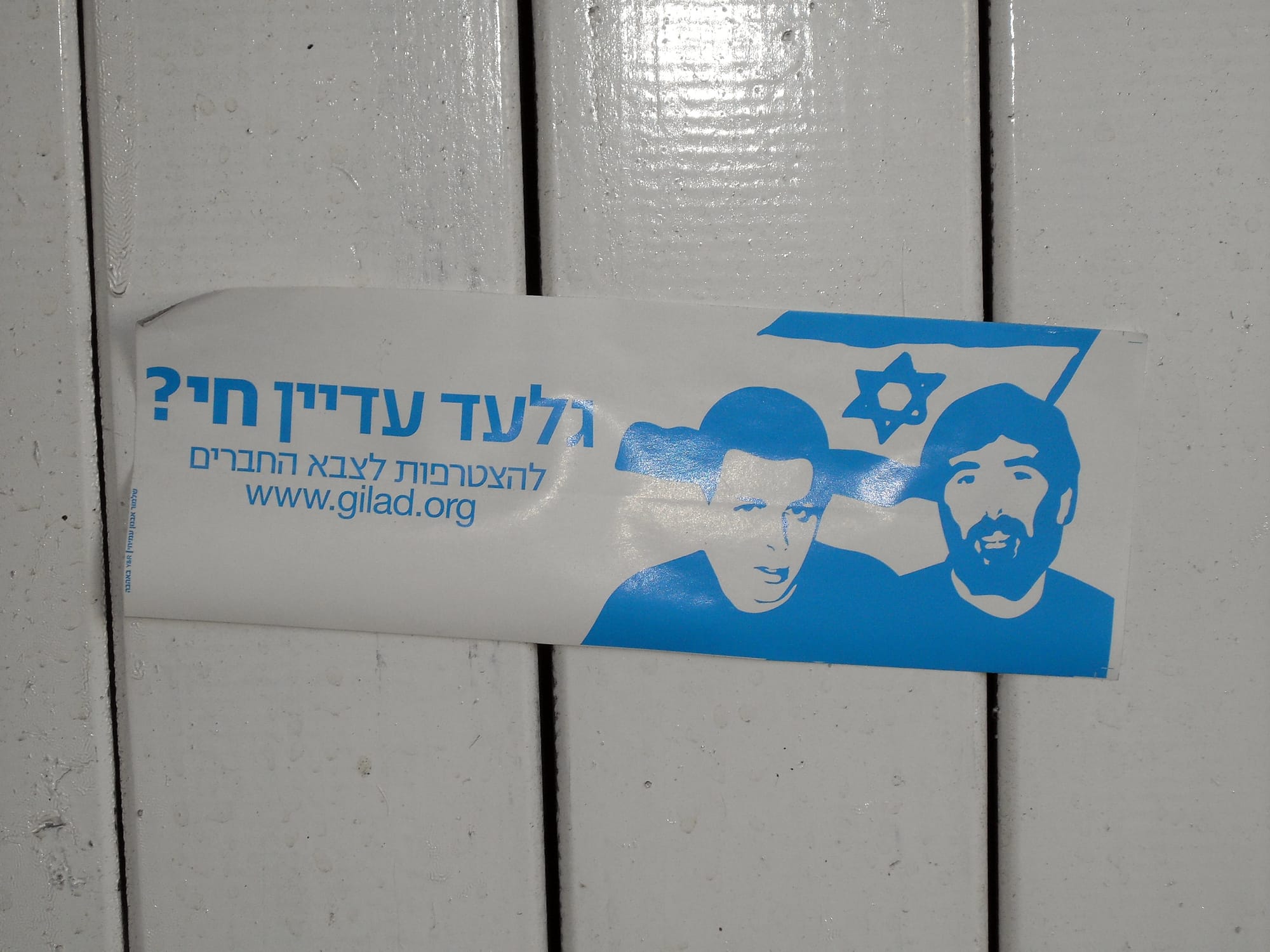
Chapter 4 — The Disappearance: When the Trail Went Cold
By the spring of 1988, Ron Arad had been held captive in Lebanon for approximately eighteen months.
During the early period of his detention, photographs, handwritten letters, and indirect communications had provided evidence that the Israeli Air Force navigator was alive. His family knew that he had survived the aircraft incident of October 1986, and Israeli authorities continued to pursue negotiations for his release.
But in May 1988, the situation entered a far more uncertain phase.
The last widely documented proof of life was dated May 5, 1988. After that, reliable information about Arad's whereabouts became increasingly difficult to obtain.
The disappearance of an already captured military officer created a particularly complicated intelligence problem. Israeli authorities knew that Arad had survived his initial capture. They had identified individuals and organizations connected to his detention. Yet they could no longer establish with confidence where he was being held, who controlled him, or whether he remained alive.
Over the following decades, intelligence assessments, witness testimonies, and reports from Lebanese armed organizations would offer competing explanations.
Some suggested that Arad had been transferred to Iranian custody. Others claimed that he had died in Lebanon, either from illness, mistreatment, or during an attempted escape.
None of these accounts resulted in the recovery of his remains or a publicly conclusive reconstruction of his final days.
The case had become one of Israel's most enduring unresolved military disappearances.
May 1988 — The Last Confirmed Evidence of Life
The final known proof of life marked a critical turning point.
Until then, Israeli authorities had received evidence that Arad was alive during his captivity. Although such material did not guarantee his safety, it established that efforts to secure his release were directed toward someone known to have survived.
After May 1988, the available evidence changed.
Intelligence agencies increasingly had to depend on information provided by intermediaries, former militia members, informants, and individuals claiming knowledge of Arad's movements.
Such information could be difficult to verify.
Lebanon remained divided by civil war, with armed organizations operating under shifting alliances and competing political interests. A captive could be moved between locations or transferred from one faction to another without reliable records.
In this environment, even information obtained from someone previously involved in Arad's detention might no longer accurately describe his circumstances.
The distinction between direct evidence and secondhand intelligence became essential.
A photograph or authenticated letter could establish that Arad had been alive at a particular moment.
A statement from an intermediary, however, might reflect genuine knowledge, outdated information, speculation, or deliberate misinformation.
As the years passed, Israeli investigators faced the increasingly difficult task of separating these possibilities.
The Possibility of an Iranian Connection
One of the most persistent theories surrounding Ron Arad's disappearance concerns the possibility that he was transferred from Lebanese captors into Iranian custody.
During the 1980s, Iran was developing extensive political and military relationships with Lebanese Shiite organizations, particularly Hezbollah.
Iran's Islamic Revolutionary Guard Corps maintained a presence in Lebanon, including in the eastern Beqaa Valley, and played an important role in supporting allied armed groups.
This regional network created the possibility that a captive initially held by a Lebanese militia could subsequently come under the control of Iranian-linked actors.
Israeli intelligence assessments over the years suggested that Arad may have been transferred to Iranian personnel, and some reports alleged that he had been taken to Iran itself before being returned to Lebanon.
These claims were significant because they expanded the investigation beyond the original Lebanese captors.
If Arad had been transferred into Iranian custody, establishing his fate would potentially require information from Iranian intelligence or military officials.
Iran, however, did not publicly acknowledge holding him.
In 1993, Amnesty International reported allegations that Arad had been transferred to Iranian Revolutionary Guards and called on the Iranian authorities to help clarify his fate.
The organization also noted that the International Committee of the Red Cross had not been granted access to him.
These concerns highlighted an important humanitarian issue.
Regardless of the political circumstances surrounding his capture, the authorities or armed organizations responsible for his detention had obligations concerning humane treatment and the protection of detainees.
Yet the question of who ultimately controlled Arad remained unresolved.
The Iranian connection would continue to influence Israeli investigations for decades, but publicly available evidence has not conclusively established every stage of his alleged transfer.
Mustafa Dirani and the Search for Information
As reliable information about Arad became increasingly scarce, Israeli intelligence focused attention on individuals believed to have knowledge of his captivity.
Among the most important was Mustafa Dirani.
Dirani had been associated with the Lebanese Amal movement before becoming involved in a separate armed faction. Israeli authorities believed that he possessed valuable information about Arad's detention and possible transfer.
In May 1994, Israeli commandos captured Dirani in Lebanon and transported him to Israel.
The operation was intended, in part, to obtain information that might help establish what had happened to the missing navigator.
Dirani's capture demonstrated how seriously Israel continued to pursue the case, even years after the last confirmed proof of life.
However, the operation did not produce the breakthrough Israeli authorities had hoped for.
Dirani remained in Israeli custody for approximately ten years.
During that period, his detention became controversial. He alleged that he had been subjected to severe abuse during interrogation, raising legal and human rights questions about the methods used to obtain intelligence.
He was eventually released in 2004 as part of a prisoner exchange involving Hezbollah.
Despite his years in custody, Israeli authorities did not publicly establish Arad's ultimate fate through information obtained from Dirani.
The case illustrated a fundamental limitation of intelligence operations: capturing a person believed to possess important information does not guarantee that the information will be complete, reliable, or sufficient to resolve an investigation.
Conflicting Reports About His Death
As the investigation continued, several explanations emerged concerning Arad's possible death.
One theory suggested that he died in Lebanon during the late 1980s.
Another proposed that he survived into the 1990s before dying from an untreated illness while in captivity.
A third account claimed that he escaped from his captors in 1988 but died while attempting to reach territory controlled by Israeli forces.
These theories differed not only in their proposed dates, but also in their descriptions of who held Arad and where he spent his final days.
In 2008, information attributed to Hezbollah suggested that Arad had escaped captivity in May 1988 and disappeared while attempting to make his way south.
According to that account, he may have died from exposure, injury, or another cause while moving through difficult terrain.
Israeli authorities did not accept the account as a satisfactory resolution of the case.
Other reports suggested that he remained in captivity for years after 1988.
In 2009, Israeli media published details attributed to a confidential military intelligence investigation headed by former intelligence chief Aharon Zeevi-Farkash.
That assessment reportedly concluded that Arad had survived until at least the mid-1990s and subsequently died from an illness while in Iranian-linked custody in Lebanon.
The assessment did not identify a confirmed burial location.
Then, in October 2016, Israeli media reported that a joint assessment by Mossad and Israeli military intelligence had reached a different conclusion.
According to the report, new intelligence suggested that Arad had probably died by 1988, much earlier than previously assessed.
The contradiction between these findings demonstrated the extraordinary difficulty of reconstructing events from incomplete intelligence.
It also showed why an intelligence assessment, even one produced by experienced security agencies, should not automatically be treated as definitive historical proof.
A Lebanese Witness and Another Possible Explanation
In February 2016, a further account emerged from Lebanon.
Reports concerning proceedings before a Lebanese military tribunal described testimony attributed to a former member of the Syrian Social Nationalist Party.
The witness claimed that members of the organization had held a captive in 1988 who was later identified as Ron Arad.
According to the reported testimony, the captive had been taken to an area near Beirut and died after being subjected to severe mistreatment.
The account raised the possibility that Arad had died in Lebanon during the same year that the last confirmed evidence of life was received.
However, the testimony did not conclusively establish that the prisoner was Arad.
Nor did it result in publicly verified forensic evidence identifying his remains.
For investigators, such testimony could provide a lead worth examining, but it could not by itself resolve the case.
The episode illustrated another recurring problem in the investigation.
Decades after an event, witnesses may provide accounts that are difficult to corroborate. Memories can fade, identities may be uncertain, and the absence of physical evidence can prevent investigators from reaching firm conclusions.
In a case as politically sensitive as Ron Arad's disappearance, these difficulties become even more significant.
The Intelligence Assessments That Disagreed
One of the most remarkable aspects of the Ron Arad investigation is that Israeli authorities themselves reached different assessments over time.
A commission examining the case in the early 2000s reportedly concluded that Arad had probably died during the 1990s, potentially after being denied adequate medical treatment.
A later assessment, reported in 2016, suggested that he had died much earlier.
These conclusions were not necessarily based on the same evidence.
Intelligence investigations evolve as new information becomes available, previously classified material is reassessed, and old witness accounts are compared with additional findings.
Nevertheless, the changing assessments underline an essential distinction between probability and certainty.
An intelligence service may determine that one explanation is more likely than another without possessing the physical evidence necessary to establish exactly what happened.
For Arad's family, this distinction carried enormous emotional consequences.
A conclusion that he had probably died could not answer every question about his final years.
Where had he been held?
Who was responsible for his treatment?
When had he died?
And where were his remains?
Without answers to these questions, the investigation remained incomplete.
The Search Continues Into the Twenty-First Century
Despite the passage of decades, Israeli authorities continued to pursue information about Arad.
The search involved intelligence gathering, investigations into possible burial locations, and efforts to obtain information from individuals believed to have connections to his former captors.
In October 2021, Israeli Prime Minister Naftali Bennett publicly disclosed that Mossad had conducted an operation intended to obtain new information about Arad.
The announcement demonstrated that the case remained an active intelligence concern thirty-five years after his capture.
The precise details of the operation were not publicly disclosed, and the announcement did not establish Arad's final fate.
The search continued.
In March 2026, Israeli special forces conducted an operation in the Lebanese village of Nabi Chit, in the Beqaa Valley, seeking evidence connected to Arad's possible burial location.
Israeli authorities subsequently stated that the operation had not uncovered evidence concerning the missing navigator.
The operation also carried a severe human cost. Lebanese authorities reported dozens of deaths during the associated fighting and Israeli strikes, including civilians and Lebanese military personnel.
The incident raised difficult questions about the risks and consequences of pursuing intelligence objectives in an active conflict zone.
For Israel, the operation reflected the continuing commitment to locating missing military personnel.
For communities in Lebanon, it was another episode of violence in a region already marked by decades of conflict.
Both realities form part of the historical record.
A Family Without a Definitive Answer
For Ron Arad's wife, Tami, and their daughter, Yuval, the decades of investigation could not replace the certainty that never arrived.
The family's experience was shaped by repeated cycles of hope and disappointment.
New intelligence assessments sometimes appeared to bring investigators closer to an explanation.
Yet the conclusions could change, and the evidence necessary to establish what had happened remained elusive.
Over time, the question of whether Arad could still be alive became increasingly separate from the question of whether his fate could ever be conclusively established.
Those are two different forms of uncertainty.
The first concerns survival.
The second concerns historical truth, accountability, and the possibility of recovering remains.
Even when investigators believe a missing person has died, families may still seek confirmation of the circumstances, location, and responsibility.
For the Arad family, the search has therefore extended beyond the possibility of a homecoming.
It has become a search for answers about the final chapter of a life interrupted in 1986.
Forty Years Later — The Difference Between Belief and Proof
By October 2026, four decades had passed since Ron Arad's capture.
The available evidence strongly suggested that he had died many years earlier, but the precise circumstances remained unresolved in the public record.
Different investigations had produced different timelines.
Claims concerning Iranian custody remained disputed.
Accounts of escape, illness, and mistreatment had not resulted in a conclusively identified burial site.
Even the continuing intelligence operations had failed to provide a definitive public explanation.
The Ron Arad case therefore illustrates one of the most difficult challenges in investigative journalism and historical research: the responsibility to distinguish between what is known, what is believed, and what remains unproven.
It would be misleading to present any single theory as an established fact when the available evidence does not support that certainty.
It would also be misleading to suggest that the absence of conclusive evidence means every theory is equally credible.
Some explanations have been supported by substantial intelligence assessments. Others depend primarily on testimony or statements from interested parties.
The challenge is to examine each claim according to the strength of its evidence.
For Ron Arad, that distinction remains essential.
His capture on October 16, 1986, is documented.
His survival during the early period of captivity is supported by photographs and correspondence.
His disappearance after the last known proof of life is established.
But the complete account of what happened afterward remains beyond public confirmation.
Forty years after Ron Arad disappeared into the uncertainty of Lebanon's civil war, the central question is no longer only whether he survived. It is whether the truth about his final days can ever be fully recovered.
And until that truth is established, the story of Ron Arad remains unfinished.
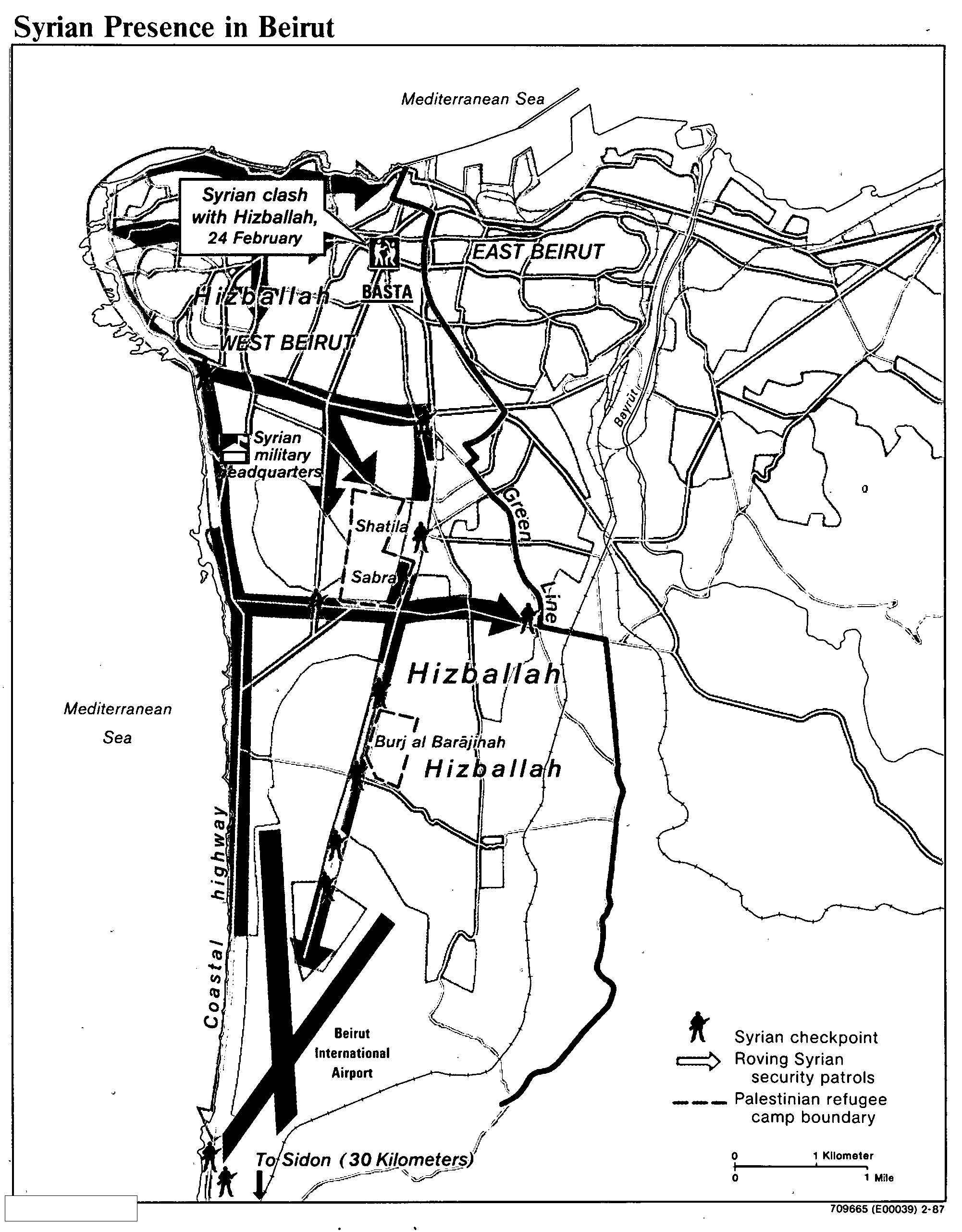
Chapter 5 — Hezbollah, Iran and the Search for Answers
The disappearance of Ron Arad cannot be understood without examining the complicated relationship between Lebanon's armed organizations, Iran's regional influence, and Israel's efforts to recover its missing military personnel.
What began in October 1986 as the capture of an Israeli Air Force navigator by members of the Lebanese Amal movement eventually developed into an international intelligence mystery.
Over the following decades, the case would involve Hezbollah, the Iranian Revolutionary Guard Corps, Israeli intelligence agencies, German mediators, Lebanese militia commanders, and successive Israeli governments.
At the center of these developments remained a single unanswered question: who knew what had happened to Ron Arad, and why had that information never resulted in a definitive explanation?
The search exposed the difficulties of negotiating with armed organizations, the limitations of intelligence gathering, and the political importance attached to prisoners and missing soldiers in the Middle East.
It also revealed how a single captive could become entangled in regional power struggles far beyond the circumstances of his original capture.
Hezbollah's Emergence in Lebanon
When Ron Arad was captured in 1986, Lebanon was still experiencing the devastating consequences of its civil war.
The conflict had weakened central government authority and allowed numerous armed organizations to establish control over different parts of the country.
Among these organizations was Hezbollah, which emerged during the early 1980s with substantial support from Iran.
Hezbollah developed in the context of Israel's 1982 invasion of Lebanon, the mobilization of Lebanese Shiite communities, and the broader political influence of Iran's 1979 Islamic Revolution.
Its founders advocated armed resistance against Israel and sought to establish a political and religious movement influenced by Iran's revolutionary ideology.
Over time, Hezbollah developed into a powerful organization combining an armed wing, political representation, social institutions, and extensive regional relationships.
The United States and several other governments designate Hezbollah as a terrorist organization. The European Union designates its military wing as a terrorist organization, while distinguishing it from the organization's political structures.
During the 1980s, however, Hezbollah was still consolidating its position.
It competed with other Lebanese organizations, including Amal, for influence within the Shiite community.
These rivalries are important to understanding Arad's disappearance.
Although his original capture was attributed to Amal, later developments involved individuals who moved between organizations or established separate armed factions.
The relationships among these groups were neither simple nor static.
Their political alliances, military interests, and connections to foreign governments changed over time.
Consequently, identifying the organization responsible for Arad's initial capture does not automatically establish which organization controlled him afterward.
Iran's Growing Influence in Lebanon
Iran's role in Lebanon expanded significantly during the 1980s.
Following the Islamic Revolution of 1979, the Iranian government sought to strengthen relationships with political and armed movements that shared elements of its ideological and strategic outlook.
Lebanon became an important arena for this policy.
Iranian Revolutionary Guard personnel were deployed to Lebanon's Beqaa Valley, where they helped train and support emerging Shiite armed organizations.
Hezbollah became Iran's most important Lebanese ally.
The relationship included military training, financial assistance, ideological cooperation, and political coordination.
For Iran, Hezbollah provided an influential partner close to Israel's northern border.
For Hezbollah, Iranian support strengthened its ability to operate militarily and expand its political influence.
This relationship would become one of the defining features of Middle Eastern geopolitics.
It also became central to Israeli theories concerning Ron Arad.
Israeli intelligence suspected that the missing navigator had been transferred from his original Lebanese captors to individuals connected with Iran.
Some assessments suggested that Iranian Revolutionary Guard personnel had taken control of him.
Others proposed that he had been moved to Iran before eventually being returned to Lebanon.
These accounts were serious intelligence allegations, but their precise details have never been conclusively established through publicly available evidence.
Iran repeatedly denied holding Arad.
In June 1994, the Iranian Foreign Ministry publicly rejected Israeli allegations that the missing navigator was in Iranian custody.
The competing claims created a diplomatic impasse.
Israel believed that Iranian-linked actors might possess information essential to resolving the case.
Iran denied responsibility.
And Arad's family remained without a definitive answer.
Mustafa Dirani and the Changing Control of the Captive
Mustafa Dirani occupied a particularly important position in the early history of Arad's captivity.
Initially associated with Amal, Dirani later separated from the movement and established an armed faction known as the Resistance of the Believers.
Israeli authorities identified him as a central figure responsible for holding Arad during the period before the disappearance.
The importance of Dirani's role extended beyond his direct involvement.
His changing political affiliations reflected the broader instability of Lebanon's armed landscape.
A prisoner held by one militia commander could become part of negotiations involving several different organizations.
If control over the prisoner changed, the original captor might no longer be able to guarantee his release.
This possibility complicated Israeli efforts to negotiate for Arad.
It also raised the question of whether some individuals claiming knowledge of his location were relying on information that was no longer accurate.
In May 1994, Israeli commandos captured Dirani in Lebanon and brought him to Israel.
The operation was designed in part to obtain intelligence about Arad and potentially strengthen Israel's position in future negotiations.
However, the years of interrogation and detention that followed did not produce a publicly conclusive account of the missing navigator's fate.
Dirani was eventually released in 2004.
His release demonstrated that even the detention of a person believed to possess crucial information had not resolved the mystery.
Prisoners as Instruments of Political Pressure
The Ron Arad case became closely connected to the practice of using prisoners and captives as bargaining instruments.
Throughout the Lebanese conflict, armed organizations and governments sought prisoner exchanges as a means of obtaining the release of detained personnel.
Such exchanges could involve military personnel, civilians, remains of the dead, and individuals held for security-related offenses.
For Israel, recovering missing soldiers carried significant national and political importance.
For Hezbollah and other armed organizations, Israeli detainees and prisoners represented a major negotiating priority.
This created a difficult environment in which humanitarian concerns and political demands became intertwined.
Israel detained several prominent Lebanese figures whom it hoped could be used to obtain information or secure the release of missing personnel.
Among them were Mustafa Dirani and Sheikh Abdul Karim Obeid, a Hezbollah-associated cleric captured by Israeli forces in Lebanon in 1989.
Their detention became controversial, particularly where individuals were held for prolonged periods without ordinary criminal proceedings.
The practice raised legal questions concerning arbitrary detention, due process, and the use of human beings as leverage.
At the same time, the original abduction and continued detention of Arad raised serious concerns under international humanitarian law.
The obligation to treat detainees humanely does not disappear because a conflict involves non-state armed organizations.
Neither does the political importance of a captive justify torture, disappearance, or the denial of fundamental protections.
These principles apply regardless of which side holds the prisoner.
The 2004 Prisoner Exchange — A Deal Without Ron Arad
One of the most significant developments occurred in January 2004.
Following lengthy negotiations mediated by Germany, Israel and Hezbollah reached an agreement involving the release of prisoners and the return of Israeli captives and remains.
Under the agreement, Israel secured the release of businessman Elhanan Tannenbaum, who had been held by Hezbollah, and the return of the bodies of three Israeli soldiers captured in October 2000.
In exchange, Israel released hundreds of prisoners, including Mustafa Dirani and Sheikh Abdul Karim Obeid.
For the families whose loved ones were returned, the exchange represented an important development.
For Ron Arad's family, however, the agreement was deeply painful.
Arad was not returned.
Nor did the exchange provide a definitive explanation of what had happened to him.
The decision to release Dirani and Obeid was especially controversial because both men had previously been regarded as potential sources of leverage in the effort to obtain information about Arad.
Their release raised difficult questions.
Had Israel surrendered an important negotiating advantage?
Was there still a realistic possibility of recovering Arad?
And how should a government balance the return of known captives against the uncertain fate of someone missing for nearly eighteen years?
These questions reflected a broader dilemma in hostage negotiations.
Governments may be forced to choose between agreements that can produce immediate, verifiable results and demands that may prevent any agreement from taking place.
In the case of Ron Arad, the 2004 exchange produced significant outcomes for other families but left the central mystery unresolved.
Hezbollah's Account of the Disappearance
In 2008, Hezbollah provided information concerning Arad's possible fate as part of negotiations involving Israel.
According to reports about the material, Hezbollah claimed that Arad had escaped from captivity in May 1988.
The account suggested that he attempted to travel south toward territory controlled by Israeli forces but disappeared in difficult mountainous terrain.
Hezbollah proposed that he might have died from injury, exposure, or other circumstances during the attempted escape.
The report offered a possible explanation for why his captors had lost contact with him.
However, it did not identify his remains or provide independently verified evidence establishing that the account was accurate.
Israeli authorities considered the information insufficient.
The report also conflicted with other intelligence assessments suggesting that Arad had remained in captivity beyond 1988.
These contradictions were significant.
If Arad had escaped and died in 1988, later claims that he had been transferred to Iranian custody or survived into the 1990s would require substantial reassessment.
If he had instead remained in captivity, Hezbollah's explanation would be incomplete or incorrect.
Without decisive evidence, investigators could not conclusively determine which version reflected the historical reality.
The 2008 report therefore added another account to an already complicated investigation rather than resolving it.
German Mediation and International Diplomacy
Germany played an important role in several negotiations between Israel and Hezbollah.
German intelligence and diplomatic intermediaries helped facilitate contacts between parties that did not maintain ordinary diplomatic relations.
These efforts demonstrated the importance of third-party mediation in conflicts where direct negotiations are politically difficult or impossible.
Intermediaries can transmit messages, communicate demands, and help establish arrangements for prisoner exchanges.
However, their ability to resolve a case depends heavily on the accuracy of the information provided by the parties involved.
An intermediary cannot independently guarantee that an armed organization possesses a captive or knows the location of a missing person.
In Arad's case, German mediation helped facilitate broader negotiations, but it could not overcome the fundamental absence of reliable information about his whereabouts.
The international dimension of the search also revealed the limits of diplomatic pressure.
Governments may request information, pursue negotiations, and seek assistance from international organizations.
Yet when a disappearance involves secret detention, armed factions, or intelligence networks, obtaining independently verifiable evidence can remain extraordinarily difficult.
Intelligence Operations and the Search for Physical Evidence
As negotiations failed to produce a resolution, Israeli authorities continued to investigate the case through intelligence operations.
The search increasingly focused on reconstructing Arad's movements and identifying possible burial locations.
This required investigators to examine information from former militia members, intelligence sources, historical records, and individuals connected to the original captors.
The work was complicated by the passage of time.
Witnesses died or disappeared.
Political organizations changed leadership.
Locations associated with the captivity were altered by subsequent conflicts.
And evidence that might once have been recoverable became increasingly difficult to locate.
In October 2021, Israeli Prime Minister Naftali Bennett publicly disclosed that Mossad had conducted an operation intended to obtain information about Arad.
The announcement confirmed that Israel continued to devote intelligence resources to the case decades after the disappearance.
However, the operation did not produce a publicly confirmed resolution.
In March 2026, Israeli forces conducted another operation in Lebanon, this time in the Nabi Chit area of the Beqaa Valley.
The operation sought evidence connected to a possible burial location.
Israeli authorities subsequently reported that the search had not uncovered evidence resolving Arad's fate.
The operation occurred amid intense regional hostilities and was accompanied by fighting and Israeli strikes that caused significant casualties in Lebanon.
It demonstrated both the continuing Israeli determination to investigate the disappearance and the potentially severe consequences of military intelligence operations in populated conflict areas.
The search for historical truth remained entangled with contemporary military realities.
Responsibility, Secrecy and Unanswered Questions
The Ron Arad case raises difficult questions about responsibility.
Who controlled him after he was taken from Amal's custody?
Did Iranian-linked personnel become involved?
What did Hezbollah know about his later movements?
Were negotiations obstructed by political demands, inaccurate intelligence, or the fact that the individuals involved no longer knew where he was?
And did opportunities to secure his release exist before the trail disappeared?
The available public evidence does not provide definitive answers to every question.
It is important not to treat the involvement of Iran or Hezbollah in Lebanon's wider armed networks as automatic proof that either controlled Arad throughout his disappearance.
Equally, their denials or claims of limited knowledge do not independently establish what happened.
A credible investigation must examine each allegation according to the available evidence.
It must also recognize that intelligence assessments can change.
In 2009, reporting on an Israeli military intelligence assessment suggested that Arad had survived into the 1990s and died from illness while in captivity.
By 2016, another reported Israeli intelligence assessment suggested that he had probably died by 1988.
The different conclusions demonstrated the difficulty of determining a historical truth when critical evidence remains missing.
For Arad's family, the distinction between these assessments was far from academic.
Each suggested a different account of his final years.
Each raised different questions about the people responsible.
And neither provided the certainty that a confirmed recovery or independently established sequence of events might have offered.
A Missing Man at the Center of Regional Politics
Over forty years, Ron Arad's disappearance became part of the wider history of relations among Israel, Lebanon, Hezbollah, and Iran.
His case influenced intelligence operations, prisoner exchanges, diplomatic contacts, and public debates about the responsibilities of governments toward missing military personnel.
Yet the regional significance of the case should not obscure its human foundation.
Behind every intelligence report was a man who had survived an aircraft emergency and been captured.
Behind every negotiation was a family waiting for information.
And behind every competing explanation was the possibility that someone, somewhere, possessed knowledge that had never been fully disclosed.
The political landscape of the Middle East changed dramatically between 1986 and 2026.
Governments changed.
Armed organizations gained and lost influence.
Wars began and ended.
Regional alliances shifted.
But the central question surrounding Ron Arad remained.
What happened after the last reliable evidence that he was alive?
The answer may lie in documents that have never been released, testimony that has never been independently verified, or physical evidence that has not yet been recovered.
Until such evidence emerges, the responsibility of journalism is not to present speculation as certainty, but to continue examining the facts, questioning competing accounts, and distinguishing political claims from demonstrable evidence.
Ron Arad's disappearance became a story of intelligence, diplomacy, and regional power. But at its center remains something far simpler: a missing man, a family without a definitive answer, and a truth that has remained beyond reach for four decades.
Chapter 6 — A Family Waiting for Answers
For governments, the disappearance of a military officer can become a matter of intelligence, national security, and diplomatic negotiations.
For a family, it is something entirely different.
It is an empty place at the dinner table. A familiar voice that is no longer heard. Birthdays, anniversaries, and ordinary moments that pass without the person who should have been there.
When Israeli Air Force navigator Ron Arad was captured in Lebanon on October 16, 1986, his wife, Tami, and their young daughter, Yuval, entered a period of uncertainty that would continue for decades.
What began as a desperate hope for his safe return gradually became one of Israel's most widely recognized family tragedies.
Behind the military operations, political negotiations, and intelligence investigations was a family trying to understand what had happened to a husband and father.
And as the years passed, the most difficult part of their experience was not simply his absence.
It was the absence of an answer.
The Day Everything Changed
On October 16, 1986, Ron Arad was serving as a reserve navigator in the Israeli Air Force.
He had a civilian life, academic ambitions, and a young family waiting for him.
His wife, Tami, was suddenly confronted with news that his aircraft had been lost during a mission over Lebanon.
The pilot, Yishai Aviram, had been rescued.
Ron had not.
The confirmation that he had survived the aircraft incident but had been captured introduced a different kind of uncertainty.
There was reason to hope that he was alive.
There was also the knowledge that he was being held by an armed organization in a country devastated by civil war.
For Tami, the situation meant living with questions that could not be answered through ordinary communication.
Where was her husband?
Was he injured?
Was he receiving medical treatment?
Did his captors intend to release him?
And when would she see him again?
The public record does not establish every detail of the family's private experience during those first hours and days. But the circumstances themselves reveal the extraordinary uncertainty that followed the news of his capture.
The family knew that Ron had not returned.
What they could not know was how long his absence would last.
The Letters That Kept Hope Alive
During the early period of captivity, photographs and handwritten letters provided evidence that Ron Arad was alive.
For intelligence officials, these materials helped establish his condition at particular moments.
For his family, they carried a far more personal meaning.
A handwritten letter is different from an official statement or intelligence report.
It preserves something of the individual behind the circumstances of captivity.
Handwriting, familiar expressions, and personal references can create a connection between someone held far away and the people waiting at home.
The correspondence attributed to Arad became an important part of the public history of his disappearance.
It also provided evidence that he had survived beyond the day of his capture.
But such communication came with painful limitations.
A letter might have been written weeks or months before it reached its destination.
A photograph could show that a captive was alive without revealing whether he was safe or receiving adequate treatment.
And communication controlled by captors could not provide the freedom of an ordinary conversation.
The family could not simply telephone Ron, ask him how he was feeling, or receive regular updates about his condition.
Every piece of information depended on others.
The last widely documented proof of life dates to May 1988.
After that, the letters and photographs that had sustained hope were no longer followed by reliable new evidence.
The silence became another part of the family's experience.
A Daughter Growing Up Without Her Father
When Ron Arad disappeared, his daughter Yuval was still a small child.
Her childhood would unfold against the background of a national search for her missing father.
For most children, growing up involves ordinary milestones shared with parents: the first day of school, birthdays, family celebrations, and countless small moments that rarely become part of public history.
For Yuval, her father's absence meant that those years passed without his physical presence.
The passage of time gave the disappearance a particular emotional dimension.
A child who was too young to fully understand the circumstances of her father's capture would eventually become old enough to read the reports, understand the political arguments, and recognize the uncertainty surrounding his fate.
The world knew Ron Arad as a missing Israeli navigator.
For Yuval, he was her father.
These identities are connected, but they are not interchangeable.
Public recognition cannot replace personal memories that were never created.
Nor can national ceremonies compensate for the absence of a parent during the years of childhood and adolescence.
The case illustrates how the consequences of war can extend far beyond the battlefield.
A military incident lasting only hours can shape the lives of family members for generations.
Tami Arad — Living Between Hope and Uncertainty
Over the decades, Tami Arad became publicly associated with the effort to establish her husband's fate.
Her situation reflected the difficult position faced by relatives of missing military personnel.
Families often depend on government institutions for information, while also having to live with the possibility that those institutions do not possess definitive answers.
Intelligence agencies may provide assessments, but those assessments can change.
Political leaders may promise continued efforts, but they cannot guarantee results.
Negotiations may appear promising, only to collapse without producing reliable information.
For the Arad family, these difficulties were compounded by the passage of time.
In the early years, the central hope was that Ron might be released and return home.
As the decades passed, the search increasingly involved questions about whether he had survived, when he might have died, and where his remains could be located.
These are profoundly different questions.
The first concerns reunion.
The second concerns truth, confirmation, and the possibility of a final resting place.
It is important not to presume that every member of the family experienced these developments in the same way.
Their private emotions and decisions belong to them.
What the public record establishes is that the uncertainty surrounding Ron's fate continued to affect the family long after his capture.
When a Missing Person Becomes a National Symbol
Ron Arad's disappearance became one of the most recognizable cases of a missing Israeli soldier.
His photograph appeared in public campaigns and commemorations.
His name became familiar to Israelis who had never met him.
For many, his case represented the principle that military personnel should not be forgotten after capture or disappearance.
This national attention helped ensure that the search remained visible.
It also created a complicated relationship between a family's private loss and the expectations of a wider society.
When a missing person becomes a national symbol, their story can acquire political and emotional meanings beyond the family's control.
Governments may refer to the case when discussing military responsibilities.
Campaigners may use it to demand action.
The media may return to it during anniversaries, prisoner exchanges, or new intelligence developments.
These activities can preserve public awareness.
But they can also place a family repeatedly in the position of confronting painful memories.
Every new headline may raise questions that had already been asked many times.
Every new theory may create expectations that cannot be fulfilled.
The national importance of the case therefore exists alongside a deeply personal reality.
Ron Arad was not only a symbol of Israel's missing soldiers.
He was a member of a family whose life continued while the questions about his fate remained unanswered.
The Psychological Weight of an Unresolved Disappearance
Psychologists use the term ambiguous loss to describe situations in which a person is physically absent but their fate remains uncertain.
The concept is particularly relevant to families of missing persons, including those who disappear during war, forced displacement, kidnapping, or natural disasters.
Unlike a confirmed death, a disappearance may provide no definitive event around which a family can organize its understanding of what happened.
The missing person is absent, but the possibility of their return may remain.
Hope and grief can exist simultaneously.
The passage of time does not necessarily resolve this contradiction.
A family may continue ordinary life while still searching for information.
Children may grow older.
Relationships and responsibilities may change.
Yet the unanswered questions remain.
It would be inappropriate to assign a psychological diagnosis to Tami, Yuval, or other members of the Arad family without direct evidence.
Nevertheless, the broader concept of ambiguous loss helps explain why unresolved disappearances can have such lasting consequences.
The uncertainty itself becomes part of the suffering.
For families, knowing what happened can be important even when the answer is painful.
Without that knowledge, the disappearance may remain an unfinished chapter in their lives.
Every New Report, Another Unanswered Question
Over the decades, the Arad case generated numerous intelligence assessments and media reports.
Some suggested that he had been transferred to Iranian custody.
Others claimed that he had died in Lebanon during the late 1980s.
Further assessments proposed that he had survived into the 1990s before dying from illness.
These reports were not simply competing historical theories.
Each carried implications for the family.
If Ron had died in 1988, his period of captivity may have been relatively short.
If he had survived for several more years, questions would arise about his treatment, his conditions of detention, and whether opportunities for his release had been missed.
If he had been transferred between different armed organizations, identifying the people responsible would become even more difficult.
For investigators, these were matters of evidence.
For the family, they concerned the final years of someone they loved.
The conflicting reports also demonstrated the limits of public certainty.
A government may conclude that a particular explanation is probable without possessing evidence sufficient to establish every detail.
In the Arad case, the absence of conclusively identified remains continued to leave important questions unresolved.
The Search Beyond the Possibility of Survival
As the decades passed, the purpose of the search inevitably evolved.
In the early years, negotiations focused on bringing Ron home alive.
Later investigations increasingly examined possible burial locations and historical accounts of his death.
This change did not make the search less important.
Recovering the remains of a missing person can provide a family with information that has been absent for years.
It can establish identity, clarify circumstances, and allow burial according to personal, family, or religious traditions.
In Jewish tradition, burial and mourning carry profound religious and cultural significance, although individual families differ in their beliefs and practices.
For Israel, recovering the remains of missing military personnel has also become an important national commitment.
However, the pursuit of that objective can involve difficult political and military decisions.
Operations intended to locate missing soldiers may create risks for military personnel and civilians.
Prisoner exchanges can raise questions about security and justice.
Intelligence operations may produce incomplete or contradictory results.
The challenge for governments is to pursue answers while remaining accountable for the methods they use.
The humanitarian importance of locating missing persons does not eliminate the obligation to protect human life during the search.
The Families Behind the Headlines
The Arad case also connects to a much wider international problem.
Around the world, families continue to search for relatives who disappeared during armed conflicts.
Some are soldiers captured during military operations.
Others are civilians abducted by armed organizations, detained by state authorities, or separated from their families during displacement.
The International Committee of the Red Cross has long emphasized the importance of clarifying the fate and whereabouts of missing persons.
Under international humanitarian law, parties to armed conflicts have obligations relating to the missing and the dead, including duties to account for persons reported missing and to provide information when circumstances permit.
These principles are not limited to one country or one conflict.
They apply to the human consequences of war wherever people disappear.
For families, the demand is often remarkably simple.
They want to know what happened.
They want accurate information.
And, when a loved one has died, they want the opportunity to recover and bury that person with dignity.
The disappearance of Ron Arad is a particularly well-known Israeli example of this broader humanitarian challenge.
Its international relevance lies not only in the political circumstances of his captivity, but also in the universal experience of families searching for answers.
Forty Years of Absence
In October 2026, forty years had passed since Ron Arad failed to return from his military mission over Lebanon.
The world had changed dramatically.
Israel and Lebanon had experienced further conflicts.
Hezbollah had grown into a major military and political force.
Iran's regional influence had expanded and faced new challenges.
Successive Israeli governments had pursued different strategies for dealing with missing military personnel.
Yet the central question surrounding Ron Arad remained unresolved in the public record.
For his family, forty years represented far more than a historical anniversary.
It encompassed a lifetime of events that Ron had not been present to share.
His daughter had grown from a young child into adulthood.
The family had lived through decades of changing political circumstances, new intelligence reports, and renewed attempts to establish his fate.
The absence of a definitive answer remained.
A nation can remember a missing soldier through photographs, ceremonies, and public campaigns.
A family remembers the person behind the name.
Those two forms of remembrance may support each other, but they are not the same.
The Human Story That Must Not Be Forgotten
The story of Ron Arad is often told through the language of military history.
Aircraft.
Captivity.
Intelligence operations.
Negotiations.
Iran.
Hezbollah.
Prisoner exchanges.
These elements are essential to understanding the circumstances of his disappearance.
But they do not tell the entire story.
Behind the geopolitical struggle was a family whose ordinary life was interrupted on October 16, 1986.
A wife was left without her husband.
A daughter grew up without her father.
And decades of investigations failed to provide a definitive public account of what happened after the last reliable proof of life.
The human cost of a disappearance cannot be measured only by the number of years involved.
It is also reflected in the ordinary moments that cannot be recovered and the questions that remain unanswered.
For journalists examining the case, this distinction matters.
Ron Arad should not be remembered only as an intelligence mystery or a bargaining issue in regional politics.
He was a person whose disappearance had lasting consequences for those closest to him.
Forty years after his capture, the story of Ron Arad remains a reminder that behind every missing soldier is a family, behind every intelligence report is a human life, and behind every unresolved disappearance is a question that time alone cannot answer.
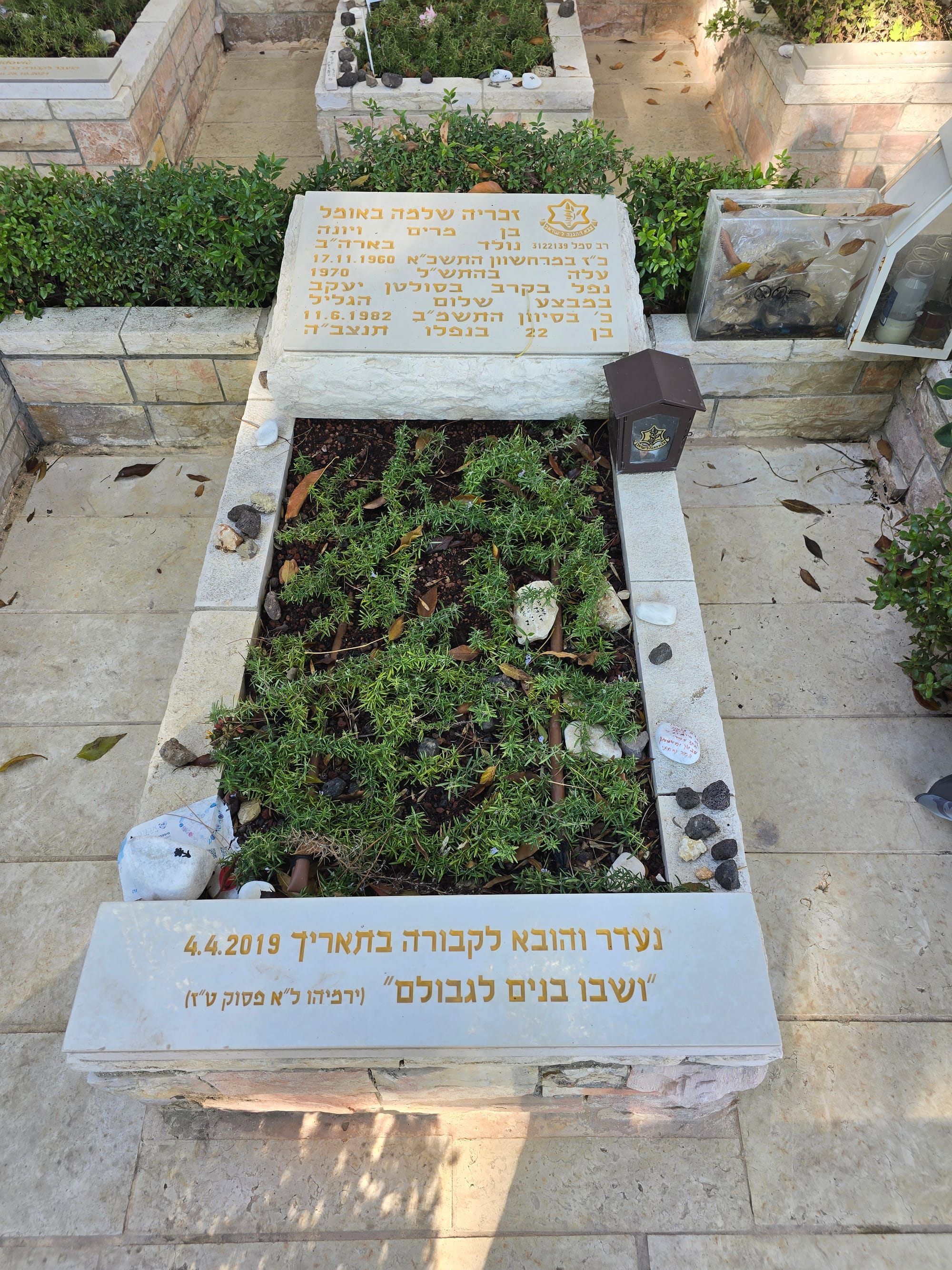
Chapter 7 — Israel's Missing Soldiers: A National Responsibility
For Israel, the disappearance of a soldier has rarely been treated as an exclusively military matter.
It is also a question of national responsibility, collective memory, political accountability, and the relationship between a state and the people who serve in its armed forces.
Since its establishment in 1948, Israel has experienced repeated wars, border conflicts, terrorist attacks, and military operations. During these conflicts, soldiers have been killed, captured, or declared missing, sometimes leaving their families without definitive information for years.
The case of Ron Arad became one of the most recognizable examples of this national concern.
His capture in Lebanon in October 1986, followed by decades of uncertainty, raised questions that extended far beyond the circumstances of his disappearance.
How much responsibility does a government have toward soldiers who fall into enemy hands?
What risks should a country accept to recover its missing personnel?
How many prisoners should be released in exchange for one captive?
And what happens when the determination to bring someone home conflicts with other national security priorities?
These questions have shaped Israeli political debate for generations.
They also reveal a distinctive feature of Israeli society: the close relationship between military service, family life, and national identity.
A Country Shaped by Military Service
Military service occupies an important position in Israeli society.
Under Israel's conscription system, many Jewish Israelis and members of certain other communities are required to serve in the Israel Defense Forces, although exemptions and different service arrangements apply to various populations.
Many Israelis subsequently continue to serve in the reserves.
This system creates a close connection between the military and civilian life.
Soldiers are often young people who have recently completed secondary school.
Reservists may be parents, university students, teachers, engineers, business owners, or professionals who temporarily leave civilian responsibilities to fulfill military obligations.
Consequently, the capture or disappearance of a soldier can have a particularly strong impact on the wider population.
The person involved may be a neighbor, colleague, former classmate, or family member.
Ron Arad represented this connection.
He was not only an Israeli Air Force navigator.
He was also a husband, father, engineering student, and reservist whose military responsibilities existed alongside his civilian life.
His disappearance therefore resonated with a society in which military service and family responsibilities frequently overlap.
However, Israeli attitudes toward military service are not uniform.
Different communities have different relationships with the armed forces, and debates about conscription, exemptions, military obligations, and the conduct of war remain important parts of Israeli political life.
The national concern surrounding missing soldiers exists within this broader and sometimes contested social reality.
The Principle of Bringing Soldiers Home
The commitment to recovering missing military personnel is deeply embedded in Israeli military culture.
The Israel Defense Forces place considerable emphasis on maintaining responsibility for personnel during and after military operations.
This includes efforts to rescue wounded soldiers, recover the bodies of those killed, and locate personnel whose fate remains unknown.
For many Israelis, the principle is understood as part of an implicit relationship between the state and those who serve it.
A soldier accepts significant personal risks in the course of military service.
In return, the state is expected to make serious efforts to protect that soldier and, if necessary, pursue their recovery.
This commitment has practical and symbolic dimensions.
Operationally, it can involve rescue missions, intelligence gathering, diplomatic negotiations, and cooperation with international intermediaries.
Symbolically, it communicates that military personnel will not simply be forgotten when a mission ends.
Yet the principle does not provide a simple answer to every situation.
The recovery of a captive may require concessions that create future security risks.
A rescue operation may endanger other soldiers or civilians.
And negotiations may involve armed organizations responsible for serious acts of violence.
The commitment to bring soldiers home therefore creates difficult decisions rather than eliminating them.
Jewish Tradition and the Importance of Burial
Religious and cultural traditions also influence Israeli attitudes toward missing persons.
Within Judaism, burial of the dead is treated as an important religious obligation.
The dignity of the deceased, respect for human remains, and the responsibilities of family and community are central elements of Jewish mourning practices.
Traditional Jewish burial generally takes place as soon as reasonably possible, although circumstances may require delays.
When a person's remains cannot be recovered, families may face additional religious and emotional difficulties.
The absence of a body can complicate the process of burial and mourning.
In Israel, these concerns intersect with the national commitment to recovering the remains of missing soldiers.
The recovery of military personnel who have died in captivity or combat is therefore not only an operational objective.
For many families, it is connected to the possibility of burial, remembrance, and the recognition of a loved one's death.
Another important Jewish principle is pidyon shvuyim, commonly translated as the redemption of captives.
Jewish legal and ethical traditions place great importance on assisting and freeing people held in captivity.
However, classical Jewish sources also discuss limitations on paying excessive ransoms, partly because such payments may encourage further abductions.
This tension remains relevant to modern debates about prisoner exchanges.
The obligation to rescue captives must be considered alongside the possible consequences of the concessions demanded.
It is important to recognize that Israel is a diverse society, including secular, religious, and non-Jewish communities.
Not every Israeli understands these responsibilities through the same religious framework.
Nevertheless, Jewish traditions concerning captivity, burial, and remembrance have influenced the language and moral arguments surrounding the recovery of missing soldiers.
Ron Arad and the Promise That Could Not Be Fulfilled
Ron Arad's disappearance became a defining example of the limits of a government's ability to fulfill its commitment to missing personnel.
After his capture in 1986, Israeli authorities pursued negotiations and intelligence operations intended to secure his release.
During the early period of captivity, photographs and letters confirmed that he had survived.
But as the trail disappeared, the task became increasingly difficult.
The government could promise continued efforts.
It could devote intelligence resources to the investigation.
It could pursue diplomatic contacts and question individuals believed to possess information.
What it could not guarantee was success.
For the Arad family, the difference between commitment and results became painfully clear.
Successive governments continued to investigate the disappearance, but no operation or negotiation produced his return or a definitive public account of his fate.
The case raised a difficult question about the meaning of national responsibility.
Is a government's obligation fulfilled by making sustained efforts, even when those efforts fail?
Or does the absence of a definitive answer represent a continuing responsibility that can never be considered complete?
There is no universally accepted answer.
But the question has remained central to Israel's treatment of missing military personnel.
The Case of Gilad Shalit
One of the most significant modern examples of Israel's approach to captured soldiers was the case of Gilad Shalit.
Shalit, an Israeli soldier, was captured in June 2006 during an attack by Palestinian armed groups near the Gaza border.
He was subsequently held in Gaza for more than five years.
His captivity became a major issue in Israeli society.
Public campaigns demanded his release, while successive governments faced pressure to negotiate an agreement.
In October 2011, Israel reached a prisoner exchange agreement with Hamas.
Under the agreement, Shalit was released in exchange for 1,027 Palestinian prisoners.
The exchange produced enormous public attention.
For Shalit's family, it meant the return of their son after years in captivity.
For many Israelis, it represented the fulfillment of the country's responsibility to recover a captured soldier.
But the agreement also generated serious criticism.
Opponents argued that releasing large numbers of prisoners, including individuals convicted of deadly attacks, could endanger Israeli civilians and encourage future kidnappings.
Supporters maintained that the opportunity to recover a living soldier justified the agreement.
The debate demonstrated the central dilemma of prisoner exchanges.
A decision that brings relief to one family may create fears about the security consequences for others.
The Shalit exchange also had long-term political implications.
Among those released was Yahya Sinwar, a senior Hamas figure who later became a leading figure in the organization and played a central role in the events surrounding the October 7, 2023, attacks.
His later role intensified Israeli debate over the consequences of the 2011 agreement.
However, evaluating the exchange requires distinguishing between information available to decision-makers at the time and developments that became clear only afterward.
The 2004 Exchange and Ron Arad
The prisoner exchange between Israel and Hezbollah in January 2004 presented a different dilemma.
Israel secured the release of businessman Elhanan Tannenbaum and the return of the bodies of three Israeli soldiers captured by Hezbollah in October 2000.
In exchange, Israel released hundreds of prisoners, including Mustafa Dirani and Sheikh Abdul Karim Obeid.
Both men had previously been detained by Israel partly because authorities believed they could provide information or leverage concerning Ron Arad.
Their release was controversial.
Some argued that Israel had surrendered important bargaining assets without obtaining a definitive answer about Arad's fate.
Others emphasized the importance of securing the return of captives and remains when an agreement was achievable.
For Arad's family, the exchange did not bring the result they had hoped for.
The men whose detention had been connected to the search for Ron were released.
Ron himself was not returned.
The case illustrated the difficulty of balancing the interests of different families when negotiating with armed organizations.
A government may be able to recover one captive while remaining unable to resolve the disappearance of another.
Such decisions cannot be evaluated solely through emotional appeals or military calculations.
They involve legal obligations, humanitarian concerns, political consequences, and assessments of future security risks.
The Return of Zachary Baumel
Another significant case involved Zachary Baumel, an Israeli soldier who disappeared during the 1982 Lebanon War.
Baumel was one of three Israeli soldiers missing after the Battle of Sultan Yacoub.
For decades, his family did not know the location of his remains.
In April 2019, Israel announced that Baumel's remains had been recovered and returned for burial.
The recovery followed an operation involving Russian assistance and cooperation connected to Syria.
Baumel was buried in Israel thirty-seven years after his disappearance.
The case demonstrated that investigations into missing military personnel can produce results even after several decades.
It also showed the importance of international cooperation.
Information and access controlled by foreign governments may become essential to locating missing soldiers.
For families, such developments can provide a form of resolution that had long appeared impossible.
However, Baumel's recovery did not establish that every missing-person case could be solved through similar methods.
Each disappearance involves different evidence, circumstances, and political relationships.
In Ron Arad's case, comparable efforts had not produced a confirmed recovery.
October 7 and the Renewed Debate Over Hostages
The Hamas-led attacks on Israel on October 7, 2023, brought the issue of captivity and hostage recovery to the center of Israeli national life once again.
Approximately 1,200 people were killed in the attacks, according to Israeli authorities, and 251 people were taken hostage into Gaza.
Those abducted included civilians, children, elderly people, and military personnel.
The hostage crisis created an intense national debate about the responsibilities of the Israeli government.
Families demanded the return of their relatives.
Public demonstrations called for negotiated agreements.
Political and military leaders faced difficult decisions about negotiations, military operations, and the continuation of the war in Gaza.
The situation differed from Ron Arad's case in important ways.
Many of the October 7 hostages were civilians abducted from their homes or communities rather than soldiers captured during military operations.
The number of hostages was also much larger.
Nevertheless, the underlying question was familiar.
What should a government be prepared to do to bring its people home?
The debate exposed competing priorities within Israeli society.
Some argued that securing the release of hostages should take precedence over other military objectives.
Others warned that agreements involving major concessions could strengthen Hamas or create future security threats.
These disagreements reflected genuine concerns about human life, national security, and political responsibility.
They also demonstrated how the experience of earlier captivity cases, including Ron Arad and Gilad Shalit, continued to influence Israeli public discussion.
The Risks of Military Rescue Operations
Negotiations are not the only method governments use to recover captives.
Military rescue operations can sometimes secure the release of hostages or recover remains.
However, such operations carry considerable risks.
Intelligence about a captive's location may be incomplete.
Armed captors may react violently.
The operation may endanger the captive, the rescuing forces, and civilians in the surrounding area.
In densely populated conflict zones, these risks can become particularly severe.
The humanitarian objective of recovering a captive does not remove the obligation to comply with international humanitarian law.
Military operations must respect applicable rules concerning distinction, proportionality, and precautions to protect civilians.
This creates a difficult balance.
A government may regard a rescue operation as necessary to fulfill its responsibility toward missing personnel.
But the methods used must still be assessed according to their legality, necessity, and consequences.
The continuing search for Ron Arad illustrates these tensions.
Decades after his capture, Israeli intelligence and military operations continued to pursue information about his fate.
In March 2026, an Israeli operation in Lebanon sought evidence connected to a possible burial location.
The operation did not produce a confirmed recovery and was accompanied by deadly fighting.
It demonstrated that the pursuit of answers can itself become part of an ongoing conflict.
The Responsibility to Account for the Missing
The obligation to clarify the fate of missing persons is not unique to Israel.
International humanitarian law recognizes important responsibilities concerning people who disappear during armed conflicts.
Parties to conflicts must take appropriate measures to account for persons reported missing, subject to the applicable legal framework.
They must also respect the dead and take measures concerning the identification and handling of human remains.
The International Committee of the Red Cross works internationally to help families establish the fate and whereabouts of missing relatives.
These humanitarian principles apply regardless of nationality, religion, or political affiliation.
Israeli families searching for missing soldiers have a right to seek answers.
So do Palestinian, Lebanese, Syrian, and other families whose relatives have disappeared during conflict.
Recognizing one family's suffering does not diminish another's.
A consistent humanitarian approach requires concern for all missing persons and respect for the dignity of those affected.
This distinction is important in a region where historical grievances and political narratives frequently compete for public attention.
The search for missing people should not become dependent on whether their identity or nationality attracts international sympathy.
The Political Cost of Difficult Decisions
For Israeli governments, decisions concerning missing soldiers can carry major political consequences.
A prisoner exchange may be celebrated as a humanitarian achievement while simultaneously being criticized as a security failure.
A military operation may demonstrate determination but expose personnel and civilians to serious danger.
A decision not to negotiate may be defended as necessary for national security while leaving families without a realistic path toward reunion.
Political leaders must therefore weigh several responsibilities that can come into conflict.
They are responsible for protecting the population.
They are responsible for the military personnel serving under their authority.
They must respect domestic and international legal obligations.
And they must consider the consequences of agreements that may affect future security.
There is rarely a solution that satisfies every interest.
The cases of Ron Arad, Gilad Shalit, and other missing or captured Israelis illustrate different outcomes of these difficult decisions.
Some captives returned alive.
Some remains were recovered decades later.
Others, including Ron Arad, remained missing.
The differences demonstrate that determination alone does not guarantee success.
A National Commitment That Outlives Governments
One of the most striking features of the Ron Arad case is the number of years during which Israeli authorities continued to investigate it.
Since his disappearance in 1986, Israel has experienced numerous changes of government, military leadership, and intelligence personnel.
The political circumstances of the Middle East have also changed dramatically.
Yet the search for information about Arad continued across successive administrations.
This persistence reflects the symbolic importance attached to missing military personnel.
It also raises questions about how governments preserve institutional knowledge over long periods.
Intelligence files must be maintained.
Historical testimony must be reassessed.
New technological methods may be applied to old evidence.
And information from former adversaries may become available as political circumstances change.
The recovery of Zachary Baumel's remains in 2019 demonstrated that decades-old cases can sometimes be resolved.
For Ron Arad, however, the passage of forty years had not produced a definitive public account of his fate.
His case remained an example of both national commitment and the limits of state power.
What Does It Mean to Leave No One Behind?
The phrase "leave no one behind" is often associated with military traditions and the responsibility of armed forces toward their personnel.
In practice, fulfilling that principle is far more complicated than the words suggest.
A government cannot guarantee that every soldier will be rescued.
It cannot ensure that every missing person will be found.
And it cannot always obtain reliable information from armed organizations or hostile governments.
What it can do is maintain serious efforts to investigate disappearances, preserve evidence, support affected families, and pursue lawful opportunities for recovery.
It must also remain accountable for the decisions taken in the name of those objectives.
The Ron Arad case demonstrates why this responsibility can continue long after a conflict has ended.
A missing soldier does not cease to matter because the political leadership changes or the public's attention moves elsewhere.
Nor does a family lose its interest in the truth because decades have passed.
For Israel, the search for Ron Arad has become a lasting reminder of the obligations created by military service.
But the case also contains a broader lesson.
The dignity of missing persons and the rights of their families should remain important regardless of nationality or the circumstances of disappearance.
Forty years after Ron Arad was captured over Lebanon, his case continues to raise a fundamental question: what does a nation owe to those who serve it when they do not return?
The answer is not found only in rescue operations, negotiations, or intelligence reports.
It is also found in the willingness to continue seeking the truth, to acknowledge uncertainty, and to remember the human beings behind the military history.
For Ron Arad and his family, that responsibility remains unfinished.
Chapter 8 — Forty Years Later: What Do We Really Know?
Forty years after Israeli Air Force navigator Ron Arad was captured in Lebanon, his disappearance remains one of the most enduring unresolved cases in Israel's military history.
On October 16, 1986, Arad was forced to eject from his damaged F-4 Phantom aircraft during a military operation over Lebanon. His pilot, Yishai Aviram, was rescued. Arad was captured by Lebanese armed men and subsequently held by a faction associated with the Shiite Amal movement.
During the early period of his captivity, photographs and handwritten letters confirmed that he had survived.
But after the last widely documented proof of life in 1988, the trail became increasingly uncertain.
Over the following decades, Israeli intelligence agencies investigated numerous accounts of his movements, possible transfers between armed organizations, and eventual death.
Some assessments suggested that Arad had been transferred to Iranian-linked personnel. Others concluded that he probably died in Lebanon during the late 1980s. Still others proposed that he survived for several more years before dying in captivity.
None of these explanations has produced a publicly conclusive reconstruction of his final days or the confirmed recovery of his remains.
As October 2026 marks the fortieth anniversary of his capture, the case raises a question that is both historical and deeply human.
What can we establish after four decades of investigations, and what remains beyond the reach of the available evidence?
What We Know With Confidence
Despite the uncertainty surrounding his ultimate fate, several important facts about Ron Arad's disappearance are well documented.
He was born on May 5, 1958, and served as a navigator in the Israeli Air Force.
At the time of his capture, he was married to Tami Arad, and they had a young daughter, Yuval.
On October 16, 1986, Arad was flying with pilot Yishai Aviram during a mission over Lebanon when their aircraft was damaged by an explosion associated with a malfunctioning munition.
Both men ejected.
Aviram was successfully rescued by Israeli forces, while Arad was captured.
During the following months, evidence emerged that he remained alive.
Photographs and letters attributed to Arad became important proof of his survival during the early period of captivity.
His detention was associated with Lebanese Shiite armed factions, including individuals connected to the Amal movement and militia commander Mustafa Dirani.
The last widely documented proof of life dates to 1988.
After that, the available public evidence no longer establishes a continuous, independently verified account of his whereabouts.
These facts form the foundation of the case.
They explain how Arad disappeared, establish that he survived his initial capture, and identify some of the individuals and organizations involved during the early period.
What they do not establish is precisely what happened afterward.
The Years That Remain Unaccounted For
The central uncertainty begins after the last reliable evidence that Arad was alive.
Different accounts describe different possible sequences of events.
One suggests that he remained in Lebanon and died in 1988.
Another claims that he was transferred into the custody of Iranian-linked actors.
A further assessment proposed that he survived into the 1990s before dying from illness while still in captivity.
These explanations cannot all be correct in their entirety.
They differ over fundamental questions concerning location, custody, and the date and circumstances of death.
The difficulty for investigators has been the absence of decisive evidence capable of resolving those contradictions.
A witness statement may provide a possible lead.
An intelligence assessment may identify a probable explanation.
A document may establish that someone was involved in negotiations or detention.
But none of these necessarily proves the complete sequence of events.
To reconstruct Arad's final years conclusively, investigators would need reliable evidence establishing where he was held, who controlled him, and what ultimately happened.
That evidence has not been made available in a form that conclusively resolves the case in the public record.
Did Ron Arad Die in 1988?
One of the most significant developments in the investigation occurred in 2016, when Israeli media reported that a joint assessment by Mossad and Israeli military intelligence had concluded that Arad probably died in 1988.
The assessment represented a departure from earlier conclusions suggesting that he had survived into the 1990s.
According to the reporting, the intelligence services had reassessed historical information and determined that an earlier death was more likely.
However, the reported conclusion did not amount to the recovery of his remains or a publicly verified account of his final moments.
It remained an intelligence assessment.
This distinction is essential.
Intelligence agencies routinely evaluate incomplete information and reach judgments about what is most probable.
Such assessments can be valuable, particularly when they draw on sources unavailable to the public.
But probability is not the same as proof.
Without publicly disclosed supporting evidence, independent researchers cannot fully evaluate the reasoning behind the conclusion.
The 2016 assessment therefore became an important development in the investigation without definitively ending the mystery.
Was Iran Involved?
Iran's possible involvement remains one of the most politically sensitive questions in the Ron Arad case.
During the 1980s, Iran developed close relationships with Lebanese Shiite armed organizations, particularly Hezbollah.
Iranian Revolutionary Guard personnel operated in Lebanon, providing training and assistance to allied groups.
This environment created opportunities for cooperation between Lebanese militia commanders and Iranian-linked actors.
Israeli intelligence investigations suggested that Arad may have been transferred from his original captors into Iranian custody.
Some accounts alleged that he was transported to Iran.
Others suggested that Iranian-linked personnel held him inside Lebanon.
Iran denied holding Arad.
The publicly available evidence has not conclusively established that he was transported to Iran or identified a verified sequence of custody involving Iranian officials.
Nevertheless, the possibility of Iranian involvement became a recurring focus of Israeli investigations.
The question is not simply whether Iran exercised influence over Lebanese armed organizations.
That broader relationship is historically documented.
The more specific question is whether Iranian personnel directly controlled Arad, knew his location, or possessed information about his death.
Those allegations require evidence specific to the case.
Regional influence alone cannot establish responsibility for an individual disappearance.
At the same time, official denials cannot independently determine what happened.
The available record leaves important questions unresolved.
What Did Hezbollah Know?
Hezbollah's role in the investigation has also remained controversial.
The organization was not identified as the group responsible for Arad's original capture.
However, its growing influence in Lebanon and its relationships with other armed factions made it an important actor in later efforts to obtain information.
Hezbollah participated in prisoner exchanges and indirect negotiations with Israel, including discussions involving information about missing personnel.
In 2008, material attributed to Hezbollah suggested that Arad had escaped from captivity in 1988 and disappeared while attempting to reach Israeli-controlled territory.
According to that account, he may have died during the attempted escape.
Israeli authorities did not regard the information as sufficient to resolve the case.
The report did not provide independently verified remains or establish a complete sequence of events.
It also conflicted with other intelligence assessments suggesting that Arad remained in captivity after 1988.
The central question therefore remains whether Hezbollah possessed reliable knowledge of Arad's fate or was presenting information obtained from other individuals and organizations.
The distinction matters.
An organization may possess information about a disappearance without having directly controlled the missing person.
It may also provide an incomplete or inaccurate account.
Determining responsibility requires evidence that goes beyond political accusations or statements made during negotiations.
Why Has the Mystery Been So Difficult to Solve?
Several factors help explain why the investigation has continued for decades.
The first is the environment in which Arad disappeared.
Lebanon in the 1980s was divided by civil war, foreign military involvement, and competing armed organizations.
Government authority was fragmented, and individuals could be detained or transferred without reliable documentation.
The second factor is the changing control of captives.
A prisoner initially held by one organization could later be transferred to another faction, moved to a different location, or concealed from outside observers.
Each transfer could create new gaps in the available evidence.
The third factor is the passage of time.
Witnesses may die.
Memories become less reliable.
Documents may be destroyed.
Buildings and burial sites can be altered by construction, conflict, or environmental changes.
The fourth factor is political secrecy.
Information concerning captives may be held by intelligence agencies or armed organizations unwilling to disclose their sources, methods, or past activities.
Finally, the investigation has been affected by contradictory intelligence.
Different sources have produced different explanations, and not every claim can be independently verified.
Together, these circumstances have made it extraordinarily difficult to reconstruct Arad's final movements.
The Search That Continued for Decades
Despite these obstacles, Israeli authorities continued investigating Ron Arad's fate.
The search involved intelligence operations, diplomatic contacts, interviews with individuals believed to possess information, and efforts to identify possible burial locations.
In 1994, Israeli forces captured Mustafa Dirani in Lebanon, believing he could provide important information about Arad.
The operation did not result in his recovery.
In 2004, Dirani was released during a prisoner exchange with Hezbollah.
In 2021, Israeli Prime Minister Naftali Bennett publicly disclosed that Mossad had conducted an operation intended to obtain new information about Arad.
That announcement demonstrated that the case remained an active intelligence concern thirty-five years after the original disappearance.
In March 2026, Israeli forces conducted another operation in Lebanon, searching for evidence connected to a possible burial location in the Nabi Chit area.
Israeli authorities reported that the operation had not uncovered evidence resolving the case.
The operation also took place amid deadly hostilities, highlighting the risks associated with military searches in populated conflict areas.
These efforts demonstrate the extraordinary resources that can be devoted to a single missing-person investigation.
They also illustrate the limits of those resources.
Military capability and sophisticated intelligence methods cannot always recover evidence that has been concealed, destroyed, or lost over time.
Could New Evidence Still Emerge?
The passage of forty years does not necessarily mean that the case can never be resolved.
Historical investigations have sometimes produced important discoveries decades after the original events.
Previously classified documents may become available.
Former officials or militia members may provide new testimony.
Political changes may create opportunities for cooperation that did not previously exist.
Advances in forensic science may allow investigators to identify human remains that could not have been reliably examined in earlier decades.
DNA analysis, improved archaeological methods, and digital examination of historical records can all contribute to missing-person investigations.
However, such possibilities should not be confused with evidence that a breakthrough is imminent.
There is no guarantee that the information necessary to establish Arad's fate still exists.
Nor is there certainty that individuals who possess relevant knowledge will ever disclose it.
The possibility of a future discovery remains real, but it cannot be predicted.
For investigators, the task is to preserve existing evidence, examine credible new leads, and avoid treating speculation as established fact.
The Question of Accountability
The disappearance of Ron Arad also raises questions about accountability.
His capture occurred during an armed conflict, but that circumstance did not remove the obligations of those holding him.
International humanitarian law establishes protections for persons detained in connection with armed conflict, although the precise rules applicable to an individual depend on the legal classification of the conflict and the detainee's status.
Fundamental prohibitions against torture, cruel treatment, and murder remain essential.
Those responsible for holding captives must also comply with applicable humanitarian obligations.
If Arad died from deliberate mistreatment, denial of necessary medical care, or unlawful violence, those circumstances would raise serious questions of legal responsibility.
However, determining accountability requires establishing what actually happened.
It would be inappropriate to attribute a particular act to a specific organization or individual without sufficient evidence.
The lack of a definitive reconstruction therefore affects not only the family's search for answers but also the possibility of establishing responsibility for any unlawful treatment.
A credible investigation must distinguish between suspicion, intelligence assessment, and proof.
That standard should apply regardless of the nationality or political affiliation of those involved.
What the Case Reveals About Missing Persons
Ron Arad's disappearance is a particularly well-known Israeli case, but the underlying humanitarian problem is much broader.
Around the world, families continue to search for people who disappeared during wars, political violence, detention, and forced displacement.
Some missing persons are soldiers.
Others are civilians.
Some were captured by state authorities.
Others disappeared in territory controlled by armed organizations.
The circumstances differ, but the need for reliable information is universal.
Families have a profound interest in knowing the fate of their relatives.
Where a person has died, recovering and identifying remains can be essential to burial, remembrance, and establishing the historical record.
The International Committee of the Red Cross has repeatedly emphasized the humanitarian importance of clarifying the fate and whereabouts of missing persons.
The Ron Arad case demonstrates why this work matters.
An unresolved disappearance can continue affecting families and communities long after the military operation or conflict in which it occurred.
The passage of time does not automatically erase the need for answers.
The Family Behind the National Mystery
For Israel, Ron Arad became a symbol of missing military personnel and the responsibility to continue searching for them.
His name entered public memory through photographs, campaigns, commemorations, and political discussions.
But national recognition is only one dimension of the story.
For his wife, Tami, and their daughter, Yuval, the disappearance concerned a husband and father who did not return home.
The decades that followed included changing intelligence assessments, renewed investigations, and repeated public attention.
Yet none of these developments produced a definitive explanation of his final days.
The contrast between public memory and private uncertainty remains one of the most important aspects of the case.
A country may remember a missing soldier as part of its military history.
A family remembers the person whose life was interrupted.
These forms of remembrance are connected, but they are not identical.
For the family, the unanswered questions concern not only history but also the final experiences of someone they loved.
Forty Years Later — The Unanswered Questions
As the fortieth anniversary of Ron Arad's capture is marked in October 2026, several questions remain central to the investigation.
Who controlled Arad after the last documented evidence that he was alive?
Was he transferred to Iranian-linked personnel?
Did he die in 1988, as some later intelligence assessments suggested, or did he survive for several more years?
What circumstances led to his death?
Where are his remains?
And does evidence still exist that could establish a definitive account?
These questions cannot be answered responsibly through speculation.
The available historical record supports some conclusions more strongly than others, but it does not provide certainty about every stage of his disappearance.
For investigative journalism, this distinction is fundamental.
A story does not become more truthful by presenting an unproven allegation as fact.
Nor does acknowledging uncertainty weaken the importance of the investigation.
On the contrary, clearly identifying what remains unknown is essential to understanding why the case has endured for so long.
Conclusion — A Story That Remains Unfinished
On October 16, 1986, Ron Arad left on a military mission over Lebanon.
He was 28 years old.
He was a navigator in the Israeli Air Force, an engineering student, a husband, and a father.
His aircraft was damaged during the operation, forcing him and his pilot to eject.
The pilot returned home.
Ron Arad did not.
In the months that followed, photographs and letters confirmed that he had survived his capture.
Then the reliable evidence disappeared.
For forty years, governments changed, intelligence agencies investigated, armed organizations negotiated, and competing explanations emerged.
Some reports suggested that he died shortly after his disappearance.
Others proposed that he survived for years in captivity.
Iranian involvement was alleged.
Hezbollah provided its own account.
Israeli intelligence assessments changed as new information was evaluated.
Yet the central mystery remained unresolved.
The case became a symbol of Israel's commitment to missing military personnel, but it also revealed the limitations of political power, military operations, and intelligence gathering.
Even after decades of effort, a government may be unable to establish what happened to one of its citizens.
For the Arad family, the consequences extended far beyond national security.
A daughter grew up without her father.
A wife lived through decades in which reports and investigations could not provide definitive answers.
And the person at the center of the story remained absent.
Ron Arad's disappearance is not simply a chapter in the history of Israel and Lebanon.
It is also a reminder of the lasting human consequences of armed conflict, the importance of accountability, and the responsibility to distinguish established facts from political claims.
The search for the missing is ultimately a search for truth.
That truth may emerge through documents, testimony, forensic evidence, or information that has remained concealed for decades.
Or it may never be fully recovered.
But the absence of a definitive answer does not make the questions less important.
Forty years after Ron Arad disappeared in Lebanon, his story remains unfinished — not because the world has forgotten him, but because the final answers have yet to be established.
Beyond the Lines — Independent Journalism. Beyond Headlines. Beyond Assumptions.
Sources and References
Ron Arad: 40 Years of Captivity, Silence and an Unanswered Question
The following sources provide historical documentation, contemporary reporting, intelligence assessments, and humanitarian context concerning the disappearance of Israeli Air Force navigator Ron Arad. Where accounts conflict, the article distinguishes documented facts from allegations and intelligence assessments.
Historical Background and Ron Arad's Disappearance
1. National Library of Israel — Forty Years Later, the Pain of Ron Arad's Disappearance Lingers (2026)
Historical overview of Ron Arad's capture, his family, the evidence from captivity, and the continuing uncertainty surrounding his fate.
https://blog.nli.org.il/en/ron_arad_40_years/
2. The Times of Israel — After 32 Years, IAF Posts Previously Unseen Photos of Missing Airman Ron Arad (2018)
Historical photographs released by the Israeli Air Force, details of the 1986 aircraft incident, the rescue of pilot Yishai Aviram, and the last documented proof of life.
Captivity, Letters and Family
3. Jewish Telegraphic Agency — Ron Arad Letters Made Public (2011)
Reporting on handwritten letters addressed to Arad's wife, Tami, and daughter, Yuval, during his early captivity.
https://www.jta.org/2011/11/06/israel/ron-arad-letters-made-public
4. Ynetnews — Ron Arad Letters Revealed (2011)
Contemporary reporting on previously unpublished letters, family correspondence, and photographs from Arad's captivity.
https://www.ynetnews.com/article/4144238
5. Jewish Telegraphic Agency — Arad Letter Part of Exchange (2007)
Documentation concerning the transfer of a letter, photograph, and information relating to Arad during a prisoner exchange.
https://www.jta.org/2007/10/22/default/arad-letter-part-of-exchange
Lebanon, Iran and Detention
6. Amnesty International — Israel's Forgotten Hostages: Lebanese Detainees in Israel and Khiam Detention Centre (1997)
Human rights documentation discussing Mustafa Dirani, the detention of Lebanese nationals, allegations concerning Arad's transfer, and the International Committee of the Red Cross's lack of access to him.
https://www.amnesty.org/fr/wp-content/uploads/2022/09/mde150181997en.pdf
7. Jewish Telegraphic Agency — German Intelligence Official: New Information on Ron Arad (1997)
Historical reporting on German diplomatic and intelligence involvement in efforts to clarify the fate of missing Israeli soldiers.
https://www.jta.org/archive/german-intelligence-official-new-information-on-ron-arad-2
Conflicting Intelligence Assessments
8. Jewish Telegraphic Agency — Intelligence Report: Arad Died in Mid-1990s (2009)
Reporting on an Israeli military intelligence assessment suggesting that Arad survived into the 1990s before dying in captivity.
https://www.jta.org/2009/09/06/israel/intelligence-report-arad-died-in-mid-1990s
9. The Times of Israel — Israel Believes Missing Airman Ron Arad Died in 1988: Report (2016)
Reporting on a later joint assessment by Mossad and Israeli military intelligence suggesting that Arad died significantly earlier than previously believed.
https://www.timesofisrael.com/israel-believes-missing-airman-ron-arad-died-in-1988-report/
10. The Times of Israel — Report: Israeli Airman Ron Arad Was Tortured to Death in 1988 (2016)
Reporting on testimony attributed to a former Lebanese militia member. The allegations remain unconfirmed and should not be treated as established findings.
https://www.timesofisrael.com/report-israeli-airman-ron-arad-was-tortured-to-death-in-1988/
Intelligence Operations and Continuing Investigations
11. The Times of Israel — Mossad Agents Went on Recent Mission to Find Info on Ron Arad, PM Reveals (2021)
Coverage of Prime Minister Naftali Bennett's announcement concerning a Mossad operation intended to obtain further information about Arad.
12. Associated Press — Dozens Killed in Lebanon as Israel Searches for Signs of Navigator Missing for 40 Years (March 7, 2026)
Reporting on the Israeli operation in Nabi Chit, Lebanon, the unsuccessful search for evidence concerning Arad, and casualties reported by Lebanese authorities.
https://apnews.com/article/9054b777cb2d853e9a58cd65a71adb12
13. Reuters — Israel Warns Lebanon of Disastrous Repercussions as Week's Death Toll Nears 300 (March 7, 2026)
Independent reporting on the wider military situation in Lebanon and the operation associated with the search for Ron Arad.
Editorial Note
This article draws on historical reporting, human rights documentation, and publicly reported Israeli intelligence assessments. Some details concerning Ron Arad's captivity, possible transfer to Iranian-linked personnel, and circumstances of death remain disputed.
The inclusion of a source does not imply that every claim it contains has been independently verified. Where definitive evidence is unavailable, the article identifies the information as an allegation, reported testimony, or intelligence assessment.
Beyond the Lines — Independent Journalism. Beyond Headlines. Beyond Assumptions.