Living Between Faiths: Muslims, Christians and Religious Minorities in the Middle East
Explore the history, persecution and coexistence of Muslims, Christians, Jews and religious minorities across the Middle East.

BEYOND THE LINES | SPECIAL REPORT 02
An in-depth examination of religious diversity, historical communities, persecution, displacement and the future of coexistence across the Middle East.
Subtitle: A closer look at religious coexistence, discrimination and the changing place of minority communities across the Middle East.
Estimated Reading Time: 15–18 minutes
IN-DEPTH | Religion, History & Human Rights
The Story in Brief
The Middle East is the birthplace of Judaism, Christianity and Islam, but its religious history extends far beyond these three faiths. For centuries, Muslims, Christians, Jews, Druze, Yazidis and other communities have shaped the region's cultural, political and social identity.
Their relationships have included periods of cooperation, intellectual exchange and peaceful coexistence, alongside discrimination, persecution and violent conflict.
Today, religious minorities face very different circumstances across the region. While some communities participate actively in public life, others confront legal restrictions, insecurity, displacement and declining populations.
This in-depth report examines how religious diversity developed, why historical communities have changed or disappeared, and how political power, conflict and national laws influence religious freedom.
It also explores whether stronger legal protections, education and dialogue can help preserve the Middle East's religious heritage for future generations.
Introduction — A Region Where Faith and History Intersect
The Middle East is often portrayed through the language of religious conflict. Images of destroyed churches, damaged mosques, displaced communities and political movements invoking religion have shaped international perceptions of a region frequently associated with division.
Yet this picture, while reflecting genuine suffering and instability, tells only part of the story.
For centuries, the Middle East has been home to an extraordinary diversity of religious communities. Muslims, Christians, Jews, Druze, Yazidis, Mandaeans, Bahá'ís and members of other traditions have lived across its cities, villages and trading centres. Their histories are not separate narratives unfolding in isolation. They are deeply interconnected, shaped by shared languages, cultural exchange, commerce, political authority and, at times, violent confrontation.
In many places, religious communities have lived alongside one another for generations. Neighbours have shared markets, schools and workplaces, while religious institutions have played important roles in education, healthcare and community life. Some cities developed distinctive cultures through the interaction of different faiths, languages and ethnic identities.
Jerusalem, Damascus, Baghdad, Beirut, Alexandria and Istanbul each illustrate aspects of this history, although their political circumstances and religious compositions have changed considerably over time.
At the same time, coexistence has rarely meant complete equality.
Throughout different historical periods, religious identity could determine a person's legal status, taxation, access to public office or ability to practise their faith openly. Political authorities sometimes protected minority communities, while at other times imposing restrictions, encouraging discrimination or failing to prevent violence.
The position of religious minorities has also been influenced by developments extending far beyond theology.
The collapse of empires, the establishment of modern states, European colonial intervention, nationalist movements, regional wars and authoritarian political systems have all transformed relationships between religious communities.
In the twentieth and twenty-first centuries, these changes accelerated.
Large numbers of Jews left or were expelled from several Arab countries amid the political upheavals surrounding the establishment of Israel and subsequent regional conflicts. Christian communities in parts of Iraq and Syria experienced displacement following war, insecurity and persecution. Yazidis suffered systematic atrocities during the Islamic State's assault on Sinjar in 2014.
Meanwhile, religious and ethnic minorities in other countries have continued to maintain cultural institutions, participate in public life and preserve traditions that reach back centuries.
These contrasting experiences raise an important question: what determines whether religious diversity becomes a source of cooperation, political tension or persecution?
The answer cannot be found in religion alone.
Political institutions, the rule of law, economic conditions, education, security and the willingness of governments to protect equal citizenship all influence whether different communities can live together safely.
Nor can the Middle East be understood as a single religious or political environment.
Conditions for Christians in Lebanon differ significantly from those in Iraq. The experiences of Jewish citizens in Israel cannot be equated with the circumstances of the small remaining Jewish communities elsewhere in the region. The legal position of religious minorities in the United Arab Emirates differs from that in Iran or Saudi Arabia.
Even within individual countries, the experiences of religious communities can vary considerably according to location, social class, political affiliation and historical circumstances.
This article examines the complex relationship between religion, society and political power across the Middle East.
It explores how the region's religious diversity developed, how communities interacted across different historical periods and why some minority populations have declined dramatically.
It also considers the role of governments, religious institutions and civil society in shaping the future of religious freedom.
Understanding these histories requires moving beyond the assumption that religious conflict is inevitable.
The Middle East has experienced persecution and sectarian violence, but it has also produced enduring traditions of coexistence, intellectual exchange and cooperation.
Both realities are essential to understanding the region today.
Chapter 1 — A Region Shaped by Faith
The Middle East Before the Modern Religious Landscape
Long before the emergence of Christianity and Islam, the lands now commonly described as the Middle East were home to some of the world's earliest organised civilisations.
Ancient Mesopotamia, situated largely within present-day Iraq, developed complex religious traditions centred on numerous deities associated with nature, political authority and the organisation of society.
In ancient Egypt, religious beliefs shaped royal legitimacy, architecture, burial practices and everyday life. Temples were not simply places of worship; they were also important economic and administrative institutions.
Across the Levant, communities followed diverse religious traditions influenced by local cultures and regional political powers.
The development of ancient Israelite religion, and later Judaism, introduced traditions of worship centred on one God that would profoundly influence the religious history of the region and the wider world.
These developments did not take place in isolation.
The ancient Middle East was connected through extensive networks of trade, migration, conquest and diplomacy. Religious ideas travelled alongside goods, languages and political institutions.
As empires expanded and declined, populations encountered new beliefs and adapted existing practices.
Religious diversity was therefore a defining characteristic of the region long before the emergence of its modern states.
Judaism and the Historical Foundations of Religious Identity
Judaism emerged through a long historical process rooted in the religious traditions of ancient Israel and Judah.
Its development was shaped by the experiences of the Israelite and Judahite kingdoms, the destruction of the First Temple in Jerusalem by the Babylonians in the sixth century BCE, the Babylonian exile and the subsequent return of some exiles under Persian rule.
The destruction of the Second Temple by Roman forces in 70 CE marked another major turning point.
Jewish religious life increasingly developed around communities, religious scholarship, prayer and the interpretation of sacred texts, although these traditions had begun to take shape before the Temple's destruction.
Jewish communities existed both within the Land of Israel and across the wider Middle East.
Babylonia became an especially important centre of Jewish scholarship. Its religious academies played a major role in the development of the Babylonian Talmud, one of the central texts of rabbinic Judaism.
Over subsequent centuries, Jewish communities also established important cultural and commercial networks in Egypt, Syria, Yemen, Persia and other parts of the region.
Their circumstances varied considerably.
Some periods offered opportunities for religious scholarship, economic participation and cultural exchange. Others brought discrimination, restrictions, persecution or forced displacement.
This long history is essential to understanding Jewish identity in the Middle East.
Jewish communities were not simply later arrivals to the region or populations defined exclusively by the establishment of the modern State of Israel in 1948.
They formed part of the Middle East's religious and cultural landscape for many centuries before the development of modern nationalism.
Christianity and the Expansion of New Religious Communities
Christianity emerged in the first century CE within the Jewish society of Roman-ruled Judaea.
The life and teachings of Jesus of Nazareth, together with the activities of his earliest followers, gave rise to a religious movement that gradually spread beyond its original Jewish setting.
Early Christian communities developed throughout the eastern Mediterranean and the wider Roman Empire.
Jerusalem, Antioch and Alexandria became important centres of Christian religious life and theological discussion.
Christianity also spread eastwards into Mesopotamia and the Persian Empire, where communities developed distinctive traditions of worship, language and scholarship.
These eastern Christian traditions remain important to understanding the diversity of Christianity in the Middle East today.
The region is home to churches whose histories extend back to the earliest centuries of Christianity, including Coptic, Syriac, Armenian, Assyrian and various Eastern Orthodox and Eastern Catholic traditions.
They differ in theology, ecclesiastical organisation, language and historical experience.
In the fourth century, Christianity gained increasing imperial support within the Roman Empire, eventually becoming central to the political and religious identity of the Byzantine Empire.
This transformation strengthened Christian institutions but also contributed to disputes over doctrine and authority.
Church councils, theological disagreements and imperial politics helped produce divisions that shaped the development of different Christian communities.
The history of Christianity in the Middle East is therefore not the story of a single unified community.
It is a history of multiple traditions, sometimes cooperating and sometimes competing, whose institutions became deeply embedded in regional society.
The Emergence of Islam and a Changing Political Order
Islam emerged in western Arabia during the seventh century CE.
According to Islamic tradition, the Prophet Muhammad began receiving revelations around 610 CE. His teachings established a religious community that developed into a political and social order centred initially on Mecca and Medina.
Following Muhammad's death in 632 CE, Muslim-led armies expanded into territories previously governed by the Byzantine and Sasanian empires.
Within several decades, Muslim political authority extended across much of the Middle East and beyond.
This expansion transformed the region's political landscape.
However, the establishment of Muslim rule did not immediately produce a uniformly Muslim population.
Large Christian, Jewish and other communities continued to live within territories governed by Muslim rulers.
Religious conversion occurred gradually and at different rates across the region, influenced by social, economic, political and religious factors.
Arabic also expanded as a language of administration, scholarship and everyday communication, although older languages continued to be used.
Over time, Islamic civilisation became a major centre of intellectual, scientific, artistic and commercial activity.
Baghdad, particularly under the Abbasid Caliphate, developed into an influential centre of learning.
Scholars from different religious backgrounds participated in intellectual exchanges involving philosophy, medicine, mathematics, astronomy and the translation of earlier Greek and other works.
These interactions demonstrate that religious diversity could contribute to the development of shared intellectual and cultural traditions.
Yet the political position of different communities was not equal.
Protection, Restriction and the Status of Non-Muslims
Under many historical Muslim governments, Jews and Christians were recognised as protected non-Muslim communities, often described through the legal category of dhimmi.
This status generally permitted recognised communities to maintain religious institutions and practise their faith under specified conditions.
In return, they were subject to particular legal obligations and restrictions, including, in many settings, payment of the jizya tax by eligible non-Muslim men.
The application of these arrangements varied across periods, dynasties and locations.
Some rulers permitted considerable communal autonomy and encouraged participation in trade, medicine, administration and scholarship.
Others imposed harsher restrictions or tolerated acts of persecution.
The existence of legal protection should therefore not be confused with modern principles of equal citizenship.
Religious communities could enjoy a measure of security while remaining legally subordinate to the Muslim majority.
Nor should historical relations be reduced to a continuous narrative of oppression.
There were substantial differences between rulers, regions and centuries, and many communities maintained long periods of relative stability.
The relationship between protection and inequality remains an important part of the historical debate over religious coexistence in the Middle East.
It also illustrates why modern discussions of religious freedom cannot rely solely on historical examples of tolerance.
Contemporary international human rights standards require freedom of religion or belief without discrimination, including the freedom to change one's religion or belief.
The Ottoman Empire and Religious Communities
For several centuries, much of the Middle East formed part of the Ottoman Empire.
At its greatest extent, the empire governed territories across southeastern Europe, Anatolia, the Levant, Egypt, Mesopotamia and North Africa.
Its population included Muslims, Christians, Jews and members of numerous ethnic and linguistic communities.
Ottoman authorities developed forms of communal administration through which recognised religious groups exercised varying degrees of authority over certain internal affairs.
The arrangements commonly associated with the millet system evolved over time and were not applied uniformly throughout Ottoman history.
Religious leaders could play important roles in matters such as marriage, family law, education and communal institutions.
These structures helped some communities preserve distinct religious and cultural identities.
However, they also reinforced differences in legal status and political authority.
During the nineteenth century, the Ottoman government introduced major reforms intended, among other objectives, to modernise administration and redefine relations between the state and its subjects.
The Tanzimat reforms included measures promoting more equal legal treatment of Muslim and non-Muslim subjects.
Implementation remained uneven, and the reforms generated resistance as well as support.
The empire's final decades were marked by political instability, nationalist movements, war and episodes of mass violence.
The Armenian genocide during the First World War, together with mass atrocities against other Christian populations, remains among the most devastating chapters of this history.
The collapse of the Ottoman Empire fundamentally altered the political framework within which many religious communities had lived.
From Empires to Modern States
The First World War marked a decisive turning point in the political history of the Middle East.
The defeat and dissolution of the Ottoman Empire created conditions for the emergence of new political boundaries and systems of government.
Britain and France acquired mandates over several former Ottoman territories under the League of Nations framework.
The resulting political arrangements reflected a combination of imperial interests, local political movements, wartime agreements and international negotiations.
New states gradually emerged, often incorporating populations with different religious, ethnic and linguistic identities.
These borders did not create religious diversity, but they placed existing communities within new political systems.
Questions of citizenship, national identity, representation and religious authority became increasingly important.
In some countries, political arrangements explicitly recognised religious communities.
Lebanon developed a system of confessional power-sharing in which political offices were allocated according to religious affiliation.
Elsewhere, governments promoted forms of national identity that emphasised Arab nationalism, state loyalty or a particular interpretation of religion.
The position of religious minorities depended increasingly on the policies and institutions of individual states.
In some settings, minority communities participated prominently in political and economic life.
In others, they experienced restrictions, exclusion or insecurity.
The establishment of Israel in 1948 and the wars surrounding it further transformed the region.
The war produced mass Palestinian displacement and contributed to a wider period of upheaval affecting Jewish communities in Arab countries, whose departures occurred under different circumstances, including persecution, discrimination, expulsion, political pressure and migration to Israel and elsewhere.
The Arab–Israeli conflict became a major factor in regional politics, although it cannot explain every development affecting religious minorities.
The twentieth century also brought military coups, authoritarian governments, civil wars and changing relationships between religion and political power.
These developments reshaped communities whose histories had extended across the region for centuries.
Religious Identity Is Not the Same as Political Identity
One of the most persistent difficulties in understanding the Middle East is the tendency to treat religion as a complete explanation for political behaviour.
Religious identity matters deeply to many people, but it does not determine political views in a uniform way.
Muslims do not constitute a single political community. Differences in nationality, religious interpretation, ethnicity, class and political ideology shape their experiences and perspectives.
The same is true of Christians, Jews and other religious groups.
A Lebanese Christian, an Iraqi Christian and an Egyptian Copt may share aspects of religious identity while living under very different political and legal circumstances.
Likewise, the experiences of Sunni and Shia Muslims differ across countries and historical periods, and neither tradition represents a single political position.
Religious communities may also contain substantial internal disagreements about government, social reform, international relations and the role of religious institutions.
Conflicts described as religious may involve disputes over territory, political representation, economic resources, security or state authority.
Religious language can become a powerful means of mobilising support, but it is often only one element of a broader political struggle.
This distinction is essential when examining persecution and discrimination.
Violence committed by a government, militia or extremist movement should not automatically be attributed to an entire religious population.
Equally, the existence of peaceful relations between communities does not eliminate the need to examine discriminatory laws or abuses of power.
Understanding religious coexistence requires attention to both individual rights and the institutions that shape collective life.
Why This History Still Matters
The Middle East's religious landscape is the product of thousands of years of cultural exchange, migration, political transformation and religious development.
Its communities have experienced periods of cooperation and prosperity alongside discrimination, persecution and conflict.
These histories remain visible today.
Ancient churches continue to serve worshippers in cities where Christianity has existed for centuries.
Jewish heritage sites remain across countries where once-significant Jewish populations have greatly diminished.
Druze communities maintain distinctive religious traditions in Israel, Lebanon and Syria.
Yazidis continue efforts to rebuild their communities following the atrocities committed by the Islamic State.
Other religious groups face different challenges involving legal recognition, freedom of worship, personal-status laws and political participation.
The circumstances of these communities cannot be understood through a single explanation.
Religious doctrine, historical grievances, state institutions, regional conflicts and economic pressures all play a role.
Yet one principle emerges from the historical record: religious diversity does not, by itself, determine whether a society becomes peaceful or divided.
Political choices matter.
The willingness of governments to protect citizens equally, uphold the rule of law and prevent discrimination can influence whether religious differences become manageable aspects of public life or sources of insecurity.
For the Middle East, this question remains particularly important.
As conflict, migration and political change continue to reshape the region, the survival of its religious diversity increasingly depends on whether communities can exercise their rights without fear.
Understanding how this diversity developed is the first step towards examining the challenges it faces today.
Chapter 2 — The Birthplace of Three Abrahamic Religions
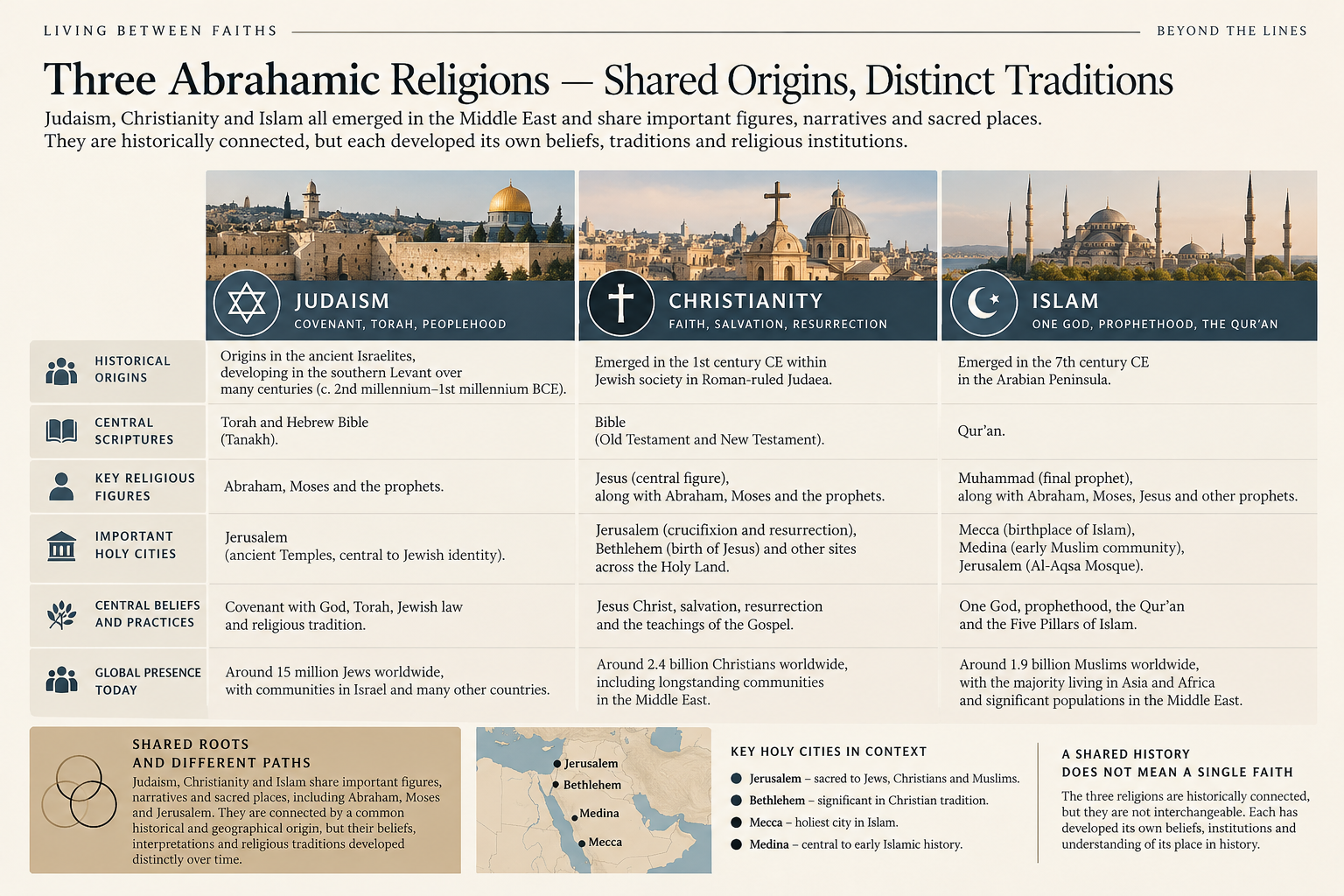
Three Religions, One Region
Few places in the world carry as much religious significance as the Middle East.
It is the birthplace of Judaism, Christianity and Islam, three religious traditions that have influenced the lives of billions of people and shaped societies far beyond the region where they emerged.
Although these religions developed at different historical moments, they share important connections. Each recognises a relationship between humanity and one God, draws upon traditions associated with Abraham and places considerable importance on revelation, moral responsibility and religious law or guidance.
Their sacred texts contain overlapping figures, narratives and places, although these are interpreted in different ways.
Abraham, Moses and other biblical figures hold significance across the three traditions. Jesus occupies a central position in Christianity and is also recognised as a prophet in Islam, while Judaism does not accept the Christian claim that he was the Messiah.
The Qur'an refers to many figures known from Jewish and Christian scripture, but presents them within a distinct Islamic theological framework.
These similarities have encouraged dialogue and intellectual exchange over centuries. They have also produced disagreements over religious authority, revelation and the interpretation of sacred history.
Understanding the relationship between the three religions requires recognising both realities.
They are historically connected, but they are not interchangeable.
Each has developed its own religious institutions, traditions, legal interpretations and understandings of its place in history.
Judaism: The Oldest of the Three Traditions
Judaism is the oldest of the three Abrahamic religions.
Its origins lie in the religious traditions of the ancient Israelites, whose history developed in the southern Levant over many centuries.
The Hebrew Bible describes a covenant between God and Abraham and later between God and the people of Israel through Moses. These accounts are foundational to Jewish religious identity, although historians distinguish between the theological narratives preserved in scripture and events that can be independently established through archaeological or documentary evidence.
The development of Israelite religion was gradual. Scholars continue to examine how its practices and beliefs evolved within the wider religious environment of the ancient Near East.
Jerusalem eventually became the central religious city of the kingdoms of Israel and Judah, particularly through its association with the Temple.
According to the biblical tradition, the First Temple was constructed during the reign of King Solomon. The historical details of its earliest construction remain debated, but the Temple's importance to the religious life of ancient Judah is central to the historical and religious record.
The Babylonian conquest of Jerusalem in the sixth century BCE and the destruction of the First Temple profoundly affected Jewish religious life.
The subsequent period of exile and the return of some Jewish populations under Persian rule contributed to the development of religious traditions centred on scripture, communal identity and worship.
A Second Temple was established in Jerusalem and later extensively expanded during the reign of Herod the Great.
Its destruction by Roman forces in 70 CE became another defining moment in Jewish history.
Over time, Jewish religious life increasingly centred on synagogues, prayer, religious scholarship and the interpretation of Jewish law.
Jerusalem nevertheless remained central to Jewish religious identity, memory and prayer.
For Jewish communities across the world, the city retained its significance even during centuries when most Jews lived outside it.
This connection is both religious and historical, extending far beyond the political circumstances of the modern era.
Christianity: A Faith Born Within Jewish Society
Christianity emerged during the first century CE within the Jewish society of Roman-ruled Judaea.
Jesus of Nazareth was Jewish, and his earliest followers belonged to a religious and cultural environment shaped by Jewish scripture, traditions and expectations.
Christianity developed from the belief among Jesus' followers that he was the promised Messiah and that his death and resurrection carried universal religious significance.
These beliefs distinguished the emerging Christian movement from other Jewish traditions.
The earliest Christian communities were established in Jerusalem and subsequently expanded throughout the eastern Mediterranean.
According to Christian tradition, Jesus was crucified in Jerusalem under the authority of the Roman prefect Pontius Pilate.
His followers proclaimed that he had risen from the dead, a belief that became foundational to Christian theology.
Jerusalem therefore acquired profound significance as the location associated with the final events of Jesus' life, his crucifixion and resurrection.
Over the following centuries, Christianity spread through missionary activity, trade networks and the movement of people across the Roman Empire and neighbouring territories.
Important centres emerged in Antioch, Alexandria, Rome and Constantinople.
Christianity was not initially a single institution with universally agreed theological interpretations.
Early Christian communities debated fundamental questions about the nature of Jesus, the relationship between God and humanity, religious authority and the interpretation of scripture.
These debates contributed to the development of distinct churches and traditions.
Today, the Middle East remains home to Christian communities whose histories extend back to these formative centuries.
The Coptic Orthodox Church in Egypt, the Syriac churches of the Levant and Mesopotamia, the Armenian Apostolic Church and various Eastern Orthodox and Eastern Catholic communities all preserve important elements of this heritage.
Their continued presence challenges the assumption that Christianity is primarily a Western religion.
Christianity originated in the Middle East, and its earliest history is inseparable from the region.
Islam: Revelation and the Expansion of a New Faith
Islam emerged in the Arabian Peninsula during the seventh century CE.
According to Islamic tradition, Muhammad was born in Mecca around 570 CE and began receiving revelations from God through the angel Gabriel around 610 CE.
These revelations, later collected in the Qur'an, became the foundation of Islamic religious belief.
Islam teaches that there is one God and that Muhammad is God's final prophet.
It recognises earlier prophets, including Abraham, Moses and Jesus, while maintaining that the Qur'an represents the final revelation.
Muslims regard Abraham, known in Arabic as Ibrahim, as an important model of devotion to God.
Islamic tradition also associates Abraham and his son Ishmael with the Kaaba in Mecca, the sacred sanctuary towards which Muslims direct their prayers.
The city of Mecca therefore occupies the central position in Islamic sacred geography.
Medina, where Muhammad established a community following his migration from Mecca in 622 CE, is another major religious centre.
Jerusalem holds particular importance as well.
The Qur'an describes Muhammad's night journey from the Sacred Mosque to the Farthest Mosque. In Islamic tradition, the latter is identified with the sanctuary in Jerusalem, and later accounts connect the journey with Muhammad's ascent to heaven.
Jerusalem is also associated with the earliest direction of Muslim prayer before the direction was changed towards Mecca.
Following Muhammad's death in 632 CE, Muslim political authority expanded rapidly across the Arabian Peninsula and into neighbouring regions.
Over subsequent centuries, Islam became the majority religion in much of the Middle East.
This transformation occurred gradually.
Many territories governed by Muslim rulers retained substantial Christian, Jewish and other populations for centuries.
Religious conversion, migration, economic relationships and political developments all contributed to the changing religious composition of the region.
Islam also developed diverse traditions of theology, law, philosophy and religious practice.
The historical division between Sunni and Shia Islam emerged from disputes concerning leadership of the Muslim community after Muhammad's death, although the differences between the traditions subsequently developed into more complex theological and institutional forms.
Understanding Islam's history therefore requires recognising its internal diversity as well as its relationship with other religions.
Jerusalem: Sacred to Three Faiths
Jerusalem occupies a distinctive place in the religious history of the Middle East.
For Jews, it is the location of the ancient Temples and the spiritual centre of Jewish religious life.
For Christians, it is associated with the ministry, crucifixion and resurrection of Jesus.
For Muslims, it is the location of the Al-Aqsa Mosque compound, known in Islamic tradition as Al-Haram al-Sharif, or the Noble Sanctuary.
The same elevated area is known to Jews as the Temple Mount because of its association with the First and Second Temples.
These overlapping religious connections make Jerusalem exceptionally significant.
They also create complex questions concerning access, worship, administration and political authority.
The Western Wall
The Western Wall is among the most important sites of Jewish prayer.
It forms part of the retaining-wall system constructed around the expanded Temple platform during the Second Temple period.
Following the destruction of the Temple in 70 CE, the wall became an important focus of Jewish prayer and remembrance.
Today, it remains a central place of worship and pilgrimage.
The Church of the Holy Sepulchre
For many Christians, the Church of the Holy Sepulchre is among the holiest sites in Christianity.
Located in Jerusalem's Old City, the church encompasses places traditionally identified with the crucifixion, burial and resurrection of Jesus.
Different Christian denominations share responsibility for the site under longstanding arrangements governing worship and administration.
These arrangements reflect both the religious importance of the church and the historical complexity of relations between Christian communities.
Al-Aqsa Mosque and the Dome of the Rock
For Muslims, the Al-Aqsa Mosque compound is one of Islam's holiest places.
The sanctuary includes the Al-Aqsa Mosque and the Dome of the Rock, the latter constructed during the late seventh century under the Umayyad Caliphate.
The Dome of the Rock is associated with the sacred rock that holds religious significance in Islamic and Jewish traditions.
The compound remains a major centre of Muslim worship.
Its administration and access arrangements are also central to contemporary political tensions.
Under the longstanding arrangements commonly described as the status quo, the Jordanian-linked Islamic Waqf administers the Muslim holy compound, while Israel exercises security control and regulates access.
The precise interpretation and implementation of these arrangements have been subjects of recurring dispute.
For this reason, developments at the site can have consequences extending far beyond Jerusalem.
Religious symbolism, national identity and political sovereignty intersect in ways that make the area particularly sensitive.
When Sacred Geography Becomes Political Territory
The religious importance of Jerusalem cannot be separated entirely from its political history.
The city has been governed by numerous political authorities, including ancient kingdoms, Roman and Byzantine rulers, successive Muslim dynasties, Crusader states, the Ottoman Empire, British authorities, Jordan and Israel.
Each period left its own religious, architectural and political legacy.
In the modern era, Jerusalem became a central issue in the Israeli–Palestinian conflict.
Following the 1948 Arab–Israeli war, Israel controlled West Jerusalem while Jordan controlled East Jerusalem, including the Old City.
During the June 1967 war, Israel captured East Jerusalem from Jordan.
Israel subsequently extended its law and administration to East Jerusalem, a move not recognised internationally as a lawful acquisition of sovereignty.
Israel regards Jerusalem as its capital, while Palestinians seek East Jerusalem as the capital of a future Palestinian state.
The international legal status of East Jerusalem remains disputed politically, although the United Nations and the International Court of Justice regard it as occupied Palestinian territory.
These political disagreements should not obscure the distinct religious significance of the city to Jews, Christians and Muslims.
Nor should religious connections be treated as automatically resolving contemporary questions of sovereignty, citizenship or international law.
Historical attachment and modern legal authority are different questions, even when political movements closely connect them.
Shared Religious Figures, Different Interpretations
Judaism, Christianity and Islam share important figures and narratives, but interpret them through different theological traditions.
Abraham is a foundational figure in all three religions.
In Judaism, he is associated with the covenant between God and the ancestors of the Jewish people.
In Christianity, Abraham is understood as an important example of faith and as part of the religious history that Christianity interprets through the life and teachings of Jesus.
In Islam, Abraham is regarded as a prophet and an exemplary monotheist who submitted to God.
Moses is similarly important across the three traditions.
Judaism places the Torah and the covenant associated with Moses at the centre of its religious life.
Christianity recognises Moses within its understanding of biblical history.
Islam honours Moses, known as Musa, as one of its major prophets.
Jesus represents one of the clearest theological differences.
Christians regard him as the Messiah and, within mainstream Christian theology, divine.
Muslims recognise Jesus as the Messiah and a prophet but reject the belief that he is divine.
Judaism does not recognise Jesus as the Messiah or as divine.
These differences are fundamental, not merely variations in cultural practice.
They help explain why shared historical origins have not produced a single religious tradition.
At the same time, shared figures and moral teachings have provided a foundation for interfaith discussion.
Such dialogue does not require religious communities to abandon their beliefs.
It requires recognising that disagreement need not lead to hostility.
A Shared History Does Not Guarantee Coexistence
The historical connections between Judaism, Christianity and Islam have sometimes encouraged cooperation.
Jewish, Christian and Muslim scholars participated in intellectual exchanges in parts of the medieval Islamic world.
Religious communities contributed to trade, medicine, literature and philosophy.
In certain cities, different groups developed shared cultural practices while maintaining distinct religious identities.
Yet this history also includes exclusion, forced conversion, persecution, communal violence and political restrictions.
Relationships between religious communities depended heavily on the policies of rulers, the stability of political institutions and the social conditions of particular periods.
Religious similarity did not automatically prevent conflict.
Nor did theological disagreement make peaceful coexistence impossible.
These lessons remain relevant today.
Religious identity can provide a powerful source of belonging, cultural continuity and ethical responsibility.
It can also be used by political movements to justify exclusion or mobilise hostility.
The decisive question is often not whether communities share religious origins, but whether political and legal institutions protect their rights equally.
Beyond the Three Abrahamic Religions
Although Judaism, Christianity and Islam dominate many discussions of Middle Eastern religious history, they do not represent the full extent of the region's religious diversity.
Other communities maintain traditions that cannot simply be understood as branches of the three Abrahamic faiths.
Yazidism, for example, is a distinct religious tradition with historical roots in northern Mesopotamia.
The Mandaeans preserve a religious heritage centred on distinctive scriptures, rituals and the importance of baptism in flowing water.
The Druze faith emerged in the eleventh century from an intellectual and religious environment associated with Ismaili Islam, but developed into a distinct tradition.
Zoroastrianism, which emerged in ancient Iran, remains an important part of the region's religious history and continues to be practised by communities today.
The Bahá'í Faith originated in nineteenth-century Iran and developed its own religious teachings and institutions.
These communities have experienced very different historical circumstances.
Some have maintained a degree of communal autonomy, while others have faced discrimination, restrictions or violent persecution.
Their histories demonstrate that the Middle East's religious identity cannot be reduced to the relationship between Muslims, Christians and Jews alone.
The region's diversity is considerably older, broader and more complex.
Why Understanding These Origins Matters
The shared geographical origins of Judaism, Christianity and Islam are central to understanding the religious history of the Middle East.
Their sacred narratives, historical communities and religious institutions developed within overlapping cultural and political environments.
Jerusalem illustrates this connection more clearly than almost any other city.
Its religious significance reflects centuries of history, belief and collective memory.
Yet the same history also demonstrates the limitations of describing the region exclusively through religion.
Modern conflicts involve questions of political sovereignty, security, national identity, citizenship and international law.
Religious identity may influence these disputes, but it does not provide a complete explanation for them.
Understanding the three Abrahamic religions therefore requires two forms of historical awareness.
The first is recognition of their genuine connections: shared figures, overlapping sacred geography and centuries of cultural interaction.
The second is recognition of their differences: distinct beliefs, institutions, historical experiences and political circumstances.
Both are necessary for an accurate understanding of the Middle East.
The region's religious heritage is not a single story of harmony or hostility.
It is a history of communities that have influenced one another while preserving their own identities.
That history provides the foundation for the next question: who are the religious minorities living in the Middle East today, and how have their circumstances changed?
Chapter 3 — Who Are the Religious Minorities?
A Religious Landscape Far More Diverse Than It Appears
When discussing religion in the Middle East, international attention often focuses on Islam, Christianity and Judaism.
Yet the region's religious landscape is considerably more diverse.
Across the Middle East, communities have preserved distinctive religious traditions, languages and cultural identities for centuries. Some trace their histories to ancient Mesopotamia or Persia. Others emerged during the early centuries of Christianity or developed from later religious movements.
These communities include Coptic Christians, Assyrian and Syriac Christians, Armenians, Druze, Yazidis, Mandaeans, Bahá'ís, Zoroastrians and several smaller religious groups.
Their circumstances vary enormously.
Some are recognised by national governments and participate in political institutions. Others experience restrictions on religious practice, discrimination in employment or difficulties obtaining legal recognition.
Certain communities have maintained relatively stable populations, while others have experienced dramatic demographic decline as a result of war, persecution, emigration and economic insecurity.
Religious identity in the Middle East is also closely connected to language, ethnicity and historical geography.
For some groups, religious affiliation forms part of a broader ethnic identity. For others, members share a religion while belonging to different ethnic or linguistic communities.
Understanding these distinctions is essential.
The term religious minority describes a group's numerical position within a particular society. It does not automatically describe its political influence, economic circumstances or historical importance.
A community may represent only a small proportion of a country's population while maintaining institutions that have shaped the region for centuries.
Coptic Christians: An Ancient Community in Egypt
Egypt is home to one of the world's oldest Christian communities.
The Coptic Orthodox Church traces its origins to the earliest centuries of Christianity and traditionally associates its foundation with Saint Mark the Evangelist.
Christianity became deeply established in Egypt during the Roman and Byzantine periods.
Alexandria developed into an important centre of Christian theology, scholarship and religious debate.
Egyptian monasticism also played a major role in the development of Christian religious life.
Early monastic communities in the Egyptian desert influenced Christian traditions far beyond the Middle East.
Following the Arab conquest of Egypt in the seventh century, the country's religious composition gradually changed.
Arabic became increasingly important, and Islam eventually became the majority religion.
Coptic Christians nevertheless maintained their religious institutions, liturgical traditions and communal identity.
Today, Copts constitute the largest Christian community in Egypt, although precise estimates of their population vary and remain politically sensitive.
The Coptic Orthodox Church continues to play a central role in religious, educational and social life.
Coptic Christians participate in Egyptian society across numerous professions and economic sectors.
However, their position has also been shaped by discrimination, restrictions affecting church construction and episodes of sectarian violence.
Extremist attacks against churches and Christian worshippers have caused significant loss of life.
The Egyptian government has publicly condemned such attacks and introduced measures intended to improve church regulation and security.
Human rights organisations have nevertheless continued to raise concerns about unequal treatment, difficulties obtaining accountability for sectarian incidents and limitations on religious freedom.
The Coptic experience illustrates a broader regional reality.
A community can be deeply rooted in a country's history while continuing to face questions about equality, protection and citizenship.
Assyrian and Syriac Christians: Preserving an Ancient Heritage
The Christian communities of northern Iraq, northeastern Syria and neighbouring regions preserve some of the Middle East's oldest religious traditions.
Among them are Assyrian and Syriac Christians, whose churches and cultural institutions developed within the historical landscape of Mesopotamia.
Their religious heritage includes traditions associated with the Church of the East, the Syriac Orthodox Church, the Chaldean Catholic Church and other Eastern Christian denominations.
Many of these communities use Syriac, a literary and liturgical form of Aramaic, in religious worship.
Modern spoken Neo-Aramaic languages also remain important to parts of their cultural identity.
Aramaic was widely used across the ancient Near East and became an important language of administration, commerce and religious life.
The preservation of Aramaic-derived languages is therefore a significant part of the region's cultural heritage.
Historically, Assyrian and Syriac Christian communities established churches, monasteries and centres of scholarship across Mesopotamia and beyond.
Their members contributed to medicine, translation, philosophy and the transmission of scientific knowledge.
During the twentieth century, however, these communities experienced repeated periods of violence and displacement.
The mass killings and expulsions of Assyrian Christians during the final years of the Ottoman Empire and the First World War remain central to their collective memory.
Further upheavals followed the formation of modern states and subsequent regional conflicts.
In Iraq, the 2003 US-led invasion and the instability that followed contributed to a severe deterioration in security for many Christian communities.
Churches were attacked, religious leaders were threatened or abducted, and large numbers of families left their homes.
The Islamic State's territorial expansion in 2014 produced another devastating period.
Christian communities in Mosul and the Nineveh Plains faced persecution, forced displacement and the destruction or seizure of religious and cultural property.
Although some families have returned to their communities, others remain displaced or have established new lives abroad.
Their future depends not only on physical security but also on employment, housing, political representation and confidence in the institutions responsible for protecting their rights.
Armenians: Faith, Identity and Survival
Armenian communities have played an important role in the religious and cultural history of the Middle East.
Armenia adopted Christianity as a state religion in the early fourth century, according to traditional chronology, making the Armenian Apostolic Church one of the world's oldest national churches.
Over subsequent centuries, Armenian communities developed across Anatolia, the Levant, Persia and other regions.
Their institutions contributed to commerce, craftsmanship, education, printing and religious scholarship.
Armenian communities also became established in cities such as Jerusalem, Aleppo, Beirut and Istanbul.
The Armenian genocide during the First World War fundamentally transformed this history.
The Ottoman government's deportations and mass killings of Armenians resulted in enormous loss of life and the destruction of many longstanding communities.
Survivors established new homes across the Middle East and the wider world.
Lebanon and Syria became particularly important centres of Armenian diaspora life.
Armenian schools, churches, cultural associations and political organisations helped preserve language and communal identity.
In recent decades, however, regional instability has again affected these communities.
The Syrian civil war caused significant displacement among Armenians living in Aleppo and other parts of the country.
Economic difficulties and political instability in Lebanon have also encouraged emigration.
The Armenian experience demonstrates how religious and ethnic identity can become closely connected through shared historical memory.
It also shows how minority communities can preserve their cultural institutions across generations, even after profound displacement.
The Druze: A Distinct Religious Tradition
The Druze are a religious community whose faith emerged during the eleventh century in the context of Ismaili Islam.
Over time, Druze religious traditions developed into a distinct belief system with its own theological teachings and communal structures.
Druze communities are concentrated primarily in Lebanon, Syria and Israel, including the Israeli-occupied Golan Heights.
Their religious practices are generally not open to conversion, and aspects of their religious teachings are traditionally reserved for initiated members of the community.
This has contributed to the preservation of a distinctive communal identity.
However, Druze political experiences differ considerably across national borders.
In Lebanon, Druze communities form part of the country's confessional political system and have played an influential role in national politics.
In Syria, Druze populations are concentrated particularly in the southern region around Suwayda, where local political, social and security conditions have shaped their relationship with successive governments and armed actors.
In Israel, Druze citizens have a distinctive relationship with the state.
Druze men are generally subject to compulsory military service, unlike most Arab citizens of Israel, although individual circumstances and exemptions vary.
Druze communities in the Golan Heights have a different historical and legal position. Many residents have retained Syrian citizenship or permanent-resident status rather than acquiring Israeli citizenship.
These differences illustrate why religious identity alone cannot explain political affiliation.
Members of the same religious community may hold different national identities, political views and relationships with state institutions.
Yazidis: A Community Marked by Genocide
The Yazidis are an ethnoreligious community whose traditional homeland is concentrated in northern Iraq, particularly the Sinjar region.
Their religion is distinct, with its own sacred traditions, religious hierarchy and practices.
Although Yazidi beliefs have developed within a wider regional environment influenced by several religious traditions, Yazidism should not be described simply as a branch of Islam, Christianity or Zoroastrianism.
Yazidi religious identity is closely connected to community membership and inherited tradition.
Historically, Yazidis experienced repeated episodes of persecution and discrimination.
However, the Islamic State's assault on Sinjar in August 2014 marked an especially devastating chapter.
ISIS fighters killed Yazidi men and boys, abducted women and children, subjected many captives to sexual slavery and forced religious conversion, and displaced large numbers of civilians.
The United Nations Independent International Commission of Inquiry on Syria concluded in 2016 that ISIS had committed genocide against the Yazidis.
Subsequent investigations and legal proceedings have documented further evidence of these atrocities.
Thousands of survivors escaped or were rescued, while families continued searching for missing relatives.
The consequences remain profound.
Many Yazidis have been unable to return permanently to their homes because of insecurity, destroyed infrastructure, political disputes and limited economic opportunities.
Survivors also face long-term psychological, social and economic challenges.
Despite these difficulties, Yazidi organisations and community leaders have worked to preserve religious traditions, support survivors and pursue accountability.
Their experience illustrates the extreme consequences that can arise when religious identity becomes a basis for systematic persecution.
Mandaeans: An Ancient Religious Community Facing Decline
The Mandaeans are a small religious community historically associated with southern Iraq and southwestern Iran.
Their faith places particular importance on ritual purification and baptism in flowing water.
Mandaean religious traditions are expressed through distinctive sacred texts and the Mandaic language, which belongs to the Aramaic language family.
John the Baptist occupies a central place in Mandaean religious tradition.
However, Mandaeism is a separate religion with its own theology and historical development.
For centuries, Mandaean communities lived near the rivers and waterways of Mesopotamia, where access to flowing water supported their religious practices.
Their members were historically associated with various occupations, including metalworking and jewellery-making, although these professions do not define the community as a whole.
During the twentieth and twenty-first centuries, political instability and insecurity contributed to substantial emigration.
Following the 2003 invasion of Iraq, many Mandaeans reported threats, intimidation, violence and pressure to abandon their religious identity.
Because the community is relatively small, sustained emigration has raised concerns about the long-term preservation of its language, religious institutions and communal traditions.
Mandaean communities now exist in several countries outside the Middle East.
The survival of their religious heritage increasingly depends on the ability to maintain communal institutions across national borders.
Bahá'ís: Religious Freedom and Legal Recognition
The Bahá'í Faith emerged in nineteenth-century Iran.
Its teachings developed from the religious movement associated with the Báb and the subsequent leadership of Bahá'u'lláh, whom Bahá'ís regard as the founder of their faith.
Bahá'í teachings emphasise the unity of humanity, the essential unity of religions, equality between women and men, and the importance of education.
The faith developed an international community with religious institutions in numerous countries.
Its historical origins in Iran, however, have also been associated with prolonged persecution.
Iran's Bahá'í community has faced significant restrictions, particularly since the establishment of the Islamic Republic in 1979.
Bahá'ís are not recognised as a protected religious minority under Iran's constitution.
Human rights organisations and United Nations experts have documented discrimination involving access to higher education, employment, property rights, burial practices and religious activities.
Iranian authorities have frequently rejected international criticism of their treatment of Bahá'ís.
The Bahá'í World Centre is located in Haifa and Acre in present-day Israel, reflecting the historical exile of Bahá'u'lláh under Ottoman rule.
This institutional presence should not be confused with the political affiliations of Bahá'í communities elsewhere.
The Bahá'í Faith maintains a principle of non-involvement in partisan politics.
The experiences of Bahá'ís demonstrate how religious minorities may face discrimination not because of their political activities, but because their beliefs lack official recognition or are regarded as incompatible with state religious ideology.
Zoroastrians: The Survival of an Ancient Iranian Religion
Zoroastrianism is among the world's oldest surviving religious traditions.
It is associated with the teachings of Zarathustra, also known as Zoroaster, whose historical dating remains debated.
The religion developed in ancient Iran and became influential under successive Iranian empires.
Zoroastrian teachings emphasise the importance of truth, moral responsibility and the struggle between good and evil.
Fire occupies an important symbolic and ritual role, representing purity and divine light.
Zoroastrians do not worship fire itself.
Following the Muslim conquest of Iran in the seventh century, Zoroastrian communities gradually declined in number as the region's religious composition changed.
Some Zoroastrians migrated to the Indian subcontinent, where their descendants became known as Parsis.
Others remained in Iran and preserved their religious institutions.
Today, Zoroastrians continue to live in Iran, particularly in communities historically associated with Yazd, Kerman and Tehran.
Iran officially recognises Zoroastrianism as a minority religion under its constitution.
However, legal recognition does not necessarily guarantee complete equality.
Religious minorities may still encounter restrictions affecting public life, political participation or religious activities.
The survival of Zoroastrianism illustrates the extraordinary continuity of religious traditions in the Middle East.
It also highlights the challenges faced by small communities seeking to preserve their heritage within societies where their religion is no longer dominant.
Jewish Minorities Beyond Israel
Jewish communities formed part of the Middle East's religious landscape for many centuries before the establishment of modern Israel.
Important Jewish populations existed in Iraq, Egypt, Yemen, Syria, Iran, Morocco and other countries.
These communities developed distinctive religious customs, languages, music, cuisine and intellectual traditions.
Baghdad was a major centre of Jewish scholarship and communal life.
Jewish communities in Yemen preserved religious traditions with deep historical roots.
Egyptian Jewish communities contributed to commerce, cultural life and the development of modern urban society.
During the twentieth century, however, Jewish populations declined dramatically across much of the Arab world.
The reasons varied between countries and historical periods.
They included antisemitic violence, discriminatory legislation, state repression, expulsions, the Arab–Israeli conflict, Zionist migration and broader political and economic pressures.
Large numbers of Jews migrated to Israel, while others settled in Europe, North America and elsewhere.
Today, only small Jewish communities remain in several countries that once had substantial Jewish populations.
Iran continues to have an established Jewish minority, although its population is far smaller than in earlier periods.
The disappearance or decline of these communities represents a major transformation in the region's cultural and religious history.
Synagogues, cemeteries, archives and former Jewish neighbourhoods remain important evidence of a heritage that extended across many centuries.
Their preservation raises broader questions about collective memory, historical responsibility and the protection of minority heritage.
Smaller Communities and the Limits of Recognition
The religious diversity of the Middle East extends beyond the communities most frequently discussed in international reporting.
Smaller religious groups include various Christian denominations, Shabak communities in Iraq, Alawites in Syria and Turkey, and other traditions whose identities may combine religious, ethnic and regional elements.
Their classification can be complex.
Some communities identify themselves as belonging to a broader religious tradition, while others emphasise a distinct religious identity.
External classifications do not always reflect how members understand their own communities.
This is particularly important when discussing groups whose religious beliefs or practices are not widely known outside the region.
Government recognition can also influence how communities are classified.
Some states recognise particular religions in constitutional or legal frameworks.
Others restrict official recognition to a limited number of religious traditions.
Such distinctions can affect access to marriage registration, inheritance rights, religious education, burial arrangements and the ability to establish places of worship.
In countries where personal-status law is closely connected to religion, the absence of official recognition can create significant legal difficulties.
These issues are not always visible in international coverage of religious persecution.
Yet they can profoundly influence everyday life.
Why Minority Populations Are Changing
The demographic composition of the Middle East has changed substantially during the past century.
War and persecution have contributed to displacement, but they are not the only explanations.
Economic opportunities, education, family reunification and migration policies have also influenced population movements.
Some minority communities have experienced lower birth rates or higher rates of emigration than surrounding populations.
Others have maintained stable or growing populations in particular countries.
Reliable demographic information is not always available.
Some governments do not publish detailed religious population statistics, while census categories may be incomplete, outdated or politically contested.
For this reason, population estimates should be treated carefully.
The decline of a religious community in one country does not necessarily mean that the community is disappearing globally.
Many groups have established substantial diaspora populations.
These communities can provide financial support, preserve cultural traditions and advocate for relatives remaining in their historical homelands.
However, diaspora life also creates challenges.
Languages may become less widely spoken across generations, religious institutions may struggle to maintain continuity, and younger members may develop identities shaped by multiple national and cultural influences.
The future of religious minorities therefore depends on developments both within and beyond the Middle East.
Religious Diversity as a Question of Citizenship
The survival of religious minorities is not solely a matter of preserving historic buildings or cultural traditions.
It is also a question of citizenship.
Can members of different religious communities practise their faith without fear?
Do they enjoy equal access to education, employment and public services?
Can they participate in political life without being required to abandon their religious identity?
Are their religious institutions protected by law?
And when discrimination or violence occurs, can they expect effective protection and access to justice?
These questions apply not only to small religious minorities.
They are also relevant to members of majority religions whose beliefs differ from official interpretations or dominant social expectations.
Freedom of religion or belief includes the right to hold religious beliefs, to change them and to practise them individually or collectively, subject only to restrictions permitted under international human rights law.
It also includes the right not to follow a religion.
A society's treatment of religious minorities can therefore reveal much about the strength of its legal institutions and its commitment to equal citizenship.
Historical coexistence alone is not sufficient.
The protection of religious freedom depends on enforceable rights, accountable institutions and a political culture that recognises diversity as a legitimate part of society.
A Heritage Worth Protecting
The religious minorities of the Middle East represent an extraordinary range of historical traditions.
Their churches, temples, shrines, sacred texts, languages and communal institutions preserve aspects of the region's history that cannot be replaced once lost.
Yet their importance extends beyond cultural heritage.
They are living communities whose members seek security, opportunity and the ability to determine their own futures.
Some have experienced severe persecution and displacement.
Others continue to participate actively in the political, economic and cultural life of their countries.
Their experiences should not be reduced to a single narrative of victimhood.
Nor should examples of coexistence obscure genuine discrimination or insecurity.
Understanding religious minorities requires recognising their agency, internal diversity and changing circumstances.
The future of the Middle East's religious landscape will depend not only on whether governments preserve historical monuments, but on whether the people connected to those traditions can continue living with dignity and equal rights.
The next chapter examines how these communities lived alongside one another over the centuries, exploring the complicated history of coexistence, cultural exchange and religious conflict.
Chapter 4 — Centuries of Coexistence and Conflict
A History That Cannot Be Reduced to Harmony or Hostility
The history of religious coexistence in the Middle East is often presented through two competing narratives.
One describes a region where Jews, Christians and Muslims lived together for centuries, sharing cities, markets and intellectual traditions.
The other emphasises religious persecution, unequal legal treatment, forced conversion and repeated episodes of violence.
Both narratives contain elements of historical truth.
Neither provides a complete explanation.
Across different periods, religious communities developed complex relationships shaped by political authority, economic conditions, cultural exchange and religious institutions.
Coexistence did not necessarily mean equality. Communities could maintain their religious identities and participate in society while remaining subject to legal restrictions.
Likewise, periods of conflict did not eliminate cooperation or shared cultural life.
The Middle East's religious history is therefore best understood as a changing relationship between communities whose experiences differed across regions and centuries.
The Cities Where Religions Met
For centuries, major Middle Eastern cities served as centres of religious interaction.
Jerusalem, Damascus, Baghdad, Cairo, Aleppo and other urban centres brought together people belonging to different religious and ethnic communities.
Their markets connected merchants from distant regions. Religious institutions provided education and social assistance. Scholars exchanged ideas across linguistic and cultural boundaries.
In many cities, neighbourhoods became associated with particular religious communities.
However, these divisions were rarely absolute.
People encountered one another through commerce, employment, public administration and everyday social relationships.
In Ottoman Jerusalem, for example, Muslims, Christians and Jews lived within a city whose religious institutions attracted pilgrims and visitors from across the world.
The city's traditional division into quarters reflected aspects of communal identity, but its social and economic life also involved interaction across religious boundaries.
Damascus developed a similarly complex urban culture.
Its Christian and Jewish communities maintained places of worship and communal institutions while participating in the wider economic life of the city.
Baghdad, particularly during the Abbasid period, became an influential centre of scholarship and commerce.
These cities demonstrate that religious diversity was not merely a matter of different communities occupying the same territory.
It often involved sustained interaction that influenced language, architecture, food, music and intellectual traditions.
Baghdad and the Intellectual Exchange of the Abbasid Era
The Abbasid Caliphate, established in 750 CE, played an important role in the development of intellectual and cultural exchange.
Baghdad became its capital in 762 CE and subsequently developed into one of the most influential cities of the medieval world.
Scholars working under Abbasid patronage translated and studied philosophical, medical, mathematical and scientific works from Greek, Syriac, Persian and other traditions.
Christians, Muslims and members of other communities participated in these intellectual networks.
Christian scholars with expertise in Syriac and Greek were particularly important in the transmission and translation of medical and philosophical texts.
Hunayn ibn Ishaq, a ninth-century Christian physician and translator, became one of the best-known figures associated with this intellectual environment.
His work contributed to the preservation and transmission of important medical and philosophical knowledge.
Jewish scholars also participated in the broader intellectual life of the Islamic world, although their experiences varied according to time and place.
The exchange of knowledge did not erase religious distinctions.
Scholars often maintained strong commitments to their own religious traditions while working within shared intellectual institutions and networks.
This history challenges the assumption that religious difference necessarily prevents cooperation.
At the same time, the Abbasid period should not be romanticised as an era of uninterrupted tolerance.
Political struggles, restrictions on non-Muslims and episodes of persecution also occurred.
The significance of Baghdad lies not in the absence of conflict, but in the extent to which intellectual exchange could develop despite religious and political differences.
Al-Andalus and the Limits of the 'Golden Age' Narrative
Although geographically outside the Middle East, medieval Muslim-ruled Iberia provides an important comparison for understanding religious coexistence in the wider Islamic world.
Al-Andalus is frequently described as a society in which Muslims, Christians and Jews contributed to a flourishing intellectual and cultural environment.
There were indeed periods of significant cooperation and cultural exchange.
Jewish scholars, physicians, poets and administrators participated in aspects of public life, particularly under certain Muslim rulers.
Arabic became an important language of scholarship and literature across religious communities.
However, the popular image of an uninterrupted golden age of tolerance is historically misleading.
Non-Muslim communities generally occupied a subordinate legal position under Muslim rule.
Political conditions varied between dynasties and regions.
Periods of relative stability were interrupted by conflict, persecution and changing policies.
The Almohad movement, which expanded into parts of Iberia during the twelfth century, imposed particularly severe restrictions on religious minorities, contributing to conversion, displacement and emigration.
The philosopher and Jewish legal scholar Moses Maimonides, born in Córdoba in 1138, was among those whose lives were affected by these upheavals.
The history of Al-Andalus therefore illustrates both the possibilities and limitations of coexistence under unequal political systems.
Its importance lies in recognising that cultural achievement and religious discrimination could exist within the same historical environment.
The Ottoman Empire: Diversity Under Imperial Rule
The Ottoman Empire governed substantial parts of the Middle East for several centuries.
Its population included Muslims, Christians, Jews and numerous ethnic and linguistic communities.
Ottoman authorities developed arrangements through which recognised religious communities exercised varying degrees of autonomy over certain internal affairs.
These arrangements, commonly associated with the millet system, evolved over time and differed across regions.
Religious leaders could exercise authority over aspects of communal life, including marriage, family matters, education and religious institutions.
Such arrangements helped preserve religious identities and institutions.
However, they did not establish equality between all subjects.
Muslims generally occupied a privileged position within the imperial political and legal order, although individual circumstances and administrative practices varied.
Non-Muslim communities could face restrictions and additional obligations.
At the same time, some Christian and Jewish subjects became influential merchants, financiers, physicians and administrators.
The Ottoman Empire also provided refuge to many Sephardic Jews expelled from Spain in 1492.
Jewish communities developed in cities including Istanbul, Salonica and other Ottoman centres.
These developments contributed to the cultural and economic life of the empire.
Yet Ottoman history also included episodes of sectarian violence, state repression and mass atrocities.
The empire's treatment of religious communities changed significantly across its long existence.
It should therefore be understood neither as a model of modern religious equality nor as a system defined exclusively by persecution.
The Damascus Violence of 1860
One of the most devastating episodes of nineteenth-century sectarian violence occurred in Ottoman Syria.
In 1860, conflict involving Druze and Maronite communities in Mount Lebanon escalated into widespread violence.
The conflict was shaped by religious divisions, but also by social inequalities, political competition, economic tensions and the effects of Ottoman reforms.
Violence subsequently spread to Damascus.
In July 1860, Muslim crowds and armed groups attacked Christian neighbourhoods, killing thousands of Christians and destroying homes, churches and businesses.
The exact number of victims remains disputed.
The attacks represented a profound rupture in the city's communal life.
However, the events also included acts of protection and solidarity.
Abd al-Qadir al-Jaza'iri, the Algerian religious and political leader living in Damascus, helped shelter Christians and protect them from violence.
His actions became an important historical example of humanitarian intervention across religious boundaries.
The Damascus violence illustrates how rapidly communal relations can deteriorate when political tensions, inflammatory rhetoric and failures of public authority converge.
It also demonstrates that religious identity does not determine individual behaviour.
While some participated in violence, others risked their safety to protect neighbours belonging to a different faith.
Nationalism and the Transformation of Religious Identity
During the nineteenth and twentieth centuries, nationalist movements increasingly challenged older imperial political structures.
Ideas about citizenship, national identity and political sovereignty reshaped relationships between religious communities.
In some settings, nationalism offered the possibility of political belonging beyond religious affiliation.
Movements promoting shared national identity sought to unite populations across communal boundaries.
Arab nationalism, for example, attracted supporters from Muslim and Christian backgrounds.
Christian intellectuals played important roles in the development of modern Arab political and cultural movements.
However, nationalism could also create new forms of exclusion.
When political identity became closely associated with a particular ethnic, religious or national group, minorities could be portrayed as outsiders or as obstacles to national unity.
The collapse of the Ottoman Empire intensified these tensions.
New political borders, European mandates and competing nationalist movements transformed the region's political landscape.
Religious communities that had previously lived within a large imperial system found themselves subject to new national governments.
Their security increasingly depended on the policies and institutions of these states.
The relationship between nationalism and religious diversity was therefore complex.
National identity could provide a basis for equal citizenship, but it could also be used to justify discrimination and forced assimilation.
The Armenian Genocide and the Destruction of Communities
The First World War marked one of the most devastating periods in the history of religious and ethnic minorities in the late Ottoman Empire.
Beginning in 1915, Ottoman authorities organised mass deportations of Armenians from their homes.
Large numbers were killed or died from starvation, disease and exposure during forced marches and displacement.
Historians widely recognise these events as the Armenian genocide.
The Ottoman government's actions took place within the context of war, nationalist radicalisation and official accusations that Armenian populations represented a security threat.
Such accusations were used to justify policies directed against civilians.
Other Christian communities, including Assyrians and Greeks, also suffered mass killings, expulsions and severe persecution during the same broader period.
These events transformed the demographic and cultural composition of Anatolia and neighbouring regions.
Communities that had existed for centuries were destroyed or displaced.
Survivors established diaspora communities across the Middle East, Europe and the Americas.
The Armenian genocide illustrates how state power, wartime conditions and exclusionary nationalism can produce catastrophic consequences for minority populations.
It also demonstrates why the protection of religious and ethnic minorities cannot depend solely on longstanding traditions of coexistence.
When governments themselves become perpetrators of persecution, historical relationships offer little protection.
The Twentieth Century: New States, New Tensions
The establishment of modern Middle Eastern states introduced new legal and political frameworks.
Some governments adopted constitutional provisions recognising religious diversity.
Others placed religion at the centre of national identity or restricted political participation.
Lebanon developed a political system based on the distribution of power among recognised religious communities.
The system was intended to provide representation, but it also institutionalised communal divisions and became a source of political competition.
In Iraq, successive governments attempted to manage a population comprising Sunni and Shia Muslims, Kurds, Christians, Yazidis and other communities.
Political repression, regional conflict and later state collapse repeatedly undermined communal security.
In Syria, governments promoted forms of national identity that officially emphasised secularism while political power remained concentrated within authoritarian institutions.
Religious and sectarian affiliations nevertheless continued to influence social and political relationships.
These examples demonstrate that formal recognition of religious diversity does not automatically guarantee political stability or equal rights.
The effectiveness of institutions, the distribution of political power and the protection of individual freedoms remain decisive.
The Arab–Israeli Conflict and Religious Communities
The establishment of Israel in 1948 and the wars surrounding it had far-reaching consequences for the Middle East.
The conflict was fundamentally connected to competing national movements, territory, statehood and security.
Religion also played an important role in historical identity, political mobilisation and the significance attached to particular places.
The 1948 war resulted in the displacement of hundreds of thousands of Palestinians, an event Palestinians refer to as the Nakba, or catastrophe.
At the same time, Jewish communities across several Arab countries experienced increasing insecurity, discrimination, violence or state restrictions, although conditions and causes varied significantly between countries.
Large numbers of Jews subsequently migrated to Israel and elsewhere.
These population movements profoundly altered the region's religious landscape.
The conflict also affected Christian communities in Israel and the Palestinian territories, whose experiences have been shaped by citizenship, displacement, occupation, political instability and economic pressures.
Religious sites in Jerusalem became particularly sensitive because of their importance to Jews, Christians and Muslims.
The conflict illustrates how national and territorial disputes can become closely connected to religious identity without being reducible to theology alone.
It also demonstrates the dangers of treating entire religious populations as responsible for the actions of states or political movements.
Lebanon: Coexistence and Civil War
Lebanon is frequently presented as an example of religious diversity in the Middle East.
Its population includes substantial Muslim and Christian communities, as well as Druze and other groups.
Religious institutions have played important roles in education, healthcare, politics and cultural life.
Lebanon's confessional political system allocates key political positions according to religious affiliation.
The presidency is traditionally reserved for a Maronite Christian, the prime ministership for a Sunni Muslim and the parliamentary speakership for a Shia Muslim.
This arrangement reflects attempts to balance political power among communities.
However, Lebanon's history also demonstrates the limitations of institutionalised sectarianism.
The Lebanese Civil War, which lasted from 1975 to 1990, involved numerous domestic and foreign actors.
Its causes included political inequality, disputes over national identity, the presence of Palestinian armed organisations, regional intervention and competition among militias.
Religious identity became an important marker in the conflict, but the war cannot be explained solely as a confrontation between Christians and Muslims.
Alliances changed over time, and violence occurred both between and within religious communities.
The war caused extensive destruction, displacement and loss of life.
Following the conflict, Lebanon maintained its confessional political framework.
Supporters argue that the system provides representation for diverse communities.
Critics contend that it reinforces sectarian divisions, encourages patronage and weakens the development of common political institutions.
Lebanon therefore illustrates both the possibilities and difficulties of organising political life around religious diversity.
Iraq and Syria: When State Institutions Collapse
The conflicts in Iraq and Syria during the twenty-first century created severe challenges for religious coexistence.
In Iraq, the 2003 US-led invasion and the collapse of existing state institutions contributed to political instability and violence.
Sectarian armed groups targeted civilians, and religious identity became increasingly associated with security threats and political allegiance.
Christian communities experienced attacks, intimidation and displacement.
Sunni and Shia civilians also suffered extensive violence, including attacks by militias and extremist organisations claiming to act in the name of religion.
The emergence of the Islamic State intensified these threats.
ISIS pursued an extremist interpretation of religion and imposed brutal rule over territories it controlled.
Its campaign against Yazidis in 2014 included genocide, sexual slavery, forced conversion and mass displacement.
Christian communities were also subjected to persecution and expulsion.
In Syria, the civil war that began in 2011 developed into a complex conflict involving government forces, opposition groups, extremist organisations and foreign powers.
Religious and sectarian identities influenced some alliances and patterns of violence.
However, the conflict also involved political repression, demands for reform, regional competition and struggles over territorial control.
The destruction of communities and displacement of millions of people profoundly affected Syria's religious landscape.
These conflicts demonstrate how the breakdown of security institutions can expose religious minorities and other civilians to extreme vulnerability.
They also show how armed movements can exploit religious identity to justify violence and establish political control.
Everyday Coexistence Beyond the Headlines
Despite the prominence of conflict in international reporting, religious coexistence remains part of everyday life in many Middle Eastern societies.
People from different religious backgrounds continue to work together, attend educational institutions, participate in cultural activities and maintain professional relationships.
Religious institutions sometimes cooperate in humanitarian assistance, education and community initiatives.
Interfaith dialogue organisations seek to reduce prejudice and encourage mutual understanding.
In some communities, local religious leaders have worked together to protect civilians or prevent tensions from escalating.
These activities rarely attract the same international attention as violence.
Yet they remain important.
Coexistence is not simply the absence of conflict.
It involves the ability of individuals and communities to participate in society without being required to abandon their identities.
It also depends on practical conditions.
Equal access to public services, protection from discrimination, economic opportunity and effective legal institutions can strengthen relationships across religious boundaries.
Without these protections, apparently peaceful coexistence may remain vulnerable to political instability or social pressure.
What History Reveals About Religious Conflict
The history of religious coexistence in the Middle East offers several important lessons.
First, religious diversity has existed across the region for centuries.
It is not a modern development or an unusual feature of Middle Eastern society.
Second, coexistence and inequality have frequently existed together.
Religious communities could participate in shared cultural and economic life while occupying different legal or political positions.
Third, episodes of persecution often involved political decisions and institutional failures.
Religious beliefs could be used to justify violence, but state policies, nationalist movements, economic tensions and struggles for power frequently shaped the conditions in which violence occurred.
Fourth, religious communities have never been politically uniform.
Individuals belonging to the same faith have supported different political movements, opposed persecution or protected neighbours from other communities.
Finally, historical coexistence does not guarantee future security.
The survival of religious diversity depends on institutions capable of protecting rights during periods of political change and conflict.
These lessons remain relevant as Middle Eastern societies confront the consequences of war, displacement and political transformation.
The Continuing Challenge of Living Together
The Middle East's history contains extraordinary examples of cultural exchange and intellectual achievement.
It also contains episodes of discrimination, persecution and mass violence.
These experiences should not be treated as competing versions of history in which one must cancel out the other.
They are interconnected parts of a complex historical record.
The region's religious communities have influenced one another through language, trade, scholarship and everyday social life.
At the same time, their relationships have been shaped by unequal political systems, nationalist movements, state repression and armed conflict.
Understanding this history requires rejecting simplistic assumptions.
Religious diversity does not inevitably produce conflict.
Nor does a shared history automatically create tolerance.
The protection of religious freedom depends on political institutions, legal equality, public accountability and the willingness of societies to recognise the rights of people whose beliefs differ from their own.
The next chapter examines one of the Middle East's oldest religious populations: its Christian communities, their historical contributions and the challenges shaping their future.
Chapter 5 — Christians in the Middle East
Christianity's Forgotten Homeland
Christianity is frequently associated with Europe, North America and the Western world. Yet the religion originated in the Middle East, and some of its oldest surviving communities continue to live in the region today.
Long before Christianity became established across Europe, Christian communities existed in Jerusalem, Antioch, Alexandria, Edessa and Mesopotamia.
Their members developed theological traditions, established churches and monasteries, translated religious texts and contributed to intellectual and cultural life.
The region was not simply the birthplace of Christianity. For centuries, it was one of the principal centres of Christian civilisation.
Today, however, the position of Middle Eastern Christians varies dramatically.
In some countries, Christian communities maintain influential religious, educational and political institutions. Elsewhere, they face discrimination, insecurity or the consequences of prolonged conflict.
In Iraq and Syria, war and persecution have contributed to substantial displacement. In Lebanon, Christians remain an important part of the country's political system, although economic instability has encouraged emigration. In Egypt, the Coptic community continues to maintain a significant presence despite episodes of sectarian violence and concerns about unequal treatment.
These experiences cannot be reduced to a single regional narrative.
Christianity in the Middle East is not one community facing one set of circumstances. It is a collection of churches, traditions and populations whose histories and political environments differ considerably.
Understanding their position requires examining both their historical roots and the contemporary forces shaping their future.
Egypt: The Enduring Presence of the Coptic Church
Egypt is home to one of the largest Christian populations in the Middle East.
Most Egyptian Christians belong to the Coptic Orthodox Church, which traces its origins to the earliest centuries of Christianity.
According to church tradition, Saint Mark the Evangelist introduced Christianity to Alexandria during the first century CE.
Alexandria subsequently became an important centre of Christian scholarship and theological debate.
Egypt also played a major role in the development of Christian monasticism.
Early religious communities in the Egyptian desert established traditions of monastic life that influenced Christianity across the world.
Following the Arab conquest of Egypt in the seventh century, the country's religious composition gradually changed.
Islam became the majority religion, while Coptic Christians preserved their churches, liturgical traditions and communal identity.
Today, the precise size of Egypt's Christian population remains uncertain because estimates differ and detailed official religious demographic data are limited.
Nevertheless, Copts constitute a substantial part of Egyptian society.
They participate in business, education, medicine, public administration and numerous other professions.
The Coptic Orthodox Church also maintains an extensive network of religious and social institutions.
Yet the community has experienced serious challenges.
Sectarian Violence and Discrimination
Egyptian Christians have periodically been targeted by extremist violence.
In December 2016, a bombing at a chapel adjoining Cairo's St Mark's Coptic Orthodox Cathedral killed dozens of worshippers.
In April 2017, coordinated attacks on churches in Tanta and Alexandria caused further mass casualties.
ISIS claimed responsibility for these attacks.
Such incidents demonstrated the threat posed by extremist organisations seeking to target religious minorities and destabilise Egyptian society.
Egyptian authorities condemned the violence and strengthened security around some religious institutions.
However, human rights organisations have continued to report concerns about sectarian tensions, unequal treatment and difficulties obtaining accountability in certain cases.
Disputes over church construction and renovation have also been a recurring source of controversy.
A 2016 law introduced a framework for regulating the construction and legalisation of churches, but rights organisations have criticised aspects of its implementation.
The Egyptian government's position is that it has taken steps to improve religious coexistence and protect Christian citizens.
The broader question is whether these measures consistently provide equal protection and effective access to justice.
For Coptic Christians, the challenge is not simply preserving religious heritage.
It is ensuring that their longstanding place within Egyptian society is accompanied by equal rights and security.
Lebanon: Christianity at the Centre of Political Life
Lebanon occupies a distinctive position in the religious landscape of the Middle East.
Unlike many neighbouring countries, it has a political system in which Christian communities hold constitutionally and conventionally significant positions.
Lebanon's religious population includes Maronite Catholics, Greek Orthodox Christians, Melkite Greek Catholics, Armenian Christians and other denominations, alongside Sunni and Shia Muslims, Druze and additional communities.
The country's confessional political system distributes parliamentary representation and key government offices according to religious affiliation.
Under longstanding political conventions, the presidency is reserved for a Maronite Christian, the prime ministership for a Sunni Muslim and the speakership of parliament for a Shia Muslim.
This arrangement reflects Lebanon's historical attempt to balance political power among its religious communities.
Christian political parties, religious institutions and civil society organisations have played influential roles in the country's development.
Christian schools, universities, hospitals and charitable organisations remain important parts of Lebanese society.
However, Lebanon's political system has also faced persistent criticism.
The Limits of Confessional Politics
Supporters of Lebanon's power-sharing arrangements argue that they help prevent domination by any single religious community.
Critics contend that the system reinforces sectarian divisions, encourages political patronage and complicates institutional reform.
The Lebanese Civil War, from 1975 to 1990, exposed the fragility of communal relations within a political system shaped by religious affiliation.
The conflict involved Christian and Muslim militias, Palestinian armed organisations, foreign governments and numerous shifting alliances.
It cannot accurately be described as a simple war between Christians and Muslims.
Political competition, economic inequality, regional intervention and disputes over national identity all contributed to the violence.
The war caused extensive destruction and displacement.
Following the conflict, Lebanon retained its confessional political framework.
In more recent years, economic collapse, political paralysis and regional instability have placed additional pressure on the population.
Christians, like members of other Lebanese communities, have emigrated in search of employment, security and greater economic stability.
This migration has raised concerns about the future demographic and political balance of the country.
Lebanon demonstrates that formal political representation can provide minority communities with influence, but does not necessarily guarantee stable governance or social cohesion.
Syria: Ancient Churches in a Country Transformed by War
Syria has historically been home to a diverse Christian population.
Its churches include Greek Orthodox, Syriac Orthodox, Armenian Apostolic, Melkite Greek Catholic, Syriac Catholic and other traditions.
Cities such as Damascus and Aleppo developed important Christian communities whose histories extend back many centuries.
Antioch, now located in southern Turkey, was one of the earliest centres of Christianity and remains historically important to several Middle Eastern churches.
Before the Syrian civil war began in 2011, Christian communities participated in many aspects of Syrian society.
Religious institutions operated churches, schools and charitable organisations, while Christian citizens worked across professional and economic sectors.
Under the Assad family's rule, the Syrian state officially presented itself as secular and recognised several religious communities.
Some Christian leaders regarded the government as a source of protection against Islamist extremism.
However, this relationship existed within an authoritarian political system marked by repression, limited political freedoms and serious human rights abuses.
Not all Syrian Christians supported the government, and their political views were never uniform.
War, Displacement and Religious Insecurity
The Syrian uprising in 2011 developed into a prolonged civil war involving government forces, opposition groups, extremist organisations and foreign powers.
Christian communities were affected by the same widespread destruction, displacement and economic collapse experienced by other Syrians.
Some also faced threats specifically linked to their religious identity.
Extremist organisations, including ISIS and al-Qaeda-linked groups, targeted religious minorities in areas under their control.
Churches were damaged or destroyed, clergy were abducted, and civilians were displaced.
In February 2015, ISIS abducted large numbers of Assyrian Christians from villages along the Khabur River in northeastern Syria.
Many were subsequently released, some following negotiations and ransom arrangements, but the attacks devastated local communities.
The wider conflict also damaged Christian neighbourhoods and religious institutions in Aleppo, Homs and other cities.
Following the collapse of Bashar al-Assad's government in December 2024, Syria entered another period of political transition.
The protection of religious minorities became an important test of the emerging authorities' commitment to equal citizenship and public security.
For Syrian Christians, the central questions extend beyond the restoration of damaged buildings.
They concern whether families can return safely, recover property, rebuild livelihoods and practise their faith without discrimination or intimidation.
The future of these communities will depend heavily on Syria's political institutions and security environment.
Iraq: From Historic Communities to Mass Displacement
Iraq was once home to one of the Middle East's most significant Christian populations.
Its Christian heritage includes the Assyrian Church of the East, Chaldean Catholic Church, Syriac Orthodox Church, Syriac Catholic Church and other traditions.
Many communities were historically concentrated in Baghdad, Mosul, the Nineveh Plains and northern Iraq.
Their churches, monasteries and religious schools formed part of the cultural landscape of Mesopotamia.
Christians participated in Iraqi society as educators, merchants, civil servants, doctors and professionals.
However, successive periods of conflict profoundly affected their security.
The 2003 US-led invasion and the breakdown of state institutions contributed to widespread instability.
Christian communities became vulnerable to attacks by armed groups, criminal organisations and extremists.
Churches were bombed, religious leaders were threatened or abducted, and families fled areas where they no longer felt safe.
The Islamic State and the Nineveh Plains
The Islamic State's capture of Mosul in June 2014 marked a particularly devastating moment.
ISIS imposed its extremist ideology on territories under its control.
Christian residents faced threats, coercion, confiscation of property and forced displacement.
Many fled Mosul and surrounding communities.
The organisation's expansion into the Nineveh Plains displaced additional Christian populations.
Churches and religious sites were damaged, destroyed or desecrated.
The violence formed part of ISIS's broader campaign against religious and ethnic minorities, including the genocide committed against Yazidis.
Following the territorial defeat of ISIS in Iraq, reconstruction efforts began in several affected communities.
Some Christian families returned to the Nineveh Plains.
Others remained displaced or chose to settle abroad.
The reasons were not limited to fear of renewed extremist violence.
Damaged infrastructure, limited employment opportunities, property disputes and concerns about armed groups also affected decisions about returning.
The future of Iraqi Christianity therefore depends on more than military security.
It requires effective governance, equal legal protection, economic recovery and confidence that religious communities can remain in their historical homelands.
Israel: Christian Communities Within a Jewish-Majority State
Christianity has deep historical roots in the territory of present-day Israel and the Palestinian territories.
Nazareth, Jerusalem, Bethlehem and other locations are central to Christian religious history.
Today, Israel is home to Christian citizens belonging to several denominations, including Greek Orthodox, Roman Catholic, Melkite Greek Catholic, Armenian, Maronite and other churches.
Most Christians in Israel are Arab Christians, although the population also includes non-Arab Christians and migrants.
Christian citizens participate in Israeli society through education, healthcare, business, public administration and other professions.
Christian schools and religious institutions maintain an important presence.
Israeli law protects freedom of religion and worship, and Christian communities operate churches and religious institutions.
However, the circumstances of Christians vary according to citizenship, residency, nationality and location.
Religious Freedom and Social Tensions
Christian citizens of Israel have access to political participation and legal institutions.
Nevertheless, they may experience challenges associated with broader inequalities affecting Arab citizens, including disparities in resources, planning and public investment.
Church leaders have also expressed concern about harassment of clergy, vandalism against religious property and incidents involving extremist individuals.
Israeli authorities have condemned attacks on religious sites and have taken enforcement action in some cases.
The effectiveness and consistency of protection remain subjects of public debate.
Christian communities also face challenges related to housing, economic opportunity and the preservation of religious institutions.
Their experiences demonstrate that formal legal protections and everyday social conditions are not necessarily identical.
A complete assessment must consider both the rights guaranteed by law and the circumstances in which those rights are exercised.
Palestinian Christians: Faith, National Identity and Political Conflict
Palestinian Christians form an important part of Palestinian society and national history.
Their communities are particularly associated with Bethlehem, Jerusalem, Ramallah and other towns in the West Bank, as well as Gaza.
Palestinian Christians belong to several denominations, including Greek Orthodox, Roman Catholic, Melkite, Armenian and Protestant traditions.
They have contributed to education, healthcare, cultural life, political movements and civil society.
Their identity reflects both religious heritage and Palestinian national belonging.
Occupation, Movement Restrictions and Emigration
In the West Bank and East Jerusalem, Palestinian Christians experience many of the same political and economic conditions affecting other Palestinians.
These include restrictions on movement, disputes over land and property, settlement expansion, security operations and uncertainty over the territory's political future.
Access to religious sites and the ability to travel between communities can be affected by permit requirements and security restrictions.
Israel maintains that many restrictions are necessary to address security threats.
Palestinians and human rights organisations argue that the broader system imposes disproportionate limitations on civilian life.
Palestinian Christians have also experienced economic pressures and emigration.
The causes are complex and include political instability, employment opportunities abroad, family connections and concerns about the future.
In some areas, Christians have additionally reported social pressures associated with their minority position within a predominantly Muslim society.
These experiences should not be treated as identical across all Palestinian communities.
Gaza's Christian Community
Gaza has historically had a small Christian population, predominantly Greek Orthodox and Catholic.
Its members maintained churches, schools and charitable institutions despite the territory's political and economic difficulties.
The war that followed the Hamas-led attacks on Israel on 7 October 2023 caused catastrophic destruction and civilian suffering in Gaza.
Christian families were among those affected.
Religious compounds provided shelter to displaced civilians, while churches and associated buildings suffered damage during the conflict.
The Greek Orthodox Church of Saint Porphyrius became a focus of international attention after an Israeli strike on a building within its compound in October 2023 killed civilians sheltering there.
Israel stated that its forces had targeted a nearby Hamas command-and-control centre and that the church was not the intended target.
The incident illustrated the vulnerability of civilians and religious institutions during intense urban warfare.
For Gaza's Christian community, the consequences of war have raised serious concerns about its long-term survival.
These concerns are shared by other civilians whose homes, livelihoods and community institutions have been devastated.
Jordan: Christian Communities and the Hashemite Monarchy
Jordan is home to several longstanding Christian communities.
These include Greek Orthodox, Roman Catholic, Melkite and Protestant denominations.
Christians represent a small minority of the country's population but maintain a visible presence in education, healthcare, business and public life.
The Jordanian monarchy has frequently presented the protection of Christian communities and religious coexistence as important national priorities.
Christian religious institutions operate schools, hospitals and charitable organisations.
The country also plays an important role in the administration and protection of Muslim and Christian holy sites in Jerusalem.
Jordan's historical custodial role in Jerusalem remains politically and religiously significant.
However, religious freedom in Jordan is subject to legal limitations.
The constitution recognises Islam as the state religion, and the legal framework distinguishes between recognised religious communities.
Questions involving conversion, marriage and personal-status law can create difficulties, particularly for individuals whose religious choices conflict with established legal or social expectations.
Jordan therefore illustrates a model in which religious coexistence is actively promoted by the state, while important questions remain concerning the full equality of religious freedom.
The Gulf States: Churches in Changing Societies
The Arabian Peninsula has undergone significant social and demographic change during recent decades.
Economic development and international labour migration have brought large numbers of Christians to countries such as the United Arab Emirates, Qatar, Bahrain, Kuwait and Oman.
Many are migrant workers from the Philippines, India, Europe, Africa and other regions.
Their presence has created Christian communities whose size and composition differ substantially from the region's historic indigenous Christian populations.
In several Gulf states, governments permit recognised Christian congregations to operate churches or worship facilities.
The United Arab Emirates has promoted interfaith dialogue through initiatives involving religious leaders and international institutions.
The Abrahamic Family House in Abu Dhabi, which opened in 2023, includes a mosque, church and synagogue intended to encourage dialogue and mutual understanding.
However, the legal and social conditions governing religious practice differ considerably between Gulf countries.
Restrictions may apply to public proselytising, conversion, religious expression or the establishment of unrecognised religious groups.
Migrant workers may also face broader challenges involving labour rights, residency status and access to legal protection.
Religious coexistence in the Gulf therefore exists within political and legal systems that vary in their treatment of different forms of religious expression.
The presence of churches and interfaith initiatives represents an important development, but it does not by itself establish complete freedom of religion or belief.
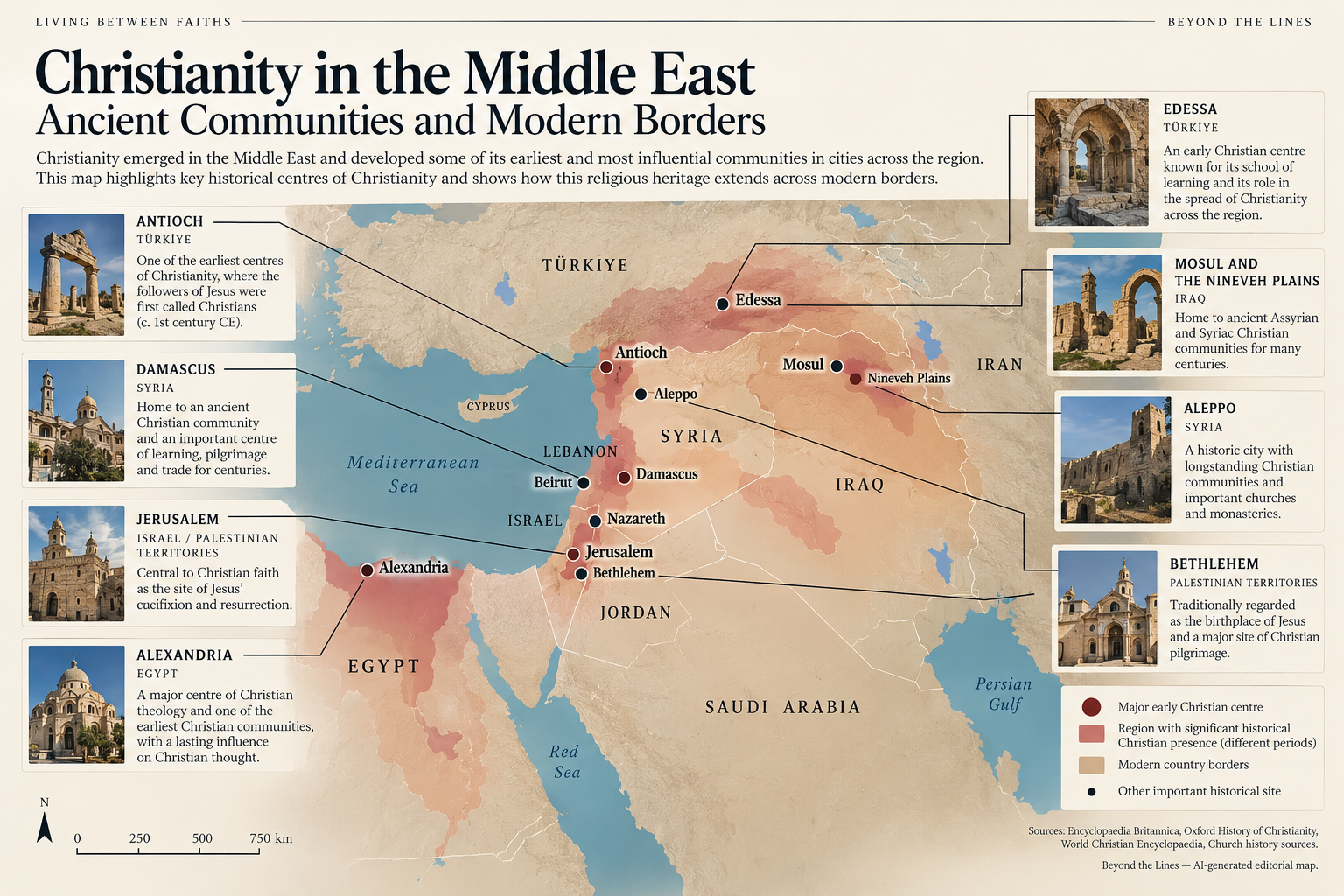
Why Are Some Christian Communities Declining?
The decline of Christian populations in parts of the Middle East is frequently discussed as evidence of religious persecution.
Persecution has undoubtedly contributed to displacement in several countries, particularly Iraq and Syria.
However, it is not the only factor.
War, economic insecurity, political instability, limited employment opportunities and established migration networks have also encouraged emigration.
In some countries, differences in birth rates between religious communities have influenced their relative demographic proportions.
Education and professional opportunities abroad can make migration particularly attractive to younger generations.
Family reunification can then sustain migration over several decades.
The resulting demographic changes may be substantial even where direct religious persecution is not the principal cause.
Reliable population statistics are also difficult to obtain.
Several countries do not publish recent detailed census information by religion.
Estimates from religious institutions, governments and research organisations may differ significantly.
For this reason, claims about the disappearance of Christianity from the Middle East require careful qualification.
Some communities have declined sharply in particular countries.
Others remain substantial or have maintained relatively stable populations.
Christianity is not disappearing uniformly across the region.
Its future is being shaped by different combinations of security, politics, economics and demographic change.
The Role of Christian Institutions in Middle Eastern Society
Christian communities have contributed to the development of Middle Eastern societies in ways extending far beyond religious worship.
Churches and religious organisations have established schools, universities, hospitals, charitable institutions and cultural centres.
Christian scholars played important roles in the translation and transmission of scientific and philosophical knowledge during the medieval period.
In modern times, Christian intellectuals contributed to Arabic literature, journalism, education and nationalist movements.
Christian educational institutions have often served students from different religious backgrounds.
Hospitals and humanitarian organisations have provided services to wider populations.
These contributions illustrate the importance of understanding religious minorities as active participants in society rather than solely as vulnerable communities.
Their institutions can also serve as bridges between religious groups.
In areas affected by conflict, some Christian organisations have participated in humanitarian assistance, reconciliation initiatives and reconstruction.
However, their ability to continue such work depends on legal protection, financial resources and the security of the communities they serve.
The Future of Christianity in Its Birthplace
The future of Christian communities in the Middle East remains uncertain.
In countries affected by war, the most immediate challenges involve security, reconstruction and the possibility of return.
Elsewhere, economic instability, political exclusion or restrictions on religious freedom may encourage further emigration.
Yet the region also contains examples of resilience.
Churches continue to operate schools and hospitals.
Religious leaders participate in interfaith initiatives.
Communities preserve ancient liturgical languages and traditions.
Younger generations are developing new ways to maintain religious identity while participating in modern societies.
The central question is not whether Christianity can survive as a historical memory.
It is whether Christian communities can continue to exist as living, secure and equal participants in the societies where their faith first emerged.
Protecting this heritage requires more than preserving churches and monasteries.
It requires safeguarding the rights of the people who worship in them.
Religious freedom, equal citizenship, effective legal institutions and economic opportunity will play decisive roles in determining whether these communities can maintain a meaningful future in their historical homelands.
The next chapter examines another profound transformation in the Middle East's religious landscape: the decline and displacement of Jewish communities across countries where they had lived for centuries.
Chapter 6 — Jewish Communities Beyond Israel
A History Older Than the Modern State of Israel
When Jewish history in the Middle East is discussed today, attention frequently turns to the State of Israel and the Israeli–Palestinian conflict.
Yet Jewish communities existed throughout the region for more than two thousand years before Israel's establishment in 1948.
From the cities of Mesopotamia to the trading centres of Yemen, the Jewish quarters of Cairo and Damascus, and the historic communities of Persia, Jewish life formed an integral part of Middle Eastern society.
These communities developed distinctive religious traditions, languages, cultural practices and institutions. Their members contributed to commerce, medicine, scholarship, literature and public administration.
Some lived in relative security for extended periods. Others experienced discrimination, restrictions, violence or forced displacement.
Their circumstances were never uniform.
During the twentieth century, however, the religious landscape changed dramatically.
Jewish populations declined sharply across much of the Arab world as hundreds of thousands of people left their countries of residence or ancestral homelands.
The causes differed between countries and historical periods. They included antisemitic violence, discriminatory legislation, government pressure, expulsions, economic uncertainty, Zionist migration and the wider political consequences of the Arab–Israeli conflict.
Some Jews migrated voluntarily, motivated by religious convictions, family connections or the opportunity to build a new life in Israel. Others fled persecution or were compelled to leave under conditions that offered little meaningful choice.
The distinction matters.
Reducing these movements to a single explanation would obscure the experiences of communities whose histories were shaped by very different political circumstances.
Today, the Jewish presence in many Middle Eastern countries has diminished to a fraction of its former size.
Yet its historical legacy remains visible in synagogues, cemeteries, religious manuscripts, architecture, music and family histories.
Understanding this transformation is essential to understanding the Middle East itself.
Iraq: The End of a Two-Thousand-Year Jewish Presence
Few Jewish communities had deeper historical roots in the Middle East than the Jews of Iraq.
Their history is traditionally traced to the Babylonian exile in the sixth century BCE, when the Babylonian Empire conquered Judah and deported part of its population.
Over subsequent centuries, Jewish communities became firmly established in Mesopotamia.
Babylonia developed into one of the most important centres of Jewish religious scholarship.
The Babylonian Talmud, compiled and developed over several centuries, became a foundational text of rabbinic Judaism.
Jewish academies in Sura and Pumbedita played a central role in religious interpretation and the transmission of Jewish law.
Under successive Persian, Islamic and Ottoman governments, Iraqi Jews experienced changing political circumstances.
At various times, they participated prominently in trade, finance, medicine and administration.
Baghdad became particularly important.
During the nineteenth and early twentieth centuries, Jewish merchants maintained commercial networks extending across the Middle East, India and beyond.
Jewish schools, synagogues and communal institutions formed part of the city's social and cultural landscape.
The community also produced influential religious scholars, writers and musicians.
By the early twentieth century, Jews represented a significant part of Baghdad's population.
Their presence was not peripheral to Iraqi society.
It was woven into the country's urban history.
The Farhud of 1941
A decisive turning point occurred in June 1941.
During a period of political instability following the collapse of a pro-Axis Iraqi government, anti-Jewish violence erupted in Baghdad.
The attacks became known as the Farhud, an Arabic term commonly associated with violent dispossession.
Jewish homes and businesses were attacked, property was looted and civilians were killed.
Historical accounts differ on the precise death toll, but the violence left approximately 180 Jews dead according to a widely cited estimate, alongside hundreds injured.
The Farhud profoundly affected the community's sense of security.
Although Jewish life continued in Iraq afterwards, the attacks demonstrated how political instability and antisemitic mobilisation could threaten a longstanding minority population.
The events also became an important part of the collective memory of Iraqi Jews.
The Exodus of 1950–1951
The establishment of Israel in 1948 and the subsequent Arab–Israeli war intensified political tensions across the region.
In Iraq, Jews faced increasing suspicion, restrictions and insecurity.
The Iraqi government introduced measures affecting Jewish employment, property and citizenship.
In 1950, legislation permitted Jews to relinquish Iraqi nationality and leave the country.
Further measures restricted their ability to retain assets.
During 1950–1951, approximately 120,000 Iraqi Jews emigrated, most travelling to Israel through the airlift commonly known as Operation Ezra and Nehemiah.
The movement involved a combination of factors, including fear, political pressure, Zionist organisation and the opportunity to migrate.
For many families, the decision was shaped by the deterioration of their position in Iraqi society.
The departure transformed the country's religious composition.
A community that had existed for more than two millennia was reduced dramatically within a short period.
Smaller numbers of Jews remained in Iraq, but subsequent political developments encouraged further emigration.
Today, only a very small Jewish presence remains.
The history of Iraqi Jewry illustrates how quickly a deeply rooted religious community can decline when political conflict and state policies undermine its security.
Egypt: From Cosmopolitan Communities to Mass Departure
Jewish communities also formed an important part of Egyptian history.
Their presence extended across different historical periods, including ancient, medieval and modern Egypt.
Cairo and Alexandria became significant centres of Jewish religious, commercial and cultural life.
During the nineteenth and early twentieth centuries, Egypt attracted Jewish migrants from various parts of the Ottoman Empire, Europe and the Mediterranean.
The resulting communities were diverse.
Some families spoke Arabic as their principal language, while others used French, Italian, Ladino or additional languages.
Jewish Egyptians participated in banking, commerce, journalism, entertainment and professional life.
Synagogues and schools reflected the community's religious and cultural diversity.
However, the political environment changed significantly during the twentieth century.
Nationalism, War and Political Suspicion
The rise of Egyptian nationalism, growing tensions over Zionism and the Arab–Israeli conflict affected the position of Jewish communities.
Anti-Jewish violence occurred during the 1940s, including attacks on Jewish neighbourhoods and institutions.
Following the establishment of Israel and the 1948 war, some Jews faced arrest, restrictions or pressure to leave.
The situation deteriorated further during the Suez Crisis of 1956.
Egyptian authorities expelled some Jewish residents, while others left amid asset seizures, detention, loss of employment and political insecurity.
The experiences of individuals varied.
Some departures were directly forced. Others occurred under conditions in which remaining had become increasingly difficult.
By the following decades, Egypt's once-substantial Jewish population had declined dramatically.
Today, only a very small number of Jews remain in the country.
Several historic synagogues and Jewish heritage sites have been restored or preserved, including the Ben Ezra Synagogue in Cairo.
Such projects can help protect historical memory.
However, the preservation of buildings cannot fully replace the communal life that once surrounded them.
The story of Egyptian Jewry is therefore both a history of cultural contribution and an example of the profound consequences of political upheaval.
Yemen: An Ancient Community and a Distinct Religious Tradition
Yemenite Jewish communities developed distinctive religious and cultural traditions over many centuries.
The precise origins of Jewish settlement in Yemen remain historically debated, but Jewish communities were firmly established there long before the modern period.
Their religious practices preserved distinctive forms of Hebrew pronunciation, liturgy and biblical interpretation.
Yemenite Jewish craftsmanship, poetry, music and religious scholarship became important elements of Jewish cultural heritage.
Many Jews lived in towns and villages alongside Muslim populations.
Their experiences varied according to local rulers, economic circumstances and political conditions.
Under some historical systems, Jews occupied a subordinate legal position and faced restrictions associated with their status as non-Muslims.
At other times, communities maintained established economic relationships and forms of local coexistence.
Operation Magic Carpet
During the late 1940s, insecurity and political developments encouraged large-scale Jewish migration from Yemen and the neighbouring British-controlled Aden Protectorate.
Anti-Jewish violence in Aden in 1947 intensified fears within parts of the community.
Between 1949 and 1950, an airlift commonly known as Operation Magic Carpet transported approximately 49,000 Jews from Yemen and the Aden region to Israel.
The operation became one of the most significant population movements in the early history of the Israeli state.
For many participants, migration represented a religious aspiration and an opportunity to establish a new life.
For others, insecurity, political pressure and worsening conditions played important roles.
The movement also created considerable challenges.
Many Yemenite Jews encountered poverty, difficult living conditions and discrimination during their early years in Israel.
Controversies surrounding the disappearance of children from Yemenite and other immigrant families remain a painful part of Israeli social history.
The Yemenite Jewish experience therefore cannot be understood solely through the narrative of rescue.
It also involves questions of integration, inequality and the treatment of immigrant communities.
The Final Decades
Small Jewish communities remained in Yemen after the major airlift.
However, political instability, discrimination and security threats continued to affect their circumstances.
During the twenty-first century, the conflict involving the Houthi movement and other armed actors created additional dangers.
Jewish families reported intimidation and pressure, while international organisations and governments helped facilitate some departures.
By the 2020s, Yemen's remaining Jewish population had become extremely small.
The near-disappearance of this ancient community represents a major cultural and historical transformation.
Syria: Jewish Life in Damascus and Aleppo
Syria was historically home to important Jewish communities, particularly in Damascus and Aleppo.
Jewish life in these cities extended across many centuries.
The communities developed distinctive religious traditions, commercial networks and institutions.
Aleppo became especially significant for Jewish scholarship and the preservation of biblical manuscripts.
The Aleppo Codex, a medieval Hebrew Bible manuscript associated with the city's Jewish community for centuries, remains one of the most important surviving witnesses to the Masoretic biblical text.
Syrian Jewish merchants also maintained connections with communities elsewhere in the Middle East, Europe and the Americas.
During the twentieth century, political conditions changed dramatically.
Following the United Nations partition proposal of 1947 and the outbreak of regional conflict, anti-Jewish violence occurred in parts of Syria.
In Aleppo, attacks damaged Jewish property and contributed to insecurity.
Restrictions on emigration and other aspects of Jewish life subsequently affected the community.
Some Jews left clandestinely, while others remained under difficult conditions.
During the early 1990s, the Syrian government relaxed restrictions on Jewish emigration.
Large numbers subsequently departed, many settling in the United States or Israel.
Today, Syria's historic Jewish communities have largely disappeared as functioning population centres.
Their heritage survives through religious institutions, manuscripts, family histories and diaspora communities.
The Syrian case illustrates how political restrictions can contribute to demographic decline even when departure occurs over several decades rather than through one single event.
Iran: A Jewish Community That Remains
Iran presents a different historical and contemporary picture.
Jewish communities have lived in Persia for more than two thousand years.
Their history is connected to the ancient Persian Empire and the wider Jewish diaspora.
Persian Jewish traditions developed through centuries of interaction with Iranian language, literature and culture.
Jewish communities became established in cities including Tehran, Isfahan, Shiraz and Hamadan.
Their members contributed to trade, medicine, craftsmanship and other areas of society.
The twentieth century brought significant political change.
Under the Pahlavi monarchy, many Iranian Jews experienced improved opportunities in education and economic life, although social prejudice and inequality did not disappear.
The Iranian Revolution of 1979 created a new political environment.
Large numbers of Iranian Jews emigrated during and after the revolution.
Some settled in Israel, while others moved to the United States and Europe.
Nevertheless, Iran continues to have an established Jewish minority.
Recognition and Restriction
Iran's constitution recognises Judaism as one of the country's official minority religions.
The Jewish community has a reserved seat in the Iranian parliament.
Synagogues and Jewish religious institutions continue to operate.
However, constitutional recognition does not mean complete equality.
Iran's political system imposes restrictions on religious minorities, and Jewish citizens live within a state whose leadership has repeatedly expressed hostility towards Israel.
It is important to distinguish between the Iranian Jewish community and the policies of the Israeli government.
Iranian Jews are citizens of Iran and do not constitute a political extension of Israel.
Their experiences also differ from those of Bahá'ís, who lack comparable constitutional recognition and face more extensive institutional persecution.
Iran demonstrates that Jewish communal life continues outside Israel, even under political conditions that create significant tensions and limitations.
Morocco and North Africa: A Broader Regional Heritage
Although Morocco is geographically part of North Africa rather than the Middle East in its narrower definition, its Jewish history is closely connected to the wider religious landscape of the Middle East and North Africa.
Jewish communities lived in Morocco for many centuries.
Their population was shaped by local history and by the arrival of Jews expelled from Spain and Portugal during the late fifteenth century.
Moroccan Jewish traditions developed distinctive forms of religious scholarship, music, cuisine and communal organisation.
During the twentieth century, Morocco had one of the largest Jewish populations in the Arab world.
Following Israel's establishment in 1948, migration increased.
The causes included Zionist activity, economic opportunities, political uncertainty and concerns about the future.
Large numbers of Moroccan Jews moved to Israel, France, Canada and elsewhere.
Morocco's Jewish population subsequently declined dramatically.
However, the country has maintained a visible commitment to aspects of Jewish heritage preservation.
Historic synagogues, cemeteries and cultural sites have received official attention.
Moroccan Jewish history is also recognised within the country's broader national heritage.
These developments distinguish Morocco from some other countries where Jewish communal institutions have largely disappeared.
Nevertheless, the preservation of heritage should be distinguished from the continued existence of a substantial resident Jewish population.
Were Middle Eastern Jews Refugees?
The departure of Jews from Arab and other Middle Eastern countries raises important questions about displacement, migration and historical responsibility.
Many Jews left under circumstances involving persecution, violence, discrimination, confiscation of property or direct expulsion.
Others migrated through organised Zionist movements or for religious, economic and family reasons.
In some cases, these factors overlapped.
The term Jewish refugees from Arab countries is widely used in political and historical discussions, particularly in Israel and among organisations representing Jews from the region.
However, the legal and historical circumstances differed between individuals and countries.
Not every Jewish migrant was formally recognised as a refugee, and not every departure occurred under identical conditions.
A careful historical account must therefore distinguish between documented expulsions, coercive state policies, flight from violence and migration undertaken under less immediate pressure.
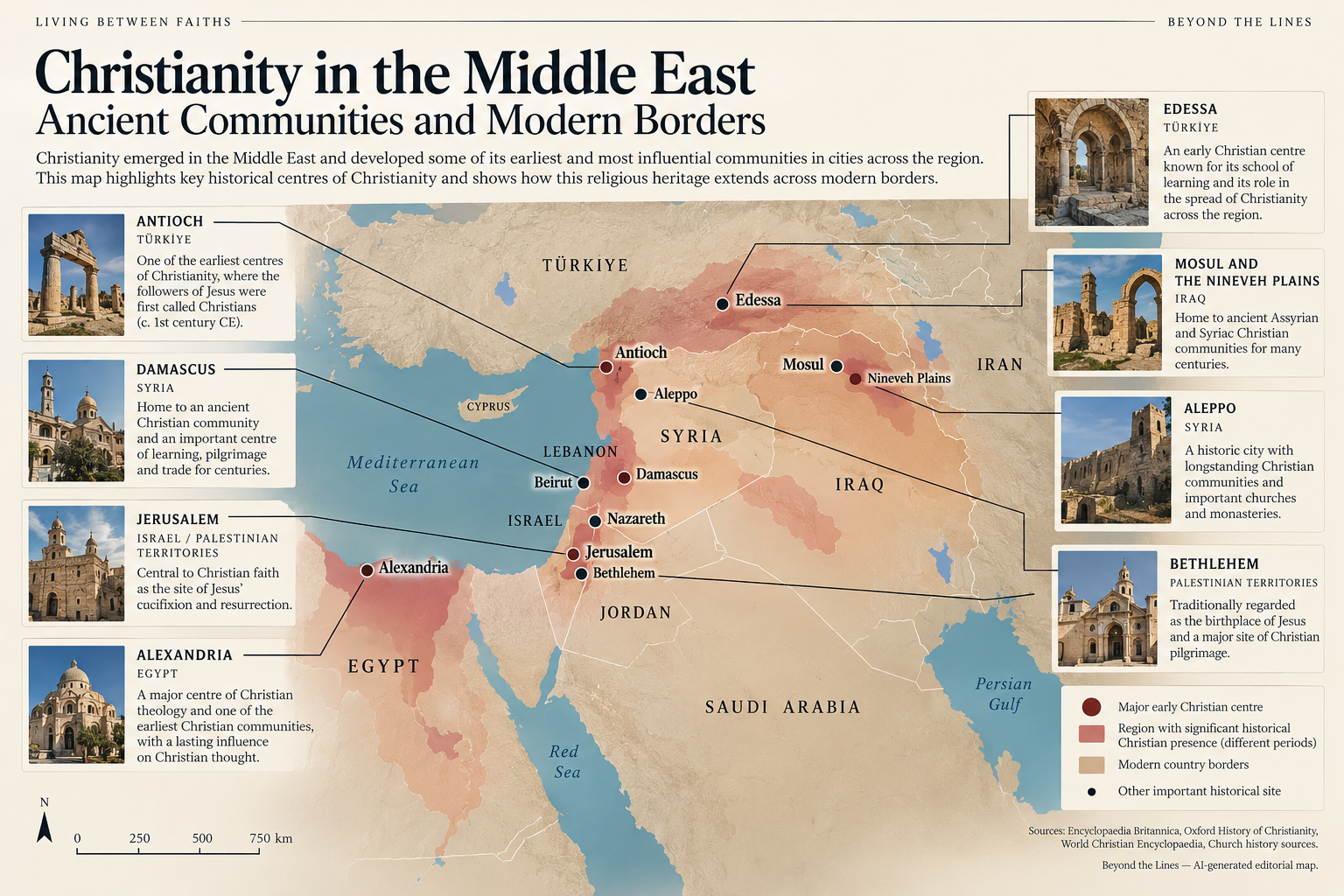
The Question of Property and Compensation
Many departing Jewish families lost homes, businesses, land or other assets.
In some countries, governments introduced measures that restricted property ownership or prevented emigrants from transferring wealth.
Claims concerning lost property remain part of historical and political debates.
Organisations representing Jews from Arab countries have called for recognition of displacement and, in some cases, compensation.
The issue is sometimes raised alongside Palestinian refugee claims arising from the 1948 war and subsequent conflicts.
Both histories involve substantial displacement and unresolved questions of property and rights.
However, they are distinct historical experiences.
Recognition of the suffering of one population should not depend on denying or diminishing the suffering of another.
Nor should the rights of individual refugees be treated as automatically cancelling one another out.
A credible examination of displacement requires attention to the circumstances, legal claims and historical experiences of each affected population.
Jewish Identity Beyond National Borders
The history of Middle Eastern Jewish communities also challenges the assumption that Jewish identity is culturally uniform.
Jewish populations developed diverse traditions shaped by language, geography and historical experience.
The term Mizrahi is commonly used in Israel to describe Jews with family origins in the Middle East and parts of North Africa.
However, the term encompasses communities with distinct histories and traditions.
Some Jews identify more specifically as Iraqi, Yemenite, Persian, Moroccan, Syrian or Egyptian Jews.
The term Sephardi historically refers to Jews associated with the Iberian Peninsula and their descendants, although it is also used more broadly in certain religious and cultural contexts.
These categories overlap in some settings but are not interchangeable.
Middle Eastern Jewish communities preserved forms of Arabic, Persian, Aramaic and other languages.
Their music, literature, cuisine and religious customs reflected centuries of interaction with surrounding societies.
Following migration to Israel and other countries, these traditions continued to evolve.
Some families maintained strong connections to the languages and customs of their countries of origin.
Others experienced pressure to assimilate into new national cultures.
The preservation of Mizrahi and Sephardi heritage has become an important part of cultural and historical discussion within Israel and the wider Jewish diaspora.
These histories demonstrate that Jewish identity is both a religious tradition and a collection of diverse cultural experiences.
The Preservation of Jewish Heritage
Across the Middle East, former Jewish neighbourhoods, synagogues, cemeteries and religious manuscripts remain important witnesses to the region's history.
Some sites have been restored.
Others have suffered neglect, damage or destruction.
The preservation of Jewish heritage raises practical and ethical questions.
Who is responsible for protecting religious sites when the communities that once used them have largely disappeared?
How should historical buildings be maintained when ownership records are incomplete or disputed?
What role should diaspora communities play in decisions about restoration and access?
And how can governments preserve Jewish heritage without reducing it to a symbolic representation of a community that no longer has a substantial presence?
These questions are particularly relevant in countries where political relations with Israel remain hostile.
Jewish heritage is part of the history of those countries, regardless of contemporary diplomatic disputes.
Protecting synagogues, archives and cemeteries does not require agreement with the policies of the Israeli government.
It requires recognition that Jewish communities contributed to the development of Middle Eastern societies over many centuries.
Historical preservation can also provide opportunities for education and dialogue.
However, it cannot substitute for the protection of living religious minorities.
What the Disappearance of Communities Means
The decline of Jewish populations across much of the Middle East represents one of the region's most significant demographic transformations of the twentieth century.
Its consequences extend beyond population statistics.
Cities lost religious institutions, commercial networks, languages and cultural traditions that had developed over generations.
Neighbourhoods once associated with Jewish life changed character.
Families became dispersed across continents.
For many descendants, the countries their parents or grandparents left remain important parts of their identity.
Some preserve memories of coexistence and cultural exchange.
Others remember persecution, insecurity and loss.
Both experiences form part of the historical record.
The departure of Jewish communities also provides a broader lesson about religious diversity.
A minority population can contribute to a society for centuries and still become vulnerable when political conditions change.
Historical roots alone do not guarantee protection.
The security of religious communities depends on the willingness of governments and societies to uphold equal citizenship, prevent discrimination and resist the political mobilisation of religious hostility.
Remembering a Shared Past
Jewish history in the Middle East cannot be separated from the histories of Muslim, Christian and other communities.
For centuries, their lives intersected through trade, language, scholarship, neighbourhoods and political institutions.
These relationships were not always peaceful or equal.
They included periods of cooperation alongside discrimination, violence and exclusion.
The twentieth century brought changes that profoundly altered this shared landscape.
In many countries, Jewish communities that had existed for generations became dramatically smaller or disappeared almost entirely.
Their histories remain important not only to Jewish families and diaspora communities, but also to the countries where they once lived.
Acknowledging this past requires historical precision.
It means recognising persecution and forced displacement where the evidence supports those conclusions.
It also means acknowledging the diversity of individual experiences and avoiding explanations that reduce complex population movements to a single political narrative.
The history of Jewish communities beyond Israel is ultimately a history of belonging, cultural exchange, insecurity and transformation.
It reminds us that religious diversity is not guaranteed by geography or tradition.
It must be protected through law, political responsibility and respect for the rights of individuals.
The next chapter examines Islam's internal diversity and the different ways Muslim-majority societies have approached religious freedom, minority rights and political authority.
Chapter 7 — Islam and Religious Diversity
One Religion, Many Traditions
Islam is the majority religion across much of the Middle East, but the region's Muslim populations are far from uniform.
Differences in religious interpretation, historical experience, language, ethnicity and political identity have produced a wide variety of Islamic traditions.
Sunni and Shia Islam represent the two largest branches, yet each encompasses different schools of thought, religious authorities and cultural practices. Sufi traditions, reform movements and smaller religious communities add further complexity.
These distinctions are not merely theological. In certain countries, religious affiliation influences political representation, legal rights and relationships with state institutions.
In others, sectarian identity plays a less prominent role in everyday life.
According to research published by the Pew Research Center in June 2025, Muslims represented approximately 94 per cent of the population of the Middle East and North Africa in 2020.
However, this demographic majority does not imply a single interpretation of Islam or a uniform relationship between religion and government.
The political systems of Saudi Arabia, Iran, Iraq, Lebanon, Jordan and the United Arab Emirates differ substantially.
So do the experiences of their Muslim citizens.
Understanding religious diversity in the Middle East therefore requires looking beyond the division between Muslims and non-Muslims.
It also means examining how Muslim communities relate to one another, how religious authority is exercised and whether individuals are free to interpret, practise or leave their faith.
Sunni and Shia Islam: The Origins of a Historical Division
The division between Sunni and Shia Islam began with disagreements over leadership following the death of the Prophet Muhammad in 632 CE.
The central question concerned who should lead the Muslim community.
Those whose position developed into Sunni Islam accepted the legitimacy of the early caliphs, beginning with Abu Bakr.
Those whose position developed into Shia Islam regarded Ali ibn Abi Talib, Muhammad's cousin and son-in-law, as possessing a particular claim to leadership.
Over time, these political disagreements developed into more extensive differences concerning religious authority, theology, law and communal identity.
Sunni Islam became the largest branch of the religion.
Shia Islam developed its own religious institutions and traditions, including particular understandings of the authority of the Prophet's family and, in several branches, the role of the imams.
The events surrounding the death of Husayn ibn Ali, the Prophet's grandson, at Karbala in 680 CE became especially significant in Shia religious memory.
His death is commemorated during Ashura, a period associated with mourning, sacrifice and resistance to injustice.
For many Shia Muslims, Karbala represents a defining moment in the relationship between religious conviction and political authority.
However, Sunni and Shia Islam also share fundamental beliefs.
Both recognise the Qur'an as sacred scripture, affirm belief in one God and regard Muhammad as God's messenger.
Their followers practise prayer, fasting, charity and other central religious obligations, although some rituals and legal interpretations differ.
The existence of theological disagreement should not be confused with an inevitable state of hostility.
Sunni and Shia communities have lived alongside one another for centuries, sometimes peacefully and sometimes amid political or sectarian conflict.
Their relationships have been shaped by historical circumstances rather than religious doctrine alone.
Religious Authority Within Sunni Islam
Sunni Islam does not have a single worldwide religious authority comparable to the central leadership structure of the Roman Catholic Church.
Instead, religious scholarship has historically developed through networks of scholars, educational institutions and schools of Islamic jurisprudence.
Four major Sunni schools of law became especially influential: Hanafi, Maliki, Shafi'i and Hanbali.
Each developed methods for interpreting Islamic legal sources.
Their differences concern matters such as legal reasoning, religious practice and the interpretation of particular texts.
These schools should not be understood as separate religions.
They are traditions within Sunni Islam.
The Hanafi school became influential in territories governed by the Ottoman Empire and remains important in several Muslim-majority countries.
The Maliki school is particularly associated with North and parts of West Africa.
The Shafi'i school has a significant historical presence in parts of the Middle East, East Africa and Southeast Asia.
The Hanbali school is closely associated with important elements of Saudi Arabia's religious and legal history.
However, the relationship between a legal school and a country's political system is not fixed.
Governments may draw selectively on religious interpretations, introduce legislation through state institutions or combine Islamic legal principles with other legal traditions.
The diversity of Sunni jurisprudence demonstrates that Islamic law has never been interpreted through one universally accepted institutional framework.
It also raises a contemporary question: who has the authority to determine which interpretations should become enforceable state law?
Shia Islam: Diversity Within a Minority Tradition
Shia Islam is itself internally diverse.
Twelver Shia Islam is the largest Shia branch and predominates in Iran. It also has a substantial presence in Iraq, Lebanon and other countries.
Twelver theology recognises a succession of twelve imams, the last of whom is believed to be in occultation and expected to return.
Religious scholars have developed different understandings of their authority during the imam's absence.
In Iran, the Islamic Republic's political system incorporates the doctrine of velayat-e faqih, commonly translated as the guardianship of the Islamic jurist.
This gives a senior religious jurist a central role in the state's political structure.
However, this model is not accepted by all Shia scholars.
In Iraq, the religious establishment associated with Najaf has historically developed approaches to religious authority that differ in important respects from the Iranian model.
Prominent Iraqi Shia clerics have often emphasised the role of religious guidance without necessarily endorsing direct clerical government.
Other branches of Shia Islam include Ismaili and Zaydi traditions.
Ismaili communities maintain distinctive religious institutions and interpretations.
Zaydi Islam has historical roots in Yemen and differs in important theological and legal respects from Twelver Shia Islam.
The Houthi movement emerged from a Zaydi revivalist and political environment in northern Yemen, but its ideology and military activities should not be treated as representative of all Zaydis.
These distinctions matter because political movements frequently claim religious legitimacy.
Such claims do not establish that they speak for everyone belonging to the tradition they invoke.
Sufism: Spiritual Traditions Across Islamic Communities
Sufism refers to a broad range of Islamic spiritual and devotional traditions.
It is often associated with the pursuit of spiritual purification, remembrance of God, religious discipline and the guidance of teachers.
Sufi practices developed across different periods and regions.
Some communities organised themselves into religious orders, commonly known as tariqas.
Others maintained less formal relationships between teachers and followers.
Sufi traditions have influenced poetry, music, philosophy, architecture and religious practice throughout the Islamic world.
Important historical figures include the Persian-language poet Jalal al-Din Rumi and the theologian Abu Hamid al-Ghazali.
Sufism is not necessarily a separate branch alongside Sunni and Shia Islam.
Many Sufis identify as Sunni or Shia Muslims.
Their devotional practices may include forms of collective remembrance, spiritual instruction and visits to religious shrines.
However, some Islamic reform movements reject particular Sufi practices, especially those involving the veneration of saints or visits to tombs.
These disagreements have sometimes produced theological disputes and, in certain settings, persecution.
Extremist organisations have attacked Sufi shrines and worshippers, claiming that their practices violate Islamic principles.
Such violence demonstrates that religious intolerance can occur within a majority religious tradition, not only between different religions.
Iran: When One Interpretation Becomes State Authority
Iran provides one of the clearest examples of a modern political system in which a particular interpretation of Islam is incorporated into the structure of government.
Following the 1979 revolution, Iran became an Islamic republic.
Its constitution established institutions combining electoral mechanisms with religious oversight.
The Supreme Leader occupies a central position within this system.
The state formally recognises Twelver Shia Islam as its official religion.
Although Iran recognises certain religious minorities, including Jews, Christians and Zoroastrians, the legal and political position of other groups is considerably more restricted.
Sunni Muslims, despite belonging to one of Islam's two principal branches, have also reported discrimination and limitations affecting religious institutions.
Human rights organisations have documented restrictions involving Sunni religious leaders and communities, particularly in regions associated with ethnic minorities.
Religious freedom concerns extend to Shia Muslims who disagree with the government's interpretation of Islam.
Dissenting clerics, religious reformers and other critics have faced state pressure.
Women and girls have also been subjected to restrictions enforced through the state's religiously grounded laws, including compulsory dress requirements.
The United States Commission on International Religious Freedom reported in its 2026 annual assessment that Iran continued to impose severe restrictions on religious freedom during 2025.
Its findings included persecution of religious minorities and individuals whose beliefs or practices differed from those endorsed by the authorities.
Iranian officials have defended aspects of the country's legal and political system as expressions of Islamic governance and national sovereignty.
However, international human rights standards distinguish between a state's religious identity and its obligation to protect freedom of thought, conscience and religion.
The Iranian example demonstrates how religious authority can become closely connected to political power.
It also illustrates why the rights of religious minorities cannot be assessed solely by whether they belong to Islam or another religion.
Saudi Arabia: Religious Tradition and Political Reform
Saudi Arabia represents a different relationship between Islam and state authority.
The country's political and religious history is closely connected to an alliance between the ruling Al Saud family and a Sunni reform movement associated with Muhammad ibn Abd al-Wahhab in the eighteenth century.
This movement emphasised strict monotheism and criticised religious practices it regarded as innovations.
Its influence became particularly significant within the religious institutions of the modern Saudi state.
For much of the twentieth century, religious authorities exercised substantial influence over education, public morality and aspects of the legal system.
In recent years, Saudi Arabia has introduced major social and administrative reforms.
The government has reduced the powers of the religious police, expanded certain opportunities for women and promoted entertainment, tourism and economic diversification.
These developments have transformed aspects of public life.
However, social liberalisation should not automatically be equated with full religious freedom.
Saudi Arabia continues to restrict public non-Muslim worship and religious expression outside officially permitted boundaries.
Shia Muslim citizens have also experienced discrimination and restrictions, particularly in areas where their communities are concentrated.
The government maintains that its policies protect public order and reflect the country's religious and social framework.
International religious freedom organisations have continued to criticise restrictions on religious expression and the limited protection available to dissenting beliefs.
Saudi Arabia therefore illustrates an important distinction.
A government may introduce significant social reforms while maintaining extensive control over religious institutions and public religious activity.
Iraq: Religious Diversity After Sectarian Conflict
Iraq offers a different example of the relationship between Islamic identity and political authority.
Its population includes substantial Shia and Sunni Muslim communities, alongside Christians, Yazidis, Mandaeans and other groups.
Following the overthrow of Saddam Hussein in 2003, Iraq underwent a profound political transformation.
New political arrangements sought to represent communities that had experienced different forms of exclusion and repression.
However, the collapse of state institutions, armed insurgency and competition for political power contributed to severe instability.
Sectarian identity became increasingly important in political mobilisation.
Armed groups targeted civilians because of their perceived religious affiliation.
Sunni and Shia neighbourhoods experienced attacks, displacement and retaliatory violence.
The Islamic State subsequently exploited political grievances and insecurity, particularly in Sunni-majority areas.
Its campaign involved atrocities against Sunni Muslims who opposed it, as well as systematic persecution of Shia Muslims, Christians, Yazidis and other communities.
The territorial defeat of ISIS did not resolve Iraq's broader political challenges.
Armed organisations, corruption, weak institutions and disputes over political representation continue to affect governance.
Nevertheless, Iraq's experience also demonstrates that religious affiliation does not determine political allegiance.
Shia political movements disagree with one another.
Sunni communities contain diverse political perspectives.
Many Iraqis have supported movements calling for reform, accountability and public services rather than sectarian power-sharing.
The country's future depends in part on whether citizenship and public institutions can become stronger foundations for political participation than communal affiliation.
Lebanon: Muslim Diversity Within a Confessional State
Lebanon's political system provides formal representation for several religious communities.
Sunni and Shia Muslims occupy important positions within its political structure.
The prime ministership is conventionally reserved for a Sunni Muslim, while the speakership of parliament is reserved for a Shia Muslim.
The presidency is reserved for a Maronite Christian.
Druze and other communities also participate in the country's political institutions.
This system was designed to balance political power among different groups.
However, it also institutionalises religious identity within government.
Political competition can therefore become closely associated with communal affiliation.
Hezbollah, a Shia Islamist political and armed organisation, has played a major role in Lebanese politics and regional conflict.
Its political positions and military activities have generated substantial domestic and international controversy.
Hezbollah does not represent all Lebanese Shia Muslims.
Other Shia political actors and independent voices hold different views concerning the organisation, the Lebanese state and the country's relationship with Iran.
Similarly, Sunni Muslims in Lebanon do not constitute a single political movement.
Their political affiliations reflect regional, economic and ideological differences.
Lebanon's experience illustrates how religious diversity can be recognised institutionally while political competition remains shaped by sectarian structures.
The challenge is whether communal representation can coexist with accountable government and equal citizenship.
When Muslims Become Religious Minorities
Discussions of religious persecution in the Middle East often focus on Christians, Jews, Yazidis and other non-Muslim communities.
However, Muslim minorities can also experience discrimination or violence because of their religious identity.
In predominantly Sunni countries, Shia communities may face restrictions, political exclusion or sectarian hostility.
In Shia-majority Iran, Sunni communities have reported discrimination and limitations affecting religious institutions.
Smaller Islamic movements and traditions may also encounter official restrictions or social hostility.
The treatment of Ahmadi Muslims provides a particularly significant example, although their largest communities and the most prominent legal restrictions affecting them are found outside the Middle East, especially in Pakistan.
Ahmadis identify as Muslims, but their beliefs concerning religious authority and prophethood differ from those accepted by many Sunni and Shia institutions.
In Pakistan, legislation explicitly restricts Ahmadis from identifying or presenting themselves publicly as Muslims in specified contexts.
The Pakistani case demonstrates how governments can use legal definitions of religious identity to restrict freedom of belief.
Within the Middle East, similar questions arise when authorities decide which religious interpretations are legitimate.
The central issue is not whether a government agrees with a particular theological position.
It is whether individuals can hold and practise their beliefs without discrimination or coercion.
Religious Conversion and the Right to Leave a Faith
One of the most sensitive questions surrounding religious freedom in Muslim-majority societies concerns conversion.
Islamic legal traditions have historically developed different interpretations of apostasy, commonly understood as leaving Islam.
Classical jurists often treated apostasy as a serious religious and legal matter.
However, contemporary Muslim scholars disagree over how historical legal doctrines should be understood and whether they have any legitimate place in modern state law.
Some argue that religious belief must be based on individual conviction and that coercion contradicts fundamental Islamic principles.
Others defend more restrictive interpretations.
The legal treatment of conversion differs between countries.
Some states impose criminal penalties for certain forms of religious expression or apostasy.
Others do not criminalise conversion directly but maintain personal-status systems that create difficulties involving marriage, inheritance, custody or official registration.
Social consequences may also be significant.
Individuals who change religion can face family rejection, community pressure or threats, even where the state does not explicitly prohibit conversion.
These issues affect people moving between religions as well as those who no longer identify with any religion.
Under Article 18 of the International Covenant on Civil and Political Rights, freedom of thought, conscience and religion includes the freedom to have or adopt a religion or belief of one's choice.
The United Nations Human Rights Committee has clarified that this protection includes the right to replace one's current religion or belief with another, or to adopt atheistic views.
The right also protects individuals who choose not to profess a religion.
This international standard provides an important framework for assessing restrictions on conversion and religious identity.
Religious freedom cannot be fully protected if individuals are permitted to practise only the religion assigned to them at birth.
Women, Religious Interpretation and Legal Rights
The relationship between Islam and women's rights is frequently discussed through broad generalisations.
Such approaches overlook significant differences between religious interpretations, legal systems and social circumstances.
Muslim women participate in education, politics, business, religious scholarship and civil society across the Middle East.
Their experiences vary substantially between countries and communities.
In some states, family law incorporates interpretations of Islamic jurisprudence that distinguish between men and women in matters such as marriage, divorce, inheritance and guardianship.
Elsewhere, legal reforms have altered traditional arrangements or expanded women's rights.
Muslim scholars and activists have also developed interpretations of Islamic sources that emphasise equality, justice and women's autonomy.
Others defend more traditional legal frameworks.
These disagreements are part of ongoing debates within Muslim societies.
They should not be presented as a simple confrontation between religion and modernity.
Political institutions, economic conditions, education and cultural expectations all influence women's opportunities.
At the same time, governments cannot avoid scrutiny of discriminatory laws by describing them solely as religious traditions.
International human rights standards require equal protection and prohibit discrimination.
The relevant question is whether women can exercise their rights in practice, including the ability to make decisions concerning education, employment, marriage and religious belief.
Religious Identity and Political Power
Throughout the modern Middle East, governments and political movements have used religious language to establish legitimacy, mobilise supporters or define national identity.
This relationship is not unique to Islam.
Religious institutions and identities have influenced political authority across many societies and historical periods.
However, the close relationship between religion and government can create particular challenges when one interpretation receives official protection.
Religious minorities may find their rights dependent on political approval.
Dissenting members of the majority religion may face accusations of disloyalty or religious deviation.
Political opponents may be portrayed as enemies of religion rather than participants in legitimate public debate.
Such dynamics can weaken the distinction between religious disagreement and political opposition.
They can also make reform more difficult.
When legal or administrative policies are presented as religiously unquestionable, criticism may be treated as an attack on faith itself.
Yet Muslim-majority societies have developed different approaches to these questions.
Some maintain strong religious institutions within government.
Others combine Islamic constitutional references with secular legal systems.
Still others have pursued reforms intended to separate aspects of religious authority from state administration.
There is no single political model that represents all Muslim societies.
The diversity of these arrangements is essential to understanding the relationship between Islam and religious freedom.
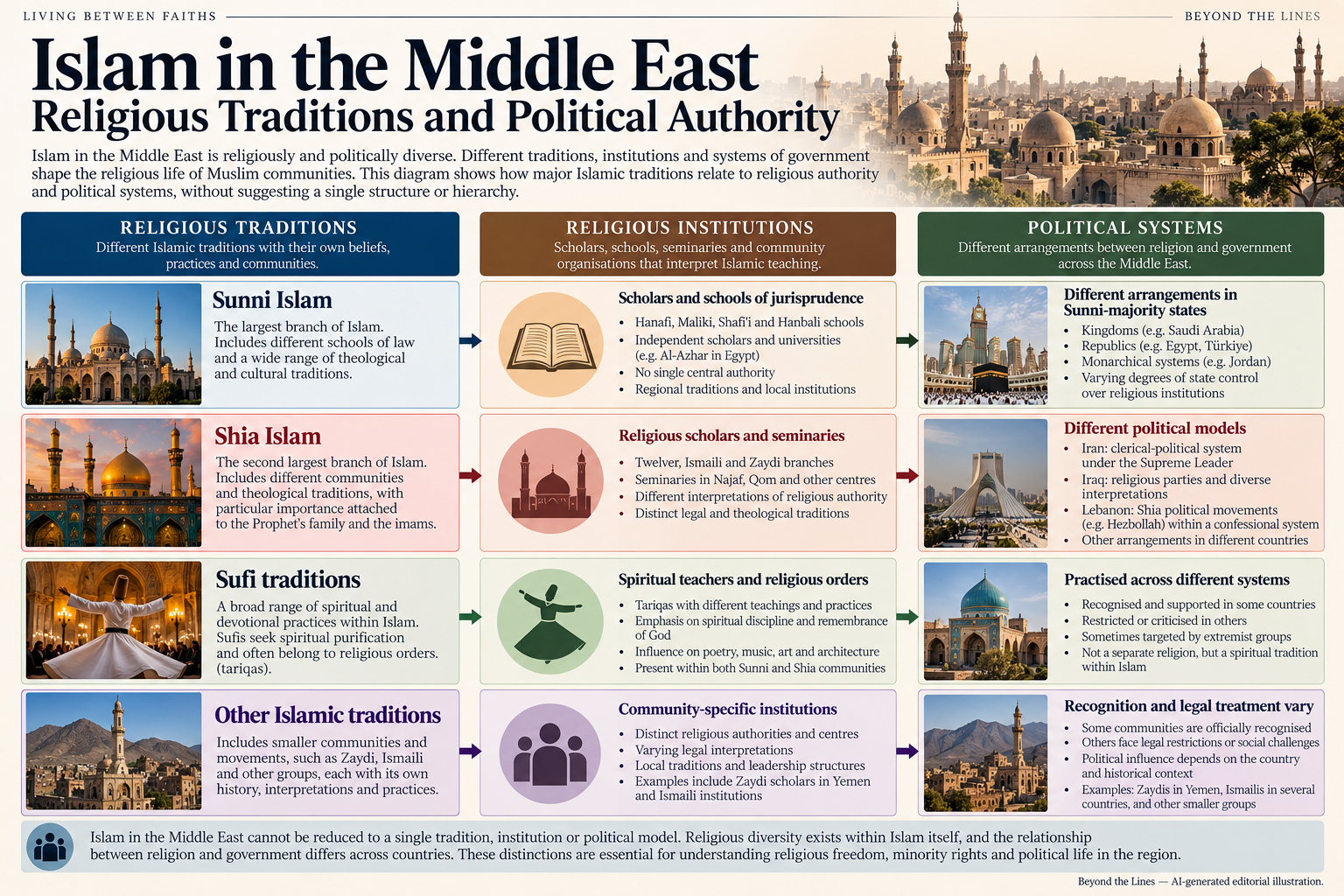
Coexistence Within Islam
Despite recurring sectarian tensions, Sunni and Shia Muslims have also maintained long histories of coexistence.
In Iraq, Lebanon and other countries, members of different Islamic traditions have lived in neighbouring communities, participated in shared economic life and maintained social relationships.
Families, professional networks and civic organisations can cross sectarian boundaries.
Religious scholars have also participated in initiatives intended to reduce hostility and recognise shared beliefs.
Such efforts are important because sectarian divisions can become more pronounced during periods of political instability.
Research by the Pew Research Center has shown that Muslim attitudes towards different Islamic traditions vary substantially between countries.
Its 2012 survey found particularly high levels of recognition of Shia Muslims as fellow Muslims among Sunni respondents in Iraq and Lebanon, compared with several other countries surveyed.
These findings do not establish that sectarian tensions have disappeared.
They demonstrate that religious attitudes are shaped by social and national contexts.
Coexistence is therefore not simply a theological question.
It also depends on education, political leadership, social relationships and the ability of institutions to prevent discrimination.
The Future of Islamic Diversity
Islam has shaped the Middle East for more than thirteen centuries.
Its religious institutions, intellectual traditions and cultural practices remain central to the identities of millions of people.
Yet the future of religious diversity within Muslim-majority societies will depend on more than historical continuity.
Governments face difficult questions concerning the relationship between religious authority and political power.
Can different Islamic traditions practise their beliefs without discrimination?
Can religious scholars disagree publicly without facing state punishment?
Can citizens change their religion or reject religious belief without losing legal protection?
Can women and men participate equally in public life regardless of religious interpretation?
And can governments protect non-Muslim minorities while also respecting the rights of Muslims whose beliefs differ from official doctrine?
These questions do not require the abandonment of religious identity.
They concern the relationship between faith, individual freedom and citizenship.
The Middle East's history demonstrates that Islamic societies have developed diverse traditions of scholarship, governance and communal life.
It also shows that religious authority can be used to justify both coexistence and exclusion.
The distinction often depends on political choices.
Religious diversity becomes sustainable when the state protects the rights of individuals rather than granting exclusive authority to one interpretation of belief.
For Muslim-majority societies, this principle applies not only to Christians, Jews and other religious minorities, but also to Muslims themselves.
The protection of religious freedom must include those who belong to different Islamic traditions, those who challenge established interpretations and those who choose not to follow a religion.
Ultimately, the strength of religious coexistence cannot be measured solely by the number of recognised religious communities.
It must also be measured by the freedom available to the people within them.
The next chapter examines how governments translate religious identity into legislation, and why the relationship between religion, political authority and the law remains one of the most important questions facing the Middle East.
Chapter 8 — Religion, Government and the Law
When Religion Becomes Part of the State
In many parts of the Middle East, religion is more than a matter of personal belief. It influences national constitutions, legal systems, political institutions and decisions affecting everyday life.
For millions of people, religious identity can determine which laws govern their marriage, divorce, inheritance or family relationships.
In some countries, religious authorities exercise considerable influence over legislation. In others, governments recognise several religious communities and allow them to administer aspects of their own personal-status laws.
These arrangements developed through different historical processes, including Islamic jurisprudence, Ottoman administration, European colonial influence and the creation of modern nation-states.
They cannot be understood as one uniform Middle Eastern legal system.
Saudi Arabia, Iran, Israel, Lebanon, Egypt and Jordan all maintain different relationships between religion and state authority.
Some governments explicitly define their political legitimacy through religion. Others operate civil institutions while preserving religious jurisdiction over particular matters.
The central question is not simply whether religion influences the law.
Religious values have shaped legal traditions in many parts of the world.
The more important question is whether legal systems protect the rights of individuals equally, regardless of their religious identity, gender or personal beliefs.
A state may recognise several religions while still restricting the rights of people who do not belong to those recognised communities.
Likewise, a constitution may guarantee freedom of religion while other laws limit conversion, marriage or religious expression.
Understanding these contradictions is essential to understanding the position of religious minorities in the Middle East.
Islamic Law: A Tradition, Not a Single Legal Code
Islamic law is frequently described in international reporting as though it were one fixed collection of rules applied identically across Muslim-majority countries.
This is misleading.
Sharia refers broadly to the religious and moral path understood within Islam, while fiqh describes the human scholarly interpretation of Islamic legal sources.
Over centuries, Muslim scholars developed different approaches to questions involving worship, contracts, marriage, inheritance, criminal responsibility and public authority.
Their interpretations were influenced by religious texts, established legal methods and historical circumstances.
Different schools of jurisprudence reached different conclusions on particular legal questions.
Modern governments have subsequently incorporated selected interpretations into national legislation.
As a result, two countries that refer to Islamic law in their constitutions may have substantially different legal systems.
Saudi Arabia's judicial structure differs from Egypt's.
Iran's legal system reflects the particular institutions and doctrines of the Islamic Republic.
Jordan and Morocco have introduced reforms affecting family law while retaining Islamic legal foundations.
The United Arab Emirates has also revised aspects of its legal framework, including rules affecting personal status and non-Muslim residents.
These developments demonstrate that legislation associated with Islam is not historically static.
It is shaped by political decisions, legal interpretation and institutional reform.
However, governments sometimes present particular legal provisions as religiously obligatory, making public criticism more difficult.
When political authorities claim exclusive power to determine the correct interpretation of religion, legal disagreements can become disputes over religious legitimacy.
That creates particular challenges for individuals whose beliefs differ from those endorsed by the state.
Saudi Arabia: Religious Authority and State Power
Saudi Arabia provides one of the most prominent examples of a state whose legal and political institutions have historically been closely connected to Islamic religious authority.
The country's Basic Law identifies the Qur'an and the Sunnah as foundational sources of authority.
The monarchy exercises extensive political power, while religious scholars have traditionally influenced judicial interpretation and public morality.
For much of the modern Saudi state's history, courts relied heavily on interpretations associated with the Hanbali school of Sunni jurisprudence.
In recent years, the government has introduced significant legal and administrative reforms.
These include efforts to codify areas of law that previously depended more extensively on judicial interpretation.
Reforms have also affected women's employment, mobility and aspects of family law.
Saudi women gained the right to drive in 2018, and subsequent changes reduced certain restrictions associated with the male guardianship system.
However, significant legal inequalities and restrictions remain.
Human rights organisations continue to raise concerns about freedom of expression, political participation, religious freedom and the treatment of critics.
Public non-Muslim worship remains restricted, and religious conversion can carry serious legal and social consequences.
The Saudi government presents its reforms as part of a broader programme of national modernisation.
Critics argue that social liberalisation has not been accompanied by comparable political freedoms.
Saudi Arabia therefore illustrates an important distinction between legal reform and the broader protection of individual rights.
A government can modernise aspects of its legal system while retaining extensive authority over religious and political expression.
Iran: Religious Oversight Within a Constitutional System
Iran's political system combines elected institutions with powerful bodies exercising religious and constitutional oversight.
Following the 1979 revolution, the Islamic Republic established a constitutional framework based partly on the doctrine of velayat-e faqih, or guardianship of the Islamic jurist.
The Supreme Leader holds extensive authority within the political system.
The Guardian Council reviews legislation for compatibility with the constitution and Islamic criteria and exercises a major role in electoral oversight.
Iran's constitution identifies Twelver Shia Islam as the official religion.
It also recognises Christians, Jews and Zoroastrians as religious minorities with certain constitutional protections.
However, the existence of formal recognition does not guarantee equal rights.
Recognised communities face restrictions, while groups outside the recognised categories can encounter more severe difficulties.
The Bahá'í community has experienced systematic discrimination, including restrictions affecting education, employment, property and religious activity.
Sunni Muslims have also reported discrimination, particularly in areas where religious and ethnic minority identities overlap.
Iranian authorities reject some international allegations and maintain that their legal system reflects the country's religious and constitutional identity.
Nevertheless, United Nations experts and human rights organisations have repeatedly documented restrictions on freedom of religion or belief.
The Question of Individual Choice
Iran's compulsory dress requirements illustrate how religious interpretation can become enforceable state policy.
Women and girls have faced legal penalties and other forms of pressure for failing to comply with official clothing regulations.
The death of Mahsa Jina Amini in September 2022, following her detention by Iran's morality police, triggered widespread protests.
The protests developed into a broader movement challenging state repression and restrictions on personal freedom.
Iranian authorities disputed aspects of the circumstances surrounding her death.
A United Nations fact-finding mission subsequently concluded that the state bore responsibility for serious human rights violations connected to her death and the repression of protests.
The wider debate extends beyond clothing.
It concerns whether religiously justified rules should be imposed on individuals who do not accept the state's interpretation of religion.
For religious freedom advocates, the principle is straightforward: freedom of belief must include protection against coercion by the state.
Lebanon: Different Religious Communities, Different Family Laws
Lebanon offers a different model of religion and government.
Its political system formally recognises multiple religious communities and distributes political authority through confessional arrangements.
Religious institutions also exercise jurisdiction over important aspects of personal-status law.
Marriage, divorce, child custody and inheritance may be governed by different legal frameworks depending on a person's recognised religious affiliation.
This system allows religious communities to preserve aspects of their legal and cultural autonomy.
However, it also creates significant differences in the rights available to citizens.
Two Lebanese women may face different legal conditions concerning divorce or child custody because they belong to different religious communities.
Religious courts may apply rules that distinguish between men and women.
Human rights organisations have criticised provisions that can disadvantage women, particularly in matters involving divorce and parental rights.
Lebanon does not have a general domestic civil marriage framework available to all couples.
Some Lebanese couples therefore marry abroad and subsequently register their marriages in Lebanon.
This arrangement can create additional financial and administrative burdens.
When Religious Identity Determines Legal Rights
Lebanon's personal-status system raises a fundamental question about equal citizenship.
Should individuals be subject to different family laws because of the religious community into which they were born?
Supporters of communal jurisdiction argue that it protects religious autonomy and preserves Lebanon's diverse traditions.
Critics contend that it limits individual choice and makes legal equality dependent on religious affiliation.
The disagreement is not simply between religious and secular citizens.
Members of religious communities themselves hold different views about the authority of religious institutions.
Some support reform while wishing to preserve their religious identity.
Others regard existing arrangements as essential to communal independence.
The Lebanese example demonstrates that protecting collective religious traditions and protecting individual rights are related but distinct objectives.
A legal system must consider both.
Israel: Religious Freedom and Personal-Status Law
Israel presents another distinctive relationship between religion and the state.
The country defines itself as a Jewish and democratic state, while its population includes Jewish, Muslim, Christian, Druze and other communities.
Religious institutions play a significant role in certain areas of personal-status law.
Marriage and divorce are particularly important examples.
Israel does not provide a general domestic civil marriage procedure.
Marriage is ordinarily conducted through recognised religious authorities, subject to the rules governing the relevant community.
For Jewish citizens, the Chief Rabbinate and rabbinical courts exercise important authority over Jewish marriage and divorce.
Muslim, Druze and recognised Christian religious institutions also have jurisdiction over particular personal-status matters.
This arrangement has historical roots in legal systems that predate the establishment of Israel.
However, it creates difficulties for individuals who cannot or do not wish to marry through a recognised religious institution.
These include some interfaith couples, people without recognised religious status and couples whose relationships are not accepted under applicable religious rules.
Israel generally recognises qualifying marriages performed abroad, including certain civil marriages.
The legal framework also recognises various rights for unmarried partners.
Nevertheless, the absence of a general domestic civil marriage system remains a subject of political and legal debate.
Religious Identity and Equal Citizenship
Israel's Declaration of Independence promises freedom of religion and conscience.
Its legal system includes protections for religious worship and the rights of religious communities.
However, questions remain concerning the relationship between the state's Jewish national identity and the equal treatment of citizens belonging to other religious or national groups.
Arab citizens of Israel, including Muslims and Christians, possess citizenship and political rights.
They also experience documented inequalities in areas such as public investment, planning and access to resources.
Religious minorities have raised concerns about discrimination, harassment and protection of religious sites.
At the same time, Israel's courts and civil society organisations provide avenues for challenging government decisions and discriminatory practices.
The position of Palestinians in East Jerusalem and the occupied West Bank differs substantially from that of Israeli citizens.
Their legal circumstances are shaped by residency rules, military occupation, Israeli security measures and the unresolved Israeli–Palestinian conflict.
These distinctions are essential.
Religious identity alone does not determine a person's legal position.
Citizenship, nationality, residence and territorial jurisdiction can be equally significant.
Egypt: Constitutional Recognition and Everyday Restrictions
Egypt's constitution identifies Islam as the religion of the state and the principles of Islamic Sharia as the principal source of legislation.
It also contains provisions concerning freedom of belief and religious practice.
The constitution recognises a particular legal position for Christians and Jews in matters involving personal status and religious affairs.
In practice, however, religious freedom is affected by other laws, administrative procedures and social conditions.
Coptic Christians have reported difficulties involving church construction, religious conversion and sectarian disputes.
Egypt introduced legislation in 2016 intended to regulate the construction and legalisation of churches.
The government has subsequently approved the legal status of numerous existing church buildings.
Nevertheless, human rights organisations have criticised continuing restrictions and the unequal treatment of religious communities.
People who leave Islam or adopt beliefs not recognised by the state may encounter particular difficulties.
These can involve official identity documents, marriage registration and family relationships.
Egyptian authorities have defended the country's religious framework as consistent with its constitutional and social traditions.
The broader issue is whether freedom of belief can be exercised without administrative penalties or unequal legal treatment.
Egypt illustrates how constitutional guarantees may coexist with laws and practices that restrict individual religious choice.
Jordan: Recognition, Stability and Legal Boundaries
Jordan's constitutional framework recognises Islam as the state religion while providing protections for religious worship within specified legal limits.
The Hashemite monarchy has frequently promoted interfaith dialogue and the protection of Christian communities.
Christian institutions operate schools, hospitals and places of worship.
Recognised Christian communities also participate in public life and hold reserved parliamentary representation.
Jordan has developed a reputation for relative religious stability compared with several conflict-affected neighbouring countries.
However, its personal-status laws remain closely connected to religious affiliation.
Muslim family matters are generally governed through Sharia courts, while recognised Christian communities have their own ecclesiastical courts for certain matters.
Religious conversion can create legal complications, particularly when a Muslim seeks to change religious affiliation.
Issues may arise involving marriage, inheritance, custody and official recognition.
These restrictions demonstrate that religious coexistence and full freedom of individual religious choice are not necessarily identical.
Jordan's experience illustrates both the value of institutional protection for religious communities and the limitations of systems in which religious identity remains legally significant.
Marriage, Divorce and the Rights of Women
Across the Middle East, personal-status law is one of the areas where religion most directly affects everyday life.
These laws govern matters such as marriage, divorce, child custody, maintenance and inheritance.
In some countries, different religious communities are subject to different legal frameworks.
In others, a national family law incorporates selected interpretations of Islamic jurisprudence.
The consequences can be particularly significant for women.
Certain legal systems grant men and women different rights concerning divorce, guardianship or inheritance.
Other systems have introduced reforms intended to reduce inequalities.
The extent of reform varies substantially.
Women's rights advocates have argued that family law should guarantee equal protection regardless of religious identity.
Some religious scholars support reinterpretations of traditional legal rules to strengthen women's rights.
Others defend existing arrangements as expressions of religious obligation.
These debates are often presented as conflicts between religion and secularism.
In reality, they also take place within religious communities.
Muslim, Christian and Jewish women have challenged discriminatory practices while remaining committed to their faiths.
The central legal question is whether individuals can exercise meaningful choice and receive equal protection.
Religious autonomy should not automatically permit practices that violate fundamental rights.
At the same time, reform efforts must recognise that religious communities contain diverse perspectives rather than treating believers as politically or socially uniform.
Child Marriage and the Limits of Religious Justification
Child marriage remains a serious human rights concern in parts of the Middle East.
Its prevalence varies significantly between countries and communities.
Poverty, displacement, insecurity, limited educational opportunities and social expectations can contribute to the practice.
In conflict-affected settings, some families regard early marriage as a response to economic hardship or fears concerning girls' safety.
However, these circumstances do not remove the risks.
Marriage during childhood can interrupt education, increase dependence and expose girls to serious health and protection concerns.
Religious arguments are sometimes used to defend marriage below the age of 18.
Yet child marriage should not be presented as a practice belonging exclusively to one religion.
It has occurred in different religious and cultural settings.
International organisations, including UNICEF, advocate ending marriage before the age of 18.
Legal reforms in several countries have sought to establish or strengthen minimum marriage ages.
However, exceptions, inconsistent enforcement and informal marriage arrangements can undermine these protections.
The issue illustrates a broader challenge.
When religious or customary rules conflict with the protection of children, governments must determine how to uphold fundamental rights while addressing social and religious sensitivities.
Children's safety and welfare must remain central to that decision.
Blasphemy, Apostasy and Freedom of Expression
Laws concerning blasphemy and apostasy remain among the most controversial aspects of religion-related legislation.
Blasphemy laws generally concern expressions considered insulting or offensive to religion.
Apostasy provisions concern leaving or rejecting a religion.
The legal treatment of these issues varies considerably.
Some countries impose criminal penalties for certain forms of religious expression.
Others do not criminalise apostasy directly but maintain laws that create legal consequences for conversion.
Human rights organisations have criticised such restrictions because they can suppress peaceful expression, religious disagreement and individual freedom of conscience.
Governments defending these laws often argue that they protect religious values, social stability or public order.
However, international human rights law establishes important limitations.
Article 18 of the International Covenant on Civil and Political Rights protects freedom of thought, conscience and religion.
Article 19 protects freedom of expression, subject to restrictions meeting specified legal requirements.
The United Nations Human Rights Committee has stated that prohibitions on displays of disrespect for a religion or belief system, including blasphemy laws, are generally incompatible with the Covenant, except in the specific circumstances permitted under Article 20 concerning incitement.
The distinction between criticism of religious ideas and incitement to violence against religious communities is fundamental.
Protecting people from discrimination and violence is a legitimate state responsibility.
Protecting religious doctrines from peaceful criticism is a different matter.
Religious freedom must include the right to disagree.
The Problem of Unrecognised Religious Communities
Official recognition plays an important role in many Middle Eastern legal systems.
Governments may maintain lists of religions entitled to establish places of worship, operate religious institutions or administer personal-status matters.
For recognised communities, this can provide a degree of institutional security.
For those outside the recognised categories, the consequences may be severe.
Bahá'ís in Iran provide one prominent example.
The community lacks the constitutional recognition granted to certain other religious minorities and has experienced extensive discrimination.
Other communities may encounter difficulties obtaining official documents or registering marriages.
In some countries, individuals who do not identify with any religion face obstacles because administrative systems require religious affiliation.
These difficulties demonstrate that religious freedom cannot be reduced to the protection of established religious institutions.
It must also include individuals whose beliefs are unpopular, unconventional or absent altogether.
A legal system that recognises only selected religious identities risks turning freedom of religion into a privilege rather than a universal right.
International Human Rights Law and State Sovereignty
International human rights law provides a framework for assessing religious freedom.
The Universal Declaration of Human Rights, adopted in 1948, recognises freedom of thought, conscience and religion.
Article 18 of the International Covenant on Civil and Political Rights establishes binding obligations for states that have ratified the treaty.
These protections include the freedom to have or adopt a religion or belief and to manifest that religion or belief, individually or collectively.
The Covenant permits certain limitations on the manifestation of religion, but only where they are prescribed by law and necessary to protect specified legitimate interests.
The freedom to hold a belief itself cannot be restricted in the same way.
International standards also prohibit coercion that would impair an individual's freedom to have or adopt a religion or belief.
However, implementation varies.
Some governments argue that international interpretations of religious freedom do not adequately reflect their legal traditions or social values.
Others maintain reservations or interpretive declarations concerning particular treaty provisions.
Such disagreements can create tensions between national legislation and international obligations.
Nevertheless, cultural or religious differences do not automatically remove a state's responsibilities under treaties it has accepted.
The challenge is to ensure that legal systems protect both collective religious life and individual freedom.
Can Religious Law and Equal Citizenship Coexist?
The relationship between religion and law is often presented as a choice between two opposing models.
One places religion at the centre of political and legal authority.
The other seeks to separate religious institutions from state governance.
In practice, many countries operate somewhere between these positions.
Religious traditions may influence public values without determining every legal rule.
States may recognise religious communities while maintaining civil courts and constitutional protections.
The decisive question is how these arrangements affect individual rights.
A legal system can respect religious traditions while ensuring that citizens are not discriminated against because of their beliefs.
It can allow religious communities to maintain institutions without compelling every individual to follow communal rules.
It can protect religious worship while preserving freedom of expression and the right to change religion.
Achieving this balance requires effective institutions and enforceable legal protections.
It also requires recognising that religious communities are internally diverse.
No single religious leader or political movement necessarily represents every member of a faith.
What the Law Reveals About Religious Freedom
The legal systems of the Middle East demonstrate that religious freedom is shaped by more than constitutional declarations.
A government may recognise religious communities while limiting conversion.
It may permit places of worship while restricting public religious expression.
It may protect collective religious autonomy while maintaining family laws that treat individuals differently according to gender or affiliation.
These contradictions reveal the limits of evaluating religious freedom solely through official recognition.
The more meaningful test is whether individuals can exercise their rights in everyday life.
Can they marry without being forced into a religious framework they reject?
Can they change their beliefs without losing legal protection?
Can women and men access equal rights before the law?
Can minority communities establish institutions and practise their faith without discrimination?
And can citizens challenge religiously justified government policies without facing punishment?
These questions apply across the region, regardless of which religion holds majority status.
The relationship between religion and law will remain a central issue as Middle Eastern societies confront political change, demographic shifts and demands for reform.
Religious traditions are an important part of the region's history and identity.
But the protection of religious freedom ultimately depends on whether governments recognise that belief is a matter of individual conscience as well as communal heritage.
A society's commitment to religious freedom is measured not only by the traditions it protects, but also by the choices it allows individuals to make.
The next chapter examines the contemporary pressures facing religious minorities, including discrimination, violence, displacement and the growing challenge of preserving religious communities during periods of instability.
Chapter 9 — Religious Persecution and Discrimination Today
When Religious Identity Becomes a Source of Danger
For millions of people across the Middle East, religion remains an important source of identity, community and belonging.
Yet in some countries, religious affiliation can also influence personal safety, access to employment, legal protection and the freedom to participate in public life.
The threats are not uniform.
Some communities face systematic restrictions imposed by governments. Others experience discrimination within society, attacks by extremist organisations or insecurity resulting from armed conflict.
In certain areas, religious identity has become closely associated with political allegiance, making civilians vulnerable to collective suspicion or retaliation.
Christians, Yazidis, Bahá'ís, Druze, Alawites, Sunni and Shia Muslims, and members of smaller religious communities have all experienced different forms of discrimination or persecution.
However, their circumstances vary considerably.
It would be misleading to suggest that every religious minority in the Middle East faces the same level of danger.
Some communities maintain established institutions and participate actively in public life. Others struggle to preserve their religious identity under restrictive laws or amid continuing violence.
Understanding the present situation requires distinguishing between three related but different problems: state repression, violence by non-state actors and discrimination within society.
These threats may overlap, but they require different responses.
The central question is whether governments are willing and able to protect people regardless of their religious identity.
Syria: Religious Minorities After the Fall of Assad
Syria provides one of the most urgent contemporary examples of the challenges facing religious minorities.
The fall of Bashar al-Assad's government in December 2024 ended more than five decades of rule by the Assad family.
For many Syrians, the political transition created hopes for greater freedom, accountability and an end to authoritarian government.
However, it also introduced profound uncertainty.
The country remained divided by the consequences of civil war, weakened institutions and the presence of numerous armed groups.
Religious minorities faced difficult questions about their place within the emerging political order.
These concerns were not hypothetical.
During 2025, Syria experienced major episodes of sectarian violence involving Alawite and Druze communities, while Christians and other groups also faced attacks and intimidation.
The March 2025 Violence Against Alawites
In March 2025, violence erupted in Syria's western coastal regions following clashes involving armed supporters of the former Assad government and forces associated with the transitional authorities.
The violence escalated into attacks against civilians.
Alawite communities were particularly affected.
Investigations and monitoring organisations documented killings, looting and other abuses.
A September 2026 briefing by the UK House of Commons Library reported that approximately 1,400 people, mostly civilians, were killed during the violence.
The United Nations Commission of Inquiry found grounds to believe that members of several parties, including transitional government security forces, committed serious violations.
Some acts may amount to war crimes.
The transitional government established an investigation and acknowledged that some members of its forces had committed violations, while maintaining that these were individual acts rather than officially authorised operations.
It also announced prosecutions.
However, human rights organisations have questioned whether accountability efforts adequately address responsibility within the security apparatus.
The events exposed a dangerous pattern: civilians being associated with a former government because of their religious identity.
Although the Assad family belonged to the Alawite community, Alawites were never politically uniform.
Many had no role in government repression.
Holding an entire religious population responsible for the actions of a political regime constitutes collective blame.
When such attitudes become widespread, they can create conditions for retaliatory violence.
Druze Communities and the Violence in Suwayda
In July 2025, serious violence erupted in Syria's southern Suwayda province.
The fighting involved Druze armed groups, Bedouin tribal fighters and forces associated with the transitional government.
International investigations documented killings of civilians, abductions, sexual violence, attacks on religious sites and other abuses.
The United Nations Commission of Inquiry reported in 2026 that approximately 1,700 people were killed and around 200,000 displaced during the violence.
The reported abuses affected both Druze and Bedouin communities, although particular attacks appeared to target civilians on the basis of religious or communal identity.
Syrian authorities pledged to investigate the violence and prosecute those responsible.
However, serious concerns remain about accountability, security and the ability of displaced families to return.
The violence also became entangled with regional politics.
Israel carried out military strikes in Syria, stating that it sought to protect Druze communities and prevent hostile military deployments near its borders.
Druze leaders expressed different views concerning Israeli intervention.
Some welcomed outside protection, while others rejected foreign involvement or feared that association with Israel would expose their communities to additional hostility.
The situation illustrates how religious minorities can become caught between domestic conflict and regional geopolitical competition.
Christians and the Threat of Extremist Violence
Christian communities have also faced insecurity during Syria's political transition.
In June 2025, a suicide attack targeted a church in Damascus, killing worshippers and injuring others.
The attack demonstrated that extremist violence remained a serious threat even after the collapse of the Assad government.
Syria's transitional authorities have publicly pledged to protect religious communities and have engaged with minority religious leaders.
Nevertheless, the ability of the state to prevent attacks and ensure accountability remains uncertain.
A careful assessment must distinguish between the risks faced by different communities.
For example, a UK government country assessment updated in 2026 concluded that Christians in Syria did not generally face the same level of widespread risk as Druze communities, while acknowledging documented attacks and individual circumstances that could create serious danger.
This distinction is important.
Religious freedom reporting must reflect the evidence concerning particular groups rather than treating every minority as facing identical conditions.
For Syria, the decisive test of political transition will be whether the state can protect civilians without discrimination and establish institutions capable of investigating abuses committed by all armed actors.
Iraq: The Continuing Consequences of ISIS
The territorial defeat of the Islamic State did not end the suffering of the communities it targeted.
In August 2014, ISIS attacked the Sinjar region of northern Iraq.
Its campaign against the Yazidis included mass killings, abduction, sexual slavery, forced conversion and the destruction of communities.
United Nations investigators concluded that ISIS committed genocide against the Yazidis.
The consequences remain visible more than a decade later.
According to the United Nations Assistance Mission for Iraq, more than 200,000 Yazidis remained displaced in August 2025.
Approximately 2,600 Yazidis were still missing at that time.
These figures demonstrate the long-term effects of persecution.
For many survivors, the end of ISIS's territorial control did not mean a return to normal life.
Families continue searching for missing relatives.
Some survivors require long-term medical and psychological support.
Others remain unable to return to their homes because of insecurity, damaged infrastructure, political disputes and limited economic opportunities.
Christians and Other Minorities in the Nineveh Plains
Christian communities in northern Iraq also continue to face challenges following the ISIS occupation.
Some families have returned to towns and villages in the Nineveh Plains.
Churches and homes have been rebuilt, and community organisations have supported reconstruction.
However, return has been uneven.
Concerns about armed groups, property rights, economic opportunities and political representation continue to influence decisions about resettlement.
The United States Commission on International Religious Freedom has documented allegations of harassment, property appropriation and intimidation involving certain militia factions in Iraq.
These concerns extend beyond Christians and Yazidis to other vulnerable populations.
Iraqi authorities have undertaken initiatives intended to support minority communities, but questions remain about the effectiveness of protection and the accountability of armed actors.
The situation illustrates an important distinction between military victory and civilian security.
Removing an extremist organisation from territory does not automatically restore the conditions necessary for displaced communities to return.
Religious freedom requires functioning institutions, property protection, access to justice and confidence that violence will not recur.
Iran: Systematic Restrictions on Religious Freedom
Iran presents a different pattern of religious freedom violations.
Unlike Iraq and Syria, where armed conflict and fragmented security structures have played major roles, many restrictions in Iran are directly connected to state institutions and legislation.
The Islamic Republic officially recognises certain religious minorities, including Jews, Christians and Zoroastrians.
However, their rights remain subject to restrictions.
Other communities, particularly Bahá'ís, lack comparable constitutional recognition.
The Persecution of Bahá'ís
The Bahá'í community has faced longstanding discrimination in Iran.
United Nations experts and human rights organisations have documented restrictions affecting education, employment, property ownership, religious activity and burial practices.
Bahá'ís have also been subjected to arrests, prosecutions and confiscation of property.
Iranian authorities have rejected accusations of religious persecution and have sometimes alleged that individuals associated with the community engaged in unlawful political or security-related activities.
Such allegations require independent examination.
Religious identity alone cannot justify punishment, and governments remain responsible for demonstrating that restrictions are lawful and consistent with human rights obligations.
The treatment of Bahá'ís is especially significant because the restrictions are not limited to isolated acts of social hostility.
They involve legal and administrative institutions.
When a religious community lacks official recognition, discrimination can affect nearly every aspect of everyday life.
Sunni Muslims and Dissenting Religious Voices
Sunni Muslims in Iran have also reported restrictions, particularly in areas where religious and ethnic identities overlap.
Religious leaders and community organisations have raised concerns about access to places of worship, political representation and state treatment of religious institutions.
The Iranian government's restrictions also affect Shia Muslims who challenge official religious interpretations or political authority.
This demonstrates that religious repression is not necessarily directed only at minority religions.
It can also target members of the majority faith whose beliefs or political positions differ from those endorsed by the state.
Iran's treatment of religious dissent raises a broader question: whether freedom of religion can exist where the government claims extensive authority to determine acceptable religious belief and practice.
Saudi Arabia: Reform Alongside Continuing Restrictions
Saudi Arabia has introduced major social reforms during the past decade.
Women have gained greater access to employment and mobility, public entertainment has expanded, and the government has promoted economic diversification.
These developments have altered aspects of daily life.
However, international religious freedom organisations continue to criticise restrictions on religious expression.
Public non-Muslim worship remains limited, and religious activities outside officially accepted boundaries can face legal or administrative obstacles.
Shia Muslim communities have historically reported discrimination and unequal treatment.
The government has also restricted dissenting religious and political voices.
Saudi authorities maintain that their policies reflect national law, public order and the country's religious traditions.
Yet religious freedom involves more than the ability to practise an officially approved form of faith.
It includes protection for individuals whose beliefs differ from those of the state.
Saudi Arabia therefore illustrates how social reform and religious liberalisation may proceed at different speeds.
Changes to public life do not necessarily establish equal freedom of belief.
Egypt: Between Protection and Localised Discrimination
Egypt's Coptic Christian community occupies an important place in the country's history and contemporary society.
The Egyptian government has publicly emphasised national unity and condemned sectarian violence.
It has also introduced measures concerning the legalisation and construction of churches.
The security situation has changed substantially since the period of major extremist attacks against Christians during the 2010s.
According to an August 2026 UK government assessment, large-scale terrorist attacks against Christians had not been reported since 2018, and sectarian violence had declined significantly from its earlier peak.
This is an important development.
However, the same assessment documented continuing concerns involving localised violence, social discrimination and disputes over church property.
In some rural communities, tensions have arisen over church construction, religious conversion or allegations concerning relationships between members of different religions.
Human rights organisations have also criticised the use of informal reconciliation procedures in certain sectarian disputes.
Such procedures may reduce immediate tensions but can raise concerns when they replace criminal accountability or place pressure on victims.
Egypt therefore presents a more complicated picture than either complete religious equality or widespread systematic persecution.
Many Christians practise their faith and participate actively in society.
At the same time, particular communities and individuals continue to experience discrimination or insecurity.
Accurate reporting must acknowledge both realities.
Israel and the Palestinian Territories: Religion, Nationality and Conflict
Religious freedom in Israel and the Palestinian territories cannot be examined without considering the wider Israeli–Palestinian conflict.
The legal circumstances of Israeli citizens, Palestinian residents of East Jerusalem and Palestinians in the occupied West Bank and Gaza differ substantially.
These distinctions influence access to religious sites, freedom of movement and legal protection.
Religious Communities in Israel
Israel is home to Jewish, Muslim, Christian, Druze and other religious communities.
Freedom of religion and worship is protected through elements of Israeli law and judicial practice.
Religious institutions operate schools, places of worship and communal organisations.
However, incidents of harassment and vandalism directed at Christian clergy and religious property have generated concern.
Church leaders have called for stronger protection and accountability.
Israeli authorities have condemned attacks on religious institutions and taken action in certain cases.
Broader inequalities affecting Arab citizens of Israel also influence the circumstances of Muslim and Christian communities.
These issues involve public resources, planning, political representation and social discrimination.
They should not all be classified as religious persecution.
Some reflect wider disputes concerning national identity, minority rights and equality before the law.
The West Bank and East Jerusalem
In the occupied West Bank and East Jerusalem, religious life is affected by the wider conditions of occupation and conflict.
Movement restrictions, security operations, checkpoints and permit requirements can influence access to places of worship.
Palestinian Muslims and Christians may encounter difficulties travelling between communities or reaching religious sites.
Israel argues that security measures are necessary to prevent attacks.
Palestinians and human rights organisations contend that the restrictions impose extensive burdens on civilian life and can interfere with religious practice.
Jerusalem's holy sites are particularly sensitive.
The Al-Aqsa Mosque compound, the Western Wall and major Christian churches hold profound religious significance.
Disputes over access and administration can therefore create tensions extending beyond the city.
However, it is important to distinguish restrictions arising from territorial and security policies from measures explicitly directed at religious belief.
Both may affect religious freedom, but they involve different legal and political questions.
Gaza and the Protection of Religious Communities
Gaza's small Christian community has been profoundly affected by the war that followed the Hamas-led attacks on Israel on 7 October 2023.
Church compounds and religious institutions have provided shelter to civilians.
Christian families, like the wider Palestinian population, have suffered displacement, destruction and loss of life.
The impact of war on religious communities should not be confused automatically with persecution motivated by religion.
Determining whether a particular attack constitutes an unlawful act, a war crime or religiously motivated persecution requires evidence concerning the circumstances, applicable law and intent.
This distinction is essential for credible journalism.
Civilian suffering deserves serious attention regardless of whether victims were targeted because of their religion.
When Extremist Organisations Target Religious Identity
Extremist organisations have played a major role in religious persecution across parts of the Middle East.
ISIS provides the clearest recent example.
The organisation imposed an extremist interpretation of Islam and targeted populations it considered religiously unacceptable.
Its crimes included mass executions, enslavement, forced conversion, destruction of religious sites and systematic persecution.
Yazidis experienced genocide.
Christians, Shia Muslims and Sunni Muslims who opposed ISIS were also subjected to serious abuses.
Other extremist organisations have targeted religious communities through bombings, assassinations and attacks on places of worship.
These crimes should not be attributed to Muslims collectively.
Extremist movements represent particular political and ideological organisations, not the entirety of a religious population.
Indeed, Muslims have constituted a substantial proportion of the victims of jihadist violence.
The distinction matters because collective blame can itself contribute to discrimination and further conflict.
Condemning extremist violence requires identifying perpetrators accurately rather than assigning responsibility to entire religious communities.
Discrimination That Never Reaches International Headlines
Not all religious discrimination involves spectacular violence.
For many people, unequal treatment appears in ordinary administrative and social situations.
A person may struggle to register a marriage because their religion is not officially recognised.
A student may encounter restrictions because of religious identity.
A family may face obstacles when seeking permission to establish a place of worship.
An employee may experience pressure to conceal religious beliefs.
A woman who changes religion may face difficulties concerning custody or inheritance.
These experiences may receive little international attention.
Nevertheless, they can have profound consequences.
Religious freedom is not limited to protection against imprisonment or physical violence.
It also concerns whether individuals can participate in society without being required to conceal or abandon their beliefs.
Discrimination may arise from legislation, administrative practice or social prejudice.
In some cases, the state is directly responsible.
In others, private individuals or community institutions engage in discriminatory behaviour while authorities fail to provide adequate protection.
This distinction affects the appropriate response.
Legal reform may be necessary where discrimination is embedded in legislation.
Where violence is committed by private actors, effective policing and access to justice become especially important.
Education and community initiatives may also help address prejudice.
However, dialogue alone cannot substitute for enforceable rights.
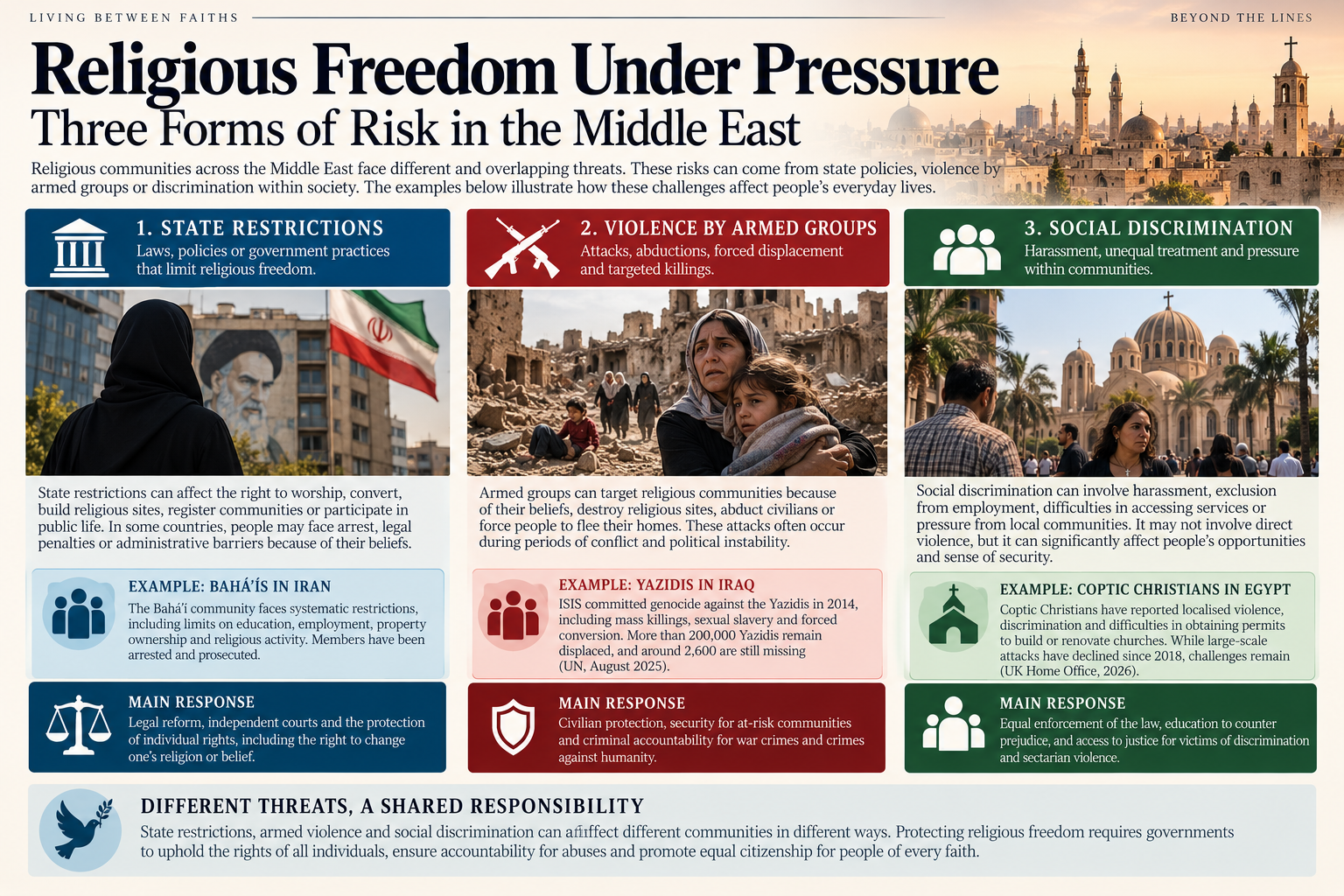
Women and Girls: Additional Risks Within Minority Communities
Women and girls can experience particular vulnerabilities when religious discrimination intersects with gender inequality.
These risks may involve forced marriage, sexual violence, restrictions on education or pressure concerning religious conversion.
In conflict-affected societies, displacement and poverty can increase vulnerability.
Girls may be removed from education because of insecurity or economic hardship.
Women who experience violence may encounter difficulties obtaining legal protection.
Members of religious minorities can face additional barriers when police, courts or local authorities fail to respond effectively to complaints.
However, these risks should not be attributed automatically to particular religious communities.
Forced marriage and gender-based violence occur in different cultural and religious settings.
Their causes include unequal power relations, weak legal protection, economic pressure and social expectations.
A rights-based response must protect women and girls as individuals.
Their safety should not depend on whether their community is politically influential or officially recognised.
Nor should concern for minority rights be used to overlook discrimination occurring within minority communities themselves.
Religious freedom and gender equality must be considered together.
The Role of Governments in Preventing Persecution
Governments have a central responsibility to protect freedom of religion or belief.
This responsibility extends beyond refraining from direct persecution.
States must also provide effective protection against violence and discrimination committed by others.
Police should investigate attacks on religious communities.
Courts should provide access to justice.
Public institutions should apply laws without discrimination.
Religious sites should be protected according to their legal status and security needs.
Victims should have access to remedies.
These principles apply regardless of whether the victims belong to a majority or minority religion.
However, implementation remains uneven.
In countries affected by conflict, governments may lack the capacity to enforce the law consistently.
Elsewhere, discriminatory legislation or political interests may prevent effective protection.
In some cases, armed groups exercise influence over territory or security institutions.
The result is that constitutional guarantees may exist without meaningful protection in practice.
Religious freedom therefore depends on the strength and independence of institutions.
It cannot be secured solely through official declarations of tolerance.
Why Accountability Matters
The consequences of religious persecution extend far beyond immediate violence.
When perpetrators are not held accountable, affected communities may lose confidence in the state.
Families may decide to leave their homes permanently.
Religious institutions may close.
Children may grow up without access to the cultural and religious traditions of previous generations.
Impunity can also encourage further attacks.
Accountability requires independent investigations, fair judicial procedures and protection for witnesses and survivors.
It also requires distinguishing between individual criminal responsibility and collective identity.
The perpetrators of violence should be held responsible for their actions.
Entire religious communities should not be punished because some members participated in crimes.
This principle is particularly important in societies emerging from civil war or authoritarian rule.
Without it, efforts to address past abuses can become new forms of persecution.
What Religious Freedom Looks Like in Practice
Religious freedom is often discussed through constitutional provisions and international agreements.
Yet its real meaning is found in everyday life.
Can a family attend religious services without fear?
Can a student openly identify with a minority faith?
Can a person change religion without losing legal protection?
Can a woman seek justice when she experiences violence?
Can communities preserve their places of worship and cultural institutions?
And can people disagree about religion without being treated as enemies of the state or society?
These questions provide a practical measure of religious freedom.
They also demonstrate why the issue cannot be separated from broader human rights.
Security, education, equal citizenship, freedom of expression and access to justice all influence the ability to practise religion freely.
A society may celebrate its religious heritage while failing to protect the people who maintain it.
Preserving historic churches, synagogues, mosques and shrines is important.
But protecting living communities is more important still.
A Region Facing a Choice
The contemporary Middle East contains examples of both religious coexistence and serious persecution.
Some governments have introduced reforms, protected religious institutions or supported interfaith initiatives.
Others continue to impose discriminatory restrictions.
In conflict-affected countries, religious minorities and members of majority communities alike face threats from armed groups, political instability and weak institutions.
The situation is not static.
Political transitions, legal reforms and reconstruction efforts may create opportunities for stronger protection.
They may also produce new risks if religious identity becomes a basis for political exclusion or collective blame.
The future of religious diversity will depend on whether governments establish institutions capable of protecting all citizens.
Religious freedom cannot be reserved for communities that enjoy political influence.
It must also extend to those whose beliefs are unpopular, whose populations are small or whose traditions differ from those of the majority.
The measure of a society's commitment to religious freedom is not how it treats the beliefs it approves of, but how it protects the people whose beliefs it does not share.
For the Middle East, this principle is central to preserving a religious heritage that has developed over thousands of years.
The next chapter examines how war, displacement and migration are transforming the region's religious landscape, and why some historic communities may never fully recover from the conflicts that forced them from their homes.
Chapter 10 — War, Displacement and the Disappearance of Communities
When Leaving Home Means Losing More Than a Home
War changes the geography of a country. Borders become contested, cities are destroyed and populations move in search of safety.
But conflict can also transform something less visible: the religious and cultural identity of entire regions.
Across the Middle East, generations of Christians, Yazidis, Muslims and members of smaller religious communities have been displaced by violence, persecution and political instability.
Some have returned.
Others have established new lives abroad.
For many, the possibility of returning remains uncertain.
When displacement continues for years or decades, its consequences extend beyond the loss of property. Religious institutions close, languages become less widely spoken and communal traditions become increasingly difficult to maintain.
A church may survive as a historical monument even after its congregation has disappeared.
A shrine may be reconstructed while the families who once gathered there remain scattered across different countries.
A village may be physically rebuilt without recovering the social relationships that previously defined it.
These changes are particularly significant in the Middle East, where religious communities have maintained distinctive traditions over centuries.
The disappearance of a community does not necessarily mean that its religion has ceased to exist. Its members may continue practising their faith elsewhere.
But the loss of a historical homeland can permanently change how that faith is lived, transmitted and remembered.
Understanding Displacement: Refugees, Internally Displaced People and Migrants
The terms used to describe people who leave their homes are important.
A refugee, under the 1951 Refugee Convention and its 1967 Protocol, is a person who meets the legal criteria for international protection, including a well-founded fear of persecution for specified reasons and being outside their country of nationality or habitual residence.
An internally displaced person has been forced to flee their home but remains within their country's borders.
A migrant is a broader term covering people who move for many different reasons, including employment, education, family reunification and insecurity. It is not a substitute for the specific legal status of a refugee.
These categories can overlap in individual life stories, but they are not interchangeable.
Religious communities may experience several forms of movement over successive generations.
A family might initially flee violence to another part of its country, later cross an international border and eventually settle permanently elsewhere.
Other families may leave before direct persecution occurs because they fear deteriorating security or see no economic future for their children.
The distinction matters because not every departure is forced by religious persecution.
However, a migration decision described as voluntary may still take place under severe pressure.
A family choosing between remaining in an insecure town without employment and leaving for a safer country may have little meaningful freedom.
The Scale of the Crisis
According to UNHCR's Global Trends reporting, approximately 68.7 million people remained internally displaced by conflict and violence worldwide at the end of 2025.
Syria and Yemen were among the countries with the largest internally displaced populations.
These figures cover people of different religions and backgrounds.
They should not be interpreted as estimates of religious persecution.
Nevertheless, they demonstrate the scale of the wider displacement crisis within which religious communities are struggling to survive.
In many cases, the destruction of homes, schools, hospitals and public infrastructure affects entire populations.
Religious minorities may face additional vulnerabilities when their communities are small, geographically concentrated or specifically targeted by armed groups.
Syria: A Country Whose Communities Have Been Scattered
Before the Syrian civil war began in 2011, the country was home to a complex religious landscape.
Sunni Muslims formed the majority of the population.
Alawites, Christians, Druze, Ismailis, Twelver Shia Muslims and other communities maintained distinct religious and cultural traditions.
Many had lived in particular towns and neighbourhoods for generations.
The war transformed this landscape.
Cities including Aleppo, Homs and parts of Damascus experienced extensive destruction.
Families fled bombardment, fighting, persecution, economic collapse and the breakdown of essential services.
Some sought refuge in neighbouring countries.
Others moved to Europe or remained displaced within Syria.
The Changing Christian Presence
Christian communities were among those affected.
Historic neighbourhoods in Aleppo and Homs suffered extensive damage.
Churches, schools and community institutions were destroyed or disrupted.
Some Christian families fled areas threatened by extremist organisations.
Others left because of the general insecurity and economic devastation affecting Syrians across religious lines.
The distinction is essential.
Not every Christian who left Syria was directly persecuted for being Christian.
Many were displaced by the same conditions that forced millions of Muslim Syrians from their homes.
Nevertheless, the departure of families from relatively small religious communities can have a disproportionate demographic impact.
When a community already represents a small share of the population, prolonged emigration may threaten the survival of local institutions.
A church cannot maintain its services without clergy and worshippers.
A school may close when too few families remain.
Community organisations may struggle to support elderly residents who cannot or do not wish to leave.
The result can be a gradual weakening of communal life even after active fighting has ended.
A New Period of Return
The collapse of Bashar al-Assad's government in December 2024 created new possibilities for displaced Syrians.
During 2025, significant numbers returned from abroad or from other parts of the country.
UNHCR reported approximately 1.3 million refugee returns to Syria during 2025.
However, returning does not automatically mean that displacement has been resolved.
Many families encountered destroyed housing, limited employment, inadequate services and continuing insecurity.
Political uncertainty and episodes of sectarian violence also complicated decisions about return.
For religious minorities, the question is particularly sensitive.
A family may wish to return to its ancestral town but hesitate because it lacks confidence in the authorities' ability to prevent discrimination or violence.
Others may discover that their children, after years abroad, no longer speak the language fluently or feel connected to the community their parents remember.
Syria's future religious diversity will depend partly on whether return is genuinely voluntary, safe and sustainable.
It will also depend on whether those who remain abroad can maintain meaningful cultural and religious connections to their places of origin.
Iraq: Rebuilding Communities After the Islamic State
Iraq's experience illustrates how displacement can continue long after an armed organisation loses territorial control.
Between 2014 and 2017, ISIS occupied large areas of northern and western Iraq.
Its rule involved mass violence, forced displacement and systematic attacks against religious and ethnic communities.
Yazidis, Christians, Shia Muslims and Sunni Muslims who opposed the organisation were among its victims.
Entire towns and villages were emptied.
Homes, businesses, schools and religious sites were destroyed.
Following the defeat of ISIS's territorial rule, reconstruction and return efforts began.
According to the International Organization for Migration's Displacement Tracking Matrix, Iraq still had approximately 997,000 internally displaced people in December 2025.
The same monitoring system recorded approximately 4.95 million returnees.
These figures reflect Iraq's broader displacement crisis, not only the experiences of religious minorities.
They demonstrate that substantial returns can occur while large numbers of people remain unable to rebuild their lives.
The Nineveh Plains
The Nineveh Plains have historically been home to Christian, Yazidi, Shabak and other communities.
ISIS's occupation severely disrupted this diversity.
Christian families fled towns including Qaraqosh and surrounding settlements.
Religious buildings were damaged or desecrated.
Homes and businesses were looted or destroyed.
Following liberation, reconstruction projects helped restore churches, houses and public facilities.
Some families returned.
Others remained in the Kurdistan Region, moved elsewhere in Iraq or emigrated abroad.
The reasons for remaining away were complex.
Security concerns were important, but so were unemployment, damaged infrastructure, disputes over property and uncertainty about political authority.
For some families, years of displacement had created new social and economic connections elsewhere.
Their children were attending different schools.
Parents had found work in other cities.
Returning would require abandoning a second home to rebuild the first.
This is one of the central difficulties of prolonged displacement.
The longer families remain away, the more complicated return becomes.
The Yazidis: Survival After Genocide
The Yazidi experience represents one of the most devastating examples of religiously targeted displacement in the modern Middle East.
In August 2014, ISIS attacked the Sinjar region of northern Iraq.
The organisation killed Yazidi civilians, abducted women and children, subjected captives to sexual slavery and attempted to destroy the community's religious and social structures.
United Nations investigators concluded that ISIS committed genocide against the Yazidis.
Thousands fled to Mount Sinjar and surrounding areas.
Others were displaced to camps in the Kurdistan Region of Iraq.
The immediate humanitarian crisis attracted international attention.
However, the consequences have continued for more than a decade.
Why Returning to Sinjar Remains Difficult
Many Yazidi families have been unable or unwilling to return to Sinjar.
Security concerns remain significant.
The presence of competing armed groups, political disputes and incomplete reconstruction have complicated efforts to restore normal life.
Homes and infrastructure remain damaged in some areas.
Employment opportunities are limited.
Families may also lack documentation needed to reclaim property or access public services.
The European Union Agency for Asylum has identified insecurity, political disputes and poor living conditions as important obstacles to sustainable return.
Some Yazidi families have returned with assistance from the Iraqi authorities and international organisations.
These efforts are significant.
But return programmes must be evaluated by more than the number of families transported back to their communities.
The essential question is whether people can remain safely and rebuild their lives.
The Missing and the Survivors
The genocide also left thousands of families searching for missing relatives.
Some abducted Yazidi women and children have been rescued or returned.
Others remain unaccounted for.
For survivors, the consequences include psychological trauma, disrupted education, economic hardship and the loss of family members.
The Iraqi Yazidi Survivors Law, adopted in 2021, established a framework for reparations and support for certain survivors of ISIS crimes.
International organisations have assisted with implementation, documentation and rehabilitation.
Nevertheless, accessing compensation and services can involve administrative and practical difficulties.
The future of the Yazidi community depends not only on physical reconstruction but also on justice, social support and the ability to preserve religious identity.
A reconstructed village cannot by itself restore a family destroyed by genocide.
Nor can financial assistance replace missing relatives.
Recovery requires long-term commitments that extend beyond the period of international media attention.
When Religious Buildings Survive but Communities Do Not
The destruction of religious heritage is one of the most visible consequences of war.
Photographs of damaged churches, mosques, synagogues and shrines often become powerful symbols of conflict.
However, the loss of religious heritage involves more than buildings.
Places of worship serve as centres of communal memory.
They connect generations through ceremonies, education, music, language and religious practice.
When these institutions are destroyed, communities may lose important means of preserving their identity.
ISIS deliberately targeted religious and cultural sites across Iraq.
A 2024 report by the United Nations Investigative Team to Promote Accountability for Crimes Committed by Da'esh/ISIL documented the destruction or damage of numerous religious sites.
These included Shia and Sunni mosques and shrines, Yazidi temples, Christian churches and monasteries, and sites belonging to other communities.
Investigators concluded that there were reasonable grounds to believe the destruction amounted to war crimes and crimes against humanity.
The deliberate targeting of religious heritage can serve several purposes.
It may be intended to intimidate communities, eliminate visible evidence of religious diversity or impose an extremist ideological vision.
In some circumstances, destruction of cultural and religious property can also form part of a wider campaign against a protected group.
Yet the restoration of buildings presents difficult questions.
Who will use a church if most of its congregation has emigrated?
Who will maintain a shrine if the surrounding village remains empty?
How should a community preserve religious traditions when its younger members have grown up abroad?
These questions demonstrate why reconstruction must include the people who sustain religious heritage.
Preserving a monument is valuable.
Preserving a living community requires considerably more.
The Generational Consequences of Displacement
Displacement changes communities across generations.
For the first generation, the loss of home may remain immediate and deeply personal.
Parents and grandparents often remember particular streets, neighbourhoods, religious festivals and family traditions.
They may continue to describe their place of origin as home even after decades abroad.
For children who grow up in displacement, identity can be more complicated.
Their parents' homeland may be a place they know through stories rather than personal experience.
They may speak a different language, attend schools in another country and develop social relationships outside the original community.
Some retain strong religious and cultural identities.
Others become less connected to the traditions of earlier generations.
Neither outcome is inevitable.
Diaspora communities can preserve language, worship, music and communal institutions for centuries.
Jewish communities displaced from Middle Eastern countries provide one historical example of traditions continuing after large-scale migration.
Armenian communities established across the world offer another.
However, preservation requires institutions, resources and active participation.
Small communities may struggle to maintain religious schools, train clergy or organise cultural activities.
Intergenerational transmission becomes particularly difficult when families are dispersed across multiple countries.
The consequences of displacement therefore extend beyond the individuals who originally fled.
They can shape religious identity for generations.
Women and Children: Displacement Within Displacement
Women and children frequently experience additional challenges during prolonged displacement.
Families may lose access to education, healthcare and reliable income.
Children may spend years in temporary accommodation.
Interrupted schooling can reduce future employment opportunities and make it more difficult to return to normal life.
Women may face increased responsibilities for supporting families while encountering barriers to employment and legal protection.
Survivors of sexual violence may require specialised medical, psychological and legal assistance.
These problems affect displaced populations across religious backgrounds.
However, women and girls belonging to persecuted minorities may face additional risks related to their community's experiences.
Yazidi survivors of ISIS captivity provide one particularly serious example.
Their needs cannot be addressed solely through general reconstruction programmes.
Specialised survivor-centred services, legal support and protection from stigma are essential.
At the same time, women should not be portrayed only as victims.
Across displaced communities, women have organised humanitarian initiatives, preserved religious traditions, supported education and advocated for justice.
Their participation is essential to recovery.
The Difficult Decision to Return
For displaced families, returning home is rarely a simple decision.
Emotional attachment may encourage return.
But practical considerations can point in another direction.
Parents may ask whether schools are functioning.
Families may need access to hospitals and employment.
People who lost property may require legal assistance to establish ownership.
Members of religious minorities may need reassurance that authorities will protect them from discrimination or violence.
A family that has established a stable life abroad may also fear exposing its children to renewed insecurity.
These concerns are legitimate.
International protection principles emphasise that refugee return should be voluntary and take place in conditions of safety and dignity.
Sustainable return also requires access to housing, livelihoods, services and legal protection.
Governments may have political incentives to encourage returns.
Humanitarian organisations may wish to reduce long-term dependence on camps.
But the success of return policies should not be measured solely through declining displacement figures.
A person who returns to an unsafe area and is forced to flee again has not achieved a durable solution.
The Right Not to Return
Not every displaced person will choose to go back.
Some have rebuilt their lives elsewhere.
Others may be unable to return because of trauma, family circumstances or continuing threats.
Their decision should not be interpreted as a lack of attachment to their heritage.
Religious identity can survive beyond national borders.
Diaspora communities may maintain religious institutions, preserve historical memory and support reconstruction in their places of origin.
For some families, remaining abroad may provide the stability needed to preserve their traditions.
The challenge is ensuring that people have meaningful choices.
Those who wish to return should be able to do so safely.
Those who remain elsewhere should not be treated as having abandoned their identity.
Can a Religious Community Recover After Mass Displacement?
History provides examples of religious communities rebuilding after severe persecution.
It also contains examples of communities that never recovered their former presence.
The outcome depends on several factors.
Security is essential.
Without protection from violence, reconstruction efforts remain vulnerable.
Legal rights are equally important.
Families must be able to recover property, register births and marriages, access education and participate in public life.
Economic opportunity matters because communities cannot survive indefinitely without livelihoods.
Religious institutions also require support.
Schools, places of worship, cultural organisations and community centres help maintain collective identity.
Finally, recovery depends on political inclusion.
Communities that lack representation or confidence in public institutions may remain vulnerable even after armed conflict ends.
These conditions apply to religious minorities and majority populations alike.
However, smaller communities can face particular difficulties because their demographic decline may threaten the survival of institutions that depend on a limited population.
Reconstruction must therefore consider the different circumstances of affected groups without creating unequal rights.
What This Means for the Middle East
The displacement of religious communities is changing the Middle East in ways that may outlast the conflicts responsible for it.
Some towns that once contained several religious communities now have much less diversity.
Other areas have experienced demographic changes caused by migration, insecurity and political upheaval.
The effects are cultural as well as demographic.
Languages may become less widely spoken.
Traditional forms of music, craftsmanship and religious education may decline.
Historical neighbourhoods can lose the communities that gave them their distinctive character.
These developments also influence political relationships.
When communities become geographically separated, opportunities for everyday interaction may diminish.
Children may grow up with little direct experience of neighbours belonging to different religions.
This can make stereotypes and inherited grievances more difficult to challenge.
However, displacement does not inevitably destroy coexistence.
Return programmes, diaspora connections, education and community initiatives can help rebuild relationships.
The decisive factor is whether governments and societies create conditions in which different communities can live together safely.
Conclusion: The Loss That Cannot Be Rebuilt With Stone
War destroys buildings, infrastructure and institutions.
Some of these losses can be repaired.
Homes can be reconstructed.
Schools can reopen.
Religious buildings can be restored.
But rebuilding a community is a different challenge.
A religious tradition depends on people who practise it, families who transmit it and institutions that sustain it.
When those people are scattered across countries and generations, the connection between faith and historical homeland may become increasingly fragile.
The experiences of Christians in Iraq and Syria, Yazidis from Sinjar and other displaced communities demonstrate that the consequences of conflict continue long after the fighting ends.
Their futures cannot be secured through reconstruction alone.
They require protection, justice, economic opportunity and the freedom to decide where and how to live.
For the Middle East, the preservation of religious diversity is therefore inseparable from the protection of displaced people.
A region does not preserve its religious heritage simply by restoring its monuments. It preserves that heritage by ensuring that the communities connected to them have a future.
The next chapter examines the organisations, religious leaders and local initiatives working to rebuild trust and encourage coexistence across the Middle East.
Chapter 11 — Rebuilding Trust: Interfaith Dialogue and the Search for Coexistence
Can Communities Rebuild Trust After Generations of Conflict?
Across the Middle East, religious communities have shared cities, neighbourhoods, markets and cultural traditions for centuries.
Their relationships have been shaped by cooperation and intellectual exchange, but also by discrimination, political conflict and episodes of devastating violence.
In countries such as Iraq and Syria, war has damaged more than buildings and infrastructure. It has weakened relationships between communities, created new divisions and left many civilians uncertain about whom they can trust.
For survivors of persecution, the idea of reconciliation can be particularly difficult.
A family whose relatives were murdered because of their religious identity may understandably question whether coexistence is possible.
People who were displaced from their homes may fear returning to neighbourhoods where armed groups once operated.
Communities that experienced discrimination may distrust government promises of equal protection.
Yet across the region, religious leaders, educators, humanitarian organisations and local residents continue working to rebuild relationships.
Their efforts take different forms.
Some focus on dialogue between religious leaders. Others bring together young people, support displaced families or restore shared cultural heritage.
The results are difficult to measure.
A conference may generate international attention without changing conditions on the ground.
A small community initiative may attract little publicity while gradually rebuilding relationships between neighbours.
Understanding interfaith dialogue therefore requires examining both its potential and its limitations.
The central question is not whether religious communities can agree on every belief. It is whether they can recognise one another's rights and live together without fear.
What Interfaith Dialogue Actually Means
Interfaith dialogue is often described as a process in which representatives of different religions meet to discuss their beliefs and identify shared values.
However, meaningful dialogue involves more than theological discussion.
It can include cooperation on education, humanitarian assistance, community development and the prevention of violence.
Religious leaders may work together to challenge prejudice or condemn attacks against places of worship.
Schools may introduce programmes that help students understand the religious traditions of their neighbours.
Local organisations may bring together families from different communities to address practical concerns.
These activities do not require participants to abandon their religious convictions.
A Muslim does not need to accept Christian theology to defend the right of Christians to worship.
A Christian does not need to share Jewish religious beliefs to oppose antisemitism.
A Jewish community can support the protection of Muslim religious sites without agreeing with the political positions of Muslim leaders.
The same principle applies to Yazidis, Druze, Bahá'ís and other communities.
Coexistence does not require theological agreement.
It requires respect for the rights and dignity of people who hold different beliefs.
This distinction is particularly important in the Middle East, where religious identity is often closely connected to family history, national belonging and political experience.
Dialogue becomes more meaningful when it recognises these differences rather than attempting to erase them.
Abu Dhabi: The Document on Human Fraternity
One of the most prominent international initiatives promoting interreligious cooperation emerged in the United Arab Emirates.
On 4 February 2019, Pope Francis and Ahmed al-Tayeb, the Grand Imam of Al-Azhar, signed the Document on Human Fraternity for World Peace and Living Together in Abu Dhabi.
The declaration called for greater cooperation between religious communities and condemned the use of religion to justify hatred, violence and persecution.
It also emphasised the importance of freedom of belief, equal citizenship and the protection of places of worship.
The agreement was significant because it brought together two influential religious figures representing different traditions.
Al-Azhar, based in Cairo, is one of the most prominent institutions of Sunni Islamic scholarship.
The Catholic Church represents a global religious community with longstanding historical connections to the Middle East.
Their joint declaration demonstrated that religious leaders can publicly defend principles extending beyond their own communities.
The document also recognised that political manipulation of religion can contribute to conflict.
This is particularly relevant in societies where religious identity is used to mobilise political support or justify discrimination.
However, the declaration was not a legally binding international treaty.
It did not establish mechanisms capable of compelling governments to reform discriminatory laws or prevent persecution.
Its influence therefore depends on whether political leaders, religious institutions and civil society organisations translate its principles into practical action.
The document represents an important statement of intent.
Its lasting significance will depend on implementation.
The Abrahamic Family House: A Visible Symbol of Coexistence
In March 2023, the Abrahamic Family House opened to visitors in Abu Dhabi.
The complex includes three separate places of worship: a mosque, a church and a synagogue.
The buildings are located within a shared environment intended to encourage religious understanding and dialogue.
The project was inspired by the principles expressed in the 2019 Document on Human Fraternity.
Its architecture provides a visible representation of religious coexistence.
Rather than combining religious traditions into one institution, the complex maintains separate spaces for worship while creating opportunities for interaction.
This distinction reflects an important principle.
Religious cooperation does not require the disappearance of religious differences.
Each community retains its identity.
At the same time, the shared setting encourages visitors to recognise the legitimacy of other traditions.
The complex also reflects the changing religious landscape of the Gulf.
International migration has brought people from different religious backgrounds to the United Arab Emirates.
Christian, Hindu, Buddhist and other communities form part of the country's diverse resident population.
However, the Abrahamic Family House should not be interpreted as proof that all restrictions on religious freedom have disappeared.
The UAE continues to regulate religious organisations and public religious expression.
International observers have raised concerns about restrictions affecting freedom of expression and other civil liberties.
The existence of a prominent interfaith institution is therefore one measure of religious engagement, not a complete assessment of individual rights.
The project's importance lies in the opportunity it creates for education and encounter.
Whether it produces wider social change depends on the extent to which its principles influence everyday life and public policy.
Iraq: Rebuilding Relationships After the Islamic State
Iraq offers one of the most difficult environments for rebuilding trust.
The Islamic State's occupation of large parts of the country between 2014 and 2017 involved systematic violence against religious and ethnic communities.
Yazidis experienced genocide.
Christians were displaced from historic towns and villages.
Shia Muslims were targeted, while Sunni Muslims who opposed ISIS also suffered killings and repression.
The consequences extended beyond immediate violence.
In some areas, civilians became suspicious of neighbours whose relatives had joined armed groups.
Communities questioned whether local authorities could provide protection.
Disputes over property, political representation and security complicated the return of displaced families.
Reconciliation in this environment cannot begin with an assumption that everyone is equally responsible for the past.
The experiences of victims, perpetrators and bystanders are different.
Meaningful recovery requires accountability for crimes, protection for survivors and careful efforts to restore relationships.
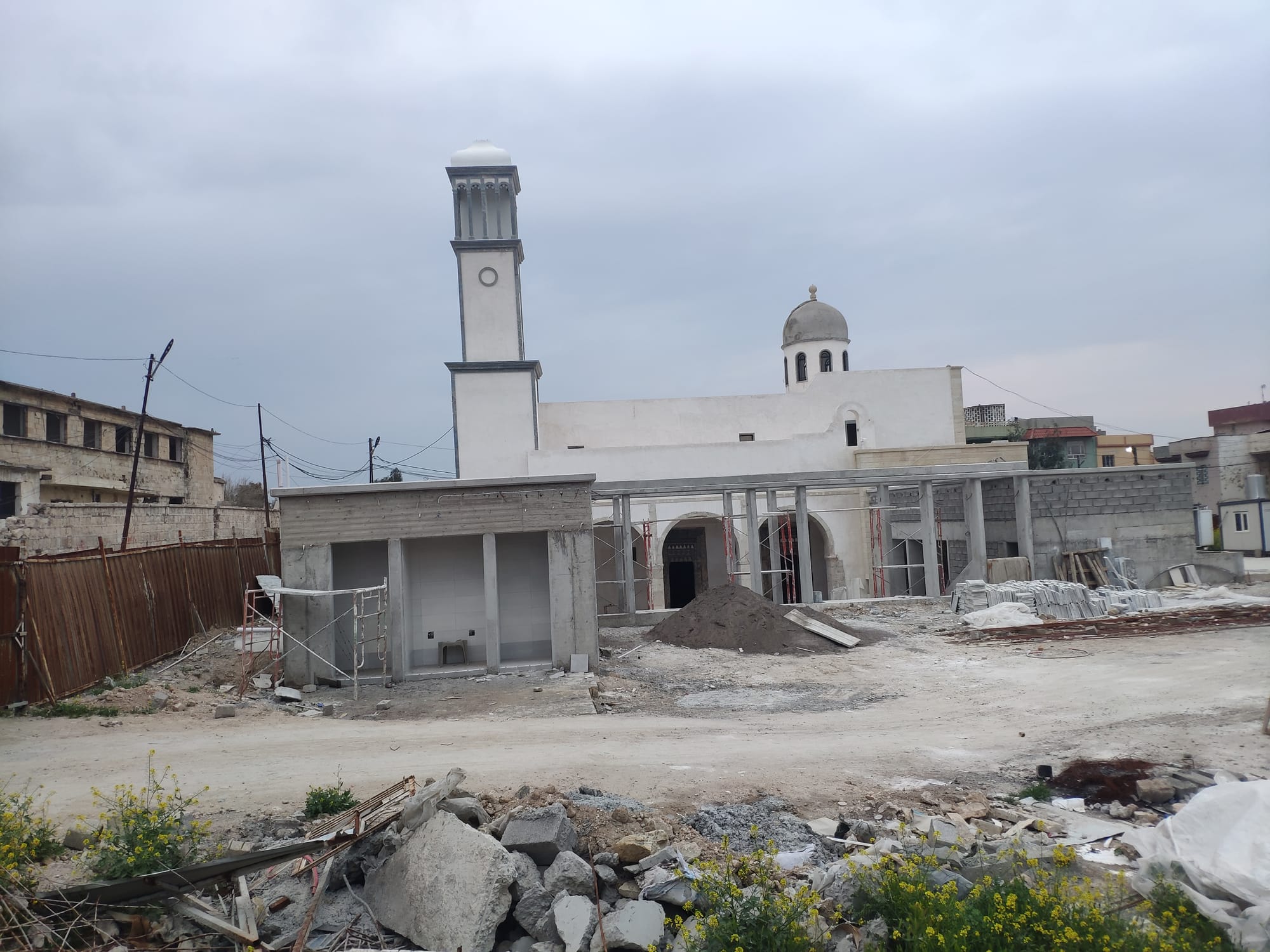
Mosul: Restoring Shared Heritage
One example of post-conflict reconstruction is UNESCO's Revive the Spirit of Mosul initiative.
Launched in 2018, the programme sought to restore cultural heritage, support education and revive cultural life in a city devastated by ISIS.
Its projects included the rehabilitation of the Al-Nouri Mosque and Al-Hadba Minaret, alongside Christian religious landmarks such as Al-Tahera Church and the Al-Saa'a Convent.
UNESCO reported that major reconstruction work on these landmarks was completed in January 2025.
In September 2025, Iraqi authorities formally inaugurated several restored sites.
The restoration of both Muslim and Christian heritage carries symbolic importance.
It acknowledges that Mosul's identity cannot be reduced to one religious tradition.
For centuries, the city was shaped by different communities whose histories became part of its architecture, commerce and cultural life.
Rebuilding these landmarks can help preserve that shared history.
However, restoring religious buildings is only one part of recovery.
The return of displaced families also depends on security, employment, housing and legal protection.
A restored church does not guarantee that its former congregation will return.
A rebuilt mosque does not automatically resolve political divisions.
The value of heritage reconstruction is greatest when it forms part of wider efforts to restore civic life and protect the people connected to these places.
The Yazidi Community: Why Reconciliation Requires Justice
The experience of the Yazidis demonstrates why calls for reconciliation must be approached carefully.
In 2014, ISIS carried out a genocidal campaign against the community in northern Iraq.
Thousands were killed or abducted.
Women and girls were subjected to sexual slavery and other serious crimes.
Families were displaced from their homes.
For survivors, rebuilding trust cannot simply mean participating in dialogue with representatives of other communities.
It also requires recognition of what happened.
Victims need access to justice, reparations and reliable information about missing relatives.
Survivors of sexual violence require specialised support.
Families seeking to return to Sinjar need security and confidence that armed groups will not threaten them again.
These conditions are essential because reconciliation without accountability can place unfair pressure on victims.
It may suggest that survivors should forgive before perpetrators have been investigated or held responsible.
That approach risks creating further harm.
Religious leaders and community organisations can contribute to recovery by opposing collective blame and supporting survivors.
However, their work must complement legal accountability rather than replace it.
The Yazidi experience offers a wider lesson.
Reconciliation is not the same as forgetting.
Communities may choose to rebuild relationships while continuing to demand justice for past crimes.
Lebanon: Living Together Despite Political Division
Lebanon provides a different example of the challenges surrounding coexistence.
Its population includes Sunni and Shia Muslims, Christians, Druze and other religious communities.
These groups have long shared economic, cultural and social spaces.
At the same time, Lebanon's political system formally distributes power according to religious affiliation.
The arrangement was intended to balance communal representation.
However, it has also reinforced sectarian political structures.
The Lebanese Civil War, which lasted from 1975 to 1990, left deep divisions.
Political disputes, regional intervention and competing armed movements continued to affect the country after the war.
Nevertheless, Lebanon has also developed civil society initiatives seeking to promote cooperation across religious boundaries.
Schools, universities, cultural organisations and community groups have provided spaces for interaction.
Some initiatives focus on shared citizenship rather than religious affiliation.
Others encourage discussion of the civil war and its legacy.
The challenge is particularly complex because religious identity remains embedded in the country's political institutions.
Interfaith dialogue may improve personal relationships without changing the political arrangements that reinforce communal divisions.
This does not make dialogue meaningless.
It demonstrates that social cooperation and institutional reform are separate, although connected, processes.
Lebanon's experience suggests that lasting coexistence requires both.
Israel and the Palestinian Territories: Dialogue Amid Political Conflict
Relations between Jewish, Muslim and Christian communities in Israel and the Palestinian territories are shaped by religious history and the unresolved Israeli–Palestinian conflict.
The region contains some of the world's most significant religious sites.
Jerusalem holds profound importance for all three Abrahamic faiths.
Yet religious identity is also connected to national narratives, territorial disputes and political claims.
These tensions make interreligious dialogue particularly difficult.
Jewish and Arab citizens of Israel participate in shared workplaces, hospitals, universities and other institutions.
At the same time, social inequalities, political disagreements and episodes of communal violence affect relationships.
In the occupied Palestinian territories, movement restrictions, settlement expansion, security operations and the consequences of prolonged conflict create additional obstacles.
Dialogue initiatives operate within these unequal and contested circumstances.
What Dialogue Can and Cannot Achieve
Organisations and local initiatives have brought together Israelis and Palestinians to discuss personal experiences, shared concerns and possible forms of cooperation.
Some focus on religious understanding.
Others address education, bereavement, civic participation or conflict resolution.
Such programmes can challenge stereotypes by allowing participants to encounter people whose experiences differ from their own.
They may also help prevent the assumption that an entire population shares the views of a government or armed organisation.
However, dialogue cannot substitute for political negotiations, security arrangements or the protection of rights.
A conversation between individuals cannot resolve territorial disputes.
Nor can it remove the effects of occupation, terrorism, displacement or discrimination.
For dialogue to remain credible, participants must be able to discuss these realities openly.
Efforts that avoid difficult political questions may be criticised for presenting superficial harmony while leaving structural problems untouched.
Conversely, dialogue that recognises disagreement and suffering may create space for relationships that would otherwise be impossible.
The goal should not be to force agreement.
It should be to create conditions in which disagreement does not become a justification for dehumanisation or violence.
Religious Leaders and Their Public Responsibility
Religious leaders can play an important role in shaping attitudes towards other communities.
Their influence extends through sermons, educational institutions, community organisations and public statements.
When respected religious figures condemn attacks against minorities, they can challenge attempts to justify violence through religious language.
They may also encourage followers to recognise the dignity of people belonging to different traditions.
However, religious leadership can have the opposite effect.
Clerics and political movements may use religious language to deepen divisions or portray other communities as threats.
The impact depends on how religious authority is exercised.
A credible commitment to coexistence requires consistency.
A leader who condemns violence against members of their own community but remains silent when others are attacked offers only selective protection.
Likewise, defending religious freedom must include the rights of people who reject or change their religion.
The strongest statements of tolerance are those that protect individuals even when their beliefs are unpopular.
Religious leaders also face practical limitations.
They cannot independently reform state institutions, prosecute perpetrators or guarantee security.
Their influence is most effective when supported by accountable government, education and the rule of law.
Education: Challenging Prejudice Before It Becomes Entrenched
Education is one of the most important long-term influences on relationships between religious communities.
Children develop perceptions of other groups through family conversations, school materials, media and personal experience.
When education presents religious communities through stereotypes, it can reinforce prejudice.
When students learn about the historical contributions and contemporary lives of different groups, they may develop a more informed understanding of society.
This does not require schools to promote a particular religion.
It requires accurate teaching about religious diversity.
Students should understand that Islam contains different traditions.
They should learn that Christianity originated in the Middle East and remains part of the region's cultural history.
They should recognise the longstanding Jewish presence across Middle Eastern societies.
They should also learn about Yazidis, Druze, Bahá'ís and other communities whose histories are often overlooked.
Equally important is teaching students to distinguish religious identity from political responsibility.
A Jewish student should not be treated as responsible for the actions of the Israeli government.
A Muslim student should not be blamed for crimes committed by Islamist extremist organisations.
A Christian student should not be expected to represent the political positions of Christian leaders.
These distinctions are fundamental to preventing collective blame.
Education cannot eliminate political conflict.
However, it can reduce the likelihood that disagreement becomes prejudice against entire populations.
The Role of Women and Young People
Interfaith dialogue is often associated with meetings between senior male religious leaders.
Such encounters can be influential, but they represent only part of society.
Women and young people also play important roles in building relationships across communities.
Women frequently participate in education, healthcare, humanitarian assistance and local community organisations.
In conflict-affected areas, they may be responsible for supporting displaced families and maintaining social networks.
Their experiences can provide important perspectives on security, discrimination and recovery.
Young people may also approach religious identity differently from previous generations.
Digital communication, international education and migration expose many to a wider range of cultural and religious perspectives.
However, online environments can also amplify hostility.
Young people may encounter misinformation, conspiracy theories and messages portraying other religious communities as enemies.
Programmes that encourage media literacy and direct interaction can help challenge these narratives.
Yet meaningful participation requires more than inviting women and young people to symbolic events.
They should have opportunities to influence decisions, identify local priorities and shape initiatives affecting their communities.
Coexistence cannot be built exclusively through agreements between established religious authorities.
It must also involve the people who live with the consequences of religious division.
Social Media: A New Arena for Religious Conflict
Digital platforms have transformed the way religious communities encounter one another.
Social media allows people to communicate across national and religious boundaries.
It can support interfaith initiatives, provide information about minority communities and draw attention to persecution.
However, it can also spread hostility rapidly.
Videos and photographs may circulate without sufficient context.
Old incidents can be presented as new events.
Unverified allegations may be repeated until they are widely accepted as fact.
Political propaganda can portray entire religious populations as responsible for violence committed by particular organisations.
During periods of conflict, these problems become especially serious.
Emotionally charged material can encourage users to interpret events through collective religious identity rather than verified evidence.
A violent incident involving one perpetrator may be presented as proof of the character of an entire community.
Such narratives can contribute to discrimination and retaliation.
Independent journalism has an important responsibility in this environment.
Reporting should distinguish verified facts from allegations.
It should identify perpetrators accurately.
It should avoid treating religious populations as politically uniform.
And it should provide historical and legal context when discussing contested events.
Dialogue requires more than respectful language.
It also requires a shared commitment to factual accuracy.
The Limits of Symbolic Coexistence
Interfaith conferences, public declarations and religious ceremonies can attract significant attention.
They may provide opportunities for cooperation and demonstrate that religious leaders are willing to engage.
However, symbolic gestures have limitations.
A government may promote interfaith dialogue while maintaining discriminatory legislation.
Religious leaders may endorse peaceful coexistence without challenging prejudice within their own communities.
International organisations may fund dialogue programmes without adequately addressing the political conditions contributing to conflict.
These contradictions should be examined rather than ignored.
A credible assessment of interfaith initiatives should ask practical questions.
Have participants developed continuing relationships?
Have communities gained better access to public institutions?
Have discriminatory practices been challenged?
Are women and minority representatives meaningfully involved?
Can people openly discuss political grievances and human rights concerns?
And are there mechanisms for evaluating whether programmes produce lasting change?
The answers will differ between initiatives.
Some projects may succeed in creating valuable local relationships.
Others may remain primarily symbolic.
Both possibilities must be acknowledged.
Religious coexistence cannot be measured by the number of conferences held or declarations signed.
It must be assessed through changes in everyday conditions.
When Dialogue Becomes a Substitute for Justice
One of the most serious criticisms of reconciliation initiatives is that they can place excessive emphasis on harmony while avoiding questions of responsibility.
This risk is particularly significant in societies emerging from mass violence.
Survivors may be encouraged to forgive perpetrators before crimes have been investigated.
Displaced families may be asked to return before adequate security has been established.
Minority communities may be urged to demonstrate tolerance while discriminatory laws remain in force.
Such approaches can undermine trust rather than restore it.
Reconciliation requires recognition of wrongdoing.
It also requires accountability, reparations where appropriate and guarantees against repetition.
These principles do not mean that every individual belonging to a community associated with perpetrators is responsible for crimes.
Collective guilt is itself a form of injustice.
Instead, responsibility must be established through evidence and fair procedures.
This distinction is essential.
Communities cannot rebuild trust if justice is replaced by collective punishment.
Nor can they rebuild trust if serious abuses are ignored in the name of political stability.
Meaningful reconciliation requires both accountability and protection against retaliation.
What Successful Coexistence Requires
Religious coexistence depends on several interconnected conditions.
The first is physical security.
People must be able to worship, work and participate in society without fear of violence.
The second is equal legal protection.
Religious identity should not determine whether an individual can obtain justice or access public services.
The third is freedom of conscience.
Individuals must be free to practise a religion, change their beliefs or hold no religious belief.
The fourth is education.
Societies need opportunities to learn about religious traditions without relying on stereotypes.
The fifth is political accountability.
Governments and armed organisations must be held responsible for violations of rights.
Finally, coexistence requires everyday interaction.
Shared workplaces, schools, neighbourhoods and community initiatives can create relationships that extend beyond formal religious dialogue.
None of these conditions is sufficient on its own.
Security without equal rights may preserve an unequal social order.
Dialogue without accountability may conceal unresolved grievances.
Legal protections without enforcement may offer little practical security.
Sustainable coexistence requires progress across all these areas.
What This Means: From Tolerance to Equal Citizenship
The word tolerance is frequently used in discussions of religious diversity.
It suggests a willingness to accept people whose beliefs differ from one's own.
That is an important starting point.
However, tolerance alone may be insufficient.
A minority community should not have to depend on the goodwill of a majority population to exercise fundamental rights.
Its members should be protected as equal citizens or rights-holders under the law.
This distinction changes the meaning of coexistence.
The question is no longer whether one community is willing to permit another to exist.
It becomes whether every individual enjoys equal protection, regardless of religious identity.
Interfaith dialogue can support this principle by challenging prejudice and encouraging cooperation.
But governments must translate it into enforceable rights.
Religious institutions must also recognise that freedom of conscience applies beyond their own followers.
For the Middle East, this approach offers a more durable foundation than symbolic tolerance.
It recognises religious differences without making legal equality dependent on them.
Conclusion: Trust Is Rebuilt Through Actions
The Middle East's history demonstrates that religious communities can coexist for centuries while maintaining distinct identities.
It also demonstrates how quickly relationships can deteriorate when political conflict, discrimination and violence undermine public trust.
Rebuilding that trust is difficult.
For survivors of persecution, reconciliation may remain a distant possibility.
For displaced families, the immediate priority may be security and the right to return.
For young people, the challenge may be overcoming stereotypes inherited from previous generations.
Interfaith dialogue can contribute to these efforts.
It can create opportunities for understanding, challenge collective blame and encourage cooperation.
But its success depends on more than goodwill.
Governments must protect religious freedom.
Courts must provide justice.
Religious leaders must oppose discrimination consistently.
Educational institutions must promote historical understanding.
And communities must have opportunities to work together on practical problems.
The examples of Abu Dhabi and Mosul demonstrate different approaches: one centred on religious encounter, the other on rebuilding a city's shared heritage.
Neither provides a complete solution.
Both illustrate how cooperation can become part of a broader effort to preserve religious diversity.
Ultimately, the future of coexistence will not be decided solely in international conferences or meetings between religious leaders.
It will also be shaped in classrooms, neighbourhoods, workplaces and courts.
Trust is not restored by asking communities to forget their differences or their suffering. It is rebuilt when people can disagree, remember and still live together with equal rights and security.
The next chapter examines what governments, international institutions and civil society must do to protect religious freedom and preserve the Middle East's diverse religious heritage.
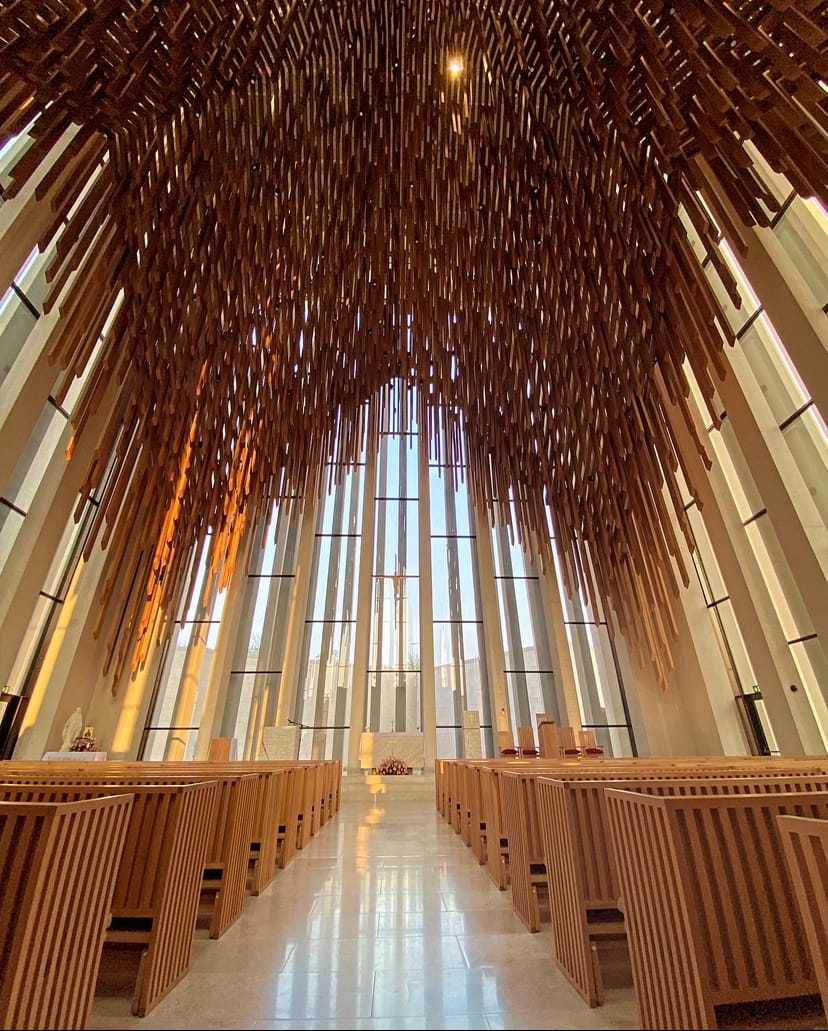
Chapter 12 — Protecting Religious Freedom: Responsibilities, Reforms and the Future of Coexistence
The Difference Between Religious Tolerance and Religious Freedom
Throughout the Middle East, governments frequently describe religious tolerance as an important national value.
Interfaith conferences are organised, religious landmarks are restored and political leaders publicly emphasise the importance of peaceful coexistence.
These initiatives can have genuine value.
However, tolerance and religious freedom are not necessarily the same.
Tolerance may imply that a dominant religious or political authority permits other communities to practise their beliefs within established boundaries.
Religious freedom is a legal right that does not depend on the goodwill of those in power.
It includes the freedom to practise a religion, change one's beliefs or hold no religious belief.
It also requires protection against coercion and discrimination.
This distinction is central to the future of religious diversity in the Middle East.
A government may permit churches to operate while restricting conversion from the majority religion.
It may restore a historic synagogue while maintaining laws that discriminate against certain religious minorities.
It may support interfaith dialogue while limiting the ability of religious organisations to operate independently.
These contradictions do not necessarily make every government initiative meaningless.
They demonstrate that symbolic recognition and enforceable rights must be evaluated separately.
The challenge is to move beyond declarations of tolerance towards legal systems that protect individuals equally.
Governments: The Primary Responsibility to Protect
The protection of religious freedom begins with the state.
Governments are responsible for establishing laws, maintaining public security and ensuring that courts provide remedies when rights are violated.
This responsibility applies to citizens and, within the scope of applicable law, other people under a state's jurisdiction.
It does not depend on whether an individual belongs to a majority or minority religion.
Under Article 18 of the International Covenant on Civil and Political Rights, states that have ratified the treaty must respect freedom of thought, conscience and religion.
The protection extends to religious and non-religious beliefs.
The United Nations Human Rights Committee has clarified that the freedom to have or adopt a religion includes the right to replace one's current religion or belief with another.
The right to hold a belief is protected without the restrictions that may, in narrowly defined circumstances, apply to its public manifestation.
Governments therefore have obligations extending beyond allowing established religious communities to maintain places of worship.
They must also consider whether individuals can exercise freedom of conscience without coercion.
Equal Protection Before the Law
One of the most important responsibilities of government is to ensure that laws are applied without discrimination.
Religious identity should not determine whether a person can report a crime, obtain legal representation or receive protection from violence.
Police must investigate attacks on religious communities impartially.
Courts must provide fair procedures.
Public authorities must not treat victims differently because their beliefs are unpopular or politically sensitive.
These principles are especially important in countries emerging from conflict.
In Iraq and Syria, for example, religious communities have experienced violence committed by different armed organisations.
Rebuilding confidence in public institutions requires more than military control of territory.
It requires evidence that perpetrators can be investigated and prosecuted regardless of their political or religious affiliations.
Where government security forces are themselves accused of abuses, independent investigations become particularly important.
Accountability cannot depend solely on institutions whose conduct is under examination.
Reforming Laws That Restrict Religious Choice
Across the Middle East, religious identity continues to influence legislation in different ways.
Some countries maintain laws that restrict conversion, public religious expression or recognition of particular communities.
Others assign important aspects of family law to religious institutions.
These arrangements developed through different historical and political processes.
Reform therefore cannot follow one identical model across the region.
Nevertheless, certain principles provide a common foundation.
Individuals should be able to hold or change their beliefs without coercion.
Religious communities should be able to practise their faith peacefully.
Women and men should receive equal legal protection.
Children should be protected against exploitation and forced marriage.
And people who do not identify with a recognised religion should not lose access to basic civil rights.
Civil Marriage and Personal-Status Reform
Family law is one of the areas where religious affiliation can have the greatest practical consequences.
Marriage, divorce, custody and inheritance may be governed by religious rules or institutions.
This can create unequal treatment between citizens.
In Lebanon and Israel, for example, the absence of a general domestic civil marriage system creates difficulties for some couples who cannot or do not wish to marry through recognised religious authorities.
In other countries, family law may distinguish between men and women in ways that affect divorce, guardianship or inheritance.
Introducing accessible civil alternatives can expand individual choice without necessarily abolishing religious marriage.
Religious communities could continue offering ceremonies and guidance to members who voluntarily choose them.
The central principle is that citizens should not be compelled to accept a particular religious framework as the only route to legal recognition of their relationships.
However, reform proposals must account for national constitutional structures and existing legal protections.
Changes should be assessed carefully to avoid creating new inequalities or uncertainty.
Protecting Communities That Lack Official Recognition
One of the most persistent problems in religious freedom concerns communities that are not officially recognised by the state.
Recognition may determine whether a religious group can establish institutions, register property or conduct certain ceremonies.
Where recognition is denied, everyday life can become difficult.
Bahá'ís in Iran provide a prominent example.
The community lacks the constitutional status granted to certain other religious minorities.
United Nations experts and human rights organisations have documented restrictions involving education, employment, property and religious activity.
The Iranian government has rejected allegations that its treatment of Bahá'ís constitutes religious persecution.
Nevertheless, the documented pattern of restrictions raises serious concerns under international human rights standards.
The broader principle extends beyond Iran.
A person's legal rights should not depend on whether the government accepts their theological beliefs.
Recognition systems may help states administer religious institutions.
But they should not become mechanisms for denying individuals access to education, employment, documentation or justice.
The protection of freedom of belief must include communities whose doctrines are rejected by dominant religious authorities.
It must also include people who do not belong to any religious organisation.
Preventing Violence Against Religious Communities
Legal recognition alone cannot protect people from armed violence.
In conflict-affected countries, religious communities may face threats from militias, extremist organisations or other armed actors.
Governments must therefore combine legal protections with effective security measures.
Places of worship may require protection where credible threats exist.
Police and security forces need training to respond to attacks motivated by religious hatred.
Victims and witnesses must be able to report threats without fear of retaliation.
However, security measures must themselves respect human rights.
Collective punishment, arbitrary detention or discrimination against entire communities can deepen divisions and create new grievances.
This is particularly important where armed organisations claim to represent a religious population.
The crimes of an extremist group must not be attributed to everyone who shares its nominal religious identity.
ISIS's atrocities against Yazidis, Christians, Shia Muslims and others demonstrate the catastrophic consequences of religiously motivated violence.
But ISIS also killed Sunni Muslims who opposed its rule.
Accurate identification of perpetrators is essential to preventing collective blame.
The Responsibility to Investigate
When religiously motivated attacks occur, governments must investigate them effectively.
This includes preserving evidence, identifying perpetrators and ensuring fair judicial proceedings.
Where domestic institutions cannot provide credible accountability, international assistance may be necessary.
United Nations investigative mechanisms have contributed to documenting atrocities in Iraq and Syria.
Their work demonstrates the importance of preserving evidence even when immediate prosecution is difficult.
However, documentation alone is not justice.
Victims require meaningful access to legal remedies.
Survivors also need protection from intimidation and retaliation.
Without accountability, communities may conclude that the state is unwilling or unable to defend them.
That loss of confidence can contribute to further displacement.
International Organisations: Influence and Limitations
International organisations play an important role in monitoring religious freedom and supporting affected communities.
The United Nations provides legal standards, investigative mechanisms and humanitarian assistance.
UNHCR supports refugees and other displaced populations within its mandate.
UNESCO works to preserve cultural heritage and promote education.
Other international and regional organisations provide legal assistance, development funding and support for civil society.
These activities can help protect vulnerable communities.
However, international organisations face important limitations.
They generally cannot replace national governments.
Their access may depend on state cooperation.
Funding can be insufficient.
Political disagreements between member states may restrict action.
Humanitarian organisations must also operate according to principles intended to prevent discrimination and political manipulation.
Monitoring and Public Reporting
Independent monitoring can make abuses more difficult to conceal.
United Nations experts, national human rights institutions and non-governmental organisations document restrictions on religious freedom.
Their reports can identify patterns that might otherwise remain invisible.
However, monitoring must be accurate and transparent.
Sources should be evaluated carefully.
Allegations should be distinguished from established findings.
Governments accused of violations should have opportunities to respond.
Conflicting accounts should be examined rather than selectively presented.
Credibility is particularly important in the Middle East, where religious freedom reporting can become entangled with geopolitical disputes.
A consistent approach must apply the same principles to allies and adversaries.
Human rights should not become a selective instrument of foreign policy.
Religious Leaders: Influence Beyond Politics
Religious leaders can influence how communities understand and respond to differences in belief.
Their words may shape attitudes towards minorities, conversion and interfaith relationships.
When respected leaders condemn discrimination and violence, they can challenge narratives that portray other religions as threats.
They can also support humanitarian cooperation and encourage peaceful dispute resolution.
However, religious leaders do not necessarily represent everyone within their communities.
Believers may disagree with official interpretations or institutional positions.
Women, young people and reform-minded members may hold perspectives that differ from those of established authorities.
Protecting religious freedom therefore requires more than consultation with senior clerics.
It also requires recognising individual rights within religious communities.
Condemning Hatred Consistently
A credible commitment to religious coexistence must be consistent.
Condemning attacks against one's own community is important.
But defending religious freedom also means opposing violence against people whose beliefs one does not share.
A Muslim leader can condemn antisemitism without endorsing Israeli government policies.
A Christian leader can oppose anti-Muslim discrimination without agreeing with Islamic theology.
A Jewish leader can defend the rights of Palestinian Christians and Muslims without abandoning Jewish religious or national identity.
These distinctions are essential.
Religious solidarity should not depend on political agreement.
Nor should criticism of a government automatically become hostility towards an entire religious or ethnic population.
The ability to maintain these distinctions is one of the foundations of responsible public leadership.
Education: Protecting Diversity for Future Generations
Religious freedom cannot be sustained through legislation alone.
Public attitudes influence whether laws are respected and whether communities feel safe.
Education is therefore central to long-term protection.
Schools can help students understand the religious history of their societies.
They can explain that Christianity, Judaism and Islam all have deep historical connections to the Middle East.
They can introduce students to Yazidi, Druze, Bahá'í and other traditions.
They can also teach the difference between religious belief, political ideology and individual responsibility.
This is particularly important in countries where conflict has encouraged collective blame.
Children should not be taught that an entire religious community is responsible for crimes committed by particular armed organisations or governments.
Teaching History Without Erasing Conflict
Education should not present coexistence as an uninterrupted history of harmony.
The Middle East has experienced religious discrimination, persecution and violence.
These events should be taught accurately.
However, historical education should also recognise periods of cooperation, shared scholarship and cultural exchange.
A balanced account allows students to understand both.
It does not minimise persecution.
Nor does it portray religious communities as permanently hostile to one another.
The objective is historical literacy.
People are better equipped to resist prejudice when they understand the complexity of the societies in which they live.
Women and Young People as Participants in Reform
Women and young people are often underrepresented in formal religious and political discussions.
Yet they experience many of the practical consequences of laws governing religious identity.
Women may face restrictions affecting marriage, divorce, custody or inheritance.
Young people may encounter barriers concerning education, religious expression or freedom of conscience.
Their participation is therefore essential.
Civil society organisations working on religious freedom should include women and younger members of communities in decision-making.
This is not simply a question of representation.
Different experiences can reveal problems that established institutions overlook.
For example, a religious leader may focus on the right to maintain a place of worship.
A woman within the same community may be more concerned about unequal divorce provisions.
A young person may be worried about the freedom to question inherited beliefs.
All three concerns can be legitimate.
A rights-based approach must consider the community as a collection of individuals rather than a single political or religious voice.
Preserving Religious Heritage Without Turning It Into a Museum
Across the Middle East, historic religious buildings are being restored.
Churches, mosques, synagogues, shrines and cemeteries form part of the region's cultural heritage.
Their preservation is important.
These sites provide evidence of communities whose contributions shaped local history.
However, heritage protection can become superficial if it focuses exclusively on buildings.
A restored synagogue may attract visitors even though the Jewish community that once used it has largely disappeared.
A church may be reconstructed while displaced families remain unable to return.
A Yazidi shrine may be repaired while survivors continue searching for missing relatives.
These projects can still have historical and cultural value.
But they should not be presented as complete solutions to the problems facing religious communities.
Living Heritage Requires Living Communities
Religious traditions depend on people.
They are transmitted through families, education, worship, language and communal relationships.
Preservation therefore requires support for institutions that sustain religious life.
This may include schools, archives, cultural centres and community organisations.
It may also involve protecting the rights of displaced families to return voluntarily and safely.
For diaspora communities, heritage preservation can help maintain connections to ancestral homelands.
Governments can support these efforts through access to historical records, protection of religious sites and cooperation with community representatives.
However, the preservation of heritage should never become a substitute for equal rights.
A society cannot credibly celebrate its religious diversity while discriminating against the people who practise minority faiths.
Refugees and the Right to Rebuild Their Lives
Displacement has become one of the most significant threats to the continuity of religious communities in parts of the Middle East.
Families who flee violence may remain away for years.
Their children may grow up in different countries.
Community institutions may struggle to survive.
Supporting displaced populations therefore contributes to the preservation of religious diversity.
However, assistance should be based on need and applicable protection standards rather than religious identity alone.
Muslim, Christian, Yazidi and other displaced families may face similar challenges involving housing, education, healthcare and employment.
Some communities also have specific needs resulting from targeted persecution.
These differences should be recognised without creating unequal access to basic humanitarian assistance.
Voluntary Return and Local Integration
For some displaced families, returning home is an important goal.
For others, rebuilding their lives elsewhere may be the safer or more realistic option.
International protection principles emphasise that refugee return should be voluntary and take place in conditions of safety and dignity.
Sustainable return requires more than transportation.
Families need secure housing, livelihoods, functioning services and legal protection.
They may also need assistance recovering property or obtaining documentation.
Those who cannot return should have access to appropriate alternatives, including local integration or resettlement where available.
The objective should be to restore meaningful choice.
Religious communities cannot be preserved through policies that pressure individuals to return to unsafe conditions.
The Responsibility of International Media
Journalism influences how religious freedom is understood.
Coverage of the Middle East often concentrates on war, terrorism and political confrontation.
These subjects are important.
However, exclusive attention to violence can obscure the everyday lives of religious communities.
It can also encourage the mistaken impression that religious groups are defined primarily by conflict.
Independent journalism has a responsibility to provide a broader picture.
This includes reporting on religious institutions, cultural traditions, education, community initiatives and ordinary social relationships.
It also requires careful treatment of persecution and discrimination.
Avoiding Selective Outrage
Religious freedom reporting loses credibility when it applies different standards to different populations.
Attacks against Christians should be investigated and reported seriously.
So should antisemitic violence, persecution of Yazidis, discrimination against Bahá'ís and sectarian attacks against Sunni or Shia Muslims.
The rights of Palestinians, Israelis and other populations should not depend on political sympathy.
The same principle applies to governments.
Violations committed by political allies should not receive less scrutiny than those committed by adversaries.
This does not mean every situation is identical.
The scale, evidence and legal character of abuses may differ.
Balanced journalism requires proportionate attention to those differences.
It does not require pretending that all parties bear equal responsibility in every conflict.
Facts Before Narratives
In politically polarised environments, allegations can spread rapidly.
Images may circulate without context.
Statistics may be repeated without verification.
Individual incidents may be used to portray entire religious communities as dangerous.
Journalists should resist these patterns.
Important claims require credible evidence.
Sources should be identified.
Uncertainty should be acknowledged.
And distinctions between religious identity, nationality and political affiliation must be maintained.
These standards are not merely professional preferences.
They help prevent reporting from contributing to the prejudice it seeks to examine.
What Reform Could Look Like
The Middle East contains different legal systems, political structures and religious traditions.
No single reform programme will fit every country.
However, several priorities emerge from the experiences examined throughout this article.
First, governments should ensure equal protection before the law. Religious identity should not determine whether individuals receive security, justice or access to public services.
Second, laws restricting peaceful religious belief and expression should be reviewed. This includes provisions that penalise conversion, discriminate against unrecognised communities or impose unnecessary restrictions on worship.
Third, personal-status systems should provide meaningful individual choice. Accessible civil alternatives can help protect citizens who do not wish to be governed exclusively by religious institutions.
Fourth, attacks against religious communities must be investigated independently. Accountability should extend to state officials, armed groups and private individuals where evidence supports criminal responsibility.
Fifth, displaced populations require durable solutions. Safe return, integration and resettlement should be supported according to individual circumstances and protection needs.
Sixth, religious heritage should be preserved alongside living communities. Restoration projects should support education, cultural continuity and the rights of people connected to historic sites.
Finally, dialogue must be linked to measurable outcomes. Interfaith initiatives should be evaluated according to whether they improve relationships, reduce discrimination and strengthen practical protections.
These priorities are ambitious.
Some would require major legal and political changes.
Others could be pursued through administrative reform, education or local cooperation.
Their common foundation is the recognition that religious freedom belongs to individuals, not only to officially recognised communities.
What This Means: The Future of Religious Diversity
The Middle East's religious diversity has survived empires, political transformations and centuries of social change.
Yet recent conflicts have demonstrated how vulnerable historic communities can become.
The decline of Jewish populations across much of the Arab world, the displacement of Christians from parts of Iraq and Syria, and the genocide committed against Yazidis illustrate different forms of loss.
They should not be treated as identical experiences.
Their causes, historical contexts and legal implications differ.
However, they reveal a common danger.
When political power, armed violence or discriminatory legislation undermines the security of a community, historical roots alone cannot guarantee its survival.
At the same time, the region contains examples of resilience.
Religious communities continue to maintain institutions, rebuild places of worship and support one another through humanitarian and educational initiatives.
Interfaith projects have created opportunities for cooperation.
Civil society organisations continue to advocate for equal rights.
Some governments have introduced reforms affecting religious recognition or personal freedom.
These developments deserve attention.
But their significance must be measured through outcomes rather than declarations.
The future of religious diversity will depend on whether governments can provide equal protection, whether institutions can enforce the law and whether societies reject collective blame.
It will also depend on whether individuals are free to make decisions about their beliefs without coercion.
Conclusion: Coexistence Must Be Protected, Not Assumed
Religious coexistence is often described as part of the Middle East's historical identity.
That description contains an important truth.
For centuries, the region has been home to communities whose religious traditions influenced one another through scholarship, trade, language and everyday life.
But history also demonstrates that coexistence has never been guaranteed.
Periods of cooperation have existed alongside discrimination, persecution and violence.
The modern Middle East faces the challenge of preserving religious diversity while confronting political instability, displacement and competing national identities.
There is no simple solution.
International declarations cannot replace functioning courts.
Religious dialogue cannot substitute for accountability.
Restored monuments cannot compensate for the disappearance of living communities.
And constitutional guarantees mean little when people cannot exercise their rights safely.
Protecting religious freedom requires sustained political commitment.
It requires governments to defend individuals whose beliefs differ from those of the majority.
It requires religious leaders to oppose discrimination consistently.
It requires journalists to report accurately and without collective blame.
And it requires societies to recognise that religious identity should never determine a person's entitlement to dignity, security or justice.
The future of religious coexistence in the Middle East will not be secured by asking communities to become more alike. It will be secured by ensuring that they can remain different while enjoying equal rights.
Sources & References
Living Between Faiths: Muslims, Christians and Religious Minorities in the Middle East
The following sources provide historical, demographic, legal and human rights context for this article. They include international treaties, United Nations investigations, academic research, government reports and documentation from recognised human rights organisations.
Where religious demographics are disputed or incomplete, estimates should be interpreted cautiously. Historical population figures may differ between sources because of changes in national borders, census methods, religious classification and migration.
1. Historical Background and the Abrahamic Religions
1. Encyclopaedia Britannica — Middle East: History and Religion
Historical overview of the Middle East, including the development of major religious traditions and the region's changing political and cultural landscape.
https://www.britannica.com/place/Middle-East
2. Encyclopaedia Britannica — Judaism
Historical background on Judaism, its origins, religious traditions and development.
https://www.britannica.com/topic/Judaism
3. Encyclopaedia Britannica — Christianity
Historical overview of Christianity, including its origins in the Middle East and subsequent development.
https://www.britannica.com/topic/Christianity
4. Encyclopaedia Britannica — Islam
Historical overview of Islam, its origins in seventh-century Arabia and its principal religious traditions.
https://www.britannica.com/topic/Islam
5. Pew Research Center — The Global Religious Landscape
Comparative demographic research on the world's major religious populations.
https://www.pewresearch.org/religion/2012/12/18/global-religious-landscape-exec/
2. Religious Minorities and Historical Communities
6. Encyclopaedia Britannica — Druze
Historical and religious background on the Druze community.
https://www.britannica.com/topic/Druze
7. Encyclopaedia Britannica — Yazidi
Background on Yazidi religious traditions, identity and historical experiences.
https://www.britannica.com/topic/Yazidi
8. Encyclopaedia Britannica — Bahá'í Faith
History and religious teachings of the Bahá'í faith.
https://www.britannica.com/topic/Bahai-Faith
9. United States Department of State — International Religious Freedom Reports
Country-level reporting on religious communities, legal restrictions, discrimination and freedom of worship.
https://2021-2025.state.gov/international-religious-freedom-reports/
10. United States Commission on International Religious Freedom — Annual Reports
Independent US federal commission reports examining religious freedom conditions and government policies.
https://www.uscirf.gov/annual-reports
3. Christians in the Middle East
11. Pew Research Center — Global Christianity: A Report on the Size and Distribution of the World's Christian Population
Demographic research examining Christian populations worldwide, including the Middle East and North Africa.
https://www.pewresearch.org/religion/2011/12/19/global-christianity-exec/
12. United States Department of State — 2023 Report on International Religious Freedom: Iraq
Documentation of religious freedom conditions, legal frameworks and challenges affecting Iraqi Christians and other communities.
https://2021-2025.state.gov/reports/2023-report-on-international-religious-freedom/iraq/
13. United Nations Investigative Team to Promote Accountability for Crimes Committed by Da'esh/ISIL (UNITAD) — Investigative Reports on Crimes Against Christians in Iraq, 2024
Investigative findings concerning crimes committed by ISIS against Christian communities and other civilians.
14. UNESCO — Revive the Spirit of Mosul
Documentation of the restoration of Christian and Muslim religious landmarks and cultural institutions in Mosul.
https://www.unesco.org/en/revive-mosul/about
4. Jewish Communities Across the Middle East
15. United States Holocaust Memorial Museum — Holocaust Encyclopedia
Historical background on Jewish communities, antisemitism, persecution and displacement.
https://encyclopedia.ushmm.org/
16. Encyclopaedia Britannica — Mizrahi Jew
Background on Jewish communities historically associated with the Middle East and North Africa.
https://www.britannica.com/topic/Mizrahi-Jew
17. Encyclopaedia Britannica — Sephardi
Historical background on Sephardi Jewish identity, migration and religious traditions.
https://www.britannica.com/topic/Sephardi
18. United Nations — General Assembly Resolution 194 (III), 1948
A primary historical document relevant to the wider discussion of refugees and displacement in the Arab–Israeli conflict.
https://digitallibrary.un.org/record/671195
5. Islam, Religious Diversity and Political Authority
19. Encyclopaedia Britannica — Sunni Islam
Historical and theological background on Sunni Islam.
https://www.britannica.com/topic/Sunni
20. Encyclopaedia Britannica — Shi'a Islam
Historical and theological background on Shia Islam.
https://www.britannica.com/topic/Shii
21. Pew Research Center — The World's Muslims: Unity and Diversity
Research examining religious beliefs, practices and differences among Muslim populations.
22. Pew Research Center — The World's Muslims: Religion, Politics and Society
Comparative research on religious beliefs, public attitudes and the relationship between religion and politics.
6. Religious Freedom, Government and International Law
23. United Nations — Universal Declaration of Human Rights, 1948
Article 18 establishes freedom of thought, conscience and religion.
https://www.un.org/en/about-us/universal-declaration-of-human-rights
24. United Nations — International Covenant on Civil and Political Rights, 1966
Article 18 establishes legally binding obligations concerning freedom of thought, conscience and religion for states parties.
25. United Nations Human Rights Committee — General Comment No. 22: Article 18
Authoritative interpretation of freedom of thought, conscience and religion, including protection for theistic, non-theistic and atheistic beliefs.
https://www.ohchr.org/en/treaty-bodies/ccpr
26. United Nations — Declaration on the Elimination of All Forms of Intolerance and of Discrimination Based on Religion or Belief, 1981
International declaration addressing discrimination and intolerance based on religion or belief.
27. Office of the United Nations High Commissioner for Human Rights — Special Rapporteur on Freedom of Religion or Belief
Reports and thematic research concerning religious discrimination, freedom of conscience and state responsibilities.
https://www.ohchr.org/en/special-procedures/sr-religion-or-belief
7. Religious Persecution and Discrimination
28. United States Commission on International Religious Freedom — Annual Reports
Assessments of religious freedom conditions in countries including Iran, Saudi Arabia, Syria and Egypt.
https://www.uscirf.gov/annual-reports
29. Human Rights Watch — World Report 2026
Country-level reporting on human rights conditions, including discrimination, religious freedom and conflict-related abuses.
https://www.hrw.org/world-report/2026
30. Amnesty International — Annual Reports
Documentation of human rights violations, discrimination and restrictions on fundamental freedoms.
https://www.amnesty.org/en/annual-report/
31. United Nations Human Rights Office — Iran
Reports and statements concerning human rights conditions in Iran, including the treatment of religious minorities.
https://www.ohchr.org/en/countries/iran
32. United Nations Human Rights Office — Syria
Documentation of human rights concerns, conflict-related abuses and protection challenges in Syria.
https://www.ohchr.org/en/countries/syria
8. ISIS, the Yazidi Genocide and Crimes Against Religious Communities
33. UNITAD — Detailed Findings on International Crimes Committed Against the Yazidi Community, 2024
Investigative findings concluding that there were reasonable grounds to believe ISIS committed genocide, crimes against humanity and war crimes against Yazidis.
34. United Nations Independent International Commission of Inquiry on Syria — Ten Years After the Yazidi Genocide, 2024
Documentation of atrocities against Yazidis, including enslavement, sexual violence, forced conversion and displacement.
35. UNITAD — Twelfth Report to the United Nations Security Council, June 2024
Findings concerning crimes committed by ISIS against different religious and ethnic communities in Iraq.
36. UNITAD — Conclusion of the Investigative Team's Mandate, September 2024
Summary of investigations and evidence collected concerning crimes committed against Christian, Yazidi, Shia, Sunni and other communities.
9. War, Displacement and the Disappearance of Communities
37. UNHCR — Global Trends
Statistical reporting on refugees, internally displaced people and other forcibly displaced populations.
https://www.unhcr.org/global-trends
38. UNHCR — Syria Regional Refugee Response
Data and humanitarian reporting concerning Syrian refugees, displacement and return.
https://data.unhcr.org/en/situations/syria
39. International Organization for Migration — Iraq Displacement Tracking Matrix
Data on internal displacement, return movements and conditions affecting displaced populations in Iraq.
40. European Union Agency for Asylum — Country Guidance: Iraq
Country-of-origin analysis relevant to security conditions, displacement and international protection needs.
https://www.euaa.europa.eu/country-guidance-iraq
41. UNHCR — Handbook on Voluntary Repatriation: International Protection
Guidance concerning voluntary refugee return, safety, dignity and protection responsibilities.
10. Religious Heritage, Reconstruction and Cultural Preservation
42. UNESCO — Revive the Spirit of Mosul: Heritage
Documentation of reconstruction projects involving the Al-Nouri Mosque, Al-Hadba Minaret, Al-Tahera Church and other historical landmarks.
https://www.unesco.org/en/revive-mosul/heritage
43. UNESCO — Revive the Spirit of Mosul: About the Initiative
Overview of reconstruction, education and cultural recovery programmes launched after ISIS's occupation.
https://www.unesco.org/en/revive-mosul/about
44. UNESCO — Revive the Spirit of Mosul: The Rebirth of a City, 2025
Publication documenting the initiative's achievements between 2018 and 2025.
https://iraq.un.org/en/294137-revive-spirit-mosul
45. UNESCO — World Heritage Centre
Information on the protection and preservation of cultural and religious heritage.
11. Interfaith Dialogue and Coexistence
46. The Holy See — Document on Human Fraternity for World Peace and Living Together, 2019
Joint declaration signed by Pope Francis and Ahmed al-Tayeb in Abu Dhabi on 4 February 2019.
47. Abrahamic Family House — Official Website
Information about the mosque, church and synagogue established within the interfaith complex in Abu Dhabi.
https://www.abrahamicfamilyhouse.ae/
48. UNESCO — Education for Peace and Human Rights
Programmes and educational resources concerning peace, human rights and intercultural understanding.
https://www.unesco.org/en/education-peace
49. United Nations Alliance of Civilizations
International initiatives promoting intercultural and interreligious understanding.
12. Protecting Religious Freedom and the Future of Coexistence
50. Office of the United Nations High Commissioner for Human Rights — Freedom of Religion or Belief
International human rights standards and mechanisms addressing religious freedom.
https://www.ohchr.org/en/topic/freedom-religion-or-belief
51. United States Commission on International Religious Freedom — International Human Rights Standards
Overview of international legal provisions concerning freedom of thought, conscience and religion.
52. United Nations — Sustainable Development Goal 16
International framework promoting peaceful and inclusive societies, access to justice and accountable institutions.
https://sdgs.un.org/goals/goal16
53. United Nations Human Rights Office — Minority Rights
Information about international standards protecting national, ethnic, religious and linguistic minorities.
https://www.ohchr.org/en/minorities
Editorial Note
This article draws on international human rights instruments, historical scholarship, demographic research, United Nations investigations and reporting by recognised human rights organisations.
Religious identity in the Middle East is complex. Communities may identify through religion, ethnicity, language, nationality or a combination of these characteristics. Such identities should not be treated as interchangeable.
Historical and contemporary population estimates require particular caution. Religious affiliation is not consistently recorded in national censuses, and displacement, migration and political instability can make reliable demographic assessments difficult.
The article distinguishes between religious discrimination, persecution, conflict-related displacement and international crimes. These categories may overlap, but they are not legally or historically identical.
Findings by United Nations investigative bodies are attributed according to their stated evidentiary standards. Allegations are not presented as judicially established facts unless an appropriate court has reached that conclusion.
The inclusion of an organisation or report does not imply endorsement of all its positions. Sources have been selected for their relevance to specific historical, legal or factual questions.
Beyond the Lines is committed to independent reporting, historical accuracy and the consistent application of human rights principles to all religious communities.
Independent Journalism. Beyond the Headlines.