October 7: How Israel's Defenses Were Breached
How did Hamas breach Israel's heavily defended Gaza border on October 7, 2023? An in-depth examination of intelligence warnings, security failures, the military response and the lasting consequences.
Introduction — The Day Israel's Defenses Failed
On the morning of October 7, 2023, Israel experienced one of the most devastating security failures in its history.
At approximately 6:29 a.m., rockets were launched from the Gaza Strip toward Israeli territory. Almost simultaneously, Hamas-led armed groups began a coordinated assault against the security infrastructure separating Gaza from southern Israel.
Within hours, attackers had breached the border at multiple locations, overrun military positions and entered Israeli communities.
Civilians were killed in their homes, on roads and at the Nova music festival. Soldiers and police officers were attacked at military installations and other locations. Families hid in reinforced rooms while desperately seeking assistance.
Approximately 1,200 people were killed in Israel, and 251 people were taken hostage and transported into Gaza.
The attacks were unprecedented in their scale, coordination and consequences.
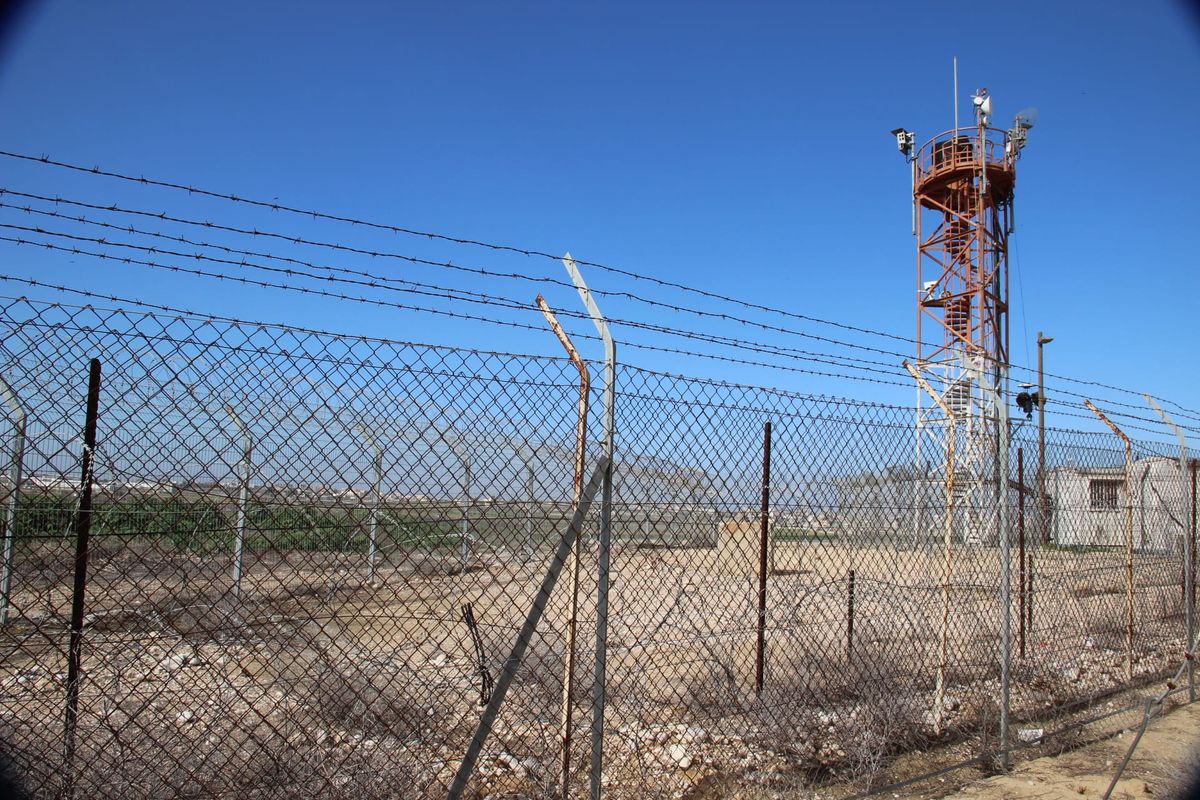
For years, Israel had invested heavily in border surveillance, intelligence collection, physical barriers and advanced military technology.
The Gaza border was protected by a sophisticated system designed to detect infiltration attempts and allow security forces to respond rapidly.
Yet on October 7, this system failed.
The consequences extended far beyond the destruction of border infrastructure.
Military bases were overrun. Communications were disrupted. Commanders struggled to establish an accurate picture of events. In several communities, civilians waited hours for substantial military assistance.
The failure raised fundamental questions about the assumptions that had shaped Israeli security policy.
How had Hamas prepared an operation of such magnitude without Israel's intelligence services adequately recognising the danger?
Why were warnings and suspicious activities not translated into effective defensive measures?
How did armed groups overcome a border system supported by surveillance cameras, sensors, remote-controlled weapons and military observation posts?
Why were Israeli forces unable to respond quickly enough to protect communities located only a short distance from military installations?
And who bears responsibility for the decisions that preceded the attack?
These questions became central to investigations conducted by the Israel Defense Forces, Israeli journalists, security specialists and other researchers.
The findings pointed to failures involving intelligence assessments, operational preparedness, military planning and institutional assumptions about Hamas's intentions.
They also revealed the limitations of relying on technological systems without sufficient preparation for unexpected or large-scale threats.
However, October 7 cannot be understood solely as a technological or military failure.
The attack unfolded within a much longer history of conflict between Israel and Palestinian armed organisations in Gaza.
It occurred after years of military confrontations, restrictions on Gaza, attempts to manage the conflict and political decisions that shaped the security environment.
The Hamas-led attacks involved deliberate killings of civilians and hostage-taking, acts prohibited under international humanitarian law.
The Israeli military campaign that followed caused extensive destruction and severe civilian suffering in Gaza, generating further questions about the conduct of warfare, humanitarian protection and accountability.
Understanding the events of October 7 therefore requires examining both the immediate security failures and the wider political and military context.
This investigation focuses on the decisions, systems and assumptions that allowed the assault to unfold.
It examines the construction of Israel's Gaza border defences, the intelligence warnings preceding the attack, Hamas's preparations, the events of the morning itself and the difficulties encountered by Israeli military forces responding to the crisis.
It also considers the experiences of soldiers and civilians who confronted the attackers, the findings of subsequent investigations and the continuing debate over institutional and political responsibility.
The purpose is not to reconstruct every individual incident or replace ongoing investigations.
It is to explain how a country with advanced military capabilities experienced such a catastrophic breakdown in civilian protection.
Because the central question of October 7 is not only how Hamas breached Israel's border.
It is how an entire security system, built to anticipate and prevent precisely such threats, failed to protect the people who depended on it.
Chapter 1 — The Security System Israel Believed Would Hold
A Border Built Around the Promise of Security
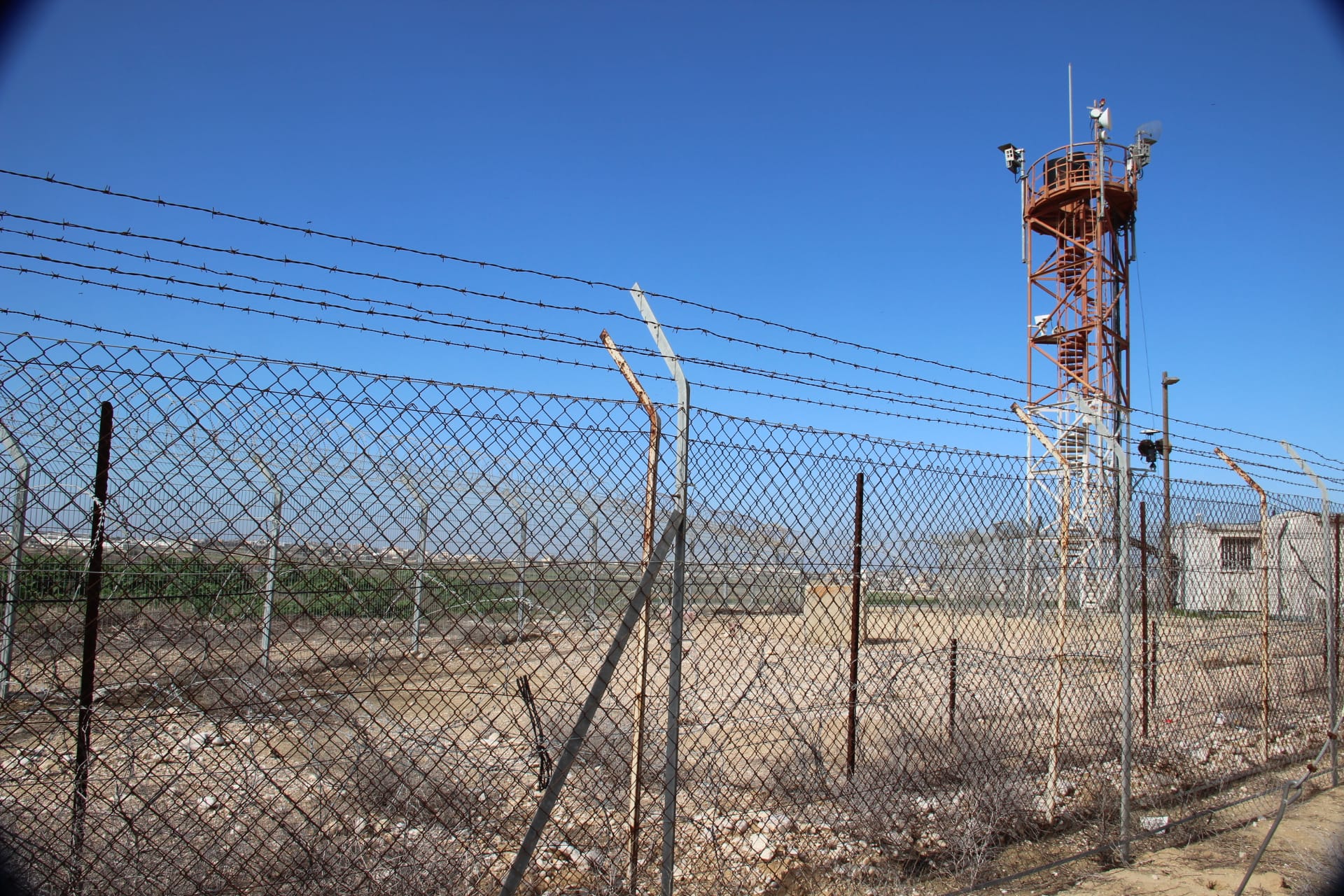
For years before October 7, 2023, Israel's security strategy along the Gaza border relied on a combination of physical barriers, surveillance technology, intelligence collection and military response capabilities.
The system was designed to detect and prevent unauthorised crossings while providing military commanders with information about developments near the border.
It reflected Israel's broader investment in advanced defence technology.
Surveillance cameras monitored sections of the border. Sensors were intended to identify suspicious activity. Military observation posts collected information, while remotely operated weapons and other defensive systems formed part of the security infrastructure.
The physical barrier itself was only one component of a much larger defensive network.
Israeli authorities regarded the system as an important element of national security.
However, the attacks of October 7 demonstrated that a sophisticated border system could still be vulnerable to a coordinated assault designed to disrupt several defensive elements simultaneously.
The Geography of the Gaza Border
The Gaza Strip is a narrow coastal territory bordered by Israel, Egypt and the Mediterranean Sea.
Israeli communities are located relatively close to the border in several areas.
These include kibbutzim, agricultural settlements, towns and regional communities whose residents have lived for years with the possibility of rocket attacks and other security incidents.
Military installations and observation positions were established near the border to monitor developments and support defensive operations.
The proximity of civilian communities to Gaza created particular security challenges.
A successful infiltration could allow attackers to reach residential areas within a relatively short period.
This made early detection and rapid military response essential.
The defensive system therefore depended not only on preventing border crossings but also on ensuring that military forces could respond effectively if a breach occurred.
From Physical Fences to Advanced Surveillance
Israel's border security arrangements around Gaza developed over several decades.
Physical fencing and patrol systems were gradually supplemented by surveillance equipment and additional technological measures.
Following repeated confrontations with armed organisations in Gaza, Israel invested in improving its ability to identify infiltration attempts and monitor activities near the border.
The discovery and use of cross-border tunnels created additional concerns.
Israeli authorities developed underground detection and barrier systems intended to reduce the threat posed by tunnels extending from Gaza into Israeli territory.
In December 2021, Israel announced the completion of a major upgraded barrier along the Gaza border.
The project included above-ground fencing, underground components, sensors and associated technological infrastructure.
The barrier represented a substantial investment in border defence.
Its purpose was to make infiltration more difficult and provide security forces with better warning of attempted crossings.
However, the existence of advanced infrastructure did not eliminate the need for personnel, operational readiness and effective military planning.
The Role of Military Observation Units
Surveillance personnel played an important role in the Gaza border security system.
Among them were female soldiers assigned to observation positions responsible for monitoring activity near the border.
These soldiers, often referred to in Hebrew as tatzpitaniyot, worked with surveillance equipment and reported unusual movements or developments to commanders.
Their responsibilities included identifying potentially suspicious activity and communicating information that might indicate security threats.
The effectiveness of the system depended on their observations being interpreted and acted upon.
In the months preceding October 7, some surveillance soldiers reported concerning activities involving Hamas personnel near the border.
These observations later became a major subject of public attention and military investigation.
The issue was not simply whether suspicious activity had been observed.
It was whether the information had been properly assessed within the military's intelligence and command structures.
The events at Nahal Oz, where surveillance soldiers were killed and abducted during the attack, became particularly significant in the examination of these failures.
The Intelligence Assumption That Hamas Was Deterred
Military preparedness is influenced by intelligence assessments.
Before October 7, an important assumption within Israel's security establishment was that Hamas was deterred from launching a major confrontation.
Hamas remained an armed threat, and Israeli authorities recognised its military capabilities.
However, assessments increasingly suggested that the organisation had reasons to avoid a large-scale war.
Israeli policymakers also pursued arrangements intended to manage the conflict, including economic measures and permits allowing some Gaza residents to work in Israel.
These policies were partly based on the belief that economic considerations and the consequences of previous military confrontations might influence Hamas's decisions.
Subsequent investigations found that Israeli intelligence had seriously underestimated Hamas's willingness and ability to conduct a major coordinated assault.
The problem involved not only the collection of intelligence but also the interpretation of available information.
Evidence that contradicted established assumptions was not always given sufficient weight.
When Intelligence Becomes an Institutional Assumption
Intelligence organisations are required to assess incomplete information.
Their conclusions influence military planning, resource allocation and political decision-making.
However, repeated acceptance of a particular assessment can create institutional risks.
When an organisation becomes strongly committed to the belief that an adversary is unlikely to act in a certain way, new information may be interpreted through that expectation.
This can lead to confirmation bias, in which evidence supporting an established belief receives greater attention than evidence challenging it.
Investigations into October 7 identified problems consistent with this broader phenomenon.
Hamas's capabilities and intentions were assessed through assumptions that proved incorrect.
Warnings that might have indicated preparation for a major attack did not produce an adequate change in defensive posture.
The failure illustrates a fundamental challenge of intelligence work.
Collecting information is not enough.
Security institutions must also remain willing to reconsider their conclusions when new evidence emerges.
The Dependence on Technology
Israel's border defence system incorporated advanced technological capabilities.
These systems provided important advantages in surveillance and threat detection.
However, technology can also create dependencies.
A camera cannot provide useful information if it is disabled or its images cannot reach the personnel responsible for monitoring them.
A sensor may detect movement, but the information must still be assessed and communicated.
A remotely operated defensive system depends on functioning communications, power and control arrangements.
The October 7 assault demonstrated the risks associated with simultaneous attacks against interconnected systems.
Hamas-led attackers targeted elements of the surveillance and military infrastructure while other forces crossed the border.
The disruption of equipment and communications contributed to confusion and reduced the effectiveness of defensive responses.
Technology had not eliminated the need for resilient command structures and sufficient forces capable of responding when the system was damaged.
The Importance of Military Readiness
Border security requires more than surveillance and physical barriers.
It also depends on military readiness.
Forces must be available, adequately trained and capable of responding to a range of possible threats.
Commanders must understand the vulnerabilities of the areas they are responsible for protecting.
Operational plans must consider situations in which communications are disrupted or several locations are attacked simultaneously.
Before October 7, Israeli military planning did not adequately prepare for an assault involving large numbers of attackers entering through multiple breaches.
The scale of the operation exceeded the scenarios for which many local defensive arrangements were prepared.
Military installations were attacked at the same time that civilian communities were threatened.
This created competing demands on forces that were already under pressure.
The resulting delays in military response became one of the most devastating aspects of the attack.
A Security System Designed Around the Wrong Scenario
The central weakness of Israel's Gaza border defence was not simply that a barrier could be breached.
Every physical barrier has limitations.
The more significant failure was that the wider defensive system was not adequately prepared for the type of coordinated assault Hamas launched.
Israeli security arrangements were heavily influenced by assessments of what Hamas was likely to attempt.
Those assessments underestimated the possibility of a large-scale attack combining rocket fire, attacks on surveillance infrastructure, border breaches and assaults against military and civilian targets.
When that scenario occurred, multiple parts of the defensive system failed or were overwhelmed.
The consequences exposed weaknesses in intelligence interpretation, operational planning and the coordination of military forces.
The Lessons of a Failed Defence
The events of October 7 demonstrated that military technology cannot guarantee security.
Advanced surveillance systems and physical barriers can reduce certain risks, but they cannot replace effective intelligence analysis, operational preparedness and human judgement.
The failure also revealed the dangers of assuming that an adversary's intentions will remain unchanged.
Military organisations must continually reassess their understanding of potential threats.
They must be prepared for scenarios that appear unlikely but could have catastrophic consequences.
For the Israeli communities near Gaza, these lessons came at an enormous human cost.
The people living behind the border defences had relied on the state and its military institutions to protect them.
On October 7, that protection failed.
Understanding why requires examining the warnings that preceded the attack and the decisions made by those responsible for interpreting them.
The next chapter investigates the intelligence information available before October 7, including reports of Hamas preparations, surveillance observations and the warnings that did not result in an adequate defensive response.
Chapter 2 — The Warnings Before October 7: Intelligence That Was Not Acted Upon
The Intelligence That Existed Before the Attack
One of the most troubling questions surrounding October 7, 2023, is whether Israel's security institutions possessed information that could have helped prevent the attack.
In the months and years following the Hamas-led assault, investigations revealed that Israeli intelligence agencies had collected significant information about Hamas's military preparations.
Some of this information described a possible coordinated attack against Israeli military positions and communities near the Gaza border.
Other reports documented unusual training activities, movements near the border and developments that concerned military observation personnel.
Yet these warnings did not produce the defensive preparations necessary to prevent the assault.
The failure was not simply that Israeli intelligence had been unaware of Hamas's capabilities.
The more significant issue was that information already available to military authorities was not interpreted or acted upon effectively.
This distinction became central to investigations examining the responsibilities of Israel's military intelligence organisations and senior commanders.
Understanding these failures requires examining the information that existed before October 7, the assumptions through which it was interpreted and the decisions that followed.
The Jericho Wall Document
Among the most significant revelations was the existence of a Hamas operational plan known to Israeli intelligence as Jericho Wall.
The document, reported publicly after October 7, described a potential large-scale assault against Israel.
It outlined a coordinated operation involving rocket fire, attacks on border surveillance systems, the breaching of defensive barriers and the movement of armed attackers into Israeli territory.
The plan also described attacks against military installations and communities near Gaza.
The resemblance between elements of the document and the events of October 7 was striking.
Israeli intelligence personnel had obtained the plan well before the attack.
However, the document did not specify the exact date on which an operation would take place.
According to subsequent reporting, some Israeli officials regarded the plan as beyond Hamas's realistic operational capabilities.
Others recognised that the document represented a serious potential threat.
The disagreement reflected a wider problem within intelligence assessment.
Information about an adversary's possible intentions does not automatically establish whether that adversary has the capability or immediate intention to act.
Intelligence organisations must assess both.
In this case, the assessment that Hamas was unlikely to carry out such an operation proved catastrophically wrong.
A Plan That Appeared Too Ambitious
The Jericho Wall document presented Israeli analysts with a difficult question.
Was it a realistic operational plan or an ambitious scenario that Hamas lacked the resources to execute?
The distinction mattered because military planning depends on evaluating which threats are sufficiently credible to justify changes in readiness.
Some Israeli intelligence assessments reportedly concluded that Hamas did not possess the capability to conduct an attack on the scale described.
This conclusion was influenced by existing assumptions about the organisation's military strength and strategic intentions.
Hamas was known to possess rockets, armed personnel, tunnels and other military capabilities.
However, Israeli officials did not adequately anticipate that these capabilities could be combined in a coordinated operation designed to overwhelm multiple defensive systems simultaneously.
The events of October 7 demonstrated that the gap between an adversary's perceived capabilities and actual preparations can have devastating consequences.
The intelligence failure was therefore not simply an incorrect prediction.
It involved an assessment that shaped military preparedness and contributed to the failure to respond adequately to warning signs.
The Training Exercises That Raised Concerns
In the period preceding October 7, Hamas conducted military training activities in Gaza.
Some exercises involved simulated attacks against military positions and other targets.
Israeli surveillance personnel observed activities that raised concerns about possible preparations for an assault.
Subsequent reporting described how certain exercises resembled elements of the Jericho Wall plan.
These observations were important because they suggested that Hamas was not merely discussing a hypothetical operation.
Its personnel were practising activities that could form part of a coordinated attack.
However, interpreting military exercises is not straightforward.
Armed organisations frequently conduct training, demonstrations and propaganda activities.
An exercise may be intended to prepare for an operation, signal capabilities or influence an adversary's perceptions.
The responsibility of intelligence analysts is to assess such activities within the wider body of available information.
In this case, the relationship between the known operational plan and observed training did not lead to an adequate reassessment of the threat.
The Female Surveillance Soldiers Who Reported Suspicious Activity
Female soldiers assigned to observation positions along the Gaza border played an important role in monitoring developments before October 7.
Known as tatzpitaniyot, these soldiers were responsible for observing activity through surveillance systems and reporting potentially significant developments.
Some described unusual Hamas activities near the border during the months preceding the attack.
Their observations included changes in patterns of movement, training activities and other behaviour that they believed required attention.
Following October 7, accounts from surveillance personnel and their families raised concerns that some warnings had been dismissed or insufficiently investigated.
These accounts became an important part of the public debate over the intelligence failure.
The issue was not simply whether the soldiers had reported suspicious activity.
It was how their observations were evaluated within the military command structure.
Junior personnel may possess detailed knowledge of a particular operational environment because they monitor it continuously.
However, their assessments must pass through layers of command and intelligence analysis before they influence major military decisions.
When information from lower-ranking personnel is discounted because it contradicts established assumptions, the consequences can be serious.
The experiences of the surveillance soldiers raised broader questions about military hierarchy, institutional culture and the importance of listening to personnel closest to emerging threats.
Nahal Oz: A Warning System That Failed Its Own Personnel
The Nahal Oz military base was one of the installations attacked on October 7.
It housed surveillance personnel responsible for monitoring sections of the Gaza border.
During the assault, Hamas-led attackers entered the base.
Soldiers were killed, and seven female surveillance soldiers were abducted into Gaza.
The attack became one of the most painful symbols of the wider security failure.
The personnel responsible for monitoring threats near the border were themselves left vulnerable when the defensive system collapsed.
Subsequent military investigations identified serious deficiencies in the protection and preparedness of the base.
The events also intensified scrutiny of warnings reportedly raised by surveillance soldiers before the attack.
For families of those killed or abducted, the central question was whether their relatives' observations had been taken seriously.
The Nahal Oz case illustrates how intelligence failures can have direct consequences for the people responsible for collecting information.
It also demonstrates that surveillance systems require more than advanced equipment.
They depend on functioning command structures, appropriate defensive arrangements and a willingness to act on credible warnings.
The July 2023 Warning
Investigative reporting after October 7 revealed that an Israeli intelligence analyst had warned colleagues in July 2023 that Hamas training activities appeared consistent with elements of the Jericho Wall plan.
The analyst reportedly identified similarities between observed exercises and the operational scenario described in the document.
This warning suggested that Hamas might be developing the capability to implement aspects of the plan.
The information was communicated within military intelligence channels.
However, the warning did not produce the level of concern or operational response that would later appear necessary.
The episode became significant because it demonstrated that at least some personnel had recognised the connection between Hamas's documented plans and its observed preparations.
The problem was therefore not an absolute absence of analytical insight.
It was the failure of that insight to alter the institution's prevailing assessment.
This distinction is essential when evaluating intelligence failures.
An organisation may contain individuals who identify a threat accurately while the wider institution continues to operate according to an incorrect assumption.
The Assumption That Hamas Wanted Stability
Israeli security policy toward Gaza was influenced by the belief that Hamas had reasons to avoid a major confrontation.
Following previous rounds of fighting, Israeli authorities assessed that the organisation was interested in maintaining its control over Gaza and avoiding another destructive war.
Economic arrangements, including work permits for some Gaza residents, were part of a broader approach intended to manage tensions.
These policies were not based solely on trust.
They reflected an assessment that Hamas could be deterred through a combination of military pressure, economic incentives and the expected costs of escalation.
However, subsequent investigations found that the assumption of deterrence had become deeply embedded in Israeli security thinking.
Information suggesting preparations for a major attack was often interpreted within that framework.
The possibility that Hamas was deliberately creating an impression of restraint while preparing a large-scale assault was not given sufficient weight.
The result was a dangerous gap between Israel's understanding of Hamas's intentions and the organisation's actual preparations.
The Difference Between Intelligence Collection and Intelligence Assessment
Intelligence collection involves gathering information.
This may include surveillance imagery, intercepted communications, human sources, open-source material and observations from military personnel.
Intelligence assessment involves interpreting that information and determining what it means.
The distinction is fundamental.
A security organisation may possess large amounts of information without correctly understanding its significance.
In the case of October 7, the available evidence indicates that Israeli intelligence had collected important information concerning Hamas's operational plans and training.
However, the interpretation of that information was influenced by assumptions about what Hamas was likely to attempt.
The failure illustrates the limitations of intelligence systems that depend on established analytical frameworks.
When new evidence contradicts a widely accepted assessment, organisations must decide whether the evidence is unreliable or whether the assessment itself requires revision.
That decision can determine whether a warning produces action.
Institutional Confidence and Confirmation Bias
Confirmation bias occurs when people give greater weight to information supporting their existing beliefs while discounting evidence that challenges them.
The phenomenon is particularly dangerous in intelligence organisations because their assessments influence national security decisions.
Before October 7, the belief that Hamas was deterred affected how some information was interpreted.
Military exercises could be viewed as demonstrations rather than preparations.
An operational plan could be dismissed as unrealistic.
Unusual activity near the border could be assessed as insufficient evidence of an imminent attack.
Each individual conclusion might appear defensible when considered separately.
Together, however, they contributed to an inaccurate understanding of the threat.
The problem was compounded by institutional confidence in Israel's technological and military superiority.
Advanced surveillance systems and a sophisticated border barrier were expected to provide warning and protection.
The possibility that Hamas could disrupt those systems and overwhelm local forces was not adequately incorporated into defensive planning.
The Night Before October 7
During the night of October 6–7, Israeli security officials received information about unusual activity involving Hamas.
The precise interpretation of these indications became a major subject of subsequent investigations.
Senior security and military officials discussed developments that could suggest heightened activity.
However, the information did not result in a full-scale alert or a substantial reinforcement of the Gaza border.
Some measures were taken, including limited operational responses and further efforts to clarify the situation.
The broader assessment did not identify an imminent assault on the scale that followed.
Investigations later examined why the warning signs did not trigger a more extensive defensive response.
The issue involved both the quality of the available intelligence and the assumptions used to interpret it.
A warning does not always provide certainty about an impending attack.
Nevertheless, when the possible consequences are catastrophic, uncertainty itself may justify additional precautionary measures.
The events of that night became central to the question of whether the IDF and other security organisations had adequately considered the risks.
Why the Border Was Not Reinforced
The decision not to substantially reinforce the Gaza border before the attack reflected the prevailing assessment of the threat.
Israeli forces were deployed according to military priorities across several operational areas.
The West Bank, northern Israel and other security concerns also required attention.
However, the availability and allocation of forces near Gaza became a major subject of scrutiny after October 7.
The simultaneous attacks against military positions and civilian communities demonstrated that local forces were insufficiently prepared for the scale of the assault.
Military reinforcements took hours to reach some locations.
The resulting delays contributed to the severity of the attacks.
Subsequent investigations identified failures in operational readiness and planning.
The question was not simply whether additional soldiers could have prevented every breach.
It was whether a different assessment of the threat might have led to stronger defensive preparations and a faster response.
The Role of Shin Bet and Military Intelligence
Israel's security system includes several intelligence organisations with different responsibilities.
The IDF's Military Intelligence Directorate, commonly known as Aman, provides intelligence to military commanders and national decision-makers.
Shin Bet, also known as the Israel Security Agency, is responsible for internal security and counterterrorism, including significant responsibilities involving Palestinian armed organisations.
Mossad focuses primarily on foreign intelligence and covert activities abroad.
The intelligence picture concerning Gaza involved cooperation and information-sharing among relevant security institutions.
Following October 7, questions arose about how information had been exchanged, assessed and communicated.
Investigations examined whether institutional boundaries and differing assessments contributed to the failure.
The existence of multiple intelligence organisations can provide important advantages through specialised expertise.
However, it also creates a need for effective coordination.
When several institutions possess parts of a broader intelligence picture, failures to integrate those parts can have serious consequences.
The Responsibility of Senior Commanders
Military intelligence assessments influence operational planning, but senior commanders are responsible for deciding how military forces should prepare for threats.
The events preceding October 7 therefore raised questions about responsibility at different levels of command.
Intelligence analysts collected and interpreted information.
Operational commanders assessed military readiness.
Senior military leaders determined broader priorities and defensive arrangements.
Political leaders were responsible for national security policy and oversight.
The failure involved decisions and assumptions across this wider system.
It would be misleading to attribute the entire breakdown to one individual, one warning or one intelligence document.
At the same time, the complexity of the system does not eliminate individual responsibility.
Accountability requires examining who possessed particular information, what decisions they made and whether those decisions were reasonable in light of the available evidence.
The Findings of the IDF Investigations
In February 2025, the IDF published a summary of its broader investigations into the failures surrounding October 7.
The military acknowledged that it had failed in its mission to protect Israeli civilians.
The findings identified serious shortcomings in intelligence assessments, operational preparedness and the understanding of Hamas's capabilities and intentions.
The investigations concluded that the IDF had underestimated Hamas and had not adequately prepared for the possibility of a coordinated, large-scale assault.
They also examined the failures of defensive arrangements and the military response during the attack.
These findings represented an important institutional acknowledgement.
However, military investigations primarily addressed matters within the IDF's own responsibilities.
They did not provide a complete examination of all political decisions that shaped Israel's policy toward Gaza.
This limitation became central to demands for an independent national inquiry.
The Debate Over Political Responsibility
The intelligence failures preceding October 7 were closely connected to broader questions of government policy.
Israeli governments had pursued different strategies toward Hamas and Gaza over many years.
These strategies involved military deterrence, border restrictions, economic measures and attempts to manage the conflict without resolving its underlying political causes.
Critics argued that the policies had contributed to an inaccurate understanding of Hamas's intentions.
Others emphasised the difficulty of predicting the decisions of an armed organisation that deliberately concealed its preparations.
The debate concerned both political judgement and institutional responsibility.
Military leaders were responsible for operational readiness.
Political leaders were responsible for the broader security strategy and oversight of the institutions implementing it.
Survivors and families of victims called for an independent investigation capable of examining both dimensions.
The question of accountability therefore extended beyond military intelligence.
It concerned the relationship between government decisions, security assessments and the protection of civilians.
Could the Attack Have Been Prevented?
It is impossible to establish with certainty what would have happened if particular warnings had been interpreted differently.
A different intelligence assessment might have led to additional forces being deployed near Gaza.
Military bases might have adopted stronger defensive measures.
Civilian communities might have received earlier warnings.
Surveillance systems and command structures might have been placed on heightened alert.
These possibilities are important, but they remain counterfactual.
They should not be presented as proof that any single decision would necessarily have prevented the attack.
What subsequent investigations did establish was that Israel's security institutions possessed important information about Hamas's plans and capabilities.
They also established that the IDF was inadequately prepared for the type of assault that occurred.
The distinction between what is known and what remains hypothetical is essential to an accurate historical account.
The Human Consequences of Ignored Warnings
Intelligence failures are often described in technical language.
They involve assessments, operational plans, surveillance systems and chains of command.
However, the consequences are human.
On October 7, soldiers were killed at military installations.
Civilians were attacked in their homes and communities.
Families waited for assistance that did not arrive quickly enough.
Hostages were taken into Gaza.
For survivors and bereaved families, the existence of earlier warnings raised painful questions.
Could more lives have been saved?
Why were reports from surveillance personnel not given greater attention?
Why did the military fail to prepare for an attack that resembled a plan already known to intelligence officials?
These questions remain central to the public understanding of October 7.
They also illustrate why intelligence accountability is not merely an internal military matter.
It concerns the responsibility of the state to protect the people who depend on its institutions.
What the Intelligence Failure Revealed
The intelligence failures preceding October 7 demonstrated that advanced security organisations can possess important information while failing to recognise its significance.
The Jericho Wall document, observed Hamas training activities, warnings from surveillance personnel and unusual developments before the attack all became part of the subsequent examination.
Individually, these elements did not necessarily establish when an attack would occur.
Together, they revealed a threat that had been seriously underestimated.
The failure was reinforced by institutional assumptions about Hamas's intentions and confidence in Israel's border defences.
The central lesson is not that intelligence organisations can predict every attack.
No intelligence system can eliminate uncertainty.
The lesson is that organisations must remain capable of challenging their own assessments, recognising emerging threats and preparing for scenarios whose consequences could be catastrophic.
For Israel, the failure of October 7 transformed these principles from abstract intelligence concepts into urgent questions of national responsibility.
The next chapter examines how Hamas prepared and organised the assault, including the planning, training and coordination that allowed the attack to overcome Israel's border defences.
Chapter 3 — Inside the Planning: How Hamas Prepared the October 7 Assault
An Attack That Required Years of Preparation
The Hamas-led attacks of October 7, 2023, were not a spontaneous outbreak of violence.
They were the result of extensive preparation, organisational planning and a deliberate effort to exploit weaknesses in Israel's security arrangements around the Gaza Strip.
The assault combined rocket fire, attacks on military infrastructure, the breaching of border barriers and the movement of armed attackers into Israeli territory.
Military positions, residential communities and civilian gatherings were attacked.
The operation demonstrated that Hamas had developed capabilities that Israeli intelligence and military commanders had seriously underestimated.
It also revealed the organisation's ability to coordinate different elements of an assault while attempting to conceal its intentions.
Understanding the preparation behind October 7 is essential to understanding why Israel's defensive system failed.
However, important distinctions must be maintained.
Some details of the planning have been established through captured documents, public statements, military investigations and independent reporting.
Other claims remain disputed or are based on intelligence assessments that have not been independently verified.
A responsible examination must distinguish between confirmed findings and conclusions that remain uncertain.
Hamas and Its Military Organisation
Hamas was established in 1987 during the First Intifada.
It developed as a Palestinian Islamist political and armed movement and has governed the Gaza Strip since consolidating its control there in 2007.
Its military wing, the Izz ad-Din al-Qassam Brigades, developed an organised armed structure capable of conducting rocket attacks, raids and other military operations.
Hamas is designated as a terrorist organisation by Israel, the United States, the European Union, the United Kingdom and several other governments.
The organisation has carried out attacks against Israeli civilians, including suicide bombings, rocket attacks and the October 7 assault.
Its political and military activities have also been shaped by the wider Israeli–Palestinian conflict, including Israel's occupation of Palestinian territories, the blockade and restrictions affecting Gaza, repeated armed confrontations and the unresolved question of Palestinian statehood.
These circumstances form part of the historical context, but they do not justify deliberate attacks on civilians or hostage-taking.
International humanitarian law prohibits such acts regardless of the political objectives claimed by those responsible.
The planning of October 7 was primarily associated with Hamas's military leadership in Gaza.
Other Palestinian armed groups also participated in the attacks, although the precise extent of their involvement varied.
The distinction matters because responsibility for specific acts must be established through evidence rather than attributed collectively to the Palestinian population.
The Leadership Behind the Operation
Yahya Sinwar, Hamas's senior leader in Gaza at the time of the attack, was widely identified by Israeli officials as a central figure behind the October 7 operation.
Mohammed Deif, the commander of the Qassam Brigades, was also identified as a principal military leader associated with the assault.
Deif publicly announced the beginning of the operation on October 7 in a recorded statement.
The attack was named Operation Al-Aqsa Flood by Hamas.
The name invoked the Al-Aqsa Mosque compound in Jerusalem, a site of profound religious and political significance.
Hamas presented the operation through a combination of religious, nationalist and political claims.
Its statements referred to Jerusalem, Palestinian prisoners, Israeli actions and the wider conflict.
However, the organisation's public justifications must be distinguished from the actual conduct of its fighters.
The deliberate killing of civilians and the taking of hostages were violations of fundamental rules of international humanitarian law.
Although Sinwar and Deif were widely described as key architects, the precise internal decision-making process and the knowledge held by different Hamas officials have not been fully established in the public record.
The available evidence nevertheless indicates that planning was concentrated within a relatively restricted circle of military leadership.
The Importance of Secrecy
One of the most significant aspects of the October 7 preparations was Hamas's apparent effort to conceal the scale and timing of the operation.
A major assault against a heavily defended border requires coordination.
Personnel must be trained, equipment prepared and responsibilities assigned.
These activities can create intelligence indicators.
Hamas therefore faced a central challenge: preparing a complex operation while limiting Israel's ability to recognise its purpose.
Subsequent investigations and reporting suggested that the organisation restricted knowledge of important operational details.
This approach could reduce the likelihood that sensitive information would be exposed through communications, informants or other intelligence sources.
It also meant that the full plan may not have been known to every participant until relatively close to the attack.
The precise arrangements remain incompletely documented.
Nevertheless, the broader pattern is clear.
Hamas attempted to prepare a large-scale operation while avoiding the warning signals that might have caused Israel to reinforce its border defences.
Creating an Impression of Restraint
In the period before October 7, Israeli officials increasingly assessed that Hamas had reasons to avoid a major confrontation.
The organisation governed Gaza and faced economic, political and military pressures.
Israeli policy included measures intended to reduce tensions, such as permitting a limited number of Gaza residents to work in Israel.
These arrangements formed part of a broader strategy based on deterrence and conflict management.
Hamas did not participate in every confrontation between Israel and armed groups in Gaza.
In some instances, Palestinian Islamic Jihad was more directly involved in fighting while Hamas remained outside the immediate confrontation.
Israeli officials interpreted aspects of this behaviour as evidence that Hamas was prioritising governance and stability.
After October 7, Israeli investigations concluded that this assessment had been seriously mistaken.
Hamas's apparent restraint had contributed to an inaccurate understanding of its intentions.
Whether every instance of restraint was deliberately intended as deception is more difficult to establish.
However, the organisation benefited from an Israeli intelligence assessment that underestimated its willingness to launch a major assault.
The difference between an adversary's public behaviour and its concealed intentions became one of the central lessons of October 7.
Military Training Before the Attack
Hamas conducted military exercises in Gaza before October 7.
Some training activities were publicly visible and included demonstrations of armed capabilities.
Others were observed through Israeli surveillance systems.
The exercises included scenarios resembling attacks against military positions and border infrastructure.
Following October 7, investigative reporting identified similarities between elements of these exercises and the assault that eventually occurred.
This raised serious questions about why the activities had not led to a reassessment of Hamas's intentions.
Training exercises alone do not prove that an attack is imminent.
Armed organisations may conduct exercises for multiple purposes, including preparation, recruitment, propaganda and deterrence.
However, training becomes more significant when it resembles an operational plan already known to intelligence officials.
In the case of October 7, the relationship between Hamas's documented plans and observed preparations was not adequately reflected in Israel's defensive posture.
The failure illustrates the importance of assessing training activities alongside other available intelligence rather than treating them as isolated events.
The Jericho Wall Plan and Operational Preparation
As discussed in the previous chapter, Israeli intelligence possessed a document known as Jericho Wall.
It described a possible large-scale assault involving multiple elements that later appeared in the October 7 attack.
The document became important because it demonstrated that Hamas had developed a concept for overcoming Israel's border defences.
The subsequent assault showed that the organisation had translated important elements of that concept into operational capabilities.
However, it is necessary to avoid assuming that every detail in the document was executed exactly as originally described.
Military plans can change during preparation, and events during an operation may develop differently from what commanders intended.
The relationship between the Jericho Wall document and the final assault therefore provides evidence of preparation, but it does not by itself establish every decision made by Hamas's leadership.
The central significance is that Israeli intelligence had information about a possible operation whose broad characteristics closely resembled the attack that later occurred.
Studying the Border and Its Vulnerabilities
The Gaza border was protected by a sophisticated combination of physical barriers, surveillance equipment and military positions.
For Hamas, the border represented both a physical obstacle and a system of interconnected defensive capabilities.
The October 7 attack demonstrated that the organisation had identified important vulnerabilities.
The assault disrupted surveillance and communications infrastructure while attacks against military positions reduced the ability of local forces to respond.
The resulting confusion made it more difficult for Israeli commanders to establish a clear picture of events.
Subsequent investigations examined how Hamas had acquired information about military installations, defensive arrangements and the geography of communities near the border.
Public reporting has described captured documents and other materials indicating prior knowledge of certain targets.
The full extent of Hamas's intelligence collection has not been independently established.
What is clear is that the organisation entered the attack with more preparation and knowledge than Israeli military assessments had anticipated.
The Role of Drones and Other Equipment
The October 7 assault involved several categories of equipment and weapons.
Publicly documented footage showed the use of drones against elements of Israeli military infrastructure.
Other attackers used firearms, explosives and vehicles.
The operation also involved rocket fire and different methods of crossing the border.
The significance of these capabilities was not necessarily their technological sophistication.
Rather, it was their combined effect during a coordinated assault.
Israel's defensive infrastructure depended on surveillance, communications and the ability to respond quickly to developing threats.
When multiple elements of that system were disrupted, the consequences extended beyond the individual equipment that had been damaged.
The attack illustrated how comparatively inexpensive equipment could contribute to the disruption of a much more advanced military system.
This became an important subject of analysis for military and security specialists after October 7.
The Use of Multiple Forms of Infiltration
The assault involved attackers entering Israeli territory through multiple breaches in the Gaza border.
Some crossed using motorcycles and other vehicles.
Others used different methods of infiltration, including motorised paragliders.
The simultaneous use of several methods contributed to the scale and confusion of the attack.
Israeli forces faced incidents across a wide geographical area.
Military positions were attacked while armed groups moved toward civilian communities and other locations.
The number of incidents made it difficult to distinguish between individual attacks and the broader operational picture.
This was especially serious because the defensive system had not been adequately prepared for a coordinated assault of such magnitude.
The consequences were felt immediately by the communities near the border.
In several locations, residents confronted armed attackers before substantial military reinforcements arrived.
The Coordination of the Assault
The October 7 attack combined several developments occurring within a short period.
Rocket launches began as armed attackers moved against the border.
Elements of surveillance and military infrastructure were targeted.
Border barriers were breached.
Armed groups entered Israeli territory and attacked military installations, residential communities and civilian gatherings.
The scale of the assault suggests substantial advance coordination.
However, the degree of centralised control over every group and every incident remains an important question.
Investigations have distinguished between organised assault units, members of other armed organisations and additional individuals who crossed into Israel during the breakdown of border security.
Not every person who entered Israeli territory necessarily acted under the same command structure.
This distinction is particularly important when establishing responsibility for specific crimes.
The evidence demonstrates that Hamas organised and led the assault.
Determining the exact responsibility of individual attackers and commanders requires more detailed evidence.
The Attacks Against Civilian Communities
The preparation behind October 7 cannot be understood solely through military objectives.
The assault included attacks against civilian communities and civilian gatherings.
Kibbutzim and other communities near Gaza were attacked.
At the Nova music festival, hundreds of people were killed as attendees attempted to escape.
Civilians were murdered, homes were destroyed or damaged, and people were taken hostage.
Investigations also documented sexual and gender-based violence associated with the attacks, although the circumstances and evidence differ between individual incidents.
The deliberate targeting of civilians, murder, cruel treatment and hostage-taking are prohibited under international humanitarian law.
These crimes must remain central to any examination of the operation.
Describing October 7 exclusively as a successful penetration of military defences would obscure the human consequences and the unlawful conduct that formed part of the assault.
The military and intelligence failures matter because they left people exposed to these attacks.
Hostage-Taking as Part of the Operation
During the October 7 assault, 251 people were taken hostage and transported into Gaza.
They included civilians and members of the Israeli security forces.
The hostages varied in age and background.
Some were children or elderly people.
Others were foreign nationals or people holding more than one nationality.
The taking of hostages became one of the defining features of the attack.
Hamas and other armed groups had previously used the capture of Israelis as leverage in prisoner exchanges.
The 2011 exchange involving Israeli soldier Gilad Shalit was an important historical precedent.
However, the scale of the hostage-taking on October 7 was unprecedented in this context.
The operation created a humanitarian crisis for the hostages and their families.
It also profoundly influenced Israeli political and military decision-making during the war that followed.
The hostage crisis would become a central issue in negotiations, military operations and public debate.
Psychological and Political Objectives
Military operations can be designed to produce political and psychological effects beyond immediate battlefield outcomes.
The October 7 assault shocked Israeli society and challenged public confidence in the country's security institutions.
It disrupted the assumption that communities near Gaza could rely on advanced border defences and rapid military intervention.
The attack also drew international attention to Hamas and the Israeli–Palestinian conflict.
Hamas leaders offered political and ideological explanations for the operation.
However, statements made by an organisation after an attack do not necessarily provide a complete or reliable account of its internal objectives.
Analysts have proposed different interpretations of Hamas's strategic calculations, including the desire to disrupt regional diplomatic developments, challenge Israel's deterrence and secure leverage through hostage-taking.
Some of these interpretations remain contested.
What can be established is that the assault produced consequences extending far beyond the immediate attacks.
It triggered a major Israeli military campaign in Gaza and intensified regional instability.
The resulting war caused extensive Palestinian civilian suffering, displacement and destruction.
The Role of Other Armed Groups
Although Hamas organised and led the October 7 assault, it was not the only armed organisation involved.
Palestinian Islamic Jihad and other armed groups participated in attacks and hostage-taking.
The precise roles of different organisations varied across incidents.
This complexity matters for both historical accuracy and legal accountability.
Responsibility for crimes must be established according to the conduct of particular individuals and groups.
It should not be attributed collectively to Palestinians or to Gaza's civilian population.
The distinction is especially important because the overwhelming majority of civilians in Gaza did not participate in the assault.
International humanitarian law requires parties to a conflict to distinguish between combatants and civilians.
The crimes committed by armed organisations do not remove the legal protections owed to civilians.
What Hamas Appeared to Understand About Israel's Defences
The October 7 assault exposed a major imbalance between Israeli expectations and Hamas's actual preparations.
Israel possessed advanced surveillance technology, a substantial military and extensive intelligence capabilities.
Hamas nevertheless identified opportunities to disrupt defensive infrastructure and exploit delays in military response.
The organisation's preparations appear to have reflected an understanding that Israel's border security depended on interconnected systems.
When those systems were damaged or overwhelmed, local military forces struggled to respond effectively.
The assault also exploited weaknesses in Israel's operational readiness.
The available forces were not adequately prepared for the number of simultaneous attacks.
This combination of intelligence failure, disrupted infrastructure and insufficient defensive capacity contributed to the scale of the disaster.
The lesson was not that advanced technology had become irrelevant.
It was that technological superiority could not compensate for incorrect assumptions and inadequate preparation.
What Remains Unknown
Despite extensive investigations, some aspects of the October 7 planning remain uncertain.
The full internal decision-making process within Hamas has not been made public.
The precise knowledge held by different political and military leaders is not completely established.
The degree of coordination between participating armed groups also remains subject to investigation.
Some documents and intelligence assessments have been publicly reported but are not available for independent examination in their entirety.
Other information remains classified.
These limitations are important.
Journalistic investigations must not present plausible interpretations as established facts.
The available evidence supports the conclusion that Hamas planned and prepared a large-scale coordinated assault.
It does not establish every internal discussion, strategic calculation or operational decision that preceded it.
Recognising these uncertainties strengthens rather than weakens an accurate account.
The Difference Between Planning and Execution
A military operation may be carefully prepared while still developing unpredictably once it begins.
The events of October 7 involved organised attacks, but the situation also changed rapidly as Israeli border security collapsed.
Different armed groups entered Israeli territory.
Attacks unfolded across numerous locations.
The breakdown of communications and military command structures created confusion for Israeli defenders.
The available public record does not establish that every incident unfolded according to a single detailed plan.
This distinction is important when examining responsibility.
The existence of a coordinated operation does not mean that every participant received identical instructions or that every crime was directed through the same command structure.
Nevertheless, the leadership responsible for organising an assault may bear responsibility under applicable law for crimes it ordered, facilitated or otherwise contributed to.
Determining those responsibilities requires careful examination of evidence.
The Central Failure: Preparation Met Underestimation
The preparation behind October 7 demonstrated that Hamas had developed a military capability that Israel's security institutions had not adequately anticipated.
The organisation conducted training, developed operational plans and prepared personnel for an assault involving multiple forms of attack.
It also benefited from Israeli assumptions that it was deterred from initiating a major confrontation.
The combination proved devastating.
Israeli intelligence had information about Hamas's plans and activities.
However, the available warnings did not produce the defensive preparations necessary to confront the operation.
The result was a catastrophic failure of civilian protection.
The significance of Hamas's planning therefore cannot be separated from the failures of the system it attacked.
One organisation prepared an assault.
The other failed to recognise and adequately prepare for the threat.
Understanding the Consequences
The October 7 assault fundamentally changed Israel's security environment.
It exposed weaknesses in intelligence assessment, military readiness and border defence.
It also demonstrated the consequences of underestimating an adversary's intentions and capabilities.
For the people attacked in southern Israel, these failures were not abstract military lessons.
They resulted in death, injury, captivity, destruction and profound trauma.
The attack also initiated a war whose consequences were devastating for civilians in Gaza.
A complete understanding of October 7 must therefore examine both the preparations that made the assault possible and the human consequences of the events that followed.
The next chapter reconstructs the opening hours of October 7, examining how the assault unfolded, how Israel's border defences were overwhelmed and why the initial military response failed to contain the attacks.
Chapter 4 — October 7, 2023: The First Hours of the Attack
The Morning That Changed Israel
Saturday, October 7, 2023, began during the Jewish holiday of Simchat Torah.
Across southern Israel, families were at home, communities were preparing for the holiday, and thousands of young people were attending the Nova music festival near Kibbutz Re'im.
Along the Gaza border, Israeli soldiers were stationed at military bases and observation posts.
For many residents of the region, the possibility of rocket attacks was a familiar part of life. Communities had reinforced rooms, warning systems and established emergency procedures.
What unfolded that morning, however, was unlike the security incidents for which most residents had prepared.
At approximately 6:29 a.m., Hamas began a large-scale rocket barrage from the Gaza Strip.
At nearly the same time, armed attackers launched a coordinated assault against Israel's border defences.
Within a short period, military installations were under attack, border barriers had been breached and armed groups were moving toward Israeli communities.
The assault developed into the deadliest attack in Israel's history.
By the end of the day, the scale of the catastrophe was still not fully understood.
The military response continued beyond the first day, and some areas remained contested as Israeli forces fought to regain control.
The following reconstruction examines the opening hours of the attack, drawing on publicly documented events and subsequent investigations.
Because attacks occurred simultaneously across many locations, exact sequences and timings vary between individual incidents. The timeline should therefore be understood as a reconstruction of overlapping events rather than a minute-by-minute account of every location.
6:29 a.m. — The Rocket Barrage Begins
The first widely recognised signal of the assault was a large barrage of rockets launched from Gaza toward Israeli territory.
Air raid sirens sounded across southern Israel and in other parts of the country.
Residents moved toward shelters and reinforced rooms.
For many people, the initial assumption was that another period of rocket fire had begun.
Israel had experienced repeated rocket attacks from Gaza in previous years, and emergency procedures were familiar to many communities.
However, the rocket barrage was only one element of a much larger operation.
While Israeli civilians sought shelter, Hamas-led attackers were preparing to cross the border.
The simultaneous attacks created an immediate challenge for Israeli security forces.
They had to respond to incoming rockets while also confronting an emerging ground assault whose scale was not yet understood.
The rocket fire contributed to confusion during the opening stages of the attack.
The Border Defences Come Under Attack
Israel's Gaza border was protected by fencing, surveillance cameras, sensors, military observation positions and other defensive systems.
These arrangements were intended to identify infiltration attempts and support a rapid military response.
On October 7, attackers targeted elements of this infrastructure.
Publicly released footage showed drones being used against Israeli military equipment.
Other attackers damaged sections of the border barrier.
The attacks disrupted surveillance and communications at a moment when Israeli commanders urgently needed accurate information.
The consequences extended beyond the destruction of individual pieces of equipment.
The border defence system depended on information moving between observation personnel, military commanders and responding forces.
When parts of that system were disabled or overwhelmed, the ability to understand and respond to the developing assault deteriorated.
Israeli military investigations later identified serious deficiencies in preparedness for an attack of this scale.
The First Border Breaches
During the opening phase of the assault, armed attackers crossed from Gaza into Israel at multiple locations.
Some travelled on motorcycles or in vehicles.
Others entered on foot.
A smaller number used motorised paragliders.
The simultaneous breaches made it difficult for Israeli forces to establish a coherent picture of the attack.
Rather than facing one isolated infiltration, the military confronted numerous incidents across a wide area.
Some attackers moved toward military installations.
Others entered civilian communities or travelled along roads in southern Israel.
As the border defences collapsed, additional individuals crossed into Israeli territory.
Subsequent investigations distinguished between organised assault units, members of other Palestinian armed organisations and other individuals who entered during the breakdown of border security.
The distinction matters when determining responsibility for particular acts.
However, the central fact remains that Hamas organised and led the assault that made these incursions possible.
Military Bases Under Attack
Israeli military positions near Gaza were among the first targets.
The attackers assaulted installations responsible for border surveillance, communications and local military operations.
At several locations, soldiers were killed before they could organise an effective defence.
Some military personnel fought back despite being heavily outnumbered or cut off from reinforcements.
The attacks against military bases had consequences beyond the immediate casualties.
They weakened the military's ability to coordinate its response to the wider assault.
Commanders struggled to determine which locations were under attack and how many attackers had crossed the border.
Communications were disrupted, and the situation changed rapidly.
The simultaneous attacks on military installations and civilian communities created competing demands on the limited forces initially available.
Nahal Oz — The Attack on an Observation Base
The Nahal Oz military base became one of the most devastating examples of the failure of Israel's border defences.
The base housed soldiers, including female surveillance personnel responsible for monitoring activity near Gaza.
During the assault, Hamas-led attackers entered the installation.
Soldiers attempted to defend their positions, but the base was overwhelmed.
Numerous personnel were killed, and seven female surveillance soldiers were taken hostage into Gaza.
The attack was especially significant because some surveillance personnel had previously reported suspicious activities near the border.
Their warnings and the military's response to them became subjects of subsequent investigations.
For the families of those killed and abducted, Nahal Oz became a symbol of the failure to protect the very soldiers responsible for identifying threats.
The events at the base also exposed weaknesses in defensive planning, readiness and the protection of military personnel.
The Gaza Division's Command Structure Is Disrupted
The IDF's Gaza Division was responsible for military operations and border security in the area surrounding Gaza.
During the attack, its command arrangements were severely disrupted.
The division's headquarters at Re'im came under attack, while other military positions faced simultaneous assaults.
The disruption complicated efforts to establish an accurate operational picture.
Commanders received incomplete and sometimes conflicting information.
Military forces attempting to respond encountered armed attackers at multiple locations.
The scale of the assault exceeded the scenarios for which local defensive arrangements had been adequately prepared.
The result was a breakdown in the military's ability to coordinate an immediate and effective response across the entire region.
Subsequent IDF investigations identified failures in command, control and operational preparedness as central elements of the disaster.
The First Attacks on Israeli Communities
As armed attackers moved beyond the border, Israeli communities became targets.
Kibbutzim, towns and agricultural communities near Gaza experienced attacks involving shootings, killings, destruction and hostage-taking.
Residents received emergency warnings and moved into reinforced rooms.
However, these rooms were primarily designed to protect against rockets and shrapnel.
They were not necessarily capable of preventing armed attackers from entering homes.
In several communities, residents heard gunfire and explosions while attempting to contact emergency services, local security teams or relatives.
Some remained hidden for many hours.
Others attempted to escape but encountered attackers on roads or near their homes.
The simultaneous nature of the attacks meant that emergency calls came from numerous locations.
The Israeli military and police struggled to respond to the scale of the crisis.
Be'eri — A Community Under Siege
Kibbutz Be'eri was among the communities that suffered particularly severe losses.
Armed attackers entered the kibbutz during the morning.
Residents were killed in their homes and in other locations.
Hostages were taken, and buildings were damaged or destroyed during the fighting.
Members of the community's local security team and other defenders attempted to resist the attackers.
However, substantial military assistance was delayed.
The fighting continued for many hours and extended into the following day.
The events at Be'eri later became the subject of a detailed IDF investigation.
That investigation identified serious failures in the military's response, including delays and difficulties coordinating forces.
It also examined the conduct of Israeli troops during attempts to regain control of the community.
Be'eri became one of the most prominent examples of the human consequences of the security breakdown.
The community lost more than one hundred residents and security personnel, and many survivors experienced profound trauma.
Kfar Aza — Violence Inside a Residential Community
Kibbutz Kfar Aza was another community attacked on October 7.
Armed attackers entered residential areas and killed civilians.
Homes were damaged, and residents were taken hostage.
Some families remained hidden in reinforced rooms while the fighting continued outside.
Local defenders and responding soldiers attempted to confront the attackers.
However, the military response was delayed and fragmented.
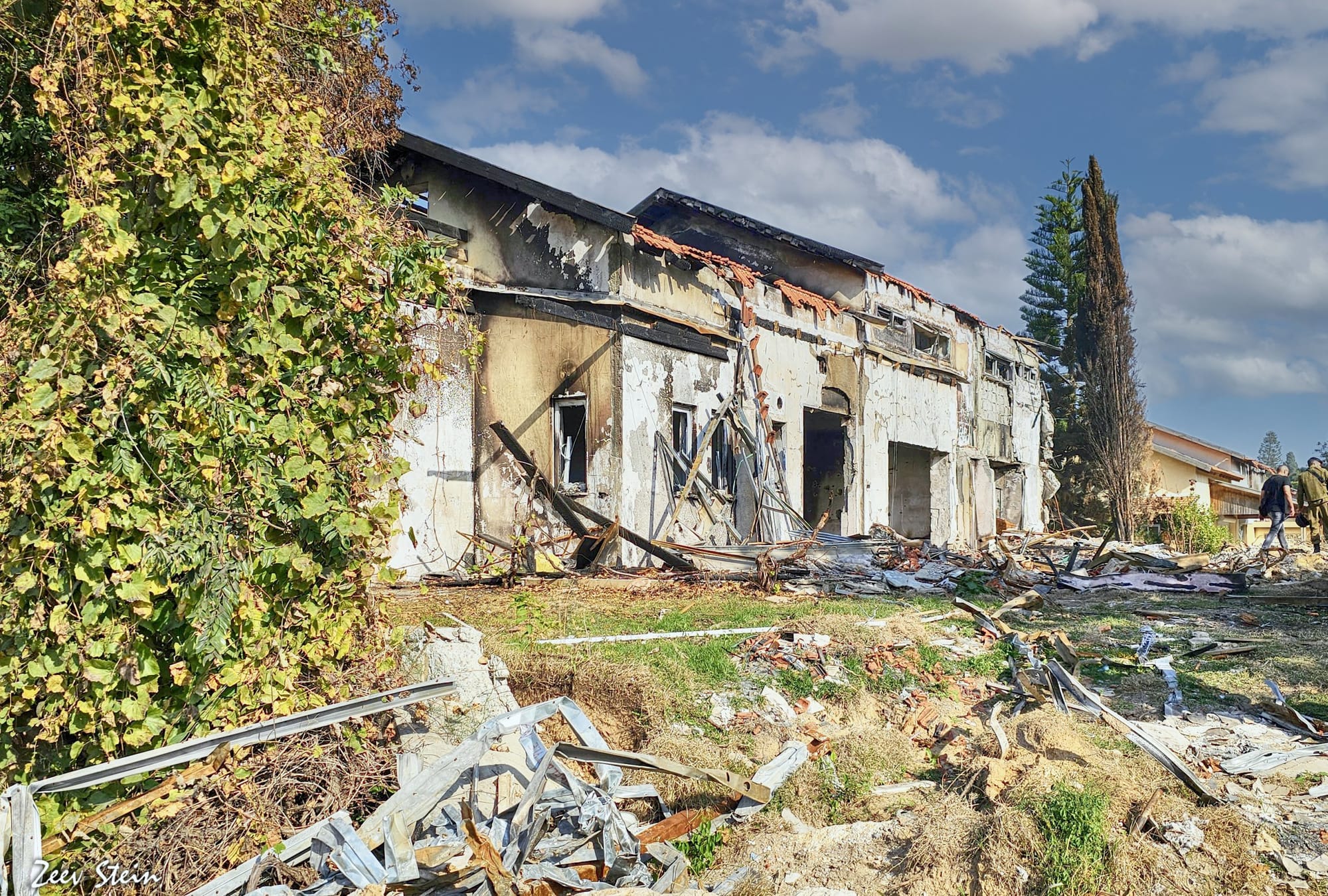
The scale of the destruction became visible to the wider world as journalists and military personnel entered the community in the days following the attack.
Images of damaged homes, abandoned belongings and destroyed residential areas illustrated the devastation.
The events at Kfar Aza also became the subject of investigations into the military's preparedness and response.
For survivors, the central questions extended beyond the conduct of the attackers.
They included why military assistance had not arrived sooner and whether the community could have been better protected.
Nir Oz — A Community Left Exposed
Kibbutz Nir Oz suffered exceptionally severe consequences.
Attackers entered the community, killed residents and abducted others into Gaza.
A substantial proportion of the community's population was killed or taken hostage.
Many residents remained trapped in their homes while the assault unfolded.
The military did not arrive in sufficient time to prevent much of the violence.
Nir Oz became a particularly painful example of the absence of effective military protection during the opening hours.
The experiences of its residents later played an important role in public demands for accountability.
Families sought answers about the failures that had left the community exposed.
The attack also highlighted the long-term consequences of hostage-taking.
For relatives of those abducted, the events of October 7 continued long after the immediate assault had ended.
The Nova Music Festival
One of the deadliest attacks occurred at the Nova music festival near Kibbutz Re'im.
Thousands of people had gathered for an outdoor electronic music event.
When the rocket barrage began, attendees initially sought shelter or attempted to leave.
As armed attackers approached the area, the situation became increasingly dangerous.
Festivalgoers fled on foot or in vehicles.
Some hid in nearby fields, roadside shelters and other locations.
Others were attacked while attempting to escape along roads.
Hundreds of people were killed in the festival area and during related attacks on escape routes.
Dozens were taken hostage.
The precise reconstruction of individual incidents has required extensive examination of videos, witness testimony, forensic evidence and other material.
The attack on the festival became one of the defining images of October 7.
It also demonstrated how quickly a civilian gathering could become a scene of mass violence when security forces were unable to respond effectively.
The Roads of Southern Israel
The violence was not confined to military bases and residential communities.
Roads throughout parts of southern Israel became dangerous as armed attackers moved between locations.
Civilians attempting to escape encountered roadblocks, gunfire or attackers travelling in vehicles.
Some people were killed while driving.
Others abandoned their cars and fled into nearby fields.
Emergency responders, police officers and soldiers also came under attack while travelling toward affected areas.
The uncertainty surrounding road conditions complicated rescue efforts.
Military reinforcements could not always move directly to their intended destinations.
Some forces encountered fighting before reaching the communities they had been sent to assist.
The attacks on roads contributed to the isolation of civilians and delayed the arrival of assistance.
Sderot — Fighting Inside an Israeli City
Sderot, a city located near Gaza, was also attacked.
Armed attackers entered the city and engaged Israeli security forces.
One of the most prominent incidents involved the Sderot police station.
Attackers seized the building, leading to prolonged fighting with Israeli police and other security personnel.
Police officers were killed during the attack.
Israeli forces eventually regained control, and the heavily damaged police station was subsequently demolished.
The fighting in Sderot demonstrated that the assault had extended beyond small border communities.
An Israeli city with established emergency and security arrangements had become a battlefield.
The events also revealed the challenges faced by police officers responding to an attack whose scale and nature were initially unclear.
The First Responders
During the opening hours, local security teams, police officers, emergency personnel and individual soldiers played important roles in confronting attackers and assisting civilians.
Many acted before substantial military reinforcements arrived.
Some local security teams attempted to prevent attackers from entering residential areas.
Others helped residents find shelter or evacuate.
Police officers responded to reports of shootings and attempted to confront armed groups.
Emergency medical personnel treated casualties under dangerous conditions.
Some responders were killed while carrying out these duties.
Their actions saved lives in numerous locations.
However, individual acts of courage did not compensate for the wider failure of military preparedness and coordination.
The distinction is important.
The actions of individual soldiers and civilians must be assessed separately from the institutional failures that left communities exposed.
Confusion Within the Israeli Military
During the first hours of the attack, the IDF struggled to establish the scale of the crisis.
Reports arrived from numerous locations.
Military bases had been attacked.
Communications were disrupted.
Civilian communities were requesting immediate assistance.
Commanders did not initially possess a complete picture of the number of attackers or the geographical extent of the assault.
The situation was further complicated by attacks on roads and the need to respond to multiple incidents simultaneously.
Military units were dispatched to different locations, but their movements and coordination were not always effective.
Some soldiers arrived without sufficient information about the situation they would encounter.
Others became involved in fighting before reaching their assigned destinations.
The breakdown demonstrated the importance of reliable communications and clear command structures during a large-scale emergency.
Why Reinforcements Took So Long
One of the most painful questions raised by October 7 concerns the delays in military assistance.
In several communities, residents waited hours before substantial IDF forces arrived.
The delays resulted from several overlapping problems.
The assault had overwhelmed local defensive arrangements.
Military installations were attacked, reducing the effectiveness of nearby forces.
Commanders struggled to understand the scale of the situation.
Roads were dangerous, and responding units encountered armed attackers.
Forces also had to be assembled and directed toward numerous locations.
Subsequent investigations identified failures in operational planning, force deployment and command coordination.
The delays were not identical everywhere.
Some locations received assistance relatively quickly, while others remained exposed for much longer.
The variation is important when reconstructing the attack.
Nevertheless, the overall failure to provide timely protection became one of the central findings of the IDF's investigations.
The Experiences of Civilians Waiting for Help
For civilians trapped in their homes, the military situation was experienced through fear and uncertainty.
Some families remained inside reinforced rooms while hearing gunfire outside.
Others communicated with relatives through mobile phones.
Messages were sent asking for help.
Parents attempted to protect children.
Neighbours tried to assist one another.
In some communities, residents did not know whether attackers were still nearby or whether military forces had arrived.
The uncertainty continued for hours.
Survivor testimony later described the fear of being discovered, the difficulty of obtaining reliable information and the desperation of waiting for assistance.
These experiences are essential to understanding the consequences of the security failure.
October 7 was not only a military crisis.
It was a catastrophe experienced by civilians who had expected their country's security institutions to protect them.
The Hostages Taken Into Gaza
During the assault, attackers abducted civilians and members of the Israeli security forces.
Hostages were transported from Israeli territory into Gaza.
They included children, adults and elderly people.
Some were taken from their homes.
Others were abducted from the Nova festival, military installations or roads.
The hostage-taking added another dimension to the crisis.
Israeli authorities faced the immediate challenge of responding to attacks while also attempting to determine who had been abducted.
Families struggled to obtain information about missing relatives.
In the days that followed, the distinction between people killed, missing and taken hostage was not always immediately clear.
The hostage crisis became one of the central consequences of October 7.
It would shape Israeli military decisions, international diplomacy and public debate throughout the conflict that followed.
Reports of Sexual Violence
The October 7 attacks also gave rise to allegations and documented evidence of sexual and gender-based violence.
A United Nations mission led by the Special Representative of the Secretary-General on Sexual Violence in Conflict visited Israel in early 2024.
The mission reported reasonable grounds to believe that conflict-related sexual violence had occurred at several locations during the attacks.
It also found clear and convincing information concerning sexual violence against some hostages held in Gaza.
The mission emphasised limitations in the available evidence and did not establish the circumstances of every reported incident.
These distinctions are important.
Sexual violence must be investigated seriously, with appropriate attention to victims, survivors and evidentiary standards.
At the same time, individual allegations should not be presented as independently verified when the available evidence does not support that conclusion.
The findings formed part of the broader examination of crimes committed during the assault.
The Situation During the Afternoon
By the afternoon of October 7, Israeli military and police forces were engaged in fighting across numerous locations in southern Israel.
Some communities remained under attack.
Others had been partially secured.
Military reinforcements continued to arrive, but the situation remained fragmented.
The IDF was attempting to regain control of military positions, roads and residential areas.
The number of casualties and hostages was not yet fully known.
For families across Israel, information arrived through emergency messages, telephone calls, news reports and social media.
Many people were unable to contact relatives living near Gaza.
The uncertainty created widespread fear.
The scale of the attack was becoming clearer, but the full extent of the devastation would not be established until later.
The Evening of October 7
As evening approached, Israeli forces continued fighting armed attackers.
The government and military leadership faced an unprecedented national security crisis.
Israel's security cabinet made decisions concerning the military response, and the IDF began preparing for a broader campaign against Hamas.
However, the immediate priority in southern Israel remained regaining control and protecting civilians.
Some locations were still not secure.
Hostages had been taken into Gaza.
The number of people killed was continuing to rise as more information became available.
The attack had shattered assumptions about the effectiveness of Israel's border security arrangements.
The consequences would extend far beyond the communities initially attacked.
The Fighting Did Not End That Night
Although October 7 became the defining date of the attack, fighting in southern Israel continued into the following days.
Israeli forces worked to locate and confront attackers who remained inside Israeli territory.
Military installations and communities had to be searched and secured.
Bodies were recovered, survivors were evacuated and authorities attempted to identify missing people.
The scale of the destruction became increasingly visible.
The process of establishing an accurate casualty count took time.
Investigations also began examining the military response and the circumstances of individual incidents.
The continuing fighting demonstrates why the events should not be reduced to a single day of violence.
October 7 initiated a security emergency that unfolded over several days and a much longer period of war and political consequences.
The Scale of the Human Loss
Approximately 1,200 people were killed in Israel during the Hamas-led attacks and related fighting.
The victims included civilians, members of the Israeli military, police officers and foreign nationals.
A total of 251 people were taken hostage into Gaza.
The killings affected numerous communities and families.
Some communities lost a substantial proportion of their residents.
The attacks also caused injuries, displacement and long-term psychological trauma.
For survivors, the consequences extended far beyond the immediate violence.
Homes had been destroyed.
Families had been separated.
Communities faced the challenge of rebuilding while mourning those who had been killed and seeking information about those taken hostage.
The human consequences remain central to understanding the significance of October 7.
The Questions Raised by the First Hours
The opening hours of October 7 exposed fundamental weaknesses in Israel's security system.
How had attackers crossed a border protected by advanced surveillance technology?
Why had military installations been so vulnerable?
Why were local defensive forces unable to prevent attacks on civilian communities?
Why did military reinforcements take hours to reach some locations?
And why had the intelligence warnings discussed in previous chapters not resulted in greater preparedness?
Subsequent investigations identified failures involving intelligence assessments, operational planning, command structures and military readiness.
However, the events also revealed the courage of individuals who attempted to protect others despite the collapse of the wider defensive system.
Both dimensions are necessary for an accurate account.
The failure of institutions should not erase individual acts of bravery.
Nor should those acts of bravery be used to minimise the failures that made them necessary.
A Catastrophe With Consequences Beyond Israel
The October 7 attacks triggered a major Israeli military campaign in Gaza.
Israel stated that its objectives included dismantling Hamas's military and governing capabilities and securing the return of hostages.
The war that followed caused extensive destruction, displacement and severe suffering among Palestinian civilians.
It also generated major international debates concerning military conduct, humanitarian protection, accountability and the future of Gaza.
The events of October 7 therefore became a turning point not only for Israel but for the wider region.
Understanding the opening hours is essential to understanding the decisions that followed.
The assault exposed the failure of a defensive system designed to protect Israeli civilians.
The subsequent war raised further questions about the protection of civilians on both sides of the conflict.
A responsible historical account must recognise both realities.
Conclusion — When the Defensive System Collapsed
The first hours of October 7 demonstrated how quickly a national security system could be overwhelmed.
Hamas-led attackers crossed the Gaza border, assaulted military positions and entered Israeli communities.
The simultaneous attacks disrupted surveillance, communications and command structures.
Local security teams, police officers, soldiers and civilians attempted to respond under extraordinary circumstances.
Yet in many locations, substantial military assistance arrived too late to prevent mass killings and hostage-taking.
The events exposed a catastrophic failure of intelligence assessment, operational preparedness and civilian protection.
They also revealed the human consequences of those failures.
Behind every investigation into military decisions are the lives of people who were killed, abducted, injured or left waiting for help.
The next chapter examines the Israeli military response in greater detail, including the difficulties of regaining control, the actions of responding forces and the findings of subsequent investigations into what went wrong.
Chapter 5 — The IDF's Response: Confusion, Courage and the Battle to Regain Control
When the Military Response Became a Battle for Control
By the morning of October 7, 2023, Israel's security forces were confronting a crisis for which they had not adequately prepared.
Hamas-led attackers had breached the Gaza border at multiple locations, assaulted military installations and entered civilian communities across southern Israel.
The initial failure of border security was followed by a second, equally consequential breakdown: the inability of the Israel Defense Forces to organise a rapid, coordinated response across the affected region.
Soldiers, police officers, local security teams and emergency responders confronted armed attackers in numerous locations.
Some acted with extraordinary courage, often without clear instructions or adequate support.
Others encountered situations for which their units had not been trained or equipped.
Military commanders struggled to establish the scale of the assault, identify the locations of attackers and direct reinforcements to communities under attack.
In several places, civilians waited for hours before substantial military assistance arrived.
The events exposed serious weaknesses in operational readiness, communications, command structures and the allocation of military forces.
Subsequent investigations would acknowledge that the IDF had failed in its fundamental mission to protect Israeli civilians.
However, the military response was not a single event.
It was a series of overlapping battles, rescue attempts and defensive actions that unfolded across southern Israel.
Understanding what happened requires examining both the institutional failures and the individual actions that helped prevent further loss of life.
A Military Confronting an Unexpected Scenario
The IDF had extensive experience responding to rocket attacks, border incidents and smaller infiltration attempts.
Its defensive arrangements around Gaza were built around surveillance, physical barriers, intelligence collection and the ability to deploy forces when threats were identified.
The October 7 assault challenged the assumptions underlying this system.
Instead of a limited infiltration or isolated attack, Hamas launched a coordinated operation against numerous targets.
Military bases came under attack at the same time as civilian communities.
Communications infrastructure was disrupted.
Armed attackers moved along roads, entered residential areas and confronted security forces across a wide geographical area.
The scale of the assault overwhelmed local defensive arrangements.
Military commanders were required to respond to several crises simultaneously without reliable information about the overall situation.
This was not simply a problem of insufficient firepower.
It was a failure to anticipate the type of operation that the defensive system might have to confront.
The Breakdown of Command and Control
Effective military operations depend on command structures capable of collecting information, making decisions and directing forces.
During the opening hours of October 7, these functions were severely disrupted.
The Gaza Division, responsible for military operations around the Gaza Strip, faced attacks against its own installations and personnel.
The division's headquarters at Re'im came under attack, while other bases and observation positions were also targeted.
Communications failures and the rapid development of events made it difficult to establish an accurate operational picture.
Commanders received incomplete and sometimes contradictory reports.
Units were dispatched to different locations, but coordination between them was often inadequate.
Some forces arrived without a clear understanding of the number of attackers or the situation they would encounter.
The disruption of command structures also affected the ability to prioritise rescue operations.
Military leaders had to decide where to send limited available forces while receiving emergency requests from numerous communities.
Subsequent IDF investigations identified serious failures in command and control as a central factor in the delayed response.
The Absence of a Clear Operational Picture
One of the most damaging aspects of the military response was the lack of reliable information.
During the first hours, Israeli security forces did not fully understand the number of attackers who had crossed the border or the extent of the territory affected.
Reports arrived from military bases, roads, kibbutzim, towns and emergency services.
Some information concerned ongoing attacks.
Other reports involved suspected infiltrations or requests for assistance.
The situation changed continuously.
The inability to combine these reports into a coherent picture complicated military decision-making.
Forces were sometimes sent toward locations where the situation had already changed.
Other communities remained without adequate assistance because commanders did not fully understand the severity of the threat.
The problem illustrates a fundamental principle of military operations.
Information must not only be collected.
It must also be verified, communicated and translated into coordinated action.
On October 7, these processes failed at critical moments.
The First Soldiers to Respond
Despite the wider breakdown, Israeli soldiers began responding to attacks during the opening hours.
Some were stationed at bases already under assault.
Others were deployed from nearby positions or travelled toward southern Israel after receiving reports of the crisis.
In several locations, soldiers confronted attackers without knowing the full scale of the operation.
Some fought to defend military installations.
Others attempted to protect civilians or assist local security teams.
The circumstances varied significantly.
Certain units encountered organised armed groups.
Others faced attackers moving between communities or along roads.
Some soldiers were killed while attempting to reach threatened locations.
The actions of individual personnel became an important part of the historical record.
However, accounts of bravery must be considered alongside the failures that placed soldiers and civilians in such dangerous situations.
The courage of individual soldiers does not erase the responsibility of military institutions to prepare adequately for foreseeable threats.
The Role of Local Security Teams
Many Israeli communities near Gaza maintained local security teams.
These groups generally consisted of residents who had received training and were responsible for providing an initial response to security incidents until military or police reinforcements arrived.
On October 7, these teams became essential defenders of their communities.
In some kibbutzim, security team members confronted armed attackers shortly after the first infiltrations.
They attempted to prevent attackers from reaching residential areas, protect families and communicate with outside authorities.
Their resources were limited.
They were not designed to replace regular military forces during a large-scale coordinated assault.
Nevertheless, in several communities, their actions delayed attackers and helped residents survive.
Some members were killed while defending their neighbours.
The events raised questions about the equipment, training and support available to local security teams.
They also demonstrated the dangers of relying on small community-based forces when substantial military assistance cannot arrive quickly.
The Battle for Kibbutz Be'eri
Kibbutz Be'eri became one of the most extensively investigated locations of October 7.
Hamas-led attackers entered the community during the morning and carried out killings, hostage-taking and destruction.
Members of the local security team and other defenders attempted to resist.
However, the community was overwhelmed.
Military reinforcements arrived in stages, and the response was marked by delays and difficulties coordinating different forces.
Fighting continued into the following day.
The IDF's investigation into Be'eri, published in July 2024, acknowledged serious failures in the military response.
It found that the IDF had failed in its mission to protect the community.
The investigation also examined the conduct of troops during efforts to regain control.
One particularly controversial incident involved a house in which attackers were holding hostages.
Israeli forces used tank fire during the confrontation.
The circumstances of the deaths of hostages and other people at the location became the subject of intense scrutiny.
The available investigations did not resolve every question to the satisfaction of survivors and relatives.
Be'eri therefore became an important case study in both military failure and the difficulties of reconstructing events during intense fighting.
Nir Oz — The Consequences of Delayed Assistance
The experience of Kibbutz Nir Oz illustrated the consequences of a military response that arrived too late.
Armed attackers entered the community and killed or abducted residents.
A large proportion of the population was directly affected.
During the critical opening period, substantial IDF forces did not arrive in time to prevent the attacks.
Residents attempted to hide or protect themselves while armed groups moved through the kibbutz.
The absence of effective military assistance became one of the defining features of the community's experience.
Subsequent investigations examined the failures that had left Nir Oz exposed.
For survivors and families of victims, the central issue was not simply the number of soldiers available.
It was the failure of the security system to recognise the emergency and deliver protection when it was most urgently needed.
The events at Nir Oz became a powerful example of the gap between Israel's military capabilities and the reality experienced by civilians on October 7.
Kfar Aza — Fighting to Regain a Community
Kibbutz Kfar Aza also experienced a devastating assault.
Attackers entered residential areas, killed civilians and took hostages.
Local defenders and responding security forces attempted to confront the attackers.
However, the fighting was prolonged, and substantial military assistance was not immediately available.
Israeli forces eventually worked to regain control of the community.
The process involved searching residential areas, confronting remaining attackers and evacuating survivors.
The events revealed the difficulties of military operations inside a civilian community.
Soldiers had to distinguish between attackers, residents and potential hostages.
Information was incomplete, and the risk of further casualties remained high.
The experience of Kfar Aza demonstrated that regaining control of a community after an infiltration is far more complicated than simply moving military forces into the area.
It requires coordination, intelligence, careful identification of threats and protection of civilians.
Sderot — Police Officers on the Front Line
The Israeli police played a major role in the initial response to the attacks.
In Sderot, armed attackers entered the city and attacked security personnel.
The police station became the site of a prolonged battle.
Police officers fought attackers while other security forces attempted to regain control.
Several officers were killed.
The fighting continued as Israeli forces worked to secure the area.
The heavily damaged police station was later demolished.
The events in Sderot illustrated the importance of police forces during the opening hours of the crisis.
Police officers were often among the first responders because they were already present in civilian areas.
However, ordinary policing arrangements were not designed to confront a coordinated military-style assault involving heavily armed attackers.
The attacks demonstrated the challenges that arise when the distinction between civilian emergency response and military operations suddenly disappears.
The Battle for the Roads
The roads of southern Israel became another major area of confrontation.
Armed attackers moved between locations while civilians attempted to escape.
Police officers, soldiers and emergency responders travelling toward affected communities encountered gunfire and other threats.
Some responding forces became involved in fighting before reaching their intended destinations.
This complicated efforts to reinforce military positions and rescue civilians.
Roads that would normally allow rapid movement became dangerous and unpredictable.
The situation also made it difficult to establish secure routes for evacuation.
For civilians attempting to flee, the uncertainty was especially dangerous.
Some encountered attackers while driving.
Others abandoned vehicles and sought shelter in nearby fields or roadside structures.
The fighting along roads contributed to the fragmentation of the military response.
It also demonstrated how the loss of control over transportation routes can affect emergency operations across an entire region.
The Role of Israeli Air Power
The Israeli Air Force became involved in responding to the assault.
Helicopters, aircraft and other aerial capabilities were used as the military attempted to confront attackers and support forces on the ground.
However, the situation presented serious difficulties.
Attackers were operating in or near civilian communities.
Israeli residents, security personnel and hostages were present in some of the same areas.
The lack of a clear operational picture complicated the identification of targets.
Aircrews had to make decisions under intense pressure and with incomplete information.
Subsequent reporting and investigations raised questions about the use of aerial fire during the response.
These questions included whether Israeli fire may have contributed to casualties in particular incidents.
Such allegations require careful examination of the available evidence.
They should not be treated as established conclusions without incident-specific findings.
The use of air power during October 7 illustrates the risks of conducting military operations in an environment where the locations of civilians, hostages and attackers are uncertain.
The Difficulties of Identifying Attackers
One of the challenges facing Israeli forces was determining who was an attacker and who was a civilian.
The assault involved numerous armed individuals moving through residential communities, military installations and public roads.
Some attackers wore military-style clothing.
Others were dressed differently.
Israeli civilians were hiding, fleeing or attempting to assist one another.
Security personnel from different organisations were also operating in the area.
The confusion increased the risk of mistaken identification.
Military forces responding to such circumstances must make rapid decisions while attempting to avoid harm to civilians and friendly personnel.
The events of October 7 demonstrated how the collapse of command structures and communications can make those decisions more dangerous.
Subsequent investigations examined incidents involving the use of force and possible mistaken identification.
Each incident requires individual analysis rather than broad assumptions about the conduct of all responding forces.
The Question of Friendly Fire
Following October 7, questions emerged about whether some Israeli civilians and security personnel had been killed by Israeli fire during the response.
The chaotic conditions created a serious risk of friendly-fire incidents.
Israeli forces were operating with incomplete information.
Attackers and civilians were sometimes present in close proximity.
Communications between units were disrupted.
Investigations and reporting identified incidents in which Israeli fire may have caused or contributed to deaths.
However, the available evidence does not support attributing the overall scale of the October 7 killings to Israeli forces.
The overwhelming responsibility for the attacks on civilians rests with the armed groups that carried them out.
At the same time, the possibility of deaths caused by Israeli fire requires serious investigation.
Accountability depends on establishing what happened in specific incidents, what information commanders possessed and whether the use of force was justified under the circumstances.
For affected families, these questions are deeply personal.
They concern not only the identity of those responsible for the attacks but also the actions of the forces sent to rescue their relatives.
The Hostage Crisis Complicates the Response
The taking of hostages created an additional challenge for Israeli forces.
During the assault, attackers abducted civilians and security personnel and transported them into Gaza.
In some locations, hostages were held while fighting continued.
This complicated military decisions.
Forces attempting to confront attackers had to consider the possibility that civilians were being held nearby.
The urgency of stopping further attacks sometimes conflicted with the need to avoid endangering hostages.
The circumstances varied between incidents.
In some cases, security forces faced immediate threats to civilians.
In others, negotiations or attempts to gather information became part of the response.
The hostage crisis also created uncertainty for families.
Many relatives did not know whether their loved ones had been killed, were hiding or had been abducted.
The process of identifying hostages and confirming their whereabouts continued well beyond the first day.
Emergency Medical Responders
Medical personnel and emergency organisations played a vital role during the attacks.
Ambulance crews, paramedics, doctors and volunteers responded to reports of casualties across southern Israel.
Some entered dangerous areas to provide treatment.
Others worked at collection points or hospitals receiving large numbers of injured people.
Emergency responders faced serious challenges.
Roads were unsafe.
Information about the location of attackers was incomplete.
Some communities remained inaccessible.
The number of casualties placed significant pressure on medical services.
Despite these conditions, responders treated and evacuated many injured people.
Some medical personnel were themselves killed during the attacks.
Their work demonstrated the importance of emergency medical preparedness during a large-scale security crisis.
It also highlighted the need for coordination between civilian medical organisations, police and military forces.
The Mobilisation of Reservists
As the scale of the attack became clear, Israel began mobilising reserve military personnel.
The IDF relies on a combination of regular service members, professional personnel and reservists.
Reservists play an important role in expanding the military's capabilities during major emergencies.
Following October 7, large numbers of reservists were called up.
The mobilisation was among the largest in Israel's history.
Many reservists left civilian employment, studies and family responsibilities to report for military service.
Their deployment supported efforts to secure southern Israel and prepare for subsequent military operations.
However, reserve mobilisation could not immediately resolve the crisis in communities already under attack.
Personnel required time to assemble, receive equipment and deploy.
The events demonstrated the difference between a military's overall capacity and the forces immediately available during the first hours of an emergency.
Regaining Control of Southern Israel
Israeli forces gradually regained control of military installations, roads and civilian communities.
The process was neither immediate nor uniform.
Some locations were secured relatively quickly.
Others remained contested for many hours or longer.
Military units searched buildings, confronted remaining attackers and evacuated survivors.
The work continued into the days following October 7.
Authorities also began recovering bodies and identifying victims.
The process was complicated by the destruction, the number of locations affected and the uncertainty surrounding missing people.
For survivors, the return of military control did not mean the end of the crisis.
Many had lost relatives, friends and homes.
Others were waiting for information about loved ones who had been taken hostage.
The security failure had already produced consequences that could not be reversed.
The IDF's Internal Investigations
Following the attacks, the IDF conducted investigations into the events preceding and during October 7.
These inquiries examined intelligence assessments, operational preparedness, the defence of military installations and the response to attacks on civilian communities.
In February 2025, the military presented findings from its broader investigation.
The IDF acknowledged that it had failed to fulfil its mission to protect Israeli civilians.
The investigations identified serious deficiencies in intelligence analysis, military planning, command structures and operational readiness.
They also examined the failure to understand Hamas's intentions and capabilities.
Individual community investigations provided more detailed accounts of events at locations such as Be'eri.
The findings represented an important institutional acknowledgement.
However, internal military investigations have limitations.
They do not necessarily provide the same degree of independence or examine the full range of political decisions that contributed to the security environment.
This distinction became central to demands for a broader national inquiry.
The Responsibility of Senior Military Leadership
The failures of October 7 raised serious questions about military leadership.
Senior commanders were responsible for ensuring that forces were prepared to respond to threats.
They also had responsibility for evaluating intelligence assessments and allocating military resources.
The scale of the failure led to resignations and changes in military leadership.
In January 2025, IDF Chief of Staff Herzi Halevi announced his resignation, acknowledging responsibility for the military's failure to protect Israelis on October 7.
Other senior military and intelligence officials also accepted responsibility or left their positions.
These developments reflected the seriousness of the institutional breakdown.
However, resignations do not replace a complete examination of the decisions that preceded the attack.
Understanding responsibility requires investigating both immediate operational failures and the broader assumptions that shaped military planning.
Military Responsibility and Political Oversight
The IDF operates under Israel's civilian government.
Military commanders are responsible for operational decisions, while political leaders determine national security policy and exercise oversight.
The events of October 7 raised questions about both levels of responsibility.
Military investigations examined the failures of intelligence and operational preparedness.
However, the broader policy toward Hamas and Gaza was shaped by decisions taken over many years.
These included approaches to deterrence, border security, economic arrangements and the management of the conflict.
Critics argued that political decisions had contributed to the assumptions underlying Israel's security strategy.
Others emphasised the responsibility of military and intelligence professionals to provide accurate assessments and maintain readiness.
A complete examination must consider how political policy and military planning influenced one another.
The responsibility of one institution does not automatically eliminate the responsibility of another.
The Demand for an Independent Investigation
Survivors, families of victims and other members of Israeli society called for an independent investigation into the failures surrounding October 7.
Their demands reflected concerns that internal military inquiries could not provide a complete account of the events.
A broader investigation could examine the decisions of political leaders, security institutions and military commanders.
It could also assess how information was shared, how warnings were interpreted and whether different decisions might have reduced the consequences.
The form and scope of such an inquiry became subjects of political debate.
For families affected by the attacks, the demand for accountability was not simply about identifying individuals to blame.
It was also about understanding how the security system failed and preventing similar disasters in the future.
Courage Does Not Erase Institutional Failure
One of the most important distinctions in evaluating October 7 is the difference between individual conduct and institutional performance.
Numerous soldiers, police officers, local security team members and emergency responders acted courageously.
Some confronted attackers despite being outnumbered.
Others rescued civilians, provided medical assistance or defended communities.
Many lost their lives.
Their actions deserve recognition.
However, individual bravery cannot substitute for effective military preparedness.
The fact that people acted courageously does not mean the defensive system functioned properly.
Indeed, some of the most extraordinary acts of courage occurred precisely because the wider system had failed.
A responsible historical account must recognise both realities.
It must honour those who attempted to protect others while examining the decisions and failures that made such desperate actions necessary.
The Human Cost of Delayed Protection
For survivors, the most painful aspect of the military response was often the time spent waiting for help.
Residents hid in reinforced rooms while attackers moved through their communities.
Families sent messages asking for assistance.
Some attempted to contact military authorities, police or relatives.
Others remained silent, fearing that any noise might reveal their location.
In several communities, substantial military assistance arrived only after many people had already been killed or abducted.
These experiences shaped the public understanding of the catastrophe.
The failure was not merely that a border had been breached.
It was that the state had been unable to provide timely protection to civilians facing immediate danger.
The consequences included death, injury, captivity, displacement and lasting psychological trauma.
For affected communities, the question of military responsibility remains inseparable from these human experiences.
Lessons for Military Preparedness
The response to October 7 revealed several broader lessons about military preparedness.
First, advanced surveillance and border infrastructure cannot replace adequate defensive forces.
Second, military organisations must prepare for scenarios that challenge established intelligence assumptions.
Third, command structures must remain functional when communications and infrastructure are disrupted.
Fourth, military forces require clear procedures for responding to simultaneous attacks across multiple locations.
Finally, the protection of civilians must remain central to operational planning.
These lessons extend beyond Israel.
Modern militaries increasingly depend on technological systems, intelligence networks and rapid communications.
Such capabilities provide important advantages.
However, they also create vulnerabilities when organisations become overly dependent on their continued functioning.
The events of October 7 demonstrated that technological sophistication does not guarantee operational resilience.
Conclusion — The Battle to Restore Security
The Israeli military response to October 7 was marked by confusion, delayed reinforcements, disrupted communications and serious failures of command.
Hamas-led attackers had overwhelmed border defences and assaulted military installations and civilian communities.
The IDF struggled to establish the scale of the attack and coordinate an effective response.
In numerous locations, local security teams, police officers, soldiers and emergency responders became the first line of defence.
Their actions saved lives, but they could not prevent the wider catastrophe.
Israeli forces eventually regained control of southern communities and military positions, although fighting continued beyond October 7.
Subsequent investigations acknowledged that the IDF had failed in its mission to protect Israeli civilians.
The findings raised fundamental questions about intelligence, military readiness, leadership and political responsibility.
They also revealed the human consequences of a security system that failed at the moment it was most needed.
Understanding the military response requires recognising both the courage of individuals and the failures of institutions.
The next chapter examines the experiences of civilians during the attacks, including the struggle to survive, the loss of family members, the hostage crisis and the lasting consequences for the communities of southern Israel.

Chapter 6 — The Civilians of October 7: Survival, Loss and the Hostage Crisis
When Ordinary Life Became a Fight for Survival
On the morning of October 7, 2023, thousands of people across southern Israel woke to what initially appeared to be another rocket attack from the Gaza Strip.
Families moved toward reinforced rooms. Parents gathered their children. Residents waited for the sirens to stop.
For communities near Gaza, emergency procedures were familiar. Years of rocket fire had shaped daily life, influencing the construction of homes, the organisation of schools and the routines of families.
Yet the events of October 7 were fundamentally different.
Hamas-led attackers had breached Israel's border defences and were entering civilian communities.
People who believed they were sheltering from rockets suddenly faced armed attackers outside their homes.
In several locations, residents were killed, injured or abducted before substantial military assistance arrived.
Others survived by hiding for hours, escaping through fields or receiving help from neighbours, local security teams and emergency responders.
The attacks transformed ordinary residential communities into scenes of violence and destruction.
Understanding October 7 therefore requires more than examining intelligence failures and military operations.
It requires recognising the experiences of the civilians who depended on those security systems for protection.
Life in the Communities Near Gaza
The Israeli communities surrounding the Gaza Strip are often collectively referred to as the Gaza envelope.
They include kibbutzim, agricultural communities, towns and the city of Sderot.
Many kibbutzim were established decades before October 7 and developed strong traditions of communal life.
Residents worked in agriculture, education, local businesses and other professions.
Children attended schools, families participated in community activities and neighbours often knew one another closely.
These communities were also accustomed to living with security threats.
Rocket attacks from Gaza had repeatedly disrupted daily life.
Homes and public buildings included reinforced spaces, and residents were familiar with emergency alerts.
However, the presence of shelters did not mean that communities were prepared for armed attackers entering residential areas.
The reinforced rooms used by many families were primarily intended to provide protection during rocket attacks.
They were not necessarily designed to withstand prolonged assaults by armed individuals.
This distinction became critical on October 7.
The First Moments of Fear
When rocket sirens sounded shortly after 6:29 a.m., many residents followed familiar emergency procedures.
They entered reinforced rooms and waited.
Some initially believed that the danger would pass after the rocket barrage.
However, reports of armed attackers soon began circulating through community messaging groups, telephone calls and emergency communications.
Residents heard gunfire, explosions and unfamiliar sounds outside their homes.
In some communities, people received messages warning them not to leave their houses.
Others learned that attackers had entered nearby streets.
The situation created profound uncertainty.
Families could not always determine whether the danger was outside their own home or elsewhere in the community.
Some attempted to contact relatives.
Others called emergency services or local security personnel.
As the attacks continued, many realised that the normal emergency procedures were insufficient.
They were no longer simply waiting for a rocket attack to end.
They were trying to survive an assault whose scale they could not understand.
Families Trapped Inside Their Homes
One of the defining experiences of October 7 was the prolonged confinement of families inside their homes.
Residents hid in reinforced rooms, bedrooms, storage areas and other spaces.
Some attempted to secure doors using furniture or other objects.
Parents tried to keep children quiet while armed attackers moved nearby.
Others communicated through text messages because speaking aloud might reveal their location.
Survivor testimony describes hours of fear, uncertainty and isolation.
In some cases, people heard attackers entering neighbouring homes.
Others heard gunfire or the voices of people seeking help.
Families faced impossible decisions.
Should they remain hidden or attempt to escape?
Could they safely open a door if someone outside claimed to be a rescuer?
Would military assistance arrive before attackers discovered them?
These experiences illustrate the human consequences of the delayed security response.
For many civilians, the difference between survival and death depended on circumstances beyond their control.
Be'eri — A Community Devastated
Kibbutz Be'eri suffered extensive loss of life during the October 7 attacks.
Hamas-led attackers entered the community, killed residents and took hostages.
Homes were damaged or destroyed, and fighting continued for many hours.
Members of the local security team and other defenders attempted to resist the attackers.
However, substantial military assistance was delayed.
Residents remained trapped while the situation deteriorated.
The consequences were devastating.
More than one hundred residents and security personnel were killed in the attack and related fighting.
Others were abducted into Gaza.
The community experienced the loss of families, friends and neighbours.
Survivors were subsequently evacuated, leaving behind homes and familiar surroundings.
The events at Be'eri became the subject of an IDF investigation that acknowledged serious failures in the military response.
For survivors, the investigation raised questions about both the attackers' crimes and the actions of the security forces responsible for protecting the community.
The destruction of Be'eri also illustrated the long-term challenges facing communities attempting to rebuild after mass violence.
Kfar Aza — Homes Turned Into Crime Scenes
Kibbutz Kfar Aza was another community severely affected by the attacks.
Armed attackers entered residential areas and killed civilians.
Residents were taken hostage, and homes were damaged or destroyed.
Survivors later described hiding inside their houses while hearing gunfire and explosions.
Some families remained separated for hours without knowing whether their relatives were alive.
The scale of the violence became visible in the days following the attack.
Photographs and footage showed damaged homes, abandoned belongings and destroyed residential areas.
For journalists and investigators, the challenge was to document the events accurately while respecting the dignity of victims.
The attacks at Kfar Aza became an important part of the international understanding of October 7.
They also demonstrated the importance of distinguishing between verified evidence and claims circulated during the confusion immediately following the assault.
Accurate reporting is essential, particularly when images and accounts of atrocities become part of a highly polarised international debate.
Nir Oz — A Community Changed Forever
Kibbutz Nir Oz experienced particularly severe losses.
Attackers entered the community, killed residents and abducted others into Gaza.
Approximately one-quarter of the community's residents were killed or taken hostage.
Many survivors remained hidden for hours.
Substantial military assistance did not arrive during the critical period in which much of the violence occurred.
The consequences extended beyond the immediate attack.
Families were separated.
Homes were abandoned.
Survivors were displaced from the community they had known.
For relatives of hostages, the uncertainty continued long after the fighting ended.
The experience of Nir Oz became one of the most prominent examples of the failure to protect civilians on October 7.
It also highlighted the importance of community relationships.
Survivors, relatives and volunteers worked to support one another while searching for information about missing people.
For many residents, rebuilding their lives required confronting both personal grief and unanswered questions about the security failure.
The Nova Music Festival — A Celebration Interrupted
The Nova music festival was held near Kibbutz Re'im.
Thousands of people had gathered for an outdoor electronic music event.
The festival was intended to be a celebration of music, friendship and community.
When the rocket barrage began, attendees initially sought shelter or attempted to leave.
As armed attackers approached the area, the situation became increasingly dangerous.
People fled in vehicles or on foot.
Some hid in fields, bushes and roadside shelters.
Others attempted to escape along roads where attackers were operating.
Hundreds of festivalgoers and other people in the surrounding area were killed.
Dozens were abducted into Gaza.
Survivors later described hiding for hours, witnessing violence and attempting to help injured friends.
The festival became one of the most widely recognised sites of the October 7 attacks.
Its significance extended beyond the number of victims.
It represented the destruction of a civilian gathering whose participants had no role in the military conflict.
The Struggle to Escape
For many civilians, survival depended on finding a way out of the affected areas.
Some attempted to drive away from communities or the Nova festival.
Others fled on foot through agricultural fields or open countryside.
The roads were dangerous because armed attackers were moving between locations.
Some vehicles were attacked.
Other people abandoned their cars and sought shelter.
Survivors have described remaining hidden for long periods before being rescued.
In certain cases, civilians helped strangers escape or provided shelter to people they had never met.
These acts of solidarity became an important part of the historical record.
However, the experiences of those who escaped also demonstrate the absence of reliable evacuation arrangements during the opening hours.
Many people had to make decisions without accurate information about which routes were safe.
The uncertainty increased the danger.
Parents and Children During the Attacks
Children were among those affected by the violence.
Some were killed or injured.
Others witnessed attacks against family members or experienced prolonged periods of fear while hiding.
Children were also among the people abducted into Gaza.
For parents, the attacks created situations in which ordinary responsibilities became almost impossible.
They had to protect their children without knowing whether help would arrive.
Some attempted to explain the sounds of gunfire and explosions.
Others tried to maintain silence while attackers were nearby.
The psychological consequences of such experiences can be profound.
Children exposed to violence may experience anxiety, sleep disturbances, fear of separation and other trauma-related difficulties.
The effects vary between individuals and depend on many factors, including age, circumstances and access to support.
The experiences of children on October 7 underline the importance of providing long-term psychological and social assistance to survivors.
Older Residents and Vulnerable Civilians
The attacks also affected elderly residents and people with disabilities or medical needs.
Some were unable to escape quickly.
Others depended on family members, neighbours or caregivers for assistance.
The taking of elderly hostages drew international attention to the vulnerability of civilians during armed conflict.
The age or physical condition of a person does not reduce their protection under international humanitarian law.
Civilians must not be deliberately targeted, and hostage-taking is prohibited.
The experiences of vulnerable residents demonstrate why civilian protection cannot depend solely on an individual's ability to flee.
Effective emergency planning must account for people who require additional assistance.
On October 7, the collapse of local security arrangements left many such residents exposed.
The Foreign Nationals Among the Victims
The victims of October 7 were not exclusively Israeli citizens.
Foreign nationals were among those killed and abducted.
They included agricultural workers, caregivers and other people living or working in Israel.
Thai agricultural workers were particularly affected.
Other victims came from countries across Europe, Asia and elsewhere.
Some held dual nationality.
Their experiences demonstrated the international dimension of the attacks.
Families far from Israel suddenly faced the loss or disappearance of relatives.
Foreign governments became involved in efforts to identify victims, assist survivors and secure the release of hostages.
The presence of foreign nationals is an important reminder that the attack affected people from different nationalities, religions and backgrounds.
The civilian status of victims does not depend on citizenship.
The Taking of 251 Hostages
During the October 7 assault, 251 people were abducted into Gaza.
They included civilians and members of the Israeli security forces.
The hostages varied widely in age, nationality and personal circumstances.
Some were taken from their homes.
Others were abducted from the Nova festival, military installations or roads.
Hamas and other armed groups held hostages in Gaza.
The taking of hostages is prohibited under international humanitarian law.
It is also a serious violation of the rights and dignity of the individuals involved.
The hostage crisis immediately became a central issue for Israeli society.
Families demanded information about their relatives.
The Israeli government faced pressure to secure their release.
International organisations and foreign governments became involved in diplomatic efforts.
The crisis continued to influence political and military decisions long after October 7.
The Families Waiting for Answers
For families of hostages, the period following October 7 was marked by uncertainty.
Many initially did not know whether their relatives had been killed, injured, abducted or were hiding.
Information emerged gradually through witness testimony, video footage, forensic identification and official notifications.
Some families learned that relatives had been taken into Gaza.
Others waited for confirmation of their loved ones' fate.
The uncertainty created a distinct form of suffering.
Families had to continue daily life without knowing whether their relatives were alive.
They faced repeated reports, rumours and changing expectations.
Some became public advocates for hostage negotiations and humanitarian access.
Others preferred to remain outside the media spotlight.
The experiences of hostage families demonstrate how the consequences of an attack can continue long after the immediate violence has ended.
The Hostages and International Humanitarian Law
International humanitarian law prohibits hostage-taking.
The prohibition applies to all parties to an armed conflict.
The treatment of hostages is also governed by fundamental protections against violence, torture, cruel treatment and other abuses.
Civilians who are detained must be treated humanely.
The International Committee of the Red Cross has a recognised humanitarian role in armed conflicts, including efforts to obtain access to people deprived of their liberty.
However, access to hostages held in Gaza was severely restricted.
The lack of independent access made it difficult to verify their conditions and provide humanitarian assistance.
The hostage crisis raised urgent questions about medical care, family contact and the responsibilities of those holding captives.
These concerns were particularly serious for children, elderly people and individuals with medical conditions.
The Testimonies of Released Hostages
Hostages released from Gaza described a range of experiences.
Some reported being held underground.
Others described confinement in buildings or other locations.
Testimonies included accounts of fear, inadequate food, difficult living conditions and psychological pressure.
The experiences were not identical.
Conditions varied according to the location, duration and circumstances of captivity.
Some released hostages reported physical violence or other abuse.
Accounts of sexual violence also emerged and became subjects of international investigation.
The testimony of survivors is essential to understanding captivity.
However, responsible journalism must distinguish between direct testimony, independently corroborated evidence and claims that remain under investigation.
The dignity and privacy of survivors must remain central when reporting their experiences.
Sexual and Gender-Based Violence
Sexual violence was among the serious crimes investigated following October 7.
In March 2024, a United Nations mission led by the Special Representative of the Secretary-General on Sexual Violence in Conflict reported reasonable grounds to believe that conflict-related sexual violence had occurred at several locations during the attacks.
The mission also reported clear and convincing information that sexual violence had been committed against some hostages held in Gaza.
It identified limitations in the available evidence and called for further investigation.
The findings must be described accurately.
They did not establish every allegation circulating publicly after the attacks.
Nor did the absence of complete evidence for particular claims mean that all allegations were unfounded.
Investigating sexual violence during armed conflict requires sensitivity, forensic care and respect for survivors.
Public debate should not turn victims' experiences into instruments of political competition.
The appropriate response is independent investigation, accountability and support for those affected.
The Search for Missing People
In the days following October 7, Israeli authorities faced the enormous task of identifying victims and determining the fate of missing people.
The process involved forensic specialists, police investigators, medical personnel and other organisations.
Some bodies were difficult to identify because of the circumstances of the attacks.
Families provided information and biological samples to assist identification.
Authorities also examined video footage, witness accounts and other evidence.
The process took time.
Initial information was sometimes incomplete or incorrect.
For families, delays in confirmation added to the emotional burden.
The identification process also highlighted the importance of accurate public communication during a mass-casualty event.
Unverified information can cause additional harm to families already facing extraordinary uncertainty.
The Displacement of Survivors
Many residents of the affected communities were evacuated after the attacks.
Some had lost their homes.
Others could not safely return because of continuing security concerns.
Families were accommodated in hotels, temporary housing and other locations.
Children were separated from familiar schools and community routines.
Adults faced disruptions to employment, agriculture and local businesses.
The displacement created additional psychological and practical challenges.
For kibbutzim and other close-knit communities, relocation also raised questions about how to preserve community relationships.
Some residents wanted to return as soon as possible.
Others were uncertain whether they could ever feel safe in their former homes.
The process of rebuilding therefore involved more than repairing damaged buildings.
It required restoring trust, security and a sense of belonging.
Trauma Beyond the Immediate Survivors
The psychological effects of October 7 extended beyond those directly attacked.
Relatives of victims, emergency responders, soldiers and wider Israeli society were also affected.
Many people experienced fear, grief, anger and uncertainty.
The hostage crisis prolonged the emotional impact.
Families continued to follow developments while waiting for news of their loved ones.
For survivors, recovery could involve medical treatment, psychological support and assistance with housing or employment.
Trauma does not affect everyone in the same way.
Some people experience persistent symptoms, while others recover with support and time.
Journalistic reporting should avoid assuming that every survivor has the same psychological response.
It should also recognise the importance of personal agency.
Survivors are not defined solely by the violence they experienced.
Their lives, relationships and choices remain part of their stories.
The Communities That Refused to Disappear
Despite the destruction, survivors and community organisations began working to preserve the identities of the affected communities.
Residents maintained contact with neighbours.
Families organised commemorations and support networks.
Volunteers provided practical assistance.
Some communities began planning reconstruction and eventual return.
Others faced difficult decisions about whether rebuilding in the same location was possible.
The process was shaped by security concerns, financial resources, government support and personal circumstances.
Reconstruction also raised questions about memory.
How should destroyed homes and public spaces be treated?
Which locations should become memorials?
How could communities honour those who had been killed while allowing survivors to rebuild their lives?
These questions remain deeply personal.
There is no single answer that applies to every community or family.
Remembering the Victims as Individuals
Large-scale attacks are often described through statistics.
Numbers are necessary to understand the scale of violence.
However, they cannot fully convey the lives behind the casualties.
The people killed on October 7 included parents, children, grandparents, students, agricultural workers, musicians, caregivers, soldiers and police officers.
They came from different backgrounds and communities.
Some were Israeli Jews.
Others were Arab citizens of Israel, foreign nationals or people with other identities and nationalities.
Each had a personal history extending far beyond the circumstances of their death.
Responsible journalism should recognise this individuality.
The victims should not be reduced to symbols or numbers.
Their lives deserve to be documented with accuracy and dignity.
The same principle applies to all civilians affected by the wider conflict.
The Wider Human Consequences of the War
The October 7 attacks triggered a major Israeli military campaign in Gaza.
Israel stated that its objectives included dismantling Hamas's military and governing capabilities and securing the return of hostages.
The war that followed caused extensive Palestinian civilian deaths, injuries, displacement and destruction.
Families in Gaza experienced the loss of relatives, homes and essential services.
The humanitarian consequences became the subject of international concern and legal scrutiny.
Recognising the suffering of Israeli civilians on October 7 does not diminish the suffering of Palestinian civilians during the subsequent war.
Both require accurate documentation.
The deliberate killing of civilians and hostage-taking are prohibited.
So are unlawful attacks on civilians, indiscriminate attacks and other violations of international humanitarian law.
The obligations of parties to a conflict are not dependent on the conduct of their adversaries.
A responsible examination must maintain these distinctions while recognising the humanity of those affected.
The Question of Justice and Accountability
For survivors and families of victims, accountability became an important part of the aftermath.
Some demanded investigations into the crimes committed by Hamas-led attackers.
Others sought answers about the failures of Israeli security institutions.
Many wanted both.
These demands address different forms of responsibility.
Those who deliberately attacked civilians or took hostages may bear criminal responsibility for their actions.
Military and political officials may bear responsibility for decisions and failures within their areas of authority.
Determining responsibility requires evidence, independent investigation and appropriate legal processes.
The suffering of victims should not be used to replace investigation with assumptions.
Nor should institutional complexity become an excuse for avoiding accountability.
Justice requires establishing what happened, identifying those responsible and respecting the rights of victims and survivors.
The Long Road Toward Recovery
Recovery from mass violence is rarely a straightforward process.
For some survivors, returning home represents an important step.
For others, the idea of returning to the place where they experienced violence may be deeply distressing.
Families of those killed face grief that cannot be resolved through reconstruction alone.
Former hostages may require medical, psychological and social support.
Children may need assistance returning to education and familiar routines.
Communities must address practical questions involving housing, employment, security and public services.
The process can take years.
It may also be affected by continuing political instability and the consequences of the wider conflict.
Recovery therefore requires sustained attention rather than temporary public sympathy.
Conclusion — Beyond the Numbers
October 7 was a catastrophic failure of Israeli security, but its deepest consequences were experienced by ordinary people.
Families were attacked in their homes.
Festivalgoers were killed while attempting to escape.
Children witnessed violence.
Communities lost residents, neighbours and friends.
Hostages were taken into Gaza, leaving families facing prolonged uncertainty.
Survivors confronted grief, displacement and the challenge of rebuilding their lives.
The events also raised fundamental questions about the responsibilities of governments, military institutions and armed organisations.
Understanding the human consequences of October 7 requires more than documenting the failures of border security or military command.
It requires recognising the individuality of the victims, listening carefully to survivors and examining the evidence without turning their experiences into political slogans.
The stories of October 7 are not only stories of violence.
They are also stories of survival, solidarity, loss and the struggle to rebuild.
The next chapter returns to the institutional failures behind the catastrophe, examining what subsequent investigations revealed about Israel's intelligence assessments, military preparedness and political decision-making.
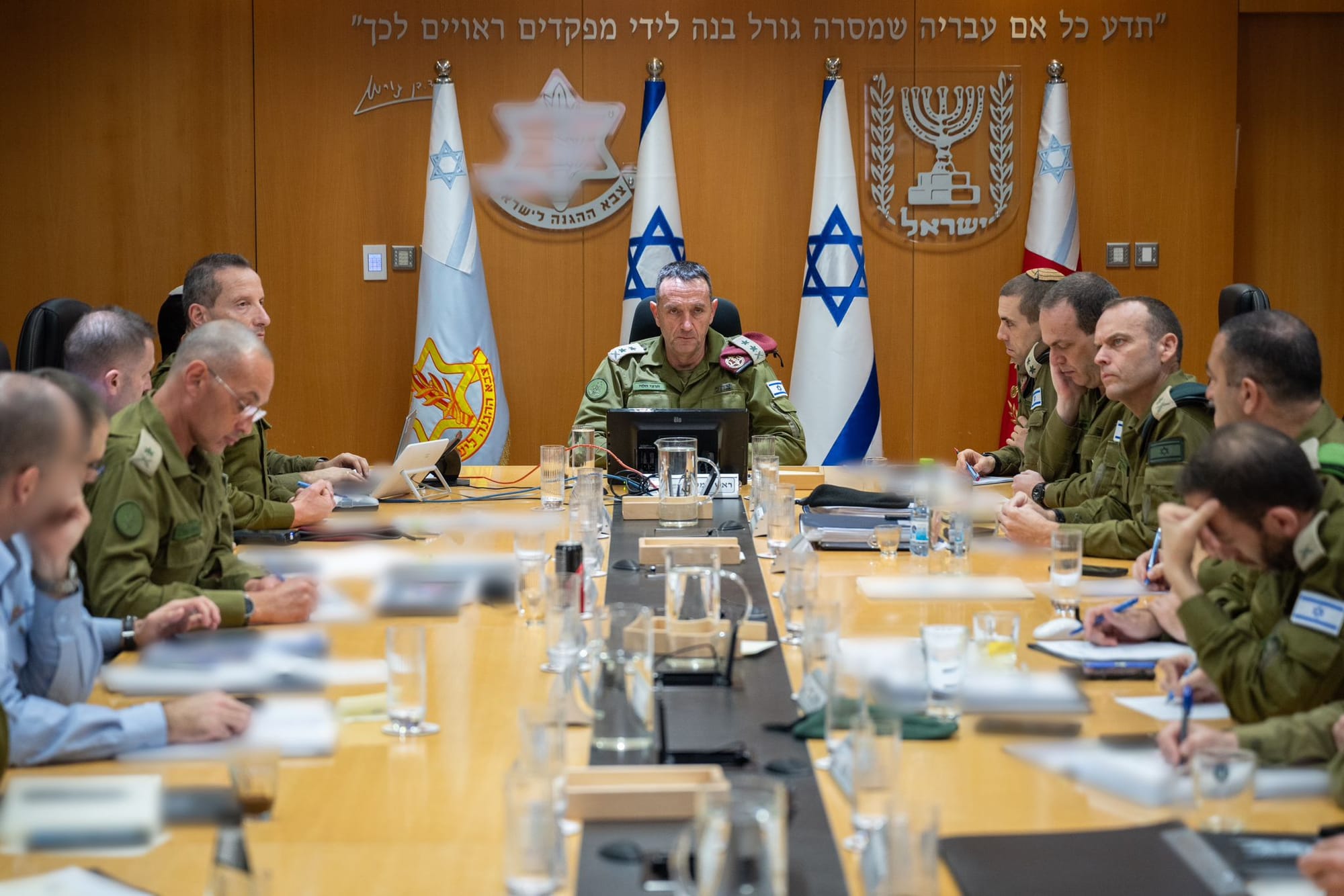
Chapter 7 — Investigating the Failures: What Israel's Inquiries Revealed
A Nation Demanding Answers
The Hamas-led attacks of October 7, 2023, exposed one of the most serious security failures in Israel's history.
A country known for its intelligence capabilities, advanced military technology and extensive security infrastructure had failed to prevent a large-scale assault against military installations and civilian communities.
Approximately 1,200 people were killed in Israel, and 251 were taken hostage into Gaza.
The consequences raised questions that extended far beyond the immediate military response.
How had Hamas prepared an operation of such magnitude without triggering an adequate Israeli defensive response?
Why had intelligence warnings failed to change military assessments?
Why were border installations and civilian communities so vulnerable?
Why did military reinforcements take hours to reach some locations?
And who should be held accountable for the decisions that preceded the catastrophe?
For survivors and bereaved families, these questions were not merely matters of national security policy.
They concerned the deaths and abductions of relatives, the destruction of communities and the failure of institutions entrusted with protecting civilian lives.
The demand for answers became a central part of Israel's national debate.
The Decision to Investigate
Following October 7, the Israel Defense Forces began examining the circumstances surrounding the attacks.
The investigations covered intelligence assessments, operational planning, military preparedness and the response of individual units.
Some inquiries focused on specific locations, including kibbutzim and military bases.
Others examined broader institutional failures.
The purpose was to reconstruct events, identify shortcomings and draw lessons for future military operations.
However, the investigations took place while Israel was engaged in a major military campaign in Gaza and faced continuing security challenges.
This created practical and institutional difficulties.
Military personnel involved in the events were also participating in subsequent operations.
Evidence had to be collected from multiple locations.
Witness accounts sometimes differed.
Operational records were incomplete or had been affected by the fighting.
These challenges did not eliminate the need for accountability.
They demonstrated why a comprehensive investigation required time, access to evidence and careful examination of decisions at different levels of command.
The February 2025 IDF Findings
In February 2025, the IDF presented findings from its broader internal investigations into October 7.
The military acknowledged that it had failed in its mission to protect Israeli civilians.
The investigations identified serious shortcomings in intelligence assessment, operational preparedness and the response to the attacks.
Among the central findings was that Israeli military intelligence had fundamentally misunderstood Hamas's intentions.
The IDF had assessed that Hamas was deterred from launching a major confrontation.
It had also underestimated the organisation's ability to carry out a coordinated assault involving multiple border breaches and attacks against military and civilian targets.
The investigations found that the military had not adequately prepared for the scenario that unfolded.
The failures extended beyond intelligence.
Defensive arrangements were insufficient.
Command structures were disrupted.
Forces were not positioned or prepared to respond effectively to the scale of the attack.
The findings represented an important acknowledgement of institutional responsibility.
They also confirmed that October 7 could not be explained as the failure of one individual or one technological system.
It was a breakdown involving several interconnected parts of Israel's security establishment.
The Intelligence Failure
One of the most significant conclusions concerned Israel's understanding of Hamas.
Before October 7, military assessments were influenced by the belief that Hamas was primarily interested in maintaining its control over Gaza and avoiding another major war.
This assumption shaped the interpretation of intelligence.
Hamas remained an armed threat, but the possibility of a large-scale invasion was not given sufficient weight.
The existence of the Jericho Wall document demonstrated that Israeli intelligence possessed information describing an assault resembling the events of October 7.
Other intelligence included observations of Hamas training activities and reports from surveillance personnel.
Yet these elements did not produce an adequate reassessment of the threat.
The failure was therefore not simply an absence of information.
It was also a failure of interpretation.
The intelligence system had collected important evidence but had not translated it into effective military preparedness.
This distinction became central to the IDF's examination of its own performance.
The Problem of Institutional Assumptions
Intelligence organisations must continuously evaluate the intentions and capabilities of potential adversaries.
Their assessments influence military planning, political decisions and the allocation of resources.
However, established assumptions can become difficult to challenge.
Before October 7, the belief that Hamas was deterred became an influential part of Israeli security thinking.
Information that appeared to support this assessment reinforced confidence in the existing strategy.
Evidence suggesting a different possibility did not produce sufficient changes.
The problem illustrates the danger of institutional confirmation bias.
When analysts and commanders become strongly committed to a particular interpretation, contradictory evidence may be discounted.
The IDF's investigations highlighted the consequences of failing to challenge assumptions about an adversary's intentions.
The broader lesson extends beyond Israel.
An intelligence organisation must remain willing to reconsider its conclusions, particularly when the consequences of an incorrect assessment could be catastrophic.
The Warnings That Did Not Change Preparedness
The intelligence failures became particularly troubling because warnings had existed before the attack.
Israeli intelligence possessed the Jericho Wall document.
Surveillance soldiers reported unusual activities near the Gaza border.
Investigative reporting also revealed concerns raised by intelligence personnel about Hamas training exercises.
During the night before October 7, Israeli security officials received additional indications of unusual activity.
These warnings differed in their specificity and reliability.
Not every report established that an attack was imminent.
However, their combined significance became a major subject of investigation.
The central question was whether the information should have led to a different assessment of the threat.
A revised assessment might have resulted in heightened alert levels, additional defensive preparations or the deployment of more forces near Gaza.
It is impossible to establish with certainty how much these measures would have changed the outcome.
Nevertheless, the failure to respond adequately to available warning signs was a major element of the institutional breakdown.
The Failure of Border Defence
Israel's Gaza border was protected by a sophisticated security system.
It included physical barriers, surveillance cameras, sensors, observation positions and other defensive capabilities.
The system was intended to identify infiltration attempts and support a rapid military response.
On October 7, attackers disrupted elements of the surveillance and communications infrastructure while breaching the border at multiple locations.
The scale and coordination of the assault overwhelmed local defensive arrangements.
The IDF's investigations identified serious shortcomings in preparedness for this type of operation.
The military had not adequately anticipated the possibility that Hamas could attack multiple parts of the border system simultaneously.
This failure exposed the limitations of relying heavily on technology without sufficient operational resilience.
A defensive system must remain capable of functioning when individual components are damaged.
It must also have sufficient forces and clear procedures for responding to a major breach.
The events demonstrated that advanced equipment cannot compensate for incorrect intelligence assumptions and inadequate military planning.
The Gaza Division's Operational Failures
The IDF's Gaza Division was responsible for military operations and border security around the Gaza Strip.
During the attack, its installations and command arrangements were severely disrupted.
Military bases came under assault.
Communications were damaged or interrupted.
Commanders struggled to understand the number of attackers and the geographical extent of the crisis.
The division's defensive arrangements were not adequately prepared for a large-scale coordinated assault.
The investigations examined the failure to establish an effective operational picture and the difficulties of directing forces toward threatened communities.
The disruption of command and control contributed to delays in military assistance.
It also complicated the coordination of units arriving from outside the immediate area.
These failures demonstrated the importance of maintaining command capabilities even when headquarters, communications systems or military positions are attacked.
The Protection of Military Observation Personnel
The experiences of surveillance soldiers became a particularly sensitive part of the investigations.
Female soldiers stationed near Gaza had reported suspicious activities before October 7.
Some later accounts suggested that their concerns had not received sufficient attention.
At the Nahal Oz military base, numerous soldiers were killed during the assault, and seven female surveillance soldiers were abducted.
The attack raised questions about both intelligence interpretation and the physical protection of military personnel.
Were reports from observation soldiers properly assessed?
Were commanders sufficiently aware of the vulnerabilities of the base?
Had the military prepared adequate defensive arrangements for the personnel responsible for monitoring the border?
These questions became important because the surveillance soldiers occupied a critical position within the security system.
Their observations were intended to provide early warning.
The failure to protect them and respond effectively to their reports exposed weaknesses in both military culture and operational planning.
Investigating the Battle for Be'eri
One of the first major community-specific investigations concerned Kibbutz Be'eri.
The IDF published its findings in July 2024.
The investigation acknowledged that the military had failed to protect the community.
It identified delays in the arrival of forces and serious problems coordinating the response.
The inquiry also examined the actions of military units that eventually entered the kibbutz.
Some soldiers acted courageously under extremely difficult circumstances.
However, the investigation found that the overall response had been inadequate.
The findings illustrated the distinction between individual bravery and institutional performance.
The investigation also examined a controversial incident involving hostages held inside a house during a confrontation with attackers.
Israeli tank fire was used during the incident.
Questions concerning the circumstances of the deaths and the decisions made by commanders generated considerable public scrutiny.
For relatives of victims, the investigation was an important step toward understanding what had happened.
However, some families continued to seek further clarification and accountability.
Investigating Nahal Oz
The events at Nahal Oz became another major focus of military investigation.
The base had been responsible for important surveillance functions along the Gaza border.
Its personnel were among those directly exposed to the opening assault.
The attack revealed deficiencies in the protection of the installation and the ability of soldiers to respond.
The investigation examined the preparedness of the base, the defensive arrangements and the circumstances in which personnel were killed or abducted.
It also contributed to the wider debate about warnings raised by surveillance soldiers before October 7.
For families of those affected, the findings were particularly painful.
They raised questions about whether the military had adequately protected young service members stationed at a highly sensitive location.
The Nahal Oz investigation demonstrated that the failure of October 7 involved not only the protection of civilian communities but also the safety of military personnel assigned to defend them.
The Failures at Nir Oz
Kibbutz Nir Oz became one of the clearest examples of the consequences of delayed military assistance.
Attackers entered the community, killed residents and abducted others into Gaza.
Substantial military forces did not arrive during the period in which much of the violence occurred.
The experience of Nir Oz raised fundamental questions about the allocation of forces and the military's understanding of the developing crisis.
Why had the community remained exposed for so long?
How had attackers been able to operate without an effective military response?
What information had commanders received about the situation?
The investigation of Nir Oz formed part of the wider examination of the failures to protect communities near Gaza.
For survivors, the central issue was not simply whether individual soldiers had acted correctly.
It was why the broader defensive system had failed to provide protection when it was urgently needed.
The Failure to Coordinate Reinforcements
The IDF's response on October 7 was complicated by the number of simultaneous attacks.
Military forces were required at numerous locations.
Commanders did not initially possess a reliable picture of the situation.
Some units encountered armed attackers while travelling toward their assigned destinations.
Others arrived without sufficient information about the threats they would face.
The investigations identified serious problems in the coordination of reinforcements.
The absence of a clear operational picture contributed to delays and inefficient deployment.
In some locations, forces arrived in stages without effective coordination.
The problem was compounded by disrupted communications and the loss of control over important roads.
These findings demonstrated that military readiness cannot be measured solely by the number of soldiers or the amount of equipment available.
It also depends on the ability to organise and direct those resources under extreme pressure.
The Role of the Israeli Air Force
The Israeli Air Force was involved in responding to the attacks.
Aircraft and helicopters were used as Israeli forces attempted to confront attackers and support operations on the ground.
However, the situation created serious challenges.
Armed attackers were operating near civilians, hostages and Israeli security personnel.
Information about the location of different groups was incomplete.
The investigations and subsequent reporting raised questions about how aerial force was used during the response.
Some incidents generated concerns about possible casualties caused by Israeli fire.
These questions require careful, incident-specific examination.
The existence of friendly-fire incidents or allegations does not change the responsibility of Hamas-led attackers for the assault.
At the same time, military accountability requires examining the decisions made by responding forces, including situations in which civilians or friendly personnel may have been harmed.
Shin Bet and the Intelligence Community
The failures of October 7 were not limited to the IDF.
Israel's domestic security agency, Shin Bet, also faced questions about its assessment of Hamas and the warning signs preceding the attack.
Shin Bet has responsibilities involving counterterrorism and security threats, including those connected to Palestinian armed organisations.
The agency's intelligence work overlaps with aspects of military intelligence concerning Gaza.
Following October 7, questions emerged about how information had been shared and interpreted between the relevant organisations.
Shin Bet's own review acknowledged failures in preventing the attack, while also addressing the wider policy environment in which the agency operated.
The findings contributed to the broader debate over institutional responsibility.
They demonstrated that the security failure involved more than one organisation.
However, the responsibilities of different institutions must be examined separately.
The fact that several agencies failed does not mean that each made the same decisions or possessed identical information.
The Resignation of Senior Military Leaders
The scale of the failure led to major changes within Israel's military leadership.
In January 2025, IDF Chief of Staff Lieutenant General Herzi Halevi announced his resignation.
He acknowledged responsibility for the military's failure to protect Israelis on October 7.
Other senior military and intelligence officials also resigned or left their positions in connection with the failures.
These decisions reflected the seriousness of the institutional breakdown.
In military organisations, command responsibility includes accountability for the performance of forces under a leader's authority.
However, accepting institutional responsibility is not necessarily the same as admitting personal legal liability for every failure or consequence.
Resignations can represent an important form of accountability.
They do not, by themselves, establish the complete historical record or answer every question raised by survivors and families.
The Limits of Internal Military Investigations
Internal investigations can provide detailed access to operational records, military personnel and classified information.
They can identify tactical failures, weaknesses in command structures and deficiencies in preparedness.
However, they also have limitations.
An organisation investigating its own performance may face questions about independence and institutional interests.
Military inquiries may focus primarily on operational decisions rather than the broader political policies that shaped the security environment.
They may also leave some information classified.
These limitations do not mean that internal investigations are without value.
The IDF's findings provided important evidence about the failures of October 7.
However, they could not fully answer every question concerning political oversight, government strategy and the decisions made over many years.
This distinction became central to demands for an independent national investigation.
The Debate Over Political Responsibility
Israel's security policy toward Gaza had been shaped by successive governments.
The approach involved military deterrence, border restrictions, economic arrangements and efforts to manage the conflict.
Before October 7, political and security leaders operated within a framework that generally assessed Hamas as deterred from launching a major war.
The failure of that assessment raised questions about government oversight.
Critics argued that political leaders had relied on a strategy that underestimated Hamas and failed to address the risks posed by its military capabilities.
Others emphasised that professional intelligence and military organisations were responsible for providing accurate assessments and maintaining operational readiness.
The debate involved different forms of responsibility.
Military commanders were responsible for preparing forces and responding to threats.
Intelligence agencies were responsible for collecting and analysing information.
Political leaders were responsible for national security policy and oversight.
These responsibilities are interconnected but not identical.
A comprehensive investigation must examine how decisions at each level influenced the others.
The Question of a State Commission of Inquiry
Israel has a legal mechanism for establishing a state commission of inquiry to investigate matters of major public importance.
Such commissions have historically examined serious national crises and government failures.
Following October 7, survivors, families of victims and other members of Israeli society called for an independent inquiry with the authority to examine both military and political decisions.
Supporters argued that an investigation limited to the military could not provide a complete account.
They wanted scrutiny of the intelligence assessments, government policies and strategic assumptions that preceded the attack.
The proposal became politically contentious.
Questions arose about the timing, composition, powers and independence of any national investigation.
The debate reflected a broader issue.
Accountability after a national security disaster requires public confidence that investigators can examine the actions of all relevant institutions.
An inquiry that excludes important decision-makers may leave central questions unanswered.
What an Independent Inquiry Would Need to Examine
A comprehensive independent investigation would need to consider several interconnected issues.
First, it would examine the intelligence information available before October 7.
This would include the Jericho Wall document, observed Hamas training activities and warnings from surveillance personnel.
Second, it would assess how intelligence was interpreted and communicated to military and political leaders.
Third, it would examine the operational preparedness of the Gaza border defences and the allocation of military forces.
Fourth, it would investigate the decisions made during the opening hours of the assault.
Fifth, it would consider the broader policy toward Hamas and Gaza, including the assumptions underlying Israel's strategy of deterrence and conflict management.
Finally, it would need to address how lessons could be translated into reforms.
The purpose of such an inquiry would not be to assume guilt in advance.
It would be to establish the facts, evaluate responsibility and recommend measures to reduce the risk of similar failures.
The Difference Between Responsibility and Criminal Liability
Public debate often uses the word accountability to describe several different concepts.
Political responsibility concerns the decisions and oversight exercised by elected officials.
Institutional responsibility concerns the performance of government agencies and military organisations.
Professional responsibility concerns whether officials fulfilled the duties associated with their positions.
Criminal liability requires a different legal assessment.
It depends on applicable law, evidence and the establishment of specific legal elements.
A failure of judgement does not automatically constitute a criminal offence.
Similarly, accepting institutional responsibility does not necessarily establish criminal guilt.
These distinctions matter when evaluating the consequences of October 7.
The attacks involved serious crimes committed by Hamas-led armed groups.
The failures of Israeli security institutions raise separate questions about preparedness, judgement and the protection of civilians.
Both require accountability, but they involve different legal and institutional frameworks.
The Families Who Continued Asking Questions
For families of those killed or abducted, the investigations were deeply personal.
They wanted to know what happened to their relatives.
They sought explanations for delays in military assistance.
Some questioned whether earlier warnings had been ignored.
Others wanted clarification about the conduct of security forces during particular incidents.
The demand for answers was not limited to one political position.
Families and survivors held different views about government policy, military leadership and the appropriate form of investigation.
However, many shared the belief that the scale of the catastrophe required a comprehensive examination.
Their involvement became an important part of Israel's public debate.
The voices of survivors and bereaved families helped ensure that institutional accountability remained connected to the human consequences of the attack.
What the Investigations Established
The investigations into October 7 established several important conclusions.
Israeli intelligence had underestimated Hamas's intentions and capabilities.
The military had not adequately prepared for a coordinated assault on the scale that occurred.
Border defences were overwhelmed, and command structures were disrupted.
Military assistance was delayed in numerous locations.
The IDF failed in its mission to protect Israeli civilians.
These findings were significant because they moved the discussion beyond speculation.
They demonstrated that the catastrophe resulted from identifiable institutional and operational failures.
However, the investigations did not resolve every question.
Some aspects of the attack remain difficult to reconstruct.
The precise responsibility for individual decisions continues to require careful examination.
The broader political and strategic context also extends beyond the scope of internal military inquiries.
What Remains Unanswered
Despite the investigations, important questions remain.
How did established intelligence assumptions become so influential that contradictory evidence failed to change military planning?
Why did warnings from different sources not produce greater defensive readiness?
Were the available forces allocated appropriately in light of the risks?
How effectively did military and civilian leaders communicate before the attack?
What role did long-term government policy play in shaping the security environment?
And what institutional changes are necessary to prevent a similar breakdown?
These questions cannot all be answered through operational investigations alone.
Some require access to political decision-making records and testimony from senior officials.
Others require independent evaluation of intelligence and military practices.
The process of establishing a complete account is therefore broader than the publication of individual investigation reports.
Lessons for Democratic Accountability
The October 7 investigations raise questions that extend beyond Israel.
In democratic societies, military and intelligence institutions operate under civilian authority.
Their responsibilities include protecting the population while remaining accountable to the law and elected government.
However, national security institutions often operate with a high degree of secrecy.
This can make independent oversight difficult.
When a major failure occurs, public confidence depends on the ability to examine decisions without unnecessary political or institutional restrictions.
Accountability is not simply about identifying mistakes.
It is also about ensuring that institutions can recognise weaknesses, challenge assumptions and implement reforms.
The lessons of October 7 therefore concern both military preparedness and democratic oversight.
A security system must be capable of defending the population.
It must also be capable of examining its own failures honestly.
Conclusion — A Failure That Demands More Than Explanation
The investigations into October 7 revealed a profound breakdown within Israel's security establishment.
The IDF underestimated Hamas's intentions and capabilities.
Intelligence warnings were not translated into adequate defensive preparations.
Border defences and military command structures failed under the pressure of a coordinated assault.
Civilian communities were left exposed, and military assistance arrived too late in numerous locations.
The IDF acknowledged its failure to protect Israeli civilians.
Senior military officials accepted responsibility, and investigations identified serious operational and institutional shortcomings.
Yet the broader question of accountability extends beyond the military.
The policies, assumptions and decisions that shaped Israel's approach to Gaza involved both security institutions and political leadership.
For survivors and families of victims, a complete explanation requires examining the full chain of responsibility.
The purpose of accountability is not only to understand the past.
It is to identify the changes necessary to prevent future failures.
The next chapter examines the longer-term consequences of October 7 for Israel's security strategy, including changes in military preparedness, intelligence priorities and the relationship between border defence and national security policy.
Chapter 8 — After October 7: How Israel's Security Strategy Began to Change
A Security Doctrine Under Examination
The attacks of October 7, 2023, forced Israel to reconsider some of the assumptions that had shaped its national security strategy for years.
For decades, Israel had invested heavily in military superiority, intelligence capabilities, border protection and the ability to respond rapidly to emerging threats.
These capabilities were intended to deter adversaries, prevent major attacks and provide security for the civilian population.
Yet on October 7, Hamas-led attackers crossed a heavily defended border, overwhelmed military positions and attacked civilian communities.
The consequences exposed fundamental weaknesses in Israel's approach to security.
The failure was not simply technological.
It involved intelligence assessments, military preparedness, operational planning and the belief that Hamas was unlikely to launch a major confrontation.
The events challenged confidence in the ability of surveillance systems and physical barriers to provide adequate protection.
They also raised questions about the wider strategy of managing threats rather than attempting to eliminate them.
In the aftermath, Israeli political and military leaders began reassessing the principles that had guided their approach to Gaza and other security challenges.
The process was neither immediate nor uniform.
Different institutions drew different conclusions, and the war that followed complicated efforts to separate emergency decisions from long-term strategic reforms.
Nevertheless, October 7 marked a turning point in Israeli security thinking.
The Strategy of Deterrence Before October 7
Deterrence has long been an important component of Israel's security policy.
The basic principle is that an adversary may be discouraged from attacking if it believes the military, political or economic consequences would be too costly.
Israel's approach toward Hamas before October 7 relied partly on this calculation.
Following previous rounds of fighting, Israeli officials assessed that Hamas had reasons to avoid another major war.
The organisation governed Gaza and faced pressures associated with maintaining its administration, preserving military capabilities and managing the consequences of conflict.
Israeli policy combined military pressure with measures intended to reduce tensions.
These included economic arrangements and permits allowing some Gaza residents to work in Israel.
The approach reflected the belief that Hamas could be contained and deterred without a comprehensive political settlement.
However, the October 7 assault demonstrated that Israeli assessments of Hamas's intentions had been seriously mistaken.
The organisation was willing to undertake an operation that would almost certainly trigger a major Israeli military response.
This challenged the assumption that the anticipated costs of war would prevent such an attack.
The Limits of Deterrence
Deterrence depends on understanding how an adversary evaluates risks and objectives.
A military organisation may possess overwhelming capabilities but still fail to deter an attack if it misunderstands the motivations of its opponent.
Before October 7, Israeli security assessments placed considerable emphasis on the expected costs Hamas would face in another confrontation.
However, those assessments underestimated the organisation's willingness to accept those costs.
The attack demonstrated that deterrence cannot be measured solely by the absence of major hostilities.
Periods of relative calm may reflect restraint, preparation, changing priorities or a combination of factors.
The absence of an attack does not necessarily establish that an adversary has abandoned the intention to attack.
This distinction became central to the reassessment of Israeli security strategy.
Security officials faced the challenge of developing an approach that did not rely too heavily on assumptions about what an adversary would consider rational.
From Containment to a Different Military Objective
Before October 7, Israel's policy toward Hamas had generally focused on deterrence, containment and limiting the organisation's military capabilities.
Following the attack, the Israeli government announced a substantially different objective.
It sought to dismantle Hamas's military and governing capabilities in Gaza and secure the return of the hostages.
This represented a major shift in the stated purpose of Israeli military operations.
Rather than attempting primarily to restore deterrence after a limited confrontation, Israel pursued an extensive military campaign.
The government argued that allowing Hamas to retain the capability to organise another attack of comparable scale would be unacceptable.
However, the new strategy raised difficult questions.
Could Hamas's military capabilities be dismantled through military force alone?
What political and administrative arrangements would replace its authority in Gaza?
How could Israel prevent future attacks without maintaining an indefinite military presence?
And how could security objectives be pursued while protecting Palestinian civilians?
These questions became central to the debate over the war and its aftermath.
The stated objective of dismantling Hamas must also be distinguished from evidence of whether that objective was achieved.
Military success, political stability and long-term security are not necessarily the same.
The War in Gaza and Its Consequences
Israel's military campaign in Gaza fundamentally altered the security environment.
Israeli forces conducted extensive operations against Hamas and other armed organisations.
The campaign involved airstrikes, ground operations and efforts to locate military infrastructure and hostages.
Israeli authorities described the operations as necessary to reduce the threat of future attacks.
However, the war also caused devastating consequences for Gaza's civilian population.
Large numbers of Palestinians were killed or injured, extensive areas were destroyed and many residents were repeatedly displaced.
Damage to housing, healthcare facilities, water systems and other infrastructure contributed to a severe humanitarian crisis.
The conduct of the war generated international criticism, legal proceedings and questions concerning compliance with international humanitarian law.
These issues cannot be separated from an assessment of Israel's changing security strategy.
A policy intended to prevent future attacks must also be evaluated in relation to its humanitarian consequences, legal obligations and potential effects on long-term regional stability.
Military operations may reduce particular threats while creating additional political and security challenges.
The relationship between military force and sustainable security therefore remains a central question.
Rethinking the Gaza Border
The events of October 7 exposed the limitations of Israel's border security arrangements.
The system had relied on physical barriers, surveillance equipment, sensors, observation posts and military forces.
Although these elements provided significant capabilities, they were not adequately prepared for a coordinated assault against multiple parts of the defensive network.
The attack demonstrated that a border system must be capable of operating even when important components are damaged.
Following October 7, Israeli military planning placed greater emphasis on defensive readiness and the ability to respond to infiltration threats.
The experience also reinforced the importance of maintaining sufficient personnel and operational capabilities near vulnerable areas.
A physical barrier can delay or complicate an attack.
It cannot guarantee that attackers will never cross.
Effective border defence therefore requires multiple layers of protection, reliable communications, trained personnel and contingency planning.
The central lesson was that technology must support a broader defensive strategy rather than become a substitute for it.
The Role of Military Presence
One of the questions raised after October 7 concerned the number and readiness of Israeli forces stationed near Gaza.
Before the attack, military resources were distributed across several security priorities.
These included the West Bank, Israel's northern border and other areas.
The IDF's investigations subsequently identified serious deficiencies in the defensive arrangements around Gaza.
The assault overwhelmed local forces and exposed the difficulties of rapidly deploying reinforcements.
The experience encouraged renewed attention to the relationship between military presence and technological surveillance.
Advanced monitoring equipment can provide early warning, but it cannot physically defend a community once attackers have entered.
Military forces must be available to respond.
However, increasing troop numbers alone does not guarantee security.
Personnel also require appropriate training, clear command arrangements, accurate intelligence and realistic operational plans.
The challenge is therefore not simply how many soldiers are deployed.
It is whether the entire defensive system is prepared for the threats it may face.
Reassessing Intelligence Priorities
The intelligence failures preceding October 7 became one of the most important subjects of institutional reform.
Israeli intelligence agencies had collected information about Hamas's plans and activities.
However, their assessments underestimated the possibility of a major coordinated assault.
The failure demonstrated the dangers of relying too heavily on established assumptions.
Intelligence organisations must distinguish between what an adversary is believed to want and what it is capable of doing.
They must also remain prepared to revise assessments when new evidence emerges.
The investigations into October 7 highlighted the importance of challenging prevailing conclusions and ensuring that warnings from different sources receive appropriate consideration.
This includes information collected by junior personnel, surveillance operators and analysts whose observations may contradict senior assessments.
The broader lesson is that intelligence effectiveness depends not only on sophisticated collection methods but also on institutional openness to uncomfortable conclusions.
The Importance of Human Intelligence
Modern intelligence systems use advanced technology to collect and analyse information.
Surveillance cameras, electronic interception, imagery and other technical capabilities can provide valuable insights.
However, October 7 renewed attention to the limitations of relying heavily on technological intelligence.
Technology may identify movements, communications or physical changes.
It does not always reveal an adversary's intentions.
Human intelligence can provide additional information about decision-making, organisational relationships and internal developments.
Nevertheless, human sources also have limitations.
Information may be incomplete, misleading or deliberately manipulated.
An effective intelligence system therefore requires different collection methods to be assessed together.
The failure of October 7 should not be understood as proof that one intelligence method is inherently superior to another.
It demonstrated the need to integrate information effectively and remain willing to reconsider established assessments.
Listening to the Personnel Closest to the Threat
The experiences of Israeli surveillance soldiers became a major part of the debate over intelligence reform.
Before October 7, some female observation soldiers reported suspicious Hamas activities near the Gaza border.
Subsequent accounts raised concerns that their warnings had not been taken seriously enough.
These reports highlighted the importance of military culture and communication.
Personnel who monitor a particular environment continuously may recognise changes that are not immediately apparent to senior commanders.
Their observations can provide valuable early warning.
However, military hierarchies may create obstacles when junior personnel challenge established assessments.
The lesson is not that every warning should automatically be treated as proof of an imminent attack.
It is that credible concerns must be evaluated carefully, documented and escalated when necessary.
A security institution must be capable of hearing information that contradicts its expectations.
Preparing for Simultaneous Attacks
The October 7 assault involved attacks against numerous locations within a short period.
Military bases, border infrastructure, roads and civilian communities were affected.
The scale of the operation overwhelmed defensive arrangements designed around more limited scenarios.
This revealed the importance of preparing for simultaneous threats.
Military organisations must consider what happens when several installations are attacked at once.
They must also prepare for situations in which communications are disrupted and commanders cannot obtain a complete operational picture.
Contingency planning must account for the possibility that reinforcements will encounter additional threats while travelling toward their destinations.
The events demonstrated that an adversary does not need to defeat an entire military to create a major security crisis.
Disrupting local command structures and overwhelming available forces can have devastating consequences.
Command Structures and Operational Resilience
One of the central findings of the IDF's investigations concerned failures in command and control.
During the attack, commanders struggled to coordinate forces and respond to rapidly developing events.
Communications were disrupted, and military installations came under assault.
The situation demonstrated the importance of operational resilience.
A military command system must be capable of continuing to function when individual headquarters, communication channels or surveillance systems are damaged.
This requires contingency arrangements, trained personnel and the ability to make decisions under uncertain conditions.
It also requires realistic exercises.
Military organisations must practise scenarios in which normal systems are unavailable.
The purpose is not to eliminate uncertainty.
It is to ensure that forces can continue protecting civilians even when events develop differently from expectations.
Civilian Protection as a National Security Priority
The most serious consequence of the October 7 security failure was the inability to protect civilians.
Residents of communities near Gaza had relied on the state and its military institutions to provide security.
When attackers entered their communities, many waited hours for assistance.
The experience raised questions about the relationship between military planning and civilian protection.
Security strategy cannot be evaluated solely through military capabilities or the strength of border infrastructure.
It must also consider whether civilians can receive timely protection during an emergency.
This includes effective warning systems, evacuation arrangements, local emergency coordination and access to medical assistance.
It also requires planning for vulnerable populations, including children, elderly residents and people with disabilities.
The events of October 7 demonstrated that civilian protection must remain central to operational readiness.
The Future of the Gaza Envelope Communities
The communities surrounding Gaza faced difficult decisions after the attacks.
Many residents were evacuated.
Homes and public buildings had been damaged or destroyed.
Families had lost relatives, neighbours and friends.
Some communities began planning reconstruction and eventual return.
Others faced uncertainty about whether residents could feel safe living near Gaza again.
The question of returning was closely connected to confidence in Israel's security institutions.
Physical reconstruction alone could not restore that confidence.
Residents needed reassurance that the failures of October 7 had been understood and that defensive arrangements would be substantially improved.
The future of these communities therefore became a measure of the credibility of Israel's security reforms.
For residents, security was not an abstract strategic concept.
It determined whether they could return home, raise children and rebuild their lives.
The Northern Border and Hezbollah
The consequences of October 7 extended beyond Gaza.
Israel also faced threats from Hezbollah in Lebanon.
Following the Hamas-led attacks, cross-border hostilities intensified along Israel's northern frontier.
Israeli communities near the Lebanese border experienced security threats and displacement.
The situation reinforced concerns about the possibility of simultaneous conflicts on multiple fronts.
Israel's security planners had to consider the relationship between operations in Gaza, the northern border and other regional threats.
The experience highlighted the limitations of a strategy focused primarily on one geographical area.
Military resources must be distributed across competing priorities.
However, concentrating forces in one region may leave other areas vulnerable.
The challenge of preparing for multiple threats became an increasingly important element of Israeli security discussions.
Iran and the Wider Regional Security Environment
Israel's security concerns also involve Iran and armed organisations aligned with or supported by Tehran.
Iran has provided assistance to groups including Hezbollah and Hamas, although the nature and extent of that support differ between organisations and periods.
The October 7 attack occurred within this broader regional environment.
However, the existence of Iranian support for Hamas does not by itself establish that Iran directed or had advance knowledge of the specific October 7 operation.
Such claims require evidence.
The subsequent regional escalation demonstrated the risk that a conflict beginning in one area could expand into wider confrontation.
For Israeli security planners, this reinforced the importance of assessing interconnected threats.
The challenge involved maintaining defensive readiness while avoiding strategic assumptions that underestimated the possibility of escalation.
The Relationship Between Military Force and Political Strategy
The aftermath of October 7 also exposed a fundamental challenge.
Military operations can weaken armed organisations, destroy infrastructure and disrupt their capabilities.
However, military force alone does not necessarily resolve the political conditions that contribute to prolonged conflict.
Israel's stated objectives in Gaza included dismantling Hamas's military and governing capabilities.
Yet the question of who would govern Gaza afterward remained central to discussions about long-term security.
Without a viable political and administrative framework, military achievements may prove difficult to sustain.
The future of Gaza also involves the rights, security and political aspirations of Palestinians.
Any long-term strategy must confront these realities.
A sustainable security arrangement requires more than preventing the next attack.
It must address the conditions under which Israelis and Palestinians can live without recurring mass violence.
The Challenge of International Law
Israel's response to October 7 raised major questions concerning international humanitarian law.
States have the right to protect their populations against armed attacks, but military operations remain subject to legal obligations.
These include the principles of distinction, proportionality and precautions in attack.
Civilians must not be deliberately targeted.
Indiscriminate attacks are prohibited.
The taking of hostages is prohibited.
Parties to a conflict must also comply with applicable rules concerning humanitarian assistance and the treatment of people deprived of liberty.
The conduct of Israeli military operations in Gaza became the subject of international legal scrutiny and proceedings.
The legal questions are complex, and allegations must be distinguished from judicial findings.
Nevertheless, compliance with international humanitarian law is not optional.
A national security strategy must account for both the protection of its own population and the legal obligations owed to civilians affected by its operations.
The Risk of Creating New Security Threats
Military campaigns may reduce immediate threats while also producing longer-term consequences.
Extensive destruction, civilian suffering and political instability can influence future security conditions.
The war in Gaza created severe humanitarian and social challenges.
These developments raised questions about whether military achievements could translate into sustainable stability.
Analysts have debated the potential for prolonged conflict, renewed militancy and further regional instability.
Such outcomes are not inevitable.
They depend on political decisions, security arrangements, reconstruction and other developments.
However, the possibility of unintended consequences must be considered when evaluating military strategy.
A policy that focuses exclusively on immediate military objectives may overlook the conditions necessary for lasting security.
Restoring Public Trust
The October 7 attacks damaged public confidence in Israel's security institutions.
The failure was particularly painful because the country's military and intelligence capabilities had long been central to its national identity and security.
Survivors and families demanded explanations.
Communities sought assurances that they would be protected in the future.
The IDF's investigations acknowledged serious institutional failures.
Senior military officials accepted responsibility, and changes in leadership followed.
However, restoring public trust requires more than acknowledging mistakes.
It depends on credible investigations, institutional reforms and evidence that lessons have been implemented.
It also requires transparency about the limits of what authorities know.
Public confidence cannot be rebuilt through promises alone.
It must be supported by accountability and demonstrated improvements in civilian protection.
Security Reform and Democratic Oversight
The reassessment of Israel's security strategy also raised questions about democratic oversight.
Military and intelligence institutions operate under civilian political authority.
Their activities often involve classified information, making independent scrutiny difficult.
Following October 7, the demand for a comprehensive investigation reflected concerns about whether existing oversight arrangements had been sufficient.
The debate extended beyond military preparedness.
It involved the relationship between political decisions, intelligence assessments and operational planning.
An effective security system requires professional military institutions.
It also requires mechanisms capable of examining their performance and holding decision-makers accountable.
The ability to investigate failure is an essential component of institutional resilience.
What Has Changed — and What Remains Uncertain
October 7 produced a clear shift in Israel's security priorities.
The government abandoned the immediate pre-attack approach of relying primarily on containment and deterrence toward Hamas.
The military launched a major campaign in Gaza and began reassessing its defensive assumptions.
Intelligence failures, border preparedness and command structures became central subjects of investigation.
The protection of communities near Gaza received renewed attention.
However, not every proposed reform can be considered fully implemented or proven effective.
Some changes were operational responses to an ongoing conflict.
Others represented longer-term institutional objectives.
The distinction matters.
Announcing a new policy does not establish that it has succeeded.
Similarly, military operations against an armed organisation do not automatically guarantee lasting security.
The effectiveness of Israel's changing strategy must be assessed over time, using evidence rather than official declarations alone.
Conclusion — Security Beyond the Border
The attacks of October 7 forced Israel to confront the limitations of a security strategy built around deterrence, intelligence superiority and advanced border technology.
Hamas had prepared an operation that Israeli institutions seriously underestimated.
The resulting assault overwhelmed defensive arrangements and exposed civilian communities to devastating violence.
In response, Israel adopted more extensive military objectives and began reassessing its intelligence practices, border defences and operational readiness.
The changes reflected a determination to prevent another attack of comparable scale.
Yet the central challenge remains broader than military preparedness.
Lasting security requires reliable intelligence, resilient institutions, effective civilian protection and political decisions that account for the consequences of military force.
It also requires compliance with international law and recognition that the security of Israelis and the rights and safety of Palestinians cannot be treated as irrelevant to one another.
October 7 demonstrated what happens when a security system fails to anticipate and respond to a major threat.
The challenge for the future is not simply to build stronger barriers or deploy more advanced technology.
It is to develop a security strategy capable of protecting civilians, challenging dangerous assumptions and reducing the likelihood of another catastrophe.
The next chapter examines the broader consequences of October 7 for Israeli society, including public trust, national trauma, political divisions and the continuing debate over accountability and security.

Chapter 9 — A Society Changed: Trauma, Trust and the Political Aftermath of October 7
The Day That Changed a Nation
October 7, 2023, became a defining moment in modern Israeli history.
The Hamas-led attacks killed approximately 1,200 people in Israel and resulted in 251 people being taken hostage into Gaza.
The scale of the violence, the failure of Israel's security institutions and the prolonged uncertainty surrounding the hostages profoundly affected Israeli society.
For many Israelis, the attacks challenged a fundamental expectation: that the state, supported by its military and intelligence services, could protect its citizens from large-scale violence.
The consequences extended far beyond the communities directly attacked.
Families across the country experienced grief, fear and uncertainty.
Reservists were called into military service.
Communities near Gaza and the Lebanese border faced displacement.
Public debate increasingly focused on national security, political responsibility and the future of the conflict.
The war in Gaza also intensified divisions within Israel and generated difficult questions about military objectives, the fate of the hostages and the humanitarian consequences for Palestinian civilians.
October 7 was therefore not only a military and intelligence failure.
It became a national crisis affecting Israel's political institutions, social relationships and collective understanding of security.
A Collective Sense of Vulnerability
Israel's national identity has been shaped by a history of conflict, persecution, state-building and repeated security challenges.
The country developed powerful military and intelligence institutions partly in response to the belief that Jewish security could not be taken for granted.
For many citizens, these institutions represented an essential guarantee of protection.
October 7 challenged that confidence.
The attacks demonstrated that even advanced military capabilities could fail to prevent mass violence.
Communities located close to Gaza experienced the consequences most directly.
Residents who had lived for years with rocket warnings suddenly faced armed attackers inside their homes and neighbourhoods.
The experience created a sense of vulnerability that extended across Israeli society.
Some people began questioning whether the existing security arrangements could adequately protect communities near Israel's borders.
Others expressed concerns about the possibility of similar attacks elsewhere.
The psychological effect was not uniform.
Israelis differed in their personal experiences, political views and assessments of the threats facing the country.
Nevertheless, the attacks became a major reference point in national discussions about safety and the responsibilities of the state.
The Loss of Trust in Security Institutions
Before October 7, Israel's military and intelligence agencies were widely regarded as highly capable institutions.
Their reputation was based on decades of military operations, intelligence collection and technological development.
The failure to prevent the Hamas-led assault damaged that reputation.
Questions emerged about how intelligence warnings had been interpreted and why defensive preparations had been inadequate.
The delayed military response deepened public concerns.
In several communities, residents waited hours before substantial assistance arrived.
For survivors, this was not an abstract institutional failure.
It was an experience of abandonment during an immediate threat to their lives.
The IDF's subsequent investigations acknowledged serious failures in intelligence assessment, operational readiness and command structures.
These findings provided important explanations but did not automatically restore confidence.
Trust in security institutions depends not only on their ability to acknowledge mistakes but also on their willingness to implement reforms and demonstrate that civilians can be protected.
The Political Crisis of Responsibility
The question of responsibility became one of the most divisive issues following October 7.
Military and intelligence officials acknowledged failures within their institutions.
Senior military leaders subsequently resigned or left their positions.
However, public debate also focused on the responsibility of political leaders.
Israel's security policy toward Gaza had developed over many years and under different governments.
The approach included deterrence, border restrictions, military operations and arrangements intended to manage the conflict without reaching a comprehensive political settlement.
Critics argued that this strategy had underestimated Hamas and created a dangerous sense of confidence.
Others emphasised the responsibility of professional intelligence agencies and military commanders to identify threats and maintain operational preparedness.
These positions are not necessarily mutually exclusive.
Political leaders establish national security policy and exercise oversight.
Military and intelligence institutions are responsible for professional assessments and operational readiness.
A comprehensive examination of October 7 must consider the interaction between these responsibilities.
Benjamin Netanyahu and the Public Debate
Prime Minister Benjamin Netanyahu became a central figure in the political debate surrounding October 7.
As Israel's head of government during the attacks, his leadership and the policies pursued under his administrations attracted intense scrutiny.
Critics argued that the government's approach toward Hamas and Gaza had contributed to the strategic assumptions that preceded the attack.
They also questioned the government's management of the war and hostage negotiations.
Supporters of Netanyahu emphasised the responsibility of military and intelligence institutions for the immediate failures.
They also argued that Israel's security challenges required continued military pressure against Hamas and other armed organisations.
The debate reflected deeper disagreements about political leadership, national security and the future direction of the country.
Determining institutional responsibility requires more than political argument.
It requires access to evidence, official records and independent examination of decisions made before and during the crisis.
The Families of Hostages Become a Public Voice
The hostage crisis became one of the most emotionally powerful issues in Israeli society.
Families of those abducted into Gaza organised campaigns demanding the return of their relatives.
They held public demonstrations, met political leaders and appealed to international organisations.
The Hostages and Missing Families Forum became a prominent organisation representing many affected families.
Public gatherings frequently featured photographs of hostages, personal testimony and calls for action.
For families, the crisis was immediate and personal.
Every delay meant another period of uncertainty about the safety and health of their loved ones.
However, families did not always agree on the best approach.
Some strongly supported negotiated agreements involving prisoner exchanges or ceasefires.
Others placed greater emphasis on military pressure or expressed different views about the conditions of a deal.
These differences reflected the complexity of the crisis.
The families shared the experience of having loved ones taken hostage, but they did not form a single political constituency.
The Debate Between Military Objectives and Hostage Negotiations
The Israeli government stated that its objectives included dismantling Hamas's military and governing capabilities and securing the return of the hostages.
These objectives became central to public debate.
Supporters of continued military operations argued that pressure on Hamas was necessary to reduce its capabilities and improve Israel's negotiating position.
Critics questioned whether prolonged fighting endangered hostages and reduced the chances of securing their release.
The debate intensified as negotiations, military operations and reports about the hostages developed.
For many Israelis, the question was not whether the hostages should return.
There was broad concern for their fate.
The disagreement concerned how best to achieve that objective and what political or military compromises might be necessary.
The issue also raised fundamental questions about the state's responsibility toward citizens taken captive.
Public Demonstrations and Civil Society
Israel has a strong tradition of political demonstrations and civic activism.
Before October 7, large protests had taken place over the government's proposed changes to the judicial system.
The attacks initially shifted national attention toward security and emergency response.
However, political demonstrations later resumed, increasingly focusing on the hostages, government accountability and the management of the war.
Some protesters demanded new elections.
Others called for an independent investigation into October 7.
Demonstrations also reflected concerns about the humanitarian consequences of the war in Gaza.
Not all protests shared the same objectives or political perspectives.
Their significance lay partly in the continued willingness of citizens to challenge government decisions during a national security crisis.
The demonstrations revealed a society attempting to balance national solidarity with political disagreement.
A Society That Was Already Divided
October 7 occurred during a period of substantial political tension in Israel.
In the months before the attacks, the government's judicial reform proposals had generated widespread protests.
Supporters argued that changes were necessary to address the balance of power between elected officials and the judiciary.
Opponents warned that the proposals could weaken judicial independence and democratic checks and balances.
The debate had created significant divisions within Israeli society.
The October 7 attacks temporarily redirected attention toward the immediate security emergency.
However, the underlying political disagreements did not disappear.
As the war continued, disputes over leadership, accountability and national priorities resurfaced.
The crisis therefore affected a society that was already engaged in difficult debates about its democratic institutions and political future.
National Unity and Its Limits
The immediate aftermath of October 7 produced widespread expressions of solidarity.
Citizens volunteered to assist displaced families.
Organisations collected supplies for soldiers and affected communities.
People donated blood, provided accommodation and supported emergency responders.
Many Israelis sought ways to contribute to the national response.
These efforts demonstrated the strength of civil society.
However, solidarity did not eliminate political differences.
As the war continued, disagreements emerged over military strategy, hostage negotiations, humanitarian policy and government responsibility.
The experience demonstrated that national unity can coexist with profound disagreement.
A society may unite in mourning victims while remaining divided over the political decisions made in response.
The Role of Volunteers
Volunteers played an important role after October 7.
Civilian organisations helped provide food, clothing, transportation and temporary accommodation.
Some assisted displaced families.
Others supported agricultural communities whose workers had been killed, injured, displaced or called into military service.
Mental health professionals offered assistance to survivors and relatives of victims.
Volunteers also helped families searching for information about missing people.
These activities demonstrated the capacity of civil society to respond during emergencies.
They also raised questions about the responsibilities of public institutions.
Volunteer organisations can provide essential assistance, but they cannot replace government systems responsible for emergency planning, social services and long-term recovery.
The scale of civilian mobilisation reflected both solidarity and the urgent needs created by the crisis.
The Displacement of Border Communities
The attacks forced many residents of southern Israel to leave their homes.
Some communities had suffered extensive destruction.
Others faced continuing security threats.
Residents were relocated to hotels, temporary housing and other accommodation.
Communities near the Lebanese border also experienced displacement as cross-border hostilities intensified.
For displaced families, the consequences extended beyond physical safety.
Children had to adapt to new schools.
Adults faced disruptions to employment and daily routines.
Community relationships were strained by relocation and uncertainty.
Some residents wanted to return as soon as conditions permitted.
Others questioned whether they could feel safe living near the border again.
The process of return and reconstruction became closely connected to confidence in Israel's security arrangements.
The Psychological Consequences
The psychological impact of October 7 extended across Israeli society.
Survivors experienced the direct effects of violence, loss and captivity.
Families of victims faced grief and uncertainty.
Emergency responders and soldiers encountered traumatic situations.
People who were not directly attacked were also affected by news coverage, personal connections and concerns about future security.
Responses to trauma vary significantly.
Some individuals experience persistent anxiety, sleep disturbances or other difficulties.
Others recover with time and support.
It is important not to assume that every person affected will develop a mental health disorder.
However, the scale of the violence created substantial demand for psychological and social assistance.
Long-term recovery requires accessible services, stable living conditions and attention to the needs of children, families and communities.
Children Growing Up After October 7
Children were among those most vulnerable to the consequences of the attacks and subsequent conflict.
Some experienced violence directly.
Others lost relatives or were displaced from their homes.
Many encountered repeated security alerts and disruptions to education.
For children, a sense of safety often depends on stable routines and trusted adults.
The events of October 7 disrupted these foundations for many families.
Schools, community organisations and mental health professionals became important sources of support.
The long-term effects will differ between individuals.
Some children may require specialised treatment.
Others may benefit from stable routines, family support and opportunities to rebuild social connections.
The experiences of children also raise a broader question about the future.
How can a society create conditions in which the next generation does not grow up expecting repeated cycles of violence?
The Economic Impact
October 7 and the war that followed created significant economic pressures.
Large-scale reserve mobilisation affected workplaces and businesses.
Agricultural communities near Gaza experienced disruptions.
Tourism and other sectors faced uncertainty.
Government spending on military operations, emergency assistance and reconstruction increased.
Displacement created additional costs for housing, education and public services.
The economic consequences were not distributed equally.
Some businesses were able to continue operating.
Others faced severe disruption or closure.
For affected families, financial stability became part of the recovery process.
The longer-term economic consequences depended on the duration of the conflict, government policy and broader regional conditions.
Israeli Arabs and the Complexity of Shared Citizenship
The consequences of October 7 were also experienced by Arab citizens of Israel.
Arab Israelis are a diverse population with different religious identities, political perspectives and personal experiences.
Some were among those killed during the Hamas-led attacks.
Others worked in emergency services, healthcare and organisations assisting victims.
At the same time, the war in Gaza intensified tensions concerning identity, political expression and relations between Jewish and Arab citizens.
Some Arab citizens expressed grief for victims in Israel while also expressing concern for Palestinian civilians in Gaza.
Others faced pressure surrounding how they discussed the conflict publicly.
These experiences illustrate the complexity of Israeli society.
The country cannot be understood solely through a division between Israelis and Palestinians.
Its citizens include communities whose identities, histories and political perspectives overlap in different ways.
Responsible journalism must recognise this diversity rather than treating any population as politically uniform.
Jewish Communities Around the World
The impact of October 7 extended beyond Israel.
Jewish communities in many countries experienced grief and concern for relatives and friends.
The attacks also intensified discussions about antisemitism and the security of Jewish institutions.
In several countries, authorities reported increases in antisemitic incidents following October 7 and the outbreak of war in Gaza.
Jewish organisations raised concerns about threats, harassment and hostility.
At the same time, public debate over Israel's military actions became increasingly polarised.
It is essential to distinguish criticism of Israeli government policy from antisemitism.
Criticism of a government's conduct is not inherently antisemitic.
However, threats against Jews, collective blame directed at Jewish people or the use of antisemitic stereotypes cannot be justified as political criticism.
Maintaining this distinction is necessary for an informed and responsible public debate.
The International Debate Over Israel and Gaza
The war following October 7 generated intense international attention.
Governments, international organisations, journalists and civil society groups debated Israel's military response and the humanitarian situation in Gaza.
The Hamas-led attacks involved deliberate violence against civilians and hostage-taking.
The subsequent Israeli military campaign caused extensive Palestinian civilian suffering and became the subject of legal scrutiny.
Public discussion frequently became polarised.
Some participants focused primarily on the victims of October 7.
Others emphasised the humanitarian catastrophe in Gaza.
A responsible journalistic approach must recognise that these realities are not mutually exclusive.
The suffering of Israeli civilians does not justify unlawful harm to Palestinian civilians.
Likewise, the suffering of Palestinians does not justify attacks against Israeli civilians or hostage-taking.
International humanitarian law applies to all parties to an armed conflict.
The Struggle Over Public Memory
As Israel began commemorating October 7, questions emerged about how the attacks should be remembered.
Families sought ways to honour those who had been killed.
Communities discussed memorials and the preservation of damaged sites.
Survivors shared testimonies.
Journalists, documentary filmmakers and researchers began recording accounts of the events.
Public memory serves several purposes.
It honours victims, preserves historical evidence and helps future generations understand what happened.
However, collective memory can also become politically contested.
Different groups may emphasise different aspects of the same event.
Some focus on the crimes committed by the attackers.
Others emphasise the failures of the security institutions or the subsequent political decisions.
A comprehensive historical record must preserve evidence of all relevant dimensions.
Commemoration should not replace investigation.
The Role of Journalism
Journalism became an essential part of documenting October 7 and its aftermath.
Reporters investigated the attacks, interviewed survivors and examined military failures.
Photographers documented damaged communities.
Investigative journalists examined intelligence warnings and government decisions.
The work was difficult.
Some information was classified.
Witness accounts could be incomplete or contradictory.
Images and claims circulated rapidly through social media.
The conflict also created an environment in which misinformation and politically motivated narratives could spread.
Responsible reporting requires verification, context and transparency about uncertainty.
Journalists must distinguish between eyewitness testimony, official statements, independent evidence and allegations that remain under investigation.
They must also respect the dignity of victims and survivors.
The historical record of October 7 depends on this careful documentation.
The Debate Over Israel's Future Security
The attacks fundamentally changed discussions about Israel's security strategy.
Many Israelis questioned whether the previous approach toward Hamas had been sustainable.
The failure of border defences and intelligence assessments created demands for reform.
However, there was no single national consensus about the future.
Some supported a more forceful military approach to preventing attacks.
Others argued that long-term security required political arrangements capable of reducing the conditions for recurring conflict.
The debate also involved the future governance of Gaza, relations with the Palestinians and Israel's wider regional relationships.
These questions are interconnected.
Military capabilities can provide protection against immediate threats.
But long-term security also depends on political decisions, regional stability and the protection of civilians.
October 7 demonstrated the consequences of failing to anticipate a major attack.
It did not, by itself, establish a universally accepted solution to the underlying conflict.
Democracy During a National Security Crisis
The aftermath of October 7 raised difficult questions about democratic governance.
National emergencies often increase the authority and influence of security institutions.
Governments may restrict information, mobilise resources and make urgent decisions.
Such measures can be necessary during serious threats.
However, democratic accountability remains important.
Citizens must be able to question government policy.
Journalists must be able to investigate failures.
Courts and oversight institutions must continue to perform their roles.
The debate over an independent investigation into October 7 reflected these concerns.
A society's response to a security crisis is measured not only by its military actions but also by its ability to preserve democratic institutions and public accountability.
Rebuilding Trust
Restoring trust after October 7 became a challenge for Israel's political and security leadership.
The attacks exposed failures that had devastating consequences.
Acknowledging those failures was necessary but insufficient.
Survivors wanted answers.
Families of victims sought accountability.
Displaced communities needed confidence that returning home would be safe.
The wider public wanted evidence that intelligence and military institutions had learned from the catastrophe.
Rebuilding trust requires credible investigations, effective reforms and transparent communication.
It also requires recognising that trust cannot be restored through official declarations alone.
For many citizens, confidence will depend on whether institutions demonstrate that they can protect the population and respond responsibly when failures occur.
A Society Facing Difficult Choices
The consequences of October 7 placed Israel at a difficult historical moment.
The country faced the need to protect its citizens, address the hostage crisis, investigate institutional failures and determine its future security strategy.
At the same time, the war in Gaza created major humanitarian, political and legal challenges.
Israeli society remained diverse in its views about how these issues should be addressed.
Some prioritised military objectives.
Others emphasised negotiations, political accountability or long-term diplomatic solutions.
Many supported combinations of these approaches.
The existence of disagreement does not mean that a society lacks concern for its security.
It reflects the difficulty of making decisions when the consequences involve human lives, national identity and the future of an unresolved conflict.
Conclusion — The Long Shadow of October 7
October 7 changed Israel in ways that extend far beyond military strategy.
The attacks exposed the vulnerability of communities that had relied on the country's security institutions.
They caused profound grief, displacement and trauma.
The hostage crisis became a continuing source of national anguish.
Political debates intensified over responsibility, military objectives and the future of the conflict.
At the same time, volunteers, emergency responders, community organisations and ordinary citizens demonstrated considerable solidarity.
The aftermath revealed both the strengths and divisions of Israeli society.
The central questions remain difficult.
How can public trust be restored after such a serious institutional failure?
How should political and military leaders be held accountable?
What security arrangements can protect civilians without perpetuating cycles of violence?
And how can a society preserve democratic debate while confronting serious threats?
October 7 will remain an important part of Israel's collective memory.
But its long-term significance will also depend on the decisions made in response.
The next chapter examines the regional and international consequences of the attacks, including the war in Gaza, the involvement of regional actors and the diplomatic challenges that followed.
Chapter 10 — Beyond Israel: The Regional and International Consequences of October 7
The Attack That Reshaped the Middle East
The Hamas-led attacks of October 7, 2023, marked a turning point not only for Israel but for the wider Middle East.
What began as a coordinated assault against Israeli military installations and civilian communities rapidly developed into a regional and international crisis.
Israel launched a major military campaign in the Gaza Strip.
Hezbollah intensified attacks along Israel's northern border.
Armed groups in Iraq and Syria targeted American military positions.
The Houthi movement in Yemen attacked commercial shipping and launched missiles and drones toward Israel.
Iran and Israel entered a period of increasingly direct confrontation.
International diplomatic efforts focused on hostage negotiations, ceasefires, humanitarian assistance and the risk of a wider regional war.
The consequences reached far beyond the immediate battlefield.
They affected regional alliances, international trade, relations between governments and public opinion across the world.
October 7 also renewed attention to the unresolved Israeli-Palestinian conflict and the question of whether military strategies alone could produce lasting security.
To understand the regional consequences, it is necessary to examine how the attack interacted with existing political tensions, armed organisations and diplomatic relationships.
Gaza Becomes the Centre of a Major War
Following October 7, Israel announced that its military objectives included dismantling Hamas's military and governing capabilities and securing the return of the hostages.
The Israeli military began an extensive campaign in the Gaza Strip.
The operations included airstrikes, ground offensives and attacks against what Israel identified as Hamas military infrastructure.
Hamas and other Palestinian armed groups continued fighting Israeli forces.
The war caused extensive destruction throughout Gaza.
Large numbers of Palestinian civilians were killed or injured, and much of the population experienced repeated displacement.
Homes, schools, hospitals, roads and essential infrastructure suffered severe damage.
The humanitarian consequences became one of the central issues in international discussions about the conflict.
The war also raised questions about the future administration and reconstruction of Gaza.
Even if an armed organisation's military capabilities are substantially weakened, the need for functioning institutions, public services and political governance remains.
The future of Gaza therefore became inseparable from broader debates about Palestinian self-determination, Israeli security and international involvement.
The Humanitarian Crisis in Gaza
The humanitarian situation in Gaza deteriorated dramatically during the war.
Military operations, displacement, destruction and restrictions affecting the movement of goods and people placed enormous pressure on the civilian population.
Many families lost their homes.
Healthcare facilities struggled to function amid damage, shortages and insecurity.
Access to food, clean water, sanitation and medical treatment became increasingly difficult.
Humanitarian organisations repeatedly warned about the consequences for children, elderly people and individuals with serious medical needs.
Aid delivery was complicated by insecurity, damaged infrastructure, access restrictions and disputes over the distribution of assistance.
The crisis also raised legal questions concerning the obligations of parties to an armed conflict.
International humanitarian law requires the protection of civilians and imposes rules concerning humanitarian relief.
The deliberate targeting of civilians, hostage-taking, indiscriminate attacks and starvation of civilians as a method of warfare are prohibited.
The obligations of one party do not disappear because another party has violated the law.
The humanitarian consequences of the Gaza war therefore became central to international assessments of the response to October 7.
The Hostage Crisis and International Negotiations
The abduction of 251 people into Gaza created an international diplomatic emergency.
The hostages included Israeli citizens, foreign nationals and people with dual nationality.
Families demanded information and worked to secure the release of their relatives.
Qatar, Egypt and the United States became important mediators in negotiations involving Israel and Hamas.
The discussions addressed hostage releases, Palestinian prisoner exchanges, temporary pauses in fighting and proposals for broader ceasefire arrangements.
In November 2023, a temporary truce enabled the release of hostages held in Gaza and Palestinian prisoners held by Israel.
Additional negotiations continued as the conflict developed.
The process was complicated by disagreements over the duration of ceasefires, Israeli military operations, the release of detainees and the future of Gaza.
The hostage issue became one of the most politically sensitive dimensions of the war.
For families, diplomatic negotiations were not abstract discussions.
They involved the possibility of seeing their loved ones return home.
Hezbollah Opens a Northern Front
On October 8, 2023, Hezbollah began attacking Israeli military positions from Lebanon.
The exchanges subsequently intensified.
Hezbollah is a Lebanese political and armed organisation supported by Iran.
It has played a major role in Lebanese politics and has maintained substantial military capabilities.
Israel considers Hezbollah one of its most serious security threats.
The cross-border fighting created a second major area of confrontation.
Israeli forces responded with artillery fire, airstrikes and other military operations.
The violence affected communities on both sides of the border.
Residents of northern Israel were evacuated from vulnerable areas.
Civilians in southern Lebanon also experienced displacement and destruction.
The confrontation demonstrated how quickly the war following October 7 could affect neighbouring countries.
It also raised concerns about the possibility of a broader Israel-Hezbollah war.
The Escalation in Lebanon
The conflict between Israel and Hezbollah expanded significantly during 2024.
Israeli military operations targeted Hezbollah personnel, infrastructure and leadership.
Hezbollah continued launching rockets, drones and other attacks toward Israel.
The escalation culminated in major Israeli strikes and a ground operation in southern Lebanon.
In September 2024, Hezbollah leader Hassan Nasrallah was killed in an Israeli airstrike in Beirut.
His death represented a major development for the organisation and its relationship with Iran.
The fighting caused substantial destruction and civilian displacement in Lebanon.
Israeli communities near the border also continued to face security threats.
A ceasefire agreement took effect in November 2024, although subsequent incidents and disputes demonstrated the fragility of the arrangement.
The conflict illustrated the difficulty of separating Israel's security challenges in Gaza from its wider confrontation with Iranian-backed armed organisations.
Iran's Role in the Regional Conflict
Iran is a major regional actor and an important supporter of several armed organisations opposed to Israel.
These include Hezbollah in Lebanon and Hamas in Gaza, although their relationships with Tehran differ in structure, history and degree of dependence.
Iran has provided various forms of financial, military and political assistance to these organisations.
However, the existence of Iranian support does not automatically establish that Iran directed the October 7 attack or possessed advance knowledge of its operational details.
Publicly available evidence must be assessed carefully before drawing conclusions about specific responsibility.
The war following October 7 nevertheless intensified the confrontation between Israel and Iran.
Both countries had already engaged in years of covert operations, cyber activities, intelligence competition and attacks involving regional partners.
The subsequent escalation brought the possibility of direct military confrontation into sharper focus.
The First Direct Iranian Attack on Israel
In April 2024, Iran launched a large-scale attack involving drones and missiles toward Israel.
The operation followed an Israeli strike on an Iranian diplomatic compound in Damascus that killed senior Iranian military officers.
Iran described its attack as retaliation.
Israel, supported by the United States and other partners, intercepted most of the incoming projectiles.
The incident marked a significant escalation because Iran launched an overt attack from its own territory toward Israel.
For years, much of the confrontation between the two countries had taken place indirectly or through covert operations.
The April exchange demonstrated the risk of direct interstate conflict.
It also highlighted the importance of regional air defence cooperation.
The participation of several countries in defensive efforts showed how security relationships in the Middle East could influence the course of a major confrontation.
Further Iran-Israel Escalation
The confrontation continued during 2024.
In October, Iran launched another large missile attack against Israel.
Israel subsequently carried out strikes against Iranian military targets.
The exchanges increased concerns about a wider regional conflict.
They also raised questions about the effectiveness of deterrence.
Both countries sought to demonstrate their military capabilities while attempting to influence the actions of the other.
However, repeated retaliation can create a dangerous cycle.
An operation intended to restore deterrence may instead produce another response.
The risk of miscalculation becomes greater when governments face domestic political pressure and uncertainty about an adversary's intentions.
The Iran-Israel confrontation demonstrated how the consequences of October 7 extended into an already volatile regional security environment.
The Houthis and the Red Sea Crisis
The Houthi movement in Yemen became another important actor in the regional escalation.
The Houthis, also known as Ansar Allah, control substantial territory in Yemen and have received support from Iran.
Following the outbreak of war in Gaza, the movement launched missiles and drones toward Israel and began attacking commercial vessels in the Red Sea region.
The Houthis described their operations as connected to the Palestinian cause.
However, attacks on commercial shipping threatened international maritime trade and endangered civilian crews.
The Red Sea is one of the world's most important shipping routes.
It connects trade between Europe, Asia and the Middle East through the Suez Canal.
As attacks increased, shipping companies diverted some vessels around southern Africa.
The longer routes increased transportation costs and created disruptions to global supply chains.
The consequences demonstrated how a regional conflict could affect international commerce far beyond the Middle East.
International Military Responses in the Red Sea
The attacks on shipping prompted international military responses.
The United States and other countries organised naval operations intended to protect commercial vessels.
American and British forces also conducted strikes against Houthi military targets in Yemen.
European countries participated in maritime security operations.
The stated purpose of these efforts was to protect navigation and reduce threats to commercial shipping.
However, the military response also created concerns about further escalation.
Yemen had already experienced years of devastating conflict and humanitarian suffering.
Additional military operations risked worsening instability.
The Red Sea crisis demonstrated the international consequences of the war following October 7.
It also showed how armed organisations outside Israel and Gaza could influence the economic and security interests of countries across the world.
Armed Groups in Iraq and Syria
The regional escalation also involved armed organisations operating in Iraq and Syria.
Several Iran-aligned groups launched attacks against American military positions following the outbreak of the Gaza war.
The groups presented their operations as part of a broader confrontation with the United States and Israel.
American forces responded to some attacks with military strikes.
The incidents increased concerns about the safety of American personnel and the possibility of a wider regional conflict.
The situation was complicated by the political and military environments in Iraq and Syria.
Both countries have experienced prolonged instability and the presence of multiple armed organisations.
The escalation demonstrated how the consequences of October 7 interacted with conflicts and rivalries that had existed long before the attack.
The United States and Israel
The United States remained Israel's most important international security partner.
Following October 7, Washington condemned the Hamas-led attacks and reaffirmed its support for Israel's security.
The United States provided military assistance and participated in regional defensive efforts.
American officials also became closely involved in negotiations concerning the hostages and ceasefire proposals.
However, disagreements emerged over the conduct of the war in Gaza.
The humanitarian consequences, civilian casualties and restrictions affecting aid deliveries generated growing concern.
American officials pressed for greater civilian protection and humanitarian access while continuing to support Israel's security.
The relationship therefore involved both strategic cooperation and policy disagreements.
The developments illustrated the complexity of the United States' role as Israel's principal ally and a major diplomatic actor in the Middle East.
Egypt's Diplomatic and Security Role
Egypt became a central participant in diplomatic efforts following October 7.
The country shares a border with Gaza and has long played a role in mediation between Israel and Palestinian organisations.
Egyptian officials participated in negotiations concerning hostages, ceasefires and humanitarian access.
The Rafah crossing became an important focus of international attention because of its role in the movement of people and humanitarian assistance.
Egypt also faced concerns about the possibility of large-scale displacement from Gaza into Egyptian territory.
Its government opposed arrangements that could result in permanent displacement of Palestinians from Gaza.
These concerns reflected both humanitarian considerations and national security interests.
Egypt's involvement demonstrated the importance of neighbouring states in efforts to manage the conflict.
Qatar and the Negotiation Process
Qatar played a significant diplomatic role in negotiations involving Israel and Hamas.
The country has maintained channels of communication with Hamas and has also developed close security relationships with the United States.
These relationships enabled Qatar to act as a mediator.
Qatari officials participated in discussions concerning hostage releases, ceasefires and humanitarian arrangements.
The negotiations required communication between parties that did not maintain direct diplomatic relations.
Mediation did not imply agreement with the policies or actions of every participant.
It provided a channel through which proposals could be exchanged.
The role of Qatar illustrated how diplomacy during armed conflict often depends on countries capable of maintaining contact with opposing sides.
Jordan and Regional Stability
Jordan also faced significant political and security pressures following October 7.
The country has a peace treaty with Israel and a large population of Palestinian origin.
The war in Gaza generated public concern and demonstrations in Jordan.
Jordanian officials criticised the humanitarian consequences of Israeli military operations and called for greater civilian protection.
At the same time, Jordan maintained security interests involving border stability and regional escalation.
The country also played a role in international diplomatic discussions.
Jordan's position reflected the difficult balance faced by regional governments.
They had to respond to domestic public opinion while managing existing diplomatic and security relationships.
Saudi Arabia and the Normalisation Question
Before October 7, diplomatic discussions concerning possible normalisation between Israel and Saudi Arabia had attracted significant international attention.
The United States supported efforts to expand regional diplomatic relations.
A potential agreement was expected to involve security arrangements, economic cooperation and broader political considerations.
The October 7 attacks and subsequent war complicated these discussions.
The humanitarian crisis in Gaza and renewed attention to Palestinian political rights made normalisation more difficult.
Saudi officials emphasised the importance of progress toward Palestinian statehood and a political settlement.
The developments demonstrated that the Israeli-Palestinian conflict remained central to regional diplomacy.
Economic and security cooperation could not entirely remove the political questions surrounding Palestinian self-determination.
The Abraham Accords Under Pressure
The Abraham Accords, announced in 2020, established or advanced normalisation between Israel and several Arab countries.
The agreements reflected changing regional priorities, including economic cooperation, security interests and concerns about Iran.
Following October 7, the war in Gaza placed these relationships under pressure.
Governments that had developed ties with Israel faced public criticism over the humanitarian consequences of the war.
Diplomatic relations did not necessarily end, but cooperation became more politically sensitive.
The crisis raised questions about the durability of regional normalisation in the absence of progress toward resolving the Israeli-Palestinian conflict.
It also demonstrated that formal diplomatic agreements and public opinion do not always move in the same direction.
The United Nations and International Diplomacy
The United Nations became a central forum for international debate about the conflict.
The Security Council discussed ceasefires, humanitarian access, hostage releases and the protection of civilians.
Disagreements among major powers complicated efforts to reach and implement resolutions.
The General Assembly also addressed the humanitarian situation and broader political questions.
United Nations agencies and humanitarian organisations documented the effects of the war on civilians.
Their work included reporting on displacement, healthcare, food insecurity and damage to infrastructure.
The international response revealed significant differences in how governments assessed Israel's military actions and the broader conflict.
Nevertheless, the protection of civilians and the need for humanitarian assistance remained central issues.
The International Court of Justice
The war in Gaza also became the subject of proceedings before the International Court of Justice.
In December 2023, South Africa brought a case against Israel under the Genocide Convention.
South Africa alleged that Israel's conduct in Gaza violated obligations under the convention.
Israel rejected the allegations.
In 2024, the court issued provisional measures addressing the protection of Palestinians in Gaza and Israel's obligations under the Genocide Convention.
These provisional measures were legally significant but did not constitute a final ruling that genocide had occurred.
The distinction is essential.
Provisional measures are intended to protect rights while proceedings continue.
A final judgment on the merits requires a separate legal determination.
The case demonstrated the growing role of international judicial institutions in examining the conduct of the war.
The International Criminal Court
The International Criminal Court also became involved in legal proceedings concerning the conflict.
In November 2024, the court issued arrest warrants for Israeli Prime Minister Benjamin Netanyahu, former Israeli Defence Minister Yoav Gallant and Hamas military commander Mohammed Deif.
The proceedings concerned alleged war crimes and crimes against humanity.
An arrest warrant is not a criminal conviction.
It reflects a judicial determination at a preliminary stage of proceedings.
The individuals concerned are entitled to the applicable legal protections and procedures.
Israel disputes the court's jurisdiction and has challenged aspects of the proceedings.
The ICC's actions generated major international political and legal debate.
They also reinforced the principle that alleged crimes committed by different parties to a conflict can be subject to legal scrutiny.
International Humanitarian Law and Civilian Protection
The conflict following October 7 renewed international attention to the laws governing armed conflict.
International humanitarian law requires parties to distinguish between civilians and combatants.
Attacks directed against civilians are prohibited.
Military operations must comply with applicable rules concerning proportionality and precautions.
Hostage-taking, torture and other serious abuses are prohibited.
The presence of armed groups in civilian areas does not remove the legal protections owed to civilians.
Similarly, the commission of crimes by one party does not justify unlawful conduct by another.
These principles are central to assessing both the Hamas-led attacks and the subsequent military operations.
Determining whether a particular incident constitutes a violation requires evidence concerning the circumstances, targets, expected civilian harm and decisions made.
Legal conclusions should therefore be distinguished from allegations, political statements and preliminary findings.
International Public Opinion
The events of October 7 and the war in Gaza generated intense reactions across the world.
Demonstrations took place in support of Israeli victims and hostages.
Other protests focused on Palestinian civilian suffering and demands for a ceasefire.
Public debate became highly polarised.
Social media accelerated the circulation of images, testimony and political commentary.
It also enabled misinformation and unverified claims to spread rapidly.
Some discussions reduced the conflict to competing narratives in which recognising the suffering of one population was treated as denying the suffering of another.
Such framing obscures the complexity of the events.
The deliberate killing of Israeli civilians and the taking of hostages require clear condemnation.
The protection of Palestinian civilians and the investigation of alleged violations during the war are equally necessary obligations under international law.
These positions are not contradictory.
Antisemitism, Anti-Muslim Hatred and Social Tensions
The conflict also contributed to heightened tensions in societies far from the Middle East.
Jewish communities reported increased concerns about antisemitic threats and harassment.
Muslim communities and people perceived as Palestinian or Arab also experienced hostility, discrimination and anti-Muslim incidents.
The situation demonstrated how international conflicts can influence relations between communities elsewhere.
Political disagreement must not become collective blame.
Jewish people should not be held responsible for the actions of the Israeli government.
Muslims or Palestinians should not be held responsible for the actions of Hamas.
Criticism of governments and armed organisations is a legitimate part of political debate.
Threats, discrimination and violence against individuals because of their identity are not.
Maintaining these distinctions is essential for responsible public discussion.
The Future of Gaza
One of the most difficult questions following October 7 concerned the future governance of Gaza.
Israel sought to prevent Hamas from retaining the military capabilities necessary to organise another major attack.
However, weakening an armed organisation does not automatically establish a functioning alternative government.
Gaza requires public administration, healthcare, education, infrastructure and economic activity.
Reconstruction also depends on security, financing and political arrangements.
Different proposals have involved Palestinian institutions, regional actors and international participation.
However, disagreements over authority, legitimacy and security have complicated discussions.
The future of Gaza cannot be separated from the rights and aspirations of its Palestinian population.
Nor can it be separated from Israel's concerns about future attacks.
Any durable arrangement must confront both sets of issues.
The Question of Palestinian Statehood
The war renewed international attention to Palestinian statehood.
Many governments and international organisations argued that a political settlement remained necessary for long-term regional stability.
The two-state solution continued to feature prominently in diplomatic discussions.
However, significant obstacles remained.
These included Israeli and Palestinian political divisions, security concerns, settlements in the West Bank, the future of Jerusalem and the status of refugees.
The war in Gaza further complicated the political environment.
Nevertheless, the absence of a political framework raised concerns about the possibility of recurring conflict.
The debate demonstrated that military operations and diplomatic arrangements address different dimensions of the same broader problem.
Regional Security After October 7
The consequences of October 7 challenged assumptions about the regional balance of power.
Israel faced threats from multiple directions.
Iran and Israel engaged in increasingly direct confrontation.
Hezbollah's involvement created a major northern security challenge.
Houthi attacks disrupted maritime trade.
American forces became involved in regional defensive operations.
At the same time, Arab governments attempted to manage domestic pressures while maintaining diplomatic and security relationships.
The developments demonstrated the interconnected nature of Middle Eastern security.
A crisis involving Israel and Gaza could rapidly affect Lebanon, Yemen, Iran, Iraq, Syria and international shipping routes.
The regional environment therefore required more than bilateral military responses.
It demanded coordination, diplomacy and careful management of escalation risks.
Can Military Success Produce Lasting Stability?
The regional consequences of October 7 raised a fundamental strategic question.
Can military operations produce lasting security without a political settlement?
Military force can disrupt armed organisations, destroy weapons and reduce particular operational capabilities.
However, it cannot by itself establish legitimate governance, rebuild communities or resolve political disputes.
The war in Gaza demonstrated the enormous human and material costs of prolonged conflict.
The escalation involving Hezbollah, Iran and the Houthis showed how military confrontation can spread across borders.
These developments do not mean that states should ignore armed threats.
They demonstrate that military responses must be evaluated alongside their political, humanitarian and regional consequences.
Long-term stability requires arrangements that reduce incentives for violence, protect civilians and provide credible political institutions.
Conclusion — A Regional Turning Point
The Hamas-led attacks of October 7 began as a catastrophic assault against Israeli military positions and civilian communities.
Their consequences extended across the Middle East and beyond.
Israel launched a major military campaign in Gaza.
The war caused devastating humanitarian consequences for Palestinian civilians.
Hezbollah opened a northern front, Iran and Israel entered periods of direct military confrontation, and Houthi attacks threatened international shipping.
The United States, Egypt, Qatar and other countries became involved in diplomatic and security efforts.
International courts examined allegations of serious violations of international law.
The crisis also complicated regional normalisation and renewed attention to Palestinian statehood.
These developments demonstrated that October 7 could not be understood as an isolated event.
It occurred within a region shaped by unresolved conflicts, competing security interests and complex political relationships.
The central challenge remains how to prevent further attacks while protecting civilians and creating conditions for lasting stability.
For Israel, the events exposed the limits of existing security assumptions.
For Palestinians, the subsequent war brought enormous suffering and uncertainty.
For the wider region, the crisis demonstrated the danger of escalation when military confrontation is not accompanied by a viable political path forward.
The next chapter examines the unresolved questions surrounding October 7, including accountability, the reliability of competing narratives, the limits of available evidence and the importance of independent journalism in establishing the historical record.
Chapter 11 — The Questions That Remain: Accountability, Evidence and the Search for Truth
When the Fighting Ends, the Questions Remain
The Hamas-led attacks of October 7, 2023, have been extensively documented through survivor testimony, photographs, video recordings, forensic evidence, military investigations and journalistic reporting.
Much is established.
Hamas and other armed groups breached Israel's border defences, attacked military installations and civilian communities, killed approximately 1,200 people in Israel and abducted 251 people into Gaza.
Israeli intelligence and military institutions failed to anticipate and respond adequately to the assault.
Subsequent investigations identified serious shortcomings in intelligence assessments, operational preparedness and military command.
Yet a substantial body of evidence does not mean that every question has been answered.
Some incidents remain disputed.
Certain operational decisions require further examination.
The precise sequence of events at individual locations can be difficult to reconstruct.
Questions about political responsibility extend beyond the findings of internal military investigations.
The war that followed also generated new disputes over military conduct, civilian protection and international law.
Establishing the historical record therefore requires a continuing commitment to evidence, independent investigation and transparency.
What Is Already Established
A responsible investigation must begin by distinguishing established facts from unresolved questions.
The October 7 assault was planned and executed primarily by Hamas's armed wing, with other Palestinian armed groups and additional attackers also involved.
The attackers breached the Gaza border at multiple locations.
They assaulted Israeli military positions and entered civilian communities.
Civilians were deliberately killed, and people were taken hostage.
The attacks included serious violations of international humanitarian law.
The IDF's subsequent investigations established that Israel's security institutions had seriously underestimated Hamas's intentions and capabilities.
The military had not adequately prepared for the scale and coordination of the attack.
Defensive arrangements were overwhelmed, and military assistance was delayed in numerous locations.
These findings provide a foundation for understanding October 7.
They should not be treated as uncertain merely because other aspects of the events remain under investigation.
Equally, established facts should not be used to justify unsupported claims about incidents for which reliable evidence is incomplete.
Why Some Questions Are Difficult to Answer
Large-scale attacks create complex investigative environments.
Events occur simultaneously across multiple locations.
Witnesses may experience extreme stress.
Communications can be interrupted.
Military records may be incomplete.
Physical evidence may be damaged during fighting or subsequent operations.
October 7 involved attacks on military bases, civilian communities, roads and a music festival.
Different incidents unfolded under different circumstances.
Some locations were not secured until many hours after the initial assault.
Investigators therefore had to reconstruct events using multiple sources.
These included witness statements, surveillance recordings, mobile phone videos, emergency calls, military communications and forensic findings.
No single category of evidence is sufficient in every case.
Reliable reconstruction requires examining how different sources support or contradict one another.
The Challenge of Reconstructing a Timeline
A detailed timeline is essential to understanding how the attacks unfolded.
However, reconstructing the sequence of events is not always straightforward.
Different witnesses may remember the timing of events differently.
Digital recordings may contain inaccurate timestamps.
Some communications were delayed or interrupted.
Military personnel may have received incomplete information about events occurring nearby.
Investigators must therefore compare multiple records.
A phone call may establish that a particular event had occurred by a certain time.
A surveillance recording may show movement at a specific location.
A witness may describe what happened immediately afterward.
When these sources are consistent, confidence in the reconstruction increases.
When they conflict, the disagreement must be examined rather than concealed.
The goal is not to produce the simplest narrative.
It is to produce the most accurate account supported by the evidence.
The Importance of Survivor Testimony
Survivor testimony is one of the most important sources for documenting October 7.
People who experienced the attacks can describe events that were not recorded by cameras or official systems.
Their accounts may reveal the actions of attackers, the experiences of civilians and the arrival of security forces.
Testimony also provides information about the human consequences of violence.
However, eyewitness accounts must be evaluated carefully.
Extreme stress can affect attention, perception and memory.
A witness may accurately describe an event while being uncertain about its timing or the identity of individuals involved.
Different witnesses may observe different parts of the same incident.
These limitations do not mean that survivor testimony should be dismissed.
They mean that testimony should be documented respectfully and, where possible, compared with independent evidence.
Responsible journalism does not demand that survivors provide perfect recollections of traumatic events.
It seeks to understand what their accounts can reliably establish.
Photographs and Video Evidence
Photographs and videos became central to the documentation of October 7.
Some footage was recorded by attackers.
Other material came from security cameras, vehicle cameras, mobile phones and emergency responders.
These recordings helped investigators establish the presence and movements of armed individuals.
They also documented attacks against civilians and military installations.
However, visual evidence requires verification.
A photograph may be authentic but circulated with an incorrect description.
A video may show a real event while being attributed to the wrong location.
Footage may also be edited in ways that remove important context.
Investigators should therefore examine the original source whenever possible.
They must consider the date, location, sequence and circumstances of the recording.
Visual evidence can be powerful, but it must be interpreted carefully.
The Role of Open-Source Intelligence
Open-source intelligence, often referred to as OSINT, involves analysing information available from publicly accessible sources.
These may include satellite imagery, photographs, videos, maps, public records and social media posts.
Following October 7, journalists and independent researchers used open-source methods to reconstruct aspects of the attacks.
Geolocation techniques helped identify where particular recordings were made.
Chronological analysis helped establish the sequence of events.
Satellite imagery provided information about damage to buildings and infrastructure.
However, open-source investigation also has limitations.
Not all relevant evidence is publicly available.
Images may lack sufficient detail.
A recording may establish that an event occurred without identifying every person involved.
Responsible investigators must therefore explain both the strengths and limitations of their findings.
Open-source evidence is most useful when combined with other reliable sources.
The Danger of Early Reporting Errors
The immediate aftermath of October 7 created an environment of confusion and intense public attention.
Information emerged rapidly.
Journalists faced pressure to report developments while access to affected locations was restricted.
Officials sometimes communicated preliminary findings before investigations were complete.
Social media amplified dramatic claims.
Some early reports contained inaccuracies or details that were not independently verified.
This created opportunities for misinformation and political manipulation.
The problem was particularly serious when claims concerned atrocities, the identities of victims or the circumstances of deaths.
Correcting an inaccurate report does not mean that the broader attack did not occur.
Likewise, the existence of documented atrocities does not make every circulating allegation true.
The appropriate response is careful verification.
Journalists must be willing to correct mistakes without allowing those corrections to be misrepresented as evidence that all reporting was false.
Sexual Violence and the Need for Careful Investigation
Allegations and evidence of sexual violence became an important part of investigations into October 7 and the treatment of hostages.
In March 2024, a United Nations mission led by the Special Representative of the Secretary-General on Sexual Violence in Conflict reported reasonable grounds to believe that conflict-related sexual violence had occurred at several locations during the attacks.
The mission also reported clear and convincing information that some hostages had experienced sexual violence while held in Gaza.
The findings were significant.
However, the mission also identified limitations in the available evidence and called for further investigation.
Responsible reporting must accurately describe the conclusions reached by investigators.
It should not exaggerate findings or present every allegation as independently confirmed.
Equally, it should not dismiss credible evidence because some details remain unresolved.
Investigations of sexual violence require particular care.
Survivors must not be pressured to disclose experiences publicly.
Their privacy, dignity and safety must remain central.
Questions About Israeli Fire on October 7
One of the most sensitive subjects concerns incidents in which Israeli security forces may have caused casualties while responding to the attacks.
The chaos of October 7 created situations involving armed attackers, civilians, hostages and Israeli personnel operating in close proximity.
Military forces sometimes acted with incomplete information.
Subsequent investigations and reporting examined incidents involving tank fire, aerial operations and other uses of force.
The battle at Kibbutz Be'eri became a particularly prominent example.
Questions arose about the circumstances in which a tank fired toward a house where attackers were holding hostages.
Such incidents require detailed examination.
Investigators must establish what commanders knew, what alternatives were available and how decisions were made.
The possibility that Israeli fire caused casualties in particular incidents must not be ignored.
However, it would be inaccurate to conclude from these incidents that Israeli forces were responsible for most of the deaths on October 7.
Such a claim would require evidence that has not been established by the documented investigations.
Accountability depends on examining each incident according to its evidence.
The Responsibility of the Attackers
The investigation of Israeli security failures must not obscure the responsibility of those who carried out the attacks.
Hamas-led armed groups deliberately entered Israeli territory and attacked civilians.
They killed people in homes, public spaces and other civilian locations.
They took hostages into Gaza.
These actions were not legitimate forms of civilian targeting under international humanitarian law.
The fact that Israel's security institutions failed to prevent the attacks does not transfer responsibility for the attackers' crimes to the victims or to those institutions.
There are different questions of accountability.
One concerns the actions of the perpetrators.
Another concerns the preparedness and conduct of the institutions responsible for protecting the population.
Both can be investigated without confusing their legal or moral significance.
Hamas, Other Armed Groups and Palestinian Civilians
Accurate reporting also requires distinguishing between Hamas, other armed organisations and the wider Palestinian population.
Hamas is a Palestinian Islamist political and armed movement that has exercised authority in Gaza.
Its armed wing played the leading role in planning and carrying out the October 7 assault.
Other armed groups also participated.
However, Palestinians are not a single political or military organisation.
They include people with different beliefs, political affiliations and personal circumstances.
Many Palestinian civilians had no involvement in the attacks.
The actions of armed organisations must not be attributed collectively to an entire population.
Collective punishment is prohibited under international humanitarian law.
This distinction is essential when examining the war that followed October 7.
The crimes committed during the attack do not remove the legal protections owed to Palestinian civilians.
Questions About Intelligence Warnings
The intelligence failures preceding October 7 remain an important area of scrutiny.
Israeli intelligence possessed information about Hamas's planning and training activities.
The Jericho Wall document described an operation resembling the assault that later occurred.
Surveillance personnel reported suspicious activities near the Gaza border.
Additional indications of unusual activity emerged shortly before the attack.
The central question is how these warnings were interpreted.
Investigations established that Israeli intelligence underestimated Hamas's intentions and capabilities.
However, broader questions remain about institutional culture, communication and the decisions made by senior officials.
Why did contradictory information fail to change established assessments?
Were warnings adequately communicated between organisations?
How were risks presented to political leaders?
Answering these questions requires access to intelligence records and testimony from those involved in the decision-making process.
Military Responsibility and Political Oversight
The IDF acknowledged serious failures in its mission to protect Israeli civilians.
Senior military officials accepted responsibility.
Internal investigations identified deficiencies in intelligence assessment, preparedness and operational response.
However, military responsibility does not eliminate questions about political oversight.
Governments establish national security priorities and make strategic decisions.
Military and intelligence institutions provide professional assessments and implement policy.
The relationship between these responsibilities is complex.
A political leader may rely on inaccurate intelligence.
A military commander may operate within a broader policy framework that shapes available resources and priorities.
A comprehensive investigation must examine these interactions.
It should avoid assuming that responsibility rests entirely with one institution before reviewing the evidence.
Why Independent Investigations Matter
Internal military investigations can provide valuable information.
They have access to operational records, personnel and classified material.
They can identify tactical mistakes and recommend changes.
However, an organisation investigating its own performance may face questions about independence.
Military inquiries may also have limited authority to examine political decisions.
For this reason, demands for an independent investigation became an important part of Israel's public debate.
A credible inquiry should have the authority to examine the decisions of relevant institutions.
It should be able to review evidence, question officials and publish findings consistent with legitimate security and privacy requirements.
Its independence is essential to public confidence.
The purpose is not to predetermine blame.
It is to establish a comprehensive record of what happened and why.
The Rights of Victims and Families
Victims and their families have a legitimate interest in knowing the circumstances of the attacks and the failures that preceded them.
For some, this means understanding why military assistance was delayed.
Others seek information about the final moments of relatives who were killed.
Families of hostages have demanded clarity about the decisions affecting negotiations and rescue operations.
These questions are deeply personal.
However, the right to seek answers must be balanced with the privacy and dignity of other victims and survivors.
Investigators and journalists should avoid releasing graphic or sensitive information without a clear public-interest justification.
Families should not be treated merely as sources of dramatic testimony.
Their experiences deserve respect, accuracy and care.
The Challenge of Investigating During War
The war in Gaza complicated efforts to investigate October 7.
Military personnel involved in the initial response participated in subsequent operations.
Some evidence was located in areas affected by continued fighting.
Security restrictions limited access to information.
Political tensions influenced public debate.
These circumstances made independent investigation more difficult.
However, the continuation of armed conflict does not remove the obligation to investigate serious crimes and institutional failures.
Evidence can deteriorate or disappear over time.
Witness memories may become less precise.
Records can be lost.
Preserving information is therefore essential even when a complete investigation cannot immediately be concluded.
The International Legal Dimension
The events of October 7 and the subsequent war raised separate but interconnected questions under international law.
The deliberate killing of civilians, hostage-taking and other serious abuses during the Hamas-led attacks require investigation and accountability.
The conduct of Israeli military operations in Gaza also became the subject of international legal scrutiny.
International humanitarian law applies to all parties to an armed conflict.
Its protections are not conditional on the behaviour of an adversary.
The legal assessment of individual incidents requires evidence concerning the actions taken, the circumstances and the applicable legal standards.
Allegations, arrest warrants, provisional judicial measures and final judgments are different legal categories.
Responsible journalism must distinguish between them.
It must also recognise that political disagreement about a court or institution does not, by itself, establish the truth or falsity of an allegation.
The Problem of Competing Narratives
October 7 became the subject of sharply competing narratives.
Some accounts focused almost exclusively on the crimes committed by Hamas-led attackers.
Others concentrated on Israeli security failures or the consequences of the war in Gaza.
Certain narratives relied on selective evidence.
Others circulated false or misleading information.
Political commitments can influence which facts people choose to emphasise.
This creates a challenge for journalists.
A historical account should not be constructed by selecting only the evidence that supports a preferred conclusion.
Nor should it treat every claim as equally credible merely because opposing sides make different arguments.
Evidence must determine the strength of a conclusion.
When facts are established, they should be stated clearly.
When questions remain unresolved, uncertainty should be acknowledged.
Misinformation and Social Media
Social media played a major role in shaping international perceptions of October 7.
Videos, photographs and personal accounts circulated rapidly.
Some provided important evidence.
Others were misleading, misidentified or taken from unrelated events.
Edited recordings sometimes removed context.
Unverified claims were repeated by influential accounts.
The speed of online communication made corrections difficult.
False information can continue circulating long after it has been disproved.
For journalists, this creates a responsibility to verify material before publication.
The number of times a claim is shared does not establish its accuracy.
Neither does the political identity of the person sharing it.
Verification requires examining the original material, its context and supporting evidence.
The Ethics of Publishing Graphic Material
The October 7 attacks generated photographs and videos depicting extreme violence.
Some recordings provide important evidence of crimes.
However, publication raises ethical questions.
Graphic images can cause distress to victims' families and survivors.
They may also expose the identities of people who have not consented to public attention.
Journalists must consider whether publication serves a clear public interest.
In some cases, describing verified evidence may be more appropriate than displaying disturbing footage.
When graphic material is necessary, audiences should receive appropriate context and warnings.
The purpose of journalism is to inform the public.
It is not to turn suffering into spectacle.
The Importance of Correcting the Record
Investigative reporting is an ongoing process.
New evidence may clarify events that were previously uncertain.
Official findings may contradict early accounts.
Witnesses may provide additional information.
A responsible publication must be willing to update its reporting.
Corrections should be visible and specific.
They should explain what was inaccurate and what new information supports the revised account.
This does not undermine journalistic credibility.
It strengthens it.
A publication that refuses to correct errors risks turning its reporting into advocacy rather than investigation.
The historical record of October 7 will continue to develop as additional evidence becomes available.
The Difference Between Journalism and Advocacy
Journalism and advocacy can address the same events, but they serve different purposes.
Advocacy seeks to persuade an audience to support a particular position or outcome.
Journalism seeks to establish and communicate information in the public interest.
Journalists may investigate serious wrongdoing and reach strong conclusions supported by evidence.
They are not required to remain neutral between verified facts and false claims.
However, they must remain independent in how they gather and evaluate information.
This means applying consistent standards to governments, military institutions, armed organisations and other actors.
It also means recognising when evidence does not support a definitive conclusion.
The purpose of independent journalism is not to protect a preferred narrative.
It is to provide readers with the information necessary to understand events and assess competing claims.
The Responsibility to Preserve Historical Evidence
The historical record of October 7 will depend on the preservation of evidence.
Photographs, videos, emergency calls, witness statements and official records may remain important for decades.
They can support criminal investigations, historical research and public understanding.
Preservation requires careful documentation.
Investigators must establish where evidence originated, how it was collected and whether it has been altered.
Sensitive information must be protected.
The privacy of victims and survivors must be respected.
Digital material is particularly vulnerable to manipulation, deletion and loss of context.
Responsible archiving therefore plays an essential role in preserving an accurate record.
Why the Human Stories Must Remain Central
Investigations often focus on institutions, decisions and legal responsibility.
These subjects are essential.
However, the purpose of establishing the truth must remain connected to the people affected.
October 7 involved the killing of civilians, the taking of hostages and the destruction of communities.
The war that followed caused extensive Palestinian civilian suffering.
Behind the statistics are individuals with families, histories and aspirations.
Responsible journalism should document their experiences without reducing them to political symbols.
Recognising the humanity of one population does not require denying the suffering of another.
The same standards of accuracy, dignity and civilian protection should apply to everyone.
What a Complete Historical Account Requires
A comprehensive account of October 7 must bring together several forms of evidence.
It must examine the planning and execution of the Hamas-led assault.
It must document the attacks against civilians and military personnel.
It must reconstruct the response of Israeli security forces.
It must assess the intelligence warnings and institutional failures that preceded the attack.
It must investigate disputed incidents using reliable evidence.
It must examine political oversight and the broader security strategy.
And it must recognise the consequences of the subsequent war.
No single witness, institution or publication can provide the entire record.
A reliable history requires multiple sources, independent scrutiny and a willingness to revise conclusions when new evidence emerges.
Conclusion — Truth as a Public Responsibility
October 7 was a catastrophic attack that exposed profound failures within Israel's security establishment.
Hamas-led armed groups committed serious crimes against civilians and took hostages into Gaza.
Israeli military investigations subsequently established that intelligence assessments, defensive preparations and operational responses had failed.
These conclusions are essential to understanding the events.
However, important questions remain about individual incidents, institutional decision-making and the wider chain of responsibility.
The search for answers must not be shaped solely by political loyalty, public anger or competing national narratives.
It must be guided by evidence.
Independent journalism has an important role in this process.
It can examine official findings, document survivor experiences, investigate disputed claims and explain the difference between established facts and unresolved questions.
It must also recognise its own limitations and correct mistakes when necessary.
The purpose of this work is not to produce a convenient version of history.
It is to preserve an accurate account of events that changed lives, communities and the wider region.
For the victims, survivors and future generations, the truth matters.
And establishing it remains a responsibility that extends beyond the immediate aftermath of October 7.
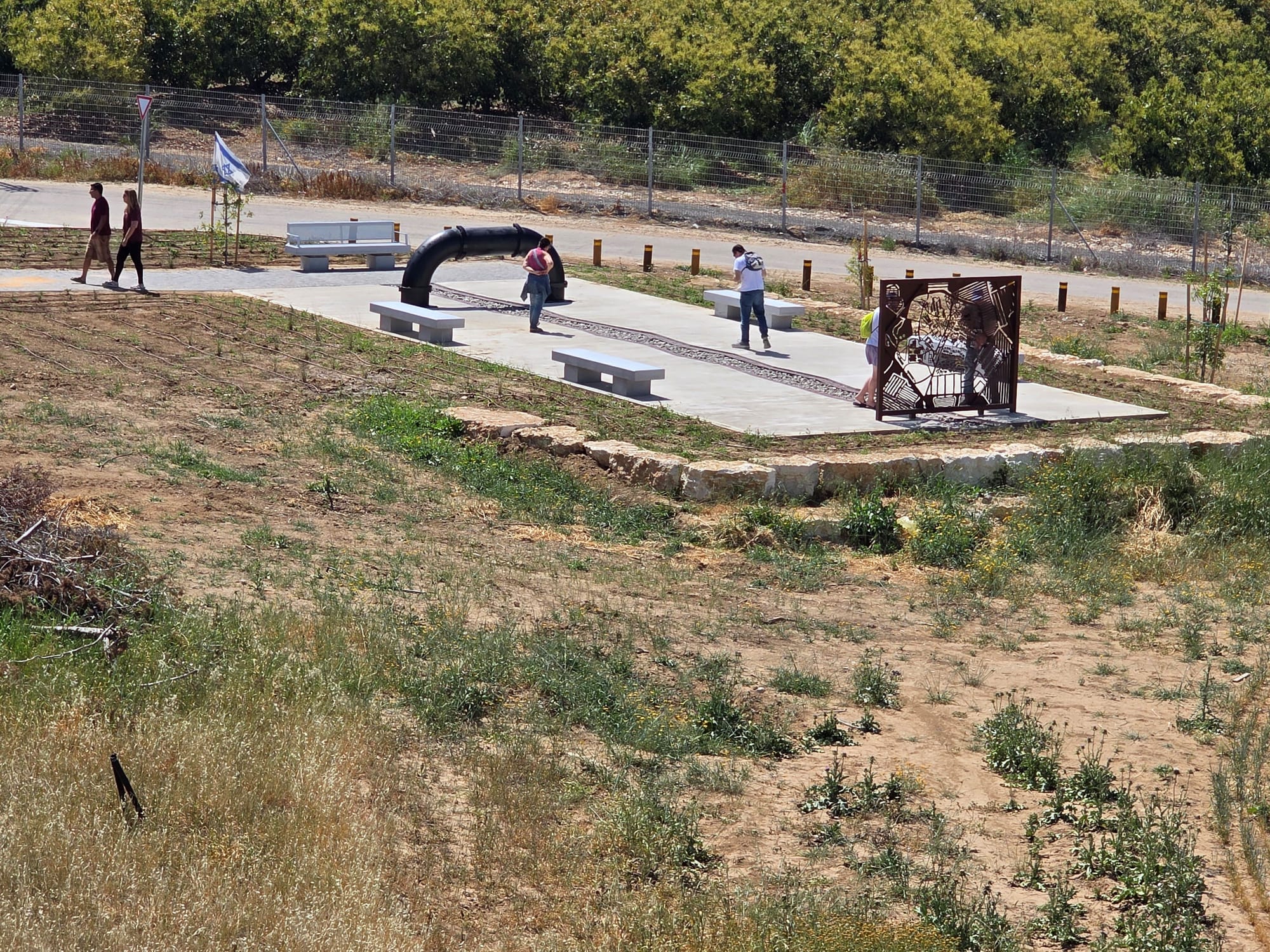
Chapter 12 — Conclusion: October 7 and the Lessons That Must Not Be Forgotten
A Day That Exposed More Than a Border
October 7, 2023, will remain one of the most consequential days in Israel's history.
The Hamas-led attacks revealed that a country with advanced military capabilities, sophisticated intelligence agencies and extensive border defences could still experience a catastrophic security failure.
But the significance of that day cannot be measured only through military assessments.
Behind the breached barriers, disrupted communications and delayed reinforcements were people whose lives changed within hours.
Families were attacked inside their homes.
Young people attending a music festival were killed or abducted.
Soldiers and emergency responders faced an assault for which the defensive system had not adequately prepared.
Entire communities experienced loss, destruction and displacement.
The attack exposed vulnerabilities that had developed over time.
Understanding those vulnerabilities is essential.
Yet understanding how Israel's defences failed must never obscure the responsibility of those who deliberately attacked civilians and took hostages.
Both realities belong in an accurate historical account.
The Difference Between an Attack and a Failure to Prevent It
One of the most important distinctions in examining October 7 concerns the responsibility of the attackers and the responsibility of the institutions that failed to prevent the assault.
Hamas and other participating armed groups were responsible for their actions during the attacks.
The deliberate killing of civilians and the taking of hostages were serious violations of international humanitarian law.
Israel's intelligence and military institutions had a separate responsibility to assess threats, maintain defensive readiness and protect the population.
Their failure to do so had devastating consequences.
These forms of responsibility should not be confused.
A failure to prevent a crime does not excuse the person or organisation that committed it.
Equally, the criminal responsibility of the attackers does not eliminate the need to investigate institutional failures.
A complete examination of October 7 must address both.
Intelligence Is Only as Effective as Its Interpretation
The investigations into October 7 revealed that important intelligence information existed before the assault.
Israeli agencies had obtained material describing an attack resembling the operation that eventually occurred.
Surveillance personnel had observed suspicious activities.
Warnings and indications of unusual behaviour had been reported.
However, the information did not lead to adequate defensive preparations.
The central failure was therefore not simply technological or informational.
It involved the way evidence was interpreted.
Established assumptions about Hamas's intentions influenced the assessment of the threat.
The belief that the organisation was deterred proved dangerously inaccurate.
This lesson has implications far beyond Israel.
Intelligence organisations must be capable of questioning their own conclusions.
They must examine evidence that contradicts established assessments rather than treating it as an inconvenience.
The purpose of intelligence is not to confirm what decision-makers already believe.
It is to help them understand threats as accurately as possible.
Technology Cannot Replace Preparedness
Israel's border with Gaza was protected by advanced surveillance systems and physical barriers.
These capabilities were intended to detect and prevent infiltration.
On October 7, attackers disrupted elements of the system and breached the border at multiple locations.
The resulting crisis demonstrated the limitations of relying too heavily on technological protection.
Surveillance equipment can identify threats.
Sensors can provide warnings.
Barriers can delay movement.
But none of these capabilities guarantees that an attack will be prevented.
A defensive system also requires trained personnel, effective communication, realistic contingency plans and sufficient forces to respond.
Technology is an essential component of modern security.
It cannot replace sound judgement, operational readiness or the ability to respond when normal systems fail.
The Responsibility to Protect Civilians
Perhaps the most important lesson of October 7 concerns the protection of civilians.
Residents of communities near Gaza relied on the state to provide security.
When attackers entered their homes and neighbourhoods, many were left without effective assistance for hours.
The consequences were catastrophic.
The failure raised questions about emergency planning, military deployment, civilian warning systems and the coordination of rescue operations.
Protecting civilians requires more than maintaining military superiority.
It requires planning for situations in which an adversary achieves surprise.
It requires ensuring that vulnerable communities can receive assistance.
It requires clear responsibilities between military forces, emergency services and civilian authorities.
Above all, it requires recognising that the effectiveness of a security system must be judged partly by its ability to protect the people who depend on it.
Courage Does Not Erase Institutional Failure
October 7 also revealed extraordinary acts of courage.
Local security teams attempted to defend their communities.
Soldiers and police officers confronted attackers.
Emergency responders treated injured people under dangerous conditions.
Civilians helped neighbours, sheltered strangers and assisted others in escaping.
These actions deserve recognition.
However, individual bravery must not be used to obscure institutional failures.
In several locations, people were forced to act without the timely assistance they should have received.
The courage of individuals sometimes compensated for weaknesses in the wider security response.
That distinction matters.
Honouring those who acted courageously and demanding accountability from institutions are not contradictory objectives.
Both are necessary to understand what happened.
Accountability Must Extend Beyond Resignations
The IDF's investigations acknowledged serious failures in intelligence assessment, military preparedness and operational response.
Senior military officials accepted responsibility, and leadership changes followed.
These developments were significant.
However, resignations alone cannot provide a complete explanation of the events.
Survivors and families have sought answers about decisions made before and during the attacks.
They have questioned why warnings were not acted upon and why military assistance was delayed.
They have also demanded scrutiny of the political and strategic assumptions that shaped Israel's approach to Gaza.
A credible process of accountability must examine relevant decisions at every level.
It must distinguish between operational errors, failures of judgement, institutional responsibility and potential legal violations.
It must also provide recommendations that can be evaluated and implemented.
The objective should not be to identify convenient individuals to blame.
It should be to establish the full chain of responsibility and reduce the likelihood of similar failures.
The Importance of Independent Investigation
Internal military investigations can provide valuable evidence.
They can reconstruct operations, identify weaknesses and recommend reforms.
However, they cannot necessarily examine every aspect of political decision-making or institutional oversight.
This is why the question of independent investigation became so important after October 7.
A comprehensive inquiry should have the authority and independence necessary to examine intelligence assessments, military planning and relevant political decisions.
It should consider both the immediate failures and the longer-term assumptions that influenced security policy.
Its conclusions should be based on evidence rather than political expectations.
Independent investigation is not an obstacle to national security.
When conducted responsibly, it can strengthen institutions by identifying weaknesses and restoring public confidence.
The Hostages and the Human Cost of Conflict
The taking of 251 hostages into Gaza became one of the defining consequences of October 7.
The abductions affected families, communities and international diplomatic relations.
The hostage crisis also raised fundamental questions about the protection of civilians and the obligations of armed groups.
Hostage-taking is prohibited under international humanitarian law.
The suffering of hostages and their families cannot be reduced to a political negotiating position.
Their experiences must be documented with dignity and care.
The same principle applies to the wider human consequences of the attacks.
Those killed were not merely statistics.
They were individuals with families, relationships, professions and personal histories.
A historical account must preserve that individuality.
The Suffering That Followed in Gaza
The consequences of October 7 extended far beyond Israel.
The Israeli military campaign in Gaza caused extensive Palestinian civilian deaths, injuries, displacement and destruction.
The humanitarian consequences became a central part of the international debate over the war.
These events require independent examination under international humanitarian law.
Recognising the crimes committed during the Hamas-led attacks does not diminish the legal protections owed to Palestinian civilians.
Likewise, recognising Palestinian suffering does not justify the deliberate killing or abduction of Israeli civilians.
The protection of civilians must remain a consistent principle.
International humanitarian law does not permit violations by one party to excuse violations by another.
A responsible historical account must therefore examine the events of October 7 and the subsequent war without treating civilian suffering as a competition.
The Regional Consequences
October 7 also altered the wider security environment of the Middle East.
The war in Gaza intensified regional tensions.
Hezbollah's involvement created a major confrontation along Israel's northern border.
Iran and Israel entered periods of direct military escalation.
Houthi attacks threatened international shipping.
Foreign governments became involved in military, diplomatic and humanitarian efforts.
The crisis demonstrated how an attack in one location could contribute to instability across an entire region.
It also highlighted the limitations of addressing complex security problems through military action alone.
Regional stability depends on military deterrence, diplomacy, political arrangements and the prevention of further escalation.
The long-term consequences of October 7 cannot be understood without considering these broader relationships.
The Danger of Simplified Narratives
October 7 became one of the most intensely debated events in recent history.
Photographs, videos, witness accounts and political statements circulated across the world.
Some provided important evidence.
Others contained inaccuracies or misleading claims.
The speed of social media encouraged simplified narratives.
Complex events were sometimes reduced to arguments intended to support a particular political position.
This creates a serious challenge for journalism.
The existence of misinformation does not make documented atrocities disappear.
Nor does the existence of documented atrocities make every circulating allegation accurate.
Journalists must distinguish between established facts, credible testimony, allegations and unresolved questions.
They must also remain willing to correct mistakes.
An accurate historical record depends on evidence, not on the popularity of a narrative.
The Responsibility of Independent Journalism
Independent journalism has an essential role in examining October 7 and its consequences.
It can investigate official accounts, document survivor experiences and analyse institutional failures.
It can explain the historical and political context without excusing violence.
It can also challenge misinformation and distinguish between legal findings and political accusations.
However, independence requires consistency.
Journalists must apply the same standards of verification to governments, military institutions, armed organisations and other sources.
They must not treat official statements as automatically conclusive.
Nor should they dismiss evidence simply because it contradicts a preferred interpretation.
The objective is not to create a narrative that satisfies every audience.
It is to establish what the available evidence supports and explain where uncertainty remains.
Remembering Without Losing Perspective
The memory of October 7 will continue to shape Israeli society.
For survivors and families, remembrance is deeply personal.
For the wider country, the attacks raised questions about security, leadership and national identity.
For historians and journalists, the challenge is to preserve an accurate record.
Remembrance should honour victims without replacing investigation.
It should recognise acts of courage without concealing institutional failures.
It should preserve the experiences of survivors without turning them into political symbols.
And it should acknowledge that the consequences of the conflict extend beyond one community or nationality.
The purpose of remembering is not only to look backward.
It is also to understand what must change.
Can Another October 7 Be Prevented?
No security system can guarantee that an attack will never occur.
Military and intelligence institutions operate under conditions of uncertainty.
Adversaries adapt their methods.
Technology changes.
Political circumstances evolve.
However, uncertainty does not make catastrophic failure inevitable.
Institutions can improve intelligence analysis, challenge established assumptions and prepare for unexpected scenarios.
Military forces can strengthen command structures and defensive readiness.
Governments can improve oversight and emergency planning.
Civilian communities can receive better protection and support.
These measures cannot eliminate every threat.
They can reduce vulnerabilities and improve the ability to respond.
Preventing another catastrophe requires continuous evaluation rather than confidence that existing arrangements will always be sufficient.
Security and the Search for a Political Future
The events of October 7 reinforced Israel's determination to prevent future attacks.
They also demonstrated the enormous consequences of an unresolved conflict.
Military force may be necessary to respond to armed threats, but it cannot by itself answer every political question.
Long-term stability requires consideration of governance, security arrangements, civilian protection and the rights of the populations involved.
Israelis need protection from attacks against their communities.
Palestinians need protection from unlawful violence and a future in which their rights and political aspirations are addressed.
These needs should not be treated as mutually exclusive.
The challenge is to develop arrangements capable of reducing violence while providing credible security and political prospects.
There is no simple solution.
But the absence of an easy solution does not remove the need to pursue one.
Final Reflection — Beyond the Headlines
October 7, 2023, was a day of extraordinary violence, suffering and institutional failure.
Hamas-led armed groups carried out attacks against Israeli military positions and civilian communities.
Civilians were killed, families were separated and hostages were taken into Gaza.
Israel's intelligence and military institutions failed to anticipate and respond adequately to the assault.
The investigations that followed exposed serious weaknesses in security assessments, defensive planning and operational command.
The war that followed transformed Gaza, intensified regional confrontation and generated profound humanitarian and legal questions.
Understanding October 7 therefore requires more than examining the events of a single day.
It requires studying the decisions made beforehand, the experiences of those who lived through the attacks and the consequences that followed.
It requires recognising the responsibility of the perpetrators while examining the failures of institutions entrusted with protecting civilians.
It requires separating evidence from speculation and refusing to reduce complex events to political slogans.
Above all, it requires remembering that behind every military decision, every intelligence assessment and every political argument are human lives.
The history of October 7 is not complete simply because the attack itself has been reconstructed.
Its significance will continue to be shaped by investigations, accountability, recovery and the choices made in the years that follow.
For Beyond the Lines, the purpose of examining these events is not to reinforce an existing narrative.
It is to look beyond immediate headlines, examine the evidence and provide the context necessary for a deeper understanding.
Because the responsibility of journalism is not merely to report what happened.
It is to help readers understand why it happened, what remains uncertain and what the consequences mean for the future.
Sources & Further Reading
October 7: How Israel's Defenses Were Breached
The following sources provide official investigations, independent reporting, human rights documentation and international legal materials relevant to the events of October 7, 2023, and their aftermath.
1. Official Israeli Military Investigations
Israel Defense Forces (IDF) — The October 7 Inquiries
Official collection of military investigations into the attacks, including the defensive failures and battles in communities near Gaza.
https://m.www.idf.il/en/mini-sites/710-the-inquiries/
IDF — Battle of Kibbutz Be'eri Inquiry (July 2024)
Official findings concerning the attack on Kibbutz Be'eri, the delayed military response and the conduct of forces involved in the battle.
IDF — Statement by Chief of Staff Herzi Halevi (February 27, 2025)
Statement concerning the military investigations, institutional responsibility and the importance of examining the failures of October 7.
2. Independent Investigative Journalism
Reuters — Israeli Military Inquiry Says It Failed to Protect Civilians on October 7 (February 27, 2025)
Independent reporting on the findings of the IDF's investigation, including intelligence failures, mistaken assumptions about Hamas and deficiencies in defensive preparedness.
Reuters — Israelis Mark Three Years Since October 7 (October 7, 2026)
Reporting on the continuing effects of the attacks, public demands for accountability and the consequences of the subsequent war in Gaza.
Reuters — For Freed Israeli Hostages, Every Moment Is Now Precious (October 5, 2026)
Survivor-focused reporting on the experiences and recovery of people released from captivity in Gaza.
https://www.reuters.com/wider-image/freed-israeli-hostages-every-moment-is-now-precious-2026-10-05/
3. Human Rights Investigations
Human Rights Watch — “I Can't Erase All the Blood from My Mind”: Palestinian Armed Groups' October 7 Assault on Israel (July 2024)
A detailed investigation documenting killings, hostage-taking and other crimes committed during the Hamas-led attacks. The research includes witness interviews and analysis of photographs and videos.
https://www.hrw.org/news/2024/07/17/october-7-crimes-against-humanity-war-crimes-hamas-led-groups
Human Rights Watch — Questions and Answers: The Hamas-Led Armed Groups' October 7, 2023 Assault on Israel (July 2024)
An explanation of the investigation's methodology, participating armed groups and findings concerning violations of international law.
4. United Nations Investigations
United Nations — Office of the Special Representative of the Secretary-General on Sexual Violence in Conflict (March 2024)
Mission Report: Official Visit to Israel and the Occupied West Bank, 29 January–14 February 2024.
Findings concerning conflict-related sexual violence during the October 7 attacks and against hostages held in Gaza, including the limitations of the available evidence and recommendations for further investigation.
5. International Law and Judicial Proceedings
International Court of Justice (ICJ) — South Africa v. Israel
Official case materials concerning the application of the Genocide Convention in the Gaza Strip, including provisional measures and related judicial documents.
https://www.icj-cij.org/case/192
International Court of Justice — Provisional Measures
Official orders and related materials, including the order of January 26, 2024.
https://www.icj-cij.org/case/192/provisional-measures
International Criminal Court (ICC) — Situation in the State of Palestine (November 21, 2024)
Official announcement concerning arrest warrants issued for Benjamin Netanyahu and Yoav Gallant in connection with alleged international crimes.
International Criminal Court — Defendants: Situation in the State of Palestine
Official case-status information, including proceedings concerning Israeli and Hamas figures.
Editorial Note
This article draws on official military investigations, independent journalism, human rights documentation and international legal proceedings.
Official statements are treated as evidence of the positions and findings of the institutions issuing them, not as automatically independent verification of every claim.
Where investigations remain incomplete or evidence is disputed, the article distinguishes established findings from allegations and unresolved questions.
The events of October 7 and the subsequent war continue to be subjects of historical, legal and journalistic examination.
Sources reviewed: October 2026.