A Muslim, an American Soldier and an Unapologetic Zionist: The Story of Mansoor Hussain Laghari
From persecution in Pakistan to US military service and advocacy for Israel, Mansoor Hussain Laghari shares his remarkable journey.
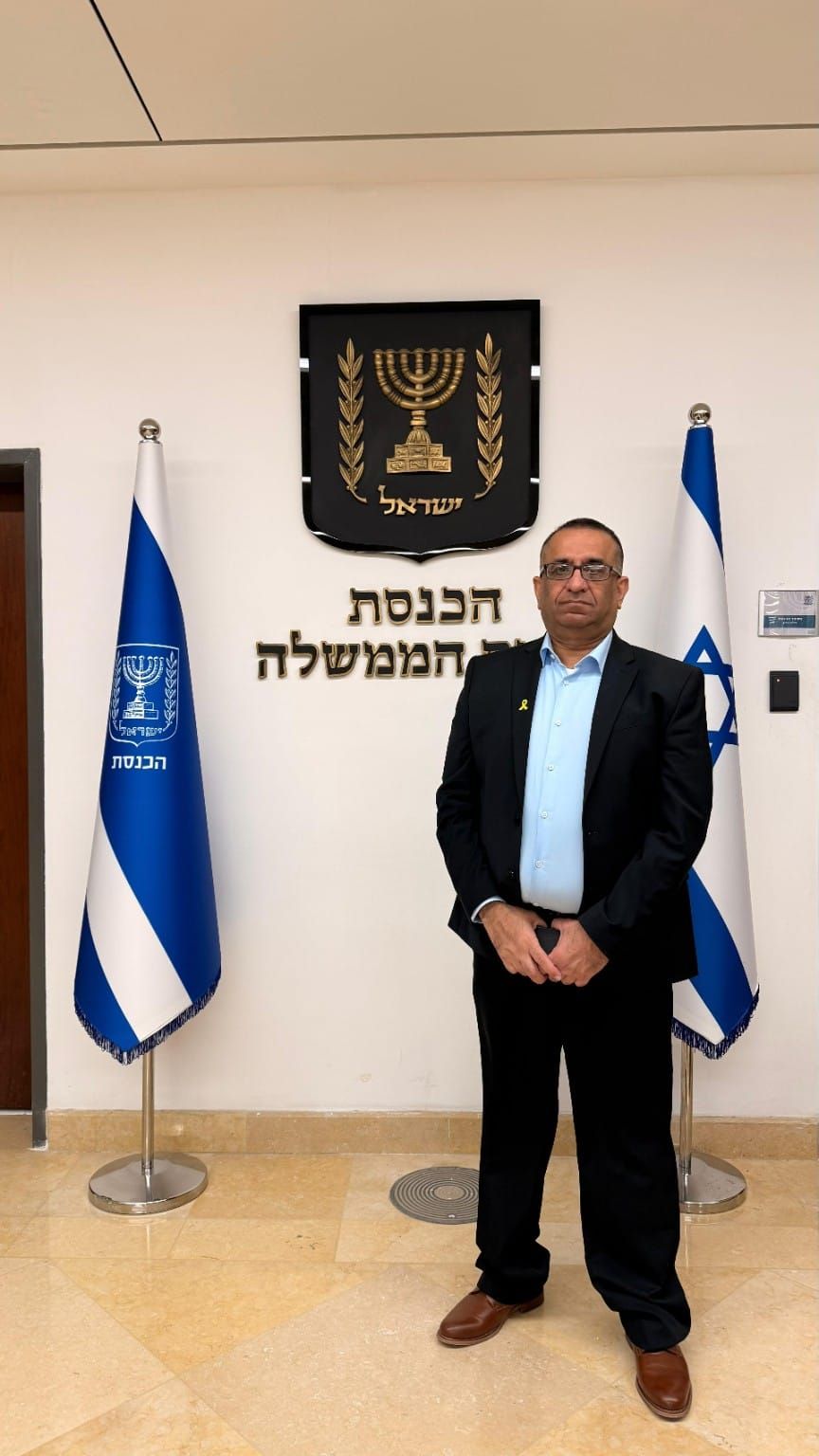
From political persecution in Pakistan to military service in the United States and advocacy for Israel, Mansoor Hussain Laghari shares a deeply personal account of identity, courage, religious freedom and reconciliation.
Beyond the Lines | Interviews
Estimated reading time: 14–16 minutes
The Story in Brief
Mansoor Hussain Laghari describes a life shaped by political persecution, displacement, military service and a determination to challenge religious prejudice. Born in Sindh, Pakistan, he says his father's imprisonment and death profoundly influenced his understanding of freedom and human dignity.
After arriving in the United States as a political refugee in 1999, Laghari joined the US Army. Today, he identifies as both a practising Muslim and an unapologetic Zionist, advocating Jewish self-determination while recognising the suffering and rights of Palestinian civilians.
In written responses to Beyond the Lines, he discusses reported threats against himself and his family, his experiences visiting Israel and his ambitions for the Global Youth Unity Project, an initiative intended to encourage dialogue and cooperation between communities.
His central argument is that religious identity should never require hostility towards others.
Introduction — A Life Between Different Worlds
Some lives challenge the categories through which people understand the world. Mansoor Hussain Laghari's is one of them.
Born in Pakistan, shaped by political persecution, welcomed into the United States as a refugee and later a member of its armed forces, Laghari has developed a public identity that crosses several of today's most contested political and religious boundaries.
He is Muslim. He is American. He is a military veteran. And he describes himself as an unapologetic Zionist.
For some, these identities might appear contradictory. For Laghari, they are inseparable parts of his personal history.
His support for Israel has reportedly brought hostility, accusations of betrayal and threats against his family. Yet he insists that defending Jewish self-determination does not require abandoning Islam, nor does supporting Israeli security mean disregarding Palestinian suffering.
In an extensive written interview with Beyond the Lines, Laghari reflects on the experiences that shaped his convictions, beginning with his childhood in Pakistan and the political struggle of his father.
His account offers a perspective on Muslim-Jewish relations that is often overlooked in polarised public debate: that of a Muslim who openly supports Israel while calling for dignity, security and freedom for people on both sides of the conflict.
It is also a story about the personal consequences of refusing to conform to the expectations of one's community.
1. Growing Up in Pakistan: The Cost of Political Persecution
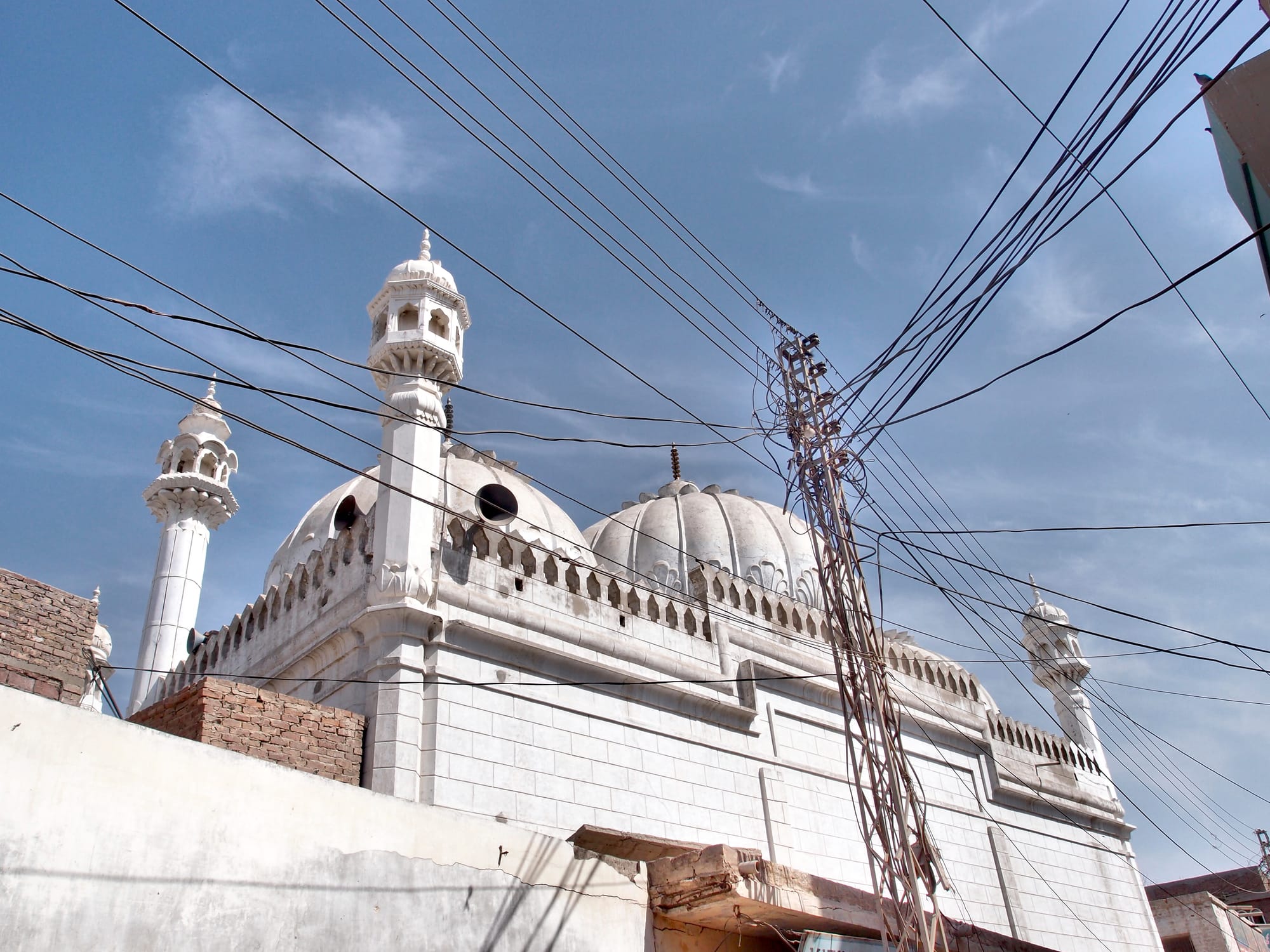
Mansoor Hussain Laghari was born in Mirpurkhas, in Pakistan's southern province of Sindh, a region with a long history of political activism, religious diversity and Sufi traditions.
His earliest memories are marked by two contrasting experiences: the warmth of a community where people of different faiths lived alongside one another, and the absence of a father whose political convictions repeatedly brought him into conflict with the authorities.
His father, Ghulam Mohammad Laghari, was involved in defending peasants and marginalised communities. Historical biographical material in Sindhi records his involvement in the peasant movement, political activities and journalism, and his death in October 1982.
Mansoor says his father spent decades in prison and died in custody. The precise circumstances of his death require further independent documentation.
For Mansoor, however, the consequences were intensely personal.
"Their children serve a sentence of absence, too."
It is a short observation that captures an often-overlooked dimension of political imprisonment. When a parent is repeatedly removed from family life, the punishment extends far beyond the prison walls.
Laghari remembers growing up with Hindu friends and neighbours, celebrating their festivals and participating in their happiness. Those relationships, together with Sindh's Sufi traditions, influenced his understanding of religion.
He learned to see people as individuals before identifying them through their religious backgrounds.
His later experiences, he says, included attempts on his life. Those incidents transformed freedom from an abstract political principle into something immediate: the ability to return home safely, express an opinion without fear and protect one's family.
In his account, persecution did not lead him to reject religion. Instead, it strengthened his conviction that faith should never become a justification for intimidation or violence.
His father's example remained a guiding influence. Mansoor describes courage not as the absence of fear, but as the willingness to defend one's convictions despite knowing the possible consequences.
2. From Political Refugee to American Soldier
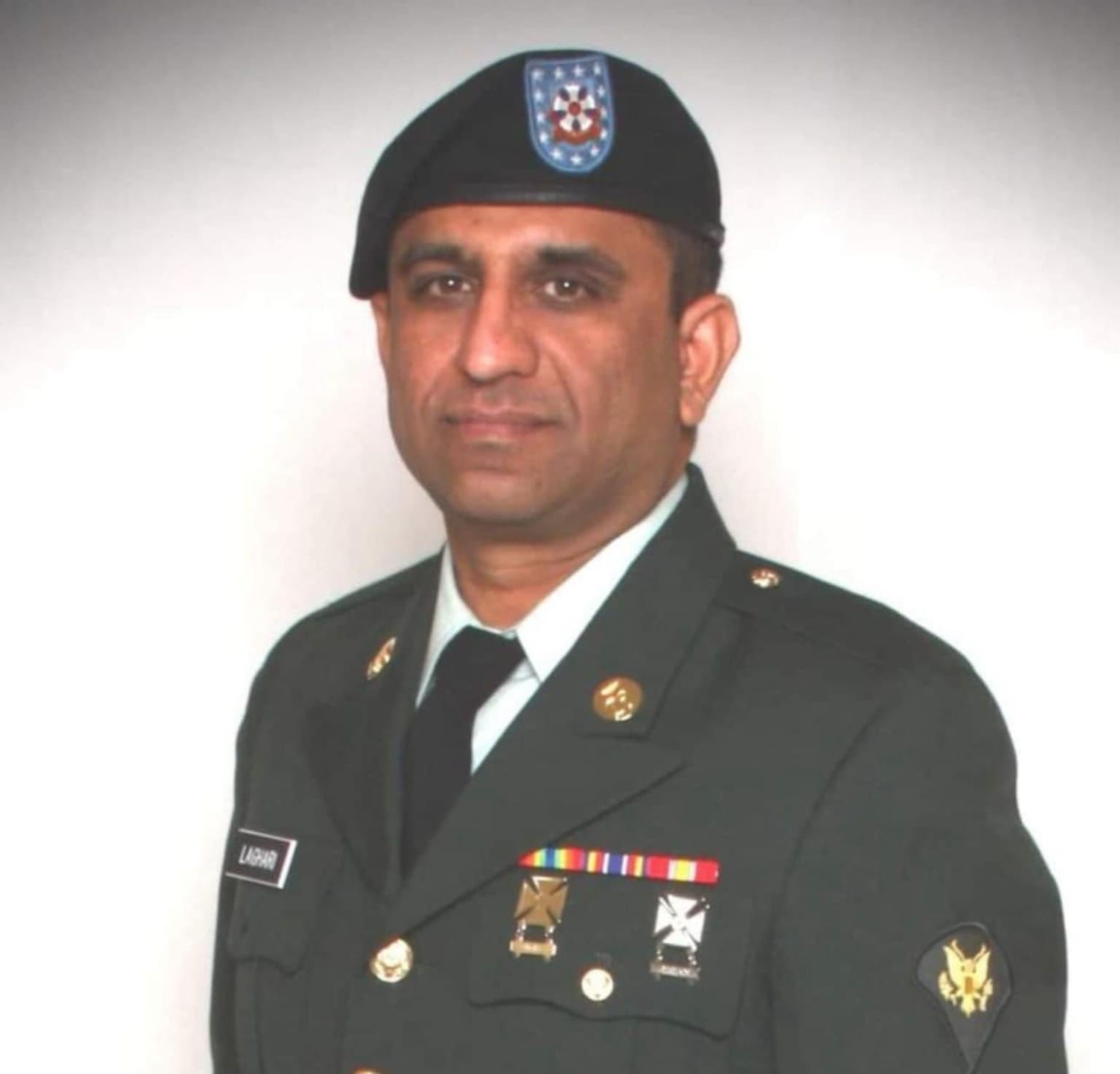
In 1999, Laghari arrived in the United States as a political refugee.
After years shaped by persecution and insecurity, America represented the possibility of rebuilding his life.
He describes the experience as more than a geographical relocation. It was an opportunity to belong to a country where he believed he could live freely and contribute to society.
Rather than seeing his new home simply as a place of refuge, he wanted to serve it.
"Joining the Army was a way of turning gratitude into service."
Laghari subsequently joined the US military. His service as an Army National Guard specialist has also been described by the MacArthur Society of West Point Graduates, which hosted him as a speaker in September 2026.
For Laghari, military service reinforced values that had already emerged from his experiences in Pakistan: responsibility, discipline, loyalty and the importance of protecting others.
He emphasises that military leadership is not simply about authority. It involves making decisions when others depend on one's judgement, particularly in difficult circumstances.
His reflections also reveal an awareness of the personal lives behind military uniforms.
Soldiers, he argues, should not be reduced to their professional roles or treated merely as symbols of national policy. They are individuals with families, personal responsibilities and futures beyond their service.
Laghari describes himself as a medically retired veteran. His military medical retirement status has not been independently documented by Beyond the Lines.
His experience nevertheless illustrates a central theme of his life: the relationship between freedom and responsibility.
Having once sought protection, he says he wanted to contribute to protecting the country that had welcomed him.
3. Faith, Freedom and the Right to Believe Differently
Religion occupies an important place in Laghari's identity.
He describes himself as a Muslim influenced by the Sufi traditions of Sindh, where spirituality, humility and respect for others helped shape his understanding of faith.
Yet his experiences also exposed him to religious intolerance.
He recalls people being judged not by their conduct but by their religious affiliation, including whether they belonged to a minority community or followed a different interpretation of Islam.
These experiences led him to question how religious language could be used to justify cruelty.
His position is grounded in reciprocity: the freedom he seeks for himself must also belong to others.
As he explains, he cannot reasonably demand the right to practise Islam while denying the same freedom to Jews, Christians, Hindus or people without religious beliefs.
This principle extends beyond formal legal protections.
Religious freedom, in his view, also involves the ordinary ability to live without intimidation: to share meals, maintain friendships and celebrate another community's traditions without feeling threatened.
It is a perspective that challenges the assumption that religious loyalty necessarily requires separation from people who believe differently.
Laghari does not argue that theological differences should disappear. Rather, he believes that people can remain deeply committed to their own faith while recognising the independence of another person's conscience.
For him, coexistence begins with this distinction.
4. A Muslim Zionist: Challenging Expectations
Among the most distinctive aspects of Laghari's public identity is his outspoken support for Israel.
He describes himself as a Muslim Zionist, a position that challenges the expectation, present in some political and religious circles, that Muslim identity must involve opposition to Zionism.
For Laghari, the term has a specific meaning: support for Jewish self-determination in Israel and the country's right to exist in security.
He distinguishes that position from unconditional support for every decision taken by an Israeli government.
His convictions developed through questioning narratives he had encountered and through personal relationships with Jewish people.
Having experienced political persecution himself, he says he recognises the importance of historical identity, national belonging and the desire for security.
"I am Muslim. I am an unapologetic Zionist. There is room in my heart for both, and I will not let hatred convince me otherwise."
His position is not merely theoretical.
Laghari has publicly written about his support for Israel and Muslim-Jewish cooperation, including in opinion contributions to The Times of Israel. Those writings demonstrate the consistency of his public advocacy, although they represent his own views rather than independent reporting.
A Visit That Made the Conflict Personal
Laghari's experiences in Israel strengthened his convictions.
During his visit, he travelled to places connected to the Hamas-led attacks of 7 October 2023, including the site of the Nova music festival massacre.
For him, visiting these locations brought the human consequences of the attacks into sharper focus.
He encountered places associated with people who had been living ordinary lives before the violence.
The experience reinforced his belief that discussions about Israel must not overlook the lives of those killed, abducted or otherwise affected by the attacks.
He also describes being warmly welcomed by Israelis, including people he had never previously met.
In an earlier personal account, he wrote about travelling to Israel as someone seeking to build bridges between communities and leaving with a stronger sense of personal connection.
These encounters shaped his understanding of Israeli society beyond political arguments.
At the same time, they raise an important distinction: personal experiences can deepen an individual's understanding of a country, but they cannot represent the full diversity of experiences within it.
Israel is home to Jewish, Muslim, Christian, Druze and other communities, whose perspectives on identity, security and the conflict are not uniform.
Laghari's testimony is one contribution to that broader conversation.
5. The Personal Price of Speaking Out
Publicly challenging the expectations of one's community can carry consequences.
Laghari says his support for Israel and his criticism of religious extremism have exposed him to hostility, rejection and threats.
He reports being called a kafir, an Arabic term commonly used to describe an unbeliever, and a munafiq, meaning a hypocrite in a religious context.
He has also been accused of betraying Muslims and acting on behalf of Israel.
According to Laghari, some threats have extended to his family.
These allegations are serious. Beyond the Lines has received his personal account but has not independently examined police reports, threatening communications or other evidence that would establish the circumstances of individual incidents.
What is clear from his testimony is the emotional impact he describes.
He stresses that public advocacy does not make someone immune to fear, particularly when family members become involved.
As a husband and father, he says the prospect of his loved ones facing danger because of his opinions is particularly painful.
His account also reveals an important distinction in how he approaches the hostility.
Although he believes some threats have come from people invoking Islam, he refuses to hold all Muslims responsible.
He rejects the idea that religious extremism represents every member of a religious community.
That distinction is fundamental to his wider message: prejudice cannot be challenged effectively by replacing one form of collective blame with another.
6. Israel, Gaza and the Responsibility to Protect Civilians
One of the most important questions facing anyone who publicly supports Israel concerns the treatment and protection of Palestinian civilians.
Laghari does not avoid the issue.
He condemns the Hamas-led attacks of 7 October 2023 and the taking of hostages, while insisting that Palestinian civilians deserve compassion, humanitarian assistance and protection.
He argues that supporting Israel's security should not mean ignoring Palestinian suffering.
In his view, Hamas bears responsibility for its own decisions and actions, including the consequences of launching attacks against civilians and holding hostages.
But he also recognises that children and other civilians in Gaza should not be treated as responsible for the actions of armed groups.
His position is that Israeli families deserve safety from attacks and Palestinian families deserve protection from violence and deprivation.
This is a significant distinction in a debate frequently dominated by competing political narratives.
Under international humanitarian law, parties to armed conflict have obligations to distinguish civilians from combatants, avoid indiscriminate attacks and take required precautions to protect civilians. Violations by one party do not remove the legal obligations of another.
Laghari's comments therefore invite a broader discussion about how political solidarity, military security, humanitarian protection and accountability can coexist.
His answer is not a detailed political settlement or peace proposal.
Instead, it begins with a moral principle: the suffering of civilians should matter regardless of their nationality or religion.
7. When Communities Inherit an Enemy
For Laghari, one of the greatest obstacles to Muslim-Jewish reconciliation is the tendency to inherit prejudices before developing personal relationships.
He describes how children and young adults can grow up hearing generalisations about entire religious communities.
Such narratives may become deeply embedded before individuals have an opportunity to meet people from the groups they have been taught to distrust.
The result can be a form of hostility built on assumptions rather than personal experience.
Laghari believes education and direct contact can challenge these attitudes.
He advocates teaching Jewish history, including the Holocaust, while also addressing prejudice and discrimination against Muslims.
He makes a distinction between criticism of religious ideas and hostility towards people because of their religion.
For this reason, he prefers the expression anti-Muslim hatred when discussing prejudice against Muslims.
He also argues that antisemitism must be confronted directly, particularly conspiracy theories and attempts to hold Jewish communities collectively responsible for the actions of Israel.
His emphasis is on individual accountability.
Political criticism, religious disagreement and debate should remain possible. But disagreement must not become justification for intimidation or discrimination.
Community leaders, he argues, have a particular responsibility to challenge prejudice among their own supporters, even when doing so is unpopular.
He believes meaningful interfaith relationships must be strong enough to withstand difficult conversations rather than depending on the avoidance of disagreement.
8. The Global Youth Unity Project: Building a Different Future
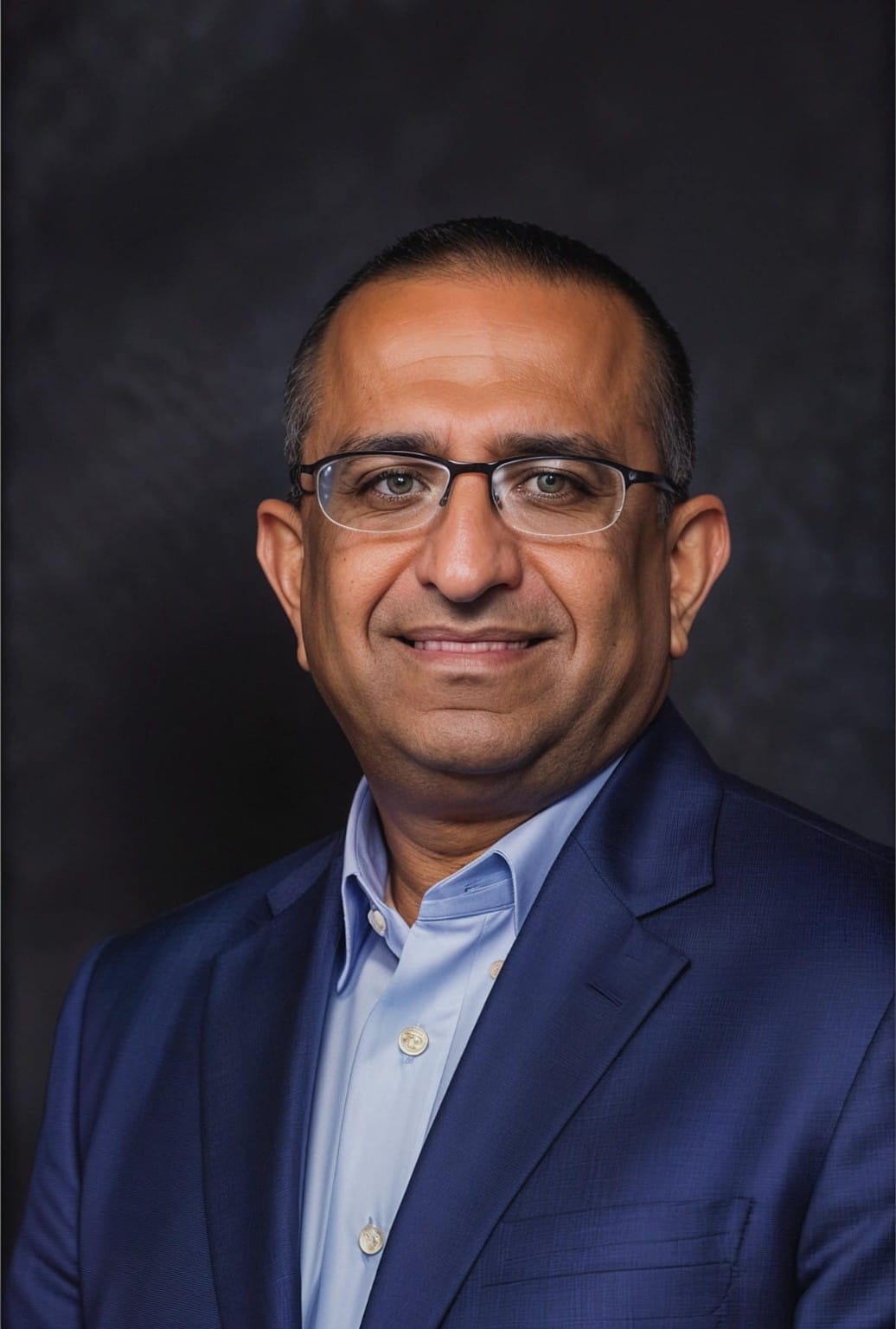
Laghari's experiences eventually led him to establish the Global Youth Unity Project (GYUP).
The organisation describes its mission as promoting understanding and cooperation between Muslim and Jewish young people through education, dialogue and community initiatives. Its stated objectives include challenging antisemitism, resisting extremism and encouraging youth leadership.
Laghari says the organisation emerged from a desire to turn the painful experiences of his own life into something constructive.
He cannot change the years his family lost to political persecution, but he hopes to prevent younger generations from inheriting the same hostility.
Its proposed areas of activity include peace education, digital resilience, sports diplomacy, storytelling and opportunities for dialogue.
Digital resilience is particularly relevant to a generation that encounters political and religious messages through social media.
Young people may be exposed to misinformation, conspiracy theories, extremist propaganda and emotionally manipulative content long before they develop the skills needed to evaluate those messages critically.
Laghari believes education should help them recognise such influences and question inherited assumptions.
He also sees personal storytelling as a way to reach audiences who might otherwise reject unfamiliar perspectives.
The organisation remains in development, according to his interview responses. Its published mission and ambitions should therefore be distinguished from independently documented programme outcomes.
Nevertheless, its objectives reflect Laghari's central conviction that relationships between communities can be strengthened through sustained contact and shared experiences.
Rather than relying exclusively on political leaders to bring about reconciliation, he wants young people themselves to become participants in that process.
9. A Message to the Next Generation
When asked what he would say to young Muslims, Jews and Christians who feel pressured to choose between their identity and their commitment to peace, Laghari returns to the importance of individual conscience.
He believes people should be able to remain faithful to their religion, family and cultural heritage without adopting hostility towards others.
He recognises that challenging established beliefs can be difficult.
Family expectations, social relationships and the fear of rejection can all influence how freely individuals express their opinions.
For someone who has experienced persecution, these pressures are more than theoretical.
Yet he encourages young people to ask questions, seek information beyond familiar sources and engage with people they have been taught to distrust.
He also stresses that peace requires accountability.
Condemning terrorism, challenging persecution and acknowledging civilian suffering should not depend on which community is responsible or affected.
His message is not that disagreement can be eliminated.
It is that disagreement should not destroy the recognition of another person's humanity.
10. What This Means — The Possibility of Reconciliation
Laghari's story highlights several tensions at the centre of contemporary discussions about Israel, Islam, religious freedom and political identity.
The first concerns the assumption that religious and political identities must always align.
His identification as both Muslim and Zionist challenges the idea that there is a single Muslim position on Israel. It also illustrates the diversity of opinion that exists within religious communities, even when certain viewpoints attract greater public attention than others.
The second concerns the personal risks that can accompany public dissent.
Whether discussing political persecution in Pakistan or the threats he reports receiving today, Laghari's experiences raise questions about freedom of expression, the protection of activists and the boundaries between criticism and intimidation.
The third concerns the relationship between solidarity and universal human rights.
Laghari's support for Israel is explicit. Yet he also argues that Palestinian civilians deserve protection and that their suffering must not be dismissed.
These positions do not resolve the complex legal and political disputes surrounding the Israeli-Palestinian conflict. They do, however, challenge the idea that empathy for one population must exclude empathy for another.
Finally, his work with the Global Youth Unity Project points towards a longer-term question: can education, personal relationships and cooperation help reduce prejudice before it becomes entrenched?
The answer depends not only on good intentions but also on practical implementation, sustained participation and measurable results.
His project offers one proposed approach, whose future impact remains to be seen.
Conclusion — Refusing to Inherit Hatred
Mansoor Hussain Laghari's journey stretches from a childhood shaped by political imprisonment in Pakistan to military service in the United States and public advocacy for Muslim-Jewish reconciliation.
Throughout his account, a recurring theme emerges: the belief that personal identity should not determine whom a person is permitted to respect, defend or befriend.
His convictions have brought him into conflict with expectations that he believes are imposed by others.
Yet he insists that being Muslim, American, a veteran and a supporter of Jewish self-determination does not require him to abandon any part of himself.
His story does not offer a simple answer to the Israeli-Palestinian conflict or to the wider divisions between religious communities.
It offers something more personal: an account of what it means to question inherited narratives and accept the consequences of speaking publicly.
For Laghari, the ultimate measure of progress would not be another political declaration.
It would be a society in which a Muslim standing beside a Jew is no longer considered unusual or controversial.
And in which neither person, nor their family, has reason to fear the consequences.
Sources & References
- Beyond the Lines — Mansoor Hussain Laghari Interview. Eleven written responses supplied directly for this article, November 2026. Primary interview material.
- Global Youth Unity Project — About Us. Organisation's mission and founder biography.
https://globalyouthunityproject.org/about-us/ - MacArthur Society — Commanders Call with Mansoor Laghari. September 2026 presentation and biographical information.
https://macarthursociety.org/commanders-call-with-mansoor-laghari-us-army-veteran/ - Sindh Salamat — Ghulam Mohammad Laghari. Sindhi-language historical biographical material.
https://books.sindhsalamat.com/author/635 - The Times of Israel — Israel Through the Eyes of a Muslim. Laghari's personal account, February 2026.
https://blogs.timesofisrael.com/israel-through-the-eyes-of-a-muslim/ - The Times of Israel — Why I Will March With Israel as a Muslim. Laghari's opinion article, May 2026.
https://blogs.timesofisrael.com/why-i-will-march-with-israel-as-a-muslim/ - The Times of Israel — Pakistani Regime Handcuffed My Father's Dead Body. Laghari's account of his father's persecution, October 2026.
https://blogs.timesofisrael.com/pakistani-regime-handcuffed-my-fathers-dead-body/ - International Committee of the Red Cross — International Humanitarian Law. Legal framework governing civilian protection during armed conflict.
https://www.icrc.org/en/law-and-policy
Editorial Note
This feature is based primarily on written responses provided by Mansoor Hussain Laghari to Beyond the Lines. Direct quotations are reproduced from those responses.
His reported experiences of persecution, assassination attempts and threats are attributed to him where independent documentation has not been reviewed.
His published writings and organisational information provide additional context but do not constitute independent verification of every personal claim. Further confirmation of military records, specific threats and the circumstances of his father's death would strengthen the article before publication.
Beyond the Lines — Independent Journalism. Beyond the Headlines.