The Jews of Iraq: 2,500 Years of History, Exile and a Museum Bringing Memories Back to Life
A new museum in Baghdad reveals 2,500 years of Jewish history, from ancient Babylon to persecution, mass emigration and cultural preservation.
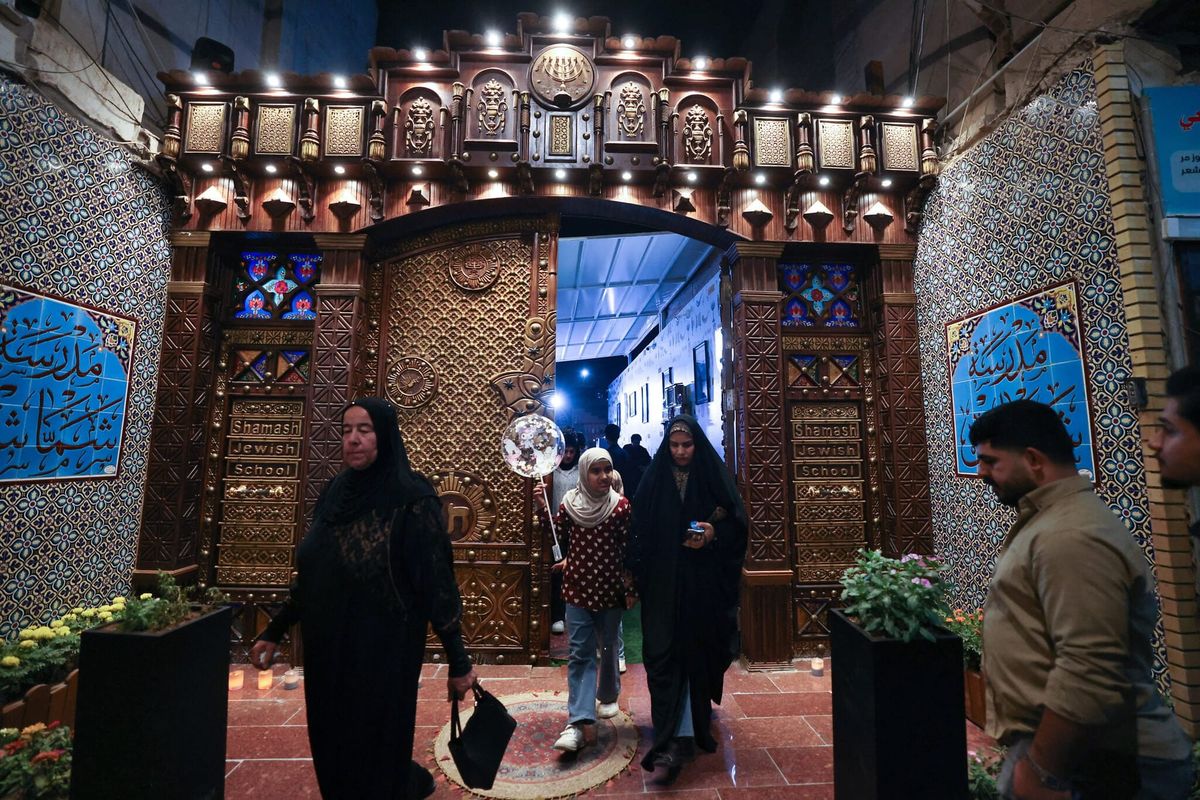
As Baghdad rediscovers its Jewish heritage through a new museum, the story of one of the world's oldest Jewish communities raises profound questions about identity, belonging and the history a nation chooses to remember.
Category: IN-DEPTH | HISTORY | MIDDLE EAST
Estimated reading time: 14–17 minutes
The Story in Brief
For more than 2,500 years, Jewish communities formed an important part of the land that is now Iraq. From the ancient academies of Babylonia to the markets, schools and synagogues of Baghdad, Jewish life helped shape the region's religious, intellectual and commercial history.
Yet during the twentieth century, a community numbering approximately 135,000 people was reduced to a tiny remnant. Anti-Jewish violence, discriminatory policies, political upheaval and the Arab–Israeli conflict contributed to a mass departure, particularly between 1950 and 1951.
Now, a Jewish heritage museum in Baghdad is drawing Iraqi visitors to photographs, school records and personal documents from a community many younger Iraqis know little about.
The museum offers more than a glimpse into the past. It raises an important question: can preserving Jewish history help Iraq reconnect with a part of its own identity?
Introduction — A Museum Opens a Door to Iraq's Forgotten History
In the heart of Baghdad, behind the doors of a restored school building, a remarkable chapter of Iraqi history is being brought back into public view.
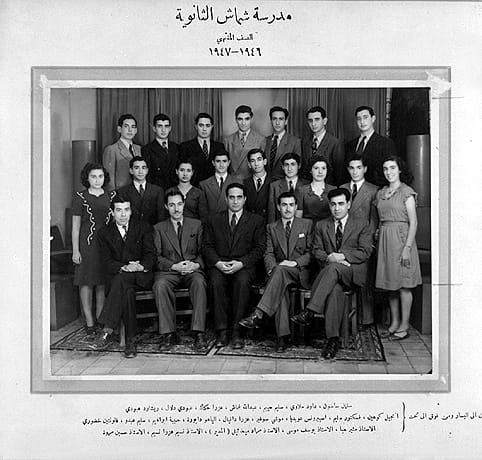
The Shamash Jewish Museum, which opened in October 2026, occupies a building that once educated generations of Jewish children. Today, its rooms contain school certificates, family photographs, identity documents and religious objects that tell the story of a community deeply woven into Iraqi society.
According to reporting by Reuters and AFP, dozens of Iraqis have been visiting the museum, many encountering a history that has largely disappeared from the country's public life.
The museum is located on Al-Rashid Street, one of Baghdad's historic thoroughfares. The former Shamash Jewish School was founded in 1928 by Jewish philanthropist Yacoub Shlomo Shamash. Its transformation into a museum is particularly significant because it has been undertaken by Iraq's surviving Jewish community.
This is not simply an exhibition about a religious minority. It is a reminder that Iraq's national identity was shaped by different religious and cultural communities, including Jews, Muslims and Christians, whose lives intersected over many centuries.
At the beginning of the twentieth century, Jews were prominent in Baghdad's commercial, cultural and professional life. They operated businesses, attended schools, contributed to music and literature, and participated in government.
Yet within a few decades, nearly the entire Jewish population had departed.
Understanding how that happened requires looking beyond the familiar history of the modern Arab–Israeli conflict. The story begins much earlier, in ancient Mesopotamia, and follows a community that survived empires, dynasties and political transformations before facing the upheavals of the modern Middle East.
The museum's importance lies partly in what its exhibits reveal, but also in what they ask visitors to confront: how can a community so central to a country's history become almost invisible within living memory?
Chapter 1 — A Jewish Museum in the Heart of Baghdad
The opening of the Shamash Jewish Museum represents an unusual public acknowledgement of Jewish heritage in a country where organised Jewish communal life has almost vanished.
The museum occupies a former school rather than a purpose-built exhibition centre. This distinction matters.
Schools preserve a particular kind of history. They represent the daily routines of ordinary families: children arriving for lessons, teachers recording examination results, parents discussing education and young people preparing for their futures.
Among the museum's exhibits are records of students who once attended the Shamash School. Family photographs and identity documents connect these individuals to the streets, neighbourhoods and institutions of Baghdad.
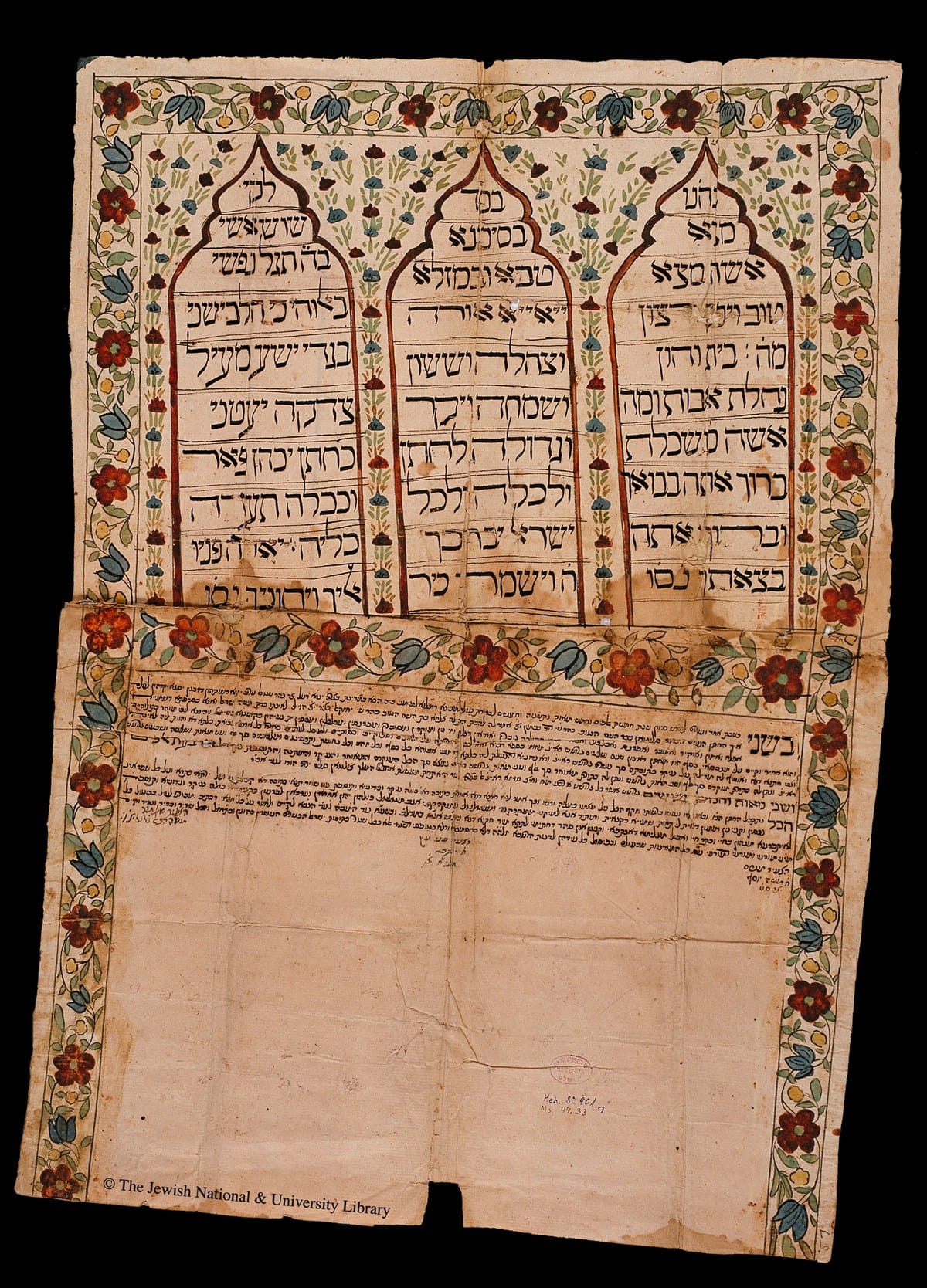
The collection also includes religious objects associated with Jewish traditions.
For visitors unfamiliar with Iraq's Jewish past, these materials offer a different perspective from the political narratives that have dominated discussion of Jews and Arabs since the middle of the twentieth century.
They show that Jewish families were not outsiders temporarily living in Iraq. They were Iraqis whose ancestors had lived in the region for centuries.
Preserving a Disappearing Heritage
The museum was established through the efforts of Iraq's remaining Jewish community, with community resources helping to finance the project.
Its opening has also drawn attention to other Jewish heritage sites, including synagogues, schools and cemeteries that have suffered from neglect, changes of ownership or the disappearance of the communities that once maintained them.
Preservation raises difficult practical questions. Historic buildings require funding, legal protection and professional conservation. Religious objects must be documented and cared for appropriately. Families who left Iraq may also hold photographs, documents and memories that could contribute to a fuller historical record.
There is a further question of ownership and participation. If Iraq's Jewish heritage is to be preserved, should the descendants of those who left have a role in deciding how that history is presented?
For many Iraqi Jews now living in Israel, Europe and elsewhere, these buildings are not merely historical monuments. They represent family homes, childhood memories and communities that no longer exist in their original form.
The museum's success should therefore be measured not only by visitor numbers, but also by whether it contributes to long-term preservation, historical education and greater public understanding.
Chapter 2 — 2,500 Years of Jewish History in Mesopotamia
The history of Iraq's Jewish community begins long before the emergence of the modern Iraqi state, the founding of Islam or the establishment of Israel.
Its roots are traditionally traced to the sixth century BCE, when the Neo-Babylonian Empire conquered the Kingdom of Judah.
In 597 BCE, Babylonian forces deported members of Judah's ruling and elite classes. A second major deportation followed the destruction of Jerusalem and its First Temple in 586 BCE.
These events became defining moments in Jewish history.
For those taken into exile, Mesopotamia was initially a place of displacement. Over time, however, Jewish communities established permanent roots in the region.
They developed religious institutions, maintained communal traditions and participated in the economic and social life of successive empires.
From Exile to a Centre of Jewish Learning
Following the Persian conquest of Babylon in 539 BCE, some Jewish exiles returned to Judah. Others remained in Mesopotamia.
Their descendants helped establish one of the most influential centres of Jewish intellectual and religious life.
During late antiquity and the early medieval period, Jewish academies in Babylonia became important institutions for the interpretation of Jewish law and religious scholarship.
The Babylonian Talmud, one of the central texts of Rabbinic Judaism, emerged from centuries of discussion, interpretation and legal debate associated with these scholarly communities.
Its influence extended far beyond Mesopotamia and continues to shape Jewish religious practice today.
The academies of Sura and Pumbedita became especially prominent, while later centres of learning maintained connections with Jewish communities across the Middle East, North Africa and Europe.
This history challenges the assumption that Jewish civilisation developed exclusively in Europe or the territory of modern Israel.
For centuries, Mesopotamia was one of the principal centres of the Jewish world.
Jewish Life Under Islamic Rule
Following the Muslim conquest of Mesopotamia in the seventh century, Jewish communities continued to live and develop under successive Islamic governments.
Their status varied according to the period, ruler and local circumstances.
As non-Muslims, Jews were generally subject to legal distinctions and obligations that did not apply to Muslims. At the same time, many Jewish communities maintained their religious institutions and participated in commerce, scholarship and urban life.
Under the Abbasid Caliphate, Baghdad became a major centre of political, commercial and intellectual activity.
Jewish merchants and scholars participated in networks connecting the Middle East with other regions.
Relations between religious communities were not uniformly harmonious or hostile. They changed over time and were shaped by political authority, economic conditions, religious law and local social relationships.
What remained consistent was the long-standing Jewish presence in the region.
By the time modern Iraq emerged in the twentieth century, Jewish families could trace their cultural roots in Mesopotamia back more than two millennia.
Chapter 3 — When Baghdad Was a Centre of Jewish Life
During the late Ottoman period and the early decades of modern Iraq, Baghdad was home to one of the most important Jewish communities in the Arab world.
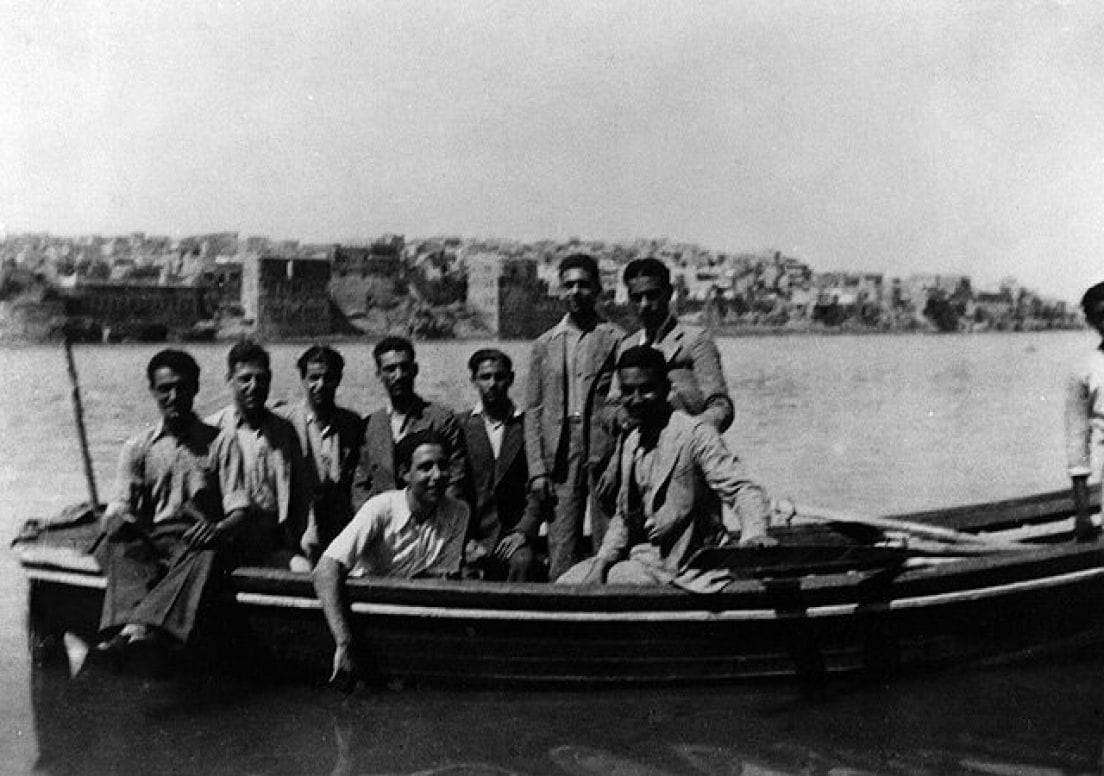
Jewish families lived in different parts of the city, operated businesses, attended religious and secular schools, and contributed to the development of modern Iraqi institutions.
In the 1940s, approximately 135,000 Jews lived in Iraq, according to the United States Holocaust Memorial Museum. Around 90,000 lived in Baghdad, with substantial communities also in Basra and smaller towns.
The community was diverse.
Some families were wealthy merchants with international commercial connections. Others were artisans, shopkeepers, civil servants, teachers and workers.
Jewish institutions provided religious education, social assistance and support for families in need.
Commerce and Public Service
Jewish merchants played an important role in Iraq's commercial networks, particularly in Baghdad and Basra.
Their businesses connected Iraqi markets with trading centres in India, Europe and elsewhere in the Middle East.
Jewish Iraqis also participated in the development of the modern state.
One of the most prominent examples was Sassoon Heskel, who served as Iraq's first finance minister during the early years of the monarchy.
His career illustrates how members of the Jewish community could hold positions of national responsibility and contribute to institutions that served the wider population.
Under the Iraqi monarchy established in 1921, Jews received formal citizenship rights and participated in parliamentary life.
These rights, however, did not guarantee permanent security.
Music, Language and Everyday Culture
The Jewish contribution to Iraqi society extended well beyond commerce and government.
Jewish musicians were influential in the development and performance of Iraqi urban music.
The singer Salima Murad, one of Iraq's best-known twentieth-century performers, was Jewish. Her career demonstrated how artistic achievement could cross religious boundaries and become part of a shared national culture.
Jewish Iraqis commonly spoke Arabic, while some communities also maintained distinctive Jewish dialects and religious traditions.
Families celebrated Jewish festivals while participating in the broader cultural environment of Iraqi cities.
Their food, music, language and social customs reflected centuries of interaction with neighbouring communities.
This did not mean that religious differences disappeared. Jewish communal institutions remained distinct, and social boundaries persisted.
Nevertheless, Jewish culture was part of Iraqi culture.
The disappearance of the community therefore represented more than the departure of a religious minority. It also meant the loss of institutions, traditions and relationships that had contributed to the country's identity.
Chapter 4 — The Farhud of 1941: A Turning Point in Jewish Iraqi History
On 1 June 1941, during the Jewish festival of Shavuot, violence erupted against Baghdad's Jewish population.
The attacks became known as the Farhud, an Arabic term commonly translated as violent dispossession or pogrom.
For two days, Jewish civilians were assaulted, murdered and robbed. Homes and businesses were looted, and women were subjected to sexual violence.
The United States Holocaust Memorial Museum estimates that between 150 and 180 Jews were murdered, approximately 600 were injured and around 1,500 homes and businesses were looted.
The Iraqi government's contemporary investigation recorded a lower death toll of 128. The difference reflects the limitations and variations in historical documentation.
The Political Circumstances
The Farhud occurred during a period of extraordinary political instability.
In April 1941, Rashid Ali al-Gaylani and allied military officers had taken power in a coup against Iraq's pro-British leadership.
The new government pursued closer relations with Axis powers during the Second World War.
Nazi propaganda and antisemitic ideas had already reached parts of Iraqi political society, where they interacted with anti-British nationalism and tensions surrounding developments in Palestine.
After British forces defeated the coup government, a period of uncertainty emerged in Baghdad.
During this breakdown of authority, rioters attacked Jewish neighbourhoods.
The perpetrators included members of the security forces associated with the coup, militant nationalist youths and civilians who participated in the violence and looting.
The attacks were directed against Jewish civilians, not against an armed military opponent.
A Community's Sense of Security Shattered
The Farhud had consequences that extended beyond the immediate casualties.
Jewish families who had regarded Baghdad as their home for generations were confronted with the possibility that their neighbours, institutions and government could no longer guarantee their safety.
Some fled temporarily to other countries.
Many eventually returned when conditions stabilised, and Jewish communal life continued during the following years.
It would therefore be historically inaccurate to describe the Farhud as the immediate end of Iraqi Jewry.
Nevertheless, it fundamentally changed perceptions of security.
The violence demonstrated how quickly political instability, antisemitic propaganda and the identification of an entire religious community with international political conflicts could produce devastating consequences.
The Farhud remains an essential part of understanding the eventual mass departure of Iraq's Jewish population.
Chapter 5 — Why Iraq's Jews Left: The Exodus of 1950–1951
The disappearance of Iraq's Jewish community was not the result of one event.
It emerged from a combination of political discrimination, antisemitic violence, the growth of Arab nationalism, the creation of Israel and increasingly restrictive Iraqi government policies.
The Farhud had demonstrated the vulnerability of Jewish civilians, but the following decade brought further upheaval.
In 1948, Israel declared independence, and neighbouring Arab states, including Iraq, entered the war that followed.
The conflict had consequences far beyond the battlefield.
Across the region, Jewish minorities increasingly found themselves associated with Israel, regardless of their individual political beliefs or personal loyalties.
In Iraq, this association became particularly dangerous.
When Nationality Became a Political Question
Iraqi Jews had long regarded themselves as part of Iraqi society. Many had no intention of leaving their homes.
However, the Iraqi government increasingly treated Jewish identity and Zionist political activity as connected issues.
Jewish civil servants faced dismissal, commercial restrictions affected businesses, and arrests heightened insecurity.
In September 1948, the prominent Jewish businessman Shafiq Ades was executed after being convicted of charges involving support for Israel. His trial and execution became a symbol of the community's deteriorating position.
The broader political environment made it increasingly difficult for Jewish Iraqis to imagine a secure future.
For some, Israel represented a new national home. Others were motivated primarily by fear, discrimination or the possibility of rebuilding their lives elsewhere.
These motivations were not mutually exclusive.
The Nationality Law of 1950
In March 1950, Iraq introduced legislation allowing Jews to leave the country on condition that they relinquished their Iraqi nationality.
The legislation created a limited period during which Jews could register for departure.
The decision was irreversible for many families.
Those who registered were giving up citizenship in the country where their ancestors had lived for generations.
In 1951, further measures froze the assets of Jews who had relinquished their nationality, severely limiting their ability to transfer property and wealth abroad.
For families who had built businesses, owned homes or accumulated savings, the economic consequences could be devastating.
The combination of insecurity, legal restrictions and the possibility of departure accelerated emigration.
Operation Ezra and Nehemiah
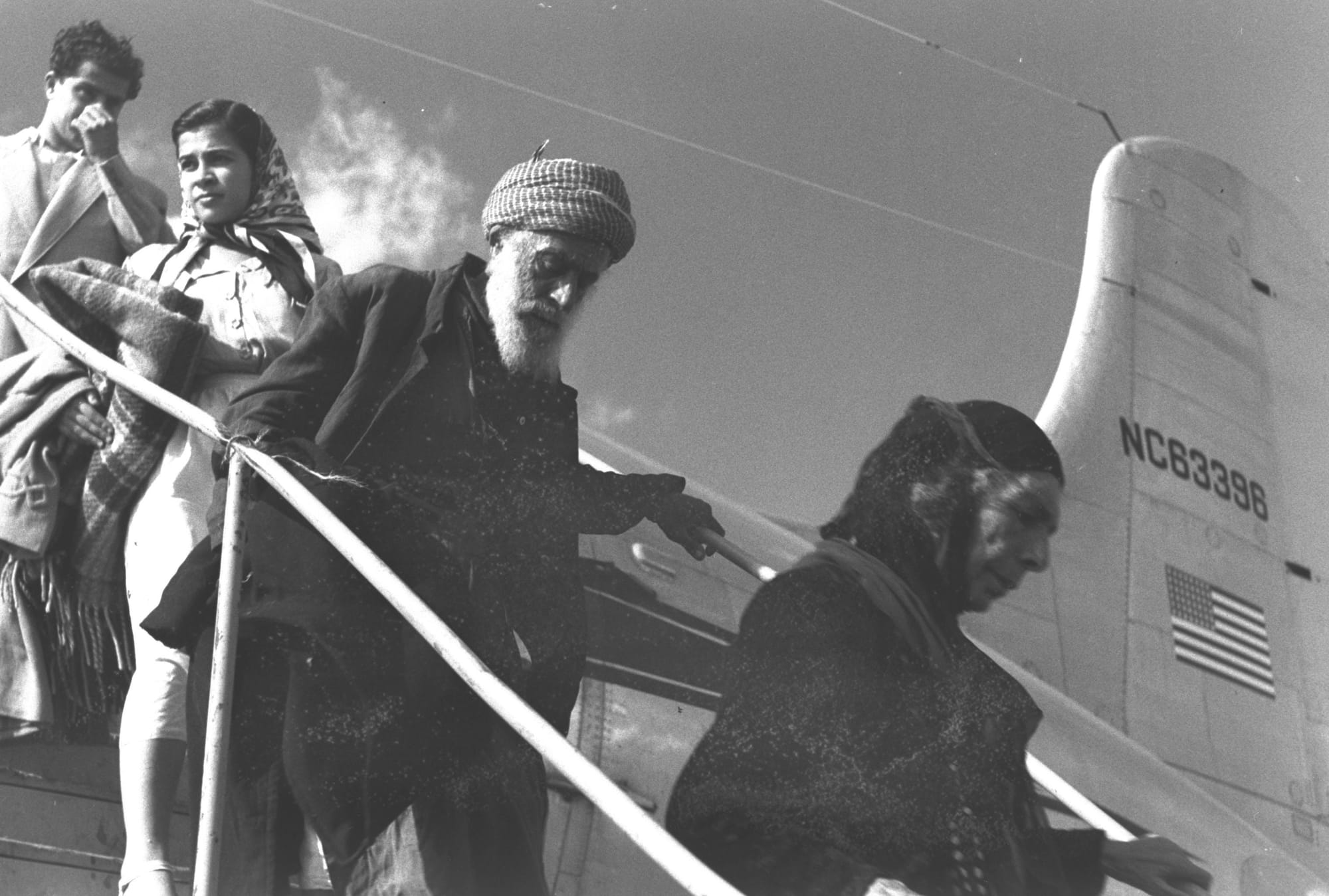
Between 1950 and 1952, approximately 120,000–125,000 Iraqi Jews left the country, most travelling to Israel.
The airlift became known as Operation Ezra and Nehemiah, named after biblical figures associated with the return from Babylonian exile.
For many families, departure meant leaving behind homes, possessions, businesses, schools and relatives.
The journey also marked a profound change in identity.
People who had considered themselves Iraqi Jews became immigrants in a new state, often arriving with limited financial resources.
A New Life, but Not an Easy Beginning
In Israel, Iraqi Jewish immigrants encountered considerable difficulties.
The newly established country was absorbing large numbers of Jewish immigrants and refugees from Europe, the Middle East and North Africa.
Housing was scarce, infrastructure was under pressure and many new arrivals lived in temporary transit camps known as ma'abarot.
Mizrahi Jews, including those from Iraq, also experienced social and economic inequalities within Israeli society.
Some faced discrimination and pressure to adapt to a dominant national culture that did not always fully recognise their own traditions.
Over time, Iraqi Jews and their descendants became an important part of Israeli society, contributing to politics, academia, business, literature and music.
Yet integration did not erase the memory of Iraq.
For many families, Arabic remained the language of childhood, Iraqi music continued to be played at home, and traditional foods and religious customs were passed down through generations.
The exodus was therefore both a beginning and an ending: the beginning of new lives abroad and the near disappearance of an ancient community from its homeland.
Chapter 6 — The Jews Who Remained Behind
Although the overwhelming majority of Iraqi Jews left during the early 1950s, several thousand remained.
Some were elderly. Others were unwilling to abandon their homes, had family responsibilities or believed that conditions might eventually improve.
Their experiences reveal that the disappearance of Jewish life in Iraq was a prolonged process rather than a single mass departure.
During the following decades, political instability and government repression continued to affect the community.
Restrictions Under Successive Governments
Following the 1958 revolution that ended the Iraqi monarchy, the country's political system underwent repeated upheavals.
The rise of the Ba'ath Party and increasing hostility between Iraq and Israel contributed to further restrictions on Jewish citizens.
Following the 1967 Arab–Israeli war, Jewish Iraqis faced renewed surveillance, economic restrictions and limits on movement.
The remaining community became increasingly isolated.
The Public Executions of 1969
One of the darkest episodes occurred in January 1969.
The Iraqi government publicly executed 14 people accused of espionage, including nine Jews.
The executions took place following proceedings before a revolutionary tribunal and attracted international condemnation.
The Iraqi authorities presented the accused as spies working for Israel. The trials and executions, however, raised serious concerns about due process and the political use of espionage allegations.
The public display of the bodies reinforced fear among the remaining Jewish population.
The executions also became a symbol of the dangers faced by a minority whose loyalty was repeatedly questioned because of its religious identity.
Over subsequent years, further Jewish families left Iraq.
By the late twentieth century, only a very small community remained.
A Presence Reduced to a Handful
Today, estimates of Iraq's remaining Jewish population vary depending on how religious identity, ancestry and residence are counted.
Recent reporting on the Shamash Museum describes only a handful of Jews remaining in Baghdad, while a small population of Jewish origin is reported in the Kurdistan region.
The distinction matters because Jewish ancestry does not necessarily mean active participation in an organised religious community.
What is clear is that the extensive network of Jewish schools, synagogues, businesses and communal institutions that once existed throughout Iraq has largely disappeared.
The opening of the museum therefore takes place at a moment when the living community capable of maintaining this heritage is extremely small.
Chapter 7 — The Heritage That Remained Behind
When families leave a country, their history does not disappear with them.
It remains in buildings, documents, cemeteries, religious objects and the memories of those who stay behind.
Across Iraq, traces of Jewish life can still be found, although many sites have been altered, neglected or repurposed.
Former synagogues, schools and residential neighbourhoods provide evidence of the country's religious diversity.
Some Jewish religious sites have also remained places of significance within wider Iraqi cultural traditions.
Preserving these locations is complicated by decades of political instability, war, displacement and changes in property ownership.
The Iraqi Jewish Archive
In 2003, following the fall of Saddam Hussein's government, a major collection of Jewish books and documents was discovered in the flooded basement of Iraq's intelligence headquarters in Baghdad.
The materials included religious texts, school records, communal correspondence and other documents associated with Iraqi Jewish institutions.
More than 2,700 books and tens of thousands of documents were recovered.
Many were severely damaged by water and mould.
With the agreement of Iraqi authorities, the United States National Archives and Records Administration undertook a major preservation and digitisation project.
The collection became known as the Iraqi Jewish Archive.
Its documents offer an unusually detailed record of Jewish communal life, particularly during the twentieth century.
They also raise complex questions about cultural ownership.
Iraq has asserted its claim to the collection as part of its national heritage. Jewish organisations and descendants of the community have argued that the circumstances under which some materials entered state custody must be considered when deciding their future.
These questions involve both historical justice and the practical responsibilities of preserving fragile cultural materials.
The archive demonstrates why the documentation of minority histories cannot be separated entirely from the political circumstances in which those communities disappeared.
More Than Religious Artefacts
The importance of the Iraqi Jewish Archive lies not only in its religious books.
School reports, letters, administrative records and photographs provide evidence of ordinary life.
They identify people who studied, worked, married, raised families and participated in Iraqi society.
Such records help historians reconstruct communities that might otherwise survive only in fragmented family memories.
The new Shamash Museum contributes to this broader effort.
Its school certificates and photographs make history personal and accessible.
Rather than presenting Jewish Iraqis solely through the events of persecution and migration, they allow visitors to encounter individuals who lived ordinary lives before those events transformed their futures.
Chapter 8 — Can a Museum Reconnect Iraq With Its Jewish Past?
The opening of a Jewish museum in Baghdad carries significance beyond the preservation of historic objects.
It raises questions about how Iraq understands its national identity and how the country presents its religious and cultural diversity to future generations.
Modern Iraq has been shaped by many communities, including Arabs, Kurds, Turkmen, Assyrians, Armenians, Muslims, Christians, Jews, Yazidis and others.
Their experiences have not been identical, and their relationships with the state have changed dramatically over time.
Yet each has contributed to the country's history.
Recognising this diversity does not require overlooking conflict or persecution.
On the contrary, an inclusive historical narrative must acknowledge both periods of coexistence and episodes of violence.
History Beyond the Arab–Israeli Conflict
For decades, discussion of Jews in much of the Middle East has been dominated by the Israeli–Palestinian conflict and wider regional tensions.
Those conflicts are central to contemporary politics, but they do not encompass the entire history of Jewish life in Arab societies.
Iraqi Jews existed as a community long before the modern State of Israel.
Their identity included religious traditions, Arabic language, Iraqi customs and connections to a wider Jewish world.
Understanding that history helps distinguish Jewish religious and cultural identity from the policies of any contemporary government.
It also challenges the idea that Jews and Arabs belong to entirely separate historical worlds.
For centuries, Jewish communities were part of Arabic-speaking societies, even while maintaining distinctive religious identities.
The Importance of Public Education
A museum can make this history visible to people who may never have encountered it in school.
For younger Iraqis, the Shamash Museum may be an introduction to a community that once formed a substantial part of Baghdad's population.
For older generations, it may revive memories of Jewish neighbours, teachers, musicians or business owners.
For Iraqi Jews living abroad, the museum may represent a form of recognition that their families' history remains part of Iraq's national story.
However, a museum cannot by itself resolve the consequences of discrimination, displacement or confiscated property.
Nor does the preservation of Jewish heritage necessarily indicate a broader change in Iraq's political relationship with Israel.
Its immediate achievement is more modest, but still important: it creates a public space in which a largely absent community can once again be discussed as part of Iraqi history.
What This Means — Remembering a Shared History
The story of Iraq's Jews illustrates how political conflict can transform the lives of communities whose roots extend far beyond the disputes of their own time.
It also demonstrates why national histories are incomplete when they exclude minorities that once helped shape society.
The destruction or disappearance of a community does not erase its contribution to a country.
Jewish Iraqis helped build businesses, institutions, schools and cultural traditions. Their history remains part of Iraq's history, regardless of where their descendants live today.
Preserving that history requires more than restoring buildings.
It involves accurate education, access to archives, the protection of religious sites and the willingness to examine difficult historical events.
It also requires listening to different perspectives, including those of Iraqis who remained, Jewish families who departed and younger generations seeking to understand the past.
The Shamash Museum cannot restore the Baghdad that existed before the mass emigration of its Jewish population.
But it can help ensure that the memory of that Baghdad is not lost.
Conclusion — A History That Still Belongs to Iraq
The opening of the Shamash Jewish Museum is a small but meaningful development in the preservation of Middle Eastern history.
Inside a former school, photographs and documents tell the story of people who once walked Baghdad's streets, attended its classrooms and contributed to its cultural life.
Their descendants now live across the world, while the community they left behind has been reduced to a tiny remnant.
The history of Iraqi Jewry contains periods of achievement and belonging, as well as discrimination, violence and displacement.
All of these experiences deserve to be remembered.
A serious understanding of the Middle East requires recognising that the region's history has never belonged to one religion, one ethnicity or one political narrative.
For more than two millennia, Jewish life was part of Mesopotamia and Iraq.
The new museum cannot reverse the events that brought that long history of communal life close to an end.
It can, however, offer something valuable: a place where Iraqis can encounter a part of their country's past that deserves to be understood, preserved and passed on.
Because the history of Iraq's Jews is not only Jewish history.
It is Iraqi history.
Sources & References
- Reuters (12 November 2026). Baghdad's first Jewish museum draws crowds to rediscover Iraq's Jewish past.
https://www.reuters.com/world/middle-east/baghdads-first-jewish-museum-draws-crowds-rediscover-iraqs-jewish-past-2026-11-12/ - AFP / Al-Monitor (3 November 2026). Baghdad's first Jewish museum opens its doors.
https://www.al-monitor.com/originals/2026/11/baghdads-first-jewish-museum-opens-its-doors - United States Holocaust Memorial Museum. The Farhud.
https://encyclopedia.ushmm.org/content/en/article/the-farhud - US National Archives and Records Administration. Iraqi Jewish Archive — After Millennia.
https://www.archives.gov/exhibits/ija/exhibit/after-millenia - Moshe Gat (2024). Iraq and its Jewish minority: from the establishment of the state to the great Jewish immigration 1921–1951. Israel Affairs.
https://doi.org/10.1080/13537121.2024.2318157 - US National Archives. Discovery & Recovery — Iraqi Jewish Archive.
https://www.archives.gov/exhibits/ija/exhibit/discovery-recovery - US Department of State, Office of the Historian. Foreign Relations of the United States, 1969–1976.
https://history.state.gov/historicaldocuments/frus1969-76ve04/summary - World Jewish Congress. The Jews of Iraq.
https://www.worldjewishcongress.org/en/legacy-of-jews-in-MENA/country/iraq - The Times of Israel (5 November 2026). Baghdad museum showcases Jewish heyday, as memory of lost community gingerly rekindled.
https://www.timesofisrael.com/baghdad-museum-showcases-jewish-heyday-as-memory-of-lost-community-gingerly-rekindled/
Editorial Note
This article is based on published news reporting, historical research and archival records. Beyond the Lines has not independently visited the Shamash Jewish Museum or interviewed its organisers. Population estimates vary across sources and historical periods. The current number of Jewish residents in Iraq also remains uncertain.
Beyond the Lines — Independent Journalism. Beyond the Headlines.