Jesus Was Jewish: The Shared History of Judaism and Christianity
Jesus was Jewish, and Christianity emerged from Judaism. Discover the shared history, religious differences and enduring connections between these two faiths.
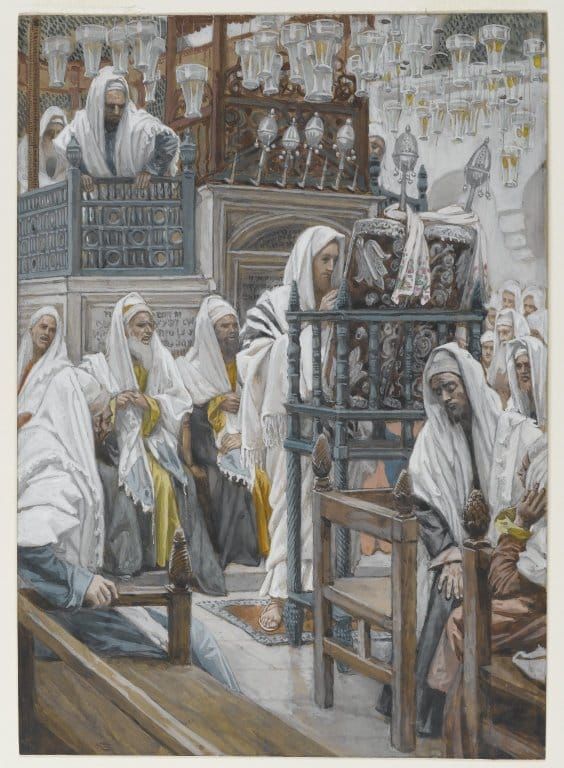
How the life of a Jewish teacher in ancient Judea gave rise to Christianity, why the two faiths became separated, and what still connects them nearly 2,000 years later.
Category: History | Religion | Explained
Estimated reading time: 18–22 minutes
The Story in Brief
Jesus of Nazareth is the central figure of Christianity, yet one of the most important facts about his life is sometimes overlooked: Jesus was Jewish.
He was born into a Jewish family, lived in a Jewish society, observed Jewish religious traditions and taught within the religious and cultural world of first-century Judaism. His earliest followers were also Jewish.
Christianity did not begin as a completely separate religion. It emerged from a movement within Judaism and gradually developed its own beliefs, institutions and identity.
Today, Judaism and Christianity share sacred texts, historical figures, moral teachings and a profound connection to Jerusalem. Yet they differ fundamentally over the identity of Jesus, the meaning of the Messiah and the nature of God.
Understanding this shared history helps explain not only two of the world's major religions, but also centuries of cooperation, conflict, misunderstanding and efforts towards reconciliation.
Introduction — A History That Begins with the Jewish People
For nearly two thousand years, Judaism and Christianity have existed as distinct religious traditions. Their followers worship in different places, observe different religious calendars and interpret important theological questions differently.
Yet their histories are inseparable.
Christianity emerged from the religious world of ancient Judaism. Its central figure, Jesus of Nazareth, was a Jewish man who lived in a land shaped by Jewish history, religious law and traditions.
His mother, Mary, was Jewish. His disciples were Jewish. The scriptures that shaped his teachings were Jewish.
The earliest Christians did not initially see themselves as founders of an entirely new world religion. Many believed that Jesus represented the fulfilment of promises contained in the Jewish scriptures.
Others within Judaism rejected this interpretation.
Over generations, these disagreements contributed to the emergence of Christianity as a separate religious tradition.
But the story is more complicated than a simple division between two faiths.
It involves the Roman Empire, the destruction of Jerusalem, competing interpretations of sacred texts, the development of religious institutions and centuries of political and cultural change.
It also involves a difficult history of anti-Jewish prejudice within Christian societies, alongside periods of cooperation and intellectual exchange.
To understand Christianity's origins, we must first understand the Jewish world in which Jesus lived.
Chapter 1 — Jesus Was Born Jewish
Jesus was born around the end of the first century BCE or the beginning of the first century CE, although historians cannot establish an exact birth date.
The Gospels of Matthew and Luke associate his birth with Bethlehem, while Jesus is consistently identified with Nazareth, a town in Galilee.
The historical details surrounding his birth remain debated. The Gospel narratives contain theological elements and are not identical in their chronology.
What is much more firmly established is the Jewish setting of his life.
Jesus grew up within a Jewish community in a region under Roman domination.
His family belonged to a people whose religious traditions had developed over many centuries.
According to the Gospel of Luke, Jesus was circumcised on the eighth day after his birth, in accordance with Jewish religious practice.
The Gospels also describe his family travelling to Jerusalem for religious observances.
These accounts reflect the Jewish environment in which the Gospel writers understood Jesus to have lived.
What did being Jewish mean in Jesus' time?
Jewish identity in the first century involved religion, ancestry, community, history and a connection to the land of Israel.
The Jewish people traced their religious history through figures such as Abraham, Isaac, Jacob and Moses.
The covenant between God and Israel occupied a central place in Jewish religious thought.
The Torah, traditionally understood as the first five books of the Hebrew Bible, provided foundational teachings concerning worship, morality, justice and communal life.
Jewish communities observed the Sabbath, celebrated religious festivals and maintained practices concerning food, prayer and ritual purity.
There was, however, no single uniform expression of Judaism.
Different groups debated how religious law should be interpreted and how Jewish communities should respond to Roman rule.
Jesus belonged to this diverse Jewish world.
He did not enter history as a member of a religion called Christianity. Christianity developed from the movement that formed around him.
Chapter 2 — The Jewish World Jesus Knew
To understand Jesus, it is necessary to understand the society in which he lived.
During the first century, Judea and Galilee formed part of a wider region dominated by Rome.
Political authority was exercised through a changing combination of Roman governors, client rulers and local institutions.
The Jewish population lived under the influence of imperial taxation, military power and political tensions.
Jerusalem was the religious centre of Jewish life.
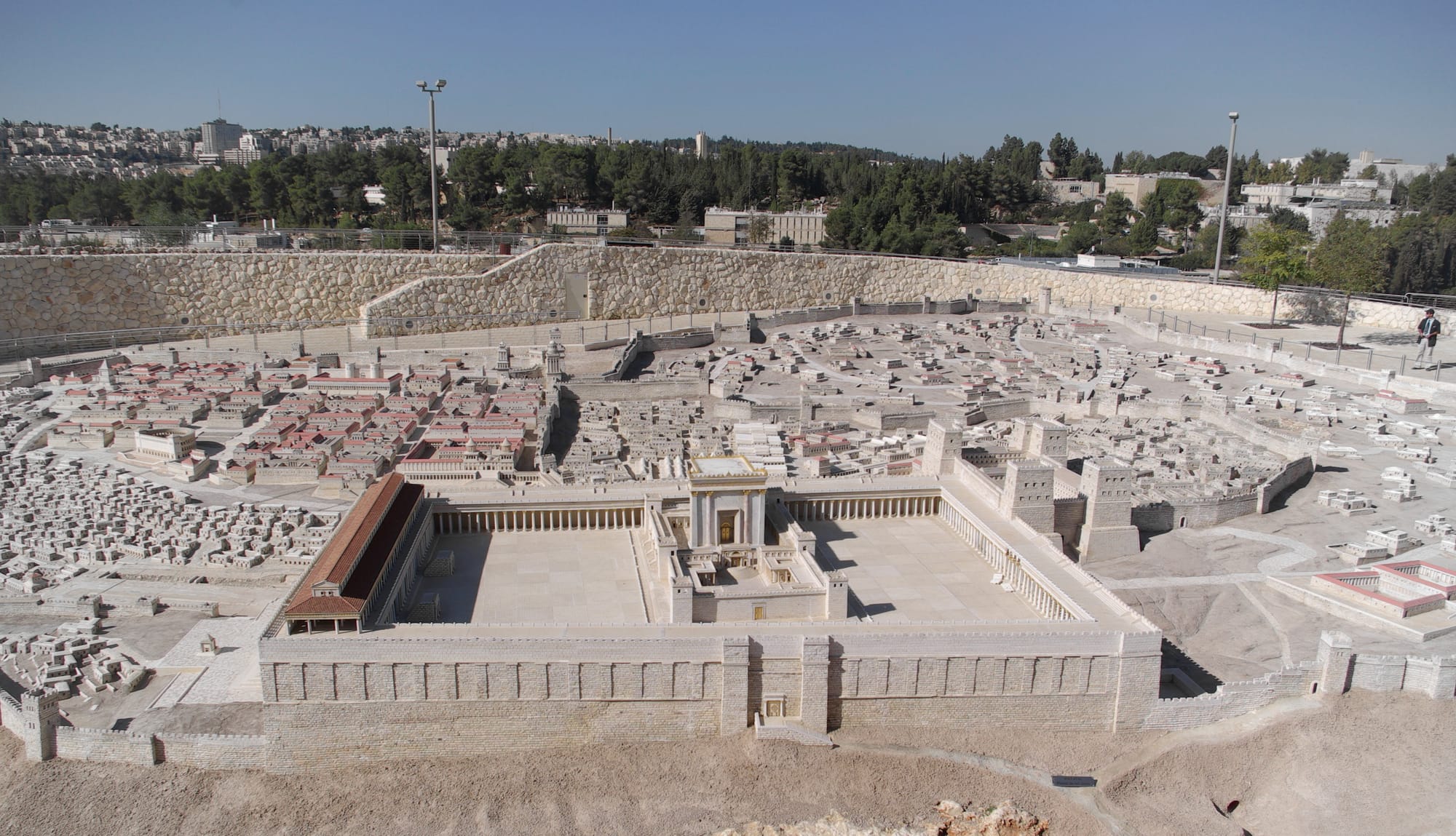
The Temple in Jerusalem
The Second Temple was the most important sanctuary in ancient Judaism.
It stood on the site associated with the earlier Temple traditionally attributed to King Solomon.
The Second Temple had been constructed following the Babylonian exile and was later extensively expanded under Herod the Great.
Pilgrims travelled to Jerusalem for major festivals, including Passover, Shavuot and Sukkot.
The Temple was a centre of sacrifice, prayer and religious authority.
For many Jews, it represented the relationship between God and the people of Israel.
Jesus' life, as described in the Gospels, was closely connected to this religious world.
The Gospel accounts place him in Jerusalem during Passover and describe disputes concerning activity within the Temple precincts.
Synagogues and religious teaching
Synagogues and other communal gathering places also played important roles in Jewish life.
They provided settings for reading scripture, teaching and community activities.
The Gospels repeatedly describe Jesus teaching in synagogues.
His discussions concerned questions familiar to Jewish religious life: the interpretation of scripture, the Sabbath, moral obligations and the meaning of God's commandments.
These debates should not automatically be understood as conflicts between Judaism and Christianity.
They were often disagreements occurring within Judaism itself.
Different Jewish movements
Several religious and political groups existed during this period.
The Pharisees were associated with traditions of interpreting religious law.
The Sadducees were closely connected to the priestly establishment and Temple institutions.
The Essenes, known partly through ancient accounts and often discussed in connection with the Dead Sea Scrolls, represented another current within Second Temple Judaism.
Other groups advocated resistance to Roman domination.
These movements did not represent every Jewish person, nor were their beliefs entirely uniform.
Jesus' teachings developed in conversation and sometimes disagreement with this wider religious environment.
Chapter 3 — Jesus, His Disciples and Jewish Society
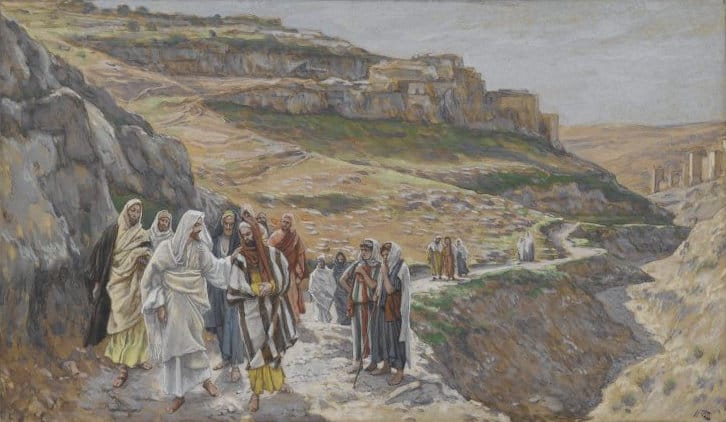
The earliest followers of Jesus were Jews.
The Gospels describe fishermen, workers and other individuals from Galilee joining his movement.
Among the best-known were Peter, Andrew, James and John.
The number twelve, associated with Jesus' closest disciples, carried particular significance in a Jewish setting because of its connection to the twelve tribes of Israel.
Jesus' teachings also drew heavily upon Jewish scripture.
When asked about the greatest commandment, the Gospel of Mark presents Jesus quoting the Shema, one of Judaism's central declarations of faith:
"Hear, O Israel: The Lord our God, the Lord is one."
He then emphasises the commandment to love God and the obligation to love one's neighbour.
These teachings were rooted in Deuteronomy and Leviticus.
They did not originate independently of Judaism.
Did Jesus reject Jewish law?
This question has been debated by scholars and religious communities for centuries.
The Gospel of Matthew presents Jesus saying that he came not to abolish the Law or the Prophets, but to fulfil them.
Other Gospel passages describe disagreements over the Sabbath, ritual practices and interpretations of religious obligations.
Such debates were not unusual in ancient Judaism.
Jewish teachers frequently disagreed about how commandments should be applied.
The historical Jesus is generally understood by scholars as a Jewish teacher and preacher whose message concerned God's kingdom, repentance and the transformation of human conduct.
Christian theology subsequently developed different interpretations of his relationship to Jewish law.
It would therefore be misleading to portray Jesus simply as someone who abandoned Judaism and founded an unrelated religion.
The first followers
After Jesus' death, his followers continued to gather and teach.
According to the New Testament, important early leaders included Peter, James the brother of Jesus and John.
Jerusalem became an important centre of the early movement.
Its members continued to engage with Jewish scripture and religious traditions, although disagreements arose over the obligations of non-Jewish believers.
These questions would become central to Christianity's development.
Chapter 4 — The Hebrew Bible and the Christian Old Testament
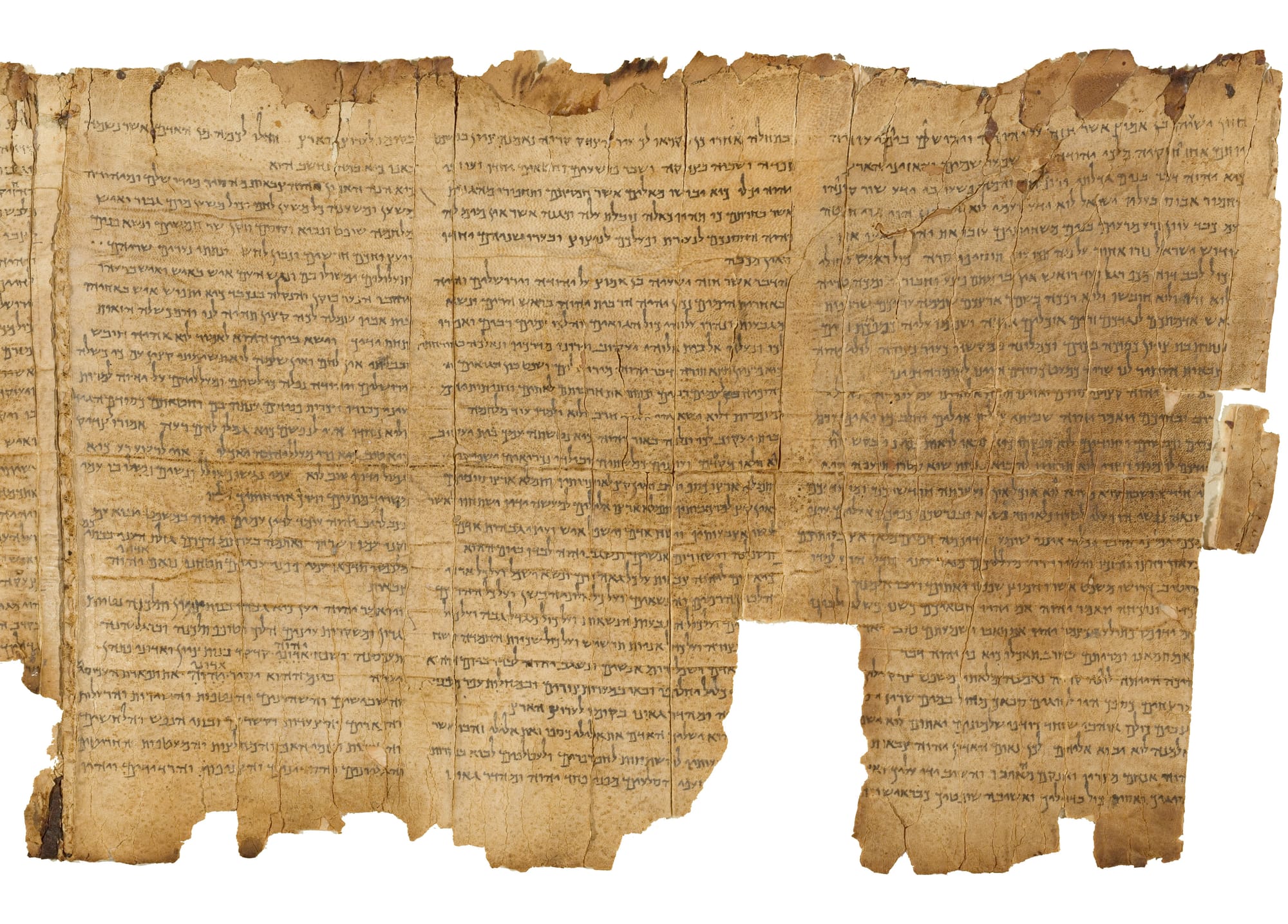
One of the strongest connections between Judaism and Christianity is their shared scriptural inheritance.
The Hebrew Bible, known in Judaism as the Tanakh, consists of three major divisions:
- Torah — Teaching or Law
- Nevi'im — Prophets
- Ketuvim — Writings
These scriptures contain narratives concerning creation, the ancestors of Israel, the Exodus, the monarchy, exile, prophecy, worship and moral responsibility.
Christianity incorporated these writings into its Bible, generally referring to them as the Old Testament.
However, the two traditions do not organise or interpret all these writings in the same way.
The Jewish Tanakh contains twenty-four books according to the traditional Jewish arrangement.
Most Protestant Old Testaments contain thirty-nine books, largely reflecting a different division and ordering of substantially the same material.
Catholic and Orthodox Christian biblical canons include additional writings, although their precise collections differ.
The same texts, different interpretations
Both Jews and Christians read accounts of Abraham and Moses.
Both encounter the Ten Commandments, the Psalms and the writings of the prophets.
Yet they approach these texts through different religious traditions.
In Judaism, the Hebrew Bible is interpreted through a long history of Jewish commentary, law, philosophy and rabbinic scholarship.
In Christianity, many passages are interpreted in relation to Jesus' life, death and resurrection.
For example, Christians have traditionally interpreted certain passages in Isaiah as anticipating Jesus.
Jewish interpreters generally understand those passages differently, drawing upon their original literary context and Jewish interpretative traditions.
These differences are not simply disagreements over isolated verses.
They reflect distinct understandings of revelation, covenant and religious authority.
Why this matters
Without the Hebrew Bible, much of the New Testament becomes difficult to understand.
Its references to prophecy, covenant, sacrifice, kingship and redemption belong to a Jewish intellectual and religious world.
Christianity inherited this language and developed new interpretations of it.
Judaism, meanwhile, continued to develop its own religious traditions independently of Christian theological claims.
The relationship is therefore one of shared origins but distinct religious development.
Chapter 5 — The Messiah: Why Jews and Christians Disagree
Perhaps the most important theological difference between Judaism and Christianity concerns the identity of the Messiah.
The word Messiah comes from the Hebrew Mashiach, meaning 'anointed one'.
In ancient Israel, kings and priests could be described as anointed.
Over time, Jewish expectations concerning a future ideal ruler or period of redemption developed in different ways.
There was no single universally accepted messianic expectation among all Jews during the first century.
Some anticipated a descendant of King David who would restore Israel.
Others imagined divine intervention, judgement or a transformation of the existing world.
Why Christians believe Jesus is the Messiah
Christianity teaches that Jesus is the Christ, a title derived from the Greek word Christos, meaning 'anointed one'.
Christians believe that his life, crucifixion and resurrection fulfilled God's saving purpose.
In mainstream Christian theology, Jesus is not merely a teacher or prophet.
He is understood as the Son of God and, within Trinitarian Christianity, divine.
The belief that Jesus rose from the dead became central to the Christian movement.
It shaped the conviction that his death did not represent the failure of his mission.
Instead, Christians interpreted it as an essential part of God's plan for salvation.
Why Judaism does not recognise Jesus as the Messiah
Judaism does not accept Jesus as the promised Messiah.
Traditional Jewish expectations include the establishment of lasting peace, the gathering of Jewish exiles and the restoration of a world characterised by justice and knowledge of God.
From the Jewish perspective, these expectations were not fulfilled during Jesus' lifetime.
Judaism also rejects the Christian understanding of Jesus as divine.
Jewish monotheism affirms the absolute unity of God, while mainstream Christianity understands divine unity through the doctrine of the Trinity.
These are substantial theological differences.
They should not be reduced to a claim that one community simply failed to understand the other's scriptures.
Judaism and Christianity interpret their shared religious inheritance through different theological frameworks.
Recognising this distinction is essential for respectful and historically informed discussion.
Chapter 6 — From a Jewish Movement to Christianity
The crucifixion of Jesus was a turning point in the history of the movement that followed him.
Most historians accept that Jesus was executed by crucifixion under the Roman prefect Pontius Pilate, who governed Judea between approximately 26 and 36 CE.
Crucifixion was a Roman method of execution frequently associated with slaves, rebels and people considered threats to imperial authority.
The Gospel accounts describe involvement by certain Jerusalem religious authorities in the events leading to Jesus' arrest and execution.
However, these narratives were written within particular theological and historical contexts, and scholars continue to debate many details.
The execution itself was carried out under Roman authority.
It is historically unjustified to assign collective responsibility for Jesus' death to the Jewish people.
The belief in the resurrection
Following Jesus' death, his followers proclaimed that he had risen from the dead.
This belief became the foundation of Christian faith.
Historians can examine the emergence and spread of resurrection belief, but the supernatural claim itself belongs to the domain of faith and theology rather than something historical methods can independently establish.
The conviction that Jesus was alive and exalted by God transformed the movement.
His followers increasingly proclaimed him as the Messiah and Lord.
The role of Paul
Paul of Tarsus became one of the most influential figures in early Christianity.
He was Jewish and described his background in relation to Pharisaic tradition.
According to his letters, he initially opposed the Jesus movement before becoming one of its leading missionaries.
Paul travelled through parts of the eastern Mediterranean, establishing and corresponding with communities of believers.
A central question concerned whether non-Jews who accepted Jesus needed to observe the full requirements of Jewish law, including circumcision.
Paul argued that Gentile believers could belong to the movement without becoming Jews.
This position helped make Christianity accessible to communities beyond the Jewish population.
Christianity spreads
During the following generations, communities devoted to Jesus emerged across the Roman world.
They developed forms of worship, leadership and theological interpretation.
The New Testament writings emerged within this expanding movement.
Over time, Christianity became increasingly distinct from Judaism.
But this transformation was gradual, uneven and influenced by different local circumstances.
Chapter 7 — When and Why Did Judaism and Christianity Separate?
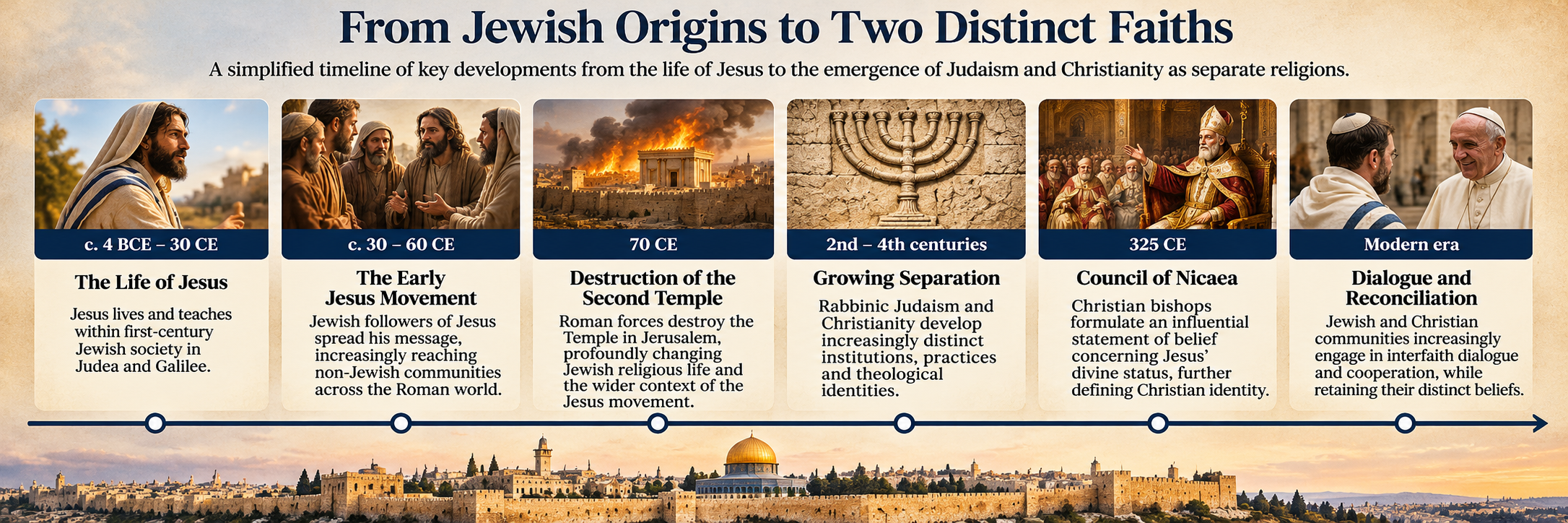
It is tempting to imagine a particular moment when Judaism and Christianity officially separated.
Historical evidence suggests a more complicated process.
For decades after Jesus' death, Jewish followers of Jesus continued to exist within the wider Jewish world.
Some maintained Jewish religious practices while believing that Jesus was the Messiah.
Others increasingly formed communities containing substantial numbers of Gentiles.
Disagreements developed over scripture, religious law, worship and the identity of Jesus.
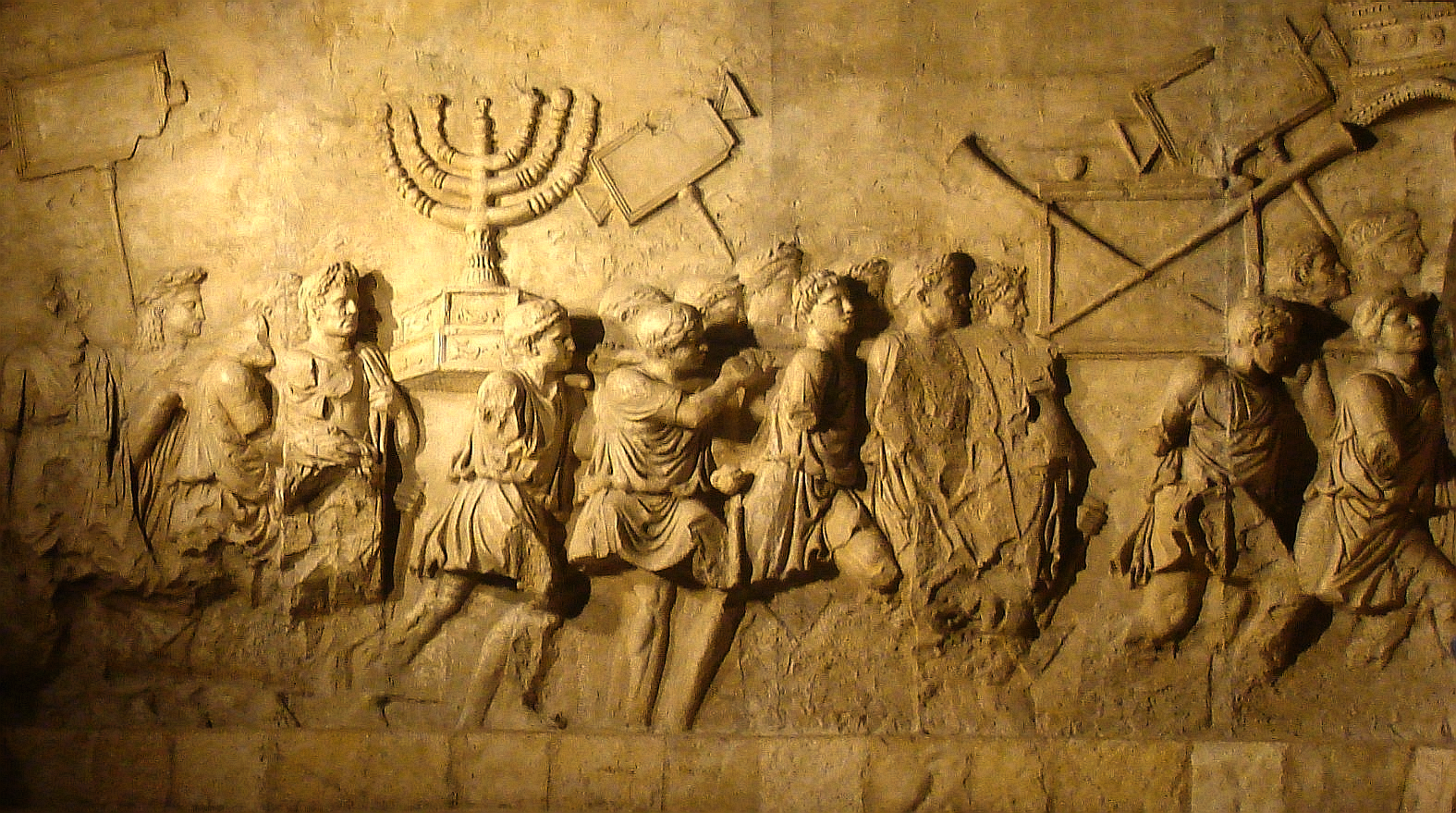
The destruction of Jerusalem in 70 CE
In 66 CE, a major Jewish revolt began against Roman rule.
Roman forces eventually captured Jerusalem and destroyed the Second Temple in 70 CE.
This event profoundly changed Jewish religious life.
Without the Temple, Jewish communities increasingly developed religious structures centred on scripture, prayer, learning and rabbinic interpretation.
These developments contributed to the emergence of rabbinic Judaism.
The Jesus movement was also affected by the destruction and the wider political upheaval.
Both traditions evolved in a world transformed by Roman violence and the loss of the Temple.
The Bar Kokhba revolt
Another major Jewish revolt against Rome occurred between 132 and 135 CE.
Led by Simon bar Kokhba, it ended in devastating defeat.
The revolt intensified changes in Jewish life under Roman rule.
The relationship between Jewish and Christian communities was also affected, although the degree and nature of that influence remain subjects of scholarly debate.
A gradual separation
By the second and third centuries, many Christian communities had developed identities clearly distinguishable from Jewish communities.
Christian leaders increasingly defined their beliefs in opposition to certain Jewish interpretations.
Jewish communities, meanwhile, continued developing rabbinic traditions.
The separation did not occur identically everywhere.
Some Jewish followers of Jesus maintained distinct practices for generations.
Nevertheless, by late antiquity, Judaism and Christianity had become recognisably separate religious traditions.
Their shared origins remained, but their institutions, theology and communal identities increasingly differed.
Chapter 8 — Two Faiths, Shared Foundations, Different Beliefs
Judaism and Christianity share many foundational ideas.
Both traditions affirm that human life has moral significance.
Both emphasise justice, charity, responsibility and the importance of religious teaching.
Both draw upon the story of Abraham and the covenantal history of Israel.
Both preserve the Ten Commandments as important religious teachings.
Yet their differences are equally significant.
The nature of God
Judaism affirms the indivisible unity of God.
The Shema, drawn from Deuteronomy, is central to Jewish religious identity.
Mainstream Christianity also understands itself as monotheistic but teaches that the one God exists as Father, Son and Holy Spirit.
This doctrine of the Trinity is not accepted within Judaism.
The identity of Jesus
For Christians, Jesus is central to God's revelation and salvation.
For Jews, Jesus is not a divine figure or the Messiah.
Jewish religious life does not depend upon accepting Christian claims about him.
Religious practice
Jewish religious observance includes the Sabbath, dietary traditions, festivals and commandments interpreted through Jewish law.
Christian practice varies significantly among Catholic, Orthodox, Protestant and other communities.
Sunday became the principal weekly day of worship for most Christians, reflecting the significance of Jesus' resurrection.
Nevertheless, some Christian groups continue to observe Saturday as their Sabbath.
Religious festivals
Passover commemorates the Exodus from Egypt and the liberation of the Israelites from slavery.
Easter commemorates the death and resurrection of Jesus.
The events of Jesus' final days are closely associated with the Passover period in the New Testament.
However, Passover and Easter are not the same festival.
They have different religious meanings, even though their histories are connected.
A shared ethical inheritance
The obligation to care for vulnerable people appears repeatedly in Jewish scripture.
Christian teaching also places strong emphasis on compassion, charity and moral responsibility.
These similarities reflect the historical relationship between the traditions.
They do not mean that their religious beliefs are interchangeable.
Chapter 9 — How Christian History Shaped Jewish Life
The relationship between Jews and Christians has not always been peaceful.
As Christianity expanded and eventually gained imperial support, the position of Jewish communities within Christian societies changed.
Christian theological writings sometimes portrayed Jews as spiritually blind or collectively responsible for rejecting Jesus.
These ideas contributed to forms of religious anti-Judaism that influenced European history for centuries.
The accusation concerning Jesus' death
One of the most damaging accusations was the claim that Jews as a people were responsible for the crucifixion.
This allegation ignored the historical circumstances of Roman rule and treated later generations as collectively guilty for events in the first century.
Such interpretations helped justify discrimination and violence.
Modern historical scholarship distinguishes the Roman execution of Jesus from later religious accusations against Jews.
Medieval persecution
During the Middle Ages, Jewish communities in parts of Christian Europe faced restrictions, expulsions and violence.
Some were subjected to forced conversions or discriminatory laws.
During the First Crusade in 1096, Jewish communities in the Rhineland suffered massacres.
Medieval accusations of ritual murder, commonly known as blood libels, also contributed to persecution.
These allegations were false.
They nevertheless circulated for centuries and sometimes provoked deadly attacks.
Expulsions and segregation
Jews were expelled from England in 1290 and from Spain in 1492, among other expulsions.
In various European cities, Jewish populations were restricted to designated residential areas.
Their legal status and opportunities differed significantly across regions and historical periods.
There were also periods of coexistence, commercial exchange and intellectual collaboration.
Jewish scholars contributed to philosophy, medicine, trade and wider cultural life.
The history cannot be reduced entirely to persecution, but persecution remains an essential part of the relationship.
Christianity and modern antisemitism
Modern antisemitism developed through a combination of religious, political, racial and conspiratorial ideas.
It cannot be explained solely by Christian theology.
Nevertheless, centuries of anti-Jewish religious teaching helped create prejudices that could be exploited by later movements.
The Holocaust, in which Nazi Germany and its collaborators murdered approximately six million Jews, forced many Christian institutions to confront the history of anti-Jewish prejudice.
Nazi antisemitism was fundamentally racial and genocidal, but it developed in a European environment where older anti-Jewish stereotypes were deeply embedded.
This history remains essential to understanding modern Jewish–Christian relations.

Chapter 10 — Jerusalem: A Sacred City for Both Faiths
Few cities illustrate the shared history of Judaism and Christianity as clearly as Jerusalem.
For Jews, Jerusalem has been a central religious and historical symbol for thousands of years.
It was the site of the ancient Temples and remains deeply connected to Jewish prayer, identity and collective memory.
For Christians, Jerusalem is the city associated with Jesus' final days, crucifixion and resurrection.
The city also holds profound religious significance for Muslims, making it sacred to all three Abrahamic faiths.
Jerusalem in Jewish history
According to the Hebrew Bible, King David established Jerusalem as his capital.
The First Temple is traditionally associated with his son Solomon.
The destruction of the First Temple by the Babylonians in 586 BCE and the destruction of the Second Temple by the Romans in 70 CE became defining events in Jewish history.
Jewish religious traditions preserved the memory of Jerusalem across centuries of dispersion.
The Western Wall, part of the retaining-wall complex associated with the Herodian Temple platform, is one of Judaism's most important places of prayer.
Jerusalem in Christian history
The Gospels place Jesus' crucifixion and the events associated with his resurrection in Jerusalem.
The Church of the Holy Sepulchre is traditionally identified by many Christians as the location of his crucifixion, burial and resurrection.
Christian pilgrimage to Jerusalem developed over many centuries.
Churches and religious institutions associated with different Christian traditions became part of the city's landscape.
A shared city with different meanings
Jerusalem demonstrates how religious traditions can share geography and history while understanding sacred places differently.
For Jews, its significance is inseparable from the history of Israel, the Temples and the enduring relationship between the Jewish people and the city.
For Christians, Jerusalem is central to the story of Jesus and the origins of the Church.
These religious connections exist alongside the city's complex political history and the competing national claims of Israelis and Palestinians.
Understanding its sacred importance requires recognising these overlapping histories rather than reducing the city to a single religious narrative.
Chapter 11 — Jewish–Christian Relations in the Modern World
During the twentieth century, important changes occurred in relations between Jewish and Christian communities.
The Holocaust played a major role in prompting renewed examination of Christian teachings concerning Jews.
Religious leaders, scholars and institutions increasingly challenged traditional prejudices.
The significance of Nostra Aetate
In 1965, the Second Vatican Council issued Nostra Aetate, a declaration concerning the Catholic Church's relationship with non-Christian religions.
Its fourth section addressed Judaism.
The declaration emphasised the spiritual connection between Christianity and the Jewish people.
It rejected the idea that all Jews living at the time of Jesus, or Jews living today, could be held responsible for his death.
It also condemned hatred, persecution and manifestations of antisemitism directed against Jews.
This represented a major development in official Catholic teaching.
It did not erase centuries of prejudice, nor did it resolve every theological disagreement.
But it provided an important foundation for improved relations.
Dialogue and cooperation
Jewish and Christian organisations increasingly participate in interreligious discussions.
These initiatives address historical misunderstandings, religious differences and shared social concerns.
Some focus on education about antisemitism.
Others promote cooperation in humanitarian work, religious freedom and community relations.
Different Christian denominations have approached these questions in different ways.
Jewish perspectives on interfaith dialogue also vary.
Some welcome extensive theological discussion, while others prefer cooperation on ethical and social issues without attempting to reconcile incompatible religious beliefs.
What reconciliation requires
Meaningful dialogue does not require Jews and Christians to agree about Jesus.
Nor does it require either community to abandon its religious identity.
It requires an accurate understanding of history and a willingness to acknowledge differences without turning them into hostility.
It also requires recognition that Jews and Christians are not uniform groups.
Both traditions contain diverse communities, interpretations and historical experiences.
Chapter 12 — Why Understanding This Shared History Matters Today
The relationship between Judaism and Christianity remains relevant far beyond religious institutions.
It influences European history, literature, art, political thought and contemporary discussions about identity.
It also helps explain why misunderstandings about Jewish history can persist in societies shaped by Christian culture.
Understanding the Jewish origins of Christianity
For Christians, knowledge of Jesus' Jewish identity provides essential historical context.
His teachings cannot be fully understood without reference to Jewish scripture, religious debate and first-century society.
The apostles, the earliest Christian communities and many New Testament concepts emerged from this environment.
Recognising these origins does not diminish Christianity's distinct beliefs.
It places them within their historical setting.
Understanding Judaism on its own terms
It is equally important not to describe Judaism merely as the religion from which Christianity developed.
Judaism has its own continuing history, religious authority, intellectual traditions and communal practices.
Jewish identity did not end with the emergence of Christianity.
Nor is Judaism defined primarily by its disagreement with Christian beliefs.
Understanding Judaism requires listening to Jewish interpretations of Jewish history and religion.
Challenging historical misconceptions
Several misconceptions remain widespread.
Some people assume that Jesus belonged to a religious community entirely separate from Judaism.
Others imagine that Christianity replaced Judaism immediately after his death.
Still others misunderstand the historical responsibility for the crucifixion.
These assumptions can distort religious education and public discussion.
Historical knowledge provides a way to challenge them.
Religion, identity and modern society
Contemporary debates concerning Israel, Jewish identity, Christianity and the Middle East often draw upon historical and religious narratives.
These narratives can help people understand their traditions.
They can also be misused when ancient religious claims are treated as simple explanations for modern political conflicts.
The history of Jesus and the Jewish people should not be used to erase the identities, experiences or rights of others.
Religious history is important, but it cannot by itself resolve contemporary questions of sovereignty, citizenship or international law.
An informed discussion must distinguish ancient religious traditions from modern political realities.
What This Means — A Connection That Cannot Be Erased
The historical relationship between Judaism and Christianity is not a minor detail of religious history.
It is fundamental to understanding both traditions.
Jesus lived and taught as a Jew.
His first followers belonged to the Jewish world.
The scriptures, religious language and ethical debates that shaped early Christianity were deeply rooted in Judaism.
Over time, Christianity developed distinctive beliefs about Jesus, salvation and the nature of God.
Judaism continued along its own historical and religious path.
The resulting differences were profound.
They shaped centuries of theological disagreement, cultural development and, at times, persecution.
Yet the shared history remained.
For modern readers, understanding this relationship offers a more accurate picture of the origins of Christianity and the continuing significance of Judaism.
It also challenges the idea that religious differences must inevitably produce hostility.
Knowledge of a shared past does not eliminate disagreement.
But it can make disagreement more informed, respectful and less vulnerable to prejudice.
Conclusion — Two Religions, One Interconnected History
The story of Jesus cannot be separated from Jewish history.
He was born into a Jewish family, lived among Jewish communities and taught through the language and traditions of Judaism.
The movement that formed around him eventually became Christianity, one of the world's largest religions.
But Christianity's emergence did not erase the religion from which it arose.
Judaism continued to develop as a living tradition with its own beliefs, laws, scholarship and communities.
Today, the two faiths remain distinct.
Christians recognise Jesus as the Messiah and central figure of their faith.
Jews do not accept that theological claim.
Both traditions nevertheless share an extraordinary historical inheritance.
Understanding this inheritance means recognising the connections without ignoring the differences.
It means acknowledging the difficult chapters of their relationship alongside efforts towards reconciliation.
And it means remembering a historical fact that should never be overlooked:
Before Christianity existed as a separate religion, Jesus of Nazareth lived as a Jew in the Jewish world of the first century.
That is where the history begins.
Sources & References
Historical research and academic scholarship
- E. P. Sanders, The Historical Figure of Jesus. Penguin, 1993.
- Amy-Jill Levine, The Misunderstood Jew: The Church and the Scandal of the Jewish Jesus. HarperOne, 2006.
- Paula Fredriksen, Jesus of Nazareth, King of the Jews: A Jewish Life and the Emergence of Christianity. Vintage, 2000.
- Geza Vermes, Jesus the Jew: A Historian's Reading of the Gospels. Fortress Press, 1973.
- Shaye J. D. Cohen, From the Maccabees to the Mishnah. Westminster John Knox Press, third edition, 2014.
- Daniel Boyarin, Border Lines: The Partition of Judaeo-Christianity. University of Pennsylvania Press, 2004.
- Martin Goodman, A History of Judaism. Princeton University Press, 2018.
- Peter Schäfer, The Jewish Jesus: How Judaism and Christianity Shaped Each Other. Princeton University Press, 2012.
Primary religious and historical texts
- The Hebrew Bible / Tanakh — Genesis, Exodus, Leviticus, Deuteronomy, Isaiah and Psalms.
- The New Testament — Gospels of Matthew, Mark, Luke and John; Acts of the Apostles; letters of Paul.
- Flavius Josephus, The Jewish War and Jewish Antiquities — ancient accounts of first-century Judea, requiring critical historical interpretation.
Institutions and historical documentation
- Vatican, Nostra Aetate, Second Vatican Council, 28 October 1965.
https://www.vatican.va/archive/hist_councils/ii_vatican_council/documents/vat-ii_decl_19651028_nostra-aetate_en.html - United States Holocaust Memorial Museum — resources on antisemitism, Christian anti-Judaism and the Holocaust.
https://encyclopedia.ushmm.org/ - Encyclopaedia Britannica — historical reference material on Jesus, Judaism, early Christianity and the Second Temple.
https://www.britannica.com/ - Israel Museum, Jerusalem — archaeology and the Second Temple period.
https://www.imj.org.il/en
Editorial Note
This article distinguishes historical scholarship from religious belief. Claims concerning Jesus' divinity, resurrection and messianic identity are presented as matters of faith rather than independently established historical facts.
The Gospels are indispensable sources for the study of early Christianity, but they were written as religious texts and must be interpreted critically alongside other historical evidence.
Scholars continue to debate aspects of Jesus' life, the diversity of ancient Judaism and the chronology of Christianity's separation from Judaism.
The article does not attempt to determine which religious tradition is theologically correct. Its purpose is to explain their historical connections, distinctive beliefs and the importance of understanding both traditions on their own terms.
Beyond the Lines — Independent Journalism. Beyond the Headlines.