Inside the IDF: Understanding Israel's Defense Forces
An in-depth look inside the Israel Defense Forces: its history, military service, women, technology, October 7, international law and the people behind the uniform.
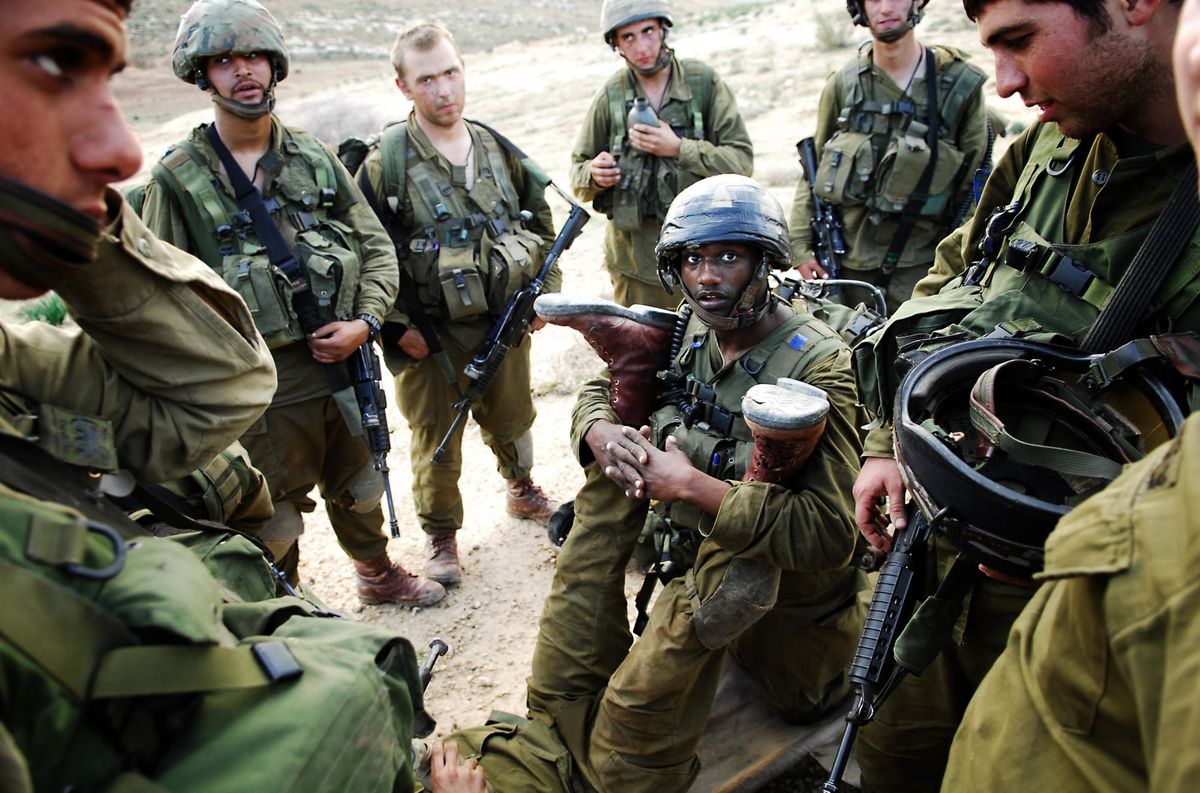
Structure, military service, national security and the people behind Israel's armed forces.
Chapter 1 — Introduction: Why Understanding the IDF Matters
The Israel Defense Forces, commonly known as the IDF, are among the most prominent institutions in Israeli society. Since the establishment of the State of Israel in 1948, the military has played a central role in the country's security, political history and national identity.
For many Israelis, the IDF is more than a professional military organisation. It is an institution that has shaped generations through compulsory service, reserve duty and the experience of living in a region marked by recurring wars and security threats.
Yet understanding the IDF requires looking beyond military operations, weapons and international headlines. It also means examining the historical circumstances that led to its creation, the structure of the armed forces, the responsibilities of its commanders and the relationship between military service and civilian life.
A Military Born During War
The IDF was formally established on 26 May 1948, less than two weeks after Israel declared independence.
Its formation brought together existing Jewish military organisations, including the Haganah and Palmach, under a unified national command. The decision was intended to create a state military rather than allow separate armed organisations to operate independently.
The army's establishment occurred during the 1947–1949 war, remembered by Israelis as the War of Independence and by Palestinians through the Nakba, or catastrophe, which involved mass displacement and the loss of homes and communities.
These different historical experiences remain central to understanding how the same military institution is perceived by different populations.
The Relationship Between the IDF and Israeli Society
Unlike many European countries, Israel has maintained a system of compulsory military service for significant parts of its population.
Military service has historically influenced education, professional networks, social relationships and public life. Women have also served in the IDF since its establishment, although access to military roles has changed considerably over time.
However, the experience of military service is not universal. Exemptions, different recruitment arrangements and debates surrounding ultra-Orthodox military service reveal important divisions within Israeli society.
October 7 and a Turning Point
The Hamas-led attacks of 7 October 2023 profoundly challenged Israel's sense of security.
Approximately 1,200 people were killed and 251 taken hostage during the attacks, according to figures reported by Reuters. The failure to prevent the assault raised serious questions about intelligence assessments, military preparedness and political accountability.
The subsequent Israeli military campaign in Gaza brought further questions about the use of force, the protection of civilians and the humanitarian consequences of prolonged warfare.
Understanding the IDF therefore also requires examining its actions critically, including the responsibilities imposed by international humanitarian law.
Looking Beyond the Headlines
For readers outside Israel, the IDF is often encountered through images of soldiers, military vehicles, airstrikes and breaking news.
But behind these images is a complex institution shaped by history, national security concerns, political decisions and individual human experiences.
This article explores how the IDF was created, how it functions, who serves within its ranks and how its role has evolved.
It also examines the difficult questions surrounding military responsibility, civilian protection and the consequences of war.
Understanding an army does not require accepting every decision it makes. It requires examining the evidence, the historical context and the people affected by its actions.
That is where this investigation begins.
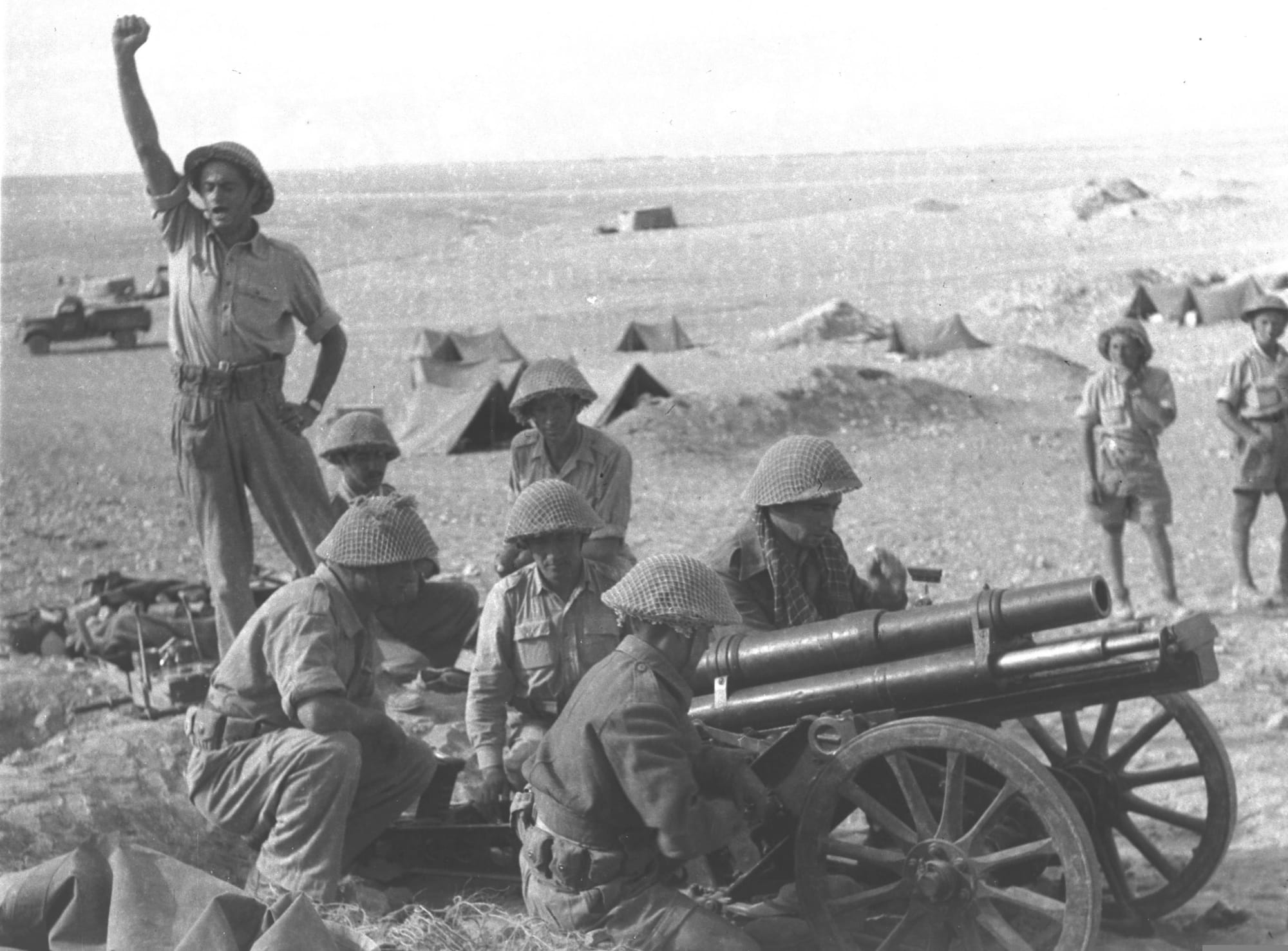
Chapter 2 — The Birth of the IDF in 1948
From Underground Defence Organisations to a National Army
The Israel Defense Forces were established during one of the most consequential periods in modern Middle Eastern history. In May 1948, as the British Mandate for Palestine came to an end and the State of Israel declared independence, the newly established government faced an immediate challenge: transforming several existing Jewish armed organisations into a unified national military.
The creation of the IDF was not simply an administrative decision. It represented a fundamental change in the political and military organisation of the Jewish community in Palestine.
Before independence, Jewish armed groups had operated under different leadership structures, political movements and military philosophies. Some focused primarily on protecting Jewish communities, while others conducted attacks against British authorities or Arab targets.
The new Israeli government sought to bring these organisations under a single command, accountable to the state rather than to individual political movements.
The process would prove difficult, controversial and, at times, violent.
The Haganah: The Foundation of Israel's Military
The origins of the IDF can be traced largely to the Haganah, a Jewish paramilitary organisation established in 1920 during the British Mandate period.
The Haganah emerged amid growing tensions and episodes of violence between Jewish and Arab communities. Its initial purpose was to organise the defence of Jewish settlements and neighbourhoods.
Over the following decades, it developed into a much larger and increasingly organised military force.
During the Arab Revolt of 1936–1939, the Haganah expanded its capabilities, strengthened its command structure and developed more coordinated methods of defence and military operations.
Its relationship with the British authorities was complicated. At different moments, Haganah members cooperated with British security forces, particularly in responding to attacks during the Arab Revolt. At other times, the organisation opposed British restrictions on Jewish immigration and settlement.
During the Second World War, thousands of Jews from Mandatory Palestine served in British military formations. This experience provided military training and leadership skills that later contributed to the development of Israel's armed forces.
By the time Israel declared independence, the Haganah had become the principal military organisation of the Jewish community.
Its personnel, command structures and operational experience formed the foundation of the newly established IDF.
The Palmach: An Elite Fighting Force
In 1941, the Haganah established the Palmach, an elite military formation created during the Second World War.
The organisation was initially developed partly in response to concerns that Nazi forces advancing through North Africa might threaten Palestine.
Palmach members received military training and participated in reconnaissance, patrols and other operations. Many combined military service with agricultural work in collective communities.
Over time, the Palmach developed a distinctive culture emphasising leadership, initiative, physical endurance and strong personal relationships between commanders and soldiers.
Several figures who later became prominent in Israeli military and political history served in its ranks.
Among them were Yigal Allon, Yitzhak Rabin and Moshe Dayan, although Dayan's military career extended beyond his early involvement with the Haganah and related formations.
During the 1947–1949 war, Palmach units participated in major military operations, including fighting around Jerusalem and in the Negev.
The Palmach became an important component of the IDF, but its organisational independence also created tensions with David Ben-Gurion.
For Ben-Gurion, the existence of separate military commands represented a potential challenge to the authority of the new state.
The Palmach's separate headquarters was dissolved in 1948 as part of the effort to establish a unified national command.
Irgun and Lehi: Different Approaches to Armed Struggle
The Haganah was not the only Jewish armed organisation operating before Israeli independence.
Two other groups, the Irgun, also known as Etzel, and Lehi, sometimes referred to as the Stern Group, pursued more militant strategies against British rule.
The Irgun emerged in 1931 following a split from the Haganah. Its members advocated a more aggressive approach to the use of armed force.
Under leaders including Menachem Begin, the organisation conducted attacks against British military and administrative targets.
One of its most controversial operations was the 1946 bombing of the King David Hotel in Jerusalem, which housed British administrative and military offices. The explosion killed 91 people, including British, Arab and Jewish victims.
Lehi was established in 1940 following a split from the Irgun. It also carried out attacks against British authorities and was involved in political assassinations.
Both organisations remain controversial in historical discussions because of their use of violence, including attacks that killed civilians.
Their activities reflected divisions within the Zionist movement over political strategy, relations with Britain and the use of military force.
Following Israel's declaration of independence, the new government moved to integrate their members into the national military and eliminate independent armed commands.
David Ben-Gurion and the Decision to Create One Army
On 14 May 1948, David Ben-Gurion proclaimed the establishment of the State of Israel.
The declaration came amid an already escalating war between Jewish and Arab forces in Mandatory Palestine.
The following day, regular forces from neighbouring Arab states entered the conflict.
Israel's new leadership faced simultaneous challenges: defending the newly declared state, establishing government institutions, securing military supplies and coordinating armed forces operating on several fronts.
Ben-Gurion, serving as prime minister and minister of defence, considered a unified army essential to the survival and functioning of the new state.
On 26 May 1948, the provisional government issued the ordinance establishing the Israel Defense Forces.
The ordinance provided for land, naval and air forces, established a legal basis for military service and prohibited the maintenance of armed forces outside the national military.
It also required military personnel to pledge allegiance to the state and its lawful authorities.
This was a significant development.
For the first time, the Jewish armed organisations that had operated before independence were expected to serve within a single military institution under civilian government authority.
The transition, however, was far from straightforward.
The Altalena Affair: A Test of State Authority
One of the most serious confrontations during the IDF's formation occurred in June 1948.
The incident centred on the Altalena, a ship carrying weapons and Irgun personnel to Israel.
A dispute developed between the Irgun leadership and the Israeli government over control and distribution of the weapons.
The disagreement escalated into armed confrontation between Irgun members and forces loyal to the government.
After fighting near Kfar Vitkin, the ship moved toward Tel Aviv, where the confrontation continued.
Israeli military forces eventually fired on the vessel, setting it ablaze.
Sixteen Irgun members and three IDF soldiers were killed during the clashes.
The Altalena Affair became a defining moment in the early history of the Israeli state.
For Ben-Gurion and his supporters, the confrontation demonstrated the necessity of preventing independent armed organisations from challenging the government's authority.
For critics, the use of military force against fellow Jews raised difficult questions about political leadership, negotiation and the limits of state power.
The incident remains a subject of historical debate.
Its broader significance lies in the principle that the state, rather than a political party or armed movement, would exercise authority over the military.
Building an Army During the 1948 War
The IDF's creation took place while fighting continued across several fronts.
The newly established military faced major organisational and logistical challenges.
Its forces included experienced fighters from pre-state organisations, Jewish veterans of the Second World War, recent immigrants and volunteers arriving from abroad.
Among the recruits were Holocaust survivors who had reached Israel after the devastation of European Jewish communities.
Many entered military service with limited preparation for the conditions they encountered.
Equipment shortages were a persistent problem. The new army relied on a mixture of existing weapons, foreign purchases and military supplies obtained through international networks.
Arms deliveries from Czechoslovakia played an important role in strengthening Israeli forces during the war.
At the same time, the government worked to establish a functioning air force, navy, supply system, training structure and military command.
The army had to develop these institutions while conducting operations and responding to rapidly changing battlefield conditions.
The 1948 war also had profound consequences for the Palestinian Arab population.
Hundreds of thousands of Palestinians fled or were expelled from their homes during the conflict. Numerous villages were depopulated or destroyed, and many refugees were unable to return after the fighting.
These events became central to Palestinian national memory and remain inseparable from the history of the war in which the IDF was established.
The Beginning of a Permanent Military Institution
By the end of the 1948–1949 war, the IDF had evolved from a collection of armed organisations into the military institution of the State of Israel.
The war ended through a series of armistice agreements between Israel and neighbouring Arab states in 1949, rather than through a comprehensive peace settlement.
Israel emerged with territory beyond that allocated to the proposed Jewish state under the United Nations partition plan of 1947.
The West Bank came under Jordanian control, while the Gaza Strip came under Egyptian administration.
The war left unresolved questions concerning borders, Palestinian refugees, Jerusalem and the relationship between Israel and its neighbours.
For Israel, the conflict reinforced the importance placed on military preparedness and national defence.
The experiences of 1948 also influenced the development of reserve forces, military training and the relationship between the armed forces and civilian society.
The IDF would continue to change dramatically over the following decades, but its origins remained closely connected to the events surrounding Israel's establishment.
A Legacy That Continues Today
The establishment of the IDF in 1948 was both a military and a political transformation.
It marked the transition from pre-state armed organisations to a national army operating under the authority of an independent government.
It also took place during a war whose consequences continue to shape Israeli and Palestinian lives.
For Israelis, the IDF's creation is closely associated with independence, national survival and the development of state institutions.
For Palestinians, the same historical period is associated with displacement, loss and the beginning of a prolonged struggle over national rights and territory.
Both histories are essential to understanding the circumstances in which the IDF emerged.
The next chapter examines how the Israeli military is organised today, including its ground forces, air force, navy, command structure and intelligence capabilities.
Chapter 3 — How the IDF Is Organised
Understanding the Structure of Israel's Military
The Israel Defense Forces operate as a unified military organisation responsible for Israel's land, air and maritime defence.
Unlike countries that maintain separate military services with largely independent command structures, Israel places its principal armed forces under a single General Staff.
The IDF includes ground forces, the Israeli Air Force, the Israeli Navy, military intelligence, regional commands and specialised units responsible for logistics, communications, technology, personnel and other essential functions.
This structure reflects Israel's geographical circumstances, its history of regional conflict and its emphasis on coordinating military operations across several domains.
To understand how the IDF functions, it is necessary to examine both its operational branches and the system of political and military authority that governs them.
The Chief of the General Staff: Israel's Senior Military Commander
At the highest level of the IDF's military command structure stands the Chief of the General Staff, commonly referred to as the Chief of Staff.
This position carries responsibility for the overall command of the armed forces, military readiness, operational planning and the implementation of government-approved security policies.
The Chief of Staff oversees the General Staff, which brings together senior commanders and officers responsible for the IDF's principal operational and administrative functions.
The General Staff coordinates military planning, intelligence assessments, personnel management, logistics and the development of military capabilities.
Israel's Basic Law: The Military, adopted in 1976, establishes that the IDF is subject to the authority of the government.
The Minister of Defense is responsible for the military on behalf of the government, while the Chief of Staff is the highest-ranking military commander.
The government appoints the Chief of Staff upon the recommendation of the Minister of Defense.
This framework establishes an important distinction between political authority and professional military command.
The elected government is responsible for major national security decisions, while military commanders are responsible for directing forces within the applicable legal and political framework.
However, the relationship between political leaders and military commanders has not always been free of tension. Israeli history includes disputes over military strategy, intelligence assessments, operational decisions and responsibility for security failures.
The Israeli Ground Forces
The ground forces form a major component of the IDF and include infantry, armoured units, artillery, combat engineering and other specialised formations.
Their responsibilities include territorial defence, ground combat, border security and support for military operations.
Among the IDF's best-known infantry formations are the Golani Brigade, the Paratroopers Brigade, the Givati Brigade, the Nahal Brigade and the Kfir Brigade.
These formations have different histories and operational experiences, although their precise assignments can change according to military requirements.
Armoured units operate tanks and other protected vehicles, while artillery units provide supporting fire during military operations.
Combat engineering units perform a wide range of tasks, including constructing defensive positions, clearing obstacles, dealing with explosive hazards and supporting ground forces in difficult environments.
Ground operations depend on cooperation between different units rather than on infantry or armoured formations acting independently.
Communications, medical services, intelligence, transportation and logistics are essential to maintaining these operations.
The IDF's ground forces also rely heavily on reservists, who can be mobilised to reinforce regular units during emergencies and extended military campaigns.
The Israeli Air Force
The Israeli Air Force, known in Hebrew as Heyl HaAvir, is responsible for military aviation and a significant part of Israel's aerial defence capabilities.
Its responsibilities include protecting Israeli airspace, conducting reconnaissance, transporting personnel and equipment, supporting ground forces and carrying out authorised military operations.
The air force operates fighter aircraft, helicopters, transport aircraft, unmanned aerial vehicles and other aviation systems.
Among the aircraft associated with its modern fleet are variants of the F-15 and F-16, as well as the F-35I, known in Israel as the Adir.
The air force also plays a role in Israel's broader air and missile defence system, alongside other branches and defence organisations.
Israel has developed layered defensive capabilities designed to respond to different types of aerial threats.
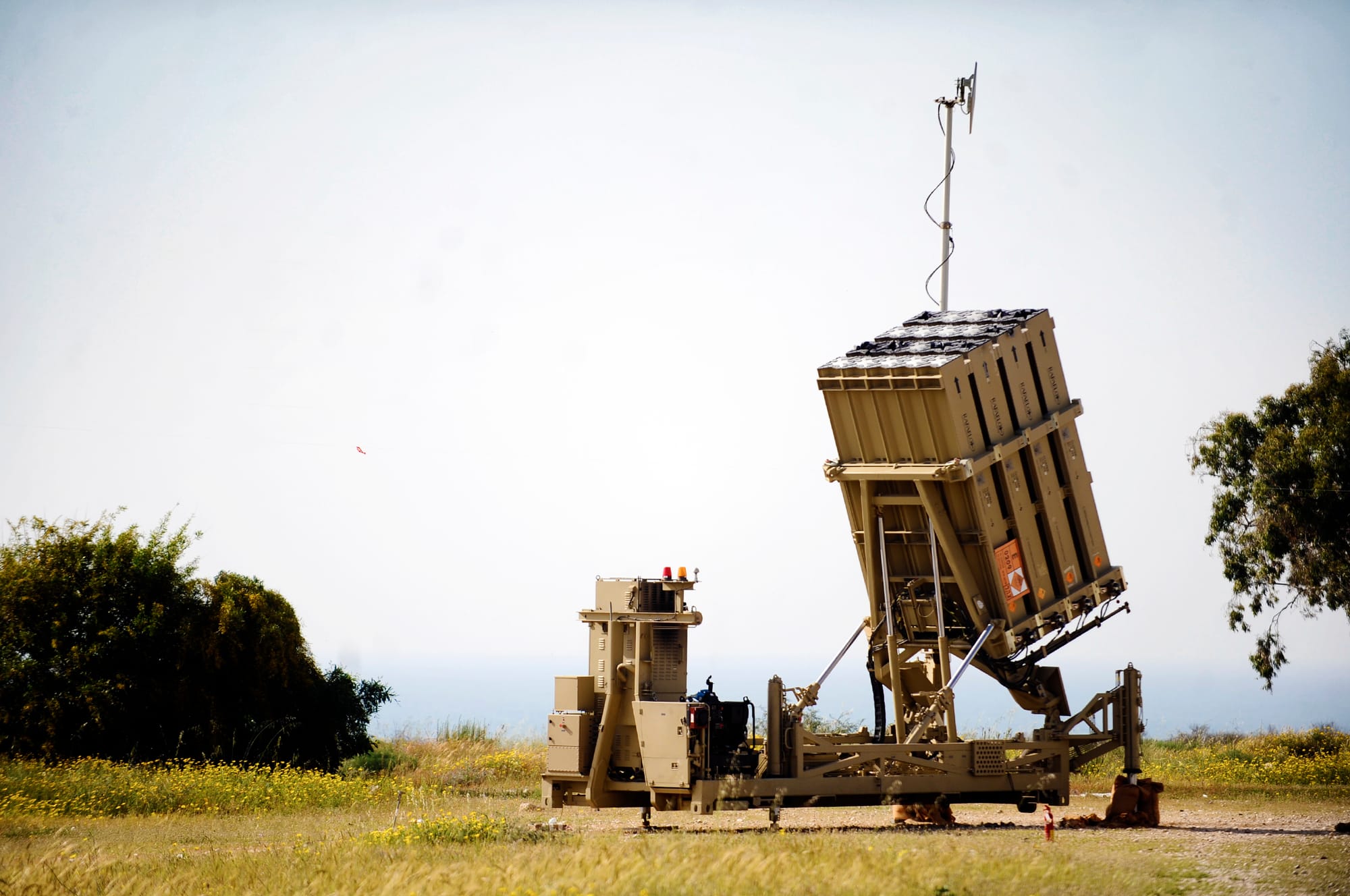
These include systems such as Iron Dome, David's Sling and Arrow, which are designed for different interception requirements.
Although these systems are often discussed together, they are not interchangeable and differ in their intended roles and technical capabilities.
The Israeli Air Force has played a central role in numerous military conflicts, including operations in neighbouring countries and the Gaza Strip.
Its use of air power has also generated international scrutiny, particularly concerning the distinction between military targets and civilians, proportionality and the humanitarian consequences of strikes in densely populated areas.
Air operations therefore illustrate both the technological capabilities of modern armed forces and the legal and ethical responsibilities associated with their use.
The Israeli Navy
Israel's navy is smaller than its ground forces and air force but plays an important role in maritime security.
Its responsibilities include protecting Israel's coastline, safeguarding maritime approaches, monitoring naval threats and supporting operations at sea.
The navy operates surface vessels, submarines, patrol craft and specialised maritime units.
Israel's Mediterranean coastline includes important commercial ports and offshore energy infrastructure.
The navy is involved in protecting maritime routes and infrastructure considered important to the country's economy and national security.
Israel also maintains a naval presence in the Red Sea through its southern port at Eilat.
The navy's responsibilities extend beyond conventional naval defence.
It has participated in operations involving weapons interdiction, maritime surveillance and the enforcement of naval restrictions.
Israel's naval blockade of Gaza, introduced in the context of its conflict with Hamas, has been the subject of international legal and humanitarian debate.
Israel has defended the blockade as a measure intended to prevent weapons transfers to armed groups, while critics have challenged its legality and highlighted its effects on Gaza's civilian population.
The navy therefore operates within a security environment in which military, commercial and humanitarian concerns frequently overlap.
Military Intelligence: Understanding Threats Before They Develop
Intelligence is a central component of the IDF's organisation.
The Military Intelligence Directorate, commonly known by its Hebrew abbreviation Aman, is responsible for collecting, analysing and assessing information relevant to military operations and national security.
Its work includes examining developments involving neighbouring states, armed organisations, military capabilities and emerging threats.
Military intelligence supports operational planning and provides assessments to senior military and political decision-makers.
One of the best-known organisations associated with Israeli military intelligence is Unit 8200.
The unit is widely associated with signals intelligence and cyber-related intelligence capabilities.
Another important part of the military intelligence system is Unit 9900, associated with visual and geospatial intelligence.
The precise organisation and activities of many intelligence units are not fully public.
It is also important to distinguish Aman from Israel's other major intelligence and security agencies.
Mossad is an external intelligence agency, while the Israel Security Agency, commonly known as Shin Bet or Shabak, is primarily responsible for internal security and counterterrorism intelligence.
These agencies are separate from the IDF, although cooperation and information sharing can occur in matters of national security.
The failures preceding the Hamas-led attacks of 7 October 2023 raised serious questions about how intelligence was collected, interpreted and communicated.
Subsequent investigations and public debate have examined the relationship between intelligence assessments, military preparedness and decision-making.
These questions demonstrate that possessing sophisticated intelligence technology does not automatically guarantee accurate threat assessments or effective responses.
Israel's Regional Military Commands
The IDF divides important operational responsibilities among regional commands.
These commands are designed to manage military readiness, territorial responsibilities and operations in different geographical areas.
Northern Command
Northern Command is responsible for military operations and preparedness along Israel's northern frontiers, including areas bordering Lebanon and Syria.
The region has experienced repeated periods of military tension and conflict, particularly involving Hezbollah in Lebanon.
Central Command
Central Command has responsibility for the West Bank and other designated areas within its operational jurisdiction.
Its activities include military operations, security coordination and responsibilities connected to Israel's military administration in the occupied West Bank.
The presence and activities of Israeli forces in the West Bank raise significant legal and political questions concerning occupation, settlements, Palestinian rights and the use of military authority over a civilian population.
Southern Command
Southern Command is responsible for Israel's southern operational areas, including the frontier with Gaza and the border region with Egypt.
It has played a major role in military operations involving Gaza.
The attacks of 7 October 2023 exposed serious failures in the protection of communities near the Gaza border and led to extensive examination of Southern Command's preparedness and response.
Home Front Command
Alongside the geographical commands, the IDF maintains a Home Front Command responsible for aspects of civilian emergency preparedness and protection.
Its work includes public safety guidance, emergency alerts and coordination with civilian authorities during missile attacks and other emergencies.
Home Front Command illustrates how Israel's military organisation extends into certain areas of national emergency planning.
Special Operations and Elite Units
The IDF also maintains specialised units trained for particular military missions.
These include reconnaissance, special operations, maritime operations and other highly specialised activities.
Among the publicly known units are Sayeret Matkal, Shayetet 13 and Shaldag.
Sayeret Matkal is associated with special reconnaissance and certain high-risk missions.
Shayetet 13 is the navy's specialised maritime commando unit.
Shaldag is a special operations unit within the Israeli Air Force.
These units have participated in publicly documented military operations, although many aspects of their activities remain classified.
Their training, selection procedures and operational responsibilities differ according to their assigned missions.
Specialised military units often receive considerable public attention, but they represent only a small part of the wider military organisation.
The daily functioning of the IDF depends equally on conventional formations, reservists, technical personnel and support services.
Logistics, Medicine and Technology: The Forces Behind the Front Lines
Modern military operations require much more than combat units.
The IDF depends on an extensive system of personnel responsible for transportation, equipment maintenance, medical treatment, communications, engineering, administration and technological support.
Military medical personnel provide emergency treatment, operate medical facilities and support the evacuation of wounded soldiers.
Logistics units organise supplies, transportation and the maintenance of equipment.
Communications and technology personnel support military networks and information systems.
Other departments manage recruitment, training, personnel assignments and the integration of reservists.
These roles are essential to military effectiveness but receive comparatively little attention in international news coverage.
They also demonstrate the diversity of occupations and professional skills found within a modern armed force.
Not everyone serving in the IDF is a combat soldier.
Many personnel work in technical, medical, educational, administrative and support positions.
The Role of Reservists
One of the defining characteristics of Israel's military structure is its reliance on reserve personnel.
Following their regular service, many Israelis remain eligible for reserve duty, subject to applicable laws, exemptions and individual circumstances.
Reservists may participate in training exercises, security assignments and military operations.
During major emergencies, large numbers can be mobilised to reinforce active-duty formations.
This system allows Israel to maintain a military force that can expand considerably during periods of conflict.
However, reserve mobilisation also affects civilian life.
Reservists may be required to leave employment, education, businesses and families for extended periods.
The economic and social consequences can be significant, particularly during prolonged military campaigns.
The experience of reservists demonstrates the close relationship between the IDF and Israeli civilian society.
Military Command and Democratic Accountability
The IDF operates within a system of civilian government authority.
Israel's government is responsible for national security policy and major military decisions, while the Chief of Staff directs the military command structure.
The Knesset exercises parliamentary oversight through mechanisms that include the Foreign Affairs and Defense Committee.
Israel's judicial system and military legal institutions also play roles in reviewing aspects of military conduct.
The Military Advocate General's system provides legal advice within the armed forces and has responsibilities connected to military justice and investigations.
These institutional mechanisms do not eliminate disputes over military accountability.
Questions can arise concerning the independence and effectiveness of investigations, the responsibility of commanders and political leaders, and the treatment of alleged violations of international humanitarian law.
Israeli military actions are also subject to international scrutiny.
The laws of armed conflict require parties to distinguish between civilians and combatants, prohibit indiscriminate attacks and impose requirements concerning proportionality and precautions in attack.
These obligations apply regardless of the military organisation involved or the political objectives of a conflict.
Understanding the IDF therefore involves examining not only how orders are issued, but also how military decisions are reviewed and how responsibility is established when operations cause harm.
A Military Shaped by Geography, History and Society
The structure of the Israel Defense Forces reflects more than military planning.
It has developed in response to Israel's geographical circumstances, historical experiences, technological priorities and recurring security challenges.
The unified command structure allows the IDF to coordinate ground, air, maritime and intelligence capabilities within one national military organisation.
Its reserve system creates a direct connection between military service and civilian life.
Its intelligence and technological institutions reflect the importance Israel places on early warning and military preparedness.
At the same time, the organisation faces continuing questions about political oversight, military effectiveness, legal responsibility and the consequences of its operations.
Understanding these different dimensions is essential to understanding the role of the IDF in Israeli society.
The next chapter examines one of the most distinctive features of that relationship: military service, conscription, reserve duty and the debate over who is expected to serve.
Chapter 4 — Military Service: A Nation of Soldiers?
A Country Where Military Service Shapes Society
In Israel, military service is more than a national defence obligation. For many citizens, it represents a significant stage of life, influencing personal identity, education, professional opportunities and relationships within society.
Unlike many European countries that rely primarily on professional volunteer armed forces, Israel maintains a system of compulsory military service for substantial parts of its population.
The system reflects the country's history, geographical circumstances and longstanding security concerns.
Since the establishment of the State of Israel in 1948, military service has been closely connected to the country's understanding of national defence and collective responsibility.
For generations of Israelis, receiving a military recruitment notice has marked the transition from adolescence into adulthood.
However, the description of Israel as a nation of soldiers tells only part of the story.
Not every Israeli citizen is required to serve, and the differences between those who serve and those who do not have become an important subject of social, religious and political debate.
To understand the role of the IDF in Israeli society, it is necessary to examine how military service works, who participates and how the system affects everyday life.
Compulsory Military Service: How the System Works
Israel's military service system is governed primarily by the Defense Service Law.
Most Jewish Israeli citizens who meet the relevant legal and medical requirements are subject to compulsory military service.
Conscription generally begins around the age of eighteen, although service may be deferred for educational, religious, medical or other recognised reasons.
Military service requirements differ according to gender, role and individual circumstances.
In July 2026, the Knesset approved a temporary extension maintaining compulsory service at 32 months for men and women serving in specified roles subject to equivalent service requirements.
For many women in other compulsory-service positions, the standard period remains 24 months.
Certain military positions require longer commitments, and service rules can change through legislation or military policy.
Before enlistment, prospective recruits undergo assessments that may include medical examinations, interviews and evaluations of their suitability for different positions.
Their eventual assignments depend on several factors, including military requirements, qualifications, health, personal circumstances and the recruitment system.
Not all recruits enter combat units.
The IDF requires personnel in intelligence, technology, medicine, logistics, administration, education, communications and numerous other fields.
As a result, military service can involve very different experiences depending on the individual's assigned role.
From Civilian Life to Military Training
For many young Israelis, enlistment represents a sudden change in daily life.
After completing secondary education, recruits may enter military training instead of immediately beginning university studies or full-time employment.
Initial training introduces recruits to military discipline, regulations, physical requirements and the responsibilities associated with service.
The nature and intensity of training vary considerably between combat and non-combat positions.
Combat soldiers undergo specialised preparation for their operational responsibilities, while personnel assigned to technical or administrative roles receive training appropriate to their duties.
Some recruits enter programmes that combine military service with academic education or professional development.
Others serve in units where they develop experience in technology, engineering, communications or leadership.
The transition can be demanding.
Young people may be required to spend extended periods away from home, adjust to military authority and take on responsibilities unfamiliar to most people of their age.
For those assigned to operational units, service may also involve exposure to dangerous situations and the psychological consequences of military activity.
The experience of enlistment therefore differs significantly between individuals.
The Role of Women in Military Service
Women have served in the Israeli military since the establishment of the state.
Over time, their opportunities within the IDF have expanded considerably.
Women serve in intelligence, aviation, communications, military medicine, logistics, education, operational support and a range of combat-related positions.
Some have reached senior command positions, while others have served as pilots, naval personnel, border defence soldiers and military instructors.
Nevertheless, gender differences remain within the military system.
Service requirements, access to certain roles, representation in senior leadership and the physical standards applied to different positions have all been subjects of debate.
The expansion of women's participation has also raised questions about equal opportunity, military readiness and the relationship between religious traditions and military service.
For some Israeli women, military service provides professional experience, leadership opportunities and a sense of participation in national defence.
Others experience the institution differently or oppose compulsory service on personal, religious or political grounds.
The role of women in the IDF is an important subject in its own right and will be examined more closely in the following chapter.
Who Is Exempt from Military Service?
Although compulsory military service is often presented as a defining feature of Israeli society, the system does not apply equally to every population group.
Many Jewish Israelis are required to serve, subject to legal exemptions and individual circumstances.
Druze men are generally subject to compulsory service, while Druze women are not routinely conscripted.
Circassian men are also generally subject to compulsory military service.
Most Arab citizens of Israel, including most Muslim and Christian Arabs, are not subject to compulsory enlistment.
However, some choose to volunteer for military service.
There are also volunteers from other communities, including individuals whose backgrounds or circumstances would otherwise exempt them from compulsory recruitment.
Certain women may receive exemptions on religious grounds, while exemptions or deferments may also be granted for medical conditions, marriage, pregnancy, parenthood or other circumstances recognised under Israeli law.
The precise legal rules and administrative procedures vary.
These differences demonstrate that Israeli military service is shaped not only by citizenship but also by religion, community background, gender and individual circumstances.
Arab Citizens of Israel and Military Service
Arab citizens make up a substantial part of Israel's population, but their relationship with military service differs from that of most Jewish citizens.
Most Muslim and Christian Arab citizens are not required to serve in the IDF.
This distinction reflects historical and political circumstances surrounding the establishment of Israel and the continuing Israeli-Palestinian conflict.
Some Arab citizens identify strongly with Palestinian national identity, while others emphasise Israeli citizenship, religious identity or a combination of affiliations.
Attitudes toward military service vary accordingly.
For some, serving in the IDF represents participation in the institutions of the state.
For others, military service raises difficult questions about identity, community relationships and military operations involving Palestinians.
Arab volunteers have served in different military roles, although their experiences cannot be treated as representative of the wider Arab population.
The relationship between military service, citizenship and belonging remains a complex subject within Israeli society.
The Druze Community and Military Service
The Druze community occupies a distinctive position within Israel's military service system.
Druze men have generally been subject to compulsory military service since 1956.
Over the decades, Druze soldiers have served in a wide range of military positions, including combat units and senior command roles.
Military service has become an important element of the relationship between parts of the Druze community and the Israeli state.
However, Druze society is not politically uniform.
Views concerning military service, national identity, equality and government policy differ among individuals and communities.
It is also important to distinguish Druze citizens living within Israel from many Druze residents of the occupied Golan Heights, whose citizenship status and relationship with Israeli institutions differ.
The experiences of Druze soldiers illustrate the diversity of communities represented within the IDF.
They also raise broader questions about how military participation relates to civic equality and minority rights.
The Ultra-Orthodox Conscription Debate
One of the most significant controversies surrounding Israeli military service concerns the ultra-Orthodox Jewish population, commonly referred to as Haredim.
For decades, many ultra-Orthodox men studying in religious institutions received deferments or exemptions from military service.
These arrangements developed from policies established during Israel's early years, when the government sought to accommodate full-time religious study.
As the ultra-Orthodox population grew, the number of men benefiting from these arrangements increased.
This led to growing disagreements over the distribution of military obligations.
Critics argued that the exemptions created inequality between citizens required to serve and those who were not.
Supporters of the religious study arrangements argued that full-time Torah study was central to their communities' identity and religious obligations.
Some ultra-Orthodox groups also expressed concerns that military service could expose young men to environments conflicting with their religious practices.
Over time, the issue became a major political and constitutional dispute.
In June 2024, Israel's Supreme Court ruled that the government could not continue withholding conscription enforcement from eligible ultra-Orthodox men without a lawful basis.
A further ruling in November 2025 required concrete steps to enforce the law.
By 2026, the implementation of these rulings remained a contentious issue involving the government, military authorities, religious leaders and the courts.
The debate intensified following the war that began after 7 October 2023, as the IDF faced increased personnel requirements and reservists experienced prolonged periods of service.
The controversy raises a fundamental question within Israeli society: how should the obligations of national defence be distributed among citizens with different religious, cultural and political identities?
Reserve Duty: Military Service Beyond Enlistment
For many Israelis, military responsibilities do not necessarily end when compulsory service is completed.
The IDF maintains an extensive reserve system, known in Hebrew as miluim.
Reservists are former regular-service personnel who may be called upon for additional military duties.
These duties can include training, operational assignments, emergency mobilisation and participation in military campaigns.
Eligibility and service requirements vary according to age, rank, military occupation, legal provisions and individual circumstances.
The reserve system allows Israel to expand its armed forces during periods of heightened security threats.
It also creates a close relationship between civilian employment and military readiness.
A reservist may ordinarily work as a teacher, engineer, doctor, business owner or university student.
During an emergency, that same person may be required to return to military service.
This arrangement has become one of the most distinctive features of Israel's defence system.
October 7 and the Mobilisation of Reservists
The Hamas-led attacks of 7 October 2023 triggered one of the largest military mobilisations in Israel's history.
Hundreds of thousands of reservists were called up as Israel prepared for extensive military operations.
Many left their workplaces, families and studies with little warning.
Some were deployed near the Gaza Strip, while others were assigned to Israel's northern border, military bases or support functions.
The mobilisation demonstrated the central role of the reserve system in Israel's military organisation.
It also revealed the substantial economic and personal costs associated with prolonged military service.
Businesses faced staff shortages, families experienced extended separations and employers had to adapt to the absence of workers.
For reservists with children, financial responsibilities or independent businesses, repeated mobilisation could create particular difficulties.
The psychological effects of military service also became an increasingly important public concern.
These included stress, exhaustion, exposure to combat and the challenges of returning to civilian life.
The experiences of reservists and their families became an important part of Israel's wider national conversation about the war.
The Economic Impact of Military Service
Compulsory military service and reserve duty have significant economic consequences.
Young Israelis who serve in the military often enter university or the civilian workforce later than people of similar ages in countries without conscription.
For some, military service provides valuable experience, technical training and professional connections.
Former personnel from intelligence and technology units have played visible roles in Israel's technology sector.
However, these opportunities are not equally available to all recruits.
Differences in military assignments can influence later access to professional networks and employment opportunities.
Extended reserve duty can also interrupt careers, reduce business activity and place pressure on employers.
The economic effects are particularly significant during prolonged military conflicts.
Governments may provide financial compensation and employment protections for reservists, but these measures do not necessarily eliminate the disruption experienced by individuals and families.
Military service therefore creates both opportunities and burdens within Israeli society.
Military Service and Social Identity
Military service has long influenced how many Israelis understand citizenship, responsibility and belonging.
Shared military experiences can create lasting friendships and professional networks.
Former soldiers may remain connected through reserve units, veterans' associations and personal relationships.
Military backgrounds can also influence public life, including business, politics and community leadership.
Several Israeli prime ministers and senior political figures previously held prominent military positions.
However, the relationship between military service and social status is not straightforward.
People who do not serve may experience different opportunities or social expectations, depending on their community and circumstances.
At the same time, many Israelis reject the idea that military service should determine the value of a person's contribution to society.
Civilian national service, education, healthcare, community work and other forms of public participation also play important roles.
Debates about military service therefore connect to larger questions concerning equality, citizenship and national identity.
The Human Cost of Military Obligations
Behind the legal requirements and military structures are individuals whose lives are shaped by service.
For some young Israelis, enlistment is an anticipated milestone.
For others, it is a source of anxiety, uncertainty or personal conflict.
Families may experience pride in a relative's service while simultaneously fearing for their safety.
Parents may watch their children enter military training knowing that future assignments could involve dangerous operations.
Reservists may struggle to balance military responsibilities with family life and civilian employment.
Some service members return from operations with physical injuries or psychological difficulties.
Others lose friends, colleagues or family members during military service.
The consequences of military service extend beyond the soldiers themselves.
Military operations also affect civilians living in areas where the IDF operates, including Palestinians in Gaza and the West Bank.
A comprehensive understanding of military service must therefore consider both the experiences of those wearing the uniform and the lives of civilians affected by military decisions.
A System Facing Difficult Questions
Israel's military service system reflects the country's history and security priorities, but it also exposes divisions within society.
Compulsory service connects large parts of the population to the armed forces, while exemptions and different recruitment arrangements raise questions about equality.
The reserve system provides additional military capacity but places considerable demands on families, employers and communities.
The participation of women, minority groups and religious communities continues to evolve.
Meanwhile, the events following 7 October 2023 have intensified debates about the sustainability of prolonged military mobilisation.
These issues cannot be understood through a simple distinction between those who support military service and those who oppose it.
They involve questions of law, religion, security, personal freedom, civic responsibility and social justice.
For Israel, the challenge is not only maintaining a military capable of responding to security threats.
It is also determining how the obligations and consequences of military service should be shared across a diverse society.
Understanding this debate is essential to understanding the IDF's place in everyday Israeli life.
The next chapter turns to the experiences of women in the Israeli military, examining their historical contributions, expanding opportunities, leadership roles and the continuing debates surrounding gender equality in military service.
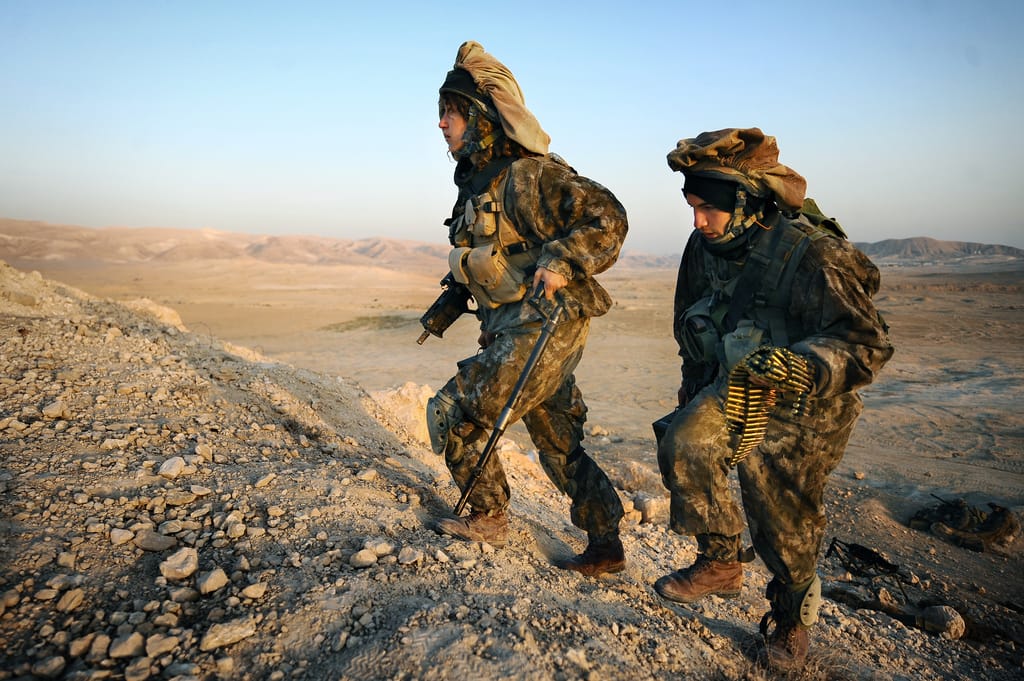
Chapter 5 — Women in the IDF: Service, Leadership and the Changing Role of Female Soldiers
Women in Israel's Military: A History of Service and Change
Women have been part of Israel's military history since before the establishment of the State of Israel in 1948.
From members of underground Jewish defence organisations to modern combat soldiers, intelligence officers, pilots and military commanders, women have played an evolving role in the country's armed forces.
Israel is among the relatively small number of countries that maintain compulsory military service for both men and women, although the requirements and exemptions are not identical.
For many Israeli women, military service represents a significant period of personal development, professional training and participation in national defence.
Yet the history of women in the Israel Defense Forces is not simply a story of expanding opportunities.
It also reflects decades of legal challenges, institutional resistance, changing military requirements and debates about gender equality.
The role of women in the IDF has changed considerably since 1948, but questions concerning access to combat positions, leadership opportunities, military culture and equal treatment remain relevant.
Before 1948: Women in the Haganah and Palmach
Before Israel declared independence, women participated in Jewish defence organisations operating in Mandatory Palestine.
The Haganah, established in 1920, included women in various activities, including communications, medical support, intelligence gathering, weapons transportation and military training.
Women also served in the Palmach, the elite formation established in 1941.
Some participated in military operations, while others worked in reconnaissance, communications, logistics and support roles.
The Palmach developed a culture that allowed women to participate in certain military activities, although responsibilities and opportunities were not equal between men and women.
During the 1947–1949 war, women contributed to the military effort through medical services, transportation, communications and, in some cases, combat.
Their experiences became part of the historical foundation upon which women's service in the IDF was established.
However, the transition from pre-state armed organisations to a national army did not automatically produce equal opportunities.
As the IDF developed, women were increasingly assigned to roles considered appropriate under the military and social assumptions of the period.
The Establishment of Women's Military Service
Following Israel's independence in May 1948, women became part of the newly established Israel Defense Forces.
The Defense Service Law of 1949 formalised compulsory military service for women, subject to exemptions and specific legal conditions.
The IDF also established a Women's Corps, commonly known by its Hebrew abbreviation, CHEN.
For decades, this corps played a significant role in the administration and organisation of women's military service.
Women were commonly assigned to positions involving administration, communications, healthcare, education, logistics and other support functions.
Although these responsibilities were essential to the military's operation, women were generally excluded from many combat positions.
The restrictions reflected a combination of military policy, social attitudes, concerns about physical requirements and assumptions about the appropriate roles of women.
Over time, however, these limitations came under increasing scrutiny.
As Israeli society changed, women began challenging the idea that military assignments should be determined primarily by gender rather than individual qualifications.
Alice Miller: The Woman Who Challenged the System
One of the most important turning points in the history of women in the IDF came through the legal challenge brought by Alice Miller.
Miller, an Israeli woman with aviation experience and an academic background in aerospace engineering, sought the opportunity to apply for the Israeli Air Force's pilot training programme.
At the time, women were excluded from the programme because of their gender.
Miller challenged the policy before Israel's Supreme Court.
In November 1995, the Court ruled in her favour, rejecting the military's general exclusion of women from pilot selection.
The decision became a landmark in the struggle for equal opportunities within the Israeli armed forces.
Although Miller herself did not ultimately become a military pilot, her case helped open the way for other women to enter positions previously reserved for men.
In 1998, a woman graduated from the Israeli Air Force's flight training programme for the first time in decades.
In 2001, Roni Zuckerman became the first woman to graduate as a fighter pilot in the modern era of the Israeli Air Force.
The legal changes following the Miller case also influenced wider military policy.
In 2000, an amendment to the Defense Service Law established a principle of equal opportunity for women to serve in military positions, subject to requirements inherent in the nature of particular roles.
The decision did not remove every barrier, but it changed the legal framework governing women's access to military careers.
Women Entering Combat Units
Over the following decades, the IDF gradually expanded the number of combat-related positions available to women.
Women began serving in mixed-gender border defence units, artillery, air defence, combat intelligence, search-and-rescue formations and other operational roles.
One of the best-known examples is the Caracal Battalion.
Established as a mixed-gender combat formation, Caracal became associated with border security operations and the integration of female combat soldiers.
Women also entered specialised military fields that had previously been dominated by men.
These developments challenged longstanding assumptions about women's suitability for operational military service.
However, integration did not occur uniformly across the armed forces.
Some combat formations remained closed to women, while others introduced selection procedures and physical standards intended to determine suitability for particular assignments.
Debates continued over how to balance operational requirements, equal opportunity, medical considerations and the different physical demands of military roles.
Supporters of wider integration argued that qualified women should not be excluded solely because of their gender.
Others questioned how integration should be implemented in physically demanding positions or raised concerns about the effects of changing recruitment standards.
The discussion has remained an important part of Israeli military policy.
Women in Combat: The Numbers Behind the Changes
The participation of women in combat roles has increased substantially over the past decade.
According to figures published by the IDF in 2026, women represented approximately 7.2 percent of its combat personnel in 2015.
By 2025, that proportion had risen to approximately 21.2 percent.
The military also reported that more than 90 percent of its positions were open to women, although eligibility for a position does not necessarily mean equal representation within it.
Women have become particularly visible in areas such as air defence, intelligence, surveillance, border security and certain specialised military formations.
However, senior military leadership remains disproportionately male.
According to IDF figures for 2025, women represented approximately 35 percent of career military personnel, but their representation declined at higher ranks.
These figures illustrate both the expansion of women's military participation and the continuing challenges surrounding promotion and representation.
Access to positions is only one measure of equality.
Career progression, leadership opportunities, working conditions and institutional culture are also important factors in evaluating women's experiences within the military.
Women in the Israeli Air Force
The Israeli Air Force has become one of the most visible institutions in discussions about women's expanding military opportunities.
Following the Alice Miller ruling, women gained access to flight training and began entering aviation roles that had previously been closed to them.
Women have since served as pilots, navigators, aircrew members, intelligence specialists, air defence personnel and officers.
The demanding nature of military aviation training means that relatively few candidates, regardless of gender, complete the selection and training process.
For women entering these programmes, the challenge has involved meeting professional requirements while also overcoming historical barriers.
Their participation has become a symbol of changing expectations within Israeli military institutions.
However, women remain a minority in several aviation specialties, particularly among fighter pilots and senior operational commanders.
Their experiences highlight the difference between formally opening a profession and achieving broader representation within it.
Women in Military Intelligence and Technology
Not all of the IDF's most significant roles involve direct combat.
Military intelligence, cybersecurity, communications and technological development are central to modern military operations.
Women serve in a variety of positions within these fields.
Their responsibilities may include intelligence analysis, technical research, information processing, communications, surveillance and operational support.
Military service in technological units can provide experience that later contributes to civilian careers.
Israel's technology sector has longstanding connections with former military personnel, particularly those who served in intelligence and technical organisations.
However, opportunities are not distributed equally.
Access to specialised military programmes can be influenced by educational background, recruitment procedures, qualifications and other social factors.
For women, participation in these fields has expanded professional opportunities, but questions remain about representation in senior technical and command positions.
October 7, 2023: Women on the Front Lines
The Hamas-led attacks of 7 October 2023 brought renewed attention to the roles and experiences of female soldiers.
Women serving near the Gaza border were among those directly affected by the assault.
At the Nahal Oz military base, female surveillance soldiers, known in Hebrew as tatzpitaniyot, were responsible for monitoring activity near the border.
Their work involved observing developments and reporting information through the military command system.
Before the attack, concerns were raised about unusual activity near the border. Subsequent reporting and investigations examined whether warnings from surveillance personnel had been adequately assessed and acted upon.
During the assault, the Nahal Oz base was attacked by Hamas-led forces.
Female soldiers were among those killed and abducted.
A United Nations commission of inquiry reported that at least 20 female soldiers were killed at the base and seven were taken hostage.
The commission also documented evidence of abuse against captured soldiers.
The events at Nahal Oz became a particularly painful part of the national examination of the failures surrounding October 7.
They raised questions not only about military preparedness, but also about the treatment of information supplied by personnel in lower-ranking positions.
The experiences of the surveillance soldiers demonstrated the importance of their work and the consequences when intelligence warnings fail to produce an effective response.
Female Combat Soldiers During the October 7 Attacks
Female combat personnel also participated in the response to the attacks.
Members of mixed-gender border defence formations, including the Caracal Battalion, were involved in fighting in southern Israel.
Some female soldiers participated in direct combat against Hamas-led attackers and other armed militants.
Their actions attracted public attention and renewed debate about the operational role of women in the military.
The events challenged assumptions that female soldiers would be unable to respond effectively in high-intensity combat situations.
At the same time, the experiences of individual soldiers should not be treated as evidence that all questions concerning military integration have been resolved.
Military performance depends on training, equipment, leadership, intelligence and operational circumstances.
The broader significance of October 7 lies partly in how it exposed both the contributions of female personnel and serious weaknesses within Israel's security system.
Women in Military Leadership
As opportunities have expanded, women have increasingly entered command and leadership positions within the IDF.
Female officers serve in a range of operational, administrative, intelligence and professional roles.
Some have commanded combat formations, while others have held senior positions in military medicine, personnel management, legal affairs and technological organisations.
The presence of women in leadership positions has gradually increased, but representation remains uneven.
Senior operational commands continue to be dominated by men.
This raises questions about promotion pathways, institutional expectations and the long-term effects of historical restrictions on women's military careers.
Leadership development often depends on earlier assignments, particularly those associated with operational command.
When women have had limited access to certain military roles, their opportunities to advance into senior positions may also have been affected.
Expanding access to command positions therefore involves more than changing recruitment policies.
It requires examining how military careers develop over time.
Religious Traditions and Gender Integration
The integration of women into military roles has also generated debate within Israel's religious communities.
Some religious soldiers and leaders have expressed concerns about mixed-gender military environments, particularly in combat units.
These concerns may involve religious rules relating to modesty, physical contact and interactions between men and women.
The IDF has attempted to accommodate religious practices while maintaining operational requirements and policies concerning women's service.
However, disagreements have emerged over how such accommodations should be implemented.
Critics of restrictive arrangements argue that religious accommodation should not limit women's professional opportunities or exclude them from positions for which they are qualified.
Others argue that the military should make reasonable efforts to allow religious personnel to serve without violating deeply held beliefs.
These debates reflect wider tensions within Israeli society concerning religion, gender equality and the role of state institutions.
They also demonstrate that military integration is influenced by cultural and social factors beyond formal legal rights.
Harassment, Discrimination and Military Culture
Gender equality within the armed forces also depends on the everyday experiences of service members.
Like other large military organisations, the IDF has faced complaints and investigations concerning sexual harassment, misconduct and discrimination.
Military institutions present particular challenges because of their hierarchical structures and the authority commanders exercise over subordinates.
Personnel who experience harassment may face difficulties reporting misconduct, particularly when the alleged perpetrator occupies a position of authority.
The IDF has established procedures and support mechanisms intended to address sexual harassment and related complaints.
Nevertheless, the effectiveness of reporting systems, investigations and disciplinary measures remains an important subject for scrutiny.
A military organisation cannot measure equality solely by the number of positions open to women.
It must also consider whether personnel can work in an environment where professional standards, personal dignity and accountability are consistently maintained.
The Human Experience Behind the Uniform
For women serving in the IDF, military life can involve a wide range of experiences.
Some enter the armed forces seeking technical training, professional development or opportunities for leadership.
Others view service primarily as a legal obligation.
Some serve in combat formations, while others work in medical facilities, intelligence centres, administrative offices or training institutions.
Their experiences are shaped by their assignments, commanders, colleagues, personal circumstances and the broader security environment.
Military service may provide confidence, friendships and professional skills.
It may also involve physical danger, prolonged separation from family, emotional stress and exposure to traumatic events.
Women who serve in combat or intelligence positions may carry the consequences of those experiences long after their military service ends.
Families, partners and children can also be affected by military obligations, particularly during periods of prolonged conflict.
These personal experiences are an important part of understanding the role of women in the Israeli military.
Beyond Military Service: Women and Israeli Society
The experiences of women in the IDF cannot be separated from broader developments in Israeli society.
Debates about military participation reflect changing expectations concerning women's education, employment, leadership and public responsibilities.
For some women, military service has created opportunities that influenced their later professional lives.
Others have criticised the military's gender policies or questioned the broader system of compulsory service.
There are also Israeli women who oppose military service or participate in movements challenging government security policies and military operations.
The diversity of these perspectives is important.
Women in Israel do not share a single political position or a uniform relationship with the armed forces.
Their experiences differ according to religion, ethnicity, community, personal beliefs and military background.
Understanding women in the IDF therefore requires recognising both their contributions to the institution and the wider debates surrounding its role in society.
A Changing Institution, an Ongoing Debate
The history of women in the Israel Defense Forces reflects decades of institutional change.
From the limited opportunities available during the early years of the state to the expansion of combat and leadership roles, women have challenged barriers and reshaped expectations within the military.
The Alice Miller case demonstrated how legal action could influence military policy.
The expansion of mixed-gender combat units showed how operational roles could change over time.
The events of October 7, 2023, brought renewed attention to the experiences, contributions and losses of female military personnel.
Yet progress in access and representation does not mean that every issue has been resolved.
Questions remain concerning leadership opportunities, military culture, equal treatment, religious accommodation and the long-term consequences of service.
The experiences of female soldiers also form part of a larger conversation about the responsibilities of military institutions, the protection of civilians and the human consequences of armed conflict.
For Beyond the Lines, understanding women in the IDF means looking beyond familiar images of soldiers in uniform.
It means examining the history, the legal changes, the institutional challenges and, above all, the individual lives behind military service.
The next chapter explores another important dimension of Israel's armed forces: military training, technology and intelligence, and how these capabilities shape the country's approach to national security.
Chapter 6 — Training, Technology and Military Intelligence
The Foundations of Israel's Military Capabilities
The Israel Defense Forces have developed a military system in which training, technology and intelligence play central roles.
Since the establishment of Israel in 1948, the country's defence institutions have operated under circumstances shaped by regional conflicts, changing military threats and the need to maintain forces capable of responding to emergencies.
Over time, Israel has invested heavily in military education, intelligence gathering, technological development and cooperation between different branches of its armed forces.
These capabilities have contributed to the IDF's development into a technologically advanced military organisation.
However, military technology and intelligence systems do not operate independently of human judgement.
The effectiveness of any military organisation depends on how information is interpreted, how personnel are trained, how commanders make decisions and whether institutions are capable of recognising their own mistakes.
The Hamas-led attacks of 7 October 2023 demonstrated that even extensive surveillance capabilities and sophisticated defensive systems cannot guarantee security.
To understand the IDF, it is therefore necessary to examine both its technological capabilities and the limitations revealed by recent events.
Military Training: Preparing Soldiers for Different Responsibilities
Military training within the IDF varies considerably according to the responsibilities assigned to each recruit.
Soldiers entering combat formations undergo preparation intended to develop physical fitness, discipline, teamwork, operational knowledge and the ability to function under demanding conditions.
Personnel assigned to intelligence, medicine, technology, communications or administrative roles receive different forms of professional training.
Initial military instruction introduces recruits to the organisation's rules, command structure and expectations.
Specialised programmes then prepare personnel for their assigned responsibilities.
For combat soldiers, training can involve field exercises, navigation, physical conditioning, weapons safety and coordination with other military units.
Technical personnel may receive instruction in computer systems, communications equipment, engineering or information analysis.
Medical personnel undergo training relevant to emergency treatment and military healthcare.
The length and intensity of these programmes differ substantially.
Training is also influenced by the military's changing assessment of security threats.
Following major conflicts, armed forces commonly review operational experiences and adapt their training programmes.
For the IDF, the events of October 7 created particular pressure to reconsider preparedness, emergency response procedures and the ability of units to operate during unexpected attacks.
Leadership and Military Education
The development of military commanders is an important part of the IDF's training system.
Officers are expected to make decisions, manage personnel and coordinate activities within a hierarchical organisation.
Leadership training involves more than technical military knowledge.
Commanders must understand their responsibilities toward subordinates, the limits of their authority and the legal framework governing military operations.
The IDF operates officer training programmes and professional military education institutions intended to prepare personnel for different levels of command.
Some officers progress through additional courses during their careers, while others develop specialised expertise in intelligence, engineering, aviation or operational planning.
Israel's reserve system also creates distinctive leadership challenges.
Commanders may be responsible for units containing personnel who ordinarily work in civilian professions and return to military service during emergencies.
Maintaining readiness in such formations requires training, coordination and familiarity between personnel.
However, formal training does not automatically ensure effective leadership.
Military history repeatedly demonstrates that organisations can possess experienced commanders and established procedures while still making serious errors.
The ability to question assumptions, recognise warning signs and communicate concerns is therefore an essential part of military professionalism.
Israel's Defence Technology Industry
Israel has developed a substantial defence technology industry involving government institutions, private companies, research organisations and military units.
Companies such as Israel Aerospace Industries, Rafael Advanced Defense Systems and Elbit Systems are associated with the development and production of military equipment and technologies.
Their activities include aerospace systems, communications, sensors, electronic systems, unmanned platforms and other defence-related products.
Israel also maintains close defence relationships with international partners, particularly the United States.
These relationships have influenced the development, procurement and maintenance of military equipment.
Technological innovation is often presented as a defining characteristic of Israel's defence sector.
However, it is important to distinguish between systems developed domestically, systems produced through international cooperation and equipment purchased from foreign manufacturers.
Modern military capabilities rarely emerge from a single organisation or country.
They depend on extensive research, industrial supply chains, financial investment and cooperation between institutions.
The development of military technology also raises questions concerning export controls, international security, surveillance and the potential use of equipment in armed conflicts.
Iron Dome and Israel's Air Defence Systems
One of Israel's most internationally recognised defence technologies is Iron Dome.
Developed primarily by Rafael with important American support, Iron Dome is designed to intercept certain short-range rockets and other aerial threats.
The system uses radar and command-and-control technology to detect incoming projectiles and assess their trajectories.
It is designed to prioritise threats expected to endanger defended areas or important infrastructure.
Iron Dome forms part of a broader, layered air and missile defence architecture.
Other systems include David's Sling and Arrow, which are intended to address different categories of aerial threats.
These systems have become prominent features of Israel's approach to protecting population centres and strategic facilities.
Their development reflects the recurring threat posed by rockets and missiles launched toward Israeli territory.
Nevertheless, no air defence system provides complete protection.
Interception capabilities depend on factors including the type of threat, available equipment, operational conditions and the number of incoming projectiles.
Large-scale attacks can place substantial pressure on defensive systems.
The existence of advanced interception technology therefore does not eliminate the need for civilian shelters, emergency planning or diplomatic and political efforts to reduce conflict.
Drones and Unmanned Aerial Systems
Unmanned aerial vehicles have become an important component of modern military operations.
Israel has been involved in the development and use of unmanned aircraft for decades.
Such systems can perform reconnaissance, surveillance and other military functions.
Some are designed primarily to collect information, while others can carry weapons.
Their use allows military organisations to gather information without placing an aircrew directly inside an aircraft operating over a potentially dangerous area.
However, unmanned systems still depend on human operators, intelligence assessments, technical reliability and rules governing the use of force.
The use of armed drones has generated international legal and ethical debate.
Questions include how targets are identified, how civilian presence is assessed and how responsibility is established when an attack causes unlawful harm.
These issues are particularly significant in densely populated areas.
Technology may improve the ability to observe a location, but observation alone does not establish whether a person or object is a lawful military target.
The use of unmanned aircraft must therefore be understood within the broader framework of military decision-making and international humanitarian law.
Cybersecurity and Modern Warfare
Cyber capabilities have become an increasingly important part of national security.
Modern armed forces depend on digital communications, information networks, electronic equipment and computer-based systems.
Protecting these systems is essential to maintaining military operations.
Cybersecurity involves identifying vulnerabilities, preventing unauthorised access and responding to attempts to disrupt or compromise information systems.
Military cyber activities can also include intelligence collection and other operations, although many details remain classified.
Israel has developed a prominent cybersecurity sector, with connections between military training, academic research and civilian technology companies.
Former personnel from military intelligence and technology units have played visible roles in the development of Israeli cybersecurity businesses.
However, military cyber capabilities should not be confused with the entire civilian cybersecurity industry.
The two sectors may share expertise and personnel, but they operate under different legal, commercial and institutional arrangements.
Cyber operations also raise questions about privacy, surveillance, national sovereignty and the potential effects of digital attacks on civilian infrastructure.
These issues have become increasingly important as military and civilian systems grow more interconnected.
Unit 8200: Signals Intelligence and Information Analysis
Unit 8200 is one of the most widely discussed organisations within Israel's military intelligence system.
It operates within the IDF's Military Intelligence Directorate, commonly known as Aman.
The unit is publicly associated with signals intelligence, the collection and analysis of electronic communications, and the development of technological intelligence capabilities.
Much of its work is classified.
Public information therefore provides only a partial understanding of its responsibilities and internal organisation.
Unit 8200 has also attracted attention because former personnel have entered Israel's technology and cybersecurity sectors.
The experience gained in specialised military roles can provide technical and analytical skills relevant to civilian employment.
However, the unit's activities have also generated controversy.
Military intelligence gathering can raise serious questions about privacy, surveillance, the treatment of personal information and the distinction between legitimate security objectives and disproportionate interference with civilian rights.
These concerns are particularly relevant in the context of Israeli surveillance of Palestinians.
In 2014, a group of former and serving reservists associated with Unit 8200 publicly criticised aspects of intelligence collection involving Palestinians.
Their objections prompted debate within Israel about military obligations, intelligence practices and the responsibilities of personnel who believe that particular activities are unethical.
The episode demonstrated that disagreements about intelligence work can emerge from within the military system itself.
Unit 9900: Understanding the Battlefield Through Images
Another important component of Israeli military intelligence is Unit 9900.
The unit is associated with visual and geospatial intelligence.
This field involves interpreting information from imagery, maps, satellite systems and other geographical sources.
Such information can help military planners understand terrain, infrastructure and developments within particular areas.
Geospatial intelligence can also support assessments of changes occurring over time.
Modern imagery analysis may involve advanced computer systems and automated processing tools.
However, images do not always provide a complete explanation of events.
A photograph or satellite image may show physical objects or activity without revealing the intentions of the people involved.
The interpretation of imagery therefore requires additional information, careful analysis and awareness of uncertainty.
This distinction is particularly important when intelligence contributes to military targeting decisions.
Visual identification alone may be insufficient to establish the lawful status of a target.
In September 2025, the IDF publicly described changes within its Military Intelligence Directorate, including renewed emphasis on intelligence warnings and lessons from October 7.
The announcement highlighted the importance the military placed on reviewing its intelligence practices after the attack.
Unit 504 and Human Intelligence
Unit 504 is another publicly identified organisation within the IDF's Military Intelligence Directorate.
It is associated with human intelligence, often referred to as HUMINT.
Human intelligence involves obtaining information through human sources rather than relying exclusively on electronic surveillance or technical collection systems.
Human sources may provide information about intentions, organisational structures or developments that are difficult to establish through technology alone.
However, human intelligence presents significant challenges.
Information supplied by individuals may be incomplete, inaccurate or deliberately misleading.
Sources may have personal, political or financial motivations.
Intelligence officers must therefore assess reliability and compare information with other available evidence.
Human intelligence activities also raise legal and ethical questions, particularly when conducted in occupied territory or involving vulnerable individuals.
The importance of human intelligence lies partly in its ability to provide context that technical systems may not capture.
Yet neither human intelligence nor technological intelligence can guarantee accurate conclusions.
Both depend on careful interpretation and institutional judgement.
Aman, Mossad and Shin Bet: Different Intelligence Responsibilities
Israel's intelligence system includes several major organisations with distinct responsibilities.
Aman is the IDF's Military Intelligence Directorate.
Its principal responsibilities involve military intelligence collection, analysis and assessments relevant to national security and military operations.
Mossad is Israel's external intelligence agency.
It is associated with intelligence activities abroad and other missions authorised by the Israeli government.
Shin Bet, also known as Shabak or the Israel Security Agency, is primarily responsible for internal security and counterterrorism intelligence.
Although these organisations have different mandates, they may cooperate on matters involving national security.
Their relationship requires coordination and the exchange of relevant information.
However, cooperation between intelligence agencies can also present challenges.
Different organisations may interpret information differently, prioritise separate threats or operate under distinct institutional cultures.
The failure to prevent the attacks of October 7 renewed scrutiny of these relationships.
It raised questions about whether warnings were adequately shared, whether assumptions were challenged and whether decision-makers received an accurate understanding of the developing threat.
October 7, 2023: When Intelligence and Technology Failed
The Hamas-led attacks of 7 October 2023 exposed serious weaknesses in Israel's security and intelligence system.
Before the attacks, Israel had invested heavily in surveillance technologies, border barriers and intelligence collection capabilities around the Gaza Strip.
These included cameras, sensors and other systems intended to monitor activity and support border security.
Despite these measures, Hamas-led forces breached the border and attacked military positions, civilian communities and a music festival in southern Israel.
Approximately 1,200 people were killed and 251 were taken hostage.
The scale of the attack raised immediate questions about why Israeli intelligence and military forces had not anticipated or prevented it.
Investigations subsequently revealed failures in threat assessment, military preparedness and the interpretation of available information.
A major IDF investigation released in February 2025 concluded that the military had seriously underestimated Hamas's capabilities and intentions.
It found that longstanding assumptions about Hamas had contributed to inadequate preparedness.
Military leaders had believed that Hamas was deterred from initiating a major confrontation and that significant warning would be available if its intentions changed.
These assumptions proved incorrect.
The investigation also identified excessive reliance on intelligence systems, defensive barriers and technological measures.
The events demonstrated that sophisticated surveillance systems are not a substitute for effective analysis, operational readiness and the willingness to challenge established beliefs.
Warnings That Were Not Adequately Understood
One of the most troubling questions arising from October 7 concerns the warnings that preceded the attack.
Subsequent investigations and reporting described information about Hamas training, unusual activity and potential attack scenarios that had been available before the assault.
Some military personnel, including female surveillance soldiers stationed near Gaza, had reported concerning developments.
However, the available information was not interpreted in a way that produced an effective defensive response.
Investigations described a broader intelligence culture in which established assumptions influenced how new information was assessed.
This phenomenon is not unique to Israel.
Intelligence organisations in many countries have experienced failures caused by institutional bias, overconfidence or an inability to recognise evidence that contradicts prevailing expectations.
The events of October 7 illustrate the dangers of assuming that an adversary will behave according to previous patterns.
They also raise questions about whether junior personnel and analysts had sufficient opportunities to challenge senior assessments.
An effective intelligence organisation must not only collect information.
It must also create an environment in which uncomfortable findings can be communicated, examined and acted upon.
The Challenge of Artificial Intelligence in Military Operations
Artificial intelligence and automated data analysis have become increasingly important subjects in military technology.
Such systems may help process large quantities of information, identify patterns and support analytical work.
However, the use of automated tools in military decision-making creates serious challenges.
Computer-generated assessments can contain errors or reflect weaknesses in the data used to develop them.
Automated systems may also produce results that appear precise without adequately communicating uncertainty.
These concerns become especially important when technology contributes to decisions involving the use of lethal force.
During the war in Gaza, investigative reporting raised questions about Israel's use of data-driven systems in identifying potential military targets.
The IDF has disputed some descriptions of these systems and maintained that its targeting processes involve human decision-making and legal requirements.
Independent scrutiny remains essential because many operational details are not publicly available.
Under international humanitarian law, the use of advanced technology does not remove the obligation to distinguish civilians from combatants, assess proportionality and take feasible precautions to minimise civilian harm.
Human responsibility cannot simply be transferred to an algorithm.
Technology, Accountability and Civilian Protection
Military technology is often evaluated according to its accuracy, speed and operational effectiveness.
However, these are not the only relevant measures.
The use of surveillance systems, drones, intelligence databases and automated analytical tools also has consequences for civilians.
Information used to identify a potential military target may be incomplete or incorrect.
A technically accurate weapon can still be used in an unlawful attack if the target is not a legitimate military objective or if the expected incidental civilian harm would be excessive in relation to the anticipated concrete and direct military advantage.
Likewise, the ability to monitor large populations does not automatically establish that every surveillance practice is necessary or proportionate.
Questions of accountability therefore remain central to the use of military technology.
These include who authorises operations, how intelligence is verified, what safeguards exist and how allegations of wrongdoing are investigated.
The IDF's technological capabilities must be examined alongside the legal responsibilities governing their use.
Lessons from October 7: Rethinking Military Preparedness
The investigations following October 7 prompted renewed discussion within Israel about the relationship between intelligence, technology and military readiness.
The IDF acknowledged serious failures in its assessments and preparations.
In September 2025, senior military leadership publicly emphasised the need to place intelligence warnings at the centre of the Military Intelligence Directorate's work.
The broader challenge involves more than purchasing new equipment or developing additional surveillance systems.
It requires examining how information moves through an organisation, how commanders respond to uncertainty and how institutions learn from mistakes.
Effective preparedness depends on a combination of trained personnel, reliable equipment, sound intelligence analysis and operational planning.
It also depends on the willingness to recognise that existing assumptions may be wrong.
The October 7 investigations demonstrated that advanced military capabilities can coexist with serious institutional weaknesses.
The People Behind the Technology
Discussions about military technology often focus on aircraft, computers, intelligence systems and sophisticated equipment.
Yet behind these systems are people.
Engineers develop and maintain equipment.
Analysts interpret information.
Technicians manage communications networks.
Commanders make decisions based on the information they receive.
Soldiers and reservists operate within the systems established by their institutions.
Their work can involve significant responsibility, particularly when errors may have consequences for human life.
The psychological and ethical demands of intelligence work are also important.
Personnel may encounter disturbing information, face uncertainty or participate in decisions with consequences they cannot fully observe.
For some, military technology provides opportunities to develop professional skills.
For others, service raises difficult questions about responsibility, secrecy and the moral consequences of military operations.
These experiences are an important part of understanding the human dimension of Israel's technological military system.
A Military That Must Continue to Adapt
The IDF's development has been closely connected to technological innovation, intelligence gathering and military training.
Its capabilities reflect decades of investment, institutional experience and cooperation with defence industries and international partners.
However, the events of October 7, 2023, demonstrated that technological sophistication does not guarantee effective national defence.
The failure to interpret warnings, challenge assumptions and prepare for an unexpected attack had devastating consequences.
The subsequent war in Gaza also brought renewed attention to the humanitarian and legal implications of military technology.
These experiences highlight a central reality of modern warfare: military effectiveness cannot be measured by technological capability alone.
It must also be assessed through leadership, accountability, the quality of intelligence analysis and adherence to the laws of armed conflict.
For Israel, the challenge is to develop security institutions capable of responding to genuine threats while recognising the limits of technology and the responsibilities that accompany military power.
Understanding these challenges is essential to understanding the IDF beyond the headlines.
The next chapter examines the security environment in which Israel's military operates, including regional conflicts, armed organisations, border threats and the wider geopolitical relationships that influence Israeli defence policy.
Chapter 7 — Israel's Security Challenges: Borders, Armed Groups and Regional Threats
A Country Shaped by Its Security Environment
Israel's national security policies have been shaped by geography, historical conflict and its relationships with neighbouring countries.
Since its establishment in 1948, Israel has experienced conventional wars, cross-border attacks, armed insurgencies, rocket fire and increasingly complex threats involving missiles, drones and cyber operations.
Its military planning has evolved from preparing primarily for wars against neighbouring national armies to addressing a combination of state and non-state actors.
Among the most prominent security concerns are Hamas and other Palestinian armed organisations, Hezbollah in Lebanon, Iran's military capabilities and regional network of armed partners, and instability along several borders.
However, Israel's security environment cannot be understood through military threats alone.
The Israeli-Palestinian conflict, the occupation of Palestinian territories, disputed borders, regional diplomacy and the consequences of military operations all influence the country's long-term security.
Understanding these relationships is essential to understanding why the Israel Defense Forces operate as they do.
Geography and the Importance of Borders
Israel is geographically small, with a Mediterranean coastline and land frontiers adjoining Lebanon, Syria, Jordan and Egypt.
It also borders the Gaza Strip and the occupied West Bank, territories central to the Israeli-Palestinian conflict.
The country's relatively short distances between population centres, infrastructure and certain frontiers have influenced its approach to early warning, air defence and military mobilisation.
Major population centres, transportation networks and economic facilities can be vulnerable to rockets, missiles and other forms of attack.
As a result, Israel has invested in intelligence collection, defensive infrastructure and systems intended to identify and intercept aerial threats.
Its military planning has also emphasised the ability to mobilise reserve personnel rapidly.
Nevertheless, geography alone does not explain Israeli security policy.
Relations with neighbouring governments, domestic political decisions, unresolved territorial disputes and the actions of armed organisations are equally important.
From Conventional Wars to Changing Security Threats
During Israel's early decades, military planning focused heavily on the possibility of large-scale wars involving neighbouring Arab states.
The wars of 1948, 1956, 1967 and 1973 significantly influenced the development of Israeli military doctrine.
The 1967 war resulted in Israel capturing the West Bank, including East Jerusalem, the Gaza Strip, the Sinai Peninsula and the Golan Heights.
Israel later withdrew from the Sinai under its peace agreement with Egypt.
The West Bank, East Jerusalem and the Golan Heights remain subjects of international legal and political disputes, while Gaza's status and the extent of Israeli control have changed through successive periods of withdrawal, blockade and military operations.
The occupation of territories captured in 1967 has had lasting consequences for Palestinians and for Israel's security relationships.
Over time, the regional environment changed.
Peace agreements with Egypt and Jordan reduced the likelihood of conventional war with those countries.
At the same time, armed organisations operating outside traditional national military structures became increasingly important to Israel's security calculations.
These developments required the IDF to prepare for different forms of conflict, including rocket attacks, guerrilla warfare, underground infrastructure and operations in densely populated areas.
Egypt and Jordan: The Importance of Peace Agreements
Israel's relationships with Egypt and Jordan demonstrate the role of diplomacy in changing regional security conditions.
In 1979, Israel and Egypt signed a peace treaty following years of conflict.
The agreement established diplomatic relations and provided for Israel's withdrawal from the Sinai Peninsula.
The treaty also included security arrangements intended to reduce the risk of renewed military confrontation.
In 1994, Israel and Jordan signed a peace treaty addressing their international boundary, security cooperation and other bilateral matters.
These agreements transformed relationships that had previously involved direct military conflict.
They did not eliminate every disagreement or security concern.
Public opinion, regional crises and developments involving Palestinians have continued to affect relations.
Nevertheless, the agreements demonstrate that security can be influenced through diplomacy, recognised borders and mechanisms for managing disputes.
For the IDF, the existence of peace agreements with two neighbouring states has changed the military environment compared with the country's early decades.
Gaza and Hamas: A Long and Violent Conflict
The Gaza Strip has been central to Israel's security concerns for decades.
Israel captured Gaza from Egypt during the 1967 war.
In 2005, Israel withdrew its permanent ground forces and dismantled Israeli settlements within the territory.
However, Israel continued to exercise significant control over Gaza's airspace, maritime access and most land crossings, while Egypt controlled its own crossing arrangements.
Following Hamas's takeover of Gaza in 2007, Israel and Egypt imposed extensive restrictions on movement and access.
Israel has described its restrictions as necessary to prevent weapons transfers and attacks.
Humanitarian organisations have documented the severe consequences of restrictions, repeated conflicts and economic isolation for Gaza's civilian population.
Hamas was founded in 1987 during the First Intifada.
It developed as a Palestinian Islamist political and armed movement and has carried out attacks against Israeli military personnel and civilians.
Hamas is designated as a terrorist organisation by Israel, the United States, the European Union and several other governments.
Its military wing, the Izz ad-Din al-Qassam Brigades, has been responsible for rocket attacks, armed operations and other forms of violence.
Israel and Hamas have fought repeated rounds of conflict, including major hostilities in 2008–2009, 2012, 2014 and 2021.
These conflicts caused casualties and destruction on both sides, with particularly severe consequences for Gaza's civilian population.
The Hamas-led attacks of 7 October 2023 marked a major escalation.
Attackers entered southern Israel, killed approximately 1,200 people and abducted 251 hostages.
The attacks included deliberate violence against civilians, conduct prohibited under international humanitarian law.
Israel responded with a prolonged military campaign in Gaza.
By October 2026, the conflict had caused extensive destruction, mass displacement and the deaths of tens of thousands of Palestinians.
A United States-brokered ceasefire in 2025 reduced major hostilities, but implementation remained incomplete and further deadly incidents continued.
Israel has maintained that Hamas must be disarmed and prevented from rebuilding its military capabilities.
Hamas has resisted disarmament arrangements that it considers incompatible with its political and military position.
The unresolved questions surrounding governance, security, reconstruction and Palestinian political rights continue to shape the future of Gaza.
Hezbollah and Israel's Northern Border
Hezbollah emerged in Lebanon during the 1980s, following Israel's 1982 invasion of the country and amid Lebanon's civil war.
The organisation developed into a powerful political and armed movement supported by Iran.
Hezbollah has participated in Lebanese politics while maintaining military capabilities outside the full control of the Lebanese state.
It is designated as a terrorist organisation by the United States and several other governments.
The European Union designates Hezbollah's military wing as a terrorist organisation, while maintaining a distinction between that wing and its political activities.
Israel and Hezbollah have fought repeatedly, including during the 2006 Lebanon War.
Following that conflict, United Nations Security Council Resolution 1701 called for a cessation of hostilities and security arrangements in southern Lebanon.
The resolution supported the deployment of the Lebanese Armed Forces and the United Nations Interim Force in Lebanon, known as UNIFIL, and called for an area between the Blue Line and the Litani River free of unauthorised armed personnel and weapons.
The Blue Line is a United Nations-identified line of withdrawal, not a formally agreed international border.
The period following 7 October 2023 saw renewed exchanges of fire between Israel and Hezbollah.
These hostilities displaced civilians on both sides of the frontier and eventually developed into a wider military confrontation.
The conflict also caused extensive damage in southern Lebanon and raised concerns about further regional escalation.
By October 2026, the European Union had agreed to establish a new mission to support Lebanese security institutions as international arrangements in the region continued to evolve.
The situation illustrates the difficulty of maintaining border security when an armed organisation possesses substantial military capabilities within a country whose government does not exercise exclusive control over all weapons.
It also highlights the importance of Lebanese sovereignty, international monitoring and civilian protection.
Iran: A Central Regional Security Concern
Iran occupies a major place in Israel's national security assessments.
Since the Iranian Revolution of 1979, relations between the two countries have been characterised by hostility, ideological confrontation and competing regional objectives.
Iran's government has supported armed organisations opposed to Israel, including Hezbollah and Palestinian militant groups.
Israel has regarded Iran's missile capabilities, nuclear programme and regional military relationships as major security concerns.
Iran has described aspects of its regional policy as support for allied movements and resistance to Israeli and American influence.
The two countries have also been involved in covert operations, cyber incidents and direct military confrontations.
In 2024, Iran and Israel exchanged major direct attacks, marking a significant escalation in a relationship previously characterised largely by indirect confrontation.
Further conflicts involving Iran, Israel and the United States intensified regional instability in 2025 and 2026.
Iran's nuclear programme remains an important subject of international concern and dispute.
Iran has maintained that its nuclear activities have peaceful purposes, while Israel and several Western governments have expressed concerns about the potential development of nuclear weapons capabilities.
Assessing those claims requires distinguishing between verified nuclear activities, intelligence assessments and political statements.
The International Atomic Energy Agency plays a central role in monitoring and reporting on Iran's nuclear programme.
The security relationship between Israel and Iran therefore involves conventional military capabilities, regional armed networks, diplomacy and international nuclear oversight.
Syria and the Golan Heights
Syria has been another important element of Israel's security environment.
Israel captured the Golan Heights from Syria during the 1967 war.
In 1981, Israel extended its law, jurisdiction and administration to the territory.
The United Nations Security Council declared that decision null and void under international law.
Israel considers the Golan Heights strategically important because of its elevated terrain and proximity to northern Israeli communities.
The territory also has significance for Syrian sovereignty and for the Druze communities living there.
The Syrian civil war, which began in 2011, introduced further instability near Israel's northern frontier.
Armed organisations, foreign military forces and changing political authorities complicated the regional security situation.
Israel conducted strikes in Syria against targets it described as connected to Iranian military activity, weapons transfers and threats near its borders.
Such operations have raised questions about sovereignty, the use of force and the risk of wider escalation.
Changes in Syria's political and military situation have continued to affect Israeli security assessments.
The Golan Heights therefore remains both a strategic military location and a disputed territory with unresolved political and legal implications.
The West Bank: Security, Occupation and Civilian Rights
The West Bank presents a different set of security and political challenges.
Israel captured the territory from Jordan during the 1967 war.
Under the Oslo arrangements of the 1990s, administrative and security responsibilities were divided among different areas.
The Palestinian Authority exercises varying degrees of civil and security authority in parts of the territory, while Israel retains extensive military control.
Israeli security forces conduct operations in the West Bank, often describing their objectives as preventing attacks, arresting suspected militants and disrupting armed networks.
Palestinian armed groups have carried out attacks against Israeli civilians and security personnel.
At the same time, Palestinians living under occupation face military restrictions, checkpoints, arrests, settlement expansion and violence by some Israeli settlers.
The United Nations and international human rights organisations have repeatedly raised concerns about the effects of these conditions on Palestinian civilians.
Israeli settlements in the occupied West Bank are considered contrary to international law by the International Court of Justice and the overwhelming majority of states, a position disputed by successive Israeli governments.
The International Court of Justice's 2024 advisory opinion also addressed the broader legal consequences of Israel's continued presence in the occupied Palestinian territory.
Security policy in the West Bank therefore cannot be separated from the legal and political status of the territory.
The challenge is not simply preventing attacks.
It also involves the rights and safety of civilians, the responsibilities of an occupying power and the absence of a comprehensive political settlement.
The Houthis and Threats Beyond Israel's Immediate Borders
Israel's security concerns extend beyond countries and territories directly adjoining its borders.
The Houthi movement in Yemen, also known as Ansar Allah, has developed missile and drone capabilities and maintains ties with Iran.
Following the outbreak of the Gaza war in 2023, the Houthis launched attacks toward Israel and targeted commercial shipping in the Red Sea.
The movement described its operations as connected to the conflict in Gaza.
The attacks threatened maritime trade and created additional risks for regional shipping.
Israel, the United States and other countries responded through military and defensive measures at different stages of the confrontation.
The Houthis' activities demonstrate how regional armed organisations can affect countries far beyond their immediate geographical location.
They also show the growing importance of missiles, drones and maritime security in modern regional conflicts.
Terrorism, Armed Conflict and the Importance of Definitions
Discussions about Israel's security frequently involve the term terrorism.
The deliberate targeting of civilians, hostage-taking and certain other forms of violence are prohibited under international law.
However, the legal classification of organisations and particular acts requires careful attention.
Different governments maintain different lists of designated terrorist organisations.
An organisation's political activities, military structure and actions may also require separate examination.
Hamas, Hezbollah and other armed organisations have different histories, political objectives and relationships with state authorities.
Their actions should be assessed according to the available evidence and applicable law.
It is equally important not to confuse armed organisations with the wider civilian populations among whom they operate.
Palestinians are not synonymous with Hamas.
Lebanese civilians are not synonymous with Hezbollah.
Iranian citizens are not synonymous with the policies of the Iranian government.
These distinctions are essential to responsible journalism and to the protection of civilians during armed conflict.
Israel's Civilian Population and the Experience of Insecurity
For many Israelis, national security is not an abstract political subject.
Rocket alerts, emergency shelters, military mobilisation and concern for relatives serving in the armed forces have affected everyday life.
Communities near Gaza and Lebanon have experienced attacks, evacuations and periods of prolonged uncertainty.
The events of October 7, 2023, had particularly profound consequences for survivors, bereaved families and communities in southern Israel.
The killing and abduction of civilians created lasting trauma and intensified public demands for security and accountability.
The impact extended beyond those directly affected.
Families across Israel faced uncertainty about military service, the safety of loved ones and the possibility of further attacks.
These experiences help explain why security remains a central concern in Israeli public life.
However, the experiences of Israeli civilians are not uniform.
Views differ concerning military policy, government decisions, negotiations, territorial questions and the relationship between security and peace.
Understanding these differences is important when examining how military policy is debated within Israeli society.
Palestinian and Lebanese Civilians: The Human Consequences of Conflict
Military operations and armed attacks also have profound consequences for civilians beyond Israel's borders.
In Gaza, repeated wars and the prolonged conflict following October 7 caused extensive loss of life, destruction of homes and infrastructure, and displacement on a massive scale.
By October 2026, humanitarian conditions remained severe despite the ceasefire arrangements introduced the previous year.
Many families continued to live in temporary shelters or damaged buildings, while access to healthcare, clean water and reconstruction remained limited.
In the West Bank, civilians faced the effects of military operations, movement restrictions, settlement-related violence and political uncertainty.
In Lebanon, fighting between Israel and Hezbollah damaged communities and displaced residents.
These experiences demonstrate that security policies cannot be evaluated solely by the military threats they seek to address.
Their consequences for civilian life are also essential.
International humanitarian law requires parties to armed conflict to distinguish between civilians and combatants and to take feasible precautions to protect civilians.
These obligations apply to all parties, regardless of the stated objectives of their military operations.
Security and International Law
Israel, like other states, has the right to protect its population against armed attacks in accordance with international law.
However, the existence of a genuine security threat does not remove legal restrictions on the use of force.
International humanitarian law regulates how hostilities are conducted.
It prohibits deliberate attacks against civilians, indiscriminate attacks and attacks expected to cause excessive incidental civilian harm in relation to the concrete and direct military advantage anticipated.
It also contains rules governing detention, humanitarian access and the treatment of persons who are not or are no longer participating in hostilities.
Different legal frameworks may apply depending on whether a situation constitutes an international armed conflict, a non-international armed conflict or military occupation.
The legal status of territory and the responsibilities of the parties involved therefore matter.
Military necessity and civilian protection must be examined together rather than treated as mutually exclusive concerns.
Independent investigations and judicial proceedings are important mechanisms for evaluating allegations of violations.
The Limits of Military Solutions
Israel's security challenges are interconnected with wider political conflicts.
Military operations may disrupt armed organisations, destroy weapons or prevent particular attacks.
However, they do not necessarily resolve the political conditions that contribute to recurring violence.
The history of the Middle East demonstrates that military confrontation can continue for decades when underlying disputes remain unresolved.
Questions concerning Palestinian self-determination, Israeli security, borders, refugees, settlements and regional recognition remain central to any long-term political settlement.
Diplomacy has already transformed some of Israel's regional relationships.
The peace agreements with Egypt and Jordan illustrate how former military adversaries can establish formal mechanisms for managing security concerns.
Other regional relationships remain more unstable.
The challenge for Israel is therefore not only to maintain military preparedness.
It is also to determine how security can be sustained alongside diplomatic arrangements, legal obligations and the protection of civilian populations.
A Region Where Security and Politics Cannot Be Separated
Israel's security environment is shaped by a combination of historical conflicts, regional rivalries, armed organisations and unresolved territorial disputes.
The IDF must prepare for different categories of threat, ranging from rocket and missile attacks to armed incursions and cyber operations.
At the same time, its actions take place within a wider political and legal environment.
Military operations affect neighbouring countries, Palestinian communities, international relationships and Israel's own civilian population.
The consequences of these operations can influence future security conditions.
Understanding the IDF therefore requires recognising both the threats facing Israel and the responsibilities that accompany military power.
For Beyond the Lines, the objective is not to reduce the region to a simple division between security and conflict.
It is to explain how military decisions, political choices and human experiences interact.
The events of October 7, 2023, demonstrated how devastating the consequences can be when security systems fail.
The following chapter examines that day in greater detail, exploring the attacks, the failures in Israel's military response and the questions that continue to shape the country's national debate.
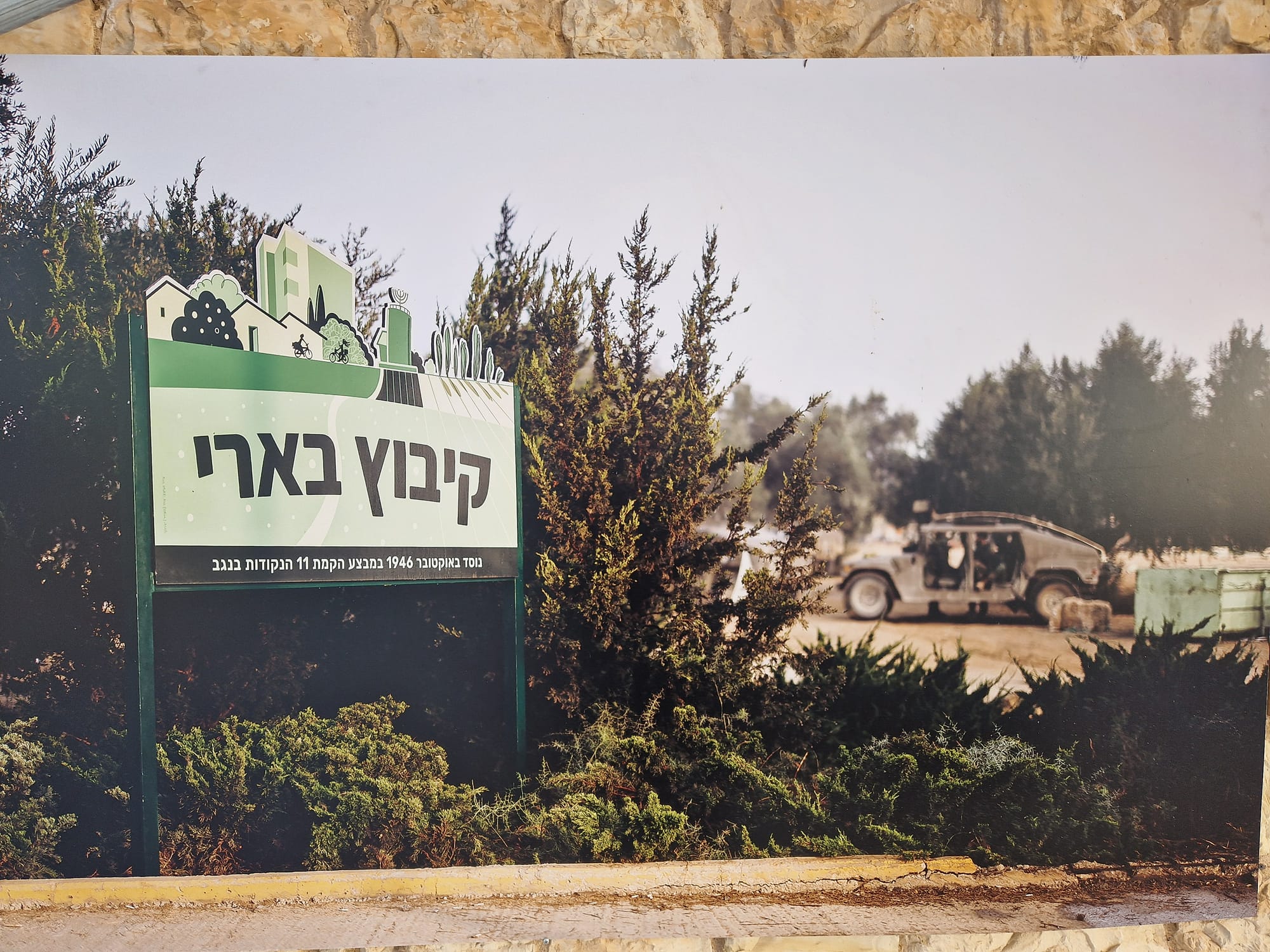
Chapter 8 — October 7, 2023: The IDF's Greatest Security Crisis
The Day That Changed Israel's Understanding of Security
On the morning of 7 October 2023, Israel experienced the deadliest single day in its history.
A coordinated attack led by Hamas, together with other Palestinian armed groups, breached the border between the Gaza Strip and southern Israel. Armed attackers entered military installations, agricultural communities, towns and public gathering places.
Approximately 1,200 people were killed, according to Israeli figures, and 251 people were abducted into Gaza.
The victims included civilians, soldiers, police officers, emergency responders and foreign nationals.
The attacks exposed serious weaknesses in Israel's military preparedness, intelligence assessments and border defence arrangements.
For a country that had invested heavily in surveillance technology, military intelligence and rapid mobilisation, the scale of the assault was a profound shock.
It also raised a question that would become central to Israel's national debate: how could the country's security institutions fail to prevent an attack of this magnitude?
The answer involves more than the events of a single morning.
It requires examining years of assumptions about Hamas, the interpretation of intelligence warnings, the organisation of border defences and the decisions made by military and political leaders.
Before the Attack: The Assumption That Hamas Was Deterred
In the years preceding October 7, Israeli security policy toward Gaza was influenced by the belief that Hamas was not seeking an immediate large-scale war.
Israeli authorities regarded Hamas as a serious armed threat, but military and intelligence assessments increasingly assumed that the organisation could be deterred from launching a major confrontation.
Economic measures, restrictions, military pressure and arrangements allowing some Gazans to work in Israel were among the instruments used in attempts to manage the conflict.
The underlying assumption was that Hamas had reasons to avoid a devastating military escalation.
That assessment proved dangerously mistaken.
Investigations published after the attack found that Israeli military intelligence had underestimated Hamas's intentions and operational capabilities.
The possibility of a coordinated assault involving large numbers of attackers had not been adequately incorporated into defensive planning.
The failure was not simply a lack of information.
It also involved the interpretation of information already available.
Warnings and observations that challenged established assumptions were not always given sufficient attention.
This distinction became one of the most important findings of the subsequent investigations.
The Gaza Border: Technology and the Illusion of Control
Before October 7, Israel had invested extensively in its border security infrastructure surrounding Gaza.
The system included physical barriers, surveillance cameras, sensors, remotely operated equipment and military observation positions.
These measures were intended to detect suspicious activity and help prevent unauthorised crossings.
The infrastructure reflected a broader Israeli approach to border defence that combined technology, intelligence and military response capabilities.
However, the system depended on several assumptions.
It required surveillance equipment to remain functional, information to reach commanders and military forces to respond effectively to warnings.
On October 7, these interconnected elements were disrupted.
Hamas-led attackers breached the border at multiple locations and attacked military positions and surveillance infrastructure.
The simultaneous nature of the assault overwhelmed defensive arrangements designed primarily for more limited incidents.
The result was not merely the failure of a physical barrier.
It was the breakdown of a wider security system that relied on technology, intelligence interpretation and rapid military reinforcement.
The Morning of October 7
At approximately 6:29 a.m., rocket fire from Gaza marked the beginning of the attack.
Large numbers of rockets were launched toward Israeli territory as armed groups began crossing the border.
Attackers entered southern Israel through multiple breaches and moved toward military installations and civilian communities.
The assault occurred on a Saturday morning during the Jewish holiday of Simchat Torah.
Many families were at home, while thousands of young people were attending the Nova music festival near Re'im.
In several locations, residents initially believed that the emergency involved another episode of rocket fire.
They entered shelters or reinforced rooms, expecting the danger to pass.
Instead, armed attackers reached homes, roads and public gathering places.
In some communities, residents found themselves facing armed militants without immediate military assistance.
The scale and coordination of the assault created confusion among Israeli security forces.
Military commanders struggled to establish an accurate understanding of how many attackers had entered Israel, where fighting was occurring and which communities required urgent assistance.
Attacks on Civilian Communities
Among the communities attacked were Be'eri, Kfar Aza, Nir Oz, Nahal Oz and several other kibbutzim and towns near the Gaza border.
In these locations, attackers entered residential areas and targeted civilians.
Homes were invaded, people were killed and others were abducted.
Some houses were set on fire, forcing residents to flee or trapping people inside.
Families hiding in reinforced rooms contacted relatives, emergency services and military authorities while waiting for help.
In several communities, local security teams attempted to resist the attackers.
These teams often consisted of residents with military experience who had been assigned responsibilities for emergency defence.
They were not equipped to confront the scale of the assault that unfolded.
Many fought for hours before substantial military reinforcements arrived.
The attacks caused devastating losses within small communities where victims, survivors and rescuers frequently knew one another personally.
The destruction extended beyond buildings.
Entire families were killed or abducted, community institutions were disrupted and many survivors were unable to return to their homes for extended periods.
Kibbutz Be'eri: A Community Left Waiting for Help
Kibbutz Be'eri became one of the most extensively investigated locations attacked on October 7.
Armed attackers entered the community during the morning and carried out killings, abductions and destruction.
Residents sheltered in their homes while local security personnel attempted to defend the kibbutz.
Israeli military forces eventually entered the community, but their response was delayed and initially lacked effective coordination.
An IDF investigation released in July 2024 acknowledged that the military had failed to fulfil its responsibility to protect the residents.
The investigation found that forces had not been adequately prepared for a large-scale, simultaneous infiltration involving numerous communities and military positions.
It also identified difficulties in establishing a reliable picture of events and coordinating the response.
One of the most controversial incidents involved a house in which Israeli civilians were being held hostage.
Israeli forces used tank fire during the confrontation.
Subsequent investigations examined whether Israeli fire contributed to the deaths of hostages.
The precise circumstances and individual causes of death have been the subject of differing findings and continuing scrutiny.
The incident illustrates the difficult legal and operational questions that arise when military forces use heavy weapons in situations involving hostages.
The responsibility for taking civilians hostage rests with those who abducted them.
At the same time, military forces remain obligated to take feasible precautions to protect civilian lives during rescue and combat operations.
The Nova Music Festival
The Nova music festival near Re'im became another central location of the attacks.
Thousands of people had gathered for an outdoor music event.
When the assault began, attendees attempted to escape by car or on foot.
Some fled into nearby fields, while others sought shelter in roadside structures, vehicles or public shelters.
Attackers opened fire on people attempting to escape and abducted others into Gaza.
Hundreds of festival attendees were killed.
The United Nations Commission of Inquiry documented the killing of 364 festival attendees and the abduction of approximately 40 others in its 2024 investigation. Subsequent Israeli investigations used different counting methods and reported revised figures that included security personnel and other victims in the surrounding area.
The attack at Nova became internationally recognised through survivor testimonies, photographs and video recordings.
Many survivors described hiding for hours, witnessing killings or losing contact with friends and family.
The event also raised questions about military planning.
A subsequent IDF investigation found that although military authorities had approved the festival, relevant forces stationed near the border had not been adequately informed of its presence.
The investigation identified failures in communication and preparedness.
For survivors and bereaved families, the consequences extended far beyond the day itself.
Many continued to experience grief, trauma and the difficulties associated with rebuilding their lives.
Nahal Oz: The Surveillance Soldiers and Their Warnings
The Nahal Oz military base was another major target.
Female surveillance soldiers stationed there were responsible for monitoring activity near the Gaza border.
Their work involved observing developments and reporting information to military commanders.
Before October 7, some surveillance personnel had reported concerning activity involving Hamas.
Subsequent investigations examined whether these observations had been adequately assessed.
During the attack, armed militants entered the base.
Soldiers were killed, and seven female surveillance soldiers were abducted into Gaza.
The events at Nahal Oz became a powerful symbol of the broader intelligence and command failures.
They raised questions about whether the warnings of junior personnel had been taken seriously and whether the base had sufficient protection against a major assault.
The experience of these soldiers also challenged assumptions about the responsibilities of women in the military.
Their work was essential to border surveillance, yet the system in which they operated failed to provide adequate protection when the attack occurred.
The Nahal Oz tragedy remains central to the examination of military responsibility on October 7.
Soldiers, Police Officers and Civilians Who Responded
Although the military response suffered serious failures, many individual soldiers, police officers, emergency responders and civilians attempted to resist the attackers.
Some fought at military bases or near civilian communities.
Others travelled toward the affected areas after learning that an attack was underway.
Off-duty soldiers and police officers were among those who joined the response.
Local security teams defended their communities despite limited resources.
Emergency medical personnel attempted to reach wounded people while fighting continued.
These actions saved lives in some locations, but they did not compensate for the wider failures of military coordination and preparedness.
It is important to distinguish between the actions of individual personnel and the institutional responsibilities of the armed forces.
The courage of individual responders does not erase the failures of the system responsible for protecting the population.
Likewise, institutional failure does not diminish the risks taken by those who attempted to rescue civilians.
Both realities are part of the historical record.
Why the IDF Response Was Delayed
One of the most significant questions arising from October 7 concerns the time it took Israeli military forces to reach attacked communities.
The assault occurred simultaneously across numerous locations.
Military installations were attacked, communications were disrupted and commanders struggled to determine the scale of the infiltration.
Some forces were engaged in defending their own positions.
Others received incomplete or contradictory information.
The IDF's existing defensive arrangements had not been designed for a coordinated assault of this magnitude.
Investigations later identified problems involving command structures, readiness, intelligence assessments and the allocation of forces.
In some communities, residents waited many hours before receiving substantial military assistance.
The consequences were devastating.
For survivors, the absence of the army became one of the defining experiences of the attack.
The question of why assistance did not arrive sooner remains central to demands for accountability.
The Hostage Crisis
The abduction of 251 people into Gaza created an unprecedented hostage crisis for Israel.
Those taken included children, women, older people, soldiers, foreign nationals and entire families.
Some were wounded during the attacks.
Others had witnessed the killing of relatives or neighbours before being abducted.
The hostages were held by Hamas and other armed groups in different locations in Gaza.
Their captivity became a central concern for Israeli society and an important factor in military and political decision-making.
Families organised public campaigns demanding their relatives' return.
Negotiations involving international mediators led to the release of hostages during different stages of the conflict.
Israeli forces also conducted military rescue operations.
However, rescue missions carried serious risks for hostages, military personnel and Palestinian civilians in the areas where operations occurred.
By October 2026, all hostages had been returned, alive or deceased, but the consequences of captivity remained profound for survivors and bereaved families.
The hostage crisis illustrated the human consequences of October 7 and the difficult choices involved in balancing military objectives with efforts to secure the release of captives.
The Israeli Military Response
Following the attacks, Israel declared war against Hamas and began extensive military operations in Gaza.
Israeli leaders stated that their objectives included dismantling Hamas's military and governing capabilities, preventing further attacks and securing the release of hostages.
The campaign involved airstrikes, ground operations, intelligence activities and other military measures.
The IDF mobilised large numbers of reservists and deployed forces across several operational areas.
The military campaign developed into a prolonged conflict with severe consequences for Gaza's civilian population.
Tens of thousands of Palestinians were killed, and large areas of the territory suffered extensive destruction.
Hospitals, schools, homes, roads and essential infrastructure were damaged or destroyed.
Large numbers of civilians were repeatedly displaced.
Humanitarian organisations documented shortages of food, water, medical supplies and adequate shelter.
Israeli authorities maintained that their military operations were directed against Hamas and other armed groups.
However, international organisations, human rights investigators and legal institutions raised serious concerns about civilian casualties, humanitarian access, displacement and the conduct of hostilities.
The war therefore became both a major Israeli military campaign and an international debate about the limits of military force.
International Humanitarian Law and the Protection of Civilians
The attacks of October 7 and the subsequent war must be examined within the framework of international humanitarian law.
Deliberately attacking civilians and taking hostages are prohibited.
The United Nations Commission of Inquiry concluded that Hamas and other Palestinian armed groups committed war crimes during the October 7 attacks, including intentionally directing attacks against civilians and taking hostages.
The Commission also documented evidence of sexual violence associated with the attacks.
At the same time, international humanitarian law applies to Israel's military operations.
Parties to armed conflict must distinguish between military objectives and civilians, take feasible precautions to minimise civilian harm and refrain from attacks expected to cause excessive incidental civilian harm in relation to the anticipated concrete and direct military advantage.
These obligations remain in force regardless of the conduct of an opposing armed group.
The Commission also identified violations involving Israeli forces during the response on October 7 and raised serious concerns about Israeli operations in Gaza.
The IDF has disputed various allegations concerning its conduct and has maintained that it operates in accordance with international law.
Investigating alleged violations requires examining specific incidents, available evidence, command decisions and the applicable legal standards.
Understanding military accountability means applying these standards consistently.
The IDF Investigations: Acknowledging Failure
In February 2025, the IDF published a summary of its broader investigation into the events surrounding October 7.
The findings acknowledged that the military had failed in its mission to protect Israeli civilians.
The investigation identified serious problems in intelligence assessments, operational preparedness and the military's understanding of Hamas.
One of the central conclusions was that the IDF had underestimated Hamas's capabilities and intentions.
Military planning had been influenced by the belief that Hamas was deterred from launching a major attack.
The investigation also found that Israel had relied too heavily on technological and defensive systems.
Military forces had not been adequately prepared for the scale and coordination of the assault.
The findings represented an important institutional acknowledgement of failure.
However, the IDF's internal investigations did not address every question concerning political responsibility.
The broader issue of government decision-making, security policy and the relationship between political and military leaders remained the subject of public debate.
Political Responsibility and Demands for an Independent Inquiry
The failures of October 7 extended beyond questions of military tactics.
They raised broader concerns about the decisions made by Israel's political and security leadership before the attack.
These included the government's approach toward Hamas, the allocation of military resources and the assessment of threats along different borders.
Critics argued that a comprehensive investigation should examine the responsibilities of political leaders as well as military commanders.
Survivors, bereaved families and civil society organisations called for an independent national commission of inquiry.
Such an investigation would be expected to examine government policy, intelligence assessments, military planning and institutional coordination.
The question of accountability became a major political issue.
Different political leaders disagreed over the timing, composition and authority of an inquiry.
By October 2026, demands for a fully independent investigation remained prominent in Israeli public life.
For many families affected by the attacks, accountability was not simply a political question.
It was part of the effort to understand why their relatives had been left unprotected.
The Human Consequences for Israeli Society
The events of October 7 profoundly affected Israeli society.
Communities near Gaza experienced killings, abductions, destruction and prolonged displacement.
Survivors faced the challenge of returning to ordinary life after witnessing extreme violence.
Families mourned relatives and friends.
Former hostages began the difficult process of recovery.
Soldiers and emergency responders also experienced the psychological consequences of combat, loss and exposure to traumatic events.
The attacks affected public confidence in institutions responsible for national security.
They also changed the relationship between many Israelis and the military.
For some, the events reinforced the importance of maintaining strong defence capabilities.
For others, they raised urgent questions about leadership, accountability and the assumptions underlying Israeli security policy.
These responses were not uniform.
Israeli society contains diverse political, religious and social perspectives, and the meaning of October 7 continues to be debated.
The Human Consequences for Palestinians in Gaza
The war that followed October 7 also had devastating consequences for Palestinians in Gaza.
By October 2026, more than 74,000 Palestinians had been reported killed since the beginning of the war, according to Gaza health authorities, whose figures are widely used by international humanitarian organisations.
The figures do not by themselves distinguish civilians from combatants.
Large areas of Gaza were left in ruins.
Families experienced repeated displacement, loss of relatives and prolonged uncertainty.
Many children had their education interrupted and lived through extended periods of insecurity.
Healthcare services were severely damaged, and reconstruction faced major obstacles.
Even after ceasefire arrangements reduced large-scale hostilities, civilians continued to experience the consequences of the conflict.
These experiences are essential to understanding the full human impact of the military response.
The suffering of Israeli civilians on October 7 and the suffering of Palestinian civilians during the subsequent war are distinct experiences that both require accurate documentation.
Recognising one does not diminish the other.
What October 7 Revealed About Military Institutions
The events of October 7 demonstrated that military strength cannot be measured solely through technology, equipment or the size of an armed force.
Israel possessed advanced surveillance systems, intelligence capabilities and a highly developed military organisation.
Nevertheless, these capabilities failed to prevent a coordinated attack that caused catastrophic loss of life.
The subsequent investigations identified weaknesses involving institutional assumptions, intelligence interpretation, military readiness and command coordination.
They also demonstrated the importance of listening to personnel who report information that challenges established assessments.
Military organisations must be capable of questioning their own conclusions.
They must also recognise that adversaries can adapt, deceive and exploit weaknesses in existing systems.
The ability to learn from failure is therefore as important as the ability to develop new technology.
A Crisis That Continues to Shape Israel
October 7, 2023, remains a defining event in the history of the Israel Defense Forces.
It exposed the consequences of intelligence and operational failures and challenged public confidence in the institutions responsible for protecting Israeli civilians.
It also triggered a prolonged war whose consequences extended far beyond Israel's borders.
For survivors and families of the victims, the central questions remain deeply personal.
Why were warnings not acted upon?
Why were communities left without sufficient protection?
Why did military reinforcements take so long to arrive?
Who should be held responsible for the decisions and failures that preceded the attack?
These questions cannot be answered through military explanations alone.
They require historical investigation, institutional accountability, independent scrutiny and attention to the experiences of those directly affected.
Understanding October 7 is essential to understanding the IDF today.
The attacks changed Israel's security assumptions, reshaped military priorities and intensified debates about the relationship between political leadership, intelligence and national defence.
They also demonstrated the importance of examining the consequences of military decisions for civilians on all sides of a conflict.
For Beyond the Lines, the responsibility is to document these events with accuracy, historical context and respect for the people whose lives were changed.
The next chapter examines the IDF's responsibilities under international law, including the protection of civilians, military accountability and the legal questions surrounding the conduct of armed conflict.
Chapter 9 — The IDF, International Law and Civilian Protection
Military Power and the Responsibilities of Armed Forces
The Israel Defense Forces operate in one of the world's most closely scrutinised military and political environments.
Israel's armed forces are responsible for defending the country against military threats, including attacks by armed organisations and hostile states. Yet, like every military organisation, the IDF is subject to legal restrictions governing the use of force and the treatment of people affected by armed conflict.
These obligations are particularly important when military operations take place in densely populated areas, where civilians, homes, hospitals, schools and essential infrastructure may be exposed to danger.
The Hamas-led attacks of 7 October 2023 and the subsequent war in Gaza intensified international scrutiny of Israel's military conduct.
They also raised broader questions about the responsibilities of armed organisations, the protection of hostages, the conduct of military operations and the mechanisms available to investigate alleged violations.
Understanding the IDF therefore requires examining not only its capabilities and security objectives, but also the legal framework within which those capabilities must be used.
What Is International Humanitarian Law?
International humanitarian law, also known as the law of armed conflict, establishes rules intended to limit the human suffering caused by warfare.
Its principal foundations include the Geneva Conventions of 1949, their applicable additional protocols, the Hague Regulations and customary international humanitarian law.
These rules apply during armed conflicts and establish protections for civilians, wounded soldiers, prisoners of war and other people who are not, or are no longer, participating in hostilities.
International humanitarian law does not determine whether a government's political objectives are justified.
Instead, it regulates how parties to a conflict may conduct military operations.
This distinction is important.
A state may have legitimate security concerns while still being required to comply with strict legal limits on military action.
Likewise, an armed organisation cannot justify deliberate attacks against civilians by referring to political grievances, occupation or military objectives.
The fundamental rules of humanitarian law apply to all parties to an armed conflict.
The Principle of Distinction
One of the central principles of international humanitarian law is distinction.
Parties to an armed conflict must distinguish between civilians and combatants, and between civilian objects and military objectives.
Attacks may be directed only against lawful military objectives.
Civilians must not be deliberately targeted.
Civilian objects, including homes, schools and places of worship, are protected from direct attack unless and for such time as they qualify as military objectives under the applicable law.
This principle is particularly important in urban warfare.
Armed organisations may operate in areas where civilians live and work, creating complex challenges for military forces.
However, the presence of armed personnel in a populated area does not automatically make the entire neighbourhood a lawful military target.
Each attack must be assessed according to the information reasonably available at the time and the applicable legal requirements.
For the IDF, as for any military force, the obligation to distinguish civilians from military targets is a fundamental part of lawful military operations.
Proportionality: What the Law Actually Requires
The principle of proportionality is frequently discussed in relation to military operations, but it is also often misunderstood.
Under international humanitarian law, proportionality does not require both sides in a conflict to suffer equal casualties.
Nor does it mean that the use of force must be identical to the force used by an adversary.
Instead, the rule prohibits attacks expected to cause incidental civilian death, injury or damage that would be excessive in relation to the concrete and direct military advantage anticipated.
This assessment must be made using the information reasonably available to those planning or authorising an attack.
The anticipated military advantage must be evaluated alongside the expected harm to civilians.
A target may qualify as a military objective, but that alone does not make every possible attack against it lawful.
Commanders must also consider the expected civilian consequences.
These questions become particularly difficult in densely populated environments, where military targets may be located near homes, hospitals or other civilian facilities.
The legal assessment of an individual attack requires detailed evidence about the target, available intelligence, expected civilian harm and the decisions made by those responsible.
Precautions in Military Operations
International humanitarian law also requires parties to take feasible precautions to avoid or minimise civilian harm.
These precautions include doing everything feasible to verify that targets are lawful military objectives.
Military planners must consider the choice of weapons, timing and methods of attack when assessing potential civilian consequences.
Where circumstances permit, effective advance warnings may be required before attacks that could affect civilians.
However, warnings do not remove the obligation to comply with distinction and proportionality.
A civilian who remains in an area after receiving a warning does not automatically become a lawful target.
Military forces must also cancel or suspend an attack when it becomes apparent that the target is not a lawful military objective or that the expected incidental civilian harm would be excessive.
These rules are especially relevant to operations involving airstrikes, artillery and other weapons capable of causing significant destruction.
They apply regardless of the technological sophistication of the weapons involved.
The IDF's Legal Framework
The IDF operates within Israel's domestic legal system and is also bound by applicable international law.
Israel's military legal institutions include the Military Advocate General's Corps, commonly referred to as the MAG Corps.
The Military Advocate General has responsibilities involving legal advice, military justice and decisions concerning certain criminal investigations and prosecutions.
Military legal advisers may provide guidance on operational law, including the rules governing armed conflict.
The IDF has stated that its operational procedures incorporate international humanitarian law and that military personnel receive instruction concerning their legal obligations.
However, the existence of legal advisers and internal procedures does not establish that every military operation complies with the law.
Compliance must be assessed through actual conduct, available evidence and the effectiveness of accountability mechanisms.
Questions about the independence, transparency and adequacy of military investigations remain important subjects of domestic and international scrutiny.
The Protection of Civilians in Gaza
The war in Gaza following 7 October 2023 brought intense international attention to the conduct of Israeli military operations.
Israel stated that its military objectives included dismantling Hamas's military capabilities, preventing further attacks and securing the release of hostages.
The campaign involved extensive air and ground operations in a densely populated territory.
Large numbers of Palestinian civilians were killed, injured or displaced, and substantial parts of Gaza's housing and infrastructure were destroyed.
International humanitarian organisations documented severe shortages of food, water, medical supplies and shelter.
Israeli authorities maintained that Hamas's military activities within civilian areas complicated efforts to protect civilians.
Humanitarian organisations and international investigators, however, raised serious concerns about the scale of destruction, restrictions on essential supplies, displacement and the legality of particular military operations.
The presence of Hamas fighters or military infrastructure in civilian areas does not eliminate the protections owed to civilians.
Similarly, allegations that an armed organisation has used civilian facilities for military purposes require careful examination rather than automatic acceptance or dismissal.
Each incident must be assessed on its own evidence.
Hamas, Hostage-Taking and Attacks Against Civilians
International humanitarian law also applies to Hamas and other Palestinian armed organisations.
The deliberate killing of civilians, hostage-taking and indiscriminate attacks are prohibited.
During the Hamas-led attacks of 7 October 2023, armed attackers killed civilians in Israeli communities and at public gathering places.
Hostages were abducted and taken into Gaza.
United Nations investigators documented serious violations of international humanitarian law and concluded that Hamas and other Palestinian armed groups committed war crimes.
The prohibition on hostage-taking is absolute.
Hostages cannot lawfully be used to obtain political concessions or military advantages.
Armed groups must also distinguish between civilians and military targets and take applicable precautions during operations.
The violations committed by one party do not remove the legal obligations of another.
This principle is essential to understanding international humanitarian law.
The law does not operate according to reciprocity.
Civilians retain their protection regardless of whether an opposing armed group has violated the rules.
Human Shields and Civilian Protection
The use of human shields is prohibited under international humanitarian law.
The term generally refers to using the presence or movement of civilians or other protected persons to shield military objectives from attack or to favour or impede military operations.
Israel has repeatedly accused Hamas of operating from civilian areas and using civilians to protect military infrastructure.
Some allegations concerning the military use of civilian facilities have been documented, while other specific claims remain disputed or insufficiently verified.
A finding that an armed organisation has unlawfully used civilians to shield military activities does not remove the attacking force's obligations.
The attacking force must still distinguish lawful military targets from civilians, assess proportionality and take feasible precautions.
Civilian presence cannot simply be disregarded because an opposing force has acted unlawfully.
The legal responsibility of each party must be examined separately.
Hospitals, Medical Personnel and Humanitarian Facilities
Hospitals and medical personnel receive special protection under international humanitarian law.
Medical facilities must not be attacked merely because they are located in an area where fighting occurs.
Under narrowly defined circumstances, a medical facility may lose its special protection if it is used to commit acts harmful to the enemy outside its humanitarian function.
Even then, the applicable legal conditions, including warnings where required, must be respected.
The presence of wounded combatants receiving treatment does not by itself justify attacking a hospital.
During the war in Gaza, Israeli forces conducted operations involving hospitals and surrounding areas, stating in certain cases that Hamas had used medical facilities for military purposes.
International health organisations raised concerns about the consequences of military operations for patients, healthcare workers and the functioning of Gaza's medical system.
Investigating these incidents requires examining the evidence supporting military claims, the circumstances of individual operations and the protections afforded to medical facilities.
The same standards apply to ambulances, medical personnel and humanitarian relief operations.
Humanitarian Aid and the Responsibility to Protect Civilian Life
Armed conflict can disrupt access to food, water, medicine, electricity and essential services.
International humanitarian law contains obligations concerning humanitarian relief and the protection of civilian populations.
Starvation of civilians as a method of warfare is prohibited.
Parties to armed conflict must comply with applicable rules governing humanitarian assistance, including the facilitation of relief operations for civilians in need.
The precise obligations depend on the legal circumstances, including whether territory is occupied and the degree of control exercised by the parties.
During the Gaza war, international humanitarian organisations repeatedly warned about food insecurity, the collapse of healthcare services and restrictions affecting relief operations.
Israel stated that it imposed security checks and other measures intended to prevent weapons and supplies from reaching Hamas.
Humanitarian agencies argued that restrictions, insecurity and damage to infrastructure prevented sufficient assistance from reaching civilians.
These competing explanations do not replace the need to examine actual humanitarian conditions and the legal responsibilities of the authorities involved.
The protection of civilian life extends beyond preventing direct attacks.
It also includes obligations concerning essential services, humanitarian access and the treatment of people displaced by conflict.
The West Bank and the Law of Occupation
International humanitarian law also regulates military occupation.
The Fourth Geneva Convention and the Hague Regulations contain rules concerning the responsibilities of an occupying power.
These include obligations relating to public order, civilian protection, property, humanitarian needs and the administration of occupied territory.
Israel captured the West Bank, including East Jerusalem, during the 1967 war.
The United Nations and the International Court of Justice consider these territories occupied under international law.
Israeli military authorities exercise extensive powers in the West Bank, although the Palestinian Authority performs certain administrative functions under the Oslo arrangements.
The legal status of Israeli settlements has been a major subject of international dispute.
In July 2024, the International Court of Justice issued an advisory opinion concluding that Israel's continued presence in the occupied Palestinian territory was unlawful.
The Court also reaffirmed conclusions concerning settlements, annexation and the Palestinian people's right to self-determination.
Israel rejected the opinion and disputed its conclusions, arguing that the Court had not adequately addressed Israel's security concerns and the need for direct negotiations.
The advisory opinion is not a criminal conviction or a judgment establishing the guilt of individual military personnel.
It addresses the international legal responsibilities of states and the consequences of policies and practices in occupied territory.
These distinctions are important when examining the relationship between military administration, occupation and international law.
The International Court of Justice
The International Court of Justice, commonly known as the ICJ, is the principal judicial organ of the United Nations.
It resolves legal disputes between states when it has jurisdiction and issues advisory opinions on questions of international law.
The Court does not conduct criminal trials of individual soldiers or political leaders.
Its proceedings concerning Israel and the occupied Palestinian territory have addressed questions involving occupation, state responsibility, humanitarian obligations and the interpretation of international law.
In December 2023, South Africa initiated proceedings against Israel under the Genocide Convention.
The case concerned allegations that Israel had violated its obligations under the Convention in relation to Gaza.
Israel rejected the allegations and maintained that its military campaign was directed against Hamas rather than the Palestinian population.
In 2024, the Court ordered provisional measures concerning the protection of Palestinians in Gaza and the prevention of acts prohibited under the Convention.
Those provisional measures were not a final determination that genocide had occurred.
It is essential to distinguish between allegations, provisional measures, advisory opinions and final judgments.
They serve different legal purposes and should not be presented as interchangeable.
The International Criminal Court
The International Criminal Court, or ICC, is a separate institution from the International Court of Justice.
The ICC investigates and prosecutes individuals accused of crimes within its jurisdiction, including war crimes, crimes against humanity and genocide.
Unlike the ICJ, which deals with state responsibility, the ICC focuses on individual criminal responsibility.
In November 2024, ICC judges issued arrest warrants for Israeli Prime Minister Benjamin Netanyahu and former Defence Minister Yoav Gallant in connection with alleged war crimes and crimes against humanity relating to Gaza.
The Court also pursued proceedings concerning Hamas leaders accused of crimes connected to the October 7 attacks.
Israel rejected the ICC's jurisdiction and disputed the allegations against its officials.
An arrest warrant is not a conviction.
It reflects a judicial finding that the legal threshold for issuing a warrant has been met, not a final determination of guilt.
The proceedings also generated political disputes concerning the Court's jurisdiction and independence.
In October 2026, the United States imposed additional sanctions targeting the ICC, further intensifying international debate over the institution's work.
For journalists, the distinction between an allegation, an arrest warrant, a trial and a conviction is essential.
Command Responsibility
International criminal law recognises that responsibility for serious crimes may extend beyond the individual who physically carries out an unlawful act.
Under applicable legal standards, commanders and other superiors may bear criminal responsibility for crimes committed by subordinates when specific conditions are met.
These conditions can involve knowledge, effective authority and control, and failures to take necessary and reasonable measures to prevent or repress crimes or submit matters for investigation.
Command responsibility is not automatic.
A commander is not criminally responsible for every unlawful act committed by a subordinate simply because of rank.
Investigators must examine the legal requirements and the evidence concerning the commander's authority, knowledge and conduct.
The principle is important because military operations depend on chains of command.
Orders, intelligence assessments, operational planning and disciplinary systems can all influence how soldiers act.
Accountability therefore requires examining both individual behaviour and the decisions made at higher levels.
Investigating Alleged Military Misconduct
Military investigations can serve several different purposes.
Operational investigations examine what happened during an event and identify lessons for military preparedness.
Criminal investigations assess whether individuals may have committed offences.
Administrative reviews may examine disciplinary failures, command procedures or institutional responsibilities.
These processes are not interchangeable.
An operational investigation may identify serious mistakes without determining criminal liability.
A criminal investigation requires evidence assessed according to the relevant legal standards.
The IDF conducts internal inquiries and investigations into certain incidents involving its personnel.
Israeli civilian courts may also review particular military or governmental decisions.
International organisations and independent investigators have questioned whether domestic accountability mechanisms adequately address all allegations involving military operations and the treatment of Palestinians.
Israeli authorities have defended their investigative systems and rejected claims that they systematically avoid accountability.
Evaluating these positions requires examining specific cases, investigative procedures, transparency and outcomes.
The Difficulties of Investigating War Crimes
Investigating alleged violations during armed conflict is often difficult.
Access to locations may be restricted.
Witnesses may have experienced trauma or displacement.
Physical evidence can be damaged or destroyed.
Military intelligence and operational records may remain classified.
Information released by governments, armed organisations or interested parties may be incomplete.
Journalists and investigators must therefore distinguish between confirmed facts, witness accounts, official claims and findings made by independent institutions.
Photographs, satellite imagery, medical records, videos and testimony can contribute to investigations, but each form of evidence has limitations.
Digital material may require verification of its location, date and authenticity.
Casualty figures may also require careful explanation of their sources, methodology and limitations.
Responsible reporting should not treat every allegation as established fact.
At the same time, allegations should not be dismissed solely because a military or political authority denies them.
The credibility of a finding depends on the evidence and the quality of the investigative process.
The Responsibilities of Soldiers and Commanders
International humanitarian law is not relevant only to senior political leaders or international courts.
It also affects the responsibilities of individual soldiers.
Military personnel are expected to follow lawful orders and comply with applicable rules governing the treatment of civilians, detainees and other protected persons.
The fact that an unlawful act was ordered by a superior does not automatically eliminate individual criminal responsibility.
The legal consequences depend on the circumstances and the applicable law.
Military training, command supervision and clear rules of engagement are important tools for promoting compliance.
However, written rules alone cannot prevent misconduct.
Institutional culture, leadership, disciplinary procedures and accountability mechanisms influence whether legal obligations are respected in practice.
A professional military organisation must therefore consider not only whether personnel understand the rules, but also whether those rules are consistently enforced.
The Human Reality Behind Legal Principles
International humanitarian law is often discussed through legal terminology.
Distinction, proportionality, occupation and command responsibility can appear abstract.
For civilians living through armed conflict, however, these principles concern immediate questions of survival.
Will a family be safe inside its home?
Can wounded people reach a hospital?
Will children have access to food and clean water?
Can hostages expect protection from abuse?
Will a soldier who commits a serious violation be investigated?
These questions illustrate why the laws of armed conflict exist.
They are intended to place limits on violence even when the parties involved have profound political disagreements or legitimate security concerns.
The protection of civilians is not a secondary issue to be considered only after military objectives have been achieved.
It is a central legal obligation during the conduct of hostilities.
Understanding Accountability Beyond Political Positions
Public debate about Israel, Hamas and the war in Gaza is often highly polarised.
Some discussions focus almost exclusively on Israel's security concerns and the crimes committed during the October 7 attacks.
Others concentrate on the destruction and suffering experienced by Palestinians during the subsequent military campaign.
A comprehensive legal examination must address both.
The deliberate killing and abduction of Israeli civilians require investigation and accountability.
Allegations of unlawful attacks, forced displacement, mistreatment of detainees and restrictions on humanitarian assistance also require investigation.
The legal obligations of one party do not depend on the compliance of another.
The same principles of evidence, legal responsibility and civilian protection must be applied consistently.
This does not mean that every allegation is equally supported or that every party bears identical responsibility.
It means that conclusions should be based on verified facts and applicable law rather than political allegiance.
The IDF and the Continuing Challenge of Civilian Protection
The IDF's responsibilities extend beyond maintaining military readiness and responding to armed threats.
Its personnel and commanders must operate within legal limits designed to protect people affected by conflict.
The challenges are especially significant during operations involving densely populated areas, hostages, armed groups operating among civilians and prolonged military occupation.
The events following October 7 demonstrated the devastating consequences of attacks against civilians and the humanitarian costs of extended warfare.
They also intensified international scrutiny of military accountability and the role of domestic and international legal institutions.
For Israel, these questions involve the relationship between national security, democratic oversight and international obligations.
For Palestinians, they concern fundamental rights, civilian protection and accountability for harm experienced during military operations and occupation.
For the international community, they raise broader questions about the enforcement of humanitarian law and the credibility of institutions responsible for investigating serious violations.
Understanding the IDF therefore requires examining military power together with legal responsibility.
Security concerns explain why armed forces exist and why governments may consider military action necessary.
They do not remove the limits established by international law.
The next chapter moves beyond institutions, operations and legal principles to examine the human experiences of military service: the soldiers, reservists, veterans and families whose lives are shaped by Israel's armed forces.
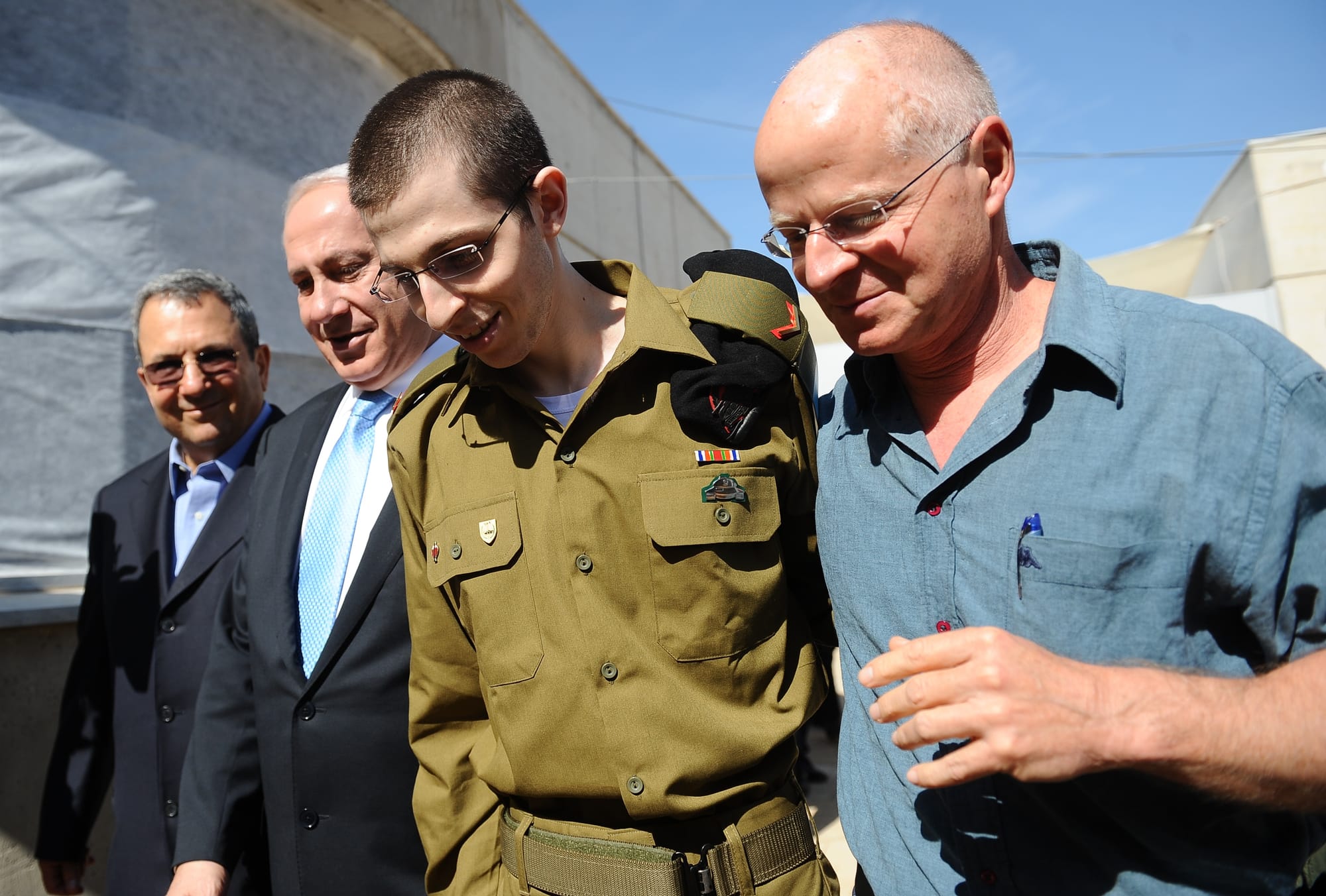
Chapter 10 — Beyond the Uniform: The Human Side of Military Service
The People Behind Israel's Armed Forces
Military institutions are often described through their weapons, command structures, operational capabilities and strategic objectives.
Yet behind every military organisation are individuals whose experiences cannot be understood through military statistics alone.
The Israel Defense Forces are composed of young conscripts, professional military personnel, reservists, commanders, medical workers, intelligence specialists and people serving in numerous supporting roles.
Their backgrounds, motivations and experiences vary considerably.
Some enter military service with a strong sense of national responsibility. Others regard it primarily as a legal obligation or an expected stage of life.
For some, service creates opportunities for personal development, education and professional advancement.
For others, it involves experiences that may have lasting physical, emotional or moral consequences.
The events of 7 October 2023 and the wars that followed brought these human dimensions into particularly sharp focus.
Understanding the IDF requires examining not only what soldiers are trained to do, but also how military service affects their lives, families and relationships with Israeli society.
Young Adults Entering Military Service
For many Jewish Israelis and members of certain other communities, military service begins shortly after secondary education.
At an age when young adults in many countries are beginning university, entering employment or travelling, Israeli conscripts may be preparing for military training.
The transition can be significant.
Young recruits leave familiar environments and enter an institution defined by hierarchy, discipline and collective responsibilities.
They may be assigned to combat units, intelligence organisations, technological programmes, medical services or administrative positions.
Their experiences depend heavily on their roles.
A soldier serving in a border defence formation may face responsibilities very different from those of a recruit working in a military hospital or communications centre.
The demands of military service can include physical exhaustion, strict schedules, separation from family and pressure to perform under difficult circumstances.
For some young people, the experience encourages independence and resilience.
For others, the transition is more challenging.
Military service does not affect every individual in the same way, and its consequences cannot be reduced to a single national experience.
Military Service and Israeli Identity
Military service has occupied a prominent place in Israeli public life since the establishment of the state.
For many families, it connects personal experience with the country's history of war, security threats and national mobilisation.
Parents may have served in the military, while older siblings or relatives may currently be serving.
Conversations about military assignments, training and reserve duties are familiar in many Israeli households.
Military service can also influence social relationships and professional networks.
Former soldiers sometimes maintain friendships and connections formed during their service.
Certain military units have become associated with professional opportunities, particularly in technology, intelligence and leadership.
However, the relationship between military service and Israeli identity is complex.
Not all Israelis serve.
Exemptions, religious traditions, health considerations, community practices and personal circumstances influence participation.
Most Arab citizens of Israel are not subject to compulsory military service, although some volunteer. Druze men are generally subject to conscription, while arrangements differ among other communities.
Ultra-Orthodox Jewish military service has also been the subject of major political and legal disputes.
Some Israelis object to compulsory military service on religious, ethical or political grounds.
Others support the institution but disagree with particular military operations or government policies.
These differences demonstrate that military service is influential within Israeli society without being a universal or uniform experience.
The Families Who Serve Alongside the Soldiers
Military service affects more than the individual wearing the uniform.
Families often experience its demands through separation, uncertainty and concern for the safety of loved ones.
Parents of conscripts may follow developments along Israel's borders with particular attention.
Partners of professional soldiers and reservists may be required to manage households and family responsibilities during extended periods of absence.
Children may experience long separations from parents serving in military units.
During periods of heightened conflict, ordinary family routines can be disrupted with little warning.
Reservists may be called away from civilian employment, education or family responsibilities.
The resulting pressures can be financial, emotional and practical.
For some families, the military becomes an important part of their shared identity.
For others, the demands of service create significant strain.
Understanding the human cost of military mobilisation therefore requires examining the experiences of families as well as soldiers.
Reservists: Between Civilian Life and Military Duty
Israel's reserve system is a distinctive feature of its defence structure.
Many Israelis who complete compulsory military service remain eligible for reserve duties, depending on their assignments, age, legal status and other circumstances.
In ordinary life, reservists may work as teachers, engineers, healthcare professionals, business owners, students or parents.
When called into service, they return to military responsibilities.
This arrangement allows the IDF to expand its available personnel during emergencies.
However, it also creates a close relationship between civilian society and military operations.
The mobilisation of reservists can affect workplaces, businesses, educational institutions and families.
Following the attacks of October 7, Israel mobilised hundreds of thousands of reservists.
Many left civilian employment and family responsibilities to report for duty.
Some served for extended periods or experienced repeated deployments.
The demands of prolonged mobilisation raised concerns about economic disruption, family wellbeing, professional stability and psychological health.
For reservists, the transition between civilian and military life can be particularly difficult.
They may move rapidly from ordinary domestic routines into environments involving danger, loss and responsibility for others.
Returning home does not necessarily mean that these experiences can immediately be left behind.
October 7: The Psychological Impact on Soldiers
The attacks of 7 October 2023 exposed Israeli soldiers and emergency responders to extreme violence.
Some were directly involved in defending military bases and civilian communities.
Others participated in rescue operations or entered areas where civilians had been killed.
Military personnel encountered destruction, wounded survivors and the remains of victims.
For many, these experiences were profoundly distressing.
The psychological consequences of traumatic events vary.
Some individuals recover with time and support, while others experience persistent difficulties.
Symptoms may include intrusive memories, disturbed sleep, anxiety, emotional withdrawal and difficulties returning to ordinary activities.
Not everyone exposed to trauma develops post-traumatic stress disorder.
However, repeated exposure to danger, death and injury can increase the need for psychological support.
The events of October 7 also created a particular burden for personnel who believed that they had been unable to protect civilians.
Feelings of guilt, helplessness and responsibility can complicate recovery, even when individuals were not personally responsible for institutional failures.
These experiences illustrate the difference between military readiness and psychological preparedness.
A soldier may be trained to respond to physical threats without being fully prepared for the emotional consequences of witnessing mass violence.
Combat Stress and Post-Traumatic Stress Disorder
Post-traumatic stress disorder, commonly known as PTSD, is one of the most widely recognised psychological conditions associated with exposure to traumatic events.
It can develop after experiences involving actual or threatened death, serious injury or sexual violence.
Symptoms may include intrusive memories, avoidance of reminders, heightened alertness and changes in mood or thinking.
However, psychological responses to military service are not limited to PTSD.
Soldiers may experience depression, anxiety, grief, sleep disturbances, substance-related problems or difficulties with personal relationships.
The severity and duration of these experiences differ among individuals.
Combat exposure is not the only factor that influences mental health.
Previous experiences, social support, family circumstances, repeated deployments and access to treatment may also play important roles.
Military mental health services therefore need to address a range of needs rather than focusing exclusively on one diagnosis.
For Israeli veterans, the long-term effects of military service have become an increasingly visible subject of public discussion.
The conflicts following October 7 intensified concerns about the psychological wellbeing of active personnel and former soldiers.
Moral Injury: When Military Experiences Challenge Personal Values
Another important concept in discussions about military service is moral injury.
Moral injury is not identical to PTSD.
It refers to psychological, emotional or spiritual distress that may arise when individuals participate in, witness or feel unable to prevent events that conflict with deeply held moral beliefs.
A soldier may struggle with decisions made during combat, the death of civilians, the loss of colleagues or a perceived failure to protect others.
Moral injury may also arise when individuals believe that institutions or leaders have betrayed important responsibilities.
The experience can involve guilt, shame, anger or a loss of trust.
It is important not to assume that every soldier experiences moral injury or that all military actions produce the same psychological response.
Nevertheless, the concept helps explain why some consequences of war cannot be understood solely through physical danger.
For personnel who have participated in prolonged military operations, questions of responsibility and personal values may remain significant long after service ends.
These experiences also demonstrate why ethical training, lawful command decisions and institutional accountability matter for soldiers themselves.
Women, Military Service and Personal Experience
The experiences of female soldiers form an important part of the human dimension of the IDF.
Women serve in combat, intelligence, medical, technological and administrative roles.
Their responsibilities and exposure to danger vary according to assignment.
Some women have participated in direct combat, while others have experienced military emergencies in surveillance centres, command posts and support facilities.
The attacks of October 7 demonstrated that female personnel could face the same immediate dangers as male soldiers, even when serving in roles not traditionally described as front-line combat.
Women also encounter challenges involving career opportunities, institutional expectations and military culture.
Experiences of discrimination or harassment can affect wellbeing and trust in military institutions.
At the same time, many female veterans describe military service as an important period of professional development and personal growth.
A complete account must recognise this diversity rather than treating women as a single category with identical experiences.
Injury, Disability and Rehabilitation
Military service can result in injuries that permanently change a person's life.
Some injuries occur during combat, while others arise through training accidents or other service-related circumstances.
Physical consequences may include mobility limitations, chronic pain, neurological injuries or the loss of limbs.
Rehabilitation can involve medical treatment, physiotherapy, psychological care, occupational support and long-term adjustments to everyday life.
For some veterans, recovery includes learning to perform ordinary activities differently.
Others may need continuing assistance or changes to their employment and living arrangements.
Israel has institutions and programmes intended to support disabled veterans and personnel injured during service.
The Ministry of Defense's Rehabilitation Department is among the bodies responsible for assisting eligible individuals.
However, veterans' organisations and affected families have raised concerns over time about access to services, administrative procedures and the adequacy of support.
Rehabilitation is therefore not only a medical issue.
It also involves financial security, social inclusion, employment and the ability to maintain independence.
Bereavement and the Families of Fallen Soldiers
The death of a soldier has consequences that extend far beyond the military unit in which that person served.
Parents, partners, children, siblings and friends may face lifelong grief.
In Israel, military remembrance occupies a prominent place in national ceremonies and public life.
Yom HaZikaron, Israel's Memorial Day for fallen soldiers and victims of hostile acts, is observed through ceremonies, moments of silence and community gatherings.
For many families, these events provide opportunities for remembrance and collective support.
For others, public commemorations can also bring painful memories to the surface.
The experience of bereavement is deeply personal.
Some families find meaning in the service of their loved ones.
Others may question the decisions that led to their deaths or seek answers about the circumstances of particular military operations.
Grief does not necessarily produce a single political perspective.
Families of fallen soldiers may hold sharply different views concerning military policy, government responsibility and the future of the conflict.
Their voices are an important part of Israel's public debate.
The Return to Civilian Life
Leaving the military can be another major transition.
For young conscripts, completion of service may open the way to university, employment, travel or other personal plans.
For professional soldiers and reservists, the transition may involve returning to established careers and family responsibilities.
Military service can provide skills that are useful in civilian life.
These may include leadership, teamwork, technical knowledge and the ability to work under pressure.
Some veterans build careers using expertise developed in military intelligence, engineering, medicine or communications.
However, not every military experience translates easily into civilian employment.
Some individuals encounter difficulties adapting to less structured environments.
Others may struggle with physical injuries, psychological distress or uncertainty about their future.
The transition can be particularly demanding after prolonged combat deployments.
Returning home does not necessarily mean returning to the same emotional or personal circumstances that existed before military service.
Veterans Who Question Their Experiences
Not all former IDF personnel interpret their military service in the same way.
Some remain strongly supportive of the institution and its security objectives.
Others become critical of particular military policies, operational decisions or the broader political framework within which the IDF operates.
Israeli veterans have participated in public debates about the occupation of Palestinian territories, the conduct of military operations and the responsibilities of soldiers toward civilians.
Organisations such as Breaking the Silence, founded by former Israeli soldiers, have collected and published testimonies concerning military service in the occupied Palestinian territories.
The organisation argues that these testimonies are important for public accountability.
Its methods and conclusions have also been criticised by Israeli political figures and other organisations.
The existence of these debates demonstrates that military service can produce different political and moral perspectives.
Some veterans regard their experiences as confirmation of the necessity of strong military capabilities.
Others believe those same experiences reveal the need for significant changes in military policy.
A responsible examination of military service must make room for these differing voices.
Conscientious Objection and Refusal to Serve
Military service in Israel has also generated debate concerning conscientious objection.
Some individuals oppose military service because of religious beliefs, pacifist principles or objections to particular military policies.
Others refuse specific assignments or reserve duties.
The legal treatment of conscientious objection depends on the circumstances and the applicable military regulations.
Refusal to serve can result in disciplinary proceedings or imprisonment.
The issue raises questions about the relationship between individual conscience and the obligations imposed by the state.
Supporters of compulsory service argue that national defence requires citizens to share responsibilities, particularly in a country facing significant security threats.
Critics argue that individuals should not be compelled to participate in activities that conflict with fundamental moral or political beliefs.
These debates reflect wider questions about citizenship, democracy and the limits of state authority.
The Experiences of Palestinian and Other Minority Soldiers
The IDF includes personnel from different religious and ethnic communities.
Druze citizens, some Bedouin citizens, Christian volunteers and other minority personnel have served in various roles.
Their experiences may differ from those of Jewish Israeli soldiers.
For some, military service represents a form of civic participation and professional opportunity.
For others, it creates complicated questions about identity, community expectations and relations with the state.
Most Palestinian Arab citizens of Israel are not required to serve in the military.
Palestinians living in the occupied West Bank and Gaza are not part of Israel's compulsory military service system.
It is therefore important not to describe military service as a universal experience shared by everyone living under Israeli authority.
The relationship between military participation and citizenship is shaped by legal distinctions, historical developments and social circumstances.
For minority soldiers, these issues may influence how military service is experienced and understood.
The Economic Consequences of Military Service
Military mobilisation has consequences for Israel's economy.
Compulsory service affects the age at which many young adults begin higher education or full-time civilian employment.
Reserve duties can interrupt careers and create uncertainty for employers.
During prolonged conflicts, businesses may lose employees for extended periods.
Small business owners and self-employed reservists may face particular difficulties maintaining operations while fulfilling military obligations.
Families can also experience additional childcare, transportation and household expenses.
Government compensation and support arrangements may reduce some of these pressures, but they do not necessarily eliminate them.
The economic consequences of military service therefore extend beyond defence spending.
They affect productivity, education, employment and family finances.
These effects became particularly visible during the extensive mobilisation that followed October 7.
Military Service and Personal Relationships
Extended military service can place pressure on personal relationships.
Partners may experience long periods of separation and uncertainty.
Parents may struggle to explain military deployments to young children.
Returning personnel may need time to adjust to ordinary family routines.
Some veterans describe difficulties discussing their experiences with people who have not served in similar circumstances.
Others find that military service strengthens friendships and creates lasting relationships.
The effects depend on individual experiences, family support and the nature of the service involved.
Psychological recovery and successful reintegration often require understanding from both veterans and those close to them.
Family members may also need support, particularly when living with someone experiencing trauma-related symptoms or serious injuries.
The human consequences of military service are therefore shared, even when only one family member wears the uniform.
Israeli Society and the Debate Over Military Burden
Compulsory military service has long been connected to debates about fairness and social responsibility in Israel.
Different communities participate in military service at different rates and under different legal arrangements.
These differences have generated disagreements over whether the responsibilities of national defence are distributed fairly.
The debate concerning ultra-Orthodox military service has been particularly prominent.
Supporters of expanding conscription argue that the burden of military service should be shared more equally.
Others emphasise the importance of religious study, community traditions and existing social arrangements.
The extensive mobilisation following October 7 intensified these disagreements.
Families whose members served for prolonged periods questioned whether the responsibilities of national defence were being distributed equitably.
The issue illustrates how military policy influences wider debates about equality, citizenship and the relationship between the state and different communities.
The Psychological Needs of a Society After War
The consequences of prolonged conflict extend beyond military personnel.
Civilians exposed to attacks, displacement or the loss of loved ones may also require psychological support.
In Israel, survivors of October 7, former hostages, displaced families and bereaved communities have faced significant emotional challenges.
The demand for mental health services has placed pressure on healthcare and social support systems.
The psychological consequences of the subsequent war have also been severe for Palestinians in Gaza.
Children and adults exposed to bombardment, displacement, bereavement and the destruction of their homes may experience lasting distress.
These experiences differ in their circumstances, but they demonstrate a shared reality of armed conflict: psychological harm can continue long after immediate physical danger has passed.
Recognising this does not require treating the political or legal responsibilities of the parties as identical.
It requires acknowledging that the human consequences of warfare extend across generations and communities.
Listening to Individual Experiences
Military institutions are often represented through official statements, operational reports and public ceremonies.
These sources provide important information, but they do not capture every aspect of military life.
Personal interviews can reveal experiences that are absent from institutional accounts.
A former combat soldier may describe the challenges of returning home.
A reservist may explain the impact of repeated mobilisation on family life.
A military medic may discuss the emotional demands of treating wounded personnel.
A bereaved parent may question decisions made by military commanders.
A former soldier who opposes particular military policies may describe how personal experiences changed their beliefs.
These perspectives do not necessarily agree with one another.
Their differences are part of the historical record.
For independent journalism, the responsibility is to listen carefully, verify factual claims and avoid reducing individuals to symbols of a broader political argument.
Beyond the Uniform: Understanding the Individual
The IDF is a military institution with significant responsibilities, capabilities and political importance.
Yet it is also composed of individuals whose lives are shaped by military service in different ways.
Some experience service as a source of purpose and belonging.
Others carry lasting physical injuries or psychological distress.
Some build professional careers using skills acquired in the military.
Others become critics of the institution in which they once served.
Families experience pride, anxiety, separation and grief.
Veterans may spend years adjusting to the consequences of their service.
These experiences are essential to understanding the relationship between the Israeli military and the society from which it draws much of its personnel.
They also demonstrate why discussions about military power should not lose sight of individual human lives.
Understanding soldiers as people does not remove the need to examine their actions or the responsibilities of the institutions they serve.
Human understanding and accountability are not opposing principles.
Both are necessary for a complete examination of military service.
For Beyond the Lines, looking beyond the uniform means recognising the complexity of individual experiences while maintaining the independence required to examine military institutions critically.
The final chapter brings together the historical, organisational, legal and human dimensions explored throughout this article.
It considers what the IDF represents within Israeli society, how its responsibilities have evolved and why understanding the military requires looking beyond familiar headlines and political narratives.
Chapter 11 — Conclusion: Understanding the IDF Beyond the Headlines
More Than a Military Institution
The Israel Defense Forces occupy a central position in the history, security and public life of the State of Israel.
Since their establishment in 1948, the IDF have developed from a military organisation created during a war for the survival of the newly declared state into a complex institution involving ground forces, an air force, a navy, intelligence organisations, technological units and an extensive reserve system.
For many Israelis, the military represents an institution closely connected to national identity, collective memory and the responsibilities of citizenship.
For others, including Palestinians living under Israeli occupation, the IDF are experienced primarily through military operations, restrictions on movement, detention, displacement and the exercise of military authority.
These different experiences are essential to understanding the institution.
The IDF cannot be examined solely through the perspective of national defence, nor can its history be understood without considering the security threats that have shaped Israeli society.
A comprehensive understanding requires examining military capabilities, political decisions, legal obligations and the consequences of armed conflict for the people affected.
From 1948 to the Present
The establishment of the IDF was closely connected to the creation of Israel and the war that followed its declaration of independence.
The military emerged from pre-state Jewish defence organisations and became responsible for protecting the newly established country.
Over the following decades, Israel fought major wars with neighbouring states, occupied territories captured during the 1967 war and confronted increasingly complex security challenges.
The nature of military threats changed.
Conventional wars involving national armies were joined by conflicts involving armed organisations, rockets, missiles, cross-border attacks, cyber operations and other forms of warfare.
The IDF adapted through military training, intelligence development, technological innovation and cooperation with international partners.
Yet the country's security history is inseparable from the broader Israeli-Palestinian conflict.
For Israelis, historical wars and attacks have reinforced concerns about national survival and civilian security.
For Palestinians, the events of 1948, the occupation beginning in 1967, displacement and successive military operations have shaped generations of political and personal experience.
Understanding these histories does not require treating every political claim or military action as equally justified.
It requires recognising that the same historical events can have profoundly different consequences for the communities involved.
The Relationship Between the Military and Israeli Society
One of the IDF's defining characteristics is its relationship with civilian society.
Compulsory military service, reserve duties and the participation of large numbers of young adults have created strong connections between the armed forces and many Israeli families.
Military service can influence education, employment, friendships and personal identity.
The reserve system also means that military mobilisation can have immediate consequences for businesses, workplaces and households.
However, military participation is not universal.
Different legal arrangements, exemptions and community traditions affect who serves and under what conditions.
Debates about military service reflect wider questions concerning equality, citizenship, religious freedom and the distribution of national responsibilities.
These disagreements are particularly visible during periods of prolonged conflict, when large numbers of reservists are called away from civilian life.
The military's relationship with Israeli society is therefore both influential and contested.
Women and the Changing Nature of Military Service
The growing participation of women in the IDF demonstrates how military institutions can change over time.
Women have served since the establishment of Israel, but their opportunities were historically restricted.
Legal challenges, changes in military policy and evolving social expectations gradually opened additional positions.
Women now serve in combat formations, intelligence organisations, aviation, technological units and leadership roles.
The events of October 7, 2023, brought particular attention to female soldiers serving near the Gaza border.
Their experiences highlighted both their contributions to national defence and serious institutional failures.
Questions remain concerning equal opportunities, representation in senior leadership, harassment and the treatment of personnel within military structures.
The history of women in the IDF is therefore not simply a story of increasing participation.
It is also a continuing examination of institutional culture, accountability and the relationship between military requirements and individual rights.
Technology Cannot Replace Human Judgement
Israel's military capabilities are closely associated with technological development.
Advanced air defence systems, intelligence organisations, unmanned aircraft, communications networks and cyber capabilities have become important components of national security.
These systems can improve surveillance, support military operations and help protect civilians against certain threats.
However, technology has limitations.
Information must be interpreted.
Warnings must be evaluated.
Commanders must make decisions based on incomplete and sometimes contradictory evidence.
The attacks of October 7 demonstrated the dangers of excessive confidence in technological systems and established intelligence assumptions.
Despite extensive surveillance infrastructure and intelligence capabilities, Israel failed to prevent a coordinated assault that caused catastrophic loss of life.
The lesson extends beyond Israel.
Modern armed forces cannot rely exclusively on equipment, data or sophisticated defensive systems.
Effective security also depends on institutional judgement, preparedness, leadership and the ability to question assumptions.
October 7: A Defining Failure
The Hamas-led attacks of 7 October 2023 became one of the most consequential events in the history of the IDF.
Approximately 1,200 people were killed in Israel, and 251 were taken hostage.
The attacks involved deliberate violence against civilians and exposed serious weaknesses in Israel's military and intelligence systems.
Communities near Gaza were left without adequate protection during critical hours.
Military installations were overrun, and the response was delayed or poorly coordinated in several locations.
Subsequent IDF investigations acknowledged major failures in intelligence assessment, operational readiness and the understanding of Hamas's capabilities.
These findings raised questions about the responsibilities of military commanders and political leaders.
They also demonstrated that the strength of a military institution cannot be measured solely by its equipment, budget or international reputation.
The ability to protect civilians depends on effective decisions and the willingness to recognise weaknesses before they produce catastrophic consequences.
For survivors and bereaved families, the consequences of October 7 remain deeply personal.
Their experiences are an essential part of the historical record.
The War in Gaza and Its Human Consequences
The Israeli military campaign that followed October 7 had far-reaching consequences.
Israel stated that its objectives included dismantling Hamas's military capabilities, preventing further attacks and securing the release of hostages.
The campaign involved extensive military operations in the Gaza Strip.
The resulting destruction, displacement and loss of civilian life created one of the region's most severe humanitarian crises.
Large numbers of Palestinians were killed or injured, and homes, hospitals, schools and essential infrastructure were damaged or destroyed.
International humanitarian organisations documented prolonged difficulties involving healthcare, food, water and shelter.
These consequences cannot be separated from an assessment of military policy.
The fact that Hamas and other armed groups committed serious violations on October 7 does not remove Israel's obligations under international humanitarian law.
Likewise, the suffering experienced by Palestinians does not diminish the crimes committed against Israeli civilians.
Independent journalism must be capable of examining both realities without using one to dismiss the other.
International Law and Military Accountability
Every military institution operates within legal limits.
International humanitarian law establishes rules intended to protect civilians and restrict the methods and means of warfare.
The principles of distinction, proportionality and precaution apply to military operations regardless of the political objectives of the parties involved.
These obligations are especially important in densely populated areas.
The conduct of the IDF has been examined by Israeli institutions, international organisations, human rights investigators and international courts.
Allegations involving unlawful attacks, detention practices, humanitarian access and other matters require careful investigation.
The actions of Hamas and other Palestinian armed organisations, including attacks against civilians and hostage-taking, also require accountability.
Legal proceedings must be described accurately.
An allegation is not a conviction.
An arrest warrant is not a final judgment.
An advisory opinion concerning state responsibility is different from a criminal proceeding against an individual.
These distinctions are essential to responsible reporting.
The legitimacy of legal scrutiny depends on evidence, procedural fairness and the consistent application of legal standards.
The Human Cost Behind Military Decisions
Military decisions have consequences that extend beyond strategic objectives.
Soldiers may experience injury, psychological trauma or the loss of colleagues.
Families may endure prolonged separation, uncertainty and bereavement.
Reservists may struggle to balance military obligations with civilian employment and family responsibilities.
Veterans may face difficulties returning to ordinary life after prolonged exposure to violence.
These experiences are important to understanding the IDF as a human institution.
At the same time, the human consequences of military operations extend to civilians living in areas affected by conflict.
Palestinian families in Gaza and the West Bank have experienced displacement, bereavement, insecurity and restrictions affecting everyday life.
Israeli families have experienced attacks, hostage-taking, evacuation and the loss of loved ones.
These experiences differ in their historical, legal and political circumstances.
Recognising their human consequences does not require overlooking those differences.
It requires remembering that behind every military operation are individuals whose lives may be permanently changed.
Security and the Search for Long-Term Stability
Israel's security concerns are shaped by genuine threats, including attacks by armed organisations, regional military confrontations and the possibility of wider conflict.
Protecting civilians against such threats is a fundamental responsibility of the state.
However, military power alone cannot resolve every political dispute that contributes to regional instability.
The history of Israel's relationships with Egypt and Jordan demonstrates that diplomacy can significantly change the security environment.
Other conflicts remain unresolved.
The Israeli-Palestinian conflict continues to involve competing national aspirations, disputed territory, security concerns, occupation and the right of Palestinians to self-determination.
These issues cannot be settled through military technology or operational success alone.
Long-term stability also depends on political decisions, international relationships, legal obligations and the willingness of leaders to address underlying disputes.
The challenge is not simply to prevent the next attack.
It is to create conditions in which civilian populations can live with greater security, dignity and freedom.
Why Independent Journalism Matters
Military institutions are powerful organisations.
They possess resources, information and authority that are not always accessible to the public.
Official military statements can provide important information, but they should not be treated as the only available account of events.
The same principle applies to statements issued by governments, armed organisations and political movements.
Independent journalism has a responsibility to examine claims, verify evidence and provide historical context.
This is particularly important during armed conflict, when information may be incomplete, contested or deliberately manipulated.
Responsible reporting requires distinguishing between confirmed facts, official claims, allegations and interpretations.
It also requires recognising the limitations of available evidence.
Interviews with soldiers, veterans, civilians, researchers, legal specialists and witnesses can contribute to a fuller understanding.
However, individual testimony must be considered alongside other reliable information.
The objective is not to create a predetermined narrative.
It is to help readers understand complex events through accurate reporting and critical examination.
Understanding the IDF Beyond the Headlines
The Israel Defense Forces are more than a military organisation defined by weapons, uniforms and operations.
They are an institution shaped by Israel's history, its security environment, political decisions and the experiences of generations of military personnel.
Their development reflects changes in warfare, technology, intelligence and Israeli society.
Their responsibilities include defending the country against armed threats while complying with applicable legal obligations.
Their actions also have consequences for Palestinians and other civilian populations affected by military operations and occupation.
The failures of October 7 demonstrated the importance of institutional accountability and the limits of military assumptions.
The subsequent war in Gaza demonstrated the devastating human consequences of prolonged armed conflict.
The experiences of soldiers, reservists, veterans and families reveal another dimension of military service that is often absent from public debate.
Together, these realities show why understanding the IDF requires more than examining military achievements or failures in isolation.
It requires historical knowledge, legal scrutiny, attention to human experiences and an awareness of competing perspectives.
For Beyond the Lines, the purpose of examining the IDF is not to promote a simplified image of Israel's military or to dismiss the concerns of those affected by its actions.
It is to provide readers with the context necessary to understand the institution, the challenges it faces and the responsibilities it carries.
The IDF's history is closely connected to the history of Israel itself.
But its future will also be shaped by the decisions made beyond the battlefield: decisions concerning political leadership, accountability, diplomacy, civilian protection and the possibility of a more stable regional order.
Understanding these connections is essential to understanding Israel's military beyond the headlines.
Because understanding a military means examining not only what it is capable of doing, but also the consequences of what it chooses to do.
Sources & Further Reading
Inside the IDF: Understanding Israel's Defense Forces
The following sources provide historical background, official documentation, legal frameworks, independent investigations and additional perspectives on the Israel Defense Forces and their role in Israeli society.
1. History and Establishment of the IDF
Israel Ministry of Defense Archives — The Establishment of the IDF
Historical documentation concerning the creation of the Israel Defense Forces in May 1948 and the establishment of a unified national military.
Israel Defense Forces — Israel's War of Independence, 1948
The IDF's official historical account of its origins, the Haganah, Palmach and the 1948 war. This represents the Israeli military's institutional perspective.
https://www.idf.il/en/mini-sites/wars-and-operations/israels-war-of-independence-1948/
United Nations Relief and Works Agency (UNRWA) — Palestine Refugees
Historical background on Palestinian displacement during the 1948 war and the development of the Palestinian refugee issue.
https://www.unrwa.org/palestine-refugees
2. Military Structure, Command and Compulsory Service
The Knesset — Basic Law: The Military (1976)
Israel's legal framework governing the armed forces, civilian authority over the military, the Chief of Staff and the legal basis for military service.
https://main.knesset.gov.il/EN/activity/documents/BasicLawsPDF/BasicLawTheMilitary.pdf
The Knesset — Basic Laws of the State of Israel
Official legislative information concerning Israel's constitutional framework and the relationship between government institutions and the military.
https://main.knesset.gov.il/en/activity/pages/basiclaws.aspx
3. Women in the IDF
Israel Democracy Institute — Women's Service in the IDF: Between a 'People's Army' and Gender Equality
Research examining women's compulsory service, gender integration, combat opportunities and the legal changes following the Alice Miller case.
https://en.idi.org.il/articles/24554
Israel Democracy Institute — Gender Integration of IDF Combat Units Is a Supremely Moral Issue
Analysis of women's access to combat positions and the continuing debate concerning gender equality in the Israeli military.
https://en.idi.org.il/articles/34012
4. October 7, 2023: The Attacks and Their Aftermath
United Nations Independent International Commission of Inquiry — Detailed Findings on Attacks Carried Out on and After 7 October 2023 in Israel (10 June 2024)
An investigation of attacks against Israeli civilians and military positions, including killings, hostage-taking and other alleged violations of international law.
https://www.un.org/unispal/document/coi-attacks-7october2023-report-10jun24/
United Nations Independent International Commission of Inquiry — Report A/HRC/56/26 (2024)
An overview of findings concerning the October 7 attacks and Israeli military operations in Gaza during the initial months of the war.
https://www.un.org/unispal/document/coi-report-a-hrc-56-26-27may24/
Reuters — Israelis Mark Three Years Since October 7 as Palestinians Mourn Gaza's Destruction (7 October 2026)
Independent reporting on the attacks' continuing impact, demands for accountability and the humanitarian consequences of the war in Gaza.
5. International Humanitarian Law and Civilian Protection
International Committee of the Red Cross — Conduct of Hostilities and Protection of Civilians
Explanation of the principles of distinction, proportionality and precautions in attack, and the protection of civilians during armed conflict.
https://www.icrc.org/en/law-and-policy/conduct-hostilities-and-protection-civilians
United Nations Independent International Commission of Inquiry — Treatment of Detainees and Hostages and Attacks on Medical Facilities and Personnel (2024)
Findings concerning the treatment of hostages and detainees, and the protection of healthcare facilities during the conflict.
6. International Courts and Legal Proceedings
International Court of Justice — Advisory Opinion of 19 July 2024
The Court's advisory opinion concerning the legal consequences of Israel's policies and practices in the occupied Palestinian territory, including East Jerusalem.
https://www.icj-cij.org/case/186/advisory-opinions
International Criminal Court — Situation in the State of Palestine, Press Release (21 November 2024)
Official announcement concerning arrest warrants for Benjamin Netanyahu and Yoav Gallant and the Court's decisions on jurisdictional challenges.
7. Humanitarian Consequences and Civilian Experiences
United Nations Office for the Coordination of Humanitarian Affairs (OCHA) — Occupied Palestinian Territory Publications
Humanitarian reports, casualty and displacement information, and assessments of conditions in Gaza and the West Bank.
https://www.ochaopt.org/publications
United Nations OCHA — Humanitarian Situation Reports
Regular reporting on humanitarian needs, civilian protection, healthcare, shelter and access to essential services.
https://www.ochaopt.org/publications/situation-reports
Associated Press — A US-Brokered Ceasefire Was Supposed to End the War in Gaza. A Year Later, Progress Has Stalled (October 2026)
Independent reporting on the implementation of ceasefire arrangements, continuing violence and the challenges of reconstruction.
https://apnews.com/article/f6c105e8f72d8b478d78312142d888ed
Editorial Note
This article draws on official Israeli documentation, international legal instruments, United Nations investigations, independent research and established news organisations.
Official military sources are used to explain institutional structures, stated policies and the IDF's own accounts. Independent and international sources are included to provide additional historical context, legal analysis and scrutiny of military conduct.
The inclusion of a source does not imply endorsement of all its conclusions.
Where findings are disputed, the article seeks to distinguish established facts, official positions, allegations and judicial determinations.
Last reviewed: 13 October 2026.