Inside Hamas's Secret Tunnels: Mohammed Deif, the Hidden Leadership and the Road to October 7
Rare footage of Mohammed Deif and Hamas commanders raises new questions about the planning of October 7, Israel's intelligence failures and the war that followed.
Newly released footage and purported internal Hamas documents offer a rare look into the organisation's underground leadership, military preparations and the unanswered questions surrounding October 7, 2023.
BEYOND THE LINES | SPECIAL REPORT
Category: October 7 | IDF & Israeli Security
Published: 31 October 2026
Reading Time: Approximately 25–30 minutes
Author: Leonie Raffaelli | Beyond the Lines
Introduction
On October 30, 2026, Al Jazeera broadcast a documentary offering a rare glimpse into the secretive world of Hamas's military leadership. The programme featured previously unpublished footage of Mohammed Deif, the former commander of the Izz ad-Din al-Qassam Brigades, alongside other senior figures operating within the organisation's underground infrastructure.
For decades, Deif remained one of the most elusive figures in the Israeli-Palestinian conflict. His name was associated with deadly attacks, the expansion of Hamas's military capabilities and repeated Israeli attempts to eliminate him. Yet his public appearances were extraordinarily rare, and much of his operational history remained concealed.
The newly released footage appears to show Deif moving through underground tunnels, participating in meetings with senior commanders and visiting military facilities. The documentary also presents documents described by its producers as internal Hamas records relating to preparations for the October 7, 2023 attacks against Israel.
Among the material is a purported operational order dated October 5, 2023, just two days before Hamas-led militants launched their assault on southern Israel.
If the documents are authentic, accurately dated and presented in their original context, they may provide important insights into the organisation's planning, command structure and preparations for the attack.
However, the documentary raises questions that extend far beyond the contents of individual documents.
How was Hamas able to develop and maintain an extensive underground military infrastructure in the Gaza Strip? What role did Mohammed Deif and other senior commanders play in shaping the organisation's strategy? How closely were Hamas's political and military leadership connected? And why did Israeli intelligence and security institutions fail to prevent the assault?
On October 7, 2023, Hamas-led armed groups crossed the border into southern Israel, attacking civilian communities, military positions and a music festival. Approximately 1,200 people were killed, the majority of them civilians, and 251 people were abducted and taken into Gaza.
The attacks triggered a devastating war that transformed Gaza, caused immense Palestinian civilian suffering and intensified political and diplomatic divisions across the Middle East and beyond.
The consequences continue to influence international relations, public opinion and debates about security, accountability and the laws of war.
Understanding the events of October 7 therefore requires more than examining the attack itself. It requires investigating the years of military development, strategic calculations, political decisions and intelligence assessments that preceded it.
The newly released documentary may contribute to that understanding, but its contents must be examined critically.
Footage supplied by an armed organisation does not automatically provide an independent or complete historical record. Images may be authentic while accompanying explanations remain selective. Documents may be genuine while their interpretation remains disputed. The absence of footage showing other events or participants cannot establish that those events or individuals were uninvolved.
These distinctions are especially important when examining material originating from Hamas, an organisation designated as a terrorist organisation by the European Union, the United States, Israel and several other governments.
Al Jazeera's decision to broadcast the material also raises questions about access, verification and editorial responsibility. How did the broadcaster obtain the footage? What steps were taken to authenticate it? What was withheld from the public? And how should audiences distinguish investigative reporting from material that may also serve the communication objectives of its original source?
For Beyond the Lines, these questions are central to the investigation.
The objective is not to accept or reject the documentary based solely on the identity of the broadcaster. It is to examine the evidence, compare competing accounts and establish what can reasonably be concluded from the available information.
This investigation explores Mohammed Deif's rise within Hamas, the development of the organisation's underground command network, the individuals involved in its military leadership and the preparations that preceded October 7.
It also examines the failures of Israeli intelligence, the responsibilities of Hamas's leadership and the wider implications of the newly published material.
Above all, it seeks to separate documented facts from claims, assumptions and political narratives.
Because the most important question raised by the documentary is not simply what happened inside Hamas's tunnels.
It is what those hidden preparations reveal about the road to October 7 — and whether the warning signs of the approaching catastrophe could have been recognised before it was too late.
Chapter 1 — Mohammed Deif: The Commander Who Operated in the Shadows
From Khan Younis to Hamas's Military Leadership
For more than two decades, Mohammed Deif was one of the most influential and elusive figures within Hamas. As commander of the organisation's military wing, the Izz ad-Din al-Qassam Brigades, he helped transform an armed movement into a structured military organisation with rockets, specialised units, underground facilities and an increasingly sophisticated command network.
Born Mohammed Diab Ibrahim al-Masri in 1965 in Khan Younis, in the southern Gaza Strip, Deif grew up during a period of profound political uncertainty. Gaza had been under Egyptian administration before Israel captured the territory during the Six-Day War in June 1967.
His childhood and early adulthood unfolded under Israeli military occupation, amid growing Palestinian nationalism, economic hardship and political opposition to Israeli rule.
The First Intifada, which began in December 1987, marked a turning point in Palestinian politics. It was during this period that Hamas emerged as an Islamist Palestinian movement combining political, religious, social and armed activities.
Deif became involved in Hamas and subsequently joined the emerging structures of its military wing.
By the early 1990s, he was associated with the development of the Al-Qassam Brigades, which increasingly carried out attacks against Israeli targets.
His rise reflected the growing importance of military operations within Hamas's strategy.
The Development of an Armed Organisation
During the 1990s, Hamas carried out a series of attacks, including suicide bombings targeting Israeli civilians. These attacks killed and injured numerous people and contributed to deepening insecurity and mistrust during the Israeli-Palestinian peace process.
Deif became associated with the organisation and coordination of armed operations during this period.
Israeli security authorities identified him as a senior figure involved in planning attacks and made his capture or assassination a priority.
In 2002, following Israel's killing of Salah Shehadeh, the previous commander of the Al-Qassam Brigades, Deif assumed leadership of Hamas's military wing.
His appointment marked an important stage in the organisation's military development.
Under his leadership, Hamas expanded its rocket arsenal, strengthened its internal command structure and invested heavily in underground infrastructure.
The organisation gradually developed capabilities that extended beyond small armed cells and individual attacks.
It established specialised military units, developed domestic weapons production and built systems intended to support operations during prolonged confrontations with Israel.
Although Hamas remained significantly weaker than the Israeli military in conventional terms, it sought to offset that imbalance through irregular warfare, concealment, dispersed command structures and underground facilities.
These developments became central to its military strategy.
A Commander Rarely Seen in Public
One of the defining characteristics of Deif's leadership was his secrecy.
Unlike senior Hamas political representatives who appeared regularly in public, Deif rarely allowed himself to be photographed or filmed.
For years, only a small number of images were publicly associated with him.
His movements, whereabouts and physical condition remained subjects of speculation.
Israeli authorities attempted to assassinate him on several occasions. He survived repeated strikes, although reports suggested that he sustained serious injuries.
The extent of those injuries was never consistently established through publicly available medical evidence.
His continued survival contributed to his reputation within Hamas and reinforced the image of a commander capable of operating beyond the reach of Israeli intelligence.
However, secrecy also served an operational purpose.
By limiting his public exposure and communications, Deif made it more difficult for Israeli intelligence agencies to track his movements and identify his immediate surroundings.
This approach reflected the wider security culture that developed within Hamas's military leadership.
The Underground Command Network
As Hamas expanded its military capabilities, Gaza's underground infrastructure became increasingly important.
The tunnel network served multiple purposes, including the movement of personnel, weapons storage, concealed access between locations and the protection of military facilities.
Some tunnels were used for military operations, while others supported logistical and command functions.
The underground system also allowed senior commanders to conduct meetings away from conventional surveillance.
The newly released Al Jazeera documentary offers an unusual visual perspective on this concealed environment.
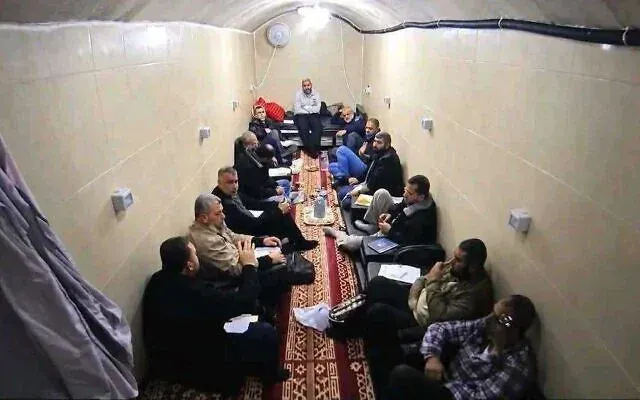
One sequence shows senior Hamas military figures gathered inside a narrow underground room.
Deif is identified as the man sitting at the far end of the room, while other commanders sit along the walls.
The footage provides a rare glimpse of senior members of the Al-Qassam Brigades together in what appears to be an underground command setting.
Among those identified in reporting about the images are Marwan Issa, Mohammed Sinwar, Ahmed Ghandour, Rafa Salama and other senior military figures.
The precise date of this particular meeting has not been independently established. However, reporting indicates that the footage was recorded before May 2021, because one of the identified participants, Bassem Issa, was killed during that month's conflict.
This distinction is important.
Although the footage was published in connection with a documentary examining October 7, the underground meeting itself cannot automatically be described as a planning session for the 2023 attack.
What the images do illustrate is the existence of a coordinated military leadership operating within Hamas's underground infrastructure years before October 7.
The Relationship Between Political and Military Leadership
Hamas has historically maintained political and military structures, although the relationship between them has evolved over time.
The political leadership has been responsible for governance, external relations, negotiations and broader organisational strategy.
The Al-Qassam Brigades have maintained their own military command structures and operational responsibilities.
In practice, the distinction between political and military authority has not always been clear.
Senior political figures have exercised influence over strategic decisions, while military commanders have shaped the organisation's approach towards Israel.
The documentary reportedly includes footage showing Deif alongside Yahya Sinwar and Ismail Haniyeh at a facility described as a rocket manufacturing workshop.
Sinwar, who became Hamas's leader in Gaza in 2017, was an influential figure in the organisation's political and security structures.
Haniyeh served as Hamas's political bureau chief from 2017 until his assassination in Tehran in July 2024.
The appearance of these figures together at a military facility is significant because it illustrates contact between senior political representatives and the organisation's armed leadership.
However, such footage does not independently establish the precise decision-making process behind individual operations.
Determining responsibility for the October 7 attacks requires examination of operational orders, communications, command relationships and other corroborating evidence.
Mohammed Deif and October 7
On the morning of October 7, 2023, Hamas-led militants launched a coordinated assault against southern Israel.
The attack involved rocket fire, breaches of the Gaza-Israel barrier and armed infiltrations into Israeli communities and military installations.
Civilians were deliberately targeted in multiple locations. Killings, hostage-taking and other serious abuses were documented during the assault.
Deif was widely identified as one of the principal architects of the operation.
An audio statement attributed to him announced the beginning of what Hamas called Operation Al-Aqsa Flood.
The operation represented a catastrophic failure of Israeli border security and intelligence assessment.
It also demonstrated that Hamas had developed the organisational capacity to coordinate an attack across multiple locations.
The precise extent of Deif's involvement in individual operational decisions remains an important subject for historical investigation.
The documents presented in the new Al Jazeera documentary may provide additional evidence concerning his role, particularly if their authenticity and chronology can be independently established.
The Death of Mohammed Deif
On July 13, 2024, Israel carried out an airstrike in the Khan Younis area targeting Deif.
On August 1, the Israel Defense Forces announced that he had been killed in the operation.
Hamas did not immediately confirm his death.
It was not until January 30, 2025, that the Al-Qassam Brigades publicly acknowledged that Deif had been killed.
His death marked the end of a military career that had profoundly influenced Hamas's strategy and its confrontation with Israel.
By then, several other senior figures associated with the organisation's military and political leadership had also been killed.
Yet the removal of individual commanders did not erase the organisational history they had helped create.
The underground infrastructure, military planning systems and operational relationships developed during Deif's leadership remain important subjects of investigation.
What the Newly Released Footage Changes
The significance of the October 2026 documentary lies partly in its visual record.
For years, Mohammed Deif was known largely through intelligence assessments, official statements, limited photographs and accounts from individuals connected to Hamas.
The newly published footage offers additional images of the commander interacting with other senior figures and moving through underground facilities.
It may help researchers reconstruct aspects of Hamas's internal military organisation.
But its historical value depends on careful verification.
The date of each recording, the identities of those present, the circumstances in which the material was produced and the reasons for its eventual release must all be considered.
The footage should therefore be treated as potentially important evidence rather than a complete account of events.
For investigators, historians and journalists, it opens a window into a previously concealed part of Hamas's military history.
For the families of those killed or abducted on October 7, the wider investigation into how the attack was planned remains a question of accountability.
And for Israel, the footage reinforces the importance of understanding how Hamas's military leadership was able to organise and operate within an underground system despite years of surveillance and repeated military confrontations.
The next question is how that system functioned.
Who controlled the underground command facilities? How were military decisions communicated? And what role did the tunnels play in protecting Hamas's leadership and preparing for future operations?
Those questions lead directly into the organisation's underground military network.
Chapter 2 — Inside the Tunnels: Hamas's Underground Command Structure
A Hidden Military Infrastructure Beneath Gaza
For years, the extensive tunnel network beneath the Gaza Strip has represented one of the most significant challenges facing Israeli military and intelligence operations.
What began as a system of underground passages serving different purposes gradually developed into a complex network of military facilities, concealed routes, weapons storage areas and command positions.
For Hamas, the tunnels offered an important strategic advantage: the ability to move personnel, protect equipment and maintain certain military activities beyond the immediate reach of Israeli surveillance and conventional military operations.
The newly released Al Jazeera documentary provides a rare glimpse into this underground environment.
Among the footage is a recording showing senior Hamas commanders gathered inside a narrow, enclosed room. The men sit along the walls, apparently participating in a meeting, while Mohammed Deif is identified as sitting at the far end.
The room appears relatively modest, with basic furnishings, lighting and ventilation equipment.
Yet its significance lies not in its appearance but in the individuals reportedly present.
The footage offers an unusual visual record of senior military figures meeting within an underground facility, illustrating how Hamas's leadership could conduct activities away from public view.
However, the precise date, location and purpose of this particular meeting have not been independently established.
It would therefore be misleading to present the recording as direct evidence of preparations for October 7, 2023, without additional corroboration.
Its broader importance is that it documents an underground military environment in which senior commanders could meet and communicate.
How Gaza's Tunnel Networks Developed
The history of tunnels in Gaza predates Hamas's current military infrastructure.
During the years following the 1979 Egypt-Israel peace treaty, and particularly after Israel's withdrawal from the Sinai Peninsula in 1982, underground passages developed around Rafah, where the border divided communities and commercial networks.
Some tunnels were used to move consumer goods, fuel and other supplies. Others became associated with weapons smuggling and illicit trade.
Following Israel's unilateral withdrawal of its settlements and permanent ground forces from Gaza in 2005, and Hamas's takeover of the territory in 2007, the strategic importance of underground routes increased.
Israel and Egypt imposed significant restrictions on movement and trade, although their respective border policies and security arrangements differed.
The restrictions contributed to the expansion of a tunnel-based economy, particularly along the Egyptian border.
For many Palestinians, these passages became a source of goods and employment during periods of severe restrictions.
At the same time, armed organisations developed separate underground infrastructure for military purposes.
These different tunnel systems should not be treated as identical.
Commercial smuggling routes, cross-border attack tunnels and internal military tunnels served different functions, even when they existed within the same broader underground environment.
Over time, Hamas invested heavily in the development of military tunnels designed to support its operations against Israel and protect parts of its armed organisation.
The full scale and layout of the network have never been independently mapped in a publicly verifiable form.
Israeli military assessments have described a system extending for hundreds of kilometres, but precise figures remain difficult to confirm.
The Strategic Value of Underground Warfare
Underground warfare is not unique to Gaza.
Throughout modern military history, armed forces and insurgent organisations have used tunnels to conceal movement, protect personnel, store supplies and reduce their vulnerability to technologically superior opponents.
During the Vietnam War, extensive tunnel systems allowed Viet Cong forces to maintain concealed positions and move between locations despite American military superiority.
In other conflicts, underground facilities have been used to protect command centres, weapons and communication infrastructure.
For Hamas, the military logic was similar.
Israel possesses advanced intelligence systems, aerial surveillance, precision-guided weapons and substantial conventional military capabilities.
Hamas cannot match those capabilities in a direct conventional confrontation.
Instead, its military strategy has relied heavily on irregular warfare, including concealed positions, dispersed units, rockets, ambushes and underground infrastructure.
The tunnels could complicate Israeli operations by concealing personnel and equipment, limiting visibility and creating uncertainty about the location of military assets.
They also introduced significant dangers for civilians living above them.
Military facilities located within or beneath densely populated areas can expose nearby residents to serious risks during armed conflict.
The presence of a military objective does not remove the obligations of attacking forces under international humanitarian law, including distinction, proportionality and precautions to minimise civilian harm.
Likewise, armed groups remain bound by rules prohibiting the use of civilians to shield military objectives from attack.
Determining whether a particular location was used unlawfully requires evidence concerning its actual military use and the conduct of those involved.
The Underground Leadership Meetings
The Al Jazeera footage provides a particularly interesting perspective because it appears to show senior commanders together rather than isolated fighters moving through tunnels.
The individuals identified in reporting include Mohammed Deif, Marwan Issa, Mohammed Sinwar and several regional or specialist commanders within Hamas's military wing.
Their reported presence suggests that the facility could accommodate meetings involving figures with different responsibilities within the organisation.
Such gatherings are relevant to understanding Hamas's command structure.
A military organisation requires mechanisms for coordinating personnel, allocating resources, communicating strategic priorities and reviewing operations.
The footage is consistent with the existence of such leadership interactions.
Nevertheless, the recording does not reveal the substance of the discussion.
There is no independently verified public transcript establishing what was said during the meeting.
Nor does the footage alone establish whether the participants were discussing operational plans, internal administration, military developments or another subject.
This distinction is essential when evaluating material presented years after it was recorded.
A photograph of senior commanders together can establish their apparent presence in the same location, provided the image and identities are authenticated.
It cannot, by itself, establish the decisions they made.
A Network Designed for Survival
One of the central military advantages of underground infrastructure is its potential to preserve organisational continuity during attacks.
Conventional command facilities can be identified through surveillance, communications monitoring and other intelligence methods.
Underground locations may offer additional concealment and physical protection.
For an organisation such as Hamas, which has faced repeated Israeli military operations and targeted strikes against its leadership, maintaining command continuity has been a strategic concern.
During conflicts in 2008–2009, 2012, 2014 and 2021, Israel targeted Hamas military facilities, weapons production sites and tunnel infrastructure.
Hamas continued to rebuild and adapt parts of its military capabilities between these confrontations.
The 2014 Gaza war brought particular international attention to cross-border tunnels used by Hamas fighters to enter Israeli territory.
Israel subsequently invested in underground detection systems and barriers intended to prevent infiltrations beneath the Gaza border.
Yet the internal tunnel network within Gaza presented a different challenge.
Unlike cross-border passages, which could be addressed partly through border engineering and detection measures, internal tunnels were distributed throughout a densely populated territory.
Their discovery and destruction required intelligence, specialised equipment and ground operations.
The extent to which Hamas's senior leadership depended on particular underground facilities varied over time and remains difficult to establish comprehensively.
Tunnels, Hostages and the War After October 7
Following the October 7 attacks, the tunnel network became a central element of the war in Gaza.
Hamas and other armed groups took 251 hostages into the territory.
Evidence from released hostages, Israeli military investigations and recovered material established that some captives were held in underground facilities.
The use of tunnels to detain hostages created additional dangers for those held captive and complicated efforts to locate and rescue them.
Hostage-taking is prohibited under international humanitarian law.
The International Committee of the Red Cross has repeatedly emphasised the requirement to treat all detainees humanely and to provide access to appropriate humanitarian assistance.
Israeli forces conducted extensive operations against suspected Hamas tunnel facilities, including underground routes, command locations and weapons storage areas.
Some operations uncovered substantial military infrastructure.
Others became the subject of international controversy because of the destruction and civilian casualties associated with fighting in densely populated areas.
Hospitals, schools, residential buildings and other civilian facilities became central to disputes about the location of Hamas military infrastructure.
Israel presented evidence in support of some allegations concerning military use of civilian sites.
Hamas rejected various Israeli claims, while independent investigators and international organisations questioned or were unable to verify aspects of the evidence presented.
Each allegation requires assessment on its own merits.
The existence of Hamas tunnels beneath Gaza does not establish that every civilian building above them was being used for military purposes.
Equally, the civilian character of an area does not rule out the possibility that an armed organisation operated military infrastructure beneath it.
The legal and factual questions must be evaluated separately.
What the Documentary Reveals — and What It Does Not
The underground meeting footage is valuable because it provides a visual record of an environment that was largely inaccessible to independent journalists.
It appears to show a functioning underground facility used by individuals identified as senior Hamas military commanders.
It also demonstrates that at least some members of the organisation's leadership were willing to record their activities within these concealed spaces.
However, several important questions remain unanswered.
The complete provenance of the recording has not been independently established.
The circumstances in which it was filmed, the intended audience and the reasons it was retained are not fully known.
Nor is it clear whether the footage represents a routine leadership meeting or an exceptional occasion.
The documentary's editors selected particular sequences for public release, meaning viewers do not necessarily see the complete original recordings.
This does not make the images inherently unreliable.
It does mean that their evidential value depends on context, authentication and comparison with other sources.
For Beyond the Lines, the footage should therefore be presented as a potentially significant historical record, not as conclusive proof of every claim associated with it.
The Wider Significance
The underground network developed by Hamas illustrates a fundamental feature of the military confrontation between Israel and armed organisations in Gaza.
Israel's technological and conventional military superiority did not eliminate the ability of Hamas to maintain concealed infrastructure and organised military structures.
For Hamas, underground facilities became a means of preserving military capabilities and complicating Israeli operations.
For Israel, the network presented a persistent intelligence and security challenge.
For Palestinian civilians, the existence of military infrastructure within a densely populated territory added another layer of danger to a conflict already marked by repeated warfare, displacement and severe humanitarian consequences.
The newly released images of Hamas's senior commanders meeting underground provide an important visual dimension to this history.
They also lead to another question.
An underground military organisation depends not only on physical infrastructure but also on the people responsible for directing its activities.
Understanding the network therefore requires examining the commanders who operated within it, their responsibilities and the relationships that connected Hamas's senior military figures.
That is the focus of the next chapter.
Chapter 3 — The Men Around Deif: Hamas's Military and Political Leadership
The Commanders Behind the Organisation
Mohammed Deif did not lead Hamas's military wing alone. Behind its operations stood a network of senior commanders responsible for regional brigades, intelligence, weapons production and military planning.
The newly released Al Jazeera documentary provides an unusual glimpse of this leadership structure. In one recording, Deif appears alongside senior figures of the Izz ad-Din al-Qassam Brigades inside an underground facility in Gaza.
The footage is significant because it brings together individuals whose activities were generally concealed from public view.
Among those identified are Marwan Issa, Mohammed Sinwar, Ahmed Ghandour, Rafa Salama, Ayman Nofal and other senior military figures.
Although their responsibilities differed, these commanders formed part of an organisation capable of coordinating military activities across the Gaza Strip.
Understanding their roles is essential to understanding how Hamas developed the capacity to launch the October 7 attacks.
Marwan Issa: Deif's Deputy
Marwan Issa was one of the most important figures within Hamas's military command.
As deputy commander of the Al-Qassam Brigades, he occupied a senior position beneath Deif and was widely regarded as an influential military strategist.
Issa maintained a low public profile, rarely appearing in interviews or public statements.
His responsibilities placed him close to the organisation's senior decision-making structures, particularly during periods of military confrontation with Israel.
Israeli and American authorities identified Issa as one of the senior Hamas figures associated with the planning and execution of the October 7 attacks.
He was killed in an Israeli airstrike in central Gaza in March 2024.
His death represented a significant loss for Hamas's established military leadership.
Mohammed Sinwar: A Powerful Military Figure
Mohammed Sinwar, the younger brother of Yahya Sinwar, developed his own position within Hamas's military organisation.
He was associated with the Khan Younis Brigade and became an influential commander within the Al-Qassam Brigades.
His importance extended beyond his family relationship with Yahya Sinwar.
Mohammed Sinwar was linked to military operations, the development of Hamas's armed capabilities and the organisation's underground infrastructure.
His involvement in Hamas's military hierarchy illustrates how operational authority was distributed among experienced commanders rather than concentrated exclusively in Deif's hands.
Following the deaths of several senior leaders during the war, Mohammed Sinwar was widely reported to have assumed greater military responsibilities.
Israel announced that he had been killed in an operation in May 2025.
The Regional Brigade Commanders
Hamas's military wing developed territorial commands responsible for different parts of the Gaza Strip.
These included formations operating in northern Gaza, Gaza City, the central areas, Khan Younis and Rafah.
Senior commanders identified in the documentary include Ahmed Ghandour, associated with northern Gaza, Ayman Nofal, who commanded the central camps brigade, and Rafa Salama, a senior commander in Khan Younis.
Other figures held responsibilities relating to weapons production, intelligence and training.
This organisational structure helped Hamas coordinate activities across different geographical areas while maintaining specialised military functions.
The footage of senior commanders meeting together suggests interaction between these different levels of leadership.
However, the recording does not establish the specific decisions taken during the meeting.
Its precise date and purpose remain important limitations when assessing its historical significance.
Yahya Sinwar: Political Authority and Military Influence
While Deif commanded Hamas's military wing, Yahya Sinwar became one of the organisation's most influential political figures.
Sinwar was released from an Israeli prison in 2011 as part of the prisoner exchange involving Israeli soldier Gilad Shalit.
In 2017, he became Hamas's leader in Gaza, giving him considerable influence over the organisation's political direction and internal affairs.
His position placed him at the intersection of political authority, security considerations and military strategy.
Sinwar was widely identified by Israeli and Western authorities as a central architect of the October 7 attacks.
The Al Jazeera documentary includes footage reportedly showing Sinwar alongside Deif and Ismail Haniyeh at a rocket manufacturing facility.
Another recording reportedly captures a telephone conversation between Sinwar and Deif following the May 2021 conflict.
These recordings illustrate contact between the organisation's political and military leadership.
They do not, however, establish the full extent of Sinwar's involvement in every operational decision.
Sinwar became Hamas's overall political leader in August 2024, following the assassination of Ismail Haniyeh.
He was killed by Israeli troops in southern Gaza in October 2024.
Ismail Haniyeh and the External Political Leadership
Ismail Haniyeh represented another important dimension of Hamas's leadership.
He served as the organisation's political bureau chief from 2017 until his assassination in Tehran in July 2024.
Unlike Deif, who operated largely in secrecy within Gaza, Haniyeh maintained a prominent international political role.
He participated in diplomatic contacts, represented Hamas in regional discussions and maintained relationships with governments and political actors outside the Palestinian territories.
His position demonstrated that Hamas operated through both an internal leadership based in Gaza and an external political structure.
The relationship between these branches was complex.
Political leaders were involved in strategic decisions, negotiations and international relations, while military commanders exercised operational authority.
The extent to which individual political figures knew the precise timing and details of the October 7 operation remains a question requiring careful examination of the available evidence.
A Leadership Structure Transformed by War
The war that followed October 7 profoundly altered Hamas's leadership.
Deif, Issa, Yahya Sinwar, Haniyeh and numerous other senior figures were killed in Israeli operations or attacks attributed to Israel.
These deaths disrupted established relationships and removed individuals who had shaped Hamas's military and political strategy for years.
However, the elimination of senior commanders does not necessarily mean the immediate disappearance of an armed organisation.
Military groups may retain local commanders, decentralised units, institutional knowledge and mechanisms for replacing leaders.
Assessing Hamas's capabilities therefore requires examining both the losses suffered by its leadership and the structures that remained.
The newly released footage is especially relevant in this context.
It provides a historical record of a command network that has since been substantially transformed.
What the Leadership Footage Tells Us
The documentary offers an unusual opportunity to examine the individuals who shaped Hamas's military organisation before October 7.
It shows how senior commanders could meet within concealed facilities and illustrates the interaction between different levels of military leadership.
Additional footage suggests contact between military commanders and senior political figures.
But the images must not be interpreted beyond what they can establish.
The presence of commanders together does not prove that a particular meeting concerned October 7. Nor does footage of political and military leaders together establish the exact responsibilities of each participant in planning the attack.
Those conclusions require additional evidence, including authenticated documents and corroborated accounts.
What can be established is that Hamas possessed an organised leadership structure capable of directing military activities across Gaza.
The next question is how that structure developed its military capabilities over time, including weapons production, rocket systems and the underground infrastructure that became central to its operations.
Chapter 4 — Building a Military Network: Weapons, Rockets and Underground Infrastructure
From Armed Cells to an Organised Military Force
Hamas's military capabilities did not emerge overnight. They developed over several decades through a combination of local weapons production, external assistance, organisational adaptation and repeated confrontations with Israel.
During the early 1990s, the Izz ad-Din al-Qassam Brigades operated primarily through relatively small armed cells. Their activities included shootings, kidnappings and suicide bombings, including attacks deliberately targeting Israeli civilians.
Over time, Hamas sought to develop capabilities that would allow it to challenge Israel beyond individual attacks.
Following Israel's withdrawal of its settlements and permanent ground forces from Gaza in 2005, and particularly after Hamas took control of the territory in 2007, the organisation expanded its military infrastructure.
Under Mohammed Deif and other senior commanders, the Al-Qassam Brigades developed territorial brigades, specialised units, weapons production facilities and increasingly sophisticated command structures.
Although Hamas could not compete with Israel's conventional military strength, its leadership pursued a different strategy: building an armed organisation capable of surviving repeated Israeli operations while maintaining the ability to launch attacks.
This approach became central to Hamas's military development in the years preceding October 7, 2023.
The Expansion of Rocket Capabilities
One of the most visible elements of Hamas's military development was its rocket arsenal.
Early locally manufactured Qassam rockets were relatively rudimentary, with limited range and accuracy. Nevertheless, their use introduced a persistent threat to Israeli communities near Gaza.
Over subsequent years, Hamas expanded both the range and variety of its rockets.
The organisation acquired or developed systems capable of reaching locations considerably farther inside Israel, including major population centres.
Iran played an important role in this development.
Iranian assistance to Hamas has included funding, military training, technical knowledge and support for weapons capabilities. The extent and form of that assistance varied over time, reflecting regional political developments and the practical difficulties of transferring weapons into Gaza.
Hamas also developed domestic production capabilities, reducing its dependence on complete weapons systems supplied from abroad.
The newly released Al Jazeera documentary reportedly includes footage of senior Hamas figures visiting a rocket manufacturing facility.
If the identities and context of those recordings are confirmed, the images provide additional evidence of senior leadership engagement with the organisation's weapons production activities.
However, the footage alone does not establish the scale of production, the precise weapons manufactured at the location or the relationship between that facility and the October 7 operation.
Iran and the Wider Regional Network
Hamas's military development cannot be understood entirely within Gaza.
Iran has long supported several armed organisations across the Middle East, including Hamas, Palestinian Islamic Jihad and Hezbollah.
This support has formed part of Tehran's broader regional strategy of building relationships with armed groups opposed to Israel and American influence.
For Hamas, external assistance contributed to the development of military capabilities that would otherwise have been difficult to acquire.
Training, financial support and technical expertise helped the organisation strengthen its armed structures.
However, Hamas has also maintained its own political priorities and operational decision-making.
The existence of Iranian support does not automatically establish that Tehran directed every Hamas operation.
In particular, the precise extent of Iranian advance knowledge of the October 7 attack has remained disputed.
Publicly available evidence has not conclusively established that Iranian leaders authorised the specific timing and operational details of the assault.
Distinguishing between long-term military assistance and direct operational responsibility is essential to an accurate understanding of the relationship.
Underground Infrastructure as a Military Asset
Alongside rockets and weapons production, Hamas invested heavily in underground infrastructure.
The military tunnel network developed into an important means of concealing personnel, storing equipment and protecting parts of the organisation's command structure.
Unlike conventional military bases, underground facilities could be difficult to identify through aerial surveillance.
They also complicated Israeli efforts to locate commanders and assess the movement of armed units.
The network included different types of facilities, ranging from relatively simple passages to more substantial underground spaces.
Israeli forces have documented tunnels containing electrical installations, communications equipment, storage areas and rooms apparently intended for extended use.
The complete size of Hamas's underground military network remains uncertain. Estimates released during the war have varied, and independent verification of its full extent has not been possible.
The Al Jazeera footage of senior commanders meeting underground provides a rare visual illustration of one possible function of these facilities.
It shows that underground infrastructure was not used solely for the movement of fighters or weapons. At least some facilities could also accommodate meetings involving senior members of the military leadership.
The recording does not, however, establish how frequently such meetings occurred or whether the location formed part of a permanent central command facility.
Specialised Units and Military Training
As Hamas's military wing expanded, it developed units with different operational responsibilities.
These included fighters trained for ground operations, anti-armour teams, rocket units and members of the Nukhba force, an elite formation that played a prominent role in the October 7 assault.
Hamas also invested in training intended to improve coordination between different military elements.
Publicly released footage from before October 2023 showed armed exercises, simulated attacks and training activities.
Some exercises involved scenarios resembling assaults on Israeli military positions.
These activities were not entirely concealed from public view.
The more difficult question is how Israeli intelligence and military authorities interpreted them.
A military exercise may demonstrate capability or intention, but it does not necessarily establish when an attack will occur.
Nevertheless, the combination of visible training, expanding military capabilities and intelligence reporting became particularly significant in retrospect.
The October 7 attacks demonstrated that Hamas had developed the capacity to coordinate several types of armed activity during a single operation.
That capability reflected years of organisational development rather than a sudden transformation.
The Civilian Consequences of Militarisation
The development of military infrastructure within Gaza also had serious implications for its civilian population.
Gaza is a densely populated territory, and military facilities located in or beneath civilian areas can increase the dangers faced by residents during armed conflict.
The use of civilian buildings for military purposes, where established, raises important questions under international humanitarian law.
Armed groups are prohibited from using civilians to shield military objectives from attack.
At the same time, the presence of military infrastructure does not remove the legal protections afforded to civilians.
Israeli forces remain obligated to distinguish between civilians and combatants, assess proportionality and take feasible precautions to minimise civilian harm.
These obligations apply regardless of whether Hamas has violated its own responsibilities under the laws of war.
The destruction experienced in Gaza during the war following October 7 has demonstrated the devastating consequences of military operations in densely populated areas.
For Palestinian civilians, the conflict has involved displacement, loss of life, destruction of homes and severe disruption to essential services.
Understanding Hamas's military development therefore also requires examining the risks created when armed organisations operate within civilian environments.
The Capabilities Behind October 7
By October 2023, Hamas had developed a military organisation considerably more complex than the armed cells from which it emerged.
It possessed territorial command structures, rocket capabilities, trained assault units, weapons production facilities and underground infrastructure.
These capabilities did not make Hamas a conventional military equal to Israel.
They did, however, provide the organisation with the means to prepare and conduct a coordinated assault involving multiple locations and methods of attack.
The newly released documentary offers additional visual material concerning the leadership and infrastructure behind that military development.
Yet the most important questions concern the decisions that transformed these capabilities into a specific operation.
When did planning for October 7 begin? Who participated in the decision-making process? How were the preparations concealed? And what can the documents released by Al Jazeera establish about the final stages before the attack?
Those questions form the focus of the next chapter.
The distinction is crucial: possessing military capabilities is not the same as deciding when and how to use them.
Understanding October 7 requires examining both.
Chapter 5 — The Road to October 7: Planning, Strategy and Secret Documents
The Documents That Could Change Our Understanding
Among the most significant revelations in Al Jazeera's October 2026 documentary are two purported internal Hamas documents relating to the preparations for the October 7, 2023 attacks.
The first is dated February 11, 2023, nearly eight months before the assault. The second, dated October 5, 2023, is presented as an operational order signed by Mohammed Deif just two days before the attack.
Together, the documents offer a potentially important insight into the planning and decision-making processes within Hamas's military leadership.
According to Al Jazeera, they describe the development of an operation that Hamas called Al-Aqsa Flood, including discussions among senior commanders and the final decision to proceed.
However, their significance depends on an essential question: can the documents be independently authenticated?
Although the broadcaster has presented them as internal records, their complete provenance, chain of custody and original context have not been independently established in the publicly available reporting.
They should therefore be examined as potentially important evidence rather than accepted automatically as a definitive historical account.
February 11, 2023: The Alleged Planning Decision
The earlier document reportedly records a meeting of the Al-Qassam Brigades' senior military council on February 11, 2023.
According to Al Jazeera, the meeting included a decision to begin preparing an operation referred to as Project Fahd, subsequently associated with the October 7 assault.
The document reportedly describes the operation as a response to Israeli actions concerning the Al-Aqsa Mosque and Palestinian prisoners.
It also includes language suggesting that preparations could be cancelled if certain Israeli actions ceased.
This is a particularly important element of the documentary because it concerns how Hamas's leadership sought to explain its intentions.
The broadcaster's presentation suggests that the operation was discussed within a wider political and religious framework rather than as an isolated military decision.
However, such claims require critical examination.
A document describing an attack as conditional does not establish that Hamas would genuinely have abandoned its plans under different circumstances.
Nor does it establish that the stated grievances were the sole motivations behind the operation.
Armed organisations may describe their military objectives in ways intended to justify their actions to supporters or influence external audiences.
The February document may provide evidence of internal discussions, but it cannot independently establish every motivation behind the eventual attack.
October 5, 2023: The Final Operational Order
The second document is more directly connected to the timing of October 7.
According to the documentary, a meeting of Hamas's military leadership took place on October 5, 2023, lasting approximately six hours.
Following that meeting, Mohammed Deif allegedly signed an operational order authorising the attack.
The document reportedly identified 6.30 a.m. on October 7 as the starting time.
That detail is significant because it corresponds to the approximate time at which Hamas began its assault on southern Israel.
If authenticated, the document would provide important evidence concerning the final stages of operational planning.
It could help establish when senior commanders confirmed the timing of the attack and how the decision was communicated within the organisation.
Nevertheless, several questions remain unanswered.
Who attended the meeting? Was the document distributed to all participating units? Were earlier operational orders issued? And what changes, if any, were made during the final days?
The published reporting does not provide sufficient independently verified evidence to answer all these questions.
The existence of a purported final order also does not establish when the original concept for the attack first emerged.
Military operations of this complexity generally require preparation over an extended period, and other evidence indicates that Hamas had been developing relevant capabilities and operational concepts before 2023.
A Plan Developed Over Time
The October 7 assault involved multiple coordinated elements.
Hamas-led armed groups launched extensive rocket fire, breached the Gaza-Israel border barrier and entered Israeli territory at numerous locations.
Militants attacked military positions, civilian communities and the Nova music festival.
The assault demonstrated an ability to coordinate different armed units and exploit weaknesses in Israel's border defences.
Such coordination required training, organisation and advance preparation.
Before October 2023, Hamas had publicly conducted military exercises involving simulated attacks on Israeli positions.
Israeli intelligence also possessed information concerning a potential large-scale assault, including a document subsequently reported under the name Jericho Wall.
The document described an attack scenario with striking similarities to what eventually occurred.
Its existence raises questions about how Israeli authorities assessed Hamas's intentions and capabilities.
The newly published Al Jazeera documents could provide another perspective on that planning process.
However, they should be compared with existing intelligence findings, military investigations and other documentary evidence before firm conclusions are reached.
The Role of Mohammed Deif
Mohammed Deif was widely identified as a principal architect of the October 7 attack.
On the morning of the assault, an audio statement attributed to him announced the beginning of Operation Al-Aqsa Flood.
The documentary presents additional material that appears to connect him directly to the planning process.
Alongside the alleged operational order, footage reportedly shows Deif examining models of Israeli military vehicles and discussing operational matters with commanders.
These images are potentially significant because they place him within a military planning environment.
However, the precise dates and circumstances of individual recordings must be established before they can be linked conclusively to preparations for October 7.
The documentary strengthens the public record concerning Deif's leadership role, but it does not independently resolve every question about the distribution of responsibility among Hamas's senior commanders.
Political Justifications and the Reality of the Attack
Hamas described its operation as a response to Israeli policies, developments at the Al-Aqsa Mosque, the treatment of Palestinian prisoners and the wider Israeli-Palestinian conflict.
These claims formed part of the organisation's public justification for the assault.
The broader conflict, including occupation, restrictions on Palestinian movement, settlement expansion in the West Bank and the unresolved question of Palestinian statehood, provides important historical context.
But context is not justification.
The deliberate killing of civilians, hostage-taking and other serious abuses committed during the October 7 attacks cannot be justified by political grievances or claims of resistance.
International humanitarian law prohibits intentionally directing attacks against civilians and taking hostages.
These prohibitions apply to all parties, regardless of their political objectives.
Any investigation into Hamas's planning must therefore distinguish between the organisation's stated motivations and its responsibility for the methods and targets of the attack.
What Remains Unanswered
The documents presented by Al Jazeera raise several important questions about Hamas's internal decision-making.
They suggest that senior military commanders discussed preparations months before October 7 and that a final operational decision was recorded shortly before the assault.
If authenticated, they could contribute significantly to the historical record.
However, important uncertainties remain concerning their origin, completeness and interpretation.
The February document's suggestion that the operation might have been cancelled cannot be independently confirmed as a genuine policy commitment.
The October 5 document's reported timing is consistent with the beginning of the attack, but that consistency alone does not authenticate the entire document.
Nor do the records establish the complete knowledge or involvement of every senior political and military figure.
For investigators, the next step is to compare these materials with other evidence, including Israeli intelligence assessments, military inquiries, contemporaneous communications and independently verified accounts.
The significance of the documentary lies not only in what it claims to reveal, but also in the new questions it makes possible to investigate.
The Road to October 7
By the beginning of October 2023, Hamas possessed trained armed units, an established military command structure, weapons capabilities and operational plans.
The assault that followed exposed profound weaknesses in Israel's security preparations and resulted in mass killings, hostage-taking and a war with devastating consequences.
The newly released documents may help explain the final decisions that preceded the attack.
But the historical record must be constructed through evidence rather than through the narrative of any single organisation or broadcaster.
The next chapter examines what happened when those preparations became an actual military operation on the morning of October 7, 2023.
It explores the sequence of events, the attacks on Israeli communities, the hostage-taking and the human consequences of a day that fundamentally changed the Middle East.
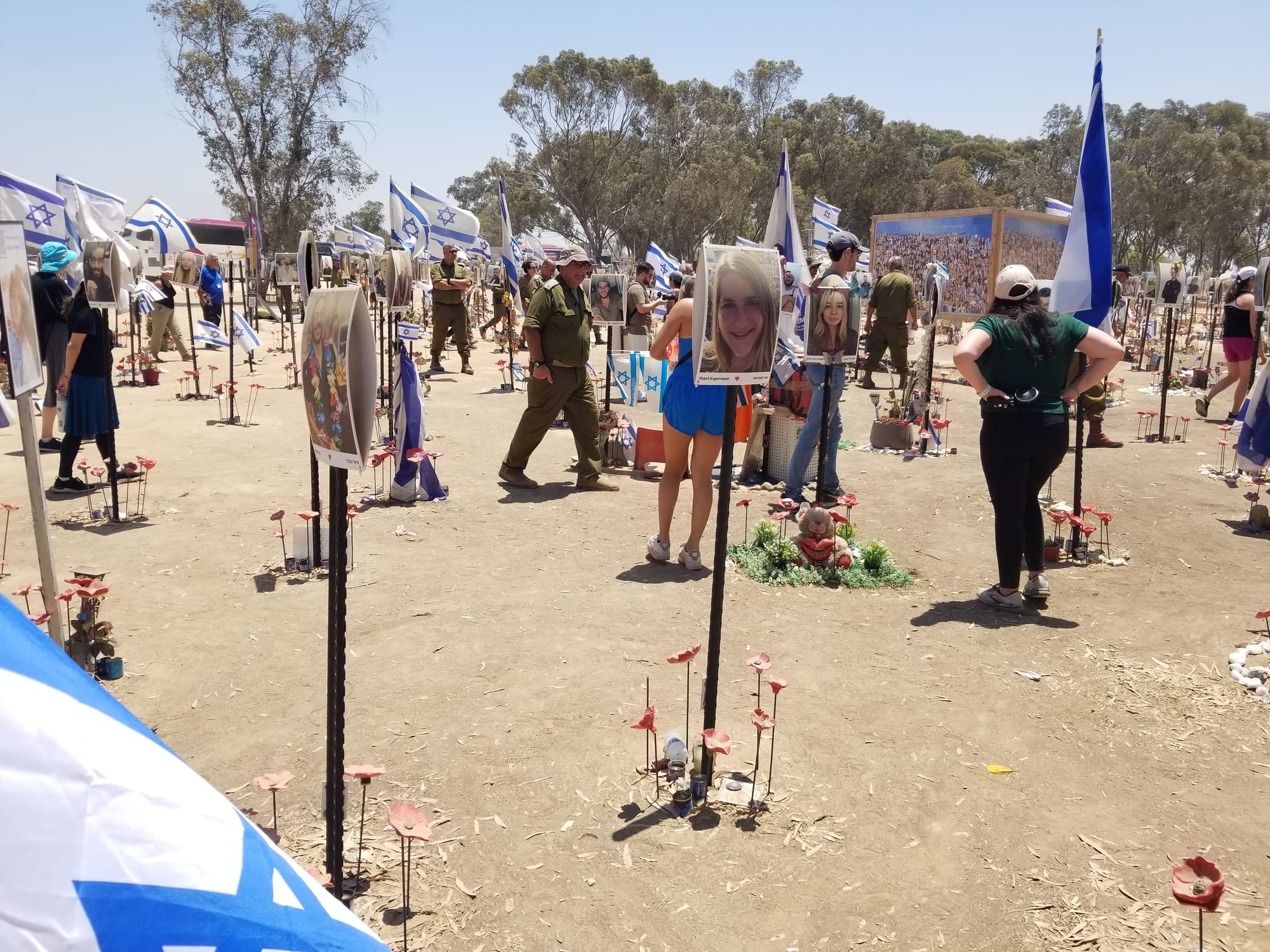
Chapter 6 — October 7, 2023: The Attack on Southern Israel
The Morning That Changed Israel
At approximately 6.30 a.m. on Saturday, October 7, 2023, Hamas launched a coordinated assault against southern Israel, beginning with an extensive barrage of rockets fired from the Gaza Strip.
The attack took place during Simchat Torah, a Jewish religious holiday, when many Israeli families were at home or attending celebrations.
Within a short period, armed militants breached sections of the heavily fortified border separating Gaza from Israel.
Using explosives, vehicles, motorcycles and other means of transport, attackers crossed into Israeli territory at multiple locations.
Some travelled towards military installations, while others entered civilian communities.
The operation, which Hamas called Al-Aqsa Flood, involved members of its military wing, the Izz ad-Din al-Qassam Brigades, alongside fighters from other Palestinian armed organisations.
What followed was the deadliest single-day attack in Israel's history.
Approximately 1,200 people were killed, most of them civilians, and 251 people were abducted and taken into Gaza.
The victims included Israeli Jews, Arab Israelis, foreign workers and visitors from numerous countries.
The scale of the assault shocked Israeli society and exposed serious weaknesses in the country's border security and intelligence systems.
The Attacks on Israeli Communities
Some of the most devastating violence occurred in the kibbutzim and towns close to the Gaza border.
Communities including Be'eri, Kfar Aza, Nir Oz and Netiv HaAsara became scenes of mass killings, destruction and hostage-taking.
Armed attackers entered residential neighbourhoods, moving between houses and confronting residents.
Survivors described hiding in reinforced rooms, cupboards and shelters while hearing gunfire and explosions outside.
In several locations, attackers fired into homes, threw grenades and set buildings alight.
Families were killed inside their houses, while others were abducted and transported into Gaza.
At Kibbutz Be'eri, nearly one hundred civilians were killed during the attack and subsequent fighting.
Nir Oz suffered particularly severe losses, with residents killed or taken hostage.
The violence was not limited to these communities.
Attacks also occurred in Sderot, Ofakim and other locations across southern Israel.
Police officers, local security teams and civilians attempted to resist the attackers, sometimes before substantial military reinforcements arrived.
In several communities, local security personnel played an important role in protecting residents despite being heavily outnumbered.
The attacks left entire neighbourhoods devastated and created a lasting sense of insecurity among communities that had lived near the Gaza border for decades.
The Nova Music Festival
One of the most widely documented atrocities occurred at the Nova music festival near Re'im.
Thousands of young people had gathered for an outdoor electronic music event.
As rockets were launched from Gaza, festivalgoers initially attempted to find shelter or leave the area.
Many became trapped on roads as armed militants approached.
Attackers opened fire on fleeing civilians, including people travelling in vehicles or attempting to escape across open fields.
Others hid in roadside shelters, nearby vegetation and abandoned vehicles.
More than 370 people were killed in connection with the festival attack, according to subsequent Israeli investigations and casualty records.
Others were abducted and taken into Gaza.
The attack became one of the defining images of October 7.
For survivors and families, the festival represented an ordinary celebration transformed into a scene of mass violence.
The experiences of those who escaped, and the evidence collected from the site, became central to subsequent investigations into the atrocities.
Hostage-Taking as Part of the Operation
The abduction of hostages was a major component of the October 7 assault.
A total of 251 people were taken into Gaza, including children, elderly civilians, women, men and members of the Israeli security forces.
Some were seized from their homes, others from the Nova festival or nearby roads.
The captives included Israeli citizens and foreign nationals.
The taking of civilian hostages is prohibited under international humanitarian law.
Subsequent investigations documented serious abuses against captives, including cruel treatment, threats, deprivation and sexual violence.
The hostage crisis became one of the central issues shaping Israel's military and political decisions during the war.
Families demanded information about their relatives and called for their return.
International organisations repeatedly urged the armed groups holding hostages to release them and allow humanitarian access.
The abductions also demonstrated that the October 7 assault was not simply an attack on military positions.
Civilians were deliberately targeted, killed and taken captive.
Human Rights Watch subsequently concluded that the killing of civilians and hostage-taking were central elements of the planned attack, rather than isolated acts committed without direction.
The Israeli Military Response
The initial Israeli response was marked by confusion, disrupted communications and delays in the deployment of reinforcements.
Military bases near Gaza were themselves attacked, affecting the ability of Israeli forces to coordinate their response.
In some locations, armed militants remained inside Israeli territory for many hours.
Fighting continued into the following days as Israeli forces attempted to regain control of affected communities and military positions.
The scale of the attack raised immediate questions about Israel's preparedness.
Israel had invested heavily in border barriers, surveillance systems, intelligence collection and military technology.
Yet those defences failed to prevent a coordinated assault involving multiple simultaneous breaches.
The reasons behind that failure would later become the subject of military investigations, political controversy and intense public debate.
On October 8, Israel formally declared a state of war.
Its government announced military objectives that included dismantling Hamas's military and governing capabilities and securing the return of the hostages.
The subsequent campaign involved extensive airstrikes and later a ground offensive in Gaza.
The war would cause enormous Palestinian civilian casualties, widespread displacement and destruction on a scale that transformed the territory.
Documented Crimes and the Search for Accountability
The atrocities committed on October 7 have been investigated by Israeli authorities, international organisations, journalists and independent human rights researchers.
The United Nations Independent International Commission of Inquiry documented attacks against civilians, deliberate killings, hostage-taking and other serious violations of international humanitarian law.
Human Rights Watch concluded in July 2024 that Hamas-led armed groups committed war crimes and crimes against humanity during the assault.
Investigators also documented sexual and gender-based violence, although the evidence and circumstances of individual incidents require careful differentiation.
The findings were based on witness testimony, photographs, video recordings, forensic information and other available evidence.
Hamas has disputed allegations that its fighters were instructed to target civilians.
However, independent investigations have documented repeated attacks in which civilians were deliberately killed or abducted.
Responsibility for such crimes must be assessed through evidence concerning individual perpetrators, commanders and organisational decisions.
The political circumstances of the Israeli-Palestinian conflict do not justify deliberate attacks on civilians.
Equally, the atrocities of October 7 do not remove the legal protections afforded to Palestinian civilians during Israel's subsequent military operations.
International humanitarian law applies to all parties to an armed conflict.
What October 7 Revealed
The October 7 attacks demonstrated that Hamas had developed the ability to coordinate an operation across numerous locations while exploiting vulnerabilities in Israel's security arrangements.
The assault involved advance preparation, trained fighters, weapons, communications and a command structure capable of directing complex military activity.
The newly released Al Jazeera documentary may provide additional evidence concerning the leadership decisions that preceded the attack.
Its purported October 5 operational order is particularly relevant because it reportedly identifies the timing of the assault.
However, the documentary cannot replace the broader body of evidence gathered from attack sites, survivors, military investigations and independent researchers.
The events of October 7 are extensively documented, even as questions remain about particular operational decisions and the responsibilities of individual commanders.
For Israel, the attack fundamentally altered the national debate about security, intelligence and military preparedness.
For the families of those killed and abducted, its consequences remain deeply personal.
For Palestinians in Gaza, the war that followed brought catastrophic humanitarian consequences.
Understanding October 7 therefore requires examining both the organisation that planned and carried out the assault and the security institutions that failed to prevent it.
The next chapter turns to one of the most consequential questions raised by the attack:
How did Israeli intelligence and military authorities fail to recognise and respond effectively to the warning signs before October 7?
Chapter 7 — Israel's Intelligence Failure: How Were the Warning Signs Missed?
A Security System That Failed to Protect Its Citizens
Israel possesses one of the Middle East's most sophisticated intelligence and military security systems. Its intelligence agencies, advanced surveillance technologies and extensive military experience have long been central to the country's national defence.
Yet on October 7, 2023, those systems failed to prevent the deadliest attack in Israel's history.
Hamas-led militants crossed the Gaza border, attacked military installations and civilian communities, killed approximately 1,200 people and abducted 251 others.
The scale of the failure raised a fundamental question: how could an organisation operating in Gaza prepare such an extensive assault without triggering an effective Israeli response?
Subsequent investigations revealed that the problem was not simply an absence of intelligence.
Israeli authorities had received information about Hamas's military preparations, including an attack plan bearing striking similarities to the operation eventually carried out.
The central failure was how that information was interpreted, communicated and translated into operational decisions.
The Jericho Wall Document
One of the most significant revelations emerged in November 2023, when The New York Times reported that Israeli officials had obtained a detailed Hamas attack plan more than a year before October 7.
The approximately 40-page document, given the Israeli codename Jericho Wall, described a coordinated assault against southern Israel.
It outlined a scenario involving rocket fire, attacks on border surveillance equipment, breaches of defensive barriers and the movement of armed fighters into Israeli territory.
The plan also described attacks on military installations and the capture of personnel.
Several of these elements closely resembled what occurred on October 7.
However, Israeli military and intelligence officials had assessed that Hamas lacked the capability, or possibly the intention, to carry out an operation of such magnitude.
The plan was therefore not treated as an imminent threat requiring a fundamental change in defensive preparations.
This assessment became one of the most consequential errors identified in subsequent investigations.
The existence of Jericho Wall did not establish the precise date on which Hamas would attack. Nevertheless, it provided information about an operational scenario that Israeli authorities should have considered seriously.
Warnings From the Border
In the months preceding October 7, Israeli soldiers monitoring the Gaza border reported unusual Hamas activities.
Female surveillance soldiers, commonly known as tatzpitaniyot, observed training exercises, movements near the border and other activities they considered suspicious.
Some later reported that their concerns had not received sufficient attention from senior commanders.
Intelligence personnel also identified Hamas exercises resembling elements of the Jericho Wall plan.
In July 2023, an analyst from Israel's Unit 8200 reportedly warned that a Hamas training exercise closely matched the previously obtained attack blueprint.
The warning was not translated into a major change in military readiness.
These accounts became central to the public debate over whether institutional assumptions had prevented military authorities from recognising a developing threat.
The soldiers and analysts observing activity near Gaza possessed important information.
But information alone does not prevent an attack.
It must be evaluated accurately, communicated to decision-makers and followed by appropriate action.
The Assumption That Hamas Was Deterred
For years, an influential assessment within Israel's security establishment held that Hamas was primarily interested in maintaining its rule over Gaza rather than initiating a major war.
This belief was partly based on the organisation's apparent interest in economic arrangements, employment permits for Gaza residents and periods of relative calm.
Israeli policymakers also sought to manage the threat from Gaza through a combination of military deterrence, border security and economic measures.
The assumption was that Hamas understood the costs of a major confrontation and would avoid an operation likely to provoke a devastating Israeli response.
This interpretation proved dangerously inaccurate.
Hamas had continued developing military capabilities and preparing offensive operations while Israeli authorities assessed that the organisation was deterred.
The failure illustrates a recurring intelligence problem: when an institution becomes committed to a particular interpretation of an adversary's intentions, contradictory information may receive insufficient attention.
The Night Before the Attack
During the night of October 6–7, Israeli intelligence and military officials received additional indications of unusual activity in Gaza.
These included reports concerning the activation of Israeli SIM cards and other signs that prompted discussions among security officials.
Senior officers and intelligence representatives assessed the available information during the early morning hours.
Despite the warning signs, they did not conclude that a large-scale assault was imminent.
No sufficiently broad mobilisation or defensive response was initiated before the attack began.
At approximately 6.30 a.m., Hamas launched its assault.
Israeli military positions near Gaza were attacked, surveillance and communications systems were disrupted, and armed militants entered numerous communities.
The military response was delayed and fragmented in several locations.
Some residents waited many hours for reinforcements while local security teams, police officers and civilians attempted to defend their communities.
The consequences of these failures were catastrophic.
What the Israeli Investigations Found
In February 2025, the Israel Defense Forces published findings from internal investigations into the October 7 attacks.
The military acknowledged that it had failed in its responsibility to protect Israeli civilians.
The investigations identified serious shortcomings in intelligence assessments, operational readiness and the response to the assault.
They also concluded that Israeli authorities had substantially underestimated Hamas's capabilities.
In March 2025, the Shin Bet, Israel's internal security agency, released findings from its own investigation.
The agency acknowledged that it had failed to provide an effective warning and had incorrectly assessed important aspects of Hamas's intentions and capabilities.
Later reviews of the military investigations identified further institutional shortcomings, including insufficient attention to Jericho Wall and failures in decision-making during the hours preceding the attack.
These findings reinforced the conclusion that October 7 was not the result of one isolated mistake.
It reflected weaknesses across several levels of Israel's security establishment.
Political Responsibility and Public Accountability
The intelligence failure also raised questions about political responsibility.
Israel's prime minister and government are responsible for national security policy, while military and intelligence leaders are responsible for professional assessments and operational readiness.
Determining how responsibility should be distributed between these institutions requires examining what information was available, who received it and which decisions were made.
Several senior security officials accepted responsibility for failures within their organisations.
Major General Aharon Haliva, who headed Israeli military intelligence at the time of the attack, resigned in 2024.
However, the wider debate over political accountability continued.
Military investigations can identify operational failures, but they do not necessarily resolve questions concerning government policy, political decision-making or the broader strategic approach towards Hamas.
A comprehensive assessment must therefore examine both the security institutions that failed to prevent the attack and the political framework within which they operated.
What the New Documentary Adds
The Al Jazeera documentary released in October 2026 provides a different perspective on the events preceding October 7.
Where Israeli investigations focus largely on intelligence assessments and defensive failures, the documentary presents purported internal Hamas documents and footage of its military leadership.
The alleged February 2023 planning document and October 5 operational order could, if authenticated, contribute to understanding the decisions being made within Hamas while Israeli officials were assessing the organisation's intentions.
The contrast is significant.
On one side, Hamas was reportedly developing and finalising plans for a major assault.
On the other, Israeli authorities continued to assess that a large-scale attack was unlikely.
However, the newly published documents must be independently examined before conclusions can be drawn about their precise historical significance.
They do not establish that Israeli authorities possessed those particular documents before October 7.
Nor do they demonstrate that every stage of Hamas's planning could realistically have been detected.
What they may provide is additional context for understanding the gap between Hamas's preparations and Israel's assessment of the threat.
The Lessons of October 7
The intelligence failures preceding October 7 demonstrate that sophisticated technology cannot compensate for incorrect assumptions, poor communication or inadequate operational preparedness.
Israel possessed advanced surveillance capabilities and significant intelligence resources.
Yet its security institutions failed to recognise the full implications of information already available to them.
The consequences extended far beyond the immediate military failure.
Families lost relatives, communities were devastated and hundreds of people were taken hostage.
The war that followed caused catastrophic suffering in Gaza and transformed the regional security environment.
The most important lesson is that intelligence must be assessed critically, including when new information challenges established beliefs.
Warnings from junior personnel must be evaluated on their merits, and military planning must account for scenarios that appear unlikely but would have devastating consequences.
October 7 demonstrated the dangers of underestimating an adversary's capabilities and intentions.
The newly released documentary may contribute to understanding Hamas's preparations, but it also raises another important question.
How should journalists and investigators evaluate material released by a broadcaster that has obtained rare access to the records of an armed organisation?
That question forms the focus of the next chapter.
Chapter 8 — Al Jazeera's Documentary: Evidence, Access and Editorial Questions
A Rare Look Behind Hamas's Military Leadership
On October 30, 2026, Al Jazeera broadcast previously unseen footage of Mohammed Deif and other senior Hamas commanders as part of its investigative programme The Hidden Is More Immense.
The documentary offered an unusual glimpse into an organisation whose senior military leadership had operated largely beyond public scrutiny.
The material included recordings of underground meetings, movements through tunnels, visits to military facilities and documents reportedly connected to preparations for the October 7, 2023 attacks.
For journalists and researchers, the release is significant. Images of Deif were exceptionally rare during his lifetime, and detailed information about Hamas's internal military discussions has generally been difficult to obtain independently.
However, the publication of previously unseen material does not automatically make every accompanying claim reliable.
The documentary must be examined both as a potential source of historical evidence and as a journalistic production shaped by editorial decisions.
How Did Al Jazeera Obtain the Footage?
One of the most important questions concerns the origin of the recordings.
Al Jazeera describes the material as exclusive footage and documents obtained for its investigation.
Some recordings appear to have originated within Hamas's own military organisation, including footage filmed in underground facilities inaccessible to ordinary journalists.
Hamas also published material from the documentary through its own communication channels.
This suggests that at least some of the footage originated from records controlled by, or accessible to, the organisation.
However, the precise route through which Al Jazeera obtained the material has not been publicly established in sufficient detail to reconstruct its complete chain of custody.
It remains unclear who selected the original recordings, whether the broadcaster received complete files or edited extracts, and what independent authentication procedures were applied to each item.
These uncertainties matter because the source of material can influence the historical narrative presented to viewers.
An armed organisation may release genuine recordings while withholding other information that could challenge its preferred account.
The authenticity of individual images and the completeness of the broader narrative are therefore separate questions.
What the Images Actually Establish
Some of the documentary's most striking footage shows senior Hamas military commanders meeting in an underground room.
Mohammed Deif is identified as sitting at the far end, while other senior figures are gathered nearby.
The recording provides visual evidence of an underground meeting involving individuals identified as members of Hamas's military leadership.
However, its date is particularly important.
Reporting indicates that the footage was recorded before May 2021, because Bassem Issa, one of the commanders identified in the recording, was killed during that month's conflict.
The meeting therefore cannot be presented as direct footage of the final preparations for October 7, 2023.
Other recordings reportedly show Deif walking through tunnels, meeting commanders and visiting a rocket manufacturing facility alongside Yahya Sinwar and Ismail Haniyeh.
These images may contribute to understanding relationships within Hamas's leadership and the military infrastructure available to it.
But they do not independently establish the content of every conversation or the operational decisions made by those present.
A recording can document an event without explaining its full significance.
The Documents and the Problem of Verification
The documentary also presents documents described as internal Hamas records.
Among them are a purported February 2023 planning document and an operational order dated October 5, 2023, reportedly signed by Deif.
The latter allegedly identifies the start of the October 7 assault as 6.30 a.m.
The correspondence between that reported timing and the actual beginning of the attack is noteworthy.
Nevertheless, the documents require independent authentication.
Investigators would need to examine original files, establish their provenance, assess signatures and formatting, and compare their contents with other available evidence.
It is also necessary to determine whether the documents were created at the dates stated or subsequently reproduced.
Without such verification, they remain attributed documents rather than independently established records.
This does not mean they are necessarily false.
It means their evidential value must be assessed carefully.
Al Jazeera, Qatar and Questions of Editorial Independence
Al Jazeera is an international broadcaster funded by the Qatari state. Its reporting has reached audiences across the Middle East and beyond, particularly during conflicts where access for international journalists has been restricted.
Qatar has also maintained political relationships with Hamas representatives and has played an important mediating role in negotiations involving Israel, Hamas and other parties.
These circumstances have contributed to longstanding debates about Al Jazeera's editorial independence, particularly in its coverage of Israel and Palestinian armed organisations.
Israeli authorities have accused the broadcaster of maintaining problematic relationships with Hamas and have imposed restrictions on its operations in Israel.
Al Jazeera has rejected accusations that it functions as a mouthpiece for Hamas and has defended its journalism.
Neither the broadcaster's institutional background nor the Israeli government's criticism is sufficient, on its own, to determine whether a particular recording or document is authentic.
The appropriate approach is to evaluate the evidence itself.
Journalists should examine how the material was obtained, whether competing accounts were considered and whether claims can be independently corroborated.
Access to an armed organisation can produce important reporting. It can also create risks when the organisation providing access has an interest in controlling how its history is presented.
Journalism or Strategic Communication?
The release of previously unseen military footage can serve several purposes simultaneously.
For historians, it may preserve information about individuals, locations and organisational structures.
For journalists, it may provide material that can be compared with official investigations and other evidence.
For Hamas, the publication of selected recordings may also serve a political or symbolic purpose.
Footage of senior commanders meeting underground could be intended to reinforce an image of organisational discipline, military sophistication or historical importance.
The timing of the release, more than three years after October 7 and following the deaths of many senior commanders, raises legitimate questions about why these particular recordings were made public.
However, possible motivations should not be confused with established facts.
Without evidence from those responsible for releasing the material, its precise intended purpose cannot be determined.
The challenge for independent journalism is to report potentially important information without uncritically reproducing the narrative preferred by its original source.
Why Independent Verification Matters
The October 7 attacks have generated extensive investigations, political disputes and competing claims.
In such an environment, documentary evidence can be particularly valuable.
But evidence must be examined within its proper historical and factual context.
The Al Jazeera footage should be compared with Israeli military investigations, independently documented events, verified photographs, contemporaneous reporting and other available records.
Where the material establishes a fact, that conclusion should be stated clearly.
Where it supports a plausible interpretation but does not prove it, the uncertainty should be acknowledged.
And where a claim cannot be independently verified, readers should be told.
For Beyond the Lines, this distinction is central to the investigation.
The documentary offers a rare perspective on Hamas's military leadership and may contribute to understanding the preparations preceding October 7.
Its greatest journalistic value, however, lies not in presenting it as the final account of those events.
It lies in using the material to ask more precise questions about responsibility, planning, military organisation and the failures that allowed the attack to take place.
Those questions remain relevant not only to understanding the past, but also to assessing the consequences of the war that followed.
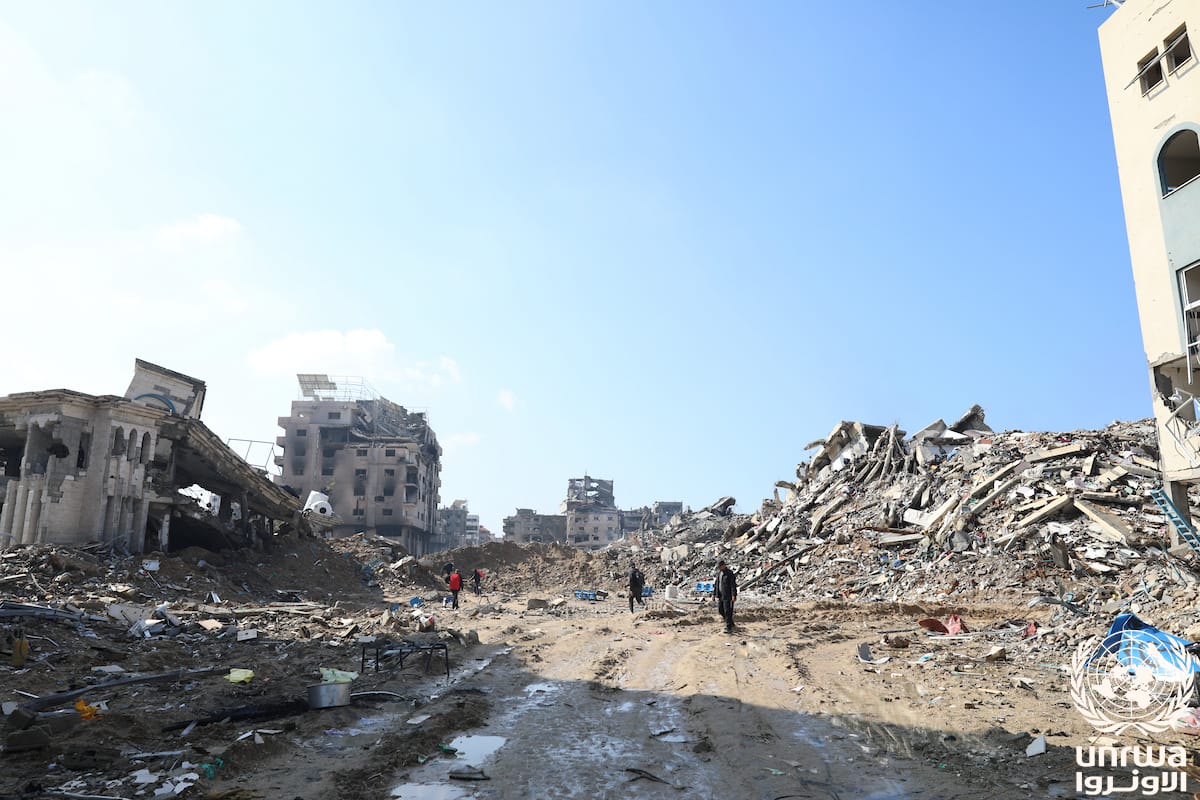
Chapter 9 — The War That Followed: Gaza, Hostages and International Consequences
From the October 7 Attacks to War in Gaza
The Hamas-led attacks of October 7, 2023, marked the beginning of one of the most devastating chapters in the Israeli-Palestinian conflict.
Following the killing of approximately 1,200 people in southern Israel and the abduction of 251 hostages, Israel launched a major military campaign against Hamas in the Gaza Strip.
The Israeli government declared that its principal objectives were to dismantle Hamas's military and governing capabilities, prevent further attacks and secure the return of the hostages.
The military response began with extensive airstrikes and was followed by large-scale ground operations.
Israeli forces targeted Hamas commanders, weapons facilities, rocket-launching positions and underground infrastructure.
However, the fighting took place within one of the world's most densely populated territories, where civilians faced extraordinary dangers.
As the war continued, the destruction of residential neighbourhoods, hospitals, roads and essential infrastructure created a humanitarian crisis extending far beyond the immediate battlefield.
Gaza's Humanitarian Catastrophe
The war had devastating consequences for Gaza's civilian population.
Large numbers of Palestinians were killed or injured, while repeated displacement forced families to move between areas in search of relative safety.
Homes, schools, medical facilities and water infrastructure suffered extensive damage.
Humanitarian organisations reported severe shortages of food, medicines, fuel, clean water and adequate shelter.
Israel maintained that its military operations were directed against Hamas and other armed organisations, accusing them of operating from civilian areas and using underground infrastructure beneath populated neighbourhoods.
Hamas denied various Israeli allegations concerning the military use of civilian facilities.
Independent investigations documented serious concerns about the conduct of hostilities, civilian protection and restrictions on humanitarian assistance.
The presence of military infrastructure within civilian areas does not automatically make every nearby building or individual a lawful military target.
International humanitarian law requires all parties to distinguish between civilians and combatants, avoid indiscriminate attacks and take feasible precautions to minimise civilian harm.
By October 2026, the humanitarian consequences remained severe despite the ceasefire agreement announced in October 2025.
United Nations reporting continued to document casualties, displacement, damaged infrastructure and shortages of essential supplies.
For hundreds of thousands of Palestinians, the immediate challenges of survival, shelter and rebuilding remained unresolved.
The Hostages and Their Families
For Israel, the hostage crisis became one of the defining issues of the war.
The abduction of civilians, soldiers, children and elderly people on October 7 created a national trauma that extended across Israeli society.
Families organised demonstrations, met political leaders and demanded agreements that would secure the release of their relatives.
Hostages were released through negotiated exchanges, while others were rescued during Israeli military operations. Some were killed in captivity or during the conflict, and their remains were subsequently recovered.
The negotiations involved difficult questions concerning ceasefires, Palestinian prisoners held by Israel, humanitarian assistance and the future of Hamas's role in Gaza.
Qatar, Egypt and the United States played important mediation roles.
The hostage crisis also intensified political divisions within Israel.
Some Israelis argued that military pressure was essential to secure the release of captives and prevent future attacks.
Others feared that continued military operations endangered those still being held and called for negotiated agreements to take priority.
These disagreements reflected a profound dilemma between immediate humanitarian responsibilities and longer-term security objectives.
The taking of hostages remains prohibited under international humanitarian law, regardless of the political or military objectives of those responsible.
International Legal Scrutiny
The war generated intense international scrutiny concerning the conduct of both Hamas-led armed groups and Israeli forces.
In November 2024, the International Criminal Court issued arrest warrants for Israeli Prime Minister Benjamin Netanyahu and former Defence Minister Yoav Gallant over alleged war crimes and crimes against humanity.
The allegations included the use of starvation as a method of warfare and other serious offences involving Gaza's civilian population.
Israel rejected the allegations and challenged the court's jurisdiction.
An arrest warrant is not a criminal conviction. It reflects a judicial finding that the legal threshold for issuing a warrant has been met, while criminal responsibility must be established through further proceedings.
The ICC also issued a warrant for Mohammed Deif in connection with alleged war crimes and crimes against humanity arising from the October 7 attacks. Proceedings against him were terminated in February 2025 following confirmation of his death.
Separately, South Africa brought proceedings against Israel before the International Court of Justice under the Genocide Convention.
Israel rejected the accusation of genocide, maintaining that its military campaign was directed against Hamas rather than the Palestinian population.
The ICJ ordered provisional measures and continued examining the case. As of October 2026, it had not issued a final judgment determining whether Israel had committed genocide.
The distinction between these proceedings is important.
The ICC examines the potential criminal responsibility of individuals, while the ICJ addresses disputes concerning the legal obligations of states.
Both processes form part of a broader international debate over accountability, civilian protection and the application of international law.
A Conflict With Regional Consequences
The war's effects extended beyond Israel and Gaza.
Hezbollah and Israel engaged in hostilities across the Lebanese border, while Iran-backed armed groups elsewhere in the region became involved in attacks and confrontations.
The Houthis in Yemen targeted shipping in the Red Sea, contributing to disruptions in international maritime trade.
Direct military exchanges between Israel and Iran further demonstrated the danger of regional escalation.
The United States remained closely involved through military assistance to Israel, diplomatic initiatives and efforts to prevent a wider conflict.
European governments faced increasing pressure over arms exports, humanitarian assistance, recognition of Palestinian statehood and their diplomatic relationships with Israel.
Public demonstrations reflected deep divisions over the war, civilian casualties and the responsibilities of the parties involved.
These developments showed how a conflict originating in Gaza could affect international security, economic interests and political relationships far beyond the territory itself.
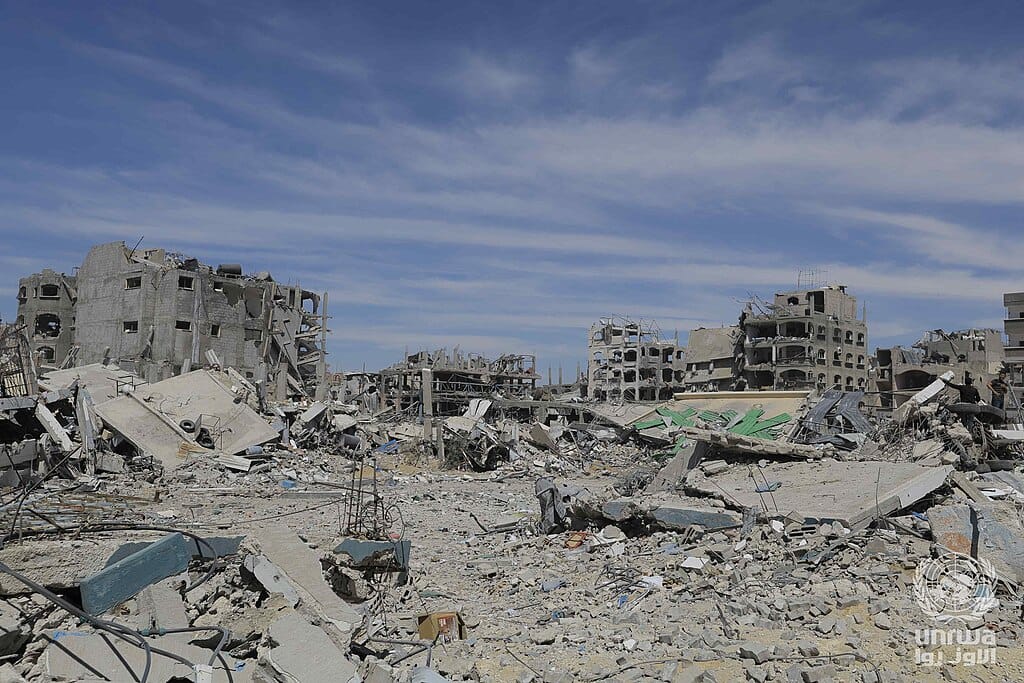
The Future of Gaza and Israel's Security
The central political questions remained difficult to resolve.
Israel sought guarantees that Hamas would not be able to organise another attack comparable to October 7.
Palestinians faced urgent questions about reconstruction, governance, freedom of movement, political representation and their future national aspirations.
International mediators continued to confront the challenge of developing security arrangements acceptable to the relevant parties.
The destruction of Hamas's military capabilities, the future administration of Gaza and the possibility of a sustainable political settlement remained closely connected.
Military operations alone could not resolve every political issue underlying the conflict.
Equally, any proposed settlement would need to address the security concerns of Israeli civilians and the danger posed by armed groups deliberately targeting them.
The Lasting Consequences
The newly released Al Jazeera documentary returns attention to the military leadership and preparations preceding October 7.
Yet the consequences of those decisions cannot be understood solely through footage of commanders meeting underground.
They must also be measured through the lives lost in Israel, the suffering of hostages and their families, the destruction experienced by Palestinians in Gaza and the regional instability that followed.
The documentary may help explain how Hamas prepared its assault.
It cannot, by itself, explain every subsequent political decision, military operation or humanitarian consequence.
Those events require their own evidence and accountability.
Three years after October 7, the central challenge remained the same: how to protect civilians, establish responsibility for serious violations and prevent another cycle of devastating violence.
The final chapter examines what the newly released footage genuinely adds to the historical record, what remains unverified and which questions still demand answers.
Chapter 10 — What the Footage Reveals — and the Questions That Remain
A Rare Glimpse Into a Secretive Military Organisation
The release of previously unseen footage of Mohammed Deif and other senior Hamas commanders offers an unusual opportunity to examine the internal structures of an organisation that operated largely beyond public scrutiny.
For years, much of what was publicly known about Hamas's military leadership came from Israeli intelligence assessments, official statements, limited photographs and accounts from individuals associated with the organisation.
The October 2026 Al Jazeera documentary adds another perspective.
It presents images of senior commanders meeting underground, moving through concealed facilities and reportedly visiting weapons production sites. It also introduces documents that the broadcaster associates with the planning of the October 7, 2023 attacks.
Together, these materials may contribute to a more detailed historical understanding of Hamas's military organisation.
However, the distinction between revealing new evidence and establishing definitive conclusions remains essential.
The footage provides potentially valuable information, but it does not answer every question about the decisions, motivations and responsibilities behind October 7.
What the Documentary Establishes
The most significant visual material concerns the apparent presence of senior Hamas commanders within underground facilities.
The recordings offer a rare view of individuals identified as Mohammed Deif, Marwan Issa, Mohammed Sinwar and other members of the Al-Qassam Brigades' leadership.
They illustrate the existence of an organised military hierarchy and facilities capable of accommodating meetings involving senior figures.
Other sequences reportedly show interactions between military commanders and Hamas's political leadership.
These images are relevant to understanding how the organisation functioned, particularly the relationships between individuals responsible for military operations and those exercising political authority.
Nevertheless, the footage does not independently establish the subjects discussed during particular meetings.
Nor can every recording be connected directly to the planning of October 7.
Some images are believed to predate May 2021, more than two years before the attack.
Their historical significance therefore lies partly in documenting Hamas's earlier military organisation rather than providing direct evidence of the final operational preparations.
The Importance of the Secret Documents
The documents presented in the documentary may prove more consequential than the images themselves.
According to Al Jazeera, a document dated February 11, 2023, describes discussions concerning preparations for a major operation against Israel.
A second document, dated October 5, 2023, is presented as a final operational order signed by Mohammed Deif.
The reported identification of 6.30 a.m. on October 7 as the starting time is particularly noteworthy because it corresponds with the approximate beginning of the assault.
If independently authenticated, these documents could help establish important stages in the decision-making process.
They might also clarify the relationship between long-term military preparation and the final decision to launch the attack.
However, the documents' complete provenance and chain of custody have not been independently established in the material available for this investigation.
Their authenticity, completeness and original context therefore remain important questions.
A document that appears consistent with known events is not necessarily sufficient to establish every claim associated with it.
Independent examination and corroboration remain necessary.
The Questions That Remain Unanswered
Despite the documentary's significance, several fundamental questions remain unresolved.
When did Hamas's leadership first decide to prepare an operation on the scale of October 7?
Which individuals participated in the final decision, and how were responsibilities distributed between the military and political leadership?
How much information was shared with regional commanders and participating armed units before the assault?
To what extent did external supporters possess advance knowledge of the operation?
And why were particular recordings and documents released more than three years after the attack?
The documentary provides possible starting points for investigating these questions, but it does not conclusively resolve them.
Further examination of original documents, communications, intelligence assessments and testimony would be required to establish a more complete historical record.
Israel's Intelligence Failure Remains Central
The newly released material also reinforces the importance of examining Israel's intelligence and security failures.
Before October 7, Israeli authorities possessed information concerning Hamas's military preparations, including the Jericho Wall attack plan.
Subsequent investigations identified serious failures in intelligence assessment, operational readiness and the interpretation of warning signs.
The central issue was not simply whether Hamas possessed the capability to attack.
It was whether Israeli institutions accurately assessed the possibility that the organisation intended to use those capabilities.
The documentary's purported internal documents may eventually provide additional context for understanding the gap between Hamas's preparations and Israeli assessments.
However, they do not establish that Israeli intelligence possessed these specific records before the attack.
Responsibility for the assault rests with those who planned, directed and carried it out.
The failure to prevent it raises separate questions about the responsibilities of Israel's political, intelligence and military institutions.
Both issues require investigation without confusing one form of responsibility with the other.
Accountability Beyond the Battlefield
The consequences of October 7 extend far beyond the military leadership shown in the documentary.
The attacks resulted in mass killings, hostage-taking and serious violations of international humanitarian law.
The subsequent war caused devastating civilian suffering in Gaza, widespread destruction and major regional instability.
These events have generated investigations concerning the conduct of Hamas-led armed groups and Israeli forces.
Accountability requires evidence, legal scrutiny and a willingness to examine allegations regardless of the identity of those involved.
The deliberate targeting of civilians and the taking of hostages are prohibited under international humanitarian law.
Military operations must also comply with the rules of distinction, proportionality and precautions to protect civilians.
These obligations apply independently to all parties.
Recognising the crimes committed on October 7 does not diminish the suffering of Palestinian civilians.
Likewise, acknowledging the devastation in Gaza does not diminish the responsibility of those who carried out the attacks against Israeli communities.
A credible historical account must recognise both realities while preserving the distinctions between perpetrators, combatants and civilians.
The Responsibility of Independent Journalism
The documentary also raises a broader question about the role of journalism in documenting armed conflict.
Rare footage and internal documents can contribute significantly to public understanding, particularly when they concern organisations that operate in secrecy.
But access to exclusive material creates responsibilities.
Journalists must consider who produced the recordings, why they were preserved, how they reached the broadcaster and whether important context may have been omitted.
The release of authentic material can still serve the strategic communication objectives of the organisation that originally controlled it.
For this reason, independent reporting should neither accept nor reject evidence solely because of its source.
Instead, claims should be tested against verifiable facts, competing accounts and established historical records.
The distinction between what footage shows and what commentators claim it proves is particularly important in conflicts characterised by competing narratives and intense political polarisation.
What This Means for Understanding October 7
The documentary adds a potentially important layer to the historical record.
It offers visual material concerning Hamas's military leadership and presents documents that may clarify aspects of the preparations preceding October 7.
Its significance lies partly in the questions it allows investigators to ask more precisely.
The images suggest a concealed but organised military command structure.
The purported documents point towards a sequence of planning decisions.
And the comparison with Israeli intelligence findings highlights the gap between Hamas's preparations and Israel's assessment of the threat.
Yet the evidence remains incomplete.
Understanding October 7 requires more than one documentary, one set of documents or one government's investigation.
It requires the continued examination of military records, witness testimony, independently verified imagery and the decisions made by political and military leaders.
Conclusion — Beyond the Hidden Footage
The newly released recordings of Mohammed Deif and Hamas's senior commanders offer a rare glimpse into a military organisation whose internal activities remained largely concealed for decades.
They provide additional context for understanding the leadership structures and underground infrastructure that developed before October 7, 2023.
The purported planning documents may eventually prove even more important if their authenticity and historical context can be independently established.
But the documentary should not be mistaken for a complete explanation of the attack.
The events of October 7 resulted from decisions made by individuals operating within a wider military and political organisation.
Those decisions led to the deliberate killing and abduction of civilians, the devastation of Israeli communities and a war that inflicted catastrophic suffering on Gaza's population.
The responsibility of independent journalism is to examine these events without allowing political loyalties or competing narratives to determine the conclusions.
For Beyond the Lines, the central question is not simply what the cameras captured inside Hamas's tunnels.
It is what the evidence can reliably tell us about the decisions made before October 7, the failures that allowed the attack to unfold and the responsibilities that remain to be established.
The footage may reveal part of a hidden history.
Understanding its full significance will require continued investigation, independent verification and a commitment to examining the evidence wherever it leads.
Watch the Original Documentary
Al Jazeera's investigation featuring previously unseen footage of Mohammed Deif and Hamas's military leadership.
Watch the Full DocumentaryAl Jazeera | Arabic | Approximately 57 minutes
Sources & References
Original Documentary and Newly Released Footage
1. Al Jazeera — The Hidden Is More Immense: Mohammed Deif Documentary (30 October 2026)
Original Arabic-language documentary featuring previously unpublished footage of Mohammed Deif, senior Hamas military commanders, underground facilities and purported internal documents concerning preparations for October 7, 2023.
2. The Times of Israel — Al Jazeera Airs Unseen Hamas Videos of Top Commanders, All Since Killed (31 October 2026)
Reporting by Emanuel Fabian examining the newly released footage, identifying senior Hamas commanders and providing historical context for the underground meeting recordings.
Hamas, Mohammed Deif and Military Organisation
3. International Criminal Court — Situation in the State of Palestine
Official information concerning Mohammed Deif, his position within the Al-Qassam Brigades, allegations relating to October 7 and the termination of proceedings following confirmation of his death.
https://www.icc-cpi.int/palestine
4. Council on Foreign Relations — What Is Hamas?
Background analysis examining Hamas's origins, political leadership, military wing, regional relationships and role in the Israeli-Palestinian conflict.
https://www.cfr.org/backgrounder/what-hamas
October 7, 2023: Attacks and Investigations
5. Human Rights Watch — “I Can't Erase All the Blood from My Mind”: Palestinian Armed Groups' October 7 Assault on Israel (17 July 2024)
Detailed investigation documenting attacks against civilians, killings, hostage-taking and other violations committed by Hamas-led armed groups on October 7.
6. United Nations Human Rights Council — Independent International Commission of Inquiry on the Occupied Palestinian Territory, including East Jerusalem, and Israel (2024)
Investigative findings concerning the October 7 attacks, Israeli military operations in Gaza and alleged violations of international humanitarian and human rights law.
https://www.ohchr.org/en/hr-bodies/hrc/co-israel/index
Israeli Intelligence and Security Failures
7. The New York Times — Israel Knew Hamas's Attack Plan More Than a Year Ago (30 November 2023)
Investigative reporting on the Jericho Wall document, Israeli intelligence assessments and the warnings preceding October 7.
https://www.nytimes.com/2023/11/30/world/middleeast/israel-hamas-attack-intelligence.html
8. Israel Defense Forces — October 7 Investigations (2025)
Official military investigations examining intelligence failures, operational preparedness, border security and the Israeli military response.
9. Israel Security Agency (Shin Bet) — Investigation into the October 7 Intelligence Failure (2025)
Official findings concerning intelligence assessments, warning indicators and institutional failures preceding the Hamas-led attacks.
International Humanitarian Law and Accountability
10. International Criminal Court — Situation in the State of Palestine (2024–2025)
Official documentation concerning arrest warrants for Benjamin Netanyahu, Yoav Gallant and Mohammed Deif, including allegations of war crimes and crimes against humanity.
https://www.icc-cpi.int/palestine
11. International Court of Justice — Application of the Convention on the Prevention and Punishment of the Crime of Genocide in the Gaza Strip (South Africa v. Israel)
Official case materials, provisional measures and procedural developments relating to South Africa's proceedings against Israel under the Genocide Convention.
https://www.icj-cij.org/case/192
12. International Committee of the Red Cross — International Humanitarian Law
Authoritative explanations of the rules governing armed conflict, including the protection of civilians, the prohibition of hostage-taking, distinction, proportionality and precautions in attack.
https://www.icrc.org/en/law-and-policy
Humanitarian Consequences and Regional Developments
13. United Nations Office for the Coordination of Humanitarian Affairs — Humanitarian Situation Reports: Occupied Palestinian Territory
Humanitarian reporting on casualties, displacement, damage to civilian infrastructure, access to essential services and conditions in the Gaza Strip.
14. United Nations Relief and Works Agency for Palestine Refugees in the Near East — Gaza Emergency Response
Information concerning displacement, humanitarian assistance, shelter, education and the impact of the war on Palestinian refugees.
Editorial Note
This Beyond the Lines special report examines footage and purported internal Hamas documents broadcast by Al Jazeera on 30 October 2026.
The documentary contains previously unpublished recordings of Mohammed Deif and other senior Hamas figures. However, the complete provenance, original recording dates and chain of custody of all materials have not been independently established.
In particular, documents reportedly dated 11 February and 5 October 2023 have not been independently forensically authenticated for this report.
Descriptions of these documents are therefore attributed to Al Jazeera rather than presented as independently verified findings.
The report distinguishes between documented historical events, official statements, investigative findings, allegations and interpretations of newly released material.
Legal allegations are not presented as criminal convictions, and findings from different judicial institutions are distinguished according to their respective mandates.
Beyond the Lines remains committed to independent journalism, factual accuracy, transparent sourcing and the examination of evidence regardless of political affiliation.
Independent Journalism. Beyond the Headlines.