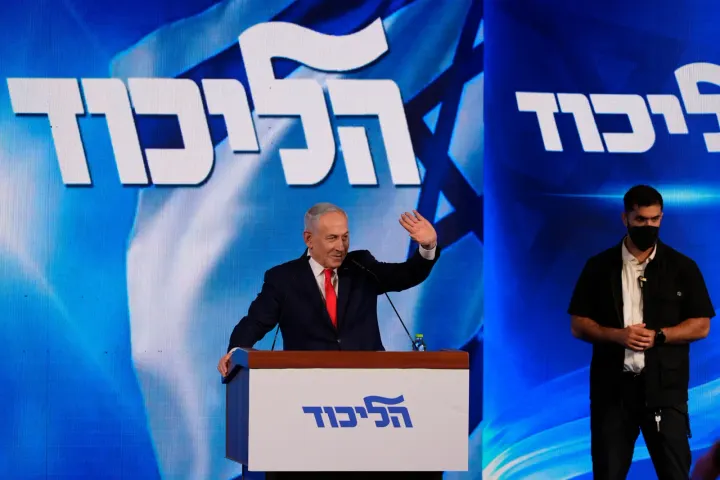
Europe’s Growing Hostility Towards Israel:
As antisemitism rises across Europe, protests, political divisions and media narratives raise difficult questions about hostility towards Israel and Jewish communities.
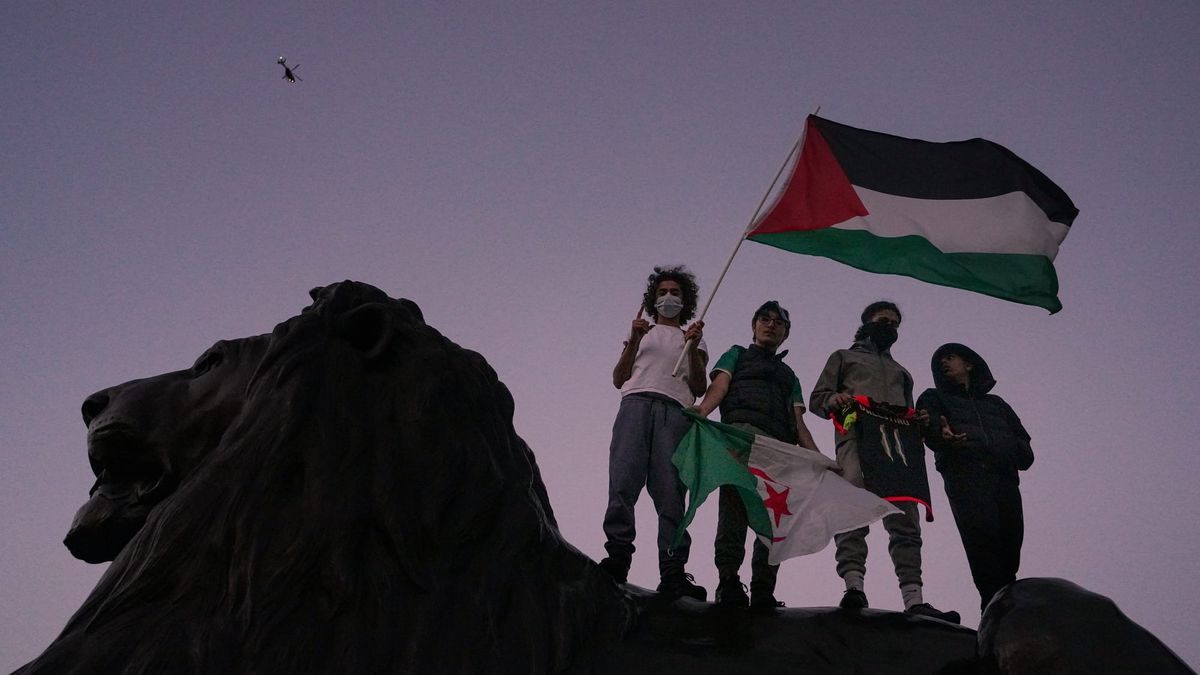
When Protest Becomes Intimidation and Political Silence Raises Questions
Across Europe, the Israeli-Palestinian conflict has moved far beyond the borders of the Middle East. Demonstrations, political confrontation, online hostility and rising antisemitism have transformed public debate. As Jewish communities report growing insecurity, difficult questions emerge about the responsibilities of governments, protest movements and the media. Where does legitimate criticism of Israel end, and where does hatred begin?
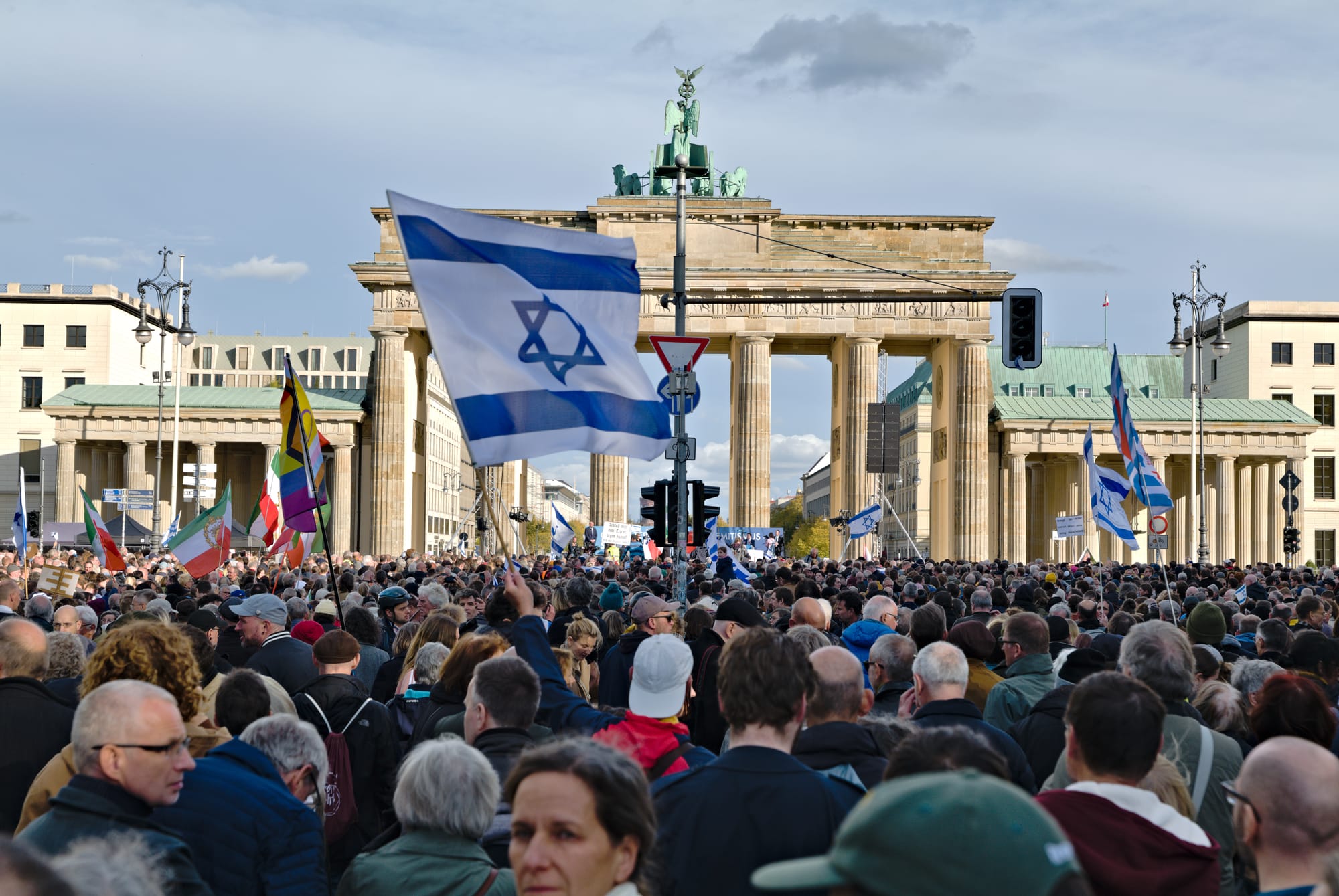
Chapter 1 — Europe’s Uncomfortable Reality: Antisemitism Has Not Disappeared
For decades, Europe has presented itself as a continent that learned from its darkest history.
The Holocaust remains one of the most extensively documented crimes against humanity. Approximately six million Jews were systematically murdered by Nazi Germany and its collaborators. Entire communities were destroyed, families disappeared, and generations of Jewish life were permanently changed.
After the Second World War, European nations promised that such hatred would never again be allowed to flourish.
Memorials were constructed. Holocaust education became part of school curricula. Governments introduced laws against racial hatred and discrimination. Political leaders repeatedly emphasized the importance of remembrance.
Yet remembering history and preventing its repetition are not the same thing.
Today, Jewish communities across Europe continue to report harassment, threats, vandalism and concerns about personal security. Jewish institutions in several countries operate under heightened protection, while some individuals avoid displaying visible signs of their religious identity.
The European Union Agency for Fundamental Rights published a major survey in 2024 revealing that antisemitism was already a serious problem before the Hamas-led attacks of October 7, 2023.
Among Jewish respondents, 84% considered antisemitism a serious problem in their country, while 76% said they concealed their Jewish identity at least occasionally.
These figures reveal a troubling contradiction.
Europe publicly celebrates religious freedom, yet many Jewish citizens do not always feel comfortable expressing their identity openly.
The war between Israel and Hamas has intensified the political environment surrounding this longstanding problem.
Since October 2023, European streets have become places of repeated demonstrations, public confrontation and fierce debate about Israel's military operations in Gaza.
Many demonstrators express genuine concern about Palestinian civilians. Others advocate Palestinian statehood or oppose particular Israeli government policies.
But alongside legitimate political activism, antisemitic incidents have generated serious concerns about the direction of public discourse.
The distinction between the State of Israel, its government, Israeli citizens and Jewish communities worldwide is sometimes blurred.
That confusion has consequences.
A Jewish family in France is not responsible for decisions made by Israel's government. A synagogue in Germany does not represent the Israeli military. A Jewish student in the Netherlands does not control the policies of the Knesset.
Nevertheless, when hostility towards Israel is redirected towards Jewish institutions or individuals, political anger becomes collective blame.
This is precisely the kind of reasoning that European history should have taught societies to reject.
The issue is not whether Israel should be criticized.
Israel, like every other state, must remain subject to political scrutiny, international law and independent journalism.
The issue is whether criticism is being expressed in ways that respect the distinction between political responsibility and ethnic or religious identity.
Europe's democratic credibility depends on maintaining that distinction.
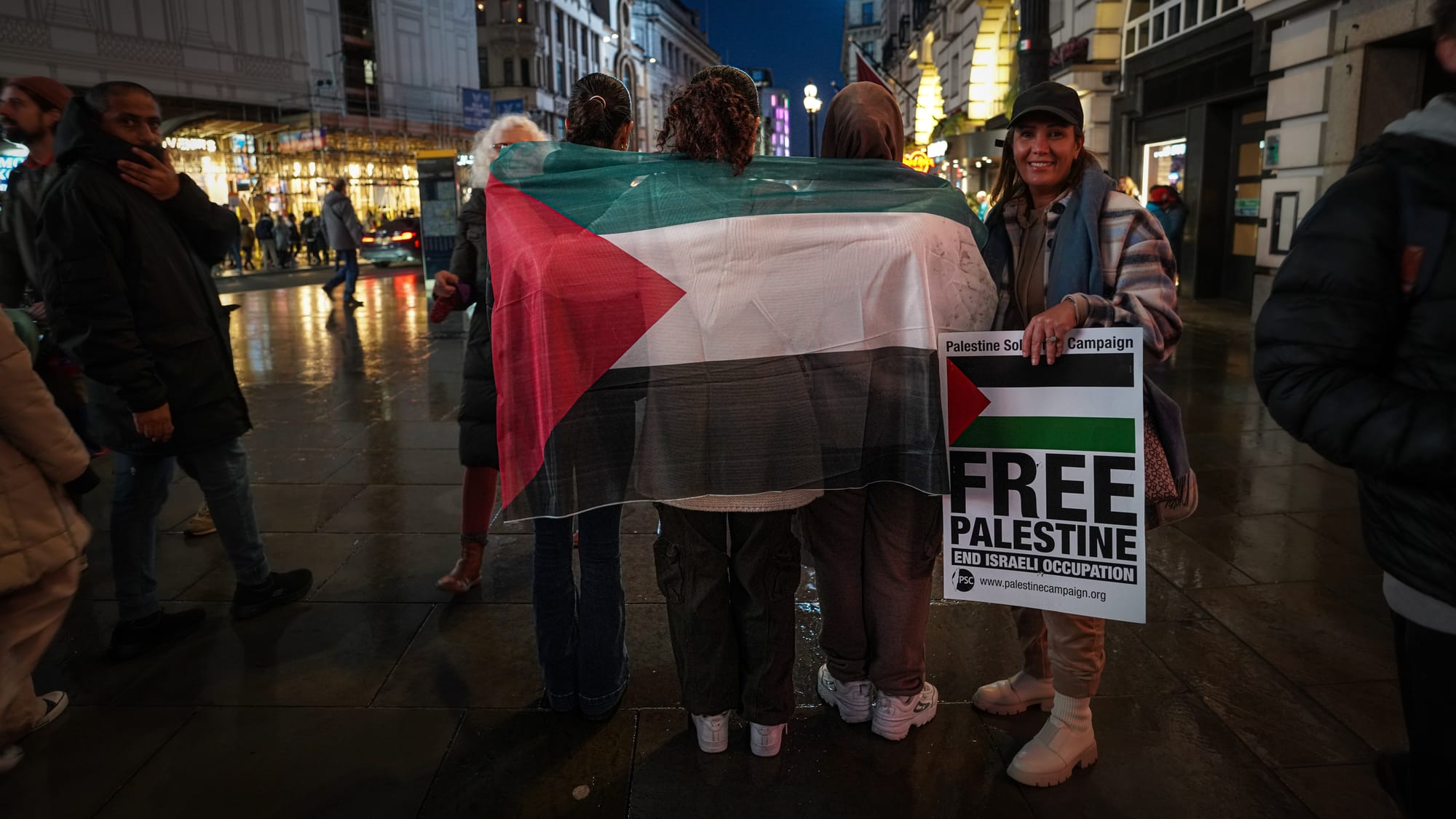
Chapter 2 — Free Palestine: A Movement, a Slogan and a Growing Political Divide
Across Europe, the words “Free Palestine” appear on banners, posters, university buildings and social media profiles.
The slogan has become one of the most recognizable political messages associated with the war in Gaza.
For many demonstrators, it expresses support for Palestinian self-determination and opposition to Israeli military actions. Others use it to demand an end to occupation or restrictions affecting Palestinian communities.
However, the slogan does not have one universally agreed political meaning.
Palestine historically referred to a geographical region governed by different empires and administrations. It was not a continuously independent modern nation-state. Today, the State of Palestine is recognized by a large majority of United Nations member states, although its sovereignty remains contested and it is not a full UN member.
This historical distinction is often missing from simplified public discussions.
The more urgent concern, however, is what happens when political slogans become associated with intimidation, antisemitic rhetoric or expressions of hostility towards Israeli civilians.
Not every participant in a Free Palestine demonstration shares the same objectives.
Some support a negotiated two-state solution. Others advocate a single state with equal political rights. Some reject the continued existence of Israel as a Jewish state.
These positions differ significantly and should not automatically be treated as interchangeable.
Nevertheless, public demonstrations create shared spaces in which participants, organizers and political supporters have responsibilities.
When antisemitic language appears, when violence against civilians is celebrated or when Jewish people are targeted because of their identity, the legitimacy of the broader political cause cannot excuse the conduct.
The right to protest is a cornerstone of European democracy.
But that right does not include threatening individuals, attacking religious institutions or encouraging violence.
The question for European authorities is whether those boundaries are consistently recognized and enforced.
Supporting Palestinian rights should never require denying the safety, dignity or legitimate rights of Israeli and Jewish people.
Chapter 3 — European Streets: When Demonstrations Become Confrontations
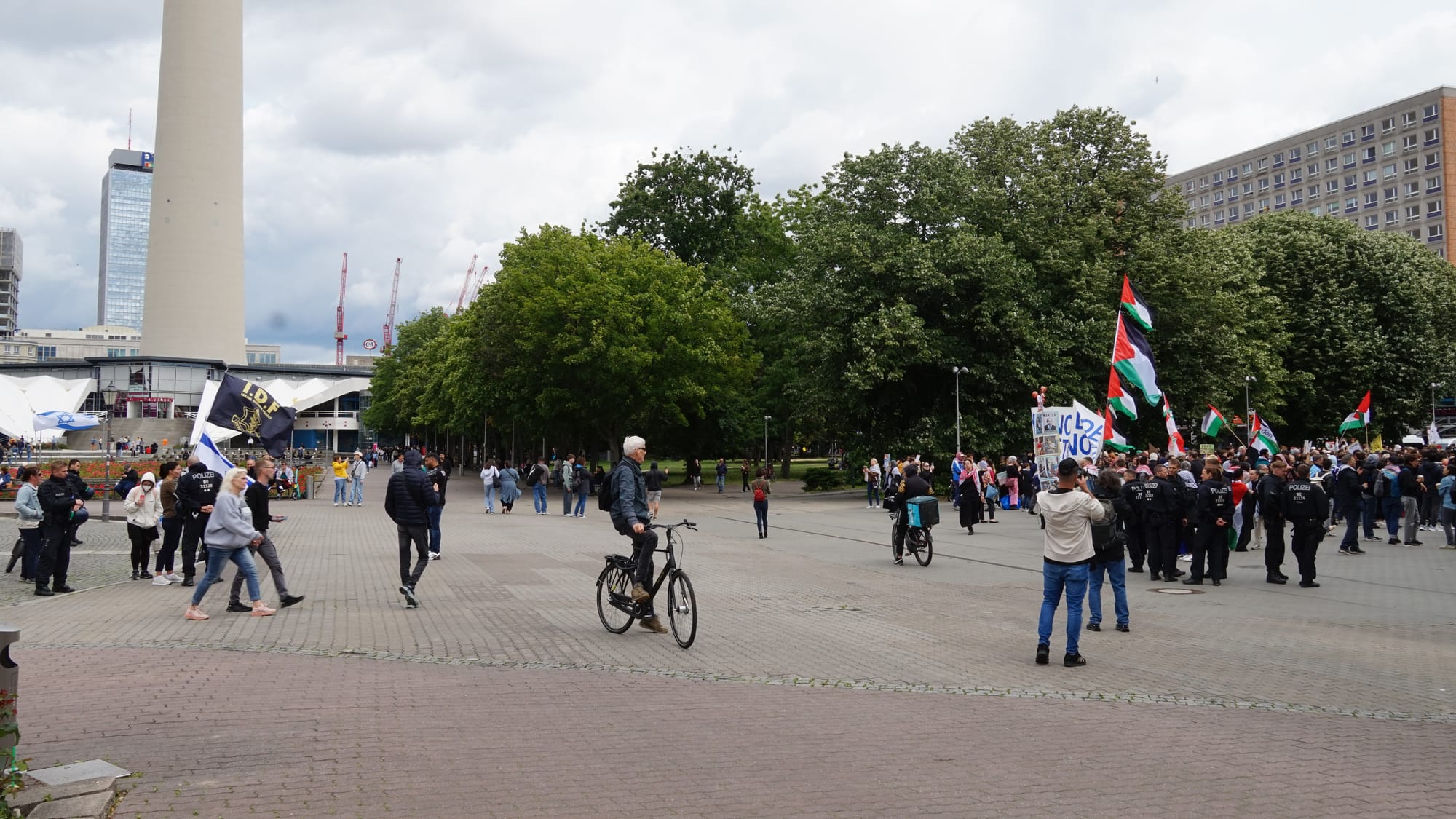
Since October 2023, major European cities have experienced repeated demonstrations related to Israel and Gaza.
London, Paris, Berlin, Amsterdam, Brussels and other cities have seen large gatherings demanding ceasefires, Palestinian rights or changes in European foreign policy.
Many demonstrations have remained peaceful.
Yet others have involved arrests, clashes with police, property damage, confrontations between opposing groups or allegations of antisemitic intimidation.
These incidents deserve careful examination because they raise two separate questions.
First, are authorities adequately protecting the right to peaceful assembly?
Second, are they responding effectively when individuals commit violence, issue threats or target Jewish communities?
Both questions matter.
Amsterdam: Protest, policing and public disorder
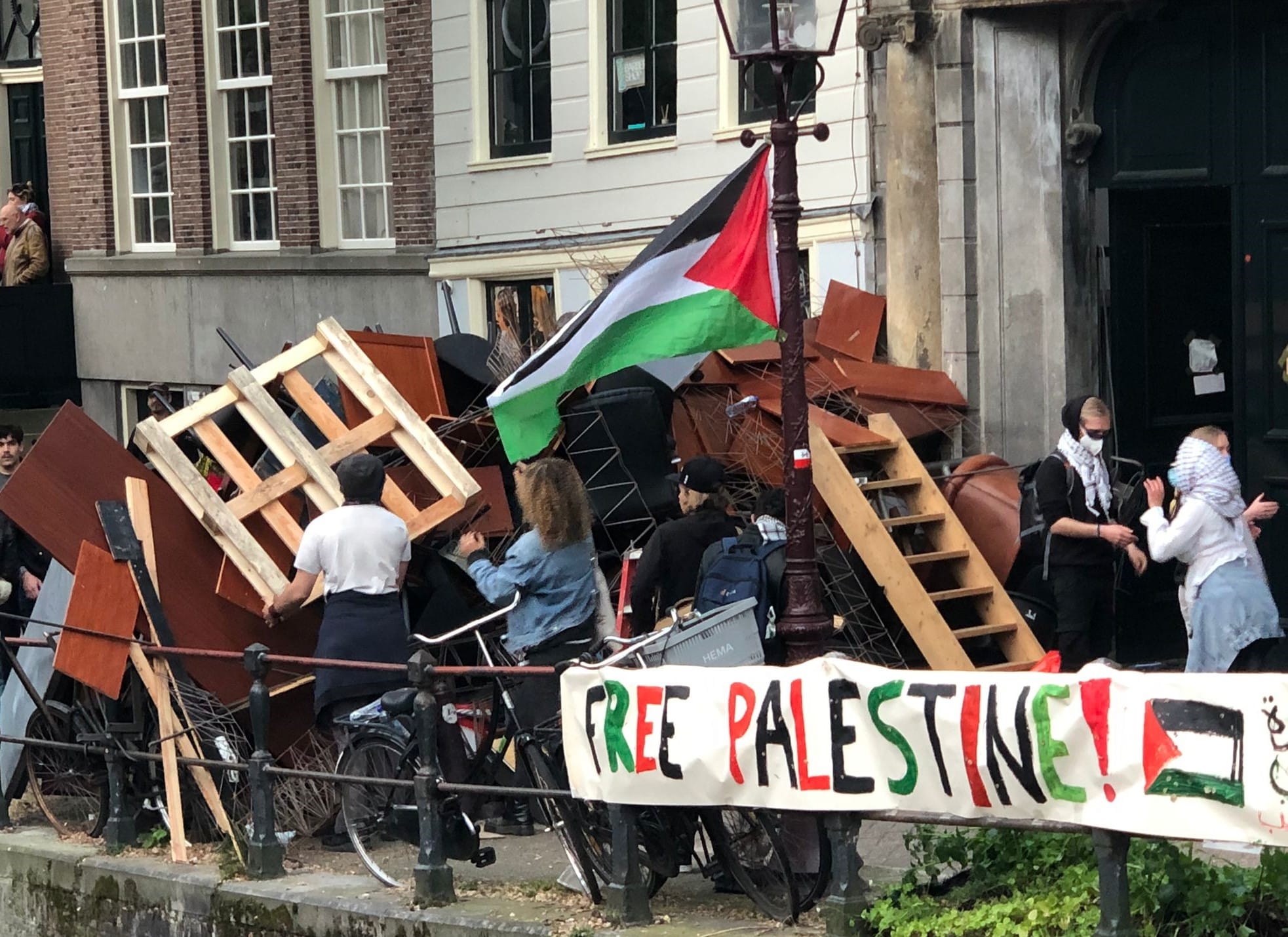
In May 2024, pro-Palestinian university protests in Amsterdam escalated into confrontations involving barricades, occupied university property and police intervention.
Demonstrators demanded changes to university relationships with Israeli institutions.
Dutch police dismantled barricades and detained protesters. The intervention generated controversy over police tactics and the limits of university protest.
The events illustrated how quickly a political demonstration can develop into a wider public-order confrontation.
However, arrests or confrontations alone do not establish antisemitic motivation.
A serious investigation must distinguish damage to property, obstruction, peaceful civil disobedience, criminal violence and identity-based intimidation.
These are different forms of conduct requiring different legal and journalistic assessments.
London: Large demonstrations and Jewish community concerns
London has witnessed some of the largest pro-Palestinian marches in Europe.
Thousands of people have repeatedly gathered to protest Israeli military operations and express solidarity with Palestinians.
The marches have included participants from many backgrounds, including Jewish organizations critical of Israeli policies.
At the same time, some incidents associated with the wider protest environment have raised concerns about antisemitic rhetoric, public safety and intimidation.
The Metropolitan Police have faced difficult decisions involving protest routes, counterdemonstrations, arrests and the protection of communities.
Jewish residents have expressed concern about whether they can move freely through areas affected by demonstrations without encountering hostility.
Those concerns should be investigated seriously.
But the existence of such concerns should not be used to portray every marcher as antisemitic or violent.
Berlin: Germany’s particular responsibility
Germany's historical relationship with antisemitism makes its response to the conflict especially significant.
The country has an explicit commitment to protecting Jewish life, rooted in its responsibility for the Holocaust.
At the same time, Germany's constitutional order protects freedom of expression and peaceful assembly.
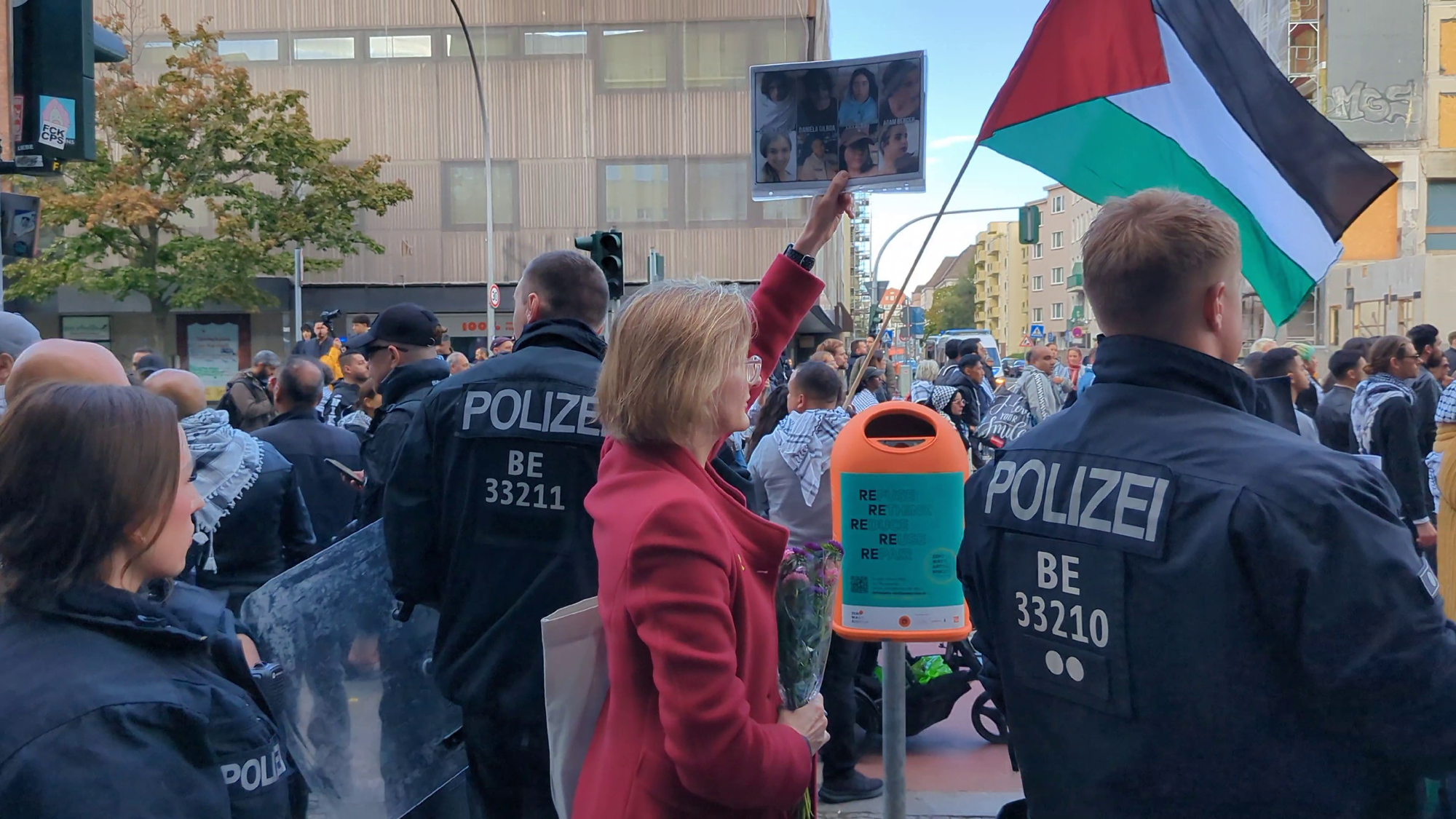
Berlin has experienced demonstrations, police interventions and disputes over the boundaries of political speech.
Authorities have faced criticism from different directions.
Some Jewish organizations have called for stronger action against antisemitism. Civil-liberties advocates and Palestinian-rights groups have questioned whether some restrictions on demonstrations were excessive.
This creates a complex democratic challenge.
The government must protect Jewish communities without treating all expressions of Palestinian solidarity as threats.
The same principle applies throughout Europe.
A wider European question
The repeated confrontations surrounding demonstrations have become a test of institutional consistency.
When violence occurs, the perpetrators should be held accountable.
When demonstrators remain peaceful, their rights should be protected.
When antisemitic threats are reported, authorities should investigate them.
And when police use force, their actions should be subject to appropriate scrutiny.
These standards are not contradictory.
They are essential components of democratic governance.
Chapter 4 — Amsterdam 2024: When Israeli Identity Became a Target
One of the most disturbing European incidents following October 7 occurred in Amsterdam in November 2024.
Israeli football supporters had travelled to the Dutch capital for a Europa League match between Maccabi Tel Aviv and Ajax.
What should have been an international sporting event became a night of violence, fear and political controversy.
Following the match, groups of Israeli supporters were attacked in different parts of Amsterdam.
Videos circulated showing people being chased, assaulted and confronted in the streets. Some victims reported being targeted because they were Israeli.
Amsterdam's mayor, Femke Halsema, described attackers as antisemitic hit-and-run squads.
Accounts from Israeli supporters described fear for their safety and concerns that police intervention came too late.
The violence was particularly alarming because it demonstrated how a conflict taking place in the Middle East could be redirected towards individuals visiting a European city.
These were football supporters, not representatives of the Israeli government.
Their nationality did not make them responsible for the war in Gaza.
The wider circumstances
The events were complex.
Reports also documented provocative and offensive behavior by some visiting supporters before the attacks, including anti-Arab chants and incidents involving Palestinian flags.
Those actions required scrutiny and, where appropriate, accountability.
However, misconduct by some supporters could not justify subsequent assaults on others.
Collective punishment is not an acceptable response to political provocation.
The central question is whether individuals were deliberately hunted or assaulted because they were identified as Israeli or Jewish.
Where evidence establishes that motivation, the incident must be recognized as more than an ordinary football disturbance.
What Amsterdam revealed
The attacks generated political debate in the Netherlands and internationally.
Questions arose about intelligence gathering, police preparation, the response to threats and the broader atmosphere of hostility surrounding Israeli visitors.
The incident also exposed the difficulty of discussing politically charged violence without immediately reducing the facts to competing narratives.
Some commentators focused on the attacks against Israelis.
Others emphasized the behavior of particular Maccabi supporters before the match.
Both subjects were relevant to reconstructing the sequence of events, but neither should be used to erase the other.
A thorough account requires a chronology of what happened, the identification of perpetrators, an examination of police decisions and a distinction between provocation and criminal assault.
The wider lesson extends beyond Amsterdam.
European streets cannot become places where individuals are treated as legitimate targets because of their nationality, religion or presumed political allegiance.
Chapter 5 — The Political Left: Solidarity, Selective Outrage and the Responsibility to Act
The European left has a long history of supporting movements associated with anti-colonialism, international solidarity, minority rights and opposition to discrimination.
Within this tradition, Palestinian self-determination has become an important political cause.
Left-wing parties, student organizations, trade unions and activist networks have participated in demonstrations and campaigns calling for ceasefires, recognition of Palestinian statehood or restrictions on military cooperation with Israel.
These positions form part of legitimate democratic debate.
However, critics have raised concerns about the way some political organizations respond when antisemitism appears within movements they otherwise support.
The issue is not whether solidarity with Palestinians is acceptable.
It is whether political solidarity sometimes makes organizations reluctant to challenge discriminatory behavior among their own supporters.
The danger of selective condemnation
Political movements frequently define themselves through their opposition to injustice.
Yet the credibility of that commitment depends on consistency.
An organization that condemns racist language from a political opponent should apply the same standard when discriminatory language appears at its own demonstrations.
A politician who demands protection for one minority community should not dismiss credible threats against another.
And a movement that campaigns for civilian protection in Gaza should also be capable of condemning deliberate attacks against Israeli civilians.
These principles do not require abandoning support for Palestinian rights.
They require separating that support from any tolerance of antisemitism.
The European Commission has recognized that contemporary antisemitism can emerge from far-right, far-left and Islamist extremist environments, as well as from more mainstream sections of society.
This broader picture is essential.
Antisemitism cannot accurately be attributed to one political ideology alone.
Nevertheless, the possibility of antisemitism within progressive political spaces deserves scrutiny precisely because those movements often present themselves as defenders of equality.
Political rhetoric and public consequences
Political leaders influence how citizens understand international conflicts.
Their speeches, parliamentary statements and public appearances can either clarify difficult distinctions or reinforce simplistic narratives.
When politicians describe an entire population as responsible for the actions of its government, they risk encouraging collective hostility.
When they fail to distinguish armed organizations from civilians, they can contribute to a climate of suspicion.
And when they condemn hatred only when politically convenient, they weaken confidence in the consistency of democratic principles.
But criticism of political leaders must remain evidence-based.
It would be misleading to claim that all left-wing governments tolerate antisemitism or that governments of another political orientation necessarily provide stronger protection.
The relevant questions concern specific decisions.
Did authorities receive credible warnings before an incident?
Were reports of intimidation investigated?
Did political representatives condemn identifiable antisemitic statements?
Were lawful demonstrations protected?
Were victims given access to appropriate support?
These are the standards by which political responsibility should be examined.
The problem of political silence
Silence can become controversial when political leaders are expected to respond to serious incidents.
Yet silence alone does not prove endorsement.
A meaningful investigation should examine what leaders knew, what they said publicly, what actions they took privately and whether their decisions complied with legal responsibilities.
This approach allows journalists to question government performance without turning political disagreement into unsupported accusations.
Europe needs such scrutiny.
The protection of Jewish communities should never depend on whether the people threatening them belong to a politically convenient movement.
Chapter 6 — October 7: The Historical Turning Point That Cannot Be Removed
On October 7, 2023, Hamas-led armed groups launched a coordinated attack from Gaza into southern Israel.
Armed attackers entered communities near the Gaza border, attacked military installations and targeted civilians at homes, roads and a music festival.
Approximately 1,200 people were killed in Israel, and around 250 were taken hostage.
The attacks involved deliberate killings of civilians, hostage-taking and other serious violations of international humanitarian law.
For Israel, October 7 became one of the most traumatic events in its history.
The attack also transformed the wider regional and international political environment.
Israel launched a major military campaign against Hamas in Gaza.
The subsequent war caused devastating civilian casualties, displacement, destruction of infrastructure and a humanitarian crisis.
The international debate increasingly focused on the scale of suffering in Gaza, the conduct of Israeli military operations and questions of legal accountability.
These concerns are serious and cannot be dismissed.
But October 7 remains essential to understanding the sequence of events.
The danger of removing the beginning of the war
Historical context is not a justification for every action taken during a conflict.
The fact that Hamas carried out atrocities on October 7 does not automatically establish that every subsequent Israeli military operation was lawful or proportionate.
International humanitarian law applies throughout armed conflict.
It requires parties to distinguish civilians from combatants and prohibits indiscriminate attacks and other serious abuses.
Nevertheless, removing October 7 from the account produces an incomplete historical narrative.
The attacks were not an incidental detail.
They were a central event in the immediate chain of developments that led to the war.
Likewise, reporting only on October 7 while minimizing the humanitarian consequences in Gaza would also distort the historical record.
The responsibility of journalism is to preserve both.
Why this matters in Europe
European audiences often encounter the conflict through short news reports, protest slogans and emotionally powerful online content.
In such an environment, the historical sequence can become fragmented.
Some audiences may know extensive details about Gaza's destruction but little about the communities attacked on October 7.
Others may understand the Israeli experience of October 7 but have limited knowledge of the scale of Palestinian displacement and civilian suffering.
Both gaps matter.
A comprehensive understanding of the conflict requires recognizing the suffering of both populations without equating every action or removing individual responsibility.
Hamas is responsible for its own attacks.
Israeli political and military authorities are responsible for decisions taken under their authority.
Neither Israeli nor Palestinian civilians should be treated as collectively responsible for the conduct of armed actors.
This distinction is especially important when the conflict becomes the subject of political activism in Europe.
Chapter 7 — The Media: Are European Audiences Receiving the Complete Story?
News organizations have enormous influence over how international conflicts are understood.
Most Europeans do not experience events in Israel or Gaza directly.
Their knowledge comes from television broadcasts, newspapers, digital publications, photographs, interviews and social media.
Editorial decisions therefore matter.
What appears in a headline can shape a reader's first impression.
Which photograph accompanies an article can influence its emotional impact.
And which facts are included or excluded can change how an event is interpreted.
These decisions are unavoidable in journalism.
No report can include every detail.
But responsible reporting requires editors to identify which information is essential to understanding the event.
The influence of framing
Consider two possible headlines about the same incident.
One headline might emphasize that Israeli forces carried out a strike in Gaza.
Another might emphasize that the Israeli military said it was targeting a Hamas position.
Both statements could be accurate, depending on the evidence.
But each directs attention towards a different aspect of the event.
A complete report should explain what is independently known, what remains an allegation, who provided the information and what consequences followed.
The same principle applies to attacks against Israelis.
A headline describing civilians as having died during violence may obscure the fact that they were deliberately killed by armed attackers.
Precise language matters.
Journalists should distinguish between someone being killed accidentally, dying during an armed confrontation and being intentionally murdered.
Images and emotional responses
Photographs are among the most powerful tools in journalism.
Images of injured children, destroyed homes and grieving families communicate the human cost of war in ways that statistics often cannot.
Such photographs are legitimate and important.
But photographs do not always explain the circumstances in which an event occurred.
A destroyed building does not by itself establish whether a military target was present.
An image of armed men does not automatically identify their organization.
A video of civilians fleeing does not necessarily establish who caused the immediate danger.
These questions require additional reporting.
The responsibility of the journalist is to provide that context wherever reliable evidence is available.
The challenge of independent verification
Reporting from Gaza has involved severe restrictions, danger to journalists and difficulties independently verifying information.
These conditions complicate the work of international news organizations.
Military statements may be incomplete or contested.
Witness accounts can contain errors.
Casualty data may require explanation regarding collection methods and classification.
Videos circulating online may lack verifiable information about time and location.
These limitations should be disclosed rather than concealed.
Readers should understand when a claim has been independently verified and when it relies on a party to the conflict.
Is selective reporting deliberate?
Accusations of media manipulation require evidence.
An article that omits relevant context may reflect a deadline, limited information or an editorial mistake.
A systematic pattern of omissions could raise more serious questions.
To establish such a pattern, researchers would need to examine a substantial sample of reporting across time, compare headlines and full articles, assess corrections and evaluate how different actors are described.
Without that analysis, claims that the European media as a whole deliberately encourage hatred cannot be treated as established fact.
But the concern about incomplete reporting remains legitimate.
A free press must be free from government control, but it must also remain accountable to the standards of accuracy, verification and transparency.

Chapter 8 — Social Media: The Digital Environment Where Hostility Spreads
The Israeli-Palestinian conflict is among the most emotionally charged subjects on social media.
Millions of people encounter content about Israel and Gaza through Instagram, TikTok, Facebook, YouTube and X.
These platforms allow eyewitnesses, journalists, governments and ordinary citizens to publish information directly.
That access can be valuable.
Footage from conflict zones may reveal events that would otherwise remain undocumented.
Personal accounts can communicate experiences overlooked by traditional news organizations.
But the same platforms also make it possible for misleading information to circulate rapidly.
The power of repetition
A single inaccurate claim may initially reach a small audience.
When repeated by influential accounts, shared in political groups and reposted across platforms, it can acquire an appearance of credibility.
People may encounter the same claim dozens of times without realizing that every version originates from one unverified source.
The repetition creates familiarity.
Familiarity can then be mistaken for confirmation.
This mechanism is especially concerning during armed conflict, when audiences are already experiencing strong emotions.
A dramatic video may be shared before its authenticity is established.
Historical footage may be presented as a recent event.
A quotation may be separated from the surrounding statement.
An image may be genuine but accompanied by a misleading description.
Each example demonstrates how information can become distorted without necessarily being entirely fabricated.
Online antisemitism
The FRA's 2024 survey found that 91% of Jewish respondents regarded online antisemitism as a serious problem in their country.
The survey also documented the effect of online hostility on Jewish participation in digital discussions.
Some respondents avoided posting content identifying them as Jewish, while others reduced their use of particular platforms.
This is significant because freedom of expression is not only about the legal right to speak.
It also concerns whether people feel able to participate without facing persistent threats or harassment.
When individuals withdraw from public debate because of their religious identity, the diversity of democratic discussion suffers.
Political activism and digital responsibility
Online platforms have become central tools for organizing demonstrations.
Campaigns can mobilize large crowds in a short period.
Messages are translated, adapted and distributed internationally.
But organizers and participants should consider the accuracy of material used to mobilize supporters.
Sharing unverified accusations may increase anger without improving understanding.
Circulating content that dehumanizes entire populations can normalize hostility.
And presenting all Israelis or all Palestinians as morally identical erases the differences between civilians, governments, political organizations and armed groups.
The responsibility for accuracy does not belong exclusively to journalists.
Political activists, public figures and ordinary users also influence the information environment.
Chapter 9 — Jewish Life in Europe: The Human Consequences of Political Hostility
Statistics about antisemitism can appear abstract.
Behind every figure, however, are individuals making decisions about how safely they can live.
A student may hesitate before wearing a Star of David necklace.
A parent may worry about security outside a Jewish school.
A family may reconsider attending a public religious celebration.
A business owner may question whether displaying Jewish symbols could invite harassment.
These decisions reflect the psychological consequences of living in an environment where identity may become a source of vulnerability.
The FRA's 2024 survey found that 53% of Jewish respondents worried about their own safety and security, while 60% worried about the safety of family members.
It also found that 34% avoided Jewish events or locations because they did not feel safe.
The survey was conducted before October 7, demonstrating that these concerns were not created by the latest war.
When foreign policy becomes personal
A central problem is the tendency to associate Jewish identity with the State of Israel.
Jewish Europeans have diverse political views.
Some strongly support Israeli government policies.
Others criticize those policies.
Some identify closely with Israel for cultural, religious or family reasons.
Others have little interest in participating in political debates about the country.
No individual should be presumed to hold a particular position simply because they are Jewish.
Yet the FRA found that 75% of respondents believed people in their country held them responsible for Israeli government actions because of their Jewish identity.
This is one of the clearest examples of how a political conflict can become a source of collective suspicion.
The impact on younger generations
Universities and schools are particularly important environments.
Students should be able to debate international conflicts, challenge government policies and participate in peaceful activism.
But they should also be able to study without harassment based on nationality, ethnicity or religion.
Jewish students should not be required to publicly condemn Israel as a condition of participating in campus life.
Palestinian students should not be presumed to support Hamas.
Israeli students should not be excluded from academic activities solely because of their nationality.
These principles are fundamental to academic freedom.
Educational institutions must distinguish political disagreement from discriminatory treatment.
Failure to make that distinction can transform campuses from places of intellectual exchange into environments of intimidation.
Chapter 10 — European Governments: Are Policies Producing Real Protection?
The European Union has established strategies, programs and institutional commitments intended to combat antisemitism.
In October 2024, the European Commission reported that 23 member states had developed national strategies against antisemitism and 20 had appointed national coordinators or special envoys.
These measures demonstrate that governments recognize the problem.
But the existence of policy documents does not automatically establish their effectiveness.
The same Commission report described a dramatic worsening of antisemitism following the Hamas-led attacks of October 7 and the subsequent war in Gaza.
The challenge is implementation.
France: A sharp rise in reported incidents
France is home to one of the largest Jewish communities in Europe.
The European Commission reported that recorded antisemitic incidents in France tripled in 2023 compared with the previous year, reaching 1,676 incidents.
This increase raised serious concerns about security and the effectiveness of existing protective measures.
France has laws against antisemitic threats, hate crimes and incitement.
The important questions concern how those laws are implemented and whether victims feel confident reporting incidents.
The Netherlands: A significant increase
The European Commission also reported a sharp increase in recorded antisemitic incidents in the Netherlands during the period following October 7.
These figures must be interpreted in light of the recording methods and reporting periods used by the underlying organizations.
Nevertheless, the scale of the reported increase indicates serious concern.
The violence involving Israeli football supporters in Amsterdam in November 2024 added further urgency to debates about prevention and police preparedness.
Austria and Germany
The European Commission reported that antisemitic incidents in Austria quadrupled during the final months of 2023.
Germany also experienced significant antisemitic incidents, including threats and attacks affecting Jewish institutions and individuals.
These developments occurred in countries with established legal frameworks against antisemitism.
The question is therefore not simply whether protective legislation exists.
It is whether institutions can respond quickly and effectively to changing threats.
Beyond public statements
Governments should be evaluated through measurable actions.
Police must have the resources and training to investigate threats.
Prosecutors must be able to pursue cases where evidence supports criminal charges.
Educational institutions need procedures for responding to harassment.
Victims require accessible reporting mechanisms and appropriate support.
And public authorities must communicate clearly about the distinction between protected speech and criminal conduct.
Political declarations can establish priorities.
But lasting confidence requires visible results.
Chapter 11 — Political Double Standards and the Limits of Public Debate
Europe's debate about Israel and Palestine frequently involves accusations of double standards.
Supporters of Israel question why some activists focus so intensely on Israeli actions while giving less attention to atrocities committed elsewhere.
Supporters of Palestinian rights argue that European governments have not always applied international law consistently to Israeli policies.
These disagreements reflect broader questions about foreign policy, historical responsibility and political priorities.
Why some conflicts receive more attention
International conflicts do not receive equal media coverage.
The amount of attention depends on several factors.
Geopolitical importance, historical connections, the involvement of major powers, access to journalists, the availability of images and domestic political interest all influence news coverage.
The Israeli-Palestinian conflict has particular significance for European audiences because of Europe's historical involvement in the region, the Holocaust, religious connections and longstanding diplomatic relationships.
That helps explain the intensity of public interest.
But public attention should not become a substitute for consistent moral principles.
The deliberate killing of civilians is unacceptable regardless of the nationality or religion of the victims.
Hostage-taking is prohibited regardless of the political objectives of the perpetrators.
Antisemitic intimidation is unacceptable regardless of whether it occurs at a far-right gathering or a pro-Palestinian demonstration.
And attacks against Palestinian civilians must be examined according to the same international legal standards applied elsewhere.
The difference between political criticism and discrimination
Public debate becomes distorted when disagreement about government policy is treated as hostility towards an entire population.
It is possible to criticize the Israeli government without being hostile towards Jewish people.
It is possible to support Palestinian rights without supporting Hamas.
It is possible to defend Israel's security without approving every military decision.
And it is possible to recognize the suffering of Palestinians while also acknowledging the atrocities committed against Israelis.
These positions are not mutually exclusive.
The challenge for European political culture is to preserve space for such distinctions.
When debate becomes a competition over whose suffering deserves recognition, understanding becomes increasingly difficult.
Chapter 12 — Anti-Zionism, Antisemitism and the Boundaries of Legitimate Criticism
One of the most contentious issues in Europe's public debate concerns the relationship between anti-Zionism and antisemitism.
Zionism historically developed as a movement supporting Jewish national self-determination, particularly in the context of European antisemitism and the aspiration for a Jewish national home.
Modern political positions concerning Zionism vary considerably.
Some people oppose particular Israeli policies while supporting Israel's continued existence.
Others reject the idea of states defined by a particular national identity.
Still others oppose Israel's existence specifically as a Jewish state.
These positions raise different political and moral questions.
They should not automatically be treated as identical.
When political language becomes discriminatory
Antisemitism can emerge when criticism of Israel relies on traditional stereotypes about Jewish power, collective responsibility or alleged secret control over institutions.
It can also appear when Jewish people are threatened or excluded because they are presumed to support Israel.
The European Commission recognizes that antisemitism may sometimes be expressed through anti-Zionist rhetoric.
At the same time, not every criticism of Zionism or Israeli policy is antisemitic.
The distinction depends on the content, context and target of the expression.
For example, questioning a specific military operation is political criticism.
Threatening a Jewish student because of that operation is discriminatory intimidation.
Advocating a different constitutional arrangement for Israelis and Palestinians is a political position.
Calling for violence against Jewish civilians is not protected simply because it is presented as political activism.
These distinctions are essential to both combating antisemitism and protecting legitimate debate.
The responsibility of protest organizers
Demonstration organizers cannot control every statement made by every participant.
However, they can establish clear expectations.
They can publicly reject antisemitic threats.
They can discourage the glorification of attacks against civilians.
They can cooperate with authorities when credible threats arise.
And they can explain the political objectives of their campaigns.
Such measures do not weaken peaceful activism.
They help distinguish legitimate advocacy from discriminatory conduct.
Chapter 13 — Europe’s Media and the Question of Public Trust
Trust in journalism depends on more than factual accuracy.
Readers also expect relevant context, transparency about sources and a willingness to correct mistakes.
In highly polarized conflicts, these expectations become especially important.
Audiences often approach news coverage with existing political views.
A reader sympathetic to Israel may interpret reporting about Gaza as evidence of hostility towards Israel.
A reader sympathetic to Palestinians may interpret reporting about Israeli security concerns as minimizing Palestinian suffering.
These perceptions do not automatically prove media bias.
But they demonstrate the importance of explaining editorial choices.
What independent journalism should investigate
A serious media investigation should ask whether comparable incidents are described using comparable language.
When civilians are deliberately killed, do headlines clearly identify the perpetrators where responsibility has been established?
When military forces make claims about targets, are those claims independently verified or clearly attributed?
When casualty figures are reported, do readers understand their sources and limitations?
When serious allegations are made against a government or armed organization, does coverage distinguish allegations from established findings?
And when new evidence contradicts earlier reporting, are corrections sufficiently visible?
These questions apply equally to reporting about Israel, Hamas, Palestinian civilians and European demonstrations.
The influence of editorial omissions
A news report can be technically accurate while still providing an incomplete picture.
For example, describing an attack without explaining its immediate historical context may leave readers unable to understand the sequence of events.
Reporting a military claim as established fact may create a misleading impression of certainty.
Failing to distinguish civilians from combatants may obscure important legal questions.
And using emotionally charged language inconsistently can influence how audiences perceive responsibility.
Such practices deserve scrutiny.
However, determining whether omissions constitute systematic bias requires comparative evidence.
An isolated headline cannot establish the editorial practices of an entire news organization.
For Beyond the Lines, the strongest contribution would be to publish documented comparisons showing what was reported, what was omitted and why the missing information matters.
That approach would allow readers to evaluate the evidence for themselves.
Chapter 14 — The Responsibility of European Society
Governments, police and journalists carry important responsibilities, but the broader public also influences the climate in which political conflicts are discussed.
Demonstrations are expressions of collective political engagement.
Social media campaigns can draw attention to suffering.
Universities can provide spaces for difficult conversations.
These activities are legitimate and often necessary in democratic societies.
But public participation also requires responsibility.
Political disagreement should not become a justification for dehumanizing people.
Nationality should not determine whether an individual deserves protection.
Religious identity should not create an assumption of political guilt.
And historical suffering should not be used to dismiss the suffering of others.
Education and historical understanding
One of Europe's most important long-term responsibilities is education.
The history of antisemitism cannot be understood solely through the Holocaust.
Anti-Jewish prejudice existed in Europe for centuries before Nazi Germany.
It appeared through religious discrimination, conspiracy theories, exclusion from professions, violent attacks and political propaganda.
Modern antisemitism can reproduce elements of these historical patterns in new forms.
At the same time, education about the Middle East should include the history of Jewish and Palestinian national movements, the British Mandate, the 1947 United Nations partition proposal, the 1948 war, subsequent conflicts and the continuing disputes over territory and sovereignty.
Such education should not be designed to prescribe one political conclusion.
It should equip people to recognize historical complexity and evaluate competing claims.
The role of civil society
Religious organizations, educational institutions, community associations and local governments can help reduce hostility.
Dialogue between Jewish, Muslim, Israeli, Palestinian and other European communities can create opportunities for people to discuss their experiences without being reduced to political categories.
Such initiatives cannot resolve the underlying conflict.
But they can challenge the assumption that communities living in Europe must reproduce the divisions of the Middle East.
This distinction is important.
A disagreement about international politics should not make coexistence impossible at home.
Chapter 15 — Beyond the Headlines: Europe’s Democratic Test
Europe's debate about Israel has become much more than a disagreement about foreign policy.
It now touches fundamental questions about public safety, freedom of expression, religious identity, political accountability and the role of journalism.
The documented increase in antisemitic incidents demands serious attention.
The fears expressed by Jewish communities should not be dismissed as political exaggeration.
At the same time, the right to protest peacefully against Israeli government policies must remain protected.
These principles are compatible.
A democratic society should be capable of defending both.
The questions that remain
European governments have introduced strategies to combat antisemitism, yet many Jewish citizens continue to report insecurity.
Political parties declare their opposition to discrimination, yet controversies remain about their responses to hostility emerging within movements they support.
News organizations promise accuracy and impartiality, yet audiences continue to question whether coverage provides sufficient historical and political context.
And social media platforms offer unprecedented access to information while simultaneously creating opportunities for misinformation and intimidation to spread.
None of these problems has a simple solution.
But the questions they raise should not be avoided.
What concrete evidence demonstrates that government measures are reducing antisemitic threats?
How can police protect both demonstrators and vulnerable communities?
What responsibilities should protest organizers accept when discriminatory conduct occurs?
How can journalists explain complex events without reducing them to competing political slogans?
And how can European societies ensure that legitimate concern for Palestinian civilians does not become hostility towards Israelis or Jews?
A commitment measured by action
The lesson of Europe's history is not that political disagreement must be silenced.
It is that discrimination, dehumanization and collective blame can have devastating consequences when they become normalized.
Preventing that process requires more than annual commemorations.
It requires effective law enforcement, responsible political leadership, independent journalism, education and the consistent protection of individual rights.
Jewish Europeans should not have to conceal their identity because of events in the Middle East.
Israeli visitors should not fear assault because of their nationality.
Palestinian Europeans should not face discrimination because of their heritage or presumed political beliefs.
And peaceful demonstrators should not lose their rights because of the misconduct of others.
These protections are not competing political concessions.
They are the foundations of a democratic society.
Europe's challenge is to ensure that the principles it commemorates in history are also defended in the present.
Sources and References
1. Antisemitism in Europe
European Union Agency for Fundamental Rights (FRA)
Jewish People's Experiences and Perceptions of Antisemitism — EU Survey (2024).
Research covering Jewish experiences of antisemitism, discrimination, online harassment, personal security and concerns about expressing Jewish identity across Europe.
https://fra.europa.eu/en/publication/2024/experiences-and-perceptions-antisemitism-third-survey
European Commission
First Progress Report on the EU Strategy on Combating Antisemitism and Fostering Jewish Life (2024).
Official European Commission report examining national strategies, antisemitic incidents, institutional responses and the protection of Jewish communities.
https://eur-lex.europa.eu/legal-content/EN/TXT/?uri=CELEX:52024DC0476
2. European Demonstrations and Political Confrontations
Reuters — Amsterdam University Protests (May 2024)
Reporting on pro-Palestinian university demonstrations, police intervention, barricades and public-order concerns in Amsterdam.
Reuters — Attacks on Israeli Football Supporters in Amsterdam (November 2024)
Reporting on violence against Maccabi Tel Aviv supporters following the match against Ajax, police responses and the political controversy surrounding the attacks.
https://www.reuters.com/world/europe/
Metropolitan Police — News and Public Statements
Official information concerning policing, arrests, protest restrictions and public safety during demonstrations in London.
3. October 7, 2023, and the War in Gaza
United Nations — Independent International Commission of Inquiry
Investigations into the October 7 attacks, hostage-taking, Israeli military operations and alleged violations of international humanitarian law.
https://www.ohchr.org/en/hr-bodies/hrc/co-israel/index
Human Rights Watch
October 7 Crimes Against Humanity, War Crimes by Hamas-led Groups (2024).
Investigation documenting attacks against civilians, hostage-taking and other serious violations during October 7.
https://www.hrw.org/news/2024/07/17/october-7-crimes-against-humanity-war-crimes-hamas-led-groups
International Committee of the Red Cross
International Humanitarian Law.
Legal principles governing the protection of civilians, hostages, military operations and the conduct of parties during armed conflict.
https://www.icrc.org/en/law-and-policy
4. Historical Background: Palestine, Israel and Jewish History
United Nations — Non-Member Observer States
Official information about Palestine's status within the United Nations.
https://www.un.org/en/about-us/non-member-states
United States Holocaust Memorial Museum
Historical documentation of antisemitism, the Holocaust, Nazi persecution and the destruction of European Jewish communities.
https://encyclopedia.ushmm.org/
5. International Human Rights and Antisemitism Monitoring
OSCE — Office for Democratic Institutions and Human Rights (ODIHR)
Hate Crime Reporting.
Country-level data on hate crimes, including antisemitic incidents, reporting practices and government responses.
European Commission — Combating Antisemitism
Official EU policies, research and monitoring of antisemitism across European member states.