When Boycotts Backfire: How European Restrictions on Israeli Settlements Could Cost Palestinians Their Jobs
European restrictions on Israeli settlement products raise a difficult question: could political pressure put Palestinian jobs and livelihoods at risk?
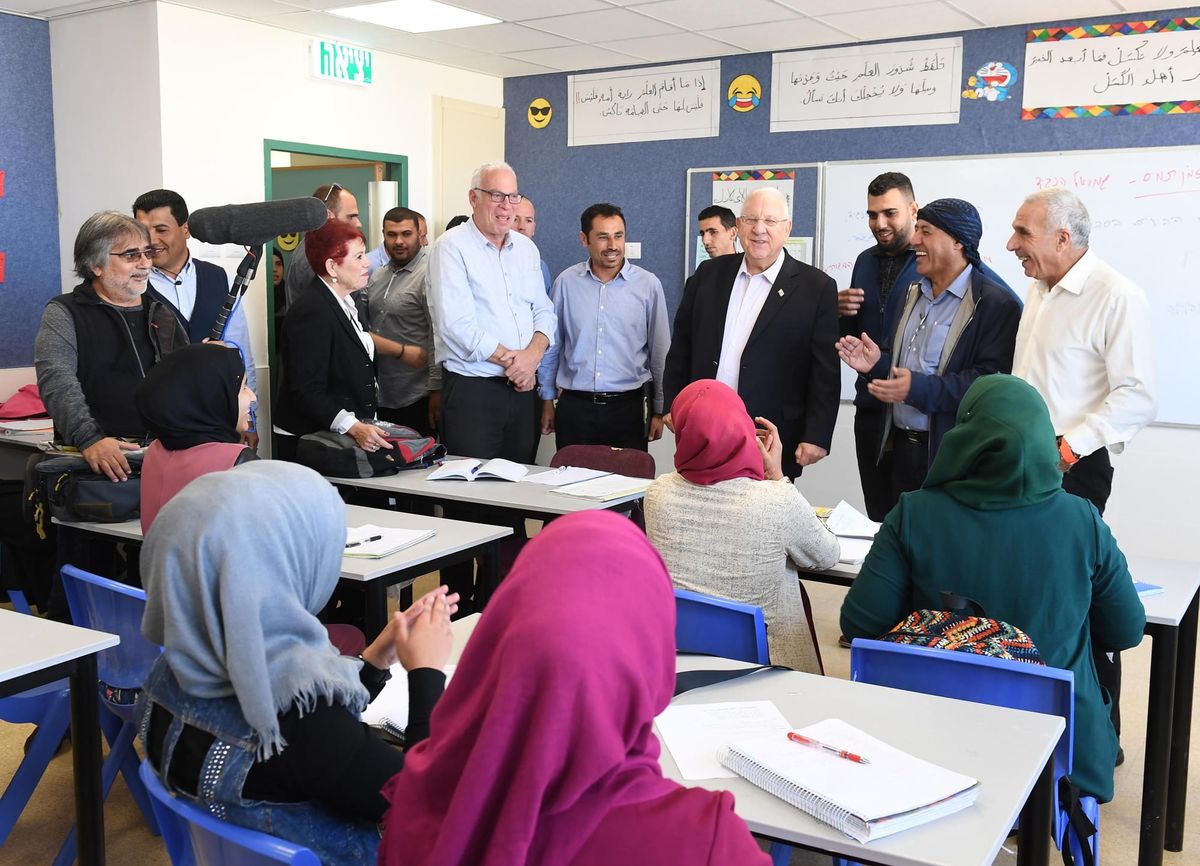
The unintended consequences of economic pressure — and the Palestinian workers caught between politics and survival.
Introduction — The Hidden Cost of Economic Boycotts
Across Europe, governments, political movements, and human rights organizations have increasingly called for stronger economic measures against Israeli settlements in the West Bank. These measures are often presented as instruments of political pressure, intended to discourage settlement expansion, uphold international law, and demonstrate solidarity with the Palestinian population.
Yet behind the political declarations, diplomatic discussions, and public demonstrations lies an economic reality that receives considerably less attention.
Thousands of Palestinians earn their living in Israeli-owned factories, agricultural businesses, industrial zones, and other workplaces located in or around Israeli settlements in the West Bank. For many of these workers, employment in Israeli businesses provides an important source of household income in a region where economic opportunities are limited, unemployment remains a serious concern, and political instability affects everyday life.
When European countries restrict trade with businesses operating in Israeli settlements, the intended target may be the Israeli settlement economy. However, the financial consequences do not necessarily stop with Israeli business owners.
They can extend directly to Palestinian employees.
A recent report by Israeli news outlet Ynet Global raised concerns that restrictions affecting settlement products could place approximately 4,000 Palestinian jobs at risk. Industry representatives described declining overseas orders, canceled contracts, and the possibility that some factories could close or relocate to locations inside Israel's internationally recognized pre-1967 boundaries.
The figure represents a warning about potential job losses, rather than a confirmed number of people who have already lost their employment. Nevertheless, it raises an important question about the consequences of economic sanctions and politically motivated trade restrictions.
What happens when measures intended to support Palestinians threaten the livelihoods of Palestinian families?
The answer is far more complicated than the political slogans surrounding the Israeli-Palestinian conflict might suggest.
For European policymakers, restricting commercial relationships with Israeli settlements is often framed as a matter of legal consistency and political responsibility. Most of the international community considers Israeli settlements in the occupied West Bank to violate international law, a position rejected by Israel, which disputes important aspects of that legal interpretation.
European governments have long distinguished between the territory of the State of Israel and territories occupied by Israel since the 1967 war. This distinction influences trade agreements, product labeling, diplomatic relations, and decisions about which businesses may receive preferential market access.
But political principles and economic consequences do not always move in the same direction.
A factory operating in an Israeli settlement may be owned by an Israeli company, employ Palestinian workers, purchase materials from multiple suppliers, and sell finished products to customers in Europe and elsewhere.
If European buyers cancel orders, the company may lose revenue. If demand declines sufficiently, production may be reduced. If production is reduced, employees may lose working hours or jobs.
The economic consequences can affect both Israeli and Palestinian communities, although the ability to absorb those losses may differ considerably.
For Palestinian workers who depend on these jobs, the issue is not necessarily an abstract debate about international borders or diplomatic recognition.
It may be about paying rent, purchasing food, supporting children, covering medical expenses, and maintaining financial stability.
This does not automatically mean that trade restrictions are unjustified or ineffective. Supporters argue that commercial activity in settlements helps sustain a system of occupation and that economic pressure can be a legitimate response to violations of international law. Palestinian critics of settlement employment also emphasize that dependence on Israeli businesses exists within a wider political and economic system that restricts Palestinian development.
Those arguments deserve serious examination.
However, so do the immediate consequences for workers who may lose their income long before any political objective is achieved.
The debate becomes particularly important when European politicians describe economic restrictions as measures taken in support of Palestinian rights.
If Palestinian workers are among the first to suffer financially, policymakers must be prepared to explain how those consequences are being addressed.
Are alternative employment opportunities available?
Can the Palestinian economy absorb workers who lose their jobs?
Will European governments provide meaningful economic assistance to affected communities?
And is there evidence that restricting settlement products produces political changes substantial enough to justify the immediate economic disruption?
These questions are not arguments against international law, nor are they a defense of every commercial activity associated with Israeli settlements.
They are questions about accountability, economic reality, and the human consequences of political decisions.
This investigation examines the relationship between Palestinian employment and Israeli settlement industries, the European measures affecting those industries, and the economic vulnerabilities that complicate the debate.
It also revisits the history of SodaStream, whose relocation from a West Bank industrial zone became an internationally discussed example of the tensions between boycott campaigns, business decisions, and Palestinian employment.
Above all, it asks whether political pressure can be designed in a way that advances long-term rights without overlooking the immediate needs of the people it claims to support.
Because behind every statistic about lost jobs stands a worker.
And behind every worker, there may be an entire family whose future depends on the next paycheck.
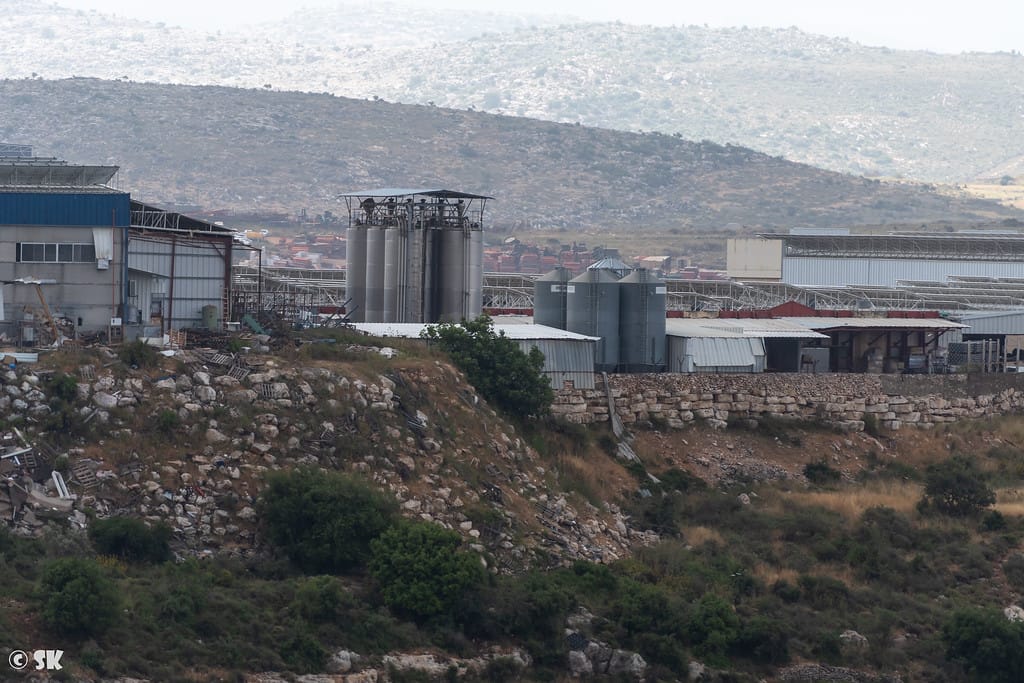
Chapter 1 — The Hidden Cost of Economic Boycotts
When Political Decisions Reach the Factory Floor
Economic boycotts have become one of the most visible instruments of international political pressure.
Governments use trade restrictions, sanctions, investment limitations, and import regulations to influence the behavior of other governments, businesses, and institutions. Civil society organizations encourage consumers to avoid particular products, while political campaigns call on companies to withdraw from controversial territories.
The underlying principle is relatively straightforward: economic pressure can increase the cost of policies or activities that the international community considers unacceptable.
In practice, however, the effects of economic pressure are rarely confined to the political authorities or business owners being targeted.
Economic relationships involve employees, suppliers, transport companies, retailers, families, and local communities. When commercial activity is disrupted, the financial consequences can spread across an entire network of people who may have little influence over the political decisions that triggered the restrictions.
The Israeli-Palestinian conflict presents a particularly complicated example of this problem.
Israeli settlements in the West Bank are central to a longstanding international dispute over territory, security, sovereignty, and Palestinian self-determination.
At the same time, parts of the Israeli and Palestinian economies are deeply interconnected.
Palestinian workers have long crossed into Israel or traveled to Israeli-operated industrial and agricultural workplaces in the West Bank to earn their living. Israeli companies, in turn, have relied on Palestinian labor in sectors such as construction, manufacturing, agriculture, and services.
This relationship is shaped by considerable inequalities in economic power, freedom of movement, access to resources, and political authority.
It is also shaped by a basic economic reality: workers need employment, and employers need labor.
When trade restrictions affect these businesses, the resulting consequences cannot be understood solely through political arguments.
They must also be examined through the experiences of the people whose livelihoods depend on them.
Why Palestinian Workers Depend on Israeli Employment
To understand why potential job losses are significant, it is necessary to examine the economic conditions in the West Bank.
The Palestinian economy faces structural challenges that extend far beyond ordinary fluctuations in employment or consumer demand.
Restrictions on movement, political uncertainty, limited access to land and resources, trade barriers, administrative obstacles, and recurring security crises have all affected economic development.
The West Bank's economy is also influenced by its relationship with Israel, which controls important aspects of external access and movement.
For Palestinian businesses, these conditions can complicate investment, transportation, production, and access to international markets.
Private-sector employment opportunities are consequently limited in many communities.
For some Palestinian workers, employment with Israeli businesses offers wages that are higher than those available in comparable jobs in the Palestinian labor market.
That wage difference can be decisive.
A worker may prefer to earn a living closer to home, within a Palestinian-owned business, but such opportunities may not be available at a sufficient wage or may not exist at all.
For others, working for an Israeli employer may represent a practical decision rather than a political preference.
Employment does not necessarily indicate support for Israeli settlement policies, just as opposition to settlements does not eliminate the need to support a family.
This distinction is essential.
Palestinian workers should not be treated simply as symbols within an international political debate.
They are individuals making economic decisions under circumstances they did not necessarily choose and cannot independently change.
Some may welcome international pressure on settlements while simultaneously fearing the loss of their jobs.
Others may oppose boycotts because they believe their immediate economic consequences outweigh their potential political benefits.
Still others may argue that Palestinian economic independence cannot develop while workers remain dependent on Israeli settlement industries.
These perspectives are not mutually exclusive, and no single viewpoint can represent every Palestinian worker.
The Difference Between Targeting a Business and Affecting Its Employees
Supporters of economic restrictions often emphasize that their objective is to target businesses operating in settlements rather than Palestinian workers.
That distinction matters politically and legally.
However, the practical effects of a restriction depend on how the affected business responds.
Consider a hypothetical manufacturing company operating in an Israeli industrial zone in the West Bank.
The company employs Israeli managers, Palestinian production workers, administrative personnel, and transportation contractors.
A significant share of its products is sold to European customers.
If those customers stop purchasing its products because of new trade restrictions or voluntary boycott decisions, the company may experience a decline in revenue.
Management then faces several possible responses.
It could attempt to find new customers outside Europe.
It could reduce production and temporarily shorten working hours.
It could dismiss employees to reduce operating costs.
Or it could relocate production to a location where its products are not subject to the same territorial restrictions.
Each decision carries different consequences.
A company that successfully finds alternative markets may preserve employment.
A company that reduces production may place workers under financial pressure.
A company that relocates may retain some employees but lose others, particularly if Palestinian workers cannot obtain the permits required to work at the new location.
A company that closes altogether may eliminate jobs for both Israeli and Palestinian employees.
These possibilities demonstrate why the effectiveness of economic restrictions cannot be measured simply by the number of companies affected or the value of trade disrupted.
A comprehensive assessment must also examine what happens to workers afterward.
Did they find new employment?
Were their wages reduced?
Did their families lose essential income?
Did the restrictions contribute to measurable political change?
Without answers to these questions, claims about the success or failure of economic pressure remain incomplete.
The European Position: Law, Trade and Political Responsibility
The European Union has maintained a distinction between Israel within its pre-1967 boundaries and Israeli settlements in territories occupied during the 1967 war.
This distinction is reflected in several areas of European policy.
Under the EU-Israel Association Agreement, preferential tariff treatment does not extend to products originating in Israeli settlements in the occupied territories.
European rules also require that the origin of certain settlement products be presented accurately to consumers.
These measures are not identical to a comprehensive import ban.
A product may be permitted to enter a European market while being excluded from preferential tariffs or subject to particular origin-labeling requirements.
Individual European countries may also consider or adopt additional measures, while private companies and consumers can make their own purchasing decisions.
Understanding these differences is important because public discussions frequently use the word "boycott" to describe several legally and economically distinct actions.
A voluntary consumer boycott is not the same as a government import prohibition.
A requirement to identify a product's place of origin is not the same as a ban on selling that product.
And the removal of preferential tariff treatment does not necessarily prevent commercial transactions from taking place.
The economic impact of each measure therefore needs to be evaluated separately.
European policymakers defend territorial distinctions in trade policy as part of their commitment to international law and the non-recognition of Israeli sovereignty over occupied territories.
Critics, meanwhile, question whether some restrictions are economically counterproductive, inconsistently applied, or insufficiently attentive to Palestinian employment.
Both the legal justification and the economic consequences deserve examination.
A measure can have a defensible legal purpose while still producing harmful unintended effects.
Equally, the existence of economic harm does not automatically invalidate the legal or political reasoning behind the measure.
The central challenge is determining whether policymakers have properly considered both.
The Warning of 4,000 Jobs at Risk
The recent warning reported by Ynet Global brings this debate into sharper focus.
According to the report, industry representatives have expressed concern that declining foreign orders and canceled commercial contracts could endanger approximately 4,000 Palestinian jobs associated with Israeli settlement industries.
The warning reflects fears that factories may reduce operations, close, or relocate production to locations inside Israel's pre-1967 boundaries.
The figure is significant, but it requires careful interpretation.
It is an estimate of potential job losses, not proof that 4,000 workers have already been dismissed.
Nor does the estimate establish that every threatened job would be lost directly because of a specific European government measure.
Commercial decisions may be influenced by multiple factors, including consumer campaigns, corporate policies, political uncertainty, security conditions, market demand, and changing production costs.
Determining the precise contribution of European restrictions requires further evidence from businesses, workers, trade organizations, and official economic data.
Nevertheless, the reported warning highlights a real policy dilemma.
If a company moves production from a West Bank settlement to a site inside Israel, its products may no longer face the same settlement-related trade treatment.
From a European policy perspective, such relocation could be viewed as an intended outcome: reducing economic activity linked to settlements.
But from the perspective of a Palestinian employee who cannot follow the company to its new location, the outcome may be unemployment.
This is where the political and economic objectives of a boycott can come into conflict.
The same business decision that reduces settlement-based production may also eliminate an income source for Palestinian families.
Whether that consequence is temporary, avoidable, or justified by longer-term benefits depends on the evidence.
It cannot simply be ignored.
Who Has the Financial Capacity to Survive?
Another important issue is the unequal ability of businesses and workers to absorb economic disruption.
A large company may have access to investors, credit facilities, alternative markets, or the financial resources necessary to relocate.
Its owners may be able to reorganize production and continue operating elsewhere.
A worker who loses employment may have far fewer options.
Savings may be limited, alternative jobs may pay substantially less, and household expenses continue regardless of political developments.
For families dependent on a single income, even a temporary period of unemployment can create serious financial difficulties.
The effects can extend beyond the individual worker.
Reduced household spending affects local shops, transportation providers, and service businesses. Financial uncertainty can influence educational decisions, healthcare spending, and the ability to repay debts.
These wider consequences are particularly important in economically vulnerable communities.
They also expose a weakness in political arguments that measure the impact of boycotts primarily through corporate losses.
A company losing a contract and a worker losing a livelihood are not experiencing the same kind of hardship.
The first may represent a commercial setback.
The second may threaten a family's financial security.
This does not mean that workers should remain permanently dependent on settlement industries.
It means that economic transition requires planning.
If European governments seek to reduce commercial activity in settlements, a serious policy discussion should also consider how affected Palestinian workers can move into sustainable alternative employment.
Without such planning, the immediate costs of political pressure may fall disproportionately on people who have the least capacity to absorb them.
Beyond Political Slogans
Public debate about Israel and the Palestinians is frequently dominated by political slogans, moral declarations, and sharply divided positions.
Economic reality is more complicated.
A person can oppose Israeli settlements while recognizing that Palestinian workers may depend on settlement-based employment.
A person can support Palestinian economic independence while questioning whether an abrupt reduction in existing jobs will help achieve it.
And a person can defend international law while demanding that governments take responsibility for the human consequences of the measures they introduce.
These positions do not have to contradict one another.
They reflect the difference between political objectives and practical outcomes.
The fundamental question is not simply whether European restrictions place pressure on Israeli settlement businesses.
It is whether those restrictions are designed and implemented in a way that accounts for the workers and communities connected to those businesses.
That requires transparency about expected job losses, independent assessment of economic consequences, and realistic strategies for alternative employment.
It also requires listening directly to Palestinian workers rather than assuming that politicians, campaign organizations, or business representatives speak for them.
Their experiences may reveal economic realities that are largely absent from international political debates.
A Question Europe Cannot Afford to Ignore
European governments frequently describe their policies toward the Israeli-Palestinian conflict in terms of human rights, international law, and support for a sustainable political future.
Those principles are central to European diplomacy.
But responsible policymaking also requires examining the foreseeable consequences of political decisions.
If restrictions contribute to the loss of Palestinian employment, the resulting hardship should not be dismissed as an unavoidable detail.
It should be documented, measured, and addressed.
The question is not whether economic pressure should ever be used.
The question is whether its consequences are being assessed honestly and whether those who bear the greatest immediate burden have a meaningful place in the discussion.
The warning that thousands of Palestinian jobs could be at risk provides an opportunity to examine this issue more closely.
It also raises a broader question about the relationship between political solidarity and economic responsibility.
If a policy is intended to advance Palestinian rights, should its success not also be judged by what happens to Palestinian livelihoods?
The following chapters examine the workers, industries, economic dependencies, and political decisions behind this debate.
Because understanding the consequences of a boycott requires looking beyond the political message.
It requires looking at the people who may ultimately pay the price.
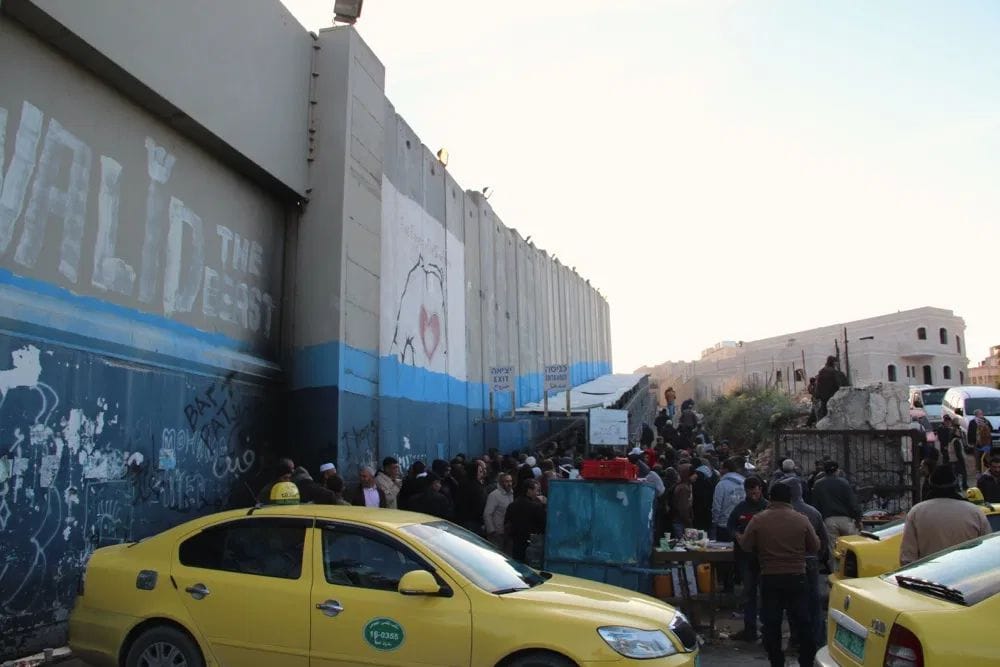
Chapter 2 — The Palestinian Workforce Inside Israeli Settlements
An Economic Relationship That Rarely Makes the Headlines
When the international community discusses Israeli settlements in the West Bank, the conversation usually centers on territory, international law, security, political sovereignty, and the future of a Palestinian state.
Far less attention is given to the economic relationships that have developed within and around these settlements over several decades.
Behind the political controversy exists a complex network of factories, agricultural businesses, construction projects, industrial zones, and commercial enterprises employing both Israelis and Palestinians.
For thousands of Palestinian workers, these businesses represent an important source of income.
Their employment is part of a much broader economic relationship between Israel and the Palestinian territories, one shaped by geography, political restrictions, unequal economic opportunities, and decades of unresolved conflict.
Understanding this relationship is essential to evaluating the possible consequences of European trade restrictions.
The central issue is not simply how many Palestinians work for Israeli employers. It is why these jobs have become economically important, what alternatives are available, and what happens when political decisions threaten existing employment.
For some workers, Israeli employment provides an opportunity to earn substantially more than they could in the local Palestinian labor market.
For others, it may be one of the few realistic employment options available.
At the same time, Palestinian employment in settlement industries remains politically controversial. Critics argue that these businesses operate within a system of occupation that restricts Palestinian economic development, while employers and some workers emphasize the immediate benefits of wages and employment.
Both realities must be considered.
A Palestinian worker can depend economically on an Israeli employer without supporting Israeli settlement policies.
Similarly, a business can provide valuable employment while remaining part of a wider political and legal dispute.
The relationship cannot be understood through political slogans alone.
Understanding Where Palestinians Work
One of the most important distinctions in this debate is the difference between Palestinians working inside Israel and those employed by Israeli businesses in settlements or industrial zones in the West Bank.
These are related but separate categories.
Before the major restrictions introduced following the October 7, 2023 attacks and the subsequent war, large numbers of Palestinians from the West Bank worked inside Israel, particularly in construction, agriculture, manufacturing, and services.
Many traveled daily through designated crossings and depended on employment permits issued by Israeli authorities.
Their wages contributed significantly to household income and the broader Palestinian economy.
Following October 7, access to employment inside Israel was sharply reduced, creating substantial economic disruption for Palestinian workers and their families.
Employment within Israeli settlements and industrial zones in the West Bank operates under a different geographical and administrative framework.
Some Palestinian workers are employed in factories located in settlement industrial zones. Others work in agriculture, food production, packaging, construction, maintenance, and related services.
The exact number of workers varies depending on the period, the geographical definition used, and whether figures include agricultural and informal employment.
This distinction matters when discussing the recent warning that approximately 4,000 Palestinian jobs could be endangered by declining demand for settlement products.
That estimate concerns a particular segment of Palestinian employment connected to Israeli settlement industries.
It should not be confused with the much larger population of Palestinians whose livelihoods have historically depended on employment inside Israel.
Nevertheless, both groups illustrate the extent to which Palestinian household income can depend on access to Israeli labor markets.
Why Israeli Wages Matter
One of the strongest economic incentives for Palestinian workers to seek employment with Israeli businesses is the difference in earning potential.
Wages in Israel are generally higher than those available in many sectors of the Palestinian economy.
This difference reflects several structural factors, including higher average productivity, greater access to capital, larger markets, different wage regulations, and differences in economic development.
For a Palestinian household, the wage gap can have immediate consequences.
A worker earning more through Israeli employment may be able to support several family members, pay educational expenses, cover medical costs, or contribute to housing and transportation.
In communities where employment opportunities are limited, one reliable salary may support an extended family.
However, it is important not to assume that every Palestinian employed by an Israeli company receives the same wage or enjoys the same working conditions.
Pay varies by industry, employer, occupation, employment arrangement, and legal compliance.
Workers may also face transportation costs, unpredictable access to workplaces, administrative requirements, and interruptions caused by security restrictions.
Higher nominal wages do not necessarily mean that employment is secure or free from exploitation.
The economic attraction of Israeli employment must therefore be examined alongside the vulnerabilities associated with it.
For many families, the decision is pragmatic.
A worker may have strong political views about Israeli settlements but still accept a job because the income is necessary.
Economic survival and political identity are not always aligned.
The Industrial Zones Behind the Debate
Israeli industrial zones in the West Bank have become an important part of the discussion about settlement-related trade.
These areas contain manufacturing facilities, warehouses, workshops, and businesses producing goods for domestic and international markets.
One of the best-known examples is the Barkan Industrial Zone, located in the northern West Bank near the Israeli settlement of Ariel.
Over the years, Barkan has housed companies operating in manufacturing, plastics, metalworking, food production, and other industries.
Palestinians have worked alongside Israelis in parts of this industrial economy, although the number of employees and the conditions of employment have changed over time.
Other industrial areas, including Mishor Adumim near Ma'ale Adumim, have also hosted businesses employing Palestinian workers.
These locations illustrate why settlement-related economic activity cannot be understood solely through residential housing or territorial maps.
Settlements and associated industrial areas also form part of commercial networks involving suppliers, workers, transport companies, and international customers.
A factory may purchase materials from one location, manufacture products in another, and sell them to customers thousands of kilometers away.
When foreign buyers refuse products originating from settlement industrial zones, the impact can therefore extend beyond the factory owner.
Employees, subcontractors, and local service providers may all be affected.
However, the presence of Palestinian workers does not resolve the broader dispute over these industrial zones.
Critics argue that settlement industries benefit from territorial arrangements and access to resources that are not equally available to Palestinian businesses.
They also contend that the development of industrial zones within settlements can reinforce economic dependence rather than support independent Palestinian growth.
These concerns are important because employment opportunities and long-term economic development are not necessarily the same thing.
A job can improve a family's immediate financial situation without addressing the structural conditions that limit the wider economy.
The Palestinian Economy and Its Limited Alternatives
To understand why losing a job in an Israeli settlement industry can be particularly serious, it is necessary to examine the wider Palestinian economy.
The West Bank has faced persistent economic difficulties, including unemployment, limited private investment, restrictions on movement, and uncertainty surrounding access to land and resources.
Businesses frequently operate in an environment where transporting goods, obtaining permits, reaching customers, and planning long-term investments can be difficult.
The Palestinian Authority also faces recurring fiscal pressures that affect public-sector salaries, government services, and economic stability.
These challenges have been intensified by the consequences of the war that followed October 7, 2023.
Restrictions on Palestinian employment inside Israel, disruptions to movement, and declining economic activity have placed additional pressure on households and businesses.
For workers who lose their jobs, finding alternative employment may therefore be difficult.
A factory worker cannot automatically move into another industry.
Skills may not match available positions.
A new job may require travel that is expensive or unreliable.
And even when alternative employment exists, the salary may be substantially lower.
These circumstances help explain why employment losses in settlement industries can have consequences beyond the immediate number of workers dismissed.
If a household loses its primary source of income, spending may decline across several areas.
Families may postpone major purchases, reduce discretionary spending, rely on relatives, or accumulate debt.
Local businesses can then experience declining sales, potentially contributing to further economic weakness.
Economists often describe such effects as secondary or multiplier effects.
The initial loss of employment can create additional pressure throughout the surrounding economy.
The size of these effects depends on local circumstances and cannot be assumed without evidence.
Nevertheless, they are relevant when evaluating the broader consequences of politically motivated trade restrictions.
Working Under Political and Administrative Uncertainty
Employment in Israeli businesses does not take place outside the political realities of the West Bank.
Workers may face uncertainty arising from security incidents, movement restrictions, changes in administrative procedures, and the broader Israeli-Palestinian conflict.
Access to a workplace may depend on geographical location, employer arrangements, identification requirements, and the security situation.
Employment relationships can also be affected by differences in bargaining power between employers and workers.
Palestinian employees may have limited alternative job opportunities, making it difficult to challenge poor working conditions or negotiate higher wages.
Labor rights are therefore an essential part of the discussion.
In a significant 2007 ruling, Israel's Supreme Court determined that Israeli labor law should apply to Palestinian workers employed by Israeli businesses in West Bank settlements in the circumstances addressed by the case.
The ruling established an important legal principle against unequal treatment based solely on nationality.
However, the existence of legal protections does not automatically guarantee consistent enforcement.
Questions concerning wages, benefits, workplace safety, social protections, and access to legal remedies remain relevant.
A serious examination of settlement employment must therefore consider both the economic advantages workers may receive and the difficulties they can experience.
It would be misleading to portray all settlement employment as uniformly beneficial.
It would be equally misleading to assume that every Palestinian worker regards such employment as undesirable.
Workers' experiences vary, and their perspectives deserve direct attention.
The Human Reality Behind Employment Statistics
Public discussions about sanctions and boycotts frequently rely on statistics.
Governments announce trade measures.
Companies report changes in revenue.
Campaign organizations describe political victories.
Industry representatives warn about economic damage.
But employment statistics represent individual lives.
Consider the situation of a hypothetical Palestinian father who has worked for years in a manufacturing facility in the West Bank.
His salary pays for groceries, transportation, household bills, and his children's education.
He may have developed specialized skills, established relationships with colleagues, and built his family's financial planning around a relatively stable income.
If the factory loses important export contracts, management may decide to reduce production.
His working hours could be shortened.
His employment could become uncertain.
Eventually, he could lose his job.
The company may regard the decision as an unavoidable commercial response.
European policymakers may view the reduction of settlement-based economic activity as consistent with their political objectives.
But for the worker, the immediate reality is different.
He must find another way to support his family.
This hypothetical example is not presented as the testimony of an actual worker. It illustrates the kind of household-level consequences that employment losses can create.
The experiences of real Palestinian employees should be investigated through interviews, employment records, and independent economic research.
Their voices are essential because they may not fit neatly into the narratives promoted by governments, companies, or political movements.
Some workers may believe that boycotts threaten their livelihoods.
Others may support economic pressure on settlements despite the personal financial risks.
Still others may want international investment directed toward Palestinian-owned businesses so that they are no longer dependent on Israeli employers.
Understanding these different positions is necessary for responsible reporting.
Employment Versus Economic Independence
The debate over Palestinian employment in Israeli settlements raises a larger question.
Is the availability of jobs within settlement industries evidence of economic cooperation, or does it reflect a system of dependency that limits Palestinian economic independence?
The answer may contain elements of both.
From an individual worker's perspective, employment can provide immediate and measurable benefits.
A salary allows a household to meet its needs and plan for the future.
From a broader economic perspective, however, dependence on employment controlled by another economy can create vulnerabilities.
When access to jobs depends on political decisions, security conditions, or the commercial strategies of external employers, workers have limited control over their economic future.
This is particularly important in the West Bank, where the development of Palestinian-owned industries faces significant structural obstacles.
A sustainable Palestinian economy would require opportunities for private investment, access to markets, infrastructure development, reliable transportation, financial services, and predictable commercial conditions.
It would also require the ability to create employment that does not depend primarily on decisions made by Israeli authorities or businesses.
International investment and economic assistance could contribute to these objectives.
However, developing alternative industries takes time.
Factories cannot be established overnight.
New markets cannot be created simply by announcing trade restrictions.
And workers who lose their salaries today cannot necessarily wait years for long-term economic development programs to produce results.
This creates a fundamental policy dilemma.
Reducing Palestinian dependence on settlement industries may be a legitimate long-term objective.
But removing existing employment without creating viable alternatives can increase short-term hardship.
The challenge is to distinguish between an economic transition and an economic shock.
A transition provides workers with realistic alternatives.
A shock removes existing opportunities before replacements are available.
What Happens If Factories Relocate?
One possible consequence of restrictions on settlement products is the relocation of manufacturing operations.
A company facing difficulties selling goods produced in a West Bank settlement may consider moving production to a location inside Israel's pre-1967 boundaries.
Such a move could allow the business to continue serving customers who avoid settlement-origin products.
However, relocation can fundamentally change the employment situation for Palestinian workers.
Working inside Israel may require permits and security approvals that are not necessarily available to every employee.
Transportation may become more difficult.
The employer may recruit workers closer to the new facility.
Some employees may be offered opportunities to continue working, while others may lose their positions.
The outcome depends on the company's location, the applicable regulations, the security environment, and individual employment arrangements.
Relocation does not automatically mean that all Palestinian employees will lose their jobs.
But neither does it guarantee that they will be able to follow their employer.
This distinction is crucial when companies describe relocation as a solution to international commercial pressure.
For shareholders and customers, relocation may resolve a political or reputational problem.
For workers who cannot transfer, it may create a new economic crisis.
The history of SodaStream, examined in a later chapter, provides an important example of the difficulties that can arise when production moves from the West Bank into Israel.
The Responsibility of European Policymakers
If European governments introduce or strengthen restrictions affecting settlement industries, the potential impact on Palestinian workers deserves serious consideration.
This does not mean that economic policy must be determined exclusively by employment concerns.
Governments must also consider international law, human rights, diplomatic objectives, and the wider political consequences of commercial activity in occupied territories.
But the effects on workers should be part of the decision-making process rather than an afterthought.
An effective policy assessment would examine how many jobs could be affected, which industries face the greatest exposure, and whether workers have realistic alternative employment opportunities.
It would also consider whether targeted assistance, vocational training, investment in Palestinian-owned businesses, or other measures could reduce the economic consequences.
Such policies would not eliminate every difficulty.
They could, however, demonstrate that concern for Palestinian welfare extends beyond political declarations.
There is also a responsibility to evaluate outcomes after measures are implemented.
If restrictions reduce settlement-related exports but produce substantial unemployment without meaningful improvements in Palestinian economic independence, policymakers should be willing to examine those results.
Conversely, if restrictions encourage investment outside settlements and contribute to more sustainable Palestinian employment, those outcomes should also be documented.
The objective of independent journalism is not to assume either result.
It is to investigate what actually happens.
The Workers Caught Between Two Political Realities
Palestinian workers employed by Israeli settlement businesses occupy a particularly complicated position.
They live within a political conflict that shapes their freedom of movement, economic opportunities, and future prospects.
They may depend on Israeli employers for income while living under a system whose political and territorial arrangements remain deeply contested.
They may be affected by European policies intended to support Palestinian rights, even though they have little influence over those policies.
And they may face difficult choices between immediate financial security and the longer-term goal of economic independence.
These contradictions are not easily resolved.
They demonstrate why the economic consequences of boycotts deserve careful investigation rather than simplistic political explanations.
The reported possibility that thousands of Palestinian jobs could be endangered is therefore more than a commercial warning.
It is a reminder that economic pressure operates through relationships between people, businesses, and communities.
When those relationships are disrupted, the consequences can be uneven.
Companies may relocate.
Governments may defend their decisions.
Political organizations may declare success.
But workers still need employment, and families still need income.
The central question is whether international economic pressure can achieve its political objectives without leaving economically vulnerable Palestinians to bear a disproportionate share of the immediate costs.
Understanding the Palestinian workforce is only the beginning.
The next step is to examine precisely what European governments have introduced, proposed, or considered — and how those measures differ from the broad idea of a boycott.
Because before judging the consequences of European restrictions, it is necessary to understand what those restrictions actually are.
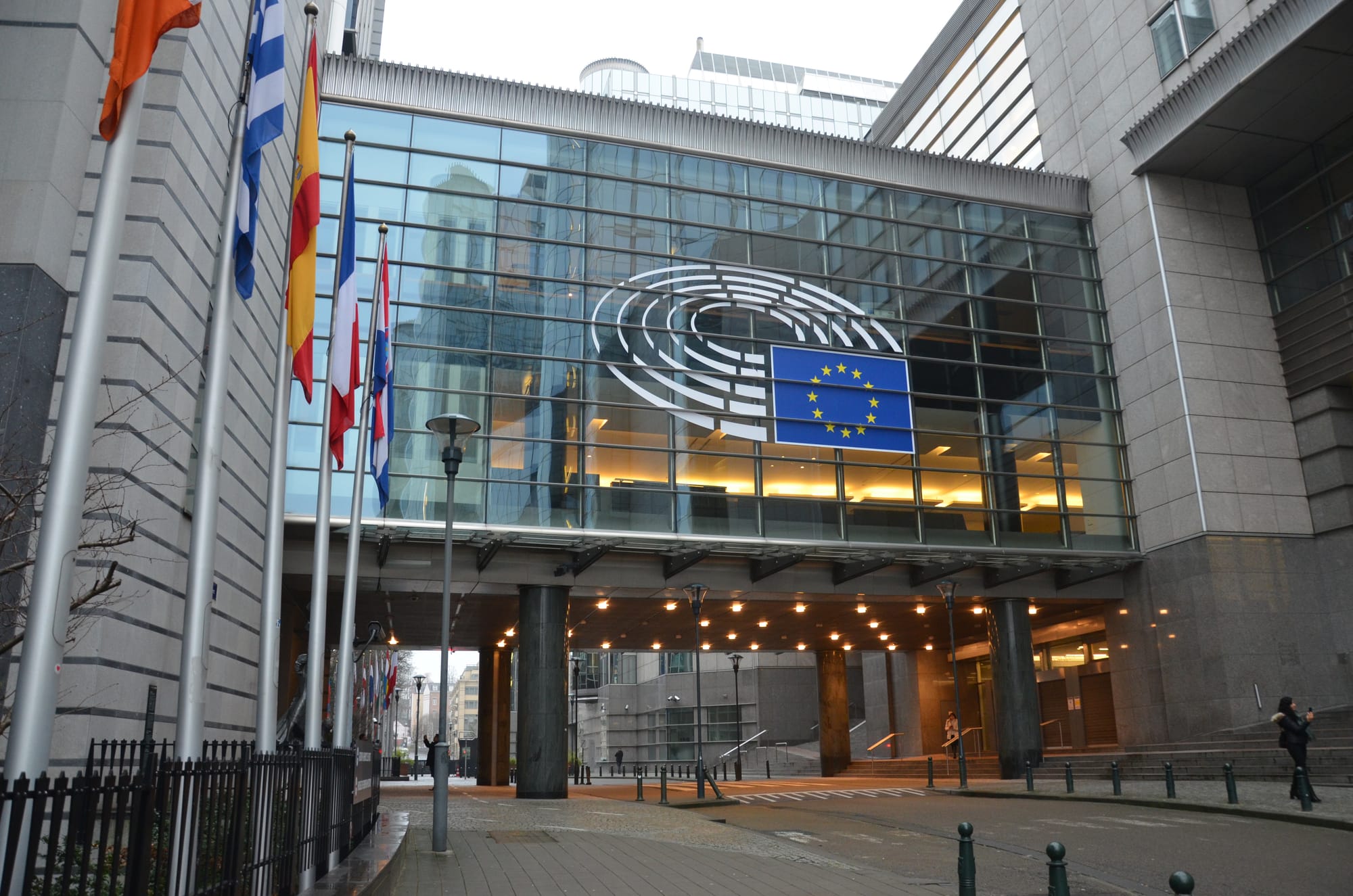
Chapter 3 — Europe's Restrictions: What Is Actually Being Banned?
Understanding the Difference Between Political Statements and Trade Restrictions
Across Europe, calls for economic measures against Israeli settlements have become increasingly prominent. Political leaders, human rights organizations, activist movements, and consumer groups have demanded stronger action against commercial activities connected to Israeli settlements in the West Bank.
These demands are frequently described under a single word: boycott.
However, the legal and economic reality is considerably more complicated.
Not every European measure affecting Israeli settlement products constitutes a boycott. Not every political proposal has become law. And not every restriction targeting settlement-based businesses applies to products manufactured within Israel's internationally recognized pre-1967 boundaries.
Understanding these distinctions is essential.
European trade policy involves several different mechanisms, including customs duties, preferential trade agreements, product-origin requirements, import restrictions, financial sanctions, and voluntary commercial decisions by private businesses.
Each mechanism operates differently and can produce different economic consequences.
For example, a product originating in an Israeli settlement may be excluded from preferential customs treatment without being prohibited from entering the European market.
A retailer may independently decide to stop purchasing products from a particular supplier, even when those products remain legally available.
A government may introduce legislation prohibiting certain imports from occupied territories, while another government continues allowing those imports under existing customs rules.
These distinctions matter because the economic consequences for Israeli businesses and Palestinian workers depend on the precise nature of the measure.
A company losing a tariff advantage may face increased costs.
A company losing access to an entire market faces a different challenge.
And a company whose customers voluntarily cancel contracts may suffer financial losses even when no new government restriction has been introduced.
The public debate often overlooks these differences.
Yet they are central to understanding the warning that thousands of Palestinian jobs could be threatened by declining demand for products associated with Israeli settlements.
The EU-Israel Association Agreement: The Foundation of European Trade Relations
The European Union and Israel maintain an extensive economic relationship governed in significant part by the EU-Israel Association Agreement.
Signed in 1995 and entering into force in 2000, the agreement established a framework for political dialogue, economic cooperation, and preferential trade.
It has helped facilitate trade between Israel and European markets by reducing or eliminating customs duties on qualifying products.
For Israeli exporters, access to the European market is commercially important.
European customers purchase a wide variety of Israeli products, including machinery, chemicals, agricultural goods, medical technology, pharmaceuticals, electronics, and manufactured products.
However, the geographical application of the agreement has long been disputed.
The European Union does not recognize Israeli sovereignty over the territories occupied by Israel during the 1967 Six-Day War.
Consequently, the EU distinguishes between products originating within Israel and products originating in Israeli settlements in occupied territories.
This distinction has significant implications for customs treatment.
Goods originating in Israeli settlements do not qualify for the preferential tariff benefits granted to qualifying Israeli-origin goods under the agreement.
That does not mean every settlement product has historically been prohibited from entering Europe.
Instead, such goods have generally been subject to the applicable non-preferential customs treatment, alongside other relevant import requirements.
For businesses, this can affect competitiveness.
If two manufacturers produce similar goods but only one qualifies for preferential customs treatment, their costs of entering the European market may differ.
Even relatively modest cost differences can influence purchasing decisions in competitive industries.
However, customs treatment is only one part of the commercial relationship.
Political pressure, reputational concerns, consumer campaigns, and uncertainty about future regulations may also influence European buyers.
The Importance of the 1967 Boundaries
To understand why European trade rules distinguish between Israel and Israeli settlements, it is necessary to revisit the territorial changes that followed the Six-Day War in June 1967.
During that conflict, Israel captured the West Bank, including East Jerusalem, from Jordan; the Gaza Strip and Sinai Peninsula from Egypt; and the Golan Heights from Syria.
Israel subsequently returned Sinai to Egypt under the peace agreement between the two countries.
The status of the other territories remains central to international legal and political disputes.
The European Union, like most of the international community, regards the West Bank, including East Jerusalem, as occupied Palestinian territory.
It considers Israeli settlements in those territories contrary to international law.
Israel disputes important aspects of this legal interpretation and maintains that the territories have a unique historical and legal status. Israeli governments have also emphasized security concerns, historical connections, and the absence of a final negotiated agreement determining borders.
Nevertheless, the European Union's trade policy follows its own territorial interpretation.
For customs purposes, a product manufactured in Tel Aviv is not treated in the same way as an otherwise similar product manufactured in an Israeli settlement industrial zone in the West Bank.
The distinction is geographical rather than based simply on the nationality of the business owner.
An Israeli-owned company operating within Israel may qualify for the agreement's preferential treatment.
The same company producing goods in a West Bank settlement does not automatically qualify for those benefits.
This is an important point because public discussions sometimes create the impression that European settlement measures apply equally to all Israeli products.
They do not.
At the same time, the distinction can create strong commercial incentives for companies to move production across the relevant territorial boundary.
Such relocation may resolve certain trade-related difficulties while creating new challenges for Palestinian employees who cannot easily follow their employer.
Product Labeling: What European Consumers Are Told
Another significant element of European policy concerns the labeling of products originating in Israeli settlements.
The European Commission issued an interpretative notice in 2015 addressing the indication of origin of goods from territories occupied by Israel since June 1967.
The purpose was to clarify how existing European consumer-information and product-labeling legislation applied to these products.
Under relevant EU rules, origin information must not mislead consumers.
Where origin labeling is required, or where omitting information would mislead consumers, simply identifying a settlement product as originating from Israel may be insufficient.
The distinction between a product originating in the West Bank and one originating in an Israeli settlement within the West Bank can also be legally relevant.
In 2019, the Court of Justice of the European Union reinforced this approach in a judgment concerning food products originating in territories occupied by Israel.
The Court concluded that relevant food products must indicate their territory of origin and, where applicable, that they come from an Israeli settlement.
The legal reasoning concerned accurate consumer information, including the ability of consumers to make purchasing decisions based on ethical considerations.
Supporters of the policy argue that consumers have a right to know where products originate.
Critics question whether such requirements can contribute to selective political pressure on Israeli businesses.
From an economic perspective, labeling requirements can influence purchasing behavior.
A consumer who opposes Israeli settlements may choose not to purchase a product identified as originating from one.
A retailer may decide that stocking the product creates reputational risks.
An importer may seek alternative suppliers to avoid controversy.
None of these outcomes necessarily requires a formal import prohibition.
This illustrates how regulatory requirements and voluntary commercial decisions can interact.
A government may introduce a labeling requirement, but the resulting market consequences depend partly on how consumers and businesses respond.
For Palestinian employees working in affected industries, the distinction between a legally imposed prohibition and a voluntary commercial boycott may be less important than the ultimate effect on orders and employment.
Ireland: A More Direct Approach to Settlement Imports
Ireland has been among the European countries advocating stronger measures against trade connected to Israeli settlements.
For several years, Irish politicians debated legislation intended to prohibit the importation of goods originating in Israeli settlements in occupied Palestinian territory.
The issue became a prominent example of how national governments could seek to move beyond the EU's established system of territorial differentiation and customs treatment.
In July 2026, Ireland's parliament completed its consideration of legislation prohibiting imports of goods from Israeli settlements in occupied Palestinian territory.
The legislation was subsequently signed into law by the Irish president.
Importantly, the final legislation addressed goods rather than extending the prohibition to services, an issue that had generated substantial political debate.
Ireland's approach therefore went beyond simply requiring origin information or withholding preferential tariffs.
It established a legal prohibition directed at a defined category of goods.
Supporters presented the legislation as a response to the continued expansion of Israeli settlements and as an attempt to prevent Irish commercial activity from contributing to a situation they regard as unlawful.
Critics raised questions about trade policy, legal consistency, implementation, and the possible economic consequences for affected businesses and workers.
The Irish example demonstrates that European countries are not necessarily pursuing identical approaches.
Some measures involve customs administration.
Others concern labeling.
Still others involve legislation intended to prevent specified commercial transactions.
It is also important to distinguish the enactment of legislation from its practical enforcement and measurable economic effects.
Assessing the impact of Ireland's policy requires examining implementation, import volumes, affected suppliers, and whether businesses subsequently change production or employment arrangements.
The passage of a law does not, by itself, establish how many Palestinian workers will lose their jobs.
The European Commission's Broader Trade Proposal
The debate over settlement products also intersects with a broader discussion about the European Union's economic relationship with Israel.
In September 2025, the European Commission proposed suspending certain trade-related provisions of the EU-Israel Association Agreement.
The proposal followed growing European criticism of Israel's military operations in Gaza and the humanitarian consequences of the war.
It was not simply a proposal to prohibit goods originating in West Bank settlements.
Instead, it concerned parts of the wider trade relationship between the European Union and the State of Israel.
This distinction is essential.
Settlement products already fall outside the agreement's preferential tariff treatment.
A broader suspension of trade preferences would affect qualifying trade with Israel itself, depending on the provisions suspended and the final legal decision.
The Commission justified its proposal by referring to the agreement's human rights provisions and its assessment of the situation in Gaza.
However, a Commission proposal is not automatically binding law.
Adoption requires action through the relevant European Union decision-making procedures.
As of October 2026, the Commission's September 2025 proposal remained listed as an ongoing procedure rather than an adopted suspension.
Therefore, it would be inaccurate to describe the proposed suspension as though it had already taken effect across the European Union.
The difference between a proposal and an implemented measure matters enormously when evaluating economic consequences.
Businesses may respond to the possibility of future restrictions by delaying investments or reviewing supply chains.
But anticipated regulatory changes are not the same as restrictions already in force.
Journalists and policymakers must distinguish between these effects when attributing commercial losses to European policy.
Why European Countries Do Not Always Agree
The European Union is an economic and political partnership, but its member states do not always share identical positions on Israel and the Palestinian territories.
Different governments place different emphasis on security, international law, diplomatic relations, historical responsibilities, economic cooperation, and domestic political concerns.
Some European leaders argue that stronger economic pressure is necessary to influence Israeli government policy.
Others question whether additional restrictions would produce meaningful political results.
Some governments emphasize the importance of maintaining diplomatic and commercial engagement.
Others argue that continued trade without stronger conditions undermines European commitments to international law.
These disagreements influence which measures can be adopted collectively.
The EU's common commercial policy gives European institutions substantial authority over trade with countries outside the Union.
At the same time, member states can pursue certain national measures within the boundaries of applicable EU law.
The legal authority, procedure, and voting requirements depend on the specific measure.
This means that an announcement by one European government does not automatically establish a policy applying throughout Europe.
Nor does a statement by the European Commission necessarily mean that a proposed restriction has already been adopted by the Council.
For readers trying to understand the headlines, these institutional distinctions can be confusing.
Yet they help explain why European political statements sometimes appear stronger than the measures actually implemented.
They also explain why businesses may face different forms of pressure in different European markets.
Voluntary Boycotts: When Companies Act Without Government Orders
Not all commercial restrictions originate with governments.
Private businesses can independently decide which suppliers they wish to use, which products they stock, and which markets they consider commercially or reputationally acceptable.
A European retailer may choose not to sell products originating in Israeli settlements.
An importer may decline to renew a supply contract.
An investment fund may exclude companies connected to settlement activities from its portfolio.
A manufacturer may seek alternative suppliers to reduce exposure to political controversy.
These decisions can be influenced by consumer pressure, shareholder expectations, corporate policies, legal assessments, or concerns about future regulation.
They may also reflect ordinary commercial considerations unrelated to political campaigns.
This creates an important challenge when interpreting reports of declining orders.
If a factory reports losing European customers, it is necessary to determine why those customers withdrew.
Was the decision caused by a new legal prohibition?
Was it a voluntary boycott?
Did the buyer anticipate future restrictions?
Were transportation costs increasing?
Was demand declining for unrelated reasons?
Did the supplier lose competitiveness?
Without examining these questions, it is difficult to establish the true cause of commercial losses.
Nevertheless, voluntary boycotts can have substantial economic effects.
A business does not need to be legally prohibited from selling its products to experience declining sales.
If enough customers stop purchasing, the commercial consequences may resemble those of a formal restriction.
This is particularly relevant to settlement industries dependent on export markets.
A decline in orders can affect production schedules, employment requirements, investment decisions, and long-term business planning.
The Difference Between Political Success and Economic Success
Supporters of settlement-related restrictions often evaluate them according to political and legal objectives.
A measure may be considered successful if it discourages investment in settlements, reduces commercial support for settlement industries, or reinforces the distinction between Israel and occupied territory.
From that perspective, a company relocating production outside a settlement may be regarded as a positive development.
However, economic success requires a different assessment.
If relocation preserves production and creates alternative employment, the outcome may be relatively manageable for workers.
If relocation results in Palestinian employees losing access to their jobs, the immediate consequences can be harmful.
Both outcomes may occur simultaneously.
A policy may achieve one political objective while generating economic hardship for particular communities.
That does not automatically prove that the policy was wrong.
But it does mean that success cannot be measured through political outcomes alone.
A comprehensive evaluation should consider whether the restrictions achieve their stated goals, how businesses adapt, how many jobs are affected, and whether alternative employment opportunities emerge.
It should also distinguish short-term disruption from long-term structural change.
An economy may eventually benefit from reduced dependence on settlement industries, but that possibility does not eliminate the immediate needs of workers who lose their income.
Likewise, preserving existing jobs may provide short-term security without resolving the structural inequalities that limit Palestinian economic development.
Responsible policymaking requires acknowledging both dimensions.
Are Palestinian Workers Being Consulted?
One of the most important questions surrounding European economic restrictions concerns the participation of the people who may be affected.
Political discussions often involve government officials, legal experts, campaign organizations, business associations, and diplomatic representatives.
But how often are Palestinian employees in settlement industries directly consulted?
Their perspectives are particularly important because they may experience the consequences of trade restrictions differently from political organizations or employers.
Some workers may oppose settlement-based economic activity in principle but fear unemployment.
Others may believe that continued employment provides necessary financial stability.
Some may support international restrictions while demanding compensation, retraining, or alternative employment opportunities.
Others may argue that foreign governments should invest more heavily in Palestinian-owned industries before introducing measures that threaten existing jobs.
These perspectives cannot be assumed.
They require interviews, independent surveys, and direct engagement with affected communities.
It would also be inappropriate to treat statements by Israeli industry representatives as a substitute for Palestinian worker testimony.
Employers have their own commercial interests.
Political organizations have their own objectives.
Workers may share some of those interests while disagreeing with others.
For this reason, the reported estimate of thousands of jobs at risk should be investigated through multiple independent sources.
A credible assessment must examine not only what employers predict but also what workers experience.
The Risk of Unintended Economic Consequences
Economic restrictions are often designed to change the behavior of governments or businesses.
However, their consequences can extend beyond the intended targets.
An Israeli company may respond to reduced European demand by finding alternative customers, changing suppliers, moving production, or reducing its workforce.
A Palestinian worker may have little influence over any of these decisions.
If production moves inside Israel, some workers may face additional administrative or security barriers to continued employment.
If the company closes, the loss of income may be immediate.
If a factory reduces working hours, employees may experience financial hardship even without formal dismissal.
The severity of these consequences depends on the affected industry, the number of workers involved, available employment alternatives, and the duration of commercial disruption.
It would be premature to assume that every restriction produces widespread job losses.
It would also be irresponsible to dismiss the possibility without investigation.
The warning that approximately 4,000 Palestinian jobs could be at risk should therefore be treated as a claim requiring verification and ongoing scrutiny.
Its significance lies not only in the number itself but in the policy questions it raises.
Have European governments assessed the likely consequences for Palestinian employment?
Are mechanisms available to support workers affected by relocation or closure?
Could investment in Palestinian-owned businesses help reduce economic dependence?
And how will policymakers determine whether their measures are achieving their intended objectives?
These questions should be addressed before economic disruption becomes a humanitarian problem for affected families.
A More Complicated Reality Than the Headlines Suggest
The European debate over Israeli settlement products is often presented as a straightforward choice between taking action and doing nothing.
The reality is more complicated.
The European Union has long distinguished between Israel and occupied territories in its trade arrangements.
European law addresses the accurate labeling of relevant settlement products.
Some national governments have pursued more restrictive measures, including import prohibitions.
The European Commission has also proposed broader changes to the EU-Israel trade relationship, although proposals must be distinguished from adopted law.
Meanwhile, private companies and consumers can create additional commercial pressure through voluntary purchasing decisions.
These different mechanisms may interact, but they are not interchangeable.
Their legal foundations, political objectives, and economic consequences differ.
For Israeli businesses operating in West Bank settlements, the result can be commercial uncertainty.
For Palestinian employees, that uncertainty may translate into concerns about wages, working hours, and continued employment.
The central challenge is not simply determining whether Europe has the legal or political authority to distinguish settlement products from Israeli products.
It is understanding what happens when those distinctions influence real businesses and real livelihoods.
A trade restriction may be directed at a geographical location or commercial activity, but its economic consequences are ultimately experienced by people.
If European governments intend their policies to contribute to a more secure and economically sustainable future for Palestinians, the welfare of Palestinian workers cannot remain a secondary consideration.
The effectiveness of economic pressure should be examined not only through diplomatic statements and trade statistics, but also through employment outcomes, household income, and the availability of viable alternatives.
This is where the broader political debate meets the practical realities of everyday life.
And it leads directly to the next question.
How credible is the warning that thousands of Palestinian workers could lose their jobs, and what evidence exists that European restrictions are already affecting settlement industries?
That is the focus of the next chapter.
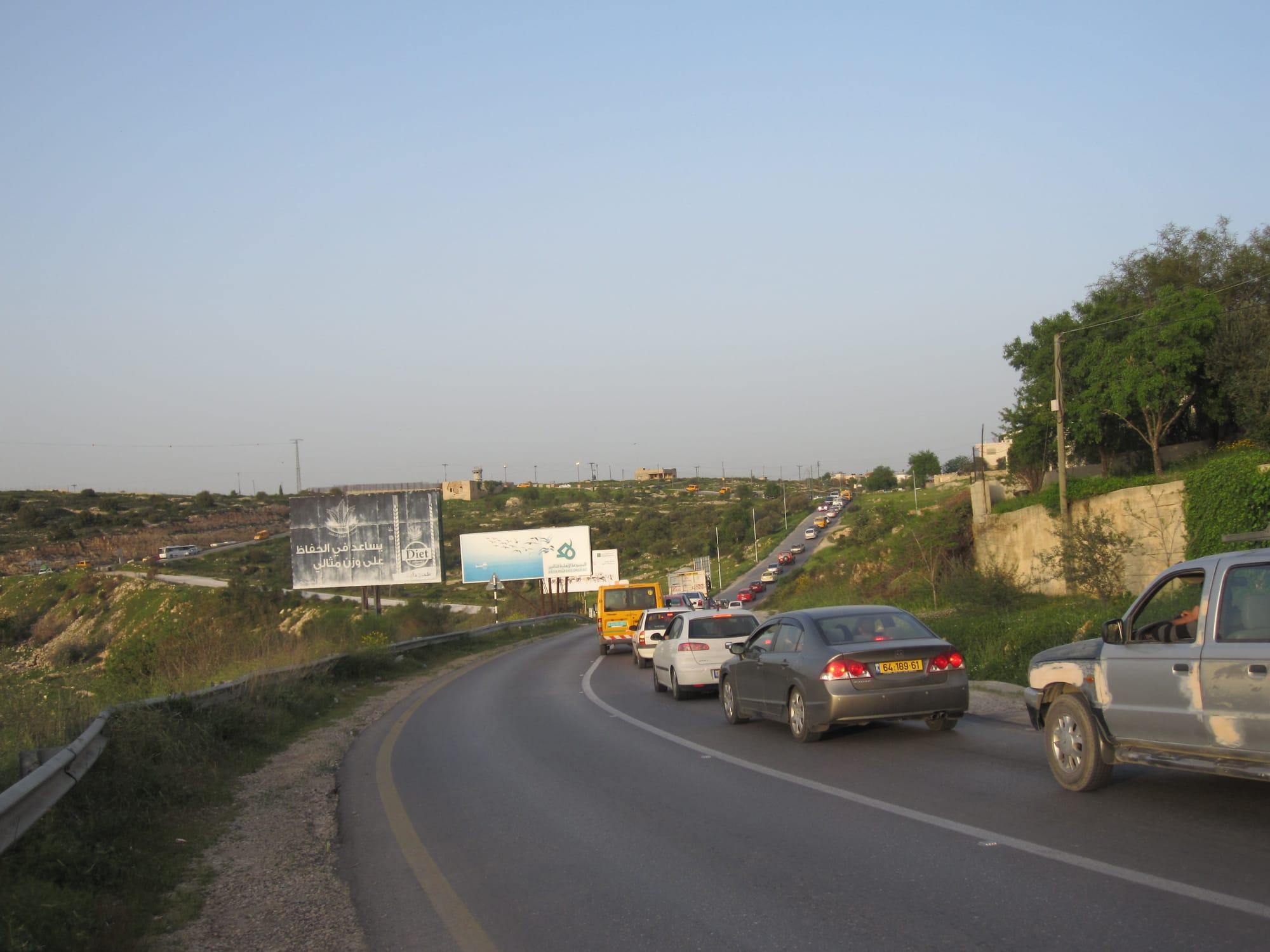
Chapter 4 — The Warning: Thousands of Jobs at Risk
A Warning That Deserves More Attention
While European politicians debate trade restrictions, international law, and economic pressure on Israeli settlements, a different concern has emerged among businesses operating in the West Bank: the possibility that thousands of Palestinian workers could lose their jobs.
A report published by the Israeli news outlet Ynet Global brought this concern into focus, warning that European restrictions and declining commercial demand could threaten approximately 4,000 Palestinian jobs connected to Israeli settlement industries.
The warning raises an uncomfortable question.
Could economic measures introduced in the name of Palestinian rights create additional economic hardship for Palestinian families?
According to the report, industry representatives and economic observers expressed concern that restrictions on settlement products could lead to canceled export contracts, declining production, factory relocations, and potential job losses.
The reported estimate of 4,000 threatened jobs is substantial.
However, it is essential to understand precisely what this figure represents.
It is a projection of potential employment losses, not a verified count of workers who have already been dismissed.
The estimate should therefore be treated as a warning requiring further investigation rather than an established outcome.
This distinction matters because public discussions about sanctions and boycotts often blur the difference between possible consequences and events that have already occurred.
An independent assessment must establish what businesses are experiencing, which measures are responsible, and whether projected employment losses eventually materialize.
Nevertheless, even an uncertain warning deserves attention when the livelihoods of thousands of workers may be affected.
Understanding the Figure of 4,000 Jobs
The Ynet report referred to approximately 18,000 Palestinians legally employed in Israeli factories and industrial zones in the West Bank, with an estimated 4,000 jobs potentially at risk.
If these figures accurately represent the same workforce, the threatened positions would account for roughly 22 percent of that employment group.
In other words, the warning concerns approximately one in five workers within the reported category.
That is a significant proportion.
However, several questions must be answered before the figure can be treated as a reliable forecast.
First, how was the estimate calculated?
Was it based on confirmed contract cancellations, anticipated reductions in production, surveys of employers, or broader economic assumptions?
Second, what period does the projection cover?
Are these jobs expected to disappear within months, over several years, or only if additional restrictions are introduced?
Third, which industries are most exposed?
Manufacturing businesses exporting directly to European markets may face different risks from agricultural operations, construction companies, or businesses serving primarily Israeli customers.
Fourth, how many workers are employed directly by affected companies, and how many depend indirectly on related commercial activity?
These distinctions can substantially change the interpretation of the warning.
A projection based on possible future restrictions is not equivalent to an estimate based on confirmed factory closures.
Similarly, a reduction in export orders does not automatically translate into an identical reduction in employment.
Companies may adjust production, seek alternative markets, reduce operating costs, or reorganize their activities.
The eventual number of affected workers may therefore be higher or lower than the initial projection.
At present, the reported figures alone do not establish the number of jobs already lost or prove that all projected losses will occur.
They do, however, identify a potential economic vulnerability that warrants serious examination.
The Businesses Behind the Employment Numbers
Israeli industrial zones in the West Bank contain businesses operating across a range of economic sectors.
Manufacturing activities include plastics, metal products, packaging, furniture, food processing, industrial components, and other commercial goods.
Some businesses sell primarily to Israeli customers.
Others participate in international supply chains and export to European markets.
The degree of exposure to European trade restrictions varies accordingly.
A company that relies heavily on European buyers may be more vulnerable to changes in import rules, customer preferences, or political pressure.
A company serving mainly domestic customers may experience relatively little direct effect from European purchasing decisions.
This variation is important because not every Israeli settlement business faces the same commercial risks.
Nor does every Palestinian employee working in a settlement industrial zone face an identical threat to employment.
For example, a factory that exports most of its products to Europe could experience significant disruption if major customers cancel orders.
Another factory producing goods for the Israeli market may continue operating with little change.
A third business may find alternative buyers in other countries.
Therefore, an accurate assessment of potential job losses requires information about the export dependence of individual businesses.
It also requires distinguishing between actual commercial losses and concerns about future market conditions.
Without that information, broad statements about the collapse of settlement industries would be premature.
When Export Contracts Disappear
International trade depends on long-term commercial relationships.
Manufacturers often plan production around contracts with distributors, retailers, wholesalers, and industrial customers.
These arrangements determine how much a company produces, how many workers it employs, and how much it invests in machinery, materials, and infrastructure.
When an important customer cancels an order, the immediate consequence is usually a reduction in expected revenue.
If the lost order represents only a small share of the company's business, the impact may be manageable.
If several major customers withdraw simultaneously, the consequences can become more serious.
A manufacturer may reduce production shifts, postpone investment, or attempt to lower operating expenses.
Labor costs are often among the expenses considered when businesses face sustained declines in demand.
For Palestinian workers employed in affected factories, these decisions may create uncertainty long before a formal closure is announced.
Employees may experience reduced working hours, temporary layoffs, delayed recruitment, or the non-renewal of employment arrangements.
In some cases, businesses may seek new markets and eventually restore production.
In others, commercial disruption may become permanent.
However, the existence of canceled contracts must be verified independently.
An employer's statement that political pressure has caused declining sales is an important claim, but it does not by itself establish the full cause of those losses.
Changes in global demand, transport costs, competition, security conditions, and broader economic uncertainty may also influence business performance.
A credible investigation should examine available contract records, export data, company statements, and testimony from affected workers.
The central question is not simply whether orders have declined.
It is why they have declined and how those losses have affected employment.
Why Palestinian Workers May Face Greater Vulnerability
Economic disruption does not affect every employee equally.
Israeli and Palestinian workers may be employed by the same company, but their opportunities following a factory closure or relocation can differ substantially.
An Israeli employee may have greater access to alternative employment within Israel, depending on qualifications, location, and labor-market conditions.
A Palestinian employee living in the West Bank may face additional barriers.
These can include movement restrictions, permit requirements, limited access to alternative employers, and lower wages in the local Palestinian economy.
A worker who loses employment in a settlement industrial zone cannot necessarily transfer to a similar position inside Israel.
Even if the same company relocates its operations, continued employment may depend on obtaining permission to enter the new workplace.
Such permission is not guaranteed.
Furthermore, the Palestinian labor market may not have sufficient capacity to absorb large numbers of displaced workers.
The consequences can therefore be particularly serious for employees who have spent years developing skills within a specific manufacturing industry.
Their experience may be valuable, but the number of local businesses requiring those skills may be limited.
This creates a form of economic vulnerability that cannot be resolved simply by encouraging companies to relocate.
A business may survive a change in production location while part of its workforce does not retain employment.
The Financial Consequences for Palestinian Families
Employment is rarely an isolated economic relationship.
A salary supports household spending, housing costs, education, healthcare, transportation, and other essential expenses.
In some Palestinian families, one employed person may provide financial support to several relatives.
The loss of that income can therefore affect more people than the individual worker.
If 4,000 jobs were eventually lost, the number of people experiencing financial consequences could be considerably larger.
However, it would be misleading to calculate a precise number of affected family members without reliable household data.
Family sizes, additional sources of income, savings, and financial obligations vary.
The important point is that the effects of unemployment extend beyond the workplace.
A family that loses its main income may reduce spending immediately.
Non-essential purchases may be postponed.
Savings may be used to cover basic expenses.
Relatives may be asked for financial assistance.
Households may accumulate debt or struggle to maintain previous living standards.
Where economic opportunities are already limited, recovering from unemployment can take considerable time.
The wider community may also experience secondary effects.
Local retailers, transportation providers, and service businesses depend partly on household spending.
When purchasing power declines, these businesses may experience reduced revenue.
Thus, employment losses in one industrial zone can contribute to broader economic pressure in surrounding Palestinian communities.
The scale of these effects requires empirical research, but the underlying economic relationship is well established.
The Economic Situation After October 7, 2023
The warning about settlement-industry employment must also be understood within the wider economic disruption that followed October 7, 2023.
After the Hamas-led attacks against Israel and the outbreak of the subsequent war, Israeli authorities sharply restricted access to employment for many Palestinian workers from the West Bank.
Before the war, employment inside Israel represented an important source of income for Palestinian households.
The sudden reduction in access to those jobs contributed to serious economic difficulties.
At the same time, the West Bank experienced increased movement restrictions, security operations, commercial disruption, and uncertainty affecting businesses and workers.
The Palestinian Authority's fiscal difficulties added further pressure to an already fragile economic environment.
These developments reduced the capacity of many households to absorb additional financial shocks.
For workers who remained employed in settlement industries, continued access to wages may have become especially important.
This context makes the reported threat to thousands of additional jobs particularly concerning.
The issue is not occurring in an otherwise stable labor market with abundant alternative employment opportunities.
It is emerging within an economy already experiencing substantial disruption.
However, this also complicates attempts to identify the causes of job losses.
If employment declines, the effects of European trade measures must be distinguished from the consequences of security restrictions, reduced economic activity, and other developments since October 2023.
Without such distinctions, it would be inaccurate to attribute every employment loss to European policy.
Relocation: A Solution for Companies, but Not Necessarily for Workers
For Israeli businesses facing restrictions on settlement-origin products, relocation may appear to offer a commercial solution.
Moving production from a West Bank settlement to a location inside Israel can change the origin status of goods manufactured at the new facility.
This may allow a company to continue selling products under different trade conditions.
From a business perspective, relocation may preserve access to customers, reduce regulatory uncertainty, and protect future investment.
But relocation does not necessarily preserve the existing workforce.
A company may move its machinery, production lines, management, and commercial contracts while being unable or unwilling to retain every employee.
Palestinian workers may face difficulties obtaining the permits necessary to work at the new location.
Transportation may become more expensive or impractical.
Some positions may be eliminated during restructuring.
Others may be filled by workers living closer to the new factory.
The result can be a striking contradiction.
A company may successfully adapt to international political pressure while Palestinian employees experience unemployment.
This does not mean that relocation always produces such an outcome.
Some businesses may retain workers or provide alternative employment arrangements.
But the possibility demonstrates why corporate survival and worker welfare must be evaluated separately.
The experience of SodaStream, which relocated production from the West Bank to southern Israel, provides a particularly relevant historical case.
Its history illustrates how a company's commercial transition can become intertwined with international boycott campaigns, labor permits, and the employment prospects of Palestinian workers.
That case will be examined in detail in the following chapter.
Are European Measures Responsible for the Threatened Jobs?
One of the most important questions in this investigation concerns causation.
If a factory reports declining sales and warns of potential layoffs, can those developments be attributed directly to European restrictions?
The answer depends on the available evidence.
Several mechanisms could contribute to commercial difficulties.
Formal import prohibitions may prevent specified goods from entering particular markets.
Customs rules may increase the cost of settlement-origin products compared with qualifying Israeli-origin goods.
Product-labeling requirements may influence consumer choices.
Voluntary boycotts may lead retailers and importers to cancel contracts.
Companies may also withdraw from particular supply chains because of reputational concerns or expectations of future regulation.
These mechanisms can overlap.
However, they should not be treated as though they are identical.
For example, the European Union's longstanding exclusion of settlement products from preferential tariff treatment is not a newly introduced comprehensive import ban.
Similarly, a retailer's voluntary decision to stop purchasing settlement products cannot automatically be described as a direct consequence of a government prohibition.
To establish responsibility for specific employment losses, investigators would need to examine the timing of commercial decisions, the legal measures involved, and the financial circumstances of affected companies.
Where possible, the investigation should include independent economic assessments rather than relying exclusively on statements from industry representatives or political campaigners.
This is especially important because different stakeholders have reasons to emphasize different consequences.
Employers may highlight threatened jobs when opposing restrictions.
Campaign organizations may emphasize the political impact of reduced settlement trade.
Governments may focus on legal objectives.
Workers may prioritize immediate financial security.
Independent journalism must examine each perspective without automatically accepting any single narrative.
The Argument Made by Supporters of Restrictions
Supporters of settlement-related trade restrictions argue that economic activity in Israeli settlements cannot be separated from the wider legal and political context of the occupation.
They maintain that settlements are considered unlawful under international law and that foreign trade can contribute to their economic sustainability.
From this perspective, allowing settlement industries unrestricted access to international markets risks normalizing or financially supporting activities that the international community has repeatedly criticized.
Supporters also argue that Palestinian economic development cannot be measured solely by the number of Palestinians employed by Israeli settlement businesses.
They point to restrictions on land access, movement, infrastructure, natural resources, and independent commercial development.
In their view, employment in settlement industries may provide immediate income while leaving the broader structure of economic dependence unchanged.
Some therefore regard economic restrictions as part of a longer-term strategy to discourage settlement expansion and promote Palestinian self-determination.
These arguments cannot be dismissed simply because job losses may occur.
International economic measures often involve trade-offs between immediate commercial interests and broader legal or political objectives.
However, acknowledging those objectives does not eliminate the responsibility to consider the consequences for workers.
If policymakers believe that restrictions will ultimately benefit Palestinians, they should be able to explain the expected mechanism and provide evidence supporting that assessment.
They should also address how affected households will be supported during any economic transition.
The Argument Made by Critics
Critics of settlement-related boycotts emphasize the potential economic harm to Palestinian workers.
They argue that measures directed at Israeli businesses can have unintended consequences for employees who depend on those businesses for their livelihoods.
In their view, closing factories or encouraging relocation without alternative employment opportunities may worsen poverty and unemployment.
Some critics also question whether restricting commercial activity produces meaningful changes in Israeli government policy.
If companies relocate without significant political consequences, the immediate economic burden may fall on workers rather than policymakers.
Others argue that international campaigns sometimes focus heavily on symbolic political achievements while paying insufficient attention to practical economic outcomes.
These criticisms deserve examination.
However, they also require evidence.
The existence of Palestinian employment does not automatically establish that settlement industries provide the best possible foundation for long-term Palestinian prosperity.
Nor does a warning about job losses prove that every boycott or restriction is ineffective.
A balanced investigation must assess both the immediate economic costs and the longer-term objectives of the policies involved.
The essential question is whether those objectives are being achieved and at what human cost.
What Evidence Is Still Missing?
The reported warning about 4,000 potential job losses provides a starting point for investigation, but several important pieces of evidence remain necessary.
First, there is a need for independently verified employment figures covering Palestinian workers in settlement industrial zones.
Second, investigators should establish how many businesses have actually lost European contracts and the financial value of those losses.
Third, there should be a clear distinction between confirmed dismissals, reduced working hours, planned redundancies, and speculative future job losses.
Fourth, it is important to determine whether businesses have relocated or are considering relocation because of trade restrictions, political pressure, or other commercial factors.
Fifth, Palestinian workers themselves should be interviewed about their employment conditions, financial concerns, and views on the proposed measures.
Finally, the role of European governments should be examined.
Have policymakers assessed the likely employment consequences?
Have they consulted Palestinian workers or labor organizations?
Are alternative employment programs being developed?
And are there measurable indicators that will allow the public to evaluate the effects of the restrictions?
Without answers to these questions, the debate risks becoming a contest between competing political narratives rather than an evidence-based assessment.
When Political Pressure Meets Economic Reality
The warning that approximately 4,000 Palestinian jobs could be endangered illustrates a difficult reality.
Economic pressure is rarely experienced equally by everyone connected to the targeted activity.
Governments may debate legal principles.
Campaign organizations may measure progress through commercial withdrawals.
Companies may restructure their operations.
But workers experience the consequences through their wages, working hours, and ability to support their families.
For Palestinian employees in settlement industries, the risks may be particularly serious because alternative employment opportunities are limited and economic conditions remain fragile.
This does not mean that European governments should disregard international law or abandon their political objectives.
It means that those objectives should be pursued with a clear understanding of the people who may be affected.
If restrictions are expected to encourage companies to leave settlements, policymakers should consider what happens to Palestinian workers when those companies depart.
If the long-term objective is a more independent Palestinian economy, investment in alternative employment should form part of the discussion.
And if thousands of jobs are said to be at risk, the public deserves independently verified information about the scale, causes, and consequences of that threat.
The credibility of a policy intended to support Palestinian rights should be judged not only by its political intentions, but also by its measurable consequences for Palestinian people.
The reported warning is therefore neither proof that European restrictions have failed nor evidence that their economic consequences are insignificant.
It is a reason to investigate further.
Because behind the debate over international trade lies a more immediate question:
What happens to the Palestinian workers when the factories that employ them reduce production, close, or move away?
The history of SodaStream provides one of the most widely discussed examples of this dilemma.
Its relocation from the West Bank to southern Israel became an international controversy involving boycott campaigns, commercial decisions, labor permits, and Palestinian employment.
That history offers important lessons about what economic pressure can achieve — and what it may leave unresolved.
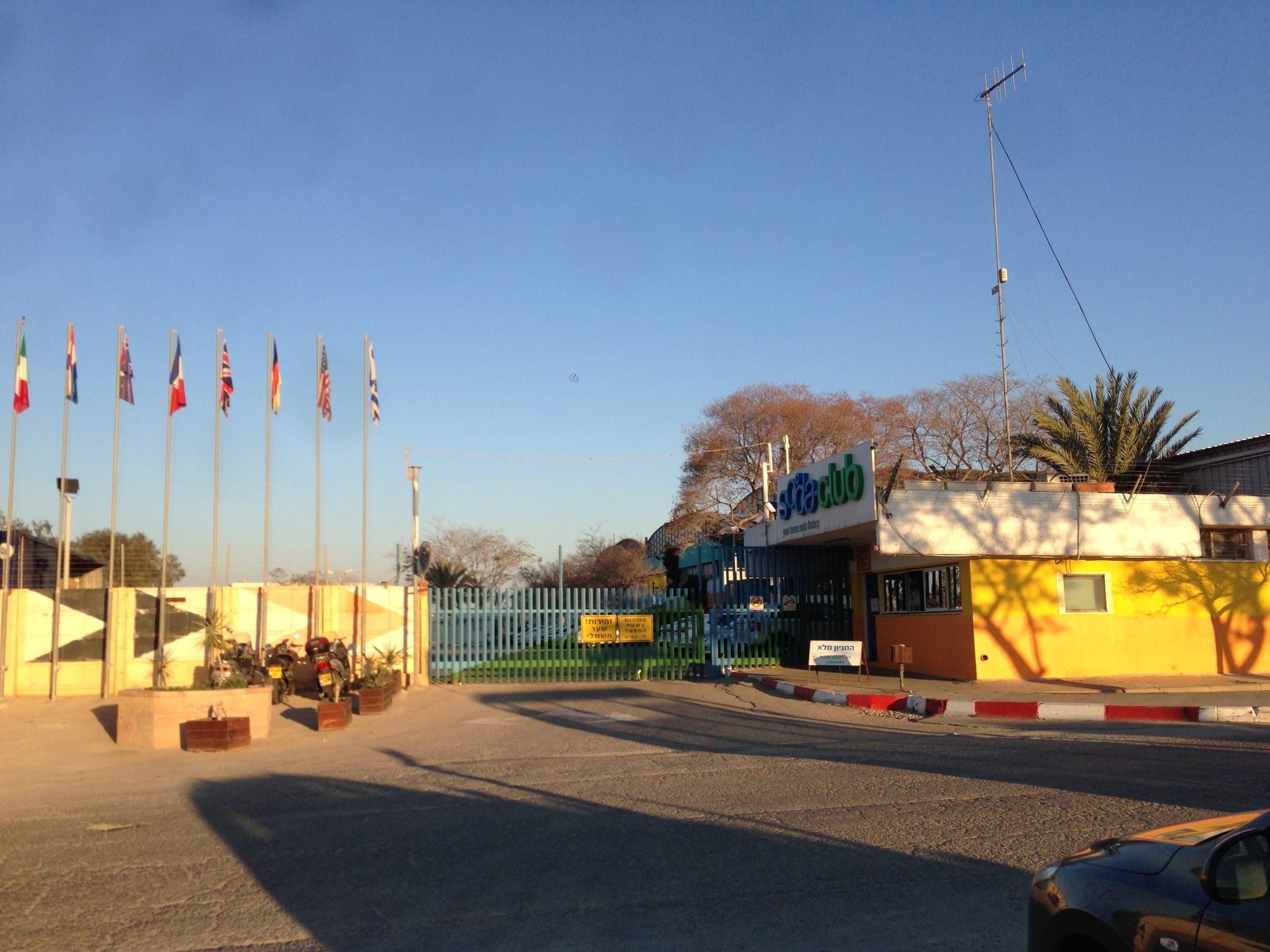
Chapter 5 — The SodaStream Precedent: When a Factory Moves, Who Pays the Price?
A Factory That Became an International Political Symbol
In the debate over economic boycotts, Israeli settlements, and Palestinian employment, few companies have attracted as much international attention as SodaStream.
Known worldwide for its home carbonation machines, SodaStream became the center of a political controversy that extended far beyond its products.
For years, the Israeli company operated a manufacturing facility in the Mishor Adumim industrial zone, near the Israeli settlement of Ma'ale Adumim in the occupied West Bank.
The factory employed hundreds of Palestinians alongside Jewish and Arab Israeli workers.
To company executives, the workplace represented an example of economic cooperation between communities divided by a longstanding political conflict.
To Palestinian activists and international boycott organizations, the factory represented something very different: a commercial operation within an Israeli settlement, contributing to an economic system they regarded as inseparable from the occupation.
These competing interpretations turned an ordinary manufacturing facility into an international political symbol.
In 2014, SodaStream announced that it would relocate its West Bank production to a new manufacturing facility in southern Israel.
The decision was celebrated by supporters of the Boycott, Divestment and Sanctions movement, commonly known as BDS.
But the consequences for Palestinian workers complicated the narrative.
Hundreds of Palestinian employees did not continue working for the company after the relocation.
A smaller group initially transferred to the new factory, only to face another crisis when their Israeli work permits were not renewed.
The story raises a question that remains relevant to today's European debate.
When a company leaves a disputed territory, does that necessarily mean the people who depended on its employment are better off?
The SodaStream experience suggests that the answer is far from straightforward.
The Mishor Adumim Factory: Israelis and Palestinians Working Together
Before the relocation, SodaStream's Mishor Adumim factory was one of the better-known Israeli manufacturing operations in the West Bank.
The facility produced home carbonation machines and related products for international markets.
Its workforce included Palestinian residents of the West Bank, Jewish Israelis, and Arab citizens of Israel.
Contemporary reports described approximately 500 Palestinian employees, alongside hundreds of Israeli workers, although workforce figures varied over time.
The factory was part of an industrial zone associated with Ma'ale Adumim, east of Jerusalem.
Its location made it controversial internationally.
Most countries regard Israeli settlements in the occupied West Bank as contrary to international law. Israel disputes this legal interpretation and emphasizes historical, political, and security arguments concerning the territories.
For Palestinian employees, however, the immediate attraction of the factory was employment.
Manufacturing jobs provided regular wages in an economy where comparable opportunities could be difficult to find.
Some workers described their salaries and working relationships positively.
SodaStream executives emphasized that employees from different communities worked together and that the company sought to provide equal employment conditions.
Yet the workplace was not free from controversy.
In 2014, a dispute involving Palestinian employees during Ramadan led to dismissals and competing accounts about working conditions and labor rights.
The workers and management disagreed over the circumstances.
This episode demonstrated that the factory's reputation as a model of coexistence did not eliminate workplace disputes or inequalities in bargaining power.
A serious examination of SodaStream must acknowledge both aspects.
The factory provided employment that many Palestinian workers valued.
At the same time, it operated within a contested political environment and was subject to legitimate scrutiny over labor conditions and settlement-related economic activity.
The Rise of the International Boycott Campaign
The Boycott, Divestment and Sanctions movement was launched in 2005 following a call from Palestinian civil society organizations.
Its supporters advocate economic, cultural, and institutional pressure on Israel until specified demands concerning Palestinian rights are met.
These include ending occupation, equality for Palestinian citizens of Israel, and addressing the rights of Palestinian refugees.
The movement has attracted international support from activists, student organizations, labor groups, and other civil society networks.
It has also faced strong opposition from Israeli officials and organizations that argue its objectives or methods unfairly target Israel and may undermine prospects for coexistence.
SodaStream became a prominent focus of boycott campaigning because its products were sold internationally while part of its manufacturing took place in a West Bank settlement industrial zone.
Activists urged consumers and retailers to avoid the company's products.
They argued that commercial activity in Israeli settlements contributed to the economic sustainability of settlements and therefore should not receive international support.
The campaign generated demonstrations, public criticism, and pressure on retailers.
For SodaStream, the controversy created reputational challenges in markets where consumers increasingly considered political and ethical questions when purchasing products.
But determining the exact financial impact of the boycott proved difficult.
The company was also experiencing wider commercial challenges, including changes in consumer demand and declining sales in important markets.
The existence of political pressure did not mean that every commercial difficulty could be attributed to the boycott.
Nevertheless, SodaStream became one of the most internationally recognizable companies associated with the campaign against settlement products.
Scarlett Johansson and the Controversy That Went Global
In 2014, the SodaStream controversy attracted even greater international attention when American actress Scarlett Johansson became a global brand ambassador for the company.
Johansson appeared in a major advertising campaign, including a commercial associated with the Super Bowl.
Her involvement brought widespread publicity to SodaStream.
It also intensified criticism from boycott activists who opposed the company's manufacturing operations in the West Bank.
At the time, Johansson was also associated with Oxfam, the international humanitarian organization.
Oxfam maintained that commercial activity in Israeli settlements contributed to conditions that undermined Palestinian rights and economic development.
The disagreement between Johansson's commercial role and Oxfam's position eventually led to the end of her relationship with the organization.
The controversy generated extensive international coverage.
For supporters of the boycott, it demonstrated that pressure on settlement-linked companies could attract global attention and influence public debate.
For critics, the campaign appeared to target a business employing Palestinians and Israelis together, potentially threatening jobs that were economically valuable to local families.
Both sides used SodaStream to illustrate broader arguments about the Israeli-Palestinian conflict.
Yet the workers themselves were often less visible than the celebrity controversy surrounding the company.
The political debate focused on advertising, corporate responsibility, and international law.
The economic future of the Palestinian workforce received comparatively less attention.
That imbalance would become particularly important when SodaStream announced its relocation.
The 2014 Announcement: Why Did SodaStream Decide to Move?
In October 2014, SodaStream announced plans to close its Mishor Adumim facility and consolidate production at a new factory in the Negev region of southern Israel.
The company described the decision as part of a broader commercial restructuring.
Executives argued that the new facility would provide greater manufacturing capacity, improve operational efficiency, and reduce production costs.
The company also benefited from Israeli government incentives connected to industrial development in southern Israel.
SodaStream maintained that the relocation was not simply a response to international boycott pressure.
Its management pointed to financial considerations and the need to reorganize manufacturing operations.
Boycott activists offered a different interpretation.
They described the announcement as evidence that international campaigning against settlement-linked businesses was producing results.
The disagreement became central to the public narrative surrounding the relocation.
Was SodaStream leaving the West Bank because boycott pressure had made its position commercially unsustainable?
Or was it moving because a larger, more efficient manufacturing facility made better business sense?
The available evidence indicates that the decision involved commercial restructuring and took place amid significant political pressure.
Importantly, SodaStream executives gave somewhat different accounts over time.
Chief executive Daniel Birnbaum repeatedly emphasized that the relocation had been planned for commercial reasons, but he also acknowledged in a separate interview that boycott pressure had influenced the business environment and the decision.
This makes a simple explanation inadequate.
It would be inaccurate to claim that the boycott was conclusively the sole cause of the relocation.
It would also be misleading to suggest that the international campaign had no relevance to the company's commercial circumstances.
The more defensible conclusion is that SodaStream's relocation occurred amid overlapping business, financial, and political pressures whose relative importance remains disputed.
The Move to the Negev
SodaStream transferred production to the Idan Negev industrial area near Rahat and Lehavim in southern Israel.
Unlike the Mishor Adumim facility, the new factory was located inside Israel's pre-1967 boundaries.
This changed the territorial status of the company's manufacturing operations.
The new facility was considerably larger and formed part of a broader effort to consolidate production.
The company presented the development as an opportunity to expand manufacturing capacity while continuing to employ workers from different communities.
The location near Rahat was also significant because Rahat is a predominantly Bedouin Arab city.
SodaStream employed Jewish and Arab Israeli workers at its new facility, including members of the Bedouin community.
From the company's perspective, the new factory offered an opportunity to maintain a diverse workforce while operating outside the West Bank settlement economy.
For boycott activists, the closure of the Mishor Adumim factory represented an important development because production was no longer taking place in that settlement industrial zone.
However, the move also exposed a major employment problem.
Palestinian workers living in the West Bank could not necessarily follow their employer to the new location.
The factory had moved.
The workers' legal ability to access it had not automatically moved with it.
Hundreds of Palestinian Workers Lost Their Jobs
The relocation had serious consequences for SodaStream's Palestinian workforce.
Contemporary reporting indicated that approximately 500 Palestinian employees lost their jobs in connection with the closure of the Mishor Adumim facility.
The precise employment figures reported during the transition varied, partly because the workforce changed over time and some workers were initially offered opportunities at the new factory.
Nevertheless, the broad outcome was clear.
Most of the Palestinian workforce from the West Bank did not retain employment at the relocated operation.
This was not simply a matter of whether the company wished to employ them.
Working inside Israel required permits and administrative approval.
The new factory was also substantially farther from many employees' homes.
Travel could involve long journeys, security crossings, and additional uncertainty.
For workers who had previously traveled to a factory located in the West Bank, the change created practical and legal obstacles.
SodaStream sought permission for Palestinian employees to continue working at the new facility.
However, the number of permits available was limited.
Only a relatively small group of workers initially managed to continue employment.
The loss of hundreds of jobs became one of the most controversial consequences of the relocation.
For critics of the boycott movement, it illustrated the danger of celebrating a factory's departure without examining what happened to its workforce.
For supporters of the campaign, the closure remained an important step toward ending commercial activity within a settlement, while the wider responsibility for Palestinian economic vulnerability was linked to the occupation and restrictions on Palestinian development.
The disagreement reflected two different ways of evaluating the same event.
One focused on the political significance of leaving the settlement.
The other focused on the immediate economic consequences for workers.
Both dimensions were real.
The Work Permit Crisis of 2016
The difficulties did not end when SodaStream opened its new facility.
A small group of Palestinian employees had initially continued working at the factory in southern Israel.
Their employment depended on permits allowing them to enter Israel from the West Bank.
In February 2016, the Israeli authorities did not renew the permits of 74 Palestinian employees.
As a result, these workers could no longer continue their jobs at the Negev facility.
The decision created another employment crisis.
SodaStream's management publicly criticized the situation and sought government intervention.
Chief executive Daniel Birnbaum argued that the employees were experienced workers who had contributed to the company for years.
He emphasized the importance of maintaining employment relationships between Israelis and Palestinians.
The dispute highlighted an important fact.
Even after a company relocates from a settlement to a location inside Israel, Palestinian employees may remain dependent on Israeli administrative and security decisions.
Their continued employment is not determined solely by the employer's willingness to retain them.
It also depends on the government's willingness to authorize their access to the workplace.
The case therefore revealed a structural vulnerability extending beyond the boycott debate.
A business can offer employment, and a worker can be willing to accept it, yet the employment relationship may still be interrupted by restrictions on movement.
For the affected SodaStream employees, the loss of permits meant losing access to jobs they had already managed to retain through the relocation.
The Return of Palestinian Employees in 2017
After sustained efforts by SodaStream's management, the situation changed in 2017.
Israeli authorities agreed to renew permits allowing the group of Palestinian employees to return to work at the Negev factory.
Contemporary reports described the return of 74 workers, while some later company accounts referred to approximately 80 permits.
The development was welcomed by SodaStream executives and employees.
For the workers involved, the restoration of employment offered renewed financial stability after a prolonged period of uncertainty.
It also demonstrated that administrative decisions could directly determine whether Palestinian employees retained access to Israeli workplaces.
However, the return of this smaller group did not reverse the wider employment losses associated with the original relocation.
Hundreds of Palestinians who had worked at Mishor Adumim were not automatically rehired.
The case therefore had two distinct outcomes.
The company succeeded in continuing and expanding production at its new facility.
A limited group of Palestinian workers eventually regained their jobs.
But a much larger number of former Palestinian employees did not make the transition.
These outcomes are important because they challenge simplistic descriptions of the SodaStream story as either a complete economic disaster or an uncomplicated political victory.
What Palestinian Workers Said
One of the most revealing aspects of the SodaStream controversy was the testimony of Palestinian employees themselves.
Some workers publicly expressed frustration that international campaigns against the company had not sufficiently considered their livelihoods.
Others emphasized that the wages they earned at SodaStream were difficult to replace in the Palestinian labor market.
Ali Jafar, a Palestinian employee who worked for SodaStream, became one of the voices associated with the debate.
His comments in contemporary interviews reflected the importance of employment and his desire to continue working for the company.
Other employees described the difficulties created by long commutes and permit restrictions.
These accounts illustrated the practical realities behind the political controversy.
For workers who valued their jobs, the relocation was not simply a question of whether production took place inside or outside a settlement.
It was a question of whether they would still receive a salary.
However, these testimonies should not be interpreted as representing every Palestinian worker or the Palestinian population as a whole.
Some Palestinians opposed employment in settlement industries because they believed such economic activity contributed to the continuation of the occupation.
Others regarded the jobs as necessary under existing economic conditions while supporting the longer-term objective of Palestinian economic independence.
The important journalistic lesson is that workers' perspectives cannot be assumed from the political positions of employers, governments, or activist organizations.
They must be heard directly.
The BDS Perspective: Why the Campaign Considered the Move a Success
Supporters of the BDS movement did not evaluate SodaStream's relocation solely through the number of jobs preserved.
Their central objective was to challenge commercial activity in Israeli settlements.
From that perspective, a major international company ending manufacturing operations in a West Bank settlement represented a meaningful result.
Activists argued that businesses operating in settlements contributed to an economic system associated with occupation, territorial control, and restrictions on Palestinian rights.
They also maintained that Palestinian economic dependence on settlement industries should not be presented as evidence that those industries were beneficial to Palestinian society as a whole.
In this view, the existence of relatively well-paid jobs did not resolve questions concerning land, resources, movement, and self-determination.
The campaign's supporters therefore considered the closure politically significant even though it was accompanied by employment losses.
Their argument was that the long-term objective should be an independent and sustainable Palestinian economy rather than permanent reliance on settlement-based employment.
This position raises a legitimate question about the relationship between immediate wages and long-term economic development.
But it also leaves another question requiring an answer.
What should happen to workers during the transition?
A long-term political objective does not automatically provide short-term employment.
If a campaign contributes to commercial withdrawal, the economic consequences for affected employees remain relevant even when the campaign's legal and political goals are considered justified.
The Company's Perspective: Economic Cooperation and Coexistence
SodaStream executives presented a different interpretation.
They argued that their workplaces demonstrated the possibility of economic cooperation between Israelis and Palestinians.
The company emphasized shared production facilities, employment opportunities, and the relationships developed between employees from different communities.
Management also argued that boycotts risked harming Palestinian workers more directly than the political authorities targeted by activists.
The work-permit crisis strengthened this argument in the company's public communications.
SodaStream portrayed its efforts to retain Palestinian employees as evidence of a commitment to economic coexistence.
However, corporate statements must also be examined critically.
A company has commercial and reputational interests in defending its employment practices and explaining controversial business decisions.
The existence of cooperation between employees does not automatically resolve concerns about settlement legality, labor rights, or unequal access to economic opportunities.
Likewise, the loss of jobs does not establish that continued settlement-based manufacturing would have provided the best long-term economic outcome.
The company's experience is relevant because it provides evidence of employment consequences.
It should not be treated as conclusive proof of every broader political claim made by its executives.
Did the Boycott Actually Cause the Job Losses?
This is perhaps the most important question in the entire SodaStream case.
The sequence of events is clear.
SodaStream faced international boycott pressure.
The company announced a relocation.
The West Bank factory closed.
Hundreds of Palestinian workers did not retain employment at the new facility.
But a sequence of events does not, by itself, establish that the boycott caused every subsequent outcome.
The company cited operational efficiency, consolidation, financial considerations, and manufacturing capacity as reasons for relocating.
Boycott activists argued that their campaign contributed to the decision.
The company's own public explanations acknowledged the controversy while differing on the extent of its influence.
The employment losses were also affected by the practical consequences of moving production into Israel, particularly the limited availability of work permits.
It would therefore be inaccurate to state that the BDS movement alone directly dismissed hundreds of Palestinian employees.
The company made the relocation decision, and Israeli administrative decisions affected workers' ability to continue employment.
At the same time, the political pressure surrounding SodaStream was part of the environment in which those decisions occurred.
The most accurate conclusion is that the case involved multiple interacting causes.
This distinction is especially important for the present European debate.
If future restrictions contribute to factory relocations, investigators must examine not only the restrictions themselves but also corporate decisions, employment policies, permit systems, and the availability of alternative jobs.
Economic consequences rarely have only one cause.
What the SodaStream Case Teaches Europe
The SodaStream experience offers several lessons for European governments considering stronger restrictions on settlement-related trade.
First, a company's relocation does not necessarily mean its existing workforce will relocate with it.
Second, Palestinian employment can depend on administrative decisions outside the control of both employers and workers.
Third, political objectives and employment outcomes must be assessed separately.
Fourth, the financial consequences of commercial withdrawal may affect people who have little influence over the underlying political dispute.
And fifth, the causes of factory closures and job losses require careful investigation rather than assumptions based on political narratives.
These lessons do not establish that settlement-related trade restrictions should never be introduced.
Nor do they invalidate concerns about the legality of settlements or the long-term effects of economic dependence.
Instead, they demonstrate that political decisions can have complicated economic consequences.
A policy designed to reduce settlement-based commercial activity may succeed in encouraging relocation.
But if workers lose their jobs without realistic alternatives, the transition can impose immediate hardship.
European governments should therefore consider whether measures affecting settlement industries need to be accompanied by employment assistance, investment in Palestinian businesses, vocational training, or other forms of economic support.
Such measures would not resolve the underlying political conflict.
They could, however, reduce the risk that vulnerable workers bear a disproportionate share of the economic costs.
The Difference Between Leaving a Settlement and Creating a Better Future
The SodaStream story ultimately raises a broader question about what economic progress should mean in the Israeli-Palestinian context.
Is progress achieved when a company stops manufacturing in a settlement?
Is it achieved when Palestinian workers earn stable salaries?
Is it achieved when Palestinian-owned industries become strong enough to provide competitive employment?
Or must meaningful progress include all three considerations?
These objectives are not necessarily incompatible.
A long-term strategy could seek to reduce settlement-related economic activity while simultaneously expanding independent Palestinian employment opportunities.
But achieving that outcome requires more than political pressure.
It requires investment, infrastructure, access to markets, labor protections, predictable commercial conditions, and realistic transition planning.
Without these elements, the closure of a factory may change the geography of production without improving the economic prospects of the people who once worked there.
The SodaStream case demonstrates this problem particularly clearly.
The company continued its operations in southern Israel.
Some Palestinian workers eventually returned.
Many others did not retain their original employment.
The international political controversy continued long after the factory moved.
For the workers who lost their jobs, however, the immediate consequences were financial and personal.
Conclusion — A Political Victory Does Not Automatically Protect Workers
SodaStream remains one of the most frequently cited examples in the debate over boycotts and Israeli settlement industries.
Its history is often presented through competing political narratives.
For supporters of the boycott movement, the departure from Mishor Adumim demonstrated that international pressure could challenge commercial activity in settlements.
For critics, the loss of Palestinian employment showed how such campaigns could harm workers whose interests they claimed to defend.
For SodaStream, the relocation formed part of a larger commercial restructuring.
For the Palestinian employees who lost their jobs, the central issue was the disappearance of a source of income.
Each perspective captures part of the story.
None is sufficient on its own.
The most important lesson is not that every boycott inevitably causes unemployment or that every settlement-based factory should remain open indefinitely.
It is that economic policy must account for the people whose livelihoods depend on the activities being targeted.
A factory can leave a settlement without leaving its former workers in a better economic position.
That distinction matters today as European countries consider or implement additional restrictions on settlement-related commerce.
If policymakers intend to encourage companies to move production, they should also examine whether Palestinian employees will be able to follow those companies, find alternative jobs, or receive support during the transition.
If the objective is greater Palestinian economic independence, that objective must be supported by practical opportunities rather than political declarations alone.
And if campaign organizations claim success when a factory closes, the employment consequences should remain part of the public discussion.
The SodaStream case does not provide a simple verdict on the effectiveness or legitimacy of boycotts.
It provides something more valuable: a documented example of how political pressure, commercial restructuring, government permit decisions, and Palestinian livelihoods can become deeply interconnected.
The next chapter moves beyond factories and political campaigns to examine the people behind the employment statistics.
Because the real consequences of economic disruption are not measured only in lost contracts, relocated machinery, or corporate balance sheets.
They are measured in the lives of workers and families who must find a way forward when their source of income disappears.
Chapter 6 — Palestinian Families Behind the Statistics
Behind Every Lost Job Is a Family
International political debates are often dominated by numbers.
Governments discuss trade volumes, economic sanctions, export restrictions, and the financial consequences of diplomatic decisions. Businesses calculate production costs, profit margins, and potential losses. Political organizations measure the success of campaigns through canceled contracts, corporate withdrawals, and changes in commercial relationships.
But employment statistics tell only part of the story.
Behind every job stands an individual whose income may support an entire household.
And behind every household are everyday responsibilities that do not disappear when political circumstances change.
Children still need food and education. Families still need housing. Medical expenses must still be paid. Electricity, transportation, and other basic necessities remain essential regardless of international political developments.
This is the human dimension of the warning that approximately 4,000 Palestinian jobs connected to Israeli settlement industries could be at risk.
The figure represents a projection rather than confirmed unemployment. Nevertheless, the possibility of losing thousands of jobs raises serious questions about the consequences for Palestinian families already living under difficult economic conditions.
For a worker employed in an Israeli factory in the West Bank, the debate over European trade restrictions may seem distant from everyday life.
Decisions are discussed in Brussels, Dublin, and other European capitals.
Political statements are issued by ministers, parliamentary representatives, and international organizations.
Campaign groups argue over legal responsibilities and the future of Israeli settlements.
But the practical consequences may eventually reach a worker standing on a production line, operating machinery, packaging goods, or transporting products.
If the factory reduces production, that worker may lose hours.
If the factory closes, the worker may lose employment entirely.
If the company relocates, continued employment may become dependent on permits, transportation, and the availability of positions at the new location.
The resulting uncertainty can affect not only financial stability but also the family's ability to plan for the future.
To understand the full consequences of economic pressure, it is therefore necessary to move beyond the statistics and examine the households behind them.
One Salary, Multiple Responsibilities
In many communities, employment provides financial support beyond the individual worker.
A regular salary may contribute to the needs of a spouse, children, parents, or other relatives.
This is not unique to Palestinian society, but it becomes especially significant in an economy where unemployment and limited earning opportunities can place pressure on extended families.
A worker employed in manufacturing may be the principal income earner in a household.
That income may cover rent or mortgage payments, groceries, school supplies, transportation, medical expenses, and financial obligations to relatives.
Some households have several income earners.
Others depend heavily on one salary.
The degree of dependence varies, but the economic risks are clear.
When a household loses its primary income, the consequences can begin immediately.
Families may use savings intended for emergencies.
They may postpone purchases, reduce spending, or seek financial assistance from relatives.
Some may take on debt to cover ordinary living expenses.
Others may need to make difficult decisions about education, housing, or healthcare.
These consequences can become more severe when unemployment lasts for an extended period.
A temporary interruption in income may be manageable for a household with savings and access to alternative employment.
For a family with limited financial reserves, the same interruption can create lasting instability.
This is why job losses cannot be assessed solely through the number of employment positions eliminated.
The economic consequences extend to the people who depend on those wages.
However, it would be inaccurate to calculate a specific number of affected family members from the projected 4,000 jobs without reliable household-level data.
Not every worker supports the same number of relatives, and not every household depends on a single income.
The actual scale of the consequences requires independent research.
What is clear is that the potential impact extends beyond factory employees themselves.
The Importance of Higher Wages
One reason Palestinian workers seek employment with Israeli businesses is the difference in wages between the Israeli and Palestinian labor markets.
Historically, many Palestinians working for Israeli employers have earned more than workers in comparable occupations within the Palestinian economy.
The precise difference depends on the industry, occupation, employment conditions, and period being examined.
It is also important to distinguish employment inside Israel from employment in Israeli settlement industries, since the two categories are not identical.
Nevertheless, wage differences can make Israeli employment financially attractive.
For some families, higher wages provide greater financial security.
They may allow parents to invest in their children's education, improve housing conditions, or build modest savings.
A higher income can also help households withstand unexpected expenses.
But the financial advantages of employment must be considered alongside its vulnerabilities.
Workers may face uncertain access to workplaces, transportation costs, permit requirements, and interruptions caused by security conditions.
Some may experience difficulties enforcing labor rights or negotiating employment terms.
A higher salary does not necessarily guarantee secure employment.
Yet when the alternative is significantly lower-paid work or unemployment, the financial incentive remains powerful.
This creates a difficult situation for workers who depend on jobs connected to politically disputed industries.
They may not support the settlement policies associated with their workplaces.
They may wish for stronger Palestinian economic independence.
But they may also need the wages available today.
For families facing immediate financial responsibilities, the promise of better economic opportunities in the future cannot replace a salary that disappears now.
The Impact on Children's Education
Employment insecurity can have consequences that extend into the next generation.
Education is one of the most important investments families make in their children's futures.
School transportation, uniforms, supplies, digital equipment, university tuition, and other educational expenses can place significant demands on household budgets.
When income declines, families may need to reconsider these expenditures.
A household experiencing prolonged unemployment may struggle to pay university fees or cover the costs associated with continued education.
Older children may feel pressure to contribute financially to the household.
Young adults may postpone further studies while searching for employment.
These outcomes are not inevitable, and they should not be presented as established consequences of the currently projected settlement-industry job losses.
They are potential risks associated with household financial insecurity.
The wider concern is that an economic shock can affect opportunities long after the original employment disruption.
A parent who loses a manufacturing job may eventually find another source of income.
But if a child has been forced to interrupt education during the period of unemployment, the consequences may be more difficult to reverse.
This makes educational stability an important consideration when assessing the human impact of economic restrictions.
Policies intended to influence political behavior should also be evaluated for their potential effects on the long-term opportunities of vulnerable families.
Healthcare and Financial Security
Healthcare represents another important dimension of household economic stability.
Medical expenses can become particularly difficult to manage when regular income disappears.
Families may need to pay for medication, transportation to medical facilities, specialist appointments, or treatment-related expenses not fully covered by available services or insurance.
The Palestinian healthcare system faces its own structural challenges, including financial constraints and restrictions affecting access to some forms of specialized treatment.
The extent to which individual families are affected varies according to their location, health needs, insurance coverage, and financial resources.
For workers with stable employment, wages may help cover expenses that would otherwise be difficult to afford.
When employment is lost, medical spending can become an additional source of financial pressure.
Some households may postpone non-urgent treatment.
Others may rely more heavily on relatives or charitable assistance.
Again, these are possible consequences of unemployment rather than documented outcomes for the workers identified in the recent warning.
But they illustrate why employment is closely connected to wider measures of family welfare.
The financial consequences of losing a job cannot be separated from the ability to maintain basic living standards.
The Psychological Burden of Unemployment
The consequences of employment insecurity are not exclusively financial.
Work can provide routine, purpose, social relationships, professional identity, and a sense of stability.
For individuals supporting families, regular employment can also create confidence in their ability to meet household responsibilities.
The possibility of losing a job can therefore generate anxiety even before unemployment occurs.
A worker may worry about whether the factory will continue operating.
A parent may question how future expenses will be covered.
A family may postpone important decisions because income has become uncertain.
When unemployment continues for months, financial pressure can contribute to emotional stress and tension within households.
These effects are particularly relevant in communities already affected by political instability, movement restrictions, and security concerns.
However, it would be inappropriate to assume that every Palestinian worker experiences unemployment in the same way.
Individuals respond differently depending on their circumstances, family support, personal resources, and employment alternatives.
A responsible investigation should therefore include direct testimony from workers and families rather than relying solely on general assumptions about hardship.
The psychological dimension matters because economic statistics cannot fully describe the experience of losing financial security.
The West Bank's Limited Capacity to Absorb Additional Workers
One of the central concerns surrounding potential employment losses is the ability of the Palestinian economy to provide alternative jobs.
The West Bank's labor market has faced persistent structural difficulties.
Private investment is constrained by political uncertainty, restrictions on movement and access, limited control over certain resources, and difficulties connecting businesses to regional and international markets.
The Palestinian Authority's recurring financial problems have also affected public-sector employment and household purchasing power.
Following October 7, 2023, the economic situation deteriorated further.
Restrictions on access to employment inside Israel, disruptions to commercial activity, and increased movement difficulties placed substantial pressure on workers and businesses.
As a result, the availability of alternative employment cannot be taken for granted.
A Palestinian worker who loses a job in a settlement industrial zone may have years of experience operating machinery, supervising production, or managing warehouse operations.
These skills may be valuable.
But their value depends on whether other employers have positions available.
A qualified worker cannot simply create a manufacturing job where no factory exists.
Nor can a family necessarily relocate to another city in search of work without considering housing costs, transportation, family responsibilities, and the uncertainty of finding employment.
Even when alternative work is available, wages may be lower.
This can leave households employed but financially worse off than before.
For policymakers, the distinction between finding any job and finding sustainable employment is essential.
A successful economic transition should not be measured only by whether displaced workers eventually return to the labor market.
It should also consider wages, working conditions, job security, and the ability to maintain a reasonable standard of living.
The Role of Women in Household Economic Stability
Women are an essential part of the economic story, even when public discussions focus primarily on factory workers.
Palestinian women contribute to household income through formal employment, family businesses, agriculture, education, healthcare, services, and other economic activities.
They also perform substantial unpaid care and household work.
When a family experiences a loss of income, women may face additional responsibilities.
Some may seek paid employment to compensate for the loss.
Others may expand small businesses, take on informal work, or manage household budgets under increasingly difficult circumstances.
At the same time, women's access to employment can be limited by economic conditions, transportation difficulties, caregiving responsibilities, and social expectations.
The availability of opportunities varies considerably between communities and individuals.
This means that replacing lost household income may not be straightforward.
A family cannot necessarily compensate for the dismissal of one wage earner simply by having another family member enter the labor market.
For women already combining paid employment with caregiving responsibilities, additional financial pressure can increase the demands placed upon them.
An investigation into the consequences of employment losses should therefore include women's perspectives, even when they are not directly employed in the affected factories.
The economic effects of unemployment are experienced throughout the household.
Understanding those effects requires listening to spouses, mothers, daughters, and other family members whose daily lives may change when a salary disappears.
When Local Communities Lose Purchasing Power
The consequences of unemployment can extend beyond individual households into the surrounding community.
Workers spend their wages on goods and services.
They purchase food from local shops, use transportation services, pay for housing, and support other businesses.
When employment declines, household spending may fall.
Local retailers may experience lower sales.
Transportation providers may lose customers.
Small businesses may face reduced demand.
This can create secondary economic effects.
Economists often describe these consequences through the relationship between employment, household income, consumption, and local economic activity.
The strength of these effects depends on how much income is lost, where workers spend their wages, and whether alternative sources of employment emerge.
It would be misleading to assume that every lost factory job automatically produces a specific number of additional job losses.
Such calculations require economic modeling and reliable local data.
Nevertheless, the underlying concern is relevant.
If several hundred workers in one community lose their employment, the reduction in household purchasing power may affect businesses that were not directly connected to the original factory.
The consequences can therefore spread beyond the company targeted by a boycott or trade restriction.
This is another reason why employment impacts should be assessed at both the household and community levels.
A Hypothetical Family Facing an Uncertain Future
Consider a hypothetical Palestinian family living in the West Bank.
The father works in a manufacturing facility operated by an Israeli company in a settlement industrial zone.
His wife manages the household and contributes income through occasional work.
They have three children, two attending school and one preparing for university.
The father's salary provides most of the family's regular income.
For several years, the household has organized its expenses around that employment.
Then the factory begins receiving fewer export orders.
Management announces that production may be reduced.
Employees are told that future employment depends on whether new customers can be found.
The family begins preparing for the possibility of unemployment.
Major purchases are postponed.
Savings are preserved for essential expenses.
University plans become uncertain.
The father searches for alternative employment but finds that comparable manufacturing jobs are limited.
If the factory eventually closes, the family faces an immediate reduction in income.
This scenario is illustrative and does not describe a verified Palestinian family or a documented dismissal.
Its purpose is to demonstrate the economic mechanisms through which commercial disruption can affect household decisions.
For a genuine investigation, such scenarios must be supplemented by interviews with actual workers and independently verified accounts.
But the example highlights a central issue.
Political decisions are often evaluated through their intended objectives.
Families experience them through their practical consequences.
The Question of Compensation and Economic Support
If European trade measures contribute to the loss of Palestinian employment, should governments consider providing economic assistance to affected workers?
This question deserves serious examination.
International economic restrictions are sometimes accompanied by humanitarian assistance, development programs, or measures intended to reduce harm to vulnerable populations.
In the context of settlement-related trade, possible approaches could include vocational training, support for Palestinian-owned businesses, employment-transition programs, and investment in industries capable of absorbing displaced workers.
Such measures would require careful design.
Training programs are useful only when they lead toward realistic employment opportunities.
Financial assistance may provide temporary relief but cannot replace sustainable economic development.
Investment programs must also address structural barriers affecting Palestinian businesses, including movement, market access, infrastructure, and regulatory uncertainty.
Moreover, assistance should not be designed solely around the interests of Israeli employers or international political organizations.
Palestinian workers, businesses, and economic institutions should have a meaningful role in identifying their needs.
The objective should be to increase employment opportunities and economic resilience.
This raises an important distinction.
Supporting workers who lose employment is not necessarily the same as supporting the industries in which they previously worked.
A government may oppose settlement-related economic activity while still recognizing a responsibility to address the foreseeable consequences of its policies.
Such an approach would acknowledge both legal principles and human welfare.
Palestinian Economic Independence: A Long-Term Goal
The question of alternative employment leads to a broader discussion about Palestinian economic independence.
For decades, the Palestinian economy has been closely connected to Israel through trade, labor, infrastructure, and administrative arrangements.
This relationship provides access to employment and markets but also creates significant dependencies.
Political decisions affecting movement, permits, imports, exports, and access to resources can influence Palestinian economic activity.
Many Palestinian economists and development organizations argue that long-term prosperity requires stronger domestic industries, improved infrastructure, reliable access to markets, and greater economic autonomy.
These objectives are important.
A more diversified Palestinian economy could reduce dependence on employment controlled by external authorities or businesses.
It could also provide greater opportunities for entrepreneurship, investment, and local job creation.
However, economic independence cannot be achieved simply by removing existing sources of employment.
Building a competitive manufacturing sector requires capital, infrastructure, energy, transportation, skilled workers, and access to customers.
Developing these conditions takes time.
Workers who lose their salaries today cannot necessarily wait for a long-term economic strategy to succeed.
This creates a difficult policy challenge.
How can governments encourage structural economic change without imposing excessive immediate costs on vulnerable households?
A credible approach would need to combine long-term development objectives with practical employment protection and transition measures.
The Risk of Making Workers Invisible
One of the most troubling aspects of international economic debates is the possibility that the people most directly affected become secondary to political arguments.
A government may describe a restriction as a principled stand.
An activist organization may celebrate a company withdrawing from a settlement.
A business may announce restructuring plans.
Each statement can attract media attention.
But what happens to the employees afterward?
Do they find new jobs?
Are their wages reduced?
Do their families receive assistance?
Are they able to continue their children's education?
Have they been consulted about the decisions affecting their livelihoods?
These questions rarely produce dramatic headlines.
Yet they are essential to understanding whether political and economic measures are improving people's lives.
Independent journalism has a responsibility to examine these outcomes.
That responsibility applies equally to statements made by European governments, Israeli businesses, Palestinian political organizations, and international advocacy groups.
No institution should be able to claim that it represents the interests of Palestinian workers without being willing to examine what those workers actually experience.
Listening to Palestinian Workers Rather Than Speaking for Them
The debate over settlement employment frequently involves people speaking on behalf of Palestinians.
European politicians explain what measures they believe will support Palestinian rights.
Israeli business representatives describe the benefits of employment in settlement industries.
Boycott activists argue that economic pressure is necessary for Palestinian self-determination.
Each group presents its own interpretation.
But Palestinian workers are not a single political category.
They are individuals with different experiences, beliefs, economic circumstances, and priorities.
Some may value their jobs while opposing settlement expansion.
Others may support boycotts despite concerns about employment.
Some may believe that Israeli-Palestinian economic cooperation can contribute to stability.
Others may regard settlement-based employment as a consequence of restricted Palestinian economic opportunities rather than a desirable long-term arrangement.
These positions deserve to be understood rather than simplified.
A credible investigation should therefore seek interviews with workers who have retained their jobs, workers who have lost employment, and families whose economic circumstances have changed.
Their accounts should be considered alongside independent economic research.
Direct testimony is particularly important because employment statistics alone cannot reveal how workers interpret their circumstances.
The people affected should have a voice in the discussion about their future.
Can Political Solidarity Exist Without Economic Responsibility?
European governments frequently present measures concerning Israeli settlements as expressions of support for international law and Palestinian rights.
These objectives are part of a wider diplomatic debate.
However, support for rights and concern for economic welfare should not be treated as competing principles.
If a government introduces restrictions that may affect employment, it should examine the consequences.
If workers face foreseeable hardship, policymakers should consider how that hardship can be reduced.
If the long-term objective is Palestinian economic independence, meaningful investment and improved economic opportunities should accompany political declarations.
This does not mean that every job must be preserved regardless of the legal or political circumstances surrounding the employer.
Nor does it mean that the existence of Palestinian employment resolves concerns about settlements.
It means that the human consequences of economic policy deserve the same seriousness as its political objectives.
A policy may be legally defensible and still require measures to protect vulnerable workers.
Likewise, an economic activity may provide valuable employment while remaining part of a contested political system.
Recognizing both realities is necessary for a credible assessment.
Conclusion — The Human Cost Cannot Be an Afterthought
The warning that thousands of Palestinian jobs could be at risk is more than a question of trade policy.
It is a question about the economic security of families living in an already vulnerable environment.
For workers employed in Israeli settlement industries, wages can represent an important source of stability.
For their families, those wages may support education, healthcare, housing, and everyday necessities.
For local communities, household income contributes to economic activity beyond the factories themselves.
The potential consequences of employment losses therefore extend far beyond the number of positions eliminated.
At the same time, the broader legal and political controversy surrounding Israeli settlements cannot be ignored.
The existence of jobs does not eliminate the need to examine international law, economic inequality, or the long-term development of the Palestinian economy.
The challenge is to address these issues without treating workers as expendable consequences of political strategy.
If economic pressure is introduced in the name of Palestinian rights, the economic security of Palestinian families must remain part of the calculation.
A policy that changes commercial behavior but overlooks the people affected by that change risks creating new hardship without adequately addressing existing vulnerabilities.
The most meaningful measure of success is therefore not simply whether a factory closes, a contract is canceled, or a company relocates.
It is whether the resulting changes contribute to a future in which Palestinians have greater economic opportunity, stability, and control over their livelihoods.
That requires more than political slogans.
It requires evidence, accountability, investment, and a willingness to listen to the people whose lives are directly affected.
Because behind every employment statistic is a human story.
And those stories deserve to be heard.
Chapter 7 — The European Dilemma: Principles Versus Economic Consequences
When Political Principles Meet Economic Reality
European governments frequently describe their policies toward the Israeli-Palestinian conflict through the language of international law, human rights, diplomatic responsibility, and support for a negotiated political solution.
These principles form an important part of European foreign policy.
The European Union has consistently distinguished between the internationally recognized territory of Israel and the territories occupied during the 1967 Six-Day War. It has repeatedly expressed opposition to Israeli settlement expansion and maintained that settlements in the occupied West Bank are contrary to international law.
For European policymakers, economic restrictions connected to settlements are therefore not simply commercial decisions.
They are also instruments intended to reinforce legal and political positions.
However, the consequences of such measures are not confined to diplomatic statements or legal interpretations.
They affect businesses, supply chains, workers, and households.
This creates a dilemma that is rarely addressed with sufficient depth in public debate.
What happens when a policy intended to defend Palestinian rights creates economic hardship for Palestinian workers?
The question does not invalidate the legal arguments underlying European policy.
Nor does it automatically mean that trade restrictions are inappropriate.
It does, however, require policymakers to examine whether their decisions achieve their intended objectives and whether foreseeable economic harm is being adequately addressed.
Political principles and economic consequences cannot be treated as separate realities.
A policy may be legally defensible while producing difficult economic outcomes.
Equally, an economic activity may provide employment while remaining connected to a situation that raises serious legal concerns.
The challenge for Europe is to reconcile these competing considerations without reducing the debate to political slogans.
Europe's Commitment to International Law
The European Union's position on Israeli settlements is grounded in its interpretation of international law, including the Fourth Geneva Convention and relevant United Nations resolutions.
Article 49 of the Fourth Geneva Convention prohibits an occupying power from transferring parts of its own civilian population into territory it occupies.
The International Court of Justice has also addressed the legal consequences of Israeli policies in the occupied Palestinian territory.
In its 2004 advisory opinion concerning the separation barrier, the Court concluded that Israeli settlements in the occupied Palestinian territory had been established in breach of international law.
In its July 2024 advisory opinion, the Court went further, concluding that Israel's continued presence in the occupied Palestinian territory was unlawful and that states had obligations concerning non-recognition and assistance in maintaining that situation.
Advisory opinions are not themselves binding judgments between disputing parties, but they carry substantial legal authority.
Israel disputes the Court's conclusions and argues that its historical, security, and legal claims have not been adequately reflected in these proceedings.
The European Union's territorial differentiation policy is consistent with its longstanding refusal to recognize Israeli sovereignty over the occupied territories.
This legal context matters.
European measures concerning settlement products are not necessarily intended as punishment against individual workers or businesses.
They can be understood as attempts to avoid treating economic activity in occupied territory as though it were equivalent to activity within Israel.
Supporters argue that such differentiation is essential for maintaining consistency with international law.
However, legal consistency does not eliminate the need for economic impact assessments.
If a measure has foreseeable consequences for workers, those consequences remain relevant to its design and implementation.
The question is therefore not simply whether Europe has legal grounds for distinguishing settlement products.
It is whether the resulting policies are implemented responsibly.
The Difference Between Legal Obligation and Political Choice
An important distinction exists between obligations under international law and the particular economic measures governments choose to adopt.
International law may require states to refrain from recognizing or assisting an unlawful situation.
But the precise measures necessary to fulfill those obligations can involve complex legal and political judgments.
Not every proposed trade restriction automatically follows as the only possible legal response.
Governments must consider the applicable legal framework, their institutional powers, the effectiveness of different measures, and the potential consequences for affected populations.
Within the European Union, trade policy is also governed by rules concerning institutional competence and collective decision-making.
This means that individual governments cannot always introduce trade measures independently of the wider European legal framework.
The distinction is particularly important when politicians describe proposed restrictions as unavoidable.
A government may have strong legal reasons to act while still retaining choices about the design, scope, timing, and accompanying safeguards of a particular measure.
For example, policymakers may consider how restrictions affect different categories of products, how businesses are required to demonstrate origin, and how employment consequences will be assessed.
They may also consider economic assistance for affected Palestinian communities.
These are questions of policy design.
The existence of legal obligations does not remove the responsibility to evaluate the practical consequences of fulfilling them.
Are European Policymakers Measuring the Human Cost?
One of the most important questions concerns the evidence used to assess the economic consequences of settlement-related restrictions.
Governments routinely evaluate the effects of trade policy on businesses, consumers, customs administration, and public finances.
But how extensively are the consequences for Palestinian workers being examined?
The reported warning that approximately 4,000 jobs could be endangered raises questions that deserve direct answers.
How many Palestinian workers are employed in industries significantly dependent on European markets?
Which companies have already experienced measurable declines in orders?
How many workers have actually lost employment?
How many positions are threatened only under future scenarios?
And what alternative employment opportunities are realistically available?
Without reliable answers, the public cannot accurately assess the economic impact of the measures being discussed.
It is also important to avoid treating every projected job loss as a confirmed consequence of European policy.
Business conditions are influenced by numerous factors, including security restrictions, domestic demand, export markets, production costs, and corporate decisions.
A proper assessment must identify which consequences can reasonably be attributed to particular trade measures.
However, uncertainty should not become an excuse for ignoring potential risks.
If credible evidence suggests that thousands of workers could be affected, policymakers have reason to investigate before those risks become reality.
A transparent approach would involve independent economic analysis, consultation with affected workers, and regular publication of employment-related findings.
It would also require governments to explain how they intend to respond if significant job losses occur.
The Question of European Responsibility
European governments frequently express support for Palestinian welfare, economic development, and self-determination.
The European Union has also provided substantial financial assistance to Palestinian institutions and humanitarian programs over many years.
This creates an important question about the relationship between political pressure and economic responsibility.
If European measures contribute to the loss of Palestinian employment, should European governments help finance the transition toward alternative jobs?
There is a distinction between legal responsibility for a particular economic outcome and a broader policy responsibility to mitigate foreseeable harm.
A government may not be legally required to compensate every worker affected by a trade restriction.
Nevertheless, it may have strong humanitarian and policy reasons to support vulnerable communities experiencing economic disruption.
Such support could include investment in Palestinian-owned businesses, vocational training, infrastructure development, access to financing, and programs intended to create sustainable employment.
But these measures would need to be realistic.
Training workers for industries that do not have available positions would accomplish little.
Providing short-term assistance without addressing structural barriers to investment would offer only temporary relief.
Encouraging entrepreneurship without reliable access to markets and infrastructure would also have limited value.
Meaningful economic support requires more than announcing financial commitments.
It requires measurable outcomes.
How many jobs are created?
Are they sustainable?
Do they provide adequate wages?
Can workers access them?
And do they reduce economic dependence over time?
These questions should be central to any European strategy claiming to support Palestinian economic development.
The Risk of Symbolic Politics
Economic restrictions can carry strong symbolic meaning.
They allow governments to demonstrate opposition to policies they consider unlawful or unacceptable.
They may also respond to public demands for visible political action.
Symbolism has a role in international relations.
Diplomatic statements, sanctions, and trade measures can communicate legal positions and influence international behavior.
However, symbolic political achievements should not be confused with measurable improvements in people's lives.
A government may announce a restriction that attracts significant media attention but has limited practical effect on the political decisions it seeks to influence.
Alternatively, a measure may produce substantial commercial disruption without achieving its broader diplomatic objective.
In either case, the consequences for workers and communities still matter.
The danger arises when the announcement of a policy becomes more important than evaluating its results.
If politicians describe a restriction as a victory for Palestinian rights, they should be prepared to demonstrate how it contributes to those rights.
If the policy causes employment losses, those losses should be acknowledged rather than dismissed as inconvenient details.
If the policy successfully reduces settlement-related economic activity, its longer-term effects should also be examined.
An evidence-based assessment must look beyond political declarations.
The objective should not simply be to demonstrate that action has been taken.
It should be to determine whether that action produces meaningful and proportionate results.
The Problem of Unequal Economic Consequences
Trade restrictions can affect businesses and workers differently.
A company with substantial financial resources may be able to relocate production, seek alternative markets, or absorb temporary losses.
A smaller business may struggle to survive.
Workers may have even fewer options.
For Palestinian employees in settlement industries, the ability to respond to commercial disruption can be constrained by limited alternative employment, movement restrictions, and differences in access to labor markets.
This creates a potential imbalance.
The intended target of a policy may have greater financial flexibility than some of the people indirectly affected by it.
A company may preserve its operations by relocating.
A Palestinian worker may lose employment because access to the new factory requires permits that are unavailable.
The SodaStream case illustrated this possibility.
The company continued manufacturing after leaving its West Bank facility, while many Palestinian employees did not retain their jobs.
The experience does not establish that every future relocation will produce the same outcome.
It does, however, demonstrate why policymakers should examine who bears the immediate costs of economic transition.
The effectiveness of a restriction cannot be judged solely by whether the targeted business changes its behavior.
It must also consider whether the resulting burdens fall disproportionately on economically vulnerable people.
Is Europe Applying Its Principles Consistently?
Another issue concerns the consistency of European foreign policy.
European governments have imposed sanctions, trade restrictions, and diplomatic measures in response to conflicts and alleged violations of international law in different parts of the world.
Russia's invasion of Ukraine, for example, led to extensive European economic sanctions.
Other conflicts and human rights crises have produced different combinations of diplomatic criticism, targeted sanctions, trade measures, and humanitarian assistance.
These differences raise legitimate questions about how governments determine their responses.
Why are certain measures introduced in one situation but not another?
What legal and political criteria guide these decisions?
How are the humanitarian consequences assessed?
And are comparable standards applied to different countries?
These questions deserve examination without assuming that every international situation is legally or politically identical.
The circumstances of armed conflicts, territorial disputes, trade relationships, and international obligations differ substantially.
Therefore, consistency does not necessarily require identical sanctions in every case.
But it does require governments to explain the principles guiding their decisions.
Selective enforcement, or the appearance of it, can undermine public confidence in international institutions.
A credible European policy should be based on clearly articulated standards rather than the intensity of political pressure surrounding a particular conflict.
This is especially important when measures may affect civilians whose livelihoods are already vulnerable.
Can Economic Pressure Change Israeli Government Policy?
The central political justification for economic restrictions is that they may influence behavior.
But how likely are settlement-related trade measures to change Israeli government decisions?
The answer depends on several factors.
These include the economic importance of affected industries, the scale of international participation, the availability of alternative markets, and the political priorities of Israeli decision-makers.
A limited restriction affecting a small category of products may have little direct influence on national policy.
Broader measures could create greater economic pressure but may also produce wider consequences.
Political responses are difficult to predict.
Economic restrictions can encourage negotiation or policy changes in some circumstances.
In others, they may strengthen domestic opposition to external pressure or encourage businesses to adapt without producing significant political concessions.
This uncertainty is important.
If European governments introduce restrictions with the expectation that they will influence settlement policy, they should identify measurable indicators of success.
Has settlement expansion slowed?
Have relevant policies changed?
Has economic activity shifted?
Have conditions for Palestinians improved?
Without such indicators, it becomes difficult to determine whether economic pressure is achieving its stated objectives.
The existence of commercial losses alone is not sufficient evidence of political success.
Nor does the absence of immediate political change necessarily establish that a measure has no longer-term effect.
Evaluation requires time, evidence, and clearly defined objectives.
The Importance of Palestinian Economic Development
One of the strongest arguments for accompanying trade restrictions with economic support is the need to expand independent Palestinian employment opportunities.
The Palestinian economy faces structural obstacles that cannot be resolved solely through international trade policy toward Israeli settlements.
Restrictions on movement and access, limited infrastructure, difficulties attracting investment, political uncertainty, and fiscal instability all affect economic development.
A strategy focused exclusively on reducing settlement-related commercial activity would therefore address only one part of a much larger problem.
Long-term economic improvement requires opportunities for Palestinian businesses to grow, export, employ workers, and attract investment.
This includes support for manufacturing, agriculture, technology, services, and other sectors with realistic potential.
It also requires addressing the conditions that prevent businesses from operating competitively.
European governments can contribute through development assistance, trade facilitation, investment programs, and diplomatic efforts aimed at improving economic access.
However, international financial support cannot substitute for the broader political and administrative changes necessary for sustained growth.
A credible strategy must therefore combine economic assistance with attention to structural barriers.
The objective should be to create conditions in which Palestinian workers have genuine employment choices.
Economic independence is not achieved merely by removing one source of income.
It is achieved by expanding the range of viable alternatives.
Could Europe Design More Targeted Measures?
The debate is often framed as a choice between imposing restrictions and allowing unrestricted trade.
But economic policy offers more than two options.
Governments can consider different measures according to their legal objectives, expected effectiveness, and potential consequences.
For example, policymakers can distinguish between restrictions targeting specific activities and measures affecting broader commercial relationships.
They can assess whether certain approaches create greater employment risks than others.
They can examine whether transitional arrangements or employment-support programs could reduce hardship.
They can also establish mechanisms for monitoring unintended consequences.
Such measures would need to remain consistent with applicable international and European law.
Economic assistance should not be used to legitimize activities that governments consider unlawful.
At the same time, legal objectives do not necessarily require policymakers to disregard the welfare of affected workers.
The challenge is to design measures that address the targeted activity while minimizing unnecessary harm.
This requires cooperation between European institutions, Palestinian economic organizations, labor representatives, development agencies, and other relevant stakeholders.
It also requires transparency about the limitations of policy.
No trade measure can independently resolve the Israeli-Palestinian conflict.
And no economic assistance program can fully compensate for the consequences of prolonged political instability.
Nevertheless, better policy design can reduce avoidable hardship.
The Voices Missing From European Debates
One of the most important weaknesses in international discussions about settlement-related trade is the limited visibility of the workers themselves.
Political leaders speak about Palestinian rights.
Israeli companies speak about employment.
Advocacy organizations speak about international law.
But Palestinian workers may have different priorities, experiences, and opinions.
Some may support restrictions despite the risk of losing employment.
Others may oppose measures that threaten their income.
Some may seek stronger investment in Palestinian-owned industries.
Others may prioritize the immediate preservation of existing jobs.
These perspectives should not be reduced to a single narrative.
A meaningful consultation process would involve workers directly affected by potential restrictions, as well as independent Palestinian labor organizations and economic experts.
It would also examine the perspectives of women and family members whose household circumstances may change when employment is lost.
Without such consultation, policymakers risk making assumptions about the interests of the people they claim to support.
The principle is straightforward.
Policies affecting workers should be informed by evidence about those workers' actual circumstances.
Measuring Success Beyond Political Headlines
If European governments wish to demonstrate that their policies contribute to Palestinian welfare, they need a broader definition of success.
A restriction may reduce trade with settlement industries.
But what happens next?
Do companies relocate?
Do Palestinian workers retain employment?
Are alternative jobs created?
Does the Palestinian economy become more resilient?
Are legal and political objectives advanced?
These questions should be examined together.
A policy that produces significant commercial disruption but no measurable political change may require reassessment.
A policy that contributes to long-term improvements while creating short-term hardship may require stronger transitional support.
A policy that reduces dependence on settlement industries and helps create sustainable Palestinian employment could produce a different outcome.
The evidence should determine the evaluation.
Governments should not assume success simply because a restriction has been announced or a company has changed its operations.
Nor should critics assume failure solely because some workers experience economic difficulties.
The relevant question is whether the overall policy achieves its objectives while addressing foreseeable harm.
Conclusion — Principles Require Responsibility
Europe's position on Israeli settlements is rooted in legal and political commitments that have developed over decades.
Those commitments cannot be evaluated solely through employment statistics.
International law, territorial sovereignty, and Palestinian self-determination remain central questions.
But the economic consequences of European policy cannot be ignored either.
The possibility that thousands of Palestinian jobs could be endangered raises serious questions about the responsibilities of governments introducing or supporting trade restrictions.
Have the consequences been independently assessed?
Have affected workers been consulted?
Are realistic employment alternatives available?
And will policymakers measure the outcomes of their decisions rather than relying on political declarations?
These questions are not arguments against international law.
They are arguments for responsible implementation.
A policy intended to defend human rights should also take seriously the human consequences of the measures used to pursue them.
The European dilemma is therefore not simply a choice between principles and economic interests.
It is a question of how to uphold principles while reducing avoidable harm to vulnerable communities.
Political pressure may be justified by legal and diplomatic objectives.
But its credibility depends partly on whether governments are willing to examine its consequences openly and respond when those consequences affect the people they seek to support.
The next chapter examines another essential part of this debate: the role of the Palestinian Authority, the structural weaknesses of the Palestinian economy, and the difficult path toward genuine economic independence.
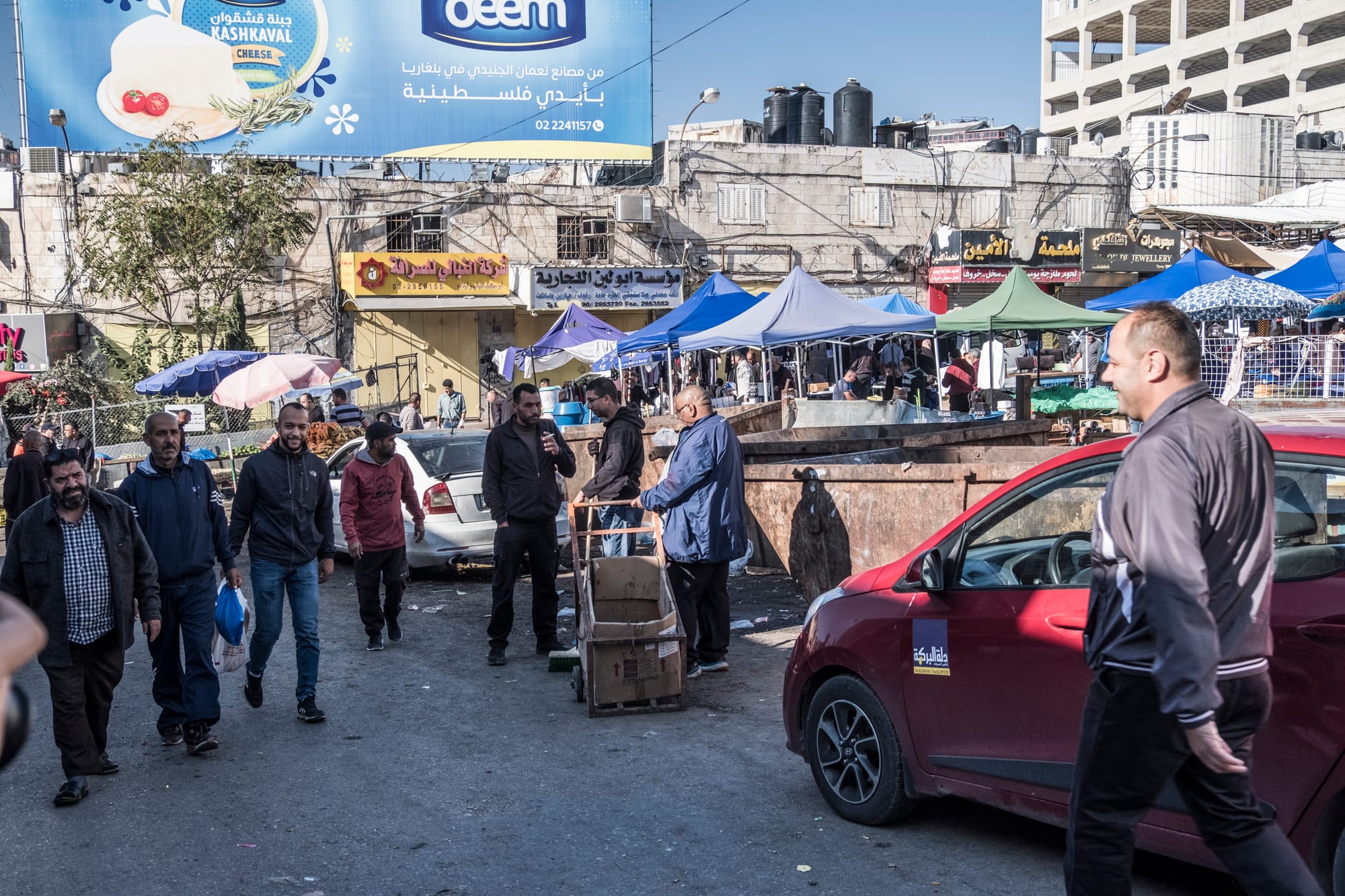
Chapter 8 — The Palestinian Authority and the Question of Economic Independence
A Question That Goes Beyond European Boycotts
The debate over European restrictions on Israeli settlement products raises a much larger economic question.
Why do thousands of Palestinians depend on employment in Israeli businesses in the first place?
The answer cannot be found solely in European trade policy, Israeli settlement industries, or individual employment decisions.
It requires examining the economic relationship between Israel and the Palestinian territories, the responsibilities of the Palestinian Authority, the agreements established during the Oslo peace process, and the structural obstacles that have shaped Palestinian economic development for decades.
For many Palestinian workers, employment with Israeli businesses offers wages that are difficult to obtain in the local economy.
This dependence is not simply the result of personal preference.
It reflects a combination of economic incentives, restricted opportunities, political uncertainty, institutional weaknesses, and an unresolved territorial conflict.
The Palestinian Authority was established in the 1990s with the expectation that it would become part of a transitional process toward a negotiated political settlement.
More than three decades later, that process remains incomplete.
The Palestinian Authority exercises limited self-government in parts of the West Bank, while Israel retains extensive control over borders, movement, security, and significant areas of territory.
At the same time, Palestinian political institutions face serious questions concerning governance, accountability, fiscal management, and democratic legitimacy.
The result is an economy that remains highly vulnerable to decisions made outside the control of ordinary Palestinian workers.
This vulnerability becomes particularly visible when international trade restrictions threaten businesses employing Palestinians.
If settlement-based factories close or relocate, the Palestinian economy may struggle to absorb displaced workers.
Understanding why requires looking beyond the immediate controversy and examining the institutions and economic arrangements that shape Palestinian livelihoods.
The Oslo Accords: The Promise of a Transitional Future
The modern Palestinian Authority emerged from the Oslo peace process between Israel and the Palestine Liberation Organization, or PLO.
The first Oslo Accord was signed in September 1993.
It established a framework for mutual recognition and a gradual transfer of certain administrative responsibilities to Palestinian institutions.
The Palestinian Authority was created in 1994 as an interim governing body.
The process was intended to lead toward negotiations on permanent-status issues, including borders, Jerusalem, settlements, refugees, and security.
The 1995 Oslo II Agreement divided the West Bank into three administrative areas.
Area A was placed under Palestinian civil and internal security responsibility, subject to the broader realities of Israeli military operations and the continuing conflict.
Area B was assigned Palestinian civil administration, with Israel retaining overriding security responsibilities.
Area C remained under Israeli civil and security control.
Area C comprises approximately 60 percent of the West Bank and includes most Israeli settlements and substantial areas of land relevant to agriculture, infrastructure, and economic development.
The division was originally intended to be temporary.
However, the anticipated final political agreement was never reached.
As a result, arrangements designed for an interim period have continued to influence economic life for decades.
For Palestinian businesses, the division of territory creates practical difficulties.
Infrastructure projects, industrial development, construction, and access to land may depend on different administrative systems.
Movement between communities and commercial areas can be affected by checkpoints, road restrictions, and security conditions.
These obstacles complicate the development of an integrated economy.
The Palestinian Authority therefore operates within a system in which its ability to implement economic policy is limited by territorial and administrative arrangements.
However, these limitations do not eliminate the Authority's own responsibility for governance and economic planning.
Both dimensions must be examined.
The Paris Protocol: An Economy Closely Connected to Israel
In April 1994, Israel and the PLO signed the Protocol on Economic Relations, commonly known as the Paris Protocol.
The agreement established the framework for economic relations between Israel and the Palestinian territories during the interim period.
It addressed trade, taxation, customs, labor, monetary arrangements, and other economic matters.
One of its most important features was the creation of a closely integrated customs and trade framework.
Under this system, Israel collects certain customs duties and taxes associated with Palestinian trade and transfers revenues to the Palestinian Authority according to agreed arrangements.
These transfers, commonly called clearance revenues, became a major source of funding for the Palestinian government.
The arrangement was intended to support economic administration during the transitional period.
However, it also created significant financial dependence.
When clearance revenues are delayed, withheld, or reduced, the Palestinian Authority can experience immediate budgetary pressure.
The consequences may affect public-sector salaries, government services, and domestic economic activity.
The Paris Protocol also reinforced the close relationship between Palestinian trade and the Israeli economy.
Israel remains a major trading partner and an important gateway for Palestinian imports and exports.
This relationship offers access to a larger market but also exposes Palestinian businesses to political and administrative disruptions.
The agreement has been criticized by Palestinian economists and international institutions for limiting independent economic policy.
Others argue that the broader failure of the peace process, rather than the economic protocol alone, explains many of the problems that followed.
The distinction matters.
An economic arrangement intended to operate temporarily may produce very different consequences when it continues for more than three decades without a permanent political settlement.
The Palestinian Authority's Financial Dependence
The Palestinian Authority has experienced recurring financial crises.
Its budget depends on several revenue sources, including domestic taxation, clearance revenues collected by Israel, and international assistance.
Clearance revenues are especially important because they represent a substantial share of public income.
Disputes over these transfers have repeatedly created fiscal instability.
Israel has withheld or deducted portions of revenues in connection with political and security disputes, including disagreements over payments made by Palestinian institutions to prisoners and families of people killed in the conflict.
Following the war that began in October 2023, additional disputes arose over funds allocated to Gaza.
These disagreements have contributed to severe financial pressure on the Palestinian Authority.
The consequences extend beyond government accounting.
When the Authority cannot pay full salaries to public employees, household purchasing power declines.
Teachers, healthcare workers, administrative staff, and other public employees may receive partial or delayed payments.
Businesses supplying goods and services to public institutions may also experience financial difficulties.
This creates a chain reaction throughout the economy.
A government facing persistent fiscal uncertainty has less capacity to invest in infrastructure, support private-sector development, or respond to sudden increases in unemployment.
That weakness is directly relevant to the debate over settlement-related employment.
If thousands of Palestinian workers were to lose their jobs, the Palestinian Authority might have limited financial resources available to provide temporary income support or create alternative employment.
International Aid: Essential Support or Long-Term Dependency?
Since the establishment of the Palestinian Authority, international donors have provided substantial financial assistance to Palestinian institutions, humanitarian programs, and development projects.
The European Union, individual European governments, the United States, Arab states, and international organizations have all contributed through different mechanisms and at different times.
This assistance has supported education, healthcare, infrastructure, public administration, humanitarian relief, and economic development.
In many circumstances, external funding has been essential to maintaining public services and supporting vulnerable communities.
However, decades of international assistance have not produced a fully independent or economically self-sustaining Palestinian state.
This raises difficult questions.
Why has so much international support failed to overcome persistent structural economic weaknesses?
How much assistance has been directed toward immediate humanitarian and budgetary needs rather than long-term productive investment?
Have donor programs sufficiently addressed the obstacles facing Palestinian businesses?
And how effectively have Palestinian institutions managed the resources available to them?
There is no single explanation.
Restrictions on movement and access, political instability, territorial fragmentation, conflict, and limited control over economic resources have constrained development.
At the same time, governance weaknesses, administrative inefficiencies, and corruption concerns have affected public confidence in Palestinian institutions.
International donors have also faced criticism for funding systems that help manage the consequences of the conflict without resolving its underlying causes.
Humanitarian assistance can prevent immediate suffering.
Budgetary support can keep institutions functioning.
But neither automatically creates a competitive private sector.
Long-term economic development requires investment, infrastructure, predictable regulation, functioning institutions, access to markets, and political stability.
Without these conditions, financial assistance can become a mechanism for maintaining an economically vulnerable system rather than transforming it.
Governance, Corruption and Public Accountability
The Palestinian Authority's economic challenges cannot be understood without examining governance.
For years, Palestinian civil society organizations, journalists, and international observers have raised concerns about corruption, political patronage, weak institutional accountability, and restrictions on political freedoms.
These concerns are relevant to economic development.
Businesses need predictable regulations, transparent procedures, functioning courts, and confidence that public institutions operate fairly.
Investors are less likely to commit long-term capital when political decisions are unpredictable or institutions lack transparency.
Public resources may also be used less effectively when oversight is weak.
The Palestinian Authority has introduced administrative and financial reforms at different times, but concerns about accountability remain.
It would be misleading to attribute the Palestinian economy's structural problems entirely to corruption or poor governance.
The restrictions associated with occupation and the unresolved conflict are major economic factors.
Nevertheless, external constraints do not excuse failures of public administration.
An effective economic strategy requires Palestinian institutions capable of managing resources responsibly and creating a stable environment for private investment.
This includes transparent public spending, independent oversight, fair business regulation, and credible anti-corruption measures.
Economic independence requires political and institutional responsibility as well as access to territory and markets.
The Democratic Deficit and Its Economic Consequences
The Palestinian political system has also experienced a prolonged democratic crisis.
Mahmoud Abbas was elected president of the Palestinian Authority in January 2005.
The last Palestinian Legislative Council elections were held in January 2006.
Hamas won a majority of seats in those legislative elections, leading to a period of political confrontation and institutional division.
In 2007, Hamas took control of Gaza following violent conflict with Fatah.
Since then, Palestinian governance has been divided between the Palestinian Authority's administration in the West Bank and Hamas's rule in Gaza, although the political and administrative arrangements have changed over time.
Repeated attempts at Palestinian political reconciliation have failed to produce lasting unity or renewed national elections.
Presidential and legislative elections scheduled for 2021 were postponed.
As a result, Palestinians have gone many years without the opportunity to renew their national political leadership through elections.
This has implications beyond democratic representation.
Political legitimacy and accountability influence economic confidence.
Governments that face regular elections can be held publicly accountable for economic policies, institutional performance, and the management of public resources.
Where elections are repeatedly postponed, citizens have fewer opportunities to change leadership through democratic means.
Political fragmentation also complicates economic planning.
Different authorities, institutions, and security arrangements make it more difficult to establish consistent policies across Palestinian territories.
However, the absence of elections cannot be explained solely by decisions made within the Palestinian Authority.
Disputes concerning voting in East Jerusalem, Israeli restrictions, Palestinian political divisions, and concerns about electoral outcomes have all played roles.
The central point is that prolonged institutional uncertainty weakens the foundations needed for sustainable economic development.
The Economic Impact of the Hamas-Fatah Division
The political division between Hamas and Fatah has been one of the most consequential developments in Palestinian governance since 2007.
Hamas's takeover of Gaza created a separate political and administrative reality from that of the West Bank.
Israel imposed extensive restrictions on Gaza, citing security threats from Hamas and other armed groups. Egypt also restricted movement through its border with Gaza, although the rules and degree of access changed over time.
The resulting isolation, repeated conflicts, internal political divisions, and restrictions on trade and movement severely affected Gaza's economy.
The destruction caused by the war following October 7, 2023, further devastated economic infrastructure and livelihoods.
The West Bank and Gaza consequently developed under different political, security, and economic conditions.
This fragmentation has made coordinated Palestinian economic policy extremely difficult.
A functioning national economy requires reliable institutions, transport connections, financial systems, and predictable commercial arrangements.
Political division undermines these conditions.
It also complicates relations with international donors and investors.
For businesses considering long-term investment, uncertainty about governance and security can be a major deterrent.
The economic consequences of Palestinian political fragmentation therefore extend far beyond competition between political factions.
They affect employment, investment, public services, and the prospects for future economic integration.
Area C and the Limits of Palestinian Industrial Development
Area C is particularly important to the question of Palestinian economic independence.
It contains substantial areas of land that could potentially support agriculture, industrial development, housing, transportation infrastructure, and other economic activities.
However, Palestinian construction and development in Area C are subject to Israeli planning and permit requirements.
International organizations have repeatedly reported that Palestinian businesses and communities face significant obstacles in obtaining approvals for construction and infrastructure projects.
Israeli authorities maintain that planning and security arrangements are governed by the applicable administrative framework and cite security, legal, and planning considerations.
The practical economic consequences remain substantial.
Industrial development requires land, buildings, roads, electricity, water, and access to transport networks.
When these resources are difficult to obtain or develop, businesses face higher costs and uncertainty.
Agricultural producers may encounter difficulties accessing land or transporting goods.
Manufacturers may struggle to expand facilities.
Investors may hesitate to finance projects where necessary approvals are uncertain.
These conditions help explain why the Palestinian economy cannot simply absorb workers displaced from settlement industries.
Creating alternative employment requires physical and commercial infrastructure.
If that infrastructure cannot be developed efficiently, job creation becomes more difficult.
The issue is therefore not only the availability of investment capital.
It is also whether Palestinian businesses can operate under conditions that allow investment to become productive.
Why Palestinian Businesses Struggle to Compete
A competitive private sector requires more than motivated entrepreneurs.
Businesses need access to financing, reliable infrastructure, skilled employees, suppliers, customers, and predictable legal conditions.
Palestinian entrepreneurs face many of the same challenges encountered by businesses elsewhere, including competition, financing costs, and market uncertainty.
But they also face obstacles specific to the political and territorial environment.
Transportation between communities can be affected by movement restrictions and security conditions.
Importing equipment and raw materials may involve additional procedures and delays.
Exporters may face difficulties accessing international markets.
Infrastructure development can be constrained by administrative restrictions.
Political uncertainty can discourage long-term investment.
These factors increase business costs and reduce competitiveness.
At the same time, weaknesses within Palestinian institutions can create additional obstacles.
Complex bureaucracy, inconsistent administration, limited public resources, and concerns about transparency may discourage investment.
A successful economic strategy must therefore address both external restrictions and internal institutional problems.
Focusing exclusively on one side provides an incomplete explanation.
Palestinian businesses need an environment in which they can invest, expand, and compete without being permanently dependent on emergency assistance.
The Importance of Employment in Israel
The relationship between Palestinian workers and Israeli employers reflects the broader economic integration established over decades.
Before October 2023, large numbers of West Bank Palestinians worked inside Israel or in Israeli settlements.
Their earnings represented an important source of household income and contributed to spending within the Palestinian economy.
For many workers, the attraction was straightforward: higher wages and access to jobs that were not available locally.
Following the October 7 attacks, Israel sharply restricted access to employment for many Palestinian workers, citing security concerns.
The resulting loss of income contributed to a severe economic downturn in the West Bank.
This experience demonstrated the vulnerability of an economy dependent on employment opportunities controlled by another authority.
A similar concern arises when settlement industries face international trade pressure.
If factories close or relocate, workers may lose jobs that the Palestinian economy cannot easily replace.
The problem is not that employment with Israeli businesses is inherently without value.
For many workers, it provides essential income.
The problem is that dependence on a limited number of external employment opportunities leaves households exposed to decisions they cannot control.
A stronger Palestinian economy would offer more employment choices.
But developing those choices requires long-term structural change.
Can International Investment Create an Alternative?
European governments frequently express support for Palestinian economic development.
If they wish to reduce dependence on settlement-related employment, one practical question is whether international investment can help create alternative jobs.
Potential areas for development include manufacturing, agriculture, information technology, renewable energy, logistics, tourism, and professional services.
The Palestinian territories have educated professionals, entrepreneurs, and workers with valuable technical skills.
There are opportunities for business development under appropriate conditions.
However, investment cannot be considered separately from the environment in which businesses operate.
A manufacturing facility needs access to raw materials and customers.
An agricultural exporter needs reliable transportation and market access.
A technology company needs dependable electricity, telecommunications, and financial services.
Tourism depends on security, freedom of movement, and infrastructure.
International investment can contribute to growth, but it cannot overcome every structural obstacle on its own.
A credible strategy would therefore combine financial support with efforts to improve economic access, institutional accountability, and regulatory predictability.
It would also need to prioritize sustainable employment rather than short-term projects designed primarily to demonstrate political commitment.
The Responsibility of the Palestinian Authority
The Palestinian Authority has a central role in developing economic policy within the areas under its administration.
Its responsibilities include public financial management, business regulation, education, infrastructure planning, and support for private-sector development.
Despite the limitations imposed by the wider political environment, there are areas where institutional reform can improve economic conditions.
These include greater transparency in public spending, more effective anti-corruption measures, simplified business procedures, stronger public accountability, and improved coordination with private-sector organizations.
The Authority can also work with international donors to direct investment toward sectors capable of generating employment.
However, these efforts require political commitment and administrative capacity.
Economic development cannot succeed if public institutions are unable to provide predictable rules or maintain public confidence.
Nor can a government build a sustainable economy while relying indefinitely on external financial assistance without addressing institutional weaknesses.
The Palestinian Authority therefore has responsibilities that should be examined critically.
At the same time, its ability to achieve meaningful economic independence remains constrained by the unresolved political conflict and the limitations on territorial and economic control.
Recognizing those constraints does not remove the need for accountability.
It places accountability within the broader context in which Palestinian institutions operate.
The Responsibility of Israel
Israel also plays a central role in the Palestinian economy.
Its control over important aspects of movement, borders, customs arrangements, security, and access to territory directly influences Palestinian economic opportunities.
Israeli decisions concerning employment permits can affect household income.
Restrictions on transportation can influence trade.
Planning and construction policies can affect investment.
Decisions concerning clearance revenues can influence the Palestinian Authority's ability to pay salaries and maintain public services.
Israel argues that many of its restrictions are necessary to address security threats, including attacks by Hamas and other armed organizations.
Security concerns are real and must be considered.
However, the economic consequences of restrictions must also be examined.
Policies intended to protect security can impose substantial costs on civilians and businesses.
A sustainable economic framework would need to address legitimate security concerns while allowing greater predictability and opportunity for Palestinian economic activity.
The question is not whether security and economic development are mutually exclusive.
It is whether policies can be designed to protect civilians while reducing unnecessary barriers to economic growth.
The Responsibility of European Governments
European governments are not direct administrators of the Palestinian economy, but their policies can influence its development.
Through trade arrangements, financial assistance, investment programs, diplomatic engagement, and international institutions, Europe has considerable economic influence.
This creates both opportunities and responsibilities.
If European countries seek to discourage commercial activity in Israeli settlements, they should consider whether their policies are accompanied by meaningful support for alternative Palestinian employment.
Such support should be based on realistic economic conditions rather than political declarations alone.
It should also include mechanisms for measuring results.
How many sustainable jobs are created?
Are workers able to access those jobs?
Do new industries provide competitive wages?
Are Palestinian businesses becoming less dependent on external employment?
And are investments producing lasting improvements in productivity?
Without measurable outcomes, development programs risk becoming another form of temporary assistance.
European governments should also recognize that economic development requires political and administrative conditions beyond the control of donors.
Financial commitments cannot fully compensate for restricted market access, institutional weaknesses, or prolonged instability.
A serious policy therefore requires coordination between economic assistance and broader diplomatic efforts.
The Difference Between Financial Assistance and Economic Independence
Financial assistance and economic independence are not the same thing.
Aid can support essential services, reduce immediate hardship, and help communities survive periods of crisis.
It can also finance infrastructure and contribute to long-term development.
But an economy cannot become fully self-sustaining if it remains permanently dependent on external funding for essential public expenditure.
Economic independence requires productive businesses, stable employment, investment, tax revenue, functioning institutions, and access to markets.
It also requires an environment in which workers can develop skills and entrepreneurs can expand businesses.
The Palestinian economy has substantial human potential.
Its challenges are not explained by a lack of willingness to work or a lack of entrepreneurial ambition.
They reflect a combination of political restrictions, institutional weaknesses, economic dependence, and repeated crises.
Addressing these challenges requires more than increasing aid budgets.
It requires changing the conditions that prevent economic activity from developing sustainably.
This is why the debate over settlement-related employment is so important.
Removing jobs without creating alternatives does not automatically produce independence.
But preserving dependence indefinitely is not a sustainable solution either.
The challenge is to create a credible transition from economic vulnerability toward greater opportunity.
What Would Genuine Economic Independence Require?
A stronger and more independent Palestinian economy would require progress in several interconnected areas.
First, Palestinian businesses need more predictable access to land, infrastructure, and markets.
Second, institutions must provide transparent administration, reliable regulation, and effective public accountability.
Third, investment must be directed toward industries capable of creating sustainable employment.
Fourth, workers need access to education, vocational training, and opportunities to develop skills relevant to changing economic conditions.
Fifth, public finances need greater stability so that government services and investment are not repeatedly disrupted.
Sixth, economic planning must account for the political and administrative fragmentation between the West Bank and Gaza.
Finally, long-term development requires greater political stability and progress toward resolving the underlying conflict.
None of these changes can be achieved through a single trade measure or development program.
They require cooperation, difficult political decisions, and sustained institutional reform.
The central objective should be to create an economy in which Palestinian workers have genuine choices.
Employment should not depend primarily on whether an Israeli factory remains in a settlement, whether a permit is renewed, or whether a foreign government changes its trade policy.
Workers should have access to competitive employment opportunities within a functioning domestic economy.
That is the difference between temporary financial survival and long-term economic resilience.
Conclusion — Economic Independence Cannot Be Created by Removing Jobs Alone
The debate over European restrictions on Israeli settlement industries exposes a deeper problem within the Palestinian economy.
Thousands of workers depend on employment opportunities shaped by decisions made outside their control.
The Palestinian Authority faces financial and institutional weaknesses.
Israel maintains extensive influence over movement, trade, security, and access to territory.
International donors provide substantial assistance, but long-term economic independence remains elusive.
Political division and the absence of renewed national elections have further weakened Palestinian institutions.
These factors help explain why potential job losses in settlement industries are so concerning.
The Palestinian economy cannot necessarily replace thousands of positions simply because international policymakers wish to reduce commercial activity in settlements.
At the same time, continued dependence on settlement industries cannot be regarded as a complete economic development strategy.
The existence of jobs provides immediate income but does not resolve the structural conditions limiting Palestinian economic independence.
A genuinely independent economy is not built by eliminating existing employment before viable alternatives exist. It is built by creating the conditions in which workers have more opportunities, greater security, and meaningful economic choices.
This requires responsibility from multiple actors.
The Palestinian Authority must strengthen governance and economic institutions.
Israel must address the economic consequences of the restrictions and administrative arrangements under its control.
European governments must consider the practical effects of their policies and support sustainable development.
International donors must focus on long-term productivity rather than permanent dependence on emergency assistance.
And Palestinian workers must be included in discussions about the economic future being planned in their name.
The central question is therefore not simply whether Palestinians should continue working in Israeli settlement industries.
It is whether the political and economic conditions can be created in which such employment is no longer one of the few financially viable options available.
Until that question is addressed, the consequences of trade restrictions will remain difficult to separate from the broader problem of Palestinian economic dependence.
The next chapter examines who ultimately bears the financial consequences when international political pressure disrupts settlement-related industries — and whether those costs fall primarily on Israeli businesses, Palestinian workers, or both.
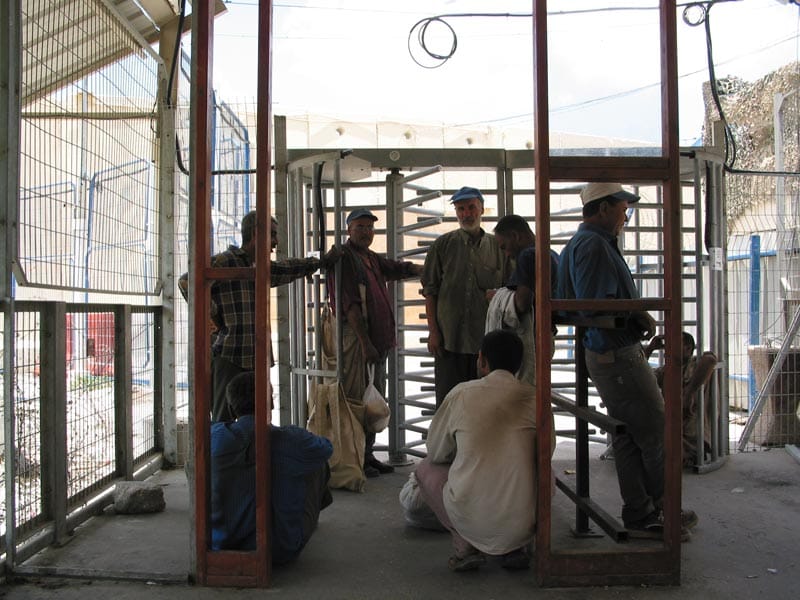
Chapter 9 — Who Really Pays the Price?
The Economic Consequences Behind Political Decisions
When European governments announce restrictions on products originating in Israeli settlements, the political message is usually clear.
The measures are intended to reinforce international law, discourage settlement-related economic activity, and demonstrate opposition to policies that European governments consider incompatible with Palestinian rights and self-determination.
But the financial consequences of these decisions are considerably more complicated.
Economic restrictions do not operate in isolation. They affect commercial relationships involving manufacturers, employees, suppliers, transport companies, retailers, investors, and consumers.
A decision made in a European capital can influence production in a West Bank industrial zone. A canceled contract can affect a company's revenue. Reduced revenue can lead to changes in employment. And the loss of employment can affect household spending in Palestinian communities.
The consequences may spread far beyond the original political target.
This creates one of the central questions of the debate:
Who ultimately pays the economic price when European governments and businesses restrict trade connected to Israeli settlements?
The answer depends on the structure of the affected industry, the scale of the restrictions, the availability of alternative markets, and the ability of businesses and workers to adapt.
In some circumstances, Israeli companies may experience significant commercial losses.
In others, they may relocate production, find new customers, or reorganize their operations.
Palestinian workers may lose employment, experience reduced working hours, or face uncertainty about future income.
European importers may need to identify alternative suppliers, while consumers may encounter changes in product availability or prices.
Not every restriction produces all these outcomes.
And not every economic loss can automatically be attributed to European policy.
Nevertheless, understanding how costs are distributed is essential to evaluating the effectiveness and fairness of economic pressure.
Israeli Businesses: Financial Losses and Commercial Adaptation
Israeli businesses operating in West Bank settlements are among the intended economic targets of settlement-related trade restrictions.
These businesses vary considerably in size, ownership, industry, and dependence on foreign markets.
Some manufacture products for export.
Others primarily serve Israeli customers.
Some employ relatively small workforces, while larger industrial operations may employ hundreds of workers.
The consequences of European restrictions therefore differ from company to company.
A manufacturer that depends heavily on European customers may face substantial difficulties if buyers cancel contracts or if imports become legally restricted.
Declining revenue can reduce profitability, discourage investment, and force management to reconsider production arrangements.
Smaller companies with limited financial reserves may find it difficult to absorb prolonged losses.
Larger businesses may have more options.
They may diversify export markets, develop new products, relocate production, or restructure operations.
A company that moves manufacturing from a West Bank settlement to a location inside Israel may be able to continue supplying European customers under different territorial trade rules.
Such relocation can be expensive, but it may preserve the business over the longer term.
This creates an important distinction between economic pressure on a company and permanent economic damage to that company.
A business may experience disruption while ultimately continuing to operate successfully.
The same outcome is not necessarily available to its employees.
Palestinian Workers: The Risk of Losing More Than a Salary
For Palestinian employees, the consequences of commercial disruption can be particularly serious.
Many workers seek employment with Israeli businesses because wages may be higher than those available in comparable positions within the Palestinian economy.
The loss of such employment can therefore represent more than the loss of a job.
It may also mean losing access to a level of income that is difficult to replace.
A worker who has spent years in manufacturing may possess valuable technical skills.
However, those skills do not guarantee that another employer will have a suitable vacancy.
The West Bank labor market faces persistent challenges, including unemployment, limited private investment, movement restrictions, and economic uncertainty.
Following October 7, 2023, the sharp reduction in access to employment inside Israel placed additional pressure on Palestinian households.
In this environment, workers displaced from settlement industries may face significant difficulties finding alternative employment.
Even when new work is available, wages and working conditions may differ.
A family that previously depended on one relatively well-paid manufacturing salary may need to rely on several smaller sources of income.
This can increase financial insecurity.
It also illustrates why employment statistics alone cannot fully describe the consequences of economic restrictions.
A worker who moves from a stable job to irregular or substantially lower-paid employment may no longer be counted as unemployed, yet the household may still experience serious financial hardship.
The quality and sustainability of replacement employment therefore matter as much as the number of jobs created.
Why Economic Losses Are Not Shared Equally
One of the most important features of economic pressure is that the burden is not necessarily distributed equally among the people involved.
A company may have financial reserves, access to credit, investors, or opportunities to enter new markets.
A worker may depend almost entirely on monthly wages.
An international retailer may replace a supplier with another company.
A Palestinian employee cannot necessarily replace an employer with similar ease.
This difference in economic flexibility is crucial.
Businesses often possess resources that allow them to respond strategically to changing market conditions.
They can negotiate contracts, adjust prices, reorganize production, or relocate operations.
Workers generally have less influence over these decisions.
They may receive little advance notice of changes in production or employment.
Their ability to find new work may depend on local labor-market conditions and administrative restrictions beyond their control.
Consequently, a policy intended to create financial pressure on a business can impose a proportionately greater burden on some of its employees.
This does not mean that every company can easily escape economic losses.
Small businesses may also face severe financial difficulties.
But the relative vulnerability of workers deserves particular attention.
The question is not simply how much money is lost.
It is who has the capacity to recover.
European Importers and Retailers: The Less Visible Economic Effects
European businesses can also experience consequences when trade relationships involving settlement products change.
Importers may need to review suppliers, verify product origins, or establish alternative purchasing arrangements.
Retailers may remove particular products from their shelves.
Distributors may need to renegotiate contracts or adjust supply chains.
These changes can create administrative costs and commercial uncertainty.
However, the scale of the impact depends on the products involved and the availability of substitutes.
If a retailer can obtain a comparable product from another supplier at a similar price, the economic disruption may be relatively limited.
If a specialized manufacturer supplies a product that is difficult to replace, the consequences may be more substantial.
The effects on European consumers are similarly variable.
Some may notice changes in product availability.
Others may face price differences.
In many cases, the impact may be small or difficult to distinguish from ordinary market fluctuations.
This is why broad claims that settlement-related restrictions will significantly damage the European economy require evidence.
The economic relationship between Europe and Israel is extensive, but trade specifically originating in West Bank settlements represents a narrower category.
The impact of measures targeting settlement products should not be confused with the potential consequences of broad restrictions on trade with Israel as a whole.
The Palestinian Economy: A Wider Circle of Consequences
When Palestinian workers lose employment, the effects may extend into the wider economy.
Wages are not simply deposited into bank accounts and left untouched.
They are spent on goods and services.
Workers purchase food, pay for transportation, support local businesses, and contribute to household expenses.
This spending helps sustain economic activity in their communities.
When employment declines, household purchasing power may fall.
Families may reduce spending.
Retailers may experience lower sales.
Service providers may lose customers.
The resulting economic pressure can affect businesses that have no direct connection to Israeli settlement industries.
Economists refer to these wider effects through concepts such as income multipliers and indirect economic impacts.
However, their size depends on local circumstances.
It would be misleading to claim that every lost manufacturing job automatically eliminates a specific number of additional jobs.
Such estimates require reliable economic data and appropriate modeling.
Nevertheless, the possibility of wider effects is relevant when assessing the reported warning that approximately 4,000 Palestinian positions could be endangered.
If such losses occurred, the economic consequences could extend beyond the workers directly affected.
The degree of impact would depend on household income, available savings, alternative employment, and the capacity of local businesses to adapt.
The 4,000 Jobs Warning: What Can Actually Be Concluded?
The reported estimate that approximately 4,000 Palestinian jobs may be at risk has become a central element of the debate.
It is an important warning, but its interpretation requires caution.
The figure does not establish that 4,000 workers have already lost employment.
It does not prove that all projected losses will occur.
Nor does it demonstrate that every threatened position is directly attributable to a particular European restriction.
The estimate appears in reporting based on concerns expressed by representatives of industries connected to Israeli settlements.
Such warnings can provide useful information about commercial conditions, but they should be assessed independently.
Employers have a direct interest in maintaining market access and protecting their businesses.
Their concerns may be genuine while their projections remain uncertain.
An independent investigation should therefore examine confirmed employment figures, export data, contract cancellations, relocation decisions, and testimony from workers.
It should also distinguish between companies experiencing immediate losses and those anticipating future difficulties.
This distinction is particularly important because economic uncertainty can influence business decisions before restrictions are formally implemented.
Companies may postpone investments or reconsider production locations because they expect future political measures.
Such decisions may be commercially rational, but they complicate attempts to attribute employment changes to any single policy.
The warning should therefore be understood as evidence of a potential risk requiring further investigation, not as proof of a completed economic outcome.
Does Economic Pressure Reach Israeli Policymakers?
The political purpose of economic restrictions is often to influence government behavior.
But the relationship between commercial losses and political decisions is not automatic.
A company operating in a settlement may lose European customers.
That does not necessarily mean the Israeli government will change its settlement policy.
The influence of economic pressure depends on several factors.
These include the scale of the affected industries, the economic importance of foreign markets, domestic political priorities, and the ability of businesses to adapt.
If restrictions affect a relatively small share of economic activity, their direct influence on national policy may be limited.
If broader international measures significantly increase economic costs, the pressure could become more substantial.
However, governments do not always respond to economic pressure in the way foreign policymakers expect.
External restrictions can encourage negotiation or policy changes.
They can also produce political resistance, reinforce existing positions, or encourage efforts to develop alternative commercial relationships.
The outcome depends on the political context.
For this reason, commercial disruption should not automatically be treated as evidence of political effectiveness.
A successful economic restriction must be evaluated according to the objective it was intended to achieve.
If the goal is to reduce settlement-related manufacturing, relocation may represent a measurable outcome.
If the goal is to change Israeli settlement policy, broader political developments must be examined.
If the goal is to improve Palestinian welfare, employment and economic conditions must also be considered.
These are different measures of success.
The Difference Between Economic Pressure and Economic Punishment
Economic restrictions are often described as a means of applying pressure rather than punishment.
The distinction reflects their intended purpose.
A government may seek to influence commercial behavior, discourage investment in a disputed territory, or avoid economic relationships that it considers inconsistent with international law.
However, the people experiencing the consequences may interpret them differently.
For an Israeli manufacturer, a restriction may represent an increase in operating costs or a loss of market access.
For a Palestinian worker who loses employment, the same restriction may feel like an economic penalty for circumstances beyond personal control.
This does not mean that the legal or political justification for the restriction disappears.
But it highlights the importance of considering foreseeable indirect harm.
A measure can have a legitimate objective and still produce outcomes that require mitigation.
The central issue is whether the economic burden is reasonably connected to the policy objective and whether unnecessary hardship can be reduced.
Governments should therefore distinguish between measures that directly target activities they consider unlawful and broader actions that may create extensive consequences for people not responsible for those activities.
The more indirect the economic burden becomes, the more important it is to examine proportionality, effectiveness, and available alternatives.
Could Israeli Companies Simply Relocate?
Relocation is one of the most frequently discussed responses to settlement-related trade pressure.
A company may move manufacturing from a West Bank settlement to a location inside Israel.
This can change the origin status of its products and potentially reduce exposure to restrictions specifically targeting settlement-origin goods.
From a commercial perspective, relocation may preserve access to important markets.
From the perspective of policymakers opposing settlement-related economic activity, it may represent a desired result.
But the employment consequences can be complicated.
A company may retain its machinery, contracts, management, and intellectual property while reducing or replacing part of its workforce.
Palestinian employees may not be able to follow production to the new location because of travel distances, work-permit requirements, or recruitment decisions.
The SodaStream case demonstrated that these obstacles can be significant.
Its relocation from Mishor Adumim to southern Israel was followed by the loss of employment for many Palestinian workers.
A smaller group initially continued working at the new facility but later faced permit difficulties before some were able to return.
The case does not prove that every relocation produces the same outcome.
It does demonstrate that moving a factory does not automatically preserve employment for the people who previously worked there.
For policymakers, this distinction is essential.
A company may adapt successfully to economic pressure while workers experience lasting financial consequences.
The Question of Political Accountability
When a trade restriction produces economic disruption, responsibility for the consequences may be shared among several actors.
European governments determine the design and scope of their trade measures.
Private businesses decide how to respond commercially.
Israeli authorities influence access to employment through security, administrative, and permit systems.
The Palestinian Authority has responsibilities concerning economic development and employment policy within its jurisdiction.
International organizations and donors can influence the availability of economic assistance.
Each actor controls different parts of the economic environment.
It would therefore be misleading to assign every employment loss automatically to one government, company, or political campaign.
But shared responsibility should not become an excuse for avoiding accountability.
European policymakers should assess foreseeable employment consequences.
Businesses should communicate transparently with employees and comply with applicable labor protections.
Israeli authorities should consider the economic consequences of decisions affecting workers' access to employment.
Palestinian institutions should work to strengthen alternative employment opportunities.
International donors should evaluate whether their programs produce sustainable economic results.
The objective should be to identify practical responsibilities rather than merely exchange political accusations.
The Argument That Boycotts Can Produce Long-Term Benefits
Supporters of settlement-related economic restrictions argue that short-term commercial disruption must be considered alongside longer-term political and economic objectives.
They maintain that settlement industries operate within a territorial and legal system that restricts Palestinian economic development.
From this perspective, preserving existing jobs cannot be the only consideration.
A factory may provide employment while contributing to an economic structure that critics believe reinforces the occupation.
Supporters therefore argue that reducing settlement-related economic activity could contribute to broader changes necessary for Palestinian self-determination.
This argument deserves serious consideration.
Economic development is not simply a matter of preserving existing employment regardless of the conditions under which it exists.
Long-term prosperity also depends on institutions, rights, access to resources, and the ability to build an independent economy.
However, claims about long-term benefits require evidence.
Will restrictions actually contribute to political change?
Will Palestinian-owned industries gain new opportunities?
Will displaced workers find sustainable employment?
And how long might the transition take?
Without answers, the possibility of future benefits cannot automatically justify every immediate economic consequence.
A credible policy must address both the long-term objective and the short-term human cost.
The Argument That Boycotts Can Backfire
Critics of settlement-related restrictions emphasize the possibility that economic pressure may produce consequences contrary to its stated humanitarian objectives.
They argue that Israeli companies may adapt by relocating or changing markets while Palestinian employees lose their jobs.
They also question whether restrictions on relatively limited categories of products can meaningfully influence Israeli government policy.
If commercial pressure causes unemployment without producing substantial political change, the outcome may be economically harmful and politically ineffective.
This is the central concern behind the argument that boycotts can backfire.
However, the argument should not be overstated.
The existence of potential job losses does not prove that every restriction is counterproductive.
Nor does it establish that continued settlement-based employment is the only viable economic option for Palestinians.
A balanced assessment must examine the actual consequences of individual measures.
Some restrictions may have limited employment effects.
Others may encourage relocation.
Some may influence corporate behavior without significantly changing government policy.
The results cannot be assumed in advance.
The most important requirement is independent evaluation.
What Would a Fair Economic Transition Look Like?
If European governments seek to reduce settlement-related economic activity, a central question is how affected workers can be supported.
A fair transition would require more than encouraging companies to relocate.
It would involve assessing which workers are likely to lose employment and identifying realistic alternatives.
Possible measures could include vocational training linked to actual vacancies, investment in Palestinian-owned businesses, support for small enterprises, and temporary income assistance.
Where companies relocate, arrangements allowing eligible Palestinian employees to continue working could also be examined, subject to applicable legal and security requirements.
However, these approaches would need to address wider structural obstacles.
Creating new factories requires land, infrastructure, capital, electricity, transport, and access to markets.
Training workers is insufficient if businesses cannot expand.
Providing loans is of limited value if entrepreneurs cannot reliably transport goods or reach customers.
The objective should therefore be to create sustainable employment rather than temporary programs designed primarily to demonstrate political commitment.
Such a transition would require cooperation among European institutions, Palestinian economic organizations, employers, labor representatives, and relevant authorities.
It would also require clear benchmarks.
How many workers have been displaced?
How many have found new jobs?
What wages do those jobs provide?
How many new businesses have become economically viable?
These questions would allow policymakers to measure whether economic pressure is accompanied by meaningful economic opportunity.
Who Benefits Politically, and Who Bears the Immediate Costs?
Political campaigns and government measures often produce outcomes that different groups interpret differently.
A government may gain diplomatic credibility by demonstrating consistency with its stated legal position.
An activist organization may regard a company's withdrawal from a settlement as evidence that its campaign is effective.
A company may preserve profitability by moving production.
But a worker who loses employment may experience none of those benefits immediately.
This difference between political achievement and personal economic security deserves attention.
It does not mean that political goals are unimportant.
International law and human rights cannot be reduced to short-term financial calculations.
But neither should economic hardship be dismissed because it complicates a preferred political narrative.
The question is whether policymakers and campaign organizations are willing to evaluate consequences that do not fit neatly into their public arguments.
If a measure produces employment losses, those losses should be acknowledged.
If it produces meaningful political or economic improvements, those improvements should be documented.
If the evidence is mixed, the public should be told that as well.
Independent journalism should not be expected to declare every restriction a success or a failure.
Its responsibility is to examine what actually happens.
The Need for Independent Economic Evidence
One of the greatest weaknesses in the current debate is the limited availability of detailed, independently verified information about the employment consequences of settlement-related trade restrictions.
Industry representatives may warn about thousands of threatened jobs.
Campaign organizations may emphasize corporate withdrawals.
Governments may describe their policies as necessary responses to international law.
But these claims do not always answer the same questions.
A comprehensive economic assessment would need to establish the number of workers employed in affected industries, the share of production sold to European markets, the value of contracts lost, and the reasons for those losses.
It would also need to distinguish between confirmed dismissals and projected future reductions.
Workers who lose employment should be followed over time to determine whether they find alternative jobs and how their household incomes change.
Company relocations should be examined to determine whether existing employees retain access to work.
Finally, the political effects of restrictions should be evaluated separately from their commercial consequences.
Without such evidence, public debate risks becoming dominated by selective statistics and competing political narratives.
The reported figure of 4,000 threatened jobs is an important starting point.
It is not the final answer.
Conclusion — The Real Price of Economic Pressure
The financial consequences of European restrictions on Israeli settlement products cannot be assigned to one group alone.
Israeli businesses may lose customers, experience higher costs, or relocate production.
Palestinian workers may face unemployment, reduced wages, or uncertainty about future employment.
European businesses may need to adjust supply chains.
Palestinian communities may experience wider economic effects when household purchasing power declines.
At the same time, supporters of restrictions argue that these measures serve important legal and political objectives that cannot be judged solely through short-term employment figures.
Both dimensions matter.
The central question is whether economic pressure achieves meaningful change while avoiding unnecessary harm to people who have little control over the political decisions involved.
The SodaStream experience demonstrated that companies can adapt to international controversy while Palestinian employees face serious employment difficulties.
The current warning concerning approximately 4,000 potential job losses raises similar concerns, although the scale and causes of any future losses remain to be independently established.
The success of economic pressure should not be measured only by the financial difficulties imposed on targeted businesses, but also by whether it advances its stated objectives without leaving vulnerable workers to bear avoidable costs.
This is where political responsibility becomes inseparable from economic accountability.
If European governments believe settlement-related restrictions are necessary, they should explain how the measures are expected to work, assess their foreseeable consequences, and consider practical support for affected workers.
If critics argue that restrictions are economically counterproductive, they should provide evidence demonstrating those effects.
And if businesses claim that jobs are threatened, their warnings should be examined through independent data and worker testimony.
Ultimately, the question is not simply whether a boycott succeeds in changing commercial behavior.
It is whether the resulting changes contribute to a more just, stable, and economically sustainable future.
Because the true price of economic pressure is not always paid by the people it was intended to influence.
Sometimes, it is paid by those who have the least power to change the circumstances around them.
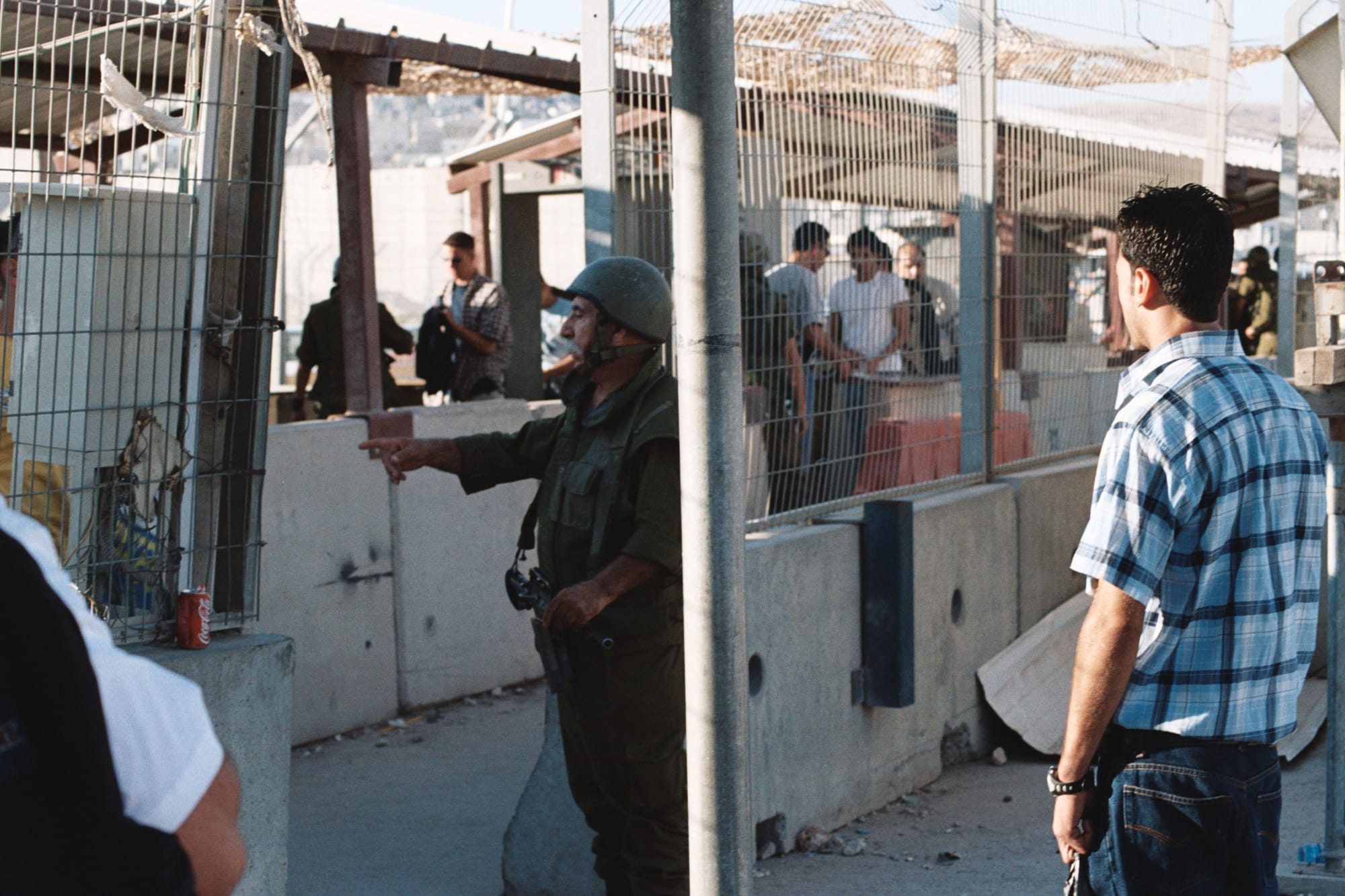
Chapter 10 — Can Political Pressure Protect the People It Claims to Support?
The Contradiction at the Heart of the Debate
The debate over European restrictions on Israeli settlement products exposes one of the most difficult contradictions in international politics.
Measures introduced in support of Palestinian rights may also threaten employment opportunities on which Palestinian families depend.
European governments argue that settlement-related trade policies must reflect international law and their longstanding opposition to Israeli settlement activity in the occupied West Bank.
Supporters of economic boycotts maintain that international commerce should not contribute to the economic sustainability of settlements.
Israeli businesses and critics of these measures warn that restricting trade can threaten jobs, disrupt manufacturing, and create additional hardship for Palestinian workers.
Meanwhile, Palestinian employees face a reality that is considerably more complicated than the political arguments surrounding them.
For some, employment in Israeli settlement industries provides wages that are difficult to obtain elsewhere.
For others, these jobs exist within an economic system they believe restricts Palestinian independence and reinforces an unequal political reality.
Both experiences can exist simultaneously.
The central challenge is therefore not simply to determine whether economic pressure is justified.
It is to examine whether that pressure achieves its intended objectives, who experiences its consequences, and what responsibilities policymakers have toward the people affected.
A political measure cannot be evaluated solely by the principles used to justify it. Its actual consequences must also be examined.
This principle applies to European governments, Israeli authorities, Palestinian institutions, businesses, and international advocacy organizations alike.
What the Warning About 4,000 Jobs Really Tells Us
The reported warning that approximately 4,000 Palestinian jobs could be endangered by restrictions and declining demand for settlement products has become the starting point for this investigation.
The figure is significant.
If such employment losses occurred, the consequences could extend far beyond individual workers.
Households could lose important sources of income.
Local businesses could experience reduced spending.
Families might face difficulties maintaining education, healthcare, and other essential expenses.
However, the warning must be interpreted carefully.
The figure represents an estimate of potential employment losses, not an independently verified total of workers already dismissed.
It does not establish that all threatened positions will disappear.
Nor does it prove that every projected loss would be caused directly by European government measures.
Companies face multiple commercial pressures, including changes in consumer demand, security conditions, production costs, and broader economic uncertainty.
The distinction between formal government restrictions and voluntary decisions by private retailers is also important.
A canceled commercial contract does not automatically establish that a legal import prohibition caused it.
These uncertainties do not make the warning irrelevant.
They establish the need for further investigation.
An independent assessment should determine how the estimate was calculated, which companies are affected, how many contracts have actually been canceled, and what employment changes have occurred.
Until that evidence is available, the warning should be treated seriously without being presented as a confirmed economic outcome.
The Lesson of SodaStream
The history of SodaStream provides one of the clearest examples of the complexities involved.
For years, the company operated a manufacturing facility in Mishor Adumim, an Israeli settlement industrial zone in the West Bank.
The factory employed hundreds of Palestinian workers alongside Israeli employees.
Its location made the company a prominent target of international boycott campaigns.
In 2014, SodaStream announced plans to relocate production to southern Israel.
The company cited commercial restructuring and operational considerations, while boycott activists viewed the decision as an important achievement.
The relative influence of commercial and political pressures remains disputed.
What is clear is that the relocation created serious employment difficulties for Palestinian workers.
Many did not continue working at the new facility.
A smaller group initially transferred but later faced difficulties when their work permits were not renewed.
Some eventually returned after further intervention.
The case demonstrates an important distinction.
A company may successfully relocate its operations while a substantial part of its previous workforce loses access to employment.
For boycott supporters, the end of manufacturing in a settlement may represent progress toward a legal and political objective.
For workers who lose their jobs, the immediate outcome may be financial insecurity.
These realities should not be treated as mutually exclusive.
The SodaStream experience does not prove that every boycott produces unemployment or that every company relocation is caused by political pressure.
But it demonstrates why employment consequences cannot be ignored when evaluating commercial withdrawals.
The Difference Between Political Success and Human Welfare
International political campaigns often define success through visible outcomes.
A company leaves a settlement.
A retailer cancels a contract.
A government introduces a restriction.
An investment fund withdraws from a business.
These developments may represent meaningful changes in commercial behavior.
However, they do not automatically demonstrate improvements in the lives of Palestinian civilians.
A factory closure may reduce settlement-related economic activity while simultaneously eliminating jobs.
A company may move production inside Israel without retaining its Palestinian workforce.
A trade restriction may express a legal position without producing measurable changes in Israeli government policy.
Conversely, a restriction may contribute to longer-term political or economic developments whose benefits are not immediately visible.
The difficulty is that different objectives require different measures of success.
If the objective is to distinguish settlement products from goods originating within Israel, customs and origin rules can be evaluated against that purpose.
If the objective is to discourage investment in settlements, changes in commercial activity must be examined.
If the objective is to influence Israeli government policy, political outcomes must be assessed.
And if the objective is to improve Palestinian welfare, employment, income, rights, and economic opportunities must form part of the evaluation.
A single commercial development cannot answer all these questions.
This is why governments should define the intended outcomes of their policies before presenting them as successes.
Europe's Responsibility Cannot End With a Political Statement
European governments have repeatedly expressed support for Palestinian self-determination, international law, and economic development.
These commitments are reflected in diplomatic positions, financial assistance, and policies distinguishing Israeli settlements from Israel's internationally recognized territory.
However, the credibility of such commitments also depends on implementation.
If economic restrictions create foreseeable risks for Palestinian workers, governments should examine those risks.
They should not assume that measures introduced with humanitarian or legal objectives will automatically produce humanitarian benefits.
A responsible approach would begin with an independent assessment of the industries and workers likely to be affected.
It would distinguish between employment losses already recorded and losses projected under future scenarios.
It would examine whether companies are likely to relocate, reduce production, or find alternative markets.
It would also consider whether Palestinian workers could continue employment following relocation.
Where significant risks are identified, policymakers should consider appropriate support.
This might include employment-transition programs, investment in Palestinian-owned businesses, vocational training connected to genuine vacancies, and assistance to households experiencing sudden income losses.
Such measures would not necessarily alter the underlying legal justification for restrictions.
They would recognize that implementing a policy responsibly requires attention to its foreseeable consequences.
International Law and Economic Protection Are Not Opposites
One of the most misleading features of the public debate is the suggestion that concern for Palestinian employment must conflict with concern for international law.
The two are not inherently incompatible.
European governments can maintain their legal position concerning Israeli settlements while examining the economic consequences of their policies.
Similarly, acknowledging the financial importance of settlement-industry jobs does not require accepting the legality of settlements.
The international legal questions surrounding the occupied Palestinian territory remain substantial.
The International Court of Justice, United Nations bodies, and numerous governments have addressed the legal status of settlements and the responsibilities of states.
Israel disputes important elements of these interpretations and advances its own legal, historical, and security arguments.
These disagreements cannot be resolved through employment statistics.
At the same time, the existence of legal obligations does not make the welfare of affected workers irrelevant.
Governments routinely consider economic and humanitarian consequences when designing public policy.
The same standard should apply to measures concerning Israeli settlements.
The challenge is to uphold legal principles while reducing unnecessary harm to people who are not responsible for the political decisions being contested.
The Palestinian Authority Must Also Be Part of the Discussion
The Palestinian Authority has responsibilities concerning economic development, public administration, employment policy, and the management of public resources within its jurisdiction.
Its ability to fulfill those responsibilities is constrained by the wider political and territorial environment.
Nevertheless, institutional weaknesses, financial instability, corruption concerns, and the prolonged absence of national elections have also affected Palestinian governance.
These issues matter because sustainable economic development requires effective institutions.
Businesses need transparent regulation, functioning public services, and predictable administrative decisions.
Workers need education, infrastructure, and access to employment opportunities.
International investors need confidence that projects can operate over the long term.
The Palestinian Authority cannot independently remove every restriction affecting the economy.
But it can be held accountable for the decisions and resources within its control.
Economic independence requires more than criticism of external policies.
It also requires credible domestic governance.
If thousands of Palestinian workers are at risk of losing employment, Palestinian institutions should be involved in identifying alternatives, assessing labor-market needs, and coordinating economic assistance.
Workers should not be left dependent entirely on decisions made by European governments or Israeli employers.
Israel's Role in Palestinian Economic Opportunity
Israel exercises extensive control over important aspects of economic activity in the West Bank.
Decisions concerning movement, employment permits, security arrangements, customs revenues, planning, and access to territory can directly affect Palestinian livelihoods.
Israeli authorities cite security concerns as a central reason for many restrictions.
The attacks of October 7, 2023, and subsequent security threats intensified these concerns.
Protecting civilians from violence is a legitimate responsibility of governments.
However, security measures can also produce significant economic consequences.
Restrictions on employment permits can eliminate access to jobs.
Difficulties transporting goods can increase business costs.
Planning limitations can constrain investment.
Uncertainty over clearance revenues can weaken the Palestinian Authority's finances.
A sustainable economic strategy must address security and economic development together.
The two should not automatically be treated as incompatible.
Measures that improve predictability, enable lawful employment, and facilitate commercial activity under appropriate security arrangements could contribute to greater economic stability.
The SodaStream experience illustrated the importance of this issue.
Even when the company wished to retain certain Palestinian employees, access to employment depended on permit decisions.
This demonstrates that responsibility for employment outcomes cannot be assigned solely to international boycott campaigns or European trade policy.
Why Economic Independence Must Be More Than a Slogan
Supporters of settlement-related restrictions frequently argue that Palestinians should not remain dependent on employment in Israeli settlements.
The long-term objective of a stronger, more independent Palestinian economy is important.
An economy offering diverse employment opportunities would reduce vulnerability to decisions made by external governments and businesses.
However, independence cannot be created simply by removing existing jobs.
Manufacturing requires capital, land, infrastructure, electricity, transport, equipment, and access to customers.
New industries need skilled employees and predictable commercial conditions.
Entrepreneurs need financing and functioning institutions.
These requirements cannot be satisfied through political declarations alone.
A factory that closes today cannot automatically be replaced by a Palestinian-owned enterprise tomorrow.
Even where investment is available, developing productive businesses takes time.
This creates a central challenge for policymakers.
How can dependence on settlement-related employment be reduced without exposing workers to prolonged unemployment?
The answer requires a credible transition strategy.
That strategy should focus on creating sustainable alternatives rather than assuming that alternatives will emerge once existing employment disappears.
What a Responsible Economic Transition Could Include
A more comprehensive approach would connect political objectives with practical economic measures.
Before introducing significant new restrictions, policymakers could commission independent assessments of likely employment consequences.
These assessments should identify vulnerable industries, affected communities, and the availability of alternative jobs.
Governments could also establish mechanisms for monitoring employment changes after restrictions take effect.
Where workers lose employment, assistance should focus on realistic opportunities.
Vocational training should be connected to industries with demonstrated demand.
Investment programs should prioritize businesses capable of sustaining employment beyond the period of donor funding.
Financial support should be transparent and subject to independent evaluation.
Where legally and practically possible, workers affected by factory relocations should receive information about employment options and applicable labor protections.
International institutions could support coordination among Palestinian businesses, labor organizations, development agencies, and relevant authorities.
However, none of these measures would be sufficient without addressing wider structural obstacles to Palestinian economic development.
Greater access to markets, reliable infrastructure, predictable administration, and political stability remain essential.
A responsible transition would therefore require both immediate employment support and long-term economic reform.
The Importance of Independent Journalism
The controversy surrounding settlement-related trade restrictions demonstrates why independent journalism is essential.
Political actors often emphasize information that supports their positions.
Industry representatives may highlight threatened jobs.
Boycott organizations may emphasize commercial withdrawals.
Governments may focus on legal obligations.
Political leaders may describe economic measures as evidence of diplomatic commitment.
Each perspective can contain important information.
But none should be accepted without examination.
Independent journalism must ask questions that challenge every side.
If an industry association warns that thousands of jobs are threatened, how was that estimate calculated?
If a company blames European restrictions for declining sales, what evidence establishes that connection?
If activists celebrate a factory closure, what happened to the workers afterward?
If governments claim their policies support Palestinian welfare, how are the outcomes being measured?
If Palestinian institutions call for economic independence, what practical measures are being implemented to create sustainable employment?
And if Israeli authorities restrict workers' access to employment, what are the security justifications and economic consequences?
These questions are not intended to produce a predetermined political conclusion.
They are necessary to establish what is actually happening.
The public deserves more than competing statements.
It deserves evidence.
The Voices That Must Be Heard
Throughout the debate, one group risks being overshadowed by governments, businesses, and international organizations.
The workers themselves.
Palestinian employees are not a politically uniform population.
They have different experiences, opinions, economic circumstances, and priorities.
Some may support international restrictions despite potential employment risks.
Others may oppose measures that threaten their wages.
Some may value cooperation with Israeli colleagues while also opposing settlement policies.
Others may view settlement employment as an economic necessity rather than a desirable long-term arrangement.
Their perspectives cannot be assumed.
A complete investigation should include interviews with workers currently employed in settlement industries, former employees affected by closures, and families experiencing economic insecurity.
It should also include Palestinian labor representatives, independent economists, and business owners.
Women whose households depend on these wages should have opportunities to describe the effects of employment uncertainty.
Their accounts would help establish how political and commercial decisions influence everyday life.
Until those voices are documented, the debate remains incomplete.
Questions European Policymakers Must Answer
The warning concerning potential Palestinian employment losses raises several questions that European governments should be prepared to address.
Have independent assessments been conducted of the likely consequences of settlement-related trade restrictions for Palestinian workers?
How many jobs are directly exposed to the affected export markets?
What evidence exists of actual dismissals, factory closures, or canceled contracts?
How will governments distinguish the consequences of their measures from broader economic disruption?
If businesses relocate, what mechanisms could help workers retain employment?
What financial resources are available to support displaced employees?
How will Palestinian-owned businesses be helped to create alternative opportunities?
What measurable political or legal outcomes are expected from the restrictions?
And how will policymakers determine whether the measures have succeeded?
These questions should not be regarded as objections to the principle of international law.
They are questions of transparency, effectiveness, and accountability.
If governments are willing to impose economic pressure in pursuit of political objectives, they should also be willing to explain the likely consequences and evaluate the results.
The Danger of Simplifying a Complex Reality
The Israeli-Palestinian conflict is frequently discussed through opposing narratives.
One side may present settlement-related boycotts as necessary instruments of justice.
Another may portray them as politically motivated actions that harm ordinary Palestinians.
Both narratives can contain elements of truth while omitting important facts.
Economic restrictions may serve legitimate legal and political objectives.
They may also create hardship for workers.
Israeli settlement industries may provide valuable employment.
Their existence does not resolve the broader legal and political controversy surrounding settlements.
The Palestinian Authority faces serious external constraints.
It also has internal governance responsibilities.
Israel faces genuine security threats.
Its policies can nevertheless impose significant economic costs on Palestinian civilians.
Recognizing these realities does not require treating every argument as equally supported by evidence.
It requires examining each claim according to its merits.
Complexity should not become an excuse for avoiding conclusions.
But conclusions should follow the evidence rather than political preference.
What Would Genuine Success Look Like?
The ultimate purpose of policies presented as supporting Palestinian rights should be measured against meaningful outcomes.
Genuine success would involve more than reducing trade with settlement industries.
It would involve progress toward conditions in which Palestinians have greater economic security, stronger institutions, and more control over their livelihoods.
Workers would have access to employment opportunities that do not depend excessively on uncertain permits or politically disputed industries.
Businesses would be able to invest, expand, and reach markets under predictable conditions.
Families would have greater financial stability.
Political institutions would be more accountable.
And the wider legal and political questions would move toward a sustainable resolution.
These goals are difficult.
They cannot be achieved through a single boycott, trade restriction, development program, or diplomatic statement.
But they provide a more meaningful framework for evaluating policy than commercial disruption alone.
A measure should not be celebrated merely because it imposes costs.
It should be evaluated according to whether those costs contribute to a legitimate and achievable objective.
Final Conclusion — Beyond the Boycott, Beyond the Headlines
The reported warning that approximately 4,000 Palestinian jobs could be endangered by restrictions on settlement-related trade raises an important question about the unintended consequences of international political pressure.
It does not establish that those jobs have already disappeared.
It does not prove that European restrictions are the sole cause of threatened employment losses.
And it does not invalidate the legal concerns surrounding Israeli settlements.
But it identifies a potential economic consequence that deserves serious investigation.
The history of SodaStream demonstrates that companies can relocate production while Palestinian employees face significant difficulties retaining their jobs.
The wider Palestinian economy remains vulnerable because of structural restrictions, political fragmentation, fiscal instability, and limited alternative employment opportunities.
European governments have legal and diplomatic objectives.
Israeli authorities have security responsibilities and extensive influence over Palestinian economic access.
The Palestinian Authority has responsibilities concerning governance and development.
Businesses have obligations toward employees.
And international organizations have a role in ensuring that policy decisions are informed by reliable evidence.
None of these responsibilities can be examined in isolation.
The central question is not whether Palestinian workers should remain permanently dependent on settlement industries.
A stronger and more independent Palestinian economy would offer far greater opportunities.
The question is how that future can be pursued without disregarding the people whose livelihoods depend on the economic conditions that exist today.
If political pressure is intended to support Palestinian rights, its success must be measured not only by the businesses it influences, but also by the lives it helps improve — or leaves behind.
A factory closure is not automatically a humanitarian achievement.
A canceled contract is not automatically a political breakthrough.
And a declaration of solidarity is not a substitute for sustainable employment.
International law matters.
Economic independence matters.
Political accountability matters.
But so do the workers who must provide for their families tomorrow morning.
For Beyond the Lines, this is where the investigation must ultimately return: not to the political slogans, but to the evidence and to the people affected.
Because the real question is not simply whether economic pressure can change where products are manufactured.
It is whether that pressure can contribute to a future in which Palestinians have greater opportunity, greater stability, and genuine economic choice.
And until that question is answered, the human consequences of these policies must remain part of the story.
Sources and References
When Boycotts Backfire: How European Restrictions on Israeli Settlements Could Cost Palestinians Their Jobs
1. Original Reporting and Employment Warnings
Ynet Global — Gad Lior
“Western Bans on Israeli Settlement Goods Could Cost 4,000 Palestinians Their Jobs.”
The original news report examining declining overseas orders, canceled contracts, potential factory relocations, and warnings concerning Palestinian employment in Israeli settlement industries.
https://www.ynetnews.com/business/article/b1hvkab3fe
International Labour Organization (ILO) — 2026
The Situation of Workers of the Occupied Arab Territories.
International Labour Conference, 114th Session. Research on employment conditions, labor-market disruption, and the economic challenges facing Palestinian workers.
https://www.ilo.org/resource/conference-paper/ilc/ilc114/situation-workers-occupied-arab-territories
International Labour Organization (ILO) — 2025
The Situation of Workers of the Occupied Arab Territories.
International Labour Conference, 113th Session. Background information on Palestinian employment, labor rights, access to Israeli workplaces, and economic vulnerability.
https://www.ilo.org/resource/conference-paper/ilc/113/situation-workers-occupied-arab-territories
2. European Trade Rules and Settlement Products
European Commission — 2015
Interpretative Notice on Indication of Origin of Goods from the Territories Occupied by Israel Since June 1967.
Official Journal of the European Union, 12 November 2015.
Explains European requirements concerning the geographical origin and labeling of products manufactured in Israeli settlements.
https://eur-lex.europa.eu/legal-content/en/TXT/?uri=CELEX:52015XC1112(01)
Court of Justice of the European Union — 2019
Organisation juive européenne and Vignoble Psagot Ltd v Ministre de l’Économie et des Finances.
Case C-363/18, judgment of 12 November 2019.
Establishes the interpretation of European food-labeling requirements for products originating in Israeli settlements.
https://eur-lex.europa.eu/legal-content/EN/TXT/HTML/?uri=CELEX:62018CJ0363
3. International Law and the Status of Settlements
International Court of Justice — 2024
Legal Consequences Arising from the Policies and Practices of Israel in the Occupied Palestinian Territory, Including East Jerusalem.
Advisory Opinion, 19 July 2024.
Examines the legal consequences of Israel's policies in the occupied Palestinian territory and the obligations of other states under international law.
https://www.icj-cij.org/case/186/advisory-opinions
4. Palestinian Employment and Economic Conditions
World Bank — May 2026
Economic Update on the West Bank and Gaza.
An assessment of economic developments, labor-market conditions, fiscal pressures, and challenges facing the Palestinian economy.
World Bank — West Bank and Gaza Country Overview
Economic indicators, labor-market developments, fiscal challenges, and information on Palestinian economic recovery.
https://www.worldbank.org/ext/en/country/westbankandgaza
5. SodaStream and Palestinian Employment
Ynet Global — Gad Lior
“Western Bans on Israeli Settlement Goods Could Cost 4,000 Palestinians Their Jobs.”
Includes historical background on SodaStream's relocation from Mishor Adumim to southern Israel, the resulting employment losses, the 2016 work-permit dispute involving 74 Palestinian employees, and their return to work in 2017.
https://www.ynetnews.com/business/article/b1hvkab3fe
6. Palestinian Economic Dependence and Institutional Challenges
World Bank — 2026
Economic Update on the West Bank and Gaza.
Provides information on the Palestinian Authority's financial situation, clearance revenues, employment, and economic dependence.
International Labour Organization — 2026
The Situation of Workers of the Occupied Arab Territories.
Provides supporting analysis of employment opportunities, labor-market restrictions, and the economic vulnerability of Palestinian workers.
https://www.ilo.org/resource/conference-paper/ilc/ilc114/situation-workers-occupied-arab-territories
Editorial Note
This article distinguishes between reported employment risks and independently confirmed job losses.
The estimate of approximately 4,000 Palestinian jobs at risk originates from industry assessments reported by Ynet Global. It should not be interpreted as a verified number of workers already dismissed.
European labeling requirements, preferential customs treatment, national import restrictions, and voluntary commercial boycotts are separate mechanisms and should not be described interchangeably.
The SodaStream case is presented as a historical example of the relationship between corporate relocation, political pressure, employment, and work-permit restrictions. It does not establish that international boycotts were the sole cause of the company's relocation or the resulting employment losses.