America's Middle East Dilemma
From Iran and Iraq to Afghanistan, this investigation examines American military intervention, its consequences for the Middle East, and the growing questions surrounding regional stability and trust.
Military Intervention, Regional Instability and the Question of Trust
Introduction — The Power That Promised Stability
For more than seven decades, the United States has presented itself as a central force for security, stability and international order in the Middle East.
American presidents have justified military interventions in the name of national security, counterterrorism, the protection of allies, the prevention of nuclear proliferation and, at times, the promotion of democracy and human rights.
From the overthrow of Iran's prime minister in 1953 to the invasion of Iraq in 2003, the twenty-year war in Afghanistan and the military confrontations involving Iran in 2026, Washington has repeatedly shaped the political and military landscape of the region.
Its influence has extended far beyond the battlefield.
American intelligence agencies have supported covert operations. Military partnerships have strengthened regional governments. Billions of dollars in weapons have been sold to strategic allies. Economic sanctions have been used to pressure adversaries, while diplomatic agreements have helped determine the balance of power.
The United States has built military facilities, negotiated security arrangements and positioned itself as an indispensable partner to governments seeking protection against regional threats.
But after decades of involvement, a fundamental question remains:
Has American intervention made the Middle East more secure, or has it also contributed to the instability that Washington repeatedly promises to resolve?
The answer is neither simple nor comfortable.
American military power has helped protect international shipping, deter certain threats, support counterterrorism operations and defend regional partners.
At the same time, American decisions have sometimes produced consequences that contradicted their stated objectives.
The 1953 coup in Iran helped remove an elected prime minister and reinforced an authoritarian monarchy whose eventual collapse transformed regional politics.
The 2003 invasion of Iraq removed Saddam Hussein but also contributed to state breakdown, sectarian violence and conditions exploited by extremist organizations.
In Afghanistan, two decades of military operations, reconstruction and international assistance ended with the return of the Taliban in 2021.
These events cannot be understood solely through the intentions announced by American leaders.
They must also be examined through their long-term political consequences and the experiences of the people who lived through them.
For millions of civilians across the Middle East, foreign intervention has not been an abstract debate about strategic interests.
It has meant military occupation, destroyed infrastructure, displacement, insecurity and uncertainty about the future.
For others, American involvement has provided protection against armed groups, opportunities for political change or assistance during periods of severe instability.
Both realities deserve examination.
Yet the relationship between Washington and the Middle East has never been determined by humanitarian concerns alone.
Oil, international trade, military access, weapons contracts, competition with rival powers and the protection of strategic allies have consistently influenced American decisions.
This creates an enduring contradiction.
The United States frequently describes democracy, sovereignty and human rights as essential principles of international order.
But throughout its history in the region, Washington has also maintained close partnerships with authoritarian governments when doing so served its strategic interests.
Saudi Arabia offers one of the clearest examples.
Despite longstanding international criticism of restrictions on political freedoms and human rights, the kingdom remains a major American security and economic partner.
The relationship reflects a broader pattern in which strategic cooperation can take priority over political values.
That contradiction has consequences for American credibility.
When Washington condemns the conduct of an adversary but responds differently to similar concerns involving an ally, regional audiences may question whether its stated principles are applied consistently.
The issue is not whether the United States is the only external power to pursue its own interests.
It is not.
Russia, China, European governments, Iran, Türkiye and other regional and international actors have also pursued policies shaped by power, influence and strategic advantage.
Nor can the Middle East's conflicts be attributed entirely to American intervention.
Regional governments, armed organizations, ideological movements and domestic political struggles have played decisive roles in shaping events.
But the scale of American military, economic and diplomatic influence makes Washington's decisions especially consequential.
And with that influence comes responsibility.
The confrontations involving Iran, Israel and the United States in 2026 have brought these questions into renewed focus.
For the Gulf states, the presence of American military forces has long been associated with security.
Yet the same military infrastructure can become strategically exposed when Washington enters a confrontation with a regional adversary.
Governments that depend on international trade, energy exports and foreign investment must consider whether their security arrangements protect them from conflict or increase their exposure to it.
Saudi Arabia, the United Arab Emirates, Qatar, Bahrain, Kuwait and Oman are increasingly confronted with difficult choices about military cooperation, diplomatic independence and their relationships with major international powers.
China's expanding economic influence, Russia's role in energy markets and growing regional diplomatic initiatives have created alternatives to exclusive reliance on Washington.
These developments do not necessarily signal the end of American influence.
They suggest that governments across the region are reconsidering how much of their security and political future should depend on decisions made outside their borders.
For Washington, the challenge is equally significant.
Military superiority can destroy weapons systems, defeat conventional forces and project power across enormous distances.
But military power alone cannot guarantee political legitimacy, rebuild public trust or create a sustainable regional order.
The histories of Iraq and Afghanistan demonstrate how difficult it can be to transform battlefield achievements into lasting stability.
The central question is therefore not simply whether American interventions have achieved immediate military objectives.
It is whether their broader consequences have made the region safer, more stable and more capable of determining its own future.
This investigation examines the history of American involvement in the Middle East, the decisions that shaped its most consequential interventions and the contradictions that continue to define Washington's regional relationships.
It explores the 1953 Iranian coup, the invasion of Iraq, the war in Afghanistan, the Arab Spring, American-Saudi cooperation, the conflict in Yemen and the changing security environment surrounding Iran and the Gulf states.
It also examines why regional governments are developing relationships beyond Washington and whether American security commitments still carry the confidence they once did.
The purpose is not to assign every regional crisis to the United States or to dismiss the genuine threats that American policymakers have faced.
It is to examine the difference between declared intentions and measurable consequences.
Because the history of American involvement in the Middle East cannot be judged only by what Washington promised.
It must also be judged by what happened afterward.
And after decades of intervention, enormous military expenditure and repeated promises of stability, one question deserves renewed attention:
If the United States has spent generations attempting to secure the Middle East, why does the region remain so vulnerable to another war?
Chapter 1 — The Power That Promised Stability
For decades, the United States has presented itself as a central guarantor of security in the Middle East. American presidents have promised stability, defended strategic alliances, deployed military forces, supported regional governments and intervened in conflicts that shaped the political future of entire nations.
Yet the region remains marked by war, political instability, competing security interests and deep mistrust.
From the overthrow of Iran's prime minister in 1953 to the invasion of Iraq in 2003, from the war in Afghanistan to the consequences of the Arab Spring, American decisions have repeatedly altered the political landscape of the Middle East and its surrounding region.
Some interventions were justified as necessary responses to security threats. Others were presented as efforts to promote democracy, protect allies or prevent the expansion of hostile powers.
But the consequences have often extended far beyond Washington's original objectives.
Governments have collapsed. Political movements have been radicalized. Armed organizations have exploited power vacuums. Regional rivalries have intensified, and civilian populations have paid an enormous price.
At the same time, American military power has helped protect important shipping routes, deter attacks against allies and provide security arrangements on which several regional governments continue to depend.
This contradiction lies at the heart of America's Middle East dilemma.
The United States has been both a security provider and, through particular policies and interventions, a contributor to regional instability.
For countries such as Saudi Arabia, the United Arab Emirates, Qatar and Bahrain, the question is increasingly about more than American military strength.
It is about trust.
Can Washington's security commitments be relied upon when regional tensions escalate? Do American promises remain consistent when administrations change? And how much independence can Gulf governments maintain while depending on a foreign power whose priorities may shift?
These questions have become more urgent as regional governments expand diplomatic, economic and security relationships with China, Türkiye, Pakistan and other international partners.
Meanwhile, Iran, Israel, Saudi Arabia and other regional actors continue to pursue their own security strategies, sometimes in cooperation with Washington and sometimes in direct opposition to American preferences.
The Middle East is not merely a battlefield for outside powers. Its governments, political movements and populations have agency, interests and responsibilities of their own.
Understanding the region therefore requires examining both foreign intervention and local political choices.
In this twelve-chapter investigation, Beyond the Lines examines the historical foundations of American influence, the consequences of major interventions, Washington's relationships with regional allies and the changing balance of power across the Middle East.
The central question is not whether the United States has always acted as a stabilizing or destabilizing force.
It is whether decades of American involvement have produced the security Washington promised — and what happens when regional governments begin to question the reliability of the power on which they have depended.
Chapter 2 — The 1953 Iranian Coup: Democracy, Oil and Western Intervention
A Prime Minister Who Challenged Western Power
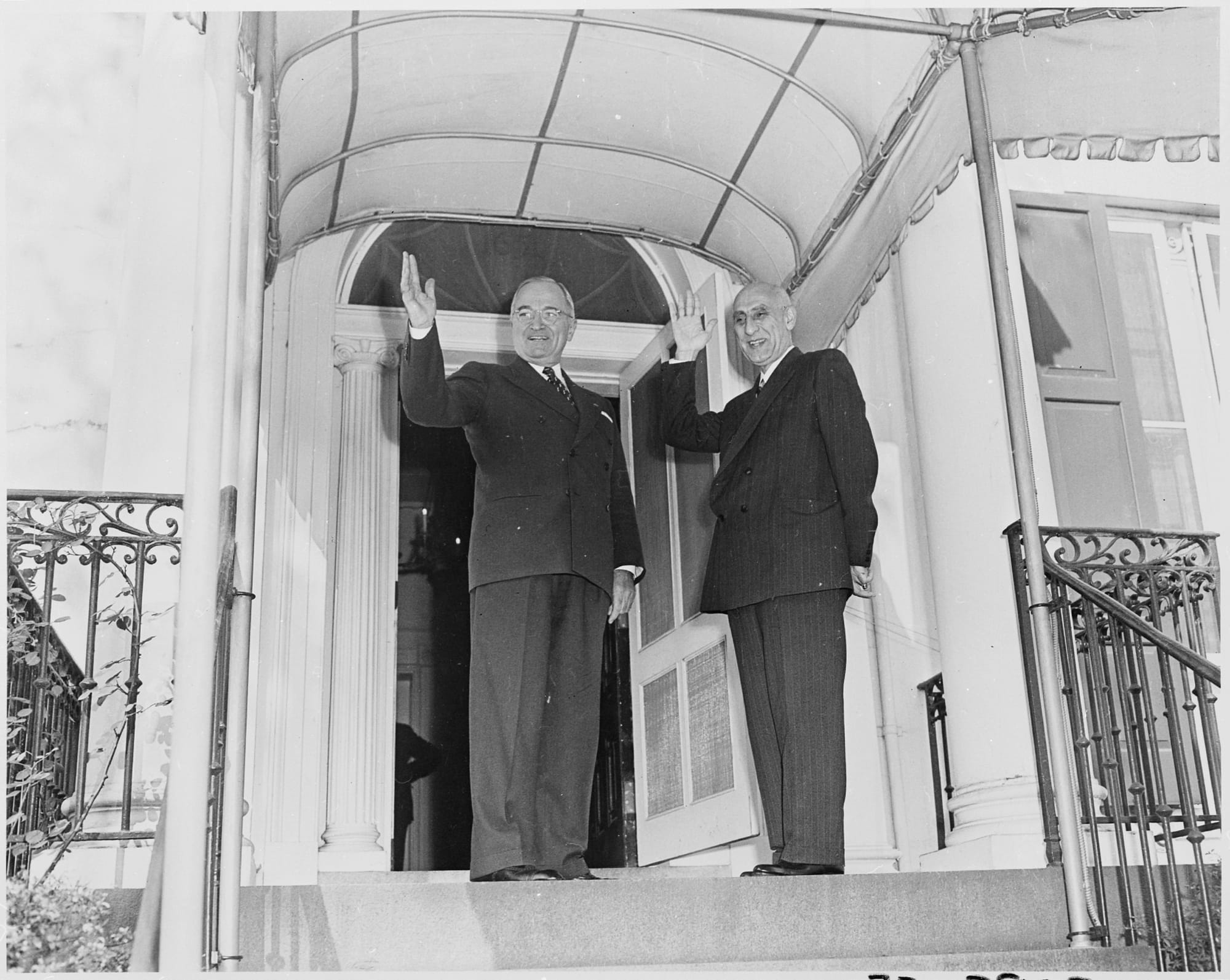
In August 1953, Iran experienced one of the most consequential political interventions of the twentieth century.
Prime Minister Mohammad Mossadegh, a nationalist leader who had challenged British control over Iran's oil industry, was removed from power following a covert operation organized by American and British intelligence services.
The operation, commonly known as Operation Ajax, marked a turning point in Iran's political development and its relationship with the West.
For Washington and London, the intervention was intended to protect strategic interests during an increasingly tense period of the Cold War.
For many Iranians, it became a lasting symbol of foreign interference in their country's political sovereignty.
The consequences extended far beyond the removal of one prime minister.
The coup strengthened the position of Shah Mohammad Reza Pahlavi, helped consolidate an increasingly authoritarian political system and contributed to a legacy of distrust that would later influence the 1979 Iranian Revolution.
More than seven decades later, the events of 1953 remain central to understanding why American declarations about democracy and sovereignty have often been received with skepticism in Iran.
Iran Before the Coup: A Nation Under Foreign Influence
Iran entered the twentieth century with a long history of pressure from foreign powers.
Britain and Russia had competed for influence over Persian territory, trade and political affairs.
Although Iran was not formally colonized in the same manner as some neighboring territories, foreign governments exercised considerable influence over its economy and political institutions.
Oil transformed that relationship.
In 1901, British businessman William Knox D'Arcy obtained a concession granting extensive rights to explore for petroleum in Persia.
Oil was discovered in 1908, leading to the development of the Anglo-Persian Oil Company, later renamed the Anglo-Iranian Oil Company.
The British government became a major shareholder in the company in 1914.
Iran's petroleum resources subsequently became important to British industry, naval operations and strategic planning.
But the financial arrangements generated resentment.
Many Iranians believed that their country's most valuable natural resource was being exploited under terms that disproportionately benefited a foreign company.
Oil was therefore not merely an economic issue.
It became a symbol of national sovereignty.
The question was whether Iran could control its own resources or whether foreign governments would continue to determine how those resources were developed and sold.
The Rise of Mohammad Mossadegh
Mohammad Mossadegh emerged as one of Iran's most influential nationalist politicians.
A lawyer and experienced political figure, he advocated constitutional government, parliamentary authority and greater independence from foreign interference.
He became associated with the National Front, a political coalition that opposed continued British dominance over the oil industry.
Mossadegh was not a communist leader.
His political movement included different nationalist and reformist currents, and his principal objective was to strengthen Iranian sovereignty.
In April 1951, he became prime minister after parliament had approved legislation nationalizing the oil industry.
The nationalization decision was enormously popular among many Iranians.
It represented an attempt to reclaim control over a resource that had become central to the national economy.
But it also created a direct confrontation with Britain.
London regarded the nationalization as a threat to its commercial interests and broader international position.
For Mossadegh, however, reversing the policy would have meant abandoning a central promise of his political movement.
The dispute became a test of whether a Middle Eastern government could challenge a major Western economic interest without facing political or economic retaliation.
Britain's Response: Economic Pressure and Political Isolation
The British government responded to nationalization with extensive economic and diplomatic pressure.
Britain withdrew technical personnel from the oil industry, pursued legal action and helped organize measures that severely restricted Iranian oil exports.
The resulting crisis damaged Iran's economy.
Oil revenues declined sharply, government finances came under pressure and political tensions intensified.
British officials hoped that economic hardship would weaken Mossadegh's position and create conditions for a political settlement favorable to British interests.
The dispute also became increasingly international.
Britain brought aspects of the controversy before international institutions, but its legal efforts did not produce the outcome it sought.
The International Court of Justice concluded in 1952 that it lacked jurisdiction over the dispute brought before it.
The economic confrontation nevertheless continued.
For Mossadegh, the crisis reinforced his argument that Iran was being punished for attempting to exercise control over its own resources.
For his opponents, the deteriorating economy became evidence that his government was leading the country toward instability.
Both the economic pressure and Iran's internal political divisions contributed to the conditions in which the coup would eventually occur.
Washington's Changing Position
The United States did not immediately adopt Britain's preferred approach.
Under President Harry Truman, American officials initially sought a negotiated resolution to the oil dispute.
Washington recognized the importance of Iranian nationalism and was concerned that excessive pressure could destabilize the country.
But American policy changed as Cold War fears intensified.
The Soviet Union bordered Iran, and Washington viewed the country as strategically important to containing Soviet influence.
Iran's communist Tudeh Party was active, although Mossadegh himself was not a communist.
American officials increasingly feared that prolonged political and economic instability could create opportunities for communist influence.
The election of Dwight D. Eisenhower in 1952 accelerated the shift.
His administration was more receptive to covert intervention.
British officials had already considered ways to remove Mossadegh.
Under Eisenhower, American and British interests converged around the objective of replacing the prime minister.
The decision reflected both Cold War concerns and the dispute over Western petroleum interests.
Reducing the operation to only one of these motives would oversimplify the historical record.
But neither motive changes the central fact that foreign intelligence services participated in efforts to overthrow Iran's government.
Operation Ajax: The Plan to Remove Mossadegh
The covert operation became known as TPAJAX, commonly referred to as Operation Ajax.
It involved cooperation between the CIA and Britain's Secret Intelligence Service, MI6.
The plan sought to remove Mossadegh and install a government considered more favorable to Western interests.
General Fazlollah Zahedi was identified as the intended replacement.
The operation relied on several methods.
These included political influence, propaganda, contacts with Iranian military officers and efforts to mobilize opposition to Mossadegh.
Money was used to support aspects of the operation, including efforts to influence political and public opinion.
The plan also sought to involve the Shah, whose constitutional authority and political position were central to the intended transfer of power.
The operation was not simply an American military intervention imposed from outside.
It depended on Iranian participants, political rivalries, military networks and domestic opposition to Mossadegh.
Nevertheless, American and British intelligence agencies played a deliberate organizing role.
The distinction matters.
Recognizing the participation of Iranian actors does not erase the responsibility of foreign governments that planned and supported the operation.
The Shah and the Struggle for Constitutional Authority
Mohammad Reza Pahlavi had become Shah in 1941, following the forced abdication of his father during the Anglo-Soviet occupation of Iran.
Under Iran's constitutional monarchy, the relationship between the monarch, parliament and prime minister was contested.
Mossadegh sought to strengthen the authority of elected political institutions and reduce royal interference in government.
The Shah and his supporters feared the erosion of monarchical power.
These tensions became increasingly serious during the political crisis.
Supporters of the coup sought royal decrees dismissing Mossadegh and appointing Zahedi.
The constitutional legitimacy of these actions remains historically disputed, particularly given the circumstances in which they were obtained and implemented.
What is clear is that the Shah became an essential figure in the operation.
His participation provided a claimed legal basis for the attempted removal of the prime minister.
But the broader process involved covert foreign intervention and efforts to influence the Iranian military and political system.
August 1953: The Coup Unfolds
The first attempt to remove Mossadegh took place during the night of August 15–16, 1953.
The operation failed.
Mossadegh remained in office, and the Shah fled Iran.
For a brief period, it appeared that the attempt to overthrow the government had collapsed.
But political instability continued.
On August 19, military units and groups opposing Mossadegh moved against his government.
Street demonstrations, armed confrontations and military action contributed to the collapse of his administration.
Zahedi emerged as prime minister.
Mossadegh was arrested.
The Shah subsequently returned to Iran.
The precise balance between foreign coordination, Iranian political opposition, military action and spontaneous participation has been debated by historians.
However, declassified American records establish that the CIA participated in planning and supporting the operation to remove Mossadegh.
The intervention was not merely an allegation developed decades later.
It is part of the documented historical record.
The CIA Documents and the Question of Responsibility
For many years, American officials avoided openly acknowledging the full extent of the CIA's involvement.
But declassified intelligence records gradually provided a clearer picture.
Documents released through the U.S. National Security Archive and the State Department's Foreign Relations of the United States series established the role of American officials in planning and supporting the coup.
An internal CIA history also described the operation as a foreign-policy undertaking carried out under CIA direction.
These records are important because they allow historians to move beyond political accusation.
The evidence demonstrates that American involvement was intentional.
Washington was not simply observing a domestic Iranian political crisis.
It was actively participating in an effort to change the country's leadership.
The United Kingdom also played a central role, particularly through its earlier efforts to remove Mossadegh and its cooperation with American intelligence.
The documents do not mean that every detail of the events is settled.
But they establish the fundamental responsibility of the foreign intelligence services involved.
What Happened to Mossadegh?
Following the coup, Mossadegh was prosecuted by a military tribunal.
He was sentenced to imprisonment and subsequently placed under house arrest.
He remained under restrictions until his death in 1967.
His political career had effectively ended.
For supporters of Iranian nationalism, his removal represented the defeat of a movement that had attempted to assert greater national independence.
For his opponents, Mossadegh's policies had contributed to economic and political instability.
The historical assessment of his premiership remains complex.
Mossadegh was a nationalist leader operating within a contested constitutional system, not the head of an uncomplicated modern liberal democracy.
His government faced serious internal divisions, and some of his decisions remain controversial.
But those complexities do not erase the significance of foreign intervention in removing him.
The central issue is whether outside governments had the right to manipulate Iran's political process in pursuit of their strategic interests.
The Shah's Consolidation of Power
After 1953, the Shah's position became substantially stronger.
The United States expanded its political, military and economic support for his government.
Iran developed into one of Washington's most important regional partners.
The Shah pursued modernization programs, military expansion and economic development.
Some reforms produced significant changes in education, infrastructure and women's legal and social position.
But political repression also intensified.
Opposition movements faced restrictions, and the monarchy increasingly relied on security institutions to suppress dissent.
SAVAK, the Shah's intelligence and security organization, became associated with surveillance, detention and torture.
The United States maintained close relations with the monarchy despite growing criticism of its human rights record.
This created a serious contradiction.
Washington presented itself as a defender of freedom while supporting a government that restricted political opposition.
For many Iranians, American support for the Shah became inseparable from the memory of the 1953 coup.
Oil After the Coup
The overthrow of Mossadegh did not simply restore the pre-nationalization oil system.
In 1954, a new international consortium arrangement was established to manage Iranian oil production and marketing.
British interests remained important, but American oil companies gained substantial participation.
Iran retained formal ownership of its oil resources under the nationalization framework, while foreign companies obtained significant operational and commercial roles.
The arrangement reflected a redistribution of influence among Western petroleum interests.
It also demonstrated how closely economic considerations and political intervention had become connected.
The coup had helped remove a government whose policies threatened established commercial arrangements.
The subsequent oil settlement created a framework more acceptable to Western governments and companies.
Whether the coup was primarily motivated by oil, Cold War fears or a combination of both remains a subject of historical interpretation.
But the economic consequences were substantial.
The Road to the 1979 Iranian Revolution
The Iranian Revolution of 1979 was the result of numerous political, social, religious and economic developments.
Opposition to the Shah came from different groups, including religious leaders, secular nationalists, left-wing organizations and other political movements.
The monarchy's authoritarianism, economic grievances and political repression contributed to growing discontent.
Ayatollah Ruhollah Khomeini emerged as a central figure in the revolutionary movement.
The memory of the 1953 coup formed part of the broader resentment toward foreign interference.
American support for the Shah reinforced the perception among many opponents of the monarchy that Washington had helped sustain an illegitimate political order.
When the revolution overthrew the Shah, the United States lost one of its most important regional allies.
The subsequent seizure of the American embassy in Tehran created a major international crisis.
The embassy hostage-taking was itself unlawful and cannot be justified by earlier American actions.
But the political rhetoric surrounding the crisis frequently invoked the history of American interference.
The events of 1953 had become part of the narrative through which revolutionary leaders explained their hostility toward Washington.
The Long-Term Damage to American Credibility
The 1953 coup became a defining example of the tension between American strategic interests and declared democratic principles.
Washington had supported the removal of a prime minister who challenged Western economic interests and whose political position was contested within Iran.
The intervention helped strengthen an authoritarian monarchy that remained a close American partner for decades.
In the short term, American officials considered the outcome a strategic success.
Iran remained aligned with the West, and Soviet influence was contained.
But the long-term consequences were more complicated.
The coup contributed to a legacy of distrust that outlived the Shah and continued to influence Iranian political discourse.
It became evidence, for many critics of American foreign policy, that Washington was prepared to undermine political sovereignty when its strategic interests were threatened.
This perception extended beyond Iran.
Other governments and political movements in the Middle East observed the intervention and drew their own conclusions about the reliability of American commitments to self-determination.
Was the Coup Necessary?
Supporters of the intervention argued that Iran faced a serious risk of political collapse and possible communist expansion.
They viewed Mossadegh's government as increasingly unstable and believed that replacing him would protect Iran from Soviet influence.
Critics argued that these fears were exaggerated and used to justify intervention against a nationalist government.
The historical record shows that Iran faced genuine political and economic instability.
But it does not establish that a communist takeover was inevitable.
Nor does it demonstrate that overthrowing Mossadegh was the only available response.
Diplomatic negotiations and alternative political arrangements remained possible, although difficult.
The intervention was therefore a political choice made under conditions of uncertainty.
Its consequences should be assessed in light of both the concerns expressed at the time and the evidence that later became available.
The Question of Trust
The 1953 Iranian coup raises a question that extends beyond the history of one country.
What happens when a powerful state publicly supports national sovereignty while secretly participating in the removal of another country's government?
For Iran, the consequences included a strengthened monarchy, decades of close cooperation with Washington and a legacy of political resentment.
For the United States, the intervention produced short-term strategic gains but contributed to long-term damage to its credibility.
The case illustrates how foreign intervention can reshape the relationship between governments and populations.
A policy intended to secure influence may instead generate hostility that persists for generations.
The lesson is not that every American action in the Middle East has produced instability.
It is that strategic calculations can carry consequences that are difficult to predict and impossible to contain.
A Warning That Washington Did Not Fully Absorb
The events of 1953 revealed a pattern that would reappear in later American interventions.
Washington identified a government or political situation as a threat to its interests.
It concluded that changing the political balance would produce a more favorable outcome.
It supported intervention.
And it underestimated the long-term consequences for legitimacy, public trust and regional stability.
The Iranian coup did not create every problem that followed in Iran.
Nor did it alone cause the Islamic Revolution.
But it became one of the most consequential examples of foreign interference in the modern Middle East.
Its significance lies not only in the removal of Mohammad Mossadegh.
It lies in the contradiction between the promise of political self-determination and the reality of covert intervention.
Half a century later, the United States would again confront a Middle Eastern government it regarded as a serious strategic threat.
This time, the intervention would not be covert.
It would involve a full-scale invasion, the overthrow of a government and an ambitious attempt to reshape an entire political system.
The country was Iraq. And the year was 2003.
Chapter 3 — Iraq 2003: Weapons of Mass Destruction and the Consequences of Invasion
A War That Changed the Middle East
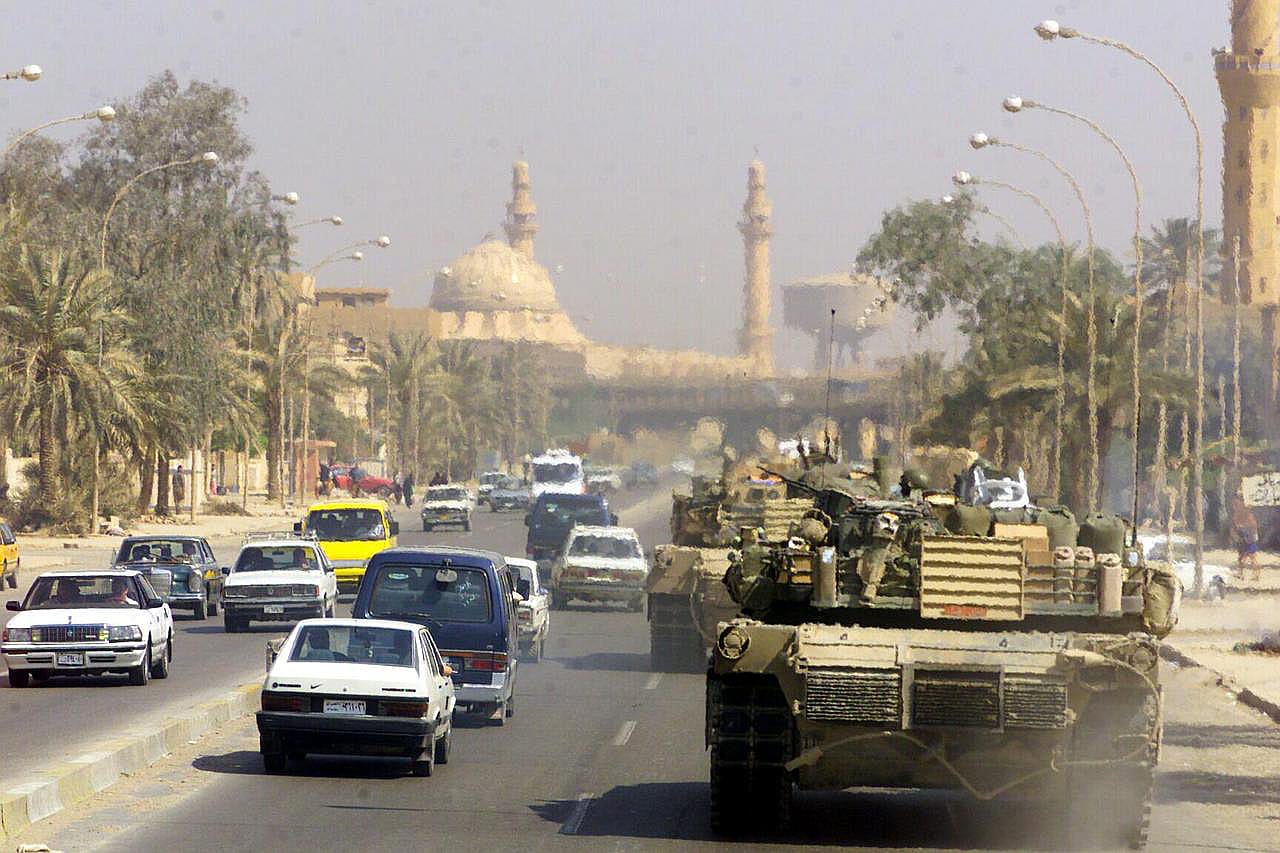
On March 20, 2003, the United States launched a military invasion of Iraq alongside a coalition led principally by Washington and London.
President George W. Bush presented the operation as necessary to eliminate a dangerous security threat posed by Saddam Hussein's government.
The central argument concerned Iraq's alleged possession of weapons of mass destruction.
American and British officials warned that Saddam Hussein maintained chemical and biological weapons capabilities and was seeking to advance prohibited weapons programs.
The administration also emphasized Iraq's history of aggression, its violations of United Nations resolutions and the danger of allowing hostile regimes to develop weapons capable of threatening international security.
But the stockpiles of weapons of mass destruction used to justify the urgency of the invasion were never found.
The consequences of the war extended far beyond the collapse of Saddam Hussein's government.
Iraq experienced insurgency, sectarian violence, institutional breakdown, mass displacement and the eventual rise of the Islamic State.
The invasion also changed the regional balance of power, creating opportunities for Iran to expand its influence.
More than two decades later, the war remains one of the most consequential and controversial decisions in modern American foreign policy.
It raises a question that continues to shape perceptions of Washington across the Middle East.
What happens when a powerful country launches a war based on intelligence assessments that prove fundamentally wrong?
Saddam Hussein's Iraq Before the Invasion
Saddam Hussein had ruled Iraq through an authoritarian political system characterized by repression, surveillance and violence against political opponents.
His government was responsible for serious human rights abuses, including the Anfal campaign against Kurdish communities during the late 1980s.
Iraqi forces used chemical weapons, including in the 1988 attack on Halabja.
The regime also invaded Iran in 1980, beginning a devastating eight-year war, and invaded Kuwait in 1990.
These actions established Iraq as a major regional security concern.
Following the 1991 Gulf War, Iraq was subjected to United Nations sanctions and weapons inspections intended to prevent the development of prohibited weapons programs.
The sanctions period produced severe economic hardship and became the subject of significant humanitarian criticism.
Saddam Hussein's government also obstructed aspects of international monitoring and maintained an atmosphere of uncertainty surrounding its military capabilities.
This history contributed to international suspicion.
But suspicion was not the same as proof that Iraq possessed active stockpiles of weapons of mass destruction in 2003.
That distinction became central to the controversy surrounding the invasion.
The Intelligence That Failed
In the months before the war, American and British leaders repeatedly argued that Iraq possessed dangerous weapons capabilities.
Secretary of State Colin Powell delivered a presentation to the United Nations Security Council on February 5, 2003, outlining intelligence allegations concerning Iraqi weapons programs.
The presentation became one of the most prominent public efforts to justify military action.
But subsequent investigations revealed major weaknesses in the intelligence assessments.
The Iraq Survey Group, established after the invasion to investigate Iraq's weapons programs, did not find the active weapons stockpiles that had been central to the case for war.
The group's findings indicated that Iraq had largely dismantled its chemical and biological weapons programs after the 1991 Gulf War.
The United States Senate Select Committee on Intelligence later documented significant intelligence failures.
In Britain, the Iraq Inquiry, commonly known as the Chilcot Inquiry, concluded that the circumstances in which military action was considered necessary had not been established with sufficient certainty and that peaceful alternatives had not been exhausted.
The findings raised questions about intelligence analysis, political judgment and the presentation of uncertainty to the public.
The failure was not merely technical.
It concerned the decision to launch a war with enormous human consequences.
The United Nations and the Question of Legitimacy
The invasion also created a major dispute over international law.
The United States and the United Kingdom argued that existing United Nations Security Council resolutions provided a legal basis for military action.
Other governments and legal experts rejected that interpretation.
The Security Council had not adopted a new resolution expressly authorizing the invasion in March 2003.
France, Germany and Russia opposed the decision to proceed with military action under the circumstances.
The disagreement exposed divisions among Western allies and weakened confidence in international institutions.
The legal controversy remains distinct from the factual question of whether Iraq possessed prohibited weapons.
Even a genuine security concern does not automatically authorize the use of force under the United Nations Charter.
The invasion therefore raised fundamental questions about the authority of powerful states to determine when military intervention is justified.
The Fall of Baghdad
American-led forces advanced rapidly during the initial invasion.
Baghdad fell in April 2003, and Saddam Hussein's government collapsed.
Images of the toppling of Saddam Hussein's statue in Baghdad became symbolic of the regime's downfall.
For Iraqis who had suffered under Saddam Hussein, his removal represented the end of a brutal dictatorship.
But the collapse of the regime did not produce the stable political transition that American officials had anticipated.
Government institutions were disrupted.
Looting spread across Baghdad and other cities.
Security deteriorated as the occupying authorities struggled to establish effective control.
The rapid military victory revealed a fundamental weakness in the planning process.
Defeating an army and removing a government were not the same as rebuilding a functioning state.
De-Ba'athification and the Dissolution of the Iraqi Army
Two decisions made by the Coalition Provisional Authority became especially controversial.
The first was the de-Ba'athification policy, which removed many members of Saddam Hussein's Ba'ath Party from public employment and political institutions.
The second was the dissolution of the Iraqi army and several security organizations.
These measures were intended to dismantle the structures of the former regime.
But they also removed experienced personnel from government institutions and left large numbers of armed or militarily trained men without employment.
The consequences were serious.
Administrative capacity weakened.
Economic insecurity increased.
And former soldiers and officials became potential recruits for insurgent movements.
These decisions did not alone cause the insurgency.
Iraq's internal political divisions, armed networks, foreign interference and the legacy of dictatorship also played major roles.
But the policies contributed to conditions that made stabilization more difficult.
The Rise of Insurgency and Sectarian Violence
As the occupation continued, armed resistance expanded.
Different groups pursued different objectives.
Some opposed foreign military occupation.
Others sought to restore elements of the former political order.
Jihadist organizations pursued extremist ideological agendas.
Sectarian tensions between Sunni and Shia communities intensified.
Attacks against civilians, religious institutions and government officials became increasingly frequent.
The bombing of the Al-Askari shrine in Samarra in February 2006 contributed to a devastating escalation of sectarian violence.
Militias carried out killings, kidnappings and forced displacement.
The Iraqi population experienced the consequences of both insurgent violence and military operations.
The conflict increasingly became more than a struggle between American forces and armed opponents.
It evolved into a crisis involving the fragmentation of Iraqi society and competition for political power.
Abu Ghraib and the Damage to American Credibility
In 2004, photographs documenting abuse of Iraqi detainees at Abu Ghraib prison became public.
The images showed prisoners being humiliated and mistreated by American personnel.
The scandal generated international condemnation.
It also severely damaged Washington's claims that the invasion was intended to promote freedom and human rights.
The abuses were investigated, and American service members faced disciplinary and criminal proceedings.
But the broader political damage extended far beyond individual prosecutions.
For many people in the Middle East, Abu Ghraib became a symbol of the gap between American democratic rhetoric and the conduct of its military occupation.
The scandal also provided propaganda material for extremist organizations.
It demonstrated how violations committed during military operations can undermine the legitimacy of broader security objectives.
The Human Cost of the War
The invasion and subsequent conflict caused enormous human suffering.
Hundreds of thousands of Iraqis died in violence and other conflict-related circumstances over the following years, although estimates vary substantially according to methodology, period and the types of deaths counted.
Millions were displaced internally or fled the country.
Families lost relatives, homes and livelihoods.
Infrastructure was damaged, and essential public services struggled under prolonged instability.
American and coalition forces also suffered thousands of fatalities.
The human cost cannot be reduced to military casualties alone.
The conflict affected education, healthcare, economic opportunity and the social fabric of Iraqi communities.
Children grew up amid insecurity and repeated displacement.
For many Iraqis, the consequences of the invasion continued long after major American combat operations ended.
Iran's Expanding Influence
One of the most significant geopolitical consequences of the invasion was the transformation of Iran's regional position.
Saddam Hussein's Iraq had been a major rival of Iran.
His removal eliminated an important counterweight.
Following the invasion, Iran developed extensive relationships with Iraqi political parties, armed groups and security institutions.
Shia political movements gained greater influence within Iraq's new political system.
Some maintained close ties with Tehran.
This did not mean that Iraq became simply an extension of Iranian policy.
Iraqi political actors retained their own interests, divisions and nationalist agendas.
But Iran's influence expanded substantially.
The result was strategically ironic.
A war intended to strengthen American security interests contributed to a regional environment in which one of Washington's principal adversaries gained additional opportunities.
From Al-Qaeda in Iraq to the Islamic State
The instability following the invasion also helped create conditions in which extremist organizations expanded.
Al-Qaeda in Iraq emerged under the leadership of Abu Musab al-Zarqawi.
The organization carried out attacks against civilians, security forces and religious communities.
Over time, its networks evolved through different organizational structures.
The group that became known as the Islamic State exploited the political and security crises in Iraq and Syria.
In 2014, ISIS captured Mosul and declared a so-called caliphate.
Its campaign involved mass killings, persecution of religious minorities, enslavement and other atrocities.
The rise of ISIS cannot be explained solely by the American invasion.
Sectarian governance failures, the Syrian civil war, extremist ideology and regional political dynamics were also central.
Nevertheless, the institutional breakdown and insurgent networks that developed after 2003 were important parts of the organization's history.
The American Withdrawal and Its Aftermath
The United States formally ended its major combat mission in Iraq in December 2011.
American troops subsequently returned in 2014 as part of the international campaign against ISIS, following a request from the Iraqi government.
The return demonstrated the difficulty of ending military involvement in a country whose security institutions remained under pressure.
Washington continued to support Iraqi forces through training, intelligence and military assistance.
But the political consequences of the invasion remained unresolved.
Iraq continued to face challenges involving corruption, militia influence, governance and relations with regional powers.
The United States had removed Saddam Hussein, but it had not created the stable regional order originally envisioned by the architects of the invasion.
The Question Washington Still Faces
The Iraq War revealed the limits of military power as an instrument of political transformation.
American forces were capable of defeating Iraq's conventional military.
But they could not easily control the political, social and sectarian consequences of regime change.
The war also demonstrated the dangers of intelligence failure and inadequate planning for the aftermath of intervention.
Washington's credibility suffered because the principal weapons claims used to justify the invasion were not substantiated.
The consequences affected not only Iraq but also the wider Middle East.
Iran expanded its influence.
Extremist organizations exploited instability.
Regional governments observed the risks of American military intervention.
And populations across the region witnessed the human cost of a war whose stated objectives had not been achieved as promised.
A War That Reshaped the Question of Trust
For America's regional partners, Iraq became a warning.
The United States possessed overwhelming military power, but its strategic judgment could still produce disastrous outcomes.
Military intervention could remove a government without establishing a viable replacement.
Security objectives could be undermined by decisions made during occupation.
And political promises could prove far more difficult to fulfill than military objectives.
The Iraq War therefore became a defining moment in the debate over American leadership.
It raised questions about the reliability of intelligence, the legitimacy of intervention and the responsibility of powerful states for the consequences of their decisions.
Those questions would reappear in another conflict that began before the Iraq invasion and continued long after it.
Afghanistan would become America's longest war — and another example of the gap between military ambition and political reality.
Chapter 4 — Afghanistan: Twenty Years of War and the Collapse of American Strategy
The War That Began After September 11
On October 7, 2001, the United States launched military operations in Afghanistan, supported by the United Kingdom and other international partners.
The intervention followed the September 11 terrorist attacks, in which nearly 3,000 people were killed in the United States.
Al-Qaeda, led by Osama bin Laden, had planned the attacks while operating from Afghanistan under the protection of the Taliban government.
Washington demanded that the Taliban surrender Al-Qaeda leaders and dismantle terrorist training facilities. When those demands were not met, the United States began military operations with the stated objective of destroying Al-Qaeda's operational capabilities and removing the Taliban from power.
The initial campaign achieved rapid military results.
By December 2001, the Taliban government had collapsed, and an internationally supported political process was underway to establish a new Afghan administration.
For American leaders, the early success appeared to demonstrate that military intervention could remove a hostile regime and prevent Afghanistan from serving as a base for international terrorism.
But the collapse of a government was not the same as the defeat of an insurgency.
And removing the Taliban from Kabul did not resolve the political, ethnic, economic and institutional challenges that had shaped Afghanistan for decades.
What began as a counterterrorism operation would eventually become America's longest war.
From Counterterrorism to Nation-Building
The original justification for the intervention was relatively specific: prevent Al-Qaeda from using Afghanistan to organize further international attacks.
Over time, however, American objectives expanded considerably.
Washington and its international partners became involved in rebuilding Afghan state institutions, training security forces, supporting elections, developing infrastructure and promoting education and women's rights.
The mission evolved from counterterrorism into an ambitious effort to create a functioning democratic state.
The United States and its allies invested billions of dollars in government institutions, military equipment, development projects and humanitarian assistance.
New schools were constructed, roads were repaired, healthcare services expanded and millions of Afghan girls gained access to education that had been severely restricted under the previous Taliban government.
These developments were meaningful, particularly for people who experienced greater personal freedom and educational opportunities.
But the progress was uneven.
Afghanistan remained deeply affected by corruption, poverty, insecurity, regional divisions and dependence on international financial assistance.
Government institutions often struggled to establish legitimacy beyond major urban centers.
In some rural areas, the presence of foreign soldiers and the conduct of military operations generated resentment rather than public confidence.
The central contradiction became increasingly visible.
The United States was attempting to build a stable political system while simultaneously fighting an insurgency that challenged the legitimacy of that very system.
The Taliban's Return as an Insurgency
Although the Taliban lost control of the Afghan government in 2001, the movement was not destroyed.
Its leadership and fighters regrouped, including in areas along the Afghanistan-Pakistan border.
Over the following years, the Taliban rebuilt networks of recruitment, financing, local influence and military operations.
The insurgency expanded through guerrilla warfare, roadside bombs, assassinations and attacks against Afghan government institutions and international forces.
For the United States, the conflict became increasingly difficult to define.
American forces could capture territory, eliminate militant commanders and disrupt insurgent operations.
But these tactical successes rarely translated into permanent political control.
When international troops withdrew from particular districts, Taliban fighters could return.
The insurgency also benefited from weaknesses within the Afghan government.
Corruption, abuses by local officials, disputes over land and the limited delivery of public services contributed to dissatisfaction in some communities.
The Taliban exploited these grievances while also using intimidation, violence and coercion to impose its authority.
This distinction matters.
The movement's ability to regain influence did not mean that all Afghans supported its ideology or methods.
In many areas, civilians were caught between insurgent violence, government failures and international military operations.
The result was a conflict in which military strength alone could not resolve the underlying political struggle.
Pakistan and the Regional Dimension
Afghanistan's war cannot be understood without examining Pakistan.
The two countries share a long and difficult border, and developments on either side have historically influenced security and political stability in the other.
American officials repeatedly accused elements within Pakistan of tolerating or supporting Taliban networks, allegations that contributed to serious tensions between Washington and Islamabad.
Pakistan officially participated in American counterterrorism efforts while also pursuing its own regional security interests.
Its relationship with Afghanistan was shaped by concerns about India, border security, militant organizations and the future political balance in Kabul.
The situation created a strategic contradiction.
The United States depended on cooperation with Pakistan for logistics and counterterrorism operations, yet American officials also believed that Taliban sanctuaries across the border undermined progress inside Afghanistan.
Osama bin Laden's discovery and killing by American forces in Abbottabad, Pakistan, in May 2011 further intensified questions about militant networks and the effectiveness of regional counterterrorism cooperation.
For Washington, the broader lesson was that a military campaign inside Afghanistan could not be separated from the political and security dynamics of neighboring countries.
Even a powerful foreign military faced significant limitations when insurgent networks could operate across borders.
Civilian Casualties and the Human Cost of War
The Afghanistan conflict imposed enormous suffering on civilians.
Afghan families experienced bombings, suicide attacks, targeted killings, displacement, destruction of property and years of insecurity.
The Taliban and other armed groups were responsible for large numbers of civilian casualties, including through indiscriminate attacks and deliberate violence against civilians.
American and allied military operations also caused civilian deaths, including through airstrikes, raids and incidents involving mistaken identification or faulty intelligence.
The United Nations Assistance Mission in Afghanistan documented civilian casualties over many years and repeatedly called on all parties to comply with international humanitarian law.
The consequences of the war extended beyond those killed or physically injured.
Children grew up surrounded by violence.
Families lost homes and livelihoods.
Millions of Afghans experienced displacement, while many others faced interrupted education, limited healthcare and psychological trauma.
For international audiences, the war was frequently presented through military operations, troop deployments and political speeches.
For Afghan civilians, it was a daily struggle to survive.
The distinction between military objectives and civilian consequences is essential when evaluating the intervention.
A war can be launched in response to a genuine security threat and still produce profound humanitarian suffering.
Recognizing the legitimacy of counterterrorism concerns does not remove the obligation to examine how military force was used and whether civilian harm was adequately prevented.
The Cost of Twenty Years of War
The financial cost of the Afghanistan intervention was extraordinary.
According to research by Brown University's Costs of War project, the broader costs associated with the Afghanistan and Pakistan war theaters reached trillions of dollars when military operations, related expenditures and long-term obligations were considered.
These estimates differ depending on which costs are included.
Direct military spending represents only one part of the financial burden.
Veterans' medical care, disability compensation, interest on borrowed funds, reconstruction assistance and long-term security commitments contribute to the wider cost.
The human cost was equally significant.
Thousands of American service members and contractors died, along with military personnel from allied countries.
Afghan security forces suffered particularly heavy losses.
Tens of thousands of Afghan civilians were killed over the course of the conflict, while the broader consequences of violence, displacement and economic disruption affected millions more.
Yet after two decades of expenditure and military operations, the political outcome remained deeply uncertain.
The scale of investment raised a fundamental question.
How could the world's most powerful military, supported by enormous financial resources and international partners, fail to establish a government capable of surviving without its protection?
Corruption, Weak Institutions and the Illusion of Progress
One of the most important explanations lies in the weakness of the Afghan state-building project.
American reconstruction efforts attempted to develop institutions in a country affected by decades of war, limited administrative capacity and complex local power structures.
Large amounts of international assistance entered Afghanistan, often under pressure to produce visible results quickly.
Schools, government buildings, military facilities and infrastructure projects became symbols of progress.
But physical construction did not necessarily produce effective governance.
Investigations by the U.S. Special Inspector General for Afghanistan Reconstruction documented widespread problems involving corruption, waste, poor oversight and unrealistic planning assumptions.
In some cases, projects were poorly designed or could not be maintained without continued foreign assistance.
Afghan security institutions also faced problems involving leadership, logistics, personnel management and dependence on American contractors.
The gap between reported progress and operational reality became a recurring concern.
The Washington Post's publication of the Afghanistan Papers in 2019 revealed how American officials had privately expressed doubts about the mission's direction and the reliability of assessments presented to the public.
These findings raised serious questions about political accountability.
If officials understood that major parts of the strategy were failing, why did the intervention continue for so long without a fundamental reassessment?
And how much did the American public know about the actual condition of the institutions being built in its name?
The Doha Agreement and the Decision to Withdraw
On February 29, 2020, the United States and the Taliban signed an agreement in Doha, Qatar.
The agreement established a framework for the withdrawal of American and allied forces, subject to commitments that included counterterrorism provisions and further political negotiations.
The Afghan government was not a signatory to the agreement.
That exclusion was politically significant.
Washington was negotiating directly with the insurgent movement it had spent nearly two decades fighting, while the government it had supported remained outside the central bilateral agreement.
The arrangement weakened confidence in the Afghan government's long-term position and strengthened the Taliban's international standing.
In 2021, President Joe Biden confirmed that American troops would leave Afghanistan, ending the military mission begun under President George W. Bush.
The decision reflected growing recognition that an indefinite foreign military presence could not guarantee a stable political outcome.
Supporters of withdrawal argued that the United States could not continue fighting an open-ended war without a credible path to victory.
Critics warned that the departure could lead to the collapse of the Afghan government and expose vulnerable populations to renewed Taliban rule.
Both the decision to withdraw and the way it was implemented became subjects of intense political debate.
August 2021: The Collapse of Kabul
In August 2021, the Taliban advanced rapidly across Afghanistan.
Provincial capitals fell in succession as Afghan government forces surrendered, withdrew or lost the ability to resist.
On August 15, Taliban fighters entered Kabul.
President Ashraf Ghani fled the country, and the Afghan government collapsed.
The speed of the takeover shocked international observers.
After twenty years of training, equipment transfers and financial assistance, the Afghan security system disintegrated far more quickly than many public assessments had anticipated.
The withdrawal of American personnel and contractors had exposed critical weaknesses in logistics, maintenance, air support and military coordination.
The collapse was also political.
Many Afghan soldiers had lost confidence in the government's survival, while local agreements and Taliban pressure accelerated the breakdown of resistance.
At Kabul's international airport, thousands of Afghans attempted to escape.
Images of desperate crowds, evacuation aircraft and families seeking passage became defining symbols of the end of the American intervention.
On August 26, 2021, a suicide bombing claimed by ISIS-K killed approximately 170 Afghans and 13 American service members near the airport.
The evacuation demonstrated both the enormous logistical capabilities of the United States and the severe consequences of inadequate preparation for a rapid collapse.
For many Afghans who had worked with international organizations, journalists, military personnel or human rights groups, the withdrawal created immediate fears about their future.
The fall of Kabul marked the end of the American-backed Afghan republic.
It also represented a devastating reversal for people who had believed that the political and social changes of the previous two decades would endure.
Women and Girls: The Rights Lost After the Taliban's Return
One of the most profound consequences of the Taliban's return has been the systematic restriction of women's and girls' rights.
During the international intervention, many Afghan women gained access to education, professional employment, public institutions and civic participation.
These opportunities were never equally available throughout the country, and serious discrimination persisted.
Nevertheless, significant progress had occurred in areas such as girls' schooling, maternal healthcare and women's participation in public life.
Following the Taliban's return, authorities progressively imposed restrictions on secondary and higher education for girls and women, employment opportunities, freedom of movement and participation in public spaces.
Afghanistan became the only country where girls and women were systematically barred from secondary and university education under national policies.
Restrictions on women's employment in humanitarian organizations and other sectors also complicated the delivery of assistance.
For Afghan women who had studied, worked and built professional lives during the previous twenty years, the consequences were deeply personal.
Teachers lost classrooms.
Students lost access to education.
Journalists, lawyers, public servants and activists faced threats, displacement or the disappearance of their professional opportunities.
The reversal raised difficult questions about the sustainability of social progress when it depends heavily on foreign military protection.
It also challenged the international community to consider how women's rights could be defended after the withdrawal of the forces that had helped support the previous political system.
Did the United States Achieve Its Objectives?
Evaluating the Afghanistan intervention requires distinguishing between different objectives.
The original counterterrorism mission significantly disrupted Al-Qaeda's operations in Afghanistan and removed the Taliban government that had provided sanctuary to its leadership.
Osama bin Laden was killed in 2011, and American counterterrorism operations degraded important parts of the organization's international network.
These outcomes cannot simply be dismissed.
However, the broader nation-building mission produced a different result.
The Afghan government collapsed in 2021.
The Taliban returned to power.
Many of the political institutions supported by the United States disappeared or were fundamentally transformed.
Women's rights and civil liberties experienced severe reversals.
The war also left a legacy of civilian suffering, displacement, economic fragility and institutional distrust.
American officials repeatedly described progress in terms of troop strength, territory secured, Afghan forces trained and development projects completed.
But these measurements did not reliably predict whether the Afghan state could survive independently.
The failure was therefore not merely military.
It involved political assumptions, institutional design, diplomatic decisions and the difficulty of imposing a durable governing model through prolonged external intervention.
Afghanistan and the Limits of American Power
Afghanistan demonstrated that military superiority does not guarantee political success.
The United States possessed advanced aircraft, intelligence systems, special operations forces, extensive financial resources and support from international allies.
Yet the Taliban survived the intervention and ultimately regained control of the country.
This outcome does not mean that American forces lacked military capability.
It means that defeating an adversary in battle is different from establishing a legitimate and sustainable political order.
The conflict also revealed the danger of expanding military objectives without clearly defining what success would require.
A campaign launched to disrupt a terrorist organization gradually became a twenty-year effort to transform a country's institutions, security forces and political system.
When the foreign military presence ended, much of that system proved unable to withstand the pressure.
The consequences extended beyond Afghanistan.
Allies questioned American planning and the reliability of long-term commitments.
Rival powers pointed to the withdrawal as evidence of the limitations of American influence.
For Washington, the war became a warning about the political and financial costs of interventions that continue without a realistic end state.
The Lessons That Remain
The Afghanistan war began with a legitimate international concern about terrorism following the September 11 attacks.
But the history of the intervention cannot be reduced to its initial justification.
Twenty years later, the Taliban returned to power, the American-backed government collapsed and millions of Afghans faced renewed uncertainty.
The intervention achieved some important counterterrorism objectives and supported genuine improvements in education, healthcare and opportunities for women.
At the same time, it failed to create a political system capable of preserving those achievements without continued external military support.
The central lesson is not that every military intervention must fail.
It is that military force cannot substitute indefinitely for legitimate governance, political reconciliation and institutions rooted in local realities.
The United States entered Afghanistan with overwhelming military power and the support of an international coalition.
It left behind a country once again governed by the movement it had removed in 2001.
For the people of Afghanistan, the consequences were not abstract questions of foreign policy.
They were measured in lives lost, families displaced, opportunities destroyed and freedoms taken away.
For the wider Middle East and the international community, Afghanistan remains one of the clearest examples of the difference between winning battles and securing a lasting peace.
And for Washington, it leaves a question that continues to shape debates about American intervention:
How can a country possess the military power to remove a government, yet lack the political strategy to build something that survives after its soldiers leave?
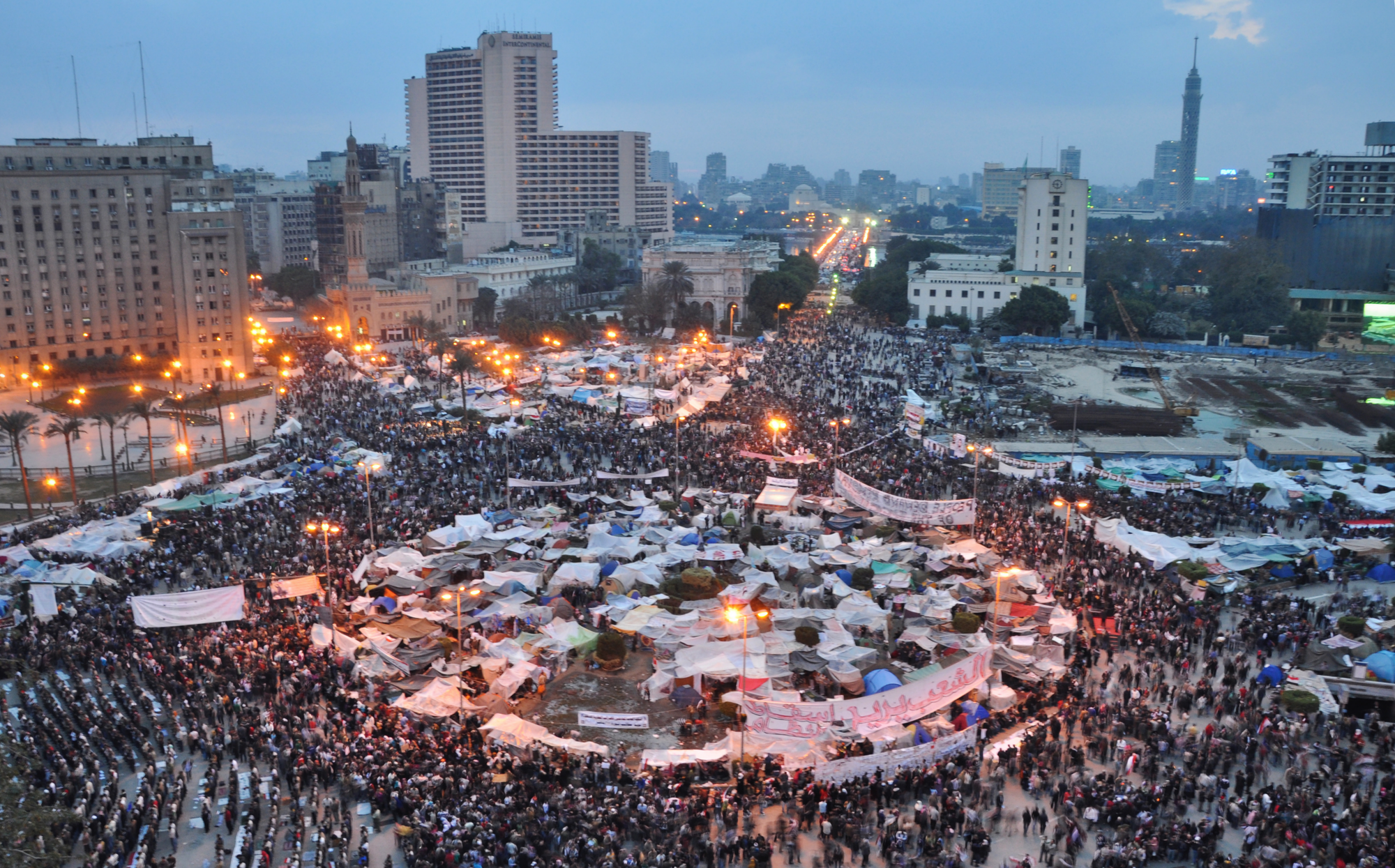
Chapter 5 — The Arab Spring: Democracy, Regime Change and American Contradictions
When the Streets Challenged the Political Order
In December 2010, the self-immolation of Tunisian street vendor Mohamed Bouazizi became a catalyst for protests that would transform the political landscape of the Arab world.
What began as demonstrations against corruption, unemployment and political repression in Tunisia developed into a wave of uprisings across North Africa and the Middle East.
In January 2011, Tunisia's longtime president, Zine El Abidine Ben Ali, fled the country.
Weeks later, mass demonstrations in Egypt forced President Hosni Mubarak to resign after nearly three decades in power.
Protests spread to Libya, Syria, Bahrain, Yemen and other countries.
The movements differed in their political demands, social composition and eventual outcomes.
But they shared a central challenge to established authority.
Millions of people demanded greater political participation, accountability and dignity.
For the United States, the uprisings created a difficult strategic dilemma.
Washington had long described democracy and human rights as important foreign-policy objectives.
Yet several governments facing popular opposition were among America's most important regional partners.
The Arab Spring forced American policymakers to confront a contradiction that had existed for decades.
Would Washington support democratic change even when it threatened governments that served American security interests?
Or would strategic stability take precedence over political principles?
Tunisia: The Beginning of a Regional Transformation
Tunisia became the first country in which an Arab Spring uprising removed a longstanding president.
Ben Ali's government had maintained close relationships with Western countries while restricting political opposition and freedom of expression.
Public anger over corruption, economic inequality and police abuse contributed to the protests.
Following Ben Ali's departure in January 2011, Tunisia began a political transition involving elections, constitutional negotiations and the development of new political institutions.
The United States welcomed the transition and provided assistance for democratic development.
For a period, Tunisia was widely regarded as the most promising democratic outcome of the Arab Spring.
But the transition faced serious economic and political challenges.
Unemployment, institutional tensions and public dissatisfaction continued.
In 2021, President Kais Saied suspended parliament and subsequently consolidated executive authority, actions widely criticized as democratic backsliding.
Tunisia's experience demonstrated that removing an authoritarian leader does not automatically produce durable democratic institutions.
It also showed that democratic transitions require more than international encouragement.
Economic opportunity, political compromise and institutional accountability are essential.
Egypt: Democracy Versus a Strategic Alliance
Egypt presented Washington with a far more complicated challenge.
For decades, President Hosni Mubarak had been a central American partner.
Egypt received substantial American military assistance and maintained a peace treaty with Israel.
The relationship supported regional diplomacy, military cooperation and access to the Suez Canal.
When mass protests erupted in Cairo's Tahrir Square in January 2011, Washington initially responded cautiously.
American officials emphasized restraint, reform and an orderly political transition.
As demonstrations intensified, the Obama administration increasingly accepted that Mubarak's presidency could not continue.
Mubarak resigned on February 11, 2011.
His removal created an opportunity for political change, but it also introduced uncertainty about Egypt's future.
In 2012, Mohamed Morsi, a candidate associated with the Muslim Brotherhood, won Egypt's presidential election.
His presidency was marked by intense political polarization, institutional conflict and mass opposition.
In July 2013, the Egyptian military removed Morsi from power following large demonstrations against his government.
Abdel Fattah el-Sisi subsequently consolidated power and became president.
The United States condemned aspects of the violence and temporarily suspended delivery of some military equipment.
However, Washington did not formally designate Morsi's removal as a military coup for purposes of applying all relevant American aid restrictions.
Security cooperation continued.
The result exposed the tension between Washington's stated support for democratic institutions and its determination to preserve a longstanding strategic relationship.
For critics, Egypt became evidence that American support for democracy had limits when military and diplomatic interests were at stake.
For American policymakers, maintaining relations with Cairo was considered essential to regional security.
Bahrain: The Uprising That Tested American Consistency
Bahrain provided another example of the competing priorities shaping American policy.
In February 2011, protesters demanded political reform, greater representation and an end to discrimination.
The demonstrations challenged the ruling monarchy.
Bahrain was also strategically important to Washington because it hosted the headquarters of the United States Fifth Fleet.
As protests expanded, Bahraini authorities imposed restrictions and used force against demonstrators.
Security forces from neighboring Gulf countries entered Bahrain in March 2011 under a Gulf Cooperation Council arrangement.
The government subsequently carried out arrests and other measures against opposition figures.
An independent commission established by Bahrain's king documented serious abuses by security forces.
The Obama administration expressed concern about repression and called for reform.
But Washington did not adopt the same approach it had taken toward the leadership transitions in Tunisia and Egypt.
The monarchy remained in power, and the American security relationship continued.
Bahrain became a prominent example of the difficulties Washington faced when demands for political reform emerged inside countries central to its military strategy.
The contrast was difficult to ignore.
In some countries, American officials welcomed the departure of authoritarian leaders.
In others, they emphasized dialogue and gradual reform while preserving close relations with existing governments.
Libya: From Civilian Protection to Regime Collapse
Libya became one of the most controversial international interventions associated with the Arab Spring.
In February 2011, protests against Muammar Gaddafi's government escalated into armed conflict.
Gaddafi's forces threatened opposition-held areas, and international concern grew over the danger to civilians.
In March 2011, the United Nations Security Council adopted Resolution 1973, authorizing member states to take necessary measures to protect civilians, while excluding a foreign occupation force.
A NATO-led military operation followed, with significant American participation.
The intervention helped prevent government forces from advancing on opposition-held areas and contributed to the weakening of Gaddafi's military position.
In October 2011, Gaddafi was captured and killed by opposition fighters.
His government collapsed.
But the removal of the regime did not produce a stable political transition.
Libya fragmented into competing political and armed factions.
Militias gained power, institutions weakened and rival governments emerged.
Foreign states subsequently became involved in supporting different Libyan actors.
The country experienced prolonged instability, displacement and serious human rights abuses.
The intervention remains controversial.
Supporters argued that military action was necessary to protect civilians facing an immediate threat.
Critics questioned whether the operation moved beyond civilian protection toward regime change and whether international actors adequately planned for the aftermath.
Both the immediate civilian protection rationale and the subsequent failure to establish stability must be considered.
The Libyan experience reinforced a recurring lesson from earlier interventions.
Removing a government can be achieved through military force.
Building a functioning political order afterward is considerably more difficult.
Syria: When Protest Became a Devastating War
The Syrian uprising began in 2011 with protests against President Bashar al-Assad's government.
Security forces responded with repression, arrests and violence.
The confrontation escalated into an armed conflict involving government forces, opposition groups, jihadist organizations and foreign powers.
The United States called for Assad to step aside and later provided different forms of support to selected opposition groups.
Washington also conducted military operations against the Islamic State and maintained partnerships with Kurdish-led forces.
But American policy toward Syria remained inconsistent and contested.
The Obama administration declared that the use of chemical weapons would cross a red line.
Following the August 2013 chemical attack in Ghouta, Washington considered military action but ultimately pursued a diplomatic framework intended to eliminate Syria's declared chemical weapons stockpile.
The Syrian government later faced further allegations and international findings concerning chemical weapons use.
Russia intervened militarily in 2015 to support Assad's government.
Iran and allied armed organizations also provided important assistance.
The conflict became a complex international confrontation.
Millions of Syrians were displaced, and large parts of the country were devastated.
In December 2024, Assad's government collapsed following a rapid offensive by opposition forces, introducing another major political transition and new uncertainties about Syria's future.
The Syrian conflict demonstrated the limits of American influence.
Washington opposed Assad's rule but was unwilling to undertake the type of large-scale intervention that had occurred in Iraq.
Its policies were shaped by counterterrorism concerns, regional alliances, the risks of escalation and the consequences of earlier military interventions.
For Syrians, however, the central reality was years of devastating violence and political uncertainty.
Yemen: A Political Transition That Failed
Yemen's uprising began in 2011 amid widespread opposition to President Ali Abdullah Saleh.
After months of protests and political negotiations, Saleh transferred power to his vice president, Abdrabbuh Mansur Hadi, under a Gulf-backed agreement.
The transition received international support, including from the United States.
But Yemen's underlying political divisions remained unresolved.
The Houthi movement expanded its territorial control and captured the capital, Sanaa, in 2014.
In 2015, a Saudi-led coalition intervened militarily in support of the internationally recognized government.
The United States provided different forms of support to the coalition, including arms sales, intelligence cooperation and logistical assistance.
The conflict developed into a devastating humanitarian crisis.
Civilian casualties, displacement, food insecurity and the destruction of infrastructure affected millions of Yemenis.
The war also became part of the wider rivalry involving Saudi Arabia and Iran.
Yemen demonstrated how a political uprising could evolve into a prolonged conflict when institutional weaknesses, domestic rivalries and regional intervention combined.
The Problem of Selective Democracy
The American response to the Arab Spring was not governed by a single consistent principle.
Washington supported political transitions in some countries.
It maintained relationships with authoritarian governments in others.
It participated in military intervention in Libya while avoiding comparable action in Syria.
It criticized repression in Bahrain but continued its strategic relationship with the monarchy.
It welcomed democratic developments in Egypt but preserved military cooperation after the removal of an elected president.
These differences reflected distinct political and security circumstances.
Not every uprising presented the same risks or opportunities.
But the inconsistencies also revealed the influence of strategic interests.
Military bases, energy markets, counterterrorism cooperation and relations with Israel shaped American decisions.
Democratic principles were part of the policy debate, but they were not always decisive.
The Role of Regional Governments
The Arab Spring cannot be understood solely through American policy.
Regional governments made decisions that shaped the outcomes.
Some responded to protests with concessions.
Others relied on repression.
Military institutions intervened in political transitions.
Opposition movements disagreed over constitutional arrangements, religion, economic policy and the distribution of power.
Regional powers supported different political factions and armed organizations.
Saudi Arabia, the United Arab Emirates, Qatar, Türkiye and Iran pursued their own interests across the region.
These interventions sometimes intensified existing divisions.
The United States was influential, but it was not the only actor determining events.
Domestic political choices and regional rivalries were often decisive.
The Human Consequences of Failed Transitions
The Arab Spring began with demands for dignity, accountability and greater political freedom.
In some countries, those demands produced meaningful political openings.
In others, they were followed by repression, civil war or renewed authoritarian rule.
The human consequences were immense.
Millions were displaced by conflicts in Syria, Libya and Yemen.
Families lost homes, livelihoods and relatives.
Education and healthcare systems were damaged.
Economic opportunities declined.
The hopes expressed during the early demonstrations were often overshadowed by prolonged instability.
But these outcomes should not be used to suggest that demands for political freedom were inherently responsible for the violence that followed.
The decisions of governments, armed groups and foreign powers played major roles in turning political crises into armed conflicts.
What the Arab Spring Revealed About Washington
The Arab Spring exposed a central weakness in American Middle East policy.
Washington had built security relationships with governments whose domestic legitimacy was often contested.
When populations demanded change, American policymakers faced conflicting objectives.
Supporting political reform could threaten established alliances.
Supporting existing governments could undermine American credibility.
Military intervention could produce unintended consequences.
Non-intervention could leave civilians exposed to repression and violence.
There were no simple solutions.
But the inconsistency of American responses contributed to doubts about whether Washington's commitment to democracy was a principle or a strategic preference.
The Legacy of the Arab Spring
The Arab Spring did not produce a single regional outcome.
Tunisia experienced democratic progress followed by institutional regression.
Egypt returned to military-dominated authoritarian rule.
Libya fragmented after foreign intervention and regime collapse.
Syria endured a devastating civil war and, years later, another major political transition.
Yemen descended into prolonged conflict.
Bahrain's monarchy remained in power after suppressing the uprising.
For the United States, the uprisings demonstrated that regional stability could not be maintained indefinitely through relationships with ruling elites alone.
Political legitimacy, economic opportunity and public accountability mattered.
Yet Washington continued to face pressure to prioritize military cooperation and strategic alliances.
The contradiction would remain especially visible in one of America's most important regional relationships.
Saudi Arabia.
The kingdom did not experience a political transformation comparable to Egypt or Tunisia.
Instead, its partnership with Washington continued to deepen in military and economic terms, even as disputes over human rights, regional conflicts and energy policy generated controversy.
That relationship forms the next chapter of this investigation.
Chapter 6 — Saudi Arabia and Washington: Oil, Weapons and Strategic Dependence
An Alliance Built on Strategic Interests
For more than eight decades, the relationship between Saudi Arabia and the United States has been one of the most consequential partnerships in the Middle East.
It is also one of the most contradictory.
The United States presents itself internationally as a defender of democratic institutions, political freedoms and human rights. Saudi Arabia is an absolute monarchy in which political power remains concentrated within the royal family and where significant restrictions on political expression and dissent persist.
Yet successive American administrations, Republican and Democratic alike, have maintained close relations with Riyadh.
The explanation lies primarily in strategic interests.
Saudi Arabia possesses enormous oil reserves, occupies an influential position in global energy markets, is home to Islam's two holiest cities and plays an important diplomatic role across the Arab and Muslim worlds.
For Washington, Saudi Arabia has long represented a partner capable of influencing energy markets, supporting regional security arrangements and counterbalancing rival powers.
For Riyadh, American military technology, intelligence cooperation, diplomatic influence and security assistance have offered important protection against external threats.
This relationship was never a formal mutual-defense alliance comparable to NATO. Nevertheless, it became a central pillar of American Middle East policy.
The underlying bargain was straightforward: strategic cooperation in exchange for a close security partnership.
Over time, however, that bargain created dependencies and political contradictions that neither side could easily escape.
From the 1945 Roosevelt Meeting to the Modern Oil Relationship
A defining moment in American-Saudi relations occurred on February 14, 1945, when President Franklin D. Roosevelt met King Abdulaziz Ibn Saud aboard the USS Quincy in the Great Bitter Lake near Egypt.
The meeting has often been described as the symbolic beginning of a long-term strategic partnership.
It did not establish a formal written agreement exchanging oil for military protection, as is sometimes suggested. Instead, it helped consolidate an expanding relationship shaped by energy, regional politics and wartime diplomacy.
American commercial involvement in Saudi oil development had already begun during the 1930s.
The discovery and development of major petroleum resources transformed Saudi Arabia's economy and increased its importance to industrialized countries.
As global oil consumption expanded after the Second World War, Saudi Arabia became increasingly significant to international energy security.
For Washington, reliable access to global oil markets was not merely an economic concern. It became connected to military planning, industrial production, inflation and the stability of allied economies.
For Saudi leaders, oil revenues provided the financial foundation for state development, infrastructure, public services and military modernization.
The relationship therefore developed through mutual interests rather than shared political values.
That distinction remains essential to understanding its durability.
The 1973 Oil Embargo: When Energy Became Political Leverage
The 1973 Arab-Israeli War demonstrated how closely energy and geopolitics had become connected.
During the conflict, Arab oil-producing states imposed an embargo against the United States and several other countries that supported Israel.
Saudi Arabia played a major role in the broader use of oil production and export policies as political leverage.
The resulting energy crisis contributed to dramatic increases in oil prices and significant economic disruption across importing countries.
For Washington, the crisis exposed the vulnerability of economies dependent on international petroleum supplies.
It also demonstrated that a close relationship with Saudi Arabia did not guarantee agreement on every major regional issue.
Riyadh maintained its own political priorities, particularly regarding the Arab-Israeli conflict and the Palestinian question.
The embargo helped accelerate American efforts to diversify energy supplies, improve energy security and strengthen diplomatic engagement with oil-producing states.
It also reinforced Saudi Arabia's importance.
A country capable of influencing global oil prices possessed considerable international power, even without the military capabilities of a superpower.
The lesson was clear: Saudi Arabia was not simply a supplier of energy. It was a geopolitical actor whose decisions could affect the global economy.
The Petrodollar Relationship: Influence Without a Secret Master Agreement
The American-Saudi financial relationship expanded during the 1970s as oil revenues increased.
Saudi Arabia accumulated substantial dollar-denominated income from petroleum exports, while American financial institutions and government securities offered important destinations for international capital.
These arrangements contributed to the global role of the U.S. dollar and the recycling of oil revenues into international financial markets.
However, claims that a single secret agreement required Saudi Arabia to sell all oil exclusively in dollars for a fixed period oversimplify the historical record.
The dollar's central role in oil trading emerged through broader financial, commercial and geopolitical developments.
American-Saudi economic cooperation was an important part of that system, but it was not its sole foundation.
For Riyadh, dollar-based financial arrangements offered liquidity, access to major capital markets and opportunities to invest petroleum revenues.
For Washington, they supported financial ties with an increasingly wealthy strategic partner.
This relationship illustrates how American influence in the Middle East extended beyond military bases and diplomatic negotiations.
Finance, energy markets, investment and currency systems also became instruments of international power.
Weapons Sales and the Growth of Military Dependence
One of the most visible elements of the partnership has been American arms sales to Saudi Arabia.
Over several decades, Riyadh has purchased American combat aircraft, air-defense systems, missiles, military equipment and associated services.
Saudi Arabia has frequently ranked among the world's largest arms importers, although the scale and composition of purchases have varied over time.
American defense companies have benefited from major contracts, while Saudi armed forces have developed extensive familiarity with U.S.-manufactured military systems.
But purchasing advanced weapons does not necessarily create full strategic independence.
Complex aircraft and missile-defense systems require training, maintenance, spare parts, software support and technical expertise.
Long-term reliance on foreign suppliers can therefore create political and operational dependencies.
For Saudi Arabia, American equipment provides substantial military capabilities, particularly in air defense and aviation.
At the same time, dependence on American support can complicate efforts to pursue a completely independent defense policy.
For Washington, weapons sales serve several purposes.
They support American defense industries, deepen military cooperation and strengthen relationships with regional governments.
They can also provide political influence over how supplied equipment is maintained, upgraded and used.
The central question is whether these arrangements create lasting regional stability or reinforce a system in which security depends heavily on continuous foreign military support.
Iran: The Rivalry That Strengthened the Partnership
The 1979 Iranian Revolution fundamentally altered the regional security environment.
Iran's monarchy, which had been closely aligned with Washington, was replaced by an Islamic Republic that adopted an openly confrontational position toward American influence.
The revolution, the subsequent U.S. embassy hostage crisis and Iran's evolving regional policies reshaped American strategic calculations.
Saudi Arabia also viewed revolutionary Iran with concern.
The two countries represented competing political systems and held different visions of regional influence.
Their rivalry developed through ideological disputes, security competition and involvement in conflicts across the Middle East.
Washington increasingly regarded Saudi Arabia and other Gulf monarchies as important partners in containing Iranian influence.
This alignment deepened over subsequent decades.
American military deployments, defense agreements and intelligence cooperation became closely connected to the perceived threat from Iran.
However, the rivalry was not simply a struggle between two countries.
It influenced politics and armed conflicts in Lebanon, Iraq, Syria, Bahrain and Yemen.
Regional governments, militias and outside powers became involved in overlapping competitions that were sometimes framed in religious terms but were also driven by political and strategic interests.
American support for Saudi Arabia was therefore part of a much larger regional security system.
That system offered deterrence in some circumstances while also contributing to enduring tensions.
September 11 and the Contradictions of Strategic Partnership
The September 11, 2001 terrorist attacks placed American-Saudi relations under intense scrutiny.
Fifteen of the nineteen hijackers were Saudi nationals.
This fact generated serious questions about extremist networks, religious influence, private financing and the relationship between Saudi Arabia and violent Islamist movements.
The official U.S. 9/11 Commission found no evidence that the Saudi government as an institution or senior Saudi officials individually funded al-Qaeda, while acknowledging limitations in the available evidence.
The nationality of the hijackers alone did not establish responsibility by the Saudi state.
Nevertheless, the attacks exposed a profound contradiction.
The United States was engaged in a global campaign against Islamist terrorism while maintaining a strategic partnership with a country facing persistent scrutiny over religious extremism and related financing networks.
American policymakers had to balance counterterrorism cooperation, regional security and domestic demands for accountability.
Saudi Arabia subsequently expanded aspects of its counterterrorism cooperation with Washington, particularly after al-Qaeda attacks within the kingdom.
Yet the controversy surrounding September 11 remained a lasting source of public mistrust.
The broader issue extended beyond Saudi Arabia.
It raised questions about whether strategic alliances can prevent governments from examining difficult issues involving partners.
Yemen: When American Support Became Part of a Humanitarian Crisis
The war in Yemen became one of the most serious tests of American-Saudi relations.
In 2015, Saudi Arabia led a military coalition that intervened against the Houthi movement after it had seized control of Sanaa and advanced across parts of Yemen.
The conflict developed into a devastating humanitarian crisis involving multiple Yemeni factions, regional powers and international actors.
The United States provided various forms of support to the Saudi-led coalition, including arms sales, intelligence cooperation and, for a period, aerial refueling assistance.
Coalition airstrikes caused civilian casualties and damage to civilian infrastructure. Houthi forces were also responsible for serious abuses and attacks affecting civilians.
International humanitarian organizations documented extensive suffering, including displacement, hunger, disease and the destruction of essential services.
For Washington, the conflict raised difficult questions.
Could the United States credibly advocate civilian protection while supplying weapons and assistance to a coalition accused of unlawful attacks?
What responsibility did American policymakers bear for the foreseeable consequences of continued military support?
And did the intervention ultimately improve Saudi Arabia's security?
Despite years of military operations, the Houthis retained substantial capabilities and continued to threaten Saudi territory and international shipping.
The conflict demonstrated that military assistance to an ally does not necessarily produce a decisive political outcome.
It also showed how external intervention can become entangled in a war whose humanitarian costs far exceed its initial strategic calculations.
Jamal Khashoggi: Human Rights Versus Strategic Interests
The murder of Saudi journalist Jamal Khashoggi inside the Saudi consulate in Istanbul on October 2, 2018, became a defining moment in international criticism of Riyadh.
Khashoggi, a columnist for The Washington Post, had written critically about the Saudi government and its leadership.
His killing provoked widespread condemnation and raised fundamental concerns about press freedom, state power and the treatment of political critics.
In February 2021, the U.S. Office of the Director of National Intelligence released an assessment concluding that Saudi Crown Prince Mohammed bin Salman had approved an operation in Istanbul to capture or kill Khashoggi.
Saudi authorities rejected the conclusion that the crown prince had ordered the murder.
The American assessment intensified scrutiny of Washington's relationship with Riyadh.
Yet the partnership continued.
American administrations faced competing pressures: demanding accountability for the killing while preserving cooperation on energy, security and regional diplomacy.
The case became a powerful example of the tension between declared American values and strategic priorities.
For critics, continued close relations demonstrated that human rights concerns could be subordinated to geopolitical interests.
Supporters of engagement argued that maintaining diplomatic channels and security cooperation remained necessary, even with governments whose domestic practices the United States opposed.
The disagreement exposed a central dilemma in foreign policy.
Can a government effectively promote human rights while maintaining close strategic relations with an authoritarian partner?
And when those priorities conflict, which one ultimately determines policy?
Saudi Arabia's Changing Foreign Policy
In recent years, Saudi Arabia has pursued a more diversified international strategy.
Under Crown Prince Mohammed bin Salman, the kingdom has launched ambitious economic and social transformation initiatives, including Vision 2030.
The government has invested in tourism, technology, infrastructure, renewable energy, entertainment and major development projects.
Some social restrictions have been eased, including changes affecting women's mobility and participation in public life.
At the same time, political dissent remains heavily restricted, and human rights organizations continue to document concerns about arrests, freedom of expression and judicial practices.
Saudi Arabia has also sought broader international partnerships.
China has become a major economic partner, particularly through trade and energy relationships.
Russia remains important in the context of oil-market coordination through OPEC+.
In March 2023, Saudi Arabia and Iran agreed to restore diplomatic relations in a deal announced in Beijing, reflecting Riyadh's willingness to pursue regional diplomacy beyond traditional American-led frameworks.
These developments do not necessarily indicate a complete Saudi departure from Washington.
The United States remains an important security and defense partner.
Instead, Riyadh appears increasingly determined to avoid dependence on any single international power.
The kingdom is seeking greater freedom to negotiate with different partners according to its own economic and security interests.
Is Saudi Arabia Still Dependent on American Protection?
The American-Saudi relationship has survived oil crises, regional wars, terrorism controversies, human rights disputes and changes in political leadership.
Its durability reflects the depth of the interests involved.
Yet the relationship has also changed.
Saudi Arabia is wealthier, more diplomatically active and increasingly interested in developing its own defense industries.
Washington, meanwhile, faces competing priorities in Europe, Asia and the wider international security environment.
The kingdom's security challenges remain substantial.
Missile and drone threats, regional rivalries and the vulnerability of energy infrastructure require sophisticated defensive capabilities.
American technology and cooperation remain valuable, but the attacks on Saudi oil facilities in September 2019 demonstrated that even heavily defended infrastructure could remain vulnerable.
That experience raised doubts about the ability of external military protection to prevent every serious attack.
For Saudi policymakers, the lesson was not necessarily to abandon the United States.
It was to reduce vulnerability through diplomacy, diversified partnerships, domestic defense capabilities and improved regional relationships.
For Washington, the challenge is maintaining influence without assuming that Saudi Arabia will automatically align with every American strategic objective.
The Price of Strategic Dependence
The American-Saudi partnership illustrates a recurring pattern in U.S. Middle East policy.
Washington builds relationships with governments that can provide military access, regional influence and economic cooperation.
Those partnerships may strengthen deterrence and facilitate diplomacy.
But they can also create contradictions when the conduct or interests of an ally conflict with American public commitments to democracy, human rights or international law.
Saudi Arabia has benefited from American military capabilities and diplomatic engagement.
The United States has benefited from cooperation with one of the world's most influential energy producers and regional powers.
Neither country has been a passive participant in the relationship.
Both have pursued their own interests, sometimes together and sometimes in disagreement.
The critical question is whether this model of security cooperation can adapt to a Middle East in which regional governments increasingly seek independent diplomatic options.
The relationship cannot be understood simply as an exchange of oil for protection.
It is a complex arrangement involving military technology, financial systems, intelligence, regional rivalry, domestic politics and international credibility.
And its future will depend on more than the number of weapons sold or the price of oil.
It will depend on whether Washington and Riyadh can build a partnership that contributes to regional stability without repeatedly placing strategic interests above accountability.
For the wider Middle East, the consequences extend beyond two governments.
They influence regional security calculations, economic development, diplomatic relationships and the choices available to smaller states.
The history of American-Saudi relations therefore offers an important lesson: alliances built around strategic necessity can endure for generations, but their longevity does not automatically prove that they have produced lasting peace.
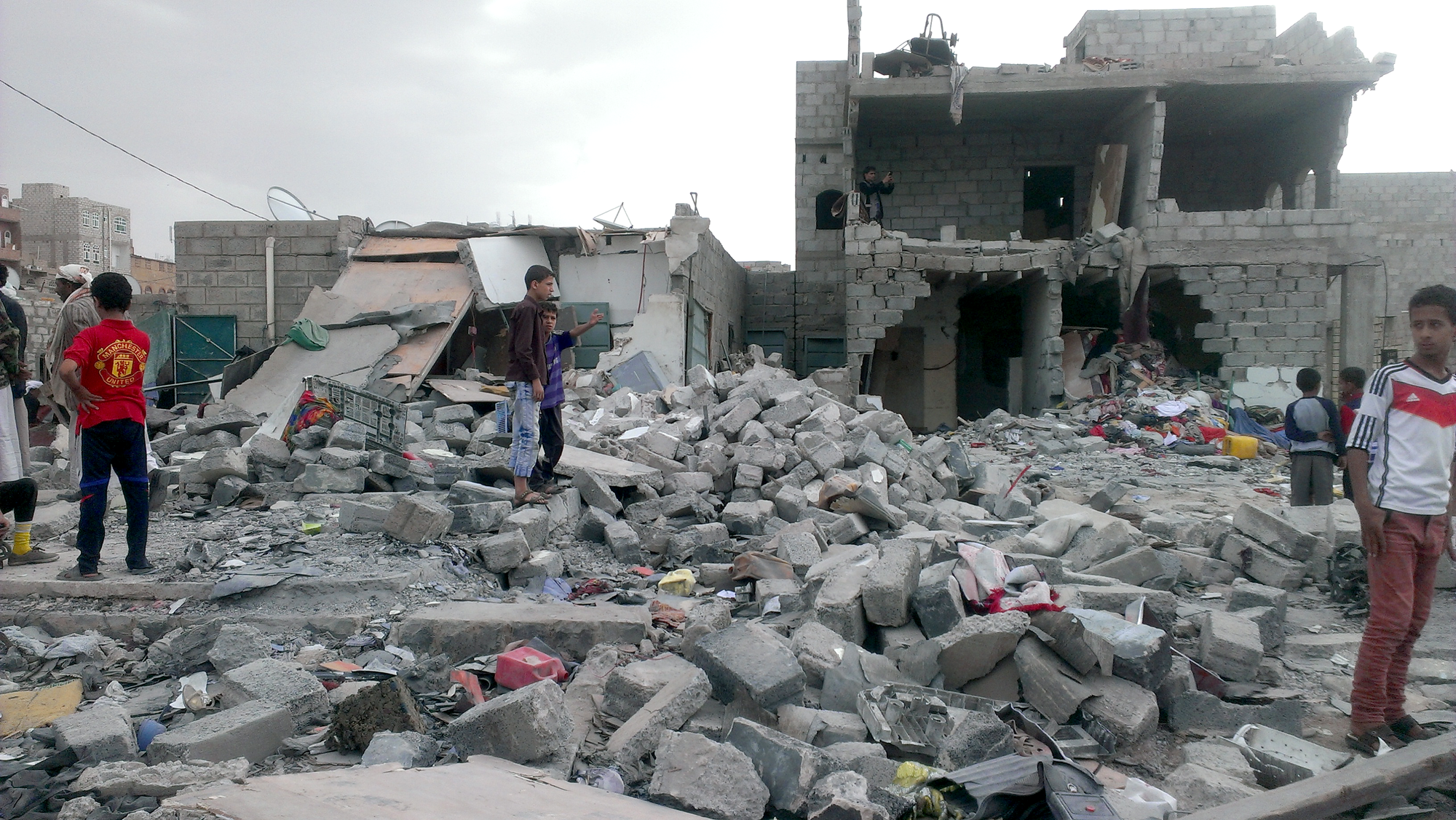
Chapter 7 — Yemen and the Houthis: A Regional War with International Consequences
A War That Became an International Security Crisis
For more than a decade, Yemen has been at the center of one of the Middle East's most devastating conflicts.
What began as a struggle over political power and state authority developed into a war involving regional governments, armed movements and international military forces.
Saudi Arabia intervened militarily in 2015. Iran provided support to the Houthi movement. The United States assisted Saudi-led operations and later carried out its own military strikes against Houthi targets.
Meanwhile, millions of Yemenis faced displacement, hunger, economic collapse and the destruction of essential infrastructure.
The conflict eventually extended beyond Yemen's borders.
Houthi missile and drone attacks threatened Saudi Arabia, the United Arab Emirates and international shipping routes through the Red Sea.
The attacks transformed Yemen from a national political crisis into a major international security concern.
For Washington, Yemen became another example of the difficulties created by regional military partnerships.
The United States sought to protect its allies and maintain freedom of navigation.
But American support for military operations also raised serious questions about civilian casualties, accountability and the consequences of foreign intervention.
The Origins of the Houthi Movement
The Houthi movement, formally known as Ansar Allah, emerged in northern Yemen during the 1990s.
Its origins are connected to the Zaydi Shia community, particularly in the Saada region.
Zaydism is a branch of Shia Islam with a long history in Yemen.
The movement initially developed around religious revival, political grievances and opposition to the influence of the central government.
Its supporters criticized corruption, marginalization and foreign influence.
Tensions with the government of President Ali Abdullah Saleh escalated into armed confrontations beginning in 2004.
The conflict continued through several rounds of fighting.
Hussein Badreddin al-Houthi, a prominent early leader, was killed in 2004.
Leadership subsequently passed to his brother, Abdul-Malik al-Houthi.
Over time, the movement developed into a powerful armed and political organization.
Although the Houthis draw on Zaydi religious traditions, they should not be treated as representatives of all Zaydi Muslims or all Yemenis.
The movement has its own leadership, political objectives and military structures.
The Arab Spring and Yemen's Political Collapse
In 2011, mass protests challenged President Saleh's long rule.
Demonstrators demanded political reform, accountability and an end to corruption.
After months of unrest, Saleh agreed to transfer power under a Gulf Cooperation Council-backed arrangement.
Vice President Abdrabbuh Mansur Hadi became president in 2012.
The transition was intended to stabilize Yemen and create a more inclusive political system.
But the process faced serious difficulties.
Political institutions remained weak.
Economic conditions deteriorated.
Armed groups retained considerable influence.
The Houthis expanded their control in northern Yemen and developed tactical relationships with former political rivals.
In September 2014, Houthi forces entered Sanaa and took control of major government institutions.
The political transition effectively collapsed.
By early 2015, Hadi had lost effective control of the capital and eventually sought external assistance.
Yemen was moving toward a broader war.
Saudi Arabia's Intervention
In March 2015, Saudi Arabia assembled a coalition and launched military operations against the Houthis.
The intervention was presented as an effort to restore Yemen's internationally recognized government.
Saudi leaders also viewed the Houthi expansion as a security threat along their southern border.
The coalition included several regional partners, although their levels of participation changed over time.
Airstrikes targeted Houthi military positions, infrastructure and other locations.
But the campaign also caused substantial civilian casualties.
Human rights organizations documented attacks on homes, markets, hospitals, schools and other civilian locations.
Some strikes raised serious concerns under international humanitarian law.
The coalition maintained that its operations were directed against legitimate military targets and established mechanisms to investigate certain incidents.
Nevertheless, independent investigators repeatedly questioned the adequacy of accountability.
The intervention did not achieve a rapid military victory.
Instead, Yemen became divided among competing authorities and armed factions.
Iran's Role: Support, Influence and Strategic Opportunity
Iran's relationship with the Houthis became increasingly important as the conflict developed.
Tehran provided political support and, according to United Nations investigations and Western intelligence assessments, military assistance involving weapons technology and components.
Iran has denied certain allegations concerning the scale and nature of its involvement.
The Houthis are not simply an Iranian military unit.
They developed from Yemen's own political and religious circumstances and have demonstrated independent decision-making.
But cooperation with Iran has strengthened their military capabilities and regional position.
For Tehran, the relationship provides opportunities to pressure Saudi Arabia and other American partners.
It also allows Iran to exercise influence near strategically important maritime routes.
The conflict therefore became connected to the wider rivalry between Iran and Saudi Arabia.
Yet describing Yemen solely as a proxy war would overlook the country's internal political divisions and the independent interests of Yemeni actors.
America's Support for the Saudi-Led Coalition
The United States did not launch the Saudi-led intervention in Yemen.
But Washington provided important assistance during different stages of the conflict.
Under the Obama administration, American support included intelligence sharing, logistical cooperation and weapons transfers.
The United States also provided aerial refueling for coalition aircraft until that support ended in 2018.
American-made weapons were used by Saudi forces during the war.
This raised questions about whether Washington was doing enough to prevent its military assistance from contributing to unlawful attacks.
Members of Congress challenged aspects of the relationship and sought restrictions on American involvement.
The Trump administration maintained close security cooperation with Saudi Arabia.
The Biden administration announced an end to American support for offensive operations in the Yemen war, while continuing certain forms of defensive assistance and counterterrorism cooperation.
The distinction between offensive and defensive support was politically significant but not always straightforward in practice.
Washington faced competing pressures.
It wanted to maintain its relationship with Saudi Arabia and counter Iranian influence.
But it also faced criticism over the humanitarian consequences of the coalition's campaign.
Yemen's Humanitarian Catastrophe
The war devastated Yemen's economy and essential services.
Hospitals struggled to function.
Water and sanitation systems deteriorated.
Millions of people faced severe food insecurity.
Repeated displacement disrupted families and communities.
The collapse of public-sector salaries and economic activity contributed to widespread poverty.
The humanitarian emergency was not caused by a single actor.
Airstrikes, ground fighting, restrictions on imports and movement, economic fragmentation and abuses by armed groups all contributed.
Houthi authorities also faced allegations of arbitrary detention, restrictions on humanitarian operations, landmine use and other violations.
The suffering of civilians became one of the clearest examples of how regional power struggles can devastate populations with little influence over military decisions.
Missiles, Drones and Attacks Beyond Yemen
As the conflict continued, the Houthis developed increasingly sophisticated missile and drone capabilities.
They launched attacks toward Saudi territory, including airports, energy facilities and other locations.
The United Arab Emirates also experienced attacks attributed to the Houthis.
Some strikes threatened or harmed civilians.
The attacks demonstrated that Yemen's conflict could no longer be contained within its borders.
They also exposed the vulnerabilities of Gulf states that had invested heavily in advanced air-defense systems.
Missiles and relatively inexpensive drones created new security challenges.
For Saudi Arabia, the attacks raised questions about the effectiveness of military intervention and the reliability of external security partnerships.
For Washington, they reinforced concerns about the spread of Iranian-linked weapons technology and the risks facing regional allies.
The Red Sea: A Global Trade Route Under Threat
The Red Sea is one of the world's most important maritime corridors.
Commercial vessels travel through the Bab el-Mandeb Strait toward the Suez Canal, connecting European and Asian markets.
Disruption of this route can increase shipping costs, delay deliveries and affect international trade.
Following the outbreak of the Gaza war in October 2023, the Houthis began attacking commercial shipping and launching missiles and drones in the Red Sea region.
The movement claimed that its operations were connected to the conflict involving Israel and the Palestinians.
But attacks on civilian commercial vessels created serious risks for crews and international navigation.
Ships with varied ownership, registration and commercial connections were affected.
Major shipping companies diverted vessels around the Cape of Good Hope, increasing travel distances and operating costs.
The conflict in Yemen had become a direct challenge to global commerce.
American and Allied Military Operations
In response to Houthi attacks, the United States and several partners established or expanded maritime security operations.
In December 2023, Washington announced Operation Prosperity Guardian, a multinational initiative intended to protect shipping in the Red Sea.
Beginning in January 2024, American and British forces conducted strikes against Houthi military targets in Yemen.
The operations targeted facilities associated with missiles, drones, radar and other military capabilities.
Washington argued that the strikes were necessary to protect shipping and deter further attacks.
The Houthis continued to present their operations as resistance to Israel and its allies.
The confrontation raised a difficult strategic question.
Could military strikes reduce the immediate threat without drawing the United States into another prolonged conflict?
The experience of earlier interventions suggested that military superiority alone might not resolve the political conditions sustaining an armed movement.
The Limits of Deterrence
The Houthi campaign illustrated a broader problem facing modern military powers.
A non-state armed organization does not need to defeat a conventional navy to impose significant economic costs.
It can disrupt shipping through repeated attacks, threats and uncertainty.
Even unsuccessful strikes can force commercial operators to reconsider routes.
Advanced defensive systems can intercept missiles and drones, but maintaining constant protection is expensive.
The attacker may spend far less on a weapon than the defender spends intercepting it.
This imbalance complicates traditional military deterrence.
It also raises questions about the sustainability of prolonged defensive operations.
For the United States, the challenge was to protect international navigation without allowing the conflict to expand indefinitely.
Negotiations and the Search for a Political Settlement
Diplomatic efforts have repeatedly sought to reduce violence in Yemen.
A United Nations-mediated truce in 2022 contributed to a significant reduction in large-scale fighting.
Although the formal truce expired, elements of the relative reduction in hostilities continued.
Saudi Arabia also pursued direct contacts with Houthi representatives.
The restoration of diplomatic relations between Saudi Arabia and Iran in 2023 created cautious hopes for reduced regional tensions.
But Yemen's political settlement remained difficult.
The country was divided among competing authorities.
Economic disputes continued.
Armed organizations retained territorial control.
And regional developments repeatedly threatened to undermine diplomatic progress.
A sustainable settlement would require addressing Yemen's internal political divisions, not merely reducing tensions between foreign powers.
Who Bears Responsibility?
Responsibility for Yemen's suffering cannot be assigned to one government or armed movement alone.
The Houthis have committed serious abuses and carried out attacks against civilian targets and international shipping.
The Saudi-led coalition conducted military operations that caused extensive civilian harm and prompted allegations of unlawful attacks.
Other Yemeni armed groups and regional actors also contributed to violence and instability.
Iran's military support for the Houthis increased the movement's capabilities.
American assistance to coalition forces raised questions about Washington's responsibility for the consequences of weapons transfers and operational support.
International humanitarian law applies to all parties to an armed conflict.
Military objectives do not eliminate the obligation to distinguish civilians from combatants or to avoid indiscriminate and disproportionate attacks.
Yemen and the Question of American Leadership
Yemen reveals the contradictions of American security policy in the Middle East.
Washington supported a regional partner seeking to counter an armed movement linked to Iran.
But that support became associated with a war that produced severe humanitarian consequences.
Later, the United States conducted its own military operations to protect international shipping.
Yet the underlying political conflict remained unresolved.
The result was a cycle in which military action addressed immediate threats without necessarily producing long-term stability.
For Gulf governments, Yemen also demonstrated the limitations of advanced weapons and foreign security cooperation.
Even substantial military resources could not guarantee protection from missiles, drones and irregular warfare.
A Conflict That Reflects a Changing Region
Yemen has become more than a national civil war.
It is a conflict shaped by domestic political grievances, regional rivalry, foreign military assistance and international trade interests.
The United States remains an important military actor.
Saudi Arabia continues to seek security along its southern border.
Iran maintains relationships with armed movements that extend its regional influence.
And the Houthis have demonstrated an ability to affect international shipping and regional security far beyond Yemen.
The central lesson is that military intervention can contain particular threats without resolving the political conflicts that generate them.
For Washington, the challenge is increasingly difficult.
It must protect allies and international commerce while avoiding the kind of open-ended military commitments that have damaged its credibility in the past.
That dilemma becomes even more consequential when confrontation moves from armed organizations to direct conflict involving Iran itself.
The possibility of a wider war involving Iran, Israel, the United States and the Gulf states raises questions about regional security that extend far beyond Yemen.
Chapter 8 — The 2026 Iran War: Escalation, Regional Security and the Gulf States
A War That Extended Beyond Iran's Borders
On February 28, 2026, the United States and Israel launched a major military campaign against Iran, opening a new chapter in one of the Middle East's most dangerous geopolitical confrontations.
The military operation was presented within the broader context of Iran's nuclear ambitions, ballistic missile capabilities, regional armed networks and longstanding confrontation with Israel and the United States.
For Washington, the conflict raised a familiar question: could military force eliminate a strategic threat, or would intervention create consequences that extended far beyond its original objectives?
For Iran, the confrontation was not simply about military installations or political leadership. It became a struggle over national sovereignty, regional influence and the survival of its political system.
And for the Gulf states, many of which had spent decades relying on American military protection, the war exposed an uncomfortable reality: hosting American forces could make their own territory a target.
The conflict quickly demonstrated that a war directed against one country could destabilize an entire region.
From Military Intervention to Regional Escalation
Iran responded to American and Israeli strikes with missile and drone attacks, including operations directed at American military facilities in neighboring countries.
Bahrain, Kuwait, Qatar, the United Arab Emirates, Oman and Jordan faced varying degrees of security threats and military disruption as the confrontation expanded.
These countries occupied a complicated position.
Several maintained close military relationships with Washington, hosted American personnel or depended on American weapons and intelligence systems. Yet their governments also had strong economic reasons to avoid a prolonged regional war.
They were not necessarily seeking confrontation with Iran. Nevertheless, their proximity to American military operations exposed them to retaliation.
This distinction is essential.
A country may cooperate militarily with the United States without supporting every American decision. But when war begins, that political distinction does not always protect its airports, military facilities, energy infrastructure or civilian population.
The March 1 Iranian drone attack on Port Shuaiba in Kuwait, which killed six American soldiers, also illustrated the vulnerability of military installations and personnel outside Iran itself.
The presence of advanced American military capabilities did not eliminate the possibility of a devastating attack.
The Gulf States Between Two Powerful Adversaries
The Gulf monarchies have long attempted to balance security cooperation with Washington against the practical necessity of managing relations with Tehran.
Geography makes this balance unavoidable.
Iran sits across the Persian Gulf from several of the world's most important oil and gas exporters. The Strait of Hormuz connects their economies to international markets, while their cities, ports and industrial facilities remain vulnerable to regional missile and drone warfare.
Saudi Arabia, the United Arab Emirates, Qatar, Bahrain, Kuwait and Oman do not share identical foreign policies. Their relationships with Iran, Israel and the United States differ considerably.
However, they share an interest in preventing regional conflict from destroying economic stability.
For decades, American military power was viewed as a central component of that stability.
The events of 2026 challenged the assumption that a strong American military presence would necessarily prevent attacks.
In some circumstances, that presence also increased the strategic importance of Gulf territory to Iran.
This does not mean that American security partnerships have no value. Missile defense, intelligence cooperation and naval protection remain important capabilities.
But the war revealed a critical limitation: military superiority does not guarantee that allied countries will remain untouched by retaliation.
The Strait of Hormuz: When Regional War Becomes a Global Crisis
The Strait of Hormuz became one of the conflict's most consequential battlegrounds.
The narrow maritime passage is vital to international energy transportation and commercial shipping. Disruption in these waters affects not only Iran and the Gulf monarchies but also economies across Asia, Europe and beyond.
During 2026, attacks on commercial vessels, restrictions on navigation and competing military operations created growing uncertainty for international shipping.
The United States sought to protect maritime movement and limit Iran's ability to threaten vessels. Tehran, meanwhile, used its geographic position and military capabilities to exert pressure over the passage.
By October, reports indicated that attacks on ships had intensified, raising the risk of further escalation.
The consequences extended beyond oil prices.
The disruption of fertilizer shipments prompted warnings about possible agricultural shortages and higher food prices in vulnerable countries.
This illustrates an often-overlooked dimension of Middle Eastern conflict.
Military operations in a relatively small geographic area can influence food security, transport costs, insurance markets and inflation thousands of kilometers away.
The international consequences of war are therefore not limited to the countries directly participating in it.
The Limits of Military Superiority
The United States possesses military capabilities far exceeding those of Iran in conventional airpower, naval strength, surveillance and long-range strike systems.
Yet the 2026 confrontation demonstrated that superior military technology does not automatically translate into strategic control.
Iran retained the ability to threaten shipping, launch drones and missiles, and create uncertainty for American forces and regional partners.
This asymmetry matters.
A military operation can successfully destroy launch facilities, command centers or weapons storage sites while still failing to eliminate an adversary's capacity to disrupt the region.
Iran does not need to defeat the American military in a conventional war to impose significant economic and political costs.
Threatening a shipping corridor, forcing the deployment of expensive defensive systems or creating uncertainty around civilian infrastructure can produce consequences disproportionate to the cost of an individual attack.
At the same time, Iran's own military strategy has imposed serious costs on neighboring countries and exposed civilians and commercial activity to danger.
Neither military superiority nor asymmetric retaliation offers a simple route to lasting regional stability.
The Human Cost Beyond Military Objectives
Wars are often discussed through maps, military capabilities and strategic calculations.
But their consequences are experienced by ordinary people.
In Iran, military strikes have affected infrastructure, communities and civilian life. In neighboring Gulf countries, missile warnings, intercepted drones and attacks near populated areas have created insecurity.
The conflict has also affected workers, travelers, businesses and families whose livelihoods depend on functioning airports, ports and stable international trade.
A war does not need to destroy an entire city to change daily life.
The threat of another attack can interrupt education, delay commercial investment, raise living costs and create lasting psychological uncertainty.
Civilian protection remains a legal obligation for all parties. Military objectives do not remove the requirements of distinction, proportionality and precautions under international humanitarian law.
These principles apply to American and Israeli military operations as well as Iranian attacks.
A serious examination of the conflict must therefore consider both the security arguments offered by governments and the consequences experienced by civilian populations.
A Crisis of Regional Confidence
Perhaps the most significant long-term consequence of the 2026 war is the uncertainty it has created about the future of regional security.
The Gulf states have invested heavily in economic diversification, international tourism, technology, infrastructure and financial services.
These ambitions depend on a predictable security environment.
A prolonged confrontation between Iran and the United States threatens those objectives, even when the countries concerned are not direct participants in the original military operation.
For Gulf governments, the challenge is no longer simply choosing between Washington and Tehran.
It is determining how to protect national interests in a region where great-power partnerships can provide essential military assistance while also introducing new strategic risks.
That calculation helps explain why several regional governments have pursued diplomatic diversification and relationships with a wider range of international partners.
American military protection remains important, but regional governments increasingly have reasons to avoid relying on a single external power for every aspect of their security.
The Question Washington Must Answer
The 2026 Iran war raises a question that has appeared repeatedly throughout American involvement in the Middle East.
What does military success actually mean?
Destroying military infrastructure is a measurable objective. Establishing lasting regional security is far more complicated.
If an intervention weakens an adversary but leaves neighboring countries exposed to retaliation, international shipping disrupted and diplomatic relationships under pressure, its broader strategic outcome remains uncertain.
This does not establish that every American military action is unjustified. Iran's missile programs, attacks on neighboring countries and support for armed organizations present genuine security concerns.
But recognizing those threats does not eliminate the responsibility to examine the consequences of the response.
The central issue is whether military action is accompanied by a credible political strategy capable of reducing the likelihood of renewed conflict.
Without such a strategy, tactical achievements may be followed by years of instability.
The experience of Iraq and Afghanistan has already demonstrated how difficult it can be to transform military intervention into durable political outcomes.
Iran presents different circumstances, but the underlying challenge remains.
A Region Reconsidering Its Future
The events of 2026 have exposed the interconnected nature of Middle Eastern security.
A military confrontation involving Iran, Israel and the United States can rapidly affect Gulf governments, commercial shipping, energy supplies and international economic stability.
It can also reshape how countries evaluate their alliances.
For decades, Washington presented its military presence as a foundation of regional stability. That presence continues to provide important defensive capabilities, but the Iran war has shown that it cannot prevent every escalation or guarantee the safety of every partner.
The region's governments must now consider how much security can realistically be outsourced to external powers.
The most important question may not be which country possesses the strongest military.
It may be whether the Middle East can develop diplomatic and security arrangements that reduce the need for repeated military intervention.
Until that question is answered, the Gulf states will remain caught between the protection offered by powerful allies and the dangers created when those allies enter another war.
And the consequences will continue to reach far beyond the borders of the Middle East.
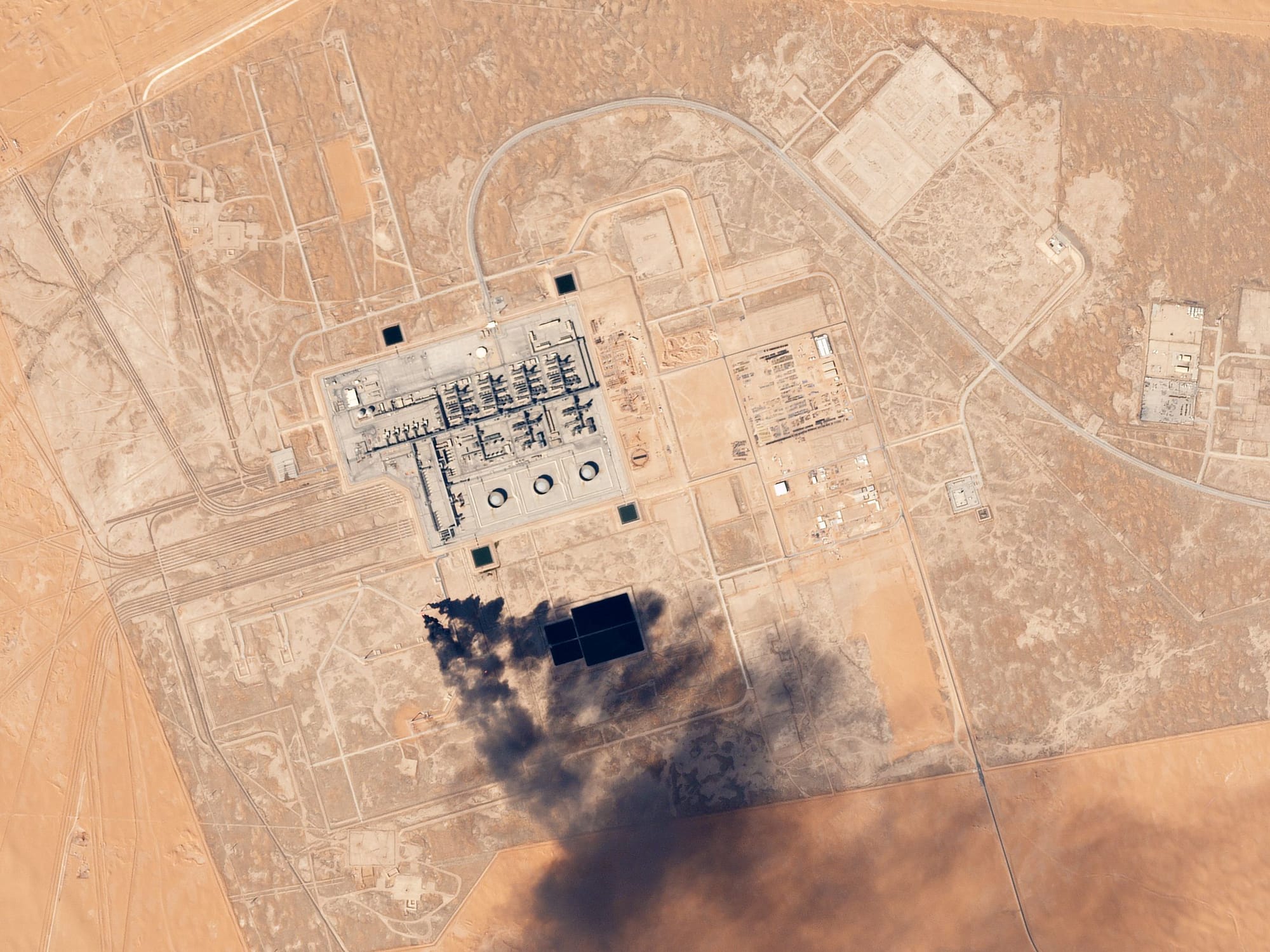
Chapter 9 — Saudi Arabia Under Attack: Regional Threats and Washington's Response
When the War Reached Riyadh
In October 2026, Saudi Arabia confronted one of the most serious security crises to reach its capital in recent years.
Missile and drone attacks attributed to Yemen's Houthi movement struck targets in and around Riyadh, including the city's international airport. The attacks killed civilians, injured hundreds and disrupted aviation, commercial activity and public confidence.
For a kingdom that has invested heavily in military modernization, advanced air-defense systems and strategic partnerships, the attacks raised uncomfortable questions.
How could vital civilian infrastructure remain vulnerable despite years of enormous defense expenditure?
What protection could Saudi Arabia reasonably expect from the United States?
And had the kingdom's involvement in regional conflicts exposed its population to risks that military superiority alone could not prevent?
The attacks occurred against the backdrop of the wider confrontation involving Iran, Israel and the United States, as well as renewed fighting in Yemen.
But Saudi Arabia's immediate security crisis had its own history.
The conflict with the Houthis preceded the 2026 Iran war by more than a decade. It involved unresolved Yemeni political disputes, Saudi military intervention, Houthi territorial ambitions and regional rivalries.
Understanding the attacks therefore requires examining more than the latest exchange of missiles.
It requires investigating the strategic decisions that brought Saudi Arabia to this point.
The October 2026 Airport Attacks
During October 2026, the Houthis intensified missile and drone attacks against Saudi Arabia.
One of the most consequential incidents involved Riyadh's international airport, where strikes caused substantial civilian casualties.
Reports published during the week of October 12–15 described at least a dozen deaths and more than 300 injuries. Casualty totals differed between reports and remained subject to revision as authorities and journalists gathered additional information.
The attacks were particularly significant because an international airport is not merely a transportation facility.
It connects a country to global business, tourism, diplomacy and family travel.
In Saudi Arabia, aviation also supports religious travel by Muslims visiting the holy cities of Mecca and Medina.
The consequences therefore extended far beyond immediate physical damage.
Passengers faced cancellations and delays.
Families worried about relatives traveling through the kingdom.
International airlines reassessed operational risks.
And Saudi authorities confronted questions about whether existing protective measures were sufficient.
The Houthis claimed responsibility for attacks, but each specific strike, its military characteristics and its effects must be examined individually rather than assuming that every reported incident had an identical origin.
Civilians Caught in a Regional Conflict
The airport attacks demonstrated the direct human consequences of long-range missile and drone warfare.
Among those affected were travelers and religious pilgrims who had no role in the military decisions shaping the conflict.
The deaths and injuries transformed an abstract regional confrontation into a personal tragedy for families from Saudi Arabia and other countries.
Civilian airports are protected under international humanitarian law unless, and for such time as, particular facilities qualify as military objectives under the applicable rules.
The presence of government infrastructure or the strategic importance of an airport does not automatically make it a lawful target.
Any attack must also comply with the rules of distinction, proportionality and precautions.
The targeting of civilian travelers cannot be justified by political opposition to Saudi Arabia or its military operations in Yemen.
At the same time, the suffering of Saudi civilians does not remove the obligation to investigate civilian harm caused by Saudi-led operations in Yemen.
Accountability cannot be selective.
The same legal principles must apply to all parties.
A Warning System Under Scrutiny
The October attacks also raised questions about public warning procedures.
Reuters reported that Saudi Arabia's public missile-alert system had stopped issuing warnings before some of the deadly attacks, despite continuing security threats.
The absence of warnings became a subject of concern among residents, diplomats and security observers.
Early-warning systems cannot prevent every attack.
Their purpose is to give people time to seek shelter and reduce exposure to danger.
Even a short warning can be important when missiles or drones threaten populated areas.
The question was therefore not only whether Saudi air defenses could intercept incoming weapons.
It was also whether civilian authorities had provided adequate information to the public.
A sophisticated national defense system must include more than fighter aircraft and missile interceptors.
It also requires emergency communication, public preparedness, evacuation procedures and transparent crisis management.
The attacks exposed the importance of these less visible elements of national security.
The Houthis: A Threat Saudi Arabia Failed to Eliminate
Saudi Arabia launched its military intervention in Yemen in March 2015 with the objective of supporting the internationally recognized Yemeni government and countering Houthi expansion.
More than a decade later, the Houthis remained capable of threatening Saudi territory.
The movement had survived extensive air campaigns, economic pressure and years of fighting.
It retained significant territorial control and developed missile and drone capabilities.
Its resilience challenged the assumption that conventional military superiority would produce a decisive victory.
Saudi Arabia possessed far greater financial resources and more advanced conventional military equipment.
But the Houthis operated through a combination of territorial control, irregular warfare, political networks and long-range weapons.
This created an asymmetric confrontation.
The Houthis did not need to defeat the Saudi armed forces in a conventional battle.
They could impose economic and political costs through repeated attacks on vulnerable infrastructure.
The October 2026 strikes demonstrated how dangerous that strategy had become.
Iran's Influence and Houthi Independence
Iran has provided support to the Houthi movement, including forms of military assistance documented by international investigators.
Iranian-linked weapons technology has contributed to the Houthis' growing capabilities.
But the relationship should not be described as if Tehran directly controls every Houthi decision.
The movement has its own leadership, territorial interests and political objectives.
Its confrontation with Saudi Arabia is rooted partly in Yemen's domestic conflicts and the history of Saudi intervention.
Iran benefits strategically when an allied armed movement can pressure a major American partner.
However, that does not establish Iranian operational responsibility for every individual attack.
Such responsibility requires specific evidence.
This distinction is essential to understanding the broader regional conflict.
Iranian support and Houthi agency can both be significant.
Recognizing one does not eliminate the other.
From Abqaiq in 2019 to Riyadh in 2026
The October attacks were not Saudi Arabia's first major experience of vulnerability.
On September 14, 2019, attacks struck the Abqaiq and Khurais oil facilities.
The operation temporarily disrupted a substantial share of Saudi oil production.
The Houthis claimed responsibility, while the United States and Saudi Arabia attributed the attack to Iran. Tehran denied involvement.
The incident demonstrated the vulnerability of critical energy infrastructure to precision attacks.
It also raised questions about American security commitments.
Washington did not launch a direct military war against Iran in response.
Instead, the United States imposed additional sanctions and strengthened aspects of its defensive military presence.
The distinction between defending a partner and retaliating against its attacker became important.
By 2026, Saudi Arabia faced a renewed version of the same dilemma.
American military cooperation remained valuable, but it did not guarantee immunity from attack.
What Did Washington Promise?
The United States and Saudi Arabia have maintained extensive military cooperation for decades.
The relationship includes weapons transfers, training, intelligence sharing, defense planning and logistical support.
But security cooperation should not automatically be interpreted as a promise that American forces will fight every Saudi war.
Historically, the relationship has not been equivalent to the United States' formal mutual-defense arrangements with certain treaty allies.
The scope of any particular American commitment depends on the agreements in force, domestic law and decisions made by political leaders.
This creates a gap between expectations and obligations.
Saudi leaders may expect substantial American assistance during a crisis.
American officials may consider some threats outside the scope of direct military intervention.
Both positions can exist within the same partnership.
The crucial question is whether these expectations have been clearly communicated.
A security relationship becomes vulnerable when one government assumes protection that the other has not committed to provide.
Washington's Response to the New Crisis
American policy toward Saudi Arabia during the 2026 crisis was shaped by competing priorities.
Washington had already been involved in military confrontation with Iran.
It also faced the risk of further escalation through Yemen, Iraq and other regional theaters.
Providing additional military assistance to Saudi Arabia could strengthen deterrence.
But expanding direct American involvement could also widen the conflict.
Reports of Washington's reluctance to extend additional military support intensified debate over the reliability of the relationship.
That reluctance should not be confused with the complete disappearance of American-Saudi defense cooperation.
Longstanding military relationships, equipment dependencies and diplomatic channels remained relevant.
The more precise question is whether the United States was willing to provide the particular assistance Riyadh sought at the moment it was needed.
For Saudi Arabia, the difference between existing cooperation and an immediate operational response was becoming increasingly consequential.
The Limits of Air Defense
Saudi Arabia has invested heavily in advanced defense systems.
But missile and drone attacks present complex challenges.
Threats can approach from different directions and at different altitudes.
Some weapons are designed to overwhelm defensive systems through coordinated launches.
Even highly capable air defenses cannot guarantee that every incoming projectile will be intercepted.
Geography compounds the problem.
Saudi Arabia is a vast country with widely dispersed cities, airports, energy facilities and industrial centers.
Protecting every location continuously is difficult.
Interceptors are also expensive and must be maintained in sufficient quantities.
The challenge is not unique to Saudi Arabia.
Modern conflicts have demonstrated the difficulties faced by states attempting to defend large territories against sustained missile and drone attacks.
But the Saudi case is particularly important because of the kingdom's financial resources and long history of purchasing advanced military equipment.
It shows that defense expenditure does not automatically produce comprehensive security.
The Economic Consequences for Vision 2030
Saudi Arabia's Vision 2030 program seeks to transform the kingdom's economy.
The strategy includes tourism, entertainment, infrastructure, technology, investment and reduced dependence on oil revenue.
These ambitions depend heavily on international confidence.
Foreign investors evaluate political stability and security risks.
Airlines require reliable airports.
Tourists need confidence in their personal safety.
Major sporting and cultural events depend on predictable transportation and infrastructure.
The October 2026 attacks threatened these conditions.
The postponement of international sporting events and disruption of air travel demonstrated that security incidents can affect industries far removed from the battlefield.
A missile attack does not need to destroy a major investment project to undermine its economic prospects.
Repeated threats can increase insurance costs, discourage travel and delay commercial decisions.
For Saudi Arabia, security has become inseparable from economic transformation.
Religious Tourism and the Responsibility to Protect Visitors
Saudi Arabia occupies a unique position because of its responsibility for the Islamic holy cities of Mecca and Medina.
Millions of Muslims travel to the kingdom for Hajj and Umrah.
Many visitors come from countries with limited resources and may be unfamiliar with regional security risks.
The attacks around Riyadh raised concerns among pilgrims and international travel organizers.
The Houthis stated that they did not intend to target Mecca or Medina.
But threats to airports and transport networks elsewhere in the kingdom can still affect religious travel.
Saudi authorities therefore face a particular responsibility to communicate risks and protect visitors.
Religious pilgrims should not become casualties of regional military confrontation.
Their safety is not merely a domestic security issue.
It is an international humanitarian concern.
Saudi Arabia's Military Choices
Riyadh faces several possible responses to continued attacks.
It can strengthen air defenses and intelligence capabilities.
It can pursue additional military operations against Houthi targets.
It can increase support for Yemeni forces opposing the movement.
Or it can seek a negotiated arrangement intended to reduce cross-border threats.
Each option carries risks.
Military escalation may damage Houthi capabilities but also intensify retaliation.
Support for local allies may be limited by divisions among Yemeni factions.
Diplomatic concessions could reduce immediate violence but leave unresolved questions about territorial control and future security.
Saudi Arabia has already experienced the limitations of a prolonged military campaign in Yemen.
The kingdom must therefore consider whether renewed escalation can achieve objectives that earlier operations failed to secure.
Why Regional Partners Are Hesitant
Saudi Arabia has sought closer security cooperation with Pakistan, Türkiye and other regional governments.
But military partnerships do not automatically translate into a willingness to fight.
Pakistan must consider its relationship with Iran, domestic political pressures and security challenges involving India and Afghanistan.
Türkiye maintains its own regional interests and seeks to avoid becoming trapped in conflicts that do not directly serve its national security.
Egypt faces economic pressures and has reasons to avoid an open-ended military commitment in Yemen.
These differences limit the practical meaning of collective security arrangements.
An agreement may signal political solidarity without resolving how governments would respond to a specific attack.
The challenge is similar to the one Saudi Arabia faces with Washington.
Security promises are only as meaningful as the political decisions and operational capabilities behind them.
The Responsibility of Saudi Leadership
The Saudi government has a legitimate responsibility to protect its population against missile and drone attacks.
The Houthis bear responsibility for attacks they conduct, including unlawful strikes against civilian targets.
But Saudi leadership must also account for its own strategic decisions.
The intervention in Yemen was intended to improve national security.
Instead, the conflict became prolonged, expensive and increasingly dangerous.
Saudi Arabia's military operations, diplomatic choices and management of domestic preparedness deserve scrutiny.
The absence of effective public warnings during attacks raises additional questions about civilian protection.
Criticism of foreign partners cannot replace examination of national decision-making.
A credible assessment must consider both external threats and internal responsibility.
The Crisis of Confidence
The attacks on Saudi Arabia have intensified a broader debate about regional security.
For decades, the kingdom relied heavily on American military technology and strategic cooperation.
That relationship helped develop substantial defensive capabilities.
But it did not eliminate the threat from Yemen.
Nor did it guarantee that Washington would respond to every attack in the manner Riyadh preferred.
Saudi Arabia now faces the challenge of defending an increasingly diversified economy while managing conflicts along its borders and across the wider region.
The question is no longer simply whether the United States remains powerful.
It is whether the American partnership can provide the specific protection Saudi Arabia requires.
A Turning Point for the Gulf
The October 2026 attacks have consequences beyond Saudi Arabia.
Other Gulf governments are watching closely.
They share concerns about missiles, drones, energy infrastructure and the possibility of being drawn into conflicts involving larger powers.
They also recognize the limitations of relying exclusively on a single security partner.
The result is a gradual reassessment of regional alliances.
The United States remains militarily influential.
But Gulf governments are increasingly seeking additional diplomatic relationships, defense technologies and security arrangements.
Saudi Arabia's experience illustrates why.
When a country's security depends on decisions made abroad, uncertainty itself becomes a strategic vulnerability.
The search for alternatives is therefore not necessarily a rejection of Washington.
It is an attempt to reduce the risks of dependence.
That search is reshaping the political and military relationships of the entire Gulf region.
Chapter 10 — Beyond Washington: Why Gulf States Are Seeking New Security Partners
A Region Reconsidering Its Dependence on Washington
For decades, the United States has been the dominant external security partner of the Gulf states.
American military bases, advanced weapons systems, intelligence cooperation and naval operations have formed a central part of the region's defense architecture.
Saudi Arabia, the United Arab Emirates, Qatar, Bahrain, Kuwait and Oman have developed different forms of security cooperation with Washington, each shaped by its own political priorities and strategic concerns.
For these governments, American military power has offered significant advantages.
The United States possesses capabilities that few other countries can match, including long-range military operations, sophisticated air-defense systems, intelligence networks and the ability to deploy forces rapidly across international borders.
Yet the relationship has also created a difficult dependency.
When Washington makes decisions involving Iran, Israel or regional military operations, the consequences can extend directly into the Gulf states.
A government may host American forces without supporting every American military decision. Nevertheless, its territory can become strategically relevant to an adversary seeking to retaliate against the United States.
The 2026 confrontation involving Iran, Israel and the United States has brought this dilemma into sharper focus.
For Gulf governments, the question is no longer simply whether American protection remains valuable.
It is whether depending too heavily on a single external power creates vulnerabilities that cannot be resolved through military cooperation alone.
The answer increasingly appears to involve a broader network of diplomatic, economic and security relationships.
The Limits of American Security Guarantees
American security commitments in the Gulf have never been identical across the region.
Bahrain hosts the headquarters of the U.S. Navy's Fifth Fleet. Qatar hosts Al Udeid Air Base, an important center for American regional military operations. Kuwait has long maintained extensive defense cooperation with Washington.
Saudi Arabia and the United Arab Emirates have also developed substantial military relationships with the United States, including arms purchases, training and intelligence cooperation.
Oman has pursued a more independent diplomatic approach while maintaining defense relationships with Western partners.
These arrangements provide meaningful military capabilities.
However, they should not be confused with a single NATO-style collective-defense treaty covering every Gulf state.
The legal and political nature of American commitments differs between countries.
This distinction matters when regional tensions escalate.
Hosting American military forces does not automatically guarantee that Washington will respond to every attack in the manner a partner expects.
American decisions remain influenced by domestic politics, strategic priorities, military assessments and the risk of wider escalation.
The September 2019 attacks on Saudi oil facilities at Abqaiq and Khurais exposed these uncertainties.
The attacks temporarily disrupted a substantial portion of Saudi oil production and demonstrated the vulnerability of critical energy infrastructure to drones and missiles.
Although the United States attributed responsibility to Iran, Tehran denied involvement, while the Houthis claimed responsibility.
Washington did not respond with an immediate large-scale military attack on Iran.
For Saudi policymakers, the incident raised questions about the practical limits of American deterrence.
The episode did not prove that the United States would abandon Saudi Arabia. It did, however, illustrate that American military support and American willingness to enter a major regional war are not the same thing.
China: Economic Power Becomes Diplomatic Influence
China's growing involvement in the Middle East represents one of the most important changes in the region's international relationships.
For many years, Beijing's principal interests were economic.
China became a major purchaser of Gulf oil and gas, while Chinese companies expanded their involvement in construction, infrastructure, telecommunications, transportation and technology.
Saudi Arabia and the United Arab Emirates developed particularly significant economic relationships with Beijing.
China's importance as an energy customer gave it an increasingly influential position in the region.
But economic cooperation has gradually developed into broader diplomatic engagement.
In March 2023, Saudi Arabia and Iran announced an agreement in Beijing to restore diplomatic relations after years of confrontation.
China hosted the final negotiations and presented the agreement as an example of its ability to contribute to regional diplomacy.
The agreement was significant because Saudi-Iranian rivalry had influenced conflicts and political tensions across the Middle East.
It also demonstrated that important diplomatic initiatives did not necessarily require American leadership.
However, China's expanding influence should not be mistaken for a complete replacement of the United States.
Beijing does not maintain a comparable network of military bases, security commitments and regional force-projection capabilities in the Gulf.
Its role remains substantially more economic and diplomatic than that of Washington.
For Gulf governments, this difference is precisely why China can be an attractive additional partner.
Economic cooperation with Beijing does not necessarily require abandoning American military relationships.
Instead, it allows regional governments to broaden their options and reduce dependence on a single international power.
Russia: Energy Cooperation and Strategic Flexibility
Russia occupies a different position in Gulf diplomacy.
Its relationship with Saudi Arabia has been shaped in part by energy-market coordination through OPEC+, the grouping of OPEC members and additional oil-producing countries.
Saudi Arabia and Russia have worked together on production policies intended to influence global oil-market conditions.
This cooperation has sometimes created friction with Washington, particularly when American policymakers sought lower energy prices.
The relationship illustrates an important reality.
Saudi Arabia's economic interests do not always align with American foreign-policy priorities.
Russia has also maintained diplomatic and military relationships with several Middle Eastern governments.
Its intervention in Syria beginning in 2015 demonstrated Moscow's willingness to use military force to protect a regional partner and preserve strategic influence.
However, Russia's capacity to expand its regional role has faced significant constraints, particularly following its full-scale invasion of Ukraine in 2022.
International sanctions, military commitments and economic pressures have limited Moscow's freedom of action.
For Gulf governments, Russia is therefore not a straightforward alternative to American security protection.
Its value lies more in diplomatic engagement, energy coordination and the possibility of maintaining relationships across competing international blocs.
This approach reflects a broader Gulf strategy: avoiding unnecessary confrontation with major powers while preserving room for independent decision-making.
Europe: Defense Partnerships Beyond the United States
European countries also play an important role in Gulf security relationships.
France and the United Kingdom have maintained longstanding defense cooperation with several Gulf states.
France operates a military presence in the United Arab Emirates and has supplied advanced military equipment to regional partners.
The United Kingdom has defense relationships with Bahrain, Oman, Qatar and Saudi Arabia, among others.
European companies supply aircraft, naval systems, surveillance equipment and military technology.
These relationships provide Gulf governments with alternatives to exclusive dependence on American suppliers.
However, European partnerships also have limitations.
European states differ in their foreign policies, export-control rules and willingness to participate in military operations.
Their military capabilities are significant but generally do not match the scale of American regional deployments.
Furthermore, European governments face their own strategic demands, particularly in relation to European security and the war in Ukraine.
For Gulf states, European cooperation is therefore most useful as part of a diversified defense strategy rather than a complete substitute for Washington.
Purchasing military equipment from multiple suppliers may increase diplomatic flexibility, but it can also create practical challenges involving maintenance, training, interoperability and logistics.
Strategic independence requires more than simply changing the nationality of a weapons manufacturer.
Regional Security Cooperation: Can Gulf States Protect Themselves?
The Gulf Cooperation Council was established in 1981 by Bahrain, Kuwait, Oman, Qatar, Saudi Arabia and the United Arab Emirates.
Its creation reflected shared concerns about regional instability, particularly following the Iranian Revolution and the outbreak of the Iran-Iraq War.
Over time, the organization developed mechanisms for economic coordination, political consultation and defense cooperation.
The Peninsula Shield Force was established as a collective military framework, although its effectiveness and role have varied.
Despite their shared geography and security concerns, the GCC countries have not always agreed on foreign policy.
The diplomatic crisis involving Qatar from 2017 to 2021 exposed deep divisions within the organization.
Saudi Arabia, the United Arab Emirates, Bahrain and Egypt imposed a blockade and diplomatic restrictions on Qatar, accusing it of supporting destabilizing policies. Qatar rejected the allegations.
The dispute demonstrated that shared membership in a regional organization does not automatically produce political unity.
The eventual reconciliation created opportunities for renewed cooperation.
Yet building an effective regional defense system remains complicated.
The GCC states differ in population size, military capacity, threat perceptions and relationships with Iran.
Some favor stronger deterrence, while others emphasize mediation and diplomatic engagement.
A truly integrated defense system would require extensive coordination in intelligence sharing, early-warning capabilities, air defense, command structures and political decision-making.
It would also require governments to accept a degree of mutual dependence.
For countries accustomed to protecting national sovereignty, that can be a difficult political choice.
Saudi Arabia and the Search for Strategic Autonomy
Saudi Arabia has become increasingly active in pursuing a more independent foreign policy.
Crown Prince Mohammed bin Salman's Vision 2030 program aims to reduce the kingdom's economic dependence on oil and develop new industries, infrastructure and investment opportunities.
These ambitions require long-term stability.
Major development projects, international tourism, financial investment and technological expansion are difficult to sustain in an environment of repeated military confrontation.
Saudi Arabia therefore has strong incentives to reduce regional tensions.
The restoration of diplomatic relations with Iran in 2023 reflected this calculation.
Riyadh also maintains significant relationships with China, Russia, European governments and other regional powers.
At the same time, Saudi Arabia continues to seek advanced American defense technology and security cooperation.
This combination may appear contradictory, but it reflects a deliberate attempt to maximize strategic options.
Saudi Arabia does not necessarily want to replace Washington with Beijing or Moscow.
It wants to avoid a situation in which its security, economic development and diplomatic choices depend entirely on decisions made in another capital.
The challenge is that strategic autonomy cannot be achieved through diplomacy alone.
It also requires domestic military capabilities, resilient infrastructure, effective institutions and the ability to manage regional disputes without constant external intervention.
The United Arab Emirates: A Model of Multi-Partner Diplomacy
The United Arab Emirates has also pursued a diversified international strategy.
Abu Dhabi maintains close defense ties with Washington and has invested heavily in advanced military technology.
At the same time, the UAE has expanded commercial and diplomatic relations with China, India, Russia, European countries and African partners.
Its economic model depends heavily on international trade, aviation, finance, tourism and logistics.
This creates a strong interest in maintaining relationships with multiple global powers.
The UAE has also developed diplomatic ties with Israel through the Abraham Accords, signed in 2020.
These agreements opened new areas of cooperation in trade, technology and investment.
However, the UAE's regional policies have not always aligned with those of Washington or other Gulf governments.
Its involvement in Yemen and relationships with different regional actors have demonstrated a willingness to pursue independent strategic objectives.
The country's approach reflects a broader transformation in Gulf diplomacy.
Rather than defining foreign policy through exclusive alliances, governments increasingly seek flexible relationships across different sectors.
One country may be a defense partner, another a major investor and a third an important energy customer.
This diversification can strengthen resilience, but it also requires careful management of competing interests.
Qatar and Oman: The Strategic Value of Diplomacy
Qatar and Oman illustrate another dimension of Gulf foreign policy.
Both countries have used diplomacy as an important element of their national security strategies.
Qatar hosts Al Udeid Air Base and maintains close military relations with the United States.
At the same time, Doha has developed a reputation for mediating difficult international disputes and maintaining communication with actors that other governments may avoid.
Qatar played an important role in diplomatic negotiations involving Afghanistan and has participated in mediation efforts concerning Gaza.
Its foreign policy demonstrates that a close American military partnership can coexist with an independent diplomatic role.
Oman has pursued an especially distinctive approach.
Muscat has maintained communication channels with Iran and has frequently emphasized dialogue and de-escalation.
Oman's diplomatic relationships have helped facilitate sensitive negotiations, including contacts involving Iran and Western governments.
Neither Qatar nor Oman possesses the military capabilities of Saudi Arabia or the United Arab Emirates.
Their influence instead demonstrates that diplomacy can itself be a form of strategic protection.
By maintaining relationships across political divisions, smaller states may reduce their exposure to confrontation and increase their international relevance.
However, mediation does not guarantee immunity from regional instability.
Even governments seeking neutrality can face economic disruption and security threats when major conflicts escalate.
India, Türkiye and Emerging Regional Partnerships
Beyond China, Russia and Europe, Gulf governments have expanded relationships with other influential countries.
India has become an increasingly important economic partner.
Its energy needs, large expatriate communities in the Gulf and growing commercial relationships create strong incentives for cooperation.
The India-Middle East-Europe Economic Corridor, announced in 2023, reflected ambitions to strengthen trade and infrastructure connections across several regions, although its implementation faces political and practical obstacles.
Türkiye has also developed important relationships with Gulf governments.
Ankara maintains military cooperation with Qatar and has pursued improved relations with Saudi Arabia and the United Arab Emirates after periods of diplomatic tension.
Turkish defense technology, particularly unmanned aircraft systems, has attracted international attention.
Pakistan remains another significant partner for several Gulf countries, especially Saudi Arabia.
Longstanding military relationships, training cooperation and diplomatic connections have contributed to these ties.
These partnerships illustrate the increasingly complex international environment in which Gulf governments operate.
The region is no longer defined solely by its relationship with Washington.
It is becoming part of a wider network of overlapping economic, diplomatic and security arrangements.
Diversification Does Not Automatically Mean Independence
Expanding international partnerships can provide Gulf states with greater flexibility.
But diversification also introduces new challenges.
Weapons systems purchased from different countries may be difficult to integrate.
Competing technological standards can complicate military communications and intelligence cooperation.
Economic relationships with rival powers may create political pressure when international disputes intensify.
For example, closer technological cooperation with China can raise concerns in Washington about sensitive military information and infrastructure security.
Similarly, cooperation with Russia may create diplomatic complications for countries seeking strong relations with European governments.
The Gulf states must therefore balance opportunities against risks.
A diversified foreign policy does not eliminate dependence.
It redistributes dependence across multiple relationships.
The real measure of strategic autonomy is not the number of foreign partners a country possesses.
It is whether the government can make independent decisions, protect essential infrastructure and manage external pressure without placing its national stability at unacceptable risk.
The 2026 Iran Conflict and the Future of Gulf Security
The confrontation involving Iran, Israel and the United States in 2026 has intensified the debate over regional security.
The Gulf states have faced the possibility that American military facilities and regional infrastructure could become targets during a conflict they did not necessarily seek.
For governments that depend on international investment and stable commercial networks, this creates a serious dilemma.
American military cooperation provides important defensive capabilities.
But a region heavily integrated into American military operations can also become exposed to the consequences of Washington's confrontations.
This does not mean that Gulf states can simply remove American forces and become safer.
Iranian military capabilities, regional armed groups and maritime threats would remain important security concerns.
Instead, the conflict has strengthened the argument for a broader approach.
Such an approach would combine military deterrence with diplomatic communication, regional agreements, economic resilience and cooperation with multiple international partners.
It would also require the Gulf states to address their own political divisions.
Without regional coordination, external powers will continue to play a central role in managing security disputes.
A New Balance of Power in the Middle East
The growing international diversification of Gulf diplomacy reflects a broader shift in global politics.
The United States remains a major military power in the Middle East, but its influence is no longer uncontested across every area of regional policy.
China offers enormous economic opportunities and growing diplomatic engagement.
Russia remains relevant in energy coordination and selected political relationships.
European countries provide defense technology, investment and diplomatic partnerships.
India, Türkiye, Pakistan and other states are expanding their roles.
For Gulf governments, this creates opportunities that were less developed during earlier periods of American dominance.
They can negotiate with a wider range of partners and pursue more independent economic and diplomatic strategies.
However, the emergence of multiple international powers does not automatically create a more peaceful region.
Competition between outside powers can introduce new tensions.
Regional governments may find themselves under pressure to choose sides in disputes that do not directly serve their interests.
The challenge will be to benefit from diversified partnerships without becoming dependent on rival geopolitical blocs.
Who Ultimately Guarantees Gulf Security?
For decades, American military power has been treated as a central guarantee of security in the Gulf.
That assumption is increasingly being examined.
The United States can provide advanced weapons, intelligence, training and military assistance.
China can offer investment and diplomatic engagement.
European governments can contribute defense technology and political cooperation.
Regional partners can provide additional security arrangements.
But none of these relationships can guarantee absolute protection.
The attacks on Saudi oil infrastructure in 2019, the experience of the Yemen war and the regional consequences of the 2026 Iran confrontation all demonstrate that military partnerships have limits.
Lasting security depends on more than foreign military strength.
It also requires effective diplomacy, credible institutions, resilient economies, regional cooperation and political strategies that reduce the likelihood of war.
The Gulf states are increasingly seeking to shape those conditions themselves.
Their changing foreign policies do not necessarily represent a rejection of the United States.
They represent a recognition that relying on one powerful partner carries risks, particularly when that partner's global priorities and military decisions may differ from their own.
The future of Gulf security may therefore be defined less by the question of which superpower dominates the region and more by whether regional governments can develop the capacity to protect their interests without becoming permanent participants in the rivalries of outside powers.
The central question is no longer whether Washington will remain influential in the Middle East. It almost certainly will. The question is whether Gulf states can build a future in which American influence is one element of their security, rather than the foundation on which their entire stability depends.
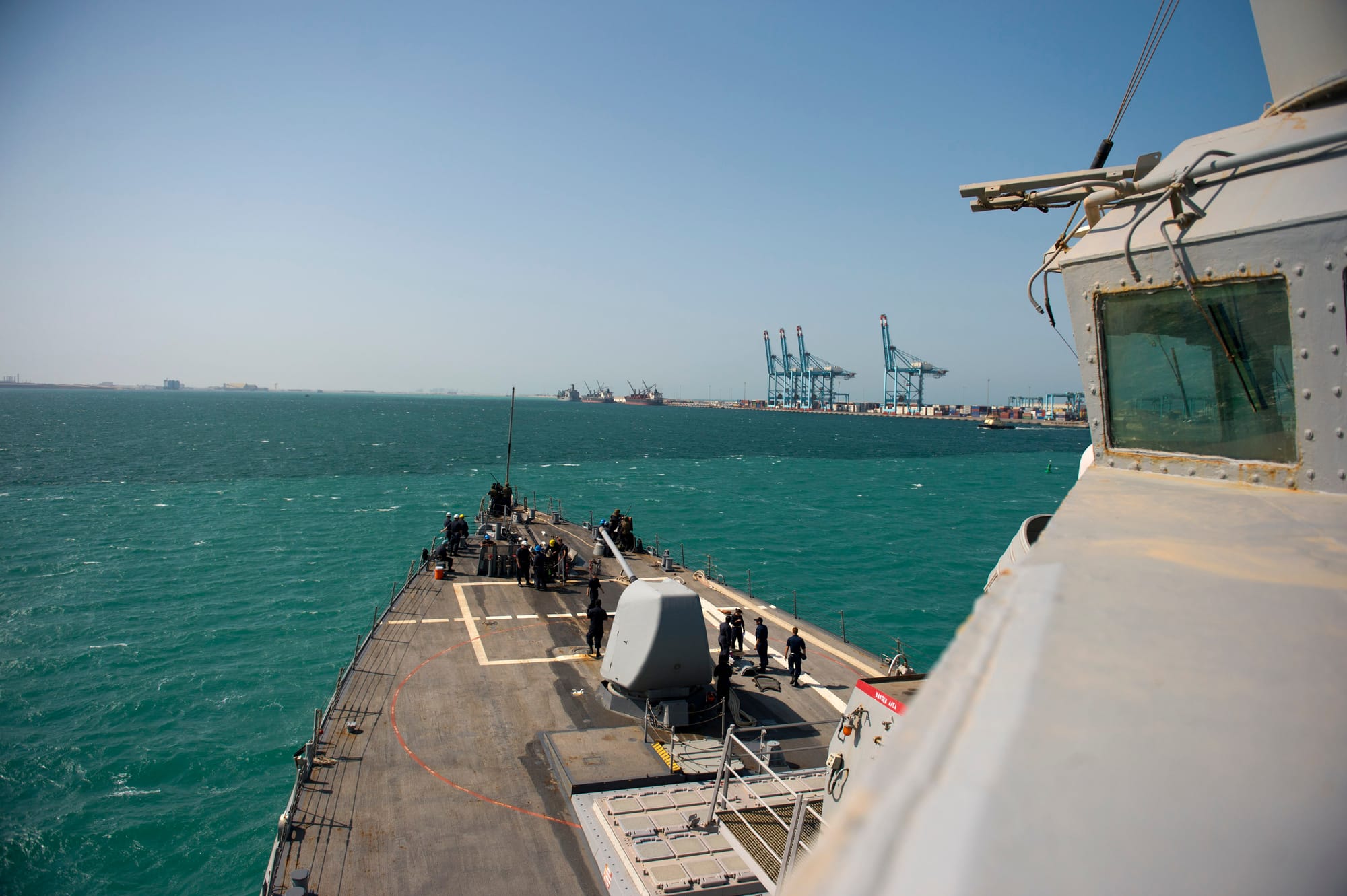
Chapter 11 — Can American Security Guarantees Be Trusted?
The Difference Between American Power and American Reliability
For decades, the United States has presented itself as a central guarantor of security in the Middle East.
American military bases, advanced weapons systems, intelligence networks and strategic partnerships have formed the foundation of regional defense arrangements.
Governments across the Persian Gulf have invested heavily in American military equipment and developed security relationships based on the expectation that Washington would help protect them during a crisis.
But the history of American intervention raises a fundamental question.
Does military superiority necessarily translate into reliable protection?
The United States possesses extraordinary military capabilities.
Its armed forces can operate across continents, deploy advanced aircraft and naval forces, conduct intelligence operations and coordinate multinational military campaigns.
Yet the decision to use those capabilities remains political.
An American president may consider a military response necessary.
Another may decide that the risks of escalation outweigh the benefits.
Congress, domestic public opinion, international law and competing strategic priorities can all influence the decision.
For countries dependent on American protection, this creates uncertainty.
The question is not whether Washington possesses the power to intervene.
It is whether Washington will choose to intervene when its partners need assistance.
What Is a Security Guarantee?
The term security guarantee is frequently used in diplomatic discussions.
But it can describe very different arrangements.
A formal mutual-defense treaty may establish legal obligations between governments.
A defense cooperation agreement may provide for training, military access, intelligence sharing or weapons transfers without requiring automatic intervention.
A political declaration may express support for a partner's security while leaving the nature of any response undefined.
These distinctions are essential.
Even formal defense treaties do not necessarily require an identical military response to every attack.
For example, Article 5 of the North Atlantic Treaty states that an armed attack against one member is considered an attack against all.
But each member determines the action it considers necessary, including the possible use of armed force.
The treaty creates a collective-defense obligation, but it does not prescribe a single automatic military response.
Many American relationships in the Middle East have historically involved less explicit commitments.
This creates room for misunderstanding.
A regional government may interpret close military cooperation as a promise of protection.
Washington may regard the same relationship as a partnership that does not require direct combat.
The difference can become decisive during a crisis.
The Gulf States: Partners, but Not All Treaty Allies
Saudi Arabia, Qatar, Bahrain, Kuwait and the United Arab Emirates maintain important military relationships with the United States.
American forces operate from facilities across the region.
Washington provides advanced defense systems, training, logistical support and intelligence cooperation.
But these relationships have not all carried the same legal obligations as formal American mutual-defense treaties.
Some Gulf countries have received special American security designations, including Major Non-NATO Ally status.
Such designations can facilitate defense cooperation and access to certain military programs.
They do not, by themselves, establish a NATO-style obligation to defend the designated country.
This distinction is often overlooked in public discussions.
A country may host American military forces without possessing a binding promise that those forces will defend every part of its territory.
A government may purchase billions of dollars in American weapons without receiving a guarantee of military intervention.
And a president may publicly express strong support for an ally while retaining discretion over how to respond to an attack.
For Gulf governments, these differences create a difficult strategic reality.
Their security relationships may be extensive without providing the certainty they expect.
Kuwait 1990: When Washington Demonstrated Its Commitment
The Iraqi invasion of Kuwait in August 1990 became one of the clearest examples of American willingness to use military force in defense of regional security.
Saddam Hussein's forces occupied Kuwait and threatened the regional balance of power.
The United States assembled a broad international coalition.
Following United Nations Security Council authorization, coalition forces launched military operations that expelled Iraqi troops from Kuwait in 1991.
The campaign demonstrated American military capability and diplomatic influence.
For Gulf governments, it reinforced the value of cooperation with Washington.
The United States had responded decisively to an act of aggression against a regional state.
But the intervention also illustrates an important distinction.
The decision to liberate Kuwait was based on a combination of international authorization, strategic interests, regional security concerns and political leadership.
It was not simply the automatic implementation of an unconditional American defense promise.
Washington chose to intervene.
That choice proved decisive.
The question for other regional partners is whether a future American administration would make the same decision under different circumstances.
Saudi Arabia 2019: The Limits of Deterrence
On September 14, 2019, attacks struck Saudi Arabia's Abqaiq and Khurais oil facilities.
The operation temporarily disrupted a substantial portion of Saudi oil production.
The Houthis claimed responsibility.
The United States and Saudi Arabia attributed the attack to Iran, which denied involvement.
The incident exposed the vulnerability of critical energy infrastructure.
It also tested expectations surrounding American security cooperation.
President Donald Trump's administration did not respond by launching a direct military war against Iran.
Instead, Washington imposed additional sanctions and strengthened defensive deployments.
From an American perspective, avoiding a wider conflict could be considered a rational strategic decision.
A direct attack on Iran might have triggered further retaliation and threatened regional energy markets.
But from the perspective of a partner expecting strong deterrence, the response raised questions.
If a major attack on Saudi energy infrastructure did not lead to direct American retaliation, what level of aggression would?
The incident demonstrated that American support and American military retaliation were not interchangeable.
Washington could remain a security partner while declining to fight a war on Saudi Arabia's behalf.
Afghanistan 2021: The Collapse of Expectations
The American withdrawal from Afghanistan became another defining moment in the debate over reliability.
For twenty years, the United States and its allies supported successive Afghan governments.
They trained security forces, financed institutions and provided extensive military assistance.
Yet in August 2021, the Afghan government collapsed as the Taliban advanced across the country.
The images from Kabul's airport became internationally recognized symbols of the withdrawal.
For many observers, the collapse suggested that American commitments could end abruptly.
But a careful assessment requires distinguishing political expectations from formal obligations.
The United States had not promised to maintain an indefinite military presence in Afghanistan.
Successive American administrations had sought ways to end the war.
The withdrawal was therefore not automatically a breach of a mutual-defense treaty.
Nevertheless, the speed of the collapse exposed failures in planning, intelligence assessment and coordination.
For other governments dependent on American assistance, the central concern was practical rather than strictly legal.
If a partner government could become so dependent on American support that it collapsed when that support was withdrawn, what did this reveal about the sustainability of the relationship?
Afghanistan demonstrated that military assistance can create dependency without producing lasting security.
Iraq: When American Intervention Creates New Threats
The 2003 invasion of Iraq provides a different perspective.
In Afghanistan, the debate concerns the consequences of American withdrawal.
In Iraq, the question concerns the consequences of American intervention.
The United States removed Saddam Hussein from power but failed to establish the stable political order its leaders had anticipated.
The occupation was followed by insurgency, sectarian violence and institutional collapse.
Iran expanded its influence.
Extremist organizations exploited the security vacuum.
For regional governments, Iraq demonstrated that American military action could produce unintended threats.
A powerful security partner could become a source of instability through its own strategic decisions.
This complicates the concept of trust.
Reliability is not merely a willingness to use military force.
It also involves sound judgment about when force should be used and whether the consequences can be managed.
A country may question American reliability not because Washington refuses to intervene, but because it intervenes without a sustainable political strategy.
The 2026 Iran War: Protection or Exposure?
The 2026 confrontation involving Iran, Israel and the United States intensified the debate.
American and Israeli military operations against Iran triggered retaliation and regional escalation.
Gulf countries hosting American military facilities faced threats to their territory and infrastructure.
Commercial shipping and energy production were disrupted.
Saudi Arabia and other regional governments confronted the possibility of being drawn into a war they had not necessarily chosen.
The crisis exposed a contradiction in the American security architecture.
Military facilities intended to protect regional partners could also become targets during a confrontation initiated or escalated by larger powers.
The presence of American forces provided deterrence and defensive capabilities.
But it did not eliminate the risk of retaliation.
For Gulf governments, the question became more complicated than whether Washington would defend them.
They also had to consider whether American strategic decisions could increase the threats they faced.
A security relationship should ideally reduce vulnerability.
When it simultaneously creates new exposure, its benefits and costs require closer examination.
Saudi Arabia and the October 2026 Attacks
The attacks on Saudi Arabia in October 2026 sharpened these concerns.
Missile and drone strikes threatened civilian infrastructure and disrupted aviation.
Saudi authorities faced questions about air defense, public warnings and emergency preparedness.
Washington's response became part of a broader debate about the practical value of American security cooperation.
Saudi Arabia had spent decades purchasing American military equipment and maintaining close defense relationships.
But those arrangements could not guarantee complete protection.
The attacks also revealed that a partner's military capabilities and its willingness to provide additional assistance are separate questions.
A defense system may be technologically advanced but still face operational limitations.
A foreign government may possess the capacity to help but decline to expand its involvement.
For Saudi Arabia, both problems matter.
The kingdom must evaluate not only the quality of its weapons but also the reliability of the political relationships supporting them.
Why American Presidents Make Different Decisions
American foreign policy is not controlled by a single permanent strategic authority.
Presidents enter office with different priorities.
Congress can influence military funding, sanctions and weapons transfers.
Public opinion affects political calculations.
Economic conditions and international crises compete for attention.
A president focused on avoiding another prolonged war may respond differently from one who emphasizes military deterrence.
The United States also faces competing obligations.
It must consider the security of Israel, the stability of Gulf partners, threats from Iran, global trade routes and broader strategic competition with China and Russia.
These objectives do not always align.
Supporting one partner can create risks for another.
Avoiding escalation may protect regional stability but disappoint an ally expecting retaliation.
A decision that appears cautious in Washington may appear unreliable in Riyadh.
This does not mean American commitments are meaningless.
It means they operate within a political system where priorities can change.
The Problem of Strategic Ambiguity
Governments sometimes prefer security commitments that are deliberately flexible.
Strategic ambiguity can discourage adversaries from assuming that an attack will go unanswered.
It can also allow political leaders to avoid committing themselves to military action under every circumstance.
But ambiguity carries risks.
An adversary may underestimate the likelihood of intervention.
An ally may overestimate it.
The result can be miscalculation.
If a regional government believes Washington will automatically defend it, it may adopt a more confrontational policy.
If an adversary believes Washington will remain passive, it may take greater risks.
Clear communication is therefore essential.
A reliable security relationship requires a shared understanding of what each government is prepared to do.
Without that understanding, military cooperation may create expectations that cannot be fulfilled.
Weapons Sales Are Not Security Guarantees
American arms exports are an important element of Washington's regional influence.
Saudi Arabia and other Gulf states have purchased advanced aircraft, air-defense systems and military technology.
These purchases can significantly improve national defense.
But a weapons contract is not a promise of military intervention.
It is also not a guarantee that the equipment will perform perfectly in every operational environment.
Modern defense systems require maintenance, training, intelligence and integration.
They can be vulnerable to saturation attacks, technical limitations and changing threats.
The supplier may also retain influence through spare parts, software and technical support.
This creates a form of long-term dependency.
A country may possess advanced military equipment while remaining unable to operate it entirely independently.
The result is a paradox.
Weapons purchases intended to strengthen national sovereignty can also increase reliance on foreign political decisions.
Can Regional Governments Trust Alternative Partners?
The search for alternatives to Washington does not automatically resolve the problem.
China possesses enormous economic influence but has not established an equivalent network of formal military guarantees across the Gulf.
Pakistan maintains close security relationships with Saudi Arabia, but its decisions are shaped by its own strategic interests.
Türkiye has developed important military capabilities and regional partnerships, but it also faces competing obligations and priorities.
Even formal collective-defense arrangements require political decisions about implementation.
A government may promise solidarity while limiting its practical response to intelligence, equipment or diplomatic support.
The same questions therefore apply to new partners.
What has actually been promised?
What military capabilities are available?
Who decides whether assistance will be provided?
And what happens when the interests of the participating governments diverge?
Strategic diversification can reduce dependence.
But it cannot eliminate political uncertainty.
The Responsibility of Gulf Governments
Criticism of American reliability should not obscure the responsibility of regional leaders.
Governments that depend heavily on foreign protection make strategic choices.
They decide which weapons to purchase, which military facilities to host and which regional conflicts to enter.
They also determine how much to invest in domestic defense industries, civilian protection and diplomatic engagement.
Saudi Arabia's intervention in Yemen illustrates this responsibility.
The kingdom sought to improve its security by confronting the Houthis militarily.
But the conflict became prolonged and generated serious humanitarian and security consequences.
The United States provided assistance, but Saudi leaders remained responsible for their own decisions.
Similarly, Gulf governments that host foreign military facilities must consider the possibility that those installations could become targets.
A credible security strategy requires acknowledging these risks before a crisis occurs.
Foreign partners cannot substitute for national accountability.
Trust Requires More Than Military Strength
A reliable security relationship depends on several factors.
Military capability is important.
But so are political consistency, clear agreements, operational coordination and realistic expectations.
Trust also requires transparency about limitations.
A government should know whether its partner is prepared to provide intelligence, defensive equipment, direct military assistance or a broader commitment.
It should understand the circumstances under which that support might be withheld.
And it should avoid building national security strategies around assumptions that have never been formally agreed.
The history of American involvement in the Middle East demonstrates the dangers of confusing influence with obligation.
Washington has repeatedly shown that it can intervene decisively.
It has also shown that it may choose restraint, withdrawal or strategic redirection.
Both are part of the historical record.
Can American Security Guarantees Be Trusted?
The answer depends on what has actually been guaranteed.
Where the United States has entered into a formal treaty, its legal obligations must be assessed according to the treaty's terms.
Where it has established defense cooperation without a mutual-defense commitment, expectations should reflect that distinction.
And where political leaders have made public promises, their credibility must be evaluated against the realities of domestic politics, military capability and strategic interests.
The United States remains a powerful security partner.
Its military presence, intelligence capabilities and defense technology provide substantial benefits to regional governments.
But history demonstrates that American protection is neither unlimited nor unconditional.
The liberation of Kuwait showed Washington's willingness to act decisively.
Iraq demonstrated the risks of intervention based on flawed assumptions.
Afghanistan exposed the dangers of dependency and failed state-building.
The 2019 attacks on Saudi energy infrastructure revealed the limits of expected retaliation.
And the 2026 regional crisis renewed concerns about whether American security arrangements could protect Gulf states from the consequences of wider confrontation.
These examples do not prove that Washington is incapable of honoring its commitments.
They demonstrate that the meaning of those commitments must be understood precisely.
The Real Question: Security or Dependence?
For Gulf governments, the most important lesson may be that no external power can provide absolute security.
A foreign partner can supply weapons, intelligence and military assistance.
It cannot eliminate every threat.
It cannot guarantee that its political priorities will remain unchanged.
And it cannot replace the need for effective domestic institutions and regional diplomacy.
The challenge is therefore to develop security relationships that strengthen national resilience without creating excessive dependence.
That requires a combination of military capability, economic stability, civilian protection and diplomatic flexibility.
The United States will remain an important part of this equation.
But it is increasingly unlikely to remain the only part.
A Changing Balance of Power
The Middle East is entering a period in which security relationships are becoming more diversified.
Saudi Arabia is expanding cooperation with other regional powers.
Qatar maintains relationships with Washington, Türkiye and Iran.
The United Arab Emirates combines American defense cooperation with extensive economic partnerships elsewhere.
China is increasing its diplomatic and commercial influence.
Pakistan and Türkiye are pursuing new security arrangements.
Iran and Israel continue to shape regional military calculations.
The result is a more complex political environment.
American influence remains significant, but regional governments have more opportunities to pursue independent strategies.
The question is whether this diversification will produce greater stability or simply create new competing alliances.
The Limits of Promises
The history of American security policy in the Middle East reveals a central truth.
Promises of protection are meaningful only when they are supported by clear obligations, credible capabilities and political willingness.
Military strength alone does not establish trust.
Nor does the existence of a defense agreement automatically guarantee a particular response.
Trust develops when governments understand what their partners will do — and when those expectations are tested successfully during crises.
For decades, Washington has occupied a dominant position in Middle Eastern security.
But the events of recent years have encouraged regional governments to question whether dependence on a single external power remains sustainable.
The future of the region may therefore depend less on whether the United States retains its military superiority and more on whether Middle Eastern governments can build security arrangements that do not rely entirely on decisions made in Washington.
That leads to the final question of this investigation.
If American dominance is becoming less exclusive, who will shape the future of the Middle East?
Chapter 12 — Who Shapes the Future of the Middle East?
A Region at a Historical Crossroads
For more than seventy years, the United States has played a central role in shaping the political and security landscape of the Middle East.
American administrations have supported governments, supplied weapons, established military bases, negotiated peace agreements, imposed sanctions and launched military interventions.
Washington has helped protect regional partners and international shipping routes.
It has also participated in decisions that contributed to political instability, prolonged conflict and the erosion of public trust.
From the overthrow of Iranian Prime Minister Mohammad Mossadegh in 1953 to the invasion of Iraq in 2003, the war in Afghanistan and the confrontation involving Iran in 2026, American involvement has repeatedly influenced the region's political development.
But the Middle East is changing.
Regional governments are increasingly seeking greater freedom to determine their own diplomatic and security policies.
China has expanded its economic and diplomatic influence.
Türkiye and Pakistan are developing stronger defense relationships with Gulf states.
Iran continues to challenge the regional security order.
Israel remains a major military and technological power.
And Saudi Arabia is attempting to transform its economy while redefining its position in regional politics.
The result is a region moving away from the assumption that one outside power can determine its future.
The central question is no longer simply whether American influence is declining.
It is whether the governments and populations of the Middle East can build a more stable political order without replacing one form of dependence with another.
The United States: Still Powerful, but No Longer Unchallenged
The United States remains one of the most influential external powers in the Middle East.
Its military capabilities, intelligence networks and diplomatic relationships continue to shape regional security.
American forces operate from facilities across the Persian Gulf.
Washington maintains a close strategic relationship with Israel and extensive defense cooperation with several Arab governments.
Its influence also extends through financial institutions, sanctions policy, technology and international diplomacy.
No other outside power currently offers the same combination of military reach and established regional security relationships.
But influence should not be confused with control.
The United States cannot determine every decision made by regional governments.
It cannot guarantee that military intervention will produce political stability.
And it cannot prevent every conflict involving its partners.
The experiences of Iraq and Afghanistan demonstrated the limits of American attempts to reshape political institutions through military force.
The Arab Spring revealed the contradictions between supporting democratic aspirations and maintaining relationships with authoritarian governments.
The 2026 confrontation with Iran further exposed the risks that American military decisions can create for regional partners.
Washington remains powerful.
But its ability to translate power into lasting political outcomes is increasingly questioned.
Saudi Arabia: From Protected Partner to Independent Regional Actor?
Saudi Arabia occupies a central position in the emerging regional order.
The kingdom remains an important energy producer, a major purchaser of military technology and an influential actor in the Islamic world.
Its leadership is also pursuing an ambitious economic transformation.
Vision 2030 seeks to expand tourism, technology, infrastructure, entertainment and international investment.
These objectives require a stable regional environment.
Prolonged military confrontation threatens the confidence on which such development depends.
Saudi Arabia therefore faces a difficult strategic choice.
It can continue relying heavily on American security cooperation while expanding relationships with other powers.
It can strengthen its own military and industrial capabilities.
And it can pursue diplomatic arrangements intended to reduce the likelihood of conflict.
These approaches are not mutually exclusive.
But the kingdom's experience in Yemen and the attacks against its territory demonstrate that military expenditure alone cannot guarantee national security.
Saudi Arabia's future influence may depend as much on its ability to prevent conflict as on its ability to respond to it.
Iran: Regional Power, Strategic Rival and Source of Instability
Iran remains one of the most consequential actors in Middle Eastern security.
Its geography, population, energy resources and military capabilities give it significant regional importance.
Tehran has developed relationships with armed organizations in Lebanon, Iraq, Yemen and the Palestinian territories.
These relationships have provided Iran with influence beyond its borders.
They have also contributed to regional instability and confrontation.
Iranian support for armed movements involved in attacks against civilians and neighboring states raises serious questions about responsibility and regional security.
At the same time, Iran's leadership has long viewed American military deployments and Israeli military capabilities as threats.
This perception has influenced its investment in missiles, drones and asymmetric warfare.
Iran's security concerns do not justify attacks on civilians or unlawful military operations.
But a lasting regional settlement will be difficult without addressing the underlying confrontation between Tehran and its neighbors.
Iran cannot simply be ignored.
Nor can its regional influence be reduced to the actions of armed organizations associated with it.
The country's future role will depend on domestic political developments, its nuclear policy, relations with neighboring states and the decisions of its leadership.
Israel: Security, Deterrence and the Search for Regional Acceptance
Israel remains a central actor in the Middle East's security landscape.
Its military capabilities, intelligence services and defense technology have made it a significant regional power.
Israeli governments have consistently emphasized the threats posed by Iran's nuclear activities, missile capabilities and support for armed organizations.
The October 7, 2023, Hamas-led attacks reinforced Israeli concerns about the consequences of security failures and the danger posed by armed groups committed to attacking the country.
Israel has a legitimate right to protect its population against armed attacks, within the requirements of international law.
But military strength alone cannot resolve every political conflict.
The Israeli-Palestinian conflict remains a major source of regional tension.
The humanitarian consequences of warfare, the status of Palestinian territories, Israeli settlement policy, the security of civilians and the absence of a durable political settlement continue to influence regional diplomacy.
The Abraham Accords demonstrated that normalization between Israel and certain Arab governments is possible.
But diplomatic normalization does not eliminate unresolved questions concerning Palestinian rights and political aspirations.
Israel's future regional position will depend on a combination of security, diplomacy and political choices.
A durable regional order requires both protection from attacks and serious engagement with the political conflicts that continue to fuel instability.
China: Influence Through Trade and Diplomacy
China has become an increasingly important actor in the Middle East.
Its influence is primarily economic.
Beijing purchases substantial quantities of energy from the region and invests in infrastructure, technology and commercial development.
China maintains relationships with Saudi Arabia, Iran, the United Arab Emirates and other regional governments.
This broad diplomatic engagement provides opportunities unavailable to countries whose relationships are dominated by military alliances.
China's involvement in the 2023 restoration of Saudi-Iranian diplomatic relations demonstrated its growing diplomatic role.
But economic influence does not automatically translate into military leadership.
Beijing has generally avoided assuming responsibility for the region's entire security architecture.
It benefits from stable energy markets and commercial relationships without carrying the same military obligations as Washington.
This creates an important distinction.
China may become increasingly influential without replacing the United States as the region's principal external military power.
For Middle Eastern governments, the opportunity lies in cooperating with both countries while avoiding excessive dependence on either.
Türkiye: A Regional Power With Expanding Ambitions
Türkiye occupies a distinctive position between Europe, the Middle East and Central Asia.
Its membership in NATO provides an institutional connection to Western security structures.
At the same time, Ankara pursues an increasingly independent regional foreign policy.
Türkiye has expanded its defense industry, developed advanced drone technology and strengthened military relationships with several Middle Eastern governments.
Its policies toward Syria, Israel, Iran and the Gulf states reflect a combination of security concerns, economic interests and regional ambitions.
Türkiye's growing influence offers additional options for governments seeking diversified partnerships.
But Ankara is not a neutral actor without strategic interests of its own.
It has participated in regional military operations and maintains positions that can conflict with those of neighboring governments.
Its future influence will depend on whether it can balance military power with sustainable diplomatic relationships.
Pakistan: A Security Partner With Its Own Priorities
Pakistan has longstanding political, economic and military relationships with Saudi Arabia and other Gulf countries.
Its armed forces possess significant conventional capabilities.
Pakistan is also a nuclear-armed state.
These characteristics make it an important potential security partner.
But Pakistan faces its own strategic challenges.
Relations with India remain central to its defense planning.
Instability in Afghanistan, domestic political pressures and economic constraints also influence national priorities.
Pakistan's partnerships with Gulf governments must therefore be understood within a wider strategic context.
An agreement to cooperate does not mean Islamabad can or will participate in every regional confrontation.
Its leaders must evaluate the consequences for Pakistan's own security.
The same principle applies to every emerging regional defense partnership.
Political solidarity is important, but it cannot replace clearly defined obligations and realistic military planning.
The Gulf States Are Not a Single Political Bloc
Discussions of Gulf security often treat the Gulf Cooperation Council countries as if they share identical interests.
They do not.
Saudi Arabia, the United Arab Emirates, Qatar, Kuwait, Bahrain and Oman have different economic structures, diplomatic relationships and security priorities.
Qatar maintains close military cooperation with Washington while pursuing independent diplomatic channels.
Oman has historically emphasized mediation and engagement with competing regional actors.
Kuwait's security strategy is influenced by the experience of Iraq's 1990 invasion.
Bahrain maintains a particularly close relationship with American naval operations.
The United Arab Emirates combines extensive Western defense cooperation with a diversified economic strategy.
Saudi Arabia increasingly seeks a leadership role in regional diplomacy and security.
These differences complicate collective action.
But they also demonstrate that the region's future cannot be determined by a single government.
A sustainable security framework must accommodate the distinct interests of its participants.
The Danger of a New Arms Race
The search for strategic independence could produce unintended consequences.
As regional governments diversify their defense relationships, they may purchase increasingly sophisticated weapons systems.
Missiles, drones, advanced aircraft and air-defense technology are becoming central to national security planning.
Domestic defense industries are also expanding.
These developments may strengthen deterrence.
But they can also contribute to an arms race.
When one government expands its military capabilities, neighboring states may interpret the development as a threat.
They may respond with additional weapons purchases.
The result can be a cycle in which every country claims to be improving its security while the region becomes increasingly militarized.
Military modernization therefore needs to be accompanied by diplomacy, transparency and mechanisms for reducing the risk of miscalculation.
Otherwise, diversification may create a more complicated security environment without making it more stable.
Energy Security and the Future of Regional Influence
Energy remains one of the most important factors shaping the Middle East's international position.
Saudi Arabia, Iraq, Iran, Qatar, Kuwait and the United Arab Emirates possess major oil or natural gas resources.
These resources provide substantial economic influence.
But dependence on energy exports also creates vulnerabilities.
Attacks against production facilities, ports and shipping routes can cause immediate economic disruption.
The Strait of Hormuz remains particularly important because of its role in international energy transportation.
The 2026 confrontation demonstrated how quickly regional military escalation could affect global energy markets.
As countries invest in renewable energy, technology and economic diversification, the region's economic structure may gradually change.
But oil and gas will remain strategically important for the foreseeable future.
The challenge for regional governments is to use energy revenues to build resilient economies rather than allowing those revenues to sustain permanent military confrontation.
Economic Development Cannot Flourish Under Permanent Threat
Across the Middle East, governments are pursuing ambitious economic projects.
Saudi Arabia is investing in tourism and infrastructure.
The United Arab Emirates has developed major financial, commercial and logistics sectors.
Qatar has expanded its international energy and investment relationships.
Other countries are seeking to rebuild economies damaged by war and political instability.
These ambitions require predictable conditions.
Investors need confidence that infrastructure will remain operational.
Businesses depend on functioning transportation networks.
Tourism requires public safety.
Education and healthcare systems need sustained investment.
A region experiencing repeated military escalation faces significant obstacles to these objectives.
Security is therefore not simply a military issue.
It is a prerequisite for long-term economic and social development.
The People Missing From Strategic Discussions
Discussions about Middle Eastern security frequently focus on presidents, monarchs, generals and international institutions.
Military alliances are evaluated through weapons contracts, troop deployments and diplomatic agreements.
But the consequences of these decisions are experienced most directly by ordinary people.
Families in Yemen have endured years of war, displacement and economic hardship.
Iraqis continue to live with the consequences of invasion, insurgency and political instability.
Afghans experienced two decades of conflict followed by the collapse of the internationally supported government.
Syrians suffered years of civil war and mass displacement.
Israeli civilians have faced terrorism, rocket attacks and other security threats.
Palestinian civilians have experienced devastating warfare, displacement and prolonged political insecurity.
Iranian civilians have faced repression, sanctions and the consequences of military confrontation.
And populations across the Gulf have increasingly confronted the danger of missiles, drones and disrupted infrastructure.
These experiences differ substantially.
They should not be treated as interchangeable.
But they demonstrate a common reality.
The human consequences of political and military decisions are often borne by people who have little influence over those decisions.
The Responsibility of Governments
Regional governments bear responsibility for their own policies.
Foreign intervention does not eliminate domestic accountability.
Iranian leaders are responsible for decisions involving armed organizations, military operations and internal repression.
Saudi leaders are responsible for their military and diplomatic choices.
Israeli leaders are responsible for their government's actions and compliance with international law.
Palestinian political and armed organizations are responsible for their own conduct, including attacks against civilians.
Other governments and armed groups must also be judged according to their actions.
The United States and other outside powers bear responsibility for their interventions and the assistance they provide.
A credible assessment cannot excuse violations by one actor because another has committed violations elsewhere.
Nor can it treat entire populations as responsible for the decisions of their governments or armed movements.
Accountability must remain specific, evidence-based and consistent.
Can the Middle East Build Its Own Security Order?
The possibility of a more independent regional security system is increasingly discussed.
Such a framework could involve stronger diplomatic mechanisms, improved crisis communication, joint maritime security and agreements intended to reduce the risk of military escalation.
Regional governments could also cooperate on infrastructure protection, disaster response and civilian emergency preparedness.
But the obstacles are substantial.
Iran and several Gulf governments remain divided by security concerns.
Israel and Iran maintain deeply hostile relations.
The Israeli-Palestinian conflict remains unresolved.
Yemen continues to face political fragmentation.
Regional governments disagree over the roles of armed organizations, foreign military bases and external powers.
Building a comprehensive security order would therefore require more than signing agreements.
It would require sustained political engagement and a willingness to address the interests and fears of competing actors.
No single diplomatic initiative can resolve every conflict.
But regional security cannot depend indefinitely on military deterrence alone.
The Role of Diplomacy in Preventing the Next War
Military deterrence can discourage aggression.
But diplomacy is necessary to reduce the conditions that make aggression more likely.
Negotiations can establish communication channels, clarify intentions and create mechanisms for managing crises.
The restoration of Saudi-Iranian diplomatic relations in 2023 demonstrated that governments with longstanding rivalries can pursue dialogue.
Such engagement does not guarantee peace.
The events of 2026 showed that diplomatic progress can be undermined by renewed military confrontation.
But the failure of one agreement does not make diplomacy irrelevant.
It demonstrates the need for stronger implementation, verification and sustained political commitment.
Regional governments must decide whether they want security based primarily on the threat of retaliation or on a combination of deterrence and negotiated arrangements.
The latter approach is more difficult to construct.
But it offers the possibility of reducing the frequency and severity of future crises.
The United States Must Reconsider What Leadership Means
American leadership in the Middle East has often been measured through military presence, arms sales and strategic partnerships.
These remain important instruments of influence.
But the history examined in this investigation suggests that military dominance is not a sufficient measure of successful policy.
The 1953 Iranian coup produced short-term strategic gains while contributing to long-term distrust.
The invasion of Iraq removed a dictatorship but generated instability and strengthened opportunities for extremist organizations and regional rivals.
The war in Afghanistan disrupted al-Qaeda but failed to establish a durable political order capable of surviving the withdrawal of foreign forces.
The Arab Spring exposed contradictions between democratic principles and strategic alliances.
The war in Yemen demonstrated the humanitarian consequences of regional intervention and external military assistance.
The confrontation involving Iran in 2026 raised further questions about the security risks facing American partners.
These cases differ in their causes and outcomes.
But together, they reveal a recurring problem.
Military action can achieve immediate objectives while undermining the political stability it is intended to create.
Future American leadership will require clearer objectives, more consistent diplomacy and greater attention to the long-term consequences of intervention.
A New Definition of Security
The future of Middle Eastern security should not be measured solely by the number of military bases, fighter aircraft or defense agreements.
These capabilities matter.
But they are only part of a broader picture.
A secure country must also protect its civilian population.
It must maintain functioning institutions.
It must provide economic opportunity.
It must prepare for emergencies.
And it must develop diplomatic relationships capable of preventing conflicts from escalating.
A government that possesses advanced weapons but cannot protect critical infrastructure remains vulnerable.
A country that relies entirely on foreign military assistance risks losing strategic flexibility.
And a state that pursues military superiority without political legitimacy may face instability from within.
The strongest security arrangements are those that combine credible defense with effective governance and diplomacy.
Who Will Shape the Future?
The future of the Middle East will not be determined by Washington alone.
Nor will it be decided exclusively in Beijing, Tehran, Riyadh, Ankara or Jerusalem.
The region's political direction will emerge from the decisions of multiple governments, institutions and societies.
The United States will remain influential.
China will continue to expand economic relationships.
Türkiye and Pakistan will pursue regional security interests.
Iran and Israel will remain important military actors.
Saudi Arabia and other Gulf governments will seek greater strategic independence.
But the most important question is whether these actors will use their influence to reduce conflict or intensify competition.
A more multipolar region is not automatically a more peaceful one.
It can provide governments with additional diplomatic options.
But it can also create competing alliances, new arms races and greater opportunities for miscalculation.
The outcome will depend on political choices.
The Final Question: Who Pays the Price?
For decades, governments have justified intervention, military expansion and strategic alliances in the name of security.
Sometimes these policies have prevented aggression or protected populations.
At other times, they have contributed to prolonged wars, political instability and enormous human suffering.
The history of American involvement in the Middle East cannot be reduced to a single narrative of success or failure.
Washington has helped defend allies, counter terrorist organizations and support diplomatic agreements.
It has also made decisions that damaged its credibility and contributed to instability.
Regional governments and armed organizations have exercised their own agency and bear responsibility for their actions.
The future of the Middle East will depend on whether these lessons are taken seriously.
Security cannot be built solely through weapons contracts.
Political legitimacy cannot be imposed through military force alone.
And lasting stability cannot depend entirely on the promises of foreign powers.
The most important measure of regional leadership is not how much military power a government possesses.
It is whether that power produces a safer future for the people living under its influence.
For the United States, the question is whether decades of intervention have created the stability Washington promised.
For regional governments, it is whether they can move beyond dependency, rivalry and recurring confrontation.
And for the millions of people whose lives have been shaped by these conflicts, the question is more immediate.
Will the next generation inherit another cycle of war, or a region in which political leaders finally place human security above the pursuit of power?
That is the question on which the future of the Middle East will ultimately be judged.
Sources and References
America's Middle East Dilemma: Military Intervention, Regional Instability and the Question of Trust
Beyond the Lines | Research bibliography | Updated 15 October 2026
This investigation draws on declassified government records, international legal documents, official inquiries, humanitarian reporting, academic research and independent journalism. Sources are organized by subject to help readers examine the evidence and historical context.
1. American Influence and the 1953 Iranian Coup
1. U.S. Department of State — Office of the Historian
Foreign Relations of the United States, 1952–1954: Iran.
Primary diplomatic records concerning American policy toward Iran and the removal of Prime Minister Mohammad Mossadegh.
https://history.state.gov/historicaldocuments/frus1952-54Iran
2. National Security Archive — George Washington University
The CIA in Iran: The 1953 Coup.
Declassified intelligence documents and historical analysis of American and British involvement.
https://nsarchive.gwu.edu/briefing-book/iran/2017-08-15/cia-iran-1953-coup
3. International Court of Justice
Anglo-Iranian Oil Co. Case (United Kingdom v. Iran), 1952.
Legal documentation concerning the Anglo-Iranian oil dispute.
https://www.icj-cij.org/case/16
4. Encyclopaedia Britannica
Mohammad Mosaddegh.
Biographical and historical background on Iran's prime minister and the nationalization of the oil industry.
https://www.britannica.com/biography/Mohammad-Mosaddegh
5. U.S. Department of State — Office of the Historian
Historical documentation on the Iranian Revolution and U.S.–Iran relations.
https://history.state.gov/
2. Iraq: The 2003 Invasion and Its Consequences
6. The Iraq Inquiry — United Kingdom Government
The Report of the Iraq Inquiry, 2016.
Official investigation into British decision-making, intelligence assessments, military operations and postwar planning.
https://www.gov.uk/government/publications/the-report-of-the-iraq-inquiry
7. Iraq Survey Group / Central Intelligence Agency
Comprehensive Report of the Special Advisor to the DCI on Iraq's WMD (Duelfer Report).
Investigation into Iraq's weapons programs and the claims made before the invasion.
https://www.govinfo.gov/app/details/GPO-DUELFERREPORT
8. United States Senate Select Committee on Intelligence
Reports on Prewar Intelligence Assessments on Iraq.
Congressional investigations into the accuracy and presentation of intelligence concerning Iraq.
https://www.intelligence.senate.gov/
9. Iraq Body Count
Documented Civilian Deaths from Violence in Iraq.
Database documenting civilian deaths using reported incidents and identifiable sources.
https://www.iraqbodycount.org/
10. Brown University — Costs of War Project
The Human and Financial Costs of the Post-9/11 Wars.
Research concerning deaths, displacement, economic costs and the longer-term consequences of military intervention.
https://watson.brown.edu/costsofwar/
3. Afghanistan: Twenty Years of War
11. Special Inspector General for Afghanistan Reconstruction (SIGAR)
What We Need to Learn: Lessons from Twenty Years of Afghanistan Reconstruction, 2021.
Official examination of American reconstruction policy, institutional weaknesses and strategic failures.
https://www.govinfo.gov/app/details/GOVPUB-S-PURL-gpo159506
12. Special Inspector General for Afghanistan Reconstruction
Oversight Reports and Lessons Learned.
Investigations into military assistance, corruption, reconstruction spending and Afghan security institutions.
https://www.sigar.mil/
13. United Nations Assistance Mission in Afghanistan (UNAMA)
Protection of Civilians in Armed Conflict.
Documentation of civilian casualties and the humanitarian consequences of the war.
https://unama.unmissions.org/
14. The Washington Post
The Afghanistan Papers, 2019.
Investigative reporting based on government interviews and records concerning internal assessments of the war.
https://www.washingtonpost.com/graphics/2019/investigations/afghanistan-papers/afghanistan-war-confidential-documents/
15. Brown University — Costs of War Project
Afghanistan War Research.
Research into casualties, displacement and financial expenditures.
https://watson.brown.edu/costsofwar/
4. The Arab Spring and Regional Political Change
16. Encyclopaedia Britannica
Arab Spring.
Historical overview of the uprisings and political transitions beginning in 2010–2011.
https://www.britannica.com/event/Arab-Spring
17. United Nations Security Council
Resolution 1973 (2011) and related documentation on Libya.
Primary legal records concerning international military action and civilian protection.
https://www.un.org/securitycouncil/content/resolutions
18. Bahrain Independent Commission of Inquiry
Report of the Bahrain Independent Commission of Inquiry, 2011.
Investigation into protests, state responses and human rights violations.
https://www.bici.org.bh/
19. Human Rights Watch
Middle East and North Africa Country Reports.
Research on political repression, armed conflicts, civilian protection and human rights.
https://www.hrw.org/middle-east/north-africa
20. Office of the United Nations High Commissioner for Human Rights
Country Reports and Human Rights Investigations.
Documentation concerning Syria, Libya, Egypt, Bahrain and other countries.
https://www.ohchr.org/en/countries
5. Saudi Arabia, American Security Cooperation and Human Rights
21. U.S. Department of State — Office of the Historian
Saudi Arabia: A Guide to the United States' History of Recognition, Diplomatic and Consular Relations.
https://history.state.gov/countries/saudi-arabia
22. Stockholm International Peace Research Institute (SIPRI)
Arms Transfers Database.
Research data on international weapons transfers and defense relationships.
https://www.sipri.org/databases/armstransfers
23. U.S. Energy Information Administration
International Energy Statistics and Analysis.
Data concerning Saudi petroleum production, exports and global energy markets.
https://www.eia.gov/international/
24. National Commission on Terrorist Attacks Upon the United States
The 9/11 Commission Report, 2004.
Official investigation into the September 11 attacks and associated networks.
https://www.9-11commission.gov/report/
25. Office of the Director of National Intelligence
Assessing the Saudi Government's Role in the Killing of Jamal Khashoggi, 2021.
Declassified American intelligence assessment.
https://www.dni.gov/
26. Human Rights Watch
Saudi Arabia: Country Research and Reports.
Research on political freedoms, detention, executions and other human rights issues.
https://www.hrw.org/middle-east/north-africa/saudi-arabia
6. Yemen, the Houthis and the Red Sea
27. United Nations Security Council
2140 Sanctions Committee — Yemen.
Official reports and information concerning sanctions, armed groups and regional security.
https://main.un.org/securitycouncil/en/sanctions/2140
28. United Nations Office for the Coordination of Humanitarian Affairs
Yemen Humanitarian Situation Reports.
Humanitarian assessments concerning displacement, food insecurity and essential services.
https://www.unocha.org/yemen
29. Human Rights Watch
Yemen: Armed Conflict and Human Rights.
Investigations into attacks on civilians and violations by parties to the conflict.
https://www.hrw.org/middle-east/north-africa/yemen
30. United Nations Human Rights Office
Yemen Country Documentation.
https://www.ohchr.org/en/countries/yemen
31. United Nations Security Council
Panel of Experts on Yemen — Reports and Updates.
Investigations concerning weapons, sanctions implementation and armed organizations.
https://main.un.org/securitycouncil/en/sanctions/2140
7. The 2026 Iran War and Gulf Security
32. Reuters — Middle East Coverage
Reporting on the U.S.–Israel–Iran confrontation, military escalation and regional consequences, February–October 2026.
https://www.reuters.com/world/middle-east/
33. International Atomic Energy Agency (IAEA)
Iran Nuclear Verification and Monitoring Reports.
Official documentation concerning Iran's nuclear activities and international safeguards.
https://www.iaea.org/
34. International Monetary Fund (IMF)
Regional Economic Outlook: Middle East and Central Asia.
Economic assessments of regional instability, energy disruptions and growth.
https://www.imf.org/en/Regions/MCD
35. U.S. Energy Information Administration
World Oil Transit Chokepoints.
Research concerning the Strait of Hormuz and international energy transportation.
https://www.eia.gov/
36. Center for Strategic and International Studies (CSIS)
Middle East Security and Strategic Analysis.
Research concerning Iran, American military policy and Gulf security relationships.
https://www.csis.org/regions/middle-east
8. Saudi Arabia Under Attack: October 2026
37. Reuters
Houthis Bring the War to Riyadh, 14 October 2026.
Reporting on missile and drone attacks, civilian casualties and Saudi security vulnerabilities.
https://www.reuters.com/world/middle-east/houthis-bring-war-riyadh-2026-10-14/
38. Reuters
Pilgrims Caught Up in Houthi Strikes on Saudi Arabia, 14 October 2026.
Reporting on the effects of attacks on civilian travelers and religious pilgrims.
https://www.reuters.com/world/middle-east/pilgrims-caught-up-houthi-strikes-saudi-arabia-2026-10-14/
39. Reuters
Yemen's Houthis Vow More Attacks on Saudi Airports, Oil Facilities After Aramco HQ Hit, 14 October 2026.
Reporting on renewed threats to Saudi infrastructure.
https://www.reuters.com/business/energy/yemens-houthis-vow-more-attacks-saudi-airports-oil-facilities-after-aramco-hq-2026-10-14/
40. Reuters
Airlines Cancel Flights to Saudi Arabia After Riyadh Airport Attacks, 12 October 2026.
Reporting on aviation disruption and commercial consequences.
https://www.reuters.com/world/middle-east/airlines-cancel-flights-saudi-arabia-after-riyadh-airport-attacks-2026-10-12/
41. Reuters Breakingviews
Gulf's Latest Shock Imperils a Rapid Recovery, 15 October 2026.
Economic analysis of the conflict's impact on Gulf investment, tourism and diversification.
https://www.reuters.com/commentary/breakingviews/gulfs-latest-shock-imperils-rapid-recovery-2026-10-15/
9. New Regional Security Partnerships
42. Ministry of Foreign Affairs of Pakistan
Makkah Al-Mukarramah Summit for Joint Defence, 7 August 2026.
Official statement confirming the Saudi Arabia–Pakistan–Türkiye defense agreement.
https://mofa.gov.pk/press-releases/makkah-al-mukarramah-summit-for-joint-defence
43. Saudi Government National Platform
Saudi Arabia, Türkiye and Pakistan Issue Joint Statement of the Makkah Summit, August 2026.
Official confirmation of the agreement's collective-defense language.
https://my.gov.sa/en/news/2835346
44. Reuters
Saudi Arabia, Turkey, Pakistan Pledge Mutual Defence as Middle East Turmoil Escalates, 7 August 2026.
Independent reporting on the agreement and its regional implications.
https://www.reuters.com/world/asia-pacific/saudi-arabia-turkey-pakistan-sign-joint-defence-deal-amid-regional-turmoil-2026-08-07/
45. Reuters
Turkey's Foreign Minister Says Ankara Weighing Saudi Defence Support, Rules Out Offensive Role, 8 October 2026.
Reporting on the practical limits of the new defense partnership.
https://www.reuters.com/world/asia-pacific/turkeys-foreign-minister-says-ankara-weighing-saudi-defence-support-rules-out-2026-10-08/
46. Stockholm International Peace Research Institute
Military Expenditure and Arms Transfers Databases.
Comparative research on regional defense expenditure and weapons procurement.
https://www.sipri.org/databases
10. International Law and Security Commitments
47. United Nations
Charter of the United Nations.
The legal framework governing the use of force, self-defense and international security.
https://www.un.org/en/about-us/un-charter
48. North Atlantic Treaty Organization
The North Atlantic Treaty, Article 5.
The legal framework for collective defense among NATO members.
https://www.nato.int/cps/en/natohq/official_texts_17120.htm
49. U.S. Department of State
Major Non-NATO Ally Status.
Explanation of American defense-partnership designations and associated cooperation.
https://www.state.gov/
50. International Committee of the Red Cross
International Humanitarian Law and the Rules of War.
Legal principles concerning civilian protection, distinction, proportionality and precautions in attack.
https://www.icrc.org/en/law-and-policy
Editorial Research Note
This bibliography combines primary documents, official investigations, independent reporting and analytical research. These sources do not necessarily endorse the interpretations or conclusions presented in the article.
Historical casualty estimates may vary because different researchers use different methods and time periods. Claims about military responsibility, intelligence assessments and security guarantees should be evaluated against the original documents and available corroborating evidence.
Reporting on the 2026 Iran war and the October 2026 attacks on Saudi Arabia reflects information available as of 15 October 2026. Developments may require further updates as investigations, official reports and additional evidence become available.
Beyond the Lines — Independent Journalism. Context Beyond the Headlines.