“Where Is My Dad?” — The Children of October 7 and the Heartbreaking Story of the Yahalomi Family
The heartbreaking story of the Yahalomi children, their father's death in captivity and the lasting trauma of October 7.
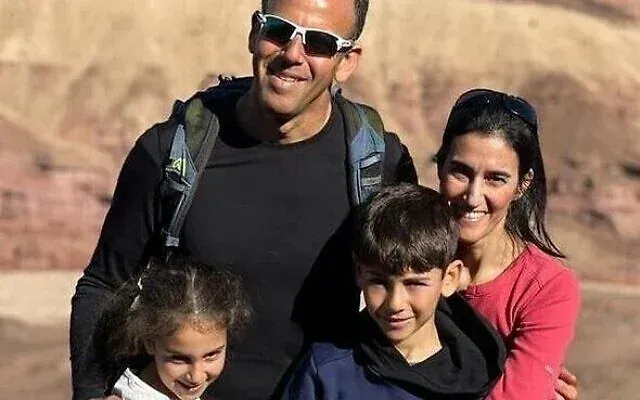
One father tried to protect his family. One son survived 52 days in captivity. Three children were left to grow up without their father. Behind the headlines of October 7 lies a story of love, loss and childhood forever changed.
By Beyond the Lines Editorial
Introduction — When Children Become the Witnesses of History
There are moments in history that are remembered through dates, political decisions and military operations. And then there are moments remembered through the voices of children.
Children who speak about the last time they saw their father.
Children who remember the sound of gunfire inside their home.
Children who survived, but whose understanding of safety, family and the world around them changed forever.
On October 7, 2023, the Yahalomi family was at home in Kibbutz Nir Oz, a small Israeli community near the Gaza border, when Hamas-led attackers entered the kibbutz.
For Ohad Yahalomi, a father of three, the immediate priority was protecting his wife and children.
He was wounded while defending his family and subsequently abducted to Gaza. His 12-year-old son, Eitan, was also taken hostage. His wife, Batsheva, managed to escape with their daughters, Yael and Liel.
Eitan returned after 52 days in captivity.
His father never returned alive.
In February 2025, Ohad's remains were returned to Israel. Israeli authorities confirmed that he had been killed in captivity.
But the Yahalomi family's story is more than a record of violence and loss.
It is also the story of three children whose lives were divided into two parts: before October 7 and everything that came after.
Through interviews, including conversations conducted by Montana Tucker, their experiences help reveal a dimension of the conflict that political arguments and casualty statistics can never fully communicate.
The human cost.
Chapter 1 — A Family, a Home and an Ordinary Life
Before October 7, Ohad Yahalomi was known not for war or politics, but for his love of nature, his family and the landscapes of southern Israel.
He worked for the Israel Nature and Parks Authority, dedicating much of his professional life to environmental conservation.
Friends and colleagues remembered a man who knew the desert, its wildlife and its trails exceptionally well.
He was also involved in educational activities and initiatives connecting different communities, including Bedouin communities.
Together with his wife, Batsheva, he was raising three children: Eitan, Yael and Liel.
Their home was in Kibbutz Nir Oz, a community where family life, agriculture and close relationships between neighbours shaped everyday existence.
For the Yahalomi children, their father was the person who took them into nature, shared his knowledge and helped create the ordinary memories of childhood.
Those details matter.
Because when a person becomes known internationally as a hostage or a victim, the life that existed before the tragedy can easily disappear behind the headlines.
Ohad was not simply a name on a list.
He was a husband, a father, a colleague and a man whose life had meaning long before October 7.
Chapter 2 — October 7: A Father Tries to Save His Children
On the morning of October 7, the Yahalomi family entered their home's reinforced safe room as alarms sounded.
But there was a problem.
The door could not be secured properly.
As armed attackers moved through Kibbutz Nir Oz, Ohad positioned himself outside the room to protect his wife and children.
According to documented family accounts, he was armed with a handgun and confronted the attackers when they entered the house.
He was shot and wounded.
Inside the home, Batsheva and the children faced a terrifying situation. The people who were supposed to be protected inside their own house were now threatened by armed men.
The attackers forced Batsheva and the children out.
Ohad, wounded and bleeding, was still alive when his family was taken away.
For the children, that became one of their final memories of their father.
A father who had tried to protect them.
A father they could not save.
And a moment that no child should ever have to witness.
Chapter 3 — A Family Torn Apart
The attackers took Batsheva and the children away from their home on motorcycles.
During the journey toward Gaza, the family was separated.
Batsheva and her two daughters managed to escape and eventually reached safety after spending hours fleeing and hiding in the surrounding fields.
But Eitan was taken into Gaza.
He was only 12 years old.
He had been separated from his mother and sisters, and he did not know what had happened to them.
He also did not know whether his father was alive.
For a child, such uncertainty can be devastating.
The people who had always provided security and reassurance were suddenly gone.
The familiar world of home, school, friends and family had been replaced by captivity and fear.
For Batsheva, the situation was equally unbearable.
She had escaped with two of her children, but her son and husband were missing.
Survival had not meant that the family was safe.
It meant that the waiting had begun.
Chapter 4 — Eitan: 52 Days Without His Family
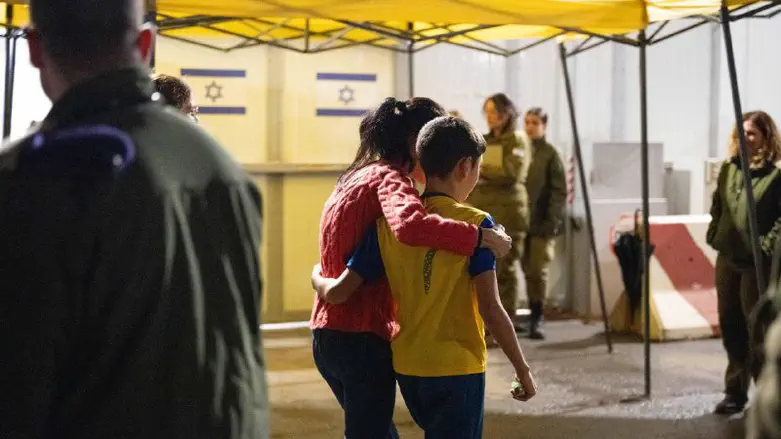
Eitan Yahalomi was held hostage in Gaza for 52 days.
According to documentation by Israeli public broadcaster Kan, he spent the first 16 days of his captivity isolated with a guard before being moved to Nasser Hospital in Khan Younis, where he encountered other hostages.
He did not know whether his mother and sisters had survived.
He did not know what had happened to his father.
In an interview with Montana Tucker, Eitan later described being beaten after arriving in Gaza and being forced to watch disturbing footage of the October 7 attacks.
His testimony provides an unsettling picture of what captivity can mean for a child.
It is not only the physical confinement.
It is the fear, the separation, the uncertainty and the loss of control over every aspect of daily life.
On November 27, 2023, Eitan was released during a negotiated hostage exchange.
His mother was finally able to embrace him again.
But the reunion was incomplete.
His father remained in Gaza.
Eitan had survived captivity, yet he returned to a family still waiting for someone who was missing.
Chapter 5 — Yael: A Little Girl Who Remembers
One of the most moving aspects of the Yahalomi family's story is the testimony of Yael, who was just 10 years old when the attackers entered her home.
In the documentary The Children of October 7, Yael recalls how she responded to the armed men who had entered her family's life.
She described greeting them because she feared she might be taken to Gaza permanently and hoped that being friendly could help.
It is a heartbreaking illustration of a child's attempt to understand danger.
An adult might recognise the situation as an armed abduction. A child may still search for the ordinary rules of human interaction — politeness, kindness and cooperation — even when confronted with violence.
Yael also described the family's escape through the fields after she, her mother and younger sister were separated from their captors.
They had to hide while trying to survive.
For children like Yael, memories of October 7 are not distant historical events.
They are personal experiences involving their parents, siblings and the home where they once felt safe.
Her testimony deserves to be heard not because it is shocking, but because it allows audiences to understand what happened through the perspective of someone who was still a child.
Chapter 6 — The Father Who Never Came Home
For months, the Yahalomi family continued waiting for news about Ohad.
There had been evidence that he survived his initial injuries and was taken into Gaza alive.
In January 2024, his captors released a video showing him wounded.
But his family did not receive the reunion they had hoped for.
On February 27, 2025, Israeli authorities confirmed the identification of his remains following their return from Gaza.
They stated that he had been murdered in captivity.
Ohad was buried in Kibbutz Nir Oz on March 5, 2025.
The father who had once guided his children through the landscapes of Israel would no longer be there to accompany them into adulthood.
He would not be present for their birthdays, graduations or the countless ordinary moments that make up family life.
For Batsheva, Eitan, Yael and Liel, his absence became permanent.
And for the children, the memories of October 7 became inseparable from the loss of their father.
Chapter 7 — When Children Speak, the World Should Listen
The documentary The Children of October 7 gives young survivors the opportunity to describe their experiences in their own words.
Montana Tucker interviewed children who had been kidnapped, lost family members or witnessed acts of extreme violence.
Their testimonies are difficult to hear.
Yet they serve an important purpose.
They remind audiences that children are not simply background figures in geopolitical conflicts.
They are individuals with memories, relationships, fears and futures.
Tucker has explained that hearing these experiences directly from children can reach people in ways that political arguments cannot.
The documentary also took measures to support the young interviewees, including having psychological support available during production.
For Beyond the Lines, these testimonies represent an essential part of understanding October 7.
The children should not be reduced to symbols or used merely to reinforce political positions.
Their experiences deserve to be documented accurately, sensitively and with respect for their dignity.
Watch — The Yahalomi Family's Story
The following ILTV video features the family's testimony and material involving Montana Tucker.
https://www.facebook.com/share/v/1CKtmWmCfb/
Video credit: ILTV Israel News / Montana Tucker.
Chapter 8 — Beyond the Headlines: The Children Who Carry the Consequences
The suffering of children is one of the most devastating consequences of armed conflict.
Israeli children who witnessed the October 7 attacks, experienced captivity or lost family members carry profound memories of those events.
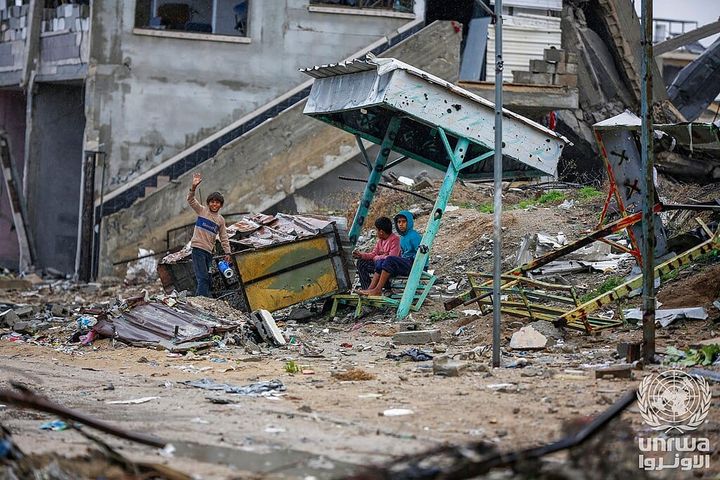
Palestinian children in Gaza have also experienced death, displacement, destruction and the loss of loved ones during the war that followed.
These experiences are not identical, and the circumstances and responsibilities behind them must be examined separately.
But the suffering of one child does not diminish the suffering of another.
Nor should recognising the trauma of Israeli children require ignoring the experiences of Palestinian children.
Understanding the Middle East requires acknowledging individual human lives alongside military, historical and political realities.
The Yahalomi family's story offers an important reminder of why this distinction matters.
For Eitan, Yael and Liel, October 7 was not a political debate.
It was the day their family was torn apart.
Chapter 9 — Remembering Ohad Yahalomi
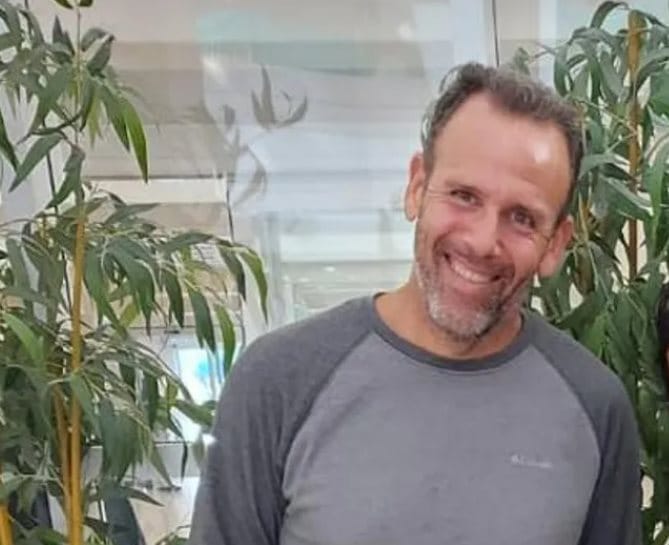
Ohad Yahalomi was a father, husband, conservationist and member of the Nir Oz community.
He loved nature, valued education and believed in building connections between people.
On October 7, he tried to protect his family.
His children survived.
He did not.
The testimony of his children preserves more than the circumstances of his death. It also reminds the world of the life that was lost and the family that continues without him.
Behind every headline about hostages, war and negotiations, there are people whose lives cannot be restored to what they were before.
For the Yahalomi family, that reality will continue long after the news cycle has moved on.
And perhaps that is why listening to the children matters so deeply.
Because history should remember not only what happened, but also what was taken away.
May Ohad Yahalomi's memory be a blessing.
A Final Reflection — No Child Should Have to Carry the Cruelty of War
There is something profoundly heartbreaking about hearing a child describe violence that no child should ever have witnessed.
A child should know the warmth of a parent's embrace, the comfort of a familiar home and the simple happiness of growing up without fear.
Children should be making memories of birthdays, schooldays, friendships and family holidays. They should be dreaming about their futures, not struggling to understand why someone wanted to hurt them or why their father will never come home.
Yet for the children of October 7, innocence was shattered in a matter of hours.
They witnessed cruelty, experienced terror and lost people they loved. Some were taken hostage. Others watched their families being torn apart. Many continue to live with memories that no child should have to carry.
And while the world debates politics, borders, responsibility and war, these children must somehow learn to live with what happened to them.
The suffering of children should never become acceptable, regardless of their nationality, religion or the circumstances of a conflict.
No Israeli child should have to hide from armed attackers inside their own home. No Palestinian child should have to grow up surrounded by destruction, displacement and the fear of losing loved ones.
Children do not choose wars. They do not create political conflicts. They do not decide the actions of governments or armed groups.
Yet too often, they pay the highest price.
The story of Eitan, Yael and Liel Yahalomi reminds us that behind every statistic is a human being, and behind every child who survives violence is a life that may never feel quite the same again.
We cannot undo what happened on October 7. We cannot bring Ohad Yahalomi back to his children, nor can we erase the memories they carry.
But we can choose to listen.
We can choose to remember.
And we can refuse to accept a world in which the suffering of children becomes just another headline.
Because every child deserves more than survival.
Every child deserves safety, love, dignity and the freedom to grow up without fear.
And perhaps the greatest responsibility we have is to ensure that the voices of these children are never forgotten — not because of the violence they endured, but because of the childhood they deserved.
Beyond the Lines — Independent Journalism. Beyond the Headlines.
Sources and Further Reading
- Kibbutz Nir Oz — Ohad and Bat-Sheva Yahalomi. Community memorial and family history.
https://nir-oz.org.il/en/family/ohad-zl-and-bat-sheva-yahalomi/ - Kan 7.10.360 — The Yahalomi Family. Detailed reconstruction and timeline.
https://www.710360.kan.org.il/en/nir-oz/yahalomi - The Times of Israel — Ohad Yahalomi, Park Ranger. Biography and account of his death.
https://www.timesofisrael.com/ohad-yahalomi-49-park-ranger-who-knew-every-trail/ - Ynetnews — Eitan Yahalomi's Testimony. Eitan's interview with Montana Tucker.
https://www.ynetnews.com/article/s1dgbvh1kx - CBS News — The Children of October 7. Documentary background.
https://www.cbsnews.com/news/children-of-october-7-documentary-paramount-israel-hamas-gaza/ - The Daily Beast — The Children of October 7. Reporting on Yael's testimony.
https://www.thedailybeast.com/obsessed/the-children-of-october-7-attack-survivors-speak-out-in-devastating-doc/