Who Are the Palestinians? Understanding Identity, History and Everyday Life
Explore Palestinian identity, history, culture and everyday life, from communities before 1948 to the experiences of Palestinians today.

Introduction — Beyond the Headlines: Understanding the Palestinian People
When Palestinians appear in international news, the images are often dominated by conflict.
Destroyed buildings, military operations, political demonstrations, refugee camps and diplomatic negotiations have become familiar elements of the world's coverage of Israel and the Palestinian territories.
These images document important realities. They reflect decades of conflict, displacement, occupation and political uncertainty.
Yet they tell only part of the story.
Behind the headlines are millions of people whose lives cannot be understood through politics and war alone.
They are teachers, doctors, students, farmers, artists, business owners, parents and grandparents. They belong to communities with distinct traditions, religious beliefs, family histories and cultural identities.
Some live in the West Bank, including East Jerusalem. Others live in the Gaza Strip or are citizens of Israel. Millions more belong to Palestinian communities across the Middle East and around the world.
Their circumstances differ considerably.
A Palestinian family living in Ramallah experiences a different political and social environment from a family in Gaza. A Palestinian citizen of Israel lives under a different legal and political system from a Palestinian refugee in Lebanon. A Palestinian family in Chile may have maintained cultural connections to its ancestral homeland for generations.
Yet these communities share elements of a broader historical and national identity.
Understanding the Palestinians requires looking beyond the immediate conflict and exploring the people, places and experiences that shaped that identity.
A History Older Than the Modern Conflict
The history of the land between the Mediterranean Sea and the Jordan River extends back thousands of years.
It has been home to different peoples, cultures and religious communities.
Jewish, Christian and Muslim histories are deeply connected to the region, alongside other religious and cultural traditions.
Over centuries, the territory was governed by successive empires and political authorities, including the Ottoman Empire and, during the twentieth century, the British Mandate administration.
The modern Palestinian national movement developed through historical processes involving local communities, political change, regional developments and growing national consciousness.
Palestinian identity cannot be reduced to a single date or event.
Nor can the history of the region be understood through the experience of only one community.
Both Jewish and Palestinian national movements developed powerful attachments to the land, shaped by history, religion, culture and political aspirations.
Their competing claims became central to the modern conflict.
Understanding this history requires acknowledging the experiences and perspectives of both peoples without treating their histories as interchangeable.
The Meaning of Palestinian Identity
Palestinian identity is not defined exclusively by citizenship or residence.
For many Palestinians, it includes connections to family history, language, culture, religion and places of origin.
Arabic is the principal language of Palestinian society, although dialects and language practices differ across communities and generations.
Palestinian culture includes literature, poetry, music, traditional embroidery, food, storytelling and other forms of artistic expression.
Family relationships and community networks are often important parts of social life.
However, Palestinian society is not culturally or politically uniform.
Palestinians include Muslims, Christians and people with secular identities or different religious practices.
They hold diverse political opinions.
Their economic circumstances, educational opportunities and personal experiences vary.
Some identify strongly with political movements.
Others focus primarily on family, education, professional ambitions or community life.
Recognizing these differences is essential.
A national identity can connect people without making them identical.
The Events That Changed Palestinian History
Several historical events profoundly influenced modern Palestinian society.
The war surrounding the establishment of Israel in 1948 resulted in the displacement and flight of approximately 700,000 Palestinians.
Palestinians refer to this experience as the Nakba, meaning catastrophe.
For many families, the events of 1948 remain central to their collective memory.
The Six-Day War in June 1967 brought the West Bank, including East Jerusalem, and the Gaza Strip under Israeli military control.
The consequences of that war continue to influence political rights, territorial disputes, movement and daily life.
Later developments, including the Palestinian national movement, the Oslo Accords, the establishment of the Palestinian Authority and the division between Palestinian political leaderships, further shaped Palestinian society.
The Hamas-led attacks against Israel on October 7, 2023, and the devastating war in Gaza that followed created another period of profound loss and uncertainty.
These events cannot be ignored.
However, they should not become the only framework through which Palestinian lives are understood.
Life Beyond the Conflict
Across Palestinian communities, ordinary life continues to involve the concerns shared by people elsewhere.
Parents want their children to receive an education.
Students hope to build careers.
Families celebrate weddings and religious holidays.
Artists explore questions of memory, identity and belonging.
Entrepreneurs establish businesses despite economic uncertainty.
Young people consider their futures, sometimes within their communities and sometimes abroad.
These experiences exist alongside serious political, economic and security challenges.
In the occupied Palestinian territories, restrictions on movement, recurring violence and unequal access to resources can affect daily opportunities.
In Gaza, prolonged conflict and the destruction caused by war have severely disrupted civilian life.
Palestinian refugees in different countries face varying legal conditions and restrictions.
Palestinian citizens of Israel participate in Israeli society while also confronting questions concerning equality, identity and political representation.
The diversity of these circumstances matters.
There is no single Palestinian experience.
Understanding Without Simplifying
Reporting on Palestinian history and society requires careful attention to facts, language and context.
Historical events are sometimes described differently by Israelis and Palestinians.
Legal questions concerning occupation, settlements, refugees and statehood remain central to international diplomacy.
Political organizations do not necessarily represent the views of every person living under their authority or claiming the same national identity.
Similarly, the actions of armed groups should not be attributed collectively to Palestinian civilians.
Understanding Palestinian society does not require ignoring Israeli history, Jewish connections to the land or the security concerns of Israeli civilians.
A responsible examination recognizes that different communities have experienced profound suffering and developed deeply held historical narratives.
Journalism should examine these narratives critically, distinguish documented facts from political claims and avoid reducing entire populations to the actions of their governments or political movements.
Why These Stories Matter
The Palestinian story is often presented through negotiations, military developments and international political statements.
But national history is also preserved in families, neighborhoods, schools, religious institutions and cultural traditions.
It can be found in the memories of people who left their homes, the experiences of those who remained and the lives of younger generations growing up under very different circumstances.
Understanding Palestinians as a people requires attention to these human dimensions.
It also requires exploring the historical developments that shaped their political circumstances.
This article examines Palestinian identity from its historical foundations to contemporary society.
It explores the communities that existed before 1948, the consequences of displacement and occupation, the diversity of Palestinian life today and the political questions surrounding the future.
It also considers the role of culture, religion, education, family and memory in preserving identity across generations and borders.
The purpose is not to present a single political narrative.
It is to provide historical context, examine documented realities and introduce the people behind one of the world's most discussed conflicts.
Because understanding the Palestinian people begins with recognizing that their history is more than a conflict, their identity is more than a political question, and their lives are more than the images that appear in the news.

Chapter 1 — The Origins of Palestinian Identity: A Land and Its People
A Land Shaped by Thousands of Years of History
To understand who the Palestinians are today, it is necessary to begin with the history of the land itself.
The territory between the Mediterranean Sea and the Jordan River has been inhabited for thousands of years. Its cities, villages, agricultural communities and religious centers developed long before the emergence of modern national borders.
Throughout history, the region has been known by different names and governed by different political authorities.
The ancient kingdoms of Israel and Judah formed part of its history, as did the wider cultures of the ancient Near East. Later periods brought Persian, Greek, Roman, Byzantine, Arab, Crusader, Mamluk and Ottoman rule.
Jerusalem, Bethlehem, Hebron, Nablus, Gaza and other historic centers became connected through trade, religion, agriculture and political administration.
These places were never culturally isolated.
Merchants traveled between cities. Farmers cultivated land that supported local communities. Religious institutions maintained connections across the region, while families established roots that often continued through generations.
The population changed over time through migration, conversion, intermarriage, settlement and political upheaval.
As a result, the history of the people who would eventually identify as Palestinians cannot be explained through a single ancient origin.
Like many modern national communities, Palestinians emerged from a long and complex historical process.
Their identity developed through connections to territory, language, shared experiences, social relationships and political change.
From Ancient Communities to an Arabic-Speaking Society
One of the most important transformations in the region occurred during the seventh century.
Following the expansion of Arab Muslim rule into the Levant, the area became part of successive Islamic states.
Arabic gradually developed into the dominant language of much of the population, while Islam became the majority religion over time.
These changes did not happen immediately.
The region already contained Jewish, Christian and other communities, and religious and linguistic transformations unfolded over centuries.
Many inhabitants adopted Arabic while maintaining Christian or Jewish religious identities.
Others converted to Islam.
Migration from surrounding regions also contributed to demographic and cultural changes.
The result was a society shaped by multiple historical influences.
Arabic language and culture became increasingly important, but the region retained significant religious diversity.
Christian communities continued to maintain churches, monasteries and religious traditions, particularly in places such as Jerusalem, Bethlehem and Nazareth.
Jewish communities also preserved longstanding religious and historical connections to the land, including periods of continuous residence in cities such as Jerusalem, Hebron, Safed and Tiberias.
This overlapping history is essential to understanding the modern conflict.
Jewish and Palestinian historical attachments to the land are not mutually exclusive facts.
Both form part of the region's past, even though modern national movements developed competing political claims.
Life Under the Ottoman Empire
From 1516–1517 until the First World War, most of the territory that later became British Mandatory Palestine was governed by the Ottoman Empire.
During these four centuries, the population lived within an imperial system rather than a modern Palestinian nation-state.
Political administration changed over time, and the territory was divided among districts and provinces whose boundaries did not correspond exactly to those of the later British Mandate.
People often identified themselves through several overlapping relationships.
A person might describe belonging to a particular village, city, family, religious community or wider Arabic-speaking society.
They might also identify as an Ottoman subject.
These identities could coexist.
A merchant from Jerusalem, a farmer from a village near Nablus and a Christian family in Bethlehem might share language and regional connections while experiencing different social and economic circumstances.
Agriculture was central to the lives of many rural inhabitants.
Olive cultivation, grain production, livestock farming and other agricultural activities supported village economies.
Cities such as Jerusalem, Jaffa, Gaza, Acre and Nablus developed commercial and religious roles.
Jaffa became particularly important as a Mediterranean port and, later, as a center associated with the citrus trade.
Nablus was known for regional commerce and traditional industries, including soap production.
Jerusalem attracted pilgrims, religious scholars and communities connected to Judaism, Christianity and Islam.
The relationships between urban centers and surrounding villages helped shape the region's social structure.
Families, religious institutions, markets and agricultural networks created connections that extended beyond individual settlements.
These connections would later contribute to the development of a broader territorial identity.
Was There a Palestinian Identity Before the Twentieth Century?
This question frequently appears in political discussions about the Israeli-Palestinian conflict.
It is also a question that requires historical precision.
The absence of a modern independent Palestinian state in earlier centuries does not mean that the territory lacked an established population or local identities.
At the same time, it would be historically inaccurate to suggest that Palestinian national identity existed in exactly its contemporary form thousands of years ago.
Modern nationalism developed across many parts of the world during the eighteenth, nineteenth and twentieth centuries.
National identities often emerged gradually from earlier forms of regional, linguistic, cultural and religious belonging.
Palestinian identity followed a similarly complex process.
The geographic name Palestine has a long history.
Variations of the name appeared in ancient Greek and Roman usage, and the Roman administrative designation Syria Palaestina became associated with the region during antiquity.
Under early Islamic administration, Jund Filastin referred to a military-administrative district covering part of the area.
The name therefore existed long before the emergence of modern Palestinian nationalism.
However, historical use of a geographic name and the existence of a modern national movement are two different questions.
During the late Ottoman period, some inhabitants increasingly used Palestine as a geographic and political reference, alongside other affiliations.
Local newspapers, educational institutions, political discussions and growing communication networks helped strengthen awareness of shared regional interests.
Historians differ in their emphasis on when a distinct Palestinian national consciousness became clearly established.
Some highlight developments in the late nineteenth century.
Others place greater emphasis on the early twentieth century, particularly the period following the First World War.
What is widely recognized is that Palestinian national identity developed over time rather than appearing suddenly in response to one event.
The Rise of Modern National Consciousness
The nineteenth and early twentieth centuries brought significant political and social change to the Ottoman Empire and the wider Middle East.
New schools, newspapers, transportation systems and communication networks connected communities more closely.
Political reforms altered relationships between imperial authorities and local populations.
Ideas about constitutional government, political representation, Arab identity and nationalism circulated among educated groups.
In the territory of Palestine, these developments contributed to new public debates.
Local intellectuals, journalists and political figures increasingly discussed the future of their communities and the changing political environment.
One important development was the growth of the Arabic-language press.
In 1908, the newspaper Al-Karmil began publication in Haifa under the leadership of Najib Nassar.
The newspaper became known for its criticism of Zionist land purchases and its concern about the political future of the country's Arab inhabitants.
Another influential newspaper, Filastin, was founded in Jaffa in 1911 by Issa al-Issa and Yusuf al-Issa.
Its reporting reflected growing political awareness and debates about local interests, Ottoman governance and Zionist immigration.
These publications provide important historical evidence of how sections of the Arabic-speaking population understood the changes taking place around them.
They also demonstrate that political discussion about Palestine existed before the establishment of Israel in 1948.
The development of Palestinian national consciousness was not isolated from broader Arab political movements.
Some people identified with Arab nationalism or with the idea of a wider Syrian homeland, while others increasingly emphasized Palestine as a distinct political community.
These different affiliations sometimes overlapped and sometimes competed.
National identity was developing within a changing political environment rather than following a single predetermined path.
Zionism and a Changing Political Landscape
During the same period, another national movement was gaining momentum.
Modern political Zionism emerged in late nineteenth-century Europe, influenced by Jewish historical and religious connections to the Land of Israel, European nationalism and the persecution and discrimination experienced by Jewish communities.
Theodor Herzl became one of the movement's most prominent figures.
The First Zionist Congress, held in Basel in 1897, called for the establishment of a publicly and legally secured home for the Jewish people in Palestine.
Jewish immigration to Ottoman Palestine had already increased during the preceding decades.
Immigrants established agricultural communities, purchased land and developed institutions that later became important to the Zionist movement.
Jewish immigration was driven by different motivations, including religious attachment, nationalist aspirations and the desire to escape antisemitism and persecution.
These developments created new opportunities for some communities and growing concerns among others.
For sections of the local Arab population, the expansion of Zionist settlement raised questions about land ownership, agricultural livelihoods and future political control.
The effects of land transactions varied.
Some purchases involved land that was legally acquired from owners living elsewhere, while tenant farmers or agricultural workers could experience displacement or the loss of access to land.
Not every transaction produced the same consequences, and relationships between Jewish and Arab communities were not uniformly hostile.
There were periods of economic interaction, cooperation and ordinary coexistence.
Nevertheless, competing national aspirations became increasingly significant.
For Zionist leaders, Jewish national self-determination was connected to the establishment of a secure national home in the historic Jewish homeland.
For many Palestinian Arabs, the growing Zionist movement raised concerns about the political future of the society in which they already lived.
These competing aspirations would become central to the conflict that developed during the twentieth century.
The First World War and the End of Ottoman Rule
The First World War transformed the political map of the Middle East.
The Ottoman Empire entered the war on the side of the Central Powers and ultimately suffered defeat.
British forces captured Jerusalem in December 1917, and by 1918 Ottoman control over the territory had ended.
The collapse of Ottoman authority created uncertainty about the future of the region.
During the war, British officials had made commitments to different parties concerning the postwar Middle East.
Among the most consequential was the Balfour Declaration of November 2, 1917.
In a letter to Lord Rothschild, British Foreign Secretary Arthur James Balfour expressed British support for the establishment in Palestine of a national home for the Jewish people.
The declaration also stated that nothing should prejudice the civil and religious rights of the existing non-Jewish communities in Palestine.
It did not explicitly recognize their collective national or political rights.
For Zionist leaders, the declaration represented an important diplomatic achievement.
For many Palestinian Arabs, it raised profound concerns about political representation and self-determination.
At the time, the Arab population formed the majority of the territory's inhabitants.
The prospect of British support for a Jewish national home, without an equivalent commitment to Palestinian Arab national aspirations, became a central source of opposition.
The declaration would later be incorporated into the framework of the British Mandate for Palestine.
Its political consequences extended far beyond the First World War.

The British Mandate and the Consolidation of Palestinian Nationalism
Following the war, Britain administered Palestine under a mandate approved by the League of Nations in 1922, which formally came into effect in 1923.
The mandate established a new political framework.
It also intensified the struggle between Jewish and Arab national movements.
Jewish immigration increased during different periods, particularly as antisemitism and persecution worsened in Europe.
Zionist institutions developed political, agricultural, educational and economic structures intended to support a future Jewish national home.
Palestinian Arab political leaders organized petitions, congresses, demonstrations and other forms of opposition to British policies and Zionist immigration.
During the mandate period, Palestinian national identity became more clearly articulated through political organizations, newspapers, cultural institutions and public mobilization.
The 1920s and 1930s were especially important.
Political tensions escalated into episodes of communal violence, including the disturbances of 1920 and 1921 and the violence of 1929.
The Arab Revolt of 1936–1939 became a major turning point.
It began with a general strike and developed into a wider uprising against British rule and Zionist immigration.
British authorities responded with extensive military and security operations.
The revolt resulted in significant casualties and severely weakened Palestinian Arab political leadership and organizational structures.
By the end of the 1930s, the conflict had become increasingly difficult to resolve.
Both Jewish and Palestinian Arab communities had developed stronger national institutions and political aspirations.
Yet they sought different outcomes for the same territory.
The British Mandate period therefore played a major role in transforming earlier forms of regional and cultural identity into competing modern national movements.
Language, Religion and Cultural Belonging
Political history explains only part of Palestinian identity.
Language, religion and cultural traditions also shaped the communities that came to identify as Palestinian.
Arabic became an important shared language across much of Palestinian society.
Local dialects reflected regional differences between cities, villages and other communities.
Religious traditions remained diverse.
Most Palestinian Arabs were Muslim, while Christian Palestinians maintained important religious and cultural institutions.
Smaller communities, including the Samaritans, formed part of the region's wider religious landscape, although Samaritan identity has its own distinct historical and religious foundations.
Religious identity did not always determine political identity.
Palestinian Christians and Muslims participated in many of the same social and political developments.
Families maintained traditions associated with weddings, religious holidays, agriculture, food and community gatherings.
Olive harvesting became particularly important in many rural areas, both economically and culturally.
Traditional embroidery, known as tatreez, developed distinctive regional patterns and later became a widely recognized expression of Palestinian cultural heritage.
Poetry, music, oral storytelling and literature helped preserve local histories and experiences.
These cultural practices were not identical across every community.
Nevertheless, they contributed to a sense of belonging that extended beyond political institutions.
For many Palestinians, identity was rooted in the ordinary experiences of family and community life long before it became a question of international diplomacy.
Identity Is Not the Same as Political Uniformity
An important distinction must be made between Palestinian national identity and Palestinian political opinion.
A shared national identity does not mean that every Palestinian holds the same views about history, religion, leadership or the future.
Political divisions existed during the British Mandate and continued in later decades.
Differences between urban and rural communities, wealthy families and agricultural workers, religious groups and political movements influenced social life.
These distinctions became even more complex following the displacement of Palestinians in 1948 and the political developments that followed.
Today, Palestinians live under different legal systems and political authorities.
Some are citizens of Israel.
Others live in the West Bank or Gaza.
Many live in refugee communities or form part of the wider diaspora.
Their experiences and political perspectives can differ considerably.
Understanding Palestinian identity therefore requires avoiding the assumption that one political organization, leader or ideology speaks for every Palestinian.
The same principle applies when examining other national communities.
People may share a history and sense of belonging while disagreeing strongly about political questions.
A People Whose Identity Continued to Evolve
By the beginning of the twentieth century, the foundations of modern Palestinian national identity were increasingly visible.
They had emerged from a society shaped by centuries of local history, Arabic language, religious diversity and connections between cities and villages.
The decline of Ottoman rule, the growth of modern nationalism, Zionist immigration and British administration accelerated the political development of that identity.
The events of 1948 would transform it further.
Displacement, the loss of homes and the separation of families became defining experiences for many Palestinians.
Later generations would preserve memories of places they had never personally visited.
For Palestinians who remained in the territory, identity developed under different political and legal circumstances.
For those who left, family histories and cultural traditions became important ways of maintaining connections across borders.
The Palestinian national movement continued to evolve through these experiences.
Yet its history did not begin in 1948, just as the history of the land did not begin with the modern conflict.
The roots of Palestinian identity lie in a much longer story of communities, languages, traditions and political transformations.
Recognizing this history does not require denying the historical connections or national aspirations of Jewish people.
It requires understanding that more than one community developed meaningful attachments to the same land.
The history of Palestinian identity is therefore not simply a story of political conflict. It is the story of how generations of people developed a shared sense of belonging through their relationships with a place, its communities and an evolving history.
That history provides the foundation for understanding Palestinian society before 1948, when cities, villages, religious institutions and everyday life formed a world that would be profoundly changed by the events that followed.
Chapter 2 — Palestine Before 1948: Society, Cities and Communities
A Society Beyond the Political Conflict
When the history of Palestine before 1948 is discussed, attention often turns immediately to the British Mandate, Jewish immigration, Arab opposition, and the political developments that eventually led to the establishment of Israel.
These events were central to the region's transformation.
However, they do not provide a complete picture of the society that existed before the war of 1948.
Palestine was home to cities, villages, agricultural communities, religious institutions, schools, markets, and businesses. Its inhabitants maintained family relationships, celebrated religious holidays, developed professional careers, and participated in cultural and intellectual life.
Muslims, Christians, and Jews lived in the territory, although their populations, political circumstances, and relationships changed considerably over time.
Some communities had lived in particular towns or villages for generations. Others arrived through migration, including Jewish immigrants who came during successive waves of immigration in the late nineteenth and early twentieth centuries.
The region was not a modern independent Palestinian state before 1948. Until the First World War, most of it formed part of the Ottoman Empire. It subsequently came under British administration.
Nevertheless, its inhabitants had established social, economic, and cultural institutions that shaped everyday life.
Understanding these communities is essential to understanding what changed in 1948.
The war did not occur in an empty landscape.
It transformed an inhabited society whose people had homes, livelihoods, memories, and connections to particular places.
Jerusalem: A City of Religious and Cultural Importance
Jerusalem occupied a unique position in the region.
For centuries, it had been a center of religious significance for Jews, Christians, and Muslims.
The Western Wall, the Church of the Holy Sepulchre, and the Haram al-Sharif/Temple Mount reflected the city's importance to different religious traditions.
These sacred places attracted pilgrims, scholars, religious leaders, and visitors from across the world.
Jerusalem was also a functioning city.
Its residents included merchants, artisans, teachers, religious officials, laborers, and families whose daily lives extended far beyond its religious landmarks.
During the late Ottoman period and the British Mandate, the city experienced considerable urban development.
New neighborhoods expanded outside the walls of the Old City.
Educational institutions, hospitals, charitable organizations, and commercial establishments developed.
Jewish neighborhoods grew, while established Arab Muslim and Christian communities maintained their own institutions and social networks.
The city's population became increasingly diverse in terms of religious affiliation, language, political orientation, and socioeconomic background.
The relationships between communities were complex.
People participated in shared commercial activities, employed workers from different backgrounds, and encountered one another in markets and public spaces.
At the same time, religious distinctions, political competition, and the growth of competing national movements created divisions.
It would be misleading to describe pre-1948 Jerusalem as a city of uninterrupted harmony.
It would be equally misleading to suggest that its communities had no history of everyday interaction.
Both cooperation and conflict formed part of its social reality.
By the 1940s, Jerusalem had become one of the principal centers of the struggle over the political future of Palestine.
Its religious importance made the conflict particularly sensitive.
Its divided neighborhoods and competing national institutions also reflected the wider transformation taking place across the territory.
Jaffa: Trade, Culture, and the Mediterranean
Before 1948, Jaffa was one of Palestine's most important Arab urban centers.
Situated on the Mediterranean coast, the city had long served as a port connecting the region with markets elsewhere in the Mediterranean and beyond.
Its commercial importance increased during the nineteenth and early twentieth centuries.
Jaffa became especially associated with citrus cultivation and the export of oranges.
The citrus industry linked agricultural producers, merchants, packing facilities, transport workers, and international trading networks.
Orange groves surrounding the city contributed to the local economy and became an important feature of the region's agricultural landscape.
Jaffa was also a center of Palestinian Arab cultural and political activity.
Newspapers, schools, religious institutions, social organizations, and businesses helped create a lively urban environment.
The Arabic-language newspaper Filastin, founded in Jaffa in 1911, became an important platform for political discussion.
The city's population included Muslims and Christians, while Jewish communities and immigrants lived in Jaffa and nearby areas.
In 1909, the foundations of what became Tel Aviv were established north of Jaffa by Jewish residents seeking to create a new neighborhood.
Tel Aviv subsequently developed into a major Jewish urban center.
The growth of Tel Aviv and Jaffa illustrates the rapid changes occurring along the coast.
The two cities were economically connected but increasingly shaped by different national institutions and political aspirations.
Jaffa's history also demonstrates why the events of 1948 had consequences beyond military and diplomatic boundaries.
For its Arab inhabitants, the city represented homes, commercial networks, family histories, and a cultural center.
The departure and displacement of most of Jaffa's Arab population during the 1948 war fundamentally transformed the city's demographic character.
Understanding the importance of Jaffa before the war helps explain the significance of that loss.
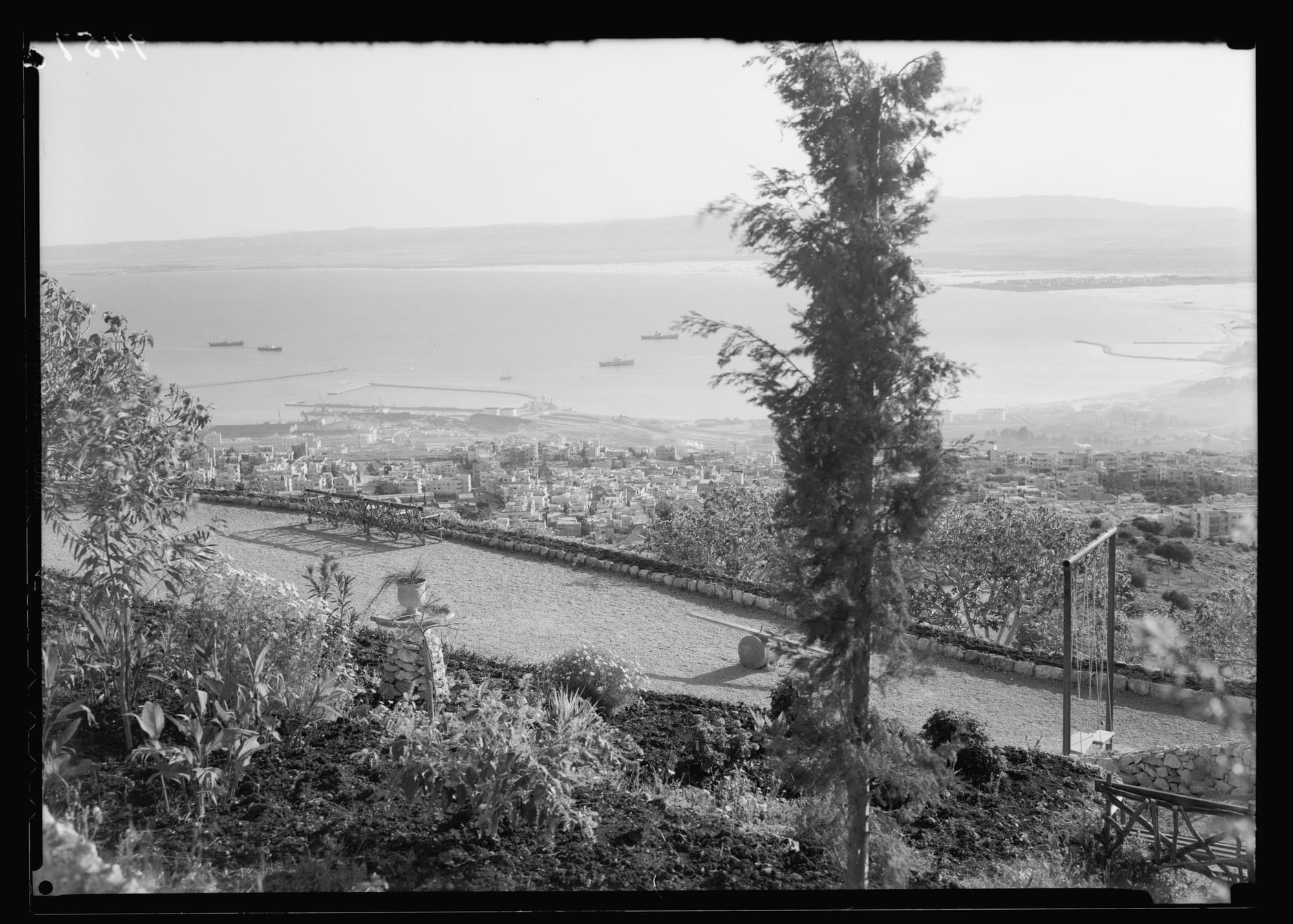
Haifa: Industry, Migration, and a Changing City
Haifa developed into another major center of economic and social activity.
Located on the Mediterranean coast near Mount Carmel, the city benefited from its port, transportation connections, and industrial expansion.
During the British Mandate, Haifa became particularly important because of the development of its modern harbor and its connection to regional railway networks.
The port opened in 1933 and strengthened the city's role in international trade.
Haifa also became a center for industry, including activities connected to oil transportation and refining.
These developments attracted workers and encouraged urban growth.
The city's population included Arab Muslims, Arab Christians, and Jews.
Its communities participated in commercial and industrial activities, although employment structures and political institutions were influenced by broader national divisions.
Haifa's labor history provides an important example of the complexity of relations between Arab and Jewish workers.
Some workers shared workplaces and economic concerns.
At other times, labor organization followed national lines, and competition over employment and political influence contributed to tensions.
The Histadrut, established in 1920, became a major institution in the Jewish labor movement.
Arab workers also developed their own organizations and forms of collective representation.
Haifa therefore represented both economic modernization and growing political division.
By the late 1940s, the city had become a strategically important urban center.
Its port, industries, and transportation connections made it significant to both national movements.
The fighting of 1948 caused the departure and displacement of much of Haifa's Arab population.
Many Jewish residents remained, and the city subsequently became part of the State of Israel.
The transformation of Haifa illustrates how a city with longstanding communities and shared economic spaces could experience dramatic demographic change within a relatively short period.
Nablus, Hebron, and the Life of Inland Cities
Not all Palestinian urban life was concentrated along the Mediterranean coast.
Cities in the interior played important roles in trade, agriculture, religion, and regional administration.
Nablus, situated between Mount Ebal and Mount Gerizim, had long been a commercial center.
Its economy was connected to the agricultural production of surrounding villages.
Olive oil was particularly important.
Traditional soap manufacturing became one of the city's best-known industries, linking agricultural production to commercial networks.
Nablus also maintained educational, religious, and cultural institutions.
Its markets connected rural producers with urban merchants and consumers.
Hebron, another historic city, was closely associated with religious traditions and regional trade.
The city is significant to both Judaism and Islam because of the site known to Muslims as the Ibrahimi Mosque and to Jews as the Cave of the Patriarchs.
Before the twentieth century, Hebron was home to Muslim residents and a longstanding Jewish community.
The Jewish community included families with deep local roots as well as people who had arrived from elsewhere.
The violence of August 1929 marked a devastating turning point.
Arab rioters killed 67 Jews in Hebron, and many Jewish residents fled or were evacuated. Some Arab residents sheltered and protected Jewish neighbors during the attacks.
The surviving Jewish community was subsequently disrupted, and the remaining Jews were evacuated by British authorities in 1936.
The events of 1929 remain an important part of Jewish historical memory.
They also demonstrate why accounts of the period must acknowledge violence against Jewish civilians alongside the experiences of Palestinian Arabs.
A historically responsible account cannot present one community's suffering while ignoring another's.
Nablus and Hebron were different cities, with distinct economic structures and social histories.
Both illustrate the importance of inland urban centers in the society that existed before 1948.

Villages and the Agricultural Foundations of Society
Although cities played major political and commercial roles, much of Palestine's Arab population lived in rural communities.
Villages formed the social and economic foundation of large parts of the territory.
Agriculture shaped working life, family relationships, seasonal routines, and connections to the land.
Farmers cultivated olives, wheat, barley, vegetables, grapes, and other crops depending on local geography and climate.
In some areas, livestock farming was also important.
Agricultural production supported village households and supplied urban markets.
Olive trees occupied a particularly significant place in many communities.
They provided food, oil, commercial products, and an economic resource that could be passed between generations.
The agricultural calendar influenced social life.
Harvesting often involved extended families and neighbors.
Communities developed practices of cooperation, although economic inequality and disputes over land also existed.
Village society was not uniform.
Some families owned substantial landholdings.
Others cultivated smaller plots, rented agricultural land, or worked as laborers.
Women contributed to agricultural production, household economies, food preparation, textile work, and community life.
Their responsibilities varied according to family circumstances, class, location, and local customs.
Rural communities were connected to nearby towns through markets, religious institutions, marriage relationships, and trade.
These connections helped create wider regional networks.
For many Palestinians, the village became a central element of family identity.
Even after displacement, descendants often continued to identify with the villages from which their families originated.
This connection would become particularly significant after 1948.
Education, Newspapers, and Intellectual Life
The late Ottoman period and the British Mandate witnessed important developments in education and public communication.
Schools were established or expanded by government authorities, religious organizations, private institutions, and community associations.
Educational opportunities differed considerably according to location, gender, religion, and economic circumstances.
Urban families generally had greater access to formal schooling than many rural households.
Nevertheless, education became an increasingly important avenue for professional advancement and political participation.
Christian missionary schools, Muslim educational institutions, Jewish schools, and government schools all contributed to the educational landscape.
During the British Mandate, separate educational systems developed under different administrative and institutional arrangements.
Jewish educational institutions expanded significantly through the organized structures of the Yishuv, the Jewish community in Mandatory Palestine.
Arab education also developed, although access and funding remained important concerns.
The growth of newspapers contributed to the development of public debate.
Arabic-language publications reported on political developments, social issues, economic conditions, and international affairs.
Newspapers such as Filastin and Al-Karmil helped articulate emerging Palestinian political concerns.
They also connected readers in different cities.
Literary and cultural activity formed another part of this changing society.
Writers, poets, teachers, and journalists contributed to discussions about identity, reform, religion, and the political future.
Women participated in educational, charitable, cultural, and political organizations, particularly in urban centers.
The Arab Women's Congress held in Jerusalem in 1929 reflected the increasing public involvement of Palestinian Arab women in nationalist politics.
Although women faced substantial social and institutional restrictions, their participation was an important part of the period's history.
The society that existed before 1948 was therefore not static.
It was experiencing educational expansion, urbanization, political organization, and changing ideas about public life.
Religious Communities and Everyday Relationships
Religion shaped many aspects of life in Palestine.
The population included Muslims, Christians, Jews, and smaller religious communities.
Each maintained distinctive religious institutions, traditions, and communal networks.
Muslim communities formed the majority of the Arab population.
Mosques, religious schools, charitable institutions, and religious courts played important roles in social life.
Christian Palestinians belonged to different denominations, including Greek Orthodox, Roman Catholic, Armenian, and Protestant communities.
Churches and Christian schools contributed to education, healthcare, and cultural activity.
Jewish communities were also diverse.
Some Jewish families had lived in the territory for generations.
Others arrived from Europe, the Middle East, North Africa, and elsewhere.
They differed in religious practice, language, economic circumstances, and political outlook.
Not all Jews living in Palestine supported the same political positions.
Some were closely associated with Zionist institutions, while others maintained different religious or political perspectives.
Relations between religious communities varied across time and place.
Commercial interaction and personal relationships existed alongside competition, prejudice, and political tensions.
Religious affiliation was important, but it did not determine every aspect of social life.
Class, family, profession, language, and political allegiance could also shape relationships.
During the British Mandate, increasing national conflict placed additional pressure on these connections.
Episodes of violence deepened mistrust.
The Arab Revolt of 1936–1939, British repression, Jewish immigration, and the worsening crisis in Europe contributed to an increasingly polarized environment.
By the 1940s, the political future of the territory had become a central concern for many inhabitants.
The Impact of Jewish Immigration and Political Change
Jewish immigration was one of the major forces transforming Palestine during the late nineteenth and early twentieth centuries.
The motivations of immigrants were diverse.
Some sought religious fulfillment or a connection to the historic Jewish homeland.
Others were influenced by Zionist nationalism.
Many were escaping antisemitism, discrimination, violence, or persecution in Europe.
The rise of Nazi Germany and the Holocaust made the question of Jewish refuge and national security increasingly urgent.
During the British Mandate, Jewish institutions expanded in agriculture, industry, education, healthcare, and political organization.
New towns and neighborhoods developed.
The Hebrew language became increasingly central to Jewish public life.
These developments contributed to the growth of the Yishuv and its capacity for self-government.
For many Palestinian Arabs, however, the rapid expansion of Jewish immigration and Zionist institutions raised concerns about political representation, land, employment, and the future of the Arab majority.
Disputes over land purchases became especially sensitive.
Some land was purchased from absentee owners, while tenant farmers or agricultural workers could face displacement or loss of access.
The consequences differed across individual transactions.
It would be inaccurate to characterize every land purchase as forced dispossession.
It would also be inaccurate to ignore the economic and social consequences experienced by some Arab rural communities.
The central political dispute concerned the future sovereignty of the territory.
Zionist leaders sought Jewish national self-determination.
Palestinian Arab leaders increasingly demanded independence and opposed the establishment of a Jewish national home that could lead to Jewish political control.
British authorities struggled to reconcile these competing demands.
Their policies changed over time, often provoking opposition from both communities.
The resulting conflict increasingly affected ordinary people whose lives had previously been shaped primarily by local economic and social concerns.
From Political Tension to the Crisis of Partition
By the end of the Second World War, the British Mandate was approaching a political crisis.
The Holocaust had resulted in the murder of approximately six million European Jews.
For many survivors, displacement and the destruction of Jewish communities in Europe intensified the need for refuge and security.
Zionist leaders renewed demands for Jewish statehood.
Palestinian Arab leaders continued to oppose partition and argued for political independence based on the rights of the country's Arab majority.
Britain faced escalating violence and mounting international pressure.
In 1947, the United Nations proposed partitioning Mandatory Palestine into separate Jewish and Arab states, with Jerusalem placed under a special international regime.
United Nations General Assembly Resolution 181 was adopted on November 29, 1947.
The Jewish Agency accepted the partition proposal as a basis for establishing a Jewish state, despite reservations about its boundaries and other provisions.
Arab political leaders rejected the plan, arguing that it violated the rights of the Arab majority and allocated an unjust share of the territory to the proposed Jewish state.
The resolution was a recommendation by the General Assembly, not a mutually agreed settlement between the two communities.
Violence intensified following the vote.
Armed clashes, attacks on civilians, sieges, and military operations increasingly disrupted daily life.
Jewish and Arab communities both experienced casualties and insecurity.
By the time Britain ended its mandate in May 1948, the conflict had already caused significant displacement.
The subsequent intervention of neighboring Arab armies following Israel's declaration of independence transformed the fighting into a broader regional war.
The consequences would permanently alter the demographic and political landscape.
What Was Lost, What Continued, and What Changed
The society that existed in Palestine before 1948 cannot be reduced to an idealized image of peaceful coexistence.
It contained economic inequality, religious differences, political disputes, and episodes of serious violence.
Nor can it be understood solely through the competing national movements that eventually dominated its political future.
Its inhabitants lived in a network of cities, villages, neighborhoods, and communities.
They established schools, newspapers, hospitals, farms, businesses, religious institutions, and cultural organizations.
They developed personal relationships and maintained traditions that connected generations.
For many Palestinian Arabs, the war of 1948 brought displacement and the loss of homes, communities, and livelihoods.
For Jewish Israelis, 1948 marked the establishment of the State of Israel after generations of national aspirations and, for many, in the shadow of the Holocaust and earlier persecution.
These historical experiences became central to the identities of both peoples.
Their meanings remain deeply contested.
For Palestinians, the memory of pre-1948 society is often preserved through family histories, photographs, property records, oral testimonies, and cultural traditions.
For Jewish Israelis, the same period forms part of the history of immigration, institution-building, national revival, and the struggle for statehood.
Understanding the history of Palestine before 1948 requires examining both narratives while remaining attentive to the documented experiences of individual communities.
It also requires recognizing that political decisions and military events affected people whose lives extended far beyond the conflict itself.
Before 1948, Palestine was not simply a territory awaiting a political decision. It was a society of cities, villages, families, institutions, and communities whose histories had developed over centuries.
The events of 1948 would change that society profoundly.
For hundreds of thousands of Palestinians, the following months would bring flight, displacement, and the beginning of a refugee experience that continues to shape Palestinian identity today.
To understand the consequences of those events, the next chapter examines the war of 1948 and the Nakba: what happened, why people left their homes, and how the conflict transformed the lives of Palestinians and Israelis.
Chapter 3 — 1948 and the Nakba: Displacement, Loss and a Changing Homeland
A Year That Changed the Middle East
Few years have shaped the modern Middle East as profoundly as 1948.
For Jewish Israelis, the year marks the establishment of the State of Israel, the realization of a national movement that had developed over decades and the creation of a sovereign state following centuries of Jewish persecution, including the Holocaust.
For Palestinians, the same period is remembered as the Nakba, an Arabic word meaning catastrophe.
It refers to the mass displacement and dispossession of Palestinians during the 1947–1949 war, the destruction or depopulation of hundreds of Palestinian localities, and the loss of homes, property and communities.
These two historical experiences are closely connected, but they are not identical.
The establishment of Israel and the Palestinian Nakba occurred during the same conflict, yet their consequences were experienced very differently.
Understanding 1948 requires examining the political decisions, military developments and human experiences that transformed the region.
It also requires recognizing that the war did not begin on the day Israel declared independence.
The violence had already been escalating for months.
The United Nations Partition Plan of 1947
Following the Second World War, Britain faced increasing difficulty governing Mandatory Palestine.
Jewish and Arab national movements had competing visions for the territory's future.
Zionist leaders sought the establishment of a Jewish state.
Palestinian Arab leaders opposed partition and demanded independence in a state reflecting the rights and political aspirations of the country's Arab majority.
The Holocaust had added urgency to the question of Jewish refuge and self-determination.
Hundreds of thousands of Jewish survivors remained displaced across Europe, and restrictions on immigration to Palestine had become a major point of confrontation between Zionist organizations and British authorities.
In February 1947, Britain announced that it would refer the Palestine question to the United Nations.
A United Nations committee subsequently recommended partition as a possible solution.
On November 29, 1947, the UN General Assembly adopted Resolution 181.
The plan proposed dividing Mandatory Palestine into separate Jewish and Arab states, with Jerusalem and its surroundings placed under a special international regime.
The proposed Jewish state would receive approximately 55 percent of the territory, while the proposed Arab state would receive approximately 45 percent, excluding the separately administered Jerusalem area. The Jewish state's proposed territory included much of the sparsely populated Negev desert.
The population and landownership patterns were complex.
Jews constituted approximately one-third of the population of Mandatory Palestine, while Arabs formed roughly two-thirds.
Arab leaders objected to the proposed territorial division and argued that the plan violated the principle of majority self-determination.
The Jewish Agency accepted the proposal as a basis for establishing a Jewish state, despite reservations about its boundaries.
The Arab Higher Committee and Arab governments rejected it.
The General Assembly's resolution recommended partition, but it did not establish an agreed political settlement or itself create either state.
Instead, the vote was followed by escalating violence.
The Civil War Before Israeli Independence
The first phase of the conflict unfolded between late November 1947 and May 1948.
During these months, Jewish and Palestinian Arab armed groups fought within Mandatory Palestine while British authorities prepared to withdraw.
Roads became dangerous.
Convoys transporting food and supplies were attacked.
Neighborhoods were subjected to shooting, bombing and other forms of violence.
Civilian populations experienced growing insecurity.
Jewish communities in Jerusalem and elsewhere faced attacks and blockades, while Palestinian Arab neighborhoods and villages were also attacked or became involved in military confrontations.
The military balance changed over the course of the conflict.
Jewish armed organizations, particularly the Haganah, developed increasingly coordinated operations.
The Haganah would later form the core of the Israel Defense Forces.
Other Jewish armed groups, including the Irgun and Lehi, also carried out operations.
Palestinian Arab forces were less centralized and included local militias and volunteers, alongside forces associated with the Arab Liberation Army.
In April 1948, Jewish forces launched a series of major military operations.
One of the most important was Operation Nachshon, intended to secure the route to Jewish areas of Jerusalem.
The Haganah's Plan Dalet, adopted in March 1948, remains the subject of historical debate.
Historians have examined whether it should be understood primarily as a military plan to secure territory and communications ahead of the British withdrawal or as part of a broader strategy that facilitated the removal of Palestinian Arab communities.
The plan authorized actions against villages and population centers under specified military circumstances, including occupation, destruction and expulsion.
Its implementation varied by location and military conditions.
The broader historical record demonstrates that Palestinian displacement resulted from multiple processes, including direct expulsions, military attacks, fear of violence and the collapse of civilian life.
Deir Yassin and the Fear of Violence
One of the most consequential events of the civil war occurred on April 9, 1948.
Jewish fighters from the Irgun and Lehi attacked Deir Yassin, a Palestinian Arab village near Jerusalem.
More than one hundred villagers were killed, according to commonly cited historical estimates, although the exact number remains disputed.
The victims included civilians.
The attack became one of the most widely remembered episodes of the 1948 conflict.
Reports of the killings spread rapidly.
For many Palestinian communities, Deir Yassin became a symbol of the dangers they feared as the fighting intensified.
The event contributed to an atmosphere of panic and insecurity.
Its significance extended beyond the village itself.
News of atrocities, whether accurately reported or exaggerated in subsequent accounts, could influence the decisions of families considering whether to remain in their homes.
The attack also became a central element of Palestinian collective memory.
Historical accounts of Deir Yassin should distinguish between documented killings, disputed details and later political uses of the event.
The available evidence is sufficient to establish that a grave attack on civilians occurred.
It is not necessary to repeat unverified atrocity stories to understand its significance.
Violence against civilians was not confined to one side.
During the conflict, Jewish civilians and medical personnel were also killed in attacks.
On April 13, 1948, an Arab attack on a convoy traveling to Hadassah Hospital on Mount Scopus in Jerusalem killed 78 Jewish medical personnel, patients, university staff and escorts.
These events deepened fear and hostility.
They also demonstrated how quickly the conflict was becoming a struggle in which civilians faced serious danger.
The Establishment of Israel and the Regional War
On May 14, 1948, David Ben-Gurion proclaimed the establishment of the State of Israel.
The declaration came as the British Mandate was ending.
The United States recognized the new state on the same day.
For the Jewish national movement, independence represented a historic achievement.
The new state offered political sovereignty and, in the aftermath of the Holocaust, the possibility of refuge and national security for Jewish communities.
For Palestinian Arabs, however, the declaration occurred amid an ongoing war and the collapse of their hopes for an independent Arab state in Palestine.
On May 15, military forces from neighboring Arab countries entered the former mandate territory.
The conflict became a regional war involving Israel and Arab states, including Egypt, Transjordan, Syria, Iraq and Lebanon, although their military roles and political objectives differed.
The war was fought on several fronts.
Israeli forces defended existing positions and launched offensives.
Arab armies attempted to secure territory and pursue their respective military and political objectives.
The fighting continued through different phases until armistice agreements were concluded in 1949.
Israel emerged from the war controlling approximately 78 percent of the former British Mandate territory west of the Jordan River.
This was more territory than had been allocated to the proposed Jewish state under the UN partition plan.
The West Bank, including East Jerusalem, came under Jordanian control.
The Gaza Strip came under Egyptian administration.
The proposed independent Arab state did not come into existence.
These territorial outcomes would shape the Israeli-Palestinian conflict for decades.
Why Did Palestinians Leave Their Homes?
One of the most debated questions concerning 1948 is why so many Palestinians became refugees.
Approximately 700,000 Palestinians fled or were expelled from their homes during the war.
The exact total varies among historical estimates and depends partly on the methods used to count displaced people.
There was no single cause of the displacement.
The circumstances differed between towns, villages and stages of the war.
Some Palestinians fled because military operations were approaching their communities.
Others left after attacks, bombardment or the collapse of local security.
Some were directly expelled by Jewish or Israeli forces.
Fear spread following reports of violence, including the events at Deir Yassin.
The breakdown of transportation, employment, public services and local leadership also contributed to departures.
In some cases, families initially believed they would be able to return after the fighting ended.
The historical record also contains instances of local Arab leaders advising or organizing temporary evacuations under particular circumstances.
However, the broad claim that Palestinian refugees left primarily because Arab leaders instructed the population to abandon their homes is not supported as a general explanation by the historical evidence.
Research based on Israeli, British, United Nations and other archival records has documented the varied causes of flight and expulsion.
Historians such as Benny Morris, Walid Khalidi and Rashid Khalidi have contributed influential but differing interpretations of the events.
Their work illustrates why historical investigation must distinguish between evidence concerning particular localities and broader claims about responsibility or intent.
The existence of multiple causes does not diminish the reality of displacement.
Hundreds of thousands of people lost access to their homes, property and communities.
Many would never return.
Lydda and Ramle: A Major Episode of Displacement
The events in Lydda and Ramle, today known as Lod and Ramla, illustrate the scale of displacement during the war.
In July 1948, Israeli forces captured the two towns during Operation Dani.
The fighting included the killing of civilians and combatants, although the precise circumstances and casualty totals remain subjects of historical investigation.
Following the capture of the towns, tens of thousands of Palestinian Arab residents were expelled or forced to leave.
Many traveled eastward toward areas under Arab control.
The journey took place during the summer heat.
Families carried what belongings they could.
Some people were separated from relatives, and vulnerable civilians faced severe hardship.
The displacement of Lydda and Ramle is extensively documented in historical scholarship.
It is one of the clearest examples of large-scale expulsion during the 1948 war.
For those who experienced it, the event represented the sudden loss of an entire urban environment.
Homes, businesses, religious institutions and community networks were left behind.
For descendants of the displaced, the names of these towns remain connected to family history.
The events also demonstrate why the Nakba cannot be explained solely as the unintended consequence of civilians fleeing combat.
Direct expulsions formed an important part of the historical record.
Villages Destroyed and Communities Dispersed
The war transformed the rural landscape as well as the major cities.
Hundreds of Palestinian Arab villages were depopulated during the fighting and its aftermath.
Some were destroyed.
Others were later demolished, incorporated into new settlements or repurposed.
The exact number depends on how researchers define and count villages, hamlets and urban localities.
A widely cited reference work by historian Walid Khalidi documents more than 400 depopulated Palestinian villages.
For displaced families, the loss of a village often meant more than the loss of a house.
Agricultural land, olive groves, family cemeteries, mosques, churches, schools and local gathering places formed part of community life.
These places were connected to livelihoods and social identity.
Some families had cultivated the same land for generations.
Others depended on village networks for employment, trade and marriage relationships.
Displacement interrupted these connections.
In refugee communities, memories of former villages were often preserved through oral histories, family documents, photographs and maps.
Keys to former homes became a prominent symbol of Palestinian displacement and claims of return.
Traditional embroidery, local recipes and stories about village life also became ways of maintaining cultural identity.
Not every family remembered the past in the same way.
Memories were shaped by personal experiences, later political developments and the passage of time.
Nevertheless, the loss of particular towns and villages became a central element of Palestinian collective memory.
Palestinians Who Remained Inside Israel
Not all Palestinian Arabs left the territory that became Israel.
Approximately 150,000 Arabs remained within Israel after the war, according to commonly cited estimates for the early postwar period.
Most were Muslim or Christian Arabs, alongside other communities with distinct identities.
Those who remained became citizens of Israel under the country's evolving citizenship laws, although the legal process and circumstances varied.
Their experience differed from that of Palestinians who became refugees outside Israel's borders.
They continued to live in the new state, but many faced significant restrictions.
From 1948 until 1966, most Arab citizens of Israel lived under a military administration that controlled aspects of movement, residence and daily life.
Land expropriation and other state policies also affected many Arab communities.
Some Palestinians who remained in Israel were internally displaced.
They lived within the new state's borders but were prevented from returning to their original villages or properties.
These people are sometimes described as internally displaced Palestinians or present absentees, a term associated with Israeli property legislation.
Over time, Palestinian Arab citizens of Israel developed political, educational, professional and cultural institutions.
They participated in Israeli elections and public life while confronting questions of equality, national identity and minority rights.
Their experiences demonstrate that the consequences of 1948 were not limited to those who crossed international boundaries.
The war also transformed the lives of Palestinians who remained in their homeland.
The Creation of the Palestinian Refugee Question
The displacement of 1948 created a major humanitarian crisis.
Palestinian refugees sought shelter in the West Bank, Gaza, Jordan, Lebanon, Syria and other locations.
Many initially lived in temporary accommodation.
International organizations and local authorities attempted to provide food, shelter, medical care and other assistance.
In December 1948, the United Nations General Assembly adopted Resolution 194.
Paragraph 11 addressed the question of refugees wishing to return to their homes and live at peace with their neighbors, as well as compensation for those choosing not to return and for loss or damage to property under the resolution's terms.
The interpretation and implementation of this resolution remain contested.
Palestinians have frequently cited it in support of refugee return and compensation claims.
Israeli governments have raised concerns about security, responsibility, demographic consequences and the relationship between refugee return and the future of Israel as a Jewish state.
In December 1949, the United Nations established the United Nations Relief and Works Agency for Palestine Refugees in the Near East, known as UNRWA.
The agency began operations in 1950.
Its original purpose was to provide assistance and employment-related relief to Palestine refugees.
Over time, it developed extensive services in education, healthcare, relief and social support.
UNRWA's registered refugee population today includes descendants of people displaced during the 1948 conflict who meet the agency's registration rules.
This means that the number of registered Palestine refugees is much larger than the number originally displaced in 1948.
The agency's registration criteria should not be confused with a final legal determination of every individual's rights under a future political settlement.
The refugee question remains one of the most difficult issues in Israeli-Palestinian negotiations.
It involves historical responsibility, property claims, citizenship, national identity, humanitarian needs and competing visions of a political settlement.
Jewish Displacement Across the Middle East and North Africa
The years surrounding Israel's establishment also marked a profound transformation for Jewish communities elsewhere in the Middle East and North Africa.
During the following decades, hundreds of thousands of Jews left countries including Iraq, Yemen, Egypt, Libya, Morocco and others.
Their departures occurred under different circumstances.
Some fled persecution, violence or discriminatory policies.
Others left amid political instability, restrictions on civil rights or growing hostility associated with the Arab-Israeli conflict.
Zionist movements and the attraction of immigration to Israel also played important roles.
In some countries, Jewish emigration was restricted; in others, governments facilitated or encouraged departures at different times.
Many Jewish migrants and refugees settled in Israel.
Others moved to Europe, North America and elsewhere.
The loss of these communities significantly changed the religious and cultural landscape of the Middle East and North Africa.
The histories of Jewish departures from Arab and Muslim-majority countries and Palestinian displacement in 1948 are distinct.
They occurred in different places, under different political conditions and through different combinations of causes.
One history should not be used to erase or dismiss the other.
Both are important to understanding the wider human consequences of the Arab-Israeli conflict.
The 1949 Armistice Agreements and New Borders
The war ended through a series of armistice agreements rather than a comprehensive peace treaty.
Israel signed agreements with Egypt, Lebanon, Jordan and Syria in 1949.
The resulting armistice demarcation lines became widely known as the Green Line.
These lines were not formally agreed permanent international borders.
They marked the military positions established at the end of the fighting, subject to the terms of the agreements.
Israel controlled most of the former mandate territory.
Jordan controlled and later annexed the West Bank, including East Jerusalem, although its annexation received limited international recognition.
Egypt administered the Gaza Strip without formally annexing it.
Jerusalem was divided.
West Jerusalem came under Israeli control, while East Jerusalem, including the Old City, came under Jordanian control.
The city remained a central issue in the conflict.
The armistice arrangements left major political questions unresolved.
There was no independent Palestinian state.
The refugee crisis continued.
Israel's relationships with neighboring Arab countries remained largely hostile.
The territorial and political arrangements established after 1948 would form the background to the Six-Day War of 1967.
The Nakba in Palestinian Memory
For Palestinians, the Nakba became more than a historical description of the events of 1948.
It developed into a central element of national memory.
Families passed stories of displacement from one generation to the next.
People remembered villages, neighborhoods, schools and places of worship.
Some preserved property deeds, photographs and household objects.
Others maintained oral histories describing the circumstances in which relatives left their homes.
In refugee camps, place names and family origins became important markers of identity.
Children and grandchildren often learned about towns and villages they had never visited.
The memory of displacement also influenced Palestinian literature, poetry, art and political expression.
Palestinian writer Ghassan Kanafani explored themes of exile, identity and loss in his fiction.
Poet Mahmoud Darwish became internationally known for writing about homeland, memory, belonging and displacement.
These cultural expressions helped preserve experiences that were not always visible in diplomatic discussions.
Nakba Day is commemorated annually on May 15.
For many Palestinians, it is a day of remembrance for those who lost their homes, communities and lives.
It is also connected to ongoing demands concerning refugee rights, recognition and self-determination.
The meaning of the Nakba varies among individuals.
Some emphasize family history and remembrance.
Others connect it directly to contemporary political struggles.
Its significance remains deeply rooted in Palestinian identity.
Independence and Catastrophe: Two National Memories
The events of 1948 occupy very different places in Israeli and Palestinian collective memory.
For Jewish Israelis, the establishment of Israel is generally commemorated as independence.
It represents the achievement of national sovereignty, the revival of Jewish political self-determination and the creation of a state that became home to Jews from many parts of the world.
The memory of the Holocaust and centuries of antisemitism gives this event additional significance for many Jewish families.
The war also involved substantial Israeli military and civilian losses.
For Palestinians, the same historical period represents mass displacement, dispossession and the failure to achieve national independence.
These experiences are not simply competing interpretations of one identical event.
They reflect different material outcomes.
One national movement achieved statehood.
The other experienced widespread displacement and the loss of much of the territory in which its members had lived.
Understanding these contrasting memories is important.
However, historical empathy should not replace factual examination.
The establishment of Israel is a documented historical event.
So are the mass displacement of Palestinians, the destruction or depopulation of communities and the direct expulsions that occurred during the war.
Recognizing these facts does not require denying the historical experiences or legitimate rights of either people.
It requires examining the evidence and acknowledging the consequences for those involved.
A Conflict That Did Not End in 1949
The armistice agreements ended the major military campaigns of the 1948 war, but they did not resolve the underlying conflict.
Palestinian refugees remained outside their former homes.
Israel consolidated its institutions as an independent state.
The West Bank and Gaza came under different Arab administrations.
Border incidents, armed attacks, retaliatory operations and political disputes continued in subsequent years.
The Palestinian national movement evolved under these circumstances.
For many Palestinians, the experience of displacement became central to political identity.
For Israelis, the challenges of state-building, immigration and national security remained major priorities.
The absence of a negotiated settlement created conditions for further conflict.
The next major turning point would come in June 1967, when another war transformed control over the West Bank, East Jerusalem and Gaza.
Its consequences would affect millions of Palestinians and reshape the political debate over occupation, borders and self-determination.
Understanding 1948 Beyond a Single Narrative
The history of 1948 is sometimes presented as a simple choice between two national narratives.
Such an approach risks overlooking the complexity of the events.
The war involved political decisions, military strategies, attacks on civilians, expulsions, fear, local negotiations, international diplomacy and humanitarian catastrophe.
Different communities experienced these developments in different ways.
For Jewish Israelis, independence brought sovereignty and new possibilities for national security.
For Palestinian Arabs, the war brought the loss of homes and communities on a vast scale.
Both experiences form part of the historical record.
But acknowledging both does not mean treating every claim about the war as equally supported by evidence.
Historical research must distinguish between documented events, disputed interpretations and political arguments.
It must also recognize the experiences of civilians whose lives were transformed by decisions they did not control.
The Nakba was not only a moment of displacement in 1948. It became a continuing historical experience through refugee life, family memory, property loss and the unresolved question of Palestinian self-determination.
Understanding its origins is essential to understanding Palestinian identity today.
The consequences of 1948 did not disappear when the fighting stopped.
They continued through changing borders, political movements, refugee communities and generations born far from the homes their families had left behind.
The next chapter examines another decisive turning point: the Six-Day War of 1967 and the beginning of Israeli occupation of the West Bank, including East Jerusalem, and the Gaza Strip.

Chapter 4 — 1967 and Its Consequences: Occupation, Borders and Daily Life
A War That Redefined the Region
In June 1967, a war lasting just six days fundamentally changed the political geography of the Middle East.
For Israel, the Six-Day War became a defining moment in its military and national history. The country emerged from the conflict having defeated the armed forces of Egypt, Jordan and Syria and gained control over territories far beyond the armistice lines established in 1949.
For Palestinians, the war marked another profound turning point.
Nineteen years after the displacement and upheaval of 1948, hundreds of thousands of Palestinians experienced another period of flight, military occupation and uncertainty.
The West Bank, including East Jerusalem, which had been under Jordanian control, came under Israeli occupation.
The Gaza Strip, previously administered by Egypt, was also captured by Israel.
Israel additionally occupied Egypt's Sinai Peninsula and Syria's Golan Heights.
The consequences of the war extended far beyond the battlefield.
The new territorial situation reshaped Israeli security policy, Palestinian political aspirations, international diplomacy and the daily lives of millions of people.
It also created a legal and political reality that remains central to the Israeli-Palestinian conflict.
To understand Palestinian society today, it is necessary to examine how 1967 changed not only borders, but also movement, land ownership, family relationships, economic opportunities and political rights.
The Road to the Six-Day War
The Six-Day War did not emerge from a single incident.
It followed years of regional hostility, border clashes, Palestinian armed attacks, Israeli military reprisals and competition between Middle Eastern governments.
Relations between Israel and neighboring Arab states remained tense after the 1948 war.
Egyptian President Gamal Abdel Nasser became a leading figure in Arab nationalism and strongly opposed Israel.
The 1956 Suez Crisis had already demonstrated the danger of military escalation involving Israel, Egypt and outside powers.
During the 1960s, tensions increased along Israel's borders with Syria and Jordan.
Disputes over water resources, demilitarized areas and Palestinian guerrilla operations contributed to repeated confrontations.
In May 1967, the regional crisis intensified.
Egypt moved military forces into the Sinai Peninsula and demanded the withdrawal of the United Nations Emergency Force from Egyptian territory.
Nasser also announced the closure of the Straits of Tiran to Israeli shipping.
Israel regarded the closure as a serious threat to its security and freedom of navigation.
Diplomatic efforts failed to resolve the confrontation.
On June 5, 1967, Israel launched a major air attack against Egyptian military airfields.
The operation destroyed much of Egypt's air force on the ground and gave Israel a decisive military advantage.
Fighting subsequently expanded to Jordan and Syria.
By June 10, Israel had captured the Sinai Peninsula, Gaza Strip, West Bank, East Jerusalem and Golan Heights.
The war lasted only six days.
Its political consequences would last for generations.
The West Bank Comes Under Israeli Military Control
Before June 1967, the West Bank had been governed by Jordan.
Jordan had annexed the territory in 1950, although that annexation received limited international recognition.
Many Palestinians living there held Jordanian citizenship.
The territory contained historic cities, agricultural villages, refugee camps and religious sites.
East Jerusalem, including the Old City, was also under Jordanian control.
Following the Six-Day War, Israel established military administration over the West Bank.
This introduced a fundamentally different political and legal system.
Israeli military authorities gained extensive powers over security, movement, land use and public administration.
Palestinian residents did not receive the same political rights as Israeli citizens.
They were governed through a combination of pre-existing local law and Israeli military orders.
The occupation affected institutions that had previously operated under Jordanian administration.
Municipal authorities, schools, courts, agricultural communities and businesses had to adapt to the new system.
For many Palestinians, the change was immediate.
Travel between towns could be affected by military restrictions.
Political activity became subject to Israeli security regulations.
Questions concerning land ownership, building permits and access to resources increasingly depended on decisions made by the occupying authorities.
The extent and form of these restrictions changed over time.
Nevertheless, the central reality remained: the West Bank's Palestinian population lived under Israeli military occupation without sovereign control over the territory.
East Jerusalem: A City at the Center of the Conflict
Jerusalem became one of the most politically and emotionally significant issues following the war.
During the fighting in June 1967, Israeli forces captured East Jerusalem, including the Old City.
For many Jews, access to the Western Wall and other Jewish religious sites carried profound historical and religious significance.
Under Jordanian rule between 1948 and 1967, Israelis had been unable to access the Western Wall, and Jewish religious sites in the Old City had suffered damage or destruction.
The capture of East Jerusalem was therefore celebrated by many Israelis as the reunification of their historic capital.
For Palestinians, the event represented the beginning of Israeli occupation of the eastern part of the city, which they regard as central to their national aspirations.
Shortly after the war, Israel expanded Jerusalem's municipal boundaries and extended Israeli law, jurisdiction and administration to East Jerusalem and surrounding areas.
Israel later formalized its claim to a united Jerusalem through its 1980 Basic Law.
The United Nations Security Council rejected measures intended to alter Jerusalem's status, including through Resolution 478.
The international community generally does not recognize Israel's annexation of East Jerusalem.
Under international law, East Jerusalem is widely regarded as occupied territory.
Palestinian residents of East Jerusalem were generally granted permanent residency status rather than automatic Israeli citizenship.
Permanent residency provides certain rights, including access to Israeli public services, but differs from citizenship.
Residents may apply for citizenship under applicable Israeli law, although the process has historically involved administrative and political difficulties.
Residency status can also be affected by legal rules concerning a person's center of life.
For Palestinian families, these distinctions have practical consequences.
They can influence housing, family reunification, access to services and the ability to remain in the city.
Jerusalem therefore represents more than a dispute over sovereignty.
It is also a place where questions of citizenship, religion, housing and identity affect everyday life.
A Second Wave of Palestinian Displacement
The Six-Day War created another major displacement crisis.
Estimates vary, but approximately 250,000 to 325,000 Palestinians fled or were displaced from the West Bank and Gaza during or shortly after the war.
Some had already become refugees in 1948.
For these families, 1967 represented a second experience of displacement within less than two decades.
Many crossed the Jordan River into Jordan.
Others were separated from relatives or lost access to homes and property.
The circumstances differed.
Some people fled advancing military operations or feared further violence.
Others were displaced through military actions or were unable to return after the fighting.
Several Palestinian villages in the Latrun area, including Imwas, Yalu and Beit Nuba, were destroyed following their capture by Israeli forces.
Their inhabitants were displaced.
In Jerusalem, the Moroccan Quarter near the Western Wall was demolished shortly after the war to create a large prayer plaza.
Its residents were forced to leave.
These events became part of Palestinian collective memory of 1967, often referred to as the Naksa, meaning setback.
The term reflects the military defeat of Arab states and the consequences for Palestinians.
The displacement of 1967 differed in scale and circumstances from the Nakba of 1948.
However, both events contributed to the experience of families living across borders, often without the ability to return to their former homes.
United Nations Resolution 242 and the Question of Territory
In November 1967, the United Nations Security Council adopted Resolution 242.
The resolution became one of the central diplomatic documents concerning the Arab-Israeli conflict.
It emphasized the inadmissibility of acquiring territory by war and called for the withdrawal of Israeli armed forces from territories occupied in the recent conflict.
It also affirmed the right of every state in the region to live in peace within secure and recognized boundaries.
The resolution called for a just settlement of the refugee problem.
Its wording became the subject of extensive diplomatic and legal debate.
Different parties disagreed over the territorial implications of the withdrawal provision and how the resolution should be implemented.
Nevertheless, Resolution 242 helped establish the framework later described as land for peace.
Under this approach, territorial withdrawal and mutual recognition would form part of a negotiated settlement.
The principle influenced later peace agreements, including the 1979 treaty between Egypt and Israel.
Israel eventually withdrew from the Sinai Peninsula under that treaty.
The Palestinian territories, however, remained at the center of unresolved negotiations.
The West Bank, East Jerusalem and Gaza continued to be subjects of competing national claims and international diplomatic efforts.
The Development of Israeli Settlements
One of the most consequential developments after 1967 was the establishment of Israeli civilian settlements in territories captured during the war.
Settlement activity began relatively soon after the conflict.
Some early settlements were justified by Israeli leaders and supporters on security grounds.
Others were motivated by religious, historical or nationalist beliefs concerning Jewish connections to the land.
The West Bank contains places of major importance in Jewish history and religious tradition, including Hebron and areas traditionally known in Jewish terminology as Judea and Samaria.
For some Israelis, establishing communities in these areas represented a return to ancestral locations.
For Palestinians, settlement expansion became a central symbol of occupation and the loss of territorial control.
The international legal position is significant.
Article 49 of the Fourth Geneva Convention prohibits an occupying power from deporting or transferring parts of its own civilian population into territory it occupies.
The International Court of Justice, the United Nations Security Council and most states regard Israeli settlements in the occupied Palestinian territory as contrary to international law.
In 2016, Security Council Resolution 2334 reaffirmed that Israeli settlements in the Palestinian territory occupied since 1967, including East Jerusalem, have no legal validity and constitute a flagrant violation under international law.
In its July 2024 advisory opinion, the International Court of Justice also addressed the illegality of Israel's continued presence in the occupied Palestinian territory and its settlement-related policies.
Israel disputes important aspects of these legal conclusions.
Israeli governments have argued, among other things, that the territories have a unique disputed status, that historical and security claims must be considered, and that final boundaries should be determined through negotiations.
These positions do not represent the prevailing international legal assessment.
Settlement development has practical consequences beyond the legal debate.
Settlements, associated roads, military installations and restricted areas affect land use, transportation and territorial continuity.
Palestinian communities may face restrictions on construction, agricultural access and movement.
The effects differ according to location.
In some areas, Palestinian villages are situated near large Israeli settlements.
Elsewhere, smaller settlement outposts have become sources of local tension and confrontation.
The expansion of settlements remains one of the major obstacles to a negotiated territorial settlement.
Daily Life Under Occupation
The consequences of occupation are often discussed through diplomatic statements and legal arguments.
For Palestinian residents, however, occupation is also experienced through ordinary daily activities.
Traveling to work, attending university, visiting relatives, obtaining medical treatment or building a home can involve administrative and security restrictions.
The extent of these restrictions has varied over the decades.
During some periods, Palestinians moved relatively freely between the West Bank, Israel and Gaza.
At other times, violence, military operations and changing security policies led to extensive limitations.
Israel has justified many movement restrictions as necessary to prevent attacks against civilians.
Palestinians and human rights organizations have criticized the breadth, duration and effects of restrictions on civilian life.
Both the security context and the consequences for civilians require examination.
Checkpoints and permit systems can affect employment opportunities and access to essential services.
Travel delays may be particularly difficult for patients requiring specialist medical treatment.
Farmers may encounter restrictions on access to agricultural land.
Students may face difficulties traveling between communities or institutions.
Restrictions on construction and planning can also affect housing availability and infrastructure.
These circumstances do not mean that every Palestinian experiences occupation in the same way.
Conditions differ between cities, villages, refugee camps and areas under different administrative arrangements.
Nevertheless, the lack of Palestinian sovereignty and the continuing role of Israeli military authority remain defining features of life in the West Bank.
The Oslo Accords and the Division of the West Bank
During the early 1990s, Israeli and Palestinian leaders entered a diplomatic process intended to move toward a negotiated settlement.
The Oslo Accords, beginning with the 1993 Declaration of Principles, created a framework for limited Palestinian self-government.
The Palestinian Authority was established in 1994.
The 1995 Interim Agreement divided the West Bank into administrative areas commonly known as Areas A, B and C.
Area A was placed under Palestinian civil administration and internal security responsibility, subject to the terms of the agreements and subsequent developments.
Area B was placed under Palestinian civil administration with Israeli overriding security responsibility.
Area C remained under Israeli control for civil administration and security, pending a final-status agreement.
Area C accounts for approximately 60 percent of the West Bank.
The division was intended to be temporary.
It was not designed as a permanent settlement of borders or sovereignty.
However, the anticipated final agreement was never achieved.
The result has been a fragmented administrative landscape.
Palestinian institutions exercise varying degrees of authority, while Israel retains substantial control over borders, security and large parts of the territory.
Israeli military operations have also taken place in areas nominally assigned to Palestinian security responsibility.
For residents, these overlapping systems can create uncertainty concerning legal authority, movement and public administration.
The Oslo framework therefore introduced Palestinian self-government without ending the occupation.
Gaza: From Occupation to Disengagement and Blockade
Gaza followed a different political trajectory after 1967.
Israel occupied the Gaza Strip during the Six-Day War and subsequently established settlements and military installations there.
The territory was densely populated and included large communities of Palestinian refugees and their descendants.
In 2005, Israel carried out a unilateral disengagement from Gaza.
Israeli forces withdrew their permanent ground presence, and Israeli settlements in the territory were evacuated.
Israel argued that the withdrawal ended its occupation of Gaza.
However, the territory's legal status remained disputed.
Israel continued to control Gaza's airspace and maritime access, most land crossings, and significant aspects of the movement of people and goods. Egypt controlled its own crossing at Rafah, subject to changing security and political arrangements.
The International Committee of the Red Cross, the United Nations and many international legal experts continued to regard Gaza as occupied territory because of the degree of effective control Israel retained.
The legal assessment of occupation depends on actual control and may be affected by changing military circumstances.
In 2006, Hamas won the largest number of seats in Palestinian legislative elections.
Following a violent struggle with Fatah, Hamas took control of Gaza in 2007.
The Palestinian Authority remained dominant in parts of the West Bank.
This division created separate Palestinian governing authorities.
Israel, citing security threats including rocket attacks and weapons smuggling, imposed extensive restrictions on Gaza.
Egypt also restricted movement through its border crossing.
The resulting blockade and restrictions had serious effects on Gaza's economy, infrastructure and civilian population.
Hamas and other armed groups carried out attacks against Israel, including rocket fire targeting civilian areas.
Israel conducted repeated military operations in Gaza.
The cycle of attacks, military responses and political stalemate contributed to recurring humanitarian crises.
The Hamas-led attacks on Israel on October 7, 2023, and the war that followed caused catastrophic loss of life and destruction.
The events intensified international debate over Gaza's future governance, security and reconstruction.
Gaza's history since 1967 therefore cannot be understood through a single description of occupation or withdrawal.
It involves changing forms of military control, Palestinian political division, armed conflict, border restrictions and unresolved questions of sovereignty.
International Law and the Status of the Territories
The legal status of the territories captured in 1967 is central to the conflict.
International humanitarian law establishes rules governing military occupation.
The Fourth Geneva Convention provides protections for civilians in occupied territory.
These protections include provisions concerning collective punishment, forcible transfer, property and the responsibilities of an occupying power.
The International Court of Justice addressed the occupied Palestinian territory in its 2004 advisory opinion concerning Israel's separation barrier.
The Court concluded that construction of the barrier in occupied Palestinian territory, including associated measures, violated international law in the circumstances examined.
Israel argued that the barrier was necessary to protect its population from attacks, particularly during the Second Intifada.
The Court recognized Israel's security concerns while finding that the specific measures examined were inconsistent with international legal obligations.
In July 2024, the Court issued another advisory opinion concerning Israel's policies and practices in the occupied Palestinian territory.
It concluded that Israel's continued presence in the territory was unlawful and identified obligations concerning ending that presence and ceasing settlement activities.
Advisory opinions are not judgments in a contentious case between two states and are not directly enforceable in the same way as a domestic court order.
Nevertheless, they are authoritative legal interpretations by the United Nations' principal judicial organ.
Israel rejected the 2024 opinion's central conclusions and maintained that a negotiated settlement must address its security and historical claims.
The legal and political debates continue.
However, the existence of competing political arguments does not eliminate the applicable protections for civilians.
International humanitarian law applies regardless of whether a political settlement has been reached.
The Human Consequences Across Generations
The occupation that began in 1967 has shaped multiple generations of Palestinian life.
People who were children during the Six-Day War are now grandparents.
Their children and grandchildren have grown up under different political conditions, but many have experienced continuing uncertainty over sovereignty, movement and security.
Family histories often contain several layers of displacement.
A family may have left a village in 1948, settled in the West Bank and then experienced another disruption in 1967.
Others remained in the same towns or villages but encountered changing systems of government and military control.
These experiences influence how Palestinians understand identity and belonging.
For some, national identity is closely connected to the goal of establishing an independent state.
For others, immediate concerns involve employment, education, family stability and personal security.
Young Palestinians may also express frustration with both Israeli policies and Palestinian political leadership.
The absence of a final political settlement affects expectations about the future.
It can influence decisions about migration, professional development and family life.
At the same time, Palestinian communities have continued to build institutions and preserve cultural traditions.
Universities, hospitals, businesses, cultural organizations and civil society groups remain important parts of social life.
The history of occupation is therefore not only a history of restrictions.
It is also a history of how communities have adapted, organized and maintained everyday life under difficult political circumstances.
Israeli Security and Palestinian Rights
A responsible examination of the post-1967 period must also consider Israeli security concerns.
Israel has experienced attacks by Palestinian armed organizations, including shootings, bombings, rocket attacks and other violence against civilians.
These attacks have caused deaths, injuries and long-lasting trauma.
Protecting civilians is a legitimate responsibility of governments.
Israeli authorities have repeatedly argued that military operations, checkpoints, border controls and other security measures are necessary to prevent attacks.
The effectiveness, necessity and proportionality of particular measures remain subjects of legal and political scrutiny.
Security concerns do not remove obligations under international humanitarian law or international human rights law.
Likewise, the Palestinian right to self-determination does not justify attacks on Israeli civilians.
These principles are not mutually exclusive.
Both populations have legitimate interests in safety, dignity and political rights.
The central challenge is that decades of conflict have produced deep mistrust and competing demands concerning territory, security and sovereignty.
Without a political framework that addresses these issues, restrictions and violence risk becoming permanent features of daily life.
The Legacy of 1967
The Six-Day War lasted less than one week.
Its consequences have continued for decades.
The territorial changes of June 1967 shaped the modern debate over Israeli settlements, Palestinian statehood, Jerusalem, security arrangements and internationally recognized borders.
They also changed the relationship between Israelis and Palestinians.
For Israel, the war brought military victory, control over historically significant territory and new security challenges.
For Palestinians, it brought the occupation of the West Bank and Gaza, further displacement and a prolonged struggle for political self-determination.
The subsequent decades introduced peace initiatives, Palestinian self-government, settlement expansion, uprisings, armed attacks and repeated military operations.
Yet the fundamental questions remain unresolved.
Who exercises sovereignty over the territory?
How can Israeli and Palestinian civilians live in security?
What political rights should Palestinians possess?
What should happen to Israeli settlements?
How should Jerusalem be governed?
And what arrangements could provide a durable end to the conflict?
These questions cannot be answered by military history alone.
They require examining international law, political institutions, security needs and the lives of the people affected.
The legacy of 1967 is not confined to maps or diplomatic negotiations. It is visible in the everyday experiences of Palestinians whose movement, homes, work and political future have been shaped by a conflict that remains unresolved.
Understanding that legacy is essential to understanding Palestinian society today.
But Palestinians do not all live under the same political conditions.
Their experiences differ considerably depending on whether they live in Gaza, the West Bank, East Jerusalem, Israel or communities abroad.
The next chapter examines these different Palestinian communities and the ways geography, citizenship, displacement and political authority shape their lives.
Chapter 5 — Palestinian Communities Today: Gaza, the West Bank, Israel and the Diaspora
One People, Different Realities
There is no single experience of being Palestinian.
Palestinians live under different governments, legal systems and political conditions. Some are citizens of Israel. Others live under occupation in the West Bank, including East Jerusalem, or have experienced repeated wars and displacement in the Gaza Strip. Millions more live in neighboring Arab countries and across the wider world.
Their daily circumstances can differ dramatically.
A Palestinian university student in Ramallah may be concerned about checkpoints, employment opportunities and the future of the Palestinian Authority.
A Palestinian family in Gaza may be focused on finding safe shelter, medical care, food and a way to rebuild a life disrupted by war.
A Palestinian citizen of Israel may participate in national elections, attend an Israeli university and work in a mixed Jewish-Arab city while navigating questions of equality and national identity.
A Palestinian family in Jordan may have lived there for generations while maintaining connections to a town or village from which their relatives fled in 1948.
A Palestinian business owner in Chile may speak Spanish as a first language but continue to identify with Palestinian family history and cultural traditions.
These experiences cannot be treated as interchangeable.
Geography, citizenship, legal status and political authority influence the opportunities and restrictions people encounter.
Yet shared cultural traditions, family histories, language and memories can connect Palestinian communities across borders.
Understanding this diversity is essential to understanding Palestinian society today.
Gaza: A Society Shaped by Refugee History and Repeated Conflict
The Gaza Strip is a narrow coastal territory bordering Israel, Egypt and the Mediterranean Sea.
Despite its relatively small geographic size, Gaza has long supported a large and densely concentrated population.
A substantial proportion of its residents are registered Palestine refugees or descendants of families displaced during the 1948 war.
Many families trace their origins to towns and villages located in what became Israel.
Gaza's society developed through the interaction of longstanding local communities and refugee populations.
Before the latest wars, its cities and neighborhoods contained universities, hospitals, schools, markets, businesses, religious institutions and cultural organizations.
Gaza City served as a major urban center.
Khan Younis, Rafah, Deir al-Balah and other communities formed important parts of the territory's social and economic life.
Fishing, agriculture, trade, education and small businesses contributed to livelihoods, although economic activity was heavily affected by restrictions on movement and goods.
For many years, Gaza's residents experienced high unemployment, poverty and limited economic opportunities.
These difficulties were influenced by the blockade and movement restrictions imposed by Israel, restrictions at the Egyptian border, internal Palestinian political divisions and repeated armed conflicts.
The territory's political situation changed significantly after 2007, when Hamas took control following violent confrontation with Fatah.
Hamas exercised de facto governing authority in Gaza, while the internationally recognized Palestinian Authority continued to claim jurisdiction over the territory.
Israel and Egypt maintained different forms of border control and restrictions.
The consequences for civilians were substantial.
Access to medical treatment outside Gaza often required permits or coordination.
Businesses faced difficulties importing materials and exporting products.
Students and professionals encountered barriers to travel.
Electricity shortages and infrastructure problems affected households and institutions.
These conditions existed before October 2023.
The Hamas-led attacks on Israel on October 7, 2023, in which civilians were murdered and hostages were taken, were followed by a large-scale Israeli military campaign in Gaza.
The ensuing war caused extensive civilian deaths, mass displacement and widespread destruction of homes, hospitals, schools and other infrastructure.
Humanitarian conditions deteriorated severely.
For families in Gaza, the effects have extended beyond immediate physical danger.
Children have experienced interruptions to education.
Medical professionals have worked under extraordinary pressure.
Families have been separated, and many people have lost relatives, homes and livelihoods.
The scale of destruction has also raised difficult questions about long-term reconstruction, governance and economic recovery.
Nevertheless, Gaza should not be understood only through images of war.
Its inhabitants have histories, professions, traditions and aspirations that existed before the latest conflict.
Writers, teachers, musicians, artists, engineers and entrepreneurs have contributed to Palestinian cultural and professional life.
Family networks and community relationships remain important sources of identity and support.
Understanding Gaza means recognizing both the severity of the humanitarian crisis and the wider society whose future is at stake.
The West Bank: Cities, Villages and Fragmented Territory
The West Bank presents a different political and social environment.
It contains major Palestinian cities, agricultural communities, refugee camps, universities, religious institutions and commercial centers.
Ramallah functions as an important administrative and economic center for the Palestinian Authority.
Nablus is known for its commercial history, traditional industries and cultural life.
Hebron is a major urban and economic center with deep religious significance.
Bethlehem is internationally associated with Christianity and attracts pilgrims and visitors.
Jenin, Tulkarm, Qalqilya, Jericho and other communities contribute to the territory's diversity.
These places differ in population, economy, geography and local history.
Since 1967, the West Bank has been under Israeli occupation.
The Oslo Accords introduced limited Palestinian self-government, but they did not establish an independent Palestinian state or end Israeli military control.
The division into Areas A, B and C created a fragmented administrative structure.
Palestinian authorities exercise varying degrees of civil and security responsibility in parts of the territory.
Israel retains extensive powers over security, movement, borders and land administration.
Israeli settlements and associated infrastructure have also changed the territory's physical and political landscape.
For Palestinian residents, these arrangements affect daily life in different ways.
A journey between neighboring towns may require passing through checkpoints or other military controls.
Access to agricultural land can be affected by barriers, restricted areas or local security conditions.
Construction permits are particularly difficult to obtain for many Palestinian communities in Area C.
Movement restrictions can influence access to employment, healthcare and education.
Israel states that many security measures are intended to prevent attacks against its population.
Palestinians and human rights organizations have documented the consequences of these restrictions for civilian life.
The West Bank has also experienced violence involving Israeli forces, Palestinian armed groups, settlers and civilians.
Attacks against Israeli civilians, Israeli military operations, settler violence and confrontations around Palestinian communities have contributed to insecurity.
The circumstances and legal responsibilities differ between incidents and require careful examination.
At the same time, the West Bank is home to an active civil society.
Universities such as Birzeit University and An-Najah National University have played important roles in education and intellectual life.
Palestinian businesses operate in sectors including agriculture, technology, manufacturing, tourism and professional services.
Artists, writers and cultural organizations contribute to public debate and the preservation of heritage.
For many young Palestinians, everyday priorities include education, employment, housing and the possibility of building a stable future.
These ambitions exist alongside uncertainty about political sovereignty and security.
East Jerusalem: Identity, Residency and Belonging
East Jerusalem occupies a distinctive position within Palestinian society.
Israel captured the eastern part of the city in 1967 and subsequently extended its law and administration to the area.
Israel regards Jerusalem as its united capital.
Palestinians claim East Jerusalem as the capital of a future Palestinian state.
The international community generally does not recognize Israel's annexation of East Jerusalem and considers it part of the occupied Palestinian territory.
The legal circumstances of Palestinian residents differ from those of Palestinians living elsewhere in the West Bank.
Most Palestinian residents of East Jerusalem hold Israeli permanent residency rather than Israeli citizenship.
This status generally provides access to Israeli healthcare and social services and allows residents to work and travel within Israel, subject to applicable rules.
However, permanent residency is not equivalent to citizenship.
Residents generally cannot vote in Israeli national elections unless they become citizens.
They may vote in Jerusalem municipal elections, although many Palestinians have historically boycotted these elections for political reasons.
Residency rules can also create uncertainty.
Under certain circumstances, residents may lose their status if authorities determine that they have moved their center of life outside Israel.
Family reunification, housing permits and residency documentation have therefore become important concerns for many households.
East Jerusalem also contains neighborhoods with distinct histories and socioeconomic circumstances.
Palestinian communities maintain schools, religious institutions, businesses, cultural organizations and family networks.
The Old City and surrounding neighborhoods have enormous religious and historical significance.
The Al-Aqsa Mosque compound, known to Jews as the Temple Mount and to Muslims as Al-Haram al-Sharif, is among the most sensitive religious sites in the region.
The Church of the Holy Sepulchre is central to Christian traditions.
The Western Wall is one of Judaism's most important places of prayer.
These sites attract worshippers and visitors from across the world.
For Palestinian residents, Jerusalem is not simply a diplomatic issue.
It is a city of homes, schools, workplaces, neighborhoods and family memories.
Political disputes over sovereignty are inseparable from questions about who can live, build, work and remain there.
Palestinian Citizens of Israel: Citizenship and National Identity
Palestinians who remained within the territory that became Israel in 1948 developed a different relationship with the state.
Today, Arab citizens constitute roughly one-fifth of Israel's population, although this broader category includes groups with distinct identities, and not all describe themselves as Palestinian.
Many Arab citizens identify as Palestinian citizens of Israel.
Others prefer terms such as Arab Israeli, Israeli Arab or more specific religious and communal identities.
Identity is personal and can be influenced by family history, political beliefs, religion and social circumstances.
Palestinian citizens of Israel possess Israeli citizenship.
They can vote in national elections, form political parties, serve in the Knesset and participate in public institutions.
They work in professions including medicine, law, education, business, technology and public service.
Arab citizens have contributed significantly to Israeli society.
Cities such as Nazareth, Umm al-Fahm, Tayibe and Sakhnin are important centers of Arab social and cultural life.
Mixed cities such as Haifa, Jaffa, Acre, Lod and Ramla contain both Jewish and Arab communities.
The relationships between these communities vary.
Shared workplaces, universities and public institutions create opportunities for interaction.
At the same time, political tensions, socioeconomic inequalities and episodes of communal violence have affected relations.
Palestinian Arab citizens have faced longstanding disparities in areas such as municipal funding, land planning, infrastructure and employment opportunities.
These inequalities have been documented and debated within Israeli society.
The 2018 Nation-State Basic Law, which defines Israel as the nation-state of the Jewish people and states that the right to national self-determination in Israel is unique to the Jewish people, has been particularly controversial.
Supporters view it as an expression of Israel's Jewish national character.
Critics argue that it weakens the constitutional recognition of equality and contributes to the marginalization of non-Jewish citizens.
The law does not remove Arab citizens' voting rights or citizenship, but its symbolic and constitutional significance remains disputed.
For many Palestinian citizens of Israel, identity involves navigating more than one national and cultural framework.
They may speak Arabic at home and Hebrew in professional or educational settings.
They may participate in Israeli institutions while maintaining family ties and cultural connections with Palestinians in the West Bank, Gaza or abroad.
Some advocate greater equality within Israel.
Others emphasize Palestinian national rights or support different political arrangements.
Their views are diverse.
The experience of Palestinian citizens of Israel demonstrates that citizenship and national identity are not necessarily the same thing.
A person can possess the citizenship of one state while identifying culturally or nationally with a wider community.
Refugee Communities in Jordan
Jordan is home to one of the largest Palestinian-origin populations outside the Palestinian territories.
Many families arrived following the wars of 1948 and 1967.
Others moved for economic, educational or family reasons.
Jordan's relationship with Palestinians is historically distinctive.
After the 1948 war, Jordan controlled the West Bank and later annexed it.
Many Palestinians received Jordanian citizenship.
Following the 1967 war, additional displaced Palestinians crossed into Jordan.
Today, many people of Palestinian origin are fully integrated into Jordanian society.
They participate in business, education, government and professional life.
Some families have lived in Jordan for several generations.
At the same time, Palestinian identity remains important to many.
Family histories, cultural traditions and connections to ancestral towns and villages continue to shape personal identity.
Not all Palestinians in Jordan have the same legal status.
Some groups, particularly certain people displaced from Gaza in 1967 and their descendants, have faced different citizenship arrangements and restrictions.
It would therefore be inaccurate to describe all Palestinians in Jordan as having identical rights or circumstances.
Jordan also hosts UNRWA-registered Palestine refugees.
Some live in recognized refugee camps, although the word camp does not always describe temporary tents or emergency shelters.
Many camps have developed into densely populated urban neighborhoods with permanent buildings, businesses and community institutions.
Their residents may have lived there for decades.
Refugee registration and citizenship are separate legal questions.
A person may hold Jordanian citizenship while also being registered with UNRWA.
This distinction is important when discussing Palestinian refugee populations.
Lebanon: A Community Facing Legal and Economic Restrictions
Palestinian refugees in Lebanon have experienced a different set of challenges.
Large numbers arrived during and after the 1948 war.
Many settled in refugee camps and surrounding communities.
Lebanon's political system is strongly influenced by its religious and sectarian balance.
The presence of a large Palestinian refugee population became entangled with domestic political tensions and regional conflicts.
Palestinian armed organizations established a significant presence in Lebanon during the second half of the twentieth century.
The Lebanese Civil War, which began in 1975, profoundly affected Palestinian communities.
Refugee camps experienced sieges, destruction and mass violence.
The 1982 Sabra and Shatila massacre remains one of the most devastating events in this history.
Members of a Lebanese Christian militia killed Palestinian and Lebanese civilians in the camps while Israeli forces controlled the surrounding area.
An Israeli commission of inquiry later found that Israeli officials bore indirect responsibility for failing to prevent the massacre.
The episode remains central to Palestinian and Lebanese historical memory.
Today, many Palestinians in Lebanon continue to face restrictions concerning employment, property ownership and access to certain professional opportunities.
The precise rules vary by profession, legal status and changes in legislation.
Palestinian refugees generally do not receive Lebanese citizenship simply because they were born in the country.
Economic difficulties have been intensified by Lebanon's broader financial and political crisis.
UNRWA provides education, healthcare and other services to eligible Palestine refugees.
However, financial constraints and the wider humanitarian situation have placed considerable pressure on these services.
For many young Palestinians in Lebanon, the future is uncertain.
They may feel a strong connection to Palestinian identity while having limited opportunities to obtain full citizenship rights in the country where they were born.
This situation illustrates the difference between cultural belonging and legal recognition.
Syria: War, Displacement and an Uncertain Future
Before the Syrian civil war, Syria was home to substantial Palestinian refugee communities.
Many Palestinians had lived in the country for generations.
They generally had access to a range of social and economic rights, although most did not receive Syrian citizenship.
The Yarmouk district near Damascus became one of the best-known centers of Palestinian life in Syria.
Over time, it developed into a densely populated urban community with schools, businesses, cultural institutions and social organizations.
The Syrian civil war, which began in 2011, devastated many Palestinian communities.
Yarmouk experienced siege, armed conflict, destruction and large-scale displacement.
Residents fled to other parts of Syria or neighboring countries.
Some attempted to reach Europe or other destinations.
Palestinian refugees displaced from Syria often faced additional legal and humanitarian difficulties because of their nationality or refugee status.
The political changes in Syria following the fall of Bashar al-Assad's government in December 2024 introduced a new period of uncertainty.
For Palestinian communities, questions about security, reconstruction, legal status and the possibility of returning to damaged neighborhoods remain important.
Their experiences demonstrate how Palestinians can be affected not only by the Israeli-Palestinian conflict but also by political crises in the countries where they reside.
The Palestinian Diaspora Beyond the Middle East
Palestinian communities are found across the world.
Migration has taken place over many generations and for different reasons.
Some families left the region before the establishment of Israel.
Others migrated following the wars of 1948 and 1967.
Further movements resulted from political instability, economic opportunities, education, family reunification and later regional conflicts.
Palestinian communities have developed in Europe, North America, Latin America, Australia and elsewhere.
Their circumstances differ depending on citizenship, migration history and the societies in which they live.
In the United States, Palestinian Americans participate in business, academia, medicine, law, journalism and public life.
In European countries, Palestinian communities include students, professionals, long-established families and people who arrived through asylum or family migration.
Some have acquired citizenship in their countries of residence.
Others remain stateless or hold different forms of residence documentation.
Language and cultural identity may change across generations.
Children born abroad may grow up speaking English, Spanish, German, Swedish or another language more fluently than Arabic.
Yet family traditions, food, music, religious practices and stories of ancestral communities may remain important.
Diaspora identity is not necessarily defined by direct personal experience of the Israeli-Palestinian conflict.
For some people, Palestinian heritage is primarily a cultural and family connection.
For others, it is closely associated with political activism or concerns about relatives living in the region.
Many combine these different dimensions.
Chile: One of the World's Most Established Palestinian Communities
One of the most distinctive Palestinian diaspora communities is found in Chile.
Palestinian migration to Chile began during the late nineteenth and early twentieth centuries, when the region was still part of the Ottoman Empire.
Many early migrants came from Christian communities in places such as Bethlehem, Beit Jala and Beit Sahour.
They traveled to South America in search of economic opportunities and greater stability.
Over generations, Palestinian Chileans established businesses, entered professional occupations and became part of the country's social and political life.
The community is often described as one of the largest Palestinian-origin populations outside the Arab world.
Population estimates vary because ancestry, self-identification and official statistical categories do not always align.
Palestinian heritage remains visible in Chilean society.
Club Deportivo Palestino, a professional football club founded in 1920, is among the best-known symbols of the community.
Cultural associations, churches, family networks and public events also help preserve connections to Palestinian history.
Many descendants of early migrants have never lived in the Middle East.
Their families may have been Chilean for several generations.
Nevertheless, some continue to identify strongly with their Palestinian ancestry.
The Chilean example demonstrates that Palestinian identity can survive and evolve far beyond the territory from which families originally migrated.
It also shows that the diaspora is not composed exclusively of refugees.
Some Palestinian communities developed through voluntary migration long before the events of 1948.
Statelessness, Citizenship and Refugee Status
One of the most complicated aspects of Palestinian life concerns legal status.
The terms Palestinian, refugee, stateless person and citizen do not mean the same thing.
A Palestinian may be a citizen of Israel, Jordan, Chile, the United States or another country.
Another Palestinian may hold a Palestinian Authority passport or travel document without possessing the same internationally recognized nationality and consular protections associated with citizenship in a fully sovereign state.
Some Palestinians are stateless under the relevant legal definitions.
Others have nationality but remain registered Palestine refugees.
Refugee status also varies depending on the legal framework involved.
UNRWA maintains its own eligibility and registration criteria for Palestine refugees in its areas of operation.
The United Nations High Commissioner for Refugees, or UNHCR, operates under a different international protection framework.
A person's eligibility for assistance does not automatically settle questions of citizenship, nationality or the legal right to return.
These distinctions can have practical consequences.
Travel documents may be difficult to obtain or use.
Access to employment can depend on nationality or residency.
University admissions, professional licensing and healthcare may be affected by legal status.
Family members living in different countries may have unequal opportunities to travel or reunite.
For some Palestinians, the ability to cross a border or visit relatives is a complicated administrative process.
For others, citizenship in a country abroad provides stability and opportunities that relatives in the Middle East do not possess.
Understanding these differences prevents the mistaken assumption that all Palestinians share the same legal circumstances.
Family Connections Across Borders
Family relationships remain an important part of Palestinian social life.
However, displacement and migration have often separated relatives across multiple countries.
One family may have members living in the West Bank, Jordan, Europe and North America.
Another may have relatives in Gaza and Israel who cannot easily meet because of political and security restrictions.
Some families maintain contact through telephone calls, messaging applications and social media.
Others rely on visits when travel is possible.
Weddings, funerals and religious celebrations can become difficult when relatives face different border and residency requirements.
The separation of families is not unique to Palestinians.
However, the combination of prolonged conflict, occupation, refugee status and regional migration has made it a particularly significant feature of Palestinian experience.
Family stories often preserve information about earlier generations.
Grandparents may describe a village where they grew up.
Parents may explain why the family moved to another country.
Younger relatives may encounter these stories through photographs, documents or conversations.
For some, such memories create a strong sense of connection to a place they have never visited.
For others, identity is shaped more by the country where they were born and raised.
Both experiences can exist within the same family.
Culture as a Connection Between Communities
Despite their different circumstances, Palestinian communities maintain recognizable cultural connections.
Arabic remains an important language of Palestinian identity, although dialects and levels of fluency differ.
Food provides another connection.
Dishes such as musakhan, maqluba, knafeh and various forms of bread and mezze are associated with Palestinian culinary traditions, while also reflecting the shared food cultures of the wider Levant.
Traditional embroidery, known as tatreez, has become an internationally recognized symbol of Palestinian heritage.
Regional embroidery patterns historically reflected local customs, materials and artistic traditions.
Music and dance also contribute to cultural continuity.
Dabke, a traditional group dance practiced across parts of the Levant, is an important feature of many Palestinian weddings and celebrations.
Literature and poetry have helped preserve historical memory.
Palestinian writers have explored themes of displacement, belonging, family, exile and political identity.
These cultural practices continue to evolve.
Young Palestinian artists may combine traditional influences with contemporary music, photography, film or digital media.
Diaspora communities may adapt celebrations and customs to the societies in which they live.
Culture is therefore not simply a collection of traditions preserved unchanged from the past.
It is a living process through which communities reinterpret their heritage.
Different Generations, Different Perspectives
Generational differences are another important feature of Palestinian society.
Older Palestinians may have direct memories of the wars of 1948 or 1967.
Their children may have grown up during the development of the Palestinian national movement, the First Intifada or the Oslo peace process.
Younger generations have experienced the Second Intifada, political division, recurring wars in Gaza and the expansion of digital communication.
These different historical experiences influence political attitudes and expectations.
Some Palestinians remain committed to a two-state solution.
Others advocate a single democratic state with equal rights.
Still others express skepticism toward existing political leadership or established diplomatic frameworks.
Political opinion also varies within the diaspora.
Some people emphasize international advocacy and human rights.
Others focus on cultural preservation, education, professional development or humanitarian assistance.
It would be inaccurate to assume that Palestinians share one political position simply because they share a national identity.
Generational change can also affect religious practices, family relationships, gender roles and expectations concerning education and employment.
Young Palestinians increasingly participate in global cultural and professional networks.
They encounter international debates through social media, universities and travel where permitted.
Their identities may combine local traditions with global influences.
What Connects Palestinians Across These Differences?
The diversity of Palestinian communities raises an important question.
What connects people whose legal status, language, political circumstances and everyday experiences can be so different?
There is no single answer.
For some, the connection is family history.
For others, it is Arabic language, religion, cultural tradition or a sense of belonging to a shared national community.
Historical experiences of displacement and the aspiration for self-determination are important to many, but not all individuals understand their identity primarily through politics.
Some Palestinians identify strongly with the cities or countries where they live.
Others maintain a connection to ancestral villages or neighborhoods.
These forms of belonging do not necessarily exclude one another.
A Palestinian citizen of Israel may feel attached to both a hometown and a broader Palestinian identity.
A Palestinian Jordanian may consider Jordan home while preserving Palestinian family traditions.
A Palestinian Chilean may identify fully as Chilean while remaining proud of Palestinian ancestry.
Identity is rarely confined to one category.
It can change across generations and circumstances.
The shared history of Palestinian communities is therefore best understood as a network of connections rather than a uniform experience.
A Society That Cannot Be Reduced to Geography
The Palestinian people are often discussed through maps.
Gaza, the West Bank, East Jerusalem, Israel and neighboring countries appear as separate political spaces.
These distinctions are important.
They determine legal rights, movement, security and access to opportunities.
But geography alone does not explain Palestinian identity.
A person may have been born in one country, hold citizenship in another and maintain family connections to a place that relatives left generations earlier.
A community may preserve cultural traditions while adapting to a new language and social environment.
A family may remain connected despite borders that make personal visits difficult.
These experiences demonstrate how national identity can continue across political boundaries.
They also show why Palestinian society should not be represented as a single population living under identical conditions.
To understand Palestinians today is to recognize both what connects them and what makes their individual experiences different.
The people of Gaza, the West Bank, East Jerusalem, Israel and the diaspora share elements of history and identity, but their lives are shaped by distinct legal systems, social environments and political realities.
Their stories involve displacement and conflict, but also education, professional achievement, family life, cultural creativity and community development.
Understanding these dimensions brings the discussion beyond borders and political institutions.
It brings attention back to the people themselves.
The next chapter explores the cultural and religious traditions that have helped shape Palestinian society across generations: its Muslim and Christian communities, family customs, language, music, food and the diverse practices through which Palestinians express their identity.
Chapter 6 — Religion, Culture and Traditions: The Diversity of Palestinian Society
A Culture Beyond Conflict
When Palestine appears in international news, the discussion is often dominated by borders, military operations, political leadership and diplomatic negotiations.
Yet Palestinian society has a cultural history that extends far beyond the modern conflict.
It is expressed through language, religion, food, music, literature, traditional crafts, family relationships and celebrations.
These elements are not merely symbols of the past. They remain part of everyday life for Palestinians living in the West Bank, Gaza, East Jerusalem, Israel and communities around the world.
Palestinian culture has developed through centuries of interaction with the wider Levant, the Mediterranean region and the Middle East.
Its traditions reflect agricultural life, urban commerce, religious institutions, migration and changing political circumstances.
Some customs are shared with neighboring Arab societies. Others have developed distinctive local forms.
There is no single way to be Palestinian.
A Christian family in Bethlehem may celebrate different religious holidays from a Muslim family in Nablus.
A Palestinian citizen of Israel may experience cultural identity differently from a refugee family in Lebanon.
A Palestinian family in Chile may preserve traditions while speaking Spanish and participating fully in Chilean society.
These differences do not diminish the existence of a shared cultural heritage.
They demonstrate its diversity.
Understanding Palestinian society requires examining both the traditions that connect communities and the differences that make them distinct.
Islam and Palestinian Society
Islam is the majority religion among Palestinians.
Most Palestinian Muslims are Sunni, although religious practice and personal beliefs vary considerably.
For many families, Islam influences daily routines, religious celebrations, family customs and community life.
Mosques serve as places of worship and can also function as centers of religious education and social activity.
The five daily prayers, fasting during Ramadan and the celebration of Islamic holidays are important practices for observant Muslims.
However, levels of religious observance differ.
Some Palestinians follow traditional religious practices closely.
Others identify culturally as Muslim while maintaining a more secular lifestyle.
Religious identity should therefore not be treated as an indication of a person's political beliefs or degree of observance.
Ramadan is one of the most significant periods in the Islamic calendar.
During this month, Muslims who observe the fast refrain from eating and drinking between dawn and sunset, subject to religious exemptions.
Families and friends often gather for iftar, the evening meal that breaks the fast.
Traditional foods, sweets and shared meals contribute to the atmosphere of the month.
Ramadan is also associated with charity, prayer and community support.
Eid al-Fitr marks the end of Ramadan, while Eid al-Adha commemorates the willingness of Abraham to sacrifice his son in Islamic tradition.
These celebrations commonly involve family visits, special meals and charitable giving.
In Palestinian communities, religious holidays can provide opportunities for relatives to gather across generations.
For families separated by borders or movement restrictions, however, such gatherings may be difficult.
Religion remains an important part of Palestinian society, but it is only one dimension of Palestinian identity.
Palestinian Christians and Their Historical Heritage
Christianity has deep historical roots in the region.
Bethlehem, traditionally associated with the birth of Jesus, is one of Christianity's most important pilgrimage destinations.
Jerusalem contains sites central to Christian faith, including the Church of the Holy Sepulchre.
Christian communities have maintained a presence in the region for centuries.
Palestinian Christians belong to several denominations, including Greek Orthodox, Roman Catholic, Melkite Greek Catholic, Armenian and Protestant churches.
Their religious traditions differ, but many share Arabic language and Palestinian cultural identity with Muslim communities.
Palestinian Christians have played important roles in education, healthcare, literature, journalism, business and political life.
Christian schools and charitable institutions have contributed to the development of local communities.
In cities such as Bethlehem, Beit Jala, Beit Sahour, Ramallah and Jerusalem, Christian institutions remain important parts of the cultural landscape.
Christmas is celebrated according to different church calendars.
Some Christian communities observe Christmas on December 25, while others celebrate in January.
Religious processions, church services, family gatherings and festive meals form part of these traditions.
Easter is also particularly important.
Jerusalem attracts Christian pilgrims from around the world during Holy Week.
For Palestinian Christians, these celebrations combine religious significance with family and community traditions.
The proportion of Christians within Palestinian society has declined over time, influenced by emigration, demographic differences, economic pressures and political instability.
The causes vary by community and period.
Palestinian Christian identity is an important reminder that Palestinian society cannot be understood exclusively through Islam.
Palestinians belong to different religious traditions while sharing elements of language, history and national identity.
Other Religious Communities and Shared Heritage
The religious history of the region is broader than its Muslim and Christian Palestinian communities.
Jewish history and religious life are deeply connected to the land.
Jewish communities maintained a presence in cities including Jerusalem, Hebron, Safed and Tiberias across different historical periods, alongside waves of migration and settlement.
The relationship between Jewish and Palestinian identities has changed significantly with the development of modern nationalism and the establishment of Israel.
Today, Jewish Israelis and Palestinians generally understand their national identities through distinct historical and political frameworks, although individual identities and family histories can be more complex.
The Samaritan community, concentrated primarily around Mount Gerizim near Nablus and in Holon, represents another longstanding religious tradition.
Samaritans maintain their own religious practices and understand themselves as a distinct community connected to ancient Israelite heritage.
They should not simply be categorized as a branch of Palestinian Islam or Christianity.
The region is also home to Druze communities, whose religious and political identities vary across different countries and local circumstances.
These communities illustrate the historical diversity of the wider society.
Recognizing this diversity is important because religious and national categories do not always overlap neatly.
People may share geography, language or cultural practices while maintaining different understandings of identity and belonging.
Arabic Language and Palestinian Identity
Language is one of the most important elements connecting Palestinian communities.
Arabic is the principal language of Palestinian society.
However, the Arabic spoken in everyday life is not identical everywhere.
Palestinian Arabic belongs to the wider family of Levantine Arabic dialects.
Differences exist between urban, rural and Bedouin speech patterns, as well as between regions and generations.
A speaker from Jerusalem may use expressions or pronunciations that differ from those of someone from Hebron, Gaza or a village in the Galilee.
These variations reflect historical patterns of settlement, migration and social interaction.
Modern Standard Arabic is commonly used in formal writing, education, journalism and public communication.
Spoken dialects are more typical in family conversations and everyday interactions.
Many Palestinians also speak additional languages.
Palestinian citizens of Israel often speak Hebrew.
Palestinians who have lived or studied abroad may speak English, French, German, Spanish or other languages.
In diaspora communities, younger generations may become more fluent in the language of their country of residence than in Arabic.
For some families, preserving Arabic becomes an important part of maintaining cultural identity.
Language is also connected to literature, poetry and oral storytelling.
Traditional expressions, proverbs and family stories carry cultural meanings that may be difficult to translate.
The preservation of language therefore contributes to the continuity of Palestinian heritage across generations.
The Importance of Family and Community
Family relationships play an important role in many Palestinian communities.
Extended family networks can provide social support, economic assistance and a sense of belonging.
Grandparents, parents, children, aunts, uncles and cousins may maintain close relationships.
Family gatherings often accompany religious holidays, weddings, births and other important occasions.
Hospitality is also a recognizable feature of Palestinian social traditions, although customs vary by household and community.
Guests may be welcomed with coffee, tea, sweets or a shared meal.
Offering food and drink can express generosity and respect.
These practices are not unique to Palestinians.
They form part of broader cultural traditions across the Middle East and Mediterranean region.
However, they have developed distinctive local expressions.
Family relationships can also influence decisions about education, marriage, employment and care for older relatives.
Expectations differ according to generation, social background, religious beliefs and individual preference.
Palestinian society includes both traditional and more liberal approaches to family life.
Urbanization, higher education, migration and changing economic conditions have influenced household structures.
Women increasingly participate in professional and public life, although gender inequalities and social restrictions remain important issues.
Young people may seek greater independence while maintaining close family connections.
The result is a society in which tradition and social change exist alongside one another.
Weddings and Celebrations
Weddings are important social occasions in many Palestinian communities.
They often bring together extended families, friends and neighbors.
Traditional celebrations may include music, dancing, special clothing and shared meals.
One of the most recognizable forms of dance is dabke.
Dabke is a group dance practiced across the Levant, including Palestine, Lebanon, Syria and Jordan.
Participants often stand in a line or semicircle, holding hands or linking arms while performing coordinated steps.
The dance is associated with weddings, cultural festivals and community gatherings.
Its forms vary by region and occasion.
Traditional wedding celebrations may also include the zaffa, a festive procession involving music, singing and dancing.
Some families organize separate celebrations for different stages of a wedding.
Others combine traditional elements with contemporary practices.
Music may include folk songs, popular Arabic music and modern international styles.
Clothing also varies.
Some brides wear traditional embroidered dresses during part of the celebration.
Others choose contemporary wedding attire.
These customs are not followed uniformly.
Religious background, family preference, economic circumstances and local traditions influence how weddings are celebrated.
For many families, weddings are opportunities to reinforce social connections and celebrate continuity between generations.
Palestinian Food: History, Family and Identity
Food is one of the most accessible expressions of Palestinian culture.
Many Palestinian dishes reflect the agricultural products of the region, including olive oil, wheat, vegetables, herbs, legumes and dairy products.
Food traditions also reveal connections with the wider Levant.
Some dishes are strongly associated with particular Palestinian towns or regions, while others are shared across neighboring societies.
One well-known Palestinian dish is musakhan.
It traditionally consists of roasted chicken, onions, sumac and olive oil served over bread, often taboon bread.
Musakhan is particularly associated with the olive-growing regions of Palestine.
Its ingredients reflect the importance of olive oil and locally produced bread.
Another widely recognized dish is maqluba, whose name means upside down.
It is prepared by cooking rice with vegetables and often meat, then turning the pot over before serving.
Maqluba is popular in Palestinian households and elsewhere in the region.
Knafeh, a sweet dessert made with pastry, cheese or other fillings and syrup, is especially associated with Nablus.
Different forms of knafeh are prepared across the Middle East, but Nablus has a particularly strong culinary connection to the dish.
Other common foods include hummus, falafel, stuffed vegetables, lentil dishes, flatbreads and various salads.
Olives and olive oil are central ingredients in many households.
Meals can also carry emotional significance.
Recipes are passed between generations.
Families living abroad may prepare traditional dishes during holidays or gatherings.
For some descendants of refugees, food provides a tangible connection to places their grandparents or great-grandparents once lived.
Culinary traditions therefore connect everyday life with family memory.
The Olive Tree: Agriculture and Symbolism
The olive tree occupies a distinctive place in Palestinian culture.
Olive cultivation has been practiced in the region for thousands of years.
Olive oil has served as a food product, a commercial resource and an ingredient in traditional industries.
The olive harvest is an important seasonal event in many rural communities.
Families may gather to collect olives, prepare them for processing and produce oil.
The harvest can involve relatives and neighbors working together.
For some families, olive groves have been passed down through generations.
These trees may represent economic security as well as personal and family history.
In Palestinian cultural expression, the olive tree has also become a symbol of rootedness, continuity and attachment to the land.
Poetry, visual art and political imagery frequently use the olive tree to express these themes.
However, the significance of olive cultivation is not exclusively symbolic.
For farmers, access to land and the ability to harvest crops can be essential to household income.
In parts of the West Bank, movement restrictions, settlement-related tensions and incidents of violence have affected agricultural access.
Israeli authorities have sometimes introduced security arrangements around harvest periods, while Palestinian farmers and human rights organizations have reported difficulties and attacks.
The circumstances vary by location and year.
The relationship between olive cultivation and Palestinian identity therefore includes both cultural meaning and practical economic realities.
Tatreez: The Art of Palestinian Embroidery
Traditional Palestinian embroidery, commonly known as tatreez, is one of the most recognizable forms of Palestinian cultural heritage.
For generations, embroidery has been used to decorate dresses, household textiles and other items.
Patterns, colors and techniques have varied by region.
Historically, certain designs could be associated with particular towns, villages or local traditions.
Traditional embroidered dresses, often called thobes, became important expressions of regional identity.
Women developed and passed down embroidery skills through families and communities.
The designs reflected artistic creativity as well as local materials and changing fashions.
Following the displacement of 1948, embroidery acquired additional significance for many Palestinians.
Regional patterns could preserve memories of communities that had been dispersed.
Traditional dresses and embroidered textiles became symbols of cultural continuity.
Today, tatreez is practiced in different forms.
Some artisans reproduce historical patterns.
Others incorporate traditional motifs into contemporary clothing, accessories and artwork.
Palestinian designers and cultural organizations have helped introduce embroidery to international audiences.
In 2021, UNESCO inscribed Palestinian embroidery traditions, practices, skills and knowledge on its Representative List of the Intangible Cultural Heritage of Humanity.
The recognition highlighted the cultural importance of embroidery and the role of women in transmitting these skills.
Tatreez illustrates how a traditional craft can become both a personal artistic practice and a means of preserving collective heritage.
Music, Dance and Artistic Expression
Music has long been part of Palestinian social and cultural life.
Traditional songs accompany weddings, agricultural activities, religious celebrations and community gatherings.
Palestinian musical traditions are connected to the wider Arabic musical heritage.
Instruments such as the oud, qanun, percussion instruments and various wind instruments are used in different musical contexts.
Folk songs may describe love, family, work, homeland or local history.
The dal'ona and other folk-song forms are associated with celebrations and dabke performances.
During the twentieth century, Palestinian music increasingly reflected political experiences as well.
Songs about displacement, national identity and longing for home became important parts of cultural expression.
Contemporary Palestinian musicians work across a wide range of genres.
These include classical Arabic music, folk, jazz, hip-hop, electronic music and international popular styles.
Some artists address political themes directly.
Others explore personal relationships, social questions or everyday experiences.
Visual artists, photographers and filmmakers have also contributed to Palestinian cultural life.
Their work may examine memory, family history, urban environments, identity or contemporary society.
The diversity of artistic expression challenges the assumption that Palestinian culture is defined exclusively by political resistance.
Art can preserve historical memory, but it can also celebrate beauty, humor, personal experience and creativity.
Literature and the Preservation of Memory
Palestinian literature has played an important role in shaping cultural and national identity.
Writers have explored themes including homeland, exile, family, displacement, political struggle and belonging.
Mahmoud Darwish is among the most internationally recognized Palestinian poets.
Born in 1941 in the village of al-Birwa, he experienced displacement during the 1948 war.
His poetry explored questions of identity, memory, love and the relationship between individuals and their homeland.
Darwish's work became influential within Palestinian literature and beyond.
Ghassan Kanafani was another important literary figure.
Born in Acre in 1936, he became a refugee following the 1948 war.
His novels and short stories examined displacement, political identity and the experiences of Palestinian refugees.
Kanafani was also politically active and was assassinated in Beirut in 1972.
Palestinian literature is not limited to these figures.
Women writers, contemporary novelists, journalists and poets have contributed diverse perspectives.
Authors such as Sahar Khalifeh have explored women's lives, social structures and the effects of occupation.
Palestinian writers in the diaspora have also examined questions of migration, language and identity.
Literature can preserve experiences that are difficult to communicate through political reporting alone.
A novel may describe family separation.
A poem may express the emotional significance of a remembered place.
A memoir may document daily life during a period of political change.
These works do not replace historical evidence.
They provide insight into how individuals interpret and remember their experiences.
Women and the Transmission of Cultural Heritage
Women have played important roles in preserving Palestinian cultural traditions.
Historically, many women contributed to agricultural production, household economies, education, charitable activities and community organizations.
They also helped transmit language, recipes, embroidery techniques, songs and family stories.
The role of women in Palestinian society has changed considerably over time.
Educational opportunities have expanded.
Palestinian women work in medicine, law, journalism, education, business, the arts and public institutions.
Women have also participated in political movements and civil society organizations.
However, gender inequalities remain.
These can involve employment opportunities, legal protections, social expectations and access to leadership positions.
The circumstances differ across communities and legal systems.
A Palestinian woman living in Israel may encounter a different institutional environment from a woman in the West Bank, Gaza or a refugee community in Lebanon.
Class, religion, education and family circumstances also influence individual experiences.
It would be inaccurate to portray Palestinian women only as victims of conflict or as guardians of tradition.
They are active participants in shaping contemporary society.
Some work to preserve historical crafts.
Others challenge social expectations or advocate changes in law and public policy.
Many combine professional responsibilities with family and community life.
Their experiences are diverse and cannot be represented by a single narrative.
Cultural Heritage in the Diaspora
Palestinian cultural traditions have traveled with communities across the world.
In Jordan, Lebanon, Europe, North America and Latin America, families have adapted cultural practices to new social environments.
Religious celebrations, traditional food, music and family gatherings can help maintain connections to Palestinian heritage.
Cultural organizations may offer Arabic-language classes, embroidery workshops, dance performances or educational events.
For younger generations, these activities can provide opportunities to explore family history.
However, diaspora culture is not simply a preserved copy of life in the Middle East.
It changes through interaction with local languages, customs and social expectations.
A Palestinian family in Chile may combine Palestinian dishes with Chilean food traditions.
A family in Norway may celebrate religious holidays while adapting to local working and school schedules.
A young Palestinian artist in London may combine Arabic musical influences with contemporary British styles.
These developments demonstrate how cultural identity can evolve without disappearing.
Some descendants of Palestinian migrants identify strongly with their heritage.
Others feel more connected to the country in which they were born.
Many hold multiple identities simultaneously.
This diversity is part of the broader Palestinian experience.
Preserving Heritage During Conflict and Displacement
War and displacement can place cultural heritage at risk.
Historic buildings, religious institutions, libraries, archives, museums and archaeological sites may be damaged or destroyed during armed conflict.
The loss of cultural sites affects more than physical structures.
It can interrupt community traditions and remove places associated with collective memory.
In Gaza, repeated conflicts and the extensive destruction following October 2023 have severely affected cultural and religious sites alongside civilian infrastructure.
In the West Bank and East Jerusalem, heritage preservation can be complicated by political disputes, development restrictions and competing claims concerning historic locations.
Palestinian cultural institutions, researchers and community organizations have worked to document and preserve heritage.
Their activities include collecting oral histories, digitizing photographs, recording traditional practices and maintaining historic buildings.
International organizations, including UNESCO, have also been involved in heritage-related programs.
Preservation efforts face practical challenges.
Funding may be limited.
Archives can be dispersed across countries.
Families may possess important historical documents without the resources to preserve them professionally.
Nevertheless, cultural heritage continues to be transmitted through everyday practices.
A grandmother teaching embroidery, a parent preparing a traditional meal or a musician performing a familiar song can contribute to cultural continuity.
Heritage is not preserved only in museums.
It also survives through people.
Tradition and Modern Palestinian Life
Palestinian society is often portrayed through historical imagery.
Traditional clothing, agricultural villages and religious landmarks are important parts of its heritage.
However, contemporary Palestinian life is also shaped by technology, universities, professional careers, international travel where possible and global cultural influences.
Young Palestinians participate in online communities, develop businesses and engage with international artistic and intellectual movements.
Social media provides opportunities for cultural expression and communication across borders.
Digital platforms allow artists, writers and entrepreneurs to reach audiences beyond their immediate communities.
These developments create new ways to preserve and reinterpret cultural identity.
Traditional embroidery may appear in contemporary fashion.
Folk music may influence electronic compositions.
Historical photographs may be incorporated into digital archives.
Family stories may be recorded through podcasts or documentary films.
At the same time, economic uncertainty, political restrictions and conflict can limit opportunities.
Not all Palestinians have equal access to technology, education or international networks.
The ability to participate in global cultural life depends partly on geography, resources and legal status.
Nevertheless, Palestinian culture continues to develop.
It is not confined to the past.
More Than a National Symbol
Culture can become highly visible during political conflict.
Flags, traditional clothing, embroidery patterns and historic landmarks may be used to express national identity.
These symbols can be meaningful, particularly for communities affected by displacement.
However, cultural traditions should not be understood only as political statements.
A family preparing knafeh may simply be celebrating a birthday.
A young person learning dabke may enjoy dancing with friends.
An artist may create work inspired by personal memories rather than national politics.
A Christian family attending church or a Muslim family celebrating Eid may be participating in ordinary religious life.
These experiences matter because they reveal dimensions of society that political reporting can overlook.
Palestinian identity includes historical memory and national aspirations, but it also includes the ordinary practices through which people live, celebrate, create and connect with one another.
Understanding these practices does not require romanticizing Palestinian society.
Like other societies, it contains internal disagreements, social inequalities and changing cultural expectations.
Its traditions are diverse and continually evolving.
Palestinian culture is not simply a collection of symbols associated with conflict. It is a living heritage shaped by religion, language, family, creativity and the experiences of generations.
From the churches of Bethlehem to the mosques of Jerusalem, from olive harvests in the West Bank to Palestinian cultural associations in South America, these traditions reveal the many ways people maintain a sense of belonging.
They also demonstrate that Palestinian society cannot be reduced to one religion, one political movement or one historical experience.
The next chapter moves from cultural heritage to the everyday realities of Palestinian families.
It examines education, employment, healthcare, childhood and the personal ambitions that continue to shape Palestinian lives beyond the political headlines.
Chapter 7 — Family, Education and Everyday Life: Beyond the Political Headlines
The Lives Behind the Headlines
International coverage of Palestinian society is frequently dominated by political negotiations, military operations, humanitarian emergencies and territorial disputes.
These subjects are important. They shape the circumstances in which millions of people live.
Yet they do not explain everything about Palestinian life.
Beyond the headlines are families preparing meals, children attending school, university students studying for examinations, doctors caring for patients and entrepreneurs trying to establish businesses.
There are weddings, graduations, religious celebrations and ordinary family disagreements.
There are young people making plans for careers, parents concerned about their children's education and older generations passing down memories of places and communities.
These experiences are familiar across societies.
What makes Palestinian daily life distinctive is the way ordinary ambitions intersect with different political, legal and economic realities.
A Palestinian student in Ramallah faces circumstances different from those of a student in Gaza.
A Palestinian citizen of Israel has access to a different educational and healthcare system from a Palestinian refugee in Lebanon.
A family in East Jerusalem may encounter legal questions concerning residency and housing that do not apply to relatives living elsewhere.
There is no single Palestinian daily routine.
Understanding Palestinian society requires examining these differences while recognizing the ordinary human concerns that connect them.
Family Life and the Meaning of Home
Family occupies an important place in many Palestinian communities.
Extended family networks can provide practical support, emotional security and a sense of belonging.
Grandparents may help care for children.
Relatives may contribute financially during difficult periods.
Family gatherings often accompany religious holidays, weddings, births and other important occasions.
These relationships can become especially significant when formal institutions or public services are under pressure.
However, Palestinian family life is not uniform.
Household structures vary according to location, income, religion, education and personal preference.
Some families live in multigenerational households.
Others live in smaller households, particularly in urban areas or diaspora communities.
Changing economic conditions have also influenced decisions about marriage, housing and family size.
Young adults may delay marriage because of unemployment or the high cost of establishing an independent household.
Women increasingly pursue higher education and professional careers, although expectations concerning family responsibilities continue to vary.
For many Palestinians, the meaning of home extends beyond a physical building.
It can include relationships with neighbors, memories of childhood, family traditions and connections to particular towns or villages.
For families affected by displacement, the idea of home may also involve places they can no longer access.
A family living in a refugee camp may have maintained memories of an ancestral village for several generations.
A Palestinian family abroad may describe both its current country of residence and its ancestral homeland as home.
These different forms of belonging are not necessarily contradictory.
They reflect the complexity of identity across generations and borders.
Childhood in Different Palestinian Communities
Childhood experiences vary considerably across Palestinian society.
Some children grow up in relatively stable neighborhoods, attend school regularly and participate in sports or cultural activities.
Others experience poverty, displacement, movement restrictions or recurring violence.
In Palestinian communities within Israel, children generally attend schools operating within the Israeli education system, although school sectors and resources differ.
In the West Bank, children may attend schools administered by the Palestinian Authority, private institutions or UNRWA.
In East Jerusalem, educational arrangements are more complex, involving different curricula and administrative systems.
In Gaza, the education system has faced severe disruption through repeated conflicts, infrastructure damage and restrictions affecting civilian life.
The war that followed October 7, 2023, caused extraordinary harm to children and their educational environment.
Schools were damaged or destroyed, families were repeatedly displaced and many children lost relatives or caregivers.
The psychological consequences of prolonged insecurity are significant.
Children exposed to armed conflict may experience fear, grief, sleep disturbances and difficulties concentrating.
These effects vary according to individual circumstances, family support and access to care.
Not every child responds to trauma in the same way.
It is also important not to define Palestinian children solely through suffering.
Children have interests, personalities, friendships and ambitions.
They enjoy football, music, drawing, games and spending time with relatives.
They may dream of becoming doctors, engineers, teachers, athletes or artists.
A responsible account of childhood recognizes both the risks children face and their individuality.
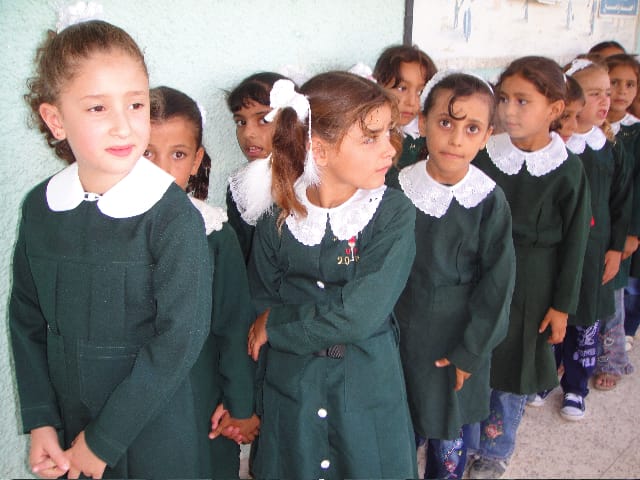
Education as a Family Priority
Education has long held an important place in Palestinian society.
For many families, schooling represents a path toward professional opportunity, financial independence and social mobility.
Parents may make considerable sacrifices to support their children's education.
Schools are also important community institutions.
They provide not only academic instruction but also social relationships, structured routines and opportunities for personal development.
The Palestinian educational landscape includes public schools, private schools, religious institutions and UNRWA schools.
The systems differ across territories and host countries.
In the West Bank, the Palestinian Ministry of Education plays a central role in administering public education.
In Gaza, educational institutions have operated under Palestinian administrative structures and UNRWA, although the war has severely disrupted normal operations.
Palestinian citizens of Israel generally attend schools within Israel's education system, which includes Arabic-language schools and other educational streams.
In neighboring countries, Palestinian refugee children may attend national schools, UNRWA institutions or other educational facilities depending on their legal status and local arrangements.
Educational opportunities are therefore influenced by geography, citizenship and household resources.
Access to schooling may also be affected by transportation, security conditions and the availability of teachers.
In some West Bank communities, students encounter checkpoints or other movement restrictions on their way to school.
In areas affected by violence, parents may worry about their children's safety during the journey.
These difficulties can disrupt attendance and learning.
Nevertheless, education remains a major priority for many Palestinian households.
Universities and the Pursuit of Professional Careers
Palestinian universities have played an important role in intellectual, professional and cultural life.
Institutions such as Birzeit University, An-Najah National University, Bethlehem University and Al-Quds University have educated generations of students.
Their academic programs include medicine, engineering, law, business, education, humanities and social sciences, although available programs differ by institution.
Universities also serve as spaces for political discussion, cultural activities and student organizations.
For many young Palestinians, university represents an opportunity to develop skills and build a future.
Graduation can be an important family achievement.
However, obtaining a degree does not guarantee employment.
Graduates may encounter limited job opportunities, economic instability and difficulties entering certain professions.
Movement restrictions can affect internships, research collaboration and access to workplaces.
International study opportunities may be difficult to pursue because of travel documentation, permit requirements or financial constraints.
Some students seek scholarships abroad.
Others hope to remain near their families and contribute to their communities.
Palestinian citizens of Israel attend Israeli universities and colleges, where Arabic-speaking students participate in a broader educational environment.
Their experiences may involve language adaptation, socioeconomic barriers or questions of identity, but also opportunities for professional development and interaction with students from different communities.
Across the diaspora, Palestinian-origin students participate in universities around the world.
Education can therefore connect Palestinian communities internationally, even when their political circumstances differ.
Teachers and the Importance of Schools
Teachers occupy an important role in Palestinian society.
They are responsible for academic instruction, but they may also provide stability and emotional support during periods of uncertainty.
In communities affected by violence or displacement, schools can offer children a structured environment.
Teachers may notice changes in students' behavior, learning difficulties or signs of distress.
However, educators themselves may be experiencing the same pressures as their students.
They may face financial uncertainty, transportation difficulties or concerns about family safety.
In Gaza, the destruction of educational infrastructure and displacement of teachers and pupils have created immense challenges.
Where formal schooling is interrupted, humanitarian organizations and local educators may attempt to provide temporary learning activities.
Such initiatives can help children maintain basic skills and routines.
They cannot fully replace a functioning education system.
The loss of years of schooling can have long-term consequences for employment, social development and economic recovery.
Rebuilding education requires more than reconstructing classrooms.
It also requires trained teachers, learning materials, safe transportation, psychological support and stable public institutions.
For families, restoring access to education is often one of the most important steps toward rebuilding normal life.
Healthcare and Access to Medical Treatment
Healthcare is another essential part of everyday life.
Palestinian communities rely on a combination of public institutions, private providers, charitable organizations and international agencies.
The structure differs by location.
In the West Bank, hospitals and clinics operate under Palestinian public, private and nonprofit systems.
Specialized medical treatment may sometimes require referral to facilities in East Jerusalem, Israel or abroad.
Travel restrictions and permit requirements can complicate access to certain services.
For patients with serious illnesses, delays can have significant consequences.
East Jerusalem contains major hospitals serving Palestinian patients, including institutions with longstanding roles in specialist care.
Palestinian citizens of Israel are generally covered by Israel's national health insurance system.
However, healthcare access and outcomes can still be influenced by socioeconomic circumstances, geographic location and inequalities in service provision.
In Gaza, healthcare facilities faced longstanding difficulties before October 2023, including shortages of equipment, restrictions affecting medical supplies and problems with electricity and infrastructure.
The subsequent war caused severe damage to healthcare capacity.
Hospitals and clinics faced extraordinary pressures involving mass casualties, displacement, shortages of essential supplies and damage to facilities.
Medical workers have continued providing care under dangerous conditions.
Healthcare is not limited to emergency medicine.
Pregnant women require prenatal care.
Children need vaccinations and routine examinations.
People with diabetes, cancer, heart disease and other chronic conditions require regular treatment.
Mental health services are also essential, particularly for people exposed to violence and prolonged uncertainty.
A functioning healthcare system depends on infrastructure, trained professionals, reliable supplies and the ability of patients to reach treatment safely.
When these conditions are disrupted, the consequences extend far beyond the immediate conflict.
Mental Health and the Effects of Prolonged Insecurity
The psychological effects of conflict are often less visible than physical destruction.
Families may experience grief, anxiety, uncertainty and exhaustion.
Children may struggle with concentration or sleep.
Adults may experience stress related to employment, housing, displacement or concern for relatives.
People who have witnessed violence may require specialized psychological support.
However, mental health experiences vary considerably.
Exposure to conflict does not mean that every person develops a psychiatric disorder.
Individuals respond differently depending on personal history, social support, access to services and other factors.
Family and community networks can provide important emotional support.
Religious institutions, schools and local organizations may also help people cope with difficult circumstances.
Professional mental health services remain important, particularly for individuals experiencing severe or persistent symptoms.
In some communities, stigma surrounding psychological treatment can discourage people from seeking assistance.
Financial barriers and shortages of trained professionals may create additional difficulties.
The need for mental health support is especially significant where conflict has affected multiple generations.
Children who grow up amid insecurity may carry experiences into adulthood.
Parents may struggle to provide reassurance while facing uncertainty themselves.
Addressing these effects requires sustained investment in healthcare, education and community support.
Employment and the Challenge of Economic Independence
For many Palestinian adults, employment is one of the most pressing everyday concerns.
The ability to earn a stable income affects housing, marriage, education and family security.
Economic opportunities vary widely.
The West Bank has businesses in agriculture, construction, manufacturing, retail, tourism, technology and professional services.
However, its economy is affected by movement restrictions, political instability, limitations on trade and access to land and resources.
Some Palestinian workers have historically depended on employment in Israel or Israeli settlements.
Such work can provide higher wages than some locally available jobs.
At the same time, dependence on permits and changing security policies creates uncertainty.
Restrictions on access to work can have immediate consequences for household income.
In Gaza, economic conditions were already extremely difficult before the war that began in October 2023.
High unemployment, restrictions on trade and limited opportunities for private investment affected the economy.
The destruction caused by the war further damaged businesses, agricultural land, infrastructure and employment.
Palestinian citizens of Israel participate in Israel's economy across many sectors.
They work as doctors, nurses, teachers, lawyers, engineers, entrepreneurs and employees in public and private institutions.
Nevertheless, employment disparities and barriers remain, including differences linked to education, location, discrimination and access to economic networks.
In diaspora communities, employment circumstances depend on local laws, citizenship and economic conditions.
Some Palestinians have established successful businesses and professional careers.
Others face restrictions associated with refugee or residency status.
These differences demonstrate why Palestinian economic life cannot be summarized through one unemployment figure or one political explanation.
Small Businesses and Entrepreneurship
Small businesses are an important part of Palestinian society.
Family-owned shops, restaurants, workshops, farms and service businesses provide employment and contribute to local communities.
In cities such as Ramallah, Nablus, Hebron and Bethlehem, entrepreneurs operate in traditional and emerging sectors.
Some businesses focus on local customers.
Others seek regional or international markets.
Technology companies and digital service providers have created opportunities for professionals who can work with clients abroad.
Online commerce can help some businesses reach customers beyond their immediate location.
However, digital connections do not eliminate physical and economic barriers.
Businesses may face difficulties importing equipment, exporting goods, securing investment or maintaining reliable infrastructure.
Political uncertainty can discourage long-term planning.
Tourism-related businesses are particularly vulnerable to instability.
Bethlehem, for example, has an economy in which pilgrimage and tourism play important roles.
Hotels, restaurants, guides, transport providers and souvenir shops depend partly on visitor numbers.
When tourism declines, the consequences can affect entire families.
Entrepreneurship therefore involves both ambition and risk.
For many business owners, success means more than profit.
It may represent the ability to remain in their community, employ relatives or provide opportunities for younger generations.
Women, Work and Changing Expectations
Palestinian women participate in education, employment, healthcare, public administration, journalism, civil society and business.
Their experiences differ considerably across communities.
Some women work in professional occupations while also managing family responsibilities.
Others face barriers to employment because of limited job opportunities, social expectations, childcare responsibilities or transportation difficulties.
Women's participation in higher education has expanded, but educational attainment does not automatically translate into equal access to employment.
In some settings, women face restrictions related to family expectations or legal frameworks.
In others, women have greater opportunities for professional independence.
Economic insecurity can intensify these challenges.
When employment opportunities are scarce, women may encounter additional obstacles entering the labor market.
Conflict and displacement can also increase unpaid care responsibilities.
Women may be responsible for children, older relatives or family members with disabilities while dealing with their own loss of income or housing.
At the same time, Palestinian women have established businesses, led community initiatives and participated in professional organizations.
Their experiences should not be reduced to a single narrative of vulnerability.
They are active participants in shaping family life, economic development and social change.
Young People and the Question of the Future
Young Palestinians face important decisions about education, employment, migration and family life.
Their expectations are influenced by where they live.
A young Palestinian citizen of Israel may consider university studies, professional training or employment in different parts of the country.
A young person in the West Bank may face additional restrictions concerning movement and access to certain opportunities.
A young person in Gaza may have experienced repeated disruptions to schooling and family life.
A Palestinian student in Europe may have opportunities unavailable to relatives in the Middle East.
These differences affect personal ambitions.
Some young Palestinians hope to work in medicine, technology, engineering or education.
Others want to become artists, athletes, journalists or entrepreneurs.
Some consider migration because of limited opportunities or concerns about security.
Others want to remain close to their families and contribute to their communities.
The decision to leave is often complicated.
Migration may offer greater professional opportunities but can involve separation from relatives and cultural surroundings.
Remaining may preserve family connections while limiting economic prospects.
For young people living under occupation or affected by conflict, the future can be especially uncertain.
Yet uncertainty does not eliminate ambition.
It changes the conditions under which ambitions must be pursued.
Sports, Creativity and Social Life
Everyday life is also shaped by recreation, friendships and cultural activities.
Football is widely popular among Palestinians.
Local clubs, school teams and community competitions provide opportunities for participation.
The Palestinian national football team represents Palestine in international competitions.
Palestinian athletes also participate in other sports, although access to facilities, travel and funding can be difficult.
Music, photography, filmmaking and visual art are important forms of creative expression.
Young artists may use social media to share their work internationally.
Some explore political themes.
Others focus on personal relationships, humor, fashion, music or ordinary experiences.
Cafés, restaurants and public spaces can serve as meeting places for friends and families.
In cities where conditions allow, cultural festivals, exhibitions and performances contribute to community life.
These activities may appear ordinary.
That is precisely why they matter.
They demonstrate that Palestinian society is not defined only by its political circumstances.
People continue to seek enjoyment, friendship, creativity and personal fulfillment.
The Role of Community Organizations
Community organizations play important roles across Palestinian society.
Some provide educational programs.
Others support people with disabilities, women, children, older residents or families experiencing financial difficulties.
Local charities may distribute food or provide assistance during emergencies.
Professional associations and cultural organizations contribute to public life.
In areas affected by conflict, humanitarian organizations may help provide essential services.
UNRWA operates education, healthcare and other programs for eligible Palestine refugees in its areas of operation.
Other United Nations agencies, international organizations and local groups provide different forms of support.
However, humanitarian assistance cannot replace stable political institutions and functioning economic systems.
Long-term development requires reliable infrastructure, effective public administration and opportunities for people to support themselves.
Community organizations can help address immediate needs, but they also depend on funding, access and security.
Their work is particularly important when formal systems are disrupted.
The Difference Between Resilience and Normality
Palestinians are frequently described as resilient.
The term is often intended to recognize people's ability to continue living, working and caring for one another despite difficult circumstances.
There are many examples of individuals and communities adapting to hardship.
Teachers continue educating children.
Medical professionals provide treatment.
Families rebuild homes and businesses when circumstances permit.
Artists preserve cultural traditions.
However, resilience should not be used to minimize suffering or suggest that people can indefinitely adapt to insecurity.
The ability to survive difficult conditions does not make those conditions acceptable.
Nor should an entire population be expected to demonstrate exceptional strength simply to carry out ordinary activities.
People need more than the capacity to endure.
They need safety, functioning institutions, access to healthcare and education, economic opportunities and meaningful political rights.
A journalistically responsible account should recognize perseverance without romanticizing hardship.
The goal is not to portray Palestinians as permanently defined by suffering or heroic endurance.
It is to describe the circumstances in which individuals live and the choices available to them.
Everyday Life as a Measure of Political Reality
Political developments are often measured through negotiations, elections, territorial control and security arrangements.
But their consequences can also be measured through ordinary questions.
Can a child attend school safely?
Can a patient reach a hospital?
Can a family obtain permission to build or repair a home?
Can a graduate find employment?
Can relatives living in different places visit one another?
Can a business import materials and sell its products?
Can young people make realistic plans for the future?
These questions reveal how political conditions affect daily life.
They also help distinguish abstract diplomatic arguments from their practical consequences.
For Israelis, security concerns are similarly connected to ordinary life: the ability to travel safely, raise children without fear of attacks and live without the threat of violence.
A sustainable political future must address the security and rights of civilians on both sides.
For Palestinians, the ability to build stable lives is closely connected to questions of freedom of movement, governance, economic development and self-determination.
These issues are not separate from the wider conflict.
They are among its most direct human consequences.
Beyond the Political Headlines
Palestinian society is often described through the language of conflict.
Yet its people continue to experience the ordinary milestones of human life.
Children begin school.
Students graduate.
Couples marry.
Families celebrate religious holidays.
Doctors care for patients.
Business owners plan for the future.
Young people discover their interests and imagine the lives they hope to build.
These experiences differ across Gaza, the West Bank, East Jerusalem, Israel and the diaspora.
Some communities have greater access to stability and opportunity than others.
Many face serious restrictions or the consequences of war.
But their daily lives cannot be understood through political categories alone.
The most important measure of a society's future is not only what happens at negotiating tables or on battlefields, but whether ordinary people can live safely, pursue their ambitions and make meaningful choices about their own lives.
Understanding Palestinian families, schools, workplaces and communities brings the discussion closer to the people behind the headlines.
It also raises an important question: who makes the political decisions that shape their future?
The next chapter examines Palestinian political leadership, the development of the Palestinian national movement, the roles of the Palestine Liberation Organization and Palestinian Authority, and the divisions between Fatah and Hamas.
It also explores the difficult question of political representation: who speaks for Palestinians, and how do Palestinians themselves view their leaders?
Chapter 8 — Palestinian Politics: Leadership, Divisions and Representation
Who Speaks for the Palestinian People?
Who represents the Palestinian people?
At first glance, the question appears straightforward. Palestinians have political leaders, national institutions, political parties and organizations that claim to defend their interests.
Yet the reality is considerably more complicated.
Palestinians live in the West Bank, East Jerusalem, Gaza, Israel and communities across the world. Their legal circumstances, political experiences and expectations differ.
Some participate in Israeli elections. Others live under the Palestinian Authority. Some have experienced governance by Hamas in Gaza, while millions in the diaspora have limited opportunities to participate directly in Palestinian national political institutions.
The Palestine Liberation Organization, or PLO, is internationally recognized as the representative of the Palestinian people.
The Palestinian Authority administers parts of the occupied West Bank.
Fatah remains the dominant political movement within the Palestinian Authority and the PLO.
Hamas emerged as a major political and armed rival, winning the 2006 Palestinian legislative elections and taking control of Gaza in 2007.
These organizations are connected to Palestinian national politics, but they are not interchangeable.
Nor should any of them automatically be understood as representing the views of every Palestinian.
Understanding Palestinian politics requires examining how these institutions developed, what powers they possess and why political divisions have remained unresolved.
The Origins of the Palestinian National Movement
Palestinian political organization developed long before the establishment of Israel in 1948.
During the late Ottoman period and the British Mandate, Palestinian Arab leaders formed political associations, organized demonstrations, published newspapers and challenged policies they believed threatened their communities.
The expansion of Zionist immigration and institutions, British support for a Jewish national home and the broader rise of Arab nationalism influenced the development of Palestinian political identity.
Political leadership during the British Mandate was divided among prominent families, local organizations and competing ideological movements.
The Arab Higher Committee, established in 1936, became an important institution during the Arab Revolt against British rule and Zionist immigration.
However, internal rivalries, British repression and the consequences of the revolt weakened Palestinian political institutions.
The war of 1948 transformed the situation.
Hundreds of thousands of Palestinians became refugees.
The West Bank came under Jordanian control, while Gaza came under Egyptian administration.
No independent Palestinian state emerged.
Palestinian political organization subsequently developed across different territories and exile communities.
For many Palestinians, the central political objectives became national self-determination, recognition, the future of refugees and the establishment of political institutions capable of representing a dispersed population.
The Establishment of the Palestine Liberation Organization
The Palestine Liberation Organization was founded in 1964 following an initiative supported by the Arab League.
Its creation reflected growing efforts to establish a formal Palestinian national institution.
The PLO was intended to organize Palestinian political representation and advance national aspirations.
Its early leadership operated within a regional environment in which Arab governments exercised considerable influence over Palestinian affairs.
The Six-Day War of 1967 changed the political situation.
Israel's capture of the West Bank, East Jerusalem and Gaza intensified the Palestinian national movement and strengthened organizations advocating independent Palestinian political action.
Over time, Palestinian guerrilla movements gained influence within the PLO.
Fatah, associated with Yasser Arafat and other Palestinian activists, became the organization's dominant faction.
In 1969, Arafat became chairman of the PLO Executive Committee.
Under his leadership, the PLO developed into the principal institution of the Palestinian national movement.
It established diplomatic relationships, political offices and organizational structures in different countries.
The PLO also became associated with armed struggle against Israel.
Some constituent organizations carried out attacks against Israeli civilians, including hijackings and other acts of terrorism.
These actions generated international condemnation and contributed to Israel's refusal for many years to recognize the organization as a legitimate negotiating partner.
The PLO's history therefore includes both its development as a national representative institution and the involvement of factions in violence against civilians.
A responsible historical account must examine both dimensions.
Yasser Arafat: National Symbol and Controversial Leader
Yasser Arafat became one of the most recognizable figures in modern Palestinian history.
For supporters, he symbolized the struggle for Palestinian national identity and international recognition.
For critics, his leadership was marked by authoritarian practices, political miscalculations and the PLO's association with armed attacks.
Arafat helped transform the Palestinian national movement from a cause largely managed through neighboring Arab governments into an internationally visible political movement.
In 1974, the Arab League recognized the PLO as the sole legitimate representative of the Palestinian people.
That same year, Arafat addressed the United Nations General Assembly.
The PLO subsequently received observer status at the United Nations.
These developments strengthened its diplomatic position.
However, the organization continued to face major challenges.
The PLO's presence in Jordan contributed to confrontation with the Jordanian monarchy during the events known as Black September in 1970–1971.
Following its expulsion from Jordan, the organization established a major presence in Lebanon.
Armed activity from southern Lebanon, Israeli military operations and the Lebanese Civil War created further instability.
In 1982, Israel invaded Lebanon, and the PLO leadership eventually relocated from Beirut to Tunis.
Despite these setbacks, Arafat remained the central figure in Palestinian national politics.
His leadership later moved toward diplomatic negotiations with Israel.
This transition would become one of the most important developments in the history of the Palestinian national movement.
From Armed Struggle to Diplomatic Recognition
During the 1970s and 1980s, the PLO's political position gradually evolved.
The organization's original charter had rejected Israel's legitimacy and called for the liberation of Palestine.
Over time, some Palestinian leaders increasingly considered diplomatic approaches and the possibility of a state in part of historic Palestine.
The First Intifada, which began in December 1987, marked another turning point.
The uprising developed in the occupied Palestinian territories and involved demonstrations, strikes, civil disobedience and confrontations with Israeli forces.
It also included violence, and Israeli responses resulted in substantial casualties and human rights concerns.
The uprising drew international attention to Palestinian life under occupation.
It also demonstrated that political activity inside the West Bank and Gaza could influence the broader national movement.
In November 1988, the Palestinian National Council proclaimed the State of Palestine.
The PLO also moved toward accepting the diplomatic framework associated with United Nations Security Council Resolutions 242 and 338.
In December 1988, Arafat explicitly recognized Israel's right to exist and renounced terrorism in statements connected to the opening of dialogue with the United States.
These developments helped create conditions for later negotiations.
In 1993, Israel and the PLO exchanged letters of mutual recognition.
The PLO recognized Israel's right to exist in peace and security and committed itself to a peaceful negotiating process.
Israel recognized the PLO as the representative of the Palestinian people.
The exchange marked a major diplomatic shift.
Two movements that had previously rejected one another's political legitimacy now entered direct negotiations.
The Oslo Accords and the Palestinian Authority
The Oslo peace process began publicly in September 1993 with the signing of the Declaration of Principles in Washington, D.C.
The agreement established a framework for limited Palestinian self-government and further negotiations.
The Palestinian Authority was created in 1994.
It was intended to administer specified civilian and security responsibilities during an interim period.
The Palestinian Authority and the PLO serve different functions.
The PLO represents the Palestinian people in international diplomacy and includes claims to representation extending beyond the occupied territories.
The Palestinian Authority was established to govern parts of the West Bank and Gaza under arrangements negotiated with Israel.
The distinction matters.
The Palestinian Authority is not a fully sovereign government exercising independent control over all Palestinian territory.
Its powers are limited by the Oslo agreements, the continuing occupation and subsequent political developments.
Under the 1995 Interim Agreement, the West Bank was divided into Areas A, B and C.
The Palestinian Authority assumed varying degrees of responsibility in Areas A and B.
Israel retained control over Area C and extensive security powers across the territory.
The Oslo process generated considerable optimism.
Supporters hoped that limited self-government would lead to a permanent agreement concerning borders, Jerusalem, refugees, settlements and security.
However, the final-status agreement never materialized.
Settlement expansion, attacks by Palestinian armed groups, Israeli security measures, political opposition and failures of negotiation contributed to the breakdown of confidence.
The Palestinian Authority became a lasting institution, but the temporary political framework remained unresolved.
Fatah: The Dominant National Movement
Fatah was founded in the late 1950s by Palestinian activists, including Yasser Arafat and Mahmoud Abbas.
The movement emerged as a secular Palestinian nationalist organization advocating national liberation.
It became the dominant faction within the PLO.
Fatah's political history includes armed struggle, international diplomacy and participation in Palestinian governing institutions.
During the Oslo process, Fatah leaders played central roles in negotiations and the establishment of the Palestinian Authority.
Following Arafat's death in 2004, Mahmoud Abbas became the movement's most prominent leader.
Abbas was elected president of the Palestinian Authority in January 2005.
Fatah has generally supported a negotiated two-state solution, although its members and factions have differed over strategy and the peace process.
The movement has also faced significant criticism.
Palestinian critics have raised concerns about corruption, political patronage, institutional weakness and the concentration of power among senior leaders.
The absence of regular national elections has intensified questions about democratic accountability.
Supporters of Fatah emphasize its historical role in building Palestinian national institutions, securing diplomatic recognition and maintaining international relationships.
Critics argue that the movement has struggled to achieve Palestinian statehood and has failed to renew its leadership through competitive elections.
Both the movement's historical importance and the criticism of its governance are necessary to understanding its present position.
Hamas: From Islamist Movement to Political and Armed Power
Hamas was established in 1987 during the First Intifada.
Its name is an Arabic acronym for the Islamic Resistance Movement.
The organization emerged from Palestinian Islamist networks associated with the Muslim Brotherhood.
Unlike Fatah's secular nationalist origins, Hamas developed an Islamist political identity.
It combined religious and political activity, social services and armed operations.
Hamas's founding charter of 1988 contained antisemitic conspiracy claims and called for Israel's destruction.
The organization later issued a new political document in 2017 that accepted the establishment of a Palestinian state on the 1967 lines as a formula for national consensus, without recognizing Israel's legitimacy.
The 2017 document did not amount to recognition of Israel.
Hamas has carried out suicide bombings, rocket attacks, shootings and other attacks against Israeli civilians.
The organization is designated as a terrorist organization by the United States, the European Union, the United Kingdom and several other governments.
Its military wing, the Izz ad-Din al-Qassam Brigades, has been responsible for numerous armed operations.
Hamas also developed political institutions and social-service networks.
These activities helped it gain support among some Palestinians, particularly those dissatisfied with Fatah's governance and the lack of progress in negotiations with Israel.
However, support for Hamas has varied over time and should not be assumed to reflect the views of all Palestinians.
Its use of violence against civilians, authoritarian practices and restrictions on political freedoms have generated serious criticism.
The Hamas-led attacks on Israel on October 7, 2023, including the deliberate killing of civilians and hostage-taking, marked a devastating escalation.
Those acts must be distinguished from the rights and experiences of Palestinian civilians, who do not bear collective responsibility for the actions of armed organizations.
The 2006 Elections: A Political Turning Point
On January 25, 2006, Palestinians in the West Bank and Gaza voted in legislative elections.
The election became a defining moment in Palestinian political history.
Hamas participated under the electoral list name Change and Reform.
The movement won 74 of the 132 seats in the Palestinian Legislative Council.
Fatah won 45 seats.
Other parties and independent candidates obtained the remaining seats.
The results gave Hamas a parliamentary majority.
Importantly, a majority of parliamentary seats did not mean that Hamas had received a majority of all votes cast.
The electoral system combined proportional representation and district contests, allowing the distribution of seats to differ from the popular vote.
International observers generally regarded the election as competitive and broadly reflective of voters' choices.
The result surprised many international governments.
Several factors contributed to Hamas's electoral success.
Voters expressed dissatisfaction with corruption and governance problems associated with Fatah.
Some supported Hamas because of its social-service activities or political positions.
Others viewed the election as an opportunity to challenge the established leadership.
Voting for Hamas did not necessarily mean endorsing every aspect of its ideology or armed activity.
The election result nevertheless created a major political crisis.
Israel, the United States and the European Union faced difficult questions concerning relations with a government led by an organization they designated as terrorist.
International conditions for engagement focused on renouncing violence, recognizing Israel and accepting previous agreements.
Hamas rejected key elements of these demands.
The resulting confrontation weakened the Palestinian political system and contributed to the events that followed.
The 2007 Division Between Gaza and the West Bank
Tensions between Hamas and Fatah escalated after the 2006 election.
Disputes concerned security forces, control of government institutions, international recognition and the distribution of political power.
Efforts to establish a functioning unity government repeatedly encountered obstacles.
Violence between rival Palestinian factions increased.
In June 2007, Hamas defeated Fatah-aligned forces in Gaza and took control of the territory.
The confrontation involved serious abuses and killings.
The Palestinian political system became divided.
Hamas exercised de facto control in Gaza.
The Palestinian Authority, dominated by Fatah, continued governing parts of the West Bank.
The division had profound consequences.
It created separate governing structures and security institutions.
It complicated national elections and parliamentary activity.
It weakened the ability of Palestinian leaders to negotiate from a unified political position.
It also affected public services, civil liberties and the lives of ordinary Palestinians.
Repeated reconciliation agreements failed to produce a durable reunification.
The Palestinian division became one of the central obstacles to political reform and national representation.
Mahmoud Abbas and the Crisis of Democratic Legitimacy
Mahmoud Abbas was elected president of the Palestinian Authority in January 2005.
His original presidential term was four years.
However, no subsequent presidential election has taken place.
The Palestinian Legislative Council elected in 2006 also ceased functioning as an effective national parliament following the Fatah-Hamas division.
In 2018, the Palestinian Constitutional Court ordered the dissolution of the council, a decision that was itself politically contested.
The absence of regular elections has raised fundamental questions about democratic legitimacy.
Abbas has continued exercising presidential authority, including through decrees.
His administration has faced criticism over restrictions on political freedoms, arrests of critics, institutional weakness and the lack of accountability.
Human rights organizations have also documented abuses by Palestinian security forces.
Supporters of Abbas argue that political divisions, Israeli restrictions and the unresolved conflict make elections and effective governance exceptionally difficult.
Critics contend that these obstacles do not justify indefinite rule without renewed electoral authorization.
The debate concerns more than one leader.
It raises questions about how Palestinian institutions can become accountable to the population they claim to represent.
October 2026: Another Election Postponement
The problem of political representation remained unresolved in October 2026.
Palestinian presidential and legislative elections had been scheduled for November 2026.
On October 10, President Mahmoud Abbas postponed them until September 11, 2027.
He cited security and political obstacles, including conditions in Gaza, Israeli military operations, settlement expansion and restrictions affecting the West Bank and East Jerusalem.
The decision followed earlier promises to renew Palestinian democratic institutions.
The postponement extended an already extraordinary gap between national elections.
The last presidential election had taken place in 2005.
The last legislative election had taken place in 2006.
The announcement renewed criticism of the Palestinian Authority's democratic legitimacy.
It also highlighted genuine logistical and political questions.
Could voting be organized safely and freely in Gaza?
How could Palestinians in East Jerusalem participate?
Would rival factions accept the outcome?
Could independent candidates campaign without intimidation?
Would elected representatives have meaningful governing authority under the existing territorial arrangements?
These questions cannot be resolved by announcing an election date alone.
But postponement also carries costs.
Without a credible electoral process, citizens have limited opportunities to replace leaders, change policies or hold governing institutions accountable.
The longer this situation continues, the more difficult it becomes to claim that existing leadership reflects the current political preferences of Palestinian society.
Political Rights Under Different Authorities
Palestinian political rights vary significantly according to location.
In parts of the West Bank, the Palestinian Authority exercises limited self-government, while Israel retains extensive military and administrative powers.
Residents face restrictions connected to occupation alongside concerns about the accountability of Palestinian institutions.
In Gaza, Hamas's rule since 2007 involved restrictions on opposition activity, freedom of expression and political competition.
The war following October 2023 severely disrupted the territory's institutions and raised further questions about future governance.
Palestinian residents of East Jerusalem generally hold Israeli permanent residency rather than citizenship.
They may participate in Jerusalem municipal elections but generally cannot vote in Israeli national elections unless they become citizens.
Palestinian citizens of Israel can vote in Israeli national elections and serve in the Knesset.
However, they do not vote in Palestinian Authority elections merely by virtue of their Palestinian identity.
Palestinians living in Jordan, Lebanon, Europe and elsewhere have different citizenship and political rights depending on their countries of residence.
Many have no direct electoral role in selecting the leadership of the Palestinian Authority.
This fragmentation creates a difficult problem for national representation.
A movement may claim to speak for Palestinians as a people, while its governing institutions have authority over only part of that population.
The Role of the Palestinian Diaspora
The Palestinian diaspora has played an important role in national politics.
Many early PLO leaders operated outside the West Bank and Gaza.
Refugee communities in Jordan, Lebanon, Syria and elsewhere contributed to political organizations, cultural institutions and advocacy movements.
The Palestinian National Council was intended to serve as a broad representative body within the PLO.
However, the extent to which it reflects the full diversity of Palestinians has been debated.
Its membership arrangements, electoral processes and relationship to the PLO leadership have faced criticism.
The difficulty of organizing democratic representation across countries is substantial.
Palestinians abroad live under different legal systems.
Some are citizens of their countries of residence.
Others are refugees or stateless.
Their political priorities may differ from those of Palestinians living under occupation.
Nevertheless, questions about refugees, return, compensation and national identity concern diaspora communities directly.
A representative Palestinian political system must therefore consider not only the West Bank and Gaza but also Palestinians living elsewhere.
This creates a challenge that is both practical and constitutional.
Who is entitled to vote?
Which institutions should represent Palestinians abroad?
How should competing political positions be accommodated?
And how can political representation be renewed without excluding communities whose histories are central to the Palestinian national movement?
Other Palestinian Political Movements
Palestinian politics is not limited to Fatah and Hamas.
Other movements have played important roles in the national struggle and in political debate.
The Popular Front for the Liberation of Palestine, or PFLP, was founded in 1967 and developed a Marxist-Leninist orientation.
Its history includes armed attacks and international hijackings.
The organization is designated as terrorist by several governments, including the United States.
The Democratic Front for the Liberation of Palestine, or DFLP, emerged in 1969 following a split from the PFLP.
It developed its own left-wing political program and has participated in Palestinian national institutions.
Palestinian Islamic Jihad is another armed Islamist organization.
It has carried out attacks against Israel and is designated as terrorist by the United States, European Union and other authorities.
Other political groups, independent candidates, civil society activists and local movements have advocated different approaches to governance and national rights.
Some emphasize secular democracy.
Others support socialism, religious politics, nonviolent resistance or particular diplomatic strategies.
Palestinian society also includes people who do not identify strongly with any established political faction.
The prominence of Fatah and Hamas should therefore not obscure the existence of wider political diversity.
Security Cooperation and Public Criticism
One of the most controversial aspects of Palestinian Authority governance is security cooperation with Israel.
Under arrangements associated with the Oslo process, Palestinian and Israeli security institutions developed mechanisms for coordination.
Supporters argue that cooperation can help prevent violence, maintain public order and reduce the risk of wider confrontation.
Israeli authorities have regarded Palestinian security cooperation as an important component of security policy.
Palestinian Authority officials have also defended aspects of coordination as necessary for stability and institutional responsibilities.
However, many Palestinians criticize the arrangements.
Some view them as placing Palestinian security forces in a position of helping maintain the occupation rather than protecting Palestinian political rights.
Others object to arrests, restrictions on dissent or the perceived prioritization of institutional survival over democratic accountability.
The debate reflects a broader contradiction.
The Palestinian Authority exercises limited governing powers but does not control the territory as a sovereign state.
Its institutions are expected to provide public administration and security while operating within a political system shaped by Israeli military control.
This arrangement has created tensions between governance, national aspirations and public legitimacy.
The Question of Corruption and Accountability
Concerns about corruption and institutional accountability have affected public confidence in Palestinian leadership.
Criticism has included allegations of patronage, misuse of public resources, lack of transparency and unequal access to political influence.
These concerns have been raised by Palestinian civil society organizations, journalists, researchers and international observers.
The absence of regular elections has made accountability more difficult.
Independent journalism and civil society organizations can help scrutinize public institutions.
However, journalists and activists have faced pressure and restrictions under different Palestinian authorities.
Hamas's governance in Gaza has also been criticized for authoritarian practices, restrictions on opposition and lack of independent oversight.
Corruption allegations should be investigated individually rather than treated as proof of wrongdoing by every official.
Nevertheless, the broader institutional question is important.
Effective governance requires transparent public finances, independent courts, credible elections and protection of civil liberties.
These principles matter regardless of the political position a government takes toward Israel.
National aspirations do not eliminate the need for accountability to citizens.
The Impact of October 7 and the War in Gaza
The Hamas-led attacks on October 7, 2023, transformed the political environment.
Armed attackers killed civilians and took hostages in Israel.
The attacks constituted grave violations of international law.
Israel's subsequent military campaign in Gaza caused extensive civilian casualties, displacement and destruction.
The war also raised profound questions about Palestinian political leadership.
Hamas's decisions had devastating consequences for civilians.
The Palestinian Authority struggled to demonstrate that it could offer an effective alternative political framework.
International governments debated the future of Gaza's governance, reconstruction and security.
Palestinians themselves faced questions about representation and political accountability during an extraordinary humanitarian crisis.
The circumstances also intensified the need to distinguish armed organizations from civilian populations.
Palestinian civilians cannot be treated as collectively responsible for Hamas's actions.
Likewise, criticism of the Palestinian Authority does not imply that Palestinians have forfeited their right to political representation or self-determination.
The future of Palestinian governance cannot be separated from the protection of civilians, the restoration of functioning institutions and the development of a credible political process.
Can Palestinian Political Unity Be Rebuilt?
Efforts to reconcile Fatah and Hamas have continued for years.
Agreements have been announced in different regional capitals, including Cairo and Doha.
These initiatives have frequently promised unified institutions, elections and cooperation.
Implementation has repeatedly failed.
The obstacles are substantial.
Fatah and Hamas have different political ideologies and strategies.
They maintain competing organizational structures and security interests.
Their relationships with regional and international governments differ.
There are also unresolved questions about armed groups, recognition of Israel, previous agreements and control of public institutions.
Political unity cannot simply be declared.
It requires agreement on the rules of government, the use of force, constitutional authority and public accountability.
A credible process would also need to include political actors beyond the two dominant movements.
For Palestinians who do not support either Fatah or Hamas, the possibility of wider political competition is especially important.
The question is not merely whether rival leaders can share power.
It is whether Palestinians can establish institutions through which their political preferences are freely expressed.
Representation, Self-Determination and the Future
Palestinian political representation remains one of the central unresolved questions of the conflict.
The PLO holds international recognition as the representative of the Palestinian people.
The Palestinian Authority exercises limited administrative powers in parts of the West Bank.
Hamas became a major political and armed force, but its authority and actions remain deeply contested.
Millions of Palestinians live outside the territories governed by these institutions.
Meanwhile, the absence of regular national elections has weakened democratic legitimacy.
These circumstances create a fundamental challenge.
How can a dispersed population exercise political self-determination through institutions that are divided, territorially restricted and insufficiently accountable?
International recognition alone cannot answer that question.
Neither can armed power.
Effective representation requires institutions that protect political freedoms, permit meaningful competition, respect human rights and allow citizens to influence decisions affecting their lives.
It also requires addressing the external constraints imposed by occupation, conflict and unresolved sovereignty.
The right of Palestinians to self-determination is not dependent on support for a particular political party or leader.
Nor should Palestinian identity be equated with the ideology or actions of an armed organization.
Political leaders may change.
Governments may lose legitimacy.
Movements may divide.
But the people whose interests they claim to represent remain diverse individuals with different beliefs, experiences and expectations.
Understanding Palestinian politics means recognizing the difference between a people, a national movement, a governing authority and an armed organization. They are not the same thing, and none should automatically be treated as speaking for every Palestinian.
The future of Palestinian political representation will depend on more than negotiations between established leaders.
It will require credible institutions, democratic accountability, respect for civil liberties and a political framework in which Palestinians can meaningfully participate in decisions about their future.
The next chapter moves beyond political institutions to examine how Palestinian identity is understood across generations.
It explores family memory, displacement, cultural belonging and the hopes and uncertainties of younger Palestinians growing up in very different circumstances.
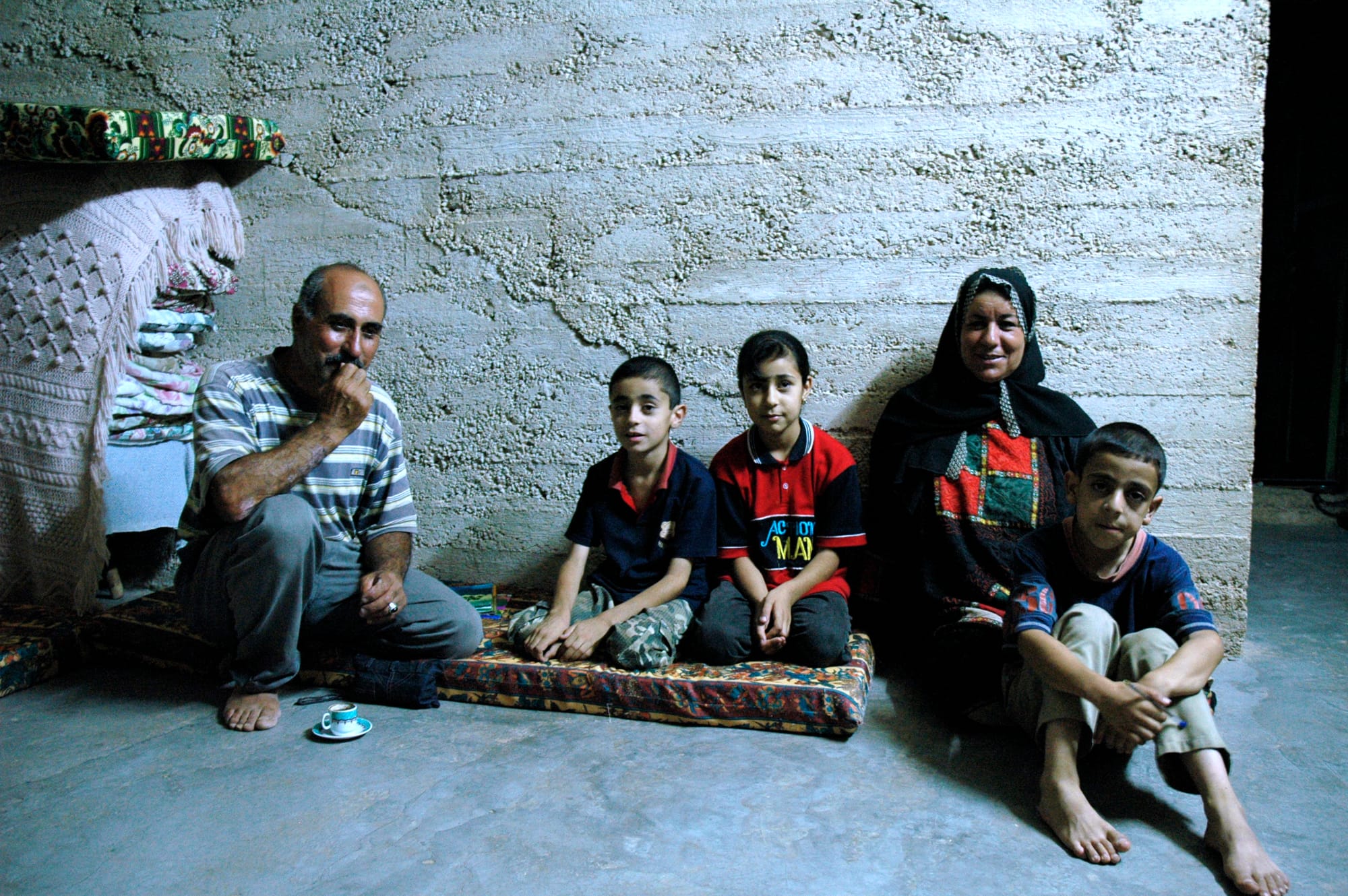
Chapter 9 — Voices Across Generations: Memory, Identity and the Future
A History Carried Through Generations
History is often presented through dates, political decisions, wars and agreements.
For many Palestinians, however, history is also something passed from one generation to the next.
It exists in family photographs, remembered neighborhoods, traditional recipes, old documents and conversations between grandparents and grandchildren.
It may be connected to a house that no longer exists, a village that has changed beyond recognition or a city that family members have never been able to visit.
For some, Palestinian identity is shaped by direct experiences of displacement and conflict.
For others, it develops through stories inherited from parents and grandparents.
Still others understand their identity primarily through language, culture, religion, family relationships or their place within a wider Palestinian community.
These experiences differ across generations.
A person who remembers the war of 1948 may understand the Palestinian national story differently from someone who grew up during the First Intifada.
A young adult who experienced the Second Intifada may have different expectations from a teenager whose childhood has been shaped by the wars in Gaza.
A Palestinian born in Chile, Jordan or Norway may feel connected to the same history while living under entirely different political circumstances.
There is no single Palestinian generational experience.
Yet the relationship between memory, identity and the future remains an important thread connecting Palestinian communities.
Understanding these connections requires looking beyond political institutions and examining how people interpret their own lives.
The Generation That Remembered 1948
The events of 1948 remain central to Palestinian collective memory.
During the war surrounding Israel's establishment, approximately 700,000 Palestinians fled or were expelled from their homes.
Hundreds of Palestinian villages were depopulated, and many communities were permanently dispersed.
For those who experienced the events directly, the consequences were immediate.
Families lost homes, agricultural land, businesses and familiar social environments.
Some crossed into neighboring territories or countries.
Others remained within the borders of the new State of Israel but were unable to return to their former homes.
The experiences of displacement varied.
Some families fled advancing fighting.
Others were expelled.
Some left temporarily, expecting to return when the violence ended.
For many, that return never became possible.
The generation that experienced 1948 directly is now extremely old, and relatively few people with firsthand memories remain.
This gives their testimonies particular historical importance.
Oral history projects, archives and family recordings have attempted to preserve these accounts.
However, memory and historical documentation serve different purposes.
Personal testimony can reveal how an event was experienced, while archival records, photographs and independent research help establish the wider historical circumstances.
Both are valuable.
For descendants of displaced families, stories of 1948 may be among the first ways they encounter Palestinian history.
A grandparent's description of a former village can create a sense of connection to a place that younger relatives have never seen.
The memory of 1948 is therefore not confined to those who experienced it.
It has become part of the identity of later generations.
The Generation Shaped by 1967
The Six-Day War of June 1967 created another major turning point.
Israel captured the West Bank, East Jerusalem and Gaza, bringing these territories under Israeli military occupation.
Hundreds of thousands of Palestinians were displaced during or shortly after the war.
Some were refugees for a second time.
For Palestinians who lived through 1967, the event could represent another rupture in family and community life.
The war changed political authority, borders and access to places that had previously been part of ordinary routines.
Families living on different sides of the Jordan River could become separated.
Residents of the West Bank and Gaza encountered a new system of military administration.
In East Jerusalem, changes to the city's legal and administrative status affected residency, housing and political rights.
The period after 1967 also brought new developments.
Israeli settlement construction expanded in occupied territory.
Palestinian political organizations gained greater prominence.
The PLO became increasingly central to national representation.
Economic and social relationships between Israel and the occupied territories changed over time.
For people who came of age during this period, political identity could be shaped by both the memory of 1948 and the direct experience of occupation.
The meaning of 1967 also differed between communities.
Palestinians living in Israel faced different legal circumstances from those in the occupied territories.
Palestinians abroad encountered the war through news, family correspondence and concern for relatives.
These differences influenced how the conflict was understood and remembered.
The First Intifada Generation
In December 1987, the First Intifada began in the occupied Palestinian territories.
The uprising developed through demonstrations, strikes, boycotts, civil disobedience and confrontations with Israeli forces.
It also involved violence.
Israeli military responses included arrests, curfews and other security measures, and substantial numbers of Palestinians were killed or injured during the uprising.
For young Palestinians at the time, the First Intifada became a formative political experience.
Students participated in demonstrations.
Schools and universities faced disruptions.
Local committees organized community activities and assistance.
Women contributed to grassroots organizations, healthcare initiatives and political mobilization.
The uprising also brought new international attention to Palestinian life under occupation.
It demonstrated that political activity within the West Bank and Gaza could influence regional diplomacy.
The period helped create conditions for the negotiations that eventually produced the Oslo Accords.
However, the First Intifada was not experienced identically by everyone.
Some Palestinians participated actively.
Others opposed particular tactics or concentrated on protecting their families and maintaining their livelihoods.
For children, the uprising could mean interrupted education and exposure to confrontation.
For adults, it could bring political hope alongside economic and personal hardship.
The generation that experienced the First Intifada later witnessed the establishment of the Palestinian Authority.
For some, the Oslo process represented the possibility of a political breakthrough.
For others, the agreements produced disappointment when the anticipated final settlement failed to emerge.
These experiences continue to influence attitudes toward political leadership and negotiations.
The Oslo Generation: Growing Up with Expectations of Peace
The 1990s introduced a different political atmosphere.
The Oslo Accords created expectations that Israelis and Palestinians might reach a negotiated settlement.
The establishment of the Palestinian Authority was presented as a step toward self-government.
International governments supported institution-building and economic development projects.
For some Palestinian families, the period brought cautious optimism.
The possibility of a future Palestinian state became part of political discussions and public expectations.
Schools, universities and public institutions operated within a changing administrative environment.
Young people growing up during this period encountered both the language of peace and the continuing realities of occupation.
Israeli settlements continued to expand.
Final-status questions remained unresolved.
Restrictions on movement and episodes of violence persisted.
The assassination of Israeli Prime Minister Yitzhak Rabin in 1995, attacks by Palestinian armed groups and political opposition on both sides undermined confidence in the process.
The gap between diplomatic promises and everyday realities became increasingly significant.
For a generation raised with expectations of political progress, the failure to achieve a final agreement contributed to disillusionment.
Some continued to support negotiations.
Others began to question whether the existing diplomatic framework could deliver meaningful change.
The Oslo generation therefore inherited a contradiction.
It had been encouraged to imagine a future of statehood and cooperation, but it continued to live within unresolved territorial and political arrangements.
The Second Intifada and a Generation of Insecurity
The Second Intifada began in 2000 amid the breakdown of the peace process and escalating tensions.
The uprising developed into a prolonged period of violence.
Palestinian armed groups carried out suicide bombings, shootings and other attacks, including deliberate attacks on Israeli civilians.
Israel responded with major military operations, arrests, closures and other security measures.
Large numbers of Palestinians and Israelis were killed.
The violence affected everyday life on both sides.
For Palestinian children and teenagers, the period could involve curfews, disrupted schooling, military incursions and uncertainty about movement.
For Israeli children and families, suicide bombings and other attacks created fear in buses, restaurants and public spaces.
The experiences were not identical, but civilian insecurity was a defining feature of the period.
The Second Intifada also contributed to major changes in the West Bank.
Israel expanded its separation barrier, arguing that it was necessary to prevent attacks.
The barrier's route, particularly where it extends inside occupied territory, became the subject of international legal controversy.
The International Court of Justice concluded in its 2004 advisory opinion that construction of the barrier and its associated regime in occupied Palestinian territory violated international law in the circumstances examined.
For Palestinians living near the barrier, its construction could affect access to land, schools, workplaces and relatives.
The political consequences of the Second Intifada were profound.
Trust between Israeli and Palestinian societies deteriorated.
The peace process lost credibility among many people.
For a generation that had grown up during the optimism of Oslo, the renewed violence represented a major disappointment.
Gaza's Younger Generations
Gaza's younger generations have experienced particularly severe disruptions.
Many residents were born after the establishment of the Palestinian Authority.
Some were children when Israel withdrew its permanent ground forces and settlements from Gaza in 2005.
Others grew up after Hamas took control of the territory in 2007.
They experienced the effects of border restrictions, economic hardship and repeated military confrontations.
The wars and major escalations of 2008–2009, 2012, 2014 and 2021 affected different stages of childhood and adolescence.
The Hamas-led attacks on Israel on October 7, 2023, and the subsequent war in Gaza brought an even more devastating period of violence and destruction.
For children and young adults, repeated conflict can interrupt education, employment and family life.
A student may lose access to a university.
A young professional may see a workplace destroyed.
A family may experience repeated displacement.
The psychological effects of prolonged insecurity can be substantial.
Yet it would be misleading to describe Gaza's younger generations only through suffering.
Before the latest war, young people in Gaza studied medicine, engineering, business, languages and the arts.
They developed online businesses, produced music, played sports and participated in cultural organizations.
Many maintained friendships and professional connections abroad through digital platforms.
Some hoped to travel for education or employment.
Others wanted to remain and contribute to their communities.
Their ambitions were diverse.
The destruction of educational institutions and economic infrastructure has made those ambitions far more difficult to pursue.
Reconstruction will therefore require attention not only to buildings and public services but also to the opportunities available to an entire generation.
Palestinian Youth in the West Bank
Young Palestinians in the West Bank experience a different political and social environment.
They live in cities, villages, refugee camps and rural communities with varying levels of access to services and employment.
Many pursue university education.
Others enter family businesses, agricultural work or professional training.
Their everyday lives may involve social activities, friendships, digital communication and aspirations familiar to young people elsewhere.
At the same time, movement restrictions, political instability and violence can shape their opportunities.
Students may encounter difficulties traveling between towns.
Young workers may depend on permits or employment opportunities affected by changing security conditions.
In some communities, encounters with Israeli military forces or settlers contribute to insecurity.
Political dissatisfaction is also significant.
Young Palestinians have grown up without regular national elections.
Many have never had an opportunity to vote in a Palestinian presidential or legislative election.
They may question the legitimacy of established leaders or express frustration with the lack of political progress.
However, young Palestinians do not share one political position.
Some support a two-state solution.
Others favor different political arrangements or emphasize equal rights within a single state.
Some participate in activism.
Others focus on education, employment or family responsibilities.
A serious examination of Palestinian youth must allow for this diversity rather than presenting one generation as politically uniform.
Palestinian Citizens of Israel: Identity Across Generations
Palestinian citizens of Israel experience questions of identity within a different legal and political framework.
They possess Israeli citizenship and participate in Israeli institutions.
They may vote in national elections, attend Israeli universities and work in public or private professions.
At the same time, many maintain a Palestinian national or cultural identity.
This can create complex relationships between citizenship, language, history and belonging.
Older generations may remember the period of military administration over most Arab citizens of Israel, which lasted until 1966.
Later generations experienced changes in education, employment and political participation.
Younger Palestinian citizens of Israel often move between Arabic-speaking family environments and Hebrew-speaking professional or educational settings.
Some identify strongly with Palestinian nationalism.
Others emphasize local, religious, Arab or Israeli civic identities.
Many combine several forms of belonging.
Political attitudes also vary.
Some advocate greater equality and integration within Israeli institutions.
Others emphasize collective Palestinian rights or criticize the state's definition of its national character.
Experiences of discrimination and inequality can influence these views.
At the same time, shared workplaces, universities and neighborhoods create opportunities for relationships between Jewish and Arab citizens.
The experiences of Palestinian citizens of Israel demonstrate that identity is not necessarily a choice between two mutually exclusive categories.
For some individuals, citizenship and national belonging coexist in complicated but meaningful ways.
The Diaspora Generation: Belonging Without Direct Experience
Millions of people of Palestinian origin live outside the Palestinian territories.
Some families migrated before 1948.
Others left because of war, displacement, economic circumstances or later regional conflicts.
Their descendants may have been born in Jordan, Lebanon, Chile, the United States, Canada, Norway or other countries.
For these generations, Palestinian identity may develop without direct experience of life in the region.
A person may never have visited Jerusalem, Bethlehem, Jaffa or Haifa.
They may speak another language more fluently than Arabic.
Their daily concerns may involve schools, careers and political institutions in their country of citizenship.
Nevertheless, family history can remain important.
Traditional meals, religious celebrations, music and family stories may preserve a sense of connection.
Some young people become interested in their heritage through conversations with relatives.
Others encounter Palestinian history through literature, documentaries or cultural organizations.
For some, political developments strengthen their sense of identity.
For others, Palestinian heritage remains primarily a personal or cultural connection.
Diaspora identity is not static.
It changes as families adapt to new societies and as younger generations reinterpret inherited traditions.
A Palestinian Chilean, Palestinian American or Palestinian Norwegian may feel fully connected to the country where they were born while also identifying with Palestinian ancestry.
These identities do not necessarily conflict.
They illustrate the multiple forms that belonging can take.
The Role of Grandparents and Family Storytelling
Grandparents often occupy an important place in the transmission of family history.
In families affected by displacement, older relatives may preserve knowledge about former homes, neighborhoods and communities.
Their stories can include descriptions of ordinary life before major political events.
They may remember schools, markets, religious celebrations or family businesses.
These details are important because they help younger generations imagine the past as a lived society rather than simply a sequence of conflicts.
Family storytelling can also preserve experiences that were never formally recorded.
However, oral history requires careful interpretation.
Memories can change over time.
Different relatives may remember the same event differently.
Traumatic experiences can affect how people recall particular moments.
Historians therefore compare personal accounts with archival documents, photographs, maps and other evidence.
This does not diminish the value of oral testimony.
It helps establish the relationship between personal memory and documented history.
For journalism, this distinction is essential.
An interview can reveal what an event meant to an individual.
Independent research can help establish what occurred more broadly.
Both approaches contribute to a fuller understanding of the past.
Women as Keepers of Memory and Agents of Change
Women have played significant roles in transmitting Palestinian cultural and family history.
In many households, mothers and grandmothers have passed down recipes, embroidery techniques, songs and stories.
Women have also participated in education, journalism, healthcare, business and political movements.
Their contributions should not be reduced to domestic or cultural roles.
During the First Intifada, women were involved in grassroots committees, community organizing and political activity.
Palestinian women have contributed to literature, historical research, human rights advocacy and professional institutions.
They have also challenged social inequalities within their own communities.
Generational differences are visible in expectations concerning women's education, employment and independence.
Older generations may have grown up with different social norms from those experienced by younger women.
Access to higher education and professional opportunities has changed family expectations in many communities.
However, opportunities remain unequal.
Conflict, economic instability, legal restrictions and social pressures can limit women's choices.
Women in Gaza, the West Bank, Israel and the diaspora face different circumstances.
A Palestinian woman working as a physician in Israel may encounter challenges very different from those of a woman displaced by war in Gaza or a refugee living in Lebanon.
Their experiences cannot be represented through a single narrative.
Women are not only preserving Palestinian identity.
They are also helping redefine what that identity means for future generations.
The Meaning of Home for Those Who Cannot Return
The concept of home carries particular significance in Palestinian family memory.
For some, home is the place where they currently live.
For others, it includes an ancestral town or village from which relatives were displaced.
These understandings may coexist.
A family living in Jordan for generations may regard Jordan as home while maintaining memories of a Palestinian village.
A Palestinian living in Europe may feel attached to both the country of residence and a broader Palestinian identity.
For refugees and their descendants, the question of return remains politically and emotionally important.
However, individual attitudes differ.
Some seek recognition of a right to return to ancestral homes.
Others emphasize compensation, citizenship, security or the possibility of living in a future Palestinian state.
Some prioritize the ability to visit places connected to family history.
These preferences are not necessarily identical.
The legal and political questions surrounding refugee return remain unresolved.
They involve international law, property claims, citizenship, Israeli security concerns and the terms of any future political settlement.
For individuals, however, the issue can also be deeply personal.
It concerns the relationship between memory, identity and the possibility of making choices about where to live.
Social Media and the New Generation of Palestinian Voices
Digital communication has changed how younger Palestinians express themselves.
Social media allows individuals to share photographs, videos, personal reflections and political opinions with international audiences.
It can connect people across borders that are difficult to cross physically.
A student in the West Bank may communicate with relatives in Europe.
An artist in the diaspora may collaborate with musicians in the Middle East.
A journalist may document events and publish material without relying entirely on traditional media organizations.
These opportunities have increased the visibility of individual Palestinian experiences.
However, digital platforms also create challenges.
Information can spread rapidly without adequate verification.
Images may circulate without reliable dates or locations.
Personal testimony may be presented without context.
Propaganda, misinformation and manipulated material can influence public understanding.
Journalists must therefore distinguish between authentic eyewitness documentation, personal interpretation and independently verified facts.
Social media can provide valuable evidence and access to perspectives that might otherwise remain unheard.
It cannot replace careful reporting.
For young Palestinians, digital communication is also more than a political instrument.
It is part of ordinary social life.
People use online platforms for entertainment, education, business, friendships and creative expression.
Reducing their digital presence to political activism would overlook this wider reality.
Memory, Identity and Historical Disagreement
Collective memory plays an important role in national identity.
However, memory is not the same as a complete historical account.
Communities often emphasize events that have particular emotional or political significance.
Palestinian remembrance of the Nakba is central to national identity.
Israeli remembrance of independence, the Holocaust and wars involving threats to national security occupies a similarly important place within Jewish Israeli society.
These memories reflect different historical experiences.
They can also influence how later generations interpret contemporary events.
Understanding the existence of different national memories does not mean that every historical claim is equally supported.
The mass displacement of Palestinians in 1948 is a documented historical fact.
So is the establishment of Israel and the war fought against neighboring Arab armies.
The historical record also includes attacks against civilians, direct expulsions, Jewish displacement and competing political decisions.
Responsible journalism must examine evidence rather than merely repeat national narratives.
It should also avoid treating personal memory as invalid simply because it is subjective.
A person's recollection may not establish every historical detail, but it can reveal the lasting human meaning of an event.
The challenge is to respect personal experiences while maintaining rigorous standards of verification.
What Do Younger Palestinians Want?
It is tempting to describe an entire younger generation through one political aspiration.
But Palestinian youth are not a uniform group.
Their priorities depend on location, family circumstances, education, economic opportunities and personal beliefs.
Some are deeply involved in political activism.
Others focus primarily on professional development, family responsibilities or opportunities to travel.
Some support Palestinian statehood through a negotiated two-state solution.
Others favor a single democratic state with equal rights for everyone.
Still others express skepticism toward existing political movements or diplomatic strategies.
These differences matter.
A young person living in Gaza may prioritize physical safety, housing and access to education.
A university graduate in Ramallah may be concerned about employment and freedom of movement.
A Palestinian citizen of Israel may focus on equality, public services and political representation.
A Palestinian living in Europe may be interested in preserving cultural heritage or maintaining family connections.
These priorities can overlap.
Political rights, economic opportunity and personal security are often closely connected.
However, no political party or activist movement can be assumed to speak for every young Palestinian.
Understanding the aspirations of younger generations requires listening to individuals rather than assigning them predetermined positions.
The Importance of Listening to Different Voices
Personal testimony can bring depth to journalism.
An interview with an older Palestinian who remembers displacement can illuminate the human consequences of historical events.
A conversation with a teacher can reveal the challenges of maintaining education during instability.
A discussion with a business owner may explain how movement restrictions or economic uncertainty affect livelihoods.
A young professional may describe the tension between remaining close to family and pursuing opportunities abroad.
A Palestinian citizen of Israel may explain the complexity of national identity and citizenship.
A member of the diaspora may describe how family heritage is maintained across generations.
These perspectives can help readers understand Palestinian society beyond political institutions.
However, individual experiences should not be presented as representative of an entire population.
A single interview cannot establish what all Palestinians believe.
Journalists should seek diversity across geography, age, religion, gender, socioeconomic background and political opinion.
They should also verify factual claims and provide context.
Listening is important, but responsible journalism requires more than collecting compelling stories.
It requires understanding how individual experiences fit within broader historical and social realities.
The Responsibility of Future Generations
Each generation inherits circumstances shaped partly by decisions made before it was born.
Palestinian young people have inherited the consequences of displacement, occupation, political division and repeated conflict.
Israeli young people have inherited a different but connected history involving national independence, wars, security concerns and the consequences of policies pursued by successive governments.
Neither population can change the past.
Both will be affected by decisions made about the future.
The question is whether younger generations will have meaningful opportunities to shape those decisions.
For Palestinians, this includes questions about democratic representation, political rights, education, employment and self-determination.
For Israelis, it includes questions about security, democratic institutions, relations with Palestinians and the future of the territories occupied in 1967.
These issues are deeply interconnected.
A sustainable political arrangement cannot depend solely on the interests of established leaders.
It must also consider the lives of people who will inherit its consequences.
Education, access to reliable information and opportunities for civic participation can help younger generations make informed decisions.
However, meaningful participation also requires institutions capable of responding to public demands.
Without accountability and political rights, the ability of young people to influence their future remains limited.
Between Inherited Memory and Personal Choice
Palestinian identity has been shaped by historical events that continue to influence family and community life.
The Nakba, the Six-Day War, the Intifadas, the Oslo process and subsequent conflicts form part of the collective historical background.
But individuals do not experience these events in the same way.
A grandparent may understand identity through memories of a former home.
A parent may associate it with political change and economic responsibility.
A young adult may connect it to education, citizenship, digital culture or professional ambitions.
A member of the diaspora may experience belonging through language, food, family history or occasional visits.
These forms of identity can coexist.
They may also change over time.
Cultural continuity does not require every generation to think alike.
Younger people can preserve family history while questioning inherited political assumptions.
They can value traditions while developing new ways of expressing themselves.
They can feel connected to Palestinian identity while building lives in different countries.
The future of Palestinian identity will not be determined only by the memories of the past. It will also be shaped by the choices, opportunities and experiences of generations still growing up.
Understanding those generations means recognizing both the history they inherit and the individuality of the lives they hope to build.
Looking Toward the Future
The stories of Palestinian generations reveal a society shaped by continuity and change.
Historical memory remains important.
Family relationships connect people across borders.
Cultural traditions provide a sense of belonging.
Education, employment and migration create new opportunities and challenges.
Political conflict continues to influence daily life, but it does not fully define personal identity.
The future will depend partly on whether Palestinians can exercise meaningful political rights, participate in accountable institutions and build secure lives.
It will also depend on broader developments in Israeli-Palestinian relations, regional diplomacy and international engagement.
No single generation can resolve every historical dispute.
No individual perspective can represent the experiences of an entire people.
But understanding the diversity of Palestinian voices can help move public discussion beyond simplified political categories.
Behind historical dates and diplomatic negotiations are people who remember, question, adapt and imagine different futures.
Their experiences deserve to be understood on their own terms.
The final chapter examines the political and legal questions that remain unresolved: Palestinian self-determination, Israeli and Palestinian security, borders, refugees, Jerusalem and the possibility of a peaceful future.
It asks what a sustainable settlement would need to address and why the choices made in the coming years will matter for generations on both sides.
Chapter 10 — The Palestinian Future: Rights, Security, Peace and Self-Determination
A Future Still Undecided
For more than a century, the political future of the land between the Mediterranean Sea and the Jordan River has been shaped by competing national movements, wars, international diplomacy and unresolved questions of sovereignty.
For Palestinians, the central issue remains self-determination: the ability to participate meaningfully in deciding how they are governed, where they can live and what political rights they possess.
For Israelis, questions of national security, sovereignty and the protection of a Jewish national home remain central.
These concerns are connected through a history that has produced profound suffering, fear and mistrust.
The establishment of Israel in 1948 created a sovereign state for the Jewish national movement while hundreds of thousands of Palestinians were displaced.
The Six-Day War of 1967 brought the West Bank, East Jerusalem and Gaza under Israeli occupation.
The Oslo Accords of the 1990s created limited Palestinian self-government but did not produce a final political settlement.
Subsequent decades brought settlement expansion, Palestinian political divisions, attacks against civilians, military operations and repeated failures of diplomacy.
The Hamas-led attacks on Israel on October 7, 2023, and the devastating war in Gaza that followed deepened the human and political crisis.
The consequences continue to shape debates over security, governance, reconstruction and the future of Palestinian society.
Yet the future is not predetermined.
Political arrangements are created through decisions, negotiations, institutions and the actions of societies.
The question is whether a framework can be established that protects the rights and security of both Palestinians and Israelis.
Any serious discussion of the future must begin by identifying the problems that remain unresolved.
The Right to Palestinian Self-Determination
Self-determination is a central principle of international law.
It refers to the right of peoples to determine their political status and pursue their economic, social and cultural development.
The principle is recognized in the Charter of the United Nations and in major international human rights treaties.
The Palestinian people's right to self-determination has been repeatedly affirmed by United Nations bodies and the International Court of Justice.
For Palestinians, self-determination is connected to several practical questions.
Who has the authority to govern Palestinian communities?
Can Palestinians elect leaders who exercise meaningful political power?
Can they control their economic development and public institutions?
Can they move between communities without restrictions that are incompatible with their rights?
Can they determine their political future without indefinite external military control?
These questions extend beyond the formal recognition of a state.
Political independence requires institutions capable of governing, protecting rights and delivering public services.
It also requires a legal framework that defines the responsibilities of public authorities and provides mechanisms for accountability.
For Palestinians living in the West Bank, the continuing Israeli occupation places substantial limits on political sovereignty.
In Gaza, repeated war, political division and restrictions on movement and trade have created additional obstacles.
Palestinians in East Jerusalem face a different legal environment, while Palestinian citizens of Israel exercise citizenship rights within the Israeli state.
The diaspora raises further questions concerning national representation and participation.
A future political settlement must therefore address the rights of a people living under very different circumstances.
Self-determination is not simply a diplomatic phrase.
It concerns the ability of individuals and communities to influence decisions that shape their lives.
Israeli Security and the Need for Protection
No discussion of the Palestinian future can be separated from Israeli security.
Israel has experienced wars, rocket attacks, suicide bombings, shootings, hostage-taking and other violence directed against its population.
The October 7, 2023, attacks demonstrated the devastating consequences of failures to protect civilians.
For many Israelis, security concerns are not abstract political arguments.
They are connected to personal experiences of violence, fear and loss.
Israeli governments have argued that military control, border restrictions and security operations are necessary to prevent attacks.
Any future political arrangement will need credible measures to protect Israeli civilians.
However, security cannot be understood solely through military strength or territorial control.
Long-term security also depends on political stability, effective institutions, enforceable agreements and the reduction of conditions that contribute to recurring conflict.
Measures adopted in the name of security must comply with international law.
Collective punishment, deliberate attacks on civilians, hostage-taking and other prohibited acts cannot be justified by political or military objectives.
The same legal principles apply to Palestinian armed groups and Israeli state authorities according to their respective obligations.
Palestinians also have legitimate security needs.
They require protection from armed attacks, unlawful violence, displacement and violations of their rights.
A durable settlement cannot provide meaningful security to one population while leaving the other in permanent insecurity.
The challenge is to develop arrangements that protect civilians on both sides without denying either people's fundamental rights.
The Two-State Solution
The two-state solution has been the principal framework supported by much of the international community for resolving the Israeli-Palestinian conflict.
Under this approach, Israel and an independent Palestinian state would exist alongside one another.
The proposed Palestinian state would generally be based on the West Bank and Gaza, with East Jerusalem as its intended capital, subject to negotiated arrangements.
The precise borders, security provisions and status of Jerusalem would need to be agreed.
The concept is rooted in decades of international diplomacy.
United Nations Security Council Resolutions 242 and 338 helped establish the framework for negotiations following the 1967 war.
The Oslo process later created limited Palestinian self-government while leaving final-status questions unresolved.
Supporters of a two-state solution argue that it could allow both Israelis and Palestinians to exercise national self-determination.
Israel would retain its sovereignty as a state with a Jewish national character.
Palestinians would establish an independent state with political institutions accountable to their population.
However, the practical obstacles are substantial.
Israeli settlements have expanded across the West Bank.
The territory is divided by administrative boundaries, security arrangements and infrastructure.
East Jerusalem remains contested.
Gaza and the West Bank have experienced separate political administrations.
Questions concerning refugees, water resources, borders and security have not been resolved.
The viability of a Palestinian state also depends on territorial continuity and meaningful sovereignty.
A state composed of disconnected areas with limited control over its borders, resources and movement would raise serious questions about political independence.
For these reasons, support for the two-state solution as a diplomatic principle does not automatically establish that it can be implemented under present conditions.
Its feasibility depends on political decisions and practical arrangements that have not yet been achieved.
The Settlement Question
Israeli settlements in the West Bank are among the most difficult issues in any future agreement.
Since 1967, successive Israeli governments have permitted or supported the establishment and expansion of civilian communities in occupied territory.
Settlement development has been influenced by security arguments, religious beliefs, historical connections and political ideology.
For some Israelis, communities in the West Bank represent a connection to places of profound Jewish historical and religious significance.
For others, settlements are viewed as strategically important or as an expression of national rights.
Many Israelis also oppose settlement expansion, arguing that it undermines the possibility of a negotiated peace.
For Palestinians, settlements are closely associated with land loss, restrictions on movement and the fragmentation of territory intended for a future Palestinian state.
The prevailing international legal position is that Israeli settlements in occupied Palestinian territory violate international law.
The International Court of Justice reaffirmed this assessment in its July 2024 advisory opinion.
Israel disputes significant elements of the international legal analysis.
Any negotiated settlement would need to address the future of settlements and their residents.
Possible approaches discussed in previous negotiations have included evacuation of certain settlements, territorial exchanges and arrangements concerning the status of residents.
Each raises difficult questions.
Evacuation would involve major political and social consequences for Israeli residents.
Territorial exchanges would require agreement on land of comparable value and on the rights of affected populations.
Allowing settlers to remain under a different sovereign authority would raise questions concerning citizenship, security and equality before the law.
There is no simple solution.
However, the settlement question cannot be avoided if the objective is a viable and durable political agreement.
Jerusalem: One City, Competing National Aspirations
Jerusalem holds profound significance for Jews, Christians and Muslims.
It is also claimed as a capital by both Israelis and Palestinians.
Israel regards Jerusalem as its united capital.
Palestinians seek East Jerusalem as the capital of a future Palestinian state.
The international community generally does not recognize Israel's annexation of East Jerusalem.
The city's future is complicated by its religious sites, residential neighborhoods, municipal administration and political symbolism.
The Old City contains places central to three major religions.
The Western Wall is among Judaism's most important prayer sites.
The Al-Aqsa Mosque compound is of profound importance to Muslims.
The Church of the Holy Sepulchre is central to Christian traditions.
Any political arrangement must protect religious freedom and access to holy sites.
It must also address the rights of residents.
For Palestinian families in East Jerusalem, questions concerning housing, residency and public services are immediate practical concerns.
For Israeli residents, security and municipal governance are similarly important.
Past diplomatic proposals have considered different arrangements.
These have included dividing sovereignty between predominantly Jewish and Palestinian neighborhoods, establishing special arrangements for holy sites and creating forms of shared administration.
No final agreement has been reached.
Jerusalem demonstrates why the conflict cannot be resolved through borders alone.
The city combines national aspirations, religious heritage and the everyday rights of residents.
A sustainable settlement would need to address all three dimensions.
Palestinian Refugees and the Question of Return
The Palestinian refugee question originated primarily in the displacement associated with the 1948 war.
Approximately 700,000 Palestinians fled or were expelled from their homes.
Further displacement occurred during the 1967 war.
Today, millions of descendants of people displaced in 1948 are registered with UNRWA under its eligibility rules.
Their legal status and circumstances vary considerably.
Some hold citizenship in countries such as Jordan.
Others live under more restrictive arrangements.
Many have established lives in countries far from the places their families originally left.
The question of return remains one of the most emotionally and politically significant issues in the conflict.
Palestinians frequently refer to United Nations General Assembly Resolution 194, adopted in December 1948.
Paragraph 11 addresses the return of refugees wishing to live at peace with their neighbors and compensation for those not returning, as well as certain property losses.
Its interpretation and implementation remain disputed.
Palestinian positions have often emphasized recognition of refugee rights, return and compensation.
Israeli governments have raised concerns about the demographic and security consequences of large-scale return to Israel.
The question also involves property claims, family histories and the legal status of individuals.
Possible arrangements discussed in diplomatic negotiations have included return to a future Palestinian state, limited return to Israel, compensation, resettlement options and international financial mechanisms.
These proposals differ significantly in their treatment of rights and responsibilities.
A durable solution would need to address both legal claims and the practical circumstances of affected people.
It would also need to consider individual preferences.
Not all Palestinian refugees have identical aspirations.
Some seek to return to ancestral communities.
Others prioritize citizenship, compensation, family reunification or the ability to live securely where they already reside.
The refugee question cannot be resolved simply by assuming that all displaced families want the same outcome.
The Future of Gaza
Gaza presents an exceptionally difficult challenge.
Its population has experienced repeated wars, severe restrictions, political division and extensive destruction.
The conflict following October 7, 2023, caused catastrophic civilian suffering and damage to housing, infrastructure, healthcare and education.
The territory's future depends on several interconnected issues.
The first is civilian protection.
Residents require safety, reliable access to essential supplies and conditions that allow families to rebuild their lives.
The second is governance.
A durable political arrangement requires institutions capable of administering public services, maintaining public order and exercising authority under the rule of law.
The third is reconstruction.
Rebuilding housing, hospitals, schools, water systems and electricity networks requires substantial resources and sustained access to materials.
Economic recovery will also depend on the ability of businesses to operate and people to work.
The fourth is security.
Israel seeks guarantees against future attacks, while Palestinians require protection from further violence and unlawful restrictions.
The fifth is political integration.
A long-term arrangement that permanently separates Gaza from the West Bank would raise difficult questions about Palestinian national unity and statehood.
International proposals have considered different models of transitional administration, Palestinian governance reform and international involvement.
However, reconstruction cannot succeed through financial investment alone.
Without security, accountable institutions and a credible political future, rebuilt infrastructure may remain vulnerable to renewed conflict.
Gaza's future is therefore inseparable from the wider Israeli-Palestinian question.
Palestinian Political Reform and Democratic Representation
The future of Palestinian society also depends on the quality of its political institutions.
The Palestinian Authority was established in the 1990s as part of an interim arrangement.
Yet the anticipated final settlement did not emerge.
Political division between Fatah and Hamas has further weakened national institutions.
The last Palestinian presidential election took place in 2005.
The last legislative election took place in 2006.
This prolonged absence of national elections has raised serious concerns about democratic legitimacy and accountability.
Palestinians have differing views about existing leaders and political movements.
Some support Fatah.
Others have supported Hamas or alternative factions.
Many express dissatisfaction with the established political system.
A credible democratic framework would require more than holding elections.
It would need protection of political freedoms, independent electoral administration, accountable security institutions and functioning courts.
Opposition parties and independent candidates would need opportunities to organize and campaign.
Journalists and civil society organizations would need the freedom to scrutinize public authorities.
The role of Palestinians in the diaspora would also require consideration.
The PLO claims representation of the Palestinian people as a whole, while the Palestinian Authority exercises more limited territorial responsibilities.
Renewing political legitimacy may therefore require institutional reform at more than one level.
External conditions matter as well.
Elections cannot be fully meaningful if elected institutions lack the authority to govern or if large parts of the population cannot participate safely.
Nevertheless, political difficulties do not eliminate the importance of democratic accountability.
Palestinian self-determination includes the right to influence and replace political leaders.
A One-State Alternative?
As confidence in the two-state solution has weakened, some Palestinians, Israelis and international commentators have discussed alternative political models.
One proposal is a single democratic state in which Israelis and Palestinians would possess equal citizenship and political rights.
Supporters argue that such a system could address inequality and provide a common constitutional framework for everyone living between the Mediterranean Sea and the Jordan River.
They also argue that settlement expansion and territorial fragmentation have made partition increasingly difficult.
However, a one-state arrangement raises major challenges.
Jewish Israelis and Palestinians have distinct national identities and historical experiences.
Many Jewish Israelis regard a sovereign Jewish state as essential to national self-determination and security.
Many Palestinians seek independent statehood after decades without sovereignty.
A shared state would require agreement on citizenship, constitutional protections, national symbols, language, security institutions and political representation.
It would also need to address refugee claims and the rights of existing residents.
There are profound concerns about whether such a system could emerge peacefully under conditions of deep mistrust.
The principle of equal rights is fundamental, but agreement on that principle does not automatically resolve competing national aspirations.
A one-state proposal therefore requires the same rigorous examination as a two-state solution.
Its supporters must explain how political equality, national identity and security could function in practice.
Confederation and Other Political Models
Another approach discussed by some researchers and peace advocates is confederation.
Under a confederal model, Israel and Palestine could remain separate political entities while sharing certain institutions or arrangements.
These might concern movement, economic cooperation, infrastructure, environmental management or access to particular areas.
Some proposals envision two states with agreed rights of residence across borders, subject to legal and security arrangements.
Others consider joint institutions for issues that cannot easily be separated geographically.
The attraction of such models lies partly in the reality that Israelis and Palestinians have deeply interconnected territories, economies and historical relationships.
Water resources, transportation networks, environmental systems and religious sites do not necessarily follow political boundaries.
However, confederation would require substantial cooperation.
Both sides would need functioning institutions and the ability to enforce agreements.
There would also need to be public acceptance of shared responsibilities.
Security concerns, citizenship rights and the status of settlers and refugees would remain difficult.
Confederation is therefore not an easy compromise between one state and two states.
It is a distinct political model with its own institutional demands.
The value of examining alternatives lies in understanding the range of possible arrangements rather than assuming that any proposal automatically provides a solution.
International Recognition and Diplomacy
International recognition is another important part of the Palestinian political future.
In 1988, the Palestinian National Council proclaimed the State of Palestine.
Since then, numerous countries have recognized Palestinian statehood.
In 2012, the United Nations General Assembly granted Palestine non-member observer State status.
This status increased Palestine's participation in parts of the international system but did not make it a full United Nations member.
Full UN membership requires a recommendation from the Security Council and approval by the General Assembly.
Recognition can carry diplomatic and legal significance.
It may strengthen international representation and reinforce the principle of Palestinian self-determination.
However, recognition alone does not establish effective control over territory.
It does not automatically resolve borders, security arrangements or the authority of Palestinian institutions.
International diplomacy has also been influenced by the United States, European governments, Arab states and other regional powers.
Egypt and Jordan maintain peace treaties with Israel.
Several other Arab states established or normalized diplomatic relations with Israel through the Abraham Accords and related agreements.
These regional developments have created new diplomatic relationships.
However, normalization between Israel and Arab governments does not itself resolve Palestinian national claims.
A sustainable regional settlement would need to consider Palestinian rights and political aspirations alongside the security and diplomatic interests of neighboring states.
The Role of International Law
International law provides an essential framework for evaluating the conflict.
It establishes rules concerning the use of force, military occupation, protection of civilians, human rights and self-determination.
The Fourth Geneva Convention contains protections for civilians in occupied territory.
International human rights law addresses fundamental rights, including equality, liberty, political participation and freedom from discrimination.
International humanitarian law prohibits deliberate attacks on civilians and hostage-taking.
It also regulates military operations, detention and the treatment of protected persons.
These obligations apply according to the legal responsibilities of the actors involved.
In July 2024, the International Court of Justice issued an advisory opinion concerning Israel's policies and practices in the occupied Palestinian territory.
The Court concluded that Israel's continued presence in the occupied Palestinian territory was unlawful and identified obligations concerning ending that presence and addressing settlement-related policies.
Israel rejected the Court's central conclusions.
Although advisory opinions are not directly enforceable judgments between states, they are authoritative statements of international legal interpretation.
International law does not provide a complete political blueprint for peace.
It cannot by itself determine every practical arrangement concerning security, governance and borders.
Nevertheless, it establishes standards against which political decisions and military actions can be assessed.
A future agreement cannot be evaluated solely by whether political leaders accept it.
Its compatibility with fundamental rights and legal obligations also matters.
Economic Development and the Possibility of Independence
Political independence is closely connected to economic conditions.
A future Palestinian state or other governing arrangement would require functioning public institutions, infrastructure and opportunities for employment.
Economic development depends on reliable transportation, access to markets, electricity, water, telecommunications and investment.
Palestinian businesses have demonstrated capacity in agriculture, manufacturing, technology, tourism and professional services.
However, political instability, restrictions on movement and access, and uncertainty concerning land and resources have constrained development.
In Gaza, reconstruction needs are particularly extensive.
In the West Bank, territorial fragmentation and restrictions affecting trade and land use create major obstacles.
Economic growth would also require transparent public administration and effective financial management.
Corruption, weak institutions and political patronage can undermine development regardless of external conditions.
Education and professional training will remain important.
Palestinian universities have educated generations of professionals, but employment opportunities have not always matched qualifications.
A stable political environment could create greater opportunities for entrepreneurship, regional trade and international cooperation.
However, economic projects cannot substitute for political rights.
Investment alone cannot resolve questions of sovereignty, citizenship or equality.
Development is most sustainable when people have both economic opportunities and meaningful control over the institutions that shape their lives.
Water, Infrastructure and Shared Resources
Some of the most important issues in a future settlement are practical rather than symbolic.
Water resources are a major example.
Israelis and Palestinians depend on interconnected water systems, including groundwater resources in the West Bank.
Access, extraction and distribution are governed through arrangements shaped by geography, existing infrastructure and political agreements.
Water availability is affected by climate conditions, population growth, infrastructure and administrative control.
In Gaza, damage to water and sanitation systems, groundwater contamination and restrictions affecting infrastructure have contributed to serious humanitarian concerns.
Reliable electricity is equally important.
Hospitals, schools, businesses and households depend on stable power supplies.
Transportation networks, waste management and telecommunications also require long-term planning.
Environmental challenges do not stop at political borders.
Pollution, water scarcity and climate-related pressures affect communities across the region.
These issues create potential areas for cooperation.
Shared infrastructure agreements could improve living conditions and reduce certain sources of tension.
However, cooperation must be based on clear responsibilities and fair access.
Technical solutions cannot fully overcome political inequality or insecurity.
They can nevertheless form part of a broader framework for sustainable coexistence.
Education, Historical Memory and Future Generations
The way future generations understand the conflict will influence the possibility of peace.
Israeli and Palestinian children grow up with different national histories and collective memories.
For many Jewish Israelis, the establishment of Israel is connected to national independence, Jewish historical identity and the need for security after centuries of persecution.
For Palestinians, the Nakba and subsequent occupation are central to understanding displacement and the struggle for self-determination.
These experiences are not interchangeable.
However, education can help young people understand the historical experiences of others without requiring them to abandon their own identity.
Historical education should distinguish documented facts from political interpretations.
It should also acknowledge violence against civilians and the consequences of decisions made by political and military leaders.
Teaching history responsibly does not mean avoiding difficult subjects.
It means examining evidence, recognizing complexity and resisting dehumanization.
Independent journalism has a similar responsibility.
Reporting should distinguish between governments, armed organizations and civilian populations.
It should avoid portraying entire communities as collectively responsible for violence.
It should also give attention to people whose experiences are often absent from official political narratives.
The ability of future generations to understand one another will not by itself resolve the conflict.
But public debate becomes more constructive when it is based on accurate information and recognition of the humanity of those affected.
Civil Society and the People Beyond Politics
Political leaders play central roles in negotiations.
Yet civil society organizations, educators, medical professionals, business owners and community leaders also influence social relationships.
Israeli and Palestinian organizations have worked on issues including human rights, healthcare, dialogue, historical documentation and support for families affected by violence.
Their approaches differ.
Some advocate a particular political settlement.
Others focus on immediate humanitarian needs or the protection of legal rights.
There are also organizations that bring together Israelis and Palestinians who have lost relatives to the conflict.
Their work can create spaces for dialogue that are difficult to establish through official political institutions.
However, civil society initiatives face significant challenges.
Participants may encounter public criticism, restrictions on movement, security concerns or accusations of legitimizing an unjust political situation.
Dialogue is not a substitute for legal rights or political change.
Nor should individuals be expected to reconcile personal losses simply because cooperation is desirable.
Nevertheless, relationships between communities can help challenge stereotypes and provide opportunities for practical cooperation.
Civil society cannot resolve the conflict alone.
It can contribute to the social conditions in which a political agreement becomes more sustainable.
What Would a Sustainable Peace Require?
A sustainable settlement would need to address several interconnected issues.
It would require credible protection for Israeli and Palestinian civilians.
It would need to provide Palestinians with meaningful political rights and self-determination.
It would have to address the legal status of occupied territory and the future of Israeli settlements.
It would need arrangements concerning Jerusalem, refugees, borders and access to shared resources.
It would also require accountable political institutions and mechanisms for implementing agreements.
These challenges cannot be solved independently.
Security arrangements that ignore political rights may fail to create lasting stability.
Political agreements that do not address security concerns may lack public support.
Economic development without accountable institutions may produce limited benefits.
International recognition without effective governance may leave fundamental problems unresolved.
A durable settlement therefore requires more than a declaration of peace.
It requires practical commitments, legal protections, implementation mechanisms and the willingness of political leaders to make difficult decisions.
It also requires recognizing that the populations affected are not homogeneous.
Israelis hold different views about territory, security and national identity.
Palestinians disagree about political leadership, diplomatic strategy and the form of a future settlement.
A credible peace process must account for these differences rather than assuming that either society speaks with one voice.
The Future Through the Eyes of Ordinary People
Political debates often focus on leaders and governments.
But the consequences of political decisions are experienced by ordinary people.
For a Palestinian parent, the future may mean the ability to raise children without fear of violence or displacement.
For a young graduate, it may mean finding employment without having to leave family and community behind.
For a farmer, it may mean reliable access to land and water.
For a patient, it may mean reaching a hospital without dangerous delays.
For a Palestinian refugee, it may involve recognition, compensation, citizenship or the possibility of return.
For an Israeli parent, the future may mean confidence that children can attend school, travel and live without fear of attacks.
For Israeli families affected by terrorism or war, it may involve security, accountability and the hope that violence will not continue into another generation.
These aspirations are not identical, and the political circumstances of the two populations are different.
Yet they reveal why the conflict cannot be understood only through territory and diplomacy.
Its consequences are measured in the opportunities available to people and the security of their everyday lives.
The ultimate test of any political settlement will be whether it improves those conditions.
Beyond the Headlines: Understanding the Palestinian Future
Throughout this article, Palestinian identity has been examined through history, religion, culture, politics and everyday life.
The story begins long before the establishment of modern national movements.
It includes communities that developed under Ottoman and British rule.
It includes the displacement of 1948 and the occupation that began in 1967.
It includes refugee communities, political organizations, religious traditions, cultural achievements and the experiences of people living across different countries.
It also includes internal diversity.
Palestinians do not share one political ideology, religious practice or understanding of their future.
Some live under occupation.
Others are citizens of Israel or other countries.
Some maintain strong connections to ancestral villages.
Others identify primarily with the cities and countries where they were born.
Their experiences are shaped by history, but they are not defined solely by it.
The future of Palestinian society remains connected to difficult questions of rights, sovereignty, security and political representation.
These questions cannot be answered through simplified narratives or assumptions about collective responsibility.
They require historical understanding, legal analysis and attention to the people whose lives are affected.
Palestinian self-determination and Israeli security should not be treated as goals that can only exist at one another's expense. A sustainable future requires arrangements that protect the rights, dignity and safety of both peoples.
Whether that future emerges through two states, a different political framework or another negotiated arrangement remains uncertain.
What is clear is that prolonged conflict has imposed enormous human costs.
A durable settlement will require more than the absence of fighting.
It will require institutions that protect rights, opportunities for people to build stable lives and political arrangements capable of earning public confidence.
Final Reflection — A People Beyond a Political Narrative
Who are the Palestinians?
They are not a single political movement, a government or a population defined only by conflict.
They are families, communities and individuals connected through overlapping histories, cultural traditions and forms of national identity.
They include Muslims and Christians, people with different political beliefs, urban and rural communities, refugees and citizens of different countries.
They include teachers, farmers, doctors, entrepreneurs, artists, journalists, students and parents.
Their experiences differ according to geography, citizenship, generation and personal circumstances.
Some have lived their entire lives in the same town.
Others belong to families dispersed across continents.
Some carry direct memories of displacement.
Others know those events only through family stories and historical records.
Understanding Palestinians requires acknowledging the historical events that shaped their circumstances while also recognizing the diversity of their present lives.
It means examining the Nakba, occupation, political divisions and unresolved national aspirations without reducing every individual to those experiences.
It means recognizing cultural achievements, religious traditions, professional ambitions and the ordinary relationships that sustain communities.
It also means distinguishing the actions of political leaders and armed organizations from the people they claim to represent.
The future remains uncertain.
But a serious understanding of Palestinian society begins with a principle that applies equally to Israelis and Palestinians:
Every individual deserves to be understood as a human being whose life is more complex than the political headlines written about them.
That understanding does not resolve historical disputes or remove the need for accountability.
It provides a necessary foundation for informed journalism, responsible public debate and any future in which both peoples can live with dignity, rights and security.
This is the purpose of looking beyond the headlines.
And it is where a more complete understanding begins.
Sources & Further Reading
This article draws on historical documentation, international legal materials, humanitarian reporting and research concerning Palestinian society, identity and political history.
Historical background and Palestinian refugees
- United Nations Relief and Works Agency (UNRWA) — Palestine Refugees. Definitions, registration criteria and the historical background of Palestine refugees.
https://www.unrwa.org/palestine-refugees - UNRWA — Frequently Asked Questions. Information about refugee registration, descendants and the agency's mandate.
https://www.unrwa.org/who-we-are/frequently-asked-questions
International law and the occupied Palestinian territory
- International Court of Justice — Legal Consequences Arising from the Policies and Practices of Israel in the Occupied Palestinian Territory, Including East Jerusalem. Advisory Opinion, 19 July 2024.
https://www.icj-cij.org/case/186
Palestinian political institutions and elections
- Palestinian Central Elections Commission, archived by the United Nations — Final Results of the 2005 Presidential Election.
https://www.un.org/unispal/document/auto-insert-202562/
Culture and heritage
- UNESCO — The Art of Embroidery in Palestine: Practices, Skills, Knowledge and Rituals. Inscribed on the Representative List of the Intangible Cultural Heritage of Humanity in 2021.
https://ich.unesco.org/en/RL/palestinian-embroidery-in-palestine-practices-skills-knowledge-and-rituals-01722 - UNESCO — Intangible Cultural Heritage: State of Palestine. Documentation of recognized cultural traditions, including Palestinian embroidery and dabkeh.
https://ich.unesco.org/en/state/state-of-palestine-PS
Contemporary humanitarian conditions
- United Nations Office for the Coordination of Humanitarian Affairs (OCHA) — Humanitarian Situation Report, 2 October 2026. Reporting on humanitarian conditions in Gaza and the West Bank.
https://www.ochaopt.org/content/humanitarian-situation-report-2-october-2026 - Reuters — One Year On, Trump's Gaza Plan Has Not Stopped Israeli Fire or Disarmed Hamas, 6 October 2026. Reporting on the ceasefire, governance and reconstruction challenges in Gaza.
https://www.reuters.com/world/middle-east/one-year-trumps-gaza-plan-has-not-stopped-israeli-fire-or-disarmed-hamas-2026-10-06/
Editorial note
Historical estimates, legal interpretations and contemporary developments should be assessed in their original context. Humanitarian conditions and political arrangements may change after publication. This article distinguishes documented historical events from disputed interpretations and evolving political developments.