When Hatred Returns: The Alarming Rise of Antisemitism Across Europe — And the Institutions Failing to Stop It
Antisemitism is rising across Europe. Why are Jewish communities living in fear, and are governments doing enough to protect them?

Chapter 1 — The Scale of the Crisis: What the Numbers Reveal About Antisemitism in Europe
The rise of antisemitism across Europe is no longer a concern based solely on individual testimonies, isolated attacks or warnings from Jewish communities. It is a documented reality reflected in national incident statistics, police records, European surveys and security assessments.
Yet behind these figures lies a disturbing contradiction.
Europe has spent decades investing in Holocaust remembrance, anti-discrimination legislation, public education and programmes designed to combat hatred. Governments have introduced national strategies, appointed special coordinators and repeatedly promised to protect Jewish citizens.
Nevertheless, Jewish schools continue to require security guards. Synagogues remain under surveillance. Jewish families report concealing their identity in public. Students face harassment because of their religion or perceived connection to Israel.
The question is no longer simply whether antisemitism exists in modern Europe.
The question is why, after decades of political promises, legal protections and historical education, Jewish communities still face such extraordinary security concerns.
And perhaps more importantly: are European governments doing enough to confront the people, organisations and ideologies responsible?
1.1 — A Warning From Europe's Own Institutions
In 2024, European institutions acknowledged that antisemitism had intensified dramatically following the terrorist attacks of 7 October 2023 and the subsequent war in Gaza.
By that time, 23 European Union member states had developed national strategies to combat antisemitism, while 20 had appointed special envoys or national coordinators.
On paper, these developments represented progress.
They demonstrated that European governments recognised antisemitism as a serious political, social and security concern.
But policies written on paper do not automatically create safety in the streets.
The existence of national strategies does not establish whether threats are being prevented, whether offenders are being prosecuted or whether Jewish citizens feel sufficiently protected.
This distinction is fundamental.
A government can announce a national action plan while Jewish schools continue to increase their security budgets.
A political leader can condemn antisemitism in a public speech while Jewish students continue to report harassment.
A country can commemorate the Holocaust while contemporary antisemitic conspiracy theories circulate openly online.
These situations are not necessarily proof that every government policy has failed. But they demonstrate why official commitments must be assessed against measurable results.
The effectiveness of a government should not be judged solely by the number of strategies it announces, but by whether those strategies produce meaningful improvements in public safety.
European institutions have also recognised that contemporary antisemitism emerges from different ideological environments.
Far-right extremism, Islamist extremism, far-left antisemitism and conspiracy movements can all contribute to hostility against Jewish communities.
These forms of antisemitism are not identical. They differ in their historical origins, political objectives and methods.
However, their consequences can converge when Jewish individuals and institutions become targets.
This creates a difficult responsibility for European governments.
They must confront antisemitism consistently, including when it emerges within politically sensitive environments.
The question is whether that consistency is being achieved.
1.2 — The United Kingdom: A Crisis That Has Not Disappeared
The United Kingdom provides one of the clearest examples of the sustained increase in recorded antisemitic incidents.
During the years following 2022, the number of reported incidents rose sharply.
The increase became especially pronounced after the attacks of 7 October 2023, but the figures from subsequent years demonstrate that the problem did not simply disappear once the initial shock had passed.
Recorded Antisemitic Incidents in the United Kingdom
| Year | Recorded incidents |
|---|---|
| 2021 | 2,261 |
| 2022 | 1,662 |
| 2023 | 4,298 |
| 2024 | 3,556 |
| 2025 | 3,700 |
Types of Antisemitic Incidents in 2025
| Incident category | Recorded incidents |
|---|---|
| Abusive behaviour | 3,086 |
| Damage and desecration | 217 |
| Direct threats | 196 |
| Assault | 170 |
| Extreme violence | 4 |
| Antisemitic literature | 27 |
| Total | 3,700 |
The numbers reveal an important pattern.
In 2022, 1,662 antisemitic incidents were recorded.
In 2023, the total rose to 4,298, an increase of approximately 159%.
Although the figure declined in 2024, it remained more than twice the 2022 level.
In 2025, recorded incidents increased again to 3,700.
This means that the elevated levels persisted beyond the immediate aftermath of the October 2023 attacks.
The figures do not establish that every incident had the same motivation, nor do they prove that every part of the United Kingdom experienced the same level of risk.
They do, however, demonstrate a sustained problem requiring more than temporary political statements.
What Types of Incidents Are Being Recorded?
The statistics also reveal the different forms antisemitism can take.
The majority of incidents involved abusive behaviour rather than physical attacks.
This distinction is important. Not every antisemitic incident is a violent crime, and the categories should not be treated as interchangeable.
But repeated harassment can still have serious consequences.
A Jewish student who is repeatedly threatened may begin avoiding particular areas of a university.
A family whose home is targeted with antisemitic graffiti may become concerned about their physical safety.
A religious person who experiences repeated hostility while wearing visible Jewish symbols may eventually decide to conceal those symbols.
In each case, antisemitism can change behaviour even when no physical assault occurs.
The cumulative consequences of intimidation deserve attention alongside the most serious acts of violence.
A society should not measure the safety of a minority community only by counting how many of its members have been physically attacked.
It must also examine whether people can live openly without persistent fear of harassment.
1.3 — France: Antisemitism in a Country With a Long Jewish History
France is home to one of Europe's largest Jewish communities.
Jewish life has been part of French history for centuries, contributing to the country's intellectual, cultural, economic and religious development.
Yet France has also experienced serious antisemitic violence, threats against Jewish institutions and repeated controversies surrounding the protection of Jewish citizens.
In 2025, approximately 1,320 antisemitic incidents were recorded.
Although this represented a decline compared with the previous year, the number remained historically elevated.
Antisemitic incidents accounted for approximately 53% of recorded anti-religious incidents that year.
That figure is particularly significant.
It suggests that antisemitism represents a disproportionately large share of recorded religiously motivated hostility, despite Jewish people constituting a small minority of France's population.
However, the percentage alone does not establish the precise individual risk faced by members of different religious communities. Such comparisons require population data, consistent reporting practices and comparable definitions.
Nevertheless, the concentration of recorded incidents demands serious attention.
France has introduced security measures, deployed police around threatened institutions and taken legal action against antisemitic offences.
These actions should be acknowledged.
But the continued need for extraordinary protection raises questions about the effectiveness of prevention.
Why do Jewish religious institutions require such extensive security?
Why do some Jewish families fear displaying their identity?
Why does antisemitic intimidation persist despite existing legislation?
And what additional measures, if any, would reduce the threat rather than merely respond to it?
These are questions that require examination of policing, criminal justice, education and extremist networks.
1.4 — Germany: The Weight of History and the Reality of the Present
Germany occupies a unique position in any investigation into European antisemitism.
The Holocaust, orchestrated by Nazi Germany and its collaborators, resulted in the murder of approximately six million European Jews.
The destruction of Jewish communities remains one of the defining crimes of modern European history.
Contemporary Germany has made Holocaust remembrance, democratic education and the protection of Jewish life central elements of its public identity.
Yet Germany continues to record substantial numbers of antisemitic incidents.
Jewish institutions require security arrangements, antisemitic conspiracy theories remain present in extremist environments, and authorities continue to investigate threats involving different ideological movements.
This creates a particularly painful contradiction.
Germany has developed extensive institutions dedicated to remembering the consequences of antisemitism.
But remembrance alone cannot guarantee that antisemitism will not reappear in new forms.
The contemporary challenge involves recognising how older prejudices adapt to modern political debates, online networks and international conflicts.
Some antisemitic narratives continue to draw directly on traditional conspiracy theories about Jewish power, financial influence and political control.
Others use the language of contemporary geopolitical conflicts to assign collective responsibility to Jewish people.
These patterns require careful distinction from legitimate criticism of the Israeli government.
Criticism of a state is not inherently antisemitic.
Holding Jewish citizens collectively responsible for that state's actions is.
The effectiveness of German policy must therefore be assessed not only through commemorative activities and public statements, but through prevention, investigation, prosecution and the protection of Jewish communities.
1.5 — The Netherlands, Belgium and Scandinavia: A Wider European Problem
Antisemitism is not confined to Europe's largest countries.
The Netherlands, Belgium and Scandinavian nations have also experienced threats, harassment and security concerns involving Jewish communities.
These countries differ significantly in their political systems, population sizes, Jewish communities and methods of recording incidents.
For that reason, direct comparisons require caution.
A country with more recorded incidents does not necessarily have a higher underlying rate of antisemitism than another country with fewer reports.
Differences in reporting systems, public awareness, community trust and institutional monitoring can affect the numbers.
Nevertheless, the experiences of Jewish communities across these countries reveal recurring concerns.
Jewish schools and religious institutions may require security measures beyond those ordinarily associated with educational and religious life.
Community organisations must consider the risk of threats when organising public events.
Jewish citizens may face hostility in discussions about Israel even when they have no personal involvement in Israeli politics.
And online antisemitism can cross national borders almost instantly.
The geographical spread of these concerns suggests that antisemitism cannot be understood exclusively as a national problem.
It is also a European challenge involving transnational extremist ideologies, digital communication, political polarisation and the influence of conflicts beyond Europe's borders.
1.6 — The Hidden Problem: What the Statistics Do Not Reveal
Official figures are essential, but they have limitations.
Not every antisemitic incident is reported.
Victims may believe that contacting the police will achieve little.
Some may fear retaliation.
Others may have experienced repeated harassment and come to regard it as something they must tolerate.
Differences in national recording systems create further complications.
One country may classify certain behaviour as a hate crime, while another records it as a discriminatory incident or public-order offence.
Some organisations include online harassment in their statistics, while others maintain separate categories.
The result is that European data cannot always be combined into a single reliable total.
This is especially important when examining claims about the growth of antisemitism.
A rise in recorded incidents may reflect an increase in offending, improved reporting or a combination of both.
A decline may reflect fewer incidents, reduced reporting or changes in classification.
Responsible journalism must acknowledge these possibilities.
But uncertainty about the exact number of incidents does not justify ignoring the documented experiences of victims.
The question is how governments respond to what is known, how they investigate what remains unclear and whether they invest sufficiently in understanding the scale of the threat.
1.7 — The Human Consequences Behind the Statistics
One of the most troubling findings in European research concerns the extent to which antisemitism affects the behaviour of Jewish citizens.
In a major European survey, 80% of Jewish respondents believed antisemitism had increased in their country during the preceding five years.
Another 76% reported avoiding visible signs of their Jewish identity at least sometimes.
These findings relate to the surveyed population and should not be interpreted as exact percentages of every Jewish person living in Europe.
Nevertheless, they reveal a serious problem.
People should not have to calculate whether wearing a Star of David is safe.
Parents should not have to wonder whether sending their children to a Jewish school exposes them to additional danger.
Religious communities should not have to regard extensive security as an ordinary requirement of worship.
And Jewish citizens should not have to explain that they are not representatives of the Israeli government simply because they are Jewish.
The consequences extend beyond individual fear.
When people conceal their identity, avoid public spaces or withdraw from community activities, their freedom becomes restricted.
That restriction may occur without any formal law requiring it.
It can emerge through repeated intimidation and the expectation of hostility.
This is one of the most significant ways antisemitism can affect democratic life.
A society may formally guarantee religious freedom while some citizens feel unable to exercise that freedom openly.
1.8 — Why Are Jewish Schools and Synagogues So Heavily Protected?
Across parts of Europe, Jewish institutions operate with security arrangements that would be unusual for many other schools, cultural centres or religious buildings.
Depending on the country and assessed threat level, these arrangements may include surveillance cameras, controlled entrances, reinforced doors, private security personnel and police patrols.
Such measures are generally introduced in response to documented threats, historical attacks and assessments of potential risks.
They are not evidence that every surrounding community is hostile.
Nor does the presence of security establish that an attack is imminent.
But the necessity of maintaining protective measures over long periods raises a fundamental question.
Why must ordinary Jewish life be organised around the possibility of targeted violence?
Security is a necessary response to credible danger.
Yet it is also an indication that the underlying threat has not been eliminated.
Governments face difficult decisions about allocating resources, assessing threats and protecting vulnerable institutions.
However, the long-term goal should be more ambitious than building stronger barriers.
It should be to reduce the danger that makes those barriers necessary.
This requires effective policing, action against violent extremist networks, prosecution of criminal threats and education that confronts antisemitic stereotypes.
It also requires careful scrutiny of whether existing policies are achieving their intended results.
1.9 — The Question European Governments Must Answer
The evidence examined so far reveals a serious and persistent problem.
Recorded antisemitic incidents remain elevated in several European countries.
Jewish communities report fear, harassment and restrictions on their ability to express their identity openly.
Governments have introduced strategies and security measures, yet the threat has not disappeared.
This does not establish that every government has failed or that the same policies would work in every country.
It does establish the need for rigorous public accountability.
How much public money is being spent on protecting Jewish institutions?
How much is invested in prevention?
What proportion of reported antisemitic crimes results in criminal investigations?
How many cases lead to prosecution and conviction?
Are police forces equipped to recognise different forms of antisemitism?
Are extremist networks being investigated consistently, regardless of their political or religious ideology?
And are Jewish communities meaningfully involved in assessing the policies intended to protect them?
These questions must be answered through evidence rather than political rhetoric.
Because the ultimate measure of success is not the number of official declarations condemning antisemitism.
It is whether Jewish citizens can live with the same freedom, dignity and security that European democracies promise to everyone.
1.10 — A Warning That Cannot Be Ignored
The statistics presented in this chapter reveal more than a collection of isolated incidents.
They describe a continuing challenge to the protection of Jewish life in Europe.
They show that the dramatic increase following October 2023 was not followed by an immediate return to earlier levels in some countries.
They demonstrate that antisemitism takes multiple forms, ranging from harassment and threats to physical violence.
And they highlight the gap that can exist between legal guarantees of equality and the everyday experiences of people facing discrimination.
Europe's history makes this issue especially significant.
The continent has repeatedly declared that the lessons of the Holocaust must remain central to its democratic identity.
But historical remembrance cannot substitute for contemporary action.
A memorial ceremony does not investigate a death threat.
A political speech does not automatically protect a student from harassment.
And a national strategy does not prove its own effectiveness merely by existing.
The central question is whether Europe's commitment to protecting Jewish life can be measured in outcomes rather than promises.
The next chapter examines how antisemitism developed across European history, why it survived the defeat of Nazi Germany and how older prejudices continue to reappear in modern political and social environments.
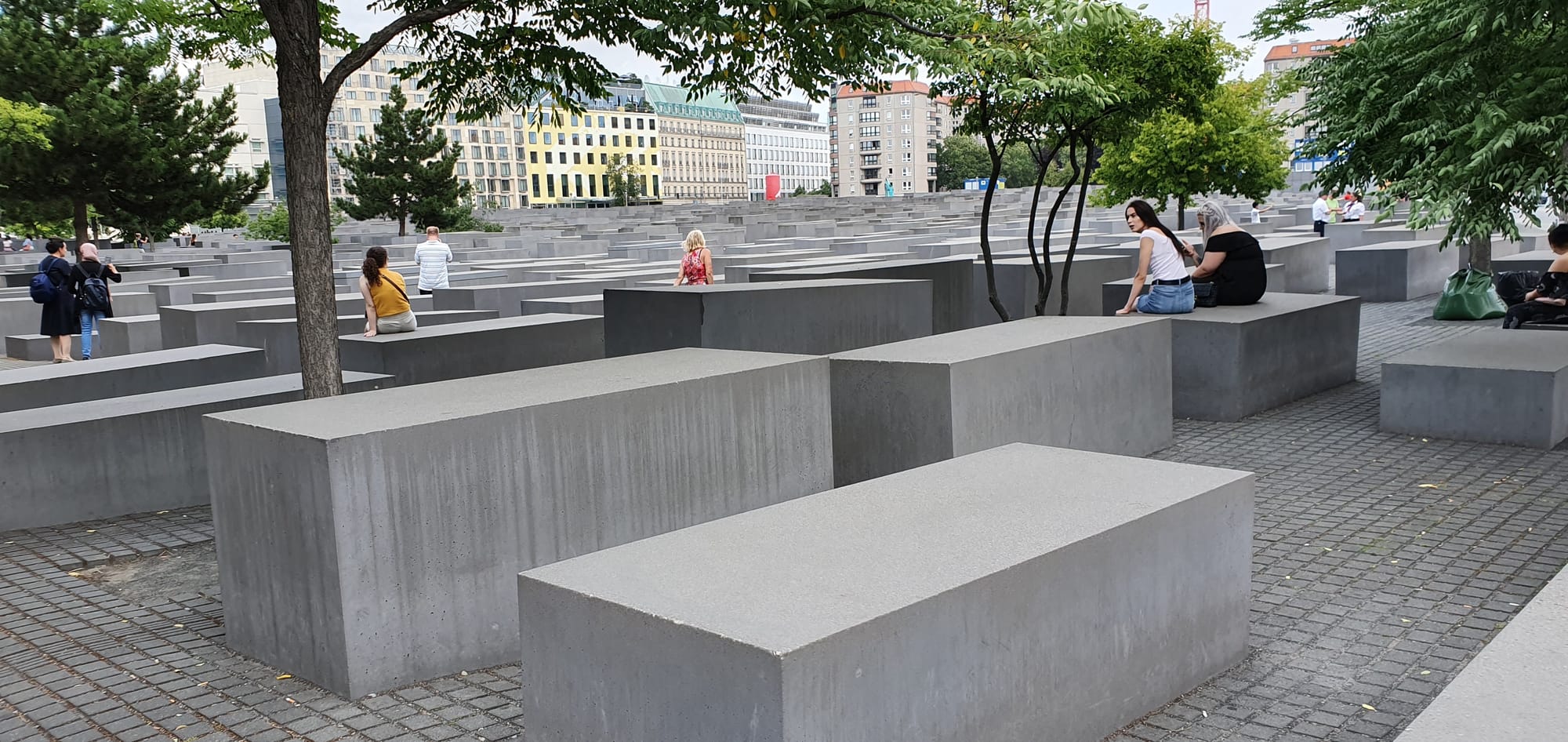
Chapter 2 — Europe's Historical Responsibility: Have We Forgotten the Lessons of the Past?
2.1 — A Continent That Promised Never Again
Europe's relationship with antisemitism is not a distant historical subject. It is a history that shaped the continent's political institutions, moral identity and understanding of human rights.
Following the Second World War, European governments confronted the consequences of a catastrophe that had unfolded within their own societies.
Approximately six million Jews had been murdered during the Holocaust. Entire communities disappeared. Families were destroyed, synagogues were burned, Jewish businesses were confiscated, and centuries of cultural and religious life were systematically dismantled.
The Holocaust was organised by Nazi Germany and carried out with the participation of collaborators across occupied Europe. It was also facilitated by widespread antisemitic prejudices, discriminatory institutions and the willingness of many individuals to remain passive in the face of persecution.
The genocide did not begin with extermination camps.
It developed through years of propaganda, exclusion, discriminatory legislation, social isolation, economic dispossession and organised violence.
Jewish citizens were gradually portrayed as outsiders, enemies and threats to national society.
Their rights were restricted. Their professional opportunities disappeared. Their businesses were targeted. Their citizenship and humanity were increasingly denied.
By the time systematic mass murder was underway, the foundations of exclusion had already been established.
After 1945, European governments repeatedly declared that such persecution must never happen again.
Holocaust remembrance became part of public education. Memorials were established. International human rights instruments were developed, and laws against discrimination became important elements of postwar European democracy.
Yet more than eight decades later, Jewish communities across Europe continue to experience threats, harassment and violence.
The historical circumstances are fundamentally different, and contemporary antisemitism must not automatically be equated with the machinery of Nazi genocide.
Nevertheless, history raises an important question.
What does the promise of Never Again mean if Jewish citizens still feel compelled to hide their identity in public?
Remembering the Holocaust is essential.
But remembrance must also involve confronting antisemitism when it appears in the present, even when its language, political affiliations and justifications differ from those of the past.
2.2 — Antisemitism Existed Long Before Nazi Germany
One of the most persistent misunderstandings about antisemitism is the belief that it began with Adolf Hitler and the Nazi movement.
In reality, hostility towards Jewish communities has existed in Europe for many centuries.
During the medieval period, Jewish populations faced religious discrimination, forced conversions, expulsions, restrictions on property ownership and periodic outbreaks of violence.
In several European societies, Jews were excluded from particular occupations and professions. Their ability to own land, participate in public institutions or practise their religion openly was restricted.
These exclusions contributed to the development of separate Jewish communities and economic roles, which were later distorted into antisemitic stereotypes.
Religious accusations played a significant role.
Jewish communities were falsely accused of responsibility for the death of Jesus, ritual murder and other imagined crimes.
During outbreaks of plague, Jews were sometimes accused of poisoning wells or deliberately spreading disease.
Such accusations were false, but they provided justifications for persecution and violence.
In 1290, Jews were expelled from England under King Edward I.
In 1492, the Spanish monarchy ordered Jews who refused conversion to Christianity to leave its territories.
Across different periods, Jewish communities were expelled from parts of France, German territories and other European regions.
These events were not identical in motivation or historical context.
Nevertheless, they demonstrate that antisemitism was deeply embedded in European political, religious and social history long before the emergence of modern racial nationalism.
The significance of this history is not simply that persecution occurred.
It is that antisemitism repeatedly adapted to the dominant beliefs and political anxieties of different societies.
When religious authority dominated public life, Jews were portrayed as religious enemies.
When nationalism became increasingly influential, they were portrayed as outsiders threatening national identity.
When modern political conspiracy theories developed, Jews were falsely accused of secretly controlling governments, financial systems and international events.
The accusations changed.
The underlying pattern of collective suspicion and scapegoating persisted.
2.3 — From Religious Hostility to Political Conspiracy
During the nineteenth and early twentieth centuries, European antisemitism underwent significant changes.
As nationalism, industrialisation and mass politics transformed European societies, antisemitic movements increasingly adopted racial and political language.
Jewish people were no longer targeted solely because of their religion.
They were portrayed as an allegedly separate and dangerous racial group, regardless of their personal beliefs, citizenship or level of religious observance.
This distinction was crucial.
Under racial antisemitism, conversion to Christianity or assimilation into national society did not necessarily protect an individual from persecution.
Jewish ancestry itself became the basis of exclusion.
Antisemitic political movements also promoted contradictory conspiracy theories.
Jews were accused of controlling international capitalism while simultaneously being blamed for revolutionary socialism and communism.
They were portrayed as both excessively powerful and fundamentally disloyal.
These contradictions did not weaken antisemitic propaganda because its purpose was not to provide a coherent explanation of society.
Its purpose was to identify a convenient enemy.
One of the most influential antisemitic forgeries was The Protocols of the Elders of Zion, a fabricated document that claimed to reveal a Jewish conspiracy for global domination.
Despite being exposed as fraudulent, the text circulated internationally and influenced extremist movements.
Its central conspiracy narrative remains visible in modern antisemitic propaganda.
Today, claims about secret Jewish control may appear in discussions about international banking, media ownership, global institutions or political influence.
Sometimes these claims use explicit antisemitic language.
In other cases, familiar antisemitic stereotypes are repackaged through coded references to supposed hidden elites.
Not every criticism of powerful institutions, wealthy individuals or political lobbying is antisemitic.
The distinction lies in whether criticism is based on specific evidence and conduct, or whether it assigns collective, conspiratorial power and malicious intent to Jews as a group.
This distinction is especially important in contemporary political debates.
Antisemitism often survives by adapting old accusations to new political circumstances.
Understanding that process is essential to recognising it.
2.4 — The Holocaust: When Hatred Became State Policy
The Nazi rise to power in Germany in 1933 marked a decisive escalation in the persecution of Jewish people.
Antisemitism was transformed into a central principle of government policy.
Jewish citizens were systematically excluded from professional, educational, political and social life.
The Nuremberg Laws of 1935 deprived German Jews of fundamental citizenship rights and prohibited marriages and sexual relationships between Jews and people classified by the regime as being of German or related blood.
In November 1938, the organised violence of Kristallnacht demonstrated how persecution could escalate from legal discrimination to widespread physical destruction.
Synagogues were attacked and burned. Jewish businesses were vandalised. Jewish people were assaulted, arrested and killed.
During the Second World War, Nazi Germany implemented policies of mass deportation, forced labour, ghettoisation and systematic murder.
The Holocaust resulted in the deaths of approximately six million Jewish men, women and children.
The genocide was not carried out by Nazi leaders alone.
It required extensive administrative systems, transportation networks, police structures, military organisations and the involvement of collaborators.
The responses of occupied societies varied.
Some individuals assisted the persecution.
Others resisted, hid Jewish families or helped people escape.
Many remained passive, whether because of fear, indifference, antisemitic attitudes or a combination of factors.
The historical record therefore demands careful analysis rather than simplistic collective accusations against entire national populations.
But it also demonstrates the danger of institutions becoming instruments of discrimination instead of safeguards against it.
The central lesson is not that contemporary Europe is identical to Nazi Germany.
It is that legal systems, political institutions and social norms can be weakened when prejudice is normalised and the rights of minorities are treated as negotiable.
2.5 — Liberation Did Not Immediately End Antisemitism
The defeat of Nazi Germany in 1945 ended the Holocaust, but it did not eliminate antisemitism from European society.
Jewish survivors returning to their former homes sometimes encountered hostility, disputes over confiscated property and the destruction of the communities to which they had belonged.
In some places, antisemitic violence continued after the war.
One particularly disturbing example occurred in Kielce, Poland, in July 1946.
A violent attack against Jewish residents resulted in the deaths of more than forty people.
The violence demonstrated that antisemitic accusations and hostility could persist even after the full horror of Nazi persecution had begun to emerge.
Postwar antisemitism also appeared in different political environments.
In parts of communist Eastern Europe, Jewish communities faced state discrimination, political purges and campaigns that sometimes used anti-Zionist language to promote antisemitic accusations.
In Western Europe, antisemitic stereotypes continued to circulate within extremist political movements and sections of wider society.
The postwar period was therefore not a clean break between an antisemitic past and a tolerant present.
It was a period in which democratic institutions, education and legal protections expanded while older prejudices continued to exist.
This history matters because it challenges the assumption that antisemitism disappears once an openly antisemitic regime is defeated.
Ideologies can survive the political systems that once promoted them.
They can reappear in different forms, through different organisations and under different justifications.
2.6 — The Creation of Israel and the Transformation of European Debate
The establishment of the State of Israel in 1948 introduced a new dimension to political discussions involving Jewish identity, nationalism and the Middle East.
Zionism, the movement supporting Jewish national self-determination, had emerged decades earlier in response to several historical developments, including European antisemitism and the growth of modern nationalism.
For many Jews, Israel came to represent national independence and a potential refuge from persecution.
For Palestinians, the war surrounding Israel's establishment was associated with mass displacement, dispossession and the loss of homes and communities.
These historical experiences remain central to the Israeli-Palestinian conflict.
Over subsequent decades, European political debate about Israel developed across a wide ideological spectrum.
Some movements supported Israel as a democratic ally or as an expression of Jewish self-determination.
Others opposed Israeli military policies, occupation, settlement expansion or the treatment of Palestinians.
These disagreements are legitimate subjects of political debate.
However, criticism of Israel can become antisemitic when Jewish people collectively are blamed for Israeli state actions, when traditional antisemitic conspiracy theories are applied to Israel or when Jewish institutions are targeted because of events in the Middle East.
This is one of the central challenges facing contemporary Europe.
The Israeli-Palestinian conflict involves governments, armed organisations, national movements, civilians and competing political claims.
Jewish citizens living in Europe are not automatically participants in that conflict.
They do not share a single political opinion about Israel.
Some strongly support Israeli government policies.
Others oppose them.
Many hold complex or changing views.
And some have little personal connection to Israeli politics.
Treating Jews collectively as representatives of Israel erases these differences and replaces individual identity with collective responsibility.
That is a recognisable form of antisemitism.
2.7 — When Political Criticism Becomes Collective Blame
A democratic society must protect the right to criticise governments, including the Israeli government.
People have the right to protest military operations, question political decisions, advocate Palestinian rights and demand accountability for alleged violations of international law.
These rights are fundamental.
But political disagreement becomes discriminatory when individuals are targeted because of their Jewish identity rather than their own actions.
Consider the difference between two situations.
A demonstration outside an Israeli embassy protesting government policy is an example of political expression.
A demonstration that threatens worshippers outside a synagogue because they are Jewish raises an entirely different issue.
Similarly, criticism of an Israeli military operation is not inherently antisemitic.
Accusing Jewish neighbours of responsibility for that operation because they are Jewish is.
The location, conduct, language and context of an event all matter.
A protest near a Jewish institution is not automatically antisemitic, just as invoking Palestinian rights does not excuse threats against Jewish people.
This distinction must be applied consistently.
It protects the right to political dissent while recognising the right of Jewish citizens to live without intimidation.
European authorities face the responsibility of maintaining both protections.
The challenge is not to suppress political disagreement.
It is to prevent legitimate political debate from becoming a justification for hatred against an entire community.
2.8 — Holocaust Education: Necessary, but Is It Enough?
Holocaust education has become a central part of European efforts to prevent antisemitism.
Schools teach students about Nazi persecution, concentration camps, ghettos, deportations and the systematic murder of European Jews.
Museums and memorial institutions preserve historical evidence and survivor testimonies.
Public commemorations seek to ensure that future generations understand the consequences of racism, dictatorship and political extremism.
These efforts remain essential.
However, the persistence of antisemitism raises questions about whether historical education alone is sufficient.
Students may learn about the Holocaust without fully understanding contemporary antisemitic conspiracy theories.
They may recognise Nazi symbols while failing to identify modern accusations that Jews secretly control political institutions or the media.
They may condemn historical persecution while accepting collective accusations against Jewish people in contemporary political discussions.
This does not mean Holocaust education has failed as a whole.
It means educational programmes must be assessed according to their ability to develop historical knowledge, critical thinking and recognition of present-day discrimination.
The effectiveness of education cannot be measured only by the number of memorial visits or classroom lessons.
It must also be examined through students' knowledge, attitudes and ability to distinguish legitimate political criticism from antisemitic prejudice.
One particularly important issue is the relationship between historical remembrance and current behaviour.
A society can commemorate Jewish victims of the Holocaust while failing to confront hostility towards Jewish citizens living today.
The contradiction is not always intentional.
But it deserves examination.
Remembering Jewish victims of the past cannot replace protecting Jewish people in the present.
2.9 — The Danger of Selective Outrage
One of the most difficult questions surrounding contemporary antisemitism concerns political consistency.
Different ideological movements may recognise antisemitism when it appears among their opponents while minimising similar prejudice within their own environments.
Far-right organisations may condemn antisemitism associated with Islamist extremism while ignoring antisemitic conspiracy theories circulating in nationalist movements.
Far-left activists may strongly oppose neo-Nazism while failing to recognise antisemitic stereotypes appearing in some anti-Israel rhetoric.
Religious and political organisations may condemn discrimination in principle while responding inconsistently to hostility expressed by individuals within their own communities.
These are patterns that require examination through specific statements, documented incidents and institutional decisions.
They should not be treated as universal characteristics of entire political or religious populations.
Nevertheless, selective condemnation can weaken the credibility of efforts to combat antisemitism.
If an institution recognises hatred only when it comes from a politically convenient source, its commitment to equal protection becomes difficult to evaluate.
The standard must be based on conduct rather than political affiliation.
Threatening Jewish people is unacceptable whether the perpetrator identifies as a nationalist, revolutionary, religious extremist or supporter of a particular international cause.
Antisemitic conspiracy theories remain antisemitic regardless of the political movement promoting them.
And violence against Jewish institutions cannot be justified by anger over events in another country.
For European governments, this creates a clear responsibility.
Laws must be enforced consistently.
Investigations must be based on evidence.
Public officials must avoid excusing discrimination because it appears within a movement whose other political objectives they support.
2.10 — How Historical Antisemitism Reappears in Modern Language
Modern antisemitism does not always resemble the propaganda of the 1930s.
Its language may be more indirect.
Its distribution may be digital rather than printed.
Its supporters may describe themselves as opponents of racism or defenders of justice.
Yet some of its underlying narratives remain recognisable.
The claim that Jews secretly control international finance is an old antisemitic conspiracy theory.
The allegation that Jews manipulate governments or media organisations reflects another longstanding stereotype.
The suggestion that Jewish people possess collective responsibility for international events repeats the logic of collective blame.
In modern environments, these accusations can spread rapidly through social media.
Images, edited videos and misleading claims can reach large audiences before their accuracy is examined.
International conflicts may provide emotionally charged settings in which conspiratorial narratives gain attention.
The problem is not limited to people who openly identify as antisemitic.
Individuals may repeat antisemitic claims without understanding their historical origins.
This creates a challenge for education, journalism and public debate.
Recognising antisemitism requires more than identifying explicit expressions of hatred.
It requires understanding how conspiracy theories, collective accusations and discriminatory stereotypes operate.
At the same time, allegations of antisemitism must be assessed carefully.
Not every controversial statement about Israel, Zionism, financial institutions or political influence is antisemitic.
Context, evidence, language and intent are relevant.
Maintaining these distinctions is necessary both to protect Jewish communities and to preserve legitimate political expression.
2.11 — Europe Cannot Outsource Its Historical Responsibility
European governments frequently express solidarity with Jewish communities after serious antisemitic incidents.
Political leaders attend memorial ceremonies, condemn attacks and promise additional protection.
Such responses can provide reassurance and demonstrate public commitment.
But solidarity after an attack is not the same as effective prevention.
A government's responsibility extends beyond responding to incidents once they occur.
It includes identifying credible threats, investigating extremist networks, protecting vulnerable institutions and ensuring that criminal conduct is prosecuted according to law.
It also includes addressing discriminatory attitudes through education and public policy.
These responsibilities cannot be transferred entirely to Jewish community organisations.
Community security groups play an important role in monitoring threats and supporting institutions.
However, the fundamental duty to protect citizens belongs to the state.
A democratic government should not expect a minority community to carry the primary burden of defending itself against criminal intimidation.
The continued need for extensive security around Jewish institutions raises difficult questions about how successfully that duty is being fulfilled.
Some security measures may remain necessary even under effective government policies because no society can eliminate every potential threat.
But governments must still demonstrate that their actions are proportionate, evidence-based and directed towards reducing risks.
The goal should not be to normalise permanent insecurity.
It should be to create conditions in which Jewish life can flourish without extraordinary fear.
2.12 — Have We Forgotten the Lessons of History?
The question of whether Europe has forgotten its history cannot be answered simply by pointing to rising incident statistics.
European countries continue to maintain Holocaust memorials, educational institutions, anti-discrimination laws and programmes dedicated to Jewish cultural life.
Many citizens, public officials and organisations actively oppose antisemitism.
These efforts are real and should not be dismissed.
But the persistence of antisemitic harassment, threats and violence shows that historical awareness does not automatically prevent contemporary prejudice.
The lesson of the Holocaust was never supposed to be limited to remembering what happened between 1933 and 1945.
It also concerns the protection of minority rights, the dangers of collective blame and the responsibilities of democratic institutions when prejudice spreads.
Those principles must be applied to present-day circumstances.
Europe cannot claim to have fully absorbed the lessons of its history simply because it remembers the victims of the past.
Its commitment must also be reflected in how it protects living Jewish communities.
That requires political consistency, effective law enforcement, credible education and a willingness to confront antisemitism wherever it emerges.
It also requires recognising that contemporary Europe is not a single society with a single response.
Different countries have different histories, institutions, challenges and policies.
Some measures may be effective.
Others may require reform.
The task of investigative journalism is to examine those differences rather than assume that all governments are equally responsible or equally successful.
Yet one principle remains clear.
A continent that promises Never Again must be willing to examine whether its institutions are doing enough to protect Jewish life today.
The next chapter turns to the events of 7 October 2023 and their aftermath, examining how a terrorist attack in Israel and the subsequent war in Gaza intensified political tensions across Europe, contributed to a surge in recorded antisemitic incidents and exposed the vulnerability of Jewish communities far beyond the Middle East.
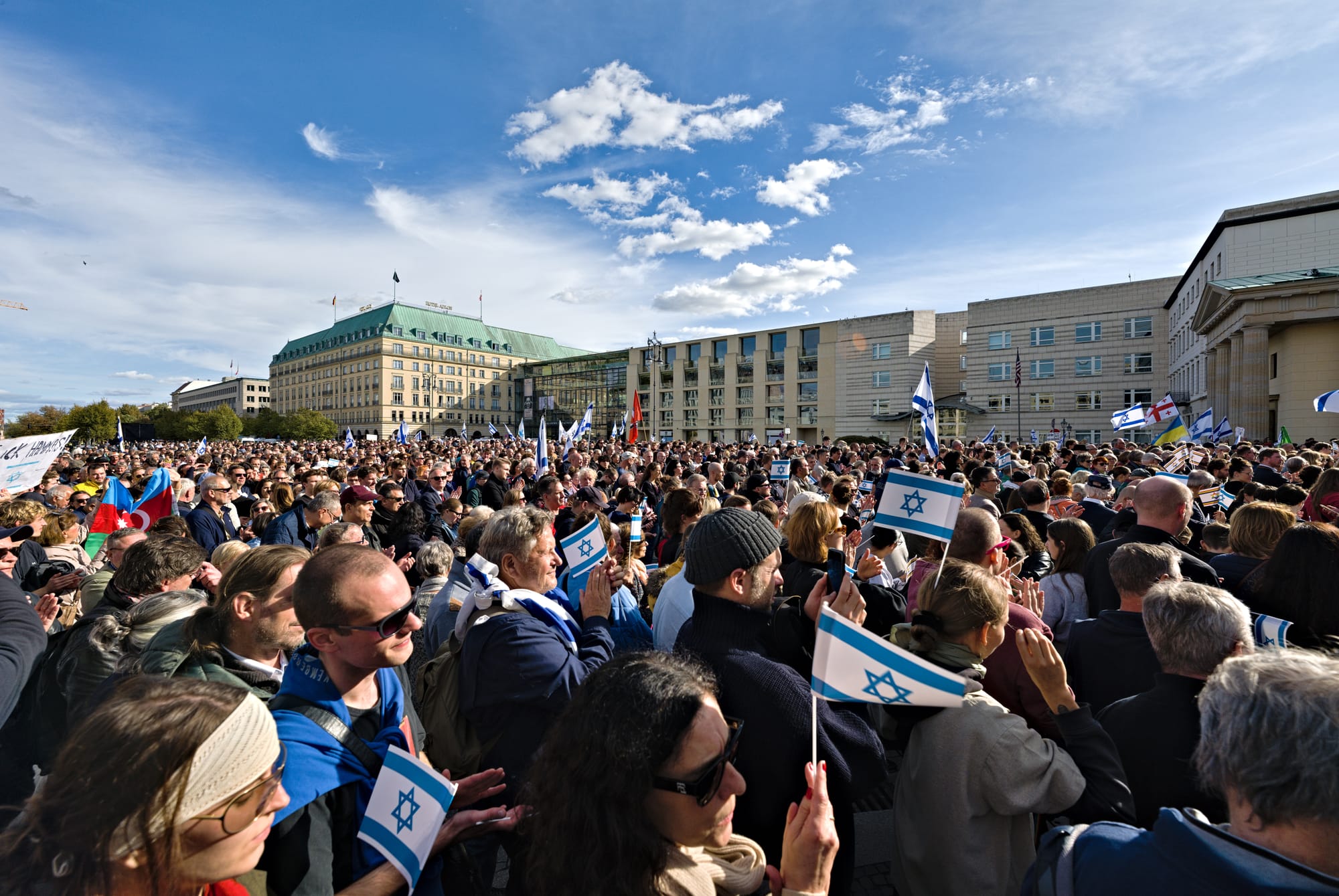
Chapter 3 — October 7 and the Escalation of Antisemitism Across Europe
3.1 — The Day That Changed More Than the Middle East
On the morning of 7 October 2023, Hamas-led armed groups launched an unprecedented assault on southern Israel.
Armed militants crossed the border from Gaza, attacking civilian communities, military positions, roads and a music festival. Homes were invaded, families were murdered, civilians were taken hostage, and entire communities experienced extraordinary violence.
Approximately 1,200 people were killed in the attacks and 251 people were taken hostage.
The victims included Israeli Jews, Arab Israelis, foreign nationals, children, elderly people and entire families.
The attacks were not simply another confrontation between two armed forces.
They involved deliberate attacks against civilians, hostage-taking and acts of brutality that shocked communities far beyond Israel.
For Jewish people around the world, the events carried an additional historical and emotional significance.
Images of Jewish families being murdered, civilians fleeing armed attackers and hostages being taken into Gaza revived fears deeply connected to the history of antisemitic persecution.
The attacks also triggered a major Israeli military campaign in Gaza, resulting in extensive destruction, mass displacement, a humanitarian catastrophe and large numbers of Palestinian civilian deaths.
The suffering of Palestinian civilians became a central concern of international political debate, humanitarian organisations and protest movements.
Both realities matter.
The atrocities committed against civilians in Israel must be recognised without qualification.
The suffering of civilians in Gaza must also be recognised without dismissing their humanity or treating their deaths as insignificant.
But something else happened after 7 October.
Thousands of kilometres away from the conflict, Jewish communities across Europe experienced a sharp escalation in antisemitic incidents.
Synagogues became targets of threats and attacks.
Jewish schools increased security.
Antisemitic graffiti appeared in public spaces.
Jewish students reported intimidation.
Online platforms became saturated with conspiracy theories, harassment and messages directed against Jews.
The consequences of a conflict in the Middle East were increasingly being imposed on Jewish citizens living in European countries.
This development raises one of the most important questions in this investigation.
Why should a Jewish family living in Paris, Berlin, Amsterdam or London become a target because of a war taking place thousands of kilometres away?
And why have European democracies struggled to prevent international political anger from turning into hostility against their own Jewish citizens?
3.2 — Antisemitism Did Not Begin With the War in Gaza
It is important to establish one fact immediately.
Antisemitism in Europe did not begin on 7 October 2023.
Jewish communities had already experienced decades of harassment, conspiracy theories, extremist threats and violent attacks.
European surveys conducted before October 2023 showed that substantial numbers of Jewish respondents were concerned about antisemitism and their personal safety.
In one major survey conducted during the first half of 2023, 80% of respondents believed antisemitism had increased in their country over the preceding five years.
Approximately 76% reported avoiding visible signs of their Jewish identity at least occasionally.
These findings were collected before the Hamas attacks and before the subsequent war in Gaza.
That timing is critical.
It demonstrates that the insecurity experienced by many Jewish Europeans cannot be explained solely by Israel's military response to 7 October.
The underlying problem already existed.
The war intensified tensions and created new opportunities for antisemitic hostility, but it did not create antisemitism from nothing.
This distinction challenges the argument that hostility towards Jewish communities is merely a reaction to contemporary Israeli government policies.
European antisemitism has historical roots extending far beyond the modern State of Israel.
Its conspiracy theories, stereotypes and ideological traditions existed long before 1948.
The events after October 2023 exposed how readily these older prejudices could be revived within contemporary political debates.
3.3 — The Numbers: A Dramatic Increase After October 7
The escalation following the Hamas attacks was reflected in incident monitoring across several European countries.
Jewish community organisations reported substantial increases in threats, harassment, vandalism and other antisemitic incidents.
In some European countries, the number of reported incidents increased several times over during the months immediately following 7 October.
These increases were not identical across countries.
National monitoring systems use different definitions, reporting procedures and classification methods.
Nevertheless, the broad pattern was unmistakable.
The period following 7 October 2023 was associated with a major escalation in recorded antisemitism.
France: An Extraordinary Increase
In France, 1,676 antisemitic incidents were recorded in 2023.
The number was dramatically higher than the previous year, when 436 incidents had been recorded.
This represents an increase of approximately 284%.
The escalation was especially pronounced after 7 October.
In 2024, France recorded 1,570 antisemitic incidents.
Although this was slightly below the 2023 total, it remained substantially above the level recorded in 2022.
The figures indicate that the surge was not limited to a few days or weeks.
It continued into the following year.
Germany: A Continuing Escalation
Germany also experienced a sharp increase in recorded antisemitic incidents.
In 2023, nationwide monitoring documented thousands of incidents, with a particularly pronounced escalation after 7 October.
In 2024, the total reached 8,627 recorded incidents under the monitoring network's updated national dataset.
That represented an increase of approximately 77% compared with the revised 2023 comparison figure.
The 2024 total amounted to almost 24 recorded antisemitic incidents per day.
Among the incidents documented that year were physical assaults, threats and cases of extreme violence.
The statistics also showed a significant concentration of incidents in highly politicised environments, including public demonstrations, universities and other spaces where the war in Gaza became a central subject of debate.
The findings do not mean that every demonstration or university protest was antisemitic.
They do demonstrate that antisemitic behaviour was repeatedly documented within some of these environments.
The United Kingdom: A New Level of Recorded Incidents
The United Kingdom experienced a similar pattern.
The number of recorded antisemitic incidents rose sharply in 2023 and remained elevated during 2024 and 2025.
This persistence is significant.
It suggests that the escalation cannot be understood solely as a temporary emotional response to the first days of the conflict.
The continuation of incidents raises questions about how antisemitic attitudes became reinforced, circulated and expressed over a longer period.
A temporary international crisis may explain why public tensions intensify. It does not justify why Jewish citizens become targets of intimidation or violence.
3.4 — When Grief Turned Into Political Confrontation
The period following 7 October produced intense political and emotional reactions across Europe.
Jewish communities mourned victims of the Hamas attacks and expressed concern for hostages.
Palestinian communities and their supporters protested the devastating consequences of Israel's military campaign in Gaza.
Humanitarian organisations warned about civilian casualties, displacement, destruction of infrastructure and restrictions affecting the delivery of aid.
Governments faced pressure to respond to both the attacks against Israel and the humanitarian situation in Gaza.
Large demonstrations took place in London, Paris, Berlin, Amsterdam and other European cities.
Many participants called for a ceasefire, humanitarian access, Palestinian self-determination or changes in Israeli government policy.
These demands are not inherently antisemitic.
Peaceful protest is a fundamental democratic right.
However, within some protest environments, antisemitic messages, intimidation and expressions of support for violence were documented.
In certain incidents, Jewish people were confronted because of their identity.
Some demonstrations featured slogans or symbols whose meaning and context raised serious concerns about support for antisemitic violence or the elimination of Israel.
Others involved the glorification or justification of attacks against civilians.
The distinction between legitimate political protest and antisemitic intimidation is therefore essential.
A demonstration calling for humanitarian protection in Gaza is not equivalent to a demonstration threatening Jewish people.
Criticism of the Israeli government is not equivalent to holding European Jews responsible for Israeli military operations.
And expressions of Palestinian national identity should not be automatically interpreted as hostility towards Jewish communities.
But neither should the language of human rights be used to excuse threats, collective blame or the celebration of violence against civilians.
European authorities must be capable of recognising these differences.
Failure to do so risks undermining both the protection of Jewish citizens and the right to peaceful political expression.
3.5 — The Disturbing Question of Celebrating Violence
One of the most troubling aspects of the immediate aftermath of 7 October was the appearance of public statements and gatherings that celebrated, excused or glorified the Hamas-led attacks.
Such responses raised serious questions about the boundaries between political solidarity, ideological extremism and the justification of violence against civilians.
Supporting Palestinian rights is not the same as supporting Hamas.
Criticising Israeli government policies is not the same as endorsing the murder or kidnapping of Israeli civilians.
And recognising the historical suffering of Palestinians does not require denying the suffering of Jewish victims.
Yet these distinctions were not always maintained in public debate.
Some individuals and organisations framed the attacks as legitimate resistance without adequately acknowledging the deliberate targeting of civilians.
Others circulated denialist or misleading narratives about the atrocities.
This matters because the justification of violence against civilians can create an environment in which further threats become easier to rationalise.
The consequences are especially serious when violence against Jews is portrayed as acceptable because of their supposed political identity.
European governments and institutions must confront such rhetoric according to the law and the circumstances of each case.
Not every offensive statement constitutes a criminal offence.
Freedom of expression protects controversial and deeply unpopular political opinions.
However, direct threats, criminal incitement and the unlawful glorification of terrorist violence can fall within legal restrictions, depending on national legislation.
The challenge for governments is to apply these standards consistently.
No political grievance can turn the deliberate murder of civilians into an acceptable act.
That principle must apply to all victims, regardless of nationality, religion or political circumstances.
3.6 — Why Were European Jews Held Responsible for Israel?
One of the clearest manifestations of contemporary antisemitism is the tendency to hold Jewish people collectively responsible for the actions of the Israeli state.
This phenomenon existed before October 2023.
European research had already documented that many Jewish respondents experienced accusations or hostility connected to Israeli government policies.
Following 7 October and the subsequent war, these tensions intensified.
Jewish students were sometimes expected to explain or defend Israeli military operations.
Jewish organisations were confronted over policies they did not control.
Religious institutions became focal points for anger about events in the Middle East.
Such behaviour rests on a fundamental misconception.
Jewish identity is not synonymous with Israeli citizenship.
Israeli citizenship is not synonymous with support for a particular Israeli government.
And support for Israel's existence does not necessarily imply agreement with every decision made by its political or military leadership.
Jewish communities are politically diverse.
They include people with different religious beliefs, national identities, ideological positions and attitudes towards Israel.
Some support the Israeli government.
Others oppose it.
Some identify strongly with Zionism.
Others reject it or hold more complex positions.
Treating all Jewish people as politically interchangeable is discriminatory.
It replaces individual responsibility with collective blame.
This is especially troubling in Europe, where the history of antisemitism repeatedly involved accusations that Jewish citizens possessed divided loyalties or secretly served foreign interests.
The language may have changed, but the underlying suspicion can remain recognisable.
3.7 — Synagogues and Jewish Schools Became Security Concerns
The escalation after 7 October placed additional pressure on Jewish institutions across Europe.
Synagogues, schools, cultural centres and community organisations reviewed their security arrangements.
In some locations, police patrols were increased.
Additional surveillance was introduced.
Access to buildings became more restricted.
Public events required more extensive security planning.
These measures were responses to threats, incidents and assessments of potential risks.
They were not necessarily evidence that an attack was imminent at every location.
Nevertheless, their broader implications deserve serious examination.
A synagogue is a place of worship.
A Jewish school is an educational institution.
A community centre is a place where people gather for cultural, religious and social activities.
These are ordinary elements of civic life.
Yet Jewish communities in parts of Europe must devote significant attention and resources to protecting them.
This creates a situation in which religious and cultural participation becomes inseparable from security considerations.
For children, the consequences can be particularly profound.
A child attending a school surrounded by security measures may grow up understanding that their identity is associated with a specific threat.
Parents may become accustomed to evaluating risks that other families rarely consider.
Community leaders may spend time and money on protective infrastructure instead of educational, cultural or social programmes.
The question is not whether security measures are justified when threats are credible.
They often are.
The question is why these threats persist and whether governments are doing enough to reduce them.
Protection should not become a substitute for confronting the people and ideologies responsible for creating the danger.
3.8 — Germany: When Antisemitic Violence Reached Jewish Institutions
Germany provides a particularly important case study because of its historical responsibility and its extensive contemporary monitoring of antisemitism.
In October 2023, attempted attacks against a Jewish community facility in Berlin demonstrated how quickly international tensions could translate into threats against Jewish institutions.
Incendiary devices were thrown towards a building housing Jewish community activities.
The incident prompted renewed concern about the security of Jewish life in Germany.
The significance of such an attack extends beyond the physical damage it causes.
A Jewish community building is not a military installation.
It is not responsible for decisions made by the Israeli government.
It is not a legitimate target for anger about the war in Gaza.
Targeting such an institution because of its Jewish identity represents an attack on the freedom and security of people living within Germany itself.
Germany has introduced substantial measures to combat antisemitism and protect Jewish institutions.
Police forces, security agencies and public officials have repeatedly acknowledged the threat.
Yet the continuation of incidents raises questions about the effectiveness of prevention and the capacity of authorities to identify and disrupt dangerous networks before violence occurs.
These questions cannot be answered simply by pointing to the existence of security measures.
They require examination of intelligence assessments, investigations, prosecutions and the legal powers available to authorities.
3.9 — France: When Antisemitism Reaches Children
France experienced several deeply disturbing antisemitic incidents during the period following 7 October.
Among the most serious was the June 2024 assault of a 12-year-old Jewish girl in Courbevoie, investigated as an antisemitic rape.
The case shocked the country and prompted widespread political condemnation.
Its significance was not limited to the brutality of the alleged acts.
It highlighted the vulnerability of Jewish children to hostility linked to their identity.
Children cannot be held responsible for international political conflicts.
They do not control military operations, government policies or diplomatic decisions.
Yet antisemitic prejudice can reach them through social environments, peer groups, online content and the circulation of discriminatory stereotypes.
This raises difficult questions for schools, parents, educational authorities and governments.
How are young people learning to associate Jewish identity with hostility?
What role do social media and political narratives play?
Are schools sufficiently equipped to recognise antisemitic bullying?
And what happens when prejudice is normalised before children fully understand the historical and moral implications of the language they repeat?
The answers require more than condemnation after serious incidents.
They require prevention, education, safeguarding and effective intervention.
The protection of Jewish children is not a separate issue from the protection of other children.
It is part of the same democratic obligation to ensure that no child is threatened or abused because of their religion or identity.
3.10 — The Netherlands: Amsterdam and the Internationalisation of Hatred
The Netherlands became the focus of international attention in November 2024 when violence occurred in Amsterdam around a football match between Ajax and Maccabi Tel Aviv.
Israeli supporters were attacked in incidents that authorities investigated as involving antisemitic violence.
The events also included reports of provocative and offensive conduct by some visiting supporters, contributing to a highly charged environment.
These different elements must be examined separately.
Provocative behaviour by football supporters does not justify assaults against individuals because they are Israeli or Jewish.
Equally, the existence of antisemitic attacks does not mean that every confrontation during the period had the same motive.
The Amsterdam events illustrated how quickly international political conflict can become entangled with local tensions, public disorder, online mobilisation and identity-based hostility.
They also exposed the difficulty authorities face when trying to distinguish organised intimidation from spontaneous confrontations.
For Jewish communities, the wider implications were troubling.
The violence reinforced concerns that hostility connected to Israel could extend beyond political demonstrations into public spaces and ordinary social events.
For governments, the case raised questions about intelligence, policing, crowd management and the prevention of targeted violence.
A serious investigation must examine not only what happened during the attacks, but what authorities knew beforehand, what measures were taken and how effectively those measures protected people.
3.11 — Universities: When Political Debate Becomes Personal Intimidation
Universities became major centres of political activism following the outbreak of the war in Gaza.
Students organised demonstrations, encampments, public meetings and campaigns calling for institutional changes.
Many protests focused on humanitarian concerns, academic partnerships, investment policies and demands for a ceasefire.
Such activities can fall within the legitimate exercise of academic freedom and political expression.
However, Jewish students in several countries reported experiences of harassment, exclusion and hostility.
Some described being confronted over their views about Israel.
Others expressed concern about antisemitic slogans, threatening language or the treatment of Jewish student organisations.
Universities face a difficult but essential responsibility.
They must protect freedom of expression while preventing discrimination and intimidation.
A university should be a place where controversial political questions can be debated.
It should not become a place where students are treated as collectively responsible for events because of their religion or ethnicity.
The distinction requires careful judgement.
Disagreement with a student's political position is not automatically harassment.
Criticism of Zionism or Israeli policy is not automatically antisemitic.
But threats, discriminatory exclusion and the use of antisemitic stereotypes can violate the rights of Jewish students.
The question for university leadership is whether their policies are sufficiently clear, consistently enforced and capable of protecting students with different political and religious identities.
Institutional neutrality does not mean ignoring credible reports of intimidation.
Nor does protecting Jewish students require prohibiting peaceful criticism of Israel.
Both responsibilities must be upheld.
3.12 — The Role of Social Media in Escalating Hostility
Social media played a major role in shaping public reactions to the events of 7 October and the war in Gaza.
Graphic images, eyewitness accounts, political commentary and emotional appeals circulated at extraordinary speed.
Some content documented genuine suffering and helped inform international audiences.
Other material included misleading claims, manipulated images, conspiracy theories and deliberate disinformation.
Antisemitic narratives appeared alongside legitimate reporting and political debate.
Traditional conspiracy theories about Jewish control, hidden influence and collective responsibility were adapted to the contemporary conflict.
False claims about the October 7 attacks also circulated.
Some denied documented atrocities.
Others promoted unverified allegations or selectively presented information in ways that encouraged hostility.
The speed of digital communication created significant challenges for journalists, researchers and public authorities.
Information could reach millions of users before it was independently verified.
Emotionally provocative material could generate intense engagement.
Algorithms and recommendation systems could repeatedly expose users to similar narratives, although the effects differ across platforms and users.
The consequences were not limited to online discussions.
Digital threats could influence real-world behaviour.
Online harassment could target identifiable individuals.
Extremist networks could use international events to recruit supporters or amplify propaganda.
This raises questions about the responsibilities of technology companies.
How effectively do platforms identify direct threats and antisemitic incitement?
Are their policies applied consistently?
How transparent are their moderation decisions?
And what mechanisms exist to challenge both the failure to remove unlawful threats and the wrongful removal of legitimate political expression?
These questions are central to understanding how contemporary antisemitism spreads.
3.13 — The Political Response: Condemnation Versus Accountability
European governments responded to the rise in antisemitic incidents through public condemnation, security measures and policy initiatives.
Police protection was increased around certain Jewish institutions.
Political leaders expressed solidarity with affected communities.
Investigations were launched into threats, assaults and attacks.
Some governments introduced or expanded measures addressing extremist activity and online hatred.
These responses should not be ignored.
They demonstrate that European authorities have taken concrete action.
However, a critical investigation must examine whether those actions have been sufficient and effective.
Public condemnation is important, but it does not establish that a government has fulfilled its responsibilities.
The effectiveness of policing must be measured through prevention, response times, investigations and outcomes.
The effectiveness of criminal justice must be examined through prosecution and conviction data.
The effectiveness of educational programmes must be assessed through evidence of improved understanding and reduced discrimination.
And the effectiveness of security policy must be evaluated through its ability to reduce risks without unnecessarily restricting civil liberties.
Political consistency is particularly important.
Governments should not treat antisemitic threats differently depending on whether perpetrators identify with the far right, far left, Islamist extremism or another movement.
The law must be applied according to conduct and evidence.
At the same time, the existence of antisemitic incidents does not automatically prove that authorities deliberately tolerated them.
Such a conclusion requires evidence of institutional decisions, failures to act despite credible warnings or patterns of unequal enforcement.
The appropriate question is therefore not simply whether governments care about antisemitism.
It is whether their actions are proportionate to the threat and produce measurable results.
3.14 — The Human Cost: Living With a Conflict You Did Not Create
Perhaps the most disturbing consequence of the post-October 7 escalation is the effect on Jewish people who have no direct involvement in the Israeli-Palestinian conflict.
A Jewish family in France may have lived in the country for generations.
A Jewish student in Germany may have never visited Israel.
A Jewish business owner in the Netherlands may hold political opinions entirely unrelated to the conflict.
Yet these individuals can still become targets of hostility because of assumptions about their identity.
This creates a form of collective punishment through social intimidation.
People are expected to explain political decisions they did not make.
They are confronted over military operations they do not control.
They may feel pressured to conceal their religion or avoid certain public environments.
The result can be a gradual restriction of ordinary freedom.
Not through legislation, but through fear.
A democratic society cannot claim that religious freedom is fully protected when people feel unable to exercise it openly because of credible threats.
The emotional consequences can extend across generations.
Parents may become concerned about their children's safety.
Young adults may question whether they can build their futures in their home countries.
Older members of Jewish communities may recognise echoes of prejudices they believed had become less acceptable.
These experiences should not be exaggerated into claims that every Jewish person in Europe lives under identical conditions.
Jewish communities remain diverse, active and deeply rooted in European society.
Many people continue to practise their religion, participate in public life and reject the idea that fear should define their identity.
Nevertheless, the documented insecurity deserves serious attention.
3.15 — The Question Europe Cannot Avoid
The events of 7 October 2023 and the subsequent war in Gaza transformed political debate across Europe.
They intensified disagreements over Israel, Palestinian rights, international law, humanitarian responsibility and the conduct of war.
These debates remain legitimate and necessary.
But the escalation of antisemitism revealed a separate and deeply troubling problem.
Jewish citizens living in Europe became targets of threats, harassment and violence connected to events for which they bore no collective responsibility.
The statistics demonstrate that this was not confined to a handful of isolated incidents.
In several countries, recorded antisemitism increased sharply and remained elevated beyond the immediate aftermath of the attacks.
European governments responded with condemnation, security measures and investigations.
Yet the continued insecurity of Jewish communities raises difficult questions about prevention, institutional responsibility and the limits of existing policies.
Why do international conflicts so readily produce hostility towards Jewish minorities?
Why do antisemitic conspiracy theories remain influential despite decades of historical education?
Why are Jewish schools and religious institutions required to maintain extraordinary security arrangements?
And how effectively are governments confronting the individuals and extremist networks responsible for criminal threats and violence?
These questions require evidence, not assumptions.
They require examination of perpetrators, ideological motivations, political institutions, policing and criminal justice.
They also require recognition that legitimate criticism of Israel and antisemitic hostility towards Jewish people are not the same thing.
The central failure would be to accept the intimidation of Jewish citizens as an unavoidable consequence of international conflict.
Europe cannot control every war beyond its borders.
It cannot prevent every expression of political anger.
But it does have a responsibility to protect the people living within its own societies.
That responsibility applies equally to Jewish citizens, Muslim citizens, Palestinians, Israelis and everyone else.
The protection of one community should never depend on the denial of another community's rights.
And the suffering of civilians in one country must never become a justification for threatening civilians in another.
The next chapter examines one of the most controversial questions surrounding the rise of antisemitism in Europe: when legitimate criticism of Israel crosses the line into antisemitic intimidation, and whether European governments are responding consistently when that line is crossed.

Chapter 4 — When Anti-Israel Protests Cross the Line: Political Freedom, Antisemitism and the Responsibility of European Governments
4.1 — The Streets of Europe Have Become a Political Battleground
Since the Hamas-led attacks of 7 October 2023 and the subsequent war in Gaza, European cities have witnessed an extraordinary wave of demonstrations.
From London to Paris, Berlin to Amsterdam, Brussels to Copenhagen, hundreds of thousands of people have participated in protests addressing the Israeli-Palestinian conflict.
Demonstrators have called for ceasefires, humanitarian assistance, Palestinian self-determination, sanctions against Israel and accountability for alleged violations of international law.
These demonstrations reflect genuine political concerns, including the extensive suffering of Palestinian civilians in Gaza.
Peaceful protest is a fundamental democratic right.
But alongside legitimate demonstrations, European authorities and Jewish community organisations have documented antisemitic threats, intimidation, harassment and, in some cases, violence.
The existence of these incidents raises difficult questions about how governments distinguish political expression from criminal conduct.
It also raises questions about the responsibilities of protest organisers when antisemitic behaviour occurs within or around their demonstrations.
The central issue is not whether people should be permitted to criticise Israel.
They should.
Nor is the issue whether governments should suppress demonstrations because their political messages are controversial.
They should not.
The issue is whether European institutions are capable of protecting both freedom of expression and the safety of Jewish citizens when political tensions escalate.
A democratic society must be able to protect the right to protest without allowing that right to become a shield for threats or violence.
That responsibility becomes particularly important when international conflicts generate intense emotions and competing political narratives.
4.2 — Criticism of Israel Is Not Automatically Antisemitism
Any serious investigation into antisemitism must begin by recognising a fundamental distinction.
The State of Israel is a political entity whose government, military and institutions can be criticised like those of any other country.
Its policies may be challenged.
Its military operations may be investigated.
Its political leaders may be held accountable under domestic and international law.
People may advocate Palestinian independence, oppose Israeli settlements, demand an end to military occupation or criticise the conduct of Israeli forces.
Such positions are not inherently antisemitic.
Jewish people themselves hold a wide range of views on these issues.
Some support the Israeli government.
Others strongly oppose it.
Some identify as Zionists, while others reject Zionism or interpret it differently.
The diversity of Jewish political opinion makes collective assumptions especially misleading.
The boundary becomes clearer when criticism moves away from specific political decisions and begins targeting Jewish people because of their identity.
A Jewish student in London is not responsible for the actions of the Israeli military.
A synagogue in Berlin does not represent the Israeli government.
A Jewish family in Paris does not become accountable for events in Gaza because of its religion.
When Jewish individuals or institutions are threatened over Israeli government policies, political criticism has crossed into collective blame.
That distinction should be understood by protest organisers, public officials, universities and law enforcement agencies.
It should also guide media reporting.
The challenge is to recognise antisemitism without using accusations of antisemitism to suppress legitimate criticism of Israel.
Both errors have consequences.
Failure to identify antisemitism leaves Jewish communities vulnerable.
Overly broad accusations can undermine political freedom and weaken the credibility of genuine efforts to confront anti-Jewish hatred.
4.3 — When Jewish Identity Becomes a Political Target
One of the most troubling features of contemporary antisemitism is the assumption that Jewish people everywhere are collectively connected to Israeli government policy.
This assumption can turn ordinary Jewish identity into a political target.
A person wearing a Star of David may be confronted about events in Gaza.
A Jewish student organisation may face demands to declare a position on Israel before being permitted to participate in campus activities.
A Jewish cultural event may become the focus of political hostility unrelated to its actual purpose.
Such incidents should be examined individually, but the underlying problem is clear.
Jewish identity does not establish political responsibility.
The principle is no different from the one that should protect other communities.
Muslim citizens should not be held responsible for the actions of Islamist terrorist organisations.
Palestinian civilians should not be treated as collectively responsible for Hamas.
Russian citizens should not automatically be blamed for decisions made by the Kremlin.
And Jewish citizens should not be treated as representatives of the Israeli state.
Collective blame is incompatible with equal citizenship.
Yet international political conflicts repeatedly create environments in which individuals are judged according to perceived ethnic, religious or national associations.
This is one reason antisemitism can intensify even in countries far removed from the conflict itself.
The question for European governments is whether their institutions recognise and respond effectively to such intimidation.
4.4 — The Problem of Antisemitic Slogans and Symbols
Political demonstrations often rely on slogans, banners, flags and symbolic language.
These expressions can communicate complex political positions in simplified form.
But some slogans are controversial because they carry different meanings for different audiences or because they have been used in both peaceful and extremist contexts.
For example, the phrase "From the river to the sea" has been used by some demonstrators to advocate a single democratic state with equal rights, by others to express Palestinian national aspirations, and by extremist movements in contexts calling for Israel's elimination.
Its meaning therefore cannot always be determined from the words alone.
The surrounding context, accompanying statements and conduct matter.
Other expressions are less ambiguous.
Explicit calls to kill Jews, praise for attacks on Jewish civilians or accusations that Jews collectively control governments or media organisations are recognisable forms of antisemitic expression.
When such messages involve direct threats or criminal incitement, they may also cross legal boundaries.
Symbols associated with organisations designated as terrorist groups can raise additional legal questions, depending on national legislation and the circumstances in which they are displayed.
European authorities must make these distinctions carefully.
A government that treats every controversial political slogan as criminal risks restricting legitimate expression.
A government that ignores explicit threats risks failing in its responsibility to protect citizens.
The objective should be consistent, evidence-based enforcement rather than political convenience.
4.5 — Who Is Responsible When Demonstrations Turn Violent?
When violence occurs during a demonstration, responsibility must be established through evidence.
The fact that an individual commits an offence during a protest does not automatically make every participant responsible.
Nor does it establish that the organisers intended or supported the offence.
However, organisers may have responsibilities concerning public safety, cooperation with authorities and responses to threatening behaviour.
These responsibilities vary under national law.
A serious investigation should ask whether organisers publicly reject antisemitic threats, whether they take reasonable steps to discourage intimidation and whether they cooperate with lawful safety measures.
It should also examine whether police had credible information about potential violence.
Were risk assessments conducted?
Were sufficient officers deployed?
Were threatened individuals and institutions informed?
Were criminal acts investigated?
And did authorities distinguish between peaceful participants and those responsible for violence?
These questions should be applied consistently across demonstrations involving different political causes.
The right to protest must not be conditional on agreement with a government's foreign policy.
But the right to protest does not include the right to assault, threaten or criminally intimidate others.
4.6 — Amsterdam: When International Conflict Entered the Streets
The violence surrounding the November 2024 football match between Ajax and Maccabi Tel Aviv in Amsterdam became one of the most widely discussed European incidents involving Israelis after 7 October.
Groups of Israeli supporters were attacked, and some incidents involved the apparent targeting of people because they were Israeli or Jewish.
Investigations also examined provocative behaviour by some visiting supporters, including offensive chants and damage to property.
The events unfolded within a wider atmosphere of political tension surrounding the war in Gaza.
The case illustrates why careful factual distinctions are essential.
Provocative conduct by football supporters does not justify attacks against them.
At the same time, not every confrontation during the events can automatically be assigned the same motive.
The central responsibility of the authorities was to protect people from violence and investigate criminal acts regardless of the nationality or political opinions of those involved.
The aftermath raised questions about policing, intelligence, crowd management and the influence of online mobilisation.
What information did authorities possess before the match?
Were risks adequately assessed?
Could attacks have been prevented?
How quickly were victims protected?
And how effectively were suspects identified and prosecuted?
These are the questions through which institutional responsibility can be evaluated.
The broader concern is that hostility connected to an international conflict can become a justification for targeting individuals in European public spaces.
That danger deserves attention regardless of the victims' nationality.
4.7 — London: Mass Demonstrations and the Challenge of Policing
London has witnessed some of Europe's largest demonstrations concerning the war in Gaza.
The scale of these events has created significant operational challenges for police.
Large gatherings can involve tens or hundreds of thousands of participants, competing political groups, counter-demonstrations and heightened public emotions.
Police must protect peaceful assembly while responding to threats, violence and unlawful conduct.
They must also assess risks to nearby Jewish institutions and individuals who may feel threatened by particular expressions or behaviour.
These responsibilities can come into tension.
Some critics argue that police have not always intervened quickly enough when antisemitic behaviour occurs.
Others argue that police restrictions on demonstrations have sometimes been excessive or inconsistently applied.
Both concerns require examination of specific incidents and legal decisions.
The existence of public disagreement does not establish that policing was unlawful or inadequate.
But the scale and persistence of the demonstrations make transparency especially important.
Authorities should explain the legal basis for arrests, restrictions and decisions not to intervene.
They should also publish sufficiently detailed information to allow public scrutiny of their actions.
The objective is not to prevent controversial demonstrations.
It is to ensure that lawful protest can occur without exposing others to criminal intimidation.
4.8 — Germany: Historical Responsibility and Modern Protest
Germany faces a distinctive challenge when responding to antisemitism linked to the Israeli-Palestinian conflict.
The country's historical responsibility for the Holocaust has profoundly influenced its commitment to protecting Jewish life.
At the same time, Germany is a constitutional democracy in which freedom of expression and peaceful assembly are protected.
Following 7 October, German authorities imposed restrictions on certain demonstrations and investigated incidents involving alleged antisemitic offences.
Some measures were defended as necessary to prevent threats, incitement or support for prohibited organisations.
Others were challenged on civil-liberties grounds.
This tension illustrates the importance of proportionality.
A government has a legitimate interest in preventing antisemitic violence.
But restrictions on assembly must be grounded in law and justified by specific circumstances.
The same standard must apply to people protesting in support of Palestinian rights.
Germany's historical responsibility does not eliminate the need to protect democratic freedoms.
Nor does the protection of democratic freedoms eliminate the obligation to confront antisemitic threats.
A credible response must uphold both principles.
The question is whether enforcement decisions consistently reflect that balance.
4.9 — France: Political Tensions and the Protection of Jewish Communities
France has experienced intense public debate over the Israeli-Palestinian conflict, accompanied by serious concerns about antisemitism.
The country has a substantial Jewish population and a large population with family or cultural connections to North Africa and the Middle East.
These communities are internally diverse and cannot be reduced to opposing political blocs.
French citizens hold many different views about Israel, Palestinian rights, secularism, religion and the role of the state.
Nevertheless, international events can intensify tensions within French society.
Following 7 October, authorities faced decisions about demonstration restrictions, police protection and the investigation of antisemitic incidents.
Some decisions generated legal and political controversy.
The central question is whether public safety measures were based on specific risks and applied consistently.
Jewish communities must be protected from threats and violence.
Muslim and Palestinian communities must also be able to express political opinions without collective suspicion or discrimination.
A democratic state cannot protect one fundamental right by disregarding another.
The effectiveness of French policy therefore depends on the quality of its investigations, the proportionality of its restrictions and the consistency of its law enforcement.
4.10 — Universities and the Pressure to Take Sides
The conflict has also reshaped political debate within European universities.
Student demonstrations, encampments and campaigns have called for changes to academic partnerships, institutional investments and public statements.
Universities have faced pressure from different directions.
Some students and staff argue that institutions must respond more forcefully to Palestinian suffering.
Others raise concerns about antisemitic intimidation, discrimination and the safety of Jewish students.
The challenge for university leadership is to protect academic freedom while maintaining an environment in which students can study without harassment.
This requires more than issuing general statements.
Universities need clear procedures for reporting threats, investigating discriminatory conduct and resolving disputes.
They must distinguish political disagreement from targeted harassment.
A Jewish student should not be required to defend Israeli government policy as a condition of participating in campus life.
A Palestinian student should not be presumed to support Hamas because of their identity.
Both situations involve unacceptable collective assumptions.
The university's responsibility is to protect individuals while permitting robust debate.
When institutions fail to make these distinctions, political conflict can become personal intimidation.
4.11 — Are European Governments Applying the Law Consistently?
One of the most serious questions surrounding contemporary antisemitism concerns consistency in law enforcement.
European governments regularly condemn antisemitic incidents.
Many have introduced legislation, national strategies and security measures.
Yet critics continue to question whether authorities respond equally to threats emerging from different political and ideological environments.
This concern cannot be resolved through assumptions.
It requires evidence.
A meaningful comparison would examine how police respond to similar offences, how prosecutors assess cases and whether courts apply comparable legal standards.
It would also consider differences in available evidence, the severity of conduct and the specific laws involved.
For example, two incidents involving offensive speech may have different legal outcomes because one includes a direct threat and the other does not.
Such differences do not automatically establish political bias.
But unexplained patterns of unequal treatment would deserve investigation.
Governments should therefore provide transparent data on reported antisemitic crimes, investigations, prosecutions and convictions.
They should also explain how public-order decisions are made during demonstrations.
A commitment to fighting antisemitism becomes more credible when citizens can examine what authorities actually do, rather than relying solely on what officials say.
4.12 — The Responsibility of Political Leaders
Political leaders play an important role in shaping public expectations.
Their language can help distinguish legitimate political disagreement from discriminatory hostility.
They can condemn attacks against civilians, defend freedom of expression and make clear that Jewish citizens must not be blamed for Israeli government actions.
They can also undermine public trust if their responses appear inconsistent or selective.
Political leaders should be willing to confront antisemitism within movements they otherwise support.
That principle applies across the political spectrum.
A politician who condemns antisemitic conspiracy theories among far-right extremists should also recognise them when they appear in other political environments.
A politician who defends Palestinian human rights should be equally clear that Jewish people cannot be threatened or collectively blamed.
A politician who supports Israel should not dismiss discrimination against Muslims or Palestinians.
Consistency matters because minority protection cannot depend on political convenience.
Governments should be judged through their policies and decisions rather than assumptions about their motives.
Where leaders fail to respond to documented threats, their actions deserve scrutiny.
Where they introduce effective protective measures, those measures should be recognised.
The purpose of accountability is to establish what works, what fails and what must change.
4.13 — The Role of the Media: Reporting Protest Without Distortion
Media organisations face difficult editorial decisions when reporting on large demonstrations.
They must explain political demands, document public disorder, verify allegations and avoid misleading generalisations.
A demonstration involving thousands of peaceful participants should not be portrayed as uniformly violent because of the actions of a small number.
Equally, documented antisemitic threats should not be ignored merely because they complicate a broader political narrative.
Both forms of distortion undermine public understanding.
Journalists should distinguish between protest organisers, individual participants, counter-demonstrators and unrelated groups involved in nearby incidents.
They should verify slogans and symbols within their actual context.
They should avoid assuming motives that have not been established.
And they should investigate allegations of antisemitism with the same seriousness applied to other forms of discriminatory hostility.
Editorial independence requires a willingness to report facts that may be inconvenient to any political movement.
The objective is not to protect a preferred narrative.
It is to establish what happened and why it matters.
4.14 — The Human Cost of Political Intimidation
Behind the debates over demonstrations, policing and freedom of expression are individuals whose everyday lives may be affected by hostility.
A Jewish person may avoid wearing religious symbols near a demonstration because of fear.
A student may choose not to attend a public event after receiving threats.
A family may alter travel arrangements to avoid areas where tensions are expected.
These decisions can be difficult to measure statistically.
But they illustrate how intimidation can restrict freedom without formal government intervention.
The impact is not confined to Jewish communities.
Palestinian and Muslim citizens may also experience harassment, threats or discrimination linked to the conflict.
A credible democratic response must recognise the rights of all affected individuals.
The existence of hostility towards one community does not diminish the seriousness of hostility towards another.
However, recognising multiple forms of discrimination must not become a reason to avoid examining antisemitism specifically.
The historical characteristics, ideological sources and contemporary manifestations of antisemitism require focused attention.
Jewish citizens should not have to conceal their identity because of political anger directed at a foreign government.
That is a reasonable standard for any democracy.
4.15 — Freedom of Protest Cannot Mean Freedom From Responsibility
European democracies face a difficult but necessary task.
They must protect political expression while ensuring that public spaces do not become environments in which individuals are threatened because of their religion or identity.
This requires consistent policing, clear legal standards and accountability for criminal conduct.
It also requires political leaders, universities, protest organisers and media organisations to recognise the difference between criticism of a state and hostility towards a people.
Not every anti-Israel demonstration is antisemitic.
Not every controversial slogan constitutes a criminal offence.
Not every failure to prevent an incident proves institutional negligence.
But none of these qualifications diminishes the seriousness of documented antisemitic intimidation.
The existence of legitimate political grievances does not excuse threats against Jewish people.
The suffering of Palestinian civilians does not justify attacks against Jewish institutions.
And anger towards the Israeli government does not create collective responsibility among Jewish citizens living in Europe.
The fundamental test for European governments is whether they can defend political freedom while ensuring that Jewish citizens are not forced to surrender their own freedom in order to remain safe.
A society in which people can protest openly but others feel compelled to hide their religious identity faces a serious challenge to its democratic principles.
The answer is not to abandon freedom of expression.
It is to enforce the boundaries between peaceful political activity and criminal intimidation fairly, transparently and consistently.
The next chapter examines the political response in greater depth, investigating the promises made by European governments, the policies introduced to combat antisemitism and the difficult question of whether those measures have delivered meaningful protection for Jewish communities.
Chapter 5 — The Political Response: Promises, Policies and the Failure to Protect Jewish Communities
5.1 — Europe Condemns Antisemitism. But Is Condemnation Enough?
Whenever a serious antisemitic incident occurs in Europe, the political response often follows a familiar pattern.
Government leaders condemn the attack. Ministers express solidarity with Jewish communities. Police announce investigations. Political representatives promise that antisemitism will not be tolerated.
Statements are issued. Memorial events are organised. Security arrangements may be reviewed or strengthened.
These responses are important. Public condemnation can reassure victims, communicate democratic values and make clear that antisemitic violence has no legitimate place in society.
But condemnation alone does not prevent the next attack.
It does not automatically identify the people responsible for spreading extremist propaganda.
It does not guarantee that threats will be investigated effectively.
And it does not explain why Jewish schools, synagogues and community centres continue to require extraordinary security measures in countries that have spent decades declaring their commitment to tolerance and human rights.
This is the central contradiction facing European governments.
If antisemitism is repeatedly described as unacceptable, why does protecting Jewish life continue to require such extensive security arrangements?
The answer is not necessarily that governments have done nothing.
Many European countries have introduced national strategies, expanded police protection, funded community security and strengthened legislation addressing hate crimes.
Some of these measures have prevented violence, supported investigations and improved institutional responses.
Yet the continued occurrence of serious incidents raises legitimate questions about their effectiveness.
A government cannot guarantee that every crime will be prevented.
But it can be held accountable for the quality of its prevention policies, the consistency of its law enforcement and its response to credible warnings.
Political responsibility must therefore be examined through outcomes, not speeches alone.
5.2 — National Strategies: Progress on Paper, Uncertainty in Practice
Across Europe, governments have introduced strategies intended to combat antisemitism and strengthen Jewish life.
These strategies commonly include education, Holocaust remembrance, improved reporting systems, security funding, police training and measures against online hatred.
At the European Union level, a coordinated strategy was introduced in 2021, covering the period through 2030.
Its objectives included preventing antisemitism, protecting Jewish communities and supporting education, research and remembrance.
By 2024, 23 EU member states had developed national strategies, while 20 had appointed special envoys or coordinators.
These developments demonstrate that antisemitism has received considerable institutional attention.
But the existence of a strategy is not evidence of its success.
A national action plan may contain ambitious language while lacking measurable targets.
A government may appoint a coordinator without providing sufficient resources or authority.
A ministry may announce educational initiatives without publishing evidence that they improve public understanding.
And a country may increase security spending while failing to demonstrate whether the underlying threat is declining.
The question is not whether these measures are well intentioned.
It is whether they are effective.
What Should Governments Be Required to Demonstrate?
A credible national strategy should make it possible to evaluate several basic questions.
- How many antisemitic incidents are reported annually?
- How many are investigated by police?
- How many result in identifiable suspects?
- How many cases are referred for prosecution?
- How many lead to convictions?
- How much public funding is allocated to protecting Jewish institutions?
- How are educational programmes evaluated?
- What evidence exists that prevention measures reduce risk?
Without such information, public accountability becomes difficult.
Governments may continue announcing new initiatives without demonstrating whether earlier initiatives achieved their objectives.
This does not mean every policy has failed.
It means that the public needs sufficient evidence to distinguish effective measures from symbolic commitments.
The number of strategies a government announces is not the same as the number of people it successfully protects.
5.3 — Why Must Jewish Institutions Operate Behind Security Barriers?
One of the most visible signs of the continuing threat is the security surrounding Jewish institutions.
In parts of Europe, synagogues, Jewish schools and community centres operate with surveillance cameras, controlled entrances, reinforced doors, security personnel and police protection.
Some of these arrangements have existed for decades, reflecting historical attacks and persistent threats.
Others have been expanded in response to more recent developments.
The necessity of these measures is not in itself evidence of government failure. Effective security planning often involves protecting institutions before an attack occurs.
Nevertheless, their long-term presence raises an important political and moral question.
Why must ordinary religious and educational activities require such extensive protection?
A synagogue is a place where people gather to worship.
A school is a place where children learn.
A community centre provides cultural, social and educational activities.
These are normal elements of civic life.
Yet for some Jewish communities, participation in these activities involves security procedures that other citizens rarely encounter.
The consequences extend beyond physical protection.
Security arrangements can influence how children experience their identity.
They can increase the financial burden on community organisations.
They can affect attendance at religious events.
And they can reinforce the perception that Jewish life requires constant vigilance.
Governments have a responsibility to provide appropriate protection against credible threats.
But long-term security policy should also seek to reduce the threat itself.
Otherwise, extraordinary protective measures risk becoming a permanent feature of Jewish life rather than a temporary response to danger.
5.4 — The Financial Cost of Protecting Jewish Life
Security requires resources.
Professional guards must be employed.
Surveillance systems must be installed and maintained.
Buildings may require structural improvements.
Security assessments, emergency planning and coordination with law enforcement all involve costs.
In several European countries, governments provide financial assistance to Jewish institutions for protective measures.
The United Kingdom, for example, has committed substantial public funding to security programmes protecting Jewish community sites.
France and Germany have also invested in policing and security arrangements for threatened Jewish institutions.
These measures demonstrate that governments recognise the seriousness of the threat.
But they also raise questions about the allocation of responsibility.
How much of the financial burden should fall on Jewish communities themselves?
Should religious organisations be required to divert money from education, cultural activities or charitable work towards security?
And how should governments measure whether their investments are reducing risk?
A further distinction is necessary.
Higher security spending does not automatically mean that a government is failing.
It may reflect improved threat assessment, greater institutional awareness or a decision to provide stronger protection.
But if spending continues to rise while threats remain persistent, policymakers should examine whether sufficient resources are also being directed towards prevention, investigations and the disruption of extremist networks.
The long-term objective should not simply be to build stronger barriers around Jewish institutions.
It should be to reduce the danger that makes those barriers necessary.
5.5 — Police Protection: Necessary, but Not a Complete Solution
Police forces play a central role in protecting Jewish communities.
Their responsibilities include responding to threats, investigating offences, maintaining public order and identifying individuals or groups who may pose a risk of violence.
Following major antisemitic incidents, police often increase patrols around Jewish institutions.
These measures can provide reassurance and reduce immediate risks.
But police visibility is only one component of effective protection.
The quality of investigations matters.
The ability to identify suspects matters.
Cooperation between local police and national security agencies matters.
And the willingness of victims to report incidents is essential.
A Jewish person who experiences repeated harassment may be reluctant to contact the police if previous complaints appeared to produce little result.
This creates a potential cycle.
Incidents remain unreported.
Authorities receive incomplete information.
Victims lose confidence.
And the scale of the problem becomes more difficult to assess.
Governments must therefore examine whether reporting procedures are accessible, whether victims receive appropriate support and whether investigations are conducted consistently.
Police protection should not be evaluated solely by the number of officers deployed outside threatened buildings.
It should also be assessed through the effectiveness of prevention and criminal investigations.
5.6 — The Accountability Gap: What Happens After an Incident Is Reported?
One of the most important questions in this investigation concerns what happens after an antisemitic incident is reported.
Public attention often focuses on the incident itself.
A threatening message circulates online.
A synagogue is vandalised.
A Jewish student reports harassment.
A person is assaulted.
Political leaders condemn the event, and police announce an investigation.
But what happens next?
Was a suspect identified?
Was sufficient evidence collected?
Did prosecutors bring charges?
Was the case dismissed?
Did a court establish that the offence was motivated by antisemitism?
And if a conviction occurred, what sentence was imposed?
These questions are essential to evaluating the criminal justice response.
A low conviction rate does not automatically prove that authorities are indifferent. Criminal cases may fail because evidence is insufficient, suspects cannot be identified or the conduct does not meet the legal threshold for prosecution.
Nevertheless, persistent weaknesses in investigation or prosecution would require examination.
The difficulty is that European countries do not always publish comparable data connecting reported antisemitic incidents to final judicial outcomes.
Police statistics, prosecutorial records and community monitoring systems may use different classifications.
This makes it difficult to establish a consistent European picture of accountability.
Greater transparency would help.
Governments should publish sufficiently detailed information to allow researchers, journalists and citizens to assess how reported hate crimes progress through the justice system.
Condemning an antisemitic crime is an expression of political principle. Investigating it effectively is an exercise of state responsibility.
5.7 — France: Strong Public Commitments, Persistent Security Concerns
France has repeatedly declared its commitment to combating antisemitism.
Authorities have increased security around Jewish institutions, investigated antisemitic offences and introduced initiatives addressing discrimination and extremist activity.
These measures reflect the country's recognition of a serious problem.
Yet France continues to record substantial numbers of antisemitic incidents.
In 2025, approximately 1,320 incidents were recorded, remaining at a historically elevated level despite a decline from the previous year.
The persistence of incidents raises questions about prevention, education and criminal justice.
France's challenges are complex.
Antisemitism can emerge from far-right extremist movements, Islamist extremist environments, conspiracy networks and other political or social contexts.
These sources should not be treated as interchangeable.
Nor should entire religious, ethnic or political communities be held responsible for the conduct of individual offenders.
However, authorities must be willing to investigate all documented forms of antisemitism without allowing political sensitivities to obstruct enforcement.
The critical question is whether France's policies are sufficiently targeted towards the different sources of the threat.
Security measures around Jewish schools may reduce immediate risks.
But reducing antisemitic hostility requires broader efforts involving education, investigations and the prevention of radicalisation.
The effectiveness of these efforts must be measured rather than assumed.
5.8 — Germany: Historical Responsibility and Contemporary Security
Germany's approach to antisemitism is shaped by the country's responsibility for the Holocaust.
The protection of Jewish life is a central part of its postwar democratic identity.
Germany has invested extensively in Holocaust education, memorial institutions, security programmes and legal measures addressing extremist activity.
Authorities monitor antisemitic incidents and investigate threats from multiple ideological environments.
Yet recorded incidents increased sharply following October 2023.
In 2024, nationwide monitoring documented more than 8,600 antisemitic incidents.
The persistence of such incidents raises questions about the relationship between historical education and contemporary prejudice.
Germany's experience demonstrates that public remembrance alone cannot eliminate antisemitism.
It also shows that antisemitic attitudes may emerge from different political and ideological environments.
Far-right extremism remains a significant concern.
Islamist extremist networks and antisemitic hostility expressed in some other political settings also require attention.
Effective policy must address these threats according to evidence and risk.
The challenge for German authorities is not simply to maintain their historical commitments.
It is to demonstrate that those commitments translate into effective protection today.
5.9 — The United Kingdom: Security Funding and Continuing Threats
The United Kingdom has developed extensive cooperation between public authorities and Jewish community security organisations.
Government funding supports protective measures at Jewish institutions.
Police investigate antisemitic offences, while community organisations monitor incidents and provide security advice.
These arrangements represent significant institutional engagement.
Nevertheless, the number of recorded antisemitic incidents remained high in 2025.
The persistence of the threat raises questions about the effectiveness of existing prevention measures.
It also highlights the difference between protecting potential targets and addressing the individuals or networks responsible for hostility.
Security funding can help protect schools and synagogues.
But it cannot by itself prevent the circulation of antisemitic conspiracy theories.
Nor can it guarantee that threats emerging online will be identified before they escalate.
A comprehensive response therefore requires cooperation between law enforcement, education, community organisations and digital platforms.
The government's responsibility is to ensure that these different measures operate as part of a coherent strategy.
5.10 — The Netherlands and Belgium: Public Order, Extremism and Institutional Trust
The Netherlands and Belgium face their own challenges in addressing antisemitism.
Both countries have experienced threats against Jewish communities and public controversy surrounding the Israeli-Palestinian conflict.
Authorities have introduced security measures and investigated antisemitic offences.
However, the effectiveness of these responses requires examination through national data and individual cases.
The violence surrounding the November 2024 football match in Amsterdam raised questions about police preparation, public-order management and the prevention of targeted attacks.
The case also illustrated how international political tensions can become entangled with local conflicts.
In Belgium, Jewish institutions have faced serious security threats, including the history of terrorist violence against Jewish targets.
These experiences demonstrate why security assessments must consider both individual offenders and organised extremist networks.
The political challenge is to protect threatened communities without treating entire populations as suspects.
Law enforcement must focus on credible threats, criminal conduct and evidence of extremist activity.
Public confidence depends on the fairness and consistency of that approach.
5.11 — Scandinavia: Can Smaller Societies Avoid the Same Problems?
Scandinavian countries are often associated with strong democratic institutions, public trust and extensive social welfare systems.
However, these characteristics do not make them immune to antisemitism.
Jewish communities in Norway, Sweden and Denmark have experienced security concerns, harassment and threats.
The 2015 terrorist attack against a synagogue in Copenhagen remains a particularly serious example of antisemitic violence in the region.
The attack demonstrated that even relatively small Jewish communities can face significant threats.
Since October 2023, Scandinavian authorities have also confronted heightened tensions related to the Israeli-Palestinian conflict.
The political debate has involved demonstrations, public disagreements and concerns about the safety of Jewish citizens.
These countries provide important case studies because their institutions and social conditions differ from those of larger European states.
The question is whether high levels of institutional trust translate into effective protection against antisemitic threats.
National authorities must examine the sources of hostility, the experiences of Jewish communities and the effectiveness of existing policies.
The size of a country's Jewish population should not determine the seriousness with which its security concerns are treated.
5.12 — Political Selectivity: Is Antisemitism Treated Differently Depending on Its Source?
One of the most politically sensitive questions concerns whether European governments and institutions respond consistently to antisemitism emerging from different ideological environments.
Antisemitism associated with neo-Nazi organisations is widely recognised as a serious threat.
Far-right conspiracy theories and extremist networks remain important subjects of law enforcement and public education.
But antisemitism can also appear in Islamist extremist movements, radical political organisations and conspiracy networks that do not identify with traditional far-right ideology.
The challenge is whether institutions are equally prepared to recognise these different manifestations.
Some critics argue that political sensitivities influence the willingness of authorities to confront particular extremist environments.
Others warn that allegations of antisemitism can be misused to stigmatise minority communities or suppress legitimate political criticism.
Both concerns require careful examination.
The existence of an extremist offender from a particular religious or ethnic background does not justify collective suspicion towards that community.
Equally, fear of stigmatising a community should not prevent authorities from investigating credible threats or criminal conduct.
A consistent approach focuses on evidence, ideology and individual responsibility.
The same legal standards should apply regardless of whether an offender identifies with the far right, far left, Islamist extremism or another movement.
The credibility of a government's commitment to combating antisemitism depends on whether it applies the law consistently, including when doing so is politically uncomfortable.
5.13 — Immigration, Integration and the Need for Evidence-Based Debate
Discussions about antisemitism in Europe sometimes intersect with debates about immigration, integration and social cohesion.
These subjects are politically sensitive because they involve questions of identity, religion, citizenship and public security.
They also require careful distinctions.
Antisemitic attitudes are not confined to immigrant communities.
Europe has a long history of antisemitism rooted in its own political, religious and nationalist traditions.
Far-right extremist movements continue to promote antisemitic conspiracy theories.
At the same time, research has identified antisemitic attitudes within some communities influenced by particular religious or political narratives, including extremist interpretations of conflicts in the Middle East.
These findings deserve examination.
But population background alone does not establish individual beliefs or criminal behaviour.
Nor can the religious identity of a suspect be inferred reliably from appearance, name or national origin.
A serious investigation should distinguish between measured attitudes, documented criminal offences, ideological motivation and demographic characteristics.
These are different forms of evidence.
Governments should not avoid studying the relationship between antisemitism, radicalisation and integration where credible evidence indicates a problem.
But policy conclusions must be based on reliable research rather than assumptions about entire populations.
The objective should be to identify and address specific forms of hostility while protecting equal citizenship.
5.14 — Why Are Jewish Communities Expected to Adapt?
A recurring consequence of antisemitic threats is that Jewish communities may be required to modify their behaviour.
Schools introduce additional security procedures.
Religious institutions restrict access.
Community events require advance planning.
Individuals may avoid displaying religious symbols in public.
Families may reconsider where they live, study or travel.
These adaptations can be reasonable responses to credible threats.
But they raise a broader question about the distribution of responsibility.
Why should the people facing hostility bear so much of the burden of responding to it?
A democratic state has a responsibility to protect its citizens.
That responsibility should not depend on the size of a minority community or its ability to finance private security.
Jewish organisations may choose to cooperate closely with police and security specialists.
But their participation should complement public protection rather than replace it.
The long-term objective must be a society in which Jewish citizens can participate openly without extraordinary fear.
That requires more than managing the consequences of antisemitism.
It requires confronting its sources.
5.15 — The Difference Between Managing a Threat and Reducing It
European governments have become increasingly experienced in managing security threats against Jewish institutions.
They deploy police.
They fund protective infrastructure.
They conduct risk assessments.
They coordinate with community organisations.
These actions can be necessary and effective.
But managing a threat is not the same as reducing its underlying causes.
A school surrounded by security barriers may be safer from immediate attack.
Yet the prejudices and extremist ideologies that created the threat may remain present.
A synagogue protected by police may continue operating.
But the need for police protection may persist for years.
This distinction should influence government policy.
Security measures must be accompanied by effective criminal investigations, prevention programmes, education and action against violent extremist networks.
Governments should evaluate whether their policies reduce antisemitic offending and improve the confidence of Jewish communities.
They should also recognise that the complete elimination of prejudice is not a realistic short-term policy objective.
The appropriate standard is measurable improvement in protection, prevention and accountability.
5.16 — What Would Genuine Political Accountability Look Like?
A serious commitment to combating antisemitism requires more than public declarations.
It requires transparent institutions and measurable outcomes.
Governments should be able to explain how antisemitic incidents are recorded, how threats are assessed and how criminal cases progress through the justice system.
They should publish information about security funding and the objectives of prevention programmes.
They should consult Jewish communities while also relying on independent research and law enforcement assessments.
They should evaluate whether education programmes improve understanding of antisemitism and whether online safety measures address credible threats.
And they should apply criminal law consistently, regardless of the offender's political or ideological background.
Accountability also requires acknowledging limitations.
Not every incident can be prevented.
Not every reported offence can be prosecuted successfully.
And not every increase in recorded incidents necessarily indicates that existing policies have become less effective.
But governments should be willing to explain these limitations rather than rely on general promises.
Public trust grows when institutions provide evidence of what they are doing and whether it works.
5.17 — A Political Responsibility That Cannot Be Avoided
The continuing insecurity experienced by many Jewish communities raises difficult questions for European governments.
For decades, political leaders have promised to combat antisemitism.
They have supported Holocaust remembrance, introduced anti-discrimination laws and invested in community protection.
These measures represent genuine efforts.
Yet the persistence of antisemitic threats demonstrates that the problem remains serious.
The central question is not whether European governments have taken action.
They have.
It is whether those actions are sufficiently effective, consistently enforced and directed towards the sources of the threat.
Political leaders cannot guarantee a society entirely free from prejudice.
But they can be expected to respond to credible threats, investigate criminal offences, protect vulnerable institutions and evaluate the effectiveness of public policy.
They can also be expected to confront antisemitism without regard to political convenience.
A government that promises equal protection must be willing to demonstrate how that protection works in practice.
The continued need for extensive security around Jewish institutions should never become so familiar that its implications are ignored.
A Jewish child should not grow up believing that armed protection is an inevitable condition of attending school.
A family should not feel compelled to hide its religious identity to avoid intimidation.
And a community should not have to accept persistent threats as the ordinary price of practising its faith.
The responsibility for criminal intimidation belongs to those who commit it.
The responsibility for investigating and preventing such offences belongs to the institutions entrusted with public safety.
Europe's democratic commitments require both responsibilities to be taken seriously.
The next chapter examines the ideological sources of contemporary antisemitism, including far-right extremism, Islamist extremism, far-left antisemitism and conspiracy movements. It asks what available evidence reveals about the people responsible, how different forms of antisemitism are recorded and why identifying perpetrators accurately is essential to developing effective policies.
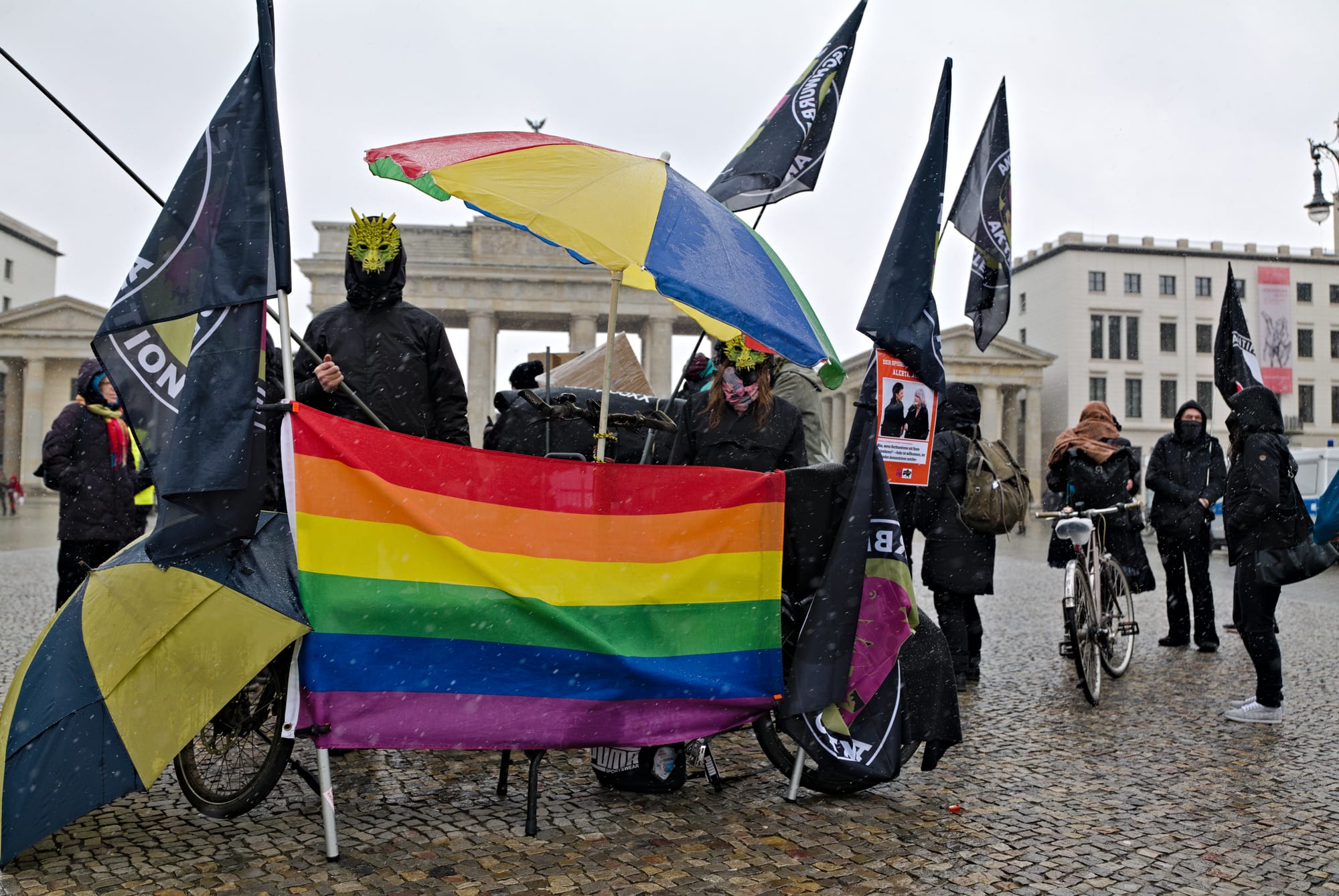
Chapter 6 — Who Is Behind the Hatred? The Different Faces of Modern Antisemitism
6.1 — The Question Europe Can No Longer Afford to Avoid
For decades, European governments have repeatedly condemned antisemitism as a threat to democracy, human rights and social cohesion.
Political leaders have promised stronger legislation, better education, increased security and more effective prosecution of hate crimes.
Yet Jewish communities continue to experience threats, harassment, vandalism and violence.
This raises a fundamental question that deserves a direct answer.
Who is responsible for antisemitism in modern Europe?
The question is uncomfortable because the evidence does not point to one political movement, one religion, one nationality or one social class.
Antisemitism exists within different ideological environments, sometimes among groups whose political beliefs are otherwise fundamentally opposed.
Far-right extremists have promoted conspiracy theories about Jewish control, racial purity and national identity.
Islamist extremist movements have incorporated antisemitic narratives into political and religious propaganda.
Elements of the radical left have expressed antisemitism through conspiracy theories, collective accusations and forms of anti-Israel activism that target Jewish identity.
Online extremist communities have brought these narratives together, spreading propaganda that can reach audiences far beyond traditional political organisations.
And antisemitic prejudice is not confined to organised extremists.
It can also appear in ordinary workplaces, educational institutions, public spaces and social relationships.
This diversity creates a significant challenge for European governments.
A policy designed exclusively to confront neo-Nazi organisations will not necessarily address antisemitism emerging from Islamist extremist networks.
A programme focused on religious radicalisation may fail to address conspiracy theories circulating within nationalist movements.
And a strategy that concentrates on criminal violence alone may overlook the harassment and intimidation that shape everyday Jewish life.
Effective prevention requires identifying the different sources of antisemitism accurately.
But that requires political courage.
It also requires resisting the temptation to manipulate statistics for ideological purposes.
A serious investigation must be willing to examine uncomfortable evidence without turning entire populations into collective suspects.
The objective is not to identify a convenient demographic enemy.
It is to establish which individuals, organisations, ideological movements and social environments are associated with documented antisemitic behaviour, and whether public authorities are responding effectively.
6.2 — What Do We Actually Know About the Perpetrators?
Before examining specific ideological movements, it is essential to understand what official statistics can and cannot reveal.
European countries do not operate a single unified system for identifying the perpetrators of antisemitic incidents.
Some police forces record suspected ideological motivation.
Others classify offences according to criminal law, political extremism or hate-crime indicators.
Independent monitoring organisations may collect descriptions of perpetrators from victims and witnesses.
Surveys may ask Jewish respondents how they perceived the background or political views of individuals who harassed them.
These methods produce different types of information.
A police investigation may establish that a suspect belongs to an extremist organisation.
A victim may describe a perpetrator's apparent ethnic background.
A survey respondent may identify an attacker as holding extremist religious or political views.
These findings cannot automatically be treated as equivalent.
A person's appearance does not establish their religion.
A person's religion does not establish their political ideology.
And the use of a particular slogan does not always establish formal membership in an extremist movement.
These distinctions are necessary because inaccurate conclusions can distort both public understanding and government policy.
However, the limitations of the data should not become an excuse for avoiding the subject.
When credible research identifies patterns involving particular ideologies, those findings deserve serious examination.
When authorities possess evidence about extremist networks, that evidence should inform prevention and law enforcement.
And when demographic information is incomplete, governments should acknowledge the gaps rather than allow speculation to replace research.
The central challenge is to investigate responsibility without confusing identity with guilt.
6.3 — The United Kingdom: What the Perpetrator Data Reveals
The United Kingdom provides unusually detailed information about the reported characteristics of individuals involved in antisemitic incidents.
In 2025, 3,700 antisemitic incidents were recorded.
Descriptions of the apparent ethnic background of offenders were available in 1,385 cases, approximately 37% of the annual total.
Within that subset, the reported descriptions were as follows.
Reported Appearance of Suspected Perpetrators — United Kingdom, 2025
| Reported appearance | Incidents | Share of described cases |
|---|---|---|
| White — North European | 714 | 52% |
| Arab or North African | 344 | 25% |
| South Asian | 160 | 11% |
| Black | 123 | 9% |
| White — South European | 38 | 3% |
| Southeast Asian | 6 | Less than 1% |
| Total with descriptions | 1,385 | 100% approximately |
These figures require careful interpretation.
First, the largest group within the available descriptions was classified as having a White North European appearance.
Second, approximately one quarter were described as appearing Arab or North African.
Third, the figures concern only incidents in which a description was available.
They cannot be presented as a verified demographic breakdown of every antisemitic offender in Britain.
The categories are based on reported appearance, not confirmed ancestry, nationality or religion.
Nevertheless, the data reveals something important.
Antisemitic incidents involve people perceived as belonging to several different backgrounds.
The evidence does not support an explanation that assigns responsibility exclusively to one ethnic population.
At the same time, the proportion of offenders described as Arab or North African deserves examination, particularly because monitoring has identified changes in these descriptions during periods of intensified conflict involving Israel.
That pattern may be relevant to understanding how international political developments influence antisemitic incidents.
But it does not establish that Arab or North African populations as a whole are more likely to commit such offences. Establishing population-level rates would require representative data, reliable identification and appropriate comparison groups.
It also does not establish that the individuals concerned were Muslim.
These are different questions.
A government interested in effective prevention should investigate the specific ideological and social mechanisms involved rather than relying on demographic assumptions.
6.4 — Ideological Motivation: A More Important Question Than Appearance
The physical appearance of a perpetrator may help investigators identify a suspect.
But it rarely explains why antisemitism occurs.
Ideological motivation is often more relevant.
In the United Kingdom, 2,821 of the 3,700 antisemitic incidents recorded in 2025 contained evidence of at least one political or ideological narrative, antisemitic stereotype, conspiracy theory or related motivation.
That represented approximately 76% of recorded incidents.
The figure does not mean that 76% of perpetrators belonged to extremist organisations.
It means that identifiable narratives or motivations appeared in the reported incidents.
Some incidents contained more than one ideological element.
For example, traditional conspiracy theories about Jewish power could appear alongside references to Israel or the war in Gaza.
Other incidents combined Holocaust-related abuse with contemporary political slogans.
These overlaps are important.
Antisemitism does not always follow clear ideological boundaries.
A person may repeat Nazi terminology without belonging to a neo-Nazi organisation.
Another may use anti-Zionist language while expressing traditional antisemitic stereotypes.
A third may circulate conspiracy theories drawn from several unrelated extremist movements.
This complexity makes simplistic classifications unreliable.
But it also strengthens the case for examining the content of antisemitic behaviour.
The most useful question is not merely what a perpetrator looks like, but what beliefs, narratives and circumstances contributed to the offence.
6.5 — Far-Right Antisemitism: An Old Ideology That Never Disappeared
Far-right antisemitism remains a significant concern across Europe.
Its historical roots include racial nationalism, fascism, National Socialism and conspiracy theories portraying Jews as enemies of national identity.
Following the Second World War, openly Nazi political organisations were restricted or prohibited in several European countries.
But the ideological traditions associated with antisemitism did not disappear.
They survived through extremist networks, publications, underground organisations and later digital communities.
Contemporary far-right antisemitism often relies on familiar accusations.
Jews are falsely portrayed as controlling financial institutions, manipulating governments, directing immigration policies or undermining national culture.
These narratives frequently contradict one another.
Jewish people may be accused simultaneously of controlling capitalism and promoting communism.
They may be portrayed as both foreign outsiders and hidden rulers of national institutions.
The contradictions are not accidental weaknesses in an otherwise coherent theory.
They demonstrate that antisemitic conspiracy thinking is driven by scapegoating rather than evidence.
The Role of Online Radicalisation
Digital platforms have created new opportunities for far-right extremist propaganda.
Antisemitic memes, coded language and conspiracy narratives can circulate through online communities that may not resemble traditional political organisations.
Some extremist environments combine antisemitism with racism, anti-immigrant hostility and fantasies of political violence.
Others promote Holocaust denial or attempts to rehabilitate Nazi ideology.
The danger is not limited to offensive speech.
In some cases, extremist propaganda can contribute to radicalisation and the targeting of Jewish institutions.
European security agencies therefore have legitimate reasons to monitor violent far-right networks.
The political challenge is ensuring that law enforcement focuses on credible threats and criminal conduct while respecting lawful political expression.
Why Governments Must Remain Vigilant
Far-right antisemitism is sometimes treated as a familiar historical problem.
That familiarity can create a misleading sense that its methods and networks are already fully understood.
But extremist movements adapt.
They adopt new communication methods, exploit contemporary political grievances and develop relationships across national borders.
The continued presence of antisemitic far-right networks demonstrates that Holocaust remembrance alone cannot eliminate extremist ideology.
Prevention requires investigation, education, intelligence cooperation and appropriate criminal enforcement.
6.6 — Islamist Extremism: A Threat That Must Be Examined Without Political Evasion
Islamist extremism represents another important source of antisemitic ideology and, in some cases, violence.
The term requires careful definition.
Islam is a religion followed by diverse communities around the world.
Islamism refers to political movements seeking to organise society or government according to particular interpretations of Islam.
Islamist extremism describes more radical ideological environments, some of which reject democratic pluralism or justify political violence.
These categories are not interchangeable.
Most Muslims are not members of extremist organisations, and religious identity alone provides no evidence that a person supports antisemitism or violence.
Nevertheless, antisemitism has been documented within particular Islamist extremist movements.
Some organisations promote conspiracy theories about Jewish political control.
Others incorporate antisemitic interpretations of religious texts into propaganda.
Violent extremist groups have targeted Jewish civilians and institutions.
These threats cannot be ignored simply because discussing them may generate political controversy.
The European Security Dimension
Europe has experienced terrorist attacks against Jewish targets involving perpetrators influenced by jihadist ideology.
In March 2012, a gunman murdered children and a teacher at the Ozar Hatorah Jewish school in Toulouse, France.
In May 2014, four people were killed in an attack at the Jewish Museum of Belgium in Brussels.
In February 2015, a gunman attacked a synagogue in Copenhagen, killing a Jewish security volunteer.
These attacks occurred in different circumstances and involved different perpetrators.
They should not be reduced to a single explanation.
But they demonstrate that violent antisemitism associated with jihadist radicalisation has represented a genuine security threat in Europe.
The existence of this threat creates responsibilities for police, intelligence agencies and political leaders.
Authorities must investigate extremist networks, identify credible threats and prevent violent radicalisation.
They must also ensure that such investigations are based on evidence rather than collective suspicion of Muslim communities.
These objectives are compatible.
Effective counterterrorism requires distinguishing dangerous individuals and organisations from the much larger populations among whom they may live.
The Political Question
One of the concerns raised in public debate is whether governments sometimes hesitate to address antisemitism within Islamist extremist environments because they fear accusations of discrimination.
That claim cannot be accepted as a general explanation without evidence.
European governments have conducted extensive counterterrorism operations against jihadist networks and have prosecuted individuals responsible for violent extremism.
Nevertheless, specific institutional decisions may deserve scrutiny.
Were credible warnings investigated?
Did authorities identify extremist propaganda?
Were threatening individuals monitored appropriately?
Did failures of intelligence or coordination contribute to particular attacks?
These are legitimate questions.
The answer must come from documented cases, not assumptions about political motives.
Protecting Muslim citizens from collective suspicion and protecting Jewish citizens from Islamist extremist violence are not competing responsibilities. Both are obligations of a democratic state.
6.7 — Antisemitism Within Radical Anti-Israel Activism
Another important area of investigation concerns antisemitism associated with parts of radical anti-Israel activism.
The Israeli-Palestinian conflict has generated extensive political mobilisation across Europe.
Many activists advocate Palestinian self-determination, humanitarian protection, an end to occupation or changes in Israeli government policy.
These positions are not inherently antisemitic.
However, antisemitic narratives have been documented within some environments connected to anti-Israel activism.
The distinction becomes particularly important when political criticism is directed against Jewish individuals or institutions rather than Israeli government decisions.
For example, a campaign demanding changes in Israeli military policy is a political activity.
Threatening Jewish students because they are Jewish is discriminatory intimidation.
A protest against an Israeli diplomatic mission concerns state policy.
Targeting a synagogue because of events in Gaza involves an entirely different form of responsibility.
What the British Figures Show
In 2025, 1,977 recorded antisemitic incidents in the United Kingdom included references or connections to Israel, Palestine, the Hamas attacks or the subsequent war.
That represented approximately 53% of all recorded antisemitic incidents.
These cases also involved antisemitic language, motivation or targeting.
They were not simply ordinary political statements about Israel.
A further classification identified 1,766 incidents containing explicitly anti-Zionist motivation alongside antisemitic behaviour.
These categories overlap and must not be added together.
The figures reveal the extent to which contemporary antisemitic incidents have become intertwined with political narratives surrounding Israel.
They do not mean that everyone who opposes Zionism is antisemitic.
Nor do they establish that the broader movement for Palestinian rights is responsible for all such incidents.
They do show that anti-Israel language can be used within antisemitic harassment.
The political challenge is to recognise when this happens.
When Political Language Becomes a Substitute for Jewish Identity
One concern is the use of terms such as "Zionist" as substitutes for "Jew" in situations involving collective accusations or harassment.
The word Zionist has a legitimate political meaning.
It generally refers to support for Jewish national self-determination, although different people interpret the concept differently.
Criticism of Zionism as a political ideology is not automatically antisemitic.
But when the term is used to accuse Jewish people collectively of secret control, malicious intent or responsibility for violence, it can reproduce familiar antisemitic narratives.
Context is essential.
A political debate about nationalism is different from an accusation that Jewish citizens secretly control a government.
A disagreement about Israel's founding is different from threatening a Jewish person because of their identity.
These distinctions must be maintained if efforts to combat antisemitism are to remain credible.
6.8 — The Radical Left: When Anti-Racism Fails to Recognise Antisemitism
Antisemitism within parts of the radical left presents a particular ideological contradiction.
Many left-wing movements define themselves through opposition to racism, discrimination and inequality.
They support minority rights and condemn historical persecution.
Yet antisemitic stereotypes and conspiracy theories have appeared within some left-wing political environments.
Historically, these have included accusations about Jewish financial power, political influence and collective responsibility for international events.
In contemporary settings, antisemitism can emerge when Jewish people are treated as representatives of Israel or when antisemitic conspiracy narratives are incorporated into anti-capitalist or anti-imperialist rhetoric.
This does not mean that left-wing political beliefs are inherently antisemitic.
Nor does it mean that criticism of capitalism, Zionism or Israeli policy is antisemitic.
The issue arises when political arguments rely on discriminatory stereotypes or collective accusations.
The Problem of Selective Recognition
A political movement may be highly sensitive to certain forms of racism while failing to recognise antisemitism expressed within its own networks.
The same problem can occur on the right, where political groups may condemn antisemitism associated with Islamist extremism while overlooking antisemitic conspiracy theories among nationalist activists.
This inconsistency weakens the credibility of anti-discrimination commitments.
A movement cannot establish its opposition to antisemitism solely by condemning its political opponents.
It must also be willing to examine its own rhetoric and behaviour.
For European political parties, universities and activist organisations, this creates a responsibility to establish consistent standards.
Threats, discriminatory exclusion and antisemitic conspiracy theories should not be excused because they are expressed in support of an otherwise legitimate political cause.
6.9 — Germany: What Ideological Classification Reveals
Germany provides an important example of how antisemitic incidents can be classified according to ideological context.
In 2024, nationwide monitoring documented 8,627 antisemitic incidents.
The monitoring included cases of extreme violence, physical assault, threats, vandalism and other forms of antisemitic behaviour.
Among incidents that could be attributed to a political or ideological background, anti-Israel activism was the largest identified category.
Approximately 26% of all recorded incidents were assigned to that category.
The same monitoring documented 544 incidents associated with a right-wing extremist background.
These findings are significant, but they require careful interpretation.
First, the categories refer to the context and identifiable ideological characteristics of incidents.
They do not necessarily establish formal membership in political organisations.
Second, some incidents could not be assigned a clear ideological background.
Third, monitoring classifications may differ from police crime statistics.
Nevertheless, the findings demonstrate that contemporary antisemitism in Germany cannot be understood exclusively through the traditional image of neo-Nazi extremism.
Anti-Israel political narratives have become an important part of the documented incident landscape.
At the same time, right-wing extremist antisemitism remains present and serious.
The appropriate conclusion is not that one form of antisemitism has replaced another.
It is that several forms coexist and require different prevention strategies.
The Political Implications
German authorities face the challenge of recognising antisemitism across different ideological environments while protecting freedom of expression.
This requires precise definitions and consistent enforcement.
Political criticism must remain lawful.
Criminal threats and violence must be investigated.
Antisemitic harassment must be recognised regardless of whether it appears in nationalist, religious extremist or radical activist environments.
The effectiveness of government policy depends on whether these distinctions are applied in practice.
6.10 — What Jewish Victims Say About the People Who Harass Them
Incident statistics are not the only source of information about perpetrators.
Surveys of Jewish experiences provide another perspective.
In a major European survey published before the October 2023 escalation, respondents who had experienced antisemitic harassment were asked about the perceived characteristics of perpetrators involved in their most serious incident.
Among the categories frequently identified were unknown individuals, people perceived as holding extremist Muslim views, people perceived as holding left-wing political views and people perceived as holding right-wing political views.
The reported percentages included approximately 30% identifying someone perceived as holding extremist Muslim views, 21% identifying someone with left-wing political views and 13% identifying someone with right-wing political views.
These categories were based on respondents' perceptions.
They were not verified findings about the religion or political affiliation of every perpetrator.
They also referred to particular experiences of harassment, not all antisemitic crimes across Europe.
Nevertheless, the findings are relevant.
They show that Jewish respondents identified threats from different ideological environments, including Islamist extremist and left-wing contexts.
This challenges the assumption that antisemitism is experienced only as a far-right problem.
It also demonstrates why government strategies should be informed by the experiences of Jewish communities themselves.
Victim surveys cannot replace criminal investigations.
But they can reveal patterns of harassment that may not be fully captured by police statistics.
6.11 — The Role of Migration, Integration and Imported Political Conflicts
The relationship between migration, integration and antisemitism is one of the most politically sensitive subjects in contemporary Europe.
It is also a subject that requires careful research rather than silence or generalisation.
Europe's Jewish communities have faced antisemitism for centuries, long before modern immigration from the Middle East, North Africa or other regions.
European antisemitism cannot therefore be explained as an imported phenomenon.
Its historical roots are deeply European.
At the same time, migration can bring people into contact with political narratives, religious interpretations and historical experiences formed in other societies.
Some individuals may arrive with strongly negative views of Israel.
Others may have encountered antisemitic propaganda in educational, political or religious environments.
Still others reject such narratives and actively oppose antisemitism.
These differences matter.
Hostility towards Israeli government policy is not equivalent to hostility towards Jews.
And attitudes held by some individuals cannot be assigned automatically to everyone sharing their country of origin or religious background.
The Challenge for Integration Policy
Governments have a legitimate interest in ensuring that newcomers understand the legal and democratic principles of their new societies.
These include religious freedom, equality before the law and the prohibition of criminal threats and violence.
Integration programmes can address antisemitism alongside other forms of discrimination.
They can also provide historical education about the Holocaust and the development of European minority rights.
But the effectiveness of such programmes must be evaluated.
Simply requiring attendance at a course does not establish that discriminatory beliefs have changed.
Research should examine whether educational interventions improve knowledge, reduce prejudice and strengthen commitment to equal citizenship.
Why the Debate Must Remain Evidence-Based
It would be misleading to claim that migration alone caused the rise in European antisemitism.
The historical evidence contradicts that explanation.
It would also be misleading to dismiss all concerns about antisemitic attitudes within particular extremist or social environments without examining available research.
The responsible approach is to investigate specific patterns.
Which attitudes have been measured?
Among which populations?
How representative were the samples?
Were researchers examining hostility towards Jews, hostility towards Israel or both?
And what evidence connects attitudes to actual criminal behaviour?
These questions are essential.
Governments should neither avoid politically uncomfortable findings nor use incomplete findings to justify collective suspicion.
6.12 — Conspiracy Theories: The Ideology That Crosses Political Boundaries
One of the most persistent features of antisemitism is its ability to spread across otherwise opposing political movements.
Traditional conspiracy theories portray Jews as secretly controlling governments, financial systems, media organisations or international institutions.
These accusations are false.
They are also remarkably adaptable.
In far-right environments, Jews may be accused of promoting immigration or undermining national identity.
In some radical anti-capitalist environments, antisemitic stereotypes may appear in claims about hidden financial control.
In extremist religious propaganda, Jews may be portrayed as collective enemies.
In online conspiracy communities, these narratives may merge with misinformation about global events.
The ideological contradictions are substantial.
Yet the same basic accusation remains.
Jewish people are falsely presented as a hidden collective force responsible for society's problems.
This makes antisemitic conspiracy theories particularly dangerous during periods of uncertainty.
Economic crises, pandemics, wars and political instability can create demand for simplified explanations.
Conspiracy narratives offer an identifiable enemy.
They replace complex institutional realities with claims of secret coordination.
And they can encourage hostility towards individuals who have no connection to the events being discussed.
The Responsibility of Digital Platforms
Social media companies face significant challenges in addressing antisemitic conspiracy theories.
Content may be disguised through coded language, humour, manipulated images or indirect references.
Extremist communities may move between platforms when moderation increases.
Algorithms may amplify provocative content, although the effects vary by platform and user behaviour.
The challenge is not simply to remove offensive material.
It is to identify unlawful threats, reduce the spread of harmful misinformation and maintain transparent moderation standards.
Governments also face responsibilities.
They must enforce existing laws against criminal incitement and threats while protecting lawful political expression.
The effectiveness of these measures requires independent evaluation.
6.13 — Why Some Antisemitic Incidents Involve Young People
Antisemitism among young people deserves particular attention.
Children and teenagers may encounter discriminatory stereotypes through social media, peer groups, family environments or political discussions.
They may repeat slogans without understanding their historical meaning.
Others may deliberately use antisemitic language to intimidate classmates.
The distinction between ignorance, prejudice and intentional harassment matters.
But all three can contribute to an unsafe educational environment.
In the United Kingdom, incident monitoring has documented cases involving perpetrators believed to be minors.
During the first half of 2025, approximately 16% of incidents for which the offender's age was estimated involved minors.
This does not mean that 16% of all antisemitic offenders in Britain were children.
The figure applies only to cases with sufficient age information.
Nevertheless, it highlights the importance of educational prevention.
The Limits of Holocaust Education
Many European students learn about the Holocaust.
But knowledge of historical events does not automatically produce an understanding of contemporary antisemitism.
A student may recognise Nazi symbols while failing to identify a conspiracy theory about Jewish control.
Another may condemn historical persecution while treating Jewish classmates as responsible for Israeli government policy.
Educational programmes should therefore connect historical knowledge with contemporary examples.
They should explain the difference between criticism of governments and discrimination against individuals.
They should also address online misinformation and the manipulation of political conflicts.
The objective is not to dictate political opinions about Israel or Palestine.
It is to ensure that students understand the principles of individual responsibility, religious freedom and equal rights.
6.14 — Why the Police Data Is Often Incomplete
One of the greatest obstacles to understanding antisemitic offending is the lack of comparable European data.
National police forces use different legal categories.
Some record antisemitic motivation as a specific hate-crime indicator.
Others classify offences within broader categories of politically motivated crime.
Independent organisations may record incidents that do not meet the legal definition of a criminal offence.
This creates significant differences between datasets.
A country may report thousands of antisemitic incidents while recording a smaller number of criminal cases.
Another may publish hate-crime statistics without identifying the ideological background of suspects.
These differences make simple European comparisons unreliable.
What Governments Should Improve
More detailed and consistent reporting could help researchers identify patterns.
Useful information would include the type of offence, location, suspected ideological motivation, age of suspects where lawfully recorded, investigation outcomes and final judicial decisions.
Where legally permitted and methodologically justified, demographic research could also help examine relevant social factors.
However, such information must be collected with appropriate privacy protections and safeguards against discrimination.
The purpose of improved data should be to understand offending and strengthen prevention.
It should not be to create suspicion towards entire populations.
A government that lacks reliable information about perpetrators will struggle to design targeted interventions.
But a government that misuses incomplete information risks undermining public trust and equal protection.
6.15 — Are Governments Confronting Every Form of Antisemitism Equally?
The existence of different ideological sources of antisemitism raises an important question about political consistency.
European governments have extensive experience confronting neo-Nazi movements and violent far-right extremism.
They have also developed counterterrorism systems targeting jihadist networks.
Many countries have introduced policies addressing hate crimes, online extremism and discriminatory harassment.
These efforts are substantial.
Nevertheless, public debate continues over whether institutions recognise all forms of antisemitism with equal clarity.
Some critics argue that antisemitism within radical anti-Israel activism is not always recognised.
Others argue that governments sometimes treat legitimate Palestinian advocacy as inherently suspicious.
Some question whether Islamist extremist antisemitism receives sufficient attention.
Others warn that the subject can be used to stigmatise Muslim communities.
These disagreements cannot be resolved through political slogans.
They require evidence about institutional decisions and enforcement outcomes.
Were similar threats investigated in comparable ways?
Were criminal charges based on consistent legal standards?
Were political organisations held accountable for documented misconduct?
Were peaceful demonstrators protected regardless of their views?
And did authorities respond appropriately when Jewish individuals reported targeted intimidation?
The answers may differ by country and incident.
But the underlying principle should remain constant.
Antisemitism must be recognised according to the conduct and evidence involved, not according to whether the perpetrator belongs to a politically convenient category.
6.16 — The Danger of Collective Blame
A critical investigation into perpetrators must avoid reproducing the very logic that makes antisemitism dangerous.
Antisemitism frequently operates through collective accusations.
Jews are blamed for decisions made by individuals, organisations or governments.
They are treated as politically interchangeable.
Their identity becomes the basis for suspicion.
An investigation into antisemitism must not apply that same reasoning to other communities.
The actions of an Islamist extremist do not establish the beliefs of all Muslims.
The conduct of a far-right offender does not establish the beliefs of all conservatives.
The behaviour of a radical activist does not establish the views of everyone supporting Palestinian rights.
And the actions of a person from a particular ethnic background do not establish the conduct of everyone sharing that background.
This is not a reason to avoid examining demographic or ideological evidence.
It is a reason to interpret that evidence accurately.
Individual responsibility and reliable classification are essential to effective law enforcement.
Collective suspicion is not.
6.17 — The Question of Political Courage
Antisemitism presents European governments with difficult choices.
They must protect freedom of expression while responding to threats.
They must investigate extremist networks without criminalising lawful political beliefs.
They must recognise antisemitism within different ideological environments without treating entire populations as responsible.
They must also be prepared to confront organisations or individuals whose political objectives may otherwise attract public sympathy.
These responsibilities require institutional independence.
Police investigations should not depend on the political popularity of suspects.
Prosecutorial decisions should be based on law and evidence.
Educational programmes should address discriminatory stereotypes consistently.
And political leaders should avoid selective condemnation.
A government that recognises antisemitism only when it comes from its political opponents risks weakening the credibility of its own policies.
The same is true of political movements and civil-society organisations.
Opposition to antisemitism must be more than a statement of identity.
It must be reflected in conduct.
6.18 — Understanding the Threat Is the First Step Towards Reducing It
The evidence examined in this chapter demonstrates that antisemitism in Europe is not the product of one ideology or one population.
Far-right extremism remains a significant source of antisemitic conspiracy theories and violent threats.
Islamist extremist movements have also promoted antisemitic narratives and carried out attacks against Jewish targets.
Antisemitism has appeared within parts of radical left-wing and anti-Israel activist environments.
Online conspiracy communities have further blurred ideological boundaries.
And discriminatory behaviour can occur outside organised extremist movements altogether.
The available statistics provide important insights, but they also reveal limitations.
Perpetrator descriptions are frequently incomplete.
Ideological classifications vary between monitoring systems.
Victim perceptions do not always establish verified offender characteristics.
And incident counts cannot automatically be translated into population-level offending rates.
These limitations should encourage better research, not political avoidance.
European governments need reliable evidence about the threats facing Jewish communities.
They need prevention strategies suited to different ideological environments.
They need effective investigations and transparent criminal justice outcomes.
And they need to confront antisemitism consistently, even when doing so creates political discomfort.
The ultimate objective should not be to identify one population to blame for Europe's antisemitism.
It should be to identify and reduce the specific forms of hatred, radicalisation and criminal conduct that threaten Jewish life.
A government cannot effectively confront a threat it refuses to understand. But it cannot understand that threat accurately if it replaces evidence with political assumptions.
Europe's responsibility is therefore twofold.
It must investigate the people and organisations responsible for antisemitic conduct.
And it must protect the principle that no citizen should be judged guilty because of their religion, ethnicity or political identity.
Both responsibilities are essential.
The next chapter examines how social media, digital propaganda and online conspiracy networks have transformed the spread of antisemitism, allowing historical prejudices to reach new audiences and influence political debate across national borders.
Chapter 7 — Social Media: How Antisemitism Spreads Across Borders
7.1 — A New Battlefield: When Hatred Travels Faster Than Facts
Antisemitism is not a new phenomenon. Its history stretches across centuries of religious persecution, political conspiracy theories, discrimination, expulsions and mass violence.
What has changed is the speed, scale and accessibility of its distribution.
In earlier generations, antisemitic propaganda circulated through newspapers, political pamphlets, public speeches, books and organised extremist movements.
Today, a single post can reach millions of people within hours.
A video uploaded in one country can provoke anger in another. A fabricated accusation can be repeated across multiple platforms before journalists establish what actually happened. A conspiracy theory that once circulated within a small extremist community can become visible to an international audience.
Social media has transformed the environment in which antisemitism spreads.
Platforms such as X, Facebook, Instagram, TikTok, YouTube and Telegram have become central spaces for political discussion, news consumption and public mobilisation.
They also provide opportunities for propaganda, intimidation and extremist messaging.
Following the Hamas-led attacks of 7 October 2023 and the subsequent war in Gaza, these platforms became major channels for information about the conflict.
Some content documented genuine atrocities, civilian suffering and humanitarian emergencies.
Other material contained false claims, manipulated images, misleading narratives, antisemitic conspiracy theories and attempts to justify violence.
The difficulty for audiences was not simply the volume of information.
It was the challenge of distinguishing verified reporting from emotionally persuasive material designed to influence beliefs.
For Jewish communities in Europe, this digital environment has created additional concerns.
Antisemitic hostility is no longer confined to physical encounters or organised political movements.
It can enter people's homes through their phones, follow students into online classrooms and expose individuals to harassment across national borders.
The central question is whether Europe's democratic institutions and technology companies have developed effective ways to confront antisemitic threats in an information environment that moves faster than traditional systems of accountability.
7.2 — October 7: When Social Media Became Part of the Conflict
The Hamas-led attacks of 7 October 2023 demonstrated how digital platforms can become an extension of armed conflict.
Videos and photographs circulated rapidly as the attacks unfolded.
Some material was recorded by victims, witnesses, emergency responders and journalists.
Other footage originated from the attackers themselves.
Hamas and other armed groups used digital communication to publicise their actions, spread propaganda and influence public perception.
The circulation of graphic images created an immediate international impact.
People far from Israel witnessed scenes of violence and destruction in near real time.
Families searched online for information about missing relatives.
Journalists attempted to verify rapidly emerging accounts.
Governments and security agencies monitored developments while confronting an enormous volume of unverified material.
As Israel's military campaign in Gaza intensified, social media also became a major source of images documenting Palestinian civilian suffering, damaged infrastructure, displacement and humanitarian emergencies.
These images influenced public opinion and contributed to demonstrations across Europe.
Many were authentic and important to public understanding.
Others were presented without sufficient context or circulated with inaccurate descriptions.
The result was an information environment in which genuine evidence, political advocacy, propaganda and misinformation often appeared side by side.
This created opportunities for extremist actors.
Antisemitic narratives could be inserted into discussions about Israeli military operations.
False claims about Jewish people could be circulated alongside legitimate criticism of the Israeli government.
And emotionally charged content could encourage audiences to react before verifying the underlying facts.
The consequences extended beyond the conflict zone.
Jewish citizens in European countries increasingly encountered hostility connected to events taking place thousands of kilometres away.
7.3 — How Algorithms Can Amplify Extremist Narratives
Social media platforms do not simply display information in chronological order.
Many use recommendation systems that determine which posts, videos and accounts users are most likely to encounter.
These systems may consider viewing history, previous interactions, popularity, engagement and other signals.
Their purpose varies by platform, but many are designed to increase the relevance of content and encourage continued participation.
This creates an important question.
What happens when emotionally provocative or hateful material generates significant engagement?
Research has shown that certain forms of emotionally charged content can attract attention and spread rapidly online.
However, the precise effects of recommendation algorithms vary between platforms, topics and user groups.
It would be inaccurate to claim that every algorithm deliberately promotes antisemitism.
It would also be misleading to assume that platforms have no influence over the visibility of harmful content.
The Engagement Problem
Political conflict often produces highly emotional reactions.
Posts containing anger, fear, outrage or accusations may attract substantial engagement.
Users may share material because they agree with it, because they are shocked by it or because they wish to condemn it.
Recommendation systems may respond to those interactions without distinguishing the reasons behind them.
As a result, controversial content can gain visibility through both support and opposition.
An antisemitic conspiracy theory may therefore spread even when many users are criticising it.
The platform's technical systems may register engagement, while the wider public encounters the accusation repeatedly.
Repetition and Perceived Credibility
Repeated exposure can influence how familiar a claim appears.
A false accusation encountered across several accounts may begin to seem widely accepted.
This does not mean every user will believe it.
People interpret information differently, and many actively reject extremist content.
Nevertheless, repetition can create confusion about what is established fact and what remains unsupported speculation.
This is especially dangerous when historical antisemitic stereotypes are presented as explanations for contemporary political events.
7.4 — Old Antisemitic Conspiracy Theories in a Digital Form
Modern antisemitic propaganda frequently relies on ideas that existed long before the internet.
Among the most persistent are false claims that Jewish people secretly control governments, financial institutions, media organisations or international events.
These narratives have appeared in different ideological movements over generations.
Digital platforms have given them new forms.
A traditional conspiracy theory may now appear as a short video, an edited photograph, a meme or a series of misleading statistics.
The language may be indirect.
Instead of explicitly referring to Jews, a post may use coded expressions whose meaning becomes clear through context.
Other content openly promotes antisemitic accusations.
The Myth of Jewish Control
One recurring narrative falsely portrays Jewish people as a unified group directing political or economic institutions.
This accusation ignores the diversity of Jewish communities and the complexity of political and financial systems.
It also treats individual Jewish people as collectively responsible for decisions made by governments, businesses or organisations.
The theory is not supported by evidence.
Its persistence reflects a familiar mechanism of scapegoating.
When societies face uncertainty, conspiracy theories offer simplified explanations and identifiable enemies.
Economic problems, political disagreements and international crises can be falsely attributed to a hidden group.
The digital environment allows these accusations to circulate without the editorial checks associated with professional journalism.
The Adaptation of Historical Propaganda
Some online communities revive material associated with earlier antisemitic movements.
Holocaust denial and distortion remain part of this environment.
Other narratives attempt to portray historical persecution as exaggerated, fabricated or politically manipulated.
Such claims can appear in seemingly educational videos or documentary-style posts.
The use of archival images, confident narration and professional editing can make misleading material appear credible.
This demonstrates why visual presentation should never be confused with factual reliability.
A video can look authoritative while containing demonstrably false claims.
7.5 — Holocaust Denial, Distortion and Historical Manipulation
Holocaust denial and distortion are particularly serious forms of antisemitic misinformation.
Denial involves rejecting the established historical reality of the Nazi genocide of European Jews.
Distortion may involve minimising the scale of the Holocaust, misrepresenting responsibility or using historical events to promote contemporary antisemitic narratives.
The Holocaust is one of the most extensively documented crimes in modern history.
Historical evidence includes official records, survivor testimony, photographs, physical sites, perpetrator documentation and extensive scholarly research.
Yet denialist content continues to circulate online.
Some material uses familiar conspiracy theories.
Other content relies on selective quotations, manipulated documents or misleading comparisons.
Why Historical Distortion Matters Today
Holocaust distortion is not merely a disagreement about the past.
It can weaken public understanding of how antisemitic persecution developed and how state institutions participated in mass violence.
It can also normalise the language and imagery of extremist movements.
When historical crimes are minimised or denied, contemporary antisemitic claims may encounter less resistance.
However, not every historical comparison involving the Holocaust is necessarily antisemitic.
Context, intent and content matter.
Serious historical analysis requires careful evidence and recognition of differences between events.
The challenge for educational institutions and digital platforms is to distinguish legitimate historical discussion from deliberate denial, falsification and extremist propaganda.
7.6 — The Digital Glorification of Hamas and Political Violence
Following 7 October 2023, extremist propaganda associated with Hamas and other armed organisations circulated across digital platforms.
Hamas is designated as a terrorist organisation by the European Union, the United Kingdom, the United States and several other governments.
Its attacks against civilians, hostage-taking and other violations of international humanitarian law have been extensively documented.
Digital propaganda can serve several purposes for armed organisations.
It can attempt to justify violence.
It can intimidate opponents.
It can attract sympathisers.
And it can influence international narratives about a conflict.
Some online material following 7 October denied documented atrocities or portrayed deliberate attacks against civilians as legitimate political achievements.
Other content glorified perpetrators or circulated threats.
Such material raises questions about criminal incitement and support for terrorist organisations.
The applicable legal standards vary between countries.
Not every controversial statement constitutes a criminal offence.
But the public glorification of violence against civilians can contribute to an environment in which extremist behaviour is normalised.
Distinguishing Palestinian Rights From Hamas Propaganda
This distinction is essential.
Supporting Palestinian self-determination does not mean supporting Hamas.
Demanding humanitarian assistance for Gaza does not mean endorsing attacks against Israeli civilians.
Criticising Israeli military operations does not mean approving of hostage-taking.
The overwhelming complexity of the conflict should not be reduced to the assumption that every supporter of Palestinian rights shares the ideology of an armed organisation.
At the same time, extremist propaganda should not be excused simply because it appears alongside legitimate political advocacy.
The defence of civilian rights must remain consistent, regardless of which civilians are involved.
7.7 — When Anti-Israel Content Becomes Antisemitic Propaganda
Social media has intensified the debate about the relationship between anti-Israel political expression and antisemitism.
The distinction is important because Israel is a state whose policies can be criticised.
People may oppose its government, military operations, settlement policies or political decisions.
They may advocate Palestinian independence or different constitutional arrangements.
These positions are not inherently antisemitic.
However, some online content crosses into antisemitism by targeting Jewish people collectively.
This can occur when Jews worldwide are accused of responsibility for Israeli military actions.
It can occur when Jewish religious institutions are portrayed as legitimate targets of political anger.
And it can occur when traditional conspiracy theories about Jewish power are presented as explanations for Israeli policy.
Collective Responsibility
A particularly damaging narrative assumes that all Jewish people share the same political identity.
This ignores the diversity of Jewish communities.
Jewish citizens in Europe have different political opinions, religious practices and relationships with Israel.
Some strongly support the Israeli government.
Others oppose its policies.
Some identify as Zionists.
Others reject Zionism or hold more complex views.
Treating them as a single political collective is discriminatory.
The Language of Political Substitution
In some online environments, the word "Zionist" is used in contexts that reproduce traditional antisemitic accusations.
This does not mean that the term itself is antisemitic.
Its meaning depends on how it is used.
A political discussion about Zionism is different from an accusation that Jewish people secretly control governments.
Criticism of a nationalist ideology is different from threatening a Jewish person because of their identity.
The difficulty for digital platforms is identifying these distinctions at scale.
Automated moderation may struggle with historical references, irony, coded language and multilingual content.
Human reviewers may also make inconsistent decisions.
Effective moderation therefore requires contextual judgement and transparent standards.
7.8 — Antisemitic Harassment: When Online Hatred Targets Individuals
Online antisemitism is not limited to public propaganda.
It can also involve direct harassment of identifiable individuals.
Jewish journalists, politicians, students, academics and community representatives may receive abusive messages, threats or discriminatory accusations.
Some attacks focus on a person's professional activities.
Others target their religion or perceived relationship with Israel.
In serious cases, harassment can include the publication of personal information, threats against family members or attempts to intimidate people into withdrawing from public debate.
These experiences can have consequences beyond the digital environment.
A person receiving repeated threats may become concerned about physical safety.
They may avoid public events.
They may restrict their social media presence.
They may hesitate to express political opinions.
The Silencing Effect
Online harassment can undermine democratic participation.
If people withdraw from public debate because of credible threats, their freedom of expression is restricted in practice.
This is particularly concerning for journalists.
A journalist investigating antisemitism may become the target of coordinated abuse.
A Jewish journalist reporting on the war in Gaza may be accused of bias solely because of their identity.
A Palestinian journalist may similarly face threats or discriminatory attacks connected to their background.
These forms of intimidation should be investigated according to the same legal principles.
The objective must be to protect individuals from unlawful threats while preserving open political debate.
7.9 — Telegram, Encrypted Networks and the Limits of Public Moderation
Not all extremist activity occurs on large public platforms.
Messaging services, private groups and alternative online communities can also facilitate the circulation of antisemitic propaganda.
Telegram has been used by a wide variety of communities, including journalists, political activists, humanitarian organisations and extremist networks.
The platform's structure allows channels and groups to distribute material to large audiences.
Some extremist organisations have used such services to circulate propaganda or evade moderation elsewhere.
Private and encrypted communication environments create additional investigative challenges.
Authorities may have limited visibility into closed groups.
Content may move rapidly between channels.
Accounts can disappear or be replaced.
And material removed from one platform may reappear elsewhere.
However, privacy and encryption also serve legitimate purposes.
They protect journalists, political dissidents, human rights defenders and ordinary citizens.
The existence of extremist activity does not justify indiscriminate surveillance of private communications.
The challenge is to investigate credible criminal threats through lawful and proportionate methods.
Governments must balance public safety with privacy, due process and freedom of expression.
7.10 — Disinformation During the Israel–Gaza War
The war in Gaza created an environment in which information was often incomplete, rapidly changing and emotionally charged.
Journalists faced difficulties verifying events in active conflict areas.
Communications infrastructure was damaged or disrupted.
Access for independent international reporters was restricted.
Official statements from parties to the conflict required scrutiny.
Social media users frequently encountered images and claims before their origins could be established.
This environment created opportunities for misinformation.
Some photographs from earlier conflicts were presented as current events.
Videos were shared with incorrect descriptions.
Casualty figures were sometimes discussed without explaining their source, methodology or limitations.
Other claims were based on incomplete evidence or political speculation.
The Difference Between Misinformation and Disinformation
Misinformation refers to false or misleading information that may be shared without an intention to deceive.
Disinformation involves deliberately creating or distributing false or misleading material to manipulate an audience.
The distinction matters because intent is not always established.
A person may share an inaccurate video believing it to be genuine.
Another may knowingly circulate fabricated material for political purposes.
Both can contribute to public confusion, but they involve different forms of responsibility.
Why Verification Matters
In an international conflict, misinformation can influence public attitudes towards entire communities.
A false accusation about Israeli civilians may encourage antisemitic hostility.
A false accusation about Palestinian civilians may contribute to anti-Palestinian or anti-Muslim prejudice.
A manipulated image can distort understanding of military events.
A misleading statistic can reinforce an inaccurate political narrative.
The responsibility of journalism is to investigate these claims rather than repeat them uncritically.
This requires examining original footage, dates, locations, witnesses, available documentation and the reliability of competing accounts.
7.11 — Artificial Intelligence and the Future of Antisemitic Disinformation
Artificial intelligence has introduced new possibilities for producing convincing digital content.
AI systems can generate realistic images, synthetic audio, manipulated video and persuasive text.
These capabilities can be used for legitimate creative and educational purposes.
They can also be misused to fabricate evidence or impersonate public figures.
In politically charged environments, synthetic material can create confusion about events that never occurred.
A fabricated image may appear to document an attack.
A manipulated recording may falsely attribute statements to a politician.
An AI-generated video may imitate a news report.
The problem becomes especially serious when fabricated content reinforces existing prejudices.
The Challenge of Visual Credibility
People often assume that photographs and videos provide direct evidence of reality.
But digital manipulation has made that assumption increasingly unreliable.
A realistic image is not necessarily authentic.
A convincing voice recording may be synthetic.
A video may combine genuine footage with fabricated elements.
Journalists must therefore develop stronger verification procedures.
Audiences also need better digital literacy.
Technology companies should provide appropriate tools for identifying and labelling synthetic content.
But no detection system is perfect.
Some genuine material may be incorrectly labelled, while sophisticated manipulations may escape detection.
The responsibility for accuracy cannot be delegated entirely to automated systems.
7.12 — Online Radicalisation: From Digital Narratives to Real-World Threats
One of the most serious concerns surrounding extremist online content is its potential relationship with real-world violence.
Research into radicalisation has identified multiple pathways through which individuals may adopt extremist beliefs.
Online propaganda can contribute to these processes.
But it rarely operates in isolation.
Personal circumstances, social relationships, ideological commitments, political grievances and offline networks may also influence radicalisation.
It would therefore be inaccurate to claim that exposure to antisemitic content automatically leads to violence.
Most people who encounter extremist material do not become violent offenders.
Nevertheless, online environments can provide access to propaganda, reinforce hostile beliefs and connect individuals with extremist networks.
The Normalisation of Dehumanisation
A recurring feature of extremist propaganda is the portrayal of targeted groups as less deserving of rights or protection.
Dehumanising language can reduce empathy and make violence appear more acceptable within a particular ideological environment.
Antisemitic propaganda has historically used this mechanism.
Jewish people have been portrayed as dangerous, disloyal or collectively responsible for social problems.
Modern digital propaganda can reproduce these accusations in new formats.
The risk becomes especially serious when dehumanisation is combined with explicit encouragement of violence.
At that point, the issue is no longer merely offensive political expression.
It may involve criminal threats, incitement or support for violent extremism.
Authorities must investigate such conduct according to the applicable law and available evidence.
7.13 — The Influence of Online Hatred on Young People
Young people are among the most active users of digital platforms.
Many obtain news and political information through short videos, social media posts and online personalities.
This creates opportunities for education and international awareness.
It also creates risks.
A teenager may encounter a political claim without understanding its historical background.
An antisemitic stereotype may appear as a joke or meme.
A conspiracy theory may be presented through an entertaining video.
Repeated exposure can make extremist language seem ordinary within a particular online community.
The Problem of Historical Ignorance
Some young people may recognise the Holocaust as a historical event while lacking knowledge of contemporary antisemitic narratives.
They may not understand why accusations about Jewish control reproduce older conspiracy theories.
They may fail to distinguish criticism of Israel from collective hostility towards Jews.
And they may repeat slogans without recognising how those slogans are used in different contexts.
This does not mean that young people are uniquely responsible for antisemitism.
Adults also spread misinformation and extremist propaganda.
But the educational implications are significant.
Schools should teach students how to evaluate digital information, recognise discriminatory stereotypes and understand the historical development of antisemitism.
They should also encourage critical discussion of the Israeli-Palestinian conflict without treating political disagreement as inherently unacceptable.
Education should develop independent judgement rather than prescribe a particular political position.
7.14 — Influencers, Political Activists and the Power of Large Audiences
Social media influencers can shape public discussion far beyond their immediate communities.
Some specialise in politics or international affairs.
Others primarily produce entertainment, lifestyle or cultural content but occasionally comment on major events.
Their audiences may regard them as trusted sources even when they lack professional expertise in the subjects they discuss.
This creates significant responsibilities.
An influencer who shares an unverified accusation may expose millions of followers to misinformation.
A public figure who repeats an antisemitic stereotype can contribute to its normalisation.
A commentator who deliberately misrepresents historical events may influence audiences unfamiliar with the underlying evidence.
However, influence alone does not establish wrongdoing.
Public figures have the right to express political opinions.
They may criticise governments, support humanitarian causes and challenge dominant narratives.
The relevant question is whether they spread demonstrably false claims, target individuals with discriminatory hostility or encourage unlawful conduct.
Accountability Without Political Censorship
Calls for accountability must be distinguished from demands to silence unpopular opinions.
A public figure should not be penalised merely for supporting Palestinian rights or criticising Israeli government policy.
Nor should a person be immune from scrutiny because their message is presented as political activism.
The same standards of factual accuracy and individual responsibility should apply across political positions.
Platforms should provide transparent rules and meaningful opportunities to challenge moderation decisions.
Journalists should investigate influential claims rather than relying on popularity as evidence of credibility.
7.15 — Are Technology Companies Doing Enough?
Technology companies have introduced policies addressing hateful conduct, threats, extremist organisations and manipulated media.
Many employ automated detection systems and human moderation teams.
Some cooperate with law enforcement when credible threats are identified.
Others provide reporting tools for users experiencing harassment.
These measures demonstrate that platforms have recognised important responsibilities.
But questions remain about their effectiveness.
Antisemitic content continues to circulate.
Users report difficulties obtaining responses to harassment complaints.
Moderation decisions can be inconsistent.
And harmful material may spread rapidly before it is reviewed.
The Problem of Transparency
External researchers often have limited access to information about how moderation systems operate.
Companies may publish transparency reports, but the categories and methodologies differ.
It can therefore be difficult to compare platforms or determine how effectively they address antisemitism.
Useful transparency would include information about reports received, content removed, appeals, reinstatements and enforcement against credible threats.
Researchers also need appropriate access to data while respecting privacy and security.
Moderation Is Not a Simple Technical Problem
Automated systems may struggle with satire, historical discussion, coded language and multilingual content.
A post quoting antisemitic propaganda for educational purposes should not necessarily be treated the same as a post endorsing it.
A journalist documenting extremist rhetoric should not be automatically classified as promoting that rhetoric.
Likewise, harmful messages should not escape scrutiny simply because they avoid explicit slurs.
Effective moderation requires contextual analysis.
Technology companies must balance the reduction of harmful conduct with the protection of legitimate expression.
7.16 — The European Union's Digital Services Act
The European Union has introduced a regulatory framework intended to strengthen accountability for online platforms.
The Digital Services Act establishes obligations concerning illegal content, transparency and the management of certain systemic risks.
Very large online platforms and search engines face additional requirements relating to risk assessments and mitigation measures.
These obligations can be relevant to the spread of unlawful hate speech and other harmful activity.
However, the legislation does not automatically make every offensive or controversial political statement illegal.
The distinction between unlawful content and lawful expression remains important.
European institutions must apply the framework consistently with fundamental rights.
Regulation Versus Enforcement
Passing legislation is only the beginning.
The effectiveness of regulation depends on enforcement, transparency and independent oversight.
Authorities must determine whether platforms comply with their obligations.
Companies must explain relevant moderation practices.
Researchers and civil-society organisations need appropriate mechanisms to assess systemic risks.
And users must have meaningful ways to challenge decisions affecting their expression.
The political question is whether these systems can reduce unlawful threats and extremist activity without creating disproportionate restrictions on legitimate debate.
This requires continuous evaluation.
7.17 — Why Jewish Communities Experience Online Hatred Differently
Antisemitic harassment has consequences that extend beyond the immediate content of an abusive message.
For Jewish communities, certain threats carry historical significance.
References to Nazi ideology, Holocaust imagery or collective accusations can evoke a long history of persecution.
This does not mean every Jewish person experiences online hostility in the same way.
Jewish communities are diverse, and individuals respond differently.
But the historical context helps explain why some forms of antisemitic rhetoric are particularly disturbing.
The Burden of Visibility
A Jewish person who publicly identifies their religion may attract hostility unrelated to their actual political views.
A Jewish journalist may be accused of bias simply because of their background.
A Jewish student may be expected to answer questions about Israeli military policy.
A Jewish business may become the target of harassment because of assumptions about its owners.
These forms of collective attribution undermine individual freedom.
They can also discourage participation in public life.
When people conceal their identity to avoid threats, the consequences extend beyond personal discomfort.
The public sphere becomes less open and less representative.
A democratic society should not accept that outcome as normal.
7.18 — The Responsibility of Journalism in the Digital Age
The rise of social media has transformed the relationship between journalism and public information.
Traditional news organisations no longer control the speed or distribution of major stories.
Eyewitnesses can publish material directly.
Political organisations can reach audiences without editorial intermediaries.
And misinformation can circulate internationally before professional verification is completed.
This creates challenges for independent journalism.
The pressure to publish quickly can conflict with the responsibility to verify information.
Emotionally compelling material may attract attention even when its accuracy is uncertain.
Political audiences may reward reporting that confirms existing beliefs.
But the central responsibilities of journalism remain unchanged.
Facts must be checked.
Sources must be evaluated.
Claims must be distinguished from evidence.
And allegations must not be presented as established conclusions without sufficient support.
Reporting on Antisemitism Requires Precision
Journalists should avoid treating all criticism of Israel as antisemitic.
They should also avoid minimising antisemitic threats because they occur within a broader political movement.
When reporting on extremist organisations, journalists should distinguish documented membership from ideological sympathy or unverified accusations.
When discussing demographic patterns, they should explain the limitations of available data.
When reporting on online disinformation, they should avoid amplifying false claims unnecessarily.
And when covering the suffering of civilians, they should apply consistent standards of verification and humanity.
Independent journalism does not require political neutrality towards hatred or violence. It requires fairness towards evidence and accuracy in describing responsibility.
7.19 — What Must Change?
The digital spread of antisemitism cannot be addressed through one policy or institution.
Technology companies have responsibilities concerning platform design, moderation and transparency.
Governments have responsibilities concerning criminal threats, extremist activity and lawful regulation.
Schools have responsibilities concerning historical education and digital literacy.
Journalists have responsibilities concerning verification and context.
And political leaders have responsibilities concerning the language they use and the standards they apply.
Several principles should guide future action.
First, criminal threats must be taken seriously.
Online intimidation should not be dismissed simply because it occurs through a screen.
Second, extremist propaganda requires evidence-based investigation.
Authorities should focus on credible threats and unlawful conduct rather than broad assumptions about political or religious communities.
Third, technology companies must provide greater transparency.
Public accountability requires more than general assurances that harmful content is being addressed.
Fourth, education must reflect contemporary digital realities.
Students need to understand not only the history of antisemitism but also how old stereotypes appear in modern online content.
Fifth, legitimate political expression must remain protected.
Criticism of Israel, advocacy for Palestinian rights and debate about international law must not be automatically equated with antisemitism.
Finally, the same standards must apply across ideological boundaries.
Far-right antisemitism, Islamist extremist propaganda, antisemitic conspiracy theories and discriminatory harassment within political activism should all be examined according to evidence.
7.20 — Conclusion: A Hatred Without Borders
Antisemitism has survived centuries of political and social change.
Its language has evolved.
Its ideological environments have shifted.
Its methods of communication have transformed.
But many of its underlying accusations remain recognisable.
Digital technology has made these narratives easier to distribute, repeat and adapt.
A conspiracy theory created in one country can circulate internationally.
A fabricated image can influence public debate before its origins are established.
An extremist message can reach individuals who have never encountered the organisation responsible for producing it.
And a Jewish citizen in Europe can become the target of hostility connected to events taking place thousands of kilometres away.
The consequences are not confined to the internet.
Online intimidation can influence personal safety, public participation and community confidence.
Extremist propaganda can reinforce discriminatory attitudes.
And misinformation can distort public understanding of international conflicts.
Yet the solution cannot be indiscriminate censorship.
Democratic societies must protect legitimate expression, including criticism of governments and controversial political ideas.
The challenge is to confront unlawful threats, extremist incitement and discriminatory harassment without undermining the freedoms that distinguish democratic institutions.
Technology companies must be accountable for their systems.
Governments must enforce the law consistently.
Educational institutions must prepare young people to recognise manipulation.
And journalists must continue to distinguish verified facts from propaganda.
Europe cannot claim to protect Jewish life while allowing credible threats against Jewish citizens to disappear into the vastness of the digital world.
But protecting Jewish citizens also requires protecting the democratic principles of individual responsibility, equal rights and freedom of expression.
The fight against antisemitism must therefore be both determined and precise.
It must confront hatred without creating new forms of collective suspicion.
It must identify criminal behaviour without treating political disagreement as a crime.
And it must recognise that the speed of digital communication makes accurate information more important, not less.
The next chapter examines the responsibility of the news media itself: how editorial framing, selective reporting, missing historical context and the pressure of political polarisation can shape European understanding of Israel, the war in Gaza and the rise of antisemitism.

Chapter 8 — The Media's Responsibility: Reporting, Framing and Missing Context
8.1 — When Journalism Shapes More Than Public Opinion
In a democratic society, journalism has an essential responsibility.
It informs citizens, investigates those in power, documents injustice and provides the information people need to understand events beyond their immediate experience.
During wars and international crises, this responsibility becomes particularly important.
Most Europeans will never personally witness events in Israel, Gaza or the wider Middle East.
Their understanding is shaped largely by television reports, newspaper articles, online publications, photographs, social media and commentary.
The information they receive influences how they interpret responsibility, suffering, military decisions, political developments and international law.
It also influences how they perceive the people associated with those conflicts.
This creates a difficult question.
What happens when journalism provides fragments of a conflict without sufficiently explaining the historical, political and human context surrounding those fragments?
The answer is not that every incomplete report is dishonest.
Journalism operates under practical limitations.
Breaking news develops rapidly. Reporters face deadlines. Editors must decide which developments deserve attention. Access to conflict zones may be restricted. Information can be difficult to verify.
No individual news report can explain an entire conflict.
But when particular perspectives, images or explanations are repeatedly emphasised while others receive less attention, audiences may develop an incomplete understanding of events.
This is especially consequential when reporting concerns a conflict already surrounded by strong political emotions and historical prejudice.
Since 7 October 2023, European media organisations have faced intense scrutiny over their coverage of the Hamas-led attacks, Israel's military campaign in Gaza, Palestinian civilian suffering, hostage negotiations, allegations of war crimes and the international political response.
Criticism has emerged from different directions.
Some accuse media organisations of minimising the atrocities committed against Israeli civilians.
Others argue that coverage has failed to adequately represent the scale of Palestinian suffering or has relied too heavily on Israeli official accounts.
These criticisms cannot all be assumed correct.
They require systematic examination.
But they demonstrate the importance of editorial transparency, verification and consistent standards.
The question is not whether journalists should support Israel or Palestine.
The question is whether their reporting allows audiences to understand the conflict through verified facts rather than selective political narratives.
8.2 — October 7: The Importance of Establishing What Happened
The Hamas-led attacks of 7 October 2023 were a defining moment in the modern history of Israel and the wider Middle East.
Armed groups crossed from Gaza into southern Israel, attacking civilian communities, military installations, roads and a music festival.
Approximately 1,200 people were killed, and 251 people were taken hostage.
The attacks included deliberate killings of civilians, hostage-taking and other serious violations of international humanitarian law.
Investigations also documented conflict-related sexual violence, although the evidence and findings concerning individual allegations vary.
These events formed the immediate background to Israel's subsequent military campaign in Gaza.
Understanding that sequence is essential.
But historical sequence should not be confused with unlimited justification.
The fact that Hamas-led forces committed atrocities does not exempt Israeli military operations from international humanitarian law.
Similarly, the scale of Palestinian civilian suffering does not diminish the crimes committed against Israeli civilians on 7 October.
Both realities must remain visible.
The Problem of Incomplete Narratives
News coverage often concentrates on the latest development.
An airstrike.
A hostage release.
A humanitarian emergency.
A diplomatic statement.
A demonstration.
This is a normal feature of daily journalism.
But when audiences encounter individual events without adequate context, they may struggle to understand how those events relate to the broader conflict.
For example, reporting on Israeli military operations should explain relevant military objectives, civilian harm, available evidence and legal questions.
Reporting on the Hamas-led attacks should distinguish verified atrocities from unconfirmed claims and explain the role of the different armed groups involved.
Reporting on the humanitarian situation in Gaza should address civilian suffering, displacement, restrictions on aid, damage to infrastructure and the responsibilities of relevant parties.
The objective is not to force every article to contain the same historical introduction.
It is to ensure that the cumulative coverage provides a sufficiently accurate picture.
Context does not excuse violence. It helps audiences understand what happened, who was responsible and what legal and moral questions follow.
8.3 — Headlines: The Power of a Few Words
A headline may be the only part of a news article that a reader sees.
In the digital environment, headlines circulate through search engines, social media feeds, messaging applications and news aggregators.
They often shape first impressions before the underlying reporting is examined.
This gives headline writing considerable influence.
Consider the difference between two hypothetical headlines.
"Ten People Die During Violence in a City"
and
"Armed Attackers Kill Ten Civilians in a City"
Both may refer to the same event, but they communicate different information about agency and responsibility.
The first emphasises the outcome.
The second identifies the perpetrators and their actions.
Neither construction is universally appropriate.
During breaking news, journalists may not yet know who caused the deaths.
But once responsibility has been reliably established, continued use of vague language may leave readers with an incomplete understanding.
Passive Language and Responsibility
Passive constructions are common in journalism.
People are described as having died, buildings as having been destroyed and violence as having erupted.
Sometimes this reflects uncertainty.
Sometimes it is a legitimate stylistic choice.
But it can also obscure agency.
An important editorial question is whether similar events are described consistently.
Are perpetrators identified when the evidence supports doing so?
Are civilian casualties described with comparable precision?
Are official allegations distinguished from independently verified findings?
A systematic analysis of headlines would be needed to determine whether particular media organisations apply different standards to Israeli and Palestinian victims.
Individual examples can raise questions.
They do not, by themselves, establish an institutional pattern of bias.
8.4 — The Selection of Images: How Visual Journalism Influences Emotion
Photographs and video footage can communicate the human consequences of war more immediately than written reporting.
Images of destroyed homes, injured children, grieving families and displaced civilians can evoke powerful emotional responses.
Such photographs may also provide important documentary evidence.
Visual journalism is therefore an essential part of conflict reporting.
But image selection involves editorial judgement.
Which photographs appear on the front page?
Which images accompany breaking news?
Whose suffering is shown?
Which victims are named?
And what context accompanies the images?
These decisions influence how audiences experience a story.
Israeli Victims and Palestinian Victims
The Hamas-led attacks produced images of murdered civilians, damaged communities, fleeing festivalgoers and families searching for missing relatives.
The subsequent war in Gaza produced extensive imagery of destruction, injured civilians, overwhelmed medical facilities and families living through displacement.
Both bodies of visual evidence are important.
Neither should be erased from public understanding.
However, the relative prominence of different images can affect audience perceptions.
A news organisation that repeatedly shows the consequences of military operations without explaining the events preceding them may leave important context unclear.
A news organisation that focuses heavily on Israeli security concerns while giving insufficient attention to Palestinian civilian suffering may also produce an incomplete picture.
The responsibility of visual journalism is not to allocate identical screen time to every perspective.
It is to ensure that editorial decisions reflect the significance of verified events rather than a predetermined political narrative.
The Risk of Emotional Manipulation
Images can be authentic yet misleading when removed from context.
A photograph may be published with an inaccurate date.
A video may be described as showing an event in Gaza when it originated elsewhere.
An image may be cropped in a way that changes the viewer's understanding.
Professional newsrooms should verify location, date, origin and relevant circumstances whenever possible.
They should also distinguish authentic documentary material from manipulated or synthetic imagery.
The more emotionally powerful an image, the greater the importance of verifying its context.
8.5 — The Challenge of Reporting From Gaza
Reporting from Gaza has involved extraordinary difficulties.
The war has created dangerous conditions for journalists, civilians and humanitarian workers.
Communications disruptions, damaged infrastructure, military operations and restrictions on movement have complicated independent verification.
International journalists have faced significant restrictions on entering Gaza independently.
Palestinian journalists working inside the territory have played a central role in documenting events, often while facing severe personal risks.
Many journalists and media workers have been killed during the conflict.
The circumstances of individual deaths require careful investigation, including whether they involved unlawful attacks or other violations of international humanitarian law.
The Consequences of Restricted Access
When journalists cannot freely enter a conflict zone, independent reporting becomes more difficult.
News organisations may rely more heavily on local reporters, eyewitnesses, humanitarian organisations, official statements, satellite imagery and open-source material.
Each source has strengths and limitations.
Eyewitness testimony can provide direct accounts but may be incomplete.
Official military statements can provide information about operations but require independent scrutiny.
Humanitarian organisations may have access to affected populations but may not be able to verify every military claim.
Satellite imagery can establish physical changes but cannot always explain the circumstances that caused them.
The challenge is to combine these sources responsibly.
The Responsibility of Israel
Israel has cited security and operational concerns in restricting independent international media access to Gaza.
Those concerns deserve examination, but they do not eliminate the public interest in independent reporting.
Restrictions on journalistic access can make it harder to verify claims about military conduct and civilian harm.
A critical press should therefore scrutinise the legal and practical justification for those restrictions.
The Responsibility of Hamas
Hamas has exercised significant political and security influence within Gaza, and its military activities have affected the reporting environment.
Journalists must consider the risks of coercion, propaganda and interference by armed actors.
However, claims that particular reports or journalists were controlled by Hamas require evidence.
It would be inaccurate to assume that all Palestinian reporting is propaganda.
The correct approach is to evaluate individual sources and claims according to their reliability.
8.6 — Official Statements Are Not Independent Verification
During armed conflict, governments and military organisations issue statements designed to explain their actions.
These statements may contain accurate information.
They may also include incomplete details, disputed allegations or interpretations favourable to the issuing institution.
Journalists should therefore distinguish between reporting what an official has said and establishing that the statement is true.
This principle applies to all parties.
Israeli government and military claims require verification.
Statements issued by Hamas and authorities operating in Gaza require verification.
Claims made by foreign governments, political organisations and advocacy groups also require scrutiny.
The Problem of Attribution
A headline stating that a particular event occurred may convey greater certainty than the available evidence supports.
If the information comes from an official statement that has not been independently confirmed, attribution matters.
Readers should understand whether a claim has been verified, disputed or remains under investigation.
The same principle applies to casualty figures, military targets, allegations of war crimes and claims about the use of civilian infrastructure for military purposes.
The Hospital Explosion of October 2023
The explosion at Al-Ahli Arab Hospital in Gaza in October 2023 provides an important example of the difficulties of breaking-news verification.
Early reports contained conflicting claims about responsibility and the number of casualties.
As additional evidence emerged, investigators and news organisations examined video footage, physical evidence and competing accounts.
The case demonstrated how quickly unverified claims can become central to international political debate.
It also showed why news organisations must be willing to correct reporting as evidence develops.
A responsible newsroom should not present uncertain information as established fact merely because it comes from a source that appears authoritative.
8.7 — Casualty Figures: Numbers Without Context Can Mislead
Casualty figures are among the most frequently discussed elements of the Israel–Gaza war.
They are also among the most politically contested.
Accurate casualty reporting is essential because the numbers reflect the human consequences of armed conflict.
But figures must be interpreted carefully.
A reported total may include civilians and combatants.
It may not distinguish between deaths caused by different actors.
It may change as missing people are identified or additional records become available.
And different organisations may use different methodologies.
The Difference Between Reported Deaths and Verified Identities
A casualty total can be based on administrative records, hospital reports, identified bodies, eyewitness accounts or other evidence.
These sources do not always produce identical results.
Journalists should explain the basis of a figure whenever possible.
They should distinguish between reported deaths, independently verified deaths and estimates of additional deaths.
Civilian and Combatant Distinctions
International humanitarian law distinguishes civilians from combatants and from individuals directly participating in hostilities.
But determining the status of a person killed during a conflict can be difficult.
Age and sex alone do not conclusively establish combatant status.
Nor can a person be classified as a fighter merely because of their political beliefs or support for a particular organisation.
Likewise, the presence of combatants within a civilian population does not eliminate the protection owed to civilians.
These distinctions are essential.
Journalists should avoid presenting all deaths as combatant deaths or all deaths as definitively civilian without adequate evidence.
The Danger of Selective Statistics
Political actors may emphasise figures that support their preferred interpretation.
One side may focus on the number of civilians killed.
Another may emphasise the number of militants reportedly killed.
Both figures can be relevant.
But neither is sufficient on its own to determine whether military operations complied with international humanitarian law.
That assessment requires evidence concerning targeting decisions, distinction, proportionality, precautions and other legal obligations.
Numbers are essential to understanding war, but numbers without definitions, methods and context can produce misleading conclusions.
8.8 — The Language of International Law
Terms such as war crimes, crimes against humanity, genocide, terrorism, occupation and collective punishment carry significant legal meaning.
They should not be used casually.
Nor should journalists avoid them when they are necessary to accurately describe allegations, findings or legal proceedings.
The challenge is to distinguish between an allegation, an investigation, a provisional judicial measure and a final legal determination.
These are not the same.
Allegations Versus Findings
When a government, humanitarian organisation or legal expert alleges that a war crime has occurred, journalists should report the allegation accurately.
But they should also explain its status.
Has an independent investigation established the relevant facts?
Has a prosecutor brought charges?
Has a court issued a warrant?
Has a trial occurred?
Has a final judgment been delivered?
Each stage has different legal significance.
The Genocide Debate
The allegation of genocide in Gaza has generated intense international controversy.
Genocide is a specific international crime involving prohibited acts committed with the intent to destroy, in whole or in part, a protected national, ethnic, racial or religious group.
Large numbers of civilian deaths do not, by themselves, establish the specific intent required for genocide.
At the same time, the absence of a final judicial judgment does not mean that credible allegations should be ignored.
Journalists must accurately distinguish between allegations, expert assessments, provisional court orders and final decisions.
They should also explain the legal framework rather than treating the word genocide as merely a political slogan.
The International Criminal Court
The International Criminal Court issued arrest warrants in November 2024 for Israeli Prime Minister Benjamin Netanyahu, former Israeli Defence Minister Yoav Gallant and a Hamas military commander in connection with alleged crimes.
An arrest warrant is not a conviction.
It reflects a judicial decision at a particular stage of criminal proceedings.
The individuals concerned are entitled to the applicable procedural protections.
Journalists should explain these distinctions.
The same standard must apply regardless of the nationality or political identity of the accused.
8.9 — Are Jewish Victims and Palestinian Victims Described Differently?
One of the most important questions in conflict journalism concerns the language used to describe victims.
Are some victims presented as individuals with names, families and personal histories while others appear primarily as statistics?
Are certain deaths described through detailed human stories while others receive only brief numerical references?
Do headlines identify responsibility consistently?
These questions deserve systematic investigation.
The Humanisation of Victims
Personal stories can help audiences understand the consequences of violence.
A report about a murdered Israeli family may describe the victims' names, professions and relationships.
A report about a Palestinian child killed during a military operation may describe the child's family, education and daily life.
Both approaches are valuable.
They remind audiences that civilians are not abstract political symbols.
However, an imbalance in personal storytelling can influence how audiences perceive suffering.
A comprehensive media study could examine whether particular news organisations systematically humanise one population more than another.
Such a study would need a defined sample, consistent coding criteria and transparent methods.
Without that evidence, claims of systematic bias should remain hypotheses rather than conclusions.
Equal Humanity Does Not Require Identical Reporting
Different events may legitimately receive different coverage.
A large attack, a hostage release, a major military operation and a humanitarian emergency have different news characteristics.
Fairness does not require identical headlines or equal word counts.
It requires consistent ethical standards.
The humanity of civilians should not depend on their nationality.
8.10 — The Media's Treatment of Antisemitic Incidents in Europe
The responsibility of European journalism extends beyond reporting on events in the Middle East.
It also includes investigating antisemitism within European societies.
Following 7 October, Jewish communities reported increased harassment, threats and intimidation.
Some incidents involved attacks against individuals or institutions.
Others involved online abuse, vandalism or discriminatory behaviour.
These developments deserve sustained journalistic attention.
The Risk of Treating Antisemitism as a Secondary Story
When a major international conflict dominates the news, domestic hate crimes may receive less attention.
This is not necessarily evidence of deliberate neglect.
Newsrooms must allocate limited resources across many competing stories.
But the consequences of insufficient coverage can be significant.
A Jewish family experiencing repeated harassment may feel that its concerns are not recognised.
A community facing threats may struggle to draw attention to failures in local policing.
And the public may underestimate the scale of antisemitic incidents.
The Importance of Investigating Perpetrators
Journalists should examine who commits antisemitic offences, what motivations are established and how authorities respond.
This requires care.
A suspect's apparent ethnicity does not establish their religion or ideology.
An individual's political affiliation does not automatically establish motive.
And an arrest does not establish guilt.
But these limitations should not prevent journalists from examining documented patterns.
The public has a legitimate interest in understanding the sources of antisemitic threats.
Reporting should therefore move beyond incident counts towards investigations of perpetrators, extremist networks and institutional accountability.
8.11 — Political Bias, Editorial Culture and Newsroom Decisions
Journalists are individuals with personal experiences, values and political perspectives.
Professional journalism does not require them to have no opinions.
It requires them to apply standards of accuracy, fairness and verification despite those opinions.
Editorial decisions are influenced by multiple factors.
These include available evidence, deadlines, audience interests, newsroom resources, legal risks and the significance of events.
Organisational culture may also influence which questions receive attention.
How Bias Can Enter Reporting
Bias does not always involve deliberate dishonesty.
It can emerge through the selection of sources, assumptions about credibility or repeated emphasis on particular explanations.
A newsroom may rely heavily on familiar commentators.
Editors may give greater prominence to events that fit established narratives.
Reporters may fail to question assumptions shared by their professional environment.
These risks exist across political perspectives.
They are not unique to reporting about Israel.
The Need for Editorial Diversity
News organisations benefit from journalists who understand different historical, cultural and political contexts.
Knowledge of Israeli society, Palestinian society, Jewish history, Arab politics and international humanitarian law can improve reporting.
However, diversity of background alone does not guarantee accuracy.
The central requirement remains rigorous editorial practice.
Newsrooms should encourage internal challenge, transparent corrections and independent scrutiny.
8.12 — The Problem of Selective Historical Context
The Israeli-Palestinian conflict is deeply connected to history.
Its modern political dimensions involve the Ottoman period, British rule, Jewish national movements, Palestinian national identity, the Holocaust, the establishment of Israel, the wars of 1948 and 1967, displacement, occupation, peace negotiations and subsequent political developments.
No single article can explain all of these subjects.
But the selection of historical starting points can influence interpretation.
Where Does the Story Begin?
A report beginning with 7 October 2023 may emphasise the Hamas-led attacks and Israel's subsequent military response.
A report beginning with the blockade of Gaza may emphasise the conditions preceding the war.
A report beginning with 1967 may focus on occupation and territorial disputes.
A report beginning with 1948 may examine the establishment of Israel and Palestinian displacement.
Each starting point provides relevant information.
None offers a complete history.
The challenge is to make clear what historical period is being examined and what important context lies outside the immediate report.
The Danger of Historical Simplification
Historical narratives become misleading when complex events are reduced to simple moral categories.
The history of Israel and Palestine involves competing national movements, wars, displacement, security concerns, political failures and human suffering.
Recognising Jewish historical connections to the land does not require denying Palestinian history.
Recognising Palestinian displacement does not require denying Jewish historical persecution or national identity.
Journalism should resist narratives that erase either population.
A conflict cannot be understood accurately when the history of one people is treated as legitimate and the history of another is treated as irrelevant.
8.13 — Media Framing and the Rise of Antisemitism: What Can Be Proven?
A central concern of this investigation is whether media coverage contributes to hostility towards Jewish communities.
The question deserves attention, but it must be approached carefully.
Media framing can influence public understanding.
Repeated narratives can affect which issues audiences consider important.
Emotional imagery can shape perceptions.
Misleading reporting can reinforce prejudice.
However, establishing that a particular news report caused an antisemitic incident requires stronger evidence than demonstrating that the report preceded the incident.
Correlation is not causation.
The rise in antisemitism following October 2023 occurred alongside numerous developments.
These included the Hamas-led attacks, the war in Gaza, large demonstrations, online propaganda, extremist mobilisation and intense political debate.
Media coverage formed part of this wider information environment.
It cannot automatically be identified as the cause of every subsequent incident.
What Would a Serious Investigation Require?
Researchers could examine the relationship between media narratives and public attitudes over time.
They could analyse the language used in headlines.
They could compare coverage across outlets and countries.
They could study audience exposure and changes in attitudes.
They could investigate whether specific false claims were repeated by perpetrators of antisemitic offences.
Such research would help distinguish plausible influence from unsupported accusation.
A responsible conclusion must reflect the strength of the evidence.
Media organisations should be accountable for inaccurate or misleading reporting.
But they should not be blamed for criminal acts without a demonstrable connection.
8.14 — The Influence of Social Media on Traditional Newsrooms
Traditional journalism increasingly operates within an information environment shaped by social media.
News organisations monitor online trends.
Journalists use social platforms to identify emerging stories.
Editors consider how articles will appear in digital feeds.
Audience engagement can influence editorial priorities.
These developments create opportunities and risks.
Social media can provide eyewitness material and draw attention to underreported events.
But it can also pressure journalists to publish before verification is complete.
The Competition for Attention
Online news competes with entertainment, political commentary and user-generated content.
Emotionally powerful headlines and images can attract attention.
This creates incentives for simplified narratives.
However, professional news organisations have responsibilities that differ from those of individual social media users.
They should verify claims before publication.
They should correct significant errors.
They should distinguish reporting from commentary.
And they should explain uncertainty when facts remain disputed.
The pressure of digital competition does not remove these obligations.
8.15 — Corrections, Retractions and Editorial Accountability
Errors are inevitable in journalism.
Even experienced reporters may publish inaccurate information when evidence is incomplete or circumstances change rapidly.
The important question is how news organisations respond.
A responsible correction policy should be visible, timely and transparent.
Readers should be able to understand what was wrong and how it was corrected.
Why Quiet Corrections Can Be Inadequate
A misleading headline may reach a large audience before being changed.
A correction published later may reach far fewer people.
This creates a problem of unequal exposure.
The original claim may continue circulating through screenshots, reposts and archived material.
News organisations should therefore consider whether significant corrections require additional prominence.
The objective is not to punish journalists for every mistake.
It is to ensure that the correction reaches audiences in a meaningful way.
Accountability Must Apply to Every Side
If a media organisation publishes an inaccurate allegation against Israel, it should correct it.
If it publishes an inaccurate allegation against Palestinians, it should also correct it.
If it misrepresents a Jewish organisation or an antisemitic incident, the same standard applies.
Credibility depends on consistency.
8.16 — The Responsibility of Public Broadcasters
Public broadcasters occupy a distinctive position in European media systems.
They often receive public funding and operate under statutory or regulatory obligations concerning impartiality, accuracy and public service.
These responsibilities do not mean that every political perspective must receive identical airtime.
Nor do they require broadcasters to treat all factual claims as equally credible.
But they do require transparent editorial standards.
The Public Trust Question
When audiences believe a public broadcaster systematically favours one political narrative, confidence may decline.
Such perceptions can arise from genuine editorial weaknesses.
They can also be influenced by political campaigns or disagreement with accurate reporting.
The appropriate response is independent evaluation.
Public broadcasters should be willing to examine complaints, explain editorial decisions and publish meaningful findings.
Their coverage of Israel and Gaza should be subject to the same standards of accuracy and impartiality applied to other major international conflicts.
The Importance of Independent Oversight
Editorial independence must be protected from government interference.
Political leaders should not dictate news coverage.
At the same time, publicly funded institutions should remain accountable for their professional standards.
Independent complaints procedures, transparent corrections and external review can help maintain this balance.
8.17 — The Media and the Language of Collective Responsibility
One of the most dangerous consequences of poorly framed reporting is the potential confusion between governments and populations.
The Israeli government is not synonymous with all Israeli citizens.
Israeli citizens are not synonymous with Jewish people worldwide.
Hamas is not synonymous with the Palestinian population.
Palestinians are not collectively responsible for the actions of armed organisations.
And Muslims are not collectively responsible for Islamist extremist violence.
These distinctions should be reflected consistently in reporting.
Why Terminology Matters
When a report uses broad collective language, readers may misunderstand who is responsible for particular actions.
For example, describing a decision made by a government as the decision of an entire religious community would be misleading.
The same applies when a military organisation is treated as representative of all civilians living under its influence.
Journalists should identify institutions, officials, armed groups and individuals as precisely as the evidence allows.
Precision helps prevent collective blame.
It also improves public understanding.
Antisemitism and Anti-Muslim Hatred
The consequences of collective attribution are not limited to Jewish communities.
Muslim and Palestinian communities in Europe may also experience hostility connected to events in the Middle East.
A responsible media environment should recognise both forms of discrimination.
But acknowledging multiple forms of prejudice should not become a reason to avoid investigating antisemitism specifically.
Different forms of hatred may have distinct histories, ideological sources and contemporary expressions.
Each deserves accurate reporting.
8.18 — When Commentary Is Presented as News
Modern media increasingly combines reporting, analysis, opinion and political commentary.
These formats serve different purposes.
Straight news reporting should establish verified facts and explain relevant context.
Analysis may interpret developments using evidence and expertise.
Opinion journalism may advocate a particular position.
All can contribute to democratic debate.
The problem arises when audiences cannot distinguish between them.
The Blurring of Editorial Categories
A strongly worded political interpretation may appear alongside factual reporting without clear labelling.
A commentator may make allegations that have not been independently established.
An article may use emotionally charged language while presenting itself as neutral reporting.
These practices can undermine trust.
News organisations should make clear when content represents opinion.
They should also apply factual standards to commentary.
Opinion writers are entitled to advocate political positions.
They are not entitled to invent facts.
The Responsibility of Independent Platforms
Independent journalism platforms face the same obligations.
Editorial independence does not mean freedom from verification.
A critical article about European antisemitism should distinguish established evidence from interpretation.
It should identify the limitations of available statistics.
It should avoid assigning collective guilt.
And it should be willing to examine facts that complicate its central argument.
A publication's credibility is strengthened when readers can see how conclusions were reached.
8.19 — What Responsible Conflict Reporting Should Look Like
Improving journalism about Israel, Gaza and antisemitism does not require eliminating disagreement.
It requires stronger professional standards.
Several principles are essential.
First, verified facts must remain separate from allegations.
Readers should understand what has been independently established and what remains disputed.
Second, headlines should identify responsibility when evidence supports doing so.
Uncertainty should be explained rather than concealed.
Third, images must be accurately contextualised.
Authentic footage should not be presented with misleading dates, locations or descriptions.
Fourth, casualty figures require methodological explanation.
Journalists should distinguish reported totals, verified records and estimates.
Fifth, international law must be described precisely.
Allegations, investigations, arrest warrants and final judgments have different meanings.
Sixth, historical context should not be selectively erased.
Reporting should recognise the histories and rights of both Israelis and Palestinians.
Seventh, domestic antisemitism deserves sustained investigation.
Journalists should examine perpetrators, institutions, policing and the experiences of Jewish communities.
Eighth, corrections should be transparent and proportionate to the significance of the original error.
Finally, political criticism must remain distinct from collective blame.
No community should be held responsible for actions it did not commit.
These principles do not guarantee perfect journalism.
But they provide a framework through which reporting can be evaluated.
8.20 — Conclusion: Journalism Must Inform, Not Reinforce Prejudice
The Israeli-Palestinian conflict presents extraordinary challenges for journalism.
It involves a long and contested history, competing national movements, military operations, civilian suffering, international legal disputes and deeply emotional political identities.
Since 7 October 2023, these challenges have intensified.
The Hamas-led attacks against Israeli civilians and the subsequent war in Gaza have generated enormous public attention.
European audiences have encountered images of atrocities, destruction, displacement, hostage-taking and humanitarian suffering.
The responsibility of journalism is to document these realities accurately.
But the responsibility extends beyond reporting individual events.
News organisations influence how audiences understand history, responsibility and political conflict.
Their choice of headlines, images, sources and terminology can shape public interpretation.
That influence creates an obligation to examine editorial practices critically.
It does not establish that the media is collectively responsible for antisemitic violence.
Such a conclusion would require evidence.
But it does mean that inaccurate, misleading or selectively framed reporting deserves scrutiny, particularly when it concerns communities already exposed to prejudice.
The same standards must apply to reporting about Israeli victims and Palestinian victims.
The same standards must apply to allegations against Israeli officials and Hamas leaders.
And the same standards must apply when investigating antisemitism, anti-Muslim hatred or other forms of discrimination.
Journalism should never become a competition over whose suffering deserves recognition.
Its responsibility is to establish facts, explain context and hold those responsible for wrongdoing accountable.
For European media organisations, this responsibility includes examining antisemitism within their own societies.
Jewish citizens should not be portrayed as collectively responsible for Israeli government policy.
Palestinian civilians should not be treated as collectively responsible for Hamas.
And political disagreement should not be confused with evidence of criminal or discriminatory conduct.
The future credibility of journalism depends on its willingness to maintain these distinctions.
A newsroom does not demonstrate independence by adopting a preferred political narrative.
It demonstrates independence by applying the same standards of verification and accountability even when the findings challenge that narrative.
Europe needs journalism capable of confronting uncomfortable facts.
It needs reporting that investigates extremist movements without creating collective suspicion.
It needs historical explanations that recognise complexity rather than reducing entire populations to political symbols.
And it needs media organisations willing to correct their own mistakes.
The role of independent journalism is not to tell audiences what they should believe. It is to provide the evidence they need to make informed judgements.
When that responsibility is fulfilled, journalism can strengthen democratic debate.
When it is neglected, incomplete narratives and misinformation can deepen polarisation and mistrust.
The next chapter examines another institution facing intense pressure from the conflict: Europe's universities and schools, where political activism, academic freedom and the protection of Jewish students have become increasingly contested.
Chapter 9 — Universities, Schools and the New Climate of Intimidation
9.1 — When Places of Learning Become Places of Fear
Universities are supposed to be places where ideas can be challenged, political disagreements can be debated and students can explore difficult questions without fear.
Schools are supposed to provide children with safe environments in which they can learn, develop friendships and form their understanding of the world.
Yet the Israeli-Palestinian conflict has exposed serious tensions within European educational institutions.
Since the Hamas-led attacks of 7 October 2023 and the subsequent war in Gaza, university campuses have become important centres of political activism.
Students have organised demonstrations, established protest encampments, occupied university buildings and demanded changes to institutional relationships with Israeli organisations.
Many participants have expressed genuine concern about Palestinian civilian suffering, humanitarian conditions in Gaza and the responsibilities of European governments.
Peaceful protest and political advocacy are legitimate parts of university life.
But alongside these activities, Jewish students and staff have reported antisemitic harassment, intimidation and exclusion.
Some have described being confronted about Israeli government policies despite having no involvement in those decisions.
Others have reported hostile language, threatening messages or an atmosphere in which expressing Jewish identity feels increasingly uncomfortable.
These experiences raise difficult questions.
Are universities doing enough to protect Jewish students?
Are institutional leaders responding consistently to complaints?
Can universities defend political freedom while preventing discriminatory harassment?
And why do some students feel that their identity has become a source of political suspicion?
A university cannot claim to defend human rights while allowing students to be intimidated because of their religion or ethnicity.
At the same time, protecting Jewish students must not become a justification for suppressing peaceful Palestinian advocacy.
The responsibility of educational institutions is to protect both academic freedom and equal participation.
The challenge is whether they are fulfilling that responsibility.
9.2 — October 7 and the Transformation of Campus Politics
The events of 7 October 2023 produced an immediate international reaction.
The Hamas-led attacks killed approximately 1,200 people in Israel and resulted in the taking of 251 hostages.
The subsequent Israeli military campaign in Gaza caused extensive civilian casualties, destruction and displacement.
These events became central subjects of political debate within European universities.
Student organisations issued statements.
Academic departments held discussions.
Activists organised demonstrations.
University administrations faced demands to condemn particular actions or adopt institutional positions.
The debate was often emotionally intense.
For some Jewish students, the attacks of 7 October involved relatives, friends or communities with which they had personal connections.
For some Palestinian students, the war in Gaza involved relatives living under bombardment, displacement or humanitarian hardship.
Other students approached the conflict through political, historical or humanitarian perspectives.
These experiences were not identical.
But they contributed to an atmosphere in which international events became deeply personal.
When Political Debate Becomes Personal
Political disagreement is a normal feature of university life.
Students may disagree about military operations, international law, national identity or the responsibilities of governments.
The problem arises when individuals are treated as representatives of a conflict because of their identity.
A Jewish student should not be required to defend the Israeli government.
A Palestinian student should not be presumed to support Hamas.
An Israeli student should not automatically be blamed for military operations.
And a Muslim student should not be treated as responsible for extremist organisations.
These principles should be obvious within institutions committed to equality.
Yet periods of intense political conflict can weaken the distinction between individual identity and collective responsibility.
When that happens, campuses risk becoming environments of suspicion rather than education.
9.3 — The Rise of Pro-Palestinian Campus Encampments
During 2024, pro-Palestinian student encampments appeared at universities across Europe, following a broader wave of campus activism internationally.
Demonstrators called for universities to reconsider financial investments, research partnerships and institutional relationships connected to Israel.
Some demanded divestment from companies associated with Israeli military activities.
Others called for the suspension of academic cooperation with Israeli institutions.
The demands varied between universities and activist groups.
Many demonstrations remained peaceful.
Some involved occupations, disruption of university operations, confrontations with police or damage to property.
These incidents must be evaluated individually.
The presence of a protest encampment does not establish antisemitism.
Nor does disagreement with a university's partnerships automatically justify disciplinary action.
However, protest activity can raise legitimate concerns when it obstructs access to education, involves threats or targets individuals because of their identity.
The Responsibility of University Administrations
University leaders face competing obligations.
They must protect freedom of expression.
They must maintain access to educational facilities.
They must ensure the safety of students and staff.
And they must enforce institutional rules consistently.
The appropriate response depends on the circumstances.
A peaceful demonstration in an authorised public space may require little intervention.
An occupation that prevents classes from taking place may require administrative action.
A direct threat against a student requires a different response.
These situations should not be treated as equivalent.
Universities need clear policies that distinguish political protest from harassment, intimidation and unlawful conduct.
Without those distinctions, administrative decisions risk appearing arbitrary or politically motivated.
9.4 — When Jewish Students Are Expected to Answer for Israel
One of the most concerning forms of campus antisemitism involves collective responsibility.
Jewish students may be confronted about Israeli government policy solely because they are Jewish.
They may be asked to explain or condemn military operations.
They may encounter assumptions about their political beliefs.
Some students have reported being treated as though their Jewish identity automatically places them on one side of the conflict.
This is a serious problem.
Jewish communities are politically and religiously diverse.
Jewish students may support Israeli government policies, oppose them or hold positions that do not fit conventional political categories.
Some may have close family connections to Israel.
Others may have little personal connection to the country.
Their identity does not determine their political beliefs.
The Problem of Conditional Acceptance
A particularly troubling situation arises when Jewish students feel that their acceptance within a student organisation or political movement depends on publicly distancing themselves from Israel.
Students are free to disagree with one another.
Political organisations may adopt positions on international affairs.
But Jewish individuals should not be subjected to discriminatory expectations that are not imposed on others.
The same principle protects students from other backgrounds.
A Muslim student should not be required to condemn every act committed by an Islamist extremist organisation.
A Palestinian student should not have to defend or denounce every action of Palestinian political groups before participating in campus life.
Collective responsibility is incompatible with equal treatment.
No student should have to prove that they are politically acceptable before being treated with dignity because of their identity.
9.5 — The Difference Between Anti-Israel Activism and Antisemitic Harassment
Universities must distinguish legitimate political advocacy from discriminatory conduct.
Students have the right to criticise Israeli government policies.
They may advocate Palestinian independence, oppose military operations, call for sanctions or campaign for changes to university partnerships.
These positions are not inherently antisemitic.
Jewish students and academics themselves hold a wide range of views on Israel and Palestine.
The boundary is crossed when political expression involves threats, targeted harassment or discriminatory exclusion.
For example, protesting outside a university administration building over investment policies is political activism.
Threatening a Jewish student because of their religion is antisemitic intimidation.
Criticising an Israeli academic institution's official policies is a political position.
Excluding an individual Jewish academic solely because of their identity is discriminatory.
Why Context Matters
Some slogans used during demonstrations are politically contested.
Their meaning may depend on surrounding language, the intentions of speakers and the circumstances in which they are expressed.
Universities should avoid assuming that every controversial slogan has a single meaning.
At the same time, they should not ignore explicit antisemitic threats or conspiracy theories.
A consistent approach requires examining the actual conduct involved.
The objective is not to eliminate political disagreement.
It is to prevent that disagreement from becoming targeted hostility.
9.6 — University Leadership Under Pressure
University administrations have faced criticism from multiple directions.
Some Jewish students and community organisations argue that institutions have not responded adequately to antisemitic incidents.
Some pro-Palestinian students argue that university leaders have restricted legitimate protest or treated their activism unfairly.
Academic staff may disagree over institutional statements, research partnerships and disciplinary procedures.
These disputes create difficult decisions.
But institutional complexity does not remove the responsibility to act.
The Problem of Delayed Responses
When a student reports a credible threat, the university should respond promptly.
When a complaint concerns discriminatory harassment, the institution should have a clear investigation procedure.
When allegations involve criminal conduct, appropriate law enforcement involvement may be necessary.
Delay can undermine confidence.
A student who receives no meaningful response may conclude that the institution does not take the complaint seriously.
However, speed must be balanced with procedural fairness.
Universities should not impose disciplinary penalties solely on the basis of unverified allegations.
The accused must have an opportunity to respond.
Evidence must be examined.
And decisions should be explained according to established rules.
Political Neutrality Versus Institutional Responsibility
Universities are not required to remain silent about every international crisis.
But when they adopt political positions, they may create expectations of consistency.
Why does an institution issue a statement about one conflict but not another?
What criteria determine when university leadership speaks?
How are students with different political views protected?
Clear institutional principles can reduce uncertainty.
The university's primary responsibility should remain the protection of academic freedom, equal treatment and a safe educational environment.
9.7 — The Netherlands: Campus Protests and Institutional Responsibility
Dutch universities became important sites of pro-Palestinian demonstrations during 2024.
At the University of Amsterdam, protests escalated into occupations, confrontations and police interventions.
Demonstrators demanded changes to institutional relationships with Israeli organisations.
University leaders faced pressure to address those demands while maintaining campus operations and public safety.
The events attracted national and international attention.
They also generated debate about police intervention, academic freedom and the treatment of protesters.
What Should Be Investigated?
A serious assessment should distinguish several questions.
Were peaceful demonstrations permitted?
Were university facilities accessible to students and staff?
Did individuals engage in violence or property damage?
Were any students subjected to discriminatory threats?
Did the administration apply its rules consistently?
And were police interventions proportionate to the circumstances?
The answers require examination of specific incidents.
It would be inaccurate to describe every participant as violent.
It would also be inappropriate to dismiss documented intimidation simply because it occurred within a political demonstration.
The broader question is whether Dutch universities have developed sufficiently clear procedures for managing highly polarised political disputes.
9.8 — The United Kingdom: Antisemitism and Student Safety
British universities have faced growing scrutiny over antisemitism and campus tensions related to Israel and Palestine.
Jewish students have reported incidents involving harassment, offensive language and concerns about participation in campus life.
Student organisations and universities have also debated the boundaries of political expression and the treatment of pro-Palestinian activism.
The challenge is complicated by differences between criminal law, equality law and university disciplinary procedures.
Conduct that is offensive may not necessarily constitute a criminal offence.
But institutions may still have responsibilities under applicable equality and harassment frameworks.
The Importance of Reporting Systems
Students need accessible mechanisms for reporting antisemitic incidents.
These systems should explain how complaints are assessed, what evidence is required and what outcomes are possible.
Universities should also provide support to students affected by threats or harassment.
However, complaint systems must be fair to all parties.
They should protect confidentiality where appropriate and avoid prejudging allegations.
Measuring Institutional Performance
Universities should not be evaluated solely by the number of complaints they receive.
A higher number of reports may reflect increased incidents, improved reporting confidence or both.
The quality of the institutional response is equally important.
How quickly are complaints acknowledged?
Are investigations completed?
Are students informed of outcomes where appropriate?
And do institutions identify recurring problems?
These questions provide a stronger basis for accountability than public statements alone.
9.9 — Germany: Historical Responsibility and Academic Freedom
Germany faces a particularly sensitive challenge in university debates about Israel and antisemitism.
The country's responsibility for the Holocaust has shaped its public institutions, educational policies and commitment to protecting Jewish life.
German universities operate within this historical context.
At the same time, they must protect academic freedom and lawful political expression.
Following October 2023, demonstrations and campus disputes raised questions about the boundaries between anti-Israel activism and antisemitism.
Some university events and protests became subjects of political controversy.
Authorities and administrators faced decisions about security, access to buildings and disciplinary measures.
The Danger of Simplification
Germany's historical responsibility does not mean that all criticism of Israel is antisemitic.
Nor does academic freedom provide immunity for threats or discriminatory harassment.
Both principles must be recognised.
The challenge is to apply clear legal and institutional standards.
Universities should evaluate conduct rather than political identity.
They should distinguish academic debate from intimidation.
And they should explain restrictions on events or demonstrations through specific evidence and applicable rules.
A credible approach protects Jewish students without unnecessarily limiting legitimate scholarship or political expression.
9.10 — France: Antisemitism, Political Activism and Campus Tensions
French educational institutions have also experienced tensions linked to the Israeli-Palestinian conflict.
Universities and prominent higher education institutions have faced disputes over demonstrations, student activism and allegations of antisemitic behaviour.
These disputes have occurred within a wider national environment marked by concerns about antisemitism and political polarisation.
France's commitment to secularism adds another dimension to debates about religion and public institutions.
Protecting Students Without Political Favouritism
French universities must ensure that students are not discriminated against because of their religion, ethnicity or political beliefs.
This includes protecting Jewish students from antisemitic harassment.
It also includes protecting Muslim and Palestinian students from discriminatory treatment.
Institutional responses should be based on conduct.
A student expressing a lawful political opinion should not automatically face punishment.
A student making credible threats should not escape investigation because the threats are presented as political activism.
The central issue is consistency.
The Need for Independent Assessment
Political accusations surrounding universities can become highly publicised before investigations are completed.
This creates risks for everyone involved.
Institutions should therefore provide transparent procedures and avoid drawing conclusions before reviewing evidence.
Independent oversight can help maintain confidence in controversial cases.
9.11 — Scandinavia: Small Jewish Communities and the Visibility Problem
The experiences of Jewish students in Scandinavia deserve particular attention.
Jewish communities in Norway, Sweden and Denmark are relatively small compared with those in several larger European countries.
This can create distinct challenges.
In smaller communities, individual students may feel especially visible.
They may be among only a few openly Jewish students in a school or university.
They may encounter limited understanding of Jewish religious traditions or history.
And they may feel pressure to explain the Israeli-Palestinian conflict to classmates who associate Jewish identity with Israel.
The Norwegian Context
Norway has a strong tradition of political engagement with international affairs.
The Israeli-Palestinian conflict has long been a subject of public debate.
Following October 2023, that debate intensified.
Schools and universities have faced the challenge of discussing the conflict while maintaining respectful environments for students from different backgrounds.
The central concern is whether Jewish students feel able to express their identity without being treated as representatives of Israeli government policy.
The same principle applies to Palestinian and Muslim students.
Sweden and Denmark
Sweden and Denmark have experienced antisemitic threats and security concerns affecting Jewish communities.
Educational institutions must consider how these broader developments influence student experiences.
A student may feel unsafe even when no direct threat has occurred on campus.
That perception should be taken seriously.
But institutional responses should also be grounded in evidence.
The objective is to understand the sources of insecurity and respond proportionately.
9.12 — Antisemitism in Primary and Secondary Schools
University protests attract significant media attention.
But antisemitism in primary and secondary schools may have particularly serious consequences.
Children are still developing their understanding of identity, history and social relationships.
Experiences of discrimination during these years can affect confidence, educational participation and emotional well-being.
Jewish pupils may encounter antisemitic jokes, stereotypes, offensive symbols or hostility linked to events in Israel.
Some may be asked questions about the conflict that they are too young or insufficiently informed to answer.
Others may face bullying because of religious practices or family background.
When Political Conflict Enters the Classroom
Teachers increasingly face questions about Israel, Gaza, Hamas and international law.
These subjects may arise during history lessons, citizenship education or informal classroom discussions.
The challenge is to explain complex events in age-appropriate ways.
Teachers should not require Jewish children to defend Israeli government actions.
They should not require Palestinian children to answer for Hamas.
And they should not allow classmates to assign collective responsibility.
The Role of School Leadership
Schools need clear anti-bullying policies that recognise antisemitism.
Staff should understand common antisemitic stereotypes and symbols.
They should also be prepared to address anti-Muslim and anti-Palestinian discrimination.
Incidents should be investigated fairly.
Parents should have accessible reporting procedures.
And pupils affected by harassment should receive appropriate support.
The objective is not to prevent discussion of difficult political subjects.
It is to ensure that children can participate without becoming targets of hostility.
9.13 — Social Media and the Spread of Antisemitism Among Students
Digital platforms play an important role in the political information consumed by young people.
Students encounter news, videos, political commentary and social media activism throughout the day.
This creates opportunities for education.
It also exposes them to misinformation, extremist propaganda and discriminatory language.
A teenager may encounter an antisemitic meme without understanding its historical origins.
Another may repeat a conspiracy theory presented as political analysis.
A student may share graphic material from the war without verifying its source.
These behaviours do not always reflect deliberate extremist commitment.
But they can contribute to hostile educational environments.
The Problem of Online Harassment Between Students
Bullying may continue outside school through messaging applications and social media.
Students can be targeted in group chats.
Offensive images may circulate among classmates.
Threatening messages may be shared anonymously.
This creates challenges for school authorities because some incidents occur outside school hours.
Nevertheless, online harassment can affect students' safety and educational participation.
Schools should have clear procedures for responding when digital behaviour creates a hostile environment.
They should also cooperate with parents and, where necessary, law enforcement.
9.14 — The Role of Teachers: Education or Political Influence?
Teachers have an important responsibility when discussing controversial international conflicts.
Their role is not to prevent students from forming political opinions.
It is to provide accurate information, encourage critical thinking and maintain a respectful classroom environment.
The Israeli-Palestinian conflict is particularly challenging because it involves competing historical narratives, contemporary violence, international law and strong emotional responses.
The Difference Between Teaching and Advocacy
Teachers may explain the history of Israel and Palestine.
They may discuss the Holocaust, antisemitism, Palestinian displacement, occupation, terrorism and international humanitarian law.
They may examine competing political interpretations.
But educational authority should not be used to pressure students into adopting a particular political position.
Students should be able to ask questions and disagree respectfully.
The Importance of Historical Accuracy
Teaching should distinguish established historical facts from disputed interpretations.
It should explain the Hamas-led attacks of 7 October and the subsequent war in Gaza.
It should address civilian suffering and the obligations of parties to armed conflict.
It should also explain why antisemitism and collective responsibility are incompatible with democratic principles.
A balanced educational approach does not mean treating every factual claim as equally credible.
It means applying consistent standards of evidence.
9.15 — Academic Boycotts: Political Protest or Discriminatory Exclusion?
Calls for academic boycotts of Israeli institutions have generated significant controversy.
Supporters argue that institutional boycotts can be a form of nonviolent political pressure.
Critics argue that broad restrictions on academic cooperation may undermine scholarly freedom or unfairly penalise researchers.
These arguments require careful distinction.
A university may legitimately review institutional partnerships according to transparent ethical criteria.
Academic cooperation is not necessarily immune from political or legal scrutiny.
But excluding individual scholars solely because of their nationality, religion or ethnicity raises serious concerns.
Institutions Versus Individuals
A policy directed at a particular institutional partnership is not automatically equivalent to discrimination against individual academics.
The relevant questions include the policy's purpose, criteria and practical effects.
Does it target a specific activity or institutional relationship?
Does it apply consistent standards?
Does it prevent individual researchers from participating because of their identity?
And does it interfere with academic freedom?
These distinctions matter.
An Israeli academic should not be excluded from scholarly participation merely because they are Israeli or Jewish.
Likewise, Palestinian academics should not face exclusion because of assumptions about their political beliefs.
Academic freedom must protect individuals even when their governments are involved in controversial conflicts.
9.16 — The Psychological Impact of Campus Hostility
Antisemitic harassment can have consequences beyond the immediate incident.
Students may experience anxiety, isolation or reduced confidence in their educational environment.
They may avoid particular campus locations.
They may withdraw from student organisations.
They may become reluctant to discuss their religious identity.
These responses vary between individuals.
Not every Jewish student experiences campus life as threatening.
Some participate actively in political debates and demonstrations.
Others report significant concerns about safety.
Universities should avoid assuming that all Jewish students have identical experiences.
But they should take documented harassment and credible threats seriously.
The Importance of Support Services
Students affected by discrimination should have access to appropriate support.
This may include counselling, academic accommodations or assistance with reporting procedures.
However, support services should not replace investigations where misconduct is alleged.
A student who reports a threat should not simply be advised to avoid the person responsible.
The institution should assess the allegation and take appropriate action.
The same principle applies to other forms of discriminatory harassment.
9.17 — When Universities Fail to Act
Institutional failure can take different forms.
A university may ignore a credible complaint.
It may delay an investigation without adequate explanation.
It may apply disciplinary rules inconsistently.
It may fail to communicate safety arrangements.
Or it may respond to public controversy without establishing the facts.
These failures can undermine confidence.
But accusations of institutional negligence require evidence.
A university cannot guarantee that every incident will be prevented.
Nor can it impose penalties without due process.
The relevant question is whether its response was reasonable, lawful and consistent with its responsibilities.
What Accountability Should Include
A credible university accountability system should examine:
- Whether complaints were recorded and acknowledged.
- Whether investigations were timely and impartial.
- Whether students received appropriate support.
- Whether disciplinary decisions were based on evidence.
- Whether safety risks were assessed.
- Whether institutional policies were applied consistently.
- Whether recurring problems led to improvements.
These measures allow universities to be evaluated through their conduct rather than their public statements alone.
9.18 — The Danger of Silencing Legitimate Political Debate
Efforts to combat antisemitism must not undermine the educational purpose of universities.
Academic institutions exist to encourage inquiry, debate and criticism.
Students should be able to question government policies, examine historical narratives and challenge political ideologies.
This includes criticism of Israel.
It also includes criticism of Palestinian political organisations, Hamas, European foreign policy and international institutions.
The challenge is to protect this freedom without tolerating targeted harassment.
Why Overly Broad Restrictions Can Be Counterproductive
If universities treat all controversial political speech as misconduct, they risk suppressing legitimate debate.
This can weaken academic freedom and create distrust.
It may also make it harder to distinguish genuinely threatening behaviour from unpopular opinions.
Clear standards are therefore essential.
Political disagreement should remain protected.
Discriminatory exclusion, credible threats and targeted harassment should be addressed through appropriate procedures.
The objective is not to create campuses without conflict.
It is to ensure that conflict can be discussed without turning students into targets.
9.19 — What European Educational Institutions Must Change
The tensions experienced since October 2023 reveal the need for stronger institutional preparation.
Universities and schools should not wait for major incidents before developing clear policies.
Several priorities deserve attention.
First, institutions must distinguish political expression from discriminatory conduct.
This distinction should be explained to students and staff.
Second, reporting procedures must be accessible and trustworthy.
Students should know how to report threats and harassment.
Third, investigations must be fair and timely.
Allegations should be assessed through evidence rather than political pressure.
Fourth, educational programmes should address contemporary antisemitism.
Historical education should be connected to modern conspiracy theories, online propaganda and collective blame.
Fifth, institutions should protect academic freedom.
Students and researchers must be able to discuss Israel, Palestine and international law without inappropriate censorship.
Sixth, individual identity must remain separate from political responsibility.
Jewish, Israeli, Palestinian and Muslim students should not be treated as representatives of governments or armed organisations.
Finally, university leaders must be accountable for their decisions.
Public statements are not sufficient if institutional procedures fail to protect students.
9.20 — Conclusion: Education Cannot Fulfil Its Purpose Where Students Are Afraid
The Israeli-Palestinian conflict has placed European educational institutions under significant pressure.
Universities have become centres of political mobilisation.
Schools have faced difficult questions about history, identity and contemporary violence.
Students have expressed genuine concerns about civilian suffering, human rights and international law.
These debates belong within democratic education.
But political freedom cannot justify antisemitic intimidation.
Jewish students should not be held responsible for Israeli government policy.
Palestinian students should not be held responsible for Hamas.
And no student should be excluded from educational participation because of religious or ethnic identity.
The responsibility of universities and schools is not to eliminate political disagreement.
It is to ensure that disagreement does not become discriminatory hostility.
That requires clear policies, fair investigations, accurate education and consistent leadership.
It also requires recognising that antisemitism may appear in different ideological environments.
An institution committed to opposing discrimination must be prepared to confront antisemitism even when it emerges within political movements whose broader objectives it supports.
Equally, it must protect peaceful political activism from unjustified restrictions.
A university that protects freedom of expression but fails to protect students from credible threats has not fulfilled its responsibility.
And a university that suppresses legitimate debate in the name of safety has also failed to uphold an essential democratic principle.
Both responsibilities must be maintained.
Europe's educational institutions play an important role in shaping future generations.
They influence how young people understand history, political conflict, human rights and the responsibilities of citizenship.
If schools and universities cannot teach students to distinguish individual responsibility from collective blame, they risk reproducing the prejudices they claim to oppose.
The challenge is therefore larger than campus politics.
It concerns the ability of European societies to maintain democratic principles during periods of intense international conflict.
Jewish students should be able to attend school and university without concealing their identity.
Palestinian and Muslim students should be able to express their political concerns without collective suspicion.
And every student should be able to participate in difficult discussions without facing threats or discriminatory exclusion.
Education should challenge prejudice, not become another environment in which prejudice determines who feels safe.
The next chapter moves beyond institutions and political debates to examine the human consequences of antisemitism: Jewish families living with fear, the choices they make to protect themselves and the personal cost of insecurity in contemporary Europe.

Chapter 10 — The Human Cost: Jewish Families Living With Fear
10.1 — Behind Every Statistic Is a Human Life
Antisemitism is frequently discussed through numbers.
Governments publish statistics. Police forces record incidents. Community organisations document threats, vandalism and physical attacks. Researchers analyse trends and political leaders debate how to respond.
These figures are essential.
They help establish the scale of the problem, identify changes over time and evaluate the effectiveness of government policies.
But statistics cannot fully explain what it means to live with the possibility of being targeted because of one's Jewish identity.
They do not describe the hesitation before wearing a Star of David in public.
They do not measure every conversation between parents deciding whether their child should attend a Jewish school.
They cannot capture the emotional consequences of walking past armed police officers outside a synagogue.
And they do not reveal every private decision made by individuals who fear that displaying their religious or cultural identity could expose them to hostility.
For many Jewish Europeans, antisemitism is not simply an abstract political issue.
It can influence everyday choices.
Where to live.
Which school to attend.
Whether to wear religious clothing.
Whether to participate in public demonstrations.
Whether to disclose Jewish identity at work.
And, in some cases, whether to remain in the country they consider home.
The experiences of Jewish Europeans are diverse. Many live openly, participate confidently in public life and maintain strong connections with their wider communities.
Not every Jewish person experiences fear, and levels of concern vary considerably between countries and individuals.
Nevertheless, European surveys have documented substantial concerns about antisemitism among Jewish respondents.
These findings raise a fundamental question.
What does it say about European democracy when some citizens feel compelled to modify their daily lives because of their religion or identity?
The human cost of antisemitism begins with this loss of ordinary freedom.
10.2 — The Fear of Being Recognised as Jewish
For many people, religious or cultural identity is an ordinary part of public life.
A necklace, a religious symbol, a traditional item of clothing or a cultural practice may express belonging, faith or family history.
For some Jewish Europeans, however, visible expressions of identity can involve calculations about personal safety.
A person may hesitate before wearing a kippah in a particular neighbourhood.
Another may choose to conceal a Star of David necklace while travelling on public transport.
A family may reconsider displaying a Jewish symbol outside its home.
These decisions are not universal.
Many Jewish people continue to express their identity openly.
But the fact that others feel pressure to conceal it is significant.
What European Surveys Reveal
A major European survey published in 2024 found that approximately 76% of Jewish respondents concealed their Jewish identity at least occasionally.
The survey covered Jewish experiences across 13 European Union countries and was conducted before the Hamas-led attacks of 7 October 2023.
This timing is important.
The findings demonstrate that concerns about visible Jewish identity existed before the subsequent escalation of the Israeli-Palestinian conflict.
They cannot, however, be used as a direct measurement of how behaviour changed after October 2023.
The survey was also based on respondents recruited through a non-probability sampling approach, meaning the results should not automatically be treated as representative of every Jewish person in Europe.
Nevertheless, the findings provide substantial evidence of insecurity among participating Jewish communities.
The Meaning of Concealment
Concealing identity may appear to be a small adjustment.
A necklace can be placed beneath clothing.
A religious symbol can be removed.
A person can avoid discussing family background.
But these decisions carry a deeper meaning.
They suggest that some citizens feel safer when an important part of who they are remains invisible.
Freedom of religion involves more than the right to practise privately.
It includes the ability to participate openly in society without unlawful discrimination or intimidation.
When people conceal their identity because of fear, that freedom may become limited in practice.
10.3 — Jewish Parents and the Question of Their Children's Safety
For parents, security concerns can become especially distressing.
Adults may accept personal risks that they would never willingly impose on their children.
The possibility that a child could be threatened, bullied or attacked because of Jewish identity can influence decisions about education and everyday activities.
Some Jewish schools in Europe operate with security guards, surveillance cameras, controlled entrances and additional protective measures.
These arrangements are intended to reduce risk.
They may also provide reassurance to parents and staff.
But their presence raises questions about the environment in which children are growing up.
A Childhood Surrounded by Security
Imagine beginning every school day by passing through security procedures.
For some children, these arrangements may become familiar.
They may understand them as ordinary precautions.
Others may ask why their school requires protection that nearby schools do not.
Why are there guards outside?
Why must visitors be checked?
Why do adults discuss threats?
The answers are difficult.
Parents and teachers must explain security without creating unnecessary fear.
They must encourage children to take reasonable precautions while allowing them to enjoy ordinary childhood experiences.
The challenge is not merely practical.
It is emotional.
Children should be able to associate school with learning, friendships and personal development.
They should not have to understand the full history of antisemitic violence in order to feel safe in the classroom.
The Burden on Parents
Parents may face difficult decisions about how much information to share.
Should they explain the historical reasons for security measures?
Should they discuss recent attacks?
How should they respond when children encounter antisemitic language online?
And how can they provide reassurance without denying genuine risks?
These questions have no single answer.
Families differ in their beliefs, experiences and approaches to parenting.
But the underlying responsibility should not rest on parents alone.
Governments and educational institutions must provide appropriate protection and clear responses to threats.
10.4 — When Schools Become Targets of Hatred
Antisemitic incidents affecting schools are particularly serious because they involve children and educational environments.
Harassment may include offensive graffiti, threats, discriminatory bullying or attacks on school property.
In more extreme cases, Jewish educational institutions have been targeted by terrorist violence.
The March 2012 attack at the Ozar Hatorah Jewish school in Toulouse remains one of the most devastating examples.
A gunman murdered three children and a teacher outside the school.
The victims included children whose lives had barely begun.
The attack demonstrated that antisemitic violence can target individuals in places ordinarily associated with safety and learning.
Its significance extends beyond the immediate tragedy.
For Jewish parents across Europe, attacks against schools can reinforce concerns about the vulnerability of their own children.
The Lasting Impact of Attacks
The psychological consequences of violence can extend far beyond those directly present.
Community members may experience heightened anxiety.
Parents may reassess security arrangements.
Schools may introduce additional protective measures.
And children may become more aware of threats against their identity.
These responses do not mean that every Jewish family lives in constant fear.
But serious attacks can alter perceptions of safety for years.
The responsibility of public authorities is to ensure that threats are investigated, security is proportionate to risk and educational institutions can continue functioning without intimidation.
10.5 — Synagogues: Places of Worship Under Protection
A synagogue is more than a religious building.
It is often a centre of community life.
People gather for prayer, education, celebrations, remembrance and social connection.
Families mark important events.
Children learn religious traditions.
Older generations maintain cultural and historical continuity.
Yet in several European countries, synagogues operate with significant security measures.
Visitors may encounter controlled entrances, surveillance systems or police protection.
These arrangements reflect genuine security concerns.
The Contradiction of Religious Freedom
European democracies formally protect freedom of religion.
Citizens are entitled to practise their faith without unlawful interference.
But formal legal rights do not always eliminate practical insecurity.
A person may have the legal right to attend a synagogue while feeling concerned about the possibility of an attack.
This creates a distinction between legal freedom and experienced freedom.
Governments may respond by providing security funding and police protection.
Such measures are important.
But they do not resolve the underlying problem of antisemitic hostility.
Security as a Permanent Feature
One danger is that extensive security becomes so familiar that society stops questioning why it is necessary.
A guarded synagogue may come to appear normal.
A controlled entrance may be accepted as routine.
But the need for these measures should remain a matter of public concern.
The long-term objective must be a society in which religious institutions can operate safely without extraordinary protection.
10.6 — The Psychological Weight of Constant Vigilance
Living with a perceived threat can influence behaviour even when no direct attack occurs.
A person may become more attentive to surroundings.
They may avoid certain locations.
They may hesitate before attending public events.
They may reconsider sharing personal information online.
These behaviours can be understood as forms of vigilance.
Vigilance may be a rational response to particular circumstances.
But sustained concern about personal safety can also create psychological strain.
The Difference Between Risk and Fear
It is important to distinguish objective risk from perceived insecurity.
A person may feel unsafe even when the immediate statistical likelihood of an attack is low.
Conversely, an individual may feel secure despite living in an environment where incidents have occurred.
Both experiences are real, but they measure different things.
Researchers studying antisemitism therefore need to examine both recorded incidents and the experiences of Jewish communities.
Incident statistics can identify reported offences.
Surveys can reveal perceptions of safety and changes in behaviour.
Neither source provides a complete picture on its own.
The Invisible Cost
The emotional consequences of insecurity are difficult to calculate.
They may involve anxiety, reduced confidence or withdrawal from public activities.
But responses differ considerably.
Some individuals become more involved in Jewish community life.
Others respond through political activism or public education.
Still others choose greater privacy.
The important point is that fear can influence personal freedom even when it does not result in a police report.
10.7 — Jewish Women and the Experience of Antisemitism
Jewish women may experience antisemitism in ways shaped by gender, family responsibilities, religious practice and public visibility.
Some women wear visible Jewish symbols.
Others do not.
Some are active in religious institutions.
Others identify primarily through family history, culture or community belonging.
Their experiences cannot be reduced to a single pattern.
Nevertheless, examining women's perspectives is important because public debates about antisemitism often focus on political leaders, security officials and institutional representatives.
The everyday experiences of women may receive less attention.
Mothers, Daughters and Family Security
Mothers may face particular concerns about the safety of children.
They may participate in decisions about schools, community activities and travel.
Daughters may encounter antisemitic language in educational or online environments.
Women working in public-facing professions may face hostility connected to their identity.
These experiences deserve investigation through interviews and research.
They should not be assumed to be identical across Jewish communities.
Online Harassment and Gender
Women who publicly discuss antisemitism may experience harassment combining discriminatory language with gender-based abuse.
The intersection of antisemitism and misogyny can create distinctive forms of intimidation.
However, the frequency and characteristics of such harassment require specific evidence.
A serious investigation should examine documented cases and the experiences of affected women rather than rely on general assumptions.
Why Women's Voices Matter
Journalism about antisemitism should include women not only as victims but also as community leaders, educators, researchers, journalists and advocates.
Their experiences can illuminate how families respond to insecurity and how communities maintain resilience.
The objective is to provide a fuller understanding of Jewish life.
10.8 — The Experience of Jewish Elderly People
For older Jewish Europeans, contemporary antisemitism may carry particular historical significance.
Some are Holocaust survivors.
Others are children or grandchildren of survivors.
Many have grown up with family histories shaped by persecution, displacement or the loss of relatives.
The return of antisemitic slogans and imagery can therefore evoke memories that extend across generations.
The Weight of Historical Memory
The Holocaust is not merely a historical event for families directly affected by it.
It may be part of personal identity, family storytelling and community remembrance.
For survivors, contemporary antisemitism can be especially distressing.
But it is important not to assume that all survivors respond in the same way.
Some may experience heightened fear.
Others may emphasise resilience, education or public testimony.
Their perspectives should be heard directly.
The Responsibility of Society
European governments have invested heavily in Holocaust remembrance.
Memorials, museums and educational programmes play an important role in preserving historical knowledge.
But remembrance should be connected to contemporary protection.
A society cannot demonstrate its commitment to Jewish life solely through ceremonies commemorating those who were murdered.
It must also protect the rights and safety of Jewish citizens living today.
10.9 — The Intergenerational Impact of Antisemitism
Historical persecution can influence families across generations.
Children may grow up hearing stories of relatives who fled persecution, survived the Holocaust or rebuilt their lives after displacement.
These histories can shape identity and attitudes towards security.
Contemporary antisemitic incidents may reactivate concerns that families believed belonged primarily to the past.
When History Becomes Personal Again
A grandparent may recognise antisemitic slogans from earlier decades.
A parent may remember stories about relatives who concealed their identity.
A child may encounter similar hostility through social media.
The historical circumstances are not identical.
Contemporary Europe is fundamentally different from Nazi-controlled Europe.
Democratic institutions, legal protections and civil society provide safeguards that did not exist under totalitarian persecution.
Nevertheless, the reappearance of familiar stereotypes can be unsettling.
The significance lies not in claiming that history is repeating itself in exactly the same form.
It lies in recognising that antisemitic ideas can survive political and generational change.
The Importance of Family Testimony
Interviews with Jewish families can provide valuable insights into these experiences.
They can reveal how historical memory influences contemporary decisions.
They can also demonstrate the diversity of responses within Jewish communities.
Such testimony should be presented with care and consent.
Personal experiences are important evidence of how individuals perceive and navigate their circumstances.
They should not automatically be treated as representative of every Jewish European.
10.10 — The Impact on Jewish Businesses and Professional Life
Antisemitism can also affect economic and professional participation.
Jewish business owners may face harassment, vandalism or politically motivated boycotts directed at them because of their identity.
Employees may encounter discriminatory comments or assumptions.
Professionals who publicly identify as Jewish may receive hostile messages unrelated to their work.
These incidents raise questions about equal access to economic life.
Legitimate Boycotts Versus Discriminatory Targeting
Political boycotts can be lawful forms of expression.
Individuals may choose not to purchase products from particular companies because of their policies or business relationships.
But targeting a business solely because its owner is Jewish involves a different issue.
Jewish identity does not establish responsibility for Israeli government decisions.
A business should not become a target of intimidation merely because of the religion or ethnicity of its owners.
The same principle applies to businesses owned by Muslims, Palestinians or members of other communities.
The Cost of Harassment
Threats and vandalism can impose financial burdens.
Businesses may require additional security.
Owners may experience reputational damage.
Employees may feel unsafe.
In serious cases, commercial activity may be disrupted.
The extent of these consequences should be established through documented cases rather than generalised assumptions.
But the underlying principle is clear.
Equal citizenship includes the ability to participate in economic life without discriminatory intimidation.
10.11 — The Decision to Remain, Relocate or Emigrate
For some Jewish Europeans, concerns about antisemitism influence thoughts about relocation.
This may involve moving to another neighbourhood, another city or another country.
Some consider emigrating to Israel.
Others may prefer destinations outside Europe.
But decisions about migration are complex.
They involve family connections, employment, language, culture, education, economic conditions and personal identity.
Antisemitism may be one factor among many.
What Survey Data Suggests
European research has documented that substantial proportions of Jewish respondents have considered emigration because of antisemitism.
Such findings deserve attention.
However, considering emigration is not the same as deciding to leave.
And a stated intention does not establish how many people will actually move.
Migration statistics must also be interpreted carefully.
An increase in departures to Israel, for example, cannot automatically be attributed entirely to antisemitism.
Economic opportunities, family circumstances, religious motivations and other factors may influence decisions.
The Political Meaning of Departure
Even when people ultimately remain, the fact that they consider leaving because of hostility is significant.
It suggests that some citizens question whether their future can be secure in the country they call home.
For European governments, this should prompt reflection.
A democratic society should not be indifferent when members of a minority community consider departure because they feel unsafe.
10.12 — France: The Question of a Secure Jewish Future
France is home to one of Europe's largest Jewish communities.
Jewish life is deeply embedded in the country's history, culture and institutions.
French Jews participate in politics, business, education, journalism, science and the arts.
Yet antisemitic violence and harassment have created serious concerns.
The attacks against Jewish targets in Toulouse in 2012 and the Hyper Cacher supermarket in Paris in 2015 remain particularly significant.
These events demonstrated that antisemitic violence can threaten ordinary public life.
The Meaning of Security for French Jewish Families
For some families, security considerations influence decisions about schools, religious institutions and public activities.
Others continue to participate openly and confidently in Jewish life.
The diversity of experiences should be recognised.
Nevertheless, the persistence of antisemitic incidents raises questions about the effectiveness of national policies.
Security funding and police protection are important.
But the broader objective must be to reduce the threat itself.
France's responsibility is not simply to maintain protected Jewish institutions.
It is to ensure that Jewish citizens can participate freely in French society.
10.13 — Germany: Living in the Country of Historical Responsibility
Jewish life in contemporary Germany carries particular historical significance.
The Holocaust was organised and carried out by Nazi Germany and its collaborators.
The destruction of European Jewish communities remains central to Germany's historical responsibility.
Since the Second World War, Germany has developed extensive institutions devoted to remembrance, education and the protection of Jewish life.
Jewish communities have also rebuilt religious and cultural institutions.
But contemporary antisemitic incidents demonstrate that historical awareness does not eliminate prejudice.
The Emotional Contradiction
For some Jewish residents, Germany represents a country that has made substantial efforts to confront its past.
For others, contemporary threats create concern about the durability of those commitments.
Both perspectives may coexist.
A person may value Germany's democratic institutions while feeling uneasy about antisemitic hostility.
A family may appreciate public security measures while questioning why they remain necessary.
The challenge for Germany is to ensure that its historical commitments translate into effective protection.
Remembrance and contemporary responsibility must remain connected.
10.14 — Britain: Jewish Life Beyond the Incident Statistics
The United Kingdom has a long-established Jewish community with diverse religious, cultural and political traditions.
Jewish institutions contribute to education, charity, public life and cultural activities.
At the same time, community monitoring has documented high levels of antisemitic incidents in recent years.
These incidents range from abusive behaviour and threats to vandalism and physical assaults.
But the human consequences cannot be understood through incident totals alone.
Everyday Decisions
Some Jewish individuals may reconsider displaying religious symbols.
Parents may discuss security with schools.
Students may become more cautious about participation in public political debates.
Others may respond by becoming more visibly engaged in Jewish community life.
These responses demonstrate that insecurity does not produce a single outcome.
People adapt according to their circumstances and beliefs.
Community Resilience
Jewish communities have also developed extensive support networks.
Security organisations, educational institutions, charities and religious communities provide practical assistance.
These efforts deserve recognition.
But community resilience should not be used as an excuse for inadequate public protection.
The ability of a community to organise its own safety does not remove the responsibility of the state.
10.15 — Scandinavia: When Small Communities Feel Exposed
Jewish communities in Norway, Sweden and Denmark are relatively small.
Their size can create distinctive challenges.
In some locations, there may be few Jewish schools, religious institutions or community organisations.
Individual Jewish citizens may feel highly visible.
They may also encounter limited public knowledge about Jewish traditions and history.
Norway
Norway's Jewish community forms a small but important part of the country's cultural and religious diversity.
The country's history includes the persecution and deportation of Jews during the Nazi occupation.
Contemporary Norway has institutions dedicated to Holocaust education and combating discrimination.
Nevertheless, antisemitism remains a subject of concern.
For Jewish families, the question is whether they can participate openly in public life without facing hostility connected to events in Israel.
Sweden
Sweden has experienced antisemitic threats and attacks affecting Jewish communities.
Security concerns have been particularly visible in some urban areas.
The experiences of Jewish residents vary.
Some report significant concerns about safety.
Others remain active in community life and public debate.
The role of government is to ensure that security measures are appropriate and that reported offences are investigated.
Denmark
The February 2015 attack outside a Copenhagen synagogue remains a serious example of antisemitic violence in Scandinavia.
A Jewish volunteer guarding the synagogue was killed.
The attack demonstrated the vulnerability of religious institutions even in societies with strong democratic traditions.
For Scandinavian governments, the challenge is not determined by the size of the Jewish population.
A small community has the same right to security and religious freedom as a larger one.
10.16 — The Fear of Public Demonstrations and Political Confrontation
Public demonstrations concerning Israel and Palestine have become common in European cities.
Most participants exercise their democratic rights peacefully.
But the presence of antisemitic threats or hostile conduct within or around some demonstrations can create concerns for Jewish citizens.
A person may avoid a particular area during a large protest.
A family may change travel plans.
A Jewish student may hesitate to attend an event where political tensions are expected.
These choices should not automatically be interpreted as evidence that every demonstration is dangerous.
Risk varies between events and locations.
Nevertheless, documented incidents of intimidation deserve investigation.
The Responsibility of Authorities
Police must protect the right to peaceful assembly.
They must also respond to credible threats and criminal conduct.
These responsibilities are compatible.
A pro-Palestinian demonstration should not be prohibited simply because Jewish citizens disagree with its political message.
But threats against Jewish individuals should not be ignored because they occur within a political protest.
The relevant standard is conduct.
Public safety must be protected without collective accusations against demonstrators.
10.17 — The Silence That Can Follow Harassment
Not every antisemitic incident is reported.
Victims may believe that reporting will not lead to meaningful action.
They may consider the incident too minor to justify formal procedures.
They may fear additional attention.
Or they may be uncertain whether the behaviour constitutes a criminal offence.
These factors can contribute to underreporting.
Why Underreporting Matters
Official statistics reflect recorded incidents, not necessarily every incident that occurs.
A person who experiences repeated verbal harassment may choose not to contact police.
A student may avoid filing a complaint because they fear social consequences.
A business owner may decide that public attention would create additional problems.
These decisions can reduce the visibility of antisemitism.
They may also influence public perceptions.
If incidents remain unreported, institutions may underestimate the extent of hostility.
Improving Confidence
Governments and educational institutions should make reporting procedures accessible.
Victims should receive clear information about available support.
Authorities should explain how complaints are assessed.
And organisations should avoid promising outcomes that cannot be guaranteed.
Trust depends on transparent and consistent responses.
10.18 — Resilience: Jewish Life Is More Than Fear
A chapter examining the human cost of antisemitism must avoid portraying Jewish communities only through vulnerability.
Jewish life in Europe is rich, diverse and active.
It includes religious traditions, cultural institutions, family celebrations, literature, music, education, business and public service.
Jewish Europeans hold different political views and express their identities in different ways.
Many respond to antisemitism through community engagement, education and public advocacy.
Others focus on maintaining ordinary family life.
The Importance of Agency
People experiencing discrimination should not be defined solely by the hostility directed against them.
Jewish communities are not passive subjects of political conflict.
They organise, educate, advocate and contribute to wider society.
Their resilience deserves recognition.
But resilience should not become an expectation that individuals must endure persistent threats without institutional support.
A community's ability to adapt does not reduce the seriousness of discrimination.
The Responsibility of Journalism
Reporting should include Jewish voices discussing more than antisemitism.
Journalists should examine everyday life, culture, religious diversity and personal experiences.
This provides a fuller picture of Jewish communities.
It also helps prevent the reduction of Jewish identity to political conflict or historical persecution.
10.19 — What European Governments Must Understand
The human cost of antisemitism cannot be measured solely through criminal statistics.
Incident counts are important.
So are police investigations, prosecutions and security assessments.
But governments must also consider how insecurity influences daily life.
Do Jewish citizens feel able to express their identity openly?
Do parents trust that their children are safe at school?
Can religious institutions operate without excessive fear?
Do students feel confident reporting harassment?
Are individuals considering relocation because of hostility?
These questions reveal dimensions of the problem that criminal statistics may not capture.
Beyond Security Barriers
Protecting Jewish communities requires immediate security measures where credible threats exist.
But the long-term objective must be broader.
Governments should address extremist activity, improve reporting systems, support education and evaluate the effectiveness of prevention programmes.
They should also recognise the importance of public trust.
A person who believes that authorities will respond fairly to a threat may feel more secure.
A person who repeatedly encounters indifference may lose confidence.
The responsibility of the state is therefore both practical and institutional.
It must protect citizens and demonstrate that their concerns are taken seriously.
10.20 — Conclusion: The Freedom to Live Without Hiding
Antisemitism is often discussed as a political problem.
It is analysed through statistics, ideological movements, government strategies and public demonstrations.
But its consequences are deeply personal.
They can influence how people dress, where they travel, which schools they choose and whether they disclose their identity.
They can affect parents deciding how to protect their children.
They can shape the experiences of students, business owners and religious communities.
And they can create uncertainty about the future.
The experiences of Jewish Europeans are not uniform.
Many live openly and confidently.
Others report significant insecurity.
Both realities must be recognised.
A serious investigation should avoid exaggerating fear.
But it should also refuse to normalise the need for extraordinary precautions.
A society should not consider itself successful merely because threatened citizens have learned how to adapt to the threat.
Security barriers may prevent attacks.
Police patrols may provide reassurance.
Community organisations may offer valuable support.
But the ultimate measure of freedom is whether people can participate in ordinary life without feeling compelled to conceal who they are.
For Jewish citizens, that means being able to wear religious symbols, attend synagogue, send children to school and participate in public debate without unlawful intimidation.
It means not being held responsible for decisions made by the Israeli government.
It means being treated as individuals rather than representatives of a political conflict.
And it means having confidence that the institutions responsible for public safety will respond effectively to credible threats.
These expectations are not exceptional privileges.
They are fundamental democratic rights.
The same principles must protect all citizens, regardless of religion, ethnicity or national background.
Europe's commitment to human rights will ultimately be judged not only by the laws it adopts or the speeches its leaders deliver.
It will also be judged by the experiences of the people those institutions are supposed to protect.
The freedom to live openly as a Jew in Europe should never depend on the willingness to hide Jewish identity.
That is the human reality behind the statistics.
And it is the question European governments cannot afford to ignore.
The next chapter examines how these challenges differ across Europe, investigating the experiences of Jewish communities and the political responses in France, Germany, the United Kingdom, the Netherlands and Scandinavia.
Chapter 11 — Europe Under Examination: France, Germany, Britain, the Netherlands and Scandinavia
11.1 — One Continent, Different Realities
Europe frequently speaks about antisemitism as though it were a single, continent-wide problem.
Political leaders issue statements condemning hatred. European institutions adopt strategies. Governments strengthen security around Jewish institutions. Public campaigns promote Holocaust remembrance and tolerance.
Yet the experiences of Jewish communities differ considerably from country to country.
France has one of Europe's largest Jewish populations and a history of serious antisemitic terrorist attacks.
Germany carries a particular historical responsibility because of the Holocaust and has developed extensive systems for monitoring extremist activity.
The United Kingdom maintains a well-established community security network and publishes detailed information about antisemitic incidents.
The Netherlands has experienced significant political tensions surrounding Israel and Gaza, including violence in Amsterdam and disputes within educational institutions.
Scandinavian countries have smaller Jewish communities, but their size does not eliminate the risks of harassment, intimidation or extremist violence.
These national differences matter.
A strategy effective in one country may not address the specific threats present in another.
Legal definitions vary.
Police recording practices differ.
Community organisations use different methods to document incidents.
And the relationship between political activism, extremist movements and antisemitic offending is not identical across national borders.
This creates an important challenge for European policymakers.
How can governments claim to be making progress against antisemitism when the information used to measure that progress is often inconsistent?
The answer requires more than comparing headline statistics.
It requires examining national institutions, political decisions, law enforcement, historical circumstances and the experiences of Jewish citizens.
11.2 — Why European Antisemitism Statistics Cannot Be Compared Directly
Before examining individual countries, an important methodological problem must be addressed.
Antisemitic incident statistics are not collected uniformly across Europe.
Some figures originate from police forces.
Others come from Jewish community organisations or independent monitoring bodies.
Some datasets include criminal offences only.
Others also include abusive language, discriminatory incidents and behaviour that may not meet the threshold for criminal prosecution.
This means that 3,700 incidents recorded in one country cannot automatically be compared with 300 incidents recorded in another.
The figures may represent different categories of behaviour and different reporting systems.
Population size also matters.
A country with a large Jewish population may record more incidents than a country with a much smaller community.
But even adjusting for population does not resolve every methodological difference.
Reporting confidence, public awareness and institutional cooperation can all influence recorded totals.
What the Numbers Can Tell Us
National statistics are particularly useful for identifying changes within the same reporting system.
If an organisation consistently records incidents using broadly comparable methods, increases or decreases over time can provide valuable information.
But even these trends require interpretation.
An increase may reflect more incidents, improved reporting or both.
A decrease may reflect fewer incidents, reduced reporting confidence or changes in classification.
The Need for European Standards
European institutions should encourage more consistent reporting practices.
This would improve the ability to identify cross-border trends and evaluate government policies.
But harmonisation must preserve the distinctions between criminal offences, non-criminal incidents, victim experiences and ideological classifications.
Combining these categories without explanation would create misleading conclusions.
Reliable comparisons begin with transparent definitions.
11.3 — France: A Large Jewish Community Facing Persistent Threats
France is home to one of the largest Jewish communities outside Israel and the United States.
Jewish life has contributed to French culture, intellectual history, politics, science and public institutions for centuries.
The community includes families with different religious traditions, political views and historical backgrounds.
Many trace their roots to North Africa, while others descend from families with longer European histories.
This diversity is important.
French Jews cannot be treated as a single political or cultural group.
Yet antisemitism has remained a serious concern.
France has experienced violent attacks against Jewish civilians, religious institutions and businesses.
The consequences have extended beyond individual incidents, influencing public debate about security, integration, extremism and the future of Jewish life.
A History of Serious Violence
In March 2012, a gunman murdered three children and a teacher at the Ozar Hatorah Jewish school in Toulouse.
In January 2015, four Jewish hostages were murdered during an attack at the Hyper Cacher supermarket in Paris.
These attacks demonstrated that Jewish institutions and ordinary commercial spaces could become targets of terrorist violence.
They also exposed the limitations of security systems that must respond to evolving extremist threats.
No government can guarantee that every attack will be prevented.
But serious incidents require examination of intelligence, threat assessment, police coordination and institutional preparedness.
11.4 — France: The Numbers and the Political Response
France recorded a sharp rise in antisemitic acts during 2023.
The national monitoring figures rose from 436 in 2022 to 1,676 in 2023.
In 2024, 1,570 antisemitic acts were recorded.
The figures demonstrate that the period following October 2023 was associated with substantially elevated recorded antisemitism.
The persistence of incidents raises important questions about prevention and public protection.
French authorities have introduced national strategies, strengthened security around Jewish institutions and investigated antisemitic offences.
These actions are significant.
But the existence of policies does not automatically demonstrate their effectiveness.
The Challenge of Different Ideological Threats
Antisemitism in France has appeared in different environments.
Far-right extremist ideology remains a concern.
Islamist extremist violence has been responsible for some of the country's most serious attacks against Jewish targets.
Conspiracy theories and antisemitic hostility have also appeared in other political settings.
These sources should not be treated as interchangeable.
Nor should entire communities be held responsible for the actions of extremist individuals.
The challenge is to identify specific threats accurately and respond through evidence-based policing and prevention.
The Political Accountability Question
France's central challenge is not a complete absence of government action.
It is whether existing measures are sufficiently effective in reducing threats and strengthening confidence among Jewish citizens.
Security funding may protect institutions.
But governments must also examine criminal investigations, extremist networks, educational programmes and the experiences of victims.
A country cannot measure success solely by the number of security personnel deployed.
It must also examine whether Jewish citizens feel able to participate freely in public life.
11.5 — Germany: Historical Responsibility and Modern Antisemitism
Germany occupies a distinctive position in Europe's struggle against antisemitism.
The Holocaust was organised and carried out by Nazi Germany and its collaborators.
This history has profoundly shaped the country's democratic institutions, public education and commitment to Jewish life.
Germany has developed extensive Holocaust remembrance programmes, memorial institutions and legal measures addressing extremist activity.
The country has also supported the rebuilding of Jewish communities.
But contemporary antisemitism remains a serious challenge.
The Persistence of Far-Right Extremism
Far-right antisemitism continues to appear through conspiracy theories, extremist organisations, Holocaust denial and hostility towards Jewish institutions.
Some extremist movements portray Jews as secretly controlling political or economic systems.
Others promote racial nationalist ideas rooted in historical antisemitic ideology.
These narratives remain dangerous.
Their persistence demonstrates that historical education, while essential, cannot eliminate prejudice on its own.
Additional Ideological Sources
Germany also faces antisemitism emerging from other ideological environments.
Islamist extremist propaganda, conspiracy movements and antisemitic rhetoric associated with some anti-Israel activism have been documented.
These sources require different prevention strategies.
A government focused exclusively on neo-Nazi organisations may fail to address antisemitism expressed through other narratives.
At the same time, investigations must focus on individual conduct and credible evidence rather than collective suspicion.
11.6 — Germany: What the Incident Data Reveals
In 2024, nationwide antisemitism monitoring in Germany recorded 8,627 incidents.
The total represented a substantial increase compared with the previous year.
The incidents included threats, attacks, vandalism and other forms of antisemitic behaviour.
The monitoring also identified different ideological contexts.
Anti-Israel activism accounted for a significant share of classified incidents.
Far-right extremist antisemitism remained present.
Other cases involved different ideological backgrounds or could not be assigned a clear classification.
Why Classification Matters
The figures challenge the assumption that antisemitism in contemporary Germany can be understood exclusively through traditional neo-Nazi extremism.
But they should not be interpreted as evidence that every anti-Israel activist is antisemitic.
Monitoring organisations distinguish antisemitic incidents from ordinary political criticism.
The relevant issue is whether an incident involves anti-Jewish hostility, discriminatory targeting or antisemitic narratives.
Germany's Political Responsibility
Germany's historical commitment to Jewish life is substantial.
But the effectiveness of that commitment must be measured through contemporary outcomes.
Are threats investigated effectively?
Do Jewish communities trust the authorities?
Are schools equipped to address modern antisemitic stereotypes?
And are extremist networks confronted consistently?
These questions matter more than symbolic declarations alone.
Historical responsibility is meaningful only when it influences the protection of people living today.
11.7 — The United Kingdom: A Detailed Picture of Antisemitic Incidents
The United Kingdom has one of Europe's most developed systems for community-based antisemitism monitoring.
Its Jewish community includes diverse religious, cultural and political traditions.
Community security organisations work closely with police forces and public authorities.
These arrangements provide substantial information about antisemitic incidents.
In 2025, 3,700 incidents were recorded.
This was the second-highest annual total in the monitoring organisation's history.
The figure represented a 4% increase from 2024, when 3,556 incidents were recorded.
The highest annual total remained 2023, with 4,298 incidents.
United Kingdom: Recorded Antisemitic Incidents
| Year | Recorded incidents |
|---|---|
| 2021 | 2,261 |
| 2022 | 1,662 |
| 2023 | 4,298 |
| 2024 | 3,556 |
| 2025 | 3,700 |
The figures demonstrate a significant change following October 2023.
Recorded antisemitism remained substantially elevated in both 2024 and 2025 compared with 2022.
What Happened in 2025?
The 2025 total included:
- 3,086 incidents of abusive behaviour.
- 217 incidents involving damage or desecration.
- 196 direct threats.
- 170 assaults.
- Four incidents classified as extreme violence.
- 27 incidents involving mass-produced antisemitic literature.
These categories reveal the diversity of antisemitic behaviour.
Most recorded incidents did not involve physical assault.
But verbal harassment, threats and vandalism can still have significant consequences for victims.
The figures also demonstrate why antisemitism should not be assessed exclusively through the number of violent attacks.
11.8 — Britain: The Challenge of Political Protest and Public Safety
The United Kingdom has experienced extensive demonstrations concerning Israel and Gaza.
Many participants have exercised their democratic rights peacefully.
Others have engaged in conduct that has raised concerns about antisemitic language, intimidation or public order.
The challenge for authorities is to distinguish lawful political expression from criminal behaviour.
Criticism of Israel is not automatically antisemitic.
Supporting Palestinian rights is not inherently discriminatory.
But targeting Jewish individuals or institutions because of events in the Middle East is a different matter.
The Relationship Between Israel and Recorded Antisemitism
In 2025, 1,977 recorded antisemitic incidents in Britain included references or connections to Israel, Palestine, the Hamas-led attacks or the subsequent war.
These incidents also contained antisemitic language, motivation or targeting.
They were not classified as antisemitic merely because they involved criticism of Israel.
This distinction matters.
The figures demonstrate that international political conflict has become an important element in contemporary antisemitic incidents.
They do not establish that the broader movement supporting Palestinian rights is responsible for those incidents.
The Security Response
Britain has invested in security measures protecting Jewish schools, synagogues and community institutions.
Cooperation between police and community organisations is extensive.
But the persistence of incidents raises questions about prevention.
Security can reduce immediate risks.
It cannot, by itself, eliminate the prejudices and extremist narratives that produce hostility.
11.9 — The Manchester Synagogue Attack: A Reminder of the Threat
On 2 October 2025, a terrorist attacked worshippers outside Heaton Park Hebrew Congregation Synagogue in Manchester during Yom Kippur.
The attack involved a vehicle and a knife.
Two Jewish men died, and others were injured.
The attacker was shot dead by police.
The incident demonstrated that serious antisemitic violence remained a threat in Britain.
It also reinforced concerns about the security of Jewish religious institutions.
The Questions Following an Attack
After such an event, several issues require investigation.
What information was available before the attack?
Were there identifiable warning signs?
How quickly did emergency services respond?
Were existing security arrangements appropriate?
And what lessons could improve protection elsewhere?
These questions should be examined through official investigations and available evidence.
A terrorist attack does not automatically establish that government policy was negligent.
But it creates a responsibility to examine whether preventable weaknesses existed.
The Human Consequences
The attack also illustrates the limitations of statistical reporting.
An incident count cannot fully convey the consequences of deaths during a religious gathering.
Families lose loved ones.
Communities experience grief.
And ordinary religious activities may become associated with heightened security concerns.
The responsibility of public institutions extends beyond immediate emergency response.
It includes supporting affected communities and evaluating the effectiveness of prevention.
11.10 — The Netherlands: A Small Community in a Highly Polarised Debate
The Netherlands has a Jewish community whose history is inseparable from the Holocaust and the persecution of Dutch Jews during the Nazi occupation.
Jewish life continues through religious institutions, cultural organisations, education and public participation.
At the same time, the Israeli-Palestinian conflict has become a highly polarised subject in Dutch political debate.
Since October 2023, demonstrations, university protests and public controversies have intensified.
Jewish organisations have reported concerns about harassment, intimidation and collective accusations linked to Israel.
The National Incident Figures
In 2023, the Dutch monitoring organisation recorded 379 antisemitic incidents.
In 2024, the total increased to 421.
In 2025, 281 incidents were recorded.
Although the 2025 figure represented a decline, it remained elevated compared with the decade preceding 2023.
The monitoring organisation also raised concerns about reporting fatigue.
Some individuals may be less willing to report incidents because they doubt that doing so will produce meaningful results.
This possibility complicates interpretation of the decline.
A lower recorded total cannot automatically be treated as proof that antisemitism has decreased by the same proportion.
Police Records Tell a Different Story
Dutch police registered 867 antisemitic incidents in 2025, compared with 880 in 2024.
These figures are higher than those recorded by the community monitoring organisation because the datasets use different reporting systems and classifications.
They should not be added together or treated as competing counts of precisely the same events.
The difference illustrates why transparency about methodology is essential.
11.11 — Amsterdam: When International Conflict Reached the Streets
In November 2024, violence surrounding a football match between Ajax and Maccabi Tel Aviv attracted international attention.
Israeli supporters were attacked in Amsterdam.
The events also involved provocative conduct and disturbances by some visiting supporters before and around the match.
Investigations and public debate focused on the sequence of events, the organisation of attacks, police preparedness and the presence of antisemitic motives.
The Danger of Simplified Narratives
The Amsterdam violence became the subject of competing political interpretations.
Some commentators described the attacks exclusively through antisemitism.
Others emphasised the conduct of visiting supporters.
A serious investigation must examine both the documented sequence of events and the motives of particular offenders.
Provocative behaviour by some football supporters does not justify attacks against others.
Nor does evidence of antisemitic targeting mean that every disturbance associated with the match had the same motive.
Individual responsibility remains essential.
The Responsibility of Dutch Authorities
The events raised questions about public-order planning, intelligence coordination and the protection of visiting supporters.
These questions deserve scrutiny.
But conclusions about institutional failures should be based on investigations rather than political assumptions.
The broader lesson concerns the speed with which international political tensions can become local security problems.
European cities must be prepared to protect individuals regardless of nationality or religion.
11.12 — The Netherlands: Universities, Demonstrations and Political Responsibility
Dutch universities became important centres of pro-Palestinian activism during 2024.
Demonstrations and occupations raised questions about academic partnerships, police intervention and institutional responsibility.
Some protests were peaceful.
Others involved property damage, disruption or confrontations.
These differences matter.
Universities must protect lawful political expression.
They must also ensure that students and staff can participate in education without threats or discriminatory harassment.
The Position of Jewish Students
Jewish students should not be treated as representatives of Israeli government policy.
They should be able to participate in campus life without pressure to defend military decisions.
At the same time, Palestinian students and supporters of Palestinian rights should not be treated as collectively responsible for extremist conduct.
University policies should distinguish political positions from individual behaviour.
The Political Challenge
The Dutch government faces a broader question about consistency.
Are antisemitic incidents investigated effectively?
Do victims trust reporting procedures?
Are institutions applying clear standards?
And is public debate recognising the difference between legitimate political criticism and discriminatory hostility?
These questions cannot be resolved through statements alone.
They require measurable outcomes.
11.13 — Norway: A Small Jewish Community With a Significant History
Norway's Jewish community is relatively small.
But its history carries considerable significance.
During the Nazi occupation, Norwegian Jews were persecuted, arrested and deported.
The role of Norwegian institutions and collaborators in this persecution remains an important part of the country's historical responsibility.
Contemporary Norway has developed educational programmes and institutions addressing the Holocaust, antisemitism and discrimination.
Nevertheless, Jewish communities continue to express concerns about prejudice and security.
The Political Environment
Norway has a long history of engagement with the Israeli-Palestinian conflict.
The Oslo peace process remains an important part of the country's diplomatic history.
Public debate about Israel and Palestine is often intense.
Following October 2023, political disagreement became more visible through demonstrations, public statements and media discussion.
These activities are not inherently antisemitic.
But political debate can become discriminatory when Jewish individuals are treated as collectively responsible for Israeli government decisions.
The Challenge of Small Communities
In a country with a relatively small Jewish population, individuals may feel particularly visible.
A Jewish student may be one of only a few openly Jewish pupils at a school.
A Jewish employee may encounter colleagues with limited knowledge of Jewish traditions.
A family may have few local community institutions available.
These circumstances can make discriminatory incidents feel especially isolating.
Norwegian authorities therefore have a responsibility to ensure that Jewish citizens can participate openly in public life.
11.14 — Sweden: Security Concerns and the Protection of Jewish Life
Sweden has experienced antisemitic incidents affecting Jewish individuals and institutions.
The country has also faced broader challenges involving extremist activity, social polarisation and public security.
Jewish communities in cities such as Stockholm, Gothenburg and Malmö have expressed concerns about antisemitism.
These experiences have attracted political attention.
Malmö and Public Debate
Malmö has frequently appeared in discussions about antisemitism in Sweden.
The city has a diverse population and a history of tensions involving Jewish security concerns.
But it would be inaccurate to treat all residents of Malmö, or any particular ethnic or religious community, as responsible for antisemitic incidents.
The relevant issue is the conduct of individuals and organisations.
The Swedish Response
Swedish authorities have supported security measures and initiatives addressing antisemitism.
The country has also invested in Holocaust education and remembrance.
These measures are important.
But their effectiveness should be assessed through incident trends, victim experiences and institutional outcomes.
A government cannot eliminate prejudice through education alone.
Nor can policing address every form of discriminatory behaviour.
Effective policy requires both prevention and enforcement.
11.15 — Denmark: The Copenhagen Synagogue Attack and Its Legacy
Denmark's Jewish community has a long history.
The country's response to the persecution of Jews during the Second World War is frequently remembered through the rescue of many Danish Jews who escaped to Sweden in 1943.
But contemporary Denmark has also experienced antisemitic violence.
In February 2015, a gunman attacked a synagogue in Copenhagen.
A Jewish volunteer guarding the synagogue was killed.
The attack followed an earlier shooting at a free-speech event.
The violence demonstrated that Jewish institutions could become targets of extremist attacks even in societies with strong democratic institutions.
The Importance of Community Security
Following serious attacks, governments often review protective measures.
Police coordination, security assessments and cooperation with community organisations become particularly important.
But the broader challenge remains.
How can governments reduce the likelihood of extremist violence before an attack occurs?
And how can Jewish communities maintain open religious and cultural life without accepting permanent insecurity as inevitable?
These questions remain relevant throughout Scandinavia.
11.16 — What France, Germany, Britain, the Netherlands and Scandinavia Have in Common
The countries examined in this chapter differ in population size, legal systems, political traditions and historical circumstances.
Yet several recurring themes emerge.
First: Antisemitism Has Multiple Ideological Sources
Far-right extremism remains a significant threat.
Islamist extremist movements have been responsible for serious antisemitic violence.
Conspiracy theories and antisemitic hostility have also appeared in other political environments.
No single explanation adequately describes every country.
Second: International Conflict Influences Domestic Tensions
The Hamas-led attacks of October 2023 and the subsequent war in Gaza were followed by significant changes in antisemitic incident reporting in several European countries.
This does not mean that criticism of Israel causes antisemitism automatically.
It means that international events can become connected to domestic discriminatory behaviour.
Third: Jewish Institutions Require Significant Protection
Synagogues, schools and community centres in several countries operate with security measures reflecting credible threats.
These arrangements can be necessary.
But their continued presence raises questions about the long-term security of Jewish life.
Fourth: Political Statements Are Easier to Measure Than Policy Effectiveness
Governments regularly condemn antisemitism.
But the public needs better information about investigations, prosecutions, prevention programmes and community confidence.
Fifth: Data Remains Inconsistent
National monitoring systems provide valuable information.
But differences in definitions and reporting practices complicate comparisons.
These common challenges suggest that Europe needs stronger cooperation without ignoring national differences.
11.17 — Are European Governments Applying the Law Consistently?
One of the most important questions concerns equal enforcement.
A credible legal system should investigate threats and violence regardless of the offender's political or ideological background.
Far-right antisemitism should not receive less attention because it is familiar.
Islamist extremist antisemitism should not be ignored because the subject is politically sensitive.
Antisemitic harassment within political activism should not be excused because the movement has legitimate broader objectives.
At the same time, lawful criticism of Israel should not be criminalised simply because it is controversial.
The Problem of Selective Enforcement
Accusations of selective enforcement deserve investigation.
But they should not be accepted without evidence.
A serious assessment would examine comparable cases.
Were similar threats investigated?
Were prosecutions pursued under consistent legal standards?
Were restrictions on demonstrations justified by documented risks?
Did political considerations influence decisions?
These questions require access to police, prosecutorial and judicial information.
Without such evidence, broad accusations against entire governments remain difficult to substantiate.
The Principle of Equal Protection
The fundamental principle is straightforward.
Jewish citizens must receive the same protection as everyone else.
Their rights should not depend on political developments in Israel.
Nor should the rights of Palestinian or Muslim citizens depend on the actions of extremist organisations.
Equal protection requires individual responsibility and consistent law enforcement.
11.18 — What Can Europe Learn From Its Different National Approaches?
European countries have developed different methods for confronting antisemitism.
Some rely heavily on community security partnerships.
Others have extensive state monitoring systems.
Some place particular emphasis on Holocaust education.
Others have developed specialised hate-crime reporting structures.
These approaches can provide useful lessons.
Community Partnerships
Cooperation between Jewish organisations and police can improve reporting and security planning.
But community organisations should not be expected to replace state institutions.
National Monitoring
Detailed monitoring can identify trends and ideological patterns.
But classification systems must be transparent.
Education
Holocaust education remains essential.
However, it should also address contemporary antisemitic stereotypes and online conspiracy theories.
Criminal Justice
Governments should publish more information about the progression of antisemitic cases through investigation and prosecution.
European Cooperation
Extremist propaganda and online threats frequently cross national borders.
European institutions can support information-sharing and coordinated prevention.
But cooperation must respect national legal systems, privacy and fundamental rights.
11.19 — The Question Europe Must Answer
After examining France, Germany, Britain, the Netherlands and Scandinavia, one conclusion becomes clear.
Europe has not ignored antisemitism.
Governments have introduced laws, strategies, educational programmes and security measures.
Community organisations have developed extensive monitoring and protection systems.
Police forces investigate threats and extremist activity.
These efforts matter.
But they coexist with continuing antisemitic incidents and serious concerns among Jewish communities.
The challenge is therefore not simply to demand that governments do something.
It is to determine whether the measures already introduced are sufficiently effective.
What Would Meaningful Progress Look Like?
Progress should involve more than fewer headlines about antisemitism.
It should include improved reporting confidence, effective investigations, reduced threats and stronger perceptions of safety.
It should involve transparent information about criminal justice outcomes.
It should demonstrate that schools and universities respond consistently to discriminatory harassment.
And it should ensure that Jewish institutions receive appropriate protection without being expected to finance or manage the threat alone.
The ultimate objective is not a society in which Jewish citizens become accustomed to security barriers.
It is a society in which those barriers become less necessary.
11.20 — Conclusion: Europe Cannot Measure Its Commitment Through Words Alone
The experiences of Jewish communities across Europe reveal both important differences and troubling similarities.
France has faced serious antisemitic terrorist violence and persistent high incident levels.
Germany continues to confront contemporary antisemitism despite extensive historical education and institutional commitments.
The United Kingdom has developed detailed monitoring and security partnerships, yet recorded incidents remain elevated.
The Netherlands has experienced political polarisation, public-order controversies and concerns about underreporting.
Scandinavian countries face the challenge of protecting relatively small Jewish communities while maintaining open democratic debate.
These national experiences demonstrate that antisemitism cannot be addressed through one universal explanation.
The ideological sources vary.
The institutional responses differ.
And the available evidence has limitations.
But the underlying democratic responsibility is the same.
Jewish citizens must be able to live openly, practise their religion, participate in education and public life, and express their identity without unlawful intimidation.
This responsibility does not diminish the rights of other communities.
Protecting Jewish citizens and protecting Palestinian, Muslim or other minority communities are not competing obligations.
They are expressions of the same democratic principle.
European governments should therefore be judged through the consistency and effectiveness of their actions.
Have they investigated threats?
Have they improved security?
Have they addressed extremist networks?
Have they strengthened reporting confidence?
And have they demonstrated that Jewish citizens can rely on the institutions responsible for protecting them?
The answers will differ between countries.
But the questions should not be avoided.
Europe's historical responsibility is important.
Its democratic commitments are important.
Its public declarations against antisemitism are important.
Yet none of these can replace practical protection.
A continent that remembers the persecution of Jewish people must also be willing to examine whether Jewish people living today feel protected by its institutions.
The next chapter examines one of the most difficult obstacles to understanding the true scale of antisemitism: the incidents that are never reported, the reasons victims remain silent and the consequences of incomplete official statistics.
Chapter 12 — Why So Many Antisemitic Incidents Go Unreported: Fear, Distrust and the Hidden Scale of Hatred
12.1 — The Incidents That Never Become Statistics
Every year, European governments, police forces and Jewish community organisations publish figures documenting antisemitic incidents.
The numbers attract public attention.
Politicians refer to them in parliamentary debates. Journalists use them to describe trends. Security agencies examine them when assessing threats. Researchers analyse them to understand changes in discriminatory behaviour.
But behind every published figure lies an important limitation.
Not every antisemitic incident is reported.
A Jewish student who hears an antisemitic remark in a classroom may decide not to complain.
A business owner who receives an abusive message may delete it rather than contact the police.
A person wearing a Star of David may experience threatening behaviour on public transport but choose to leave without reporting what happened.
A family may discover antisemitic graffiti near its home and decide that contacting the authorities would bring unwanted attention.
These incidents may never appear in official statistics.
The consequences are significant.
If large numbers of incidents remain unreported, governments may underestimate the scale of the problem.
Police may lack information about recurring offenders or locations.
Researchers may struggle to identify patterns.
And policymakers may evaluate prevention programmes using incomplete evidence.
Underreporting is not unique to antisemitism.
It affects many forms of discrimination, harassment and hate crime.
But understanding its particular causes among Jewish communities is essential to evaluating Europe's response.
The central question is not simply how many antisemitic incidents are recorded.
It is how many remain invisible, why they are not reported and what that means for the institutions responsible for public safety.
12.2 — What European Surveys Reveal About Underreporting
European research has repeatedly identified underreporting as an important problem.
In a major survey of Jewish experiences across 13 European Union countries, conducted before October 2023 and published in 2024, most respondents who had experienced antisemitic harassment did not report their most serious incident to the police or another relevant authority or organisation.
The findings also indicated that many respondents regarded antisemitism as a significant problem in their country.
These results require careful interpretation.
The survey used a non-probability sampling method, meaning that respondents were not selected through a fully representative random sample of the entire Jewish population.
The findings therefore should not be presented as an exact measurement of the experiences of every Jewish person in Europe.
Nevertheless, the survey provides substantial evidence that underreporting is a recurring issue among participating Jewish communities.
The Difference Between Experiencing and Reporting
An incident may be experienced as antisemitic without meeting the legal definition of a criminal offence.
For example, an offensive comment may be discriminatory but not necessarily prosecutable under national criminal law.
Other incidents, such as credible threats or physical assaults, may clearly warrant police attention.
This distinction matters.
A survey asking whether someone experienced antisemitic harassment measures something different from police statistics recording criminal offences.
Both forms of information are valuable.
But they cannot be treated as interchangeable.
The Hidden Dimension
When people do not report incidents, authorities may receive an incomplete picture of everyday hostility.
A police database may accurately describe the offences reported to police.
It does not necessarily describe every antisemitic experience occurring within society.
This is why victim surveys, community monitoring and police records should be examined together.
Each reveals a different part of the problem.
12.3 — Why Victims Decide Not to Report
The reasons for underreporting are varied.
Some victims believe that reporting will not produce a meaningful result.
Others consider the incident insufficiently serious.
Some fear further confrontation.
Others are uncertain about the reporting procedure.
There may also be concerns about privacy, public exposure or the emotional burden of explaining an incident.
These decisions are personal.
They should not automatically be interpreted as evidence that a victim distrusts the entire criminal justice system.
But when similar concerns appear repeatedly across surveys and interviews, they deserve institutional attention.
The Perception That Nothing Will Change
One recurring reason for not reporting discriminatory incidents is the belief that authorities will not take effective action.
A person may ask:
Will the police investigate?
Will anyone identify the offender?
Will there be enough evidence?
Will the complaint lead to prosecution?
Or will the incident simply be recorded and forgotten?
These questions can influence behaviour.
A person who expects no meaningful outcome may decide that reporting is not worth the effort.
The Burden of Reporting
Reporting can require time and emotional energy.
Victims may need to describe what happened, provide evidence, identify witnesses or participate in follow-up interviews.
For someone already distressed by harassment, this process can feel demanding.
The problem becomes more serious if the reporting system is difficult to navigate or if victims receive little information about what happens next.
Accessible procedures and clear communication can help reduce these barriers.
12.4 — When Antisemitic Harassment Becomes Normalised
One of the most concerning consequences of repeated harassment is the possibility that individuals begin to regard it as an unavoidable part of daily life.
A Jewish student may become accustomed to hearing offensive remarks.
A person active on social media may expect antisemitic messages whenever they discuss Israel or Jewish identity.
A community organisation may regularly receive hostile correspondence.
Over time, repeated exposure can influence expectations.
An individual may stop reporting incidents because they believe the behaviour is too common to address.
The Danger of Normalisation
Normalisation does not mean that victims accept antisemitism as legitimate.
It means that they may begin to treat certain experiences as predictable.
This creates a serious problem for public institutions.
If citizens expect discriminatory harassment, they may adapt their behaviour rather than seek protection.
They may avoid particular environments.
They may reduce public visibility.
Or they may choose not to participate in discussions where hostility is anticipated.
The consequences can extend beyond individual incidents.
They can affect freedom of expression, religious participation and confidence in public life.
The Responsibility of Society
Antisemitic harassment should not become so familiar that it is dismissed as ordinary political tension.
But not every offensive statement constitutes a criminal offence.
Authorities and educational institutions must distinguish between lawful expression, discriminatory misconduct and criminal behaviour.
The objective should be to respond appropriately to each category rather than treating every incident identically.
12.5 — The Fear of Escalation
Some victims may hesitate to report antisemitic incidents because they fear that doing so could intensify the situation.
A student may worry about retaliation from classmates.
An employee may fear workplace consequences.
A person receiving online threats may be concerned that reporting will attract additional attention.
A business owner may worry that publicity could lead to further harassment.
These concerns can influence reporting decisions.
The Importance of Confidentiality
Reporting systems should explain how personal information is handled.
Victims need to know who will have access to their statements.
They should understand whether their identity may become known during an investigation or legal proceedings.
Authorities cannot always guarantee anonymity.
Criminal justice procedures may require disclosure of relevant information.
But clear explanations can help individuals make informed decisions.
Protection Against Retaliation
Where credible risks exist, authorities should assess whether protective measures are necessary.
Schools and workplaces should also have procedures for addressing retaliation following complaints.
A reporting system that exposes complainants to further intimidation without an appropriate response may discourage future reporting.
Trust depends partly on whether institutions recognise these risks.
12.6 — Jewish Students: Why Complaints May Remain Inside the Classroom
Educational institutions present particular challenges.
Students may experience antisemitic comments, discriminatory exclusion or online harassment involving classmates.
But they may hesitate to report the behaviour.
Some fear becoming socially isolated.
Others worry that teachers or administrators will not understand the nature of the incident.
University students may be concerned about their relationships with peers, lecturers or student organisations.
The Difference Between a Complaint and a Criminal Report
Not every school incident requires police involvement.
An offensive remark may be addressed through educational or disciplinary procedures.
A credible threat or physical assault may require a different response.
The challenge is ensuring that students know which procedures apply.
The Importance of Institutional Confidence
Students should understand how complaints are assessed.
They should know whether evidence will be reviewed and what support is available.
They should also be protected from unfair treatment because they raised a concern.
However, institutions must preserve due process.
An allegation should be investigated before disciplinary responsibility is established.
The objective is a system that protects complainants while treating all parties fairly.
12.7 — Online Antisemitism: The Reporting Problem of the Digital Age
Online antisemitism creates additional difficulties.
Abusive messages can be sent anonymously.
Accounts may disappear.
Content can be deleted.
Threats may originate from another country.
And a person may receive large numbers of messages within a short period.
These conditions complicate reporting.
Platform Reporting Versus Police Reporting
A user may report an antisemitic message to a social media platform.
The platform may remove the content, restrict an account or determine that the message does not violate its rules.
But reporting to a platform is not the same as reporting a criminal offence to police.
The two systems have different purposes.
Platform moderation concerns compliance with company policies and applicable law.
Police investigations concern possible criminal conduct.
A message may violate platform rules without constituting a crime.
Conversely, a credible threat may require police attention even if a platform has already removed it.
The Importance of Preserving Evidence
Online content can disappear quickly.
Victims may therefore benefit from preserving relevant evidence before reporting.
This can include screenshots, dates, account information and message links.
However, individuals should not be expected to conduct their own criminal investigations.
Authorities must provide clear guidance about the information needed to assess complaints.
Cross-Border Difficulties
Online offenders may operate outside the victim's country.
This can complicate identification and prosecution.
International cooperation may be necessary.
But jurisdictional challenges should not become an automatic reason to dismiss credible threats.
12.8 — The Difference Between Police Records and Community Monitoring
One of the most important methodological issues in European antisemitism research concerns the differences between police statistics and community monitoring.
Police forces record incidents according to national legal and administrative systems.
Jewish community organisations may use broader definitions that include non-criminal antisemitic behaviour.
Both approaches serve important purposes.
What Police Data Measures
Police statistics can provide information about reported offences, investigations and criminal classifications.
They are particularly relevant to law enforcement.
But they may exclude incidents that do not meet criminal thresholds or that were never reported.
What Community Monitoring Measures
Community organisations may document harassment, abusive language, vandalism, threats and other antisemitic incidents.
They may receive reports directly from victims or witnesses.
Some organisations also monitor public information and online content.
Their data can reveal patterns not fully visible in police records.
However, reporting methods and classification criteria vary.
Why the Figures Differ
Differences between police and community totals do not necessarily indicate that one organisation is wrong.
They may be measuring different categories.
They may also receive reports from different sources.
The Netherlands provides an example.
For 2025, Dutch police recorded substantially more antisemitic incidents than the national Jewish community monitoring organisation.
This difference reflects distinct registration systems and methodologies.
The figures should not be added together or treated as interchangeable.
A responsible investigation must explain what each dataset measures.
12.9 — The Problem of Inconsistent Definitions
European countries differ in how they define and classify antisemitic incidents.
Some legal systems distinguish hate speech, threats, discrimination and violence through separate criminal provisions.
Others use broader categories of hate crime or politically motivated offences.
Community monitoring organisations may apply working definitions of antisemitism to assess incidents.
These differences create challenges for researchers.
The Role of Context
A statement criticising Israeli government policy is not automatically antisemitic.
But a statement threatening Jewish people because of their identity may clearly be antisemitic.
Between these examples lie cases requiring careful examination.
Context, language, targeting and intent may all be relevant.
A reporting system that classifies every controversial political statement as antisemitic risks producing unreliable data.
A system that recognises only explicit anti-Jewish slurs may fail to identify coded threats or conspiracy narratives.
The objective should be consistent and transparent classification.
Why Definitions Matter for Victims
Victims need to understand whether an incident can be reported.
They should not have to possess specialist legal knowledge before contacting an institution.
Reporting services should be able to receive information, assess it and explain whether further action is possible.
Clear definitions help both victims and authorities.
12.10 — The Accountability Gap Between Reporting and Prosecution
Reporting an antisemitic incident is only the beginning of a possible criminal justice process.
A complaint may lead to an investigation.
Police may identify a suspect.
Evidence may be referred to prosecutors.
Charges may be brought.
A court may hear the case.
And a conviction may follow.
But many cases do not progress through every stage.
Why Cases May Not Lead to Prosecution
There are several possible reasons.
The offender may not be identified.
Evidence may be insufficient.
The conduct may not meet the legal definition of a criminal offence.
Witnesses may be unavailable.
Or prosecutors may determine that the evidentiary threshold has not been met.
These outcomes do not automatically demonstrate institutional indifference.
Criminal justice systems must protect due process and the presumption of innocence.
Nevertheless, repeated investigative weaknesses or unexplained delays may justify scrutiny.
The Need for Transparent Outcomes
Governments should publish more information about how reported antisemitic crimes progress through the justice system.
Useful information would include the number of cases investigated, suspects identified, charges brought and final judicial outcomes.
Where possible, authorities should distinguish antisemitic hate-crime motivation from other aspects of the offence.
Such transparency would help researchers evaluate institutional effectiveness.
It would also allow victims to better understand the system.
The public should not have to rely solely on the number of incidents reported to determine whether the criminal justice response is working.
12.11 — Why Some Victims Lose Confidence in the Police
Trust in law enforcement is influenced by personal experience, community perceptions and institutional behaviour.
A person who receives a clear response to a complaint may feel reassured.
Someone who experiences repeated delays or poor communication may lose confidence.
However, distrust should not automatically be attributed to proven misconduct.
A victim may be dissatisfied with an outcome even when investigators acted appropriately under the law.
The relevant question is whether institutions communicate clearly and apply procedures consistently.
The Importance of Communication
Victims should receive information about what happens after a report is submitted.
They should understand whether an investigation has begun.
They should know what additional evidence may be required.
And they should be informed, where legally appropriate, when a case is closed.
Uncertainty can create frustration.
Clear communication does not guarantee prosecution.
But it can strengthen confidence in the fairness of the process.
Specialist Training
Police officers may benefit from training concerning antisemitic symbols, conspiracy theories and contemporary forms of discriminatory language.
Such training should help officers identify relevant evidence.
It should also emphasise the difference between political criticism and criminal harassment.
The objective is accurate assessment, not automatic acceptance of every allegation.
12.12 — The Role of Jewish Community Organisations
Jewish community organisations play an important role in documenting antisemitism.
They may operate reporting services, provide security advice, support victims and cooperate with police.
These organisations can help bridge the gap between individuals and public institutions.
Some victims may feel more comfortable contacting a community organisation than approaching police directly.
Others may prefer to report through official channels.
Both options can be valuable.
Community Knowledge
Community organisations may recognise patterns that are not immediately visible to authorities.
They may identify recurring locations, forms of harassment or threats against particular institutions.
This information can support prevention.
But cooperation should respect privacy and the rights of individuals.
The Limits of Community Responsibility
Jewish organisations should not be expected to carry the full burden of monitoring and protection.
The responsibility for criminal investigations belongs to public authorities.
Community organisations can assist.
They cannot replace the state.
A democratic government must ensure that minority citizens have access to effective public protection regardless of the resources available within their community.
12.13 — When Political Polarisation Discourages Reporting
The Israeli-Palestinian conflict has become an intensely polarised subject in Europe.
Public debates often involve strong emotions and competing political narratives.
This environment can complicate reporting decisions.
A Jewish person who experiences antisemitic harassment may worry that their complaint will be interpreted as a political statement about Israel.
A Palestinian student who reports discrimination may face similar concerns about how the complaint will be politicised.
These dynamics can discourage individuals from seeking institutional assistance.
The Problem of Political Labelling
Victims should not have to demonstrate allegiance to a political position before their complaints are taken seriously.
A Jewish citizen reporting antisemitic threats should not be required to explain their views on Israeli military operations.
A Palestinian citizen reporting discriminatory harassment should not be required to defend the actions of Palestinian political organisations.
The relevant issue is the conduct reported.
The Responsibility of Institutions
Police, schools and employers should evaluate complaints according to evidence.
They should not allow political disagreement to determine whether an individual receives protection.
This is particularly important during periods of international conflict.
Equal treatment strengthens public confidence.
12.14 — Underreporting in the Workplace
Workplaces can present additional barriers to reporting.
Employees may fear damaging professional relationships.
They may worry about career consequences.
They may believe that managers will dismiss an incident as a misunderstanding.
Others may be uncertain whether a particular comment constitutes discrimination.
The Difference Between Disagreement and Harassment
Colleagues may hold different political views about Israel and Palestine.
Political disagreement is not inherently discriminatory.
But repeated antisemitic remarks, threats or hostile treatment directed at an employee because of Jewish identity may create a workplace problem requiring intervention.
Employers should have clear policies.
Employees should know how to raise concerns.
Complaints should be investigated fairly.
And retaliation against individuals who report misconduct should not be tolerated.
The Cost of Silence
When workplace harassment remains unreported, employers may not recognise recurring problems.
Affected employees may withdraw from discussions or avoid professional opportunities.
In serious cases, they may consider leaving their jobs.
These consequences can affect both individual well-being and institutional culture.
12.15 — The Experience of Small Jewish Communities
Underreporting can present particular challenges in countries with relatively small Jewish populations.
In parts of Scandinavia, for example, Jewish communities are much smaller than those in France or Britain.
Individuals may know one another through community institutions.
They may also be highly visible within local society.
The Privacy Concern
In a small community, reporting an incident may attract attention even when formal procedures are confidential.
Some individuals may prefer not to disclose their experiences publicly.
Others may worry that their identity could become known.
These concerns require sensitivity.
Statistical Volatility
Small populations also create difficulties when interpreting incident trends.
A relatively small numerical change may represent a large percentage increase.
This does not make the incidents less important.
But it means that percentage changes should be interpreted alongside absolute numbers and methodological context.
Governments should avoid using small datasets to make exaggerated claims.
They should also avoid dismissing threats because the total number of incidents appears low.
12.16 — How Underreporting Can Distort Political Debate
Public debate about antisemitism often relies on official statistics.
Political leaders may point to increases as evidence of a growing crisis.
Others may point to decreases as evidence that government policies are working.
But if reporting behaviour changes, these conclusions can become unreliable.
A Decline Does Not Always Mean Improvement
A decrease in recorded incidents may reflect a genuine reduction in antisemitic behaviour.
It may also reflect reduced reporting.
Or it may result from changes in classification or data collection.
Without additional evidence, the explanation remains uncertain.
An Increase Does Not Always Mean Deterioration
Likewise, an increase may reflect more incidents.
But it may also reflect greater public awareness, improved reporting systems or increased confidence in authorities.
These possibilities should be investigated.
The Need for Multiple Indicators
Governments should evaluate antisemitism using several forms of evidence.
These may include police records, community monitoring, victim surveys, criminal justice outcomes and independent research.
No single dataset can provide a complete picture.
A credible assessment should explain how the different sources relate to one another.
12.17 — What Governments Should Do to Improve Reporting
Reducing underreporting requires more than encouraging victims to contact police.
Reporting systems must be accessible, trustworthy and effective.
Several improvements deserve consideration.
Accessible Reporting Channels
Individuals should have clear options for reporting incidents.
These may include police services, online reporting systems and specialised community organisations.
Information should be available in appropriate languages and accessible formats.
Clear Classification Procedures
Authorities should explain how incidents are assessed.
Victims should understand the distinction between criminal offences, discriminatory behaviour and lawful expression.
Better Communication
Complainants should receive appropriate information about the progress and outcome of their reports.
Specialist Training
Police and institutional staff should understand contemporary forms of antisemitism.
Training should support accurate identification without encouraging political bias.
Protection Against Retaliation
Where credible risks exist, authorities and institutions should consider appropriate protective measures.
Improved Data Transparency
Governments should publish clear information about reporting methods, incident classifications and criminal justice outcomes.
Independent Evaluation
Reporting systems should be assessed to determine whether they improve accessibility, confidence and institutional performance.
These measures cannot guarantee that every incident will be reported.
But they can reduce avoidable barriers.
12.18 — Why Victim Surveys Remain Essential
Police records and community monitoring provide important information.
But victim surveys offer an additional perspective.
They can ask people whether they experienced harassment, whether they reported it and why they chose not to do so.
They can also examine perceptions of safety and changes in behaviour.
The Value of Direct Experience
A person may never report an antisemitic remark to police.
But they may describe the experience in a confidential survey.
A student may be reluctant to file a formal complaint.
But they may participate in research about discrimination in educational institutions.
These findings can reveal patterns that official records miss.
The Limitations of Surveys
Survey results depend on sampling methods, question wording and respondent participation.
Non-probability surveys can provide valuable insights but may not support precise estimates for an entire population.
Researchers should explain these limitations.
The objective is not to produce the largest possible number.
It is to develop the most accurate understanding available.
12.19 — The Democratic Consequences of Invisible Hatred
Underreporting is not merely a statistical problem.
It can affect democratic accountability.
When incidents remain invisible, governments may lack information about threats facing minority communities.
Institutions may underestimate the need for prevention.
Victims may lose confidence in public protection.
And political debates may rely on incomplete evidence.
The Risk of Institutional Blind Spots
A government may believe that a particular policy is successful because recorded incidents have declined.
But if reporting confidence has deteriorated, that conclusion may be misleading.
Similarly, an institution may believe that discrimination is rare because few complaints are submitted.
But a low number of complaints does not necessarily mean that students or employees feel safe.
This creates a responsibility to examine reporting systems themselves.
Trust as a Measure of Protection
A functioning democratic system depends partly on citizens believing that public institutions will respond fairly to credible concerns.
That confidence cannot be created through political statements alone.
It must be supported by transparent procedures, appropriate investigations and consistent treatment.
A society cannot effectively confront discrimination if the people experiencing it believe that reporting will make no difference.
12.20 — Conclusion: The Silence Behind the Numbers
Antisemitic incident statistics provide essential information about the challenges facing Jewish communities in Europe.
They reveal patterns of harassment, threats, vandalism and violence.
They help governments assess security risks.
They inform public debate.
And they provide evidence for researchers investigating changes over time.
But they do not tell the whole story.
Some incidents are never reported.
Some victims believe that reporting will not lead to meaningful action.
Others fear retaliation, public exposure or additional emotional strain.
Some regard repeated harassment as too common to report.
And others do not know which institution should receive their complaint.
These decisions create gaps in official knowledge.
The consequences extend beyond statistical accuracy.
Underreporting can weaken prevention, obscure recurring patterns and reduce public accountability.
It can also reinforce the isolation experienced by victims.
For European governments, the challenge is therefore not simply to encourage more reporting.
It is to build systems that people trust.
That requires accessible procedures, fair investigations, transparent outcomes and appropriate support.
It also requires recognising the limitations of official statistics.
A decline in recorded incidents should not automatically be celebrated as proof of success.
An increase should not automatically be interpreted as evidence that every policy has failed.
Both developments require investigation.
The objective should be a more complete understanding of antisemitism and a more effective institutional response.
The true measure of a government's commitment is not only how many incidents it records, but whether citizens believe that reporting an incident will lead to a fair and meaningful response.
Europe's democratic institutions have a responsibility to protect Jewish citizens from unlawful threats and discrimination.
They also have a responsibility to understand the experiences of those who remain silent.
Because behind every recorded incident may be others that never enter a police database, a government report or a newspaper headline.
Those experiences still matter.
And a serious investigation into antisemitism cannot afford to ignore them.
The next chapter examines the legal and democratic boundaries of public expression: when criticism and protest remain protected, when speech becomes unlawful intimidation and how European governments can defend freedom of expression while confronting antisemitic threats.
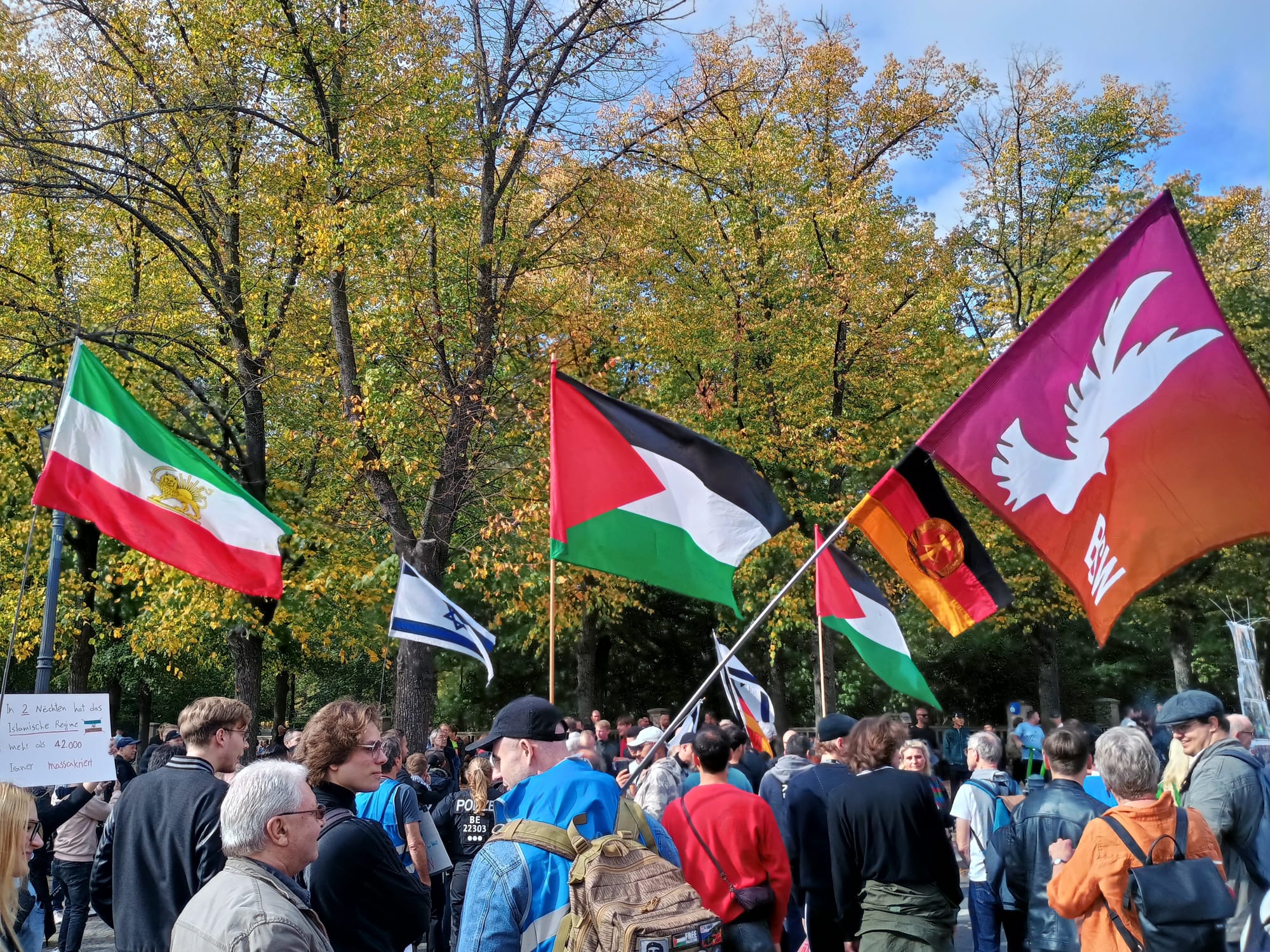
Chapter 13 — Freedom of Expression or Freedom to Intimidate?
13.1 — The Democratic Dilemma Europe Can No Longer Avoid
Freedom of expression is one of the foundations of European democracy.
It protects the right to criticise governments, challenge political decisions, question institutions, organise demonstrations and express opinions that others may find offensive or deeply objectionable.
Without this freedom, independent journalism cannot function.
Political opposition becomes vulnerable to censorship.
Citizens lose the ability to challenge those in power.
And democratic accountability is weakened.
But freedom of expression is not an unlimited legal right.
European legal systems recognise circumstances in which threats, incitement to violence and certain forms of discriminatory hatred may be restricted or punished.
The difficult question is where those boundaries should be drawn.
Since the Hamas-led attacks of 7 October 2023 and the subsequent war in Gaza, this dilemma has become increasingly visible across Europe.
Large demonstrations have taken place in major cities.
Protesters have criticised Israeli military operations, demanded a ceasefire, called for Palestinian statehood and challenged European foreign policy.
Many demonstrations have remained peaceful.
Others have involved confrontations, threats, antisemitic expressions or public-order offences.
Jewish communities have raised concerns about intimidation.
Civil liberties organisations have warned against restrictions on legitimate political expression.
Police forces have faced criticism for both intervention and inaction.
And political leaders have struggled to distinguish between protecting democratic rights and maintaining public safety.
These tensions raise a fundamental question.
At what point does the exercise of one person's freedom become an unlawful attack on another person's rights?
The answer cannot depend solely on political sympathy.
It must depend on law, evidence, context and consistent enforcement.
13.2 — What Freedom of Expression Actually Protects
Freedom of expression protects more than polite or widely accepted opinions.
Under Article 10 of the European Convention on Human Rights, individuals have the right to hold opinions and receive and impart information and ideas.
This protection extends to political criticism, controversial debate and expression that may shock, offend or disturb others.
That principle is essential to a democratic society.
A person may strongly criticise the Israeli government.
They may oppose military operations in Gaza.
They may advocate Palestinian independence.
They may criticise Hamas, Palestinian political leaders or European foreign policy.
They may question international institutions or express opposition to particular political ideologies.
Such expression is not automatically unlawful merely because others disagree with it.
The Importance of Political Freedom
Political expression receives particularly strong protection because democratic societies depend on open debate.
Governments must be subject to criticism.
Military decisions must be open to scrutiny.
International law must be discussed.
And citizens must be free to organise political movements.
This includes pro-Israel and pro-Palestinian advocacy.
However, Article 10 also permits restrictions under specified conditions.
Restrictions must have a legal basis, pursue a legitimate aim and be necessary and proportionate in a democratic society.
The protection of public safety and the rights of others can justify certain restrictions.
But governments cannot simply label an unpopular opinion dangerous and prohibit it.
The legal threshold matters.
13.3 — Freedom of Assembly: The Right to Demonstrate
The right to peaceful assembly is protected under Article 11 of the European Convention on Human Rights.
It allows individuals to gather, demonstrate and express collective political demands.
Public demonstrations have historically played important roles in democratic reform.
They have challenged discrimination, authoritarianism, military conflicts and government policies.
Pro-Palestinian demonstrations therefore fall within an established democratic tradition when conducted peacefully.
So do demonstrations supporting Israel or demanding the release of hostages.
Why Demonstrations May Be Restricted
The right to peaceful assembly is not absolute.
Authorities may impose lawful and proportionate restrictions to protect public safety, prevent disorder or protect the rights of others.
Restrictions may concern the location, timing or route of a demonstration.
In some circumstances, authorities may intervene when violence or serious public-order risks arise.
But restrictions must be justified by the circumstances.
A demonstration should not be prohibited simply because its political message is controversial.
Nor should the possibility that opponents may react angrily automatically justify suppressing an otherwise peaceful assembly.
Individual Responsibility Within Demonstrations
An important distinction concerns the conduct of individual participants.
If one demonstrator makes an unlawful threat, that does not automatically make every participant responsible.
If a group engages in violence, authorities must assess the conduct and circumstances involved.
Peaceful participants do not lose all legal protection merely because others behave unlawfully.
At the same time, organisers and authorities may have responsibilities concerning foreseeable safety risks.
The objective is to protect peaceful assembly while responding effectively to criminal behaviour.
13.4 — When Political Speech Becomes Antisemitic Intimidation
The distinction between political criticism and antisemitic intimidation is central to this investigation.
Criticism of Israeli government policy is not inherently antisemitic.
Opposition to military operations is not inherently antisemitic.
Advocating Palestinian self-determination is not inherently antisemitic.
But political language can become antisemitic when it targets Jewish people collectively or reproduces anti-Jewish hostility.
Examples may include threats against Jewish individuals, calls for violence against Jews or discriminatory harassment based on Jewish identity.
Collective Responsibility
One recurring problem involves treating Jewish people worldwide as responsible for the decisions of the Israeli government.
A Jewish student in Amsterdam is not responsible for military operations in Gaza.
A Jewish family in Paris is not responsible for decisions made by the Israeli parliament.
A synagogue in London is not an institution of the Israeli state.
And a Jewish business in Copenhagen should not become a target of political anger merely because of the owner's religion.
These distinctions are fundamental.
When individuals are targeted because of Jewish identity, the issue is no longer simply criticism of a foreign government.
It may involve discrimination, harassment or criminal intimidation.
The Legal Threshold
Not every antisemitic statement automatically constitutes a criminal offence.
European countries have different laws governing hate speech, harassment and incitement.
The context, content, intention and likely consequences of an expression may be relevant.
Journalists should therefore distinguish between conduct that is antisemitic, conduct that violates institutional rules and conduct that is criminal.
These categories can overlap, but they are not identical.
13.5 — Antisemitic Slogans: Why Context Matters
Public demonstrations frequently involve slogans.
Slogans simplify complex political positions into short statements intended to attract attention and express solidarity.
Some are widely understood.
Others are disputed.
Certain expressions associated with the Israeli-Palestinian conflict have generated intense debate over their historical meaning and political implications.
Political Interpretation Versus Legal Classification
A slogan may be interpreted differently by different audiences.
Some participants may understand it as a demand for equal rights or Palestinian freedom.
Others may understand it as advocating the elimination of Israel as a Jewish state.
Still others may associate it with violence or extremist organisations.
These interpretations should not be treated as automatically equivalent.
The legal assessment depends on the wording, context and applicable national law.
The Responsibility of Authorities
Police should not determine criminal liability solely through public controversy.
They must assess whether the relevant legal threshold is met.
This may require examining surrounding statements, conduct and evidence of intent.
A slogan accompanied by explicit threats may raise different legal questions from the same words used in a peaceful political discussion.
The Responsibility of Protest Organisers
Organisers should consider how language may affect participants and bystanders.
They should be prepared to respond to explicit antisemitic threats or calls for violence.
But they should not be expected to eliminate all political disagreement or every expression that some members of the public find offensive.
The objective is responsible public expression, not ideological uniformity.
13.6 — When Demonstrations Become Threatening
A peaceful demonstration may be loud, disruptive and politically confrontational.
These characteristics do not automatically make it unlawful.
Democratic protest often seeks to attract attention and challenge existing policies.
But some behaviour crosses into intimidation.
Threatening individuals because of their religion is not ordinary political disagreement.
Physically attacking people is not protected peaceful assembly.
Damaging religious institutions may constitute criminal conduct.
And deliberately obstructing individuals through threatening behaviour may raise public-order or harassment concerns.
The Difference Between Discomfort and Threat
A person may feel uncomfortable hearing political slogans they strongly oppose.
That discomfort alone does not necessarily establish unlawful intimidation.
But a credible threat directed at an identifiable individual is different.
A protest outside a government building may be lawful.
A threatening gathering targeting a Jewish family because of its identity raises substantially different concerns.
The distinction should be based on conduct and evidence.
The Responsibility of Police
Police must assess risks and respond proportionately.
They should protect demonstrators from violence.
They should protect bystanders and targeted individuals.
And they should investigate criminal behaviour without treating entire political movements as collectively guilty.
Effective policing requires preparation, training and clear operational standards.
13.7 — The Responsibility of Protest Organisers
Organisers play an important role in shaping the character of public demonstrations.
They may establish codes of conduct, communicate with authorities and encourage peaceful participation.
They may also intervene when participants engage in threatening or discriminatory behaviour.
But their legal responsibilities depend on national law and the circumstances of an event.
An organiser is not automatically criminally responsible for every statement made by an individual participant.
Nevertheless, organisers should take foreseeable risks seriously.
A Question of Credibility
A movement claiming to defend human rights should be willing to reject unlawful threats against civilians.
A demonstration calling for Palestinian rights does not need to tolerate antisemitic harassment.
A demonstration supporting Israel should not tolerate anti-Palestinian or anti-Muslim threats.
These principles are compatible.
The rejection of discriminatory violence should not depend on the political identity of the victim.
When Organisers Fail to Respond
If organisers knowingly encourage threats or participate in unlawful conduct, their responsibilities may be different from those of organisers who attempt to prevent such behaviour.
Evidence is essential.
Journalists should investigate what organisers said, what they knew and how they responded.
They should avoid attributing the actions of individual participants to an entire movement without sufficient support.
13.8 — The European Convention on Human Rights and the Limits of Hate Speech
European human rights law recognises the importance of freedom of expression.
It also recognises that certain forms of expression may be restricted.
Article 10 permits lawful and proportionate restrictions under defined conditions.
Article 17 addresses the abuse of rights and may prevent individuals from invoking Convention protections for certain activities aimed at destroying the rights and freedoms of others.
The European Court of Human Rights has examined cases involving Holocaust denial, extremist propaganda, incitement and discriminatory expression.
Why Legal Precision Matters
Not every hateful statement is treated identically under European human rights law.
Courts examine relevant circumstances.
These may include the content of the expression, its historical context, the speaker's role and the potential consequences.
National laws also differ.
A statement punishable in one country may not be prosecuted under the same legal framework in another.
Holocaust Denial
Several European countries criminalise certain forms of Holocaust denial or gross trivialisation.
The precise scope of these laws varies.
Such restrictions reflect the historical significance of the Holocaust and concerns about extremist propaganda.
But journalists should distinguish historical falsification from legitimate scholarly debate.
Historical research conducted in good faith is not equivalent to deliberate denialist propaganda.
13.9 — France: Strong Hate-Speech Laws and Difficult Enforcement Questions
France has developed extensive legal provisions addressing discrimination, racist incitement and antisemitic expression.
Its legal framework reflects the country's commitment to equality and the historical experience of antisemitic persecution.
French authorities can investigate threats, discriminatory offences and certain forms of unlawful public expression.
But enforcement remains challenging.
The Problem of Political Context
Public demonstrations concerning Israel and Gaza may involve controversial statements.
Authorities must determine whether specific conduct violates the law.
The political sensitivity of a demonstration should not determine the legal outcome.
The Importance of Proportionality
Restrictions on demonstrations must have a lawful basis and respond to the actual risks involved.
A blanket prohibition based solely on the political position of participants may raise serious freedom-of-assembly concerns.
At the same time, credible threats against Jewish institutions require appropriate protection.
The challenge is to enforce the law without creating the appearance that political expression is being punished selectively.
13.10 — Germany: Historical Responsibility and Constitutional Freedom
Germany's legal approach to antisemitism is shaped by its history and constitutional order.
The country's Basic Law protects freedom of expression and assembly.
German criminal law also contains provisions addressing incitement to hatred, Holocaust denial and the use of symbols associated with unconstitutional organisations.
These legal measures reflect the country's commitment to preventing the return of extremist movements.
The Balance Between Memory and Freedom
Germany's historical responsibility does not eliminate the need for constitutional safeguards.
Restrictions on political expression must remain legally justified.
Authorities must distinguish criticism of Israel from antisemitic incitement.
They must also distinguish lawful demonstrations from criminal conduct.
The Risk of Inconsistent Application
If similar conduct receives different treatment depending on political context, public trust may weaken.
But claims of inconsistent enforcement require evidence.
A serious investigation should compare relevant legal cases, judicial decisions and administrative actions.
The objective should be consistent application of constitutional principles.
13.11 — Britain: Public Order, Hate Crime and Protest Rights
The United Kingdom protects freedom of expression and peaceful assembly through a combination of domestic law and human rights obligations.
Public-order legislation permits authorities to impose restrictions under defined circumstances.
Criminal law also addresses threats, harassment, incitement and hate-related offending.
The Challenge of Large Demonstrations
Large demonstrations concerning Israel and Gaza have created operational challenges for British police.
Authorities must consider public safety, the rights of demonstrators and the protection of communities affected by threats.
A peaceful demonstration should not be treated as criminal simply because it is politically controversial.
But individuals engaging in unlawful threats or violence may be investigated and prosecuted.
The Difference Between Offensive and Criminal Speech
British law does not make every offensive political statement a crime.
The relevant legal tests depend on the offence.
Context, intention and other statutory elements may be important.
Police must therefore avoid treating public complaints as automatic evidence of criminal liability.
At the same time, credible threats should not be dismissed merely because they occur within political debate.
13.12 — The Netherlands: Demonstration Rights and Public Order
The Netherlands has a strong legal tradition protecting freedom of expression and assembly.
Demonstrations are an important part of Dutch political life.
But local authorities may impose restrictions under applicable law to protect public order, health or traffic interests.
Such measures must meet the relevant legal requirements.
The Challenge of Political Polarisation
Demonstrations concerning Israel and Palestine have generated intense public debate.
Some incidents have involved confrontations or disruption.
Others have remained peaceful.
Authorities must assess events individually.
A demonstration should not be restricted solely because its message is unpopular.
But violence, credible threats and other unlawful conduct require appropriate responses.
The Importance of Transparency
When authorities intervene, they should explain the legal basis for their decisions.
When they choose not to intervene, they should also be prepared to explain the relevant considerations where appropriate.
Transparency helps prevent public assumptions that decisions are based on political favouritism.
13.13 — Scandinavia: Free Expression and Minority Protection
Norway, Sweden and Denmark have strong democratic traditions and legal protections for political expression.
They also have obligations to protect citizens from unlawful discrimination and threats.
The Israeli-Palestinian conflict has generated demonstrations and political debate across Scandinavia.
These activities are generally part of legitimate democratic participation.
But the protection of free expression does not remove the responsibility to investigate criminal intimidation.
Norway
Norwegian law protects freedom of expression and peaceful assembly.
It also contains provisions addressing certain discriminatory or hateful expressions.
The legal assessment depends on the content and circumstances.
Public debate about Israel and Palestine should remain open.
But threats directed at Jewish individuals because of their identity require appropriate attention.
Sweden
Swedish law provides strong constitutional protections for expression.
It also criminalises certain forms of agitation against protected groups.
Authorities must distinguish political criticism from unlawful discriminatory expression.
Denmark
Denmark similarly protects political speech while maintaining laws addressing threats and certain forms of hateful expression.
The balance requires consistent enforcement and respect for democratic rights.
The Small-Community Dimension
In countries with relatively small Jewish populations, public demonstrations may create particular concerns for community members.
But subjective discomfort alone cannot determine whether an event is unlawful.
Authorities must evaluate credible risks and specific conduct.
13.14 — The Role of Police: Protection Without Political Favouritism
Police forces occupy a central position in the debate over freedom of expression and intimidation.
They must protect lawful demonstrations.
They must prevent violence where reasonably possible.
They must investigate criminal threats.
And they must apply the law without political favouritism.
These responsibilities can conflict operationally.
The Problem of Competing Rights
A demonstration may be lawful but create concern among nearby residents.
A counter-demonstration may also be lawful.
Police must manage the risks associated with both.
The objective is not to determine which political position is correct.
It is to protect the legal rights of everyone involved.
The Need for Specialist Training
Officers may encounter antisemitic symbols, coded language or politically charged slogans.
They may also encounter accusations that lawful criticism of Israel is antisemitic.
Training should help officers distinguish these situations.
But operational decisions must remain grounded in applicable law.
The Accountability Question
Police conduct should be open to independent review.
Excessive force, unjustified restrictions and failures to investigate credible threats all deserve scrutiny.
Accountability strengthens public confidence.
13.15 — Universities and the Boundaries of Academic Freedom
Universities face a similar dilemma.
They must protect academic freedom and political debate.
They must also prevent discriminatory harassment and maintain safe educational environments.
Students may organise demonstrations, criticise institutional partnerships or advocate political change.
These activities are not inherently unlawful.
But universities may need to respond when conduct involves threats, discriminatory exclusion or serious disruption.
Institutional Rules Versus Criminal Law
A university may prohibit certain behaviour under its disciplinary policies even when the conduct does not constitute a criminal offence.
For example, repeated targeted harassment may violate institutional rules.
But disciplinary decisions must still be fair and proportionate.
The Danger of Political Pressure
University leaders may face demands to punish particular political views.
They may also face pressure to ignore misconduct associated with a movement supported by influential groups.
Both risks undermine institutional credibility.
Universities should apply clear standards to conduct rather than political identity.
13.16 — The Digital Dimension: Online Threats and Freedom of Expression
The internet has complicated the relationship between expression and intimidation.
A political statement can reach international audiences within minutes.
An abusive message can be sent anonymously.
A credible threat may originate outside the victim's country.
And content can be copied repeatedly even after removal.
The Difference Between Criticism and Harassment
A person may publish strong criticism of Israel or any other government.
That is generally part of political debate.
But directing threats at Jewish individuals because of their identity raises different legal questions.
The same applies to threats against Palestinian or Muslim individuals.
Platform Moderation and Criminal Enforcement
Technology companies may remove content under their own policies.
But platform removal is not the same as a criminal conviction.
A platform may prohibit material that remains lawful under national legislation.
Conversely, a criminal threat may require investigation even after the content has been removed.
The Responsibility of Governments
Governments must address unlawful online conduct without imposing disproportionate restrictions on legitimate expression.
This requires cooperation, legal safeguards and transparent procedures.
13.17 — The Danger of Politicising Antisemitism
Antisemitism can become a subject of political competition.
Parties may accuse opponents of failing to protect Jewish communities.
Activists may argue that accusations of antisemitism are used to suppress criticism of Israel.
Governments may emphasise particular ideological threats while giving less attention to others.
These claims require careful examination.
Antisemitism Must Not Become a Political Instrument
Documented antisemitic incidents deserve investigation regardless of the political identity of the offender.
But accusations should not be made without evidence.
False or exaggerated allegations can undermine trust.
They can also make it more difficult to identify genuine threats.
The Need for Consistent Standards
A far-right extremist threatening Jewish people should be investigated.
An Islamist extremist encouraging violence against Jews should be investigated.
A political activist making credible antisemitic threats should be investigated.
The same standards should apply to threats against other protected communities.
The objective is not ideological balance for its own sake.
It is equal protection under the law.
13.18 — When Governments Fail to Distinguish Speech From Violence
Governments can make two different mistakes.
They can restrict legitimate political expression too broadly.
Or they can fail to respond adequately to unlawful threats.
Both undermine democratic principles.
The Risk of Overreach
Broad restrictions may discourage lawful protest.
They may create uncertainty about permissible political speech.
They may also reduce confidence in government neutrality.
The Risk of Inaction
Failure to investigate credible threats can expose individuals to harm.
It may also encourage offenders who believe their conduct will have no consequences.
The Need for Evidence-Based Decisions
Authorities should distinguish offensive speech, discriminatory misconduct, criminal threats and violence.
Each category requires an appropriate response.
Not every offensive statement should lead to prosecution.
Not every threatening statement should be dismissed as political rhetoric.
The challenge is to apply the correct legal standard.
13.19 — What a Democratic Response Should Look Like
Europe needs a response that protects both freedom and safety.
These objectives are not mutually exclusive.
A credible framework should include several principles.
First, peaceful political protest must remain protected.
Citizens should be able to criticise Israel, Hamas, European governments and international institutions.
Second, credible threats must be investigated.
Political context should not excuse unlawful intimidation.
Third, legal standards must be applied consistently.
Offenders should be assessed according to conduct and evidence, not political affiliation.
Fourth, police interventions must be proportionate.
Restrictions should respond to identifiable risks and applicable legal requirements.
Fifth, institutions must protect individual rights.
Jewish citizens should not be held responsible for Israeli government decisions.
Palestinian and Muslim citizens should not be held responsible for extremist organisations.
Sixth, public authorities should explain their decisions.
Transparency can reduce confusion and strengthen confidence.
Seventh, courts must remain independent.
Criminal liability should be determined through legal procedures, not public pressure.
Finally, democratic societies must reject collective blame.
Individual responsibility is a foundation of justice.
13.20 — Conclusion: Freedom Cannot Become a Licence to Threaten
Freedom of expression is essential to European democracy.
It allows citizens to challenge governments, organise demonstrations and debate controversial political questions.
Without it, independent journalism and democratic accountability cannot function.
But freedom of expression does not create an unrestricted right to threaten or intimidate others.
The distinction is fundamental.
A person may criticise Israeli government policy.
They may advocate Palestinian independence.
They may oppose military operations.
They may challenge European foreign policy.
These are legitimate subjects of political debate.
But threatening Jewish individuals because of their religion is not simply another political opinion.
Nor is attacking a synagogue an acceptable expression of anger about events in the Middle East.
The same principles protect Palestinian, Muslim and other communities from unlawful threats.
European governments must therefore resist two temptations.
The first is to restrict controversial political expression merely because it generates public disagreement.
The second is to tolerate criminal intimidation because it occurs within a politically sympathetic movement.
Both approaches undermine democratic rights.
The correct response requires evidence, proportionality and consistent law enforcement.
A democratic society does not protect freedom by allowing intimidation to silence citizens. Nor does it protect citizens by eliminating legitimate political disagreement.
The challenge is to maintain both principles.
For Jewish communities, this means being able to participate openly in public life without credible threats.
For demonstrators, it means retaining the right to express lawful political positions.
For police, it means enforcing the law without ideological favouritism.
For governments, it means demonstrating that the protection of minority rights is not dependent on political circumstances.
And for journalists, it means accurately distinguishing controversial expression from unlawful conduct.
Europe's commitment to democratic freedom will be tested not by its willingness to protect popular opinions, but by its ability to protect legitimate disagreement while confronting genuine threats.
Freedom of expression must remain a right shared by everyone — not a justification for depriving others of their safety or equal citizenship.
The next chapter examines the broader consequences of Europe's response to antisemitism and asks whether its political institutions are prepared to confront the long-term implications of allowing hatred and intimidation to become normalised.
Chapter 14 — What Happens When a Society Learns to Live With Hatred?
The Normalisation of Antisemitism, the Failure of Institutional Courage and the Future of Jewish Life in Europe
14.1 — The Most Dangerous Moment Is When Hatred No Longer Shocks Us
There is a moment in the development of social prejudice that deserves particular attention.
It is not necessarily the moment when the first threatening message appears, when a religious building is vandalised or when an extremist group organises a demonstration.
It is the moment when such events begin to seem ordinary.
When another antisemitic incident becomes just another headline.
When security guards outside Jewish schools are accepted as a permanent feature of European life.
When Jewish citizens explain that they avoid displaying their identity in certain public spaces, and society responds with resignation rather than concern.
When politicians condemn another attack but the public no longer expects meaningful change.
This is the danger of normalisation.
It does not mean that everyone supports antisemitism.
It does not mean that European governments have abandoned Jewish communities.
And it does not mean that contemporary Europe is equivalent to the Europe of the 1930s.
Those conclusions would be historically inaccurate and politically irresponsible.
The danger is more subtle.
A society can continue to condemn hatred publicly while gradually accepting the conditions that allow it to persist.
Over time, repeated incidents may produce less outrage.
Institutions may become accustomed to managing threats rather than preventing them.
Citizens may adjust their behaviour to avoid confrontation.
And political leaders may begin to treat antisemitism as a permanent security problem rather than a challenge requiring sustained democratic action.
The consequences extend beyond Jewish communities.
When a democratic society becomes accustomed to the intimidation of one minority, it risks weakening the principles intended to protect everyone.
The central question is therefore not simply whether Europe condemns antisemitism.
It is whether Europe is willing to confront the consequences of allowing antisemitic hostility to become an accepted feature of public life.
14.2 — How Normalisation Develops
Normalisation rarely occurs through a single political decision.
It can develop gradually through repetition, institutional habits and changes in public expectations.
A threatening incident receives attention.
Authorities investigate.
Political leaders issue statements.
Community organisations express concern.
The public debate continues for several days.
Then attention moves elsewhere.
When another incident occurs, the process begins again.
This cycle can create the impression that antisemitism is an unavoidable feature of contemporary society.
From Exceptional to Expected
An attack against a synagogue should be understood as a serious violation of religious freedom and public safety.
But when Jewish institutions require extensive protection year after year, the extraordinary can begin to appear ordinary.
A child attending a school with security guards may eventually regard those arrangements as normal.
A parent may stop questioning why such measures are necessary.
A community may focus primarily on maintaining protection rather than imagining a future in which extraordinary security is no longer required.
These adaptations may be sensible responses to genuine risks.
But they should not become society's definition of success.
The Political Consequence
Governments may become skilled at responding to individual incidents without adequately addressing recurring causes.
Emergency security funding can be necessary.
Additional police patrols may be appropriate.
But these measures should form part of a broader strategy.
Otherwise, public policy risks becoming a system for managing persistent insecurity.
The objective should be to reduce threats, not merely to help communities accommodate them.
14.3 — The Difference Between Condemning Antisemitism and Confronting It
European political leaders regularly condemn antisemitism.
Such statements have value.
They communicate that discriminatory hatred is incompatible with democratic principles.
They may reassure affected communities and establish public expectations.
But condemnation is only one part of political responsibility.
A government can issue strong statements while failing to evaluate whether its policies are effective.
The Accountability Test
A meaningful response should answer several questions.
How many reported antisemitic offences are investigated?
How many cases result in identifiable suspects?
How many proceed to prosecution?
What explains cases that do not progress?
Are Jewish communities satisfied with reporting procedures?
Are prevention programmes evaluated independently?
And are authorities responding consistently to antisemitism emerging from different ideological environments?
These questions are more difficult than issuing a public declaration.
They require administrative transparency, political persistence and a willingness to acknowledge weaknesses.
The Problem of Symbolic Politics
Public ceremonies, memorial events and official statements can become substitutes for measurable action if governments are not careful.
This does not make remembrance or public condemnation meaningless.
It means that symbolic commitments must be supported by practical policies.
Political leadership is measured not only by what officials say after an antisemitic attack, but by what institutions do before the next one occurs.
14.4 — Holocaust Remembrance and Contemporary Responsibility
Europe has invested heavily in Holocaust remembrance.
Memorials, museums, educational programmes and annual commemorations preserve the memory of the six million Jews murdered during the Holocaust.
These efforts are essential.
They honour victims, document historical crimes and help future generations understand the consequences of antisemitic persecution.
But remembrance also creates a contemporary responsibility.
The historical lesson cannot be reduced to the belief that antisemitism was defeated with the collapse of Nazi Germany.
Antisemitic ideas existed before the Holocaust.
They survived the Second World War.
And they continue to appear in different ideological environments.
Remembering the Dead, Protecting the Living
A government may participate in Holocaust commemorations while Jewish citizens continue to experience threats and harassment.
These realities are not necessarily contradictory.
The existence of contemporary antisemitism does not mean that remembrance has failed entirely.
But it does demonstrate that historical education alone is insufficient.
The effectiveness of remembrance should also be considered through its relationship to contemporary civic values.
Do students understand modern antisemitic conspiracy theories?
Can they recognise collective accusations against Jewish people?
Do public institutions respond appropriately when Jewish citizens are threatened?
And does historical knowledge influence contemporary political behaviour?
The Danger of Empty Ritual
Commemoration risks losing some of its moral force when it becomes disconnected from present-day responsibilities.
The phrase "Never Again" carries significance because it expresses a commitment to preventing persecution.
But that commitment requires action.
It must include the protection of Jewish citizens today.
It must also reinforce the broader principles of human dignity, individual rights and opposition to persecution.
Historical remembrance should encourage consistent moral judgement rather than selective concern.
14.5 — The Silence of the Majority
Most Europeans do not participate in antisemitic harassment or violence.
Many reject antisemitism and support equal rights.
But democratic societies are shaped not only by those who commit wrongdoing.
They are also influenced by how institutions, organisations and ordinary citizens respond.
Silence can have different meanings.
Some people remain silent because they are unaware of an incident.
Others are uncertain about the facts.
Some fear confrontation.
Others believe that public statements will make little difference.
It would be unfair to assume that everyone who remains silent supports antisemitism.
Nevertheless, the absence of public opposition can affect the social environment in which prejudice circulates.
The Role of Bystanders
In schools, workplaces and public spaces, bystanders may witness discriminatory behaviour.
Their response can influence whether victims feel supported.
A teacher who intervenes when a student is subjected to antisemitic bullying communicates an important standard.
An employer who addresses discriminatory harassment demonstrates institutional responsibility.
A public figure who rejects antisemitic conspiracy theories can help prevent their normalisation.
These actions do not require agreement on Israeli government policy.
They require recognition that Jewish individuals should not be targeted because of their identity.
The Responsibility of Civil Society
Professional organisations, cultural institutions, universities, religious communities and trade unions can contribute to combating antisemitism.
Their role should not be limited to issuing statements after major incidents.
They can promote education, support victims and establish clear standards against discriminatory harassment.
The objective is not compulsory political agreement.
It is a shared commitment to equal citizenship.
14.6 — When Political Loyalty Becomes More Important Than Principle
Antisemitism has appeared across different political and ideological environments.
Far-right movements have promoted racial conspiracy theories and Holocaust denial.
Islamist extremist organisations have used anti-Jewish propaganda and, in some cases, committed violent attacks.
Antisemitic stereotypes have also appeared within other political movements, including some environments associated with anti-Israel activism.
These sources differ in ideology, organisation and methods.
But a recurring political problem arises when individuals condemn antisemitism among their opponents while minimising it among their allies.
The Problem of Selective Outrage
A political party may strongly criticise far-right antisemitism while responding less clearly to antisemitic rhetoric within movements it supports.
Another party may condemn Islamist extremist antisemitism while avoiding scrutiny of far-right conspiracy theories.
Such inconsistency can undermine public confidence.
But accusations of selective outrage should be supported by evidence.
A serious investigation must compare actual statements, policies and responses.
Consistency as a Democratic Standard
The rejection of antisemitism should not depend on political convenience.
A credible threat against Jewish people should be investigated regardless of the offender's ideology.
An antisemitic conspiracy theory should not become acceptable because it is used to advance a popular political cause.
And legitimate criticism of Israel should not be misrepresented as antisemitism merely because it challenges a preferred government or policy.
Principles lose their credibility when they are applied only to political opponents.
14.7 — The Normalisation of Collective Blame
One of the most damaging developments in periods of international conflict is the tendency to treat individuals as representatives of governments or political movements.
Jewish people in Europe may be confronted about Israeli military operations despite having no involvement in those decisions.
Israeli citizens may be treated as though they share identical political beliefs.
Palestinian civilians may be blamed for the actions of Hamas.
Muslim citizens may be treated as responsible for Islamist extremist violence.
These assumptions are discriminatory.
Identity Is Not Political Responsibility
A person's religion or ethnicity does not establish responsibility for a government's actions.
Nor does nationality automatically establish support for a military operation.
The principle of individual responsibility is fundamental to democratic justice.
It should apply consistently.
The Consequences of Collective Accusations
Collective blame can create hostility in schools, workplaces and public spaces.
It may pressure individuals to make political declarations simply to be accepted.
It may also encourage people to conceal their identity.
These consequences are especially concerning when institutions fail to challenge discriminatory assumptions.
The appropriate response is not to prohibit political debate.
It is to insist that responsibility be assigned to identifiable actors and supported by evidence.
14.8 — The Dangerous Adaptation of Jewish Communities
Jewish communities across Europe have developed extensive security arrangements.
Synagogues may operate with controlled entrances.
Schools may employ security personnel.
Community events may require coordination with police.
These measures can be necessary responses to credible threats.
They also demonstrate the resilience and organisational capacity of Jewish communities.
But they raise a difficult question.
Has Europe become too accustomed to Jewish citizens organising their lives around security concerns?
Adaptation Is Not the Same as Safety
A community may successfully prevent attacks through protective measures.
But this does not necessarily mean that the underlying threat has diminished.
Security can reduce vulnerability.
It cannot automatically eliminate extremist ideology or discriminatory hostility.
The Burden of Protection
Security measures may impose financial and administrative costs.
Community organisations may devote resources to protection that could otherwise support education, cultural activities or social services.
Governments often provide assistance, but arrangements differ between countries.
The long-term responsibility for public safety belongs to the state.
Jewish communities should not be expected to carry that burden alone.
A Different Measure of Progress
Progress should not be measured solely by the number of protected buildings.
It should also be measured by whether extraordinary protection becomes less necessary.
That is a more demanding objective.
But it reflects the difference between managing insecurity and reducing it.
14.9 — The Long-Term Psychological Consequences
Persistent concerns about antisemitism can influence how individuals perceive their place in society.
Some may become more cautious in public.
Others may avoid political discussions.
Some may conceal religious symbols.
Others may respond by strengthening community participation.
These reactions vary considerably.
Jewish Europeans are not a homogeneous group.
Many live openly and confidently.
But research documenting concealment of identity and concerns about safety demonstrates that insecurity affects some individuals' daily lives.
The Question of Belonging
Citizenship involves more than formal legal status.
It also involves the experience of belonging.
A person may possess full legal rights while feeling that their identity makes them vulnerable to hostility.
This creates a gap between formal equality and lived experience.
The Effect on Younger Generations
Young Jewish Europeans may encounter antisemitic content through social media, educational environments or public debate.
Some may become more politically engaged.
Others may withdraw from discussions.
The long-term effects require careful research.
But the underlying concern is clear.
A democratic society should not allow discriminatory hostility to determine whether young citizens feel able to express their identity.
14.10 — The Political Consequences of Losing Trust
Trust is essential to democratic institutions.
Citizens must believe that police, courts, schools and public authorities will apply rules fairly.
When individuals repeatedly experience harassment without satisfactory institutional responses, confidence may weaken.
This does not mean that every unsuccessful complaint proves negligence.
Criminal justice systems must operate according to evidence and due process.
But institutions have a responsibility to communicate clearly and evaluate recurring weaknesses.
The Difference Between Protection and Perception
A government may introduce significant security measures while community members continue to feel unsafe.
Both realities can exist simultaneously.
Objective security arrangements and subjective perceptions of safety are different indicators.
A credible policy evaluation should examine both.
The Democratic Risk
When citizens lose confidence in public institutions, they may withdraw from participation.
They may avoid reporting incidents.
They may reduce public visibility.
Or they may conclude that political leaders do not understand their concerns.
These consequences deserve attention because democratic legitimacy depends partly on equal access to institutional protection.
14.11 — The Role of Media in Making Hatred Appear Ordinary
Media organisations influence how societies understand antisemitism.
They determine which incidents receive attention, how events are described and what context accompanies reporting.
The challenge is not simply to publish more stories.
It is to provide accurate, sustained and proportionate coverage.
The Problem of Incident-Driven Reporting
A serious attack may generate extensive coverage.
A series of smaller incidents may receive limited attention.
This reflects normal news priorities.
But it can make recurring harassment less visible.
Beyond Headlines
Journalists should investigate patterns, institutional responses and the experiences of affected communities.
They should examine whether criminal investigations progress.
They should assess whether government strategies produce measurable outcomes.
And they should distinguish antisemitic conduct from legitimate political criticism.
The Risk of Exaggeration
Responsible journalism must also avoid presenting every Jewish European as living in constant fear.
Such portrayals can erase the diversity and resilience of Jewish communities.
Accuracy requires recognising both insecurity and ordinary Jewish life.
The objective is not to produce the most alarming narrative.
It is to establish the most reliable understanding.
14.12 — When Extremist Language Enters Mainstream Debate
Extremist ideas do not always remain confined to extremist organisations.
Conspiracy theories can move between online communities, political commentary and public debate.
Historical antisemitic stereotypes may be adapted to contemporary events.
False accusations about Jewish control may be presented through modern political language.
Holocaust distortion may appear in apparently educational content.
These developments deserve investigation.
The Process of Mainstreaming
An extremist claim may initially circulate within a small community.
It may then be repeated by larger accounts or public figures.
Over time, audiences may encounter it without recognising its ideological origins.
This process is not automatic.
Nor does repetition guarantee acceptance.
But the circulation of extremist narratives can complicate public understanding.
The Responsibility of Public Figures
Politicians, commentators and influencers have substantial reach.
Their statements may influence how audiences interpret events.
They should therefore be held accountable for demonstrably false claims and discriminatory rhetoric.
But accountability must remain compatible with freedom of expression.
Public figures should be scrutinised through evidence rather than punished merely for holding controversial opinions.
14.13 — The Danger of Comparing Contemporary Europe Too Easily With the 1930s
Historical comparisons can be emotionally powerful.
When antisemitic incidents increase, some commentators warn that Europe is returning to the conditions preceding the Holocaust.
Such concerns reflect the seriousness of historical memory.
But comparisons require precision.
Contemporary European democracies are not equivalent to Nazi Germany.
Jewish citizens possess legal rights.
Democratic institutions provide mechanisms for protection and accountability.
Independent courts, civil society organisations and political opposition remain active.
These differences are fundamental.
Why Historical Precision Matters
Exaggerated comparisons can weaken historical understanding.
They may obscure the specific political conditions that enabled the Holocaust.
They may also make contemporary threats harder to analyse accurately.
But rejecting simplistic comparisons does not mean ignoring warning signs.
Historical antisemitic stereotypes can reappear in different circumstances.
Extremist movements can exploit social instability.
And democratic institutions can fail to respond adequately to discrimination.
The responsible lesson is not that history repeats itself identically.
It is that democratic protections require continued attention.
14.14 — Antisemitism as a Test of Democratic Equality
The protection of Jewish citizens is not a special exemption from ordinary democratic principles.
It is an application of those principles.
Equal citizenship means that individuals should not face unlawful discrimination because of religion or ethnicity.
Freedom of religion means that people should be able to practise their faith without intimidation.
Freedom of expression means that citizens should be able to participate in public debate without credible threats.
These rights apply to everyone.
Why Antisemitism Matters Beyond Jewish Communities
When a society fails to protect one minority, it raises questions about the effectiveness of its institutions more broadly.
The same legal principles protect Muslims, Christians, secular citizens and other communities.
The fight against antisemitism should therefore reinforce universal rights.
It should not become a justification for collective suspicion or discriminatory treatment of others.
The Principle of Consistency
Governments must reject antisemitic violence.
They must also reject anti-Muslim violence and other forms of discriminatory persecution.
Recognising these obligations does not diminish the seriousness of antisemitism.
It strengthens the credibility of the response.
14.15 — What Political Courage Actually Requires
Political courage is often discussed in abstract terms.
Leaders promise to confront hatred.
They call for unity.
They condemn extremism.
But meaningful political courage may involve decisions that are unpopular among a leader's own supporters.
Confronting Extremism Within Political Alliances
A political leader who condemns antisemitism only when it originates among opponents has not demonstrated consistent principle.
A government must be prepared to investigate threats regardless of ideological background.
Political movements must be willing to challenge discriminatory rhetoric among their own participants.
Protecting Unpopular Speech
Political courage also requires defending lawful expression that some members of the public dislike.
A government should protect peaceful demonstrations criticising Israel.
It should protect peaceful demonstrations supporting Israel.
And it should prevent criminal intimidation against participants in either.
A Willingness to Be Evaluated
Governments should publish meaningful information about the effectiveness of their policies.
They should acknowledge failures where evidence supports them.
They should permit independent review.
And they should avoid treating criticism of their performance as hostility towards the state.
Political courage is not the absence of controversy. It is the willingness to apply democratic principles consistently when doing so becomes difficult.
14.16 — Why Education Must Go Beyond Holocaust History
Holocaust education is essential.
But contemporary antisemitism often appears through narratives that students may not immediately associate with historical persecution.
Online conspiracy theories may use modern political language.
Discriminatory stereotypes may appear as jokes or memes.
Collective accusations against Jewish people may be presented as criticism of international affairs.
Educational programmes should therefore connect historical knowledge with contemporary examples.
Teaching Critical Thinking
Students should learn how to evaluate sources.
They should understand how conspiracy theories operate.
They should recognise the difference between political criticism and discriminatory generalisation.
They should also learn about the diversity of Jewish life.
Jewish identity should not be taught solely through the Holocaust or the Israeli-Palestinian conflict.
The Importance of Open Discussion
Education should not prevent students from debating difficult political questions.
It should equip them to do so responsibly.
Students should be able to examine Israeli and Palestinian history, international law, military conflict and human rights.
The objective is informed judgement rather than prescribed political loyalty.
14.17 — The Future of Jewish Life in Europe
The future of Jewish communities in Europe cannot be reduced to security concerns.
Jewish life includes religious practice, cultural institutions, family traditions, education, business, literature, science and public service.
Jewish Europeans contribute to their societies in countless ways.
Their future should not be discussed solely through the possibility of persecution.
Nevertheless, concerns about antisemitism can influence long-term decisions.
Some individuals may consider relocation.
Others may strengthen their involvement in Jewish institutions.
Some may become more active in public advocacy.
These responses differ.
The Question of Emigration
When Jewish citizens consider leaving a country because of antisemitism, governments should take the concern seriously.
But emigration decisions are influenced by multiple factors.
A person may move for family, employment, education or religious reasons.
Statistics about migration should therefore not automatically be interpreted as direct measures of antisemitism.
The Right to Remain
The central democratic principle is that Jewish Europeans should be able to build their future in the countries they call home.
They should not have to choose between expressing their identity and participating safely in public life.
A society committed to equality must make that possibility credible.
14.18 — What Europe Must Measure Differently
European governments often evaluate antisemitism through incident statistics and policy announcements.
These indicators are important.
But they are not sufficient.
A more comprehensive approach should examine the effectiveness of institutional responses.
Criminal Justice Outcomes
Governments should publish information about investigations, charges and judicial outcomes where legally and practically possible.
Reporting Confidence
Victim surveys can help assess whether individuals believe reporting will lead to a fair response.
Educational Environments
Schools and universities should evaluate the accessibility and effectiveness of complaint procedures.
Community Security
Authorities should assess whether security arrangements correspond to documented risks and whether preventive measures reduce those risks over time.
Public Attitudes
Reliable research can examine antisemitic stereotypes, conspiracy beliefs and changes in public understanding.
Independent Evaluation
Policies should be reviewed by researchers and oversight bodies using transparent methods.
No single measure will capture every aspect of antisemitism.
But multiple indicators can provide a stronger basis for accountability.
14.19 — The Choice Facing European Democracies
Europe faces a choice about how to respond to persistent antisemitism.
One approach is to continue relying primarily on condemnation, security funding and reactive investigations.
These measures can be necessary.
But they may leave broader questions unresolved.
Another approach is to combine immediate protection with sustained prevention, transparent accountability and education.
This requires coordination across institutions.
Police must investigate credible threats.
Prosecutors must apply the law consistently.
Schools must address discriminatory harassment.
Universities must protect academic freedom and student safety.
Technology companies must respond to unlawful content under applicable rules.
Journalists must verify claims and provide context.
And political leaders must be willing to confront antisemitism regardless of its ideological source.
The Limits of Government Action
No government can eliminate every prejudiced belief.
Democratic societies cannot guarantee that every citizen will act respectfully.
Nor should the state attempt to control every political opinion.
But governments can enforce laws, protect threatened individuals and create institutions that respond effectively to discrimination.
The objective is not a society without disagreement.
It is a society in which disagreement does not become a justification for intimidation.
14.20 — Conclusion: The Cost of Learning to Live With Hatred
The normalisation of antisemitism is not inevitable.
It is influenced by political decisions, institutional responses, public attitudes and the willingness of citizens to challenge discriminatory behaviour.
Europe has developed extensive democratic protections since the Second World War.
It has invested in Holocaust remembrance, human rights institutions and legal safeguards.
These achievements are significant.
They distinguish contemporary Europe from the authoritarian systems responsible for some of history's worst crimes.
But democratic protections require continued commitment.
They do not operate automatically.
When Jewish citizens conceal their identity because of fear, the issue concerns more than personal preference.
When religious institutions require extraordinary security, the question extends beyond operational planning.
When students report antisemitic harassment, the response of educational institutions becomes a measure of equal treatment.
And when political leaders condemn hatred without examining whether their policies work, public accountability remains incomplete.
The danger is not simply that antisemitism continues to exist.
It is that society may gradually become accustomed to the restrictions it imposes on the lives of those targeted.
A guarded synagogue becomes ordinary.
A Jewish child learning security procedures becomes ordinary.
A person concealing a religious symbol becomes ordinary.
A community questioning whether it has a future in its own country becomes another subject of political debate.
What should never become ordinary is the expectation that citizens must hide their identity to feel safe.
Europe cannot guarantee a future without prejudice.
But it can refuse to accept intimidation as an unavoidable condition of Jewish life.
That requires more than remembrance.
It requires more than public declarations.
And it requires more than emergency responses after serious incidents.
It requires consistent law enforcement, reliable evidence, accountable institutions and a willingness to confront extremist ideas wherever they emerge.
The protection of Jewish citizens must not depend on the political circumstances of the Israeli-Palestinian conflict.
Nor should it depend on whether the victims' experiences fit a preferred ideological narrative.
Equal citizenship must remain unconditional.
The same principle applies to every community facing discrimination.
A democratic society demonstrates its values not by claiming that prejudice has disappeared, but by showing that it is prepared to respond when those values are challenged.
Europe's responsibility is not merely to remember what happened when antisemitism was allowed to become state policy. It is to ensure that Jewish citizens living today can exercise their rights without intimidation.
The future of Jewish life in Europe should not be defined by fear.
It should be defined by freedom, participation, cultural continuity and equal citizenship.
Whether that future becomes more secure will depend on the decisions European institutions make now.
And those decisions must be judged not only by their intentions, but by their results.

Chapter 15 — Why Must Jewish Communities Live Behind Security Barriers?
The Security Burden, the Failure of Prevention and the Unfinished Promise of Religious Freedom in Europe
15.1 — The Security Gates of European Jewish Life
Across Europe, the entrance to a synagogue may look very different from the entrance to another place of worship.
Visitors may encounter reinforced doors, surveillance cameras, security personnel, protective barriers and procedures for verifying their identity.
At Jewish schools, parents may pass through controlled entrances before their children can begin the school day.
Community centres may require advance registration for events.
Religious celebrations may involve coordination with local police.
These measures are not present at every Jewish institution, and security arrangements vary considerably between countries, cities and individual locations.
Nevertheless, extensive protection has become a familiar feature of Jewish communal life in several European countries.
This reality raises a question that deserves far more attention than it often receives.
Why, in democratic European societies that guarantee freedom of religion, do some Jewish communities require extraordinary security simply to practise their faith and maintain their cultural institutions?
The question is not whether security precautions are justified.
Where credible threats exist, appropriate protection is necessary.
The deeper issue concerns the conditions that make such protection necessary in the first place.
Europe has spent decades developing human rights institutions, criminal laws, anti-discrimination policies and educational programmes intended to prevent religious persecution.
Yet Jewish institutions continue to face threats from different forms of extremism.
Security barriers may reduce vulnerability.
But they also represent the continuing presence of a problem that European democracies have not eliminated.
This chapter examines the history, costs and consequences of protecting Jewish communal life.
It also asks whether European governments have become more effective at managing antisemitic threats than at preventing them.
15.2 — Why Jewish Institutions Became Security Targets
The need for security around Jewish institutions did not begin after 7 October 2023.
Jewish communities in Europe have faced threats for decades.
Some have originated from neo-Nazi and other far-right extremist movements.
Others have involved Islamist extremists, international terrorist networks or individuals motivated by antisemitic conspiracy theories.
The ideological backgrounds of perpetrators differ.
But the targeting of Jewish institutions has repeatedly demonstrated that antisemitic hostility can become organised violence.
The Historical Development of Security
During the second half of the twentieth century, attacks against Jewish and Israeli targets in Europe contributed to increased security awareness.
Synagogues, Jewish community organisations and Israeli diplomatic or commercial targets were attacked in different countries.
Some incidents were connected to international terrorism.
Others reflected domestic extremist movements.
The consequences influenced how Jewish communities approached public events and religious gatherings.
Security became an increasingly important responsibility for communal organisations.
The Difference Between Threat and Vulnerability
A security assessment considers both the likelihood of an attack and the potential consequences.
Religious institutions may be vulnerable because they have predictable opening hours, identifiable locations and gatherings of civilians.
Schools present particular concerns because children require protection.
Community events may involve large numbers of people arriving at similar times.
These characteristics can create security challenges regardless of the religion involved.
But when institutions are specifically targeted because they are Jewish, the problem is antisemitic violence rather than ordinary public safety alone.
15.3 — Toulouse 2012: When a Jewish School Became a Terrorist Target
On 19 March 2012, a gunman attacked the Ozar Hatorah Jewish school in Toulouse, France.
Three children and a teacher were murdered.
The attack was part of a series of killings committed by the same perpetrator.
It remains one of the most devastating antisemitic attacks against a Jewish educational institution in modern European history.
The Significance of the Attack
The victims were targeted in an environment associated with education, family life and religious identity.
The attack demonstrated that Jewish schools could become targets of extremist violence.
Its consequences extended beyond Toulouse.
Jewish parents elsewhere in Europe were reminded that institutions attended by children could face serious threats.
Security arrangements at Jewish schools became a subject of renewed attention.
The Limits of Security
The attack also exposed the difficult realities of prevention.
Security systems must account for the possibility of violence without turning educational institutions into inaccessible fortresses.
Schools must remain welcoming environments for children, parents and teachers.
Yet the consequences of inadequate protection can be catastrophic.
The appropriate response requires intelligence, police cooperation, threat assessment and proportionate physical security.
But none of these measures can guarantee absolute safety.
15.4 — Paris 2015: The Hyper Cacher Attack
On 9 January 2015, an armed terrorist attacked the Hyper Cacher kosher supermarket in Paris.
Four Jewish hostages were murdered.
The attack took place during a period of major terrorist violence in France, including the attack against the offices of Charlie Hebdo.
The supermarket attack was explicitly connected to the targeting of Jewish people.
When Ordinary Activities Become Security Concerns
A supermarket is not a government institution.
It is a place where people purchase food and conduct ordinary daily activities.
The attack demonstrated that antisemitic violence could target Jewish people outside synagogues, schools and community centres.
This has important implications.
Protecting religious buildings alone cannot eliminate the threat.
Jewish citizens may also face risks in commercial spaces, public transport or other ordinary environments.
The Challenge of Public Protection
Governments cannot place permanent security personnel outside every location where Jewish people may gather.
They must therefore combine targeted protection with broader prevention.
This includes investigating extremist networks, assessing credible threats and responding to individuals who demonstrate intentions to commit violence.
The attack illustrates why physical security, while important, is only one component of public protection.
15.5 — Copenhagen 2015: The Vulnerability of Religious Gatherings
In February 2015, a gunman attacked a synagogue in Copenhagen, Denmark.
A Jewish volunteer serving as a security guard was killed.
The attack followed an earlier shooting at a free-speech event.
The violence demonstrated that Jewish religious institutions could become targets even in countries with relatively small Jewish communities.
The Role of Community Volunteers
In some countries, Jewish community members participate in security arrangements.
They may assist with access control, communicate with police or help organise protective measures during events.
Such participation reflects community commitment.
But it also raises questions about responsibility.
Should volunteers be expected to help protect religious institutions from terrorist violence?
What training and support should they receive?
And how should public authorities determine the appropriate division of responsibilities?
The answers depend on national law and local security arrangements.
But the fundamental principle remains that public safety is primarily a state responsibility.
The Wider European Implications
The Copenhagen attack reinforced the need for cooperation between police and Jewish community organisations.
It also demonstrated that small population size does not eliminate the possibility of serious violence.
15.6 — Halle 2019: Far-Right Antisemitism and the Threat to Synagogues
On 9 October 2019, during Yom Kippur, a far-right extremist attempted to enter a synagogue in Halle, Germany.
The attacker failed to gain entry.
He subsequently murdered two people outside the synagogue and in the surrounding area.
The attack was motivated by antisemitic and extremist ideology.
The Importance of Physical Barriers
The synagogue's security arrangements helped prevent the attacker from entering a building containing worshippers.
This illustrates the potential effectiveness of protective measures.
A reinforced entrance can make a critical difference.
But the attack also reveals the limitations of security.
When the attacker could not enter the synagogue, he killed people elsewhere.
Physical barriers protected one location but could not eliminate the broader threat.
The Ideological Dimension
The attacker was influenced by far-right extremist and conspiratorial ideas.
The case demonstrates that antisemitism cannot be understood exclusively through conflicts in the Middle East.
European antisemitism also has domestic ideological sources.
Preventing attacks requires attention to radicalisation, extremist propaganda and credible indications of planned violence.
15.7 — Manchester 2025: Violence During Yom Kippur
On 2 October 2025, an attacker targeted worshippers outside Heaton Park Hebrew Congregation Synagogue in Manchester.
The attack occurred during Yom Kippur, one of the holiest days in the Jewish religious calendar.
Two Jewish men died.
Other people were injured.
Police shot and killed the attacker.
Subsequent reporting and investigations examined the circumstances of the deaths, including the role of police gunfire in the incident.
Why Religious Holidays Can Create Security Challenges
Religious holidays bring communities together.
They may involve larger gatherings and predictable schedules.
These characteristics can increase the importance of security planning.
For Jewish communities, the need to coordinate protective measures during major religious occasions can become a recurring responsibility.
The Question of Prevention
After a serious attack, authorities must examine the sequence of events and the effectiveness of existing arrangements.
Were relevant risks identified?
Were protective measures appropriate?
How did emergency services respond?
What lessons can be learned?
These questions require evidence from official investigations.
An attack does not automatically prove that authorities acted negligently.
But it creates a responsibility to examine possible failures and improve future protection.
15.8 — The Financial Cost of Protecting Jewish Institutions
Security requires resources.
Surveillance systems must be purchased and maintained.
Doors and entrances may require reinforcement.
Professional security personnel must be trained and paid.
Protective barriers may need installation.
Emergency planning and communication systems require ongoing attention.
These costs can be substantial, particularly for smaller organisations.
Who Pays?
Funding arrangements differ across Europe.
In some countries, governments provide financial assistance for security at Jewish institutions.
Police may offer direct protection during particular events.
Community organisations may also contribute their own resources.
Private donations can play a role.
The balance varies by country and institution.
The Question of Equal Responsibility
Religious freedom is a fundamental right.
Citizens should not have to purchase that freedom through extraordinary private security expenses.
Where credible threats require specialised protection, governments have a responsibility to assess appropriate public support.
This does not mean that every security expense must automatically be paid by the state.
Public funding decisions require risk assessment, accountability and transparent criteria.
But a system that leaves threatened minority communities unable to obtain necessary protection would raise serious concerns about equal access to religious freedom.
15.9 — The United Kingdom: Community Security and Government Support
The United Kingdom has developed an extensive system of cooperation between Jewish community security organisations and public authorities.
The Community Security Trust plays a prominent role in monitoring antisemitism, providing security guidance and supporting Jewish communal institutions.
Government funding has also supported protective measures at Jewish schools, synagogues and other community locations.
The Advantages of Specialised Knowledge
Community organisations can provide detailed knowledge about the institutions they serve.
They may identify particular vulnerabilities, support training and communicate with police.
This can improve preparedness.
The Limits of Community-Led Security
However, community organisations cannot replace law enforcement.
They do not possess the same investigative powers as police.
They cannot independently prosecute offenders.
And they should not be expected to assume the full responsibility for counterterrorism.
Effective protection requires cooperation.
The Accountability Question
Government security funding should be evaluated.
Are resources allocated according to documented risk?
Are protective measures effective?
Do institutions receive sufficient support?
And are arrangements reviewed as threats change?
These questions are necessary to ensure that funding produces meaningful protection.
15.10 — France: Security as a Continuing Public Responsibility
France has faced serious antisemitic terrorist attacks and persistent concerns about threats against Jewish institutions.
The government has deployed police and military personnel to protect sensitive locations during periods of elevated risk.
Jewish schools, synagogues and community institutions have been included in security planning.
The Importance of Visible Protection
Visible security can deter some threats.
It may also reassure community members.
But it can create a paradox.
The presence of armed personnel demonstrates that authorities recognise the seriousness of the risk.
At the same time, it reminds worshippers and students that their institutions may be targeted.
Beyond Emergency Deployment
Temporary security measures may be appropriate during periods of heightened tension.
But repeated deployments raise questions about long-term strategy.
What measures are reducing extremist recruitment?
How effectively are threats investigated?
Are intelligence and police systems sharing relevant information?
And are prevention programmes evaluated?
France's challenge is to combine immediate protection with efforts to reduce the underlying threat.
15.11 — Germany: Protecting Jewish Life as a National Responsibility
Germany's historical responsibility gives the protection of Jewish life particular political significance.
The country has invested in security arrangements for Jewish institutions and in programmes addressing antisemitism.
Following serious attacks and threats, authorities have reviewed protective measures.
The Lessons of Halle
The 2019 Halle attack demonstrated both the value and the limitations of physical security.
A reinforced entrance helped prevent a massacre inside the synagogue.
But the attacker still murdered two people elsewhere.
The lesson is not that barriers are ineffective.
It is that physical security must form part of a broader prevention strategy.
The Challenge of Different Extremist Threats
German authorities must address antisemitism associated with far-right extremism, Islamist extremism and other ideological environments.
Threat assessments should be based on evidence.
They should not rely on assumptions about entire religious or political communities.
The Meaning of Historical Responsibility
Germany's commitment to Jewish life should be evaluated through contemporary protection.
Memorial ceremonies are important.
So are educational programmes.
But the ability of Jewish citizens to practise their religion safely is a direct test of that commitment.
15.12 — The Netherlands: Security, Public Debate and Jewish Institutions
The Netherlands has a Jewish community with deep historical roots.
The persecution of Dutch Jews during the Nazi occupation remains a central part of the country's history.
Contemporary Jewish institutions include synagogues, schools, cultural organisations and community centres.
Security concerns have influenced the operation of some of these institutions.
The Impact of Political Polarisation
The Israeli-Palestinian conflict has generated intense political debate in the Netherlands.
Demonstrations, university protests and public controversies have attracted national attention.
Most political activism is lawful.
But threats or attacks against Jewish institutions require a different response.
The Responsibility of Authorities
Dutch authorities must assess security risks and investigate criminal behaviour.
They should also ensure that protection is not dependent on the political positions of the individuals involved.
Jewish institutions are entitled to security because their members are citizens with equal rights.
Their protection should not be conditional on public attitudes towards Israel.
15.13 — Scandinavia: Protecting Small Jewish Communities
Jewish communities in Norway, Sweden and Denmark are relatively small.
This can create distinctive security challenges.
Some communities have limited financial resources.
Religious institutions may serve geographically dispersed populations.
And specialist security arrangements can be costly.
Norway
Norwegian Jewish institutions have operated within a security environment shaped by concerns about antisemitism and extremist threats.
Authorities have responsibilities concerning public safety and the protection of religious freedom.
Security arrangements should be assessed according to credible risks.
Sweden
Jewish communities in Sweden have faced threats and security concerns.
The country has supported protective measures and initiatives addressing antisemitism.
But long-term protection requires more than funding.
It also requires prevention and effective law enforcement.
Denmark
The Copenhagen synagogue attack in 2015 demonstrated the vulnerability of Jewish institutions.
It also reinforced the importance of cooperation between community organisations and police.
The Principle of Equal Protection
The size of a religious community should not determine the value of its security.
A small Jewish community has the same fundamental rights as a larger one.
Governments must ensure that minority protection does not depend solely on population size or political visibility.
15.14 — The Psychological Impact of Security Barriers
Security measures are intended to reduce risk.
But they can also influence how individuals experience their environment.
A child may associate school with surveillance and controlled access.
A worshipper may become accustomed to identity checks.
A parent may feel reassured by security personnel while remaining concerned about the threats that make them necessary.
These responses vary.
Some individuals regard security as a practical precaution.
Others experience it as a reminder of vulnerability.
The Difference Between Reassurance and Freedom
A guarded synagogue may be safer than an unprotected one in a high-risk environment.
But the need for protection may still affect the experience of religious freedom.
The distinction is important.
Security measures can improve practical safety.
They do not necessarily eliminate the sense of being targeted.
The Long-Term Consequences
If extraordinary protection continues for decades, younger generations may grow up regarding it as normal.
This adaptation may help communities function.
But it should not become the ultimate objective of public policy.
The long-term goal must be to reduce the threats that require such measures.
15.15 — Are Other Religious Communities Protected in the Same Way?
The protection of Jewish institutions raises broader questions about equal treatment.
Mosques, churches, temples and other religious institutions can also face threats.
Governments must assess risks according to evidence.
A religious institution facing credible danger should receive appropriate protection regardless of the faith practised there.
Equality Does Not Always Mean Identical Measures
Different institutions may face different levels and types of threat.
Equal treatment does not require identical security arrangements everywhere.
It requires decisions based on transparent and defensible criteria.
A synagogue facing a specific terrorist threat may require measures that are not necessary at a nearby building.
A mosque facing credible threats may similarly require additional protection.
The Importance of Consistency
Public authorities should explain the principles guiding security decisions.
They should avoid creating the impression that protection depends on political popularity.
The fundamental standard is the safety and equal rights of citizens.
15.16 — Can Security Barriers Prevent Antisemitism?
Physical security can reduce vulnerability to particular forms of attack.
Reinforced doors can delay an intruder.
Surveillance may assist in detecting suspicious activity.
Security personnel can control access and coordinate emergency responses.
These measures can save lives.
But they cannot eliminate antisemitic beliefs.
The Limits of Physical Protection
A barrier cannot prevent someone from spreading conspiracy theories online.
A security guard cannot eliminate discriminatory harassment in a classroom.
A surveillance camera cannot, by itself, prevent extremist recruitment.
And a reinforced entrance cannot resolve the social conditions that allow antisemitic stereotypes to circulate.
Prevention Requires Different Tools
Long-term prevention may involve education, intelligence, criminal investigations, community engagement and measures addressing extremist propaganda.
The effectiveness of these approaches should be evaluated.
No single intervention will eliminate antisemitism.
But relying exclusively on physical protection would leave major parts of the problem unaddressed.
15.17 — The Risk of Turning Jewish Life Into a Security Issue
There is another danger in the way antisemitism is discussed.
When public attention focuses almost exclusively on threats and protection, Jewish communities may become visible primarily through their vulnerability.
News reports show security guards.
Political speeches discuss extremist threats.
Government announcements emphasise protective funding.
These subjects are important.
But they represent only one dimension of Jewish life.
Jewish Communities Are More Than Potential Targets
Jewish Europeans contribute to culture, education, business, science, public service and the arts.
They maintain diverse religious traditions and political perspectives.
Their identities cannot be reduced to antisemitism or the Israeli-Palestinian conflict.
The Responsibility of Journalism
Journalists should investigate security concerns without portraying Jewish communities solely as victims.
Reporting should also include ordinary Jewish life, cultural continuity and community achievements.
This provides a more accurate picture.
It also reinforces the principle that the objective of security is to protect normal life, not to define it.
15.18 — What European Governments Should Be Measuring
Security policies are often evaluated through expenditure and deployment.
Governments announce funding.
Police increase patrols.
Institutions install new equipment.
These measures can be necessary.
But they do not automatically demonstrate improved safety.
Measuring Effectiveness
A stronger evaluation framework should examine whether protective measures correspond to documented threats.
It should assess emergency preparedness and cooperation between institutions and authorities.
It should review whether security funding reaches organisations with the greatest needs.
It should also examine the experiences of community members.
Do people feel safer?
Are reporting procedures trusted?
Are security arrangements accessible and proportionate?
And are preventive measures reducing identifiable threats?
The Need for Independent Review
Security programmes should be subject to appropriate oversight.
Sensitive operational information must remain protected.
But public authorities should still provide sufficient transparency to demonstrate that resources are being used effectively.
15.19 — The Long-Term Question: What Would Real Security Look Like?
Real security involves more than preventing an attack at a particular building.
It includes the ability to participate openly in society.
A Jewish child should be able to attend school without feeling that religious identity makes them a target.
A family should be able to celebrate religious holidays without extraordinary fear.
A person should be able to visit a synagogue without believing that violence is an unavoidable possibility.
These expectations are not demands for special treatment.
They reflect ordinary democratic rights.
From Protection to Prevention
Governments should maintain necessary security measures while working to reduce the threats that make them necessary.
This requires long-term planning.
It requires accurate information about extremist activity.
It requires effective investigations.
And it requires education that addresses contemporary antisemitism rather than treating it solely as a historical subject.
The Responsibility of Wider Society
Public safety is not only a matter for police.
Schools, employers, political organisations, technology companies and civil society institutions also influence the environment in which antisemitism develops.
Their responsibilities differ.
But each can contribute to reducing discriminatory hostility.
The objective is a society in which Jewish institutions can operate openly and safely.
15.20 — Conclusion: Security Should Protect Freedom, Not Replace It
The presence of security barriers around Jewish institutions reveals an uncomfortable reality.
European democracies have developed extensive legal protections for religious freedom.
They have invested in Holocaust remembrance.
They have adopted strategies against antisemitism.
And they have established institutions intended to protect minority rights.
Yet Jewish schools, synagogues and community centres in several countries continue to require extraordinary security.
The reasons are complex.
Threats have emerged from different extremist ideologies.
Some attacks have been connected to international terrorism.
Others have originated within domestic extremist movements.
The risk varies between countries and institutions.
But the consequences share a common feature.
Jewish communities must devote attention and resources to protection against hostility directed at their identity.
Physical security is necessary where credible threats exist.
The attacks in Toulouse, Paris, Copenhagen, Halle and Manchester demonstrate why protective measures cannot simply be dismissed.
Security arrangements have, in some circumstances, prevented attackers from reaching intended victims.
But barriers alone cannot solve antisemitism.
They cannot eliminate conspiracy theories.
They cannot prevent every form of harassment.
They cannot replace education, effective law enforcement or institutional accountability.
And they cannot guarantee that Jewish citizens will feel free to express their identity openly.
A society has not fully addressed antisemitism simply because it has become better at protecting Jewish people from its consequences.
The long-term objective must be to reduce the threat itself.
This requires governments to move beyond emergency responses.
It requires transparent evaluation of security programmes.
It requires consistent investigation of extremist violence.
And it requires a willingness to confront antisemitism regardless of the political or ideological background of those responsible.
The protection of Jewish institutions should not depend on whether their members support or oppose Israeli government policy.
Their right to security arises from their status as equal members of society.
The same principle applies to every religious community facing credible threats.
Europe's democratic values are meaningful only when they can be exercised in practice.
Freedom of religion must mean more than the legal right to worship behind reinforced doors.
It must include the possibility of participating in religious and community life without unlawful intimidation.
Security barriers may be necessary today. But they should never become Europe's permanent definition of Jewish freedom.
The next chapter investigates what happens after an antisemitic offence is reported: how police and prosecutors respond, why some cases never reach court, what conviction figures can reveal and whether European criminal justice systems provide the accountability that victims deserve.
Chapter 16 — The Accountability Gap: Police, Prosecution and the Failure to Deliver Justice
When Antisemitism Becomes a Criminal Matter: Investigations, Legal Obstacles, Institutional Responsibility and the Search for Justice in Europe
16.1 — What Happens After an Antisemitic Incident Is Reported?
A Jewish student receives a threatening message.
A synagogue is vandalised.
A business owner discovers antisemitic graffiti.
A person wearing a visible Jewish symbol is assaulted in a public street.
Each incident may attract public condemnation.
Political leaders may express concern. Community organisations may demand action. Police may announce that an investigation has begun.
But what happens next?
Does the complaint result in an investigation?
Is a suspect identified?
Is the antisemitic motivation recognised?
Does the case reach a prosecutor?
Are charges brought?
And if a case reaches court, what determines whether the accused is convicted?
These questions are essential to understanding whether European criminal justice systems are responding effectively to antisemitism.
Public debate frequently focuses on the number of reported incidents.
Far less attention is devoted to what happens after those incidents enter the criminal justice system.
This creates a potential accountability gap.
A country may record thousands of antisemitic incidents while providing limited publicly accessible information about the outcomes of investigations.
A government may announce new security funding without explaining whether its prosecution policies are effective.
A police force may encourage victims to report offences while failing to communicate clearly about the progress of individual cases.
None of these circumstances automatically proves negligence.
But they raise legitimate questions about institutional performance.
A democratic society cannot measure its response to antisemitism solely by counting incidents. It must also examine what happens to those incidents once they are reported.
The central issue is not whether every allegation results in a conviction.
That would be incompatible with due process and the presumption of innocence.
The issue is whether credible allegations receive fair, timely and effective consideration under the law.
16.2 — From Incident to Conviction: Understanding the Criminal Justice Process
The criminal justice process involves several stages.
An incident may first be reported to police or another authority.
Officers then assess whether the information suggests that a criminal offence may have occurred.
Depending on the circumstances, they may gather evidence, interview witnesses, identify suspects and conduct further inquiries.
A case may subsequently be referred to prosecutors.
Prosecutors assess whether the legal requirements for bringing charges have been met.
If proceedings begin, a court determines the outcome according to applicable law.
Why Not Every Report Becomes a Criminal Case
Not every reported antisemitic incident constitutes a criminal offence.
Some incidents involve offensive language that may be discriminatory but does not meet the legal threshold for prosecution.
Others involve conduct that could constitute a crime but cannot be sufficiently established through available evidence.
In some cases, the perpetrator cannot be identified.
These distinctions are important.
A failure to prosecute does not automatically mean that police or prosecutors ignored the victim.
The Need for Clear Public Information
Authorities should explain how cases move through the system.
They should also publish information about the reasons cases are closed where legally and practically possible.
Without such transparency, victims and the public may struggle to distinguish legitimate legal outcomes from avoidable institutional weaknesses.
16.3 — The First Obstacle: Recognising Antisemitic Motivation
One of the most important questions in a hate-crime investigation concerns motivation.
An assault may be prosecuted as a violent offence.
But was the victim targeted because they were Jewish?
A building may be vandalised.
But was it attacked because it was a synagogue?
A threatening message may constitute a criminal offence.
But does the content demonstrate antisemitic hostility?
These questions can affect how an incident is classified and, in some jurisdictions, how it is prosecuted or sentenced.
Evidence of Motivation
Relevant evidence may include statements made by the offender, antisemitic symbols, previous threats or the circumstances of the incident.
The fact that a victim is Jewish does not automatically prove that an offence was motivated by antisemitism.
Similarly, the absence of an explicit antisemitic slur does not necessarily exclude such motivation.
Investigators must examine the available evidence.
The Risk of Misclassification
If antisemitic motivation is overlooked, the official record may fail to reflect the discriminatory nature of an offence.
But if motivation is assigned without sufficient evidence, the classification may also become unreliable.
The objective must be accurate identification.
That requires training, consistent procedures and careful assessment.
16.4 — The Difference Between Hate Incidents and Hate Crimes
The distinction between a hate incident and a hate crime is fundamental.
A hate incident may involve behaviour perceived or assessed as motivated by prejudice.
A hate crime involves conduct that meets the legal elements of a criminal offence, together with the relevant bias element under applicable national law.
Different European countries use different terminology and legal frameworks.
Some jurisdictions record non-criminal hate incidents.
Others focus primarily on criminal offences.
Why the Distinction Matters
A person may experience an antisemitic insult that causes genuine distress.
But the statement may not meet the criminal threshold in that jurisdiction.
An institution may still address the behaviour through workplace, educational or civil procedures.
A credible threat of violence raises a different legal question.
The fact that an incident is not prosecuted does not necessarily mean that the behaviour was acceptable.
It means that criminal liability must be assessed according to law.
The Responsibility of Journalism
Journalists should distinguish reported incidents, police-recorded crimes, charges and convictions.
They should not describe every reported incident as a proven criminal offence.
Nor should they assume that a case closed without charges was necessarily fabricated.
Precision protects the credibility of reporting and the rights of everyone involved.
16.5 — Why Victims May Feel That Justice Has Failed Them
A victim may experience an incident as threatening or deeply discriminatory.
They may report it expecting authorities to take action.
But the investigation may end without charges.
The suspect may remain unidentified.
Or prosecutors may conclude that the available evidence is insufficient.
These outcomes can be distressing.
The Gap Between Experience and Legal Proof
The victim's experience and the criminal court's evidentiary requirements serve different purposes.
A person may sincerely believe that they were targeted because of Jewish identity.
But a court must determine criminal responsibility according to applicable legal standards.
These standards protect against wrongful conviction.
They are essential to justice.
Nevertheless, authorities should explain decisions clearly.
A person whose case cannot proceed should understand, where possible, why that decision was reached.
The Importance of Respectful Treatment
Victims should not be dismissed or treated as though their concerns are insignificant.
Police should listen carefully, record relevant information and explain available procedures.
Even when prosecution is impossible, respectful communication can preserve institutional confidence.
Justice requires both legal fairness and a process that treats people with dignity.
16.6 — The United Kingdom: A Developed Monitoring System, but What About Outcomes?
The United Kingdom has extensive systems for documenting antisemitic incidents.
The Community Security Trust records incidents reported through its monitoring network.
Police forces separately record hate crimes under applicable procedures.
These systems provide valuable information.
But the figures do not measure exactly the same categories.
The Problem of Comparing Incident Totals With Convictions
A community organisation may record an antisemitic incident that does not constitute a criminal offence.
Police may record a crime without identifying a suspect.
A prosecution may concern an offence reported in an earlier year.
And a conviction may involve multiple offences.
This makes direct comparisons difficult.
For example, dividing the number of convictions in a particular year by the number of community-recorded incidents in that year would not produce a reliable conviction rate.
The datasets would not necessarily concern the same cases.
What Should Be Examined?
A stronger investigation would examine police-recorded antisemitic hate crimes and follow their progression through the justice system.
It would consider how many cases involved identified suspects, how many were referred to prosecutors and how many resulted in charges.
It would also examine outcomes in court.
These questions are necessary to assess the effectiveness of criminal enforcement.
16.7 — Britain: Hate-Crime Law and the Importance of Consistent Enforcement
British law provides mechanisms for addressing offences motivated by hostility towards protected characteristics.
In England and Wales, religiously aggravated offences and sentencing provisions can be relevant to antisemitic crimes.
The precise legal framework depends on the offence and jurisdiction.
Scotland and Northern Ireland have their own legal arrangements.
The Challenge of Proving Hostility
Investigators may need to establish whether hostility was demonstrated or whether an offence was motivated by hostility, depending on the legal provision.
Evidence may include statements, behaviour or surrounding circumstances.
The legal requirements cannot be replaced by assumptions about the offender's political beliefs.
The Accountability Question
Are police officers sufficiently trained to recognise antisemitic motivation?
Are prosecutors receiving complete evidence?
Are victims informed about decisions?
And are legal provisions applied consistently?
These are legitimate questions.
But conclusions about systemic failure require case-level evidence and reliable national data.
16.8 — France: Strong Legal Provisions and the Challenge of Enforcement
France has developed extensive laws addressing antisemitic offences, discrimination, threats and incitement.
The country's history of antisemitic violence has contributed to the development of specialised responses.
French authorities investigate criminal incidents and can pursue prosecutions under relevant legal provisions.
The Problem of Public Expectations
Following serious antisemitic incidents, political leaders often promise a firm response.
Such statements may reassure affected communities.
But they also create expectations.
Victims may reasonably want to know whether offenders are identified and prosecuted.
The Need for Outcome Data
A meaningful evaluation should examine how many reported antisemitic crimes progress through investigation and prosecution.
It should also distinguish different categories of offences.
A threatening message, an assault and a terrorist attack involve different legal and investigative challenges.
Combining them into a single figure may obscure important differences.
The Responsibility of the State
France's commitment to protecting Jewish life must be demonstrated through effective institutions.
That includes prevention, policing, prosecution and victim support.
The presence of strong legislation is important.
But legislation alone cannot establish that enforcement is effective.
16.9 — Germany: Criminal Law, Extremism and Historical Responsibility
Germany's criminal law contains provisions relevant to antisemitic conduct.
These include offences involving incitement to hatred, Holocaust denial under specified circumstances, threats and violence.
Germany also maintains systems for monitoring politically motivated crime and extremist activity.
The Importance of Ideological Classification
Antisemitic incidents may emerge from far-right extremism, Islamist extremism or other ideological environments.
Accurate classification can help authorities identify patterns.
But ideological labels must be based on evidence.
A suspect's ethnicity, religion or nationality should not automatically determine the classification of an offence.
The Role of Prosecutors
German prosecutors must assess whether available evidence supports criminal proceedings.
Courts determine guilt according to law.
Historical responsibility does not justify abandoning due process.
It strengthens the importance of applying the law consistently.
The Broader Question
Germany has made substantial institutional commitments to confronting antisemitism.
But the effectiveness of those commitments should be assessed through contemporary outcomes.
How are reported offences investigated?
What proportion of relevant cases reach court?
And what lessons are learned from unsuccessful investigations?
16.10 — The Netherlands: Different Statistics, Different Questions
The Netherlands illustrates the difficulty of interpreting antisemitic incident data.
Police records and community monitoring organisations may produce different totals because they use different definitions and reporting systems.
These figures cannot automatically be combined.
The Criminal Justice Challenge
Dutch authorities must determine whether reported conduct meets the requirements of criminal law.
They must also assess evidence of discriminatory motivation where relevant.
Some incidents may involve harassment or threats.
Others may concern vandalism or violence.
Each category presents different investigative challenges.
The Need for Transparency
Public confidence depends partly on understanding what happens after a report.
How many cases result in identified suspects?
How many are referred to prosecutors?
How many result in charges?
And how are antisemitic motives recognised?
These questions deserve systematic examination.
A government should not assume that an increase in recorded incidents necessarily demonstrates failure.
Improved reporting can also influence totals.
But it should not assume that recording incidents is sufficient.
The response after reporting is equally important.
16.11 — Scandinavia: Small Communities and the Challenge of Effective Justice
Norway, Sweden and Denmark have relatively small Jewish communities.
This creates particular challenges for research and public policy.
A small number of serious incidents may have a substantial effect on community confidence.
But small datasets can also make statistical trends difficult to interpret.
Norway
Norwegian law contains provisions addressing certain discriminatory or hateful expressions and relevant criminal conduct.
Police must assess complaints according to the applicable legal requirements.
The challenge is to ensure that antisemitic incidents are recognised and investigated appropriately.
Sweden
Swedish law addresses certain forms of agitation against protected groups, as well as threats and violence.
The legal classification depends on the facts of the case.
Authorities must distinguish lawful political expression from criminal conduct.
Denmark
Denmark also maintains legal provisions addressing threats and certain forms of hateful expression.
The Copenhagen synagogue attack in 2015 demonstrated the seriousness of extremist violence against Jewish institutions.
The Need for Specialist Knowledge
In countries with smaller Jewish populations, police officers may encounter antisemitic cases less frequently than colleagues in larger metropolitan areas elsewhere in Europe.
This can create a need for specialist training and centralised expertise.
But the effectiveness of such measures should be evaluated rather than assumed.
16.12 — The Problem of Unidentified Offenders
One of the most common obstacles in criminal investigations is identifying the person responsible.
A victim may experience harassment in a crowded public place.
An offender may leave before police arrive.
A threatening message may originate from an anonymous account.
A vandal may act at night without witnesses.
These circumstances can make investigations difficult.
The Importance of Evidence
Surveillance footage, witness statements, digital records and forensic evidence may assist investigations.
But such evidence is not always available.
Even when a suspect is identified, prosecutors must establish the relevant elements of an offence.
The Limits of Police Power
Police cannot guarantee that every offender will be found.
Nor should investigative powers be expanded without considering privacy and civil liberties.
The challenge is to use lawful investigative methods effectively.
The Accountability Question
Authorities should examine recurring investigative obstacles.
Are victims receiving appropriate guidance about preserving evidence?
Are police systems equipped to handle digital threats?
Is information shared effectively between relevant agencies?
These questions can identify opportunities for improvement.
16.13 — Online Antisemitism and Cross-Border Investigations
Online antisemitism presents significant challenges for law enforcement.
An offender may operate from another country.
A platform may store information outside the investigating jurisdiction.
An account may use false identification.
And content may disappear before evidence is preserved.
Jurisdictional Complexity
European police forces may require international cooperation to obtain information or identify suspects.
The legal procedures involved can be complex.
Not every abusive message meets the criminal threshold.
But credible threats and unlawful incitement may warrant investigation.
The Role of Technology Companies
Platforms may be asked to preserve or disclose relevant information under applicable law.
Such cooperation must respect privacy and due process.
The Need for Better Coordination
Cross-border cooperation can improve investigations.
But governments should be transparent about the limitations of their powers.
Victims should not be promised that every anonymous offender can be identified.
They should, however, receive clear information about available investigative options.
16.14 — The Role of Prosecutors: Independence and Public Accountability
Prosecutors occupy a central position between police investigations and criminal courts.
They assess whether charges can be brought under the law.
Their decisions may depend on evidence, legal thresholds and procedural requirements.
Why Prosecutorial Independence Matters
Prosecutors should not bring charges merely because an incident has attracted political attention.
Nor should they decline a case because the alleged offender belongs to a politically influential group.
The decision must be grounded in law.
The Problem of Public Pressure
High-profile antisemitic incidents can generate intense public demands for punishment.
Victims and communities may understandably seek accountability.
But public anger cannot replace legal proof.
The presumption of innocence remains essential.
Transparency Without Political Interference
Authorities should publish aggregate information about prosecution outcomes where appropriate.
They should also explain general policies and legal standards.
But political leaders should not direct the outcome of individual criminal cases.
A credible justice system requires both independence and accountability.
16.15 — Sentencing: When Antisemitic Motivation Matters
In some European jurisdictions, discriminatory motivation can affect criminal sentencing.
The precise legal mechanism differs between countries.
An offence motivated by antisemitic hostility may be treated differently from an otherwise comparable offence without that element.
Why Motivation Matters
Hate-motivated crimes can affect more than the immediate victim.
They may communicate hostility towards an entire community.
An attack against a person because they are Jewish can create fear among others who share that identity.
This broader impact helps explain why some legal systems recognise bias motivation.
The Need for Proportionate Sentencing
Sentences must remain proportionate to the offence and the offender's legal responsibility.
Judges must consider the applicable law and evidence.
Public pressure should not determine punishment.
The Importance of Recording Outcomes
Researchers should examine whether antisemitic motivation is identified during investigations and recognised in relevant court proceedings.
But such research must distinguish cases where the motive was alleged from cases where it was legally established.
16.16 — Victim Support: Justice Beyond the Courtroom
Criminal justice involves more than prosecution and punishment.
Victims may require practical, psychological or legal support.
A person assaulted because of Jewish identity may need medical assistance.
A family receiving credible threats may require safety advice.
A student subjected to harassment may need help navigating institutional procedures.
The Importance of Accessible Services
Victims should know where to seek assistance.
Support services should explain reporting options and available protections.
They should also respect privacy.
The Emotional Impact of Legal Proceedings
Investigations and court proceedings can be stressful.
Victims may be asked to recount difficult experiences.
They may face uncertainty about outcomes.
Appropriate support can help individuals navigate these processes.
The Responsibility of Public Institutions
Support should not depend solely on the resources of Jewish community organisations.
The state has a responsibility to provide accessible victim services according to applicable law.
Community organisations can complement these services.
They should not be expected to replace them.
16.17 — The Risk of Political Interference
Antisemitism is frequently discussed within highly polarised political debates.
This creates risks for criminal justice.
Political leaders may demand harsh punishment before investigations are complete.
Activists may accuse authorities of bias when cases do not produce the outcomes they expect.
Media coverage may influence public perceptions.
The Principle of Individual Responsibility
Criminal liability must be established individually.
A person should not be prosecuted because they participated in a controversial political movement.
They should be prosecuted only where the evidence supports a criminal charge.
Similarly, an individual should not escape investigation because their political cause attracts public sympathy.
The Importance of Judicial Independence
Courts must remain independent of political pressure.
Prosecutors must apply legal standards.
Police must investigate credible allegations without ideological favouritism.
These principles protect victims and accused individuals alike.
16.18 — What Europe Needs to Measure More Effectively
European governments often publish statistics concerning reported antisemitic incidents.
But the public also needs information about criminal justice outcomes.
A more comprehensive system should examine several stages.
Reporting
How many incidents are reported to police?
How are they classified?
Investigation
How many cases are investigated?
How many involve identified suspects?
Prosecution
How many cases are referred to prosecutors?
How many result in charges?
Judicial Outcomes
How many cases reach court?
What are the outcomes?
Where applicable, how is antisemitic motivation addressed?
Victim Experience
Do victims understand the process?
Do they receive appropriate support?
Do they trust the fairness of institutional responses?
Methodological Consistency
Are the same cases followed through the system?
Are different categories of incidents clearly distinguished?
Without this information, comparisons between countries remain limited.
16.19 — The Difference Between Legal Justice and Political Promises
Political leaders frequently promise firm action against antisemitism.
Such commitments can be important.
But criminal justice systems must operate through evidence and law.
A government cannot legitimately guarantee convictions.
It can, however, ensure that police and prosecutors have appropriate resources.
It can support specialist training.
It can improve reporting systems.
It can publish transparent data.
And it can establish independent mechanisms for reviewing institutional performance.
What Governments Can Control
Governments can influence policy priorities, funding and administrative structures.
They can introduce legislation through democratic processes.
They can support international cooperation.
But they must respect prosecutorial and judicial independence.
What Governments Should Be Judged On
The relevant question is not whether every reported incident results in punishment.
It is whether institutions respond fairly, effectively and consistently.
A government's commitment to combating antisemitism should be measured through the quality of its institutions, not the severity of its political rhetoric.
16.20 — Conclusion: Justice Must Be More Than a Promise
Antisemitic incidents create challenges for European criminal justice systems.
Some involve clear acts of violence.
Others concern threats, harassment or vandalism.
Some are committed by identifiable offenders.
Others involve anonymous individuals or cross-border digital activity.
The legal and investigative challenges differ.
But the democratic responsibility remains the same.
Credible allegations deserve fair assessment.
Criminal offences should be investigated according to law.
Prosecutors should make independent decisions.
Courts should determine guilt through evidence.
And victims should receive appropriate information and support.
The objective cannot be to guarantee punishment in every case.
Such an approach would undermine due process and the presumption of innocence.
Nor should authorities treat the absence of a conviction as automatic proof that no harm occurred.
The challenge is to maintain legal fairness while ensuring that institutions respond effectively to antisemitic threats.
European governments have adopted strategies, funded security programmes and repeatedly condemned antisemitism.
These actions matter.
But they do not answer every question about criminal accountability.
The public also needs to understand what happens after an incident is reported.
How many cases are investigated?
How many suspects are identified?
How many cases reach prosecutors?
What outcomes follow?
And what do victims experience throughout the process?
Without this information, governments risk evaluating their response through incomplete evidence.
Justice cannot be measured solely by the number of complaints received, the number of arrests announced or the severity of public statements.
It must also be measured through fair procedures, effective investigations, transparent outcomes and confidence in the rule of law.
For Jewish communities, the expectation is not exceptional treatment.
It is equal protection.
A person threatened because of Jewish identity should receive the same serious consideration as anyone else facing a credible criminal threat.
An antisemitic attack should be investigated according to the evidence.
And political disagreement should never determine whether an individual receives legal protection.
The same standards must apply to offences targeting Muslims, Palestinians and other communities.
Equal justice is not a competition between victims.
It is a democratic obligation.
Europe's criminal justice systems cannot eliminate antisemitism on their own.
But they can demonstrate that discriminatory violence and criminal intimidation are subject to the rule of law.
They can identify weaknesses.
They can improve institutional practice.
And they can provide the transparency necessary for public accountability.
A society that promises protection must also be willing to examine whether its justice system delivers it.
The next chapter investigates another form of institutional responsibility: the silence, hesitation and inconsistent responses of political organisations, cultural institutions, professional bodies and public leaders when antisemitism appears within their own environments.

Chapter 17 — The Silence of Institutions: When Political Convenience Overrides Moral Responsibility
Political Selectivity, Institutional Hesitation and the Accountability Crisis Surrounding Antisemitism in Europe
17.1 — When Silence Becomes a Political Question
Europe's institutions have developed an extensive vocabulary for condemning discrimination.
Political parties promise equality.
Universities promote inclusion.
Cultural organisations celebrate diversity.
Professional associations adopt ethical standards.
Human rights organisations defend vulnerable communities.
Public institutions frequently declare that racism, religious hatred and intimidation have no place in democratic society.
These commitments matter.
But their credibility is tested most seriously when responding to discrimination becomes politically uncomfortable.
What happens when antisemitic rhetoric emerges within a movement that an institution otherwise supports?
How does a university respond when Jewish students report intimidation during demonstrations associated with a politically popular cause?
What happens when a political party must investigate allegations involving one of its own members?
And how do organisations that publicly oppose hatred explain decisions not to comment on particular incidents?
These questions cannot be answered by assuming that every silence represents approval.
Institutions may require time to establish facts.
Legal proceedings may limit public comment.
Some organisations may lack the expertise or responsibility to address a particular event.
Others may respond privately rather than publicly.
Nevertheless, silence can become an important subject of investigation when an institution has a clear responsibility to act and credible evidence suggests that it has failed to do so.
The question is not whether every organisation must comment on every controversy. It is whether institutions apply their own principles consistently when those principles become inconvenient.
This distinction is essential.
A credible investigation must examine what an institution knew, what responsibilities it held, what actions it took and whether its response differed from comparable situations.
Only then can political hesitation be distinguished from legitimate caution.
17.2 — The Difference Between Institutional Silence and Institutional Failure
Public debate often treats silence as evidence of complicity.
But silence and failure are not identical.
An organisation may decline to issue a statement while taking practical steps to protect affected individuals.
A university may investigate complaints confidentially.
An employer may begin disciplinary proceedings without publicly identifying those involved.
A police force may avoid commenting because an investigation is active.
These actions should not automatically be interpreted as indifference.
What Constitutes a Failure?
Institutional failure becomes a stronger conclusion when evidence demonstrates that an organisation neglected an established responsibility.
Examples might include failing to assess a credible threat, refusing to process a discrimination complaint without justification or applying disciplinary rules inconsistently.
An institution may also face legitimate criticism if it repeatedly announces policies that are not implemented.
But each allegation requires evidence.
The Importance of Documentation
A serious investigation should examine institutional policies, complaint records, public statements and available decisions.
It should establish timelines.
When was the organisation informed?
What information was available?
What response followed?
Were established procedures applied?
Did the institution explain its decision?
Without these details, accusations of deliberate silence risk becoming political interpretations rather than substantiated findings.
The Accountability Principle
Institutions should not be judged solely by their public statements.
They should be judged by whether they fulfil their responsibilities.
That standard applies regardless of the political or religious identity of the people involved.
17.3 — Political Parties: Condemning Hatred Among Opponents
Political parties play an important role in shaping public attitudes.
They influence legislation, government priorities and the boundaries of acceptable political debate.
Many European parties formally condemn antisemitism.
But political competition can create incentives to emphasise prejudice among opponents while minimising problems closer to home.
The Temptation of Selective Condemnation
A party may strongly condemn far-right antisemitism while responding less forcefully to allegations involving allied political movements.
Another party may focus on antisemitism associated with Islamist extremism while giving insufficient attention to antisemitic conspiracy theories circulating within parts of the far right.
These patterns should not be assumed to exist uniformly across political parties.
They require examination of actual statements, disciplinary decisions and institutional responses.
The Problem of Political Loyalty
When allegations involve a prominent party member, the political consequences of disciplinary action may be significant.
The individual may possess influence.
The party may fear electoral damage.
Leadership may worry about internal division.
These pressures can complicate decision-making.
But political consequences should not determine whether credible allegations are investigated.
A Test of Consistency
A political party committed to opposing antisemitism should maintain clear procedures for examining allegations.
Those procedures should protect complainants and ensure fairness to accused individuals.
They should not depend on whether the person involved is politically valuable.
The credibility of a political party's opposition to antisemitism is tested most directly when the allegations concern its own members.
17.4 — The British Labour Party: A Case Study in Institutional Accountability
The British Labour Party provides a significant documented example of institutional controversy surrounding antisemitism.
During Jeremy Corbyn's leadership, allegations concerning antisemitism within the party became the subject of extensive public debate, internal disputes and formal investigation.
In October 2020, Britain's Equality and Human Rights Commission published findings following its investigation into antisemitism in the Labour Party.
The commission identified unlawful acts involving political interference in antisemitism complaints, inadequate training and harassment.
Its findings represented more than ordinary political criticism.
They concerned the party's compliance with equality law.
Why This Case Matters
The investigation demonstrated that antisemitism within a political organisation can become a question of institutional governance.
The issue was not simply whether individual members had made offensive statements.
It was also whether the organisation had effective systems for handling complaints.
Institutional Reform
Under subsequent leadership, Labour introduced changes to its disciplinary and complaints procedures.
In February 2023, the Equality and Human Rights Commission concluded its monitoring of the party's action plan after determining that the required improvements had been implemented.
This development is important.
A balanced account must acknowledge both the documented failures and the subsequent institutional reforms.
The Broader Lesson
The Labour case demonstrates why independent oversight matters.
Political parties should not be the sole judges of whether their own disciplinary systems comply with equality obligations.
It also demonstrates that institutional shortcomings can be identified and addressed.
Accountability should involve both criticism and recognition of verified improvements.
17.5 — The European Far Right: Antisemitism Behind Political Rebranding
Far-right extremism remains an important source of antisemitism in Europe.
Historical antisemitic narratives have included conspiracy theories about Jewish control, racial exclusion and Holocaust denial.
Contemporary extremist movements may adapt these ideas to modern political language.
Some parties and movements have attempted to distance themselves from explicitly antisemitic traditions.
Others continue to contain individuals or networks associated with extremist rhetoric.
Political Rebranding Versus Genuine Change
A political organisation may condemn antisemitism publicly.
That declaration should be considered.
But researchers must also examine the conduct of its members, its disciplinary decisions and its relationships with extremist networks.
A change in political language does not automatically demonstrate a change in organisational culture.
Conversely, historical associations should not be treated as permanent proof of present misconduct without examining contemporary evidence.
The Role of Conspiracy Theories
Antisemitic conspiracy theories may appear through claims about hidden financial control, secret political influence or coordinated manipulation of societies.
These narratives can be expressed without explicitly mentioning Jews.
Context and historical references therefore matter.
But investigators must distinguish genuine antisemitic coding from unsupported interpretations of ordinary political criticism.
The Responsibility of Democratic Institutions
Political parties should be evaluated according to their actions.
Where members promote antisemitic hatred, organisations should apply appropriate disciplinary standards.
Where criminal conduct occurs, law enforcement should act independently.
The objective is evidence-based accountability rather than guilt by political association.
17.6 — The Radical Left and the Challenge of Anti-Israel Activism
Antisemitism can also appear within political environments that identify themselves with anti-racism, anti-colonialism or international solidarity.
This creates a particularly difficult institutional challenge.
Many organisations in these movements are sincerely committed to opposing discrimination.
They may advocate Palestinian rights, criticise Israeli government policy or oppose military operations in Gaza.
These positions are not inherently antisemitic.
But problems arise when political criticism becomes collective hostility towards Jewish people.
When Political Categories Become Identity Categories
A movement may criticise Zionism as a political ideology.
Such criticism is not automatically antisemitic.
However, the situation changes when Jewish individuals are treated as collectively responsible for Israeli state policy or are excluded from participation because of assumptions about their identity.
A Jewish student should not be required to condemn Israel before being accepted within an anti-racist organisation.
A Jewish employee should not be treated as politically suspect because of religious affiliation.
The Institutional Test
Organisations should be prepared to investigate antisemitic conduct even when it emerges within movements whose broader objectives they support.
That does not require abandoning legitimate advocacy for Palestinian rights.
It requires distinguishing those rights from discriminatory behaviour.
The Danger of Defensive Reactions
When allegations of antisemitism arise, organisations may fear that acknowledging a problem will damage their political cause.
But rejecting an allegation without examining evidence can weaken institutional credibility.
A more responsible response is to assess the specific conduct, protect legitimate expression and address substantiated discrimination.
17.7 — Universities: Academic Freedom and Institutional Responsibility
Universities occupy a distinctive position in democratic societies.
They are expected to encourage debate, protect academic freedom and provide environments where difficult political questions can be examined.
The Israeli-Palestinian conflict has generated significant campus activism across Europe.
Students and academics have debated institutional partnerships, international law, military operations and human rights.
These discussions are legitimate subjects of academic inquiry.
But universities also have responsibilities concerning harassment, discrimination and student safety.
The Challenge of Conflicting Rights
A university may face demands to restrict a demonstration because some students consider its message offensive.
Other students may argue that restrictions would violate freedom of expression.
The institution must distinguish between political disagreement and unlawful or prohibited conduct.
The Position of Jewish Students
Jewish students should be able to participate in academic life without being treated as representatives of the Israeli government.
They should not face threats or discriminatory exclusion because of Jewish identity.
At the same time, Palestinian students and supporters of Palestinian rights should be protected from discriminatory harassment.
What Institutional Responsibility Requires
Universities need clear complaint procedures.
They must investigate credible allegations.
They should communicate applicable rules.
And they should apply disciplinary standards consistently.
A university's commitment to inclusion becomes meaningful when it protects students with competing political views under the same principles.
17.8 — The University of Amsterdam: Protest, Policing and Institutional Trust
The University of Amsterdam became a prominent location for pro-Palestinian demonstrations during 2024.
Protests included occupations, demands concerning academic partnerships and confrontations involving police.
The events generated debate about academic freedom, institutional decision-making and public order.
The Challenge for University Leadership
University administrators faced competing responsibilities.
They had to consider the rights of students and staff to protest.
They also had to maintain educational activities, protect university property and respond to safety concerns.
Police intervention became a particularly controversial aspect of the events.
Why Evidence Matters
The existence of disruptive demonstrations does not automatically establish antisemitism.
Nor does the political motivation of a protest excuse threats, discriminatory harassment or violence.
Each allegation requires individual assessment.
Institutional Accountability
A meaningful investigation should examine the university's policies, decisions and communications.
Were safety concerns assessed?
Were protest restrictions justified?
Were complaints handled consistently?
Were students and staff informed about relevant procedures?
These questions are more useful than treating the entire episode as proof of either institutional hostility towards Jews or hostility towards Palestinian activism.
The broader issue is whether universities can protect democratic disagreement while maintaining equal treatment.
17.9 — Cultural Institutions: When Artistic Freedom Meets Political Pressure
Museums, theatres, literary festivals and cultural organisations frequently address political and historical subjects.
They may host exhibitions about war, displacement, identity and discrimination.
Artistic freedom is essential to cultural life.
But cultural institutions may also face allegations of antisemitism, discriminatory exclusion or inconsistent treatment.
The Challenge of Programming Decisions
A cultural organisation may invite an artist whose political views are controversial.
Members of the public may demand cancellation.
Others may argue that cancellation would constitute censorship.
The institution must examine the actual circumstances.
Controversial political opinions do not automatically justify exclusion.
But credible threats or discriminatory conduct may require intervention.
The Importance of Clear Standards
Cultural institutions should establish policies concerning harassment, discrimination and public safety.
These policies should be applied consistently.
They should not depend solely on the political popularity of an artist or speaker.
Avoiding Collective Exclusion
Israeli artists should not automatically be held responsible for the policies of the Israeli government.
Palestinian artists should not be held responsible for the actions of Hamas.
Cultural participation should be assessed through relevant institutional criteria rather than collective national or ethnic blame.
17.10 — Human Rights Organisations: The Challenge of Consistency
Human rights organisations play an important role in documenting abuses, defending civil liberties and challenging government conduct.
Their credibility depends partly on the accuracy and consistency of their work.
The Israeli-Palestinian conflict presents difficult questions involving international humanitarian law, civilian protection, detention, discrimination and accountability.
Human rights organisations may reach conclusions that governments or political movements strongly dispute.
Such disagreement does not automatically establish institutional bias.
Criticism of Israel and Antisemitism
A human rights organisation may criticise Israeli military operations or government policies.
That criticism is not inherently antisemitic.
Likewise, an organisation may investigate Hamas attacks, hostage-taking or abuses committed by Palestinian armed groups.
The relevant question is whether findings are supported by evidence and legal analysis.
The Responsibility to Address Antisemitism
Organisations committed to opposing discrimination should also take antisemitic threats and harassment seriously.
This includes recognising the targeting of Jewish civilians and institutions.
The Danger of Political Labelling
Accusations of antisemitism should not be used to dismiss documented human rights concerns without examining their substance.
Conversely, the existence of serious Palestinian human rights concerns should not be used to minimise antisemitic violence.
A credible human rights framework must be capable of addressing both.
17.11 — Trade Unions and Professional Associations
Trade unions and professional organisations often take positions on political and social questions.
They may issue statements concerning international conflicts, discrimination or public policy.
Their members may hold strongly different views.
This creates challenges when political activism intersects with professional responsibilities.
Representation of Diverse Members
A union may include Jewish, Muslim, Palestinian, Israeli and other members.
Some may support political resolutions concerning Israel and Gaza.
Others may strongly oppose them.
The organisation does not necessarily have to avoid controversial political positions.
But it should ensure that members are not subjected to discriminatory treatment because of their identity.
The Complaint Process
If a member reports antisemitic harassment within an organisation, the complaint should be assessed according to established procedures.
Political disagreement should not determine whether the person receives a fair hearing.
The Importance of Institutional Boundaries
Professional associations should distinguish collective political advocacy from the rights of individual members.
A member's nationality or religion should not automatically determine their professional standing.
The principle of equal treatment remains essential.
17.12 — Religious Institutions and Interfaith Responsibility
Religious institutions can influence public attitudes through education, community leadership and moral teaching.
Churches, mosques, synagogues and interfaith organisations may play important roles in reducing hostility.
They may also become involved in political debates concerning Israel and Palestine.
The Responsibility of Religious Leaders
Religious leaders should reject threats and discriminatory hostility against people because of their faith.
This responsibility does not require agreement on theology or international politics.
It requires recognition of equal human dignity.
The Importance of Interfaith Cooperation
Dialogue between Jewish, Muslim and Christian communities can help challenge stereotypes.
It can also create opportunities to address tensions constructively.
But dialogue should not be presented as a substitute for law enforcement.
Criminal threats require appropriate investigation.
The Limits of Collective Responsibility
Religious communities should not be held collectively responsible for extremist individuals.
Antisemitic violence committed by an Islamist extremist does not establish guilt among Muslims generally.
Similarly, the actions of the Israeli government do not establish responsibility among Jewish communities worldwide.
Rejecting collective blame is fundamental to responsible religious leadership.
17.13 — Public Broadcasters: Editorial Independence and Public Trust
Public broadcasters occupy a significant position in European media.
They are expected to provide accurate information and serve audiences with diverse political perspectives.
Reporting on Israel and Gaza has generated intense criticism.
Some audiences accuse broadcasters of minimising Israeli security concerns.
Others argue that Palestinian civilian suffering receives insufficient attention.
These accusations should be examined through evidence.
The Difference Between Bias and Disagreement
A viewer may disagree strongly with a broadcaster's framing.
That disagreement does not automatically prove editorial misconduct.
A credible assessment should examine factual accuracy, source selection, terminology, corrections and consistency over time.
The Responsibility to Correct Errors
When a broadcaster publishes incorrect information, it should correct the error transparently.
This principle applies regardless of which side benefits from the mistake.
Antisemitism in Public Debate
Broadcasters should distinguish criticism of Israeli policy from antisemitic conduct.
They should also avoid treating Jewish citizens as collective representatives of Israel.
At the same time, they should report accurately on Palestinian experiences and legitimate political advocacy.
Editorial independence is essential.
But independence does not eliminate the obligation to correct mistakes or explain decisions.
17.14 — When Institutions Fear Reputational Damage
Institutions may face competing reputational pressures.
A public statement condemning antisemitism may attract criticism from individuals who believe the organisation is taking a political position on Israel.
A statement concerning Palestinian suffering may attract accusations that the organisation has ignored Israeli victims.
Some institutions may therefore hesitate to speak.
Why Hesitation Is Not Always Cowardice
Public institutions should verify facts before making accusations.
They may need legal advice.
They may also have obligations to protect confidential information.
Caution can be responsible.
When Reputational Concerns Become a Problem
The issue becomes more serious if an organisation avoids fulfilling an established duty because action might provoke criticism.
A university should not ignore a credible harassment complaint because the accused belongs to a popular political movement.
An employer should not avoid investigating discriminatory conduct because the allegations involve a senior employee.
A political party should not abandon its disciplinary procedures because the case is electorally inconvenient.
The Need for Documented Decisions
Institutions should be able to explain how relevant decisions were reached.
Transparent procedures help distinguish legitimate caution from improper avoidance.
17.15 — The Problem of Unequal Institutional Responses
One of the strongest criticisms directed at institutions concerns inconsistency.
An organisation may respond immediately to one form of discrimination while appearing less responsive to another.
Such differences may reflect bias.
But they may also reflect differences in evidence, legal responsibility or the severity of the incident.
A responsible investigation must distinguish these possibilities.
How Consistency Should Be Examined
Researchers should compare incidents involving similar conduct and comparable institutional responsibilities.
They should examine the timing of responses, available evidence and applicable policies.
They should also consider whether confidentiality or legal proceedings affected public communication.
The Danger of Selective Examples
A single delayed statement does not necessarily establish systemic discrimination.
Likewise, one strong public declaration does not prove that an institution consistently protects minority rights.
Patterns matter.
A Common Standard
Institutions should be expected to apply clear rules against discriminatory harassment.
Those rules should protect Jewish, Muslim, Palestinian and other members equally.
Consistency is not achieved by issuing identical statements about every international event.
It is achieved by applying the same principles to comparable conduct.
17.16 — The Influence of Social Media Pressure
Social media has changed how institutions respond to controversy.
An allegation may spread rapidly.
A short video may attract millions of views before the full context is established.
Campaigns may demand resignations, cancellations or disciplinary action.
Institutions may face pressure to respond immediately.
The Risk of Premature Judgement
Rapid public pressure can encourage decisions before evidence has been reviewed.
This creates risks for complainants and accused individuals.
An institution that acts too quickly may reach an unfair conclusion.
An institution that refuses to act at all may fail to protect those facing credible threats.
The Importance of Procedure
Organisations should acknowledge serious concerns without prejudging the outcome.
They should establish timelines for investigation.
They should communicate what information can be shared.
And they should resist demands to replace due process with online popularity.
The Role of Journalists
Journalists should verify allegations before repeating them as established facts.
They should distinguish public accusations from findings by competent authorities.
They should also follow cases beyond the initial controversy.
An investigation that ends without substantiation is part of the story.
So is an investigation that confirms institutional misconduct.
17.17 — When Jewish Employees and Students Feel Unable to Speak
Institutional culture influences whether individuals feel comfortable reporting discrimination.
A Jewish employee may hesitate to raise concerns if they believe colleagues will interpret the complaint as a political statement.
A Jewish student may worry that reporting antisemitic harassment will damage relationships within an academic department.
A member of a professional association may fear being labelled disloyal to a political cause.
These concerns do not establish that every institution is hostile.
But they deserve attention.
The Problem of Political Assumptions
Jewish individuals should not be expected to share identical views about Israel.
Some support particular Israeli government policies.
Others oppose them.
Some identify strongly with Zionism.
Others do not.
Some prefer not to discuss the subject publicly.
None of these positions should determine whether an individual receives protection against discriminatory harassment.
Institutional Confidence
Organisations should provide accessible complaint procedures.
They should protect confidentiality where possible.
They should address retaliation.
And they should explain how decisions are reached.
The Importance of Listening
Institutions should take reports seriously without automatically treating every allegation as proven.
Respectful assessment and due process are compatible.
A fair process protects everyone involved.
17.18 — What Institutional Accountability Should Look Like
Institutional accountability requires more than public declarations.
It requires clear responsibilities, reliable procedures and independent evaluation.
Written Standards
Organisations should establish policies addressing discrimination, harassment and threats.
These policies should distinguish lawful political expression from prohibited conduct.
Accessible Complaints
Members, employees and students should know how to report concerns.
Procedures should be understandable and reasonably accessible.
Independent Review
Where serious allegations concern senior leadership or systemic practices, independent assessment may be appropriate.
Consistent Discipline
Disciplinary decisions should be based on evidence and established rules.
Political affiliation should not determine outcomes.
Transparent Reporting
Institutions should publish aggregate information about complaints and outcomes where appropriate, while protecting privacy.
Evaluation of Effectiveness
Policies should be reviewed to determine whether they improve safety, confidence and institutional fairness.
The purpose is not to guarantee that every complaint results in punishment.
It is to ensure that credible allegations receive a fair and meaningful response.
17.19 — The Questions Europe's Institutions Must Answer
The examination of political parties, universities, cultural organisations, professional associations and public institutions reveals a common challenge.
Most organisations can articulate principles of equality.
The difficult question is whether those principles remain effective during political controversy.
A serious assessment should ask:
Does the institution have clear rules against discriminatory harassment?
Are complaints investigated consistently?
Do Jewish members feel able to raise concerns?
Are comparable allegations treated according to the same standards?
Does the organisation protect lawful political disagreement?
Are accused individuals given a fair opportunity to respond?
Are disciplinary decisions supported by evidence?
And is the institution willing to acknowledge documented failures?
These questions should not be reserved for allegations of antisemitism.
They should apply to discrimination against all communities.
The Importance of Independent Scrutiny
Institutions may have strong incentives to defend their reputations.
Independent journalism, regulatory oversight and credible research can help establish whether their public commitments match their practices.
But scrutiny must remain evidence-based.
Accusations of institutional antisemitism should not be made merely because an organisation adopts a political position critical of Israel.
Likewise, an institution's declared opposition to antisemitism should not shield it from examination of substantiated misconduct.
Accountability begins when an institution accepts that its own conduct must be measured against the standards it demands of others.
17.20 — Conclusion: Moral Responsibility Begins at Home
Europe's institutions frequently express their commitment to equality, human rights and opposition to discrimination.
These commitments are important.
They reflect principles that distinguish democratic societies from systems built on persecution and political repression.
But principles are most meaningful when they are applied under pressure.
A political party that condemns antisemitism among opponents must also be willing to investigate credible allegations involving its own members.
A university that promotes inclusion must protect Jewish students from discriminatory harassment while preserving the rights of others to engage in lawful political debate.
A cultural institution that values artistic freedom must resist collective exclusion based on nationality or religion.
A human rights organisation must be willing to examine credible abuses regardless of the identity of the alleged perpetrator.
And a public institution must be prepared to explain how its decisions reflect established standards rather than political convenience.
This does not mean that every allegation of antisemitism is correct.
It does not mean that every criticism of Israel is discriminatory.
It does not mean that every institution must issue a public statement about every controversy.
And it does not mean that political disagreement should be eliminated.
The relevant question is whether institutions fulfil their responsibilities when credible evidence of discrimination or intimidation emerges.
Silence can be appropriate while facts are being established.
Confidentiality may be necessary.
Due process must be respected.
But these considerations should not become permanent excuses for avoiding accountability.
Where an institution has a duty to investigate, it should investigate.
Where evidence establishes misconduct, appropriate action should follow.
Where allegations are unsupported, that conclusion should also be communicated fairly.
And where systemic weaknesses are identified, reforms should be evaluated.
The fight against antisemitism cannot depend on whether confronting it is politically convenient.
Its credibility depends on consistency.
That means recognising antisemitism when it emerges from far-right extremism.
It means recognising antisemitism when it emerges from Islamist extremism.
It means addressing antisemitic conduct within political movements that otherwise advocate legitimate causes.
And it means resisting attempts to misuse accusations of antisemitism to silence lawful criticism of Israeli government policy.
These principles are not contradictory.
They are necessary for a democratic response grounded in evidence and equal rights.
Europe does not lack organisations willing to declare their opposition to hatred.
The more demanding question is whether those organisations have developed the procedures, independence and institutional courage required to uphold their declarations.
For Jewish citizens, the issue is not whether every institution agrees with their political views.
It is whether they can expect fair treatment regardless of those views.
A Jewish student should not have to defend the Israeli government before receiving protection against harassment.
A Jewish employee should not have to conceal religious identity to avoid workplace hostility.
A Jewish artist should not be excluded solely because of nationality or collective political assumptions.
And a Jewish community should not have to rely on public sympathy to secure the ordinary protections of democratic citizenship.
The same principles must protect Palestinian, Muslim and other individuals facing discrimination.
Equal rights cannot depend on political popularity.
The credibility of Europe's institutions will ultimately be determined not by how strongly they condemn hatred in public, but by how consistently they confront it within their own walls.
Institutional responsibility begins with the willingness to examine one's own conduct.
Without that willingness, public declarations risk becoming symbolic.
With it, democratic institutions can strengthen trust, correct failures and demonstrate that their commitment to equality extends beyond political convenience.
The next chapter examines the role of European political leadership in shaping the wider public response to antisemitism: the language leaders use, the policies they prioritise, the standards they apply and the consequences when political rhetoric replaces measurable action.
Chapter 18 — Political Leadership Under Scrutiny: When Rhetoric Replaces Responsibility
Europe's Political Promises, Selective Accountability and the Failure to Turn Condemnation Into Measurable Protection
18.1 — The Distance Between Political Words and Political Results
European political leaders rarely hesitate to condemn antisemitism after a serious incident.
Following attacks against Jewish institutions, governments issue statements of solidarity.
Ministers promise that hatred will not be tolerated.
Political parties reaffirm their commitment to democratic values.
Parliamentary representatives express concern about the safety of Jewish communities.
These responses are important.
Public condemnation communicates that antisemitism is incompatible with equal citizenship and democratic principles.
It can reassure affected communities and demonstrate that political leaders recognise the seriousness of an incident.
But condemnation is not the same as effective protection.
A government may deliver a powerful speech while struggling to demonstrate whether its policies are reducing threats.
A minister may announce additional security funding without explaining how its effectiveness will be evaluated.
A political party may promise stronger action against extremism while avoiding difficult questions about discriminatory rhetoric within its own political environment.
And a parliament may adopt resolutions without establishing mechanisms to measure their practical consequences.
This creates a central accountability question.
How should European citizens judge political leaders who repeatedly condemn antisemitism while Jewish communities continue to report threats, harassment and insecurity?
The persistence of antisemitism does not automatically establish government failure.
No democratic government can eliminate every prejudiced belief or prevent every criminal act.
But governments can be held accountable for the effectiveness of institutions, the consistency of law enforcement and the transparency of public policy.
The relevant question is not whether politicians have expressed sufficient outrage.
It is whether their decisions have improved the ability of Jewish citizens to live safely and openly.
18.2 — Why Antisemitism Has Become a Political Test
Antisemitism is not only a matter of criminal justice.
It also tests political leadership.
Governments influence public priorities through legislation, funding, education, institutional appointments and public communication.
Political leaders help determine whether discriminatory incidents are treated as isolated controversies or as part of a broader policy challenge.
Their decisions affect the resources available to police, prosecutors, schools and community organisations.
The Responsibilities of Government
Governments are responsible for maintaining legal frameworks and supporting institutions capable of protecting citizens.
They must ensure that public authorities have appropriate resources.
They must uphold fundamental rights.
And they must permit independent scrutiny of their performance.
The Responsibilities of Political Parties
Political parties influence public debate and determine who holds office.
They should maintain credible procedures for addressing discriminatory conduct within their organisations.
They should also avoid making unsupported accusations against political opponents.
The Responsibilities of Individual Leaders
Political leaders should communicate accurately.
They should avoid language that encourages collective blame.
They should recognise the rights of Jewish citizens without treating them as representatives of Israeli government policy.
And they should defend lawful political disagreement while rejecting criminal intimidation.
Political leadership is therefore not simply a matter of expressing moral positions.
It involves translating democratic principles into institutions that function.
18.3 — The Politics of Condemnation
Condemnation is one of the most visible political responses to antisemitism.
It is also among the easiest to announce.
A statement can be published within minutes.
A minister can appear before cameras.
A parliamentary debate can be organised.
These actions may be appropriate.
But they should not become substitutes for policy evaluation.
The Problem of Repetition
When serious incidents recur, political responses may begin to follow a predictable pattern.
An attack occurs.
Officials express outrage.
Security is reviewed.
Community leaders are consulted.
Promises are made.
Public attention eventually moves elsewhere.
The difficulty arises when the same questions remain unanswered after successive incidents.
Were earlier recommendations implemented?
Were identified weaknesses corrected?
Did preventive measures produce measurable results?
What Condemnation Cannot Achieve
Public statements cannot independently identify offenders.
They cannot replace criminal investigations.
They cannot guarantee the safety of religious institutions.
And they cannot establish whether educational programmes are effective.
Their value depends partly on the policies and actions that follow.
Political condemnation should mark the beginning of accountability, not the end of it.
18.4 — The European Union: A Strategy That Must Be Measured
The European Union has adopted a strategy on combating antisemitism and fostering Jewish life for the period 2021–2030.
The strategy addresses prevention, protection and the promotion of Jewish life.
It also recognises the importance of education, Holocaust remembrance and cooperation between European institutions and member states.
This framework represents a significant political commitment.
But a strategy is not itself evidence of success.
The Implementation Question
The European Commission can coordinate policy, support research and encourage cooperation.
National governments remain responsible for many areas of criminal law, policing, education and public security.
This division of responsibility complicates evaluation.
The existence of a European strategy does not mean that every country has implemented identical measures.
What Should Be Evaluated?
A meaningful assessment should examine whether member states have adopted practical measures.
It should consider whether funding reaches relevant institutions.
It should evaluate cooperation between authorities and Jewish community organisations.
And it should examine whether public reporting provides sufficient information about progress.
The Problem of Uneven Implementation
European countries differ in administrative capacity, legal systems and political priorities.
Some may have detailed national strategies.
Others may rely on broader anti-discrimination policies.
These differences do not automatically establish negligence.
But they create a need for transparent comparison.
The European Union should be judged by its ability to support measurable improvements rather than by the number of policy documents it produces.
18.5 — National Strategies: Policy Documents or Practical Protection?
Several European governments have introduced national strategies or action plans addressing antisemitism.
These may include education, police training, community security, monitoring and public awareness initiatives.
Such measures can be valuable.
But the quality of a strategy depends on implementation.
The Difference Between Commitment and Delivery
A government may announce specialist training for police officers.
But how many officers receive it?
Is the training evaluated?
Does it improve the identification of antisemitic offences?
A government may promise better reporting procedures.
But do victims find them accessible?
Are complaints processed more effectively?
A government may provide security funding.
But does it correspond to documented risks?
The Importance of Independent Assessment
Strategies should include measurable objectives.
They should establish responsibilities.
They should specify reporting arrangements.
And they should permit independent evaluation.
Without these elements, a strategy risks becoming a collection of intentions rather than a framework for accountability.
18.6 — France: Political Leadership Under Persistent Pressure
France has faced serious antisemitic violence and elevated levels of recorded antisemitic incidents.
The attacks in Toulouse in 2012 and at the Hyper Cacher supermarket in Paris in 2015 remain important examples of the threat.
French governments have responded through legislation, security measures and public condemnation.
The Challenge of Sustained Protection
France's political leadership must address threats originating from different extremist environments.
Far-right antisemitism remains a concern.
Islamist extremist violence has been responsible for serious attacks.
Antisemitic conspiracy theories and harassment may also appear in other settings.
These threats require different responses.
The Political Accountability Question
France's commitment should be evaluated through investigations, prosecutions, security arrangements and prevention programmes.
Political leaders should also examine whether Jewish citizens trust the institutions responsible for protecting them.
Beyond Electoral Debate
Antisemitism frequently becomes part of wider political disputes.
Parties may accuse opponents of failing to confront particular forms of extremism.
Such accusations should be examined through evidence.
The protection of Jewish citizens should not depend on which political party benefits from a controversy.
18.7 — Germany: Historical Responsibility and Contemporary Leadership
Germany's political commitment to combating antisemitism is shaped by the Holocaust.
Successive governments have emphasised the protection of Jewish life as a national responsibility.
The country has developed extensive institutions addressing Holocaust remembrance, extremist activity and antisemitic incidents.
These commitments are significant.
But contemporary antisemitism continues to challenge German authorities.
The Meaning of Historical Responsibility
Historical responsibility should influence contemporary policy.
It should support effective protection, accurate monitoring and education.
But it should not be reduced to symbolic declarations.
The Challenge of Different Ideological Sources
German authorities must address far-right extremism, Islamist extremism and antisemitic conduct arising in other political environments.
Investigations should focus on evidence rather than collective assumptions.
Political Leadership and Civil Liberties
Germany also faces difficult questions about freedom of expression.
Criticism of Israeli government policy is not automatically antisemitic.
Restrictions on expression and assembly must comply with applicable constitutional and human rights standards.
The challenge is to protect Jewish citizens while maintaining democratic freedoms.
18.8 — Britain: Political Accountability Beyond Party Competition
The United Kingdom has experienced elevated recorded antisemitism since October 2023.
Jewish community organisations have documented harassment, threats and violence.
Governments have supported security arrangements and public initiatives addressing antisemitism.
The Lessons of Party Accountability
The investigation into antisemitism within the British Labour Party demonstrated that political organisations can face institutional responsibilities under equality law.
It also demonstrated the importance of independent oversight and subsequent reform.
The broader lesson applies across party lines.
Political organisations should investigate credible allegations involving their own members.
The Government's Responsibility
British political leaders should evaluate whether policing, prosecution and prevention measures are effective.
They should also ensure that lawful demonstrations remain protected.
The Risk of Political Competition
Antisemitism should not become merely a weapon in party-political disputes.
A government should not use the issue to dismiss legitimate criticism of its policies.
An opposition party should not make unsupported accusations for electoral advantage.
The appropriate standard is evidence-based accountability.
18.9 — The Netherlands: Polarisation and the Responsibility of Political Leaders
The Netherlands has experienced intense public debate concerning Israel and Palestine.
Demonstrations, university protests and the violence surrounding the November 2024 football match in Amsterdam have contributed to political controversy.
These events have raised questions about public order, discrimination and institutional preparedness.
The Problem of Simplified Political Narratives
Political leaders may interpret events through competing ideological frameworks.
Some emphasise antisemitism.
Others focus on broader tensions associated with the conflict in Gaza.
A credible response must examine the evidence.
Where antisemitic targeting occurred, it should be recognised.
Where other criminal conduct occurred, it should also be investigated.
The Responsibility of Government
Dutch authorities should ensure that Jewish citizens receive protection against unlawful threats.
They should also protect the rights of peaceful demonstrators.
These responsibilities are compatible.
The Need for Measurable Results
Political leaders should be evaluated through the effectiveness of policing, reporting procedures and criminal justice outcomes.
Public statements alone cannot establish whether policies are working.
18.10 — Scandinavia: Small Communities, Significant Responsibilities
Norway, Sweden and Denmark have relatively small Jewish populations.
But the size of a community does not diminish the state's responsibility to protect its members.
Each country has its own political traditions, legal framework and historical experience.
Norway
Norway has maintained an active diplomatic role in the Israeli-Palestinian conflict.
Its recognition of Palestine in 2024 reflected a foreign-policy decision.
That decision is not inherently antisemitic.
The relevant domestic question is whether Jewish citizens receive equal protection regardless of Norway's position on Israel.
Sweden
Sweden has faced concerns about antisemitism and the security of Jewish institutions.
Political leaders must ensure that prevention and law enforcement remain effective.
Denmark
The Copenhagen synagogue attack in 2015 demonstrated the seriousness of extremist threats against Jewish institutions.
Danish authorities have responsibilities concerning security and prevention.
A Shared Principle
Foreign-policy disagreements should not influence the protection of domestic minority rights.
Jewish citizens should not be treated as representatives of Israel.
Palestinian citizens should not be treated as representatives of Hamas.
Equal citizenship must remain unconditional.
18.11 — Elections and the Political Use of Antisemitism
Election campaigns can intensify political language.
Parties seek to distinguish themselves from opponents.
Controversial incidents may become central to public debate.
Antisemitism can therefore become a subject of political competition.
The Risk of Selective Emphasis
A party may highlight antisemitism associated with ideological opponents while minimising allegations involving its own supporters.
Another may accuse opponents of exploiting antisemitism for political advantage.
These claims require evidence.
The Responsibility of Candidates
Candidates should avoid unsupported accusations.
They should also avoid discriminatory rhetoric intended to mobilise voters.
The Role of Journalists
Journalists should examine whether political statements are supported by facts.
They should distinguish documented institutional failures from campaign rhetoric.
They should also investigate whether parties have implemented the policies they previously promised.
The objective is to evaluate performance rather than repeat political accusations.
18.12 — Foreign Policy Must Not Determine Domestic Protection
European governments hold different positions on the Israeli-Palestinian conflict.
Some maintain close diplomatic relationships with Israel.
Others have adopted more critical positions concerning Israeli government policy.
Several European countries recognise Palestinian statehood.
These positions are matters of foreign policy.
They do not determine whether a government is committed to protecting Jewish citizens.
The Importance of Separation
Criticism of Israeli military operations does not automatically constitute antisemitism.
Support for Palestinian statehood does not establish hostility towards Jews.
Likewise, diplomatic support for Israel does not automatically demonstrate effective protection against domestic antisemitism.
The Domestic Responsibility
A government must protect citizens regardless of its foreign-policy positions.
Jewish citizens should not face collective blame for Israeli government decisions.
Palestinian and Muslim citizens should not face collective blame for the actions of armed groups.
The Political Test
The relevant question is whether domestic institutions apply the law fairly.
Foreign policy should not become an excuse for unequal treatment.
18.13 — When Political Language Influences Public Hostility
Political leaders possess significant influence.
Their statements can shape public debate.
They can clarify complex issues.
They can also contribute to polarisation.
The Danger of Collective Language
Statements that treat entire religious or ethnic communities as responsible for political events can encourage discriminatory assumptions.
Jewish people should not be collectively associated with Israeli military decisions.
Muslim communities should not be collectively associated with Islamist extremism.
Palestinian civilians should not be treated as responsible for the actions of Hamas.
The Importance of Precision
Political leaders should distinguish governments, armed organisations, civilian populations and religious communities.
This is particularly important during periods of conflict.
The Limits of Causation
It would be irresponsible to assume that a political statement directly caused a particular antisemitic incident without evidence.
The relationship between rhetoric and individual behaviour can be complex.
But leaders remain responsible for the accuracy and implications of their public communication.
18.14 — Security Funding: Necessary but Not Sufficient
Governments frequently respond to antisemitic threats by increasing security funding.
Such measures may protect synagogues, schools and community centres.
They can be necessary where credible risks exist.
The Political Appeal of Visible Measures
Security announcements are tangible.
Governments can identify funding amounts.
They can describe equipment purchases.
They can announce additional patrols.
These actions are easier to communicate than long-term prevention.
The Need for Evaluation
Funding should be assessed according to documented needs.
Authorities should examine whether resources reach vulnerable institutions.
They should evaluate preparedness and effectiveness.
The Limits of Protection
Security barriers cannot eliminate extremist beliefs.
Police patrols cannot prevent every form of online harassment.
And protective funding cannot replace effective criminal investigations.
The long-term objective should be to reduce the threats that make extraordinary security necessary.
18.15 — The Missing Link: Political Promises and Criminal Justice Outcomes
Political leaders often promise stronger action against antisemitism.
But the public needs information about what happens after incidents are reported.
How many cases are investigated?
How many suspects are identified?
How many cases proceed to prosecution?
What outcomes follow?
These questions are difficult to answer consistently across Europe.
The Problem of Fragmented Data
Police forces, prosecutors and courts may use different recording systems.
Community organisations may document incidents that do not meet criminal thresholds.
Cases may progress across several calendar years.
This complicates comparisons.
The Responsibility of Government
Governments should support better data coordination.
They should publish information about relevant criminal justice outcomes where legally possible.
They should also explain methodological limitations.
The Importance of Independence
Political leaders cannot legitimately guarantee convictions.
Courts must remain independent.
But governments can ensure that institutions have appropriate resources and oversight.
A promise to confront antisemitism becomes more credible when citizens can examine what happens after an offence is reported.
18.16 — The Responsibility of Ministers and Public Officials
Political responsibility extends beyond heads of government.
Interior ministers, justice ministers, education ministers and other officials influence how institutions respond to antisemitism.
Interior Ministries
These ministries may oversee policing, public security and relevant administrative coordination.
Justice Ministries
They may influence legal policy, funding and the broader administration of justice while respecting judicial independence.
Education Ministries
They may support curricula, teacher training and policies addressing discrimination.
Local Government
Municipal authorities may play important roles in public-order planning, community engagement and local prevention.
The Accountability Question
Each institution should be evaluated according to its actual responsibilities.
A minister should not be blamed for decisions outside their legal authority.
But officials should explain how they have fulfilled the responsibilities they do possess.
This distinction is essential to fair political scrutiny.
18.17 — What Independent Oversight Can Achieve
Governments have incentives to present their policies positively.
Opposition parties may have incentives to emphasise failures.
Independent oversight can provide a more reliable assessment.
Parliamentary Scrutiny
Parliamentary committees can examine policy implementation and question ministers.
Audit Institutions
Public auditors can assess the use of funding and administrative performance.
Equality Bodies
National equality institutions may investigate discriminatory practices within their mandates.
Academic Research
Researchers can evaluate programmes and identify methodological weaknesses.
Independent Journalism
Journalists can examine documents, compare official claims with available evidence and investigate the experiences of affected communities.
The Importance of Transparency
Oversight requires access to reliable information.
Governments should publish relevant data while respecting privacy and operational security.
Independent scrutiny is not an obstacle to effective government.
It is part of democratic accountability.
18.18 — What Political Leadership Should Be Measured Against
A meaningful assessment of political leadership should move beyond public statements.
Several indicators deserve consideration.
Policy Implementation
Have announced measures been introduced?
Are responsibilities clearly assigned?
Security Effectiveness
Are vulnerable institutions receiving appropriate protection?
Are security programmes independently evaluated?
Criminal Justice Performance
Are credible offences investigated?
Are relevant outcomes documented?
Reporting Confidence
Do victims understand reporting procedures?
Do they trust institutional responses?
Education and Prevention
Are programmes evaluated for effectiveness?
Do they address contemporary forms of antisemitism?
Consistent Enforcement
Are comparable cases assessed under the same legal standards?
Transparency
Do governments publish sufficient information for independent evaluation?
These indicators cannot eliminate every methodological difficulty.
But they provide a stronger basis for assessing performance.
18.19 — The Political Choice: Managing Antisemitism or Reducing It
European governments face a strategic choice.
They can focus primarily on responding to incidents after they occur.
Or they can combine immediate protection with sustained prevention and institutional accountability.
The first approach may include security funding, public condemnation and criminal investigations.
These measures are necessary.
But they may leave broader causes unaddressed.
The second approach requires a longer-term commitment.
It involves education, monitoring, law enforcement, prevention and independent evaluation.
The Difficulty of Long-Term Policy
Preventive measures may take years to produce results.
Their effects can be difficult to measure.
Political leaders may prefer policies that generate immediate public attention.
But the absence of instant results does not make long-term prevention unnecessary.
The Need for Continuity
Antisemitism policy should not depend entirely on electoral cycles.
Governments change.
Ministers leave office.
Political priorities shift.
But the protection of citizens must continue.
A credible strategy requires institutional continuity and measurable objectives.
18.20 — Conclusion: Leadership Must Be Judged by Results
Europe's political leaders have repeatedly condemned antisemitism.
They have supported Holocaust remembrance.
They have introduced legislation, strategies and security measures.
These commitments should not be dismissed.
They represent important elements of democratic governance.
But their existence does not answer every question about effectiveness.
Jewish communities continue to report harassment, threats and concerns about safety.
Some institutions require extensive protection.
Police and prosecutors face complex investigative challenges.
And public debate remains deeply polarised.
These realities do not prove that every government has failed.
They demonstrate the need for sustained evaluation.
Political leaders should be judged according to the responsibilities they actually hold.
Have they implemented promised policies?
Have they supported effective institutions?
Have they improved reporting procedures?
Have they provided appropriate protection?
Have they encouraged consistent enforcement?
And have they permitted independent examination of their results?
These questions should apply across political parties and national borders.
A government should not be praised solely because it uses strong language against antisemitism.
Nor should it be condemned solely because antisemitic incidents continue to occur.
The relevant issue is whether its actions are reasonable, evidence-based, proportionate and effective.
Political responsibility begins where public declarations end and measurable action becomes necessary.
The protection of Jewish citizens must not depend on whether their experiences fit a government's political narrative.
It must not depend on electoral convenience.
And it must not depend on the foreign-policy position of the country in which they live.
Jewish citizens are entitled to equal protection because they are citizens.
The same principle applies to Palestinians, Muslims and other communities facing discrimination.
Democratic rights are not conditional privileges.
They are obligations that public institutions must uphold consistently.
Europe cannot guarantee that antisemitism will disappear.
But it can establish institutions that respond effectively.
It can investigate criminal threats.
It can support vulnerable communities.
It can evaluate prevention programmes.
And it can demand accountability from political leaders.
The challenge is not simply to make antisemitism politically unacceptable in speeches.
It is to reduce the conditions that allow antisemitic threats and discrimination to persist.
A political leader's commitment to protecting Jewish life should be measured not by the strength of a statement after an attack, but by the quality of the institutions and policies in place before the next one occurs.
Europe's democratic credibility depends on this distinction.
Its leaders must demonstrate that their commitments extend beyond public ceremonies, electoral campaigns and moments of national outrage.
They must show that protecting minority rights remains a responsibility even when doing so is politically difficult.
The future of Jewish life in Europe should not depend on promises alone.
It should depend on institutions capable of delivering the protection that democratic citizenship requires.
The final chapter brings together the findings of this investigation and examines what Europe must change if it intends to confront antisemitism as a lasting democratic responsibility rather than a recurring political controversy.
Chapter 19 — Europe's Choice: Confronting Antisemitism Before It Becomes the New Normal
The Final Assessment: Democratic Responsibility, Institutional Accountability and the Future of Jewish Life in Europe
19.1 — A Continent Facing an Uncomfortable Reality
Europe has spent more than eight decades confronting the legacy of the Holocaust.
Its governments have built memorials, established educational institutions, adopted anti-discrimination legislation and repeatedly declared that antisemitism has no place in democratic society.
Yet Jewish communities across the continent continue to confront threats, harassment, vandalism and violence.
Synagogues require security.
Jewish schools operate behind controlled entrances.
Community organisations monitor antisemitic incidents.
Some Jewish citizens report concealing visible signs of their identity.
And public controversies surrounding Israel and Palestine have intensified debates about the boundaries between legitimate political expression and antisemitic hostility.
These developments do not mean that Europe has returned to the political conditions of the 1930s.
Contemporary European democracies possess constitutional protections, independent courts, human rights institutions and mechanisms for challenging discrimination.
Those distinctions are fundamental.
But the existence of democratic safeguards does not guarantee that they function effectively in every circumstance.
The investigation presented in this series has examined antisemitism through multiple perspectives: historical responsibility, political extremism, public demonstrations, social media, journalism, education, community security, criminal justice and institutional accountability.
Together, these subjects reveal a challenge extending beyond individual incidents.
Europe must decide whether combating antisemitism will remain a recurring political response to moments of crisis or become a sustained responsibility measured through concrete results.
That choice will influence not only Jewish communities, but the credibility of European democracy itself.
19.2 — What This Investigation Has Established
The preceding chapters have examined several interconnected developments.
First, antisemitism remains a documented problem across European countries, although national recording systems and definitions differ.
Second, the Hamas-led attacks of 7 October 2023 and the subsequent war in Gaza coincided with substantial increases in recorded antisemitic incidents in several countries.
Third, antisemitism emerges from different ideological environments.
Far-right extremism, Islamist extremism, conspiracy movements and discriminatory rhetoric within some political activist settings require distinct analysis.
Fourth, Jewish communities continue to face security concerns that affect religious, educational and cultural life.
Fifth, public institutions face difficult questions concerning enforcement, political consistency and accountability.
Finally, the available evidence does not always allow straightforward comparisons between reported incidents, criminal investigations, prosecutions and convictions.
What Remains Uncertain
An investigation must also acknowledge its limits.
Recorded incidents do not capture every experience of antisemitism.
Different monitoring organisations apply different methods.
An increase in reports may reflect changes in actual incidents, reporting behaviour or both.
And allegations of institutional failure require examination of specific responsibilities, decisions and outcomes.
These limitations do not make the problem insignificant.
They make careful evidence essential.
The objective is not to construct the most alarming possible narrative.
It is to establish what can be demonstrated and identify what still requires investigation.
19.3 — October 7 and the Transformation of European Public Debate
The attacks of 7 October 2023 marked a profound moment in Israeli history.
Hamas-led attackers and other armed participants killed civilians and security personnel in Israel and took hostages into Gaza.
The attacks were followed by a devastating war in Gaza, with extensive Palestinian civilian suffering, destruction and displacement.
These events intensified political debate across Europe.
Large demonstrations demanded a ceasefire, humanitarian protection and Palestinian rights.
Others expressed solidarity with Israeli victims and called for the release of hostages.
Political disagreements became increasingly visible in streets, universities, parliaments and online spaces.
The Critical Distinction
The war in Gaza is a legitimate subject of political debate.
Israeli government policy can be criticised.
Military operations can be examined under international law.
Palestinian rights can be defended.
None of these positions is inherently antisemitic.
But the conflict does not justify threatening Jewish individuals or treating Jewish institutions as representatives of the Israeli state.
Nor does condemnation of Hamas justify hostility towards Palestinian or Muslim civilians.
The European Responsibility
European governments must protect lawful political expression while responding to criminal intimidation.
This requires distinguishing individuals, governments, armed organisations and civilian populations.
The failure to maintain these distinctions can contribute to collective blame.
And collective blame is incompatible with democratic equality.
19.4 — Antisemitism Cannot Be Reduced to One Political Ideology
One of the most important conclusions of this investigation concerns the diversity of antisemitic movements and narratives.
Antisemitism cannot be explained exclusively through one political ideology.
Far-right extremists have historically promoted racial antisemitism, Holocaust denial and conspiracy theories.
Islamist extremist movements have used antisemitic propaganda and, in some cases, committed violence against Jewish targets.
Antisemitic stereotypes can also appear within other political environments.
These forms differ in history, organisation and ideological justification.
Why Political Selectivity Is Dangerous
Political parties may be tempted to focus on antisemitism associated with their opponents.
But a credible response requires attention to all relevant sources.
A far-right extremist threatening Jewish citizens must be investigated.
An Islamist extremist encouraging violence against Jews must be investigated.
A political activist engaging in criminal antisemitic harassment must be investigated.
The applicable legal standards should not depend on ideological sympathy.
The Importance of Individual Responsibility
The existence of antisemitism within a movement does not establish guilt among all its supporters.
Muslims should not be held collectively responsible for Islamist extremist violence.
Left-wing activists should not be collectively blamed for antisemitic statements by particular individuals.
And political conservatives should not automatically be associated with far-right extremism.
Evidence must remain central.
19.5 — The Failure of Collective Blame
Throughout this investigation, one recurring problem has been the tendency to treat Jewish people as collectively responsible for Israeli government decisions.
This assumption is discriminatory.
Jewish Europeans hold diverse political views.
Some support particular Israeli policies.
Others oppose them.
Some identify strongly with Israel.
Others have different relationships with the country.
Their rights do not depend on these positions.
Jewish Identity Is Not a Political Mandate
A Jewish student in Paris is not responsible for military operations in Gaza.
A Jewish family in Amsterdam is not responsible for decisions made by the Israeli government.
A synagogue in Copenhagen is not an embassy.
A Jewish business in London is not an institution of the Israeli state.
These distinctions should be obvious.
Yet incidents of antisemitic harassment demonstrate why they must continue to be emphasised.
A Universal Principle
The same standard applies elsewhere.
Palestinian civilians should not be treated as collectively responsible for Hamas.
Muslim citizens should not be treated as responsible for Islamist extremism.
Israeli civilians should not be treated as collectively responsible for every government decision.
A democratic society cannot defend individual rights while accepting collective guilt.
19.6 — Europe's Governments Must Move Beyond Condemnation
European governments have repeatedly condemned antisemitism.
Many have introduced policies, strategies and funding programmes.
These commitments matter.
But public declarations are not sufficient measures of effectiveness.
What Governments Must Demonstrate
Authorities should be able to explain how their policies operate.
They should identify which institutions are responsible for implementation.
They should publish appropriate performance information.
They should evaluate whether measures improve protection.
And they should acknowledge documented weaknesses.
The Limits of Political Promises
No government can guarantee that antisemitism will disappear.
No political leader can legitimately promise that every criminal complaint will produce a conviction.
But governments can improve institutional capacity.
They can support effective investigations.
They can fund proportionate security.
They can strengthen reporting procedures.
And they can permit independent review.
The distinction is fundamental.
Political responsibility should be measured through actions within a government's control.
19.7 — The European Union Must Demonstrate Measurable Progress
The European Union's 2021–2030 strategy on combating antisemitism and fostering Jewish life provides an important policy framework.
It recognises prevention, protection and the promotion of Jewish life as connected responsibilities.
But implementation depends on cooperation between European institutions and member states.
The Challenge of Different National Systems
European countries have different legal frameworks, policing arrangements and educational systems.
This makes direct comparison difficult.
It also creates a need for clear reporting standards.
What European Coordination Should Achieve
European institutions can support research, information exchange, educational initiatives and cooperation.
They can encourage member states to evaluate national strategies.
They can also improve the comparability of available information.
The Need for Accountability
Progress should be measured through implementation and outcomes.
The existence of a strategy is not proof of success.
Its value depends on whether it supports meaningful improvements.
19.8 — Police and Prosecutors Must Be Equipped to Respond Effectively
Criminal justice is a central component of protecting Jewish citizens.
Threats, violence, vandalism and other criminal offences require investigation according to law.
But antisemitic incidents may present distinctive challenges.
Motivation can be difficult to establish.
Online offenders may be anonymous.
Evidence may be incomplete.
And national legal thresholds differ.
Specialist Knowledge
Police officers should receive appropriate training in identifying antisemitic indicators.
Prosecutors should understand the relevant legal provisions.
Investigations should consider discriminatory motivation where supported by evidence.
The Importance of Due Process
The presumption of innocence must remain intact.
An allegation is not a conviction.
An offensive statement is not automatically a criminal offence.
And political disagreement cannot replace legal analysis.
What Must Improve
Authorities should examine recurring investigative obstacles.
They should improve communication with victims.
They should coordinate relevant data.
And they should publish meaningful information about criminal justice outcomes where possible.
Effective enforcement requires both seriousness and fairness.
19.9 — The Right to Demonstrate Must Remain Protected
European democracies depend on freedom of expression and peaceful assembly.
Citizens must be able to criticise governments and organise political demonstrations.
This includes demonstrations supporting Palestinian rights.
It includes protests against Israeli military operations.
It includes demonstrations supporting Israel and demanding the release of hostages.
These rights must be protected consistently.
The Boundary of Criminal Conduct
Freedom of assembly does not provide immunity from criminal law.
Violence, credible threats and unlawful intimidation may justify intervention.
But authorities must distinguish individual misconduct from the conduct of an entire demonstration.
The Danger of Overreach
Governments should not suppress lawful political expression merely because its message is controversial.
Overly broad restrictions can weaken democratic freedoms.
The Danger of Inaction
Authorities should not ignore criminal threats because they occur within a politically sympathetic movement.
The objective is not to choose between freedom and safety.
It is to protect both through lawful and proportionate action.
19.10 — Jewish Schools and Synagogues Should Not Be Defined by Security
Across Europe, some Jewish institutions require extensive protective measures.
Security personnel, reinforced entrances and surveillance systems can reduce vulnerability.
Historical attacks demonstrate why these measures may be necessary.
But physical security should not become the final objective of public policy.
The Burden on Communities
Protective arrangements require money, planning and administrative resources.
They may also influence how children and families experience religious life.
The Responsibility of the State
Governments should assess credible risks and provide appropriate support.
Protection should not depend solely on the financial capacity of individual communities.
The Long-Term Objective
The goal should be to reduce threats.
A society should not consider its responsibilities fulfilled simply because it has become more effective at guarding vulnerable institutions.
Security should protect religious freedom, not become a permanent substitute for it.
19.11 — Education Must Address Contemporary Antisemitism
Holocaust education remains essential.
It preserves historical memory and helps students understand the consequences of persecution.
But contemporary antisemitism also appears through modern conspiracy theories, online propaganda and political stereotypes.
Educational programmes should therefore address both history and present-day manifestations.
Teaching Historical Accuracy
Students should learn about the Holocaust, European antisemitism and the institutions that enabled persecution.
Historical comparisons must remain accurate.
Teaching Critical Thinking
Students should learn how conspiracy theories operate.
They should be able to identify unreliable sources.
They should understand the difference between political criticism and discriminatory generalisation.
Teaching Jewish Life Beyond Persecution
Jewish identity should not be presented exclusively through the Holocaust or the Israeli-Palestinian conflict.
Education should also include Jewish culture, religion, history and contemporary communities.
Protecting Open Debate
Schools should encourage informed discussion of difficult political issues.
Education should not require students to adopt a particular position on Israeli government policy.
It should teach them to examine evidence and respect the rights of others.
19.12 — Universities Must Protect Both Academic Freedom and Students
Universities have responsibilities that extend beyond classroom teaching.
They provide environments for political debate, research and intellectual disagreement.
The Israeli-Palestinian conflict has generated intense campus activism.
This is not inherently a failure of academic institutions.
Political engagement is part of university life.
But universities must address threats, discriminatory harassment and serious misconduct.
The Rights of Jewish Students
Jewish students should not be treated as representatives of the Israeli government.
They should not face discriminatory exclusion because of religious identity.
The Rights of Palestinian and Muslim Students
Palestinian and Muslim students should also be protected from discrimination and harassment.
Their political advocacy should not automatically be treated as extremist.
Institutional Standards
Universities should establish clear rules.
They should investigate credible complaints.
They should respect due process.
And they should apply policies consistently.
Academic freedom and equal treatment are not opposing principles.
They are both necessary to a credible university environment.
19.13 — Social Media Companies Must Take Greater Responsibility
Online platforms have become central to the circulation of political information.
They also provide environments in which antisemitic conspiracy theories, threats and extremist propaganda can spread.
The scale and speed of digital communication create significant challenges.
The Problem of Amplification
Content can reach large audiences before its accuracy is assessed.
Provocative material may attract engagement.
False claims can circulate repeatedly.
But the relationship between platform algorithms and specific acts of violence requires careful evidence.
The Responsibility of Platforms
Technology companies should enforce their published policies consistently.
They should provide effective reporting mechanisms.
They should cooperate with lawful investigations.
And they should offer appropriate procedures for reviewing moderation decisions.
The Responsibility of Governments
Regulation must respect freedom of expression and privacy.
The European Union's Digital Services Act provides a framework for certain platform obligations.
But platform moderation and criminal liability are different matters.
Removing content does not establish that its author committed a crime.
And the absence of criminal liability does not automatically require a private platform to host the material.
19.14 — Journalism Must Resist Political Pressure and Simplified Narratives
Independent journalism is essential to understanding antisemitism.
But the subject presents difficult editorial challenges.
The Israeli-Palestinian conflict generates strong emotions.
Political actors may attempt to influence reporting.
Audiences may interpret coverage through deeply held convictions.
The Responsibility to Verify
Journalists should distinguish allegations from established findings.
They should identify the origins of statistics.
They should examine methodological limitations.
And they should correct errors transparently.
The Importance of Context
A reported antisemitic incident should be examined according to the available evidence.
A political demonstration should not automatically be described as antisemitic.
An antisemitic threat should not be minimised because it occurred during a demonstration supporting a legitimate political cause.
The Responsibility to Avoid Collective Blame
Jewish people should not be treated as representatives of Israel.
Palestinian civilians should not be treated as representatives of Hamas.
And entire religious communities should not be associated with the actions of extremist individuals.
Beyond the Headlines
Journalism should investigate the systems behind incidents.
What did authorities know?
How did they respond?
What evidence supports official statements?
Were policies implemented?
What happened after the initial public attention disappeared?
These questions turn reporting into accountability.
19.15 — Civil Society Cannot Remain a Passive Observer
Governments possess important responsibilities.
But they cannot independently determine every aspect of social behaviour.
Schools, employers, professional organisations, religious communities and cultural institutions also influence public attitudes.
The Responsibility of Employers
Workplaces should address discriminatory harassment through fair procedures.
Employees should not be treated as politically responsible for the actions of governments associated with their identity.
The Responsibility of Religious Communities
Religious leaders can challenge prejudice and promote dialogue.
They should reject threats against people because of their faith.
The Responsibility of Professional Organisations
Associations and unions should apply their policies consistently.
Political disagreement should not determine whether a member receives protection from harassment.
The Responsibility of Individuals
Citizens can challenge discriminatory stereotypes, support those experiencing harassment and avoid spreading unverified accusations.
But responsibility should not be confused with compulsory public statements.
People may have legitimate reasons for remaining silent about particular controversies.
The important question is whether they contribute to discriminatory conduct or fail to fulfil responsibilities they actually hold.
19.16 — The Future of Jewish Life Must Be More Than the Absence of Violence
A society may reduce attacks while Jewish citizens continue to experience insecurity.
This distinction matters.
Freedom involves more than physical survival.
It includes the ability to participate openly in public life.
The Right to Visible Identity
Jewish citizens should be able to wear religious symbols without unlawful intimidation.
They should be able to attend religious institutions safely.
They should be able to participate in cultural events and political debate.
The Right to Political Diversity
Jewish Europeans hold different views about Israel, religion and public policy.
Their protection should not depend on those views.
The Right to Cultural Continuity
Jewish communities should be able to develop educational, religious and cultural institutions without being defined primarily through security concerns.
The Right to Remain
Jewish citizens should be able to imagine their future in the European countries they call home.
The objective should not merely be to prevent violence.
It should be to make equal citizenship meaningful in everyday life.
19.17 — A Practical Framework for European Governments
The findings of this investigation point towards a set of practical priorities.
1. Improve Data Quality
Governments should distinguish reported incidents, police-recorded crimes, prosecutions and convictions.
They should explain the definitions used.
2. Strengthen Criminal Justice Capacity
Police and prosecutors should receive appropriate resources and specialist training.
3. Protect Vulnerable Institutions
Security funding should reflect documented risks and be subject to evaluation.
4. Support Victims
Reporting procedures should be accessible.
Victims should receive clear information and appropriate support.
5. Evaluate Education
Educational programmes should address historical and contemporary antisemitism.
Their effectiveness should be assessed.
6. Protect Civil Liberties
Freedom of expression and peaceful assembly must remain protected.
Restrictions should be lawful and proportionate.
7. Require Institutional Accountability
Public institutions should maintain fair complaint procedures and independent oversight where appropriate.
8. Improve European Cooperation
Authorities should exchange relevant expertise and develop more comparable reporting practices.
9. Confront Extremism Consistently
Investigations should focus on conduct and evidence rather than ideological preference.
10. Publish Measurable Outcomes
Governments should explain what has been implemented, what has worked and what remains unresolved.
These priorities are not a guarantee that antisemitism will disappear.
They provide a framework for evaluating whether governments are fulfilling their responsibilities.
19.18 — What Must Not Happen Next
Europe's response to antisemitism must avoid several serious mistakes.
It must not treat all criticism of Israel as antisemitic.
Such an approach would undermine legitimate political debate.
It must not dismiss antisemitic threats as ordinary political expression.
That would weaken the protection of Jewish citizens.
It must not blame entire Muslim or Palestinian communities for extremist violence.
Collective responsibility is incompatible with democratic justice.
It must not ignore far-right antisemitism because political attention is focused elsewhere.
Nor should it ignore antisemitic conduct within movements associated with otherwise legitimate causes.
It must not replace independent investigations with political accusations.
And it must not confuse public condemnation with measurable progress.
The Importance of Equal Standards
The credibility of Europe's response depends on consistency.
The same principles of evidence, individual responsibility and equal protection must apply across communities.
Antisemitism should be confronted because it violates democratic rights.
Not because doing so benefits a particular political party.
Not because it supports a preferred foreign-policy position.
And not because it generates public attention.
19.19 — The Question Europe Must Answer
After examining the historical, political, legal and social dimensions of antisemitism, one question remains.
What kind of society does Europe intend to be?
A society in which Jewish citizens are formally equal but must continually adapt their lives to security threats?
A society in which political leaders condemn antisemitism but cannot clearly demonstrate whether their policies are effective?
A society in which institutions apply anti-discrimination principles inconsistently?
Or a society willing to examine its weaknesses and improve the protection of fundamental rights?
These alternatives are not absolute.
European countries have already developed important protections.
Police prevent threats.
Courts prosecute offences.
Community organisations provide support.
Educators challenge prejudice.
Journalists expose misconduct.
And many citizens reject antisemitism.
These efforts deserve recognition.
But they should not prevent further scrutiny.
The Difference Between Progress and Completion
Progress does not mean that a problem has disappeared.
It means that institutions can demonstrate meaningful improvements.
Completion would imply that no further action is required.
Europe is not in that position.
The persistence of antisemitic threats makes continued attention necessary.
The Democratic Standard
The central measure should be whether Jewish citizens can exercise their rights openly and safely.
This includes freedom of religion, freedom of expression, equal treatment and access to justice.
The same rights must be protected for every community.
A democracy is not judged solely by the rights it promises, but by its willingness to uphold those rights when they are threatened.
19.20 — Final Conclusion: Europe Must Choose Responsibility Over Resignation
The rise and persistence of antisemitism across Europe present a serious challenge to democratic institutions.
The problem cannot be explained through one ideology.
It cannot be reduced to the Israeli-Palestinian conflict.
And it cannot be solved through security barriers, political speeches or educational campaigns alone.
Antisemitism has historical roots.
It appears in contemporary conspiracy theories.
It can emerge through extremist movements, discriminatory harassment and criminal violence.
Its effects extend into schools, workplaces, religious institutions and public debate.
The attacks of 7 October 2023 and the subsequent war in Gaza intensified political tensions across Europe.
But political conflict does not justify hostility towards Jewish citizens.
Nor does the protection of Jewish communities justify suppressing lawful criticism of Israeli government policy.
These principles must coexist.
Throughout this investigation, one recurring theme has emerged.
The difference between political commitment and institutional performance.
European governments have repeatedly promised to confront antisemitism.
They have adopted strategies, provided security funding and supported remembrance.
These actions are meaningful.
But their effectiveness must be examined.
A government should not be judged solely by the number of statements it publishes.
A police force should not be judged solely by the number of incidents it records.
A university should not be judged solely by its commitment to inclusion.
And a political party should not be judged solely by its condemnation of opponents.
Institutions must be evaluated through their conduct.
Were credible threats investigated?
Were victims treated fairly?
Were discriminatory practices addressed?
Were policies implemented?
Were outcomes measured?
And were documented weaknesses corrected?
These are the questions that turn democratic principles into accountability.
Europe's historical experience makes this responsibility particularly significant.
The Holocaust demonstrated the catastrophic consequences of state-sponsored antisemitism and the destruction of democratic and human rights protections.
Contemporary Europe is fundamentally different.
Its democratic institutions provide protections that did not exist under Nazi rule.
But history does not remove the need for vigilance.
It reinforces the importance of maintaining effective safeguards.
Jewish citizens should not have to conceal their identity to participate in public life.
Jewish children should not have to regard extraordinary security as the natural condition of attending school.
Jewish institutions should not be treated as legitimate targets of anger towards a foreign government.
And Jewish communities should not be expected to carry the responsibility for their own protection without appropriate state support.
At the same time, European democracies must protect the right to peaceful protest.
Citizens must remain free to criticise Israeli government policy, advocate Palestinian rights and debate international law.
Palestinian and Muslim communities must receive equal protection against discriminatory hostility.
The fight against antisemitism becomes stronger when it is grounded in universal rights rather than political selectivity.
The Responsibility of Leadership
Political leaders must move beyond reactive condemnation.
They must establish measurable objectives.
They must support institutions capable of enforcing the law.
They must permit independent evaluation.
And they must confront antisemitism even when doing so is politically inconvenient.
The Responsibility of Institutions
Universities, employers, cultural organisations and professional associations must apply clear standards.
They must protect lawful disagreement.
They must investigate credible discrimination complaints.
And they must resist collective blame.
The Responsibility of Journalism
Journalists must examine claims critically.
They must verify statistics.
They must distinguish allegations from established findings.
And they must investigate the consequences of institutional decisions.
Independent journalism should neither exaggerate nor minimise antisemitism.
Its responsibility is to establish what the evidence supports.
The Responsibility of Society
Ordinary citizens also influence whether discriminatory attitudes become accepted.
They can reject antisemitic stereotypes.
They can avoid spreading false accusations.
They can support people experiencing harassment.
And they can insist that equal rights apply consistently.
No society can guarantee the complete disappearance of prejudice.
But a democratic society can refuse to accept intimidation as an unavoidable feature of minority life.
It can protect vulnerable institutions.
It can investigate criminal conduct.
It can educate future generations.
And it can hold public authorities accountable.
The future of Jewish life in Europe should not be defined by fear.
It should be defined by freedom, cultural continuity, public participation and equal citizenship.
That future cannot be secured through remembrance alone.
It requires sustained political and institutional responsibility.
Europe does not need another promise that antisemitism has no place in its societies. It needs to demonstrate, through evidence and action, what that promise means.
The responsibility belongs to governments, courts, police forces, educational institutions, media organisations and civil society.
It cannot be delegated entirely to Jewish communities.
And it cannot be postponed until the next serious attack.
The question is no longer whether antisemitism deserves attention.
The evidence of its persistence has made that clear.
The question is whether Europe's institutions are prepared to respond with the consistency, transparency and determination that democratic equality requires.
A society begins to lose its moral direction when it becomes accustomed to the intimidation of its own citizens.
Europe still has the institutions, legal protections and democratic capacity to confront that danger.
What matters now is how those tools are used.
The measure of Europe's commitment will not be found in its declarations against hatred, but in the freedom of its citizens to live without it.
Beyond the Lines — Independent Journalism
End of Investigation
Sources & References
When Hatred Returns: The Alarming Rise of Antisemitism Across Europe — And the Institutions Failing to Stop It
Beyond the Lines | Independent Journalism
1. European Antisemitism: Research, Statistics and Public Attitudes
European Union Agency for Fundamental Rights (FRA)
Jewish People's Experiences and Perceptions of Antisemitism — EU Survey of Jewish People (2024).
A major European survey examining Jewish people's experiences of discrimination, harassment, insecurity and antisemitism across 13 EU member states.
https://fra.europa.eu/en/publication/2024/experiences-and-perceptions-antisemitism-third-survey
European Commission
EU Strategy on Combating Antisemitism and Fostering Jewish Life (2021–2030).
The European Union's policy framework covering the prevention of antisemitism, the protection of Jewish communities and the promotion of Jewish life.
OSCE Office for Democratic Institutions and Human Rights (ODIHR)
Hate Crime Reporting.
An international database documenting hate crimes, including antisemitic incidents, with information supplied by participating states and civil society organisations.
Council of Europe — European Commission against Racism and Intolerance (ECRI)
Country Monitoring Reports and General Policy Recommendations.
Independent monitoring of racism, intolerance, antisemitism and discriminatory practices in European countries.
https://www.coe.int/en/web/european-commission-against-racism-and-intolerance
2. Antisemitism in the United Kingdom
Community Security Trust (CST)
Antisemitic Incidents Report 2025.
CST recorded 3,700 antisemitic incidents in the United Kingdom during 2025, compared with 3,556 in 2024 and 4,298 in 2023. The report documents different categories of incidents, geographic distribution and online antisemitism.
https://cst.org.uk/research/cst-publications/antisemitic-incidents-report-2025
Community Security Trust (CST)
Antisemitic Incidents Report January–June 2025.
Detailed reporting on the first six months of 2025, including incidents involving schools, public demonstrations and online platforms.
https://cst.org.uk/research/cst-publications/antisemitic-incidents-report-january-june-2025
UK Home Office
Hate Crime Statistics.
Official statistics concerning hate crimes recorded by police in England and Wales, including religiously motivated offences.
https://www.gov.uk/government/collections/hate-crime-statistics
Equality and Human Rights Commission (EHRC)
Investigation into Antisemitism in the Labour Party (2020).
An official investigation examining unlawful acts, complaint procedures and institutional responsibility within the British Labour Party.
https://www.equalityhumanrights.com/
3. Antisemitism in Germany
Federal Association of Departments for Research and Information on Antisemitism (RIAS)
Annual Reports on Antisemitic Incidents in Germany.
National monitoring reports documenting antisemitic incidents, their characteristics and ideological contexts.
https://report-antisemitism.de/
Federal Criminal Police Office (Bundeskriminalamt — BKA)
Politically Motivated Crime Statistics.
Official German information on politically motivated offences, including antisemitic crimes.
Federal Office for the Protection of the Constitution (Bundesamt für Verfassungsschutz)
Annual Reports.
Information on extremist movements, security threats and relevant ideological developments.
https://www.verfassungsschutz.de/
4. Antisemitism in France
Service de Protection de la Communauté Juive (SPCJ)
Reports on Antisemitism in France.
Monitoring of antisemitic incidents and threats affecting Jewish communities.
French Ministry of the Interior
Statistics and Government Responses to Antisemitic Acts.
Official information concerning recorded antisemitic incidents, security measures and government policy.
https://www.interieur.gouv.fr/
Commission nationale consultative des droits de l'homme (CNCDH)
Annual Reports on Racism, Antisemitism and Xenophobia.
Independent French human rights reporting on discrimination, prejudice and public attitudes.
5. Antisemitism in the Netherlands
Centrum Informatie en Documentatie Israël (CIDI)
Annual Monitor of Antisemitic Incidents.
Reports documenting antisemitic incidents in the Netherlands, including harassment, vandalism and threats.
Dutch National Police (Politie)
Discrimination and Hate-Crime Reporting.
Official information on discrimination reports and police procedures.
National Coordinator for Counterterrorism and Security (NCTV)
Threat Assessments and Security Policy.
Dutch government information concerning extremist threats, national security and protective measures.
Netherlands Institute for Human Rights (College voor de Rechten van de Mens)
Discrimination and Human Rights.
Information on equality, discrimination and the protection of fundamental rights in the Netherlands.
6. Antisemitism in Scandinavia
Norwegian Center for Holocaust and Minority Studies (HL-senteret)
Research on Antisemitism and Attitudes towards Minorities.
Norwegian research concerning attitudes towards Jews, Muslims and other minority communities.
Norwegian Police Security Service (PST)
National Threat Assessments.
Official Norwegian security assessments concerning extremist activity and threats.
Swedish National Council for Crime Prevention (Brå)
Hate Crime Statistics and Research.
Swedish research and official statistics on hate crimes and discriminatory motives.
Swedish Forum for Living History (Forum för levande historia)
Education and Research on Antisemitism, Racism and the Holocaust.
https://www.levandehistoria.se/
Danish Security and Intelligence Service (PET)
Threat Assessments and Security Information.
Jewish Community in Denmark (Det Jødiske Samfund)
Reports and Community Information.
7. The Holocaust and Europe's Historical Responsibility
United States Holocaust Memorial Museum (USHMM)
Holocaust Encyclopedia.
Historical documentation of Nazi antisemitism, persecution, the Holocaust and its consequences.
https://encyclopedia.ushmm.org/
Yad Vashem — The World Holocaust Remembrance Center
Historical Research, Archives and Educational Resources.
International Holocaust Remembrance Alliance (IHRA)
Holocaust Education, Remembrance and the Working Definition of Antisemitism.
https://holocaustremembrance.com/
Arolsen Archives
International Documentation on Nazi Persecution.
8. October 7, 2023, the War in Gaza and International Human Rights
United Nations Office of the High Commissioner for Human Rights (OHCHR)
Human Rights Reporting on Israel and the Occupied Palestinian Territory.
United Nations Independent International Commission of Inquiry on the Occupied Palestinian Territory, including East Jerusalem, and Israel
Investigative Reports and Findings.
Accessible through the UN Human Rights Council and OHCHR.
International Committee of the Red Cross (ICRC)
International Humanitarian Law and Protection of Civilians.
United Nations Office for the Coordination of Humanitarian Affairs (OCHA)
Humanitarian Situation Reports — Occupied Palestinian Territory.
These sources provide legal, humanitarian and investigative context. Their inclusion does not imply that every claim made by any institution has been independently established by Beyond the Lines.
9. Freedom of Expression, Protest and European Human Rights Law
European Convention on Human Rights
Article 9 — Freedom of Thought, Conscience and Religion.
Article 10 — Freedom of Expression.
Article 11 — Freedom of Assembly and Association.
Article 14 — Prohibition of Discrimination.
European Court of Human Rights (ECtHR)
HUDOC Case-Law Database.
Judgments and decisions concerning freedom of expression, religious freedom, discrimination and state responsibilities.
European Union
Charter of Fundamental Rights of the European Union.
https://eur-lex.europa.eu/legal-content/EN/TXT/?uri=CELEX:12012P/TXT
Council of Europe
Standards and Recommendations on Hate Speech.
10. Social Media, Online Hate and Digital Regulation
European Commission
Digital Services Act (DSA).
The European Union's regulatory framework addressing responsibilities of online intermediary services, including certain transparency and systemic-risk obligations.
https://digital-strategy.ec.europa.eu/en/policies/digital-services-act-package
European Union Agency for Fundamental Rights
Research on Online Hate and Fundamental Rights.
Institute for Strategic Dialogue (ISD)
Research on Extremism, Conspiracy Theories and Online Hate.
UNESCO
Resources on Media and Information Literacy and Countering Hate Speech.
11. Journalism, Media Ethics and Responsible Reporting
Reuters Institute for the Study of Journalism — University of Oxford
Research on Journalism, Media Trust and News Consumption.
https://reutersinstitute.politics.ox.ac.uk/
European Broadcasting Union (EBU)
Public Service Media, Editorial Standards and Media Independence.
International Federation of Journalists (IFJ)
Global Charter of Ethics for Journalists.
UNESCO
Journalism, Freedom of Expression and Media Ethics.
12. Education, Universities and Academic Freedom
UNESCO
Addressing Antisemitism through Education.
Educational resources developed to support the recognition and prevention of antisemitism.
OSCE/ODIHR
Addressing Antisemitism through Education.
Guidance for educators and policymakers concerning contemporary antisemitism and educational responses.
Council of Europe
Education for Democratic Citizenship and Human Rights Education.
European University Association (EUA)
University Autonomy and Academic Freedom.
13. Jewish Community Security and the Protection of Religious Institutions
Community Security Trust (CST)
Security Guidance, Community Protection and Incident Monitoring.
UK Home Office
Protective Security and Hate-Crime Policy.
https://www.gov.uk/government/organisations/home-office
Service de Protection de la Communauté Juive (SPCJ)
Jewish Community Security in France.
European Commission
EU Strategy on Combating Antisemitism and Fostering Jewish Life.
14. Criminal Justice, Hate-Crime Investigations and Institutional Accountability
OSCE/ODIHR
Hate Crime Laws: A Practical Guide.
Guidance on legal frameworks for hate crimes and the treatment of discriminatory motivation.
Council of Europe — ECRI
General Policy Recommendations on Antisemitism and Hate Speech.
https://www.coe.int/en/web/european-commission-against-racism-and-intolerance
European Court of Human Rights
Case Law on Discrimination, Criminal Investigations and State Obligations.
European Union Agency for Fundamental Rights
Research on Victims' Rights, Discrimination and Access to Justice.
15. Political Responsibility and Institutional Reform
European Commission
Implementation and Monitoring of the EU Strategy on Combating Antisemitism.
Equality and Human Rights Commission
Investigation into Antisemitism in the Labour Party and Subsequent Monitoring.
https://www.equalityhumanrights.com/
Council of Europe
Democratic Governance, Human Rights and Institutional Accountability.
OSCE/ODIHR
Democratic Institutions, Tolerance and Non-Discrimination.
Editorial Note
This investigation draws on European institutional research, national monitoring reports, historical documentation, human rights standards, criminal justice frameworks and independent civil society reporting.
Antisemitic incident statistics should be interpreted with methodological caution. Reporting organisations may apply different definitions, collection procedures and verification standards. Community-recorded incidents, police-recorded crimes, prosecutions and convictions are not interchangeable measures.
The 2024 European Union Agency for Fundamental Rights survey was conducted before the Hamas-led attacks of 7 October 2023. Its findings should not be presented as a direct measurement of Jewish experiences following those attacks.
The inclusion of a source does not imply endorsement of every conclusion published by that organisation.
Beyond the Lines distinguishes legitimate criticism of governments and political movements from antisemitic discrimination, threats and violence.
Beyond the Lines — Independent Journalism
Research reference date: October 2026