October 7, 2023: The Attack, Its Aftermath and the Questions That Remain
An in-depth investigation into October 7, the war in Gaza, its human consequences and the unresolved questions of justice and accountability.

On the morning of October 7, 2023, southern Israel became the scene of one of the deadliest attacks in the country's history. As families marked the Jewish holiday of Simchat Torah and communities began what many expected to be an ordinary Saturday, Hamas-led armed groups launched a coordinated assault from the Gaza Strip.
The attack began with a barrage of rockets. Armed attackers crossed the border into Israel, entering towns, kibbutzim, military installations and the grounds of the Nova music festival. Civilians were killed in their homes, on roads and at places where people had gathered to celebrate. Others were abducted and taken into Gaza.
Approximately 1,200 people were killed in Israel, and 251 people were taken hostage, according to figures widely reported by Israeli authorities and international news organizations. The victims included Israeli civilians, members of the security forces and foreign nationals.
Investigations by the United Nations and Human Rights Watch subsequently documented deliberate killings of civilians, hostage-taking and other serious violations of international humanitarian law. Human Rights Watch concluded that Hamas-led armed groups committed war crimes and crimes against humanity during the assault.
For survivors and bereaved families, October 7 became a defining moment. It exposed devastating failures in Israel's security arrangements and raised urgent questions about how armed groups were able to penetrate communities near one of the country's most heavily monitored borders.
The consequences extended far beyond the locations attacked that morning.
Israel launched a major military campaign against Hamas in Gaza. The bombardment and ground operations that followed caused enormous Palestinian civilian casualties, widespread displacement and destruction of homes, hospitals, schools and essential infrastructure. International investigations also examined allegations of serious violations of international law by Israeli forces and authorities.
Three years later, the consequences remain visible. Despite a ceasefire agreement reached in 2025, violence has continued, much of Gaza remains devastated, and major political and security questions remain unresolved.
Understanding October 7 requires more than reconstructing the events of a single day. It requires examining the years that preceded the attack, the decisions taken by political and military leaders, the experiences of survivors and hostages, and the impact of the subsequent war on Palestinian civilians.
It also requires distinguishing between established facts, competing interpretations and claims that remain under investigation.
This article examines what happened, what followed and what remains unanswered. Its purpose is not to justify violence or reduce a complex history to competing narratives of suffering. It is to document events, examine responsibility and place the experiences of civilians at the centre of the story.
Because behind every casualty figure is a person whose life, family and future were changed.
Chapter 1 — Before October 7: Gaza, Israel and the Years Leading Up to the Attack
A Conflict That Did Not Begin in 2023
The events of October 7, 2023, did not emerge from a political vacuum. They occurred within a conflict shaped by decades of war, displacement, failed negotiations, competing national aspirations and repeated violence.
For Israelis, the years preceding October 7 were marked by persistent security concerns, including rocket attacks, armed infiltrations and the threat posed by Hamas and other militant organizations operating in the Gaza Strip.
For Palestinians in Gaza, those same years were defined by severe restrictions on movement, economic hardship, political division and recurring Israeli military operations.
These experiences were not identical, but they existed alongside one another. Understanding both is necessary to examine how the situation developed.
Historical context, however, must not be confused with justification. The grievances of a population do not justify deliberately attacking civilians, and legitimate security concerns do not remove the obligation to protect civilians during military operations.
To understand the conditions preceding October 7, it is necessary to examine Gaza's modern history, the emergence of Hamas and the decisions made by Israeli and Palestinian leaders over several decades.
Gaza Before Hamas
The Gaza Strip is a narrow coastal territory bordering Israel, Egypt and the Mediterranean Sea.
Its modern political history was profoundly shaped by the 1948 Arab-Israeli war, which followed the establishment of the State of Israel. Hundreds of thousands of Palestinians fled or were expelled from areas that became part of Israel. Many sought refuge in Gaza, where refugee camps became permanent features of the territory.
Between 1948 and 1967, Gaza was administered by Egypt, although Egypt did not formally annex it.
During the Six-Day War in June 1967, Israel captured Gaza from Egypt, along with the West Bank and East Jerusalem from Jordan and other territories from neighboring states.
Israel subsequently established military control over Gaza and built settlements there. Palestinians living in the territory experienced restrictions associated with military occupation, while Israeli governments viewed control over Gaza partly through the lens of national security.
The question of Gaza's political future became inseparable from the wider Israeli-Palestinian conflict.
The Oslo Accords of the 1990s created the Palestinian Authority and established arrangements for limited Palestinian self-government in parts of Gaza and the West Bank. These agreements were intended to form part of a broader peace process, but negotiations failed to resolve fundamental disputes over borders, settlements, Jerusalem, refugees and sovereignty.
By the beginning of the twenty-first century, the prospects for a comprehensive agreement had weakened considerably.
The Emergence of Hamas
Hamas was founded in 1987 during the First Intifada, the Palestinian uprising against Israeli occupation.
Its name is an Arabic acronym for the Islamic Resistance Movement.
The organization developed political, religious, social and armed structures. It became a rival to Fatah, the dominant movement within the Palestine Liberation Organization.
Hamas's original 1988 charter contained explicitly antisemitic language and called for Israel's destruction. A political document issued in 2017 modified some of its formulations and expressed acceptance of a Palestinian state along the 1967 lines as a formula for national consensus, without recognizing Israel.
The organization continued to maintain an armed wing and rejected the political approach pursued by Palestinian leaders who supported negotiated recognition between Israel and the Palestinians.
Hamas is designated a terrorist organization by Israel, the United States, the European Union and several other governments.
Over time, Hamas developed a network of institutions and supporters while carrying out attacks against Israelis, including suicide bombings during the 1990s and 2000s.
Its growth reflected several factors, including opposition to Israeli occupation, dissatisfaction with the Palestinian Authority, religious and political mobilization, and the failure of successive peace efforts.
These factors help explain Hamas's political development. They do not make the organization's attacks on civilians lawful or legitimate.
Israel's Withdrawal from Gaza in 2005
In 2005, Israeli Prime Minister Ariel Sharon implemented a unilateral disengagement plan.
Israel removed its approximately 8,000 settlers from Gaza and withdrew its permanent ground forces and military installations from within the territory.
The decision was deeply controversial in Israel.
Supporters argued that disengagement could reduce the military and demographic burdens associated with maintaining settlements inside Gaza. Opponents feared that withdrawing would allow armed organizations to strengthen their positions and increase attacks against nearby Israeli communities.
Palestinians also held differing views. Some regarded the removal of settlements as a significant development, while others emphasized that Gaza remained dependent on arrangements controlled by Israel and Egypt.
Following disengagement, Israel continued to control Gaza's airspace and maritime access and most of its land crossings, as well as important elements of population registration and infrastructure. Egypt controlled its side of the Rafah crossing, subject to changing agreements and security arrangements.
The legal status of Gaza after 2005 became contested. Israel maintained that its withdrawal ended its occupation of the territory. The United Nations and the International Committee of the Red Cross continued to regard Gaza as occupied Palestinian territory, citing Israel's continuing degree of control.
The withdrawal therefore did not settle the wider dispute over Gaza's sovereignty, security or relationship with Israel.
The Palestinian Elections and the Division of Gaza
In January 2006, Hamas won a majority of seats in the Palestinian Legislative Council elections.
The result created a major political crisis.
Fatah, led by Palestinian Authority President Mahmoud Abbas, remained a powerful political force. International governments demanded that Hamas renounce violence, recognize Israel and accept previous agreements.
Attempts to establish a stable power-sharing arrangement failed.
Tensions between Hamas and Fatah escalated into armed clashes, and in June 2007 Hamas seized control of the Gaza Strip.
The Palestinian political system became geographically divided.
Hamas governed Gaza, while the Palestinian Authority, dominated by Fatah, continued to administer parts of the West Bank.
This division weakened Palestinian political representation and complicated negotiations with Israel.
It also created two different governing structures claiming roles in the Palestinian national movement.
The division persisted in the years leading up to October 7, 2023.
The Blockade and Its Consequences
Following Hamas's takeover of Gaza in 2007, Israel significantly tightened restrictions on the movement of goods and people into and out of the territory. Egypt also imposed restrictions on its border with Gaza.
Israel stated that these measures were necessary to prevent weapons smuggling, restrict Hamas's military capabilities and protect Israeli civilians from attacks.
Palestinian residents, humanitarian organizations and international institutions documented the extensive consequences for Gaza's civilian population.
Restrictions affected employment, manufacturing, trade, travel, medical treatment and access to essential supplies.
Over time, Gaza developed high levels of unemployment and poverty, along with significant dependence on international humanitarian assistance.
The United Nations repeatedly warned that restrictions on movement and economic activity were undermining civilian livelihoods and damaging essential services.
Israel permitted varying levels of imports, humanitarian assistance and limited work-related movement during different periods. The restrictions were not uniform or absolute, and policies changed in response to security developments and diplomatic arrangements.
Nevertheless, the cumulative impact on civilian life was substantial.
For many Palestinians, leaving Gaza for education, medical care, employment or family reasons required permissions that were difficult to obtain.
For Israelis living near Gaza, restrictions were viewed by many as one part of a broader security system intended to reduce the threat of attacks.
These contrasting experiences became central to how each population understood the conflict.
Repeated Wars and Escalations
Between 2008 and 2023, Israel and armed organizations in Gaza fought several major rounds of conflict.
The most significant escalations included the 2008–2009 war, the 2012 conflict, the 2014 war and the May 2021 fighting.
Each escalation followed its own sequence of events, but recurring patterns emerged.
Palestinian armed groups fired rockets and mortars toward Israeli communities. Many of these weapons were unguided, creating a serious danger to civilians.
Israel responded with airstrikes and, during some conflicts, major ground operations, stating that its objectives included destroying military infrastructure, stopping rocket fire and weakening armed organizations.
Palestinian civilians experienced repeated displacement, destruction of homes and infrastructure, and significant loss of life.
Israeli civilians faced rocket attacks, warning sirens, interruptions to ordinary life and persistent fears for their safety.
The development and expansion of Israel's Iron Dome missile-defense system reduced the number of rockets reaching populated areas, but it did not eliminate the threat.
International organizations documented allegations of violations of the laws of war by both Israeli forces and Palestinian armed groups during different conflicts.
Ceasefires repeatedly brought periods of relative calm, but they did not resolve the underlying political issues.
By 2023, many people on both sides had grown accustomed to a cycle in which violence escalated, a ceasefire followed and the conditions that produced the confrontation remained largely unchanged.
The Israeli Communities Near Gaza
The Israeli communities bordering Gaza are often collectively referred to as the Gaza envelope.
They include kibbutzim, agricultural villages and towns such as Sderot.
Some kibbutzim in the region were established before Israel's independence in 1948, while others developed afterward.
These communities became home to families, farmers, teachers, healthcare workers and people who had chosen to build their lives near the border.
Many residents lived with the reality of periodic rocket attacks and security alerts.
Children grew up practicing emergency procedures. Homes, schools and public buildings incorporated shelters or protected spaces.
Despite these challenges, community life continued.
Agriculture, local businesses, cultural events and family celebrations remained part of daily life.
Some residents of border communities were active in peace initiatives and humanitarian efforts involving Palestinians in Gaza.
Others held strongly different political views.
The communities were not politically uniform, and their residents should not be reduced to a single position on the conflict.
For many, the presence of border fences, military surveillance systems and nearby Israeli forces created an expectation that a large-scale armed incursion would be detected and stopped.
That expectation would be shattered on October 7.
The Situation in Gaza Before the Attack
Before October 2023, Gaza was home to approximately 2.2 million Palestinians, many of them descendants of refugees from the 1948 war.
Its population was young, with children and adolescents accounting for a substantial share of residents.
Daily life included schools, universities, markets, restaurants, weddings, religious celebrations and family gatherings.
Gaza was not simply a battlefield. It was a society with its own cultural traditions, professional communities and aspirations.
At the same time, residents faced severe structural difficulties.
Electricity shortages, restrictions on trade and travel, water-quality problems and limited economic opportunities shaped ordinary life.
Many young Palestinians struggled to find employment or opportunities outside the territory.
Political freedoms were also restricted under Hamas rule. Human rights organizations documented arbitrary arrests, mistreatment of detainees and repression of critics by Hamas authorities.
Palestinians in Gaza therefore faced pressures from multiple directions: the restrictions associated with Israel's and Egypt's border policies, the effects of repeated conflict and the authoritarian practices of their own governing authorities.
Recognizing these different sources of pressure is essential to understanding the conditions in which civilians lived.
The Regional Political Environment
The years immediately preceding October 7 also brought significant diplomatic changes.
In 2020, Israel established or normalized diplomatic relations with several Arab states through agreements commonly known as the Abraham Accords.
These developments reflected changing regional priorities, including economic cooperation, security concerns and shared opposition to Iranian influence.
For Israeli leaders, the agreements demonstrated that relations with Arab countries could improve without first resolving the Palestinian question.
For many Palestinians, however, the agreements raised fears that their national aspirations were becoming less central to regional diplomacy.
By 2023, discussions about possible normalization between Israel and Saudi Arabia had gained international attention.
Such an agreement would have represented a major diplomatic development.
Iran, meanwhile, continued to support Hamas and other armed groups opposed to Israel, although the nature and extent of Tehran's involvement in specific operations require careful distinction.
The wider region was therefore undergoing political changes that could affect the strategic calculations of multiple actors.
The existence of these developments does not, by itself, establish why Hamas chose the timing of October 7. Assessing the organization's motives requires examining its own statements, intelligence findings and subsequent investigations.
Growing Tensions in 2023
The months before October 7 were marked by rising tensions in several parts of the Israeli-Palestinian conflict.
In the West Bank, Israeli military operations, Palestinian armed attacks and violence involving Israeli settlers contributed to a deteriorating security environment.
Disputes surrounding Jerusalem's religious sites, particularly the Al-Aqsa Mosque compound, also generated regional and international concern.
The site is known to Jews as the Temple Mount and to Muslims as Al-Haram al-Sharif.
It is sacred to both religions, and disagreements over access, policing and political authority have repeatedly contributed to broader tensions.
Within Israel, the government's proposed judicial reforms triggered large-scale demonstrations and political division.
Critics warned that the reforms threatened the independence of the judiciary. Supporters argued that changes were necessary to rebalance power between elected representatives and the courts.
Some former security officials expressed concern about the effects of domestic political divisions on military readiness and national cohesion.
Yet public debate over judicial reform was only one part of Israel's security environment.
Israeli intelligence and military agencies continued to monitor Hamas, while policymakers assessed the possibility of another major confrontation.
The central question was whether the assumptions guiding those assessments accurately reflected the threat developing across the border.
The Assumption of Deterrence
In the years before October 7, Israeli security policy toward Gaza rested partly on the belief that Hamas could be deterred from launching a major war.
The organization had suffered losses during previous conflicts, and Israeli officials believed that economic incentives, military pressure and intelligence monitoring could help maintain relative stability.
Permits allowing some Gaza residents to work in Israel formed part of the changing economic arrangements.
Israel also invested heavily in border defenses, including underground barriers, surveillance technology, observation systems and military positions.
These measures were intended to detect infiltration attempts and prevent armed groups from entering Israeli territory.
However, technological defenses depend on accurate intelligence, effective communication and the ability to respond when threats are detected.
The presence of sophisticated systems does not guarantee that an attack will be prevented.
The failures exposed on October 7 would later generate intense scrutiny of Israel's intelligence assessments, military preparedness and political decision-making.
Those questions belong to the investigations of the attack itself, but their origins lay in the assumptions formed during the preceding years.
Two Populations Living With Different Fears
On the eve of October 7, civilians on both sides of the border lived with uncertainty, although the nature of their experiences differed considerably.
For Israelis in southern communities, the possibility of rocket fire or an armed attack was a recurring concern.
For Palestinians in Gaza, restrictions on movement, economic insecurity and the possibility of renewed military confrontation shaped daily decisions.
Neither population experienced the conflict as an abstract diplomatic dispute.
It affected where children could play, whether families could travel, how businesses operated and how people imagined their futures.
At the same time, the actions of governments and armed organizations must be distinguished from the identities of the populations they claim to represent.
Hamas did not represent every Palestinian, just as the decisions of an Israeli government did not reflect the views of every Israeli citizen.
This distinction matters particularly when examining violence against civilians.
The responsibility for an attack belongs to those who plan, order and carry it out, not to an entire national, religious or ethnic community.
The Final Months Before October 7
In retrospect, the period before October 7 has been examined for warnings that may have been missed or underestimated.
Reports published after the attack described Israeli intelligence concerns about Hamas's capabilities and planning, along with questions about how those warnings were interpreted.
The precise responsibilities of individual agencies and political leaders remain matters for documentary investigation and accountability.
What is clear is that the border security system did not prevent the large-scale assault that followed.
For years, Israel had treated Hamas as a serious military threat while also pursuing policies intended to contain and deter it.
Hamas, meanwhile, continued to develop its military organization, weapons capabilities and operational planning.
The apparent periods of calm did not mean that the conflict had been resolved.
They concealed a dangerous gap between assumptions about stability and the possibility of a much larger confrontation.
Understanding the Background Without Justifying the Attack
The history of Gaza before October 7 reveals a complex combination of unresolved national claims, failed diplomacy, political rivalry, military confrontation and human suffering.
It also demonstrates why simplistic explanations are inadequate.
The attack cannot be understood solely through the history of the blockade, nor solely through the history of Hamas's armed operations.
Both are important, alongside the broader Israeli-Palestinian conflict, the regional political environment and the decisions made by leaders and institutions.
Understanding these factors is necessary for accurate journalism.
But understanding the background does not diminish the responsibility of those who deliberately targeted civilians or took hostages.
International humanitarian law prohibits attacks directed against civilians and hostage-taking, regardless of the political objectives invoked by those responsible.
The same legal framework requires all parties to distinguish between civilians and combatants and to comply with the rules governing the conduct of hostilities.
These principles are not dependent on nationality, religion or political allegiance.
They apply because civilian life must not be treated as expendable.
By the evening of October 6, 2023, the Israeli communities near Gaza and the Palestinian population across the border were living within a conflict that had already shaped generations.
Few could have anticipated the scale of the violence that would begin the following morning.
The next chapter examines how the October 7 attack unfolded, from the initial rocket barrage and border breaches to the assaults on civilian communities, military positions and the Nova music festival.
Chapter 2 — The Morning of October 7: How the Attack Unfolded
A Saturday Morning Interrupted
Saturday, October 7, 2023, began during the Jewish holiday of Simchat Torah, a time traditionally associated with celebration, family gatherings and religious observance.
In southern Israel, communities near the Gaza Strip were beginning their weekend. Some residents were asleep, others were preparing breakfast, and thousands of young people had gathered for an outdoor music festival near Kibbutz Re'im.
At approximately 6:30 a.m., the morning changed abruptly.
A large barrage of rockets was launched from the Gaza Strip toward Israeli towns and cities. Air-raid sirens sounded across southern Israel and in areas farther north.
Residents who had experienced rocket attacks before followed familiar emergency procedures. Families moved into reinforced rooms, shelters and protected areas.
But this attack was different.
While rockets filled the sky, armed fighters from Hamas and other Palestinian groups were crossing the border into Israel.
The operation combined rocket fire, attacks on military positions, breaches of the border barrier and assaults on civilian communities.
Within hours, the scale of the assault would become apparent.
What initially appeared to some residents to be another round of rocket fire developed into an unprecedented attack involving killings, hostage-taking and prolonged fighting inside Israeli territory.
6:30 A.M. — The Rocket Barrage
The first widely documented phase of the attack began shortly after 6:30 a.m. local time.
Hamas launched thousands of rockets toward Israel, triggering warning sirens in numerous communities.
The precise number launched during the opening phase varied between initial statements by Hamas and Israeli military officials. What was clear was that the barrage was unusually intense.
Israel's Iron Dome air-defense system intercepted some incoming rockets, while others landed in populated areas or open spaces.
The rocket fire served several purposes.
It threatened Israeli civilians, placed emergency services under immediate pressure and coincided with the ground assault taking place along the Gaza border.
For residents in southern Israel, the first minutes were marked by confusion.
Many initially believed they were experiencing another escalation similar to previous confrontations between Israel and armed groups in Gaza.
Some entered shelters expecting to remain there for a relatively short period.
Instead, they would spend hours hiding as armed attackers entered nearby streets, homes and public buildings.
The rocket barrage was therefore not an isolated attack. It was part of a larger, coordinated operation.
Breaching the Gaza Border
The border separating Gaza from Israel had been equipped with fences, surveillance cameras, sensors, observation posts and other security infrastructure.
Israeli authorities had invested heavily in these systems to detect and prevent unauthorized crossings.
On October 7, attackers breached the barrier at multiple locations.
Explosives and heavy equipment were used to create openings. Armed fighters then crossed into Israeli territory on motorcycles, in pickup trucks and on foot.
Some attackers also used motorized paragliders, although ground crossings accounted for the principal infiltration routes.
The assault targeted not only the physical barrier but also elements of the surveillance and communications systems intended to protect it.
Israeli observation and military positions came under attack, disrupting the ability of security forces to understand and respond to events as they unfolded.
The simultaneous attacks contributed to confusion among military commanders and emergency responders.
In several locations, Israeli forces were initially outnumbered or unable to communicate effectively with other units.
The border defense system, designed to provide early warning and prevent infiltration, failed to stop the assault.
The reasons for that failure would later become central to Israeli military investigations and public demands for accountability.
Attacks on Military Positions
Hamas-led fighters attacked Israeli military installations near Gaza, including observation posts and bases.
Some of these positions were responsible for monitoring the border and detecting threats.
The attacks resulted in the deaths of Israeli soldiers and the capture of military personnel.
At certain installations, communications were disrupted and soldiers were unable to obtain immediate reinforcements.
The assault on military positions had consequences beyond the casualties at those locations.
By attacking command, observation and response capabilities, the armed groups weakened the security system that nearby civilian communities depended upon.
The distinction between attacks on military objectives and attacks on civilians is important.
Under international humanitarian law, members of armed forces and military objectives may be targeted within the applicable rules of armed conflict.
Civilians, however, must not be deliberately attacked, and people who are captured or otherwise placed hors de combat must be treated humanely.
The documented killings of civilians and the taking of civilian hostages during the October 7 assault were not lawful acts of warfare.
They were serious violations of international humanitarian law.
Armed Fighters Enter Israeli Communities
As the morning progressed, armed attackers entered residential communities near the Gaza border.
Among the locations attacked were Be'eri, Kfar Aza, Nir Oz, Nahal Oz and several other kibbutzim and villages.
The attackers also entered towns including Sderot and Ofakim.
These were not exclusively military areas.
They were places where families lived, children attended school and residents worked in agriculture, education, healthcare and local businesses.
In some communities, attackers moved from house to house.
Residents were shot, homes were set on fire and people were abducted.
Survivors later described hiding in reinforced rooms while hearing gunfire, explosions and voices outside their homes.
Some communicated with relatives through telephone calls or text messages, uncertain whether help would arrive.
Others attempted to escape through fields, roads or neighboring properties.
Local civilian security teams and individual residents tried to defend their communities.
In several places, they fought for hours before substantial military reinforcements arrived.
The attacks transformed familiar residential environments into scenes of prolonged violence.
Kibbutz Be'eri — A Community Under Siege
Kibbutz Be'eri, located close to the Gaza border, was among the communities most severely affected.
Armed attackers entered the kibbutz during the morning and killed residents, abducted others and occupied parts of the community.
Families hid in their homes as fighting continued around them.
Some residents attempted to contact emergency services or relatives elsewhere in Israel.
The attackers' presence and the intensity of the fighting made rescue operations exceptionally difficult.
Israeli security forces eventually entered the community, but the battle continued for many hours.
Later investigations examined not only the actions of the attackers but also the decisions made by Israeli forces during efforts to regain control.
One particularly controversial incident involved a house in which Israeli civilians were being held hostage.
A United Nations commission of inquiry subsequently examined Israeli tank fire directed at the house and found that Israeli fire had killed some or all of the civilian hostages inside.
The precise circumstances and individual responsibilities associated with such incidents require careful investigation.
Acknowledging these findings does not diminish the responsibility of the armed groups that attacked Be'eri, killed residents and took hostages.
It demonstrates why reconstructing October 7 requires examining every source of civilian harm, including the actions of those attempting to respond to the assault.
For the people of Be'eri, the consequences extended far beyond the fighting itself.
Families were killed or separated, homes were destroyed and survivors were left to confront the loss of neighbors and relatives.
Kfar Aza — Violence Inside a Residential Community
Kfar Aza was another kibbutz that experienced extensive violence.
Armed attackers entered the community and killed residents in homes and surrounding areas.
Others were abducted and taken to Gaza.
In the days following the attack, journalists and emergency personnel entered the kibbutz and documented the destruction.
Burned homes, damaged buildings and personal belongings left behind revealed the scale of the assault.
The events at Kfar Aza became widely reported internationally.
However, the first days after October 7 also demonstrated the importance of verifying information during a developing crisis.
Some graphic claims circulated before they had been independently confirmed. Certain early reports were subsequently challenged, corrected or clarified.
This does not change the established fact that civilians, including children, were killed during the attacks.
It does underscore the responsibility of journalists to distinguish documented crimes from unverified details, particularly when information may influence public opinion or political decisions.
For survivors of Kfar Aza, the destruction was not merely physical.
The attack shattered the sense of safety associated with a close-knit community.
Nir Oz — Killings and Mass Abductions
Kibbutz Nir Oz suffered devastating losses during the attack.
A substantial proportion of its residents were killed or abducted.
Among those taken hostage were children, older people and entire family groups.
The attackers entered homes, seized residents and transported captives into Gaza.
For families whose relatives disappeared, the first hours were marked by uncertainty.
Some knew that loved ones had been taken.
Others received no reliable information about whether missing relatives were alive, injured or dead.
The scale of the abductions made Nir Oz one of the central communities in the hostage crisis that followed.
Its experience also exposed the consequences of the delayed arrival of substantial Israeli military assistance.
Residents who had expected the border security system to protect them were left facing armed attackers with limited immediate support.
The attack on Nir Oz would later become a focal point for discussions about national security failures, civilian protection and the treatment of hostages.
The Nova Music Festival
One of the deadliest locations attacked on October 7 was the Nova music festival near Kibbutz Re'im.
Thousands of people had gathered for an outdoor electronic music event.
Many attendees were young adults who had traveled from different parts of Israel and abroad.
When rocket sirens began, organizers and attendees attempted to respond to the developing emergency.
Some people moved toward vehicles, hoping to leave the festival grounds.
Others sought shelter in nearby structures, roadside areas or open fields.
As armed attackers approached, escape routes became dangerous.
Festivalgoers were shot while fleeing, and others were killed at or near the event site.
Some hid in roadside shelters, where attackers subsequently killed people attempting to survive.
Others fled into agricultural areas and remained concealed for hours.
The festival became one of the most extensively documented sites of the October 7 attack.
Survivor testimony, emergency calls, vehicle recordings and verified video evidence helped investigators reconstruct the violence.
More than 350 people were killed in connection with the festival attack, according to later reporting, although published totals have varied depending on the geographical and victim-counting criteria used.
Others were taken hostage.
The attack left families searching for missing sons, daughters, partners and friends.
For many Israelis, the Nova festival came to symbolize the deliberate targeting of civilians who had gathered for an ordinary social event.
Roads Became Escape Routes and Killing Sites
The roads surrounding the Gaza border communities became scenes of confusion and violence.
Residents and festivalgoers attempted to escape while armed attackers moved between locations.
Some drivers encountered roadblocks or gunfire.
Others abandoned their vehicles and fled on foot.
Videos verified by human rights investigators showed attackers shooting at civilians, including people traveling in vehicles.
The danger was compounded by the uncertainty over which roads remained safe.
Emergency services struggled to reach some areas because attackers were still present.
In several locations, wounded people waited for medical assistance while fighting continued nearby.
The attacks on roads also made it difficult for security forces to determine where armed groups were operating.
What might ordinarily have been a short journey between neighboring communities became a potentially deadly undertaking.
Sderot and Ofakim — The Attack Reaches Israeli Towns
The assault was not limited to small communities immediately beside the Gaza border.
Armed attackers also entered the towns of Sderot and Ofakim.
In Sderot, fighting took place in streets and near public buildings, including the police station.
Residents encountered gunfire in areas ordinarily associated with everyday routines.
In Ofakim, attackers killed civilians and security personnel and took hostages.
The presence of armed fighters inside established towns demonstrated the geographical reach of the operation.
It also increased the pressure on Israeli police, military forces and emergency responders, who were confronting simultaneous incidents across a wide area.
The attacks on these towns reinforced the realization that the crisis was not a single border breach.
It was a multi-location assault requiring a response far larger than the security system initially delivered.
The First Emergency Calls
As attacks unfolded, residents called police, ambulance services, relatives and military contacts.
Some described gunmen outside their homes.
Others reported injuries, fires or missing family members.
Messages circulated through community communication groups as residents attempted to warn one another.
For many families, mobile phones became their only connection to the outside world.
Some calls ended abruptly.
Others continued for hours as people remained hidden.
The accounts later collected from these communications became important evidence for investigators.
They also illustrated the uncertainty faced by civilians who could not know whether assistance was approaching.
Emergency personnel, including paramedics and volunteers, attempted to reach attack sites despite the danger.
Some medical responders were themselves killed.
Their work formed part of a broader civilian and security response that included local defense teams, police officers, soldiers and residents acting independently.
Why the Israeli Response Was Delayed
One of the most consequential aspects of October 7 was the time it took for Israeli security forces to respond effectively across the affected communities.
The attack was larger and more geographically dispersed than the scenarios for which many local forces were prepared.
Multiple military installations came under attack, communications were disrupted and commanders struggled to establish an accurate picture of events.
Some soldiers and police officers fought immediately.
Others arrived without sufficient information about the locations of attackers or civilians.
The result was an uneven response.
In certain areas, security personnel engaged attackers relatively quickly.
In others, residents waited many hours for substantial reinforcements.
Local civilian security teams often played a critical role in the first stages of defense.
Subsequent investigations examined failures in intelligence assessment, operational readiness, command coordination and the protection of civilian communities.
The central issue was not simply whether Israel possessed advanced technology or a powerful military.
It was whether the institutions responsible for national defense were prepared to recognize and respond to the particular form of attack that occurred.
October 7 revealed profound weaknesses in that system.
The Hostage-Taking Operation
Alongside the killings, armed groups abducted people from homes, military installations, roads and the music festival area.
The captives included infants and children, adults, older people, civilians of several nationalities and members of the Israeli security forces.
Some were wounded when taken.
Others were separated from relatives or transported alongside people they did not know.
The United Nations later documented that 251 people were taken into Gaza as hostages.
The abductions were not incidental to the attack.
Human Rights Watch concluded that the assault was designed in part to seize as many hostages as possible.
Taking civilians hostage is prohibited under international humanitarian law.
The hostage crisis quickly became one of the defining consequences of October 7.
Families began searching for information about missing relatives, while Israeli authorities attempted to determine who had been killed, who had escaped and who had been taken into Gaza.
The full human consequences of captivity, negotiations and eventual releases would unfold over the following years.
Sexual Violence and the Challenge of Evidence
Investigations into October 7 also examined reports of sexual and gender-based violence.
The United Nations Independent International Commission of Inquiry found that acts of sexual violence occurred at several locations during the attack.
Investigators documented evidence of sexualized abuse and mistreatment, while also identifying limitations in the preservation and collection of forensic evidence.
The destruction of crime scenes, the urgency of identifying victims and the conditions under which bodies were recovered complicated later investigations.
These difficulties created challenges for establishing the precise circumstances of individual crimes and identifying perpetrators.
Responsible reporting requires distinguishing between findings supported by investigative evidence and allegations that have not been independently verified.
It is equally important not to dismiss documented sexual violence merely because some early public claims were inaccurate or insufficiently substantiated.
The purpose of rigorous investigation is to establish what happened, preserve evidence and support accountability for victims.
Confusion, Rumors and the Information War
The first hours and days after October 7 were marked by an extraordinary volume of information.
Videos circulated through social media.
Some footage had been recorded by attackers themselves.
Other material came from security cameras, vehicle cameras, survivors, journalists and emergency responders.
Images of violence spread rapidly across international platforms.
Not all material was authentic or accurately described.
Some videos were shared without context, while other claims were repeated before reliable verification was possible.
Investigative organizations subsequently analyzed footage using geolocation, timestamps, witness interviews and comparisons with physical evidence.
This work became essential to establishing a reliable historical record.
The challenge was particularly significant because the attack immediately became part of a wider international information conflict.
Political actors, commentators and online communities interpreted events through competing narratives.
For journalists, the central obligation remained the same: to verify evidence independently, acknowledge uncertainty and correct inaccuracies.
The gravity of an atrocity does not remove the need for verification.
It makes verification even more important.
Israeli Fire and the Investigation of Civilian Deaths
A complete reconstruction of October 7 must also examine incidents in which Israeli forces may have harmed Israeli civilians while responding to the attack.
The United Nations commission of inquiry investigated allegations concerning the use of Israeli military fire in situations involving hostages and fleeing civilians.
The commission found evidence of Israeli fire causing civilian deaths in specific incidents, including at Be'eri and during the abduction of a woman from Nir Oz.
It also examined allegations involving helicopters and vehicles near the Nova festival but stated that it could not confirm some of those claims.
These distinctions are essential.
Documented incidents must be reported accurately, while broader allegations should not be presented as established facts without supporting evidence.
The existence of Israeli-caused civilian deaths in particular incidents does not overturn the extensive evidence that Hamas-led attackers deliberately killed civilians and took hostages.
Both sets of findings deserve investigation because accountability depends on establishing the actions of each actor involved.
By the End of the Day
By the evening of October 7, the scale of the disaster was becoming clearer, although fighting continued in some locations and many families still lacked reliable information.
Communities had been attacked, homes burned and civilians killed or abducted.
Israeli military and police forces were engaged in operations to regain control of affected areas.
Hospitals were treating large numbers of wounded people.
Families across Israel were searching for missing relatives.
The full death toll was not immediately known.
Later figures established that approximately 1,200 people were killed in the Hamas-led attack and that 251 people were taken hostage.
The victims included civilians and members of the security forces, as well as foreign nationals.
For Israel, October 7 became the deadliest single day in the country's history.
For the communities near Gaza, it was the destruction of a sense of safety built over generations.
And for the people of Gaza, the attack was followed by the beginning of a devastating war whose consequences would reshape Palestinian civilian life.
A Day That Demanded Answers
October 7 exposed failures of intelligence, military preparedness and civilian protection.
It also produced evidence of grave crimes committed by Hamas-led armed groups, including deliberate attacks on civilians and hostage-taking.
The attack raised questions that extended beyond the battlefield.
How had the preparations escaped an effective response?
Why were some communities left without sufficient protection for so long?
What had Israeli intelligence agencies understood about Hamas's intentions?
How should responsibility be assigned among military commanders, intelligence officials and political leaders?
And how could the perpetrators of crimes against civilians be held accountable without exposing another civilian population to unlawful violence?
These questions would shape political debate, military investigations and international legal proceedings for years.
Yet the historical record cannot be understood through institutional failures alone.
At its center were people whose lives were interrupted without warning: families hiding in their homes, festivalgoers trying to escape, residents defending their neighbors and relatives waiting for news that might never come.
The next chapter turns to those experiences.
Chapter 3 — The Communities Under Attack: Civilians, Families and Survivors examines the human consequences of October 7 through the communities, individuals and families whose lives were permanently changed.
Chapter 3 — The Communities Under Attack: Civilians, Families and Survivors
Beyond the Numbers
When the events of October 7, 2023, are discussed, the conversation often begins with numbers.
Approximately 1,200 people were killed in the Hamas-led attacks on southern Israel. Another 251 people were taken hostage and brought into the Gaza Strip.
These figures describe the scale of the violence, but they cannot fully explain its human consequences.
Behind every number was an individual: a parent preparing breakfast, a child spending the weekend at home, a young person attending a music festival, or an elderly resident who had lived in the same community for decades.
The attacks did not take place only at military installations or along the border.
They reached deeply into civilian life.
Homes became places of violence. Roads became escape routes. Neighborhoods that had developed over generations were transformed into scenes of destruction.
The experience was particularly devastating in the kibbutzim and towns surrounding Gaza, where residents had long lived with the possibility of rocket attacks but had not expected armed attackers to enter their homes on such a scale.
Understanding October 7 requires examining these communities not simply as locations on a map, but as places where people lived, worked, celebrated and formed relationships.
It also requires listening carefully to survivors while distinguishing their firsthand experiences from conclusions that must be established through independent investigation.
The Communities of Southern Israel Before October 7
The region surrounding the Gaza Strip contains a mixture of kibbutzim, agricultural communities, small villages and larger towns.
Many kibbutzim were founded around principles of collective living, shared responsibility and agricultural cooperation.
Over time, their economic and social structures evolved. Some retained elements of collective ownership, while others developed more individualized arrangements.
Despite these changes, community life remained an important part of their identity.
Residents often knew their neighbors well. Children attended local schools, families gathered for holidays and community members participated in cultural activities.
Agriculture played a central role in several communities, alongside manufacturing, education and other professions.
The towns of Sderot and Ofakim had different social and economic histories, but their residents also experienced the challenges of living within range of rocket attacks from Gaza.
Emergency shelters and reinforced rooms became familiar features of everyday life.
For some families, the ability to reach a protected space quickly was part of ordinary household planning.
Yet these communities were not defined solely by their proximity to conflict.
They were places where people married, raised children, built businesses and imagined their futures.
The attacks of October 7 disrupted not only individual lives but entire social networks.
Be'eri — The Destruction of a Community
Kibbutz Be'eri was established in 1946, before the creation of the State of Israel.
Located only a few kilometers from Gaza, it developed into an agricultural and industrial community with a strong local identity.
On October 7, Hamas-led armed attackers entered the kibbutz, killed residents, abducted others and set homes on fire.
According to Human Rights Watch, 97 civilians were killed in Be'eri.
For many residents, the first indication of danger was the sound of rockets.
They moved into reinforced rooms, as they had done during earlier attacks.
But these rooms were primarily designed to provide protection from rocket fragments and explosions, not to withstand armed intruders attempting to enter homes.
As the attack developed, families remained hidden while gunfire and explosions continued outside.
Some attempted to communicate with relatives and emergency services.
Others received messages warning them that attackers were moving through the community.
The arrival of substantial military assistance was delayed, and fighting continued for many hours.
The consequences were devastating.
Homes were burned, families were separated and residents who had known one another for decades were killed.
The attack also left survivors confronting the loss of their physical surroundings.
A destroyed home is more than a damaged building.
It contains family photographs, personal possessions and memories associated with everyday life.
For those who survived, returning to Be'eri meant confronting both the destruction of property and the absence of people who would never return.
Avida Bachar — Survival and the Loss of a Family
One of the survivors who later spoke publicly about the attack on Be'eri was Avida Bachar.
In an interview published by Reuters in October 2024, Bachar described how armed attackers entered his family's home.
He and his family had sought protection inside their reinforced room.
During the assault, his wife Dana and their 15-year-old son Carmel were killed.
Bachar suffered severe injuries and lost a leg. His daughter Hadar was also wounded but survived.
The family tragedy became part of a much larger pattern of loss across Be'eri.
Bachar later participated in efforts to restore agricultural activity and rebuild the community.
His experience illustrates two dimensions of survival that are sometimes treated separately.
The first is the immediate struggle to remain alive during an attack.
The second is the much longer process of living with permanent injury, bereavement and the destruction of a familiar environment.
Reconstruction can replace buildings and infrastructure.
It cannot restore the people who were killed.
For survivors such as Bachar, rebuilding a community means continuing life while carrying the memory of those who are absent.
Kfar Aza — When Homes Became Attack Sites
Kibbutz Kfar Aza was another community severely affected by the October 7 assault.
Attackers entered residential areas, killed civilians and abducted residents.
The violence affected families across generations.
In the days following the attack, journalists and investigators documented burned buildings, damaged homes and evidence of fighting.
Images from Kfar Aza circulated internationally and became symbols of the wider attack.
However, the reporting that followed also highlighted a critical journalistic challenge.
During the first days, some highly graphic claims spread before sufficient evidence was available to verify them.
Certain accounts were subsequently corrected or clarified.
The existence of inaccurate early reporting does not diminish the documented killings and abductions.
It demonstrates why serious journalism must be especially careful when reporting atrocities.
Survivor testimony, physical evidence and verified imagery must be assessed together.
For residents of Kfar Aza, the consequences were not limited to the immediate violence.
Families were displaced, homes required extensive reconstruction and decisions about returning became deeply personal.
For some, rebuilding represented a refusal to abandon their community.
For others, the thought of returning to the place where relatives or neighbors had been killed remained overwhelming.
There was no single response shared by every survivor.
Nir Oz — A Community Devastated by Abductions
Nir Oz was among the communities that suffered the most extensive losses relative to its population.
Armed attackers entered homes, killed residents and abducted others, including children and older people.
The scale of the abductions made Nir Oz central to the hostage crisis that followed.
Families were separated, sometimes without knowing whether relatives had been killed or taken alive.
Human Rights Watch documented the experience of the family of Yaffa Adar, an elderly resident abducted from Nir Oz.
Her granddaughter Orian Adar described the uncertainty surrounding her grandmother's captivity and the fate of other family members.
Yaffa Adar became widely recognized after footage showed her being transported into Gaza.
She was later released during the November 2023 hostage exchange.
Her grandson Tamir Adar, who had been defending the kibbutz, was killed during the attack, and his body was taken to Gaza.
The family's experience illustrates the different forms of suffering produced by October 7.
Some relatives were killed.
Others were taken captive.
Surviving family members were left searching for information, sometimes for months or years.
For a small community, the simultaneous loss or disappearance of so many residents had profound consequences.
The hostage crisis did not affect only individual households.
It became part of the collective experience of the entire kibbutz.
Nahal Oz — Living Beside the Border
Nahal Oz is another kibbutz located close to the Gaza Strip.
Its residents had lived for years with the possibility of rocket attacks and cross-border violence.
On October 7, armed attackers entered the community and killed and abducted residents.
The nearby Israeli military observation base was also attacked.
The events raised difficult questions about the relationship between military security arrangements and civilian protection.
Residents had expected that surveillance systems, military positions and emergency procedures would provide some degree of protection.
The attack demonstrated the limitations of those assumptions.
For survivors, the question of returning became inseparable from whether they believed their children could live safely near the border again.
Some families eventually chose to return.
Others remained hesitant.
In 2026, accounts from returning residents continued to describe the emotional difficulty of rebuilding ordinary life close to the place where the attack had occurred.
A restored home does not necessarily restore a sense of security.
That distinction is essential when discussing recovery.
Sderot and Ofakim — Violence Beyond the Kibbutzim
The attacks also reached larger Israeli towns.
In Sderot, armed fighters entered urban areas and attacked civilians and security personnel.
Fighting took place near public buildings, including the police station.
In Ofakim, attackers killed residents and security personnel and took hostages.
These towns differ from the kibbutzim in their social composition, size and history.
Their inclusion in the assault demonstrated that the violence was not confined to agricultural communities immediately beside the border.
People were attacked while moving through streets, traveling by car or remaining inside their homes.
Police officers, emergency responders and civilians attempted to confront attackers under extremely dangerous conditions.
The violence affected residents who had already experienced years of rocket warnings and security disruptions.
After October 7, many families faced a new level of fear: the possibility that armed attackers could enter their neighborhoods directly.
The psychological consequences of that realization extended beyond those who had been physically injured.
The Nova Festival — A Celebration Turned Into a Massacre
Near Kibbutz Re'im, thousands of people had gathered for the Nova electronic music festival.
The event brought together young adults who had traveled to celebrate music, friendship and the holiday weekend.
When rockets began falling, attendees attempted to leave the area.
Some reached their vehicles.
Others sought shelter along nearby roads or fled into fields.
As armed attackers approached, many festivalgoers were shot while trying to escape.
Others were killed in roadside shelters or abducted and taken into Gaza.
The attack on the festival became one of the deadliest episodes of October 7.
For survivors, the experience often involved hours of hiding, uncertainty and attempts to contact friends or relatives.
Some escaped only after remaining concealed until security forces or other rescuers reached them.
The attack also created a distinctive form of collective grief.
Many victims had attended the festival with friends.
Survivors were left mourning people with whom they had shared the final hours before the assault.
Families searching for missing relatives confronted rapidly circulating videos, fragmented information and uncertainty about who had survived.
The festival site later became a place of remembrance.
Photographs, memorial installations and personal messages helped families and visitors commemorate those who had been killed.
The transformation of a celebration site into a memorial illustrates how profoundly October 7 altered the meaning of familiar places.
Children and the Loss of Safety
Children were among those killed, injured, abducted and displaced during the attacks.
Some witnessed violence against relatives.
Others spent hours hiding in reinforced rooms while gunfire continued outside.
For children who survived, the consequences extended beyond the immediate danger.
A home that had once represented safety could become associated with fear.
Familiar routines were interrupted.
Schools closed or relocated, friendships were disrupted and families moved into temporary accommodation.
The effects varied according to age, individual experience and family circumstances.
Some children required specialized psychological support.
Others struggled with sleep, separation from parents or fear of returning to their communities.
Children also experienced the consequences of adult grief.
A parent mourning a spouse or relative may simultaneously have been trying to reassure a frightened child.
The needs of children affected by mass violence cannot be understood solely through casualty statistics.
Their recovery depends on stable relationships, access to education, appropriate mental-health support and a sense of physical security.
These needs remain important long after the immediate emergency has ended.
Older Residents and Generational Loss
Several of the communities attacked on October 7 were home to older residents who had lived there for decades.
Some had helped establish or develop their kibbutzim.
Others had raised families there and remained close to children and grandchildren.
The attack disrupted lives that were deeply connected to the history of the region.
Older residents were among those killed and abducted.
For survivors, displacement could mean leaving homes filled with decades of memories.
The loss of neighbors and long-standing friendships could be especially painful.
For some, rebuilding a house was not the same as rebuilding a community.
A neighborhood might physically recover while the relationships that once defined it could not be restored.
The deaths and abductions of older residents therefore represented not only personal tragedies but the loss of people who carried the collective memory of their communities.
The Families Who Waited for News
In the hours after the attack, families across Israel began searching for missing relatives.
Some had received final telephone calls or messages.
Others had seen images circulating online.
Many did not know whether their loved ones were dead, injured, hiding or being held hostage.
Hospitals, police stations and emergency organizations became points of contact for people seeking information.
The process of identifying victims was complicated by the scale of the violence and the condition of some remains.
Families sometimes waited days or longer for confirmation.
For relatives of hostages, uncertainty lasted much longer.
They faced the psychological burden of not knowing whether a missing person was alive or what conditions they were experiencing.
This uncertainty affected parents, children, spouses, siblings and extended families.
The hostage crisis also created difficult public debates over negotiations, military operations and the responsibilities of the Israeli government.
These questions would become central to the years following October 7.
The experiences of hostages and their families are examined in greater detail in the next chapter.
Emergency Responders and Local Defenders
The first response to the attacks came from a combination of local security teams, police officers, soldiers, emergency medical workers and civilians.
In several communities, local defense teams confronted armed attackers before substantial military reinforcements arrived.
Some members of these teams were killed.
Medical personnel attempted to treat wounded residents under conditions that made access extremely dangerous.
Human Rights Watch documented the experience of Nirit Hunwald, a nurse from Be'eri who helped treat wounded people during the assault.
Her account illustrates the responsibilities faced by healthcare workers when an ordinary civilian setting suddenly becomes a site of mass violence.
Emergency responders were required to make urgent decisions with limited information and under immediate threat.
Their actions helped save lives.
At the same time, the courage of individual responders should not obscure the institutional failures that left many communities without adequate protection.
Both realities belong in a complete historical account.
Displacement After the Attack
The violence of October 7 forced large numbers of Israelis to leave their homes.
According to the United Nations commission of inquiry, approximately 150,000 people were evacuated from southern Israel on and immediately after the attack.
Families moved into hotels, temporary housing and accommodation provided by relatives or communities elsewhere in the country.
The displacement created practical and emotional difficulties.
Children needed schools.
Adults faced interruptions to employment.
Older residents required access to healthcare and familiar support networks.
Communities attempted to remain together despite being separated from their original neighborhoods.
In some cases, temporary residential arrangements were established so that kibbutz members could continue living near one another.
Maintaining community relationships became an important part of recovery.
But temporary accommodation could not resolve every problem.
Families still had to decide whether they wanted to return, whether their homes could be repaired and whether they believed adequate security would be provided.
For many, those decisions remained unresolved years after the attack.
The Long Process of Rebuilding
Reconstruction in the affected communities has involved repairing infrastructure, demolishing severely damaged buildings and constructing new homes.
The process has also required restoring schools, agricultural operations, workplaces and communal facilities.
By 2026, some communities had resumed significant parts of ordinary life, while others remained in temporary locations as reconstruction continued.
Be'eri, Kfar Aza, Nir Oz and other severely affected kibbutzim faced particularly difficult rebuilding challenges.
Physical reconstruction, however, is only one measure of recovery.
A community may have new buildings while its residents continue to experience grief, fear or uncertainty.
Some survivors have spoken publicly about their determination to return.
Others have expressed doubts about whether living near Gaza can ever feel safe again.
These differing responses should not be interpreted as measures of courage or commitment.
They reflect personal circumstances, experiences of loss and different assessments of future security.
Recovery does not follow a single timetable.
Survivors and the Demand for Accountability
For many survivors and bereaved families, rebuilding has been accompanied by demands for answers.
They want to understand how Hamas-led armed groups were able to enter Israeli territory, why warnings were not acted upon effectively and why help arrived so late in some communities.
Questions have been directed at military commanders, intelligence officials and political leaders.
Some families have called for an independent state commission of inquiry.
Others have focused on the prosecution of perpetrators, the return of hostages or changes to Israel's security policies.
There is no single political position shared by all survivors.
Their experiences have led some toward activism, others toward public service and others toward private efforts to rebuild their lives.
In October 2026, Reuters reported that several people directly affected by the attack were entering Israeli politics, motivated by different views about leadership, accountability and the country's future.
Their involvement demonstrates that the consequences of October 7 continue to shape Israeli public life.
For many families, remembrance and accountability are inseparable.
Remembering Without Reducing People to Victims
The people killed on October 7 were more than victims of a historical event.
They were individuals with professions, friendships, beliefs and plans.
Some were politically active.
Others had little interest in politics.
Some supported coexistence initiatives involving Palestinians.
Others held very different views about Israel's security and the wider conflict.
Their individual identities matter.
Reducing them to symbols of a political argument risks losing sight of the lives that were taken.
The same principle applies to the Palestinian civilians who suffered during the war that followed.
Recognizing one population's suffering does not require dismissing the suffering of another.
Accurate journalism can document the crimes committed on October 7 while also investigating the devastating consequences of Israel's military campaign in Gaza.
These are not competing obligations.
They are part of the responsibility to report human suffering without discrimination.
The Meaning of Survival
Survival is often described as the beginning of recovery.
For people who lived through October 7, however, survival could also mark the beginning of years of uncertainty.
Some returned to damaged homes.
Others began new lives elsewhere.
Some became advocates for hostages or political accountability.
Others chose to remain outside public attention.
The experience of surviving an attack does not create a single identity or a uniform political perspective.
It leaves individuals facing different questions about grief, safety, family and the future.
For the communities surrounding Gaza, October 7 altered the relationship between place and belonging.
The roads, houses, fields and communal spaces that once represented ordinary life became associated with traumatic events.
Rebuilding these places has required more than construction.
It has required decisions about memory, security and whether the next generation can imagine a future there.
The Human Legacy of October 7
Three years after the attack, the experiences of survivors continue to influence public debate in Israel.
Memorial ceremonies, documentary projects, survivor testimonies and community reconstruction efforts preserve the memory of those killed.
Families continue to seek accountability for failures that contributed to the scale of the disaster.
At the same time, the wider conflict has left both Israeli and Palestinian societies facing profound losses.
The attack of October 7 cannot be separated from its consequences, but the people killed and abducted that day must not disappear into the broader political narrative.
Their experiences deserve to be documented in their own right.
The central lesson of the affected communities is not that suffering produces a single political conclusion.
It is that the consequences of violence extend far beyond the moment when an attack ends.
They remain in the lives of survivors, in families that have lost loved ones and in communities attempting to rebuild.
The next chapter examines one of the most enduring consequences of the attack.
Chapter 4 — The Hostage Crisis: Captivity, Families and International Efforts explores the abductions, the experiences of hostages, the efforts to secure their release and the questions of law, diplomacy and accountability that followed.
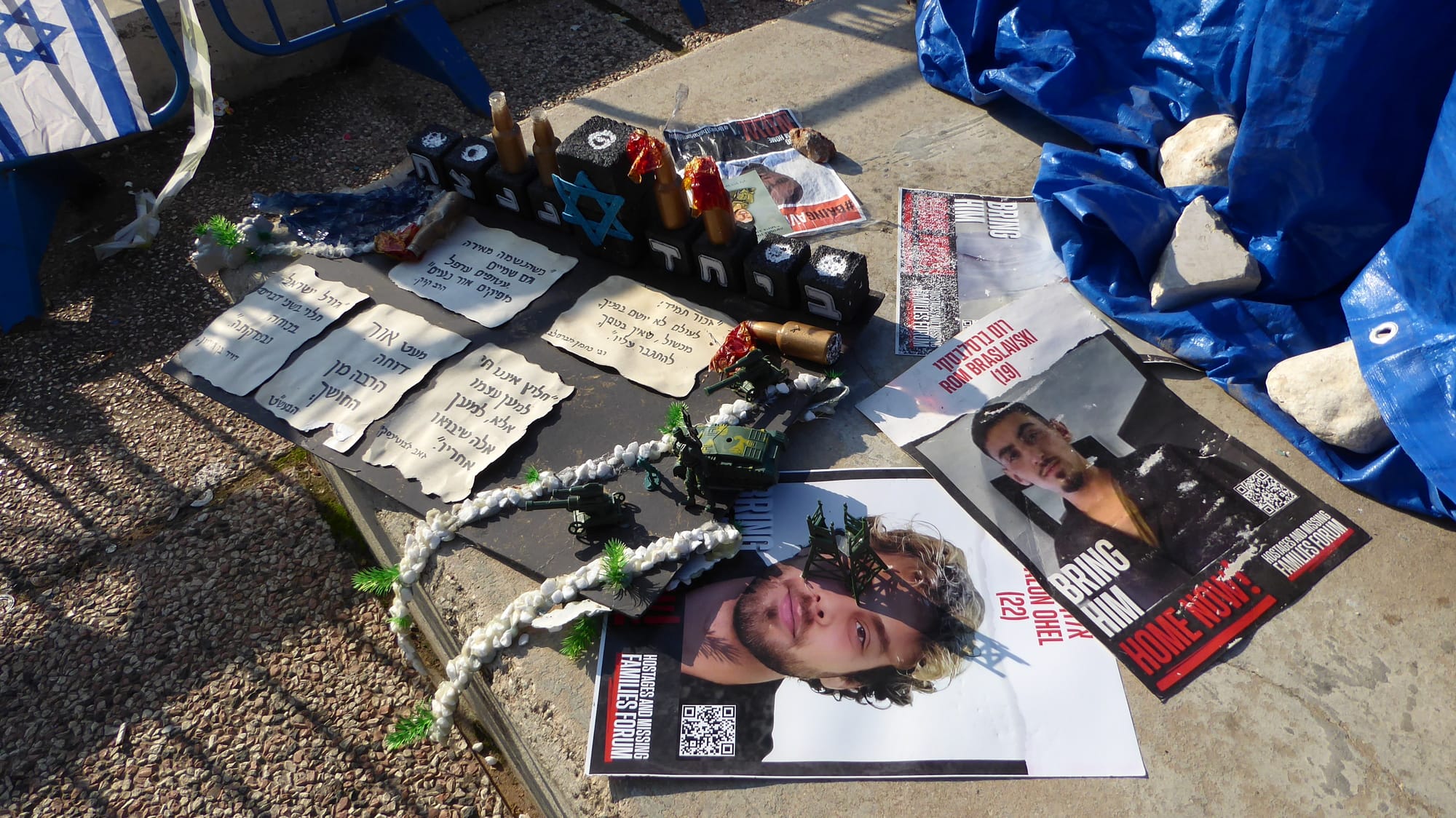
Chapter 4 — The Hostage Crisis: Captivity, Families and International Efforts
The People Taken Across the Border
On October 7, 2023, as Hamas-led armed groups attacked communities, roads, military positions and the Nova music festival in southern Israel, another part of the assault was unfolding.
People were being abducted.
Some were taken from their homes. Others were seized while attempting to escape the violence or were captured at military installations.
The hostages included children, parents, grandparents, young adults, foreign nationals and members of the Israeli security forces.
According to the figures ultimately established by Israeli authorities, 251 people were taken into Gaza during the attack.
For their families, the abductions created a form of uncertainty that would dominate their lives for months and, in some cases, more than two years.
The hostage crisis became one of the defining dimensions of the war that followed.
It influenced Israeli military decisions, international diplomacy, public demonstrations and negotiations involving governments across the Middle East.
It also raised fundamental questions about the protection of civilians, the treatment of captives and the obligations of parties engaged in armed conflict.
By October 2026, all the hostages from the October 7 attack had been returned to Israel, either alive or deceased. But the end of the hostage-return process did not erase the suffering experienced during captivity or the grief of families whose relatives did not survive.
Understanding the crisis requires examining both the circumstances of the abductions and the prolonged efforts to secure the hostages' return.
Who Were the Hostages?
The people abducted on October 7 came from different backgrounds and communities.
Many were Israeli civilians living in kibbutzim and towns near Gaza.
Others were attending the Nova music festival.
Some were Israeli soldiers captured during attacks on military positions.
Foreign nationals were also among those abducted, including agricultural workers from Thailand and people with citizenship or family connections to several other countries.
The hostages represented different generations.
Children were taken alongside adults. Older people were abducted from homes where they had lived for decades.
In some cases, multiple members of the same family were captured.
Others were separated from relatives during the attack, leaving families uncertain about who had survived.
The diversity of the hostages is important because their captivity affected more than one national or social group.
It also meant that the crisis required diplomatic engagement with several governments whose citizens were among those held.
The taking of civilian hostages was not an accidental consequence of the attack.
Investigations by Human Rights Watch and the United Nations found that hostage-taking formed part of the planned operation.
Captives were taken into Gaza and used as leverage in negotiations involving Palestinian prisoners, Israeli military operations and ceasefire arrangements.
International humanitarian law prohibits hostage-taking.
That prohibition applies regardless of the political objectives of the armed group responsible.
The First Hours of Captivity
The experiences of the hostages began under different circumstances.
Some were wounded during their abduction.
Others witnessed the killing of relatives or neighbors before being taken away.
Some were transported in vehicles, while others were moved through border crossings created during the assault.
Videos recorded during the attacks showed captives being taken into Gaza.
These images became some of the earliest evidence that a large-scale hostage crisis was underway.
For the captives, the transition from ordinary civilian life to detention was sudden and terrifying.
They were removed from familiar surroundings without knowing where they were being taken, whether their relatives were alive or what would happen next.
Their families faced similar uncertainty.
Many initially believed that missing relatives might be hiding, injured or unable to communicate.
Only gradually did evidence emerge that some had been abducted.
The process of identifying who was being held became a major challenge for Israeli authorities.
It also placed extraordinary pressure on families waiting for information.
Captivity in Gaza
Hostages were held in different locations across the Gaza Strip.
Accounts from released captives and findings from international investigations describe detention in residential buildings, underground tunnels and other concealed locations.
Conditions varied between individuals and over time.
Some hostages reported prolonged isolation, limited food, inadequate sanitation and restricted access to medical treatment.
Others described threats, physical abuse and psychological pressure.
The United Nations Commission of Inquiry documented evidence of mistreatment, including deprivation of essential supplies and sexual and gender-based violence against some hostages.
Medical examinations of released women and children identified nutritional problems and other health concerns.
Older captives and people with chronic illnesses faced particular risks when medication and appropriate care were unavailable.
The conditions of captivity were also affected by the war taking place around the hostages.
Israeli bombardment and ground operations created additional dangers for people held inside Gaza.
Yet the responsibility of captors to treat hostages humanely did not disappear because of military operations or shortages affecting the surrounding civilian population.
The prohibition on hostage-taking and the obligation to protect people in captivity remain fundamental principles of international humanitarian law.
The Psychological Consequences of Captivity
Captivity can cause lasting psychological harm, even when a hostage survives without severe physical injuries.
Former hostages described uncertainty about their fate, separation from family members and fear of being killed.
Some were unaware of major developments outside Gaza.
Others received limited or misleading information about their relatives.
Isolation and the absence of reliable communication could intensify feelings of helplessness.
For children, the effects of captivity could be particularly complex.
They faced separation from familiar routines, education and family relationships at an age when stability and reassurance are essential.
Adults also confronted difficult psychological experiences.
Some survivors described attempting to maintain routines or support fellow captives as ways of coping.
Others reported persistent anxiety, sleep disturbances and difficulty adjusting after their release.
Recovery is not necessarily completed when a person returns home.
Former hostages may require long-term medical care, psychological support and time away from public attention.
Their experiences also raise questions about the ethical responsibilities of journalists.
A survivor's willingness to speak publicly should not be mistaken for an obligation to recount traumatic experiences repeatedly.
Respecting privacy and personal choice is an essential part of responsible reporting.
Sexual Violence and Abuse in Captivity
One of the most serious findings to emerge from investigations concerned sexual violence against hostages.
A United Nations mission led by the Special Representative of the Secretary-General on Sexual Violence in Conflict reported in March 2024 that there was clear and convincing information that some hostages had experienced sexual violence during captivity.
Subsequent United Nations reporting documented credible information about sexual and gender-based abuse, including sexualized torture.
Investigators also acknowledged limitations in access to witnesses, detention locations and forensic evidence.
These limitations meant that not every allegation could be independently verified or attributed to a particular perpetrator.
Nevertheless, the documented findings established that sexual violence formed part of the experience of some captives.
Such acts constitute serious violations of international law and may amount to war crimes or other international crimes, depending on the circumstances.
The experiences of survivors must be reported with care.
Graphic details are not necessary to establish the seriousness of the violations.
What matters is documenting the evidence, recognizing the harm and supporting accountability.
Families Living With Uncertainty
While the hostages were held in Gaza, their families became central figures in the public response to the crisis.
Parents searched for children.
Children waited for parents.
Spouses and siblings attempted to establish whether missing relatives were alive.
In many cases, families had little reliable information.
Some received indications through released hostages or official channels.
Others learned about possible conditions of captivity through videos published by armed groups.
These recordings often became part of the psychological pressure surrounding negotiations.
For relatives, the decision to watch such material could be deeply painful.
It might provide evidence that a loved one was alive while also exposing the family to distressing images or statements made under coercive circumstances.
The uncertainty affected every part of daily life.
Families postponed plans, attended demonstrations, met officials and participated in international campaigns.
Many became public advocates despite having no previous experience of political activism.
Their central demand was the safe return of their relatives.
But families did not always agree on the best way to achieve that objective.
Some emphasized negotiations and ceasefire agreements.
Others supported continued military pressure on Hamas.
These differences reflected the complexity of a crisis in which every proposed strategy carried risks.
The Hostages and Missing Families Forum
In the days after October 7, relatives and supporters established organizations to coordinate assistance and advocate for the hostages.
The Hostages and Missing Families Forum became one of the most visible groups.
Its activities included public campaigns, meetings with political leaders, international advocacy and support for affected families.
Photographs of hostages appeared on posters, banners and public installations.
The campaign extended beyond Israel.
Demonstrations and gatherings took place in cities across Europe, North America and other regions.
Families traveled internationally to meet diplomats, legislators and humanitarian organizations.
The movement helped maintain attention on the hostages as the war continued.
It also created a public space in which families could challenge government decisions.
In Israel, demonstrations increasingly became part of a wider debate about the relationship between military objectives and the urgency of securing hostage releases.
The movement was not politically uniform.
Families held different views about the government, negotiations and the conduct of the war.
What united them was the demand that their relatives should not be forgotten.
The First Hostage Releases
The first releases took place in the weeks following the attack.
In October 2023, Hamas released a small number of hostages, including two American-Israeli women and two elderly Israeli women.
These early releases provided limited hope to families waiting for news.
They also demonstrated that negotiated arrangements could result in hostages returning home.
However, most captives remained in Gaza.
The first major agreement came in November 2023.
A temporary pause in fighting allowed the release of groups of hostages in exchange for Palestinian prisoners held by Israel.
The agreement was facilitated through negotiations involving Qatar, Egypt and the United States.
The International Committee of the Red Cross assisted with transfers.
The releases were conducted in stages.
Women and children were among those freed, along with foreign nationals released under related arrangements.
For the families reunited during this period, the return of loved ones brought relief after weeks of uncertainty.
But the agreement did not secure the release of everyone.
When the temporary pause ended, the remaining hostages continued to face captivity amid renewed fighting.
The Role of Qatar, Egypt and the United States
International mediation became essential because Israel and Hamas did not conduct normal direct diplomatic negotiations.
Qatar played a particularly important role because it maintained channels of communication with Hamas's political leadership.
Egypt contributed through its geographical position, security relationships and longstanding involvement in Gaza-related negotiations.
The United States worked closely with Israel and regional mediators.
American officials sought arrangements that would secure hostage releases while addressing ceasefire conditions, humanitarian access and broader security concerns.
The negotiations were exceptionally complex.
They involved questions about the number and identity of hostages to be released, Palestinian prisoners, military withdrawals, the duration of pauses in fighting and the movement of humanitarian assistance.
Disagreements frequently delayed progress.
At times, negotiators believed an agreement was close, only for discussions to stall.
The process demonstrated how the hostage crisis became inseparable from the wider war.
A decision about military operations could affect negotiations.
A proposal for a ceasefire could influence the prospects for release.
The lives of individual captives became connected to decisions made by governments and armed organizations across several countries.
The International Committee of the Red Cross
The International Committee of the Red Cross, or ICRC, played a humanitarian role throughout the crisis.
As a neutral intermediary, the organization facilitated the transfer of hostages and Palestinian detainees during negotiated release operations.
Its personnel assisted with medical assessments, transportation and coordination between parties.
The ICRC repeatedly called for the immediate release of hostages and for humane treatment of everyone held in detention.
It also sought access to captives.
However, the organization was not given regular access to the hostages during their captivity.
This limitation prevented independent humanitarian personnel from consistently assessing their conditions or providing medical assistance.
The ICRC's role was therefore primarily connected to negotiations and transfer operations rather than ongoing monitoring inside detention locations.
The distinction matters.
Humanitarian organizations can request access and offer services, but they cannot necessarily enter places of detention without the cooperation of those controlling them.
The responsibility for the treatment and safety of captives remained with the parties holding them.
Military Rescue Operations
Alongside diplomatic negotiations, Israel conducted military operations intended to locate and rescue hostages.
Some operations succeeded in bringing captives home alive.
Others resulted in casualties or failed to achieve their objectives.
Military rescues involved significant risks.
Hostages could be held in densely populated areas, underground facilities or buildings surrounded by civilians.
Armed resistance, incomplete intelligence and the possibility of captors harming hostages complicated planning.
Rescue operations also carried risks for Palestinian civilians living near the locations targeted.
A particularly consequential operation took place in Nuseirat in central Gaza in June 2024, when Israeli forces rescued four hostages.
The operation also caused extensive Palestinian casualties.
The Gaza Health Ministry reported that more than 270 Palestinians were killed, while Israeli authorities disputed aspects of the casualty figures and emphasized that the operation had targeted the hostage-holding infrastructure.
The operation illustrated the profound tension between rescuing captives and protecting civilians in an area of intense conflict.
The successful return of hostages did not remove the obligation to investigate civilian deaths and assess compliance with international humanitarian law.
The Risks of Continued Military Operations
The hostage crisis created a difficult strategic dilemma for Israeli leaders.
The government stated that its objectives included dismantling Hamas's military capabilities and securing the release of the hostages.
Supporters of continued military pressure argued that weakening Hamas could improve Israel's negotiating position and create opportunities for rescue.
Critics warned that prolonged military operations could endanger captives and reduce the chances of negotiated releases.
Families of hostages were divided over how these risks should be balanced.
Some believed that a comprehensive agreement offered the best prospect of bringing their relatives home.
Others feared that concessions could strengthen Hamas or encourage future hostage-taking.
These debates became increasingly intense as the war continued.
The deaths of hostages in captivity, including cases involving Israeli military actions, added urgency to demands for accountability.
One widely reported incident occurred in December 2023, when Israeli soldiers mistakenly killed three Israeli hostages who had escaped or been released from their captors in Gaza.
The Israeli military acknowledged responsibility for the incident.
It became a painful example of the danger hostages faced even when they were no longer physically controlled by their captors.
The incident also raised questions about identification procedures, rules of engagement and the conduct of military operations in complex environments.
The January 2025 Ceasefire and Exchange Agreement
A major diplomatic breakthrough occurred in January 2025.
Israel and Hamas reached a ceasefire and hostage-release agreement following negotiations mediated by Qatar, Egypt and the United States.
The first phase involved the release of hostages and Palestinian prisoners, increased humanitarian assistance and changes to military deployments.
Families gathered to watch the return of captives.
Some hostages had spent more than fifteen months in Gaza.
Their release was followed by medical examinations and efforts to reunite them with relatives.
The ICRC facilitated transfer operations and emphasized the importance of safe, dignified treatment.
The agreement also resulted in the release of Palestinian prisoners and detainees from Israeli custody.
For Palestinian families, these releases brought their own reunions after periods of separation.
The legal status and circumstances of individual Palestinian detainees varied.
Some had been convicted of serious offenses, while others had been held under different forms of detention.
These distinctions are important when describing the exchange.
The January 2025 agreement did not resolve the conflict.
Disagreements over subsequent phases, military operations and the future governance of Gaza remained.
Fighting resumed on a major scale in March 2025.
The remaining hostages continued to be held.
The October 2025 Agreement
Another major development came in October 2025, when a United States-brokered ceasefire agreement created the conditions for the return of the remaining living hostages.
On October 13, the ICRC facilitated the return of 20 living hostages to Israeli authorities.
The same operation involved the release and transfer of large numbers of Palestinian detainees.
For the returning hostages, the moment marked the end of captivity that had lasted more than two years.
Families who had spent months campaigning for their release were finally reunited.
However, the return of living hostages did not immediately conclude the entire process.
The remains of hostages who had died also needed to be recovered, identified and returned to their families.
These operations continued over the following months.
The ICRC coordinated transfers of remains as part of the ceasefire arrangements.
The final deceased hostage's remains were recovered by Israeli authorities in January 2026.
On January 29, 2026, the ICRC announced the completion of its release and transfer operations under the agreement.
By that point, all hostages taken on October 7 had been returned to Israel, either alive or deceased.
For families whose relatives survived, the end of captivity marked the beginning of recovery.
For families whose loved ones had died, the return of remains made burial and mourning possible.
Hostage-Taking Under International Law
International humanitarian law prohibits hostage-taking.
The Fourth Geneva Convention and customary international humanitarian law protect civilians against seizure or detention intended to compel another party to act or refrain from acting.
The prohibition also appears in the legal framework governing war crimes.
The status of the wider Israeli-Palestinian conflict does not alter the basic rule.
Civilians cannot lawfully be seized and held as bargaining instruments.
People who are detained must be treated humanely.
They must not be subjected to torture, sexual violence, cruel treatment or threats.
Medical needs must be addressed.
The prohibition on hostage-taking also applies when captives are used to pressure governments into prisoner exchanges or military concessions.
The United Nations Commission of Inquiry concluded that Hamas and other Palestinian armed groups committed the war crime of hostage-taking during the October 7 attack.
It also documented serious abuses committed against captives.
The legal obligations of Israel in its treatment of Palestinian prisoners and detainees are separate but equally important.
International law prohibits torture and other cruel, inhuman or degrading treatment.
United Nations investigations documented serious allegations and findings of abuse involving Palestinian detainees held by Israeli authorities.
A comprehensive examination of accountability must therefore apply legal standards consistently to all parties.
The Difference Between Hostages and Prisoners
Public discussion of exchange agreements sometimes treats the terms "hostages" and "prisoners" as interchangeable.
They are not.
A hostage is a person seized or detained to compel another party to act or refrain from acting, under circumstances meeting the legal definition of hostage-taking.
A prisoner may be held following a criminal conviction or under another legal detention framework, although the legality of that detention can be contested.
Palestinians released in exchange agreements included people held under different legal circumstances.
Some were serving sentences following convictions.
Others were detained without criminal convictions or were being held under administrative or security procedures.
The legality and conditions of detention must be assessed individually.
This distinction does not make the suffering of detained people less significant.
It ensures that reporting uses precise legal language rather than presenting different situations as automatically equivalent.
Accurate terminology is especially important in a conflict where language frequently becomes part of political debate.
The Hostages Who Did Not Survive
Not every person taken into Gaza returned alive.
Some hostages were killed by their captors.
Others died under circumstances that were disputed or required further investigation.
Some were killed during Israeli military operations.
In several cases, the precise sequence of events remained difficult to establish because investigators lacked access to the locations where deaths occurred.
For bereaved families, uncertainty could continue even after the death of a relative had been confirmed.
The return of remains became an important part of their demands.
Families wanted the opportunity to bury loved ones and obtain answers about the circumstances of their deaths.
The recovery process involved intelligence work, negotiations, forensic identification and humanitarian coordination.
It also required cooperation between parties that remained deeply hostile.
The eventual return of all hostages, living and deceased, marked the conclusion of one phase of the crisis.
It did not settle the question of accountability for their deaths.
Returning Home After Captivity
The return of hostages was often accompanied by public celebrations and emotional reunions.
Yet the transition from captivity to ordinary life could be difficult.
Former hostages required medical examinations, psychological support and opportunities to reconnect with relatives.
Some discovered that family members had been killed during the attack.
Others returned to communities that had been damaged or destroyed.
Children had to resume education and rebuild routines.
Adults faced decisions about employment, housing and whether to speak publicly about their experiences.
For some, recovery involved learning to live with injuries or prolonged medical conditions.
For others, psychological consequences were less visible.
The passage of time in captivity could also create a sense of disconnection from events that had occurred outside.
Relationships had changed.
Communities had moved.
The war had reshaped Israeli and Palestinian society.
Returning home therefore meant entering a world that was not the same as the one the hostages had left.
The Political Consequences in Israel
The hostage crisis became a central issue in Israeli politics.
Families and supporters organized demonstrations demanding agreements to secure the captives' return.
Criticism of the government's handling of negotiations intensified during periods when talks stalled.
Some protesters accused political leaders of prioritizing military objectives or political survival over the lives of hostages.
Government officials defended their decisions by arguing that military pressure and security guarantees were necessary to prevent future attacks.
These disputes reflected broader disagreements about Israel's leadership and strategy.
The crisis also raised questions about the relationship between the state and its citizens.
Many families argued that protecting citizens and securing the return of those abducted were fundamental government responsibilities.
The debate continued even after the final hostage returns.
Questions remained about whether different decisions could have secured releases sooner, prevented deaths or reduced the human cost of the war.
These questions require careful examination of diplomatic records, military decisions and the testimony of people directly involved.
The International Consequences
The hostage crisis attracted sustained international attention.
Governments whose citizens were held in Gaza engaged in diplomatic efforts.
Humanitarian organizations demanded access to captives.
International institutions condemned hostage-taking and called for releases.
The crisis also influenced debates about ceasefires, prisoner exchanges and military operations.
For some governments, securing the release of hostages was a central condition of proposed agreements.
For others, humanitarian concerns in Gaza created additional pressure for an end to hostilities.
The negotiations demonstrated that the fate of individual captives could influence regional diplomacy.
They also showed how humanitarian objectives became entangled with strategic calculations.
The eventual agreements required cooperation among states and organizations that held sharply different political positions.
That cooperation did not resolve the wider conflict, but it made the return of hostages possible.
The Human Cost of Waiting
For families, the passage of time became one of the defining features of the crisis.
Days turned into weeks.
Weeks became months.
Some relatives waited more than two years for the return of loved ones or their remains.
The uncertainty affected marriages, children, employment and health.
Families who became public campaigners faced constant media attention while dealing with private grief.
Some experienced reunions.
Others received confirmation that relatives had died.
The emotional consequences were different, but the prolonged waiting connected their experiences.
The hostage crisis illustrates a form of suffering that cannot be measured only by the duration of detention.
It also includes the time spent by families without reliable information, the decisions postponed and the lives placed on hold.
For those who survived captivity, freedom did not immediately restore everything that had been lost.
For those who died, the return of their remains could provide a measure of closure but could not undo the loss.
What the Hostage Crisis Revealed
The hostage crisis exposed several realities of the conflict.
First, hostage-taking was used as a deliberate instrument of armed and political pressure.
Second, the captivity of civilians created prolonged suffering for individuals and families.
Third, military operations and negotiations carried different risks, and the consequences of those choices were often borne by people who had no control over them.
Fourth, international mediation proved essential to securing large-scale releases.
Finally, the crisis demonstrated that the return of captives and the protection of civilians must remain central considerations in any attempt to resolve an armed conflict.
The conclusion of the hostage-return process in January 2026 was a major humanitarian milestone.
But it did not bring an end to the wider suffering caused by the war.
Gaza remained devastated, Israeli communities continued to rebuild, and fundamental questions about security, governance, justice and accountability remained unresolved.
The next chapter examines the military and political decisions that followed the October 7 attack.
Chapter 5 — Israel's Response: Military Operations and Political Decisions explores the objectives announced by Israeli leaders, the development of the campaign in Gaza and the debates over military strategy, civilian protection and political responsibility.
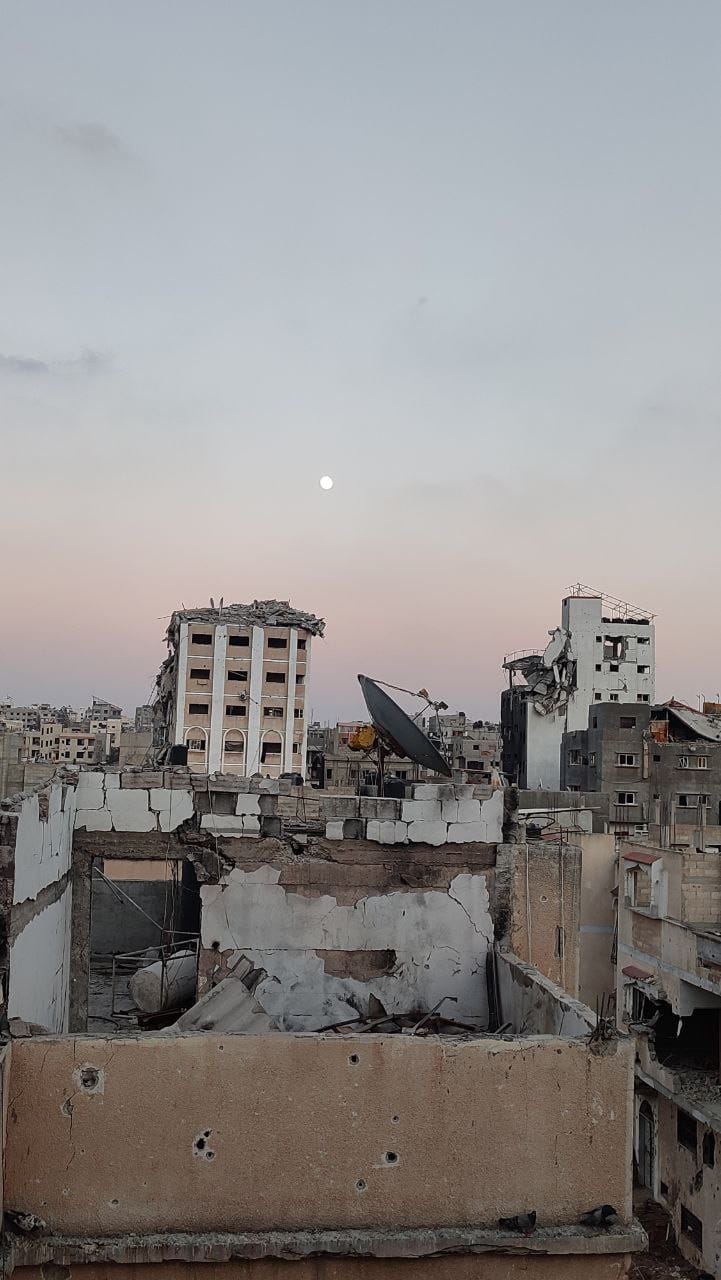
Chapter 5 — Israel's Response: Military Operations and Political Decisions
From a National Emergency to War
On October 7, 2023, Israel experienced an attack that fundamentally changed its security environment.
As the scale of the Hamas-led assault became clear, Israeli leaders faced several immediate challenges: stopping the attackers still operating inside Israeli territory, protecting surviving communities, identifying the dead and missing, and deciding how to respond to the armed organizations responsible.
The first hours were marked by confusion and an uneven military response.
Israeli forces fought to regain control of towns, kibbutzim, military installations and roads near the Gaza border. Some battles continued into the following days.
At the same time, Israel began launching airstrikes against targets in the Gaza Strip.
Prime Minister Benjamin Netanyahu declared that Israel was at war.
On October 8, the Israeli security cabinet formally approved a state of war under Israeli law.
The government presented the military campaign as a response to the October 7 attack and as an effort to prevent Hamas from carrying out similar operations in the future.
But the decision to launch a major war also raised questions that would become central to the conflict.
What military objectives could realistically be achieved?
How would Israel distinguish Hamas fighters from civilians in one of the world's most densely populated territories?
What would happen to the hostages held in Gaza?
And who would govern the territory if Hamas's military and political structures were dismantled?
These questions did not have simple answers.
They became more urgent as the campaign expanded.
Israel's Declared Military Objectives
Israeli leaders identified two principal objectives during the war: dismantling Hamas's military and governing capabilities and securing the return of the hostages taken on October 7.
The government argued that Hamas could not be allowed to retain the capacity to organize another large-scale assault.
Israeli officials pointed to the organization's rocket arsenal, armed units, tunnel networks, command structures and military infrastructure.
They also argued that the hostages' release was a national obligation.
Yet the relationship between these objectives was complicated.
Military operations could damage Hamas's capabilities, but they could also endanger captives being held inside Gaza.
Negotiations could secure hostage releases, but agreements might require military withdrawals, prisoner exchanges or pauses in operations.
These tensions generated disagreements among Israeli officials, security experts, hostage families and members of the public.
Some supported sustained military pressure.
Others argued that the return of the hostages should take priority over broader military objectives.
The government maintained that both goals could be pursued, although the practical difficulties became increasingly apparent.
The Initial Air Campaign
Israel's first major military response involved extensive airstrikes across Gaza.
The Israeli military said it was targeting Hamas command centers, weapons facilities, launch sites, military personnel and other infrastructure.
Air operations expanded rapidly in the days following October 7.
Explosions were reported in Gaza City and other parts of the territory.
Residential buildings, roads and infrastructure were damaged or destroyed.
Palestinian civilians were killed and injured.
The scale of the bombardment immediately raised concerns among humanitarian organizations and international legal experts.
Israel argued that Hamas operated within civilian areas and used infrastructure in densely populated neighborhoods for military purposes.
Hamas's presence in civilian environments presented serious operational challenges.
However, international humanitarian law does not remove civilian protections when an armed group operates near civilians.
Parties conducting attacks must distinguish between military objectives and civilian objects, assess expected civilian harm and take feasible precautions.
An otherwise lawful military target cannot be attacked if the expected incidental civilian harm would be excessive in relation to the concrete and direct military advantage anticipated.
These rules apply to individual attacks.
The legality of a military campaign cannot be determined solely by the legitimacy of its stated objectives.
The Order to Evacuate Northern Gaza
On October 13, 2023, Israel instructed approximately 1.1 million residents of northern Gaza to move south.
Israeli authorities said the measure was intended to reduce civilian exposure to planned military operations.
The United Nations warned that such a large movement of people could have devastating humanitarian consequences.
Many residents faced difficult choices.
Some left their homes carrying only essential belongings.
Others were unable or unwilling to leave because of illness, disability, family responsibilities, insecurity along evacuation routes or fears that they would never be allowed to return.
Hospitals and medical facilities faced particularly serious challenges.
Patients requiring intensive care, newborn infants and people dependent on medical equipment could not always be transported safely.
The movement of civilians toward southern Gaza also placed pressure on areas that were already struggling to accommodate displaced people.
Evacuation warnings can be an important precaution during armed conflict.
But issuing a warning does not automatically make an attack lawful, nor does it eliminate the obligation to protect civilians who remain.
The feasibility, safety and humanitarian consequences of evacuation orders must be assessed in their specific circumstances.
As the war continued, repeated displacement became one of its defining features.
The Ground Invasion
In late October 2023, Israeli forces expanded ground operations inside the Gaza Strip.
Armored units, infantry and engineering forces entered the territory, supported by air and artillery operations.
The military campaign initially concentrated heavily on northern Gaza, including Gaza City.
Israeli officials stated that the objective was to dismantle Hamas's military infrastructure and weaken its ability to command and conduct operations.
Fighting occurred in urban neighborhoods, near roads, around tunnel networks and in areas where civilians remained.
Urban warfare created significant risks.
Buildings could conceal armed fighters, weapons or tunnel entrances.
At the same time, those same buildings could contain families, displaced people or essential civilian services.
The difficulty of identifying military objectives did not remove the legal obligation to distinguish them from civilians.
Israeli forces reported discovering weapons, tunnel shafts and military infrastructure in different locations.
Independent verification of specific military claims varied, particularly when journalists and investigators lacked unrestricted access to the areas concerned.
Palestinian armed groups continued to engage Israeli troops and launch attacks during the ground campaign.
The fighting caused military casualties on both sides and contributed to extensive destruction across Gaza.
Hamas's Tunnel Network
One of the central military challenges identified by Israel was Hamas's underground tunnel network.
Over many years, Hamas had developed tunnels used for movement, concealment, storage and military operations.
Some tunnels were associated with command facilities and weapons infrastructure.
Others were used to hold hostages.
The underground network complicated Israel's efforts to locate armed fighters and captives.
Military operations against tunnels often required specialized engineering units, intelligence and explosives.
In densely populated areas, the destruction of underground structures could also damage buildings and infrastructure above them.
Israeli officials argued that the tunnels demonstrated Hamas's strategy of embedding military infrastructure within civilian environments.
Humanitarian organizations warned that operations directed at such infrastructure still required careful assessment of civilian harm.
The existence of a tunnel beneath or near a civilian structure does not automatically establish that every part of the structure is a lawful military target.
Each attack must be assessed according to the available information and the applicable rules of international humanitarian law.
Hospitals and the Protection of Medical Facilities
Some of the most controversial military operations involved hospitals and medical facilities.
Israeli authorities alleged that Hamas used certain hospitals or nearby infrastructure for military activities.
Hamas and hospital representatives disputed various allegations.
International journalists and humanitarian organizations reported that medical facilities were overwhelmed by casualties, shortages of supplies and the effects of military operations.
Al-Shifa Hospital in Gaza City became a major focus of international attention.
Israeli forces entered the hospital complex in November 2023 and conducted further operations there in March 2024.
Israel released material that it said demonstrated Hamas military activity at or beneath the complex.
Independent investigations found evidence supporting some claims about militant use of hospital-related infrastructure, while other broader Israeli claims were not fully substantiated by the publicly available evidence.
The legal framework governing hospitals is particularly strict.
Medical facilities are entitled to special protection under international humanitarian law.
They may lose that protection only under specific circumstances, including when used to commit acts harmful to the enemy outside their humanitarian function, and subject to applicable warnings and other legal requirements.
The presence of wounded fighters or armed guards for hospital security does not, by itself, remove a hospital's protection.
Even where a medical facility loses special protection, the general rules governing distinction, proportionality and precautions continue to apply.
The controversies surrounding Gaza's hospitals therefore required careful investigation rather than acceptance of either side's claims without evidence.
The Expansion of Operations into Southern Gaza
As Israeli operations continued, the military campaign expanded into southern Gaza.
Khan Younis became a major area of fighting.
Israeli authorities described the city as an important center of Hamas military activity.
Large numbers of Palestinian civilians had already moved south following earlier evacuation instructions.
The expansion of military operations therefore affected areas that had become destinations for displaced families.
Temporary shelters, schools and overcrowded residential buildings were placed under increasing pressure.
Many people were forced to move repeatedly.
The humanitarian consequences included the loss of housing, interruption of medical care and growing difficulty accessing food, water and sanitation.
The repeated movement of civilians raised questions about whether sufficiently safe and adequately supplied locations were available.
International humanitarian law prohibits forcible transfer and displacement except under narrowly defined circumstances, including civilian security or imperative military reasons.
Even when evacuation is permitted, parties must take measures to ensure appropriate conditions of shelter, hygiene, health, safety and nutrition.
The circumstances of each displacement order therefore became relevant to international legal scrutiny.
Rafah and the Debate Over Military Necessity
Rafah, near Gaza's border with Egypt, became another major focus of international concern.
By early 2024, large numbers of displaced Palestinians were sheltering in and around the city.
Israel argued that Hamas retained military formations and infrastructure in Rafah and that operations there were necessary to achieve its objectives.
Humanitarian organizations warned that a major offensive could endanger a population already weakened by months of displacement and shortages.
In May 2024, Israeli forces began a ground operation in the Rafah area.
The operation followed international warnings about civilian protection and humanitarian access.
On May 24, 2024, the International Court of Justice issued an order in the case brought by South Africa under the Genocide Convention.
The Court directed Israel to halt its military offensive and other action in the Rafah Governorate that could inflict conditions of life on Palestinians in Gaza capable of bringing about their physical destruction, in whole or in part.
The precise interpretation of the order became the subject of legal and political debate.
The order was a provisional measure, not a final judgment on whether genocide had occurred.
Nevertheless, it represented a significant intervention by the United Nations' principal judicial organ.
The Rafah operation highlighted the tension between Israel's declared military objectives and the obligation to protect civilians in areas with limited opportunities for safe movement.
The Humanitarian Consequences
The military campaign caused extensive destruction across Gaza.
Homes, schools, roads, water systems and healthcare facilities were damaged or destroyed.
Large parts of the population were repeatedly displaced.
Medical services struggled with overwhelming numbers of casualties, damaged infrastructure and shortages of equipment, fuel and medication.
Food insecurity became increasingly severe.
Humanitarian organizations warned about malnutrition, disease and the collapse of essential services.
The Gaza Health Ministry reported large numbers of Palestinian deaths.
Although the ministry operated within the Hamas-governed administration, its casualty figures were widely used by international organizations, often with explicit attribution and methodological qualifications.
Independent assessments also examined deaths that might not have been captured in immediate official reporting.
Casualty figures require careful interpretation.
They may include civilians and combatants without distinguishing between them.
They may also be revised as missing people are identified or bodies are recovered.
But uncertainty about exact totals does not diminish the documented scale of civilian suffering.
The humanitarian consequences of the war became a central issue in international diplomacy and legal proceedings.
They are examined in greater detail in the next chapter.
The Siege and Restrictions on Essential Supplies
On October 9, 2023, Israeli Defense Minister Yoav Gallant announced a complete siege of Gaza.
The announcement included restrictions on electricity, food and fuel.
Israeli officials framed the measures as part of the campaign against Hamas.
Humanitarian organizations warned that restricting essential supplies to a civilian population could have severe consequences and violate international humanitarian law.
The legal rules governing siege warfare do not permit starvation of civilians as a method of warfare.
Parties must also comply with obligations concerning humanitarian relief and the protection of civilian populations.
During the war, the amount of aid entering Gaza fluctuated considerably.
Israel stated that it facilitated humanitarian deliveries subject to security inspections and operational conditions.
United Nations agencies and aid organizations repeatedly reported serious obstacles involving access, distribution, insecurity and the functioning of border crossings.
The question was not simply whether some assistance entered the territory.
It was whether civilians could obtain the supplies necessary for survival.
The restrictions became part of investigations into the conduct of the war and the responsibilities of Israeli political and military leaders.
The Israeli Government and Wartime Decision-Making
Israel's military response was shaped by decisions made within the government and security establishment.
Prime Minister Benjamin Netanyahu remained the central political figure.
Defense Minister Yoav Gallant and senior military commanders played important roles in the early stages of the campaign.
On October 11, 2023, Netanyahu and opposition politician Benny Gantz announced an emergency wartime arrangement.
Gantz joined a small war cabinet alongside Netanyahu and Gallant.
The arrangement was intended to provide a broader political framework for major wartime decisions.
However, disagreements emerged over strategy, hostage negotiations and the future administration of Gaza.
Gantz left the emergency government in June 2024.
The dispute reflected a wider challenge.
Military operations could weaken Hamas, but they did not automatically produce an agreed political alternative for governing Gaza.
Without a credible postwar arrangement, questions remained about who would administer public services, provide security and oversee reconstruction.
These issues became increasingly important as the conflict continued.
The Question of Gaza's Future Governance
One of the central strategic uncertainties concerned the political future of Gaza.
Israel stated that Hamas should no longer govern the territory.
But removing a governing authority creates the need for an alternative.
Different proposals emerged during the war.
Some Israeli politicians advocated continued Israeli security control.
Others discussed arrangements involving local Palestinian administrators, international oversight or regional participation.
The Palestinian Authority remained a possible participant in some diplomatic proposals, although Israeli leaders disagreed over its role.
International governments generally emphasized the importance of a political framework that could eventually support Palestinian self-determination.
The absence of an agreed plan complicated efforts to translate military gains into a stable political outcome.
Security operations alone could not resolve questions of legitimacy, public administration, reconstruction and long-term political rights.
The debate demonstrated the limits of treating Gaza solely as a military problem.
The Hostage Dilemma
The presence of Israeli and foreign hostages inside Gaza affected nearly every major strategic discussion.
The government argued that military pressure could weaken Hamas and improve the prospects for release.
Critics warned that continued operations could endanger captives.
Families of hostages organized demonstrations and demanded greater urgency in negotiations.
Some called for an immediate agreement, even if it required significant concessions.
Others supported military operations intended to rescue captives or reduce Hamas's bargaining power.
The debate became especially intense following incidents in which hostages were killed during captivity or military operations.
In December 2023, Israeli soldiers mistakenly killed three Israeli hostages in Gaza.
The military acknowledged the incident and said the soldiers had violated applicable rules of engagement.
The deaths intensified questions about how military operations were being conducted in areas where captives might be present.
The eventual hostage-release agreements of 2025 demonstrated the importance of diplomatic mediation.
They also left unresolved questions about whether different political or military decisions could have secured earlier releases.
Israeli Society During the War
The war affected Israeli society in multiple ways.
Families mourned relatives killed on October 7.
Hostage families campaigned for the return of their loved ones.
Reservists were mobilized, and many businesses and workplaces faced disruption.
Communities near Gaza and along Israel's northern border experienced displacement.
Public debate intensified over the government's handling of the attack and the subsequent war.
Some Israelis supported continued military operations as necessary to prevent another October 7.
Others criticized the scale of destruction in Gaza or argued that military strategy was undermining prospects for a hostage agreement.
Large demonstrations focused on hostage negotiations, political accountability and demands for investigations into the security failures preceding the attack.
Israeli society did not respond with a single political voice.
The war exposed divisions over leadership, national security, the treatment of Palestinians and the country's long-term direction.
These disagreements are important because government policy should not automatically be presented as the view of every citizen.
International Support and Growing Criticism
In the immediate aftermath of October 7, several governments expressed strong support for Israel's right to protect its population against further attacks.
The United States provided military and diplomatic support.
European governments condemned the Hamas-led assault and demanded the release of hostages.
At the same time, international concern grew as the civilian death toll and destruction in Gaza increased.
Governments and humanitarian organizations called for greater protection of civilians, expanded aid access and pauses or ceasefires.
Some states criticized Israeli military operations as disproportionate or inconsistent with international humanitarian law.
Others continued to emphasize Israel's security concerns while pressing for changes in military conduct.
The diplomatic environment became increasingly divided.
Debates emerged over arms transfers, sanctions, recognition of Palestinian statehood and the role of international courts.
The conflict therefore became not only a regional war but also a major test of international diplomacy and the institutions responsible for enforcing humanitarian law.
International Legal Scrutiny
The conduct of the war became the subject of proceedings before international courts.
In December 2023, South Africa brought a case against Israel before the International Court of Justice, alleging violations of the Genocide Convention.
Israel rejected the allegation and argued that its operations were directed against Hamas, not the Palestinian population.
The Court issued provisional measures in January, March and May 2024.
These orders addressed the protection of Palestinians in Gaza, humanitarian assistance and the prevention of acts prohibited by the Genocide Convention.
Provisional measures do not constitute a final ruling on the merits.
Separately, the International Criminal Court investigated alleged crimes connected to the conflict.
In November 2024, the ICC issued arrest warrants for Benjamin Netanyahu and Yoav Gallant, alleging war crimes and crimes against humanity.
The allegations included the war crime of starvation as a method of warfare and crimes against humanity associated with the deprivation of essential supplies and attacks on civilians.
The ICC also issued a warrant for Hamas military commander Mohammed Deif, whose death was subsequently confirmed.
An arrest warrant is not a conviction.
It reflects a judicial finding that the applicable threshold for issuing a warrant has been met.
The individuals concerned retain the presumption of innocence.
Israel disputed the ICC's jurisdiction and rejected the allegations against its leaders.
These proceedings became central to the international debate over accountability.
They also demonstrated that the legality of wartime conduct must be assessed through evidence and established legal standards rather than political declarations alone.
Military Success and Strategic Limits
Assessing the military campaign requires distinguishing between tactical achievements and broader political outcomes.
Israeli forces killed senior Hamas figures, damaged military infrastructure and disrupted parts of the organization's command network.
Israel also recovered hostages and bodies during military operations.
However, the extent to which these achievements translated into lasting security remained contested.
Armed groups continued to operate in parts of Gaza even after major Israeli offensives.
The destruction of infrastructure did not automatically eliminate the political and social conditions that allowed armed organizations to recruit supporters.
The absence of an agreed postwar governance arrangement created further uncertainty.
Military force can degrade an organization's capabilities.
It cannot, by itself, resolve competing national claims, establish legitimate political institutions or guarantee lasting security.
The distinction became increasingly important as the war continued into 2025.
The Ceasefire Agreements and Their Limitations
Negotiations mediated by the United States, Egypt and Qatar eventually produced major agreements.
The January 2025 ceasefire allowed the release of hostages and Palestinian prisoners and temporarily reduced fighting.
However, the agreement did not lead to a lasting cessation of hostilities.
Large-scale Israeli operations resumed in March 2025.
A further United States-brokered agreement in October 2025 enabled the return of the remaining living hostages and the subsequent recovery and return of deceased hostages.
The agreements represented important humanitarian and diplomatic developments.
Yet they did not settle the underlying political questions.
The future governance of Gaza, reconstruction, disarmament, Israeli security arrangements and Palestinian political rights remained contested.
The existence of a ceasefire also did not mean that all violence or humanitarian suffering had ended.
For civilians, the consequences of the war continued long after the most intense military operations.
Responsibility and the Demand for Investigation
The Israeli response to October 7 raised two distinct but connected sets of accountability questions.
The first concerned the failures that allowed the original attack to occur.
Why had intelligence warnings not prevented the assault?
Why were border defenses overwhelmed?
Why did substantial reinforcements take so long to reach some communities?
The second concerned the conduct of the military campaign in Gaza.
Were individual attacks carried out in accordance with international humanitarian law?
Were sufficient precautions taken to protect civilians?
Were restrictions on humanitarian supplies lawful?
How were allegations of misconduct investigated?
The responsibility to investigate does not depend on whether a military campaign was launched in response to an unlawful attack.
A state may pursue legitimate security objectives while remaining bound by the laws governing armed conflict.
Similarly, the crimes committed by Hamas-led groups on October 7 do not become lawful because of historical grievances or political objectives.
Accountability requires applying legal standards to the conduct of each actor.
The Human Consequences of Political Decisions
Decisions made by political and military leaders have consequences far beyond government offices and command centers.
They determine where troops are deployed, which areas are attacked, when civilians are warned and how humanitarian assistance is delivered.
They influence whether negotiations continue, whether hostages are released and whether displaced families can return home.
For Israelis, the decisions following October 7 shaped the search for security and the fate of people held captive.
For Palestinians in Gaza, they shaped the conditions of survival during a devastating military campaign.
These experiences were different, but both demonstrate how decisions taken at the highest levels of power can alter civilian lives.
Journalism must examine those decisions without reducing their consequences to strategic language alone.
Military objectives, casualty figures and diplomatic agreements are essential parts of the story.
So are the families who lost homes, the children whose education was interrupted and the people who survived but could not return to ordinary life.
What Israel's Response Revealed
Israel's response to October 7 began with an immediate security crisis and developed into a prolonged military campaign with regional and international consequences.
The government sought to dismantle Hamas's capabilities and secure the return of the hostages.
The military achieved significant operational results, but the campaign also caused extensive Palestinian civilian suffering and raised serious legal questions.
The war exposed the difficulty of achieving lasting security through military operations without an agreed political framework.
It also revealed tensions between military strategy, humanitarian obligations, domestic political pressures and international diplomacy.
By October 2026, the hostage-return process had concluded, but the consequences of the war remained unresolved.
Large parts of Gaza required reconstruction.
Israeli communities continued to recover from the October 7 attacks.
International legal proceedings and debates over accountability remained important.
The central question was no longer only how Israel had responded to the attack.
It was whether the decisions made during the war had created conditions for greater security and a sustainable political future.
The next chapter examines the consequences for the people who lived through the military campaign.
Chapter 6 — The Humanitarian Consequences in Gaza: Civilians, Displacement and Destruction explores the experiences of Palestinian families, the collapse of essential services, the challenges faced by humanitarian organizations and the long-term consequences of the war for Gaza's civilian population.
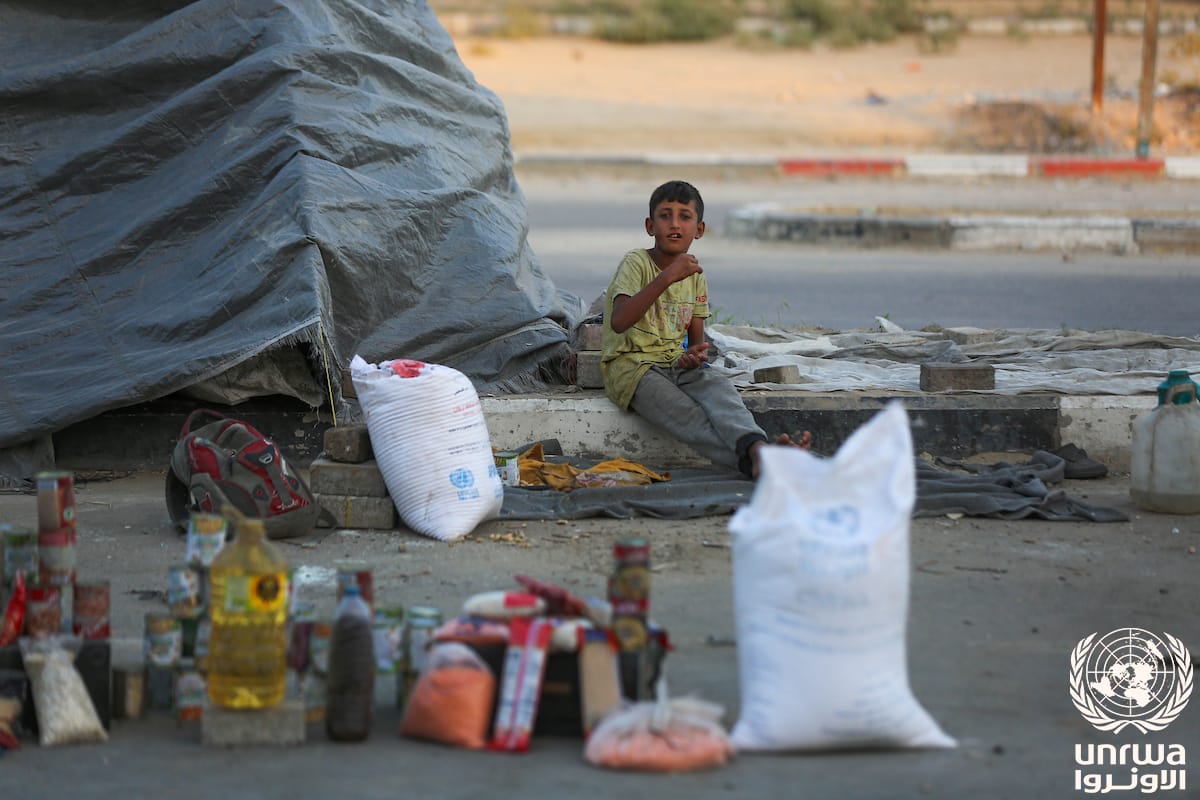
Chapter 6 — The Humanitarian Consequences in Gaza: Civilians, Displacement and Destruction
A War Measured in Human Lives
The war that followed the Hamas-led attacks of October 7, 2023, transformed the Gaza Strip.
What began as an Israeli military campaign against Hamas developed into a prolonged conflict that devastated much of the territory's civilian infrastructure, displaced most of its population and created a humanitarian emergency whose consequences continued years later.
For Palestinians living in Gaza, the war affected nearly every aspect of ordinary life.
Homes were destroyed. Families were separated. Hospitals struggled to function. Schools became shelters, and streets that had once connected neighborhoods became filled with rubble.
The consequences extended beyond those directly killed or injured.
People with chronic illnesses lost access to treatment. Children missed years of education. Workers lost businesses and livelihoods. Families who had already experienced repeated displacement found themselves moving from one temporary shelter to another.
The scale of destruction was unprecedented in Gaza's recent history.
By October 2026, more than 74,000 Palestinians had been reported killed since the beginning of the war, according to Gaza health authorities, whose figures were cited by international news organizations. The total included people killed during the main phases of fighting and those who died amid continued violence after the October 2025 ceasefire.
The reported toll did not provide a complete breakdown between civilians and combatants. It also could not fully capture deaths indirectly associated with the collapse of healthcare, sanitation and other essential services.
For journalists, these distinctions matter.
Numbers must be attributed, methods examined and uncertainty acknowledged.
But casualty figures are only one part of the humanitarian story.
The destruction of Gaza also involved the loss of the systems that allow a society to function.
Gaza Before the War
Before October 2023, approximately 2.2 million Palestinians lived in the Gaza Strip.
The territory was densely populated, with major urban centers including Gaza City, Khan Younis, Rafah and Deir al-Balah.
Its population was young, and many residents were descendants of Palestinians displaced during the 1948 Arab-Israeli war.
Life in Gaza before October 7 was already shaped by severe restrictions on movement and trade, high unemployment, electricity shortages and political instability.
Israel maintained extensive controls over Gaza's borders, airspace and maritime access, while Egypt controlled its own border crossing at Rafah.
Hamas had governed the territory since taking control in 2007.
Human rights organizations documented restrictions on political freedoms under Hamas rule, alongside the effects of the Israeli and Egyptian border policies.
Yet Gaza was also home to universities, schools, hospitals, markets, cultural institutions and businesses.
Families celebrated weddings and religious holidays. Students pursued degrees. Healthcare professionals treated patients, and farmers worked land that had supported generations.
These details are important because the territory cannot be understood only through images of conflict.
The war did not destroy an empty landscape.
It devastated a society in which millions of people had established homes, relationships and plans for the future.
The First Weeks of Bombardment
Israel began extensive airstrikes in Gaza shortly after the October 7 attack.
Israeli authorities stated that the campaign was directed against Hamas fighters, command facilities, weapons infrastructure and other military targets.
The military argued that Hamas operated within densely populated areas, complicating efforts to distinguish military infrastructure from civilian surroundings.
The bombardment nevertheless caused extensive destruction and civilian casualties.
Entire residential blocks were damaged or destroyed.
Families fled homes that had become unsafe.
Hospitals received large numbers of wounded patients while facing shortages of supplies and electricity.
Some people remained trapped beneath collapsed buildings.
Emergency responders worked in dangerous conditions, often without sufficient equipment.
The initial weeks established a pattern that continued throughout much of the war: military operations, large-scale displacement, damaged civilian infrastructure and repeated warnings from humanitarian organizations.
Under international humanitarian law, parties must distinguish between civilians and combatants and between civilian objects and military objectives.
Attacks expected to cause excessive incidental civilian harm in relation to the anticipated concrete and direct military advantage are prohibited.
These obligations apply even when an opposing armed group operates within populated areas.
Determining whether particular attacks violated the law requires examining the target, information available to commanders, expected civilian harm and feasible precautions.
The enormous scale of civilian suffering made those investigations essential.
The Displacement of a Population
One of the defining consequences of the war was the repeated displacement of Palestinian civilians.
In October 2023, Israel instructed residents of northern Gaza to move south ahead of planned military operations.
Many families left with only the possessions they could carry.
Others stayed because they were unable to travel, feared the journey or had nowhere suitable to go.
As fighting expanded, people who had already fled were forced to move again.
Khan Younis, Rafah, central Gaza and coastal areas became temporary destinations for displaced families.
But these locations were not consistently safe.
Military operations, evacuation instructions and changing access restrictions repeatedly altered where civilians could remain.
Some families moved several times.
Temporary accommodation included schools, tents, unfinished buildings and overcrowded homes.
The disruption affected family structures, education, employment and healthcare.
By 2026, most of Gaza's population remained displaced or unable to return to normal housing conditions.
Displacement was no longer only an emergency response to immediate danger.
For many families, it had become a prolonged way of life.
The Meaning of Losing a Home
The destruction of a home involves more than the loss of walls and furniture.
It can mean the disappearance of family photographs, legal documents, educational certificates, personal possessions and objects associated with relatives who have died.
For families displaced during the war, the loss of housing was often accompanied by the loss of income and access to community networks.
Some people returned to find their homes uninhabitable.
Others could not reach their neighborhoods because of military restrictions or continuing insecurity.
Even when a building remained standing, structural damage could make it unsafe.
In September 2026, United Nations humanitarian reporting identified thousands of damaged buildings that required demolition or substantial intervention.
Some remained occupied because residents had no alternative accommodation.
This created an additional danger.
Families could face injury from collapsing structures even when active fighting was not occurring nearby.
The absence of sufficient construction materials and machinery slowed efforts to clear debris and repair damaged housing.
For many Palestinians, the question was not simply when they could return home.
It was whether a home still existed to which they could return.
Life in Temporary Shelters
By October 2026, temporary shelters had become a central feature of Gaza's landscape.
Families lived in tents, improvised structures and overcrowded displacement sites.
Many shelters offered limited protection from heat, cold, rain and wind.
Access to toilets, clean water and bathing facilities was often inadequate.
Women, children, older people and people with disabilities faced particular difficulties.
Privacy was limited.
People with mobility impairments could struggle to reach sanitation facilities or medical points.
Parents had to manage children's safety and daily needs in environments that were not designed for prolonged habitation.
The approaching winter created further concerns.
Rainfall could flood tents, damage belongings and contaminate living areas.
According to the International Organization for Migration, nearly two million people required shelter assistance in October 2026.
The organization warned that overcrowded displacement sites and damaged drainage systems increased the risk of flooding.
The consequences of inadequate shelter therefore extended beyond discomfort.
They affected health, dignity, safety and the ability of families to establish any sense of stability.
Hospitals Under Extreme Pressure
Gaza's healthcare system suffered extensive damage during the war.
Hospitals were affected by bombardment, ground operations, shortages of electricity and fuel, and the interruption of medical supply chains.
Healthcare workers faced the challenge of treating large numbers of wounded patients while operating with limited equipment.
Some facilities stopped functioning.
Others continued providing partial services under extremely difficult conditions.
The World Health Organization reported in September 2026 that only 19 of Gaza's 36 hospitals were functioning even partially.
None was fully operational.
The consequences extended beyond emergency trauma care.
Patients with cancer, kidney disease, diabetes and other chronic conditions struggled to obtain regular treatment.
Pregnant women and newborn infants faced increased risks because of shortages of specialist services and medical supplies.
People requiring surgery or rehabilitation often faced long delays.
The destruction of healthcare infrastructure therefore created both immediate and long-term threats.
A hospital may be physically repaired, but rebuilding a functioning health system also requires trained staff, equipment, medicines, electricity, reliable supply chains and public trust.
The Injured and the Permanently Disabled
Many Palestinians survived military attacks with severe injuries.
Some experienced amputations, spinal injuries, burns or other conditions requiring long-term treatment.
The need for rehabilitation increased dramatically.
Yet rehabilitation facilities, prosthetic services and specialist care were themselves affected by the war.
The World Health Organization warned in September 2026 that thousands of people were living with amputations and other permanent injuries, while access to prosthetic services remained severely limited.
For injured civilians, recovery could involve repeated medical procedures, prolonged pain and the loss of independence.
A person who previously worked in construction, agriculture or another physically demanding occupation might no longer be able to perform the same tasks.
Children with permanent injuries faced additional challenges as they grew.
Their needs could change over time, requiring adjustments to prosthetic devices, mobility assistance and education.
The long-term burden of disability became another dimension of the war's humanitarian consequences.
It also created an obligation for future reconstruction efforts to include accessible housing, medical rehabilitation and support for people with disabilities.
Medical Evacuations and the Patients Left Behind
Some patients required treatments unavailable within Gaza.
International organizations coordinated medical evacuations to hospitals outside the territory.
These operations involved complex arrangements concerning patient identification, border access, transport and receiving facilities.
The World Health Organization reported in September 2026 that approximately 12,400 patients had been medically evacuated from Gaza since October 2023.
However, tens of thousands more still required specialized care unavailable locally.
For families, the evacuation process could create difficult choices.
A patient might be permitted to travel while other relatives remained behind.
Parents accompanying injured children could face prolonged separation from the rest of their families.
Delays could also worsen medical conditions.
The availability of treatment outside Gaza therefore did not remove the need to restore healthcare services within the territory.
A functioning health system cannot depend indefinitely on evacuating large numbers of patients abroad.
Food Insecurity and Hunger
Access to sufficient food became one of the most serious humanitarian concerns during the war.
Military operations disrupted agriculture, markets, transport and food production.
Restrictions on border crossings, damaged roads, insecurity and shortages of fuel complicated the delivery and distribution of assistance.
Many households lost their incomes and became dependent on humanitarian aid.
Food insecurity reached extreme levels during the conflict.
The Integrated Food Security Phase Classification, or IPC, conducted assessments to determine the severity of hunger and malnutrition.
Following the October 2025 ceasefire, increased humanitarian assistance contributed to improvements in some food-security indicators.
However, the situation remained critical.
An IPC assessment released in July 2026 found that more than 1.2 million people, approximately 59 percent of the population, faced Crisis-level food insecurity or worse between mid-April and the end of June.
This included approximately 212,000 people in Emergency conditions.
The findings demonstrated that improvements in food deliveries had not restored reliable food security.
A family may receive occasional assistance while remaining unable to obtain a balanced diet or sufficient food consistently.
Food security depends not only on the presence of aid but also on functioning markets, livelihoods, transportation and access.
Malnutrition Among Children and Mothers
Children are particularly vulnerable to the effects of prolonged food insecurity.
Insufficient nutrition can affect physical growth, immune function and cognitive development.
Pregnant and breastfeeding women also face increased nutritional needs.
Humanitarian organizations established screening and treatment programs across Gaza.
According to United Nations reporting from early October 2026, nutrition partners screened more than 31,000 young children during the first half of September.
Hundreds were diagnosed with acute malnutrition and admitted for treatment.
Thousands of pregnant and breastfeeding women also required nutritional assistance.
These figures describe the people reached by screening programs, not necessarily the full extent of malnutrition across the population.
Some families may be unable to access services because of displacement, insecurity or transportation difficulties.
Malnutrition also interacts with other health problems.
A child experiencing repeated diarrheal illness or respiratory infections may struggle to recover even when food becomes available.
The prevention of malnutrition therefore requires more than emergency food deliveries.
It depends on safe water, sanitation, healthcare and stable living conditions.
Water, Sanitation and Public Health
The war damaged Gaza's water and sanitation infrastructure.
Electricity shortages, damaged pipelines and the lack of spare parts reduced the reliability of water supplies.
Desalination facilities and pumping systems faced operational difficulties.
Wastewater treatment and solid-waste collection were also disrupted.
The accumulation of rubbish in crowded residential areas increased the risk of contamination and disease.
Families living in temporary shelters often lacked adequate toilets and washing facilities.
The consequences were particularly serious for children and people with existing health conditions.
United Nations reporting in October 2026 documented continuing outbreaks of respiratory and skin infections, along with acute watery diarrhoea.
Health organizations linked these conditions to overcrowding and inadequate water, sanitation and hygiene.
The collapse of sanitation systems can create a public-health emergency even after large-scale military operations decline.
Restoring clean water and safe waste disposal is therefore one of the most urgent requirements for Gaza's recovery.
Children Growing Up During War
Children experienced some of the most profound consequences of the conflict.
Many lost parents, siblings or other relatives.
Others were injured or displaced repeatedly.
Schools were damaged, destroyed or converted into shelters.
Education was interrupted for prolonged periods.
For children, the loss of schooling affects more than academic achievement.
Schools provide structure, social relationships, emotional support and a sense of normality.
Without regular education, children may lose opportunities to develop skills and maintain friendships.
The psychological effects of war can also interfere with concentration, sleep and emotional regulation.
Some children witnessed violence directly.
Others lived with the constant uncertainty of displacement, hunger or the possibility of further attacks.
Mental-health professionals have warned that prolonged exposure to conflict can have lasting effects, although individual responses vary.
Children should not be treated as a single group with identical experiences.
Their needs depend on age, family circumstances, health and the support available to them.
Recovery requires safe learning environments, family support, medical care and opportunities for play and social development.
Women, Pregnancy and Family Responsibilities
Women in Gaza faced particular challenges during the war.
Pregnant women often struggled to obtain prenatal care or access functioning maternity services.
Childbirth could take place in overcrowded medical facilities with limited supplies.
Women caring for infants faced difficulties obtaining clean water, appropriate nutrition and hygiene products.
The disruption of healthcare increased risks for mothers and newborns.
At the same time, many women became responsible for supporting extended families after relatives were killed, injured or displaced.
Some lost spouses or other family members who had provided household income.
Others attempted to maintain family routines in temporary shelters while managing their own grief.
The lack of privacy and adequate sanitation created additional difficulties.
Humanitarian responses therefore needed to account for the specific needs of women and girls, including maternal healthcare, menstrual hygiene, safety and access to assistance.
These needs are essential components of civilian protection, not secondary concerns.
Older People and People With Disabilities
Displacement and the collapse of essential services created severe difficulties for older Palestinians and people with disabilities.
Some were unable to move quickly during evacuation orders.
Others depended on medication, mobility aids or regular medical treatment.
Temporary shelters were often inaccessible.
Uneven ground, overcrowding and inadequate sanitation facilities could make daily life extremely difficult.
People with hearing, visual or mobility impairments faced additional barriers to receiving warnings and humanitarian assistance.
Older residents who had lived in the same neighborhoods for decades also experienced the loss of familiar social networks.
The disruption of family support could increase isolation.
Humanitarian organizations emphasized the need for assistance that reached people unable to travel to distribution points or medical facilities.
A response that measures success only by the total number of aid deliveries may overlook those who are least able to access them.
The Destruction of Education
Gaza's educational institutions suffered extensive damage.
Schools and universities were affected by military operations, displacement and the use of buildings as emergency shelters.
Teachers and students were killed or displaced.
Educational materials and equipment were lost.
The interruption of schooling created a long-term challenge.
Children who missed years of formal education would require support to recover lost learning.
University students faced uncertainty about completing degrees and entering professional careers.
Teachers needed safe facilities and resources to resume instruction.
Education is also closely connected to economic recovery.
A society attempting to rebuild hospitals, infrastructure and businesses requires trained professionals.
The destruction of educational institutions therefore affects not only individual students but the territory's future capacity to recover.
Reconstruction plans must address learning spaces, teacher support, psychological services and opportunities for students whose education was interrupted.
The Collapse of Livelihoods
The war devastated Gaza's economy.
Businesses were destroyed or forced to close.
Agricultural land and infrastructure were damaged.
Fishing and maritime activity faced severe restrictions.
Factories, workshops and markets struggled to operate.
Many workers lost their incomes.
Families who had previously depended on wages, small businesses or agricultural production became reliant on humanitarian assistance.
Economic recovery requires more than rebuilding individual buildings.
Businesses need electricity, transport, financial services, equipment, suppliers and customers.
Farmers need access to land, irrigation and markets.
Fishing communities require safe access to the sea.
Without these conditions, humanitarian assistance may remain necessary even after immediate fighting decreases.
The restoration of livelihoods is therefore essential to reducing long-term dependency and rebuilding social stability.
Humanitarian Aid and the Obstacles to Delivery
International humanitarian organizations worked throughout the war to provide food, water, shelter, medical care and other essential assistance.
Their operations were affected by insecurity, restrictions on movement, damaged infrastructure and funding shortages.
Israel maintained that security inspections and controls were necessary to prevent military supplies from reaching Hamas.
Humanitarian agencies argued that restrictions on critical materials and equipment repeatedly prevented them from meeting civilian needs.
The movement of aid inside Gaza also presented difficulties.
Damaged roads, insecurity and shortages of vehicles and fuel complicated distribution.
Aid workers operated in dangerous conditions, and humanitarian personnel were killed during the conflict.
By October 2026, United Nations reporting warned that funding shortages threatened reductions in daily meal production and household food assistance.
The humanitarian challenge was therefore not limited to the volume of supplies entering Gaza.
It also involved whether aid organizations could operate safely, reach people in need and maintain essential services over time.
The Safety of Humanitarian Workers
Humanitarian personnel faced significant risks during the conflict.
Medical workers, ambulance crews, aid distributors and United Nations staff were killed or injured.
Some incidents involved attacks on facilities or vehicles associated with humanitarian organizations.
Others occurred during wider military operations.
International humanitarian law provides protections for medical and humanitarian personnel engaged in lawful relief activities.
Parties to armed conflict must respect and protect humanitarian operations under the applicable legal rules.
Allegations involving attacks on aid workers require independent investigation.
The loss of humanitarian personnel has consequences beyond the individuals directly affected.
It reduces the capacity of organizations to provide assistance.
It may also discourage operations in areas where needs are greatest.
Protecting aid workers is therefore essential to protecting the civilian population they serve.
Civilian Protection and International Law
The humanitarian consequences of the war raised serious questions under international humanitarian law.
The rules governing armed conflict require parties to distinguish between civilians and combatants.
They prohibit direct attacks against civilians and indiscriminate attacks.
They also prohibit attacks expected to cause excessive incidental civilian harm in relation to the concrete and direct military advantage anticipated.
Starvation of civilians as a method of warfare is prohibited.
Humanitarian relief and the protection of medical services are subject to specific legal obligations.
International courts and investigative bodies examined allegations concerning the conduct of Israeli forces and authorities.
Israel rejected accusations that its military campaign was intended to target Palestinian civilians and maintained that its operations were directed against Hamas.
Legal findings must be described precisely.
An allegation is not the same as a judicial determination.
A provisional measure issued by a court is not necessarily a final judgment on the merits.
An arrest warrant is not a criminal conviction.
These distinctions are necessary to preserve the credibility of reporting.
At the same time, the absence of a final judicial decision does not prevent journalists from documenting civilian harm, examining evidence or reporting the findings of humanitarian organizations.
The October 2025 Ceasefire
A United States-brokered ceasefire agreement in October 2025 reduced the intensity of major military operations and enabled the return of the remaining living Israeli hostages.
The agreement also created expectations of expanded humanitarian assistance, further military withdrawals and eventual reconstruction.
However, the ceasefire did not bring an end to all violence.
Israeli strikes and other military incidents continued.
Israel and Hamas accused one another of violating the agreement.
Disputes over disarmament, military control and future governance obstructed implementation of major provisions.
For Palestinians in Gaza, the reduction in large-scale fighting brought some relief but did not restore ordinary life.
Many remained displaced.
Housing, medical services and sanitation systems were still severely damaged.
The absence of sustained reconstruction meant that the humanitarian emergency continued into 2026.
A ceasefire can reduce immediate violence.
It does not automatically rebuild homes, restore livelihoods or repair the consequences of years of war.
Gaza in October 2026
Three years after October 7, Gaza remained in a state of profound humanitarian distress.
International reporting described a territory in which much of the population continued to live in temporary accommodation amid damaged infrastructure.
The United Nations warned about continuing shortages of medical supplies, restrictions on essential equipment and the risk of flooding in displacement sites.
The World Health Organization reported that the healthcare system remained unable to meet the population's needs.
Food assistance had improved conditions compared with the worst periods of the war, but large numbers of people still faced serious food insecurity.
Reconstruction remained limited.
Political disagreements over Hamas's disarmament, Israeli military control and the future administration of Gaza continued to delay progress.
The humanitarian consequences were therefore inseparable from unresolved political and security questions.
Without agreements that allowed safe access, effective administration and sustained reconstruction, emergency assistance alone could not restore normal civilian life.
The Challenge of Reconstruction
Rebuilding Gaza is a task that extends far beyond repairing damaged buildings.
It requires clearing enormous quantities of rubble, identifying unexploded ordnance and restoring water, electricity and sanitation systems.
Hospitals and schools need reconstruction.
Roads and transport networks must be repaired.
Housing must be made safe.
Businesses need opportunities to reopen.
The process also requires political decisions.
Who will administer reconstruction?
How will funding be managed?
What security arrangements will apply?
Will displaced families be able to return to their neighborhoods?
How will the rights and needs of the population be represented?
Without answers, reconstruction risks becoming fragmented or delayed.
The international community may provide financial assistance and technical expertise, but lasting recovery depends on stable conditions that allow people to rebuild their own lives.
The Human Cost Beyond the Headlines
The humanitarian consequences of the war cannot be understood solely through casualty figures or images of destroyed buildings.
They are also found in the experiences of people who survived.
A child who has missed years of school.
A patient who cannot obtain treatment.
A parent searching for a safe place for a family to sleep.
A worker whose business no longer exists.
An older person unable to return to a lifelong home.
These experiences may continue long after military operations decline.
The consequences of war are cumulative.
Injury, displacement, unemployment, malnutrition and psychological distress can reinforce one another.
A family that loses its home may also lose access to employment and education.
A person with an untreated medical condition may become unable to work.
A child growing up without stable schooling may face disadvantages that continue into adulthood.
The humanitarian emergency is therefore not only about immediate survival.
It is also about the future of an entire population.
A Responsibility to Document Every Civilian Life
The Hamas-led attacks of October 7 caused immense suffering among Israeli civilians and involved serious violations of international humanitarian law.
The Israeli military campaign that followed caused devastating suffering among Palestinian civilians and generated extensive international legal scrutiny.
These realities must be documented without treating one population's suffering as a justification for harm to another.
The deliberate killing of civilians and hostage-taking are prohibited.
So are unlawful attacks on civilians, starvation as a method of warfare and other serious violations of the laws of war.
The protection of civilian life is not conditional on nationality, religion or political affiliation.
For independent journalism, this principle provides a necessary foundation.
It allows the experiences of Israeli and Palestinian civilians to be examined with equal seriousness while maintaining the distinction between different events, responsibilities and legal findings.
What Remains After the Fighting
By October 2026, the immediate military circumstances had changed, but Gaza's humanitarian crisis remained severe.
The territory faced enormous needs in housing, healthcare, education, sanitation and economic recovery.
Millions of lives had been disrupted.
The return of hostages and the reduction of major military operations represented important developments, but they did not resolve the consequences of the war.
For Gaza's civilian population, the central questions concerned safety, dignity and the possibility of rebuilding a future.
Can families return to secure homes?
Can children resume education?
Can patients receive adequate medical treatment?
Can communities recover their livelihoods?
And can political arrangements emerge that prevent another cycle of destruction?
These questions are not separate from the wider conflict.
They are central to understanding its human consequences.
The next chapter examines the international legal framework used to assess the actions of the parties involved.
Chapter 7 — International Law and Accountability: Investigations, Allegations and Evidence explores the laws of armed conflict, the work of international courts and investigative bodies, and the distinction between allegations, documented findings and judicial decisions.
Chapter 7 — International Law and Accountability: Investigations, Allegations and Evidence
When War Becomes a Question of Law
The attacks of October 7, 2023, and the war that followed in Gaza raised questions extending far beyond military strategy and political responsibility.
They also raised questions of international law.
The deliberate killing of civilians, hostage-taking, bombardment of populated areas, restrictions on humanitarian supplies, treatment of detainees and destruction of civilian infrastructure all became subjects of international investigation.
For the families of victims, legal proceedings represented a possible route toward accountability.
For governments and armed organizations, they brought scrutiny to decisions made during the conflict.
For the international community, the war tested whether legal rules intended to protect civilians could be applied consistently during one of the world's most politically contested conflicts.
International law does not determine the morality of an entire population or assign collective guilt.
It examines conduct, obligations and responsibility.
An Israeli civilian killed during the October 7 attacks was entitled to legal protection.
A Palestinian civilian killed during military operations in Gaza was entitled to legal protection.
The circumstances of their deaths may have differed, and the legal questions surrounding them may not have been identical. But the principle that civilians must be protected does not depend on nationality, religion or political allegiance.
Understanding the legal investigations requires distinguishing between different institutions, different categories of crimes and different stages of judicial proceedings.
What Is International Humanitarian Law?
International humanitarian law, often called the law of armed conflict, establishes rules governing the conduct of hostilities and the treatment of people affected by war.
Its principal sources include the Geneva Conventions of 1949, their applicable Additional Protocols and customary international humanitarian law.
The purpose of these rules is not to decide which political cause is more legitimate.
Instead, they seek to limit suffering during armed conflict.
They protect civilians, wounded people, medical personnel, prisoners and others who are not participating, or are no longer participating, in hostilities.
They also regulate the methods and means of warfare.
Three principles are particularly important when examining the events of October 7 and the subsequent Gaza war.
Distinction: Parties must distinguish between civilians and combatants and between civilian objects and military objectives. Civilians and civilian objects must not be deliberately targeted.
Proportionality: An attack against a military objective is prohibited if the expected incidental civilian harm would be excessive in relation to the concrete and direct military advantage anticipated.
Precautions: Parties must take feasible precautions to verify targets, minimize civilian harm and, where required, provide effective advance warnings.
These obligations apply to the conduct of each party.
Violations committed by one side do not release the other from its legal responsibilities.
This principle is central to understanding why the October 7 attacks and Israel's subsequent military operations must both be examined under international law.
The Difference Between a Lawful Military Objective and an Unlawful Attack
International humanitarian law recognizes that military objectives may be attacked during armed conflict.
However, not every location associated with an armed organization automatically becomes a lawful target.
A military objective must satisfy legal criteria relating to its nature, location, purpose or use and the military advantage offered by its destruction, capture or neutralization.
Even where a legitimate military objective exists, an attack must comply with the rules of proportionality and precautions.
This distinction became particularly important during the Gaza war.
Israel argued that Hamas operated from densely populated areas and maintained military infrastructure in or near civilian buildings.
Hamas's use of civilian environments for military purposes could create serious legal concerns, including the possible use of human shields where the relevant elements are established.
But the presence of armed fighters near civilians does not eliminate the protection owed to those civilians.
Likewise, an evacuation warning does not automatically make every subsequent attack lawful.
Each incident requires examination of the available intelligence, the anticipated military advantage, the expected civilian harm and the precautions that were feasible at the time.
The same legal standards apply when assessing attacks by Palestinian armed groups.
Firing unguided rockets toward populated civilian areas, deliberately killing civilians and taking hostages are prohibited acts.
The legality of conduct cannot be established simply by referring to a party's political objectives or historical grievances.
October 7 and the Investigation of War Crimes
The Hamas-led attacks on October 7 involved killings, hostage-taking, destruction of civilian property and other acts investigated as possible international crimes.
Human Rights Watch conducted a detailed investigation based on interviews, verified video footage, photographs and other evidence.
Its July 2024 report concluded that Hamas-led armed groups committed numerous war crimes and crimes against humanity during the assault.
The organization documented deliberate killings of civilians, hostage-taking and other serious abuses.
A United Nations Independent International Commission of Inquiry also investigated the attacks.
The commission concluded that Hamas and other Palestinian armed groups committed war crimes, including intentionally directing attacks against civilians, murder, torture, cruel treatment and hostage-taking.
The commission examined allegations of sexual violence and documented evidence of sexual and gender-based abuse.
It also investigated incidents in which Israeli forces may have caused Israeli civilian deaths while responding to the assault.
These investigations demonstrate why legal accountability requires examining specific conduct rather than accepting a simplified account of an entire day.
The extensive evidence of crimes by Hamas-led attackers does not eliminate the need to investigate the actions of Israeli forces.
Likewise, evidence of Israeli military failures or wrongful actions does not diminish the responsibility of those who planned and carried out attacks against civilians.
War Crimes, Crimes Against Humanity and Genocide
These three terms are frequently used in discussions of the conflict, but they have different legal meanings.
War Crimes
War crimes are serious violations of international humanitarian law that entail individual criminal responsibility.
Examples include intentionally attacking civilians, hostage-taking, torture, certain unlawful attacks and using starvation of civilians as a method of warfare.
A war crime does not necessarily require a large-scale or systematic campaign.
A single qualifying act committed in connection with an armed conflict may be sufficient.
Crimes Against Humanity
Crimes against humanity involve certain prohibited acts committed as part of a widespread or systematic attack directed against a civilian population, with the required knowledge of that attack.
The legal concept of an attack in this context is broader than a military strike.
It refers to a course of conduct involving the commission of prohibited acts against civilians.
Crimes against humanity can include murder, imprisonment, torture, persecution, sexual violence and other specified acts.
Unlike war crimes, crimes against humanity do not require an armed conflict.
Genocide
Genocide is defined by the 1948 Genocide Convention and international criminal law.
It involves certain prohibited acts committed with the specific intent to destroy, in whole or in part, a national, ethnic, racial or religious group as such.
The requirement of specific intent is particularly important.
A high civilian death toll, widespread destruction or even the commission of other international crimes does not automatically establish genocide as a matter of criminal law.
At the same time, genocide may be established through evidence of conduct, intent, patterns of action and other relevant circumstances.
The legal determination requires careful examination of the applicable elements and evidence.
These distinctions matter because using the terms interchangeably can misrepresent both the law and the status of ongoing investigations.
The United Nations Commission of Inquiry
The United Nations Human Rights Council established an Independent International Commission of Inquiry on the Occupied Palestinian Territory, including East Jerusalem, and Israel in 2021.
Its mandate predates October 7.
After the attacks and the subsequent war, the commission investigated alleged violations by Israeli authorities and Palestinian armed groups.
Its June 2024 reports examined the October 7 assault, the treatment of hostages and Israeli military operations in Gaza.
The commission concluded that Hamas and other Palestinian armed groups had committed war crimes.
It also found that Israeli authorities were responsible for war crimes and crimes against humanity in connection with their conduct in Gaza.
Later investigations examined additional allegations, including the destruction of healthcare infrastructure, detention practices and the treatment of civilians.
In September 2025, the commission issued findings concluding that Israeli authorities had committed genocide in Gaza.
Israel rejected the commission's findings and challenged its impartiality and methodology.
The commission's conclusions are significant investigative findings, but they are not equivalent to a final judgment by the International Court of Justice or a criminal conviction by the International Criminal Court.
That distinction does not make the findings irrelevant.
It identifies the authority and legal character of the institution issuing them.
Independent investigative bodies can document evidence and reach conclusions about violations even when courts have not yet issued final judgments.
The International Court of Justice
The International Court of Justice, or ICJ, is the principal judicial organ of the United Nations.
It is based in The Hague, Netherlands.
The Court resolves legal disputes between states and issues advisory opinions on questions of international law.
It does not prosecute individuals for war crimes.
This is an essential distinction.
When the ICJ considers a case involving Israel, it is examining questions of state responsibility and international legal obligations.
It is not conducting a criminal trial of a prime minister, military commander or member of an armed organization.
The ICJ became central to the Gaza conflict after South Africa brought proceedings against Israel under the Genocide Convention in December 2023.
South Africa alleged that Israel had violated its obligations under the Convention through its conduct in Gaza.
Israel rejected the allegations and argued that its military operations were directed against Hamas following the October 7 attacks.
The proceedings generated worldwide attention.
They also produced widespread confusion about what the Court had actually decided.
South Africa v. Israel
On December 29, 2023, South Africa filed an application instituting proceedings against Israel before the ICJ.
The application alleged violations of the Convention on the Prevention and Punishment of the Crime of Genocide.
South Africa also requested provisional measures intended to protect Palestinians in Gaza while the case proceeded.
In January 2024, the Court found that it had prima facie jurisdiction and that conditions for indicating provisional measures were met.
It ordered Israel to take measures within its power to prevent acts prohibited under the Genocide Convention, ensure that its military did not commit such acts, prevent and punish direct and public incitement to genocide, enable urgently needed humanitarian assistance and preserve relevant evidence.
The Court did not issue a final ruling that Israel had committed genocide.
That distinction is fundamental.
Provisional measures are intended to protect rights at risk while legal proceedings continue.
They do not require the Court to have completed its assessment of all the evidence.
Nevertheless, provisional measures are legally binding.
The January order therefore carried legal significance even though the underlying dispute remained unresolved.
The ICJ Orders of March and May 2024
As the humanitarian situation deteriorated, South Africa requested additional measures.
On March 28, 2024, the ICJ ordered further steps concerning humanitarian assistance and the conditions facing Palestinians in Gaza.
The Court addressed the urgent need for food, water, medical supplies and other essential services.
In May 2024, the Court issued another order concerning the situation in Rafah.
It directed Israel to halt its military offensive and other action in the Rafah Governorate that could inflict conditions of life on Palestinians in Gaza capable of bringing about their physical destruction, in whole or in part.
The interpretation and practical implications of this wording became subjects of legal debate.
The Court also addressed humanitarian access and the need to allow investigative bodies access under specified conditions.
Israel maintained that its operations were lawful and necessary to confront Hamas.
The provisional-measures proceedings illustrated the tension between military objectives and international obligations concerning civilian protection.
They also demonstrated the importance of reporting court orders accurately.
A binding interim order is not merely a political recommendation.
But it is also not the same as a final judgment determining responsibility for genocide.
The ICJ's Separate Advisory Opinion on Occupation
Another important legal development occurred in July 2024.
In a separate proceeding, the ICJ issued an advisory opinion concerning the legal consequences of Israel's policies and practices in the Occupied Palestinian Territory, including East Jerusalem.
The Court concluded that Israel's continued presence in the Occupied Palestinian Territory was unlawful and that Israel was under an obligation to bring that unlawful presence to an end as rapidly as possible.
The opinion also addressed settlements, annexation-related practices, discrimination and the Palestinian people's right to self-determination.
Israel rejected the conclusions, arguing that the opinion failed to account adequately for security concerns and the need for direct negotiations.
An advisory opinion differs from a judgment in a contentious case between states.
It is not an ICC criminal judgment and does not determine individual criminal guilt.
Nevertheless, advisory opinions are authoritative legal interpretations by the UN's principal judicial organ.
This proceeding was separate from South Africa's Genocide Convention case.
Conflating the two would obscure their different legal questions.
The International Criminal Court
The International Criminal Court, or ICC, is also located in The Hague.
Unlike the ICJ, the ICC prosecutes individuals.
It was established under the Rome Statute and began operating in 2002.
Its jurisdiction covers genocide, crimes against humanity, war crimes and the crime of aggression, subject to the applicable jurisdictional requirements.
The ICC does not prosecute states.
It investigates and, where appropriate, prosecutes individuals alleged to bear criminal responsibility.
The Court operates under the principle of complementarity.
This means that national judicial systems have primary responsibility for prosecuting crimes, while the ICC may act when the relevant legal conditions are met, including where states are unwilling or unable genuinely to investigate or prosecute.
The ICC's jurisdiction in the Palestinian situation has been contested.
Palestine acceded to the Rome Statute in 2015.
Israel is not a party to the Statute and disputes the Court's jurisdiction over Israeli nationals in this situation.
ICC judges have addressed jurisdictional challenges as part of the proceedings.
These disputes are legally important but do not mean that an arrest warrant itself constitutes a conviction.
The ICC Arrest Warrants of November 2024
On November 21, 2024, the ICC issued arrest warrants for Israeli Prime Minister Benjamin Netanyahu and former Defense Minister Yoav Gallant.
The warrants concerned alleged war crimes and crimes against humanity committed in the context of the Gaza conflict.
The judges found reasonable grounds to believe that the suspects bore criminal responsibility for specified alleged crimes, including starvation as a method of warfare and crimes against humanity.
The warrants also addressed allegations involving the deprivation of essential supplies to civilians.
Netanyahu and Gallant rejected the accusations.
Israel challenged the Court's jurisdiction and criticized the proceedings as politically motivated.
The issuance of warrants represented a significant judicial development.
However, an arrest warrant is not a finding of guilt.
The threshold for issuing a warrant is different from the standard required for a criminal conviction.
A conviction would require proceedings in which the prosecution proved the charges beyond reasonable doubt.
As of October 2026, the warrants against Netanyahu and Gallant remained a major issue in international legal and diplomatic debate.
The existence of warrants does not mean the individuals have been tried or convicted.
ICC Proceedings Concerning Hamas Leaders
The ICC prosecutor also pursued allegations against senior Hamas leaders.
The proposed cases concerned crimes associated with the October 7 attacks and the treatment of hostages.
In November 2024, the Court issued an arrest warrant for Hamas military commander Mohammed Deif.
The warrant alleged responsibility for war crimes and crimes against humanity.
Proceedings involving other senior Hamas figures were affected by reports and confirmations of their deaths.
The Deif warrant was subsequently withdrawn following confirmation of his death.
These developments demonstrate that the ICC investigation addressed alleged crimes by actors on both sides of the conflict.
The specific procedural status of each suspect must be reported separately.
A prosecutor's application for a warrant is not the same as a warrant issued by judges.
A warrant is not the same as a trial.
And the termination of proceedings following a suspect's death is not a judicial determination that the alleged crimes did or did not occur.
Accountability for Hostage-Taking
The abduction of civilians on October 7 was a central issue in international investigations.
Hostage-taking is prohibited under international humanitarian law.
It may constitute a war crime when the applicable legal elements are satisfied.
The United Nations commission documented hostage-taking by Hamas and other Palestinian armed groups.
Human Rights Watch concluded that the abductions formed part of a planned assault and were used to pressure Israel.
Investigations also examined the conditions in which hostages were held.
Former captives reported deprivation, threats, physical abuse and psychological pressure.
United Nations investigators documented evidence of sexual and gender-based violence against some hostages.
These findings raised questions about the responsibility of individuals who planned the abductions, commanded detention operations or directly mistreated captives.
The return of hostages does not extinguish possible criminal responsibility for crimes committed during their captivity.
Legal accountability remains relevant after a person has been released.
Palestinian Detainees and Allegations of Abuse
International investigations also examined the treatment of Palestinians detained by Israeli authorities during the war.
United Nations bodies and human rights organizations documented allegations and findings concerning torture, cruel treatment, sexual violence, degrading conditions and deaths in detention.
Israel maintained that its detention operations were related to security needs and stated that allegations of misconduct were subject to investigation.
The legal status of Palestinian detainees varied.
Some were held under criminal procedures.
Others were detained under administrative or security frameworks.
International law regulates the treatment of all detained persons.
The prohibition of torture is absolute.
Humane treatment is required regardless of whether a detainee is suspected of participating in hostilities or committing a criminal offense.
Accurate journalism must distinguish the legal status of prisoners and detainees from that of civilians taken hostage.
But it must also recognize that both categories of people retain fundamental protections against abuse.
Humanitarian Access and Starvation
The restrictions on food, fuel, electricity and humanitarian supplies entering Gaza became a major focus of legal scrutiny.
On October 9, 2023, Israeli Defense Minister Yoav Gallant announced a complete siege of the territory.
Israel argued that restrictions were connected to its military campaign against Hamas and the need to prevent supplies from supporting armed groups.
Humanitarian organizations warned that restrictions on essential supplies could have devastating consequences for civilians.
International humanitarian law prohibits starvation of civilians as a method of warfare.
It also establishes obligations concerning humanitarian relief, subject to the applicable legal framework.
The ICC arrest warrants against Netanyahu and Gallant included allegations related to starvation and the deprivation of objects indispensable to civilian survival.
These were allegations accepted by judges as meeting the warrant threshold, not criminal convictions.
Separately, United Nations investigative bodies reached findings concerning the use of starvation and other violations.
The legal assessment of particular restrictions depends on evidence concerning intent, conduct, civilian effects and the relevant legal obligations.
The question cannot be resolved simply by establishing that some aid entered Gaza or that Hamas also operated within the territory.
The central issue is whether the conduct of the parties complied with the rules protecting civilians.
Attacks on Hospitals, Schools and Civilian Infrastructure
The destruction of civilian infrastructure generated extensive legal debate.
Hospitals, schools, residential buildings and water systems receive protection under international humanitarian law.
Medical facilities have additional special protections.
Israel alleged that Hamas used certain civilian facilities for military purposes.
Hamas and various local representatives disputed many of these claims.
Independent investigations examined evidence concerning tunnels, weapons, command activity and military operations in or near civilian structures.
The presence of military activity can affect the legal status of particular objects under defined circumstances.
But it does not automatically remove all civilian protections.
Hospitals may lose their special protection only under specified legal conditions, and applicable warning requirements must be considered.
The general rules of distinction, proportionality and precautions continue to apply.
For investigators, this means that each incident requires a factual assessment.
Were armed fighters operating at the location?
Was the structure being used in a way that made it a military objective?
What information was available to those ordering the attack?
What civilian harm was anticipated?
Were less harmful alternatives feasible?
Without answers, broad claims about the legality or illegality of every strike risk exceeding the available evidence.
The Question of Genocide
The allegation of genocide became one of the most contested issues surrounding the Gaza war.
South Africa brought its case before the ICJ under the Genocide Convention.
Israel rejected the allegation and argued that it was conducting military operations against Hamas rather than seeking the destruction of Palestinians as a group.
United Nations investigators and several human rights organizations subsequently issued findings or assessments alleging or concluding that genocide had occurred.
Other governments and legal commentators disputed those conclusions or emphasized the need for a final judicial determination.
The legal concept requires careful explanation.
Genocide is not defined solely by the number of people killed.
It requires prohibited acts accompanied by the specific intent to destroy a protected group, in whole or in part, as such.
Evidence of intent may include statements by officials, patterns of conduct and the circumstances surrounding particular actions.
The ICJ proceedings address the responsibility of a state under the Genocide Convention.
The ICC may address individual criminal responsibility where its jurisdiction and the relevant legal elements are established.
These are different legal processes.
Reporting that a UN commission concluded genocide had occurred is accurate when attributed to that commission.
Reporting that the ICJ had already issued a final judgment finding Israel guilty of genocide would be inaccurate without such a judgment.
The distinction is essential to preserving legal precision.
The Challenge of Collecting Evidence
Investigating alleged crimes during an ongoing war presents serious difficulties.
Crime scenes may be destroyed or inaccessible.
Witnesses may be displaced, injured or killed.
Medical records can be incomplete.
Communications may be interrupted.
Physical evidence may be damaged by bombardment, fire or subsequent military activity.
Investigators therefore rely on multiple forms of evidence.
These can include witness interviews, medical records, satellite imagery, photographs, videos, official documents and forensic analysis.
Open-source investigations have become increasingly important.
Researchers may use geolocation to identify where a video was recorded.
They may compare shadows, landmarks or satellite images to establish approximate times and locations.
They may also examine the origin of footage to identify manipulation or misleading descriptions.
No single form of evidence is automatically sufficient.
Witness accounts must be evaluated carefully.
Official statements require verification.
Digital material can be authentic but still lack necessary context.
The strongest investigations seek corroboration from independent sources.
Why Early Reports Can Be Wrong
The first days after October 7 demonstrated how quickly unverified information can spread during an atrocity.
Some early claims about particular forms of violence were circulated before investigators could establish their accuracy.
Certain reports were subsequently corrected or clarified.
The same problem emerged during the war in Gaza.
Initial casualty reports, claims about responsibility for explosions and allegations concerning military activity sometimes circulated before independent verification was possible.
The existence of inaccurate claims does not establish that all reporting about atrocities is unreliable.
It shows why verification must remain central to journalism.
A responsible investigation distinguishes between what a witness personally observed, what the witness heard from others and what physical evidence independently establishes.
It also makes corrections when new evidence changes an earlier understanding.
The credibility of journalism depends not on never encountering uncertainty, but on reporting uncertainty transparently.
Command Responsibility
International criminal law recognizes that responsibility may extend beyond the person who physically commits a crime.
Military commanders and other superiors may incur criminal responsibility under specified conditions when they knew, or under applicable standards should have known, about crimes by subordinates and failed to take necessary and reasonable measures to prevent or repress them or submit the matter to competent authorities.
Other forms of individual responsibility may involve ordering, soliciting, inducing, facilitating or otherwise contributing to crimes.
The applicable legal requirements vary depending on the charge and mode of responsibility.
This is why investigations examine command structures, communications, operational orders and decision-making processes.
A military leader is not automatically criminally responsible for every unlawful act committed by personnel under their command.
Nor does the absence of direct physical participation necessarily exclude responsibility.
The legal question is whether the required elements of individual responsibility can be established through evidence.
These principles are relevant to investigations involving both state military structures and organized armed groups.
National Investigations and International Justice
International courts are not the only institutions capable of investigating crimes.
National authorities have primary responsibilities under applicable domestic and international law.
Israel has military and civilian investigative and judicial institutions.
Palestinian authorities also have legal obligations, although political division and the conditions of the conflict have complicated accountability mechanisms.
The ICC's principle of complementarity means that genuine national proceedings may affect whether a case is admissible before the Court.
However, the existence of an investigative system does not automatically establish that every allegation has been adequately examined.
International scrutiny may focus on whether investigations are independent, effective and directed at those who may bear responsibility.
The question is particularly important when alleged crimes involve senior officials or institutional policies.
Accountability requires more than identifying low-ranking individuals.
It requires examining responsibility wherever the evidence leads.
The Political Pressure on International Courts
The proceedings concerning Israel and Gaza generated strong political reactions.
Israel rejected the ICC's jurisdiction and challenged the legitimacy of the arrest warrants against its leaders.
The United States, which is not a party to the Rome Statute, opposed the Court's actions concerning Israeli officials.
Other governments defended the ICC's independence and emphasized the obligation to respect judicial institutions.
In October 2026, the United States imposed broad new sanctions affecting the ICC, intensifying concerns about the Court's ability to operate independently.
The ICC condemned the sanctions as an attack on international justice.
The dispute demonstrated that international courts do not operate in a political vacuum.
Their decisions can affect diplomatic relationships, travel, international cooperation and domestic political debate.
But legal proceedings must still be assessed according to their evidence, jurisdiction and procedural rules.
Political support or opposition does not, by itself, establish whether a legal allegation is correct.
Judicial independence is essential precisely because the individuals and governments under investigation may possess significant political power.
The Limits of International Justice
International courts face important limitations.
They depend on states for cooperation, access to evidence and the enforcement of certain decisions.
The ICC does not have its own police force capable of arresting suspects independently.
The ICJ can issue binding judgments and orders in contentious cases, but enforcement may involve political and institutional challenges.
Investigations can take years.
Witnesses may become unavailable.
Documents may be difficult to obtain.
Political conditions may change before proceedings are completed.
These limitations can create frustration among victims who seek timely justice.
Nevertheless, international legal institutions serve an important function.
They establish legal records, preserve evidence, clarify obligations and create mechanisms through which responsibility may be examined.
Their value cannot be measured solely by the speed of proceedings.
At the same time, the existence of international investigations should not be presented as a guarantee that every alleged crime will result in a prosecution or conviction.
Accountability Is Not Collective Blame
One of the most important principles in reporting on international crimes is the distinction between individual or institutional responsibility and collective identity.
Hamas is an armed and political organization.
It is not synonymous with the Palestinian population.
The Israeli government and military are state institutions.
They are not synonymous with every Israeli citizen or Jewish person.
Crimes committed by individuals or organizations cannot lawfully be attributed to an entire ethnic, religious or national population simply because of shared identity.
This distinction matters in a conflict that has generated intense polarization and discrimination far beyond Israel and Gaza.
Antisemitism cannot be justified by criticism of Israeli government policy.
Anti-Palestinian hatred or anti-Muslim prejudice cannot be justified by the crimes committed by Hamas.
Journalism must identify the actors responsible for specific conduct rather than treating populations as collective perpetrators.
Legal accountability is strengthened by precision.
It is weakened by generalization.
The Rights of Victims
For victims and their families, accountability can mean different things.
Some seek criminal prosecution.
Others want an official investigation, public acknowledgment, reparations or access to information about missing relatives.
Survivors may want the opportunity to give testimony.
Families may seek the return of remains or answers about the circumstances of a death.
Communities may demand institutional reforms intended to prevent future violence.
These objectives are not always achieved through a single legal proceeding.
Criminal trials focus on individual responsibility for specified charges.
State-responsibility proceedings address different legal obligations.
Truth-seeking initiatives, national inquiries and reparations mechanisms may serve additional purposes.
A comprehensive approach to accountability therefore extends beyond courtroom judgments.
It includes preserving evidence, recognizing victims and preventing recurrence.
What Remains Unresolved
Three years after October 7, the international legal consequences of the attack and the war remained significant.
The evidence collected by human rights organizations and United Nations investigators documented grave violations.
The ICJ had issued binding provisional measures in the case brought by South Africa.
The ICC had issued arrest warrants against Israeli leaders in connection with alleged crimes in Gaza.
Investigations into crimes committed by Hamas-led armed groups had also produced extensive findings and criminal allegations.
Yet important questions remained.
Which individuals would ultimately face trial?
Would courts obtain sufficient cooperation to conduct proceedings?
How would allegations concerning particular attacks be evaluated?
What remedies would be available to victims?
And would legal accountability contribute to changes in the political and military conditions that had allowed repeated violence?
These questions could not be answered solely through legal terminology.
They required political decisions, institutional cooperation and sustained attention to the people affected.
The Meaning of Justice After October 7
International law cannot restore the lives lost on October 7 or during the war in Gaza.
It cannot undo captivity, displacement, permanent injury or the destruction of homes.
But it provides standards by which conduct can be examined and responsibility assessed.
Those standards matter because they reject the idea that civilians may be deliberately harmed whenever a party believes its cause is justified.
The killing of Israeli civilians and the taking of hostages require investigation and accountability.
So do alleged unlawful attacks on Palestinian civilians, the mistreatment of detainees and restrictions that may have violated humanitarian law.
These are not competing demands.
They arise from the same principle: the rules protecting human life apply to all parties.
For independent journalism, the responsibility is to document evidence, attribute findings accurately and distinguish established facts from unresolved legal questions.
Justice requires more than political declarations.
It requires investigation, due process and the willingness to examine responsibility even when the conclusions are uncomfortable.
The next chapter turns from international law to the wider consequences of the conflict.
Chapter 8 — The Regional and International Impact: Diplomacy, Security and Public Debate examines how October 7 and the Gaza war reshaped relationships across the Middle East, affected international diplomacy and intensified debates over security, recognition and the future of the Israeli-Palestinian conflict.
Chapter 8 — The Regional and International Impact: Diplomacy, Security and Public Debate
A Conflict That Crossed Borders
The attacks of October 7, 2023, and the war that followed in Gaza did not remain confined to Israel and the Palestinian territories.
Within days, the conflict began influencing security calculations across the Middle East. Armed groups in neighboring countries became involved, diplomatic negotiations intensified and governments confronted the possibility of a wider regional war.
The consequences extended far beyond military operations.
International shipping routes were disrupted. Relations between Israel and Arab states came under pressure. Public demonstrations filled streets across the world. Universities, parliaments and international organizations became arenas for intense debate.
The war also exposed disagreements over international law, national security, humanitarian responsibility and the future of Palestinian statehood.
By October 2026, the region had experienced confrontations involving Israel, Iran, Lebanon, Yemen and other countries, while the Gaza ceasefire remained fragile.
To understand the regional consequences of October 7, it is necessary to examine the political relationships that existed before the attack and how they changed afterward.
The Middle East Before October 7
In the years preceding October 2023, several Middle Eastern governments were exploring new diplomatic relationships.
The Abraham Accords, announced in 2020, established or advanced normalization agreements between Israel and several Arab countries, including the United Arab Emirates and Bahrain.
Morocco also renewed formal relations with Israel.
These agreements represented a significant development in regional diplomacy.
They reflected shared economic interests, security concerns and, in some cases, a desire to strengthen relationships with the United States.
At the same time, the Israeli-Palestinian conflict remained unresolved.
The agreements did not establish a Palestinian state or resolve disputes over occupation, settlements, Jerusalem, borders and refugees.
Saudi Arabia was also involved in discussions concerning possible normalization with Israel.
Such an agreement would have carried considerable diplomatic significance because of Saudi Arabia's political, economic and religious influence.
October 7 disrupted this developing environment.
The attack, the Israeli military response and the humanitarian crisis in Gaza made normalization politically more difficult for Arab governments.
The Palestinian question, which some regional diplomatic initiatives had sought to manage without a comprehensive settlement, returned to the center of international debate.
Iran and the Regional Balance of Power
Iran became one of the most important actors in the wider confrontation.
For decades, Iran and Israel had regarded one another as major strategic adversaries.
Their rivalry involved intelligence operations, military threats, regional alliances and disagreements over Iran's nuclear program.
Iran maintained relationships with several armed organizations opposed to Israel, including Hezbollah in Lebanon, Hamas and Palestinian Islamic Jihad, and the Houthi movement in Yemen.
These relationships differed in their history, organization and degree of Iranian influence.
They should not be understood as evidence that every operation conducted by these groups was directly ordered by Tehran.
Iran provided various forms of military, financial and political support, but the organizations also possessed their own leadership structures and objectives.
After October 7, Iranian officials praised the attack while denying direct operational involvement in its planning.
The precise extent of Iran's advance knowledge remained a subject of intelligence analysis and public debate.
What was clear was that the war increased the risk of confrontation between Israel and Iran.
The conflict challenged the system of indirect competition that had characterized much of their rivalry.
From Indirect Conflict to Direct Confrontation
For years, Israel and Iran had largely confronted one another through covert operations, cyber activity, attacks on regional allies and military operations outside their respective territories.
That pattern changed dramatically after October 7.
In April 2024, following a strike on an Iranian diplomatic compound in Damascus that killed senior Iranian military officers, Iran launched a large-scale drone and missile attack against Israel.
Israel, supported by the United States and other partners, intercepted many of the incoming projectiles.
The exchange marked a major escalation because Iran had directly attacked Israel from Iranian territory.
Further confrontations followed.
In October 2024, Iran launched another missile attack against Israel.
Israel subsequently carried out strikes against Iranian military targets.
In June 2025, Israel launched extensive attacks on Iran, targeting military facilities, nuclear-related infrastructure and senior personnel.
Iran responded with missile attacks against Israel.
The United States also became directly involved in strikes against Iranian nuclear facilities.
These developments demonstrated how the Gaza war had contributed to a broader regional security crisis.
By 2026, the confrontation had expanded further, with direct hostilities involving Iran, Israel and the United States reshaping the regional environment.
The consequences were felt not only by the governments involved but also by civilian populations exposed to attacks, displacement and economic disruption.
Hezbollah and the Lebanese Front
Lebanon became another major front in the conflict.
Hezbollah, an Iranian-backed Lebanese political and armed organization, began launching attacks toward northern Israel on October 8, 2023.
The group stated that its actions were intended to support Palestinians in Gaza and place pressure on Israel.
Israel responded with strikes against Hezbollah positions and other targets in Lebanon.
The exchanges initially concentrated on border areas but gradually intensified.
Communities on both sides of the border experienced displacement.
Israeli residents left northern towns and villages because of rocket, missile and drone attacks.
Lebanese civilians also fled areas affected by Israeli military operations.
In September 2024, the confrontation escalated sharply.
Israel carried out extensive strikes against Hezbollah targets, and Hezbollah leader Hassan Nasrallah was killed in an Israeli airstrike in Beirut.
Israeli forces subsequently entered southern Lebanon in a ground operation.
The conflict caused extensive casualties and destruction in Lebanon, while Hezbollah attacks continued to threaten communities in Israel.
A ceasefire agreement was reached in November 2024, but disputes over implementation and continuing military incidents prevented a complete restoration of stability.
The confrontation significantly weakened Hezbollah's military and political position, while also intensifying debates within Lebanon over the organization's armed status.
Lebanon's Internal Political Dilemma
Lebanon's involvement in the wider conflict exposed longstanding internal tensions.
The country has a complex political system shaped by religious communities, competing parties and a history of civil war.
Hezbollah operates as both a political movement and an armed organization.
Its military capabilities have long been a source of controversy within Lebanese politics.
Supporters present the organization as a force resisting Israeli military threats.
Critics argue that its independent arsenal undermines the authority of the Lebanese state and exposes the country to wars that many citizens do not support.
The confrontation after October 7 intensified these disagreements.
Lebanese civilians experienced displacement, economic disruption and damage to infrastructure.
The country's already fragile economy faced additional pressure.
Questions about disarmament, national sovereignty and the role of the Lebanese Armed Forces became increasingly urgent.
The Lebanese experience illustrates why regional armed conflicts cannot be understood solely through the strategic interests of Israel and Iran.
They also affect societies with their own political divisions, economic challenges and civilian populations.
The Houthis and the Red Sea
The Houthi movement in Yemen opened another front after October 7.
The group, also known as Ansar Allah, controls significant parts of Yemen, including the capital, Sana'a.
It has received support from Iran while maintaining its own political and military objectives.
Following the beginning of the Gaza war, the Houthis launched missiles and drones toward Israel and began attacking commercial vessels in and around the Red Sea.
The group claimed that its operations were connected to solidarity with Palestinians and opposition to Israel's military campaign.
However, attacks affected vessels with differing national ownership, cargo and commercial relationships.
The threat disrupted one of the world's most important maritime trade corridors.
The Red Sea and the Bab el-Mandeb Strait connect shipping routes between Asia, Europe and the Mediterranean through the Suez Canal.
As attacks increased, shipping companies diverted vessels around southern Africa.
These longer routes increased transportation costs, fuel consumption and delivery times.
The conflict therefore affected businesses and consumers far beyond the Middle East.
International Military Operations in the Red Sea
The attacks on shipping prompted military responses from the United States and other countries.
International naval forces attempted to protect commercial vessels and maintain freedom of navigation.
The United States and the United Kingdom conducted strikes against Houthi military targets.
In 2025, the United States intensified its campaign against the group.
American officials argued that military action was necessary to protect international shipping and deter further attacks.
Critics questioned whether airstrikes could produce lasting results and warned about civilian casualties and the risk of widening Yemen's conflict.
The Houthis continued to demonstrate the ability to threaten maritime traffic.
By October 2026, fighting involving the Houthis and Saudi-backed forces had intensified again, with attacks affecting Saudi infrastructure and regional aviation.
These developments showed that the consequences of the Gaza war had become intertwined with Yemen's own unresolved conflict.
The Red Sea crisis also demonstrated how a regional armed organization could influence global commerce without possessing the military capabilities of a major state.
Iraq and Syria
Armed groups operating in Iraq and Syria also became involved in the regional escalation.
Some Iran-aligned militias launched attacks against American military positions, citing opposition to United States support for Israel and the war in Gaza.
The United States responded with strikes against militia targets.
These confrontations created additional risks for governments already managing complex security environments.
In Iraq, the presence of American forces and Iran-aligned armed groups remained politically sensitive.
In Syria, years of civil war had left the country vulnerable to external military operations and competing foreign interests.
Israel also conducted strikes against targets it associated with Iranian military activity and weapons transfers.
The regional confrontation therefore overlapped with existing conflicts rather than replacing them.
This distinction matters.
October 7 intensified regional tensions, but many of the underlying rivalries, armed networks and political crises existed long before the attack.
The United States: Security Support and Diplomatic Pressure
The United States played a central role throughout the conflict.
Following October 7, President Joe Biden condemned the Hamas-led attacks and reaffirmed American support for Israel's security.
The United States provided military assistance, deployed forces to the region and participated in efforts to deter wider escalation.
At the same time, the Biden administration increasingly expressed concern about civilian casualties and humanitarian conditions in Gaza.
Disagreements emerged over military operations, humanitarian access and the conduct of the war.
The United States also became a principal mediator in hostage-release and ceasefire negotiations, working with Qatar and Egypt.
After Donald Trump returned to the presidency in January 2025, American policy continued to combine support for Israel with diplomatic efforts to secure agreements.
The United States played a major role in the October 2025 Gaza ceasefire framework.
However, implementation remained difficult.
By October 2026, major provisions concerning Hamas's disarmament, Israeli military withdrawals, Gaza's administration and reconstruction had not been fully implemented.
The American role demonstrated the limits of diplomatic influence even when a government possesses substantial military, economic and political leverage.
Egypt: Border Security and Humanitarian Responsibility
Egypt occupied a particularly sensitive position.
It shares a border with Gaza at Rafah and has longstanding diplomatic relations with Israel.
Egypt also maintains communication channels with Palestinian political actors.
Following October 7, Cairo became a major participant in ceasefire and hostage negotiations.
Egyptian authorities were concerned about the possibility of large-scale Palestinian displacement into Egyptian territory.
They opposed arrangements that could result in permanent displacement from Gaza.
The Rafah crossing became central to debates about humanitarian access, medical evacuations and the movement of people.
Egypt also faced broader security concerns involving the Sinai Peninsula and regional instability.
Its policy reflected several overlapping priorities: preventing a humanitarian catastrophe, maintaining national security, preserving its diplomatic role and avoiding developments that could undermine Palestinian territorial claims.
Qatar: Mediation Through Difficult Relationships
Qatar became one of the most important mediators in the hostage crisis.
The country maintained relationships with the United States and communication channels with Hamas's political leadership.
These connections allowed Qatari officials to participate in negotiations that could not easily be conducted directly between Israel and Hamas.
Qatar worked alongside Egypt and the United States to negotiate temporary pauses, prisoner exchanges and ceasefire arrangements.
Its role attracted both recognition and criticism.
Supporters argued that maintaining communication with hostile actors was essential to securing humanitarian agreements.
Critics questioned Qatar's historical relationships with Hamas and the political implications of hosting its representatives.
The mediation process illustrated a central feature of diplomacy during armed conflict.
Negotiations often require communication with parties whose actions are strongly condemned.
Engaging in negotiations does not necessarily imply endorsement of those actions.
Saudi Arabia and the Future of Normalization
Before October 7, discussions about possible normalization between Saudi Arabia and Israel had attracted considerable international attention.
The United States viewed such an agreement as a potentially transformative development in Middle Eastern diplomacy.
For Saudi Arabia, normalization involved questions of security cooperation, economic interests and its relationship with Washington.
The Gaza war changed the political environment.
Saudi officials increasingly emphasized the need for a credible pathway toward Palestinian statehood.
Public concern over Palestinian civilian suffering made normalization without progress on Palestinian rights more difficult.
The wider confrontation involving Iran and Yemen added further security concerns.
Saudi Arabia therefore faced competing priorities.
It sought regional stability and economic development while also responding to security threats and the political significance of the Palestinian issue.
The war demonstrated that normalization agreements cannot be assessed only through relations between governments.
Public opinion, unresolved territorial disputes and the experiences of affected populations can significantly influence their political sustainability.
Jordan and the Palestinian Question
Jordan has a particularly close connection to the Israeli-Palestinian conflict.
It shares a border with Israel and the occupied West Bank and has a substantial population of Palestinian origin.
Jordan also plays a recognized custodial role concerning Muslim holy sites in Jerusalem.
The Gaza war created significant domestic and diplomatic pressure.
Jordanian authorities condemned attacks on Palestinian civilians and called for humanitarian assistance and a ceasefire.
At the same time, Jordan maintained its peace treaty with Israel and continued to manage important security relationships.
The government strongly opposed the forced displacement of Palestinians from Gaza or the West Bank.
Such displacement could have serious consequences for Jordan's demographic, political and security environment.
Jordan's position illustrated the difficulty faced by neighboring states attempting to balance treaty obligations, domestic public opinion and concern for Palestinian rights.
The Abraham Accords Under Pressure
The Abraham Accords were among the most important diplomatic developments preceding October 7.
They demonstrated that some Arab governments were willing to establish formal relations with Israel without first securing a comprehensive Israeli-Palestinian peace agreement.
The Gaza war placed those relationships under pressure.
The United Arab Emirates, Bahrain and Morocco faced public criticism of Israeli military operations.
Governments that maintained relations with Israel had to balance diplomatic and economic interests against domestic and regional concerns.
The agreements did not simply disappear.
But the war exposed their limitations.
Normalization between states could advance trade, technology and security cooperation.
It could not, by itself, resolve the political status of Palestinians or eliminate the consequences of continued occupation and conflict.
The future of regional normalization became increasingly connected to discussions about Gaza's reconstruction and Palestinian political rights.
Europe: Support, Criticism and Division
European governments responded to October 7 with strong condemnations of the attacks and demands for the release of hostages.
Many reaffirmed Israel's right to protect its population within the limits of international law.
As the war continued, European positions became more divided.
Governments disagreed over arms exports, sanctions, recognition of Palestinian statehood and the appropriate diplomatic response to civilian suffering in Gaza.
Some countries emphasized maintaining close security and political relations with Israel.
Others adopted stronger criticism of Israeli military operations and settlement policies.
The European Union faced challenges in developing common positions because member states held different historical experiences, domestic political pressures and foreign-policy priorities.
These disagreements affected the EU's ability to act as a unified diplomatic actor.
The conflict also influenced debates within individual European countries about freedom of expression, public demonstrations, antisemitism and anti-Muslim discrimination.
Recognition of Palestinian Statehood
The war renewed international attention on the question of Palestinian statehood.
The two-state solution has long been a central framework in international diplomacy.
It generally envisions Israel and a sovereign Palestinian state existing alongside one another in peace and security.
However, major disputes remain over borders, Jerusalem, settlements, security arrangements, refugees and the political governance of Palestinian territories.
During 2024, Ireland, Norway and Spain formally recognized the State of Palestine.
Other countries subsequently took similar steps.
In September 2025, the United Kingdom, France, Canada and additional states announced recognition.
Supporters argued that recognition affirmed Palestinian self-determination and helped preserve the possibility of a negotiated two-state outcome.
Critics questioned whether recognition without agreement on borders, governance and security could produce meaningful changes.
The Israeli government opposed several of these recognition initiatives.
Recognition has important diplomatic significance, but it does not automatically establish effective Palestinian sovereignty over territory.
The debate therefore remained connected to questions about occupation, settlements, political institutions and the future of Gaza.
The United Nations and International Diplomacy
The United Nations became a central forum for debate over the conflict.
The Security Council considered resolutions concerning humanitarian access, ceasefires and hostage releases.
The General Assembly adopted resolutions reflecting broader international positions.
United Nations humanitarian agencies coordinated assistance and documented the consequences of the war.
The International Court of Justice and international investigative bodies examined legal questions arising from the conflict.
However, the United Nations faced significant limitations.
Security Council decisions were affected by disagreements among permanent members.
Humanitarian agencies depended on access, security guarantees and funding.
Legal institutions could issue findings and orders but could not independently resolve the political conflict.
The experience highlighted the difference between international institutions' legal authority and their practical ability to influence events.
It also intensified debate over the effectiveness of the international system in protecting civilians during prolonged conflicts.
Global Protests and Public Opinion
The conflict generated demonstrations across the world.
In many countries, protesters demanded a ceasefire, humanitarian access and an end to Palestinian civilian suffering.
Others organized demonstrations calling for the release of Israeli hostages and condemning the October 7 attacks.
Some gatherings focused on the security of Jewish communities and opposition to antisemitism.
Others emphasized Palestinian self-determination and opposition to Israeli government policies.
Public debate became increasingly polarized.
Universities, cultural institutions, workplaces and professional organizations faced disputes over statements, protests and institutional responsibilities.
In some cases, disagreements concerned the boundaries between legitimate political criticism and discriminatory or threatening conduct.
These questions required careful consideration of both freedom of expression and the protection of individuals from harassment.
Peaceful protest and political criticism are important democratic rights.
Threats, intimidation and discrimination against people because of their identity are not justified by political disagreement.
Antisemitism and Anti-Muslim Hatred
The period after October 7 saw heightened concern about antisemitism and anti-Muslim discrimination in multiple countries.
Jewish communities reported threats, harassment and attacks.
Muslim and Palestinian communities also reported discrimination, intimidation and hostility.
These incidents reflected the danger of transferring responsibility for the actions of governments or armed groups onto individuals who share a religion, ethnicity or national background.
Jewish people around the world are not collectively responsible for decisions made by the Israeli government.
Palestinians and Muslims are not collectively responsible for the actions of Hamas.
Criticism of Israeli government policy is not inherently antisemitic.
Criticism of Hamas or other armed groups is not inherently anti-Muslim.
The distinction depends on the content, context and manner of expression.
Statements that target individuals or communities through stereotypes, collective blame or threats can cross from political criticism into prejudice.
Responsible journalism must maintain these distinctions, especially when reporting on highly emotional public debates.
Social Media and the Battle Over Information
October 7 and the Gaza war unfolded in an environment of constant digital communication.
Videos, photographs and eyewitness accounts circulated almost immediately.
Some material provided important evidence of attacks and civilian suffering.
Other content was misleading, manipulated or presented without accurate context.
Social media platforms became spaces where competing narratives developed rapidly.
Governments, armed organizations, activists, journalists and ordinary users all contributed to the information environment.
The challenge for audiences was distinguishing verified reporting from propaganda, rumor and emotionally charged interpretation.
The challenge for journalists was equally significant.
A video might be authentic but incorrectly dated.
A photograph might show a real event in a different location.
A casualty claim might originate from an identifiable authority but remain subject to revision.
Open-source verification, careful attribution and transparent corrections became essential.
The speed of digital communication did not reduce the importance of traditional journalistic standards.
It increased it.
International Media and Competing Narratives
The conflict also intensified scrutiny of international news organizations.
Some audiences accused major media outlets of minimizing the suffering of Israeli civilians.
Others argued that Palestinian experiences were underrepresented or described through language that obscured responsibility.
Newsrooms faced difficult editorial decisions about terminology, casualty figures, access to conflict areas and the use of graphic images.
Reporting from Gaza was especially challenging because foreign journalists faced major restrictions on independent access.
Palestinian journalists working inside the territory documented events under dangerous conditions.
Israeli journalists also reported on attacks, hostage families, military operations and domestic political debate.
The ability to verify information depended on access, communications, witness testimony and independently obtained evidence.
For journalism, impartiality should not mean treating every claim as equally credible.
It means applying consistent standards of verification and accurately reflecting the strength of the available evidence.
The Economic Consequences Beyond the Region
The regional escalation affected global economic activity.
Attacks on Red Sea shipping disrupted trade routes between Europe and Asia.
Shipping companies diverted vessels around the Cape of Good Hope, increasing journey times and transportation costs.
Airlines adjusted routes in response to security threats.
Energy markets reacted to concerns about conflict involving Iran and major oil-producing states.
Tourism and investment were affected in parts of the Middle East.
The consequences varied across countries and industries.
Some businesses faced higher insurance and transport costs.
Others delayed projects because of political uncertainty.
Regional governments seeking economic diversification found themselves managing new security risks.
The conflict demonstrated the close relationship between geopolitical stability and global commerce.
A military confrontation in one region can influence supply chains and prices thousands of kilometers away.
The Wider Regional Crisis in 2026
By October 2026, the regional consequences of October 7 had become part of a much larger security crisis.
Direct confrontations involving Israel, Iran and the United States had altered the regional balance of power.
Hezbollah's military position had been weakened, but Lebanon continued to face political and security challenges.
The Houthis remained capable of threatening regional infrastructure and maritime activity.
Saudi Arabia faced renewed security concerns involving Yemen.
Meanwhile, the Gaza ceasefire established in October 2025 had not produced the comprehensive political settlement originally envisioned.
Major disputes remained over Hamas's weapons, Israeli military control, Palestinian administration and reconstruction.
The continuing violence demonstrated the fragility of the agreement.
A reduction in large-scale fighting did not mean that the underlying conflict had been resolved.
The regional environment remained vulnerable to renewed escalation.
The Question of a Lasting Political Settlement
The war renewed an old question: can military deterrence provide lasting security without a political settlement?
Israeli leaders emphasized the need to prevent another October 7 and to eliminate threats from armed groups.
Palestinian leaders and international supporters of Palestinian statehood emphasized self-determination, an end to occupation and the establishment of viable political institutions.
Arab governments sought regional stability while responding to public concern over Palestinian suffering.
The United States and European countries debated how to combine security guarantees with political and humanitarian objectives.
These priorities were not always compatible.
Disagreements over settlements, borders, Jerusalem, refugees, Gaza's governance and armed groups remained substantial.
A lasting settlement would require addressing more than the immediate terms of a ceasefire.
It would need arrangements capable of protecting civilians, establishing legitimate governance and reducing incentives for renewed violence.
The difficulty of reaching such an agreement was one of the central lessons of the years after October 7.
A Region Changed by October 7
The consequences of October 7 extended far beyond the original attack.
Israel's security assumptions were challenged.
Palestinian statehood returned to the center of international diplomacy.
Iran and Israel moved into direct military confrontation.
Lebanon experienced another destructive conflict.
The Houthis disrupted international shipping and intensified regional tensions.
Governments across Europe, the Middle East and North America faced difficult diplomatic and domestic debates.
Public opinion became more polarized, while humanitarian organizations and international courts confronted questions about civilian protection and accountability.
Yet the political and strategic consequences should not obscure the people affected.
Israeli families continued to mourn those killed on October 7.
Palestinian families faced the destruction of homes, communities and essential services.
Civilians in Lebanon, Yemen, Iran and elsewhere experienced the effects of expanding regional violence.
The conflict demonstrated how an attack in one geographical area can trigger consequences across borders, institutions and generations.
Beyond Diplomacy: The Questions That Remain
Three years after October 7, many of the most important questions remained unresolved.
Could Israel establish lasting security without a negotiated political framework?
Could Palestinians achieve meaningful self-determination under conditions of continued territorial and political division?
Would regional governments be able to prevent further escalation involving Iran and its allies?
Could the Gaza ceasefire develop into a durable agreement?
And could international institutions help establish accountability while supporting conditions for civilian recovery?
These questions extend beyond the responsibility of any single government.
They involve regional diplomacy, international law, domestic politics and the rights of people living with the consequences of prolonged conflict.
For independent journalism, the task is not to predict a simple resolution.
It is to explain the forces shaping events, examine competing claims and distinguish political promises from developments that can be independently verified.
The final chapter turns to the questions that remain after three years of violence, investigation and diplomacy.
Chapter 9 — The Unanswered Questions: Responsibility, Justice and the Road Ahead examines the unresolved failures preceding October 7, the prospects for accountability, the future of Gaza and the wider search for security and peace.
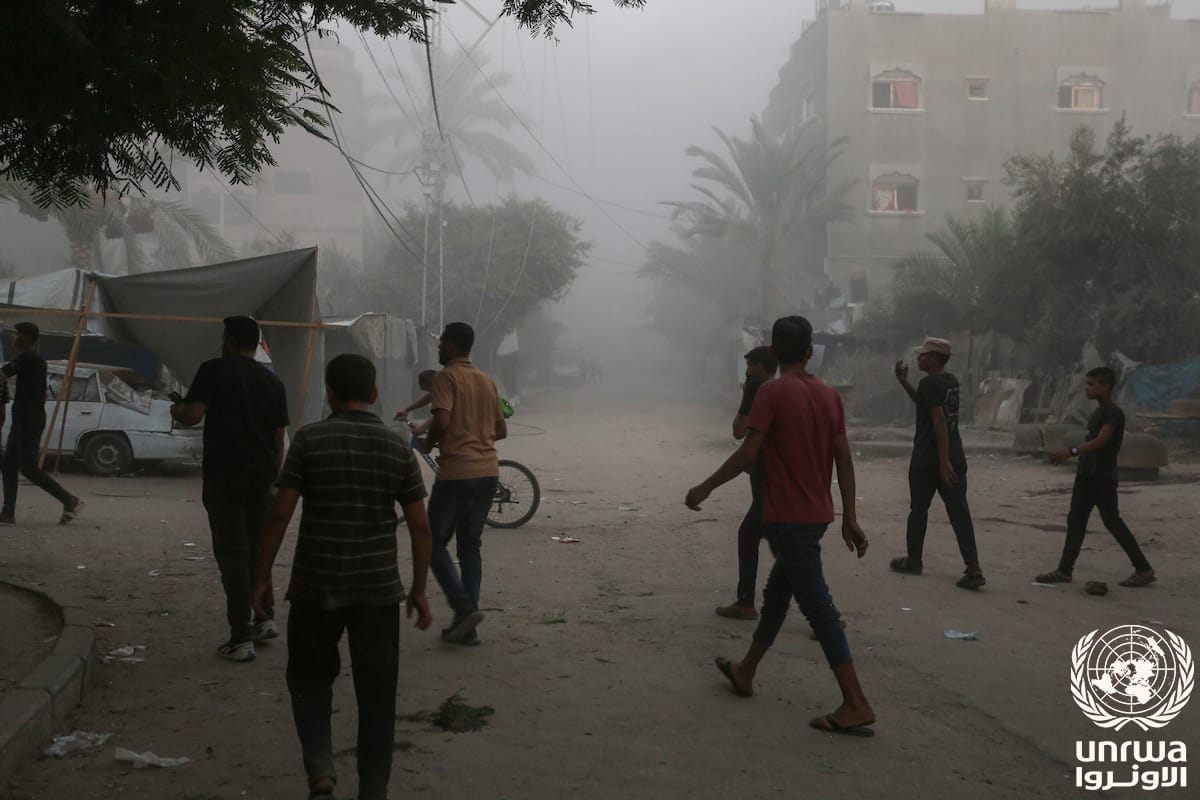
Chapter 9 — The Unanswered Questions: Responsibility, Justice and the Road Ahead
Three Years Later, the Questions Remain
On October 7, 2023, Hamas-led armed groups crossed from Gaza into southern Israel, attacking communities, military installations and a music festival.
Approximately 1,200 people were killed, and 251 were taken hostage.
The attack exposed profound failures in Israel's intelligence assessments, border defenses and emergency response. It also triggered a military campaign in Gaza whose consequences extended far beyond the territory.
Three years later, the hostages had been returned, either alive or deceased. But the suffering associated with their captivity, the deaths of those who did not survive and the questions surrounding the original attack remained.
In Gaza, the war had devastated civilian life. Large areas required reconstruction, much of the population remained displaced, and essential services continued to operate under severe pressure.
The October 2025 ceasefire reduced major hostilities and enabled important humanitarian agreements. Yet by October 2026, continued violence, unresolved security arrangements and political disagreements had prevented the agreement from becoming a durable peace.
The central questions were no longer limited to what happened on October 7.
They also concerned what had been learned, who would be held accountable and whether Israelis and Palestinians could move toward a future in which another catastrophe was less likely.
Why Was Israel Unprepared?
One of the most consequential questions concerns the failure to prevent the October 7 attack.
Israel had invested heavily in intelligence capabilities, border surveillance, physical barriers and military technology.
The Gaza border was widely regarded by Israeli security planners as a heavily monitored frontier.
Yet Hamas-led forces breached the defenses and attacked numerous locations.
In February 2025, the Israel Defense Forces published findings from internal investigations acknowledging serious failures.
The military concluded that it had underestimated Hamas's capabilities and intentions.
Israeli security assessments had placed considerable confidence in the belief that Hamas was deterred from launching a major war.
Warnings and indications of preparations for a large-scale attack had not been interpreted or acted upon adequately.
The investigations also identified failures in operational readiness and the military response during the attack.
For civilians trapped in their homes or attempting to escape, those failures had immediate and devastating consequences.
Some communities waited hours for substantial military assistance.
The question of why Israel was unprepared therefore involves more than intelligence analysis.
It also concerns how institutions respond to warnings, how military assumptions are challenged and whether civilian protection remains effective when established defenses fail.
The Intelligence Warnings
Subsequent investigations revealed that Israeli intelligence agencies had possessed information about Hamas's plans before October 7.
Some information described scenarios resembling elements of the eventual assault.
However, intelligence assessments did not consistently treat those plans as realistic or imminent.
The problem was not simply the absence of information.
It was also the interpretation of information.
Security officials had developed assumptions about Hamas's intentions and the effectiveness of Israeli deterrence.
Evidence that contradicted those assumptions did not always lead to a reassessment.
The Israel Security Agency, commonly known as Shin Bet, also acknowledged failures in its March 2025 internal investigation.
The agency identified shortcomings in its assessment of Hamas, its handling of warning signs and its ability to provide an effective alert.
These findings raised broader questions about institutional culture.
Can intelligence agencies recognize when longstanding assumptions have become unreliable?
Are analysts able to challenge prevailing assessments?
How should governments respond when warning signs are ambiguous but the possible consequences of inaction are catastrophic?
The answers matter beyond Israel.
They concern the ability of security institutions everywhere to recognize emerging threats without becoming trapped by earlier expectations.
Political Responsibility
Military and intelligence failures do not exist separately from political decision-making.
Governments establish security priorities, approve budgets, appoint senior officials and determine broader policies toward neighboring territories and armed organizations.
In Israel, the question of political responsibility became a major source of public disagreement.
Critics of Prime Minister Benjamin Netanyahu argued that his governments had pursued policies that underestimated Hamas and failed to address the underlying risks.
They questioned the political leadership's responsibility for the security assumptions preceding October 7.
Netanyahu and his supporters emphasized the responsibilities of military and intelligence officials and pointed to subsequent military achievements.
The debate intensified as the country approached its October 2026 election.
Survivors, bereaved families and former security officials participated in public discussions about accountability.
Some demanded a fully independent state commission of inquiry.
Others questioned whether investigations conducted within existing institutions could adequately examine decisions made at the highest political levels.
These disputes were not merely about assigning blame.
They concerned the public's ability to understand how a major national security failure occurred and what reforms might prevent its recurrence.
The Demand for an Independent Investigation
Internal military and intelligence investigations can identify operational failures and recommend reforms.
However, their scope may be limited to the institutions conducting them.
A broader public inquiry could examine interactions among political leaders, military commanders, intelligence agencies and civilian authorities.
It could also assess long-term policy decisions rather than concentrating only on the immediate hours before the attack.
Families of victims have argued that such an investigation is necessary to establish a comprehensive account.
Questions include whether warnings reached the appropriate officials, whether decision-makers understood their significance and whether alternative preparations could have reduced the scale of the attack.
An independent investigation would also need to distinguish between mistakes, negligence, failures of judgment and any conduct potentially giving rise to legal responsibility.
Not every serious failure constitutes a crime.
But the absence of criminal conduct does not eliminate political or institutional accountability.
Public confidence depends on whether difficult questions can be examined transparently, including when they concern senior officials.
The Responsibility of Hamas and Other Armed Groups
The failures of Israeli security institutions do not diminish the responsibility of those who carried out the October 7 attacks.
Investigations by Human Rights Watch and the United Nations documented deliberate attacks on civilians, killings, hostage-taking and other serious violations by Hamas-led armed groups.
The planning and execution of those acts require accountability independent of the question of whether Israel could have prevented them.
Political grievances, territorial disputes and historical experiences do not provide a legal justification for deliberately attacking civilians or taking hostages.
The responsibility of armed organizations also extends to their treatment of captives and their conduct during the war.
The question of accountability therefore has several dimensions.
Who planned and authorized the attack?
Who directed particular operations?
Who committed crimes against civilians?
Who controlled the hostages and determined their treatment?
And what evidence can establish responsibility for specific acts?
These questions must be answered through credible investigations rather than collective accusations against the Palestinian population.
What Did the War Achieve?
Israel's government stated that its military objectives included dismantling Hamas's military and governing capabilities and securing the return of the hostages.
The military campaign damaged Hamas's infrastructure, killed senior commanders and weakened parts of its operational network.
Hostages were eventually returned through a combination of negotiations, releases, recoveries and military operations.
But assessing the outcome requires distinguishing tactical achievements from lasting strategic results.
By October 2026, Hamas had not been fully disarmed and continued to exercise influence in parts of Gaza.
Israeli forces maintained control over substantial areas of the territory.
The proposed arrangements for a new Palestinian administration and international stabilization mechanism had not been fully implemented.
The central question therefore remained unresolved.
Could military achievements produce a political and security arrangement that prevented future attacks?
Or would the absence of an agreed political settlement allow the conflict to continue in another form?
Military capability and political legitimacy are different matters.
Weakening an armed organization does not automatically establish institutions capable of governing effectively or protecting civilians.
Could the Hostages Have Returned Earlier?
The hostage crisis created some of the most difficult decisions of the war.
Israeli leaders argued that military pressure could improve the chances of securing releases.
Critics argued that prolonged military operations endangered captives and delayed agreements.
Hostage families expressed different views about how their relatives could best be brought home.
The November 2023 temporary pause, the January 2025 agreement and the October 2025 ceasefire demonstrated that negotiated arrangements could secure substantial releases.
Military operations also resulted in successful rescues, although they carried risks for hostages, soldiers and Palestinian civilians.
The eventual return of all hostages did not resolve the debate over earlier decisions.
Could an agreement have been reached sooner?
Were opportunities missed?
Did military operations strengthen negotiating leverage or create additional dangers?
The answers require access to diplomatic records, military assessments and testimony from those involved in negotiations.
Some information may remain classified for years.
Responsible journalism should therefore distinguish between documented decisions, participants' accounts and retrospective speculation.
The desire for answers is understandable.
But certainty should not be claimed where the evidence remains incomplete.
The Future of Gaza's Governance
The future administration of Gaza became one of the most difficult political questions after the war.
Before October 7, Hamas exercised de facto governing authority over the territory.
Israel stated that Hamas should no longer retain the ability to govern or conduct military attacks.
However, replacing an existing authority requires more than removing its leadership.
A functioning administration must provide public services, maintain security, manage resources and possess sufficient legitimacy among the population.
Several possible arrangements were discussed during and after the war.
They included a reformed Palestinian Authority, technocratic Palestinian administration, international oversight and transitional security arrangements.
Each proposal faced obstacles.
Israel opposed arrangements it believed could permit Hamas to rebuild its capabilities.
Palestinian political factions disagreed over representation and authority.
International governments differed over the role of outside institutions and security forces.
The October 2025 ceasefire framework proposed new governance and stabilization arrangements, but implementation remained stalled a year later.
The question of who governs Gaza was therefore inseparable from the question of who would be accountable to its population.
Palestinian Self-Determination
The future of Gaza cannot be separated from the broader question of Palestinian self-determination.
Palestinians in Gaza, the West Bank and East Jerusalem have experienced different political and security conditions, but their national aspirations remain connected.
International diplomacy has long considered the establishment of a Palestinian state alongside Israel as a possible framework for resolving the conflict.
Yet the practical obstacles are substantial.
They include borders, settlements, Jerusalem, refugees, security arrangements, territorial continuity and political divisions among Palestinian leaders.
Recognition of Palestinian statehood by additional countries during 2024 and 2025 increased diplomatic attention to these issues.
However, recognition alone did not establish effective sovereignty or resolve disputes over territorial control.
A viable political settlement would require institutions capable of representing Palestinians, protecting individual rights and governing without armed coercion.
It would also require addressing Israeli security concerns and the rights of people living in areas affected by decades of conflict.
Self-determination and security should not be treated as inherently incompatible objectives.
The difficulty lies in developing arrangements that can protect both in practice.
What Would Lasting Security Mean for Israel?
The October 7 attacks profoundly damaged confidence in Israel's security arrangements.
For communities near Gaza, the question of safety became deeply personal.
Residents who survived the attacks faced decisions about whether to return to homes and neighborhoods associated with traumatic experiences.
Parents wanted assurance that children could attend school without fear of another assault.
Families demanded answers about the failure of military protection.
National security discussions therefore extended beyond border barriers and military operations.
They included intelligence reform, emergency preparedness, civil defense and the government's responsibilities toward vulnerable communities.
But lasting security also raises a wider political question.
Can a state achieve sustainable protection for its citizens while the conflict with a neighboring population remains unresolved?
Supporters of military deterrence argue that credible force is necessary to prevent attacks.
Supporters of a negotiated political settlement argue that security cannot be sustained indefinitely through military control alone.
These positions are not always mutually exclusive.
Security arrangements and political agreements may both be necessary.
The challenge is determining how they can be developed without repeating the failures of earlier approaches.
What Would Recovery Mean for Gaza?
For Palestinians in Gaza, the future is shaped by immediate humanitarian needs and long-term political uncertainty.
Many families require safe housing.
Hospitals need equipment, personnel and reliable supplies.
Schools need reconstruction.
Water, sanitation and electricity systems must be restored.
Businesses require access to markets and materials.
The physical destruction is only part of the challenge.
Families have lost relatives, income, documents, educational opportunities and community networks.
Many people face long-term physical injuries or psychological consequences.
Reconstruction therefore involves rebuilding social institutions as well as infrastructure.
It also requires conditions that allow people to make decisions about their own lives.
A society cannot recover fully if its population remains dependent on emergency assistance without meaningful opportunities for education, employment and political participation.
The future of Gaza depends not only on international funding but also on safe access, accountable governance and the rights of the people who live there.
The Problem of Reconstruction Without a Political Agreement
Rebuilding Gaza will require substantial financial resources and international cooperation.
But funding alone cannot resolve the obstacles.
Construction materials must enter the territory.
Workers must be able to travel.
Roads and utilities must function.
Security conditions must allow projects to proceed.
Administrative institutions must coordinate planning and protect property rights.
Disagreements over disarmament, Israeli military control and Palestinian governance have repeatedly delayed progress.
There is also a risk that reconstruction could become dependent on political arrangements that do not adequately represent the affected population.
International donors face difficult questions about oversight, transparency and the possibility of renewed destruction.
A sustainable reconstruction process therefore requires more than emergency engineering.
It requires political conditions under which homes, hospitals and schools can be rebuilt without a continuing expectation that they may soon be destroyed again.
The West Bank and the Wider Palestinian Question
The war in Gaza also intensified concerns about the occupied West Bank.
Violence involving Israeli forces, Palestinian armed groups and settlers continued.
Israeli settlement expansion and restrictions on Palestinian movement remained central issues.
Palestinian communities faced displacement, economic disruption and uncertainty over territorial control.
Israel maintained that security operations were necessary to prevent attacks.
Palestinian residents and human rights organizations raised concerns about civilian protection, settler violence and the effects of occupation.
The future of Gaza cannot be considered entirely separately from these developments.
Any proposal for Palestinian statehood must address the relationship between Gaza and the West Bank.
Territorial fragmentation, competing political authorities and restrictions on movement create major obstacles to establishing functioning national institutions.
The question is therefore broader than who administers Gaza after the war.
It concerns the political future of Palestinians across the occupied territories.
International Law and the Limits of Accountability
The years following October 7 brought extensive international legal scrutiny.
United Nations investigators documented serious violations by Hamas-led armed groups and Israeli authorities.
The International Court of Justice issued provisional measures in proceedings concerning Israel's obligations under the Genocide Convention.
The International Criminal Court issued arrest warrants for Israeli leaders in connection with alleged war crimes and crimes against humanity.
These proceedings are legally distinct.
Investigative findings are not the same as criminal convictions.
An arrest warrant does not establish guilt.
Provisional measures do not constitute a final judgment on the merits of a case.
Nevertheless, the proceedings established important records and created mechanisms for examining responsibility.
The challenge is that international justice often operates slowly.
Courts depend on evidence, cooperation and legal procedures.
Political disputes can complicate enforcement.
For victims, delays may be especially painful.
But the difficulty of obtaining justice does not make accountability irrelevant.
It makes the preservation of evidence and the integrity of investigations even more important.
Justice for Israeli Victims
For Israeli survivors and bereaved families, justice may involve several distinct demands.
They include accountability for those who planned and carried out the October 7 attacks.
They also include answers about why communities were left vulnerable and why emergency assistance was delayed.
Families of hostages have sought information about the circumstances of captivity, release and death.
Some survivors want public acknowledgment of their experiences.
Others want institutional reforms to prevent another attack.
These objectives cannot all be achieved through a single criminal trial.
The prosecution of perpetrators addresses one dimension of responsibility.
An independent inquiry into government and security failures addresses another.
Medical and psychological support, compensation and community rebuilding address further needs.
Justice therefore involves both accountability for wrongdoing and practical obligations toward those who survived.
Justice for Palestinian Victims
For Palestinian families, justice includes investigation of alleged unlawful killings, attacks on civilian infrastructure, mistreatment of detainees and restrictions on essential supplies.
It also involves questions about displacement, property destruction and the ability to return to homes.
Some families seek information about relatives who remain missing.
Others want access to medical care, rehabilitation and compensation for losses.
International law provides mechanisms for examining alleged violations, but the practical path toward remedies remains difficult.
Investigations may face restricted access to evidence, damaged records and political resistance.
Reconstruction and humanitarian assistance are essential, but they are not substitutes for legal accountability where crimes have been committed.
The rights of Palestinian victims must be assessed according to the same commitment to evidence, due process and civilian protection that applies to Israeli victims.
Recognizing one population's suffering does not require minimizing the suffering of another.
The Role of Regional Governments
The conflict demonstrated that Israel and the Palestinians are deeply connected to the wider Middle East.
Egypt and Qatar played major roles in ceasefire and hostage negotiations.
Saudi Arabia linked discussions about normalization with Israel to the Palestinian question.
Iran's confrontation with Israel expanded into direct military exchanges.
Lebanon and Yemen experienced serious consequences from regional escalation.
These developments created both obstacles and potential opportunities for diplomacy.
Regional governments may possess channels of communication, financial resources and security relationships that can support agreements.
But their interests are not identical.
Some prioritize preventing Iranian influence.
Others focus on domestic stability, economic development or the Palestinian issue.
A lasting political settlement would require cooperation among governments whose strategic priorities sometimes conflict.
Regional diplomacy may help create conditions for negotiations.
It cannot replace the need for arrangements that address the rights and security of Israelis and Palestinians themselves.
The United States and International Influence
The United States remained the most influential external actor in Israel's security and diplomatic environment.
American administrations provided military support and participated in negotiations over hostages, ceasefires and regional security.
The October 2025 agreement demonstrated Washington's ability to bring parties toward a diplomatic framework.
However, the difficulties of implementing that agreement exposed the limits of external influence.
By October 2026, disputes over Hamas's disarmament, Israeli withdrawal and Gaza's governance had prevented major elements of the framework from taking effect.
The United States could offer incentives, guarantees and diplomatic pressure.
But durable arrangements also required cooperation from the parties directly involved.
Other international actors, including European and Arab governments, faced similar limitations.
Outside powers can support negotiations and reconstruction.
They cannot easily create lasting legitimacy for political institutions that lack acceptance among the people they are intended to govern.
Can the Two-State Solution Still Work?
The two-state solution remains a major reference point in international diplomacy.
Its central idea is that Israelis and Palestinians should each be able to exercise national self-determination within secure and recognized political arrangements.
Supporters argue that two states offer a framework for reconciling competing national aspirations.
Critics question whether the approach remains practically achievable given settlement expansion, territorial fragmentation, political divisions and repeated failures of negotiations.
Some propose alternative political arrangements, including confederation or a single state with equal rights.
Each model raises difficult questions about sovereignty, citizenship, security, democratic representation and collective identity.
No proposal can be evaluated solely through its political slogan.
Its credibility depends on whether it can protect fundamental rights, provide accountable governance and reduce the likelihood of renewed violence.
The question is not simply which diplomatic formula is most familiar.
It is which arrangements could realistically allow both populations to live with safety, dignity and meaningful political rights.
The Danger of Another Cycle
One of the most troubling possibilities is that the conflict could return to large-scale violence.
The conditions that preceded October 7 included unresolved political disputes, mutual distrust, armed organizations, restrictions on Palestinian movement and repeated military confrontations.
The war added new layers of trauma, destruction and insecurity.
For Israelis, the experience reinforced fears that armed groups could again attack civilian communities.
For Palestinians, the destruction of Gaza and continuing restrictions reinforced fears of displacement, prolonged military control and the absence of a viable political future.
These fears can influence political choices.
They can strengthen demands for force, harden public attitudes and reduce confidence in negotiations.
But a cycle of violence is not inevitable.
Its continuation depends on decisions made by political leaders, armed organizations, institutions and societies.
Reducing the risk requires addressing immediate security threats while also confronting the conditions that sustain the conflict.
The Importance of Historical Understanding
October 7 cannot be understood without examining the history of the Israeli-Palestinian conflict.
That history includes the establishment of Israel, Palestinian displacement, successive wars, occupation, settlement policies, peace negotiations, armed attacks and repeated failures of political agreements.
Historical context helps explain how political movements developed and why communities hold different fears and aspirations.
It does not excuse crimes against civilians.
Explaining the conditions in which Hamas emerged does not justify the October 7 attacks.
Explaining Israel's security concerns does not automatically justify every action taken during the Gaza war.
History provides context.
International law provides standards for conduct.
Journalism must use both without confusing explanation with justification.
The Responsibility of Journalism
The events of October 7 and the war in Gaza created an enormous body of testimony, images, official statements and investigative material.
They also generated misinformation, propaganda and politically motivated narratives.
Journalists face the challenge of documenting events while avoiding the assumption that every available claim is equally credible.
The responsibility is to verify evidence, identify sources and acknowledge uncertainty.
It is also to distinguish between individuals, governments, military institutions and armed organizations.
Hamas does not represent every Palestinian.
The Israeli government does not represent every Israeli or Jewish person.
Civilian suffering should not be reduced to political symbolism.
The credibility of reporting depends on examining the actions of those with power while maintaining respect for the people affected by their decisions.
Independent journalism does not require withholding conclusions when evidence supports them.
It requires that conclusions follow from evidence rather than political allegiance.
The Stories That Still Need to Be Told
Much of the international reporting since October 7 has focused on military operations, diplomatic negotiations and casualty figures.
These subjects are essential.
But they do not capture every consequence of the conflict.
There are families rebuilding homes in southern Israel.
There are former hostages learning to live after captivity.
There are Palestinian children returning to education after prolonged disruption.
There are healthcare workers attempting to restore services in Gaza.
There are relatives seeking information about missing family members.
There are people in Israel and the Palestinian territories who disagree with their political leaders but struggle to make their voices heard.
These experiences deserve sustained attention.
They also require journalism that continues after the most dramatic events disappear from international headlines.
The long-term consequences of war often become visible only over years.
Reconstruction, rehabilitation, political reform and reconciliation are slower processes than military escalation.
They may also be more difficult to document.
What Should Be Watched Next?
As of October 10, 2026, several developments were particularly important to the future of the conflict.
The first was the implementation of the October 2025 ceasefire.
Major provisions concerning disarmament, Israeli withdrawal and Gaza's governance remained unresolved.
The second was the humanitarian and reconstruction process.
Large numbers of Palestinians continued to live in temporary shelters, while damaged infrastructure and restrictions on supplies impeded recovery.
The third was Israeli political accountability.
The approaching October 2026 election brought renewed attention to the leadership decisions preceding and following October 7.
The fourth was international legal accountability.
Investigations and judicial proceedings continued to raise questions about responsibility for crimes committed during the attack and the war.
The fifth was regional security.
Confrontations involving Iran, Lebanon, Yemen and other actors created the possibility that renewed escalation could undermine diplomatic efforts.
None of these developments could be considered in isolation.
A political decision in Israel could affect negotiations over Gaza.
A security incident could interrupt humanitarian access.
A regional confrontation could change the priorities of governments involved in mediation.
The future therefore remained uncertain.
What Does Peace Require?
Peace is often discussed as the absence of fighting.
But the events following October 7 demonstrated the limitations of that definition.
A ceasefire can reduce immediate violence without resolving the political causes of conflict.
The return of hostages can end captivity without restoring the lives that were lost.
Reconstruction can repair buildings without resolving disputes over rights, security and governance.
A durable peace would require more.
Israeli civilians would need credible protection against armed attacks.
Palestinian civilians would need protection against unlawful violence, displacement and deprivation.
Political institutions would need legitimacy and accountability.
Agreements would need mechanisms for implementation and verification.
Victims would need access to justice, information and appropriate remedies.
The process would also require recognition that the security and dignity of one population cannot be sustainably built on the permanent insecurity of another.
These conditions are difficult to achieve.
But without addressing them, even major diplomatic agreements may remain fragile.
Conclusion — Beyond October 7
October 7, 2023, was a day of extraordinary violence.
The Hamas-led attacks killed approximately 1,200 people, devastated communities in southern Israel and resulted in the abduction of 251 hostages.
The events exposed profound failures in Israel's security system and left families confronting loss, captivity and uncertainty.
The war that followed devastated Gaza.
Tens of thousands of Palestinians were killed, most of the population experienced displacement, and essential civilian infrastructure suffered extensive destruction.
The conflict expanded across the Middle East, intensified international political divisions and generated investigations into serious violations of international law.
By October 2026, all the hostages had been returned, alive or deceased.
Yet the Gaza ceasefire remained fragile, reconstruction had barely begun on the scale required, and fundamental questions about governance, security and accountability remained unresolved.
The events cannot be understood through a single perspective or reduced to a competition between suffering populations.
The crimes committed during the October 7 attacks require documentation and accountability.
So do alleged crimes committed during the military campaign in Gaza.
The suffering of Israeli civilians does not diminish the rights of Palestinian civilians.
The suffering of Palestinians does not erase the crimes committed against Israelis.
The responsibility of journalism is to examine each event according to evidence, context and applicable law.
Three years after October 7, the most important questions concern not only the past but the future.
Will those responsible for crimes and institutional failures be held accountable?
Will displaced families be able to rebuild their lives?
Will Israelis be able to live without fear of another large-scale attack?
Will Palestinians be able to exercise meaningful political rights and self-determination?
And will the region move toward arrangements that protect human life rather than repeatedly exposing civilians to war?
The answers remain uncertain.
But the obligation to investigate, document and remember does not end when the fighting becomes less visible.
Behind every political decision is a human consequence.
Behind every casualty figure is a person.
And beyond the headlines, there are stories that must continue to be told.
Sources, References & Further Reading
This article draws on official documents, independent human rights investigations, humanitarian reporting and international news coverage. Sources include material relating to the October 7 attacks, the hostage crisis, Israeli military operations, the humanitarian consequences in Gaza and international legal proceedings.
October 7, 2023: The Attacks and Their Aftermath
Human Rights Watch (17 July 2024). “I Can't Erase All the Blood from My Mind”: Palestinian Armed Groups' October 7 Assault on Israel.
An extensive investigation documenting killings, hostage-taking and other violations committed by Hamas-led armed groups, based on witness interviews and analysis of visual evidence.
https://www.hrw.org/news/2024/07/17/october-7-crimes-against-humanity-war-crimes-hamas-led-groups
Human Rights Watch (17 July 2024). Questions and Answers: The Hamas-Led Armed Groups' October 7, 2023 Assault on Israel.
A detailed explanation of the investigation's findings, methodology and legal conclusions.
United Nations Independent International Commission of Inquiry (2024). Report to the Human Rights Council, A/HRC/56/26.
Findings concerning the October 7 attacks, Israeli military operations and alleged violations of international law.
https://www.un.org/unispal/document/coi-report-a-hrc-56-26-27may24/
Hostages, Detention and Humanitarian Protection
International Committee of the Red Cross (ICRC). Israel and the Occupied Territories: Humanitarian Operations and Hostage and Detainee Transfers.
Official information on the ICRC's humanitarian role, including its involvement in facilitating releases and transfers.
United Nations Human Rights Office (OHCHR). Independent International Commission of Inquiry on the Occupied Palestinian Territory, including East Jerusalem, and Israel.
Reports and findings concerning hostage-taking, detention, treatment of civilians and alleged violations by parties to the conflict.
https://www.ohchr.org/en/hr-bodies/hrc/co-israel/index
Gaza: Humanitarian Conditions and Civilian Protection
United Nations Office for the Coordination of Humanitarian Affairs (OCHA). Occupied Palestinian Territory — Humanitarian Situation Reports and Updates.
Regular reporting on civilian casualties, displacement, shelter, healthcare, humanitarian access and essential services.
World Health Organization (WHO). Occupied Palestinian Territory Emergency Situation Reports.
Information on Gaza's healthcare system, medical evacuations, damaged health facilities and public-health concerns.
Integrated Food Security Phase Classification (IPC). Gaza Strip: Acute Food Insecurity and Acute Malnutrition Assessments.
Independent technical assessments of food insecurity, hunger and malnutrition.
United Nations Children's Fund (UNICEF). State of Palestine — Humanitarian Situation Reports.
Reporting on children, education, nutrition, water, sanitation and family protection.
International Humanitarian Law and Accountability
International Committee of the Red Cross (ICRC). International Humanitarian Law Treaties and Customary Law.
Primary legal resources explaining the rules governing armed conflict, civilian protection and the treatment of detainees.
https://ihl-databases.icrc.org/en/ihl-treaties
International Court of Justice (ICJ). Application of the Convention on the Prevention and Punishment of the Crime of Genocide in the Gaza Strip (South Africa v. Israel), Case No. 192.
Official case documents, submissions and orders, including provisional measures issued in January, March and May 2024.
https://www.icj-cij.org/case/192
International Court of Justice (19 July 2024). Legal Consequences Arising from the Policies and Practices of Israel in the Occupied Palestinian Territory, including East Jerusalem.
Advisory opinion addressing the legal consequences of Israel's continued presence and policies in the occupied Palestinian territory.
https://www.icj-cij.org/case/186
International Criminal Court (ICC). Situation in the State of Palestine.
Official announcements and court documents concerning investigations and proceedings relating to alleged war crimes and crimes against humanity.
Regional and International Developments
United Nations Security Council. Resolutions and Official Documents Concerning the Situation in the Middle East.
Primary records of international diplomatic discussions, resolutions and ceasefire initiatives.
https://www.un.org/securitycouncil/
Council on Foreign Relations (CFR). Middle East Conflict and Regional Security Analysis.
Background analysis concerning Israel, Iran, Hezbollah, the Houthis and regional diplomatic developments.
https://www.cfr.org/middle-east-and-north-africa
Reuters. Israel–Gaza Conflict and Middle East Reporting.
International news reporting on military operations, negotiations, hostage releases, regional developments and the humanitarian situation.
https://www.reuters.com/world/middle-east/
Associated Press (AP). Middle East News Coverage.
Independent news reporting on the conflict, civilian experiences, diplomacy and developments across the region.
https://apnews.com/hub/middle-east
Editorial Note
Beyond the Lines seeks to distinguish independently verified facts, official statements, investigative findings, allegations and judicial decisions. Casualty figures and humanitarian assessments are attributed to their reporting organizations and may change as additional information becomes available.
The inclusion of a source does not imply endorsement of every statement or conclusion published by that organization.
Reporting reviewed through: 10 October 2026.