Jerusalem Explained: One City, Three Religions, Many Perspectives
One city, three religions and centuries of contested history. Discover Jerusalem beyond the headlines, from its sacred sites to its people and political future.

Introduction — Jerusalem: A City of Faith, History and Contested Identity
Few cities in the world carry as much historical, religious and political significance as Jerusalem.
For thousands of years, Jerusalem has been a place of worship, political authority, cultural exchange, conquest and conflict. Its ancient streets contain sacred sites associated with three major world religions, while its modern neighborhoods reflect the experiences of communities whose identities and histories are deeply connected to the city.
For Jews, Jerusalem is the spiritual center of Jewish history and religious tradition, associated with the ancient Temples, biblical narratives and centuries of prayer directed toward the city.
For Christians, Jerusalem is inseparable from the life, crucifixion and resurrection of Jesus Christ. Churches and pilgrimage routes commemorate events central to Christian belief.
For Muslims, Jerusalem is home to Al-Aqsa Mosque and the Dome of the Rock, situated within the Haram al-Sharif, one of Islam's most revered sacred compounds. The city holds an important place in Islamic religious history and tradition.
These religious connections have developed across centuries and continue to shape the identities of millions of people around the world.
Yet Jerusalem is more than a collection of holy sites.
It is a living city, home to Jewish and Palestinian residents, religious institutions, schools, hospitals, markets, businesses and families whose everyday lives unfold within a politically contested environment.
Its significance cannot be understood through religion alone.
A City Shaped by History
Jerusalem's history extends back thousands of years, long before the emergence of modern national identities.
Archaeological evidence points to ancient settlement in the area, while historical records describe the city's changing political and religious importance.
Jerusalem became a central location in ancient Israelite and Judahite history.
It later experienced Babylonian, Persian, Hellenistic and Roman rule, among other periods of political transformation.
The destruction of the First Temple, traditionally dated to 586 BCE, and the Roman destruction of the Second Temple in 70 CE became defining events in Jewish historical memory.
During the Byzantine period, Jerusalem developed into a major center of Christian pilgrimage and religious institutions.
Following the Muslim conquest in the seventh century, the city became an important Islamic religious center.
Later centuries brought Crusader rule, renewed Muslim control, Mamluk administration and Ottoman government.
Each period left traces in the city's architecture, institutions, religious traditions and collective memory.
Jerusalem's present-day landscape is therefore the result of successive historical layers rather than the creation of any single period.
Three Religions, Different Sacred Histories
The religious importance of Jerusalem is sometimes summarized by describing it as holy to Judaism, Christianity and Islam.
While accurate, this description can conceal the distinct meanings the city holds within each tradition.
Jewish religious identity is connected to Jerusalem through the ancient Temples, biblical history and continuing liturgical traditions.
The Western Wall is a particularly significant place of Jewish prayer, associated with the retaining walls of the Temple Mount complex.
Christian traditions focus on locations connected to the final days of Jesus, particularly the Church of the Holy Sepulchre, which many Christians revere as the site of his crucifixion, burial and resurrection.
Islamic traditions associate Jerusalem with the Prophet Muhammad's Night Journey and Ascension. Al-Aqsa Mosque and the Dome of the Rock are among the city's most important Islamic religious monuments.
These sacred histories are not interchangeable.
Each tradition has its own texts, practices and interpretations.
Understanding their differences is essential to understanding why Jerusalem has such profound importance to communities far beyond its municipal boundaries.
The City Beyond Its Religious Monuments
International attention often focuses on Jerusalem's Old City.
Its walls, gates, narrow streets and religious buildings have become recognizable symbols of the city.
However, modern Jerusalem extends far beyond the Old City.
Its neighborhoods contain universities, medical centers, cultural institutions, residential areas and commercial districts.
Residents navigate ordinary concerns involving employment, housing, education, transportation and public services.
Jewish communities differ in religious observance, cultural background and political outlook.
Palestinian residents include Muslim and Christian communities with distinct histories and social experiences.
The city also contains Armenian religious and cultural institutions, international Christian organizations and other communities.
These populations do not experience Jerusalem in identical ways.
Their daily lives are influenced by language, legal status, economic opportunity, neighborhood development and political circumstances.
For some residents, Jerusalem is primarily a place of family, work and community.
For others, its political and religious significance is inseparable from daily life.
Both realities exist within the same city.
Jerusalem and the Question of Sovereignty
Jerusalem's modern political status is among the most disputed questions in the Israeli-Palestinian conflict.
Israel regards Jerusalem as its capital and locates its principal national institutions there, including the Knesset, the Supreme Court and the offices of the president and prime minister.
Palestinians seek East Jerusalem as the capital of a future Palestinian state.
The city was divided following the 1948 Arab-Israeli war, with western Jerusalem under Israeli control and eastern Jerusalem, including the Old City, under Jordanian control.
During the 1967 war, Israel captured East Jerusalem and subsequently extended Israeli law and administration to the area.
Israel later enacted legislation describing Jerusalem as its complete and united capital.
The annexation of East Jerusalem is not internationally recognized as a lawful acquisition of sovereignty.
The United Nations and the International Court of Justice have treated East Jerusalem as part of the occupied Palestinian territory.
These differences between Israeli domestic law, Palestinian national claims and international legal positions remain central to the dispute.
Jerusalem's future status has been addressed in diplomatic initiatives, but no final negotiated settlement has resolved the competing claims.
The Importance of Language and Perspective
Even the words used to describe Jerusalem can reflect different historical and political perspectives.
The Hebrew name Yerushalayim and the Arabic name Al-Quds are deeply connected to the city's cultural and religious identities.
Terms such as East Jerusalem, unified Jerusalem, occupation, annexation and sovereignty carry legal and political significance.
Different communities may use different names for the same places.
The elevated sacred compound in the Old City, for example, is known to Jews as the Temple Mount and to Muslims as the Haram al-Sharif, which contains Al-Aqsa Mosque and the Dome of the Rock.
These names reflect different religious histories and traditions.
Responsible journalism should explain such terminology clearly rather than assume that every reader shares the same background.
It should also distinguish religious beliefs from historical claims and legal positions.
Acknowledging different perspectives does not mean that every factual claim is equally supported.
Historical evidence, established legal frameworks and independently verifiable information remain essential.
Why Jerusalem Continues to Matter
Jerusalem's importance extends far beyond the people who live there.
Religious communities around the world regard the city as a place of spiritual significance.
Governments and international organizations consider its political status a major diplomatic issue.
Archaeologists and historians study its ancient remains to better understand the development of civilizations and religious traditions.
Pilgrims visit its sacred sites.
Tourists explore its historic neighborhoods.
Residents continue their daily lives amid the pressures of a city that receives extraordinary international attention.
These different relationships with Jerusalem help explain why events in the city can have consequences far beyond its boundaries.
Disputes involving religious sites, housing, security or political authority may influence wider regional tensions.
At the same time, the city remains a place where people study, work, worship, raise families and maintain traditions.
Understanding Jerusalem Beyond the Headlines
To understand Jerusalem, it is necessary to look beyond familiar images of religious monuments and political demonstrations.
The city cannot be explained exclusively through Jewish, Christian, Muslim, Israeli or Palestinian perspectives.
Each provides essential historical and cultural context, but none alone describes the entire city.
Jerusalem's history includes periods of religious coexistence, political competition, violence, cultural exchange and changing systems of government.
Its present reflects both ancient attachments and modern national claims.
Its future remains uncertain.
This article examines Jerusalem through ten interconnected chapters, beginning with its earliest history and the development of its religious significance.
It then explores the city under successive empires, the emergence of modern political divisions, the experiences of contemporary residents and the unresolved questions concerning sovereignty and international law.
The purpose is not to present Jerusalem as a city without conflict or to reduce its history to competing political slogans.
It is to explain how one place acquired such profound meaning for different communities, why its status remains contested and how its residents experience the consequences.
Because Jerusalem is more than a symbol.
It is a city with a long and complicated history, inhabited by people whose lives continue beyond the events that dominate international headlines.
Understanding Jerusalem begins with understanding those histories, the evidence behind them and the different perspectives that shape the city today.
Chapter 1 — The Origins of Jerusalem: From Ancient Settlement to Sacred City
Before Jerusalem Became a Sacred City
Long before Jerusalem became one of the world's most significant religious and political centers, it was a settlement in the hills of the southern Levant.
Its earliest inhabitants could not have anticipated that the place where they lived would eventually become sacred to Judaism, Christianity and Islam, or that its history would become the subject of international political disputes thousands of years later.
The origins of Jerusalem belong to a period when the region was inhabited by different communities, governed by local rulers and influenced by powerful civilizations in Egypt and Mesopotamia.
The city's development was neither immediate nor inevitable.
Geography, water resources, trade connections, political circumstances and religious traditions all contributed to its transformation.
To understand Jerusalem's earliest history, it is necessary to look beyond later religious and national narratives and examine the available archaeological and historical evidence.
Geography and the Importance of Water
Jerusalem is located in the central hill country of the southern Levant, between the Mediterranean coastal plain and the Jordan Valley.
Unlike many ancient cities, it was not situated directly on a major river or coastline.
Its early development was closely connected to a reliable water source.
The Gihon Spring, located on the eastern side of the ridge traditionally associated with the earliest settlement, provided water that could sustain a community.
Access to water was essential for drinking, agriculture, livestock and the survival of settlements during periods of insecurity.
The surrounding hills offered defensive advantages.
Steep slopes made certain approaches more difficult for potential attackers.
However, the same terrain also limited agricultural space and complicated transportation.
The settlement's location therefore presented both opportunities and challenges.
Archaeologists generally associate the earliest urban core of Jerusalem with the ridge south of the present-day Temple Mount/Haram al-Sharif, in the area commonly known today as the City of David.
That modern name reflects a later biblical association and should not be confused with the name used by the settlement's earliest inhabitants.
The archaeological landscape has been altered by thousands of years of construction, destruction and rebuilding.
Consequently, reconstructing the earliest phases of settlement requires careful interpretation of surviving remains.
The Earliest Evidence of Human Settlement
Archaeological research indicates human activity in the Jerusalem area during prehistoric and early historic periods.
However, evidence of human presence does not necessarily establish the existence of a continuous urban settlement.
The distinction is important.
A small agricultural community, a seasonal occupation site and a fortified city represent different forms of settlement.
Jerusalem's emergence as a recognizable urban center took place gradually.
Evidence from the Bronze Age indicates that the area became increasingly important during the second and third millennia BCE.
Archaeologists have identified pottery, architectural remains and other materials associated with these periods.
The interpretation and dating of some early remains remain subjects of scholarly debate.
This is partly because later construction repeatedly disturbed older archaeological layers.
Modern Jerusalem is built above an exceptionally complex archaeological landscape, where ancient structures may lie beneath buildings, roads and religious sites.
Excavation is therefore limited by practical, religious and political considerations.
These limitations mean that the archaeological record is incomplete.
Historical conclusions must reflect what has actually been discovered rather than what later traditions suggest should exist.
Jerusalem in the Bronze Age
During the Bronze Age, the southern Levant contained numerous settlements and city-states.
These communities participated in regional networks of trade, agriculture and political competition.
The region was influenced by larger powers, particularly ancient Egypt.
Jerusalem developed within this broader Canaanite environment.
The term Canaanite refers to the populations and cultural traditions associated with the ancient land of Canaan.
It should not be understood as describing a single unified nation-state.
Canaanite communities shared certain linguistic, religious and material-cultural characteristics, but they were organized into different political entities.
Jerusalem was one of several settlements that developed into local centers of authority.
Its rulers operated within a regional system shaped by alliances, competition and the influence of stronger neighboring states.
The city's importance during this period was primarily local and regional.
Its later religious prominence should not be projected backward onto these earlier centuries.
The First Written References to Jerusalem
One of the central questions in Jerusalem's early history concerns when the city first appeared in written records.
Ancient Egyptian sources provide some of the earliest possible references.
Egyptian Execration Texts, dating broadly to the Middle Bronze Age, contain names of foreign places and rulers written on objects used in ritual practices.
Some scholars identify references in these texts with Jerusalem, although the precise interpretation of certain names and their dating remain debated.
More secure evidence appears in the Amarna Letters of the fourteenth century BCE.
These diplomatic documents were discovered at Tell el-Amarna in Egypt and preserve correspondence between the Egyptian royal court and rulers of territories under Egyptian influence.
Several letters were sent by a ruler named Abdi-Heba, who governed Jerusalem.
The city appears in these records under a name commonly rendered as Urusalim or Urušalim.
The correspondence reveals a political environment marked by local rivalries, insecurity and appeals for Egyptian assistance.
Abdi-Heba complained about threats to his authority and requested support from the Egyptian administration.
These letters are particularly valuable because they provide contemporary documentary evidence of Jerusalem's existence as a political center.
They also demonstrate that the city was part of a wider diplomatic network long before the emergence of the biblical kingdoms of Israel and Judah.
What the Name Jerusalem May Reveal
The name Jerusalem has a long and complicated linguistic history.
Its ancient forms appear in Egyptian and Akkadian sources.
Scholars have proposed that the name may be connected to a West Semitic deity known as Shalem or Salem.
One interpretation understands the ancient name as referring to a foundation or settlement associated with this deity.
However, the precise origin of the name remains uncertain.
It would be misleading to assume that the city's name originally carried the same religious meaning later associated with Jerusalem in Jewish, Christian or Islamic traditions.
The Hebrew name Yerushalayim developed within the city's later linguistic and religious history.
The Arabic name Al-Quds, meaning the Holy, reflects the city's significance within Islamic and Arabic-speaking traditions.
These names illustrate how the same location acquired different meanings across historical periods.
They also demonstrate the importance of distinguishing linguistic history from later religious interpretation.
The Canaanite City and Its Political Environment
Jerusalem's Bronze Age rulers governed within a political landscape dominated by small city-states.
These entities controlled surrounding agricultural areas and maintained relationships with larger powers.
Egyptian influence was particularly important during the Late Bronze Age.
Local rulers could exercise authority within their territories while remaining dependent on Egyptian recognition or protection.
The Amarna correspondence suggests that Jerusalem's ruler faced competition from neighboring political figures.
The letters also refer to groups and conflicts whose precise identities remain debated.
Such documents offer valuable information, but they must be interpreted cautiously.
Ancient rulers often exaggerated threats or presented events in ways intended to secure assistance from more powerful authorities.
Their correspondence was political communication rather than neutral historical reporting.
Nevertheless, these records establish that Jerusalem was part of a functioning political network in the second millennium BCE.
The Jebusites and the Limits of Historical Evidence
The Hebrew Bible describes Jerusalem as a city associated with the Jebusites before its capture by King David.
The Jebusites appear in biblical accounts as one of the peoples inhabiting the land before the establishment of Israelite control.
However, their precise historical identity remains uncertain.
There is limited independent evidence allowing historians to reconstruct a distinct Jebusite political or ethnic community in detail.
Some scholars regard the term as reflecting a historical population associated with Jerusalem.
Others emphasize the difficulty of separating later biblical descriptions from the realities of the earlier settlement.
The biblical account remains an important source for understanding how ancient Israelite traditions remembered Jerusalem's pre-Israelite past.
Yet it cannot automatically be treated as a complete contemporary record of the events it describes.
This distinction is essential when examining the transition from Canaanite Jerusalem to the city associated with ancient Israelite kingship.
The Emergence of Ancient Israel
During the transition from the Late Bronze Age to the Iron Age, the political landscape of the southern Levant changed significantly.
The decline of several established regional systems created conditions in which new communities and political structures emerged.
Archaeological evidence points to the development of settlements in the central highlands during the early Iron Age.
These settlements are important to the study of early Israelite society.
Their inhabitants shared many material-cultural characteristics with earlier Canaanite populations.
This has led many historians and archaeologists to understand the emergence of ancient Israel as a complex regional process rather than a single event involving the complete replacement of one population by another.
The relationship between archaeological evidence and biblical accounts of Israelite origins remains debated.
The earliest widely accepted extra-biblical reference to Israel appears on the Merneptah Stele, an Egyptian inscription generally dated to the late thirteenth century BCE.
The inscription refers to Israel as a people in Canaan.
It does not describe Jerusalem as the capital of an Israelite kingdom.
Nevertheless, it provides important evidence that a group identified as Israel existed in the region before the period traditionally associated with the biblical monarchy.
King David and the Biblical Account of Jerusalem
According to the Hebrew Bible, King David captured Jerusalem and established it as the political center of his kingdom.
The narrative appears particularly in the books of Samuel and Chronicles.
In the biblical account, Jerusalem offered strategic advantages.
It was not identified exclusively with one of the major Israelite tribal territories, making it a potentially useful center for a monarchy seeking broader political unity.
The Bible also describes David bringing the Ark of the Covenant to Jerusalem, strengthening the city's religious significance.
These narratives became foundational to Jewish historical and religious tradition.
However, historians distinguish the importance of the biblical account from the question of how its details can be independently verified.
The precise chronology, scale and political structure of David's kingdom remain debated.
Archaeological discoveries have contributed to discussions concerning the development of Jerusalem during the early Iron Age, but they have not resolved every question.
Some scholars argue that Jerusalem was an important political center during the period traditionally associated with David.
Others interpret the available evidence as indicating a smaller settlement whose later significance was expanded in biblical memory.
The historical existence of a Davidic dynasty is supported by evidence commonly interpreted from the Tel Dan Stele, which refers to the House of David.
However, this inscription does not independently establish the biblical account of David's conquest of Jerusalem or the size of his kingdom.
The distinction between dynastic evidence and detailed historical reconstruction remains important.
Solomon and the Tradition of the First Temple
The Hebrew Bible attributes the construction of the First Temple in Jerusalem to King Solomon, David's son and successor.
According to biblical tradition, the Temple became the central place of worship associated with the God of Israel.
The account describes a monumental religious building, royal construction projects and the organization of religious life around Jerusalem.
The Temple's significance in Jewish tradition is profound.
It became associated with sacrifice, pilgrimage, priestly institutions and the religious identity of ancient Israel and Judah.
However, the archaeological evidence for Solomon's specific building projects in Jerusalem is limited and contested.
No universally accepted archaeological discovery independently confirms the precise architectural description of Solomon's Temple.
The Temple Mount/Haram al-Sharif is also an exceptionally sensitive religious and archaeological location, where direct excavation is highly restricted.
As a result, scholars rely on a combination of biblical texts, comparative archaeology, historical reconstruction and evidence from surrounding areas.
The absence of direct archaeological confirmation for particular details should not be confused with proof that no temple existed.
At the same time, religious tradition should not be presented as independently verified archaeological fact.
Jerusalem and the Kingdom of Judah
During the Iron Age, Jerusalem developed into the capital of the Kingdom of Judah.
The exact processes through which this political structure emerged remain subjects of research.
By the later Iron Age, however, the city's role as a major administrative and religious center is supported by substantial historical and archaeological evidence.
Jerusalem's population, infrastructure and political importance changed over time.
The city became associated with royal authority, religious institutions and administrative activity.
Archaeologists have identified fortifications, water systems, seals, inscriptions and other materials connected to the development of Judahite society.
The city's expansion was influenced by regional political developments, including the growing power of the Assyrian Empire.
These developments placed Jerusalem within a network of international political pressures.
Its rulers faced questions of alliance, tribute, military resistance and survival.
The city was becoming more than a local hill-country settlement.
It was developing into a political and religious center whose history would influence later generations.
Archaeological Evidence from the City of David
The area commonly known as the City of David has been central to archaeological investigations of ancient Jerusalem.
Excavations have revealed structures associated with different periods of the city's history.
Among the most important subjects of research are ancient water systems, fortifications and residential structures.
The Gihon Spring and its surrounding installations provide evidence of the importance of water management.
Hezekiah's Tunnel, generally associated with the late eighth century BCE, is one of the best-known ancient engineering features connected to Jerusalem.
The tunnel carried water from the Gihon Spring toward the Pool of Siloam.
The Siloam Inscription, discovered in the nineteenth century, describes the meeting of workers excavating a tunnel from opposite directions.
This inscription provides valuable evidence of ancient engineering and Hebrew writing.
However, not every archaeological structure can be assigned to a particular biblical ruler with certainty.
Dating methods, architectural interpretation and the relationship between excavated remains and written texts remain subjects of scholarly discussion.
Archaeology contributes essential evidence, but its conclusions must be evaluated according to the quality and limitations of the available material.
Archaeology, Religion and Modern Politics
Archaeological research in Jerusalem does not take place in a politically neutral environment.
The city is sacred to different religious communities and remains at the center of a territorial dispute.
Excavations may involve questions concerning land ownership, access, heritage preservation and the interpretation of historical findings.
The City of David archaeological area is located in and around Silwan, a predominantly Palestinian neighborhood of East Jerusalem.
Archaeological tourism and development in this area have generated controversy involving Israeli organizations, Palestinian residents, heritage authorities and researchers.
Supporters emphasize the importance of investigating and preserving ancient remains.
Critics have raised concerns about the relationship between archaeology, settlement activity, displacement pressures and political narratives.
These debates do not mean that archaeological discoveries should be dismissed.
They mean that research findings, institutional interests and political interpretations should be examined separately.
An archaeological artifact can provide genuine historical information while its presentation or use in public debate remains contested.
Responsible journalism should distinguish the evidence itself from claims made about its modern political significance.
The Difference Between Sacred Tradition and Historical Reconstruction
Jerusalem's early history is preserved through different kinds of sources.
Religious texts provide accounts that became central to the identities of Jewish, Christian and Muslim communities.
Archaeological remains offer material evidence of settlement, construction and daily life.
Ancient inscriptions and diplomatic correspondence provide additional historical information.
These sources serve different purposes.
A religious narrative may communicate theological meaning, communal memory or moral teaching.
An inscription may record a ruler's achievements or political concerns.
Archaeological remains may reveal how people built, traded, worshipped or organized their communities.
None of these sources should be interpreted without considering its context.
Historical reconstruction involves comparing evidence, evaluating dating methods and recognizing uncertainty.
In Jerusalem, this distinction is especially important because ancient history is frequently invoked in contemporary political arguments.
Historical connections can be deeply meaningful without every traditional narrative being independently verifiable.
Likewise, archaeological evidence of ancient communities does not by itself determine modern sovereignty or the rights of present-day residents.
How Jerusalem Became More Than a Political Center
The transformation of Jerusalem into a sacred city occurred over centuries.
Its role as a political capital contributed to its importance.
Religious institutions and traditions strengthened that significance.
The biblical accounts associated Jerusalem with kingship, divine presence and covenantal identity.
Later events, including conquest, destruction and exile, added new dimensions to the city's religious meaning.
Jerusalem became important not only because of what existed within its walls, but also because of how communities remembered it.
Religious texts, prayers and traditions preserved the city's significance across generations.
Even when political control changed, Jerusalem remained central to Jewish religious memory.
Christianity and Islam would later develop their own profound relationships with the city.
These later traditions did not emerge during Jerusalem's earliest settlement phases.
They developed within different historical and theological contexts.
The result was a city whose importance eventually extended far beyond its original geographic and political circumstances.
What Historians Can Establish — and What Remains Uncertain
Jerusalem's earliest history contains both well-supported conclusions and unresolved questions.
Archaeological evidence establishes that the area was inhabited in antiquity and developed into a settlement of regional importance.
The Amarna Letters provide contemporary evidence of Jerusalem as a political center during the fourteenth century BCE.
The emergence of ancient Israel and Judah can be studied through archaeological remains, inscriptions and historical texts.
Jerusalem's later development as the capital of Judah is supported by substantial evidence.
However, uncertainty remains concerning the precise scale of the settlement in different periods, the identity of some early populations and the details of events described in biblical narratives.
The historical reconstruction of David's and Solomon's reigns continues to generate scholarly debate.
These uncertainties do not make Jerusalem's history unknowable.
They demonstrate the importance of distinguishing established evidence from interpretation.
The strongest historical accounts acknowledge both.
Conclusion — The Foundations of a Sacred City
Jerusalem began as a settlement whose development was influenced by geography, water resources and regional political conditions.
Its earliest history belongs to the wider world of Canaanite settlements and Bronze Age city-states.
Ancient Egyptian records provide some of the first written evidence of the city's existence.
Later archaeological and historical developments connect Jerusalem to the emergence of Israelite and Judahite political structures.
Biblical traditions associate the city with King David, King Solomon and the establishment of a central place of worship.
These traditions became foundational to Jewish religious and historical identity, even as scholars continue to examine the relationship between the biblical narratives and independent historical evidence.
Over time, Jerusalem developed from a local settlement into a political capital and religious center.
Its significance expanded through historical events, religious institutions and collective memory.
The city that would eventually become sacred to three major world religions was shaped by many centuries of development.
Understanding those origins requires respect for religious traditions, careful examination of archaeological discoveries and recognition of the limits of historical knowledge.
The next chapter explores Jerusalem's central place in Jewish history and religious tradition, from the ancient Temples and the Babylonian exile to centuries of prayer, pilgrimage and continuing spiritual attachment.

Chapter 2 — Jerusalem in Jewish History and Religious Tradition
A City at the Heart of Jewish Identity
For thousands of years, Jerusalem has occupied a central place in Jewish religious tradition, historical memory and cultural identity.
Its importance extends far beyond its geographical location.
Jerusalem is associated with the ancient kingdoms of Israel and Judah, the First and Second Temples, the development of Jewish religious institutions and the collective experiences of destruction, exile, return and renewal.
For Jewish communities across the world, the city has remained a powerful symbol of religious continuity and historical belonging.
Its name appears throughout Jewish prayers, religious texts, poetry and traditions.
Generations of Jews who never visited Jerusalem nevertheless maintained a spiritual connection to the city.
This relationship survived political changes, geographic displacement and centuries during which Jewish communities lived far from the land associated with their religious history.
Yet Jerusalem's significance within Judaism cannot be explained through one historical event or one religious monument.
It developed over many centuries, shaped by biblical traditions, political transformations, religious practices and the experiences of Jewish communities in different parts of the world.
Understanding this history is essential to understanding why Jerusalem remains so important to Jewish identity today.
Jerusalem and the Biblical Kingdoms
The Hebrew Bible describes Jerusalem as the city chosen by King David to serve as the political center of his kingdom.
According to the biblical narrative, David captured the city and established it as his capital.
The account also describes his decision to bring the Ark of the Covenant to Jerusalem.
The Ark held particular religious significance within ancient Israelite tradition and was associated with the divine presence.
By connecting royal authority with religious institutions, the biblical narrative presents Jerusalem as both a political and spiritual center.
David's successor, Solomon, is traditionally credited with constructing the First Temple.
The Temple became central to biblical accounts of worship, sacrifice and religious life.
These traditions form an important part of Jewish religious memory.
However, the precise historical circumstances surrounding David's reign and Solomon's construction projects remain subjects of archaeological and historical debate.
Scholars distinguish the religious significance of these narratives from questions concerning the independent verification of particular events.
The importance of Jerusalem in Jewish tradition does not depend on every detail of the biblical accounts being archaeologically confirmed.
Its place in Jewish religious identity developed through centuries of worship, interpretation and historical experience.
The First Temple and Its Religious Significance
According to Jewish biblical tradition, the First Temple was constructed during the reign of King Solomon, conventionally placed in the tenth century BCE.
It is described as a central sanctuary dedicated to the worship of the God of Israel.
The Temple's importance was connected to religious sacrifice, priestly activity and the developing relationship between Jerusalem and the religious institutions of ancient Israel and Judah.
Biblical texts describe the Temple as the location of the Holy of Holies, the innermost sanctuary associated with the divine presence.
The Ark of the Covenant is traditionally understood to have been placed there.
The Temple became a powerful symbol of the relationship between God, the people of Israel and the city of Jerusalem.
Nevertheless, religious life in ancient Israel and Judah was not always centralized exclusively in Jerusalem.
Archaeological and textual evidence indicates that other places of worship existed during different periods.
Biblical accounts themselves describe religious reforms intended to concentrate legitimate worship in Jerusalem.
This suggests that the process of religious centralization developed over time rather than emerging fully formed at a single moment.
The First Temple's exact architecture and early construction history remain difficult to establish through direct archaeological evidence.
However, Jerusalem's later role as a major religious center of the Kingdom of Judah is well supported by historical and archaeological research.
The Babylonian Conquest and Destruction of the First Temple
One of the defining events in Jewish historical memory occurred during the sixth century BCE.
The Neo-Babylonian Empire, under King Nebuchadnezzar II, expanded its influence across the region.
Judah became caught between competing imperial powers and experienced increasing political pressure.
Following rebellion against Babylonian authority, Jerusalem was besieged and conquered.
The destruction of Jerusalem and the First Temple is traditionally dated to 586 BCE, although some scholarly chronologies place the final destruction in 587 BCE.
The conquest brought devastation to the city and the collapse of the Judahite monarchy.
Sections of the population, including members of the political and religious elite, were deported to Babylonia.
Other inhabitants remained in the region.
The experience became known in Jewish history as the Babylonian exile.
It was not simply a political defeat.
The destruction of the Temple challenged the religious and communal structures that had developed around Jerusalem.
How could a people maintain their identity when their monarchy had collapsed, their central sanctuary had been destroyed and many members of their community lived far from their homeland?
This question became central to the development of Jewish religious thought.
Biblical texts associated with the exile and its aftermath reflect themes of loss, responsibility, hope and restoration.
The Book of Lamentations, for example, expresses grief over Jerusalem's destruction.
Prophetic literature contains both interpretations of catastrophe and visions of future renewal.
The destruction of the First Temple therefore became a historical event with lasting theological and cultural significance.
Exile, Memory and the Preservation of Jerusalem
The Babylonian exile contributed to a transformation in Jewish religious identity.
Jerusalem remained central even when access to the city was limited or impossible for many displaced people.
Religious memory, sacred texts and communal practices helped preserve the connection.
The city became associated not only with the past but also with hopes for restoration.
The idea of returning to Zion, a biblical term closely associated with Jerusalem, acquired enduring importance.
Jewish religious traditions continued to develop beyond the physical boundaries of the city.
This was significant for the later survival of Jewish communities living throughout the diaspora.
The term diaspora refers to populations living outside their ancestral homeland.
Jewish diaspora communities developed in different regions over many centuries, including the Middle East, North Africa and Europe.
Their histories were diverse, and the circumstances of migration and settlement varied considerably.
Nevertheless, Jerusalem remained a shared reference point within Jewish religious and cultural life.
This attachment was expressed through prayer, literature, ritual and communal memory.
The Persian Period and the Return to Jerusalem
In 539 BCE, the Persian Empire under Cyrus the Great conquered Babylon.
The change in imperial rule created new political circumstances for populations previously displaced by Babylonian policies.
Biblical accounts describe permission for Judean exiles to return and rebuild religious institutions in Jerusalem.
The historical processes involved were complex.
Not all deported communities returned, and Jewish life continued to develop in Babylonia and elsewhere.
Those who returned encountered a region that had undergone significant demographic, economic and political changes.
The rebuilding of the Temple became a central objective.
The Second Temple was completed around 516–515 BCE, during the Persian period.
Its construction marked a major development in Jerusalem's religious history.
The restored sanctuary became a focal point for Jewish worship and pilgrimage.
The Second Temple period would continue, through major political changes, until the Roman destruction of the sanctuary in 70 CE.
During these centuries, Jerusalem developed into an increasingly important center of religious scholarship, political authority and communal identity.
Jerusalem During the Second Temple Period
The Second Temple period was not a single, politically uniform era.
Jerusalem passed through Persian, Hellenistic and Roman spheres of influence.
Religious institutions evolved, and Jewish communities developed different interpretations of law, tradition and political authority.
The city became associated with priestly leadership, religious pilgrimage and the interpretation of sacred texts.
The Temple was central to sacrificial worship.
Pilgrims traveled to Jerusalem during major religious festivals, including Passover, Shavuot and Sukkot.
These festivals connected religious observance with collective historical memory.
The Temple also played an economic and social role.
Pilgrimage brought visitors, trade and activity to the city.
Its importance therefore extended beyond ritual practice.
Jerusalem became a meeting place for Jewish communities from different regions.
The Second Temple period also witnessed significant developments in Jewish literature and religious thought.
Texts produced or transmitted during this era contributed to the foundations of later Jewish traditions.
However, Jewish religious society was not homogeneous.
Different groups held competing interpretations of religious law, authority and the relationship between Judaism and foreign rule.
These differences would become especially visible during the final centuries of the Second Temple.
Hellenistic Rule and the Maccabean Revolt
Following the conquests of Alexander the Great in the late fourth century BCE, Jerusalem entered the Hellenistic political world.
After Alexander's death, his empire was divided among successor dynasties.
The region eventually became a subject of competition between the Ptolemaic and Seleucid kingdoms.
Greek language and cultural influences spread through parts of the eastern Mediterranean and the Middle East.
Within Jewish society, responses to Hellenistic culture varied.
Some individuals and communities adopted elements of Greek language and customs.
Others opposed particular changes, especially when they were perceived as threatening Jewish religious practices.
During the second century BCE, conflict intensified under the Seleucid ruler Antiochus IV Epiphanes.
Religious restrictions and interference with Temple worship contributed to the Maccabean Revolt.
The revolt became associated with the rededication of the Temple in Jerusalem.
This event is commemorated in the Jewish festival of Hanukkah.
Hanukkah celebrates the rededication of the Temple and the preservation of Jewish religious practice.
The revolt eventually contributed to the emergence of the Hasmonean dynasty, which exercised Jewish political authority in the region.
The Hasmonean period was marked by territorial expansion, internal political conflict and changing relationships with neighboring powers.
It remains an important chapter in the history of Jewish self-government before Roman domination.
Roman Rule and the Transformation of Jerusalem
Roman involvement in the region increased during the first century BCE.
In 63 BCE, the Roman general Pompey entered Jerusalem, marking a major shift in the city's political circumstances.
Over time, Roman authority became increasingly decisive.
Herod the Great, who ruled as a Roman client king during the late first century BCE, undertook extensive building projects.
His most famous religious construction project was the expansion and renovation of the Second Temple complex.
The work transformed the sanctuary into one of the most monumental religious sites in the region.
Large retaining walls supported an expanded platform surrounding the Temple.
Portions of these structures remain visible today.
The Western Wall, one of Judaism's most important places of prayer, forms part of the retaining wall system associated with Herod's expansion.
The wall itself was not the western wall of the Temple building.
This distinction is important for understanding the site's architecture and history.
Herod's construction projects also changed Jerusalem's urban landscape.
The city developed monumental public spaces, infrastructure and religious buildings.
However, Roman rule also created tensions involving taxation, political control, religious autonomy and competing expectations of leadership.
These tensions eventually contributed to a series of major conflicts.
The Destruction of the Second Temple in 70 CE
The First Jewish–Roman War began in 66 CE.
The conflict emerged from a combination of political grievances, social divisions, religious tensions and opposition to Roman authority.
Roman forces eventually besieged Jerusalem.
In 70 CE, the city was captured and the Second Temple was destroyed.
The destruction became one of the most consequential events in Jewish history.
The Temple had served as the central institution of sacrificial worship.
Its loss required profound changes in religious practice.
Jewish communities could no longer organize their religious lives around sacrifices at the Jerusalem sanctuary.
The destruction also caused extensive human suffering, displacement and political upheaval.
The Jewish historian Flavius Josephus, who wrote about the war, provides an important ancient account.
However, his writings must be examined critically because his personal experiences, political circumstances and relationship with Roman authority influenced his presentation.
Archaeological discoveries provide additional evidence of destruction and military conflict in Jerusalem during this period.
The events of 70 CE became central to Jewish religious memory.
The loss of the Temple was commemorated through mourning practices, prayer and liturgical traditions.
At the same time, Jewish religious life continued to develop in new forms.
From Temple Worship to Rabbinic Judaism
The destruction of the Second Temple did not mark the end of Judaism.
Instead, it contributed to a major transformation in Jewish religious institutions and practices.
Religious life increasingly developed around Torah study, prayer, interpretation of Jewish law and communal institutions.
The synagogue became an important center of Jewish worship and education.
Synagogues had existed before 70 CE, but their role became especially significant in Jewish communities after the Temple's destruction.
Rabbinic traditions gradually developed systems of religious teaching and legal interpretation that did not depend on the existence of a central sanctuary.
This transformation was not immediate.
It unfolded over generations and involved diverse Jewish communities and religious authorities.
The Mishnah, compiled around the beginning of the third century CE, became a foundational text of rabbinic Judaism.
Later discussions and interpretations contributed to the development of the Talmud.
These traditions preserved extensive discussions concerning religious law, ethics, worship and communal life.
Jerusalem remained important throughout this transformation.
Even without the Temple, the city continued to occupy a central position in Jewish prayer and religious imagination.
The Bar Kokhba Revolt and Roman Restrictions
A second major Jewish revolt against Roman rule began in 132 CE.
The uprising, commonly known as the Bar Kokhba Revolt, was led by Simon bar Kokhba.
The conflict lasted until approximately 135 CE and resulted in severe Roman military repression.
The consequences included widespread destruction, population losses and displacement in parts of Judea.
Roman authorities reorganized the region, and Jerusalem became associated with the Roman colony of Aelia Capitolina.
Restrictions affecting Jewish access to Jerusalem are described in later historical sources, although the precise scope and enforcement of these measures varied and remain subjects of scholarly discussion.
The revolt further weakened the possibility of restoring Jewish political independence in the region during the Roman period.
Nevertheless, Jewish communities continued to exist in the wider land, including in Galilee and other areas.
Jewish religious and intellectual life developed in multiple centers.
The history of the Jewish people after the Roman revolts therefore cannot be reduced to a complete disappearance from the region.
It involved both continuing local communities and the growth of Jewish populations elsewhere.
Jerusalem in Jewish Prayer and Religious Practice
Jerusalem's importance in Judaism is expressed through daily religious practices.
In traditional Jewish prayer, the city appears repeatedly as a place of spiritual significance and hope.
The Amidah, a central Jewish prayer, includes petitions associated with Jerusalem and restoration.
Jewish worshippers traditionally face toward Jerusalem during prayer.
Within Jerusalem, the direction of prayer is oriented toward the site of the ancient Temple.
The Passover Seder traditionally concludes with the words:
Next year in Jerusalem.
A similar expression appears at the conclusion of Yom Kippur in many Jewish communities.
These words have been interpreted in different ways.
For some, they express hope for physical return.
For others, they symbolize spiritual renewal, redemption or a future of peace.
The phrase has carried different meanings in different historical and cultural circumstances.
Jerusalem also appears in Jewish wedding traditions.
At many Jewish weddings, a glass is broken as part of a ritual that is commonly connected to remembrance of the destruction of Jerusalem and the Temple, even during moments of personal celebration.
These practices demonstrate how the city's historical memory became integrated into ordinary religious life.
Tisha B'Av and the Memory of Destruction
Tisha B'Av, observed on the ninth day of the Hebrew month of Av, is a major day of mourning in the Jewish calendar.
The day traditionally commemorates the destruction of both the First and Second Temples.
It is also associated in Jewish tradition with other historical tragedies.
Observance commonly includes fasting, reading the Book of Lamentations and reciting special prayers of mourning.
The religious significance of Tisha B'Av extends beyond remembrance of ancient buildings.
It reflects themes of loss, displacement, collective suffering and hope for restoration.
The destruction of Jerusalem became a reference point through which later generations interpreted experiences of persecution and exile.
However, Jewish communities differ in how they understand and observe the day.
Levels of religious observance vary among Orthodox, Conservative, Reform, secular and other Jewish communities.
The historical importance of Jerusalem may remain meaningful even among Jews who do not follow traditional religious practices.
The Western Wall: History and Religious Meaning
The Western Wall, known in Hebrew as the Kotel, is among the most recognized Jewish religious sites in the world.
It is part of the retaining wall system constructed during the expansion of the Temple Mount complex under Herod the Great.
Because of its proximity to the location traditionally associated with the Holy of Holies, the wall became an especially important place of Jewish prayer.
The precise historical development of Jewish prayer practices at the wall spans many centuries.
Today, the Western Wall Plaza receives worshippers and visitors from Israel and around the world.
People come to pray, observe religious ceremonies and place written prayers between the stones.
The wall is associated with personal devotion, communal memory and major religious occasions.
Bar and bat mitzvah celebrations, national ceremonies and other events may take place in the surrounding area.
However, the Western Wall is also part of a broader religious and political landscape.
It stands beside the Temple Mount/Haram al-Sharif, a compound sacred to Jews and Muslims.
The area is governed by complex arrangements concerning religious administration, access and security.
Disputes over worship practices at the Western Wall itself also exist within Jewish society.
For example, disagreements concerning gender separation and non-Orthodox prayer arrangements reflect broader debates about religious authority and pluralism in Israel.
The wall therefore represents both a shared historical connection and differences within contemporary Jewish religious life.
The Temple Mount in Jewish Tradition
The Temple Mount is the site traditionally associated with the First and Second Temples.
In Jewish religious thought, it is regarded as a place of exceptional sanctity.
The Hebrew Bible and later Jewish traditions connect the location with worship, divine presence and major events in sacred history.
Some Jewish traditions associate the site with Mount Moriah and the binding of Isaac.
These associations carry theological significance, although they should be distinguished from independently verifiable archaeological conclusions.
The Temple Mount is also the location of the Haram al-Sharif, containing the Dome of the Rock and Al-Aqsa Mosque.
For Muslims, the compound has profound religious importance.
This shared geography contributes to the site's exceptional sensitivity.
Jewish religious authorities differ regarding whether Jews should enter the Temple Mount.
Some prohibit entry because of concerns about ritual purity and uncertainty regarding the precise location of the ancient Temple's most sacred areas.
Others permit visits under specified conditions.
The question has become increasingly visible in Israeli religious and political debates.
Understanding these differences is important because Jewish attitudes toward the Temple Mount are not uniform.
Jewish Communities in Jerusalem Across the Centuries
Jewish attachment to Jerusalem continued after the destruction of the Second Temple and through later periods of foreign rule.
The size, status and circumstances of Jewish communities in the city changed considerably.
Under Byzantine Christian rule, Jewish residence and access were subject to restrictions that varied across time.
Following the Muslim conquest in the seventh century, the city's political and religious environment changed.
Jewish communities experienced different conditions under successive Muslim rulers.
Some periods allowed greater opportunities for residence and religious activity, while others involved restrictions or insecurity.
During the Crusader conquest of Jerusalem in 1099, Jewish and Muslim inhabitants suffered violence and displacement.
Following the recapture of Jerusalem by Saladin in 1187, the conditions for Jewish settlement changed again.
Later centuries saw Jewish communities develop under Mamluk and Ottoman administration.
Jewish religious scholars, pilgrims and migrants continued to regard Jerusalem as an important destination.
The city's Jewish population included communities with different geographic origins and religious traditions.
Their experiences cannot be summarized as an uninterrupted history of either tolerance or persecution.
Conditions changed according to political authority, economic circumstances and relations among local communities.
Sephardi, Ashkenazi and Other Jewish Traditions in Jerusalem
Jerusalem's Jewish population has never represented a single cultural tradition.
Over centuries, Jewish migrants and residents arrived from different parts of the world.
Sephardi communities developed historical connections to the Iberian Peninsula and, following expulsions and migration, to regions including the Ottoman Empire and North Africa.
Ashkenazi communities were associated historically with Central and Eastern Europe.
Other Jewish communities had roots in the Middle East, the Caucasus, Central Asia and additional regions.
These groups brought different languages, religious customs, foods and communal institutions.
Ladino, Yiddish, Arabic, Hebrew and other languages formed part of Jewish cultural life.
Religious practices could differ in liturgy, music, dress and interpretation of Jewish law.
Jerusalem's Jewish neighborhoods reflected this diversity.
Synagogues, charitable institutions, schools and religious study centers were established by different communities.
These distinctions remain relevant in contemporary Israeli society, although identities and traditions have also changed through migration, intermarriage and shared national institutions.
Jerusalem and the Development of Modern Zionism
During the nineteenth century, Jewish communities in Europe and elsewhere experienced major political and social changes.
Nationalist movements were developing across Europe.
Jewish communities faced different forms of discrimination, exclusion and antisemitic violence.
Modern Zionism emerged in this context as a movement advocating Jewish national self-determination in the ancestral homeland.
It developed through several ideological traditions, including political, cultural, religious and socialist Zionism.
Jerusalem held immense historical and symbolic importance within Jewish national thought.
However, early Zionist leaders differed in their immediate political priorities and their approaches to the city.
Some emphasized economic development and settlement in other parts of the country.
Others placed greater importance on Jerusalem's religious and historical symbolism.
Modern Zionism should not be treated as identical to Judaism.
Jewish communities have held different views about Zionism, nationalism and the relationship between religion and political sovereignty.
Some religious Jews initially opposed aspects of political Zionism.
Other Jewish thinkers and religious leaders supported the movement or developed their own interpretations of Jewish national renewal.
These differences continue to exist today.
Jerusalem's role in Zionist history therefore combines longstanding religious attachment with modern political ideas that emerged under specific historical circumstances.
Jerusalem Before the Establishment of Israel
During the late Ottoman period and the British Mandate, Jerusalem experienced significant demographic and urban changes.
Jewish, Muslim and Christian communities lived in the city, although their population distribution, economic circumstances and political relationships changed over time.
Jewish neighborhoods expanded beyond the walls of the Old City during the nineteenth century.
Religious institutions, hospitals, schools and residential districts developed.
The growth of modern Jerusalem was influenced by migration, philanthropy, economic activity and changing administrative systems.
During the British Mandate, tensions increased between the Zionist movement, Palestinian Arab political movements and the British authorities.
Jerusalem became an important location for competing national aspirations.
The city also remained a religious center whose significance extended beyond the local population.
These developments contributed to the political circumstances that would shape Jerusalem during the 1948 war and the decades that followed.
Jerusalem After 1948 and 1967
The 1948 Arab-Israeli war resulted in the division of Jerusalem.
Israel controlled western Jerusalem, while Jordan controlled East Jerusalem, including the Old City.
Jewish residents of the Old City's Jewish Quarter were displaced during the fighting, and Jewish access to the Western Wall was prevented under Jordanian control.
The division had profound consequences for religious access, urban development and the city's communities.
During the June 1967 war, Israel captured East Jerusalem from Jordan.
Jewish access to the Western Wall was restored.
The event became a major moment in Israeli national and Jewish religious memory.
Israel subsequently extended its law and administration to East Jerusalem and later enacted legislation declaring Jerusalem its complete and united capital.
However, Israel's annexation of East Jerusalem has not been internationally recognized.
The United Nations and the International Court of Justice regard East Jerusalem as part of the occupied Palestinian territory.
This legal and political dispute is distinct from the historical and religious significance that Jerusalem holds for Jewish communities.
Understanding both dimensions is necessary for an accurate account of the city's modern status.
Jerusalem in Contemporary Jewish Life
Today, Jerusalem remains a major center of Jewish religious, cultural and educational life.
The city contains synagogues, yeshivas, religious institutions, museums and historical sites.
Jewish residents include secular, traditional, national-religious, ultra-Orthodox and other communities.
These groups may differ significantly in religious observance, political views, education and everyday lifestyle.
For some, Jerusalem is primarily a place of religious devotion.
For others, it is a national capital, a university city, a family home or a center of cultural activity.
Many residents experience several of these identities simultaneously.
The city's religious character also generates internal debates.
Questions concerning public transportation on the Sabbath, religious education, gender equality, municipal services and the relationship between religious and secular institutions are part of Jerusalem's contemporary public life.
These debates demonstrate that Jewish identity in Jerusalem is not politically or religiously uniform.
A Connection That Extends Beyond Borders
Jerusalem's importance within Judaism cannot be measured only through the number of Jews living in the city.
Jewish communities around the world maintain connections through prayer, religious education, family history, pilgrimage and cultural traditions.
For some, visiting Jerusalem is a deeply spiritual experience.
For others, the city represents historical continuity or a connection to Jewish peoplehood.
Some Jewish individuals and organizations also engage critically with Israeli government policies while maintaining strong religious or cultural attachments to Jerusalem.
These positions are not necessarily contradictory.
A historical or spiritual connection to a place does not require agreement with every political decision made by the government exercising control over it.
This distinction is important when discussing Jewish identity, Israeli citizenship and the political status of Jerusalem.
They are related subjects, but they are not interchangeable.
Conclusion — Jerusalem as Memory, Faith and Continuity
Jerusalem's place in Jewish history developed through a long and complex sequence of religious, political and cultural events.
The city became associated with ancient Israelite kingship, the First and Second Temples and the development of Jewish religious institutions.
The destruction of the Temples and the experiences of exile transformed Jerusalem into a powerful symbol of loss, memory and hope.
Jewish prayer, religious festivals and communal traditions preserved the city's importance across generations.
The Western Wall and the Temple Mount remain central to Jewish religious identity, although practices and interpretations differ among Jewish communities.
Modern political developments added new dimensions to Jerusalem's significance.
The emergence of Zionism, the establishment of Israel and the events of 1948 and 1967 connected longstanding religious and historical attachments with contemporary questions of national sovereignty.
Yet the religious meaning of Jerusalem is older than the modern Israeli state and extends beyond any single political position.
For millions of Jews, Jerusalem represents a connection between history, faith, collective memory and identity.
Understanding that connection is essential to understanding the city itself.
It is equally important to recognize that Jerusalem is also sacred to Christianity and Islam, whose historical relationships with the city developed through different events and traditions.
The next chapter examines Jerusalem's central place in Christianity, beginning with the life of Jesus and the events that made the city one of the most important pilgrimage destinations in the Christian world.
Chapter 3 — Jerusalem in Christianity: From the Life of Jesus to the Holy Sites
Jerusalem at the Heart of Christian Faith
For Christians around the world, Jerusalem is one of the most significant cities in religious history.
Its importance is closely connected to the life, crucifixion and resurrection of Jesus of Nazareth, the central figure of Christianity.
According to the New Testament, Jerusalem was the setting for the final days of Jesus' earthly ministry, his arrest, trial and execution, and the events that Christians understand as his resurrection.
These accounts became foundational to Christian theology, worship and religious identity.
Over the centuries, Jerusalem developed into a destination for pilgrims, a center of religious institutions and a place where different Christian traditions established churches, monasteries and communities.
Yet the Christian history of Jerusalem is not limited to biblical narratives.
It also includes the emergence of Christianity from its Jewish historical environment, the development of early Christian communities, the influence of Roman and Byzantine rule, the Crusades, centuries of Christian life under Muslim governments and the experiences of Palestinian and other Christians in the modern city.
Understanding Jerusalem's place in Christianity therefore requires both religious and historical perspectives.
The city is sacred because of events remembered through Christian tradition, but its physical landscape has also been shaped by political change, architectural development and the continuing presence of communities whose histories extend across many generations.
Jerusalem During the Lifetime of Jesus
Jesus lived during a period when the region was under Roman authority.
Jerusalem was a major center of Jewish religious life, with the Second Temple occupying a central position in worship and pilgrimage.
The city attracted visitors during major Jewish festivals, particularly Passover.
According to the New Testament, Jesus traveled to Jerusalem on several occasions, although the Gospel accounts differ in their presentation of his movements and chronology.
The final visit described in the Gospels became especially important in Christian tradition.
Jesus was Jewish, and his teachings emerged within the religious, social and political environment of first-century Judaism.
His followers initially belonged to Jewish communities, and many early Christian debates developed within the wider diversity of Jewish religious thought.
This context is essential.
Christianity did not begin as a completely separate religious system disconnected from Judaism.
It emerged through the teachings of Jesus, the experiences of his followers and subsequent interpretations of his life and significance.
Jerusalem provided the setting for events that would become central to this emerging religious movement.
The Entry into Jerusalem
The Christian Gospels describe Jesus entering Jerusalem shortly before Passover.
The event is traditionally commemorated on Palm Sunday.
According to the Gospel narratives, crowds welcomed Jesus as he approached the city.
The accounts describe people spreading cloaks and branches along his path.
Christian interpretations have often understood the entry as an expression of messianic expectation.
However, the political and religious environment of Jerusalem at the time was complex.
Roman authorities were concerned with maintaining order, particularly during festivals when large numbers of pilgrims gathered.
Different Jewish groups held varying expectations concerning religious leadership, political independence and the future of their communities.
The Gospel accounts present Jesus' arrival within this tense setting.
Historians generally regard Jesus as a Jewish teacher and preacher who lived in the first century CE, but the precise reconstruction of individual episodes described in the Gospels remains dependent on the interpretation of religious texts and other limited historical evidence.
Palm Sunday continues to be observed by Christians around the world as the beginning of Holy Week.
In Jerusalem, processions associated with the event remain part of the city's religious calendar.
The Last Supper and the Meaning of Holy Week
The New Testament describes Jesus sharing a final meal with his disciples before his arrest.
This event became known in Christian tradition as the Last Supper.
The Gospel accounts differ in certain chronological and theological details, including the relationship between the meal and Passover.
Nevertheless, the Last Supper became central to Christian worship.
The accounts of Jesus sharing bread and wine with his disciples contributed to the development of the Eucharist, also known in different Christian traditions as Holy Communion or the Lord's Supper.
The Eucharist is understood differently among Christian denominations.
Catholic, Orthodox, Protestant and other churches have developed distinct theological interpretations of the relationship between bread, wine and the presence of Christ.
Despite these differences, the ritual remains one of Christianity's most widely recognized practices.
In Jerusalem, the Cenacle, traditionally identified as the Room of the Last Supper, is located on Mount Zion.
The present structure reflects medieval and later architectural developments.
Its traditional identification with the biblical event is important to Christian pilgrimage, but the surviving building should not be presented as a securely established first-century location.
This distinction illustrates a recurring feature of Jerusalem's religious geography.
A site may hold profound religious significance even when the precise historical identification cannot be confirmed through archaeology.
Gethsemane and the Mount of Olives
The Mount of Olives, located east of Jerusalem's Old City, is associated with several important events in Christian tradition.
The Gospels describe Jesus praying in a place called Gethsemane before his arrest.
According to these accounts, Jesus experienced anguish as he anticipated the events that would follow.
The episode has become an important expression of suffering, obedience and spiritual struggle within Christian theology.
The Garden of Gethsemane is traditionally located near the foot of the Mount of Olives.
Today, the area contains ancient olive trees and the Church of All Nations, also known as the Basilica of the Agony.
The present church was constructed in the twentieth century on a site associated with earlier religious buildings.
The Mount of Olives also contains several other Christian holy places.
These include locations traditionally connected to Jesus' teachings, his entry into Jerusalem and his ascension.
The Chapel of the Ascension, the Church of Pater Noster and Dominus Flevit are among the sites visited by pilgrims.
The precise historical identification of individual events remains a matter of tradition and scholarly discussion.
Nevertheless, the Mount of Olives has played an important role in Christian pilgrimage for many centuries.
It also remains significant within Jewish and Muslim religious landscapes.
The surrounding area includes Jewish cemeteries, Muslim neighborhoods and religious institutions belonging to different communities.
The Arrest and Trial of Jesus
The Gospel accounts describe Jesus being arrested after the Last Supper.
They connect the events that followed with religious authorities in Jerusalem and the Roman administration.
The precise sequence of hearings and proceedings differs among the Gospel narratives.
From a historical perspective, Roman authorities held ultimate responsibility for capital punishment in the province, and crucifixion was a Roman method of execution.
Pontius Pilate served as the Roman prefect of Judea during the period generally associated with Jesus' death.
His existence and position are supported by ancient written sources and archaeological evidence, including an inscription discovered at Caesarea Maritima.
The Gospels portray interactions involving Pilate and Jewish religious figures, but these narratives were written within particular theological and historical contexts.
They must therefore be examined critically rather than treated as verbatim courtroom transcripts.
An important distinction concerns responsibility for Jesus' execution.
Historical analysis does not justify assigning collective responsibility to the Jewish people.
Such accusations, sometimes described as the charge of deicide, contributed to centuries of Christian antisemitism.
Many contemporary churches explicitly reject collective Jewish guilt for the death of Jesus.
The Roman execution of Jesus must be understood within its first-century political and religious context, not used to justify hostility toward Jews or Judaism.
The Crucifixion and Golgotha
The crucifixion of Jesus is among the most widely accepted historical events associated with his life.
Most historians of early Christianity agree that Jesus was executed by crucifixion under Roman authority during the prefecture of Pontius Pilate, generally dated to approximately 30 CE, although the exact year remains debated.
The Gospels identify the place of execution as Golgotha, a name commonly understood as meaning the Place of the Skull.
Christian tradition associates Golgotha with a location now enclosed within the Church of the Holy Sepulchre.
In the first century, the site is generally understood to have been outside the city walls of that period.
Jerusalem's boundaries changed significantly over subsequent centuries.
The fact that the traditional site lies within today's Old City walls does not, by itself, contradict the possibility that it was outside the city at the time of Jesus.
Archaeological investigations and historical topography have contributed to discussions about the location.
The traditional identification is considered historically plausible by many scholars, although it cannot be established with absolute certainty.
For Christians, the crucifixion carries theological meaning that extends beyond the historical event.
Different traditions understand the death of Jesus in relation to sacrifice, salvation, reconciliation and the relationship between humanity and God.
These theological interpretations form part of Christian belief and should be distinguished from conclusions that historical research can independently establish.
The Resurrection and the Foundations of Christian Belief
According to the New Testament, Jesus was buried after his crucifixion and rose from the dead.
The resurrection is central to Christian faith.
The Gospels describe the discovery of an empty tomb and appearances of the risen Jesus to his followers.
These accounts became foundational to Christian preaching and theology.
The Apostle Paul, writing in the first century, emphasized the resurrection as essential to Christian belief.
His letters are among the earliest surviving Christian texts.
From a historical perspective, scholars can examine the emergence of resurrection belief, the early testimony of Jesus' followers and the development of Christian communities.
However, the supernatural claim that Jesus rose from the dead belongs to the domain of religious faith and theological interpretation.
Historical methods cannot verify a miracle in the same way that they can investigate a political event, an inscription or an archaeological structure.
This distinction does not diminish the importance of the belief.
The resurrection became one of the central reasons Jerusalem acquired exceptional significance within Christianity.
Easter, commemorating the resurrection, remains the most important celebration in many Christian traditions.
Jerusalem continues to attract pilgrims during Holy Week and Easter, when religious ceremonies take place at locations associated with the biblical accounts.
The Church of the Holy Sepulchre
The Church of the Holy Sepulchre is among Christianity's most important sacred sites.
Located in Jerusalem's Old City, the church is traditionally associated with both the crucifixion and burial of Jesus.
For many Christian denominations, it is the principal destination of pilgrimage in Jerusalem.
The site's development is closely connected to the Roman emperor Constantine and his mother Helena.
During the fourth century, Constantine supported the construction of major Christian religious buildings.
The original church complex was dedicated in 335 CE.
Its construction reflected the transformation of Christianity's position within the Roman Empire.
A religion that had previously experienced periods of persecution was becoming increasingly connected to imperial authority.
The church was damaged, destroyed in part and rebuilt during later centuries.
Major episodes included destruction under the Fatimid caliph al-Hakim in 1009 and subsequent reconstruction.
The Crusader period also brought substantial architectural changes.
The building visible today contains elements from different historical periods.
Its chapels, courtyards, passageways and religious spaces reflect centuries of construction and adaptation.
The church is not simply a monument to the past.
It remains an active place of worship for multiple Christian communities.
The Different Christian Communities Within the Holy Sepulchre
One of the most distinctive features of the Church of the Holy Sepulchre is that it is shared by several Christian denominations.
The Greek Orthodox, Roman Catholic and Armenian Apostolic communities hold principal rights within the church.
Other communities, including the Coptic Orthodox, Syriac Orthodox and Ethiopian Orthodox, also maintain traditional rights or religious spaces associated with the complex.
The arrangements governing worship, access and maintenance are highly detailed.
They developed through historical agreements and administrative practices that became associated with the Status Quo.
The Status Quo refers to arrangements regulating rights and practices at certain shared Christian holy places.
These arrangements were formalized through developments during Ottoman rule and continued under later authorities.
They affect matters such as the use of chapels, religious ceremonies, processions and maintenance responsibilities.
Disagreements occasionally arise over seemingly minor issues because alterations can carry implications for established rights.
The famous immovable ladder on a window ledge of the church has become a popular symbol of these complicated arrangements.
However, the underlying issues concern centuries of institutional history, religious authority and the preservation of traditional rights.
The church demonstrates that Christianity in Jerusalem is not represented by one unified institution.
Different communities share sacred space while maintaining distinct liturgical traditions and historical identities.
The Via Dolorosa and the Stations of the Cross
The Via Dolorosa is a route through Jerusalem's Old City traditionally associated with Jesus' journey to his crucifixion.
The name is commonly translated as the Way of Suffering.
Pilgrims walk the route while reflecting on the events of the Passion.
The traditional route includes fourteen Stations of the Cross, representing episodes associated with Jesus' suffering and death.
Some stations are based directly on Gospel narratives.
Others developed through later devotional traditions.
The route followed today was shaped over many centuries and does not necessarily reproduce the exact path taken by Jesus.
Jerusalem's streets, buildings and urban layout have changed considerably since the first century.
Nevertheless, the Via Dolorosa has profound religious importance.
For many pilgrims, walking the route is an act of prayer and remembrance rather than an attempt to reconstruct an archaeologically certain itinerary.
Franciscan communities have played an important role in maintaining traditions associated with the Stations of the Cross.
The route passes through areas of the Old City where residents, shopkeepers, visitors and pilgrims share narrow streets.
It illustrates how religious devotion and ordinary urban life intersect in Jerusalem.
The First Christian Community in Jerusalem
Christianity emerged from a Jewish religious environment in the first century CE.
The earliest followers of Jesus included Jews who understood him as the Messiah.
The New Testament describes Jerusalem as an important center of the early movement.
The Acts of the Apostles portrays the city as the setting for Pentecost and the formation of a community organized around the teachings of the apostles.
The historical reconstruction of this early community is complicated by the nature of the surviving sources.
Acts is an important early Christian text, but it also reflects theological aims and a particular presentation of the movement's development.
Nevertheless, early Christian writings indicate that Jerusalem held a significant position in the emerging Christian movement.
James, traditionally identified as the brother of Jesus, became associated with leadership of the Jerusalem community.
Early disagreements concerned the relationship between followers of Jesus and Jewish religious law.
These debates became especially important as the movement expanded beyond Jewish communities.
Paul's letters provide evidence of discussions about the inclusion of non-Jewish believers.
The growth of Christianity beyond its original Jewish setting gradually contributed to the development of a distinct religious identity.
Jerusalem remained a symbolic point of origin even as important Christian communities developed elsewhere.
Christianity After the Destruction of Jerusalem
The Roman destruction of Jerusalem and the Second Temple in 70 CE profoundly affected the region.
Jewish society underwent major changes, and the developing Christian movement was also influenced by the conflict and its aftermath.
Christian communities increasingly developed across the eastern Mediterranean.
Cities such as Antioch, Alexandria, Ephesus and Rome became major centers of Christian thought and organization.
Jerusalem's significance did not disappear.
However, its role changed as Christianity spread across different linguistic and cultural environments.
The Bar Kokhba Revolt of 132–135 CE brought further transformation to the region.
Following the revolt, Jerusalem was reorganized as the Roman colony of Aelia Capitolina.
Christian communities continued to develop within the Roman world.
Their relationships with Judaism became increasingly complex.
Over time, theological and institutional distinctions between Christianity and Judaism became more pronounced.
This process was gradual and varied across regions.
It should not be understood as a single moment when Christianity suddenly separated from Judaism.
Constantine and the Christian Transformation of Jerusalem
A major turning point occurred during the fourth century.
Under Constantine, Christianity gained imperial support within the Roman Empire.
Jerusalem became a major focus of Christian construction and pilgrimage.
Churches were established at locations associated with the life of Jesus.
The Church of the Holy Sepulchre became the most prominent example.
Other religious buildings were constructed on the Mount of Olives and in surrounding areas.
The identification and monumentalization of sacred locations transformed the city's physical landscape.
Christian pilgrims traveled from different parts of the Roman world.
Their writings provide valuable descriptions of religious practices, sacred sites and the developing pilgrimage tradition.
One of the best-known early pilgrimage accounts is associated with Egeria, a Christian traveler who visited the Holy Land during the late fourth century.
Her descriptions offer important insights into liturgical practices and religious life.
Jerusalem's transformation under Christian imperial rule also affected other religious communities.
The relationship between Christian authority and Jewish access to the city was shaped by changing legal restrictions and religious attitudes.
The Byzantine period therefore represented both the expansion of Christian sacred geography and a transformation in the city's religious and political balance.
Jerusalem Under Byzantine Christian Rule
During the Byzantine period, Jerusalem developed into an important Christian religious center.
Churches, monasteries, hospices and charitable institutions were established.
Pilgrimage became a significant feature of the city's economy and religious life.
Christian liturgy developed around the sacred calendar and the locations associated with biblical events.
The city's importance extended beyond the local population.
It became part of an international network of religious institutions.
Monastic communities played a major role in the surrounding region.
The Judean Desert became home to monasteries and ascetic communities whose influence extended across eastern Christianity.
However, Byzantine Jerusalem was not free from political conflict or religious division.
Christian theological controversies affected relations among different communities.
Imperial religious policies could favor particular doctrines while marginalizing others.
The city also remained vulnerable to military conflict.
In 614 CE, Persian forces captured Jerusalem during the Byzantine–Sasanian war.
The conquest involved violence and damage to religious institutions.
Byzantine control was later restored before the city came under Muslim rule in the seventh century.
These events illustrate how Jerusalem's religious landscape was repeatedly reshaped by broader imperial struggles.
The Muslim Conquest and Christian Life Under Islamic Rule
Jerusalem came under Muslim control in the seventh century, generally dated to 638 CE.
The conquest marked a major political and religious transformation.
The city became increasingly important within Islamic tradition, while Christian and Jewish communities continued to maintain connections to their sacred sites.
Christian institutions survived under successive Muslim governments, although their conditions varied.
Religious communities were subject to legal and administrative arrangements that distinguished Muslims from non-Muslim populations.
Christians and Jews were generally classified within Islamic legal traditions as protected non-Muslim communities, often referred to as dhimmis.
The practical conditions of this status differed across periods and governments.
It could provide recognized communal rights while also involving restrictions and unequal legal obligations.
Christian pilgrims continued to visit Jerusalem during various periods of Muslim rule.
Religious institutions maintained property, worship practices and international connections.
At the same time, political instability, taxation, restrictions and occasional persecution affected Christian communities.
A balanced historical account must recognize both continuity and conflict.
The experiences of Christians under Muslim rule cannot be accurately described as uniformly peaceful or uniformly oppressive across more than a thousand years.
The Crusades and the Christian Conquest of Jerusalem
In 1095, Pope Urban II called for the military expedition that became known as the First Crusade.
The Crusading movement developed within a complex combination of religious, political and social circumstances.
One of its central objectives was to establish Christian control over Jerusalem and other sacred locations.
In July 1099, Crusader forces captured Jerusalem.
The conquest was accompanied by extensive violence against Muslim and Jewish inhabitants.
Contemporary sources describe killings and destruction, although the precise scale of the violence remains debated.
The Crusaders established the Latin Kingdom of Jerusalem.
Latin Christian institutions gained political and religious authority.
The Church of the Holy Sepulchre became an important center of the Crusader kingdom.
The city underwent architectural and institutional changes.
However, the Crusader period also involved tensions among different Christian traditions.
Eastern Christian communities did not necessarily enjoy equal standing under Latin rule.
The Crusades therefore cannot be understood simply as a conflict between Christianity and Islam.
They also involved political competition, differences within Christianity and changing relationships among regional powers.
Saladin and the Return of Muslim Rule
In 1187, Saladin, the Muslim ruler associated with the Ayyubid dynasty, recaptured Jerusalem following his victory over Crusader forces at the Battle of Hattin.
The city returned to Muslim political control.
Saladin's capture of Jerusalem is often contrasted with the violence of the Crusader conquest in 1099.
The transition involved negotiated surrender arrangements and the payment of ransoms by many inhabitants.
Some residents were unable to secure their release and experienced captivity or enslavement.
The historical circumstances were therefore more complicated than simplified narratives of complete tolerance or universal mercy suggest.
Christian pilgrimage continued under arrangements that changed over time.
Subsequent Crusades attempted to regain control of Jerusalem.
The city remained an important focus of Christian political and religious ambitions.
Over the following centuries, Christian institutions continued to exist under successive Muslim governments.
Their legal rights, property arrangements and relationships with local authorities evolved.
The city's religious significance remained constant even as political sovereignty changed repeatedly.
The Franciscans and the Custody of the Holy Land
The Franciscan order became particularly important in the history of Christian pilgrimage and religious institutions in Jerusalem.
Franciscan friars established a presence in the region during the medieval period.
The Custody of the Holy Land developed as an institution responsible for maintaining certain Catholic holy sites and supporting Christian religious life.
Its role expanded through arrangements with different political authorities.
The Franciscans became closely associated with the Church of the Holy Sepulchre, the Via Dolorosa and other pilgrimage locations.
Their activities included religious services, education, preservation of sacred places and assistance to pilgrims.
The Custody of the Holy Land remains active today.
Its history illustrates how Christian institutions maintained international connections even when Jerusalem was governed by non-Christian rulers.
It also demonstrates the importance of negotiation, diplomacy and legal arrangements in the preservation of religious sites.
The Christian Quarters and Communities of the Old City
Jerusalem's Old City is commonly described as containing four quarters: Christian, Muslim, Jewish and Armenian.
These designations reflect historical patterns of settlement and institutional presence.
However, the boundaries are not absolute divisions between entirely separate populations.
Religious and cultural life has historically crossed these areas.
The Christian Quarter contains the Church of the Holy Sepulchre and numerous other religious institutions.
Churches, monasteries, schools, guesthouses and residences are located throughout the area.
The Armenian Quarter reflects the longstanding presence of the Armenian Christian community.
Armenian connections to Jerusalem date back many centuries.
The Armenian Patriarchate of Jerusalem remains an important religious institution.
The Armenian community has preserved distinctive religious, linguistic and cultural traditions.
Other Christian communities in Jerusalem include Greek Orthodox, Roman Catholic, Syriac Orthodox, Coptic Orthodox, Ethiopian Orthodox and various Protestant traditions.
These communities differ in theology, liturgy, historical origins and institutional organization.
Their presence reflects the international character of Christianity and the city's importance across different branches of the faith.
Palestinian Christians and Their Historical Presence
An essential part of Jerusalem's Christian history is the presence of Palestinian Christians.
Christian communities have existed in the region since the earliest centuries of Christianity.
Over time, these communities developed within different linguistic, political and cultural environments.
Today, Palestinian Christians belong to several denominations, including Greek Orthodox, Roman Catholic, Melkite Greek Catholic, Armenian and Protestant churches.
Arabic is a central language in the everyday lives and cultural identity of many Palestinian Christians.
Their religious identity is often closely connected to Palestinian national and cultural identity.
However, Palestinian Christians are not politically or socially uniform.
Their experiences differ according to family history, denomination, residency status, economic circumstances and personal views.
Some live in Jerusalem, while others reside in Bethlehem, Ramallah, Nazareth and other communities in the region or abroad.
The Christian presence in Jerusalem is therefore not limited to international clergy and visiting pilgrims.
It also includes local families whose relationships with the city extend across generations.
Christian Life in Jerusalem Today
Contemporary Christian life in Jerusalem combines religious tradition with the realities of a politically contested city.
Local Christians attend churches, operate businesses, study, work and participate in community institutions.
Religious schools, charitable organizations, hospitals and cultural associations contribute to the city's social life.
International churches and religious orders maintain a substantial presence.
Pilgrims and tourists also play an important economic role.
However, the experiences of local Christian residents can differ considerably from those of visitors.
Questions concerning housing, employment, movement, property, residency and access to religious institutions affect different communities in different ways.
Palestinian Christians in East Jerusalem face some of the broader legal and political circumstances experienced by Palestinian residents of the area.
Many Palestinian residents of East Jerusalem hold Israeli permanent-resident status rather than citizenship, although individual legal circumstances vary.
Israeli citizens and foreign clergy are subject to different legal arrangements.
These distinctions influence how people experience the city.
Christian institutions have also raised concerns at different times about vandalism, harassment, property disputes and the protection of religious sites.
Israeli authorities have condemned various attacks on religious institutions and have taken enforcement measures in some cases.
The effectiveness of protection and the broader political environment remain subjects of public debate.
Understanding Christian life in Jerusalem requires attention to these contemporary realities alongside the city's religious heritage.
Holy Week and Easter in Jerusalem
Holy Week is one of the most important periods in Jerusalem's Christian calendar.
The week commemorates the events leading to Jesus' crucifixion and resurrection.
Palm Sunday processions, Good Friday observances and Easter services attract local worshippers and international pilgrims.
The Church of the Holy Sepulchre becomes a major focus of religious activity.
Different Christian denominations observe Easter according to their liturgical calendars.
Western and Eastern churches may celebrate Easter on different dates because of differences in calendar calculations.
These variations can result in multiple major celebrations in Jerusalem.
One of the most distinctive Orthodox traditions is the Holy Fire ceremony, held at the Church of the Holy Sepulchre on Holy Saturday according to the Orthodox calendar.
Believers regard the ceremony as deeply sacred, and some understand the appearance of the flame in miraculous terms.
Historical and journalistic descriptions should distinguish the religious belief associated with the ceremony from independently verifiable observations of the event.
The celebrations also require extensive coordination involving church authorities, local security arrangements and large numbers of visitors.
Access restrictions and crowd management can become controversial, particularly during periods of heightened political tension.
For local Christian communities, these events are both religious observances and expressions of historical continuity.
Pilgrimage, Tourism and the Economy of Sacred Places
Christian pilgrimage has shaped Jerusalem for more than sixteen centuries.
Visitors travel to the city to pray, attend religious services and visit locations associated with the life of Jesus.
Pilgrimage routes often include the Church of the Holy Sepulchre, the Mount of Olives, Gethsemane, the Via Dolorosa and Mount Zion.
Many pilgrims also visit Bethlehem and other sites associated with Christian tradition.
Religious tourism supports hotels, restaurants, guides, transport providers and local businesses.
It also contributes to the work of religious institutions and preservation organizations.
However, tourism is sensitive to political instability and security concerns.
Periods of conflict can dramatically reduce visitor numbers.
The consequences affect workers and businesses whose livelihoods depend on international travel.
The economic dimension of pilgrimage is therefore closely connected to the wider political environment.
Jerusalem's sacred significance creates opportunities for cultural exchange and economic activity, but it does not shield local communities from regional instability.
Christianity, Jerusalem and Political Perspectives
Christian perspectives on Jerusalem are diverse.
Some Christian communities emphasize the city's importance primarily through theology, pilgrimage and religious heritage.
Others engage with questions of sovereignty, human rights and political conflict.
Certain Christian Zionist movements interpret the modern State of Israel and Jerusalem through particular readings of biblical prophecy.
Other Christians reject these interpretations or approach the conflict primarily through principles of international law, reconciliation and the rights of local communities.
Palestinian Christian theologians and organizations have developed perspectives emphasizing their historical presence, national identity and experiences under Israeli occupation.
International church bodies have expressed differing positions on political developments, protection of holy sites and the pursuit of peace.
These differences demonstrate that Christianity does not have one universally accepted political position on Jerusalem.
Religious attachment to the city does not automatically determine views concerning modern borders, sovereignty or government policy.
A journalistically responsible account should avoid presenting any one Christian political movement as representative of all Christians.
The Protection of Christian Heritage
Jerusalem contains an extraordinary concentration of Christian historical and religious sites.
Their preservation involves religious institutions, archaeological authorities, conservation specialists and governmental bodies.
Some sites are active places of worship.
Others are archaeological remains or historical monuments.
Many serve both purposes.
Preservation can involve difficult questions concerning ownership, access, restoration and the protection of religious practices.
The Church of the Holy Sepulchre provides an important example.
Major restoration projects require cooperation among religious communities with established rights inside the building.
Conservation work must account for archaeological evidence, structural stability and continuing worship.
The Old City of Jerusalem and its Walls were inscribed on the UNESCO World Heritage List in 1981 and placed on the List of World Heritage in Danger in 1982.
These designations reflect the city's exceptional cultural importance and the concerns surrounding its preservation.
International discussions about Jerusalem's heritage can themselves become politically contested.
Nevertheless, the protection of religious and historical sites remains essential to preserving the city's shared human heritage.
Beyond the Monuments: The People Who Keep Christian Jerusalem Alive
The international image of Christian Jerusalem often focuses on famous churches and pilgrims.
Yet the city's Christian heritage also survives through the people who maintain its traditions.
Priests, monks, nuns, teachers, musicians, historians, craftsmen and ordinary families contribute to the continuity of Christian life.
Local communities preserve religious calendars, languages, food traditions and forms of worship.
Some families have maintained connections to particular churches and neighborhoods over many generations.
Others arrived more recently through religious service, employment or migration.
The experiences of these communities vary.
Their lives cannot be reduced to the buildings they maintain or the religious ceremonies they celebrate.
For many local Christians, Jerusalem is not simply a destination of pilgrimage.
It is home.
The distinction between visiting a sacred city and living in one is important.
Pilgrims may encounter Jerusalem primarily through religious sites.
Residents experience the full complexity of education, work, family responsibilities, political uncertainty and social relationships.
Both perspectives contribute to the city's Christian identity, but they are not identical.
Conclusion — Jerusalem as the Setting of Christian Memory and Living Faith
Jerusalem's significance within Christianity developed from its association with the life, crucifixion and resurrection of Jesus.
The earliest Christian movement emerged within the Jewish religious world of the first century.
Over time, Christian communities spread throughout the Roman Empire and beyond, while Jerusalem remained a central place of religious memory.
The construction of major churches during the Byzantine period transformed the city's sacred landscape.
Later centuries brought conquest, political change, pilgrimage, religious competition and the development of institutions representing different Christian traditions.
The Church of the Holy Sepulchre, the Via Dolorosa, Gethsemane and the Mount of Olives remain among the most important locations in Christian pilgrimage.
However, their significance cannot be understood through architecture alone.
They are connected to religious beliefs, historical traditions and communities that continue to worship in Jerusalem today.
The city's Christian population includes Palestinian Christians, Armenian communities, international religious institutions and believers from many denominations.
Their experiences demonstrate that Christian Jerusalem is both a historical inheritance and a living religious environment.
Understanding the Christian relationship with Jerusalem requires attention to faith, history, political change and the people who sustain these traditions.
It also requires recognizing that the city is sacred to other religious communities whose histories and claims must be understood on their own terms.
The next chapter examines Jerusalem's place in Islam, including the significance of Al-Aqsa Mosque, the Dome of the Rock, the Haram al-Sharif and the development of Islamic religious and cultural life in the city.

Chapter 4 — Jerusalem in Islam: Al-Aqsa, the Dome of the Rock and Sacred Heritage
Al-Quds: A City of Profound Religious Significance
Jerusalem occupies a distinguished position in Islamic religious history, tradition and cultural identity.
Known in Arabic as Al-Quds, meaning "the Holy," the city is widely regarded by Muslims as Islam's third-holiest city, after Mecca and Medina.
Its religious importance is closely associated with the Prophet Muhammad's Night Journey and Ascension, the early history of Islamic worship, and the sacred compound known as Al-Haram al-Sharif, or the Noble Sanctuary.
The compound contains the Dome of the Rock and the Al-Aqsa Mosque, two of the most recognizable monuments in the Islamic world.
For centuries, Muslim pilgrims, scholars, rulers and ordinary worshippers have maintained connections with Jerusalem through religious devotion, education, architecture and cultural traditions.
Yet Jerusalem's Islamic history extends beyond its famous monuments.
The city has experienced periods of political stability and upheaval, changing imperial rule, religious scholarship, commercial activity and coexistence as well as conflict among different communities.
Muslim attachment to Jerusalem developed through religious texts, historical events and centuries of communal life.
Today, the city's importance is also closely connected to Palestinian identity and the Israeli-Palestinian conflict.
Understanding Jerusalem in Islam therefore requires examining both its spiritual significance and its historical development.
Jerusalem in the Quran and Islamic Tradition
The Quran contains a passage describing the Night Journey of God's servant from the Sacred Mosque to the Farthest Mosque.
The passage appears in Surah Al-Isra, verse 17:1.
The Quranic text does not explicitly name Jerusalem in this verse.
However, Islamic interpretive traditions have long identified the Farthest Mosque, or Al-Masjid al-Aqsa, with the sacred precinct in Jerusalem.
This identification became central to Islamic religious understanding.
The Night Journey is commonly known as Al-Isra.
Islamic traditions describe the Prophet Muhammad being transported by night from Mecca to Jerusalem.
The Ascension, known as Al-Mi'raj, is associated with his ascent through the heavens.
Accounts of these events appear in Islamic religious literature, including hadith collections and later historical and devotional writings.
The details vary among sources and interpretations.
For believers, the Night Journey and Ascension express profound theological meanings concerning prophecy, revelation, prayer and the relationship between earthly and heavenly realms.
From a historical perspective, scholars can examine the development of these traditions and their importance within Muslim communities.
The supernatural elements belong to religious belief and cannot be independently established through archaeological or historical methods.
This distinction is important when explaining Jerusalem's sacred status.
Its religious meaning is rooted in faith and tradition, while the history of its buildings and institutions can also be investigated through material evidence and written records.
The Night Journey and Ascension
The Night Journey and Ascension are among the most significant traditions connecting Jerusalem to the life of the Prophet Muhammad.
According to widely accepted Islamic narratives, Muhammad traveled from Mecca to the sacred precinct in Jerusalem before ascending through the heavens.
Many accounts describe his encounter with earlier prophets, including figures also revered in Judaism and Christianity.
These narratives emphasize continuity between Islam and earlier monotheistic traditions.
The events are commemorated in different ways across Muslim communities.
Some observe the occasion through prayer, Quranic recitation, religious teaching and reflection.
Others place less emphasis on a specific annual commemoration.
Interpretations also differ concerning whether aspects of the journey should be understood literally, spiritually or through a combination of religious explanations.
The traditions nevertheless contributed significantly to Jerusalem's status within Islam.
They established a religious connection that extends beyond the city's political history.
For many Muslims, visiting Al-Aqsa is an expression of devotion and a connection to the prophetic tradition.
Jerusalem and the First Direction of Prayer
Another important aspect of Jerusalem's place in Islamic tradition concerns the direction of prayer.
The qibla is the direction Muslims face during formal prayer.
Islamic tradition holds that the earliest Muslim community prayed toward Jerusalem before the direction was changed to the Kaaba in Mecca.
The Quran addresses the change of prayer direction in Surah Al-Baqarah.
This transition became an important event in the development of Islamic religious identity.
Jerusalem's association with the early qibla contributed to its religious importance.
However, Muslims today direct their formal prayers toward Mecca, not Jerusalem.
The distinction matters because Jerusalem's status as a sacred city does not mean it functions as the current direction of Muslim prayer.
Its importance instead derives from several interconnected traditions, including the Night Journey, the early qibla and the historical development of Islamic religious institutions.
The Muslim Conquest of Jerusalem
Jerusalem came under Muslim rule during the seventh century, following the expansion of the early Islamic state beyond the Arabian Peninsula.
The city had previously been governed by the Byzantine Empire.
The Muslim conquest is generally dated to 638 CE, although the exact chronology and details of the surrender are discussed in historical scholarship.
Later Islamic narratives associate the city's surrender with the second caliph, Umar ibn al-Khattab.
According to these traditions, Umar traveled to Jerusalem and accepted the city's surrender.
Some accounts describe arrangements intended to protect Christian religious institutions and regulate the rights of inhabitants.
However, surviving versions of the agreements attributed to Umar were transmitted through later sources and differ in their wording and historical reliability.
They should not automatically be treated as complete contemporary records.
The conquest marked a major transformation in Jerusalem's political and religious history.
The city became part of the expanding Islamic world.
Arabic gradually gained importance in administration and public life.
Islamic religious institutions developed alongside existing Christian and Jewish traditions.
The transition was not a single event that immediately transformed every aspect of the city.
Religious, linguistic and demographic changes unfolded over generations.
Umar and the Sacred Precinct
Islamic historical traditions describe Caliph Umar visiting the elevated sacred area associated with the ancient Jewish Temples.
Accounts connect his visit with the clearing or restoration of the site for Muslim prayer.
The details of these narratives vary, and some were recorded long after the events they describe.
Nevertheless, the traditions became important to the Islamic understanding of Jerusalem's early Muslim history.
The sacred compound is known in Arabic as Al-Haram al-Sharif, meaning the Noble Sanctuary.
In Jewish tradition, the same elevated area is known as the Temple Mount.
It is associated with the First and Second Temples and holds exceptional significance within Judaism.
The site's religious importance therefore predates the Islamic conquest.
The development of Islamic monuments on the compound added another major layer to its history.
This shared sacred geography is one of the reasons the area remains exceptionally sensitive.
Understanding the compound requires recognizing both its importance within Islamic tradition and its longstanding significance within Jewish religious history.
The Umayyad Dynasty and the Transformation of Jerusalem
One of the most important periods in Jerusalem's Islamic architectural history occurred under the Umayyad dynasty.
The Umayyads governed the expanding Islamic empire from Damascus between 661 and 750 CE.
During this period, Jerusalem received substantial religious and architectural investment.
Two of the most significant monuments associated with Islamic Jerusalem were developed on the sacred compound.
The Dome of the Rock was completed during the reign of Caliph Abd al-Malik, generally dated to 691–692 CE.
The Al-Aqsa Mosque, located toward the southern end of the compound, developed through construction associated with the late seventh and early eighth centuries, including the reign of Abd al-Malik and his successor al-Walid I.
The exact sequence of early building phases remains a subject of scholarly research.
These projects transformed the appearance of the sacred precinct.
They also established Jerusalem as a major center of Islamic religious architecture.
The monuments reflected the growing confidence and cultural development of the early Islamic state.
Their architectural forms, inscriptions and decorative programs provide important evidence of the religious and political world in which they were constructed.
The Dome of the Rock: Architecture, History and Meaning
The Dome of the Rock is one of the most recognizable buildings in Jerusalem.
Its golden dome rises above an octagonal structure decorated with elaborate architectural and artistic elements.
The building stands near the center of the Haram al-Sharif compound.
It was commissioned under the Umayyad caliph Abd al-Malik.
The Dome of the Rock is a shrine rather than a congregational mosque in the conventional sense.
Its central feature is a large exposed rock associated with religious traditions.
In Islamic belief, the rock is connected in some traditions to the Prophet Muhammad's Ascension.
Jewish traditions also associate the location with the ancient Temple and foundational sacred narratives.
The precise religious interpretations vary among communities.
The building's architecture reflects influences from the late antique Mediterranean world, including Byzantine artistic traditions.
Its decorative mosaics, inscriptions and monumental design demonstrate the sophistication of early Islamic art.
The Quranic inscriptions are particularly significant.
They express central Islamic theological themes, including the unity of God and the role of Jesus within Islamic belief.
The building has undergone numerous restorations and alterations over the centuries.
Its present appearance reflects both its early Islamic origins and later conservation work.
The Dome of the Rock is therefore an architectural monument, an active sacred site and a symbol with profound religious and cultural meaning.
Al-Aqsa Mosque: A Center of Worship
The Al-Aqsa Mosque stands toward the southern end of the Haram al-Sharif compound.
It is an important center of Muslim prayer and religious life.
The mosque has experienced repeated damage, reconstruction and architectural modification.
Earthquakes, political changes and restoration projects have shaped its development.
The structure visible today contains elements from different historical periods.
Its interior includes prayer halls, columns, decorative features and spaces used for religious observance.
Large numbers of worshippers gather at Al-Aqsa during major Islamic occasions, particularly Ramadan.
Friday prayers also attract significant congregations.
The mosque is part of a much larger sacred precinct.
In Arabic religious and public usage, the term Al-Aqsa Mosque may refer not only to the southern congregational building but also to the wider Haram al-Sharif compound.
This distinction is frequently overlooked in international reporting.
When news reports describe events "at Al-Aqsa," the precise location may be the southern mosque building, the surrounding courtyards, the Dome of the Rock area or another part of the compound.
Accurate reporting should identify the location whenever possible.
The Meaning of Haram al-Sharif
The Haram al-Sharif is a large elevated compound within Jerusalem's Old City.
It contains the Dome of the Rock, Al-Aqsa Mosque, smaller prayer spaces, gates, courtyards and other religious structures.
For Muslims, the entire precinct is sacred.
Its religious significance is connected to the Night Journey and Ascension, Islamic worship and centuries of scholarship and pilgrimage.
The compound is also the location known to Jews as the Temple Mount.
Because the same physical area is central to different religious traditions, terminology is especially important.
Using the term Haram al-Sharif accurately reflects Muslim religious usage.
Using the term Temple Mount accurately reflects Jewish religious usage.
Neither term, by itself, resolves questions of political sovereignty or international law.
Journalists often use both names to ensure that readers understand the site's significance to different communities.
The compound's contemporary administration and access arrangements are discussed later in this chapter.
Jerusalem as a Center of Islamic Scholarship
Jerusalem's importance in Islam has never depended exclusively on its monumental buildings.
For centuries, the city has also served as a center of religious learning.
Mosques, madrasas, libraries and scholarly institutions developed under different Muslim rulers.
A madrasa is an educational institution traditionally associated with Islamic learning, although its functions have varied across historical periods.
Scholars traveled to Jerusalem to study, teach and participate in religious networks.
The city attracted individuals interested in Quranic interpretation, hadith, Islamic law, theology and other fields.
Religious endowments, known as awqaf or waqf in the singular, supported educational and charitable institutions.
These endowments played an important role in maintaining religious buildings, schools and services.
The Islamic scholarly history of Jerusalem connected the city to wider intellectual networks stretching across the Middle East and beyond.
Its importance therefore extended beyond pilgrimage.
It was also a place where knowledge was transmitted and religious institutions developed.
The Abbasid and Fatimid Periods
Following the decline of Umayyad rule, Jerusalem came under the authority of the Abbasid Caliphate.
The Abbasids established their principal political center in Iraq.
Jerusalem remained religiously important, although the degree of political and financial attention it received changed over time.
Later, the city came under Fatimid rule.
The Fatimid dynasty governed from Egypt and represented an Ismaili Shi'a political and religious tradition.
The Fatimid period included significant political and religious developments.
One of the most consequential events occurred in 1009, when Caliph al-Hakim ordered the destruction of the Church of the Holy Sepulchre.
The destruction profoundly affected Christian communities and became important in later Christian historical memory.
However, Fatimid policy toward religious communities varied across different rulers and periods.
The history of Jerusalem under Muslim governments cannot be accurately summarized through one event or one ruler.
Political decisions, religious institutions and relations among communities changed repeatedly.
The Crusades and the Loss of Muslim Control
In 1099, Crusader forces captured Jerusalem during the First Crusade.
The conquest ended Muslim political control of the city for several decades.
Contemporary sources describe extensive violence against Muslim and Jewish inhabitants.
The precise numbers of those killed remain uncertain, but the conquest was accompanied by significant bloodshed.
The Crusaders established the Latin Kingdom of Jerusalem.
The city's religious landscape changed as Christian institutions gained political authority.
The Dome of the Rock and Al-Aqsa Mosque were repurposed under Crusader rule.
The Dome of the Rock became associated with a Christian church, while the Al-Aqsa building was used for different functions, including as a royal residence and later by the Knights Templar.
These changes reflected the transformation of political authority and the competing religious meanings attached to the same locations.
For Muslim communities, the loss of Jerusalem became a significant political and religious concern.
The city's recovery became associated with broader military and political movements in the region.
Saladin and the Recapture of Jerusalem
In 1187, the Muslim ruler Saladin recaptured Jerusalem from the Crusaders.
His victory followed the Battle of Hattin, where Crusader forces suffered a major defeat.
The recovery of Jerusalem became one of the most celebrated events in later Islamic historical memory.
Saladin's reputation is often associated with military leadership, political strategy and the recapture of sacred territory.
Following the city's surrender, Muslim religious institutions were restored to their previous functions.
The Dome of the Rock and Al-Aqsa Mosque returned to Muslim worship.
However, the surrender arrangements also involved ransom payments, captivity and the displacement of some inhabitants.
The events should therefore not be romanticized as an entirely peaceful transfer of power.
Saladin's recapture of Jerusalem became a powerful symbol in Islamic historical narratives.
It also influenced later political interpretations of the city.
His legacy continues to appear in discussions of Jerusalem and Muslim history.
Jerusalem Under the Mamluks
During the Mamluk period, Jerusalem experienced substantial architectural and religious development.
The Mamluk Sultanate governed Egypt and much of the Levant from the thirteenth to the early sixteenth century.
Although Jerusalem was not the capital of the Mamluk state, its religious importance encouraged significant investment.
Rulers, officials and wealthy patrons established religious schools, hospices, charitable institutions and architectural monuments.
Many of these buildings remain visible in and around the Old City.
Mamluk architecture contributed significantly to the appearance of streets and buildings surrounding the Haram al-Sharif.
Decorative stonework, monumental entrances and religious institutions became characteristic features of the urban landscape.
The development of religious endowments helped support scholarship and public services.
The Mamluk period illustrates how Jerusalem could flourish as a religious center even when it was not the political capital of the empire governing it.
Ottoman Jerusalem and Islamic Institutions
In 1517, Jerusalem came under Ottoman rule.
The Ottoman Empire governed the city for approximately four centuries, until the British occupation in 1917.
During this long period, Jerusalem experienced changes in administration, population, infrastructure and religious institutions.
One of the most recognizable architectural developments occurred under Sultan Suleiman the Magnificent.
The walls surrounding Jerusalem's Old City were rebuilt during the sixteenth century.
These walls remain among the city's most prominent historic features.
Ottoman authorities also supported restoration and maintenance of religious sites.
The Haram al-Sharif remained central to Muslim religious life.
Islamic courts, religious endowments and administrative institutions contributed to the city's governance.
The Ottoman period was not politically or socially uniform.
Jerusalem experienced periods of prosperity, economic difficulty, reform and changing relations among communities.
During the nineteenth century, increased European involvement, population growth and urban development contributed to major changes.
Muslim, Christian and Jewish communities all participated in the evolving social and economic life of the city.
Muslim Communities and Everyday Life in Historical Jerusalem
The Islamic history of Jerusalem is often presented through the actions of rulers and the construction of monuments.
Yet the city's history was also shaped by ordinary residents.
Muslim families lived in neighborhoods, worked in markets, maintained religious institutions and participated in local social networks.
Craftsmen, merchants, scholars, farmers and religious officials contributed to the city's economy.
The Old City's markets connected Jerusalem to regional trade networks.
Religious festivals and communal traditions formed part of everyday life.
Arabic became the principal language of many Muslim communities.
Local customs developed through interaction with the wider cultural traditions of the Levant.
Jerusalem's Muslim population was not isolated from other religious communities.
Muslims, Christians and Jews interacted through commerce, shared urban spaces and administrative institutions.
These relationships varied.
Periods of cooperation existed alongside legal inequalities, social tensions and occasional violence.
The city's history cannot be reduced to either permanent harmony or continuous conflict.
Jerusalem During the British Mandate
British forces entered Jerusalem in December 1917 during the First World War.
Following the war, the city became part of the British Mandate for Palestine.
The transition from Ottoman to British rule brought new administrative structures and political pressures.
Jerusalem remained an important religious center for Muslims, Christians and Jews.
However, the development of competing national movements increasingly influenced the city's political environment.
Palestinian Arab political organizations opposed aspects of British policy and the expansion of the Zionist movement.
Jewish national institutions pursued political objectives connected to the establishment of a Jewish national home.
Jerusalem became a major focus of these competing aspirations.
Religious sites also acquired heightened political significance.
The Western Wall and Haram al-Sharif area became particularly sensitive.
Disputes over access, religious practices and perceived changes to established arrangements contributed to rising tensions.
The violence of 1929, which began amid disputes and nationalist tensions surrounding holy places in Jerusalem, spread to other parts of Mandatory Palestine.
The events demonstrated how religious sites could become focal points for wider political conflict.
Jerusalem, 1948 and the Division of the City
The 1948 Arab-Israeli war transformed Jerusalem.
The city became divided between Israeli-controlled western Jerusalem and Jordanian-controlled eastern Jerusalem.
Jordan controlled the Old City and the Haram al-Sharif compound.
Muslim religious institutions continued to operate under Jordanian administration.
The division affected movement, property, religious access and the lives of residents.
Palestinian communities experienced displacement and loss during the wider 1948 war, while Jewish communities in the Old City also experienced displacement following the fighting.
The war fundamentally changed the city's demographic and political geography.
Jerusalem's status remained unresolved internationally.
The United Nations had previously proposed an international regime for Jerusalem in its 1947 partition plan, but that arrangement was never implemented.
The city's division became a central feature of the regional political situation until 1967.
The 1967 War and the Transformation of East Jerusalem
During the June 1967 war, Israel captured East Jerusalem from Jordan.
This included the Old City and the Haram al-Sharif compound.
Israel subsequently extended its law and administration to East Jerusalem.
In 1980, Israel enacted a Basic Law declaring Jerusalem its complete and united capital.
The annexation of East Jerusalem is not internationally recognized.
The United Nations and the International Court of Justice regard East Jerusalem as part of the occupied Palestinian territory.
Palestinians seek East Jerusalem as the capital of a future Palestinian state.
The political transformation of 1967 had major consequences for Muslim residents and religious institutions.
Israel assumed overall security control over the area, while the Islamic Waqf, associated with Jordanian custodianship, continued to administer the Haram al-Sharif's Muslim religious affairs under arrangements that have evolved over time.
These arrangements are often described as part of the status quo governing the compound.
However, the meaning and implementation of the status quo remain subjects of disagreement.
The Islamic Waqf and Religious Administration
The Islamic Waqf plays a central role in the administration of Muslim religious affairs at the Haram al-Sharif.
Its responsibilities include aspects of religious management, maintenance and the organization of worship.
Jordan retains a recognized custodial role in relation to Muslim holy sites in Jerusalem.
This role is reflected in diplomatic arrangements, including the 1994 Israel–Jordan peace treaty.
However, religious administration does not amount to independent political sovereignty over the compound.
Israel controls access and security in ways that significantly affect the site's operation.
The interaction between Israeli authorities, Jordanian officials and the Islamic Waqf is complex.
Disagreements arise concerning policing, entry restrictions, religious activity, maintenance and the interpretation of established arrangements.
The compound's significance to Muslims worldwide means that local incidents can quickly attract international attention.
Accurate reporting should distinguish between religious custodianship, day-to-day administration, security authority and competing claims of sovereignty.
These are related but separate issues.
The Status Quo and Access to the Compound
The arrangements governing access to the Haram al-Sharif/Temple Mount are among the most sensitive issues in Jerusalem.
Under the longstanding arrangements established after 1967, Muslims have generally been permitted to worship at the compound, while non-Muslims have been allowed to visit during specified periods under restrictions.
The practice of non-Muslim prayer has been particularly contested.
Israeli authorities have historically described the status quo as allowing Muslim worship and non-Muslim visits, while restricting non-Muslim prayer.
However, enforcement and practice have changed at different times, and reports of Jewish prayer at the compound have contributed to controversy.
Muslim religious authorities and Palestinian representatives have expressed concerns about changes they perceive as threatening established arrangements.
Jewish activists and some Israeli political figures have advocated expanded Jewish prayer rights at the site.
These competing positions reflect religious claims, security concerns and broader political disputes.
The situation cannot be understood solely as a question of individual religious freedom.
It also involves the governance of an occupied territory, the protection of religious sites, competing national claims and the potential consequences of changes at a highly sensitive location.
Ramadan and Religious Life at Al-Aqsa
Ramadan is one of the most important periods in Jerusalem's Muslim religious calendar.
During the holy month, worshippers gather at Al-Aqsa for daily prayers, evening prayers and communal activities.
Large congregations attend Friday prayers.
The final nights of Ramadan are especially significant.
For many Palestinians, visiting Al-Aqsa during Ramadan is both a religious practice and an expression of connection to Jerusalem.
Families may travel from different areas to worship at the compound.
However, access can be affected by security restrictions, residency status, age requirements and political conditions.
Palestinians living in the West Bank generally face different movement and permit requirements from Palestinian residents of East Jerusalem or Israeli citizens.
These differences can determine whether individuals are able to attend religious services.
Restrictions and security measures have become recurring subjects of controversy.
Israeli authorities often cite security concerns when imposing limitations.
Palestinian representatives and human rights organizations have raised concerns about the impact on freedom of worship and movement.
The consequences are experienced by individuals and families whose religious practices depend on access to the city.
Palestinian Identity and the Meaning of Al-Quds
Jerusalem holds a central place in Palestinian national and cultural identity.
For Palestinian Muslims, the city combines religious significance with historical belonging, family connections and national aspirations.
Al-Aqsa is an especially powerful symbol.
Its image appears in Palestinian art, literature, public demonstrations and cultural expression.
However, Palestinian attachment to Jerusalem is not exclusively Muslim.
Palestinian Christians also maintain longstanding religious, cultural and national connections to the city.
The Palestinian claim to East Jerusalem as the capital of a future state reflects political aspirations as well as historical and communal ties.
The experiences of Palestinian residents are shaped by different legal and administrative circumstances.
Many Palestinian residents of East Jerusalem hold Israeli permanent-resident status rather than Israeli citizenship.
Their rights and obligations differ from those of Israeli citizens and from Palestinians living elsewhere in the occupied Palestinian territory.
Questions involving residency, housing, family reunification, municipal services and freedom of movement affect daily life.
The relationship between Al-Quds and Palestinian identity therefore extends beyond religious monuments.
It concerns the ability of communities to live, worship and maintain social and cultural connections in the city.
Al-Aqsa and the Wider Muslim World
Jerusalem's Islamic significance extends far beyond the Palestinian population.
Muslims throughout the world regard Al-Aqsa as an important sacred site.
Religious institutions, scholars and political leaders regularly refer to the compound in discussions of Islamic heritage and religious responsibility.
Events at Al-Aqsa can influence public opinion across the Middle East and beyond.
Jordan has a particularly important role because of its custodial relationship with Muslim holy sites.
Other Muslim-majority countries have expressed political, diplomatic and religious interest in Jerusalem's status.
However, the positions of Muslim governments are not uniform.
Diplomatic relations with Israel, regional alliances, domestic politics and differing approaches to the Israeli-Palestinian conflict influence official policies.
The religious significance of Al-Aqsa should therefore be distinguished from the political positions adopted by individual governments.
A shared sacred attachment does not necessarily produce a single political strategy.
Preservation of Islamic Heritage
Jerusalem contains an exceptional concentration of Islamic architectural and cultural heritage.
The Dome of the Rock and Al-Aqsa Mosque are among its most prominent monuments, but the city's Islamic heritage includes many other buildings.
Madrasas, mausoleums, fountains, markets, gates and residential structures reflect different periods of Muslim rule.
Umayyad, Ayyubid, Mamluk and Ottoman architecture all contributed to the city's development.
Preservation involves questions concerning conservation, religious use, political authority and access.
The Haram al-Sharif is an active sacred site rather than simply an archaeological monument.
Maintenance and restoration therefore require sensitivity to religious practices and institutional responsibilities.
The Old City of Jerusalem and its Walls are recognized by UNESCO as a World Heritage Site.
The site has also been included on the List of World Heritage in Danger since 1982.
International discussions about heritage preservation often become politically contested.
Nevertheless, the protection of Islamic monuments is an important part of preserving Jerusalem's wider historical and cultural inheritance.
Jerusalem Beyond Religious and Political Symbols
International reporting frequently presents Al-Aqsa through images of security forces, demonstrations and political confrontation.
These events are important, but they represent only part of the site's meaning.
For many Muslims, Al-Aqsa is a place of ordinary religious devotion.
People visit to pray, read the Quran, spend time with family or participate in religious education.
Children grow up hearing stories about the compound's significance.
Older generations maintain memories of religious festivals, communal gatherings and visits to the Old City.
Religious institutions provide continuity across generations.
The surrounding markets, streets and neighborhoods form part of a wider social environment.
Jerusalem's Muslim residents are not simply participants in an international political dispute.
They are people whose daily lives include work, education, family responsibilities, religious practice and community relationships.
Recognizing these experiences is essential to understanding the city beyond its most visible conflicts.
Conclusion — Jerusalem as Sacred Heritage and Living Community
Jerusalem's significance within Islam developed through religious traditions, historical events and centuries of communal life.
The Night Journey and Ascension connect the city to the Prophet Muhammad and the foundations of Islamic belief.
The early association with the direction of prayer contributed to its religious importance.
Following the Muslim conquest in the seventh century, Jerusalem became an important center of Islamic architecture, scholarship and worship.
The construction of the Dome of the Rock and the development of Al-Aqsa Mosque transformed the city's sacred landscape.
Successive Muslim dynasties contributed religious institutions, educational centers and architectural monuments.
Political control changed repeatedly, particularly during the Crusades and later imperial periods.
Yet Muslim religious attachment to Jerusalem continued.
In the modern era, Al-Aqsa and the Haram al-Sharif have become closely connected to Palestinian identity, international diplomacy and the unresolved political status of East Jerusalem.
The compound remains sacred to Muslims worldwide while occupying the same physical space that Jews revere as the Temple Mount.
Its significance therefore cannot be understood through one religious or political perspective alone.
Jerusalem's Islamic heritage is both historical and contemporary.
It exists in monumental architecture, religious traditions, scholarship and the everyday lives of people who continue to worship and maintain their communities in the city.
Understanding that heritage is essential to understanding Jerusalem itself.
The next chapter examines how successive empires, conquests and political transformations shaped Jerusalem over the centuries, creating the layered historical landscape visible today.
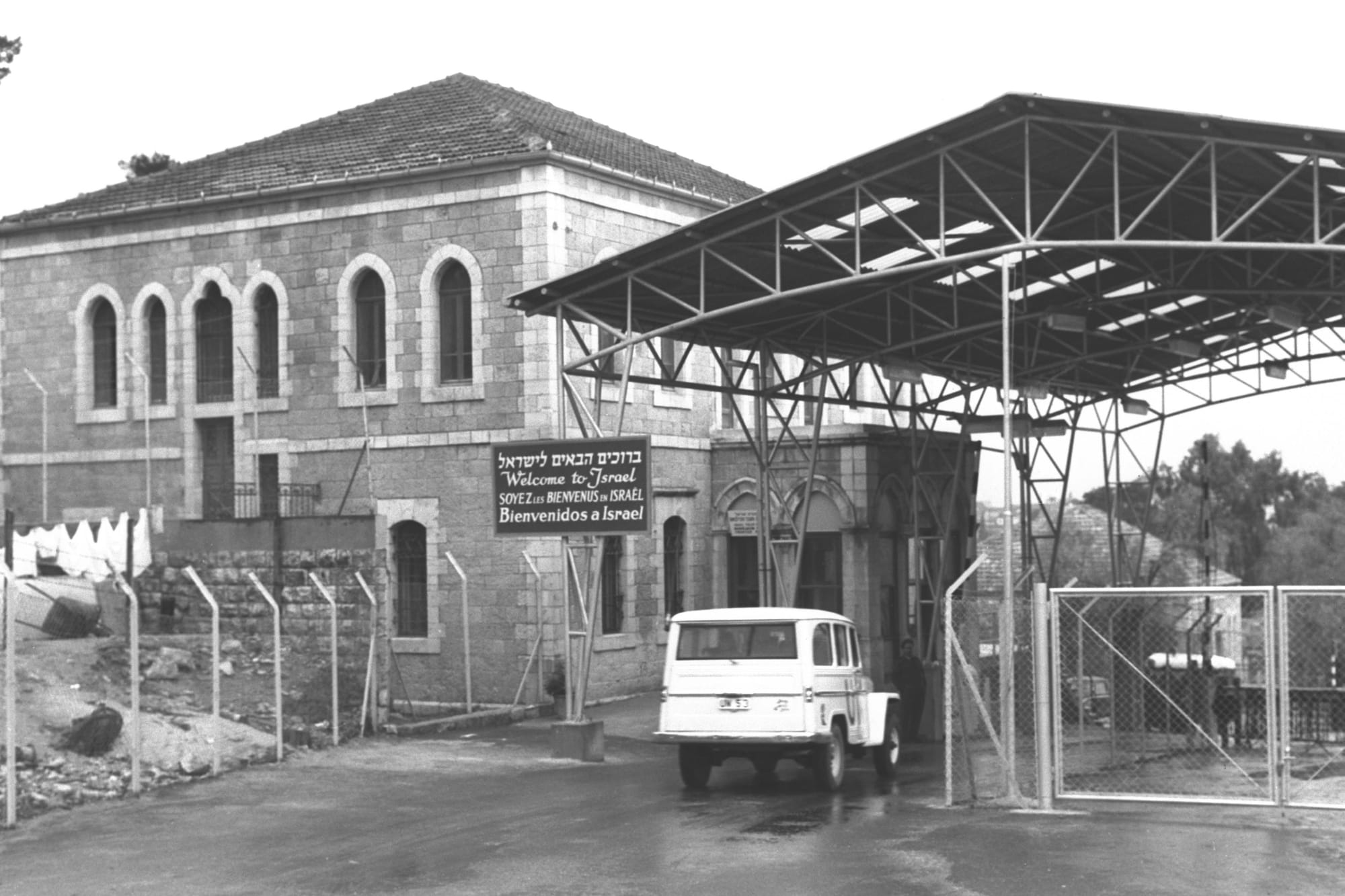
Chapter 5 — Empires, Conquests and Changing Rule: Jerusalem Through the Centuries
A City Shaped by Successive Empires
Jerusalem's history cannot be understood through the story of one kingdom, one religion or one population.
Over thousands of years, the city has experienced conquest, destruction, reconstruction, political reorganization and changing systems of government.
Its rulers have included local Canaanite authorities, the kings of Judah, Babylonian and Persian emperors, Hellenistic dynasties, Roman and Byzantine administrators, Islamic caliphates, Crusader monarchs, Mamluk sultans and Ottoman officials.
Each period contributed to the city's development.
Some rulers invested in religious institutions, infrastructure and public buildings. Others imposed restrictions, destroyed monuments or reorganized the population.
Political authority frequently changed, but the city remained significant to communities whose religious and cultural identities extended beyond the boundaries of any particular empire.
Jerusalem's history also demonstrates that conquest did not always produce an immediate replacement of the population.
Communities often remained under new rulers, adapted to changing legal systems and preserved religious traditions.
At other times, warfare, deportation, persecution and economic disruption caused profound demographic changes.
The result is a city whose present-day landscape contains traces of many historical periods.
Understanding these layers is essential to understanding why Jerusalem holds such different meanings for the people who live there and for those who regard it as sacred.
From Canaanite Settlement to Regional Political Center
The earliest history of Jerusalem belongs to the broader world of Bronze Age Canaan.
During the second millennium BCE, the southern Levant contained numerous settlements and city-states.
These communities participated in regional political and economic networks shaped by local rivalries and the influence of larger powers.
Egypt exercised significant influence over parts of the region during the Late Bronze Age.
The Amarna Letters, dating to the fourteenth century BCE, provide important evidence of Jerusalem's political position.
They include correspondence from Abdi-Heba, a ruler of Jerusalem, who appealed to Egyptian authorities for assistance against threats to his position.
The letters reveal a world in which local rulers depended on diplomatic relationships with powerful regional states.
Jerusalem was not yet the internationally significant religious center it would later become.
Its importance was primarily connected to its geographic position, local authority and surrounding agricultural territory.
Nevertheless, the existence of a recognized political administration demonstrates that the city had already developed beyond a small settlement.
The transition from this Canaanite environment to the political structures associated with ancient Israel and Judah remains a major subject of archaeological and historical research.
The Kingdom of Judah and the Rise of Jerusalem
The Hebrew Bible describes Jerusalem becoming the capital of King David's kingdom and later the location of the Temple traditionally associated with King Solomon.
These accounts became central to Jewish historical and religious identity.
However, the precise chronology and scale of the early monarchy remain debated among historians and archaeologists.
By the later Iron Age, Jerusalem had become an established political and religious center of the Kingdom of Judah.
Archaeological evidence demonstrates significant urban development, administrative activity and investment in infrastructure.
The city developed fortifications, water systems and institutions associated with royal government.
Its political importance increased as regional power relationships changed.
During the eighth and seventh centuries BCE, the Assyrian Empire expanded across the Near East.
Judah came under growing pressure from Assyrian military and political power.
The Assyrian conquest of the northern Kingdom of Israel in the late eighth century BCE contributed to major changes in the region.
Jerusalem remained the capital of Judah.
The city's political leadership faced difficult choices involving tribute, alliances and resistance.
These decisions would shape its future.
Assyrian Expansion and the Siege of Jerusalem
One of the most important episodes in Jerusalem's early political history occurred during the reign of the Assyrian king Sennacherib.
In 701 BCE, Assyrian forces campaigned against Judah.
The Assyrian army captured numerous fortified towns and placed Jerusalem under severe military pressure.
The biblical accounts describe King Hezekiah's response and the city's survival.
Assyrian royal inscriptions also record the campaign.
Sennacherib claimed to have confined Hezekiah in Jerusalem, describing the Judahite king as trapped within his city.
However, the Assyrian records do not claim that Jerusalem itself was captured.
The city survived the campaign, although Judah suffered extensive destruction and political consequences.
The reasons for the Assyrian withdrawal remain debated.
Different historical and religious sources offer different explanations.
The episode illustrates the importance of comparing ancient accounts rather than relying on one narrative.
Assyrian inscriptions were designed to celebrate royal achievements.
Biblical texts interpreted events through religious and political perspectives.
Archaeological evidence adds information concerning destruction and regional conditions.
Together, these sources provide a more complex picture of Jerusalem's position within the Assyrian imperial system.
The Babylonian Conquest and the End of the Judahite Monarchy
The collapse of Assyrian power at the end of the seventh century BCE created new political conditions.
The Neo-Babylonian Empire emerged as a dominant regional power.
Judah became caught in struggles involving Babylon and Egypt.
During the early sixth century BCE, Babylonian forces intervened repeatedly in Judah.
Jerusalem was captured in 597 BCE, and members of the royal family and elite were deported.
A later rebellion led to another Babylonian campaign.
The city was besieged, captured and extensively destroyed.
The destruction of Jerusalem and the First Temple is commonly dated to 587 or 586 BCE.
The Judahite monarchy came to an end.
The consequences were political, demographic and religious.
Some inhabitants were deported to Babylonia, while others remained in the region.
The city suffered major damage.
The destruction of the Temple became a defining event in Jewish historical memory.
It also marked the end of Jerusalem's status as the capital of an independent Judahite kingdom.
Under Babylonian domination, the region was reorganized within a larger imperial system.
Jerusalem's political importance diminished, but its significance within Jewish religious memory deepened.
Persian Rule and the Restoration of Religious Institutions
In 539 BCE, Cyrus the Great conquered Babylon and incorporated its territories into the Persian Empire.
The change in imperial authority created new possibilities for communities previously affected by Babylonian deportations.
Biblical sources describe Persian permission for Judean exiles to return and rebuild the Temple in Jerusalem.
The historical process was gradual.
Not all displaced people returned, and Jewish communities continued to exist in Babylonia.
Jerusalem and the surrounding region became part of the Persian administrative system.
The Second Temple was completed around 516–515 BCE.
Its restoration marked a major turning point in the city's religious development.
Jerusalem regained importance as a center of Jewish worship.
However, political sovereignty remained in Persian hands.
Local religious and administrative institutions operated within the broader imperial structure.
The Persian period contributed to the development of traditions and institutions that would influence Jewish religious life for centuries.
It also demonstrates how religious restoration could occur without the establishment of an independent kingdom.
Alexander the Great and the Hellenistic World
The conquest of the Persian Empire by Alexander the Great during the fourth century BCE transformed the political landscape of the eastern Mediterranean and Near East.
Following Alexander's death in 323 BCE, his empire was divided among competing successor dynasties.
Jerusalem and the surrounding region became part of the Hellenistic world.
Greek language, administrative practices and cultural influences spread across many territories.
The region was contested by the Ptolemaic dynasty, based in Egypt, and the Seleucid dynasty, based in Syria and Mesopotamia.
Jerusalem experienced these changes within a broader environment of cultural interaction and political competition.
Hellenistic influence did not simply replace local traditions.
Jewish communities responded in different ways.
Some adopted elements of Greek language and culture, while others resisted particular changes.
Religious and political tensions intensified during the reign of the Seleucid ruler Antiochus IV Epiphanes.
His policies toward Jewish religious practices and the Temple contributed to the Maccabean Revolt.
The conflict eventually led to the emergence of the Hasmonean dynasty.
The Hasmonean Dynasty and Jewish Political Independence
The Maccabean Revolt began during the second century BCE.
It developed in response to Seleucid intervention in Jewish religious life and political affairs.
The rededication of the Temple became a defining event, later commemorated through the festival of Hanukkah.
Over time, the Hasmonean family established an increasingly independent political authority.
The Hasmonean dynasty expanded its territory and strengthened its control over Jerusalem.
Its rulers combined religious and political authority in ways that generated internal debate.
The period included military expansion, political competition and disputes over religious legitimacy.
Jerusalem served as the center of Hasmonean government.
The dynasty's independence, however, was vulnerable to regional political pressures and internal conflict.
Disputes among members of the ruling family contributed to Roman intervention.
In 63 BCE, the Roman general Pompey entered Jerusalem.
This marked the beginning of a new phase in the city's political history.
Roman Influence and the Herodian Kingdom
Roman authority expanded across the eastern Mediterranean during the first century BCE.
Jerusalem became increasingly dependent on Roman political decisions.
Herod the Great eventually ruled as a Roman client king.
His reign, from 37 to 4 BCE, was characterized by major construction projects and political tensions.
Herod expanded the Temple complex and transformed Jerusalem's architectural landscape.
The project included the construction of large retaining walls supporting an enlarged platform.
The Western Wall remains part of this architectural system.
Herod also invested in fortifications, palaces and infrastructure.
His projects reflected both royal ambition and the desire to strengthen political legitimacy.
However, his rule was also associated with internal opposition and harsh political measures.
Following Herod's death, the political structure of the region changed.
Roman administration became more direct in parts of Judea.
Jerusalem remained an important religious center, but political tensions increased.
These tensions would eventually contribute to major revolts against Roman rule.
Roman Jerusalem and the First Jewish–Roman War
During the first century CE, Roman authority shaped Jerusalem's political and economic environment.
The city remained central to Jewish religious life.
The Second Temple attracted pilgrims from different regions.
However, Roman taxation, political intervention and social divisions contributed to growing tensions.
The First Jewish–Roman War began in 66 CE.
The revolt involved opposition to Roman authority but also internal conflicts among Jewish factions.
Roman forces eventually advanced toward Jerusalem.
In 70 CE, the city was captured and the Second Temple destroyed.
The destruction marked a major turning point.
Jerusalem suffered extensive damage and loss of life.
Jewish religious institutions underwent profound transformation.
The Temple's destruction contributed to the development of religious practices that no longer depended on sacrificial worship in Jerusalem.
For the Roman Empire, the victory represented the suppression of a major rebellion.
For Jewish communities, it became an enduring symbol of catastrophe, displacement and religious continuity.
Aelia Capitolina and the Bar Kokhba Revolt
A further major conflict occurred between 132 and 135 CE.
The Bar Kokhba Revolt challenged Roman authority in Judea.
The uprising was eventually suppressed with devastating consequences.
Roman policies following the revolt reshaped the region.
Jerusalem became associated with the Roman colony of Aelia Capitolina.
The city developed according to Roman urban patterns, including streets, public buildings and religious structures.
Restrictions affecting Jewish access and residence are described in later sources, although their scope and enforcement remain subjects of historical debate.
The Roman reorganization changed Jerusalem's political and religious environment.
However, Jewish communities continued to exist in the wider region.
Christian communities also developed during the Roman period.
The city increasingly became connected to the expanding Christian religious movement.
These developments prepared the way for another major transformation under Byzantine rule.
The Byzantine Empire and Christian Jerusalem
During the fourth century, Christianity gained imperial support within the Roman Empire.
The reign of Constantine marked a major turning point.
Jerusalem became an important center of Christian construction and pilgrimage.
The Church of the Holy Sepulchre was dedicated in 335 CE.
Other churches and religious institutions developed at locations associated with the life of Jesus.
The city's physical landscape changed significantly.
Pilgrims traveled from different parts of the empire.
Monasteries, religious schools and charitable institutions expanded.
Jerusalem became a major center of Christian religious life.
However, Byzantine rule also involved religious restrictions and political tensions.
Jewish communities faced changing conditions under Christian imperial authority.
Disagreements within Christianity influenced religious policy.
The city was also affected by conflict between the Byzantine and Sasanian empires.
In 614 CE, Persian forces captured Jerusalem.
The conquest involved violence and damage to religious institutions.
Byzantine control was later restored, but the city's political circumstances were about to change again.
The Early Islamic Conquest
Jerusalem came under Muslim control in the seventh century, generally dated to 638 CE.
The conquest occurred during the expansion of the early Islamic state.
Later traditions associate the city's surrender with Caliph Umar ibn al-Khattab.
The transition from Byzantine to Muslim rule introduced new political and administrative structures.
Christian communities continued to maintain religious institutions.
Jewish communities also maintained or renewed connections to the city under changing conditions.
Arabic gradually became increasingly important in administration and everyday life.
Islamic religious traditions connected Jerusalem to the Prophet Muhammad's Night Journey and Ascension.
The Haram al-Sharif became a major center of Muslim worship.
The conquest did not immediately erase the city's Christian or Jewish heritage.
Instead, Jerusalem entered a new period in which Islamic institutions developed alongside older religious traditions.
The relationships among communities varied according to political circumstances, legal arrangements and individual rulers.
The Umayyads and the Construction of Islamic Monuments
The Umayyad dynasty ruled the Islamic empire from Damascus between 661 and 750 CE.
During this period, Jerusalem experienced major religious and architectural development.
The Dome of the Rock was completed in 691–692 CE under Caliph Abd al-Malik.
The Al-Aqsa Mosque developed through construction associated with the late seventh and early eighth centuries.
These monuments became defining features of Jerusalem's Islamic landscape.
The Dome of the Rock reflected the artistic and architectural achievements of the early Islamic world.
Its inscriptions expressed important theological themes.
The construction of these buildings strengthened Jerusalem's role as a sacred city within Islam.
However, Jerusalem was not the political capital of the Umayyad Empire.
Its importance was primarily religious and symbolic.
This distinction demonstrates how the city's sacred status could remain significant even when political authority was centered elsewhere.
Abbasid and Fatimid Jerusalem
After the Umayyad dynasty, Jerusalem came under Abbasid authority.
The Abbasid political center was established in Iraq.
Jerusalem remained an important religious destination, although imperial priorities changed.
Later, the city came under the control of the Fatimid dynasty, based in Egypt.
The Fatimid period included episodes of religious tension, political instability and architectural development.
In 1009, the Fatimid caliph al-Hakim ordered the destruction of the Church of the Holy Sepulchre.
The event had major consequences for Christian religious life and later historical memory.
However, the policies of Muslim rulers varied across time.
Some periods involved protection of religious institutions and pilgrimage.
Others included restrictions, persecution or destruction.
The history of Jerusalem under Islamic dynasties therefore requires attention to specific governments and circumstances.
It cannot be accurately described through a single generalization about Muslim rule.
The Crusader Conquest of 1099
In 1095, Pope Urban II called for the expedition that became known as the First Crusade.
The movement emerged within a combination of religious, political and social circumstances.
Jerusalem became one of its principal objectives.
In July 1099, Crusader forces captured the city.
The conquest was accompanied by extensive violence against Muslim and Jewish inhabitants.
Contemporary accounts describe killings and destruction, although precise casualty figures remain uncertain.
The Crusaders established the Latin Kingdom of Jerusalem.
Latin Christian institutions gained political authority.
The Church of the Holy Sepulchre became a central religious institution.
Islamic monuments on the Haram al-Sharif were repurposed.
The Dome of the Rock was converted into a Christian church.
The Al-Aqsa building was used for different purposes, including by the Knights Templar.
The Crusader period brought architectural changes and new systems of political administration.
It also created tensions among Christian communities.
Eastern Christian traditions did not necessarily receive equal treatment under Latin rule.
Jerusalem's religious diversity remained, but its political balance had changed dramatically.
Saladin and the Ayyubid Restoration
In 1187, Saladin recaptured Jerusalem after defeating Crusader forces at the Battle of Hattin.
The city's surrender was negotiated.
The transition involved ransom payments and the captivity of some inhabitants who could not secure their release.
Nevertheless, the conquest differed in important respects from the widespread violence associated with the Crusader capture of 1099.
Muslim religious institutions were restored to their earlier functions.
The Dome of the Rock and Al-Aqsa Mosque again became centers of Muslim worship.
Christian pilgrimage continued under arrangements that changed over time.
Saladin's victory became an important event in Islamic historical memory.
However, Jerusalem's political situation remained unstable.
Subsequent Crusades and diplomatic negotiations continued to affect the city.
In 1229, the Holy Roman Emperor Frederick II secured control over much of Jerusalem through a treaty with the Ayyubid ruler al-Kamil.
The arrangement did not transfer the Haram al-Sharif to Christian control.
Jerusalem later returned to Muslim political control.
The city experienced further military and political upheaval during the thirteenth century.
These events demonstrate that Jerusalem's history cannot be divided into simple, uninterrupted periods of Christian or Muslim rule.
Political arrangements were frequently more complicated.
The Mamluk Period: Religion, Education and Architecture
The Mamluk Sultanate governed Jerusalem from the thirteenth century until the Ottoman conquest in 1517.
Jerusalem was not a major political capital during this period.
However, its religious significance encouraged substantial architectural investment.
Mamluk rulers and officials supported the construction of schools, religious institutions, fountains, markets and charitable buildings.
Many structures surrounding the Haram al-Sharif date from this period.
The city's architectural landscape was transformed through decorative stonework, monumental entrances and religious complexes.
Islamic scholarship flourished through networks of teachers and students.
Religious endowments supported institutions and services.
Christian and Jewish communities also maintained a presence in Jerusalem under varying legal and economic conditions.
The Mamluk period illustrates how the city could develop as a religious and cultural center without serving as the capital of a major empire.
Ottoman Rule: Four Centuries of Changing Jerusalem
In 1517, the Ottoman Empire incorporated Jerusalem into its territories.
Ottoman rule lasted until British forces entered the city in December 1917.
This period covered approximately four centuries.
Jerusalem experienced changes in population, administration, economic activity and religious institutions.
One of the most visible Ottoman contributions was the reconstruction of the Old City walls under Sultan Suleiman the Magnificent during the sixteenth century.
The walls remain a defining feature of Jerusalem's historic landscape.
Ottoman authorities administered the city through systems involving provincial officials, religious courts and communal institutions.
Muslim, Christian and Jewish communities maintained religious organizations and social networks.
However, their legal positions were not identical.
Non-Muslim communities were subject to particular legal arrangements that changed over time.
Ottoman reforms during the nineteenth century sought to reorganize aspects of administration and legal status.
The city also experienced growing international attention.
European governments, religious institutions and philanthropic organizations expanded their involvement.
Jerusalem's importance increasingly extended beyond Ottoman provincial administration.
The Nineteenth Century and the Expansion Beyond the Walls
During the nineteenth century, Jerusalem underwent significant urban transformation.
Population growth, improved transportation and changing economic conditions contributed to expansion beyond the Old City.
New neighborhoods developed outside the historic walls.
Jewish, Christian and Muslim communities participated in different aspects of this growth.
Religious institutions established schools, hospitals and charitable organizations.
Foreign consulates and international religious missions increased their presence.
The city became more connected to global political and economic networks.
The opening of the Jaffa–Jerusalem railway in 1892 improved transportation between the city and the Mediterranean coast.
These developments changed Jerusalem's physical and social geography.
The city was no longer confined primarily to its ancient walled center.
New residential districts, institutions and commercial activities contributed to the emergence of modern Jerusalem.
At the same time, political movements were developing that would profoundly affect the region during the twentieth century.
The End of Ottoman Rule and the British Conquest
The First World War brought an end to Ottoman control over Jerusalem.
British forces entered the city in December 1917.
General Edmund Allenby made a widely publicized ceremonial entry into Jerusalem on foot.
The event symbolized a major change in political authority.
Following the war, the region came under British administration.
The League of Nations Mandate for Palestine formalized British responsibilities in the early 1920s.
Jerusalem became the administrative center of Mandatory Palestine.
The city continued to hold exceptional religious significance.
However, its political environment was increasingly shaped by competing national movements.
Jewish Zionist organizations sought national self-determination and the establishment of a Jewish national home.
Palestinian Arab political movements sought self-determination and opposed British policies they viewed as undermining their political rights.
British authorities attempted to govern amid growing tensions.
Jerusalem became a focal point for disputes concerning political representation, immigration, religious access and sovereignty.
These developments would eventually contribute to the circumstances surrounding the end of British rule and the 1948 war.
What Conquest Meant for Ordinary Residents
The history of Jerusalem is often told through rulers, armies and monumental buildings.
However, political change had direct consequences for ordinary inhabitants.
Conquest could alter taxation, property rights, religious access and administrative obligations.
Some governments invested in infrastructure and public institutions.
Others imposed restrictions or redirected resources toward military priorities.
Periods of warfare brought destruction, displacement and economic disruption.
Communities sometimes adapted to new rulers while preserving their languages, religious practices and family networks.
At other times, political change resulted in the loss of homes, institutions or legal protections.
Jerusalem's population was never static.
Migration, birth, death, economic opportunity and political upheaval continually reshaped the city.
The history of its inhabitants therefore cannot be reduced to the sequence of governments that ruled them.
It also includes the experiences of people who lived through those changes.
Religious Heritage Under Changing Political Authority
One of Jerusalem's defining characteristics is that religious significance often survived changes in political sovereignty.
Jewish attachment to Jerusalem continued after the Babylonian conquest and the Roman destruction of the Second Temple.
Christian pilgrimage continued under different Muslim governments.
Islamic religious institutions survived periods of Crusader control and were restored under later Muslim rulers.
These continuities do not mean that religious communities always enjoyed equal rights or unrestricted access.
Their experiences varied considerably.
However, the persistence of religious traditions demonstrates that political control and spiritual attachment are not identical.
A government may control a city without being the sole community that regards it as sacred.
Likewise, historical religious connections do not automatically resolve modern questions of political sovereignty.
This distinction is especially important in Jerusalem, where ancient history is frequently invoked in contemporary political debates.
The Challenges of Interpreting Jerusalem's History
Jerusalem's history is unusually difficult to reconstruct because many of its most important events are described in sources written for religious or political purposes.
Biblical texts, Roman histories, Islamic chronicles, Crusader accounts and imperial inscriptions provide valuable information.
However, each source reflects the circumstances and perspectives of its authors.
Ancient rulers often celebrated victories while minimizing defeats.
Religious writers interpreted events through theological frameworks.
Later historians sometimes relied on earlier accounts that were incomplete or politically influenced.
Archaeological discoveries provide additional evidence, but they also require interpretation.
Dating, identification and the relationship between material remains and written narratives are not always straightforward.
Modern political disputes can further complicate public understanding of historical findings.
Responsible historical journalism therefore requires comparing sources, distinguishing evidence from interpretation and acknowledging uncertainty.
Jerusalem's history should not be simplified to support a predetermined political conclusion.
Conclusion — A City Built Through Centuries of Change
Jerusalem's historical landscape reflects thousands of years of political transformation.
Its development began within the world of Canaanite settlements and ancient Near Eastern city-states.
The city later became associated with the Kingdom of Judah and the religious institutions of ancient Israel.
Babylonian conquest brought destruction and exile.
Persian rule enabled the restoration of the Temple.
Hellenistic influence, Hasmonean independence and Roman domination reshaped the city's political environment.
The Byzantine period transformed Jerusalem into a major Christian pilgrimage center.
The Muslim conquest introduced new religious and administrative institutions.
Umayyad rulers constructed monuments that remain central to Islamic worship.
Crusader and Ayyubid conquests changed the city's political and religious balance.
Mamluk and Ottoman governments contributed further layers of architecture, scholarship and urban development.
By the early twentieth century, Jerusalem had become a city whose importance extended across religious communities and national borders.
Its physical landscape preserved evidence of successive civilizations.
Its inhabitants carried different historical memories and religious attachments.
These layers help explain why Jerusalem cannot be understood through a single narrative of ownership or conquest.
The city's history is not the story of one people replacing another in a simple sequence.
It is a complex record of continuity, migration, conflict, adaptation and changing authority.
The next chapter examines Jerusalem's transformation during the modern era, beginning with late Ottoman reforms and the growth of competing national movements, before exploring British rule and the political developments leading to the 1948 war.
Chapter 6 — Jerusalem in the Modern Era: From Ottoman Rule to 1948
A City Entering a New Political Age
By the middle of the nineteenth century, Jerusalem was undergoing changes that would transform its physical landscape, population and political future.
For centuries, the city had been governed by successive empires. Its religious importance extended far beyond its walls, but its political role was generally regional rather than international.
That began to change.
Ottoman administrative reforms, expanding European influence, improvements in transportation and communication, and growing migration brought Jerusalem into closer contact with the wider world.
New neighborhoods developed outside the Old City. Schools, hospitals, religious institutions and foreign consulates expanded. Commercial activity increased, and communities with different cultural backgrounds became more closely connected to international networks.
At the same time, political ideas were changing.
Nationalism was reshaping societies across Europe and the Middle East. Jewish national movements developed in response to historical attachment, discrimination and antisemitism. Arab political consciousness and, later, specifically Palestinian national identity developed in response to regional changes, Ottoman reform, European colonial influence and Zionist immigration.
Jerusalem became increasingly important to these emerging political movements.
The city remained sacred to Jews, Christians and Muslims, but its future was no longer discussed exclusively in religious terms.
Questions of political representation, immigration, land ownership, sovereignty and self-determination became central.
By 1948, Jerusalem would be transformed by war, displacement and territorial division.
Understanding how this happened requires examining the developments that preceded the establishment of Israel and the end of British rule.
Jerusalem in the Late Ottoman Empire
The Ottoman Empire governed Jerusalem from 1517 until 1917.
During the nineteenth century, Ottoman authorities introduced reforms intended to strengthen administration, modernize institutions and respond to internal and external pressures.
These reforms, commonly associated with the Tanzimat period, affected taxation, legal administration, land registration and the status of different religious communities.
Jerusalem was influenced by these changes.
The city remained part of an Ottoman political system, but its administrative importance increased during the nineteenth century.
In 1872, Jerusalem became the center of a special administrative district, commonly known as the Mutasarrifate of Jerusalem, which reported directly to the Ottoman central government.
This arrangement reflected the city's strategic and religious significance.
The district included areas beyond Jerusalem itself, extending toward the Mediterranean coast and the southern part of Palestine.
Ottoman administrators sought to regulate taxation, property and public order while responding to growing international interest in the region.
The reforms did not eliminate social inequalities or political tensions.
However, they contributed to the development of modern administrative structures that would influence the city after Ottoman rule ended.
Life Inside and Beyond the Old City
For much of its history, Jerusalem's population was concentrated within or near the walls of the Old City.
The narrow streets contained residential areas, religious institutions, workshops, markets and places of worship.
Muslim, Christian and Jewish communities maintained distinct traditions and institutions while participating in shared economic and urban life.
Their relationships varied according to social position, religious affiliation, economic circumstances and political developments.
The familiar division of the Old City into Muslim, Christian, Jewish and Armenian quarters reflects historical settlement patterns, but these areas were never completely isolated from one another.
Markets brought people together.
Religious institutions attracted visitors from outside the city.
Families maintained commercial relationships across communal boundaries.
During the nineteenth century, population growth and changing economic conditions encouraged expansion beyond the walls.
New residential districts appeared to the west and north of the Old City.
Jewish neighborhoods such as Mishkenot Sha'ananim, established beginning in 1860, became important examples of this development.
Other communities also established institutions and residential areas outside the walls.
The expansion gradually changed Jerusalem from a primarily walled historic city into a growing urban center.
European Influence and International Religious Interest
Jerusalem attracted increasing attention from European governments during the nineteenth century.
Britain, France, Russia, Prussia and other powers developed diplomatic and religious interests in the city.
Foreign consulates were established.
Christian missionary organizations opened schools, hospitals and charitable institutions.
European churches invested in religious buildings and pilgrimage facilities.
These activities reflected both religious devotion and geopolitical competition.
European powers sometimes presented themselves as protectors of particular Christian communities or religious institutions.
Such claims could become instruments of diplomatic influence within the Ottoman Empire.
Russian involvement was particularly visible through Orthodox pilgrimage and the construction of religious facilities.
French institutions maintained strong connections with Catholic communities.
British Protestant organizations developed educational and medical initiatives.
These developments brought resources and infrastructure to Jerusalem, but they also increased foreign involvement in local affairs.
The city was becoming a place where international religious interests intersected with imperial politics.
Population Growth and Changing Communities
Jerusalem's population increased during the nineteenth and early twentieth centuries.
Jewish, Muslim and Christian residents contributed to the city's growth.
However, establishing precise population figures for this period is difficult.
Ottoman administrative records, European consular reports and religious community estimates used different methods.
Some counted registered residents, while others included pilgrims, foreign nationals or people living outside the municipal boundaries.
As a result, historical population estimates must be interpreted cautiously.
Jewish immigration contributed to demographic change, particularly during the late nineteenth century.
Some immigrants arrived for religious reasons, seeking to live near Jerusalem's sacred sites.
Others were influenced by emerging national movements.
Muslim and Christian Arab communities also experienced social and economic changes.
Families maintained connections with surrounding towns and villages, while urban employment and education created new opportunities.
Jerusalem's demographic development was therefore influenced by migration, natural population growth, economic conditions and changing political circumstances.
The city's communities were becoming more diverse even as competing national identities began to shape political relationships.
The Emergence of Modern Zionism
Modern political Zionism developed during the late nineteenth century.
It emerged in a period when nationalist movements were reshaping Europe and Jewish communities faced discrimination, exclusion and antisemitic violence.
Zionist thinkers argued that Jews required a national homeland where they could exercise collective self-determination.
Theodor Herzl became one of the movement's most prominent political figures.
The First Zionist Congress took place in Basel in 1897.
The movement included different ideological traditions.
Political Zionists emphasized diplomacy and international recognition.
Cultural Zionists focused on Jewish cultural renewal.
Religious Zionists connected national aspirations with religious interpretations.
Socialist Zionists developed ideas concerning labor, agriculture and collective settlement.
These movements were not identical, and Jewish communities worldwide held different views about them.
Some Jews supported Zionism enthusiastically.
Others opposed it for religious, political or ideological reasons.
Still others were primarily concerned with improving their lives in the countries where they already lived.
Jerusalem occupied an important symbolic position within Zionist thought because of its historical and religious significance.
However, early Zionist settlement and economic development were not concentrated exclusively in Jerusalem.
Many initiatives focused on agricultural settlements and growing urban centers elsewhere in Palestine.
Palestinian Arab Society and Emerging National Identity
During the late Ottoman period, Arabic-speaking Muslim and Christian communities in Palestine developed within overlapping local, religious, regional and imperial identities.
Residents might identify with their city, village, family, religious community, the Ottoman Empire or the wider Arab cultural world.
These identities were not necessarily mutually exclusive.
As political conditions changed, a more explicitly Palestinian national consciousness developed.
Its emergence was influenced by Ottoman reforms, newspapers, education, political organizations, European intervention and increasing concern about Zionist immigration and land acquisition.
Palestinian national identity did not emerge at one single moment.
It developed gradually, particularly during the late Ottoman and British Mandate periods.
Jerusalem became an important center of Palestinian political, intellectual and religious life.
Arabic-language newspapers and political organizations contributed to public debate.
Local leaders expressed concerns about political representation, immigration and the future of the country.
Palestinian Arab society was also internally diverse.
Urban elites, rural communities, religious leaders, workers and merchants did not always share the same political priorities.
Muslim and Christian Palestinians participated in emerging national movements, although their social and institutional experiences differed.
Understanding this diversity is essential to avoiding the assumption that Palestinian political identity developed as a single, uniform movement.
Land Ownership and Economic Change
Land ownership became an increasingly important issue during the late Ottoman and British Mandate periods.
Ottoman land reforms introduced new systems of registration and administration.
These changes affected relationships between landowners, tenants, agricultural workers and local authorities.
Zionist organizations and private purchasers acquired land through different legal arrangements.
Some transactions involved absentee landlords who lived outside the areas where land was being cultivated.
The consequences for local inhabitants varied.
In some cases, land sales led to the displacement of tenant farmers or changes in agricultural employment.
In others, economic relationships continued or developed in new forms.
Land acquisition became a major source of political controversy.
Zionist institutions regarded land purchase and settlement as essential to national development.
Palestinian Arab leaders increasingly viewed these activities as threatening their community's political and economic future.
The issue was not limited to Jerusalem, but it influenced the wider conflict that would eventually affect the city.
Questions of ownership, residence and access to land became closely connected to competing national aspirations.
The First World War and the End of Ottoman Rule
The First World War brought a decisive transformation to the Middle East.
The Ottoman Empire entered the war on the side of the Central Powers.
British forces advanced through Palestine during the later stages of the conflict.
In December 1917, British troops captured Jerusalem.
General Edmund Allenby entered the city ceremonially on foot on 11 December.
The event received extensive international attention.
For British authorities, the capture of Jerusalem represented an important military and symbolic achievement.
For local inhabitants, it marked the end of four centuries of Ottoman government.
The transition occurred within a broader context of wartime diplomacy and competing promises concerning the future of Ottoman territories.
British officials had engaged in discussions with Arab leaders about political arrangements after the war.
At the same time, Britain had entered into agreements with France concerning spheres of influence in the Middle East.
These overlapping commitments would contribute to later political disputes.
The Balfour Declaration of 1917
On 2 November 1917, the British government issued the Balfour Declaration.
The declaration expressed support for the establishment in Palestine of a national home for the Jewish people.
It also stated that nothing should be done to prejudice the civil and religious rights of existing non-Jewish communities in Palestine.
The wording became a major source of political controversy.
Zionist leaders viewed the declaration as an important diplomatic achievement.
It represented support from a major world power for Jewish national aspirations.
Palestinian Arab leaders opposed the declaration because it supported a Jewish national project without explicitly recognizing the political and national rights of the Arab majority.
The distinction between civil and religious rights and political self-determination became especially important.
The declaration did not itself establish a state.
However, it influenced British policy and the international framework that developed after the First World War.
Jerusalem became increasingly central to debates over how these commitments could be reconciled.
The British Mandate for Palestine
Following the First World War, Britain assumed responsibility for administering Palestine under a League of Nations Mandate.
The Mandate was approved in 1922 and came into force in 1923.
Jerusalem became the administrative capital of Mandatory Palestine.
British institutions operated from the city, and its political importance increased.
The Mandate incorporated commitments relating to the Jewish national home while also requiring the protection of the rights of the population.
British authorities faced growing difficulties reconciling these obligations.
Jewish immigration increased during different periods, influenced by Zionist organization and persecution in Europe.
Palestinian Arab opposition to British policy and Zionist settlement intensified.
Political organizations developed within both communities.
Jerusalem became a center of administration, diplomacy, demonstrations and political mobilization.
British authorities attempted to maintain order while facing criticism from multiple directions.
The Mandate period would ultimately be characterized by increasing conflict and the failure to establish a political arrangement accepted by both national movements.
Jerusalem as the Administrative Center of the Mandate
Under British rule, Jerusalem underwent significant institutional and urban development.
Government offices, courts, educational institutions and public infrastructure expanded.
British planning policies influenced the city's architectural appearance.
Regulations concerning building materials and urban design contributed to the continued prominence of Jerusalem stone.
New neighborhoods developed, and transportation networks improved.
The city's population continued to grow.
However, development was uneven.
Different communities experienced varying access to political influence, economic opportunities and public resources.
The British administration also sought to regulate religious sites and maintain established arrangements among religious communities.
This task was particularly sensitive in the Old City.
Disputes involving sacred locations could rapidly become connected to broader political tensions.
The Western Wall and Haram al-Sharif Disputes
The area surrounding the Western Wall and Haram al-Sharif became one of the most sensitive locations during the British Mandate.
For Jews, the Western Wall was a major place of prayer associated with the ancient Temple complex.
For Muslims, the Haram al-Sharif was a sacred precinct containing Al-Aqsa Mosque and the Dome of the Rock.
The Western Wall prayer area was adjacent to property administered through Islamic religious endowments.
Disagreements developed concerning religious practices, physical arrangements and perceived attempts to alter established rights.
These disputes were influenced by growing nationalist tensions.
Religious symbolism became closely connected to political concerns.
Some Palestinian Arab leaders feared that Zionist ambitions would eventually threaten Muslim control of the Haram al-Sharif.
Jewish organizations expressed concerns about restrictions affecting access and worship at the Western Wall.
The British authorities attempted to regulate the situation, but their decisions often generated further controversy.
The Violence of 1929
In August 1929, tensions surrounding the Western Wall and Haram al-Sharif contributed to a major outbreak of violence.
Demonstrations and confrontations in Jerusalem were followed by attacks and unrest in other parts of Mandatory Palestine.
The violence included attacks on Jewish communities, most notably in Hebron and Safed.
Jews were killed, injured and displaced.
Arab casualties also occurred, including deaths caused by British security forces.
The events deeply affected relations between Jewish and Arab communities.
The British government established an inquiry into the disturbances.
The Shaw Commission examined the causes and circumstances of the violence.
It identified broader political and economic tensions, including Arab fears concerning immigration and land acquisition, as important underlying factors.
The events demonstrated how disputes over religious sites could become catalysts for wider nationalist conflict.
They also contributed to growing mistrust and insecurity.
Palestinian Political Mobilization in the 1930s
During the 1930s, Palestinian Arab opposition to British policy and Zionist immigration intensified.
The Arab Revolt of 1936–1939 involved strikes, demonstrations, armed resistance and attacks.
The movement was influenced by demands for national independence, restrictions on Jewish immigration and an end to British policies supporting the Jewish national home.
Jerusalem played an important political role.
The Arab Higher Committee, established in 1936, became a prominent Palestinian political organization.
Amin al-Husayni, the Grand Mufti of Jerusalem, was a major political and religious figure during this period.
His leadership and later wartime collaboration with Nazi Germany remain important subjects of historical examination.
However, his actions should not be presented as representing every Palestinian Arab or all Palestinian political positions.
Palestinian society contained competing leaders, political factions and perspectives.
British authorities responded to the revolt through extensive military and security measures.
The suppression of the revolt weakened Palestinian political and military organization in the years preceding the 1948 war.
Jewish Immigration and the Impact of European Antisemitism
Jewish immigration to Mandatory Palestine increased significantly during parts of the 1920s and 1930s.
Immigration was influenced by several factors, including Zionist ideology, economic opportunities and persecution in Europe.
The rise of Nazi Germany in 1933 intensified the urgency faced by Jewish communities seeking refuge.
Antisemitic legislation, violence and exclusion placed growing numbers of European Jews in danger.
The Holocaust during the Second World War resulted in the murder of approximately six million Jews.
The catastrophe profoundly affected Jewish communities worldwide.
It also strengthened international awareness of the need to address the situation of Jewish survivors and displaced persons.
However, the Holocaust did not create Zionism, which had emerged decades earlier.
Rather, it transformed the political and humanitarian context in which Jewish national aspirations were discussed.
British restrictions on immigration became increasingly controversial.
Jewish organizations argued that restrictions prevented refugees and survivors from reaching safety.
Palestinian Arab leaders opposed large-scale immigration because of its implications for the demographic and political future of Palestine.
These competing concerns became central to the final years of British rule.
The British White Paper of 1939
In 1939, the British government issued a White Paper proposing major changes to its Palestine policy.
The document limited Jewish immigration and placed restrictions on land transfers.
It also envisaged an independent Palestine within ten years under conditions involving cooperation between Arabs and Jews.
Zionist leaders strongly opposed the policy.
They viewed it as a retreat from Britain's earlier commitments, particularly at a time when European Jews faced increasing persecution.
Palestinian Arab responses were mixed.
Some regarded the restrictions as a partial recognition of their demands.
Others rejected the proposal because it did not provide immediate independence or fully satisfy their political objectives.
The White Paper illustrated Britain's growing difficulty in managing the conflict.
During the Second World War, these tensions remained unresolved.
Jerusalem During the Second World War
Jerusalem did not become a major battlefield during the Second World War.
However, the conflict had significant political and social consequences for the city.
British military and administrative institutions remained active.
Jewish and Arab political organizations continued to debate the future of Palestine.
The Holocaust transformed the international context of Jewish immigration and statehood.
At the same time, Palestinian Arabs continued to demand political independence and protection of their national rights.
The war weakened Britain's economic and political position.
After 1945, British authorities faced increasing pressure from Jewish underground organizations, Palestinian Arab political movements and international governments.
The question of Palestine became increasingly difficult to resolve through British administration.
Jerusalem stood at the center of these competing demands.
Jewish Underground Organizations and the End of British Rule
During the final years of the Mandate, Jewish underground organizations conducted operations against British authorities.
These groups included the Haganah, Irgun and Lehi.
Their political objectives, organizational structures and methods differed.
The Haganah became the principal military organization of the Jewish community and later formed a major foundation of the Israel Defense Forces.
Irgun and Lehi conducted attacks that included violence against British personnel and, in some operations, civilians.
One of the most significant attacks occurred in Jerusalem on 22 July 1946.
Members of Irgun bombed the King David Hotel, part of which housed British administrative and military offices.
The explosion killed 91 people, including British, Arab, Jewish and other victims.
The attack became a major event in the final years of the Mandate.
It demonstrated the growing instability of British rule and the willingness of some armed groups to use lethal violence.
Historical analysis should distinguish the actions of specific organizations from the wider Jewish population, just as the actions of particular Palestinian groups should not be attributed collectively to all Palestinians.
The United Nations and the Partition Proposal
In 1947, Britain referred the question of Palestine to the United Nations.
A United Nations Special Committee on Palestine examined possible political arrangements.
On 29 November 1947, the UN General Assembly adopted Resolution 181, recommending the partition of Mandatory Palestine into separate Jewish and Arab states, with a special international regime for Jerusalem and its surrounding area.
The proposed arrangement for Jerusalem was known as a corpus separatum.
It reflected international concern about the city's religious importance and the presence of sacred sites associated with different communities.
The proposal envisaged international administration rather than placing Jerusalem under the exclusive sovereignty of either proposed state.
Jewish Agency leaders accepted the partition plan as a basis for statehood, despite reservations about its boundaries and provisions.
Arab leaders rejected the proposal, arguing that it violated the rights of the Arab majority and imposed partition without their consent.
The resolution was a recommendation of the General Assembly.
It did not itself create the proposed states or establish the international regime for Jerusalem.
The plan was never implemented as proposed.
Instead, the region entered a period of escalating armed conflict.
The Beginning of the 1947–1948 Civil War
Following the UN partition vote, violence intensified between Jewish and Palestinian Arab communities.
The conflict initially developed while British forces were still present.
Armed groups attacked roads, neighborhoods, settlements and transportation routes.
Jerusalem became a major focus of fighting.
The city's mixed population and strategic importance made it especially vulnerable.
Road access between Jerusalem and the coastal plain became a central military issue.
Jewish communities in western Jerusalem depended on supply routes passing through areas where Palestinian Arab forces could attack convoys.
Palestinian communities also experienced attacks, displacement and growing insecurity.
The conflict was not limited to conventional battles between organized armies.
It involved irregular forces, local militias, ambushes, bombings and violence affecting civilians.
The collapse of security and the gradual withdrawal of British authority contributed to an increasingly unstable situation.
The Siege and Supply Routes to Jerusalem
During the first months of 1948, access to Jerusalem became a major military concern.
The road connecting the city to the coastal plain passed through strategically important terrain.
Palestinian Arab fighters attacked Jewish supply convoys.
The resulting shortages created serious difficulties for Jewish residents of western Jerusalem.
Food, fuel and other essential supplies became increasingly difficult to transport.
Jewish military organizations launched operations intended to secure access routes and protect convoys.
One of the most important was Operation Nachshon in April 1948.
The operation formed part of the struggle for control of roads and surrounding villages.
Military operations along the Jerusalem corridor had significant consequences for Palestinian communities.
Some villages were captured, and inhabitants fled or were expelled during different operations.
The experiences varied by location and military circumstances.
The battle for Jerusalem's supply routes became inseparable from the wider displacement of Palestinian civilians during the war.
Deir Yassin and the Impact on Palestinian Communities
On 9 April 1948, members of Irgun and Lehi attacked the Palestinian village of Deir Yassin, west of Jerusalem.
More than one hundred Palestinian villagers were killed, including civilians.
The precise casualty figures and some details of the fighting have been disputed, but the killing of civilians is well documented.
The attack became one of the most widely remembered events of the 1948 war.
News of the killings spread rapidly.
The event contributed to fear among Palestinian communities already experiencing escalating violence and insecurity.
Its impact extended beyond the village itself.
Deir Yassin became a powerful symbol in Palestinian historical memory and discussions of the Nakba.
The term Nakba, meaning catastrophe in Arabic, refers to the mass displacement and dispossession of Palestinians associated with the 1948 war.
A responsible account must distinguish established facts about the attack from later claims that remain disputed.
It must also recognize the broader context of violence against civilians during the conflict.
The Hadassah Medical Convoy Attack
On 13 April 1948, an Arab armed group attacked a Jewish convoy traveling toward Hadassah Hospital and the Hebrew University on Mount Scopus.
The convoy included medical personnel and others traveling to the institutions.
Seventy-eight Jews were killed, including doctors, nurses, students and other passengers.
The attack became one of the most significant incidents of violence against Jewish civilians during the battle for Jerusalem.
It occurred four days after the Deir Yassin attack, amid escalating retaliatory violence and military confrontation.
The convoy's destruction demonstrated the vulnerability of medical and civilian movement during the conflict.
The attack also had major consequences for access to medical and educational institutions on Mount Scopus.
Both the Deir Yassin killings and the Hadassah convoy attack remain important examples of the human cost of the 1948 fighting.
They should be examined individually and accurately rather than treated as interchangeable events or used to justify attacks on civilians.
The End of the British Mandate
British administration in Palestine ended in May 1948.
On 14 May, David Ben-Gurion proclaimed the establishment of the State of Israel.
The declaration took place shortly before the formal end of the Mandate.
The following day, armies from neighboring Arab states entered the conflict.
The fighting expanded into a regional war.
Jerusalem remained one of the principal areas of confrontation.
Jewish and Arab forces fought for control of neighborhoods, roads and strategic positions.
The city was already deeply affected by months of civil war.
The arrival of regular armies transformed the military situation further.
The Battle for the Old City
During the 1948 war, the Old City became a major battlefield.
Jewish forces attempted to maintain or establish connections with the Jewish Quarter.
Arab Legion forces from Transjordan, later known as Jordan, became central to the fighting.
The Arab Legion was one of the most organized military forces participating in the war.
In May 1948, the Jewish Quarter of the Old City came under intense pressure.
Its defenders eventually surrendered on 28 May.
Jewish residents were displaced from the quarter.
Some defenders became prisoners of war.
Synagogues and other Jewish religious buildings suffered damage or destruction during and after the fighting.
The loss of the Jewish Quarter became a major event in Israeli and Jewish historical memory.
For the Jewish community, it represented the loss of access to a neighborhood associated with centuries of religious and cultural history.
The battle also contributed to the division of the city that would last until 1967.
Palestinian Displacement from Western Jerusalem
The 1948 war also transformed Palestinian life in western Jerusalem.
Palestinian Arab residents fled or were expelled from neighborhoods that came under Israeli control.
Communities in areas such as Katamon, Talbiya and other parts of western Jerusalem experienced major demographic change.
Homes, businesses and institutions were abandoned or lost.
Some residents fled because of fighting and insecurity.
Others were displaced during military operations or were prevented from returning after the war.
The precise circumstances differed between neighborhoods and families.
The result was a major transformation of the city's population.
Many Palestinian families became refugees in East Jerusalem, the West Bank, Jordan and other locations.
Property left behind became subject to Israeli legal and administrative arrangements concerning absentee property.
For Palestinians, these experiences became part of the wider Nakba.
The loss of homes and neighborhoods remained central to family histories and collective memory.
The Division of Jerusalem
By the end of the major fighting, Jerusalem was divided.
Israel controlled western Jerusalem.
Jordan controlled East Jerusalem, including the Old City and the Haram al-Sharif/Temple Mount.
The division did not correspond to the international regime proposed by the United Nations in 1947.
Instead, it reflected the military positions established during the war.
The 1949 Israel–Jordan Armistice Agreement formalized armistice lines, including the division of Jerusalem.
These lines were not recognized as final international borders.
They became known as part of the Green Line.
The city was physically separated by barriers, military positions and restricted crossing points.
Families, neighborhoods and religious institutions were affected.
Access to sacred sites became a major issue.
Jewish access to the Western Wall was prevented under Jordanian control.
Palestinian residents who had fled or been expelled from western Jerusalem were generally unable to return to their homes.
The division created two distinct political and administrative environments within one historically connected city.
Mount Scopus and the Complexity of the Armistice
The 1949 armistice arrangements included special provisions for Mount Scopus.
The area contained the Hebrew University and Hadassah Hospital.
An Israeli-held enclave remained on Mount Scopus, separated from the main Israeli-controlled part of Jerusalem.
Access was subject to arrangements involving United Nations supervision.
The enclave illustrated the complexity of the city's military geography.
Jerusalem was not divided by a perfectly simple boundary.
Its political and military arrangements included contested spaces, enclaves and areas requiring special agreements.
These conditions created recurring tensions.
The armistice ended large-scale fighting between Israel and Jordan, but it did not resolve the underlying political dispute.
The Human Consequences of 1948
The war of 1948 fundamentally changed Jerusalem.
For Jewish Israelis, the establishment of Israel represented the realization of a national aspiration for self-determination, shaped by centuries of historical attachment and the recent catastrophe of the Holocaust.
At the same time, the loss of the Jewish Quarter and restricted access to sacred sites remained painful consequences of the war.
For Palestinians, 1948 brought mass displacement, the loss of homes and communities, and the failure to establish the Arab state proposed under the UN partition plan.
These experiences became central to Palestinian national memory.
Both populations suffered casualties, insecurity and the disruption of ordinary life.
However, their experiences were not identical.
The establishment of a sovereign state for Jewish Israelis and the displacement and statelessness experienced by many Palestinians created fundamentally different political outcomes.
Recognizing these differences is necessary for an accurate historical account.
Journalistic balance does not require presenting unequal outcomes as identical.
It requires examining each experience through evidence, context and respect for the people affected.
Jerusalem After the War
Following the war, Israel developed western Jerusalem as part of its state institutions.
In December 1949, Israel declared Jerusalem its capital.
Jordan administered East Jerusalem and the Old City.
Jordan formally annexed the West Bank, including East Jerusalem, in 1950, although this annexation received only limited international recognition.
The city's political status remained disputed.
The international community did not implement the proposed international administration for Jerusalem.
Many governments maintained diplomatic missions outside the city because of the unresolved sovereignty question.
The division affected religious access, municipal development and daily life.
Jerusalem remained central to Israeli national identity and Palestinian political aspirations.
The circumstances established in 1948 and 1949 would continue until the June 1967 war.
Conclusion — The Making of Modern Jerusalem
Between the late nineteenth century and 1948, Jerusalem underwent one of the most profound transformations in its history.
Ottoman reforms, population growth and international involvement contributed to the development of a modern urban center.
Jewish and Palestinian Arab national movements emerged within changing political circumstances.
British rule brought new institutions but failed to resolve competing aspirations for self-determination.
Religious sites became increasingly connected to nationalist disputes.
Immigration, land ownership, political representation and security became major sources of conflict.
The United Nations proposed partition and international administration for Jerusalem in 1947, but the plan was not implemented.
Instead, the city became a major battlefield during the 1947–1948 civil war and the subsequent Arab-Israeli war.
The consequences were profound.
Jewish residents of the Old City's Jewish Quarter were displaced.
Palestinian residents lost homes and communities in western Jerusalem.
The city was divided between Israeli and Jordanian control.
The war established political and demographic realities that continue to influence Jerusalem today.
Understanding this period is essential because many contemporary disputes concerning neighborhoods, property, borders and national identity have roots in the events of the late Ottoman and British Mandate eras.
The next chapter examines the divided city between 1948 and 1967, Israel's capture of East Jerusalem during the Six-Day War, and the unresolved questions of sovereignty, annexation and international law.
Chapter 7 — The Divided City: 1948, 1967 and the Question of Sovereignty
A City Divided by War
Jerusalem's modern political status cannot be understood without examining two defining wars: the Arab-Israeli war of 1948 and the Six-Day War of 1967.
These conflicts transformed the city's geography, population, administration and international legal position.
The 1948 war resulted in the division of Jerusalem between Israeli and Jordanian control.
Nineteen years later, Israel captured East Jerusalem during the June 1967 war and subsequently extended its law and administration to the eastern part of the city.
For Israel, Jerusalem became the center of national government and a powerful symbol of Jewish historical continuity.
For Palestinians, East Jerusalem remained central to their national identity and aspirations for an independent state.
For the international community, Jerusalem became one of the most complicated unresolved questions in the Israeli-Palestinian conflict.
The disagreement concerns more than religious attachment.
It involves sovereignty, occupation, municipal boundaries, citizenship, residency, property rights, access to holy places and the application of international law.
Understanding these issues requires distinguishing between historical connections, political claims, effective control and internationally recognized legal status.
These concepts are related, but they are not interchangeable.
The 1947 United Nations Partition Plan
In November 1947, the United Nations General Assembly adopted Resolution 181, recommending the partition of British Mandatory Palestine into separate Jewish and Arab states.
The resolution proposed a special arrangement for Jerusalem.
Rather than assigning the city to either proposed state, the plan envisaged Jerusalem and its surrounding area as a corpus separatum, or separate entity, administered under an international regime.
The proposal reflected the city's importance to Judaism, Christianity and Islam.
International administration was intended to protect religious access and reduce conflict over sovereignty.
However, the plan was never implemented.
Jewish Agency leaders accepted partition as a basis for establishing a Jewish state, although they had reservations about elements of the proposal.
Arab leaders rejected it, arguing that partition violated the political rights of the Arab majority in Palestine.
Violence escalated after the vote.
By the time Britain ended its Mandate in May 1948, the region was already experiencing extensive armed conflict.
The proposed international regime for Jerusalem did not become a functioning system of government.
Instead, the city's political future was determined by military developments during the war.
Jerusalem During the 1948 War
The fighting in Jerusalem began before the formal establishment of Israel.
Jewish and Palestinian Arab armed groups fought over roads, neighborhoods and strategic positions.
The city's mixed population and religious importance made it particularly vulnerable.
Supply routes to Jewish neighborhoods in western Jerusalem became a major military concern.
Palestinian Arab communities also experienced attacks, displacement and growing insecurity.
The fighting intensified after Israel declared independence on 14 May 1948 and neighboring Arab armies entered the war.
Jordan's Arab Legion became a major force in the battle for Jerusalem.
By the end of the conflict, Israeli forces controlled western Jerusalem, while Jordanian forces controlled the Old City and eastern neighborhoods.
The division reflected the military positions established during the fighting.
It did not correspond to the international arrangement proposed by the United Nations.
The war also transformed the city's population.
Jewish residents of the Old City's Jewish Quarter were displaced following its surrender to Jordanian forces.
Palestinian Arab residents fled or were expelled from neighborhoods that came under Israeli control in western Jerusalem.
The loss of homes, businesses and religious institutions became central to the historical memory of both communities.
The 1949 Armistice and the Green Line
In April 1949, Israel and Jordan signed an armistice agreement.
The agreement established military demarcation lines, including the division of Jerusalem.
These lines became part of what is commonly known as the Green Line.
The armistice lines were not intended to constitute permanent international borders.
They reflected the military positions held by the parties at the end of the fighting.
Jerusalem became divided by barriers, military positions and restricted crossing points.
The separation affected ordinary life.
Families were cut off from neighborhoods where they had previously lived.
Religious access was restricted.
Businesses lost connections with customers and suppliers.
The city's infrastructure developed under separate administrations.
The division also created complicated arrangements involving Mount Scopus, where an Israeli-held enclave remained separated from western Jerusalem.
Access to the enclave was governed by special arrangements involving United Nations supervision.
Jerusalem's political geography had become fragmented.
Western Jerusalem Under Israeli Administration
Following the 1948 war, Israel established governmental institutions in western Jerusalem.
In December 1949, Israel declared Jerusalem its capital.
The Knesset, government ministries and other national institutions subsequently became associated with the city.
For Israelis, Jerusalem represented the historical center of Jewish religious and national identity.
The establishment of national institutions reinforced its political importance.
However, the city's international status remained disputed.
The United Nations had not abandoned its concern over Jerusalem's special religious and political character.
Many countries avoided recognizing Israeli sovereignty over the city in a way that would prejudge its final status.
Diplomatic missions were generally located outside Jerusalem.
Western Jerusalem developed as an Israeli urban and administrative center.
New residential neighborhoods expanded.
Public institutions, universities and cultural organizations contributed to the city's growth.
Yet the consequences of the 1948 war remained visible.
Properties previously inhabited or owned by Palestinians became subject to Israeli laws and administrative arrangements, including legislation concerning absentee property.
For displaced Palestinian families, these changes contributed to the continuing loss of access to homes and property.
East Jerusalem Under Jordanian Rule
Between 1948 and 1967, East Jerusalem was administered by Jordan.
Jordan controlled the Old City, including the Haram al-Sharif/Temple Mount.
The city remained an important religious center for Muslims and Christians.
The Islamic Waqf continued to play a role in administering Muslim religious institutions.
Jordan also invested in aspects of religious administration and urban development.
In 1950, Jordan formally annexed the West Bank, including East Jerusalem.
This annexation received only limited international recognition.
For Palestinian residents, Jordanian rule introduced a new political and legal environment.
Many Palestinians in the West Bank and East Jerusalem acquired Jordanian citizenship.
However, the consequences of the 1948 war remained profound.
Large numbers of Palestinian refugees had been displaced from areas that became part of Israel.
Jerusalem's eastern neighborhoods and surrounding areas were affected by demographic and economic pressures.
The city's separation from western Jerusalem restricted movement and trade.
The division also affected Jewish access to religious sites.
Access to Holy Places Between 1948 and 1967
Religious access became one of the most contested consequences of Jerusalem's division.
Under Jordanian control, Jews were prevented from visiting the Western Wall.
Jewish residents had also been displaced from the Old City's Jewish Quarter.
Jewish religious buildings and cemeteries suffered damage during the period of Jordanian control.
For Jewish communities, the inability to pray at the Western Wall became a powerful symbol of separation from a sacred place.
Christian pilgrimage continued, although travel arrangements and border restrictions affected access.
Muslim worship at the Haram al-Sharif continued under Jordanian administration.
The experience of religious access was therefore not uniform.
Different communities encountered different restrictions depending on their location, citizenship and religious affiliation.
The 1949 armistice agreement included provisions concerning access to religious and cultural sites, but implementation remained a source of dispute.
The unresolved issue of religious access would become especially significant during the events of 1967.
The Regional Crisis Before the Six-Day War
The June 1967 war emerged from escalating regional tensions.
Relations between Israel and neighboring Arab states had been shaped by the 1948 war, border disputes, Palestinian refugee issues, military confrontations and competing national ambitions.
During May 1967, Egypt moved forces into the Sinai Peninsula and requested the withdrawal of United Nations peacekeeping forces from Egyptian territory.
Egypt also announced restrictions on Israeli shipping through the Straits of Tiran.
Israel regarded the closure as a major threat.
Military tensions increased across the region.
Arab governments made public statements expressing hostility toward Israel.
Israel mobilized its armed forces.
Diplomatic efforts failed to prevent war.
On 5 June 1967, Israel launched air strikes against Egyptian forces.
The war rapidly expanded to include Jordan and Syria.
The conflict lasted six days but transformed the political geography of the region.
The Battle for Jerusalem in June 1967
Jerusalem became a major battlefield during the Six-Day War.
Despite earlier attempts to avoid fighting between Israel and Jordan, hostilities developed after Jordanian forces opened fire and engaged Israeli positions.
Israeli forces responded and advanced into areas controlled by Jordan.
Fighting occurred around strategic locations, including Ammunition Hill and approaches to the Old City.
On 7 June 1967, Israeli forces entered the Old City and took control of East Jerusalem.
The Western Wall came under Israeli control.
The event had enormous religious and emotional significance for many Israelis and Jews worldwide.
Images of Israeli soldiers at the Western Wall became among the most recognizable photographs of the war.
For Palestinians, the loss of East Jerusalem represented another major transformation in their political circumstances.
The city that they regarded as central to their national and cultural identity had come under Israeli military control.
The war also resulted in Israel's occupation of the West Bank, Gaza Strip, Sinai Peninsula and Golan Heights.
The consequences extended far beyond Jerusalem.
The Western Wall After 1967
Following Israel's capture of the Old City, Jewish access to the Western Wall was restored.
The area became a major center of Jewish prayer and national ceremonies.
However, the physical landscape surrounding the wall changed dramatically.
In June 1967, Israeli authorities demolished the Moroccan Quarter, also known as the Mughrabi Quarter, adjacent to the Western Wall.
The demolition displaced Palestinian residents and created the large plaza that exists today.
The neighborhood had a history extending back centuries.
Its destruction remains an important part of Palestinian historical memory.
For many Jewish worshippers, the expanded plaza made large gatherings and religious ceremonies possible.
For displaced Palestinian families, its creation involved the loss of homes and a historic neighborhood.
Both dimensions are necessary for understanding the site's transformation.
The Western Wall Plaza became an important symbol of Israeli sovereignty and Jewish religious access.
At the same time, its development illustrates how the events of 1967 altered the city's urban landscape and affected existing communities.
Israel's Extension of Law and Administration to East Jerusalem
After the war, Israel took steps to incorporate East Jerusalem into its municipal and administrative system.
In June 1967, Israeli legislation enabled the extension of Israeli law, jurisdiction and administration to areas designated by the government.
Israel expanded Jerusalem's municipal boundaries to include East Jerusalem and additional surrounding territory.
The newly incorporated area was substantially larger than the Jordanian-controlled municipal area of East Jerusalem before the war.
These measures placed the expanded city under Israeli administration.
Israeli authorities developed municipal services, planning systems and public institutions across the enlarged area.
However, the international community did not recognize these measures as establishing lawful Israeli sovereignty over East Jerusalem.
Under international law, East Jerusalem is regarded as occupied territory.
Israel disputes aspects of this legal characterization and maintains that Jerusalem is its united capital.
The disagreement is central to the modern political status of the city.
The Jerusalem Law of 1980
In 1980, Israel enacted the Basic Law: Jerusalem, Capital of Israel.
The law declared Jerusalem, complete and united, to be the capital of Israel.
It reinforced Israel's position that the city should remain under Israeli sovereignty.
The legislation became a major point of international controversy.
The United Nations Security Council adopted Resolution 478 in August 1980.
The resolution censured the enactment of the law and determined that measures intended to alter the character and status of Jerusalem were invalid under international law.
It called upon states with diplomatic missions in Jerusalem to withdraw them.
The resolution reflected the Security Council's rejection of unilateral measures intended to determine the city's final status.
Israel has maintained its position that Jerusalem is its capital.
Palestinian leaders continue to seek East Jerusalem as the capital of a future Palestinian state.
The disagreement remains unresolved.
Jerusalem Under International Law
The legal status of Jerusalem is one of the most complex issues in the Israeli-Palestinian conflict.
A central principle of modern international law is that territory cannot lawfully be acquired through the use of force.
This principle is reflected in the United Nations Charter and in the international response to territorial changes resulting from war.
The international community has consistently rejected Israel's annexation of East Jerusalem.
United Nations Security Council resolutions, including Resolutions 252, 267, 476 and 478, addressed Israeli measures affecting Jerusalem.
The International Court of Justice has also examined the legal consequences of Israel's policies in the occupied Palestinian territory, including East Jerusalem.
In its 2004 advisory opinion concerning the separation barrier, the Court treated East Jerusalem as part of the occupied Palestinian territory.
In its July 2024 advisory opinion, the Court concluded that Israel's continued presence in the occupied Palestinian territory is unlawful and addressed obligations relating to ending that presence and the consequences for other states.
Advisory opinions are not binding judgments between parties in the same manner as contentious cases, but they are authoritative statements of international legal analysis.
Israel rejects key conclusions of these international legal assessments and argues that its security concerns, historical connections and political claims have not been adequately addressed.
Nevertheless, Israel's objections do not change the position adopted by the Court or the prevailing international legal view concerning East Jerusalem.
The legal distinction between East and West Jerusalem remains important.
The status of West Jerusalem is also affected by the broader unresolved question of Jerusalem's final political settlement, but it is not treated identically to East Jerusalem under the law of occupation.
Occupation, Annexation and Sovereignty
Several legal concepts are frequently used in discussions of Jerusalem.
They should not be treated as interchangeable.
Occupation refers to a situation in which territory is placed under the authority of a hostile army without the occupying power acquiring sovereignty over it.
Annexation refers to an attempt by a state to incorporate territory into its sovereign domain.
Sovereignty concerns the legal authority of a state over territory.
Recognition refers to the position adopted by other states concerning a claimed legal or political status.
Israel exercises effective governmental control over East Jerusalem.
However, effective control does not automatically establish internationally recognized sovereignty.
International law distinguishes the administration of territory from lawful title to that territory.
This distinction is fundamental to understanding the dispute.
Israeli law applies in East Jerusalem, but the international legal status of the area remains that of occupied Palestinian territory.
The situation demonstrates how domestic law and international law can produce conflicting descriptions of the same place.
Palestinian Claims to East Jerusalem
Palestinian national movements regard East Jerusalem as the capital of a future Palestinian state.
This position is connected to the city's historical, religious, cultural and political importance.
Palestinians refer to Jerusalem as Al-Quds.
The city contains Muslim and Christian holy sites, historic neighborhoods, educational institutions and communities with longstanding family connections.
Palestinian claims also rest on the principle of self-determination.
Palestinian leaders argue that an independent state must include East Jerusalem as its capital.
The Palestine Liberation Organization has consistently included Jerusalem in its political objectives.
The Oslo peace process left Jerusalem's final status for future negotiations.
However, negotiations have repeatedly failed to produce an agreed settlement.
For Palestinians, the continued expansion of Israeli settlements and changes to municipal planning and residency arrangements have raised concerns about the feasibility of establishing a capital in East Jerusalem.
The city's political future remains central to Palestinian national aspirations.
Israeli Claims to Jerusalem
Israel regards Jerusalem as its capital.
The city contains the Knesset, the offices of the president and prime minister, the Supreme Court and other national institutions.
Israeli political leaders frequently emphasize Jerusalem's historical significance within Jewish identity.
The connection to the ancient kingdoms of Israel and Judah, the First and Second Temples and centuries of Jewish religious tradition forms an important part of this narrative.
The events of 1967 are often described in Israeli national discourse as the reunification of Jerusalem.
However, Israeli society is not politically uniform.
Views differ concerning territorial compromise, the status of Palestinian neighborhoods, settlement policy and the possibility of dividing political authority.
Some Israelis oppose any division of Jerusalem.
Others support arrangements that would allow East Jerusalem to serve as the capital of a Palestinian state.
These differences reflect wider debates concerning security, national identity, democracy and the future of the Israeli-Palestinian conflict.
Palestinian Residency in East Jerusalem
One of the most important consequences of Israel's extension of administration to East Jerusalem concerns the legal status of Palestinian residents.
Following 1967, most Palestinians living in the annexed area were granted Israeli permanent-resident status rather than automatic citizenship.
Permanent residents generally have access to certain social services and may participate in municipal elections.
However, their legal status differs from that of Israeli citizens.
Permanent residency can be affected by rules concerning the location of a person's primary residence and other legal requirements.
Some Palestinians have lost residency status after living outside Jerusalem for extended periods.
The application of residency laws has been a major source of legal and political controversy.
Israeli authorities maintain that residency requirements are part of the state's immigration and administrative system.
Palestinian organizations and human rights groups argue that these policies create insecurity and can contribute to the displacement of Palestinian residents.
Palestinian permanent residents may apply for Israeli citizenship, but the process involves eligibility requirements and practical difficulties.
Some residents also decline to apply for political or personal reasons.
The result is a city in which people living under the same municipal administration may possess different legal statuses and political rights.
Municipal Boundaries and Urban Planning
Jerusalem's municipal boundaries changed significantly after 1967.
Israel incorporated East Jerusalem and surrounding areas into an expanded municipality.
Urban planning became a central instrument of municipal administration.
Israeli authorities developed residential neighborhoods, roads, public institutions and infrastructure.
Large Israeli residential areas were constructed in territory captured in 1967.
Israel generally describes these areas as neighborhoods of Jerusalem.
Under international law, Israeli civilian settlements in occupied territory are considered unlawful, including those established in East Jerusalem.
Israeli governments dispute this characterization.
Palestinian neighborhoods have faced different planning challenges.
Residents and rights organizations have reported difficulties obtaining building permits, inadequate infrastructure and risks of demolition.
Israeli authorities argue that planning and construction laws are necessary for orderly urban development and public safety.
Critics contend that the planning system operates unequally and restricts Palestinian residential growth.
These disagreements affect housing, family life and the demographic future of the city.
Settlements and the Question of Territorial Continuity
Israeli settlement development in and around East Jerusalem is a major issue in the conflict.
Settlements affect the geography of the city and its connections to surrounding Palestinian communities.
Israeli residential areas constructed beyond the 1949 armistice line include major neighborhoods that Israel treats as integral parts of its capital.
The international community generally regards these developments as settlements in occupied territory.
United Nations Security Council Resolution 2334, adopted in 2016, reaffirmed that Israeli settlements in Palestinian territory occupied since 1967, including East Jerusalem, have no legal validity and constitute a violation of international law.
The resolution also called for a distinction between the territory of the State of Israel and the territories occupied since 1967.
Settlement development affects discussions concerning the viability of a future Palestinian state.
Palestinian leaders argue that settlement expansion fragments territory and makes political separation increasingly difficult.
Israeli supporters of settlement development emphasize security, historical connections and national claims.
The dispute concerns not only individual buildings but also the territorial geography of any future agreement.
The Separation Barrier and Jerusalem
During the Second Intifada, Israel began constructing a separation barrier in and around the West Bank.
The barrier includes walls, fences and other security infrastructure.
Israel states that the barrier was constructed to prevent attacks against Israeli civilians.
The Second Intifada involved numerous attacks, including suicide bombings that killed civilians.
However, the barrier's route has generated significant legal and humanitarian controversy.
In some areas, it extends beyond the Green Line into occupied Palestinian territory.
Around Jerusalem, the barrier has affected movement between Palestinian neighborhoods and surrounding communities.
Some areas within Jerusalem's municipal boundaries lie on the opposite side of the barrier from the city's main urban center.
Residents may face difficulties accessing employment, education, healthcare and municipal services.
In its 2004 advisory opinion, the International Court of Justice concluded that the route and associated regime of the barrier within occupied Palestinian territory, including East Jerusalem, violated international law.
Israel rejected the Court's conclusions and emphasized its security needs.
The barrier remains a visible expression of the conflict between security policies, territorial control and Palestinian freedom of movement.
Religious Sites and the Status Quo
Jerusalem's sovereignty dispute is closely connected to the administration of religious sites.
The Haram al-Sharif/Temple Mount is particularly sensitive.
Following Israel's capture of East Jerusalem in 1967, arrangements developed under which the Islamic Waqf continued to administer Muslim religious affairs at the compound, while Israel exercised overall security control and regulated access.
Jordan retains a recognized custodial role concerning Muslim holy sites in Jerusalem.
The arrangements are often described as the status quo.
However, the precise meaning of the status quo is contested.
Disagreements arise concerning visits, prayer, policing and the authority of different institutions.
The compound is sacred to Muslims and Jews, but the religious practices and institutional arrangements associated with it differ.
Changes or perceived changes can provoke protests and diplomatic tensions.
The site's significance means that local incidents may have consequences far beyond Jerusalem.
International Recognition and Embassies
The location of foreign embassies has become an important symbol of diplomatic positions concerning Jerusalem.
For many years, most countries maintained their embassies in Tel Aviv or nearby areas rather than Jerusalem.
This reflected concerns about the city's unresolved status.
In December 2017, the United States announced its recognition of Jerusalem as Israel's capital.
The American embassy moved to Jerusalem in May 2018.
The United States stated that its decision did not determine the final boundaries of Israeli sovereignty in Jerusalem, which remained subject to negotiation.
The decision was welcomed by the Israeli government.
Palestinian leaders strongly opposed it, arguing that it undermined their claims to East Jerusalem and the role of the United States as a mediator.
The United Nations General Assembly adopted Resolution ES-10/19 in December 2017, rejecting unilateral decisions intended to alter Jerusalem's status and calling on states to refrain from establishing diplomatic missions in the city.
A small number of countries have subsequently established embassies in Jerusalem.
However, most states continue to maintain their diplomatic missions outside the city.
Embassy locations therefore remain politically significant, but they do not by themselves settle the legal status of East Jerusalem.
Jerusalem in Peace Negotiations
Jerusalem has been one of the most difficult issues in Israeli-Palestinian peace negotiations.
The Oslo Accords of the 1990s established a framework for limited Palestinian self-government and future negotiations.
Jerusalem was designated as a final-status issue.
This meant that the parties postponed a decision concerning sovereignty and political arrangements.
Later negotiations explored possible solutions.
At the Camp David summit in 2000 and subsequent discussions, proposals addressed different forms of territorial division, shared arrangements and special provisions for holy sites.
However, no comprehensive agreement was reached.
The failure reflected disagreements concerning Jerusalem, refugees, borders, security and mutual recognition.
Jerusalem was not the only unresolved issue, but it was among the most symbolically and politically sensitive.
Different proposals have included shared capitals, special administrative arrangements and international involvement in the management of sacred sites.
None has produced an agreed permanent settlement.
The Difference Between Recognition and Legitimacy
Discussions about Jerusalem often use terms such as recognition, legitimacy and sovereignty without clearly distinguishing them.
International recognition concerns the legal and diplomatic position adopted by states.
Political legitimacy concerns broader arguments about authority, representation and public acceptance.
Historical or religious attachment concerns the relationship between communities and places.
These concepts can overlap, but they answer different questions.
A community may have a longstanding religious connection to Jerusalem without possessing internationally recognized sovereignty over the city.
A government may exercise effective control over territory while its claim to sovereignty remains disputed.
A state may recognize another state's capital without resolving every territorial question connected to that recognition.
Journalistic analysis should identify which question is being discussed.
Otherwise, historical, religious and legal arguments can become confused.
The Human Reality Behind the Sovereignty Dispute
Jerusalem's political status is often discussed through diplomatic statements, legal documents and historical claims.
Yet the consequences are experienced by people living in the city.
A Palestinian family seeking permission to build a home may encounter legal and administrative difficulties.
An Israeli family may regard Jerusalem as the historic and political center of its national identity.
A Christian resident may be concerned about access to religious institutions and the future of the local community.
A Muslim worshipper may experience restrictions when attempting to attend prayers at Al-Aqsa.
A Jewish worshipper may view access to the Western Wall as an essential expression of religious freedom.
These experiences are not interchangeable.
They arise within different legal and political circumstances.
However, they demonstrate why Jerusalem's status cannot be understood solely through diplomatic negotiations.
It affects housing, movement, education, religion, family relationships and the ability to participate in public life.
Why Jerusalem Remains Unresolved
Jerusalem's final status remains unresolved because it brings together several difficult questions.
Israel regards the city as its united capital.
Palestinians seek East Jerusalem as the capital of a future independent state.
The international community rejects Israel's annexation of East Jerusalem.
Religious communities maintain sacred attachments to sites located within contested territory.
Settlement development, demographic change and infrastructure have altered the physical landscape since 1967.
Security concerns, political divisions and failed negotiations have made compromise increasingly difficult.
No single historical event provides a complete answer to these questions.
The city's ancient religious significance explains why it matters so deeply to different communities.
Its modern political history explains how competing claims developed.
International law provides a framework for assessing occupation, annexation and territorial rights.
But a lasting political settlement would also require agreements concerning governance, security, access and the rights of residents.
Conclusion — Between Historical Claims and International Law
Jerusalem's modern political status was fundamentally shaped by the wars of 1948 and 1967.
The first divided the city between Israeli and Jordanian control.
The second brought East Jerusalem under Israeli control and led to its incorporation into Israel's municipal and administrative system.
For Israelis, Jerusalem represents national sovereignty and historical continuity.
For Palestinians, East Jerusalem remains central to their national aspirations and their claim to self-determination.
The international legal position is clear on a central point: Israel's annexation of East Jerusalem is not recognized, and East Jerusalem is regarded as occupied Palestinian territory.
However, the city's final political arrangements remain unresolved.
The dispute involves more than competing national narratives.
It affects the rights, legal status and everyday lives of residents.
It also involves religious sites of exceptional significance to Jews, Christians and Muslims.
Understanding Jerusalem therefore requires separating historical attachment from legal sovereignty, recognizing the consequences of occupation and examining the different political visions for the city's future.
The next chapter moves beyond diplomatic and legal debates to examine the people who live in Jerusalem today: their neighborhoods, communities, cultures and everyday experiences in a city shaped by both extraordinary religious heritage and unresolved political conflict.
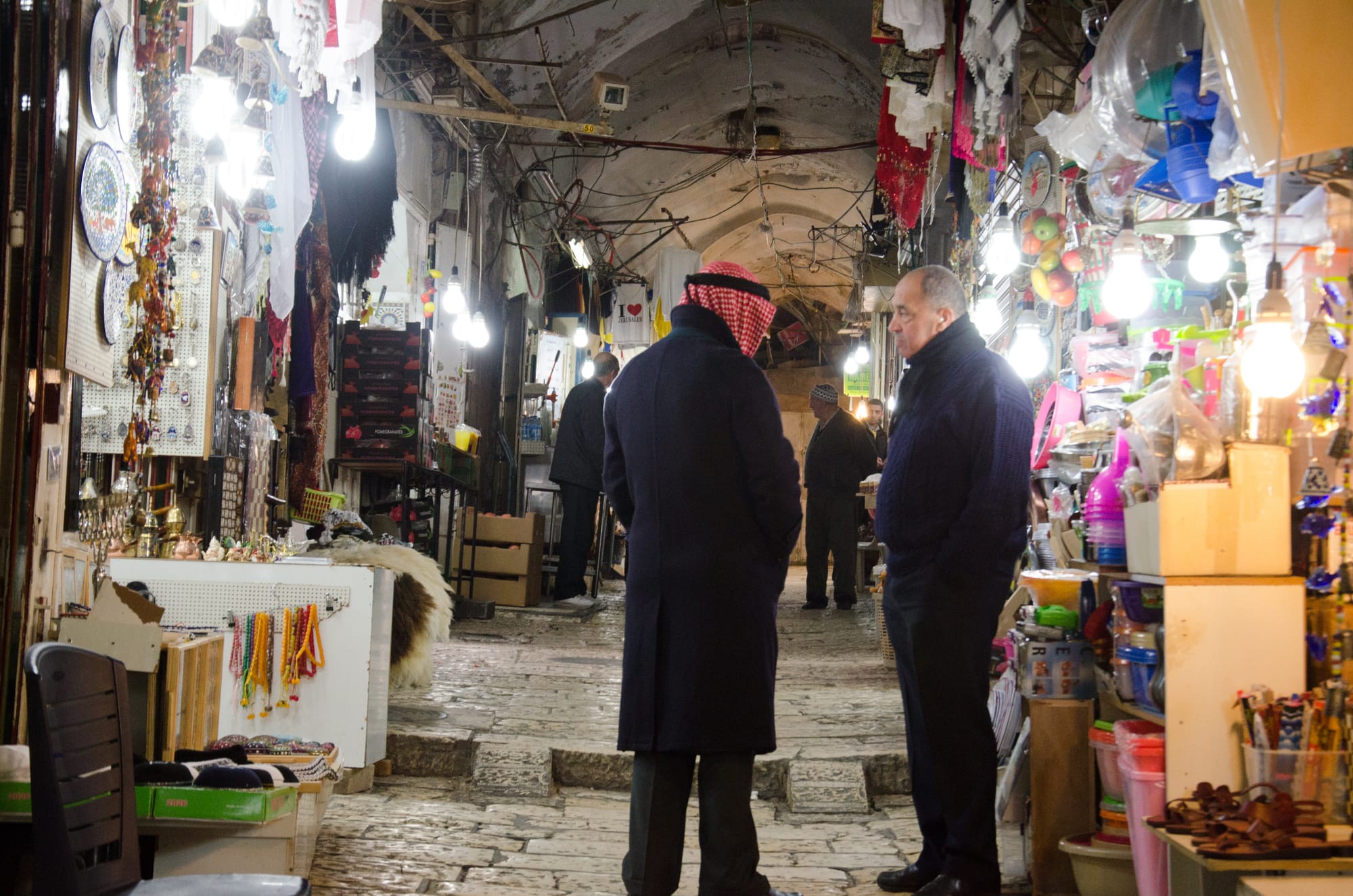
Chapter 8 — Life in Jerusalem Today: Communities, Neighborhoods and Everyday Realities
Beyond the Sacred Sites: The City People Call Home
Jerusalem is frequently presented to the world through images of religious monuments, political demonstrations, diplomatic disputes and security operations.
The Western Wall, Al-Aqsa Mosque, the Dome of the Rock and the Church of the Holy Sepulchre dominate international representations of the city.
Yet Jerusalem is also a place of ordinary human life.
Children attend school. Parents travel to work. Families shop in local markets. University students prepare for examinations. Religious communities celebrate holidays, while residents navigate housing costs, public transportation, healthcare and employment.
These everyday experiences rarely receive the same international attention as political developments.
However, they are essential to understanding the city.
Jerusalem is home to Jewish Israelis, Palestinian Muslims, Palestinian Christians, Armenians and smaller communities representing different religious, linguistic and cultural traditions.
Within these broad categories are substantial differences in identity, economic circumstances, political beliefs and religious observance.
Some residents have family histories extending back generations.
Others arrived through migration, marriage, education, religious service or employment.
The city's social landscape reflects both historical continuity and modern change.
Understanding Jerusalem today requires moving beyond the assumption that its residents belong to two uniform and opposing communities.
The reality is considerably more complex.
A City of Different Populations
Jerusalem is Israel's largest municipality by population under the boundaries established by Israeli authorities.
Those municipal boundaries include East Jerusalem, which Israel captured in 1967 and subsequently annexed in measures not recognized internationally.
This legal distinction is important when interpreting demographic information.
Israeli statistical publications generally count the population within the municipality as defined by Israel.
International organizations may use different geographic categories when discussing East Jerusalem and the occupied Palestinian territory.
Population figures therefore depend partly on the boundaries and definitions used.
Jewish residents form a majority of Jerusalem's municipal population.
Arab residents, predominantly Palestinians, form a substantial minority.
Most Arab residents are Muslim, while a smaller proportion are Christian.
The city also includes people who do not fit neatly into these broad categories.
Population composition changes through births, deaths, migration and administrative developments.
Demographic statistics are often politically sensitive because population balance is closely connected to competing national claims.
However, population figures should not be treated as a substitute for understanding the people they describe.
A demographic category cannot explain an individual's identity, political position or experience of the city.
Jewish Jerusalem: A Community of Many Traditions
Jerusalem's Jewish population is far from uniform.
Residents include secular Jews, traditional Jews, religious Zionists, ultra-Orthodox Jews and people whose religious identification does not fit neatly into established categories.
The city's Jewish communities also reflect different geographic and cultural origins.
Ashkenazi Jews have family histories associated with Central and Eastern Europe.
Sephardi Jews trace important traditions to the Iberian Peninsula and communities shaped by the expulsion of Jews from Spain and Portugal.
Mizrahi Jews have historical connections to Jewish communities in the Middle East and North Africa.
Other residents have family backgrounds associated with Ethiopia, the former Soviet Union, the Americas and many other regions.
These identities are not always mutually exclusive.
Families may combine several cultural traditions.
Religious practices, languages, food, music and community institutions reflect this diversity.
Jerusalem's Jewish population includes people who strongly support current Israeli government policies and others who oppose them.
Some prioritize religious observance.
Others are more concerned with employment, housing, education or social issues.
Jewish identity in Jerusalem therefore cannot be reduced to one religious or political position.
Palestinian Jerusalem: Identity and Everyday Life
Palestinian residents of Jerusalem maintain strong cultural, family and historical connections to the city.
Many live in East Jerusalem, including neighborhoods such as Silwan, Sheikh Jarrah, Beit Hanina, Shuafat, Wadi al-Joz, Jabal al-Mukabber and parts of the Old City.
These neighborhoods differ in size, economic circumstances, infrastructure and local history.
Palestinian residents include Muslims, Christians and people with different degrees of religious observance.
Arabic is central to the cultural and social life of many Palestinian families.
Family relationships, religious institutions, local businesses and educational organizations contribute to community identity.
For some residents, Jerusalem is the place where their families have lived for generations.
Others have experienced displacement, migration or changes in legal status.
Palestinian political perspectives also vary.
Some residents participate in Israeli municipal institutions.
Others reject participation because they regard Israeli authority in East Jerusalem as illegitimate.
Many are primarily concerned with practical questions such as housing, employment, education and family security.
These differences illustrate the complexity of Palestinian life in the city.
The Old City: Four Quarters, Many Connections
Jerusalem's Old City is traditionally described as containing four quarters: Muslim, Christian, Jewish and Armenian.
The arrangement provides a useful introduction to the city's historic geography.
However, the quarters are not completely separate communities.
Religious institutions, businesses and residential areas overlap.
Visitors move through streets connecting different neighborhoods.
Markets serve customers from different backgrounds.
The Muslim Quarter contains residential streets, shops, schools and important religious institutions.
The Christian Quarter includes the Church of the Holy Sepulchre and numerous churches, monasteries and guesthouses.
The Jewish Quarter contains synagogues, religious schools, residential buildings and archaeological sites.
The Armenian Quarter reflects the longstanding presence of the Armenian Christian community.
The Old City is both a religious destination and a residential environment.
Its inhabitants must manage the practical consequences of tourism, commercial activity, security measures and limited urban space.
For residents, the narrow streets are not simply historic scenery.
They are part of everyday life.
The Armenian Community and Its Distinctive Heritage
The Armenian community occupies a distinctive place in Jerusalem's history.
Armenian Christian connections to the city extend back many centuries.
The Armenian Patriarchate of Jerusalem remains an important religious institution.
The community has preserved traditions involving the Armenian language, church life, education and cultural heritage.
The Armenian Quarter contains religious institutions, residences and historical buildings.
Armenian identity in Jerusalem is shaped by both religious history and broader experiences of Armenian communities worldwide.
The Armenian genocide during the First World War influenced Armenian migration and communal memory.
Jerusalem became a place of refuge and continuity for some Armenian families.
Today, the community faces challenges associated with population change, property disputes and the preservation of its institutions.
Its experience demonstrates that Jerusalem's social landscape cannot be understood through a simple Jewish-Palestinian division alone.
Palestinian Christian Communities
Palestinian Christians are an important part of Jerusalem's social and cultural history.
They belong to several denominations, including Greek Orthodox, Roman Catholic, Melkite Greek Catholic and Protestant churches.
Their religious institutions operate schools, charitable organizations and community services.
Palestinian Christian identity often combines religious tradition, Arabic language and Palestinian national belonging.
However, individual experiences vary.
Some families have maintained connections to Jerusalem for generations.
Others have relatives living elsewhere in the West Bank, Israel or abroad.
Emigration has affected Christian communities in Jerusalem and the wider region.
Economic pressures, political instability, family opportunities and personal circumstances can all influence decisions to leave.
The decline or departure of local Christian families is a concern for religious leaders who wish to preserve living communities rather than only historic monuments.
Jerusalem's Christian heritage depends not only on international pilgrimage but also on the continued presence of local residents.
Secular and Religious Lifestyles
One of Jerusalem's defining social characteristics is the coexistence of different approaches to religious life.
Some neighborhoods are strongly associated with religious observance.
Others have more secular social environments.
These differences can influence clothing, education, business hours, transportation and public behavior.
In some ultra-Orthodox Jewish neighborhoods, religious institutions play a central role in community organization.
Shabbat observance may affect local commerce and vehicle traffic.
In more secular areas, residents may follow different lifestyles and social expectations.
Palestinian Muslim neighborhoods also reflect varying degrees of religious observance.
Mosques, Ramadan traditions and Islamic holidays are important to many families.
Christian communities maintain their own religious calendars and practices.
The city's religious diversity creates opportunities for cultural continuity.
It can also generate disagreements about the use of public space.
Debates concerning transportation on Shabbat, religious education and municipal services reflect broader tensions between religious traditions and secular expectations.
Mea Shearim and Ultra-Orthodox Jewish Life
Mea Shearim is among Jerusalem's best-known ultra-Orthodox Jewish neighborhoods.
Established during the nineteenth century, it developed into an important center of religious community life.
The neighborhood is associated with traditional dress, religious schools, synagogues and distinctive communal practices.
However, ultra-Orthodox Jewish society includes different movements and traditions.
Hasidic groups, Lithuanian-style yeshiva communities and Sephardi ultra-Orthodox communities do not necessarily share identical customs or political positions.
Some ultra-Orthodox groups participate actively in Israeli politics.
Others maintain a more distant relationship with state institutions.
A small number of groups reject political Zionism on religious grounds.
These distinctions are often overlooked in international reporting.
Mea Shearim is also a residential neighborhood.
Its inhabitants have ordinary concerns involving housing, family life, education and employment.
Visitors should respect the privacy and customs of residents rather than treating the neighborhood as a tourist attraction.
Silwan: History, Archaeology and Contemporary Disputes
Silwan is a predominantly Palestinian neighborhood located south of the Old City.
It is closely connected to archaeological sites associated with ancient Jerusalem.
The area includes locations promoted as part of the City of David archaeological and tourism complex.
Archaeological research in and around Silwan has contributed important information about the city's ancient history.
However, the neighborhood is also a center of political and legal controversy.
Israeli settlement organizations have acquired or sought control of properties in parts of the area.
Palestinian residents have faced eviction proceedings, planning disputes and demolition orders.
The relationship between archaeology, tourism and residential life has become particularly sensitive.
Supporters of archaeological development emphasize the importance of preserving and presenting ancient history.
Critics argue that certain projects contribute to political objectives and place pressure on Palestinian residents.
The experiences of Silwan's inhabitants demonstrate how historical heritage and modern territorial disputes can intersect.
For local families, these issues are not abstract debates about archaeology.
They can affect housing security and the future of their neighborhood.
Sheikh Jarrah and Questions of Property
Sheikh Jarrah is a Palestinian neighborhood in East Jerusalem that has received substantial international attention.
Property disputes involving Palestinian families and Jewish claimants have led to prolonged legal proceedings and protests.
Some disputes concern claims connected to property ownership before 1948.
The legal situation is complicated by the different ways Israeli law treats certain pre-1948 property claims.
Jewish claimants may pursue some properties in East Jerusalem under particular legal arrangements.
Palestinians who lost property in western Jerusalem or elsewhere in Israel generally do not have an equivalent route to recover those properties.
This asymmetry has been a central criticism raised by legal scholars and human rights organizations.
Israeli courts have examined individual cases through domestic property law.
Palestinian residents and their supporters argue that the disputes must also be understood within the context of occupation and international law.
Sheikh Jarrah illustrates how the consequences of 1948 and 1967 continue to shape contemporary family life.
Housing and the Cost of Living
Housing is one of the most significant challenges facing Jerusalem's residents.
The city contains historic neighborhoods, modern apartment buildings, densely populated residential areas and expanding developments.
Housing costs can be high relative to household income.
Different communities experience different challenges.
Some Jewish neighborhoods face rising property prices and competition for housing.
Ultra-Orthodox communities often have large families and may experience substantial pressure on residential space.
Palestinian neighborhoods face additional issues related to planning permissions, municipal boundaries and construction restrictions.
Obtaining legal building permits can be difficult in parts of East Jerusalem.
Residents and rights organizations have documented demolition orders and the risk of losing homes.
Israeli authorities maintain that building regulations are necessary for public safety and orderly development.
Critics argue that planning policies have not provided sufficient opportunities for Palestinian residential growth.
The consequences can include overcrowding, financial insecurity and uncertainty about the future.
Education Across Different Communities
Jerusalem has a diverse educational landscape.
Schools operate through different administrative, religious and linguistic systems.
Jewish Israeli students may attend secular state schools, state religious schools or ultra-Orthodox educational institutions.
These systems differ in curriculum, religious instruction and institutional structure.
Palestinian students in East Jerusalem attend schools operated through several frameworks, including municipal institutions, religious organizations, private providers and other educational networks.
Curriculum choices and administrative arrangements can be politically sensitive.
Education is connected to language, national identity and the interpretation of history.
Some Palestinian families prefer curricula associated with Palestinian educational institutions.
Israeli authorities have promoted the use of Israeli curricula in certain settings.
Debates about education therefore extend beyond academic achievement.
They involve questions of cultural identity, political authority and the future opportunities available to students.
Jerusalem also contains major universities and higher education institutions.
The Hebrew University of Jerusalem is an important academic center.
Palestinian students may pursue higher education in Jerusalem, the West Bank, Israel or abroad, depending on their circumstances and opportunities.
Language and Communication
Language reflects Jerusalem's social diversity.
Hebrew and Arabic are central to the city's everyday life.
English is widely used in tourism, higher education, diplomacy and some professional settings.
Other languages can be heard in religious institutions and immigrant communities.
These include Armenian, Russian, French, Amharic and Yiddish, among others.
Language can connect communities, but it can also reflect social separation.
Residents may live in the same city while attending different schools, consuming different media and participating in different cultural networks.
Some people are bilingual in Hebrew and Arabic.
Others have limited opportunities or incentives to learn the language of another community.
Language barriers can affect employment, healthcare, public services and social interaction.
At the same time, bilingual educational and cultural initiatives seek to encourage communication across communal boundaries.
These efforts operate within a wider political environment that can make cooperation difficult.
Employment and Economic Inequality
Jerusalem's economy includes public administration, education, healthcare, tourism, retail, religious institutions and technology-related employment.
Government institutions provide significant employment.
Universities, hospitals and research organizations contribute to professional opportunities.
Tourism supports hotels, restaurants, shops, guides and transportation services.
However, economic opportunities are not distributed equally.
Jerusalem has substantial levels of poverty, particularly among certain ultra-Orthodox Jewish and Palestinian communities.
The reasons differ.
In some ultra-Orthodox communities, educational pathways, family size and patterns of workforce participation influence household income.
Among Palestinian residents, employment barriers may include language requirements, unequal access to infrastructure, discrimination, transportation difficulties and broader political circumstances.
Women in different communities may encounter additional challenges involving childcare, social expectations and employment opportunities.
Economic inequality affects housing, education and access to services.
It also shapes how residents experience the city beyond its religious and political significance.
Women and Everyday Life in Jerusalem
Women in Jerusalem live within a wide range of social, religious and cultural environments.
Their experiences differ according to community, education, income, family circumstances and personal beliefs.
Some women participate in professional careers, public institutions, business and academic life.
Others work primarily within family or community settings.
Religious traditions may influence expectations concerning clothing, marriage, education and public participation.
However, these expectations vary considerably even within the same religious community.
Women also play important roles in local organizations, education, healthcare and community activism.
Palestinian and Israeli women's organizations have addressed issues involving legal rights, social services, economic opportunity and peacebuilding.
Some initiatives bring women from different communities together.
Others focus on the specific challenges faced within individual populations.
An accurate account should avoid presenting women in Jerusalem as a single category.
Their experiences are shaped by multiple social and political factors.
Healthcare and Public Services
Jerusalem contains major hospitals and medical institutions serving diverse populations.
Healthcare professionals work across religious and national boundaries.
Hospitals such as Hadassah Medical Center and Shaare Zedek Medical Center provide important medical services.
Palestinian hospitals in East Jerusalem also play a significant role in healthcare for Palestinian communities, including patients referred from the West Bank and Gaza.
Access to healthcare can depend on legal status, insurance arrangements, permits and movement restrictions.
Israeli citizens and permanent residents generally have access to Israel's national health insurance system, subject to applicable eligibility rules.
Palestinians living elsewhere in the occupied Palestinian territory may require permits to reach specialized hospitals in East Jerusalem or other locations.
These administrative requirements can affect patients and families.
Healthcare therefore illustrates both the practical connections between communities and the inequalities created by different legal and political circumstances.
Public Transportation and Movement
Transportation is an important part of everyday life in Jerusalem.
Residents use buses, private vehicles, taxis and the Jerusalem Light Rail.
The light rail connects several neighborhoods and commercial areas.
However, public transportation also reflects the city's political geography.
Routes, infrastructure investment and service availability differ across neighborhoods.
The separation barrier and checkpoints affect movement between Jerusalem and parts of the West Bank.
Palestinians who live outside Jerusalem's municipal boundaries may require permits to enter the city.
Some residents of East Jerusalem live in neighborhoods separated from the city's main urban area by the barrier.
These conditions can complicate travel to work, school, healthcare and family gatherings.
For Israeli residents, movement through the city is generally governed by different legal and administrative conditions.
The differences demonstrate how political status affects the ordinary experience of traveling within and around Jerusalem.
Markets, Food and Shared Cultural Spaces
Jerusalem's markets provide a different perspective on the city.
The Old City's commercial streets contain shops selling food, clothing, religious objects, spices and household goods.
The Mahane Yehuda Market is one of western Jerusalem's best-known commercial and cultural destinations.
It combines traditional market activity with restaurants, cafés and nightlife.
Food reflects the city's diverse cultural influences.
Jewish culinary traditions from Europe, North Africa, the Middle East and other regions are represented.
Palestinian cuisine includes dishes shaped by local agricultural traditions and wider Levantine food culture.
Bread, olive oil, vegetables, herbs and shared regional ingredients appear in many kitchens.
However, similarities in food do not erase cultural differences or disputes concerning identity and ownership.
Culinary traditions can become politically sensitive when particular dishes are claimed as exclusively belonging to one national culture.
A more accurate approach recognizes the long history of exchange and adaptation across the region.
Markets and restaurants can create opportunities for interaction, but economic and social relationships remain influenced by wider political conditions.
Religious Holidays and the Rhythm of the City
Jerusalem's annual calendar reflects the presence of several religious traditions.
Jewish holidays such as Passover, Rosh Hashanah, Yom Kippur and Sukkot shape religious and public life.
Muslim observances include Ramadan, Eid al-Fitr and Eid al-Adha.
Christian communities celebrate Christmas, Easter and other religious occasions according to their traditions and calendars.
The timing of holidays affects transportation, business hours, schools and public gatherings.
Different communities may observe religious occasions according to different calendars.
During major festivals, the Old City can become especially crowded.
Religious processions, prayers and pilgrimages require coordination involving local authorities and religious institutions.
These celebrations demonstrate the city's extraordinary religious significance.
They can also create practical challenges involving access, crowd management and security.
For residents, religious holidays are not only public events.
They are also occasions for family gatherings, community relationships and personal reflection.
Tourism and Its Impact on Residents
Tourism is an important part of Jerusalem's economy.
Visitors arrive to explore religious sites, historical monuments, museums and cultural institutions.
International pilgrims contribute to hotels, restaurants, shops and transportation services.
However, tourism also affects residential neighborhoods.
Crowded streets, commercial development and changing property values can place pressure on local communities.
In the Old City, businesses may depend heavily on visitor numbers.
Periods of political instability can sharply reduce tourism.
The resulting economic losses affect workers and families.
Tourism can also influence how the city is represented internationally.
Visitors may experience Jerusalem primarily through carefully selected religious and historical locations.
Residents encounter a much broader reality involving education, employment, municipal services and social relationships.
Understanding this difference is important for responsible journalism.
Security and the Experience of Public Space
Security is a visible feature of life in Jerusalem.
Police, checkpoints, surveillance systems and security procedures are present in various parts of the city.
Israeli authorities cite the need to protect residents and visitors from attacks and public violence.
Jerusalem has experienced deadly attacks against civilians, including shootings, bombings and other incidents.
These events have affected Jewish, Palestinian and other residents.
At the same time, Palestinian communities have raised concerns about policing practices, searches, arrests and restrictions on movement.
Human rights organizations have documented allegations of excessive force and discriminatory enforcement in certain circumstances.
Israeli authorities maintain that security measures respond to genuine threats and are necessary to maintain public safety.
The impact of security policies varies according to location, identity and legal status.
For some residents, visible security provides reassurance.
For others, it contributes to a sense of restriction or unequal treatment.
These differing experiences shape perceptions of public space.
Young People Growing Up in Jerusalem
Children and young adults inherit a city shaped by history and political conflict.
Their experiences differ substantially.
Some attend schools where students share similar religious and cultural backgrounds.
Others participate in bilingual or mixed educational environments.
Young people may grow up hearing different interpretations of the same historical events.
Family narratives, school curricula, religious institutions and media influence how they understand the city.
Opportunities for interaction across communities are uneven.
Residential separation, language differences and political tensions can limit contact.
However, youth initiatives, sports programs, educational projects and cultural organizations sometimes create spaces for cooperation.
These efforts face practical and political challenges.
They also demonstrate that the next generation's experiences are not predetermined by historical conflict.
The future of Jerusalem will be influenced by the opportunities available to its young residents.
Civil Society and Community Initiatives
Jerusalem contains organizations working on social welfare, education, cultural preservation, legal assistance and intercommunal dialogue.
Some focus on Palestinian rights and access to municipal services.
Others address poverty, religious inclusion, disability services or the needs of particular Jewish communities.
Interfaith and coexistence initiatives seek to create opportunities for dialogue.
Certain organizations bring Jewish and Palestinian participants together around education, environmental concerns or community development.
These projects operate within a difficult political environment.
Participants may face criticism from their own communities.
Differences in legal status and political power can also complicate attempts to create equal partnerships.
Nevertheless, civil society organizations contribute to public life beyond formal government institutions.
Their work illustrates the importance of local agency in a city often discussed primarily through national and international politics.
Different Legal Statuses Within One City
One of Jerusalem's most important contemporary characteristics is the existence of different legal statuses among its residents.
Israeli citizens possess national political rights, including the right to vote in parliamentary elections.
Many Palestinian residents of East Jerusalem hold Israeli permanent-resident status rather than citizenship.
Permanent residents may participate in municipal elections but generally cannot vote in Israeli national elections unless they acquire citizenship.
Palestinians living in nearby West Bank communities are subject to different legal and administrative arrangements.
Foreign religious workers, international students and other residents may hold temporary visas or other forms of legal status.
These distinctions affect political participation, residency security and access to certain services.
They also influence the relationship between residents and the authorities governing their lives.
The existence of different legal categories within one urban area is central to understanding Jerusalem's contemporary political and social structure.
Jerusalem as a City of Unequal Experiences
It is possible for two people to live only a short distance apart in Jerusalem and experience the city very differently.
One may move freely between neighborhoods and participate fully in national elections.
Another may face restrictions associated with residency status, checkpoints or planning regulations.
One family may live in a neighborhood with well-developed infrastructure.
Another may struggle with overcrowding, inadequate public services or uncertainty about housing.
Religious communities may experience different forms of access to sacred sites.
Economic opportunities can vary according to education, language, gender and social networks.
These differences are not explained by religion alone.
They are shaped by political authority, legal status, historical development and economic inequality.
Understanding Jerusalem requires recognizing that the city is shared geographically but not experienced equally.
The Importance of Listening to Residents
International discussions about Jerusalem frequently focus on political leaders, diplomats, religious authorities and legal institutions.
Their perspectives are important.
However, they do not represent the full range of experiences within the city.
Residents can provide insights into how policies affect ordinary life.
Teachers can describe educational challenges.
Healthcare workers can explain access to medical services.
Business owners can discuss the impact of tourism and economic instability.
Families can describe the consequences of housing restrictions, security concerns or changing neighborhoods.
Religious leaders can explain the importance of sacred traditions.
Young people can discuss their hopes and concerns for the future.
Responsible journalism should seek these perspectives without assuming that one individual speaks for an entire community.
Interviews should also account for differences in power, legal status and personal safety.
The purpose is not to replace documented facts with personal impressions.
It is to understand how established political and social conditions affect human lives.
Conclusion — The Human City Behind the Headlines
Jerusalem is often described through its ancient history, religious significance and unresolved political status.
Yet its identity is also shaped by the people who live there today.
Jewish Israelis, Palestinian Muslims, Palestinian Christians, Armenians and other communities contribute to the city's cultural and social life.
Their experiences reflect different traditions, languages, family histories and political circumstances.
Some aspects of daily life are shared.
Residents across communities face concerns involving employment, housing, education, healthcare and the future of their children.
However, these shared concerns exist within unequal legal and political conditions.
The consequences of 1948 and 1967 remain visible in municipal boundaries, residency arrangements, property disputes and restrictions on movement.
Economic inequality and social separation create additional challenges.
At the same time, religious traditions, educational institutions, markets, cultural organizations and community initiatives demonstrate the city's continuing vitality.
Jerusalem is not simply a place where historical claims compete.
It is a living city whose residents experience the consequences of those claims every day.
Understanding Jerusalem beyond the headlines requires examining both its extraordinary heritage and the ordinary lives that continue within it.
The next chapter explores how religious sites, political authority and international law intersect in the ongoing conflict over Jerusalem, and why disputes involving the city can have consequences far beyond its boundaries.
Chapter 9 — Jerusalem at the Center of the Conflict: Holy Sites, Politics and International Law
A City Where Local Events Have International Consequences
Few cities demonstrate the relationship between religion, politics and international law as clearly as Jerusalem.
An incident at a religious site, a court decision concerning a residential property or a change in access arrangements can attract international attention within hours.
Political leaders issue statements. Religious organizations express concern. Governments engage in diplomatic discussions. Demonstrations may take place thousands of kilometers away.
Jerusalem's significance extends far beyond its municipal boundaries.
For Jews, the city contains the Western Wall and the site of the ancient Temples.
For Muslims, it contains Al-Aqsa Mosque and the Dome of the Rock.
For Christians, it is associated with the crucifixion and resurrection of Jesus.
These religious connections are deeply rooted in history and tradition.
However, Jerusalem's contemporary conflicts cannot be explained through religion alone.
They also concern territorial control, political sovereignty, national identity, property rights, security, freedom of movement and the legal consequences of occupation.
The city's importance makes disagreements especially sensitive.
A dispute that might be treated as a local administrative issue elsewhere can become an international political controversy in Jerusalem.
Understanding these tensions requires examining how religious significance interacts with modern state power and competing national aspirations.
Why Jerusalem Remains Central to the Israeli-Palestinian Conflict
Jerusalem is central to the Israeli-Palestinian conflict because both national movements regard the city as essential to their historical identity and political future.
Israel considers Jerusalem its capital and maintains national institutions there.
Palestinians seek East Jerusalem as the capital of a future independent state.
These positions are not simply symbolic.
They involve questions concerning territory, government authority, public institutions and the rights of residents.
Israel captured East Jerusalem from Jordan during the June 1967 war and subsequently extended Israeli law and administration to the area.
The international community does not recognize Israel's annexation of East Jerusalem.
Under international law, East Jerusalem is regarded as part of the occupied Palestinian territory.
Israel disputes important aspects of this legal characterization and emphasizes its historical, religious and security claims.
The disagreement has remained unresolved through decades of diplomacy.
Jerusalem was designated as a final-status issue during the Oslo peace process.
However, negotiations have not produced an agreement concerning sovereignty, borders or the administration of sacred sites.
The result is a city governed under Israeli authority while its eastern part remains subject to an internationally recognized territorial dispute.
The Haram al-Sharif and Temple Mount: One Site, Multiple Religious Meanings
The elevated compound in Jerusalem's Old City is among the most sensitive religious locations in the world.
Muslims know it as Al-Haram al-Sharif, the Noble Sanctuary, and often refer to the wider precinct as Al-Aqsa.
Jews know it as the Temple Mount.
For Muslims, the compound is associated with the Prophet Muhammad's Night Journey and Ascension.
It contains Al-Aqsa Mosque and the Dome of the Rock.
For Jews, the site is associated with the First and Second Temples and occupies a central position in religious history and tradition.
These religious meanings developed through different historical experiences.
The compound is not merely an archaeological site.
It remains an active place of worship and a symbol of religious identity.
Its administration is therefore exceptionally sensitive.
Disagreements concerning entry, prayer, policing or construction can be interpreted as challenges to established religious rights.
The site's importance to communities worldwide increases the possibility that local tensions will generate broader reactions.
Understanding the Status Quo
The term status quo frequently appears in reporting about Jerusalem's holy sites.
However, it can refer to different historical arrangements.
At certain Christian holy places, the Status Quo describes longstanding rules governing rights among Christian denominations.
At the Haram al-Sharif/Temple Mount, the term generally refers to arrangements concerning religious administration, access and worship that developed after Israel captured East Jerusalem in 1967.
Under the longstanding framework, the Islamic Waqf administers Muslim religious affairs at the compound.
Israel exercises security control and regulates access.
Jordan maintains a recognized custodial role concerning Muslim holy sites in Jerusalem.
Muslims have traditionally been permitted to worship at the compound.
Non-Muslims have generally been permitted to visit during designated periods, subject to restrictions.
The question of non-Muslim prayer has been especially contentious.
Israeli authorities have historically described the arrangements as permitting non-Muslim visits while restricting non-Muslim worship.
However, enforcement practices and political positions have changed over time.
Some Jewish activists advocate expanded prayer rights at the site.
Muslim religious authorities and Palestinian representatives have expressed concern that changes could undermine established arrangements.
The disagreement reflects both religious and political considerations.
It also demonstrates that the status quo is not a single, universally interpreted legal document.
The Role of Jordan
Jordan occupies a distinctive position in the administration of Muslim holy sites in Jerusalem.
Before 1967, Jordan controlled East Jerusalem and the Old City.
After Israel captured the area, Jordan continued to maintain a role in Muslim religious administration through the Islamic Waqf.
The 1994 Israel–Jordan peace treaty acknowledged Jordan's special role in Muslim holy shrines in Jerusalem.
Jordan also maintains diplomatic relationships with Palestinian institutions concerning its custodial responsibilities.
Its involvement includes religious administration, maintenance and diplomatic engagement.
However, custodianship should not be confused with sovereignty.
Jordan does not exercise independent territorial sovereignty over East Jerusalem.
Israel controls access and security, while the Waqf carries out religious administrative functions.
These overlapping responsibilities can create disagreements.
Jordanian officials have repeatedly expressed concern about developments they regard as threatening established arrangements.
Israel emphasizes its responsibility for security and public order.
The relationship illustrates the complexity of administering a sacred site located within disputed territory.
The Western Wall and Jewish Religious Access
The Western Wall is one of Judaism's most important places of prayer.
It forms part of the retaining-wall system constructed during the expansion of the Temple platform under Herod the Great.
The wall is not itself a surviving wall of the Temple building.
However, its proximity to the site of the ancient Temples gives it profound religious significance.
Jewish access to the Western Wall was restricted during the period of Jordanian control between 1948 and 1967.
Following Israel's capture of the Old City, access was restored.
The area surrounding the wall was transformed into a large prayer plaza after the demolition of the Moroccan Quarter in June 1967.
Today, the Western Wall is used for religious services, national ceremonies and private prayer.
However, disagreements also exist within Jewish communities concerning religious practices at the site.
Debates involving gender arrangements, prayer customs and recognition of different Jewish denominations demonstrate that religious disputes are not limited to relations between Jews and Muslims.
Jerusalem's sacred spaces can also become locations of disagreement within individual religious traditions.
Christian Holy Sites and Political Sensitivities
Christian holy places are another important dimension of Jerusalem's religious landscape.
The Church of the Holy Sepulchre is associated with the crucifixion and resurrection of Jesus.
The Mount of Olives, Gethsemane and the Via Dolorosa are central to Christian pilgrimage.
These sites are administered by different religious institutions under arrangements shaped by centuries of history.
Some churches maintain property and institutions in East Jerusalem.
Their activities are therefore affected by the broader political and legal circumstances of the city.
Christian leaders have raised concerns at different times about property disputes, harassment, vandalism and restrictions affecting religious ceremonies.
Israeli authorities have condemned attacks on religious institutions and have taken enforcement measures in certain cases.
However, church leaders and human rights organizations continue to debate whether protections are sufficient.
The Christian presence in Jerusalem also includes Palestinian communities whose lives are affected by residency, housing and movement policies.
The protection of Christian heritage therefore concerns both historic buildings and living communities.
Religious Freedom and the Limits of Access
Freedom of religion is a fundamental human right recognized in international legal instruments.
It includes the freedom to hold religious beliefs and to manifest religion through worship, observance and practice, subject to limitations permitted under international human rights law.
In Jerusalem, religious freedom is closely connected to access.
A person may regard a site as sacred but face practical or legal restrictions when attempting to visit it.
Access can depend on citizenship, residency status, permits, security arrangements and the location of barriers or checkpoints.
Israeli citizens generally experience different movement conditions from Palestinians living in the occupied West Bank.
Palestinian residents of East Jerusalem have different legal circumstances from Palestinians living elsewhere in the occupied territory.
Restrictions may intensify during periods of heightened security concern.
Israeli authorities often justify limitations as necessary to prevent attacks or maintain public order.
Palestinian representatives and human rights organizations argue that restrictions can disproportionately affect Palestinian worshippers.
International legal analysis requires examining the necessity, proportionality and discriminatory impact of specific measures.
The existence of a security concern does not automatically establish that every restriction is lawful.
Equally, the existence of a restriction does not by itself explain the security circumstances in which it was imposed.
Each measure requires examination of the relevant facts.
Jerusalem and the Second Intifada
Jerusalem played a major role in the events surrounding the Second Intifada, which began in 2000.
On 28 September 2000, Israeli opposition leader Ariel Sharon visited the Temple Mount/Haram al-Sharif under heavy security.
The visit was highly controversial.
Violence escalated shortly afterward.
However, historians and analysts disagree about the precise relationship between the visit and the outbreak of the uprising.
The Second Intifada developed within a wider context of failed negotiations, political frustration, unresolved territorial disputes and growing mistrust.
The conflict involved suicide bombings, shootings, Israeli military operations and other forms of violence.
Civilians were killed on both sides.
Jerusalem experienced deadly attacks, including bombings targeting public transportation, restaurants and other civilian locations.
Israeli security measures intensified.
Palestinian communities experienced restrictions, arrests and the broader consequences of military operations and movement controls.
The period demonstrated how disputes involving Jerusalem could become connected to a much wider cycle of violence.
The Separation Barrier and East Jerusalem
During the Second Intifada, Israel began constructing a separation barrier in and around the West Bank.
Israel stated that the barrier was intended to prevent attacks against Israeli civilians.
The barrier includes walls, fences and other security infrastructure.
Its route has been highly controversial.
In some areas, it extends beyond the Green Line into occupied Palestinian territory.
Around Jerusalem, the barrier has affected movement between Palestinian neighborhoods and surrounding communities.
Some neighborhoods within Jerusalem's municipal boundaries lie on the opposite side of the barrier from the city's main urban area.
Residents may face difficulties reaching workplaces, schools, hospitals and public services.
In its 2004 advisory opinion, the International Court of Justice concluded that the construction of the barrier and its associated regime within occupied Palestinian territory, including East Jerusalem, violated international law.
Israel rejected the Court's conclusions and emphasized the barrier's security purpose.
The dispute illustrates the tension between security policies and the rights of people living under occupation.
Sheikh Jarrah and Property Disputes
Sheikh Jarrah has become an internationally recognized example of the relationship between property law and the broader conflict over East Jerusalem.
The neighborhood contains Palestinian families whose residency and property rights have been challenged through legal proceedings.
Some disputes involve Jewish ownership claims associated with the period before 1948.
Israeli courts have considered cases under domestic property legislation.
Palestinian residents and human rights organizations argue that the legal framework is unequal because it permits certain Jewish claims to property in East Jerusalem while generally preventing Palestinians from reclaiming property lost in western Jerusalem or elsewhere in Israel.
The disputes are connected to the consequences of the 1948 war and Israel's annexation of East Jerusalem after 1967.
Demonstrations and legal proceedings have attracted international attention.
The situation illustrates how property cases involving individual families can become symbols of broader national and territorial disputes.
However, each case has its own legal history.
Accurate reporting should distinguish between specific court proceedings and the wider political context.
Silwan and the Politics of Archaeology
Silwan is another East Jerusalem neighborhood where historical research and contemporary political disputes intersect.
The area contains archaeological remains associated with ancient Jerusalem.
Excavations have contributed important information about the city's early development.
However, archaeological projects operate within a modern Palestinian residential environment.
Israeli settlement organizations and archaeological institutions have been involved in projects in parts of the neighborhood.
Palestinian residents have raised concerns about evictions, planning restrictions and the impact of tourism development.
Supporters of archaeological projects emphasize the importance of preserving historical sites and making them accessible to visitors.
Critics argue that some projects contribute to political efforts to strengthen Israeli control over East Jerusalem.
Archaeology itself cannot determine modern legal sovereignty.
The discovery of evidence associated with an ancient civilization does not automatically establish contemporary territorial rights.
This distinction is essential in a city where archaeological findings are frequently connected to political narratives.
Settlements and International Law
Israeli settlement development in East Jerusalem and the wider occupied West Bank is a major issue in international law.
Israel has constructed residential neighborhoods and infrastructure in territory captured in 1967.
Israeli authorities generally treat major residential areas within Jerusalem's expanded municipal boundaries as neighborhoods of the city.
However, the prevailing international legal position is that Israeli civilian settlements in occupied territory violate international law.
Article 49 of the Fourth Geneva Convention prohibits an occupying power from transferring parts of its own civilian population into the territory it occupies.
The interpretation and application of this provision have been central to international legal assessments of Israeli settlements.
United Nations Security Council Resolution 2334, adopted in 2016, reaffirmed that Israeli settlements in Palestinian territory occupied since 1967, including East Jerusalem, have no legal validity.
Israel disputes the international legal characterization of its settlements and advances historical, legal and security arguments in support of its policies.
Nevertheless, the International Court of Justice and numerous United Nations bodies have reaffirmed the unlawfulness of settlement activity in occupied Palestinian territory.
Settlement expansion affects the geography of East Jerusalem and the possibility of establishing a territorially connected Palestinian capital.
Home Demolitions and Planning Regulations
Housing and planning policies are among the most consequential issues affecting Palestinian residents of East Jerusalem.
Residents may face difficulties obtaining building permits.
Construction without permits can lead to demolition orders.
Israeli authorities argue that planning regulations are necessary to ensure lawful development, safety and infrastructure management.
Palestinian organizations and human rights groups contend that planning systems provide insufficient opportunities for Palestinian residential growth.
They argue that unequal planning conditions contribute to overcrowding and housing insecurity.
The issue is closely connected to municipal boundaries, land designation and demographic policies.
Some demolition cases involve structures built without permits.
Others arise in the context of property disputes or security-related measures.
These categories should not be confused.
Each involves different legal procedures and justifications.
However, their cumulative impact can be significant for affected families and communities.
International Law and the Status of East Jerusalem
The legal status of East Jerusalem is central to the international debate.
Israel captured the territory during the 1967 war and subsequently extended Israeli law and administration to it.
The international community does not recognize Israel's annexation.
East Jerusalem is regarded as part of the occupied Palestinian territory.
The United Nations Security Council has adopted several resolutions rejecting measures intended to alter the city's status.
Resolution 478, adopted in 1980, addressed Israel's Jerusalem Basic Law and rejected unilateral changes to the city's status.
Resolution 2334 reaffirmed the international legal position concerning settlements in occupied Palestinian territory.
The International Court of Justice has also examined the legal consequences of Israeli policies.
In its 2004 advisory opinion concerning the separation barrier, the Court addressed the application of international law in occupied Palestinian territory, including East Jerusalem.
In July 2024, the Court issued an advisory opinion concerning the legal consequences arising from Israel's policies and practices in the occupied Palestinian territory.
The Court concluded that Israel's continued presence in the occupied Palestinian territory is unlawful and addressed obligations concerning the termination of that presence and the consequences for other states.
Advisory opinions are not binding judgments between parties, but they carry substantial legal authority.
Israel rejected the Court's conclusions.
The disagreement does not alter the Court's findings or the prevailing international legal position.
The Fourth Geneva Convention
The Fourth Geneva Convention of 1949 establishes protections for civilians during war and occupation.
Its provisions address the treatment of protected persons, displacement, property destruction and the responsibilities of an occupying power.
The Convention is central to international legal analysis concerning East Jerusalem and the wider occupied Palestinian territory.
Israel has historically disputed aspects of the Convention's de jure application to the territories captured in 1967, while stating that it applies certain humanitarian provisions.
The International Court of Justice and the overwhelming international position hold that the Fourth Geneva Convention applies to the occupied Palestinian territory.
The Convention does not determine every aspect of Jerusalem's political future.
However, it provides important legal protections for civilians living under occupation.
These protections remain relevant regardless of the historical or religious claims advanced by different parties.
The United Nations and Jerusalem
The United Nations has played a major role in international discussions concerning Jerusalem since the end of the British Mandate.
The 1947 partition plan proposed international administration for the city.
The proposal was never implemented.
Following the wars of 1948 and 1967, United Nations bodies adopted resolutions concerning Jerusalem's status, territorial changes and the protection of religious sites.
The Security Council has repeatedly rejected unilateral measures intended to alter the status of East Jerusalem.
The General Assembly has also addressed the city's political and legal situation.
However, United Nations resolutions differ in their legal character.
Security Council decisions may create binding obligations depending on their wording and legal basis.
General Assembly resolutions are generally recommendations, although they can carry significant political and legal relevance.
A careful journalist should distinguish between these categories rather than describing every United Nations resolution as having identical legal force.
The United Nations has not established a final political settlement for Jerusalem.
Its role has primarily involved legal positions, diplomatic frameworks, humanitarian concerns and efforts to support negotiations.
The International Court of Justice
The International Court of Justice is the principal judicial organ of the United Nations.
It resolves legal disputes between states that fall within its jurisdiction and provides advisory opinions on legal questions submitted by authorized United Nations bodies.
The Court has addressed issues relevant to Jerusalem through advisory proceedings concerning the occupied Palestinian territory.
Its opinions provide legal analysis concerning occupation, settlements, annexation, self-determination and the responsibilities of states.
However, the Court does not function as a political negotiating body.
It does not design a municipal government for Jerusalem or determine every practical arrangement required for a future settlement.
Its role is to interpret and apply international law.
The distinction between legal findings and political implementation is important.
A legal conclusion may establish that particular conduct is unlawful without resolving how the parties will negotiate future borders, security arrangements or the administration of holy sites.
The Role of the United States
The United States has played a major role in Israeli-Palestinian diplomacy for decades.
American governments have supported Israel's security while also participating in negotiations concerning Palestinian self-determination and a possible two-state solution.
Jerusalem has been a particularly sensitive issue in American foreign policy.
In 2017, the United States recognized Jerusalem as Israel's capital.
The American embassy moved to Jerusalem in 2018.
The decision was welcomed by the Israeli government.
Palestinian leaders strongly opposed it.
The United States stated that its recognition did not determine the final boundaries of Israeli sovereignty in Jerusalem.
Nevertheless, the move represented a significant change in American diplomatic practice.
Other governments have adopted different positions.
Most countries continue to maintain their embassies outside Jerusalem.
These differences reflect continuing disagreement about how diplomatic recognition should relate to the city's unresolved status.
The European Union and Other International Actors
The European Union has consistently supported a negotiated solution to the Israeli-Palestinian conflict.
Its stated positions have generally emphasized the importance of international law, opposition to settlement expansion and the need to resolve Jerusalem's final status through negotiations.
European governments have also expressed concern about developments affecting East Jerusalem, including settlement construction, evictions and restrictions on access.
However, European countries do not always adopt identical diplomatic approaches.
Other international actors, including Arab states, Turkey and Muslim-majority countries, have expressed strong interest in Jerusalem.
Jordan's custodial role gives it particular responsibilities concerning Muslim holy sites.
Egypt, Saudi Arabia and other regional governments have also participated in diplomatic discussions.
The political positions of these states differ according to their regional interests, relationships with Israel and approaches to Palestinian statehood.
Jerusalem is therefore both a local dispute and an international diplomatic issue.
Jerusalem and the Gaza Conflict
Jerusalem and Gaza are geographically separate, but developments in one can influence the other.
Political and armed groups have invoked Jerusalem and Al-Aqsa in statements concerning the wider Israeli-Palestinian conflict.
Hamas, the Palestinian Islamist armed movement that has governed Gaza since 2007, has repeatedly used the defense of Al-Aqsa as part of its political and ideological messaging.
Hamas is designated as a terrorist organization by Israel, the United States, the European Union and several other governments.
Its attacks on civilians, including the attacks of 7 October 2023, constitute grave violations of international humanitarian law.
The name used by Hamas for its October 2023 operation explicitly referenced Al-Aqsa.
However, the group's stated justifications do not establish the causes of the attack in their entirety and cannot justify violence against civilians.
Israel's subsequent military operations in Gaza have also raised major international legal and humanitarian concerns, including the protection of civilians and compliance with the laws of war.
The relationship between Jerusalem and Gaza demonstrates how religious symbolism can be used within broader political and military conflicts.
It is essential to distinguish religious attachment to Al-Aqsa from the actions of armed organizations claiming to act in its name.
The Risk of Religious Polarization
Jerusalem's religious significance can be used to encourage dialogue and mutual understanding.
It can also be used to intensify political confrontation.
Political movements may present territorial disputes as religious struggles in which compromise is portrayed as betrayal.
Such narratives can reduce complex historical and legal questions to absolute claims.
They may also encourage hostility toward entire religious communities.
However, Judaism, Christianity and Islam contain diverse traditions and political perspectives.
No single political movement represents all Jews, Christians or Muslims.
Jewish attachment to Jerusalem does not automatically imply support for every Israeli government policy.
Muslim attachment to Al-Aqsa does not imply support for Hamas or other armed groups.
Christian concern for holy sites does not determine one universally accepted position on sovereignty.
Distinguishing religious belief from political action is essential for responsible journalism.
The Responsibility of Political and Religious Leaders
Political and religious leaders influence how Jerusalem is understood.
Their statements can contribute to reassurance or escalation.
Claims concerning threats to holy sites can provoke strong public reactions.
Such claims require careful verification.
Journalists should examine whether reported changes actually occurred, which authorities were involved and how different parties describe the events.
Religious leaders also have opportunities to encourage restraint and protect communities.
However, religious institutions are not politically neutral simply because they are religious.
They may hold property, maintain relationships with governments and advocate particular political positions.
Their statements should therefore be evaluated within their institutional and historical context.
The Challenges of Reporting on Jerusalem
Jerusalem presents significant challenges for journalists.
Historical claims are frequently contested.
Religious terminology carries political meaning.
Different communities may describe the same location using different names.
Legal categories can be misunderstood.
Images and videos may circulate without sufficient context.
An incident at a checkpoint, religious site or neighborhood can generate conflicting accounts before independent verification is possible.
Responsible reporting requires several precautions.
Journalists should distinguish verified facts from allegations.
They should identify the source of claims and avoid presenting official statements as independently established evidence.
They should explain the legal status of East Jerusalem accurately.
They should distinguish the Haram al-Sharif from individual buildings within the compound.
They should avoid attributing the actions of political leaders or armed groups to entire religious or national communities.
They should also consider the experiences of local residents whose lives are affected by political decisions.
Accuracy requires more than presenting two opposing quotations.
It requires evaluating evidence and explaining the relevant historical and legal context.
Conclusion — Why Jerusalem Matters Beyond Its Borders
Jerusalem remains central to the Israeli-Palestinian conflict because it brings together religious attachment, competing national aspirations, territorial control and international law.
The city's sacred sites are important to millions of people around the world.
Its political status affects the future of Israeli and Palestinian self-determination.
Its neighborhoods and residents experience the consequences of occupation, municipal policy, security measures and unresolved sovereignty.
The international legal position concerning East Jerusalem is clear: Israel's annexation is not recognized, and the territory is regarded as occupied Palestinian territory.
However, the practical arrangements required for a lasting political settlement remain unresolved.
Disagreements concerning holy sites, property rights, settlements and access can generate tensions far beyond the city.
These disputes are often presented through competing historical narratives.
Yet the central questions also concern the rights and security of people living in Jerusalem today.
A comprehensive understanding of the city requires examining religious history, political authority, international law and human experience together.
The final chapter considers possible futures for Jerusalem, the competing visions advanced by Israelis and Palestinians, and the challenges involved in creating arrangements that protect religious freedom, political rights and the lives of the city's residents.
Chapter 10 — The Future of Jerusalem: Competing Visions and the Search for Understanding
A City Whose Future Remains Unwritten
Jerusalem has survived the rise and fall of kingdoms, the expansion of empires, religious transformations, military conquests and political divisions.
Its ancient streets contain the physical remains of civilizations that once regarded their authority as permanent.
Yet the city's history demonstrates that political arrangements change, even when religious attachment endures.
Today, Jerusalem remains at the center of one of the world's most difficult unresolved territorial and national conflicts.
Israel regards Jerusalem as its capital and exercises governmental control over the city.
Palestinians seek East Jerusalem as the capital of a future independent state.
The international community does not recognize Israel's annexation of East Jerusalem, which remains part of the occupied Palestinian territory under international law.
These positions create fundamental disagreements about sovereignty, political representation, borders and the administration of sacred sites.
However, Jerusalem's future is not only a question for diplomats or political leaders.
It is also a question for the people who live there.
Their daily lives are affected by decisions concerning housing, education, public services, religious access, security and freedom of movement.
Any future political arrangement will have consequences for families whose connections to the city extend across generations.
The challenge is therefore not simply to determine which government exercises authority.
It is to establish conditions in which political rights, religious freedoms, security and human dignity can be protected.
Why Jerusalem Is So Difficult to Negotiate
Jerusalem occupies a unique position in Israeli-Palestinian negotiations because its significance is simultaneously political, religious, historical and emotional.
Territorial disputes elsewhere may focus primarily on borders, resources or administrative control.
In Jerusalem, these questions are connected to places that millions regard as sacred.
For many Jewish Israelis, Jerusalem represents the historical center of Jewish national and religious identity.
For Palestinians, East Jerusalem represents an essential part of their national homeland and aspirations for self-determination.
For Muslims worldwide, Al-Aqsa has profound religious importance.
For Christians, Jerusalem contains places associated with the central events of Christian belief.
These attachments do not automatically determine political sovereignty.
However, they influence public expectations and the willingness of political leaders to accept compromise.
Jerusalem is also a functioning city.
Its neighborhoods, roads, hospitals, schools and public services are interconnected.
Any proposed political division must account for this physical reality.
The difficulty lies in reconciling competing national claims with the practical needs of residents and the protection of religious heritage.
The Two-State Solution and Jerusalem
The two-state solution remains one of the principal diplomatic frameworks discussed in relation to the Israeli-Palestinian conflict.
Under this approach, Israel and an independent Palestinian state would exist alongside one another.
Jerusalem would require a negotiated political arrangement reflecting the claims of both states.
Many proposals envisage West Jerusalem serving as Israel's capital and East Jerusalem serving as the capital of Palestine.
However, the precise boundaries and administrative arrangements would require negotiation.
The division would not necessarily follow every section of the 1949 armistice line.
Residential development, settlement expansion, infrastructure and demographic changes since 1967 have complicated the city's geography.
The question of the Old City would be particularly sensitive.
Its religious sites are located close together, and the area contains communities with different national and religious identities.
A two-state arrangement would therefore need to address sovereignty, religious access, security and municipal cooperation.
The concept is relatively straightforward in diplomatic language.
Its practical implementation is considerably more complex.
The Challenge of Dividing an Interconnected City
Jerusalem is not divided into two completely separate urban systems.
Roads, employment centers, hospitals, commercial districts and public infrastructure connect different neighborhoods.
Residents cross areas that would be politically sensitive under any future border arrangement.
A negotiated division would need to determine how these connections could continue.
Would residents require permits to cross between parts of the city?
Would public transportation operate across political boundaries?
How would emergency services respond to incidents near a border?
Could residents work or study in another jurisdiction?
How would water, electricity, waste collection and other municipal services be managed?
These questions may appear technical compared with debates about sovereignty.
However, they would directly affect everyday life.
A political agreement that establishes a border without addressing these practical concerns could create new difficulties for residents.
Any workable arrangement would therefore require extensive cooperation between authorities.
Shared or Separate Capitals
One possible approach would involve Jerusalem serving as the capital of both Israel and Palestine.
Under such an arrangement, political authority could be divided geographically while certain municipal functions remained coordinated.
Different proposals have suggested separate national administrations with shared infrastructure and special arrangements for the Old City.
Other approaches have considered a more integrated city with different forms of political representation.
The idea of shared capitals seeks to acknowledge the importance of Jerusalem to both national movements.
However, it faces substantial challenges.
Political leaders would need to agree on borders, security responsibilities and the powers of different institutions.
Residents would need clarity concerning citizenship, residency and municipal rights.
Disputes involving religious sites would require mechanisms capable of addressing disagreements.
Most importantly, the arrangement would require sustained cooperation between governments that currently have profound disagreements about sovereignty and security.
Without such cooperation, a shared-capital model could become difficult to administer.
The Possibility of a Special Regime for the Old City
Jerusalem's Old City presents particular challenges because of the concentration of sacred sites within a relatively small area.
The Western Wall, Haram al-Sharif/Temple Mount and Church of the Holy Sepulchre are all located within or immediately adjacent to its historic walls.
The Old City also contains residential neighborhoods, schools, businesses and religious institutions.
Different diplomatic proposals have explored special arrangements for this area.
These have included international supervision, joint administration and forms of shared responsibility for particular religious sites.
The idea is not entirely new.
The United Nations partition plan of 1947 proposed an international regime for Jerusalem and its surroundings.
That proposal was never implemented.
Later negotiations considered other possibilities, sometimes involving special arrangements for the Holy Basin or particular sacred locations.
A special regime could potentially address religious access and preservation.
However, it would also raise difficult questions.
Who would exercise policing authority?
Which legal system would apply?
Who would resolve disputes between religious institutions?
How would residents participate in decisions affecting their neighborhoods?
An arrangement designed primarily to protect monuments would be insufficient if it failed to protect the rights of the people living among them.
The One-State Debate
Another approach discussed in political and academic debates is a single state encompassing Israel and the occupied Palestinian territory.
Supporters of different one-state models argue that the geographic, demographic and economic realities of the region make separation increasingly difficult.
Some advocate a democratic state in which all inhabitants would possess equal citizenship and political rights.
Others envision different constitutional or national arrangements.
A single-state model would raise fundamental questions about national identity, constitutional structure and the protection of minority rights.
Jewish Israelis would need assurances concerning security, cultural continuity and collective identity.
Palestinians would seek full political equality, freedom of movement and an end to the legal structures associated with occupation.
The model also faces significant political opposition.
Many Israelis regard a sovereign Jewish state as essential to Jewish self-determination.
Many Palestinians continue to regard independent statehood as a fundamental national objective.
A single state would not automatically resolve these disagreements.
Its legitimacy would depend on the rights it guaranteed and the consent and participation of the people governed.
Confederation and Other Alternative Models
Some researchers and peace initiatives have explored confederation as an alternative to strict territorial separation.
Under a confederal approach, Israel and Palestine could remain distinct political entities while cooperating through shared institutions.
Depending on the proposal, residents might have certain rights to live, work or travel across borders.
Jerusalem could potentially serve as a shared political or administrative center.
Such models seek to address the interconnected geography of the region.
They also attempt to reconcile national self-determination with practical cooperation.
However, confederation would require agreements concerning security, taxation, residency, political representation and the authority of shared institutions.
The concept also depends on mutual recognition and functioning governmental structures.
It cannot succeed merely through the creation of joint committees.
The parties would need mechanisms to enforce agreements and resolve disputes.
Confederal proposals remain ideas for possible political arrangements rather than an agreed pathway toward settlement.
The Future of the Haram al-Sharif and Temple Mount
Any future agreement concerning Jerusalem would need to address the Haram al-Sharif/Temple Mount.
The compound holds exceptional religious significance for Muslims and Jews.
Its administration involves Israeli authorities, the Islamic Waqf and Jordanian custodial responsibilities.
The site has repeatedly become a focal point for political confrontation.
A durable arrangement would need to clarify religious access, security responsibilities, maintenance and the authority of religious institutions.
It would also need to address the concerns of communities that regard changes to established practices as threats to their religious rights.
The challenge is not simply to declare that all religions should be respected.
It is to create specific arrangements capable of protecting worshippers and preventing violence.
Any agreement would need clear procedures for responding to disputes.
It would also require restraint from political actors who might seek to use the site's religious importance for broader political objectives.
The protection of the compound is inseparable from the wider question of Jerusalem's political future.
Protecting the Western Wall and Jewish Religious Heritage
The Western Wall occupies a central position in Jewish religious life.
Its protection and continued accessibility would be essential under any future arrangement.
The site also has national significance within Israeli society.
Religious ceremonies, commemorations and private prayer take place there throughout the year.
A political agreement would need to ensure that Jewish worshippers could continue to access the wall safely.
It would also need to consider the relationship between the Western Wall Plaza and the surrounding Old City.
Historical disputes concerning access demonstrate why guarantees would need to be practical rather than merely symbolic.
The protection of Jewish religious heritage should not depend on denying the significance of nearby Muslim or Christian sites.
A sustainable arrangement would need to recognize the religious importance of the entire historic environment.
Protecting Christian Heritage and Communities
Christian holy places would also require strong protections.
The Church of the Holy Sepulchre, Mount of Olives, Gethsemane and other locations attract pilgrims from around the world.
However, Christian Jerusalem is not only a collection of sacred buildings.
It includes local communities, schools, monasteries, charitable institutions and families.
A future political arrangement would need to protect religious access and institutional independence.
It would also need to address property rights and the ability of local Christians to remain in the city.
The continued presence of Palestinian Christians is particularly important to the social and cultural history of Jerusalem.
International attention often focuses on major churches and pilgrimage routes.
Yet the preservation of Christian heritage also depends on the survival of living communities.
Religious freedom must therefore include the rights of residents as well as visitors.
The Role of International Law
International law provides an essential framework for assessing Jerusalem's political status.
East Jerusalem is regarded as part of the occupied Palestinian territory.
Israel's annexation of East Jerusalem is not internationally recognized.
The prohibition on acquiring territory through force remains a central principle.
International humanitarian law and international human rights law establish obligations concerning the protection of civilians and fundamental rights.
The International Court of Justice has addressed the legal consequences of Israel's policies in the occupied Palestinian territory, including East Jerusalem.
Its 2024 advisory opinion concluded that Israel's continued presence in the occupied Palestinian territory is unlawful.
The Court also addressed obligations relating to ending that presence and the responsibilities of other states.
These legal findings are relevant to discussions about Jerusalem's future.
However, international law does not provide a complete municipal blueprint for the city.
A political settlement would still require detailed agreements concerning governance, security, borders and public services.
Legal principles establish important limits and obligations.
Political negotiations must determine how lawful and durable arrangements can be implemented.
The Importance of Equal Rights
Any sustainable future for Jerusalem must address the rights of its residents.
The city currently contains populations with different legal statuses and political rights.
Israeli citizens can participate in national elections.
Many Palestinian residents of East Jerusalem hold permanent-resident status rather than citizenship.
Palestinians living in nearby West Bank communities face different legal and movement restrictions.
These distinctions affect political participation, housing, employment and access to services.
A future settlement would need to clarify the rights of residents under any new arrangement.
Questions of citizenship and residency would be especially important.
Would people be required to change citizenship?
Could families remain in their homes?
Would residents have the right to vote for the authorities governing them?
How would legal disputes be resolved?
Equal protection under the law and meaningful political representation would be central to the legitimacy of any agreement.
Without clear rights and enforceable safeguards, political changes could create new forms of insecurity.
Property Rights and Historical Displacement
Property disputes are among the most difficult issues connected to Jerusalem's future.
The wars of 1948 and 1967 caused displacement and changes in ownership and control.
Jewish residents lost homes and religious institutions in the Old City during the 1948 war.
Palestinian residents lost homes and property in western Jerusalem and elsewhere.
After 1967, new legal and administrative arrangements affected property in East Jerusalem.
Some disputes continue through court proceedings.
Others involve properties whose original inhabitants or descendants live abroad.
Any future agreement would need to consider how historical claims could be addressed.
Possible mechanisms might include restitution, compensation or other negotiated arrangements.
However, the details would be exceptionally complicated.
Records may be incomplete.
Properties may have changed hands repeatedly.
Buildings may have been demolished or redeveloped.
Current residents may have established their own longstanding connections to particular homes.
A fair approach would need to consider historical injustice without creating new displacement or disregarding the rights of current occupants.
The Future of Palestinian Neighborhoods
Palestinian neighborhoods in East Jerusalem face significant challenges concerning housing, planning, infrastructure and legal status.
Residents and rights organizations have raised concerns about building permits, demolitions and the availability of public services.
The separation barrier has also affected connections between some neighborhoods and the wider city.
A future political arrangement would need to address these conditions.
Infrastructure development, housing opportunities and access to education and healthcare would be essential.
Political sovereignty alone would not automatically improve daily life.
Effective institutions and public investment would also be necessary.
Residents would need meaningful participation in decisions concerning their neighborhoods.
The preservation of cultural heritage and community networks would be important.
A settlement that addresses international borders but ignores local living conditions would leave many underlying problems unresolved.
The Future of Israeli Neighborhoods
Israeli neighborhoods in Jerusalem also have practical concerns that would need to be addressed in any future agreement.
Residents have established homes, schools, businesses and community institutions.
Some neighborhoods lie within territory captured in 1967 and are considered settlements under international law.
Others are located within western Jerusalem.
These distinctions are legally significant.
A future settlement would need to address the status of Israeli residential areas beyond the Green Line.
Different proposals have included territorial exchanges, changes in jurisdiction or other negotiated arrangements.
However, any such arrangement would need to comply with applicable international law and protect the rights of affected individuals.
Security, property and freedom of movement would be major concerns.
The challenge would be to address unlawful territorial arrangements without disregarding the human consequences of political decisions.
Security as a Condition for Stability
Security is a central concern for Jerusalem's residents.
The city has experienced attacks against civilians, political violence and periods of intense confrontation.
Israeli authorities emphasize the need to prevent attacks and protect public safety.
Palestinian residents also seek protection from violence, unlawful force, harassment and insecurity.
A sustainable arrangement would need to protect all civilians.
This would require effective policing, accountability and cooperation between responsible authorities.
Security policies would also need to respect fundamental rights.
Measures that are discriminatory, arbitrary or disproportionate can undermine public confidence and contribute to further instability.
A future agreement would need to establish clear responsibilities for law enforcement.
Independent oversight and accessible legal remedies would be important.
Security cannot be treated exclusively as a military question.
It also concerns whether residents trust the institutions responsible for protecting them.
The Problem of Political Distrust
One of the greatest obstacles to any future settlement is the lack of trust between the parties.
Decades of conflict have produced deep fears and grievances.
Many Israelis fear that territorial concessions could create new security threats.
Many Palestinians fear that negotiations may continue without ending occupation or securing meaningful self-determination.
Political violence has reinforced these concerns.
Failed negotiations have weakened public confidence.
Settlement expansion and changes on the ground have created additional obstacles.
The experiences of civilians during wars and periods of unrest have contributed to trauma and anger.
Trust cannot be created through diplomatic statements alone.
It depends on actions that demonstrate reliability and respect for agreed commitments.
Accountability for violations, protection of civilians and improvements in everyday conditions would be important elements of any process.
Without these foundations, even carefully designed political proposals may struggle to gain public support.
The Role of Religious Leaders
Religious leaders have an important role in shaping public understanding of Jerusalem.
Jewish, Christian and Muslim institutions influence communities far beyond the city.
Their statements can encourage dialogue or intensify confrontation.
Religious leaders may help protect sacred sites and promote respect for different traditions.
They can also challenge rhetoric that portrays entire communities as enemies.
However, religious institutions are not automatically neutral.
They may have political relationships, property interests and competing interpretations of history.
Their influence should therefore be examined critically.
Constructive religious engagement would need to recognize the importance of different traditions without claiming that shared spirituality can replace political rights or legal obligations.
Interfaith dialogue may support understanding.
It cannot substitute for agreements concerning sovereignty, occupation and equality before the law.
Education and Historical Understanding
Education influences how future generations understand Jerusalem.
Children learn about the city through schools, families, religious institutions and public commemorations.
Historical narratives often emphasize particular national or religious experiences.
Jewish students may learn about ancient Jerusalem, exile, religious continuity and the establishment of Israel.
Palestinian students may learn about family histories, displacement, occupation and national aspirations.
These subjects are important to the communities concerned.
However, education can also become a source of division when it excludes or misrepresents the experiences of others.
A more comprehensive approach to historical education would distinguish documented events from political interpretations.
It would acknowledge the suffering and historical connections of different communities without treating all claims as equally supported by evidence.
Education cannot eliminate political disagreement.
But it can help young people understand the historical circumstances that produced it.
The Role of Journalism
Journalism has a particular responsibility when reporting on Jerusalem.
The city's history is frequently used to support contemporary political claims.
Religious traditions may be presented as historical proof.
Legal findings may be simplified or omitted.
Images of violence can circulate without adequate context.
Responsible journalism must examine these problems.
It should distinguish religious belief from historical evidence.
It should explain the legal status of East Jerusalem accurately.
It should identify the source of allegations and verify them where possible.
It should avoid treating political statements as established facts.
It should also resist the temptation to reduce the city to a permanent confrontation between two communities.
Jerusalem contains a wide range of voices.
Local residents, historians, religious leaders, legal experts, educators and civil society organizations can provide different forms of evidence and experience.
Journalism should examine those perspectives while remaining attentive to differences in power, legal status and access to public institutions.
Fairness does not require giving every claim equal credibility.
It requires applying consistent standards of evidence.
The Importance of Local Voices
International negotiations often focus on governments and political leaders.
Yet the people most directly affected by Jerusalem's future are its residents.
Their concerns may differ from those emphasized in diplomatic discussions.
A parent may be concerned about access to a school.
A business owner may be worried about economic instability.
A religious leader may prioritize access to a sacred site.
A student may be concerned about employment opportunities.
A family facing eviction may focus on housing security.
A person who has experienced an attack may prioritize protection from violence.
These concerns do not replace the broader questions of sovereignty and self-determination.
They demonstrate why those questions matter.
A durable agreement would need to address both political structures and the lived experiences of communities.
Without meaningful public participation, residents may feel that decisions about their future have been imposed upon them.
The Influence of Regional Politics
Jerusalem's future is also connected to wider developments in the Middle East.
Jordan has a recognized custodial role concerning Muslim holy sites.
Egypt has participated in Israeli-Palestinian diplomacy.
Other Arab and Muslim-majority states have expressed strong positions concerning the city.
The Abraham Accords, beginning in 2020, established or advanced normalization agreements between Israel and several Arab states.
These agreements changed aspects of regional diplomacy.
However, they did not resolve the Israeli-Palestinian conflict or determine Jerusalem's final status.
Regional security relationships, economic cooperation and diplomatic alliances may influence future negotiations.
At the same time, developments involving Gaza, the West Bank and neighboring countries can affect public opinion and political decisions concerning Jerusalem.
The city's future therefore depends partly on events beyond its immediate boundaries.
The Role of the International Community
International actors have repeatedly attempted to support negotiations concerning Jerusalem.
The United Nations, United States, European governments, Arab states and other diplomatic participants have advanced different proposals.
However, international involvement has not produced a lasting agreement.
External governments can provide diplomatic support, economic assistance and mechanisms for monitoring commitments.
They may also use legal and political measures to respond to violations of international law.
Nevertheless, international mediation cannot substitute for the political decisions required from the parties directly involved.
A sustainable settlement would require legitimate representation, public support and practical implementation.
International involvement would need to reinforce legal obligations rather than replace them with purely political calculations.
The protection of civilians and respect for international law would remain essential regardless of the diplomatic framework.
Can Jerusalem Remain Open to All Three Religions?
The idea of Jerusalem as a city open to Jews, Christians and Muslims has appeared repeatedly in religious and diplomatic discussions.
In principle, freedom of worship and access to sacred sites are widely recognized goals.
However, the practical meaning of an open city requires clarification.
Would all residents enjoy equal freedom of movement?
Would visitors from different countries have access to religious sites?
How would security restrictions be regulated?
Which institutions would protect religious property?
Would religious communities be able to maintain their schools, charitable organizations and places of worship?
An open city would need more than symbolic declarations of tolerance.
It would require enforceable rights, transparent administration and mechanisms for resolving disputes.
Access arrangements would also need to comply with applicable international law.
The goal of religious openness is important.
Its success would depend on the political and legal institutions supporting it.
What a Sustainable Future Would Require
No single political model guarantees peace in Jerusalem.
A two-state arrangement, shared-capital model, confederation or other negotiated framework would each face substantial challenges.
However, certain principles would be relevant under any sustainable arrangement.
The rights and security of civilians would need protection.
Political authority would need to be exercised in accordance with international law.
Residents would require meaningful representation and access to effective legal remedies.
Religious institutions and sacred sites would need protection.
Housing, education, healthcare and public services would need to function.
Historical grievances and property claims would require fair and credible processes.
Security arrangements would need to protect people without creating systems of arbitrary or discriminatory control.
These principles would not eliminate every disagreement.
They would provide a foundation for addressing disputes through institutions rather than violence.
The Limits of Historical Ownership Arguments
Jerusalem's history is frequently invoked to justify contemporary political claims.
Ancient kingdoms, religious texts, archaeological discoveries and centuries of communal presence all form part of public debate.
These historical connections are important.
They help explain why the city holds such profound meaning for different communities.
However, history does not operate as a simple legal deed.
The existence of an ancient kingdom does not automatically establish the sovereignty of a modern state.
The construction of a religious monument does not erase earlier connections to the same location.
Centuries of residence do not remove the need to protect the rights of other inhabitants.
Modern territorial questions must be examined through applicable international law, political agreements and the rights of people living in the territory.
Historical evidence can clarify the past.
It cannot, by itself, settle every question concerning the present.
Recognizing this distinction is essential to a more informed discussion of Jerusalem.
Understanding Without Erasing Differences
Calls for mutual understanding are sometimes criticized for overlooking inequalities or avoiding difficult political questions.
That concern is important.
Understanding does not require pretending that all parties exercise equal power.
It does not require treating every historical interpretation as equally accurate.
It does not require ignoring violations of international law.
Nor does it require dismissing the fears and experiences of civilians.
A serious effort to understand Jerusalem must acknowledge the different legal and political circumstances of its residents.
It must recognize the historical and religious connections of Jewish, Christian and Muslim communities.
It must also examine the consequences of occupation, displacement, settlement development and political violence.
Understanding becomes meaningful when it is grounded in evidence and accompanied by a willingness to confront difficult facts.
Jerusalem Beyond the Headlines
Jerusalem will continue to attract international attention because of its religious significance and unresolved political status.
News coverage will report on diplomatic disputes, protests, security incidents and developments at sacred sites.
These events matter.
But they do not represent the whole city.
Jerusalem also contains schools, hospitals, universities, markets, neighborhoods and families.
Its residents experience moments of ordinary happiness and difficulty.
They celebrate religious holidays, pursue education, build businesses and maintain relationships.
Their lives continue within political circumstances that they did not necessarily choose.
A fuller understanding of Jerusalem requires attention to these everyday realities.
It also requires recognizing that the city's future will be measured not only by diplomatic agreements but by the conditions in which people are able to live.
Final Conclusion — One City, Many Histories, an Unresolved Future
Jerusalem is one of the world's most historically layered and religiously significant cities.
Its story extends from ancient Canaanite settlements and the kingdoms of Israel and Judah through Babylonian, Persian, Hellenistic, Roman, Byzantine, Islamic, Crusader, Mamluk and Ottoman rule.
Each period contributed to the city's physical and cultural development.
Judaism, Christianity and Islam established profound religious connections to Jerusalem.
These connections continue to shape the identities and traditions of communities across the world.
The modern era introduced new political dimensions.
The development of Zionism and Palestinian nationalism, British rule, the 1948 war and the 1967 war transformed the city's political geography.
Israel established Jerusalem as its capital and extended its administration to East Jerusalem.
Palestinians continue to seek East Jerusalem as the capital of a future independent state.
International law does not recognize Israel's annexation of East Jerusalem.
The city's final political arrangements remain unresolved.
Yet Jerusalem is more than a territorial dispute.
It is a place where people live with the consequences of history.
Its future will depend on political decisions, legal obligations, security arrangements and the willingness of institutions to protect fundamental rights.
No historical narrative can erase the presence of another community.
No religious attachment alone determines modern sovereignty.
No political agreement can be considered durable if it disregards the people whose lives it will govern.
Jerusalem's past demonstrates the persistence of religious and cultural identity through extraordinary political change.
Its present reveals the consequences of unresolved national aspirations and unequal legal conditions.
Its future remains uncertain.
But understanding the city begins with a commitment to examining its history accurately, recognizing its different communities and distinguishing evidence from belief and political claims.
Jerusalem is not one story.
It is a city of many histories, many voices and an unfinished political future.
To understand Jerusalem is to look beyond the monuments, beyond the competing narratives and beyond the headlines — toward the people, the evidence and the complex reality of a city that continues to matter to the world.
Sources and Further Reading
Jerusalem Explained: One City, Three Religions, Many Perspectives
This article draws on historical and archaeological scholarship, international legal documents, institutional research and primary sources. Religious traditions are distinguished from historical findings, and contemporary political claims are examined in the context of international law.
1. Ancient History and Archaeology
Magness, Jodi (2024). Jerusalem through the Ages: From Its Beginnings to the Crusades. Oxford University Press.
https://doi.org/10.1093/oso/9780190937805.001.0001
Magness, Jodi (2012). The Archaeology of the Holy Land: From the Destruction of Solomon's Temple to the Muslim Conquest. Cambridge University Press.
https://www.cambridge.org/core/books/archaeology-of-the-holy-land/
Hoyland, Robert G., and H. G. M. Williamson, editors (2023). The Oxford History of the Holy Land. Oxford University Press.
https://doi.org/10.1093/oso/9780192886866.001.0001
Prag, Kay (2018). Re-Excavating Jerusalem: Archival Archaeology. British Academy / Oxford University Press.
https://doi.org/10.5871/bacad/9780197266427.001.0001
2. Religious History and Sacred Places
Murphy-O'Connor, Jerome (2012). Keys to Jerusalem: Collected Essays. Oxford University Press.
https://doi.org/10.1093/acprof:oso/9780199642021.001.0001
UNESCO World Heritage Centre. Old City of Jerusalem and Its Walls.
Official heritage documentation concerning Jerusalem's historic monuments and religious significance.
https://whc.unesco.org/en/list/148/
UNESCO World Heritage Centre. Old City of Jerusalem and Its Walls — Documents.
Conservation assessments and historical preservation records.
https://whc.unesco.org/en/list/148/documents/
3. Jerusalem's Modern Political History
United Nations General Assembly (1947). Resolution 181 (II): Future Government of Palestine.
The partition recommendation, including the proposed international regime for Jerusalem.
https://digitallibrary.un.org/record/671195
United Nations Security Council (1980). Resolution 478.
Concerning measures intended to alter the character and status of Jerusalem.
https://digitallibrary.un.org/search?ln=en&p=S%2FRES%2F478%281980%29
United Nations Security Council (2016). Resolution 2334.
Concerning Israeli settlements in the Palestinian territory occupied since 1967, including East Jerusalem.
https://digitallibrary.un.org/search?ln=en&p=S%2FRES%2F2334%282016%29
State of Israel and Hashemite Kingdom of Jordan (1994). Treaty of Peace, Article 9: Places of Historical and Religious Significance.
Concerning religious access and Jordan's special role in Muslim holy shrines in Jerusalem.
https://www.un.org/unispal/document/auto-insert-179122/
4. International Law and the Status of East Jerusalem
International Court of Justice (2004). Legal Consequences of the Construction of a Wall in the Occupied Palestinian Territory. Advisory Opinion of 9 July 2004.
https://www.icj-cij.org/case/131/advisory-opinions
International Court of Justice (2024). Legal Consequences arising from the Policies and Practices of Israel in the Occupied Palestinian Territory, including East Jerusalem. Advisory Opinion of 19 July 2024.
https://www.icj-cij.org/case/186/advisory-opinions
International Committee of the Red Cross (1949). Geneva Convention (IV) relative to the Protection of Civilian Persons in Time of War.
https://ihl-databases.icrc.org/en/ihl-treaties/gciv-1949
5. Communities, Residency and Everyday Life
United Nations Office for the Coordination of Humanitarian Affairs (OCHA) (2017). West Bank: East Jerusalem — Key Humanitarian Concerns.
Research concerning residency, planning, housing, movement and access to services. Figures should be read in their original reporting-year context.
https://www.ochaopt.org/content/west-bank-east-jerusalem-key-humanitarian-concerns
Jerusalem Institute for Policy Research. The Jerusalem Database and Statistical Yearbook of Jerusalem.
Statistical research concerning population, education, employment, housing, transportation and social conditions.
https://jerusaleminstitute.org.il/en/projects/the-jerusalem-database/
Editorial Note
Sources include academic research, primary legal documents and institutional publications. Some historical interpretations remain debated, particularly where archaeological evidence and religious traditions intersect.
International legal findings are distinguished from the political positions of the parties. Demographic and socioeconomic information should be interpreted according to its publication date and the geographical boundaries used by each institution.
Research and editorial compilation: Beyond the Lines.