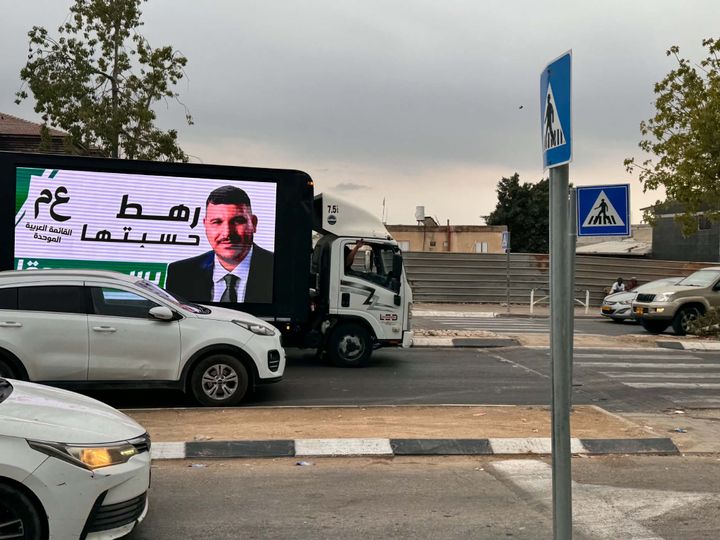
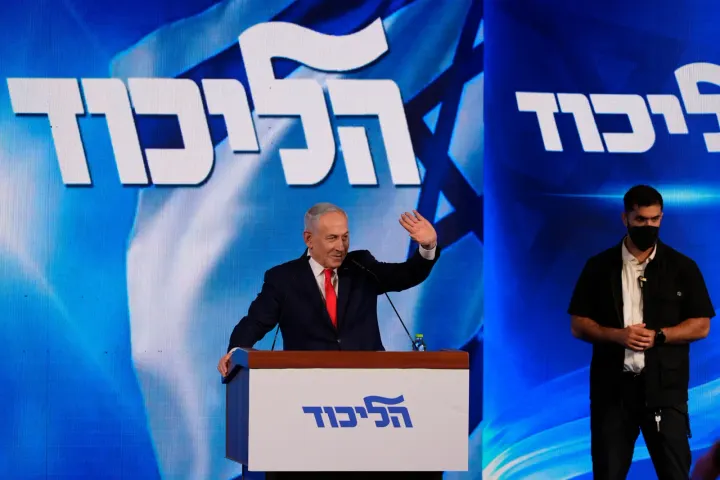
Beyond Politics: The Many Communities of Israel
Discover the people, cultures and communities of Israel, and the histories and experiences that shape life beyond political headlines.

Introduction — A Country of Many Identities
When Israel appears in international news, the focus is often on politics, security, regional conflict and diplomatic tensions. Images of government leaders, military operations and public demonstrations frequently shape how the country is perceived abroad.
Yet beyond these headlines exists a society defined by remarkable cultural, religious and historical diversity.
Israel is home to people whose families arrived from Europe, North Africa, the Middle East, Ethiopia, Central Asia and many other parts of the world. It is also home to communities whose roots in the region extend across generations and centuries.
Jewish Israelis represent a wide range of ethnic backgrounds, religious traditions and political perspectives. Arab citizens of Israel, including Muslim, Christian and Druze communities, contribute to the country's social, cultural and economic life. Smaller communities, including Circassians, Armenians and others, preserve distinctive languages, traditions and identities.
These populations do not form isolated or uniform groups.
Within each community are differences shaped by geography, education, economic circumstances, religion, family history and personal experience.
A secular Jewish family in Tel Aviv may have a very different daily life from an ultra-Orthodox family in Jerusalem. An Arab Christian family in Nazareth may have different traditions and experiences from a Bedouin family in the Negev. A Druze community in the Galilee may maintain cultural practices that differ significantly from those of neighboring towns.
At the same time, these communities are connected through shared institutions, workplaces, universities, public services and the realities of living within the same country.
Their relationships are shaped by cooperation and everyday interaction, but also by inequalities, political disagreements and the continuing Israeli-Palestinian conflict.
Understanding Israeli society therefore requires more than identifying religious or ethnic categories.
It requires examining how communities developed, how people understand their identities and how historical events continue to influence their lives.
The establishment of Israel in 1948 was a defining event for Jewish national self-determination and for Jewish communities seeking a national home, including survivors of persecution and the Holocaust.
For Palestinians, the same period brought war, displacement and the events remembered as the Nakba, or catastrophe.
These different historical experiences remain central to contemporary understandings of identity, belonging and national history.
They also influence relationships between Jewish and Arab communities within Israel and across the wider region.
However, political conflict does not fully describe the lives of the people who inhabit the country.
Everyday experiences also involve education, employment, family relationships, religious celebrations, music, food, literature and cultural traditions.
In markets, hospitals, universities and businesses, people from different backgrounds may encounter one another in circumstances that are not defined exclusively by political disagreement.
These interactions can create opportunities for cooperation and understanding, although they do not erase the structural and political differences that exist.
The purpose of this article is not to present Israel as a society without tensions, nor to reduce its communities to the divisions that appear in international headlines.
Instead, it seeks to provide a broader understanding of the people who live there.
Who are the different communities of Israel?
How did their histories shape the country?
What traditions and identities do they preserve?
Where do their experiences overlap, and where do important differences remain?
By exploring these questions, we can begin to understand Israel not only as a political state or a subject of international debate, but also as a society of individuals and communities with distinct histories, aspirations and experiences.
Because beyond every political headline are people whose lives cannot be explained by politics alone.
Chapter 1 — The Historical Roots of Israel's Diverse Society
A Land Shaped by Centuries of History
To understand the diversity of modern Israeli society, it is necessary to look beyond the establishment of the State of Israel in 1948.
The region has been shaped by centuries of migration, religious development, political change and cultural exchange.
Jewish, Muslim, Christian and other communities have maintained connections to the land across different historical periods. Their experiences have been influenced by changing governments, economic conditions, religious traditions and relationships with neighboring societies.
The territory that today includes Israel and the Palestinian territories has been governed by successive empires and political authorities, including the Romans, Byzantines, various Muslim dynasties, Crusader states, the Ottoman Empire and the British Mandate administration.
Each period influenced the region's population, institutions and cultural life.
Religious sites, historic towns, languages and family traditions preserve evidence of these different historical experiences.
Jerusalem, for example, holds profound religious significance for Jews, Christians and Muslims.
Other cities, including Jaffa, Haifa, Acre, Nazareth, Safed and Tiberias, have long histories involving different religious and cultural communities.
However, the presence of multiple communities should not be understood as a history of uninterrupted coexistence.
Relations between populations have varied considerably across time and place.
Periods of commercial cooperation and cultural exchange existed alongside episodes of discrimination, political conflict and violence.
The historical development of the region is therefore best understood as a complex interaction between communities rather than a single continuous narrative.
Jewish Historical Connections to the Land
Jewish historical and religious connections to the land extend back thousands of years.
Ancient Israelite and Judean societies developed in the region, and Jerusalem became a central location in Jewish religious and national history.
The destruction of the Second Temple by Roman forces in 70 CE marked a major turning point.
Over subsequent centuries, Jewish communities developed throughout the Mediterranean, Middle East, Europe and other regions.
This dispersal, commonly described as the Jewish diaspora, produced diverse religious, linguistic and cultural traditions.
Nevertheless, Jewish communities continued to exist in the land through different historical periods, although their size and distribution changed considerably.
Cities such as Jerusalem, Safed, Tiberias and Hebron became important centers of Jewish religious life at various times.
For many Jewish communities living elsewhere, the land retained a central place in religious practice, collective memory and cultural identity.
Prayers, festivals and religious texts preserved connections to Jerusalem and other historic locations.
These connections later became important elements in the development of modern Jewish nationalism.
However, the modern political movement for Jewish national self-determination emerged in a different historical context from ancient Jewish religious traditions.
Understanding that distinction is important when examining the origins of the modern State of Israel.
The Development of Palestinian Arab Society
Palestinian Arab society also developed through centuries of settlement, cultural exchange and political change.
Arabic became the dominant language in much of the region following the early Islamic conquests, although the process of linguistic and cultural transformation occurred gradually.
Over time, Muslim and Christian Arab communities became deeply established in towns, villages and agricultural areas.
Families developed connections to particular places through land ownership, religious institutions, trade and local traditions.
Cities such as Jerusalem, Jaffa, Haifa, Acre and Nablus became important centers of commercial, religious and intellectual life.
Rural communities cultivated agricultural land, maintained local customs and participated in regional economic networks.
During the Ottoman period, the population was shaped by administrative reforms, economic changes and increasing connections with international trade.
By the late nineteenth and early twentieth centuries, modern political identities were developing across the Ottoman Empire.
Arab nationalism and Palestinian national consciousness emerged within this wider historical environment.
Palestinian identity was not created by a single event.
It developed through language, family history, local attachments, political experiences and responses to changing conditions.
The establishment of Israel in 1948 and the displacement of large numbers of Palestinians profoundly influenced the subsequent development of Palestinian national identity.
These historical experiences remain central to how many Palestinian families understand their origins and relationship to the land.
The Ottoman Period: Communities Under Imperial Rule
For approximately four centuries, from 1516–1517 until the First World War, most of the territory was governed by the Ottoman Empire.
The region was not administered as one single political unit corresponding to the boundaries of modern Israel and the Palestinian territories.
Instead, it formed part of different Ottoman administrative districts whose boundaries changed over time.
The population included Muslim, Christian and Jewish communities, alongside smaller religious and ethnic groups.
Religious institutions played important roles in education, family law and communal organization.
Under Ottoman rule, recognized non-Muslim communities possessed certain forms of religious autonomy, although their legal status and treatment were not identical to those of Muslims.
The nineteenth century brought significant reforms intended to modernize the empire's administration and legal system.
These reforms affected land registration, taxation, public administration and the relationship between individuals and the state.
Economic changes also influenced the region.
Agricultural production, trade and expanding connections with European markets created new opportunities and pressures.
The development of modern transportation and communication gradually changed relationships between cities and rural communities.
These transformations helped shape the society that existed when the Ottoman Empire lost control of the region during the First World War.
The Emergence of Modern Zionism
Modern political Zionism emerged in Europe during the late nineteenth century.
The movement developed in response to several historical circumstances, including antisemitism, discrimination, nationalist movements and debates about Jewish identity and political self-determination.
Theodor Herzl became one of the movement's most prominent early leaders.
His 1896 publication The Jewish State argued for a political solution to the insecurity and persecution experienced by Jewish communities.
The First Zionist Congress took place in Basel, Switzerland, in 1897.
The movement sought to establish a publicly and legally recognized national home for the Jewish people in Palestine, then part of the Ottoman Empire.
Zionism was never a completely uniform political movement.
Different branches developed distinct views concerning religion, socialism, cultural identity, territorial policy and the relationship between Jewish national aspirations and the Arab population.
Some emphasized agricultural settlement and the creation of new communities.
Others focused on political diplomacy, Hebrew cultural revival or religious interpretations of Jewish return.
The movement gained support among some Jewish communities but also faced opposition from Jewish individuals and organizations with different political or religious perspectives.
Its development would have profound consequences for the region's population and political future.
Jewish Immigration Before 1948
Jewish immigration to Ottoman and British-administered Palestine increased during the late nineteenth and early twentieth centuries.
These movements are often described as successive aliyot, using the Hebrew term aliyah, meaning ascent or immigration to the land of Israel.
The First Aliyah, generally dated from 1882 to 1903, included immigrants primarily from Eastern Europe and Yemen.
Some established agricultural settlements, while others joined existing urban communities.
The Second Aliyah, from approximately 1904 to 1914, included immigrants influenced by socialist and nationalist ideas.
Members of this movement contributed to the development of collective agricultural communities and labor institutions.
Later immigration waves brought additional Jewish populations from Europe and elsewhere.
Immigrants arrived for different reasons.
Some were motivated by Zionist political or religious ideals.
Others sought safety from persecution, antisemitic violence or increasingly restrictive conditions in their countries of origin.
Immigration also involved significant difficulties.
New arrivals faced language barriers, economic insecurity, disease and unfamiliar living conditions.
Relations with the existing Arab population were complex.
Commercial and personal interactions occurred, but disputes over land, employment and political aspirations also intensified.
These tensions became increasingly significant as the Jewish and Arab national movements developed competing visions for the future of the territory.
The British Mandate and Growing Political Tensions
The First World War transformed the political future of the region.
British forces captured Jerusalem in 1917, and Britain subsequently assumed responsibility for administering Palestine under a League of Nations Mandate.
The Mandate incorporated the commitment expressed in the 1917 Balfour Declaration to support the establishment of a national home for the Jewish people in Palestine.
The declaration also stated that nothing should prejudice the civil and religious rights of existing non-Jewish communities.
However, the relationship between these commitments became a source of deep political disagreement.
Jewish national institutions expanded during the Mandate period.
Educational organizations, labor movements, political parties and security organizations developed alongside growing Jewish urban and agricultural communities.
Hebrew increasingly became a language of modern public life.
Palestinian Arab political organizations also developed, expressing opposition to British policies and growing concern over Jewish immigration, land transactions and the future political status of the Arab majority.
Violence between communities increased during several periods.
Major disturbances occurred in 1920, 1921 and 1929.
The Arab Revolt of 1936–1939 involved strikes, armed resistance against British rule and opposition to Zionist immigration and settlement.
British authorities responded with extensive security operations and political measures.
The Mandate period therefore produced both institutional development and increasingly entrenched national conflict.
The Holocaust and the Urgency of Jewish Refuge
The Holocaust fundamentally changed the circumstances of European Jewry and the international debate surrounding Jewish statehood.
Between 1941 and 1945, Nazi Germany and its collaborators murdered approximately six million Jews.
Jewish communities across Europe were devastated.
Survivors faced displacement, destroyed communities and uncertain futures.
Many sought to leave Europe, but immigration restrictions and political obstacles limited their options.
For many Jewish survivors and supporters of Zionism, the establishment of a Jewish state became closely associated with the need for security and refuge.
The Holocaust did not create Jewish historical connections to the land or the Zionist movement, both of which existed long before the Second World War.
However, it intensified the urgency surrounding Jewish national self-determination and influenced international political discussions.
The experiences of Holocaust survivors later became an important part of Israeli collective memory.
Their personal histories also contributed to the country's social and cultural development.
The United Nations Partition Plan of 1947
By the end of the Second World War, Britain faced increasing difficulties governing Palestine.
Violence, political conflict and international pressure contributed to the decision to refer the question of Palestine to the United Nations.
In November 1947, the United Nations General Assembly adopted Resolution 181.
The resolution recommended the partition of British Mandate Palestine into separate Jewish and Arab states, with a special international arrangement for Jerusalem.
The Jewish Agency accepted the plan as a basis for establishing a Jewish state, although disagreements remained concerning borders and other provisions.
Arab political leaders rejected the proposal, arguing that it violated the rights of the Arab majority and allocated an unjust proportion of the territory to the proposed Jewish state.
The partition plan was a recommendation rather than a self-executing arrangement.
It was never implemented as originally proposed.
Violence escalated between Jewish and Arab communities following the vote.
The conflict developed into a wider war after Israel declared independence in May 1948 and neighboring Arab armies entered the fighting.
The events of 1947–1949 profoundly changed the region's population and political geography.
1948: Independence, War and Displacement
On May 14, 1948, David Ben-Gurion declared the establishment of the State of Israel.
For Jewish supporters of statehood, independence represented the realization of a longstanding national aspiration and the establishment of a sovereign Jewish state.
For Palestinians, the war surrounding Israel's establishment brought extensive displacement, loss of homes and the destruction or depopulation of numerous communities.
Approximately 700,000 Palestinians became refugees during the 1947–1949 conflict.
The causes of displacement varied across locations and stages of the war.
They included expulsions by Jewish and later Israeli forces, flight from fighting, fear of violence and the collapse of local social and economic structures.
Many Palestinian refugees were unable to return to their homes after the war.
Their descendants now form large communities in the West Bank, Gaza, Jordan, Lebanon, Syria and elsewhere.
Palestinians remember these events as the Nakba, meaning catastrophe.
The war also resulted in major territorial changes.
Israel controlled more territory than had been allocated to the proposed Jewish state under the 1947 partition plan.
Jordan controlled the West Bank, including East Jerusalem, while Egypt administered the Gaza Strip.
No independent Palestinian Arab state emerged from the partition process.
The war therefore created two deeply different historical experiences that continue to influence collective memory and political identity.
For Israeli Jews, 1948 is commemorated as the achievement of independence.
For Palestinians, it is remembered as a period of national loss and displacement.
Understanding both experiences is essential to understanding the development of the societies that followed.
Arab Communities That Remained Within Israel
Not all Palestinian Arabs left or were displaced during the 1948 war.
A substantial Arab population remained within the territory that became the State of Israel.
These communities formed the historical core of today's Palestinian Arab citizen population.
During Israel's early years, most Arab citizens lived under a military administration that imposed restrictions on movement and other aspects of daily life.
This system remained in place until 1966.
Arab citizens nevertheless participated in parliamentary elections and developed political, educational and community institutions.
Their experiences were shaped by the interaction between formal citizenship rights, security policies, economic conditions and their Palestinian national identity.
Over subsequent decades, Arab communities expanded their participation in universities, professional occupations, public institutions and political organizations.
At the same time, inequalities and disputes concerning land, planning, municipal resources and national identity continued.
Today, Arab citizens of Israel represent a significant and diverse part of the country's population.
Their history cannot be separated from the events of 1948, but their experiences also reflect generations of social, political and cultural development within the Israeli state.
Jewish Immigration After Independence
Following independence, Israel experienced large-scale Jewish immigration.
Between 1948 and the early 1950s, hundreds of thousands of Jewish immigrants arrived from Europe, the Middle East, North Africa and other regions.
Many were Holocaust survivors or displaced persons.
Others came from countries where Jewish communities faced insecurity, discrimination, political upheaval or restrictions on their future.
The circumstances of migration differed considerably.
Some individuals left voluntarily in pursuit of religious, national or economic aspirations.
Others fled violence or persecution, or departed under significant political and social pressure.
The new state faced enormous challenges in accommodating these arrivals.
Housing, employment, education and healthcare systems struggled to meet rapidly increasing demand.
Temporary immigrant camps, known as ma'abarot, were established to accommodate many new arrivals.
Living conditions were often difficult.
Families experienced overcrowding, limited infrastructure and economic uncertainty.
These early years shaped Israel's demographic development and created social divisions that would remain influential for decades.
Jews from Europe, North Africa and the Middle East
Jewish immigrants brought different languages, customs and religious traditions.
Ashkenazi Jews, whose historical communities developed largely in Central and Eastern Europe, contributed cultural traditions associated with languages such as Yiddish and various European languages.
Sephardi Jews trace important elements of their heritage to the Jewish communities of the Iberian Peninsula and their descendants, many of whom settled throughout the Mediterranean and Ottoman world following expulsions from Spain and Portugal.
Mizrahi Jews are broadly associated with Jewish communities from the Middle East and parts of North Africa.
These categories are useful but imperfect.
Family histories frequently cross regional boundaries, and Sephardi religious traditions are followed by many Jews whose ancestry is not specifically Iberian.
In Israel's early decades, social and economic differences emerged between immigrant communities.
Ashkenazi political and institutional elites held considerable influence within the new state's leadership.
Many Jewish immigrants from Middle Eastern and North African countries experienced unequal opportunities, discrimination or cultural pressure to assimilate into dominant institutions.
These experiences contributed to later political movements and debates concerning social justice, cultural recognition and representation.
Over time, intermarriage, shared institutions and changing cultural practices created new forms of Israeli identity.
Nevertheless, family origins and historical inequalities continue to influence aspects of social and political life.
Ethiopian Jewish Immigration
Ethiopian Jewish communities represent another important part of Israel's demographic history.
The Beta Israel community maintained distinctive Jewish religious traditions in Ethiopia over many generations.
Large-scale migration to Israel occurred particularly during the late twentieth century.
Operation Moses, conducted in 1984–1985, brought thousands of Ethiopian Jews to Israel through a complex and dangerous migration process.
Operation Solomon in 1991 transported more than 14,000 Ethiopian Jews to Israel in a major airlift.
These operations became significant events in Israeli history.
For many immigrants, arrival in Israel represented the fulfillment of a longstanding religious and cultural aspiration.
However, integration also presented substantial challenges.
Language differences, economic insecurity, educational barriers and experiences of racial discrimination affected parts of the Ethiopian Israeli community.
Subsequent generations have contributed to Israeli public life through education, military service, politics, arts, sports and professional occupations.
At the same time, protests against racism and unequal treatment have highlighted continuing concerns.
The Ethiopian Israeli experience illustrates how immigration can involve both opportunities for belonging and difficult questions concerning social equality.
Immigration from the Former Soviet Union
Another major demographic transformation occurred during the late 1980s and 1990s.
Following political changes in the Soviet Union and its eventual dissolution, large numbers of immigrants arrived in Israel from Soviet and post-Soviet states.
More than one million immigrants from the former Soviet Union arrived during the broader wave beginning in 1989 and continuing over subsequent years.
They brought different professional backgrounds, languages, cultural traditions and political experiences.
Many were highly educated and had experience in scientific, technical, medical and academic fields.
Their arrival influenced Israel's economy, universities, cultural institutions and political system.
Russian became one of the country's most widely used languages.
Russian-language media, cultural organizations and political movements developed to serve the growing population.
The immigration wave also raised questions about religious identity and legal status.
Some immigrants were eligible for immigration under Israel's Law of Return but were not recognized as Jewish under the standards applied by the Chief Rabbinate for certain religious purposes.
This distinction created practical difficulties concerning marriage and other personal status matters.
The experiences of immigrants from the former Soviet Union demonstrate the complexity of defining identity within a state that combines Jewish national identity with diverse forms of citizenship and religious affiliation.
Smaller Communities and Longstanding Minorities
Israel's population also includes smaller communities whose histories are not always widely discussed internationally.
The Druze are an Arabic-speaking religious community with a distinctive faith and communal tradition.
Druze communities are found in northern Israel and the Golan Heights, although their citizenship and political circumstances differ between these areas.
Circassians are a predominantly Muslim community whose ancestors migrated from the Caucasus during the nineteenth century.
They have preserved elements of their language and cultural heritage while participating in Israeli society.
Armenian Christians maintain historic religious and cultural institutions, particularly in Jerusalem.
Other Christian communities include different churches with distinct traditions, languages and historical experiences.
The Bahá'í Faith has important international religious sites in Haifa and Acre, although the presence of its holy places should not be confused with a large local Bahá'í population.
Additional communities include migrant workers, asylum seekers and residents whose legal status and experiences differ from those of Israeli citizens.
Together, these populations contribute to the complexity of Israeli society.
Their histories demonstrate that the country's diversity cannot be explained solely through the categories of Jewish and Arab identity.
The Influence of Geography on Community Life
Historical developments have also influenced where different communities live.
Some Israeli cities have predominantly Jewish populations.
Others have predominantly Arab populations.
Certain cities, including Haifa, Acre, Jaffa and parts of Jerusalem, contain significant Jewish and Arab communities.
However, describing a city as mixed does not necessarily mean that its communities experience equal opportunities or live in fully integrated neighborhoods.
Residential patterns can reflect historical displacement, economic differences, planning policies, religious preferences and social networks.
Jerusalem is a particularly complex example.
The city's Jewish and Palestinian populations live within a political and legal environment shaped by the 1948 and 1967 wars, Israel's annexation of East Jerusalem and ongoing international disputes concerning sovereignty.
The Golan Heights presents different legal and political questions following Israel's occupation of the territory in 1967 and its extension of Israeli law there in 1981, a move not recognized internationally as a lawful transfer of sovereignty.
Geography therefore matters when discussing identity.
The experiences of a community in northern Israel may differ substantially from those of a community in the Negev or Jerusalem.
Local history, economic opportunity and legal status all influence daily life.
The Development of a Shared Israeli Culture
Despite differences in historical background, decades of life within the same state have produced forms of shared Israeli culture.
Modern Hebrew became a central language of public institutions, education and much of everyday life.
National institutions, public broadcasting, universities and workplaces created opportunities for interaction between people from different Jewish immigrant backgrounds.
Music, literature, film and food increasingly reflected influences from Europe, North Africa, the Middle East and other regions.
Israeli popular culture developed through the interaction of different traditions rather than from a single cultural source.
However, cultural exchange has not always occurred on equal terms.
Debates continue over which traditions receive recognition, which languages are promoted and whose historical experiences are represented in public institutions.
Arab citizens participate in and contribute to Israeli cultural life while also maintaining Palestinian, Arab, religious and local identities.
Some communities emphasize integration into wider Israeli institutions.
Others place greater importance on preserving distinct cultural traditions or challenging inequalities.
The development of shared cultural practices therefore exists alongside continuing differences in identity and political experience.
History, Memory and Different National Narratives
One of the most important challenges in understanding Israeli society is recognizing that communities may interpret the same historical events differently.
The establishment of Israel in 1948 is celebrated by many Jewish Israelis as national independence.
For Palestinians, the same historical period is associated with displacement, dispossession and the Nakba.
The 1967 war is remembered in different ways.
For many Israelis, the war became associated with military victory, security concerns and access to places of religious and historical significance.
For Palestinians, it marked the beginning of Israel's occupation of the West Bank, including East Jerusalem, and Gaza.
These different historical experiences continue to influence political debate, education, family memory and national identity.
However, individuals within each community do not necessarily share identical interpretations.
Political, religious and generational differences shape how people understand the past.
Some advocate greater recognition of competing historical experiences.
Others maintain sharply different views concerning responsibility, justice and national rights.
Responsible historical journalism must distinguish documented events from the interpretations and meanings attached to them.
It should neither erase differences in experience nor assume that every historical claim has equal evidentiary support.
Conclusion — The Foundations of a Diverse Society
The diversity of modern Israeli society is the result of centuries of historical development and major demographic changes during the nineteenth and twentieth centuries.
Jewish historical connections to the land, longstanding Palestinian Arab communities, Ottoman rule, the British Mandate, modern nationalism and successive waves of immigration all contributed to the society that exists today.
The events of 1948 created a sovereign Jewish state while also producing extensive Palestinian displacement and a refugee population whose experiences remain central to the wider conflict.
Subsequent immigration transformed Israel's Jewish population, bringing communities with different languages, traditions and cultural backgrounds.
At the same time, Arab citizens and smaller minority communities continued to develop their own social and political identities within the state.
These histories produced a society characterized by cultural exchange, shared institutions and diverse forms of belonging.
They also created inequalities, competing national narratives and unresolved political questions.
Understanding this background is essential before examining individual communities in greater detail.
The next chapter explores the diversity within Israel's Jewish population, including Ashkenazi, Sephardi, Mizrahi, Ethiopian and other Jewish communities, as well as the differences between secular, traditional, religious and ultra-Orthodox identities.
Chapter 2 — Jewish Communities: Different Origins, Traditions and Identities
One People, Many Histories
The Jewish population of Israel is often described internationally as a single community. Yet behind this broad description lies a remarkable diversity of historical experiences, cultural traditions, religious practices and personal identities.
Jewish Israelis trace their family histories to communities across Europe, North Africa, the Middle East, the Caucasus, Central Asia, Ethiopia and other parts of the world.
Some families have lived in the region for generations, while others arrived during the major immigration movements of the nineteenth and twentieth centuries.
These different origins have influenced languages, religious customs, music, food, family traditions and attitudes toward public life.
The diversity also extends to religious belief and practice.
Some Jewish Israelis observe religious law closely and organize their daily lives around religious institutions.
Others identify strongly with Jewish history and culture while maintaining secular lifestyles.
Many occupy positions between these categories, combining selected religious traditions with modern secular practices.
Understanding these differences is essential to understanding Israeli society.
Jewish identity is not defined exclusively by religion, nationality or ancestry. It can involve all three, although individuals understand and express their identities in different ways.
Ashkenazi Jews: Historical Roots in Europe
Ashkenazi Jews are descendants of Jewish communities that developed primarily in Central and Eastern Europe.
Over many centuries, these communities established distinctive religious traditions, educational institutions, languages and cultural practices.
Yiddish, a language historically combining Germanic foundations with Hebrew, Aramaic and other linguistic influences, became an important means of communication among many Ashkenazi communities.
Jewish life developed in cities, towns and rural settlements across regions including present-day Germany, Poland, Lithuania, Ukraine, Belarus and Hungary.
Communities experienced periods of economic and cultural development, but also discrimination, expulsions, antisemitic violence and restrictions on religious or professional life.
During the nineteenth and early twentieth centuries, changing political conditions encouraged some Ashkenazi Jews to emigrate.
Many traveled to North America and Western Europe.
Others joined the growing Zionist movement and settled in Ottoman or British-administered Palestine.
Ashkenazi immigrants played an influential role in the development of early Zionist political institutions, labor organizations, agricultural settlements and the revival of Hebrew as a modern public language.
Following the establishment of Israel, Ashkenazi political leaders occupied many senior positions in the new state's government and public institutions.
However, the term Ashkenazi does not describe a uniform political or religious identity.
Ashkenazi Israelis include secular, traditional, Orthodox and ultra-Orthodox communities, as well as individuals with widely differing political views.
The Holocaust and Ashkenazi Collective Memory
The Holocaust had a devastating impact on European Jewish communities.
Nazi Germany and its collaborators murdered approximately six million Jews, destroying families, religious institutions and cultural centers across Europe.
For many Ashkenazi families in Israel, the Holocaust remains an important part of family history and collective memory.
Survivors who immigrated to Israel after the Second World War brought personal experiences of persecution, displacement and loss.
Their stories became central to public remembrance, education and national commemorations.
Yom HaShoah, Israel's Holocaust Remembrance Day, is observed annually with ceremonies, educational activities and moments of public reflection.
However, Holocaust memory is not limited to Ashkenazi Israelis.
The genocide affected Jewish communities across Europe, including Sephardi communities in the Balkans and Greece, while Jews in North Africa also experienced persecution under Nazi-allied or collaborationist authorities.
Holocaust remembrance has become part of the wider Israeli national narrative, although individual families and communities may relate to it through different historical experiences.
Sephardi Jews: A Heritage of the Mediterranean
Sephardi Jewish history is closely associated with the Jewish communities of the Iberian Peninsula.
For centuries, Jewish communities lived in territories that later became modern Spain and Portugal.
They contributed to religious scholarship, philosophy, literature, commerce and cultural life.
The expulsion of Jews from Spain in 1492 and the forced conversion and expulsion policies in Portugal during the following years transformed Sephardi history.
Many families settled in North Africa, the Ottoman Empire, the Balkans and other Mediterranean regions.
These communities preserved distinctive religious traditions, music, cuisine and languages.
Judeo-Spanish, commonly known as Ladino, developed as an important language among some Sephardi populations.
Sephardi religious customs also influenced Jewish communities beyond those with direct Iberian ancestry.
In modern Israel, the term Sephardi can refer to historical ancestry, religious traditions or institutional affiliation.
These meanings do not always overlap.
For example, many Jews of Middle Eastern and North African ancestry follow Sephardi prayer traditions without tracing their family history specifically to medieval Spain or Portugal.
Sephardi cultural influences are visible in Israeli religious life, music, literature and food.
Their history demonstrates how Jewish traditions evolved through interaction with the societies in which communities lived.
Mizrahi Jews: Communities of the Middle East and North Africa
The term Mizrahi, meaning Eastern, is commonly used to describe Jews whose families originated in the Middle East and, in contemporary Israeli usage, often North Africa.
These communities developed across countries including Iraq, Iran, Yemen, Syria, Morocco, Tunisia, Algeria and Libya.
Their histories are diverse and cannot be reduced to a single regional experience.
Jewish communities existed in Iraq and Iran long before the emergence of Islam.
Others developed in different parts of the Arab world through centuries of migration and cultural exchange.
Many maintained close connections with surrounding societies while preserving distinctive religious practices and communal institutions.
Arabic, Judeo-Arabic, Persian and other languages formed part of Jewish daily life.
Music, religious poetry, family customs and culinary traditions reflected both Jewish heritage and regional influences.
During the twentieth century, political developments transformed the position of Jewish communities across the Middle East and North Africa.
The establishment of Israel, the Arab-Israeli conflict, nationalist movements, discriminatory policies and episodes of violence contributed to widespread Jewish emigration.
The circumstances differed significantly between countries.
Some Jews fled persecution or immediate insecurity.
Others migrated through organized immigration programs or because they saw opportunities for religious, national or economic belonging in Israel.
In several countries, restrictions on property, citizenship or movement affected departing Jewish populations.
The result was a major demographic transformation in both Israel and the countries from which these communities originated.
The Experience of Mizrahi Immigrants in Israel
Many Jewish immigrants from Middle Eastern and North African countries arrived in Israel during the first decades after independence.
Their arrival significantly expanded the country's population.
However, integration was often difficult.
The new state faced shortages of housing, employment opportunities and public infrastructure.
Many immigrants initially lived in temporary transit camps, known as ma'abarot.
Some were later settled in development towns or peripheral regions where economic opportunities were limited.
These settlement patterns influenced access to education, employment and public services.
Mizrahi communities also experienced cultural discrimination and unequal treatment within institutions dominated by established political and social elites.
Certain traditions were regarded as less prestigious than European cultural practices.
These experiences contributed to resentment and demands for greater recognition.
During the 1970s, movements such as the Israeli Black Panthers drew attention to discrimination and socioeconomic inequality affecting Mizrahi Jews.
Over subsequent decades, Mizrahi political representation and cultural influence expanded considerably.
Music rooted in Middle Eastern and North African traditions became increasingly prominent in Israeli popular culture.
Writers, academics, artists and political leaders challenged earlier assumptions about cultural hierarchy.
Nevertheless, historical inequalities and debates over representation remain relevant.
The Mizrahi experience illustrates how the creation of a shared national society can involve both cultural integration and struggles over recognition.
Yemenite Jewish Traditions
Yemenite Jews represent one of the historically distinctive Jewish communities now found in Israel.
Jewish communities lived in Yemen for many centuries, developing religious traditions shaped by their geographic and cultural environment.
Yemenite Jewish prayer, pronunciation of Hebrew, music and religious scholarship preserved practices that differed in certain respects from those of European Jewish communities.
Traditional craftsmanship, particularly jewelry-making and metalwork, became associated with aspects of Yemenite Jewish cultural history.
Yemenite Jewish immigration to the land began before the establishment of Israel.
A much larger movement occurred after independence.
Between 1949 and 1950, an operation commonly known as Operation Magic Carpet, or Operation On Wings of Eagles, transported tens of thousands of Jews from Yemen and the surrounding region to Israel.
The migration involved considerable logistical challenges and occurred amid political instability and insecurity.
For many families, the journey represented a profound transformation in their lives.
However, integration was accompanied by hardship.
Yemenite immigrants faced economic difficulties and cultural pressures similar to those experienced by other communities arriving during Israel's early years.
The disappearance of children from Yemenite and other immigrant families during this period became a longstanding source of grief, controversy and demands for accountability.
Official investigations examined allegations involving missing children, inadequate documentation and institutional misconduct.
Families and advocates have continued to question whether all cases were adequately resolved.
This history remains an important part of discussions concerning trust, discrimination and the treatment of immigrant communities.
Ethiopian Jews: Faith, Migration and Identity
Ethiopian Jews, particularly members of the Beta Israel community, have a distinctive history shaped by religious traditions developed over many generations.
Their practices historically differed in some respects from those of rabbinic Jewish communities elsewhere.
Religious leadership, sacred texts, festivals and communal customs reflected the community's particular historical development.
Large-scale Ethiopian Jewish immigration to Israel occurred during the late twentieth century.
Operation Moses in 1984–1985 brought thousands of Ethiopian Jews to Israel through Sudan.
The journey was dangerous, and many people experienced severe hardship.
Operation Solomon in 1991 transported more than 14,000 Ethiopian Jews to Israel during a major airlift.
These events became prominent chapters in Israeli immigration history.
For many Ethiopian Jewish families, arrival in Israel represented a deeply meaningful religious and cultural experience.
Yet the transition also involved considerable challenges.
Language differences, unfamiliar institutions, employment difficulties and educational barriers complicated integration.
Ethiopian Israelis have also reported experiences of racial discrimination and unequal treatment.
Public demonstrations, particularly following incidents involving police conduct, have drawn attention to these concerns.
At the same time, Ethiopian Israelis have become increasingly visible in public life.
Members of the community have contributed to politics, education, military service, healthcare, sports, literature and the arts.
Younger generations often combine Ethiopian cultural heritage with broader Israeli identities.
Their experiences demonstrate that cultural belonging and social equality are related but separate questions.
Jews from the Former Soviet Union
The arrival of Jewish immigrants from the Soviet Union and its successor states was one of the largest demographic changes in modern Israeli history.
Beginning in the late 1980s and accelerating during the 1990s, more than one million immigrants arrived over the broader migration wave.
They came from Russia, Ukraine, Belarus, Georgia, Uzbekistan and other former Soviet republics.
Many brought professional qualifications in science, medicine, engineering, education and the arts.
Their arrival influenced Israeli universities, research institutions, technology industries and cultural organizations.
Russian-language newspapers, television programming, theaters and community institutions developed to serve the growing population.
The immigration wave also changed political life.
Parties and politicians appealed to Russian-speaking voters, while immigrants developed diverse political positions shaped by their experiences in both the Soviet Union and Israel.
However, integration was not always straightforward.
Some immigrants encountered difficulties obtaining recognition for professional qualifications.
Others faced economic insecurity or challenges adapting to Hebrew-speaking institutions.
Questions concerning religious status also became important.
Israel's Law of Return allows immigration for certain relatives of Jews who may not themselves be recognized as Jewish under the religious standards applied by Israel's Chief Rabbinate.
This distinction can affect access to religious marriage and other personal status arrangements.
The experiences of Russian-speaking Israelis therefore illustrate the difference between citizenship, family ancestry, religious recognition and cultural identity.
Smaller Jewish Communities and Regional Traditions
Israel is also home to Jewish communities whose historical experiences receive less international attention.
Bukharan Jews trace their heritage to Central Asia, particularly areas of present-day Uzbekistan and Tajikistan.
Their traditions reflect centuries of Jewish life in Persian- and Turkic-influenced cultural environments.
Georgian Jews have a long history in the Caucasus and maintain distinctive religious and family customs.
Mountain Jews, historically associated with the eastern Caucasus, developed their own linguistic and cultural traditions.
Kurdish Jews trace their heritage to communities across regions of present-day Iraq, Iran, Turkey and Syria.
Indian Jewish communities include the Bene Israel, Cochin Jews and Baghdadi Jews, each with distinct histories.
These communities contributed different forms of religious practice, music, language and cuisine to Israeli society.
Although some traditions have changed through intermarriage and assimilation, cultural associations and family networks continue to preserve elements of communal heritage.
The diversity of these smaller populations challenges the idea that Jewish identity can be explained through only a few broad ethnic categories.
Secular Jewish Israelis
Religious identity is only one dimension of Jewish life in Israel.
Many Jewish Israelis identify as secular.
For some, Jewish identity is primarily cultural, historical or national rather than religious.
They may celebrate Jewish holidays, participate in family traditions and feel a strong connection to Jewish history without observing religious law in daily life.
Secular lifestyles vary considerably.
Some individuals rarely participate in religious practices.
Others observe selected traditions, such as Passover meals or family gatherings during major Jewish holidays.
Secular Israelis are found throughout the country, although particular urban areas are often associated with more secular lifestyles.
Tel Aviv is frequently described as a center of secular cultural life, but its population also includes religious communities and people with diverse personal identities.
Secular political movements have often advocated for greater separation between religion and state.
Issues such as civil marriage, public transportation on the Sabbath and religious authority over personal status matters remain important subjects of debate.
However, secular Israelis do not necessarily share identical political positions on national security, economic policy or the Israeli-Palestinian conflict.
Traditional Jewish Identity
Between strictly secular and observantly religious categories are many Israelis who identify as traditional, often described by the Hebrew term masorti.
Traditional identity may involve observing selected religious practices while participating fully in modern secular society.
Families may maintain kosher kitchens, attend synagogue on holidays or observe aspects of the Sabbath without following all religious requirements.
Traditional practices are often shaped by family history and community customs.
Among some Sephardi and Mizrahi families, traditional religious identity has remained particularly influential, although it is not limited to these populations.
The boundaries between secular, traditional and religious identities are not always clearly defined.
Individuals may change their practices over time or interpret religious obligations differently.
This diversity demonstrates that Jewish religious identity in Israel cannot be accurately represented through a simple division between believers and nonbelievers.
Religious Zionist Communities
Religious Zionism combines Jewish religious observance with support for Jewish national self-determination and the State of Israel.
The movement developed before Israeli independence and has evolved through different historical and political periods.
Religious Zionist communities generally regard religious tradition and participation in modern state institutions as compatible.
Members may study in religious educational institutions while serving in the military, attending universities or working in professional occupations.
Religious Zionism includes a range of political and theological perspectives.
Some movements emphasize education, social welfare and participation in national institutions.
Others place particular importance on Jewish settlement in the West Bank, which they often refer to by the biblical names Judea and Samaria.
The settlement movement has become a significant political and international issue because the West Bank is internationally recognized as occupied Palestinian territory.
Israeli settlements there are considered contrary to international law by the International Court of Justice and many states and international organizations, while Israeli governments have disputed aspects of this legal position.
Not all religious Zionists share the same views concerning settlements, territorial compromise or the Israeli-Palestinian conflict.
Recognizing this diversity is important when discussing religious nationalism in Israeli politics.
Ultra-Orthodox Jewish Communities
Ultra-Orthodox Jews, commonly referred to as Haredim, form another important part of Israeli society.
Haredi communities generally place strong emphasis on religious study, adherence to Jewish law and the preservation of communal traditions.
Many maintain distinctive educational institutions, religious leadership structures and patterns of dress.
However, ultra-Orthodox Judaism is not a single uniform movement.
Different communities follow different rabbinic authorities and religious traditions.
Some are associated with Hasidic movements, while others belong to non-Hasidic Lithuanian-style or Sephardi Haredi traditions.
Attitudes toward the State of Israel also vary.
Some Haredi groups participate actively in Israeli politics through religious parties.
Others maintain more reserved relationships with Zionist ideology or state institutions.
Education, employment and military service are major subjects of public debate.
Many Haredi men pursue extended religious study, although patterns of employment and educational participation vary between communities.
The question of military conscription has become especially controversial.
Supporters of exemptions or deferments emphasize the religious importance of Torah study and the preservation of communal institutions.
Critics argue that unequal military obligations create social and economic burdens and raise questions about civic equality.
These disagreements have influenced coalition negotiations and judicial proceedings.
Jewish Identity and Political Diversity
Ethnic and religious background can influence political attitudes, but it does not determine them.
Israeli Jewish voters support parties representing a wide range of positions on security, economics, religion and constitutional reform.
Some prioritize territorial security and national identity.
Others emphasize social equality, liberal democratic institutions, economic opportunity or religious freedom.
Historical experiences can also influence political preferences.
For example, the experiences of discrimination among some Mizrahi communities contributed to political changes during the late twentieth century.
Immigrants from the former Soviet Union brought different expectations concerning government, security and public institutions.
Religious communities may prioritize policies affecting education, family law or religious practice.
However, these patterns should not be treated as fixed characteristics of entire populations.
Generational differences, education, employment and personal experiences can influence political identity as strongly as ancestry.
Intermarriage and Changing Cultural Boundaries
Over time, marriages between Jews of different ancestral backgrounds have contributed to the development of shared Israeli identities.
Families may combine Ashkenazi, Sephardi, Mizrahi, Ethiopian or other traditions.
Children may grow up with multiple cultural influences and family histories.
Food, music, holiday customs and religious practices can reflect these combinations.
As a result, traditional ethnic categories may become less useful for describing the experiences of some younger Israelis.
However, historical inequalities and cultural distinctions have not disappeared entirely.
Family background can still influence social networks, religious customs and perceptions of identity.
The relationship between integration and cultural preservation remains dynamic.
Some individuals seek to maintain distinctive family traditions.
Others identify primarily with a broader Israeli Jewish culture.
Many combine both approaches.
Food, Music and Cultural Expression
Jewish cultural diversity is particularly visible in Israeli food and music.
Dishes associated with different communities have become widely available throughout the country.
Yemenite Jewish traditions contributed foods such as jachnun and malawach.
North African Jewish communities brought dishes including couscous, preserved vegetable preparations and various regional stews.
Iraqi Jewish traditions include foods such as kubbeh and sabich, although the history of individual dishes often involves broader regional culinary influences.
Ashkenazi traditions include foods such as gefilte fish, kugel and different forms of baked goods.
These dishes exist within a wider culinary environment shared and influenced by Jewish, Palestinian, Arab and other Middle Eastern traditions.
Food should therefore not be treated as evidence that a cultural tradition belongs exclusively to one national group.
Music reveals similar patterns of exchange.
Israeli popular music incorporates influences from European traditions, Arabic musical forms, North African styles, religious melodies and contemporary international genres.
Mizrahi popular music, once marginalized within parts of the cultural establishment, has become a major component of mainstream Israeli music.
Cultural expression demonstrates how communities preserve historical identities while participating in a changing national society.
A New Generation and the Meaning of Belonging
Younger Jewish Israelis are growing up in a society shaped by global communication, technological development and changing cultural expectations.
Many have family histories that cross multiple countries and communities.
Some speak Hebrew alongside Russian, Amharic, French, English or other languages.
Others know their ancestral languages primarily through grandparents, music or family traditions.
Religious identity also continues to evolve.
Young people may embrace the practices of their families, reinterpret them or choose different lifestyles.
Digital media and international travel expose individuals to perspectives beyond their immediate communities.
At the same time, national security concerns, military service, political polarization and debates over religion and state continue to influence young people's experiences.
For some, belonging is closely connected to Jewish religious tradition.
For others, it is associated with citizenship, language, family history or cultural life.
Many combine several forms of identity.
The future of Jewish Israeli society will be influenced by how these generations negotiate the relationship between inherited traditions and changing social realities.
Conclusion — Diversity Within a Shared Identity
The Jewish population of Israel is the product of centuries of history across multiple regions of the world.
Ashkenazi, Sephardi, Mizrahi, Ethiopian, Yemenite, Russian-speaking and other communities brought distinct traditions and experiences into the modern state.
Their histories include religious scholarship, cultural development, migration, persecution, displacement and adaptation.
The creation of Israel brought these communities into a shared political framework, but it did not erase their differences.
Cultural exchange and intermarriage have contributed to the development of broader Israeli identities.
At the same time, historical inequalities, religious disagreements and political divisions remain influential.
Jewish identity in Israel cannot be reduced to a single religious practice, ethnic background or political position.
It is expressed through different combinations of history, faith, language, culture and personal belonging.
Understanding these differences provides a more complete picture of Israeli society and challenges the assumption that its Jewish population represents one uniform community.
The next chapter turns to another essential part of the country's social fabric: Arab citizens of Israel, their diverse identities, historical experiences, cultural traditions and everyday lives.
Chapter 3 — Arab Citizens of Israel: Identity, Culture and Everyday Life
A Community of Many Identities
Arab citizens of Israel represent one of the country's largest and most historically significant population groups. Yet describing them as a single community does not fully reflect the diversity of their experiences, religious traditions, political perspectives and personal identities.
Most are descendants of Palestinian Arabs who remained within the territory that became the State of Israel following the war of 1948. Others have different family histories, including Bedouin communities whose relationships with the land and surrounding societies developed over generations.
Arab citizens include Muslims, Christians and Druze, although Druze identity is also often discussed separately because of its distinctive religious traditions and political circumstances.
Within these broad categories are further differences shaped by geography, family history, education, economic conditions and individual beliefs.
Some identify primarily as Palestinian citizens of Israel. Others describe themselves as Arab Israelis, Israeli Arabs, Palestinian Arabs or through a combination of religious, local and national identities.
These terms are not interchangeable for everyone.
The choice of language can reflect deeply personal understandings of history, citizenship and belonging.
For some, Palestinian identity expresses cultural heritage and historical continuity with the wider Palestinian people.
For others, Israeli citizenship and participation in the country's institutions are important elements of personal identity.
Many individuals navigate both realities simultaneously.
Understanding Arab citizens of Israel therefore requires recognizing that citizenship, ethnicity, religion and national identity do not always correspond to a single category.
The Historical Legacy of 1948
The events surrounding the establishment of Israel in 1948 fundamentally changed the lives of Palestinian Arab communities.
Before the war, Arab Muslims and Christians formed the majority of the population of British Mandate Palestine.
They lived in cities, towns and villages with longstanding agricultural, commercial, religious and family connections.
The 1947–1949 war brought widespread displacement.
Approximately 700,000 Palestinians became refugees during the conflict, although estimates and methodologies vary.
Numerous villages were depopulated or destroyed, and many families lost access to homes, land and property.
For Palestinians, these events are remembered as the Nakba, meaning catastrophe.
However, a substantial Palestinian Arab population remained within the borders of the new Israeli state.
These communities became the historical foundation of the Arab citizen population in Israel.
Their experiences differed from those of Palestinians who became refugees or lived under Jordanian or Egyptian administration after the war.
The distinction remains important today.
Arab citizens of Israel generally possess Israeli citizenship and the associated political rights.
Palestinians living in the occupied West Bank and Gaza have different legal and political statuses and should not be treated as part of the same citizenship category.
The history of 1948 continues to influence family memory, political debate and perceptions of national identity among Arab citizens.
Citizenship and the Early Years of the State
Following Israel's establishment, Arab residents who remained within the country gradually acquired citizenship under the state's legal framework, including the 1952 Nationality Law.
However, citizenship did not mean that all communities experienced equal freedom or opportunity.
From 1948 until 1966, most Arab citizens lived under a military administration that imposed restrictions on movement and affected employment, land access and other aspects of daily life.
Travel between certain communities could require official permission.
Military regulations and security policies influenced the relationship between Arab residents and state authorities.
Land laws and government policies also resulted in substantial changes in Arab land ownership and access.
At the same time, Arab citizens participated in parliamentary elections, established political organizations and maintained religious and cultural institutions.
This combination of formal political participation and restrictive administrative control became an important feature of the early relationship between Arab citizens and the Israeli state.
The military administration was abolished in 1966.
Nevertheless, its legacy continues to influence historical memory and discussions concerning equality and trust in public institutions.
Palestinian Identity and Israeli Citizenship
One of the most complex aspects of Arab life in Israel is the relationship between Palestinian national identity and Israeli citizenship.
For many Arab citizens, Palestinian identity is rooted in family history, language, culture and connections to the wider Palestinian people.
It may also reflect memories of displacement, the loss of ancestral villages and the continuing Israeli-Palestinian conflict.
At the same time, Israeli citizenship shapes everyday experiences.
Arab citizens participate in elections, attend Israeli educational institutions, work in public and private organizations and interact with state institutions.
Some emphasize their role as citizens seeking equal rights and representation.
Others place greater importance on Palestinian national identity and collective political aspirations.
Many combine these perspectives.
Identity can also change across generations.
Older family members may place particular emphasis on memories of life before 1948 or the early decades of the state.
Younger generations may experience identity through universities, social media, employment and political activism.
The relationship between citizenship and national identity is therefore not fixed.
It is shaped by personal circumstances and the broader political environment.
Muslim Arab Communities
Muslims constitute the largest religious group among Arab citizens of Israel.
Most are Sunni Muslims, although religious practice and levels of observance vary considerably.
Muslim communities are found in northern and central Israel, in parts of Jerusalem and in the Negev.
They include urban populations, rural communities and Bedouin groups with distinct historical experiences.
Religious institutions such as mosques, Islamic schools and charitable organizations play important roles in many communities.
Ramadan, Eid al-Fitr and Eid al-Adha are significant religious occasions.
During Ramadan, families may gather for the evening meal that breaks the fast, known as iftar.
Religious observance, however, differs between individuals and families.
Some maintain highly observant lifestyles, while others participate primarily in cultural or family traditions.
Muslim Arab communities also differ in their economic circumstances, educational opportunities and political perspectives.
Their experiences cannot be understood through religion alone.
Arab Christian Communities
Arab Christians form a smaller but historically important part of Israel's population.
Christian communities have existed in the region for centuries and maintain deep connections to religious sites, institutions and local traditions.
Arab Christians belong to several denominations, including Greek Orthodox, Melkite Greek Catholic, Roman Catholic, Maronite and Protestant churches.
Communities are particularly associated with cities and towns such as Nazareth, Haifa, Shefa-Amr and other locations in northern Israel.
Christian institutions have contributed to education, healthcare and social services.
Churches, schools and community organizations remain important centers of cultural life.
Many Arab Christians identify as Palestinian or Arab while also maintaining strong religious and local identities.
Some participate in political movements focused on minority rights, equality or Palestinian national concerns.
Others emphasize professional, educational or civic engagement.
Arab Christian communities have produced prominent writers, academics, political figures and cultural contributors.
Their presence demonstrates that Palestinian and Arab identity should not be equated exclusively with Islam.
Bedouin Communities and Their Changing Way of Life
Bedouin communities form a distinctive part of Arab society in Israel.
Historically, many Bedouin families maintained pastoral or semi-nomadic lifestyles involving livestock, seasonal movement and tribal social structures.
Their experiences differ by region.
Bedouin communities in the Negev have faced particularly significant changes involving land ownership, urbanization, public services and state planning policies.
Some live in government-planned towns.
Others live in villages that have historically lacked official recognition or have faced disputes concerning land and building rights.
These circumstances have affected access to infrastructure, transportation, education, healthcare and employment.
Questions concerning land ownership and recognition remain subjects of legal and political disagreement.
Government authorities have argued that planning and development policies are necessary to provide services and regulate land use.
Community representatives and human rights organizations have criticized aspects of these policies, arguing that they can involve displacement, inadequate consultation and unequal treatment.
Bedouin communities are not uniform in their responses.
Some advocate greater investment in planned municipalities.
Others prioritize recognition of existing villages and protection of traditional land claims.
Educational achievement, professional employment and women's participation in public life have also changed over time.
These developments illustrate the complex relationship between cultural heritage, modernization and government policy.
The Druze and Questions of Distinct Identity
The Druze are an Arabic-speaking religious community whose faith emerged in the eleventh century.
Their religious tradition is distinct from mainstream Islam, and the community maintains its own institutions and customs.
Druze citizens of Israel are often discussed separately from other Arab citizens because of their distinctive historical relationship with the Israeli state.
Since 1956, compulsory military service has generally applied to Druze men who are Israeli citizens, with exceptions and individual variations.
This arrangement differs from the general exemption from compulsory military service for most Muslim and Christian Arab citizens.
Druze participation in the military and other state institutions has influenced aspects of communal identity and political representation.
However, Druze citizens do not all share the same political opinions or understandings of national identity.
Some identify strongly with Israeli citizenship.
Others emphasize their Arab cultural heritage or express criticism of government policies.
The Druze population of the Golan Heights has a different historical and legal context.
Many Golan Druze have historically identified as Syrian and held permanent residency rather than Israeli citizenship, although citizenship patterns have changed over time.
The Golan Heights has been occupied by Israel since 1967, and Israel's 1981 extension of its law to the territory is not recognized internationally as a lawful transfer of sovereignty.
These distinctions are essential when discussing Druze identity and citizenship.
Language and Cultural Expression
Arabic is central to the cultural identity of most Arab citizens of Israel.
It is used in family life, literature, religious institutions, education, media and public communication.
Spoken Arabic varies by region and community, while Modern Standard Arabic is widely used in formal writing and education.
Hebrew is also important in daily life, particularly in higher education, employment and interaction with state institutions.
Many Arab citizens are bilingual, although language proficiency differs across individuals and generations.
English and other languages may also play roles in education and professional life.
Arabic had official-language status under the legal framework inherited from the British Mandate.
Israel's 2018 Nation-State Basic Law established Hebrew as the state's language and assigned Arabic a special status, while stating that the law would not harm the status previously given to Arabic.
The legislation became part of a broader debate concerning national identity and the symbolic recognition of minority communities.
Language is more than a practical means of communication.
It is also connected to cultural continuity, public recognition and the ability of communities to express their histories.
Family, Traditions and Community Life
Family networks remain important in many Arab communities.
Extended families often play significant roles in social relationships, celebrations and mutual support.
Weddings, religious holidays and community gatherings can bring together relatives across generations.
Hospitality, shared meals and local traditions contribute to cultural life.
However, it would be misleading to describe all Arab families through a single traditional model.
Family structures vary according to geography, socioeconomic conditions, education, religion and personal preference.
Urban households may have different patterns of work and family life from rural communities.
Younger generations may place greater emphasis on individual career choices, mobility or different expectations concerning marriage.
Women increasingly participate in higher education and professional employment, although participation rates and opportunities vary between communities.
Debates concerning gender equality, family expectations and social change occur within Arab society, as they do within other communities.
These developments demonstrate that cultural traditions are not static.
They evolve through interaction with changing economic and social conditions.
Education and Academic Achievement
Education has become a major factor in the social development of Arab citizens of Israel.
Arab-language schools operate within the Israeli education system, alongside other educational frameworks.
Students generally study subjects including mathematics, science, languages and history.
However, the education system has faced longstanding disparities in resources, infrastructure and educational outcomes.
Research and policy debates have highlighted differences in funding, access to enrichment programs and opportunities for students from disadvantaged communities.
At the same time, Arab participation in higher education has expanded substantially over recent decades.
Arab students attend universities and colleges throughout Israel.
Many pursue careers in medicine, pharmacy, nursing, engineering, law, education and technology.
Arab women have played an increasingly visible role in this educational expansion.
Higher education can provide opportunities for economic mobility and interaction between communities.
However, academic success does not automatically eliminate discrimination or unequal access to employment.
Language barriers, residential segregation, transportation and professional networks may influence opportunities after graduation.
Education therefore represents both an area of progress and an important subject in debates over equality.
Arab Citizens in Healthcare and Professional Life
Arab citizens contribute significantly to Israel's healthcare system.
Arab physicians, nurses, pharmacists and other healthcare professionals work in hospitals, clinics and medical institutions across the country.
Healthcare is one of the sectors in which Jewish and Arab professionals frequently work together.
Shared professional responsibilities can create relationships that extend beyond ethnic or religious identities.
Patients also receive care in institutions serving diverse populations.
However, cooperation in healthcare should not be interpreted as evidence that wider inequalities have disappeared.
Arab communities may face differences in healthcare access, health outcomes and the availability of local medical services.
These disparities can be influenced by income, infrastructure, geographic location and other socioeconomic factors.
The healthcare sector nevertheless provides an important example of how professional institutions can bring different communities into regular contact.
Employment, Business and Economic Inequality
Arab citizens participate in a wide range of economic activities.
They work in commerce, construction, education, healthcare, public services, technology and other sectors.
Arab-owned businesses contribute to local and national economic life.
Some communities have developed important commercial centers serving both Arab and Jewish customers.
However, economic inequality remains a major challenge.
On average, Arab households have faced higher poverty rates and lower employment incomes than Jewish households, although conditions vary considerably within both populations.
Several factors contribute to these differences.
They include historical disparities in infrastructure, unequal access to certain employment networks, educational gaps, residential location and discrimination.
Employment patterns also differ between men and women and among religious and regional communities.
Arab women's labor-force participation has increased over time but remains affected by transportation, childcare, local employment opportunities and social expectations.
Government programs have sought to improve economic development and public investment in Arab communities.
Their effectiveness and implementation remain subjects of ongoing evaluation and political debate.
Political Representation in the Knesset
Arab citizens have the right to vote in Israeli national elections and to stand for election to the Knesset.
Arab politicians have served in parliament since the state's early years.
Political representation has developed through parties focused on Arab community interests as well as broader Israeli political movements.
Some parties emphasize equality, civil rights and cooperation between Jewish and Arab citizens.
Others focus more strongly on Palestinian national identity, minority rights or opposition to particular government policies.
Arab citizens do not vote as a single political bloc.
Their electoral preferences reflect differences in ideology, religion, economic concerns and attitudes toward participation in Israeli state institutions.
Some support predominantly Arab parties.
Others vote for Jewish-led or explicitly cross-community parties.
The participation of Ra'am, an Islamist-rooted Arab party, in the governing coalition formed in 2021 marked a significant development in Israeli parliamentary politics.
It demonstrated one model of political participation focused on obtaining practical policy commitments through coalition negotiations.
However, it also generated debate within both Arab and Jewish political communities.
Some regarded it as an opportunity to influence government decisions.
Others questioned whether participation in a coalition could adequately address deeper questions of national identity and structural inequality.
Political representation therefore involves both opportunities and difficult strategic choices.
Equality Before the Law and the Reality of Discrimination
Arab citizens possess important civil and political rights under Israeli law, including voting rights and access to the courts.
However, formal citizenship rights do not necessarily guarantee equal outcomes.
Human rights organizations, researchers and public commissions have documented inequalities affecting Arab communities in areas such as land allocation, housing, municipal budgets, infrastructure and employment.
The Israeli government has introduced programs intended to address some of these disparities.
Debates continue over the scale of the problems, the effectiveness of government responses and the relationship between Israel's Jewish national character and equal citizenship.
The 2018 Nation-State Basic Law became a focal point of these debates.
The law states that the right to exercise national self-determination in the State of Israel is unique to the Jewish people.
Supporters argue that it expresses Israel's identity as the nation-state of the Jewish people without removing existing individual rights.
Critics argue that the law gives constitutional prominence to Jewish national identity without an accompanying guarantee of equality for all citizens.
These disagreements reflect a broader constitutional and political question.
How should a state that defines itself as Jewish and democratic balance collective national identity with the equal rights and recognition of minority citizens?
The answer remains contested within Israeli society.
Crime, Public Safety and Community Concerns
Public safety has become a major concern in many Arab communities in Israel.
Organized crime, illegal firearms, extortion and violent disputes have affected families and businesses.
Community leaders and civil society organizations have repeatedly called for stronger law enforcement, improved investigations and greater investment in prevention.
Critics have argued that insufficient policing and low levels of trust between residents and authorities have contributed to the problem.
Government officials have announced various initiatives intended to combat organized crime and improve public safety.
The effectiveness of these measures has been debated.
Violence also has social and economic consequences.
Businesses may face intimidation, families may experience insecurity, and young people may encounter limited opportunities in areas affected by criminal networks.
Community organizations, educators and activists have worked to address these challenges.
The issue illustrates that the concerns of Arab citizens extend well beyond national politics.
For many families, everyday safety, employment and educational opportunity are immediate priorities.
Shared Cities and Everyday Encounters
Several Israeli cities contain substantial Jewish and Arab populations.
Haifa, Acre, Jaffa, Lod and Ramla are among the places where different communities share urban space.
In these cities, residents may use the same hospitals, workplaces, commercial districts and transportation systems.
Markets and restaurants can reflect multiple cultural traditions.
Educational and cultural initiatives sometimes encourage cooperation across community boundaries.
However, the term mixed city can conceal important differences.
Neighborhoods may remain socially or geographically separated.
Housing conditions, municipal investment and access to public services may vary.
Political tensions can also affect relations between residents.
Violence in several mixed cities during the May 2021 escalation between Israel and Hamas demonstrated how national conflict can intensify local tensions.
At the same time, local initiatives have sought to strengthen dialogue and cooperation.
Shared urban life therefore contains both opportunities for interaction and persistent challenges.
The Impact of the Israeli-Palestinian Conflict
The Israeli-Palestinian conflict has a profound influence on many Arab citizens of Israel.
Some have relatives in the West Bank, Gaza or neighboring countries.
Others maintain strong cultural and national connections to Palestinians living outside Israel.
Periods of war and political escalation can create emotional and social pressures.
Arab citizens may experience concern for Palestinian civilians while also facing the security realities and public debates within Israel.
Their responses are diverse.
Some participate in protests, humanitarian initiatives or political advocacy.
Others focus on protecting their families, maintaining employment or avoiding political confrontation.
The Hamas-led attacks on Israel on October 7, 2023, and the subsequent war in Gaza intensified these tensions.
Arab citizens were among those killed during the October 7 attacks, and some were taken hostage.
The war in Gaza also caused extensive Palestinian civilian casualties and destruction, deeply affecting many Arab families and communities.
Public debate concerning expressions of solidarity, freedom of speech, security and national identity became increasingly sensitive.
These experiences underline the complexity of living as a minority community with cultural and national connections across the lines of an unresolved conflict.
Arab Women and Social Change
Arab women play an increasingly important role in education, professional life, community leadership and public debate.
Women have entered universities and professional occupations in growing numbers.
They work as physicians, teachers, lawyers, researchers, entrepreneurs and public officials.
Women's organizations have advocated for improved employment opportunities, protection from violence and greater participation in decision-making.
However, challenges remain.
Access to childcare, public transportation and suitable employment can influence participation in the workforce.
Some women also navigate social expectations concerning family responsibilities and marriage.
These circumstances differ considerably across communities.
It is important not to portray Arab women as a uniform group or to assume that religious and cultural traditions alone explain economic outcomes.
Public policy, geography, household income and educational opportunity also play important roles.
The experiences of Arab women demonstrate how broader social change can take different forms within different communities.
Young Arab Citizens and the Future of Identity
Younger Arab citizens are growing up in a society shaped by digital communication, changing economic opportunities and ongoing political uncertainty.
Many speak both Arabic and Hebrew and interact with different cultural environments.
Universities, professional workplaces and social media can create connections beyond local communities.
Some young people emphasize Palestinian national identity and political activism.
Others focus on education, professional development and participation in Israeli civic institutions.
Many combine these priorities.
Their experiences may differ from those of parents or grandparents who lived through earlier periods of political restriction or economic hardship.
However, younger generations continue to encounter questions concerning equality, belonging and the future of the Israeli-Palestinian conflict.
The development of Arab society within Israel will be influenced by how these generations respond to opportunities and obstacles in education, employment, politics and community life.
Conclusion — Citizenship, Identity and Belonging
Arab citizens of Israel form a diverse and essential part of the country's society.
Their communities include Muslims, Christians, Druze and Bedouin populations with different religious traditions, family histories and cultural experiences.
Many trace their roots to Palestinian communities that remained within Israel following the war of 1948.
Their lives have been shaped by the relationship between Palestinian identity and Israeli citizenship, as well as by developments in education, employment, political representation and public institutions.
Arab citizens contribute to Israeli society through healthcare, education, commerce, politics, culture and community leadership.
At the same time, longstanding inequalities and unresolved questions concerning national identity continue to influence their experiences.
Understanding these communities requires moving beyond simplified descriptions of loyalty, religion or political affiliation.
Their daily lives involve the same broad human concerns found in societies around the world: family, education, safety, employment, opportunity and the desire for a secure future.
But these concerns exist within a distinctive historical and political context.
Recognizing both the shared experiences and the important differences within Arab society is essential to understanding Israel beyond political headlines.
The next chapter examines smaller minority communities, including the Druze, Circassians, Armenians and others, whose histories add further dimensions to the country's cultural and religious diversity.
Chapter 4 — The Druze, Circassians and Other Minority Communities
Beyond the Largest Population Groups
Discussions about Israeli society frequently focus on two broad population groups: Jews and Arabs. While these categories are central to understanding the country's history and politics, they do not capture the full complexity of its population.
Israel is also home to smaller communities whose religious traditions, languages and historical experiences differ from those of the country's larger population groups.
Some have maintained a presence in the region for centuries. Others arrived through migration, displacement or changing political circumstances.
Among them are the Druze, Circassians, Armenians, Samaritans and people who identify with Aramean heritage, alongside smaller Christian communities and populations with distinct migration histories.
Their identities do not always fit neatly into official ethnic, religious or national classifications.
A person may speak Arabic, practice a minority religion, identify with a distinct historical community and hold Israeli citizenship. These aspects of identity can coexist without being interchangeable.
Understanding these communities requires attention to their own histories and the ways in which individuals describe themselves.
The Druze: A Distinct Religious Tradition
The Druze faith emerged in the early eleventh century in the Middle East, developing from an intellectual and religious environment associated with Ismaili Islam.
Over time, it became a distinct religious tradition with its own theological teachings, communal institutions and practices.
Druze communities are concentrated primarily in Syria, Lebanon, Israel and the Golan Heights.
The faith emphasizes belief in one God and includes teachings concerning spiritual responsibility, moral conduct and reincarnation.
Religious knowledge is traditionally maintained through a distinction between initiated religious members, known as uqqal, and other members of the community, known as juhhal.
Certain religious teachings and texts are reserved for initiated members.
Druze religious identity is generally understood as inherited through the community rather than acquired through conversion.
Marriage customs and communal expectations have historically reinforced this continuity, although individual experiences and attitudes differ.
The Druze are Arabic-speaking, and many aspects of their cultural life reflect the wider societies in which they live.
However, Arabic language and regional cultural connections do not mean that all Druze share the same national identity.
Political circumstances have shaped different forms of belonging in Israel, Syria, Lebanon and the Golan Heights.
Druze Communities in Israel
Druze communities in Israel are found primarily in the Galilee and on Mount Carmel.
Towns such as Daliyat al-Karmel, Isfiya, Yarka and Beit Jann are important centers of Druze communal life.
Families maintain religious traditions, local customs and networks that connect generations.
Community celebrations, religious gatherings and family relationships contribute to the preservation of Druze identity.
At the same time, Druze citizens participate in Israeli universities, professional occupations, local government and national institutions.
The relationship between Druze communities and the Israeli state developed differently from that of many Muslim and Christian Arab citizens.
Since 1956, compulsory military service has generally applied to Druze men who are Israeli citizens.
This policy helped establish a distinctive institutional relationship between the state and parts of the Druze population.
Druze citizens have served in the Israel Defense Forces, police and other public institutions.
Some have reached senior positions in military and political life.
However, the relationship between Druze identity and Israeli citizenship is not uniform.
Some Druze citizens emphasize their participation in the state and its institutions.
Others place greater importance on their Arab cultural heritage or express criticism of government policies.
The community includes different political views and interpretations of its place within Israeli society.
Military Service, Citizenship and Equality
Military service is often discussed as a defining characteristic of Druze citizens in Israel.
For some families, service represents a tradition of civic participation and a commitment to the country in which they live.
It can also provide access to professional networks, education and employment opportunities.
However, military service has not eliminated concerns about equality.
Druze communities have raised issues involving housing, land-use planning, municipal resources and economic development.
The 2018 Nation-State Basic Law became particularly controversial among some Druze leaders and former military officers.
Critics argued that the law emphasized Jewish national self-determination without providing an explicit constitutional guarantee of equal status for minority citizens who also serve the state.
Supporters of the law maintained that it addressed Israel's national character rather than removing individual civil rights.
The debate demonstrated that participation in national institutions does not necessarily resolve questions concerning recognition and equality.
It also highlighted differences within the Druze community over political priorities and the relationship between communal identity and citizenship.
The Druze of the Golan Heights
The Druze population of the Golan Heights has a different historical and political experience from Druze citizens living within Israel's internationally recognized pre-1967 boundaries.
Israel captured the Golan Heights from Syria during the June 1967 war.
In 1981, Israel extended its law, jurisdiction and administration to the territory.
The United Nations Security Council declared this measure null and void under international law in Resolution 497.
Most of the international community continues to regard the Golan Heights as occupied Syrian territory, although the United States recognized Israeli sovereignty over the area in 2019.
Many Druze residents of the Golan have historically identified as Syrian and held Israeli permanent residency rather than citizenship.
Some have subsequently applied for or acquired Israeli citizenship.
Political attitudes differ between families and generations.
For many residents, questions of identity are shaped by connections to relatives in Syria, memories of the 1967 war and uncertainty about the territory's political future.
It is therefore inaccurate to assume that all Druze living under Israeli administration have the same citizenship status or national identity.
Circassians: Preserving a Caucasian Heritage
The Circassians are a distinct ethnic community whose historical homeland lies in the northwestern Caucasus.
During the nineteenth century, Russian imperial expansion and the Caucasian War led to the mass displacement and expulsion of Circassian populations.
Large numbers were forced from their homeland, and many settled in territories governed by the Ottoman Empire.
Circassian communities subsequently developed across the Middle East, including in areas that became modern Israel.
Today, Israel's Circassian population is concentrated primarily in two villages: Kfar Kama in the Lower Galilee and Rehaniya in the Upper Galilee.
The community is relatively small, numbering several thousand people.
Most Circassians in Israel are Sunni Muslims.
However, Circassian identity is primarily ethnic and cultural rather than simply religious.
Their traditions include a distinctive language, historical memory and customary code of conduct often associated with the term Adyghe Xabze.
This cultural framework emphasizes values such as hospitality, respect, dignity and social responsibility.
Language and Cultural Preservation Among Circassians
One of the most distinctive aspects of Circassian life in Israel is the effort to preserve the Circassian language.
Circassian belongs to the Northwest Caucasian language family and is unrelated to Hebrew or Arabic.
In communities such as Kfar Kama, language preservation is supported through family life, cultural organizations and educational initiatives.
Many Circassians are multilingual, using Circassian alongside Hebrew, Arabic or other languages.
Traditional dance, music, clothing and community celebrations also contribute to cultural continuity.
Circassian identity remains strongly connected to the history of displacement from the Caucasus.
The memory of nineteenth-century expulsions continues to hold significance for Circassian communities worldwide.
In Israel, Circassian men are generally subject to compulsory military service under arrangements distinct from those applying to most Muslim Arab citizens.
However, participation in state institutions exists alongside the preservation of a separate ethnic identity.
The Circassian experience illustrates how a small community can maintain cultural continuity while participating in the wider society around it.
Armenians: An Ancient Christian Heritage
Armenian communities have maintained a presence in Jerusalem and other parts of the region for many centuries.
Armenian Christianity has deep historical roots, and the Armenian Apostolic Church is one of the world's oldest Christian traditions.
Jerusalem's Armenian Quarter forms part of the Old City and is closely associated with the Armenian Patriarchate of Jerusalem.
The community maintains religious institutions, churches, schools and cultural traditions.
The Cathedral of St. James is among the most important Armenian religious sites in Jerusalem.
Armenian identity combines language, religion, historical memory and cultural heritage.
The Armenian language is distinct from Hebrew and Arabic and belongs to its own branch of the Indo-European language family.
Some Armenian families in Jerusalem trace their presence to earlier centuries.
Others descend from people who arrived during or after the Armenian genocide of 1915 and the wider displacement of Armenians from the Ottoman Empire.
These different migration histories contributed to the development of the modern Armenian community.
Armenian Life in Jerusalem Today
Armenian residents of Jerusalem occupy a distinctive position within the city's religious and political environment.
Their communal institutions have historically played an important role in preserving Armenian language, education and religious life.
However, the community faces challenges involving population decline, emigration, economic pressures and disputes over property.
Controversies concerning land and development arrangements in the Armenian Quarter have generated concern among residents and church representatives.
Such disputes reflect broader tensions surrounding land ownership, heritage preservation and political authority in Jerusalem.
The legal status of individual Armenian residents can vary according to citizenship, residency and family circumstances.
Jerusalem's complex political environment makes it especially important not to assume that all members of a religious community share the same legal position.
Despite these challenges, Armenian institutions continue to preserve a distinctive cultural presence in the city.
Aramean Identity and Arabic-Speaking Christians
Some Christians in Israel identify with Aramean heritage.
The term Aramean refers to ancient populations associated with the historical region of the Levant and Mesopotamia.
Aramaic languages were widely used across parts of the Middle East in antiquity and remained important in religious and cultural traditions.
Certain Christian communities preserve forms of Syriac or Aramaic in liturgy and religious practice.
In 2014, Israeli authorities introduced a procedure allowing some Christians meeting specified criteria to register their nationality as Aramean rather than Arab.
The decision was welcomed by some individuals and organizations who viewed Aramean identity as a distinct historical and cultural heritage.
Others criticized the policy, arguing that it encouraged divisions among Arabic-speaking Christian citizens or politicized questions of national identity.
Not all Christians who use Syriac or Aramaic religious traditions identify as Aramean in the same way.
Nor do all Arabic-speaking Christians reject Arab or Palestinian identity.
These distinctions demonstrate the importance of allowing communities and individuals to describe their own identities rather than assigning them a single political or ethnic category.
The Samaritans: A Community with Ancient Roots
The Samaritans are one of the region's smallest and most historically distinctive religious communities.
Their traditions share ancient roots with those of Judaism, but Samaritanism developed as a separate religious tradition.
Samaritans regard Mount Gerizim, near Nablus in the West Bank, as their holiest site.
Their religious practices center on the Samaritan Pentateuch and distinctive interpretations of ancient Israelite tradition.
Today, the Samaritan population numbers approximately one thousand people, although the exact figure changes over time.
The community is concentrated in two principal locations: Holon in Israel and Kiryat Luza on Mount Gerizim in the occupied West Bank.
These locations create different legal and political circumstances for members of the same small religious community.
Samaritans have maintained distinctive religious ceremonies, including an annual Passover sacrifice on Mount Gerizim.
Their language traditions include Samaritan Hebrew and Samaritan Aramaic, particularly in liturgical contexts.
The community's small size has created challenges involving marriage, demographic continuity and cultural preservation.
Despite these difficulties, Samaritan religious traditions have survived through centuries of political change.
The Bahá'í Faith and Its Holy Places
Israel is home to some of the most important religious sites of the Bahá'í Faith.
The Bahá'í World Centre is located in the Haifa-Acre area.
Its internationally recognized sites include the Shrine of the Báb on Mount Carmel in Haifa and the Shrine of Bahá'u'lláh near Acre.
These places hold profound religious significance for Bahá'ís worldwide.
The Bahá'í Faith emerged in nineteenth-century Persia and emphasizes principles including the unity of humanity, the importance of education and the equality of women and men.
The presence of its holy sites in present-day Israel reflects the historical exile and imprisonment of Bahá'í religious leaders under Ottoman rule.
However, the Bahá'í World Centre should not be confused with a large local Bahá'í population.
The international administrative and religious presence operates under arrangements distinct from those of a conventional resident religious community.
The gardens and religious buildings in Haifa and Acre are also important cultural landmarks.
Their presence illustrates how the region's religious significance extends beyond Judaism, Christianity and Islam.
Smaller Christian Traditions
Christianity in Israel includes a variety of churches and communities with different historical origins.
These include Greek Orthodox, Roman Catholic, Melkite Greek Catholic, Armenian Apostolic, Maronite, Coptic Orthodox, Syriac Orthodox, Ethiopian Orthodox and Protestant traditions.
Some communities are primarily Arabic-speaking.
Others maintain liturgical or cultural connections to languages such as Greek, Armenian, Ge'ez, Syriac or Coptic.
Religious institutions operate schools, hospitals, charities and cultural organizations.
Christian communities also maintain important pilgrimage sites in Jerusalem, Nazareth, Bethlehem and other locations.
However, Bethlehem lies in the occupied West Bank and should not be described as part of Israel.
The distribution of Christian holy sites across different political jurisdictions reflects the complexity of the region's geography.
Christian communities face different challenges depending on their location, citizenship status and denomination.
These may include emigration, economic pressures, access to religious sites and disputes over property or institutional authority.
The diversity of Christian traditions demonstrates that religious identity cannot be understood through a single institutional or cultural model.
Migrant Workers and Newer Communities
Not all of Israel's diversity is rooted in ancient religious communities or the immigration movements associated with Jewish statehood.
Over recent decades, migrant workers have arrived from countries including the Philippines, Thailand, India, Nepal and other parts of Asia, as well as from elsewhere.
They work in sectors such as agriculture, construction and caregiving.
Some live in Israel temporarily, while others develop longer-term family and community connections.
Their legal status and employment conditions differ from those of Israeli citizens.
Labor rights organizations have raised concerns involving recruitment fees, working conditions, housing and access to legal protections.
Migrant workers also contribute to cultural and religious diversity.
Christian, Buddhist, Hindu and other religious traditions are represented among different migrant populations.
Community organizations, places of worship and cultural gatherings help preserve connections to countries of origin.
These populations illustrate how contemporary economic migration can reshape the cultural environment of a society.
Asylum Seekers and Questions of Protection
Israel has also received asylum seekers and other migrants from African countries, including Eritrea and Sudan.
Many arrived during the 2000s and early 2010s, often through the Sinai Peninsula.
Their circumstances differ from those of migrant workers recruited through formal employment programs.
Some sought protection from persecution, forced conscription, political repression or armed conflict.
Israeli government policies concerning detention, residency, employment and asylum procedures have been subjects of legal challenges and public debate.
Supporters of restrictive policies have emphasized border control and immigration enforcement.
Human rights organizations have argued that asylum seekers require fair procedures, protection from forced return to danger and access to basic rights.
The legal status of individuals within these populations varies.
Their experiences also demonstrate that ethnic and cultural diversity does not necessarily imply equal access to citizenship or permanent residence.
The Complexity of Minority Recognition
One of the recurring themes in the history of smaller communities is the relationship between cultural identity and official recognition.
Governments often use administrative categories to classify populations by religion, nationality, language or citizenship.
These categories can affect education, personal status law, public funding and political representation.
However, official classifications do not always correspond to how individuals understand themselves.
Some Druze emphasize a distinct communal identity, while others also identify as Arab.
Some Christians identify as Palestinian Arabs, while others emphasize Aramean, Armenian or other historical affiliations.
Circassians preserve a distinct ethnic identity while participating in Israeli public institutions.
Samaritans maintain religious traditions that do not fit neatly into common distinctions between Judaism and other faiths.
These differences show why identity should be examined as a combination of historical, cultural, religious and personal factors.
No single label can fully describe every member of a community.
Preserving Culture in a Changing Society
Smaller communities often face particular challenges in preserving their traditions.
Population size can affect the availability of schools, cultural institutions and religious leadership.
Economic opportunities may encourage younger generations to move away from traditional communities.
Intermarriage, changing family structures and the influence of digital media can transform language use and cultural practices.
Some communities respond through language education, cultural festivals, religious institutions and heritage organizations.
Others develop new ways of expressing identity through literature, music, online platforms and international networks.
Cultural preservation does not necessarily require rejecting participation in wider society.
Many individuals combine professional and civic engagement with strong commitments to their communal heritage.
The balance between continuity and change differs between communities and generations.
Minority Communities and the Wider Political Environment
Smaller communities are not isolated from Israel's broader political and social debates.
Questions concerning security, citizenship, equality, land use, religious freedom and economic development affect different populations in different ways.
For Druze citizens, military service and the recognition of minority rights are important issues.
For Circassians, cultural and linguistic preservation remains a significant concern.
For Armenian residents of Jerusalem, property rights and the protection of historic institutions have become particularly important.
For Samaritans, the location of communities on both sides of the Green Line creates distinctive administrative and political circumstances.
For migrant workers and asylum seekers, legal status and access to rights are central questions.
These issues demonstrate that the experiences of minority communities cannot be reduced to a single narrative of integration or exclusion.
Their relationships with the state and wider society are shaped by different historical circumstances and contemporary policies.
Conclusion — The Importance of Smaller Communities
Israel's smaller communities contribute important dimensions to the country's religious, cultural and historical diversity.
The Druze maintain a distinct faith and communal identity shaped by different political experiences in Israel and the Golan Heights.
Circassians preserve a Caucasian heritage rooted in a history of displacement and migration.
Armenians maintain centuries-old Christian institutions and cultural traditions, particularly in Jerusalem.
Samaritans continue a religious tradition with ancient regional roots.
People identifying with Aramean heritage, members of smaller Christian denominations, migrant workers and asylum seekers add further complexity to the country's social landscape.
Their experiences differ in important ways.
Some possess Israeli citizenship and participate extensively in state institutions.
Others hold permanent residency, temporary permits or more precarious legal statuses.
Some communities have lived in the region for centuries, while others arrived relatively recently.
Together, their histories challenge simplified descriptions of Israel as a society composed of only two populations.
Understanding the country requires recognizing these communities as more than demographic categories.
They are groups of individuals with distinct histories, beliefs, cultural practices and aspirations.
Their presence is an essential part of the broader story of Israel beyond political headlines.
The next chapter examines how religion shapes everyday life in Israel, including the relationships between Judaism, Islam, Christianity and other faiths, as well as the ongoing debates concerning religious freedom, public institutions and the role of religion in the state.
Chapter 5 — Religion in Everyday Life: Judaism, Islam, Christianity and Beyond
Faith in a Diverse Society
Religion is an important part of Israel's history, culture and public life. It influences the national calendar, family traditions, educational institutions, political debates and the significance attached to particular places.
Yet religion does not shape the lives of all Israelis in the same way.
Some people organize their daily routines around religious obligations. Others maintain cultural or family traditions without observing religious law. Many combine elements of religious and secular life.
Israel is home to Jewish, Muslim, Christian, Druze and other religious communities. Their practices reflect centuries of history and a wide range of theological and cultural traditions.
The country also includes people who identify as secular, agnostic or nonreligious.
Understanding religion in Israel therefore requires looking beyond formal religious affiliation.
It involves examining how faith interacts with citizenship, family life, public institutions, cultural identity and political authority.
Judaism and the Rhythm of Public Life
Judaism has a particularly visible role in Israel because the country defines itself as the nation-state of the Jewish people.
The Hebrew calendar influences national holidays, public ceremonies and many aspects of social life.
Jewish religious observances include weekly Sabbath practices, annual festivals and family traditions associated with birth, marriage and mourning.
However, Jewish Israelis differ considerably in their levels of religious observance.
Secular, traditional, religious Zionist and ultra-Orthodox communities may interpret religious obligations differently.
For some families, religious law guides food preparation, clothing, education and daily routines.
For others, Jewish identity is expressed primarily through language, family history, national culture or selected holiday celebrations.
This diversity becomes especially visible during the Sabbath.
Shabbat: The Weekly Day of Rest
Shabbat, the Jewish Sabbath, begins at sunset on Friday and ends after nightfall on Saturday.
In Jewish religious tradition, it is a weekly period of rest, prayer and reflection.
Observant families may prepare meals before sunset, light candles and gather for a Friday evening dinner.
Religious Jews who follow traditional Sabbath restrictions generally refrain from activities such as driving, using electrical devices in certain ways, conducting business and performing other forms of work.
Synagogue attendance and family meals are important elements of the day for many communities.
However, Shabbat is experienced differently across Israeli society.
In predominantly religious neighborhoods, streets may become quiet, shops close and public activity decrease significantly.
In more secular areas, restaurants, entertainment venues and some businesses may remain open.
Public transportation is another area where these differences become visible.
Most regular public bus and rail services do not operate during much of Shabbat, although exceptions exist in certain locations and alternative local services have developed.
The availability of transportation can depend on geography, municipal policy and the type of service.
For observant Jews, restrictions on commercial activity and transportation can reflect the religious and cultural importance of the Sabbath.
For critics, limited transportation can create difficulties for people who do not own cars, work irregular hours or do not observe Shabbat.
These debates illustrate how religious traditions influence public policy in a society with different expectations concerning individual freedom and collective identity.
Jewish Holidays and National Traditions
Jewish festivals play an important role in Israel's national calendar.
Passover, known in Hebrew as Pesach, commemorates the biblical Exodus from Egypt.
Families traditionally gather for the Seder meal, during which the story of the Exodus is retold through readings, symbolic foods and religious customs.
Rosh Hashanah marks the Jewish New Year and is associated with reflection, prayer and family gatherings.
Yom Kippur, the Day of Atonement, is among the most solemn days in the Jewish religious calendar.
Many observant Jews fast and attend synagogue services.
Even among some secular Israelis, Yom Kippur has a distinctive cultural presence.
Road traffic decreases dramatically in many areas, businesses close and public life becomes unusually quiet.
Sukkot, Hanukkah, Purim and Shavuot are also celebrated in different ways.
Religious observance varies between families and communities.
Some participate primarily through religious ceremonies.
Others emphasize cultural celebrations, traditional foods or family gatherings.
These festivals demonstrate how religious traditions can also function as shared cultural experiences.
Islam in Israeli Society
Islam is the second-largest religion among Israeli citizens.
Most Muslim citizens are Sunni Muslims, although religious practice and levels of observance vary.
Muslim communities maintain mosques, religious institutions, educational organizations and charitable networks.
Daily prayers, Friday congregational worship and religious festivals form important parts of life for observant Muslims.
However, Muslim identity cannot be reduced to religious practice alone.
Many Muslim Arab citizens also identify through Palestinian heritage, Arabic language, local community and family history.
Their experiences differ according to education, geography, socioeconomic circumstances and individual beliefs.
Some live in predominantly Muslim towns and villages.
Others live in mixed cities where Muslim, Christian, Jewish and other communities share public spaces.
The relationship between religious tradition and everyday life is therefore influenced by both personal choice and the surrounding social environment.
Ramadan and Eid Celebrations
Ramadan is the ninth month of the Islamic lunar calendar and is observed by Muslims worldwide as a period of fasting, prayer, charity and reflection.
Observant adults generally refrain from eating and drinking between dawn and sunset, subject to religious exemptions.
The daily fast is broken with an evening meal known as iftar.
Families and communities may gather for shared meals, religious activities and charitable events.
During Ramadan, the atmosphere in predominantly Muslim neighborhoods and towns can change significantly.
Evening markets, family visits and communal gatherings may become more prominent.
Eid al-Fitr marks the end of Ramadan and is celebrated with prayers, family visits and festive meals.
Eid al-Adha is another major Islamic festival associated with religious devotion, charity and the story of Abraham.
These occasions are important elements of Muslim communal life.
They also demonstrate the presence of different religious calendars within Israeli society.
Schools, workplaces and public institutions may need to accommodate employees and students observing different holidays.
The extent and form of these accommodations vary.
Christianity and Its Historical Presence
Christianity has deep historical roots in the region.
Many places associated with the life and ministry of Jesus are located in present-day Israel and the occupied Palestinian territories.
Nazareth, Jerusalem and the Sea of Galilee are particularly important to Christian history and pilgrimage.
Christian communities in Israel include Greek Orthodox, Roman Catholic, Melkite Greek Catholic, Armenian Apostolic, Maronite, Protestant and other denominations.
These churches maintain distinct liturgical traditions, calendars and religious institutions.
Many local Christians are Arabic-speaking and identify as Arab or Palestinian.
Other communities preserve Armenian, Syriac, Greek or additional linguistic and cultural traditions.
Christian religious life includes church services, baptisms, weddings, funerals and annual celebrations.
Christmas and Easter are particularly important, although different denominations may observe them according to different calendars.
Churches and Christian organizations also operate schools, hospitals and charitable institutions.
Their activities contribute to the wider social and educational landscape.
Christmas and Easter in Different Communities
Christmas is celebrated by Christian communities in Israel, although the dates and traditions differ between denominations.
Some churches celebrate Christmas on December 25, while others follow different liturgical calendars.
In Nazareth and other Christian communities, celebrations may include church services, public decorations, processions and family gatherings.
Easter commemorates the resurrection of Jesus and is central to Christian religious life.
Jerusalem becomes an important destination for pilgrims during the Easter period.
The Church of the Holy Sepulchre, located in Jerusalem's Old City, is one of Christianity's most significant religious sites.
Different Christian denominations share responsibilities and rights within the church under longstanding arrangements commonly known as the Status Quo.
These arrangements reflect centuries of religious history and sometimes complex relationships between Christian institutions.
Religious celebrations can also be affected by security restrictions, access arrangements and the wider political environment.
The experience of Christian worshippers may differ depending on whether they are Israeli citizens, Jerusalem residents, Palestinians from the West Bank or international visitors.
Jerusalem: A City Sacred to Three Religions
Jerusalem holds profound religious significance for Judaism, Christianity and Islam.
For Jews, the city is associated with the ancient Temples and remains central to religious prayer, historical memory and national identity.
The Western Wall is one of Judaism's most important places of prayer.
For Christians, Jerusalem is associated with the final events of Jesus' life, his crucifixion and resurrection.
The Church of the Holy Sepulchre is among the most significant Christian pilgrimage destinations.
For Muslims, Jerusalem is home to the Al-Aqsa Mosque compound, known to Muslims as Al-Haram al-Sharif, or the Noble Sanctuary.
The compound includes the Al-Aqsa Mosque and the Dome of the Rock.
In Jewish tradition, the same elevated area is known as the Temple Mount, the site of the ancient Jewish Temples.
Its religious significance makes the area especially sensitive.
Arrangements governing access, prayer and security have been shaped by historical agreements, Israeli administration and the role of the Islamic Waqf under Jordanian custodianship.
Changes or perceived changes to these arrangements have repeatedly generated political and religious tensions.
Jerusalem's religious importance cannot be separated from its contested political status.
Israel regards Jerusalem as its capital, while Palestinians seek East Jerusalem as the capital of a future Palestinian state.
Israel captured East Jerusalem in 1967 and subsequently extended its law and administration there, a move not recognized internationally as a lawful acquisition of sovereignty.
These political circumstances affect access to religious sites and the lives of the city's different communities.
Religious Freedom and Legal Protections
Israel's legal system provides protections for freedom of religion and conscience through a combination of legislation, judicial decisions and constitutional principles.
Religious communities maintain institutions and places of worship.
Individuals generally have the right to practice their faith, subject to laws and regulations concerning public order and security.
However, religious freedom is not experienced identically by every community or individual.
Issues involving access to holy sites, recognition of religious institutions and the relationship between religion and state remain contested.
Religious minorities have raised concerns about discrimination, harassment and unequal treatment.
Some Christian clergy and organizations have reported incidents of harassment or attacks on religious property.
Muslim communities have raised concerns about restrictions affecting access to certain religious sites, particularly during periods of heightened security.
Jewish communities also face internal disagreements concerning the recognition of different religious movements and practices.
The legal protection of religious freedom therefore operates within a complex environment shaped by public policy, religious authority and political conflict.
Religion and the State
Israel does not have a single written constitution.
Instead, its constitutional framework includes Basic Laws, legislation and judicial interpretation.
The relationship between religion and state developed through political agreements made before and after independence.
One important historical reference is the 1947 status quo arrangement associated with David Ben-Gurion and representatives of religious Jewish communities.
The arrangement addressed issues such as the Sabbath, kosher food in state institutions, religious education and personal status matters.
Over time, the precise relationship between religious authority and state institutions has evolved.
However, several areas of public life remain strongly influenced by religious institutions.
Marriage and divorce are among the most prominent examples.
Marriage, Divorce and Religious Authority
Israel does not provide a general domestic civil marriage system for couples who wish to marry entirely outside recognized religious institutions.
Marriage and divorce for members of recognized religious communities are largely governed by their respective religious authorities.
Jewish marriages conducted in Israel fall under the authority of the Orthodox Chief Rabbinate.
Muslim, Christian and Druze communities have their own recognized religious courts or authorities for relevant personal status matters.
This system creates difficulties for some couples.
Interfaith couples, same-sex couples and individuals who are not recognized as belonging to a particular religious community may be unable to marry domestically through the existing religious framework.
Some couples marry abroad, and qualifying foreign marriages can be registered in Israel.
Certain marriages conducted remotely under foreign law have also generated legal and administrative disputes concerning registration.
Supporters of the religious personal status system emphasize the historical role of communal religious law.
Critics argue that the absence of a general civil marriage option limits individual freedom and creates unequal treatment.
The issue remains a major subject of public debate.
The Chief Rabbinate and Jewish Religious Life
The Chief Rabbinate of Israel plays an important institutional role in aspects of Jewish religious life.
Its responsibilities include religious services and areas of Jewish personal status law.
The Rabbinate also influences official kosher certification and certain questions concerning conversion and marriage eligibility.
However, its authority is controversial among different Jewish communities.
Some Orthodox Jews regard the institution as an important means of maintaining religious standards.
Others criticize aspects of its administration or interpretation of religious law.
Reform and Conservative Jewish movements have long advocated for greater recognition of non-Orthodox religious practices and institutions.
Secular Israelis may oppose compulsory reliance on religious authorities for personal status matters.
These disagreements illustrate that debates over religion and state are not simply conflicts between Jews and non-Jews.
They also involve competing understandings of Judaism within the Jewish population itself.
Religious Education and Different School Systems
Education is another area in which religious identity influences Israeli society.
Israel has several educational frameworks, including Hebrew-language state schools, state religious schools, Arab-language schools and ultra-Orthodox educational institutions.
These systems differ in curriculum, religious instruction and institutional structure.
State secular schools generally emphasize a broad academic curriculum alongside Jewish history and cultural education.
State religious schools combine general education with Jewish religious studies.
Ultra-Orthodox schools often place substantial emphasis on religious learning, although the extent of general academic instruction varies by institution and educational stream.
Arab-language schools serve many Muslim, Christian and Druze students, with additional differences between school types and communities.
Christian schools, including institutions associated with churches, have played an important role in education.
The existence of separate educational frameworks allows communities to preserve religious and cultural traditions.
However, it can also limit everyday interaction between children from different backgrounds.
Questions concerning funding, educational standards and equal opportunity remain important policy issues.
The Western Wall and Religious Pluralism
The Western Wall in Jerusalem is one of Judaism's most significant places of prayer.
It attracts worshippers and visitors from Israel and around the world.
However, arrangements for prayer at the site have generated disputes between different Jewish religious movements.
The main prayer plaza follows Orthodox practices, including separate areas for men and women.
Some Jewish groups have advocated for expanded opportunities for egalitarian prayer.
Organizations such as Women of the Wall have campaigned over questions concerning women's prayer practices and religious expression.
Government proposals to establish or expand alternative prayer arrangements have faced political and religious opposition.
These debates reflect wider disagreements about who has authority to define public Jewish religious practice.
They also demonstrate that religious pluralism can be contested even within a shared religious tradition.
Religious Minorities and Community Institutions
Religious minorities maintain important institutions that contribute to communal continuity.
Muslim communities operate mosques, religious schools and charitable organizations.
Christian churches maintain educational, medical and social institutions.
Druze communities preserve distinctive religious traditions and communal structures.
Smaller groups, including Samaritans and Circassian Muslims, maintain practices connected to their historical identities.
However, minority religious institutions may face challenges involving funding, property rights, administrative recognition and access to public resources.
The circumstances vary between communities.
It is therefore important to distinguish between formal legal protections and the practical conditions under which religious institutions operate.
Secularism and Changing Social Expectations
Secular Israelis represent an important part of the country's social and political landscape.
For many, questions concerning religion and state are connected to individual freedom, equality and the role of public institutions.
Debates frequently concern public transportation on Shabbat, civil marriage, religious education, military service and the authority of religious institutions.
Some advocate a clearer separation between religious and state functions.
Others support maintaining aspects of Jewish public tradition while expanding personal choice.
Religious Israelis also hold different positions.
Some favor greater public recognition of religious law.
Others support arrangements that allow religious and secular communities to live according to different practices.
These disagreements are influenced by demographic change, coalition politics and differing interpretations of Israel's identity as a Jewish and democratic state.
Religion and Political Representation
Religious communities have influenced Israeli politics since the establishment of the state.
Jewish religious parties have participated in numerous governing coalitions.
Their priorities may include religious education, funding for religious institutions, personal status law and the relationship between religious observance and public policy.
Arab political movements also include parties and organizations influenced by Islamic, Christian, secular and nationalist traditions.
However, religious identity does not automatically determine political affiliation.
Members of the same religious community may disagree strongly on economic policy, national security, minority rights or constitutional reform.
Religious parties also differ from one another.
Some focus on protecting communal institutions.
Others advocate broader political or territorial programs.
The interaction between religion and coalition politics can give relatively small parties substantial influence over government policy.
This is particularly significant in Israel's proportional parliamentary system, where coalition governments are common.
Religious Coexistence and Everyday Interaction
Despite political and religious differences, members of different communities regularly interact in workplaces, hospitals, universities, commercial centers and public institutions.
These encounters can create opportunities for cooperation and personal relationships.
Interfaith organizations and community initiatives seek to encourage dialogue and mutual understanding.
Some educational programs bring Jewish and Arab students together.
Religious leaders have participated in initiatives addressing violence, discrimination and community relations.
However, cooperation does not eliminate broader inequalities or political disagreements.
Periods of violence can place pressure on relationships between communities.
Religious identity may become especially sensitive when national conflict involves places of worship or sacred historical narratives.
Understanding coexistence therefore requires recognizing both meaningful cooperation and the structural challenges that remain.
Religion During Times of Conflict
Religion can become particularly visible during periods of political and military conflict.
Sacred sites may become focal points for demonstrations, security restrictions or competing national claims.
Religious language and historical narratives can influence public debate.
However, it would be misleading to explain the Israeli-Palestinian conflict exclusively as a religious dispute.
The conflict also involves territory, national self-determination, displacement, security, sovereignty and political rights.
Religious traditions can shape how individuals interpret these questions, but they do not provide a complete explanation.
Within every major religious community are individuals with different political views.
Some religious leaders advocate dialogue and reconciliation.
Others support nationalist positions or policies that deepen political divisions.
Journalistic analysis must distinguish religious belief from political action and avoid treating entire communities as responsible for the statements or actions of particular leaders.
A Younger Generation and the Future of Religious Identity
Younger Israelis are growing up in a society where religious traditions coexist with technological change, global communication and evolving expectations concerning personal freedom.
Some young people become more religiously observant than previous generations.
Others adopt more secular lifestyles.
Many combine religious traditions with modern cultural practices.
Social media and international connections expose younger generations to different interpretations of identity and belief.
At the same time, family expectations, educational institutions and local communities continue to influence religious practice.
Demographic developments may also affect future debates concerning religion and public policy.
Different population groups have different fertility patterns, educational experiences and levels of participation in the workforce.
These changes could influence the relationship between religious institutions, political representation and the wider economy.
However, demographic trends do not determine individual beliefs or political choices.
The future role of religion in Israel will depend on social change, public policy and the decisions made by individuals and communities.
Conclusion — Faith, Identity and Public Life
Religion is deeply connected to Israel's history and remains an important influence on its contemporary society.
Jewish traditions shape the national calendar and many public institutions.
Muslim, Christian, Druze and other communities maintain religious practices that contribute to the country's cultural diversity.
Sacred places attract worshippers and visitors from around the world, while also reflecting the region's complex political history.
Religious freedom is protected through important legal principles, but disputes remain concerning recognition, equality, personal status law and access to religious sites.
Within Jewish society, disagreements over secularism, religious authority and public policy are significant.
Minority communities face their own questions concerning religious institutions, cultural preservation and civic equality.
These issues demonstrate that religion in Israel cannot be understood as a single unified force.
It is experienced differently across communities, families and generations.
For some, faith provides the central structure of daily life.
For others, religion is primarily a cultural inheritance or historical connection.
Many people navigate a position between these experiences.
Understanding religion in everyday life therefore requires recognizing both the traditions that communities preserve and the changing society in which they live.
The next chapter explores how languages, food, music, literature and cultural traditions reflect the diversity of Israeli society and the interactions between its different communities.
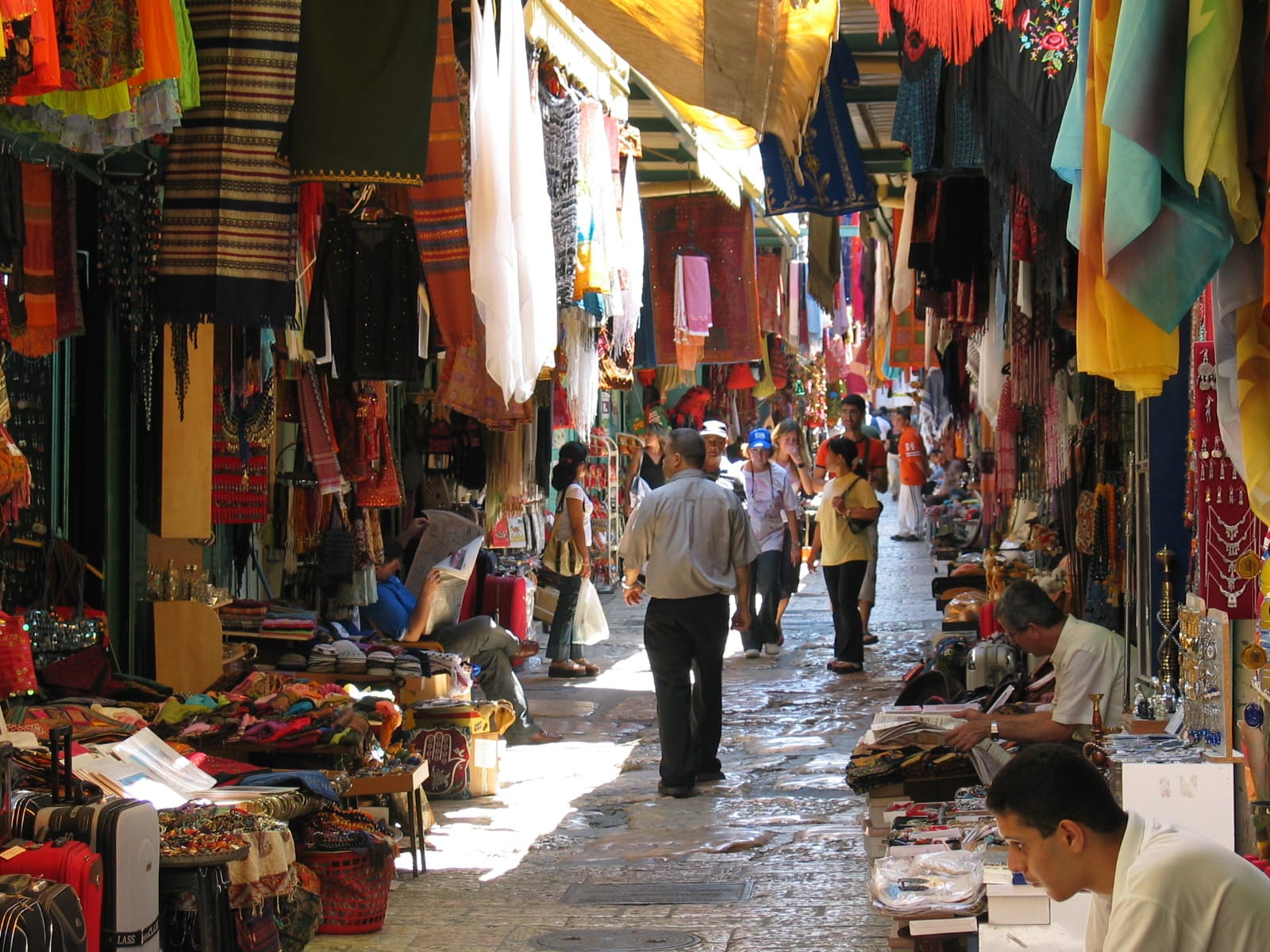
Chapter 6 — Languages, Traditions, Food and Cultural Expression
Culture Beyond Political Boundaries
Culture often reveals aspects of a society that political headlines cannot fully explain.
Languages spoken at home, meals prepared for family gatherings, songs passed between generations and traditions celebrated in public spaces all contribute to a country's identity.
In Israel, these expressions reflect an unusually diverse collection of historical experiences.
Jewish communities brought cultural traditions from Europe, North Africa, the Middle East, Ethiopia, Central Asia and other regions. Palestinian Arab communities maintained traditions rooted in the region, while Druze, Circassian, Armenian and other groups preserved their own cultural practices.
These influences did not develop in isolation.
Migration, trade, shared neighborhoods, political change and everyday interaction have contributed to cultural exchange.
At the same time, cultural relationships have been shaped by unequal power, national conflict and disagreements over historical recognition.
Understanding Israeli culture therefore requires examining both the connections between communities and the differences that remain.
Hebrew: From Ancient Language to Modern Public Life
Hebrew occupies a central position in Israeli society.
It is the principal language of government, public institutions, much of the education system and everyday communication among Jewish Israelis.
Hebrew has ancient roots in Jewish religious texts, literature and historical traditions.
For centuries, it remained important in prayer, scholarship and written communication, even as Jewish communities developed other spoken languages.
The emergence of modern Hebrew as a widely spoken everyday language was closely connected to the Zionist movement and Jewish settlement in Ottoman and British-administered Palestine.
Eliezer Ben-Yehuda became one of the most prominent figures associated with the revival of spoken Hebrew.
However, the development of modern Hebrew was a collective process involving educators, writers, families, institutions and generations of speakers.
Schools, newspapers, literature and public organizations helped establish Hebrew as a common language among immigrants from different linguistic backgrounds.
After Israel's independence in 1948, Hebrew became increasingly central to national institutions and public life.
Today, it is spoken by people with widely different ancestral backgrounds.
For many Jewish Israelis, Hebrew provides a shared means of communication across communities whose grandparents or great-grandparents spoke entirely different languages.
Arabic: A Language of History and Identity
Arabic is another essential language in Israel.
It is the primary language of many Arab citizens and is used in family life, education, literature, media, religion and cultural expression.
Arabic-speaking communities include Muslims, Christians and Druze, although their identities and traditions differ.
Spoken Arabic varies across regions and communities.
Local dialects may preserve distinctive vocabulary, pronunciation and expressions.
Modern Standard Arabic is used in formal writing, education and many forms of public communication.
Arabic has a long history in the region and remains central to Palestinian cultural identity.
It also connects Arab citizens of Israel to the wider Arabic-speaking world.
Many Arab citizens speak Hebrew as well, particularly in professional environments, universities and interactions with public institutions.
However, bilingualism does not eliminate differences in cultural or political identity.
The public status of Arabic has also been the subject of debate.
Israel's 2018 Nation-State Basic Law established Hebrew as the state's language and gave Arabic a special status, while providing that the law would not harm the status previously given to Arabic.
For supporters, the legislation reflected the Jewish national character of the state.
Critics argued that the change symbolically diminished the standing of Arabic and the communities who speak it.
Language therefore represents both a practical means of communication and a question of cultural recognition.
The Languages of Immigration
Israel's linguistic diversity extends well beyond Hebrew and Arabic.
Successive immigration waves brought languages from different parts of the world.
Russian became especially prominent following the arrival of large numbers of immigrants from the former Soviet Union beginning in the late 1980s.
Russian-language newspapers, television programs, cultural organizations and businesses developed to serve these communities.
Amharic and Tigrinya are spoken within parts of the Ethiopian Israeli population, alongside Hebrew and other languages.
French is used among immigrants from France and other French-speaking countries.
English plays an important role in tourism, international business, higher education and communication with visitors.
Other languages include Spanish, Persian, Romanian, Georgian and various Central Asian languages.
The presence of these languages reflects family histories that cross continents.
For some immigrants, maintaining a heritage language provides a connection to parents, grandparents and cultural traditions.
For younger generations, Hebrew may become the dominant language, while ancestral languages are preserved through family conversations, music or community activities.
Yiddish, Ladino and the Preservation of Jewish Heritage
Two historically important Jewish languages are Yiddish and Ladino.
Yiddish developed among Ashkenazi Jewish communities, particularly in Central and Eastern Europe.
It combines a primarily Germanic linguistic foundation with elements from Hebrew, Aramaic and other languages.
Before the Holocaust, Yiddish was spoken by millions of Jews and supported a rich literary, theatrical and journalistic culture.
The destruction of European Jewish communities during the Holocaust had a devastating impact on Yiddish-speaking populations.
In Israel, Yiddish continues to be used in certain ultra-Orthodox communities and cultural settings.
Ladino, also known as Judeo-Spanish, developed among Sephardi Jewish communities following their dispersal from the Iberian Peninsula.
It preserved elements of older Spanish while incorporating influences from Hebrew, Turkish, Greek and other languages.
Ladino songs, literature and oral traditions remain important elements of Sephardi heritage.
Both languages illustrate how Jewish communities developed distinctive cultures during centuries of life outside the region.
Their preservation is part of a wider effort to maintain cultural memories that might otherwise disappear.
Circassian, Armenian and Other Minority Languages
Smaller communities also contribute to Israel's linguistic landscape.
Circassians in villages such as Kfar Kama and Rehaniya preserve a Northwest Caucasian language associated with their ancestral homeland.
Language education and community activities support its continued use.
Armenian is maintained through religious institutions, schools and family life, particularly within Jerusalem's Armenian community.
Forms of Syriac and Aramaic remain important in the liturgical traditions of certain Christian communities.
Samaritans preserve distinctive forms of Hebrew and Aramaic in religious contexts.
These languages are closely connected to cultural continuity.
For small communities, the loss of a language can also mean the loss of oral history, religious knowledge and traditional expressions.
Efforts to preserve minority languages therefore involve more than vocabulary and grammar.
They are also efforts to maintain identity across generations.
Food as a Reflection of Shared History
Food is one of the most visible expressions of cultural diversity in Israel.
Markets, restaurants and family kitchens reflect culinary influences from the Mediterranean, Middle East, North Africa, Europe and beyond.
Dishes associated with different communities have become part of everyday food culture.
Jewish immigrants brought recipes from their countries of origin, often adapting them to local ingredients and changing economic circumstances.
Palestinian Arab communities preserved longstanding regional culinary traditions.
Circassian, Armenian and other minority communities maintained distinctive foods associated with family celebrations and communal identity.
Over time, some dishes crossed cultural boundaries and became widely consumed.
However, shared food traditions can also generate disputes concerning origin, ownership and national representation.
The history of food in the region is rarely confined to a single modern national identity.
Hummus, Falafel and the Politics of Food
Hummus and falafel are among the foods most closely associated with the eastern Mediterranean and wider Middle East.
They are widely consumed in Israel and across neighboring countries.
Hummus, made primarily from chickpeas and tahini, has a long regional history.
Falafel is also associated with culinary traditions extending beyond modern national borders, although its precise origins are debated.
Both foods are popular among Jewish and Arab communities.
They are served in restaurants, markets and family settings.
However, their representation as national dishes has sometimes generated controversy.
Palestinian and other Arab commentators have criticized the presentation of regional Arab foods as exclusively Israeli, arguing that such descriptions can obscure Palestinian and wider Middle Eastern culinary heritage.
Others emphasize that Israeli cuisine developed through the interaction of Jewish immigrant traditions with foods already present in the region.
A historically responsible approach recognizes that culinary practices can be shared without erasing the communities that contributed to their development.
Food can create opportunities for cultural exchange, but it can also reflect broader disagreements over identity and recognition.
The Influence of Jewish Immigrant Kitchens
Jewish immigration brought a wide range of culinary traditions into Israel.
Yemenite Jewish communities introduced or popularized foods such as jachnun and malawach.
Iraqi Jewish traditions include dishes such as sabich and different forms of kubbeh.
North African Jewish communities brought regional variations of couscous, fish dishes, stews and preserved vegetables.
Ashkenazi traditions include kugel, challah, gefilte fish and various baked goods.
Persian Jewish families maintain dishes involving rice, herbs, vegetables and slow-cooked preparations.
Ethiopian Jewish cuisine includes injera and dishes associated with Ethiopian culinary traditions.
These foods are not always exclusive to Jewish communities.
Many reflect the wider cuisines of the societies in which Jewish families lived.
Their presence in Israel demonstrates how migration can transform national food culture while preserving connections to other regions.
Palestinian Culinary Traditions
Palestinian cuisine is an important part of the region's cultural heritage.
It reflects agricultural traditions, seasonal ingredients, family gatherings and the culinary history of the Levant.
Olive oil, grains, legumes, vegetables, herbs and spices are central to many dishes.
Traditional foods include musakhan, maqluba, freekeh preparations and different forms of bread and pastries.
Regional variations are significant.
Culinary practices in the Galilee may differ from those associated with Jerusalem, coastal towns or the southern regions.
Family recipes are often passed between generations.
Food can also carry memories of places from which families were displaced during the events of 1948.
For some Palestinians, preparing traditional dishes is a way of maintaining cultural continuity and connections to ancestral communities.
Palestinian cuisine has also influenced restaurants and food culture within Israel.
Recognizing these contributions is important when discussing the region's shared and contested culinary heritage.
Markets as Cultural Meeting Places
Markets provide a particularly visible expression of cultural diversity.
They bring together food, language, commerce and everyday social interaction.
In Jerusalem, Mahane Yehuda Market is known for its produce stalls, bakeries, spice shops and restaurants.
Its character reflects Jewish immigrant traditions alongside contemporary Israeli urban culture.
Jerusalem's Old City markets offer a different environment, shaped by Palestinian commercial traditions, religious pilgrimage and the city's historical role as a regional trading center.
In cities such as Acre, Jaffa, Haifa and Nazareth, markets and commercial streets reflect local histories involving different communities.
Visitors may encounter Arabic and Hebrew alongside other languages.
Traditional foods, religious objects, textiles and contemporary products are sold within the same commercial environment.
However, markets should not be romanticized as spaces free from political or economic tensions.
Tourism, rising property costs, changing consumer habits and political circumstances can affect local businesses.
Markets remain important because they reveal how culture is practiced in ordinary life rather than only during formal celebrations.
Music Across Communities
Music is another important expression of Israel's cultural diversity.
Israeli music incorporates influences from Jewish religious traditions, European folk music, Middle Eastern musical forms, North African styles, Arabic music and contemporary international genres.
Early Hebrew popular music was influenced by Zionist cultural movements and European musical traditions.
Over time, musicians from different immigrant communities introduced new sounds and styles.
Mizrahi music, influenced by Middle Eastern and Mediterranean traditions, became increasingly prominent during the late twentieth century.
Artists challenged cultural hierarchies that had previously favored certain European-influenced forms of music.
Today, Israeli popular music includes a wide range of genres, from traditional religious songs to electronic music, hip-hop and contemporary pop.
Arabic-language music also plays an important role in Palestinian and Arab cultural life within Israel.
Musicians may draw on traditional Arabic musical forms, contemporary global influences or combinations of both.
The musical landscape demonstrates how cultural exchange can occur even when communities experience political disagreement.
Palestinian Music and Cultural Identity
For Palestinians, music has long been a means of expressing cultural identity, social experience and historical memory.
Traditional forms include wedding songs, folk melodies and music associated with communal celebrations.
The dabke, a traditional Levantine group dance, is an important cultural practice in Palestinian communities and elsewhere in the region.
It is often performed during weddings, festivals and public gatherings.
Contemporary Palestinian musicians also work in genres including hip-hop, rock, electronic music and experimental performance.
Some address themes of identity, displacement, inequality and political conflict.
Others focus on personal relationships, social change or everyday experiences.
Palestinian artists who are citizens of Israel may navigate multiple cultural environments and audiences.
Their work can reflect both participation in Israeli institutions and connections to Palestinian cultural heritage.
Music therefore provides a space in which personal and collective identities can be expressed beyond formal political institutions.
Literature and the Power of Storytelling
Literature has played an important role in shaping cultural and national identities in Israel.
Hebrew literature developed through the revival of the Hebrew language and the experiences of Jewish communities before and after independence.
Writers have explored subjects including immigration, religious identity, war, family relationships and social inequality.
Israeli authors such as Amos Oz, A. B. Yehoshua and David Grossman became internationally known for works examining personal and political experiences.
However, Hebrew literature is not limited to a single political or cultural perspective.
Writers from Mizrahi, Ethiopian, Russian-speaking and other backgrounds have contributed different narratives and challenged dominant representations of Israeli society.
Arabic-language literature has also played an important role.
Palestinian writers have explored themes including homeland, displacement, memory, identity and everyday life.
Emile Habibi, a Palestinian Arab citizen of Israel, became known for literature combining satire, political reflection and cultural commentary.
His work illustrates the complex position of writers whose identities and experiences cross national and political boundaries.
Literature can preserve histories that may be absent from official narratives.
It can also encourage readers to encounter experiences different from their own.
Cinema and Television
Film and television provide another window into Israel's social diversity.
Israeli cinema has explored subjects including immigration, military service, religious communities, family relationships and political conflict.
Films have portrayed tensions between secular and religious lifestyles, generational differences and the experiences of minority communities.
Palestinian filmmakers, including Palestinian citizens of Israel, have also produced internationally recognized work.
Their films may examine identity, discrimination, family life, historical memory and the effects of political conflict.
Some productions involve cooperation between Jewish and Arab filmmakers, actors and technical professionals.
Others emerge from separate cultural institutions and funding environments.
The development of streaming platforms and international film festivals has expanded the audiences available to filmmakers.
However, questions concerning public funding, artistic freedom and political representation continue to influence the industry.
Cinema is important not only because it entertains, but also because it shapes how societies understand themselves and how they are represented abroad.
Art, Museums and Historical Memory
Museums and cultural institutions play significant roles in preserving and interpreting history.
Israel has museums dedicated to archaeology, Jewish history, art, science, immigration and the Holocaust.
Yad Vashem in Jerusalem is the country's principal Holocaust remembrance and research institution.
Other institutions preserve the histories of Jewish communities from different regions.
Palestinian cultural organizations and museums document local history, art, literature and experiences of displacement.
Smaller community institutions preserve Armenian, Circassian, Druze and other forms of cultural heritage.
However, museums are not neutral spaces simply because they display historical objects.
Choices concerning exhibitions, language, funding and historical interpretation can influence public understanding.
Debates over cultural representation often reflect broader disagreements about whose histories receive institutional recognition.
Responsible engagement with museums therefore involves considering both the information presented and the perspectives that may be less visible.
Cultural Festivals and Public Celebrations
Festivals provide opportunities for communities to celebrate cultural identity.
Jewish holidays shape much of Israel's national calendar.
Muslim and Christian festivals are observed within their respective communities.
Druze religious gatherings, Circassian cultural events and Armenian commemorations also contribute to the country's cultural landscape.
Music festivals, literary events and local celebrations may bring together people from different backgrounds.
Some initiatives explicitly promote Jewish-Arab cooperation or intercultural dialogue.
Others focus on preserving particular traditions.
However, participation in shared cultural events does not necessarily imply agreement on political questions.
Cultural cooperation can coexist with significant differences in national identity and historical interpretation.
Festivals are therefore best understood as expressions of community life rather than simple evidence of social harmony.
The Role of Family and Generational Traditions
Family life is central to the preservation of many cultural practices.
Recipes, songs, languages and religious customs are often passed from grandparents to parents and children.
For immigrant families, these traditions can preserve connections to countries of origin.
For Palestinian families, oral histories may maintain memories of ancestral villages and towns.
For smaller communities, family networks can help sustain languages and religious practices that might otherwise decline.
However, traditions change across generations.
Young people may adopt different languages, music and lifestyles from those of their parents.
Intermarriage, education, urbanization and international communication can influence cultural identity.
Some individuals seek to preserve inherited practices closely.
Others reinterpret them or combine them with new influences.
Cultural identity is therefore not fixed.
It develops through the ongoing relationship between memory and contemporary life.
Cultural Exchange and Unequal Recognition
Cultural exchange is often presented as evidence of cooperation between communities.
In many cases, it does create opportunities for interaction and mutual understanding.
Shared music, food and artistic projects can bring people together across linguistic and religious boundaries.
However, cultural exchange also raises questions about power and recognition.
When traditions associated with one community are adopted by another, disputes may arise concerning attribution, representation and commercial benefit.
These debates are especially sensitive in societies shaped by national conflict and unequal political circumstances.
In Israel and the Palestinian territories, disagreements over food, historical sites, music and cultural heritage can reflect wider disputes over identity and belonging.
A responsible approach does not assume that cultural traditions belong exclusively to modern national groups.
It also does not ignore the historical communities that developed and preserved those traditions.
Both shared influence and accurate recognition are important.
Technology, Social Media and Cultural Change
Digital communication has transformed cultural expression in Israel.
Social media allows musicians, writers, artists and community organizations to reach audiences beyond their immediate surroundings.
Young people can share cultural traditions, political perspectives and personal experiences through online platforms.
Hebrew, Arabic, Russian, English and other languages are used across digital spaces.
Online communities can support language preservation and cultural education.
They can also expose individuals to perspectives they might not encounter in their local environments.
However, digital platforms can intensify political polarization and misinformation.
Cultural expression may become entangled with online debates concerning national identity, religion and conflict.
The digital environment therefore creates both opportunities for connection and new challenges for public discussion.
A Society of Multiple Cultural Identities
Israeli society cannot be accurately described through a single cultural tradition.
A Jewish family whose grandparents came from Morocco may maintain customs different from those of a family with roots in Poland or Ethiopia.
An Arab Christian family in Nazareth may celebrate religious holidays and cultural traditions that differ from those of a Muslim family in the Galilee.
Circassian families may preserve a Caucasian language and cultural practices alongside participation in Israeli institutions.
Armenian residents of Jerusalem may maintain traditions connected to centuries of Christian history and the Armenian diaspora.
These identities are not necessarily isolated.
People may share workplaces, universities, commercial spaces and aspects of popular culture.
At the same time, differences in language, education, geography and political experience can limit interaction.
The resulting cultural landscape is complex, changing and sometimes contested.
Conclusion — The Stories Carried Through Culture
Languages, food, music, literature and cultural traditions provide an essential perspective on Israeli society.
They reveal the histories of migration, settlement, cultural exchange and community preservation that have shaped the country.
Hebrew connects people from different Jewish ancestral backgrounds.
Arabic preserves important elements of Palestinian and Arab cultural identity.
Russian, Amharic, Yiddish, Ladino, Circassian, Armenian and other languages reflect additional historical experiences.
Food traditions demonstrate how communities influence one another while preserving connections to their origins.
Music, literature and film provide opportunities to express identity, challenge dominant narratives and explore difficult social questions.
However, cultural diversity should not be confused with the absence of inequality or political conflict.
Questions concerning recognition, representation and historical ownership remain important.
Understanding culture requires acknowledging both shared influences and the distinct experiences of the communities involved.
Beyond government institutions and international headlines, cultural life reveals how people remember the past, experience the present and imagine their future.
The next chapter examines what happens when these communities share the same cities, schools, workplaces and public spaces — and how cooperation, separation and inequality shape everyday relationships.
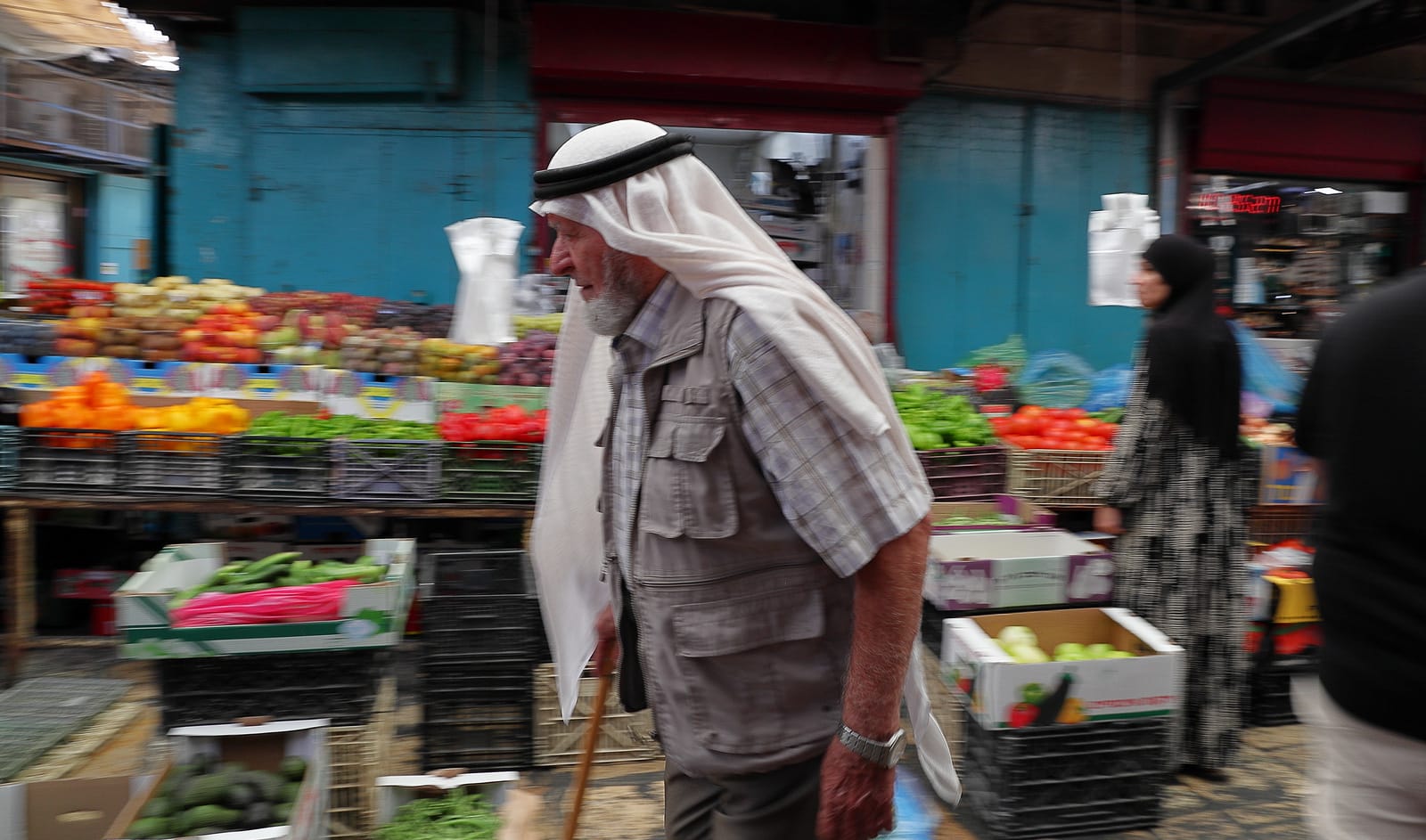
Chapter 7 — Living Together: Shared Cities, Schools and Communities
Beyond the Idea of Coexistence
The word coexistence is frequently used when discussing relationships between Jewish and Arab communities in Israel.
It can suggest a society in which people from different religious and cultural backgrounds live alongside one another, share public spaces and participate in common institutions.
However, coexistence is not a single, clearly defined experience.
Living in the same city does not necessarily mean living in the same neighborhood. Working in the same hospital does not guarantee equal opportunities outside the workplace. Attending the same university does not erase differences in historical memory or political identity.
For some people, everyday interaction between communities is a normal part of life.
For others, social separation remains the dominant experience.
The reality is shaped by geography, education, language, economic circumstances, government policies and the continuing Israeli-Palestinian conflict.
Understanding relationships between communities therefore requires examining both the places where people interact and the structures that keep them apart.
Mixed Cities: Shared Spaces and Different Histories
Several Israeli cities contain substantial Jewish and Arab populations.
Among the most frequently discussed are Haifa, Acre, Jaffa, Lod and Ramla.
These cities are often described as mixed, but their histories and demographic patterns differ considerably.
Some developed as major urban centers long before the establishment of Israel.
Others underwent profound demographic transformations during the war of 1948 and subsequent decades.
In several cities, Palestinian Arab residents were displaced during the conflict, while Jewish immigrants later settled in neighborhoods and properties affected by the war.
These historical developments continue to influence discussions about housing, heritage, land ownership and belonging.
Today, mixed cities contain residential areas, workplaces, schools, religious institutions and commercial districts used by different communities.
However, interaction is not always evenly distributed.
Some neighborhoods are predominantly Jewish or predominantly Arab.
Others contain more integrated populations.
The term mixed city therefore describes demographic presence rather than a guarantee of social equality or integration.
Haifa: A City of Multiple Communities
Haifa is frequently presented as an example of Jewish-Arab coexistence.
Located on the Mediterranean coast, the city has a long history as a port, commercial center and place of cultural exchange.
Its population includes Jewish and Arab residents, among them Muslim and Christian communities.
Haifa is also home to important Bahá'í religious sites and institutions.
The city's universities, hospitals, businesses and cultural organizations create opportunities for interaction between people from different backgrounds.
Jewish and Arab professionals work in shared institutions, while students encounter one another in academic settings.
Arabic and Hebrew can be heard in different parts of the city.
Cultural events and restaurants reflect diverse traditions.
However, Haifa's history also includes the displacement of much of its Palestinian Arab population during the 1948 war.
That history remains important to many Palestinian residents and their descendants.
Contemporary social conditions also vary between neighborhoods.
Differences in housing, income, education and municipal development affect residents in different ways.
Haifa demonstrates that shared urban life can provide meaningful opportunities for cooperation while remaining shaped by historical inequalities and competing memories.
Jaffa: History, Identity and Urban Change
Jaffa is one of the oldest port cities in the eastern Mediterranean.
Before 1948, it was a major center of Palestinian Arab commercial, cultural and political life.
The city was known for its port, citrus trade, religious institutions and urban communities.
During the 1947–1949 war, most of Jaffa's Palestinian Arab population fled or was displaced.
The city subsequently became part of the municipality of Tel Aviv-Jaffa.
Today, Jaffa contains Jewish and Arab communities and is known for its historic streets, markets, restaurants and cultural institutions.
Its public image often emphasizes architectural heritage and cultural diversity.
However, Jaffa also illustrates the tensions that can accompany urban redevelopment.
Rising property prices, tourism and gentrification have affected housing affordability.
Palestinian residents and community organizations have raised concerns about displacement pressures, historical preservation and access to housing.
Jewish and Arab residents may share public spaces while holding different understandings of the city's history.
Jaffa therefore represents both the possibilities of cultural interaction and the difficulties of reconciling urban development with historical identity.
Acre: A Historic City with Shared Heritage
Acre, also known as Akko, has a long history involving different empires, religions and trading communities.
Its Old City contains significant Ottoman-era architecture, religious sites and historic commercial spaces.
The modern city includes Jewish and Arab populations.
Tourism, markets, restaurants and cultural institutions bring residents and visitors into shared environments.
Arabic and Hebrew are part of the city's linguistic landscape.
However, Acre also contains socioeconomic differences and residential divisions.
The preservation and development of historic neighborhoods can create tensions over property, tourism and the interests of local residents.
Periods of national conflict have also affected relations between communities.
Violence in Acre during the October 2008 disturbances and again during the unrest of May 2021 demonstrated how local relationships can become strained during periods of heightened political tension.
At the same time, residents and community organizations have continued efforts to maintain dialogue and cooperation.
Acre illustrates the fragile relationship between shared heritage, everyday interaction and unresolved political disagreements.
Lod and Ramla: Inequality and Community Relations
Lod and Ramla are cities in central Israel with significant Jewish and Arab populations.
Both have histories extending well before the establishment of the modern state.
The events of 1948 profoundly changed their populations and political circumstances.
Today, the cities contain communities with different religious, cultural and socioeconomic backgrounds.
Residents share municipal services, transportation networks and commercial spaces.
However, residential segregation, poverty, housing conditions and public safety have contributed to social tensions.
In Lod, particularly, the violence of May 2021 exposed serious divisions.
Jewish and Arab residents experienced attacks, property damage and fear during a period of wider Israeli-Palestinian escalation.
The unrest demonstrated how national conflict can affect relationships between neighbors.
It also raised questions about policing, local leadership, inequality and the ability of municipal institutions to protect residents.
Following the violence, community groups and local initiatives sought to rebuild trust.
However, reconciliation is a long-term process that requires more than symbolic meetings or public statements.
Jerusalem: Shared Geography, Unequal Political Circumstances
Jerusalem presents a particularly complex example of communities living within the same urban environment.
Jewish and Palestinian residents share a city with profound religious, historical and political significance.
However, their legal and political circumstances differ.
Israel captured East Jerusalem in 1967 and subsequently extended Israeli law and administration to the area.
This annexation is not recognized internationally as a lawful acquisition of sovereignty.
Most Palestinian residents of East Jerusalem hold permanent residency rather than Israeli citizenship, although some have acquired citizenship.
Jewish residents generally possess Israeli citizenship.
These differences influence political participation, residency rights and relationships with government institutions.
Neighborhoods are often separated by language, religion, history and political identity.
Public services, infrastructure and municipal investment have also been subjects of significant inequality and dispute.
At the same time, residents encounter one another in hospitals, workplaces, transportation systems and commercial areas.
Jerusalem demonstrates that physical proximity does not necessarily produce political equality or a shared understanding of belonging.
Schools and the Separation of Communities
Education plays an important role in shaping relationships between communities.
Israel's school system includes several major educational streams.
Hebrew-language state schools, state religious schools, Arab-language schools and ultra-Orthodox institutions often operate separately.
These arrangements allow communities to provide education connected to their languages, religious traditions and cultural identities.
However, they also mean that many Jewish and Arab children grow up with limited direct contact with one another.
Students may learn different historical narratives and encounter different interpretations of national identity.
Language differences can create additional barriers.
Separate education does not necessarily imply hostility between communities.
Families may choose schools for linguistic, religious, geographic or practical reasons.
Nevertheless, limited interaction during childhood can influence attitudes and social networks later in life.
Educational researchers and civil society organizations have therefore examined ways to encourage meaningful contact while respecting cultural differences.
Bilingual and Integrated Education
Some educational initiatives seek to bring Jewish and Arab children together within shared learning environments.
The Hand in Hand network is among the best-known examples.
Its schools use Hebrew and Arabic and emphasize the recognition of both Jewish and Arab identities.
Students may learn about different religious holidays, historical experiences and cultural traditions.
The intention is not necessarily to eliminate differences, but to create an environment in which those differences can be discussed and understood.
Bilingual education can help children develop language skills and personal relationships across community boundaries.
However, such schools represent a relatively small part of the overall education system.
They also face challenges involving funding, curriculum, political tensions and the expectations of parents from different backgrounds.
During periods of conflict, discussions concerning history and national identity can become particularly difficult.
Integrated education therefore requires sustained institutional support and a willingness to engage with disagreement.
Universities as Places of Encounter
Israeli universities and colleges are among the institutions where Jewish and Arab citizens regularly interact.
Students attend lectures, participate in research and work together on academic projects.
Higher education can provide opportunities for friendships and professional relationships that cross community boundaries.
Arabic-speaking students may also develop stronger Hebrew-language skills through academic participation.
However, universities are not free from inequality or political tension.
Differences in educational preparation, household income and language proficiency can influence student experiences.
Arab students may encounter challenges involving accommodation, social integration or representation.
Jewish and Arab students may also hold sharply different political perspectives.
During periods of military conflict, university campuses can become sites of debate over freedom of expression, security and political protest.
These tensions demonstrate that shared educational institutions create opportunities for interaction without necessarily producing agreement.
Hospitals: Cooperation Through Shared Responsibility
Healthcare is one of the clearest examples of regular professional cooperation between Jewish and Arab citizens in Israel.
Hospitals employ doctors, nurses, pharmacists, technicians and other professionals from different communities.
Medical teams work together in emergency departments, operating rooms, laboratories and specialist clinics.
Their professional responsibilities require communication and cooperation.
Patients from different religious and ethnic backgrounds receive treatment within the same healthcare institutions.
For some employees, shared professional experience creates relationships that extend beyond the workplace.
However, healthcare cooperation should not be presented as proof that broader social inequalities have disappeared.
Differences in access to services, local healthcare infrastructure and socioeconomic conditions remain important concerns.
The healthcare system demonstrates that meaningful cooperation can exist within a society that continues to experience political and structural divisions.
Workplaces and Economic Relationships
Employment creates additional opportunities for interaction.
Jewish and Arab citizens work together in sectors including construction, commerce, transportation, healthcare, education and technology.
Shared workplaces can encourage practical cooperation and personal familiarity.
Business partnerships may also create economic connections between communities.
However, labor-market participation is not equal across all groups.
Arab citizens have faced disparities in employment opportunities, income and access to certain professional networks.
Residential location, transportation, educational resources and discrimination can affect career development.
Language can also influence employment.
Hebrew proficiency is often important in workplaces and public institutions.
Some companies and organizations have introduced diversity initiatives intended to expand opportunities for Arab professionals.
The effectiveness of such programs depends on implementation, workplace conditions and broader economic structures.
Shared employment can create contact, but equal participation requires attention to the barriers that influence access and advancement.
Markets, Restaurants and Public Spaces
Markets and commercial districts provide informal opportunities for interaction.
Customers may visit businesses owned by people from different communities.
Restaurants and shops reflect culinary traditions associated with Jewish, Palestinian Arab and other populations.
In some areas, bilingual signs and multilingual conversations are part of everyday life.
These encounters can challenge assumptions formed through political narratives or limited personal experience.
However, commercial interaction is not the same as social integration.
People may shop in the same market without developing close personal relationships.
Economic relationships can also be affected by unequal resources, consumer boycotts or political tensions.
Public spaces are therefore important sites of contact, but their significance should not be overstated.
Shared Neighborhoods and Residential Separation
Residential patterns strongly influence relationships between communities.
In many parts of Israel, Jewish and Arab populations live in separate towns or neighborhoods.
These patterns reflect historical developments, planning policies, economic circumstances, family networks and cultural preferences.
Some mixed neighborhoods have developed through changing housing markets and urban growth.
However, integration can be limited by affordability, discrimination or local opposition.
Land-use planning and housing development are particularly sensitive issues in Arab communities.
Restrictions on development, shortages of approved building land and uneven infrastructure investment have contributed to housing pressures.
Jewish communities also differ significantly in housing conditions and economic opportunity.
Understanding residential separation therefore requires examining both national inequalities and differences within population groups.
Local Government and Community Representation
Municipal governments influence many aspects of daily life.
They are responsible for services such as local roads, sanitation, public spaces and aspects of education and planning.
In mixed cities, municipal leaders must address the needs of residents from different communities.
Questions concerning budget allocation, neighborhood development and cultural recognition can become politically sensitive.
Arab residents and community organizations have sometimes criticized unequal municipal investment or insufficient representation in decision-making.
Local governments may also support initiatives involving shared public spaces, cultural activities and community dialogue.
The success of these efforts depends on political leadership, resources and public trust.
Local government is therefore an important arena in which broader questions of equality become visible through practical decisions.
Civil Society and Jewish-Arab Cooperation
A range of civil society organizations works to encourage cooperation between Jewish and Arab communities.
Some focus on education and dialogue.
Others address economic opportunity, human rights, environmental concerns or shared public services.
Organizations such as Hand in Hand, the Abraham Initiatives and Givat Haviva have developed programs intended to support Jewish-Arab engagement in different ways.
Their approaches are not identical.
Some emphasize bilingual education.
Others focus on policy research, leadership development or cooperation between local communities.
These initiatives can create opportunities for sustained relationships and practical collaboration.
However, their impact should be assessed realistically.
Participation may be limited to particular communities or individuals already interested in dialogue.
Programs can also face political opposition, funding difficulties and challenges during periods of violence.
Civil society cooperation is therefore one element of community relations rather than a substitute for broader policy changes.
Environmental and Local Community Initiatives
Environmental issues can create opportunities for cooperation because pollution, water management and public health do not always follow ethnic or municipal boundaries.
Communities may share concerns about air quality, waste disposal, transportation and access to green spaces.
Local organizations sometimes bring residents together around practical environmental goals.
These initiatives can encourage relationships based on shared interests rather than national identity alone.
However, environmental inequalities can also reflect differences in infrastructure, planning and political influence.
Communities with fewer resources may experience greater exposure to pollution or reduced access to public amenities.
Cooperation is most meaningful when it addresses these unequal conditions rather than simply promoting symbolic unity.
The Impact of May 2021
The events of May 2021 marked a significant moment in Jewish-Arab relations within Israel.
Tensions surrounding Jerusalem, including disputes over housing and access to religious sites, escalated into a wider confrontation between Israel and Hamas in Gaza.
During this period, violence also erupted in several mixed Israeli cities.
Jewish and Arab residents experienced attacks, intimidation, property damage and fear.
The unrest exposed deep mistrust and demonstrated how quickly national conflict could affect local relationships.
It also prompted debates concerning policing, political leadership, social media and the role of extremist groups.
Some residents sought to protect neighbors or prevent violence.
Others participated in demonstrations and community initiatives calling for calm.
The events revealed both the fragility of coexistence and the existence of people willing to defend relationships across community boundaries.
October 7, 2023, and the War in Gaza
The Hamas-led attacks on Israel on October 7, 2023, and the subsequent war in Gaza placed further pressure on relations between communities.
The attacks killed civilians and security personnel and involved the taking of hostages.
Jewish and Arab citizens of Israel were among those affected.
The war in Gaza caused extensive Palestinian civilian casualties, displacement and destruction.
For many Arab citizens of Israel, the conflict created profound concern for Palestinians in Gaza and the wider Palestinian population.
Jewish Israelis also experienced grief, fear and continuing concern about security and hostages.
These experiences were not identical, and individuals within each community responded in different ways.
Public debate concerning freedom of expression, demonstrations and political solidarity became increasingly sensitive.
Some workplaces and educational institutions faced disputes over social media posts or public statements.
At the same time, Jewish and Arab professionals continued working together in hospitals, businesses and public services.
The period demonstrated how shared institutions can remain operational even when political and emotional divisions deepen.
The Difference Between Dialogue and Equality
Dialogue initiatives often emphasize the importance of listening, empathy and personal relationships.
These approaches can help reduce stereotypes and create opportunities for cooperation.
However, dialogue alone cannot resolve structural inequalities.
Differences in housing, municipal resources, education, employment and political power require institutional and policy responses.
Some critics of coexistence initiatives argue that programs focused primarily on interpersonal harmony can overlook unequal conditions.
Supporters maintain that personal relationships are essential for building trust and creating support for broader change.
These perspectives are not necessarily incompatible.
Meaningful cooperation can involve both human relationships and attention to rights, resources and political circumstances.
A realistic understanding of coexistence therefore requires asking not only whether communities interact, but also under what conditions that interaction takes place.
Personal Relationships Across Community Boundaries
Friendships, professional partnerships and everyday relationships can challenge assumptions about other communities.
People who work or study together may discover shared interests that extend beyond political identity.
They may discuss family life, professional ambitions, education or cultural traditions.
However, personal relationships can become complicated during periods of conflict.
Individuals may experience pressure from their communities or disagreements over political events.
Different understandings of history can create difficult conversations.
Maintaining relationships across such differences often requires trust and a willingness to recognize experiences that may not be shared.
These relationships cannot be treated as representative of entire populations.
Nevertheless, they form an important part of the social reality that exists beyond political institutions and public debate.
The Role of Media and Public Narratives
Media coverage influences how communities perceive one another.
News reporting frequently focuses on conflict, violence and political disagreement.
These subjects are important, but they do not describe every aspect of daily life.
Stories about cooperation, shared institutions and ordinary relationships may receive less international attention.
At the same time, reporting that focuses only on positive examples of coexistence can obscure discrimination and inequality.
Responsible journalism must avoid both extremes.
It should document cooperation where it exists and examine the conditions that make it possible.
It should also investigate the barriers that limit equal participation and social trust.
The experiences of residents should be presented with attention to historical context and the diversity within each community.
A Younger Generation and Changing Relationships
Young Jewish and Arab citizens are growing up in a society shaped by digital communication, higher education and changing economic opportunities.
Some encounter members of other communities through universities, workplaces and online platforms.
Others remain largely within separate educational and residential environments.
Language proficiency can influence opportunities for interaction.
Hebrew is widely used in shared institutions, while Arabic remains central to Arab cultural identity.
Bilingual education and cultural initiatives may create additional opportunities for communication.
However, political events and social media can also reinforce divisions.
Young people may experience strong expectations concerning national identity and political loyalty.
Their attitudes are influenced by family history, education, personal experience and the wider political environment.
The future of community relations will depend partly on whether institutions create opportunities for meaningful and equitable interaction.
Conclusion — Living Together Is More Than Sharing a Place
Jewish, Arab and other communities in Israel share cities, workplaces, hospitals, universities and public spaces.
These interactions are an important part of everyday life.
In cities such as Haifa, Jaffa, Acre, Lod and Ramla, different populations live within the same urban environments.
Shared institutions can create opportunities for cooperation, friendship and professional relationships.
However, physical proximity does not guarantee social integration or equality.
Historical displacement, residential separation, economic disparities and political conflict continue to influence relationships.
Periods of violence, including the unrest of May 2021 and the consequences of the October 2023 attacks and subsequent war, have demonstrated the vulnerability of community trust.
At the same time, educational initiatives, civil society organizations and shared professional institutions show that cooperation can continue under difficult circumstances.
Understanding coexistence requires more than highlighting moments of harmony or conflict.
It requires examining the structures that shape everyday life and listening to the different experiences of the people involved.
The central question is not simply whether communities can live in the same country.
It is whether they can develop relationships and institutions that provide security, dignity, opportunity and equal treatment for all.
The next chapter examines the social divisions and structural inequalities that continue to challenge Israeli society, including differences in education, employment, housing, political representation and access to public resources.
Chapter 8 — Social Divisions, Equality and the Challenges of Integration
A Diverse Society Facing Unequal Realities
Israel is often described as a country of remarkable cultural and religious diversity. Its population includes people with roots in Europe, the Middle East, North Africa, Ethiopia, the Caucasus and other regions, alongside Palestinian Arab communities whose histories are deeply connected to the land.
This diversity is visible in languages, traditions, religious practices and everyday life.
However, diversity does not automatically produce equality.
Different communities experience different levels of economic opportunity, political influence, access to public services and social recognition.
Some inequalities are connected to historical circumstances, including immigration, displacement and the development of state institutions.
Others are influenced by contemporary policies, educational structures, geography and labor-market conditions.
Social divisions also exist within the country's largest population groups.
Jewish Israelis differ in religious observance, ancestral background, income and political outlook.
Arab citizens differ in religion, geography, economic circumstances and personal identity.
Understanding inequality therefore requires moving beyond a simple division between Jews and Arabs.
It involves examining how multiple social, economic and political factors interact.
Equality Under the Law and Equality in Practice
Israeli citizens possess important civil and political rights, including the right to vote in national elections and access to judicial institutions.
Israel's legal framework includes protections for individual rights developed through legislation, Basic Laws and court decisions.
However, the country does not have a single comprehensive written constitution containing an explicit general equality clause applicable in every context.
The Supreme Court has interpreted principles of equality through constitutional and administrative law, including the protection of human dignity.
The practical application of equality remains an important subject of legal and political debate.
Formal citizenship does not necessarily guarantee equal access to housing, education, employment or public resources.
Differences in municipal budgets, infrastructure and economic development can create unequal living conditions.
Discrimination may also occur through institutional practices, social attitudes or decisions by individual employers and service providers.
The distinction between legal rights and lived experience is central to understanding the challenges facing minority communities.
Historical Roots of Social Inequality
Many contemporary inequalities are connected to historical developments.
The establishment of Israel in 1948 transformed the region's demographic and political landscape.
The war resulted in the displacement of large numbers of Palestinians and significant changes in land ownership and settlement patterns.
Palestinian Arabs who remained within Israel became citizens of the new state, but most lived under military administration until 1966.
Restrictions on movement and policies affecting land and development influenced their economic and social circumstances.
Jewish immigrants also experienced major challenges.
Many arrived with limited financial resources after displacement, persecution or economic hardship.
Large numbers were housed in temporary immigrant camps or newly established development towns.
Jewish immigrants from North Africa and the Middle East sometimes encountered discrimination and unequal opportunities within institutions dominated by earlier European-origin leadership.
These different histories should not be treated as equivalent.
The circumstances of Palestinian displacement, minority citizenship and Jewish immigration were distinct.
However, each contributed to social structures and inequalities that influenced later generations.
Economic Inequality Between Communities
Economic disparities remain an important feature of Israeli society.
Income, employment opportunities and household wealth differ significantly between population groups.
Arab citizens have generally experienced higher poverty rates and lower average household incomes than Jewish citizens.
However, substantial economic differences also exist within the Jewish population.
Ultra-Orthodox households, some immigrant communities and residents of economically disadvantaged regions face particular challenges.
Economic inequality is influenced by education, employment, household composition, geographic location and access to professional networks.
The cost of housing and everyday necessities also affects families across the country.
Economic growth in technology and other high-productivity sectors has created opportunities, but the benefits have not been distributed equally.
Some communities have been better positioned to enter these industries because of educational preparation, language skills, geographic proximity and professional connections.
Reducing inequality therefore requires attention to both individual opportunity and the structures that influence access to economic resources.
Education as a Source of Opportunity and Division
Education plays a central role in determining future economic and social opportunities.
Israel has several educational systems serving different religious, linguistic and cultural communities.
These include Hebrew-language state schools, state religious schools, Arab-language schools and ultra-Orthodox institutions.
The existence of separate systems allows communities to maintain distinct educational traditions.
However, educational outcomes and available resources differ.
Schools in disadvantaged areas may face challenges involving infrastructure, staffing, extracurricular activities and access to specialized programs.
Arab-language schools have historically experienced disparities in resources and educational opportunities.
Within the Jewish population, differences also exist between schools serving affluent communities and those in less advantaged regions.
Educational inequalities can influence university admission, professional training and employment prospects.
They may also reinforce social separation when children from different communities rarely encounter one another during their school years.
The Challenges Facing Arab Education
Arab citizens have made substantial progress in higher education and professional participation over recent decades.
Arab students attend Israeli universities and colleges and enter professions including medicine, engineering, law, education and technology.
However, educational opportunities remain uneven.
Some Arab municipalities face infrastructure shortages and limited resources.
Access to advanced academic programs, extracurricular activities and career guidance can differ between schools.
Language also plays a role.
Arabic is the primary language of instruction in many Arab schools, while Hebrew is essential in numerous universities and workplaces.
Students who have limited opportunities to develop strong academic Hebrew skills may face additional challenges when entering higher education.
Socioeconomic conditions can further influence educational outcomes.
Families with greater financial resources may be better able to provide tutoring, transportation and access to enrichment activities.
These factors demonstrate that educational inequality cannot be explained by a single cause.
Ultra-Orthodox Education and Economic Participation
The ultra-Orthodox, or Haredi, population represents another important area of debate concerning education and economic participation.
Many Haredi communities place strong emphasis on religious study and maintaining distinctive educational institutions.
The structure and curriculum of these institutions vary.
Some provide substantial general education, while others devote more time to religious subjects and offer limited instruction in certain core academic areas.
Critics argue that insufficient education in mathematics, English and other subjects can restrict future employment opportunities.
Supporters of religious educational autonomy emphasize the importance of preserving communal traditions and the freedom to educate children according to religious beliefs.
Employment patterns also differ within Haredi society.
Haredi women participate in the workforce at comparatively high rates, while Haredi men's employment patterns are influenced in part by extended religious study.
However, these patterns are changing, and the community is not economically uniform.
Government policy must balance educational standards, religious freedom and the economic opportunities available to future generations.
Military Service and Unequal Civic Obligations
Military service is one of the most politically sensitive issues in Israeli society.
Conscription applies to many Jewish Israeli citizens, subject to exemptions and different service arrangements.
Druze men who are Israeli citizens are also generally subject to compulsory service.
Most Muslim and Christian Arab citizens are not conscripted, although some individuals volunteer for military or civilian service.
Ultra-Orthodox men's military exemptions and deferments have been the subject of longstanding legal and political disputes.
The legal framework has changed over time, and court decisions have challenged arrangements that lacked a valid statutory basis.
Supporters of broader conscription argue that national obligations should be distributed more equally.
Others emphasize religious freedom, communal autonomy or opposition to military participation.
For many Arab citizens, military service raises additional questions concerning Palestinian identity and the Israeli-Palestinian conflict.
The debate is therefore not simply about whether individuals serve.
It also concerns citizenship, national identity, equality and the relationship between personal beliefs and state obligations.
Housing and Land-Use Inequality
Housing is one of the most visible areas in which social and economic inequalities emerge.
Israel has experienced substantial increases in housing costs over time, creating difficulties for many households.
However, the challenges differ between communities.
Arab municipalities have faced longstanding problems involving land availability, planning approvals, infrastructure and housing development.
Some communities have experienced overcrowding and shortages of approved residential construction.
Land ownership and planning policies remain particularly sensitive because of historical changes following 1948.
Bedouin communities in the Negev face additional disputes concerning village recognition, land claims and development policy.
Government authorities have argued that formal planning is necessary to provide infrastructure and regulate construction.
Community representatives and rights organizations have criticized policies that they say restrict development or fail to recognize longstanding patterns of residence.
These disagreements involve legal, historical and political questions.
Housing inequality also affects Jewish communities, particularly low-income households, young families and residents of expensive urban areas.
Nevertheless, the causes and consequences of housing difficulties are not identical across population groups.
The Geographic Divide Between Center and Periphery
Economic opportunity in Israel is unevenly distributed geographically.
The Tel Aviv metropolitan area and other central urban regions contain major employment centers, universities and technology companies.
Peripheral areas, including parts of the north and south, may offer fewer professional opportunities and face transportation or infrastructure challenges.
These geographic differences affect Jewish and Arab communities.
Development towns established during earlier immigration waves have historically faced economic disadvantages.
Some Arab towns and villages have experienced limited industrial development and insufficient public transportation.
Bedouin communities in the Negev face additional challenges involving infrastructure and municipal recognition.
The distance between residential areas and major employment centers can influence household income and labor-force participation.
Improving transportation, regional investment and access to services is therefore important for reducing inequality.
Arab Municipalities and Public Investment
Municipal governments provide essential services including local roads, sanitation, public facilities and aspects of education and planning.
However, municipalities differ significantly in their financial resources.
Some local authorities benefit from substantial commercial property-tax revenue and stronger economic bases.
Others depend more heavily on government transfers.
Arab municipalities have historically faced disadvantages associated with limited commercial tax bases, planning restrictions and differences in public investment.
Government development programs have sought to address some of these gaps.
The implementation and effectiveness of such programs have been subjects of political debate and policy evaluation.
Municipal inequality has practical consequences.
It can affect the quality of roads, public buildings, recreational facilities and other services.
Residents may therefore experience differences in everyday living conditions even when they possess the same formal citizenship rights.
Employment Discrimination and Professional Opportunity
Employment is another area in which inequality can emerge.
Arab citizens work in a wide range of occupations, including healthcare, education, construction, commerce and technology.
However, barriers to employment and professional advancement remain.
These may include geographic distance from employment centers, limited transportation, differences in educational preparation and discrimination.
Professional networks can also influence access to opportunities.
Employers may rely on informal recruitment channels that favor individuals already connected to particular industries.
Language proficiency can create additional challenges.
Hebrew is essential in many professional environments, while English is important in technology and international business.
Efforts to improve employment opportunities have included training programs, diversity initiatives and support for Arab entrepreneurship.
However, improving representation requires sustained attention to recruitment, workplace conditions and career advancement.
Women and Unequal Opportunities
Gender inequality affects different communities in different ways.
Women in Israel participate in politics, business, education, healthcare and public institutions.
However, differences remain in income, representation in senior positions and the distribution of unpaid family responsibilities.
Arab women have experienced particular barriers to employment.
Transportation, childcare availability, local job opportunities and socioeconomic conditions can influence workforce participation.
Cultural expectations may also play a role, although they vary considerably between families and communities.
Haredi women face a different combination of opportunities and challenges, often balancing employment with large households and religious community expectations.
Women in other Jewish communities may encounter barriers involving career advancement, pay and leadership representation.
A meaningful analysis of gender inequality must therefore consider both shared structural challenges and the distinct circumstances of different groups.
Ethiopian Israelis and the Struggle for Equal Treatment
Ethiopian Jewish immigration transformed Israel's demographic and cultural landscape.
Major immigration operations in the 1980s and early 1990s brought large numbers of Ethiopian Jews to Israel.
Their arrival was followed by significant efforts to provide housing, education and social services.
However, Ethiopian Israelis have also faced discrimination, socioeconomic disadvantages and difficulties with institutional integration.
Public controversies have involved policing, employment, education and unequal treatment.
Demonstrations against police violence and racism have brought these concerns into national debate.
Ethiopian Israeli activists, community organizations and public figures have advocated for greater equality and recognition.
At the same time, Ethiopian Israelis have contributed to Israeli society through military service, education, politics, culture and professional life.
The community is not socially or politically uniform.
Its experiences demonstrate that shared Jewish identity does not eliminate racial discrimination or economic inequality.
Mizrahi and Sephardi Experiences of Social Mobility
Jewish immigrants from North Africa and the Middle East played a major role in the development of Israeli society.
Many arrived during the early decades of the state.
Their experiences included difficult economic conditions, settlement in development towns and tensions with institutions influenced by earlier European-origin leadership.
Some encountered discrimination in education, housing and employment.
Over time, Mizrahi and Sephardi communities became increasingly influential in politics, business, music and public culture.
Social mobility and intermarriage contributed to changes in relations between Jewish population groups.
However, historical inequalities have not disappeared entirely.
Research continues to examine differences in wealth, education and representation associated with family background.
These experiences illustrate how social divisions can persist even as communities become more integrated over generations.
Immigration from the Former Soviet Union
Large-scale immigration from the former Soviet Union introduced additional social and economic changes.
Many immigrants arrived with advanced education and professional qualifications.
However, they often faced language barriers and difficulties obtaining recognition for professional credentials.
Some entered occupations below their previous qualification levels.
Russian-speaking cultural institutions, media and community organizations developed in response to these experiences.
Over time, many immigrants and their descendants achieved substantial integration into Israeli society.
Nevertheless, questions concerning religious status, cultural identity and socioeconomic opportunity remained important for some families.
The experiences of post-Soviet immigrants demonstrate that integration is a process shaped by institutions, labor markets and changing generations.
Religion, Secularism and Social Division
Differences between religious and secular Jewish communities represent another major social divide.
These differences concern education, family life, public transportation, military service and the role of religious law.
Some religious communities seek greater public recognition of traditional Jewish practices.
Secular groups may advocate broader personal freedom and reduced religious authority over public institutions.
Disagreements concerning marriage, divorce and the operation of public services on Shabbat have remained prominent.
However, the distinction between religious and secular Israelis is not absolute.
Many individuals describe themselves as traditional and observe selected religious practices while participating in largely secular institutions.
Political attitudes also vary within religious communities.
These differences illustrate the complexity of social divisions that exist within the Jewish population.
Political Polarization and Public Trust
Israeli politics has experienced significant polarization over questions concerning national security, judicial authority, religion and the country's constitutional identity.
Political disagreements can reflect differences in geography, education, religious observance and historical background.
Debates over proposed changes to the judicial system in 2023 generated large demonstrations and exposed serious divisions over the balance of power between government institutions.
Supporters of judicial reform argued that elected representatives required greater authority and that the judiciary exercised excessive influence.
Opponents warned that the proposals could weaken institutional checks and protections for individual rights.
These debates involved citizens from different communities and political backgrounds.
The October 2023 attacks and subsequent war created additional pressures on public trust and political institutions.
Political polarization can influence how communities interpret government decisions and whether they believe their interests are represented.
Arab Political Representation and Participation
Arab citizens have the right to vote in national elections and participate in political life.
Arab politicians have served in the Knesset since Israel's early years.
Political parties representing Arab communities have pursued different strategies.
Some emphasize Palestinian national identity and minority rights.
Others focus on economic development, civic equality or cooperation within parliamentary institutions.
Arab citizens also participate in broader Israeli political parties.
However, political representation does not necessarily translate into equal influence over government policy.
Coalition structures, party competition and public attitudes can affect the ability of representatives to achieve their objectives.
Some Arab citizens express frustration with political institutions or question whether electoral participation can address structural inequalities.
Others regard political engagement as essential for securing resources and protecting rights.
These differences reflect broader debates concerning citizenship, representation and national identity.
Crime and Public Safety in Arab Communities
Public safety has become a particularly serious concern in many Arab communities.
Organized crime, illegal firearms, extortion and violent disputes have affected residents and businesses.
Community organizations have called for more effective policing, improved investigations and stronger prevention programs.
Critics have argued that insufficient law enforcement and weak public trust have contributed to the persistence of violence.
Government authorities have introduced initiatives intended to address organized crime and illegal weapons.
However, the effectiveness of these measures remains contested.
Violence has consequences beyond individual criminal incidents.
It can affect economic development, educational environments and confidence in public institutions.
For many residents, public safety is an immediate concern that receives as much attention as national political questions.
The Role of the Supreme Court
Israel's Supreme Court plays an important role in interpreting law and reviewing government decisions.
Its decisions have addressed questions concerning equality, land use, administrative authority, religious freedom and minority rights.
Supporters of strong judicial review argue that the courts provide important protections for individuals and minority groups.
Critics contend that judicial intervention can limit the authority of elected institutions and raise questions about democratic accountability.
The Court has sometimes ruled against government policies affecting minority communities.
However, judicial decisions do not necessarily resolve broader social inequalities.
Legal remedies may be limited by the facts of individual cases, the available statutory framework and the implementation of court decisions.
The judiciary is therefore an important institution in debates concerning equality, but it is not the only factor determining social outcomes.
The Nation-State Basic Law and Minority Recognition
Israel's 2018 Nation-State Basic Law is central to discussions concerning national identity and equality.
The law defines Israel as the nation-state of the Jewish people and states that the right to exercise national self-determination in the state is unique to the Jewish people.
It also establishes Hebrew as the state language and gives Arabic a special status.
Supporters argue that the law formally expresses Israel's Jewish national character without removing existing individual rights.
Critics argue that the law places Jewish national identity at the constitutional center of the state without including an explicit guarantee of equality for all citizens.
Some Arab and Druze leaders expressed strong opposition.
The debate raises broader questions concerning the relationship between collective national identity and individual citizenship rights.
It also demonstrates how constitutional language can carry symbolic importance beyond its immediate legal consequences.
Integration, Assimilation and Cultural Autonomy
The term integration is often used when discussing the participation of minority communities in national institutions.
However, integration can mean different things.
It may refer to equal access to education, employment and public services.
It may also describe participation in shared political and social institutions.
For some communities, integration raises concerns about cultural assimilation.
Minority groups may wish to participate fully in society while preserving their languages, traditions and religious practices.
These goals are not necessarily incompatible.
A society can support shared civic institutions while recognizing cultural differences.
However, achieving this balance requires attention to equality, representation and the ability of communities to maintain their identities without disadvantage.
Integration should therefore not be measured simply by the extent to which minority communities adopt the practices of the majority.
Government Programs and the Limits of Policy
Israeli governments have introduced various programs intended to improve economic development and public services in disadvantaged communities.
These have included investment plans for Arab municipalities, employment initiatives, transportation improvements and educational programs.
Other policies have focused on integrating Haredi populations into the workforce and supporting immigrant communities.
Such initiatives reflect recognition that economic and social inequalities can have wider consequences for national development.
However, policy announcements do not automatically produce results.
Implementation depends on funding, administrative capacity, political priorities and cooperation between government institutions and local authorities.
Independent evaluation is necessary to determine whether programs reduce disparities.
Long-term improvements also require attention to structural factors that cannot be addressed through short-term investment alone.
Civil Society and the Demand for Equality
Civil society organizations play an important role in documenting inequality and advocating policy changes.
Some focus on minority rights, housing and land use.
Others address education, employment, gender equality or public safety.
Organizations representing Arab citizens, Ethiopian Israelis, women, religious communities and other groups have raised concerns through public campaigns, legal action and policy research.
Their methods and political perspectives differ.
Some emphasize cooperation with government institutions.
Others use protest, litigation or public criticism to demand change.
Civil society activity demonstrates that debates concerning equality occur within Israeli society rather than only through international political discussion.
It also reflects the diversity of opinions among citizens about how social problems should be addressed.
The Human Consequences of Inequality
Statistics concerning income, education and housing are essential for understanding social conditions.
However, they do not fully describe how inequality affects individual lives.
A student attending an underfunded school may face difficulties accessing higher education.
A family living in a town with limited public transportation may have fewer employment opportunities.
A young professional may encounter discrimination when seeking work or housing.
A community affected by violent crime may experience insecurity that influences everyday decisions.
These experiences are shaped by broader structures, but their consequences are personal.
Responsible journalism should therefore combine statistical evidence with the experiences of individuals and communities.
It should also avoid assuming that every person within a demographic group faces the same circumstances.
The Future of Social Equality
Israel's future social development will be influenced by demographic change, economic growth and political decisions.
Expanding educational opportunities and improving transportation could increase access to employment.
Investment in disadvantaged municipalities could improve public services and living conditions.
Efforts to address discrimination and organized crime could strengthen trust in institutions.
However, progress also depends on broader questions concerning national identity, political representation and the distribution of public resources.
Different communities may disagree about the most appropriate policies.
Some prioritize economic development.
Others emphasize constitutional protections, cultural recognition or changes in political structures.
These priorities can overlap.
A sustainable approach to equality requires attention to both material conditions and the dignity and rights of individuals.
Conclusion — Diversity Requires More Than Recognition
Israel's social diversity is an important part of its identity.
However, diversity alone does not ensure equality.
Historical circumstances, economic structures, educational differences and public policies have created unequal opportunities between and within communities.
Arab citizens continue to face significant disparities in housing, infrastructure, employment and public resources.
Ethiopian Israelis have raised concerns about discrimination and unequal treatment.
Mizrahi and Sephardi communities have experienced historical inequalities associated with immigration and social hierarchy.
Haredi communities face distinctive debates concerning education, employment and civic obligations.
Religious and secular Israelis disagree over the role of religious institutions in public life.
These challenges are not identical, and they should not be reduced to a single explanation.
They reflect different histories, legal circumstances and social conditions.
Addressing inequality requires more than celebrating cultural diversity.
It involves examining how institutions distribute opportunities, how laws protect rights and how communities participate in decisions affecting their lives.
The central challenge is whether a society with multiple identities can provide meaningful equality while allowing those identities to remain distinct.
The next chapter examines how younger generations are responding to these challenges and how changing attitudes, education, technology and demographic developments may influence the future of Israeli society.
Chapter 9 — A New Generation: Identity, Change and the Future of Israeli Society
A Generation Growing Up in a Changing Country
Every generation inherits a society shaped by decisions made before it was born.
In Israel, younger generations are growing up in a country marked by technological development, cultural diversity, economic inequality, political polarization and an unresolved conflict with the Palestinians.
Their experiences differ significantly from those of earlier generations.
Many young Jewish Israelis have grown up speaking Hebrew as their first language, even when their grandparents arrived from countries across Europe, North Africa, the Middle East, Ethiopia or the former Soviet Union.
Young Arab citizens often navigate both Arabic and Hebrew, combining Palestinian or Arab cultural identity with the practical realities of Israeli citizenship.
Druze, Circassian, Armenian and other minority communities face their own questions concerning cultural continuity and participation in wider society.
At the same time, digital communication, international travel, higher education and changing professional opportunities have created new ways of understanding identity.
However, these developments have not erased older divisions.
Family history, religion, national identity and political conflict continue to shape how young people understand their place in society.
The future of Israel will depend partly on how these generations respond to the opportunities and challenges they inherit.
Identity Beyond a Single Definition
Identity among younger Israelis is often more complex than the categories used in political debate.
A young Jewish Israeli may identify as secular, religious, traditional, Mizrahi, Ashkenazi, Ethiopian, Russian-speaking or through several of these descriptions simultaneously.
For some, Jewish identity is primarily religious.
For others, it is connected to family history, language, culture or national belonging.
Young Arab citizens also express different understandings of identity.
Some describe themselves as Palestinian citizens of Israel.
Others prefer Arab Israeli, Arab citizen of Israel or a combination of national, religious and local identities.
These choices may reflect family history, political beliefs or personal experiences.
Young Druze citizens may emphasize communal traditions, Israeli citizenship, Arab cultural heritage or different combinations of these identities.
Circassian and Armenian communities continue to preserve distinctive cultural traditions while participating in Israeli institutions.
The existence of multiple identities challenges the assumption that national belonging must always be expressed through one exclusive category.
The Influence of Family History
Family memory remains an important influence on younger generations.
For many Jewish Israelis, family histories include experiences of antisemitism, persecution, migration or displacement.
Some families preserve memories of the Holocaust and the destruction of European Jewish communities.
Others remember departures from Iraq, Morocco, Yemen, Iran, Ethiopia or other countries.
These histories can influence attitudes toward security, national identity and the meaning of Israel as a Jewish state.
For many Palestinian Arab citizens, family memory is shaped by the events of 1948, including displacement, the loss of villages and changes in land ownership.
Stories passed between generations may connect younger people to places their grandparents knew.
Druze and Circassian families preserve other historical experiences involving religion, migration and communal identity.
These memories do not determine political opinions.
Individuals within the same family may interpret the past differently.
Nevertheless, inherited history can influence how younger generations understand contemporary events.
Education and the Formation of Worldviews
Schools play a central role in shaping how young people understand their society.
Israel's education system includes Hebrew-language state schools, state religious schools, Arab-language schools and ultra-Orthodox institutions.
These frameworks reflect different religious, linguistic and cultural priorities.
Students may encounter different interpretations of history, citizenship and national identity.
Many Jewish and Arab children attend separate schools and have limited everyday contact with one another.
This separation can influence social networks and perceptions of other communities.
Bilingual and integrated educational initiatives offer an alternative model.
Schools associated with the Hand in Hand network, for example, seek to provide shared educational environments in Hebrew and Arabic.
However, such initiatives remain relatively limited in scale.
The future of social relations will depend partly on whether education creates opportunities for critical thinking, historical understanding and meaningful interaction.
Universities and a New Social Environment
Higher education can expose young adults to people whose backgrounds differ from their own.
Israeli universities and colleges bring together students from Jewish, Arab, Druze and other communities.
Academic life can create opportunities for cooperation, friendship and professional development.
Arab participation in higher education has expanded over recent decades, including substantial growth in women's enrollment.
Students from Haredi and other religious communities have also pursued different forms of academic and professional training.
However, access remains unequal.
Family income, geographic location, school resources and language proficiency can influence educational opportunities.
University campuses can also become places of political disagreement.
Students may hold sharply different views concerning the Israeli-Palestinian conflict, military service, religious identity and the role of government institutions.
These encounters can encourage dialogue, but they can also expose divisions that are difficult to resolve.
Technology and the Digital Generation
Israel has developed a substantial technology sector and is internationally known for innovation in areas such as cybersecurity, software, medical technology and agricultural research.
For many young people, the technology industry represents an opportunity for professional development and economic mobility.
However, access to these opportunities is uneven.
Students from well-resourced schools and families may have advantages in mathematics, English, computer science and professional networking.
Military technology units have also provided career pathways for some Jewish Israelis, creating networks that are not equally accessible to every population group.
Arab citizens, most of whom are not subject to compulsory military service, may face different routes into technology employment.
Haredi communities encounter other barriers associated with educational curricula and professional training.
Programs intended to expand participation in the technology sector have sought to address some of these differences.
The success of such initiatives will influence whether technological growth contributes to broader economic equality or reinforces existing divisions.
Social Media and New Forms of Expression
Social media has transformed the way younger generations communicate and participate in public debate.
Platforms such as Instagram, TikTok, YouTube and other digital networks allow individuals to share experiences without relying entirely on traditional media institutions.
Young people use these platforms to discuss culture, music, fashion, education, politics and personal identity.
Hebrew, Arabic, English, Russian and other languages are part of this digital environment.
For minority communities, social media can provide opportunities to preserve language and cultural traditions.
It can also create spaces for discussing discrimination, political representation and social change.
However, digital communication can intensify polarization.
Misinformation, manipulated images, inflammatory language and selective representations of events can influence public attitudes.
During periods of conflict, social media may become a major source of news and emotional engagement.
Digital literacy and the ability to evaluate sources are therefore increasingly important skills.
The Experience of Young Jewish Israelis
Young Jewish Israelis grow up within a society where national identity, military service and security concerns are prominent.
For many, compulsory military service becomes a significant transition into adulthood.
Military experience can influence friendships, career opportunities and attitudes toward national institutions.
However, not all Jewish Israelis serve.
Exemptions, religious arrangements, health circumstances and other factors produce different experiences.
Young Haredi men have historically followed different educational and military pathways, although these arrangements remain politically and legally contested.
Religious and secular young people may also have different expectations concerning family life, education and public policy.
Some young Israelis are strongly engaged in political activism.
Others focus primarily on careers, family relationships and economic stability.
The diversity of these experiences makes it misleading to describe Jewish Israeli youth as a single political or cultural generation.
Young Arab Citizens and the Question of Belonging
Young Arab citizens of Israel navigate a particularly complex relationship between identity and citizenship.
Many grow up speaking Arabic at home while learning Hebrew through education and public life.
They may participate in Israeli universities, workplaces and professional institutions while maintaining strong connections to Palestinian cultural heritage.
For some, this combination creates opportunities to move between different social environments.
For others, it produces feelings of exclusion or uncertainty about belonging.
Experiences of discrimination, unequal municipal services or political tension can influence attitudes toward state institutions.
At the same time, educational achievement and professional success have created new opportunities.
Young Arab citizens participate in medicine, technology, business, culture and political activism.
Their perspectives vary considerably.
Some emphasize civic equality and institutional participation.
Others prioritize Palestinian national identity and political advocacy.
Many combine these concerns.
The future of Arab participation in Israeli society will depend partly on whether citizenship is accompanied by meaningful equality and recognition.
Young Druze, Circassians and Other Minority Communities
Smaller minority communities face distinctive questions concerning cultural continuity.
Young Druze citizens may navigate expectations involving religious traditions, communal identity and military service.
Their experiences can differ from those of Druze residents of the Golan Heights, many of whom have historically held Syrian national identities and Israeli permanent residency rather than citizenship.
Circassian young people may grow up speaking Hebrew while also learning or maintaining the Circassian language.
Cultural organizations and community institutions help preserve traditions associated with the Caucasus.
Armenian young people in Jerusalem may face questions concerning language preservation, religious institutions and the future of their historic community.
For smaller populations, migration and changing family structures can create concerns about long-term cultural survival.
However, cultural preservation does not necessarily require isolation.
Many young people seek to maintain inherited traditions while pursuing education, employment and relationships within wider society.
Religion and Changing Generational Expectations
Religion continues to influence the lives of many young Israelis.
Some grow up in highly observant Jewish, Muslim, Christian or Druze households.
Others experience religion primarily through family traditions and cultural celebrations.
Young people may adopt religious practices different from those of their parents.
Some become more observant.
Others move toward secular lifestyles.
Many maintain a combination of religious and secular practices.
Debates concerning marriage, gender roles, education and public transportation reflect these changing expectations.
Within Jewish society, questions about the role of religious institutions in public life remain politically significant.
Within Arab communities, younger generations may negotiate changing expectations concerning education, employment and family responsibilities.
These developments demonstrate that religious identity is not fixed across generations.
Gender, Education and New Opportunities
Changing expectations concerning gender are influencing different communities.
Women have become increasingly visible in higher education, professional occupations, entrepreneurship and public leadership.
Arab women's participation in universities has expanded substantially.
Women from Haredi communities also play important economic roles, although educational and professional pathways differ.
Young women across Israeli society continue to encounter challenges involving employment, childcare, income inequality and representation in leadership positions.
In some communities, family expectations and religious traditions influence personal choices.
However, these influences vary between individuals and households.
Social change should not be understood as a simple movement from tradition toward modernity.
Many women seek to combine cultural or religious identity with professional independence and public participation.
Their experiences reflect a wider negotiation between inherited expectations and changing opportunities.
Housing Costs and Economic Uncertainty
Economic concerns are increasingly important for younger generations.
Housing affordability is a major challenge in many Israeli cities.
High property prices and rental costs can make it difficult for young adults to establish independent households.
The cost of living also affects decisions concerning education, marriage and family formation.
Economic conditions differ significantly by region and community.
Young professionals in the technology sector may have access to comparatively high salaries.
Others work in lower-paid occupations or live in areas with limited employment opportunities.
Arab towns and villages may face additional housing shortages associated with planning restrictions and infrastructure gaps.
Young people from disadvantaged households may have fewer opportunities to accumulate savings or obtain financial assistance from family members.
These differences can influence long-term social mobility.
Migration and the Question of Staying or Leaving
Migration has shaped Israeli society since before the establishment of the state.
Today, international mobility remains relevant to younger generations.
Some Israelis pursue education or employment abroad.
Others leave for family reasons, professional opportunities or dissatisfaction with economic and political conditions.
At the same time, Jewish immigration continues to bring new residents to Israel.
The motivations behind migration are diverse.
Some people are attracted by professional opportunities and family connections.
Others are influenced by religious identity, concerns about antisemitism or a desire to live in a Jewish-majority society.
For young Arab citizens, international study and employment may also offer opportunities unavailable locally.
However, migration decisions can be influenced by family responsibilities, cultural attachment and legal circumstances.
The movement of people into and out of the country will continue to affect its demographic and cultural development.
Political Participation and a New Generation of Activism
Young people participate in Israeli politics through different channels.
Some join political parties or student organizations.
Others engage in demonstrations, civil society initiatives or online campaigns.
Political priorities vary.
They may include housing affordability, climate policy, minority rights, religious freedom, public safety and the Israeli-Palestinian conflict.
The large demonstrations concerning judicial reform in 2023 illustrated the capacity of citizens, including younger participants, to mobilize around constitutional and democratic questions.
Arab youth activism has addressed issues such as discrimination, organized crime, education and Palestinian identity.
Religious youth movements have also played important roles in community life and political engagement.
However, political participation is not universal.
Some young people express frustration with institutions or doubt that political activity can produce meaningful change.
The future of democratic participation will depend partly on whether younger citizens believe their voices can influence public decisions.
Security and the Experience of Conflict
Security concerns have shaped the experiences of successive generations in Israel.
Many young Jewish Israelis have grown up with memories of rocket attacks, military operations, terrorism and regional instability.
Young Arab citizens have experienced the conflict through different combinations of citizenship, Palestinian identity, family connections and political circumstances.
For some, relatives live in the West Bank, Gaza or neighboring countries.
The Hamas-led attacks of October 7, 2023, and the subsequent war in Gaza had profound consequences for younger generations.
The attacks caused widespread trauma, loss of life and hostage-taking in Israel.
The war in Gaza caused extensive civilian casualties, displacement and destruction among Palestinians.
Young people across communities have experienced grief, fear and uncertainty, although their circumstances and perspectives differ.
These events may influence attitudes toward security, political leadership, coexistence and the possibility of future peace.
However, it is too early to assume that an entire generation will respond in one political direction.
Individual experiences and beliefs remain diverse.
Mental Health and the Consequences of Prolonged Uncertainty
Periods of violence and prolonged uncertainty can affect mental health and emotional well-being.
Children and young adults may experience anxiety, grief, disrupted education and concerns about personal safety.
Families affected by attacks, military service, displacement or bereavement may require long-term support.
The consequences of conflict are not limited to those directly injured.
Repeated exposure to distressing news, social media images and public tension can also influence well-being.
Mental health services, educational institutions and community organizations play important roles in providing support.
However, access to services may differ according to geography, language and socioeconomic circumstances.
Understanding the future of younger generations therefore requires attention not only to political attitudes but also to the social and psychological effects of prolonged insecurity.
Climate, Environment and Shared Challenges
Environmental issues represent another area of concern for younger generations.
Israel faces challenges involving water management, rising temperatures, urban development, waste and environmental sustainability.
Climate change may intensify pressures on agriculture, infrastructure and public health.
These issues affect communities across religious and ethnic boundaries.
However, the consequences may be distributed unequally.
Communities with fewer economic resources or weaker infrastructure may be less able to respond to environmental pressures.
Young activists and researchers have increasingly engaged with sustainability and environmental policy.
Environmental cooperation can create opportunities for practical collaboration.
However, regional environmental challenges are also connected to political questions concerning water resources, territorial control and infrastructure.
Shared environmental concerns do not remove political disagreements, but they demonstrate the importance of cooperation on problems that cross community boundaries.
Demographic Change and Its Political Implications
Demographic developments will influence Israel's future social and political landscape.
Population groups differ in age structure, fertility patterns and geographic distribution.
The Haredi population has experienced substantial growth, creating important questions concerning education, employment, housing and military service.
Arab communities have also experienced demographic and social changes, including shifts in family size, educational attainment and women's employment.
Jewish immigration continues to influence the population.
However, demographic trends should not be interpreted as determining political outcomes.
Communities are not politically uniform.
Individual beliefs can change across generations.
Economic circumstances, educational opportunities and political leadership may influence social attitudes in ways that cannot be predicted solely from population statistics.
Responsible analysis therefore requires distinguishing measurable demographic trends from speculative claims about the future.
The Challenge of Building Shared Institutions
One of the central questions facing younger generations is whether shared institutions can support meaningful equality.
Universities, hospitals, workplaces and local governments already bring different communities into contact.
However, the existence of shared institutions does not automatically eliminate discrimination or unequal opportunity.
Long-term cooperation depends on access, representation and public trust.
Educational programs may encourage dialogue.
Economic policies may expand professional opportunities.
Legal protections may address discrimination.
Municipal investment may improve living conditions.
These measures address different dimensions of social integration.
Their effectiveness depends on implementation and the willingness of political institutions to respond to the needs of diverse communities.
The Role of Journalism and Historical Understanding
Younger generations encounter history through schools, families, museums, social media and news reporting.
These sources may present different interpretations of the same events.
In a society shaped by competing national narratives, historical understanding is particularly important.
Responsible journalism should distinguish established facts from political claims and acknowledge areas of genuine historical disagreement.
It should also recognize the experiences of individuals who may be underrepresented in dominant narratives.
For Jewish Israelis, family histories may include persecution, migration and the search for security.
For Palestinians, historical memory may include displacement, loss and struggles for national self-determination.
Other communities preserve different histories of migration, religion and cultural survival.
Understanding these experiences does not require treating every historical claim as equally supported.
It requires careful examination of evidence and recognition of the people affected.
Different Visions of Israel's Future
There is no single vision of Israel's future shared by all young people.
Some emphasize the importance of maintaining Israel's Jewish national identity and security.
Others prioritize constitutional reform, civil equality or a more secular public sphere.
Some advocate greater recognition of Palestinian national rights and changes in the relationship between Jewish and Arab citizens.
Religious communities may seek stronger protection of their traditions and institutions.
Other groups focus on economic opportunity, education, housing and social mobility.
These priorities can overlap, but they can also produce political conflict.
The challenge for future generations will be to negotiate these differences within institutions capable of protecting rights and managing disagreement.
Conclusion — The Future Is Not Predetermined
Israel's younger generations are inheriting a society shaped by cultural diversity, historical memory, economic development and political conflict.
Their identities reflect different family histories, religious traditions and experiences of citizenship.
Technology and higher education have created new opportunities for communication and professional advancement.
However, inequalities in education, housing and employment continue to influence life chances.
Religious and secular differences remain significant.
The Israeli-Palestinian conflict continues to shape perceptions of security, belonging and national identity.
The consequences of October 7, 2023, and the war in Gaza have added further uncertainty.
Nevertheless, the future cannot be understood as the inevitable continuation of the past.
Social attitudes change.
Institutions evolve.
New generations may develop different priorities from those of their parents and grandparents.
Whether these changes lead to greater equality, deeper division or a combination of both will depend on political decisions, economic conditions and the choices made by individuals and communities.
Understanding the next generation requires listening to its different voices rather than assuming that young people share a single vision.
The final chapter brings together the historical, cultural and social themes explored throughout this article and returns to its central purpose: understanding the people and communities of Israel beyond the political headlines.
Chapter 10 — Conclusion: The People Behind the Headlines
A Country That Cannot Be Defined by One Story
Israel is frequently presented to the world through politics, military developments, diplomatic disputes and the continuing Israeli-Palestinian conflict.
These subjects are important. They shape national policy, international relations and the lives of millions of people.
However, they do not provide a complete picture of the society that exists within the country.
Beyond government institutions and international headlines are communities with different histories, religious beliefs, languages and cultural traditions.
Jewish Israelis trace their family histories to regions across Europe, North Africa, the Middle East, Ethiopia, Central Asia and beyond.
Arab citizens include Muslim, Christian and other communities whose histories are deeply connected to the region.
Druze, Circassians, Armenians, Samaritans and smaller religious and cultural groups maintain identities shaped by centuries of historical change.
Immigrants, migrant workers and asylum seekers contribute additional experiences to the country's social landscape, although their legal statuses and opportunities differ.
These populations do not form a single cultural or political community.
Their experiences reveal a society that is more diverse, complicated and internally divided than simplified descriptions often suggest.
The Importance of Historical Memory
History plays a central role in how communities understand themselves.
For many Jewish Israelis, family memory includes persecution, antisemitism, migration and the search for security.
The Holocaust remains a defining historical event in Jewish collective memory, while Jewish communities from the Middle East and North Africa preserve different histories of discrimination, displacement, migration and cultural transformation.
For Palestinian Arab citizens, the events of 1948 remain central to historical identity.
The displacement of Palestinians, the loss of homes and villages, and the changes that followed the establishment of Israel continue to influence family memory and political perspectives.
For Druze, Circassian, Armenian and other communities, historical experiences involving religious identity, migration, persecution and cultural survival also remain significant.
These memories do not necessarily produce uniform political opinions.
People within the same community may interpret historical events differently.
However, understanding these histories is essential to understanding contemporary identities.
A society cannot be fully understood without examining the experiences that shaped its population.
Diversity Within Communities
One of the most important lessons from examining Israeli society is that broad demographic categories can conceal substantial internal diversity.
Jewish Israelis differ in religion, ancestral background, economic circumstances and political beliefs.
Some are secular, while others organize their lives around religious observance.
Some emphasize Israel's Jewish national identity, while others prioritize civil equality, democratic institutions or different political arrangements.
Arab citizens also hold diverse perspectives.
Some emphasize Palestinian national identity.
Others place greater importance on Israeli civic participation, local community or religious belonging.
Many combine these identities.
Druze citizens differ in their interpretations of communal identity and relationships with state institutions.
Smaller communities maintain their own internal differences.
Responsible analysis must therefore avoid presenting any population as if all its members share the same experiences, beliefs or political goals.
Religion as Both Heritage and Daily Practice
Religion remains an important influence on Israeli society.
Judaism shapes the national calendar and many public institutions.
Islam, Christianity, the Druze faith and other traditions contribute to the country's religious landscape.
For some people, religious practice is central to daily life.
For others, religion represents cultural heritage, family tradition or historical identity.
Disagreements concerning marriage, education, public transportation, religious authority and the recognition of different communities demonstrate how faith intersects with government policy.
These debates occur both between and within religious groups.
They also raise questions concerning individual freedom and the relationship between collective traditions and equal citizenship.
Religion in Israel is therefore not a single force with one political meaning.
It is a collection of traditions and institutions interpreted differently by different people.
The Cultural Connections Between Communities
Food, music, literature, language and art reveal connections that are not always visible in political discussions.
Jewish immigrant communities brought traditions from different parts of the world.
Palestinian Arab communities preserved longstanding regional cultural practices.
Smaller groups maintained distinctive languages and customs.
Over time, cultural influences crossed community boundaries.
Markets, restaurants, universities and artistic institutions became places where these traditions could interact.
However, cultural exchange has not always occurred under equal circumstances.
Disagreements concerning historical recognition and cultural representation reflect wider questions about identity and power.
Acknowledging shared traditions should not require erasing their origins.
Nor should recognizing different cultural histories prevent an understanding of the influences communities have had on one another.
Both perspectives are necessary for an accurate account of cultural life.
Shared Lives and Separate Experiences
Jewish, Arab and other residents interact in hospitals, universities, workplaces, commercial centers and public institutions.
These encounters can create cooperation, professional relationships and friendships.
In cities such as Haifa, Acre, Jaffa, Lod and Ramla, different communities share urban environments.
However, sharing a city does not guarantee equal opportunities or close social relationships.
Residential separation, different school systems, economic inequality and historical grievances continue to influence everyday life.
Jerusalem presents additional complexities because of its contested political status and the different legal positions of its residents.
Examples of cooperation are important.
They demonstrate that relationships across community boundaries exist even during periods of political tension.
Yet these examples should not be used to overlook structural inequalities.
A complete picture must include both the relationships that connect communities and the conditions that keep them apart.
Equality as an Unresolved Challenge
Israel's citizens possess important political and civil rights, but their experiences of equality differ.
Arab communities have faced disparities in infrastructure, housing, education, employment and municipal resources.
Ethiopian Israelis have raised concerns about racial discrimination and unequal treatment.
Historical inequalities have also affected some Mizrahi and Sephardi Jewish communities.
Haredi communities face distinctive debates concerning education, employment and military service.
Women across different population groups continue to encounter barriers in employment, leadership and economic opportunity.
These challenges have different historical and institutional causes.
They cannot be explained through a single narrative.
Government programs, judicial decisions and civil society initiatives have sought to address aspects of inequality.
However, meaningful change depends on sustained implementation, accountability and public participation.
Cultural diversity becomes more significant when it is accompanied by opportunities for all communities to participate in society on equitable terms.
The Impact of Conflict on Everyday Life
The Israeli-Palestinian conflict remains one of the most consequential forces shaping life in the region.
Its effects extend beyond military operations and diplomatic negotiations.
They influence family relationships, education, political participation, personal security and public trust.
The Hamas-led attacks on October 7, 2023, caused widespread loss of life, hostage-taking and profound trauma in Israel.
The subsequent war in Gaza brought extensive Palestinian civilian casualties, destruction and displacement.
These events intensified fear, grief and political division.
They also affected relations between Jewish and Arab citizens within Israel.
For some families, the conflict is experienced through military service, bereavement or concerns about personal safety.
For others, it is connected to relatives living in Gaza or the West Bank, Palestinian national identity or the consequences of prolonged political uncertainty.
These experiences differ and should not be treated as interchangeable.
However, each demonstrates how political conflict reaches into individual lives.
A responsible account of Israeli society must recognize these human consequences without reducing entire communities to the actions of governments, political movements or armed organizations.
Listening Beyond Political Representation
Political leaders, government officials and public commentators are often the most visible voices in international coverage.
Yet they do not represent every perspective within the populations they discuss.
A government decision does not necessarily reflect the beliefs of all citizens.
A political party does not speak for an entire religious or ethnic community.
An armed organization's actions should not be attributed collectively to the civilian population with which it claims an association.
Understanding society requires listening to people whose experiences may receive less attention.
Teachers, healthcare professionals, students, business owners, artists, religious leaders and community organizers can provide perspectives on daily life that differ from official political narratives.
Their experiences may reveal concerns about education, employment, housing, family relationships and personal security.
These subjects are not separate from politics.
They demonstrate how political decisions affect the conditions in which people live.
The Responsibility of Journalism
Journalism plays an important role in shaping how societies are understood.
Coverage of Israel frequently involves subjects that are historically contested, politically sensitive and emotionally difficult.
Accuracy therefore requires careful distinctions.
Citizenship should not be confused with ethnicity or religion.
Arab citizens of Israel should not be treated as having the same legal status as Palestinians living in the occupied West Bank or Gaza.
The legal and political circumstances of Palestinian residents of East Jerusalem also require separate explanation.
The histories of Jewish immigration and Palestinian displacement must be examined according to their own evidence and circumstances.
Religious identity should not be assumed to determine political belief.
Similarly, examples of coexistence should not be presented as proof that discrimination or inequality has disappeared.
Responsible reporting requires reliable sources, historical context and a willingness to examine competing claims critically.
It also requires recognizing uncertainty when information cannot be independently verified.
Balance does not mean giving unsupported claims the same weight as established evidence.
It means applying consistent standards of accuracy and fairness.
The People Behind Statistics
Demographic figures are useful for understanding the composition of a population.
They reveal changes in age, migration, education and economic participation.
However, statistics alone cannot describe the full experiences of individuals.
Behind population figures are families preserving languages and traditions.
Behind employment data are people seeking opportunities and financial security.
Behind educational statistics are students whose futures depend partly on the resources available to them.
Behind debates concerning housing and public investment are communities seeking stable living conditions.
And behind reports of violence and conflict are individuals whose lives have been changed by loss, fear and uncertainty.
These experiences deserve attention because they reveal the human consequences of broader social and political structures.
The Next Generation and an Uncertain Future
Younger generations will play an important role in shaping the country's future.
They are growing up in a society influenced by technology, economic change, demographic developments and ongoing political conflict.
Some young people seek stronger connections between communities.
Others emphasize the protection of religious, cultural or national identities.
Many focus on practical concerns such as education, employment, housing and family life.
Their priorities are not uniform.
The future of Israeli society will depend on political decisions, institutional reforms, economic opportunities and developments in the wider region.
The relationship between Jewish and Arab citizens will remain particularly important.
So will debates concerning religious freedom, constitutional protections and the distribution of public resources.
No single outcome is inevitable.
Demographic trends and political events influence the future, but they do not determine the choices that individuals and communities will make.
Understanding Without Simplifying
The complexity of Israeli society can make it difficult to describe through a single narrative.
Some accounts emphasize national achievement, immigration and cultural development.
Others focus on displacement, discrimination and unresolved questions of equality.
Both the achievements and the challenges require examination.
Recognizing Israel's cultural diversity does not require ignoring the consequences of conflict.
Acknowledging inequality does not require denying the contributions of communities or the relationships that exist between them.
Understanding Jewish historical experiences does not diminish the importance of Palestinian history.
Recognizing Palestinian identity and experiences does not require overlooking the diversity of Jewish society.
A meaningful understanding of the country depends on examining these histories and realities with attention to evidence and context.
The purpose is not to eliminate disagreement.
It is to ensure that disagreement is informed by accurate information and an understanding of the people involved.
Final Reflection — Beyond the Headlines
Israel is a country of many communities, identities and historical experiences.
Its society has been shaped by Jewish immigration, Palestinian history, religious traditions, cultural exchange and political conflict.
Its population includes people who share public institutions while maintaining different understandings of identity, belonging and the future.
Some communities have experienced substantial economic and social progress.
Others continue to face significant barriers.
Cooperation exists alongside separation.
Cultural exchange exists alongside disputes over recognition.
Democratic participation exists alongside debates concerning equality, national identity and the protection of minority rights.
These realities are not contradictions that can be resolved through a single description.
They are part of the complexity of the society itself.
To understand Israel beyond the headlines is to recognize that political developments take place within a country inhabited by people whose lives cannot be reduced to political positions.
Their stories include migration, memory, faith, education, work, family, cultural traditions and aspirations for the future.
They also include grief, disagreement and uncertainty.
No individual story can represent an entire community.
No community can be understood through one political label.
And no society can be fully explained by the events that dominate international news.
Understanding begins with recognizing these differences, examining the evidence and remaining willing to listen.
Because beyond the headlines are not only governments, borders and conflicts.
There are people.
And their stories are essential to understanding the country they call home.
Sources and Further Reading
Beyond Politics: The Many Communities of Israel
The following sources provide historical, demographic, legal and socioeconomic background on the diverse communities of Israel. They offer further context for understanding cultural identity, citizenship, religious traditions, inequality and everyday life.
Government and Legal Sources
1. The Knesset — Basic Laws of the State of Israel
Official legal texts concerning Israel's constitutional framework, national identity, state institutions and language policies.
https://main.knesset.gov.il/en/activity/pages/basiclaws.aspx
2. The Knesset — Basic Law: Israel as the Nation-State of the Jewish People (2018)
The original legal text defining aspects of Israel's national character and the status of Hebrew and Arabic.
https://main.knesset.gov.il/EN/activity/documents/BasicLawsPDF/BasicLawNationState.pdf
Demography, Education and Social Inequality
3. Israel Democracy Institute — Arab Society Statistical Report 2024
Research on population trends, education, employment, income and living conditions among Arab citizens of Israel.
https://en.idi.org.il/arab-society/2024/
4. Israel Democracy Institute — Statistical Report on Arab Society in Israel 2023
A statistical overview examining differences among Muslim, Christian and Druze communities and wider socioeconomic developments.
https://en.idi.org.il/publications/55377
5. Israel Democracy Institute — Publications and Research
Research covering democratic institutions, religious communities, Israeli society and political participation.
https://en.idi.org.il/publications
Economic and Social Development
6. OECD — Economic Surveys: Israel 2025
An independent international assessment of Israel's economy, cost of living, education, labor-market participation and socioeconomic disparities.
https://www.oecd.org/en/publications/oecd-economic-surveys-israel-2025_d6dd02bc-en.html
7. OECD — Israel Economic Snapshot
Economic indicators and policy analysis concerning productivity, infrastructure, employment and economic inclusion.
https://www.oecd.org/en/topics/sub-issues/economic-surveys/israel-economic-snapshot.html