Iran and Israel: How Two Countries Became Regional Rivals
From strategic partners to regional rivals, explore the history of Iran and Israel, the 1979 revolution, nuclear tensions and the conflicts that transformed their relationship.

Introduction — From Strategic Partners to Regional Enemies
Today, Iran and Israel are widely regarded as two of the most significant regional adversaries in the Middle East.
Their confrontation has shaped diplomatic relationships, military strategies, international security discussions and the lives of millions of people.
Political leaders in both countries have repeatedly described the other as a major threat to national security. Military operations, intelligence activities, cyberattacks and regional alliances have contributed to an increasingly dangerous relationship.
Yet the hostility that defines their relationship today is not as old as many people assume.
There was a time when Iran and Israel maintained close, although often discreet, political, economic and security cooperation.
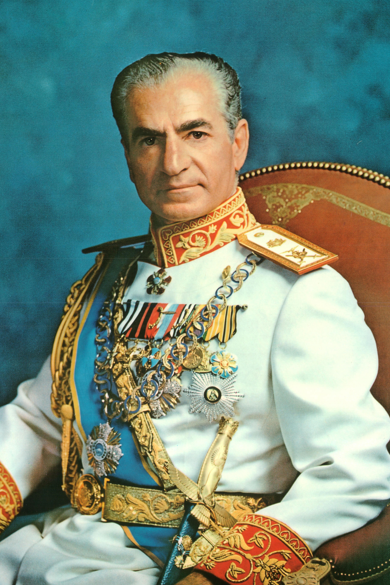
Before the Iranian Revolution of 1979, Iran was governed by Shah Mohammad Reza Pahlavi. Under his rule, the country developed important relationships with Western governments and maintained significant strategic ties with Israel.
The two countries shared concerns about regional security, Soviet influence and the political ambitions of certain Arab nationalist governments.
Iran supplied oil to Israel, while Israeli companies and specialists participated in agricultural, technological and security cooperation with Iran.
Their relationship was not without political sensitivities, particularly because of Iran's position in the wider Muslim world. Nevertheless, both governments viewed cooperation as serving important national interests.
The Islamic Revolution of 1979 fundamentally changed this relationship.
The overthrow of the Shah brought Ayatollah Ruhollah Khomeini and a new Islamic Republic to power.
The revolutionary leadership rejected Israel's legitimacy and adopted support for the Palestinian cause as an important element of its foreign policy.
Israel, which had previously regarded Iran as a strategic partner, increasingly came to view the Islamic Republic as a serious regional security concern.
Over the following decades, political hostility developed into a complex confrontation.
Iran strengthened relationships with armed organizations opposed to Israel, including Hezbollah in Lebanon and Palestinian militant groups.
Israel expanded its intelligence and military efforts to counter Iranian influence and prevent what it considered dangerous developments in Iran's military capabilities.
Iran's nuclear program became another central source of international tension.
Iranian authorities maintained that the country's nuclear activities served peaceful purposes, while Israel and several Western governments raised concerns about the possibility of nuclear weapons development.
International inspections, negotiations, sanctions and allegations of covert operations became part of the confrontation.
For many years, Iran and Israel avoided sustained, openly acknowledged direct military warfare against each other.
Instead, much of their rivalry unfolded through intelligence operations, cyberattacks, regional armed groups and military activities beyond their own borders.
This period became widely known as a shadow war.
However, the confrontation changed dramatically during the years following the Hamas-led attacks against Israel on October 7, 2023, and the subsequent war in Gaza.
Regional violence intensified, and Iran and Israel exchanged direct military attacks in 2024.
In June 2025, their confrontation escalated into a major period of direct warfare, involving Israeli strikes on Iranian targets, Iranian missile attacks and American military intervention.
Further developments in 2026 demonstrated how difficult it had become to contain the confrontation within traditional diplomatic or geographical boundaries.
These events raised urgent questions about regional security, nuclear proliferation, civilian protection and the risk of a wider international conflict.
But understanding the confrontation requires more than examining military operations or statements by political leaders.
It requires returning to the historical relationship between the two countries.
Why did Iran and Israel cooperate before 1979?
What changed during the Islamic Revolution?
How did Hezbollah, Hamas and other armed organizations become connected to the rivalry?
Why has Iran's nuclear program become such a central issue?
What role have the United States, Russia, China and neighboring Arab governments played?
And how do ordinary Iranians and Israelis experience a confrontation that has increasingly shaped their lives?
These questions cannot be answered through a single political perspective.
Iran is a country with a long and complex history, diverse communities and a population whose political views cannot be reduced to the positions of its government.
Israel is likewise a society containing different political, religious and cultural perspectives, including significant disagreements about security policy, relations with Iran and the future of the wider region.
The decisions of political leaders should not automatically be treated as the views of entire populations.
Nor should the actions of governments and armed organizations be confused with the experiences of civilians.
Behind the language of deterrence, military capability and regional influence are people who live with the consequences of political confrontation.
Families face uncertainty about their safety.
Businesses confront economic disruption.
Young people consider how instability may affect their futures.
Communities experience the consequences of military operations, sanctions and political restrictions.
The human dimension is essential to understanding the conflict.
This article examines the transformation of Iran and Israel from strategic partners into regional rivals.
It traces the relationship from the period of the Shah through the Islamic Revolution, the development of regional armed alliances, the nuclear dispute and the escalation into direct military confrontation.
It also explores the role of international powers, the experiences of civilians and the obstacles facing future diplomacy.
The purpose is not to justify the actions of either government or to present the confrontation as inevitable.
It is to understand how political decisions, historical developments and competing security concerns transformed a relationship that once involved cooperation into one of the Middle East's most dangerous rivalries.
Because the conflict between Iran and Israel did not begin with the latest military operation.
And understanding its future requires examining the history that brought both countries to this point.
Beyond the Lines — Understanding the history, the politics and the people behind the conflict.
Chapter 1 — Iran and Israel Before 1979: An Unexpected Partnership
A Relationship That History Often Overlooks
When Iran and Israel are discussed today, their relationship is usually described through hostility, military confrontation and political threats.
The two countries are widely regarded as regional adversaries, and their rivalry has become an important factor in Middle Eastern security.
Yet this was not always the case.
For several decades before the Iranian Revolution of 1979, Iran and Israel maintained a relationship that included diplomatic contacts, economic cooperation, intelligence sharing and military collaboration.
The relationship was rarely presented as a formal alliance.
Iran did not establish full diplomatic relations with Israel in the conventional sense, and its leaders remained sensitive to the political consequences of cooperation with the Jewish state.
Nevertheless, substantial connections developed behind the scenes.
Israel viewed Iran as an important non-Arab regional partner.
Iran's monarchy regarded Israel as a potentially useful source of technology, intelligence and strategic cooperation.
Their relationship reflected the political environment of the Cold War and the complex balance of power in the Middle East.
Understanding this period is essential because it challenges the assumption that hostility between Iran and Israel is inevitable or rooted exclusively in religion.
Their modern confrontation emerged from political transformations and changing strategic interests.
Before those changes, cooperation had been possible.
Iran Before the Islamic Republic
To understand the relationship between Iran and Israel, it is necessary to examine Iran's political system before 1979.
Iran was governed by Mohammad Reza Pahlavi, who became Shah in 1941 following the abdication of his father, Reza Shah.
The Pahlavi monarchy pursued modernization, economic development and closer relationships with Western powers.
During the Shah's rule, Iran expanded its military capabilities, developed infrastructure and invested in industrial growth.
Oil revenues played a major role in financing these developments.
The monarchy also promoted aspects of secular nationalism and emphasized Iran's pre-Islamic historical heritage.
However, modernization was accompanied by political repression.
Opposition parties faced restrictions.
Political activists were monitored, imprisoned or subjected to abuse.
The security and intelligence organization SAVAK became associated with surveillance, detention and torture.
The Shah's government maintained close relationships with the United States and other Western countries, particularly during the Cold War.
These partnerships influenced Iran's security policies and regional relationships.
Israel became one of the countries with which the monarchy developed discreet but significant cooperation.
Iran's Jewish Communities: A History Older Than Israel
The relationship between Iran and Israel cannot be understood solely through twentieth-century diplomacy.
Jewish communities have lived in the lands of present-day Iran for more than two thousand years.
Their history reaches back to ancient Persia and the period of the Babylonian exile.
Jewish historical and religious traditions associate the Persian ruler Cyrus the Great with the return of Jewish exiles and the rebuilding of religious life in Jerusalem.
The biblical Book of Ezra presents Cyrus as permitting the return of exiles and the rebuilding of the Temple.
Historians distinguish these religious accounts from the surviving contemporary evidence, but Persian rule remains an important part of Jewish historical memory.
Over subsequent centuries, Jewish communities developed in cities and regions across Persia.
They contributed to commercial, cultural and religious life while experiencing changing conditions under different rulers.
Periods of coexistence and relative security alternated with discrimination and persecution.
By the twentieth century, Iranian Jews formed a longstanding minority community with their own institutions, traditions and cultural identities.
Their presence demonstrates that Jewish history in Iran is far older than the modern State of Israel.
It also illustrates why Iranian identity, Persian history, Judaism and contemporary Iranian government policy should not be treated as interchangeable concepts.
The Establishment of Israel in 1948
The State of Israel was established on May 14, 1948, following the end of the British Mandate for Palestine.
The declaration came after the United Nations General Assembly adopted Resolution 181 in November 1947, recommending the partition of Mandatory Palestine into Jewish and Arab states, with a special international arrangement for Jerusalem.
Jewish leaders accepted partition as a basis for statehood, although the proposed borders and political arrangements remained contested.
Arab leaders rejected the plan.
War followed the partition decision and escalated after Israel declared independence.
For Israelis, 1948 became the year of independence and national establishment.
For Palestinians, the same period is remembered as the Nakba, or catastrophe, during which hundreds of thousands of Palestinians fled or were expelled from their homes.
The creation of Israel transformed political relationships across the Middle East.
Several Arab governments rejected the new state and participated in the war.
Iran's position was different.
Although Iran was a Muslim-majority country, it was not an Arab state.
Its political leadership evaluated Israel partly through Iran's own regional interests.
This distinction would become increasingly important during the following decades.
Iran's Position on the 1947 Partition Plan
Iran participated in United Nations discussions concerning the future of Palestine.
During the debates surrounding partition, Iranian representatives expressed concerns about the proposed division of the territory.
Iran voted against United Nations General Assembly Resolution 181 in November 1947.
Its opposition reflected political and diplomatic considerations concerning Palestine and the wider region.
This historical detail is important.
Iran's later cooperation with Israel did not begin with immediate support for the creation of the Jewish state.
Instead, relations developed gradually as the monarchy reassessed regional strategic interests.
Iran's position changed in response to political developments rather than a sudden transformation in cultural or religious identity.
Iran's De Facto Recognition of Israel in 1950
In March 1950, Iran extended de facto recognition to Israel.
This was a significant development.
Iran became one of the earliest Muslim-majority countries to recognize Israel in this limited form.
De facto recognition acknowledged the existence and effective authority of the Israeli government without necessarily establishing the full diplomatic relationship associated with de jure recognition.
The decision did not mean that Iran had abandoned its sensitivity toward Arab public opinion or the Palestinian question.
Instead, it reflected the monarchy's willingness to maintain practical relations with Israel.
Iranian and Israeli representatives subsequently developed channels of communication.
Commercial and political contacts expanded.
However, the relationship remained discreet.
The Shah was conscious that visible cooperation with Israel could create tensions with Arab governments and domestic political opponents.
This combination of practical cooperation and public caution became a defining feature of the relationship.
The Cold War and the Regional Balance of Power
The Cold War played a major role in shaping relations between Iran and Israel.
Following the Second World War, the United States and Soviet Union competed for international influence.
The Middle East became strategically important because of its oil resources, geographical position and political relationships.
Iran shared a long border with the Soviet Union.
The Shah regarded Soviet influence and communist movements as significant threats.
Israel also faced regional security challenges and sought relationships with countries outside the surrounding Arab states.
Both governments maintained important connections with the United States.
However, their cooperation was not simply directed by Washington.
Iran and Israel pursued their own strategic interests.
They shared concerns about certain Arab nationalist governments, particularly those associated with Egyptian President Gamal Abdel Nasser.
They also viewed regional political instability through the lens of their respective national security priorities.
These overlapping interests created opportunities for cooperation.
The Periphery Doctrine: Israel's Search for Regional Partners
During the early decades of Israeli statehood, Israeli leaders developed a strategy commonly known as the Periphery Doctrine.
The approach sought relationships with non-Arab countries and minority communities surrounding the Arab world.
Iran, Turkey and Ethiopia were among the states considered important potential partners.
The strategy reflected Israel's diplomatic and security environment.
Many neighboring Arab governments did not recognize Israel.
Several had participated in military conflict with the new state.
Israeli leaders therefore looked beyond their immediate neighbors for political and strategic cooperation.
Iran occupied an important position in this approach.
It was a large, influential country with substantial natural resources and a strategic location.
It was also concerned about the expansion of certain Arab nationalist movements.
The relationship offered Israel access to a significant regional partner.
For Iran, cooperation with Israel provided access to intelligence capabilities, military expertise and technological resources.
However, the Periphery Doctrine was not a formal regional alliance with identical commitments among all participants.
Relationships differed in their depth, visibility and political objectives.
Egypt, Nasser and the Rise of Arab Nationalism
The rise of Gamal Abdel Nasser in Egypt influenced the political calculations of both Iran and Israel.
Nasser became a prominent advocate of Arab nationalism and opposition to Western imperial influence.
His government sought a leading role in the Arab world.
Egypt's nationalization of the Suez Canal in 1956 and the subsequent military intervention by Britain, France and Israel intensified regional tensions.
Nasser's political influence extended beyond Egypt.
His ideas challenged conservative monarchies and governments associated with Western powers.
The Shah viewed revolutionary Arab nationalism as a potential threat to Iran's regional position and political system.
Israel regarded Egypt as a major military adversary.
Although Iran and Israel approached Nasser from different perspectives, both governments had reasons to be concerned about his regional ambitions.
These concerns strengthened their strategic relationship.
The 1953 Coup and Iran's Western Orientation
The political events of 1953 had important consequences for Iran's international relationships.
Prime Minister Mohammad Mossadegh had nationalized Iran's oil industry, creating a confrontation with British economic interests.
In August 1953, British and American intelligence supported a coup that removed Mossadegh from power.
The operation strengthened the Shah's position.
The coup became a major turning point in Iranian political history.
It reinforced the monarchy's dependence on Western support and contributed to resentment among opponents of foreign interference.
During the following decades, the Shah expanded cooperation with the United States.
American military assistance and arms sales became central to Iran's defense strategy.
Iran's relationship with Israel developed within this broader Western-oriented security environment.
However, the cooperation was not simply a consequence of the coup.
It also reflected the specific strategic calculations of Iranian and Israeli leaders.
Intelligence Cooperation Between Iran and Israel
Intelligence cooperation became one of the most significant aspects of the relationship.
Israel's intelligence services developed contacts with Iran's security establishment.
Iran's SAVAK organization maintained relationships with Israeli intelligence personnel.
The cooperation involved training, information exchange and assessments of regional security threats.
Both governments were concerned about developments in neighboring countries.
Iraq was particularly important.
Iran had longstanding disputes with Iraq, including disagreements over borders and regional influence.
Israel also viewed Iraq as a potential military threat.
Intelligence concerning Iraqi military capabilities and political developments was therefore valuable to both countries.
Israeli expertise in intelligence organization and security training attracted Iranian interest.
However, the precise scope of individual operations remains difficult to reconstruct.
Some information became public through memoirs, historical research and declassified documents.
Other activities remain disputed or insufficiently documented.
Responsible historical analysis must distinguish established cooperation from claims about specific covert operations that cannot be independently verified.
Iraq as a Shared Strategic Concern
Iraq played an important role in bringing Iranian and Israeli interests closer together.
During the twentieth century, relations between Iran and Iraq were frequently tense.
Disputes concerned territorial boundaries, waterways and regional influence.
The Shatt al-Arab waterway, which forms part of the border between the two countries, became particularly important.
Iranian leaders were also concerned about Iraq's political relationships and military capabilities.
Israel viewed Iraq as one of the Arab states capable of participating in future military confrontations.
These concerns created overlapping strategic interests.
Both Iran and Israel had reasons to monitor developments in Baghdad.
The relationship became particularly important as Iraq's political system changed and the Ba'ath Party consolidated power.
However, Iranian and Israeli policies toward Iraq were not identical.
Each government pursued its own national objectives.
Cooperation was based on areas of shared concern rather than complete agreement.
The Kurdish Question and Regional Strategy
The Kurdish population occupies territories across parts of Turkey, Iraq, Iran and Syria.
Kurdish political movements have pursued different forms of autonomy, cultural rights and, in some cases, independence.
During the twentieth century, Kurdish movements in Iraq became involved in conflict with the Iraqi central government.
Iran and Israel both developed interests in the Kurdish question, particularly because of their concerns about Iraqi military power.
Historical research has documented Israeli support for Iraqi Kurdish forces during parts of this period, alongside Iranian involvement.
Such cooperation formed part of broader efforts to weaken the strategic position of Iraq.
However, Kurdish communities should not be reduced to instruments of foreign policy.
Their political aspirations emerged from their own historical experiences, including disputes over autonomy, representation and cultural rights.
Different Kurdish movements also held different political positions.
Understanding the relationship requires distinguishing Kurdish political agency from the interests of governments seeking influence in Iraq.
Oil: The Economic Foundation of Cooperation
Oil was one of the most important components of Iranian-Israeli economic relations.
Iran possessed substantial petroleum resources.
Israel required reliable energy supplies to support economic development.
Because many Arab oil-producing countries opposed Israel, access to Iranian oil was strategically valuable.
Iran became an important supplier of petroleum to Israel during the Shah's rule.
The relationship offered commercial benefits to Iran while contributing to Israel's energy security.
However, oil cooperation was politically sensitive.
The Shah sought to avoid unnecessary confrontation with Arab governments.
As a result, commercial arrangements were often structured discreetly.
Energy cooperation demonstrates how economic interests can influence relationships even when public diplomatic ties remain limited.
The Eilat-Ashkelon Pipeline
One of the most significant examples of Iranian-Israeli economic cooperation involved the Eilat-Ashkelon pipeline.
The pipeline connected the Red Sea port of Eilat with the Mediterranean coast near Ashkelon.
It was developed in the late 1960s through cooperation involving Iranian and Israeli interests.
The project created a route for transporting oil between the Red Sea and the Mediterranean.
Its geographical position was strategically important.
It provided an alternative route for moving petroleum toward international markets.
The project was connected to the broader development of energy cooperation between Iran and Israel.
However, the pipeline's ownership arrangements and later financial disputes became complex.
Following the Iranian Revolution, cooperation ended, and disputes over assets and obligations continued.
The pipeline illustrates the depth of economic relationships that existed before 1979.
It also demonstrates how political transformation can leave unresolved commercial consequences decades later.
Agriculture, Technology and Economic Development
Cooperation extended beyond oil and intelligence.
Israel had developed expertise in agriculture, irrigation and water management.
These capabilities were relevant to Iran's modernization efforts.
Iran contained extensive agricultural regions but also faced challenges involving water distribution and infrastructure.
Israeli specialists and companies participated in projects involving agricultural development and technical assistance.
Commercial relationships also involved industrial equipment and other technologies.
The Shah's government sought international expertise as part of its broader modernization program.
Israel viewed technical cooperation as a means of strengthening diplomatic relationships and creating economic opportunities.
However, the benefits of modernization were not distributed equally across Iranian society.
Rural communities, urban workers and political opponents experienced the Shah's development policies differently.
Economic growth existed alongside political inequality and repression.
This contrast became increasingly important as opposition to the monarchy developed.
Military Cooperation and Defense Technology
Iran's military modernization accelerated during the Shah's rule.
Oil revenues enabled the government to purchase advanced weapons and military equipment.
The United States became a major supplier.
Other Western countries also participated in Iran's defense development.
Israel contributed to certain areas of military and technical cooperation.
The two countries explored defense projects and exchanged expertise.
One example was Project Flower, a late-1970s missile-development initiative associated with Iranian-Israeli cooperation.
The project has been described in historical research, although some technical details and intended capabilities remain debated.
The Iranian Revolution interrupted this cooperation.
The broader relationship reflected a shared interest in strengthening military capabilities.
However, the two governments had different strategic priorities.
Iran sought to establish itself as a major Gulf power.
Israel focused primarily on threats from neighboring states and the wider Arab-Israeli conflict.
Military cooperation emerged where these interests overlapped.
The Shah's Public Position on Israel and Palestine
Despite extensive cooperation, the Shah did not consistently present himself as an unconditional supporter of Israeli government policies.
Iran maintained relationships with Arab countries.
The monarchy also recognized the political sensitivity of the Palestinian question.
The Shah sometimes expressed criticism of Israeli actions or support for Palestinian rights.
These positions reflected Iran's attempt to balance competing diplomatic interests.
Public criticism did not necessarily end practical cooperation.
This apparent contradiction is important.
International relationships are rarely defined by a single issue.
Governments may disagree publicly while maintaining economic or security partnerships.
Iran's approach under the Shah demonstrated this complexity.
The monarchy sought to benefit from cooperation with Israel without sacrificing its broader regional relationships.
Iranian Society and Attitudes Toward Israel
The relationship between the Iranian monarchy and Israel should not be confused with a uniform attitude among Iranian citizens.
Iranian society contained diverse political, religious and ideological movements.
Some supported the Shah's modernization policies.
Others opposed his authoritarian rule.
Religious leaders criticized the monarchy for its Western orientation and perceived departure from Islamic principles.
Left-wing organizations challenged political repression and economic inequality.
Nationalists criticized foreign influence.
The Palestinian cause also attracted support among different political groups.
For some opponents of the Shah, his relationship with Israel symbolized broader cooperation with Western governments.
However, opposition to the monarchy did not necessarily produce identical attitudes toward Israel.
Different movements approached the issue through different political frameworks.
Some emphasized Palestinian national rights.
Others connected Israel to anti-imperialist ideology or religious political arguments.
The diversity of these positions is essential to understanding the later revolutionary period.
Ayatollah Khomeini and Early Opposition to Israel
Ruhollah Khomeini emerged as a prominent religious opponent of the Shah during the 1960s.
He criticized the monarchy's political direction, its relationship with the United States and its cooperation with Israel.
Khomeini's opposition formed part of a broader challenge to the Shah's authority.
He condemned government reforms and argued that the monarchy had become excessively dependent on foreign powers.
In 1963, protests associated with opposition to the Shah's policies contributed to major political unrest.
Khomeini was arrested and later sent into exile.
From exile, he continued to criticize the monarchy.
His statements increasingly connected opposition to the Shah with opposition to American influence and Israel.
These ideas would become central to the foreign policy of the Islamic Republic after 1979.
However, Khomeini's eventual rise to power was not inevitable.
Iran's opposition movements included many groups with different political visions.
The revolutionary outcome emerged from a complex struggle involving religious organizations, secular activists, workers, students and other sectors of society.
The White Revolution and Growing Political Opposition
In 1963, the Shah introduced a series of reforms known as the White Revolution.
The program included land reform, educational initiatives and measures intended to modernize Iranian society.
Women's suffrage was among the reforms associated with this period.
The monarchy presented the program as an effort to accelerate social and economic development.
However, the reforms generated opposition from different groups.
Some religious leaders objected to changes affecting traditional institutions.
Land reform produced mixed results and did not eliminate rural inequality.
Rapid urbanization contributed to social pressures.
Political restrictions limited opportunities for peaceful opposition.
As economic development accelerated, dissatisfaction with authoritarian governance also increased.
These tensions became increasingly important during the 1970s.
The Shah's close relationships with Western governments and Israel were criticized by opponents who viewed them as symbols of political dependence.
The 1967 War and Its Regional Consequences
The Six-Day War of June 1967 transformed the Middle East.
Israel captured the West Bank, including East Jerusalem, Gaza Strip, Sinai Peninsula and Golan Heights.
The war had significant consequences for Arab governments, Palestinian national aspirations and regional diplomacy.
Iran did not participate in the war.
The Shah maintained his own strategic calculations concerning Israel and neighboring countries.
However, the conflict increased the political sensitivity of Iran's relationship with Israel.
Public support for the Palestinian cause became more prominent across the region.
Iranian opposition movements also used the issue to criticize the monarchy.
The war demonstrated that cooperation with Israel could carry political costs for governments seeking relationships across the Muslim and Arab worlds.
Nevertheless, Iranian-Israeli strategic cooperation continued.
The 1973 Arab-Israeli War and Oil Diplomacy
The October 1973 war created another major regional crisis.
Egypt and Syria launched military operations against Israeli forces in territories captured in 1967.
The conflict involved international diplomatic and military support for different parties.
Arab oil-producing countries used petroleum policy as part of their political response.
Oil production restrictions and an embargo against selected countries contributed to a major international energy crisis.
Iran's position was distinctive.
Although the Shah criticized certain Israeli policies and expressed support for territorial compromise, Iran did not participate in the Arab oil embargo.
Iran continued pursuing its own petroleum and foreign policy interests.
The Shah's government also benefited financially from rising oil prices.
The episode illustrated the differences between Iran's strategic priorities and those of Arab oil-producing states.
It also demonstrated the monarchy's ability to maintain relationships across political divisions.
The United States and the Iranian-Israeli Relationship
The United States maintained close relationships with both Iran and Israel during the Shah's rule.
However, these relationships developed for different reasons.
Washington viewed Iran as an important partner in the Persian Gulf and a counterweight to Soviet influence.
Israel became a major American security partner in the eastern Mediterranean.
American policymakers recognized the strategic significance of cooperation between the two countries.
However, it would be inaccurate to describe the relationship as a formal American-directed alliance.
Iran and Israel maintained their own political objectives.
The Shah sometimes disagreed with American policy.
Israeli leaders also pursued independent security strategies.
The relationship reflected overlapping interests within a wider Cold War environment.
Why the Partnership Remained Discreet
Iran's cooperation with Israel was significant but politically sensitive.
Several factors explain why the relationship was not always publicly emphasized.
First, Iran was a Muslim-majority country whose government sought relationships with Arab states.
Visible cooperation with Israel could complicate these diplomatic efforts.
Second, the Palestinian question had substantial political importance across the region.
Third, Iranian opposition movements criticized the Shah's Western alliances.
Fourth, intelligence and military cooperation often required confidentiality.
The result was a relationship that operated through a combination of official contacts, commercial arrangements and covert channels.
Its limited public visibility did not mean that the relationship was unimportant.
On the contrary, secrecy was part of the strategy that allowed cooperation to continue.
The Contradictions of the Shah's Modernization
By the 1970s, Iran had become a major regional power.
Oil revenues supported ambitious development programs.
The government expanded military capabilities.
International investment and technology contributed to economic modernization.
Iran maintained significant relationships with Western governments and Israel.
However, beneath these developments, political dissatisfaction was growing.
The Shah's government restricted political opposition.
Security forces monitored dissidents.
Economic inequality and social tensions persisted.
Rapid modernization created expectations that the political system did not always accommodate.
The monarchy's close relationships with foreign powers became a source of criticism.
For many opponents, the issue was not simply whether Iran should modernize.
It was who controlled the process, how political decisions were made and whether citizens could participate meaningfully in national affairs.
These contradictions weakened the monarchy's legitimacy.
They also contributed to the political environment in which the Iranian Revolution emerged.
The Final Years Before the Revolution
During the late 1970s, opposition to the Shah intensified.
Religious leaders, students, workers, intellectuals and political activists participated in demonstrations and strikes.
The opposition was diverse.
Some demanded constitutional reform.
Others sought the end of the monarchy.
Religious revolutionaries advocated a political system based on Islamic principles.
Economic difficulties and political repression contributed to growing unrest.
The Shah's relationships with the United States and Israel became prominent subjects of criticism.
For revolutionary leaders, these relationships represented what they considered foreign domination and political illegitimacy.
By 1978, mass demonstrations and strikes had created a severe crisis for the monarchy.
The Shah left Iran in January 1979.
Ayatollah Khomeini returned from exile in February.
The monarchy collapsed shortly afterward.
The political system that had supported cooperation with Israel was replaced by a revolutionary government with fundamentally different ideological and strategic priorities.
A Partnership That Ended With a Revolution
The Iranian Revolution transformed the relationship between Iran and Israel.
The new Islamic Republic rejected the diplomatic and political arrangements associated with the Shah.
Israeli representation in Tehran was closed.
The former Israeli mission premises were transferred to representatives of the Palestine Liberation Organization.
The revolutionary government made opposition to Israel a central part of its regional political identity.
The change was dramatic.
A relationship that had involved intelligence cooperation, oil supplies, technological exchange and strategic coordination was replaced by open hostility.
However, the transformation did not erase the history that preceded it.
For nearly three decades, Iranian and Israeli leaders had found reasons to cooperate despite differences in religion, national identity and regional political interests.
Their relationship had been shaped by security concerns, economic needs and the balance of power.
Its collapse demonstrated how profoundly political revolutions can change international relationships.
It also challenged the idea that contemporary rivalries must have existed throughout history.
Beyond the Lines: Understanding a Forgotten Partnership
The relationship between Iran and Israel before 1979 offers an important lesson about the Middle East.
Political alliances are not permanent.
Governments cooperate when they believe cooperation serves their interests.
They may become adversaries when political systems, ideologies or security priorities change.
Iran and Israel did not become partners because their societies were identical.
They cooperated because their governments identified shared strategic interests.
The Shah sought military expertise, economic development and regional influence.
Israeli leaders sought access to energy resources, intelligence cooperation and relationships beyond the surrounding Arab states.
The partnership developed within the political environment of the Cold War.
However, the relationship also contained contradictions.
Iran's government cooperated with Israel while remaining sensitive to Palestinian political aspirations and Arab public opinion.
The monarchy pursued modernization while restricting political freedom.
Opposition movements increasingly challenged the Shah's foreign relationships as well as his domestic policies.
These tensions became part of the political environment that preceded the Islamic Revolution.
The history also demonstrates why the relationship between governments should not be confused with the relationship between peoples.
Jewish communities had lived in Persia for centuries before the establishment of Israel.
Iranian society contained diverse political perspectives.
Israeli society also developed its own debates concerning regional security and international relationships.
The decisions of political leaders did not represent every individual within either country.
Understanding this distinction is essential when examining the confrontation that followed.
The hostility between Iran and Israel was not an unavoidable consequence of geography or religion.
It emerged through historical events, political decisions and changing regional circumstances.
Before Iran and Israel became adversaries, they had been strategic partners.
And understanding why that partnership ended is the first step toward understanding the conflict that defines their relationship today.
The next chapter examines the event that changed everything: the Islamic Revolution of 1979, the fall of the Shah and the emergence of a new Iranian political system that placed opposition to Israel at the center of its foreign policy.
Chapter 2 — The Islamic Revolution of 1979: A Turning Point
The Revolution That Changed the Middle East
In February 1979, one of the most significant political transformations in modern Middle Eastern history took place.
After decades of monarchy under Shah Mohammad Reza Pahlavi, Iran experienced a revolution that fundamentally changed its government, political identity and international relationships.
The Shah, who had maintained close relations with the United States and developed significant cooperation with Israel, was forced from power.
Ayatollah Ruhollah Khomeini, a religious leader who had spent years in exile, returned to Iran and became the central figure of a new political order.
The revolution did more than replace one government with another.
It transformed the country's political institutions, redefined the relationship between religion and state, and reshaped Iran's position in the Middle East.
For Israel, the consequences were immediate.
A country that had previously been an important strategic partner became a government openly opposed to Israel's legitimacy.
For the United States, the revolution meant the loss of one of its most important regional allies.
For millions of Iranians, it marked the beginning of a new and uncertain chapter.
Some welcomed the revolution as an opportunity to end authoritarian rule and foreign interference.
Others soon discovered that the political system emerging from the revolution did not reflect the freedoms or democratic expectations they had hoped to achieve.
To understand how Iran and Israel became regional adversaries, it is essential to understand what happened in 1979, why the revolution succeeded and how its consequences continue to shape the region.
The Shah's Iran: Modernization and Political Repression
Before the revolution, Iran was governed by Mohammad Reza Pahlavi, who had ruled since 1941.
The Shah sought to transform Iran into a modern, economically developed and militarily powerful country.
His government invested heavily in infrastructure, education, industrial development and military modernization.
Oil revenues provided much of the funding for these ambitions.
Iran developed close relationships with Western governments, particularly the United States.
American weapons, military training and technical assistance became important components of the Shah's security strategy.
Israel also maintained significant economic, intelligence and security cooperation with Iran.
However, the monarchy's modernization policies were accompanied by political repression.
Opposition parties faced severe restrictions.
Independent political activity was limited.
The security organization SAVAK monitored political opponents and became notorious for arbitrary detention, torture and intimidation.
The Shah's government presented political stability and economic development as national priorities.
Critics argued that modernization without political freedom had created an increasingly authoritarian state.
Economic growth also produced uneven results.
Some urban communities benefited from expanding industries and educational opportunities.
Other groups experienced economic insecurity, inflation and social displacement.
Rapid urbanization placed pressure on housing, employment and public services.
By the 1970s, growing numbers of Iranians were questioning whether the monarchy's political system could respond to the country's changing social conditions.
The White Revolution and Its Unintended Consequences
In 1963, the Shah introduced a reform program known as the White Revolution.
The reforms included land redistribution, educational initiatives, infrastructure development and changes to women's legal and political status.
Women received the right to vote and stand for election.
The government also promoted literacy campaigns and expanded educational opportunities.
The Shah presented these reforms as a peaceful alternative to revolutionary political change.
However, the results were complicated.
Land reform weakened some traditional landowning structures but did not eliminate rural poverty.
Many agricultural workers struggled with limited access to resources and financial support.
Migration from rural areas to cities increased.
Religious leaders objected to certain reforms, particularly those they believed weakened traditional institutions or challenged their political influence.
Other critics argued that the monarchy was imposing change without public participation.
The government also continued restricting political opposition.
Consequently, reforms that were intended to strengthen the monarchy sometimes contributed to broader dissatisfaction.
Modernization changed Iranian society, but it did not resolve the political tensions surrounding the Shah's rule.
The Rise of Ayatollah Ruhollah Khomeini
Ruhollah Khomeini emerged as one of the monarchy's most prominent religious critics during the early 1960s.
A senior Shi'a cleric, Khomeini opposed aspects of the Shah's reform program and condemned the government's relationship with foreign powers.
He argued that the monarchy had undermined Iran's religious identity and political independence.
Khomeini also criticized the Shah's cooperation with Israel.
In his political speeches, he connected Israel with Western influence and what he considered the monarchy's abandonment of Islamic principles.
His opposition became particularly visible during the unrest of June 1963.
Following protests and government repression, Khomeini was arrested.
He was eventually exiled in 1964.
Khomeini spent time in Turkey before settling in Najaf, Iraq, where he continued developing his religious and political ideas.
In 1978, he moved to France.
During his years in exile, Khomeini remained an influential figure among parts of Iran's religious opposition.
Recorded speeches, written messages and networks of supporters helped circulate his ideas inside Iran.
His influence grew as public dissatisfaction with the Shah intensified.
However, Khomeini was not the only opposition leader.
Iran's revolutionary movement included secular nationalists, left-wing organizations, students, workers, intellectuals, religious activists and supporters of different political systems.
These groups shared opposition to the monarchy but disagreed about what should replace it.
That diversity would become increasingly important after the revolution succeeded.
Why So Many Different Iranians Joined the Revolution
The Iranian Revolution was not initially a movement with a single political vision.
It brought together groups whose goals were sometimes fundamentally different.
Religious activists opposed the Shah's policies and supported a greater role for Islam in public life.
Secular nationalists sought political independence, constitutional government and an end to authoritarian rule.
Left-wing organizations criticized economic inequality, foreign influence and the concentration of political power.
Students protested restrictions on political expression and the government's treatment of opposition movements.
Workers participated in strikes that disrupted major industries.
Members of the urban middle class expressed frustration with political repression and economic instability.
Some women participated because they opposed the monarchy and hoped for greater political participation.
Others were motivated by religious commitments or demands for social justice.
These different movements did not necessarily agree about women's rights, democracy, religious authority or Iran's future international relationships.
Their temporary unity was built primarily around opposition to the Shah.
The revolution's success therefore did not mean that all participants supported the political system that eventually emerged.
The Protests of 1978
During 1978, demonstrations against the monarchy expanded dramatically.
Political unrest had already been growing, but several events accelerated the crisis.
In January, protests erupted in the religious city of Qom following the publication of an article attacking Khomeini.
Security forces confronted demonstrators, and deaths were reported.
Further protests followed, often connected to traditional mourning ceremonies held forty days after earlier deaths.
These recurring demonstrations helped sustain opposition across different cities.
During the spring and summer, unrest spread.
The government's responses included arrests, restrictions and the use of force.
Some attempts at political concessions failed to restore confidence in the monarchy.
By the second half of 1978, the protests had developed into a nationwide political crisis.
Religious networks, universities, workplaces and opposition organizations played different roles in sustaining the movement.
The monarchy faced an increasingly difficult situation.
Its security forces remained powerful, but public opposition was expanding.
The political legitimacy of the Shah's government was rapidly weakening.
Black Friday: September 8, 1978
One of the most consequential events of the revolution occurred on September 8, 1978.
Iranian security forces opened fire on demonstrators in Tehran's Jaleh Square, later renamed Martyrs' Square.
The event became known as Black Friday.
The number of people killed remains a subject of historical debate.
Contemporary revolutionary claims described extremely high casualty figures, while later historical investigations produced substantially lower estimates.
What is not disputed is that the violence became a major turning point.
The killings intensified public anger and deepened distrust of the monarchy.
For many protesters, the possibility of compromise with the Shah appeared increasingly remote.
Black Friday became a powerful symbol of state repression.
It also strengthened the revolutionary movement's determination to continue.
The event demonstrated how government violence could further undermine a political system already facing a crisis of legitimacy.
Strikes and the Collapse of the Monarchy's Authority
Mass demonstrations were not the only factor that weakened the Shah.
Strikes played a crucial role.
Workers in major industries, including the oil sector, participated in work stoppages.
Oil production and exports were disrupted.
Government institutions and commercial activities were also affected.
These strikes placed increasing economic pressure on the monarchy.
They also demonstrated that opposition had extended beyond religious demonstrations and student activism.
The participation of industrial workers and other employees made it increasingly difficult for the government to maintain normal economic activity.
By late 1978, Iran faced a combination of political unrest, economic disruption and declining confidence in the monarchy.
The Shah attempted to respond through changes in government leadership and promises of reform.
However, the measures failed to reverse the revolutionary momentum.
The Shah Leaves Iran
On January 16, 1979, Mohammad Reza Pahlavi left Iran.
Officially, his departure was described as a temporary journey.
In reality, the monarchy was approaching collapse.
The Shah had appointed Shapour Bakhtiar as prime minister in an attempt to establish a civilian government and preserve a constitutional framework.
Bakhtiar introduced political reforms and sought to restore stability.
However, many opposition groups rejected his government because it had been appointed by the Shah.
Khomeini also refused to recognize Bakhtiar's authority.
The Shah's departure became a defining moment for the revolutionary movement.
Large crowds celebrated in Iranian cities.
Yet the country's political future remained uncertain.
The monarchy had not formally disappeared.
The military remained a major institution.
Different opposition groups continued to compete over the future of the state.
The next decisive event would be Khomeini's return.
February 1, 1979: Khomeini Returns to Tehran
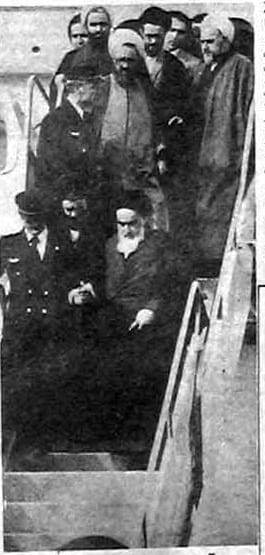
On February 1, 1979, Ayatollah Ruhollah Khomeini returned to Iran after more than fourteen years in exile.
He arrived in Tehran from France.
Enormous crowds gathered to welcome him.
Images of his arrival became among the most recognizable photographs of the Iranian Revolution.
For his supporters, Khomeini represented resistance to the monarchy, foreign influence and political repression.
His return also marked a major shift in the balance of power.
Khomeini challenged the authority of Bakhtiar's government and supported the establishment of a new revolutionary administration.
On February 5, he appointed Mehdi Bazargan as prime minister of a provisional government.
Iran now faced competing claims to political authority.
The existing government continued to operate, but revolutionary institutions were gaining influence.
The confrontation reached its decisive stage within days.
February 11, 1979: The Monarchy Falls
During February 9–11, armed confrontations intensified in Tehran.
Military personnel, revolutionary groups and supporters of the monarchy became involved in clashes.
Sections of the armed forces broke with the existing command structure or refused to continue supporting the government.
On February 11, the military leadership declared neutrality in the political conflict.
The remaining authority of the monarchy collapsed.
Revolutionary forces took control of key institutions.
The Pahlavi dynasty, which had governed Iran since 1925, had come to an end.
The revolution had succeeded in overthrowing the Shah.
However, the question of what political system would replace the monarchy had not yet been fully resolved.
That struggle would define the months and years that followed.
From Revolution to Islamic Republic
Following the monarchy's collapse, Iran entered a period of political transformation.
The revolutionary movement had included many competing groups.
Some supported parliamentary democracy.
Others advocated socialist or nationalist political systems.
Khomeini and his supporters promoted the establishment of an Islamic Republic.
In a referendum held on March 30–31, 1979, voters were asked to approve the replacement of the monarchy with an Islamic Republic.
Official results reported overwhelming support.
However, the referendum offered a limited choice, and the political environment was already shaped by revolutionary power struggles.
The Islamic Republic was formally proclaimed on April 1, 1979.
Later that year, a new constitution established the institutional foundations of the state.
The constitution combined elected institutions with powerful religious oversight.
It also incorporated Khomeini's doctrine of velayat-e faqih, commonly translated as the guardianship of the Islamic jurist.
Under this principle, a senior religious authority would exercise ultimate political leadership.
Khomeini became Iran's first Supreme Leader.
The new system differed fundamentally from the constitutional democracy envisioned by some participants in the revolution.
The Supreme Leader and the New Political System
The Islamic Republic established a political structure in which elected institutions operated alongside bodies exercising religious and constitutional oversight.
The president and parliament became important institutions.
However, ultimate authority rested with the Supreme Leader.
The Supreme Leader was granted extensive powers concerning the armed forces, national security and major state appointments.
The Guardian Council was also established as an influential institution responsible for reviewing legislation and assessing electoral candidates under the constitutional framework.
This system created a distinctive relationship between electoral politics and religious authority.
Supporters regarded it as a political structure intended to protect the Islamic character of the state.
Critics argued that it limited democratic competition and concentrated power in institutions not directly accountable to voters.
The new political order would have significant consequences for Iran's domestic policies and international relationships.
The Revolution and Women's Rights
Women played visible and important roles in the Iranian Revolution.
They participated in demonstrations, political organizations, strikes and public debates.
Their motivations varied.
Some supported the religious leadership.
Others opposed the Shah's authoritarian rule while hoping for greater political and social freedoms.
Some women who had benefited from educational and professional opportunities under the monarchy also opposed its political repression.
After the revolution, however, women's legal and social position became a major area of conflict.
The new government introduced policies that increased religious regulation of public life.
Changes to family law affected divorce, marriage and other legal protections.
The legal status of women became increasingly influenced by the government's interpretation of Islamic law.
In March 1979, women protested against moves toward compulsory Islamic dress requirements.
These demonstrations showed that opposition to the Shah did not necessarily mean agreement with the new government's policies.
Compulsory hijab rules were introduced and enforced through subsequent measures in the early 1980s.
Women continued to participate in education, employment and public life, but under a legal system containing significant gender-based restrictions.
The revolution therefore produced different experiences for different women.
For some, it represented a political and religious transformation they supported.
For others, it marked the loss of rights and freedoms they had expected to preserve or expand.
This distinction is essential to understanding the complexity of Iranian society.
Political Opposition After the Revolution
The overthrow of the Shah did not bring an end to political repression.
As revolutionary institutions consolidated power, tensions intensified between competing political movements.
Secular nationalists, left-wing groups, liberal activists and other organizations increasingly came into conflict with the new leadership.
Some newspapers faced restrictions.
Political organizations were suppressed.
Activists were arrested, imprisoned or executed.
The revolutionary courts became associated with proceedings criticized for lacking adequate legal safeguards.
Former officials of the monarchy were among those prosecuted and executed.
Later, political opponents of the Islamic Republic also faced severe repression.
These developments reflected the struggle to determine who would control the new state.
The revolutionary coalition that had helped overthrow the monarchy gradually fragmented.
Khomeini's supporters consolidated political authority.
By the early 1980s, many rival movements had been marginalized, driven underground or forced into exile.
The revolution had ended one authoritarian political system, but it had not established the pluralistic political order sought by all its participants.
The United States: From Strategic Partner to Political Enemy
Before 1979, Iran had been one of the United States' most important regional partners.
Washington supplied military equipment, training and political support to the Shah's government.
American policymakers viewed Iran as a major security partner in the Persian Gulf.
The revolution fundamentally changed this relationship.
Khomeini and other revolutionary leaders condemned American support for the monarchy.
They argued that the United States had interfered in Iranian affairs and helped sustain authoritarian rule.
The 1953 coup against Prime Minister Mohammad Mossadegh became an important historical reference in revolutionary political discourse.
Tensions escalated dramatically in November 1979.
On November 4, Iranian students who supported Khomeini seized the United States Embassy in Tehran.
American diplomats and other personnel were taken hostage.
The hostage crisis lasted 444 days.
Fifty-two Americans remained captive until their release on January 20, 1981.
The crisis destroyed the remaining foundations of normal diplomatic relations between Washington and Tehran.
In April 1980, the United States formally broke diplomatic relations with Iran.
The confrontation would influence American policy toward the Islamic Republic for decades.
Israel Loses a Strategic Partner
For Israel, the Iranian Revolution represented a major strategic setback.
Under the Shah, Iran had provided oil supplies and participated in intelligence, commercial and military cooperation.
Although the relationship was discreet, it had been important to Israeli regional strategy.
The revolutionary government rejected the political framework that had made this cooperation possible.
Israeli diplomatic representation in Tehran ended.
Economic and security relationships were disrupted.
The new leadership publicly opposed Israel's legitimacy and embraced support for the Palestinian national cause.
Iran's political transformation therefore removed a major non-Arab partner from Israel's regional network.
However, the transition from cooperation to hostility was not entirely straightforward.
Historical accounts of the 1980s show that limited indirect contacts and arms-related dealings continued in certain circumstances, particularly during the Iran-Iraq War.
These later developments demonstrate that political hostility and strategic calculations could coexist.
Nevertheless, the revolution marked the end of the broader partnership that had existed under the Shah.
The Israeli Mission and the Palestine Liberation Organization
One of the most symbolic events following the revolution involved the former Israeli mission in Tehran.
After the monarchy's collapse, the Israeli diplomatic presence was closed.
The premises were handed over to representatives of the Palestine Liberation Organization, or PLO.
PLO leader Yasser Arafat visited Iran in February 1979.
He received a prominent welcome from the revolutionary leadership.
The visit symbolized the new government's intention to redefine Iran's position in the Arab-Israeli conflict.
For Khomeini, support for the Palestinian cause became an important element of the Islamic Republic's political identity.
The transfer of the former Israeli mission carried a clear diplomatic message.
A location previously associated with cooperation between Iran and Israel was now connected to the Palestinian national movement.
The event became an enduring symbol of the revolution's foreign-policy transformation.
However, Iran's relationship with Palestinian organizations would evolve over time.
Different Palestinian movements maintained different political and ideological relationships with Tehran.
The Islamic Republic's support for the Palestinian cause did not automatically translate into identical relationships with every Palestinian political organization.
The Palestinian Question in Revolutionary Iran
The Palestinian question became central to the Islamic Republic's regional political messaging.
Khomeini presented opposition to Israel as part of a broader struggle against what he regarded as foreign domination and injustice.
The revolutionary leadership framed Palestinian national rights through both political and religious language.
This approach distinguished the Islamic Republic from the Shah's government.
The monarchy had attempted to balance practical cooperation with Israel against diplomatic sensitivity toward Arab governments and Palestinian aspirations.
The Islamic Republic adopted a much more confrontational public position.
However, the relationship between Iran and the Palestinian national movement was not simple.
Iran was a predominantly Shi'a Muslim country.
Palestinian society was predominantly Sunni Muslim, with Christian minorities and other communities.
Political cooperation therefore crossed religious divisions.
Iranian support for Palestinian organizations was shaped by ideology, regional strategy and changing political circumstances.
These relationships would become increasingly important during later decades.
Quds Day and the Politics of Jerusalem
In 1979, Khomeini called for the establishment of an annual observance known as Quds Day.
Al-Quds is the Arabic name for Jerusalem.
The observance takes place on the final Friday of Ramadan.
It was intended to express support for Palestinians and opposition to Israeli control over Jerusalem and other territories.
Quds Day became an important feature of the Islamic Republic's political calendar.
Government-organized demonstrations frequently included political slogans opposing Israel and the United States.
The event reflected the way the revolutionary government incorporated the Palestinian question into its national and international identity.
However, official demonstrations should not automatically be interpreted as evidence of unanimous public opinion.
Iranian citizens have held different views concerning foreign policy, religion and the government's regional priorities.
Some support the Islamic Republic's positions.
Others criticize the government's international policies or argue that domestic economic and social problems should receive greater attention.
Understanding these differences is necessary when examining the relationship between the Iranian state and Iranian society.
Revolutionary Ideology and Regional Influence
The Islamic Republic did not limit its ambitions to domestic political transformation.
Khomeini's leadership presented the revolution as a model with significance beyond Iran's borders.
The new government promoted opposition to foreign domination and support for movements it considered aligned with its revolutionary principles.
This approach alarmed several neighboring governments.
Conservative Arab monarchies, particularly in the Persian Gulf, were concerned that revolutionary ideas might encourage political opposition within their own societies.
Iraq's leadership also viewed the revolution as a potential threat.
The new Iranian government faced a difficult strategic environment.
It had lost important relationships with Western powers.
Its military and political institutions were undergoing major changes.
Neighboring governments were uncertain about its intentions.
The Islamic Republic's revolutionary ideology therefore developed alongside serious security challenges.
These tensions would contribute to the outbreak of the Iran-Iraq War in September 1980.
The Creation of the Islamic Revolutionary Guard Corps
The Islamic Revolutionary Guard Corps, commonly known as the IRGC, was established in 1979.
Its original purpose was to protect the revolution and the emerging political system.
The organization developed separately from Iran's regular armed forces.
Over time, it became one of the most influential institutions in the Islamic Republic.
The IRGC acquired responsibilities involving national security, military operations and the protection of the political order.
It later developed substantial economic and political influence.
Its external operations would also become important to Iran's regional strategy.
The IRGC's Quds Force emerged as a key organization involved in relationships with armed groups and political partners beyond Iran's borders.
These later developments cannot be understood without recognizing the institution's revolutionary origins.
The IRGC was created during a period when the new government feared internal opposition, foreign intervention and attempts to reverse the revolution.
Its role expanded as the Islamic Republic confronted regional wars and international isolation.
Religion, Nationalism and Political Power
The Iranian Revolution is often described primarily as a religious revolution.
Religion was undoubtedly central to the political system that emerged.
However, reducing the revolution to religion alone would overlook important historical factors.
Iranian nationalism, economic inequality, opposition to authoritarian rule and resentment of foreign interference also contributed to the revolutionary movement.
Different groups interpreted these concerns in different ways.
Khomeini's leadership succeeded in combining religious authority with a political message that appealed to many people dissatisfied with the monarchy.
After the revolution, the new government institutionalized a particular interpretation of Shi'a political authority.
Yet Iranian society remained diverse.
Not all Shi'a religious scholars agreed with Khomeini's doctrine of political guardianship.
Secular Iranians continued to advocate different political systems.
Ethnic and religious minorities maintained distinct identities and concerns.
The relationship between religion and political authority therefore remained contested.
These internal differences are important because the policies of the Islamic Republic should not be assumed to represent every Iranian citizen or every Shi'a Muslim.
The Revolution's Impact on Iranian Jews
Iran's Jewish community had existed for centuries before the Islamic Republic.
Under the Shah, many Iranian Jews participated in professional, commercial and cultural life.
The revolution created significant uncertainty.
The new government's hostility toward Israel raised concerns about how Iranian Jews would be treated.
The execution of Habib Elghanian, a prominent Jewish businessman and community leader, in May 1979 intensified fears within the community.
Elghanian was accused by revolutionary authorities of offenses including links to Israel.
His execution became an important moment in the history of Iranian Jewish emigration.
Many Iranian Jews left the country during and after the revolutionary period.
Some moved to Israel.
Others settled in the United States and elsewhere.
However, not all Iranian Jews emigrated.
A Jewish community remained in Iran and continued maintaining religious and communal institutions.
The Islamic Republic formally recognizes Judaism as a religious minority under its constitution, although recognized status does not eliminate concerns about discrimination, political restrictions or security.
The experiences of Iranian Jews demonstrate why the distinction between Israel as a state and Jewish communities as religious and cultural minorities is essential.
Opposition to Israeli government policy must not be confused with hostility toward Jewish people.
The Revolution and Iran's International Isolation
The revolution dramatically altered Iran's diplomatic position.
The Shah had maintained extensive relationships with Western governments.
The Islamic Republic rejected many aspects of those relationships.
The American hostage crisis intensified Iran's international isolation.
Political instability and revolutionary rhetoric created concerns among neighboring states.
Economic relationships were disrupted.
Foreign companies and governments reassessed their involvement in Iran.
At the same time, the Islamic Republic sought to establish an independent foreign policy.
Its leaders argued that Iran should not be dominated by either the United States or the Soviet Union.
The slogan Neither East nor West became associated with this approach.
However, Iran's international position remained complicated.
The government faced internal political conflict, economic pressures and growing regional tensions.
These challenges shaped its security calculations.
They also influenced its future relationships with Israel, the United States and regional armed organizations.
The Road Toward the Iran-Iraq War
The revolution weakened and disrupted important parts of Iran's political and military establishment.
Senior officers associated with the Shah were dismissed, arrested or executed.
Military readiness and command structures were affected.
Iraq's government, led by Saddam Hussein, viewed the situation through the lens of longstanding territorial disputes and regional competition.
Relations between Iran and Iraq had been tense before 1979.
Disagreements over the Shatt al-Arab waterway remained significant.
Iraq's leadership was also concerned about the influence of Iran's revolutionary ideology.
In September 1980, Iraqi forces invaded Iran.
The invasion began a devastating war that lasted until 1988.
The conflict killed large numbers of people, displaced communities and damaged both countries' economies.
It also created unexpected strategic circumstances.
Although the Islamic Republic publicly opposed Israel, limited indirect arms dealings involving Israeli channels occurred during the war.
This apparent contradiction illustrates an important principle of international politics.
Ideological hostility does not always eliminate pragmatic security decisions.
The complexities of the Iran-Iraq War would become an important part of the next stage in Iranian-Israeli relations.
How the Revolution Changed Israel's Security Calculations
Before 1979, Israel's regional strategy had benefited from cooperation with Iran.
The Shah's government was not a formal ally in every respect, but it provided valuable strategic connections.
After the revolution, Israel lost access to this partnership.
Iran's new leadership openly rejected Israel's legitimacy.
The Palestinian question became central to Iranian foreign policy.
Revolutionary institutions increasingly promoted regional political movements aligned with Tehran's objectives.
However, the full strategic consequences did not emerge immediately.
During the early 1980s, Israeli security planners continued to regard hostile Arab states, including Iraq, as major threats.
Iran was undergoing internal upheaval and fighting a war against Iraq.
The perception of Iran as Israel's principal regional adversary developed over subsequent decades.
This historical sequence matters.
The revolution created the ideological foundations of hostility, but the modern strategic rivalry emerged through later conflicts, alliances and security decisions.
A Revolution With Contradictory Legacies
The Iranian Revolution remains one of the most contested events in the country's modern history.
For supporters of the Islamic Republic, it represented national independence, resistance to foreign influence and the establishment of a political system rooted in Islamic principles.
For many critics, it replaced one authoritarian system with another and restricted political freedoms.
Some Iranians remember the revolution as a moment of extraordinary collective participation.
Others associate it with repression, emigration and lost opportunities.
The experiences of women, religious minorities, political activists and ordinary families differed substantially.
The revolution also changed the regional balance of power.
It removed a major American partner.
It ended Iran's established cooperation with Israel.
It introduced a government committed to a new ideological foreign policy.
It contributed to tensions with neighboring Arab states.
And it created institutions that would later become central to Iran's regional military and political strategy.
These consequences extended far beyond Iran's borders.
Beyond the Lines: The Turning Point of 1979
The Iranian Revolution explains much of the transformation in relations between Iran and Israel.
Before 1979, cooperation had been based on strategic interests.
Both governments were concerned about regional security, Soviet influence and the policies of certain Arab nationalist states.
They maintained intelligence contacts, commercial relationships and military cooperation.
The revolution dismantled the political system that had supported those connections.
Ayatollah Khomeini and the new Islamic Republic adopted a fundamentally different approach.
Opposition to Israel became an important part of the government's ideological identity.
Support for the Palestinian cause became central to its regional messaging.
The United States shifted from being Iran's principal international partner to one of its principal adversaries.
However, the revolution should not be understood as a simple replacement of one unified national opinion with another.
Millions of Iranians participated in the revolutionary movement for different reasons.
Some wanted religious government.
Others wanted democracy, social justice or national independence.
Not all supported the institutions and restrictions that emerged afterward.
The same distinction remains essential when examining Iran today.
The policies of the Islamic Republic are the decisions of a political system, not proof that every Iranian citizen shares the same beliefs.
The events of 1979 transformed Iran's international relationships, but the decades that followed would determine how ideological hostility developed into regional confrontation.
The Iran-Iraq War, the emergence of Hezbollah, shifting relationships with Palestinian armed groups and growing security concerns would gradually reshape the balance of power.
The next chapter examines this transition.
Chapter 3 — From Cooperation to Hostility: The 1980s and 1990s
A Rivalry That Did Not Develop Overnight
The Iranian Revolution of 1979 transformed the political relationship between Iran and Israel.
The new Islamic Republic rejected Israel's legitimacy, ended the established diplomatic relationship and adopted support for the Palestinian cause as a central element of its foreign policy.
Yet the transformation from strategic cooperation to regional rivalry was not immediate or straightforward.
During the 1980s, Iran and Israel occupied a complicated position in the Middle East.
Their governments publicly opposed one another, but their security calculations sometimes produced unexpected areas of overlapping interest.
Iran was fighting a devastating war against Iraq.
Israel also regarded Iraq as a significant regional military threat.
These circumstances created opportunities for indirect dealings even after the political partnership of the Shah's era had ended.
At the same time, developments in Lebanon introduced a new dimension to the confrontation.
Iran began supporting the emerging Hezbollah movement, while Israel became deeply involved in military operations in southern Lebanon.
By the 1990s, Iran's relationships with armed organizations, Israel's growing concerns about Iranian military capabilities and the changing regional balance of power had transformed the rivalry.
Understanding this period requires examining not only political declarations but also the strategic decisions, wars and regional relationships that shaped both countries.
The Iran-Iraq War: A Devastating Regional Conflict
On September 22, 1980, Iraqi forces launched a major invasion of Iran.
The attack followed years of disputes over territory, waterways and regional influence.
Iraq's president, Saddam Hussein, viewed post-revolutionary Iran as politically unstable and militarily weakened.
The Iraqi government also feared the possible spread of Iran's revolutionary ideology.
Disagreements concerning the Shatt al-Arab waterway were among the major sources of tension.
Iraq initially hoped to achieve a rapid military victory.
Instead, the invasion began a prolonged and destructive war that lasted nearly eight years.
The conflict involved large-scale ground battles, missile attacks on cities, attacks on shipping and the use of chemical weapons by Iraqi forces.
Iranian forces eventually pushed Iraqi troops back from much of the territory occupied during the initial invasion.
However, the war continued as both governments pursued military and political objectives.
Hundreds of thousands of people were killed, although estimates of total casualties vary substantially.
Millions experienced displacement, injury, economic hardship or the loss of family members.
The war damaged infrastructure and consumed resources that might otherwise have supported economic development.
For Iran, the conflict became a defining experience in the early history of the Islamic Republic.
It also shaped the country's long-term approach to military security.
Why Iraq Was Important to Both Iran and Israel
During the 1980s, Iraq was a major security concern for both Iran and Israel, although for different reasons.
Iran was fighting Iraqi forces directly.
Israel viewed Iraq as a hostile Arab state with substantial military capabilities and a history of participation in Arab-Israeli conflicts.
Saddam Hussein's government sought regional influence and invested heavily in military development.
Iraq's nuclear ambitions also attracted Israeli attention.
In June 1981, Israeli aircraft attacked and destroyed the Osirak nuclear reactor near Baghdad.
Israel argued that the operation was necessary to prevent Iraq from developing nuclear weapons.
The Iraqi government maintained that the reactor was intended for peaceful purposes.
The attack was widely condemned internationally, including through United Nations Security Council Resolution 487.
The episode demonstrated Israel's willingness to use military force against what its leadership considered emerging strategic threats.
Although Iran and Israel were politically hostile, both regarded Iraqi military power as a serious concern.
This shared interest helps explain why limited indirect dealings remained possible during the Iran-Iraq War.
The Contradiction of Secret Arms Dealings
One of the most surprising aspects of the 1980s was the continuation of arms-related dealings involving Iran and Israeli channels.
The Islamic Republic publicly condemned Israel.
Nevertheless, Iran urgently needed military equipment and spare parts during its war against Iraq.
Much of Iran's military arsenal had been acquired from the United States during the Shah's rule.
Following the revolution, access to American military supplies became severely restricted.
Iran therefore sought alternative sources of equipment.
Israeli intermediaries participated in certain arms transactions involving Iran during the early 1980s.
These dealings reflected strategic calculations rather than a restoration of diplomatic relations.
Some Israeli officials believed that preventing an Iraqi victory could serve Israel's security interests.
Others considered the possibility that pragmatic elements within Iran's leadership might eventually support a less hostile relationship.
However, the political hostility between the governments remained.
The transactions did not indicate that the Islamic Republic had abandoned its ideological opposition to Israel.
Instead, they demonstrated that governments sometimes make practical decisions that appear inconsistent with their public positions.
The Iran-Contra Affair
The most widely documented example of indirect arms dealings emerged through the Iran-Contra affair.
During the mid-1980s, officials associated with the administration of American President Ronald Reagan participated in secret efforts involving arms transfers to Iran.
The initiative was connected to attempts to secure the release of American hostages held in Lebanon.
Israeli intermediaries participated in parts of the arrangements.
Some proceeds from the arms transactions were diverted to support the Contra rebels fighting Nicaragua's Sandinista government.
The diversion became a major political scandal in the United States.
The affair exposed serious questions about executive authority, accountability and the conduct of covert foreign policy.
It also revealed the complexity of relations involving Washington, Tehran and Jerusalem.
Publicly, the United States opposed the Islamic Republic.
Iranian leaders condemned American and Israeli influence.
Yet secret transactions took place through intermediaries.
The scandal did not restore normal relations between Iran and Israel.
Instead, it illustrated the difference between ideological declarations and the practical calculations that sometimes influence international security policy.
The End of the Iran-Iraq War
The Iran-Iraq War ended in August 1988 following the implementation of a ceasefire under United Nations Security Council Resolution 598.
Neither country achieved the decisive political victory its leaders had originally sought.
The human and economic costs were enormous.
Iran faced extensive reconstruction needs.
Cities, industrial facilities and infrastructure had been damaged.
Families continued to live with the consequences of death, injury and displacement.
The war also influenced the Islamic Republic's security thinking.
Iranian leaders had experienced international isolation and difficulties obtaining military supplies.
Iraq's use of chemical weapons reinforced concerns about the country's vulnerability to unconventional attacks.
These experiences contributed to Iran's later emphasis on missile development, domestic defense production and relationships with regional partners.
The war strengthened the political position of institutions associated with revolutionary defense, particularly the Islamic Revolutionary Guard Corps.
Over time, the IRGC would become increasingly important in Iran's domestic and regional security strategy.
The war's legacy therefore extended well beyond the battlefield.
Lebanon: The Emergence of a New Regional Battleground
While Iran was fighting Iraq, another conflict was transforming the Middle East.
Lebanon had been experiencing civil war since 1975.
The conflict involved multiple Lebanese political and religious communities, Palestinian armed organizations and foreign governments.
Syria maintained a major military and political presence in Lebanon.
Israel also became increasingly involved.
In 1978, Israeli forces entered southern Lebanon during Operation Litani.
In June 1982, Israel launched a much larger invasion.
Israeli leaders presented the operation as an effort to remove threats from Palestinian armed organizations operating from Lebanese territory.
The invasion advanced toward Beirut and became part of the wider Lebanese civil war.
The conflict caused extensive destruction and civilian suffering.
It also created circumstances that enabled new armed movements to emerge.
One of these movements would become central to Iran's regional strategy.
The 1982 Israeli Invasion of Lebanon
The Israeli invasion of Lebanon in 1982 had consequences far beyond its immediate military objectives.
Israeli forces entered Lebanon and advanced toward Beirut.
The Palestine Liberation Organization eventually evacuated its main military and political presence from the city.
However, the invasion did not bring stability to Lebanon.
The country remained divided by civil war, foreign intervention and competing armed groups.
Civilian communities experienced displacement, bombardment and insecurity.
In September 1982, members of a Lebanese Christian militia killed Palestinian and Lebanese civilians in the Sabra and Shatila refugee camps.
Israeli forces controlled the surrounding area.
An Israeli commission of inquiry later found that Israeli officials bore indirect responsibility for failing to prevent the massacre and concluded that Defense Minister Ariel Sharon bore personal responsibility.
The massacre became one of the most significant and controversial events associated with the invasion.
For many Lebanese, the war deepened opposition to foreign military intervention.
Among sections of Lebanon's Shi'a population, resentment of Israeli military operations contributed to the growth of armed resistance movements.
Iran would become an important supporter of one of these movements.
The Origins of Hezbollah
Hezbollah emerged during the early 1980s in the context of Lebanon's civil war, the Israeli invasion and political developments within Lebanon's Shi'a communities.
The movement's development was influenced by several factors.
Lebanese Shi'a communities had experienced longstanding political and economic marginalization.
The civil war created insecurity and competition among armed organizations.
Israel's invasion intensified opposition to foreign military presence.
The Iranian Revolution provided an ideological model for some Lebanese religious activists.
Iran's Islamic Revolutionary Guard Corps helped organize, train and support militants associated with the emerging Hezbollah movement, particularly in Lebanon's Bekaa Valley.
Hezbollah's organizational development took place over several years.
In 1985, the movement issued an open letter outlining its political and ideological positions.
The document expressed support for Khomeini's revolutionary principles and opposition to Israel and Western influence.
Hezbollah eventually developed into both an armed organization and a major Lebanese political movement.
Its relationship with Iran became one of the most important elements of Tehran's regional strategy.
Hezbollah and Iran: More Than a Military Relationship
Iran's relationship with Hezbollah developed across several dimensions.
The Islamic Republic provided financial, military and organizational support.
Hezbollah drew ideological inspiration from Iran's revolutionary leadership.
Iranian assistance contributed to the movement's military development.
Over time, Hezbollah also established social institutions, political networks and community services within Lebanon.
These activities increased its influence among parts of the Lebanese population.
However, Hezbollah was not simply an Iranian organization operating abroad.
It emerged within Lebanon's specific political and social environment.
Its leadership made decisions shaped by Lebanese political realities as well as its relationship with Tehran.
The distinction is important.
Iran has exercised substantial influence over Hezbollah, but Lebanese politics cannot be explained solely through Iranian foreign policy.
Hezbollah's role has also been contested within Lebanon.
Supporters have described its armed activities as resistance to Israeli occupation and attacks.
Critics have argued that its independent military capabilities undermine Lebanese state sovereignty and expose civilians to regional conflict.
Both the movement's local origins and its relationship with Iran are necessary to understand its development.
Attacks, Hostages and Questions of Responsibility
During the 1980s, Lebanon experienced attacks against Western and other international targets.
In April 1983, a bombing struck the United States Embassy in Beirut.
In October 1983, suicide bombings targeted American and French military barracks.
The attacks killed hundreds of people.
American authorities and other investigators have attributed responsibility to organizations and operatives linked to the emerging Hezbollah network and Iranian support.
However, the organizational landscape of Lebanon during this period was complex.
Groups used different names, and the precise command structures behind individual operations have remained subjects of historical investigation.
Hostage-taking also became a major issue.
Western nationals were abducted and held by armed groups during the Lebanese civil war.
Some of these cases became connected to negotiations involving Iran and other regional actors.
These events contributed to the increasingly hostile relationship between Iran and Western governments.
They also reinforced Israeli concerns about Iran's growing influence through armed organizations.
Israel's Security Zone in Southern Lebanon
Following the 1982 invasion, Israel gradually withdrew from much of Lebanon.
However, Israeli forces maintained a military presence in a security zone in southern Lebanon until May 2000.
Israel argued that the zone was necessary to protect northern Israeli communities from attacks.
Hezbollah and other armed groups conducted operations against Israeli forces and the allied South Lebanon Army.
The conflict involved ambushes, artillery attacks and other military operations.
Civilians on both sides of the border experienced insecurity.
Lebanese communities faced the consequences of occupation, armed conflict and displacement.
Residents of northern Israel faced rocket attacks and other threats.
The prolonged confrontation strengthened Hezbollah's identity as an armed resistance movement.
It also contributed to Israel's perception that Iran was becoming a more serious regional adversary.
The conflict in Lebanon increasingly connected Israeli security concerns directly to Iranian regional policy.
The 1990s: A Changing Middle East
The end of the Cold War transformed international politics.
The Soviet Union collapsed in 1991.
The United States emerged as the dominant global military power.
The Middle East also experienced major changes.
Iraq invaded Kuwait in August 1990.
A United States-led coalition expelled Iraqi forces from Kuwait in 1991.
Saddam Hussein's military capabilities were weakened.
Iraq subsequently faced international sanctions and weapons inspections.
For Israel, the reduction of Iraq's military threat changed the regional security environment.
Iran increasingly attracted attention as a potential long-term strategic challenge.
At the same time, the Islamic Republic was rebuilding after the Iran-Iraq War.
Iranian leaders sought to strengthen defense capabilities and regional influence.
The strategic priorities of both countries were changing.
The former indirect convergence against Iraq was becoming less important.
Iran After Khomeini
Ayatollah Ruhollah Khomeini died in June 1989.
Ali Khamenei became Iran's new Supreme Leader.
Akbar Hashemi Rafsanjani became president later that year.
Iran faced major reconstruction challenges following the war with Iraq.
The government sought economic recovery, infrastructure development and improved international relationships.
However, the Islamic Republic's ideological institutions remained powerful.
Opposition to Israel continued to be part of official foreign policy.
Iran also maintained relationships with armed organizations in the region.
The leadership transition did not reverse the revolution's fundamental political direction.
Instead, Iran entered a period in which pragmatic economic objectives existed alongside ideological commitments and security concerns.
This combination would continue to shape Iranian foreign policy throughout the 1990s.
Israel and the Search for Peace With the Palestinians
During the early 1990s, Israeli-Palestinian diplomacy entered a new phase.
The Madrid Peace Conference took place in 1991.
In 1993, Israel and the Palestine Liberation Organization signed the first Oslo Accord.
The agreement established a framework for mutual recognition and a process intended to lead toward negotiated arrangements.
The Palestinian Authority was subsequently established to exercise limited self-government in parts of the occupied Palestinian territories.
The Oslo process created hopes for a negotiated settlement.
However, major questions remained unresolved.
These included borders, Jerusalem, Israeli settlements, Palestinian refugees and security.
The peace process faced opposition from different political and militant movements.
Iranian leaders strongly criticized the Oslo agreements.
They argued that the process did not adequately secure Palestinian rights and opposed recognition of Israel.
Iran's position increasingly placed it in opposition to the diplomatic strategy pursued by the PLO leadership.
Iran's Relationship With Palestinian Armed Organizations
During the 1990s, Iran developed or expanded relationships with Palestinian armed organizations opposed to the Oslo peace process.
These included Palestinian Islamic Jihad and Hamas.
However, the organizations had different histories, ideologies and political structures.
Palestinian Islamic Jihad emerged in the late 1970s and early 1980s.
Its founders were influenced by Islamist political ideas, including aspects of the Iranian Revolution.
Hamas was established in 1987 during the First Intifada.
It emerged from Palestinian Sunni Islamist networks associated with the Muslim Brotherhood.
Iran's relationship with Hamas developed over time and was not identical to its relationship with Hezbollah.
Iran provided support to Palestinian armed groups as part of its broader regional strategy.
The scale and forms of support varied across organizations and periods.
These relationships increased Israeli concerns about Iran's influence on the Israeli-Palestinian conflict.
They also complicated regional diplomacy.
Suicide Bombings and Israeli Civilian Security
During the 1990s, Israeli civilians experienced a series of attacks carried out by Palestinian militant organizations.
Suicide bombings targeted buses, public spaces and other civilian locations.
Hamas and Palestinian Islamic Jihad claimed responsibility for a number of these attacks.
The attacks killed and injured civilians and contributed to widespread fear.
They also influenced Israeli political debates concerning the Oslo peace process.
Some Israeli leaders argued that continued negotiations were necessary to achieve long-term security.
Others claimed that the process exposed Israel to unacceptable risks.
Iran's support for certain Palestinian armed organizations became an important issue in Israeli assessments of regional security.
However, responsibility for individual attacks must be attributed to the organizations and individuals involved, based on available evidence.
Financial or political relationships with a foreign government do not automatically establish that the government ordered every operation.
Distinguishing between direct responsibility, material support and political alignment is essential for accurate reporting.
The 1992 Israeli Embassy Bombing in Buenos Aires
On March 17, 1992, a bombing destroyed the Israeli Embassy in Buenos Aires, Argentina.
Twenty-nine people were killed, and many others were injured.
The attack became one of the most significant acts of terrorism directed against an Israeli diplomatic target outside the Middle East.
Islamic Jihad, a name used in connection with Hezbollah-linked operations, claimed responsibility.
Argentine investigations and judicial findings have linked the attack to Hezbollah and Iranian involvement.
However, the history of the investigation has involved significant legal and political complexities.
The bombing demonstrated that the confrontation involving Israel and Iran-linked organizations could extend beyond the Middle East.
It also had a lasting impact on Argentina's Jewish community and wider society.
The victims included embassy personnel, local employees and people who happened to be nearby.
Their deaths illustrate the human consequences of attacks directed against diplomatic and civilian locations.
The 1994 AMIA Bombing
On July 18, 1994, a bomb destroyed the headquarters of the Argentine Israelite Mutual Association, known as AMIA, in Buenos Aires.
Eighty-five people were killed.
Hundreds were injured.
The attack devastated families and became one of the deadliest terrorist incidents in Argentina's history.
Argentine prosecutors and judicial authorities have accused Iranian officials of involvement in planning the attack and Hezbollah operatives of carrying it out.
Iran has denied responsibility.
The investigation has been marked by controversy, allegations of obstruction and prolonged legal proceedings.
In 2024, an Argentine appeals court attributed responsibility to Iran and Hezbollah.
The attack remains a major issue in international discussions about terrorism, accountability and the relationship between Iran and Israel.
For the victims' families, the case is also a decades-long struggle for justice.
The AMIA bombing demonstrates why historical reporting must distinguish judicial findings, allegations, denials and unresolved legal questions.
Iran's Military Development in the 1990s
Following the Iran-Iraq War, Iran invested in rebuilding and expanding its defense capabilities.
The war had demonstrated the difficulties of relying on foreign suppliers for military equipment.
Iranian leaders increasingly emphasized domestic production and alternative procurement channels.
Missile development became an important priority.
Iran had experienced Iraqi missile attacks against its cities during the war.
These experiences contributed to the government's interest in developing longer-range strike capabilities.
Iran acquired technology and equipment through relationships with several foreign countries.
Over time, its missile program became a major concern for Israel and other governments.
Israel viewed Iranian missile development in combination with Tehran's regional relationships and hostile political rhetoric.
Iranian officials described their military programs as necessary for deterrence and national defense.
These competing security narratives became increasingly central to the rivalry.
The Nuclear Question Begins to Reshape the Rivalry
Iran's nuclear program did not begin with the Islamic Republic.
Its origins date to the Shah's rule, when Iran pursued nuclear technology with international assistance.
After the revolution, nuclear activities were disrupted.
During the following decades, Iran gradually revived and expanded elements of its nuclear program.
By the 1990s, Israeli leaders were increasingly concerned about the possibility that Iran could eventually acquire nuclear weapons.
Iran maintained that its nuclear ambitions were peaceful.
However, questions about the scope and transparency of its activities became an important international issue.
The most significant public revelations concerning previously undeclared Iranian nuclear facilities would emerge in 2002.
Nevertheless, the 1990s were a formative period in which Israeli concerns about Iran's long-term military potential intensified.
The nuclear issue would eventually become one of the central elements of the confrontation.
Israel's Changing Perception of Iran
During the 1980s, Israeli security concerns had focused heavily on hostile Arab states, including Iraq and Syria.
Iran was politically hostile but also engaged in a devastating war against Iraq.
The strategic environment changed during the 1990s.
Iraq's military position had weakened.
Iran was rebuilding its armed forces.
Hezbollah had become an established military and political force in Lebanon.
Iran maintained relationships with Palestinian armed organizations.
Missile development and nuclear concerns attracted growing attention.
These developments contributed to a shift in Israeli strategic thinking.
Iran increasingly came to be viewed as a major long-term threat.
However, this perception developed gradually.
Different Israeli political and security figures assessed Iran's capabilities and intentions differently.
The evolution of the rivalry reflected changing regional circumstances rather than a single event.
The United States and the Policy of Dual Containment
During the 1990s, American policy toward Iran also changed.
The administration of President Bill Clinton adopted a strategy commonly known as dual containment.
The policy sought to limit the regional influence of both Iran and Iraq.
Washington regarded the two countries as sources of instability, although for different reasons.
American concerns about Iran included its support for armed organizations, opposition to the Israeli-Palestinian peace process and military development.
Economic sanctions became an increasingly important policy instrument.
In 1995, the United States imposed restrictions on trade and investment involving Iran.
The Iran and Libya Sanctions Act followed in 1996.
These measures were intended to place economic pressure on Tehran.
However, sanctions also affected economic opportunities and contributed to tensions between Iran and Western governments.
The policy environment strengthened the strategic alignment between Washington and Israel regarding concerns about Iran.
The 1996 Lebanon Conflict
In April 1996, Israel launched Operation Grapes of Wrath against Hezbollah targets in Lebanon.
The operation followed escalating violence involving Hezbollah attacks and Israeli military responses.
Israel stated that its objective was to reduce rocket attacks against northern Israeli communities.
The military campaign included air and artillery strikes.
Hezbollah continued firing rockets toward Israel.
Civilians on both sides of the border faced danger.
One of the most tragic incidents occurred on April 18, 1996, when Israeli artillery struck a United Nations compound in Qana, Lebanon, where civilians had sought shelter.
More than one hundred civilians were killed.
A United Nations investigation raised serious questions about Israel's explanation of the incident.
The conflict ended with a ceasefire understanding intended to limit attacks affecting civilians.
The events reinforced the human costs of the confrontation in southern Lebanon.
They also demonstrated how Iran's support for Hezbollah had become connected to Israel's military operations and regional security concerns.
Hezbollah's Political Development
During the 1990s, Hezbollah expanded its role within Lebanese politics.
The organization participated in parliamentary elections beginning in 1992.
It developed political institutions and social-service networks alongside its armed activities.
This combination distinguished Hezbollah from organizations operating exclusively as clandestine militant groups.
Its supporters viewed it as a political representative and a force resisting Israeli military presence in southern Lebanon.
Critics argued that its armed wing challenged the Lebanese state's authority and contributed to continuing instability.
Iran remained an important source of support.
However, Hezbollah's political activities were also shaped by Lebanon's confessional political system and local social conditions.
The movement's development demonstrates how armed organizations can become embedded within national political institutions while retaining military capabilities outside ordinary state control.
This dual role would remain a central issue in Lebanese politics.
Iran Under President Mohammad Khatami
In 1997, Mohammad Khatami was elected president of Iran.
His victory reflected significant public demand for political and social reform.
Khatami promoted the idea of a Dialogue Among Civilizations.
He advocated improved communication between Iran and the international community.
His presidency created hopes for greater political openness and improved foreign relations.
However, the president's authority was limited by Iran's political system.
The Supreme Leader and other powerful institutions retained substantial influence over security and foreign policy.
Iran's official opposition to Israel did not fundamentally change.
Relationships with regional armed organizations continued.
Khatami's presidency nevertheless illustrated that political opinion within Iran was not uniform.
Different factions disagreed over domestic freedoms, international relations and the country's future direction.
These internal debates complicated simplistic descriptions of Iranian policy.
The Human Consequences of Regional Rivalry
The development of hostility between Iran and Israel is often described through military strategy and diplomatic confrontation.
Yet the consequences extended far beyond governments and armed organizations.
Iranian families continued to experience the legacy of the Iran-Iraq War.
Lebanese communities endured years of civil conflict, foreign military intervention and armed confrontation.
Israeli civilians lived with the threat of attacks from armed groups.
Palestinian civilians experienced occupation, political instability, restrictions and violence.
Jewish communities outside Israel were affected by attacks such as the bombings in Buenos Aires.
These experiences were not identical.
The causes, legal circumstances and responsibilities involved differed across conflicts.
Nevertheless, they demonstrate that regional rivalry has consequences for people who do not determine government policy.
Children grow up in environments shaped by insecurity.
Families lose relatives.
Communities face displacement and economic hardship.
The human impact cannot be understood solely through statements about military deterrence or regional influence.
Beyond the Lines: How the Rivalry Took Shape
The 1980s and 1990s transformed the relationship between Iran and Israel.
The Iranian Revolution had ended their strategic partnership.
However, the hostility that followed developed through a complicated sequence of events.
During the Iran-Iraq War, indirect arms dealings continued despite official opposition.
This demonstrated that strategic interests could sometimes override ideological divisions.
At the same time, the Lebanese civil war and Israel's 1982 invasion created conditions in which Hezbollah emerged with Iranian support.
Hezbollah's development introduced a lasting military dimension to the rivalry.
During the 1990s, the regional balance changed again.
Iraq's military position weakened.
Iran expanded its relationships with armed organizations.
Israel became increasingly concerned about Iranian missile development and the future of its nuclear program.
Attacks in Argentina demonstrated that the consequences of the confrontation could reach far beyond the Middle East.
The United States strengthened its policy of economic and diplomatic pressure on Iran.
These developments gradually transformed Iran from a former strategic partner into one of Israel's principal regional security concerns.
But the period also revealed important complexities.
Iranian governments were not politically identical across different presidencies.
Israeli security assessments evolved in response to changing circumstances.
Hezbollah and Palestinian organizations had their own political histories and objectives.
And ordinary civilians experienced the consequences of decisions made by governments and armed groups.
The rivalry between Iran and Israel was not created by one speech, one revolution or one military operation.
It emerged through decades of changing alliances, political decisions, regional wars and competing security concerns.
By the end of the 1990s, the foundations of the modern confrontation were firmly established.
Iran had developed relationships with armed organizations that opposed Israel.
Israel increasingly regarded Iranian military capabilities and regional influence as serious threats.
The United States had adopted policies intended to contain Iran's power.
The next phase would bring these issues into even sharper focus.
The relationship between Iran, Hezbollah, Hamas and other armed organizations would become a central feature of regional conflict.
Understanding those relationships is essential to understanding the wider confrontation.
Chapter 4 — Hezbollah, Hamas and Iran's Regional Strategy
Understanding Iran's Network of Regional Relationships
The confrontation between Iran and Israel cannot be understood by examining the two countries in isolation.
For decades, their rivalry has unfolded across several countries, involving governments, political movements and armed organizations with different histories and objectives.
One of the most important elements of Iran's regional strategy has been its support for organizations operating beyond Iranian territory.
Hezbollah in Lebanon, Hamas and Palestinian Islamic Jihad in the Palestinian territories, and several Iraqi armed groups have developed relationships with Tehran.
The Houthis, also known as Ansar Allah, in Yemen have also received Iranian support, although their origins and degree of independence differ from those of other organizations.
These relationships are sometimes collectively described as the Axis of Resistance.
The term is used by Iran and aligned movements to describe a loose regional network opposed to Israel, American military influence and certain regional political arrangements.
However, the organizations within this network are not identical.
They have different religious traditions, political priorities, social constituencies and degrees of dependence on Iranian assistance.
Some operate within national political institutions.
Others exercise territorial control.
Several maintain armed forces outside conventional state command structures.
Understanding these differences is essential.
Describing every organization as simply an Iranian proxy can obscure its local history and political agency.
At the same time, ignoring Iranian financing, weapons assistance, training and strategic coordination would underestimate Tehran's influence.
The relationship between Iran and these organizations is therefore best understood as a combination of shared interests, material support, ideological connections and varying degrees of autonomy.
Why Iran Developed Regional Armed Partnerships
Iran's approach to regional security was shaped by its experiences after the Islamic Revolution of 1979.
The new government faced diplomatic isolation, economic restrictions and hostility from several regional and international powers.
The Iran-Iraq War of 1980–1988 reinforced the leadership's concerns about military vulnerability.
During the war, Iraqi forces attacked Iranian cities and used chemical weapons.
Iran struggled to obtain military equipment and replacement parts because of international restrictions and the disruption of its previous relationships with Western suppliers.
These experiences influenced Iranian strategic thinking.
Rather than relying exclusively on conventional military power, Iran increasingly invested in missiles, intelligence capabilities and relationships with armed organizations beyond its borders.
Supporting such organizations could provide Tehran with political influence and additional means of responding to perceived threats.
It could also complicate military planning by adversaries.
An attack against Iran might carry the risk of retaliation from groups operating elsewhere in the region.
Iranian leaders have described elements of this approach as part of a defensive strategy intended to deter foreign intervention.
Critics argue that supporting armed organizations contributes to instability, undermines state sovereignty and increases the risk of attacks against civilians.
Both considerations are relevant to understanding the strategy.
Iran's security concerns help explain its choices, but they do not automatically justify the methods used or remove responsibility for unlawful acts.
The Islamic Revolutionary Guard Corps and the Quds Force
The Islamic Revolutionary Guard Corps, or IRGC, was established in 1979 to protect the new revolutionary political system.
Over time, it developed into one of Iran's most powerful military and political institutions.
The IRGC operates alongside Iran's regular armed forces but has a distinct organizational identity and a direct relationship with the country's Supreme Leader.
Its responsibilities have expanded beyond conventional defense.
The organization has developed missile capabilities, intelligence networks, economic interests and regional operations.
The Quds Force is the IRGC branch most closely associated with external operations and relationships with armed organizations.
Its activities have included training, logistical assistance, intelligence cooperation and the transfer of military expertise.
The degree of involvement has varied according to the organization, country and historical period.
For Israel, the Quds Force became a major security concern because of its role in strengthening organizations capable of conducting attacks against Israeli forces or territory.
For Iran, these relationships became an important instrument of regional influence.
The Quds Force's development illustrates how an institution created during a domestic revolution became central to the wider Middle Eastern balance of power.
Hezbollah: Iran's Most Established Regional Partner
Hezbollah emerged in Lebanon during the early 1980s.
Its formation was closely connected to the Lebanese civil war, Israel's 1982 invasion and the political mobilization of sections of Lebanon's Shi'a Muslim population.
Iran's Revolutionary Guards provided assistance to militants involved in the movement's development.
Hezbollah adopted ideological positions influenced by the Iranian Revolution.
It also established a close relationship with Iran's political and religious leadership.
Over the following decades, the organization developed substantial military capabilities.
It acquired rockets, missiles and other weapons.
Its fighters gained experience through conflicts involving Israel and, later, the war in Syria.
Iranian financial and military support played a major role in this development.
However, Hezbollah also became deeply embedded in Lebanese politics.
It participated in parliamentary elections, established social institutions and maintained influence within parts of Lebanese society.
This dual political and military role distinguished it from organizations operating solely as underground armed groups.
Hezbollah's supporters have often presented its armed activities as resistance to Israeli occupation and military intervention.
Its critics argue that its independent military structure undermines Lebanese sovereignty and exposes the country to conflicts that its elected institutions cannot fully control.
Both the organization's Lebanese roots and its Iranian relationship are necessary to understand its position.
Lebanon's Political System and Hezbollah's Influence
Lebanon has a complex political system shaped by religious communities, historical agreements and periods of conflict.
Political offices are distributed through a confessional arrangement involving different religious groups.
The country's modern history includes civil war, foreign military intervention and recurring political crises.
Within this environment, Hezbollah developed a substantial political constituency.
The organization has participated in government coalitions and parliamentary politics.
It also maintains social-service institutions in communities where it has significant support.
However, Hezbollah's armed capabilities exist outside the ordinary command structure of the Lebanese Armed Forces.
This has generated longstanding political disagreement.
Some Lebanese citizens regard Hezbollah as an essential defense against Israeli military threats.
Others believe its military independence weakens the state and contributes to political instability.
The debate cannot be reduced to a simple division between religious communities.
Lebanese political positions vary across and within communal groups.
Iran's support has strengthened Hezbollah, but the organization's influence also depends on Lebanon's domestic political circumstances.
Israel and Hezbollah: Decades of Confrontation
Israel and Hezbollah have engaged in repeated military confrontations since the 1980s.
During Israel's military presence in southern Lebanon, Hezbollah carried out attacks against Israeli forces and their local allies.
Israel withdrew its forces from southern Lebanon in May 2000.
Hezbollah presented the withdrawal as a major achievement of armed resistance.
However, the withdrawal did not resolve all territorial and security disputes.
The status of the Shebaa Farms area remained contested.
Cross-border incidents continued.
In July 2006, Hezbollah fighters attacked an Israeli border patrol, killing and capturing Israeli soldiers.
Israel responded with a major military campaign.
The resulting war lasted approximately 34 days.
Israeli airstrikes and military operations caused extensive destruction in Lebanon.
Hezbollah fired thousands of rockets into Israel.
More than a thousand people were killed in Lebanon, most of them civilians, while Israeli civilians and soldiers also suffered fatalities.
The conflict ended following United Nations Security Council Resolution 1701, which called for a cessation of hostilities and established arrangements intended to strengthen security in southern Lebanon.
However, the underlying confrontation remained unresolved.
The 2006 war demonstrated the destructive potential of conflict between Israel and an Iran-supported armed organization.
The Human Cost of the Israel-Hezbollah Conflict
The confrontation between Israel and Hezbollah has had serious consequences for civilians.
In Lebanon, military operations have damaged homes, roads, electricity networks, schools and medical facilities.
Families have been displaced from border communities.
Businesses have experienced disruption.
Agricultural land has become inaccessible during periods of fighting.
In northern Israel, residents have faced rocket attacks, evacuations and prolonged uncertainty.
Children have grown up in communities where emergency shelters and security warnings are part of everyday life.
These experiences are not identical in scale or circumstance.
They occur within different legal and political contexts.
Nevertheless, civilian protection remains a fundamental obligation under international humanitarian law.
Armed groups and state militaries must distinguish between civilians and combatants.
Attacks directed at civilians are prohibited.
Indiscriminate attacks are also prohibited.
The presence of military targets does not remove the obligation to take feasible precautions to minimize civilian harm.
Understanding the human consequences of this conflict requires examining the actions of all parties while maintaining clear distinctions concerning responsibility.
Hamas: A Different Organization With a Different History
Hamas was established in December 1987 during the First Intifada.
Its origins lie in Palestinian Sunni Islamist networks associated with the Muslim Brotherhood.
The organization developed within the specific political conditions of the Israeli-Palestinian conflict.
Its early political identity differed significantly from that of Hezbollah.
Hezbollah emerged from Lebanese Shi'a political movements and developed close ideological connections with Iran's revolutionary leadership.
Hamas originated within Palestinian Sunni Islamist politics.
Its primary political objectives concerned Palestinian territory, national aspirations and opposition to Israel.
Hamas developed both political and armed structures.
Its military wing, the Izz ad-Din al-Qassam Brigades, carried out attacks against Israeli military and civilian targets.
The organization has been responsible for suicide bombings, rocket attacks, hostage-taking and other acts of violence.
The United States, European Union, United Kingdom and several other governments designate Hamas as a terrorist organization.
Its relationship with Iran developed through overlapping strategic interests rather than identical religious ideology.
Why Iran Supports Hamas
Iran and Hamas have different religious and political backgrounds.
Iran's political system is based on a particular interpretation of Twelver Shi'a Islam.
Hamas emerged from Sunni Islamist political traditions.
Their cooperation therefore illustrates how strategic objectives can sometimes outweigh sectarian differences.
Both have opposed Israel's legitimacy, although their political positions and public formulations have evolved differently over time.
Iran has provided Hamas with forms of financial, military and technical assistance.
Such support has contributed to Hamas's armed capabilities.
However, the relationship has not always been consistent.
Disagreements over regional conflicts, particularly the Syrian civil war, created tensions.
Hamas leaders opposed the Syrian government's repression during the early stages of the uprising.
Iran supported the government of Bashar al-Assad.
These differences strained relations between Hamas and Tehran.
Contacts and cooperation later recovered.
The relationship demonstrates that Iranian support does not necessarily produce complete political agreement or direct control over every decision made by Hamas.
Hamas, Gaza and Political Control
In 2006, Hamas won a plurality of votes and a majority of seats in the Palestinian legislative elections.
The result created a political crisis involving Hamas, Fatah and international actors.
In 2007, following violent conflict between Palestinian factions, Hamas established control over the Gaza Strip.
The Palestinian Authority, dominated by Fatah, continued exercising limited authority in parts of the West Bank.
The resulting political division had significant consequences for Palestinian governance.
Israel imposed extensive restrictions on movement and goods involving Gaza, citing security concerns.
Egypt also maintained controls over its border crossing with Gaza.
International organizations repeatedly raised concerns about the humanitarian consequences of restrictions, recurring armed conflict and deteriorating infrastructure.
Hamas's armed activities, Israeli military operations and the wider political division contributed to repeated cycles of violence.
Iran's support for Hamas became an important factor in Israel's security assessments.
However, Gaza's population cannot be equated with Hamas.
Palestinian civilians have diverse political opinions and experiences.
The actions of an armed organization do not remove the legal protections owed to civilians living under its authority.
Palestinian Islamic Jihad and Iran
Palestinian Islamic Jihad, commonly abbreviated as PIJ, is another armed Palestinian organization with longstanding relationships with Iran.
The movement emerged in the late 1970s and early 1980s.
Its founders were influenced by Islamist political thought and aspects of the Iranian Revolution.
Unlike Hamas, Palestinian Islamic Jihad has generally not pursued the same level of electoral participation or civilian governance.
Its activities have focused heavily on armed confrontation with Israel.
Iran has provided financial and military assistance to the organization.
Israeli authorities regard PIJ as a significant security threat.
The organization has carried out attacks against Israeli civilians and military targets.
It has also participated in rocket attacks from Gaza.
Palestinian Islamic Jihad is designated as a terrorist organization by the United States, European Union and several other governments.
Its relationship with Tehran has often been described as closer and more consistent than Iran's relationship with Hamas.
Nevertheless, the organization's Palestinian origins and internal leadership remain relevant to understanding its decisions.
The Axis of Resistance: A Regional Network
The term Axis of Resistance is used to describe a network of governments and armed organizations that share opposition to Israel and American influence in the Middle East.
Iran has played a central role in supporting and connecting parts of this network.
Historically, the Syrian government under Bashar al-Assad was an important state partner.
Hezbollah in Lebanon became one of the most prominent armed organizations within the network.
Hamas and Palestinian Islamic Jihad developed varying degrees of cooperation with Tehran.
Several Iraqi armed groups also established relationships with Iran.
The Houthi movement in Yemen became increasingly connected to Iranian regional strategy.
However, the term should not suggest that every organization operates under a single centralized command.
The network contains significant differences.
Some relationships involve close ideological alignment.
Others are based mainly on military assistance or shared opposition to particular governments.
Organizations may cooperate on one issue while disagreeing on another.
Their capabilities and priorities can also change rapidly in response to regional conflicts.
Syria: A Strategic Connection
For many years, Syria played a central role in Iran's regional relationships.
The government of Hafez al-Assad, and later Bashar al-Assad, maintained close ties with Tehran.
This partnership was significant because Syria was an Arab-majority country governed by a secular Ba'athist political system, while Iran was an Islamic Republic.
Their cooperation was based primarily on strategic interests.
Both governments opposed aspects of Israeli and American regional policy.
Syria also provided an important geographical connection between Iran and Hezbollah in Lebanon.
During the Syrian civil war, Iran supported Bashar al-Assad's government through military advisers, allied armed groups and other forms of assistance.
Hezbollah also intervened militarily in support of the Syrian government.
These interventions contributed to the survival of Assad's government during several phases of the war.
However, they also drew Iran and Hezbollah into a conflict involving severe civilian suffering, mass displacement and extensive human rights violations.
The fall of Bashar al-Assad's government in December 2024 significantly disrupted Iran's regional position.
It also changed the logistical and political environment in which Tehran had supported Hezbollah.
The consequences of that transformation remain important to understanding the regional balance.
Iraq: Armed Groups and Iranian Influence
Iran's relationship with Iraq changed substantially after the United States-led invasion of Iraq in 2003.
The removal of Saddam Hussein ended the rule of a government that had fought Iran during the 1980s.
It also created a new political environment.
Shi'a political parties and armed movements gained greater influence in Iraq.
Iran developed relationships with several of these organizations.
Some Iraqi armed groups received Iranian funding, training or military assistance.
The relationships varied in strength and purpose.
Certain groups participated in Iraqi political institutions.
Others maintained armed capabilities outside full government control.
During the conflict against the Islamic State group, several militia organizations became part of the Popular Mobilization Forces.
The PMF is a state-recognized umbrella structure, but its constituent groups have different command relationships and political affiliations.
Not every PMF organization is aligned with Iran.
Iran-supported Iraqi armed groups have been involved in attacks against American military facilities and other targets.
Some have also claimed operations connected to the wider confrontation with Israel.
These developments have complicated Iraq's efforts to maintain sovereignty and avoid becoming a battleground for regional powers.
Yemen and the Houthi Movement
The Houthi movement, formally known as Ansar Allah, emerged in northern Yemen.
Its origins are connected to local political grievances, religious revivalism and opposition to the Yemeni government.
The movement draws on Yemen's Zaydi Shi'a tradition, which differs from the Twelver Shi'a tradition dominant in Iran.
The Houthis developed their political and military organization through conflicts within Yemen.
Their relationship with Iran expanded over time.
Iran has provided forms of military and technical support, according to findings and assessments by international investigators and governments.
However, the Houthis are not simply an Iranian-created organization.
They have their own leadership, political objectives and domestic support networks.
Following the outbreak of wider war in Yemen in 2014–2015, the movement became increasingly important in regional security discussions.
The Houthis developed missile and drone capabilities.
They also conducted attacks affecting Saudi Arabia, the United Arab Emirates and maritime shipping.
Following the outbreak of the Gaza war in 2023, Houthi attacks on vessels in and around the Red Sea became a major international concern.
The movement claimed that its operations were connected to support for Palestinians.
However, attacks on commercial shipping have endangered seafarers and disrupted international trade.
Iran's relationship with the Houthis illustrates both the reach and the limits of Tehran's regional influence.
Why Geography Matters
Iran's regional strategy is closely connected to geography.
Iran does not share a land border with Israel.
Military confrontation between the two countries has therefore often involved operations conducted through other territories or across long distances.
Lebanon borders Israel.
Syria lies between Iraq and the eastern Mediterranean.
Iraq connects Iran to the wider Arab Middle East.
Yemen occupies a strategically important position near the Bab el-Mandeb Strait, a major maritime route connecting the Red Sea with the Gulf of Aden.
These geographical relationships influence military planning, trade and diplomacy.
For Iran, relationships with organizations in neighboring countries can extend its strategic reach.
For Israel, the presence of Iran-supported armed groups near its borders creates security concerns.
For the countries hosting these organizations, the consequences can be severe.
Domestic political disputes become connected to wider regional competition.
Local conflicts may attract foreign intervention.
Civilians can become exposed to military operations driven partly by decisions made outside their own countries.
The Strategy of Deterrence
Deterrence is a central concept in international security.
It involves attempting to prevent an adversary from taking certain actions by making the potential costs appear too high.
Iran has used regional armed partnerships as one component of its deterrence strategy.
The possibility that allied organizations could respond to an attack against Iran may complicate an adversary's calculations.
Israel has developed its own deterrence strategy through military capabilities, intelligence operations and threats of retaliation.
Both governments have argued that their actions are intended to prevent greater threats.
However, deterrence can fail.
An adversary may misinterpret a warning.
Military leaders may underestimate the likely response to an operation.
An armed organization may act in ways that do not fully correspond to the interests of its external supporters.
A local confrontation may escalate into a wider regional conflict.
These risks become particularly serious when multiple organizations and governments are involved.
The same networks intended to discourage war can also create pathways through which war spreads.
The Question of Control and Responsibility
One of the most important questions concerning Iran's regional relationships is the degree of control Tehran exercises over the organizations it supports.
Financial assistance, weapons transfers and military training can create substantial influence.
However, influence is not necessarily identical to operational command.
Some organizations coordinate closely with Iranian institutions.
Others retain significant independence.
The level of coordination may vary between operations and over time.
This distinction matters when assigning responsibility for attacks.
Evidence that a government supports an armed organization does not automatically prove that it ordered a particular operation.
Conversely, an organization's local identity does not eliminate the responsibility of external actors who knowingly provide assistance connected to unlawful conduct.
Investigative reporting must examine specific evidence.
Relevant questions include who planned an operation, who provided resources, what instructions were given and what the participants knew.
These questions are particularly important when reporting on attacks against civilians.
Accurate attribution requires more than political statements or assumptions based on alliances.
October 7, 2023, and the Question of Iranian Involvement
On October 7, 2023, Hamas-led armed groups carried out attacks against communities and military positions in southern Israel.
Approximately 1,200 people were killed, according to Israeli authorities, and 251 people were taken hostage.
Civilians were deliberately attacked, and serious violations of international humanitarian law were committed.
The attacks triggered a devastating war in Gaza.
Israeli military operations caused extensive destruction, mass displacement and a severe humanitarian crisis.
The relationship between Hamas and Iran immediately became a major focus of international attention.
Iran had supported Hamas for years through financial and military assistance.
However, the question of whether Iranian officials had advance knowledge of the specific October 7 operation, or directly participated in planning it, required separate examination.
Public assessments by American officials in the immediate aftermath did not establish that Iran had directed the attack.
The existence of longstanding support should therefore not be presented as conclusive evidence of direct operational control.
This distinction does not minimize Iran's broader relationship with Hamas.
It reflects the need to separate documented support from claims about responsibility for a particular operation.
Regional Escalation After October 7
The war that followed October 7 had consequences across the Middle East.
Hezbollah and Israeli forces exchanged fire along the Lebanon-Israel border.
Iran-aligned Iraqi armed groups carried out attacks against American military positions.
The Houthis launched missiles and drones and attacked shipping routes associated with the Red Sea.
Israel conducted operations against targets it associated with Iranian military activity and allied organizations.
The confrontation increasingly involved multiple countries and military actors.
For Iran, regional partners formed part of a broader strategy of pressure and deterrence.
For Israel, the simultaneous presence of threats from different directions created a complex security environment.
However, the consequences extended beyond strategic calculations.
Large numbers of civilians were displaced from communities near the Israel-Lebanon border.
People in Gaza experienced catastrophic destruction and humanitarian suffering.
Lebanese communities faced repeated military attacks and insecurity.
Seafarers and international businesses were affected by disruptions to maritime trade.
The regional escalation demonstrated how interconnected conflicts can produce consequences far beyond their original locations.
The Limits of Iran's Regional Strategy
Iran's regional network has provided political influence and military options beyond its borders.
However, the strategy has also carried significant costs and vulnerabilities.
Supporting armed organizations requires resources.
It can increase tensions with neighboring governments.
It can expose Iran to sanctions, diplomatic isolation and military retaliation.
The organizations involved also have their own priorities.
Their actions may create crises that Tehran cannot fully control.
Military defeats or leadership losses can weaken established relationships.
Political changes in partner countries can disrupt logistical routes and strategic arrangements.
The fall of Assad's government in Syria in December 2024 illustrated the vulnerability of regional partnerships to sudden political transformation.
Major confrontations involving Hezbollah, Hamas and other organizations have also altered the regional balance.
Iran's influence therefore cannot be measured simply by counting the number of organizations with which it maintains relationships.
Their capabilities, independence, political legitimacy and operating environments all matter.
Israel's Response to Iran's Regional Network
Israel has developed military, intelligence and diplomatic strategies intended to counter Iranian influence.
These have included operations against weapons transfers, military infrastructure and individuals associated with Iran-supported organizations.
Israeli leaders have argued that preventing the expansion of Iranian military capabilities near Israel's borders is essential to national security.
Israel has also sought stronger relationships with regional governments that share concerns about Iranian influence.
The Abraham Accords, beginning in 2020, established normalization agreements between Israel and several Arab countries.
Although the agreements involved multiple political and economic considerations, shared concerns about Iran contributed to the broader regional environment.
However, military action against Iran-supported organizations has also produced serious legal and humanitarian questions.
Operations conducted in populated areas can cause civilian casualties and extensive destruction.
Cross-border strikes raise questions concerning sovereignty and the rules governing the use of force.
The legality of any particular operation depends on its circumstances and the applicable international law.
Security concerns do not remove obligations to protect civilians.
Regional Governments Are Not Passive Observers
Countries affected by Iranian-Israeli rivalry have their own political interests.
Lebanon's government and population do not hold a single position regarding Hezbollah.
Iraq's political institutions have sought to balance relationships with Iran, the United States and other regional partners.
Yemen's conflict involves domestic political struggles that cannot be explained solely through Iranian support for the Houthis.
Syria's political transformation has changed relationships involving Iran, Israel and neighboring governments.
Saudi Arabia and other Gulf states have pursued different combinations of competition, diplomacy and security cooperation.
In March 2023, Iran and Saudi Arabia announced an agreement to restore diplomatic relations through talks facilitated by China.
The agreement demonstrated that regional relationships can change even after years of hostility.
These developments show why the Middle East should not be divided into two completely unified political camps.
Governments and societies have distinct interests.
Their policies may change in response to domestic politics, economic priorities and security developments.
Civilians Caught Between Regional Powers
The human consequences of Iran's regional strategy are often most visible in countries where armed organizations operate.
In Lebanon, families have repeatedly been displaced by fighting.
In Gaza, civilians have experienced prolonged restrictions, repeated wars and severe humanitarian emergencies.
In Iraq, communities have endured decades of conflict, political instability and competing armed authorities.
In Yemen, years of war have contributed to hunger, displacement and the collapse of essential services.
Israeli civilians have faced rocket attacks, hostage-taking and other forms of violence.
Iranian civilians have experienced economic pressure, political repression and the consequences of international confrontation.
These experiences cannot be reduced to a single narrative.
Different governments and armed organizations bear responsibility for different actions.
International humanitarian law applies to all parties to armed conflict.
Civilians must not be deliberately targeted.
Hostage-taking is prohibited.
Attacks must distinguish between military objectives and civilian persons or objects.
Even where a military objective exists, parties must comply with the rules of proportionality and precautions in attack.
Journalism has a responsibility to examine these obligations consistently.
The suffering of civilians should not become invisible behind discussions of regional power.
Beyond the Lines: A Network of Influence, Not a Single Army
Iran's relationships with Hezbollah, Hamas, Palestinian Islamic Jihad, Iraqi armed groups and the Houthis have become central to the confrontation with Israel.
These relationships have allowed Tehran to extend its political and military influence beyond Iranian territory.
They have also contributed to Israel's perception that Iranian threats can emerge from several directions.
However, the organizations involved are not interchangeable.
Hezbollah emerged from Lebanon's political and military history.
Hamas developed within Palestinian Sunni Islamist movements.
Palestinian Islamic Jihad established its own ideological and organizational identity.
Iraqi armed groups operate within a complex national political environment.
The Houthis emerged from Yemen's domestic conflicts and religious traditions.
Iran's support has influenced their capabilities, but each organization has its own history and objectives.
Understanding this distinction is essential to understanding the wider conflict.
The term Axis of Resistance describes a network of relationships, not necessarily a unified military command.
Its strength has depended on cooperation, resources, geography and shared interests.
Its weaknesses have emerged through political disagreements, military losses and changing regional circumstances.
The consequences have been profound.
Israel has developed strategies intended to counter the network.
Iran has treated regional partnerships as part of its deterrence and security policy.
Neighboring countries have experienced the effects of foreign influence and armed conflict.
And civilians have repeatedly paid the highest price.
The rivalry between Iran and Israel is not confined to the borders of either country. It has become a regional confrontation in which local conflicts, international alliances and competing security strategies intersect.
Understanding these relationships is essential before examining the next major dimension of the rivalry: Iran's nuclear program.
For decades, questions about uranium enrichment, nuclear inspections, sanctions and the possibility of nuclear weapons development have shaped international diplomacy and Israeli security policy.
The nuclear dispute has also raised the stakes of military confrontation between Iran and Israel.
Chapter 5 — Iran's Nuclear Program and Israel's Security Concerns
The Nuclear Question at the Center of a Regional Rivalry
Few issues have shaped the relationship between Iran and Israel as profoundly as Iran's nuclear program.
For decades, the program has been the subject of diplomatic negotiations, international inspections, economic sanctions, intelligence assessments and military threats.
Iranian governments have maintained that the country has the right to develop nuclear technology for peaceful purposes.
Israeli governments have repeatedly warned that Iran must not be allowed to acquire nuclear weapons.
The United States, European governments, Russia, China and international organizations have all played roles in the dispute.
Yet public discussions often overlook a fundamental distinction.
Developing nuclear technology is not the same as building a nuclear weapon.
Civilian nuclear programs can produce electricity, support medical treatments, enable scientific research and provide industrial applications.
However, certain nuclear technologies can also be used in weapons development.
Uranium enrichment is one of the most important examples.
The same basic enrichment technology can produce uranium for civilian reactor fuel or, if taken to much higher enrichment levels and combined with additional technical work, material suitable for nuclear weapons.
This dual-use potential lies at the center of international concerns.
Understanding the dispute requires examining Iran's nuclear history, its international legal obligations, the evidence collected by inspectors and the strategic concerns of governments across the region.
It also requires distinguishing between technical capability, political intention and the possession of an operational nuclear weapon.
These are not interchangeable concepts.
Iran's Nuclear Ambitions Began Under the Shah
Iran's nuclear program did not begin with the Islamic Republic.
Its origins date to the 1950s, when Iran was governed by Shah Mohammad Reza Pahlavi.
During this period, Iran maintained close political and security relationships with the United States.
In 1957, Iran and the United States signed an agreement concerning cooperation in the civilian uses of atomic energy.
The agreement formed part of the broader international effort to promote peaceful nuclear technology.
In 1967, a research reactor supplied by the United States began operating at the Tehran Nuclear Research Center.
The facility supported scientific research and training.
Iran signed the Treaty on the Non-Proliferation of Nuclear Weapons in 1968 and ratified it in 1970.
During the 1970s, the Shah announced ambitious plans to develop nuclear electricity generation.
The government considered the construction of multiple nuclear power reactors.
International companies and governments became involved in discussions concerning technology, equipment and construction.
Germany and France were among the countries connected to Iran's nuclear development.
The Shah's government argued that nuclear power would help meet future electricity demand and preserve petroleum resources for other economic purposes.
However, foreign governments also debated the proliferation risks associated with Iran's ambitions.
The origins of the program therefore illustrate an important historical reality.
Iranian interest in nuclear technology existed long before the Islamic Republic's confrontation with Israel.
The Nuclear Non-Proliferation Treaty
The Treaty on the Non-Proliferation of Nuclear Weapons, commonly known as the NPT, is a central international agreement governing nuclear proliferation.
It entered into force in 1970.
The treaty distinguishes between states recognized under its terms as nuclear-weapon states and non-nuclear-weapon states.
The five recognized nuclear-weapon states are the United States, Russia, the United Kingdom, France and China.
These are the countries that had manufactured and exploded a nuclear weapon or other nuclear explosive device before January 1, 1967.
Non-nuclear-weapon states that join the treaty undertake not to manufacture or acquire nuclear weapons.
They also accept international safeguards intended to verify that nuclear material is not diverted from peaceful activities to nuclear weapons.
Article IV recognizes the right of parties to develop research, production and use of nuclear energy for peaceful purposes, in conformity with their non-proliferation obligations.
Iran is a party to the NPT as a non-nuclear-weapon state.
This means Iran has obligations concerning nuclear weapons and safeguards.
It also has treaty-recognized rights concerning peaceful nuclear technology.
The dispute has centered on whether Iran has fulfilled its safeguards obligations and whether the scale and character of certain activities are consistent with its stated peaceful objectives.
What Is Uranium Enrichment?
Uranium is a naturally occurring element used in several nuclear technologies.
Natural uranium contains different isotopes.
One of these, uranium-235, is particularly important because it can sustain a nuclear chain reaction under suitable conditions.
Natural uranium contains approximately 0.7 percent uranium-235.
For many commercial nuclear power reactors, uranium must be enriched to increase the proportion of uranium-235.
Low-enriched uranium used in many civilian power reactors typically contains approximately 3–5 percent uranium-235.
Research reactors and other applications may use different enrichment levels.
Uranium enriched to 20 percent uranium-235 or above is generally classified as highly enriched uranium.
Weapons-grade uranium is commonly associated with enrichment to approximately 90 percent uranium-235.
However, enrichment level alone does not establish that a country possesses a nuclear weapon.
Producing a functional nuclear explosive device requires additional specialized design, engineering and integration work.
A deliverable nuclear weapon introduces further technical requirements.
These distinctions matter because public discussions sometimes treat enriched uranium, weapons-grade material and completed nuclear weapons as though they were the same thing.
They are not.
Why Enrichment Levels Matter
The higher the concentration of uranium-235, the greater the potential relevance of the material to nuclear weapons development.
This does not mean that every enrichment activity is intended for military purposes.
However, enrichment to levels substantially above those commonly used in civilian power reactors can increase international concern.
A state possessing large quantities of highly enriched uranium may require less additional enrichment work to produce material suitable for a nuclear explosive device.
This leads to the concept of breakout time.
Breakout time generally refers to an estimate of how long a country would need to produce enough weapons-grade fissile material for a nuclear device, assuming a decision to pursue that objective.
It is not the same as the time required to build, test or deploy a functioning nuclear weapon.
Breakout estimates depend on assumptions about available material, operating facilities, technical capabilities and access to equipment.
They can change significantly over time.
For this reason, claims that a country is only days or weeks away from a nuclear weapon should be examined carefully.
Such statements may refer only to the production of fissile material, not the completion of a weapon.
The Islamic Revolution and the Nuclear Program
The Iranian Revolution of 1979 disrupted the country's nuclear development.
The new government reassessed many projects associated with the Shah.
Foreign contracts were suspended or abandoned.
Political instability, international isolation and the Iran-Iraq War complicated further development.
Some nuclear construction projects were left incomplete.
During the 1980s, Iran gradually reconsidered the potential value of nuclear technology.
The government sought to restore elements of its nuclear infrastructure and develop technical expertise.
However, international cooperation had become more difficult.
The United States opposed certain forms of nuclear assistance to Iran.
Other governments were concerned about proliferation risks and the country's regional policies.
Iran increasingly sought assistance from alternative foreign partners.
Over time, the program expanded through a combination of domestic development and international procurement.
The resulting activities would become a major focus of international scrutiny.
The Iran-Iraq War and Security Thinking
The Iran-Iraq War of 1980–1988 profoundly influenced Iran's national security outlook.
Iraq used chemical weapons against Iranian forces and civilians.
The war demonstrated the vulnerability of Iranian territory and the limitations of international mechanisms intended to prevent prohibited warfare.
Iranian leaders concluded that the country needed stronger domestic defense capabilities.
Missile development became one important response.
The relationship between these experiences and Iran's nuclear decision-making is more difficult to establish with certainty.
Security concerns may have influenced the strategic environment in which nuclear activities were considered.
However, a general desire for deterrence does not by itself prove a decision to develop nuclear weapons.
Historical research and intelligence assessments have examined whether Iranian institutions pursued activities relevant to nuclear weapons development during later decades.
The distinction between motivation, research activity and an authorized weapons program remains important.
The Nuclear Program Expands During the 1990s
During the 1990s, Iran continued developing its nuclear infrastructure.
The government sought technology, equipment and scientific expertise from foreign sources.
Russia became an important partner in completing the Bushehr nuclear power plant.
Iran also pursued uranium enrichment capabilities.
Some procurement activities involved networks operating outside ordinary international nuclear commerce.
These developments attracted the attention of foreign intelligence services and non-proliferation specialists.
Israeli leaders increasingly warned that Iran might eventually develop the ability to produce nuclear weapons.
Iranian authorities continued to describe the country's program as peaceful.
The international dispute intensified because enrichment-related activities can be difficult to evaluate without comprehensive access to facilities, materials and records.
The question was not simply whether Iran possessed nuclear technology.
It was whether international inspectors could verify the declared purpose and completeness of the program.
Natanz and Arak: The Revelations of 2002
In August 2002, an Iranian opposition organization publicly identified previously undisclosed nuclear-related facilities at Natanz and Arak.
Natanz became associated with uranium enrichment.
Arak was connected to plans for a heavy-water production facility and a research reactor.
The revelations intensified international concern.
The International Atomic Energy Agency began investigating Iran's nuclear activities and the completeness of its declarations.
Subsequent inspections identified failures by Iran to report certain nuclear materials and activities as required under its safeguards agreement.
The discoveries raised questions about the transparency of the program.
Iran argued that its nuclear activities were intended for peaceful purposes.
However, international inspectors required additional information to determine whether all relevant nuclear material and activities had been properly declared.
The Natanz and Arak revelations marked a turning point.
Iran's nuclear program became a central issue in international diplomacy and the relationship between Tehran and Western governments.
The Role of the International Atomic Energy Agency
The International Atomic Energy Agency, or IAEA, is an international organization responsible for promoting peaceful nuclear cooperation and implementing safeguards agreements.
Its inspectors examine nuclear material, facilities, records and other relevant information.
The purpose of safeguards is to verify that nuclear material subject to those agreements is not diverted to prohibited military purposes.
Inspectors may use measurements, surveillance equipment, seals, environmental sampling and documentary analysis.
Their work is technical rather than political in purpose.
However, the results often have major diplomatic consequences.
An IAEA report may identify verified activities, inconsistencies in declarations or unresolved questions requiring additional cooperation.
These findings should not automatically be interpreted as proof that a nuclear weapon exists.
At the same time, unresolved safeguards questions are serious because they can prevent the agency from providing confidence about the completeness of a state's declarations.
Iran's relationship with the IAEA has involved periods of cooperation, dispute and restricted access.
The agency's ability to verify nuclear activities has therefore become one of the most important elements of the international debate.
What Did Inspectors Discover?
IAEA investigations established that Iran had failed to report certain nuclear material and activities in accordance with its safeguards obligations.
Over time, the agency also examined information concerning activities potentially relevant to nuclear weapons development.
These included questions about research, experiments and organizational structures.
The evidence was complex.
Some findings concerned actual nuclear material and enrichment activities.
Others involved studies, documents or technical work with possible military applications.
These categories must be distinguished.
In 2015, the IAEA issued a final assessment of what it called the possible military dimensions of Iran's nuclear program.
The agency assessed that a range of activities relevant to the development of a nuclear explosive device had been conducted before the end of 2003 as a coordinated effort.
It also assessed that some activities continued after 2003.
The IAEA stated that these activities did not advance beyond feasibility and scientific studies and the acquisition of certain relevant technical capabilities and competences.
The assessment did not establish that Iran possessed an operational nuclear weapon.
The findings nevertheless contributed to international concern about the program's historical objectives.
Israel's Nuclear Concerns
Israel has consistently regarded the possibility of an Iranian nuclear weapon as a major national security threat.
Several factors contribute to this position.
Iranian leaders have repeatedly challenged Israel's legitimacy.
Iran has supported armed organizations involved in attacks against Israel.
The Islamic Republic has developed missile capabilities.
Israeli security officials have argued that the combination of hostile rhetoric, missile technology and nuclear weapons potential could fundamentally alter the regional balance of power.
Israel's concerns are also influenced by its historical experience.
The Holocaust remains central to Israeli national memory and political identity.
Israeli leaders have frequently connected the prevention of existential threats with the country's national security doctrine.
However, security assessments should be distinguished from established technical findings.
A government's belief that another state represents a serious threat does not by itself prove that the other state has decided to build a nuclear weapon.
The dispute involves both measurable nuclear activities and interpretations of political intentions.
Israel's Policy of Nuclear Ambiguity
Israel itself occupies a distinctive position in international nuclear politics.
The country has never officially confirmed or denied possessing nuclear weapons.
This approach is commonly described as a policy of nuclear ambiguity or opacity.
Israel is not a party to the Nuclear Non-Proliferation Treaty.
Independent research organizations, including the Stockholm International Peace Research Institute, assess that Israel possesses a nuclear weapons arsenal.
The precise size and characteristics of that arsenal are not officially disclosed.
Israel's position has been criticized by Iran and other governments that argue international non-proliferation standards are applied inconsistently.
Israeli officials argue that their country's security circumstances require a distinctive approach.
The legal situations of Iran and Israel are not identical.
Iran is an NPT party and has treaty-based safeguards obligations.
Israel is outside the treaty and does not have the same comprehensive safeguards commitments.
Nevertheless, the regional debate about nuclear weapons cannot be fully understood without acknowledging Israel's widely assessed nuclear capabilities.
The 2003 Diplomatic Initiative
In 2003, Iran entered negotiations with Britain, France and Germany, commonly known as the EU-3.
The discussions sought to address concerns about Iran's nuclear activities.
Iran agreed to certain transparency measures and a temporary suspension of enrichment-related activities.
The negotiations reflected an attempt to resolve the dispute through diplomacy rather than military confrontation.
However, disagreements persisted over the duration and scope of restrictions.
Iran argued that permanent suspension would undermine its rights under the NPT.
European governments sought stronger assurances that the program would remain exclusively peaceful.
The talks did not produce a lasting comprehensive settlement.
Nevertheless, they established diplomatic channels that would later become important in negotiations over Iran's nuclear program.
The United Nations Security Council and Sanctions
As international concerns intensified, the nuclear dispute reached the United Nations Security Council.
In 2006, the Security Council adopted Resolution 1696, demanding that Iran suspend specified enrichment-related activities.
Further resolutions imposed sanctions.
The measures targeted aspects of Iran's nuclear and missile programs, financial activities and individuals or organizations connected to proliferation concerns.
The objective was to pressure Iran into greater cooperation and negotiated restrictions.
Iranian officials criticized the sanctions as unjustified and politically motivated.
Western governments argued that the measures were necessary because of unresolved safeguards issues and Iran's refusal to meet Security Council demands.
Sanctions became a major feature of the confrontation.
They also affected the wider Iranian economy.
Although some measures were directed at specific institutions and activities, financial restrictions and uncertainty complicated trade, investment and access to international banking.
The consequences extended beyond government officials and nuclear facilities.
Ordinary businesses and households experienced economic pressures connected to the broader sanctions environment.
Cyberattacks and the Stuxnet Operation
The nuclear dispute also became associated with covert operations.
One of the most widely discussed examples was Stuxnet, a sophisticated computer worm discovered publicly in 2010.
The malware targeted industrial control systems associated with uranium enrichment equipment.
Investigations linked it to disruptions affecting centrifuges at Iran's Natanz facility.
Extensive reporting has attributed the operation to cooperation between American and Israeli intelligence agencies.
Neither government has provided a complete public account confirming all aspects of the operation.
Stuxnet became a landmark case in discussions about cyberwarfare.
It demonstrated that malicious software could potentially damage physical industrial equipment.
The operation also raised legal and ethical questions.
Cyberattacks against nuclear-related infrastructure may create risks beyond the immediate intended target.
Their legality depends on the circumstances, including whether they amount to a use of force or an attack under applicable international law.
The Stuxnet case illustrated how the Iran-Israel confrontation had expanded beyond conventional military operations.
The Assassinations of Iranian Nuclear Scientists
During the late 2000s and early 2010s, several Iranian scientists associated with nuclear research were killed in attacks.
Iranian authorities accused Israel of involvement.
International reporting and intelligence assessments have also connected some operations to Israeli covert activity.
Israel has not publicly acknowledged responsibility for every incident.
The attacks intensified tensions and raised serious questions about sovereignty, accountability and the use of lethal force outside conventional battlefields.
The targeting of individuals must be assessed under the applicable legal framework.
Employment in a scientific or technical field does not automatically make a person a lawful military target.
The circumstances of each operation are therefore essential to evaluating its legality.
These incidents also had a human dimension.
Families lost relatives.
Academic communities experienced fear and uncertainty.
The attacks became part of a broader confrontation in which intelligence operations and military threats increasingly shaped the nuclear dispute.
The 2015 Nuclear Agreement
In July 2015, Iran and six major powers reached the Joint Comprehensive Plan of Action, commonly known as the JCPOA.
The agreement was negotiated between Iran and the United States, United Kingdom, France, Germany, Russia and China, with the European Union playing a coordinating role.
Its central objective was to place verifiable restrictions on Iran's nuclear program in exchange for sanctions relief.
Iran agreed to limits on uranium enrichment, its stockpile of enriched uranium and the number and types of centrifuges it could operate under the agreement.
The JCPOA also included arrangements concerning the Arak reactor and enhanced monitoring.
Iran's enrichment level was limited to 3.67 percent for a specified period.
Its enriched uranium stockpile was subject to substantial restrictions.
The agreement did not permanently eliminate Iran's nuclear infrastructure.
Instead, it established time-limited constraints and monitoring measures intended to reduce proliferation risks and increase transparency.
Supporters regarded it as a significant diplomatic achievement.
Critics argued that it did not adequately address Iran's missile program, regional activities or the eventual expiration of certain nuclear restrictions.
Why the JCPOA Was Controversial
The nuclear agreement generated intense debate.
Supporters argued that negotiated restrictions and inspections offered a more reliable means of limiting proliferation risks than economic pressure alone.
They emphasized that the agreement placed measurable constraints on Iran's nuclear activities.
They also argued that diplomacy could reduce the risk of military confrontation.
Opponents raised several concerns.
Some believed that Iran could retain technical knowledge and infrastructure that might become relevant after restrictions expired.
Others argued that sanctions relief could strengthen the Iranian government financially without changing its regional policies.
Israeli Prime Minister Benjamin Netanyahu became one of the agreement's most prominent critics.
He argued that the JCPOA did not sufficiently prevent Iran from eventually developing nuclear weapons.
Other Israeli security figures expressed differing assessments of the agreement's potential benefits and weaknesses.
The debate illustrated a broader disagreement about how best to manage proliferation risks.
One approach prioritized verifiable restrictions through diplomacy.
Another emphasized stronger pressure and the possibility of military action.
The United States Withdraws in 2018
In May 2018, American President Donald Trump announced that the United States would withdraw from the JCPOA.
His administration argued that the agreement was insufficient and did not adequately address Iran's missile program or regional activities.
The United States reimposed sanctions as part of a policy described as maximum pressure.
Other participants in the agreement criticized the withdrawal and attempted to preserve the diplomatic framework.
Iran initially continued implementing significant parts of the agreement.
However, Tehran later began reducing its compliance with nuclear restrictions.
Iranian officials argued that the United States had violated the agreement and that promised economic benefits had not materialized.
The resulting dispute weakened the JCPOA.
It also created new challenges for international monitoring and verification.
The collapse of the agreement's central political bargain became a major turning point in the nuclear confrontation.
Iran Expands Its Nuclear Activities
Following the American withdrawal and the reimposition of sanctions, Iran gradually exceeded several JCPOA restrictions.
Its enriched uranium stockpile increased.
The country expanded enrichment activities and installed more advanced centrifuges.
Iran also enriched uranium to levels significantly above the JCPOA limit.
By the early 2020s, the IAEA had reported Iranian enrichment to 60 percent uranium-235.
This level is far above that commonly used in commercial nuclear power reactors.
It is below the enrichment level generally associated with weapons-grade uranium.
However, the accumulation of uranium enriched to 60 percent increased proliferation concerns because less additional enrichment would be required to reach weapons-grade levels.
Iran continued to state that its nuclear program was peaceful.
Israeli leaders argued that the developments demonstrated the danger of allowing Iran to retain extensive enrichment capabilities.
The international dispute became increasingly urgent.
Monitoring Restrictions and Unresolved Questions
International verification depends on inspectors having sufficient access to nuclear facilities, materials and records.
The IAEA has repeatedly reported challenges concerning its ability to monitor aspects of Iran's program.
Some restrictions resulted from Iran's reduction of voluntary transparency measures associated with the JCPOA.
Other concerns involved unresolved safeguards questions concerning nuclear material and activities at locations not declared to the agency.
The distinction between these issues is important.
JCPOA monitoring arrangements and Iran's underlying NPT safeguards obligations are related but not identical.
A country may end certain voluntary measures while remaining subject to legally binding safeguards requirements.
However, reduced access can create gaps in inspectors' knowledge.
These gaps make it more difficult to reconstruct the development of nuclear material inventories or verify the completeness of declarations.
For this reason, disputes over monitoring have become almost as important as the enrichment activities themselves.
Nuclear Capability Versus Nuclear Weapons
A central question in the debate is whether Iran possesses nuclear weapons.
Publicly established enrichment capabilities do not, by themselves, demonstrate possession of a completed nuclear weapon.
Several distinct stages must be considered.
A country may possess civilian nuclear facilities.
It may acquire uranium enrichment capabilities.
It may produce highly enriched uranium.
It may conduct research relevant to nuclear explosive devices.
It may attempt to manufacture and integrate a weapon.
It may develop a reliable means of delivery.
Each stage involves different technical requirements and evidentiary questions.
The existence of one stage does not automatically prove completion of the next.
This distinction is essential when evaluating political statements.
Claims that Iran is close to producing enough weapons-grade material should not be rewritten as claims that it already possesses a deployable nuclear arsenal.
Accurate reporting must identify precisely what an assessment measures.
The Debate Over Military Action
Israel has repeatedly stated that it reserves the right to act against threats it considers existential.
Iranian leaders have warned that attacks on Iranian nuclear facilities would provoke retaliation.
The possibility of military action has therefore been part of the nuclear dispute for many years.
Supporters of military strikes argue that force may be necessary if diplomacy fails and a government appears close to acquiring nuclear weapons.
Critics question whether military operations can permanently eliminate nuclear knowledge or technical capabilities.
They also warn that attacks may trigger wider conflict, strengthen hardline political factions or encourage further nuclear development.
Military operations against nuclear facilities create additional risks.
Depending on the facility and the nature of the attack, there may be dangers involving radioactive material, chemical contamination or damage to surrounding infrastructure.
International law imposes restrictions on the use of force between states and on attacks during armed conflict.
The legality of a particular strike cannot be determined solely by the attacking government's stated security concerns.
The June 2025 Military Escalation
In June 2025, the confrontation between Iran and Israel escalated into direct warfare involving attacks on nuclear-related and military targets.
Israel launched strikes inside Iran, presenting the operation as necessary to counter threats associated with Iran's nuclear and military capabilities.
Iran responded with missile attacks against Israel.
The United States subsequently conducted strikes against Iranian nuclear facilities.
The conflict marked a major departure from the earlier pattern of covert operations, limited exchanges and indirect confrontation.
It raised urgent questions about the effectiveness of military action against nuclear infrastructure and the risks of broader regional escalation.
The consequences for Iran's nuclear capabilities, including the status of facilities, equipment and nuclear material, became subjects of international investigation and dispute.
Assessing the results requires careful attention to verified information rather than claims made by the governments involved.
Damage to a facility does not necessarily establish the destruction of an entire nuclear program.
Nor does the survival of technical knowledge demonstrate that a country has decided to manufacture nuclear weapons.
The precise effects of military operations must be evaluated through reliable evidence and, where possible, independent technical verification.
Why the Events of 2026 Require Careful Verification
The nuclear confrontation continued to evolve during 2026.
Developments involving military operations, diplomacy, sanctions and international inspections have made the status of Iran's nuclear program particularly important to verify.
For a publication intended to provide lasting historical context, rapidly changing events should not be treated as settled facts without dated sources.
Several questions require continuing attention.
What nuclear material can international inspectors independently account for?
Which facilities are operational, damaged or inaccessible?
What has the IAEA formally verified?
What claims have governments made that remain unconfirmed?
Have new diplomatic arrangements changed the inspection framework?
These questions are essential because military statements, political announcements and technical assessments may differ significantly.
An independent account must distinguish among them.
What Would a Diplomatic Solution Require?
A durable diplomatic arrangement would need to address several interconnected issues.
Iran has emphasized its right to peaceful nuclear technology.
Other governments have demanded credible assurances that the program cannot be diverted toward nuclear weapons.
International inspectors require access and cooperation sufficient to fulfill their verification responsibilities.
Economic sanctions remain an important negotiating issue.
Iranian authorities have sought sanctions relief and recognition of the country's nuclear rights.
Western governments have linked relief to restrictions and verification.
Israel has argued that any arrangement must effectively prevent Iran from acquiring nuclear weapons.
Regional governments also have interests in avoiding a wider conflict.
A sustainable agreement would therefore require more than political declarations.
It would need measurable commitments, verification mechanisms, dispute-resolution procedures and a framework capable of surviving changes in government.
The history of the JCPOA demonstrates both the possibilities and the vulnerabilities of negotiated agreements.
The Human Consequences of the Nuclear Dispute
The nuclear confrontation is frequently discussed in terms of centrifuges, enrichment percentages and military capabilities.
Yet its consequences reach ordinary people.
Economic sanctions can affect employment, investment, trade and access to financial services.
Their effects vary according to the design of the measures and the broader economic environment.
Iranian households have faced pressures associated with inflation, currency instability and restrictions on international commerce.
Not all of these difficulties can be attributed to sanctions alone.
Domestic economic policy, corruption, structural weaknesses and other political factors also matter.
In Israel, concerns about Iranian missiles and the possibility of wider war have influenced civil defense planning and public perceptions of security.
Military escalation can expose civilians in both countries to direct danger.
Scientists, workers and communities near nuclear-related facilities may also face risks during attacks.
These human consequences should remain visible when evaluating diplomatic and military strategies.
Beyond the Lines: What the Nuclear Dispute Really Means
Iran's nuclear program has become one of the most consequential issues in the Middle East.
Its history began under the Shah, long before the Islamic Republic's confrontation with Israel.
The program expanded through decades of political change, international cooperation, sanctions and technical development.
The central dispute concerns the relationship between peaceful nuclear rights, safeguards obligations, proliferation risks and national security.
Iran argues that it is entitled to develop civilian nuclear technology.
Israel argues that Iran's capabilities and hostile regional policies create an unacceptable security threat.
The IAEA has documented safeguards failures, examined evidence of activities relevant to nuclear weapons development and sought to verify Iran's nuclear material and activities.
Diplomatic negotiations produced the 2015 JCPOA, which imposed significant restrictions and monitoring measures.
The United States' withdrawal in 2018 and Iran's subsequent expansion of enrichment activities weakened that framework.
Military confrontation later raised the stakes further.
However, one distinction remains essential.
The possession of enriched uranium is not the same as possession of a nuclear weapon, and technical capability is not the same as a verified political decision to build one.
This distinction does not eliminate legitimate proliferation concerns.
It establishes the standard of evidence required for accurate reporting.
The nuclear dispute also demonstrates the limitations of viewing security exclusively through military power.
Inspections, diplomacy, sanctions, intelligence assessments and regional political relationships all influence the outcome.
Military operations may damage facilities, but they cannot erase scientific knowledge.
Diplomatic agreements may restrict activities, but they require implementation and verification.
Political threats may communicate resolve, but they can also increase the risk of miscalculation.
For Iran and Israel, the nuclear question has become inseparable from their wider regional rivalry.
For the international community, it remains a test of nuclear non-proliferation, diplomacy and the rules governing the use of force.
And for ordinary people, it is a reminder that decisions concerning nuclear technology and national security can shape the future of entire societies.
The next chapter examines another dimension of the confrontation: the shadow war.
Long before the countries exchanged large-scale direct military attacks, their rivalry involved cyber operations, intelligence activities, sabotage and covert action.
Chapter 6 — The Shadow War: Cyberattacks, Intelligence and Covert Operations
A Conflict Fought Beyond the Battlefield
For much of the modern rivalry between Iran and Israel, the two countries avoided sustained, openly declared warfare against each other.
Yet the absence of conventional war did not mean the absence of conflict.
Behind public statements, diplomatic disputes and regional military tensions, a quieter confrontation developed.
It involved intelligence gathering, cyber operations, sabotage, covert weapons transfers, attacks against military infrastructure and the targeting of individuals associated with sensitive security programs.
This confrontation became widely known as the shadow war.
Unlike conventional military conflict, a shadow war often operates in an environment of secrecy and uncertainty.
Governments may deny involvement in operations that intelligence officials privately acknowledge.
Military installations may be damaged without a public explanation.
Cyberattacks may disrupt essential systems while leaving limited physical evidence.
An assassination may be widely attributed to a foreign intelligence service without an official admission of responsibility.
The result is a conflict in which the distinction between established fact and political accusation becomes especially important.
For Israel, covert operations have been one means of countering perceived Iranian military and nuclear threats.
For Iran, intelligence and cyber capabilities have provided ways to gather information, respond to adversaries and challenge Israeli security.
The confrontation has also involved operations in third countries, particularly Syria and Lebanon.
Its consequences have extended beyond intelligence agencies and military institutions.
Scientists, workers, shipping crews, civilian communities and public infrastructure have all been affected by incidents connected to the rivalry.
Understanding the shadow war is essential to understanding how Iran and Israel moved from indirect confrontation toward increasingly direct military exchanges.
What Is a Shadow War?
A shadow war is a prolonged confrontation in which governments or other actors conduct hostile activities without consistently engaging in open conventional warfare.
Such activities may include espionage, sabotage, cyber operations, clandestine military assistance and covert attacks.
The concept is descriptive rather than a separate legal category.
International law does not automatically permit an operation simply because it is secret.
An intelligence operation may violate another state's domestic law or sovereignty.
A cyber operation may raise questions about prohibited intervention or the use of force.
An attack involving explosives or lethal force may trigger the rules governing armed conflict or other applicable international legal standards.
The legality depends on the circumstances.
Secrecy also complicates accountability.
When a government does not acknowledge an operation, victims and investigators may struggle to establish responsibility.
Even where intelligence agencies suspect a particular actor, publicly available evidence may be incomplete.
This creates a challenge for journalists.
A responsible account must distinguish between what happened, what investigators believe happened and what governments claim happened.
These are not always the same.
Why Iran and Israel Relied on Covert Operations
Several factors contributed to the development of the shadow war.
Iran and Israel do not share a land border.
Direct conventional warfare between them would involve long-distance military operations or the territory of other countries.
Both governments also had reasons to avoid the political and military costs of a full-scale confrontation.
Covert operations offered a way to pursue security objectives while limiting public responsibility.
For Israel, intelligence and sabotage operations could potentially delay weapons development, disrupt military supply networks or gather information about Iranian activities.
For Iran, covert capabilities could support intelligence collection, retaliation and the protection of regional interests.
The strategy also created opportunities for what security analysts call plausible deniability.
A government might avoid confirming its role in an operation, even when suspicion was widespread.
This ambiguity could reduce immediate diplomatic pressure.
However, it could also increase uncertainty.
An adversary might respond to an operation based on incomplete information.
A miscalculation could trigger retaliation and wider escalation.
The shadow war therefore offered opportunities for limited confrontation while creating serious risks of uncontrolled conflict.
Intelligence Services at the Center of the Rivalry
Intelligence organizations have played important roles in the relationship between Iran and Israel.
Israel's Mossad is internationally associated with foreign intelligence collection and covert operations.
Israel's military intelligence services also contribute to assessments of regional threats.
Iran's intelligence system includes the Ministry of Intelligence and intelligence organizations associated with the Islamic Revolutionary Guard Corps.
These institutions have different responsibilities, political relationships and operational capabilities.
Their activities are not fully visible to the public.
Intelligence gathering may involve human sources, intercepted communications, technical surveillance and analysis of publicly available information.
Some intelligence activities are conducted to understand an adversary's intentions.
Others support military planning or covert action.
Iranian and Israeli intelligence organizations have focused on subjects including nuclear development, missile capabilities, military deployments and relationships with armed groups.
However, the existence of intelligence interest does not establish responsibility for every unexplained incident.
Specific operations require specific evidence.
The Legacy of Earlier Intelligence Cooperation
The intelligence rivalry is historically striking because Iran and Israel once cooperated in this field.
During the Shah's rule, Israeli intelligence personnel maintained relationships with Iran's security establishment.
The cooperation reflected shared concerns about regional threats and Cold War politics.
The Islamic Revolution ended the political foundations of that relationship.
Institutions and officials associated with the monarchy were removed or reorganized.
Iran's new government viewed Israel as an adversary.
Over time, intelligence organizations on both sides adapted to the new political environment.
Former cooperation gave way to surveillance, suspicion and covert competition.
This transformation demonstrates how intelligence relationships are shaped by political priorities rather than permanent national characteristics.
The countries did not become adversaries because their intelligence agencies had always opposed one another.
They became adversaries as the political relationship between their governments changed.
Stuxnet: A New Era of Cyberwarfare
One of the most widely studied incidents associated with the Iran-Israel shadow war was the Stuxnet cyber operation.
The malicious software was discovered publicly in 2010.
It was designed to target particular industrial control systems.
Investigators found that it could interfere with equipment used in uranium enrichment.
The operation was associated with Iran's Natanz nuclear facility.
Stuxnet was unusual because its purpose went beyond stealing information or disrupting ordinary computer services.
It was designed to manipulate physical industrial processes.
The malware could affect the operation of centrifuges while attempting to conceal the changes from monitoring systems.
This made Stuxnet a landmark in the history of cyber operations.
It demonstrated how software could be used to damage physical infrastructure.
Extensive investigative reporting has attributed the operation to American-Israeli cooperation.
However, the complete operational history has not been publicly confirmed by both governments.
The distinction between technical findings about the malware and reporting about its state sponsors remains important.
Why Stuxnet Changed the Security Debate
Stuxnet revealed a new dimension of international conflict.
Previously, cyber operations were often associated with espionage, theft of information or disruption of digital services.
Stuxnet demonstrated that malicious code could potentially produce physical damage.
This raised major questions.
Could a cyber operation be considered an armed attack?
Would a country be entitled to respond with military force?
What responsibilities apply when malware spreads beyond its intended target?
How can governments establish responsibility when technical evidence is incomplete?
International legal scholars and governments continue to debate how existing legal rules apply to different categories of cyber operations.
The basic principles of international law remain relevant, including sovereignty, the prohibition on the use of force and the protection of civilians during armed conflict.
However, their application depends on the facts of each incident.
Stuxnet also demonstrated a practical limitation of cyber sabotage.
Damaging equipment does not necessarily eliminate the technical knowledge needed to rebuild a program.
A covert operation may delay a capability without resolving the underlying political dispute.
The Assassinations of Iranian Nuclear Scientists
During the late 2000s and early 2010s, several Iranian scientists associated with nuclear research were killed in attacks.
The incidents included bombings and other targeted violence.
Iranian authorities accused Israeli intelligence services of involvement.
International reporting has also attributed some of the operations to Israel, citing intelligence sources and investigative findings.
However, Israel has not publicly accepted responsibility for every attack.
The incidents generated fear among Iranian scientific communities.
They also raised questions about the use of lethal force against individuals involved in sensitive research.
Scientific employment does not automatically make a person a lawful military target.
The legal assessment of a targeted killing depends on the applicable legal framework and the person's status and conduct.
Where international humanitarian law applies, distinction and other rules governing attacks remain essential.
Outside armed conflict, international human rights law and domestic legal obligations may be particularly relevant.
The killings also carried a human cost.
Behind the political and intelligence accusations were families who lost relatives.
Their experiences form part of the history of the shadow war.
The Killing of Mohsen Fakhrizadeh
On November 27, 2020, Iranian nuclear scientist Mohsen Fakhrizadeh was killed near Tehran.
Fakhrizadeh had been identified by Western and Israeli officials as a figure associated with Iran's past nuclear weapons-related research.
His killing attracted international attention.
Iran accused Israel of carrying out the operation.
Reporting by major international news organizations, drawing on intelligence sources, also attributed responsibility to Israel.
Accounts of the precise method used in the attack have differed.
Some reports described sophisticated remotely operated weaponry.
Others provided different details about the operation's execution.
Without full independently verifiable evidence, the technical details should not be treated as conclusively established.
The killing intensified tensions between Iran and Israel.
Iranian leaders promised retaliation.
The incident also raised concerns about the future of nuclear diplomacy.
Removing a prominent scientist could disrupt particular activities, but it could not eliminate the scientific expertise accumulated by an entire research establishment.
The case became another example of the relationship between covert action, deterrence and escalation.
Explosions and Sabotage at Iranian Nuclear Facilities
Iranian nuclear facilities have experienced several incidents involving explosions, fires, equipment damage and suspected sabotage.
Natanz has been a particular focus of international attention.
In July 2020, an explosion damaged a building associated with centrifuge assembly at the facility.
Iranian authorities described the incident as sabotage.
In April 2021, Natanz experienced another major disruption affecting its electrical infrastructure.
Iran accused Israel of responsibility.
International reporting also linked the incident to an Israeli operation, citing intelligence sources.
Israel did not publicly provide a comprehensive official account confirming all details.
These incidents raised questions about the security of nuclear infrastructure.
They also demonstrated the difficulty of evaluating covert operations through public information alone.
The occurrence of damage may be established.
The exact mechanism, perpetrators and strategic effects may remain disputed.
Claims that a particular incident permanently destroyed nuclear capabilities require independent technical evidence.
The Intelligence Archive Operation of 2018
In April 2018, Israeli Prime Minister Benjamin Netanyahu publicly presented material that he said had been obtained from a secret Iranian nuclear archive.
The presentation included documents and other records described as evidence of Iran's past nuclear weapons-related work.
Israeli officials attributed the acquisition of the archive to an intelligence operation.
The material attracted international attention because it concerned Iran's historical nuclear activities.
The IAEA had previously assessed that Iran conducted coordinated activities relevant to nuclear explosive device development before the end of 2003.
The archive raised additional questions about the history and organization of those activities.
However, historical evidence of weapons-related research does not automatically establish that a country currently possesses a nuclear weapon.
Nor does it independently prove that a particular weapons program is active at the time the documents become public.
The distinction between historical documentation and current capability is essential.
The archive also illustrated the role intelligence disclosures can play in political debates.
Governments may release selected intelligence material to influence diplomatic decisions or public opinion.
Journalists must therefore assess both the evidence and the context in which it is presented.
Cyber Operations Against Civilian Infrastructure
Cyber confrontation has not been limited to nuclear facilities.
Israel and Iran have each faced cyber incidents affecting civilian or dual-use infrastructure.
In 2020, Israel experienced an attempted cyber intrusion affecting water infrastructure.
Israeli officials attributed the operation to Iran.
The incident raised concerns because interference with water treatment systems could potentially endanger public health.
Iran has also experienced cyberattacks affecting transportation, fuel distribution and other services.
Some incidents have been claimed by groups presenting themselves as politically motivated hackers.
Attribution has not always been independently established.
A claimed operation by a hacking group does not necessarily prove direct government involvement.
Technical investigations may identify malware or network activity without conclusively identifying who ordered the attack.
These uncertainties are especially important when incidents affect essential services.
Water, electricity, hospitals and transportation systems are critical to civilian life.
Cyber operations against such systems can create serious humanitarian consequences.
The October 2021 Fuel Distribution Disruption in Iran
In October 2021, a cyberattack disrupted Iran's subsidized fuel distribution system.
The incident affected fuel stations and caused widespread inconvenience.
Motorists experienced difficulties obtaining subsidized fuel.
The disruption attracted significant public attention because fuel prices and access to energy are politically sensitive issues in Iran.
Iranian authorities described the incident as a cyberattack.
Questions concerning responsibility became part of the wider regional confrontation.
However, public claims about the perpetrators did not establish a complete independently verified account of who directed the operation.
The incident demonstrated how cyberattacks can affect ordinary economic life.
Unlike operations directed exclusively at military installations, disruption of civilian services can directly affect people who have no role in government security decisions.
It also showed that cyber conflict can produce political pressure without conventional military force.
Maritime Attacks and the Shadow War at Sea
The confrontation between Iran and Israel has also extended into maritime routes.
The Persian Gulf, Gulf of Oman, Arabian Sea and surrounding waterways are important to international trade and energy transportation.
Commercial vessels operate through these routes every day.
During the late 2010s and early 2020s, several incidents involving ships were linked by governments or media investigations to the Iran-Israel confrontation.
These included explosions, suspected sabotage and attacks involving drones or other weapons.
Some incidents affected vessels associated with Israeli commercial interests.
Other reports described attacks on ships transporting Iranian oil.
The precise responsibility for individual operations has not always been publicly established.
Maritime incidents are particularly difficult to investigate because ships may be registered in one country, owned through companies in another and operated by multinational crews.
An attack on a commercial vessel can therefore affect people and businesses far removed from the governments involved in the confrontation.
The Mercer Street Attack
On July 29, 2021, the oil tanker Mercer Street was attacked off the coast of Oman.
The vessel was managed by a company linked to Israeli business interests.
Two crew members were killed: a British security officer and a Romanian captain.
The United States, United Kingdom and Israel attributed the attack to Iran.
Iran denied responsibility.
American military authorities subsequently published an assessment concerning the use of an unmanned aerial vehicle in the attack.
The incident became a major diplomatic issue.
It illustrated the risks posed by attacks against commercial shipping.
The victims were not political leaders or military commanders directing the Iran-Israel confrontation.
They were crew members working aboard a vessel.
Their deaths demonstrated how a regional security rivalry can endanger international maritime workers.
The attack also highlighted the importance of distinguishing between a vessel's commercial ownership connections and the civilian status of its crew.
Syria: The Shadow War on Foreign Territory
Syria became one of the most important arenas of the Iran-Israel shadow war.
Following the outbreak of the Syrian civil war in 2011, Iran provided military assistance to the government of Bashar al-Assad.
Iranian advisers, allied armed groups and Hezbollah participated in the conflict.
Iran's involvement strengthened its military and logistical presence in Syria.
Israel regarded certain Iranian activities in Syria as threats to its security.
Israeli officials expressed concern about weapons transfers to Hezbollah, missile capabilities and the establishment of Iranian military infrastructure near Israeli territory.
Israel conducted numerous airstrikes against targets in Syria over subsequent years.
Some operations were publicly acknowledged.
Others were attributed to Israel through international reporting or statements by Syrian authorities.
The strikes raised questions about the use of force on the territory of another state.
They also affected Syria's already devastated civilian population.
The Syrian conflict involved numerous domestic and foreign actors, and the country became a setting in which several overlapping wars unfolded.
The Campaign Between Wars
Israeli security officials have used the term Campaign Between Wars, often associated with the Hebrew abbreviation MABAM, to describe a strategy involving military and intelligence operations intended to reduce emerging threats between larger conflicts.
The approach has included efforts to disrupt weapons transfers, military infrastructure and the development of capabilities considered threatening to Israel.
Operations attributed to this strategy have frequently been associated with Syria.
Israeli officials have argued that preventing the accumulation of advanced weapons can reduce the likelihood or severity of future conflict.
However, critics question whether repeated military operations can also contribute to escalation.
Strikes may provoke retaliation.
They may create risks for civilians.
They may also raise legal questions concerning sovereignty and the use of force.
The strategy demonstrates how the boundary between covert confrontation and open military action can become blurred.
An operation may be limited in scale but still involve substantial military force.
Weapons Transfers and Regional Supply Networks
A major Israeli concern has been the transfer of advanced weapons to Hezbollah and other Iran-supported organizations.
Iran has developed missile, drone and other military technologies.
Israeli officials have argued that some of these capabilities have been transferred or adapted for use by regional armed groups.
The movement of military equipment may involve complex logistical networks.
Routes can pass through multiple countries and involve both state and non-state actors.
Syria historically played an important role in Iranian access to Hezbollah in Lebanon.
Israel has carried out strikes against targets it described as weapons shipments or military infrastructure associated with these networks.
However, independent verification of the contents of particular shipments is not always possible.
Claims about weapons transfers should therefore identify the source of the information.
The broader existence of Iranian military assistance to Hezbollah is well documented.
The precise contents and destination of every alleged shipment are separate questions.
The Risks of Operations in Third Countries
The shadow war has repeatedly affected countries that are not Iran or Israel.
Syria, Lebanon and maritime jurisdictions have become settings for operations associated with the rivalry.
This raises important questions about sovereignty.
A government may argue that an operation outside its territory is necessary to prevent an imminent threat.
Other governments may regard the same action as an unlawful violation of territorial integrity.
International law generally prohibits the threat or use of force against another state, subject to recognized exceptions such as lawful self-defense and Security Council authorization.
The application of self-defense claims can be contested, particularly when operations target non-state actors or are described as preventive.
The presence of an armed organization in a country does not automatically make every location in that country a lawful military target.
Each operation must be evaluated according to its circumstances.
For civilians in affected countries, these legal disputes have practical consequences.
An attack may damage infrastructure, disrupt daily life or expose communities to further retaliation.
Covert Operations and the Problem of Attribution
Attribution is one of the greatest challenges in reporting on intelligence and cyber operations.
A government may accuse an adversary.
An intelligence official may provide information anonymously.
A media investigation may identify technical evidence.
A hacking group may claim responsibility.
These forms of evidence are not equivalent.
An official accusation is evidence of a government's position, not necessarily proof of the underlying allegation.
Anonymous intelligence reporting may be credible but can be difficult to verify independently.
Technical forensic evidence may establish how an operation occurred without identifying the decision-makers responsible.
Claims of responsibility may be accurate, exaggerated or deliberately misleading.
Journalists must therefore use precise language.
An operation may be described as confirmed, attributed, alleged or disputed depending on the available evidence.
Where responsibility remains uncertain, that uncertainty should be made clear.
The purpose is not to avoid conclusions when evidence is strong.
It is to ensure that conclusions do not go beyond what the evidence supports.
Intelligence Disclosures and Political Messaging
Intelligence information can serve both security and political purposes.
Governments may disclose selected material to warn the public, justify military action or influence international negotiations.
Israel has publicly presented intelligence concerning Iranian nuclear activities and regional military networks.
Iran has also announced intelligence operations and arrests involving individuals it accused of working for foreign services.
Such disclosures may contain important evidence.
However, they may also be selective.
Sensitive information can be withheld.
Operational details may remain classified.
Public presentations may emphasize evidence supporting a government's position while omitting information that complicates the narrative.
Independent journalism must therefore examine intelligence disclosures critically.
The credibility of a claim depends on the supporting evidence, not simply on the authority of the institution making it.
The Role of Technology in Modern Espionage
Technological developments have transformed intelligence operations.
Digital communications create opportunities for surveillance and interception.
Satellite imagery can reveal changes at military installations.
Cyber tools can provide access to sensitive networks.
Commercially available technologies can also contribute to intelligence gathering.
At the same time, technological systems create new vulnerabilities.
A security breach may expose confidential information.
Malicious software may disrupt industrial equipment.
Digital manipulation may complicate the interpretation of evidence.
However, technology has not eliminated the importance of human intelligence.
Individuals with access to sensitive institutions can still play crucial roles.
The interaction between technical systems and human sources has become a defining feature of modern intelligence work.
For Iran and Israel, these developments have expanded both the opportunities and risks associated with covert confrontation.
The Psychological Dimension of the Shadow War
Covert operations can influence public perceptions even when their physical effects are limited.
An unexplained explosion may create uncertainty about the security of a facility.
A cyberattack may raise doubts about the reliability of public infrastructure.
An assassination may generate fear among people working in sensitive industries.
Governments may also use public statements to project strength or deter adversaries.
However, psychological effects can be difficult to measure.
A covert operation may strengthen public support for a government rather than weaken it.
It may encourage retaliation instead of restraint.
It may also increase pressure on political leaders to respond.
The shadow war therefore involves not only physical damage and intelligence collection but also attempts to influence expectations, confidence and political decision-making.
Why Covert Operations Do Not Necessarily Prevent War
One argument in favor of covert operations is that they may offer an alternative to large-scale military conflict.
A limited operation might disrupt a perceived threat without triggering open war.
However, this logic has limitations.
An adversary may interpret sabotage as an act requiring retaliation.
Repeated operations may normalize the use of force.
Secrecy can reduce opportunities for diplomatic accountability.
Uncertainty about responsibility may encourage incorrect assumptions.
Over time, a pattern of limited confrontations can create an environment in which escalation becomes increasingly likely.
The Iran-Israel rivalry illustrates this danger.
Cyber operations, sabotage, strikes in Syria and attacks involving maritime targets did not resolve the underlying political disputes.
Instead, they became part of a prolonged confrontation that eventually included direct military exchanges.
The Shift Toward Direct Confrontation
The events following October 7, 2023, marked a major escalation in the regional security environment.
The Hamas-led attacks in southern Israel and the subsequent war in Gaza intensified tensions across the Middle East.
Israel and Hezbollah exchanged fire along the Lebanon-Israel border.
Israeli military operations against Iranian-linked targets in Syria continued.
On April 1, 2024, a strike destroyed an Iranian diplomatic compound building in Damascus, killing senior Islamic Revolutionary Guard Corps officers.
Iran and Syria attributed the attack to Israel.
Israel did not publicly confirm responsibility at the time.
The incident became a turning point.
On April 13–14, 2024, Iran launched a large-scale attack involving drones and missiles toward Israel.
It was the first such openly acknowledged direct attack by Iran against Israeli territory.
Israel and partner countries intercepted many of the incoming weapons.
Israel subsequently conducted a limited retaliatory operation attributed to it near Isfahan.
These events demonstrated how a confrontation previously characterized by covert operations and indirect military activity could develop into direct exchanges.
The escalation would continue to shape regional security in the following years.
The Shadow War After Open Military Escalation
Direct military confrontation does not necessarily end covert conflict.
Governments may continue using intelligence collection, cyber operations and clandestine activities alongside conventional military capabilities.
Indeed, open confrontation can increase the demand for intelligence.
Military planners seek information about an adversary's weapons, infrastructure, leadership and intentions.
Cybersecurity becomes more important when critical infrastructure faces potential attack.
Covert operations may be used to disrupt capabilities or gather information without announcing responsibility.
However, the risks can also increase.
During periods of heightened tension, an ambiguous incident may be interpreted as preparation for a larger attack.
Political leaders may have less room to avoid retaliation.
The combination of covert and conventional operations can therefore make crisis management more difficult.
The Human Cost of an Invisible Conflict
The shadow war is often described through the language of intelligence success, technological sophistication and strategic advantage.
Yet its consequences are not limited to governments and security agencies.
Scientists have been killed.
Maritime workers have died in attacks on commercial vessels.
Employees have experienced disruptions to workplaces and industrial facilities.
Communities have faced uncertainty following explosions or cyber incidents.
Civilians in Syria and Lebanon have lived with the consequences of repeated military operations.
People in Iran and Israel have experienced growing fears of retaliation and wider war.
The secrecy surrounding many operations can make accountability difficult.
Victims may never receive a complete public explanation of what happened.
Families may be left with conflicting claims about responsibility.
This is one reason independent journalism matters.
The absence of an official admission should not make an incident invisible.
But the desire to establish accountability must not lead to unsupported accusations.
The evidence must remain central.
Beyond the Lines: The Limits of Invisible Warfare
The shadow war between Iran and Israel developed over decades.
It included cyber operations, intelligence gathering, sabotage, targeted killings and military activities conducted without consistent public acknowledgment.
For Israel, such operations became part of efforts to counter Iranian nuclear and military capabilities.
For Iran, intelligence and cyber activities formed part of a broader strategy of security, retaliation and regional competition.
The confrontation demonstrated the growing importance of technology in modern conflict.
Stuxnet revealed that software could damage physical industrial equipment.
Attacks against nuclear facilities raised questions about the effectiveness and legality of sabotage.
Maritime incidents showed that commercial workers could become victims of regional rivalry.
Operations in Syria illustrated how conflict between two governments could affect the sovereignty and population of a third country.
However, the shadow war also revealed the limits of covert action.
Sabotage can damage equipment without eliminating technical knowledge.
Intelligence operations can expose sensitive information without resolving political disputes.
Targeted killings may remove individuals while creating incentives for retaliation.
Cyberattacks may disrupt systems while increasing the vulnerability of civilian infrastructure.
Covert operations may delay threats, but they do not necessarily resolve the political conditions that produce them.
The rivalry between Iran and Israel continued because its underlying disputes remained unresolved.
These included Iran's nuclear program, Israel's security concerns, Iranian support for regional armed organizations and the wider struggle over influence in the Middle East.
By 2024, the boundary between shadow warfare and direct confrontation had become increasingly difficult to maintain.
The attacks exchanged between Iran and Israel demonstrated that a conflict conducted largely through indirect and covert means could escalate into open military action.
Understanding that transition is essential.
It shows how decades of intelligence operations, sabotage and regional confrontation contributed to a security environment in which direct attacks became increasingly possible.
The next chapter examines the transformation from shadow war to direct military confrontation, including the regional escalation after October 7, 2023, the direct exchanges of 2024 and the military developments that followed.
Chapter 7 — From Shadow War to Direct Military Confrontation
When the Shadow War Became an Open Conflict
For decades, Iran and Israel confronted one another through intelligence operations, cyberattacks, regional armed organizations and limited military strikes.
Their rivalry was dangerous, but both governments generally avoided sustained, openly acknowledged attacks directly against each other's territory.
That pattern began to break down during the regional crisis that followed October 7, 2023.
The war in Gaza, fighting along the Israel-Lebanon border and attacks involving Iranian military personnel in Syria created an increasingly volatile environment.
In April 2024, Iran launched a large-scale missile and drone attack directly against Israel.
Israel subsequently responded with an operation attributed to its forces inside Iran.
Further direct exchanges followed in October.
In June 2025, the confrontation escalated into a twelve-day war involving extensive Israeli and Iranian attacks and direct American military intervention.
The crisis did not end there.
In February 2026, the United States and Israel launched a new military campaign against Iran, opening another phase of a conflict that continued to affect regional security, diplomacy and international trade.
These developments represented a fundamental transformation.
What had once been largely an indirect confrontation had become an open military conflict between states.
Understanding this transition requires examining the events that preceded it, the decisions made by the governments involved and the consequences for civilians across the Middle East.
October 7, 2023: A Regional Turning Point
On October 7, 2023, Hamas-led armed groups crossed from Gaza into southern Israel and attacked civilian communities, military positions and a music festival.
Approximately 1,200 people were killed, according to Israeli authorities.
A further 251 people were taken hostage and brought into Gaza.
The attacks included deliberate violence against civilians and hostage-taking, both prohibited under international humanitarian law.
Israel responded with a major military campaign against Hamas in Gaza.
The resulting war caused extensive destruction, large-scale displacement and catastrophic humanitarian suffering among Palestinians.
Entire neighborhoods were damaged or destroyed.
Hospitals, schools, residential buildings and essential infrastructure were affected.
The conflict quickly became a major international crisis.
Although Iran had supported Hamas for years, the question of whether Tehran directly planned or authorized the October 7 operation required separate evidence.
Longstanding financial and military assistance does not, by itself, establish operational command over a particular attack.
The distinction became especially important as tensions spread beyond Gaza.
For Iran and Israel, October 7 and the subsequent war created conditions in which an already dangerous regional rivalry could escalate rapidly.
The Gaza War and Its Regional Consequences
The war in Gaza transformed the security environment across the Middle East.
Israel stated that its military objectives included dismantling Hamas's military capabilities and securing the release of hostages.
Palestinian civilians experienced extraordinary levels of suffering.
Large numbers of people were repeatedly displaced.
Access to food, water, medical care and shelter became increasingly difficult.
International humanitarian organizations warned about the consequences of continued fighting and restrictions on humanitarian assistance.
The war also affected regional diplomacy.
Arab governments faced pressure from domestic populations concerned about Palestinian suffering.
The United States sought to support Israel's security while attempting to prevent a wider regional war.
Iran condemned Israeli military operations and emphasized its support for the Palestinian cause.
Iran-aligned organizations became involved in separate confrontations across the region.
However, their actions differed in timing, intensity and objectives.
The Gaza war did not create every regional conflict, but it intensified existing tensions and connected several previously distinct security crises.
Lebanon: A Second Front
On October 8, 2023, Hezbollah began exchanging fire with Israeli forces along the Lebanon-Israel border.
Hezbollah presented its actions as support for Palestinians in Gaza.
Israel regarded the attacks as a serious threat to communities in northern Israel.
The confrontation developed into months of cross-border fighting.
Hezbollah launched rockets, drones and other weapons.
Israel carried out airstrikes and artillery attacks against Hezbollah positions and other targets in Lebanon.
Communities on both sides of the border experienced displacement.
Many residents of northern Israel were evacuated from their homes.
Lebanese villages also experienced extensive damage and population movements.
The fighting created an additional challenge for Israeli military planning.
It also increased pressure on Lebanon, a country already experiencing severe economic and political difficulties.
The conflict demonstrated how the Iran-Israel rivalry could operate through armed organizations while remaining closely connected to decisions made in Tehran and Jerusalem.
Syria and the Growing Risk of Escalation
Syria had long been an important arena for military confrontation involving Israel and Iranian-linked forces.
Iran supported the government of Bashar al-Assad during the Syrian civil war.
The Islamic Revolutionary Guard Corps and allied organizations established military and logistical activities in the country.
Israel conducted repeated strikes against targets it described as connected to Iranian military infrastructure or weapons transfers.
The operations were intended, according to Israeli officials, to prevent the development of threats near Israel's borders.
However, they also created repeated opportunities for escalation.
An attack on Iranian personnel could provoke retaliation.
A strike on Syrian territory could affect civilians or other military actors.
A miscalculation could widen the confrontation beyond Syria.
These risks became especially visible in April 2024.
April 1, 2024: The Damascus Strike
On April 1, 2024, a strike destroyed a building within Iran's diplomatic compound in Damascus.
Several members of Iran's Islamic Revolutionary Guard Corps were killed.
Among them was Mohammad Reza Zahedi, a senior Quds Force commander.
Iran and Syria attributed the attack to Israel.
Israel did not publicly acknowledge responsibility at the time.
The strike was a major escalation because it targeted senior Iranian military personnel at a location associated with Iran's diplomatic presence.
Iranian leaders promised retaliation.
The attack also raised questions about the protection of diplomatic premises, sovereignty and the use of force.
The precise legal analysis depends on the status of the premises, the individuals involved and the circumstances of the attack.
Politically, however, the consequences were immediate.
Iran's leadership faced pressure to respond directly.
For years, Tehran had often relied on regional partners or indirect methods of confrontation.
The Damascus strike helped push the rivalry toward a different form of military exchange.
April 13–14, 2024: Iran Attacks Israel Directly
On the night of April 13–14, 2024, Iran launched a large-scale attack against Israel.
The operation involved more than 300 drones and missiles, according to Israeli and American accounts.
Iran presented the attack as retaliation for the Damascus strike.
It was a historic development.
For the first time, Iran openly launched an attack of this scale directly from its territory against Israel.
Israel's air-defense systems responded.
The United States and several other countries assisted in intercepting incoming weapons.
Most projectiles were intercepted or otherwise failed to reach their intended targets.
Nevertheless, the attack demonstrated Iran's ability to conduct long-range operations against Israel.
It also demonstrated the importance of international military cooperation in Israeli air defense.
The exchange raised urgent questions about deterrence.
Iran wanted to demonstrate that attacks on senior Iranian personnel could carry consequences.
Israel wanted to show that it could defend its territory and respond to threats.
Both governments faced the danger that retaliation could produce further retaliation.
The Role of the United States and Regional Partners
The defense against Iran's April 2024 attack involved more than Israeli military capabilities.
American forces participated in intercepting incoming drones and missiles.
Other partners also contributed to defensive operations.
This demonstrated the importance of regional and international security relationships.
For Israel, military cooperation increased its ability to respond to a large-scale aerial attack.
For the United States, the operation created a difficult balance.
Washington sought to protect Israel while discouraging further escalation.
American officials urged restraint as the immediate crisis unfolded.
Regional governments also faced difficult choices.
Several countries maintained concerns about Iranian military capabilities.
At the same time, they feared that a direct war between Iran and Israel could destabilize the entire Middle East.
The April confrontation showed that even a military exchange between two states could rapidly involve multiple countries.
Israel's Response in April 2024
On April 19, 2024, explosions were reported near Isfahan in central Iran.
The incident was widely attributed to an Israeli operation.
Israel did not provide a detailed public acknowledgment of responsibility.
The response appeared limited compared with the scale of Iran's earlier attack.
The incident was interpreted by many analysts as an attempt to demonstrate Israeli reach without triggering a much larger confrontation.
However, such interpretations remain assessments of strategic intent rather than independently established facts.
The episode illustrated the difficulty of managing escalation.
Both governments sought to maintain deterrence.
Neither could be certain how the other would respond.
The immediate exchange ended without a full-scale war, but the underlying confrontation remained unresolved.
The Conflict Intensifies in September 2024
During September 2024, the conflict between Israel and Hezbollah escalated dramatically.
Explosions involving pagers and other communication devices used by Hezbollah members occurred in Lebanon.
The incidents killed and injured people, including civilians.
The operation was widely attributed to Israel and was later acknowledged by Israeli officials.
The attacks raised serious questions about the use of explosive devices in objects that could be carried in civilian environments.
Israel also intensified its military operations against Hezbollah leadership and infrastructure.
On September 27, 2024, an Israeli airstrike in Beirut killed Hezbollah Secretary-General Hassan Nasrallah.
Nasrallah had led the organization for more than three decades.
His death was a major development for Hezbollah and Iran's regional strategy.
Hezbollah had been one of Tehran's most important regional partners.
The loss of its longtime leader, together with other military and organizational losses, altered the balance of power in Lebanon.
Iran's leadership again faced pressure to respond.
October 1, 2024: Iran Launches Another Missile Attack
On October 1, 2024, Iran launched approximately 180 ballistic missiles toward Israel.
Iran described the attack as retaliation for the killings of senior figures associated with Hamas, Hezbollah and the Islamic Revolutionary Guard Corps.
Among the events cited by Iran was the killing of Hamas political leader Ismail Haniyeh in Tehran in July 2024, an operation widely attributed to Israel.
The October attack differed from the April operation in several respects.
It relied heavily on ballistic missiles.
Some missiles penetrated Israeli defenses and struck or landed near military facilities.
Israel and its partners again activated defensive systems.
The attack demonstrated that the earlier exchange had not established a stable deterrence arrangement.
Instead, the confrontation had entered a cycle in which major military operations were followed by direct retaliation.
Israeli leaders promised a response.
The possibility of a wider regional war increased.
October 26, 2024: Israeli Strikes Inside Iran
On October 26, 2024, Israel conducted airstrikes against military targets in Iran.
Israel publicly acknowledged the operation.
The Israeli military said it had targeted missile manufacturing facilities and air-defense systems.
Iran acknowledged damage and military fatalities while disputing aspects of Israel's account.
The operation marked another significant stage in the direct confrontation.
Israel demonstrated its ability to strike targets inside Iranian territory.
Iran faced the challenge of responding without triggering an even larger conflict.
The exchange also raised questions about the effectiveness of air defenses and the vulnerability of military infrastructure.
Although the immediate confrontation did not develop into sustained open war, it weakened the earlier pattern of indirect rivalry.
Direct attacks were no longer hypothetical.
They had become part of the relationship between the two governments.
The Collapse of Assad's Government in December 2024
In December 2024, Bashar al-Assad's government collapsed following a rapid offensive by opposition forces.
Assad's fall transformed Syria's political environment.
For Iran, the loss of a longstanding regional partner represented a major strategic setback.
Syria had provided important political and logistical connections between Iran and Hezbollah in Lebanon.
The collapse also occurred after months of fighting that had weakened Hezbollah and placed pressure on Iran's regional relationships.
However, Syria's transformation cannot be explained solely through the Iran-Israel confrontation.
Years of civil war, economic deterioration, institutional weakness, public grievances and the actions of Syrian armed groups were central to the outcome.
The change in Damascus nevertheless altered the regional balance.
Iran's ability to maintain established supply networks and political influence became more uncertain.
Israel also faced new questions concerning security along its northern frontier.
The regional environment entering 2025 was substantially different from that of previous years.
The Road to the June 2025 War
By early 2025, the confrontation between Iran and Israel had entered a dangerous phase.
The direct exchanges of 2024 had demonstrated that both governments were prepared to strike each other's territory.
Iran's nuclear program remained a major source of disagreement.
Israel continued to express concern about Iranian enrichment capabilities, missile development and the possibility of nuclear weapons.
Iran maintained that its nuclear program was intended for peaceful purposes.
Diplomatic efforts continued, but deep disagreements remained.
The United States was also involved in discussions concerning Iran's nuclear activities.
However, negotiations did not resolve the dispute before another major escalation.
The strategic environment was shaped by several overlapping developments.
Iran's regional partners had suffered setbacks.
Israel had demonstrated substantial military and intelligence capabilities.
The nuclear issue remained unresolved.
Both governments faced domestic political pressures and questions about deterrence.
In June 2025, these tensions erupted into open warfare.
June 13, 2025: Israel Launches Major Strikes on Iran
On June 13, 2025, Israel launched a major military operation against targets inside Iran.
The strikes targeted nuclear-related facilities, military infrastructure and senior Iranian military figures.
Israeli officials presented the operation as necessary to counter what they described as a growing threat from Iran's nuclear and military programs.
Iran condemned the attacks as aggression and a violation of its sovereignty.
The operation marked a major escalation beyond the earlier exchanges of 2024.
It involved extensive military action rather than a limited retaliatory strike.
Senior Iranian commanders and individuals associated with nuclear research were among those killed during the opening phase.
Iranian military installations and nuclear-related facilities were damaged.
However, the full consequences for Iran's nuclear capabilities could not be determined solely from initial military statements.
The destruction of buildings or equipment does not necessarily establish the elimination of nuclear material, technical expertise or future production capabilities.
Independent verification remained essential.
Iran's Retaliation and Attacks on Israeli Cities
Iran responded to the Israeli operation with waves of ballistic missile and drone attacks.
Some incoming weapons were intercepted by Israeli defenses.
Others reached populated areas and military-related targets.
Missile strikes damaged residential buildings and infrastructure.
Civilians were killed and injured.
Residents sought shelter during repeated alerts.
Emergency services responded to collapsed buildings, fires and other damage.
The attacks demonstrated the destructive potential of long-range missile warfare.
They also exposed the limits of even sophisticated air-defense systems.
Defensive systems can reduce casualties and damage, but they cannot guarantee complete protection against every attack.
For Israeli civilians, the war created a new level of direct exposure to Iranian military operations.
For Iranian civilians, Israeli strikes created similar fears of death, injury and destruction.
The conflict had moved beyond the shadow war into a confrontation directly affecting populations in both countries.
The United States Enters the June 2025 Conflict
On June 21–22, 2025, the United States conducted strikes against Iranian nuclear facilities.
American officials identified Fordow, Natanz and Isfahan as targets.
The intervention marked a major escalation in American involvement.
President Donald Trump described the strikes as intended to damage Iran's nuclear capabilities.
Iran condemned the operation.
The attacks raised questions about the legality of military action, the effectiveness of strikes against nuclear infrastructure and the risk of further escalation.
Initial assessments of the damage differed.
Some American political statements suggested that the facilities had suffered decisive destruction.
Subsequent reporting on preliminary intelligence assessments raised doubts about whether Iran's nuclear capabilities had been eliminated.
This distinction is crucial.
A military operation can cause extensive physical damage without destroying scientific knowledge, all nuclear material or the capacity to rebuild.
Determining the long-term effects requires reliable technical evidence.
Iran's Response to the American Strikes
Following the American strikes, Iran launched missiles toward Al Udeid Air Base in Qatar, a major facility used by American forces.
The attack demonstrated the risk that confrontation between Iran and Israel could expand to include American military installations elsewhere in the region.
Qatar's involvement as the location of the targeted base also illustrated the vulnerability of Gulf states to wider conflict.
Regional governments had strong reasons to prevent escalation.
A prolonged war could threaten energy infrastructure, shipping routes, aviation and economic stability.
The exchange showed that the conflict could no longer be understood exclusively as a bilateral confrontation between Iran and Israel.
American military involvement had become direct.
Other regional governments faced immediate security consequences.
June 24, 2025: A Fragile Ceasefire
On June 24, 2025, a ceasefire between Iran and Israel took effect following diplomatic intervention by the United States.
The arrangement followed approximately twelve days of intense fighting.
The initial implementation was tense.
Both sides accused the other of violations.
Nevertheless, the major exchange of attacks subsided.
The ceasefire reduced immediate military pressure, but it did not resolve the underlying disputes.
Iran's nuclear program remained contested.
Israel continued to express concerns about Iranian military capabilities.
Iran continued to condemn Israeli and American military operations.
The status of damaged facilities and nuclear material remained important questions.
The ceasefire therefore represented an interruption of open warfare rather than a comprehensive political settlement.
What the Twelve-Day War Changed
The June 2025 war altered several assumptions about the Iran-Israel rivalry.
First, it demonstrated that both countries were prepared to conduct extensive direct military operations.
Second, it showed that the United States could become directly involved in attacks on Iranian territory.
Third, it exposed civilians in both countries to significant risks.
Fourth, it intensified questions about the relationship between military action and nuclear non-proliferation.
Israeli and American officials argued that military force could reduce immediate security threats.
Critics warned that attacks might encourage further nuclear development, weaken diplomatic opportunities or create incentives for retaliation.
The longer-term consequences remained uncertain.
The war also demonstrated that a ceasefire does not necessarily produce a durable peace.
Without an agreement addressing the causes of confrontation, renewed fighting remained possible.
February 2026: A New War Begins
The conflict entered another phase in February 2026, when the United States and Israel launched a new military campaign against Iran.
The operations reopened direct hostilities on a scale that went beyond the earlier twelve-day war.
Iran responded through military actions and measures affecting regional security and trade.
The conflict also produced major political consequences inside Iran.
Reporting during 2026 described the death of Supreme Leader Ali Khamenei in strikes early in the war, creating an extraordinary leadership crisis within the Islamic Republic.
The implications extended beyond the immediate military situation.
Iran's political system had to confront questions of succession, institutional authority and wartime decision-making.
The renewed war also brought American and Israeli objectives into sharper focus.
Washington emphasized nuclear restrictions and broader security demands.
Iran maintained its opposition to foreign military intervention and rejected demands it considered incompatible with national sovereignty.
The confrontation demonstrated that the ceasefire of June 2025 had not resolved the strategic disputes driving the conflict.
The Strait of Hormuz and Global Economic Consequences
The Strait of Hormuz is one of the world's most important maritime passages.
It connects the Persian Gulf to the Gulf of Oman and the wider Indian Ocean.
Large quantities of oil and liquefied natural gas normally pass through the strait.
Disruption can therefore affect energy prices and economic conditions far beyond the Middle East.
During the 2026 war, maritime restrictions and attacks severely disrupted shipping.
Iranian measures affecting passage through the strait became a major source of international concern.
The United States also imposed a naval blockade affecting Iranian maritime trade.
These developments increased risks for commercial vessels and their crews.
Shipping companies faced uncertainty.
Energy markets experienced significant pressure.
Higher fuel costs contributed to wider concerns about inflation and economic stability.
The crisis demonstrated how a regional military confrontation can have global economic consequences.
A conflict involving Iran and Israel can affect consumers, businesses and governments thousands of kilometers away.
Diplomacy During the 2026 Conflict
Despite continued military confrontation, diplomatic efforts did not disappear.
The United States and Iran exchanged proposals concerning nuclear restrictions, sanctions and regional security.
However, major disagreements remained.
American officials sought substantial limits on Iran's uranium enrichment activities and highly enriched uranium stockpile.
Iranian officials insisted that the country retained the right to peaceful nuclear technology.
Questions concerning security guarantees, the lifting of sanctions and the future of military operations complicated negotiations.
The conflict also created uncertainty over political decision-making within Iran following changes in its leadership.
A durable agreement would require more than a temporary suspension of attacks.
It would need to address nuclear verification, military security, sanctions and mechanisms for preventing renewed escalation.
As of October 2026, reporting indicated that the war and its economic consequences remained unresolved.
The Human Cost of Direct Warfare
The transition from shadow war to open conflict had profound consequences for civilians.
In Israel, missile attacks damaged homes and other civilian infrastructure.
Families sought shelter during repeated warnings.
People were killed or injured.
In Iran, airstrikes affected military facilities and other locations, with civilian casualties and damage reported.
Communities faced uncertainty over the safety of their neighborhoods, workplaces and essential services.
In Lebanon, years of confrontation involving Israel and Hezbollah contributed to displacement and destruction.
In Gaza, the war following October 7 produced a humanitarian catastrophe.
In Syria, years of civil war and foreign military operations had already devastated civilian life.
The experiences of these populations differed in scale, cause and legal context.
They should not be treated as interchangeable.
However, each illustrates the importance of civilian protection.
International humanitarian law prohibits deliberate attacks against civilians and requires parties to distinguish military objectives from civilian persons and objects.
The law also requires compliance with proportionality and precautions in attack.
These obligations apply regardless of a government's stated military objectives.
The Danger of Miscalculation
One of the most serious risks in the Iran-Israel confrontation has been miscalculation.
A government may believe that a limited strike will restore deterrence.
Its adversary may interpret the same strike as preparation for a broader attack.
Military leaders may underestimate the political pressure facing their opponents.
A successful interception may encourage restraint.
A missile that penetrates defenses and causes large numbers of casualties may produce demands for immediate retaliation.
These dynamics make escalation difficult to control.
The events of 2024 demonstrated that limited direct exchanges could occur without immediately becoming full-scale war.
The events of June 2025 demonstrated that this restraint could fail.
The renewed fighting in 2026 showed that even a ceasefire could leave the underlying confrontation unresolved.
Deterrence depends partly on communication and credible expectations.
When trust is absent and military operations continue, the possibility of misinterpretation becomes greater.
International Law and the Use of Force
The direct military confrontation between Iran and Israel has raised major questions under international law.
The United Nations Charter generally prohibits the threat or use of force against another state's territorial integrity or political independence.
Recognized exceptions include Security Council authorization and the inherent right of self-defense under Article 51 when the applicable legal conditions are met.
Governments involved in the conflict have invoked security threats and self-defense arguments.
However, the legality of a military operation cannot be established solely through the attacking government's explanation.
Relevant questions include the circumstances of an alleged armed attack, necessity, proportionality in self-defense and the rules governing military operations.
International humanitarian law separately regulates the conduct of hostilities.
Even where a state has a lawful basis to use force, its armed forces remain bound by rules protecting civilians.
An attack may therefore raise distinct questions about the decision to use force and the way the operation was carried out.
Independent reporting must preserve these distinctions.
Why Military Victory Is Difficult to Define
The Iran-Israel confrontation has also raised questions about what constitutes military success.
Destroying a missile launcher may reduce an immediate threat.
Damaging a nuclear facility may delay particular activities.
Killing a senior commander may disrupt an organization.
However, none of these outcomes necessarily resolves the political conflict.
Military capabilities can be rebuilt.
Organizations may appoint new leaders.
Scientific knowledge can survive the destruction of physical infrastructure.
Governments may change strategies in response to military pressure.
A ceasefire may stop immediate fighting while leaving major disagreements intact.
This does not mean military operations have no strategic effects.
They can significantly change capabilities and political calculations.
But lasting security requires examining whether the underlying causes of conflict have been addressed.
In the Iran-Israel rivalry, those causes include nuclear concerns, regional armed relationships, national security doctrines, political legitimacy and the absence of normal diplomatic relations.
Beyond the Lines: From Indirect Rivalry to Open War
The period from October 2023 to October 2026 marked a historic transformation in relations between Iran and Israel.
The Hamas-led attacks of October 7 and the subsequent war in Gaza intensified regional tensions.
Fighting along the Lebanon-Israel border brought Hezbollah into a prolonged confrontation with Israel.
The April 2024 strike in Damascus and Iran's direct response broke an important pattern of indirect conflict.
Further attacks in October demonstrated that the escalation had not been contained.
The June 2025 war brought extensive direct military operations and American strikes against Iranian nuclear facilities.
A ceasefire temporarily reduced the fighting but did not produce a political settlement.
The renewed war beginning in February 2026 demonstrated how unresolved disputes could lead to further confrontation.
The consequences extended far beyond the two countries.
Lebanon, Syria, Iraq, Yemen and Gulf states experienced different forms of insecurity.
International shipping and energy markets were disrupted.
Civilians faced death, displacement, damaged infrastructure and uncertainty about the future.
The events also revealed the limits of treating military confrontation as a substitute for political resolution.
A military operation may change the balance of power, but it does not automatically resolve the disagreements that produced the conflict.
For Israel, preventing Iranian nuclear weapons development and reducing military threats remain central security concerns.
For Iran, resistance to foreign military pressure, preservation of national sovereignty and maintenance of its regional position remain central elements of official policy.
These competing objectives have contributed to repeated escalation.
Yet the confrontation cannot be understood through military events alone.
The United States has become a direct participant.
Russia and China have important diplomatic, economic and strategic relationships with Iran.
Arab governments have their own security concerns and political priorities.
The decisions of these external actors can influence whether the conflict escalates or moves toward negotiation.
The next chapter examines the international dimension of the rivalry.
Chapter 8 — The United States, Russia, China and the Regional Balance
A Conflict That Extends Far Beyond Iran and Israel
The rivalry between Iran and Israel is often presented as a confrontation between two governments with opposing political and security interests.
Yet the relationship cannot be understood without examining the international powers that influence the Middle East.
The United States has been Israel's most important military and diplomatic partner for decades.
Russia has maintained relationships with Iran while also pursuing its own strategic interests involving Israel and other regional governments.
China has developed extensive economic connections across the Middle East, including relationships with Iran, Saudi Arabia, the United Arab Emirates and Israel.
European governments have participated in nuclear diplomacy, imposed sanctions and debated the appropriate responses to regional conflict.
Meanwhile, Arab states have pursued their own security, economic and diplomatic priorities.
These relationships have created a complicated international environment.
The countries involved do not form two perfectly unified opposing camps.
Governments may cooperate economically while disagreeing politically.
They may maintain diplomatic relations with rivals.
They may support negotiations while preparing for military confrontation.
The transformation of the Iran-Israel rivalry into direct warfare during 2024, 2025 and 2026 made these international relationships increasingly consequential.
The conflict affected military alliances, energy markets, maritime trade and diplomatic negotiations.
Understanding the wider balance of power is therefore essential to understanding why the confrontation has become so difficult to resolve.
The United States and Israel: A Longstanding Strategic Partnership
The United States recognized Israel shortly after its declaration of independence in May 1948.
However, the modern strategic relationship developed over several decades.
During the Cold War, American policymakers increasingly viewed Israel as an important regional partner.
Military cooperation expanded.
Diplomatic relationships strengthened.
Economic and technological connections also developed.
The United States became a major supplier of military equipment to Israel.
American administrations repeatedly emphasized their commitment to Israeli security.
The relationship has also involved intelligence cooperation, joint military exercises, missile-defense development and extensive political coordination.
In 2016, the two governments signed a ten-year memorandum of understanding covering American security assistance for fiscal years 2019 through 2028.
The agreement provided a framework for $38 billion in assistance, including foreign military financing and missile-defense cooperation.
The partnership has survived changes in American and Israeli governments.
However, it has not been free from disagreement.
American and Israeli leaders have differed over settlements, Palestinian statehood, nuclear diplomacy with Iran and the timing or scope of military operations.
The relationship is therefore best understood as a strong strategic partnership rather than complete agreement on every policy.
Why Washington Regards Iran as a Strategic Challenge
The relationship between the United States and Iran changed dramatically after the Islamic Revolution of 1979.
Under the Shah, Iran had been an important American regional partner.
The revolution ended that alignment.
The seizure of the American Embassy in Tehran in November 1979 created a major diplomatic crisis.
The United States severed diplomatic relations with Iran in April 1980.
During subsequent decades, Washington expressed concerns about Iran's support for armed organizations, missile development, nuclear activities and regional influence.
Iranian leaders, in turn, criticized American military involvement in the Middle East and viewed American support for Israel as a central obstacle to regional security.
The two governments developed sharply different interpretations of their relationship.
American officials described Iranian activities as threats to regional stability and international security.
Iranian officials argued that American sanctions, military deployments and political pressure threatened Iran's sovereignty.
These competing perspectives influenced diplomacy and military planning.
The absence of normal diplomatic relations made crisis management more difficult.
Indirect negotiations sometimes took place through intermediaries.
However, distrust remained a defining feature of the relationship.
American Military Power in the Middle East
The United States maintains military relationships and facilities across the Middle East.
These include cooperation with Israel, Gulf states and other regional partners.
American naval forces have operated in the Persian Gulf and surrounding waters for decades.
The United States has also maintained military installations in countries including Qatar, Bahrain, Kuwait and the United Arab Emirates.
These arrangements support several American objectives.
They allow the United States to protect military personnel and partners.
They support operations against armed organizations.
They provide capabilities for responding to regional crises.
They also help Washington maintain influence over strategically important maritime routes.
However, American military deployments are controversial.
Iranian leaders have repeatedly criticized the presence of American forces near Iranian territory.
Some regional populations also oppose foreign military involvement.
For Gulf governments, American security cooperation offers protection but can create risks.
A military facility hosting American forces may become a target during confrontation with Iran.
The military geography of the region therefore links American security policy directly to the Iran-Israel rivalry.
The United States and Iran's Nuclear Program
Iran's nuclear program has been one of the central issues in American policy toward Tehran.
American administrations have used different combinations of sanctions, negotiations and military pressure.
Under President Barack Obama, the United States participated in negotiations leading to the 2015 Joint Comprehensive Plan of Action.
The agreement imposed restrictions on Iran's nuclear activities in exchange for sanctions relief.
President Donald Trump withdrew the United States from the agreement in 2018.
His administration reimposed sanctions under a policy described as maximum pressure.
Subsequent diplomatic efforts did not produce a lasting restoration of the original arrangement.
The dispute illustrates a fundamental disagreement about strategy.
Supporters of negotiated restrictions argue that verification and diplomacy can reduce proliferation risks.
Advocates of stronger pressure argue that sanctions and credible military threats are necessary to prevent Iran from acquiring nuclear weapons.
The effectiveness of either approach depends on implementation, verification and the political decisions of the governments involved.
The United States Becomes a Direct Participant
The military escalation of 2025 changed the American role in the confrontation.
In June 2025, the United States conducted strikes against Iranian nuclear facilities during the war between Israel and Iran.
The operation demonstrated Washington's willingness to use direct military force against Iranian targets.
The conflict expanded further in February 2026, when the United States and Israel launched a new military campaign against Iran.
American forces became directly involved in the wider confrontation.
This represented a significant change from earlier periods in which Washington primarily supported Israel through military assistance, intelligence cooperation, diplomacy and defensive operations.
Direct involvement also increased American exposure to Iranian retaliation.
Military bases, naval forces and regional partners faced greater risks.
The consequences extended into domestic American politics.
Questions about the objectives, duration and economic costs of the war became important subjects of public debate.
The United States was no longer simply an external supporter of Israel.
It had become a direct military participant.
Russia and Iran: Cooperation Built on Shared Interests
Russia's relationship with Iran has developed through a combination of strategic, military and economic interests.
The two countries have different political systems and historical experiences.
Their relationship has also included periods of rivalry and mistrust.
However, cooperation expanded after the collapse of the Soviet Union.
Russia became an important partner in Iran's civilian nuclear development, particularly through the Bushehr nuclear power plant.
The countries also developed military and diplomatic contacts.
Both governments opposed certain aspects of American influence in the Middle East.
They shared concerns about Western sanctions and international political pressure.
However, Russia's relationship with Iran has not been identical to a formal mutual-defense alliance.
Moscow has maintained relationships with other Middle Eastern governments, including Israel and several Gulf states.
Russian policy has therefore involved balancing different regional interests.
Russia, Iran and the War in Syria
The Syrian civil war became an important area of cooperation between Russia and Iran.
Both governments supported Bashar al-Assad's government.
Iran provided military advisers and support through allied armed organizations.
Russia intervened militarily in September 2015.
Russian airpower played a major role in supporting Syrian government forces.
Iranian and allied ground forces also participated in the conflict.
The cooperation helped Assad's government regain territory during several phases of the war.
However, the Russian and Iranian roles were not identical.
Russia sought to preserve strategic influence, military facilities and diplomatic leverage.
Iran sought to protect a longstanding regional partner and maintain relationships connecting Tehran to Lebanon.
Their cooperation also had limits.
Russia maintained communication with Israel concerning military operations in Syria.
This created a complicated environment in which Moscow cooperated with Iran while attempting to avoid direct military confrontation with Israel.
The fall of Assad's government in December 2024 disrupted the strategic position of both Russia and Iran.
Russia's Relationship With Israel
Russia and Israel have maintained diplomatic relations since the restoration of ties in 1991.
The relationship has included trade, tourism, cultural connections and political communication.
Israel is home to a substantial Russian-speaking population.
These social connections have contributed to the relationship between the two countries.
However, their strategic interests have often differed.
Russia has maintained close relationships with Iran and Syria.
Israel has been concerned about Iranian military activities and weapons transfers.
During Russia's military involvement in Syria, Israeli and Russian officials established communication arrangements intended to reduce the risk of unintended military encounters.
These arrangements did not eliminate disagreements.
They demonstrated that governments can maintain practical security contacts even when their regional partnerships conflict.
Russia's invasion of Ukraine in 2022 introduced further tensions into international relations.
Israel faced difficult questions concerning its response to the war and its relationships with Moscow and Western governments.
The Russia-Israel relationship therefore reflects the complexity of Middle Eastern diplomacy.
Iran and Russia After the Invasion of Ukraine
Russia's full-scale invasion of Ukraine in February 2022 strengthened certain aspects of cooperation between Moscow and Tehran.
Western governments accused Iran of supplying drones and related technology used by Russian forces.
Iran acknowledged having supplied drones to Russia before the invasion but disputed claims about transfers intended for use in the war.
Evidence collected in Ukraine and assessments by Western governments connected Iranian-designed Shahed drones to Russian military operations.
Over time, Russia also developed domestic production capabilities involving Iranian-designed systems.
The cooperation attracted international criticism.
It also created new concerns about the exchange of military technology.
In January 2025, Russia and Iran signed a comprehensive strategic partnership treaty.
The agreement reflected their interest in expanding cooperation.
However, it was not equivalent to a treaty requiring automatic military intervention on behalf of the other country.
This distinction became important as the Iran-Israel confrontation escalated.
Strategic cooperation does not necessarily mean that one government will enter a war to defend the other.
China's Growing Role in the Middle East
China has become one of the most important economic partners for countries across the Middle East.
Its interests are strongly connected to energy supplies, international trade, infrastructure and investment.
China imports substantial quantities of oil from the region.
It also maintains commercial relationships with Iran, Saudi Arabia, the United Arab Emirates, Iraq and other countries.
Chinese companies have participated in infrastructure, telecommunications and industrial projects.
Beijing has generally emphasized economic cooperation, state sovereignty and diplomatic engagement.
Unlike the United States, China has not developed an equivalent network of military alliances and permanent regional bases.
Its influence has been exercised primarily through economic relationships and diplomacy.
However, China's growing dependence on international trade and energy flows gives it a significant interest in regional stability.
A major war affecting the Persian Gulf can disrupt Chinese industry and the wider global economy.
China and Iran: Energy, Trade and Sanctions
Iran possesses substantial oil and natural gas resources.
China has been an important market for Iranian petroleum exports.
This relationship has provided Iran with economic opportunities despite Western sanctions.
However, sanctions have complicated banking, insurance, shipping and commercial transactions.
Chinese companies have faced decisions about the risks of doing business with sanctioned Iranian entities.
The two countries announced a long-term cooperation framework in 2021.
The agreement reflected ambitions to expand economic and strategic cooperation.
However, the announcement should not be interpreted as proof that every proposed investment was implemented.
The actual scale of projects and financial commitments requires separate verification.
China's relationship with Iran is therefore significant but not unlimited.
Beijing also maintains extensive economic relationships with Iran's regional competitors.
Its policy is shaped by the need to balance energy security, international commerce and diplomatic interests.
China's Relationship With Israel
China and Israel established diplomatic relations in 1992.
Their economic relationship expanded during subsequent decades.
Chinese companies invested in or participated in infrastructure and commercial projects.
Trade developed in technology, manufacturing and other sectors.
However, American concerns about Chinese involvement in sensitive infrastructure and technology affected aspects of the relationship.
Israel's security partnership with the United States placed limits on certain forms of cooperation with China.
Chinese policy toward the Israeli-Palestinian conflict has also differed from that of Washington.
Beijing has supported Palestinian statehood and criticized certain Israeli military and settlement policies.
Nevertheless, China has maintained diplomatic and commercial relations with Israel.
This illustrates a broader feature of Chinese foreign policy.
Beijing has sought to maintain relationships with governments whose interests conflict.
Its economic presence does not automatically imply political alignment with every policy of its partners.
The 2023 Iran-Saudi Agreement
One of China's most significant diplomatic achievements in the Middle East occurred in March 2023.
Iran and Saudi Arabia announced an agreement to restore diplomatic relations.
The announcement followed talks facilitated by China.
The two countries had experienced years of hostility and competition.
Their rivalry had influenced conflicts and political relationships across the region.
The agreement demonstrated that regional adversaries could pursue diplomatic engagement despite longstanding disagreements.
For China, the announcement strengthened its image as a potential diplomatic facilitator.
For Iran and Saudi Arabia, the agreement offered an opportunity to reduce tensions.
However, restoring diplomatic relations did not resolve every regional disagreement.
Competition involving Yemen, security arrangements and regional influence continued to affect the relationship.
The agreement was important precisely because it showed that diplomacy could occur without requiring complete political agreement.
Saudi Arabia's Strategic Position
Saudi Arabia is one of the most influential countries in the Middle East.
Its importance is connected to energy production, religious significance, economic resources and regional diplomacy.
The kingdom has historically maintained close security relationships with the United States.
It has also competed with Iran for regional influence.
Differences between Saudi Arabia and Iran have involved political systems, security interests and relationships with armed movements.
However, describing their rivalry solely as a Sunni-Shi'a religious conflict would be misleading.
Geopolitical competition, domestic political priorities and economic interests have also played major roles.
Saudi Arabia has pursued economic diversification through major development programs.
Regional stability is important to these ambitions.
A wider war involving Iran can threaten infrastructure, investment and international trade.
Saudi policymakers therefore face a difficult balance between security concerns and the desire to avoid prolonged regional confrontation.
The Gulf States and Their Different Priorities
The Gulf states do not share one uniform foreign policy.
The United Arab Emirates has developed extensive international commercial relationships and normalized diplomatic relations with Israel in 2020.
Bahrain also established formal relations with Israel through the Abraham Accords.
Qatar has maintained diplomatic relationships and communication channels with a wide range of regional actors.
Oman has frequently played a role in facilitating diplomatic contacts involving Iran and Western governments.
Kuwait has pursued its own approach to regional diplomacy and security.
These differences matter.
Some Gulf governments maintain formal relations with Israel.
Others do not.
Several have sought dialogue with Iran while continuing security cooperation with the United States.
The regional balance therefore involves overlapping relationships rather than a simple division between allies and enemies.
The Abraham Accords and Regional Normalization
In 2020, Israel established normalization agreements with the United Arab Emirates and Bahrain.
Morocco subsequently restored official relations with Israel.
Sudan also entered a normalization process, although its implementation was affected by domestic political developments.
The agreements became known as the Abraham Accords.
They reflected several motivations.
These included economic cooperation, technological exchange, diplomatic interests and security concerns.
Shared concerns about Iranian influence contributed to the strategic environment.
However, the agreements did not resolve the Israeli-Palestinian conflict.
Palestinian leaders criticized normalization efforts that proceeded without securing Palestinian national rights.
Supporters argued that improved regional relationships could create opportunities for cooperation and future diplomacy.
The agreements changed parts of the regional diplomatic landscape.
Yet the wars beginning in 2023 placed significant pressure on normalization and public attitudes toward Israel.
The European Union and Nuclear Diplomacy
European governments have played important roles in diplomacy concerning Iran.
Britain, France and Germany participated in the negotiations that eventually produced the 2015 nuclear agreement.
The European Union served as a coordinator in the JCPOA process.
European governments have generally supported preventing Iranian nuclear weapons development through verification and negotiated restrictions.
They have also imposed sanctions concerning nuclear proliferation, human rights violations and other activities.
European policy has not always matched American policy.
Following the United States' withdrawal from the JCPOA in 2018, European governments attempted to preserve elements of the agreement.
However, American sanctions complicated European commercial relationships with Iran.
European leaders have also faced questions concerning Israel's security, Palestinian rights and international humanitarian law.
Their policy has involved competing objectives: non-proliferation, regional stability, human rights and economic interests.
International Law and the Role of the United Nations
The United Nations provides an important framework for international diplomacy and security.
The Security Council has addressed Iran's nuclear activities through resolutions and sanctions.
The International Atomic Energy Agency has carried out safeguards inspections and reported on Iran's nuclear program.
United Nations bodies have also examined conflicts affecting Israel, Palestine, Lebanon, Syria and other countries.
However, international institutions face political limitations.
The five permanent members of the Security Council possess veto powers.
Disagreements among the United States, Russia, China, France and the United Kingdom can prevent collective action.
The United Nations cannot automatically impose a negotiated settlement on governments unwilling to accept one.
Nevertheless, international law remains relevant.
The prohibition on the unlawful use of force, the rules governing self-defense and international humanitarian law apply independently of political alliances.
Diplomatic influence does not remove legal obligations.
Energy Security and the Strait of Hormuz
The Strait of Hormuz is one of the world's most important maritime passages.
It connects the Persian Gulf to the Gulf of Oman and the wider Indian Ocean.
Large quantities of oil and liquefied natural gas normally pass through the strait.
The route is especially important to energy-importing economies in Asia.
China, India, Japan and South Korea have significant interests in secure energy supplies from the Gulf.
European and American markets can also be affected by disruptions through changes in global prices.
Iran's geographical position gives it substantial strategic importance near the strait.
However, maritime disruption carries risks for Iran as well as its adversaries.
Restrictions on shipping can reduce export revenues, raise transportation costs and damage commercial relationships.
The confrontation of 2026 demonstrated how quickly regional military developments could affect global energy markets.
The consequences extended beyond governments and energy companies.
Higher fuel prices can affect transportation, food production, household expenses and industrial activity.
The Global Economic Effects of the 2026 War
The war involving Iran, Israel and the United States created major disruption to energy markets and maritime trade in 2026.
Shipping through the Strait of Hormuz became subject to restrictions, attacks and heightened security risks.
The United States also imposed a naval blockade affecting Iranian maritime trade.
Commercial shipping companies faced increased insurance and transportation costs.
Energy-importing countries sought alternative supplies.
Chinese refiners, for example, increased purchases of certain Iraqi and Qatari crude supplies as Iranian flows declined.
The disruption affected global energy prices and contributed to inflationary pressures.
Developing economies were particularly vulnerable because higher fuel and fertilizer costs could worsen existing debt and food-security problems.
The economic consequences illustrated a fundamental reality.
A war centered on the Middle East can influence the cost of living in countries far removed from the battlefield.
International financial institutions, governments and businesses therefore have a direct interest in preventing prolonged disruption.
Russia and China During the 2026 Conflict
Russia and China faced complicated choices during the renewed confrontation.
Both countries maintained important relationships with Iran.
Both opposed aspects of American military and sanctions policy.
However, neither had an unlimited interest in entering a direct war with the United States or Israel.
China's economic priorities included protecting trade and energy supplies.
Russia's strategic calculations were also shaped by its war in Ukraine and relationships with other governments.
The crisis created economic opportunities as well as risks.
Energy disruptions affected the value and availability of oil and petroleum products.
In October 2026, American and Russian officials discussed arrangements concerning diesel supplies amid wider energy-market disruption.
Such developments illustrated how economic interests can influence relationships even between governments that remain deeply divided on other issues.
The positions of Moscow and Beijing should therefore not be described as automatic or unconditional support for every Iranian decision.
Their policies reflect their own national interests.
The Limits of Great-Power Influence
The United States, Russia and China possess substantial military, economic and diplomatic capabilities.
However, none can fully control the political decisions of every Middle Eastern government.
Iran has its own political institutions and security objectives.
Israel makes decisions based on its national security assessments and domestic politics.
Saudi Arabia and the Gulf states pursue independent economic and diplomatic priorities.
Armed organizations may act according to their own calculations.
This limits the ability of external powers to manage escalation.
A government may provide military assistance without controlling every operation conducted by its partner.
Economic pressure may influence behavior without producing the desired political change.
Diplomatic mediation may temporarily reduce tensions without resolving underlying disputes.
The Middle East is not simply a chessboard controlled by Washington, Moscow or Beijing.
Its governments and societies are active participants in shaping regional events.
The Human Dimension of International Power Politics
International discussions often focus on military capabilities, trade routes, sanctions and diplomatic influence.
Yet the consequences of these decisions are experienced by ordinary people.
American military personnel and their families face the risks of overseas deployments.
Israeli civilians live with concerns about missile attacks and regional war.
Iranian families experience economic pressure, political uncertainty and the dangers of military confrontation.
Palestinians have endured displacement, occupation, armed conflict and humanitarian suffering.
Lebanese communities have experienced repeated fighting and destruction.
Gulf residents face threats to infrastructure, transport and economic stability.
Beyond the Middle East, higher energy and food prices affect households in countries that have no direct role in the conflict.
These consequences are not identical.
They arise from different political decisions, military actions and legal circumstances.
Nevertheless, they show that international security policy has a human dimension.
The cost of confrontation cannot be measured only through military budgets or changes in regional influence.
Can International Powers Help Prevent Further Escalation?
The involvement of major international powers creates both risks and opportunities.
Military assistance can strengthen deterrence.
It can also increase the capacity for continued warfare.
Economic sanctions can create pressure for negotiations.
They can also contribute to wider economic hardship.
Diplomatic relationships can provide channels for communication.
However, mediation requires governments to accept at least some possibility of compromise.
A durable arrangement concerning Iran and Israel would likely require attention to several issues.
These include nuclear verification, military security, sanctions, regional armed organizations and the protection of civilians.
The United States would remain important because of its military role and relationship with Israel.
European governments could contribute through diplomacy and technical verification arrangements.
China could use its economic relationships to encourage regional stability.
Russia could influence negotiations through its relationships with Iran and its position on the Security Council.
Regional governments would also need meaningful participation.
An agreement negotiated without regard for their interests could prove difficult to sustain.
Beyond the Lines: A Regional Rivalry With Global Consequences
The confrontation between Iran and Israel has become inseparable from international politics.
The United States is Israel's most important military partner and became a direct participant in the conflict.
Russia has maintained strategic cooperation with Iran while pursuing relationships with other regional governments.
China has developed extensive economic interests across the Middle East and has demonstrated an ability to facilitate certain diplomatic agreements.
European governments have played important roles in nuclear diplomacy and sanctions.
Saudi Arabia and the Gulf states have sought to protect their security while pursuing economic development and regional influence.
These relationships do not form a simple division between two opposing blocs.
They are shaped by changing political priorities, economic interests and national security calculations.
The events of 2024, 2025 and 2026 demonstrated how regional confrontation can draw in outside powers and disrupt international markets.
They also revealed the limitations of military force and economic pressure as substitutes for political settlement.
The Iran-Israel rivalry is a regional conflict, but its consequences are global.
A missile attack can influence diplomatic relations between major powers.
A strike against nuclear infrastructure can affect international non-proliferation policy.
Disruption in the Strait of Hormuz can raise energy prices across continents.
A decision made in Washington, Tehran or Jerusalem can affect families in countries thousands of kilometers away.
Yet understanding the conflict requires more than examining governments and military institutions.
The people living in Iran and Israel have their own histories, political opinions, aspirations and concerns.
They cannot be reduced to the positions of their leaders.
The next chapter turns away from military strategy and international diplomacy to examine the societies behind the confrontation.
Chapter 9 — Beyond Governments: Iranian and Israeli Society
Beyond Politics: The People Behind the Conflict
When Iran and Israel appear in international headlines, the stories are often dominated by political leaders, military operations, nuclear facilities and regional security threats.
The language of confrontation leaves little room for the people who live in these countries.
Yet Iran and Israel are not simply governments or military institutions.
They are societies shaped by history, religion, culture, migration, education, family traditions and personal experiences.
Their populations are diverse.
Their citizens do not share identical political opinions.
Their relationships with their governments differ.
And their hopes for the future cannot be understood through official statements alone.
For decades, political hostility has shaped the way the two countries are discussed internationally.
Iranian officials have repeatedly challenged Israel's legitimacy and criticized its policies toward Palestinians.
Israeli officials have described Iran's nuclear and military capabilities as major threats to national security.
These positions have influenced public debate, international diplomacy and military planning.
However, they do not tell the complete story.
Millions of people in both countries live ordinary lives.
They work, study, raise children, celebrate holidays, care for relatives and make plans for the future.
They experience political decisions in different ways.
Some support their governments.
Others oppose particular policies.
Many hold views that cannot be placed neatly into a single political category.
Understanding the societies behind the confrontation is essential to understanding the conflict itself.
Iran: A Society With a Long and Diverse History
Iran is one of the world's oldest centers of civilization.
Its cultural history extends far beyond the establishment of the Islamic Republic in 1979.
Ancient Persian empires influenced political systems, architecture, literature, trade and religious traditions across a vast geographical area.
Iranian civilization developed through centuries of interaction with neighboring peoples and cultures.
Modern Iran remains a diverse society.
Persian is the official language, but many citizens speak other languages at home.
These include Azerbaijani Turkish, Kurdish, Arabic, Baluchi, Turkmen and several regional languages.
Iran is also home to different religious communities.
Most Iranians are Shi'a Muslims, but the country includes Sunni Muslims, Christians, Jews, Zoroastrians and other communities.
The legal status and treatment of these groups differ, and some religious minorities face significant discrimination or persecution.
Ethnic and religious diversity has influenced Iranian politics, cultural identity and debates over national unity.
The country cannot be understood as a culturally uniform population.
Nor can Iranian society be reduced to the ideology of its political leadership.
Israel: A Society Shaped by Migration and Diversity
Israel is also a society with a complex population and history.
Its modern development has been shaped by Jewish immigration, the establishment of the state in 1948, wars, political change and relationships with neighboring populations.
Jewish Israelis have family histories connected to Europe, the Middle East, North Africa, Ethiopia, the former Soviet Union and other regions.
These communities brought different languages, religious practices, cultural traditions and historical experiences.
Israel is also home to a substantial Arab population.
Arab citizens of Israel include Muslims, Christians and Druze, alongside smaller communities with distinct identities.
Their political opinions, social experiences and relationships with state institutions vary.
Israel also includes secular, traditional and religious communities.
Political disagreements concern security, religion and state, economic inequality, minority rights, the Israeli-Palestinian conflict and the future of the country's democratic institutions.
The diversity of Israeli society is important because public discussions often present Israel as though its population shares one political identity.
In reality, the country contains significant disagreements over national priorities and government policy.
Iranian Jews: A History Connecting Two Societies
One of the most important historical connections between Iran and Israel is the history of Iranian Jewish communities.
Jewish life in Persia dates back more than two thousand years.
Jewish historical and religious traditions connect the community to the period of the Babylonian exile and the Persian Empire.
The biblical account of Cyrus the Great describes his role in allowing exiled Jews to return to Jerusalem.
Historians distinguish between the biblical narrative and what can be independently established from surviving historical evidence.
Nevertheless, the relationship between Jewish history and ancient Persia remains culturally significant.
For centuries, Jewish communities lived in Iranian cities, including Tehran, Isfahan, Shiraz, Hamadan and Yazd.
Their experiences varied across different periods and rulers.
They contributed to trade, medicine, scholarship, music and other areas of Iranian life.
Following the Islamic Revolution, many Iranian Jews emigrated.
Israel and the United States became important destinations.
However, a Jewish community remained in Iran.
This history challenges the idea that Iranian and Jewish identities have always existed in opposition.
Their relationship includes centuries of coexistence, cultural exchange and shared historical memory.
Iranian Jewish Communities in Israel
Israel is home to a substantial community of people with Iranian Jewish ancestry.
Many families maintain cultural connections to Iran through food, music, language and family traditions.
Persian cuisine remains part of domestic life in many households.
Traditional celebrations and cultural customs have been preserved across generations.
Older family members may speak Persian or other Iranian languages.
Younger generations may identify primarily as Israeli while maintaining an interest in their family origins.
For some families, Iran represents a place of childhood memories and personal history.
For others, it is a country known through stories told by parents or grandparents.
These connections are complicated by the political confrontation between the two governments.
An Israeli citizen with Iranian ancestry may strongly oppose the Iranian government while still feeling affection for Iranian culture.
Likewise, an Iranian citizen may oppose Israeli government policy without expressing hostility toward Jewish people.
These distinctions matter.
Political conflict does not erase cultural memory or personal identity.
The Difference Between Government and Society
One of the most common mistakes in international reporting is treating a country's government and population as interchangeable.
Political leaders make decisions through institutions that vary significantly between countries.
Citizens may support, oppose or remain uncertain about those decisions.
In Iran, the political system combines elected institutions with powerful unelected bodies.
The Supreme Leader and institutions associated with the Islamic Republic exercise substantial authority.
The Guardian Council restricts electoral competition by vetting candidates.
Political opposition faces significant legal and practical constraints.
Freedom of expression, assembly and political organization is restricted.
These conditions limit the extent to which official government policy can be interpreted as an unrestricted expression of public opinion.
Israel operates through a parliamentary political system with competitive elections.
Its governments are formed through political coalitions.
Citizens participate in elections and public debate, although the country also faces significant controversies involving minority rights, institutional power and the status of Palestinians under occupation.
Israeli voters disagree strongly over security policy, settlements, religion and the future of the Israeli-Palestinian conflict.
The political systems are different.
Nevertheless, in both societies, it is inaccurate to assume that every citizen agrees with every decision made by the government.
Political Debate Within Iranian Society
Iranian society has experienced repeated periods of political debate and protest.
Citizens have expressed demands involving economic conditions, political reform, personal freedoms and government accountability.
The reform movement of the late 1990s created hopes for greater openness.
President Mohammad Khatami's election in 1997 reflected support among many voters for political and social change.
However, reform efforts encountered resistance from powerful institutions.
In 2009, disputed presidential election results triggered large demonstrations associated with the Green Movement.
Protesters demanded accountability and challenged the official election outcome.
The authorities responded with repression, arrests and restrictions.
Further protests occurred during subsequent years.
Economic hardship, corruption, restrictions on personal freedoms and political dissatisfaction contributed to different waves of unrest.
These movements did not necessarily share one political program.
Participants included people with different views about reform, the political system and Iran's future.
Their existence demonstrates that Iranian society contains substantial political diversity.
Women in Iran: Rights, Restrictions and Resistance
Women have played important roles in Iranian society for generations.
They have contributed to education, science, medicine, literature, business and political movements.
Women also participated in the protests and political mobilization that preceded the Islamic Revolution.
However, the establishment of the Islamic Republic introduced restrictions affecting women's legal rights and personal freedoms.
Compulsory dress regulations became one of the most visible examples.
Women have faced restrictions involving family law, certain employment opportunities and aspects of public life.
Despite these barriers, Iranian women have continued to pursue education, professional careers and political participation.
They have also organized campaigns for legal and social change.
The struggle over women's rights is therefore not simply a recent development.
It forms part of a longer history of Iranian debates about modernity, religion, state authority and individual freedom.
Mahsa Amini and the Woman, Life, Freedom Movement
In September 2022, Mahsa Jina Amini, a 22-year-old Kurdish Iranian woman, died after being detained by Iran's morality police.
Her death triggered widespread protests.
The slogan Woman, Life, Freedom became internationally associated with the movement.
Its Kurdish origins connected the protests to a longer history of women's activism and struggles for rights.
Demonstrations spread across Iranian cities.
Women publicly challenged compulsory dress regulations.
Students, workers and other citizens participated.
The movement expressed grievances extending beyond the immediate circumstances of Amini's death.
Many protesters demanded broader political and social change.
Iranian authorities responded with arrests, restrictions and the use of force.
United Nations investigators later documented serious human rights violations associated with the crackdown.
The movement demonstrated the importance of women in Iranian political life.
It also revealed generational tensions concerning state authority and personal freedom.
However, Iranian women are not a single political group.
Their experiences differ according to class, ethnicity, religion, geography and personal circumstances.
Understanding their lives requires listening to those differences.
Women in Israeli Society
Women also play important roles in Israeli public life.
They participate in politics, education, business, journalism, science and the military.
Israeli women have held senior positions in government and public institutions.
Golda Meir served as Israel's prime minister from 1969 to 1974.
However, gender equality remains a subject of political and social debate.
Issues include representation in leadership, workplace inequality, violence against women and the influence of religious institutions on personal status matters.
Women's experiences differ across Israeli society.
Secular Jewish women, religious Jewish women, Arab women, Druze women and women from other communities may face different opportunities and barriers.
Military service also shapes the experiences of many Jewish Israeli women, although service obligations and exemptions vary among communities.
The role of women in Israel cannot be understood through a single narrative of empowerment or restriction.
It reflects the broader complexity of Israeli society.
Women During War
The escalation of conflict after October 7, 2023, brought renewed attention to women's experiences during war.
Women were among those killed and taken hostage during the Hamas-led attacks in southern Israel.
Female soldiers, emergency workers and civilians were affected.
Israeli families faced grief, uncertainty and prolonged efforts to secure the return of hostages.
In Gaza, Palestinian women experienced displacement, bereavement, the destruction of homes and severe difficulties accessing healthcare.
Pregnant women and mothers faced particular challenges during the humanitarian crisis.
In Lebanon, women were among those displaced by cross-border fighting and military operations.
Iranian women also faced the consequences of direct military confrontation and wider political instability.
These experiences differ in their circumstances and causes.
They should not be treated as identical.
However, they demonstrate why reporting on war must include women's perspectives.
Women are not only victims of conflict.
They are also medical professionals, journalists, community organizers, political participants and people making difficult decisions to protect their families.
Their voices are essential to understanding the human consequences of war.
Young People in Iran
Iran has a large population of young and working-age adults.
Education, employment, housing and personal freedom are important concerns for many young Iranians.
The country has produced highly educated professionals in science, engineering, medicine and other fields.
Iranian universities have played significant roles in developing technical expertise.
However, young people have also faced economic difficulties.
Inflation, unemployment, currency instability and international sanctions have affected opportunities.
Some graduates have sought careers abroad.
The departure of skilled professionals has contributed to debates about emigration and the loss of human capital.
Digital technology has become an important part of youth culture.
Social media and online communication provide access to international ideas and cultural trends.
However, internet restrictions and censorship limit digital freedoms.
Young Iranians do not all share the same political opinions.
Some support the political system.
Others advocate reform or more fundamental change.
Many are primarily concerned with education, employment and family life.
Their experiences show how international confrontation intersects with everyday economic and social aspirations.
Young People in Israel
Young Israelis also face questions about identity, security, education and economic opportunity.
Military service is an important part of life for many citizens, although obligations and exemptions differ among communities.
The experience can shape education, employment, social networks and political attitudes.
However, not all Israelis serve in the military.
Arab citizens are generally not subject to the same compulsory service arrangements as most Jewish citizens.
Certain religious communities have also been at the center of political disputes over military exemptions.
Israel has a significant technology sector and internationally connected economy.
Young professionals work in software development, medicine, science, entrepreneurship and other industries.
At the same time, high housing costs and economic inequality create challenges.
Security concerns are another important factor.
Rocket attacks, military mobilization and the possibility of war affect decisions about work, education and family life.
The events after October 7 intensified these pressures.
Young Israelis have expressed different views about military policy, government leadership and the future of relations with Palestinians.
Their political diversity is an important part of Israeli society.
Education, Science and Cultural Achievement
Both Iran and Israel have strong traditions of education and scientific achievement.
Iranian scholars have made important contributions to mathematics, medicine, philosophy, poetry and astronomy.
The country's universities have trained scientists, engineers and medical professionals.
Israel has developed significant research institutions and a technology-driven economy.
Its universities and companies have contributed to medicine, agriculture, computer science and other fields.
These achievements exist alongside major political disagreements.
Scientific knowledge is not confined by national borders.
Researchers often build on discoveries made by people from different countries and cultures.
However, sanctions, security restrictions and political hostility can limit international academic cooperation.
Military confrontation may also damage research facilities and disrupt educational institutions.
The rivalry therefore affects not only defense capabilities but also opportunities for scientific and cultural exchange.
Religion and Identity
Religion plays important roles in both Iranian and Israeli society.
However, neither population can be understood solely through religious identity.
Iran is officially an Islamic Republic.
Twelver Shi'a Islam has a central role in the country's political institutions.
Nevertheless, Iranian citizens vary in their levels of religious observance and personal belief.
Some are deeply religious.
Others interpret religion differently or identify as secular.
Israel defines itself as a Jewish and democratic state.
Judaism has an important place in national identity, public holidays and aspects of personal status law.
However, Jewish Israelis differ significantly in religious practice and political outlook.
Israel also includes Muslim, Christian, Druze and other religious communities.
Religious identity can influence political attitudes, but it does not determine them completely.
Two people sharing the same religion may hold opposing views about war, peace or government policy.
This complexity is particularly important when discussing Iran and Israel.
Their rivalry is often described in religious terms, but its causes include political history, territory, national security and regional power.
Iranian Views of Israel and Jewish People
Public attitudes in Iran toward Israel and Jewish people cannot be summarized through official government rhetoric alone.
Iranian authorities have expressed strong opposition to Zionism and the Israeli state.
Some statements by Iranian officials have included antisemitic rhetoric or Holocaust denial.
Such rhetoric has attracted international condemnation.
However, criticism of Israeli government policy is not automatically antisemitic.
The distinction depends on the content and context of the statement.
Similarly, opposition to the Iranian government does not necessarily imply support for every Israeli policy.
Iranian citizens hold a range of views concerning Israel, Palestinians, Jewish history and regional politics.
Reliable measurement of public opinion is difficult because political restrictions can influence what people feel safe expressing.
Surveys conducted in restrictive environments must therefore be interpreted carefully.
A journalist should avoid presenting a small number of interviews or social media posts as representative of an entire population.
Israeli Views of Iran and Iranian People
Israeli public discussion of Iran has been strongly influenced by security concerns.
Iranian missile capabilities, nuclear activities and support for armed organizations have been prominent subjects in Israeli politics and media.
However, attitudes toward the Iranian government should not automatically be equated with attitudes toward Iranian people.
Some Israelis have personal or family connections to Iran.
Others are familiar with Iranian culture through music, food, literature or historical research.
Israeli political leaders and public figures have sometimes addressed Iranian citizens directly, distinguishing between the Iranian government and its population.
Such messages may reflect genuine political positions, strategic communication or a combination of both.
They should be evaluated in context.
Israeli society also contains disagreement over how to respond to Iranian threats.
Some citizens favor strong military action.
Others emphasize diplomacy or express concern about escalation.
Public opinion may change following attacks, casualties and major political events.
It cannot be assumed to remain constant.
Media, Propaganda and Public Perception
The relationship between Iran and Israel is shaped partly by the information people receive.
Governments use public statements, official media and digital communication to explain or justify their policies.
During periods of conflict, information may be incomplete, delayed or deliberately misleading.
Military institutions may restrict the release of sensitive details.
State-controlled media may emphasize narratives favorable to political leaders.
Social media can spread eyewitness accounts and important evidence.
It can also spread manipulated images, false claims and emotionally charged misinformation.
Iranian journalists face significant restrictions on press freedom.
Independent reporting can carry risks of surveillance, arrest or prosecution.
Israel has a more pluralistic media environment, but military censorship, emergency restrictions and political pressures can affect reporting on security matters.
Journalists in both countries operate within different legal and political environments.
These differences should not be erased.
Nevertheless, the need for verification applies everywhere.
Independent journalism must examine government claims critically, regardless of their source.
The Experience of Living Under Security Threats
Security threats affect daily life in different ways.
In Israel, air-raid sirens and emergency shelters are familiar to many residents.
Communities near borders have experienced repeated rocket attacks and evacuations.
The direct Iranian missile attacks of 2024 and 2025 brought additional security concerns to cities farther from traditional conflict zones.
During renewed military confrontation in 2026, the threat of further attacks remained a major concern.
In Iran, civilians have experienced economic pressure, political restrictions and the risks associated with military strikes.
People living near military or nuclear-related facilities may face particular uncertainty during periods of confrontation.
The psychological effects of insecurity can be substantial.
Families may change travel plans.
Parents may worry about children's safety.
Businesses may postpone investment.
Students may experience interruptions to education.
These consequences are often less visible than physical destruction.
Yet they can shape a society for years.
The Impact of Sanctions on Iranian Daily Life
International sanctions have been a major feature of Iran's relationship with Western governments.
Some sanctions target specific institutions, individuals or activities.
Others affect broader financial and commercial relationships.
Restrictions on banking, insurance and trade can complicate ordinary economic transactions.
Iranian businesses may struggle to obtain equipment or conduct international payments.
Currency instability and inflation can reduce household purchasing power.
However, the Iranian economy is also affected by domestic policy, corruption, structural weaknesses and political decisions.
It would be inaccurate to attribute every economic problem solely to international sanctions.
The effects of sanctions are also uneven.
Some sectors and individuals may find ways to adapt.
Others face substantial difficulties.
For ordinary families, the most important questions may concern food prices, housing, employment and access to healthcare.
These concerns can be overshadowed by international debates about nuclear policy.
The Cost of War for Israeli Families
Military confrontation also creates economic and social pressures in Israel.
Reserve mobilization can disrupt employment and family life.
Businesses may experience labor shortages or reduced activity.
Tourism and international investment can be affected by security concerns.
Families may face prolonged separation when relatives are serving in the military.
People displaced from border communities may struggle with housing, schooling and employment.
The events of October 7 created lasting trauma for survivors, bereaved families and relatives of hostages.
Subsequent military operations and missile attacks added further pressures.
Israeli citizens have responded in different ways.
Some have supported continued military action.
Others have participated in demonstrations demanding political accountability, hostage agreements or changes in government policy.
These disagreements are part of the country's public life.
They show why national security debates cannot be reduced to a single public opinion.
Protest and Political Participation in Israel
Israel has a history of large public demonstrations.
Citizens have protested over economic conditions, government policy, minority rights and democratic institutions.
In 2023, proposals to change the judicial system triggered major demonstrations.
Supporters of the government's proposals argued that reforms were necessary to address the balance of power between elected officials and the judiciary.
Opponents warned that the changes could weaken institutional checks and democratic protections.
The debate reflected deep disagreements over the structure of Israeli democracy.
After October 7, public protests also focused on government responsibility, the fate of hostages and the conduct of the war.
Political participation has continued during periods of insecurity.
However, opportunities for protest and political influence are not experienced equally by all populations under Israeli control.
Palestinians in the occupied territories live under different legal and political arrangements from Israeli citizens.
This distinction is essential when discussing democracy, rights and political participation in the wider Israeli-Palestinian context.
Palestinian Perspectives and the Wider Conflict
Although this chapter focuses on Iranian and Israeli society, Palestinian perspectives are essential to understanding the wider confrontation.
Iranian leaders frequently invoke the Palestinian cause when explaining their regional policies.
Israeli security decisions are deeply connected to the Israeli-Palestinian conflict.
However, Palestinians are not a single political group.
They have different views concerning Hamas, Fatah, the Palestinian Authority, armed resistance, diplomacy and future political arrangements.
Palestinian citizens of Israel have different legal and political circumstances from Palestinians living in the occupied West Bank or Gaza.
Palestinian refugees and diaspora communities have additional experiences.
The war in Gaza has had devastating consequences for Palestinian civilians.
Reporting on Iran and Israel should not use Palestinians merely as symbols in a geopolitical struggle.
Their experiences, rights and political agency deserve independent attention.
The same principle applies to Lebanese, Syrian, Iraqi and Yemeni civilians affected by regional confrontation.
Families Divided by Borders and Politics
Migration has created personal connections that do not always follow political boundaries.
Iranian families have relatives living in Europe, North America, Israel and other countries.
Israeli families also maintain connections across the world.
Diaspora communities preserve languages, traditions and memories of places they or their ancestors left behind.
Political conflict can complicate these relationships.
Travel restrictions may prevent visits.
International banking restrictions can make financial support difficult.
Public hostility can create pressure concerning identity and belonging.
A person may feel a strong connection to a country while opposing its government.
Another may support particular national security concerns while rejecting military escalation.
These experiences illustrate the limitations of describing people solely through nationality.
Identity is often layered and personal.
Cultural Connections Beyond Politics
Iranian and Israeli societies share some cultural connections through the history of Jewish communities in Persia and the wider Middle East.
Music, cuisine, literature and family traditions have crossed borders for centuries.
Persian poetry remains an important part of Iranian cultural identity.
Writers such as Hafez, Saadi and Rumi have influenced readers internationally.
Israeli culture reflects influences from Europe, North Africa, the Middle East and many other regions.
Music and food traditions associated with Iranian Jewish communities remain visible in Israel.
These cultural connections do not eliminate political conflict.
Nor should they be romanticized as evidence that historical relationships were always peaceful.
Different communities have experienced discrimination, migration and political upheaval.
Nevertheless, cultural history demonstrates that relations between peoples are more complicated than relations between governments.
Political hostility can develop rapidly.
Cultural memory often survives for generations.
Can People Influence the Future?
Governments make decisions about military operations, diplomacy and international agreements.
However, societies also influence political change.
Public debate can affect elections and government legitimacy.
Civil society organizations can document abuses and advocate for rights.
Journalists can investigate official claims.
Academics and researchers can provide historical and technical understanding.
Families and communities can preserve experiences that might otherwise be forgotten.
The ability to influence political decisions differs significantly between Iran and Israel.
Iranian activists face serious restrictions and risks.
Israeli citizens have broader opportunities for electoral participation and public protest, although these opportunities coexist with political and social inequalities.
The differences matter.
Yet in both countries, public attitudes can influence the political environment.
The future of relations between Iran and Israel will depend partly on government decisions.
It may also be affected by changing social expectations and the experiences of younger generations.
Why Human Stories Matter in Journalism
International reporting often emphasizes dramatic events.
Missile attacks, political speeches and military operations attract immediate attention.
These events are important.
However, they can overshadow the slower changes taking place within societies.
A young Iranian woman deciding whether to remain in her country or seek opportunities abroad may reveal important aspects of Iranian life.
An Israeli family returning to a border community after evacuation may illustrate the long-term consequences of insecurity.
An Iranian Jewish family preserving Persian traditions in Israel may reveal historical connections that political narratives overlook.
A Palestinian mother describing displacement may provide insight into the human consequences of regional military decisions.
These stories require careful reporting.
Journalists should not assume that one interview represents an entire community.
Personal testimony must be presented accurately and placed in context.
People should be given opportunities to describe their experiences in their own words.
Their safety and privacy must also be considered, particularly when speaking about politically sensitive subjects.
Human-centered journalism is not a substitute for factual analysis.
It is an essential part of it.
The Possibility of Dialogue
Political hostility between Iran and Israel has created major obstacles to direct dialogue.
The absence of normal diplomatic relations limits official communication.
Military confrontation increases distrust.
Government rhetoric can reinforce negative perceptions.
However, dialogue can occur at different levels.
Academic discussions, cultural initiatives and diaspora networks may create opportunities for understanding.
International organizations can facilitate exchanges.
Independent journalists can interview people whose experiences are rarely represented in official narratives.
Such efforts should not be confused with formal peace negotiations.
They cannot independently resolve nuclear disputes or military threats.
They may nevertheless challenge stereotypes and improve public understanding.
Dialogue also requires attention to safety.
People living under restrictive political systems may face consequences for contact with foreign organizations or journalists.
Responsible engagement must account for these risks.
The Next Generation
The future of Iran and Israel will be shaped by generations who have grown up under very different political circumstances.
Many young Iranians have never experienced a country with normal diplomatic relations with the United States or Israel.
They have grown up amid sanctions, political restrictions and recurring international confrontation.
Many young Israelis have grown up with concerns about regional security, rocket attacks and military conflict.
The events after October 7, 2023, intensified these experiences.
The direct wars of 2025 and 2026 added new uncertainty.
However, younger generations are not defined solely by conflict.
They are also connected to global culture, technology, education and professional opportunities.
Their priorities may include economic stability, personal freedom, family life and the possibility of a more secure future.
Whether these aspirations can influence political decisions remains uncertain.
But they are important to understanding what is at stake.
Beyond the Lines: Two Societies, More Than Two Political Narratives
Iran and Israel are frequently presented as opposing powers in a dangerous regional confrontation.
Their governments have pursued conflicting security policies.
Their military and intelligence organizations have engaged in prolonged rivalry.
Their political leaders have made decisions with consequences across the Middle East.
Yet the populations of these countries cannot be reduced to those decisions.
Iran is a society with a long history, diverse communities, cultural achievements and significant political disagreements.
Israel is a society shaped by migration, religious and cultural diversity, democratic political competition and deep debates about national identity and security.
Both countries contain people whose experiences challenge simplified narratives.
Iranian Jewish history connects communities across the political divide.
Women in both societies have played important roles in public life and struggles over rights.
Young people face different but significant pressures concerning employment, identity and security.
Families experience the consequences of war in ways that cannot be captured through military statistics alone.
These human experiences do not erase responsibility for government decisions or armed violence.
They do not mean that the political systems of Iran and Israel are equivalent.
Nor do they remove the need to investigate human rights violations and breaches of international law.
Instead, they establish an essential distinction.
A country is more than its government, and a population is more than the political narrative presented in its name.
Understanding Iran and Israel requires listening to people whose lives exist beyond official speeches, military operations and diplomatic confrontation.
It requires examining both similarities and differences without ignoring unequal political freedoms, historical circumstances or legal responsibilities.
It also requires recognizing that peace, security and human dignity are not abstract diplomatic concepts.
They affect whether people can return home, pursue an education, raise children safely and imagine a future without war.
The history of Iran and Israel shows that political relationships can change dramatically.
Countries that once cooperated became regional adversaries.
Whether their relationship can change again remains an open question.
The final chapter examines that possibility.

Chapter 10 — Can Iran and Israel Ever Rebuild Relations?
A Relationship That History Has Already Changed Once
The relationship between Iran and Israel has undergone one of the most dramatic transformations in modern Middle Eastern politics.
During the decades preceding the Islamic Revolution of 1979, the two countries maintained significant political, economic and security cooperation.
Their governments shared concerns about regional instability, hostile neighboring states and the influence of competing international powers.
Iran supplied oil to Israel.
Israeli companies and specialists participated in projects involving agriculture, infrastructure and technology.
Intelligence and military contacts developed behind the scenes.
The relationship was not without disagreements, but cooperation served the strategic interests of both governments.
Following the revolution, that relationship collapsed.
Iran's new leadership rejected Israel's legitimacy and adopted a foreign policy centered partly on opposition to Israel and American influence.
Over subsequent decades, the two countries became regional adversaries.
Their confrontation involved armed organizations, intelligence operations, nuclear disputes, cyberattacks and eventually direct military warfare.
The escalation during 2024, the twelve-day war of June 2025 and renewed warfare in 2026 demonstrated how dangerous the rivalry had become.
Yet history raises an important question.
If Iran and Israel were once capable of cooperation, does that mean they could eventually rebuild a relationship?
The answer is complicated.
Historical cooperation demonstrates that hostility is not inevitable or timeless.
However, the political conditions that supported cooperation before 1979 no longer exist.
Any future reconciliation would require addressing decades of violence, distrust and competing security interests.
Why Reconciliation Appears So Difficult
Several obstacles stand between Iran and Israel.
The first is the ideological position of the Islamic Republic.
Opposition to Israel has been an important element of Iranian state policy since 1979.
It has influenced official rhetoric, regional alliances and support for armed organizations.
A second obstacle is Israel's perception of Iran as a major security threat.
Israeli governments have expressed serious concerns about Iranian nuclear capabilities, ballistic missiles and support for organizations involved in attacks against Israel.
A third obstacle is the absence of diplomatic trust.
The countries have no normal diplomatic relations.
They do not maintain the ordinary political channels available between states with embassies and established bilateral cooperation.
A fourth obstacle is the history of violence.
Military attacks, assassinations, hostage-taking, civilian deaths and regional wars have reinforced hostility.
The consequences have affected people far beyond the two countries.
These obstacles cannot be removed through a single declaration.
They are connected to political institutions, national security doctrines and historical experiences.
Reconciliation would require substantial changes in behavior as well as political language.
The Difference Between Peace and Normalization
The terms peace and normalization are often used interchangeably.
However, they do not mean exactly the same thing.
A ceasefire is an agreement or arrangement intended to stop hostilities.
It may be temporary and may leave the underlying political dispute unresolved.
A non-aggression arrangement may establish commitments intended to prevent military attacks.
Diplomatic normalization involves establishing or restoring official relations between governments.
It may include embassies, trade agreements, travel arrangements and formal political communication.
Reconciliation goes further.
It implies a process of addressing past hostility and creating a relationship that can survive political disagreements.
Countries can maintain diplomatic relations without becoming close allies.
They can also avoid war without recognizing one another or resolving major disputes.
For Iran and Israel, these distinctions are important.
A future in which direct attacks stop would represent a significant improvement.
However, ending military confrontation would not automatically produce diplomatic recognition.
And diplomatic recognition would not immediately erase decades of mistrust.
The First Requirement: Ending Direct Military Confrontation
Any realistic discussion of improved relations must begin with security.
The direct military confrontations of 2024 and 2025 demonstrated the risks of escalation.
Renewed warfare in 2026 made the consequences even more serious.
Missile attacks, airstrikes and military operations can create immediate threats to civilians.
They can damage infrastructure and destabilize neighboring countries.
They can also increase the political costs of compromise.
During active conflict, leaders may believe that negotiations would be interpreted domestically as weakness.
Military institutions may prioritize immediate operational objectives over long-term diplomatic opportunities.
A sustainable reduction in hostilities would therefore require credible commitments.
These could include arrangements to prevent renewed attacks, communication mechanisms and international monitoring where appropriate.
The precise form would depend on negotiations and the willingness of the governments involved.
However, a ceasefire alone would not guarantee lasting stability.
The underlying security concerns would remain.
The Nuclear Question
Iran's nuclear program would be one of the most difficult issues in any future diplomatic arrangement.
Iran has maintained that it has the right to develop nuclear technology for peaceful purposes.
Israel has repeatedly argued that Iran must not be allowed to acquire nuclear weapons.
International inspectors have documented safeguards concerns and examined activities relevant to nuclear weapons development.
The 2015 Joint Comprehensive Plan of Action demonstrated that negotiated restrictions and verification arrangements were possible.
However, the agreement's later deterioration also demonstrated the vulnerability of diplomatic commitments.
Any future nuclear arrangement would need to address several questions.
What enrichment activities would be permitted?
How would nuclear material be accounted for?
What access would international inspectors receive?
How would unresolved safeguards questions be answered?
What sanctions relief or other incentives would accompany verified compliance?
How would disputes be resolved?
These are technical and political questions.
A durable agreement would require both credible verification and sufficient political support to survive changes in government.
Military strikes may damage facilities.
They cannot eliminate scientific knowledge or replace a functioning verification system.
Israel's Security Concerns
For Israel, any future improvement in relations would depend heavily on confidence that Iran no longer presented unacceptable military threats.
Iran's missile capabilities have been central to Israeli security assessments.
So has Tehran's historical support for Hezbollah, Hamas, Palestinian Islamic Jihad and other armed organizations.
Israeli governments have argued that these relationships allow threats to develop beyond Iran's borders.
The direct attacks against Israel during 2024 and 2025 intensified concerns about long-range missile warfare.
A future diplomatic process would therefore need to address more than the nuclear issue.
It would also need to consider the risks of attacks involving missiles, drones and armed organizations.
However, Israel's security concerns do not automatically determine what measures are lawful or politically achievable.
Military responses remain subject to international law.
Long-term security also depends on whether agreements reduce incentives for renewed conflict.
A settlement that provides temporary military advantage without addressing underlying tensions may prove unstable.
Iran's Security Concerns
Iranian leaders have presented their country's security concerns in different terms.
They have emphasized national sovereignty, opposition to foreign military intervention and the presence of American forces in the region.
The Iran-Iraq War remains an important part of Iranian strategic memory.
During that conflict, Iraq invaded Iran and used chemical weapons.
The experience influenced Iran's approach to deterrence and military self-reliance.
Iranian officials have also cited Israeli and American military operations as evidence that the country faces external threats.
These concerns form part of Iran's stated justification for developing missile capabilities and maintaining regional security relationships.
However, explaining these arguments does not mean accepting every Iranian policy as legitimate.
Support for armed organizations, threats against civilians and violations of international law require independent examination.
A future diplomatic arrangement would need to distinguish between legitimate security interests and actions that undermine the security and rights of others.
Durable agreements cannot depend solely on one government's definition of security.
The Role of Regional Armed Organizations
Iran's relationships with armed organizations across the Middle East have been central to its confrontation with Israel.
Hezbollah in Lebanon developed close military and political ties with Tehran.
Hamas and Palestinian Islamic Jihad received Iranian support while pursuing their own Palestinian political objectives.
Several Iraqi armed groups established relationships with Iranian institutions.
The Houthis in Yemen developed connections with Iran while maintaining their own local political and military agenda.
These relationships have differed in structure and degree of dependence.
They cannot all be treated as identical.
Nevertheless, their involvement in regional conflicts has complicated efforts to reduce tensions.
A future agreement between Iran and Israel would not automatically resolve conflicts involving these organizations.
Lebanon, Iraq, Yemen and the Palestinian territories have their own political institutions, social divisions and security challenges.
Their populations must not be treated merely as instruments of an agreement between outside powers.
Any sustainable regional arrangement would need to respect the sovereignty and political agency of the societies affected.
The Palestinian Question Cannot Be Ignored
The Israeli-Palestinian conflict is an essential part of the wider regional environment.
Iranian leaders have used support for the Palestinian cause as a major element of their foreign policy.
Israel's security policies are deeply connected to the conflict.
However, Palestinian political aspirations cannot be reduced to Iranian regional strategy.
Palestinians have their own national history, political movements and claims to rights and self-determination.
Their perspectives differ.
Some support diplomatic negotiations.
Others favor different political arrangements or forms of resistance.
The war in Gaza following October 7, 2023, produced devastating humanitarian consequences.
It also deepened regional anger and political polarization.
A future reduction in Iran-Israel hostility would not, by itself, resolve the Israeli-Palestinian conflict.
Nevertheless, progress toward a just and sustainable political settlement concerning Palestinians could influence the wider regional environment.
The rights and security of Israelis and Palestinians are not mutually exclusive.
A durable regional peace would require taking both seriously.
Could Political Change in Iran Transform the Relationship?
Political change within Iran could significantly affect the country's foreign policy.
The Islamic Republic's position toward Israel has been closely connected to the political system established after 1979.
Changes in leadership, institutions or public priorities could create opportunities for a different approach.
However, political change does not automatically produce diplomatic normalization.
A new government might retain concerns about Israeli military capabilities.
It might continue to oppose particular Israeli policies.
It might prioritize domestic reconstruction before pursuing major foreign policy initiatives.
The consequences would depend on the character of the political transition and the decisions of those exercising authority.
Iranian citizens also hold diverse views.
Opposition to the Islamic Republic does not necessarily imply support for every Israeli government policy.
Similarly, support for better relations with the outside world does not determine a person's position on the Palestinian question.
Any future change would need to be evaluated through actual policies rather than assumptions about what a new leadership might do.
What About Political Change in Israel?
Israel's domestic politics would also influence the possibility of reconciliation.
Israeli governments are formed through parliamentary elections and coalition negotiations.
Different political parties hold different positions concerning Iran, regional security and diplomacy.
However, concerns about Iran's nuclear capabilities and regional military activities have extended across much of the Israeli political spectrum.
A change of government would not necessarily eliminate these concerns.
It could, however, influence diplomatic priorities and the willingness to consider particular agreements.
Public opinion would also matter.
Military confrontation can strengthen support for forceful security policies.
At other times, the costs of prolonged conflict can increase public interest in diplomatic alternatives.
The relationship between domestic politics and foreign policy is therefore dynamic.
It cannot be predicted with certainty.
Lessons From Other Historical Rivalries
History provides examples of countries whose relationships changed dramatically.
France and Germany fought devastating wars before developing close cooperation after the Second World War.
The United States and Vietnam moved from military conflict toward diplomatic normalization.
Egypt and Israel signed a peace treaty in 1979 after decades of hostility and repeated wars.
These examples demonstrate that reconciliation is possible even after severe conflict.
However, they should not be treated as direct models that can simply be applied to Iran and Israel.
Each historical case involved distinct political conditions.
The Franco-German relationship developed within a broader European reconstruction and integration process.
American-Vietnamese normalization followed major changes in international politics and domestic priorities.
The Egyptian-Israeli peace treaty involved territorial negotiations, American mediation and specific security arrangements.
The lesson is not that reconciliation inevitably follows war.
It is that political relationships can change when governments identify workable agreements and develop mechanisms to implement them.
Egypt and Israel: An Important Regional Example
The peace agreement between Egypt and Israel offers a particularly relevant historical comparison.
Egypt and Israel fought several wars between 1948 and 1973.
Their relationship involved deep hostility and major territorial disputes.
In 1977, Egyptian President Anwar Sadat made a historic visit to Jerusalem.
The visit opened a diplomatic process that led to the Camp David Accords in 1978.
Egypt and Israel signed a peace treaty in March 1979.
The agreement included arrangements concerning the Sinai Peninsula and security commitments.
It fundamentally changed the regional political landscape.
However, the treaty did not resolve every disagreement between the two countries.
Public attitudes remained complex.
The Israeli-Palestinian conflict continued.
The example demonstrates that formal peace can be achieved without eliminating every political difference.
For Iran and Israel, the circumstances are significantly different.
They do not share the same territorial dispute that shaped the Egyptian-Israeli negotiations.
Their confrontation involves nuclear concerns, regional armed organizations and broader ideological opposition.
Nevertheless, the Egyptian-Israeli experience illustrates the potential importance of political leadership, mediation and enforceable commitments.
The Importance of Diplomatic Communication
Diplomatic communication is essential during international crises.
When governments maintain embassies and regular contacts, they have channels for exchanging messages and clarifying intentions.
Iran and Israel lack normal diplomatic relations.
This increases the importance of indirect communication.
Messages may be transmitted through third countries or international organizations.
Such channels can help prevent misunderstandings.
They may also support negotiations concerning limited issues.
For example, governments might communicate about ceasefires, humanitarian arrangements or the prevention of attacks on particular infrastructure.
These contacts do not require immediate political reconciliation.
They can begin as practical measures intended to reduce danger.
The history of international diplomacy shows that limited agreements sometimes precede broader political change.
However, communication alone is insufficient.
Commitments must be credible and supported by actions.
Could International Mediation Help?
External governments and international organizations could play important roles in reducing tensions.
The United States has substantial influence because of its security relationship with Israel and direct involvement in the confrontation.
European governments have experience negotiating with Iran over nuclear issues.
China maintains important economic relationships with Iran and several other Middle Eastern countries.
Russia has longstanding political and strategic connections with Tehran.
Regional governments, including Oman and Qatar, have experience facilitating communication between adversaries.
However, mediation is not simply a matter of selecting a powerful country.
A mediator must be acceptable to the parties involved.
It must also possess sufficient credibility and practical influence to support implementation.
Different mediators may be useful for different issues.
Technical nuclear negotiations require specialized expertise and verification arrangements.
Security talks may involve military officials.
Humanitarian negotiations may require international organizations and local actors.
A future diplomatic process could therefore involve several channels rather than one comprehensive negotiation from the beginning.
Economic Cooperation as a Possible Incentive
Before 1979, Iran and Israel maintained significant economic relationships.
Their cooperation involved energy, agriculture, technology and trade.
These historical connections demonstrate that economic interests once supported diplomatic engagement.
In a future period of reduced hostility, economic opportunities might again influence political calculations.
Iran possesses substantial energy resources and a large domestic market.
Israel has developed advanced technology sectors and specialized expertise in agriculture, water management and other fields.
However, economic cooperation would face major obstacles.
Sanctions, legal restrictions, political opposition and security concerns would need to be addressed.
Businesses would require predictable rules and financial arrangements.
Public trust would also matter.
Economic incentives can support political agreements.
They cannot substitute for resolving fundamental security disputes or respecting international law.
The Role of Civil Society
Relations between governments are not the only form of connection between countries.
Civil society can sometimes create opportunities for communication where official diplomacy is limited.
Academics, cultural organizations, journalists and diaspora communities may maintain connections across political boundaries.
Iranian Jewish communities in Israel preserve historical and cultural links to Iran.
Iranian and Israeli scholars may share interests in science, history, literature and medicine.
International forums can provide opportunities for dialogue.
However, such contacts can carry risks.
People living in Iran may face legal or political consequences for certain forms of contact with Israeli institutions or individuals.
Journalists and researchers must consider these dangers carefully.
Civil society engagement should never expose participants to avoidable harm.
Nor should isolated examples of cooperation be presented as evidence of widespread public support for normalization.
The significance of such initiatives lies in their potential to improve understanding, not in proving that political reconciliation is imminent.
The Role of Women and Younger Generations
Women and younger generations may play important roles in shaping future political attitudes.
In Iran, women have been central to movements demanding greater personal freedom and political accountability.
Young Iranians have expressed diverse concerns involving employment, education, rights and opportunities.
In Israel, women and young people participate in political debate, civil society and public institutions.
They have also experienced the consequences of military mobilization, attacks and regional insecurity.
Their political positions are not uniform.
Some support strong military policies.
Others advocate diplomatic solutions or political change.
It would be misleading to assume that women or younger people are inherently more peaceful than other groups.
However, their perspectives are essential because they will live with the long-term consequences of decisions made today.
A future regional relationship cannot be understood solely through the priorities of current political leaders.
It must also consider the expectations of those who will shape the next generation.
The Psychological Barriers to Reconciliation
Decades of hostility influence how societies perceive one another.
Government rhetoric can reinforce negative images.
Military attacks create fear and anger.
The deaths of civilians can deepen distrust.
Historical trauma can influence national identity and security thinking.
These experiences do not disappear when leaders sign an agreement.
Reconciliation may require time, reliable information and opportunities for people to encounter perspectives different from their own.
However, reconciliation does not require victims to forget what happened.
Nor should it demand that people abandon legitimate claims to justice.
Acknowledging harm and establishing accountability can be important parts of rebuilding trust.
The precise mechanisms depend on the nature of the conflict and the political arrangements involved.
In the Iran-Israel case, any future process would need to confront the consequences of attacks, threats and regional warfare.
A diplomatic agreement that ignores these experiences may struggle to gain public legitimacy.
Justice, Accountability and International Law
A sustainable peace requires attention to legal obligations.
International law prohibits certain uses of force and establishes rules protecting civilians during armed conflict.
Deliberate attacks against civilians are prohibited.
Hostage-taking is prohibited.
Parties must distinguish between civilian persons and military objectives.
Attacks must comply with proportionality and precautionary requirements.
These principles apply regardless of a government's political objectives.
Accountability for violations can be difficult during international conflict.
Governments may dispute jurisdiction, evidence or responsibility.
International institutions may face political obstacles.
Nevertheless, the absence of immediate accountability does not eliminate legal obligations.
A future diplomatic process should not treat civilian protection as a secondary issue.
Security arrangements are more credible when they reduce the risk of unlawful violence.
Three Possible Futures
The future relationship between Iran and Israel cannot be predicted with certainty.
However, three broad scenarios illustrate the range of possibilities.
Scenario One: Continued Confrontation
Under this scenario, the countries remain adversaries.
Military attacks, covert operations and regional competition continue.
Diplomatic contacts remain limited.
The nuclear dispute remains unresolved.
Periods of reduced fighting may alternate with renewed escalation.
This scenario would carry continuing risks for civilians, neighboring countries and international trade.
It could also create repeated opportunities for miscalculation.
Scenario Two: Managed Hostility
Under a second scenario, Iran and Israel remain political adversaries but establish more effective mechanisms for limiting conflict.
Indirect communication becomes more reliable.
Negotiations produce specific security arrangements.
Nuclear monitoring and restrictions may be restored or redesigned.
Both governments continue to disagree on major political issues.
However, they develop a stronger interest in avoiding direct military confrontation.
This would not amount to reconciliation.
It could nevertheless reduce the immediate danger of war.
Scenario Three: Gradual Diplomatic Normalization
A third scenario involves a more substantial transformation.
Political changes and negotiated security arrangements create opportunities for formal dialogue.
Hostilities decline.
Governments begin limited diplomatic contacts.
Over time, trade, travel or cultural relationships might become possible.
This would require major changes in policy and political expectations.
It would also depend on regional conditions, including the Israeli-Palestinian conflict and the security of neighboring countries.
The scenario is possible in principle.
However, it should not be presented as inevitable or imminent.
What Would Need to Change?
The conditions for a more peaceful relationship are demanding.
Both governments would need to see advantages in reducing confrontation.
Security concerns would require credible responses.
Nuclear activities would need effective verification arrangements.
Regional military relationships would need to be addressed without ignoring the political agency of neighboring countries.
Diplomatic channels would need to become more reliable.
Sanctions and economic restrictions would require negotiated treatment.
International law and civilian protection would need to remain central.
Political leaders would also need sufficient domestic support to implement agreements.
These conditions are interconnected.
Progress in one area might encourage progress elsewhere.
A successful nuclear agreement could reduce the perceived urgency of military action.
A reduction in attacks could create space for diplomatic communication.
Improved communication could help prevent future crises.
However, setbacks in one area could undermine progress in others.
There is no simple sequence guaranteed to produce reconciliation.
What History Teaches Us
The history of Iran and Israel offers several important lessons.
The first is that political relationships are not permanent.
Before 1979, the two countries cooperated.
After the revolution, they became adversaries.
Their relationship changed because political institutions, ideologies and strategic priorities changed.
The second lesson is that hostility can become deeply embedded.
Decades of confrontation have created military structures, political expectations and public fears that are difficult to reverse.
The third lesson is that military force has limits.
Strikes can damage infrastructure.
Intelligence operations can disrupt particular activities.
Missile defenses can protect populations.
However, military capabilities alone cannot create diplomatic trust.
The fourth lesson is that regional conflicts are interconnected.
The relationship between Iran and Israel affects Lebanon, Syria, Iraq, Yemen, the Palestinian territories and Gulf states.
Any lasting improvement would need to consider those wider consequences.
The final lesson concerns people.
Political leaders make decisions about war and diplomacy.
Ordinary citizens live with the results.
Beyond the Lines: Is Reconciliation Possible?
Can Iran and Israel ever rebuild relations?
History suggests that the possibility cannot be dismissed.
The countries once maintained meaningful cooperation.
Other states have moved from severe conflict toward diplomatic relations.
Political systems and strategic priorities can change.
However, the present obstacles are substantial.
Iran's official opposition to Israel has been deeply connected to the political identity of the Islamic Republic.
Israel's concerns about Iranian nuclear capabilities, missiles and regional armed organizations have been reinforced by years of confrontation.
The wars of 2025 and 2026 intensified the consequences of this rivalry.
A return to cooperation would require far more than a change in political rhetoric.
It would require credible security arrangements, sustained diplomacy and a willingness to address difficult historical and legal questions.
It would also require recognizing that the people of Iran and Israel are not identical to their governments.
Their societies contain different political opinions, cultural traditions and personal aspirations.
The same is true of the people in neighboring countries who have been affected by the confrontation.
The future should not be viewed exclusively through the choices of military and political leaders.
The experiences of civilians, the work of independent journalists and the possibilities for dialogue also matter.
None of these guarantees peace.
But they help explain why the relationship cannot be understood solely through military confrontation.
Iran and Israel were not always enemies. Their present hostility is the result of historical decisions, political changes and decades of conflict—not an unchangeable law of history.
Whether the two countries can eventually rebuild relations remains uncertain.
The answer will depend on choices that have not yet been made, agreements that have not yet been reached and political developments that cannot be predicted.
For now, the challenge is not simply to imagine reconciliation.
It is to understand what would be required to make it possible.
Final Reflection — Beyond the Headlines
The story of Iran and Israel is not a simple narrative of two countries destined to remain enemies.
It is a history of cooperation, revolution, ideological transformation, regional competition and escalating military confrontation.
Before 1979, their governments maintained strategic relationships.
After the Islamic Revolution, their political paths diverged.
The rivalry expanded through armed organizations, nuclear disputes, intelligence operations and direct military attacks.
International powers became deeply involved.
Neighboring countries experienced the consequences.
Civilians endured insecurity, displacement, economic hardship and loss.
Yet the history also reveals something that is often missing from daily headlines.
Governments change.
Political alliances change.
Strategic interests change.
And societies contain far more diversity than official political narratives suggest.
Independent journalism has a responsibility to examine these complexities.
It must distinguish documented facts from allegations.
It must investigate military and political decisions without treating entire populations as responsible for the actions of their leaders.
It must recognize the experiences of Israelis, Iranians, Palestinians and other communities affected by the conflict.
And it must resist the temptation to reduce a complicated history to a single explanation.
Understanding the past does not guarantee a peaceful future. But without understanding the past, it becomes much harder to recognize the choices that could change the future.
That is why the story of Iran and Israel deserves to be told beyond the headlines—and beyond the lines.
Sources and Further Reading
Iran and Israel: How Two Countries Became Regional Rivals
The following sources provide historical background, official documentation, independent research and reporting relevant to the development of relations between Iran and Israel, their regional rivalry and the consequences of military confrontation.
1. Historical Relations and the Iranian Revolution
Encyclopaedia Britannica — Iran: History and the Islamic Republic
Historical background on Iran, the Pahlavi monarchy, the 1979 Islamic Revolution and subsequent political developments.
https://www.britannica.com/place/Iran
Encyclopaedia Britannica — Iranian Revolution
An overview of the events, political movements and consequences of the Iranian Revolution of 1978–1979.
https://www.britannica.com/event/Iranian-Revolution
Office of the Historian, U.S. Department of State — Historical Documents
American diplomatic records relevant to Iran, the Cold War and the development of U.S. policy in the Middle East.
https://history.state.gov/historicaldocuments
United Nations — History of the Question of Palestine
Historical documentation concerning the establishment of Israel, the Palestinian question and relevant United Nations decisions.
https://www.un.org/unispal/history/
2. Regional Conflict, Hezbollah and Hamas
Council on Foreign Relations — Iran
Background analysis of Iran's foreign policy, regional relationships and security interests.
https://www.cfr.org/middle-east-and-north-africa/iran
Council on Foreign Relations — Hezbollah
Background information concerning Hezbollah's origins, political role, military capabilities and relationship with Iran.
https://www.cfr.org/backgrounder/what-hezbollah
Council on Foreign Relations — Hamas
Background on Hamas, its political and military development, and the Israeli-Palestinian conflict.
https://www.cfr.org/backgrounder/what-hamas
United Nations Security Council — Resolutions and Documents
Official documentation concerning Lebanon, regional security, armed conflict and international peace and security.
https://main.un.org/securitycouncil/en
Human Rights Watch — Middle East and North Africa
Investigations and reports concerning civilian protection, armed conflict and human rights.
https://www.hrw.org/middle-east/n-africa
3. Iran's Nuclear Programme
International Atomic Energy Agency — Iran
Official reports, statements and safeguards documentation concerning Iran's nuclear activities and international verification.
https://www.iaea.org/newscenter/focus/iran
International Atomic Energy Agency — Final Assessment on Past and Present Outstanding Issues Regarding Iran's Nuclear Programme (2015)
The IAEA's historical assessment of activities relevant to the development of a nuclear explosive device.
https://www.iranwatch.org/node/7712
United Nations Security Council — Resolution 2231 (2015)
The Security Council resolution endorsing the Joint Comprehensive Plan of Action and establishing the associated United Nations framework.
https://docs.un.org/en/S/RES/2231(2015)
Arms Control Association — Iran Nuclear Agreement
Research and analysis concerning the JCPOA, uranium enrichment, nuclear verification and non-proliferation diplomacy.
https://www.armscontrol.org
Stockholm International Peace Research Institute (SIPRI)
Independent research on nuclear weapons, military expenditure, armaments and international security.
https://www.sipri.org
4. Intelligence Operations, Cyberwarfare and International Law
International Committee of the Red Cross — International Humanitarian Law
Legal principles governing armed conflict, civilian protection, distinction, proportionality and precautions in attack.
https://www.icrc.org/en/law-and-policy
United Nations — Charter of the United Nations
The international legal framework governing the use of force, international peace and security, including Article 51 on self-defence.
https://www.un.org/en/about-us/un-charter
Reuters — World News
International reporting relevant to covert operations, cyber incidents, military attacks and government responses. Individual reports should be assessed according to their evidence and attribution.
https://www.reuters.com/world/
5. Direct Military Confrontation, 2024–2026
Reuters — International Reporting on Iran and Israel
Reporting on the direct military exchanges of 2024, the June 2025 war and subsequent developments.
https://www.reuters.com/world/middle-east/
Associated Press — Middle East
Independent international reporting on military developments, civilian casualties, diplomatic responses and regional consequences.
https://apnews.com/hub/middle-east
International Atomic Energy Agency — Iran Nuclear Verification Updates
Official assessments of nuclear safeguards, inspection access and the consequences of military operations affecting nuclear facilities.
https://www.iaea.org/newscenter/focus/iran
Reuters — U.S.–Iran Negotiations, 8 October 2026
Reporting on diplomatic contacts, disagreements concerning uranium enrichment and efforts to address the ongoing confrontation.
https://www.reuters.com/world/trump-us-having-productive-talks-with-iran-will-not-attack-before-us-elections-2026-10-08/
Reuters — Middle East War and Global Economic Risks, 11 October 2026
Reporting on the wider economic consequences of the conflict, including energy prices and financial pressures.
https://www.reuters.com/world/china/middle-east-war-high-debt-levels-dominate-imf-world-bank-meetings-bangkok-2026-10-11/
6. International Relations and Regional Diplomacy
U.S. Department of State — Ten-Year Memorandum of Understanding Between the United States and Israel
Official documentation concerning the framework for American security assistance to Israel.
https://2017-2021.state.gov/ten-year-memorandum-of-understanding-between-the-united-states-and-israel/
United Nations — Peace and Security
International documentation on regional diplomacy, conflict prevention and the responsibilities of member states.
https://www.un.org/en/global-issues/peace-and-security
Reuters — Chinese Oil Purchases, 6 October 2026
Reporting on changes in Chinese energy imports and the economic consequences of disruption to Iranian oil flows.
https://www.reuters.com/business/energy/chinese-independent-refiners-boost-iraqi-oil-purchases-iranian-flows-fall-2026-10-06/
7. Iranian and Israeli Society, Human Rights and Civilian Life
United Nations Human Rights Council — Independent International Fact-Finding Mission on Iran
Investigations into human rights violations associated with protests following the death of Jina Mahsa Amini.
https://www.ohchr.org/en/hr-bodies/hrc/ffm-iran/index
United Nations — Fact-Finding Mission on Iran, 18 March 2024
Reporting on the mission's findings concerning protests, women's rights and state responses.
https://www.unognewsroom.org/story/en/2100/hrc-press-conference-fact-finding-mission-report-on-iran-18-march-2024
Human Rights Watch — Iran
Research and reporting on political freedoms, women's rights, discrimination and human rights conditions in Iran.
https://www.hrw.org/middle-east/n-africa/iran
Human Rights Watch — Israel and Palestine
Research concerning human rights, civilian protection, political restrictions and the Israeli-Palestinian conflict.
https://www.hrw.org/middle-east/n-africa/israel/palestine
Israel Central Bureau of Statistics
Official demographic and socioeconomic statistics relevant to the composition of Israeli society.
https://www.cbs.gov.il/en
8. Peace, Diplomacy and the Possibility of Reconciliation
United Nations Peacemaker — Peace Agreements Database
Documentation and background on international peace agreements and conflict resolution.
https://peacemaker.un.org
Encyclopaedia Britannica — Camp David Accords
Historical background on the diplomatic negotiations that contributed to the 1979 Egypt-Israel peace treaty.
https://www.britannica.com/event/Camp-David-Accords
International Atomic Energy Agency — Safeguards and Verification
Information on the role of nuclear verification in international agreements and non-proliferation.
https://www.iaea.org/topics/safeguards-and-verification
Editorial Note
This article draws on historical research, official documentation, international legal frameworks and independent reporting.
Where responsibility for covert operations or military incidents remains disputed, allegations should be distinguished from independently established facts.
Assessments of Iran's nuclear programme should distinguish between enrichment capabilities, historical weapons-related research and verified evidence of an operational nuclear weapon.
Developments concerning the military confrontation during 2025 and 2026 are time-sensitive. Claims about casualties, military damage, diplomatic negotiations and the status of nuclear facilities should be checked against the latest available evidence before publication.
Last editorial reference date: 11 October 2026.