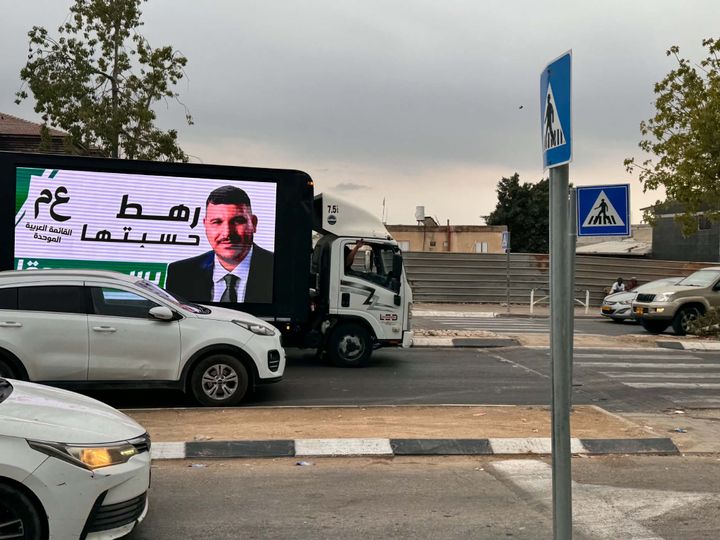
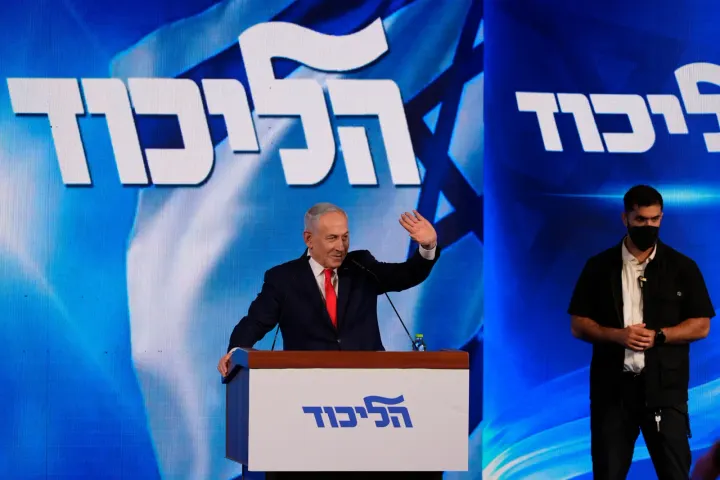
Inside the Knesset: How Israeli Democracy Works
An in-depth look at Israel's parliament, elections, political parties, government and judicial system.
Introduction — Inside Israel's Parliament
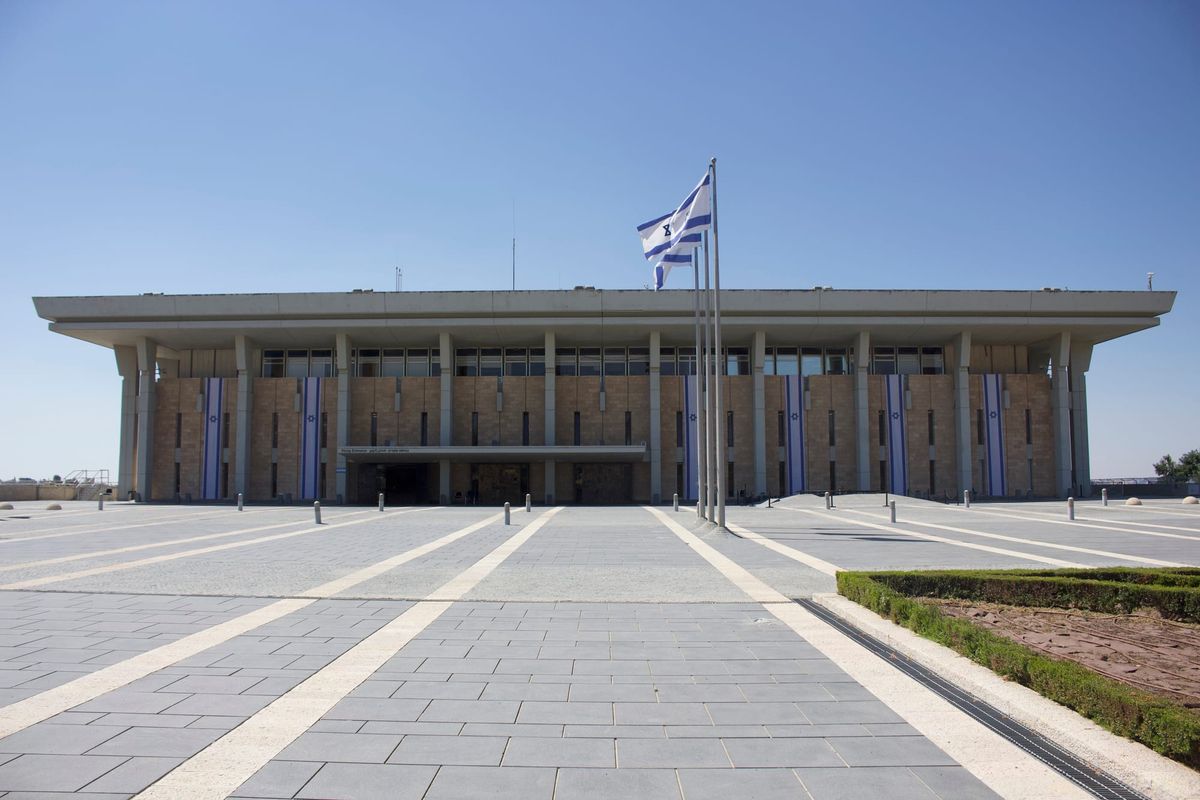
In the heart of Jerusalem stands one of the most important institutions in Israeli political life: the Knesset, Israel's national parliament.
Behind its doors, elected representatives debate legislation, challenge government policies, negotiate political agreements and make decisions that influence the lives of millions of people.
For international audiences, Israeli politics is often associated with elections, coalition crises, security debates and disagreements over the Israeli-Palestinian conflict. Yet these headlines reveal only part of a much larger political system.
Understanding Israel requires looking beyond individual politicians and political controversies. It means examining the institutions that shape government decisions, the electoral system that determines political representation and the relationship between the country's legislative, executive and judicial authorities.
Israel operates as a parliamentary democracy, with a single legislative chamber consisting of 120 elected representatives, known as Members of Knesset, or MKs. Unlike presidential systems, where voters separately elect a head of government, Israel's government emerges from the parliamentary process. Political parties must negotiate support, frequently forming coalitions to establish an administration capable of governing.
This structure creates a political environment in which cooperation, compromise and competition are closely connected.
A party may win the largest number of seats without being able to form a government. Smaller political parties can become influential coalition partners, while opposition parties play an important role in parliamentary scrutiny and public debate.
The Knesset is also where some of Israel's most consequential national disagreements are expressed.
Questions concerning national security, religion and state, minority rights, economic priorities, judicial authority and the Israeli-Palestinian conflict frequently generate intense political discussion.
These debates reflect different political, religious, cultural and ideological perspectives within Israeli society.
At the same time, understanding Israeli democracy requires examining questions that extend beyond parliamentary elections. The balance of power between government institutions, protections for individual and minority rights, and the political and legal circumstances of Palestinians living under Israeli occupation are all relevant to broader assessments of democratic governance.
The Knesset therefore represents more than a legislative institution. It is a central arena in which competing visions of Israel's identity, priorities and future are negotiated.
To understand how Israel is governed, we must first understand how this institution came into existence.
Chapter 1 — The Origins of the Knesset: From 1949 to Today
A New State and the Need for Democratic Institutions
When the State of Israel declared independence on May 14, 1948, its leaders faced the immediate challenge of establishing functioning national institutions.
The new state emerged during a period of war, displacement and profound political uncertainty.
The 1948 Arab-Israeli War shaped the country's earliest years, while the displacement and flight of hundreds of thousands of Palestinians during the conflict, known to Palestinians as the Nakba, became a defining historical event with consequences that continue today.
At the same time, the Israeli leadership needed to establish a system through which citizens could elect representatives, governments could exercise authority and national legislation could be created.
The foundations of Israel's parliamentary institutions were influenced by earlier representative bodies within the Jewish community during the British Mandate period, as well as aspects of British parliamentary practice.
The creation of a national parliament became one of the central steps in establishing the new state's political framework.
The First National Elections in 1949
On January 25, 1949, Israel held its first national elections.
Citizens voted for representatives to a Constituent Assembly, a body originally intended to help establish the constitutional foundations of the state.
The election took place less than a year after independence, while the consequences of the 1948 war were still unfolding.
According to the Knesset's historical election records, 506,567 voters were registered for the election, and the Mapai party, led by David Ben-Gurion, emerged as the largest political force, winning 46 of the 120 seats.
The election demonstrated an important characteristic of the political system that would continue to shape Israeli politics: no single party necessarily controlled a parliamentary majority.
Forming a government required negotiations and cooperation between political groups.
This coalition-based approach became a defining feature of Israel's parliamentary system.
Why Is It Called the Knesset?
The name Knesset comes from the Hebrew word associated with an assembly or gathering.
Its historical inspiration is the Knesset HaGedolah, or Great Assembly, a body traditionally associated with Jewish leaders and sages during the period following the return from Babylonian exile.
The modern Israeli parliament adopted the name in February 1949.
Its membership of 120 representatives also draws inspiration from the traditional number associated with the ancient Great Assembly.
The connection between the ancient institution and the modern parliament is symbolic rather than an indication of uninterrupted institutional continuity.
It reflects the importance that Israel's founders placed on connecting the political institutions of the modern state with Jewish history and cultural traditions.
February 14, 1949: The First Parliamentary Session
The Constituent Assembly convened for the first time on February 14, 1949, in the Jewish Agency building in Jerusalem.
Chaim Weizmann, who would become Israel's first president, opened the historic gathering.
Joseph Sprinzak was elected speaker of the assembly.
Two days later, the institution adopted the name Knesset.
This first parliamentary session marked an important stage in the transition from provisional governing arrangements toward elected national institutions.
However, the process of developing Israel's constitutional framework remained incomplete.
Although the Constituent Assembly had been elected with a constitution-making purpose, Israel did not adopt a single comprehensive written constitution.
Instead, the country gradually developed a series of Basic Laws addressing the structure of government, the powers of state institutions and certain fundamental rights.
These Basic Laws would become central to later debates about constitutional authority, judicial review and the relationship between parliament and the courts.
From Temporary Meeting Places to a Permanent Parliament
During its early years, the Knesset did not immediately occupy the building that is familiar today.
Following its first meeting in Jerusalem, parliamentary sessions were held temporarily in Tel Aviv.
From 1950 until 1966, the Knesset operated from Beit Froumine on King George Street in Jerusalem.
In 1966, it moved to its permanent parliamentary complex in the Givat Ram district of Jerusalem.
The building became a recognizable symbol of Israel's national political institutions.
Over the decades, the parliamentary complex expanded to accommodate committee meetings, administrative departments, legislative activities and the growing demands of parliamentary work.
Today, the Knesset serves as the central institution of Israel's legislative branch.
Its responsibilities include passing legislation, supervising government activity, examining public policy through parliamentary committees and electing certain senior state officials, including the president.
An Institution Shaped by Political Change
Since 1949, the Knesset has operated through periods of significant political, social and regional transformation.
The institution has witnessed changes in political leadership, shifts in party alliances, debates over Israel's national identity, peace agreements, wars, economic reforms and disagreements over the relationship between religion and the state.
The parliamentary system has also had to adapt to a society shaped by immigration, demographic change and differing national, religious and cultural identities.
The Knesset's composition and political priorities have changed over time, reflecting developments within Israeli society and the wider region.
Yet the central institutional framework has remained recognizable: citizens elect party lists, representatives take seats in parliament, and governments depend on parliamentary support.
The Knesset's history therefore offers an important starting point for understanding modern Israel.
Its development illustrates both the continuity of the country's parliamentary institutions and the political tensions that have accompanied them.
The next question is how this system actually functions: how power is distributed, how governments are formed and what happens when political parties cannot agree.
Understanding the Structure of Israeli Government
Democracy takes different forms around the world. While some countries operate under presidential systems, others rely on parliamentary structures in which governments are formed through elected legislative bodies.
Israel follows the parliamentary model.
At the center of this system stands the Knesset, the country's national parliament, consisting of 120 elected members. The Knesset is responsible for legislation, parliamentary oversight and several other constitutional functions.
Unlike the United States, where the president serves as both head of state and head of government, Israel separates these responsibilities between two different offices.
The president serves as the head of state, performing primarily ceremonial and constitutional duties, while the prime minister leads the government and exercises executive authority.
This distinction is essential to understanding how political power operates in Israel.
The Israeli government does not receive its authority through a separate nationwide election for prime minister. Instead, parliamentary elections determine the composition of the Knesset, after which a government must be formed through the constitutional process.
Because political representation is divided among multiple parties, coalition negotiations are frequently necessary.
The result is a political system in which parliamentary support, party cooperation and government stability are closely connected.
The Knesset: Israel's Legislative Authority
The Knesset is Israel's unicameral parliament, meaning that it consists of a single legislative chamber.
In countries such as the United States, legislation must pass through two chambers: the House of Representatives and the Senate.
Israel has no equivalent second parliamentary chamber.
Its 120 Members of Knesset, commonly referred to as MKs, are elected through a nationwide proportional representation system.
This means that political parties receive parliamentary seats broadly in proportion to the share of votes they obtain, provided they meet the electoral threshold.
The system allows a variety of political parties to compete for representation, including parties with differing positions on security, economics, religion, social policy and national identity.
Within the Knesset, elected representatives participate in debates, introduce legislation, question government ministers and serve on parliamentary committees.
These committees examine proposed laws and oversee different areas of government activity.
For example, the Foreign Affairs and Defense Committee deals with matters related to national security and foreign policy, while the Finance Committee examines important financial and budgetary matters.
Other committees address education, health, labor, welfare, constitutional issues and additional areas of public policy.
Much of the detailed legislative work takes place within these committees rather than during the highly visible debates in the main parliamentary chamber.
This committee structure allows members to examine complex subjects, hear expert testimony and discuss proposed legislation before it reaches a final parliamentary vote.
The Knesset therefore serves not only as a place where political decisions are announced, but also as an institution where legislation is examined, amended and challenged.
Chapter 2 The Government: Executive Power and Political Leadership
While the Knesset is responsible for legislation, the government exercises executive authority.
The government is headed by the prime minister and consists of ministers responsible for different areas of national administration.
These include portfolios such as defense, foreign affairs, finance, education, health and justice.
Government ministers are responsible for implementing policies, directing ministries and overseeing public administration within their areas of authority.
Some ministers are Members of Knesset, while others may be appointed from outside parliament under the applicable legal framework.
The prime minister coordinates government policy, leads cabinet discussions and represents the government in major domestic and international matters.
However, the prime minister's authority is not unlimited.
The government operates within the legal framework established by Israel's Basic Laws and other legislation. Its decisions may be subject to judicial review, while its continued existence depends on the parliamentary system.
This relationship creates an important distinction between executive leadership and parliamentary accountability.
A prime minister may lead a government, but that government must maintain sufficient political support to function.
Coalition disagreements, parliamentary opposition and legal challenges can all influence its ability to carry out its agenda.
How a Government Is Formed
After parliamentary elections, the process of establishing a new government begins.
The president consults representatives of the political parties elected to the Knesset.
These consultations help determine which Member of Knesset has the strongest prospects of forming a government capable of receiving parliamentary confidence.
The president then assigns that member the task of forming a government.
Importantly, this person is not automatically the leader of the party that received the largest number of votes.
What matters is the ability to assemble sufficient parliamentary support.
Under Israel's Basic Law: The Government, the designated candidate normally receives 28 days to form a government, with the possibility of an extension of up to 14 additional days.
During this period, political parties negotiate potential coalition agreements.
These negotiations may involve ministerial appointments, budget priorities, legislative commitments and disagreements over major policy issues.
Once a proposed government has been assembled, it is presented to the Knesset.
The government must receive a vote of confidence before taking office.
If the designated candidate cannot form a government, additional constitutional procedures may follow, including the possibility of another candidate being given the opportunity.
If the process ultimately fails, new elections may become necessary.
This system explains why Israeli elections do not always produce an immediate government.
The electoral result determines parliamentary representation, but the subsequent negotiations determine which political parties will govern together.
The Importance of Coalition Politics
Coalition governments have played a central role in Israeli political history.
Because the Knesset contains 120 seats, 61 seats constitute an absolute parliamentary majority.
However, no single political party has ever won 61 seats in a Knesset election.
As a result, Israeli governments have generally depended on agreements between multiple parties.
These coalitions may bring together political movements that share certain priorities while disagreeing strongly on others.
For example, parties may cooperate on economic policy while holding different positions on religious legislation, judicial reform or relations with the Palestinians.
Coalition agreements attempt to establish a common governing agenda.
Nevertheless, disagreements can emerge after a government takes office.
A coalition partner may threaten to withdraw support if a proposed law conflicts with its political commitments.
Smaller parties can consequently exercise considerable influence when their parliamentary seats are necessary to maintain a governing majority.
This creates both opportunities and challenges.
On one hand, coalition politics can encourage negotiation and require governments to consider the interests of multiple political groups.
On the other hand, it can produce political instability when coalition partners disagree over fundamental issues.
The collapse of a coalition does not automatically require an immediate election. The consequences depend on the circumstances and the constitutional procedures involved.
Nevertheless, coalition instability has contributed to repeated elections and changes of government throughout Israel's history.
The President: Head of State Rather Than Head of Government
Israel's president occupies a different constitutional position from that of the prime minister.
The president is elected by the Knesset for a single seven-year term.
The role is largely ceremonial, although it includes several important constitutional responsibilities.
The president represents the state at official ceremonies, receives foreign diplomatic representatives and performs duties connected to the formation of governments.
Following parliamentary elections, the president consults political parties and assigns the responsibility of forming a government to a Member of Knesset.
The president also has authority in matters involving pardons and certain other constitutional functions.
However, the president does not direct the government's daily political agenda or exercise the executive powers associated with the prime minister.
The distinction is particularly important for international readers who may be more familiar with presidential political systems.
In Israel, the prime minister is the principal executive political leader, while the president serves as head of state.
The Opposition: Challenging Government Decisions
Democracy is not defined only by the ability of a government to exercise power.
It also depends on opportunities for elected representatives to question, criticize and scrutinize those exercising that power.
In Israel, political parties that do not participate in the governing coalition generally form the parliamentary opposition.
The opposition plays an important role in examining government decisions, challenging proposed legislation and presenting alternative political policies.
Opposition members participate in parliamentary debates, submit questions to ministers and serve on Knesset committees.
The position of Leader of the Opposition is formally recognized under Israeli law.
The leader receives certain institutional rights, including regular briefings from the prime minister on matters of state.
Parliamentary oversight can also involve committee hearings, requests for information and debates about government conduct.
However, the opposition's practical influence depends partly on the balance of parliamentary seats and the willingness of coalition members to support its initiatives.
A government with a disciplined parliamentary majority may be able to pass legislation despite substantial opposition.
This makes independent institutions, judicial review, public scrutiny and a free press important elements of the broader democratic environment.
The Judiciary and the Separation of Powers
The relationship between Israel's parliament, government and judiciary is one of the most significant subjects in contemporary Israeli constitutional debate.
In democratic systems, the separation of powers is intended to prevent authority from becoming concentrated in a single institution.
Israel's system differs from countries that have a single entrenched written constitution and a strict institutional separation between executive and legislative branches.
Because the government is formed through the Knesset and usually depends on a parliamentary coalition, the executive and legislative branches are closely connected.
The judiciary therefore occupies an important position in reviewing the legality of government actions and, under established Israeli judicial doctrine, certain legislation.
Israel's Supreme Court serves both as the country's highest appellate court and, when sitting as the High Court of Justice, as a court hearing petitions concerning the legality of actions by public authorities.
Over the decades, the Supreme Court has played a prominent role in disputes involving government authority, individual rights and constitutional interpretation.
The extent of judicial power, particularly the authority to review legislation and executive decisions, has become a major source of political disagreement.
Supporters of stronger judicial review argue that independent courts are necessary to protect rights and maintain limits on government power.
Critics of expansive judicial intervention argue that unelected judges should not exercise excessive authority over decisions made by elected representatives.
These competing perspectives have shaped debates about judicial reform, constitutional interpretation and the appropriate balance between democratic majority rule and institutional checks.
Understanding these disagreements requires examining Israel's Basic Laws and the development of its constitutional system, subjects that will be explored later in this article.
Democracy Beyond Elections
Holding elections is a fundamental element of democratic government, but elections alone do not fully explain how a democracy functions.
Other considerations include political participation, freedom of expression, legal protections, independent institutions, accountability and the treatment of minorities.
Israel's political system includes competitive multiparty elections, an elected parliament, opposition parties, judicial institutions and an active media environment.
Jewish and Arab citizens of Israel can vote in national elections and stand for election to the Knesset, subject to the applicable legal requirements.
However, important debates continue concerning equality, minority rights, the relationship between Jewish and democratic state identity, and the distribution of political and legal authority.
A further distinction concerns Palestinians living in the West Bank and Gaza Strip.
Their political and legal circumstances differ from those of Israeli citizens. Palestinians who are not Israeli citizens do not vote in Israeli national elections, even though Israeli decisions can significantly affect their lives.
The West Bank's system of governance involves Palestinian self-government in certain areas alongside varying degrees of Israeli military and administrative control. Gaza's political and administrative circumstances have been shaped by Hamas rule, Israeli and Egyptian border restrictions, armed conflict and major changes following October 2023.
These circumstances raise broader questions about political representation, rights, sovereignty and accountability.
They are also central to international discussions about the Israeli-Palestinian conflict and the application of democratic principles in territories subject to different systems of authority.
A comprehensive understanding of Israeli democracy therefore requires distinguishing between the political rights of Israeli citizens, the constitutional structure of the Israeli state and the circumstances of Palestinians living under occupation or other forms of territorial control.
A Parliamentary System Shaped by Debate
Israel's parliamentary democracy is characterized by political competition, coalition negotiations and frequent public debate.
The Knesset provides the institutional framework through which elected representatives create legislation, oversee the government and participate in decisions concerning the country's future.
Yet the functioning of this system cannot be understood solely by examining its formal structures.
Political parties, coalition agreements, judicial institutions, civil society organizations, the media and public participation all influence how authority is exercised.
The relationship between democratic institutions and political power remains an evolving subject of debate within Israel.
For readers seeking to understand Israeli politics beyond international headlines, recognizing these institutional relationships is an essential first step.
The next chapter examines one of the most distinctive features of Israel's political system: how elections work, why voters choose political parties rather than individual constituency representatives, and how votes are translated into seats in the Knesset.
Chapter 3 — Elections: How Israelis Choose Their Representatives
Understanding Israel's Electoral System
Elections are one of the foundations of Israel's parliamentary democracy. They determine which political parties will be represented in the Knesset and ultimately influence who will lead the government.
However, Israel's electoral system differs significantly from those used in countries such as the United States and the United Kingdom.
Rather than electing individual representatives from geographical constituencies, Israeli voters choose political parties through a nationwide proportional representation system.
The entire country functions as a single electoral district, meaning that votes cast in Jerusalem, Tel Aviv, Haifa, Beersheba and other communities contribute to the same national election results.
This structure is designed to translate the distribution of votes into parliamentary representation, allowing different political movements and communities to participate in national politics.
Understanding how this system works helps explain why Israel has numerous political parties, why coalition governments are common and why elections can produce complicated political outcomes.
Who Can Vote in Israeli Elections?
Israeli citizens who are at least 18 years old on election day are generally entitled to vote in national parliamentary elections, subject to limited legal exceptions.
Voting rights extend to eligible Israeli citizens regardless of religion, ethnicity or gender.
Jewish, Muslim, Christian, Druze and other eligible Israeli citizens participate in the same national electoral system.
The minimum age for standing as a candidate for the Knesset is 21, although additional legal eligibility requirements and restrictions apply.
Voting is not compulsory in Israel.
Election day is generally designated as a public holiday to facilitate participation, although certain essential services continue operating.
Most voters cast their ballots at designated polling stations. Special voting arrangements exist for certain groups, including soldiers, hospital patients, prisoners and eligible citizens serving abroad in specified official capacities.
Unlike some countries, Israel does not generally allow its citizens living overseas to vote from abroad simply because they hold Israeli citizenship.
This distinction is relevant because Israel has a substantial population of citizens who live or work outside the country.
Voting for Political Parties Rather Than Individual Candidates
One of the defining characteristics of Israeli elections is the use of party lists.
Before an election, each participating political party or electoral alliance submits a ranked list of candidates.
Voters select a list rather than voting separately for an individual candidate in their local area.
The number of seats allocated to a party determines how many candidates from its list enter the Knesset.
For example, if a party receives 15 parliamentary seats, the first 15 eligible candidates on its list normally become Members of Knesset.
The way candidates are selected and ranked differs between political parties.
Some parties use internal primary elections, allowing eligible party members to participate in choosing candidates.
Others rely on party committees, leadership decisions or internal organizational procedures.
This means that although voters determine the parliamentary strength of each party, they do not usually choose which individual candidates from that party will receive seats.
The system gives political parties an important role in shaping parliamentary representation.
It also means that national political debates often focus heavily on party leadership, ideological platforms and potential coalition partnerships.
How Votes Become Seats in the Knesset
The Knesset contains 120 seats.
Israel uses proportional representation, meaning that parties receive seats broadly in accordance with their share of the qualifying national vote.
However, a party must first pass the electoral threshold.
Under the electoral rules in force in recent elections, a party must receive at least 3.25 percent of the valid national vote to qualify for parliamentary representation.
Parties that fail to reach this threshold do not receive seats, even if they attract tens of thousands of voters.
The votes received by parties below the threshold are excluded from the subsequent allocation of parliamentary seats.
This can influence the final distribution of seats and the political balance between competing blocs.
For parties that qualify, seats are distributed through a proportional allocation formula commonly associated with the Bader–Ofer method, a variation of the highest-averages approach.
The system also permits certain parties to enter into surplus-vote agreements, which can affect the allocation of remaining seats.
These technical rules may appear complicated, but their political consequences can be significant.
A relatively small difference in the number of votes can sometimes determine whether a party enters parliament, whether an additional seat is allocated to a particular list or whether a potential coalition has enough support to govern.
Why Does Israel Have So Many Political Parties?
Israel's multiparty political environment reflects both its electoral system and the diversity of political views within its population.
Because the entire country votes in one national constituency, political movements do not need to win a geographical district to obtain representation.
Instead, they must attract enough support nationally to cross the electoral threshold.
Over time, political parties have developed around a wide range of ideological, religious, social and economic priorities.
Some focus primarily on national security and foreign policy.
Others emphasize economic reform, social welfare, religious identity, secular governance, minority rights or the relationship between Israel and the Palestinians.
Political parties may also represent particular communities or traditions, although their supporters are not necessarily limited to those groups.
Israel's party system includes movements associated with different Jewish religious traditions, secular political perspectives, Arab political representation and competing approaches to national identity.
These divisions cannot always be understood through a simple left-wing versus right-wing political framework.
For example, a party may support economically conservative policies while favoring greater government involvement in religious matters.
Another may advocate market-oriented economic reforms while supporting a more secular relationship between religion and the state.
Political alliances can also change over time.
Parties may merge, split, adopt new names or form temporary electoral alliances to increase their chances of parliamentary representation.
As a result, the political landscape can look considerably different from one election to the next.
The Electoral Threshold and Smaller Parties
The electoral threshold is one of the most debated elements of Israel's voting system.
Supporters of a higher threshold argue that it can reduce parliamentary fragmentation by discouraging the formation of numerous very small parties.
They maintain that a less fragmented parliament may make coalition negotiations easier and improve government stability.
Critics argue that electoral thresholds can limit representation, particularly for smaller political movements and minority communities.
A party may receive substantial public support yet fail to enter parliament if it does not reach the required percentage.
This creates a strategic challenge for smaller parties.
They must decide whether to compete independently, merge with another political movement or establish an electoral alliance.
The consequences can extend beyond individual parties.
If several parties with similar political positions fail to pass the threshold, their combined supporters may remain underrepresented in the Knesset.
Conversely, successful alliances can preserve parliamentary representation for political movements that might otherwise struggle to qualify.
The electoral threshold therefore influences not only election results but also the strategies political parties adopt before voters reach the polling stations.
How Often Are Elections Held?
Under Israel's Basic Law: The Knesset, parliamentary elections are ordinarily scheduled every four years.
However, elections may take place earlier under circumstances established by law.
A Knesset may dissolve itself through legislation, and certain constitutional situations can also lead to early elections.
Political instability, disagreements within governing coalitions and failures to resolve particular parliamentary or budgetary matters have contributed to early elections in Israeli history.
Between April 2019 and November 2022, Israel held five national parliamentary elections.
This period illustrated the difficulties that can arise when political parties are unable to establish or maintain a stable governing coalition.
Repeated elections can affect public confidence, government planning and the implementation of long-term policies.
They can also create uncertainty for government ministries, businesses and international partners.
Nevertheless, early elections are part of the constitutional mechanisms through which parliamentary political deadlock may be addressed.
What Happens on Election Night?
When polling stations close, votes are counted and the national results begin to emerge.
Israel's Central Elections Committee oversees the administration of Knesset elections and the publication of official results.
Media organizations often report exit polls shortly after voting ends.
These polls attempt to estimate the distribution of parliamentary seats based on information collected from voters.
However, exit polls are not official election results.
The final allocation of seats depends on the counting and verification of valid ballots, including votes cast through special voting arrangements.
Once the official results are determined, attention turns to potential coalition combinations.
Political parties begin evaluating which alliances could produce a government capable of securing parliamentary confidence.
In some cases, the likely direction of coalition negotiations becomes clear relatively quickly.
In others, uncertainty continues for weeks.
The party with the largest number of seats does not automatically form the government.
Instead, the constitutional process depends on identifying a Member of Knesset who has a realistic opportunity to assemble sufficient political support.
Why 61 Seats Matter
Because the Knesset contains 120 members, 61 seats represent an absolute majority.
This number is particularly important in coalition negotiations.
A coalition controlling at least 61 seats has a parliamentary majority that can support government legislation and provide political stability, assuming its members continue to cooperate.
However, Israeli law does not require every parliamentary decision to receive 61 votes.
Different parliamentary procedures have different voting requirements.
Some decisions can pass by a majority of those participating in a vote, while certain constitutional procedures require an absolute or specially defined majority.
It is also possible for a government to receive parliamentary confidence without its supporting parties collectively holding 61 seats, depending on the voting circumstances and the position of other parties.
Minority governments are therefore constitutionally possible, although they may face difficulties maintaining support.
In practice, coalition negotiations frequently focus on assembling a reliable parliamentary majority.
This is why even a relatively small party can become politically influential.
A party holding only a few seats may possess the support necessary for a coalition to reach or maintain a majority.
Its leaders may consequently negotiate policy commitments or ministerial responsibilities in exchange for joining the government.
The Role of Arab Political Parties
Arab citizens of Israel participate in national parliamentary elections and may vote for any electoral list.
Over the decades, Arab political movements have formed parties and alliances that focus on issues such as equality, civil rights, economic development, education, public safety and the Israeli-Palestinian conflict.
Arab citizens also support a variety of other political parties, including parties that are not specifically identified with Arab political representation.
The relationship between Arab political parties and Israeli governing coalitions has been a recurring subject of political debate.
Historically, many Arab parties have operated primarily within the parliamentary opposition.
However, political arrangements have varied over time.
In 2021, the United Arab List, commonly known by its Hebrew acronym Ra'am, joined the coalition supporting the government led initially by Naftali Bennett.
This marked a significant development in the participation of an independent Arab party in an Israeli governing coalition.
The decision generated different reactions.
Supporters viewed it as an opportunity to influence government policy and secure resources for Arab communities.
Critics raised concerns about political compromises, coalition priorities and the broader implications of participation.
The example illustrates how parliamentary politics can create opportunities for cooperation between parties with substantially different political identities.
It also demonstrates that representation in the Knesset does not necessarily translate into equal political influence or agreement over national policy.
Women and Political Representation
Women have participated in Israeli parliamentary politics since the country's first national elections.
Israel has also had a female prime minister.
Golda Meir served as prime minister from 1969 to 1974, becoming one of the world's early female heads of government.
Despite this historical milestone, women's parliamentary representation has varied over time and remains an important subject of public discussion.
Different political parties use different methods for selecting candidates, and some have adopted internal mechanisms intended to increase women's representation.
Other parties, particularly certain ultra-Orthodox religious parties, have historically excluded women from their parliamentary candidate lists.
These differences raise questions about political participation, religious autonomy, equal opportunity and representation.
The number of women elected to the Knesset has generally increased over the longer term, although progress has not been consistent across elections.
Women's representation in senior government positions has also varied considerably.
The issue highlights an important distinction between formal voting rights and the practical distribution of political power.
Political Participation Beyond the Ballot Box
Elections are only one form of political participation in Israel.
Citizens also engage in public debate through demonstrations, civic organizations, political campaigns, media commentary and advocacy groups.
Public protests have played an important role in Israeli political history.
Demonstrations have addressed issues such as housing costs, economic inequality, military service, government accountability, judicial reform and the Israeli-Palestinian conflict.
Civil society organizations work on subjects ranging from environmental protection and women's rights to religious freedom, minority rights and government transparency.
Journalists and independent media outlets also contribute to political scrutiny by investigating government decisions, reporting on parliamentary debates and questioning public officials.
These forms of participation can influence political agendas even between national elections.
However, political participation also takes place within a society marked by significant disagreements about national identity, security, religion and the rights of different communities.
The freedom to protest, the treatment of demonstrators and the boundaries of political expression can themselves become subjects of legal and political controversy.
Understanding democratic participation therefore requires looking beyond voter turnout and examining the wider environment in which political debate takes place.
The Strengths and Challenges of Proportional Representation
Israel's electoral system has both advantages and limitations, depending on the criteria used to assess it.
Proportional representation allows political parties with different ideological and social perspectives to compete for seats in the national parliament.
It can provide representation for groups that might struggle to win elections in systems based on individual geographical constituencies.
At the same time, the system can produce fragmented parliaments in which no single party has enough support to govern independently.
This makes coalition negotiations essential and can give smaller political parties influence beyond their numerical size.
Another characteristic is the absence of directly elected geographical representatives.
Israeli citizens do not elect an individual Member of Knesset specifically assigned to represent their local constituency.
Instead, all 120 members are elected through the nationwide party-list system.
While Members of Knesset may focus on particular communities or regions, their parliamentary seats are not tied to individual electoral districts.
This can strengthen the national role of political parties while reducing the direct electoral connection between a specific geographical community and an individual representative.
Debates about electoral reform have therefore appeared periodically in Israeli political discussions.
Proposals have included changes to the electoral threshold, modifications to party representation and alternative approaches to government formation.
Such proposals involve trade-offs between political diversity, government stability, voter choice and parliamentary accountability.
Understanding What Election Results Really Mean
International coverage of Israeli elections often focuses on the identity of the winning party or the political future of a particular leader.
However, election results tell a more complicated story.
A party's share of the vote does not automatically determine its ability to govern.
Coalition possibilities, ideological differences, personal political relationships and parliamentary arithmetic all influence the formation of a government.
The difference between 60 and 61 seats can become particularly important when determining whether a coalition has an absolute majority.
Similarly, a party's failure to cross the electoral threshold can alter the balance between political blocs even when the overall distribution of voter preferences changes only slightly.
Understanding these mechanisms helps explain why Israeli election campaigns are often followed by extended negotiations and why governments may include parties with different political priorities.
It also demonstrates that parliamentary democracy is not simply a contest between individual leaders.
It is a system in which votes determine representation, representation shapes coalition possibilities and coalition agreements influence the direction of national policy.
Conclusion — More Than an Election Result
Israel's electoral system reflects the complex relationship between political diversity and parliamentary government.
Its nationwide proportional representation model allows numerous political movements to compete for seats in the Knesset.
At the same time, the absence of single-party parliamentary majorities makes political cooperation an essential part of forming governments.
Elections therefore represent the beginning of a broader political process rather than its conclusion.
The decisions made by voters determine which parties enter parliament, but the negotiations that follow help determine who governs, which policies are prioritized and how political disagreements are managed.
For those seeking to understand Israel beyond the headlines, recognizing this distinction is essential.
The next chapter examines the political parties themselves, the ideological differences between them and the role of coalition agreements and parliamentary opposition in shaping Israeli government.
Chapter 4 — Political Parties, Coalitions and the Opposition
A Political Landscape Shaped by Diversity
Israeli politics cannot be understood through a simple division between two major political parties.
Unlike countries where political competition is dominated by two large movements, Israel has developed a multiparty system reflecting a wide range of ideological, religious, economic and national perspectives.
Political parties compete over questions that extend far beyond traditional debates about taxation, public spending or economic policy.
National security, relations with the Palestinians, religion and state, judicial authority, military service, minority rights and Israel's national identity all influence political alliances.
These issues frequently overlap, creating a political environment in which parties may agree on one subject while strongly disagreeing on another.
A party that supports conservative economic policies may favor greater government involvement in religious affairs. Another may advocate liberal social policies while adopting a restrictive position on national security.
Understanding Israeli political parties therefore requires examining their specific positions rather than relying exclusively on labels such as left-wing, right-wing or centrist.
These distinctions also help explain why coalition negotiations can be complicated and why political alliances sometimes bring together parties with substantially different priorities.
The Historical Foundations of Israel's Party System
The origins of Israel's political parties predate the establishment of the state in 1948.
During the period of the British Mandate, political movements emerged within the Jewish community, representing different approaches to Zionism, economic organization, religion and national development.
Labor Zionism became one of the most influential movements during Israel's early decades.
It emphasized collective organization, labor institutions, agricultural settlements and the development of a Jewish national home.
David Ben-Gurion's Mapai party dominated much of Israel's early political history and played a central role in the formation of its first governments.
For nearly three decades after independence, Labor-aligned political movements remained the principal governing force.
A major political turning point occurred in 1977, when Menachem Begin's Likud-led political bloc defeated the long-dominant Labor movement.
This election, often referred to in Israel as the Mahapach, or political upheaval, marked a significant change in the country's political landscape.
It demonstrated that political power could shift between competing ideological movements through parliamentary elections.
Since then, Israeli politics has experienced changing party alliances, new political movements and periods of intense competition between leaders representing different visions of the country's future.
Likud and the Israeli Right
Likud has been one of Israel's most influential political parties for decades.
The party emerged in 1973 as an alliance of right-wing political movements and became a major governing force following its electoral victory in 1977.
Likud is generally associated with nationalist and center-right to right-wing political positions.
Its political agenda has historically emphasized national security, economic liberalization and a strong commitment to Israel's identity as a Jewish state.
The party's positions on the Israeli-Palestinian conflict have evolved over time and have varied under different leaders and governments.
Likud has generally opposed approaches it considers likely to compromise Israel's security, while its leaders have differed in their willingness to support territorial compromise or Palestinian statehood under particular conditions.
Benjamin Netanyahu has been one of the party's most prominent leaders, serving multiple terms as Israel's prime minister.
Under his leadership, Likud has frequently been central to coalition negotiations involving religious, nationalist and other right-wing parties.
However, Likud voters do not necessarily share identical views on every issue.
Like other large political movements, the party includes supporters with different economic, social and security priorities.
Labor Zionism and the Israeli Center-Left
The Israeli Labor movement played a foundational role in the country's political development.
Its early leaders were closely associated with the establishment of state institutions, labor organizations and collective agricultural communities.
For decades, Labor-aligned parties were dominant forces in Israeli government.
The movement traditionally combined Zionist national aspirations with social-democratic economic principles.
Over time, the Labor Party also became strongly associated with diplomatic efforts aimed at resolving the Israeli-Palestinian conflict through negotiations.
Prime Minister Yitzhak Rabin, a Labor leader, played a central role in the Oslo peace process during the 1990s.
His assassination in November 1995 became a defining event in Israeli political history.
In subsequent decades, the Labor Party experienced a significant decline in electoral strength.
Changes in public opinion, leadership disputes, security developments and the emergence of competing political parties contributed to the weakening of its parliamentary position.
In 2024, the Labor Party and Meretz political movement came together under the political framework known as The Democrats.
This development reflected efforts to reorganize parts of Israel's Zionist left and center-left political landscape.
The broader political tradition continues to emphasize issues such as democratic institutions, social equality, civil liberties and approaches to the Israeli-Palestinian conflict based on political negotiation.
Centrist Parties and Political Alternatives
Centrist political movements have played an important role in Israeli elections, particularly during periods of dissatisfaction with established political parties.
These movements often seek to attract voters who do not identify strongly with either the traditional right or left.
However, the term centrist does not necessarily indicate a consistent position across all policy areas.
Some centrist parties emphasize government reform, economic opportunity and the relationship between religion and state.
Others focus on national security, political leadership or efforts to reduce polarization.
Yesh Atid, founded by Yair Lapid in 2012, became one of Israel's prominent centrist parties.
The party has emphasized issues including government accountability, education, economic concerns and greater civic equality in matters such as military or national service.
Benny Gantz, a former military chief of staff, has also played a significant role in Israeli centrist politics through political movements and alliances associated with his leadership.
Centrist parties have participated in governments led by different political blocs and have sometimes attempted to establish alternative governing coalitions.
Their influence illustrates the fluid nature of Israeli politics, where new parties can gain substantial parliamentary representation within a relatively short period.
Religious Political Parties
Religion plays an important role in Israeli political life, although religious identity does not automatically determine political affiliation.
Israel's population includes secular, traditional, religious and ultra-Orthodox Jewish communities, alongside Muslim, Christian, Druze and other religious populations.
Several political parties have developed around specific religious interests and perspectives.
Ultra-Orthodox Jewish parties, including Shas and United Torah Judaism, have traditionally focused on issues such as religious education, community funding, welfare policies and the relationship between religious institutions and the state.
Military service exemptions or alternative arrangements for ultra-Orthodox men have also been a major subject of political debate.
These parties have frequently participated in governing coalitions, sometimes cooperating with political movements that differ from them on economic or other social issues.
Religious Zionist political movements represent another distinct tradition.
They generally combine Jewish religious commitments with nationalist political positions and have often supported Jewish settlement in the West Bank.
However, religious Zionism encompasses different political and theological perspectives, and not all religious Zionist voters support the same parties.
Disagreements concerning religious authority, marriage, public transportation on the Sabbath, conversion and military service frequently influence coalition negotiations.
These debates reflect broader tensions over the role religion should play in a state that identifies itself as both Jewish and democratic.
Arab Political Parties and Parliamentary Representation
Arab citizens of Israel constitute a significant part of the country's population and participate in national parliamentary elections.
Their political representation includes parties and movements with different ideological approaches.
Some emphasize Palestinian national identity and collective rights.
Others focus on social equality, economic development, municipal services, education, public safety and greater political participation.
Arab political movements have included Hadash, an Arab-Jewish left-wing political front, as well as Ta'al, Balad and the United Arab List, commonly known as Ra'am.
These movements differ on questions of national identity, economic policy, political cooperation and the relationship between Arab citizens and the Israeli state.
Arab political parties have historically faced difficult choices concerning participation in governing coalitions.
Remaining in opposition can allow parties to maintain ideological independence and criticize government policies.
Participating in a coalition, however, may create opportunities to influence budgets, legislation and administrative decisions.
In 2021, Ra'am joined the coalition supporting the government initially led by Naftali Bennett.
This was a significant development in Israeli parliamentary politics because an independent Arab party became a formal coalition partner in a governing arrangement.
Supporters argued that participation could help address practical concerns affecting Arab communities.
Critics questioned whether cooperation with parties holding substantially different positions on the Israeli-Palestinian conflict was politically justified.
The debate illustrated the competing priorities of political representation, ideological commitment and practical influence within government.
Why Coalition Governments Are Necessary
Israel's proportional electoral system makes coalition governments a central feature of parliamentary politics.
Because no single party has historically won an absolute majority of Knesset seats, governments have generally depended on cooperation between multiple political parties.
A coalition is an agreement between parties to support a government and participate in its political program.
Coalition negotiations commonly begin after national elections.
Party leaders discuss possible alliances, evaluate parliamentary seat totals and negotiate the terms under which they might govern together.
These discussions can involve policy commitments, ministerial appointments, budget allocations and proposed legislation.
For example, one party may prioritize economic reform, while another focuses on religious education or national security.
Coalition agreements attempt to establish a framework that allows these parties to cooperate despite their differences.
However, agreements do not eliminate political disagreements.
Coalition partners may continue to hold competing positions on major national questions.
The ability of a government to function therefore depends not only on the number of seats supporting it but also on the willingness of its partners to maintain cooperation.
The Political Influence of Smaller Parties
One of the most distinctive features of coalition politics is the influence that smaller parties can sometimes exercise.
A political party holding only a limited number of parliamentary seats may become essential to forming or maintaining a majority.
This can give its leadership considerable negotiating power.
For example, a party may condition its participation in a coalition on receiving commitments concerning education, housing, religious institutions or specific legislative priorities.
Larger parties seeking to form a government must decide whether accepting these conditions is politically acceptable.
This situation creates a recurring debate about proportional representation.
Supporters argue that smaller parties allow particular communities and political perspectives to participate meaningfully in government.
Critics argue that parties representing a relatively small percentage of voters may gain disproportionate influence over national decisions.
The outcome depends heavily on parliamentary arithmetic.
A party with five seats may be politically marginal in one election but become essential to coalition formation in another.
Its influence is therefore determined not only by the number of voters it represents but also by the broader distribution of parliamentary seats.
Coalition Agreements and Government Policy
Coalition agreements are important documents in Israeli political life.
They outline commitments negotiated between parties participating in a government.
These agreements may address government priorities, ministerial responsibilities, budget arrangements and proposed legislative initiatives.
However, coalition agreements do not automatically become law.
Legislation must still pass through the required parliamentary procedures, and government actions remain subject to applicable legal requirements.
Coalition agreements also do not guarantee that every promised policy will be implemented.
Economic circumstances, security developments, legal decisions and disagreements between coalition partners can affect the government's ability to fulfill its commitments.
Nevertheless, these agreements provide insight into the priorities of governing parties.
They also allow journalists, civil society organizations and voters to compare political commitments with subsequent government decisions.
Examining coalition agreements can therefore be an important part of understanding how political negotiations influence public policy.
The Opposition as a Democratic Institution
Political parties that do not participate in the governing coalition generally form the parliamentary opposition.
The opposition is an essential part of Israel's parliamentary system.
Its responsibilities include examining government decisions, challenging legislation, questioning ministers and presenting alternative policies.
Opposition members participate in parliamentary committees and debates.
They may introduce bills, request information and use parliamentary procedures to scrutinize government conduct.
The Leader of the Opposition holds a formally recognized position under Israeli law.
This role includes certain institutional rights, including regular briefings from the prime minister on state affairs.
The opposition may also seek to mobilize public support against government policies or propose alternative governing arrangements.
However, its ability to prevent legislation depends on parliamentary voting rules and the balance of political support.
A government with a cohesive majority may pass laws despite strong opposition.
This makes political accountability dependent on a wider range of institutions and practices, including independent journalism, judicial review, public debate and civil society activity.
Votes of No Confidence and Government Stability
Parliamentary systems generally provide mechanisms through which elected representatives can withdraw confidence from a government.
Israel uses a form of constructive no-confidence procedure.
Under the applicable constitutional framework, the Knesset cannot simply remove a government through an ordinary expression of dissatisfaction.
A successful constructive no-confidence vote requires the parliamentary majority specified by law and the identification of an alternative government-forming arrangement.
This system is intended to reduce the risk of governments being removed without a viable political alternative.
Nevertheless, governments may also come to an end through other constitutional procedures, including resignation, dissolution of the Knesset or circumstances connected to the prime minister's ability to continue in office.
Coalition instability can make governing difficult even when the formal requirements for removing a government have not been met.
A coalition partner may refuse to support legislation, withdraw ministers or threaten to leave the government.
Such disputes can delay policy implementation and create pressure for new political negotiations.
In some cases, they contribute to early elections.
Political Polarization and Public Debate
Political disagreement is a normal feature of democratic systems.
In Israel, however, certain political debates have become particularly intense because they concern fundamental questions about national identity, security and the distribution of state authority.
Disagreements over judicial reform, religion and state, military service, settlements, Palestinian statehood and government accountability have generated substantial public controversy.
Political polarization can affect relationships between parties, government institutions and different sections of society.
It can also influence the willingness of political leaders to cooperate across ideological boundaries.
Public demonstrations have been an important expression of these disagreements.
Israel has experienced large-scale protests involving citizens with different political perspectives, including demonstrations supporting and opposing government policies.
Such events demonstrate the role of public participation in political life.
At the same time, the intensity of political disputes raises questions about institutional trust, democratic norms and the ability of elected leaders to maintain cooperation.
Understanding these tensions requires examining not only the positions of political parties but also the social and historical experiences that shape their supporters' views.
Political Parties and the Israeli-Palestinian Conflict
The Israeli-Palestinian conflict remains one of the most consequential issues dividing Israeli political movements.
Parties differ significantly in their approaches to territorial questions, Palestinian statehood, security arrangements, settlements and negotiations.
Some political movements support a negotiated two-state solution under conditions they consider necessary for Israeli security.
Others oppose the establishment of a sovereign Palestinian state or advocate continued Israeli control over some or all of the West Bank.
Still others emphasize equal rights, alternative constitutional arrangements or different forms of political settlement.
These positions have evolved over time in response to wars, diplomatic initiatives, security concerns, settlement expansion and changes in public opinion.
Political attitudes have also been shaped by major events, including the Oslo peace process, the Second Intifada, Israel's withdrawal of settlements and permanent ground forces from Gaza in 2005, and the Hamas-led attacks of October 7, 2023, followed by the war in Gaza.
The conflict also affects coalition negotiations.
Parties may refuse to govern together because of fundamental disagreements over territorial policy or relations with Palestinian political representatives.
Other parties may temporarily set aside certain differences to cooperate on domestic issues.
The relationship between political ideology and coalition strategy is therefore not always straightforward.
For international observers, understanding these distinctions is essential to interpreting Israeli political developments accurately.
The Changing Nature of Political Alliances
Israeli political parties are not permanent or unchanging institutions.
Throughout the country's history, parties have merged, divided, disappeared and re-emerged under new leadership.
Political alliances sometimes form specifically for an election and dissolve afterward.
Leadership disputes may result in new parties being established.
Electoral setbacks can encourage parties to reconsider their political identity or join broader alliances.
These developments are influenced by both ideological disagreements and strategic considerations.
A party may decide that cooperation with another movement improves its chances of crossing the electoral threshold.
Alternatively, disagreements over leadership or policy may lead political figures to establish independent organizations.
This fluidity can make Israeli politics difficult to follow, particularly for readers unfamiliar with the country's political history.
A party that played a major role in one election may have a different name, leadership structure or parliamentary position several years later.
Journalistic reporting therefore requires careful attention to dates, party affiliations and the specific political circumstances being discussed.
Understanding Political Power Beyond Party Labels
Political party names and ideological descriptions provide useful starting points, but they do not fully explain how decisions are made.
A party's influence depends on several factors, including its parliamentary representation, coalition relationships, leadership, public support and ability to negotiate.
The distinction between being the largest party and being able to form a government is particularly important.
A party may receive the most seats but remain in opposition if another political leader can assemble a viable governing coalition.
Similarly, smaller parties may gain considerable influence when their participation is necessary to maintain parliamentary support.
Political power in Israel is therefore shaped by relationships between parties rather than election results alone.
Understanding those relationships helps explain why coalition negotiations can be lengthy, why governments sometimes include unexpected political partners and why relatively small disagreements can create national political crises.
Conclusion — A Parliament Built on Competition and Cooperation
Israel's political system reflects a continuing interaction between ideological competition and the practical need for parliamentary cooperation.
Its political parties represent different approaches to national security, economics, religion, social policy, democratic institutions and the Israeli-Palestinian conflict.
The proportional electoral system allows multiple political movements to participate in parliament, while coalition politics requires parties to negotiate agreements in order to govern.
This arrangement creates opportunities for representation and compromise, but it can also produce instability when political differences become difficult to reconcile.
The opposition, parliamentary committees, public debate and independent institutions all contribute to the wider process of political accountability.
For readers seeking to understand Israeli democracy beyond individual leaders and election headlines, the relationships between political parties are central to understanding how power is exercised.
The next chapter examines the roles of the prime minister, president and government in greater detail, exploring how executive authority is organized and how national political decisions are made.
Chapter 5 — The Prime Minister, President and Government
Understanding Executive Power in Israel
To understand how Israel is governed, it is important to distinguish between the country's three central political institutions: the Knesset, the prime minister and the president.
Although these institutions are closely connected, they perform different constitutional functions.
The Knesset is responsible for legislation and parliamentary oversight. The government exercises executive authority, while the president serves as head of state and performs ceremonial and constitutional duties.
Unlike presidential systems, where a directly elected president may exercise extensive executive powers, Israel operates through a parliamentary framework in which the government depends on the confidence of the Knesset.
This arrangement places the prime minister at the center of executive political leadership.
However, the prime minister does not govern independently of parliament, the legal system or other state institutions.
Government decisions must operate within the applicable legal framework, while parliamentary support remains essential to the government's ability to implement its political agenda.
The relationship between these institutions helps explain how political authority is exercised, challenged and maintained in Israel.
The Prime Minister: Head of Government
The prime minister is Israel's head of government and the central political figure within the executive branch.
The office carries responsibility for leading the government, coordinating national policy and overseeing the work of government ministries.
The prime minister chairs cabinet meetings, directs the government's general political agenda and represents Israel in important diplomatic discussions.
National security, foreign relations, economic policy and domestic administration are among the areas in which the prime minister plays a significant coordinating role.
However, executive authority is not concentrated entirely in one individual.
The government operates collectively, and ministers are responsible for the administration of their respective departments.
Certain decisions require cabinet approval, parliamentary authorization or compliance with specific legal procedures.
The prime minister's political authority also depends on the continued support of the governing coalition.
This creates a system in which leadership requires both executive decision-making and ongoing parliamentary negotiation.
How Does Someone Become Prime Minister?
Israeli voters do not currently elect their prime minister through a separate national ballot.
Instead, citizens vote for political party lists in parliamentary elections.
Following an election, the president consults representatives of the parties elected to the Knesset.
The purpose of these consultations is to determine which Member of Knesset has the strongest prospects of forming a government.
The president then assigns that individual the responsibility of establishing a governing coalition.
The designated candidate must negotiate with political parties and assemble a government capable of receiving parliamentary confidence.
This process may involve discussions about ministerial appointments, government priorities, budget commitments and proposed legislation.
Once a government has been formed, its composition and basic policy guidelines are presented to the Knesset.
The government takes office after receiving the required parliamentary vote of confidence.
Importantly, the prime minister does not necessarily lead the party that received the largest number of seats.
A leader of a smaller party may become prime minister if the necessary political arrangements allow that person to form a government.
This distinction demonstrates the importance of coalition negotiations within Israel's parliamentary system.
The Prime Minister's Main Responsibilities
The responsibilities of the prime minister extend across several areas of government.
One of the most important is coordinating national policy.
Although individual ministers oversee their own departments, the prime minister plays a central role in establishing the government's overall direction.
This includes managing relationships between coalition partners and addressing disagreements that could affect government stability.
The prime minister also represents Israel in diplomatic relations with foreign governments and international organizations.
Meetings with foreign leaders, negotiations concerning regional security and discussions about international agreements frequently involve the prime minister.
National security is another major responsibility.
The prime minister participates in high-level security decision-making and works with the defense minister, military leadership and intelligence officials.
However, the Israel Defense Forces are subject to the authority of the government under Israeli law, and the defense minister holds responsibility for the military on the government's behalf.
The prime minister therefore operates within a broader national security structure rather than exercising unrestricted personal command.
Economic and domestic policy also require coordination between the prime minister, finance minister and other members of the government.
Major policy initiatives may involve several ministries and require approval through cabinet or parliamentary procedures.
The prime minister's ability to implement these initiatives depends on political support, administrative capacity and legal authority.
The Cabinet and Government Ministers
The Israeli government consists of the prime minister and government ministers.
Each minister is generally responsible for a particular area of public administration.
Examples include the Ministry of Defense, Ministry of Foreign Affairs, Ministry of Finance, Ministry of Education, Ministry of Health and Ministry of Justice.
Ministers oversee policy development and administrative decisions within their areas of responsibility.
They also represent their ministries in cabinet discussions and parliamentary proceedings.
The number and organization of ministries can change between governments.
Coalition negotiations sometimes result in the creation, restructuring or redistribution of ministerial responsibilities.
This reflects the political nature of government formation.
Ministerial positions may be allocated between coalition parties as part of agreements intended to secure parliamentary support.
However, ministers are not merely political representatives of their parties.
They also exercise public responsibilities and are required to act within the law.
Government ministries employ professional civil servants who help administer public services and implement government policy.
This administrative structure provides continuity even when political leadership changes.
Collective Responsibility and Cabinet Decisions
An important principle of parliamentary government is collective responsibility.
In Israel, the government is collectively responsible to the Knesset.
This means that the government operates as a political body whose continued existence depends on parliamentary confidence.
Ministers also have responsibilities within the cabinet decision-making process.
Government decisions may involve discussion, disagreement and negotiation between ministers.
Once a collective decision is adopted, ministers are generally expected to operate within the government's agreed policy framework, subject to applicable legal requirements and political arrangements.
However, coalition governments can complicate this principle.
Ministers from different political parties may publicly disagree on certain policies or attempt to influence decisions in different directions.
Such disagreements may reflect ideological differences, party commitments or disputes over the interpretation of coalition agreements.
When these conflicts become serious, they can affect the government's ability to function.
The prime minister must therefore balance the responsibility of leading the government with the practical need to maintain cooperation among coalition partners.
The Security Cabinet and National Security Decisions
National security plays a prominent role in Israeli government.
Israel has experienced wars, armed conflicts, terrorist attacks and regional security tensions throughout its history.
As a result, security policy frequently occupies a central position in government decision-making.
Certain major security matters are considered by the Ministerial Committee on National Security Affairs, commonly referred to as the Security Cabinet.
This committee includes designated senior ministers and operates under the relevant legal framework.
Its responsibilities may include consideration of significant defense and national security matters.
The precise authority to make particular decisions depends on the law and the powers assigned to the committee.
The government and authorized ministerial committees may make decisions concerning military operations, while the Israel Defense Forces carry out their responsibilities through the established military chain of command.
Israeli law also establishes specific procedures concerning decisions to begin war or undertake major military action likely to lead to war.
These procedures are intended to define institutional responsibility for decisions with potentially far-reaching consequences.
National security decisions can nevertheless generate substantial political and public debate.
Questions may arise concerning the adequacy of intelligence, the proportionality of military action, civilian protection, legal obligations and the accountability of political leaders.
These issues are particularly important when examining Israel's conduct during armed conflicts and its relationships with neighboring countries and Palestinian territories.
The President of Israel: Head of State
While the prime minister leads the government, the president serves as Israel's head of state.
The presidency is primarily ceremonial, although it includes several important constitutional responsibilities.
The president represents the state at official events, receives diplomatic credentials from foreign ambassadors and participates in national commemorations.
The office is intended to symbolize the continuity of the state beyond changes in government.
The president is elected by the Knesset rather than directly by the public.
Under Israel's Basic Law: The President of the State, the president serves a single seven-year term.
The president does not normally participate in the daily management of government policy.
However, the office becomes particularly important following parliamentary elections.
The president consults political parties and assigns the responsibility of forming a government to a Member of Knesset.
The president also performs constitutional functions concerning legislation, official appointments and the exercise of pardon powers.
Although the office is generally expected to remain above day-to-day party politics, presidential statements on major national issues can attract public attention.
The president may also encourage dialogue during periods of political division, although such initiatives do not replace the constitutional responsibilities of the government and parliament.
The Difference Between the President and Prime Minister
For international readers, the distinction between Israel's president and prime minister can sometimes be confusing.
In the United States, the president is both head of state and head of government.
In Israel, these roles are separated.
The president serves as the formal head of state and performs constitutional and representative duties.
The prime minister leads the executive government and is responsible for directing national policy.
The president is elected by the Knesset for a fixed seven-year term.
The prime minister assumes office through the parliamentary government-formation process and may remain in office as long as the relevant constitutional and political conditions permit.
The president does not ordinarily direct military policy, government budgets or legislative priorities.
Those responsibilities belong to the government, relevant ministers and the Knesset within their respective legal powers.
This division reflects Israel's parliamentary constitutional structure.
The Relationship Between Government and Parliament
The Israeli government is closely connected to the Knesset.
Unlike systems with a strict institutional separation between executive and legislative branches, Israel's government is formed through the parliamentary process.
Many government ministers are also Members of Knesset.
This creates direct links between the executive and legislative branches.
The government may introduce legislation and usually relies on coalition members to support its proposals.
The Knesset, in turn, has responsibility for examining legislation, approving the state budget and supervising government activity.
Parliamentary committees can question ministers and examine government policy.
Members of Knesset may also submit parliamentary questions, initiate debates and request information.
However, the practical effectiveness of parliamentary oversight can be influenced by coalition discipline.
Members of governing parties may be reluctant to challenge policies supported by their own coalition.
Opposition parties may attempt to use parliamentary procedures to hold the government accountable, but their influence depends partly on the balance of political power.
The relationship between government and parliament therefore combines cooperation, political competition and institutional oversight.
What Happens When a Prime Minister Resigns?
A prime minister may resign from office, triggering constitutional procedures concerning the government.
Under Israel's Basic Law: The Government, the resignation of the prime minister is treated as the resignation of the government.
However, this does not necessarily mean that the government immediately stops performing its duties.
Israeli law provides for an outgoing government to continue carrying out its functions until a new government takes office.
This arrangement is intended to maintain administrative continuity.
Government ministries must continue operating, public services must remain available and national responsibilities must still be fulfilled.
The process of forming a replacement government may involve parliamentary negotiations and, depending on the circumstances, new elections.
The constitutional consequences also differ in cases involving the death or permanent incapacity of a prime minister.
These situations are addressed through specific legal procedures.
Can a Prime Minister Be Removed from Office?
The removal or replacement of an Israeli prime minister is governed by constitutional and parliamentary procedures.
Because the government depends on parliamentary confidence, changes in political support can affect its continued existence.
Israel uses a constructive no-confidence mechanism under which the Knesset may replace a government through a procedure requiring an absolute majority and an alternative government-forming arrangement.
A prime minister may also leave office through resignation or other circumstances defined by law.
Legal proceedings involving a sitting prime minister raise additional constitutional questions.
Israeli law distinguishes between criminal investigations, indictments, convictions and the specific circumstances that may require a prime minister to leave office.
An indictment does not automatically remove a sitting prime minister from office.
The legal consequences of criminal proceedings depend on the applicable statutory provisions, judicial decisions and procedural circumstances.
These distinctions are important because political responsibility and criminal liability are not identical concepts.
A political leader may face criticism or demands for resignation without having been convicted of a criminal offense.
Conversely, criminal proceedings are governed by legal standards and judicial procedures rather than parliamentary popularity.
Government Accountability and Public Scrutiny
Government accountability is an important element of democratic governance.
In Israel, accountability operates through several institutions and mechanisms.
The Knesset supervises government activity through parliamentary committees, debates and legislative procedures.
The State Comptroller examines aspects of public administration, government spending and the functioning of public institutions.
The judiciary reviews legal disputes and may examine the legality of government actions.
The attorney general and other legal authorities also perform important functions within the country's legal system.
Journalists, civil society organizations and members of the public contribute to scrutiny through reporting, investigations, petitions and public debate.
These mechanisms do not always operate without controversy.
Disagreements concerning the powers of courts, legal advisers and oversight institutions have become significant subjects of Israeli political discussion.
Supporters of stronger institutional oversight argue that independent checks are necessary to prevent misuse of government authority.
Critics of certain oversight practices argue that they can interfere excessively with the policy choices of elected officials.
These disagreements raise broader constitutional questions about how authority should be distributed within a parliamentary democracy.
Government During National Emergencies
National emergencies can place extraordinary demands on political institutions.
Israel's history includes periods of war, large-scale security operations, public health emergencies and other national crises.
During such circumstances, the government may need to make decisions under considerable time pressure.
Israeli law provides mechanisms for emergency regulations and other exceptional measures under defined conditions.
However, emergency powers are subject to legal limitations and institutional procedures.
The existence of an emergency does not automatically eliminate the responsibilities of parliament, the judiciary or other oversight bodies.
The scope, duration and necessity of emergency measures may become subjects of legal and political debate.
Emergency decision-making also raises questions about transparency and public accountability.
Governments may argue that certain information must remain confidential for security reasons.
Journalists, opposition politicians and civil society organizations may question whether restrictions are justified or whether public access to information is being unnecessarily limited.
Balancing national security, civil liberties and democratic oversight is therefore a recurring challenge.
The Role of the Civil Service
Although political leaders receive much of the public attention, the daily functioning of government depends heavily on professional public administration.
Israel's civil service includes employees working in government ministries and public institutions.
These officials help develop policy proposals, administer public services, manage budgets and implement government decisions.
Civil servants provide institutional continuity when political leadership changes.
Their work is particularly important in areas such as education, healthcare, taxation, transportation and social welfare.
The relationship between elected ministers and professional officials can nevertheless become politically sensitive.
Ministers may seek to introduce policies that differ from established administrative practices or professional recommendations.
Public officials, in turn, are required to carry out lawful instructions while complying with applicable legal and professional obligations.
Disagreements over appointments, administrative independence and the role of professional expertise have periodically become subjects of political controversy.
These issues illustrate that effective government depends not only on political leadership but also on the institutions responsible for implementing decisions.
Executive Leadership and Coalition Politics
The prime minister's position is shaped by the realities of coalition government.
Even when a prime minister enjoys substantial public recognition and political influence, governing often requires continuous negotiation.
Coalition partners may demand changes to proposed legislation or insist on particular budgetary commitments.
Ministers may disagree over national priorities or the allocation of government resources.
Political leaders must also respond to developments outside their immediate control, including international events, economic pressures and security crises.
The prime minister must therefore coordinate competing interests while attempting to maintain a coherent government agenda.
This creates a political environment in which executive authority and parliamentary support are closely intertwined.
A prime minister with strong coalition backing may be able to advance major policy initiatives.
A prime minister facing internal coalition disagreements may encounter difficulties passing legislation or maintaining government stability.
The effectiveness of executive leadership cannot therefore be understood solely through the formal powers of the office.
It also depends on political relationships, institutional constraints and the ability to maintain parliamentary cooperation.
Conclusion — Leadership Within a Parliamentary System
Israel's executive branch operates through a parliamentary framework in which the prime minister, president, government ministers and Knesset perform different but interconnected roles.
The prime minister leads the government and coordinates national policy.
The president serves as head of state and carries out ceremonial and constitutional responsibilities.
Government ministers oversee public administration, while the Knesset legislates and supervises executive activity.
These institutions operate within a constitutional system shaped by Basic Laws, parliamentary procedures and judicial interpretation.
Political leadership is therefore influenced by both formal legal authority and the practical realities of coalition government.
Understanding these relationships helps explain how Israeli governments are formed, how executive decisions are made and why parliamentary support remains central to political stability.
It also provides the foundation for examining how government proposals become binding legislation.
The next chapter explores the legislative process inside the Knesset, from the introduction of a bill to parliamentary committee review, voting procedures and the adoption of new laws.
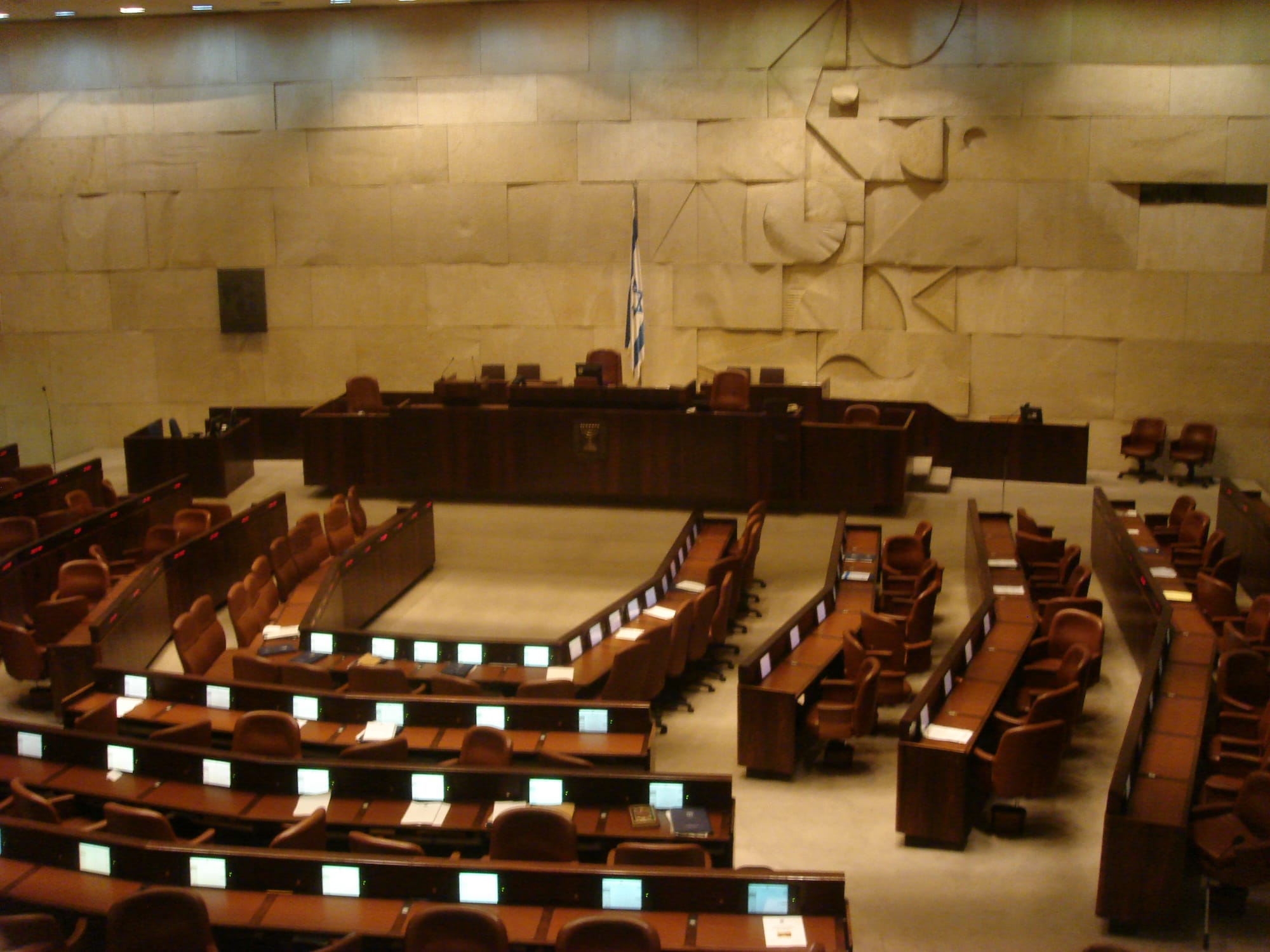
Chapter 6 — How Laws Are Made Inside the Knesset
From Political Proposals to National Legislation
Every democratic system requires a process through which political proposals can become legally binding rules.
In Israel, this responsibility belongs primarily to the Knesset, the country's national parliament.
The legislative process is one of the most important functions of the Knesset. It determines how government policies, political initiatives and proposed reforms are examined, debated, amended and ultimately adopted into law.
However, passing legislation involves more than a single parliamentary vote.
A proposed law may pass through several stages of review, including legal examination, committee discussions, public consultation and multiple parliamentary readings.
During these stages, Members of Knesset may challenge the proposal, recommend amendments or attempt to prevent its adoption.
Government ministries, legal advisers, civil society organizations and professional experts may also contribute to the legislative process.
Understanding how laws are made provides insight into the relationship between political authority, parliamentary representation and democratic accountability.
It also helps explain why some government proposals become law relatively quickly while others face months of negotiations, public controversy or legal challenges.
Who Can Introduce a Bill?
Legislative proposals in Israel can originate from several sources.
The government may introduce bills as part of its policy agenda.
Individual Members of Knesset may also submit private members' bills.
In addition, parliamentary committees may initiate legislation in certain circumstances permitted by the Knesset's rules.
Government bills often address national policy priorities, including taxation, public administration, economic regulation, security and social services.
Private members' bills may focus on a wide range of issues, from consumer protection and education to public health and civil rights.
However, the introduction of a bill does not guarantee that it will become law.
A proposal must pass through the required parliamentary procedures and obtain sufficient support.
The government generally has advantages in advancing legislation because it can rely on ministerial resources, professional legal assistance and the parliamentary support of its coalition.
Individual Members of Knesset may face greater difficulties, particularly when their proposals do not have government backing.
Nevertheless, private members' bills remain an important mechanism through which elected representatives can introduce issues into parliamentary debate.
Government Bills and the Role of Ministries
Government legislation often begins long before a proposal reaches the Knesset.
A ministry may identify a need for new legislation or changes to an existing law.
This may result from government policy commitments, administrative difficulties, court decisions, technological developments or changing social circumstances.
Professional officials and legal advisers within the relevant ministry may prepare a preliminary draft.
The proposal may then be reviewed by other ministries and government legal authorities.
In many cases, government legislative drafts are published for public comment before being submitted for formal government approval, although the applicable procedures and consultation periods vary.
This process allows professional organizations, businesses, civil society groups and members of the public to submit observations.
Public consultation can identify practical problems, legal concerns or unintended consequences that may not have been fully considered during the initial drafting stage.
However, public comments do not automatically require the government to change its proposal.
Once the necessary internal procedures have been completed, a government bill may be approved for submission to the Knesset.
The proposal then enters the parliamentary legislative process.
Private Members' Bills
Members of Knesset have the ability to propose legislation independently of the government.
These proposals are known as private members' bills.
They allow representatives to promote issues that may not be part of the government's legislative agenda.
A private member's bill may seek to introduce a new law, amend existing legislation or repeal a legal provision.
Such proposals can attract public attention even when they have limited prospects of being adopted.
They may also influence government policy by bringing particular issues into political debate.
However, private members' bills generally face an additional preliminary stage before proceeding through the ordinary legislative readings.
This preliminary reading allows the Knesset to decide whether the proposal should continue to committee examination.
Private members' bills are also affected by procedural requirements and, in certain circumstances, restrictions concerning proposals with budgetary implications.
These mechanisms influence the ability of individual legislators to advance initiatives without government support.
The Preliminary Reading
For most private members' bills, the first parliamentary stage is the preliminary reading.
During this stage, the proposed legislation is presented to the Knesset.
Members may debate the general purpose of the bill and consider whether it should proceed.
The vote does not establish the proposal as law.
Instead, it determines whether the Knesset is willing to allow the bill to advance to further examination.
If the proposal receives the required support, it is normally referred to an appropriate parliamentary committee.
The committee may then examine its provisions and prepare it for the first reading.
If the proposal is rejected, it does not continue through the legislative process in that form.
Government bills ordinarily do not require this preliminary reading.
They generally enter the parliamentary process at the first reading after completing the applicable government preparation and approval procedures.
The First Reading: Debating the Principle of a Bill
The first reading is a central stage in the Israeli legislative process.
At this point, the Knesset considers the general purpose and principles of the proposed legislation.
The bill is presented to parliament, and Members of Knesset may debate its objectives and implications.
Supporters may argue that the proposal addresses an important public need.
Opponents may question its necessity, effectiveness, legality or potential consequences.
The discussion may involve economic considerations, individual rights, administrative responsibilities or broader political disagreements.
Following the debate, the Knesset votes on whether the bill should proceed.
If it passes the first reading, it is generally referred to a parliamentary committee for detailed examination.
If it fails, it does not advance through the ordinary legislative process.
The first reading therefore serves as an initial parliamentary decision on whether the proposal deserves further consideration.
Parliamentary Committees: Where Detailed Legislative Work Takes Place
Although public attention often focuses on speeches and voting in the Knesset's main chamber, much of the detailed legislative work takes place in parliamentary committees.
These committees examine the wording, legal implications and practical consequences of proposed laws.
Each committee specializes in particular areas of public policy.
For example, the Constitution, Law and Justice Committee examines matters relating to constitutional and legal affairs.
The Finance Committee considers important financial and budgetary issues.
The Foreign Affairs and Defense Committee deals with matters involving national security and foreign policy.
Other committees focus on subjects such as education, health, labor, welfare, economics and internal affairs.
When a bill is referred to a committee, members may review its provisions individually.
They can propose amendments, request explanations and question representatives of government ministries.
Legal advisers may provide assessments concerning the compatibility of proposed provisions with existing legislation and constitutional principles.
Professional experts and representatives of affected organizations may also be invited to participate in discussions.
This process can reveal disagreements that were not fully apparent during the initial parliamentary debate.
A bill that receives broad support in principle may still generate controversy over its specific wording or implementation.
The Role of Experts and Civil Society
The legislative process is not limited to elected politicians.
Professional organizations, legal specialists, academic researchers and civil society groups may contribute information during committee proceedings.
For example, legislation concerning healthcare may involve testimony from medical professionals and patient organizations.
A proposed economic reform may attract submissions from business associations, economists and consumer representatives.
Legislation affecting civil rights may be examined by legal experts and human rights organizations.
These contributions can help legislators understand how a proposed law may affect different groups.
However, participation is not always equal.
Organizations with greater resources, professional networks or political access may be better positioned to influence legislative discussions.
The extent of public participation can also vary depending on the committee, the subject matter and the time available.
In some cases, controversial legislation may advance through accelerated procedures, limiting the opportunity for extensive public examination.
This creates an ongoing debate about the balance between legislative efficiency and democratic scrutiny.
Amendments and Political Negotiations
Committee discussions frequently result in proposed amendments.
An amendment changes the wording or substance of a bill.
Some amendments are technical, correcting legal language or clarifying administrative procedures.
Others may substantially alter the policy contained in the original proposal.
Political negotiations can play an important role during this stage.
Coalition parties may disagree over particular provisions and seek compromises before allowing the legislation to advance.
Opposition members may propose alternative language or attempt to remove provisions they consider problematic.
Legal advisers may recommend changes intended to address constitutional concerns or conflicts with existing law.
The committee must then determine which amendments will be incorporated into the text submitted for further parliamentary consideration.
This process demonstrates that legislation is often shaped by negotiation rather than simply approved or rejected in its original form.
The Second Reading: Voting on the Details
After the relevant committee completes its preparation, a bill may return to the Knesset for its second reading.
At this stage, the parliament considers the bill in greater detail.
The second reading involves voting on the bill's provisions and, where applicable, reservations or proposed changes submitted through the parliamentary process.
Members may support the overall purpose of a law while opposing specific sections.
This makes the second reading an important opportunity to influence the final wording.
The procedures governing voting and reservations depend on the applicable parliamentary rules.
If the bill successfully completes the second reading, it can proceed to the third reading.
In practice, the second and third readings often take place during the same parliamentary sitting.
However, they remain distinct stages of the legislative process.
The Third Reading: Final Parliamentary Approval
The third reading is the final ordinary parliamentary stage before a bill becomes law.
At this point, the Knesset votes on the legislative text as a whole.
The third reading does not ordinarily involve reopening the detailed committee examination of the bill.
Instead, it determines whether the final version receives the parliamentary support required for adoption.
For ordinary legislation, the required majority generally depends on the votes cast, unless a specific legal provision establishes a different threshold.
Certain Basic Laws and other protected provisions have special voting requirements.
If the bill passes the third reading, it has completed the Knesset's legislative approval process.
The law must then undergo the applicable formal procedures for authentication and publication.
In Israel, legislation does not require a separate presidential veto decision comparable to that found in the United States.
The president performs a formal signing function in relation to legislation, subject to the applicable legal framework, but does not possess a general political veto over laws passed by the Knesset.
Publication and Entry into Force
After a bill has been adopted, the law is published through Israel's official publication system.
Publication is important because it provides an authoritative public record of the legislation.
However, the date on which a law is adopted is not always the same as the date on which all of its provisions become legally effective.
Some laws enter into force upon publication or according to the ordinary legal rules.
Others specify a later commencement date.
Certain provisions may be introduced gradually to allow government ministries, businesses or public institutions time to prepare.
For example, a law establishing new administrative requirements may provide a transition period before enforcement begins.
Understanding the difference between parliamentary approval, official publication and commencement is important when reporting on legislative developments.
A headline stating that a law has been passed does not necessarily mean that every part of the law is already being implemented.
What Are Israel's Basic Laws?
One of the most distinctive features of Israel's legal system is the absence of a single comprehensive written constitution.
Instead, Israel has developed a series of Basic Laws.
These laws address the organization of state institutions, the distribution of constitutional powers and certain fundamental rights.
Examples include Basic Law: The Knesset, Basic Law: The Government, Basic Law: The Judiciary and Basic Law: Human Dignity and Liberty.
The Basic Laws have developed over decades and play an important role in Israel's constitutional framework.
However, not all Basic Laws contain identical procedural protections or amendment requirements.
Some provisions require special parliamentary majorities, while others can be amended through ordinary legislative procedures.
The constitutional status of Basic Laws and the authority of the judiciary to review them have been subjects of significant legal and political debate.
These questions became particularly prominent during controversies surrounding judicial reform.
The relationship between Basic Laws, parliamentary sovereignty and judicial review will be examined in greater detail in the next chapter.
Can the Supreme Court Review Knesset Legislation?
Israel's Supreme Court plays an important role in constitutional and administrative law.
Since the 1990s, the Court has developed a framework for reviewing ordinary legislation in light of Israel's Basic Laws.
Under this framework, certain laws may be invalidated if they conflict with constitutional protections and cannot be justified under the applicable legal standards.
Judicial review has generated substantial political debate.
Supporters argue that it provides an essential safeguard against legislation that infringes fundamental rights or exceeds constitutional limits.
Critics argue that the judiciary has assumed too much authority over decisions made by elected representatives.
The controversy became especially significant during the judicial reform debates of 2023 and 2024.
In January 2024, the Supreme Court invalidated an amendment to Basic Law: The Judiciary that had sought to eliminate judicial review based on the reasonableness standard for decisions of the government, prime minister and ministers.
The ruling was particularly significant because it concerned the Court's authority to review an amendment to a Basic Law.
It illustrated the unresolved constitutional questions surrounding the boundaries of legislative and judicial power.
Judicial review does not mean that every controversial law is automatically invalid.
Courts examine legal claims according to the applicable constitutional and procedural standards.
The outcome depends on the specific legislation, the arguments presented and the legal principles involved.
Emergency Regulations and Exceptional Legislative Powers
Governments sometimes face circumstances requiring urgent action.
Israel's legal framework includes provisions concerning states of emergency and emergency regulations.
Under defined conditions, the government may adopt emergency regulations intended to address urgent national needs.
However, emergency powers are subject to legal limitations.
The applicable framework places restrictions on their purpose, duration and relationship with certain protected legal provisions.
The Knesset also retains important responsibilities concerning the legal framework for emergency powers.
Emergency regulations are distinct from ordinary parliamentary legislation.
They can permit temporary executive action in circumstances where the ordinary legislative process may be considered insufficiently responsive.
Nevertheless, their use raises important questions about democratic accountability.
Legal experts and civil society organizations may question whether emergency measures are necessary, proportionate or compatible with fundamental rights.
The distinction between temporary emergency powers and permanent legislation is therefore essential when examining government authority during periods of crisis.
The State Budget: A Special Legislative Responsibility
One of the Knesset's most important responsibilities is approving the state budget.
The budget determines how public resources are allocated across government activities.
It influences spending on defense, education, healthcare, transportation, social welfare and other public services.
The government prepares and submits the budget through the applicable legal process.
The Knesset examines the proposal, particularly through the Finance Committee, before voting on the relevant budget legislation.
Budget debates often involve disagreements over national priorities.
Political parties may demand additional funding for programs or communities they represent.
Coalition agreements can also influence negotiations over spending commitments.
Israel's constitutional framework establishes consequences if the state budget is not approved within the legally required period.
Depending on the circumstances and applicable provisions, failure to pass the budget can lead to the dissolution of the Knesset and new elections.
This gives budget legislation particular political importance.
A government may survive disagreements over individual policy proposals but face a much more serious constitutional crisis if it cannot secure approval for the budget.
Why Some Laws Move Faster Than Others
Not every bill follows the same political timetable.
Some proposals receive broad parliamentary support and advance relatively quickly.
Others become the subject of lengthy committee discussions, legal disputes or coalition negotiations.
The government and Knesset may use accelerated procedures where the relevant rules permit them.
Such procedures may be considered necessary during emergencies or when urgent legislative action is required.
However, accelerated legislation can attract criticism if it limits the time available for parliamentary scrutiny.
Opposition parties may argue that complex laws require more extensive debate.
Civil society organizations may raise concerns about insufficient public consultation.
Supporters of faster procedures may respond that governments must be able to act effectively, particularly during urgent circumstances.
The debate reflects a broader tension within parliamentary democracy.
Legislative institutions must be capable of making decisions while also providing sufficient opportunities for examination, disagreement and accountability.
Transparency and Public Access to Legislation
Public access to parliamentary information is an important element of legislative transparency.
The Knesset publishes information concerning proposed legislation, committee activity, parliamentary debates and voting procedures.
Members of the public, journalists and researchers can use these materials to examine how legislation develops.
Committee discussions may also be publicly accessible, subject to applicable restrictions.
Certain proceedings involving sensitive national security matters may be closed or subject to confidentiality requirements.
For journalists, parliamentary records can provide valuable evidence.
They may reveal how a bill changed during committee discussions, which political parties supported particular amendments and how individual Members of Knesset voted.
Official legislative records can also help distinguish between political statements and legally binding decisions.
For example, a minister may announce support for a proposed reform, but that announcement does not mean the reform has become law.
Similarly, a bill passing its first reading remains a legislative proposal until the remaining required procedures are completed.
Careful reporting therefore requires identifying the exact legislative stage.
The Role of Journalism in Legislative Accountability
Legislation can affect millions of people, yet the details of parliamentary procedures are not always widely understood.
Journalists play an important role in explaining these processes to the public.
Reporting on legislation involves more than repeating government announcements or political speeches.
It requires examining the wording of proposed laws, identifying who may be affected and evaluating the evidence presented in support of particular policies.
Journalists may also investigate whether proposed legislation creates conflicts of interest, changes institutional authority or affects fundamental rights.
Independent reporting can help the public understand differences between political promises, legislative proposals and enacted laws.
This is particularly important when legislation becomes the subject of intense public controversy.
Political parties may present the same proposal in very different ways.
Supporters may describe a law as necessary for national security or government efficiency.
Opponents may argue that it threatens civil liberties or weakens institutional oversight.
Responsible journalism should examine these competing claims through evidence, legal analysis and the actual text of the legislation.
It should also distinguish established facts from political interpretations and predictions about future consequences.
Conclusion — How Parliament Turns Political Decisions into Law
The legislative process inside the Knesset is a central part of Israel's parliamentary democracy.
Proposed laws may originate from government ministries, individual Members of Knesset or parliamentary committees acting within their authorized powers.
They move through a structured process involving parliamentary readings, committee examination, amendments and voting.
The process creates opportunities for political debate, expert input and public scrutiny.
However, the effectiveness of these mechanisms depends on the circumstances surrounding each proposal, including coalition discipline, available time and the willingness of lawmakers to examine competing arguments.
Israel's Basic Laws and judicial review add another dimension to the legislative system by raising questions about constitutional authority and the limits of parliamentary power.
Understanding these procedures helps explain how political proposals become binding rules and why legislation can become a focal point of national disagreement.
For readers seeking to understand Israeli democracy beyond political headlines, the legislative process reveals how political authority is exercised in practice.
It also leads to one of the most important constitutional questions facing the country: how should power be balanced between elected lawmakers and an independent judiciary?
The next chapter examines Israel's Supreme Court, the Basic Laws and the ongoing debate over judicial independence.
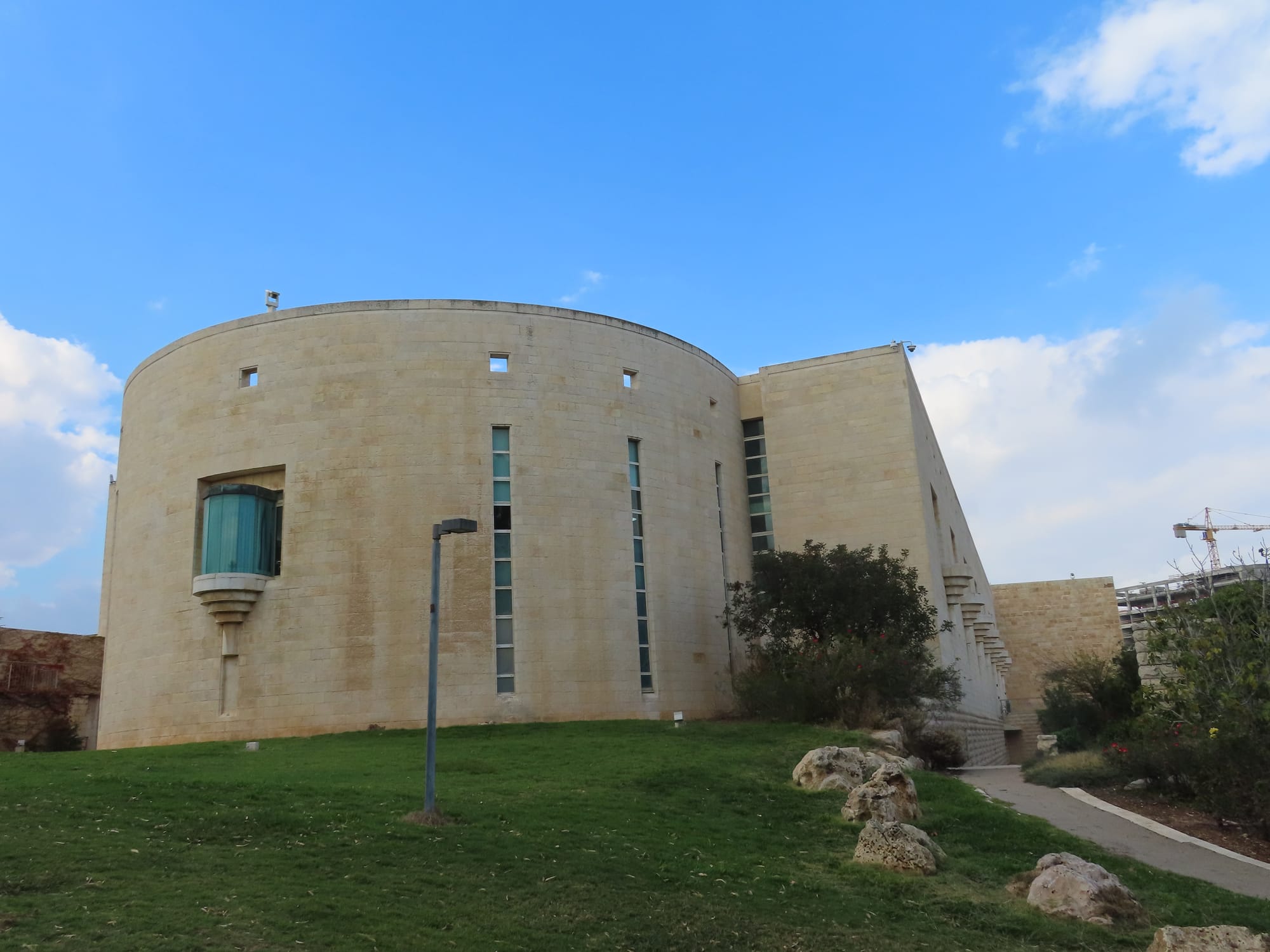
Chapter 7 — The Supreme Court, Basic Laws and Judicial Independence
The Judiciary and the Foundations of Israeli Democracy
In every democratic system, an important question concerns the limits of political power.
Who determines whether government decisions are lawful? What happens when legislation conflicts with fundamental rights? And which institutions are responsible for ensuring that elected officials operate within the law?
In Israel, these questions are closely connected to the country's judicial system and its unusual constitutional structure.
Unlike many established democracies, Israel does not have a single comprehensive written constitution. Instead, its constitutional framework has developed through a combination of Basic Laws, ordinary legislation, judicial decisions and longstanding institutional practices.
At the center of this framework stands the Supreme Court of Israel.
The Court serves as the country's highest appellate court and also exercises important powers of judicial review, including through its role as the High Court of Justice.
Over the decades, the relationship between the judiciary, the Knesset and the government has become one of the most significant subjects in Israeli political life.
Supporters of strong judicial oversight regard independent courts as essential safeguards against abuses of government authority.
Critics of expansive judicial intervention argue that courts should exercise greater restraint when reviewing decisions made by democratically elected representatives.
These disagreements became particularly visible during the judicial reform controversy that began in 2023.
To understand the debate, it is necessary to examine how Israel's judicial system developed, what authority the Supreme Court exercises and why the Basic Laws occupy such an important position in the country's constitutional framework.
How Israel's Judicial System Is Organized
Israel's judicial system consists of several levels of courts with different responsibilities.
The ordinary court structure includes Magistrates' Courts, District Courts and the Supreme Court.
Magistrates' Courts generally hear less serious criminal cases and civil disputes falling within their jurisdiction.
District Courts handle more serious criminal matters, higher-value civil disputes and appeals from Magistrates' Courts. They also exercise certain administrative and other specialized jurisdictions.
The Supreme Court stands at the top of the ordinary judicial hierarchy.
It hears appeals in cases falling within its jurisdiction and addresses significant questions of law.
Israel also has specialized judicial institutions, including labor courts and religious courts, which exercise authority over particular categories of disputes.
Religious courts play an especially important role in matters of personal status, including marriage and divorce, although their jurisdiction varies according to the religious community and the legal issue involved.
This combination of civil and religious jurisdictions reflects Israel's historical development and the continuing relationship between religion and state.
The judicial system is therefore responsible for more than resolving ordinary legal disputes.
It also operates within a society where questions of national identity, religious authority, minority rights and constitutional interpretation frequently intersect.
The Supreme Court: Israel's Highest Judicial Authority
The Supreme Court of Israel is located in Jerusalem.
Its responsibilities extend across several important areas of law.
As an appellate court, it reviews decisions from lower courts in cases where an appeal is permitted.
When exercising its jurisdiction as the High Court of Justice, commonly referred to by the Hebrew acronym Bagatz, it hears petitions concerning the legality of actions by public authorities and other matters within its jurisdiction.
These cases may involve government ministries, administrative agencies, public officials or questions concerning the exercise of state authority.
The Court can examine whether an administrative decision was made lawfully, whether an authority exceeded its powers or whether legally protected rights were violated.
Its authority is not unlimited.
The Court operates within a legal framework established by legislation, Basic Laws and judicial precedent.
Nevertheless, its decisions can have far-reaching political and social consequences.
A ruling may require a government authority to reconsider a decision, prevent an unlawful administrative action or invalidate legislation that conflicts with constitutional protections.
This makes the Supreme Court an important institution in the relationship between government authority and the rule of law.
Why Israel Does Not Have a Single Written Constitution
When Israel was established in 1948, its founders anticipated the development of a written constitution.
The Declaration of Independence referred to the establishment of constitutional institutions, and the first elected Constituent Assembly was intended to play a role in creating the new state's constitutional framework.
However, political disagreements prevented the adoption of a single comprehensive constitutional document.
Questions concerning religion and state, the meaning of Jewish national identity, individual rights and the distribution of political authority proved difficult to resolve.
In 1950, the Knesset adopted a compromise known as the Harari Resolution.
Rather than producing one complete constitution immediately, the resolution provided for constitutional chapters to be developed gradually as Basic Laws.
The intention was that these chapters could eventually form the basis of a comprehensive constitution.
Over subsequent decades, the Knesset adopted Basic Laws addressing different aspects of government and constitutional rights.
However, the process never resulted in a single unified constitutional document.
This gradual approach has given Israel a distinctive constitutional structure.
It has also created disagreements about the legal status of Basic Laws, the authority to amend them and the role of courts in interpreting their provisions.
What Are the Basic Laws?
Israel's Basic Laws serve as central components of the country's constitutional framework.
Some establish the structure and responsibilities of state institutions.
Others protect particular rights or define aspects of the state's national identity.
Basic Law: The Knesset regulates important matters concerning the national parliament and elections.
Basic Law: The Government addresses the formation, responsibilities and functioning of the executive branch.
Basic Law: The Judiciary establishes important principles concerning the courts and judicial independence.
Basic Law: Human Dignity and Liberty provides constitutional protection for certain fundamental rights.
Basic Law: Freedom of Occupation addresses the freedom to engage in an occupation, profession or trade, subject to lawful limitations.
Other Basic Laws concern institutions such as the president and state comptroller, as well as subjects including Jerusalem, the state budget and Israel's national identity.
Not all Basic Laws are protected by identical amendment procedures.
Certain provisions require special parliamentary majorities, while others can be amended through ordinary legislative procedures.
This creates an important constitutional question.
If the same parliamentary majority that governs the country can also amend significant constitutional provisions, what prevents temporary political majorities from changing the rules that regulate their own authority?
Different legal and political approaches offer different answers.
Some emphasize the democratic legitimacy of the elected Knesset.
Others emphasize the need for entrenched constitutional protections and independent judicial oversight.
This disagreement lies at the heart of Israel's constitutional debate.
The Constitutional Developments of the 1990s
A major turning point in Israeli constitutional law occurred in 1992.
That year, the Knesset adopted Basic Law: Human Dignity and Liberty and Basic Law: Freedom of Occupation.
These laws strengthened the constitutional protection of certain individual rights.
In 1995, the Supreme Court issued a landmark decision in the Bank Mizrahi case.
The ruling recognized the constitutional superiority of Basic Laws over ordinary legislation and established an important foundation for judicial review of parliamentary statutes.
This development became associated with what is often called Israel's Constitutional Revolution.
The term describes the transformation in constitutional interpretation through which Basic Laws came to be treated as higher legal norms capable of limiting ordinary legislation.
Supporters regarded the development as an important step toward protecting individual rights and strengthening constitutional government.
Critics questioned whether the Knesset had clearly intended to grant the judiciary such extensive authority when adopting the Basic Laws.
The disagreement was not simply about individual court decisions.
It concerned the source of constitutional authority itself.
Should the judiciary determine the legal boundaries of parliamentary legislation, or should elected representatives retain greater freedom to define those boundaries?
The question remains central to Israeli constitutional discussions.
Judicial Review: Can Courts Overturn Laws?
Judicial review is the process through which courts examine whether government actions or legislation comply with applicable legal and constitutional standards.
In Israel, the Supreme Court has developed the authority to invalidate ordinary legislation that conflicts with Basic Laws under the relevant constitutional tests.
This power differs from the ordinary interpretation of legislation.
When interpreting a law, a court determines how its provisions should be understood and applied.
When exercising constitutional judicial review, the Court may determine that a statutory provision cannot remain legally effective because it conflicts with a higher constitutional norm.
The distinction is significant.
It means that legislation approved by elected representatives can, in certain circumstances, be invalidated by judges.
Supporters argue that this is necessary to protect fundamental rights and prevent parliamentary majorities from exercising unrestricted authority.
Critics argue that judicial review must be carefully limited to preserve the democratic role of the legislature.
These arguments are not unique to Israel.
Similar debates occur in democracies around the world.
However, Israel's lack of a single entrenched constitution, its unicameral parliament and the close relationship between government and parliamentary majorities give the debate particular significance.
What Does Judicial Independence Mean?
Judicial independence is the principle that judges should decide cases according to law rather than political pressure, personal influence or instructions from government officials.
It is a central element of the rule of law.
In Israel, Basic Law: The Judiciary establishes that judges are subject only to the authority of the law when exercising judicial functions.
Judicial independence involves several dimensions.
Judges must be able to decide cases without threats or improper interference.
Their appointments, professional conditions and removal procedures must operate within a legal framework.
Courts must also be able to examine disputes involving powerful political institutions without being directed to reach a particular outcome.
However, judicial independence does not mean that judges are exempt from accountability.
Judicial decisions may be subject to appeal or further review where the law permits.
Judges are also bound by ethical and professional obligations.
The challenge for any democratic system is to preserve independence while maintaining transparency, professional standards and legitimate institutional accountability.
How Are Supreme Court Judges Appointed?
The appointment of judges has become one of the most contested subjects in Israeli constitutional politics.
Historically, judges have been selected through a nine-member Judicial Selection Committee involving representatives of the judiciary, government, Knesset and legal profession.
Under the framework in force in October 2026, the committee includes three Supreme Court justices, two government ministers, two Members of Knesset and two representatives of the Israel Bar Association.
The minister of justice chairs the committee.
This structure was designed to distribute influence among different institutional groups rather than placing appointments entirely under government control.
However, critics have argued that the judiciary and legal profession exercise too much influence over the selection process.
Supporters of the existing arrangement have argued that professional participation helps protect judicial independence and reduces the possibility of appointments being dominated by political considerations.
In March 2025, the Knesset approved legislation changing the committee's composition and appointment procedures.
The reform replaces the two Israel Bar Association representatives with public representatives selected through coalition and opposition mechanisms and establishes additional rules for judicial appointments.
Importantly, the legislation was designed to take effect when the next Knesset begins its term, rather than immediately upon its passage.
As of October 2026, the changes had not yet entered into force.
The reform therefore illustrates both the continuing political disagreement over judicial appointments and the importance of distinguishing between legislation that has been approved and legislation that is already operational.
The Judicial Reform Controversy of 2023
In January 2023, Israel's government announced proposals for significant changes to the judicial system.
The proposals generated one of the most intense political controversies in the country's recent history.
Among the principal issues were judicial appointments, the Supreme Court's authority to review legislation, the role of government legal advisers and the circumstances in which courts could intervene in administrative decisions.
Supporters of the reforms argued that the judiciary had accumulated excessive authority over elected institutions.
They maintained that changes were necessary to strengthen democratic accountability and restore an appropriate balance between the courts and the Knesset.
Opponents argued that the proposals would weaken institutional checks on government power.
They warned that greater political control over judicial appointments and restrictions on judicial review could undermine the independence of the judiciary.
The controversy developed into a broader debate about the nature of Israeli democracy.
It also revealed deep disagreements concerning the meaning of majority rule, constitutional protection and the role of independent institutions.
Mass Demonstrations and Public Opposition
The judicial reform proposals triggered large demonstrations across Israel in 2023.
Protesters gathered in Tel Aviv, Jerusalem and numerous other locations.
Many carried Israeli flags and expressed concern about the future of democratic institutions.
The demonstrations included participants from different professional, political and social backgrounds.
Some military reservists publicly expressed opposition to aspects of the proposed reforms.
Business leaders, legal professionals, academics and civil society organizations also participated in public debate.
Supporters of the government's proposals organized demonstrations of their own, arguing that judicial reform was necessary to respect the authority of elected representatives.
The protests demonstrated the intensity of disagreement within Israeli society.
For some participants, the controversy concerned the immediate details of judicial appointments and constitutional review.
For others, it reflected wider concerns about national identity, political leadership and the future relationship between citizens and state institutions.
The demonstrations also highlighted the importance of public protest as a form of political participation outside parliamentary elections.
The Reasonableness Standard
One of the most controversial elements of the judicial reform debate concerned the legal principle known as reasonableness.
In Israeli administrative law, the reasonableness standard has been used by courts to review certain decisions made by public authorities.
The doctrine allows judicial examination of whether an administrative decision falls outside the range of legally reasonable choices, taking into account relevant considerations.
It does not simply permit judges to replace every government decision with the policy they personally prefer.
Rather, it operates within the broader framework of administrative law.
Supporters of restricting the doctrine argued that courts had used reasonableness review too broadly, allowing judges to intervene in policy decisions that should belong to elected officials.
Opponents argued that the doctrine was an important safeguard against arbitrary appointments, improper administrative decisions and abuses of executive authority.
In July 2023, the Knesset adopted an amendment to Basic Law: The Judiciary that restricted judicial review based on reasonableness in relation to decisions of the government, prime minister and ministers.
The amendment became the subject of a major constitutional challenge.
January 2024: A Historic Supreme Court Decision
On January 1, 2024, Israel's Supreme Court issued a landmark ruling concerning the amendment that restricted the reasonableness standard.
For the first time, the Court invalidated an amendment to a Basic Law.
The decision was reached by a narrow majority of eight justices to seven.
The majority concluded that the amendment caused sufficiently serious harm to the core democratic characteristics of the state to justify judicial intervention.
A broader majority of the justices accepted, in principle, that the Supreme Court could review Basic Laws in exceptional circumstances where the Knesset exceeded the limits of its constituent authority.
However, the judges differed over the appropriate legal threshold and whether the particular amendment justified intervention.
The dissenting opinions reflected several approaches.
Some judges questioned the Court's authority to review Basic Laws.
Others accepted a limited power of review but considered the amendment insufficiently serious to justify invalidation.
Still others favored interpreting the amendment more narrowly rather than striking it down.
The ruling was significant because it addressed one of the most difficult questions in Israeli constitutional law: whether the Knesset's authority to enact Basic Laws is itself subject to legal limitations.
It also demonstrated that the Supreme Court was not unanimous on the appropriate relationship between judicial power and parliamentary authority.
The Continuing Debate Over Judicial Reform
The January 2024 ruling did not resolve the wider disagreement over Israel's judicial system.
The debate continued over judicial appointments, constitutional authority and the balance between elected institutions and independent courts.
In March 2025, the Knesset approved changes to the Judicial Selection Committee.
The legislation reflected continued efforts by supporters of reform to alter the appointment process.
Critics continued to express concerns about the potential influence of political actors over judicial appointments.
The implementation of these changes was deferred until the beginning of the next Knesset's term.
The distinction between legislative approval and implementation is particularly important when evaluating the current legal position.
Judicial reform is not one single law or event.
It is a collection of proposals, enacted amendments, court decisions and political disagreements that have developed over several years.
Some proposals have been modified, delayed or challenged.
Others have become law.
Understanding the subject requires examining each measure separately and identifying its legal status at the relevant time.
The Supreme Court and Minority Rights
One of the most important arguments in favor of judicial review concerns the protection of minority rights.
In parliamentary democracies, elected majorities generally have substantial influence over legislation and government policy.
However, democratic governance also involves legal protections for individuals and groups whose interests may not be represented by the governing majority.
In Israel, constitutional and administrative disputes have involved issues affecting Arab citizens, religious minorities, women, asylum seekers and other groups.
The Supreme Court has considered cases concerning equality, access to public services, religious matters and the legality of government decisions.
Its record has also attracted criticism from different perspectives.
Some legal scholars and human rights organizations argue that the Court has not provided sufficient protection in certain cases, particularly those concerning Palestinians in the occupied territories.
Others argue that the Court has intervened too extensively in questions involving national security, public administration or political decision-making.
These disagreements demonstrate that judicial independence and judicial effectiveness are related but distinct questions.
An independent court may still issue decisions that attract serious legal or political criticism.
The existence of judicial review does not automatically guarantee that all rights will be equally protected.
The Supreme Court and the Israeli-Palestinian Conflict
The Israeli-Palestinian conflict has created some of the most complex legal questions considered by Israeli courts.
The Supreme Court, sitting as the High Court of Justice, has heard petitions involving Israeli military and administrative actions in the West Bank and other matters connected to the conflict.
These cases have addressed subjects including land use, movement restrictions, military operations, detention and the route of the separation barrier.
The Court has sometimes ordered changes to government or military decisions.
In other cases, it has upheld challenged measures or declined to grant the remedies requested.
The Court's approach has generated differing assessments.
Supporters of its involvement argue that judicial review provides a legal mechanism for challenging certain actions by state authorities.
Critics, including Palestinian and international human rights organizations, have argued that judicial review has often failed to provide adequate remedies against the broader system of occupation.
Other critics have questioned whether courts should intervene in military and security decisions made by elected officials and professional security authorities.
These debates also involve international humanitarian law, Israeli domestic law and questions concerning the legal status of occupied territory.
An important distinction must be maintained between the legal rights of Israeli citizens and the different legal frameworks affecting Palestinians living under Israeli occupation.
The existence of a judicial petition process does not mean that all individuals affected by Israeli state power possess equal political rights or access to effective remedies.
The Rule of Law and Democratic Accountability
The rule of law is a central principle of democratic governance.
It requires that public authorities exercise their powers according to law rather than personal preference or unrestricted political authority.
Government ministers, parliamentary representatives and public officials are subject to legal obligations.
Courts play an important role in interpreting and applying those obligations.
However, judicial oversight is only one element of democratic accountability.
Parliamentary scrutiny, independent journalism, public access to information, civil society participation and elections also contribute to the ability of citizens to evaluate government conduct.
In Israel, the relationship between these mechanisms is particularly important because the government ordinarily controls a parliamentary coalition.
This close connection between executive and legislative authority can make independent oversight institutions especially significant.
At the same time, disagreements remain over how much authority those institutions should exercise.
The constitutional challenge is not simply to determine whether elected representatives or judges should hold greater power.
It is to establish a legal framework in which different institutions can exercise their responsibilities while remaining subject to appropriate limits.
The Future of Israel's Constitutional Framework
The debate over Israel's judiciary raises questions extending beyond individual court decisions or political leaders.
Should Israel adopt a single comprehensive written constitution?
Should Basic Laws require larger parliamentary majorities before they can be amended?
How should Supreme Court justices be selected?
What limits should apply to judicial review?
And how should the legal system balance democratic majority rule with the protection of individual and minority rights?
Different political parties, legal scholars and civil society organizations have proposed different answers.
Some advocate stronger constitutional protections and clearer limitations on parliamentary authority.
Others emphasize the need to reduce judicial intervention and strengthen the decision-making powers of elected institutions.
Additional proposals seek negotiated constitutional arrangements that would establish more clearly defined responsibilities for all three branches of government.
The long-term outcome of these debates remains uncertain.
However, their importance extends beyond the judiciary itself.
They concern the institutional rules through which political authority is exercised and the protections available when that authority is challenged.
Conclusion — The Balance Between Democracy and Judicial Power
Israel's Supreme Court and Basic Laws occupy a central position in the country's constitutional system.
The absence of a single comprehensive written constitution has allowed constitutional law to develop gradually through legislation, judicial interpretation and political negotiation.
This process has created important legal protections while also generating disagreements about the boundaries of judicial authority.
The judicial reform controversy beginning in 2023 brought these disagreements into public view on an extraordinary scale.
Mass demonstrations, parliamentary debates and landmark Supreme Court decisions demonstrated how deeply constitutional questions can affect political life.
The central issue is not whether democracy requires elected representatives or independent courts.
Both perform important functions within democratic governance.
The challenge lies in defining their respective powers and ensuring that public authority remains subject to law, institutional accountability and fundamental rights.
For readers seeking to understand Israel beyond political headlines, the judiciary provides an essential perspective on how the country's democratic institutions operate.
The next chapter moves beyond formal government structures to examine broader questions of political representation, civil rights, minority communities and the challenges facing Israeli democracy.
Chapter 8 — Democratic Debate: Representation, Rights and Political Challenges
Democracy Beyond the Parliamentary Chamber
Democracy is often associated with elections, political parties and parliamentary debates. Yet the functioning of a democratic system cannot be understood through its institutions alone.
It also depends on the relationship between the state and its citizens, the protection of individual rights, the ability of different communities to participate in political life and the mechanisms through which government decisions can be challenged.
In Israel, these questions are particularly complex.
The country combines a parliamentary political system with a society shaped by different national, religious, cultural and historical identities.
Jewish and Arab citizens participate in the same national electoral system, while political disagreements concern subjects ranging from economic policy and education to national security, religion and the Israeli-Palestinian conflict.
Israel's identity as both a Jewish and democratic state is central to many of these discussions.
For some, these principles are compatible expressions of national self-determination and democratic citizenship.
Others question how the state's Jewish national character can be reconciled with full equality for all citizens, particularly in areas where national identity influences legislation, public institutions and access to resources.
These debates extend beyond political parties and parliamentary elections.
They concern the practical meaning of citizenship, equality, freedom and political accountability.
The Meaning of a Jewish and Democratic State
Israel's Declaration of Independence, issued on May 14, 1948, established the state as a national home for the Jewish people.
The declaration also expressed commitments to freedom, justice and equality of social and political rights, regardless of religion, race or sex.
These principles have influenced Israeli political and legal debates since the country's establishment.
However, the relationship between Jewish national identity and democratic citizenship has remained a subject of disagreement.
Israel's national symbols, Hebrew language, immigration policies and certain public institutions reflect its Jewish national character.
At the same time, Israeli citizens belong to different religious and ethnic communities.
Arab citizens, including Muslims, Christians and Druze, participate in political life and possess citizenship rights under Israeli law.
The constitutional relationship between collective national identity and individual equality has been debated in the Knesset, the courts and wider society.
In 2018, the Knesset adopted Basic Law: Israel — The Nation State of the Jewish People.
The law defines Israel as the nation-state of the Jewish people and establishes that the right to exercise national self-determination in the State of Israel is unique to the Jewish people.
It also addresses national symbols, language and other aspects of state identity.
Supporters argued that the law formally recognized the Jewish people's right to national self-determination.
Critics argued that the absence of an explicit equality provision raised concerns about the constitutional position of non-Jewish citizens.
The Supreme Court upheld the law in 2021, while interpreting it within Israel's wider constitutional framework.
The debate illustrates a central question in Israeli political life: how should a state with a particular national identity guarantee democratic rights and equal treatment to citizens from different communities?
Political Representation and Minority Communities
Israel's proportional electoral system allows political parties representing different communities and ideological positions to compete for parliamentary seats.
Arab citizens of Israel can vote in national elections, establish political parties and stand for election to the Knesset.
Arab representatives have served in parliament since the early years of the state.
Some have participated in parties primarily focused on Arab political representation, while others have been elected through broader political movements.
However, formal political rights do not automatically eliminate differences in political influence, economic opportunity or access to public resources.
Arab communities have raised concerns about issues including municipal funding, housing, planning regulations, education, employment and public safety.
These concerns vary between communities and should not be treated as identical across the entire Arab population.
Bedouin communities in the Negev, for example, face particular disputes concerning land recognition, planning and public services.
Druze citizens have distinct communal and political experiences, including different patterns of military service and relations with state institutions.
Arab Christian communities also have their own religious, educational and social institutions.
Understanding minority representation therefore requires attention to the diversity within Israel's non-Jewish population.
It also requires examining whether political participation translates into meaningful influence over policies affecting everyday life.
Equality Before the Law
Equality is one of the most important principles associated with democratic government.
In Israel, questions of equality arise within a constitutional framework that does not contain one comprehensive written constitution.
The Declaration of Independence expresses a commitment to equal rights, while judicial decisions and legislation provide protections in different areas.
Basic Law: Human Dignity and Liberty has played an important role in the judicial development of constitutional rights.
However, it does not contain a general explicit equality clause.
Israeli courts have recognized aspects of equality through constitutional interpretation and other legal principles.
At the same time, disputes continue over the scope of these protections and their application.
Questions concerning equality may involve employment, education, access to public services, religious identity, gender or national background.
Some legal disagreements concern whether different treatment is justified by legitimate public objectives.
Others involve claims that policies create discrimination or unequal opportunities.
The distinction between formal legal rights and practical outcomes is important.
Two communities may possess the same formal voting rights while experiencing different levels of economic opportunity or public investment.
A complete examination of democratic equality therefore requires both legal analysis and evidence about how policies affect people in practice.
Religion and the State
The relationship between religion and government is one of Israel's most enduring political debates.
Israel does not operate according to a strict separation between religious and state institutions.
Religious authorities have responsibilities in certain areas of personal status law, while Jewish religious traditions influence aspects of public life.
Marriage and divorce are particularly significant examples.
Israel does not provide a general domestic civil marriage procedure for couples who wish to marry outside the recognized religious systems.
Marriages legally performed abroad may be registered under applicable Israeli law, subject to the relevant legal requirements.
This arrangement has generated debate among secular, religious and other communities.
Some defend the existing religious framework as an important expression of Jewish tradition and communal identity.
Others argue that citizens should have broader freedom to choose civil marriage and divorce arrangements.
Public transportation and commercial activity on the Jewish Sabbath also generate political disagreements.
In some communities, restrictions reflect religious practices and local arrangements.
Elsewhere, residents and local authorities have supported services intended to meet the needs of secular populations.
The issue of military service for ultra-Orthodox Jewish men has become another major source of controversy.
Debates concern religious study, equality of civic obligations, military manpower and the legal framework governing exemptions or deferments.
These disagreements illustrate how questions of religious identity can become central to coalition negotiations and national policy.
Freedom of Expression and Public Protest
Freedom of expression is an important component of democratic participation.
It allows citizens to criticize political leaders, question government policies and express competing views about national affairs.
Israel has an active media environment and a longstanding tradition of political protest.
Demonstrations have addressed issues including economic inequality, government accountability, judicial reform, national security and the Israeli-Palestinian conflict.
The large protests surrounding judicial reform in 2023 demonstrated the capacity of civil society organizations and individual citizens to mobilize around constitutional questions.
Supporters and opponents of government policies participated in public demonstrations, political campaigns and legal debates.
However, freedom of expression is not without legal restrictions.
Israeli law regulates matters including incitement, threats, certain security-related information and other forms of expression.
The application of these restrictions can become controversial, particularly during periods of war or heightened political tension.
Civil liberties organizations have raised concerns about restrictions on political expression and the treatment of some protesters, including Arab citizens expressing views concerning Gaza.
Government authorities have defended certain enforcement measures as necessary to address incitement, threats or security risks.
Evaluating such disputes requires examining the specific conduct involved, the legal basis for restrictions and whether enforcement is consistent with fundamental rights.
The Role of Independent Journalism
A functioning democracy depends partly on the public's ability to obtain reliable information about government decisions.
Journalism plays an important role in this process.
Independent reporting can investigate public spending, examine political conduct, document social problems and provide information that allows citizens to evaluate official claims.
Israel has a diverse media environment that includes Hebrew, Arabic and English-language news organizations.
Media outlets represent different editorial perspectives and reach audiences within Israel and internationally.
Investigative reporting has exposed political controversies, administrative failures and allegations of misconduct.
However, journalists also operate within legal, economic and political constraints.
Israel maintains military censorship arrangements concerning certain security-related information.
Journalists may be required to submit material falling within specified security categories for review before publication.
The existence and application of these restrictions have generated debate about the balance between national security and press freedom.
Media ownership, political pressure and the financial sustainability of journalism are additional subjects of concern.
During armed conflict, reporting can become especially difficult.
Access restrictions, security conditions, risks to journalists and disputes over the reliability of information can affect the public's ability to understand events.
For readers, this reinforces the importance of distinguishing verified facts from official statements, allegations and political interpretation.
Civil Society and Democratic Participation
Political participation extends beyond elections and parliamentary activity.
Civil society organizations play an important role in Israeli public life.
These organizations work on issues including education, healthcare, environmental protection, minority rights, government transparency, religious freedom and social welfare.
Some focus on strengthening democratic institutions.
Others provide legal assistance, conduct research or advocate for particular policy changes.
Human rights organizations also document alleged violations involving Israeli citizens, Palestinians and other populations affected by state policies.
Their findings may become part of parliamentary discussions, judicial proceedings or international debate.
However, civil society organizations themselves can become subjects of political controversy.
Disagreements may concern their funding, political activities, public statements or relationships with foreign organizations.
Supporters argue that independent civic organizations are necessary for public accountability.
Critics of particular organizations may question their methods, political positions or sources of financial support.
These disputes should be assessed through documented evidence rather than assumptions about an organization's motives.
The broader democratic question concerns whether organizations can operate lawfully, express criticism and participate in public debate without improper interference.
The Israeli-Palestinian Conflict and Democratic Governance
Any discussion of democracy in Israel must distinguish between the political rights of Israeli citizens and the circumstances of Palestinians living in territories under Israeli occupation or other forms of control.
Israeli citizens participate in national parliamentary elections.
Palestinians in the West Bank who are not Israeli citizens do not vote for the Knesset, even though Israeli laws, military orders and government decisions can significantly affect their lives.
The West Bank is governed through a complex arrangement involving Israeli military and administrative authority and limited Palestinian self-government under arrangements established through the Oslo process.
Israeli settlers in the West Bank who hold Israeli citizenship can vote in Israeli national elections.
Palestinian residents of the same territory generally cannot.
This difference is central to debates about political representation, legal equality and the democratic implications of prolonged occupation.
Palestinians in East Jerusalem generally hold a different legal status from Palestinian citizens of Israel.
Many are permanent residents rather than Israeli citizens, although citizenship applications are possible under applicable legal conditions.
Permanent residents may participate in Jerusalem municipal elections but cannot vote in national Knesset elections unless they possess Israeli citizenship.
Gaza presents additional legal and political complexities.
Israel withdrew its permanent ground forces and settlements from Gaza in 2005.
Hamas took control of Gaza in 2007, following violent conflict with Fatah.
Israel continued to exercise substantial control over aspects of Gaza's external access, airspace and maritime access, while Egypt also controlled its border crossing.
The war that followed the Hamas-led attacks of October 7, 2023, profoundly affected Gaza's population, infrastructure and governance arrangements.
The legal status of Gaza and the extent of Israel's obligations under international humanitarian law remain subjects of international legal examination and political dispute.
Many international institutions and legal experts regard Gaza as part of the occupied Palestinian territory, while Israel has disputed aspects of that legal characterization following its 2005 withdrawal.
These distinctions are essential when examining claims about democratic governance.
A country's electoral institutions cannot be assessed in isolation from questions concerning the populations affected by its exercise of authority.
National Security and Civil Liberties
National security has played a major role in Israeli politics since the country's establishment.
Wars, terrorist attacks, regional hostilities and other security threats have influenced government policy and public attitudes.
The Hamas-led attacks of October 7, 2023, in which approximately 1,200 people were killed in Israel and around 250 were taken hostage, intensified national debates about security, government responsibility and the protection of civilians.
The subsequent war in Gaza also produced extensive Palestinian civilian suffering, destruction and displacement.
These events raised questions about military decision-making, humanitarian obligations, political accountability and the long-term consequences of armed conflict.
Democratic governments have responsibilities to protect their populations.
However, national security measures can also affect individual rights.
Restrictions on movement, detention procedures, surveillance, emergency regulations and limitations on public expression may all become subjects of legal scrutiny.
The central question is how security measures can be evaluated against legal obligations, including necessity, proportionality and the protection of fundamental rights.
Different political movements and legal experts may disagree about how these standards should apply in particular circumstances.
Careful analysis requires examining the specific measure, its legal basis and the evidence presented to justify it.
Political Polarization and Institutional Trust
Political polarization occurs when disagreements between political groups become increasingly difficult to reconcile.
In Israel, polarization has been influenced by disputes concerning judicial authority, religion, national identity, the Israeli-Palestinian conflict and political leadership.
These disagreements are not limited to differences between political parties.
They can also affect relationships between communities, government institutions and civil society organizations.
Public confidence in democratic institutions is an important consideration.
Citizens may support democratic elections while holding very different views about the judiciary, parliament, government ministries or law enforcement institutions.
Periods of political crisis can intensify these differences.
The judicial reform controversy demonstrated how constitutional disagreements can develop into wider questions about institutional legitimacy.
The events of October 7 and the subsequent war also generated debates concerning political and security leadership, government accountability and national priorities.
Political polarization does not automatically indicate that democratic institutions have ceased to function.
However, sustained institutional distrust can make political compromise and effective governance more difficult.
Economic and Social Inequality
Democratic participation is influenced not only by political rights but also by social and economic circumstances.
Israel has a highly developed technology sector, major research institutions and internationally connected industries.
At the same time, economic inequality, housing affordability and differences in employment opportunities remain significant policy challenges.
Living costs have been a recurring subject of public concern.
Differences in educational opportunities, labor-market participation and public infrastructure can affect particular communities.
Some Arab communities and ultra-Orthodox Jewish communities experience distinct economic and educational challenges, although circumstances vary considerably within each population.
Government policies concerning taxation, education, employment, housing and social welfare can influence these differences.
Economic inequality also affects political debate.
Citizens may evaluate government performance through everyday concerns such as wages, household expenses, access to healthcare and the availability of affordable housing.
These issues demonstrate that democratic accountability is not limited to constitutional questions.
It also concerns the practical consequences of public policy.
Women and Political Participation
Women have participated in Israeli political life since the country's establishment.
Golda Meir became prime minister in 1969, making her one of the earliest women to lead a modern national government.
However, women's representation in political leadership has remained uneven.
Women serve in the Knesset, government ministries, courts, local authorities and civil society organizations.
Yet their representation varies across political parties and institutions.
Certain religious political parties have historically excluded women from their parliamentary candidate lists.
Other parties have adopted internal measures intended to increase female representation.
Debates concerning women's rights also involve employment equality, personal status law, religious practices, military service and access to public spaces.
Women from different communities may experience distinct legal, cultural and economic circumstances.
For example, the concerns of secular Jewish women, ultra-Orthodox Jewish women, Arab women and women from other communities are not necessarily identical.
A meaningful examination of women's political participation therefore requires attention to both formal rights and practical opportunities.
Democratic Institutions During Times of War
War places extraordinary pressure on democratic institutions.
Governments may need to make urgent decisions concerning military operations, public safety, emergency funding and international diplomacy.
At the same time, democratic accountability remains important.
Parliamentary oversight, judicial review, independent journalism and public debate can help examine how emergency powers are exercised.
However, wartime conditions may restrict access to information and complicate public scrutiny.
Security authorities may argue that certain information cannot be disclosed without creating operational risks.
Journalists and civil society organizations may question whether restrictions are broader than necessary.
Public disagreement may also become more sensitive when political leaders emphasize national unity.
The challenge is to maintain lawful government authority while preserving the institutions responsible for examining its actions.
This issue is particularly relevant in Israel, where national security and armed conflict have repeatedly influenced political life.
Measuring Democracy: Different Approaches
International organizations and research institutions use different methods to assess democratic governance.
Some focus primarily on competitive elections and political participation.
Others examine civil liberties, judicial independence, media freedom, government accountability and the treatment of minorities.
As a result, assessments of Israel's democracy may differ depending on the criteria used.
Some evaluations focus on political rights and institutions within Israel's internationally recognized territory.
Others examine the broader consequences of Israeli authority over Palestinians in occupied territories.
These differences in geographic scope and population are important.
An assessment focused on Israeli citizens does not necessarily describe the political rights of Palestinians living under occupation.
Similarly, an evaluation of constitutional institutions may reach different conclusions from one focused on civil liberties or equality.
Responsible journalism should identify which population, territory and democratic standards are being examined rather than presenting a single label as a complete explanation.
The Challenge of Balancing Majority Rule and Individual Rights
One of the central questions facing democratic societies concerns the relationship between majority rule and individual rights.
Elections give political representatives authority to make decisions.
However, constitutional democracies also establish limits intended to protect individuals and groups from unlawful exercises of power.
In Israel, this balance is complicated by the absence of a single comprehensive written constitution and the close relationship between government and parliamentary majorities.
The Supreme Court, Basic Laws, parliamentary procedures and other oversight institutions all contribute to defining the limits of political authority.
Yet disagreements continue over the appropriate balance between these institutions.
Supporters of stronger parliamentary authority emphasize democratic representation and the ability of elected officials to implement policies.
Supporters of stronger judicial protections emphasize constitutional limits, independent review and the protection of rights.
Both positions raise important institutional questions, although the merits of specific proposals must be evaluated through their legal provisions and practical consequences.
The challenge is to develop arrangements that preserve effective government while maintaining meaningful accountability.
Conclusion — Understanding Democracy Beyond Elections
Israel's parliamentary system provides the framework through which citizens elect representatives, governments are formed and national legislation is adopted.
However, the wider democratic environment is shaped by much more than elections.
Questions concerning equality, minority representation, religious freedom, judicial independence, civil liberties and government accountability remain central to Israeli political life.
The relationship between Israel's Jewish national identity and its democratic institutions continues to generate legal and political debate.
The circumstances of Palestinians living under Israeli occupation also raise fundamental questions about political rights, representation and the exercise of state authority.
These issues cannot be fully understood through political slogans or simplified descriptions.
They require historical context, careful legal analysis and attention to the experiences of different communities.
For international readers, understanding Israeli democracy means recognizing both the institutions through which political power is exercised and the debates concerning the limits of that power.
The Knesset remains central to this process, but the broader functioning of democracy also depends on the judiciary, civil society, independent journalism and the ability of individuals to participate in public life.
Understanding these relationships is essential to examining Israel as a political system rather than viewing it exclusively through the lens of elections, government crises or regional conflict.
Chapter 9 — Conclusion: Understanding Israel Beyond Political Headlines
A Democracy Shaped by History, Institutions and Society
Understanding Israeli democracy requires looking beyond election results, political leaders and the controversies that frequently dominate international news coverage.
Israel's political system is the product of a complex historical development that began before the establishment of the state in 1948.
Its parliamentary institutions emerged from earlier political traditions, while its constitutional framework developed gradually through legislation, judicial interpretation and political negotiation.
At the center of this system stands the Knesset, the country's 120-member national parliament.
The Knesset is responsible for legislation, parliamentary oversight and several important constitutional functions.
Yet its role cannot be understood in isolation.
The government, prime minister, president, judiciary, political parties and civil society organizations all influence how political authority is exercised.
Together, these institutions form a system in which political representation, executive leadership and legal accountability are closely connected.
The relationship between them has evolved over decades and continues to generate debate about the meaning and functioning of democracy in Israel.
More Than a Parliamentary Building
For many international observers, the Knesset is primarily associated with political speeches, government announcements and controversial parliamentary votes.
However, much of its work takes place beyond the main parliamentary chamber.
Committees examine legislation, question government officials, review public policy and consider evidence presented by experts and representatives of civil society.
Members of Knesset introduce legislative proposals, participate in debates and represent competing political perspectives.
Opposition parties challenge government decisions and attempt to influence the national political agenda.
Coalition parties negotiate the agreements necessary to maintain parliamentary support.
These activities demonstrate that parliamentary democracy is an ongoing process rather than a single event occurring on election day.
The decisions made within the Knesset can influence education, healthcare, economic policy, national security, civil rights and Israel's relationships with other countries.
Understanding these processes provides a clearer picture of how political decisions are developed and implemented.
Why Coalition Politics Matters
One of the most distinctive characteristics of Israel's parliamentary system is its dependence on coalition governments.
The nationwide proportional representation system allows multiple political parties to compete for parliamentary seats.
This creates opportunities for different ideological, religious and social perspectives to participate in national politics.
However, it also means that political parties must frequently cooperate with others to form a government.
Coalition agreements can bring together parties that share certain priorities while disagreeing strongly on other issues.
These negotiations influence ministerial appointments, legislative priorities and government policy.
Smaller parties may become particularly influential when their support is necessary to maintain a parliamentary majority.
As a result, the political party receiving the largest number of votes does not automatically determine the composition of the government.
Understanding Israeli politics therefore requires examining not only election results but also the relationships between parties and the agreements they negotiate.
Coalition politics can create opportunities for compromise, but it can also contribute to instability when disagreements become difficult to resolve.
Both outcomes have shaped Israel's political history.
The Importance of Constitutional Accountability
Israel's constitutional system differs from those of countries with a single comprehensive written constitution.
Instead, the country's constitutional framework has developed through Basic Laws, judicial decisions and other legal principles.
This arrangement has created an ongoing debate about the distribution of authority between the Knesset, government and judiciary.
The Supreme Court plays an important role in reviewing the legality of government actions and, under established constitutional doctrine, certain parliamentary legislation.
Supporters of judicial review argue that independent courts are necessary to protect fundamental rights and maintain limits on political power.
Critics of expansive judicial intervention argue that elected representatives should retain greater authority over public policy and constitutional development.
The judicial reform controversy beginning in 2023 brought these disagreements into sharp focus.
Large demonstrations, parliamentary debates and landmark court decisions revealed the depth of public concern over constitutional arrangements.
The debate also demonstrated that democratic institutions can become the subject of intense political disagreement while continuing to operate.
Questions concerning judicial appointments, constitutional review and the limits of executive authority remain important to understanding Israel's political development.
Democracy and the Diversity of Israeli Society
Israel's population includes communities with different religious, ethnic, cultural and political identities.
Jewish citizens themselves represent a wide range of backgrounds, including secular, traditional, religious and ultra-Orthodox communities.
Arab citizens include Muslim, Christian and Druze populations, alongside other communities with distinct identities and experiences.
These differences influence political priorities and attitudes toward government policy.
For some citizens, national security is the most important political concern.
Others prioritize economic opportunity, housing, education, religious freedom, social equality or government accountability.
Political parties attempt to represent these different interests, but no single party speaks for an entire community.
The diversity of Israeli society therefore challenges simplified descriptions of national political opinion.
Understanding the country requires examining the experiences and perspectives of people whose priorities may differ significantly.
It also requires recognizing that formal political participation does not necessarily eliminate social and economic inequalities.
Questions concerning minority rights, public investment, access to services and equal opportunity remain important subjects of democratic debate.
The Israeli-Palestinian Conflict and Questions of Political Rights
Any comprehensive examination of Israeli democracy must also consider the Israeli-Palestinian conflict.
The conflict affects national security, foreign policy, political alliances and debates about Israel's future.
It also raises fundamental questions about sovereignty, citizenship, legal rights and political representation.
Israeli citizens participate in national parliamentary elections.
Palestinians living in the occupied West Bank who do not hold Israeli citizenship cannot vote in Knesset elections, although Israeli decisions can significantly affect their lives.
Palestinians in East Jerusalem and Gaza have different legal and political circumstances that require separate examination.
These distinctions are essential when discussing democratic rights.
The existence of competitive elections within Israel does not, by itself, resolve questions concerning the rights of populations living under occupation or other forms of territorial control.
International legal institutions, human rights organizations, political leaders and scholars continue to debate the consequences of Israeli policies and the legal responsibilities of the parties involved.
The conflict also involves Palestinian political institutions, internal political divisions, armed groups, regional actors and competing national aspirations.
Reducing these questions to a single political explanation risks overlooking important historical and legal distinctions.
For responsible journalism, the challenge is to examine documented facts, identify competing claims and distinguish between political positions and established legal findings.
The Role of Journalism in Understanding Democracy
Political reporting often focuses on moments of confrontation.
Election victories, coalition collapses, government scandals and parliamentary disputes generate immediate public attention.
However, these events are only part of the political story.
Understanding democratic institutions requires examining the procedures, legal frameworks and historical developments that shape political decisions.
Journalists have an important responsibility to explain these mechanisms accurately.
This includes distinguishing between proposed legislation and enacted law, between political statements and official decisions, and between allegations and verified findings.
It also requires identifying the sources of information and explaining relevant uncertainty.
When political leaders disagree, responsible reporting should examine the evidence supporting their claims rather than simply repeating opposing statements.
When legal questions arise, the distinction between a court ruling, a government interpretation and an academic opinion should remain clear.
When reporting on communities affected by government policies, their experiences should be examined with attention to context and verifiable information.
Independent journalism contributes to public understanding by making complex political processes accessible without removing the complexity necessary for accuracy.
Looking Beyond Individual Political Leaders
International reporting on Israel frequently concentrates on prominent political figures.
Prime ministers, opposition leaders and senior ministers often become the public faces of national political developments.
Their decisions and statements are important, but the country's political system extends far beyond any individual leader.
Political parties change, coalitions form and dissolve, and governments eventually leave office.
The Knesset, judiciary, civil service and other state institutions continue to perform their functions through these transitions.
Understanding the distinction between individuals and institutions helps explain political continuity.
A government may introduce major reforms, but those proposals must operate within the relevant legal and parliamentary framework.
A prime minister may exercise significant political influence, but executive authority remains connected to cabinet responsibilities, coalition support and legal constraints.
A court may issue a controversial ruling, but its authority must be understood through the constitutional principles and legal procedures governing its decisions.
These institutional relationships are essential to understanding how democratic government operates over time.
The Continuing Evolution of Israeli Democracy
Israel's political and constitutional system has never been entirely static.
Since 1948, the country has experienced significant changes in political leadership, party structures, economic policy, social composition and international relationships.
The development of Basic Laws, the expansion of constitutional judicial review and debates concerning the relationship between religion and state have all influenced its democratic institutions.
The country's political system has also been shaped by immigration, regional conflicts, technological development and changing public expectations.
New political movements have emerged, while established parties have experienced periods of growth and decline.
Public demonstrations have challenged government policies, and judicial decisions have influenced constitutional interpretation.
These developments illustrate that democratic governance is not a finished institutional arrangement.
It is a continuing process in which laws, political practices and public expectations may change.
However, change also raises questions about the preservation of fundamental rights, institutional independence and public accountability.
The direction of future constitutional and political developments cannot be determined solely by examining election results.
It will also depend on legislation, judicial decisions, public participation and the choices made by political institutions.
Understanding Israel Through Evidence Rather Than Assumptions
Israel is frequently discussed through the lens of regional conflict, security policy and international diplomacy.
These subjects are important, but they do not provide a complete understanding of the country's political institutions or society.
The Knesset offers a different starting point.
Examining how representatives are elected, how governments are formed and how legislation is adopted reveals the structures through which political authority operates.
Studying the relationship between parliament and the judiciary helps explain debates about constitutional accountability.
Understanding the diversity of political parties and communities provides insight into the disagreements that shape national policy.
Considering the rights and experiences of Palestinians affected by Israeli authority adds an essential dimension to broader discussions of democratic governance.
None of these subjects can be fully understood through a single political narrative.
Accurate reporting requires historical context, reliable evidence and a willingness to examine difficult questions.
It also requires recognizing that political institutions can possess established democratic procedures while facing serious disputes about equality, representation and the limits of state power.
Final Perspective — Beyond the Headlines
The Knesset is more than Israel's national parliament.
It is a central institution through which the country's political disagreements, democratic procedures and competing visions of the future are expressed.
Its 120 elected representatives participate in a parliamentary system shaped by proportional representation, coalition negotiations and legislative debate.
The government exercises executive authority, the president performs constitutional and representative functions, and the judiciary plays an important role in interpreting and applying the law.
Together, these institutions form the framework of Israeli government.
Yet understanding democracy requires more than describing institutional structures.
It also involves examining how political rights are exercised, how government authority is limited, how minority communities are represented and how decisions affect people living under different legal arrangements.
Israel's democratic institutions have developed through decades of political change and continue to face significant constitutional, social and security challenges.
These questions deserve careful examination rather than simplified conclusions.
For readers seeking to understand Israel beyond international headlines, the most useful starting point is not a political slogan or an individual leader.
It is an understanding of the institutions, laws, historical experiences and people that shape the country's political life.
Because understanding a country begins with understanding how it is governed — and asking whose voices are heard, whose rights are protected and how power is held accountable.
Sources and Further Reading
The following official institutions, legal documents and independent research organizations provide background information on Israel's parliamentary system, elections, government formation, legislative procedures, constitutional framework, judicial independence and democratic rights.
Israeli Parliament and Government
- The Knesset — Basic Laws of Israel
Official constitutional legislation governing Israel's principal state institutions.
https://main.knesset.gov.il/EN/activity/Pages/BasicLaws.aspx - Basic Law: The Knesset
Constitutional provisions concerning parliamentary representation, elections and the functioning of the Knesset.
https://www.gov.il/apps/elections/elections-knesset-19/eng/law/BasicLawKnesset_eng.html - The Knesset — Legislative Process
Official information about parliamentary legislation, committees and voting procedures.
https://main.knesset.gov.il/EN/activity/Pages/legislation.aspx - The Knesset — Constitution and Basic Laws
Historical and legal background concerning Israel's constitutional development and the Harari Resolution.
https://main.knesset.gov.il/en/activity/pages/BasicLawsAndConstitution.aspx - The Knesset — Distribution of Seats
Information about proportional representation, the electoral threshold and seat allocation.
https://main.knesset.gov.il/EN/About/Lexicon/pages/seats.aspx - Office of the President of Israel — The Institution
Official information about the constitutional responsibilities and role of Israel's president.
https://www.president.gov.il/en/institution/
Judicial System and Constitutional Law
- The Knesset — Judicial Selection Reform (March 2025)
Parliamentary information about changes to the judicial appointment system.
https://m.knesset.gov.il/en/news/pressreleases/pages/press27325w.aspx - Library of Congress — Changes to Israel's Judicial Selection System (2026)
Legal analysis of the judicial appointment reforms and their implementation.
https://www.loc.gov/item/global-legal-monitor/2026-08-14/israel-changes-for-selection-of-judges-and-justices-to-be-implemented-in-next-knesset/ - Israel Democracy Institute — Democratic Checks and Balances
Research and analysis concerning the relationship between Israel's political institutions and judicial oversight.
https://en.idi.org.il/articles/65415
Democracy, Society and Political Representation
- Israel Democracy Institute — Israeli Democracy Index 2025
Research on public confidence in democratic institutions, political representation and social divisions.
https://en.idi.org.il/publications/62338 - Israel Democracy Institute — Research and Publications
Independent research concerning Israeli politics, elections, constitutional law and democratic institutions.
https://en.idi.org.il/
International Law and Human Rights
- International Court of Justice — Advisory Opinion on the Occupied Palestinian Territory (2024)
International legal findings concerning Israel's policies and practices in the occupied Palestinian territory, including East Jerusalem.
https://www.icj-cij.org/case/186/advisory-opinions - United Nations Office of the High Commissioner for Human Rights
International reporting and documentation concerning human rights, legal protections and developments affecting Israel and the occupied Palestinian territory.
https://www.ohchr.org/ - United Nations Office for the Coordination of Humanitarian Affairs — Occupied Palestinian Territory
Humanitarian reporting and data concerning the West Bank, East Jerusalem and Gaza.
https://www.ochaopt.org/
Editorial Note
This article draws on official parliamentary and government documentation, constitutional legislation, independent legal research and international institutional reporting.
Beyond the Lines seeks to provide historically informed, evidence-based journalism that distinguishes established facts, legal findings and political interpretations.
Sources are included to support transparency and allow readers to explore the subjects discussed in greater detail.