Humanitarian Aid in Gaza: Why Are Supplies Waiting While Civilians Go Hungry?
Why are aid supplies waiting while Gaza's civilians go hungry? An investigation into Israel, Hamas and the challenges of humanitarian aid distribution.
Israel, Hamas, the United Nations and the unanswered questions surrounding humanitarian aid distribution in Gaza.
BEYOND THE LINES | INVESTIGATIVE REPORT | 17 OCTOBER 2026
Introduction — The Aid That Never Reaches the People
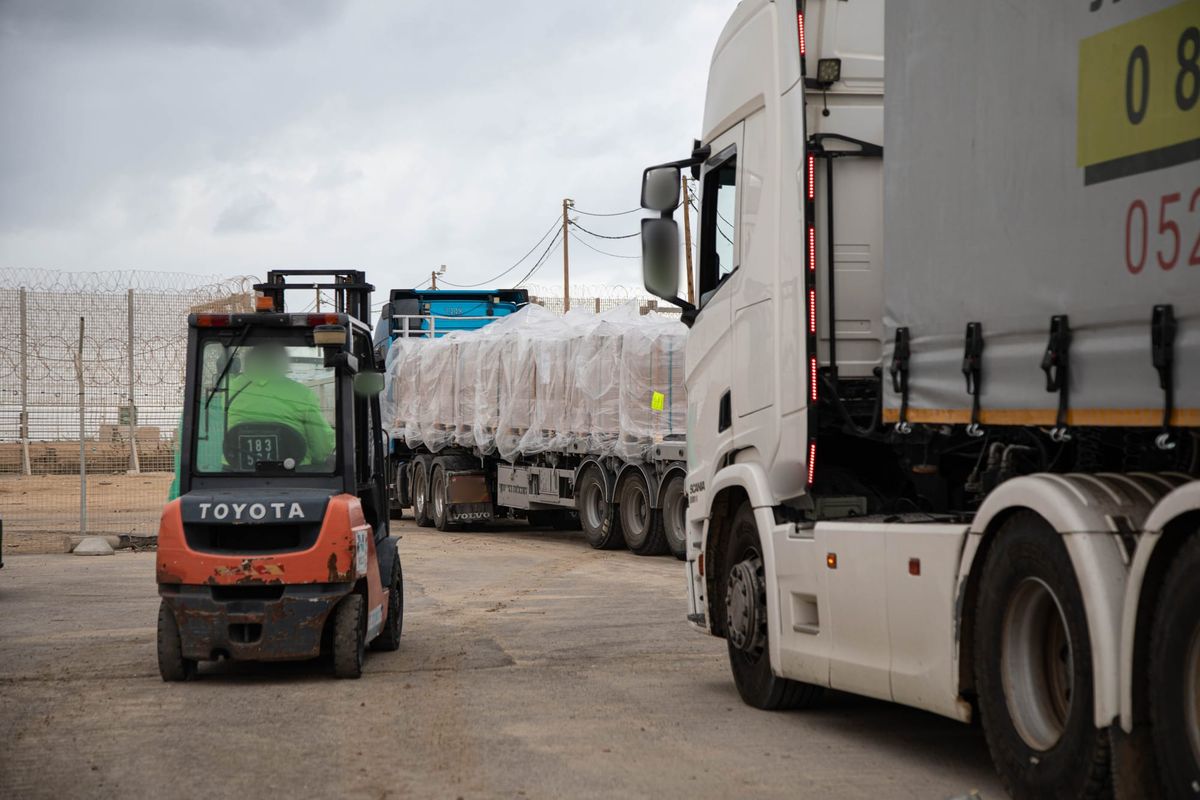
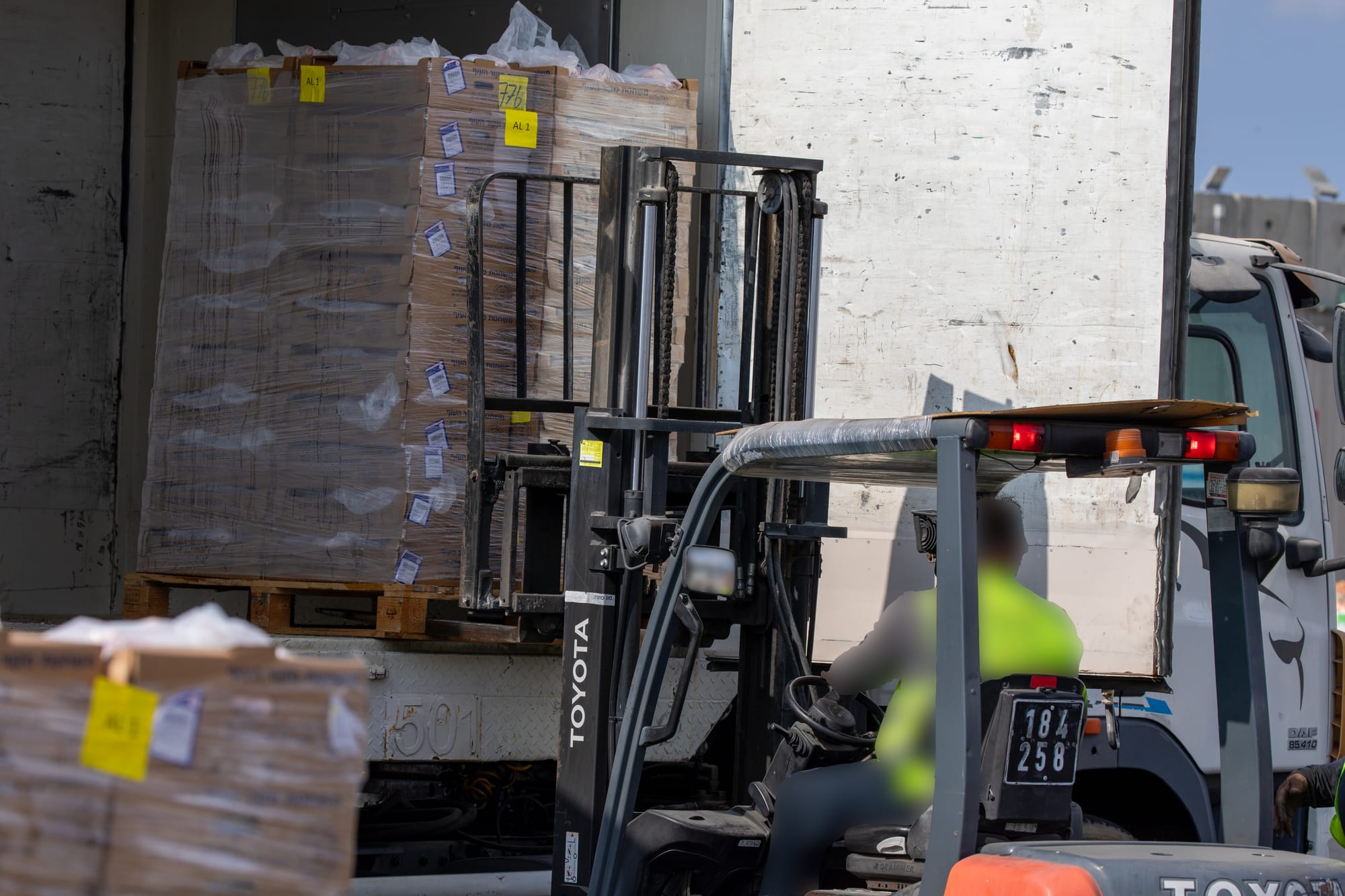
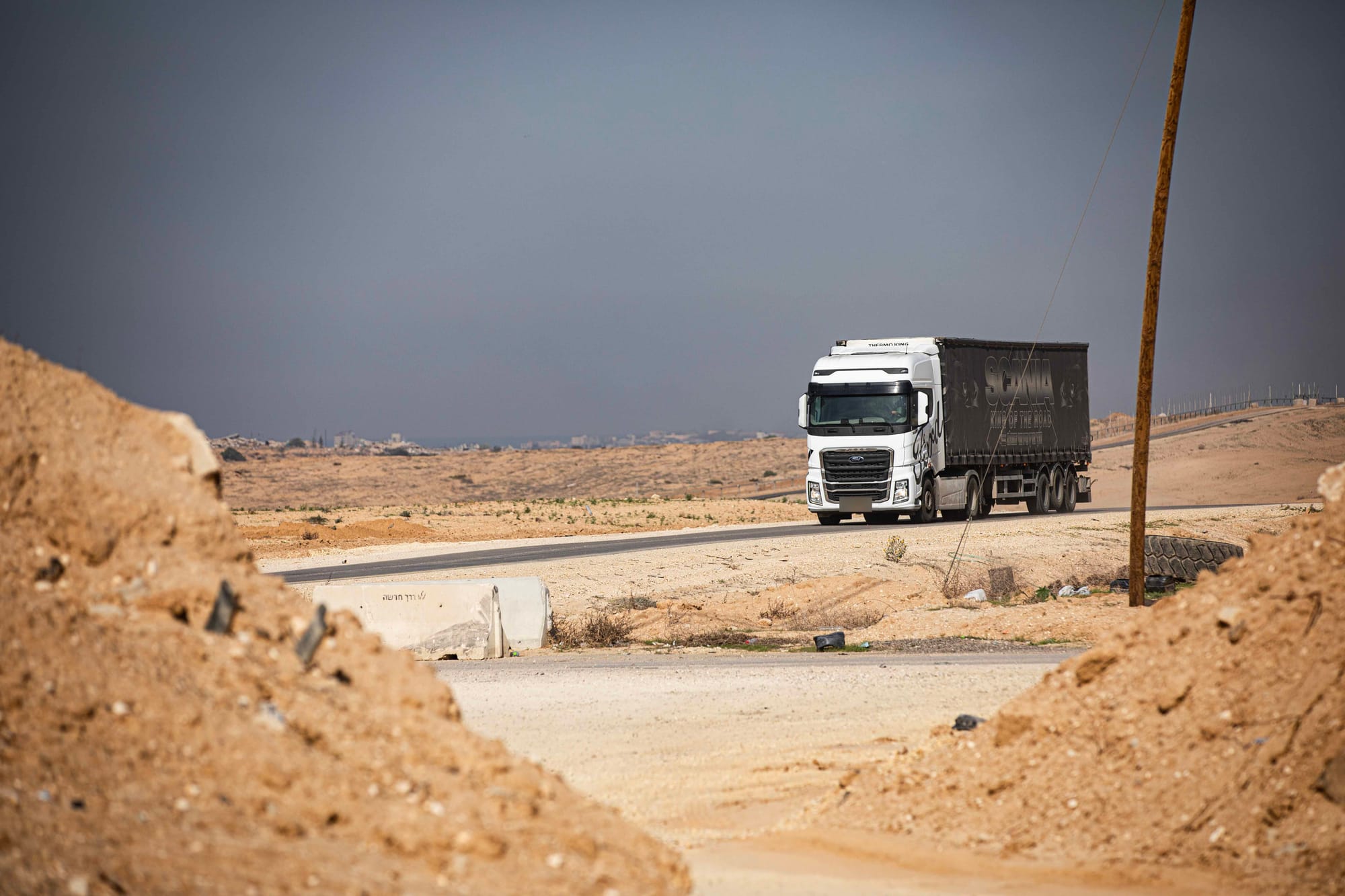
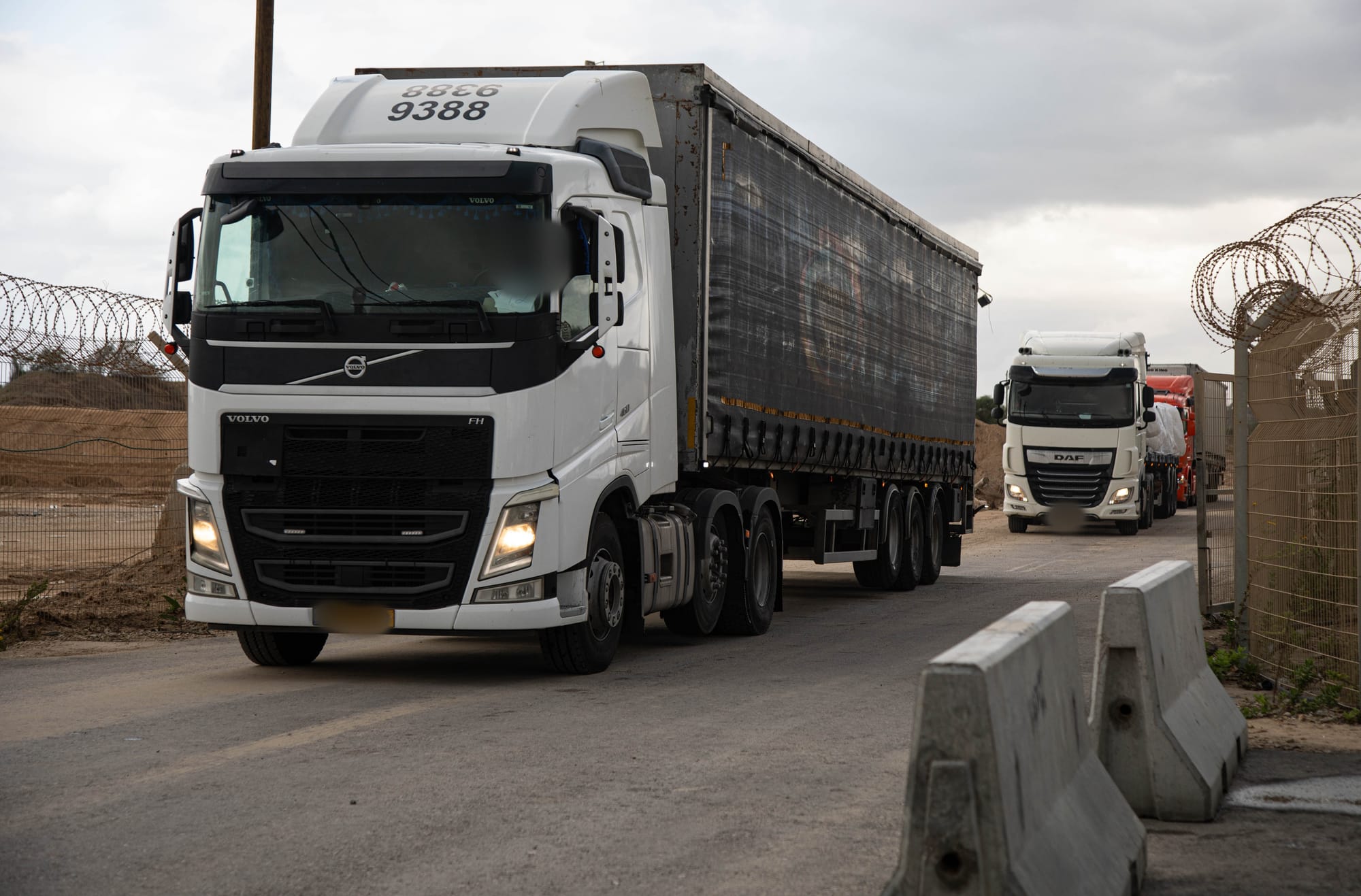
Rows of humanitarian supplies stand waiting near Gaza's border crossings. Pallets of food, boxes of essential goods and trucks carrying international assistance have become familiar images in a conflict where millions of civilians have depended on outside help.
At the same time, images of hungry Palestinian families continue to circulate around the world.
How can both realities exist simultaneously?
A video shared by Jeremy Abramson, presented under the title The Truth About Gaza, raises precisely this question. Wearing protective equipment and speaking from what he describes as Gaza, Abramson points to humanitarian supplies and challenges the widely held perception that Israel alone is responsible for the territory's shortages.
His central argument is that supplies are available, Israel is willing to allow their delivery, and Hamas is obstructing assistance intended for Palestinian civilians.
The video raises legitimate questions about the distribution of aid. But the accusation that Hamas is responsible for the supplies visible in this particular recording has not been independently established from the footage available for this article.
The distinction matters.
Humanitarian assistance can be approved for entry without physically crossing the border. It can cross into Gaza without being collected. It can be collected without reaching a distribution centre. And even after reaching a warehouse, it may fail to reach the families who need it.
Every stage involves different authorities, organizations, security conditions and logistical challenges.
Israel maintains that Hamas has interfered with humanitarian assistance and that international agencies have sometimes failed to collect supplies already admitted into Gaza. Humanitarian organizations, meanwhile, have documented Israeli restrictions, unsafe transportation routes, damaged infrastructure and the breakdown of public order.
Both sets of claims require scrutiny.
The question is not simply whether food exists somewhere near Gaza.
It is why that food does not always reach Palestinian families, who controls each stage of its journey, and whether the international public is being given a sufficiently complete account of what happens between the border and the dinner table.
Chapter 1 — The Video That Challenges the International Narrative
Social media has become one of the most influential sources of information about the war in Gaza.
Videos recorded near border crossings, inside damaged neighbourhoods, at hospitals and beside humanitarian convoys frequently attract enormous attention. Many are presented as evidence of what mainstream media supposedly refuse to show.
Jeremy Abramson's video belongs to this broader information environment.
Standing near stacks of supplies, he presents his visit as an opportunity to witness conditions directly.
The message is powerful because it contrasts two images: humanitarian goods apparently waiting for distribution and civilians reportedly struggling to obtain basic necessities.
For viewers who have repeatedly heard that Israel is preventing aid from reaching Gaza, the sight of large quantities of supplies can appear to contradict the dominant explanation.
But what exactly do the images establish?
They establish that supplies were visible at the location where the recording was made. Without independent confirmation of the date, precise location, shipment records and collection arrangements, they do not establish why those supplies were waiting.
Nor do they prove that Hamas prevented their delivery.
This does not mean the allegations should be dismissed. It means they should be investigated.
There is independent photographic evidence that significant quantities of humanitarian assistance have accumulated at Gaza's crossings.
On 24 July 2025, Reuters photographer Amir Cohen documented parcels of humanitarian aid waiting on the Gaza side of the Kerem Shalom crossing.
Reuters also filmed trucks loaded with humanitarian assistance waiting at the crossing on 27 July 2025.
Those images confirm that stockpiles and delays were real. They do not, by themselves, identify the party responsible for every delay.
The distinction between visual evidence and an explanation attached to that evidence is central to responsible reporting.
A camera can show a warehouse full of food.
It cannot automatically reveal who controls the transport permits, whether trucks can safely reach the warehouse, whether armed groups are interfering with deliveries or whether humanitarian organizations have the resources and permission to complete the journey.
In a conflict where every image can become a political argument, those unanswered questions are essential.
Chapter 2 — From the Border to the Family: How Humanitarian Aid Actually Works
Humanitarian aid is often described as though it moves through one simple process.
A truck arrives. A border opens. Food reaches civilians.
In reality, the system is considerably more complicated.
Supplies entering Gaza may originate from international donors, United Nations agencies, charitable organizations, governments or commercial suppliers.
Before reaching their intended recipients, shipments may need to pass through inspections, customs or security procedures, logistical coordination, unloading operations, internal transport and local distribution networks.
Each stage can become a point of failure.
Approval Does Not Mean Delivery
One of the most important distinctions is between aid that has been approved, aid that has entered Gaza and aid that has actually been distributed.
In June 2025, the United Nations' UN2720 mechanism reported that more than 105,000 metric tonnes of humanitarian supplies were in its pipeline, approved by Israel's Coordinator of Government Activities in the Territories (COGAT) but still awaiting delivery into Gaza.
The figure demonstrated the existence of substantial supplies awaiting movement.
However, it would be incorrect to interpret all those goods as already available inside Gaza.
Approval is an administrative stage. Physical delivery is another.
Similarly, the presence of supplies at a crossing does not necessarily mean humanitarian organizations can immediately collect them.
Transport vehicles, drivers, security arrangements, road access, fuel and permission to move may all be required.
A Documented Collection Gap
In May 2025, Reuters reported that the United Nations had received Israeli approval for approximately 800 truckloads of relief after aid deliveries resumed.
Fewer than 500 truckloads had reached the Palestinian side of Kerem Shalom, and UN agencies and their partners had collected just over 200.
The UN attributed its collection difficulties to insecurity and restricted access.
These figures revealed a substantial gap between authorization, entry and collection.
They also illustrated why different organizations can publish apparently contradictory statistics while referring to different stages of the same process.
Israeli authorities may report the number of trucks approved or admitted.
Humanitarian agencies may report the number they successfully collected.
Distribution organizations may measure the quantity delivered to communities.
All three measurements can be accurate without describing the same outcome.
A more recent example appeared in March 2026.
OCHA reported that between 27 February and 5 March, 3,424 pallets of humanitarian assistance were offloaded at Gaza's crossings, while 1,340 pallets were collected during that reporting period.
Yet its cumulative figures since the October 2025 ceasefire showed that approximately 329,000 pallets had been offloaded and more than 326,000 collected by 5 March 2026.
The cumulative totals indicate that large amounts of aid were collected over time, even though significant short-term discrepancies occurred.
The conclusion is important: a photograph of waiting pallets may capture a genuine bottleneck, but it cannot establish whether the bottleneck is temporary, systemic or deliberately created without further evidence.
Chapter 3 — Hamas and the Question of Humanitarian Control
Any serious examination of humanitarian aid in Gaza must address Hamas.
Hamas has exercised governmental authority in Gaza since 2007, following its violent takeover of the territory after the Palestinian political split with Fatah.
It has maintained political, administrative and armed structures, although the war beginning in October 2023 severely damaged its institutions and operational capacity.
The organization also bears responsibility for the attacks of 7 October 2023, when Hamas-led militants killed approximately 1,200 people in Israel and took around 250 hostages.
Those attacks triggered the devastating war that followed.
Israel has repeatedly accused Hamas of exploiting humanitarian assistance, diverting supplies and using civilian infrastructure for military purposes.
Hamas denies systematically stealing humanitarian aid.
These competing claims are not merely rhetorical. They affect how aid is delivered, who is permitted to distribute it and whether international organizations can operate independently.
The Difference Between Allegations and Documented Diversion
One of the most significant investigations into aid diversion was reported by Reuters in July 2025.
An internal analysis conducted by the United States Agency for International Development examined 156 incidents involving lost or stolen US-funded humanitarian supplies between October 2023 and May 2025.
According to Reuters, the analysis found no evidence that Hamas had systematically benefited from those incidents.
The US State Department disputed the findings, maintaining that video evidence existed of Hamas looting humanitarian assistance, although the material cited in that response was not provided to Reuters.
The USAID findings did not establish that Hamas had never interfered with aid. The investigation covered a defined set of reported incidents involving US-funded supplies, and investigators acknowledged limitations in tracing all recipients.
Nevertheless, the report challenged broad claims that systematic Hamas theft had been demonstrated across the humanitarian system.
This is a crucial distinction.
Hamas can be investigated for interference with humanitarian operations without every instance of missing aid automatically being attributed to the organization.
Likewise, the absence of evidence in one dataset cannot prove that diversion never occurred elsewhere.
The October 2026 Commercial Goods Dispute
A more recent dispute has raised new questions about Hamas's role in Gaza's supply system.
On 15 October 2026, Reuters reported that commercial goods entering Gaza had been disrupted following disagreements over payments demanded from Palestinian merchants.
According to COGAT, merchants had suspended coordination because Hamas authorities imposed fees that included a reported charge of 10,000 Israeli shekels per truck and demands concerning cash payments.
Hamas-linked authorities defended the payments as contributions intended to assist vulnerable residents and address financial shortages.
Palestinian merchants and transport representatives disputed aspects of the Israeli explanation, with some blaming Israeli restrictions for the interruption.
The consequences extend beyond the dispute itself.
Commercial shipments are not identical to humanitarian donations.
They help supply markets with products that relief organizations cannot necessarily provide in sufficient quantities, including fresh produce, clothing and other everyday goods.
When commercial transport stops, prices can rise and families become even more dependent on humanitarian assistance.
The dispute therefore demonstrates how political authority, taxation, trade and humanitarian access can become interconnected.
It also raises questions that deserve independent investigation.
Who receives the money collected from merchants? How is it administered? Can merchants operate without paying? And do these financial demands directly affect the availability or affordability of essential goods?
Those questions cannot be resolved solely through statements from Israel or Hamas.
They require financial records, testimony from merchants, independent monitoring and evidence of how the payments are used.
Chapter 4 — Israel's Position: Aid Access, Security and Responsibility
Israel's government has consistently argued that humanitarian aid must be delivered in a way that prevents Hamas from exploiting civilian supplies for military or political purposes.
Its position is rooted partly in the security concerns that intensified after the attacks of 7 October 2023.
Israeli officials have argued that humanitarian shipments require inspections to prevent weapons, equipment or materials considered potentially useful for military purposes from entering Gaza.
COGAT, the Israeli agency responsible for coordinating civilian and humanitarian affairs in the territories, publishes figures on aid deliveries and has repeatedly highlighted shipments approved for entry.
Those figures are relevant.
They demonstrate that substantial quantities of humanitarian supplies have crossed through Israeli-controlled mechanisms during different periods of the conflict.
But the broader historical record also includes periods when Israel itself suspended or severely restricted entry.
The 2025 Blockade
From 2 March until 19 May 2025, Israel suspended the entry of humanitarian supplies into Gaza.
This period is acknowledged in COGAT's own published humanitarian aid data.
The United Nations separately confirmed that no aid processed through its UN2720 mechanism was delivered during April 2025 because of the suspension.
That fact cannot be reconciled with a blanket claim that Israel has always allowed humanitarian assistance to enter Gaza without obstruction.
Israel has exercised considerable control over the entry of supplies, and at certain moments its decisions have directly restricted humanitarian access.
At other moments, Israeli authorities have approved or facilitated deliveries while criticizing international organizations for failing to collect available cargo.
Both realities belong in the historical record.
The Security Argument
Israeli authorities argue that unrestricted movement through a conflict zone can create serious security risks.
They point to Hamas's military infrastructure, the danger of attacks and the possibility that certain supplies could be misused.
Security screening is not inherently incompatible with humanitarian law.
However, such measures must be assessed against the obligation to facilitate relief for civilians in need.
The presence of a security threat does not eliminate the humanitarian needs of the civilian population.
Nor does it automatically justify indefinite delays or restrictions that prevent essential supplies from reaching civilians.
Why Israeli Figures and UN Figures Differ
Another source of confusion is the way aid statistics are presented.
Israeli authorities may emphasize the number of trucks admitted through a crossing.
UN agencies may emphasize the quantity successfully collected or distributed.
Differences in reporting periods, truck capacities, cargo categories and accounting methods can further complicate comparisons.
A large number of trucks entering Gaza is meaningful, but it does not establish whether the volume is sufficient for the population.
Similarly, a low collection figure does not automatically establish that an international organization is refusing to perform its responsibilities.
The correct questions are more specific.
Were the supplies physically accessible? Were collection vehicles available? Had the necessary movements been approved? Was the route safe? Were there documented security incidents? And were the goods ultimately delivered?
Without those answers, competing statistics can become political instruments rather than reliable measurements of humanitarian success.
Chapter 5 — The United Nations: Why Supplies Are Sometimes Not Collected
The United Nations has faced persistent criticism over its humanitarian operations in Gaza.
Some critics argue that international agencies have been inefficient, overly bureaucratic or insufficiently transparent about problems within the distribution system.
Israeli officials have at times accused UN agencies of failing to collect supplies that were already available.
These criticisms deserve examination.
But the operational challenges reported by humanitarian organizations are extensive.
Dangerous Roads and Interrupted Convoys
The World Food Programme has repeatedly documented situations in which trucks carrying food were unable to reach their destinations.
On 10 June 2025, WFP reported that a convoy of 59 trucks transporting 930 metric tonnes of wheat flour toward northern Gaza had been stopped and unloaded by desperately hungry civilians.
A second convoy carrying food toward southern Gaza had waited more than 36 hours for clearance to move.
WFP also reported attacks by armed gangs, injuries to drivers and damage to vehicles.
These incidents demonstrate that the distribution system was vulnerable to several different forms of disruption.
Not every intercepted truck was seized by Hamas.
Not every missing shipment was stolen for commercial profit.
Some supplies were taken by civilians who feared they might otherwise receive nothing.
Other shipments were affected by armed criminal activity.
And some never completed their journeys because humanitarian organizations could not secure permission or safe passage.
When Hunger Itself Disrupts Distribution
There is a particularly troubling dimension to humanitarian convoys being intercepted by desperate civilians.
A family that has not received adequate food may view a passing truck as its only opportunity to survive.
From the perspective of an aid organization, the incident represents a breakdown of controlled distribution.
From the perspective of a hungry parent, it may represent an immediate opportunity to feed a child.
Both descriptions can refer to the same event.
This does not make disorderly distribution safe or sustainable.
When trucks are surrounded and supplies are taken before reaching distribution centres, vulnerable people may be left without assistance.
Older people, people with disabilities, hospitalized patients and families unable to travel may lose access to goods intended for them.
The breakdown of organized distribution can therefore worsen inequality even when food is physically present.
The Importance of Functioning Institutions
Humanitarian operations require more than food donations.
They need warehouses, trained staff, vehicles, fuel, communication equipment, reliable roads and security arrangements.
They also require a system through which people can receive assistance without facing violence or intimidation.
In Gaza, many of these conditions have been undermined by prolonged warfare, displacement and infrastructure destruction.
In its October 2026 humanitarian reporting, OCHA described continuing restrictions on access to substantial areas of Gaza, shortages of equipment and funding problems affecting relief operations.
These constraints are important when assessing accusations that aid agencies are simply unwilling to collect available supplies.
A warehouse can be full while the transport network needed to empty it remains severely impaired.
The responsibility of humanitarian agencies is to operate effectively and transparently.
But their performance cannot be assessed independently of the conditions under which they are required to work.

Chapter 6 — Looting, Armed Groups and the Collapse of Public Order
One of the most serious obstacles to humanitarian distribution has been the breakdown of law and order.
Throughout the conflict, aid organizations have reported trucks being stopped, goods being removed, drivers being threatened and supplies failing to reach their intended destinations.
These incidents have contributed to widespread public suspicion about where international assistance ultimately goes.
But the term looting can describe very different circumstances.
Organized Theft and Desperate Civilians
There is an important difference between an armed group seizing humanitarian supplies for profit or political control and civilians taking food from a truck because they are hungry.
Both can disrupt organized distribution.
Their causes and implications, however, are not identical.
In June 2025, WFP reported that only around one-third of the food assistance collected during a particular period reached its intended destinations.
The organization attributed much of the disruption to desperate civilians unloading trucks, while acknowledging that armed criminals were also responsible for some incidents.
That distinction is essential.
It would be misleading to classify every such incident as evidence of Hamas-directed theft.
It would be equally misleading to deny the danger posed by organized criminal groups or armed actors interfering with aid.
The Consequences of Armed Interference
When armed groups seize humanitarian goods, the consequences can extend beyond the immediate loss of food.
Distribution networks become less predictable.
Drivers may refuse dangerous assignments.
Aid agencies may have to suspend particular routes.
Supplies may be diverted into informal markets, where families who cannot afford rising prices are excluded.
If an armed or political organization gains control over essential goods, there is also a risk that access to assistance can become a source of influence.
These risks are especially serious in a territory where civilians have few alternative sources of food, income or basic services.
The question of Hamas's involvement therefore remains relevant.
However, establishing that involvement requires evidence linking specific incidents to identifiable Hamas personnel, commands, financial arrangements or distribution networks.
The existence of armed looting alone is insufficient.
Who Should Provide Security?
The collapse of ordinary policing creates another dilemma.
Humanitarian organizations are not designed to function as military forces.
They cannot independently secure every road, protect every warehouse or confront heavily armed groups.
At the same time, military control over aid distribution can create risks for civilians and undermine the perceived neutrality of humanitarian operations.
Effective relief therefore depends on credible security arrangements that protect both aid workers and the population.
Without such arrangements, the supply chain can remain vulnerable even when large quantities of food are available.
Chapter 7 — The Battle of Narratives: What the World Sees and What It Does Not
The humanitarian crisis in Gaza has become a central subject of international political debate.
Governments, military officials, humanitarian organizations, activists, journalists and social media personalities frequently present different explanations for the same events.
Images of starving children are used to demonstrate the severity of civilian suffering.
Images of waiting aid trucks are used to question why supplies have not been delivered.
Statements from Israeli authorities emphasize security concerns, admitted shipments and interference with distribution.
Statements from humanitarian agencies emphasize access restrictions, insecurity and the scale of civilian need.
These perspectives do not always contradict one another.
Sometimes they describe different parts of the same supply chain.
The Problem With a Single Explanation
A report stating that Israel restricted humanitarian access may be accurate for a particular period.
A separate report showing that supplies were waiting for collection inside Gaza may also be accurate.
A third report documenting the interception of aid trucks by armed criminals may likewise be accurate.
The mistake occurs when one of these facts is presented as the complete explanation for the crisis.
The distribution system has multiple points of failure.
Reducing those failures to one actor or one political narrative can obscure the practical reasons why assistance is not reaching civilians.
The Influence of Social Media
Social media intensifies this problem.
Short videos are particularly effective at conveying a simple argument.
A presenter stands in front of supplies and asks why people are going hungry.
The image is immediate, emotionally compelling and easy to share.
Yet the underlying questions may require hundreds of pages of logistics records, border statistics, security reports and interviews to answer.
The problem is not that short videos are inherently unreliable.
They can expose important information that deserves further investigation.
The problem arises when a brief recording is treated as definitive proof of a complex political accusation.
What Responsible Journalism Should Ask
A report about waiting humanitarian supplies should identify the location and date of the footage.
It should establish whether the supplies were approved, inspected, admitted, collected or delivered.
It should determine who was responsible for the next stage of transportation.
It should seek documentation of any denied permissions, security incidents or logistical failures.
And where one party accuses another of deliberate obstruction, it should distinguish that accusation from independently verified evidence.
The same standards should apply to Israel, Hamas, the United Nations and every organization involved in the humanitarian system.
Journalism should not require readers to choose between acknowledging Palestinian suffering and questioning political claims about its causes.
Both can be examined simultaneously.
Chapter 8 — The Civilians Caught Between Politics, Security and Survival
Behind every discussion about border crossings, truckloads and political responsibility are Palestinian families whose daily lives depend on whether essential supplies arrive.
For those families, the distinction between an administrative delay, a security restriction, a stolen shipment and a transportation failure may have little immediate meaning.
The result can be the same: an empty kitchen, unaffordable food or a child without adequate nutrition.
But understanding the cause is essential if the problem is to be solved.
A Humanitarian Crisis That Continues
The humanitarian situation in Gaza remains serious despite improvements in certain areas following the October 2025 ceasefire.
On 16 October 2026, Reuters reported UNICEF's warning that progress against malnutrition remained fragile.
According to UNICEF, only around one in three children under two was receiving the minimum dietary diversity needed for healthy development, while approximately one in eight children under five was affected by chronic malnutrition.
The organization also warned that renewed disruption to commercial supplies could undermine recent improvements.
These figures highlight an important distinction between the availability of basic food and the availability of adequate nutrition.
Flour and other staple products can help prevent immediate hunger.
But children also require a varied diet, safe drinking water, functioning healthcare and suitable living conditions.
A supply system that provides enough calories to survive may still fail to protect long-term health.
The Economic Dimension
Humanitarian assistance cannot replace an entire functioning economy indefinitely.
Before the war, Gaza depended on a combination of local agriculture, commercial imports, employment, private businesses and international assistance.
The destruction of infrastructure and widespread displacement have severely weakened these systems.
When commercial goods cannot enter, families lose access to products that humanitarian organizations may not distribute.
When local businesses cannot operate, employment and household incomes suffer.
And when supplies become scarce, prices can rise beyond the reach of families who still possess some money.
The October 2026 dispute over payments demanded from merchants therefore has consequences beyond the immediate question of who is responsible for the interruption.
It demonstrates the vulnerability of a population whose access to essential goods depends on political decisions, functioning border arrangements and a fragile internal market.
The Humanitarian Principle
Civilians should not have to demonstrate political loyalty to receive food.
Children should not suffer because of the actions of an armed organization.
And humanitarian assistance should not become a tool through which governments, political movements or armed groups seek to gain leverage.
These principles apply regardless of who controls a border crossing, a warehouse or a distribution route.
The protection of civilians requires both sufficient supplies and a credible system for ensuring those supplies reach the people who need them.
Chapter 9 — Who Is Responsible When Humanitarian Aid Does Not Arrive?
The question of responsibility is more complicated than the arguments commonly presented on social media.
It is also more important.
Israel has significant control over border access, security procedures and movement restrictions. Its decisions can directly affect the volume and speed of humanitarian assistance entering Gaza.
Hamas has exercised political and armed authority within Gaza, and its activities, financial demands and potential interference with civilian systems require continued scrutiny.
Humanitarian organizations are responsible for coordinating and implementing relief operations, maintaining transparent records and addressing weaknesses within their distribution networks.
Armed criminal groups can obstruct deliveries through theft, intimidation and violence.
And the broader consequences of war — destroyed roads, displacement, shortages of fuel and the breakdown of public institutions — can prevent supplies from reaching their destinations even after they have crossed the border.
These responsibilities are not interchangeable.
They should not be merged into a single accusation.
What the Evidence Establishes
The available reporting supports several conclusions.
First, substantial quantities of humanitarian supplies have at times remained at or near Gaza's crossings while civilians faced serious shortages.
Second, Israeli authorities have approved and facilitated significant aid deliveries during some periods while imposing severe restrictions, including a complete suspension of aid entry during part of 2025, during others.
Third, humanitarian organizations have documented serious problems collecting and distributing supplies, including restricted movement, unsafe routes, criminal activity and civilians intercepting food convoys.
Fourth, Hamas's role in Gaza's commercial and administrative systems remains a legitimate subject of investigation. The October 2026 dispute over payments demanded from merchants provides a recent example of how those systems can affect supply flows.
Fifth, the available evidence does not establish that Hamas is responsible for every uncollected shipment or that systematic Hamas theft explains the overall humanitarian crisis.
A US government analysis reported in 2025 found no evidence of systematic Hamas diversion within the specific US-funded aid incidents it examined.
The existence of that finding must be acknowledged alongside Israeli allegations and documented incidents involving armed groups.
What Remains Unanswered
The most important unanswered questions concern individual shipments and the decisions affecting them.
When humanitarian supplies remain at a crossing, which organization is responsible for collecting them?
Have all necessary permissions been granted?
Are the roads accessible and secure?
Have armed groups interfered?
Are local authorities imposing payments or conditions?
Have humanitarian agencies reported operational difficulties, and what evidence supports those reports?
Are supplies reaching the intended recipients, or are they being diverted, lost or delayed?
These questions require shipment-level evidence rather than general political statements.
The public deserves to know not only how many trucks entered Gaza but also how much assistance reached households.
It deserves transparency about the actions of Israeli authorities, Hamas, international organizations and commercial intermediaries.
And it deserves investigations that follow the goods from their point of origin to their intended recipients.
Conclusion — The Truth Is Not Found in One Image
The image of humanitarian supplies waiting while civilians go hungry is deeply troubling.
It demands an explanation.
Jeremy Abramson's video draws attention to a real and important issue: the gap that can exist between the availability of humanitarian goods and their delivery to the people who need them.
But that gap cannot be explained responsibly through a single accusation without examining the evidence.
The humanitarian supply chain in Gaza has been affected by Israeli restrictions, dangerous operating conditions, logistical failures, the breakdown of public order, incidents of theft and disputes involving Hamas's administrative and financial demands.
The relative importance of these factors has changed over time.
A delay in one month may have a different cause from a delay at the same crossing several months later.
That is why the question should never stop at whether food is visible in a photograph.
The more important questions are who controls its movement, what prevents its delivery and what can be done to ensure it reaches civilians.
Israel's security concerns deserve examination.
Hamas's conduct and influence over Gaza's supply systems deserve investigation.
The performance of international humanitarian organizations deserves scrutiny.
And the suffering of Palestinian civilians deserves accurate, sustained reporting.
These are not mutually exclusive responsibilities.
For journalists, the challenge is to resist the temptation to replace one simplified narrative with another.
A video may reveal something important.
It may challenge assumptions.
It may expose questions that have received insufficient attention.
But the purpose of journalism is to go further.
To establish what happened, examine competing explanations, verify the available evidence and identify what remains unknown.
Because the real measure of humanitarian success is not how many pallets can be photographed at a border crossing.
It is whether the food, medicine and essential supplies they contain ultimately reach the people whose survival depends on them.
And until that journey can be documented transparently, the questions surrounding humanitarian aid in Gaza will remain unanswered.
Sources & References
The following sources provide the factual foundation for this article. Reporting dates are included because humanitarian conditions and access arrangements have changed significantly over time.
- Reuters — 15 October 2026. Israel says commercial goods no longer entering Gaza after merchants suspend coordination. Reporting on the dispute involving Hamas-linked payment demands, Palestinian merchants and Israeli authorities.https://www.reuters.com/world/middle-east/israel-says-commercial-goods-no-longer-entering-gaza-after-merchants-suspend-2026-10-15/
- Associated Press — 15 October 2026. Commercial goods are no longer entering Gaza, raising fears of worsening shortages in the territory. Includes competing explanations from Israeli authorities and Palestinian transport representatives.https://apnews.com/article/744d4b8c005b20d94ce6fc952a63e063
- Reuters — 16 October 2026. UN says Gaza malnutrition gains fragile as commercial supplies halt. UNICEF's assessment of child nutrition and the consequences of disrupted supply flows.https://www.reuters.com/world/middle-east/un-says-gaza-malnutrition-gains-fragile-commercial-supplies-halt-2026-10-16/
- UN OCHA — 2 October 2026. Humanitarian Situation Report. Documents continuing access restrictions, shortages, logistics performance and humanitarian needs.https://www.ochaopt.org/content/humanitarian-situation-report-2-october-2026
- UN OCHA — 6 March 2026. Humanitarian Situation Report. Contains data on pallets offloaded and collected at Gaza crossings.https://www.ochaopt.org/content/humanitarian-situation-report-6-march-2026
- Reuters — 25 July 2025. USAID analysis found no evidence of massive Hamas theft of Gaza aid. Investigation into reported losses of US-funded humanitarian supplies.https://www.reuters.com/world/middle-east/usaid-analysis-found-no-evidence-massive-hamas-theft-gaza-aid-2025-07-25/
- World Food Programme — 10 June 2025. Statement on WFP aid operations in Gaza. Documents intercepted convoys, dangerous routes and delays.https://www.wfp.org/news/statement-wfp-aid-operations-gaza
- World Food Programme — 25 July 2025. WFP food trucks keep moving inside Gaza as hunger deepens and restrictions persist. Reports on food offloaded, collected and dispatched for distribution.https://www.wfp.org/news/wfp-food-trucks-keep-moving-inside-gaza-hunger-deepens-and-restrictions-persist
- World Food Programme — 8 August 2025. WFP food convoys keep moving into Gaza as starvation drives lawlessness. Examination of insecurity and interrupted food distribution.https://www.wfp.org/news/wfp-food-convoys-keep-moving-gaza-starvation-drives-lawlessness-leaving-most-vulnerable
- United Nations / UNOPS — 1 July 2025. UN2720 Mechanism for Gaza: Monthly Overview, June 2025. Documents approved humanitarian shipments and supplies awaiting delivery.https://www.un.org/unispal/document/monthly-overview-june-2025-un2720-mechanism-for-gaza-unops/
- United Nations / UNOPS — 1 May 2025. UN2720 Mechanism for Gaza: Monthly Overview, April 2025. Documents the suspension of humanitarian shipments during the Israeli blockade.https://www.un.org/unispal/document/monthly-overview-april-2025-un2720-mechanism-for-gaza-unops/
- COGAT — July 2025. Official Humanitarian Aid Coordination Dashboard: Gaza Strip. Israeli government figures on humanitarian shipments and border activity.https://israelihl.mfa.gov.il/sites/default/files/2025-08/1%20-%20COGAT%20Official%20Humanitarian%20Aid%20Coordination%20Dashboard%20-%20Gaza%20Strip.pdf
- Reuters — 24 July 2025. Humanitarian aid awaiting transfer at Kerem Shalom. Photograph by Amir Cohen documenting aid parcels at the Gaza side of the crossing.https://www.reutersconnect.com/item/humanitarian-aid-is-waited-to-be-transferred-into-gaza-from-israel-at-the-gaza-part-of-the-kerem-shalom-crossing-in-the-gaza-strip/dGFnOnJldXRlcnMuY29tLDIwMjU6bmV3c21sX1JDMjNURkFZQ0xYNA
- Jeremy Abramson — Facebook video. The Truth About Gaza. Social media recording that prompted this investigation. The article relies on the user-provided screenshot and description of the video's claims; the complete recording has not been independently authenticated or fully reviewed.https://www.facebook.com/share/v/1J9Q152RJw/
Editorial note — Beyond the Lines: This article distinguishes documented humanitarian logistics data from contested allegations about responsibility. It does not treat social media footage as independent proof of who obstructed a specific shipment. The situation described is current through 17 October 2026, subject to subsequent developments.