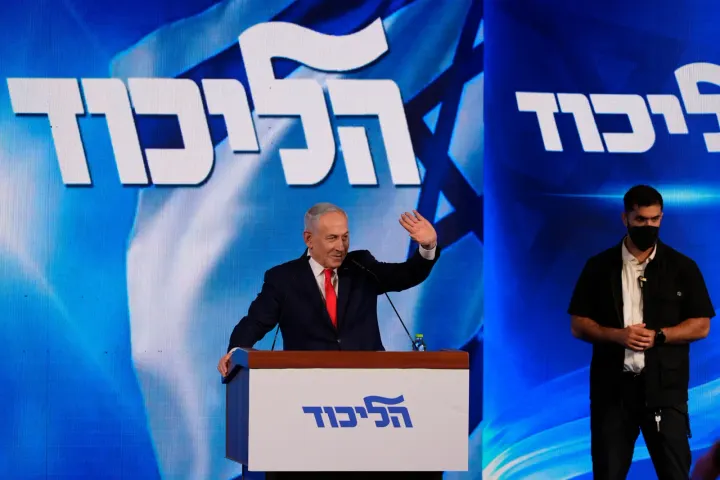
1949–1967: Israel, Palestinian Refugees, and the Road to the Six-Day War
Between 1949 and 1967, the Middle East experienced profound political and social changes. From the lives of Palestinian refugees and Israel's early state-building years to the Suez Crisis and rising regional tensions, explore the events that shaped the road to the Six-Day War.
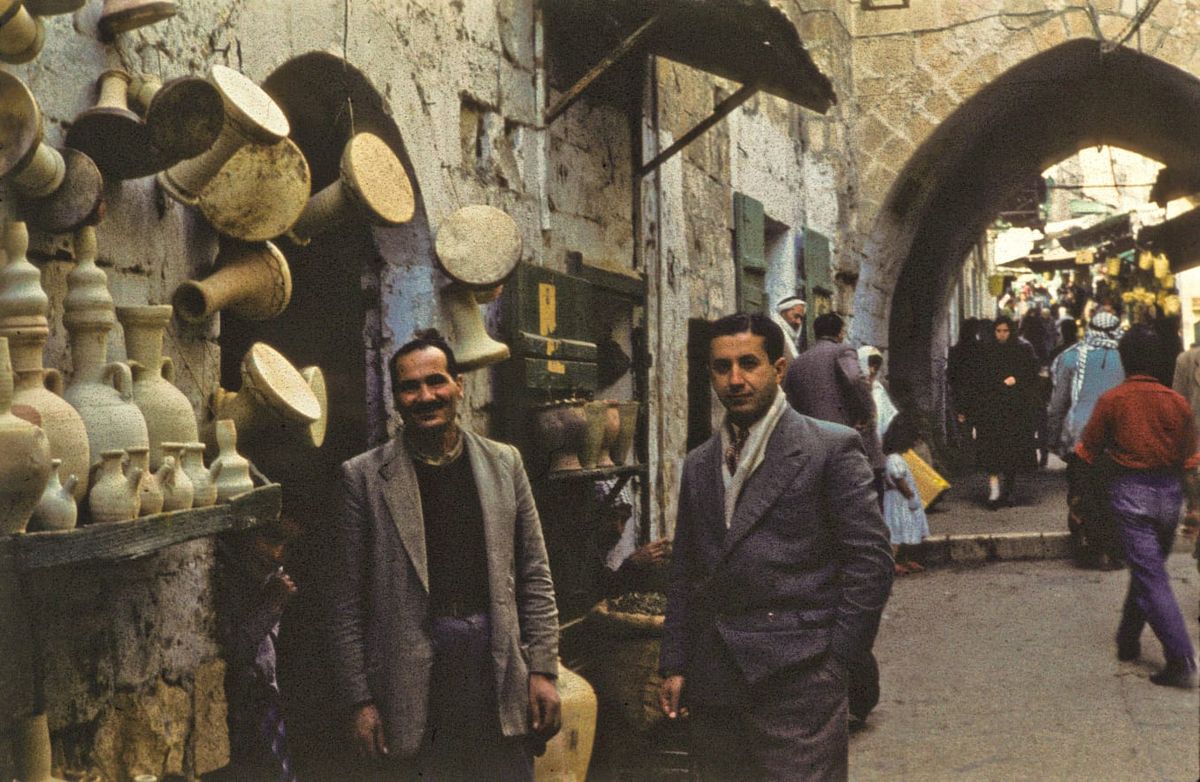
Chapter 1 — Introduction: A Region Divided After 1948
When the fighting of the 1948 Arab–Israeli War came to an end, the Middle East entered a new and uncertain chapter. Israel had established itself as an independent state, hundreds of thousands of Palestinians had been displaced, and the political geography of the region had been fundamentally transformed.
Yet the end of large-scale fighting did not bring peace.
The armistice agreements signed in 1949 established military demarcation lines between Israel and several neighbouring Arab states. These lines, later commonly known as the Green Line, were not internationally agreed permanent borders. They reflected the military positions reached at the end of the war and left some of the most difficult political questions unresolved.
Israel controlled territory beyond the boundaries proposed for the Jewish state in the United Nations partition plan of 1947. Jordan controlled the West Bank, including East Jerusalem, while Egypt administered the Gaza Strip. The Palestinian Arab state envisioned in the partition proposal had not been established.
For Israelis, the years following independence were marked by the enormous task of building a functioning country. The government faced the challenges of absorbing large numbers of Jewish immigrants, establishing national institutions, developing the economy, and addressing continuing security threats.
Jewish immigration transformed Israeli society. Holocaust survivors arrived from Europe, while Jews from countries across the Middle East and North Africa also migrated to Israel, under circumstances that varied considerably from country to country. Some fled persecution and violence, others faced mounting political pressure or insecurity, and others moved for religious, national, or personal reasons.
For Palestinians, the same period was defined by the consequences of displacement and the absence of an independent state.
Families who had fled or been expelled during the 1948 war found themselves living in refugee camps, towns, and communities in the West Bank, Gaza, Jordan, Lebanon, Syria, and elsewhere. Many had lost homes, land, businesses, and access to places where their families had lived for generations.
The question of whether Palestinian refugees would be allowed to return, receive compensation, or establish permanent lives elsewhere became one of the central unresolved issues of the conflict.
The United Nations Relief and Works Agency for Palestine Refugees in the Near East (UNRWA), established by the UN General Assembly in December 1949, began operations in May 1950. Its work reflected the scale of the humanitarian crisis and the expectation that international assistance would be necessary while a political solution remained elusive.
Meanwhile, tensions continued along the armistice lines. Border crossings, infiltration, armed attacks, Israeli retaliatory operations, and disputes over territory and water contributed to recurring violence. The causes, circumstances, and consequences of these incidents differed, but together they reinforced insecurity and mistrust.
Regional politics added another layer of instability.
In Egypt, the rise of Gamal Abdel Nasser helped reshape Arab nationalism and the struggle against European colonial influence. The Suez Crisis of 1956 brought Israel, Egypt, Britain, and France into direct confrontation, exposing the competing interests of regional governments and major international powers.
The Cold War also increasingly influenced the Middle East. The United States and the Soviet Union developed relationships with different regional governments, supplying military equipment, diplomatic support, and economic assistance. Local conflicts became entangled with wider geopolitical competition.
By the mid-1960s, disputes over water resources, Palestinian armed activity, Israeli military responses, and confrontations involving Syria and other neighbouring states contributed to a progressively more dangerous regional environment.
In June 1967, these tensions culminated in a war that would again transform the region's political and territorial landscape.
To understand the Six-Day War, however, it is necessary to examine the eighteen years that preceded it.
This article explores the period between 1949 and 1967 through several connected perspectives: Israel's development as a state, the experiences of Palestinian refugees, the political roles of Jordan and Egypt, the rise of Arab nationalism, the Suez Crisis, and the military and diplomatic developments that preceded the outbreak of war.
Rather than treating 1967 as an isolated event, it examines how unresolved questions from 1948 continued to influence the decisions, fears, and aspirations of governments and communities across the region.
Understanding these years is essential to understanding not only the war that followed, but also the continuing significance of borders, displacement, security, and national identity in the Israeli–Palestinian conflict.
Chapter 2 — The 1949 Armistice Agreements and the Green Line
The End of the War, but Not the Conflict
By early 1949, the major military campaigns of the first Arab–Israeli War had largely ended. Israel had survived the war that followed its declaration of independence in May 1948 and had established control over a larger territory than the Jewish state envisioned in the United Nations partition proposal of November 1947.
However, the end of the fighting did not mean that the countries involved had reached a political settlement.
The Arab states that had fought against Israel did not recognise its sovereignty through the armistice agreements, while Israel continued to face unresolved questions concerning its borders, security, and relations with its neighbours.
Under United Nations mediation, negotiations began to establish formal arrangements for ending active hostilities.
Between February and July 1949, Israel signed separate General Armistice Agreements with Egypt, Lebanon, Jordan, and Syria.
These agreements established military demarcation lines and mechanisms intended to reduce the risk of renewed fighting. They did not resolve the underlying territorial and political disputes.
Four Agreements, Four Different Frontiers
The first agreement was signed between Israel and Egypt on 24 February 1949.
It established arrangements for separating military forces and helped define the armistice line between Israel and the Egyptian-administered Gaza Strip. Gaza became home to a large population of Palestinian refugees, many of whom had been displaced from towns and villages in what had become Israel.
On 23 March 1949, Israel and Lebanon signed their agreement. The armistice line largely followed the existing international boundary between Mandatory Palestine and Lebanon.
The agreement between Israel and Jordan, signed on 3 April 1949, was particularly significant because it addressed a long and politically sensitive frontier.
Jordanian forces controlled the West Bank and East Jerusalem, including the Old City. Israel controlled West Jerusalem and other territories west of the armistice line.
Jerusalem, a city of profound religious and historical importance to Jews, Muslims, and Christians, remained divided.
The fourth agreement, between Israel and Syria, was signed on 20 July 1949. It provided for demilitarised zones in certain disputed areas and established arrangements for separating forces.
These zones later became recurring sources of disagreement, particularly over sovereignty, agricultural activity, and military presence.
What Was the Green Line?
The term Green Line became widely associated with the armistice demarcation lines established in 1949, particularly the line separating Israel from the Jordanian-controlled West Bank.
The name derives from the green markings used on armistice maps.
These lines were not intended to serve automatically as permanent international borders.
The agreements explicitly stated that the demarcation arrangements would not prejudice the rights, claims, or positions of the parties in a future political settlement.
Nevertheless, the lines became increasingly important in diplomatic discussions and international law.
After the 1967 war, the Green Line would become a central reference point in debates about Israeli-occupied territories and the boundaries of a possible future Palestinian state.
Jerusalem: A Divided City
One of the most consequential outcomes of the 1949 arrangements was the division of Jerusalem.
Israel controlled the western part of the city, while Jordan controlled East Jerusalem, including the Old City and many religious sites.
The separation affected ordinary life in profound ways.
Families, religious communities, institutions, and businesses found themselves divided by military positions and restricted crossing points.
Jewish access to the Western Wall and other Jewish holy sites in the Jordanian-controlled Old City was severely restricted during this period.
Palestinian residents of East Jerusalem and the West Bank also experienced the consequences of the new territorial division, including disrupted connections to places that had come under Israeli control.
The Mount Scopus enclave, containing the Hebrew University and Hadassah Hospital facilities, remained under Israeli control within Jordanian-held territory, subject to special arrangements and recurring tensions.
The divided city became a symbol of the broader conflict: two national movements with deep historical, religious, and political connections to the same territory, but without an agreed framework for sharing or governing it.
The West Bank and Gaza After 1949
The armistice agreements left the West Bank under Jordanian control and the Gaza Strip under Egyptian administration.
Jordan formally annexed the West Bank in 1950, a move that received limited international recognition and remained politically contested.
Many Palestinians in the West Bank acquired Jordanian citizenship, although their experiences varied according to their circumstances.
Gaza followed a different political path.
Egypt administered the territory but did not annex it. Palestinian refugees and longstanding Gaza residents lived in an increasingly crowded area with limited economic opportunities and significant dependence on international assistance.
The absence of an independent Palestinian state meant that Palestinian political aspirations remained unresolved.
The territorial arrangements also separated Palestinian communities geographically, complicating political organisation and national representation.
Why the Armistice Agreements Failed to Produce Peace
Although the agreements reduced large-scale conventional fighting for a time, they did not establish lasting peace.
Several major issues remained unresolved:
- The status and future of Palestinian refugees.
- The absence of mutually agreed permanent borders.
- The political future of the West Bank, Gaza, and Jerusalem.
- Israeli security concerns and cross-border violence.
- Arab opposition to Israel and competing national claims to the territory.
- Disputes over water, agricultural land, and demilitarised areas.
During the 1950s, border incidents, armed infiltration, attacks against civilians, and Israeli retaliatory military operations contributed to an atmosphere of continuing hostility.
These events had different causes and involved different actors, but their cumulative effect was to undermine confidence in the armistice system.
The United Nations Truce Supervision Organization (UNTSO), established in 1948, continued to monitor ceasefires and armistice arrangements. Its observers faced the difficult task of investigating incidents and helping prevent local confrontations from escalating.
The armistice lines had ended one phase of the conflict, but the political disputes behind the war remained.
A Temporary Arrangement With Lasting Consequences
The agreements of 1949 were designed as military arrangements rather than a final political settlement.
Yet their consequences endured for decades.
They shaped Israel's security planning, the political administration of Palestinian territories, and the geographical realities experienced by millions of people.
They also established a territorial reference point that would become increasingly important after 1967.
Understanding the Green Line is therefore essential to understanding the later debates over occupation, borders, settlements, Jerusalem, and Palestinian statehood.
The years after 1949 demonstrated that stopping a war and resolving a conflict are not the same thing.
The fighting had largely ended, but the fundamental questions of territory, sovereignty, security, and national self-determination remained unanswered.
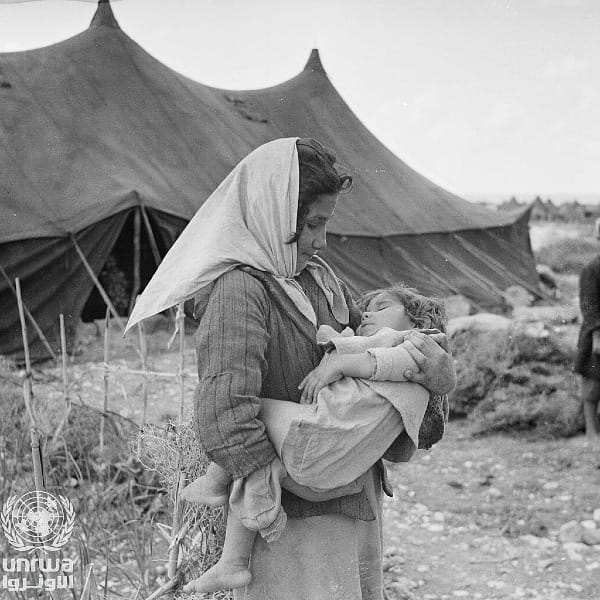
Chapter 3 — Palestinian Refugees: Life After Displacement (1949–1967)
A New Reality After the 1948 War
For hundreds of thousands of Palestinians, the end of the 1948 Arab–Israeli War did not mark the end of their suffering. It marked the beginning of a prolonged period of displacement, uncertainty, and the struggle to rebuild lives outside the homes and communities they had lost.
During the war, Palestinians fled or were expelled from towns and villages across the territory that became Israel. Historians differ over the precise total, but approximately 700,000 Palestinians became refugees as a consequence of the conflict.
Some fled advancing military forces or feared becoming caught in the fighting. Others were expelled from their communities. In certain areas, reports of violence and massacres contributed to widespread fear and flight.
The circumstances varied considerably between locations, and understanding those differences remains essential to an accurate historical account.
By 1949, large numbers of displaced Palestinians were living in the Gaza Strip, the West Bank, Jordan, Lebanon, and Syria.
Many initially believed that their displacement would be temporary.
However, the political settlement that might have allowed them to return did not materialise.
From Temporary Shelter to Refugee Camps
The first years after the war were marked by urgent humanitarian needs.
Families who had previously lived in houses, worked agricultural land, operated businesses, or maintained established community networks often found themselves dependent on relatives, local authorities, charities, and international relief organisations.
Temporary shelters, tents, schools, and overcrowded buildings became places of refuge.
Over time, organised refugee camps developed across the region.
The conditions in these camps varied, but many initially lacked adequate sanitation, medical facilities, reliable water supplies, and sufficient housing.
Families faced the challenge of rebuilding their daily routines while living with the uncertainty of whether they would ever return to their former homes.
The camps gradually became more than temporary settlements.
Schools, markets, places of worship, community organisations, and social networks emerged, creating new forms of communal life.
Yet the continued existence of the camps also reflected the absence of a political solution.
The Establishment of UNRWA
In December 1949, the United Nations General Assembly adopted Resolution 302 (IV), establishing the United Nations Relief and Works Agency for Palestine Refugees in the Near East, commonly known as UNRWA.
The agency began operations on 1 May 1950.
Its original mandate was to provide relief and employment-related assistance to Palestine refugees.
As the refugee situation continued, UNRWA developed extensive education, healthcare, relief, and social-service programmes.
Schools became one of the agency's most significant activities.
For many Palestinian children, education offered a path towards employment, social mobility, and the preservation of community life despite displacement.
Medical clinics and other services also helped address the needs of vulnerable populations.
UNRWA's operational definition of a Palestine refugee was developed for assistance purposes. It should not be confused with a final legal determination of every individual's refugee status or right of return.
The agency's continued existence reflected a broader reality: humanitarian assistance could help people survive, but it could not independently resolve questions of sovereignty, return, compensation, or political representation.
Different Experiences Across the Region
Although Palestinian refugees shared the experience of displacement, their lives developed differently depending on where they settled.
The Gaza Strip
The Gaza Strip became one of the most densely populated areas affected by the refugee crisis.
Under Egyptian administration, the territory received large numbers of Palestinians displaced from communities elsewhere in southern Palestine.
Limited land, restricted economic opportunities, and political uncertainty created difficult living conditions.
Egypt did not annex Gaza, and most Palestinian residents did not receive Egyptian citizenship.
The West Bank and Jordan
In the West Bank, which Jordan annexed in 1950, Palestinian refugees lived alongside communities that had remained in their towns and villages.
Many Palestinians in Jordanian-controlled territory acquired Jordanian citizenship.
The Jordanian state expanded its administration, public institutions, and infrastructure, although economic and social inequalities persisted.
The incorporation of the West Bank into Jordan remained politically contested.
Lebanon
In Lebanon, Palestinian refugees encountered a different political and legal environment.
Most did not receive Lebanese citizenship, and restrictions affecting employment and legal status contributed to long-term insecurity.
Their presence also became connected to Lebanon's complex political and sectarian system.
Syria
In Syria, Palestinians generally received access to a range of civil and social rights while retaining their Palestinian nationality.
Their circumstances differed from those in Lebanon and Jordan, demonstrating that the refugee experience cannot be understood as a single, uniform history.
The Question of Return
One of the most contested issues after 1948 concerned whether Palestinian refugees should be permitted to return to their homes.
In December 1948, the United Nations General Assembly adopted Resolution 194 (III).
Paragraph 11 stated that refugees wishing to return to their homes and live at peace with their neighbours should be permitted to do so at the earliest practicable date. It also addressed compensation for those choosing not to return and for loss of or damage to property under relevant principles.
Palestinians and their representatives increasingly regarded return as a central national demand.
Israel opposed a large-scale return, citing security concerns, the consequences of the war, demographic considerations, and its position that the refugee question should be addressed through a broader peace settlement.
The interpretation and implementation of Resolution 194 remained subjects of international disagreement.
Meanwhile, Israel adopted legislation and administrative measures affecting property left behind by Palestinian refugees, including the Absentees' Property Law of 1950.
Properties classified under this legal framework could be transferred to the Custodian of Absentees' Property.
These developments had lasting consequences for displaced families seeking to recover homes, agricultural land, or other possessions.
For many refugees, the question of return became inseparable from family history, identity, and the meaning of justice.
Education, Identity, and the Next Generation
As the 1950s progressed, a generation of Palestinian children grew up without direct memories of the homes their parents or grandparents had left.
Family stories, village names, photographs, documents, and personal possessions became important connections to places that were no longer accessible.
Education played a central role in preserving identity and creating opportunities.
Palestinian teachers, students, writers, and intellectuals contributed to the development of a political and cultural consciousness shaped by displacement.
Refugee communities were not simply passive recipients of international assistance.
They organised social initiatives, participated in political movements, established cultural institutions, and pursued education and employment wherever opportunities existed.
Their experiences also contributed to the development of modern Palestinian national politics.
The Emergence of Palestinian Political Organisations
During the 1950s and 1960s, Palestinian political activism expanded across the Arab world.
Some Palestinians participated in wider Arab nationalist movements, while others increasingly argued for independent Palestinian political organisation.
Fatah emerged during the late 1950s and became associated with the idea that Palestinians should take a leading role in their own national struggle.
In 1964, the Palestine Liberation Organization (PLO) was established following an Arab League initiative.
Its creation represented a significant development in the institutional expression of Palestinian nationalism.
However, the PLO's early leadership and political direction were strongly influenced by Arab governments, particularly Egypt.
Fatah began publicly claiming armed operations against Israel in 1965.
These developments reflected growing frustration among Palestinians who believed that diplomatic efforts and regional governments had failed to resolve their displacement or secure national self-determination.
They also contributed to escalating tensions with Israel and neighbouring states.
Humanitarian Assistance Without a Political Settlement
By the mid-1960s, the Palestinian refugee question had become one of the defining unresolved issues in the Middle East.
International organisations continued providing assistance, but the underlying political disagreements remained.
Israel was consolidating its national institutions and absorbing successive waves of Jewish immigration.
Palestinians in refugee communities continued to face uncertainty over their future, their relationship to the places they had left, and their political representation.
The experiences of refugees differed by country, class, family circumstances, and access to education or employment.
Some established successful professional lives and new communities. Others continued to experience severe poverty, legal restrictions, and dependence on humanitarian support.
The history of Palestinian refugees between 1949 and 1967 is therefore not only a history of loss.
It is also a history of adaptation, education, political mobilisation, cultural continuity, and the efforts of families to preserve dignity under difficult circumstances.
A Question That Remained Unresolved
Eighteen years after the 1948 war, the Palestinian refugee crisis had not been resolved.
The temporary shelters of the late 1940s had become established communities, and a new generation had grown up with displacement as part of everyday life.
Questions of return, compensation, citizenship, political representation, and national self-determination remained at the centre of the conflict.
The war of June 1967 would bring further displacement and place the West Bank and Gaza Strip under Israeli military occupation, creating new political and humanitarian realities.
To understand the consequences of that war, it is necessary to recognise that the refugee crisis was already deeply rooted in the unresolved events of 1948.
For Palestinians, the years between 1949 and 1967 were not simply an interval between two wars.
They were years in which displacement became a long-term reality, while the search for security, belonging, and national self-determination continued.
Chapter 4 — Building the State of Israel: Immigration, Society, and Security (1949–1967)
A New State Facing Enormous Challenges
When the armistice agreements of 1949 brought the major fighting of the first Arab–Israeli War to an end, Israel faced the difficult task of transforming a wartime society into a functioning independent state.
The country had survived its first war, but its future remained uncertain.
Its government needed to establish institutions, develop infrastructure, provide housing and employment, absorb large numbers of immigrants, and maintain security along borders that were not recognised as permanent by its neighbours.
The challenges were considerable for a country with a population of approximately one million people at the end of 1949.
During the following eighteen years, Israel underwent profound political, economic, demographic, and social transformation.
The period between 1949 and 1967 would shape many of the institutions, identities, and political debates that continue to influence Israeli society today.
The Development of Democratic Institutions
Israel's Declaration of Independence, proclaimed on 14 May 1948, outlined the principles upon which the new state intended to build its political system.
In January 1949, elections were held for a Constituent Assembly, which subsequently became the first Knesset, Israel's parliament.
David Ben-Gurion, the country's first prime minister, played a central role in establishing its early political institutions.
The Mapai party dominated Israeli politics during much of this period, while coalition governments brought together different political and religious parties.
Israel developed a parliamentary system with competitive elections, political opposition, and an independent judiciary.
However, the nature of citizenship, national identity, and equality remained contested.
Arab citizens of Israel possessed voting rights and parliamentary representation, but most lived under military administration until 1966. Restrictions on movement, land policies, and other measures created substantial inequalities between Jewish and Arab citizens.
The coexistence of democratic institutions and unequal treatment of parts of the population became an important feature of Israel's early history.
Immigration and the Transformation of Israeli Society
One of the most significant developments in Israel's first decades was the arrival of large numbers of Jewish immigrants.
Between 1948 and 1951, approximately 700,000 Jewish immigrants arrived, dramatically increasing the country's population.
Many were Holocaust survivors and other displaced Jews from Europe.
Others came from countries across the Middle East and North Africa, including Iraq, Yemen, Morocco, Egypt, and Libya.
Their experiences and reasons for leaving varied.
Some had experienced persecution, violence, discrimination, or political instability. Others were influenced by Zionism, religious attachment to Israel, family connections, or expectations of a different future.
The migration of Iraqi Jews during Operation Ezra and Nehemiah in 1950–1951 and the airlift of Jews from Yemen and Aden during Operation Magic Carpet in 1949–1950 were among the most significant movements of this period.
These migrations fundamentally changed the composition of Israeli society.
The new population brought different languages, religious traditions, cultural practices, and historical experiences.
Integrating these communities into a single state was an enormous undertaking.
Housing Shortages and the Ma'abarot
The rapid arrival of immigrants placed considerable pressure on Israel's limited resources.
Housing was particularly scarce.
Many newcomers were initially accommodated in temporary reception facilities and transit camps known as ma'abarot.
These camps often consisted of tents, huts, and other basic structures.
Living conditions could be difficult, with inadequate sanitation, limited employment opportunities, and shortages of essential services.
Although the transit camps were intended to provide temporary accommodation, some residents remained in them for years.
The difficulties were not distributed equally.
Immigrants from Middle Eastern and North African countries were disproportionately represented in some of the less desirable housing arrangements and peripheral development areas.
Many experienced discrimination and social marginalisation.
The tensions between Ashkenazi Jews, whose families had largely originated in Europe, and Mizrahi Jews, whose backgrounds were primarily in the Middle East and North Africa, became an important dimension of Israeli social history.
These divisions were shaped by differences in political power, education, economic opportunities, and the policies of state institutions.
Economic Austerity and National Development
During its early years, Israel faced severe economic pressures.
The government introduced an austerity programme, commonly known as Tzena, involving rationing and state regulation of essential goods.
Food, clothing, and other basic products were subject to restrictions as the government attempted to manage shortages and finance immigration and development.
At the same time, the state invested in infrastructure, agriculture, transportation, housing, and industrial development.
Kibbutzim and moshavim, two forms of agricultural communities, contributed to rural development and agricultural production.
New towns were established to accommodate immigrants and encourage settlement in different parts of the country.
Financial assistance from abroad also played an important role.
Support from Jewish communities internationally, American assistance, and the reparations agreement signed between Israel and West Germany in 1952 contributed to Israel's economic development.
The reparations agreement was deeply controversial within Israeli society because of the Holocaust and the moral questions surrounding negotiations with Germany.
Nevertheless, the financial resources associated with the agreement helped support infrastructure and economic growth.
By the early 1960s, Israel had experienced substantial economic expansion, although significant inequalities remained.
The Holocaust and the Formation of National Memory
The Holocaust profoundly influenced the identity and political culture of the new state.
Many survivors arrived in Israel carrying the experiences of persecution, displacement, and the destruction of Jewish communities across Europe.
The state increasingly developed institutions dedicated to documenting and commemorating the Holocaust.
Yad Vashem was established by Israeli legislation in 1953 as the national institution for Holocaust remembrance and research.
The 1961 trial of Adolf Eichmann in Jerusalem became a defining public event.
Eichmann, a senior Nazi official involved in organising the deportation of Jews during the Holocaust, had been captured by Israeli agents in Argentina in 1960 and brought to Israel for trial.
The proceedings brought survivor testimony into public attention on an unprecedented scale.
The trial helped reshape public discussion of the Holocaust within Israel and internationally.
For many Israelis, the memory of Jewish persecution in Europe reinforced the belief that a sovereign Jewish state was essential to national survival and security.
At the same time, historians have examined how Holocaust memory influenced political identity, education, and debates about the use of state power.
Arab Citizens of Israel
The approximately 150,000 Palestinians who remained within Israel after the 1948 war became a minority in the new state.
They were predominantly Muslim and Christian Arabs, alongside Druze and other communities.
Many had experienced the loss of relatives, homes, agricultural land, or connections to communities beyond the new armistice lines.
Although Arab citizens participated in parliamentary elections, most lived under military administration from 1948 until 1966.
The system imposed restrictions on movement and affected access to employment, land, and other opportunities.
Israeli authorities justified many of these measures on security grounds.
Critics argued that they institutionalised unequal treatment and restricted fundamental freedoms.
Land legislation and state acquisition policies also had lasting effects on Arab communities.
The 1956 Kafr Qasim massacre, in which Israeli Border Police killed 49 Arab civilians returning to their village during a curfew, became one of the most significant events in the history of relations between the state and its Arab citizens.
Israeli courts subsequently prosecuted members of the security forces involved.
The incident raised fundamental questions about military authority, individual responsibility, and the protection of civilians.
In December 1966, Israel formally ended the military administration governing most Arab communities.
However, the social, economic, and political consequences of the preceding years did not disappear.
Security and the Israel Defense Forces
Security remained a central concern throughout Israel's early decades.
The Israel Defense Forces (IDF), established in 1948, developed into a major national institution.
Military service became an important part of Israeli society, although conscription arrangements differed across population groups.
The country faced repeated incidents along its armistice lines.
Cross-border movement included Palestinians attempting to recover property, cultivate land, reunite with family members, or return to former homes.
Other crossings involved theft, smuggling, and armed attacks.
During the 1950s, Palestinian militants also carried out attacks against Israeli civilians and military targets.
Israel responded with border security measures and retaliatory military operations, some of which caused substantial civilian casualties and drew international criticism.
The 1953 Israeli raid on the West Bank village of Qibya, then under Jordanian control, was particularly controversial.
Israeli forces killed dozens of residents and destroyed numerous buildings.
The operation was condemned internationally and intensified tensions between Israel and its neighbours.
These incidents contributed to a cycle of violence and retaliation that made diplomatic progress increasingly difficult.
Relations With the Arab World
Israel's relations with neighbouring Arab states remained hostile during much of the period.
Egypt, Jordan, Syria, and Lebanon had signed armistice agreements with Israel, but these arrangements did not amount to peace treaties or diplomatic recognition.
The rise of Arab nationalism, particularly under Egyptian President Gamal Abdel Nasser, influenced regional politics.
Israel increasingly viewed Egypt's military development and regional ambitions as major security concerns.
Egypt, in turn, regarded Israel as a central issue in Arab politics and opposed its regional position.
Relations with Syria were also marked by disputes over demilitarised zones, agricultural land, and water resources.
Jordan faced its own challenges in managing relations with Israel while governing the West Bank and responding to Palestinian political demands.
These competing interests made the region vulnerable to repeated crises.
A Society Transformed by 1967
By 1967, Israel was substantially different from the state established in 1948.
Its population had more than doubled, its economy had expanded, and its political, military, educational, and administrative institutions had become firmly established.
Immigration had transformed its cultural and demographic composition.
The country had developed important achievements in agriculture, science, education, and infrastructure.
At the same time, significant divisions remained.
The experiences of Jewish immigrants from different regions were unequal, Arab citizens continued to face structural disadvantages, and relations with neighbouring countries remained deeply insecure.
The unresolved Palestinian refugee question and the absence of a comprehensive peace settlement continued to shape the regional environment.
Israel's development between 1949 and 1967 was therefore a history of state-building and social transformation, but also of contested citizenship, security fears, and unresolved conflict.
Understanding these complexities is essential to understanding the decisions made by Israeli leaders in the months preceding the Six-Day War.
The state had grown stronger, but the regional political order remained fragile.
By the spring of 1967, that fragility would become increasingly apparent.
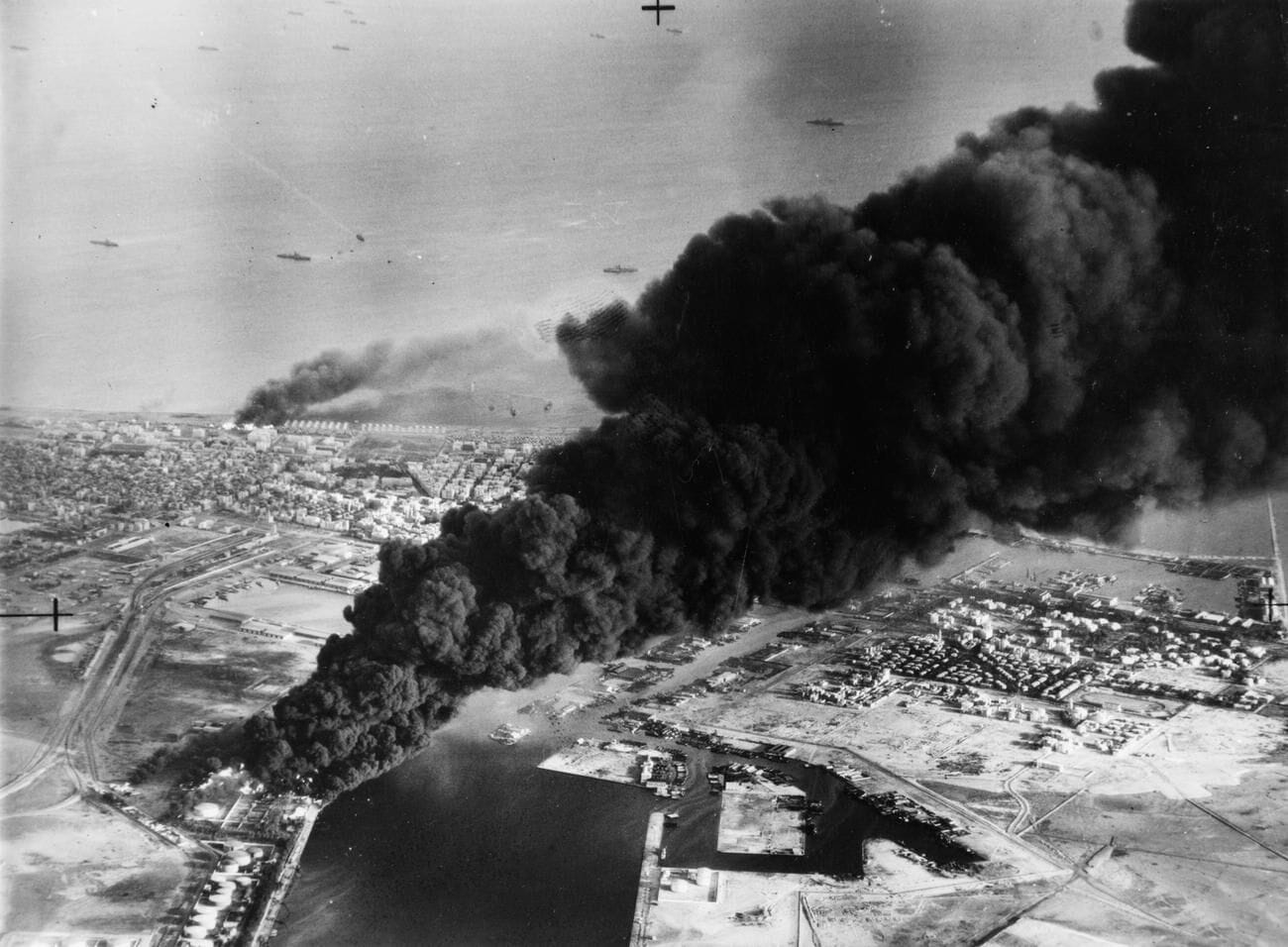
Chapter 5 — The Suez Crisis of 1956: War, Power, and International Intervention
A Crisis That Changed the Middle East
In October 1956, the Middle East became the centre of an international crisis that brought together regional conflict, European colonial interests, and Cold War competition.
Israel, Britain, and France launched a coordinated military campaign against Egypt following months of escalating tensions surrounding the Suez Canal, regional security, and Egyptian President Gamal Abdel Nasser.
The conflict, commonly known as the Suez Crisis or the Sinai Campaign, lasted only a short period but had consequences extending far beyond the battlefield.
It exposed the declining ability of Britain and France to act independently as major imperial powers, strengthened Nasser's political standing across much of the Arab world, and demonstrated the growing influence of the United States and Soviet Union in Middle Eastern affairs.
For Israel, the crisis was closely connected to border security, Palestinian armed attacks, Egyptian military capabilities, and access to international shipping routes.
For Egypt, it represented a confrontation over national sovereignty and the country's right to control one of the world's most strategically important waterways.
Understanding the Suez Crisis requires examining these competing interests and the decisions that transformed a political confrontation into a military conflict.
The Rise of Gamal Abdel Nasser
In July 1952, a group of Egyptian military officers known as the Free Officers overthrew King Farouk.
The revolution marked a turning point in Egyptian politics and weakened the monarchy and the political order associated with British influence.
Gamal Abdel Nasser emerged as the dominant figure within the new leadership and became president in 1956.
Nasser promoted Egyptian independence, Arab nationalism, economic development, and resistance to foreign domination.
His speeches and political initiatives attracted considerable attention across the Arab world, where many people regarded him as a symbol of national dignity and opposition to colonial influence.
However, his ambitions also created tensions with Western governments.
Britain had long regarded the Suez Canal as essential to its strategic and commercial interests, particularly because the waterway connected Europe with Asia and the Indian Ocean.
Although the Anglo-Egyptian Agreement of 1954 provided for the withdrawal of British military forces from the Suez Canal Zone, the relationship between the two countries remained strained.
Nasser's growing regional influence increasingly concerned British and French leaders.
The Strategic Importance of the Suez Canal
The Suez Canal, opened in 1869, provided a direct maritime route between the Mediterranean Sea and the Red Sea.
Its importance to international trade made control of the canal a major geopolitical issue.
For decades, Britain had maintained a dominant military and political position in Egypt, while British and French shareholders held major interests in the Suez Canal Company.
The canal was located on Egyptian territory, but its operation and strategic importance were deeply connected to European power.
On 26 July 1956, Nasser announced the nationalisation of the Suez Canal Company.
The decision followed the withdrawal of American and British support for financing the Aswan High Dam project.
Nasser declared that revenues from the canal would help finance Egypt's development plans.
Britain and France regarded the nationalisation as a serious challenge to their interests and to the wider international order they sought to preserve.
Egypt maintained that it had the sovereign right to nationalise the company, subject to its obligations under international law.
The dispute rapidly escalated into an international confrontation.
Israel's Security Concerns
While Britain and France focused heavily on the canal and Nasser's political influence, Israel had its own reasons for considering military action.
Throughout the early and mid-1950s, tensions along Israel's borders had increased.
Palestinian armed infiltrators, often described in contemporary Israeli accounts as fedayeen, carried out attacks against Israeli targets, including civilians.
Some operations were launched from Egyptian-administered Gaza.
Israel responded with military raids, including attacks on Egyptian positions.
One major escalation occurred in February 1955, when Israeli forces attacked an Egyptian military installation in Gaza, killing dozens of Egyptian soldiers.
The raid contributed to deteriorating relations between Israel and Egypt.
In September 1955, Egypt announced a major arms agreement with Czechoslovakia, acting within the Soviet bloc.
The agreement substantially increased Egypt's access to modern military equipment and intensified Israeli concerns about the regional balance of power.
Israel also objected to Egyptian restrictions affecting Israeli shipping through the Suez Canal and the Straits of Tiran.
The Straits of Tiran provided access from the Gulf of Aqaba to the Red Sea and were strategically important to Israel's southern port of Eilat.
These disputes formed part of the background to Israel's decision to participate in the 1956 military campaign.
The Secret Agreement at Sèvres
In October 1956, representatives of Israel, Britain, and France held secret discussions near Paris.
The negotiations resulted in an arrangement commonly known as the Protocol of Sèvres.
Under the plan, Israel would launch a military offensive into Egypt's Sinai Peninsula.
Britain and France would then issue an ultimatum demanding that both Israel and Egypt withdraw their forces from the vicinity of the Suez Canal.
The ultimatum was designed in circumstances where Egyptian acceptance was highly unlikely.
If Egypt refused, Britain and France would intervene militarily, presenting their actions as necessary to separate the combatants and protect the canal.
The arrangement demonstrated that the subsequent Anglo-French intervention was not simply an independent response to unexpected fighting.
It formed part of a coordinated plan involving all three countries.
The secret nature of the agreement became an important issue in later historical assessments of the crisis.
The Israeli Invasion of Sinai
On 29 October 1956, Israeli forces launched an offensive into the Sinai Peninsula.
Israeli paratroopers landed near the strategically important Mitla Pass, while other forces advanced across the peninsula.
The campaign aimed to weaken Egyptian military capabilities, address Israeli security concerns, and establish control over strategically important territory.
The operation moved rapidly.
On 30 October, Britain and France issued their planned ultimatum to Israel and Egypt.
Egypt rejected the demand.
British and French forces subsequently began military operations against Egyptian targets.
Air attacks were followed by an amphibious assault in the Port Said area in early November.
The intervention caused destruction, casualties, and disruption to civilian life.
Egyptian military personnel and civilians were killed, while fighting and bombardment affected communities near the canal.
Israeli forces occupied the Sinai Peninsula and the Gaza Strip during the campaign.
The conflict demonstrated the military strength of the attacking forces but also exposed the diplomatic risks of the operation.
International Opposition and the United Nations
The military campaign provoked strong international reactions.
The United States, led by President Dwight D. Eisenhower, opposed the British and French intervention.
Washington was concerned about the use of force, the potential destabilisation of the region, and the risk that the crisis would increase Soviet influence.
The Soviet Union also condemned the attack and issued threatening diplomatic statements.
The crisis unfolded at the same time as the Soviet suppression of the Hungarian uprising, adding to the international tensions of late 1956.
Within the United Nations, efforts to secure a ceasefire became urgent.
After disagreement in the Security Council, the General Assembly met in an emergency special session.
On 2 November 1956, the General Assembly adopted Resolution 997 (ES-I), calling for an immediate ceasefire and withdrawal.
Further resolutions supported the creation of an international force to help stabilise the situation.
The United Nations Emergency Force (UNEF) became the first large-scale armed UN peacekeeping force.
Its deployment represented an important development in international peacekeeping.
Why Britain and France Withdrew
Despite their military capabilities, Britain and France faced intense diplomatic and economic pressure.
The United States refused to support the intervention and used financial and diplomatic leverage to press for an end to military operations.
Britain was particularly vulnerable to pressure on sterling and concerns about financial stability.
Domestic and international criticism also increased.
Britain and France accepted a ceasefire in November 1956 and subsequently withdrew their forces from Egypt.
The crisis damaged their international standing and became widely regarded as a defining moment in the decline of European imperial influence in the Middle East.
Nasser, although Egypt had suffered military defeat on the battlefield, emerged politically strengthened because he had resisted the intervention and retained control of the nationalised canal.
The outcome demonstrated that military success did not necessarily translate into political success.
Israel's Withdrawal and the Role of UNEF
Israel initially remained in control of the Sinai Peninsula and Gaza Strip after the fighting ended.
International pressure, particularly from the United States and the United Nations, eventually led Israel to withdraw in March 1957.
UNEF was deployed on the Egyptian side of the armistice line and in the Sinai region, with Egyptian consent.
Its presence helped reduce the risk of immediate renewed hostilities.
The arrangements following the crisis also contributed to a period in which Israeli shipping through the Straits of Tiran was less restricted.
Israel viewed access to the straits as a major security and economic interest.
However, the arrangements did not constitute a comprehensive peace agreement between Israel and Egypt.
The underlying political disputes remained unresolved.
The question of UNEF's presence and the status of the Straits of Tiran would become central to the crisis preceding the Six-Day War in 1967.
The Palestinian Experience During the Crisis
The 1956 war also had serious consequences for Palestinians living in the Gaza Strip.
Gaza had been under Egyptian administration since the end of the 1948 war and was home to a large population of refugees.
Israeli forces occupied the territory during the campaign.
During the occupation, Palestinian civilians were killed in incidents in Khan Younis and Rafah in November 1956.
The circumstances and casualty figures have been examined in historical research and remain important subjects of documentation.
Accounts from survivors, United Nations records, and later historical investigations provide evidence of the violence experienced by local communities.
The events demonstrate that the Suez Crisis cannot be understood solely as a confrontation between governments and armies.
It also affected civilians whose lives had already been transformed by the war of 1948.
For Palestinian refugees, the conflict brought renewed insecurity and further reinforced the fragility of their circumstances.
A Turning Point in Regional Politics
The Suez Crisis reshaped the political landscape of the Middle East.
Nasser's prestige increased, and Arab nationalism gained further momentum.
Britain and France experienced a major setback to their regional influence.
The United States became increasingly important in Middle Eastern diplomacy, while Soviet relationships with Arab governments expanded.
Israel demonstrated its military capabilities but remained without a peace settlement with its neighbours.
The crisis also established the United Nations Emergency Force as a significant element in the region's security arrangements.
For the following decade, UNEF helped maintain a degree of stability along the Egyptian–Israeli frontier.
Yet the fundamental disputes involving territory, Palestinian refugees, regional recognition, military security, and national sovereignty persisted.
The Road From 1956 to 1967
The consequences of the Suez Crisis continued to shape regional politics throughout the following decade.
Israel regarded freedom of navigation through the Straits of Tiran as essential.
Egypt continued to view the Sinai Peninsula and its regional leadership role as central to national security and political influence.
The presence of UNEF became an important part of the arrangements separating the two countries.
In May 1967, Egypt demanded the withdrawal of UNEF from its territory, and the force was withdrawn.
Egypt subsequently announced restrictions on Israeli shipping through the Straits of Tiran.
These developments contributed to a rapidly escalating crisis.
Less than a month later, Israel and neighbouring Arab states would be at war again.
The Suez Crisis therefore stands as more than an isolated conflict in 1956.
It was a critical episode in the struggle over sovereignty, regional security, international influence, and the unresolved consequences of the 1948 war.
Its legacy would become unmistakably clear in June 1967.
Chapter 6 — Arab Nationalism, the Cold War, and Regional Rivalries (1957–1966)
A Region in Political Transformation
The decade following the Suez Crisis of 1956 was a period of profound political change across the Middle East.
European colonial influence was declining, newly independent states were redefining their political identities, and the United States and Soviet Union were competing for influence in an increasingly important region.
At the centre of these developments stood Egyptian President Gamal Abdel Nasser, whose vision of Arab nationalism attracted supporters far beyond Egypt's borders.
For many Arabs, Nasser represented independence, dignity, and resistance to foreign domination.
For Israel, however, the growing influence of Arab nationalist movements raised concerns about regional security and the possibility of coordinated military action by neighbouring states.
The political environment was far from unified. Arab governments frequently disagreed over leadership, ideology, territorial interests, and their relationships with the major powers.
These rivalries would become an important part of the events leading to the Six-Day War.
The Rise of Pan-Arab Nationalism
Arab nationalism developed through several historical movements, but it gained particular momentum during the 1950s and 1960s.
Its supporters emphasised shared language, culture, and historical identity among Arab populations.
Pan-Arabism went further, advocating greater political unity among Arab states and, in some versions, the creation of a single Arab political entity.
Nasser became the movement's most influential public figure.
His opposition to British and French intervention during the Suez Crisis strengthened his reputation across the Arab world.
Radio broadcasts, political speeches, and regional media helped spread his ideas.
Nasser argued that Arab countries should reduce foreign influence, strengthen their economies, and cooperate against external threats.
The conflict with Israel became a central issue in this political vision.
However, Arab nationalism was not a single movement with one agreed strategy.
Different governments and political organisations interpreted it according to their own interests.
The United Arab Republic: An Experiment in Unity
In February 1958, Egypt and Syria formed the United Arab Republic (UAR).
The new political union reflected the appeal of pan-Arab nationalism and the desire among some Syrian political and military leaders for closer cooperation with Egypt.
Nasser became president of the united state.
The creation of the UAR was welcomed by many supporters of Arab unity, but it also generated concerns among political groups that feared losing national autonomy.
Centralisation of authority in Cairo, economic disagreements, and tensions within the Syrian military and political establishment weakened the union.
In September 1961, a military coup in Syria ended the country's participation in the UAR.
Egypt continued using the name United Arab Republic until 1971.
The failure of the union demonstrated the difficulty of translating shared nationalist aspirations into a functioning political system.
It also exposed divisions among Arab states that would continue to influence regional diplomacy.
Political Rivalries Within the Arab World
The Arab world of the late 1950s and early 1960s was marked by intense political competition.
Egypt promoted revolutionary Arab nationalism, while several monarchies pursued more conservative political approaches.
Jordan, ruled by King Hussein, faced pressures from domestic political movements, Palestinian nationalism, and neighbouring governments.
Saudi Arabia regarded some revolutionary movements as threats to regional stability and monarchical authority.
In Iraq, the overthrow of the Hashemite monarchy in July 1958 transformed the country's political landscape.
The revolution brought an end to the Iraqi monarchy and introduced a period of political instability, military intervention, and competing nationalist and ideological movements.
These developments created shifting alliances.
Arab governments could agree in opposing Israel while simultaneously disagreeing sharply over leadership and regional policy.
Such divisions complicated attempts to establish a common diplomatic or military strategy.
The Cold War Comes to the Middle East
The global rivalry between the United States and the Soviet Union became increasingly important in Middle Eastern politics.
Both powers viewed the region as strategically significant because of its geography, energy resources, transportation routes, and proximity to Europe, Asia, and Africa.
The United States sought to limit Soviet influence while maintaining relationships with governments it considered important to regional stability.
The Soviet Union developed ties with several Arab governments, particularly through military assistance, economic cooperation, and diplomatic support.
Egypt's 1955 arms agreement with Czechoslovakia, a member of the Soviet bloc, had already demonstrated the potential for closer relations between Cairo and Moscow.
During the following decade, Soviet military equipment and technical assistance became increasingly important to Egypt and Syria.
The United States maintained a complex regional policy.
It supported certain Arab governments, developed closer relations with Israel over time, and attempted to prevent regional conflicts from escalating into wider confrontations.
Neither superpower exercised complete control over its regional partners.
Middle Eastern governments pursued their own national interests and frequently used Cold War competition to strengthen their diplomatic or military positions.
The Eisenhower Doctrine and Regional Intervention
In January 1957, US President Dwight D. Eisenhower proposed a policy intended to counter communist influence in the Middle East.
The Eisenhower Doctrine offered economic and military assistance to countries requesting support against aggression from states associated with international communism.
The policy reflected Washington's concern that the decline of British and French influence might create opportunities for Soviet expansion.
In 1958, the United States deployed troops to Lebanon following a domestic political crisis and regional tensions.
The intervention was intended to support the Lebanese government during a period of instability.
British forces also intervened in Jordan in 1958 at the request of King Hussein.
These events illustrated the extent to which local political conflicts had become connected to broader international competition.
They also demonstrated the continuing importance of Western military influence in the region, despite the political consequences of the Suez Crisis.
Israel's Changing International Relationships
Israel's international relationships also evolved during this period.
France had been an important supplier of military equipment during the 1950s and early 1960s.
French-Israeli cooperation developed in part through shared concerns about Nasser's regional influence and France's conflict with Algerian independence movements.
The United States initially maintained a more cautious relationship with Israel, balancing its support for Israel's security with broader interests in the Arab world.
During the early 1960s, however, military cooperation between Washington and Israel increased.
In 1962, the Kennedy administration agreed to sell Hawk surface-to-air missiles to Israel.
This represented an important development in direct American military sales to the country.
By the mid-1960s, the United States had become an increasingly significant partner, although France remained a major supplier of Israeli aircraft and other military equipment.
These relationships influenced the regional balance of military capabilities and the calculations of political leaders.
Syria and the Rise of the Ba'ath Party
Syria experienced repeated political upheavals following its withdrawal from the United Arab Republic in 1961.
In March 1963, a military coup brought the Ba'ath Party to power.
Ba'athism combined Arab nationalist ideas with a commitment to socialism and political transformation.
The Syrian political system became increasingly dominated by military officers and party organisations.
Internal struggles within the ruling movement produced further changes in leadership, including a major coup in February 1966.
Syria's relationship with Israel remained highly confrontational.
Disputes over the demilitarised zones established after the 1948 war, agricultural activity, and water resources contributed to recurring incidents along the frontier.
Israeli and Syrian forces exchanged fire on several occasions.
The situation became more dangerous as Palestinian armed organisations increased their activities and regional political rhetoric intensified.
Water Resources and Border Disputes
Water became one of the most sensitive strategic issues in the region.
Israel, Jordan, Syria, and Lebanon depended on shared or connected water systems, including the Jordan River and its tributaries.
Israel developed its National Water Carrier, which began operating in 1964 and transported water from the Sea of Galilee to other parts of the country.
Arab governments opposed aspects of Israel's water development plans, particularly because of concerns about regional water distribution and political control.
At the Arab League summit in 1964, leaders discussed proposals to divert headwaters of the Jordan River.
Work on diversion projects contributed to military confrontations between Israel and Syria during the mid-1960s.
These disputes were not simply technical disagreements over irrigation.
They involved questions of sovereignty, economic development, territorial control, and national security.
Water resources became another source of tension in an already unstable political environment.
The Emergence of Independent Palestinian Nationalism
During the 1950s and 1960s, Palestinian political activism underwent significant changes.
Following the displacement of 1948, Palestinians lived under different political authorities in the West Bank, Gaza, Jordan, Lebanon, Syria, and elsewhere.
Many initially placed hopes in Arab governments to achieve a political solution.
However, frustration with the lack of progress encouraged the development of organisations advocating a more independent Palestinian role.
Fatah emerged during the late 1950s and promoted the idea of Palestinian-led national struggle.
In 1964, the Palestine Liberation Organization (PLO) was established following an Arab League initiative.
Ahmad Shukeiri became its first chairman.
The PLO's early structure reflected both Palestinian aspirations and the influence of Arab governments.
Fatah began publicly claiming armed operations against Israel in 1965.
These activities contributed to increasing tensions along Israel's borders and raised difficult questions for neighbouring Arab governments about their responsibility for actions launched from territories under their control.
The emergence of organised Palestinian nationalism added a new political dimension to the regional conflict.
Jordan Between Regional Pressure and Domestic Stability
Jordan occupied a particularly difficult position during this period.
King Hussein governed a country that included large numbers of Palestinians, many of whom had become Jordanian citizens after the annexation of the West Bank.
The kingdom faced pressure from Arab nationalist movements, domestic political opposition, and neighbouring governments.
At the same time, Jordan sought to avoid a major military confrontation with Israel.
The country's leadership was concerned about the possibility that regional conflict could threaten its political stability.
Relations between Jordan and Egypt fluctuated as both governments pursued different regional priorities.
Despite their disagreements, the pressure to demonstrate Arab solidarity increased during periods of confrontation with Israel.
By 1967, Jordan would face difficult decisions about its military and diplomatic relationships.
The Samu Incident of November 1966
One of the most serious border incidents in the months preceding the Six-Day War occurred on 13 November 1966.
Israeli forces launched a major raid against the West Bank village of Samu, then under Jordanian control.
The operation followed a landmine attack that had killed three Israeli soldiers.
Israel attributed the mine attack to Palestinian militants operating from Jordanian territory.
The raid resulted in casualties, destruction of buildings, and fighting between Israeli and Jordanian forces.
The United Nations Security Council condemned the Israeli military action in Resolution 228, adopted on 25 November 1966.
The incident damaged relations between Israel and Jordan and increased political pressure on King Hussein.
It also contributed to a growing perception across the region that the existing armistice arrangements were becoming increasingly fragile.
A Region Moving Towards Confrontation
By the end of 1966, the Middle East was shaped by several overlapping sources of instability.
Arab nationalism remained influential, but divisions among Arab governments continued.
The United States and Soviet Union were increasingly involved in regional military and diplomatic affairs.
Israel had strengthened its military capabilities and developed its economy, but continued to face security threats and hostile relations with neighbouring states.
Palestinian political organisations were becoming more active, while the refugee question and the absence of Palestinian statehood remained unresolved.
Border clashes, disputes over water, military reprisals, and political rhetoric contributed to growing tensions.
None of these developments made a new war inevitable.
Political leaders still had choices, and diplomatic alternatives remained possible.
Nevertheless, the accumulation of unresolved disputes and military confrontations created conditions in which a local incident could trigger a much wider crisis.
In the spring of 1967, a series of decisions involving Syria, Egypt, Israel, Jordan, the United Nations, and the major international powers would bring the region to the brink of war.
The consequences would reshape the Middle East once again.
Chapter 7 — The Road to War: The Crisis of May–June 1967
The Weeks That Changed the Middle East
In the spring of 1967, a series of military and diplomatic developments brought Israel and several neighbouring Arab states into one of the most dangerous confrontations since the end of the 1948 war.
Within a matter of weeks, border tensions, military mobilisation, public threats, and failed diplomatic efforts transformed a fragile regional situation into a major international crisis.
On 5 June 1967, Israel launched air strikes against Egyptian airfields, beginning the Six-Day War.
The conflict would dramatically alter the political and territorial landscape of the Middle East.
Yet the outbreak of war cannot be understood through a single event or decision.
It emerged from a combination of long-standing disputes, immediate military developments, conflicting intelligence assessments, domestic political pressures, and decisions made by leaders who increasingly believed that their security and credibility were at stake.
Understanding the weeks preceding the war is essential to understanding why the conflict began and why its consequences remain so significant.
Escalating Tensions Between Israel and Syria
During the early months of 1967, tensions along the Israeli–Syrian frontier intensified.
Disputes over demilitarised zones, agricultural activity, water resources, and Palestinian armed operations had contributed to recurring confrontations for several years.
Israel accused Syria of supporting Palestinian militants who carried out attacks across its borders.
Syria regarded Israeli military actions and territorial policies as threats to its sovereignty and regional position.
On 7 April 1967, a confrontation between Israeli and Syrian forces escalated into a major aerial battle.
Israeli aircraft shot down six Syrian MiG fighter jets.
The incident represented a serious humiliation for the Syrian government and intensified political pressure within the Arab world.
It also increased concern that another major confrontation might be approaching.
Soviet Intelligence and Egyptian Mobilisation
In May 1967, Soviet officials communicated information to Egyptian authorities suggesting that Israel was concentrating substantial military forces near the Syrian border.
The warning contributed to fears that Israel might be preparing an attack against Syria.
However, United Nations observers and other available assessments did not substantiate the claim that Israel had assembled the large invasion force described in the warning.
The origins and interpretation of the Soviet information remain subjects of historical debate.
Egyptian President Gamal Abdel Nasser nevertheless faced considerable political pressure to demonstrate support for Syria.
On 14 May, Egyptian forces began moving into the Sinai Peninsula.
The mobilisation was intended partly to signal Egyptian determination and deter possible Israeli military action.
For Israel, however, the movement of Egyptian forces raised concerns about the possibility of a major attack.
Military preparations increased on both sides.
The Withdrawal of United Nations Forces
One of the most consequential developments occurred in mid-May 1967.
Since the Suez Crisis of 1956, the United Nations Emergency Force (UNEF) had been deployed on Egyptian territory to help maintain stability along the Egyptian–Israeli frontier.
The force operated with Egypt's consent.
On 16 May, Egypt requested the withdrawal of UNEF from positions along the frontier, and subsequent communications made clear that Egypt wanted the force removed from its territory.
UN Secretary-General U Thant concluded that the United Nations could not maintain UNEF on Egyptian territory without the host government's consent.
The force was withdrawn.
The decision remains an important subject of historical discussion because UNEF had served as a buffer between Egyptian and Israeli forces for nearly a decade.
Its removal increased the risk of direct military confrontation.
The withdrawal did not itself make war inevitable, but it eliminated an important mechanism for reducing tensions.
The Closure of the Straits of Tiran
On 22–23 May 1967, Egypt announced restrictions on Israeli shipping through the Straits of Tiran.
The straits connect the Gulf of Aqaba to the Red Sea and provide maritime access to Israel's southern port of Eilat.
For Israel, freedom of navigation through the straits had been a major concern since the Suez Crisis.
Israeli leaders regarded the Egyptian decision as a serious threat to national security and international maritime access.
Israel had previously declared that renewed interference with its shipping through the straits would be treated as a grave act of hostility.
Egypt defended its position in terms of sovereignty and the continuing state of conflict with Israel.
The legal status of navigation through the straits was disputed, but the political and military consequences of the closure were immediate.
Israel began considering whether diplomatic pressure could secure the reopening of the waterway or whether military action would be necessary.
The crisis had entered a more dangerous phase.
The Egyptian–Jordanian Defence Agreement
The escalation also affected relations among Arab governments.
Jordan's King Hussein had previously experienced significant political disagreements with Nasser.
However, growing public pressure and fears of regional war encouraged closer cooperation.
On 30 May 1967, Egypt and Jordan signed a mutual defence agreement.
Jordanian forces were subsequently placed under a unified Arab command structure for the anticipated confrontation.
Iraq also moved towards greater military involvement, with Iraqi forces and aircraft supporting Arab military preparations.
The agreement increased Israeli concerns about the possibility of fighting on several fronts.
Israel now faced the prospect of confrontation with Egypt in the south, Jordan in the east, and Syria in the north.
At the same time, the degree of military coordination among Arab states remained limited.
Political declarations of unity did not necessarily translate into a coherent joint operational strategy.
Political Pressure and Public Rhetoric
Throughout May 1967, public statements by political leaders contributed to a climate of fear and uncertainty.
Nasser's speeches presented Egypt as prepared for confrontation with Israel.
Other Arab political figures issued statements that Israeli leaders and much of the Israeli public interpreted as threatening the country's existence.
The rhetoric reflected a combination of political ambition, regional competition, domestic pressure, and genuine hostility.
However, historians distinguish between public declarations, military capabilities, and evidence of actual operational intentions.
Whether Egypt intended to launch an immediate full-scale attack against Israel remains disputed among historians.
Some interpretations emphasise Nasser's efforts to deter Israel and strengthen his regional standing rather than initiate war.
Others place greater weight on Egyptian military deployments and the risks they created.
The distinction matters because the crisis involved not only military movements but also how those movements were interpreted by opposing governments.
Israel's Debate Over Military Action
Within Israel, the government faced increasingly difficult decisions.
Prime Minister Levi Eshkol initially pursued diplomatic efforts while overseeing military mobilisation.
Israeli leaders sought international support, particularly from the United States, to address the closure of the Straits of Tiran.
Washington opposed an immediate Israeli military strike and encouraged continued diplomatic efforts.
However, the United States was also constrained by the Vietnam War and wider international considerations.
As the crisis continued, Israeli military leaders expressed growing concern about the strategic consequences of prolonged mobilisation.
The mobilisation placed significant pressure on Israel's economy and civilian life because large numbers of reservists had been called into military service.
Israeli leaders debated whether waiting would strengthen diplomatic options or worsen the country's military position.
On 1 June, Moshe Dayan became Israel's defence minister as part of a broader national unity government.
His appointment reflected the seriousness of the crisis and the pressure for decisive action.
The Role of the United States and Soviet Union
The crisis attracted intense international attention.
The United States attempted to prevent war while maintaining its commitment to Israel's security and its relationships with Arab governments.
President Lyndon B. Johnson's administration explored diplomatic approaches to reopening the Straits of Tiran.
However, these efforts did not produce a solution before the outbreak of hostilities.
The Soviet Union maintained close relationships with Egypt and Syria and continued diplomatic engagement during the crisis.
Moscow also sought to avoid a direct superpower confrontation.
Both Washington and Moscow understood that a regional war could have consequences extending far beyond the Middle East.
Yet neither was able to secure a political agreement that would prevent the conflict.
The United Nations also pursued diplomatic efforts, but the speed of developments and the conflicting positions of the parties limited the organisation's ability to intervene effectively.
Was War Inevitable?
One of the central questions in historical assessments of the 1967 crisis is whether war could have been avoided.
The answer remains contested.
Egypt's military mobilisation, the withdrawal of UNEF, and the closure of the Straits of Tiran created a serious confrontation.
Israeli leaders believed that their country's security and strategic position were increasingly threatened.
At the same time, the available historical evidence does not establish that an Egyptian invasion of Israel was inevitable or immediately planned.
Political leaders on all sides made decisions under conditions of uncertainty, public pressure, and imperfect information.
Diplomatic alternatives continued to be discussed, but confidence in their effectiveness declined.
The crisis demonstrates how military signalling, competing threat perceptions, and political calculations can produce escalation even when the intentions of the parties are not identical.
June 5, 1967: The Outbreak of War
On the morning of 5 June 1967, Israel launched a major air operation against Egyptian airfields.
The operation, known as Operation Focus, destroyed a large proportion of Egypt's air force on the ground and gave Israel a decisive early advantage.
Israeli ground forces simultaneously advanced into the Sinai Peninsula.
Fighting subsequently expanded to Jordan and Syria.
Within six days, Israel had captured the Sinai Peninsula and Gaza Strip from Egypt, the West Bank including East Jerusalem from Jordan, and the Golan Heights from Syria.
The territorial changes were immense.
Israel now controlled territories inhabited by large Palestinian populations, while additional Palestinians and Syrians were displaced by the fighting.
The war would create a new political reality involving military occupation, disputed territory, and further international diplomatic efforts.
A Crisis With Lasting Consequences
The events of May and June 1967 demonstrate how rapidly a regional confrontation can escalate.
Military movements, disputed intelligence, public statements, strategic waterways, alliance commitments, and unsuccessful diplomacy all contributed to the crisis.
For Israel, the period was marked by profound security fears and debates over whether military action was necessary.
For Arab governments, it involved questions of sovereignty, regional credibility, military preparedness, and political leadership.
For Palestinians, the approaching war threatened to deepen the consequences of the displacement and political uncertainty that had followed 1948.
The decisions made during these weeks shaped the beginning of a war whose consequences remain central to the Israeli–Palestinian conflict.
The Six-Day War was brief.
Its political and human consequences would prove enduring.
Chapter 8 — The Legacy of 1949–1967: Unresolved Questions and a Changed Middle East
Eighteen Years That Shaped a Region
The years between 1949 and 1967 are often overshadowed by the two wars that marked their beginning and end.
Yet this period was far more than an interval between military conflicts.
It was during these eighteen years that Israel developed its political institutions, absorbed large waves of immigration, expanded its economy, and established itself as a functioning state.
At the same time, hundreds of thousands of Palestinian refugees attempted to rebuild their lives while questions concerning their homes, property, political representation, and national future remained unresolved.
Across the wider Middle East, Arab nationalism, decolonisation, Cold War competition, and political rivalries transformed relations between governments.
The 1949 armistice agreements had stopped large-scale fighting, but they had not produced a comprehensive peace settlement.
By June 1967, the consequences of these unresolved disputes would become unmistakably clear.
The Green Line and the Question of Borders
One of the most enduring legacies of the period was the establishment of the 1949 armistice lines, commonly known as the Green Line.
These lines separated Israel from territories controlled by neighbouring Arab states.
They were military demarcation lines rather than permanent borders agreed through a final peace settlement.
Nevertheless, they became important reference points in international diplomacy.
Before June 1967, Jordan controlled the West Bank, including East Jerusalem, while Egypt administered the Gaza Strip.
Israel controlled West Jerusalem and the territory on its side of the armistice lines.
The war of June 1967 fundamentally changed these arrangements.
Israel captured the West Bank, East Jerusalem, Gaza Strip, Sinai Peninsula, and Golan Heights.
The distinction between the territory controlled by Israel before the war and the territories captured during it became central to subsequent diplomatic negotiations.
United Nations Security Council Resolution 242, adopted in November 1967, addressed the consequences of the war and established principles that would influence later peace efforts.
Its provisions concerning withdrawal, recognition, and secure boundaries became subjects of extensive diplomatic interpretation and negotiation.
The Green Line remains a central reference point in discussions about Israeli-Palestinian borders and a possible two-state solution.
Palestinian Refugees and the Question of Return
The displacement of Palestinians during the 1948 war remained one of the defining unresolved issues throughout the following eighteen years.
Many refugees continued living in camps and communities across the West Bank, Gaza, Jordan, Lebanon, Syria, and other countries.
Their experiences differed considerably.
Some obtained citizenship and established new livelihoods.
Others faced restrictions on employment, property ownership, political participation, or freedom of movement.
International humanitarian assistance helped provide education, healthcare, and essential services.
However, it could not resolve the underlying political questions.
The question of return remained central to Palestinian national identity.
United Nations General Assembly Resolution 194 (III), adopted in December 1948, continued to feature prominently in debates over refugee rights and possible solutions.
Israel opposed a large-scale return of Palestinian refugees, citing security, demographic, and political considerations.
Palestinians maintained that displacement and the loss of homes and property required recognition and redress.
These opposing positions became deeply embedded in the conflict.
The 1967 war would produce additional displacement and further complicate efforts to reach a comprehensive settlement.
Israel's Transformation Into an Established State
Between 1949 and 1967, Israel underwent a remarkable demographic and institutional transformation.
Large-scale Jewish immigration reshaped the country's population.
Survivors of the Holocaust arrived from Europe, while Jewish communities from the Middle East and North Africa also contributed to the country's development.
The state invested in housing, agriculture, infrastructure, education, and industry.
Its parliamentary institutions became established, and its military developed into a central element of national security.
Yet state-building was accompanied by social tensions and unequal experiences.
Jewish immigrants from different backgrounds did not always receive equal opportunities.
Mizrahi communities experienced discrimination and economic disadvantages that contributed to long-term social divisions.
Arab citizens of Israel participated in elections but were subjected to military administration until 1966, alongside other restrictions and inequalities.
These developments demonstrate that the history of Israel's early decades cannot be understood solely through military or diplomatic events.
It must also be examined through the experiences of the people who lived within the new state.
The Changing Role of Palestinian Nationalism
The period also witnessed important changes in Palestinian political organisation.
Following the 1948 war, Palestinians were geographically dispersed and governed by different political authorities.
For many, the hope of national liberation was initially closely connected to wider Arab political movements.
However, the absence of a political settlement contributed to growing demands for independent Palestinian representation.
The emergence of Fatah and the establishment of the Palestine Liberation Organization in 1964 marked significant developments.
These organisations reflected different approaches to Palestinian national aspirations and the relationship between Palestinian political activity and Arab governments.
The growth of Palestinian nationalism would become increasingly important after 1967.
The war would bring the West Bank and Gaza Strip under Israeli military occupation, fundamentally changing the political environment in which Palestinian movements operated.
Jerusalem and Competing National Claims
Jerusalem remained one of the most sensitive unresolved questions throughout the period.
Between 1949 and June 1967, the city was divided.
Israel controlled West Jerusalem, while Jordan controlled East Jerusalem, including the Old City.
The division affected access to religious sites, family connections, commerce, and everyday life.
For Jews, Jerusalem held profound historical and religious significance.
For Palestinians, Jerusalem was also a centre of religious, cultural, economic, and national life.
Muslim and Christian communities maintained deep connections to the city's religious institutions and historical neighbourhoods.
The territorial changes of 1967 brought the entire city under Israeli control.
Israel subsequently extended its law and administration to East Jerusalem, a move not recognised internationally as establishing Israeli sovereignty over the territory.
The status of Jerusalem became one of the most contested questions in subsequent peace negotiations.
Its significance cannot be reduced to geography alone.
Jerusalem represents overlapping histories, religious attachments, national aspirations, and competing claims to political sovereignty.
The Impact of the Cold War
The years between 1949 and 1967 also demonstrated how regional conflicts could become connected to global political competition.
The United States and Soviet Union developed relationships with Middle Eastern governments for strategic, economic, and ideological reasons.
Military assistance and diplomatic support influenced regional calculations.
Egypt and Syria developed important relationships with the Soviet Union.
Israel's military relationships with France and, increasingly, the United States contributed to its defence capabilities.
Other regional governments pursued different alliances according to their political interests.
However, the Middle East was never simply a battlefield controlled by outside powers.
Regional leaders made independent decisions, pursued national objectives, and sometimes acted in ways that complicated the strategies of their international partners.
The Cold War intensified certain rivalries, but it did not create the underlying Israeli-Palestinian conflict.
Those disputes had deeper historical roots involving territory, national identity, displacement, sovereignty, and competing political movements.
Security Without a Political Settlement
Throughout the period, governments repeatedly attempted to manage insecurity through military measures.
Israel developed its armed forces and border defences.
Arab governments expanded their military capabilities and formed shifting alliances.
United Nations observers and peacekeeping personnel attempted to reduce tensions.
Yet armed incidents continued.
Palestinian attacks against Israeli targets, Israeli retaliatory operations, disputes along demilitarised zones, and confrontations over water resources contributed to recurring instability.
These incidents affected civilians as well as military personnel.
They also reinforced mutual fears and mistrust.
The absence of agreed borders, diplomatic recognition, and a settlement of the refugee question made it difficult to transform temporary security arrangements into lasting peace.
The crisis of May and June 1967 revealed the limitations of a regional order built largely around armistice agreements rather than political reconciliation.
What Changed After June 1967?
The Six-Day War transformed the territorial situation that had existed since 1949.
Israel's capture of the West Bank and Gaza Strip placed large Palestinian populations under Israeli military occupation.
East Jerusalem came under Israeli control, and Israel extended its law and administration to the eastern part of the city.
Israel also occupied the Sinai Peninsula and the Golan Heights.
The territorial changes created new diplomatic disputes and intensified existing ones.
They raised questions about military occupation, the applicability of international humanitarian law, settlements, borders, security, and Palestinian self-determination.
The war also affected the political position of Arab governments and contributed to the changing role of Palestinian national organisations.
In the decades that followed, some territorial arrangements would change again.
Israel returned the Sinai Peninsula to Egypt under the peace treaty signed in 1979, with the withdrawal completed in 1982.
However, the broader Israeli-Palestinian conflict remained unresolved.
The consequences of 1967 would become central to almost every major peace initiative that followed.
Why This Period Still Matters
Understanding the years between 1949 and 1967 helps explain why the Israeli-Palestinian conflict cannot be understood through a single war, political decision, or historical narrative.
For Israelis, these years included state-building, immigration, economic development, cultural transformation, and persistent security concerns.
For Palestinians, they included displacement, efforts to rebuild communities, the development of national political organisations, and the continuing absence of an independent state.
For neighbouring Arab countries, the period involved competing visions of nationalism, sovereignty, regional leadership, and relations with international powers.
These experiences were interconnected, but they were not identical.
They shaped different collective memories, political expectations, and understandings of justice and security.
The war of 1967 did not erase the unresolved questions of 1948.
Instead, it added new territorial, political, and humanitarian dimensions to them.
Understanding the Past Beyond the Headlines
Historical events are often presented through simplified narratives of victory and defeat, security and resistance, or competing national claims.
The period between 1949 and 1967 demonstrates why a fuller understanding requires examining political decisions alongside their human consequences.
It requires distinguishing documented events from disputed interpretations, recognising differences within societies, and understanding how international diplomacy interacts with local realities.
The central questions of the period were never only about military strength.
They concerned the meaning of statehood, the rights of displaced people, the security of communities, and the possibility of political coexistence.
By June 1967, many of these questions remained unanswered.
The war that followed would change the region's map.
It would not resolve the underlying conflict.
Conclusion — Understanding the Years Between Two Wars
Between 1949 and 1967, the Middle East underwent profound political, social, and demographic changes. What began as a period of uneasy armistice following the first Arab–Israeli War developed into nearly two decades of state-building, displacement, regional rivalry, and recurring confrontation.
For Israel, these years were defined by the challenges of establishing a new state. Large-scale Jewish immigration transformed its population, while the government developed political institutions, expanded infrastructure, and strengthened its military capabilities. At the same time, social inequalities, tensions between immigrant communities, and restrictions imposed on Arab citizens revealed the complexities of building a democratic state amid continuing conflict.
For Palestinians, the period was shaped by the consequences of the 1948 war. Hundreds of thousands remained displaced, living under different political authorities and facing uncertain futures. Refugee communities developed schools, businesses, cultural institutions, and political organisations, but the fundamental questions of return, compensation, national representation, and self-determination remained unresolved.
Across the wider region, the rise of Arab nationalism challenged existing political structures. The Suez Crisis of 1956 demonstrated the declining influence of European colonial powers and the growing importance of the United States and Soviet Union. Meanwhile, tensions involving borders, water resources, armed attacks, and military retaliation continued to undermine regional stability.
The 1949 armistice agreements had succeeded in ending major hostilities, but they had not created a lasting peace. The lines established after the war remained contested, Jerusalem was divided, and the political future of the Palestinian territories remained uncertain.
By the spring of 1967, these unresolved issues had become entangled with a new military and diplomatic crisis. Egyptian mobilisation in Sinai, the withdrawal of United Nations peacekeepers, restrictions on navigation through the Straits of Tiran, and growing tensions among regional governments brought the Middle East closer to another war.
On 5 June 1967, Israel launched the air strikes that began the Six-Day War. Within six days, the territorial arrangements that had existed since 1949 were fundamentally altered.
Yet the history of these eighteen years cannot be reduced to the inevitability of war. Political leaders made decisions under conditions of uncertainty, competing national aspirations shaped public attitudes, and ordinary people experienced the consequences in different ways.
Understanding the period between 1949 and 1967 requires acknowledging both Israel's development as a state and the continuing experiences of Palestinian displacement, alongside the regional and international forces that influenced events.
The central lesson of this history is that military armistices can stop fighting without resolving the disputes that produced it.
The borders, refugee questions, security concerns, and competing claims to sovereignty that remained unresolved during these years would continue to influence the Israeli–Palestinian conflict long after June 1967.
Beyond the Lines seeks to examine this history through documented evidence, historical context, and the experiences of the people whose lives were shaped by it. Understanding the past is essential to understanding the present.
Sources and Further Reading
- United Nations — General Armistice Agreements (1949) https://digitallibrary.un.org/
- United Nations — General Assembly Resolution 302 (IV), 1949 https://digitallibrary.un.org/record/673186
- United Nations Relief and Works Agency (UNRWA) — Who We Are https://www.unrwa.org/who-we-are
- United States Department of State — The Suez Crisis, 1956 https://history.state.gov/milestones/1953-1960/suez
- United Nations — General Assembly Resolution 997 (ES-I), 1956 https://digitallibrary.un.org/search?ln=en&p=997%20%28ES-I%29
- United Nations — Security Council Resolution 242 (1967) https://digitallibrary.un.org/record/90717
- United Nations — Security Council Resolution 228 (1966) https://digitallibrary.un.org/search?ln=en&p=Security%20Council%20Resolution%20228%201966
- United States Department of State — The 1967 Arab–Israeli War https://history.state.gov/milestones/1961-1968/arab-israeli-war-1967
- United Nations — United Nations Emergency Force I (UNEF I) https://peacekeeping.un.org/en/mission/past/unefi.htm