Eli Sharabi: 491 Days in Hamas Captivity, the Family He Lost, and the Story the World Must Hear
After 491 days in Hamas captivity, Eli Sharabi returned to discover his family was gone. His memoir, Hostage, would later spark controversy in Britain.
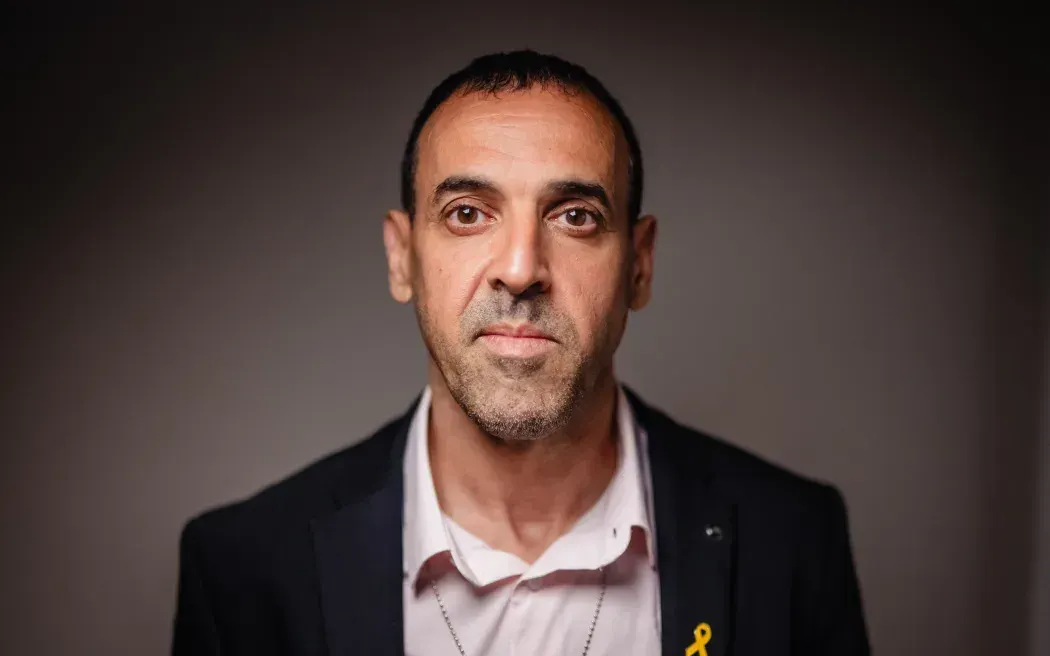
An Israeli father survived 491 days in Hamas captivity, unaware that his British wife and two daughters had been murdered. His return to freedom brought unimaginable grief. His memoir would later raise another difficult question: why did major British publishers turn down his story?
Introduction — A Survivor's Story That Cannot Be Forgotten
For 491 days, Eli Sharabi lived as a hostage in Gaza.
Taken from his home during the Hamas-led attacks on southern Israel on October 7, 2023, he endured more than sixteen months of captivity, separated from his family and the world he had known.
During those months, he did not know the full extent of what had happened to the people he loved most.
His wife, Lianne, and their two daughters, Noiya and Yahel, had been murdered during the attack on Kibbutz Be'eri.
While Sharabi struggled to survive, the family life he hoped to return to no longer existed.
On February 8, 2025, he was released from captivity. The photographs of his return showed a visibly emaciated man whose appearance reflected the severity of his ordeal.
But freedom did not mean the end of his suffering.
It marked the beginning of another devastating reality: confronting the loss of his wife and children, mourning the life that had been taken from him, and attempting to rebuild an existence after an experience few people could imagine.
Sharabi eventually decided to document his captivity in a memoir titled Hostage.
His testimony offered readers an account of captivity, deprivation, uncertainty and survival. It also preserved the memory of a family destroyed during one of the deadliest attacks in Israel's history.
Yet the journey of his book would become a story of its own.
According to reporting by The Times, major British publishers declined the opportunity to publish his memoir. Literary agent Neil Blair, who also represents J.K. Rowling, expressed astonishment at the response.
The book ultimately found a British publisher through the independent company Swift Press. The individual reasons behind the larger publishers' decisions have not been publicly established, and rejection alone does not prove discrimination.
Nevertheless, the controversy raises questions about the publishing industry's treatment of Jewish voices, the influence of political polarization on cultural institutions, and the responsibility of publishers when survivors seek to document atrocities.
For Sharabi, however, the story begins long before the publication of his memoir.
It begins with a family, a home and an ordinary Saturday morning that changed everything.
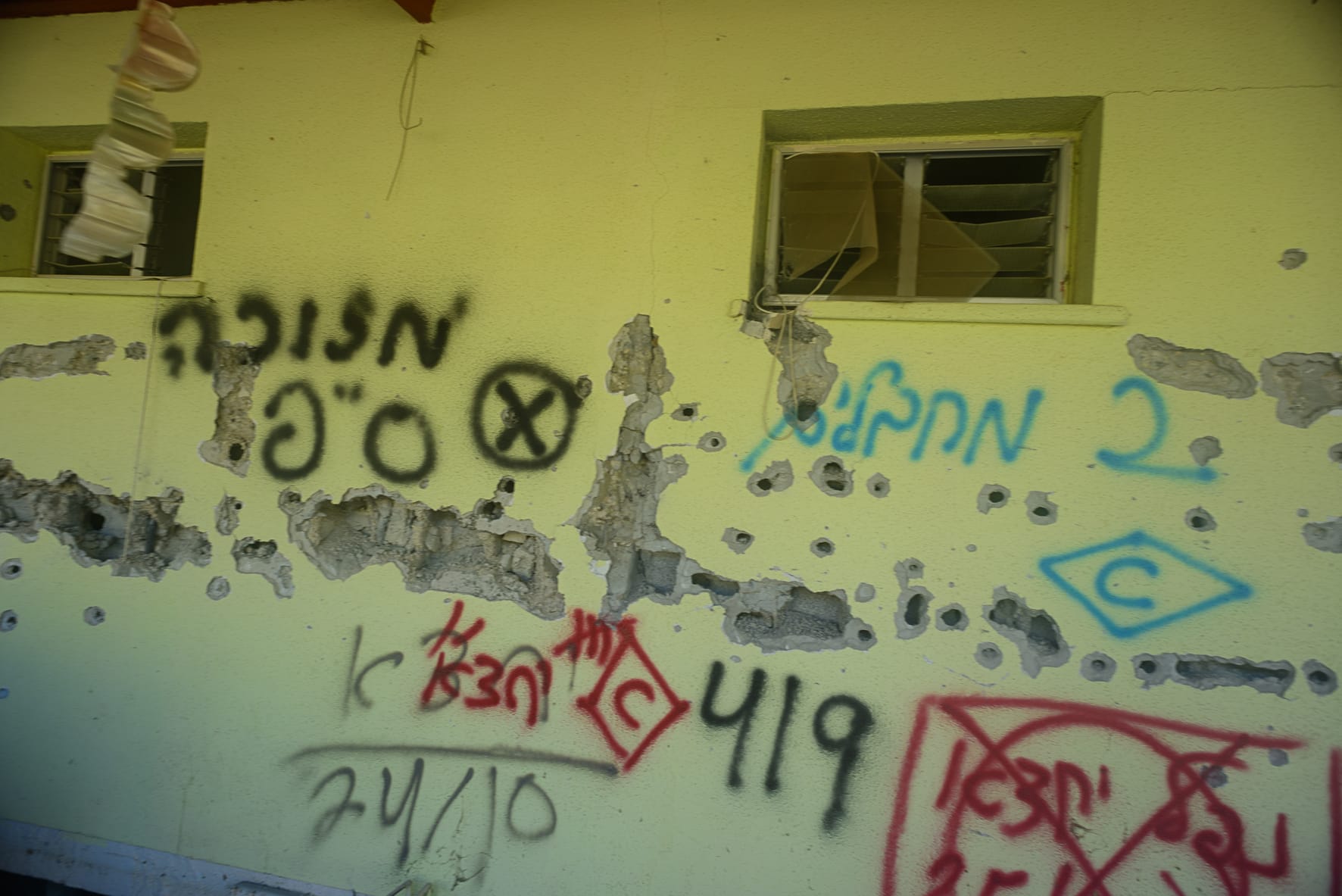
Chapter 1 — Before October 7: A Family, a Home and a Life in Kibbutz Be'eri
Before his name became internationally associated with the hostage crisis, Eli Sharabi was a husband, a father and a member of a close-knit Israeli community.
He lived in Kibbutz Be'eri, an agricultural community in southern Israel, only a few kilometres from the Gaza Strip.
His wife, Lianne, was originally from Britain. Together, they were raising their two daughters, Noiya and Yahel.
Their family represented a connection between two countries and two cultures. Lianne had made her home in Israel, while her British background remained an important part of the family's identity.
For decades, Kibbutz Be'eri had been known for its communal traditions, agricultural roots and strong social connections.
Founded in 1946, the kibbutz developed into an established community where generations of families lived, worked and raised their children.
Like other communities near the Gaza border, Be'eri also lived with the reality of periodic rocket attacks, security alerts and regional tensions.
Nevertheless, for its residents, it was first and foremost home.
It was a place of friendships, shared celebrations, family routines and ordinary daily responsibilities.
The family behind the headlines
In reporting about war and terrorism, individuals can easily become statistics.
Numbers describe the scale of a tragedy, but they rarely communicate the personal relationships and futures that have been destroyed.
Lianne, Noiya and Yahel were not simply three victims of October 7.
They were a wife and two daughters whose lives had meaning beyond the circumstances of their deaths.
They belonged to a family with memories, traditions, aspirations and relationships.
For Eli Sharabi, they were the centre of the life he had built.
This distinction matters because the consequences of October 7 cannot be understood solely through military operations, political statements or casualty figures.
They must also be understood through the lives of those who were killed, the people who were taken hostage and the families left behind.
A community close to Gaza
The geography of Kibbutz Be'eri would become tragically significant on October 7.
Its proximity to Gaza placed the community among the locations attacked when Hamas-led armed groups breached Israel's border defences.
What followed was a large-scale assault on civilians and security personnel across southern Israel.
At Be'eri, residents were killed, homes were damaged or destroyed, and people were abducted into Gaza.
The attack devastated a community that had existed for more than seven decades.
For the Sharabi family, it brought an irreversible separation.
Eli was taken hostage.
Lianne, Noiya and Yahel were killed.
He would spend the following 491 days without knowing that the people he hoped to see again were gone.
Why the life before captivity matters
Understanding Eli Sharabi's story requires remembering who he was before he became a hostage.
He was not defined by captivity before October 7.
He had a family, a community and a future.
The attack did more than deprive him of his freedom. It destroyed the foundation of his personal life.
When he eventually returned, the physical surroundings of freedom could not restore what had been lost.
His story therefore presents two forms of survival: enduring captivity and learning to live with its consequences.
The next chapter examines the events of October 7, the attack on Kibbutz Be'eri and the circumstances that led to Sharabi's abduction.
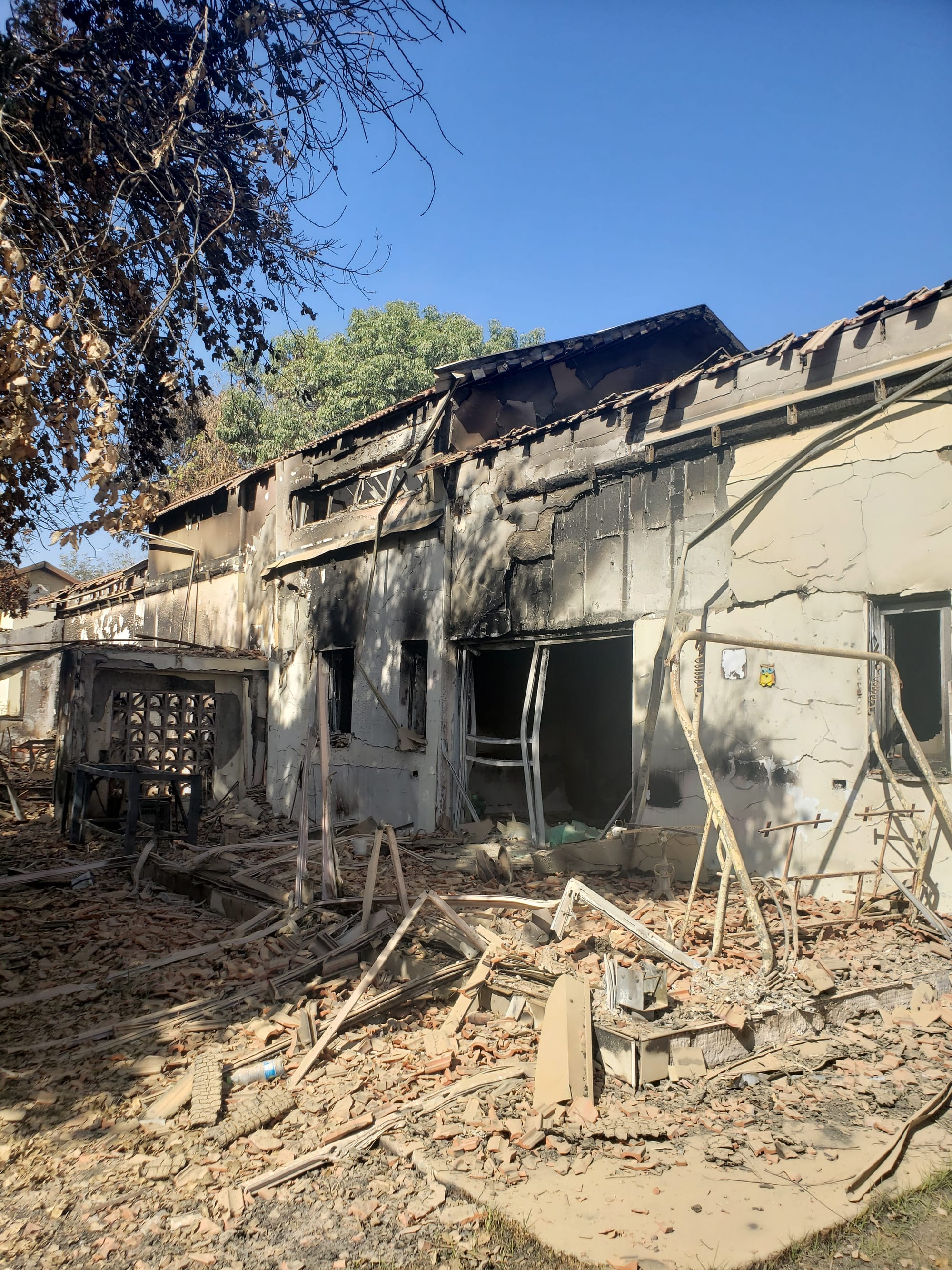
Chapter 2 — The Morning Everything Changed: October 7 and the Attack on Kibbutz Be'eri
A Saturday Morning That Began Like Any Other
On the morning of October 7, 2023, families across southern Israel were beginning what should have been an ordinary Saturday.
It was Shabbat, the Jewish day of rest, and also the festival of Simchat Torah in Israel, a day traditionally associated with celebration, family gatherings and religious observance.
In Kibbutz Be'eri, a small community situated approximately five kilometres from the Gaza Strip, residents were at home with their families.
Among them were Eli Sharabi, his British-born wife Lianne, and their two teenage daughters, Noiya and Yahel.
They had built their lives in this community, where neighbours knew one another and generations of families shared the experience of living close to Israel's border with Gaza.
The residents were familiar with the sound of warning sirens. Years of rocket attacks and regional confrontations had made emergency shelters and reinforced safe rooms part of everyday life.
But nothing could have prepared them for what was about to happen.
Shortly after 6:30 in the morning, Hamas and other Palestinian armed groups launched a coordinated assault from the Gaza Strip.
Thousands of rockets were fired towards Israeli communities, while armed attackers breached the border barrier at multiple locations.
The assault targeted military positions as well as civilian communities, roads and a music festival.
Within hours, southern Israel had become the scene of widespread killings, abductions and destruction.
For the Sharabi family, the morning would end in an unimaginable tragedy.
The Assault on Kibbutz Be'eri
Kibbutz Be'eri became one of the communities most severely affected by the October 7 attacks.
Armed attackers entered the kibbutz and moved through residential areas, confronting residents inside their homes, on the streets and near communal buildings.
Some families barricaded themselves inside reinforced rooms, hoping that Israeli security forces would arrive before the attackers reached them.
Others attempted to escape or contact relatives and emergency services.
The attack unfolded over many hours.
Residents reported hearing gunfire, explosions and the sounds of armed men moving through the neighbourhoods.
Homes were set on fire, and people were killed or taken hostage.
The attackers' presence inside the community, combined with the delayed and fragmented response of Israeli forces, created a prolonged crisis.
The Israeli military later acknowledged serious failures in its response to the attack on Be'eri, including problems involving preparedness, coordination and the protection of civilians.
An Israeli military investigation published in July 2024 concluded that the military had failed in its mission to protect the residents.
That finding remains an important part of understanding October 7.
The attack was carried out by Hamas-led armed groups, but the subsequent investigations also raised difficult questions about Israel's ability to defend communities located close to Gaza.
For the residents of Be'eri, these failures had devastating consequences.
More than 100 people were killed in the kibbutz, and dozens were abducted or otherwise caught up in the violence.
Behind those figures were families whose lives would never return to what they had been.
The Sharabi Family's Final Hours Together
Inside their home, Eli Sharabi and his family found themselves confronting the violence that had reached their community.
The details of their final moments together must be approached with care.
Public accounts establish that Eli was abducted from Kibbutz Be'eri and taken into Gaza, while his wife Lianne and daughters Noiya and Yahel were murdered during the attack.
However, the precise sequence of events inside their home should not be reconstructed beyond what is supported by Eli's own testimony and independently verified reporting.
What is certain is that the family was torn apart.
Eli was taken alive.
Lianne, Noiya and Yahel did not survive.
For Eli, the separation marked the beginning of a captivity that would last 491 days.
For his family, it was the end of a life they had built together.
The contrast is almost impossible to comprehend.
One member of the family was carried away into an uncertain future, while the others were killed in the place they had called home.
And Eli did not yet know the full truth.
Taken Across the Border into Gaza
During the October 7 attacks, approximately 250 people were taken hostage and transported into the Gaza Strip.
They included Israeli civilians, soldiers and foreign nationals.
Some were children. Others were elderly people. Many were taken from their homes or from the Nova music festival.
Eli Sharabi was among those abducted.
His captivity would become one of the longest endured by a hostage taken that day.
He was held by Hamas in Gaza, cut off from ordinary communication with his family and the outside world.
Hostages released at different stages of the conflict have described conditions including underground confinement, inadequate food, threats, physical abuse and prolonged psychological distress.
Sharabi's own testimony would later provide an account of the conditions he endured.
But on October 7, as he was taken from his community, he could not know how long his imprisonment would last.
He could not know that months would become more than a year.
And he could not know that the family he hoped to return to had already been murdered.
The Collapse of Safety
The attack on Kibbutz Be'eri exposed a profound vulnerability in Israel's border security arrangements.
Communities close to Gaza had long relied on a combination of border surveillance, military response capabilities, local security teams and reinforced residential shelters.
On October 7, these systems proved insufficient against the scale and coordination of the assault.
The attackers breached the border, reached civilian communities and operated inside them for extended periods.
In Be'eri, members of the local security team and residents attempted to resist the attackers, while Israeli forces struggled to regain control.
The battle continued into October 8.
The military's subsequent investigation identified serious operational failures, including difficulties establishing an accurate picture of the attack and coordinating an effective response.
These findings are significant because they demonstrate that the tragedy cannot be understood only through the actions of the attackers.
It also requires examination of the security failures that left civilians exposed.
For the Sharabi family, however, those institutional questions could not reverse what had happened.
No investigation could bring back Lianne, Noiya and Yahel.
No military review could restore the years that Eli would lose in captivity.
The Wider Human Cost of October 7
The Hamas-led attacks of October 7 killed approximately 1,200 people in Israel, according to Israeli figures, with civilians accounting for a large proportion of the victims.
The attacks included killings in homes, communities and public spaces, as well as hostage-taking and other serious violations of international humanitarian law.
Investigations by human rights organizations and United Nations bodies have documented grave abuses committed during the assault.
The violence also triggered the devastating war in Gaza, resulting in extensive Palestinian civilian suffering, destruction and displacement.
These consequences form part of the broader historical context of October 7 and the war that followed.
Yet the experience of individual families must not disappear within the wider political and military narrative.
For Eli Sharabi, October 7 was not an abstract geopolitical turning point.
It was the day he lost his freedom, his home and, although he did not yet know it, his wife and daughters.
A Brother Also Taken Hostage
The tragedy extended beyond Eli's immediate household.
His brother, Yossi Sharabi, was also abducted from Kibbutz Be'eri on October 7.
Yossi was held hostage in Gaza and later died in captivity.
Israeli authorities subsequently confirmed his death, adding another devastating loss to the Sharabi family.
The abduction of both brothers illustrates how deeply the attack affected individual families and the wider community.
For relatives waiting for news, the months after October 7 became a period of uncertainty, fear and grief.
Some families received confirmation that their loved ones had been killed.
Others learned that relatives were being held hostage.
Many endured long periods without reliable information.
The Sharabi family experienced both the murder of loved ones and the prolonged captivity of family members.
Their story became one of the most painful examples of the human consequences of the attack.
The Beginning of 491 Days
As the violence continued in southern Israel, Eli Sharabi entered a world of confinement and uncertainty.
The life he had known was suddenly beyond his reach.
He no longer had the freedom to contact his family, return to his home or make decisions about his own future.
His survival depended on circumstances largely outside his control.
In the months that followed, the hostage crisis would become central to Israeli society and international diplomatic efforts.
Families organized campaigns, held demonstrations and appealed to governments and mediators to secure the release of their relatives.
Photographs of the hostages appeared on posters, buildings and public squares.
Their names became symbols of an unresolved humanitarian crisis.
But behind every photograph was a person enduring captivity.
For Eli Sharabi, that captivity would continue for 491 days.
Throughout much of that time, he held on to the hope that freedom might allow him to return to the people he loved.
The truth waiting outside would be more devastating than he could have imagined.
October 7 had taken away his freedom.
It had also taken away his family.
And he would not fully confront that loss until the day he finally returned.
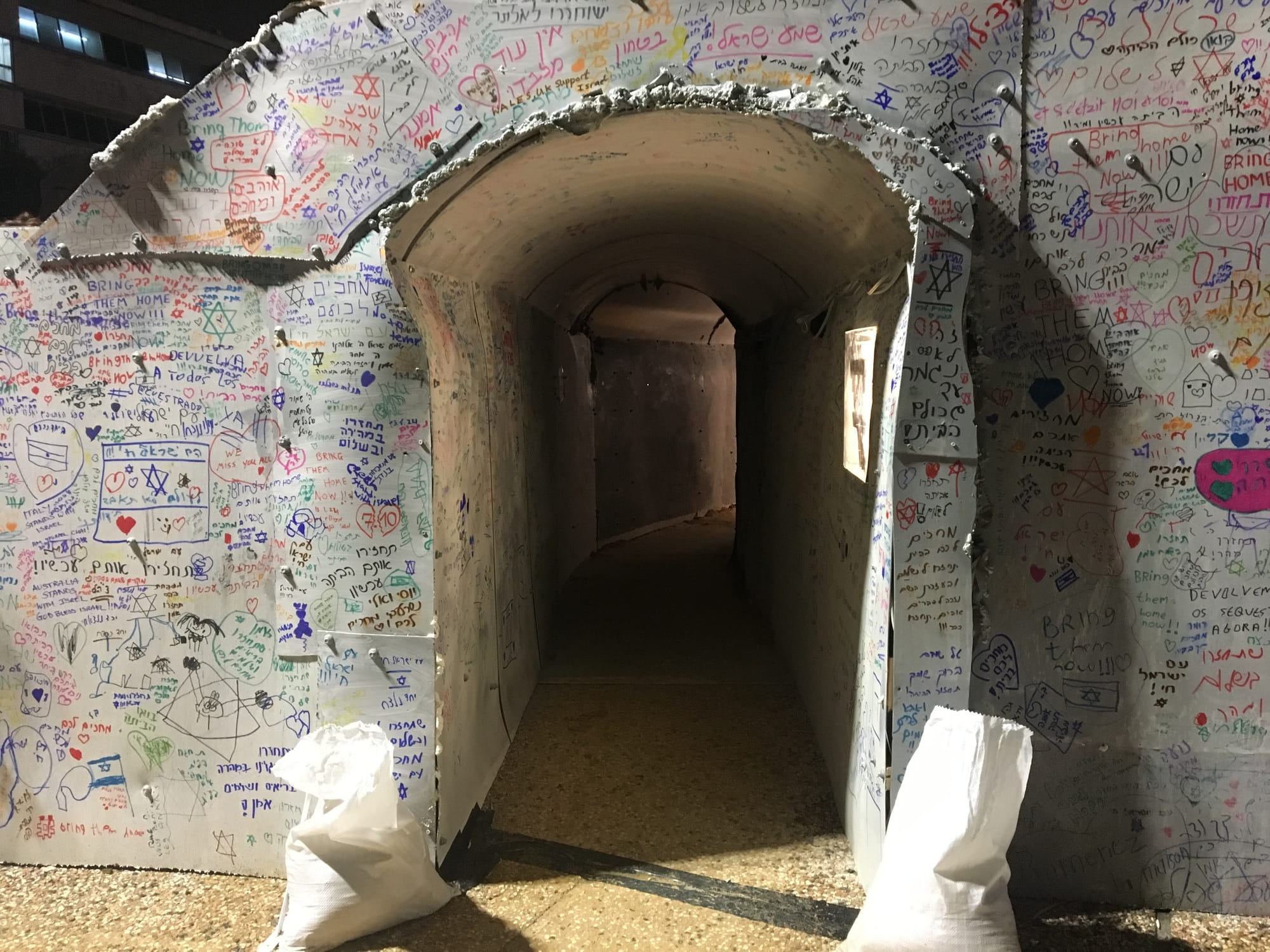
Chapter 3 — 491 Days in Captivity: Hunger, Isolation and the Fight to Survive
The First Hours: A Journey into the Unknown
When Eli Sharabi was taken from his home in Kibbutz Be'eri on October 7, 2023, he entered a world in which almost every aspect of his existence would be controlled by other people.
He had been separated from his wife, Lianne, and their daughters, Noiya and Yahel. As he was forced away, he believed that surviving his abduction was the only way to return to them.
He did not know that they had been murdered.
That belief would become one of the most important sources of motivation during his 491 days in captivity.
In his memoir Hostage, and in subsequent interviews, Sharabi describes the immediate fear and uncertainty that accompanied his abduction.
After being transported into Gaza, he encountered a hostile crowd. According to his testimony, civilians attempted to attack him before his captors moved him into a mosque.
There, he was interrogated and stripped to his underwear.
It was an early demonstration of the complete loss of personal control that would characterize his imprisonment.
He could no longer decide where to go, when to eat, when to sleep or even when to speak.
The simplest actions required permission.
For a man who had spent his life working, raising a family and making decisions independently, captivity meant surrendering nearly every ordinary freedom.
Yet Sharabi understood that his survival might depend on his ability to adapt.
His objective became painfully simple: remain alive long enough to return home.
The First 52 Days: Captivity Inside a House
For approximately the first 52 days, Sharabi was held inside a residential building in Gaza.
His initial imprisonment was different from the underground confinement that would follow.
He was held in a domestic environment, where his captors had access to ordinary household facilities and where, particularly during the earlier period, food was more readily available.
But the presence of a kitchen, furniture and other signs of everyday life did not make him free.
He was a prisoner.
Sharabi has described being restrained with ropes so tightly that they injured his skin and caused severe pain.
In testimony before the United Nations Security Council in March 2025, he recalled the physical suffering caused by these restraints.
He also described periods of insufficient food, water and sleep.
His account illustrates an important aspect of prolonged hostage-taking: physical confinement is only one element of the suffering.
A hostage must also endure the constant awareness that someone else controls their body, movements and immediate future.
Even when a captor appears calm or engages in conversation, the underlying relationship remains one of coercion.
Sharabi spoke Arabic, which enabled him to communicate with some of the people holding him.
These conversations sometimes helped him understand their behaviour and navigate the unpredictable conditions of his captivity.
But communication did not eliminate the danger.
At any moment, circumstances could change.
And after several weeks, they did.
November 27, 2023: Descending Underground
On November 27, 2023, Sharabi was transferred into Hamas's underground tunnel network.
The move marked a significant deterioration in the conditions of his captivity.
In his memoir, he describes descending through a shaft and moving deeper underground, away from daylight and the ordinary sounds of the world above.
The tunnels were not simply hiding places.
They were enclosed environments in which movement, ventilation, sanitation and access to supplies could be severely restricted.
Sharabi had feared being taken underground.
Now he faced the possibility of spending an indefinite period beneath Gaza, with no reliable information about when he might be released.
The psychological consequences of this uncertainty were profound.
Underground, there was no normal distinction between day and night.
Time was measured through routines, meals, conversations and the movements of guards rather than through sunlight.
The passage of days could become difficult to distinguish from the passage of weeks.
For Sharabi, captivity had become a struggle not only against physical deprivation but also against the disorientation of prolonged isolation.
Iron Chains and the Loss of Physical Freedom
One of the most disturbing aspects of Sharabi's testimony concerns the restraints used during his imprisonment.
He has described being kept in heavy iron shackles for much of his captivity.
The chains restricted his movements and injured his legs.
Walking even a short distance could become painful.
Ordinary activities, including reaching a bathroom or changing position, required additional effort.
Sharabi later explained that the restraints remained in place until shortly before his release.
Their purpose went beyond preventing escape.
For a hostage, continuous shackling also reinforces the reality that personal autonomy has been taken away.
The prisoner is reminded with every movement that another person has the authority to decide whether they may stand, walk or rest.
Over time, prolonged restraint can contribute to pain, skin injuries, weakness and reduced mobility.
In Sharabi's case, these physical restrictions existed alongside deteriorating nutrition and limited opportunities for exercise.
The combination made his captivity increasingly dangerous.
Hunger: When Survival Becomes a Daily Calculation
Food deprivation became one of the defining experiences of Sharabi's imprisonment.
In interviews after his release, he described how the amount of food available to him decreased as the months passed.
During the earliest period of captivity, he sometimes received several meals a day.
Later, particularly in the tunnels, the situation became significantly worse.
In his memoir, Sharabi describes periods when meals consisted of biscuits, small quantities of bread, beans or limited portions of other basic foods.
At times, several hostages had to share extremely small quantities.
Food was no longer something associated with family gatherings, enjoyment or routine.
It became a calculation of survival.
A piece of bread could be divided into smaller portions to make it last.
A remaining mouthful could be saved until evening.
The next meal was never guaranteed.
Sharabi's account also provides important distinctions concerning the causes of food deprivation.
He describes periods of severe shortages affecting both captors and hostages, while also recounting unequal distribution and occasions when guards ate better than their prisoners.
The wider war in Gaza had devastated food systems, infrastructure and supply routes, contributing to widespread hunger among Palestinian civilians as well.
That broader humanitarian catastrophe did not diminish the responsibility of those holding hostages to provide adequate food and humane treatment.
Hostage-taking and the deliberate mistreatment of detainees are prohibited under international humanitarian law.
Whatever shortages existed outside the tunnels, Sharabi remained a captive whose access to food was controlled by his guards.
Over the months, his body became progressively weaker.
When he was finally released, he weighed approximately 44 kilograms.
He reported having lost more than 30 kilograms during captivity.
His physical condition would become one of the most visible signs of what he had endured.
Living Without Basic Hygiene
The deprivation extended far beyond food.
In his published account, Sharabi describes prolonged periods without proper showers, clean clothing or adequate sanitation.
Water had to be rationed.
Soap and toothpaste were scarce.
In some locations, hostages slept on blankets spread across the ground rather than on proper mattresses.
Clothing could remain unwashed for weeks.
The absence of ordinary hygiene facilities created additional discomfort and health risks.
For someone living in captivity, these conditions also carried psychological consequences.
The ability to wash, change clothes or maintain a clean sleeping space is closely connected to a person's sense of dignity.
Without these basic routines, the environment itself becomes another source of distress.
Sharabi's testimony describes how even an occasional opportunity to wash could become a significant event.
These details are important because the suffering of hostages cannot be measured only through visible injuries.
Prolonged exposure to unsanitary conditions, discomfort, hunger and uncertainty can gradually undermine both physical health and emotional resilience.
The Psychological Battle: Surviving Without Knowing the Future
Perhaps the most difficult element of Sharabi's captivity was the uncertainty.
He did not know when he would be released.
He did not know whether negotiations would succeed.
He could not communicate freely with his family.
And he did not know what had happened to his wife and daughters.
Every day required him to confront the possibility that captivity might continue indefinitely.
In interviews after his release, Sharabi explained that he tried to avoid allowing uncertainty to dominate his thoughts.
Instead, he focused on what could still be controlled.
He encouraged fellow hostages to establish routines, speak with one another and maintain a sense of purpose.
These actions were small compared with the overwhelming circumstances of imprisonment.
But they mattered.
A daily routine could provide structure when ordinary life had disappeared.
Conversation could help prevent complete emotional isolation.
Remembering loved ones could provide a reason to continue.
Sharabi understood that repeatedly asking why release had not yet come could become psychologically destructive.
He therefore encouraged those around him to concentrate on surviving the day in front of them.
This approach did not remove their suffering.
It offered a way to endure it.
The Other Hostages: Solidarity Beneath Gaza
During his imprisonment, Sharabi was held alongside several other Israeli hostages.
Among those he encountered were young men abducted from the Nova music festival, including Hersh Goldberg-Polin, Almog Sarusi and Ori Danino.
Their experiences differed from his own.
Some were much younger.
Some had suffered serious injuries.
All had been forcibly separated from their ordinary lives.
In captivity, these differences became less important than their shared dependence on one another.
Sharabi, a father accustomed to caring for his family, sometimes assumed a supportive role among the younger hostages.
He encouraged conversation, routines and mutual assistance.
Their shared experiences created relationships that would remain deeply significant after captivity.
But the fate of several men he encountered was tragic.
Goldberg-Polin, Sarusi and Danino were among six hostages whose bodies were recovered by Israeli forces in Gaza in September 2024. Israeli authorities reported that they had been killed by their captors.
For survivors, learning that fellow prisoners had been killed added another layer of grief to an already devastating experience.
The relationships formed in captivity could provide strength, but they also created the possibility of further loss.
The Importance of Small Moments
One of the most striking elements of Sharabi's account is the importance he places on ordinary human interactions.
When a person has been deprived of freedom, seemingly insignificant moments can take on extraordinary meaning.
A conversation.
A shared memory.
A small quantity of additional food.
A few minutes of physical movement.
A familiar religious tradition.
These moments could interrupt the monotony and fear of captivity.
Sharabi has described how he encouraged fellow hostages to identify something positive at the end of each day.
Initially, the idea seemed almost impossible.
What could possibly be positive about another day underground, restrained and hungry?
Yet the exercise gradually became part of their routine.
Its purpose was not to deny the reality of their suffering.
It was to preserve the ability to recognize something beyond it.
For prisoners who had little control over their circumstances, maintaining this mental discipline could become an important source of resilience.
Sharabi also drew strength from Jewish traditions and from his memories of life in Be'eri.
The community, family and identity that had shaped his life before October 7 remained present in his thoughts.
Even underground, those connections had not disappeared.
The Family He Was Fighting to Return To
Throughout his captivity, Sharabi thought about Lianne, Noiya and Yahel.
They were the people he wanted to see again.
His memories of them connected him to the life that had existed before the attack.
He imagined returning home.
He hoped to embrace his daughters.
He wanted to be reunited with his wife.
These hopes became a central part of his determination to survive.
In an October 2025 interview with NPR, Sharabi explained that his immediate response to being abducted had been to focus on staying alive so that he could return to his children.
He had promised them that he would come back.
What he did not know was that the promise could never be fulfilled in the way he imagined.
His family had been murdered on October 7.
For 491 days, he lived with the possibility of reunion while being denied the information that would have destroyed that hope.
This is one of the most painful aspects of his story.
The people who gave him a reason to survive were the same people whose deaths he would eventually have to confront.
The hope that sustained him in captivity would become inseparable from the grief awaiting him in freedom.
The Final Months: A Body Approaching Its Limits
As the months continued, Sharabi's physical condition deteriorated.
The combination of inadequate nutrition, restricted movement, poor sanitation and prolonged stress left him severely weakened.
He became increasingly thin.
His body had endured conditions that would require medical attention and rehabilitation after release.
The psychological strain remained equally significant.
Even as negotiations over hostage releases continued, there was no guarantee that he would be among those freed.
For a hostage, news of possible agreements could produce both hope and fear.
A negotiation might succeed.
It might collapse.
Names might appear on a release list and later disappear.
For those still underground, the outcome remained beyond their control.
Sharabi continued to rely on the routines and relationships that had helped him endure the previous months.
He could not determine the political decisions being made outside.
He could only attempt to remain alive until those decisions reached him.
February 8, 2025: The End of Captivity
After 491 days, Eli Sharabi was finally released on February 8, 2025, as part of a ceasefire and hostage-prisoner exchange agreement.
He was released alongside Or Levy and Ohad Ben Ami.
Before being transferred to the International Committee of the Red Cross, the three men were brought onto a stage during a Hamas-organized handover in Gaza.
Images of the event circulated internationally.
Sharabi appeared extremely thin and physically exhausted.
For many viewers, his condition was a disturbing illustration of the suffering endured by hostages during prolonged captivity.
His release marked the end of his imprisonment.
But it did not mark the end of his ordeal.
He was returning to a country transformed by war, grief and political division.
He would need medical care, physical rehabilitation and time to recover from the effects of captivity.
And he was about to discover that the family he had fought to return to was gone.
For 491 days, survival had been his primary objective.
Now he would have to confront a different question.
How does a man begin living again when the people who gave his life its deepest meaning have been taken from him?
A Survival That Demands to Be Remembered
Eli Sharabi's testimony is more than an account of physical suffering.
It documents what happens when a human being is deprived of freedom for an extended period and forced to survive under conditions of fear, deprivation and uncertainty.
His experience also demonstrates the importance of recording testimony from survivors.
Without such accounts, the realities of captivity can become reduced to political arguments, official statements and numbers.
Sharabi's memoir preserves details that statistics cannot communicate.
The pain of restraints.
The uncertainty surrounding the next meal.
The absence of daylight.
The conversations between prisoners.
The determination to maintain hope when almost everything else has been taken away.
These experiences deserve to be examined with the same seriousness as the military and diplomatic events surrounding the hostage crisis.
His survival was extraordinary.
But the meaning of that survival would become far more complicated when he returned home.
Because the greatest tragedy of Eli Sharabi's story was not only what happened to him beneath Gaza.
It was what had happened to his family while he was gone.
And the truth he was about to learn would change his life forever.
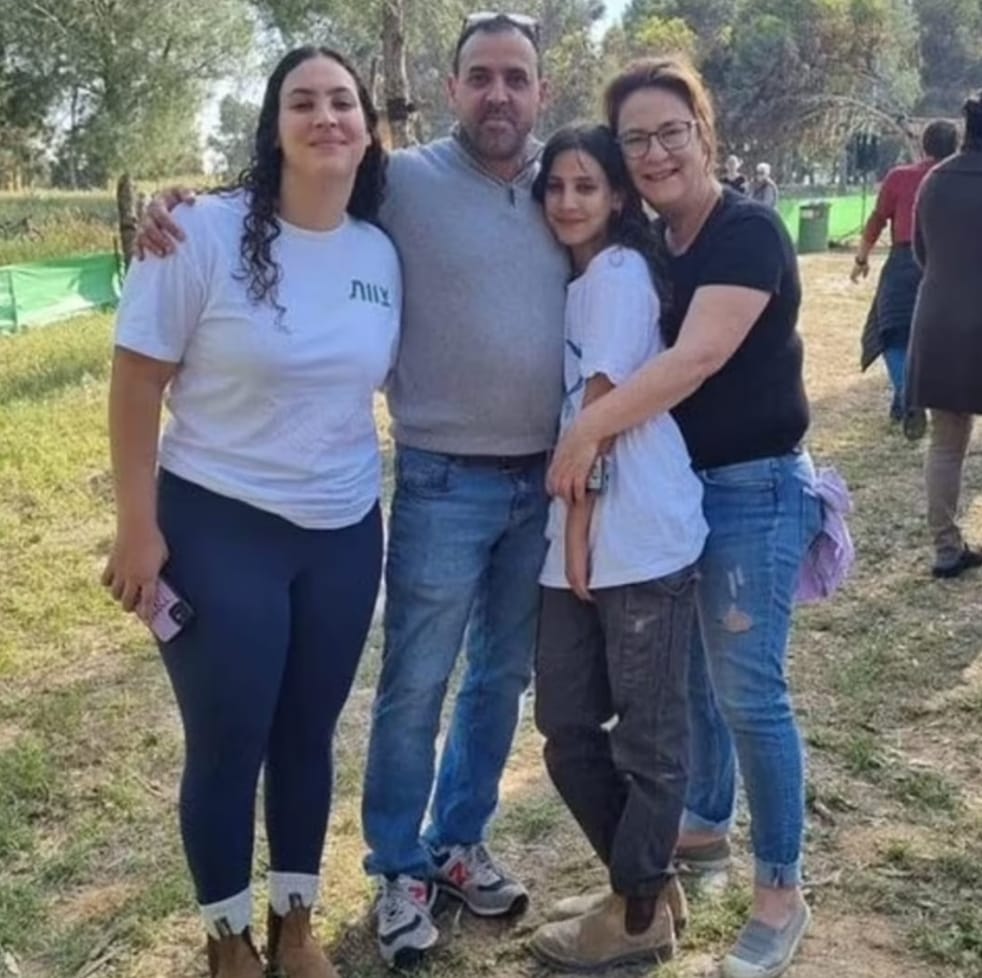
Chapter 4 — The Family He Believed Was Waiting: Hope, Love and an Unimaginable Loss
The People Who Gave Him a Reason to Survive
For 491 days, Eli Sharabi fought to stay alive in Hamas captivity.
He endured hunger, physical restraints, isolation and uncertainty. He lived without the freedoms most people take for granted and without knowing when, or whether, his imprisonment would end.
Yet throughout those months, his thoughts repeatedly returned to three people.
His wife, Lianne.
His daughter, Noiya.
His youngest daughter, Yahel.
They represented everything he wanted to return to.
Before October 7, 2023, Sharabi had been a husband and father living in Kibbutz Be'eri, a community in southern Israel near the Gaza Strip.
His life had been shaped by ordinary family responsibilities, shared experiences and the relationships built over years together.
When Hamas-led attackers entered Be'eri on October 7, that life was violently interrupted.
Sharabi was abducted and taken into Gaza.
His wife and daughters were murdered during the attack.
But he did not know that.
For much of his captivity, he believed there was still a possibility that they had survived.
This belief would become one of the most heartbreaking elements of his story.
The family he imagined returning to no longer existed.
And while the world outside learned about the destruction of Kibbutz Be'eri, Sharabi remained cut off from the information that would have changed everything.
Lianne Sharabi: A British Woman Who Made Israel Her Home
Lianne Sharabi was born in Britain and later built her life in Israel.
She had married Eli and settled with him in Kibbutz Be'eri, where they raised their daughters.
Her British background gave the family's tragedy an international dimension.
October 7 was not only an attack that devastated Israeli families. Among the victims were people with connections to countries around the world, including the United Kingdom.
Lianne's death was therefore also the loss of a British woman who had chosen to make her home in Israel.
She was more than a name included in a list of victims.
She was a wife, a mother and a member of a community.
Her life was defined by relationships, personal choices and experiences that existed long before the events of October 7.
In accounts published after the attack, relatives and friends remembered the Sharabi family as part of the close-knit community of Be'eri.
For Eli, Lianne represented the life they had created together.
Their marriage connected different backgrounds and cultures, but their shared home was in Israel.
During captivity, memories of his wife were among the connections he retained to the world beyond his imprisonment.
He could not speak to her.
He could not ask whether she was safe.
He could not know whether she had escaped the violence.
He could only hope.
That uncertainty continued for more than sixteen months.
Noiya and Yahel: Two Young Lives Taken on October 7
Noiya and Yahel Sharabi were teenagers when they were murdered.
Noiya was 16 years old.
Yahel was 13.
Their lives had barely begun.
They were growing up in Kibbutz Be'eri, surrounded by the routines of school, friendships, family and community life.
Like teenagers everywhere, they belonged to a generation looking towards the future.
The violence of October 7 denied them that future.
Their deaths also deprived their father of the opportunity to see them grow into adulthood.
He would never witness the milestones that parents often imagine for their children.
He would not see them complete their education, pursue careers or make their own choices about where and how to live.
Those possibilities ended on the day of the attack.
The loss of children is difficult to communicate through the language of political analysis.
A casualty figure may establish how many people were killed, but it cannot describe the individual lives that were interrupted.
Noiya and Yahel were not merely part of the statistics of October 7.
They were daughters whose father loved them and who had an entire future ahead of them.
For Sharabi, their memory became inseparable from his experience of captivity.
While he struggled to survive underground, he was also holding on to the hope of seeing his daughters again.
A Promise Made Before the Separation
One of the most painful details of Sharabi's testimony concerns the promise he made to his family as the attack unfolded.
He has recalled telling his daughters that he would return.
It was a father's reassurance at a moment of extreme fear.
He could not know what would happen next.
He could not guarantee his own safety.
But he wanted his children to believe that the separation would not be permanent.
For the next 491 days, the determination to fulfil that promise became part of his struggle to survive.
In interviews after his release, Sharabi explained that his thoughts about his family helped him endure the conditions of captivity.
He focused on staying alive.
He attempted to maintain emotional discipline.
He encouraged other hostages to preserve their own hope.
His determination was not based on certainty that he would be rescued.
It was based on the possibility that he might one day return to the people he loved.
There is a profound tragedy in that hope.
The promise gave him a reason to continue, even though the outcome he imagined had already become impossible.
The Silence of Captivity
One of the defining characteristics of hostage-taking is the removal of ordinary communication.
A person who has been abducted cannot simply telephone relatives, send a message or seek independent confirmation about events outside.
Information becomes something controlled by captors.
For Sharabi, this meant that the fate of his family remained uncertain.
He had no reliable way to establish whether Lianne, Noiya and Yahel had survived.
He could not contact relatives in Israel or Britain.
He could not ask neighbours what had happened in Be'eri.
He could not visit his home or search for information.
His world had narrowed to the places where he was being held and the people around him.
Meanwhile, outside Gaza, the scale of the October 7 attacks was becoming increasingly clear.
Israeli authorities, journalists, rescue workers and families were documenting the destruction of communities across southern Israel.
The deaths of Lianne, Noiya and Yahel became known.
But their husband and father remained in captivity.
The separation between what the outside world knew and what Sharabi understood created a devastating imbalance.
Those waiting for his return knew that he would eventually have to confront a tragedy he had not yet fully understood.
Hope as a Means of Survival
In prolonged captivity, hope can become both a source of strength and a source of vulnerability.
For Sharabi, the possibility of reunion gave meaning to his efforts to survive.
His testimony describes how he tried to concentrate on immediate tasks rather than allow uncertainty about the future to overwhelm him.
He encouraged fellow hostages to establish routines.
He sought opportunities for conversation.
He tried to maintain a sense of responsibility towards the people being held alongside him.
These efforts reflected a determination to preserve some measure of control over his own thinking, even when almost every external circumstance was controlled by others.
His memories of family life were part of that determination.
They reminded him that he had existed before captivity and that there was a world beyond the tunnels.
But hope could not provide reliable information.
It could not tell him whether his wife was alive.
It could not tell him whether his daughters were waiting.
And it could not prepare him for the truth that would eventually emerge.
The distinction matters.
Sharabi's hope was not evidence that his family had survived.
It was a human response to an absence of information and an overwhelming desire to return home.
Two Brothers, One Family Tragedy
The Sharabi family's suffering extended beyond Eli's immediate household.
His brother, Yossi Sharabi, was also abducted from Kibbutz Be'eri during the October 7 attack.
Yossi was held hostage in Gaza and later died in captivity.
His death was subsequently confirmed by Israeli authorities.
The abduction of both brothers meant that their wider family was confronting multiple crises simultaneously.
Relatives were mourning those murdered during the attack while also campaigning for the return of loved ones held in Gaza.
This combination of grief and uncertainty became a defining experience for many hostage families.
They were forced to live with conflicting emotional realities.
They had to mourn the dead while maintaining hope for the living.
They had to respond to political developments and hostage negotiations while coping with private family tragedies.
And they had to continue ordinary responsibilities under extraordinary psychological pressure.
For the Sharabi family, October 7 created losses that extended across generations and households.
The eventual return of Eli would be an extraordinary moment of relief.
But it would not undo the deaths of Lianne, Noiya, Yahel or Yossi.
The Families Waiting Outside Gaza
While Sharabi remained imprisoned, relatives and supporters worked to keep the plight of the hostages visible.
Across Israel and internationally, hostage families organized public appeals, demonstrations and meetings with political leaders.
They called for negotiations and agreements that would bring their loved ones home.
Photographs of the missing appeared in public spaces.
Names were repeated at gatherings and commemorations.
The families' message was that the hostages were not anonymous figures in a military conflict.
They were individuals with families, histories and lives that had been interrupted.
The Sharabi family's story became part of this wider struggle.
Their relatives faced the extraordinary difficulty of advocating for the release of a man who did not know the full extent of the tragedy awaiting him.
It is difficult to imagine the emotional burden of that knowledge.
A successful release would bring relief.
But it would also mean confronting the survivor with the deaths of those he had hoped to embrace.
For families in this situation, freedom and grief were not separate experiences.
They were approaching together.
When the Outside World Knows More Than the Hostage
The gap between Sharabi's knowledge and the reality outside captivity is one of the most significant aspects of his experience.
For much of his imprisonment, he lived with uncertainty about the fate of his family.
Outside Gaza, relatives and the wider public knew that his wife and daughters had been murdered.
These two realities existed simultaneously.
One was defined by hope.
The other was defined by confirmed loss.
This raises difficult questions about the psychological consequences of withholding information from hostages.
A captive who cannot communicate with the outside world is deprived not only of freedom but also of the ability to understand events affecting the people closest to them.
For Sharabi, this deprivation meant that the ordinary process of mourning could not begin.
He had no opportunity to attend funerals.
He could not participate in family rituals of remembrance.
He could not support relatives who were grieving.
He could not even fully comprehend that there was a loss to mourn.
By the time he returned, the world around him had already spent sixteen months living with the knowledge of his family's deaths.
For him, that reality was only beginning.
A Home That Could Not Be Restored
When Sharabi imagined freedom, he imagined returning to the life he had known.
But Kibbutz Be'eri itself had been transformed.
The October 7 attack had left homes destroyed, families displaced and a community confronting profound trauma.
For many residents, returning physically to the kibbutz would require years of rebuilding.
For others, the loss of loved ones meant that the meaning of home had changed permanently.
Sharabi faced both realities.
His community had been attacked.
His house and family life had been torn apart.
And the people who had made that home meaningful to him were gone.
The consequences of captivity therefore extended beyond the months he spent in Gaza.
His return would require him to confront a changed community, a devastated family and an uncertain future.
Physical freedom could restore his ability to move, speak and make decisions.
It could not restore the life he had lost.
The Cruelty of an Unfulfilled Reunion
Throughout the hostage crisis, images of reunions became some of the most emotionally powerful moments in international coverage.
Released hostages embraced parents, spouses, children and friends.
Families who had spent months fearing the worst were finally reunited.
These moments represented the possibility that captivity could end and that loved ones could return to one another.
For Eli Sharabi, the reality was different.
His release would bring him back to surviving relatives and friends.
But there would be no reunion with Lianne.
No reunion with Noiya.
No reunion with Yahel.
The people he had imagined embracing were no longer alive.
The tragedy was not simply that he had lost them.
It was that he had spent so much of his captivity believing that reunion might still be possible.
This distinction gives his story a particular emotional weight.
His survival was an extraordinary achievement.
But it could not deliver the future he had fought to reach.
The Last Days Before Freedom
As negotiations progressed in early 2025, the possibility of release became more immediate.
A ceasefire and hostage-prisoner exchange agreement between Israel and Hamas entered into effect in January.
Hostages began to be released in stages.
For those still being held, the agreement created the possibility that their imprisonment might finally end.
Sharabi was among the hostages selected for release in February.
After more than sixteen months, the moment he had hoped for was approaching.
He would leave Gaza.
He would receive medical attention.
He would be reunited with surviving relatives.
And he would finally be able to learn what had happened outside the places where he had been imprisoned.
But the truth waiting for him was devastating.
The world he was returning to was not the world he had left.
A Father's Hope, a Survivor's Grief
Eli Sharabi's experience demonstrates how captivity can extend the suffering caused by an attack long beyond the original event.
October 7 took the lives of his wife and daughters.
His abduction prevented him from learning the truth and beginning to mourn.
For 491 days, he endured physical suffering while holding on to the possibility that his family was still waiting.
His hope helped him survive.
But it could not protect him from the reality awaiting him.
The story of Lianne, Noiya and Yahel is therefore inseparable from the story of his captivity.
Their lives mattered before October 7.
Their deaths mattered beyond the political and military consequences of the attack.
And their memory remains central to understanding what Eli Sharabi lost.
When he finally returned to Israel on February 8, 2025, he was no longer a hostage.
But freedom would bring a new and deeply painful chapter.
He would have to face the deaths of his wife, his daughters and his brother.
He would have to begin mourning losses that the outside world had known about for more than a year.
And he would have to discover whether it was possible to build a future after the destruction of the family life he had fought so desperately to return to.
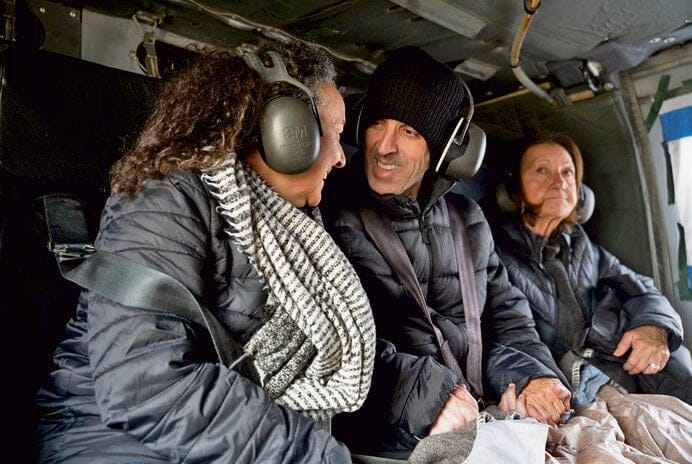
Chapter 5 — Freedom and an Unimaginable Truth: The Day Eli Sharabi Returned Home
February 8, 2025 — The Day the World Saw Him Again
After 491 days in Hamas captivity, Eli Sharabi was finally released on February 8, 2025.
For more than sixteen months, he had lived without freedom, without reliable communication with the outside world and without knowing the full fate of his family.
His release came during the first phase of a ceasefire and hostage-prisoner exchange agreement between Israel and Hamas.
That morning, Sharabi emerged alongside two other Israeli hostages, Or Levy and Ohad Ben Ami.
The three men were brought before cameras in Deir al-Balah, in the central Gaza Strip, during a handover organized by Hamas.
The images quickly spread around the world.
Sharabi was visibly emaciated. His face was gaunt, his body appeared fragile, and his physical condition reflected the severe deprivation he had described enduring during captivity.
For many people watching, the photographs were shocking.
For his relatives, they represented something far more personal.
After 491 days of uncertainty, Eli was alive.
But the man who was returning had endured an experience that would remain with him long after his physical wounds began to heal.
And he was about to discover that the family he had fought to return to was gone.
A Release Turned into a Public Spectacle
The circumstances of Sharabi's release attracted international attention.
Before being transferred to representatives of the International Committee of the Red Cross, the three hostages were presented on a stage surrounded by armed Hamas members.
They were made to participate in a public handover ceremony, including speaking before cameras.
The event was widely criticized in Israel and internationally.
The sight of severely weakened hostages being displayed before a crowd raised concerns about their dignity and treatment.
For Sharabi, the ceremony represented the final public moments of an imprisonment in which others had controlled his movements, food, surroundings and ability to communicate.
Even at the point of release, he was not immediately free to determine how he would leave.
The spectacle also highlighted a troubling contrast.
For the armed group holding the hostages, the release was presented as a political event.
For the men being released, it was the end of a prolonged period of captivity.
And for the families waiting in Israel, it was a deeply emotional moment filled with relief, anxiety and uncertainty.
International humanitarian law requires people deprived of liberty to be treated humanely and protected from humiliating and degrading treatment.
The public presentation of weakened hostages therefore raised questions extending beyond the political symbolism of the exchange.
At the centre of the event were three human beings who had spent more than a year deprived of their freedom.
The Physical Evidence of 491 Days
When Sharabi appeared before the cameras, his physical condition immediately became one of the most discussed aspects of his release.
He had lost more than 30 kilograms during captivity.
His weight was reported to be approximately 44 kilograms when he returned.
The transformation was severe.
Before October 7, he had been an active adult living with his family in Kibbutz Be'eri.
After 491 days, he emerged visibly weakened by prolonged imprisonment, inadequate nutrition and restricted movement.
The images prompted reactions from Israeli officials, medical professionals and international observers.
His appearance was also compared with photographs taken before his abduction, illustrating the dramatic changes in his physical condition.
However, the suffering of captivity cannot be measured through photographs alone.
Weight loss and physical weakness are visible.
The consequences of prolonged fear, uncertainty, restraint and isolation are less easily documented.
Sharabi had described being chained for extended periods, experiencing hunger and living in difficult underground conditions.
His body carried the consequences of those experiences.
But his return would also require psychological and emotional recovery.
Freedom could end his imprisonment.
It could not immediately reverse what captivity had done to him.
Crossing Back into Israel
After the handover, Sharabi and the other released hostages were transferred to Israeli authorities.
Medical teams were prepared to assess their condition and provide immediate care.
For people released after prolonged captivity, the first hours can be medically and psychologically delicate.
Severe malnutrition, dehydration, infections, injuries and the effects of prolonged immobility may require careful evaluation.
Reintroducing adequate nutrition after significant deprivation must also be managed medically.
Beyond physical treatment, returning hostages may experience confusion, emotional distress and difficulty adjusting to an environment in which they suddenly regain control over everyday decisions.
For Sharabi, crossing back into Israel meant entering a world that had continued without him for 491 days.
Political leaders had changed their positions.
Military operations had reshaped the region.
Families had mourned.
Communities had been displaced.
And the country had spent more than a year confronting the consequences of October 7.
He was returning to a society transformed by the attack and the war that followed.
But the greatest change concerned his own family.
The Truth He Had Not Known
Throughout much of his captivity, Sharabi had held on to the hope that his wife and daughters had survived.
Lianne, Noiya and Yahel had been central to his determination to remain alive.
He had imagined returning to them.
He had remembered the life they shared.
He had focused on surviving because he believed there might still be a family waiting for him.
But Lianne and their daughters had been murdered during the October 7 attack on Kibbutz Be'eri.
Their deaths were known outside Gaza.
Sharabi, however, had been deprived of reliable information.
According to accounts of his release and subsequent interviews, he learned the devastating truth after returning to Israel.
The reunion he had imagined for more than sixteen months would never happen.
His wife was dead.
His daughters were dead.
And his brother, Yossi, who had also been abducted on October 7, had died in captivity.
For a man who had endured 491 days believing survival might bring him back to the people he loved, the news represented another overwhelming loss.
His imprisonment had ended.
But the life he had hoped to reclaim no longer existed.
The Moment Hope Became Grief
There are moments when a person's understanding of the world changes almost instantly.
For Sharabi, learning that his family had been murdered was one of those moments.
During captivity, hope had been essential to his survival.
He had tried to maintain routines, encourage other hostages and concentrate on staying alive.
His family had given him a reason to endure hunger, pain and uncertainty.
But when he returned, the reality was different from the future he had imagined.
The people who had sustained his hope were gone.
The emotional consequences of such a discovery are difficult to comprehend.
He was not only mourning three deaths.
He was confronting the destruction of the future he had spent 491 days imagining.
Every memory of family life carried a different meaning.
Every plan for reunion had become impossible.
And the promise he had made to his daughters before being abducted could never be fulfilled in the way he intended.
The tragedy was compounded by the time that had passed.
While the outside world had known of their deaths for more than a year, Sharabi had been unable to begin mourning them.
His grief had been delayed by captivity.
A Father Who Could Not Say Goodbye
For many families affected by October 7, mourning began in the days and weeks following the attacks.
Funerals were held.
Relatives gathered.
Communities organized memorials.
Photographs and personal stories were shared to remember those who had been killed.
Sharabi had been absent from all of it.
He could not attend the funerals of his wife and daughters.
He could not stand beside their graves.
He could not comfort relatives or participate in the ordinary rituals through which families begin to confront loss.
He had been held hostage while the people closest to him were buried.
This absence added another dimension to his suffering.
He had lost his family, but he had also been deprived of the opportunity to mourn them alongside those who loved them.
After his release, Sharabi visited the graves of Lianne, Noiya and Yahel.
The visit was a deeply personal moment, marking a confrontation with the reality he had been unable to acknowledge during captivity.
For the first time since October 7, he could physically stand at the place where his wife and daughters were buried.
But being present could not restore the time that had been taken from him.
It could not replace the final goodbye he had never been able to give.
The Death of His Brother Yossi
Sharabi's return also brought him face to face with the loss of his brother.
Yossi Sharabi had been abducted from Kibbutz Be'eri during the same October 7 attack.
He was held in Gaza and died during captivity.
Israeli authorities subsequently confirmed his death.
For Eli, the news added another devastating dimension to an already overwhelming family tragedy.
Two brothers had been taken hostage.
Only one returned alive.
Their family had experienced the murder of loved ones, the uncertainty of prolonged captivity and the death of a hostage who never made it home.
The loss of Yossi also connected Sharabi's personal experience to the continuing struggle of other hostage families.
Not everyone abducted on October 7 survived.
Some were killed during the original attack, while others died or were killed during captivity.
For those who returned, freedom could bring relief alongside grief for fellow hostages and relatives who did not survive.
Sharabi understood this reality through his own family.
His survival was extraordinary.
But it existed alongside losses that could never be reversed.
Recovery Begins, but Captivity Does Not Simply Disappear
Following his release, Sharabi faced the physical consequences of prolonged imprisonment.
His severe weight loss required medical attention and nutritional rehabilitation.
His body needed time to recover from inadequate food, restricted movement and the injuries associated with his captivity.
But physical recovery was only one part of the process.
Former hostages may experience persistent psychological consequences, including anxiety, sleep disturbances, intrusive memories and difficulties adjusting to ordinary life.
These effects vary between individuals, and no single pattern can describe every survivor.
For Sharabi, recovery also involved confronting bereavement on an extraordinary scale.
He had returned from captivity without his wife and children.
His brother had died.
His community had been devastated.
The life he had known before October 7 could not simply resume.
In interviews after his release, Sharabi spoke about the importance of continuing to live and finding purpose after suffering.
His words reflected a determination not to allow captivity to define every aspect of his remaining life.
Yet that determination should not be confused with the absence of pain.
Survival and grief can exist together.
A person may show extraordinary resilience while continuing to mourn profound losses.
The Hostages Who Had Not Yet Returned
Sharabi's release was also shaped by his concern for those who remained in Gaza.
He had spent months alongside other hostages and had witnessed their suffering.
He understood the conditions they faced.
After returning to Israel, he became an advocate for securing the release of those still being held.
His public testimony placed human experiences at the centre of the hostage crisis.
Rather than discussing captivity only in political or military terms, he described what it meant to live underground, endure hunger and remain separated from loved ones.
He called attention to the physical and psychological consequences of prolonged imprisonment.
His testimony also challenged the tendency to view hostage negotiations solely through the language of strategic concessions and political calculations.
For the people being held, every additional day represented another day without freedom.
For their families, every delay prolonged uncertainty.
Sharabi's experience gave him a personal understanding of those consequences.
He had survived 491 days.
He knew that others were still waiting for their own chance to return.
Speaking Before the United Nations
In March 2025, approximately one month after his release, Sharabi addressed the United Nations Security Council.
His appearance brought the experience of captivity directly into an international diplomatic setting.
He described the conditions in which he had been held, including hunger, physical restraints and the psychological burden of imprisonment.
His testimony was not simply a recounting of personal suffering.
It was also an appeal for attention to the hostages who remained in Gaza.
Sharabi spoke as someone who had experienced the consequences of captivity firsthand.
His words carried the authority of direct testimony, even as individual details of captivity remained matters for documentation and investigation.
The appearance was significant because international discussions about the war had often centred on military operations, humanitarian conditions, ceasefire negotiations and political responsibility.
Sharabi brought the perspective of a surviving hostage into those discussions.
His testimony served as a reminder that the hostage crisis involved individuals whose lives and families had been profoundly affected.
It also marked a transition in his public role.
The man who had spent 491 days unable to communicate freely was now speaking before representatives of the international community.
His voice had returned.
And he intended to use it.
From Private Suffering to Public Testimony
In the months following his release, Sharabi began speaking more openly about his experiences.
He gave interviews, addressed audiences and eventually documented his captivity in his memoir, Hostage.
The decision to tell his story carried particular significance.
For much of his imprisonment, he had been deprived of control over his own life.
He had been unable to choose where he lived, whom he saw or what information he received.
By telling his story, he could reclaim some authority over how his experiences were remembered.
Writing and speaking could not undo the suffering.
They could not restore his family.
But they could ensure that the details of his captivity were not forgotten.
His testimony also created an opportunity for readers and audiences to understand the hostage crisis beyond official statements and political arguments.
It described the experience from the perspective of someone who had lived through it.
That distinction matters in journalism.
Survivor testimony is an essential historical source, although it should be examined alongside other evidence where possible.
Sharabi's account provides a personal record of events that took place largely beyond the reach of independent observers.
His decision to publish that record would eventually bring his story to readers far beyond Israel.
But the international publication of his memoir would also become controversial.
The Meaning of Freedom After Everything Has Been Lost
Freedom is often described as the end of captivity.
For Eli Sharabi, it was also the beginning of a profoundly different life.
He could walk outside.
He could speak to relatives.
He could receive medical care.
He could make decisions about his future.
These were freedoms that had been denied to him for 491 days.
But he could not return to the family life that had existed before October 7.
His wife and daughters were gone.
His brother was dead.
His community had been deeply wounded.
The reality of his return challenges the assumption that release necessarily brings a happy ending.
For some survivors, freedom means returning to loved ones and beginning the difficult process of recovery together.
For Sharabi, freedom meant confronting the destruction of the life he had hoped to reclaim.
Yet he chose to speak.
He chose to document his experiences.
And he chose to keep the memory of his family alive.
His story is therefore not only about what was done to him.
It is also about what he decided to do after surviving.
A Survivor Who Refused to Remain Silent
The world first saw Eli Sharabi after captivity as a visibly weakened man standing on a stage in Gaza.
That image became one of the defining photographs of the February 2025 hostage releases.
But it did not capture the full story.
It could not show the memories of his wife and daughters.
It could not communicate the grief awaiting him.
And it could not predict the determination with which he would later speak about his experiences.
In the months following his return, Sharabi moved from being a hostage whose fate was discussed by others to becoming a survivor telling his own story.
His testimony gave a human voice to experiences that had often been described through statistics and political statements.
He had survived hunger, restraints, isolation and prolonged uncertainty.
He had returned to discover that his family had been murdered.
And he had chosen to record what happened.
The next stage of his story would unfold not in the tunnels beneath Gaza but in the world of publishing, public debate and international media.
His memoir would become a bestseller in Israel.
It would reach readers abroad.
But its journey into the British publishing market would raise difficult questions about whose testimony receives attention, how publishers respond to politically sensitive subjects and whether Jewish voices face barriers within cultural institutions.
For Eli Sharabi, writing was a way to preserve his experience and honour the memory of those he had lost.
The question was whether the world was prepared to listen.
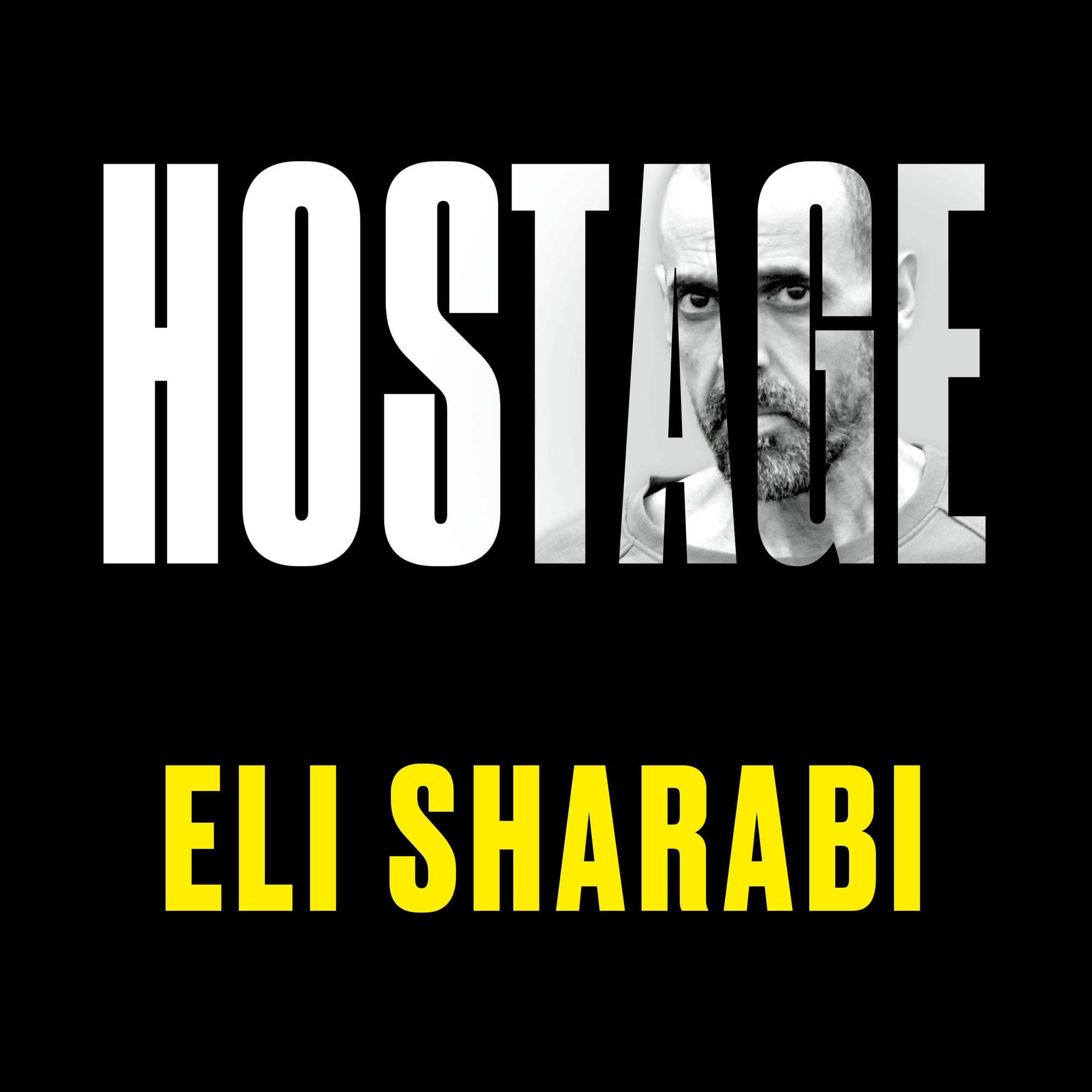
Chapter 6 — Hostage: Turning Suffering into Testimony and the Book That Told His Story
From Captivity to the Written Word
When Eli Sharabi returned to Israel on February 8, 2025, he had survived 491 days in Hamas captivity.
He had endured prolonged confinement, hunger, physical restraints and the uncertainty of not knowing whether he would ever regain his freedom.
But the end of his imprisonment brought another devastating reality.
His wife, Lianne, and their two daughters, Noiya and Yahel, had been murdered during the October 7, 2023 attack on Kibbutz Be'eri.
His brother Yossi, who had also been abducted, had died in captivity.
The family life Sharabi had fought to return to was gone.
For many survivors of extreme violence, the process of recovering from trauma can take years. Some choose to speak publicly about their experiences. Others prefer privacy, or find that recounting traumatic events is too difficult.
Sharabi made a different decision.
Within months of his release, he had written and published a memoir documenting his captivity.
The book was titled Hostage.
It was an extraordinary undertaking for someone who had only recently returned from prolonged imprisonment and was still confronting the physical and emotional consequences of his ordeal.
Yet the book was not simply an account of suffering.
It was also a record of survival, human relationships, personal resilience and the determination to continue living after profound loss.
For Sharabi, the act of telling his story became part of the life he was attempting to build after captivity.
Why Eli Sharabi Decided to Write
In June 2025, as his memoir achieved remarkable sales in Israel, Sharabi explained the central message he wanted readers to take from his experience.
Speaking to The Times of Israel, he said:
"I wrote it to show it doesn't matter what cards life deals you, you can make the choice to live."
The statement offers an important insight into how Sharabi understood his own survival.
His memoir was not intended only to describe what Hamas had done to him.
It was also an attempt to explain how he had endured circumstances in which almost every aspect of his existence was controlled by others.
During captivity, he had been unable to decide where to go, when to eat, when to sleep or when he might see his family again.
He had been deprived of the ordinary freedoms that shape daily life.
Yet he continued to make decisions about how he would respond to those circumstances.
He attempted to preserve routines.
He encouraged fellow hostages.
He focused on surviving one day at a time.
These choices did not remove the cruelty of his imprisonment, nor did they make his captors' actions any less serious.
But they helped him maintain a sense of personal identity in an environment designed around control and deprivation.
The decision to write Hostage extended that effort.
After months in which others controlled his movements and access to information, Sharabi could finally tell his experience in his own words.
The First Memoir by a Released Israeli Hostage
Hostage was published in Hebrew in June 2025 by the Israeli publisher Sella Meir.
It was presented as the first published memoir by an Israeli hostage released after the October 7 attacks.
Its publication came only four months after Sharabi's return.
That timing was significant.
The hostage crisis remained a major issue in Israeli public life, and the country was still confronting the consequences of the attack and the war in Gaza.
Families continued to demand answers and accountability.
Questions remained about the failures that had allowed the October 7 attacks to take place, the treatment of hostages and the political decisions surrounding negotiations for their release.
Against this background, Sharabi's book offered something different from official statements, military investigations and political commentary.
It offered a first-person account.
Readers could encounter the experience of captivity through the perspective of someone who had endured it.
The book described the physical conditions of imprisonment, the uncertainty of prolonged confinement and the relationships that developed between hostages.
It also documented the personal consequences of October 7 for a man whose family had been murdered while he remained unaware of their fate.
The speed of its publication reflected the urgency of Sharabi's decision to speak.
Rather than waiting years to produce a retrospective account, he chose to document his experience while the events remained recent and the hostage crisis continued to shape public discussion.
Inside the Book: The Reality of 491 Days
At the centre of Hostage is Sharabi's account of the conditions he experienced during captivity.
The book follows his abduction from Kibbutz Be'eri and his subsequent imprisonment in Gaza.
He describes being restrained, interrogated and held in locations where he had little control over his physical surroundings.
Much of his captivity took place underground.
The absence of natural light, restricted movement and uncertainty about the passage of time became defining features of his experience.
Hunger was another central theme.
Sharabi recounts the deterioration of food supplies and the increasingly difficult task of maintaining physical strength.
Meals became small and unpredictable.
Food had to be shared.
The body gradually weakened.
When he was finally released, his severe weight loss was visible to the world.
But the memoir also describes suffering that photographs could not capture.
The uncertainty surrounding the fate of his family.
The fear that captivity might continue indefinitely.
The psychological pressure of being unable to communicate with the outside world.
The difficulty of maintaining hope when negotiations repeatedly failed to produce freedom.
These experiences are essential to understanding the book.
Hostage is not simply a chronology of imprisonment.
It is a record of what prolonged captivity can do to a person's body, sense of time, relationships and understanding of the future.
The Relationships That Helped Him Survive
One of the important themes in Sharabi's memoir is the relationship between hostages.
During captivity, he was held alongside other Israelis who had been abducted on October 7.
Some were considerably younger than him.
Others had suffered injuries or were struggling with the psychological consequences of imprisonment.
Sharabi described the importance of maintaining communication, cooperation and mutual encouragement.
In an environment where the hostages had very little control over their circumstances, their relationships became a source of stability.
They shared memories.
They discussed their lives before October 7.
They tried to maintain routines.
And they supported one another through periods of fear and uncertainty.
Sharabi's account shows how solidarity can develop even under conditions of extreme deprivation.
These relationships did not erase the suffering of captivity.
But they provided moments of human connection within an environment dominated by confinement and coercion.
The memoir also records the painful reality that some of the people he encountered did not survive.
Their deaths became part of the wider tragedy he carried after his release.
By documenting these experiences, Sharabi preserved not only his own memories but also aspects of the lives of other hostages.
Remembering Lianne, Noiya and Yahel
Although Hostage focuses on Sharabi's imprisonment, the story of his family remains central to its emotional meaning.
Before October 7, his life had been built around his wife and daughters.
Lianne, originally from Britain, had made her home in Israel.
Together, they raised Noiya and Yahel in Kibbutz Be'eri.
When Sharabi was abducted, he did not know that they had been murdered.
Throughout much of his captivity, he continued to hope that they were alive.
He imagined returning home.
He remembered the life they had shared.
He focused on surviving so that he might see them again.
This makes the memoir particularly painful.
The reader knows that the future Sharabi hoped for would never arrive.
His memories of family life existed alongside a reality he had not yet been allowed to confront.
When he was released, he learned that his wife and daughters were dead.
The family he had fought to return to had been destroyed.
Their absence gives the memoir a meaning beyond the experience of captivity.
It becomes a testimony about the consequences of violence for an entire family.
And it ensures that Lianne, Noiya and Yahel remain part of the historical record, rather than disappearing into the broader statistics of October 7.
A Book That Broke Publishing Records in Israel
The public response to Hostage in Israel was extraordinary.
Within five days of its release, the memoir sold approximately 20,000 copies.
According to reporting by The Times of Israel, it became the fastest-selling book in Israeli publishing history.
On June 23, 2025, Sharabi received a Golden Book Award recognizing its sales.
The recognition came during a visit to London, where he was accompanied by his brother Sharon.
The commercial success demonstrated the strong public interest in hearing directly from a survivor of the October 7 hostage crisis.
For Israeli readers, the memoir offered an opportunity to understand experiences that had largely remained hidden from public view.
Throughout the war, families had spoken about the hostages, politicians had debated negotiations, and news organizations had reported on their possible release.
But the hostages themselves had often been unable to tell their stories.
Sharabi's book changed that.
It brought the experience of captivity into homes, bookshops and public discussions.
The sales figures alone cannot explain every reader's motivation.
Some may have wanted to understand the conditions in which hostages were held.
Others may have been drawn to Sharabi's personal story or his message of resilience.
But the response established that his testimony had reached a substantial audience.
In Israel, the book was not ignored.
It became a publishing phenomenon.
Bringing His Testimony to International Readers
The success of Hostage in Israel was followed by its publication in English.
The English-language edition was translated by Eylon Levy and published in October 2025.
In Britain, the book was released by the independent publisher Swift Press.
The English edition brought Sharabi's testimony to a wider international audience.
It also carried particular significance because of his family's connection to Britain.
His wife, Lianne, was British.
Her death, along with those of their daughters, had affected relatives and communities beyond Israel.
For British readers, the memoir therefore offered more than an account of an Israeli hostage.
It told the story of a family whose lives connected Britain and Israel and whose tragedy had become part of the international consequences of October 7.
The English-language edition also made the testimony accessible to readers who could not read Hebrew.
This mattered because public understanding of the hostage crisis had often been shaped by news coverage, political statements and competing interpretations of the war.
Sharabi's memoir provided a different form of evidence: the personal testimony of someone who had lived through captivity.
That testimony could be examined, discussed and placed alongside other accounts of the conflict.
Critical Recognition Beyond Israel
The memoir also attracted attention from literary reviewers and international publications.
The Jewish Book Council reviewed the book in September 2025, emphasizing the urgency of a memoir written so soon after the author's release.
The book was subsequently recognized with a 2025 National Jewish Book Award.
It also received favourable reviews from publications including TIME, The Daily Telegraph and The Wall Street Journal.
The reviews drew attention to the intensity of Sharabi's account and his ability to describe experiences that were difficult for readers to imagine.
This recognition is important when considering the book's later publishing controversy.
The memoir was not a work that failed to find readers or critical attention.
It had already achieved exceptional sales in Israel and received recognition abroad.
It had also been published in English and was available through established bookselling channels.
Yet according to reporting published in October 2026, the process of securing a British publisher had been difficult.
Major publishing houses had declined the manuscript before it was accepted by Swift Press.
The reasons for those individual decisions have not been independently established.
Nevertheless, the contrast between the book's commercial success, critical reception and reported difficulties in British publishing would become an important subject of public debate.
Survivor Testimony as a Historical Record
There is a broader reason why books such as Hostage matter.
Historical events are often remembered through official reports, political decisions, casualty figures and military outcomes.
These sources are important, but they cannot fully communicate the experience of individuals who lived through violence.
Survivor testimony adds another dimension.
It records what people saw, heard, felt and understood at the time.
It preserves details that may otherwise disappear.
In Sharabi's case, his memoir documents an experience that took place largely beyond the reach of independent journalists and investigators.
For much of his captivity, outside observers had little direct access to the conditions in which he was being held.
His testimony therefore contributes to the historical record of the hostage crisis.
Like all personal testimony, it should be approached with care.
Memory can be affected by extreme stress, the passage of time and the conditions under which events occurred.
Where possible, individual claims should be compared with other testimony, medical evidence, documentation and independent investigations.
But these considerations do not diminish the importance of listening to survivors.
They are part of responsible historical documentation.
Sharabi's memoir provides a detailed personal account that can be examined alongside the wider evidence concerning October 7 and the treatment of hostages.
The Responsibility to Remember
For decades, survivor memoirs have played an important role in documenting persecution, war, imprisonment and mass violence.
They allow later generations to encounter historical events through the experiences of individuals.
They also challenge the tendency to reduce suffering to statistics.
A number can tell us how many people were abducted.
A timeline can establish how long captivity lasted.
An official report can identify violations of international law.
But a personal account can describe what it means to wait for food, to sleep in restraints or to wonder whether loved ones are still alive.
Sharabi's memoir belongs within this tradition of firsthand testimony.
Its significance does not depend on readers agreeing with every political position associated with Israel or the war in Gaza.
The treatment of hostages is a matter of human rights and international humanitarian law.
The killing of civilians, hostage-taking and cruel treatment of captives must be examined independently of political allegiance.
Similarly, the suffering of Palestinian civilians during the war deserves serious documentation and scrutiny.
Recognizing one person's suffering does not require denying another's.
Responsible journalism must be capable of examining multiple experiences while remaining precise about who committed particular acts and what evidence supports each claim.
Sharabi's account is an important part of that work.
Writing as an Act of Reclaiming His Voice
For 491 days, Sharabi had been unable to speak freely to the outside world.
His captors controlled his surroundings and access to information.
His family did not know when he would return.
He could not publicly describe what was happening to him.
After his release, the situation changed.
He could speak.
He could testify.
He could write.
And he could decide how his experiences would be presented to readers.
Publishing Hostage was therefore more than a literary achievement.
It represented a transition from being a person whose fate was discussed by others to becoming the narrator of his own experience.
That distinction is fundamental.
A survivor's voice should not be treated merely as an illustration within a political argument.
It deserves to be heard as the testimony of an individual who experienced events firsthand.
Sharabi's account is deeply personal.
It is shaped by his memories, his losses and his understanding of survival.
But it also contributes to public knowledge about the hostage crisis.
The book allows readers to encounter the experience in greater depth than a short interview or news report can provide.
The Question of Who Gets Heard
The publication of Hostage raises an important question about the relationship between personal testimony and public attention.
Who gets the opportunity to tell their story?
Which experiences receive publishing support?
And how do political controversies influence the decisions of cultural institutions?
These questions became particularly relevant after reports emerged about the difficulties Sharabi's memoir had encountered among major British publishers.
The book had already demonstrated substantial public interest.
It had become a bestseller in Israel.
It had received international reviews.
It had been translated into English.
Yet its journey through the British publishing industry was reportedly marked by rejection from major houses.
A publisher may decline a manuscript for many legitimate reasons, including commercial considerations, editorial priorities and market positioning.
A rejection does not, by itself, establish prejudice or discrimination.
However, literary agent Neil Blair's public concerns about the treatment of Jewish and Israeli writers have placed Sharabi's experience within a wider debate about cultural exclusion.
That debate deserves careful investigation.
It requires examining documented decisions, listening to the people involved and distinguishing evidence of discrimination from assumptions about motivation.
For Sharabi, the central issue remains his testimony.
He survived captivity.
He lost his family.
He wrote a book.
And his story deserves to be evaluated on its substance rather than reduced to a symbol of political division.
More Than a Bestseller
The success of Hostage can be measured through sales figures, awards, reviews and international editions.
But those measures do not fully explain its significance.
At its centre is a man who survived 491 days of captivity and returned to discover that the family he loved had been murdered.
He could not change what happened.
He could not recover the months he spent imprisoned.
He could not bring back Lianne, Noiya or Yahel.
But he could preserve their memory.
He could document the conditions he endured.
And he could share the lessons he drew from surviving an experience that had taken almost everything from him.
The memoir is therefore both a record of suffering and an expression of the determination to continue living.
It is not a story with a conventional happy ending.
Freedom did not restore Sharabi's former life.
His book did not erase his grief.
But the act of writing allowed him to turn a deeply personal experience into a testimony accessible to others.
That testimony has now become part of the historical record of October 7 and its aftermath.
And it has raised a further question that extends beyond the events of the attack itself.
What happens when a survivor's story enters a cultural environment shaped by political polarization, accusations of antisemitism and disputes over whose voices deserve a platform?
The answer leads to the next chapter.
Because the controversy surrounding Hostage was not only about what Eli Sharabi wrote.
It was also about the publishers who reportedly declined to publish it, the independent company that ultimately brought it to British readers, and the wider concerns about the treatment of Jewish and Israeli voices in the arts.

Chapter 7 — The Silent Boycott: When a Hostage Survivor Struggles to Be Heard in Britain
A Story the World Needed to Hear — But Major British Publishers Turned Away
Eli Sharabi survived 491 days in Hamas captivity.
He endured starvation, physical restraints, isolation and psychological suffering. When he was finally released in February 2025, he discovered that his British wife, Lianne, and their two daughters, Noiya and Yahel, had been murdered during the October 7 attacks.
He had lost his family, his freedom and the life he had built in Kibbutz Be'eri.
But he had survived.
And he had a story to tell.
His memoir, Hostage, became an extraordinary publishing success in Israel. It was translated into English, received international critical recognition and reached readers far beyond the country where the attacks had taken place.
Yet in Britain, the country his wife had called home before moving to Israel, his book encountered an unexpected obstacle.
According to an investigation published by The Times in October 2026, none of the major British publishing houses approached agreed to publish Sharabi's memoir.
The book was eventually released in Britain by the independent publisher Swift Press.
The revelation raised a difficult question.
How could the testimony of a man who survived one of the most extensively documented hostage crises of the twenty-first century struggle to secure a major British publisher?
And was his experience an isolated commercial decision, or part of a broader problem affecting Jewish and Israeli writers?
Neil Blair: A Literary Agent Raises the Alarm
The controversy gained renewed attention through Neil Blair, one of Britain's prominent literary agents and the representative of bestselling author J.K. Rowling.
Blair has worked within the publishing industry for decades and has experience representing internationally successful books.
He was therefore familiar with the commercial and editorial considerations that influence publishing decisions.
But Sharabi's experience surprised him.
Speaking to The Times in October 2026, Blair said he was "flabbergasted" that no major British publisher had accepted the memoir.
He questioned whether the manuscript had received the serious consideration it deserved.
Blair also compared its significance as a testimony of endurance with major works of Holocaust survivor literature.
Such a comparison concerns the value of documenting human suffering; it does not mean that the historical circumstances of the Holocaust and Sharabi's captivity were identical.
Blair's concern was that an important firsthand account appeared to have encountered unusual resistance within Britain's mainstream publishing industry.
His comments did not establish why each publisher had declined the book.
Individual editorial decisions, internal discussions and commercial assessments have not been made fully public.
Nevertheless, his account provided evidence that a prominent literary agent believed the problem extended beyond an ordinary manuscript rejection.
And Sharabi was not the only writer whose experience had raised concerns.
The Growing Debate Over a Silent Boycott
The phrase silent boycott has increasingly appeared in discussions about Jewish and Israeli participation in Britain's cultural industries.
Unlike a publicly announced boycott, a silent boycott may involve decisions that are difficult to identify or document.
A manuscript may be rejected without a detailed explanation.
An artist may discover that invitations have stopped arriving.
A musician may experience cancelled performances.
A cultural organization may quietly avoid projects it considers politically controversial.
None of these events automatically proves discrimination.
Publishing houses reject manuscripts for many reasons, including commercial viability, editorial priorities, production costs and expectations about readership.
Concerts can be cancelled because of security concerns, financial difficulties or scheduling problems.
But when similar experiences are reported repeatedly by people who share a particular identity, questions about potential patterns of exclusion become legitimate subjects for investigation.
The central issue is whether Jewish or Israeli identity, rather than the quality or substance of the work, is influencing professional opportunities.
That distinction is essential.
Criticism of Israeli government policy is a legitimate part of democratic debate.
Refusing professional opportunities to individuals simply because they are Jewish would be discriminatory.
A boycott explicitly directed at Israeli institutions raises different political and ethical questions from excluding an individual because of Jewish identity.
And a decision based on an author's nationality, political activity or the content of a particular work requires examination of its actual circumstances.
These categories should not be treated as interchangeable.
The challenge for journalists is to establish what happened in specific cases rather than assume that every rejection has the same explanation.
October 7 and the Transformation of the Cultural Debate
The Hamas-led attacks of October 7, 2023, and the subsequent war in Gaza transformed public discussion about Israel and the Palestinians.
Across Europe, cultural institutions, universities, publishers and artistic organizations became increasingly involved in debates about the conflict.
Some artists and writers called for boycotts of Israeli institutions as a form of political protest.
Others warned that such campaigns could lead to the exclusion of individuals based on nationality or Jewish identity.
The humanitarian catastrophe in Gaza intensified these disagreements.
Images of Palestinian civilian suffering, widespread destruction and displacement generated public anger and demands for political accountability.
At the same time, Jewish communities reported concerns about rising antisemitism, harassment and hostility.
These developments created an environment in which discussions about Israel, Jewish identity, Palestinian rights and artistic freedom frequently overlapped.
But they are not the same issue.
Opposition to a government's military conduct does not automatically constitute antisemitism.
Support for Palestinian rights does not require hostility towards Jewish people.
And listening to an Israeli survivor of Hamas captivity does not require agreement with the policies of the Israeli government.
These distinctions matter because the failure to maintain them can lead to collective blame.
A Jewish writer should not be treated as personally responsible for decisions made by the Israeli government.
An Israeli survivor should not be denied the opportunity to describe his captivity because of disagreement with Israeli military operations.
Likewise, Palestinian writers should be able to document displacement, bereavement and civilian suffering without being treated as representatives of armed organizations.
The principle is consistent: individuals deserve to be heard and evaluated on their own work, testimony and conduct.
High Line Publishing Studio: Creating an Alternative
Neil Blair's concerns about the publishing industry eventually contributed to the creation of a new independent publishing venture.
In October 2026, High Line Publishing Studio was launched with the stated intention of providing opportunities for writers whose voices were being overlooked or marginalized.
The venture includes initiatives intended to support Jewish and Israeli literature.
Its establishment reflects a growing concern among some publishing professionals that political and cultural pressures may be narrowing the range of voices receiving mainstream attention.
Blair has argued that the problem is not limited to authors writing directly about Israel.
He has expressed concern that Jewish writers may face obstacles even when their work has little or nothing to do with the Middle East.
If substantiated across multiple cases, such a pattern would raise serious questions about equal opportunity within the cultural sector.
But the creation of an alternative publishing company also illustrates another reality.
The publishing industry is not a single institution.
It consists of large multinational companies, independent presses, specialist imprints, literary agencies and smaller organizations.
Different publishers make different decisions.
The existence of Swift Press, which published Sharabi's memoir in Britain, demonstrates that there were professionals willing to bring his testimony to British readers.
The question is therefore not whether every British publisher rejected his story.
It is why the major publishing houses approached did not take it on, and whether their decisions reflected ordinary commercial judgments, political sensitivities or discriminatory attitudes.
Without access to the internal reasoning behind those decisions, the answer remains unresolved.
Swift Press: The Publisher That Said Yes
While major British publishers declined Sharabi's memoir, independent publisher Swift Press accepted it.
The company released Hostage for British readers and promoted the book as an important firsthand account of captivity and survival.
The publisher's description emphasizes Sharabi's experiences underground, the loss of his family and his determination to remain alive.
It also highlights the book's extraordinary commercial success in Israel and the recognition it received from international reviewers.
The British edition was made available through established bookselling channels, including Waterstones and online retailers.
This is an important factual distinction.
Sharabi's memoir was not banned in Britain.
It was not legally prohibited from publication.
And British readers were not prevented from purchasing it.
The controversy concerns the unwillingness of major publishing houses to acquire the book, not a formal restriction on its circulation.
Swift Press's involvement also demonstrates the importance of independent publishers.
Smaller publishing houses have often taken risks on manuscripts that larger companies decline.
Their decisions may be motivated by editorial conviction, specialist knowledge, commercial opportunity or a belief that particular stories deserve public attention.
In Sharabi's case, the independent publisher made the memoir accessible to a British audience.
Its decision ensured that the testimony could reach readers regardless of the larger industry's response.
A Bestseller That Challenged Commercial Expectations
One of the most striking aspects of the controversy is the memoir's commercial performance.
In Israel, Hostage became the fastest-selling book in the country's publishing history.
Its English-language edition was published in the United States by Harper Influence, an imprint of HarperCollins.
According to reporting in October 2026, Neil Blair stated that the book had sold more than 350,000 hardback copies.
These figures suggest that the memoir had substantial commercial appeal.
That does not mean every British publisher was necessarily obligated to acquire it.
Publishing decisions are made before final sales results are known, and commercial expectations vary across markets.
A successful book in Israel or the United States does not automatically guarantee the same performance in Britain.
Nevertheless, the book's subsequent success raises a reasonable question about whether its commercial potential was underestimated.
Blair and his colleagues have suggested that some publishers may have become reluctant to associate themselves with Jewish or Israeli authors because of anticipated controversy.
That interpretation is significant, but it remains an allegation rather than an independently established explanation for each rejection.
To determine whether it accurately describes Sharabi's experience, journalists would need to examine publisher correspondence, submission records, editorial assessments and responses from the companies involved.
The available public reporting does not provide a complete account of those internal decisions.
What is established is that the book found a substantial readership despite failing to secure a major British publishing deal.
Fear of Backlash and the Question of Self-Censorship
A recurring concern in discussions about cultural exclusion is the possibility of self-censorship.
Self-censorship occurs when individuals or organizations avoid certain subjects or decisions because they anticipate negative consequences.
In publishing, those consequences may include public criticism, social media campaigns, reputational damage, employee objections or commercial pressure.
Publishers routinely consider reputational and financial risks.
That is part of operating a business.
But questions arise when fear of controversy begins to outweigh the evaluation of a manuscript's literary, historical or journalistic value.
Would a publisher decline an important survivor memoir because it anticipated criticism from activists?
Would editors hesitate to acquire a book because the author was Israeli?
Could a publishing house support Jewish writers publicly while privately avoiding projects it considered politically difficult?
These are legitimate questions.
They are not, however, established facts about the individual publishers approached with Sharabi's memoir.
Blair and other publishing professionals have described a climate in which they believe such pressures are influencing decisions.
Their concerns deserve examination through evidence.
That means seeking comment from publishers, reviewing documented cases and distinguishing individual experiences from industry-wide conclusions.
The broader principle is clear.
A cultural institution that claims to support freedom of expression should be prepared to explain how it protects editorial independence when political pressure arises.
Jewish Identity Is Not a Political Position
One of the most important issues raised by this controversy is the distinction between Jewish identity and political allegiance.
Jewish communities are diverse.
They include people with different nationalities, religious practices, political views and relationships to Israel.
Some strongly support the policies of particular Israeli governments.
Others oppose them.
Many hold positions that do not fit neatly into political categories.
Israeli society is similarly diverse.
It includes Jewish, Muslim, Christian, Druze and other communities, as well as people with widely differing political beliefs.
Treating Jewish or Israeli identity as evidence of support for a particular military or political policy is therefore misleading.
It also risks placing responsibility for state actions onto individuals who did not make those decisions.
Eli Sharabi's memoir concerns his experience as a hostage.
It documents his abduction, imprisonment, survival and family tragedy.
Those experiences are relevant regardless of the reader's views about the Israeli government.
A person may criticize Israeli military operations in Gaza while recognizing that the hostage-taking and mistreatment of civilians were serious violations of international humanitarian law.
These positions are not contradictory.
Human rights principles do not depend on nationality.
The same standards that protect Palestinian civilians from unlawful violence also protect Israeli civilians from murder, abduction and cruel treatment.
When cultural institutions fail to maintain those distinctions, the consequences can extend beyond political debate.
They can affect whose experiences are documented and which testimonies reach the public.
The Role of the Media and Cultural Institutions
Publishing houses and news organizations do more than distribute information.
They influence which stories become visible.
Editors decide which manuscripts to acquire.
Journalists decide which events to investigate.
Producers decide which voices to invite.
Cultural institutions decide which works receive public attention.
These choices are unavoidable.
No publisher can publish every manuscript, and no newsroom can cover every story.
But the decisions carry responsibility.
If certain perspectives are systematically excluded because they are politically uncomfortable, public understanding can become narrower.
Readers may encounter extensive coverage of one aspect of a conflict while remaining unfamiliar with other experiences.
The solution is not to demand equal attention for every claim regardless of evidence.
Nor is it to prevent criticism of governments or armed groups.
The responsibility is to apply consistent editorial standards.
A survivor's testimony should be examined for accuracy and relevance.
A manuscript should be evaluated on its merits.
Claims of discrimination should be investigated rather than automatically accepted or dismissed.
And cultural institutions should remain open to evidence that challenges their assumptions.
For Sharabi, these principles have particular importance.
His memoir is a firsthand account of events that occurred largely beyond the reach of independent observers.
It contributes to public knowledge about hostage captivity.
Whether a reader agrees with his political views, if expressed, is separate from the historical value of his testimony.
The British Connection: Why This Story Matters Beyond Israel
The British dimension of Sharabi's story is particularly significant.
His wife, Lianne, was British.
She had moved to Israel and built a family with him in Kibbutz Be'eri.
Their daughters grew up within a household connected to both countries.
When Lianne, Noiya and Yahel were murdered on October 7, the tragedy was therefore not confined to Israel.
It affected a family with deep connections to Britain.
This makes the difficulties surrounding the memoir's British publication especially poignant.
Sharabi was attempting to share the story of his captivity and the loss of a family that included a British woman and her children.
Yet according to his literary agent, the major British publishing houses approached declined the manuscript.
That contrast does not establish discriminatory intent.
But it gives the controversy a particular human dimension.
The book was not an abstract political argument about a distant conflict.
It was the testimony of a husband and father whose family had been destroyed.
The story belonged to the history of October 7, but it also belonged to the family histories of people in Britain.
A British readership had a direct reason to understand what had happened.
Swift Press ultimately provided that opportunity.
The Danger of Selective Empathy
The controversy also raises a broader ethical question.
Can societies recognize suffering consistently when victims belong to communities associated with deeply contested political conflicts?
Public empathy is often influenced by identity, media coverage, personal experience and political beliefs.
These influences can make some stories easier to acknowledge than others.
But the suffering of civilians should not be judged according to whether their nationality or identity is politically popular.
An Israeli father who was abducted and held hostage deserves to have his experience documented.
A Palestinian parent who lost children during the war deserves the same seriousness of attention.
These are not competing moral claims.
Recognizing one does not erase the other.
The purpose of independent journalism should be to examine evidence, identify responsibility and preserve the human realities behind political events.
Sharabi's story is particularly relevant because it shows how an individual survivor can become entangled in wider cultural disputes.
His captivity was a documented event.
The murder of his family was a documented tragedy.
His memoir exists and has reached an international audience.
The publishing controversy concerns the institutions responsible for deciding which stories receive support.
Those institutions deserve scrutiny, but scrutiny must remain grounded in evidence.
What Remains Unanswered
Despite the public attention surrounding Sharabi's memoir, several important questions remain unresolved.
Which major British publishing houses were approached?
What reasons did they provide for declining the manuscript?
Did editorial teams read the complete proposal?
Were concerns about political controversy discussed internally?
Did commercial assessments influence the decisions?
And were Jewish or Israeli identity factors in any of those judgments?
The available reporting establishes Blair's account that major publishers declined the book.
It does not establish the individual motives behind those decisions.
That distinction is essential to the credibility of any investigation.
A responsible journalist should not present an allegation of discrimination as a proven finding without sufficient evidence.
At the same time, the absence of publicly available internal documents does not mean concerns about discrimination should be ignored.
It means the questions remain open.
The launch of High Line Publishing Studio suggests that some experienced industry figures believe the problem is serious enough to require an institutional response.
Whether their concerns reflect isolated incidents or a wider pattern is a subject deserving further reporting.
For Beyond the Lines, this is where the investigation should continue.
A Survivor's Voice Should Not Depend on Political Convenience
Eli Sharabi did not choose the circumstances that made him a public figure.
He was abducted from his home.
He spent 491 days in captivity.
His wife and daughters were murdered.
His brother died while being held hostage.
He returned to a life profoundly changed by violence and loss.
Then he wrote a book.
His memoir does not require readers to support a particular government or political movement.
It asks them to encounter the experience of a human being who survived prolonged imprisonment.
The reported rejection of the book by major British publishers has become part of a wider debate about antisemitism, cultural boycotts and editorial independence.
That debate should be conducted carefully.
It should not presume motives that have not been established.
But neither should it dismiss the concerns of Jewish and Israeli writers who believe their identities have affected their professional opportunities.
The right to criticize governments and military operations must coexist with the right of individuals to tell their stories without discrimination.
Those principles are not mutually exclusive.
They are part of the same commitment to freedom of expression.
When Silence Becomes a Question Worth Investigating
The phrase silent boycott is powerful because it describes something that may leave little visible evidence.
There may be no formal announcement.
No written policy.
No public declaration of exclusion.
Instead, there may be a series of decisions that individually appear ordinary but collectively raise questions.
Whether that pattern explains Eli Sharabi's experience has not been conclusively established.
What is known is that his memoir was not acquired by a major British publisher, despite its exceptional success elsewhere.
It was ultimately published in Britain by Swift Press.
And the experience helped fuel a public debate about the treatment of Jewish and Israeli voices within the cultural sector.
The most important question is not whether every publisher must accept every survivor's manuscript.
They do not.
The question is whether manuscripts are being judged fairly, without prejudice against the identities of their authors.
For Eli Sharabi, the answer matters because his story is more than a publishing product.
It is a testimony about captivity, family, loss and survival.
It preserves the memory of Lianne, Noiya and Yahel.
It records the suffering of a man who spent 491 days deprived of freedom.
And it contributes to the historical understanding of October 7 and its aftermath.
The book ultimately reached readers.
Its publication demonstrates that the story was not silenced entirely.
But the questions surrounding its rejection by major British publishers remain worthy of investigation.
Because a society committed to freedom of expression must be willing to examine not only the voices it amplifies, but also the voices it may be overlooking.
And because the testimony of a survivor should be assessed on its truthfulness, significance and humanity — not on whether the political circumstances surrounding that survivor are convenient.

Chapter 8 — Beyond Survival: Why Eli Sharabi's Story Matters and What the World Must Remember
A Story That Goes Beyond October 7
Eli Sharabi's story began long before the world knew his name.
He was a husband, a father and a member of Kibbutz Be'eri, a community in southern Israel where he had built a life with his British-born wife, Lianne, and their two daughters, Noiya and Yahel.
On October 7, 2023, that life was destroyed.
During the Hamas-led attacks on southern Israel, Sharabi was abducted and taken into Gaza. His wife and daughters were murdered. His brother, Yossi, was also taken hostage and later died in captivity.
For 491 days, Sharabi endured imprisonment, hunger, physical restraints and profound uncertainty.
He survived without knowing that the family he hoped to return to was gone.
When he was finally released on February 8, 2025, the world saw a visibly weakened man who had endured more than sixteen months of captivity.
But his freedom did not bring the reunion he had imagined.
Instead, it confronted him with the loss of the people he loved most.
His subsequent decision to document his experiences in the memoir Hostage transformed a private tragedy into an internationally accessible testimony.
The book became a bestseller in Israel and reached readers abroad.
Yet its reported rejection by major British publishers introduced another dimension to his story: the question of whose experiences are given space within public and cultural debate.
Taken together, these events make Sharabi's experience more than a personal account of captivity.
They raise questions about human rights, the responsibilities of governments and armed groups, the treatment of survivors, the preservation of historical testimony and the role of cultural institutions in shaping public memory.
The Human Cost Behind Political Headlines
Wars are frequently described through numbers.
Casualty figures.
Military operations.
Hostage counts.
Ceasefire negotiations.
Territorial developments.
Diplomatic agreements.
These figures and events are essential to understanding a conflict.
But they can also create distance between the public and the people whose lives have been affected.
For Eli Sharabi, October 7 was not simply the beginning of another chapter in the Israeli-Palestinian conflict.
It was the day his family was destroyed.
His daughters were not statistics.
They were Noiya and Yahel, two teenagers whose lives had barely begun.
His wife was not an anonymous victim.
She was Lianne, a British woman who had built a family and a home in Israel.
His brother was not merely another name on a hostage list.
He was Yossi, a man whose captivity ended in death.
Remembering these individuals matters because the historical significance of an event cannot be understood solely through its political consequences.
It must also be understood through the lives that were interrupted.
The same principle applies to civilians affected by the subsequent war in Gaza.
Palestinian families who lost relatives, homes and livelihoods also experienced consequences that cannot be adequately communicated through numbers alone.
Recognizing these experiences does not require equating every circumstance or ignoring the responsibility of particular actors.
It requires maintaining a basic journalistic principle: civilians are individuals, and their suffering deserves accurate documentation.
Sharabi's testimony provides one important part of that record.
Hostage-Taking Is Not a Political Abstraction
The October 7 attacks included the deliberate abduction of civilians and other individuals who were transported into Gaza.
Hostage-taking is prohibited under international humanitarian law.
The prohibition does not depend on the political objectives of the group responsible.
Nor does it depend on the nationality, religion or political beliefs of the people abducted.
The treatment of hostages must also comply with the fundamental requirement of humane treatment.
Cruel treatment, torture, humiliating treatment and the intentional deprivation of basic necessities can constitute serious violations of international law.
Sharabi's account describes prolonged confinement, severe hunger, physical restraints and psychological suffering.
His testimony provides important evidence concerning the conditions in which he was held.
It also illustrates the consequences of depriving people of contact with their families and reliable information about their loved ones.
For 491 days, Sharabi could not independently determine what had happened to his wife and daughters.
He was unable to attend their funerals or participate in the mourning of his family.
The effects of captivity therefore extended beyond the physical conditions of imprisonment.
His captors controlled not only his movements but also his access to the outside world.
That deprivation shaped his experience of loss.
By the time he returned, his family had been mourning for more than a year.
For him, the process of confronting their deaths was only beginning.
Freedom Does Not End the Consequences of Captivity
Images of released hostages often show emotional reunions.
Families embrace.
Crowds celebrate.
Medical teams welcome survivors.
For people who have waited months or years for a loved one to return, these moments can represent extraordinary relief.
But release is not the same as recovery.
The physical consequences of prolonged captivity may include malnutrition, weakness, injuries and complications associated with restricted movement.
The psychological consequences can be equally serious.
Former hostages may experience anxiety, disrupted sleep, intrusive memories, difficulties adjusting to freedom and the effects of prolonged uncertainty.
Individual responses vary, and not every survivor experiences the same symptoms.
Sharabi faced an additional burden.
He returned to discover that his wife and daughters had been murdered.
His brother had also died.
His community had been devastated.
The life he had imagined returning to no longer existed.
For him, recovery was therefore not simply a matter of regaining physical strength.
It involved confronting bereavement, rebuilding daily routines and finding a sense of purpose after profound loss.
His public appearances and the publication of his memoir demonstrate his decision to speak about his experiences.
But resilience should not be mistaken for the absence of suffering.
A survivor can show remarkable determination while continuing to carry grief.
The two realities can exist together.
Why Survivor Testimony Matters
Historical events are documented through many forms of evidence.
Official records.
Photographs.
Military investigations.
Medical documentation.
Journalistic reporting.
Eyewitness accounts.
Survivor testimony occupies a particularly important place within this historical record.
It provides access to experiences that may not otherwise have been documented.
In Sharabi's case, much of his captivity took place in locations inaccessible to independent observers.
His memoir describes conditions, conversations and events that occurred while he was deprived of freedom.
These accounts can contribute to investigations and historical understanding.
They can also preserve details that might otherwise disappear.
The uncertainty surrounding the next meal.
The difficulty of living without daylight.
The pain of physical restraints.
The relationships formed between prisoners.
The effort required to maintain hope.
Such details communicate the lived experience of captivity in ways that official statistics cannot.
At the same time, responsible journalism must distinguish between firsthand testimony, corroborated findings and details that remain independently unverified.
Survivor accounts are essential sources, but they should be examined with the same care applied to other forms of evidence.
That approach respects survivors by treating their experiences seriously rather than using them merely to reinforce political arguments.
Sharabi's testimony deserves that seriousness.
The Responsibility of Journalism
The story of Eli Sharabi also raises questions about the responsibilities of the media.
Journalism plays a central role in determining which experiences become visible to the public.
Editors select stories.
Reporters choose interview subjects.
News organizations decide which events require investigation and how those events are presented.
These decisions influence public understanding.
In conflicts marked by deep political polarization, the responsibility to maintain accuracy and independence becomes especially important.
Reporting should not depend on whether a victim belongs to a politically sympathetic community.
Nor should the suffering of one population be used to dismiss the suffering of another.
The October 7 attacks require careful examination of the crimes committed by Hamas-led armed groups, the experiences of survivors and the failures that left civilians exposed.
The war that followed requires equally serious investigation of civilian casualties, humanitarian conditions, military conduct and the responsibilities of all parties.
These subjects are connected, but they are not interchangeable.
Each requires evidence, context and precise attribution of responsibility.
For Beyond the Lines, Sharabi's story illustrates why journalism must look beyond political slogans and simplified narratives.
A reader should be able to understand what happened to him without being required to adopt a particular political position.
The facts of his abduction, captivity and family tragedy deserve examination on their own terms.
When Identity Becomes Part of the Controversy
The reported difficulties surrounding the British publication of Hostage raise a separate but related question.
Can political polarization influence which personal testimonies receive cultural and commercial support?
According to reporting published in October 2026, major British publishing houses approached with Sharabi's memoir declined to acquire it.
The book was eventually published in Britain by independent publisher Swift Press.
Literary agent Neil Blair publicly expressed concern about the response and connected the experience to wider worries about the treatment of Jewish and Israeli writers.
Those concerns deserve investigation.
However, the reasons for the individual publishers' decisions have not been independently established.
It would therefore be inaccurate to present every rejection as proven antisemitism.
Publishers make editorial and commercial decisions for many reasons.
But it would also be a mistake to assume that cultural discrimination cannot occur simply because decisions are made privately.
The appropriate journalistic response is to investigate the evidence.
Which publishers were approached?
What explanations were given?
Were political concerns discussed?
Were comparable manuscripts treated differently?
And did the author's Jewish or Israeli identity influence any decisions?
These questions remain relevant beyond Sharabi's particular case.
A cultural industry committed to freedom of expression should be able to examine allegations of exclusion without presuming guilt or dismissing legitimate concerns.
Criticism of Israel and Antisemitism Must Be Distinguished
The debate surrounding Jewish and Israeli writers takes place against a background of intense disagreement over the war in Gaza and Israeli government policy.
Criticism of a government's decisions is a legitimate part of democratic life.
People have the right to question military operations, political leaders, humanitarian policies and compliance with international law.
That includes criticism of Israel.
But criticism of a state must be distinguished from hostility towards people because they are Jewish.
Jewish identity is not equivalent to support for any particular Israeli government.
Jewish communities include people with widely differing political and religious views.
Similarly, Israeli nationality does not establish a person's position on the conflict.
Treating individuals as responsible for the actions of a government because of their identity risks collective blame.
The same principle applies to Palestinians, who must not be treated as collectively responsible for the actions of Hamas or other armed groups.
These distinctions are fundamental to any serious discussion of discrimination and human rights.
For Eli Sharabi, the issue is particularly clear.
He was a civilian abducted from his home.
His wife and daughters were murdered.
His memoir describes the experience of captivity and survival.
The historical value of that testimony does not depend on whether readers agree with Israeli government policy.
A person's right to describe suffering should not be conditional on political approval.
The Memory of October 7 and the Risk of Historical Simplification
As time passes, major historical events often become simplified.
Complex experiences are reduced to symbols.
Individual lives become part of competing political narratives.
Public debate focuses increasingly on arguments about responsibility, justification and historical interpretation.
The danger is that the people at the centre of events gradually disappear.
October 7 must be remembered through accurate documentation of the attacks, the people killed, those abducted and the communities affected.
It must also be examined through investigations into the security failures that allowed the attacks to unfold.
The subsequent war in Gaza must be documented with the same commitment to factual accuracy, including the experiences of Palestinian civilians and questions concerning the conduct of military operations.
Historical memory is not strengthened by excluding uncomfortable evidence.
It is strengthened by preserving reliable records, acknowledging complexity and resisting the temptation to turn individuals into political symbols.
Sharabi's memoir contributes to that process.
It records one man's experience of captivity.
It also preserves the memory of the family he lost.
The significance of that record extends beyond the immediate political debates surrounding its publication.
The Family at the Centre of the Story
Amid the international attention, publishing controversy and political debate, it is important to return to the people at the centre of Eli Sharabi's life.
Lianne.
Noiya.
Yahel.
Before October 7, they were a family living in Kibbutz Be'eri.
Their lives were shaped by relationships, ordinary routines and hopes for the future.
Lianne had moved from Britain to Israel and built a home with Eli.
Their daughters were growing up within that family.
The attack ended their lives and permanently changed the lives of those who survived them.
Sharabi's memoir cannot restore what was lost.
Neither can public recognition, literary awards or international attention.
But documenting their story helps ensure that their lives are remembered as more than a footnote to the hostage crisis.
Their names belong within the historical record.
Not only because of how they died, but because they lived.
They were individuals whose lives mattered independently of the violence that ended them.
For Sharabi, their memory remains inseparable from his own survival.
He endured captivity while hoping to return to them.
He returned to discover they were gone.
And he chose to continue telling his story.
What Does It Mean to Survive?
Survival is often presented as a moment of victory.
A person escapes danger.
A hostage is released.
A prisoner returns home.
The immediate threat has ended.
But the reality can be far more complicated.
For Sharabi, surviving captivity did not mean returning to the life he had before October 7.
It meant beginning again without his wife and daughters.
It meant confronting the death of his brother.
It meant recovering from severe physical deprivation.
And it meant learning how to live with memories of experiences that could not be undone.
His memoir presents survival not as the absence of pain, but as the decision to continue living despite it.
That message has resonated with readers.
It is also important not to turn his experience into an expectation placed upon other survivors.
Not everyone who experiences extreme violence can immediately speak publicly, write a book or rebuild their life in a visible way.
Some require years of treatment and privacy.
Others may never wish to recount their experiences.
There is no single correct response to trauma.
Sharabi's decision to share his story is his own.
Its significance lies in the testimony he has chosen to provide, not in establishing a standard by which other survivors should be judged.
Beyond the Headlines: The Questions That Remain
Eli Sharabi's experience leaves several questions that extend beyond his individual circumstances.
How can societies better protect civilians from hostage-taking and mass violence?
What responsibilities do armed groups and governments have towards people deprived of liberty?
How should survivors be supported after prolonged captivity?
What role should personal testimony play in historical investigations?
How can journalists preserve the experiences of victims without turning them into instruments of political advocacy?
And how can cultural institutions ensure that editorial decisions are not influenced by discrimination?
These questions do not have simple answers.
They require legal analysis, historical documentation, independent investigation and public discussion.
Sharabi's memoir provides one source through which those questions can be explored.
His experience cannot explain every aspect of October 7 or the war that followed.
But it offers an important perspective on the human consequences of hostage-taking.
And it reminds readers that the decisions made by political leaders and armed groups ultimately affect individual lives.
Conclusion — The Story That Must Not Be Forgotten
Eli Sharabi survived 491 days in Hamas captivity.
He returned physically weakened, carrying memories of hunger, confinement and uncertainty.
He learned that his wife, Lianne, and their daughters, Noiya and Yahel, had been murdered.
He also faced the loss of his brother Yossi.
The life he had known before October 7 was gone.
Yet he chose to speak.
He addressed international audiences, testified about the conditions of captivity and documented his experience in Hostage.
His memoir became a bestseller in Israel and reached readers internationally.
The controversy surrounding its British publication raised questions about the treatment of Jewish and Israeli writers and the responsibilities of cultural institutions.
Those questions deserve careful investigation, with a clear distinction between documented events and allegations that remain unproven.
But the publishing debate should not overshadow the central reality of Sharabi's story.
A man was abducted from his home.
His family was murdered.
He spent 491 days deprived of freedom.
And he returned to a world in which the people he most wanted to see were no longer alive.
His testimony matters because it preserves the experience of someone who endured events that most people will never face.
It matters because it documents the consequences of hostage-taking beyond political statements and military reports.
And it matters because it remembers the lives of Lianne, Noiya and Yahel.
The purpose of telling such a story is not to demand that readers adopt a particular political position.
It is to ensure that the human realities of violence are not lost beneath the arguments surrounding it.
History is not made only by governments, armies and political movements.
It is also made by the people whose lives are changed by their decisions and actions.
Eli Sharabi is one of those people.
His family was part of that history.
And their story deserves to be preserved with accuracy, dignity and care.
Beyond the headlines, beyond the political divisions and beyond the arguments about who deserves to be heard, there remains a fundamental responsibility: to document what happened, to remember those who were lost and to listen carefully to those who survived.
Sources and References
Beyond the Lines — Eli Sharabi: 491 Days in Hamas Captivity, the Family He Lost, and the Story the World Must Hear
Personal Testimony and Captivity
1. Eli Sharabi — Hostage (2025)
Sharabi, Eli. Hostage: The First Memoir by an Israeli Hostage. Swift Press, October 2025.
Primary account of Sharabi's abduction, 491 days in captivity, physical deprivation, relationships with fellow hostages and return to Israel.
https://swiftpress.com/book/hostage/
2. TIME — I Spent 491 Days as a Hostage of Hamas. This Is My Story
October 1, 2025.
First-person excerpts from Sharabi's memoir, describing his arrival in Gaza, confinement, transfer into underground tunnels, hunger and final release.
https://time.com/7322015/eli-sharabi-hostage-excerpt/
3. TIME — Hostage: 100 Must-Read Books of 2025
November 12, 2025.
Independent editorial recognition of Sharabi's memoir and its historical significance as a firsthand account of captivity.
https://time.com/collections/the-100-must-read-books-of-2025/7329511/hostage/
October 7 and Kibbutz Be'eri
4. Israel Defense Forces — The October 7 Inquiries
Official military investigations, including the inquiry into the Battle of Kibbutz Be'eri.
Documents the attack, Israeli military response and identified failures in protecting residents.
https://www.idf.il/en/mini-sites/710-the-inquiries/
5. Reuters — First Israeli Military Report on Oct. 7 Attack Finds Army Failed to Protect Civilians
July 11, 2024.
Independent reporting on the Israeli military's investigation into the attack on Kibbutz Be'eri, including the delayed response and operational failures.
Publication and International Recognition
6. Swift Press — Eli Sharabi: Author Biography
Publisher's biographical information about Sharabi, his family, his professional background and the international publication of his memoir.
https://swiftpress.com/book-author/eli-sharabi/
7. Google Books — Hostage: Official Edition
Bibliographic details for the British edition of Hostage, published by Swift Press in October 2025.
https://books.google.com/books/about/Hostage.html?id=bwR2EQAAQBAJ
British Publishing Controversy
8. The Times — 'Silent Boycott' Forces Jewish Writers and Artists to Go It Alone
October 17, 2026.
Investigation into reported exclusion of Jewish and Israeli writers and artists, including the rejection of Sharabi's memoir by major British publishers and the establishment of alternative publishing initiatives.
9. The Times of Israel — UK Literary Agent: No Mainstream British Publisher Agreed to Take Former Hostage Eli Sharabi's Memoir
October 18, 2026.
Reporting on literary agent Neil Blair's statements concerning the British publishing industry's response to Hostage and the establishment of High Line Publishing Studio.
Editorial note: This article draws on Sharabi's published firsthand testimony, official investigations, publisher records and independent news reporting. Allegations concerning discrimination within the British publishing industry are attributed to the individuals making them. The motives of individual publishers have not been independently established.