How Hamas and Its Accomplices Held Israeli Hostages in Gaza — and the Questions of Civilian Involvement
Behind the doors of Gaza's homes and inside its tunnels, Israeli hostages were held for months. What does the evidence reveal about Hamas, possible civilian accomplices and the people who helped maintain captivity?

On October 7, 2023, Hamas and other Palestinian armed groups abducted more than 250 people from Israel and took them into Gaza. What followed was a prolonged hostage crisis, with captives held in underground tunnels, residential buildings and, in documented cases, brought into medical facilities.
But the hostage crisis raises questions that extend beyond Hamas itself. Who provided the locations where hostages were concealed? Who guarded them, transported them or helped maintain their captivity? And what role, if any, did individuals outside the armed organizations play?
Through survivor testimonies, international investigations, documented evidence and the framework of international humanitarian law, Beyond the Lines examines how the hostage network operated, what is known about possible civilian involvement and which questions remain unanswered.
This investigation is not about assigning collective blame. It is about confronting difficult evidence, examining individual responsibility and seeking answers for those whose lives were taken hostage.
Chapter 1 — October 7 and the Hostage Network
Beyond the Lines | Investigative Journalism
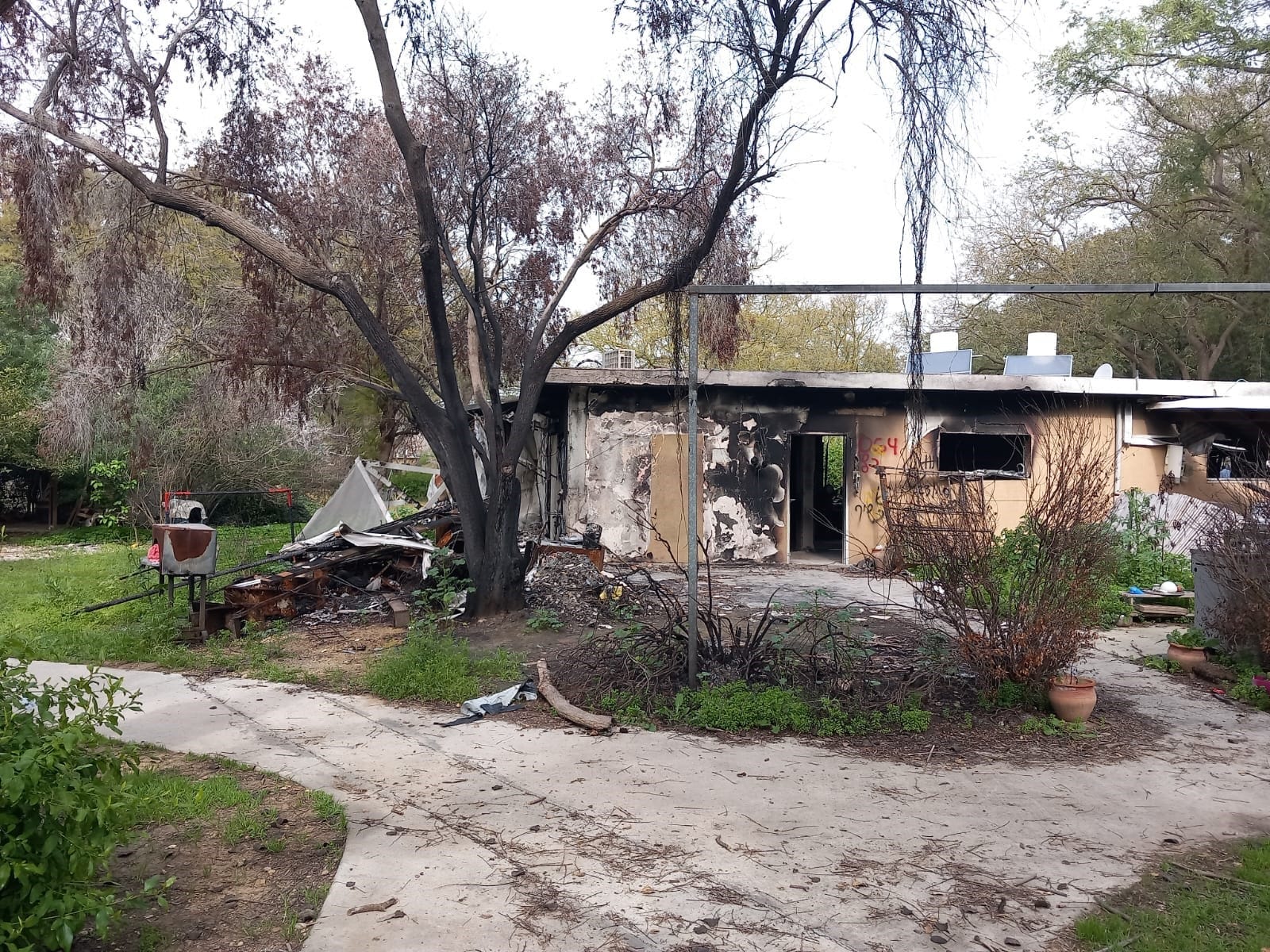
On the morning of October 7, 2023, Hamas and other Palestinian armed groups launched a coordinated assault on southern Israel. Armed attackers crossed the border, entered residential communities, attacked a music festival, murdered civilians and abducted men, women and children.
But the violence of October 7 did not end when the attackers returned to Gaza.
For those taken hostage, it marked the beginning of captivity that would expose a disturbing reality: Israeli civilians were not held exclusively in isolated military compounds. Testimonies and investigations would reveal that some were confined inside residential buildings, moved through civilian areas and, in certain cases, taken into medical facilities.
These findings raise questions extending beyond the armed men who carried out the initial abductions.
Who provided the buildings? Who guarded the captives? Who arranged transportation? And what role did individuals outside the formal ranks of Hamas play in sustaining the hostage operation?
The involvement of civilians on October 7
The participation of individuals from Gaza who were not identified as members of organized armed groups is not merely an allegation.
A United Nations Commission of Inquiry documented that members of Hamas's military wing, other Palestinian armed groups and civilians participated in attacks against Israeli communities on October 7.
In its investigation of Kibbutz Be'eri, the Commission identified attackers from Hamas, Palestinian Islamic Jihad and Gaza's civilian population.
This finding is significant because it demonstrates that responsibility for the violence was not limited to formally organized militant units.
However, the extent of civilian participation across the entire assault remains difficult to quantify.
The distinction matters. The participation of identifiable civilians in an attack does not establish the involvement or knowledge of the broader population. Yet neither should the civilian status of an individual prevent scrutiny of their actions.
From the border to residential captivity
Once hostages were transported into Gaza, their captivity took different forms.
Some were confined underground. Others were held inside residential properties. Some were transferred repeatedly between locations.
These movements required organization, physical spaces and individuals responsible for controlling the captives.
In testimony reported by the Associated Press, former hostage Sharon Alony Cunio described being held with members of her family in a Palestinian home before being moved to Nasser Hospital in Khan Younis.
Her account illustrates how captivity could move between residential and medical environments.
The presence of a hostage inside a civilian building does not automatically establish that every resident knew about the captivity. Nevertheless, where individuals knowingly provided accommodation, security or logistical assistance to hostage-takers, their actions demand investigation.
Hospitals and the unanswered questions
The role of hospitals in the hostage crisis is among the most sensitive aspects of the investigation.
The United Nations Commission of Inquiry recorded allegations that hostages had been held in medical facilities and noted public testimony from released hostages describing hospital captivity.
At the same time, the Commission reported that senior medical personnel interviewed during its investigation denied military activity at their hospitals. It also found that some broader Israeli allegations about military use of hospitals had not been adequately substantiated.
These findings require careful examination rather than a single sweeping conclusion.
A hospital may provide legitimate emergency treatment to an injured person, including someone held captive. That alone does not establish complicity in hostage-taking.
But knowingly concealing a hostage, assisting armed captors in maintaining unlawful detention or coordinating transfers to prevent a hostage's release would raise fundamentally different legal and ethical questions.
The critical issue is not simply whether a hostage received medical treatment.
It is whether any medical personnel knowingly participated in maintaining that person's captivity.
A network that demands accountability
In December 2025, Amnesty International published a detailed investigation into crimes committed by Hamas and other Palestinian armed groups during October 7 and the subsequent hostage crisis.
The organization concluded that the documented abuses included war crimes and crimes against humanity.
Its findings reinforced the importance of investigating not only the original kidnappings but also the systems through which captives were detained, mistreated and controlled.
An investigation into those systems must include the potential involvement of individuals who were not formal members of armed organizations.
At the same time, the existence of such involvement does not justify treating Gaza's entire civilian population as responsible for the crimes of Hamas.
Accountability depends on evidence of individual actions.
The questions that cannot be ignored
The hostage crisis exposed serious questions about the relationship between armed organizations and the civilian environments in which they operated.
How many civilians knowingly assisted hostage-takers?
How many were coerced?
What evidence exists of voluntary participation?
And how effectively have those responsible been identified and held accountable?
These questions are essential to understanding how the hostage system operated.
The next chapters will examine specific cases, testimony from survivors, documented civilian participation and allegations involving medical facilities.
The objective is not to assign collective guilt. It is to establish responsibility wherever the evidence leads.
Chapter 2 — Hostages Held in Residential Homes: The Role of Civilian Properties and Their Occupants
Behind the Walls of Ordinary Homes
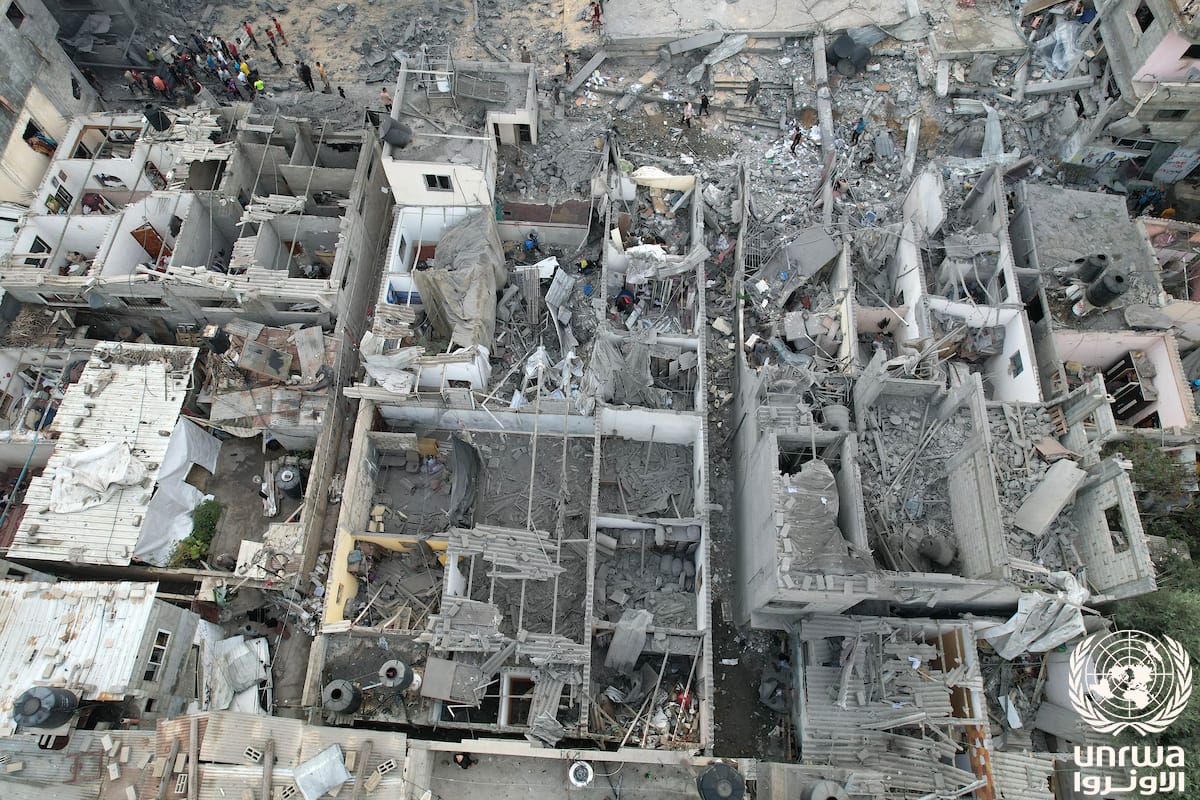
When Israeli hostages were taken into Gaza following the October 7, 2023 attacks, not all were imprisoned in underground tunnels or facilities controlled exclusively by armed militants.
Some were held inside residential buildings, apartments and family homes.
These locations were part of Gaza's civilian environment, where ordinary daily life continued around an extraordinary crime: the unlawful imprisonment of people abducted from their homes, communities and workplaces in Israel.
The use of residential properties raises serious questions about the involvement of individuals outside the formal structures of Hamas and other Palestinian armed organizations.
Who owned these properties? Who provided access? Who supplied food and water? Who knew that hostages were being held behind closed doors?
And, perhaps most importantly, who participated willingly, and who acted under coercion?
These questions cannot be answered by assuming that every resident was involved. But neither can they be dismissed simply because the locations were civilian homes.
The documented cases deserve close examination.
The Rescue of Four Hostages in Nuseirat
One of the most significant examples emerged on June 8, 2024, when Israeli forces rescued four hostages from two buildings in the Nuseirat area of central Gaza.
The hostages were Noa Argamani, Almog Meir Jan, Andrey Kozlov and Shlomi Ziv. All four had been abducted from the Nova music festival on October 7.
According to the Israeli military, Noa Argamani was held separately from the three men, who were confined in another building.
The rescue demonstrated that hostages could be held in residential structures within densely populated areas, rather than exclusively in underground military installations.
The operation also caused extensive Palestinian casualties. Gaza health authorities reported more than 270 Palestinians killed, while Israeli officials disputed aspects of the reported casualty figures and said militants were among those killed. The exact civilian-combatant breakdown was not independently established.
For investigators, the operation raised two distinct questions.
The first concerned the unlawful detention of Israeli hostages inside residential buildings.
The second concerned the planning, execution and human consequences of the military operation used to rescue them.
Both require examination under international humanitarian law.
The Case of Abdallah Aljamal
Following the Nuseirat rescue, attention focused on Abdallah Aljamal, a Palestinian journalist and writer whose name became associated with one of the buildings where hostages had been held.
Israeli authorities identified Aljamal as a Hamas operative and alleged that three Israeli hostages had been held in his family residence.
Aljamal had previously contributed material to Palestinian media outlets, including the Palestine Chronicle.
The Palestine Chronicle acknowledged his contributions but disputed descriptions of his professional relationship with the publication.
The case attracted international attention because it raised the possibility that an individual publicly associated with journalism had also been involved in concealing Israeli hostages.
However, the distinction between allegations and independently established facts remains important.
The rescue of hostages from a residential building was documented. The precise responsibilities, knowledge and actions of every person associated with that property require separate evidentiary assessment.
A person's profession does not establish innocence or guilt.
If someone knowingly assists in holding abducted civilians, their professional title does not exempt them from accountability.
Equally, an accusation of involvement must be supported by evidence rather than treated as conclusive solely because it originates from a military authority.
The Hostages Who Lived Under Civilian Roofs
Accounts from released Israeli hostages have provided further insight into the use of residential properties during captivity.
Some survivors have described being confined in rooms inside homes, encountering individuals other than their principal armed guards, or being moved between locations.
These accounts are important because they reveal that hostage detention could involve more than a small group of armed captors.
A residential captivity site may require supplies, transportation, surveillance and arrangements to prevent discovery.
However, the existence of these logistical needs does not establish who fulfilled them or whether any particular individual acted voluntarily.
Investigators must distinguish between direct testimony, corroborated evidence and assumptions about what people living nearby might have known.
For former hostages, the experience of being imprisoned inside an ordinary home could be especially disorienting.
A place normally associated with family life and personal safety had become a location of confinement.
The contrast between the domestic surroundings and the loss of freedom was itself part of the experience of captivity.
Civilian Participation: What Constitutes Complicity?
The question of civilian participation is central to understanding the hostage network.
Under international humanitarian law, taking and holding hostages is prohibited.
A person does not need to wear a military uniform or formally belong to an armed organization to participate in a hostage-taking crime.
An individual who knowingly guards a hostage, helps maintain unlawful detention or deliberately assists in concealing a captive may incur criminal responsibility, depending on the evidence and applicable law.
But proximity alone is insufficient.
Living in the same neighborhood, owning a nearby property or being related to a suspected participant does not automatically establish involvement.
The same distinction applies to people who may have acted under threats from armed organizations.
Coercion does not necessarily eliminate legal responsibility in every circumstance, but it is highly relevant to assessing individual conduct and culpability.
A serious investigation must therefore ask not only what happened, but who made each decision, what they knew and what choices were realistically available to them.
Why Residential Locations Matter
Holding hostages inside civilian areas creates significant dangers.
It exposes captives to prolonged unlawful detention while making their discovery and rescue more complicated.
It can also endanger surrounding residents when military forces attempt rescue operations or attacks against hostage-takers.
International humanitarian law does not permit an armed group to use civilians or civilian locations to shield military operations from attack.
At the same time, the presence of a hostage or armed fighter inside a residential building does not remove the attacking force's obligations to distinguish civilians from combatants, assess proportionality and take feasible precautions.
These principles apply simultaneously.
The criminal responsibility of hostage-takers does not cancel the legal protections owed to other civilians.
Likewise, the civilian character of a residential building cannot make hostage-taking lawful.
The Silence Surrounding Captivity
One of the most difficult questions is whether people living near hostage locations knew what was happening.
It is tempting to assume that someone must have noticed unusual activity, armed guards or unfamiliar individuals entering a building.
But suspicion is not proof of knowledge.
In a territory controlled internally by Hamas, fear of retaliation may affect whether residents report suspected militant activity. Some individuals may also support Hamas or other armed groups, while others oppose them or seek to avoid involvement.
There is no reliable basis for treating these different circumstances as identical.
To establish that a person knowingly assisted hostage-takers, investigators need more than the fact that a captive was held nearby.
Relevant evidence might include direct witness testimony, communications, financial records, surveillance footage or other corroborated material.
Where such evidence exists, the role of civilians should be examined without hesitation.
Where it does not, uncertainty must be acknowledged.
The Responsibility Behind Closed Doors
The use of residential homes in Gaza was not merely a geographical detail of the hostage crisis.
It was an important part of how some Israeli captives were concealed and controlled.
The Nuseirat rescue provided a particularly visible example, while survivor testimony has helped illuminate the broader experience of captivity in residential settings.
These cases challenge any simplistic understanding of hostage-taking as an activity confined to identifiable military bases.
They also demand precision.
Some individuals outside formal armed groups may have knowingly participated in serious crimes. Others may have been threatened, unaware or entirely uninvolved.
Investigating the first group does not require accusing the second.
The central question is not whether Gaza's population bears collective responsibility.
It is whether every person who knowingly participated in the unlawful imprisonment of Israeli hostages can be identified, investigated and, where the evidence supports it, held accountable.
Behind the walls of some ordinary homes, extraordinary crimes were committed.
Understanding who enabled those crimes remains an essential part of understanding the hostage crisis.
Chapter 3 — The Role of Civilians: Who Helped Hamas Hide and Guard Israeli Hostages?
When Civilian Life Becomes Part of a Hostage Network
The abduction of Israeli civilians on October 7, 2023, was carried out by Hamas and other Palestinian armed groups. But the subsequent detention of hostages inside Gaza raised another difficult question: to what extent did people outside those organizations participate in maintaining their captivity?
This question goes beyond the identity of the armed men who crossed into Israel.
Hostages were held for prolonged periods, sometimes in residential buildings and sometimes in underground facilities. Some were transferred between locations. Their captors needed places of detention, supplies, guards and ways to prevent discovery.
Such arrangements raise legitimate questions about logistical assistance and the involvement of individuals who were not formally identified as militants.
Yet the existence of a logistical network does not, by itself, prove that large numbers of civilians knowingly supported it.
To establish responsibility, investigators must examine particular people, actions and evidence.
The distinction is essential because civilians can become involved in armed conflicts in very different ways: as willing participants, coerced helpers, witnesses, victims or individuals who know nothing about the activities occurring around them.
Civilian Participation in the October 7 Attacks
The involvement of individuals who were not identified as members of organized armed groups began during the October 7 attacks themselves.
The United Nations Independent International Commission of Inquiry documented participation by Hamas's military wing, other Palestinian armed organizations and individuals described as civilians from Gaza.
The Commission examined attacks against Israeli communities and identified different categories of perpetrators.
This finding challenges the idea that every participant in the violence necessarily belonged to a formal militant organization.
Some individuals outside organized armed groups participated in the attacks.
However, the available evidence does not establish that such participation was representative of Gaza's wider civilian population.
Nor does participation in the initial attacks automatically establish involvement in the later detention of hostages.
Those are separate questions requiring separate evidence.
The significance of the Commission's findings lies in individual accountability: civilian status does not make participation in murder, abduction or hostage-taking lawful.
The Difference Between a Civilian and an Accomplice
International humanitarian law distinguishes civilians from members of armed forces and organized armed groups.
Civilians are generally protected against direct attack unless, and for such time as, they directly participate in hostilities.
But civilian status does not provide immunity from criminal prosecution for acts such as hostage-taking.
A person who knowingly participates in abducting civilians, guards them against their will or intentionally assists in maintaining their unlawful detention may bear criminal responsibility.
The precise legal consequences depend on the individual's conduct, intent, the applicable law and the evidence available.
Providing ordinary goods or services in a conflict zone does not automatically constitute complicity.
For example, delivering food to a household without knowing that hostages are confined inside is fundamentally different from knowingly supplying captors to help sustain unlawful detention.
Similarly, being related to a suspected hostage-taker does not establish criminal responsibility.
The relevant questions are what a person knew, what they did and whether they acted voluntarily.
The Nuseirat Rescue and the Question of Civilian Assistance
The June 8, 2024 rescue of four Israeli hostages in Nuseirat brought the question of civilian involvement into international focus.
Israeli forces recovered Noa Argamani, Almog Meir Jan, Andrey Kozlov and Shlomi Ziv from two buildings in central Gaza.
The three male hostages were reportedly held together, while Noa Argamani was held at a separate location.
Israeli authorities subsequently alleged that Abdallah Aljamal, a Palestinian writer who contributed to the Palestine Chronicle, had been involved in holding three of the hostages in a family residence.
The allegation became especially controversial because Aljamal was associated with journalism.
His professional activities, however, are not the determining factor in assessing responsibility.
The central issue is whether he knowingly participated in the detention of hostages and what independent evidence establishes his specific actions.
The rescue confirmed that the captives were held in residential buildings. It did not establish the guilt of every person associated with those properties or living nearby.
The operation also resulted in substantial Palestinian casualties, a separate matter requiring scrutiny under the laws governing military operations.
Both the hostage-taking and the conduct of the rescue operation must be evaluated according to the relevant evidence and legal standards.
What Former Hostages Have Described
Testimony from released hostages offers an important perspective on the conditions of captivity.
Some survivors have described being held in residential properties, encountering people other than their principal captors and being moved between locations.
Such testimony can help investigators identify the individuals who controlled a particular detention site.
It may also reveal whether additional people supplied food, monitored captives or participated in transfers.
However, a survivor's observation that another person was present does not necessarily establish that person's knowledge, role or degree of freedom.
These distinctions are particularly important when evaluating allegations of civilian involvement.
Where a former hostage identifies a person who knowingly guarded or confined them, that testimony may be powerful evidence.
Where the account merely establishes that someone entered a room or lived in a nearby property, further corroboration may be necessary.
The experiences of survivors deserve serious attention without turning every uncertainty into an established fact.
Voluntary Cooperation, Ideological Support and Coercion
Not everyone who comes into contact with an armed organization does so for the same reason.
Some individuals may actively support Hamas or Palestinian Islamic Jihad and willingly assist their operations.
Others may cooperate because they fear punishment, violence or retaliation against their families.
Still others may have little or no knowledge of the organization's activities.
These possibilities cannot be treated as interchangeable.
Hamas has exercised extensive internal authority in Gaza for years, including through security institutions and coercive practices. That context matters when investigating the choices available to individual residents.
But coercion must not be assumed in every case, just as voluntary support must not be presumed.
An investigation should look for evidence of ideological affiliation, communications, instructions, payments, threats or direct participation.
Only then can it begin to distinguish between willing accomplices and people acting under pressure.
Why Did More People Not Report the Hostages?
The question of why hostages were not reported or freed by local residents is understandable, especially when captivity occurred in residential environments.
But it contains an assumption that must be tested: that nearby residents knew where the hostages were being held.
Knowledge cannot be inferred solely from physical proximity.
Even where individuals suspected that hostages were present, investigators must ask whether they had a safe and realistic means of reporting that information.
Fear of armed groups, uncertainty about the captives' identities, restricted movement and the dangers of an active war may all affect what people can do.
There may also have been individuals who knew and chose not to act because they supported the hostage-takers.
That possibility deserves investigation.
However, the number of people in each category is not established by the documented hostage cases.
It would therefore be misleading to present widespread public knowledge or widespread voluntary silence as proven.
The more precise question is: where evidence shows that individuals knew hostages were being held, what actions did they take, and why?
The Problem of Concealment in Densely Populated Areas
Gaza's densely populated urban environment created serious challenges for locating hostages.
Residential buildings, narrow streets and extensive underground infrastructure could complicate intelligence gathering and rescue efforts.
The use of civilian locations for hostage detention also placed nearby residents at risk.
An armed organization that holds captives among civilians creates dangers for both the hostages and the surrounding population.
Nevertheless, the presence of hostages or fighters in a residential area does not remove the protections owed to uninvolved civilians.
Military forces remain bound by the principles of distinction, proportionality and feasible precautions in attack.
These obligations are independent of the criminal responsibility of the hostage-takers.
A serious examination of the hostage network must recognize both realities.
Investigating the Network Beyond Hamas
The hostage crisis cannot be understood solely through the organizational structure of Hamas.
Other Palestinian armed groups also participated in the October 7 attacks and hostage-taking.
Investigators must therefore examine the relationships between formal militant organizations, individual participants and any external helpers.
This includes questions about who controlled specific hostages, who ordered transfers and whether people outside armed groups knowingly provided detention locations or security.
It is also important to distinguish direct participation from indirect or incidental contact.
A person who deliberately conceals a hostage is not in the same position as someone who unknowingly rents out a property later used for detention.
Nor is an individual who willingly guards captives equivalent to someone forced to provide supplies under threat.
Understanding the network requires evidence of these differences.
Accountability Without Collective Guilt
The involvement of civilians in certain October 7 attacks and the detention of hostages raises serious questions that deserve sustained investigation.
Civilian identity must never be used to excuse intentional participation in hostage-taking.
At the same time, the actions of identifiable perpetrators cannot be attributed automatically to millions of other people living in Gaza.
Accountability is strongest when it is specific.
Who participated in an abduction?
Who knowingly provided a detention site?
Who guarded a captive?
Who assisted in moving hostages to avoid discovery?
Who issued orders, and who acted under coercion?
Each question calls for evidence rather than assumption.
The victims of October 7 and the surviving hostages deserve answers about every individual who contributed to their suffering.
The wider civilian population also deserves to be judged by individual conduct rather than collective accusation.
Investigating civilian involvement is not a distraction from Hamas's responsibility. It is part of establishing the full scope of the hostage-taking crimes.
The purpose of such an investigation is to identify those responsible, understand how the detention system functioned and ensure that documented crimes are neither minimized nor misattributed.
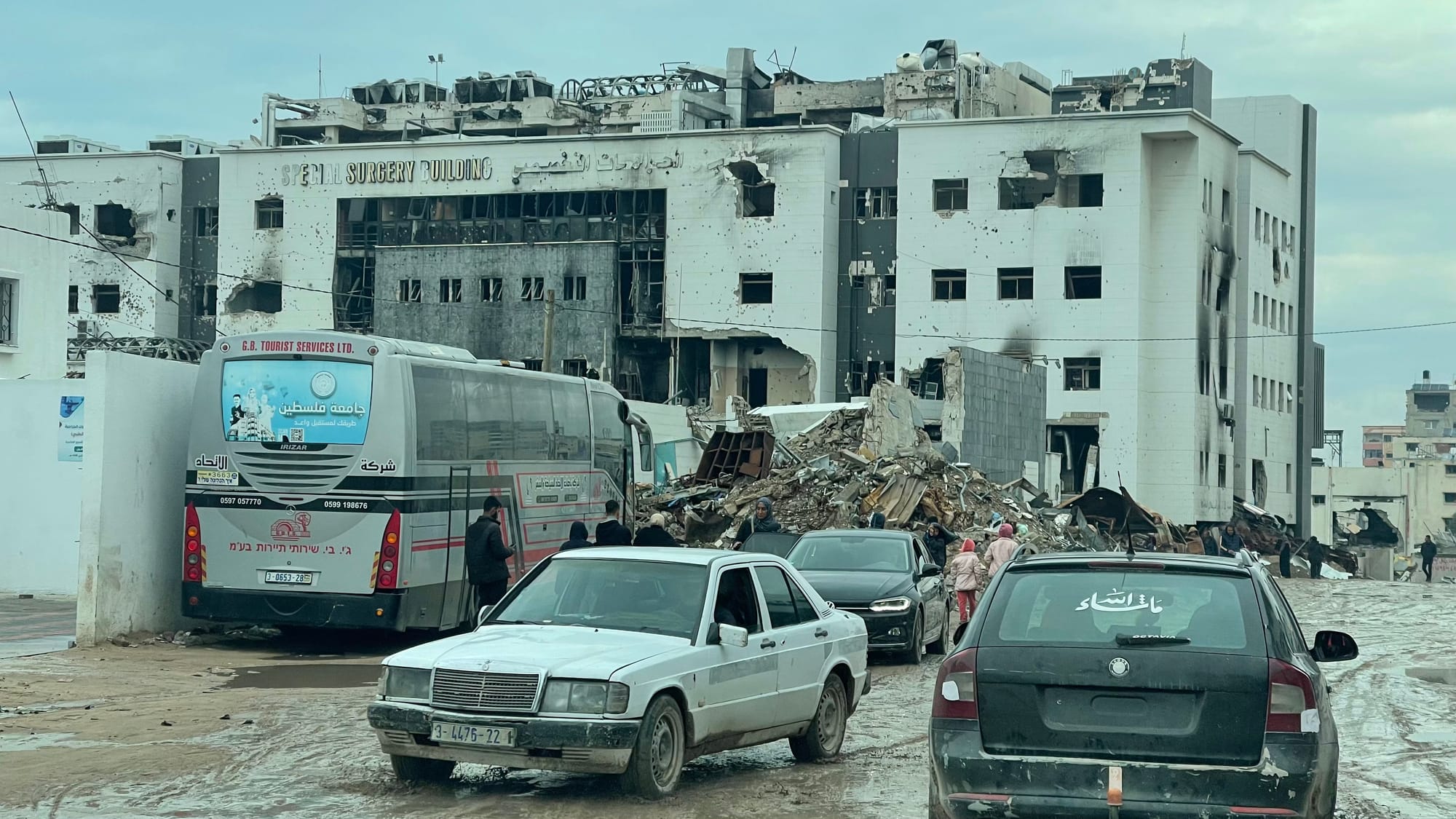
Chapter 4 — Hospitals and Medical Facilities: Were Israeli Hostages Hidden and Treated Inside Gaza's Healthcare System?
When Hospitals Entered the Hostage Investigation
Hospitals are supposed to represent protection during war. They are places where the wounded receive treatment, medical personnel work to save lives, and civilians seek shelter from violence.
Yet following the October 7, 2023 attacks, hospitals in Gaza became part of a deeply troubling investigation into the captivity of Israeli hostages.
Israeli authorities alleged that Hamas and other armed groups had used medical facilities for military purposes, including moving or holding hostages.
Some of these allegations were supported by security-camera footage, survivor testimony and findings from international investigators. Others remained disputed or were not independently substantiated.
The distinction matters.
The presence of an abducted person in a hospital raises questions about how they arrived, who controlled their movements, and whether medical personnel knew they were being held against their will.
It does not, by itself, establish that the hospital as an institution participated in hostage-taking.
To understand what happened, the investigation must begin with the evidence.
Al-Shifa Hospital: What the Security Cameras Revealed
One of the most significant pieces of publicly released evidence came from Al-Shifa Hospital in Gaza City.
In November 2023, the Israeli military published security-camera footage that it said had been recorded inside the hospital on October 7.
The footage showed armed men bringing two individuals into the hospital complex. One appeared to be forcibly escorted through a corridor, while another was transported on a hospital bed.
Israeli authorities identified the two individuals as hostages taken during the October 7 attacks.
The footage became an important part of the international debate over whether Hamas had used hospitals in connection with its hostage operations.
In its June 2024 report, the United Nations Independent International Commission of Inquiry concluded that two hostages had been taken to Al-Shifa Hospital on October 7 and had received medical treatment.
This finding established that the hospital had been used as a destination for at least two abducted individuals.
However, several important questions remained.
Who ordered the hostages to be brought there?
Which individuals knew they were hostages?
Were medical personnel aware that the patients were being unlawfully detained?
And what happened to the captives after they left the hospital?
The footage provided evidence of their presence. It did not establish the knowledge or criminal responsibility of every medical worker in the building.
Medical Treatment and Continued Captivity
One of the most disturbing questions concerns the relationship between medical treatment and the continued detention of hostages.
An injured hostage may require medical attention to survive.
Under international humanitarian law, wounded and sick people must receive appropriate medical care without adverse distinction.
A doctor who treats an injured person does not commit a crime merely because that person is being held captive.
The legal and ethical situation changes if a medical worker knowingly participates in concealing a hostage, helps prevent their release or deliberately coordinates their transfer back into unlawful detention.
Those actions would require separate investigation.
There is an important difference between treating an injured captive and assisting the captors who control that person's freedom.
The publicly documented evidence that hostages received medical treatment in Gaza does not, on its own, prove that doctors treated them for the purpose of enabling their continued captivity.
That allegation requires evidence of knowledge, intent and conduct.
Investigators should examine medical records where available, witness testimony, communications and the circumstances of each transfer.
The central question is whether treatment was provided as an independent medical obligation or whether particular individuals knowingly helped sustain the hostage-taking operation.
Testimonies About Nasser Hospital
Al-Shifa was not the only medical facility mentioned in accounts of captivity.
Former Israeli hostage Sharon Alony Cunio described being held with family members and subsequently taken to Nasser Hospital in Khan Younis.
Her account, reported by international media, raised questions about the use of hospital premises during hostage detention.
Testimony from survivors is particularly important because it can provide information that security footage or military statements cannot establish.
A former hostage may describe the rooms in which they were confined, the people who guarded them, whether they encountered medical personnel and whether they were allowed to leave.
However, investigators must still distinguish between a survivor's direct observations and conclusions about the knowledge of people they did not personally encounter.
A hostage held inside a hospital may be unable to identify who authorized their presence or which staff members were aware of their circumstances.
That uncertainty should not prevent investigation.
It should determine the questions investigators ask.
The Allegations Against Hamas
Israeli authorities repeatedly accused Hamas of exploiting Gaza's healthcare infrastructure for military activities.
These allegations included the use of tunnels, command facilities, weapons storage and hospital buildings for purposes unrelated to medical care.
Hamas denied many of the allegations, including claims about the extent of its military infrastructure beneath hospitals.
Independent investigations produced a more complicated picture than either side's public statements.
The presence of hostages at Al-Shifa was documented.
Other allegations about the hospital's wider military function were contested, and some prominent claims were not established by the publicly available evidence.
In December 2023, an investigation by The Washington Post concluded that the material publicly presented by Israel at that time did not substantiate some of its most expansive claims about a Hamas command-and-control center beneath Al-Shifa.
This did not negate the documented transfer of hostages into the hospital.
It demonstrated why individual allegations must be assessed separately.
Evidence that armed men brought hostages into a medical facility cannot automatically prove every additional claim made about that facility.
Equally, uncertainty about an alleged underground command center does not erase the documented presence of abducted people.
What Did Medical Personnel Know?
The question of staff knowledge is among the most difficult issues in this investigation.
A hospital can contain hundreds of employees working different shifts, departments and responsibilities.
The actions or knowledge of one individual cannot automatically be attributed to an entire institution.
Some personnel may have directly encountered hostages.
Others may have treated patients without knowing their identities or the circumstances of their arrival.
Still others may have been unaware that captives were present anywhere in the facility.
In a conflict environment, armed men may also exert pressure on medical workers, limiting their ability to refuse instructions or report wrongdoing.
None of these possibilities should be assumed without evidence.
Investigators must establish who knew what, when they knew it, and whether they had meaningful freedom to act.
If an individual knowingly helped conceal a hostage or participated in their unlawful detention, that conduct should be investigated regardless of their profession.
Medical status is not immunity from accountability for criminal acts.
But medical status must not be treated as evidence of guilt either.
The Protection of Hospitals Under International Law
Hospitals enjoy special protection under international humanitarian law.
Medical facilities must not be attacked merely because wounded combatants receive treatment there.
Nor does the presence of armed guards or weapons taken from patients automatically remove a hospital's protection.
A medical unit may lose its special protection if it is used, outside its humanitarian function, to commit acts harmful to the enemy, subject to the applicable legal conditions, including warning requirements.
Even where protection is lost, attacking forces remain bound by the principles of distinction, proportionality and precautions.
Patients, medical workers and other civilians do not lose their individual protection simply because an armed group operates nearby.
These rules are essential when examining the military operations conducted around Gaza's hospitals.
The unlawful detention of Israeli hostages and the protection of Palestinian patients are not competing legal principles.
Both must be respected.
The Danger of Turning Hospitals Into Places of Captivity
Holding hostages inside or near medical facilities creates serious risks.
It may compromise the safety of patients and staff, interfere with humanitarian operations and expose medical facilities to military action.
It also makes the situation of the hostages more dangerous.
A person held captive inside a hospital remains unlawfully detained even if they receive necessary medical treatment.
The provision of care cannot legitimize their imprisonment.
Where armed groups deliberately exploit protected medical environments to conceal captives or conduct military operations, they undermine the humanitarian purpose of those institutions.
But establishing such conduct requires evidence about specific facilities, individuals and events.
The consequences of unsupported accusations can also be severe, particularly when they concern hospitals serving large civilian populations.
For this reason, accuracy is not a secondary consideration.
It is central to accountability.
What Remains Unanswered?
The documented movement of hostages through Al-Shifa Hospital, together with testimony concerning other medical facilities, raises questions that deserve further investigation.
Who arranged the transfers?
Which armed groups controlled the hostages at each stage?
Were any medical personnel instructed to conceal their identities?
Did anyone knowingly facilitate their return to captivity?
Were hospital administrators informed?
And were staff members threatened or prevented from acting independently?
These questions cannot be answered simply by pointing to the existence of hospital footage or repeating accusations against Gaza's medical system as a whole.
They require testimony, records and independently corroborated findings.
The evidence already establishes that at least some Israeli hostages entered medical facilities during their captivity.
It does not establish that Gaza's healthcare workforce collectively supported hostage-taking.
Accountability Must Follow the Evidence
The involvement of hospitals in the hostage crisis is an issue of profound moral and legal importance.
The documented presence of abducted Israelis at Al-Shifa Hospital demonstrates that at least one major medical facility became part of the hostages' movements following October 7.
Survivor accounts have raised further concerns about captivity in other medical settings.
These findings should not be minimized.
Every person who knowingly assisted in the unlawful detention of hostages should be subject to investigation, including medical professionals if evidence establishes their participation.
At the same time, allegations against individual personnel must not become accusations against entire hospitals or Gaza's civilian healthcare system without sufficient proof.
The purpose of an investigation is to establish responsibility, not to replace evidence with suspicion.
The unanswered questions surrounding Gaza's hospitals remain important not only for understanding the hostage crisis, but also for protecting the integrity of medical care during armed conflict.
A hospital must never become a place where unlawful captivity is knowingly sustained.
And the search for accountability must never abandon the standards of evidence on which justice depends.
Chapter 5 — Medical Treatment During Captivity: Who Treated the Hostages, and What Happened Afterwards?
The Medical Reality Behind Hostage Captivity
When Israeli civilians were abducted on October 7, 2023, some entered captivity already suffering from serious injuries.
Others developed medical problems during months of confinement, inadequate nutrition, psychological trauma and restricted access to healthcare.
The hostage crisis therefore created a disturbing intersection between medicine and unlawful imprisonment.
Some captives received medical attention while they remained under the control of Hamas or other Palestinian armed groups.
But medical treatment did not mean freedom.
For an injured hostage, receiving care could mean surviving another day while still being denied the right to return home.
This raises questions about the individuals who provided that care, the conditions under which they worked and what happened to the hostages after treatment.
Did medical personnel know the patients were abducted civilians?
Were they able to act independently?
Did any knowingly assist the hostage-takers in maintaining captivity?
And were injured hostages transferred back into confinement after receiving treatment?
These questions require examination of documented cases rather than assumptions about Gaza's medical workforce.
The Case of Mia Schem
One of the most widely reported examples of medical treatment during captivity involved Mia Schem, a young Israeli woman abducted from the Nova music festival.
Schem was wounded during the October 7 attack and suffered a serious injury to her arm.
While she was being held in Gaza, Hamas released a video showing her receiving treatment.
The footage became one of the earliest publicly circulated images of an Israeli hostage receiving medical attention in captivity.
Following her release in November 2023, Schem described her experiences in interviews with Israeli and international media.
She said that she had undergone surgery while being held hostage and described receiving treatment under extremely difficult circumstances.
According to her testimony, the operation was performed by a veterinarian rather than a conventional hospital surgeon.
This detail attracted considerable attention, although the identity and professional qualifications of the person who operated on her have not been independently established in the public record.
Schem also described being held in a family home during part of her captivity.
Her account illustrates an important distinction.
A hostage can receive medical treatment while simultaneously being subjected to unlawful detention, intimidation and severe psychological suffering.
Medical intervention does not transform captivity into humane or lawful treatment.
Surgery Without Freedom
The treatment of Mia Schem raises questions about how medical decisions were made during captivity.
Who arranged the procedure?
Who supplied medical equipment?
Who determined where the operation would take place?
And who decided that Schem would remain imprisoned afterward?
These are not merely medical questions.
They concern the organizational structure of hostage detention.
An armed group holding an injured captive has an obligation to ensure necessary medical care. But fulfilling that obligation does not make the original abduction or continued detention lawful.
A medical professional who provides emergency treatment may be acting consistently with medical ethics, even when the patient is under the control of an armed organization.
However, a person who knowingly participates in concealing the patient, restricting their freedom or facilitating their continued unlawful detention may be engaged in conduct beyond legitimate medical care.
The difference lies in the person's actions and intent.
Schem's testimony establishes her experience of treatment and captivity. It does not, without further evidence, establish the criminal responsibility of every individual involved in providing care.
Al-Shifa: Treatment Under the Control of Armed Men
The security-camera footage from Al-Shifa Hospital on October 7, 2023, provides another important example.
Israeli authorities released footage showing armed men bringing two individuals into the hospital.
The United Nations Independent International Commission of Inquiry subsequently found that two hostages were taken to Al-Shifa on October 7 and received medical treatment.
This establishes that at least some abducted individuals entered Gaza's medical system while still under the control of their captors.
But the circumstances of that treatment require careful interpretation.
Medical personnel may have encountered wounded patients accompanied by armed individuals.
The footage does not establish what every medical worker knew about the patients' identities, whether they understood that the patients had been abducted or whether they had any meaningful opportunity to intervene.
The presence of armed captors is relevant because it may affect the ability of medical workers to act independently.
An investigation into possible complicity must therefore establish the specific knowledge and conduct of individual personnel.
Treatment Followed by Continued Detention
A particularly serious issue is whether hostages who received medical treatment were subsequently returned to captivity.
In cases where an abducted person was treated and remained under the control of their captors, medical care did not end the hostage-taking crime.
The unlawful detention continued.
However, an important distinction must be made between the actions of the captors and those of medical personnel.
If armed men removed a treated hostage from a hospital and returned them to a detention site, responsibility for that transfer cannot automatically be attributed to the clinicians who provided treatment.
To establish medical complicity, investigators would need evidence that particular individuals knowingly facilitated the transfer or otherwise assisted in maintaining unlawful captivity.
The public record does not establish that doctors across Gaza systematically treated Israeli hostages for the purpose of returning them to hiding places.
That claim should not be presented as fact without further evidence.
Nevertheless, documented medical treatment during captivity makes the circumstances of each transfer a legitimate subject for investigation.
The Ethical Obligations of Medical Professionals
Medical ethics require healthcare workers to treat patients according to medical need, without discrimination based on nationality, religion or political identity.
This obligation extends to wounded civilians, prisoners and individuals held by armed groups.
A doctor must not withhold necessary treatment simply because a patient is an Israeli hostage or a member of an opposing population.
The provision of medical care is therefore not evidence of support for Hamas.
At the same time, medical professionals must not participate in torture, abuse or other unlawful treatment of detainees.
They must not knowingly use their medical expertise to facilitate mistreatment or conceal crimes.
The difficult question arises when medical personnel operate under the authority or threats of an armed organization.
A clinician may face serious danger for refusing instructions.
This does not make every action lawful, but it is relevant to evaluating individual responsibility.
The appropriate investigation must distinguish medical necessity, professional independence, coercion and intentional participation in criminal conduct.
The Hostages' Physical and Psychological Suffering
The medical consequences of captivity extended far beyond visible wounds.
Released hostages described hunger, isolation, fear, restricted movement and uncertainty about whether they would survive.
Some suffered from untreated or inadequately treated medical conditions.
Others experienced serious psychological distress resulting from prolonged confinement and threats.
These accounts demonstrate why occasional medical intervention cannot be used as evidence that captives were treated humanely overall.
A person may receive medication or undergo a medical procedure while still being subjected to serious violations of international law.
The absence of freedom, the threat of violence and the denial of contact with family can cause profound harm.
Medical care, where provided, addressed only part of the suffering created by captivity.
What Medical Records Could Reveal
Medical documentation could be important in establishing what happened to hostages during their detention.
Records might identify treatment dates, injuries, procedures, medication and the identities of personnel involved.
They could also help investigators establish whether captives were transferred between medical facilities and detention locations.
However, the existence, completeness and accessibility of such records remain uncertain.
Medical records are sensitive documents and must be handled in ways that protect patients' privacy and the integrity of any investigation.
Witness testimony may also help reconstruct events where written records are unavailable.
The strongest findings would come from combining survivor accounts with independently authenticated footage, medical documentation and corroborating evidence.
Without that corroboration, allegations about particular doctors or institutions should remain clearly identified as allegations.
Who Should Be Held Accountable?
Responsibility for the hostage crisis begins with those who abducted and unlawfully detained Israeli civilians.
It also extends to individuals who knowingly participated in the crimes, whether or not they formally belonged to Hamas or another armed organization.
If evidence demonstrates that a medical professional deliberately helped conceal a hostage, coordinated unlawful detention or knowingly assisted in preventing release, those actions warrant investigation.
But providing medically necessary treatment to a captive is not, by itself, criminal complicity.
The question is not whether a doctor treated a hostage.
It is whether the doctor knowingly participated in the hostage-taking operation beyond providing legitimate care.
That distinction protects both the rights of victims and the principle of medical neutrality.
The Questions That Remain
The documented cases of Mia Schem and the hostages brought to Al-Shifa reveal an uncomfortable reality.
Medical treatment and unlawful captivity existed alongside one another.
Some hostages received care while remaining prisoners of armed groups responsible for their abduction.
Their treatment did not end the crime committed against them.
The next stage of investigation must focus on the individuals who controlled the circumstances of that treatment.
Who arranged medical assistance?
Who controlled the hostages' movements?
Who ordered their continued detention?
And did anyone working in a medical capacity knowingly help maintain that captivity?
The answers must come from evidence, not from assumptions about an entire profession or population.
The medical treatment of Israeli hostages is not evidence that their captivity was humane.
It is part of the broader story of how abducted civilians were kept alive while their freedom was denied.
Understanding that distinction is essential to establishing the full responsibility of those involved.
Chapter 6 — Hamas, Palestinian Islamic Jihad and Other Armed Groups: Who Controlled the Hostages?
The Hostage Crisis Was Not Controlled by Hamas Alone
When Hamas and other Palestinian armed groups launched their attacks against southern Israel on October 7, 2023, the abduction of civilians and soldiers became one of the defining crimes of the assault.
Approximately 250 people were taken into Gaza, including children, women, elderly civilians, foreign nationals and members of the Israeli security forces.
Although Hamas became the principal organization associated with the hostage crisis, it was not the only armed group involved.
Palestinian Islamic Jihad, commonly known as PIJ, also participated in hostage-taking and publicly acknowledged holding Israeli captives.
Other armed factions and individuals outside formally organized militant groups were implicated in aspects of the October 7 violence.
This created a complex hostage crisis involving different captors, locations and chains of command.
Understanding who controlled the hostages is essential to understanding how their captivity was organized, why some were released while others remained imprisoned, and who bears responsibility for the crimes committed against them.
Hamas: The Principal Armed Organization
Hamas has governed Gaza internally since 2007, following its violent conflict with the rival Palestinian faction Fatah.
Its military wing, the Izz ad-Din al-Qassam Brigades, played a central role in planning and carrying out the October 7 attacks.
Hamas is designated as a terrorist organization by the United States, the European Union, the United Kingdom and several other governments.
The organization has both political and military structures, but its armed wing was central to the hostage-taking operation.
Following October 7, Hamas issued statements, released videos involving captives and participated in negotiations over hostage releases.
The organization used the hostages as leverage in negotiations concerning Palestinian prisoners, ceasefires and other demands.
The taking of hostages is prohibited under international humanitarian law.
This prohibition applies regardless of the political objectives of the perpetrators or the status of the people they seek to exchange.
The fact that Hamas negotiated releases did not make the original abductions lawful.
Palestinian Islamic Jihad: A Separate Organization
Palestinian Islamic Jihad is a separate Palestinian Islamist armed organization with its own leadership and military wing, the Al-Quds Brigades.
Like Hamas, PIJ is designated as a terrorist organization by the United States and the European Union.
The organization has maintained close relationships with Iran and has participated in armed attacks against Israel.
Following October 7, PIJ acknowledged holding Israeli hostages.
Its involvement demonstrated that the captives were not necessarily under one unified command structure.
Different organizations could exercise control over different individuals, complicating negotiations and efforts to establish the location and condition of each hostage.
PIJ released videos featuring hostages and participated in the broader political and military messaging surrounding the crisis.
These recordings were produced while the individuals remained in captivity and should not be treated as freely given testimony.
Statements made by hostages under the control of armed groups may be influenced by threats, coercion or fear for their lives.
Other Armed Factions and Individual Participants
Gaza has long contained several armed Palestinian organizations beyond Hamas and PIJ.
These include the Popular Resistance Committees and armed factions associated with other Palestinian political movements.
Some participated in the wider October 7 assault or publicly expressed support for it.
However, support for the attacks does not establish that every faction held hostages.
Investigators must distinguish between documented participation in abductions, confirmed custody of captives and broader political or military alignment.
The United Nations Independent International Commission of Inquiry found that members of Hamas, other Palestinian armed groups and individuals described as civilians participated in the October 7 attacks.
This finding establishes that the violence involved perpetrators from more than one organizational category.
It does not establish that all those participants subsequently held hostages or belonged to a coordinated detention network.
Those questions require evidence about particular individuals and incidents.
Were the Hostages Divided Between Different Groups?
Public statements from Hamas and PIJ, together with the circumstances of hostage releases, demonstrated that more than one armed organization exercised custody over captives.
This division had significant consequences.
Negotiators could not necessarily assume that Hamas directly controlled every hostage.
Information about a captive's whereabouts, health and survival could depend on the organization or individuals physically holding them.
Different armed groups also had their own leadership structures and interests.
This complicated efforts to secure releases and independently verify claims made by captors.
However, the full distribution of hostages between organizations has not been established in a comprehensive, independently verified public record.
Claims about the number held by a particular faction should therefore be assessed according to their date and source.
The Role of Hostages in Negotiations
Hostages became central to negotiations involving Israel, Hamas, mediating governments and international organizations.
Qatar, Egypt and the United States played important diplomatic roles in efforts to secure releases and temporary pauses in fighting.
During the November 2023 temporary truce, hostages were released in exchange for Palestinian prisoners and detainees held by Israel, alongside other agreed arrangements.
These exchanges demonstrated the importance of the captives to negotiations.
They also revealed the severe imbalance of power between hostage-takers and the people they held.
Captives had no meaningful freedom to choose whether they participated in an exchange or remained imprisoned.
Their lives and liberty were controlled by armed organizations seeking political and military concessions.
International humanitarian law prohibits hostage-taking even when perpetrators claim that their actions serve a political cause.
Captivity as a System of Control
Holding hostages over extended periods requires more than the initial act of abduction.
Captors must maintain physical control, prevent escape and decide where and how detainees are confined.
Released hostages have described being moved between locations, held in residential properties and underground facilities, and subjected to restrictions on movement and communication.
These accounts reveal different methods of confinement.
Some hostages were guarded by armed men.
Others described interactions with people whose precise organizational affiliation was unclear.
Such testimony raises legitimate questions about whether individuals outside formal militant structures provided assistance.
But the presence of an unidentified person at a detention site does not automatically establish their role, knowledge or voluntary participation.
Investigators must establish whether an individual acted as a guard, transporter, supplier or knowing accomplice, rather than assuming that every person encountered was part of the operation.
The Importance of Underground Infrastructure
Hamas constructed an extensive underground tunnel network in Gaza over many years.
Parts of this infrastructure were used for military movement, storage, concealment and other operations.
Evidence from Israeli military operations and testimony from released hostages established that some captives were held underground.
Underground detention created additional dangers.
Hostages could be isolated from the outside world, deprived of natural light and subjected to severe psychological distress.
Rescue efforts also became more complicated because intelligence agencies could struggle to establish precise locations.
The use of tunnels did not eliminate the role of above-ground facilities.
The hostage crisis involved multiple types of detention sites, including residential buildings and underground spaces.
The available evidence does not support treating every tunnel or civilian building in Gaza as a hostage location.
Each site requires individual verification.
The Question of Cooperation Between Armed Groups
Hamas and PIJ have cooperated militarily on various occasions, including through joint operational structures involving Palestinian armed factions.
Their involvement in the October 7 attacks and subsequent hostage crisis demonstrates overlapping interests.
However, overlapping interests do not necessarily mean that every hostage transfer, detention decision or release was directed through a single unified command.
The extent of operational coordination in individual cases remains an important subject for investigation.
Investigators should examine communications, command relationships, custody arrangements and the identities of those who issued instructions.
Establishing these details is necessary for determining both direct and command responsibility.
A senior leader's political association with a group does not, by itself, establish responsibility for every action committed by every individual connected to that organization.
Responsibility must be assessed according to applicable legal standards and the evidence of authority, knowledge and conduct.
Iran and External Support
Iran has provided financial, military and other forms of support to Hamas and Palestinian Islamic Jihad over many years.
This relationship forms part of the broader regional security context.
Iranian support helped strengthen the capabilities of armed organizations confronting Israel.
However, the existence of long-term support does not automatically establish that Iranian officials directed specific hostage-taking operations on October 7.
That distinction is important.
Investigating external responsibility requires evidence of planning, instructions, financing linked to particular crimes or other legally relevant conduct.
The relationship between Iranian authorities and Palestinian armed groups deserves scrutiny without presenting every allegation of operational control as established fact.
Who Was Responsible for the Treatment of Hostages?
Responsibility for hostage-taking extends beyond the individuals who physically carried out abductions.
Those who ordered, organized, knowingly facilitated or directly maintained unlawful detention may also bear responsibility, depending on their actions and the applicable legal framework.
Commanders may incur responsibility for crimes committed by subordinates where the legal requirements for command or superior responsibility are met.
Individual guards may be responsible for abuses they personally committed.
People outside armed organizations may also be investigated if they knowingly participated in hostage-taking crimes.
But responsibility cannot be established through organizational proximity alone.
A careful investigation must distinguish direct perpetrators, commanders, knowing accomplices, coerced individuals and people who were not involved.
The goal is to identify the actual chain of responsibility.
Why the Different Organizations Matter
Treating every hostage-taker simply as Hamas risks overlooking the participation of other armed organizations and individuals.
It can also obscure how custody was divided and how decisions were made.
Understanding the different actors matters for reconstructing the events of October 7, the subsequent months of captivity and the negotiations that followed.
It is equally important for investigating crimes against hostages and identifying those responsible.
The documented participation of Hamas and Palestinian Islamic Jihad establishes that the hostage crisis involved more than one armed organization.
Evidence of participation by some individuals outside organized groups further complicates the picture.
But the precise extent of cooperation, the role of civilian helpers and the command structures behind individual detention sites require case-by-case investigation.
Beyond the Organizations: The Search for Accountability
The hostage crisis was not simply a confrontation between governments and armed organizations.
It was a prolonged human tragedy involving abducted individuals whose freedom, safety and lives were controlled by their captors.
Hamas bears central responsibility for its role in the October 7 attacks and hostage-taking.
Palestinian Islamic Jihad and other perpetrators must also be assessed according to their documented conduct.
Any individual who knowingly assisted in unlawful detention should face investigation, regardless of organizational membership or civilian profession.
At the same time, criminal responsibility must remain individual and evidence-based.
The involvement of armed groups operating within Gaza does not establish collective guilt among its civilian population.
Understanding the hostage network requires identifying the people who abducted captives, those who controlled them, those who ordered their detention and those who knowingly helped sustain it.
Only by reconstructing these relationships can investigators establish the full scope of responsibility for the hostage-taking crimes.
Chapter 7 — Why Did Witnesses Remain Silent? Fear, Support for Hamas and the Failure to Report Hostage Locations
The Question Behind the Silence
For months after the October 7, 2023 attacks, Israeli hostages remained hidden in Gaza.
Some were held underground. Others were confined inside residential buildings, sometimes in densely populated neighborhoods where civilian life continued around them.
Their captivity raises one of the most uncomfortable questions surrounding the hostage crisis.
How could abducted men, women and children remain concealed for so long, and what did people living nearby know?
The question is especially significant in cases where hostages were held inside ordinary homes rather than isolated military facilities.
Did neighbors notice unusual activity?
Did relatives of the captors know what was happening?
Were supplies delivered by people who understood that hostages were being held?
And if someone knew, why did they not report it?
These questions deserve investigation. But they must begin with an essential distinction: the presence of a hostage in a residential area does not establish that surrounding residents knew about the captivity.
The challenge is to identify where silence reflected deliberate cooperation, where it resulted from fear, and where the assumption of knowledge is unsupported.
Gaza Under Hamas Rule
Hamas has exercised internal control over Gaza since 2007, following its violent conflict with Fatah.
Over the years, human rights organizations have documented arbitrary arrests, intimidation, torture and repression by Hamas authorities and security forces.
These practices are important to understanding the environment in which residents make decisions.
A person who suspects that an armed organization is holding hostages may face substantial risks if they attempt to intervene.
Reporting information to Israeli authorities could expose an individual to accusations of collaboration, with potentially severe consequences.
The danger may extend to family members.
This does not mean that every resident was afraid of Hamas or that every person who remained silent acted under coercion.
Some Palestinians have supported Hamas politically or ideologically, while others have opposed its rule.
But the existence of coercive authority complicates the assumption that residents could freely report suspicious activity.
Any investigation into silence must consider the practical risks faced by potential witnesses.
Support for Hamas and Voluntary Cooperation
Fear is not the only possible explanation for the concealment of hostages.
Some individuals may have knowingly supported the armed organizations responsible for the abductions.
The United Nations Independent International Commission of Inquiry documented participation by individuals described as civilians in the October 7 attacks, alongside Hamas and other Palestinian armed groups.
This finding demonstrates that participation in violence was not limited to formally identified militants.
However, it does not establish how many Gaza residents supported hostage-taking or knew where captives were being held.
Public expressions of support for Hamas, where documented, must also be distinguished from direct participation in a specific crime.
Political sympathy, approval of an armed organization and knowingly assisting in the unlawful detention of a hostage are different forms of conduct.
The latter may create criminal responsibility.
A serious investigation should examine evidence of deliberate assistance, including knowingly providing detention locations, guarding captives, arranging transportation or helping prevent their discovery.
Where such actions can be established, they should not be excused because the individuals involved were civilians.
What Did Neighbors Actually Know?
Residential captivity creates understandable suspicion about the knowledge of people living nearby.
But physical proximity is not proof.
A neighbor may notice armed men entering a building without knowing what is happening inside.
A relative may live in the same property without having access to a room where captives are held.
An individual may suspect illegal activity but lack sufficient information to identify the people involved.
Conversely, someone may knowingly provide supplies, monitor access to a building or assist captors in preventing discovery.
These situations are fundamentally different.
Investigators must examine particular evidence rather than assume that an entire neighborhood shared knowledge of a detention site.
Useful evidence may include survivor testimony, authenticated recordings, communications, witness accounts and records showing the movement of captives.
Without such evidence, the number of people who knew about specific hostage locations remains uncertain.
The Nuseirat Case and the Limits of Public Knowledge
The June 8, 2024 rescue of four Israeli hostages from residential buildings in Nuseirat brought international attention to the use of civilian properties for detention.
The operation demonstrated that captives could remain hidden inside an urban environment for extended periods.
Israeli authorities alleged that individuals associated with one of the properties had knowingly participated in holding hostages.
The case raised questions about the involvement of people outside the formal military structures of Hamas.
But it also illustrated the limits of publicly available information.
The rescue did not establish that everyone living nearby knew the hostages were present.
Nor did it establish the precise role of every individual associated with the buildings.
The relevant question is not whether the neighborhood collectively concealed the captives.
It is who knowingly participated in their detention and what evidence supports that conclusion.
The Fear of Being Accused of Collaboration
In Gaza, allegations of collaboration with Israel can carry serious consequences.
Human rights organizations have documented abuses committed by Hamas authorities against individuals accused of collaborating with Israeli security services.
This history is relevant to understanding why someone might hesitate to report information about hostages.
A person who contacts Israeli authorities could fear being identified, detained or attacked.
The risks may be especially severe during an active war, when communication systems are disrupted and armed organizations retain coercive power.
It would be inaccurate to assume that every potential witness had access to a safe reporting mechanism.
The existence of these dangers does not eliminate the possibility of voluntary complicity.
It means investigators must distinguish between those who deliberately assisted hostage-takers and those who feared retaliation.
When Silence Becomes Deliberate Assistance
Silence and complicity are not automatically the same thing.
Merely failing to report a suspected crime does not necessarily establish participation in hostage-taking under international criminal law.
However, knowingly taking actions to conceal captives, obstruct their release or sustain their detention may constitute criminal conduct.
The distinction depends on the specific circumstances.
An individual who knowingly guards a hostage is participating in maintaining captivity.
Someone who intentionally provides a hiding place may also be implicated.
A person who is simply aware of suspicious activity, without participating or having a realistic opportunity to intervene, occupies a different legal position.
This distinction is essential to establishing responsibility fairly.
The objective should be to investigate actual assistance rather than convert uncertainty about silence into an accusation.
The Responsibility of Armed Organizations
The primary responsibility for concealing hostages belongs to those who abducted and detained them.
Hamas and other armed groups controlled the captives, restricted their freedom and prevented their return to their families.
These organizations had the ability to release hostages and end their unlawful detention.
Their responsibility cannot be transferred to civilians simply because captivity occurred in residential areas.
At the same time, individual civilians who knowingly assisted in the crimes may bear their own responsibility.
Both propositions can be true.
The existence of coercive control by armed organizations does not excuse willing participation in hostage-taking.
And the existence of individual civilian accomplices does not establish collective responsibility for Gaza's population.
What Survivor Testimony Can Reveal
Released hostages have provided important accounts of the places where they were held and the people they encountered.
Such testimony can help investigators establish whether individuals outside armed groups participated in guarding, supplying or transferring captives.
It can also reveal the conditions of detention and the methods used to prevent escape.
But testimony must be assessed according to what a witness actually observed.
A survivor may know that a particular individual brought food or stood guard.
They may not know whether that person belonged to Hamas, acted under threats or understood the full circumstances of the detention.
Where testimony identifies specific conduct, investigators can seek corroborating evidence.
Where important details remain unknown, those limitations should be acknowledged.
Respecting survivors means taking their accounts seriously while preserving the standards needed for reliable findings.
The Unanswered Questions About Civilian Knowledge
Several questions remain central to understanding the concealment of Israeli hostages in Gaza.
How many people outside armed organizations knowingly assisted in maintaining captivity?
Were particular residential properties provided voluntarily?
Did any individuals receive compensation for their involvement?
Were residents threatened into cooperating?
Did neighbors report suspicious activity through channels that have not become public?
And how many people were unaware that hostages were being held nearby?
The available public evidence does not provide reliable answers to all these questions.
That uncertainty should encourage further investigation rather than speculation.
Silence, Responsibility and the Search for Truth
The captivity of Israeli hostages inside Gaza raises serious questions about the relationship between armed organizations and the civilian environments in which they operated.
The documented participation of some civilians in the October 7 attacks and the use of residential properties for detention demonstrate why the investigation cannot stop with formally identified Hamas members.
Individuals who knowingly helped abduct, conceal or guard hostages should be held accountable.
But the absence of public reports from a neighborhood does not establish that its residents collectively knew about the crime.
Fear, coercion, limited information, deliberate support and genuine ignorance are different possibilities that must be investigated separately.
The central question is not why an entire population remained silent.
It is what particular people knew, what they did and whether they knowingly helped sustain the captivity of innocent people.
For the survivors and families of those abducted, these answers matter.
They are essential to understanding how the hostage network functioned and ensuring that responsibility reaches beyond the individuals who carried out the original kidnappings.
The search for truth must be uncompromising toward those who committed or knowingly assisted the crimes, and equally uncompromising in its demand for evidence.
Chapter 8 — The Testimonies of Released Hostages: What Survivors Revealed About Their Captors and the People Around Them
The Voices That Emerged From Captivity
For months after the October 7, 2023 attacks, much of the outside world's understanding of the Israeli hostages depended on statements issued by Hamas, videos released by armed organizations and limited intelligence reports.
The hostages themselves had little or no opportunity to speak freely.
That changed as captives were released or rescued.
Their testimonies began to reveal the realities of imprisonment inside Gaza: residential buildings, underground tunnels, armed guards, isolation, fear, medical emergencies and repeated uncertainty about whether they would survive.
Some survivors described interactions with people who appeared to be civilians. Others spoke about being held in private homes or encountering individuals whose relationship with Hamas was unclear.
These accounts raised questions about the people who helped maintain the hostage network.
But survivor testimony must be understood carefully.
A hostage can describe what they witnessed, heard and experienced. They may not know the formal affiliations, motivations or degree of freedom of everyone they encountered.
Their testimony is essential evidence, but conclusions about wider civilian involvement require corroboration.
Mia Schem: Captivity Inside a Family Home
Mia Schem was abducted from the Nova music festival on October 7, 2023, after suffering a serious arm injury.
During her captivity, Hamas released a video showing her receiving medical attention.
Following her release in November 2023, Schem gave interviews describing the conditions in which she had been held.
She said that she spent part of her captivity inside a family home in Gaza.
Her account described fear, limited food and the constant uncertainty of being controlled by her captors.
She also spoke about the presence of family members in the household.
This testimony is significant because it describes captivity taking place within a domestic environment rather than an isolated military installation.
However, the presence of a family in a house does not, by itself, establish the criminal responsibility of every person living there.
The relevant questions concern who knew Schem was being held against her will, who controlled her movements and whether anyone knowingly assisted in maintaining her detention.
Her experience demonstrates that hostage captivity could take place within ordinary residential settings.
It also illustrates the importance of investigating the roles of individuals beyond the armed men who carried out the original abductions.
Sharon Alony Cunio: From a Residential Home to a Hospital
Sharon Alony Cunio was abducted from Kibbutz Nir Oz with members of her family during the October 7 attacks.
After her release, she described being held in different locations in Gaza.
Her account included confinement in a residential home and a subsequent transfer to Nasser Hospital in Khan Younis.
In an interview broadcast by CNN in January 2024, she described interactions with people at the hospital and said that a hospital worker who visited the captives knew they were hostages.
This is an important allegation because it concerns knowledge by an identifiable category of hospital personnel, rather than simply the presence of captives inside a medical building.
However, the public interview does not establish the knowledge of the hospital's entire staff or management.
Nor does it independently establish that the individual she described knowingly assisted in the continued detention of the hostages.
Her testimony provides grounds for investigating what specific hospital personnel knew and did.
It also raises questions about how armed captors were able to bring hostages into medical environments while retaining control over their freedom.
Noa Argamani: Captivity and Rescue in Nuseirat
Noa Argamani became one of the most widely recognized faces of the October 7 hostage crisis after footage of her abduction from the Nova music festival circulated internationally.
She was rescued by Israeli forces on June 8, 2024, during an operation in Nuseirat.
Three other hostages — Almog Meir Jan, Andrey Kozlov and Shlomi Ziv — were rescued from a separate building during the same operation.
The rescue demonstrated that Israeli hostages had been held in residential structures in a densely populated area.
Israeli authorities subsequently alleged that individuals associated with one of the properties had participated in their detention.
The case attracted attention because of allegations involving Abdallah Aljamal, a Palestinian writer associated with the Palestine Chronicle.
However, the rescue operation and the subsequent allegations should be distinguished.
The hostages' presence in residential buildings was established through the rescue.
The precise roles of individuals associated with the properties require assessment of the available evidence.
Argamani's case illustrates how residential captivity could complicate the identification and recovery of hostages.
The operation also resulted in substantial Palestinian casualties, highlighting the dangers created when captives and armed actors are located within populated civilian environments.
Yocheved Lifshitz: An Elderly Hostage's Account
Yocheved Lifshitz, an elderly Israeli woman abducted from Kibbutz Nir Oz, was released in October 2023.
Following her release, she described being taken into Gaza and held in an underground tunnel system.
Her testimony included accounts of harsh treatment during her abduction and the conditions of confinement.
She also described receiving food and medical attention during captivity.
Her statements attracted international attention because they contained both descriptions of violence and observations about the treatment she received after being taken underground.
These elements are not contradictory.
A hostage can receive food or medical care while remaining the victim of a serious crime.
The provision of basic necessities does not justify the original abduction or the continued deprivation of liberty.
Lifshitz's account also demonstrates why investigators should avoid assuming that every hostage experienced identical conditions.
Different captives were held by different individuals, in different locations and under varying circumstances.
Aviva Siegel: Life Under the Control of Captors
Aviva Siegel was abducted from Kibbutz Kfar Aza with her husband, Keith Siegel.
She was released during the November 2023 temporary truce.
In subsequent interviews and public testimony, she described the fear, deprivation and psychological suffering experienced during captivity.
Her accounts included restrictions imposed by armed guards and the uncertainty surrounding the fate of other hostages.
Siegel's testimony is particularly important for understanding the power imbalance between captors and captives.
Hostages were dependent on the people holding them for food, movement, information and access to medical assistance.
That dependency could be used to exercise control.
Her experience also illustrates why statements made by hostages while under armed control cannot automatically be regarded as freely expressed opinions.
The circumstances of captivity must always be considered when evaluating such statements.
The Difference Between Witnessing and Knowing
Survivor testimony is among the most important sources available to investigators.
But there is a difference between witnessing an event and knowing the full circumstances behind it.
A hostage may observe that someone delivers food.
They may not know whether that person is a member of Hamas, a paid assistant, a family member or someone acting under threats.
A survivor may see medical personnel provide treatment without knowing whether those individuals were aware of the patient's identity.
They may know that they were held inside a family home without knowing who owned the property or who authorized its use.
These limitations do not weaken the importance of survivor accounts.
They help investigators determine what additional evidence is needed.
Where a survivor directly identifies an individual who knowingly guarded or concealed them, that testimony may support an investigation into personal responsibility.
Where the survivor cannot establish a person's knowledge or intent, those questions remain open.
What the Testimonies Reveal About Civilian Environments
Taken together, survivor accounts demonstrate that captivity in Gaza occurred in a variety of settings.
Some hostages were held in underground tunnels.
Others described residential properties.
Medical facilities also appeared in documented accounts of hostage movements and detention.
These different environments raise questions about the logistical support required to maintain captivity.
But they do not establish that all surrounding civilians participated.
The evidence supports investigation into particular individuals who may have provided detention sites, guarded captives or knowingly assisted armed organizations.
It does not support assigning collective responsibility to Gaza's population.
The distinction is especially important when allegations concern relatives, neighbors or professional colleagues of suspected participants.
Individual responsibility requires individual evidence.
The Psychological Consequences of Captivity
The experiences described by released hostages also reveal the psychological consequences of prolonged detention.
Captives faced uncertainty about their survival, separation from family members and the possibility of violence.
Some were isolated for extended periods.
Others were exposed to threats or forced to depend on their captors for basic necessities.
Even when food, medication or medical attention was provided, the underlying conditions remained coercive.
The loss of freedom was constant.
For survivors, release did not necessarily mark the end of their suffering.
Many faced the difficult process of recovering physically and psychologically while worrying about relatives or other hostages who remained in Gaza.
Their testimonies are therefore not merely historical accounts.
They are records of experiences that may continue to affect survivors long after captivity ends.
Why Their Testimonies Matter for Accountability
The accounts of released hostages provide evidence about the conduct of captors, the conditions of detention and the locations where people were held.
They can help identify individuals involved in guarding, transporting or mistreating captives.
They may also provide leads concerning possible civilian accomplices.
However, a survivor's testimony should not be extended beyond what it establishes.
Investigators should seek corroboration through authenticated footage, communications, forensic evidence, medical records and additional witnesses.
Where evidence identifies someone who knowingly participated in hostage-taking, their actions should be examined regardless of whether they were a member of Hamas, another armed group or a civilian.
Where the evidence is incomplete, uncertainty must remain visible.
The Human Stories Behind the Investigation
Behind every account is an individual who was deprived of freedom through violence.
Mia Schem's account of injury and residential captivity, Sharon Alony Cunio's description of confinement and hospital encounters, and the experiences of other released hostages reveal different aspects of the same broader crime.
The hostages were not bargaining objects.
They were human beings whose lives were controlled by their captors.
Their testimonies deserve to be heard in full, including details that complicate simplified political narratives.
They also deserve careful treatment as evidence.
The question of civilian involvement in Gaza must be investigated wherever survivor accounts and corroborating material provide grounds for doing so.
But justice for the hostages requires accuracy as well as accountability.
The purpose of listening to survivors is not to turn every person they encountered into a presumed accomplice.
It is to reconstruct what happened, identify those responsible and understand how the hostage-taking system operated.
Their voices remain indispensable to that task.
Chapter 9 — The Responsibility of Individuals: When Does Civilian Assistance Become Complicity in Hostage-Taking?
Civilian Status Does Not Mean Immunity
One of the most important questions surrounding the Israeli hostage crisis concerns the responsibility of individuals who may have assisted Hamas or other Palestinian armed groups without formally belonging to those organizations.
The distinction between civilians and combatants is fundamental to international humanitarian law.
Civilians are protected against direct attacks unless, and for such time as, they directly participate in hostilities.
However, civilian status does not provide immunity from criminal responsibility.
A person who knowingly participates in abducting, concealing, guarding or unlawfully detaining a hostage may be held accountable under applicable criminal law, regardless of whether that person wears a military uniform.
This principle is particularly relevant to the events following October 7, 2023.
Israeli hostages were held in different locations across Gaza, including residential properties and underground facilities.
Their detention raised questions about the involvement of people beyond the armed organizations that carried out the original attacks.
The challenge is to determine where ordinary civilian activity ended and knowing participation in a serious crime began.
Hostage-Taking Is Prohibited Under International Law
International humanitarian law prohibits hostage-taking in both international and non-international armed conflicts.
Common Article 3 of the Geneva Conventions expressly prohibits the taking of hostages.
The Rome Statute of the International Criminal Court also recognizes hostage-taking as a war crime under specified conditions.
The prohibition does not depend on the nationality, religion or political identity of the victim.
Nor can hostage-taking be justified as retaliation for military operations or the detention of prisoners.
An individual does not become a lawful target for abduction because of the policies of their government.
The deliberate seizure and detention of civilians to compel action by another party violates fundamental legal protections.
These rules apply to Hamas, Palestinian Islamic Jihad and any other organization or individual involved in hostage-taking.
When Providing a Home Becomes Criminal Assistance
One of the most difficult issues concerns the use of private residential properties as hostage detention sites.
A home may be used for unlawful captivity without every resident knowing what is occurring.
But where a person knowingly makes a property available for the purpose of holding hostages, their actions may constitute criminal assistance.
The same may apply to an individual who knowingly helps secure the building, prevent escape or conceal captives from those searching for them.
The decisive questions concern knowledge, intent and actual conduct.
An owner who unknowingly rents a property to someone later involved in hostage-taking is not automatically responsible for the crime.
A person who knowingly offers a hiding place to maintain a hostage's detention occupies a fundamentally different position.
Investigators must establish which circumstances apply.
The existence of a hostage inside a residential building is evidence of the detention location, but it does not establish the criminal responsibility of every person associated with the property.
Guarding Hostages Without Wearing a Uniform
A person does not need to be an officially recognized member of Hamas to participate in unlawful detention.
Someone who knowingly prevents a hostage from leaving, monitors their movements or enforces confinement may be directly involved in maintaining captivity.
The person's clothing, profession or public identity does not determine whether their conduct is lawful.
What matters is what they actually did.
This principle is particularly important when investigating allegations involving individuals who appeared to be civilians.
A person who deliberately guards an abducted civilian cannot avoid scrutiny simply by claiming not to belong to an armed organization.
However, investigators must still establish whether the person acted voluntarily, under coercion or without full knowledge of the circumstances.
These factors may affect the legal assessment of responsibility.
Supplying Food, Medicine and Transportation
The provision of supplies to a household or medical facility does not automatically constitute assistance in hostage-taking.
Ordinary commercial transactions and humanitarian medical care are not inherently criminal.
But deliberately providing logistical assistance to sustain unlawful detention may raise different legal questions.
For example, an individual who knowingly arranges transportation to move a hostage between detention sites may be implicated in the crime.
Someone who intentionally supplies equipment to prevent escape or facilitate concealment may also face investigation.
The legal assessment depends on the individual's knowledge, intent and contribution.
It is important not to confuse ordinary survival needs with deliberate support for criminal captivity.
A person who unknowingly delivers food to a building where hostages are held is not in the same position as someone who knowingly coordinates supplies as part of a detention operation.
Medical Professionals and Criminal Responsibility
The treatment of Israeli hostages in Gaza's medical facilities raises a particularly sensitive legal question.
Doctors and other healthcare professionals have a duty to provide necessary medical care to wounded and sick people.
Treating an injured hostage is not, by itself, evidence of criminal involvement.
International humanitarian law protects medical personnel performing their humanitarian functions.
However, a medical professional who knowingly participates in concealing a hostage, preventing their release or coordinating unlawful detention may be subject to investigation.
The distinction is between providing medical care and intentionally assisting a hostage-taking operation.
The publicly documented presence of Israeli hostages at Al-Shifa Hospital on October 7, 2023, does not establish the criminal responsibility of the hospital's workforce.
But it does justify investigating the circumstances of the hostages' arrival, treatment and subsequent movements.
Individual responsibility must be determined through evidence, not professional association.
Can Fear and Coercion Affect Responsibility?
Gaza has been governed internally by Hamas since 2007.
Human rights organizations have documented intimidation, arbitrary detention, torture and repression under Hamas authorities.
This environment is relevant when assessing the actions of individuals who may have encountered hostage-taking operations.
A resident may have been threatened into providing access to a property or assisting armed men.
Another individual may have acted voluntarily because of ideological support.
These circumstances cannot be treated as identical.
Under international criminal law, duress may be relevant to criminal responsibility when specific legal requirements are met.
The existence of threats does not automatically excuse every action, but neither can voluntary participation be assumed simply because assistance occurred.
Investigators must consider whether the individual had a realistic choice, what threats were made and how the person responded.
Does Political Support Make Someone an Accomplice?
Political support for Hamas and participation in hostage-taking are not legally identical.
A person may express support for an organization without personally participating in a particular crime.
Conversely, someone who does not publicly identify with Hamas may still knowingly assist in unlawful detention.
Criminal responsibility generally requires proof of conduct and the relevant mental elements, rather than guilt by association.
This distinction is essential in politically polarized conflicts.
An investigation cannot substitute public opinion, family relationships or neighborhood identity for evidence of participation.
The focus must remain on the individual's actions.
The Role of Commanders and Organizers
Responsibility for hostage-taking may extend beyond those who physically guarded captives.
Individuals who planned, ordered, organized or otherwise participated in the crimes may also be accountable.
Under international criminal law, commanders and superiors may bear responsibility for crimes committed by subordinates when the applicable legal conditions are satisfied.
This can include questions about authority, knowledge and failure to prevent or punish crimes.
But leadership status alone does not establish responsibility for every offense committed by every person associated with an organization.
Investigators must examine command structures and the evidence linking particular leaders to particular criminal conduct.
The same principle applies to civilian organizers who knowingly coordinate aspects of a hostage operation.
Formal membership in an armed group is not the only possible basis for criminal responsibility.
The Difference Between Moral and Legal Responsibility
Public debate often treats moral and legal responsibility as interchangeable.
They are not.
A person may be morally criticized for celebrating violence or expressing approval of hostage-taking.
But criminal liability requires proof of conduct that satisfies the elements of an offense and any applicable mode of liability.
Similarly, a person may have information about a crime without automatically becoming criminally responsible for failing to report it.
Legal duties to report may arise in particular circumstances under specific laws, but there is no universal rule making every instance of silence equivalent to participation in hostage-taking.
These distinctions do not diminish the seriousness of the crimes.
They ensure that accusations are directed at individuals whose actions can be established.
The Need for Independent Investigations
Determining individual responsibility requires access to reliable evidence.
Survivor testimony may identify guards, detention locations or individuals who assisted captors.
Authenticated footage can establish movements and interactions.
Communications, financial records and other documentation may reveal planning or logistical support.
But allegations should be tested through independent investigation wherever possible.
Military statements can provide important leads, but they should not automatically be treated as conclusive proof of individual guilt.
The same applies to claims made by armed organizations or political authorities.
Accountability requires a process capable of distinguishing established facts from allegations.
Justice Without Collective Punishment
The participation of some civilians in the October 7 attacks and the use of residential properties for hostage detention raise legitimate questions about individual complicity.
Those questions should be investigated thoroughly.
But international law also prohibits collective punishment.
The crimes of Hamas and individual accomplices cannot legally justify treating Gaza's civilian population as collectively responsible.
This principle does not weaken accountability.
It directs accountability toward the people who actually committed, ordered or knowingly assisted the crimes.
The strongest response to hostage-taking is not collective accusation but evidence-based identification of those responsible.
The Responsibility That Cannot Be Ignored
The Israeli hostage crisis exposed a system of unlawful detention involving armed organizations, different locations and, in some documented cases, individuals outside formal militant structures.
The involvement of such individuals deserves careful investigation.
Civilian status cannot excuse intentional participation in kidnapping, guarding hostages or maintaining unlawful captivity.
Political beliefs cannot justify hostage-taking.
Professional status cannot shield a person from responsibility for proven criminal conduct.
At the same time, family relationships, neighborhood proximity and unproven allegations cannot substitute for evidence.
The central question remains straightforward:
Who knowingly participated in depriving innocent people of their freedom?
For every individual whose involvement can be established, the law provides a framework for accountability.
Justice requires identifying those responsible without extending guilt to those who were not involved.
That is the difference between investigating a crime and condemning an entire population.

Chapter 10 — International Humanitarian Law: Hostage-Taking, Medical Neutrality and Civilian Responsibility
When War Crimes Extend Beyond the Battlefield
The October 7, 2023 attacks and the subsequent captivity of Israeli hostages raised fundamental questions about international humanitarian law.
The laws of armed conflict regulate the conduct of both states and non-state armed groups.
They prohibit certain acts regardless of the political objectives of the perpetrators, the history of the conflict or the identity of the victims.
Among the clearest prohibitions is hostage-taking.
The deliberate seizure and detention of people to compel a government, organization or another party to act or refrain from acting is prohibited under international humanitarian law.
This prohibition applies to Hamas, Palestinian Islamic Jihad and other armed groups.
It also applies to individuals who knowingly participate in hostage-taking, regardless of whether they formally belong to an armed organization.
The events following October 7 demonstrate why these legal principles matter.
Israeli civilians and soldiers were abducted and held in different locations across Gaza. Some were confined in residential buildings, others in underground facilities, and documented cases involved medical environments.
The legal questions extend beyond the original kidnappings.
They concern the continued detention of captives, the conduct of guards and organizers, the possible involvement of civilian accomplices and the obligations of medical professionals.
The Absolute Prohibition of Hostage-Taking
Common Article 3 of the four Geneva Conventions prohibits the taking of hostages in armed conflicts not of an international character.
Hostage-taking is also prohibited under customary international humanitarian law in both international and non-international armed conflicts.
The Rome Statute of the International Criminal Court recognizes hostage-taking as a war crime under specified conditions.
The prohibition is not dependent on whether the hostage-takers believe their political or military demands are justified.
Nor can hostage-taking be justified by referring to actions committed by the opposing party.
A civilian cannot lawfully be abducted to pressure a government into releasing prisoners.
A child cannot be detained to force political concessions.
A person cannot be held against their will as a bargaining instrument because of their nationality or perceived association with a state.
The prohibition is categorical.
The responsibility of those who order, carry out or knowingly assist hostage-taking must be assessed under the applicable criminal law.
Why the Status of the Hostage Matters
The people abducted on October 7 included civilians, foreign nationals and members of the Israeli security forces.
International humanitarian law provides protections against hostage-taking regardless of whether the victim is a civilian or a person who has fallen into the power of an opposing party.
The precise legal framework may differ according to the classification of the conflict and the person's status.
But the use of captives to compel political or military concessions is prohibited.
The status of the victim may be relevant to other legal questions, including detention rules and prisoner-of-war protections.
It does not create a general exception permitting hostage-taking.
This distinction is important because public discussions sometimes treat civilian and military captives as though entirely different moral rules apply.
The legal prohibition on hostage-taking remains central in both situations.
Can Civilians Be Responsible for War Crimes?
International humanitarian law distinguishes civilians from combatants for purposes of protection during hostilities.
Civilians are generally protected against direct attack unless, and for such time as, they directly participate in hostilities.
However, protection from attack and criminal responsibility are separate legal questions.
A civilian may remain entitled to protection from direct attack while also being subject to investigation or prosecution for past criminal conduct.
An individual does not need to be a uniformed fighter to commit or assist a war crime.
Someone who knowingly participates in abducting a person, maintaining unlawful detention or deliberately assisting hostage-takers may incur criminal responsibility.
But liability depends on the applicable legal rules, including the required mental elements and the nature of the individual's contribution.
The mere fact that a person lives near a detention site does not establish criminal involvement.
Nor does family membership, professional association or political sympathy automatically prove participation in hostage-taking.
Individual responsibility must be established through evidence.
Direct Participation in Hostilities Is Not the Same as Criminal Guilt
Two concepts are frequently confused in public debate.
The first is direct participation in hostilities, which concerns when civilians may temporarily lose protection against direct attack.
The second is criminal responsibility, which concerns whether an individual can be prosecuted for a prohibited act.
These are not interchangeable.
A civilian suspected of having committed a war crime does not automatically become a lawful target at any later time.
Similarly, the fact that someone is not a lawful military target does not prevent their prosecution for criminal conduct.
These distinctions matter when examining allegations against people who may have guarded hostages, provided detention sites or assisted armed organizations.
The legality of military targeting must be assessed under the rules governing attacks.
Criminal responsibility must be determined under the applicable criminal law.
Neither assessment can replace the other.
Hospitals and Their Special Protection
Hospitals and medical units enjoy special protection under international humanitarian law.
Their humanitarian purpose is to treat the wounded and sick, including people from opposing sides of a conflict.
Medical personnel must be permitted to carry out their duties in accordance with medical ethics.
Providing necessary medical treatment to an injured hostage is not, by itself, unlawful.
Indeed, withholding care solely because of a patient's nationality or identity would be contrary to fundamental humanitarian principles.
However, medical facilities must not be used to commit acts harmful to the enemy outside their humanitarian function.
Using a hospital deliberately as a location for hostage detention or military operations may raise serious legal questions.
Whether a particular facility has been used in such a way must be established through evidence.
A hospital does not automatically lose its protection because an armed person enters it, wounded fighters receive treatment or a hostage is brought there for emergency care.
The applicable legal conditions for any loss of special protection must be assessed carefully.
Medical Neutrality and Individual Complicity
Medical neutrality does not mean that healthcare professionals are exempt from responsibility for criminal acts.
A doctor who provides necessary treatment to a wounded hostage is performing a medical function.
But a medical professional who knowingly assists in concealing a captive, prevents their release or deliberately participates in unlawful detention may be engaged in conduct beyond legitimate healthcare.
The distinction is crucial.
The documented presence of hostages at Al-Shifa Hospital on October 7, 2023, provides grounds to investigate what occurred.
It does not establish that the hospital's staff collectively participated in hostage-taking.
Individual knowledge, intent and conduct must be examined.
The same standards apply to other medical facilities mentioned in survivor testimony.
Allegations involving medical professionals should be investigated rigorously, but they must not be treated as proven solely because captives received medical treatment.
The Prohibition of Human Shields
International humanitarian law prohibits using civilians or other protected persons to shield military objectives or operations from attack.
The prohibition is relevant when armed groups deliberately position protected persons to deter attacks against military targets.
However, the presence of armed fighters or hostages in a populated area does not automatically prove the specific intent required to establish unlawful human shielding.
The circumstances must be examined.
The use of residential properties for hostage detention may create serious risks for nearby civilians, particularly during military operations.
But determining whether a particular act constitutes human shielding requires evidence about the purpose and manner in which people were positioned or used.
Even when one party unlawfully uses human shields, the opposing party remains bound by its obligations under international humanitarian law.
The prohibition of human shielding does not eliminate the duty to protect civilians during attacks.
Distinction, Proportionality and Precautions
The laws of armed conflict require parties to distinguish between military objectives and civilians or civilian objects.
Attacks may be directed only against lawful military objectives.
Even when a military objective is present, an attack is prohibited if the expected incidental civilian harm would be excessive in relation to the concrete and direct military advantage anticipated.
Parties must also take feasible precautions to minimize civilian harm.
These obligations are relevant to military operations conducted in areas where hostages are held.
The unlawful actions of hostage-takers do not remove the legal protections of surrounding civilians.
Likewise, the presence of civilians does not make the deliberate detention of hostages lawful.
Each party's conduct must be assessed according to its own legal obligations.
Command Responsibility and Organized Hostage-Taking
Criminal responsibility may extend beyond the individuals who physically guard or transport hostages.
Under international criminal law, people who order, solicit, induce or otherwise contribute to crimes may incur responsibility where the applicable legal requirements are met.
Commanders and other superiors may also bear responsibility for crimes committed by subordinates under particular conditions.
These include questions concerning effective authority and control, knowledge and failure to take necessary and reasonable measures.
But command responsibility is not automatic.
The mere existence of a leadership position does not prove responsibility for every offense committed by people associated with an organization.
Investigators must establish the relevant command relationships and legal elements.
This is especially important in a hostage crisis involving more than one armed organization and potentially different detention networks.
Coercion, Duress and the Limits of Choice
The question of coercion is relevant when investigating civilians who may have assisted hostage-takers.
A person may have provided a property, transported supplies or followed instructions because of threats from armed men.
Another individual may have acted voluntarily.
These circumstances are legally and morally different.
Under the Rome Statute, duress may exclude criminal responsibility when specific conditions are satisfied.
Those conditions are restrictive and must be assessed individually.
The existence of an authoritarian or coercive environment does not automatically establish duress in every case.
Equally, the fact that someone performed an act does not establish that they had a meaningful choice.
Investigators must examine the nature of any threats, the individual's knowledge and the alternatives available.
Collective Punishment Is Prohibited
One of the central principles of international humanitarian law is that people must not be punished for offenses they did not personally commit.
Collective penalties are prohibited under the relevant provisions of the Geneva Conventions and customary international humanitarian law.
This principle is particularly important in the context of Gaza.
The crimes committed by Hamas, Palestinian Islamic Jihad or individual civilian accomplices cannot legally justify punishing Gaza's civilian population as a whole.
Responsibility for hostage-taking must be directed toward those who committed, ordered or knowingly assisted the crimes.
The prohibition of collective punishment does not weaken the pursuit of accountability.
It ensures that accountability remains tied to individual conduct rather than group identity.
Why International Law Must Apply Consistently
International humanitarian law is not a system in which one party's violations cancel the obligations of another.
The prohibition of hostage-taking applies regardless of the conduct of Israel.
The rules protecting civilians and medical facilities apply regardless of the conduct of Hamas.
Violations by one side do not provide legal permission for violations by the other.
This consistency is essential to the credibility of international law.
A serious investigation into the Israeli hostage crisis must therefore examine the crimes of hostage-takers and their accomplices without abandoning the protections owed to uninvolved civilians.
The same legal standards must be applied even when doing so produces politically uncomfortable conclusions.
Accountability Beyond Political Narratives
The hostage crisis demonstrates how easily legal questions can become absorbed into political arguments.
Some discussions focus exclusively on the actions of Hamas while overlooking the possible participation of individuals outside formal armed groups.
Others emphasize the civilian environment of Gaza without adequately examining documented hostage detention in residential locations.
Neither approach provides a complete legal analysis.
The relevant questions are specific.
Who abducted the hostages?
Who controlled their detention?
Who knowingly assisted in maintaining captivity?
Who ordered the operations?
And what evidence establishes each individual's responsibility?
These questions must be answered through investigation rather than collective assumptions.
The Law Behind the Hostage Crisis
The legal framework surrounding the Israeli hostage crisis is clear in its central prohibition.
Hostage-taking is unlawful.
Those who intentionally commit or knowingly participate in such crimes may face criminal responsibility.
Civilian status does not provide immunity for criminal acts.
Medical professionals are protected when performing legitimate humanitarian functions, but that protection does not authorize participation in unlawful detention.
At the same time, the law protects people who are not responsible for the crimes, including civilians living near detention sites and medical workers who have not participated in wrongdoing.
The purpose of international humanitarian law is not to excuse perpetrators or assign guilt by association.
It is to regulate conduct, protect human beings and provide a framework for accountability.
For the Israeli hostages and their families, that framework offers a fundamental principle: those responsible for their unlawful captivity should be identified and held accountable according to the evidence.
For everyone else affected by the conflict, it establishes an equally important rule: responsibility for serious crimes must never be determined by nationality, profession, family relationship or place of residence alone.
Chapter 11 — What Investigators Have Established: Evidence, Contradictions and Unanswered Questions
Beyond Allegations: What Does the Evidence Actually Show?
More than three years after the October 7, 2023 attacks, the Israeli hostage crisis remains one of the most extensively documented and politically contested aspects of the war between Israel and Hamas.
The abduction of civilians and soldiers, their detention inside Gaza, and the treatment they experienced have been examined through survivor testimony, military investigations, international human rights reports, security-camera footage and independent journalism.
Yet important questions remain unanswered.
Who was directly responsible for holding particular hostages?
How many individuals outside Hamas and other armed organizations knowingly assisted in maintaining captivity?
What role did residential property owners, family members and other civilians play?
And what evidence exists concerning the involvement of medical personnel?
These questions cannot be resolved through political statements alone.
They require careful examination of what has been established, what has been alleged and what remains uncertain.
What International Investigators Confirmed About October 7
The United Nations Independent International Commission of Inquiry investigated the October 7 attacks and their aftermath.
In its findings published in 2024, the Commission documented serious violations committed by Hamas and other Palestinian armed groups, including attacks against civilians and hostage-taking.
It also reported participation by individuals described as civilians from Gaza in some attacks.
This is an important finding.
It establishes that the perpetrators were not exclusively members of formally organized armed groups.
However, the Commission did not establish that Gaza's civilian population collectively participated in the attacks or subsequently supported the hostage network.
The distinction is central to any credible investigation.
Documented participation by particular civilians must be examined as individual conduct, not treated as evidence against an entire population.
What the Nuseirat Rescue Established
On June 8, 2024, Israeli forces rescued four hostages from two buildings in Nuseirat.
Noa Argamani was held separately from Almog Meir Jan, Andrey Kozlov and Shlomi Ziv.
The operation established that hostages had been held inside residential structures in a populated area.
Israeli authorities alleged that Abdallah Aljamal, a Palestinian writer, and individuals associated with his family residence had participated in holding three of the captives.
Those allegations received international attention because of Aljamal's association with the Palestine Chronicle.
The case raises serious questions about possible civilian involvement.
But investigators must distinguish the established location of the hostages from the precise criminal responsibility of every person associated with the property.
The rescue itself did not prove that surrounding residents knew about the captivity.
Nor did it establish the involvement of an entire neighborhood.
The operation also resulted in substantial Palestinian casualties, raising separate questions about the conduct and proportionality of the military action.
Al-Shifa Hospital: Evidence and Disputed Claims
The use of medical facilities became one of the most controversial issues in the hostage investigation.
In November 2023, the Israeli military released security-camera footage that it said showed hostages being brought into Al-Shifa Hospital on October 7.
The United Nations Commission of Inquiry subsequently confirmed that two hostages were taken to the hospital and received medical treatment.
This finding established that abducted individuals had entered the medical facility while under the control of armed men.
However, the evidence did not establish the criminal responsibility of the hospital's entire workforce.
Questions remained about which staff members knew the individuals were hostages, whether they acted under coercion and what role anyone played in subsequent transfers.
Other Israeli allegations concerning extensive Hamas command infrastructure beneath Al-Shifa were examined by journalists and intelligence analysts.
Some findings supported the presence of militant activity associated with the hospital, while other publicly presented claims were not fully substantiated.
These issues should not be conflated.
Evidence of hostage movements through a hospital does not automatically establish every allegation about military use of that hospital.
Equally, uncertainty about broader military infrastructure does not erase the documented presence of hostages.
What Survivor Testimonies Established
Released hostages provided some of the most important evidence about captivity.
Mia Schem described being held in a residential home and receiving medical treatment after suffering an arm injury.
Sharon Alony Cunio described captivity in different locations, including a residential property and Nasser Hospital.
Yocheved Lifshitz spoke about underground detention, harsh treatment during her abduction and the conditions she experienced afterward.
Other survivors described armed guards, restricted movement, inadequate nutrition and psychological suffering.
These testimonies established that captivity took different forms and occurred in different environments.
They also provided leads about individuals who may have participated in maintaining detention.
But survivor accounts have limits.
A hostage may identify someone who guarded them without knowing whether that individual formally belonged to Hamas.
They may encounter a medical worker without knowing what that person had been told.
They may be held inside a family home without knowing whether every resident was aware of their presence.
These uncertainties do not diminish the importance of survivor testimony.
They define the additional evidence needed to establish individual responsibility.
The Evidence Concerning Civilian Involvement
One of the most politically sensitive questions concerns the involvement of people outside organized armed groups.
International investigators documented civilian participation in some October 7 attacks.
The Nuseirat rescue confirmed that hostages were held in residential buildings.
Survivor testimony described captivity in domestic settings and encounters with individuals whose affiliations were not always clear.
Taken together, these findings justify serious investigation into civilian assistance.
But they do not establish how many Gaza residents knowingly helped hostage-takers.
Nor do they prove that nearby residents, relatives or neighbors automatically knew about detention sites.
Evidence of individual involvement must be distinguished from assumptions based on geography or association.
The question is not whether civilian involvement should be investigated.
It is how to identify the people whose involvement can actually be demonstrated.
What Is Known About Medical Treatment
Publicly documented cases establish that some Israeli hostages received medical treatment during captivity.
The two hostages brought to Al-Shifa Hospital on October 7 are one example.
Mia Schem's account of treatment for her injured arm is another.
These cases demonstrate that medical care and unlawful detention sometimes occurred together.
But the provision of medical treatment is not itself evidence of criminal complicity.
Medical personnel have an obligation to treat wounded and sick patients without discrimination.
The relevant legal question is whether any particular medical worker knowingly participated in concealing a hostage, preventing release or maintaining unlawful detention beyond legitimate medical care.
The public evidence does not establish that Gaza's doctors collectively participated in such conduct.
Nor does it establish a systematic practice in which medical professionals treated hostages specifically so they could be returned to hiding places.
Such allegations require evidence about particular individuals, decisions and transfers.
The Question of Hamas's Control Over Every Hostage
Hamas was the principal organization associated with the hostage crisis, but it was not the only armed group holding captives.
Palestinian Islamic Jihad also acknowledged custody of Israeli hostages.
This complicated negotiations and efforts to establish the location and condition of captives.
The available evidence demonstrated that different organizations exercised control over different hostages.
However, the precise command relationships and distribution of captives were not always publicly established.
Investigators must distinguish between political responsibility, operational control and direct participation in specific crimes.
A public statement by an armed organization may provide evidence of custody, but it does not necessarily reveal the complete chain of command.
What Remains Unproven
Several claims about the hostage network remain insufficiently established in the public record.
There is no independently verified figure showing how many civilians knowingly assisted hostage-takers across Gaza.
There is no reliable basis for concluding that residents of entire neighborhoods knew where hostages were held.
The full role of every person associated with residential detention sites has not been established publicly.
Nor has the criminal responsibility of medical personnel across Gaza's hospitals been demonstrated.
These limitations do not mean that civilian accomplices did not exist.
They mean that the scale and details of their involvement require further evidence.
An investigation must be willing to identify both confirmed crimes and gaps in knowledge.
Why Independent Verification Matters
The hostage crisis unfolded during an intense war in which information was frequently controlled by parties directly involved in the conflict.
Israeli military authorities released intelligence assessments, operational footage and statements about hostage locations.
Hamas and other armed organizations released videos and public claims concerning captives.
Survivors provided firsthand accounts after their release.
International organizations and journalists attempted to verify these different sources.
Each category of evidence has strengths and limitations.
Military footage may establish a particular event but not every surrounding circumstance.
Statements from armed organizations may reflect strategic interests.
Survivor testimony can provide direct evidence of captivity but may not reveal the wider organizational network.
Independent verification is therefore essential.
Reliable findings are strongest when multiple forms of evidence support the same conclusion.
Accountability Requires More Than Public Accusations
The crimes committed against Israeli hostages demand accountability.
Those who abducted, guarded, abused or knowingly assisted in concealing captives should be investigated according to the evidence.
This includes individuals outside formal armed organizations where their participation can be established.
But public accusations should not replace legal findings.
The purpose of an investigation is not simply to identify suspected individuals.
It is to establish what they did, what they knew and whether their conduct meets the legal requirements for criminal responsibility.
That standard protects the integrity of the investigation and the rights of victims.
It also prevents accusations from expanding beyond the available evidence.
The Findings That Cannot Be Ignored
The documented evidence establishes several important realities.
Hamas and other Palestinian armed groups abducted and held hostages.
Some individuals described as civilians participated in the October 7 attacks.
Hostages were held inside residential buildings in Gaza.
At least two hostages were brought to Al-Shifa Hospital and received medical treatment.
Survivors described different forms of captivity, including residential detention, underground confinement and encounters with people beyond their principal captors.
These findings are serious.
They demonstrate why the hostage crisis must be investigated beyond the original attacks and the formal membership of armed organizations.
At the same time, the evidence does not justify treating Gaza's civilian population or healthcare workforce as collectively responsible.
The unresolved questions concern particular people and their actions.
The Investigation Must Continue
The available evidence provides a substantial foundation for understanding the hostage crisis.
But it does not answer every question about the network that sustained captivity.
Further investigation is needed into the ownership and control of detention sites, the identity of guards and organizers, the movement of captives and the possible participation of individuals outside armed groups.
Medical facilities mentioned in survivor testimony also require careful examination, with attention to the distinction between legitimate treatment and intentional assistance in unlawful detention.
The search for accountability must remain focused on evidence.
The crimes committed against Israeli hostages should not be minimized.
Nor should unproven allegations be presented as established facts.
The most credible investigation is one that is prepared to follow the evidence wherever it leads, even when its conclusions challenge established political narratives.
For the hostages, their families and the wider public, the truth matters more than a convenient explanation.
Chapter 12 — The Questions That Remain: Civilian Complicity, Accountability and the Search for Justice
The Crimes That Continued Behind Closed Doors
The attacks of October 7, 2023, did not end when Hamas and other Palestinian armed groups returned to Gaza with Israeli hostages.
For those abducted, the violence continued through captivity.
Behind closed doors, inside residential buildings and underground facilities, men, women and children were deprived of their freedom. Some were injured. Others endured prolonged isolation, fear, inadequate nutrition and uncertainty about whether they would ever return home.
Their captivity was not an accidental consequence of war.
It was the result of deliberate abductions and continued unlawful detention.
The responsibility of Hamas and other armed organizations for hostage-taking is central to this story.
But the investigation also raises questions about individuals outside those organizations who may have knowingly helped sustain captivity.
The documented use of residential buildings, testimony about encounters with people beyond the principal captors and the presence of hostages in medical facilities all demand further examination.
These questions should not disappear simply because they are politically uncomfortable.
The Civilian Involvement That Must Be Investigated
The United Nations Independent International Commission of Inquiry documented participation by individuals described as civilians in some of the October 7 attacks.
That finding is significant.
It demonstrates that participation in the violence was not confined to formally identified members of Hamas or other armed groups.
The subsequent detention of hostages inside Gaza raised additional questions about possible civilian assistance.
Who provided access to residential properties?
Who knowingly guarded captives?
Who arranged transportation?
Who helped conceal detention locations?
And did any individuals receive money, protection or other benefits in exchange for assistance?
These questions deserve investigation.
However, the available public evidence does not establish the number of civilians who knowingly participated in maintaining the hostage network.
Nor does it justify assuming that residents of entire neighborhoods knew about the captivity.
Individual involvement must be demonstrated through evidence.
Where deliberate assistance can be established, civilian status should not prevent accountability.
The Responsibility of Hamas Cannot Be Transferred
Hamas and other armed groups were responsible for abducting and unlawfully holding hostages.
They controlled captives, restricted their freedom and used their detention in negotiations.
That responsibility cannot be transferred to uninvolved civilians merely because the hostages were held in populated areas.
At the same time, individuals who knowingly participated in hostage-taking may bear responsibility for their own actions.
These two principles are not contradictory.
The existence of a principal perpetrator does not eliminate the responsibility of accomplices.
And the existence of accomplices does not establish collective guilt.
The purpose of an investigation is to identify everyone whose conduct contributed to the crime, while avoiding accusations against people whose involvement has not been established.
What Happened Inside the Homes?
The use of residential properties remains one of the most important aspects of the hostage crisis.
The June 2024 rescue of four hostages from buildings in Nuseirat provided a documented example.
Survivor accounts also described captivity in domestic environments.
But the public record remains incomplete regarding the ownership, management and control of every detention location.
The central questions concern the people who knowingly enabled the confinement.
Were homes voluntarily provided?
Were residents threatened?
Did family members know?
Were individuals assigned to guard captives?
And what evidence establishes the answers?
The distinction between willing cooperation and coercion matters.
An individual who knowingly provides a detention site is not in the same position as someone forced to comply under threat.
Both situations require investigation, but they cannot be treated as identical.
The Medical Questions That Remain Unanswered
The documented movement of hostages through Al-Shifa Hospital and survivor accounts involving other medical settings raise questions about the role of healthcare personnel.
At least two hostages were taken to Al-Shifa Hospital on October 7 and received medical treatment, according to the United Nations Commission of Inquiry.
But medical treatment itself is not evidence of complicity.
Healthcare professionals have a duty to treat wounded and sick patients, including those held captive.
The question is whether any particular individuals knowingly participated in concealing hostages or maintaining their unlawful detention beyond providing legitimate medical care.
Investigators must examine what medical personnel knew, whether they acted under coercion and whether anyone deliberately assisted the captors.
These questions cannot be answered by accusing an entire healthcare system.
They require evidence concerning specific individuals and actions.
The Question of Silence
One of the most difficult questions is why hostages could remain hidden for extended periods.
Some were held in densely populated areas.
It is reasonable to investigate whether individuals living nearby knew about their presence.
But proximity does not prove knowledge.
A person may live near a detention site without knowing what occurs inside.
Others may suspect wrongdoing but fear retaliation from armed organizations.
Still others may knowingly support the captors.
The available evidence does not establish how many people belonged to each category.
The investigation must therefore distinguish ignorance, fear, coercion and deliberate assistance.
Silence alone cannot establish criminal responsibility.
Knowingly participating in unlawful detention is a different matter.
The Hostages Were Human Beings, Not Bargaining Instruments
Throughout the crisis, hostages were repeatedly discussed in terms of negotiations, exchanges and political demands.
But behind these discussions were individuals whose lives had been violently interrupted.
They were parents, children, partners, friends and members of communities.
Some were abducted from their homes.
Others were taken from a music festival.
Their nationality did not diminish their rights.
Their freedom could not lawfully be used as a means of forcing political concessions.
The experiences described by released hostages reveal the consequences of prolonged captivity.
Fear, uncertainty, physical suffering and separation from loved ones were central to their experiences.
Their stories must remain at the center of the investigation.
The Danger of Selective Accountability
The hostage crisis has often been discussed within wider political arguments about Israel, Gaza and the war.
In such debates, evidence can become secondary to political allegiance.
Some voices minimize the crimes committed against Israeli hostages.
Others extend accusations beyond identified perpetrators to entire communities.
Neither approach serves justice.
The crimes of Hamas and other hostage-takers must be investigated without political excuses.
At the same time, allegations against civilians or medical professionals must be supported by evidence.
International humanitarian law requires individual responsibility and prohibits collective punishment.
Applying these principles consistently is essential to credible accountability.
What Justice Should Require
A credible accountability process should establish the identities of those who abducted hostages, ordered their detention, guarded them, mistreated them or knowingly assisted in maintaining captivity.
It should examine command structures and the involvement of different armed organizations.
It should investigate allegations involving residential properties and medical facilities.
It should preserve survivor testimony and seek corroboration through documents, footage and other reliable evidence.
It should also examine allegations of coercion and threats against civilians.
The goal must be to distinguish those who willingly participated in crimes from those who were forced to act or were uninvolved.
Justice requires more than public condemnation.
It requires reliable evidence, fair procedures and accountability for identifiable conduct.
The Questions That Cannot Be Left Unanswered
The evidence already establishes that Israeli hostages were unlawfully held in Gaza by Hamas and other armed groups.
It establishes that some captives were confined in residential buildings.
It establishes that at least two hostages were brought to Al-Shifa Hospital.
It also establishes that some individuals described as civilians participated in the October 7 attacks.
But other questions remain unresolved.
How extensive was civilian assistance in maintaining captivity?
Which individuals knowingly provided detention sites?
Who coordinated the movement of hostages?
Were medical professionals ever deliberately involved in concealing captives?
And how many people knew about hostage locations but were unable or unwilling to act?
These questions must be answered through investigation rather than assumption.
Beyond the Headlines: The Responsibility to Seek the Truth
The story of the Israeli hostages is not only about the violence of October 7.
It is also about the prolonged system of captivity that followed.
Residential buildings, underground facilities and documented movements through medical environments became part of that story.
The evidence raises serious questions about the people and organizations involved.
Those questions deserve persistent scrutiny.
Civilian status cannot excuse intentional participation in hostage-taking.
Political grievances cannot justify abducting innocent people.
Medical treatment cannot legitimize continued unlawful detention.
And the crimes of identifiable perpetrators cannot justify collective accusations against uninvolved civilians.
For Beyond the Lines, the responsibility of journalism is to investigate these distinctions rather than erase them.
The truth may be uncomfortable.
It may reveal willing accomplices outside formal armed organizations.
It may also reveal coercion, fear and people who knew nothing about the crimes occurring nearby.
A credible investigation must be prepared to document both.
The hostages and their families deserve to know who was responsible for their suffering.
Those who knowingly participated in their unlawful captivity should face accountability.
And those whose involvement cannot be established should not be condemned through association.
The central question is not whether the investigation should extend beyond Hamas.
It should, wherever the evidence provides grounds.
The question is whether the search for justice will remain committed to identifying individual responsibility rather than allowing political narratives to determine guilt.
Behind closed doors, serious crimes were committed.
The task that remains is to establish precisely who committed them, who knowingly helped and how accountability can be achieved.
Sources and References
Behind Closed Doors: How Hamas and Its Accomplices Held Israeli Hostages in Gaza — and the Questions of Civilian Involvement
1. United Nations Investigations
United Nations Human Rights Council — Independent International Commission of Inquiry (June 2024)
Report A/HRC/56/26: Report of the Independent International Commission of Inquiry on the Occupied Palestinian Territory, including East Jerusalem, and Israel.
An investigation documenting the October 7 attacks, hostage-taking by Palestinian armed groups and participation by some Palestinian civilians.
https://www.un.org/unispal/document/coi-report-a-hrc-56-26-27may24/
United Nations — Detailed Findings on the October 7 Attacks (June 2024)
Report A/HRC/56/CRP.3: Detailed Findings on Attacks Carried Out on and After 7 October 2023 in Israel.
An examination of attacks on Israeli communities, abductions, the conduct of armed organizations and evidence gathered by international investigators.
https://www.un.org/unispal/document/coi-attacks-7october2023-report-10jun24/
United Nations General Assembly — Treatment of Detainees and Hostages (September 2024)
Report A/79/232: Treatment of Detainees and Hostages and Attacks on Medical Facilities and Personnel.
An investigation examining hostage detention, treatment of captives, the presence of hostages in medical facilities and the conduct of parties to the conflict.
2. Human Rights Investigations
Human Rights Watch — July 17, 2024
“I Can't Erase All the Blood from My Mind”: Palestinian Armed Groups' October 7 Assault on Israel.
A detailed investigation documenting killings, hostage-taking and other crimes committed by Hamas-led armed groups.
https://www.hrw.org/news/2024/07/17/october-7-crimes-against-humanity-war-crimes-hamas-led-groups
Human Rights Watch — October 23, 2018
Two Authorities, One Way, Zero Dissent: Arbitrary Arrest and Torture Under the Palestinian Authority and Hamas.
Research documenting repression, arbitrary detention and torture under Palestinian authorities, including Hamas in Gaza.
Amnesty International — 2015
Strangling Necks: Abductions, Torture and Summary Killings of Palestinians by Hamas Forces During the 2014 Gaza/Israel Conflict.
An investigation relevant to the historical risks faced by people accused of collaboration or opposition to Hamas.
https://www.amnesty.org/en/documents/mde21/1643/2015/en/
3. Hostage Rescue and Residential Detention
Reuters — June 8, 2024
Israel Rescues Four Hostages in Gaza Raid That Hamas Says Kills 210 Palestinians.
Reporting on the rescue of Noa Argamani, Almog Meir Jan, Andrey Kozlov and Shlomi Ziv from Nuseirat, including the Palestinian casualties during the operation.
Israel Defense Forces — June 2024
Operation Arnon: Hostages Held in Abdallah Aljamal's Family Home.
The Israeli military's account alleging that Abdallah Aljamal and members of his family participated in holding three Israeli hostages.
This is an official military allegation and should be distinguished from an independently established judicial finding.
4. Testimonies of Released Hostages
CNN — January 17, 2024
Anderson Cooper 360°: Interview With Sharon Aloni Cunio.
A firsthand account describing captivity inside Gaza, including her reported detention at Nasser Hospital and interactions with a hospital worker.
https://transcripts.cnn.com/show/acd/date/2024-01-17/segment/01
Reuters — December 2023
Reporting on Mia Schem's Captivity Following Her Release.
Interviews describing her injury, medical treatment and captivity in a residential setting.
Reuters — October 24, 2023
Reporting on the Release of Yocheved Lifshitz.
Her testimony concerning her abduction, underground detention, treatment by captors and medical attention during captivity.
Additional survivor accounts
Public interviews and testimony from Aviva Siegel, Noa Argamani and other released or rescued hostages provide further context on detention conditions and the experiences of captives.
These accounts should be attributed to the individual survivor and should not be interpreted as establishing facts beyond what the person directly witnessed.
5. Hospitals and Medical Facilities
United Nations Commission of Inquiry — September 2024
Treatment of Detainees and Hostages and Attacks on Medical Facilities and Personnel.
Particularly relevant to the documented arrival of hostages at Al-Shifa Hospital, medical treatment during captivity and the protection of healthcare facilities.
The Washington Post — December 21, 2023
The Case of Al-Shifa: Investigating the Claims and Evidence.
An independent examination of Israeli allegations concerning Hamas's use of Al-Shifa Hospital and the publicly available supporting evidence.
https://www.washingtonpost.com/world/2023/12/21/al-shifa-hospital-gaza-hamas-israel/
6. International Humanitarian Law
International Committee of the Red Cross — Geneva Conventions, Common Article 3
Establishes fundamental protections for persons not actively participating in hostilities, including the prohibition of hostage-taking.
https://ihl-databases.icrc.org/en/ihl-treaties/gci-1949/article-3
International Criminal Court — Rome Statute
Relevant provisions include:
- Article 8 — War crimes, including hostage-taking.
- Article 25 — Individual criminal responsibility.
- Article 28 — Responsibility of commanders and other superiors.
- Article 31 — Grounds for excluding criminal responsibility, including duress under specified conditions.
https://www.icc-cpi.int/sites/default/files/RS-Eng.pdf
International Committee of the Red Cross — Customary International Humanitarian Law Database
Rules governing hostage-taking, civilian protection, medical facilities, human shielding and collective punishment.
https://ihl-databases.icrc.org/en/customary-ihl
International Committee of the Red Cross — Hostage-Taking
An explanation of the prohibition of hostage-taking under international humanitarian law.
https://www.icrc.org/en/law-and-policy/hostages
Editorial Note
This investigation draws on international inquiries, human rights documentation, survivor testimony, official statements and independent reporting.
Statements made by former hostages are identified as firsthand accounts. Allegations issued by military authorities or armed organizations are distinguished from independently verified findings.
Evidence concerning the participation of particular civilians must not be interpreted as establishing collective responsibility for Gaza's population.
The purpose of this article is to examine documented crimes, identify unresolved questions and support evidence-based accountability.