1948: The Birth of Israel and the Palestinian Nakba
In 1948, the establishment of Israel and the displacement of hundreds of thousands of Palestinians transformed the Middle East. This article examines the war, the Palestinian Nakba, and the historical events that continue to shape the region today.

1 Introduction — One Year, Two Historical Experiences
Few years in modern Middle Eastern history carry as much significance as 1948.
For Israelis, 1948 marks the establishment of the State of Israel — the realization of a modern movement for Jewish national self-determination, shaped by decades of political organizing, immigration, and the devastating persecution of European Jews during the Holocaust.
For Palestinians, the same period is remembered as the Nakba, an Arabic word meaning “catastrophe.” It refers to the mass displacement and dispossession of Palestinians during the 1947–1949 conflict, when hundreds of thousands fled or were expelled from their homes and many communities were destroyed or depopulated.
These experiences are not mutually exclusive historical events. They emerged from the same period of war, political upheaval, and the end of British rule over Mandatory Palestine.
On 29 November 1947, the United Nations General Assembly recommended partitioning Palestine into Jewish and Arab states, with a separate international arrangement for Jerusalem. The proposal was accepted by the principal Jewish political leadership and rejected by Arab political leaders. Armed conflict escalated soon afterward.
On 14 May 1948, David Ben-Gurion proclaimed the establishment of the State of Israel. Following the end of the British Mandate, armies from neighboring Arab countries entered the conflict, transforming an already violent struggle into a wider interstate war.
By the time armistice agreements were signed in 1949, the political geography of the region had changed dramatically. Israel controlled territory beyond the boundaries proposed for the Jewish state under the United Nations partition plan. The West Bank, including East Jerusalem, came under Jordanian control, while the Gaza Strip came under Egyptian administration.
For Jewish Israelis, independence became a defining moment of national sovereignty and refuge. For Palestinians, the loss of homes, communities, and political control over their homeland became a defining experience of displacement and statelessness.
Understanding 1948 requires examining both experiences alongside the documented sequence of events, without reducing the history to a single national narrative.
This article explores the decisions, military developments, human consequences, and unresolved questions that shaped one of the most consequential years in the modern history of Israel and Palestine.
2 The End of the British Mandate
Britain’s Rule Over Palestine
To understand the events of 1948, it is necessary to examine the final years of British rule over Palestine.
Following the First World War and the collapse of the Ottoman Empire, Britain assumed responsibility for administering Palestine under a mandate approved by the League of Nations in 1922. The mandate incorporated the principles of the 1917 Balfour Declaration, which expressed British support for establishing a national home for the Jewish people in Palestine.
At the same time, Britain was responsible for safeguarding the civil and religious rights of the territory’s inhabitants. The mandate did not, however, provide an equivalent explicit commitment to Palestinian Arab national self-determination.
These competing political expectations became increasingly difficult to reconcile.
During the following decades, Jewish immigration increased, particularly as antisemitism and persecution intensified in Europe. Zionist organizations developed political institutions, agricultural communities, educational networks, and defense organizations.
Palestinian Arabs, who constituted the majority of the population during much of the mandate period, increasingly opposed British policies and Zionist immigration and land acquisition. Their political demands included independence and an end to British colonial rule.
The resulting tensions contributed to strikes, protests, communal violence, and armed confrontations.
The Arab Revolt of 1936–1939
One of the most significant challenges to British authority came during the Arab Revolt of 1936–1939.
The revolt began with a general strike and developed into a broader uprising against British rule and Zionist immigration. Palestinian Arab political groups demanded national independence and restrictions on Jewish immigration and land sales.
Britain responded with extensive military operations, emergency regulations, arrests, and other measures to suppress the uprising. Jewish auxiliary forces also cooperated with British security operations in some areas.
The revolt weakened Palestinian Arab political leadership and armed organizations, with consequences that would become particularly significant during the conflict of 1947–1948.
In 1939, Britain issued a White Paper proposing limits on Jewish immigration and restrictions on land transfers, alongside a plan for an independent Palestine within ten years.
The policy was strongly opposed by Zionist leaders, especially as European Jews faced escalating persecution and, subsequently, the Holocaust. Palestinian Arab responses were mixed, with some viewing the proposals as insufficient and others considering them a possible basis for negotiation.
The Aftermath of the Holocaust
The Second World War fundamentally changed the international context.
The Holocaust resulted in the murder of approximately six million Jews by Nazi Germany and its collaborators. After the war, many Jewish survivors remained in displaced-persons camps across Europe, unable or unwilling to return to their former homes.
For many survivors and supporters of Zionism, immigration to Palestine represented the possibility of safety, rebuilding their lives, and achieving national self-determination.
British immigration restrictions remained in place, however, creating confrontations between British authorities and Jewish refugees attempting to enter Palestine.
Some Zionist underground organizations, including Irgun and Lehi, carried out attacks against British personnel and installations. The Haganah, the principal Jewish defense organization, also participated in periods of resistance to British restrictions, although the organizations differed in their strategies and relationships.
The violence increased pressure on an already strained British administration.
Britain Refers the Question to the United Nations
By early 1947, Britain faced mounting political, financial, and security difficulties in Palestine.
British officials had been unable to secure an agreement between Jewish and Arab representatives over the territory’s political future. Continuing violence and the costs of maintaining military forces further complicated the situation.
In February 1947, Britain announced that it would refer the Palestine question to the United Nations.
The United Nations subsequently established the United Nations Special Committee on Palestine (UNSCOP), which investigated conditions and considered possible political arrangements.
The committee's majority recommended partition into separate Jewish and Arab states, linked by an economic union, while Jerusalem would be placed under a special international regime. A minority proposed a federal state instead.
These recommendations became central to the United Nations debate later that year.
The Final Months of British Administration
On 29 November 1947, the United Nations General Assembly adopted Resolution 181 (II), recommending partition.
The principal Jewish political leadership accepted the plan as a basis for statehood, despite reservations about its proposed boundaries and arrangements. Arab political leaders rejected it, arguing that partition violated the political rights of the Arab majority and imposed a settlement without its consent.
Violence between Jewish and Palestinian Arab communities escalated rapidly after the vote.
During the following months, British authorities continued to administer Palestine but increasingly concentrated on preparing their withdrawal. Their forces remained present while fighting intensified between Jewish and Arab armed groups.
The transition was neither peaceful nor orderly.
Roads were attacked, neighborhoods came under siege, civilians fled areas of fighting, and armed organizations struggled to gain control of strategically important locations.
Britain's mandate ended at midnight between 14 and 15 May 1948.
On 14 May, shortly before the mandate expired, David Ben-Gurion declared the establishment of the State of Israel in Tel Aviv.
By that point, the conflict had already caused significant casualties and the displacement of large numbers of Palestinian Arabs. The declaration of independence and the subsequent entry of neighboring Arab armies marked a new phase in a war that had begun months earlier.
The end of British rule did not resolve the competing claims to the territory. Instead, it marked the collapse of one political order and the emergence of another, with consequences that would shape the region for generations.
3 November 1947: The UN Partition Plan
A Territory Facing an Uncertain Future
By 1947, the future of British Mandatory Palestine had become one of the most difficult questions confronting the newly established United Nations.
After decades of British administration, the political aspirations of Jewish and Palestinian Arab communities remained fundamentally opposed.
The Zionist movement sought Jewish national self-determination and statehood in a territory with deep historical and religious significance for the Jewish people. Palestinian Arab leaders demanded independence in a country where Arabs still constituted approximately two-thirds of the population.
Both communities regarded the land as central to their collective identity and political future.
Britain's decision to refer the Palestine question to the United Nations placed these competing demands before the international community.
The question was no longer simply how Britain would govern Palestine, but what political order would replace British rule.
The United Nations Special Committee on Palestine
In May 1947, the United Nations General Assembly established the United Nations Special Committee on Palestine, commonly known as UNSCOP.
The committee consisted of representatives from eleven countries and was tasked with examining conditions in Palestine and proposing possible solutions.
Its members visited Palestine and gathered testimony and information from different sources.
The Jewish Agency cooperated with the committee and presented arguments supporting the establishment of a Jewish state.
The Arab Higher Committee, representing a major part of Palestinian Arab political leadership, boycotted the committee's proceedings, arguing that the political rights of the Arab population should not be subject to international negotiation.
UNSCOP ultimately failed to reach a unanimous recommendation.
The majority proposed dividing Palestine into separate Jewish and Arab states, connected through an economic union. Jerusalem and its surrounding area would be placed under a special international regime.
A minority of committee members instead recommended an independent federal state composed of Arab and Jewish constituent units.
These competing proposals reflected the difficulty of reconciling national aspirations within a single territory.
What Did the Partition Plan Propose?
On 29 November 1947, the United Nations General Assembly adopted Resolution 181 (II), recommending the partition of Palestine.
The proposed arrangement included three principal elements:
- An independent Jewish state.
- An independent Arab state.
- A separate international administration for Jerusalem and its surrounding area.
The plan also proposed an economic union intended to coordinate matters such as customs, currency, transportation, and other shared economic interests.
Under the proposed territorial division, the Jewish state would receive approximately 55 percent of Mandatory Palestine west of the Jordan River, while the proposed Arab state would receive most of the remaining territory. Jerusalem and its surrounding area were designated for a separate international regime. These figures are approximate, and territorial comparisons vary depending on how the proposed international zone is counted.
These percentages require careful interpretation because the proposed Jewish state included substantial areas of the sparsely populated Negev desert, while both proposed states would contain significant minority populations.
The boundaries were complex, reflecting attempts to account for population distribution, existing settlements, strategic considerations, and economic viability.
The resolution was a recommendation of the General Assembly. It did not itself establish either state or guarantee that the proposed boundaries would be implemented.
The Vote of 29 November 1947
Resolution 181 (II) was adopted by the United Nations General Assembly with:
- 33 countries voting in favor.
- 13 countries voting against.
- 10 countries abstaining.
The United States and the Soviet Union both supported partition, despite their emerging Cold War rivalry.
Several Arab and Muslim-majority countries opposed the resolution, arguing that partition disregarded the wishes of Palestine's Arab majority and violated principles of national self-determination.
The vote represented a major diplomatic achievement for the Zionist movement, which had pursued international recognition of Jewish national aspirations for decades.
For Palestinian Arabs, however, the outcome was widely regarded as an unjust decision imposed by an international body without the consent of the majority population.
These contrasting responses revealed the extent to which the same diplomatic decision could represent political recognition for one national movement and a profound loss of political agency for another.
Jewish and Arab Reactions
Jewish communities in Palestine celebrated the United Nations vote.
For many Jewish residents, partition offered a path toward independence after decades of political organizing, immigration, and the devastating experience of the Holocaust.
The Jewish Agency accepted the proposal as the basis for establishing a Jewish state, although some Zionist groups opposed partition or objected to the proposed borders.
Palestinian Arab leaders rejected the plan.
Their objections centered on the division of a territory in which Arabs formed the demographic majority, the allocation of a substantial portion of the land to the proposed Jewish state, and the absence of consent from the Arab population.
The Arab League also opposed partition.
These reactions were not uniform within either population. Political organizations, local communities, and individuals held different views about possible compromises, future boundaries, and the use of force.
Nevertheless, the opposing positions of the principal political leaderships made implementation of the United Nations proposal increasingly unlikely.
From Diplomatic Decision to Armed Conflict
The days following the United Nations vote marked a decisive escalation in violence.
Attacks, reprisals, and armed confrontations spread across Mandatory Palestine.
Palestinian Arab irregular forces and Jewish armed organizations engaged in fighting over roads, settlements, neighborhoods, and strategically important routes.
Civilians from both communities were killed in attacks, and travel between certain areas became increasingly dangerous.
The conflict initially took the form of a civil war within British-administered Palestine, rather than a conventional war between independent states.
British forces remained in the territory but were preparing to withdraw and did not impose the partition plan.
As the fighting intensified, the proposed political settlement became increasingly disconnected from conditions on the ground.
By early 1948, control of roads, urban neighborhoods, and supply routes had become central to the military struggle.
The conflict would soon expand into a wider war, with profound consequences for the future of Israel and the Palestinian population.
Why the Partition Plan Still Matters
The United Nations partition plan remains a central reference point in the history of the Israeli–Palestinian conflict.
For Israel, Resolution 181 is part of the diplomatic history preceding the declaration of independence, although Israel's establishment did not result directly from the resolution alone.
For Palestinians, the plan is closely associated with the failure to establish the proposed Arab state and the events that led to widespread displacement during the subsequent war.
The territorial arrangements envisioned in 1947 were never implemented as proposed.
Instead, the 1948 war and the 1949 armistice agreements produced a different political geography.
Understanding the partition plan therefore requires distinguishing between what the United Nations recommended, what political leaders accepted or rejected, and what ultimately occurred during the fighting.
That distinction is essential to understanding both the establishment of Israel and the Palestinian Nakba.
4 The Civil War in Mandatory Palestine (1947–1948)
A War Before Independence
The war that transformed Palestine in 1948 began months before the establishment of the State of Israel.
Following the United Nations partition vote on 29 November 1947, violence between Jewish and Palestinian Arab communities escalated into a civil war within British-administered Palestine.
British forces were still present, but the authorities were preparing to withdraw. The United Nations had recommended a political settlement, yet no effective mechanism existed to implement it amid growing opposition and armed conflict.
For civilians, the consequences were immediate.
Roads became dangerous, commercial activity was disrupted, and neighborhoods that had previously maintained regular contact became increasingly divided.
The conflict was fought not only between organized armed groups but also through attacks on transportation, settlements, residential districts, and supply routes.
By the spring of 1948, the struggle for territorial control was reshaping the country before British rule had formally ended.
Armed Organizations and Competing Objectives
The principal Jewish military organization was the Haganah, which had developed during the British Mandate and became increasingly organized and capable during the final years of British rule.
Its elite strike force, the Palmach, played an important role in military operations.
Other Jewish armed organizations included Irgun and Lehi. These groups operated separately from the Haganah for much of the period and differed in their political objectives, methods, and relationships with the mainstream Zionist leadership.
On the Palestinian Arab side, local militias and irregular forces organized resistance to partition and Jewish military operations.
One prominent commander was Abd al-Qadir al-Husayni, whose forces operated in the Jerusalem region.
Volunteers from neighboring Arab countries also participated in the fighting, including members of the Arab Liberation Army.
The opposing forces did not possess equal levels of organization, centralized command, or access to resources. The Haganah developed a more coordinated military structure, while Palestinian Arab forces remained fragmented among local commanders and political factions.
These differences became increasingly significant as the conflict progressed.
Jerusalem: A City Under Pressure
Jerusalem became one of the most important centers of the fighting.
The United Nations partition plan had proposed placing Jerusalem under a special international administration rather than incorporating it into either proposed state.
However, the city's religious significance, mixed population, and strategic position made it a central objective for competing national movements.
Jewish neighborhoods in Jerusalem depended heavily on supplies transported from the coastal plain.
Palestinian Arab fighters attacked convoys along the roads leading to the city, making the delivery of food, fuel, and other necessities increasingly difficult.
Jewish forces organized armed convoys and military operations intended to protect or reopen these routes.
The struggle for control of the road to Jerusalem became one of the defining military campaigns of the civil war.
The fighting also affected Arab neighborhoods and villages, where residents faced insecurity, attacks, and the growing possibility of displacement.
For both communities, the war was increasingly experienced through shortages, fear, disrupted daily life, and uncertainty about the future.
April 1948: A Turning Point
By April 1948, Jewish military operations had become more coordinated and increasingly offensive.
The Haganah launched operations intended to secure strategic roads, defend Jewish population centers, and establish control over areas considered important for the anticipated Jewish state.
One of the best-known military planning documents of this period was Plan Dalet, or Plan D.
Historians have debated the plan's objectives, implementation, and relationship to the displacement of Palestinian Arabs.
Some interpret it primarily as a military strategy for securing territory and communications ahead of the British withdrawal and anticipated intervention by neighboring Arab armies. Others emphasize provisions that permitted the destruction of villages and the expulsion of inhabitants under specified circumstances, as well as the role of military operations in producing Palestinian displacement.
Understanding Plan Dalet requires distinguishing between the wording of the plan, orders issued during individual operations, and what actually happened in particular towns and villages.
During April and early May, Jewish forces captured several strategically important locations, while significant numbers of Palestinian Arab residents fled or were expelled.
The military balance was shifting rapidly.
Deir Yassin: The Killing of Palestinian Villagers
On 9 April 1948, fighters from Irgun and Lehi attacked Deir Yassin, a Palestinian Arab village near Jerusalem.
The assault resulted in the killing of approximately 100 Palestinian villagers, including civilians.
The exact number of victims and the circumstances of individual deaths have been examined and disputed by historians, but the killing of large numbers of villagers is well documented.
Deir Yassin became one of the most widely remembered atrocities of the 1948 war.
Reports of the killings spread rapidly through Palestinian communities and beyond.
The event contributed to fear among Palestinians already facing growing insecurity, although displacement across Palestine resulted from multiple causes and cannot be attributed to this event alone.
For Palestinians, Deir Yassin became a lasting symbol of the violence and vulnerability associated with the Nakba.
The massacre also became the subject of competing political narratives, making careful attention to historical evidence especially important.
The Attack on the Hadassah Medical Convoy
Four days later, on 13 April 1948, Arab armed fighters ambushed a Jewish convoy traveling toward Hadassah Hospital and the Hebrew University on Mount Scopus in Jerusalem.
The convoy included medical personnel, university staff, students, patients, and escorts.
The attack continued for hours. Approximately 78 Jewish people were killed, including doctors, nurses, and other civilians, alongside a British soldier.
The killing of medical personnel and other passengers caused profound shock within the Jewish community.
Contemporary communications preserved in United Nations records document the attack, although initial casualty reports differed from later totals.
The Hadassah convoy attack demonstrated the vulnerability of civilians and essential services during the conflict.
Together with the killings at Deir Yassin, it illustrated how violence against civilians intensified fear, hostility, and demands for retaliation.
The First Major Waves of Palestinian Displacement
Palestinian displacement began before the declaration of Israeli independence in May 1948.
As fighting spread, residents left towns and villages for different reasons.
Some fled direct military attacks or the threat of violence. Others escaped deteriorating security conditions, shortages, and the collapse of local economic and social structures.
In certain locations, Jewish forces expelled Palestinian residents or conducted operations that contributed directly to their departure.
The circumstances varied considerably from one community to another.
The departure of Palestinian residents from major urban centers, including Haifa and Jaffa, became particularly significant during the final weeks of the British Mandate.
The loss of homes and communities was accompanied by the disruption of families, businesses, institutions, and local political leadership.
For many Palestinians, what initially appeared to be a temporary flight from danger became permanent displacement.
The broader refugee crisis would expand during the subsequent Arab–Israeli war.
The Final Weeks Before 14 May
By early May 1948, the political and military landscape had changed dramatically.
Jewish forces had gained control of important roads, towns, and areas of territory, while Palestinian Arab armed organizations had suffered serious setbacks.
The British withdrawal was approaching its final stage.
At the same time, governments in neighboring Arab countries were preparing for the possibility of military intervention after the end of the mandate.
For Jewish political leaders, the approaching British departure created an opportunity to establish an independent state.
For Palestinian Arabs, the same period brought mounting military losses, population displacement, and the collapse of hopes for immediate independence in the territory.
On 14 May 1948, David Ben-Gurion proclaimed the establishment of Israel.
The following phase of the war would involve regular armies from neighboring Arab states, expanding the conflict beyond the civil war that had already transformed Mandatory Palestine.
Understanding the Civil War
The civil war of 1947–1948 cannot be understood simply as a prelude to Israeli independence or as the beginning of Palestinian displacement.
It was both, alongside a wider struggle over territory, sovereignty, security, and national self-determination.
The period involved organized military campaigns, attacks on civilians, contested political decisions, and the weakening of British authority.
For Jewish communities, the conflict threatened their security while also shaping the military and political conditions under which Israel would emerge.
For Palestinian communities, it brought increasing insecurity, military defeat, and the beginning of a displacement that would fundamentally alter Palestinian society.
Recognizing these connected experiences does not require treating every action or responsibility as equivalent.
It requires examining specific events, identifying those responsible, and understanding how decisions made during the final months of British rule contributed to the war and its consequences.

5 May 14, 1948: Israel Declares Independence
A Historic Declaration in Tel Aviv
On Friday, 14 May 1948, David Ben-Gurion stood before an invited audience at the Tel Aviv Museum of Art, then located on Rothschild Boulevard, and proclaimed the establishment of the State of Israel.
The declaration took place shortly before the British Mandate for Palestine was due to expire at midnight.
For the Jewish leadership, the moment represented the culmination of decades of political organization, diplomacy, immigration, and efforts to establish national sovereignty.
Yet the declaration occurred in the midst of an ongoing war.
Fighting between Jewish and Palestinian Arab forces had intensified since the United Nations partition vote in November 1947. Thousands of people had already been killed or wounded, and large numbers of Palestinian Arabs had fled or been displaced from their communities.
The new state therefore emerged not during a peaceful political transition, but amid a rapidly changing military and humanitarian crisis.
The Leadership Behind the Declaration
David Ben-Gurion, chairman of the Jewish Agency Executive and a leading figure in the Zionist movement, played a central role in the decision to declare independence.
The declaration was issued by the People's Council, a provisional political body representing the Jewish community's emerging state institutions.
The leadership faced considerable uncertainty.
British forces were completing their withdrawal, neighboring Arab governments were considering military intervention, and the United Nations partition proposal had not been implemented.
There were also disagreements within the Zionist leadership over the timing of independence and the risks associated with declaring a state while military conflict continued.
Despite these concerns, the leadership proceeded.
The declaration announced that the new state would be called Israel.
A provisional government and state institutions would assume responsibility for governance.
What Did the Declaration Say?
The Declaration of the Establishment of the State of Israel presented Jewish historical connections to the land as a foundation for national independence.
It referred to Jewish persecution, the Holocaust, the development of the Jewish community in Palestine, and international recognition of Jewish national aspirations.
The declaration also included commitments concerning the character of the new state.
It stated that Israel would promote the development of the country for the benefit of all its inhabitants and would uphold equality of social and political rights irrespective of religion, race, or sex.
It promised freedom of religion, conscience, language, education, and culture.
The declaration appealed to Arab inhabitants of Israel to preserve peace and participate in the building of the state on the basis of full and equal citizenship.
These commitments became important reference points in later debates about Israeli democracy, citizenship, minority rights, and the relationship between the state's Jewish identity and the rights of its non-Jewish population.
However, the declaration itself did not end the fighting or determine how these principles would be implemented during and after the war.
The Question of Borders
One significant feature of Israel's declaration of independence was that it did not specify the state's final territorial boundaries.
The United Nations partition plan of November 1947 had proposed boundaries for a Jewish state and an Arab state, with Jerusalem under a separate international arrangement.
However, those boundaries had not been implemented.
By May 1948, military operations had already changed the territorial situation.
The absence of defined borders in the declaration reflected the uncertainty of the moment, although the political reasoning behind that decision has been interpreted differently by historians.
Israel's territorial control would expand during the subsequent war.
The armistice agreements of 1949 would establish military demarcation lines rather than internationally agreed permanent borders.
The distinction between the proposed boundaries of 1947, the territory controlled after the war, and later territorial developments remains essential to understanding the conflict.
International Recognition
The establishment of Israel immediately became a matter of international diplomacy.
On 14 May 1948, United States President Harry S. Truman announced American recognition of the provisional government as the de facto authority of the new State of Israel.
The Soviet Union followed with de jure recognition on 17 May 1948.
These decisions were politically significant because they demonstrated support for Israel's establishment from two major powers whose relations were becoming increasingly strained during the early Cold War.
Recognition did not, however, mean that the international community had reached agreement on the future of all of Mandatory Palestine.
The status of Jerusalem, the proposed Arab state, the emerging refugee crisis, and the boundaries of the new state remained unresolved.
Israel was subsequently admitted to the United Nations on 11 May 1949.
What Independence Meant for Jewish Communities
For many Jews in Palestine and around the world, the establishment of Israel represented a moment of profound historical significance.
The declaration came only three years after the end of the Second World War and the Holocaust, during which Nazi Germany and its collaborators murdered approximately six million Jews.
For Holocaust survivors, Jewish refugees, and supporters of Zionism, the creation of a sovereign Jewish state offered the prospect of national self-determination and a place of refuge.
The declaration also marked the transformation of institutions developed by the Jewish community during the British Mandate into the governing structures of an independent state.
However, the celebrations took place against a background of military uncertainty.
The newly established state faced immediate security challenges, continued fighting, and the prospect of intervention by neighboring armies.
Independence was therefore experienced alongside fear, mobilization, and the demands of war.
What the Declaration Meant for Palestinians
For Palestinian Arabs, 14 May 1948 was part of a very different historical experience.
The declaration occurred after months of fighting in which Palestinian communities had suffered military defeats, attacks, and significant displacement.
The proposed Arab state envisioned by the United Nations partition plan had not been established.
Palestinian Arab political institutions had been weakened, and many families had already left their homes.
The subsequent expansion of the war would deepen the displacement and loss that Palestinians remember as the Nakba.
Although Israel's declaration promised equality to its Arab inhabitants, the circumstances of the war created a profound gap between those stated principles and the experiences of many Palestinians.
Some Palestinian Arabs remained within the territory that became Israel and later received Israeli citizenship, while others became refugees or were prevented from returning to their former homes.
The establishment of Israel and the Palestinian Nakba were therefore historically connected, even as they came to occupy very different places in national memory.
The Beginning of a New Phase of War
The British Mandate ended at midnight between 14 and 15 May 1948.
Following its termination, forces from neighboring Arab states entered the fighting, including armies from Egypt, Transjordan, Syria, Iraq, and Lebanon, although their roles, timing, and military objectives differed.
The conflict expanded from a civil war within British-administered Palestine into a broader regional war.
Israel's newly established armed forces confronted regular armies while continuing military operations against Palestinian Arab forces and other irregular formations.
The war would continue through several phases, interrupted by ceasefires and United Nations mediation efforts.
By the time armistice agreements were concluded in 1949, the territory and political circumstances of the region had changed dramatically.
A Declaration with Lasting Consequences
The declaration of independence remains a foundational document of the State of Israel.
Its language continues to influence debates about sovereignty, citizenship, equality, and national identity.
At the same time, the events surrounding Israel's establishment cannot be separated from the war and displacement that transformed Palestinian society.
For Israelis, 14 May 1948 marks the birth of an independent state.
For Palestinians, the same historical period is inseparable from the loss of homeland, the refugee crisis, and the failure to establish an independent Palestinian state.
Understanding the declaration requires recognizing its political and historical significance while examining the circumstances in which it was issued and the consequences that followed.
The next phase of the conflict would determine not only the survival of the new state, but also the territorial and humanitarian realities that shaped the region for decades.
6 The Arab–Israeli War of 1948
From Civil War to Regional Conflict
When the British Mandate for Palestine ended in May 1948, the territory was already experiencing months of armed conflict.
The declaration of the State of Israel on 14 May marked a major political turning point. The following day, regular armed forces from neighboring Arab countries entered or expanded their participation in the fighting, transforming the conflict into a wider regional war.
The principal Arab armies involved were those of Egypt, Transjordan, Syria, and Iraq. Lebanon also participated in the conflict, although the extent and nature of its military involvement differed from that of the other states.
These governments opposed the establishment of Israel under the circumstances created by the United Nations partition proposal and the preceding civil war. However, they did not share a single military strategy or a unified vision for Palestine's political future.
Transjordan's King Abdullah I had territorial ambitions in Arab Palestine, particularly the areas that later became known as the West Bank. Other Arab governments had different political priorities, security concerns, and relationships with Palestinian leaders.
The war was therefore not simply a confrontation between two unified sides. It involved multiple governments, military organizations, political movements, and civilian populations whose objectives were not always aligned.
The Forces on the Battlefield
Israel's armed forces emerged from military organizations established during the British Mandate.
The Haganah formed the principal foundation of the Israel Defense Forces, which were formally established in late May 1948. Members of the Palmach, Irgun, and Lehi were subsequently incorporated into the new military structure, although the process was accompanied by political tensions and disputes over authority.
The Israeli leadership faced the challenge of creating a unified national army while fighting an ongoing war.
On the Arab side, the participating armies possessed different levels of training, equipment, and operational capability.
Transjordan's Arab Legion, commanded by British officer John Bagot Glubb, was widely regarded as one of the better-trained forces in the conflict.
Egyptian forces advanced into southern Palestine, while Syrian and Iraqi units operated in northern and central sectors.
Palestinian Arab armed groups continued to participate, but many had been weakened during the earlier civil war.
The military balance changed over time.
Although Israel initially faced serious shortages and uncertainty, its forces became increasingly organized, expanded their recruitment, and acquired additional weapons during the war.
Arab forces, meanwhile, encountered problems involving coordination, supply, competing political objectives, and military leadership.
These developments contributed to Israel's growing military advantage during later stages of the conflict.
The Battle for Jerusalem
Jerusalem remained one of the most strategically and symbolically important locations in the war.
The United Nations partition plan had proposed a special international regime for the city, recognizing its significance to Jews, Muslims, and Christians.
However, that arrangement was never implemented.
Fighting between Jewish and Arab forces had already affected Jerusalem during the final months of British rule.
After the establishment of Israel, the Arab Legion fought Israeli forces in and around the city.
In May 1948, the Jewish Quarter of Jerusalem's Old City came under siege. Its defenders surrendered to the Arab Legion on 28 May.
Jewish residents of the quarter were subsequently evacuated or expelled, and a number of religious buildings were damaged or destroyed during and after the fighting.
Elsewhere, Israeli forces retained control of western parts of Jerusalem and worked to secure routes connecting the city with the coastal plain.
The fighting divided Jerusalem into areas under Israeli and Transjordanian control.
This division would be reflected in the 1949 armistice arrangements and would continue until the 1967 war.
For the city's inhabitants, the military struggle meant casualties, displacement, separation from religious sites, and the disruption of communities that had existed for generations.
The First United Nations Truce
As the war intensified, the United Nations attempted to arrange a ceasefire.
Swedish diplomat Count Folke Bernadotte was appointed United Nations Mediator in Palestine in May 1948.
His task was to seek a peaceful settlement and address the humanitarian consequences of the conflict.
A United Nations-sponsored truce came into effect on 11 June 1948.
The ceasefire lasted approximately four weeks and provided an opportunity for international mediation.
It also allowed the opposing forces to reorganize, strengthen positions, and address military supply needs, although restrictions on the movement of weapons and military personnel were intended to apply.
Both sides accused the other of violating the truce.
The pause in fighting did not resolve the underlying political disputes.
Questions concerning Jerusalem, territorial boundaries, Palestinian refugees, and the future of Arab Palestine remained unanswered.
When fighting resumed in July, the military situation entered another decisive phase.
July 1948: Renewed Fighting and Territorial Changes
The first truce ended in July 1948, followed by a period of intense fighting often described as the Ten Days.
Israeli forces launched several major operations to gain control of strategically important areas.
Among these was Operation Dani, which targeted the region around Lydda and Ramle, two predominantly Palestinian Arab towns.
Israeli forces captured Lydda and Ramle in July 1948 during Operation Dani. In the aftermath of the fighting, tens of thousands of Palestinian residents were displaced. Historical research documents the forced expulsion of large numbers of civilians, particularly from Lydda, alongside departures under conditions of fear, violence, and military pressure. The precise circumstances varied between the two towns.
The events at Lydda and Ramle remain among the most extensively studied examples of Palestinian displacement during the war.
Historical research documents killings, forced movement, and the displacement of large civilian populations, while historians continue to examine the precise sequence of events and responsibility for individual actions.
For the displaced residents, the loss extended beyond their homes.
Families left behind businesses, property, schools, religious institutions, and the social networks that had shaped daily life.
Many sought refuge in areas that remained under Arab control.
The displacement of Lydda and Ramle's inhabitants became a significant part of the wider Palestinian refugee crisis.
The Assassination of Folke Bernadotte
International mediation continued despite the renewed fighting.
Count Folke Bernadotte developed proposals addressing territorial arrangements, Jerusalem, and the Palestinian refugee problem.
He also argued that refugees who wished to return to their homes should be permitted to do so at the earliest practicable opportunity.
On 17 September 1948, Bernadotte was assassinated in Jerusalem by members of Lehi, a Jewish extremist underground organization that opposed aspects of his diplomatic proposals.
French United Nations observer André Serot was also killed in the attack.
The assassination caused international outrage and represented a serious attack on United Nations peace efforts. The assassination also exposed tensions between the newly established Israeli government and armed underground organizations that had operated before independence. The Israeli government condemned the killing and took measures against Lehi. The attack highlighted the difficulties of consolidating state authority while the war was still underway.
Following Bernadotte's death, American diplomat Ralph Bunche assumed a leading role in mediation.
Bunche would later help negotiate the 1949 armistice agreements and receive the Nobel Peace Prize in 1950 for his work.
The assassination demonstrated how political violence could directly undermine attempts to resolve the conflict through diplomacy.
The Final Military Campaigns
During the final months of 1948, Israeli forces launched further offensives.
In October, Operation Yoav targeted Egyptian positions in southern Palestine and helped Israel gain control of additional territory in the Negev region.
In northern Palestine, Operation Hiram resulted in Israeli forces capturing much of the remaining territory held by Arab forces in the Galilee.
These campaigns further changed the military balance.
They also affected civilian populations.
Some Palestinian Arab communities remained in their homes under Israeli control, while others experienced flight, expulsion, or displacement during military operations.
The circumstances differed across locations, and historians have documented both military expulsions and departures driven by fear, insecurity, and the collapse of local conditions.
By the end of 1948, Israel controlled substantially more territory than the area allocated to the proposed Jewish state under the United Nations partition plan.
The proposed Arab state had not been established.
The military outcome would shape the political geography of Israel and Palestine for decades.
The Human Cost of War
The war caused extensive loss of life, destruction, and displacement.
Approximately 6,000 Israelis were killed during the 1947–1949 conflict, including military personnel and civilians, according to commonly cited Israeli historical figures.
The total number of Palestinian Arab and other Arab casualties is less precisely established, with estimates varying according to the sources and categories used.
Hundreds of thousands of Palestinian Arabs became refugees during the war.
The United Nations commonly uses an estimate of approximately 750,000 Palestinian refugees associated with the 1948 conflict, although the precise number remains a subject of historical research.
Many Palestinian towns and villages were depopulated, and numerous communities were subsequently destroyed or transformed.
The war also displaced Jewish residents from certain areas captured by Arab forces, including the Jewish Quarter of Jerusalem's Old City.
For families across the region, the conflict produced experiences of bereavement, separation, loss of property, and uncertainty.
However, the scale, duration, and political consequences of displacement differed significantly between the affected populations.
For Palestinians, the refugee crisis became one of the defining and unresolved consequences of the war.
United Nations Resolution 194 and the Refugee Question
On 11 December 1948, the United Nations General Assembly adopted Resolution 194 (III).
Among its provisions, the resolution addressed the future of Palestinian refugees.
Paragraph 11 stated that refugees wishing to return to their homes and live at peace with their neighbors should be permitted to do so at the earliest practicable date. It also addressed compensation for property and losses under the principles set out in the resolution.
The interpretation, implementation, and legal implications of this provision have remained subjects of international debate.
For Palestinians, the resolution became an important reference point in demands concerning return, compensation, and the recognition of displacement.
For Israel, refugee return raised questions involving security, demographics, sovereignty, and the consequences of the war.
No comprehensive agreement resolving the Palestinian refugee question emerged from the 1948 conflict.
The issue would remain central to subsequent peace negotiations and international diplomacy.
Toward the Armistice Agreements of 1949
By early 1949, the major military campaigns had largely concluded, although the region remained unstable.
Under United Nations mediation, Israel negotiated separate armistice agreements with Egypt, Lebanon, Transjordan, and Syria.
The agreements established military demarcation lines and arrangements for the cessation of hostilities.
They did not constitute comprehensive peace treaties or settle the final political status of the territories.
Israel controlled approximately 78 percent of the territory of the former British Mandate west of the Jordan River.
Transjordan controlled the West Bank, including East Jerusalem, while Egypt administered the Gaza Strip.
The armistice lines became commonly known as the Green Line.
The political and territorial outcome differed substantially from the United Nations partition proposal of 1947.
Israel had survived the war and consolidated its independence.
Palestinians, meanwhile, remained without the independent state envisioned by the partition plan, and hundreds of thousands were living as refugees.
A War with Consequences Beyond the Battlefield
The 1948 Arab–Israeli War established the military and territorial foundations of the new State of Israel.
For many Israelis, its outcome represented survival in the face of invasion and the successful defense of national independence.
For Palestinians, the same war resulted in widespread dispossession, the fragmentation of communities, and the failure to achieve national independence.
The war also transformed regional politics, influencing relations between Israel and neighboring Arab states for generations.
Its consequences extended far beyond the armistice lines.
Questions concerning borders, Jerusalem, refugees, security, and national self-determination remained unresolved.
Understanding the war requires more than examining military victories and defeats.
It requires studying the decisions made by political and military leaders, the actions of armed forces, the experiences of civilians, and the long-term consequences of a conflict that reshaped the region.
The following chapter examines one of those consequences in greater depth: the Palestinian Nakba and the refugee crisis that emerged during the war.
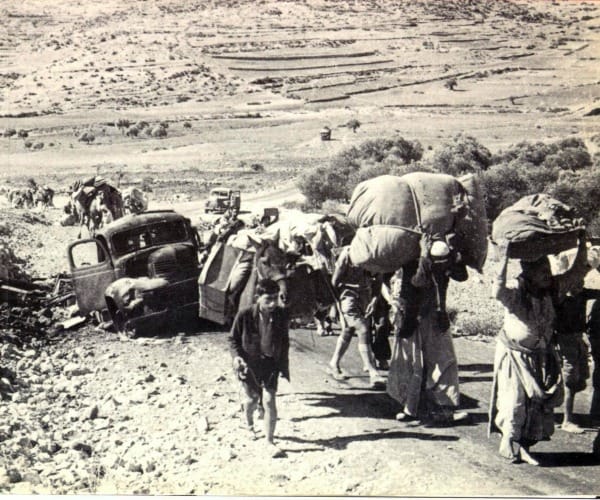
7 The Nakba: Displacement and the Palestinian Refugee Crisis
What Does the Nakba Mean?
For Palestinians, the events of 1948 are remembered as the Nakba, an Arabic word meaning “catastrophe.”
The term refers to the mass displacement, dispossession, and destruction or depopulation of Palestinian communities during the war surrounding the establishment of the State of Israel.
The Nakba was not a single event that occurred on one particular day.
It developed through successive stages of fighting, beginning during the civil war in Mandatory Palestine in late 1947 and continuing through the wider Arab–Israeli War of 1948.
By the end of the conflict, hundreds of thousands of Palestinians had left or been forced from their homes.
Many believed their departure would be temporary. Instead, they found themselves unable to return to the places where they had lived.
For Palestinian society, the consequences extended beyond the immediate loss of territory.
Families were separated, communities were fragmented, and social, economic, and cultural institutions were disrupted.
The Nakba became a defining historical experience in Palestinian national identity.
How Many Palestinians Were Displaced?
The precise number of Palestinians displaced during the 1947–1949 conflict remains a subject of historical research.
Estimates commonly range from approximately 700,000 to 750,000 people, although figures differ depending on the sources, dates, and definitions used.
The United Nations Relief and Works Agency for Palestine Refugees in the Near East, known as UNRWA, was established in December 1949 to provide assistance and employment programs for Palestinian refugees.
UNRWA began operations on 1 May 1950, providing assistance to a refugee population commonly estimated at approximately 750,000 people. This figure is a historical estimate and should not be confused with the number of refugees registered with the agency in later decades.
These figures reflect a humanitarian crisis of extraordinary scale relative to the population of the territory at the time.
The displaced population included residents of major towns, smaller communities, agricultural villages, and urban neighborhoods.
Many refugees initially moved to nearby areas that appeared safer.
Others crossed into neighboring countries or territories, including Lebanon, Syria, Transjordan, and the Gaza Strip.
What began as wartime displacement developed into a long-term refugee crisis.
Why Did Palestinians Leave Their Homes?
The causes of Palestinian displacement varied across different locations and phases of the war.
Historical research identifies several important factors.
Some Palestinians fled direct military attacks or the immediate threat of violence.
Others left because of fear, insecurity, shortages, the breakdown of public order, or reports of atrocities in nearby communities.
In a number of places, Israeli or pre-state Jewish armed forces expelled Palestinian residents, sometimes through explicit military orders or actions that made continued residence impossible.
The collapse of Palestinian Arab political institutions and local leadership also contributed to the vulnerability of communities.
There is no single explanation that accurately describes every departure.
At the same time, the existence of multiple causes does not diminish the documented role of expulsions and military operations in producing displacement.
Claims that the Palestinian refugee crisis resulted solely from voluntary departure or from a general instruction by Arab leaders to leave are not supported as comprehensive explanations by the historical evidence.
A careful understanding of the Nakba therefore requires examining local circumstances, military records, eyewitness testimony, and the wider conditions of the war.
The Loss of Palestinian Towns and Villages
The war transformed the geography of Palestinian society.
Hundreds of Palestinian Arab villages were depopulated during the conflict.
Some were destroyed during or after military operations, while others were incorporated into new settlements or repurposed under Israeli administration.
Urban centers were also profoundly affected.
In Haifa, Jaffa, Lydda, Ramle, and other locations, large numbers of Palestinian residents departed during fighting or following the capture of their communities.
The circumstances differed from place to place.
In some towns, residents fled amid attacks and deteriorating security conditions. In others, expulsions were directly documented.
For displaced families, the loss of a home often meant the loss of property, agricultural land, businesses, places of worship, schools, and community networks.
Many Palestinians retained house keys, property documents, family photographs, and other personal possessions as reminders of the places they had left.
These objects became powerful symbols of memory, loss, and the hope of return.
Lydda and Ramle: A Case of Mass Displacement
The events in Lydda and Ramle in July 1948 illustrate the role of military operations in the displacement of Palestinian civilians.
During Operation Dani, Israeli forces captured the two towns.
Following the fighting, tens of thousands of Palestinian residents were expelled or fled under conditions of severe insecurity.
Many traveled on foot toward areas under Arab control, carrying limited supplies during the summer heat.
Historical accounts describe deaths, exhaustion, and suffering during the displacement.
Researchers have examined the decisions of Israeli military commanders, the conduct of the forces involved, and the circumstances under which residents were ordered or compelled to leave.
The events remain central to historical discussions about responsibility for the Palestinian refugee crisis.
They also demonstrate why general explanations of the Nakba must be supported by the documented history of individual communities.
Life in Exile
For many displaced Palestinians, the first months after leaving their homes were marked by uncertainty and hardship.
Families sought shelter in schools, religious buildings, temporary accommodation, and improvised camps.
Food, clean water, medical care, and adequate housing were often scarce.
International humanitarian organizations, local authorities, and charitable groups attempted to respond to the growing emergency.
The United Nations Relief for Palestine Refugees program provided emergency assistance before UNRWA began its operations in 1950.
Over time, refugee camps became established in the West Bank, Gaza Strip, Jordan, Lebanon, and Syria.
Some camps developed into densely populated urban neighborhoods, but their residents continued to face varying legal, economic, and political restrictions depending on the territory or country in which they lived.
The experience of exile differed between communities and generations.
For many families, displacement became a permanent feature of life rather than a temporary consequence of war.
Why Could Many Refugees Not Return?
The question of Palestinian refugee return emerged while the war was still underway.
Many displaced Palestinians expected to return once the fighting ended.
However, Israeli authorities generally prevented the large-scale return of Palestinian refugees after the war.
Israeli leaders cited security concerns, the danger of renewed conflict, and opposition to a demographic transformation of the new state.
Palestinian refugees and their representatives argued that they had been unjustly displaced and should be allowed to return to their homes.
In December 1948, the United Nations General Assembly adopted Resolution 194 (III).
Paragraph 11 addressed the return of refugees wishing to live at peace with their neighbors and provided for compensation under the terms of the resolution.
The resolution became a central reference point in international discussions about Palestinian refugees.
However, its interpretation and legal implications have remained contested, and its provisions were not implemented through a comprehensive political settlement.
In subsequent years, Israeli laws and administrative measures affected the ownership and control of property left behind by Palestinian refugees.
For many displaced families, the loss of access to their homes became permanent.
Palestinians Who Remained in Israel
Not all Palestinian Arabs left the territory that became Israel.
A substantial Palestinian Arab population remained within the new state's boundaries after the war.
Those who remained eventually became Israeli citizens, although they experienced different legal and political conditions from Jewish citizens.
From 1948 until 1966, most Arab citizens of Israel lived under a military administration that imposed restrictions on movement and other aspects of daily life.
Some Palestinians who remained inside Israel were also displaced from their original villages or homes and became internally displaced persons.
The experiences of these communities demonstrate that the consequences of the Nakba were not limited to refugees living outside Israel.
They also shaped the lives of Palestinians who remained within the new state.
The Nakba and Palestinian National Memory
The Nakba occupies a central place in Palestinian historical memory.
For many families, stories of displacement have been passed from one generation to another.
Memories of villages, neighborhoods, family homes, and everyday life before 1948 remain important elements of Palestinian identity.
Annual commemorations on 15 May, commonly known as Nakba Day, reflect the continuing significance of these events.
The Nakba is remembered not only as a historical catastrophe but also as the beginning of an unresolved struggle over refugees, property, national self-determination, and political rights.
Palestinian experiences of 1948 differ according to family histories, places of origin, and subsequent lives in Israel, the occupied Palestinian territories, and the wider diaspora.
Nevertheless, the shared memory of displacement has remained a powerful part of Palestinian national consciousness.
Historical Evidence and Competing Narratives
The history of the Nakba has been the subject of extensive scholarly research and political debate.
Historians have examined Israeli military records, British diplomatic documents, United Nations reports, Palestinian testimonies, and other archival materials.
The opening of Israeli archives from the 1980s onward contributed to renewed historical research into the circumstances of Palestinian displacement.
Scholars have differed over the degree of centralized planning, the intentions of political and military leaders, and the relative importance of particular causes.
However, the mass displacement of Palestinians during the 1948 war is an established historical fact.
Documented expulsions, military attacks, civilian flight, and the subsequent prevention of large-scale refugee return form essential parts of the historical record.
Responsible journalism requires distinguishing between these established events and interpretations that remain debated.
It also requires treating the experiences of displaced civilians as part of the history itself, rather than merely as consequences of military decisions.
A Refugee Crisis That Did Not End in 1949
The armistice agreements of 1949 brought an end to the major military campaigns, but they did not resolve the Palestinian refugee crisis.
Hundreds of thousands of Palestinians remained outside their former homes.
The political status of the West Bank and Gaza Strip differed from that of Israel, and no independent Palestinian state emerged from the war.
UNRWA continued providing humanitarian assistance and essential services to registered Palestine refugees.
Over subsequent generations, the question of refugee rights, return, compensation, and citizenship remained central to the Israeli–Palestinian conflict.
The experiences of 1948 continue to influence Palestinian identity, regional politics, and international diplomatic efforts.
Understanding the Nakba is therefore essential not only to understanding the past, but also to examining the unresolved issues that continue to shape the present.
The following chapter explores how the armistice agreements of 1949 established new military boundaries without producing a comprehensive peace settlement.
8 The 1949 Armistice Agreements
The End of Major Military Operations
By the beginning of 1949, the military situation in Palestine had changed dramatically.
The State of Israel, established in May 1948, had survived the war and gained control of territory beyond the boundaries proposed for the Jewish state under the United Nations partition plan of 1947.
Arab forces had suffered military setbacks, while hundreds of thousands of Palestinians had been displaced from their homes.
The war had also left Jerusalem divided, Palestinian communities fragmented, and relations between Israel and neighboring Arab states deeply hostile.
Although major military operations were drawing to a close, no comprehensive political settlement had been reached.
The United Nations continued its efforts to negotiate a cessation of hostilities.
Under the leadership of acting United Nations mediator Ralph Bunche, negotiations gradually produced a series of armistice agreements between Israel and neighboring Arab states.
These agreements ended the main phase of interstate fighting but did not resolve the political questions that had caused the conflict.
The Four Armistice Agreements
During 1949, Israel signed separate armistice agreements with four neighboring Arab states.
The agreements were concluded on different dates:
- 24 February 1949: Israel and Egypt.
- 23 March 1949: Israel and Lebanon.
- 3 April 1949: Israel and Transjordan.
- 20 July 1949: Israel and Syria.
The negotiations took place under United Nations auspices, with talks involving the Greek island of Rhodes and other locations.
Each agreement established arrangements for the cessation of hostilities, military demarcation lines, and mechanisms intended to supervise compliance.
The agreements were not peace treaties.
They did not establish permanent internationally agreed borders, settle the status of Palestinian refugees, or determine the political future of all the territories affected by the war.
The parties retained differing positions concerning sovereignty, territorial claims, and the possibility of future negotiations.
Nevertheless, the agreements represented an important diplomatic achievement.
They reduced the immediate risk of renewed large-scale warfare and created a framework for monitoring the ceasefire.
The Green Line: A Military Boundary
One of the most enduring consequences of the armistice agreements was the emergence of the boundaries commonly known as the Green Line.
The name derives from the green markings used on maps associated with the armistice demarcation lines.
These lines separated territory controlled by Israel from areas held by neighboring Arab states after the war.
The armistice agreements explicitly distinguished military demarcation from final political boundaries.
In other words, the Green Line was not intended to determine permanent sovereignty or settle territorial disputes.
However, the lines became highly significant in subsequent diplomacy.
They later served as a major reference point in discussions about Israel's borders, the occupied Palestinian territories, and proposals for a negotiated two-state solution.
The territorial outcome differed substantially from the United Nations partition plan of November 1947.
Israel controlled approximately 78 percent of the former British Mandate territory west of the Jordan River.
The remaining territory was divided between Transjordanian control in the West Bank and Egyptian administration in the Gaza Strip.
Jerusalem: A Divided City
Jerusalem was among the most politically and symbolically sensitive consequences of the war.
Under the 1947 United Nations partition plan, Jerusalem and its surrounding area had been designated for a special international regime.
That proposal was never implemented.
Instead, the fighting of 1948 left the city divided.
Israel controlled West Jerusalem, while Transjordan controlled East Jerusalem, including the Old City.
The division separated communities and restricted access to religious sites.
Jewish residents were unable to access the Western Wall, which lay in the Jordanian-controlled Old City.
Palestinian Arab residents experienced displacement and separation from homes and neighborhoods in the western part of the city.
The armistice arrangements established demarcation lines through Jerusalem, along with provisions concerning certain areas and access arrangements.
However, the political status of Jerusalem remained unresolved.
The city would remain divided until the June 1967 war, when Israel captured East Jerusalem and subsequently extended its law and administration there.
Israel's later annexation measures have not been recognized as lawful by the United Nations Security Council.
The status of Jerusalem remains one of the most difficult issues in the Israeli–Palestinian conflict.
The West Bank Under Jordanian Control
Following the 1948 war, Transjordan controlled the territory west of the Jordan River that became known as the West Bank, including East Jerusalem.
In 1949, Transjordan adopted the name Jordan.
In 1950, Jordan formally annexed the West Bank, a move recognized by only a limited number of countries and opposed by others.
The territory included major Palestinian cities such as Nablus, Hebron, Ramallah, Bethlehem, and the eastern part of Jerusalem.
Many Palestinian refugees displaced during the war settled in the West Bank.
Jordan extended citizenship to many Palestinians living under its rule, although political representation and national aspirations remained subjects of debate.
The West Bank did not become the independent Arab state envisioned by the United Nations partition plan.
Instead, it became part of a new political arrangement that would last until Israel captured the territory in 1967.
Gaza Under Egyptian Administration
The Gaza Strip emerged as another distinct territorial consequence of the war.
Following the fighting, Egypt controlled a narrow coastal area along the Mediterranean Sea.
The territory became home to a large number of Palestinian refugees from towns and villages that had come under Israeli control.
The arrival of displaced families dramatically increased Gaza's population and placed severe pressure on housing, infrastructure, employment, and basic services.
Unlike Jordan in the West Bank, Egypt did not formally annex the Gaza Strip.
The territory remained under Egyptian administration, with limited Palestinian political autonomy.
A nominal All-Palestine Government had been proclaimed in Gaza in September 1948, but it exercised little effective authority.
For Palestinian residents, the end of the war did not bring national independence.
Instead, Gaza became a densely populated territory whose political future remained unresolved.
The Refugee Question Remained Unanswered
The armistice agreements did not provide a comprehensive solution to the Palestinian refugee crisis.
Hundreds of thousands of Palestinians remained outside their former homes.
Many were living in temporary shelters, refugee camps, or accommodation provided by relatives and local communities.
The United Nations had addressed the refugee question in General Assembly Resolution 194 (III), adopted in December 1948.
However, no agreement was reached that enabled the large-scale return of displaced Palestinians or provided a comprehensive compensation settlement.
Israel opposed mass repatriation under the prevailing circumstances, citing security and demographic concerns.
Palestinian refugees continued to demand recognition of their displacement, the possibility of return, and compensation for lost property.
The issue became one of the central unresolved questions of the conflict.
In December 1949, the United Nations General Assembly established UNRWA to provide assistance and employment programs for Palestine refugees.
The agency began operations in May 1950.
What had initially been treated as an emergency humanitarian crisis became a long-term international responsibility.
Why an Armistice Was Not Peace
An armistice is an agreement to stop fighting. It does not necessarily resolve the political causes of a war.
The 1949 agreements created military arrangements but left fundamental disputes unresolved.
Israel had achieved independence and consolidated territorial control, but its relations with neighboring Arab states remained hostile.
Palestinians had not achieved an independent state, and large numbers remained displaced.
Jerusalem was divided, territorial claims were contested, and the refugee crisis continued.
The agreements also left questions concerning border security, cross-border movement, water resources, and future diplomatic relations.
In the following decades, the region experienced further military confrontations, including the Suez Crisis of 1956 and the June 1967 war.
The 1949 armistice lines would become an important reference point in later negotiations, but they were never a substitute for a comprehensive political settlement.
The Legacy of the 1949 Agreements
The armistice agreements of 1949 marked the end of the main military phase of the first Arab–Israeli war.
They also established a political geography that would shape the region for nearly two decades.
Israel emerged as an independent state controlling more territory than had been proposed under the United Nations partition plan.
The West Bank came under Jordanian rule, while the Gaza Strip remained under Egyptian administration.
Jerusalem was divided, and the Palestinian refugee crisis remained unresolved.
For Israelis, the agreements helped consolidate the survival and territorial position of the new state.
For Palestinians, they confirmed a political reality in which the proposed Arab state had not been established and many communities remained displaced.
The distinction between an armistice and a peace settlement remains essential to understanding the conflict.
The agreements ended major hostilities without resolving the competing national claims, territorial disputes, and humanitarian consequences of the war.
Those unresolved issues would continue to shape the history of Israel and Palestine long after 1949.
9 The Legacy of 1948
One War, Different National Memories
The events of 1948 occupy a central place in the histories of Israelis and Palestinians.
For Jewish Israelis, the establishment of the State of Israel represents the achievement of national independence after decades of political struggle and centuries of Jewish life without a sovereign state in the ancestral homeland.
For Palestinians, the same period is remembered as the Nakba: the mass displacement, dispossession, and fragmentation of communities during the war.
These historical experiences emerged from the same conflict, yet they became foundations of different national narratives.
Israeli Independence Day commemorates the establishment of the state according to the Hebrew calendar.
Palestinians observe Nakba Day on 15 May, remembering the destruction and displacement experienced during the events surrounding Israel's establishment.
These commemorations illustrate how historical memory shapes collective identity.
They also demonstrate why discussions of 1948 frequently involve deeply personal questions of belonging, loss, security, and national recognition.
Understanding these memories requires examining both the historical evidence and the ways communities have interpreted their experiences across generations.
The Establishment of Israel and Jewish National Identity
The creation of Israel fundamentally transformed Jewish political history.
For supporters of Zionism, statehood represented the realization of a movement seeking Jewish national self-determination in the historic homeland of the Jewish people.
The establishment of Israel came only three years after the end of the Holocaust, during which approximately six million Jews were murdered by Nazi Germany and its collaborators.
The new state became a destination for Holocaust survivors, Jewish refugees, and immigrants from different parts of the world.
During the years following independence, large numbers of Jews arrived from Europe, the Middle East, and North Africa.
Their experiences varied considerably.
Some immigrated because of Zionist convictions or family connections. Others left countries where they faced persecution, violence, political pressure, insecurity, or deteriorating conditions.
The displacement and migration of Jewish communities from Arab and Muslim-majority countries became another major transformation in the region's history.
These developments contributed to Israel's changing population and the creation of a diverse society shaped by different languages, cultures, religious traditions, and historical experiences.
At the same time, debates concerning the relationship between Jewish national identity, democratic governance, religion, and minority rights became enduring features of Israeli political life.
The Nakba and Palestinian National Identity
For Palestinians, 1948 represented a profound rupture in national and community life.
The war resulted in the displacement of hundreds of thousands of people and the depopulation of numerous Palestinian towns and villages.
Families who had lived for generations in particular communities found themselves separated from their homes, land, and local institutions.
The consequences extended beyond immediate material losses.
Displacement disrupted education, employment, family relationships, cultural traditions, and political organization.
For many refugees, memories of their places of origin became an essential part of family history.
Stories of homes, neighborhoods, farms, and villages were passed between generations.
The Nakba became a central reference point in Palestinian national consciousness, connecting experiences of displacement with demands for political recognition, self-determination, return, and compensation.
Palestinian society also developed across different political and geographical settings.
Some Palestinians remained in Israel, others lived under Jordanian or Egyptian administration, and many became refugees in neighboring countries.
These different experiences shaped Palestinian political movements, institutions, and identities in the decades that followed.
The Unresolved Question of Palestinian Refugees
One of the most enduring consequences of the 1948 war was the Palestinian refugee crisis.
Hundreds of thousands of people who had fled or been expelled were unable to return to their former homes after the fighting ended.
The United Nations addressed the refugee question in General Assembly Resolution 194 (III), adopted on 11 December 1948.
The resolution included provisions concerning the return of refugees wishing to live at peace with their neighbors and compensation for property losses.
However, no comprehensive political settlement was reached.
For Palestinians, the question of return became closely connected to individual rights, family histories, property ownership, and national identity.
For Israel, the prospect of large-scale refugee return raised questions concerning national security, demographic composition, sovereignty, and the character of the state.
These competing positions have remained central to negotiations and international debates.
UNRWA, established in 1949, developed a system of humanitarian assistance and public services for eligible Palestine refugees.
Over subsequent generations, refugee communities established new lives while maintaining connections to their families' places of origin.
The refugee question remains one of the principal unresolved consequences of the 1948 conflict.
Borders, Jerusalem and the Absence of a Palestinian State
The war also transformed the territorial and political geography of the region.
The United Nations partition plan of 1947 had proposed separate Jewish and Arab states, with Jerusalem under an international regime.
Those arrangements were never implemented as envisioned.
Following the 1949 armistice agreements, Israel controlled approximately 78 percent of Mandatory Palestine west of the Jordan River.
Jordan controlled the West Bank, including East Jerusalem, while Egypt administered the Gaza Strip.
No independent Palestinian state emerged from the war.
Jerusalem remained divided between Israeli and Jordanian control until the June 1967 war.
In 1967, Israel captured the West Bank, including East Jerusalem, and the Gaza Strip, beginning a new period of military occupation and territorial dispute.
The status of these territories became central to subsequent diplomatic efforts.
The 1949 armistice lines, commonly known as the Green Line, later served as an important reference point in proposals for a negotiated two-state solution.
However, questions concerning borders, Jerusalem, settlements, sovereignty, and security have remained unresolved.
The political consequences of 1948 therefore continued to influence developments long after the original war had ended.
Historical Research and the Opening of Archives
The interpretation of 1948 has changed as historians have gained access to additional documentary evidence.
Government archives, military records, diplomatic correspondence, United Nations documents, and personal testimonies have contributed to a more detailed understanding of the conflict.
Beginning in the 1980s, Israeli historians gained access to previously restricted archival materials and produced influential research concerning the origins of the Palestinian refugee crisis and the decisions of political and military leaders.
Some scholars challenged earlier national narratives, while others defended or revised existing interpretations.
Historical debates have focused on questions such as the causes of Palestinian displacement, the objectives of military operations, the decisions of Arab governments, and the responsibilities of the different parties.
The availability of new evidence has not eliminated disagreement.
However, it has strengthened the importance of distinguishing between established facts, interpretations supported by particular sources, and claims that remain contested.
Palestinian oral histories and community archives have also provided important evidence about displacement, social life before 1948, and the experiences of refugees.
No single category of evidence provides a complete account.
Responsible historical journalism requires comparing different sources, evaluating their reliability, and recognizing the limitations of available documentation.
Why 1948 Still Matters
The legacy of 1948 is visible in many of the central questions surrounding Israel and Palestine.
For Israelis, the establishment and survival of the state remain connected to national independence, collective security, and Jewish self-determination.
For Palestinians, the Nakba remains connected to displacement, the absence of an independent state, and demands for recognition and political rights.
The conflict's later developments cannot be explained by 1948 alone.
Regional wars, political decisions, occupation, diplomacy, violence, and changing international relationships have all shaped subsequent events.
Nevertheless, the outcomes of 1948 created political and humanitarian conditions that continue to influence the present.
The refugee question, the status of Jerusalem, competing territorial claims, and the relationship between national identity and sovereignty all have important roots in this period.
Understanding these historical connections is essential for interpreting contemporary developments without reducing them to simplified narratives.
Remembering History Without Simplifying It
The history of 1948 contains profound experiences of independence, survival, violence, displacement, and loss.
These experiences cannot be reduced to a single story.
Recognizing the historical significance of Israel's establishment does not require denying the displacement of Palestinians.
Likewise, acknowledging the Nakba does not require denying Jewish historical connections to the land or the significance of Jewish national self-determination.
A careful examination of 1948 must also recognize that historical experiences and responsibilities were not identical.
Military decisions, attacks on civilians, expulsions, political agreements, and failures of international diplomacy require examination on their own evidence.
The purpose of historical journalism is not to create artificial equivalence between different actions or experiences.
It is to establish what happened, explain the circumstances, and distinguish documented facts from political interpretations.
For Beyond the Lines, this approach is essential.
The events of 1948 demonstrate why understanding the past requires more than repeating familiar headlines.
They require attention to historical documents, the experiences of civilians, and the decisions that shaped the lives of generations.
The legacy of 1948 remains part of the continuing history of Israel and Palestine, and understanding it is an important foundation for examining the region today.
Conclusion — Understanding 1948 Beyond the Headlines
The events of 1948 fundamentally transformed the history of Israel, Palestine, and the wider Middle East.
For Jewish Israelis, the establishment of the State of Israel represented the achievement of national independence and the creation of a sovereign homeland following decades of political struggle and the devastation of the Holocaust.
For Palestinians, the same period brought the Nakba: mass displacement, the loss of homes and communities, and the failure to establish an independent Palestinian state.
These two historical experiences developed during the same conflict, but their consequences were profoundly different.
The war did not begin with Israel's declaration of independence on 14 May 1948. It had already escalated into armed conflict following the United Nations partition vote in November 1947.
By the time the armistice agreements were signed in 1949, Israel had consolidated its independence and expanded its territorial control beyond the boundaries proposed in the partition plan.
Hundreds of thousands of Palestinians had become refugees, Jerusalem was divided, and the West Bank and Gaza Strip had come under Jordanian and Egyptian control respectively.
The armistice agreements ended the main military phase of the war, but they did not establish a comprehensive peace.
Questions concerning Palestinian refugees, borders, Jerusalem, security, sovereignty, and national self-determination remained unresolved.
More than seven decades later, the consequences of these events continue to influence political developments and the lives of people throughout the region.
Understanding 1948 requires examining historical evidence, acknowledging the experiences of affected communities, and distinguishing established facts from disputed interpretations.
It also requires recognizing that national memories, while deeply meaningful, do not replace the responsibility to investigate what happened.
History is rarely understood through a single perspective.
For Beyond the Lines, the purpose of examining 1948 is not to decide whose suffering deserves recognition, but to document the events, explain their consequences, and provide readers with the historical context necessary to understand the present.
Because understanding what lies beyond the headlines begins with understanding the history behind them.
Sources and Further Reading
1. United Nations — General Assembly Resolution 181 (II), 1947 https://digitallibrary.un.org/record/671195
- Declaration of the Establishment of the State of Israel, 1948 https://www.gov.il/en/pages/declaration-of-establishment-state-of-israel
- U.S. Office of the Historian — Creation of Israel, 1948 https://history.state.gov/milestones/1945-1952/creation-israel
- U.S. Office of the Historian — The Arab–Israeli War of 1948 https://history.state.gov/milestones/1945-1952/arab-israeli-war
- United Nations — General Assembly Resolution 194 (III), 1948 https://digitallibrary.un.org/record/671192
- United Nations Peacemaker — 1949 Armistice Agreements https://peacemaker.un.org/en/areas-of-work/peace-agreements-database-and-language-of-peace-tool/peace-agreements-search?field_country_entity_target_id=Israel
- UNRWA — Palestine Refugees https://www.unrwa.org/palestine-refugees
- Benny Morris — 1948: A History of the First Arab-Israeli War (Yale University Press, 2008) https://yalebooks.yale.edu/book/9780300145243/1948/
- Walid Khalidi (ed.) — All That Remains: The Palestinian Villages Occupied and Depopulated by Israel in 1948 (1992) https://www.google.com/search?q=Walid+Khalidi+All+That+Remains+1992